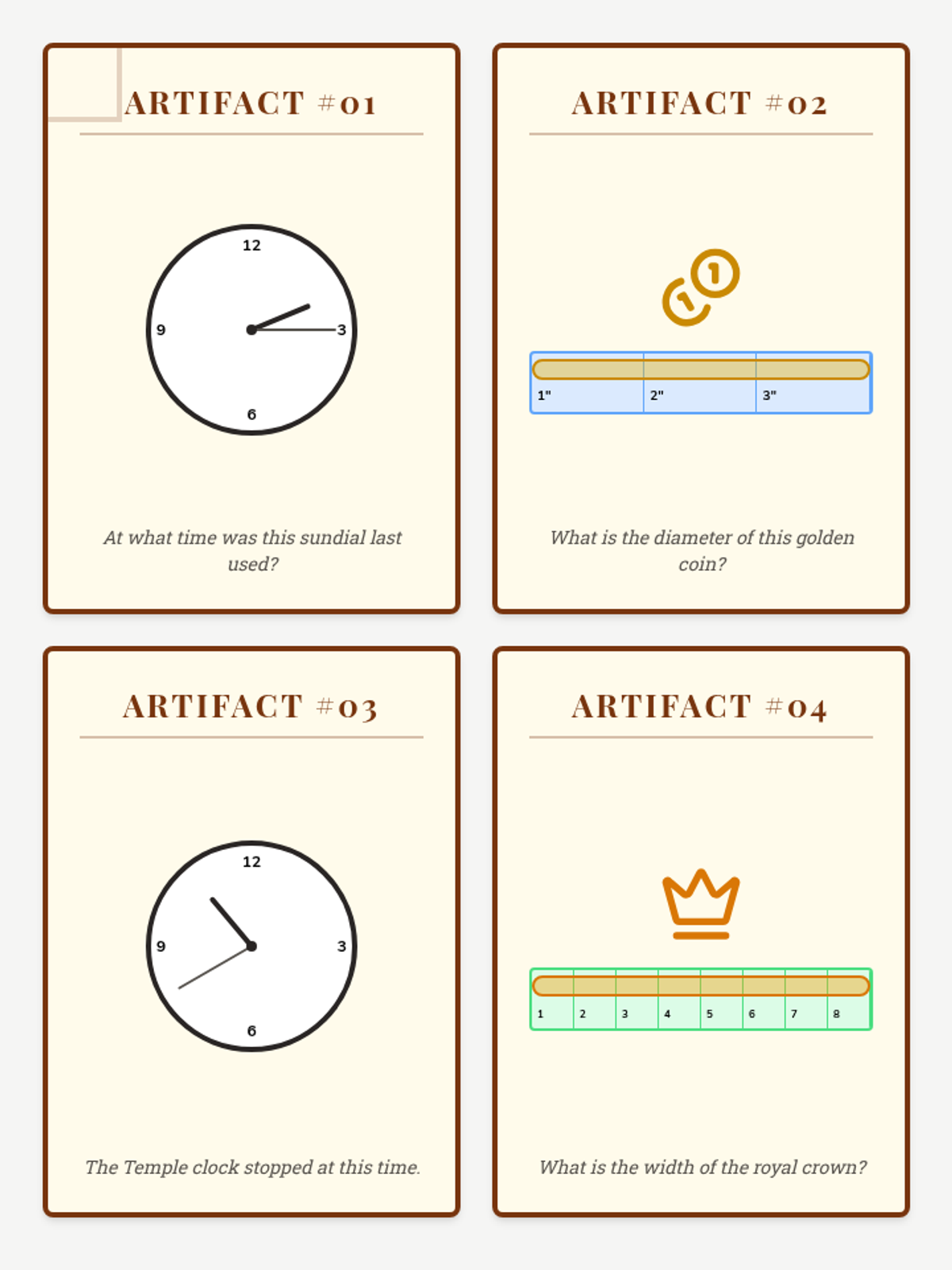
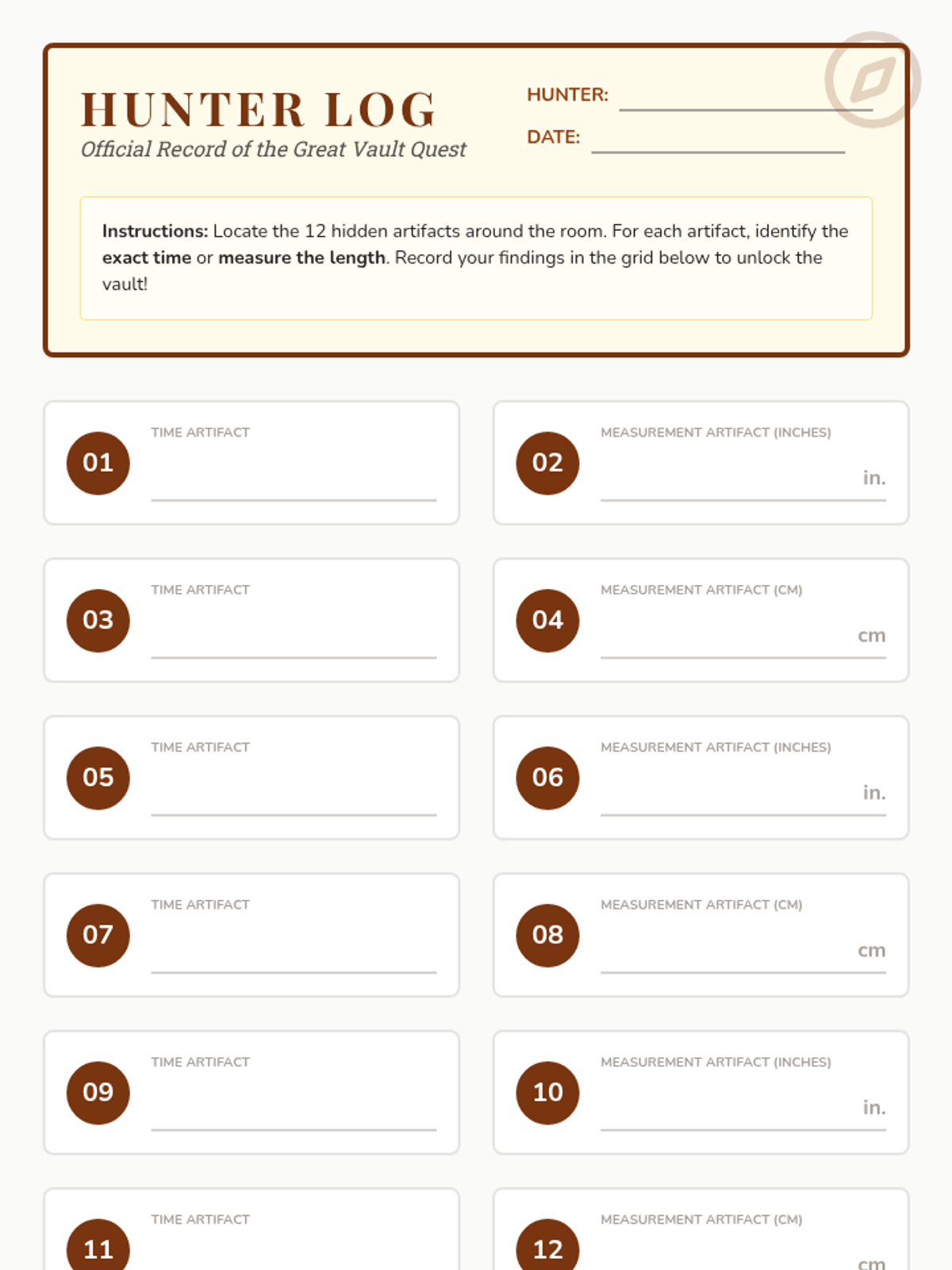
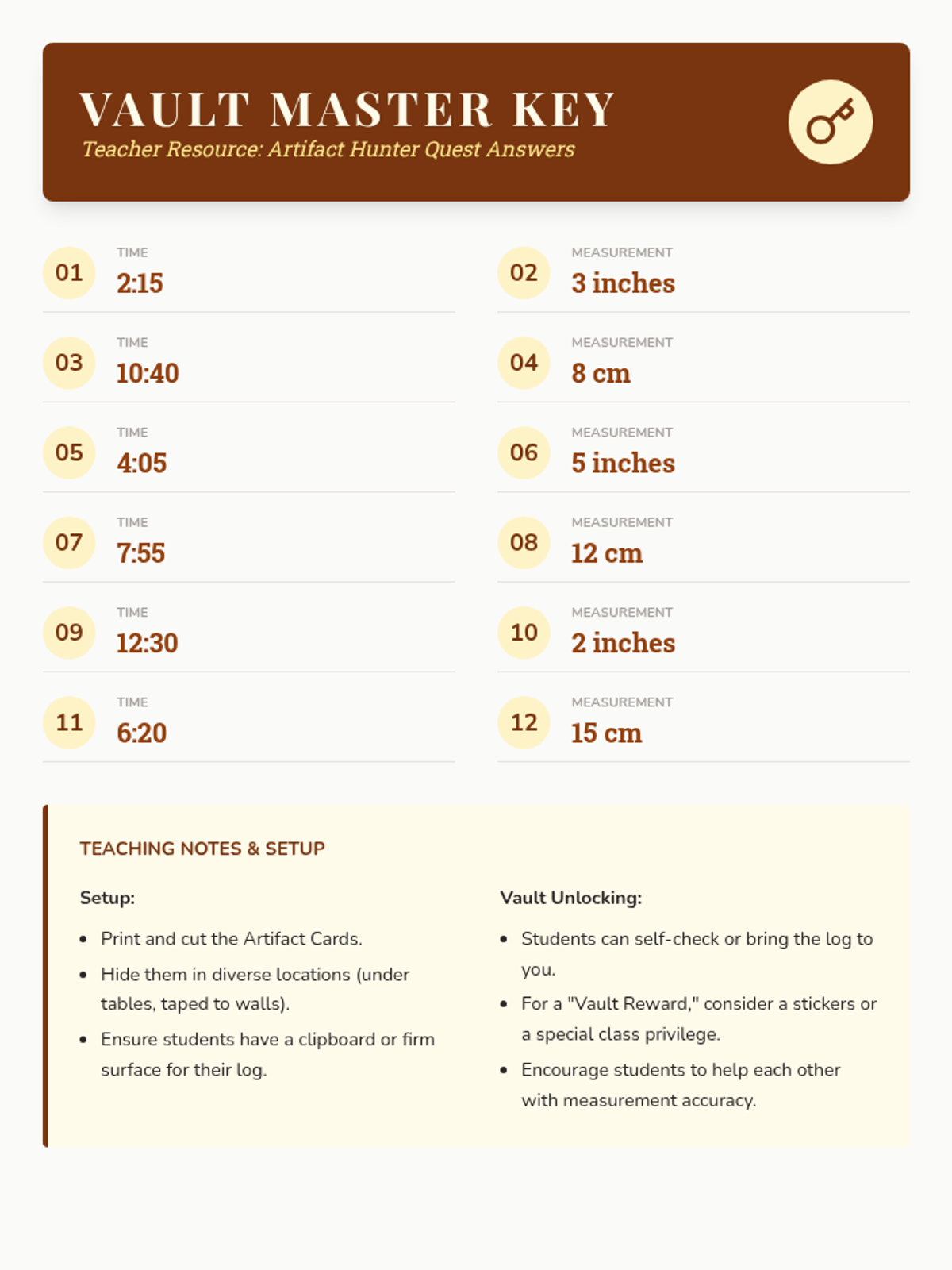
Students become "Measurement Detectives" to explore length and width using standard and non-standard tools.
No materials in this lesson yet.
A fun, math-integrated lesson where students read about llamas and solve word problems based on factual llama data. Students will practice reading comprehension and multi-step word problems involving addition, subtraction, and multiplication.
Students learn how engineers help solve community problems by designing a sustainable solution for a local environmental or social issue.
Students 'Create' and 'Test' their bridge designs using simple materials, followed by 'Improving' their structures based on performance data.
Students delve into the 'Define' and 'Imagine' phases of the Engineering Design Process by researching bridge types and brainstorming innovative solutions to span a gap.
A hands-on introduction to the Engineering Design Process where students act as aerospace engineers to design, build, and test paper rockets.
The final stage of the EDP where students test their designs, gather data, and iterate for improvement.
Students learn about materials, constraints, and building techniques as they move into the 'Plan' and 'Create' stages.
Focuses on the 'Define' and 'Imagine' stages of the EDP through a real-world problem-solving scenario.
Students are introduced to the five stages of the Engineering Design Process and apply them to a simple 'Paper Tower' challenge.
Students apply their skills to create a forward-looking plan with a specific savings goal. They learn the 'pay yourself first' principle by intentionally allocating money for savings before spending on non-essentials.
Students face a deficit scenario caused by an unexpected expense. They must analyze their spending to identify 'wants' that can be cut to balance the budget and return to a positive balance.
Students learn the mechanical skill of tracking money by maintaining a simple transaction log. They practice data entry and basic arithmetic to keep a running balance of a fictional account.
Students analyze potential purchases to determine which items are essential (needs) and which are optional (wants). Through a limited-budget simulation, they practice making difficult spending decisions.
Students are introduced to the core concepts of money flow by sorting various financial scenarios into 'money in' (income) and 'money out' (expenses). This foundational lesson ensures students can correctly identify the direction of cash flow.
A culminating project where students create a budget to reach a specific savings goal while managing weekly expenses.
Challenges students to solve budget emergencies and navigate financial deficits using problem-solving strategies.
Focuses on financial decision-making by distinguishing essential needs from discretionary wants to fix a deficit.
Teaches students how to record transactions and maintain a running balance using a simple ledger.
Introduces income and expenses through categorization and brainstorming, ending with a personal T-chart.
Students will learn about llamas while practicing data organization and line plot creation using measurements of llama characteristics.
A focused lesson on mastering multiplication facts from 0 to 10 through repeated timed drills and progress tracking.
A set of visual tools to help students navigate daily classroom transitions and routines with independence.
A hands-on 1st-grade math lesson where students explore lines of symmetry in nature, letters, and art through video analysis and a fold-painting activity.
A 2nd-grade math lesson where students identify U.S. coins and calculate their total value through video instruction and a hands-on coin rubbing activity.
A 1st Grade math lesson focused on understanding regrouping in addition using base-10 blocks and role-play.
A 1st Grade math lesson on telling time to the minute using the 'count by 5s' strategy, featuring a video, a hands-on paper plate clock activity, and an exit ticket.
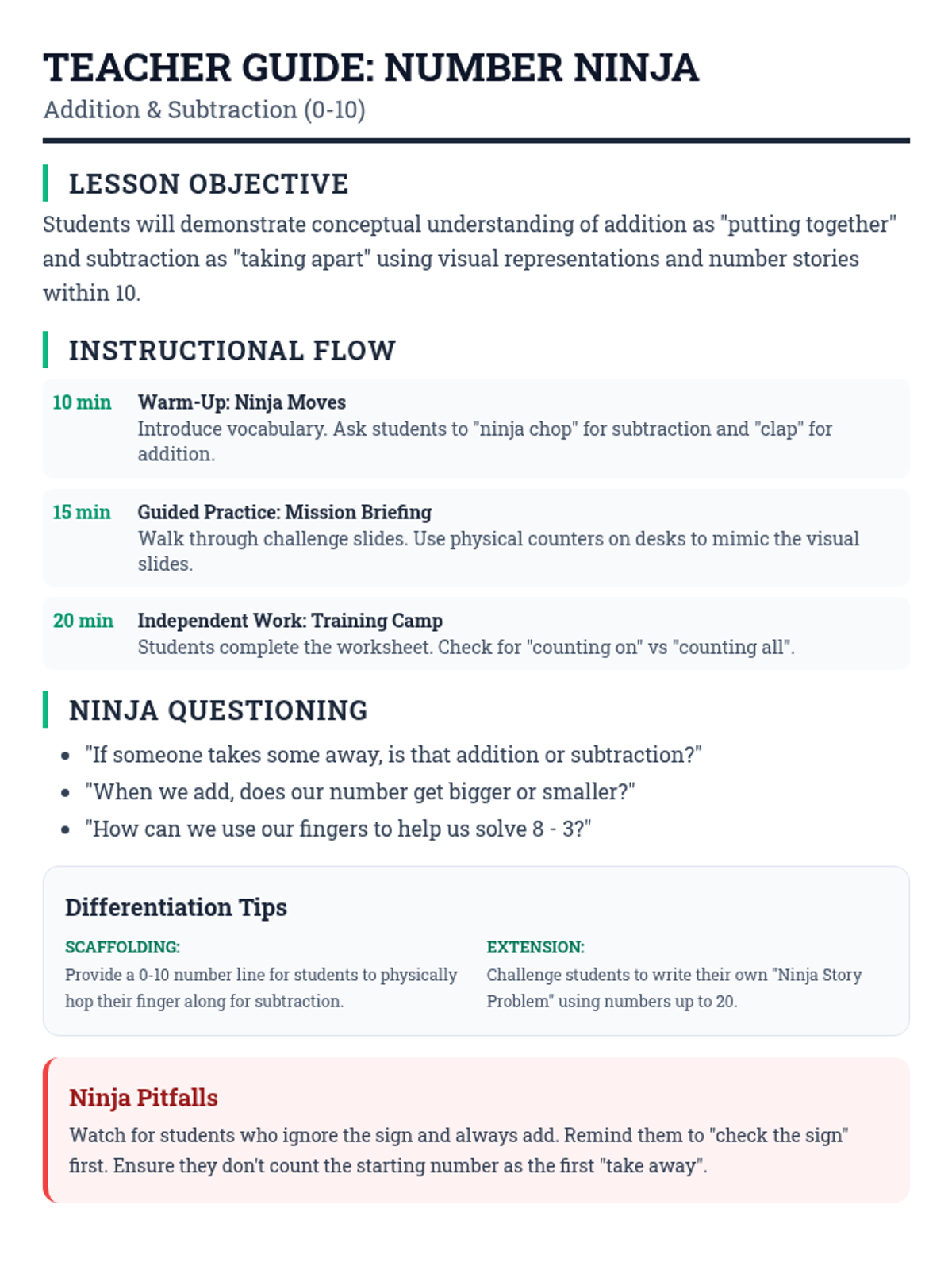
A fun, hands-on lesson where students identify and sort circles, squares, and triangles through a 'Shape Safari' adventure. Students will practice recognizing shapes in different sizes, colors, and orientations.
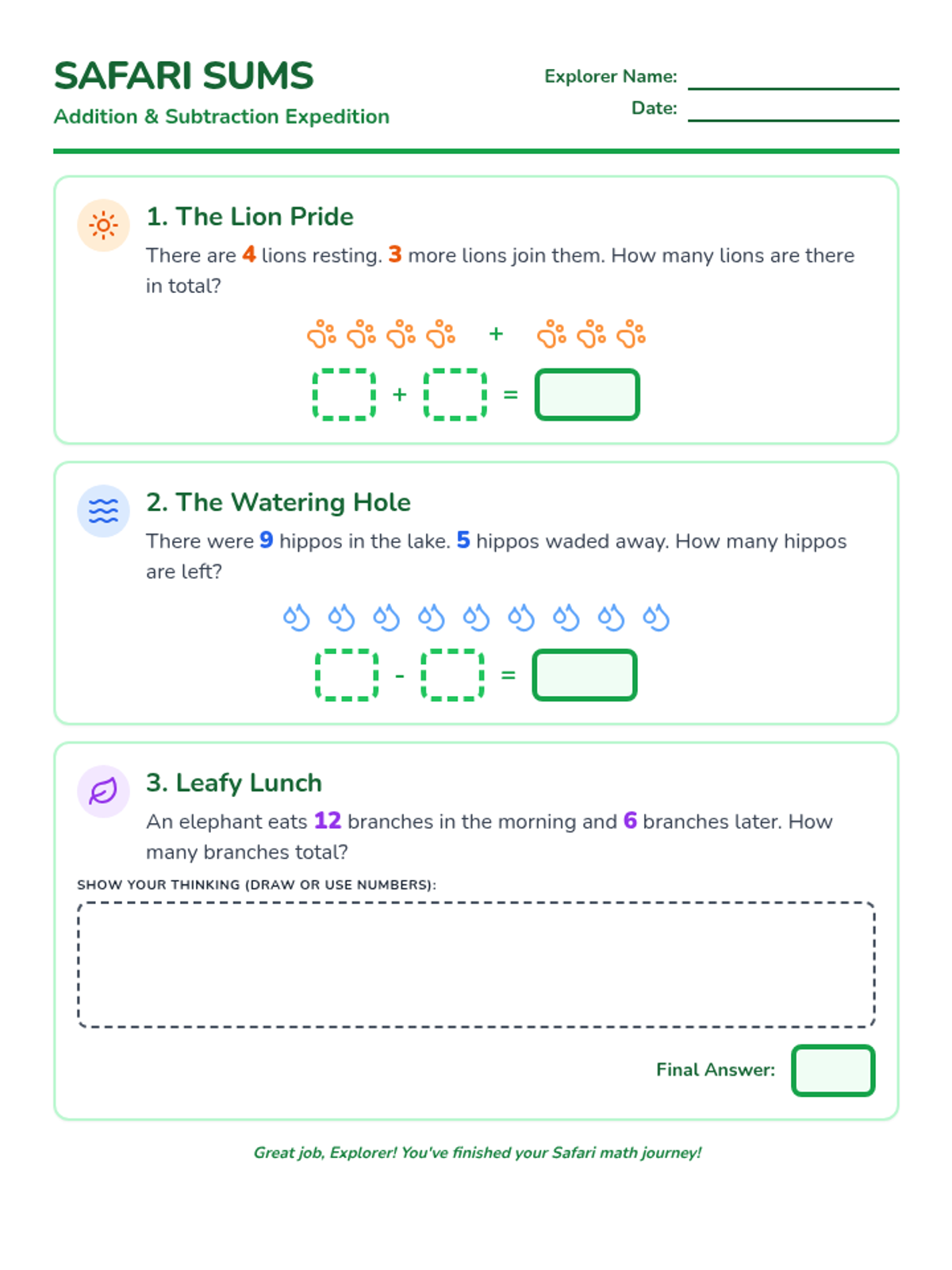
A 30-minute introductory lesson on unit fractions where students explore naming and identifying parts of a whole using hands-on manipulatives. Students will learn the roles of the numerator and denominator in the context of a 'Fraction Factory' where parts must be perfectly equal to pass inspection.
A fun, active introduction to counting from 1 to 10 in Japanese through a rhythmic ninja-themed chant and visual aids. Students learn kanji, hiragana, and romaji while practicing pronunciation and counting skills.