Visual presentation for melodic composition and the creative process for 2nd graders.
A fun, visual slide deck for the lesson featuring the 'Me at the zoo' video, discussion prompts, drawing instructions, and a high-quality reference photo of an elephant.
1/16
A Kindergarten-level sorting activity where students categorize instruments and sounds as either "Forte" (loud) or "Piano" (soft).
A detailed lesson plan for teaching Kindergarteners about the steady beat through heartbeats, marching, and body percussion.
Educational slides introducing the difference between the steady beat and rhythm, and defining the quarter note (Ta) and eighth notes (Ti-Ti) for 2nd-grade students.
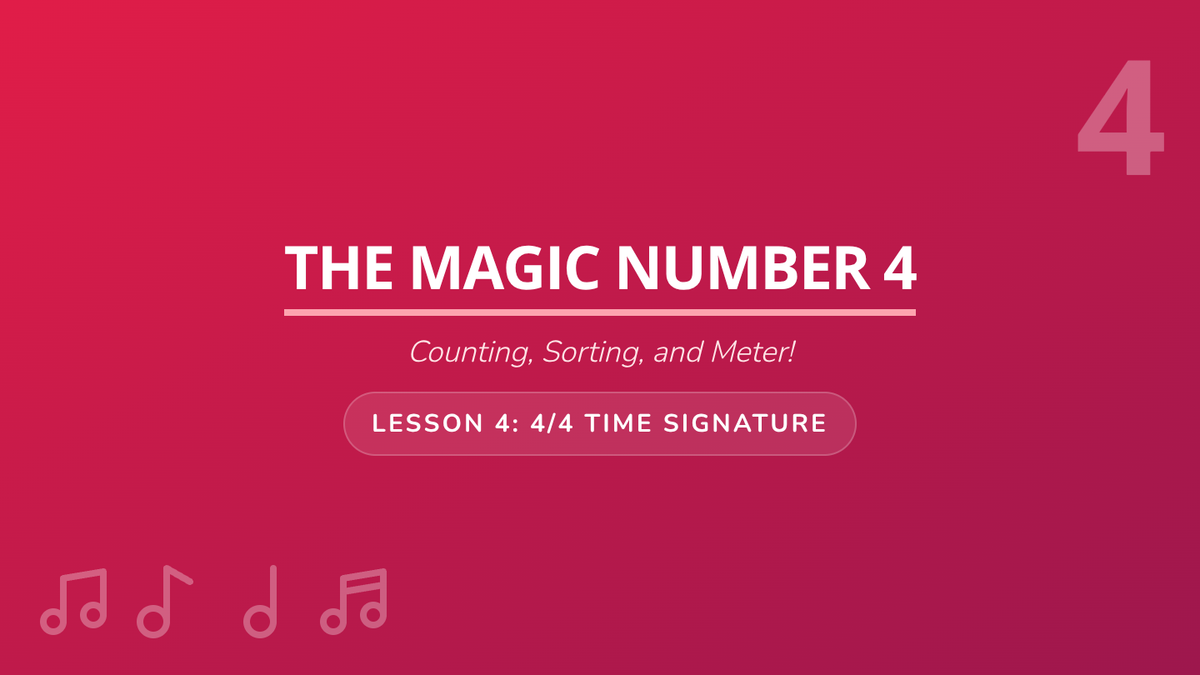
Slides introducing 2nd graders to 4/4 time signature, measures, and bar lines, featuring visual analogies for measures and basic conducting patterns.
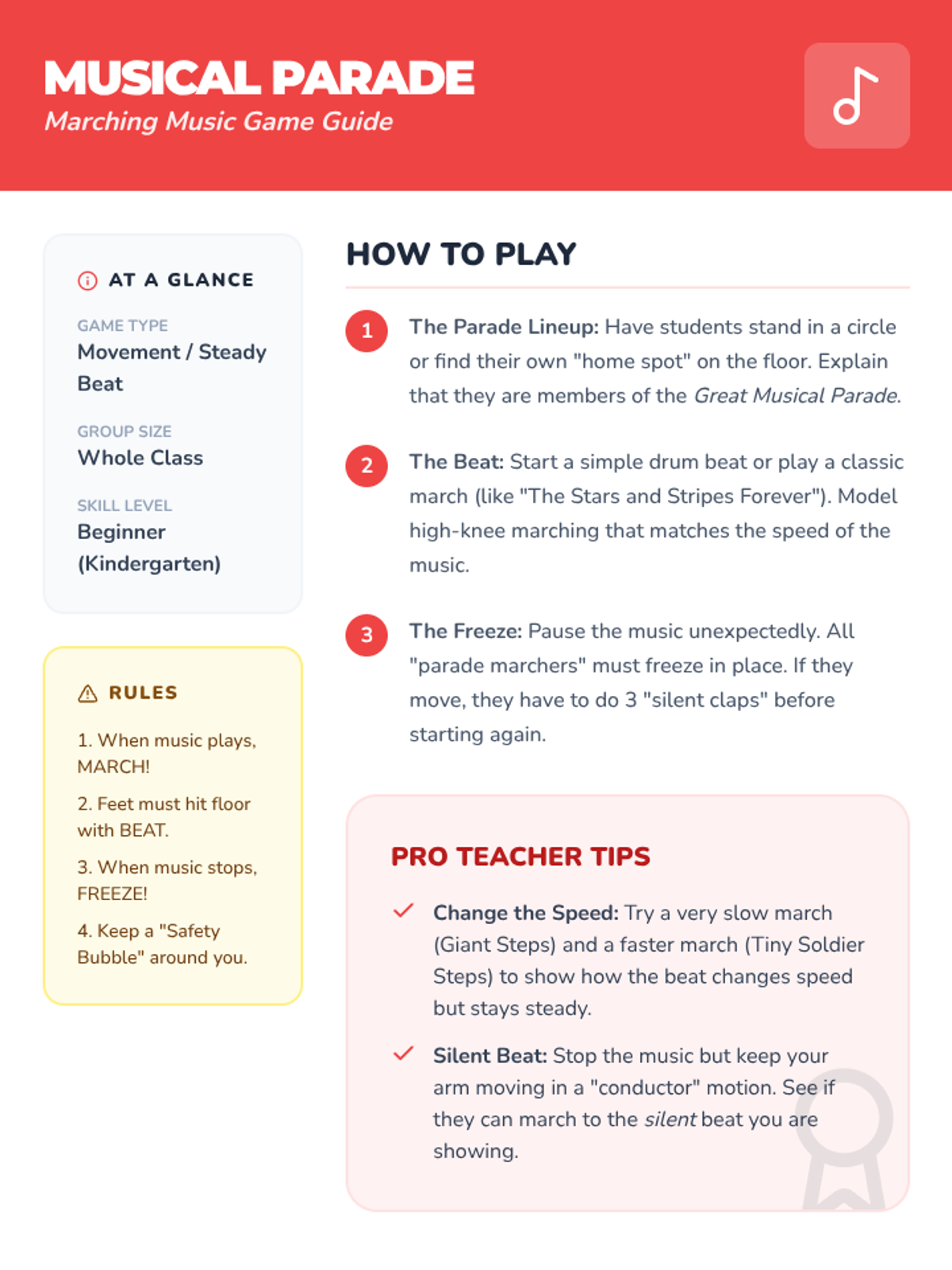
A teacher guide for a marching game that helps students practice following a steady beat and reacting to musical pauses.
Engaging slides for Lesson 6, explaining the concepts of echoes and call-and-response through mountain metaphors and 'The Call' vs 'The Response' visuals.
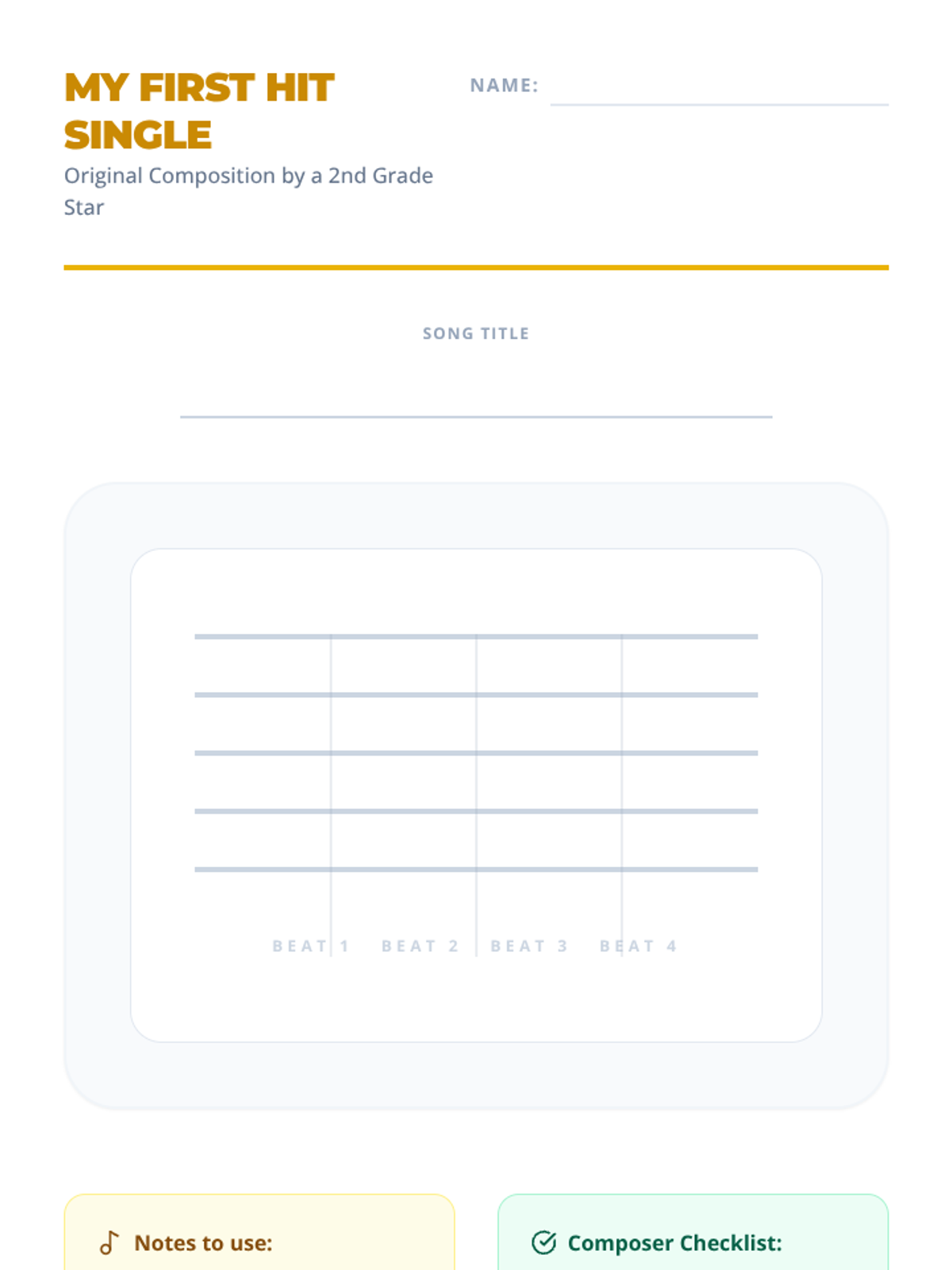
A student worksheet for composing and notating a short melody using the pitches So, Mi, and La on a musical staff.
Fun and visual slide deck for Kindergarten musical games, focusing on "Rhythm Chasers" (Duck Duck Goose variation) and "Hot Potato".
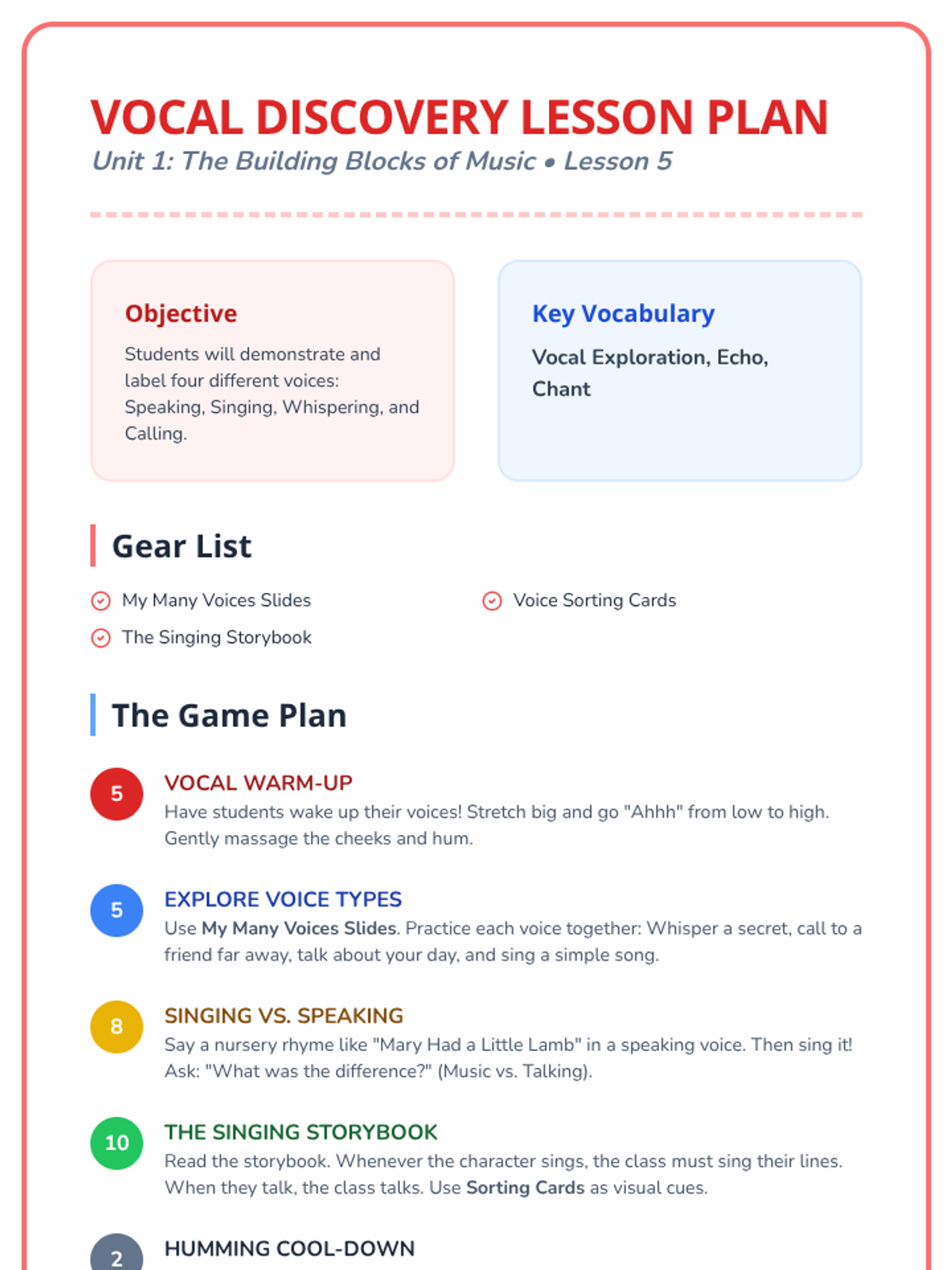
A lesson plan for exploring different vocal qualities (singing, speaking, whispering, shouting) through interactive storytelling and practice.
A visual presentation to introduce Japanese numbers 1-10. Includes kanji, romaji, pronunciation guides, and a rhythmic ninja-themed chant with movements.
1/14
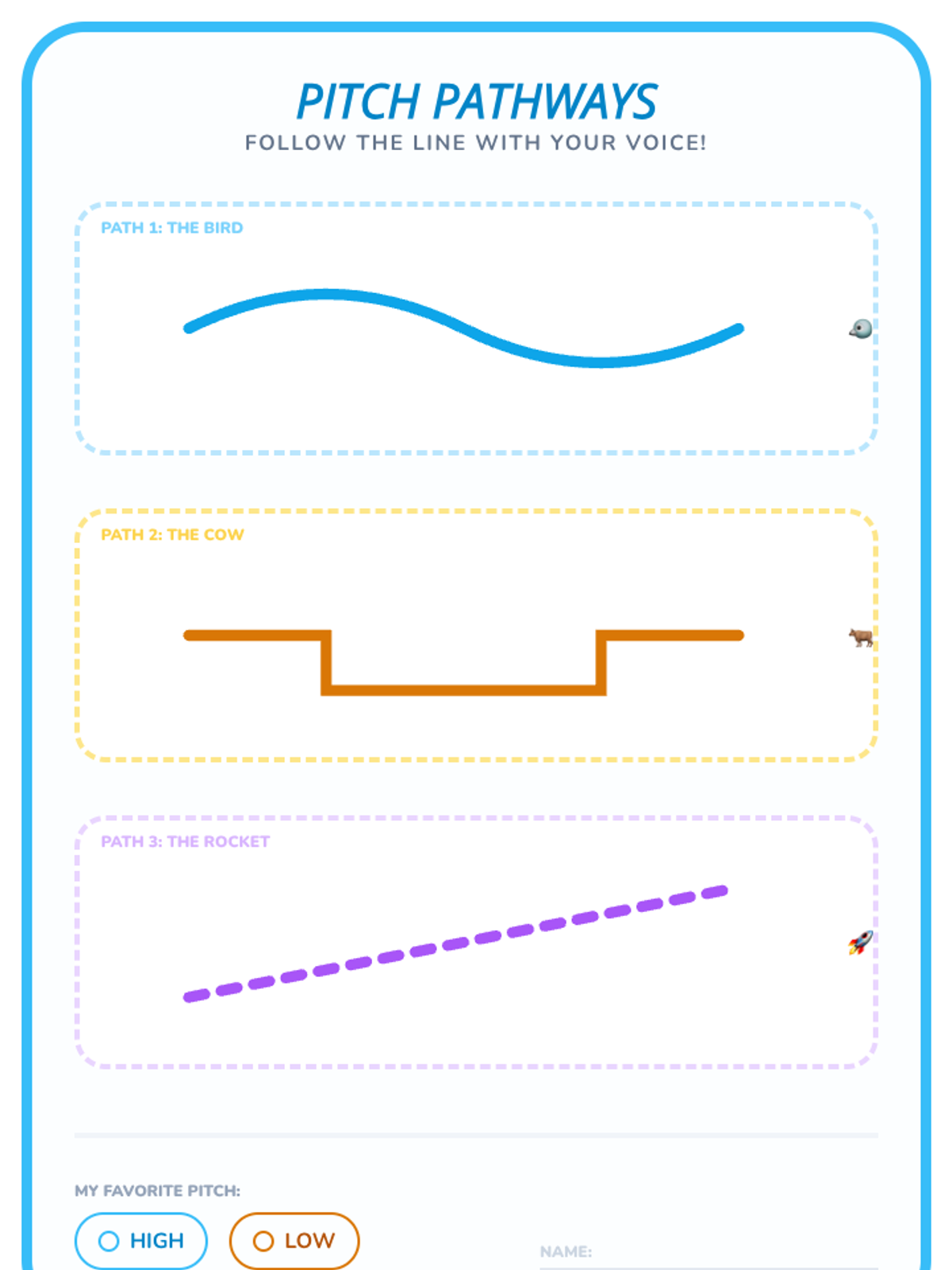
A vocal exploration worksheet where students follow graphic notation paths with their voices to practice high and low pitch.
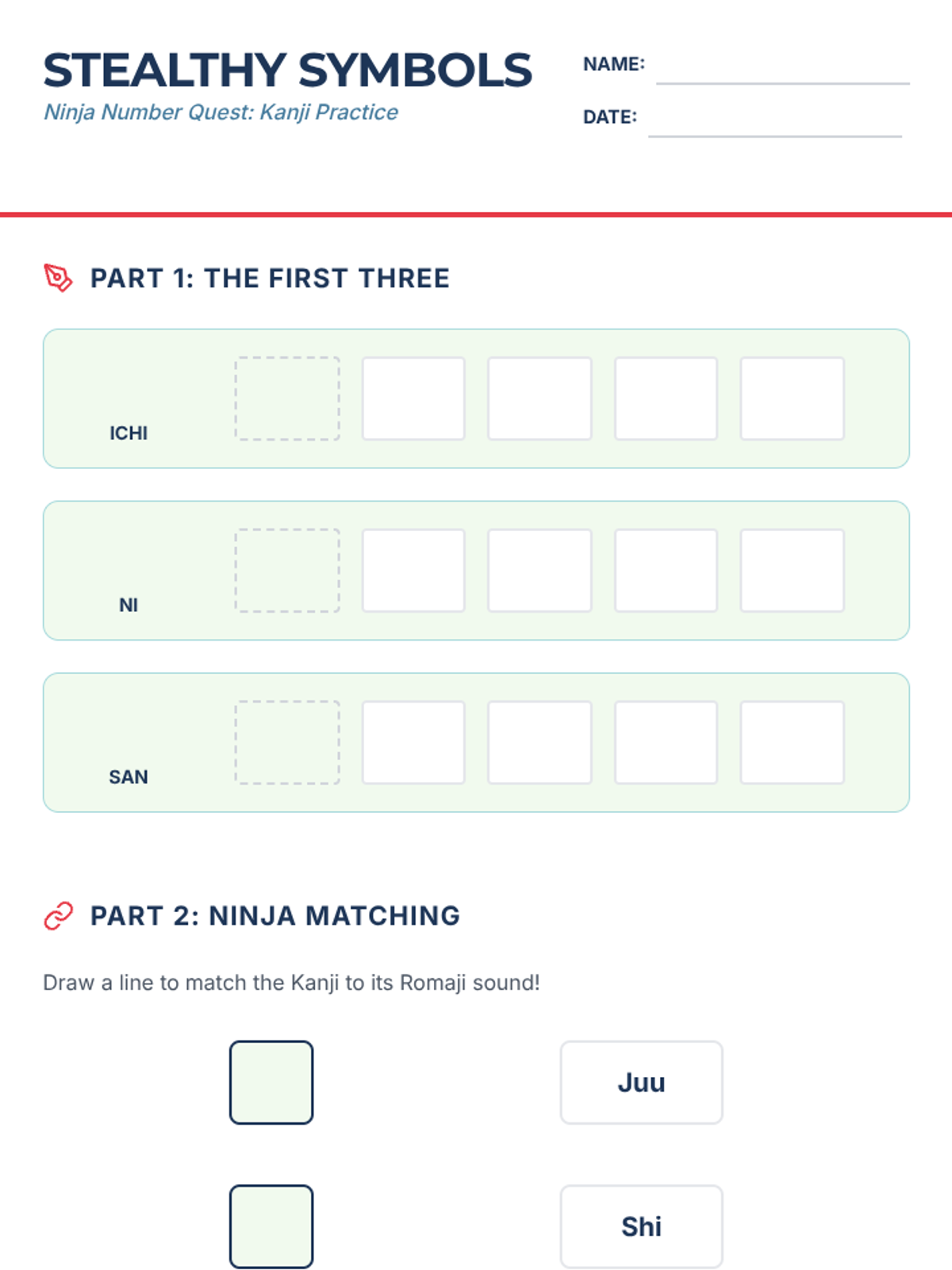
A student worksheet for practicing Japanese number kanji (1-3) and matching exercises for 4-10. Includes a counting assessment at the end.
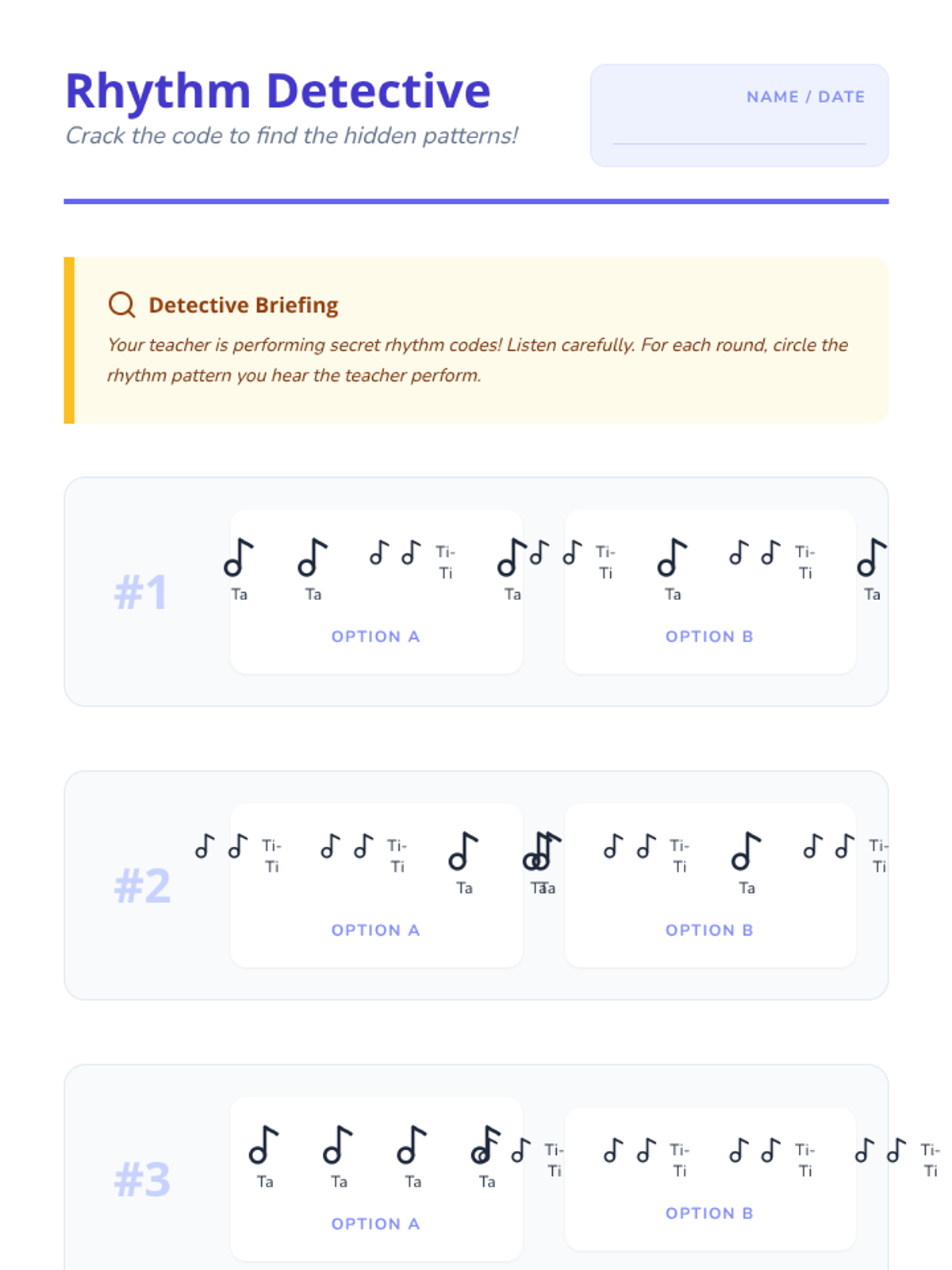
A rhythm identification game for 2nd graders where they listen to a pattern performed by the teacher and identify the correct rhythmic notation.
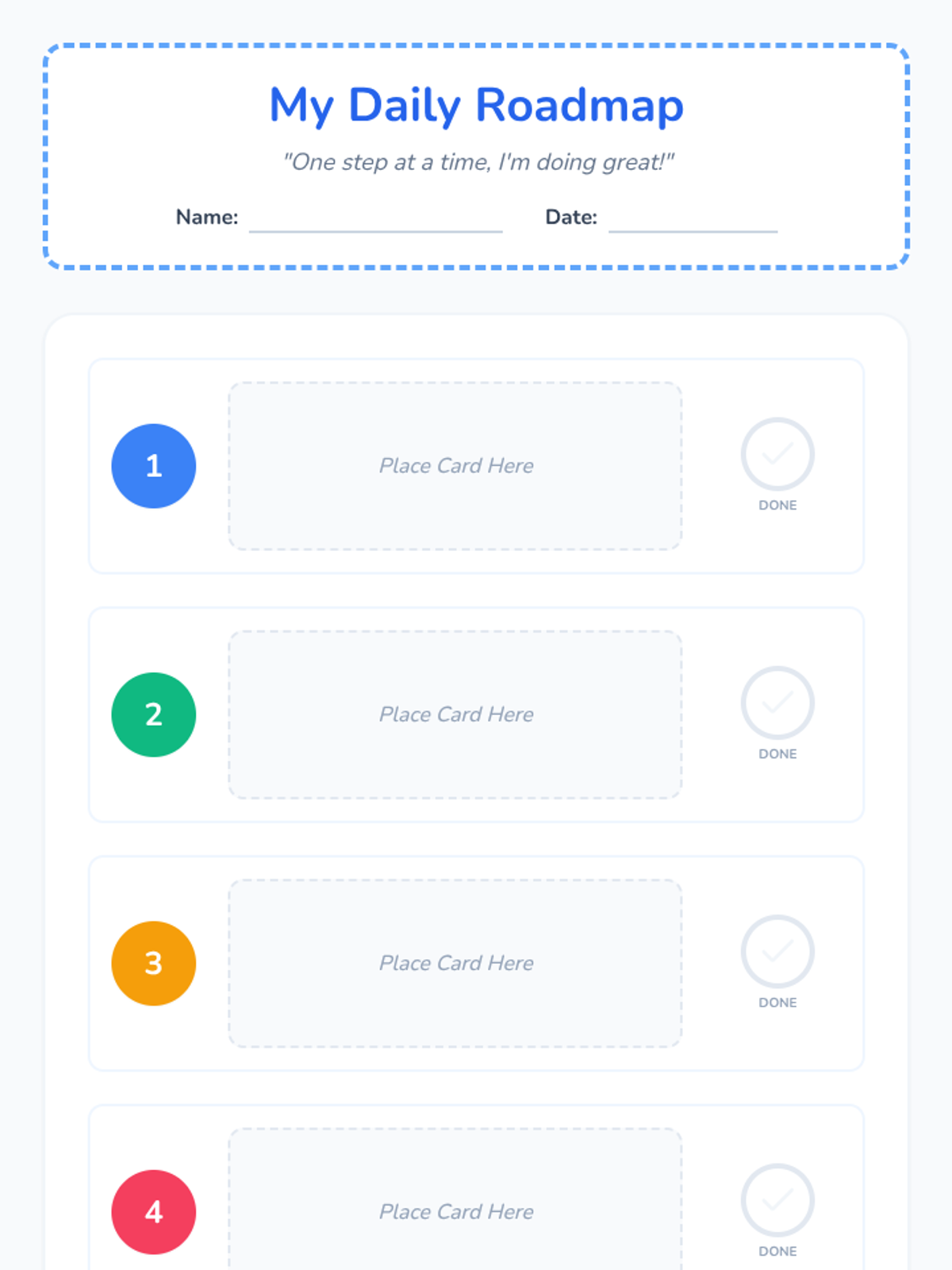
A base schedule board for students to organize their daily routine cards, featuring five numbered slots and check-off circles.
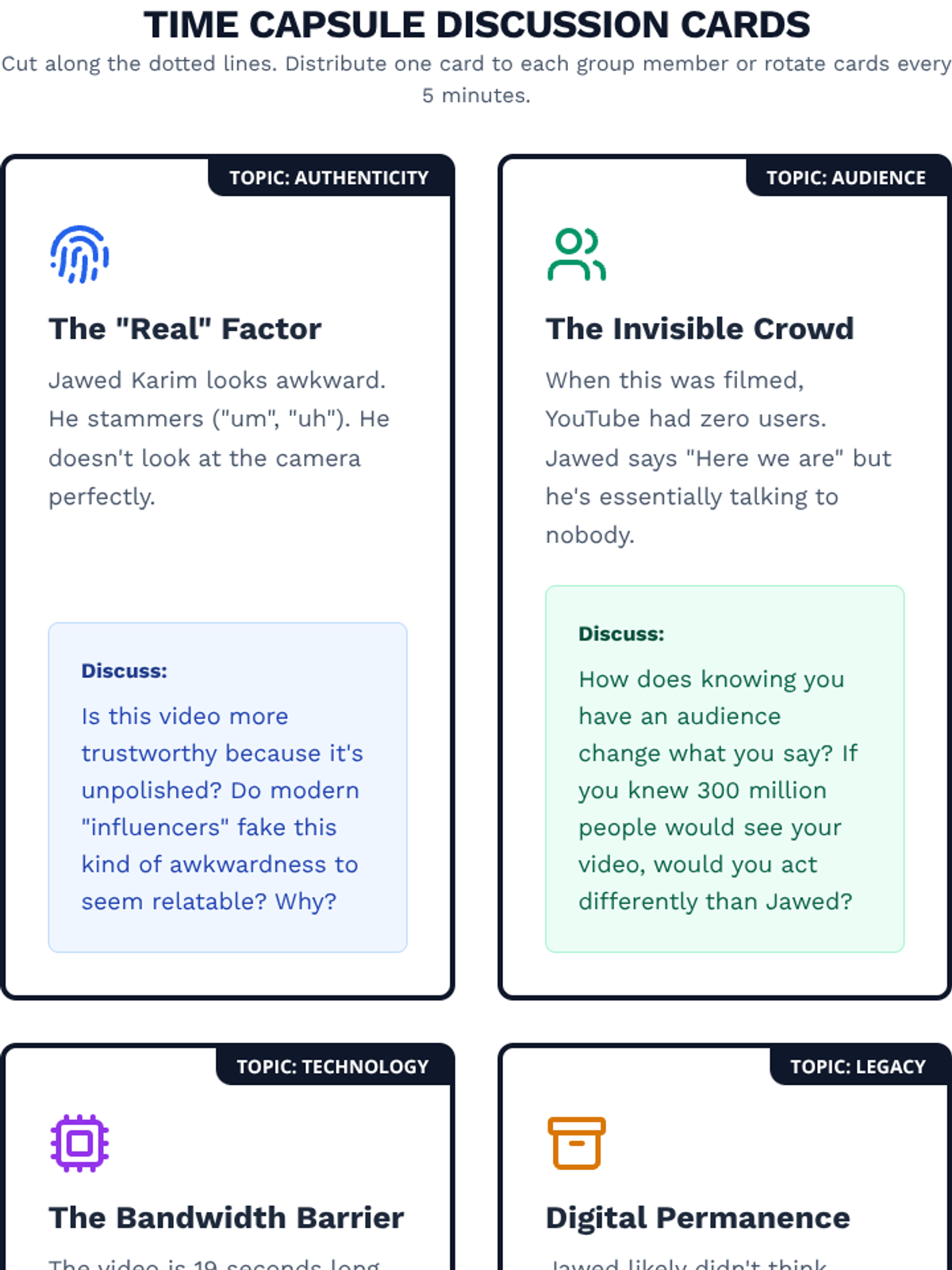
Printable discussion cards with prompts focusing on authenticity, audience, technology constraints, and digital legacy to facilitate small group conversations.
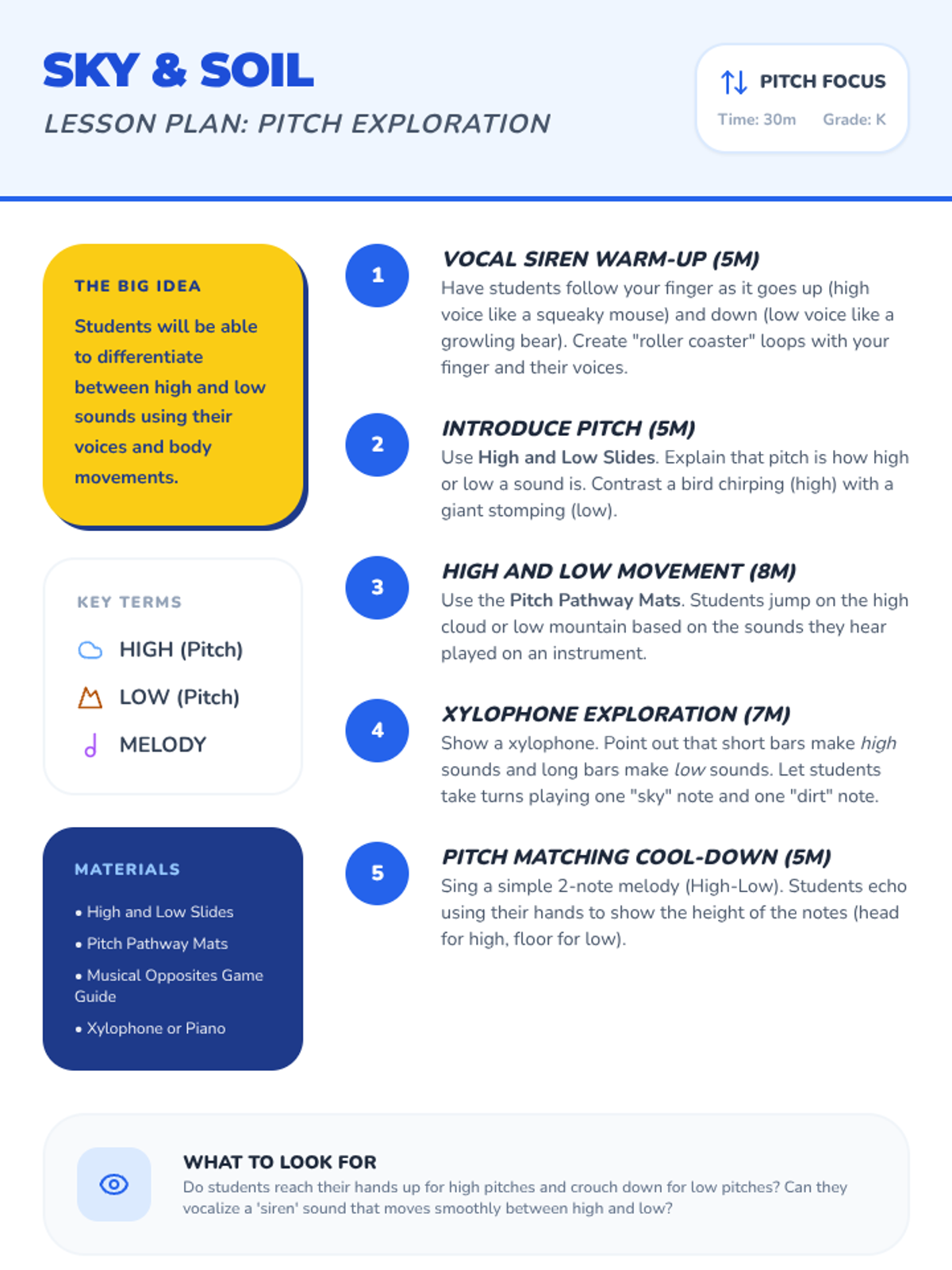
A Kindergarten music lesson plan focused on pitch, using movement and vocalization to explore high and low sounds.
Visual presentation for the final concert showcase, focusing on performance etiquette and celebration.
Slides introducing high and low pitch using sky and ground imagery, and showing how xylophone bars relate to pitch.
A 5-slide visual discussion starter for graduate-level literary analysis and creative writing. It uses a minimalist icon to explore themes of authorial restraint, reader projection, and the 'iceberg theory' of narrative.
1/15