Student activity sheet for the MVP Challenge, including brainstorming sections for app concepts and a storyboard blueprint for their first "test video."
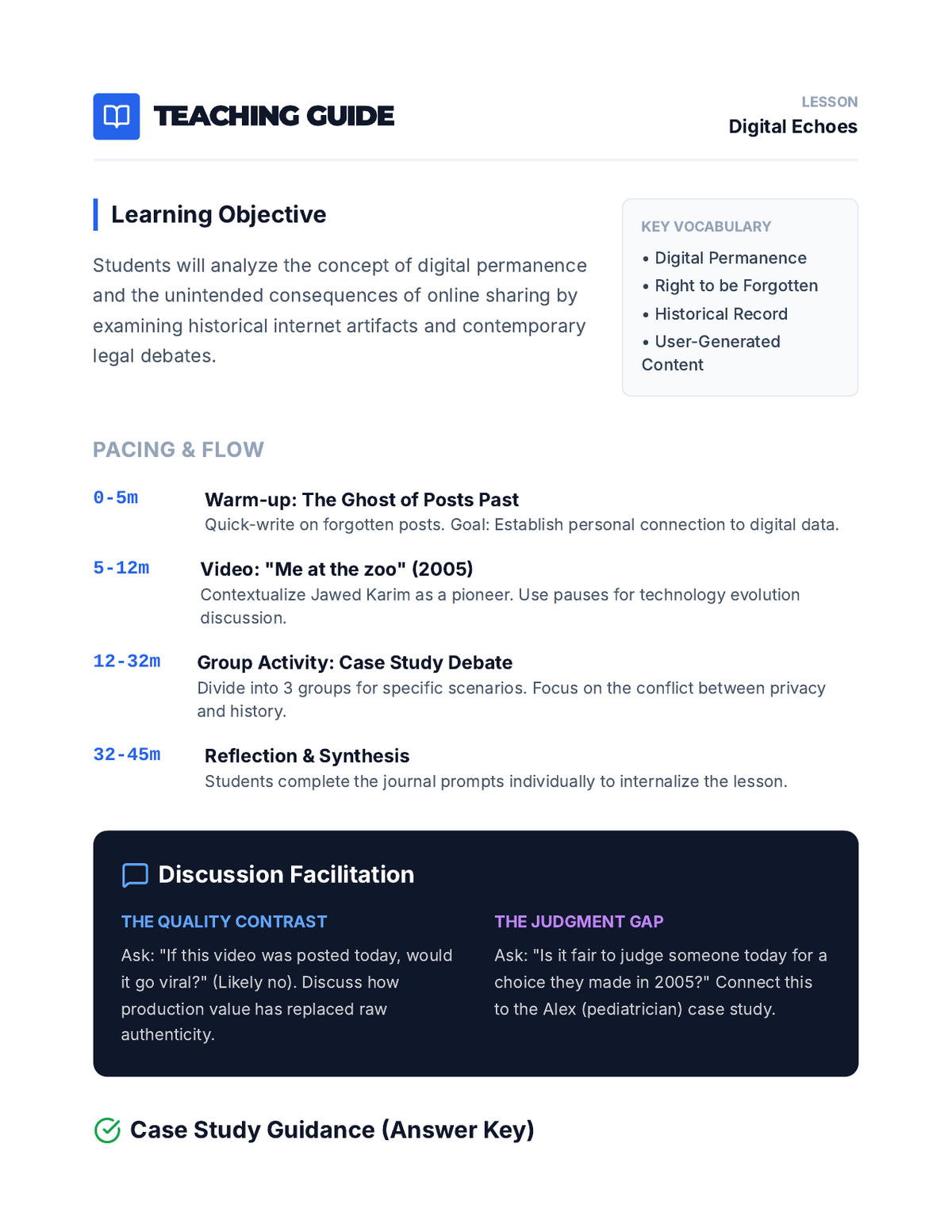
A comprehensive teacher resource providing pacing, discussion anchors, and suggested responses for the 'Digital Echoes' lesson. Includes specific guidance for facilitating the case study debates and differentiation strategies.
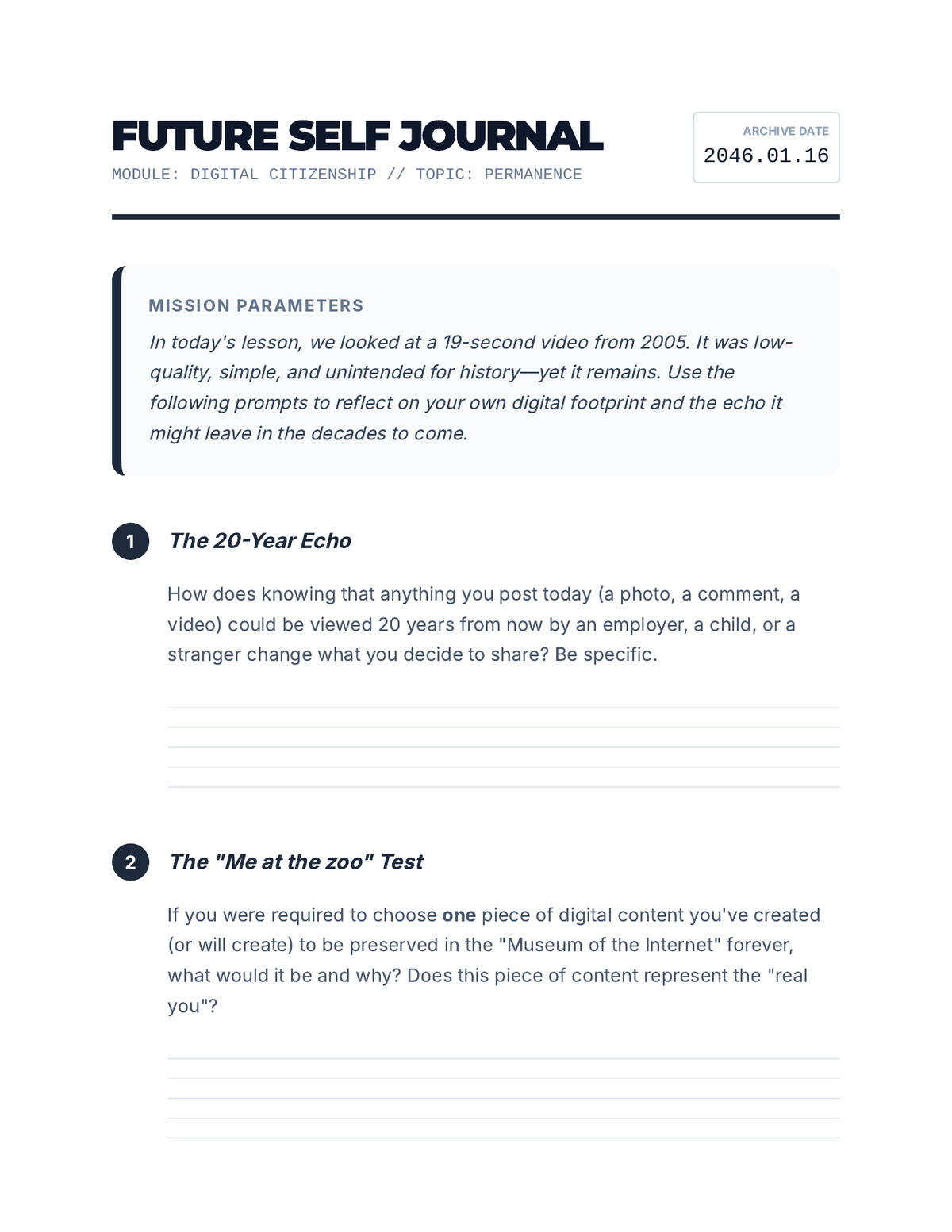
A reflection journal for students to contemplate their personal digital legacy. Features three deep-thinking prompts focused on long-term impact, personal identity, and the ethics of the 'Right to be Forgotten'.
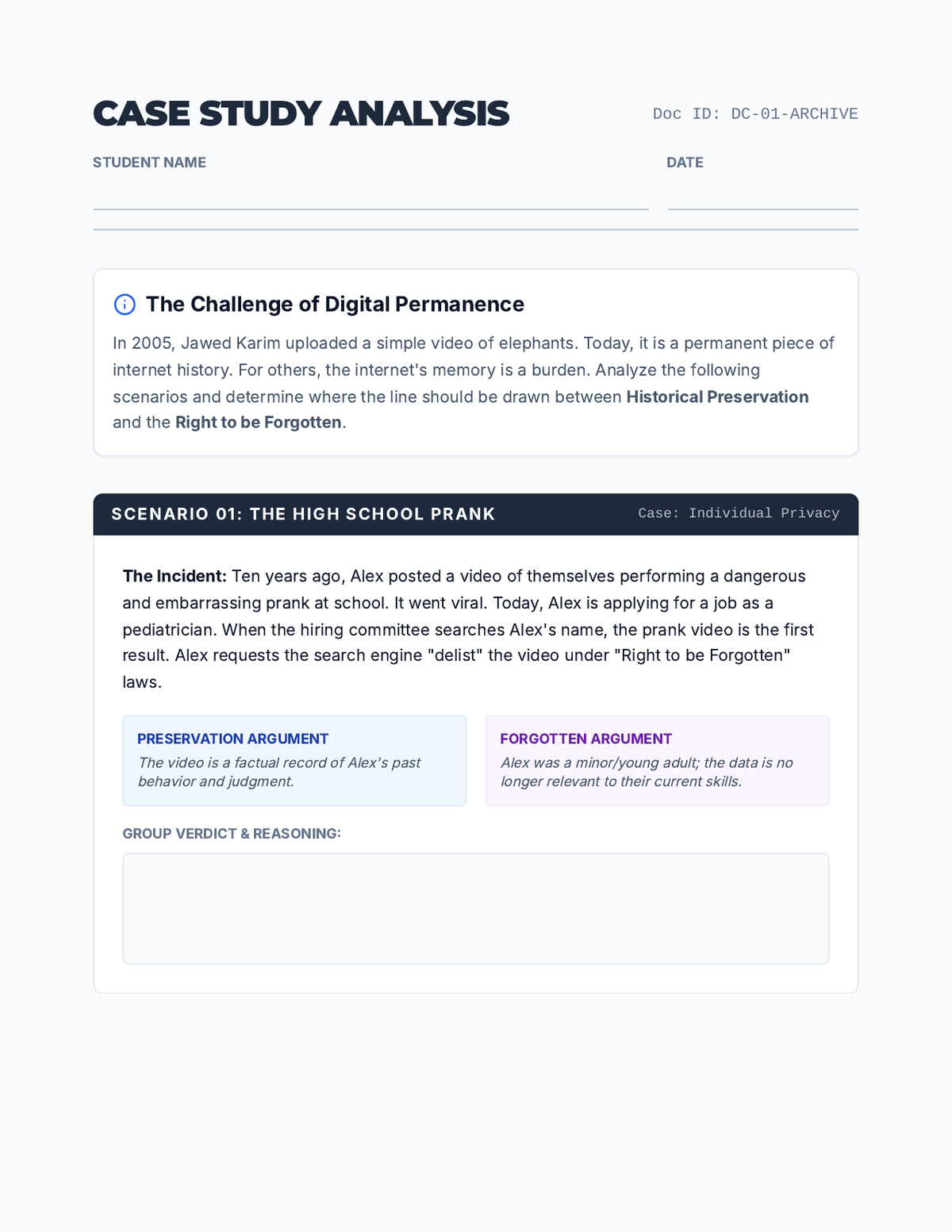
A structured student worksheet featuring three distinct case studies on digital permanence, encouraging debate between individual privacy and historical preservation. Includes space for group verdicts and a summary 'permanence scale' activity.
A sleek, tech-themed slide deck exploring digital permanence using the first YouTube video, 'Me at the zoo', as a primary case study. Features high-contrast visuals, discussion anchors, and a professional 'Digital Archive' aesthetic.
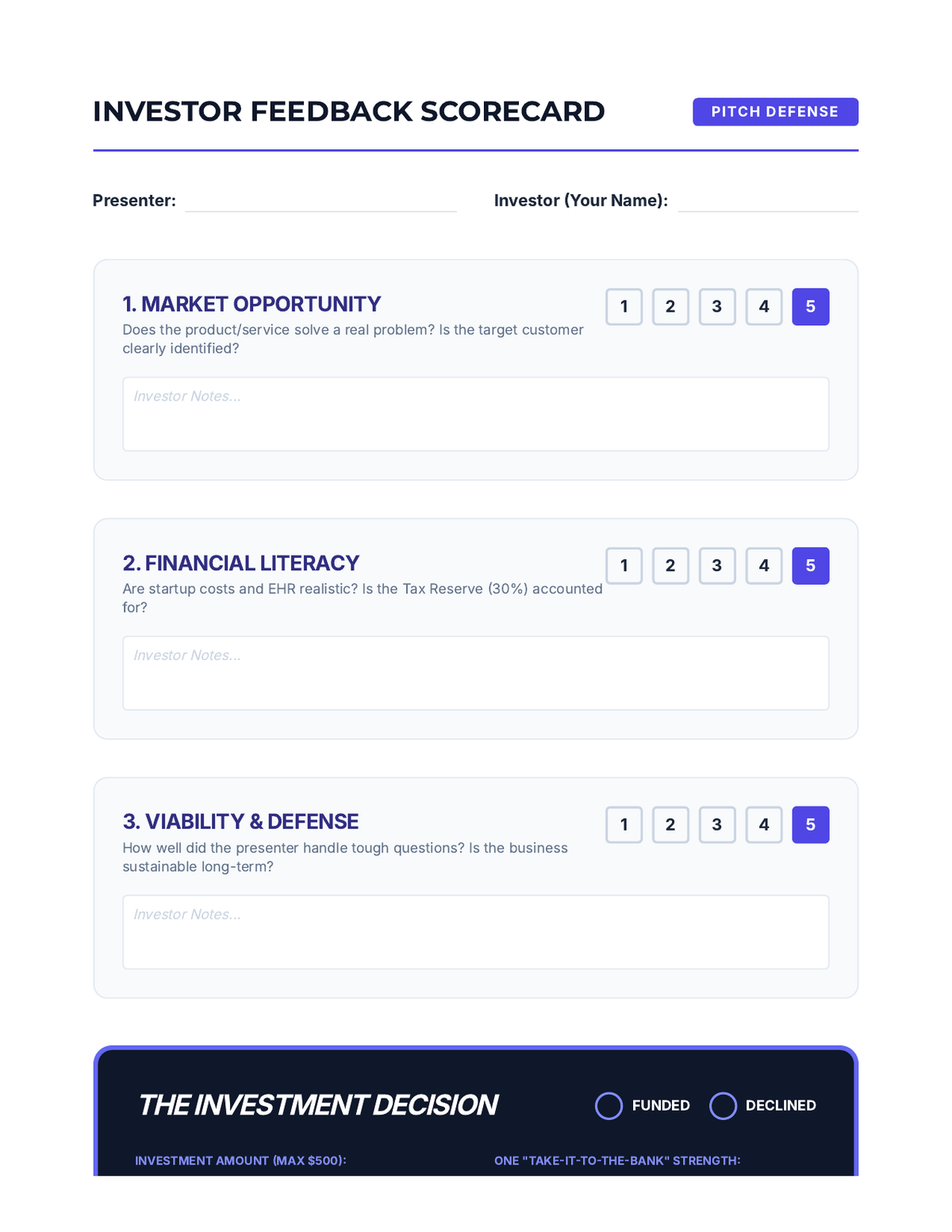
Student peer-assessment scorecard for the Lesson 5 capstone pitch, used by "investors" to evaluate market opportunity, financial literacy, and business viability.
Presentation slides for Lesson 5, framing the "Shark Tank" style pitch day, defining the investor role, and providing tough Q&A prompts for the viability defense.
Visual presentation for Lesson 4: understanding 1099 taxes, self-employment tax obligations, and the power of business deductions.
Visual presentation for Lesson 3: calculating effective hourly rate, understanding non-billable labor, and evaluating opportunity cost in the gig economy.
Visual presentation for Lesson 2: calculating startup costs, distinguishing between one-time and recurring overhead, and understanding the break-even point.
Visual presentation for Lesson 1: identifying marketable skills, introduction to the gig economy, and the SWOT analysis framework for side hustles.
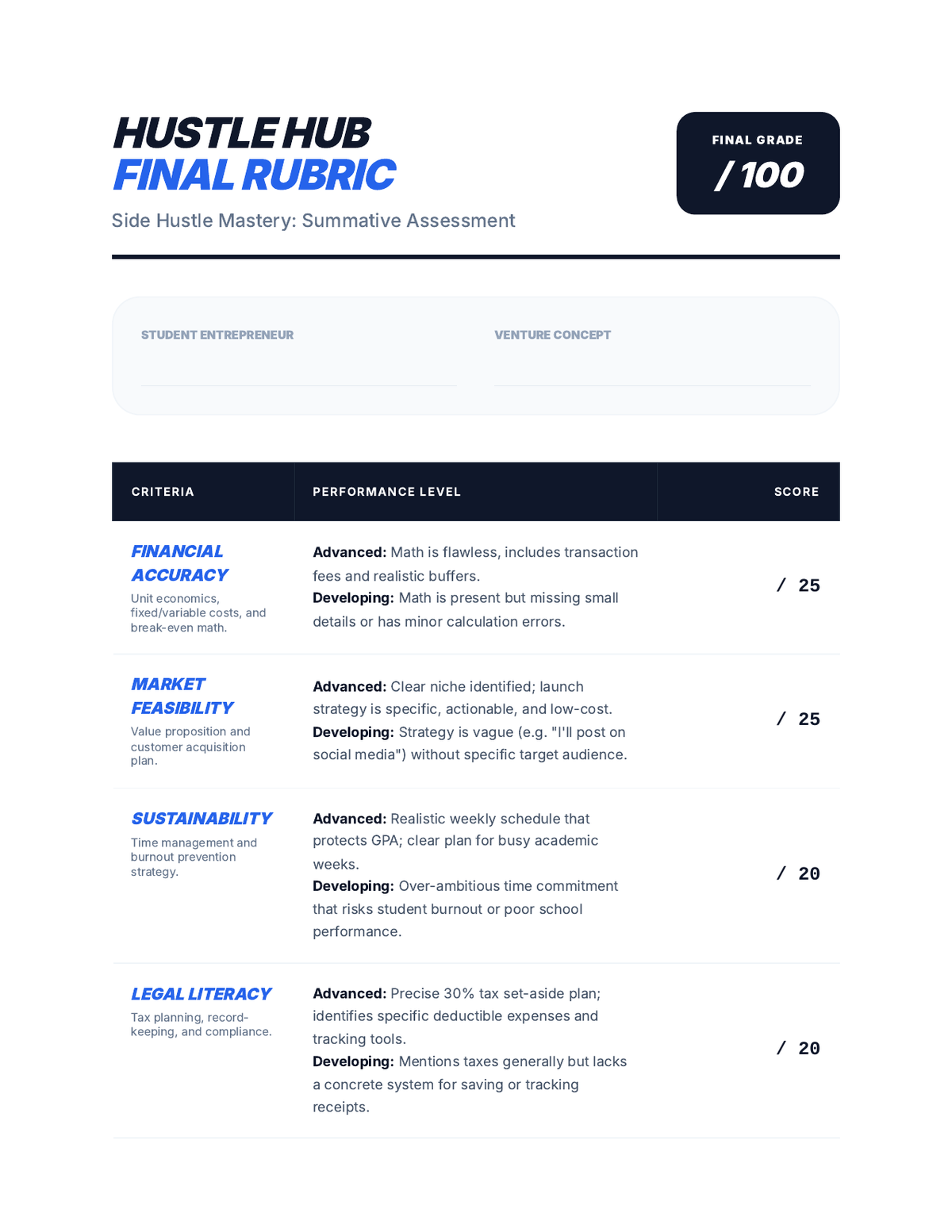
A professional 1-page grading rubric for the final business proposal assessment, covering financial accuracy, feasibility, sustainability, legal literacy, and refinement.
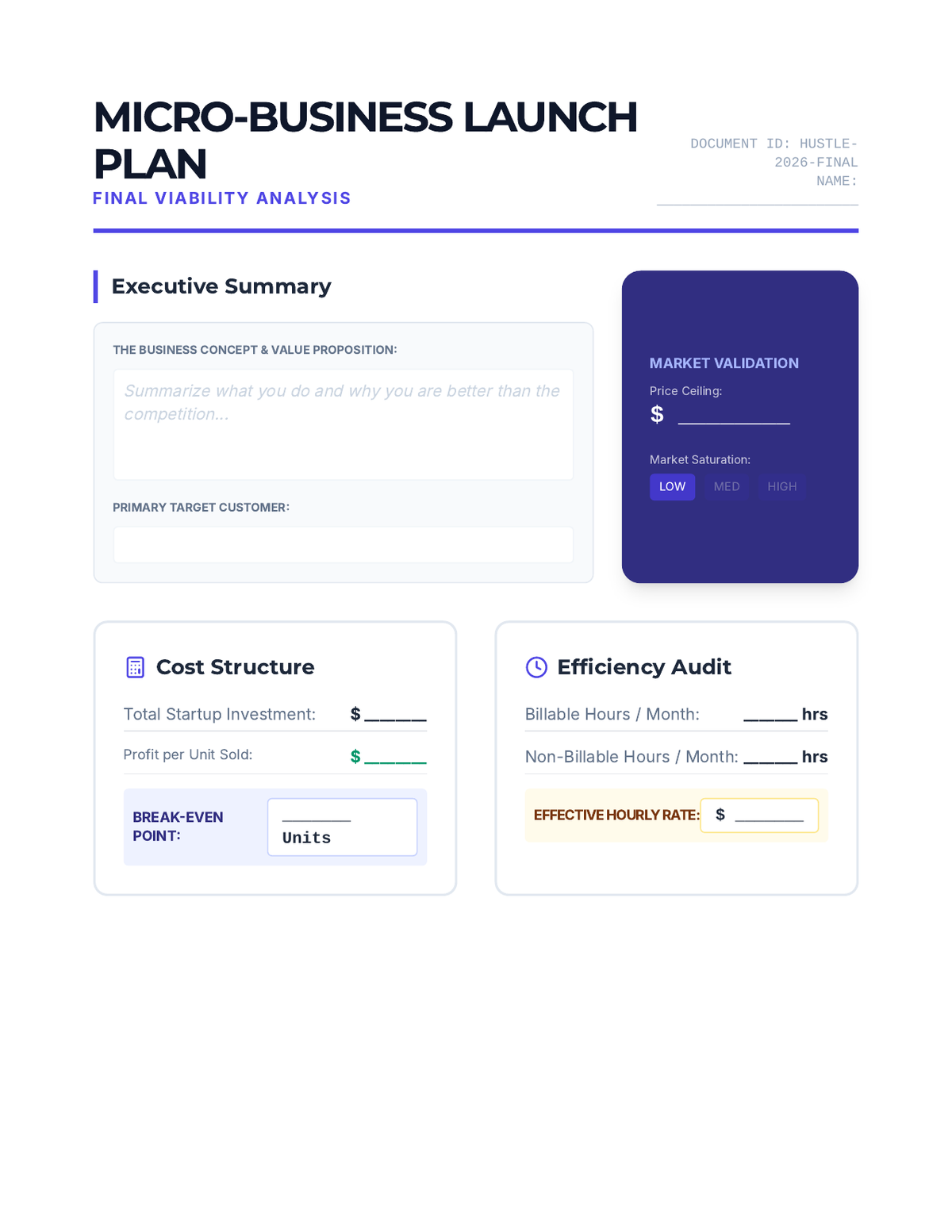
Capstone student document for Lesson 5: a comprehensive one-page business plan synthesizing financial, market, and time-management data for their side hustle concept.
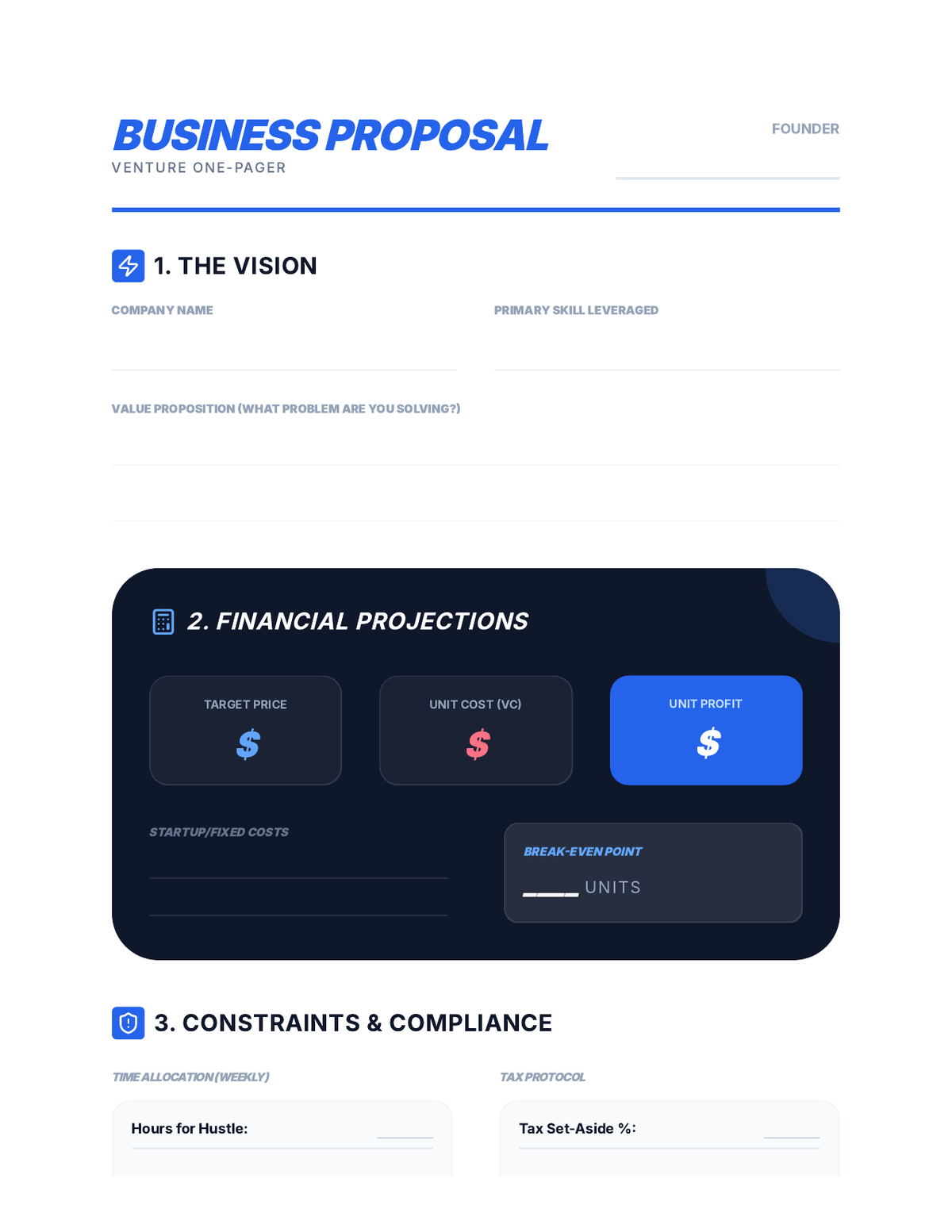
A 2-page student worksheet for the final lesson. Students use this template to develop a professional one-page business proposal and participate in a peer-review session.
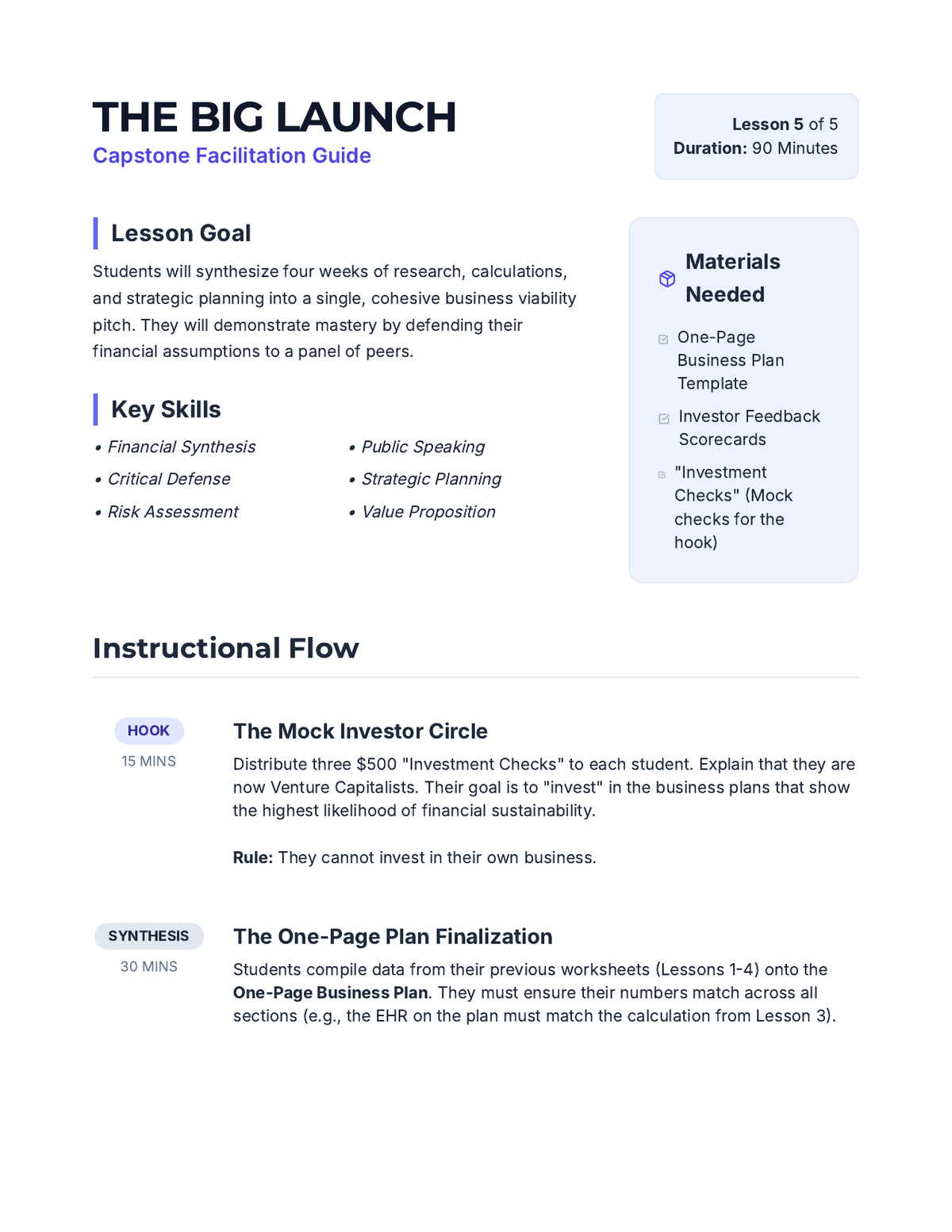
Teacher facilitation guide for Lesson 5, including the mock investor hook, pitch defense instructions, and final debrief prompts.
A 5-slide visual presentation for Lesson 5, introducing the one-page business proposal and guiding the final pitch and peer-review session.
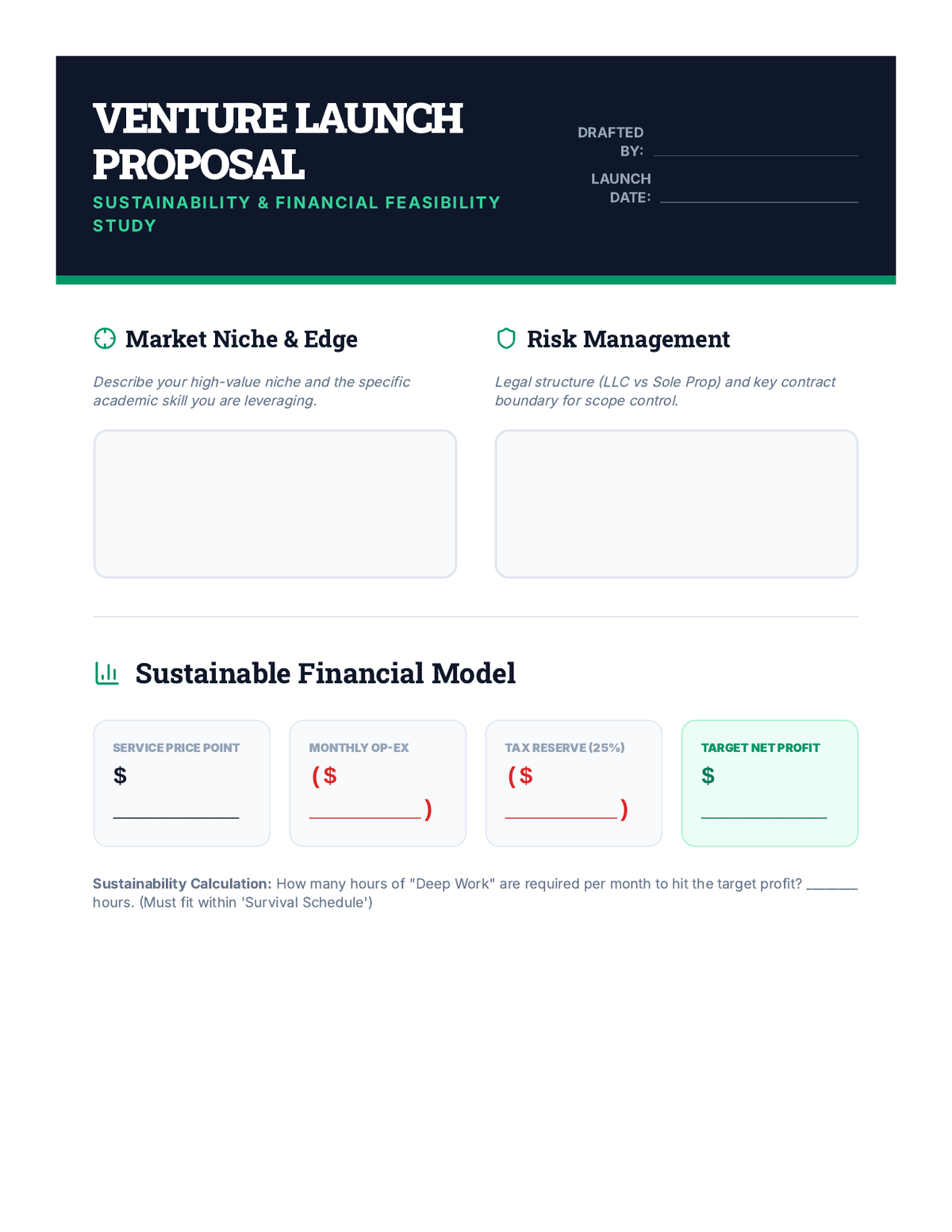
The capstone project template for 'Hustle Logic'. This comprehensive launch proposal requires students to synthesize financial, legal, and operational planning into a 90-day strategy. Includes a peer audit section.
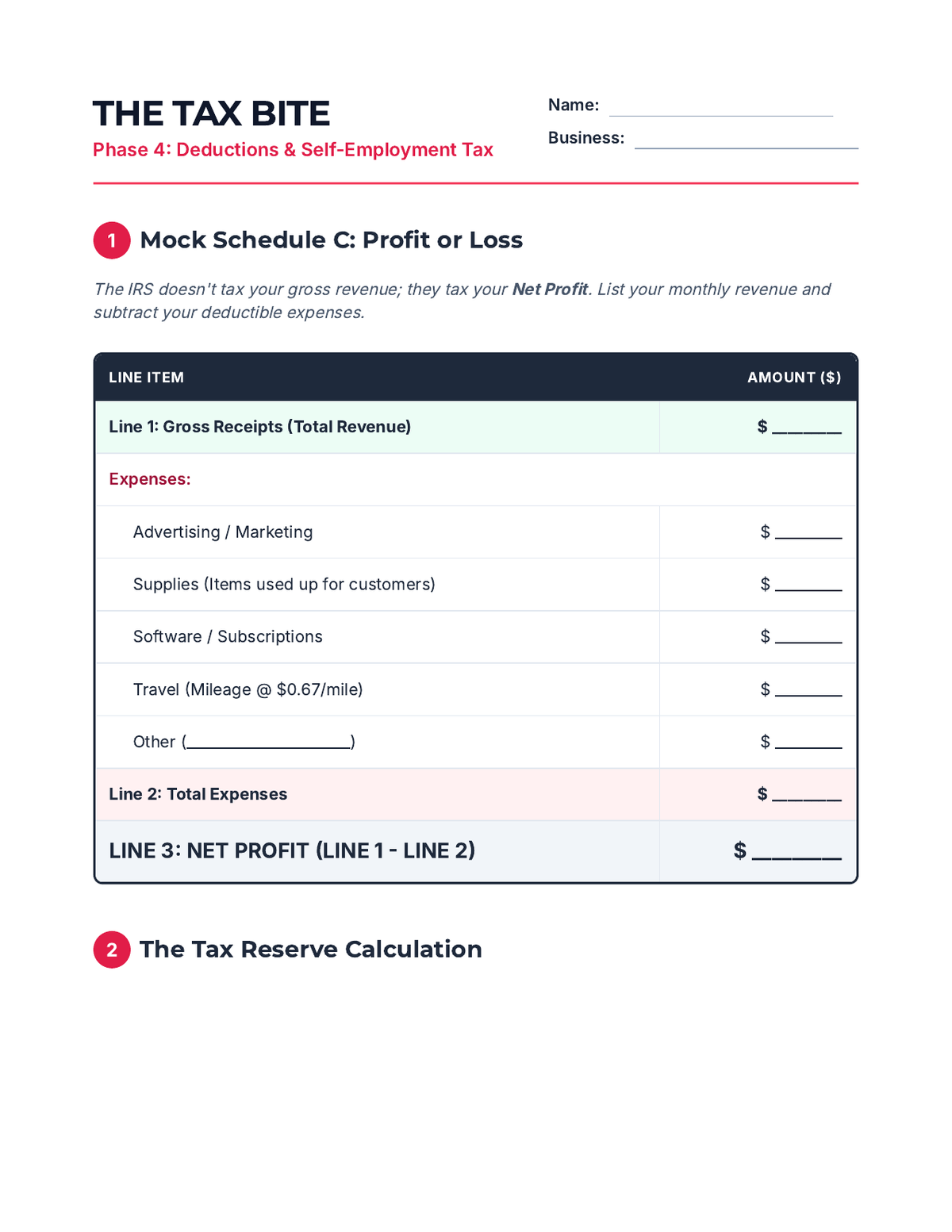
Student worksheet for Lesson 4, featuring a simplified mock Schedule C for calculating net profit and a tax reserve calculator to estimate actual take-home pay.
Slide presentation for the final lesson 'Launch Blueprint'. Guides students through synthesizing their learning into a 3-pillar launch strategy (Profit, Risk, Flow) and prepares them for a peer 'Sustainability Audit'.
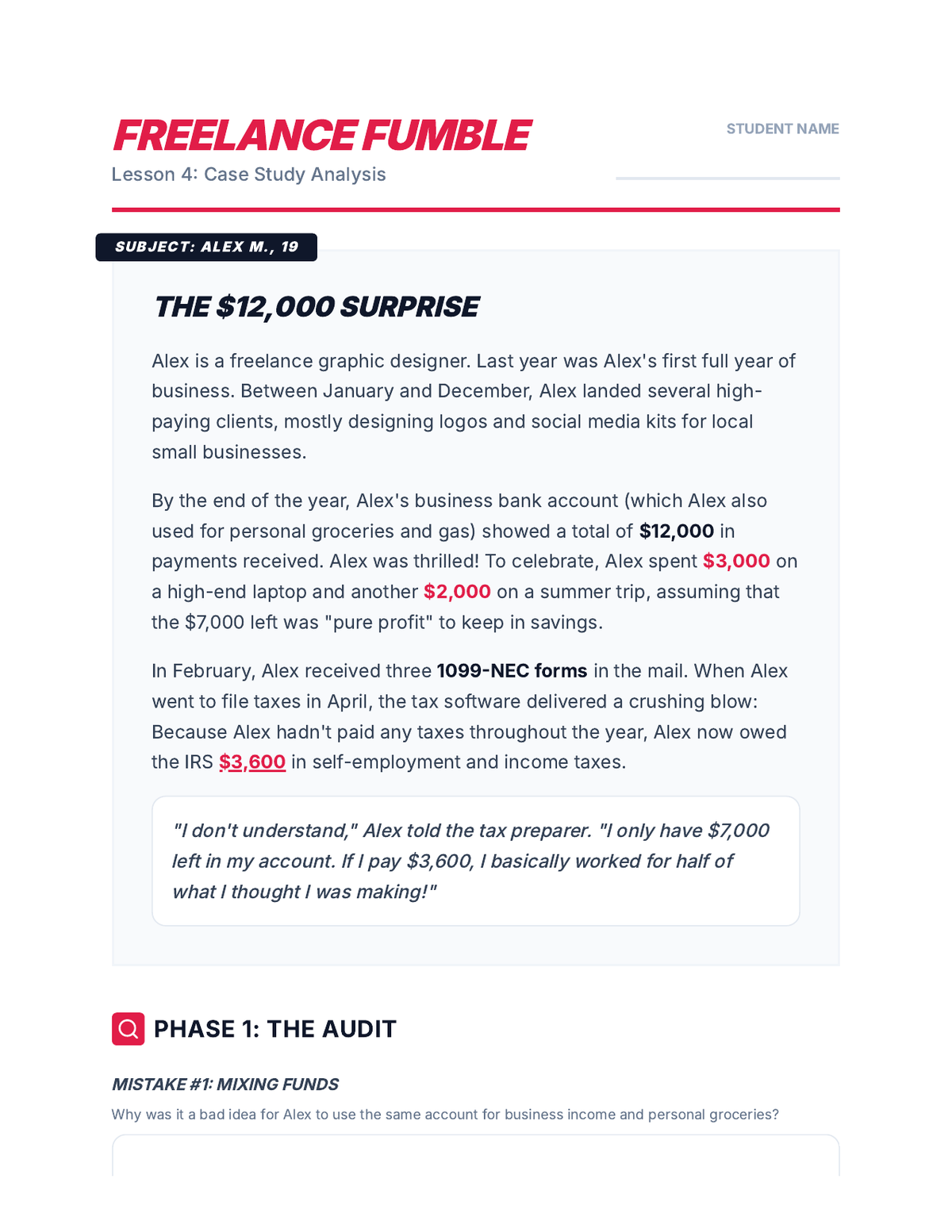
A 2-page case study for Lesson 4 analyzing the financial mistakes of a freelance graphic designer. It includes a narrative, mistake identification, and a student-specific tax planning section.
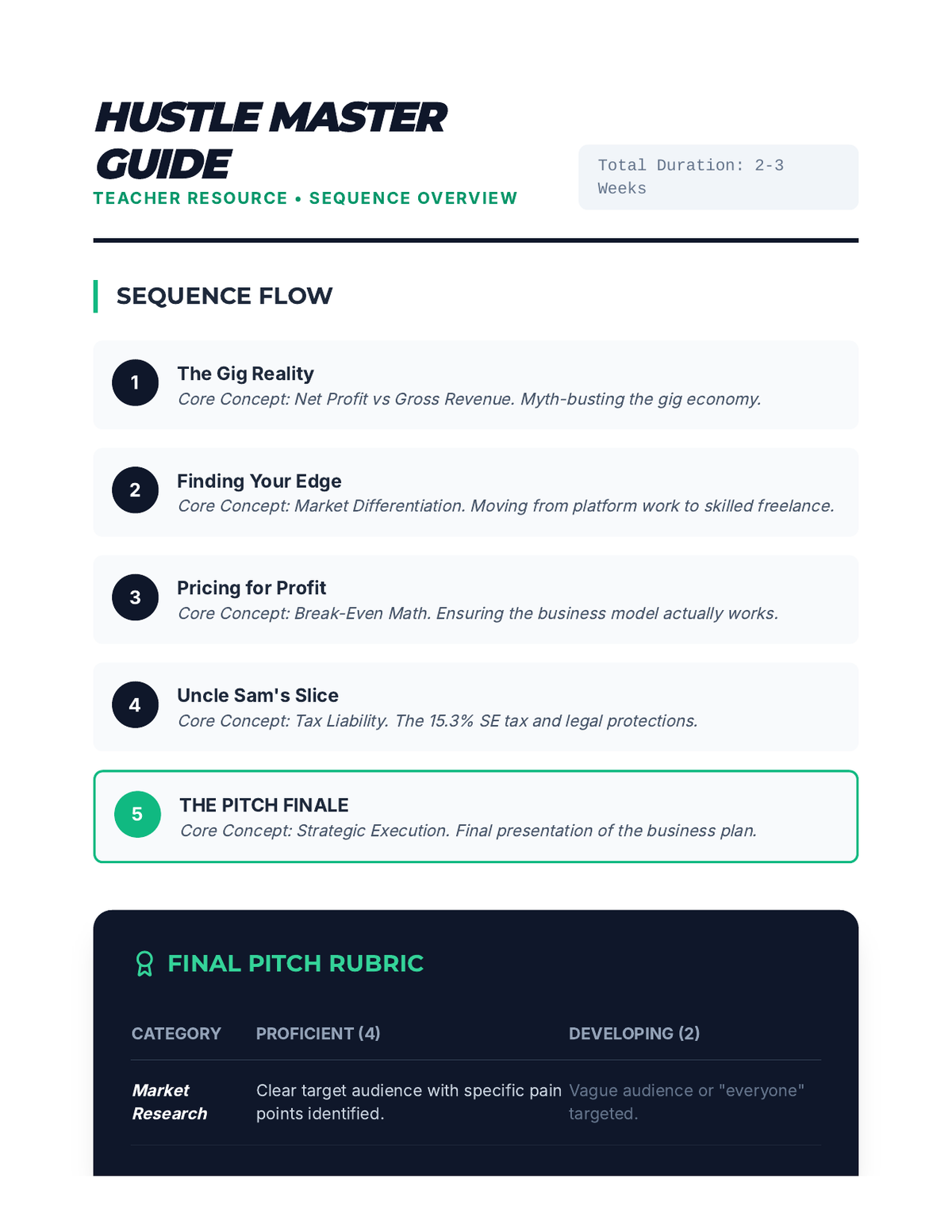
High-level teacher guide for the entire Side Hustle Mastery sequence, including a sequence map, final project rubric, and instructional tips.
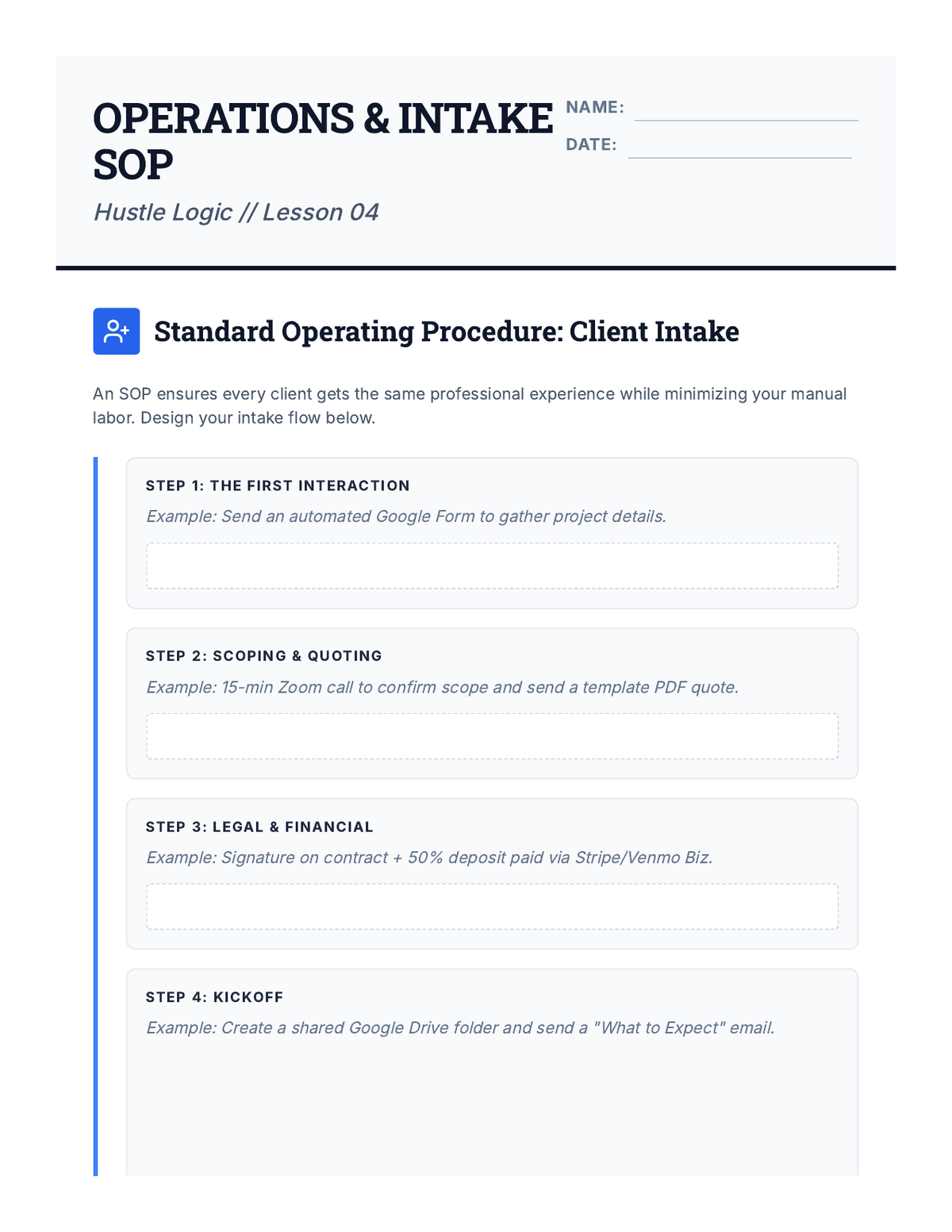
Worksheet for designing a Client Intake SOP and a time-blocked "Survival Schedule" to manage academic and freelance commitments.
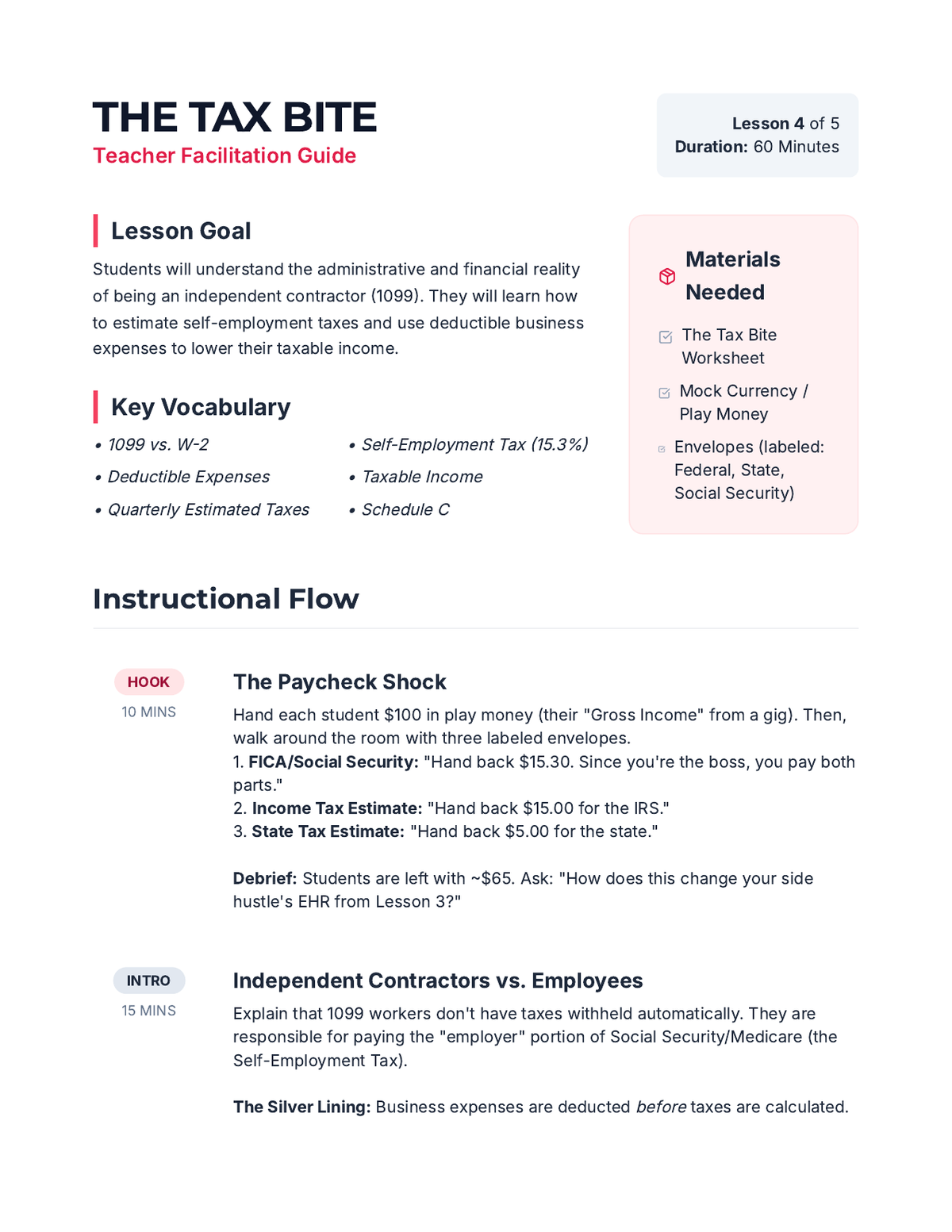
Teacher facilitation guide for Lesson 4, focusing on 1099 taxes, self-employment tax, and the concept of deductible business expenses.
A 5-slide visual presentation for Lesson 4, focusing on the tax and legal realities of being self-employed.
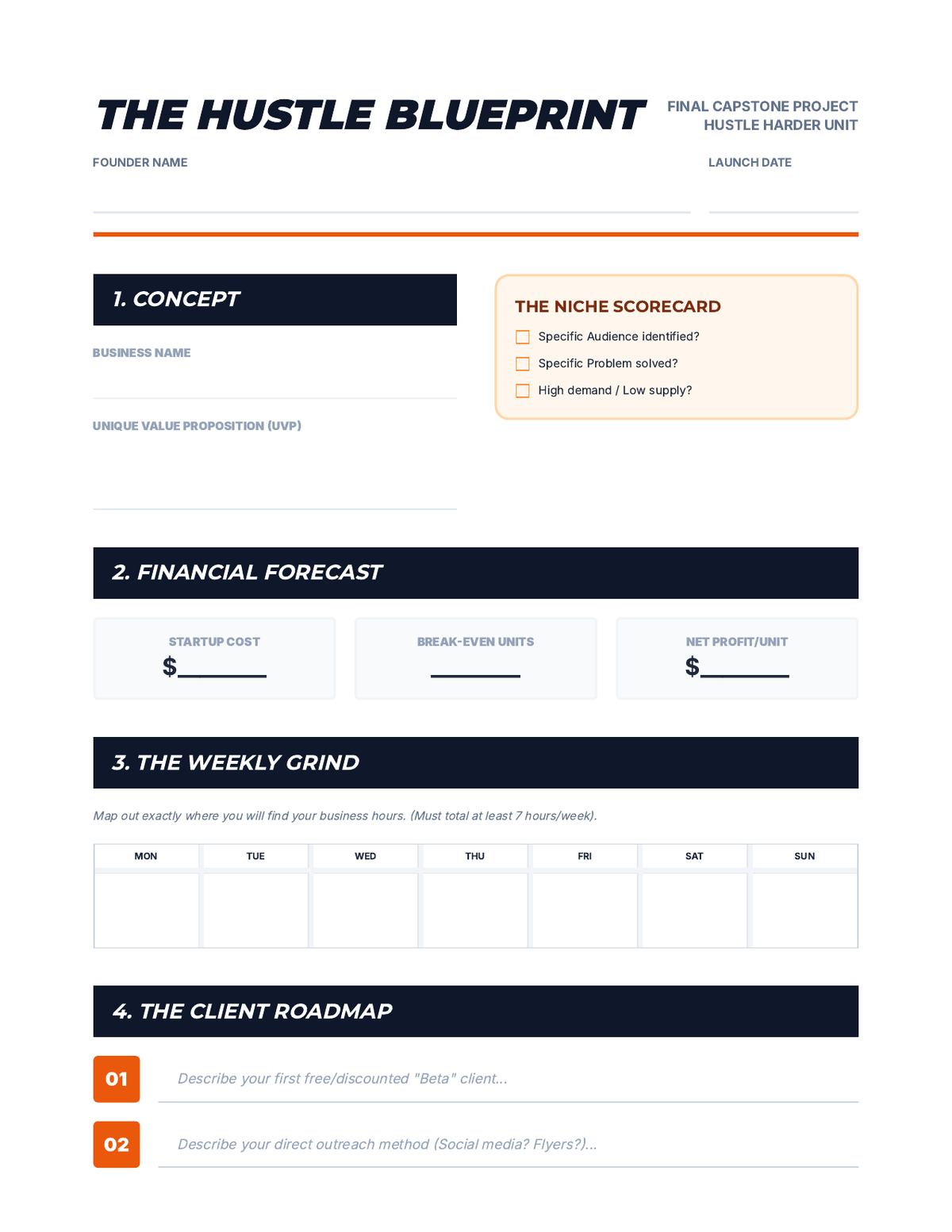
Final project document (Capstone) where students synthesize their business concept, financial forecast, weekly schedule, and client acquisition strategy.
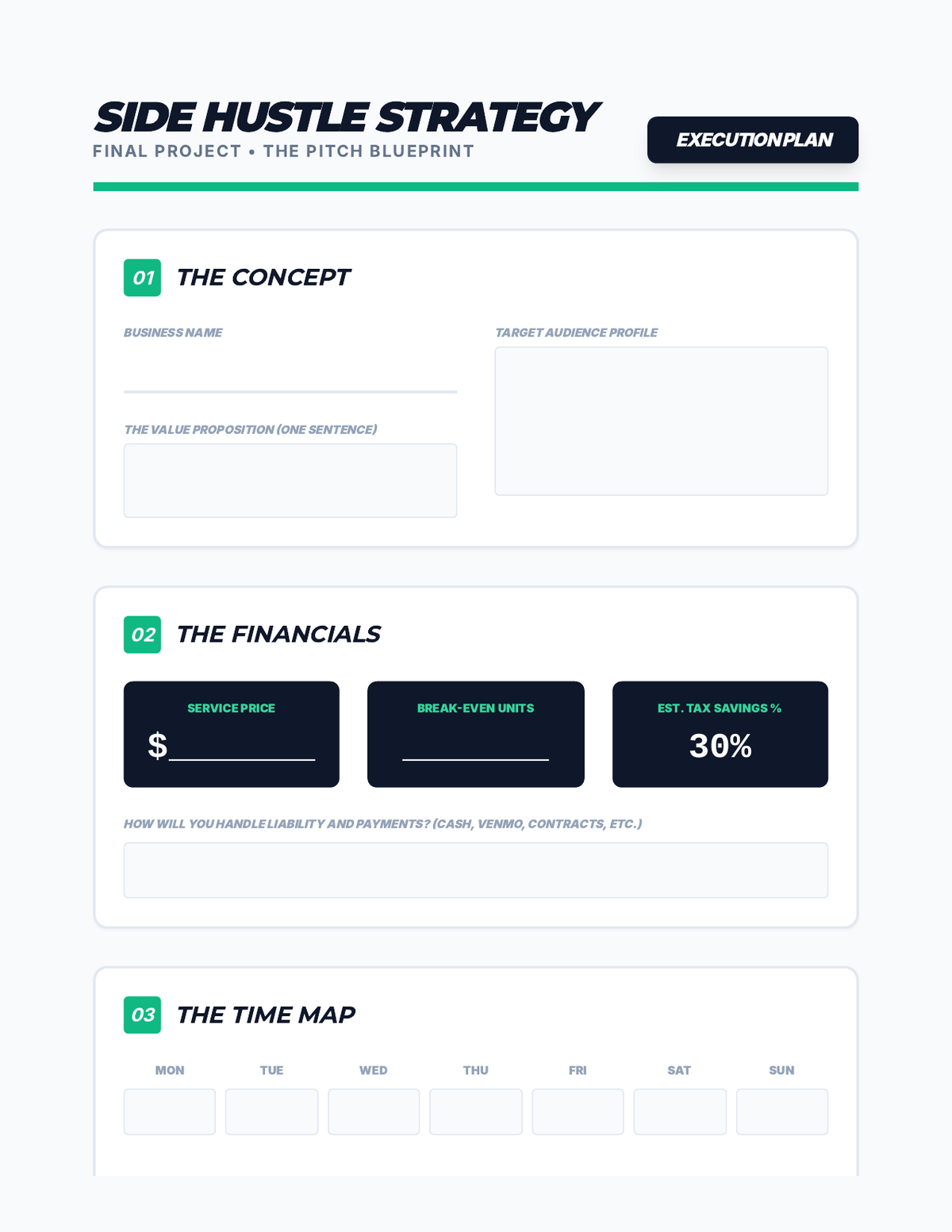
The capstone project document for the sequence, requiring students to synthesize all previous lessons into a final Side Hustle Strategy Plan and Pitch.
Slide presentation for Lesson 04 focusing on operational efficiency. Covers the importance of SOPs, boundary setting, and time-blocking for student entrepreneurs.
Slide deck on time management (time-blocking), efficiency auditing, and low-cost client acquisition strategies.