A visual presentation introducing the solar system and ELA reading strategies for 3rd-grade students.
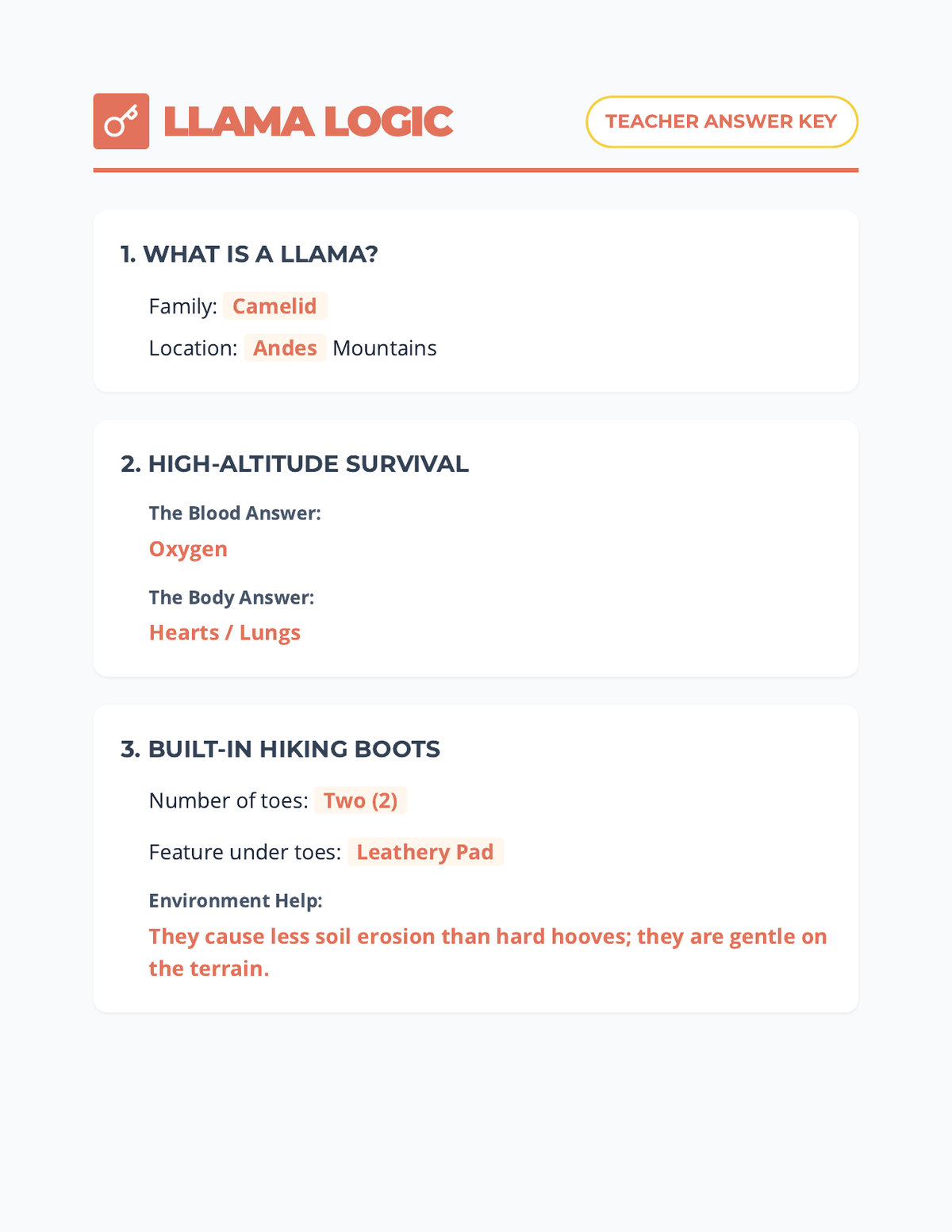
Teacher answer key and instructional guide for the Llama Logic lesson. Revised to ensure headers and content stay together on the same page and to provide a more balanced layout.
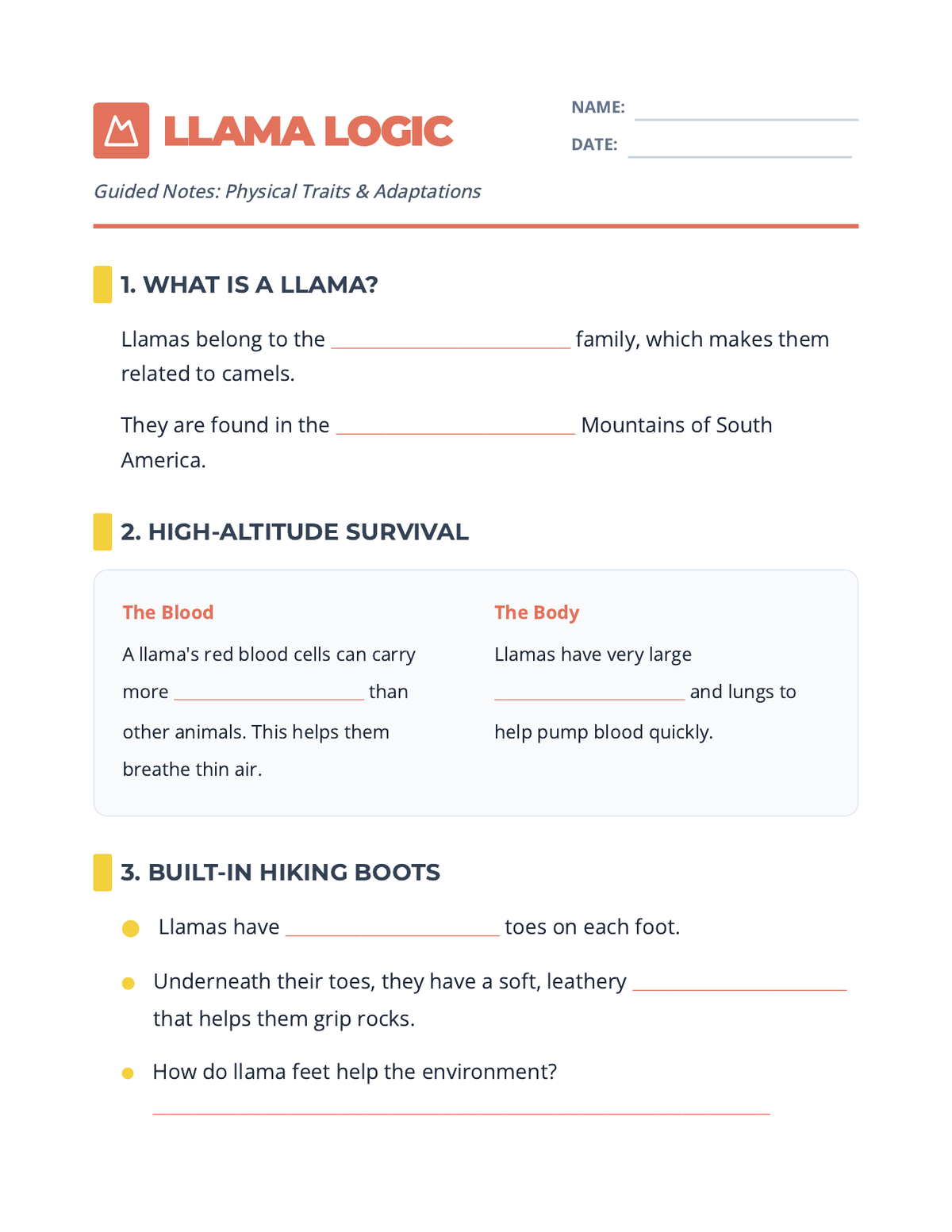
A guided notes worksheet for students to complete during the Llama Logic lesson. Revised to prevent section splitting across pages, add writing lines for reflections, and refine the footer layout.
A visual slide presentation covering llama physical traits and adaptations, including high-altitude survival, foot anatomy, digestive system, and defensive behaviors. Revised to remove placeholders and improve visual contrast.
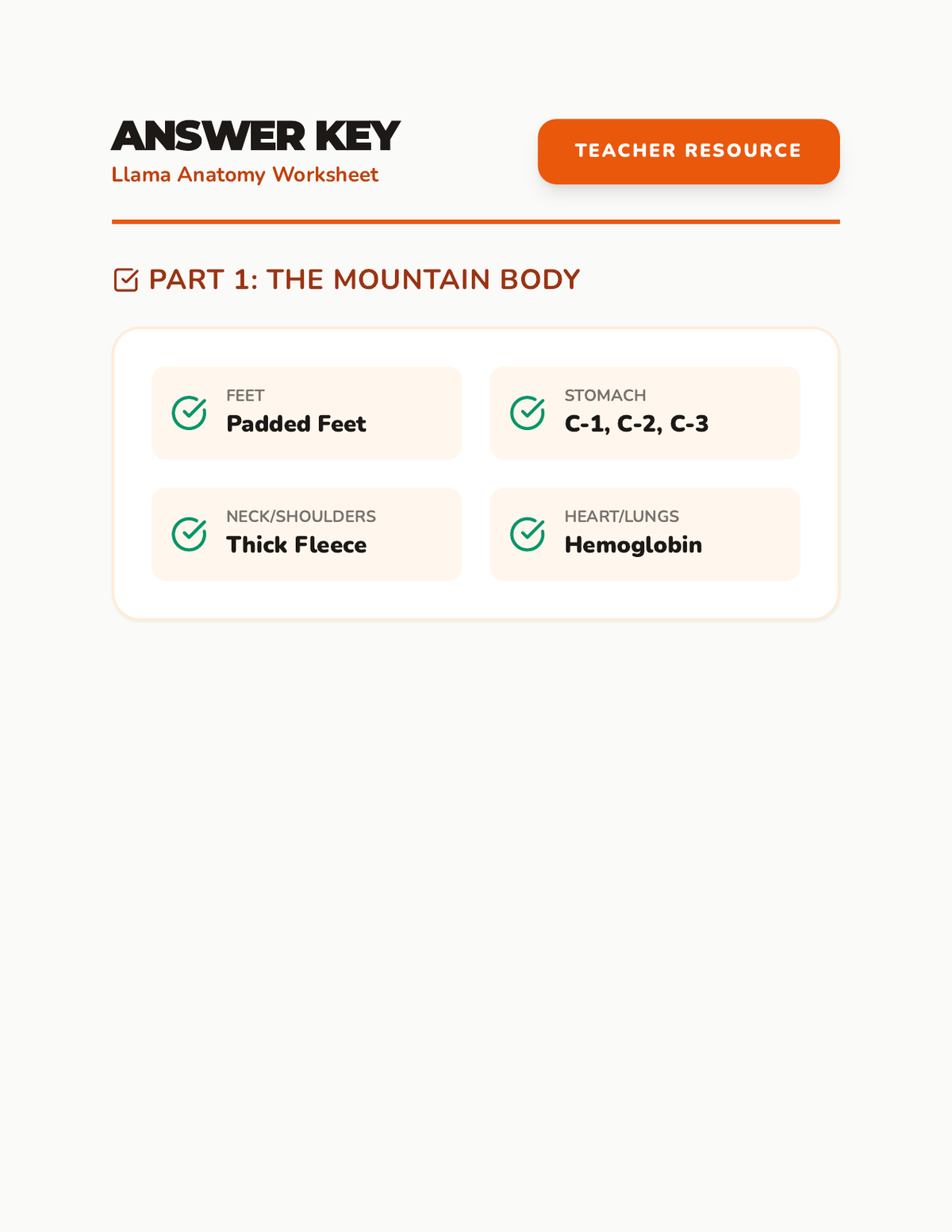
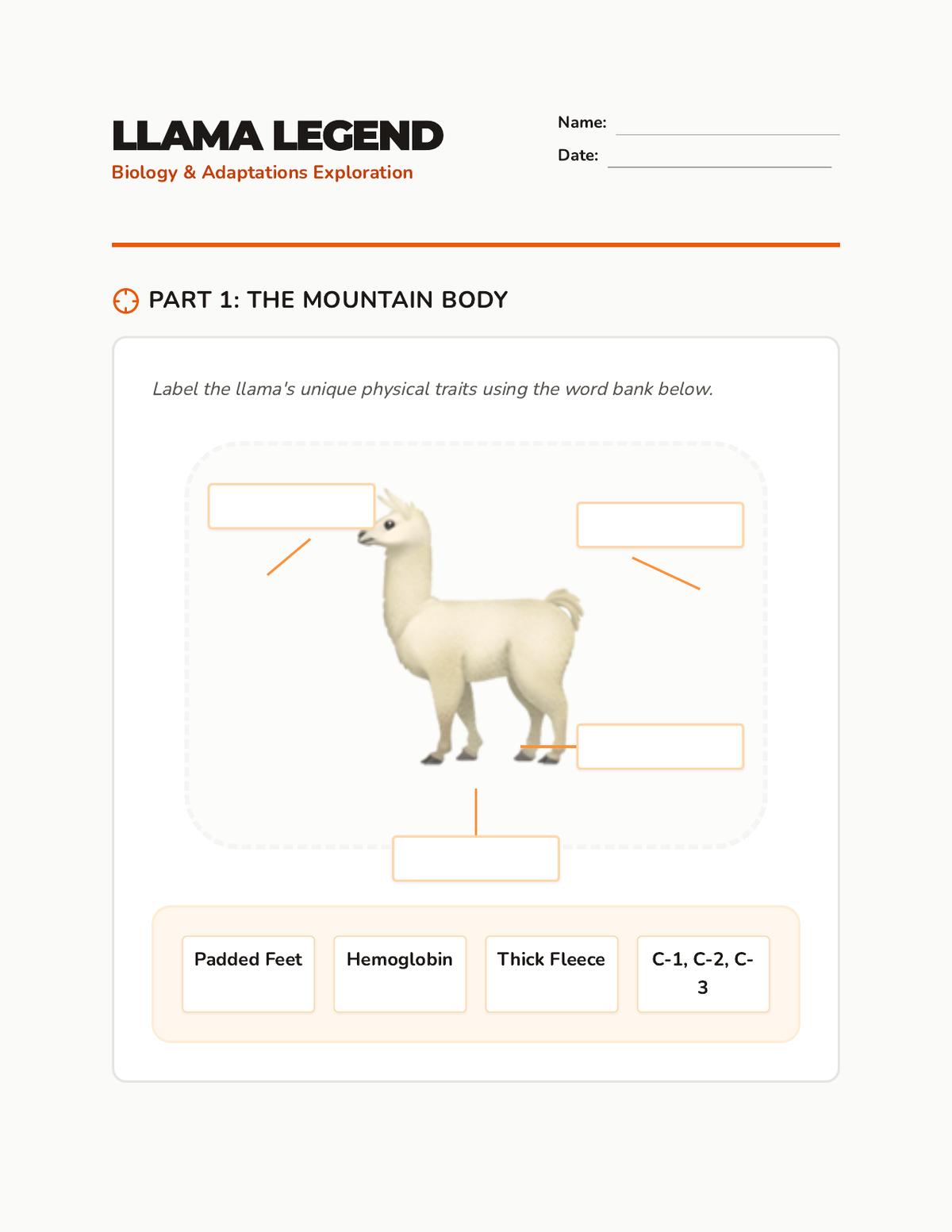
An answer key for the Llama Anatomy Worksheet, providing correct labels and sample responses for critical thinking questions. Revised for better text contrast and page break stability.
A teaching guide with learning objectives, discussion prompts, pacing, and instructional tips for the Llama Legend lesson. Revised for improved layout and page break consistency.
A student worksheet featuring anatomy labeling, survival trait matching, and critical thinking questions about llama biology. Revised for better layout and labeling accuracy.
A visual presentation exploring llama biology, including their three-chambered stomachs, high-altitude blood adaptations, and specialized feet. Revised to fix emoji accuracy and text contrast.
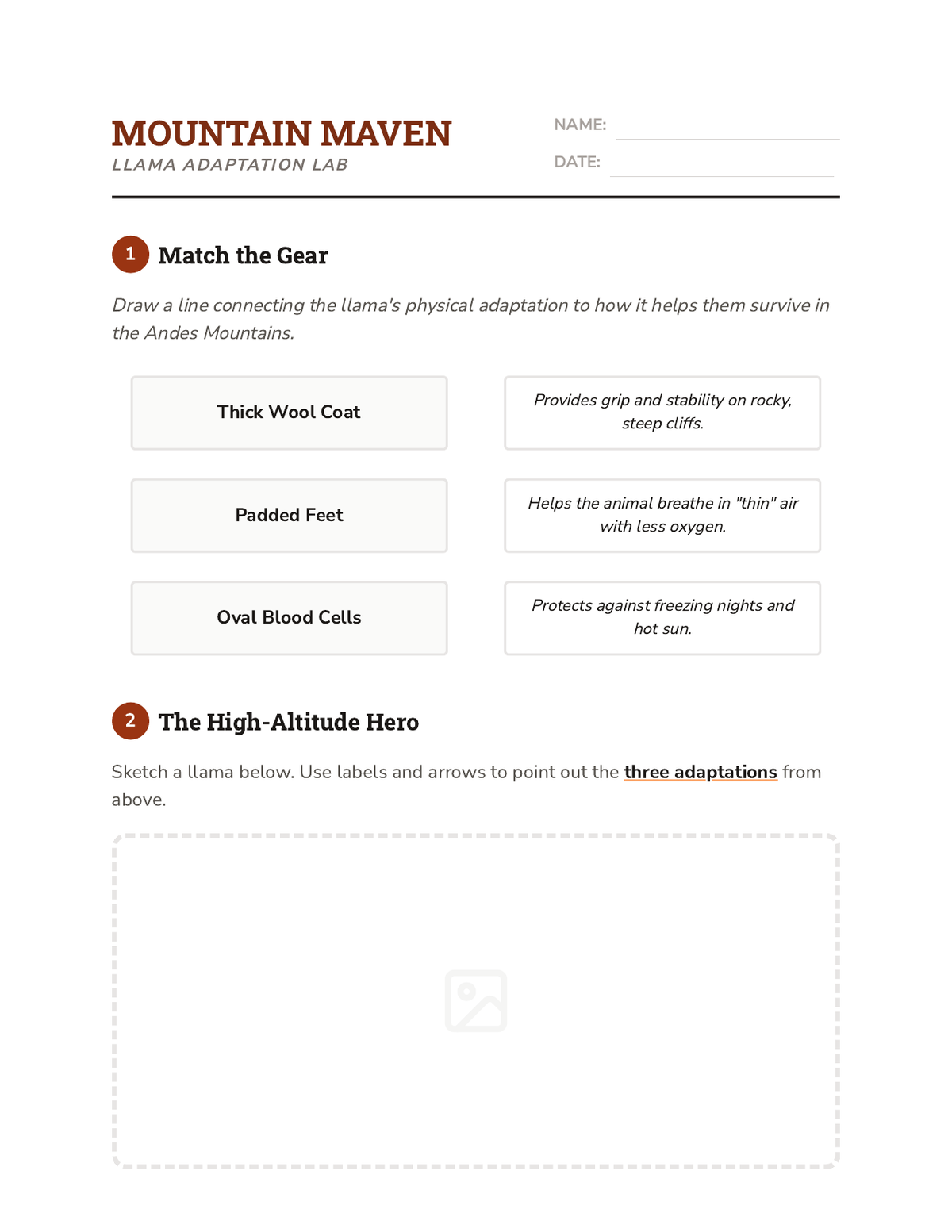
A student worksheet for identifying llama adaptations through matching, labeling, and critical thinking exercises.
A visual presentation for students, highlighting the specific physical adaptations of llamas with high-impact visuals and minimal text for engagement.
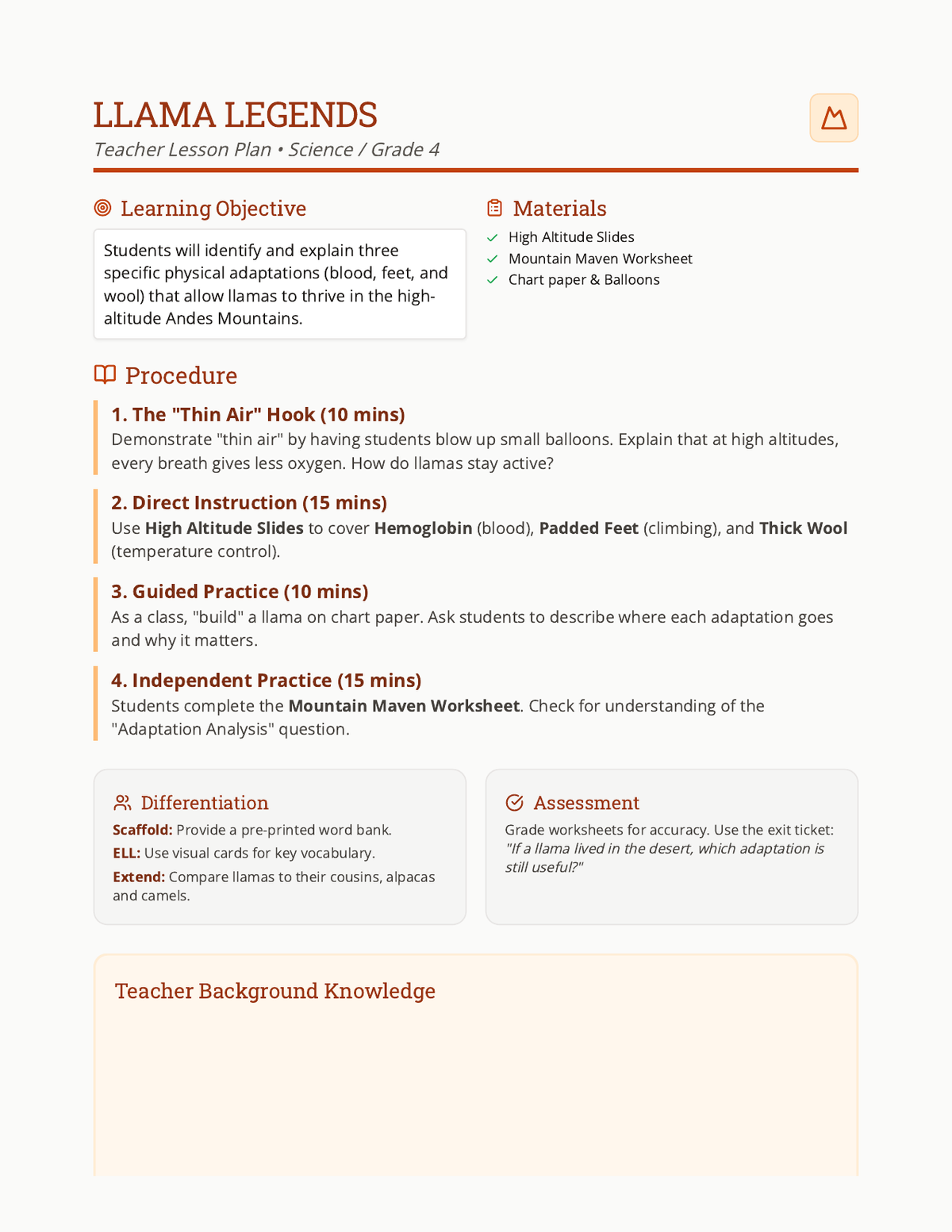
A comprehensive lesson plan for teachers, outlining the objectives, materials, and step-by-step procedures for teaching llama adaptations.
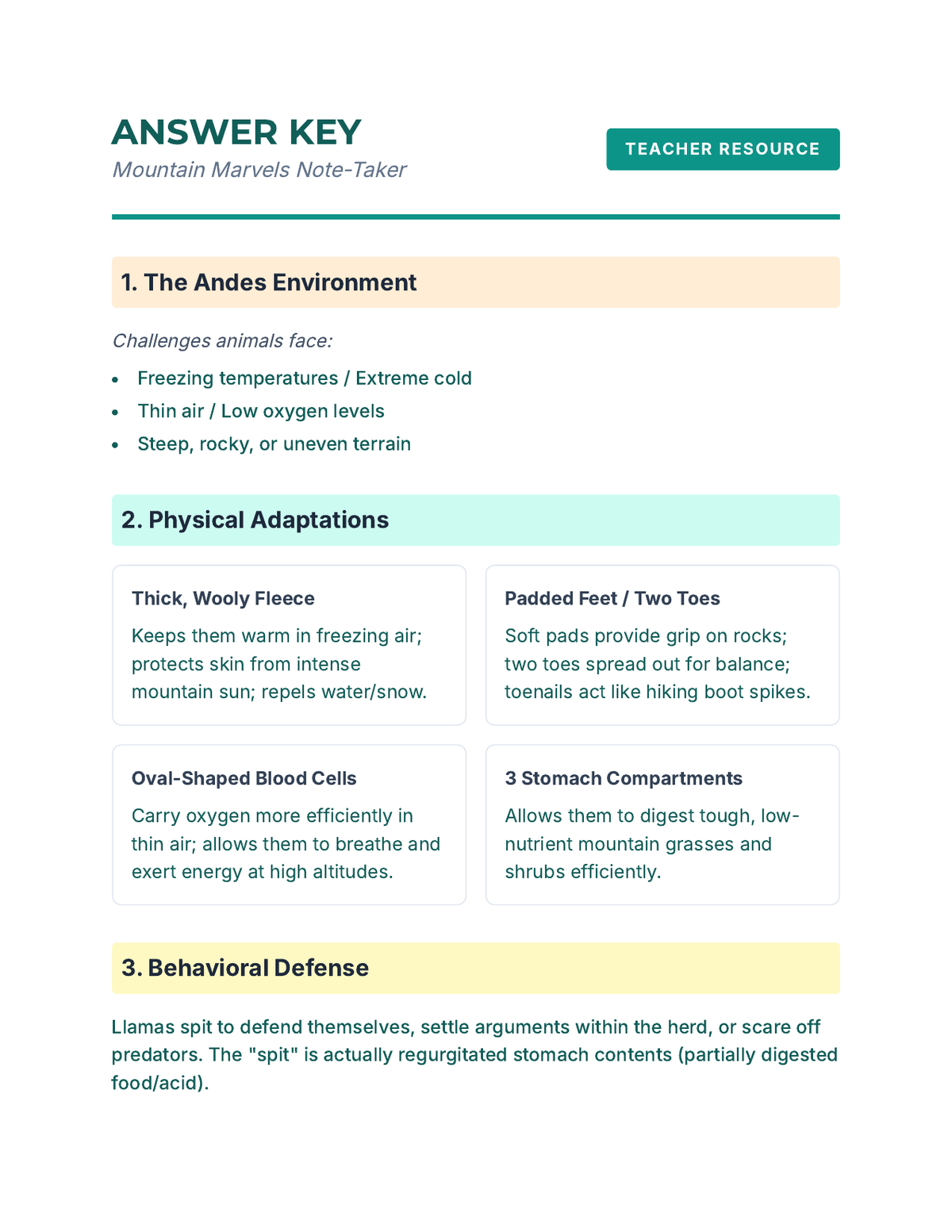
An answer key for the Mountain Marvels Note-Taker, providing teachers with clear, concise answers and a sample response for the critical thinking prompt.
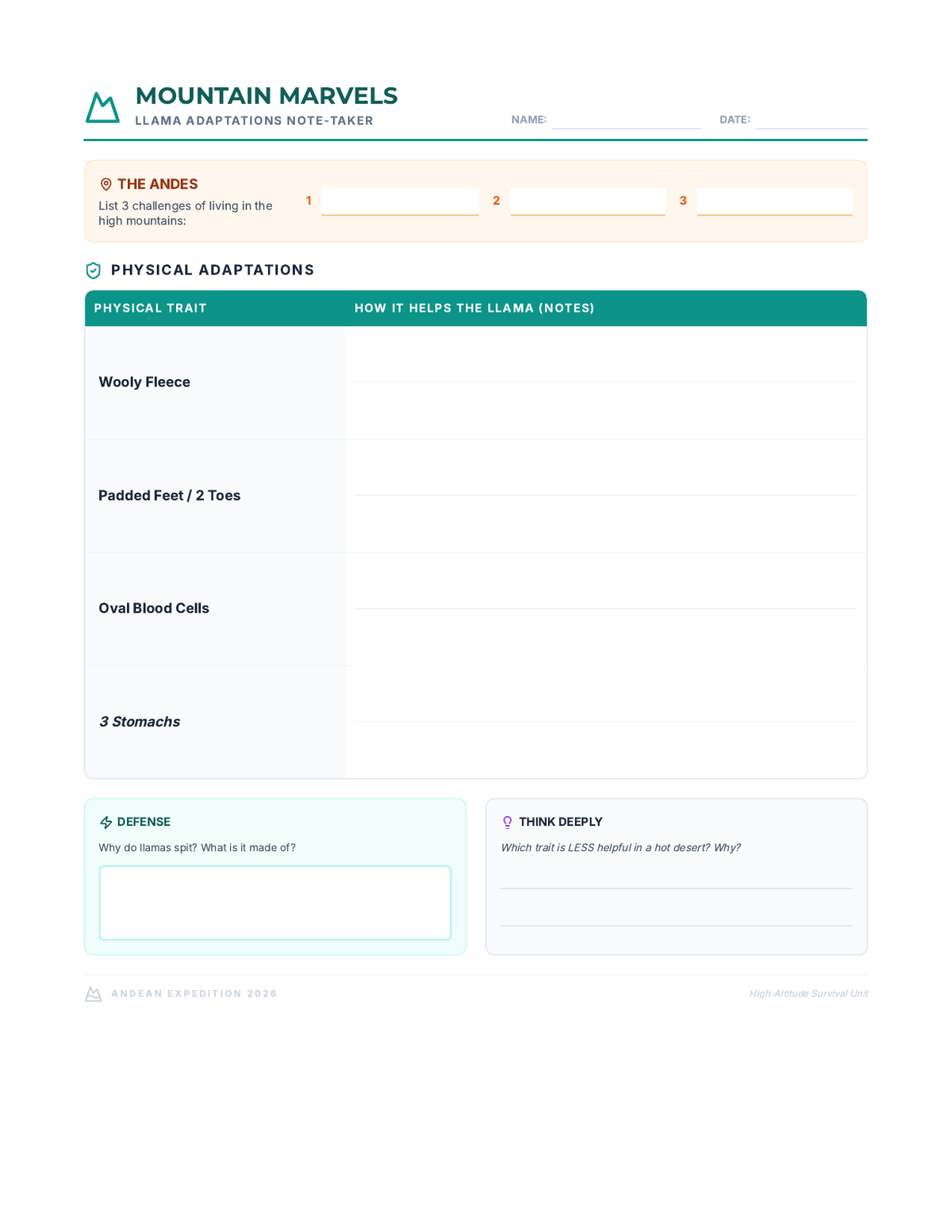
A student note-taking guide to accompany the Llama Legends slides. Includes space for recording habitat challenges, physical adaptations, and a critical thinking prompt. Revised for better page flow and writing space.
A visual presentation introducing students to the physical traits and adaptations of llamas in the Andes Mountains. Includes key adaptations like thick wool, padded feet, high-altitude blood, and survival behaviors.
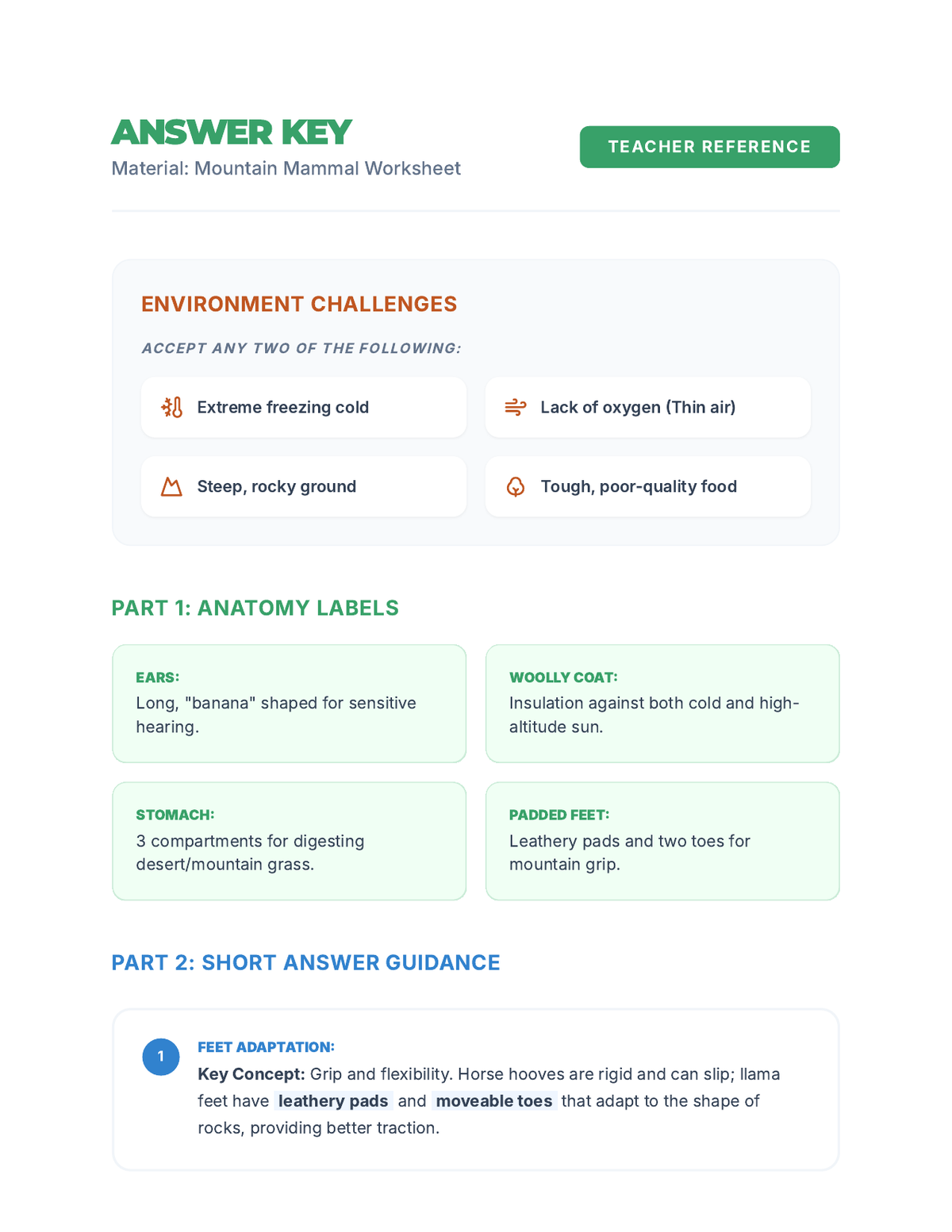
A teacher-facing answer key for the Mountain Mammal Worksheet, providing expected answers and scoring guidance for llama anatomy and adaptations.
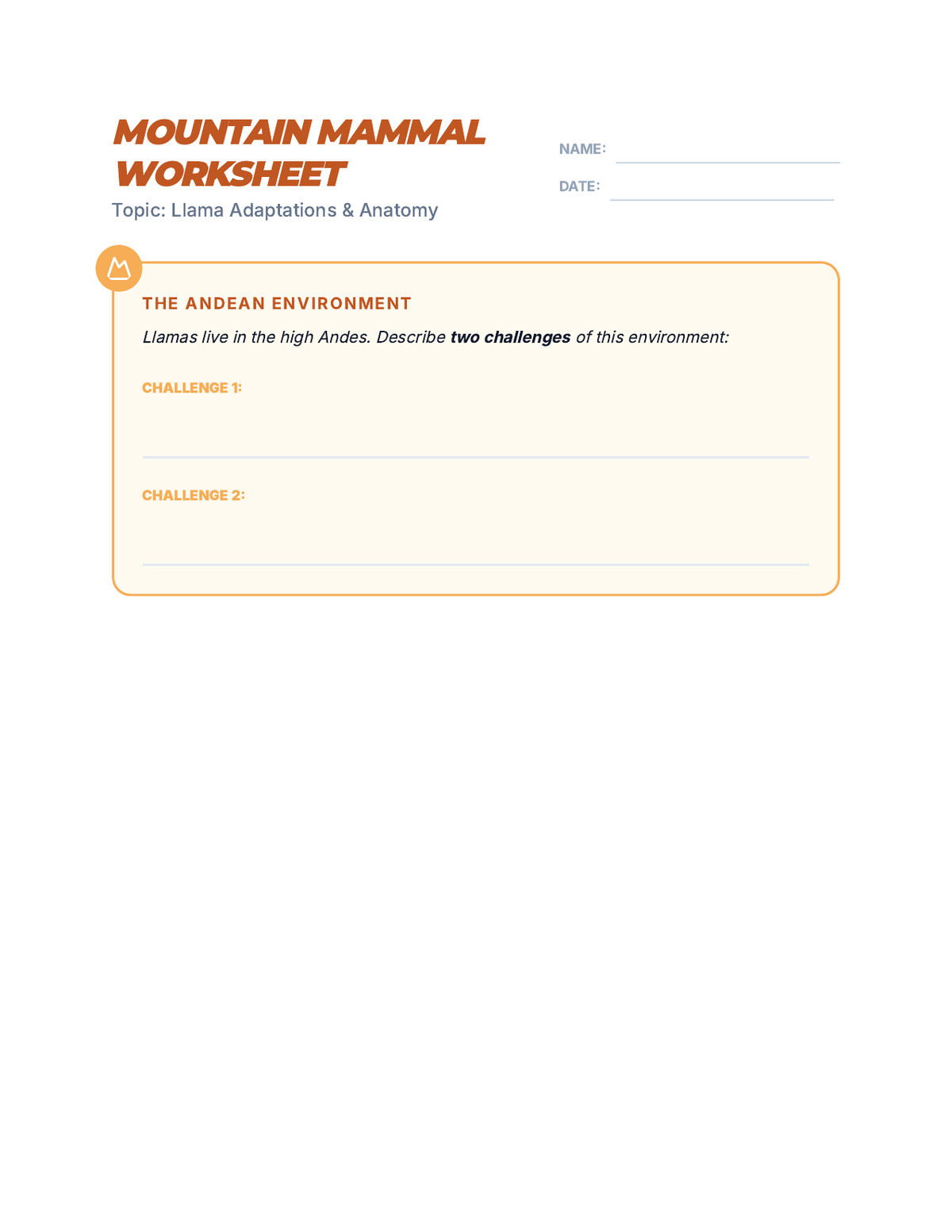
A student worksheet designed for 4th graders to label llama anatomy and explain how specific physical adaptations help the animal survive in the Andes.
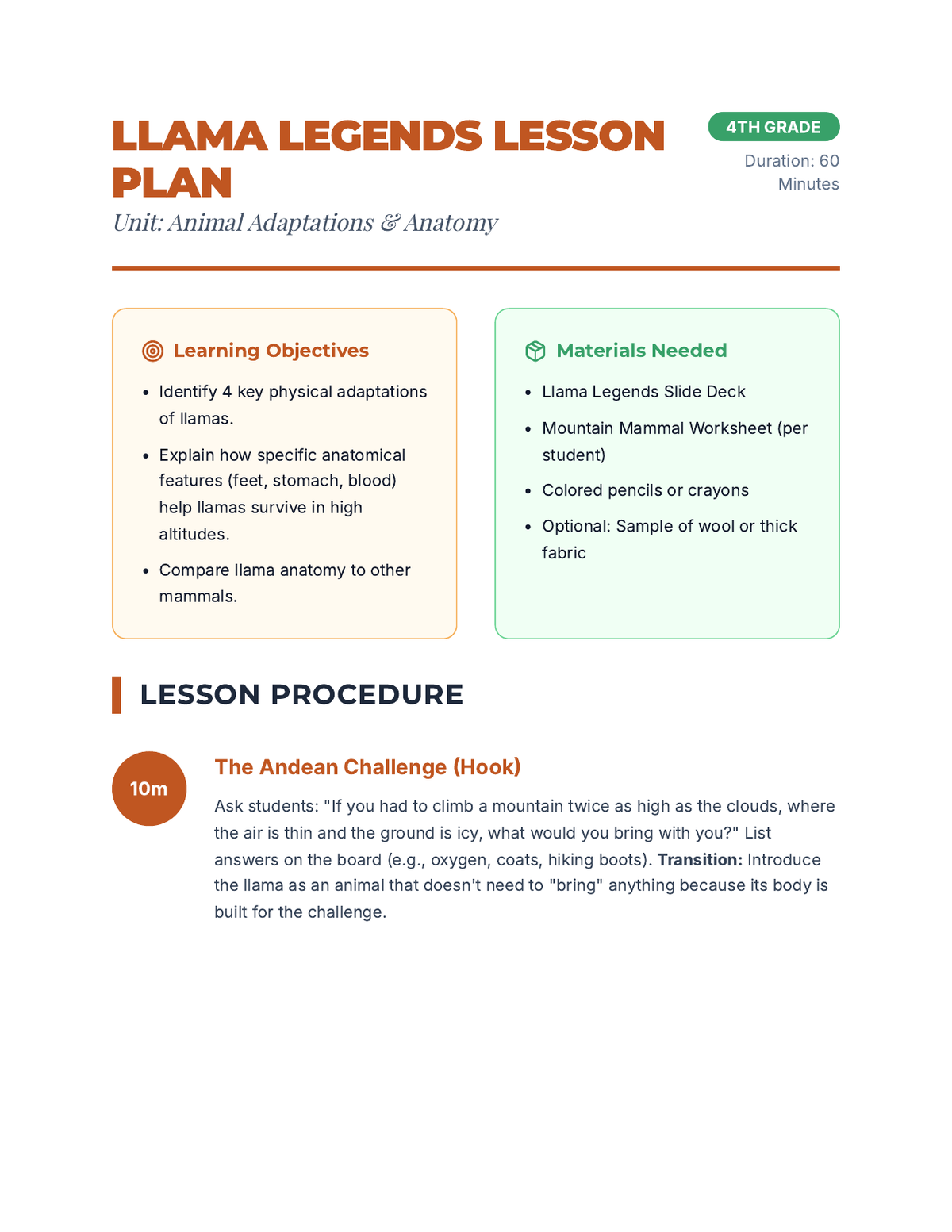
A comprehensive lesson plan for teachers, outlining the hook, instructional steps, guided practice, and assessment for a 60-minute lesson on llama anatomy.
A visually engaging slide deck exploring the physical adaptations of llamas, including their woolly coats, padded feet, blood chemistry, and digestive systems.
A 10-slide presentation exploring the physical adaptations and characteristics of llamas, including their thick woolly coats, specialized blood for high altitudes, and digestive systems.
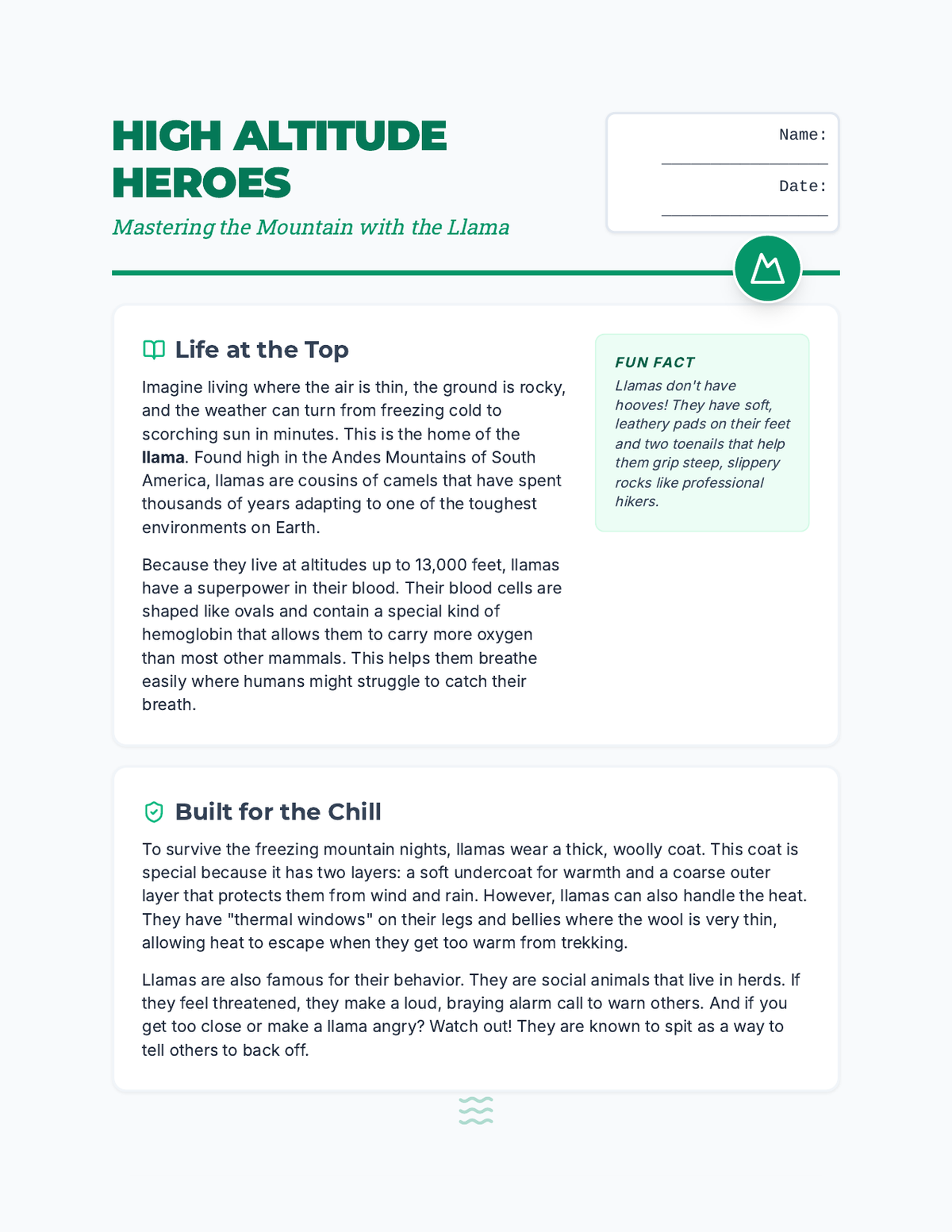
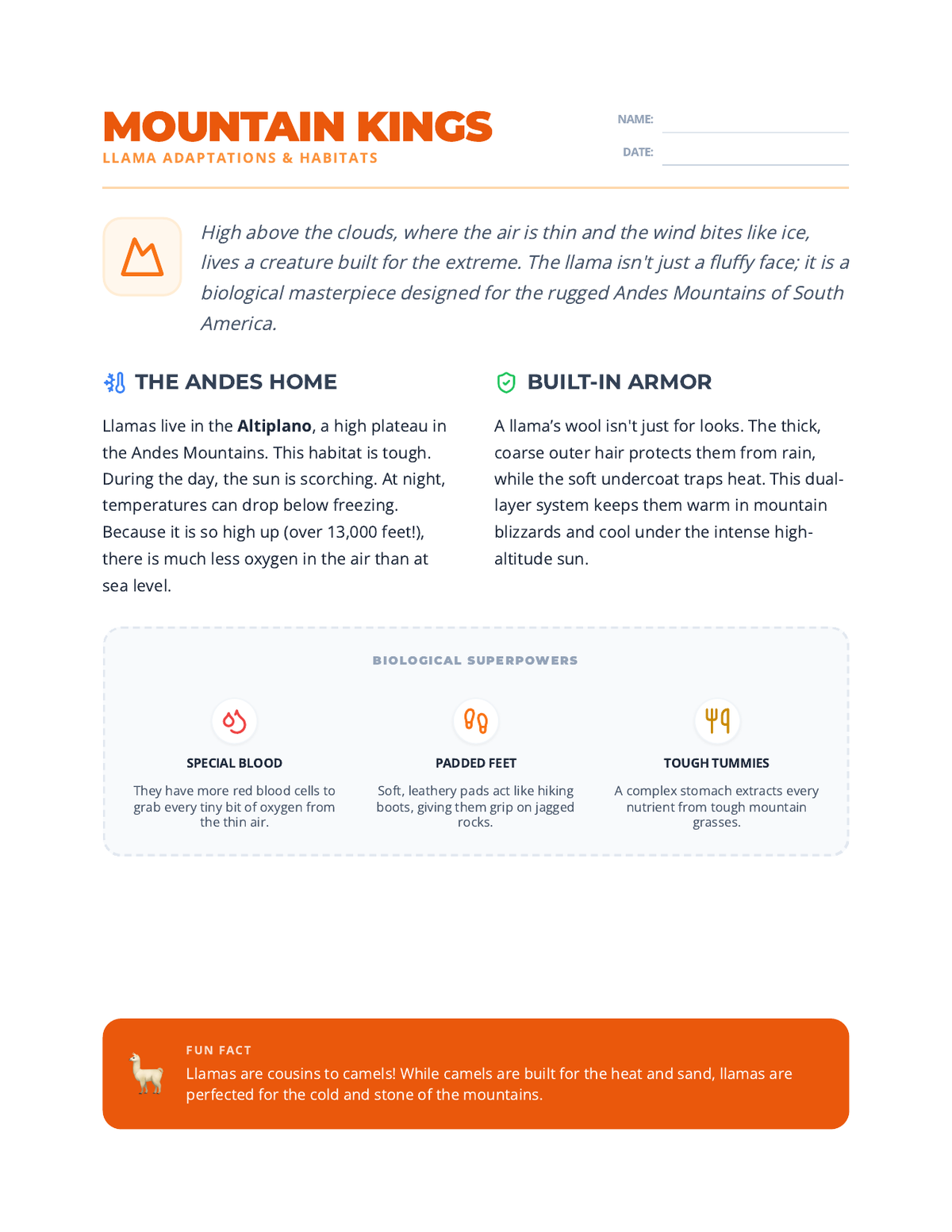
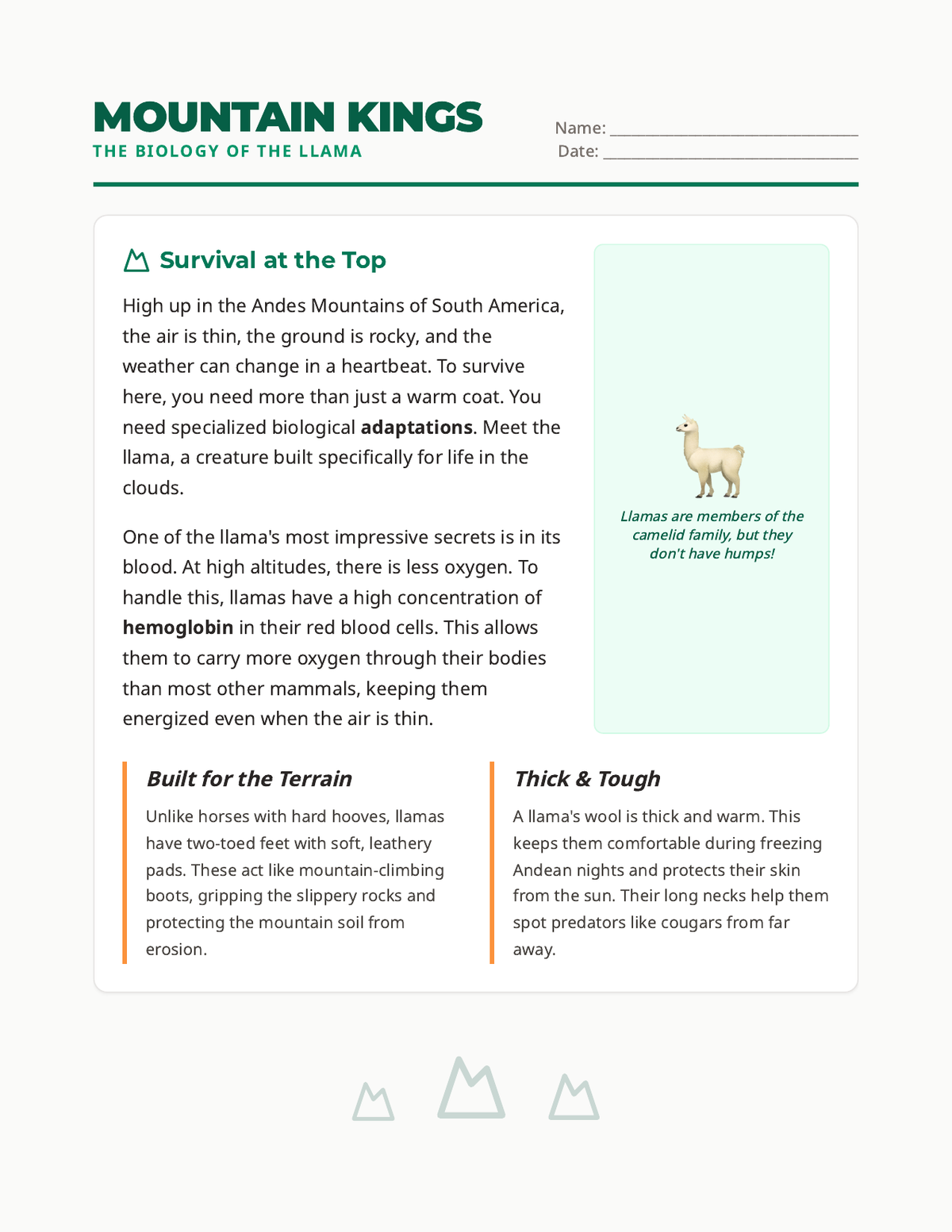
A revised two-page informational text and comprehension worksheet about llama biology and adaptations, with improved page breaks, standardized writing areas, and a cohesive Andean aesthetic.
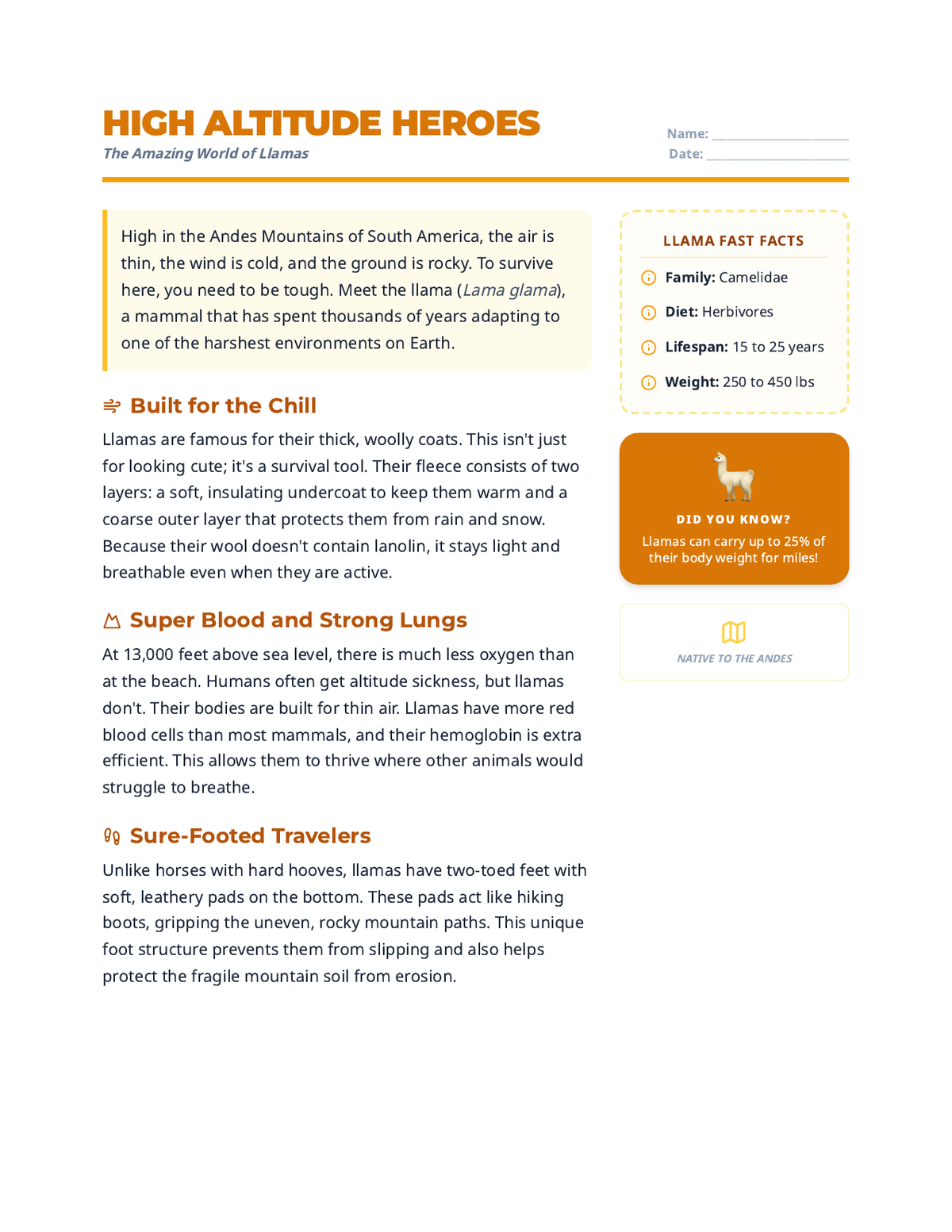
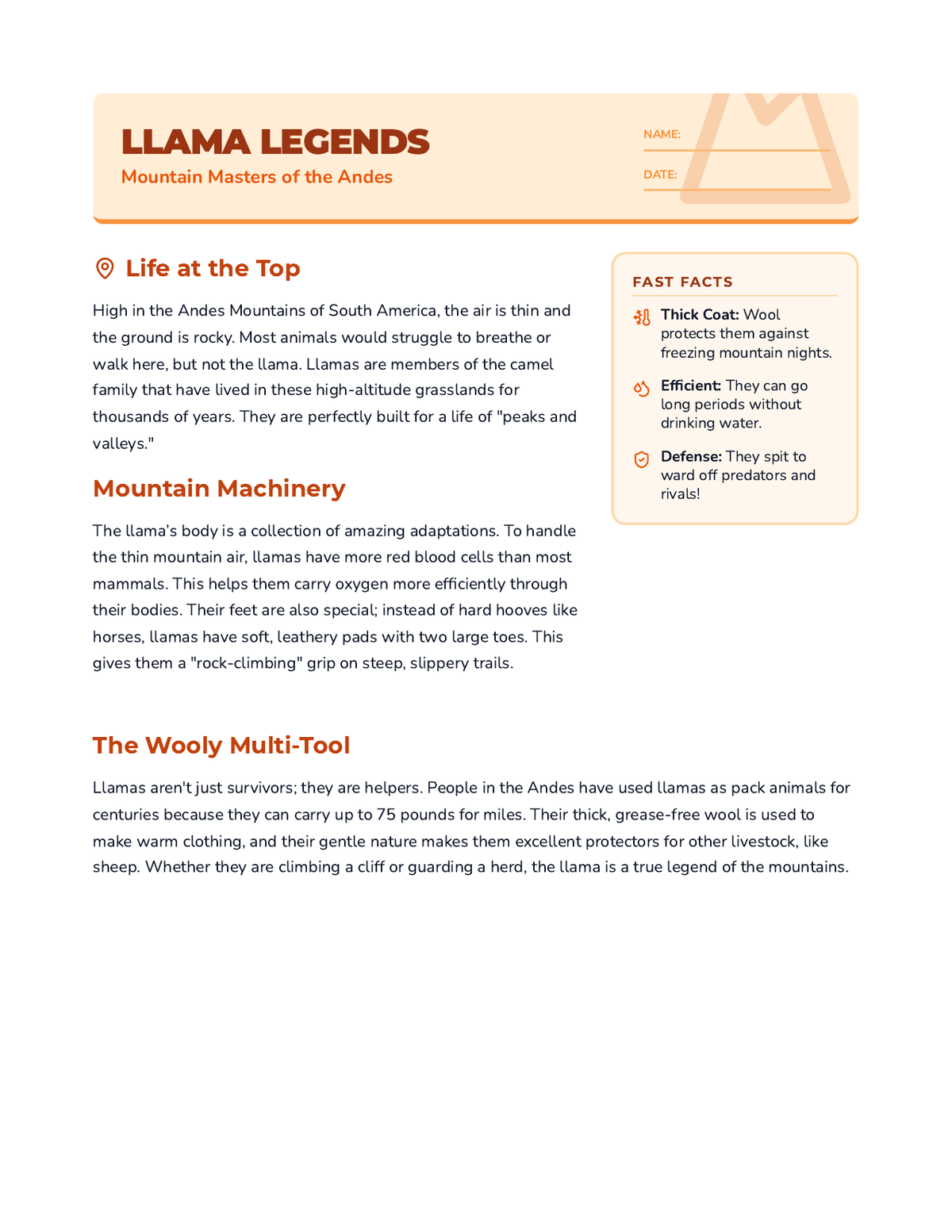
A 2-page student material featuring a descriptive reading passage about llama adaptations in the Andes Mountains, followed by a comprehension quiz with multiple-choice and short-answer questions. Carefully optimized for 2-page printing with no overflow.
A reading comprehension worksheet about llama adaptations and their Andes Mountain habitat, featuring a detailed passage and various question types. Revised to ensure consistent page breaks and better student work areas.
A comprehensive informational reading passage and response worksheet focused on llama adaptations and their high-altitude habitat. Includes a two-page layout with a text passage, biological deep-dive, comprehension questions, and an adaptation analysis table.
A visually stunning 9-slide presentation exploring the biological adaptations of llamas, including their unique blood chemistry, specialty feet, and thick wool.
A reading passage and quiz focusing on the biological adaptations of llamas for life in the Andes Mountains. Includes questions on blood chemistry, foot structure, and physical traits.
A comprehensive 2-page reading passage and comprehension quiz focused on llama adaptations. Features clear headings, a sidebar fun fact, and spacious student response areas. Optimized for print with no clipped text and consistent question formatting. Final version with improved page breaks.
A polished two-page reading passage and worksheet about llama adaptations, optimized to fit on exactly two pages with lined student work areas.
A vibrant 8-slide presentation exploring the physical and internal adaptations of llamas to the Andes Mountains, including their blood cells, thick wool, specialized feet, and efficient digestion.
A vibrant and engaging 6-slide presentation exploring the specific physical adaptations of llamas, including their unique blood cells, stomach structure, and mountain-ready feet.
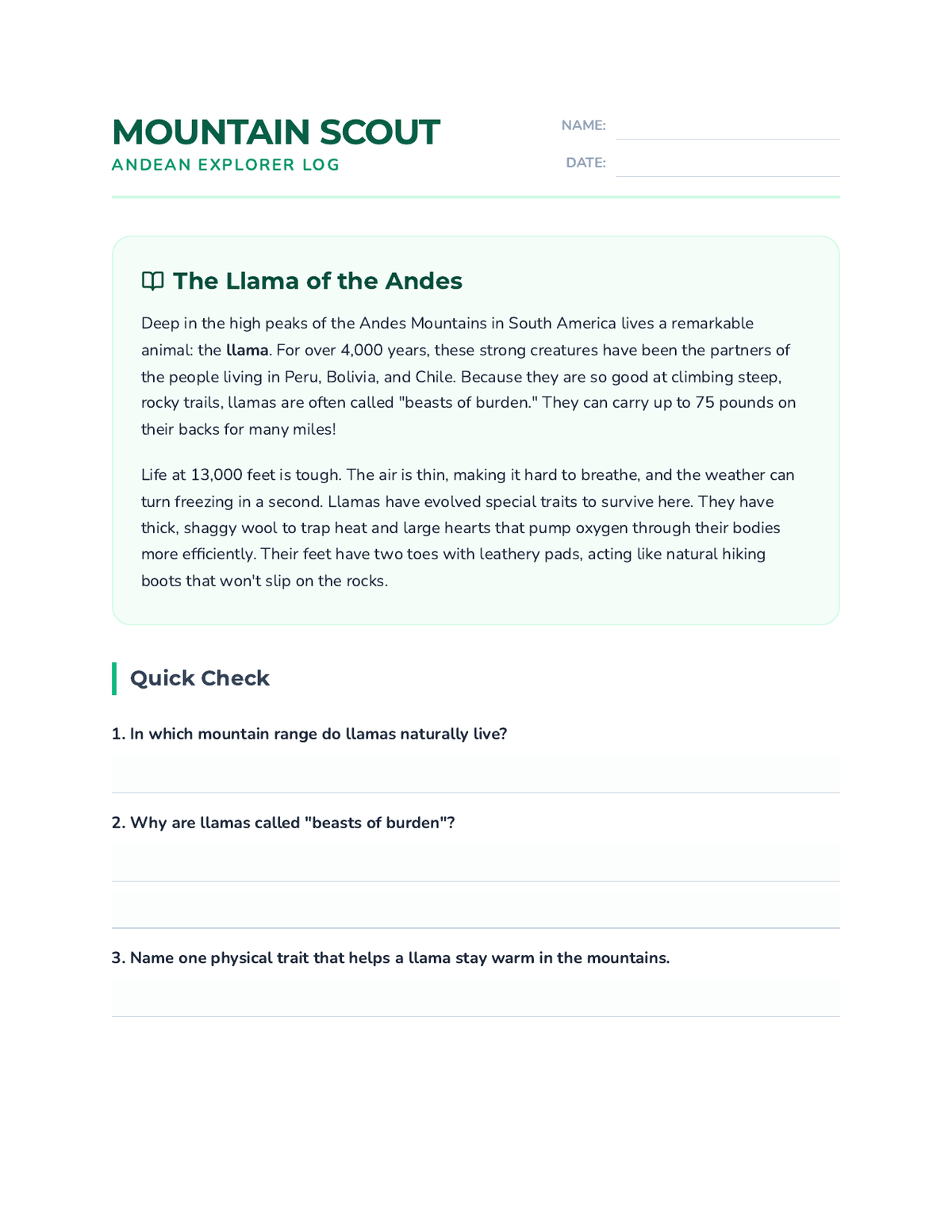
An informational reading passage about llama adaptations in the Andes Mountains, followed by comprehension questions including multiple choice, short answer, and critical thinking.
A visual presentation covering llama biology, mountain adaptations, social behaviors, and their history as working animals in the Andes.
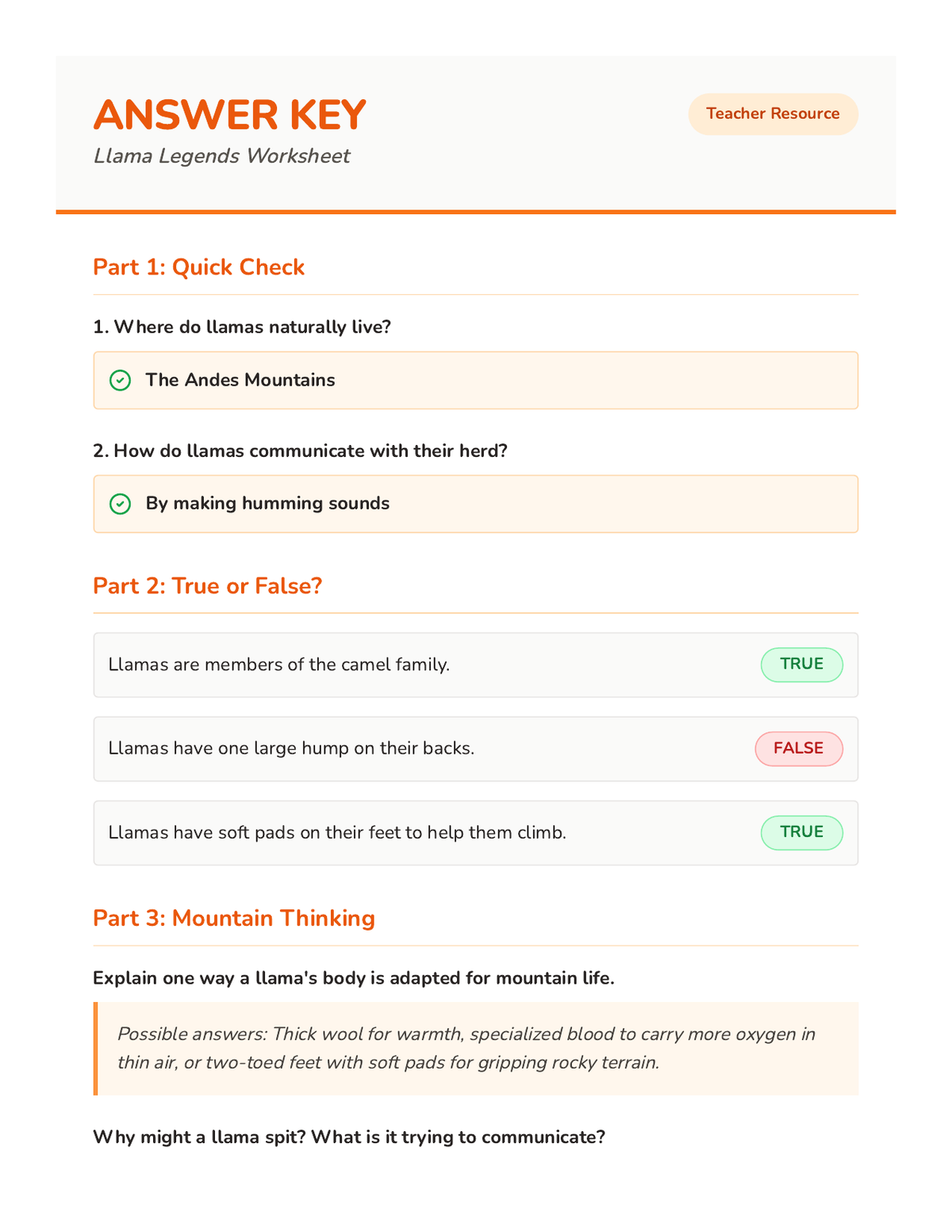
The answer key for the Llama Legends worksheet, including correct responses for multiple-choice and short answer questions.
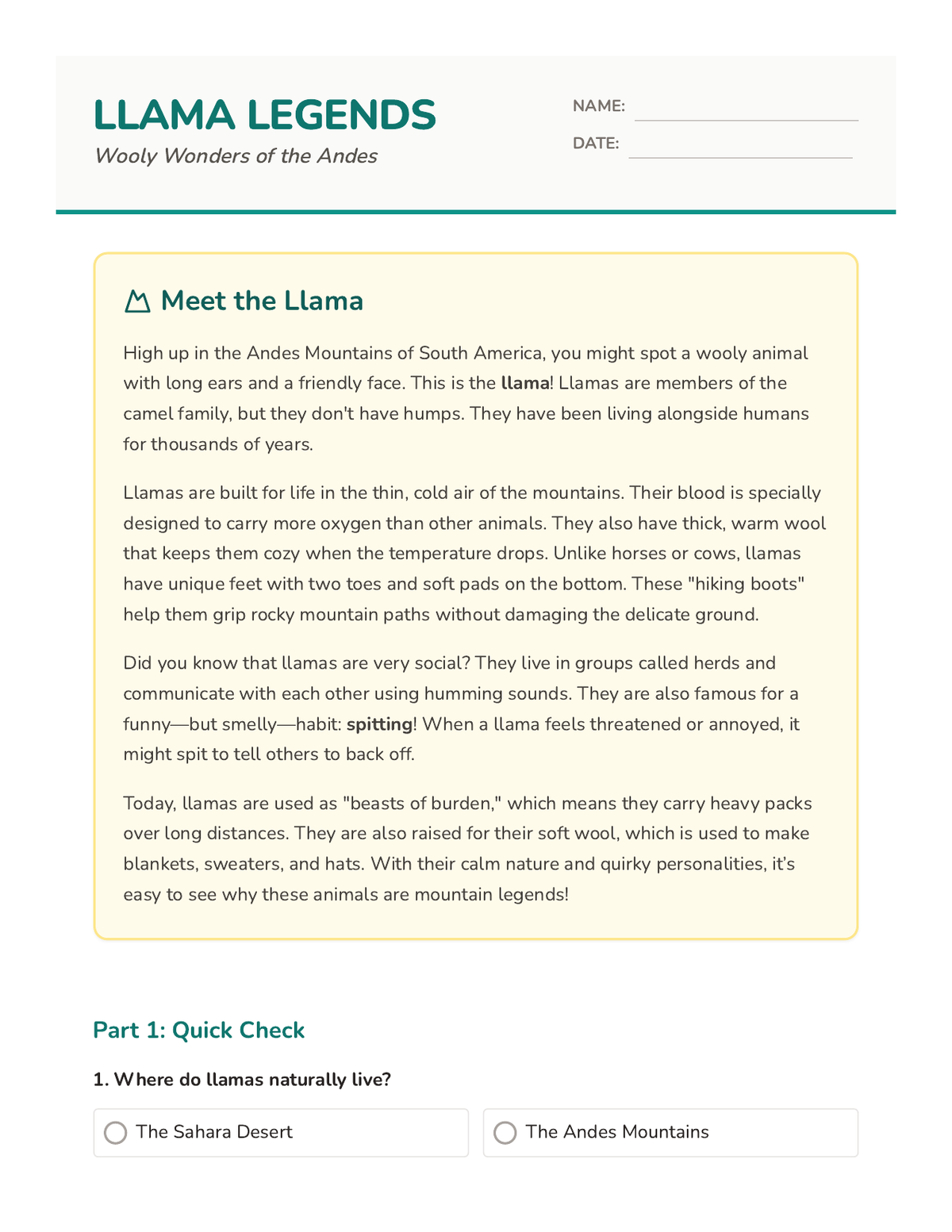
A reading comprehension worksheet featuring a passage about llamas, multiple-choice questions, and a creative writing prompt.
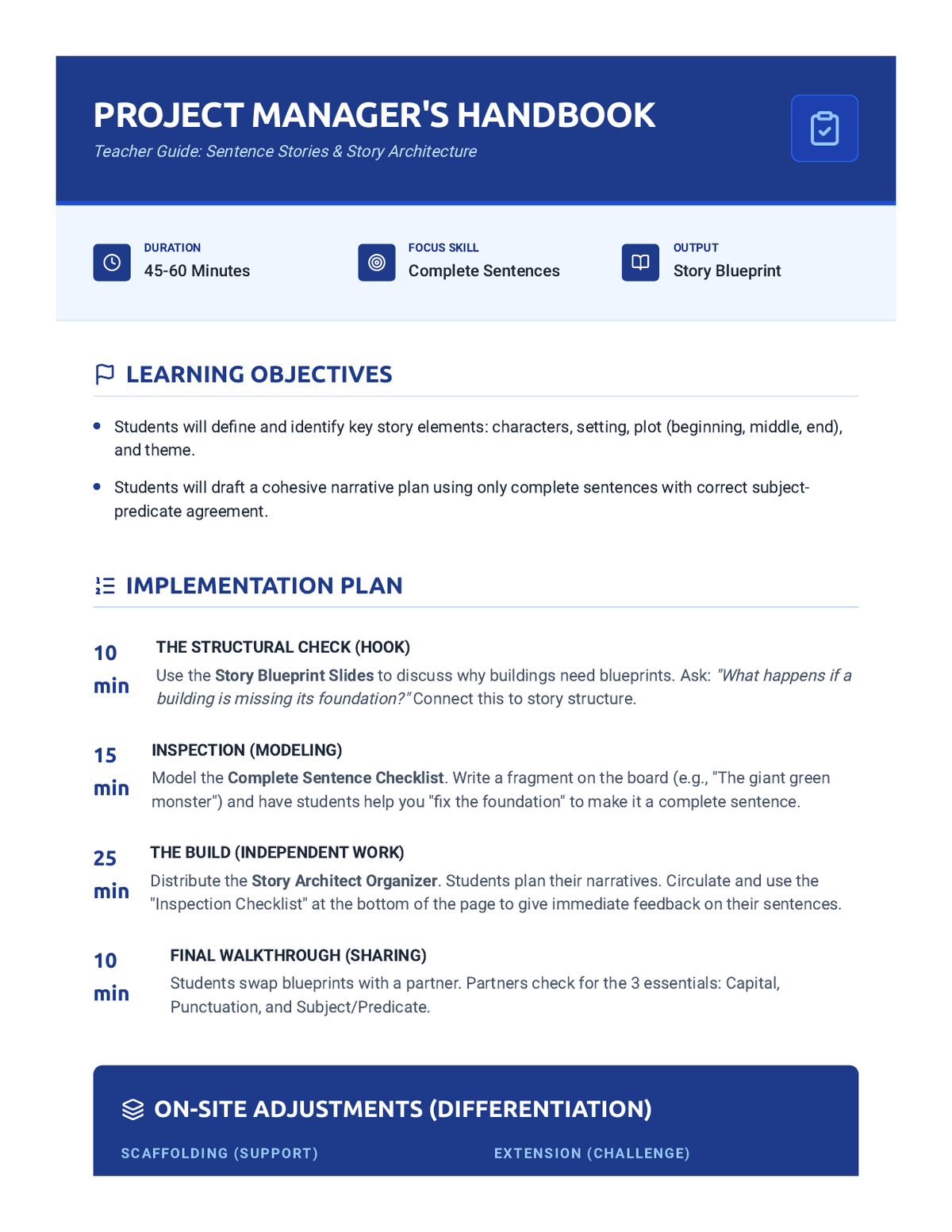
A teacher guide for implementing the Sentence Stories lesson, including pacing, differentiation strategies, and discussion prompts.
A presentation to introduce story elements and model writing complete sentences within a blueprint-themed narrative plan.
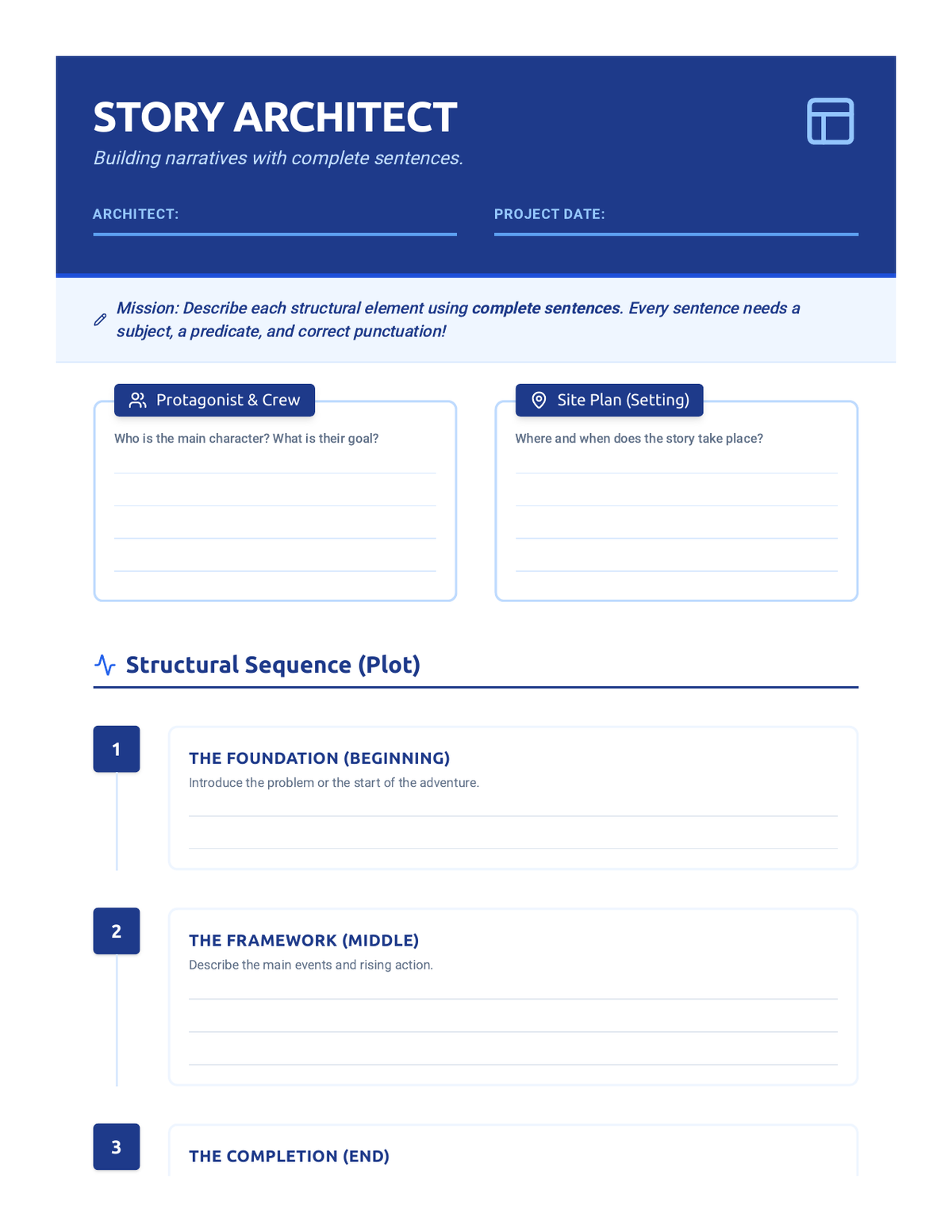
A blueprint-themed graphic organizer for students to plan stories while practicing writing complete sentences for each narrative element.
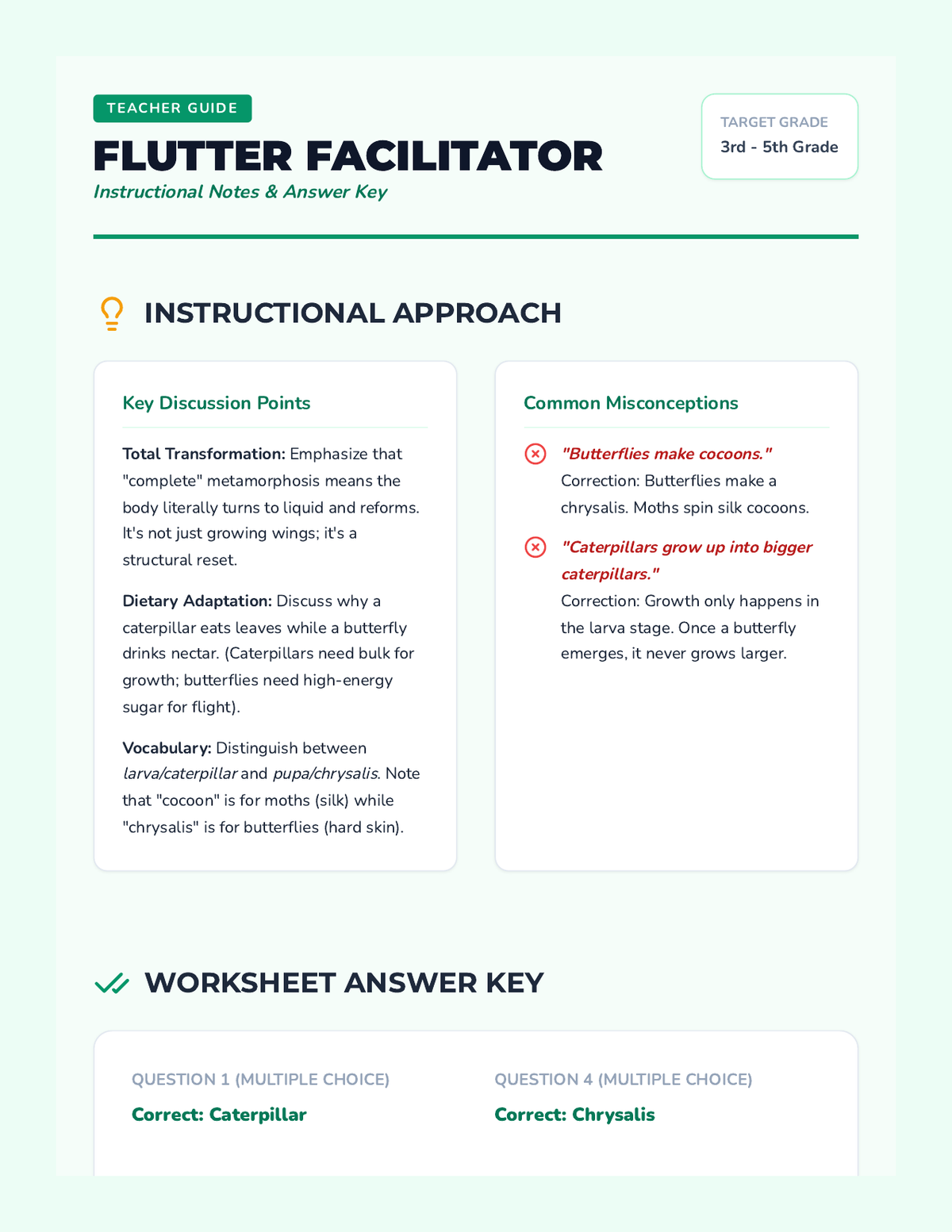
A comprehensive teacher guide providing instructional strategies, common misconception corrections, a detailed answer key for the worksheet, and an extension activity idea.
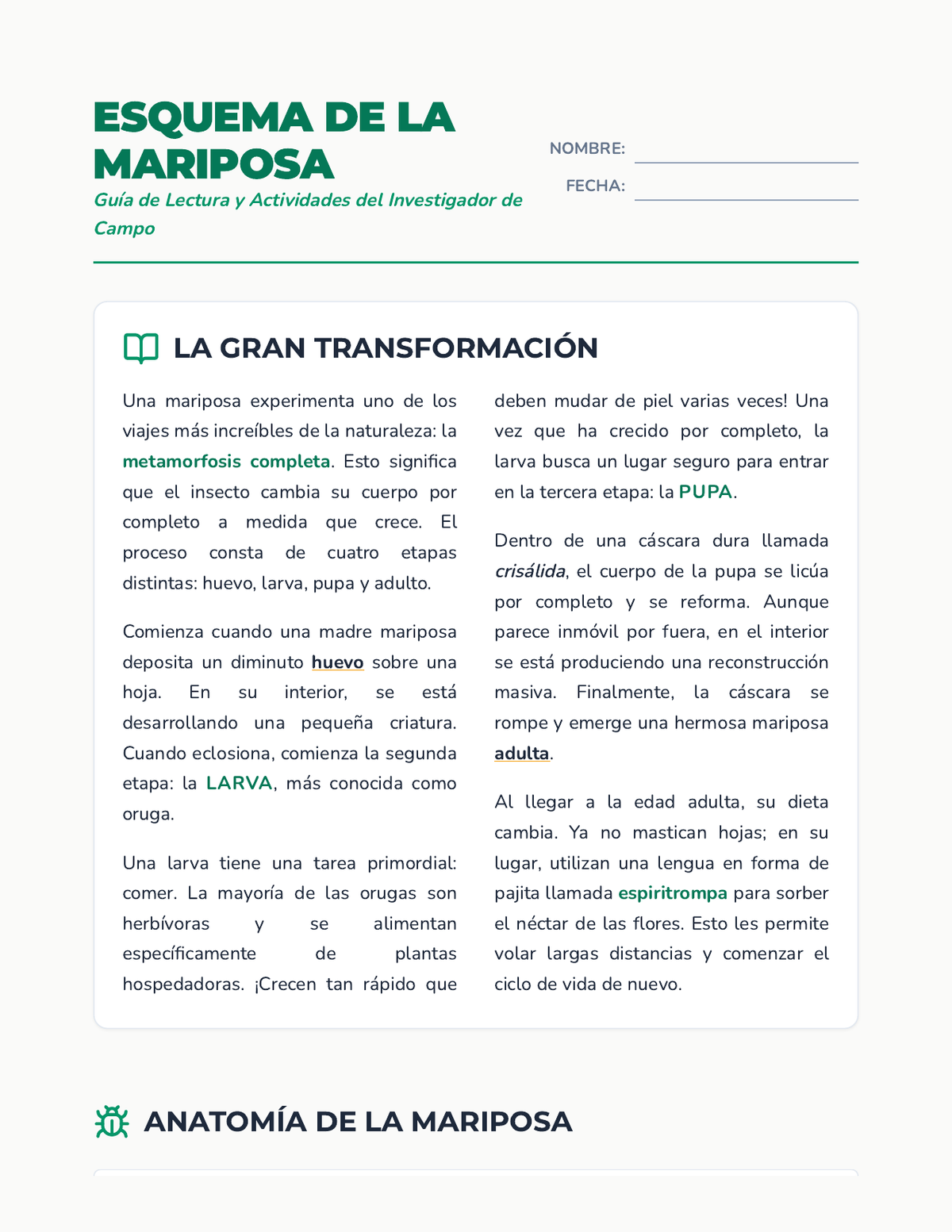
An engaging 6-slide presentation covering the four stages of metamorphosis, specialized diet at each phase, butterfly anatomy, and a comparison between complete and incomplete metamorphosis.
A three-page student worksheet featuring a detailed reading passage on metamorphosis, a butterfly anatomy diagram for labeling, a comparison chart between complete and incomplete metamorphosis, and comprehension questions.
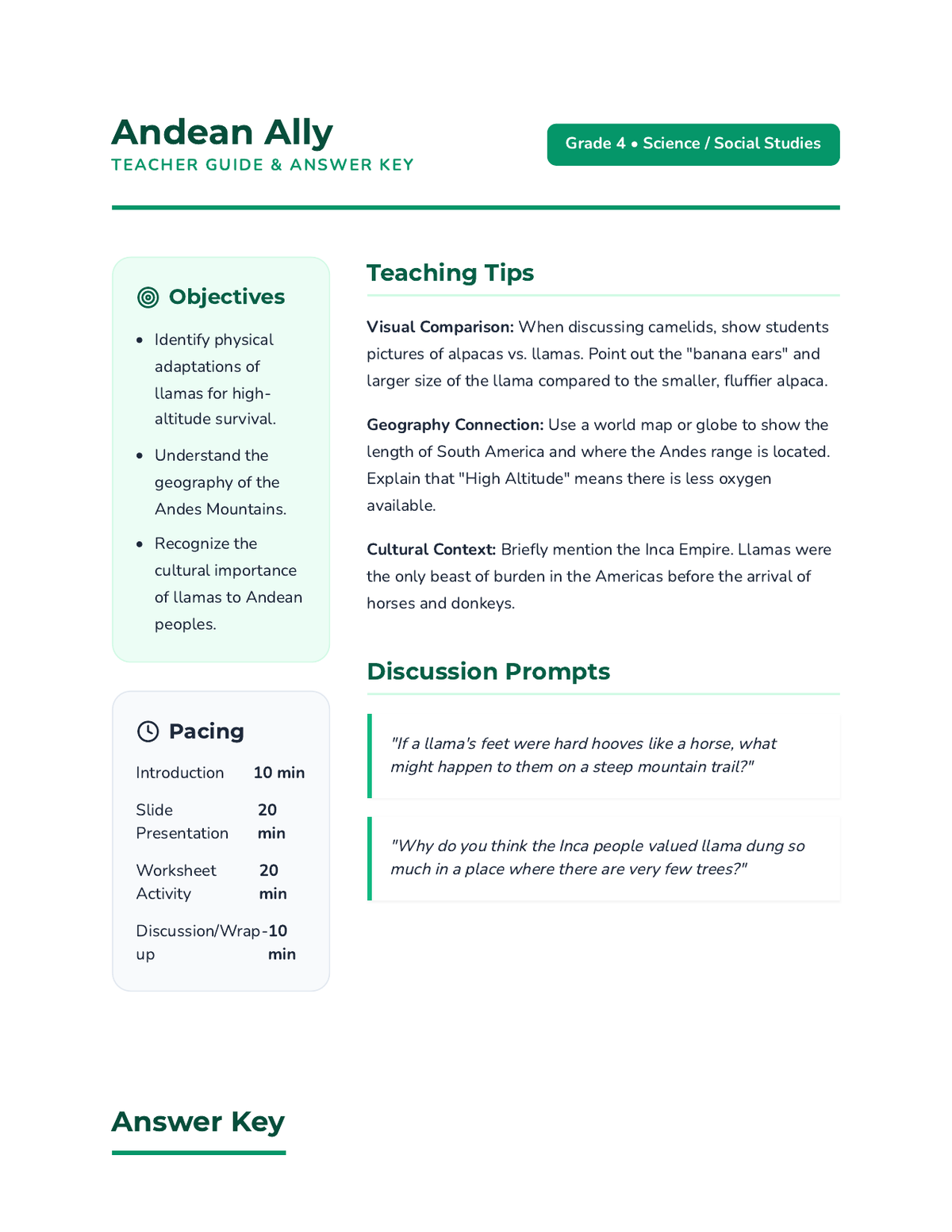
A comprehensive teacher guide for the Llama lesson, including lesson objectives, pacing, discussion prompts, and a full answer key for the student worksheet.
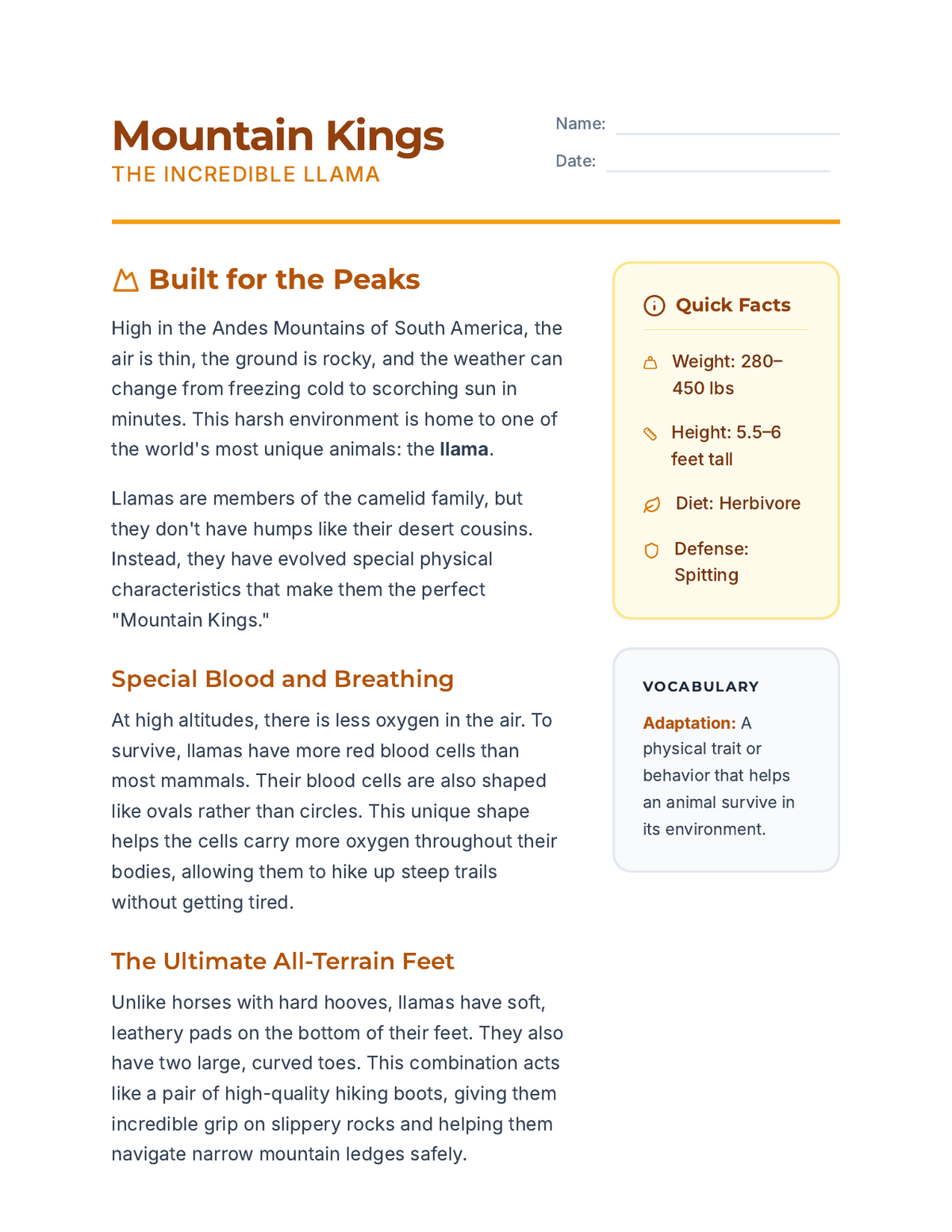
A two-page student worksheet featuring a reading passage about llama adaptations, comprehension questions, and a diagram labeling activity.
An educational presentation for 4th graders introducing llamas, their physical characteristics, their high-altitude habitat in the Andes, and their cultural significance.
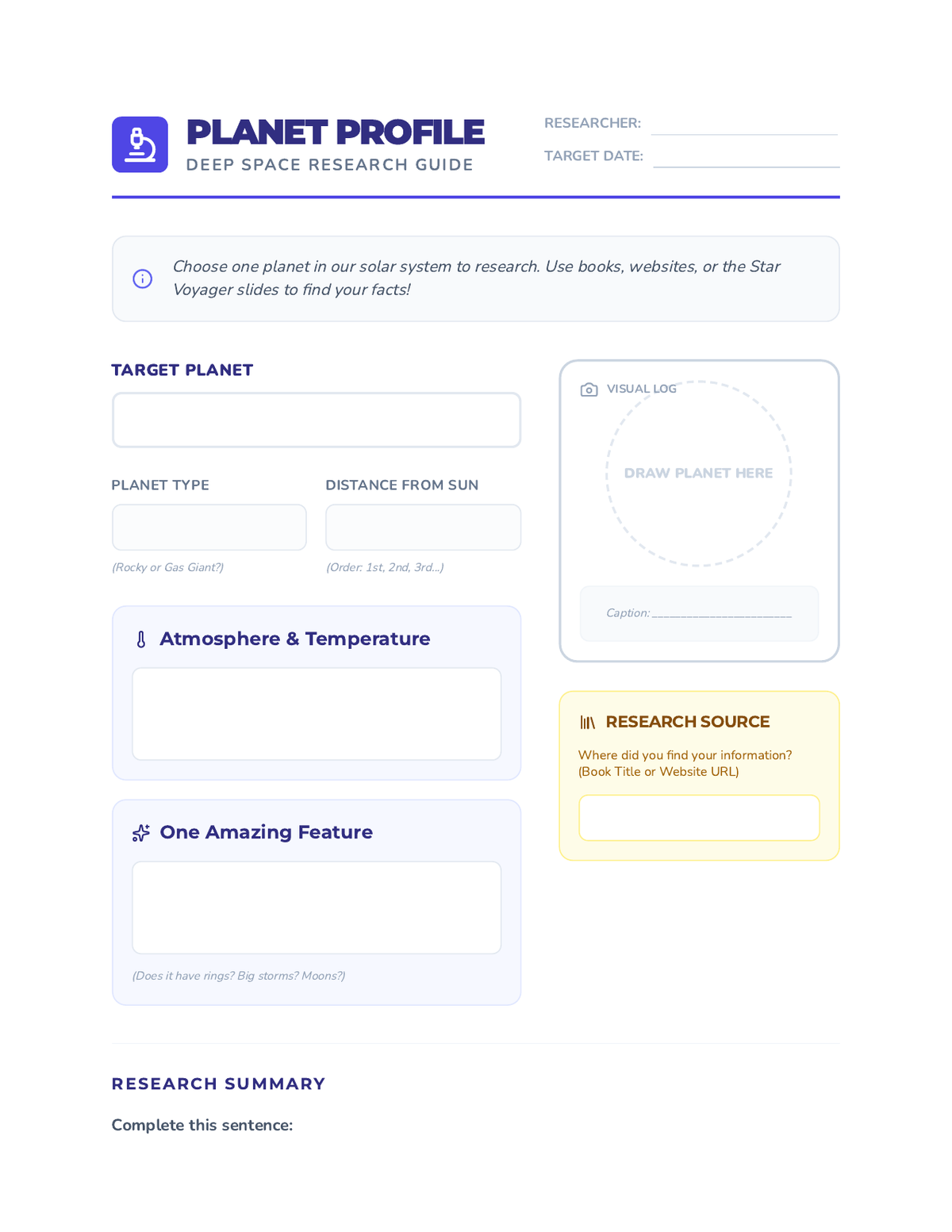
A structured research guide for 3rd-grade students to collect and organize facts about a specific planet, including sections for physical characteristics, amazing features, and source citations.
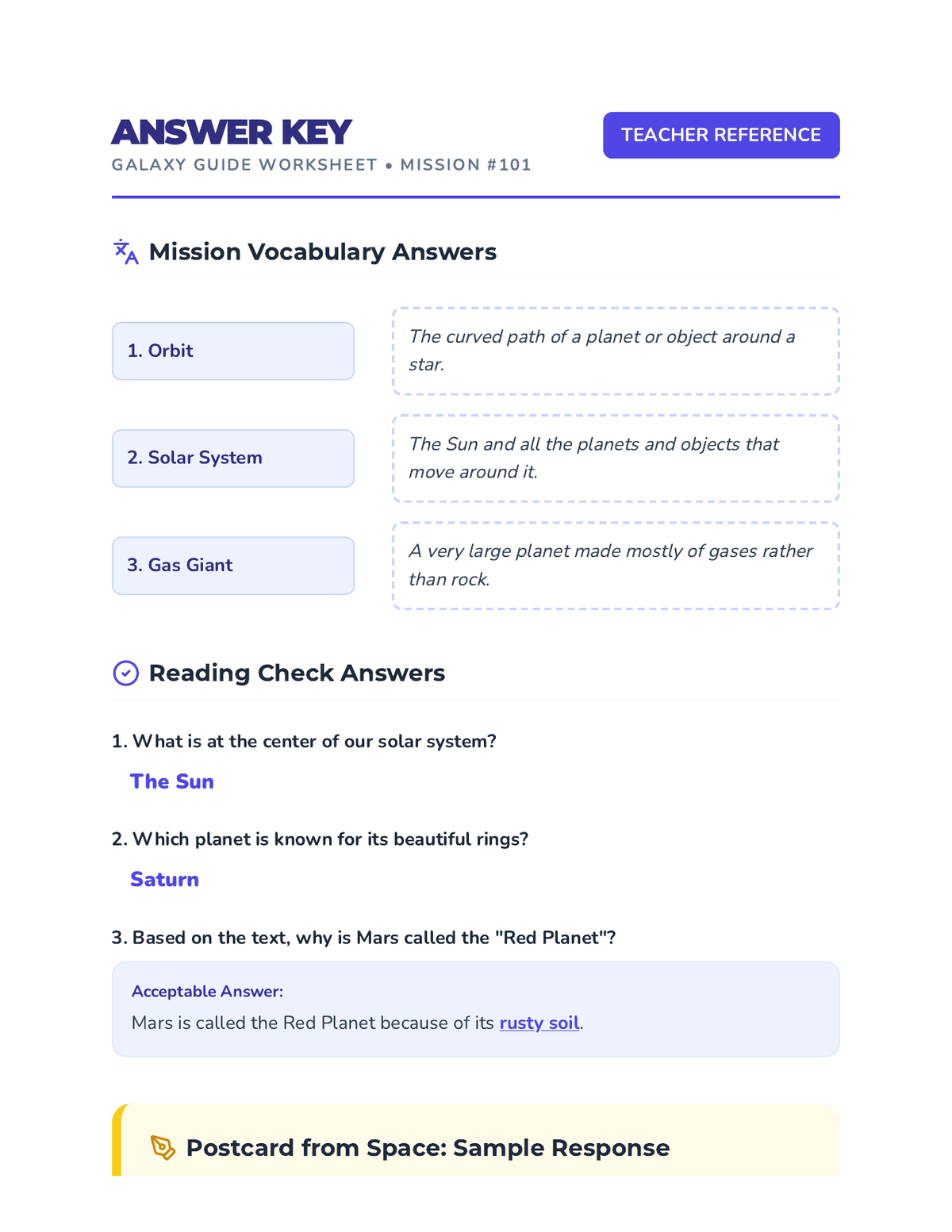
The teacher's answer key for the Galaxy Guide Worksheet, including correct vocabulary matches, comprehension answers, and a sample writing response.
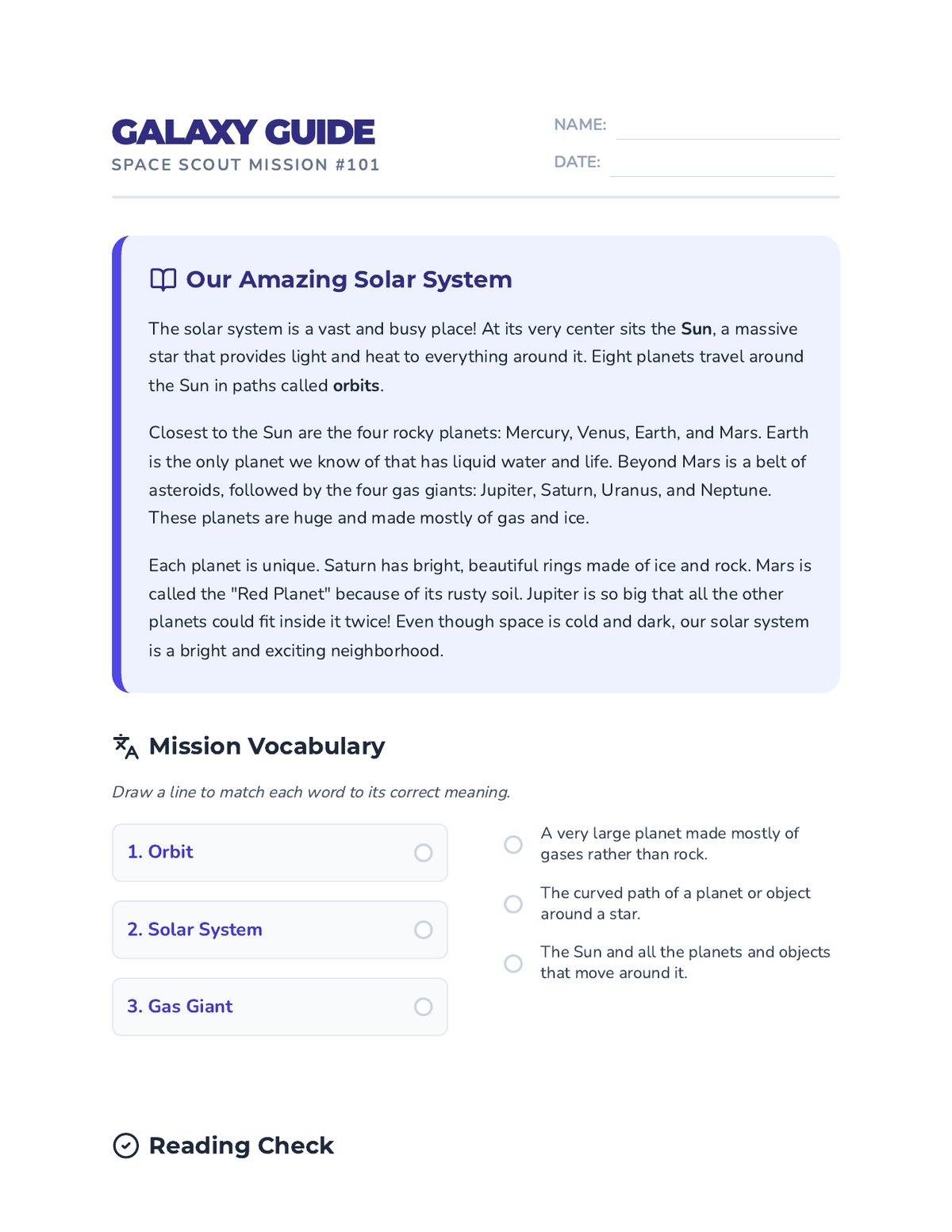
A comprehensive 3rd-grade ELA worksheet featuring a reading passage, vocabulary matching, multiple-choice questions, and a creative writing prompt about the solar system.
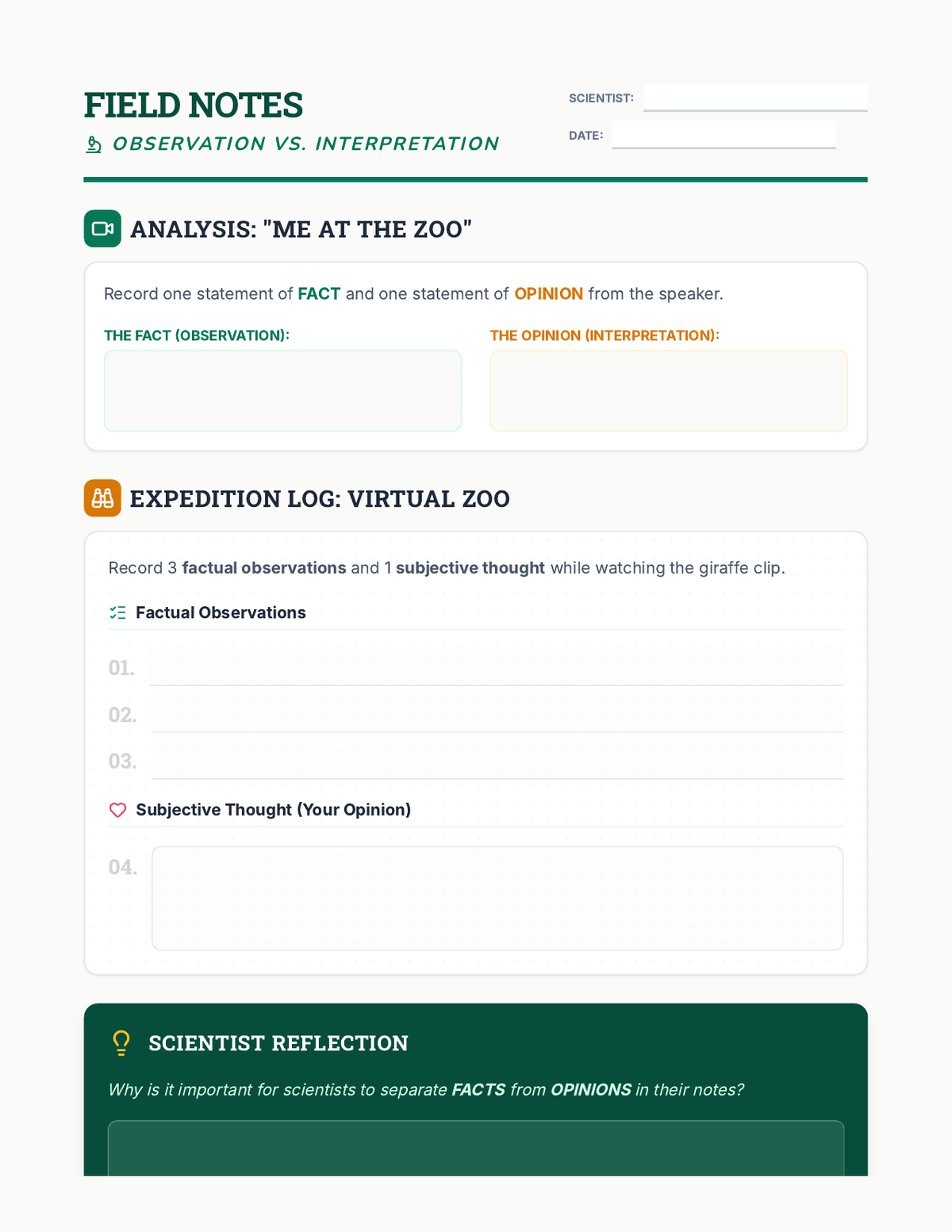
A field-journal-themed student worksheet for recording observations and interpretations during the video analysis and virtual zoo activity.
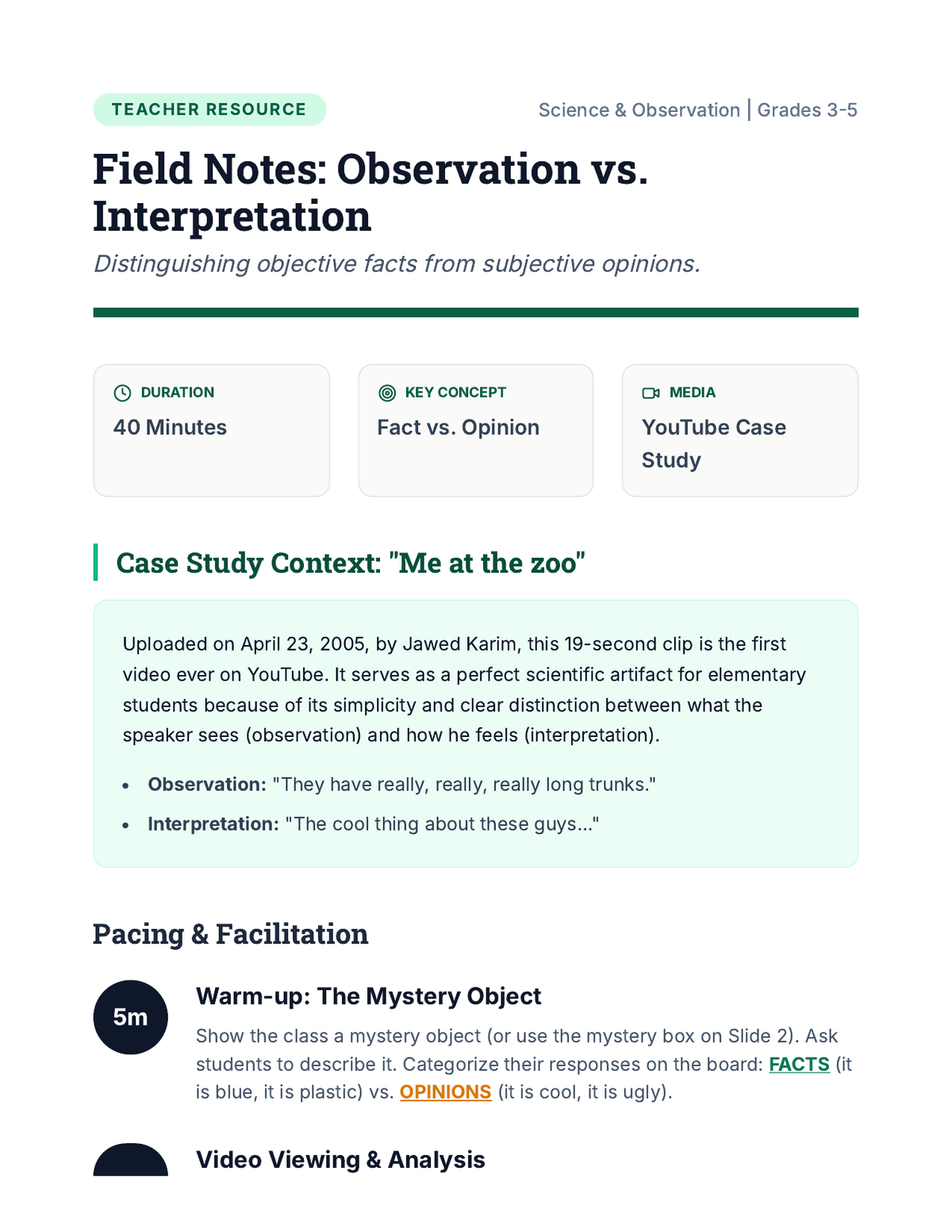
A comprehensive teacher guide for the Field Notes lesson, including pacing, background context for the video, discussion prompts, and an answer key.
A comprehensive 7-slide presentation guiding students through the concepts of observation vs. interpretation using the 'Me at the zoo' video and a virtual giraffe encounter.