Introduction to income and expenses. Students set up their personal transaction ledgers and record their starting balances for the four-week simulation.
A 45-minute lesson on ratios and unit rates using a real-world pizza pricing hook. Includes bilingual materials in English and Spanish, tiered guided practice, and visual models to support 6th-grade students of all readiness levels.
1/14
Students calculate their final monthly totals, identifying surpluses or deficits and visualizing their spending patterns.
1/16
A 2nd-grade math lesson where students identify U.S. coins and calculate their total value through video instruction and a hands-on coin rubbing activity.
Students apply their skills to create a forward-looking plan with a specific savings goal. They learn the 'pay yourself first' principle by intentionally allocating money for savings before spending on non-essentials.
Mid-month data analysis. Students review their spending trends and forecast their future balance to ensure they stay on track for their big savings goal.
A high school history and technology lesson exploring the origins of the platform economy through the lens of the first YouTube video, 'Me at the zoo'. Students analyze the shift from professional broadcasting to user-generated content and debate the societal impacts of democratized media.
Students create a balanced spending plan to reach a specific savings goal while managing essential costs.
Students are introduced to the core concepts of money flow by sorting various financial scenarios into 'money in' (income) and 'money out' (expenses). This foundational lesson ensures students can correctly identify the direction of cash flow.
Students analyze financial scenarios to identify budget deficits and 'budget busters' that cause overspending.
A culminating project where students create a budget to reach a specific savings goal while managing weekly expenses.
Challenges students to solve budget emergencies and navigate financial deficits using problem-solving strategies.
Teaches students how to record transactions and maintain a running balance using a simple ledger.
Students analyze potential purchases to determine which items are essential (needs) and which are optional (wants). Through a limited-budget simulation, they practice making difficult spending decisions.
Students differentiate between income and expenses and learn to categorize fixed and variable spending using a 'Mystery Wallet' simulation.
Navigating financial curveballs. Students adjust their budgets to account for unexpected costs like library fines or gifts while maintaining their savings goals.
Introduces income and expenses through categorization and brainstorming, ending with a personal T-chart.
Exploration of fixed vs. variable expenses. Students categorize potential purchases as needs or wants and record their first week of planned spending.
Students analyze pre-filled ledgers to identify deficits and 'spending leaks', acting as budget doctors to fix financial health.
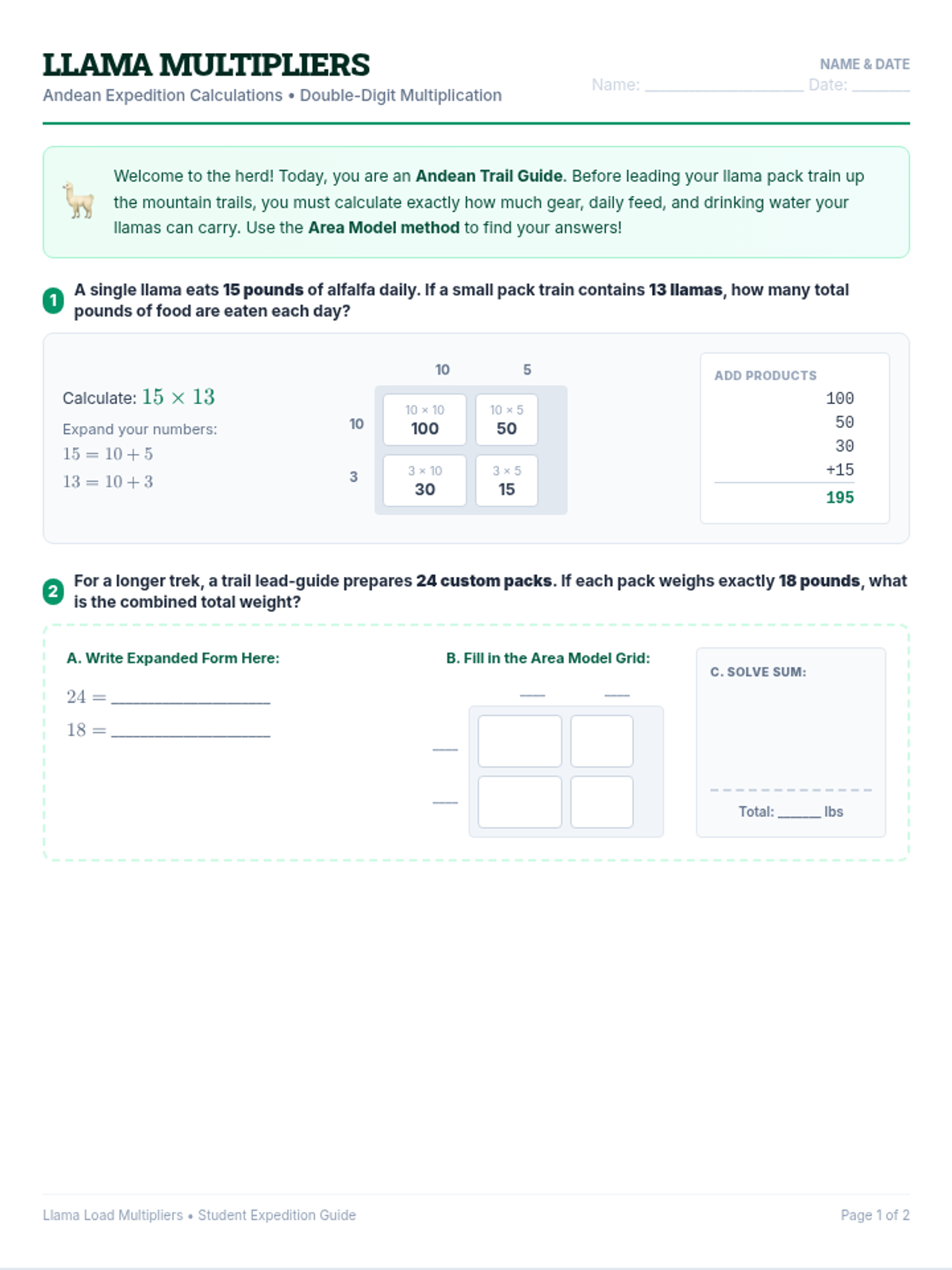
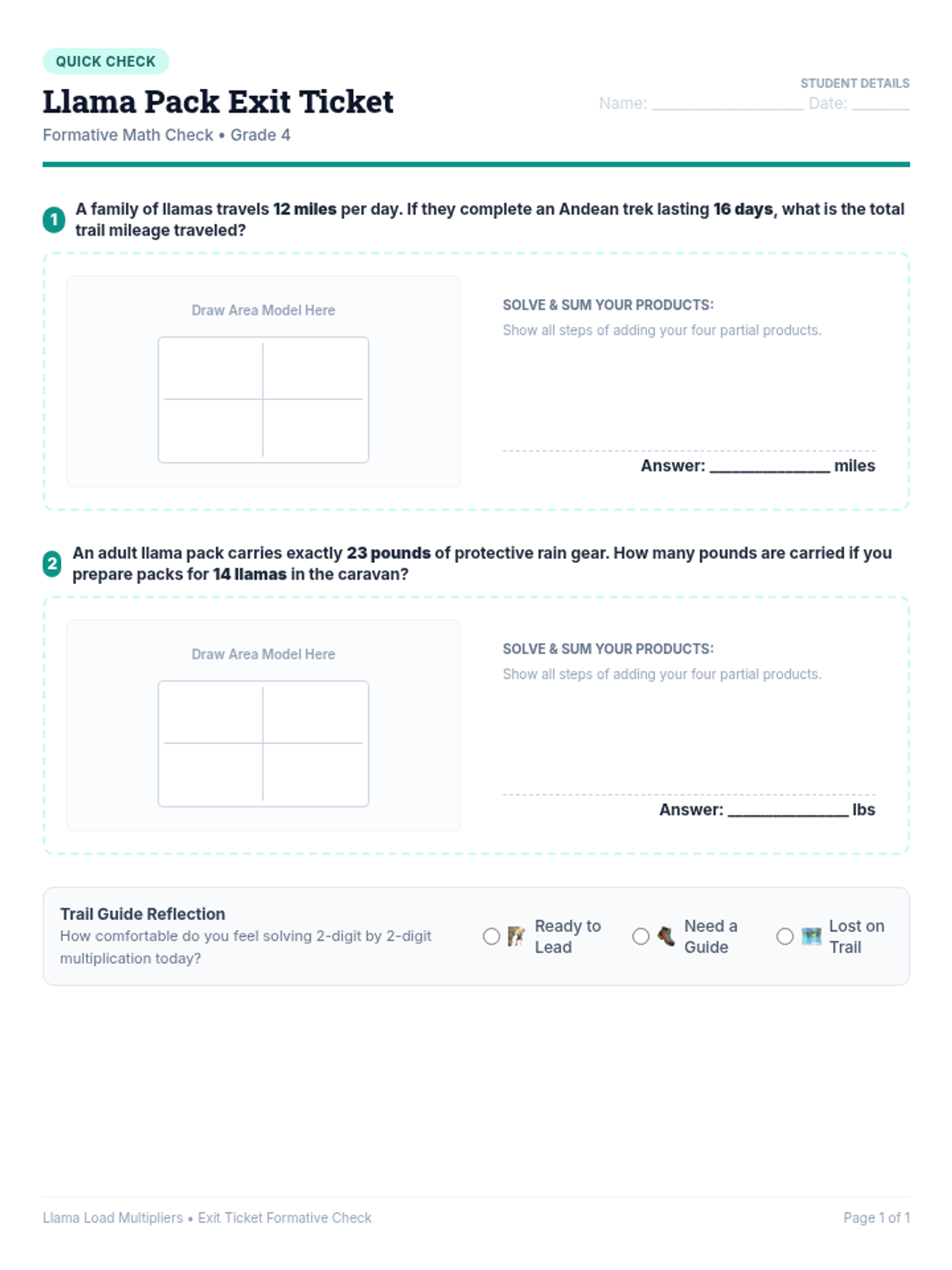
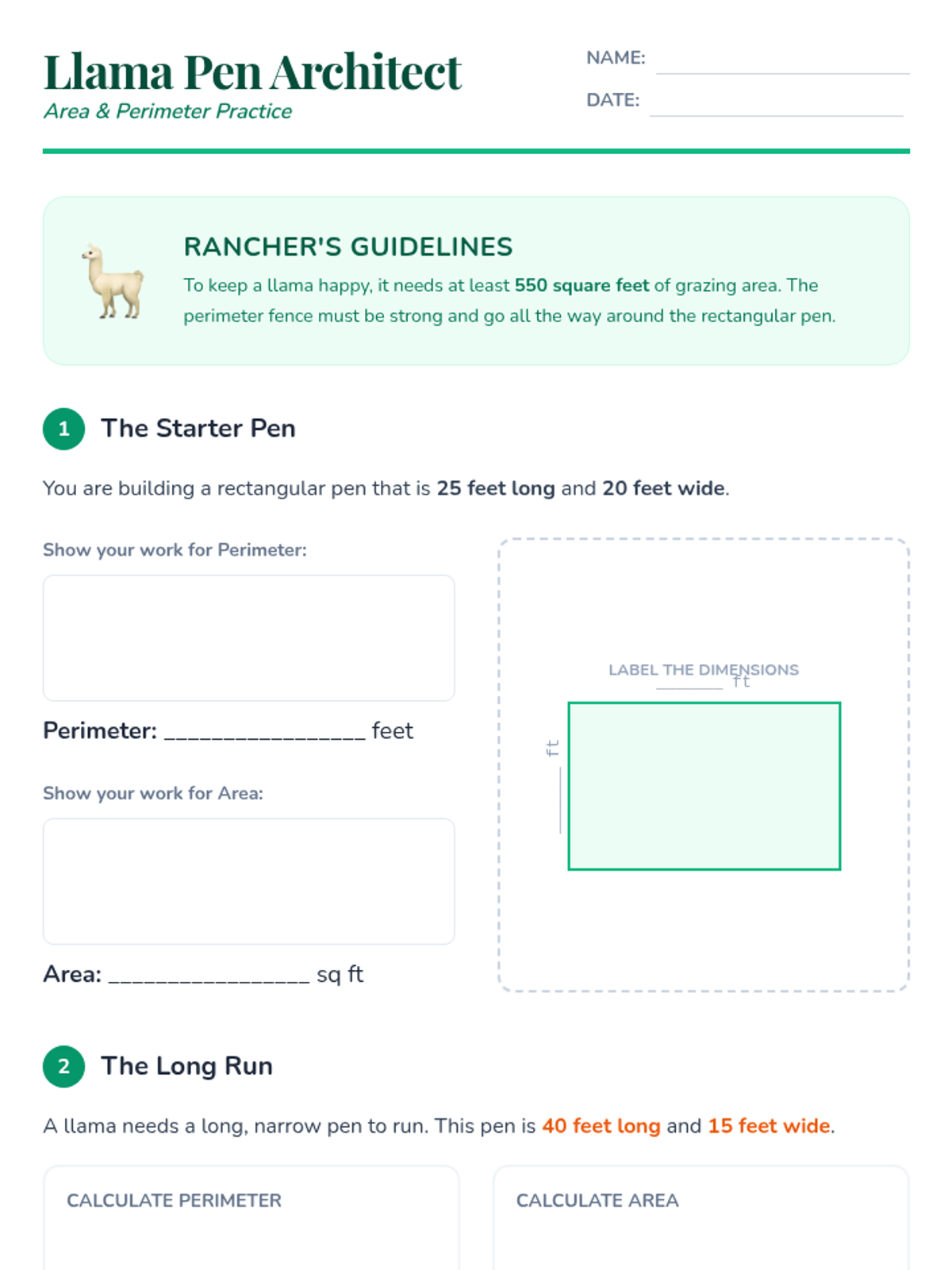
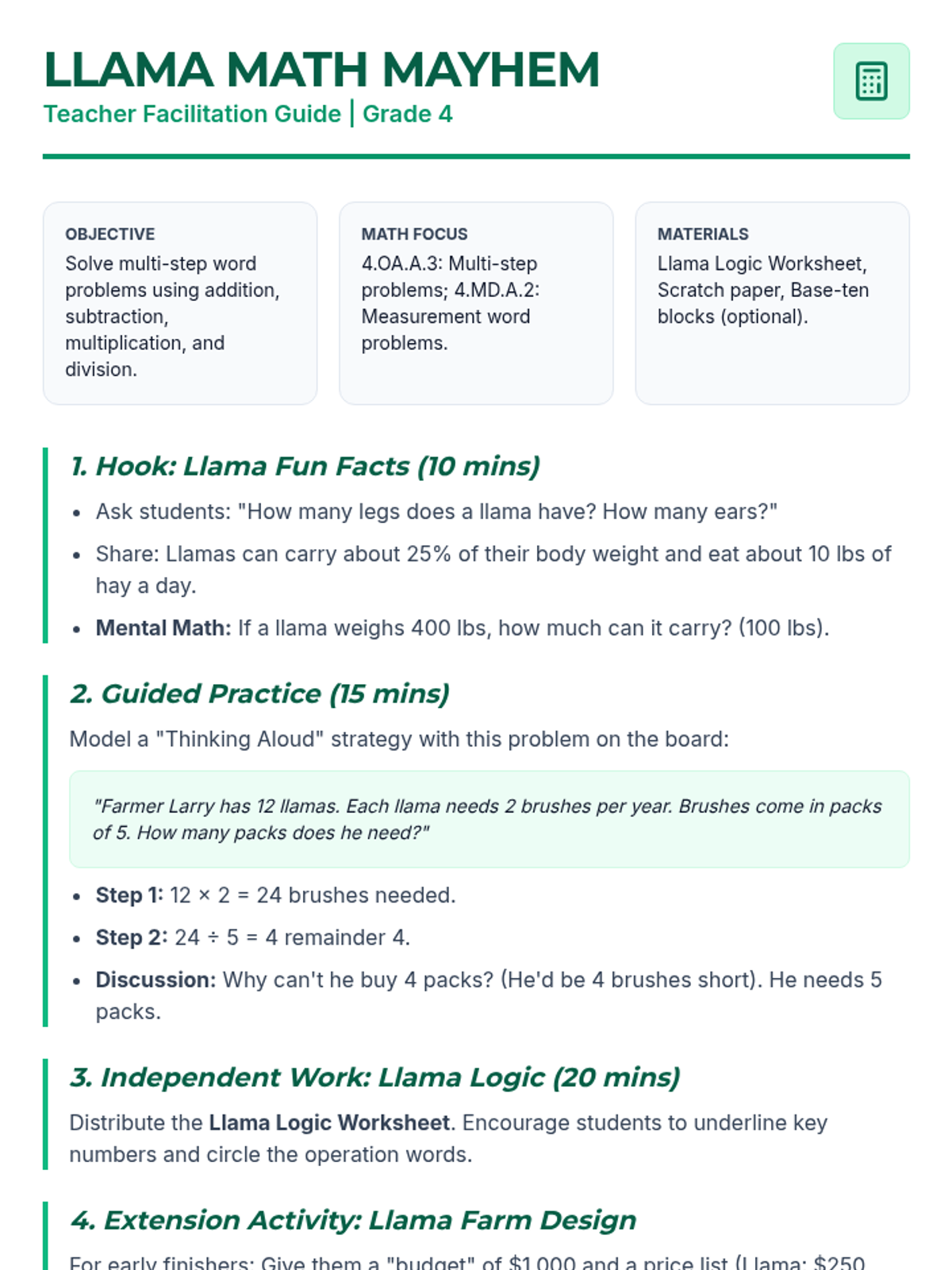
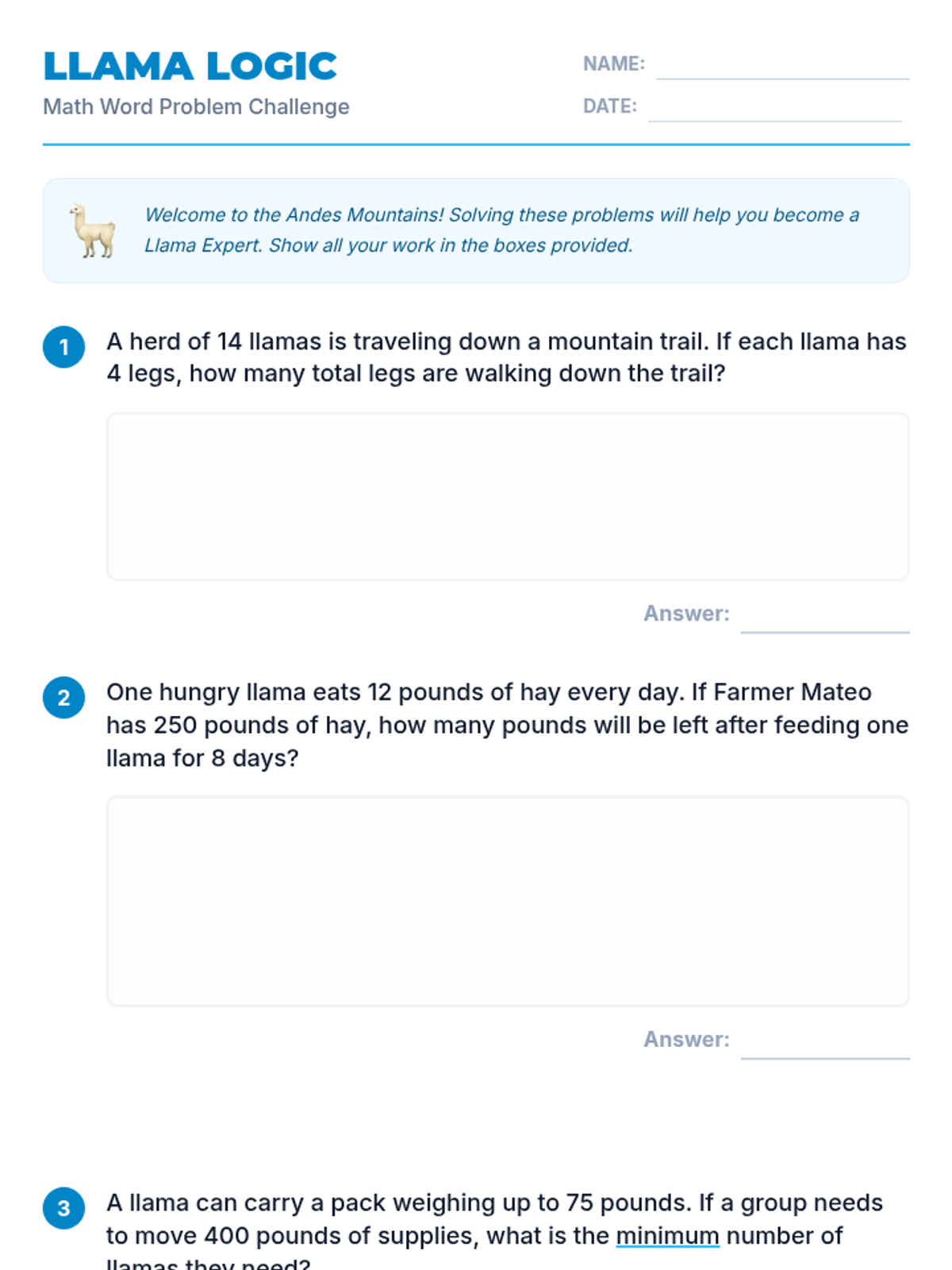
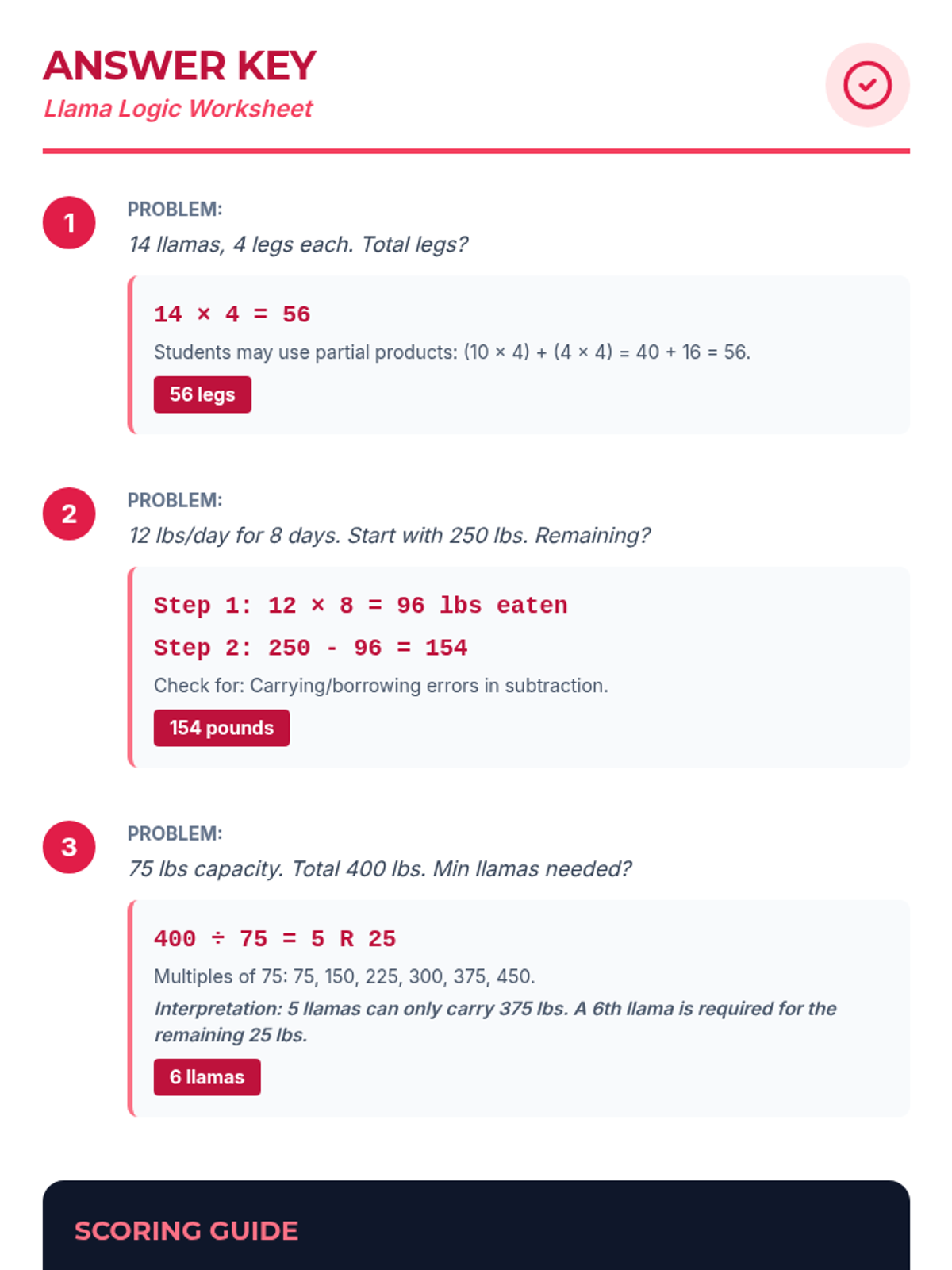
A fun and engaging math lesson for 4th graders featuring llama-themed word problems that cover addition, subtraction, multiplication, and multi-step reasoning.
Students define income and expenses and practice the foundational skill of recording transactions in a ledger to maintain a running balance.