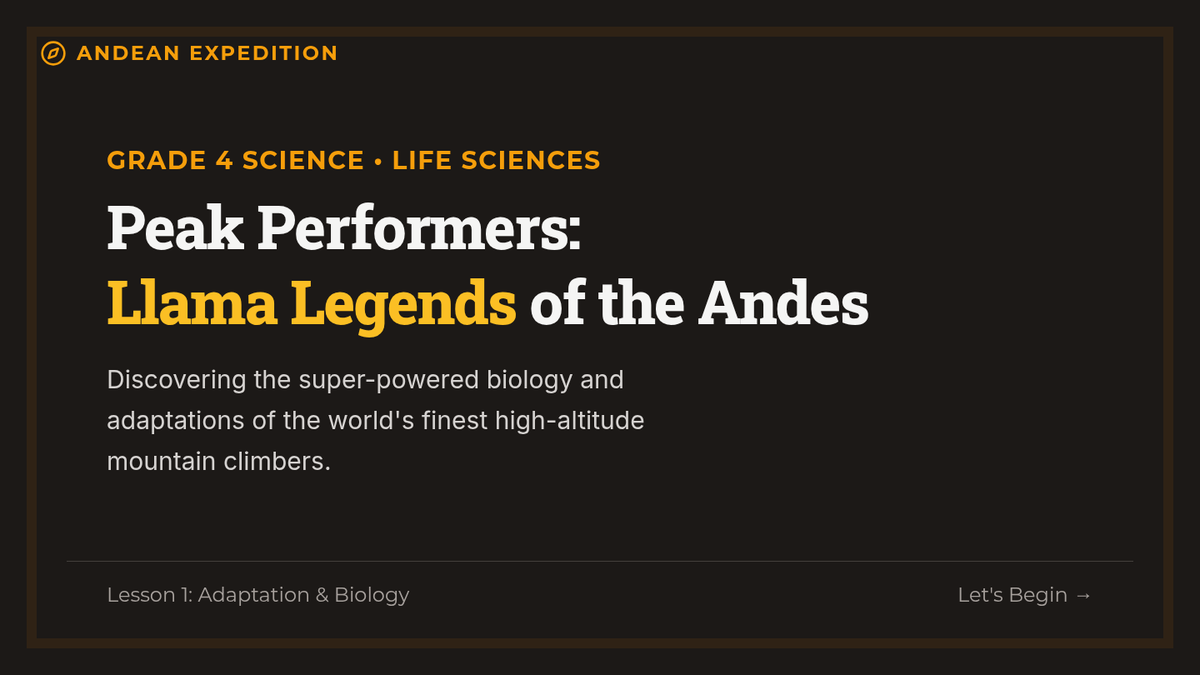
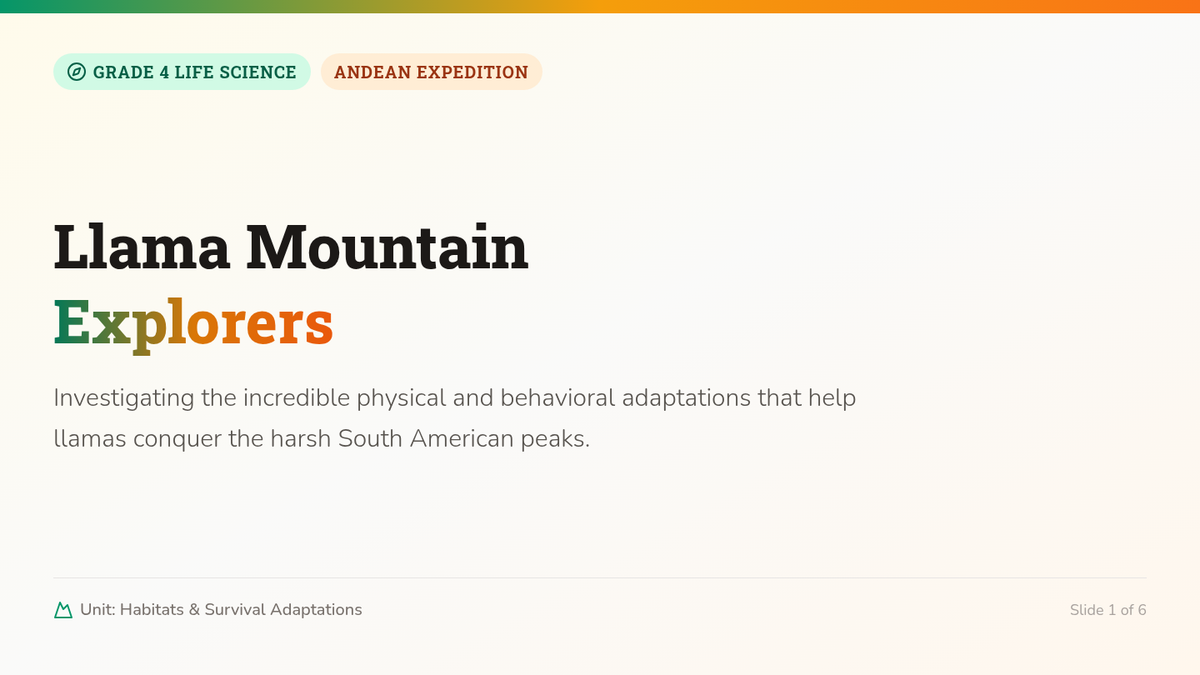
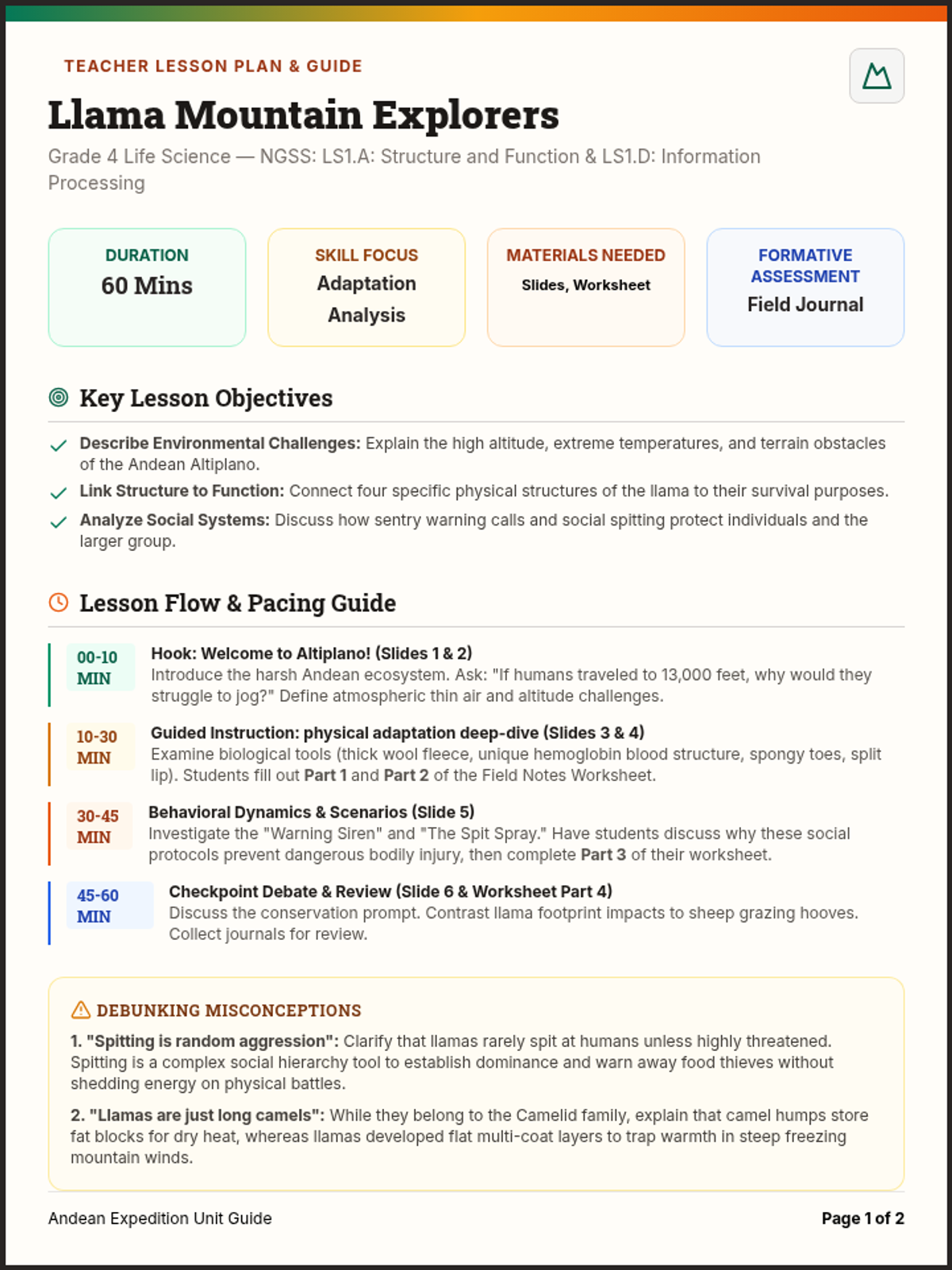
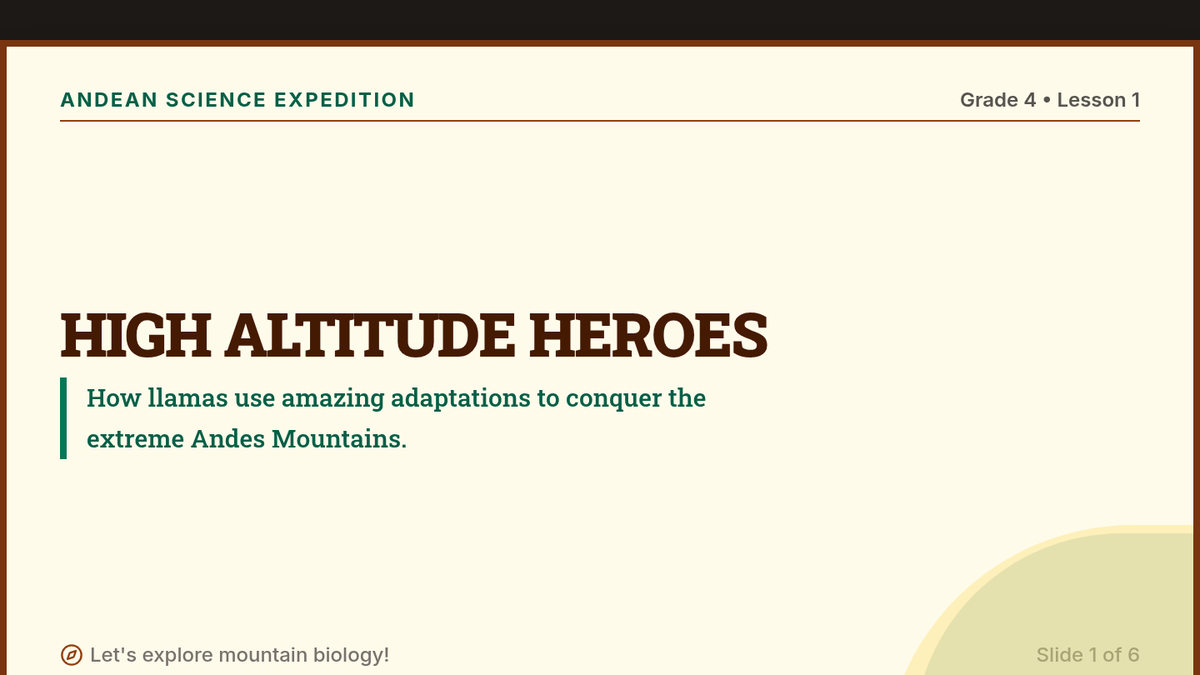
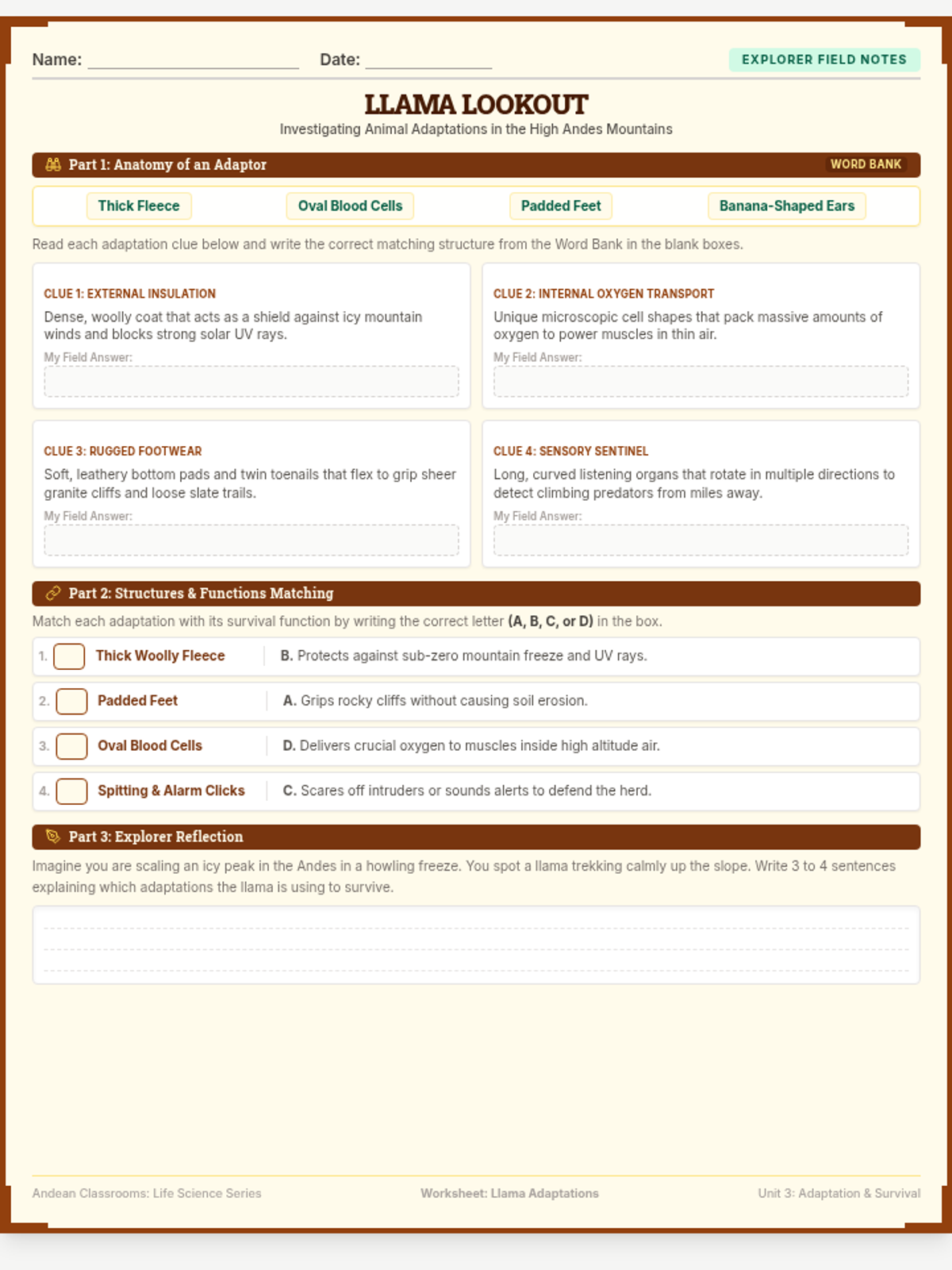
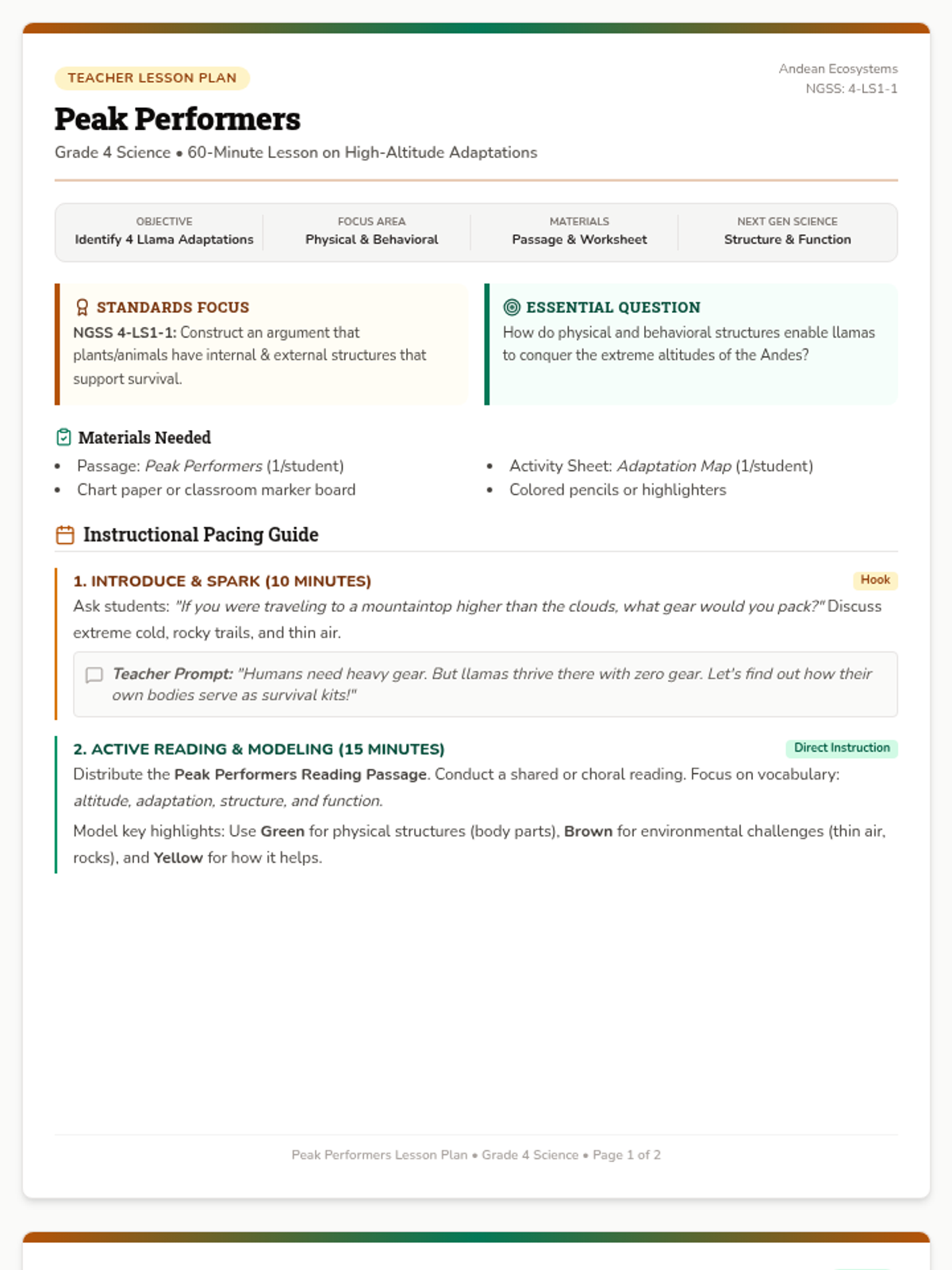
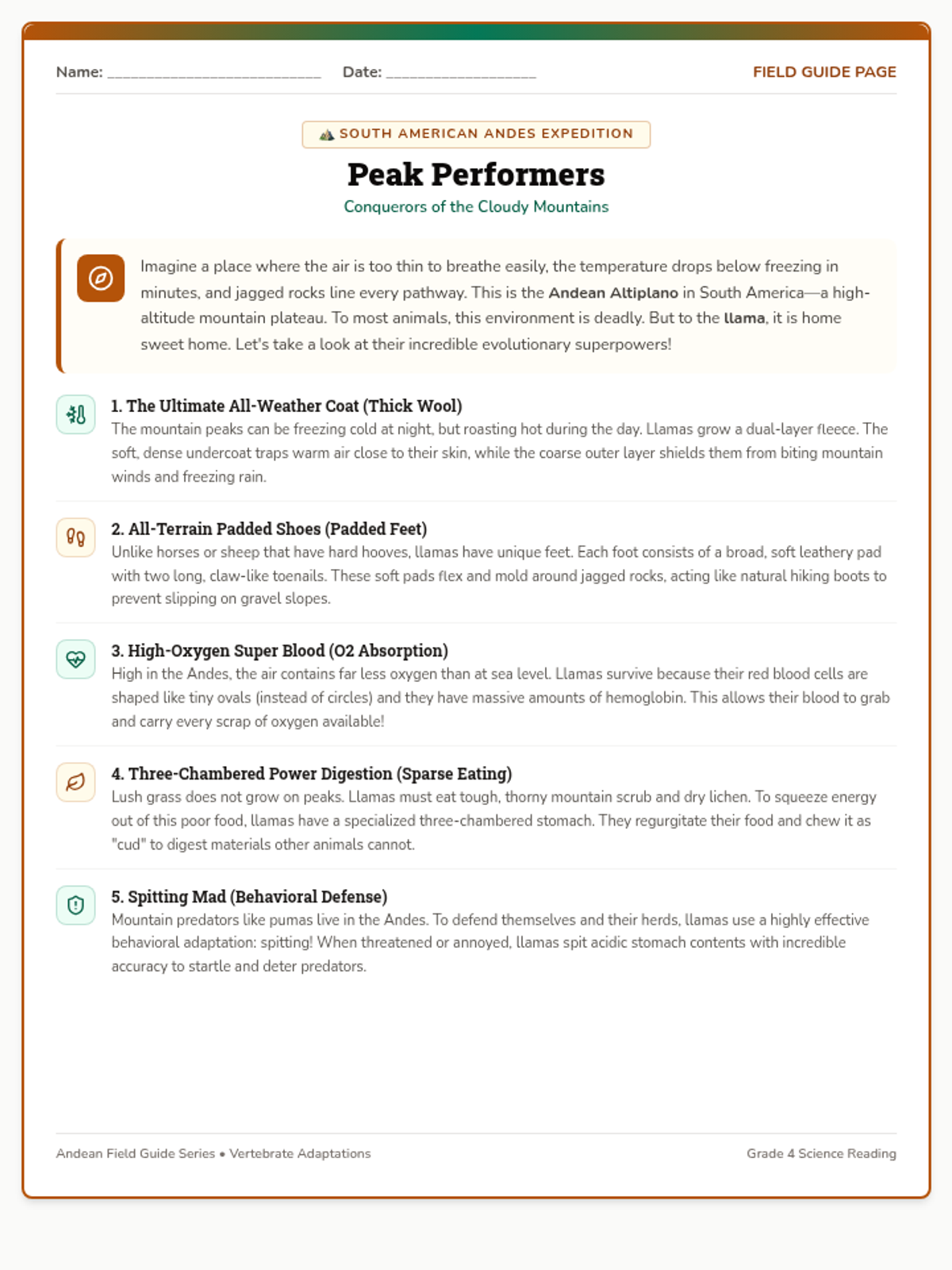
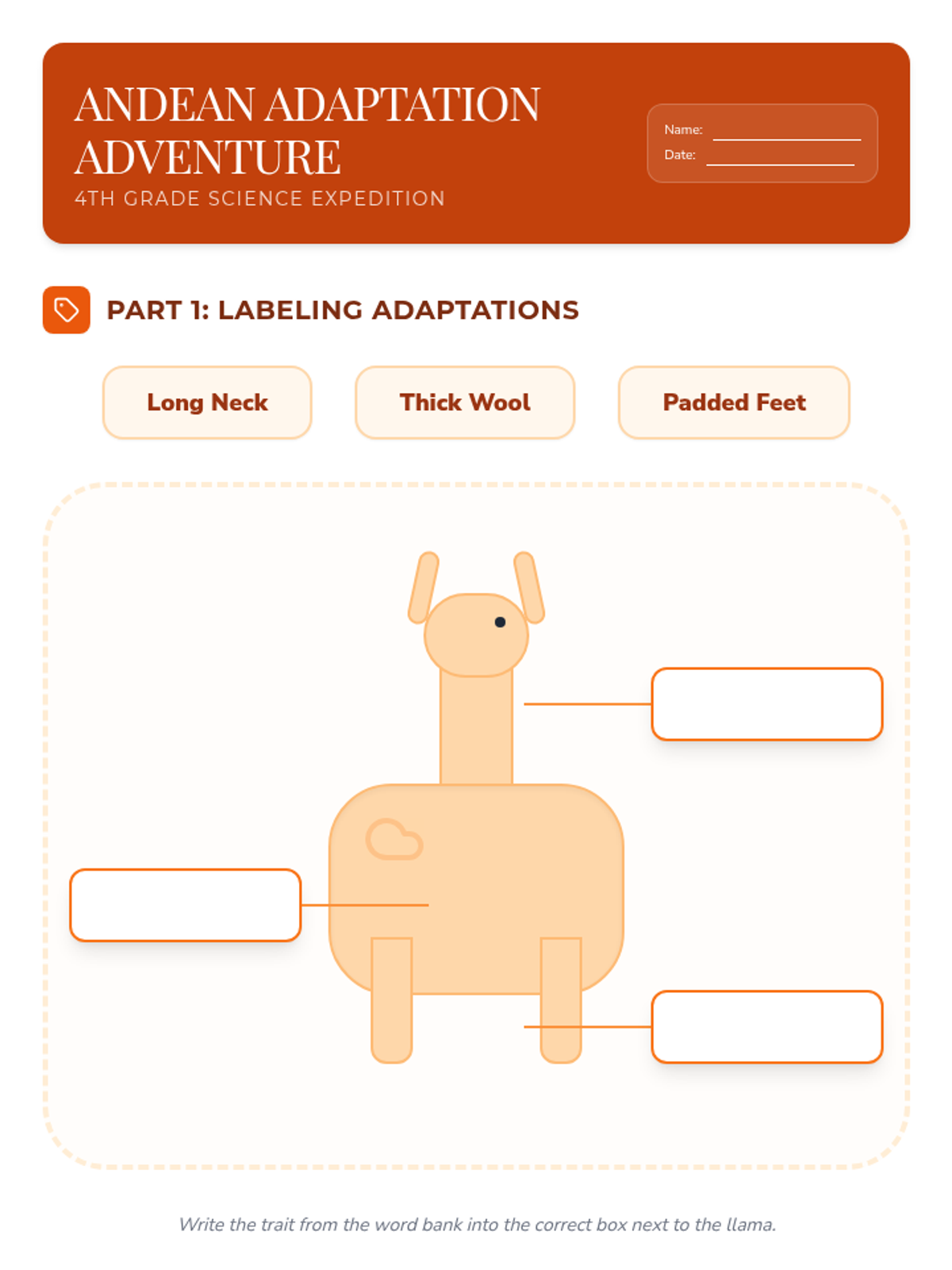
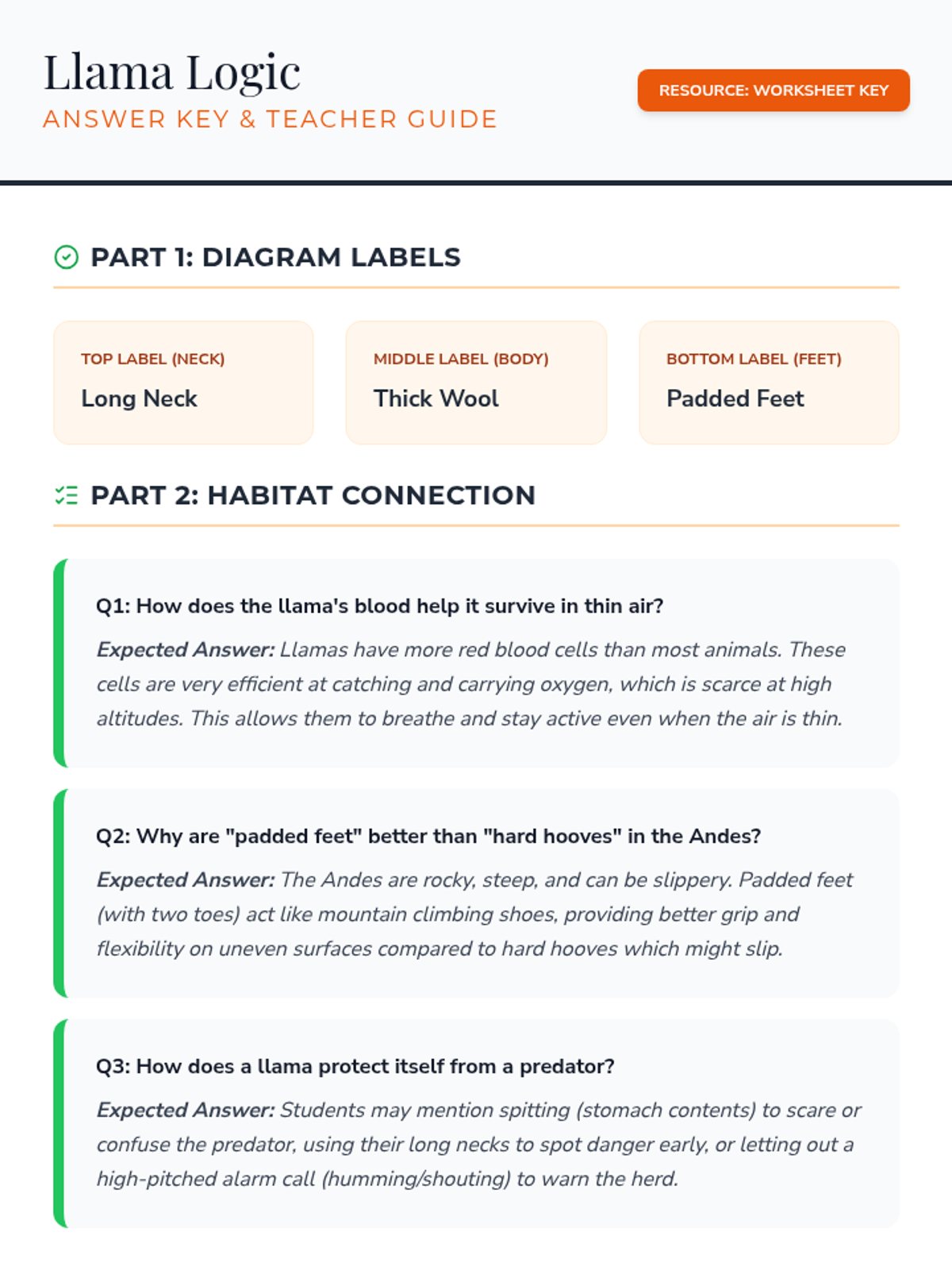
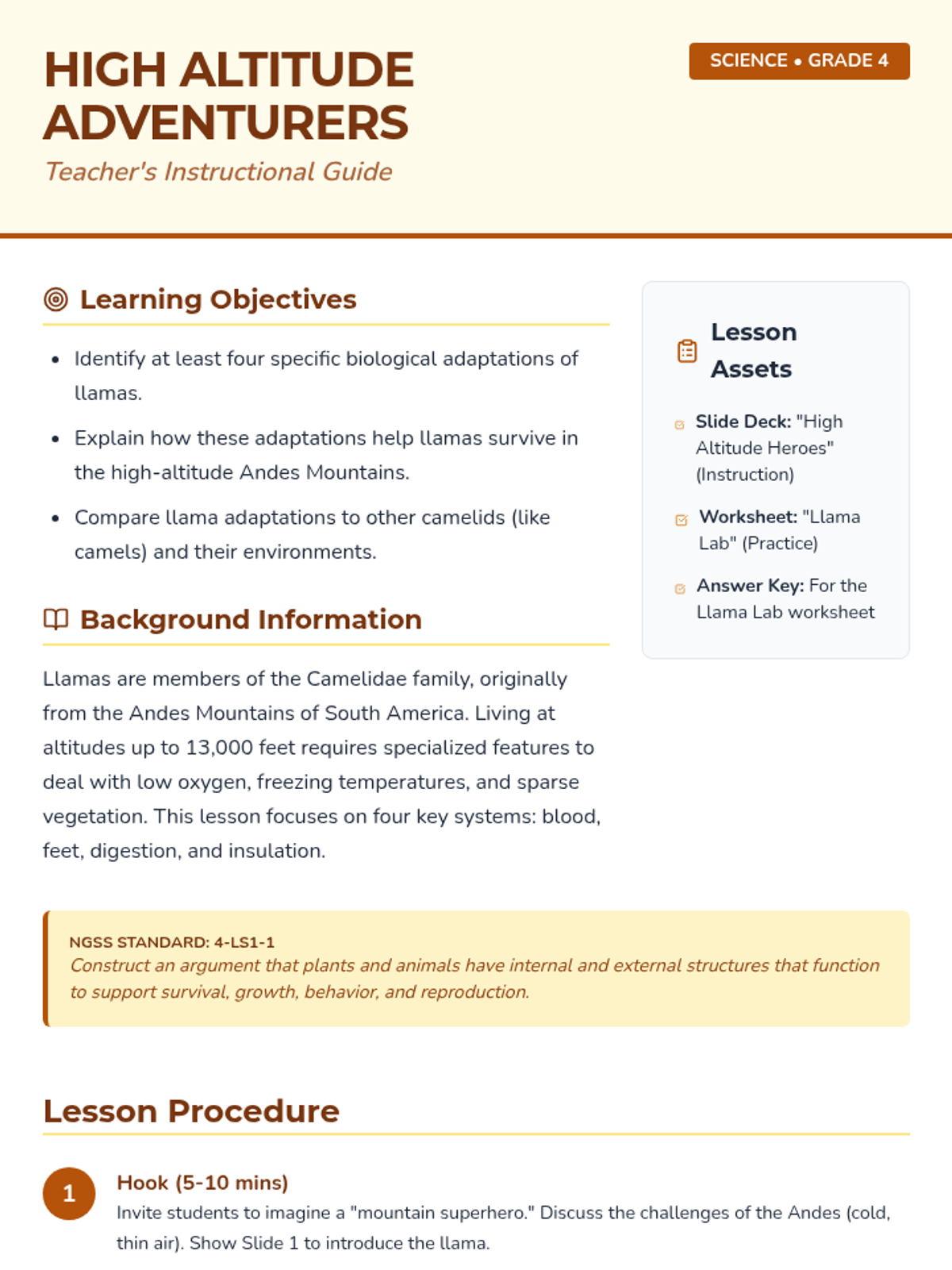
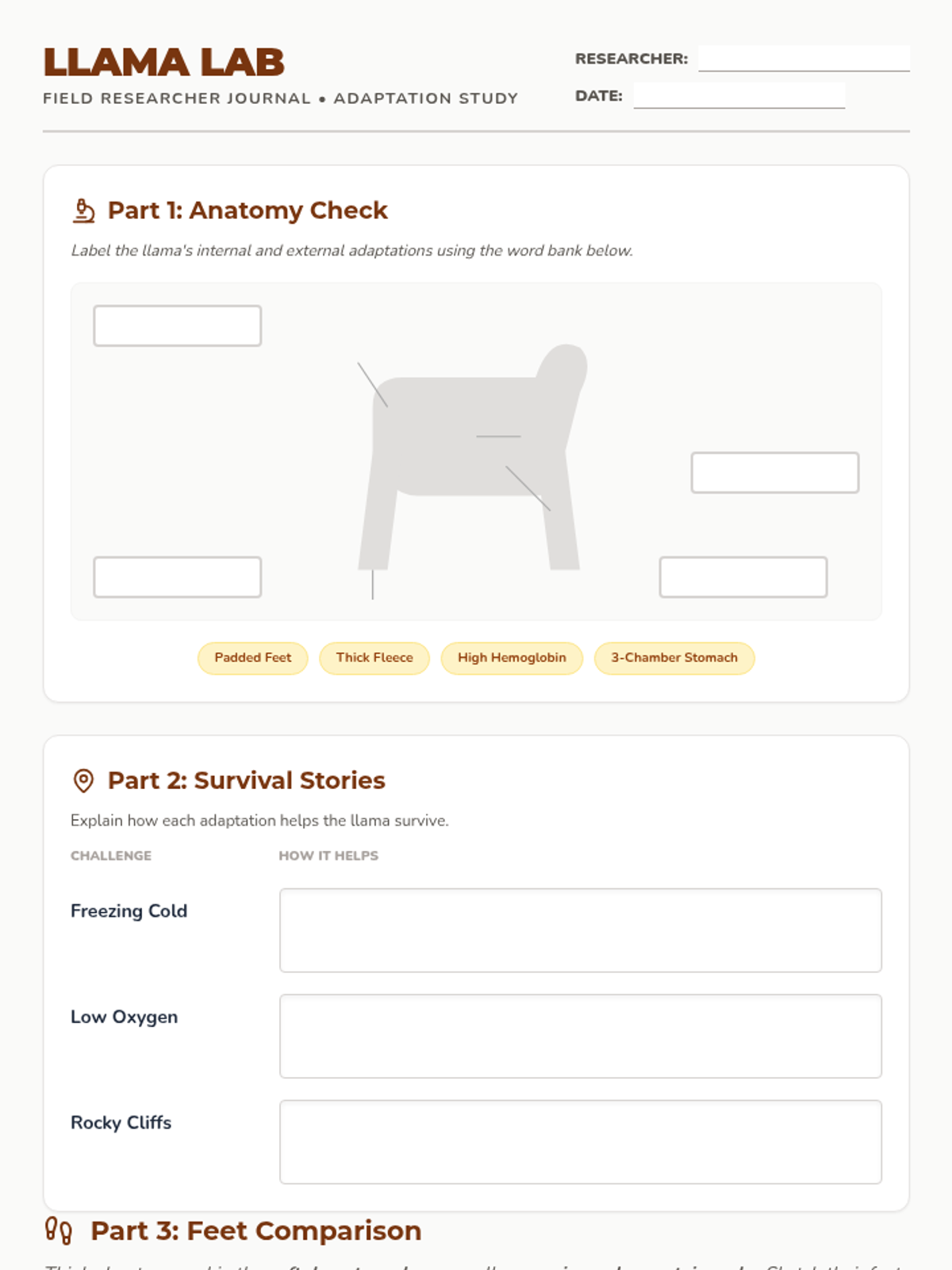
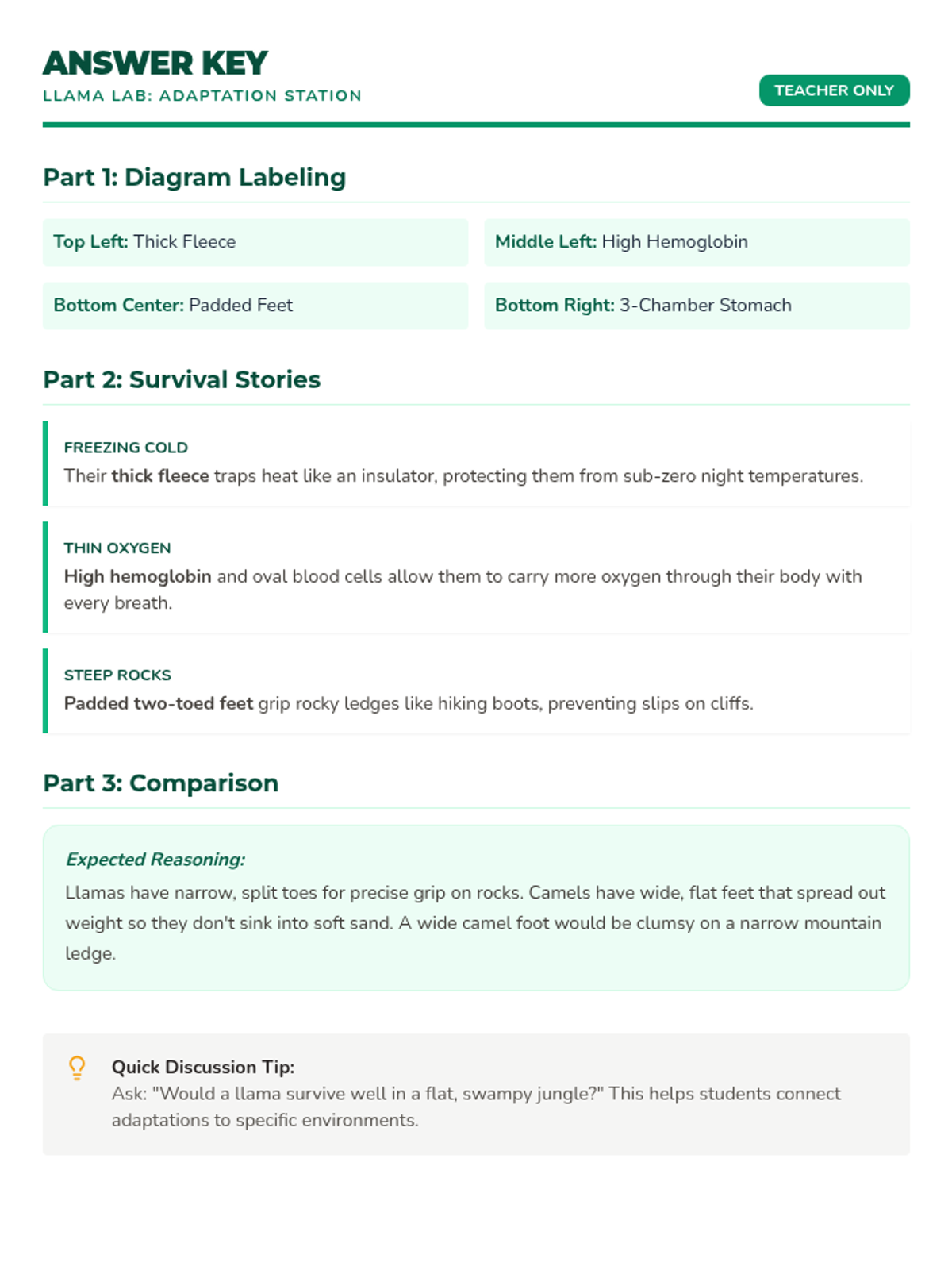
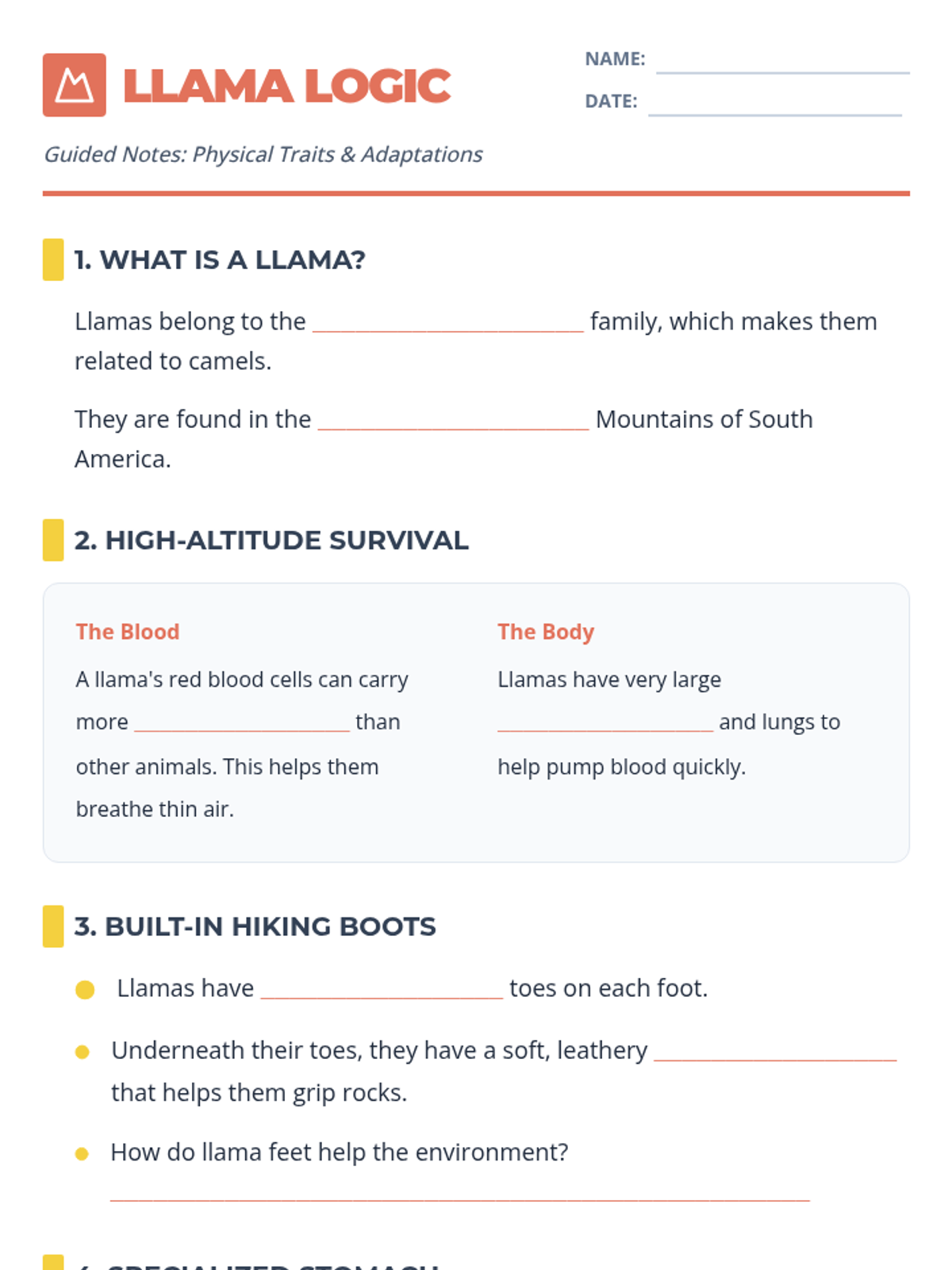
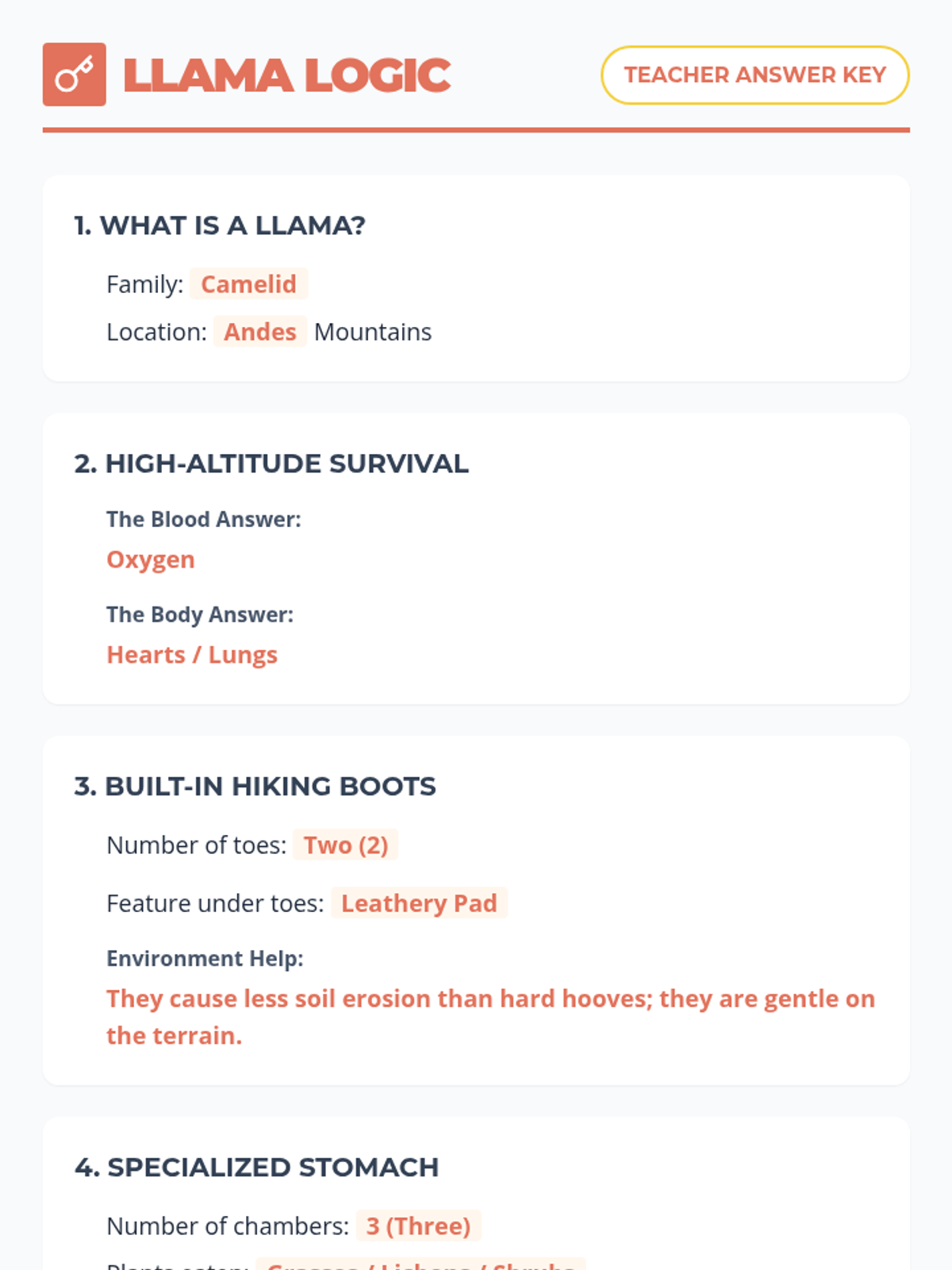
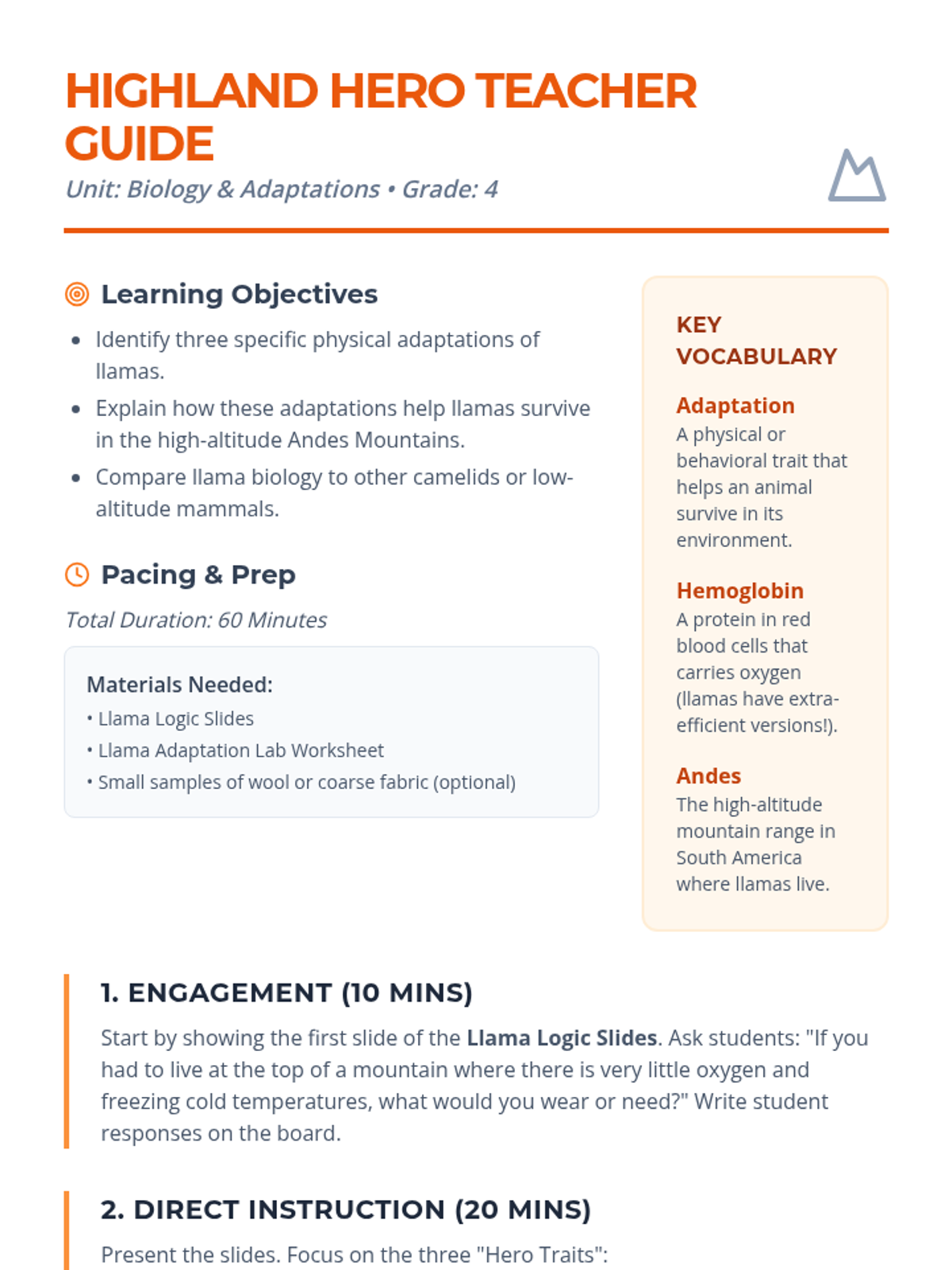
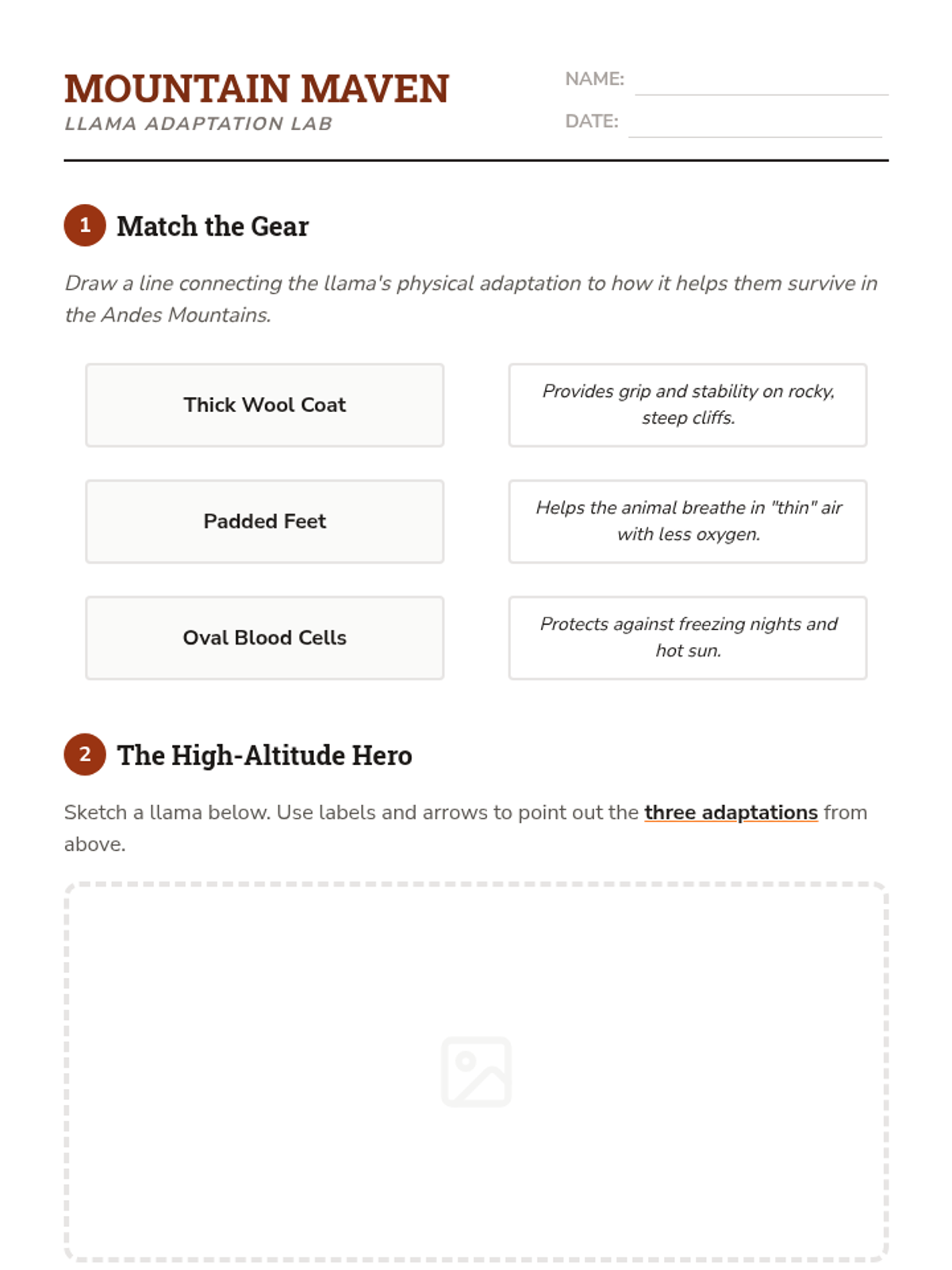
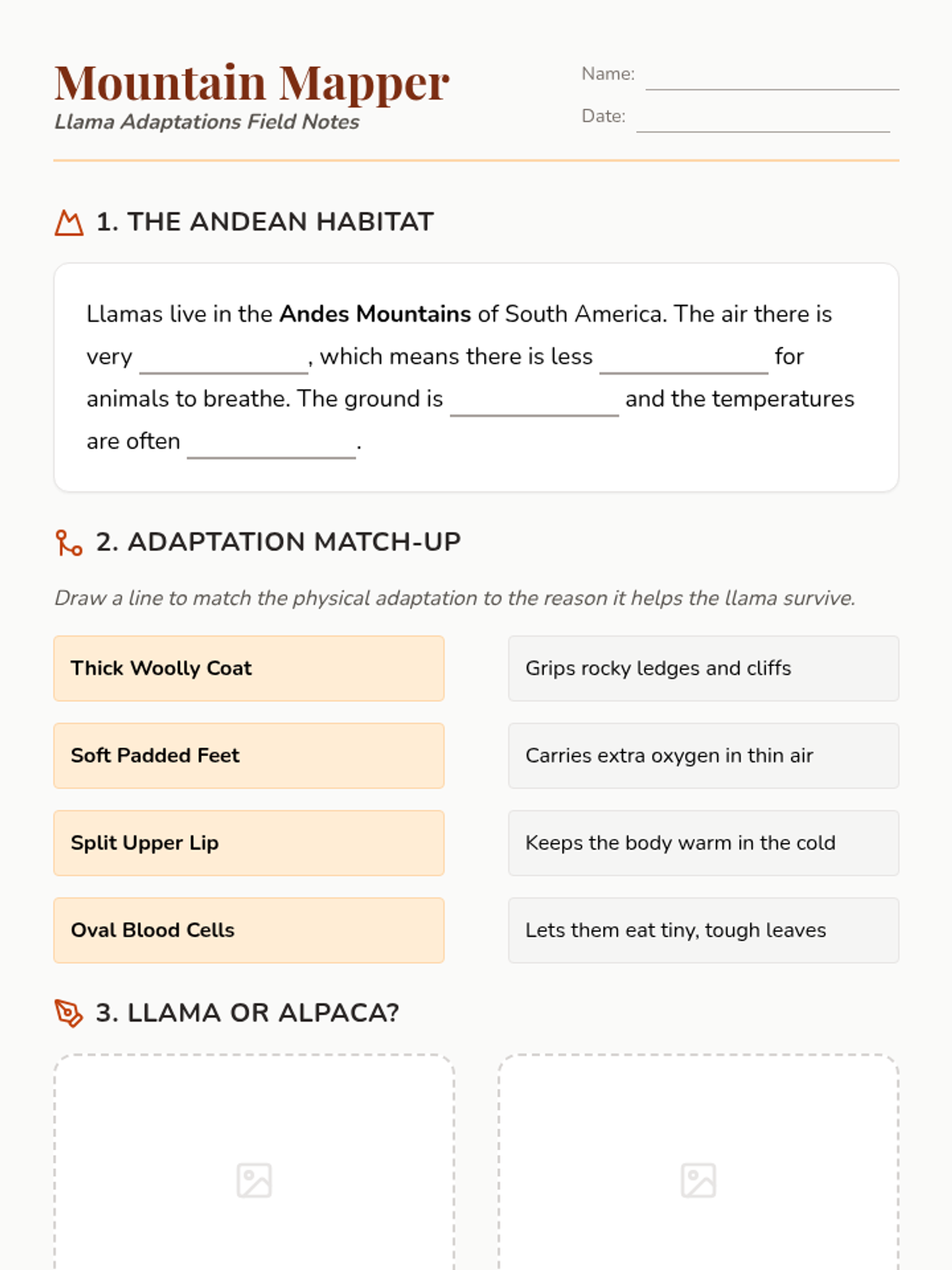
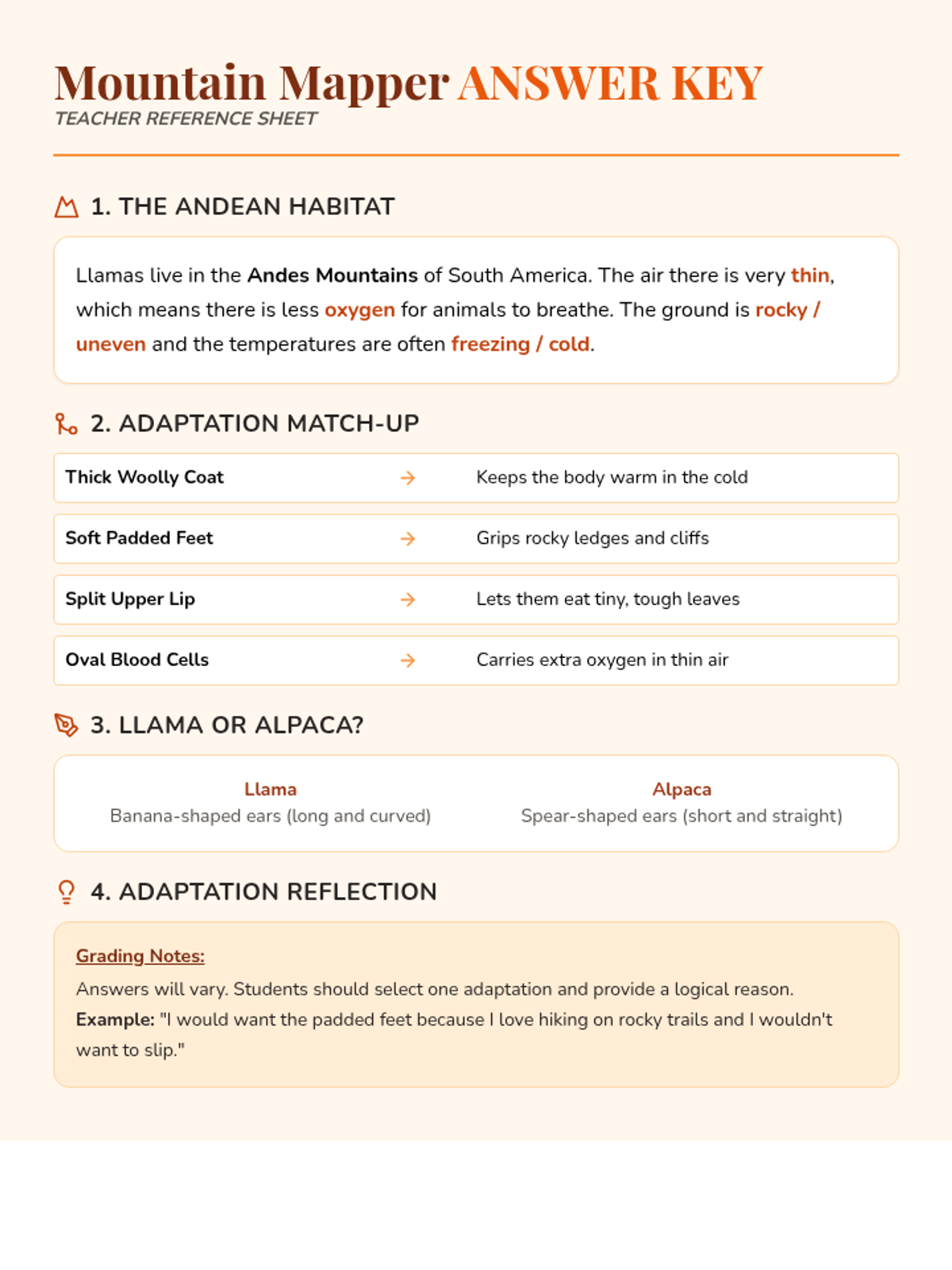
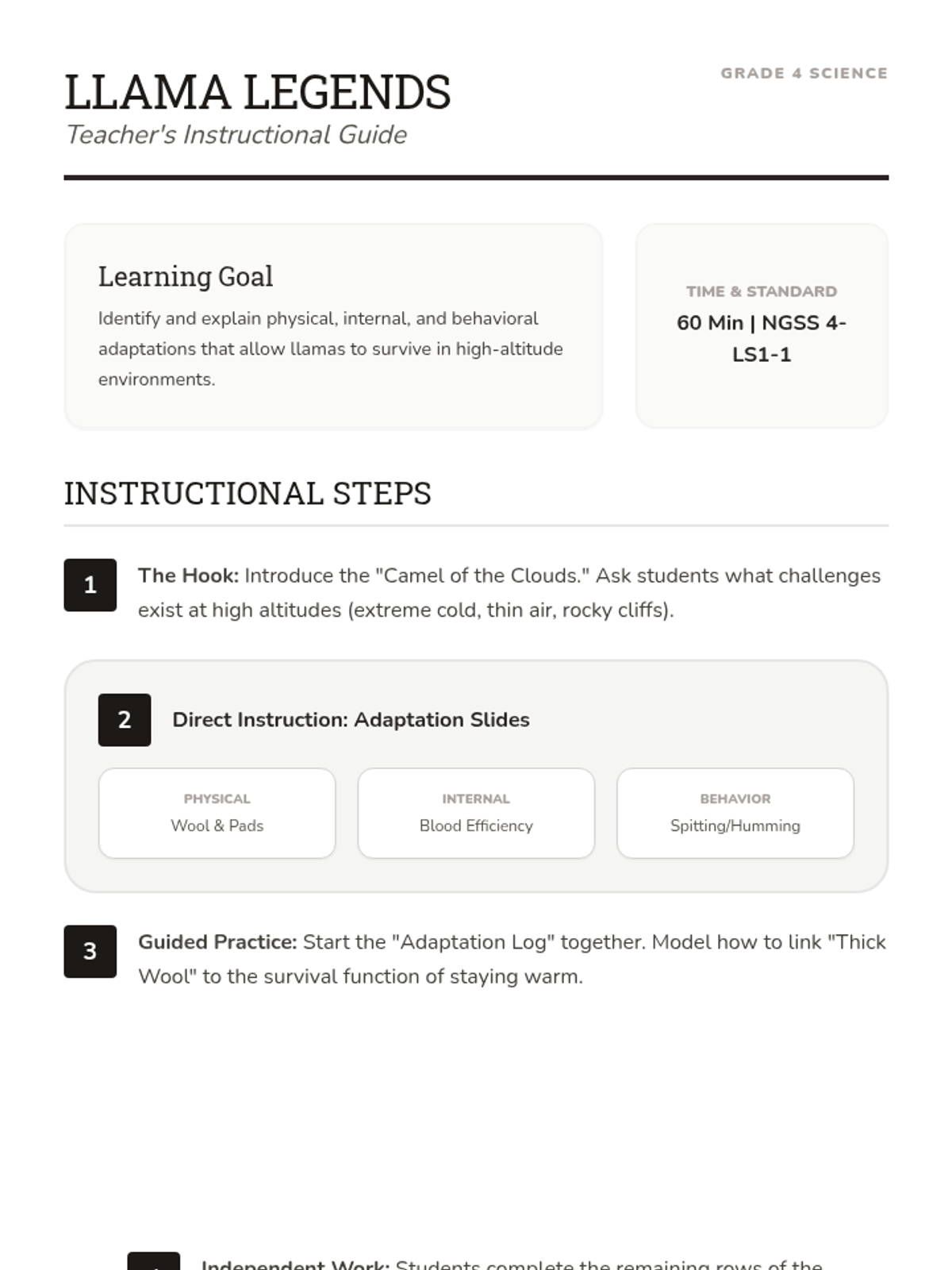
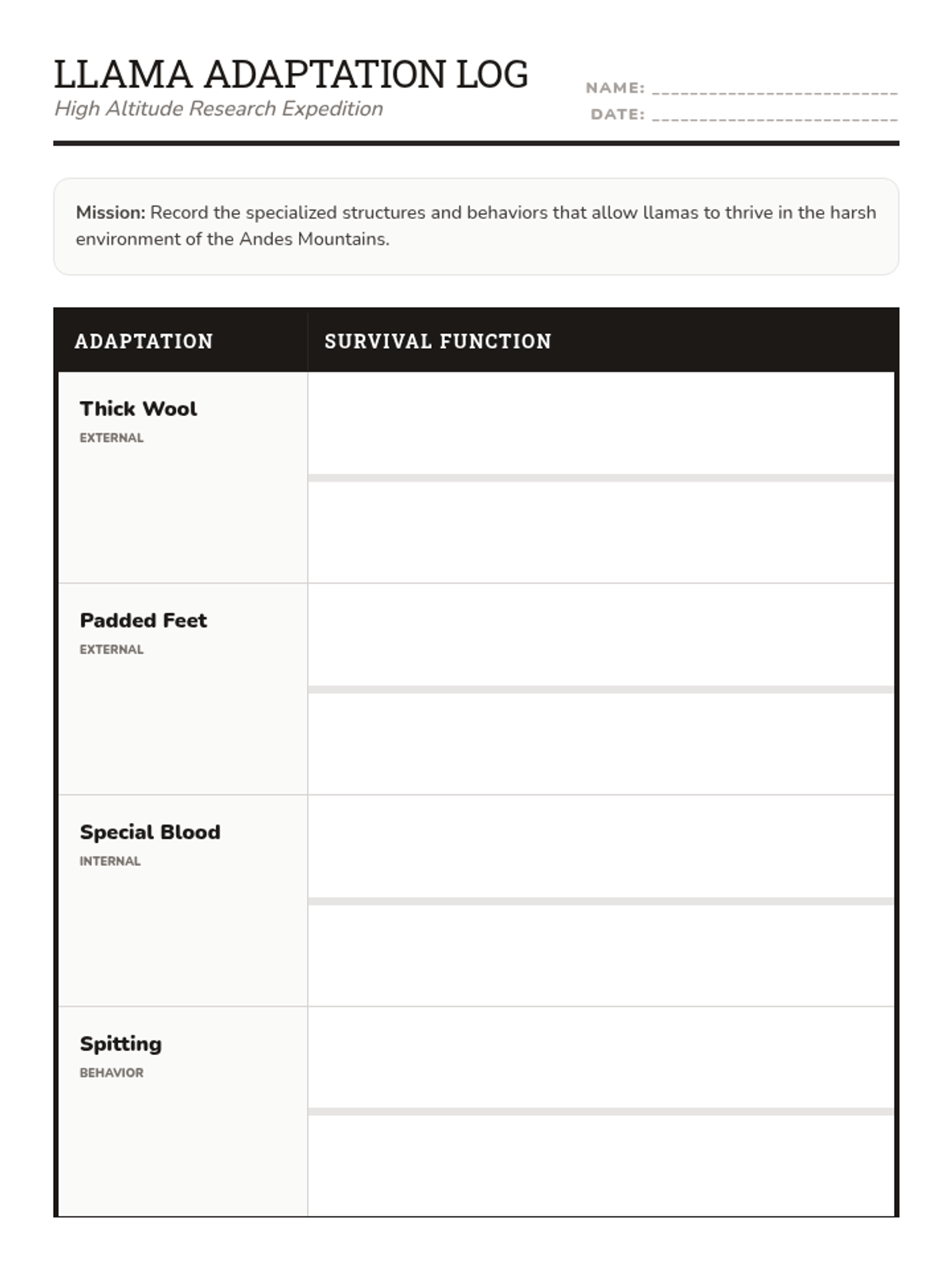
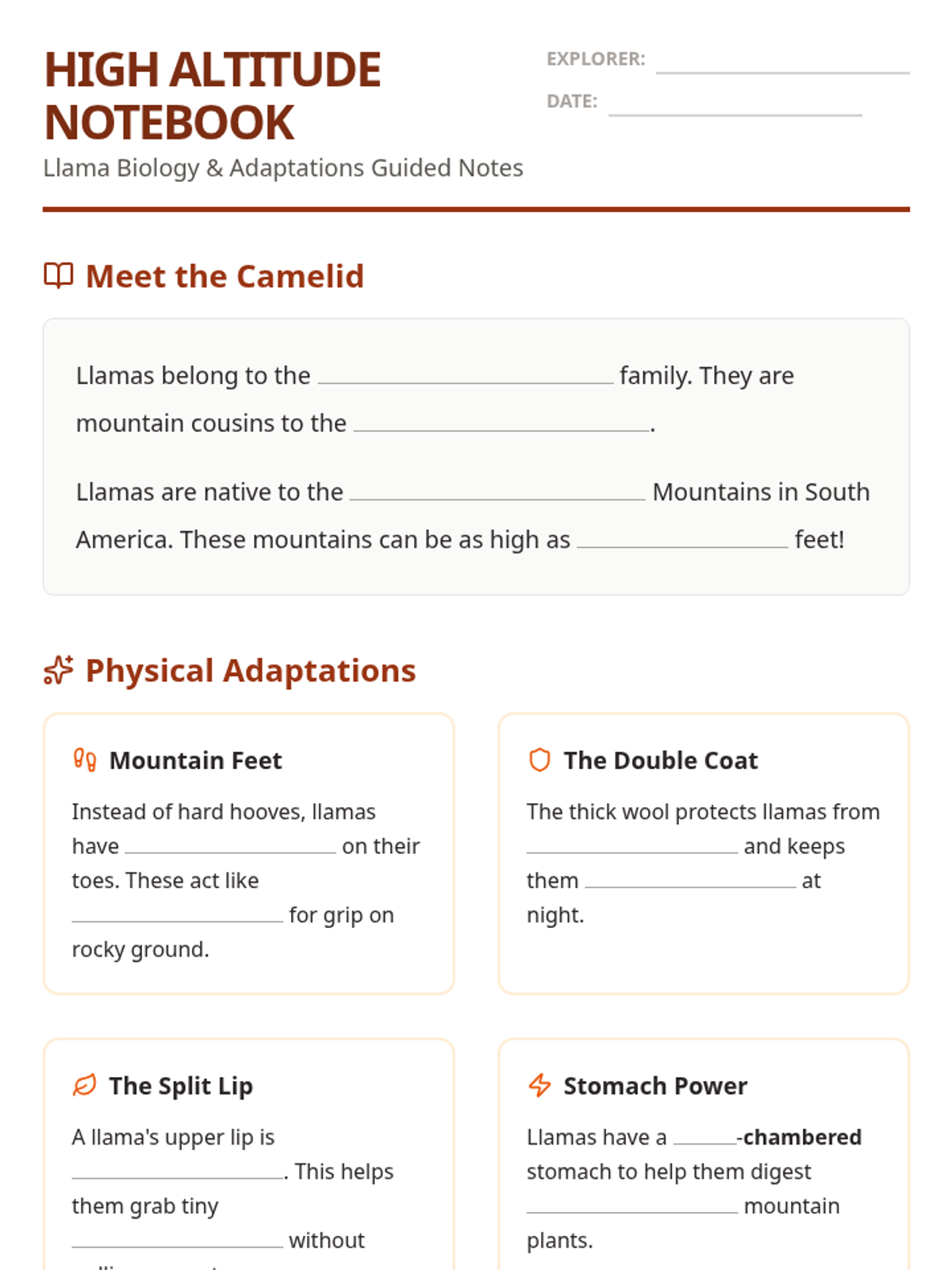
A fun and engaging lesson exploring the unique characteristics of llamas, their history in the Andes, and how they compare to their camelid cousins. Students will build vocabulary and practice comparison skills.
No materials in this lesson yet.
A fun, interactive lesson for Pre-K to 1st grade focusing on identifying animal features and using descriptive language, inspired by the first-ever YouTube video.
1/16
A rhythmic introduction to Spanish zoo animal names (lion, monkey, giraffe) through a repetitive action song and visual aids.
1/14
A lesson for 1st-3rd graders focusing on observation skills and descriptive adjectives, using the 'Me at the zoo' video as a primary source for analysis and imitation.
A Pre-K to 2nd-grade lesson on elephant characteristics using the first YouTube video "Me at the zoo". Students observe, draw, and describe elephants.
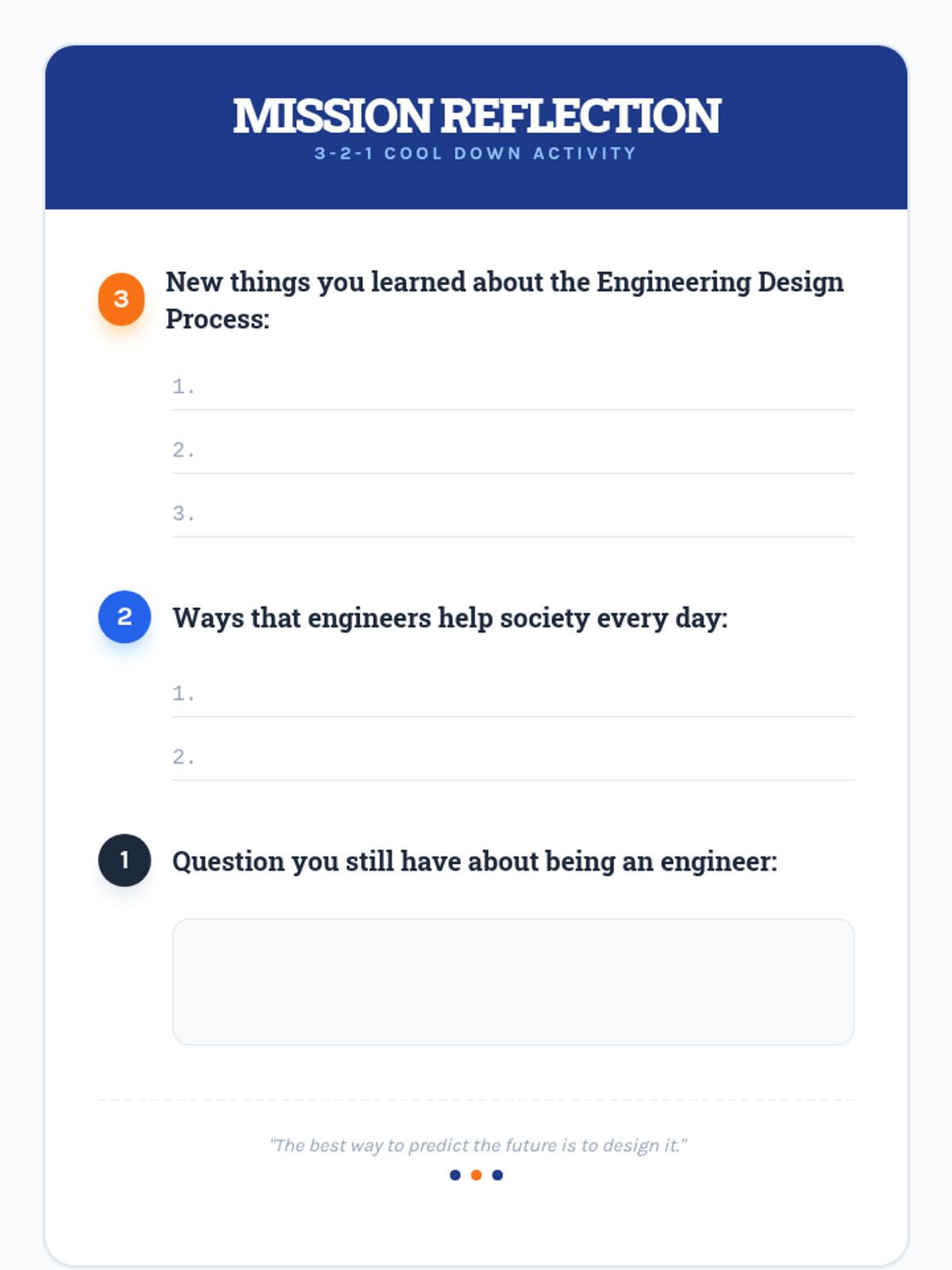
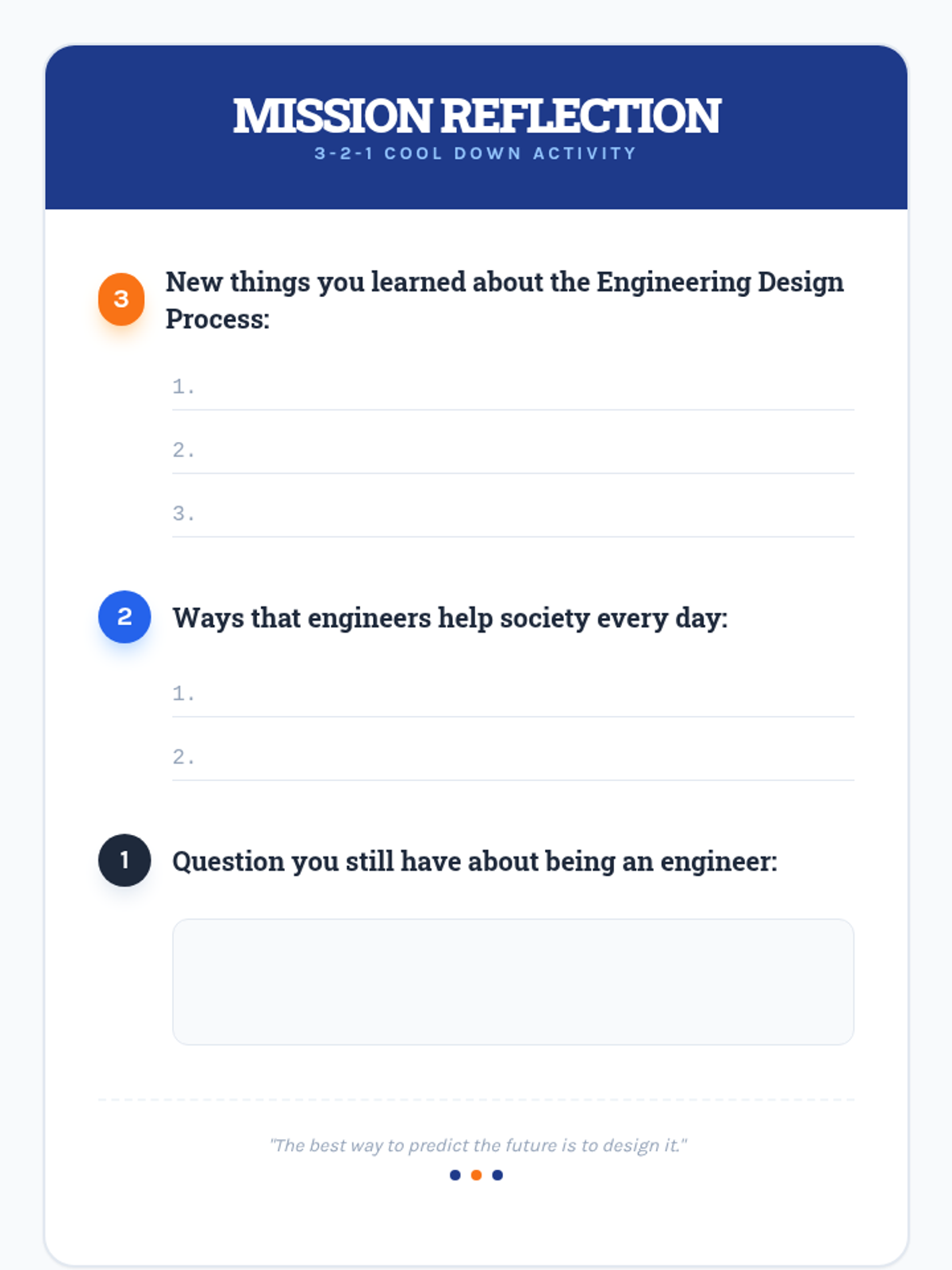
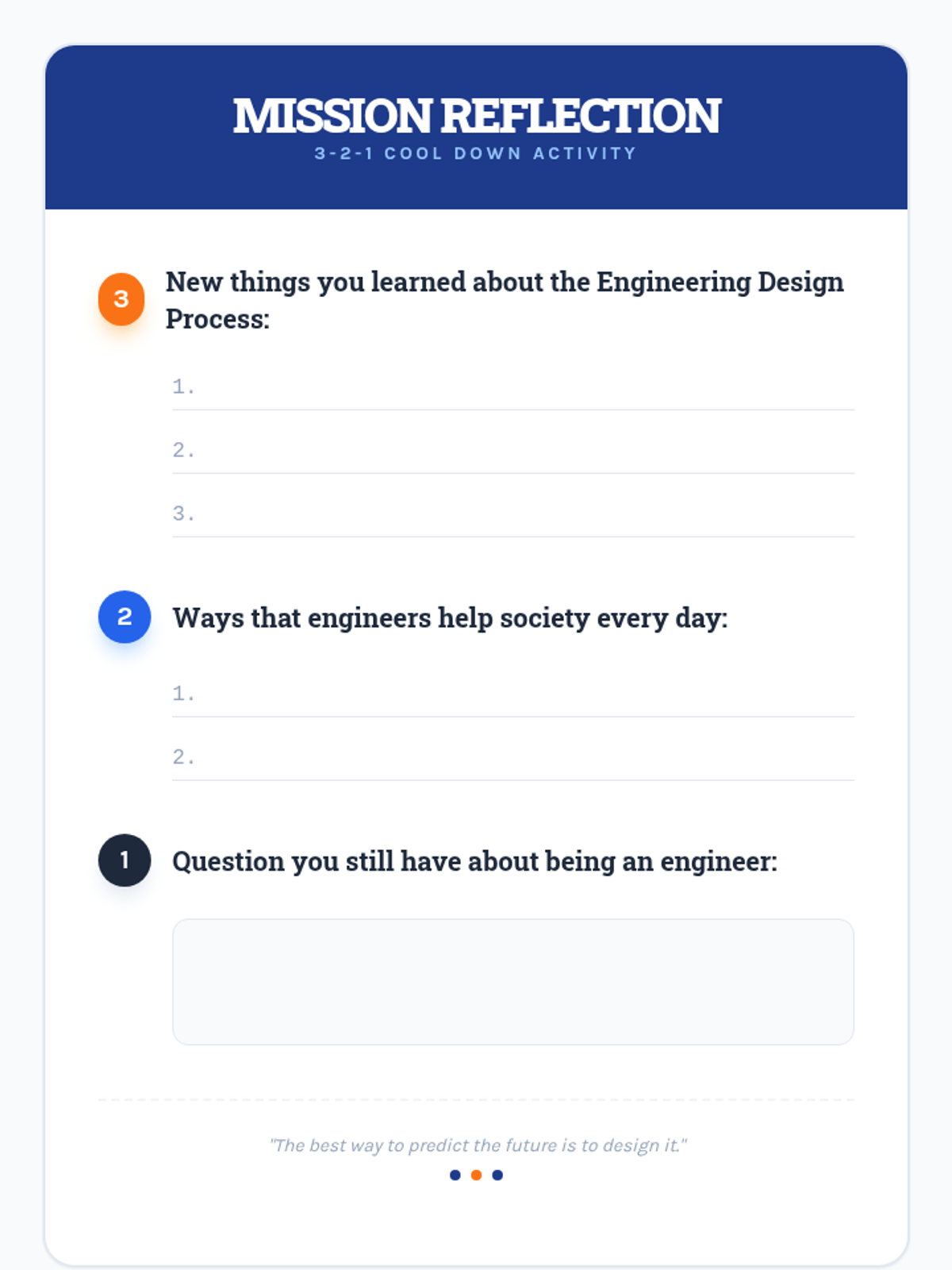
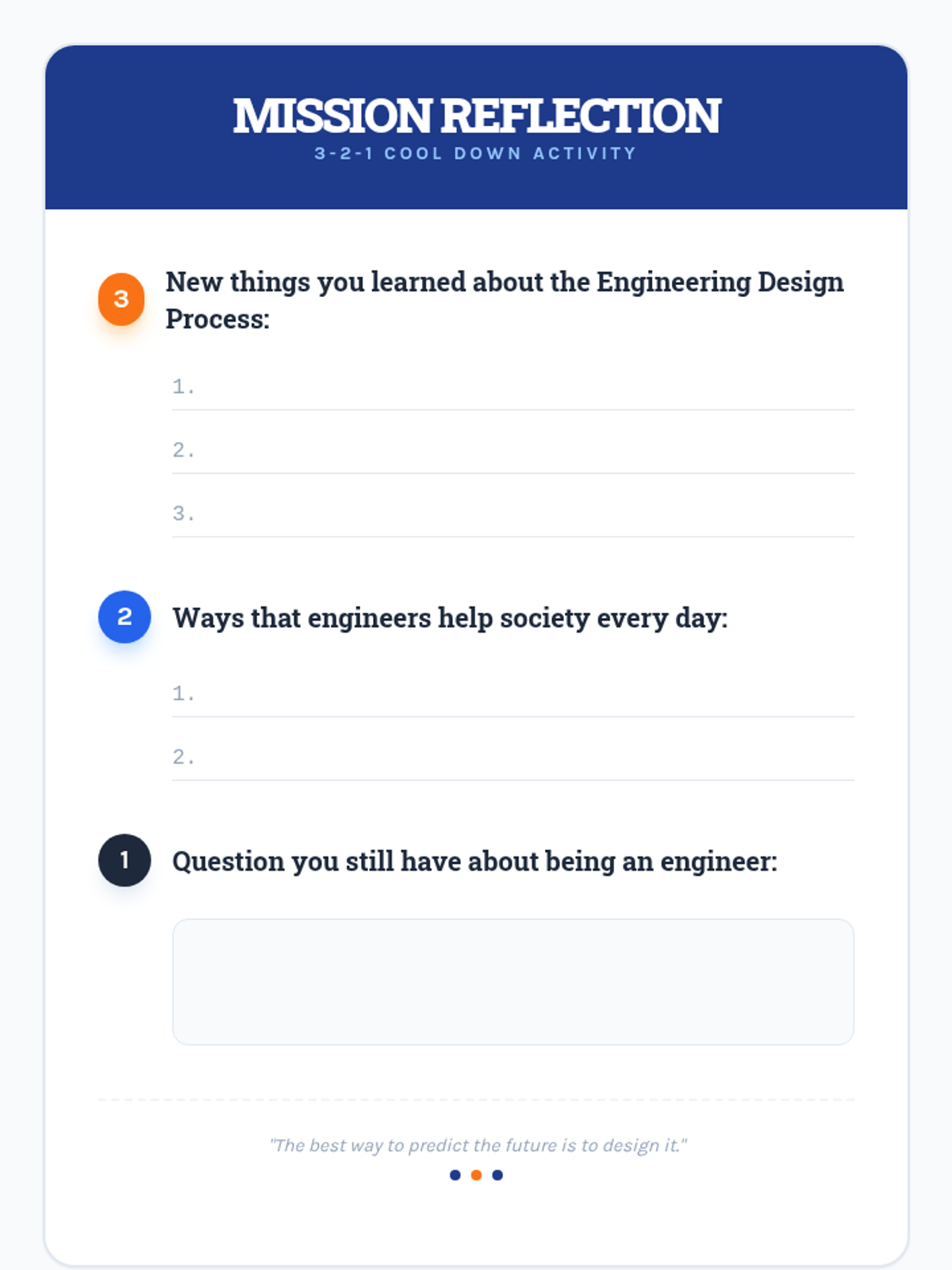
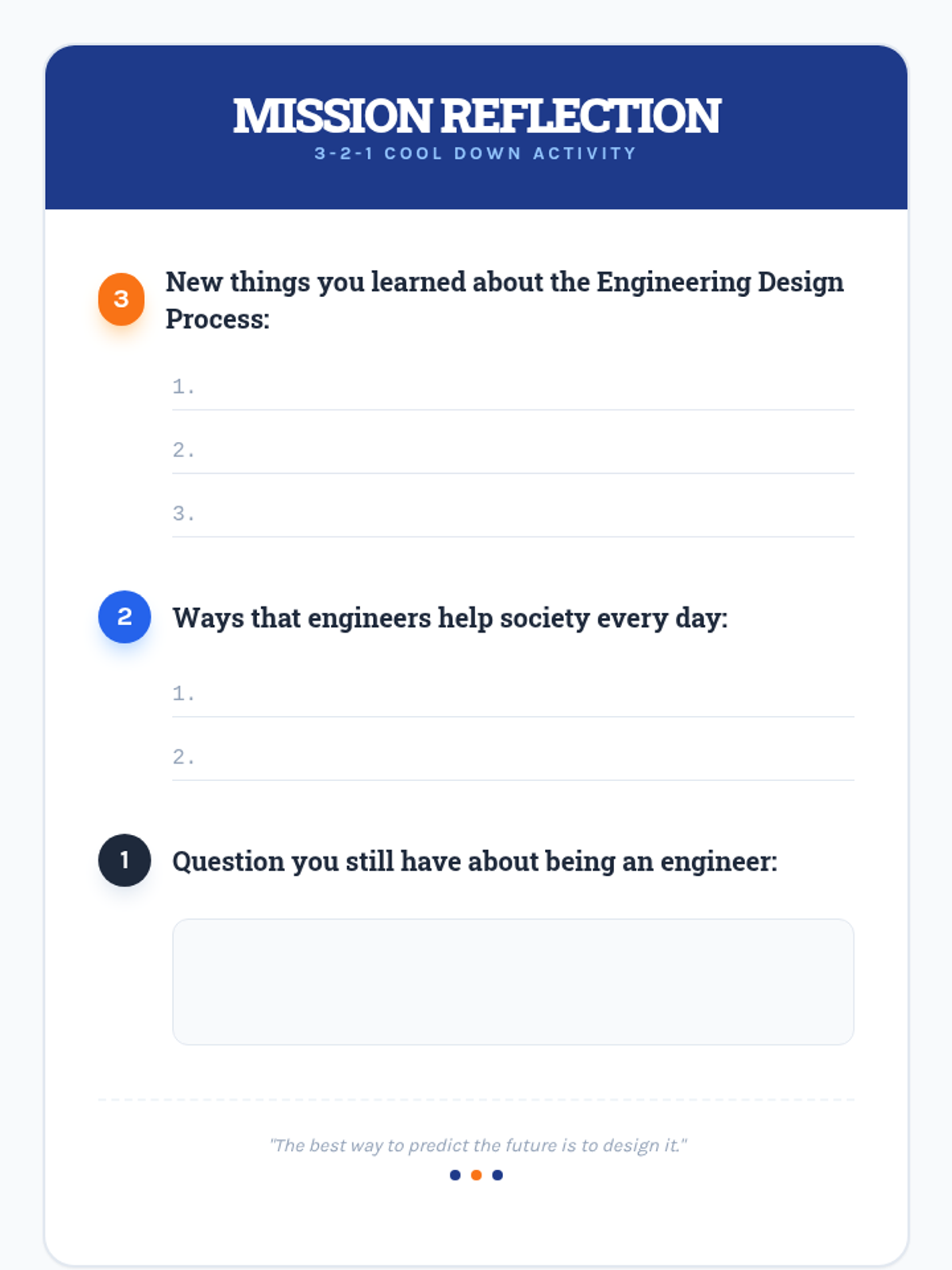
In this introductory lesson, students will take on the role of 'Flight Engineers' to explore the Engineering Design Process (EDP). Through hands-on challenges and group discussions, they will learn how to define problems, brainstorm solutions, and iterate on their designs to achieve mission success.
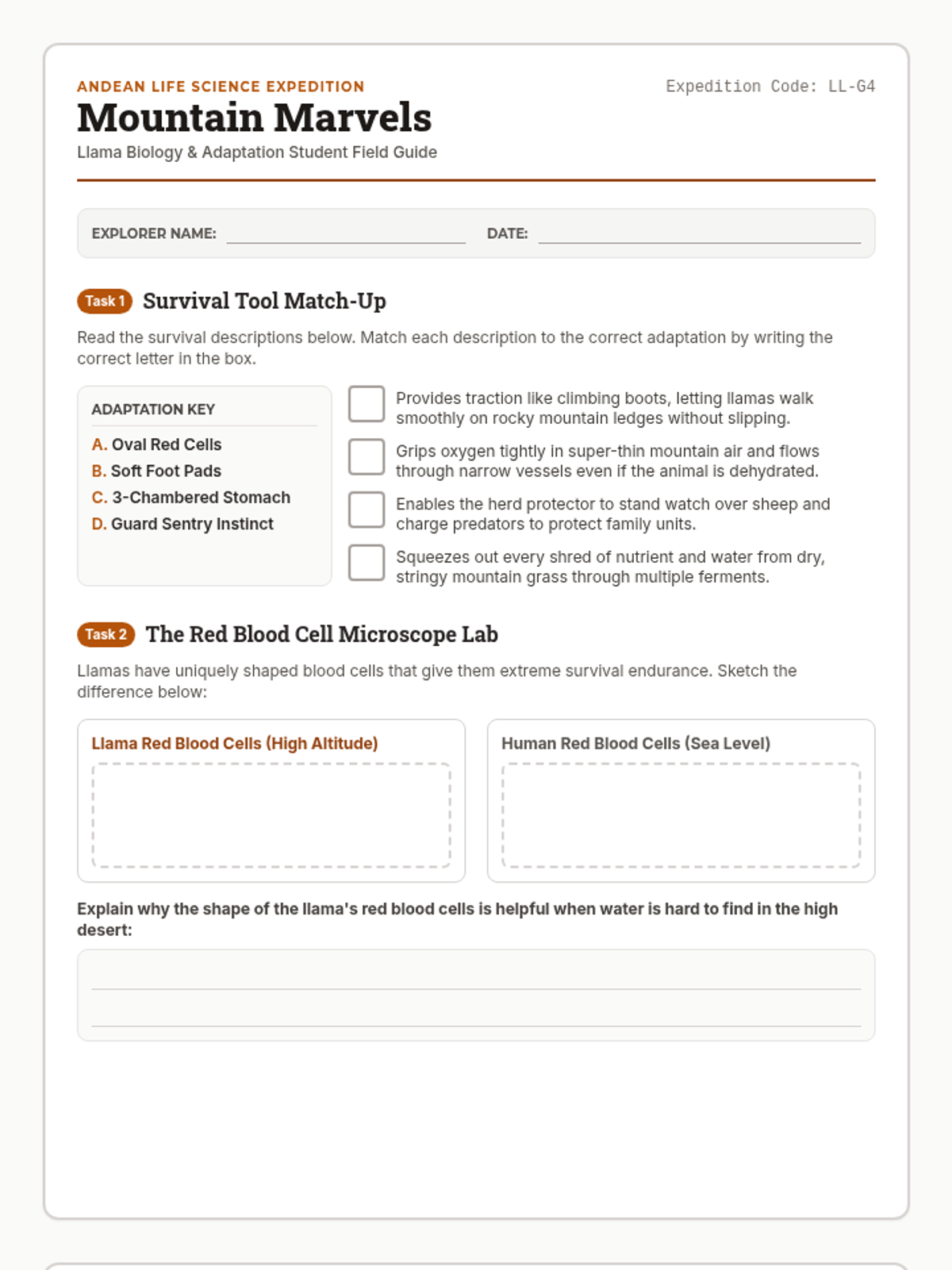
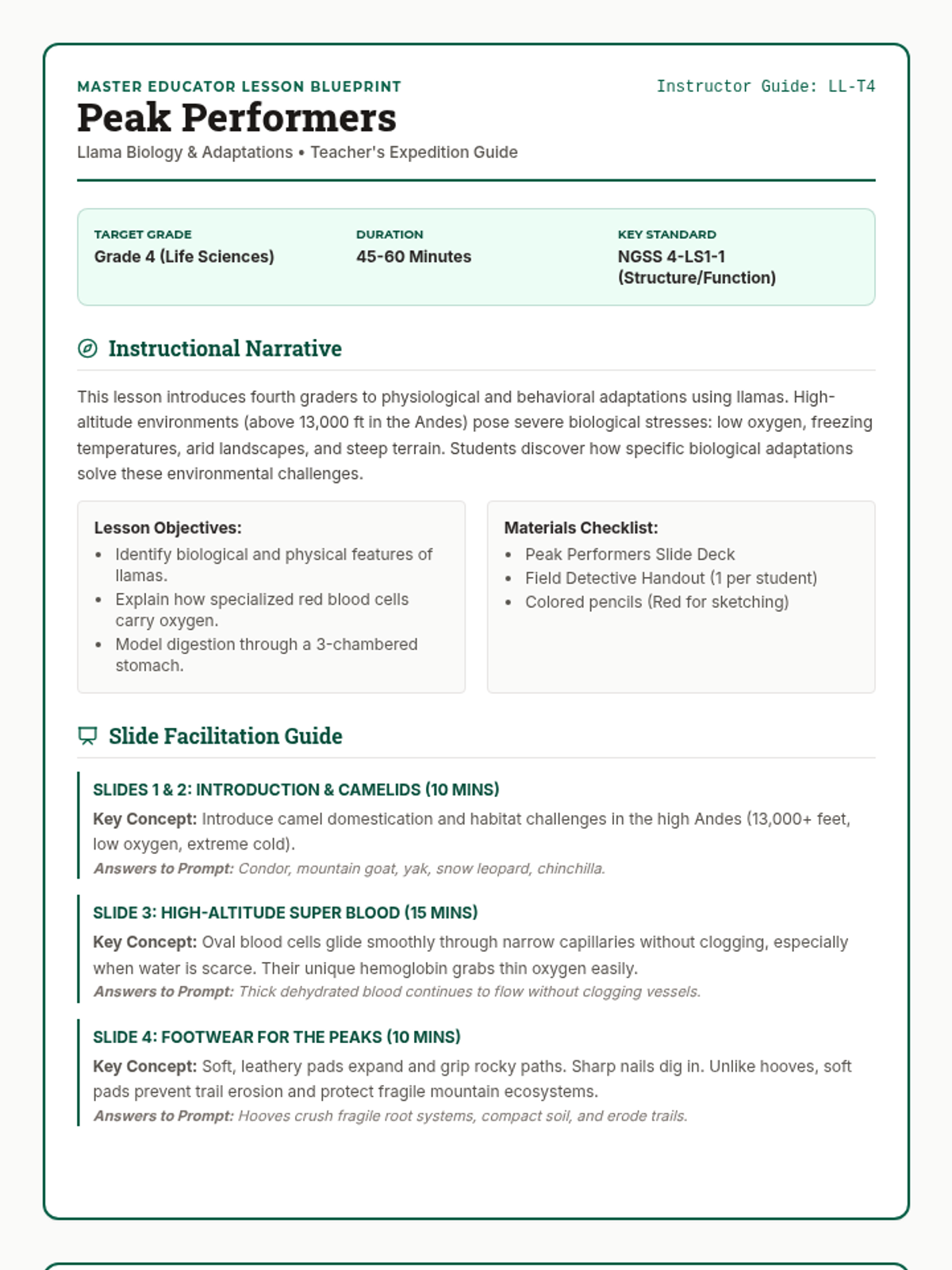
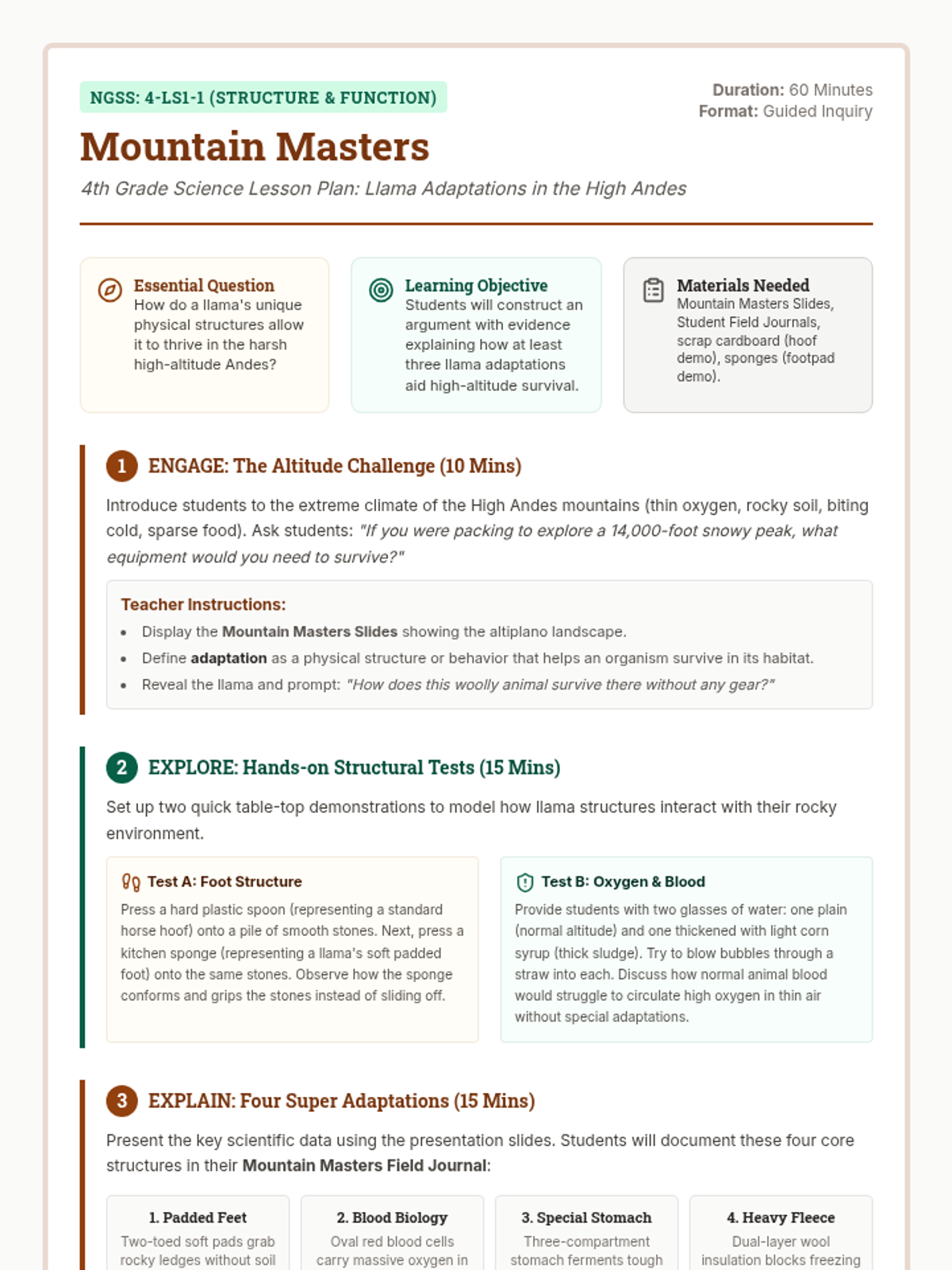
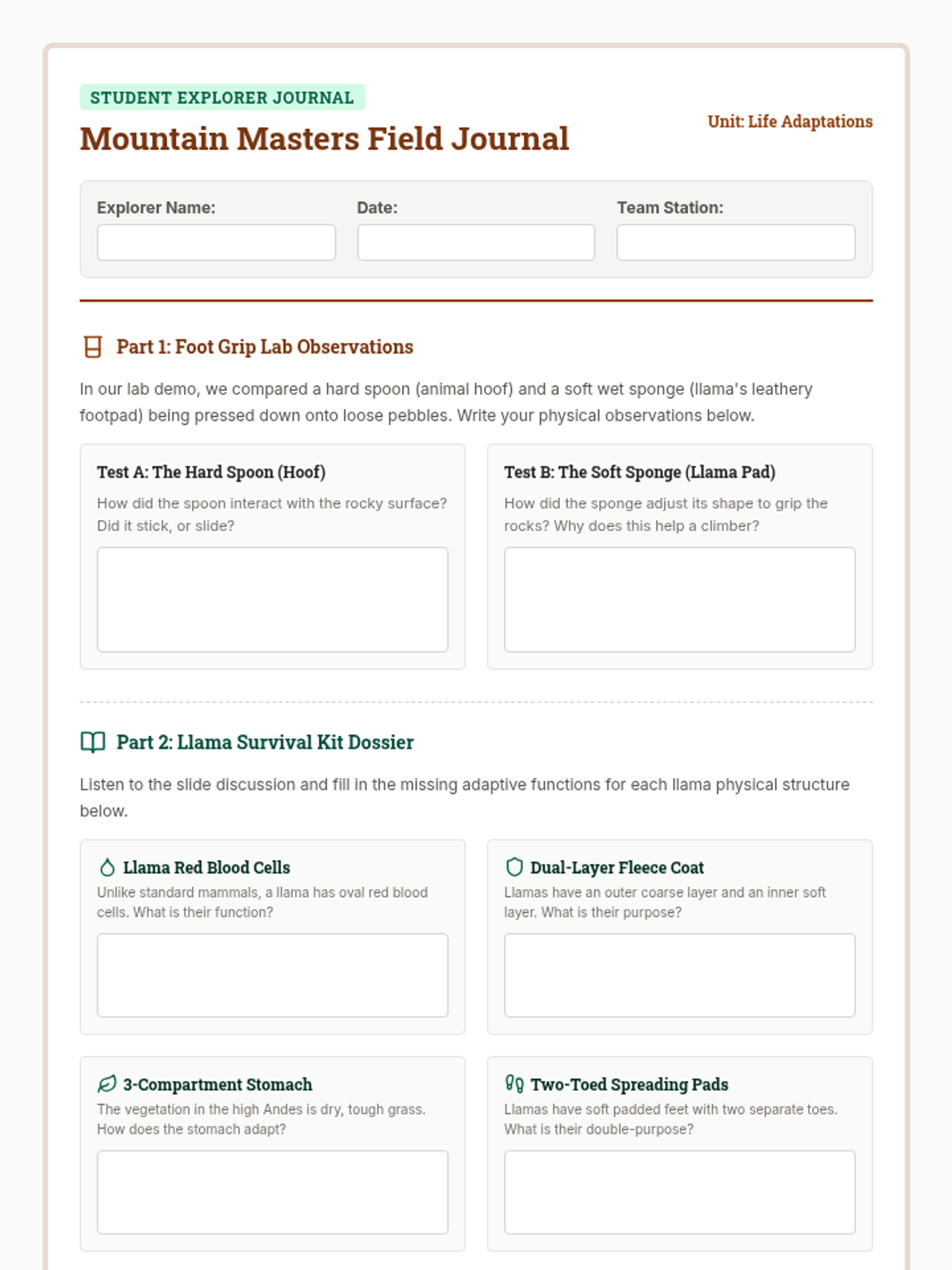
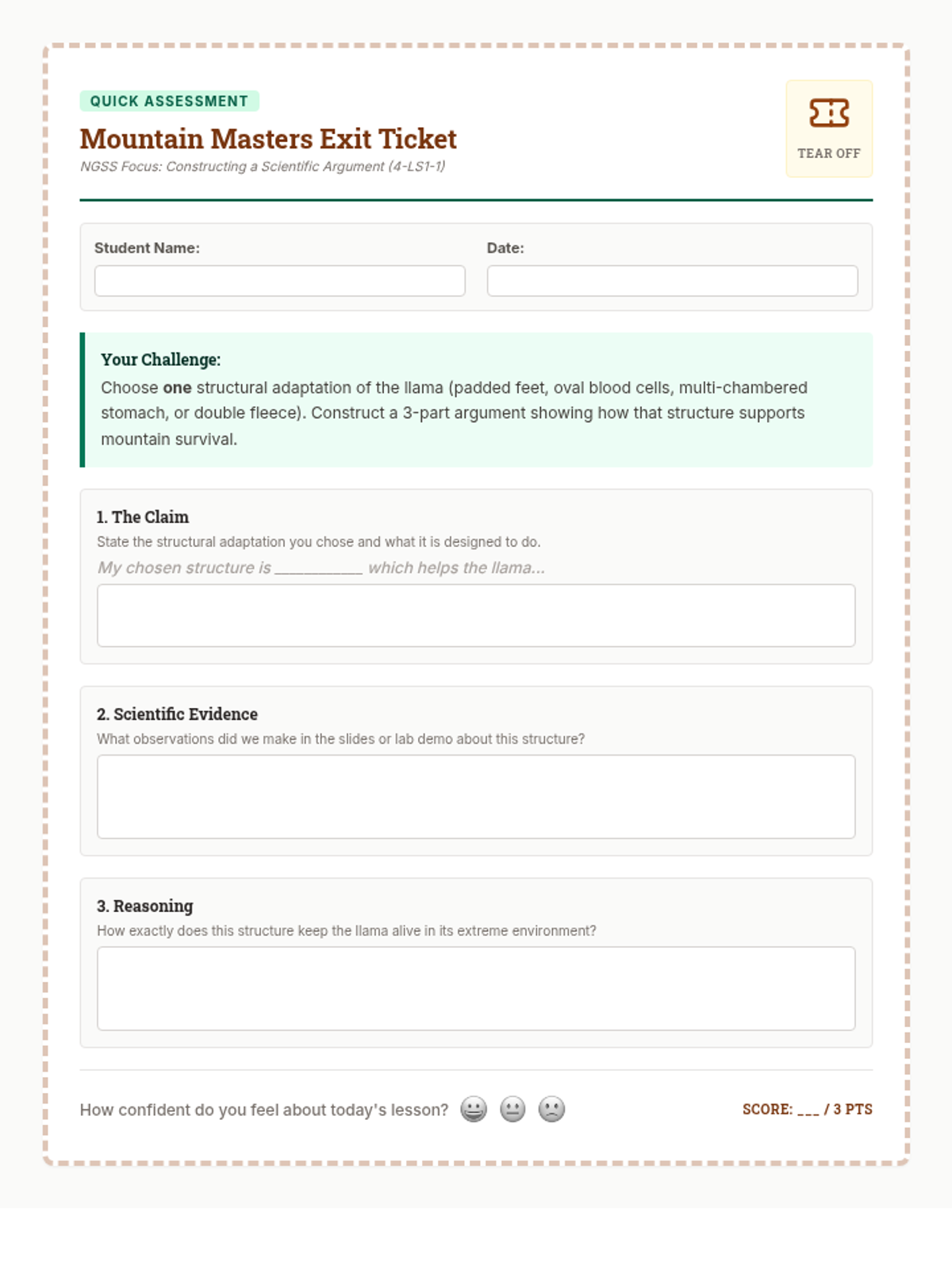
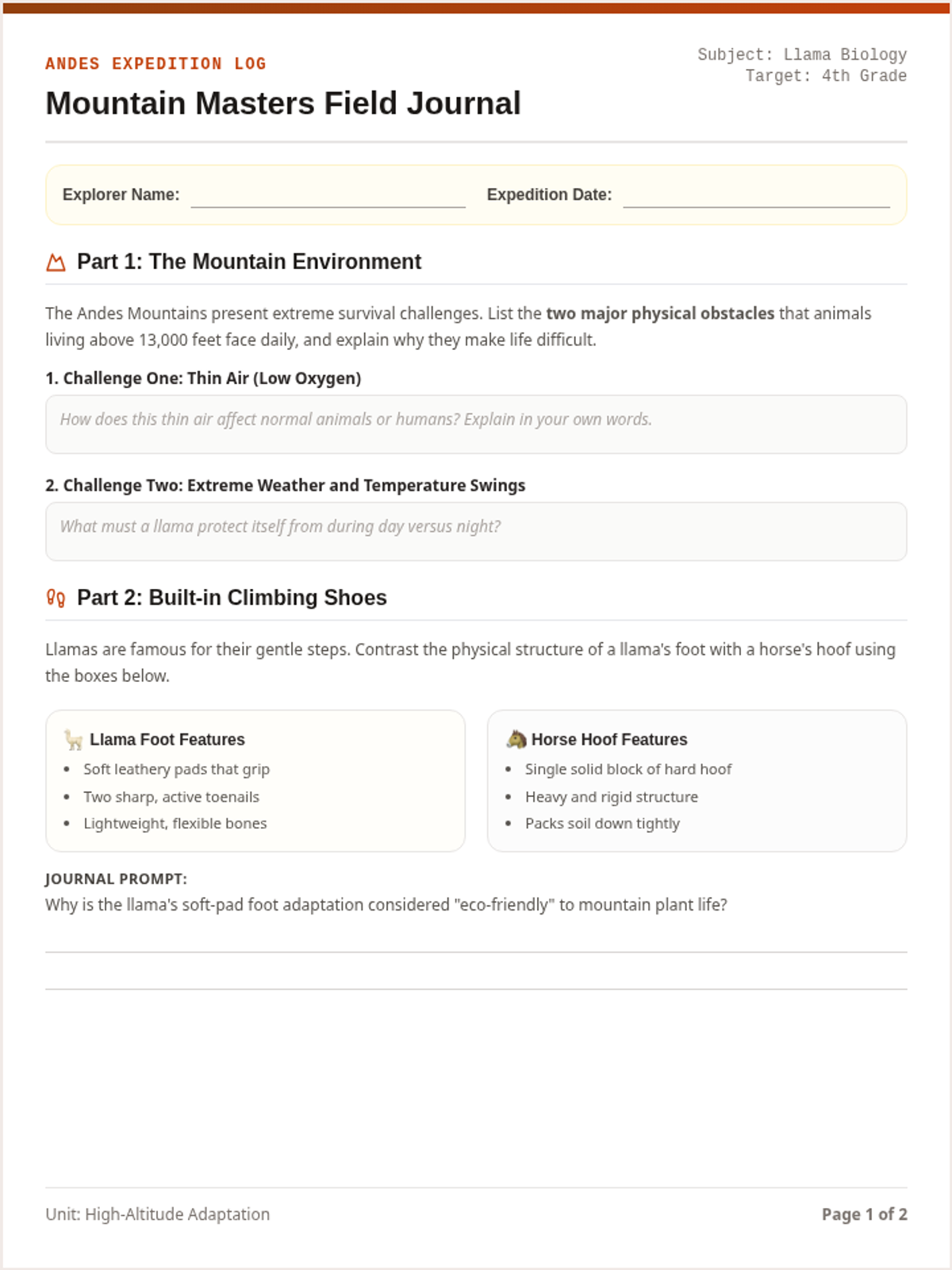
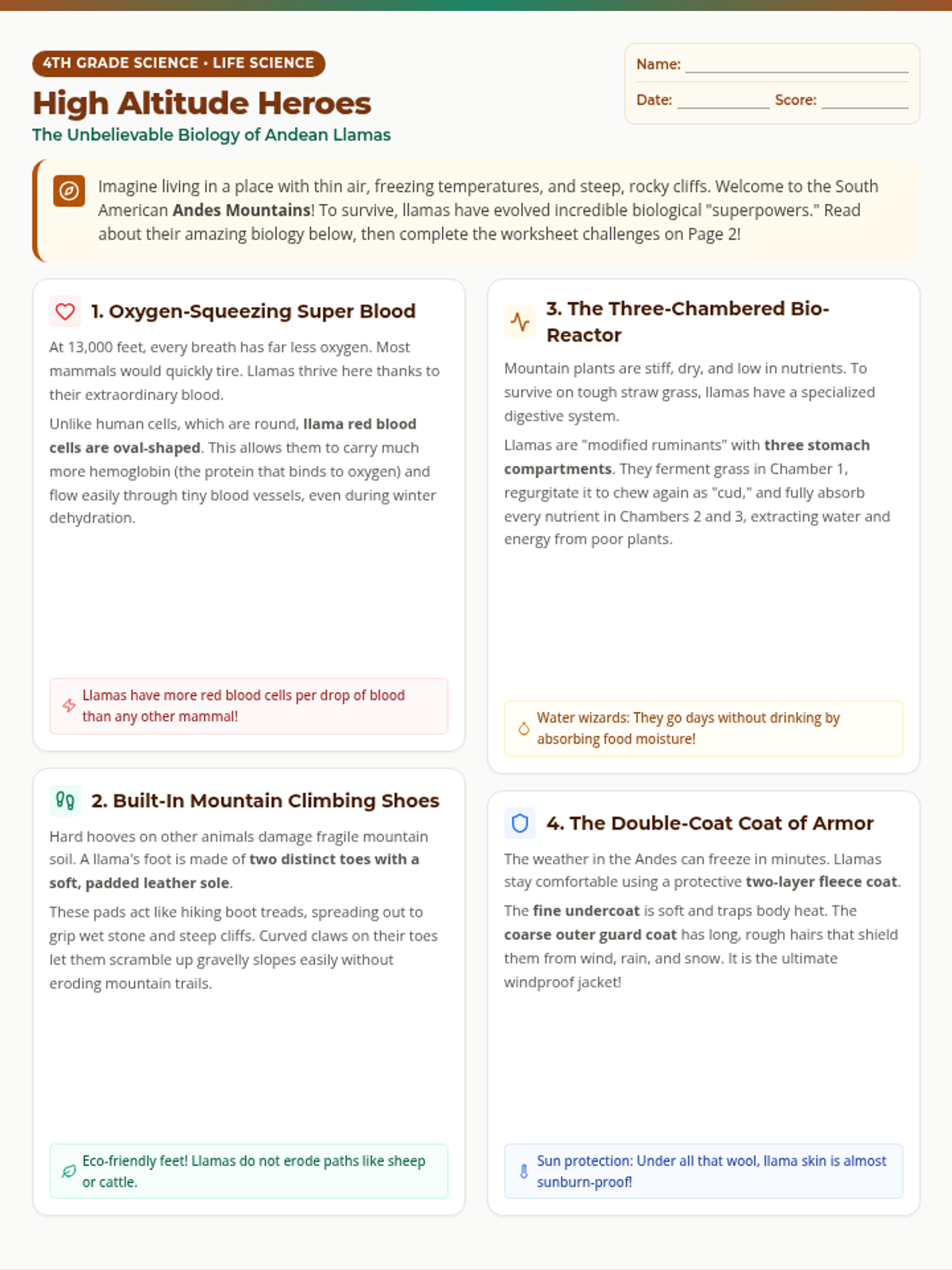
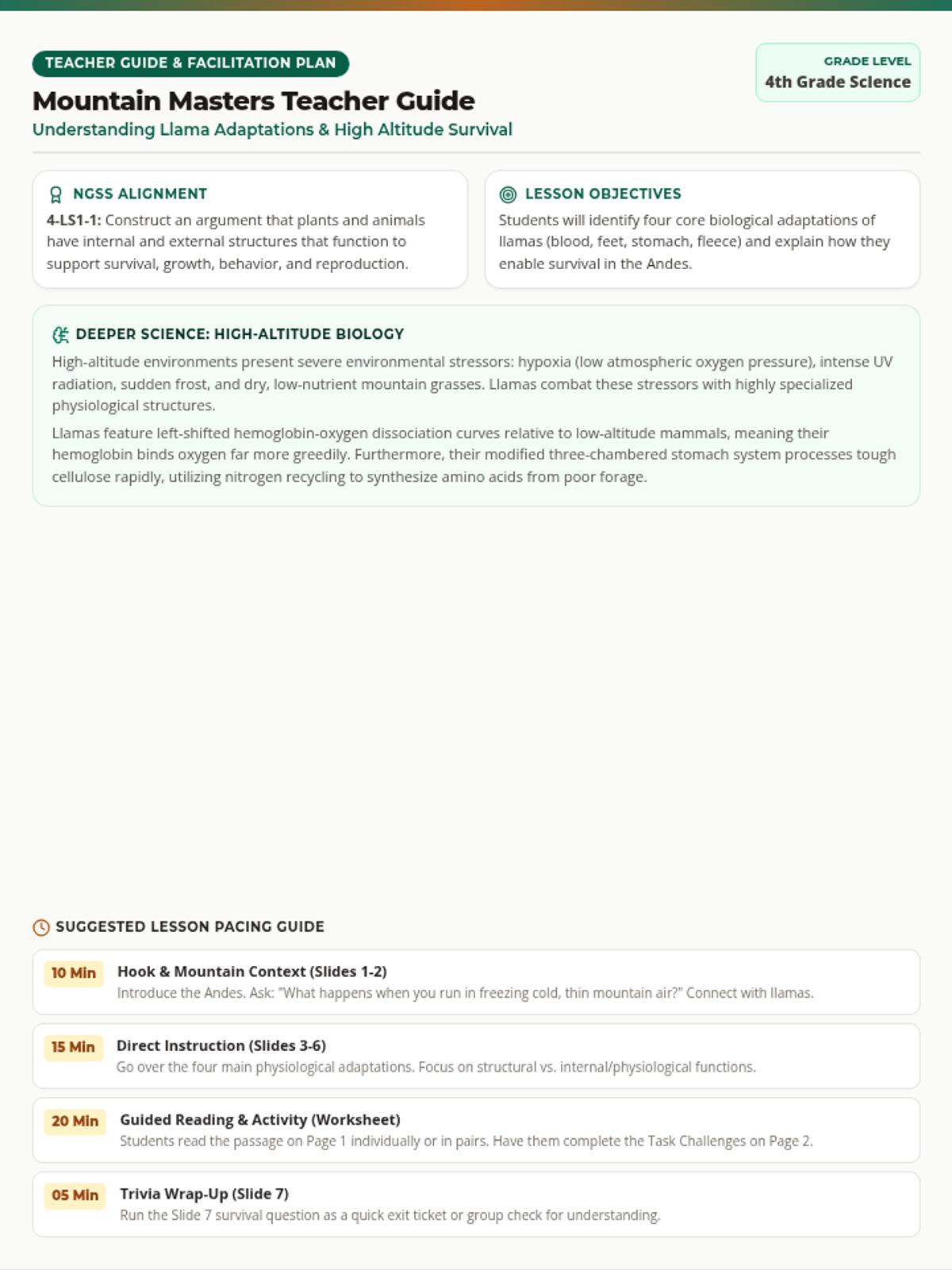
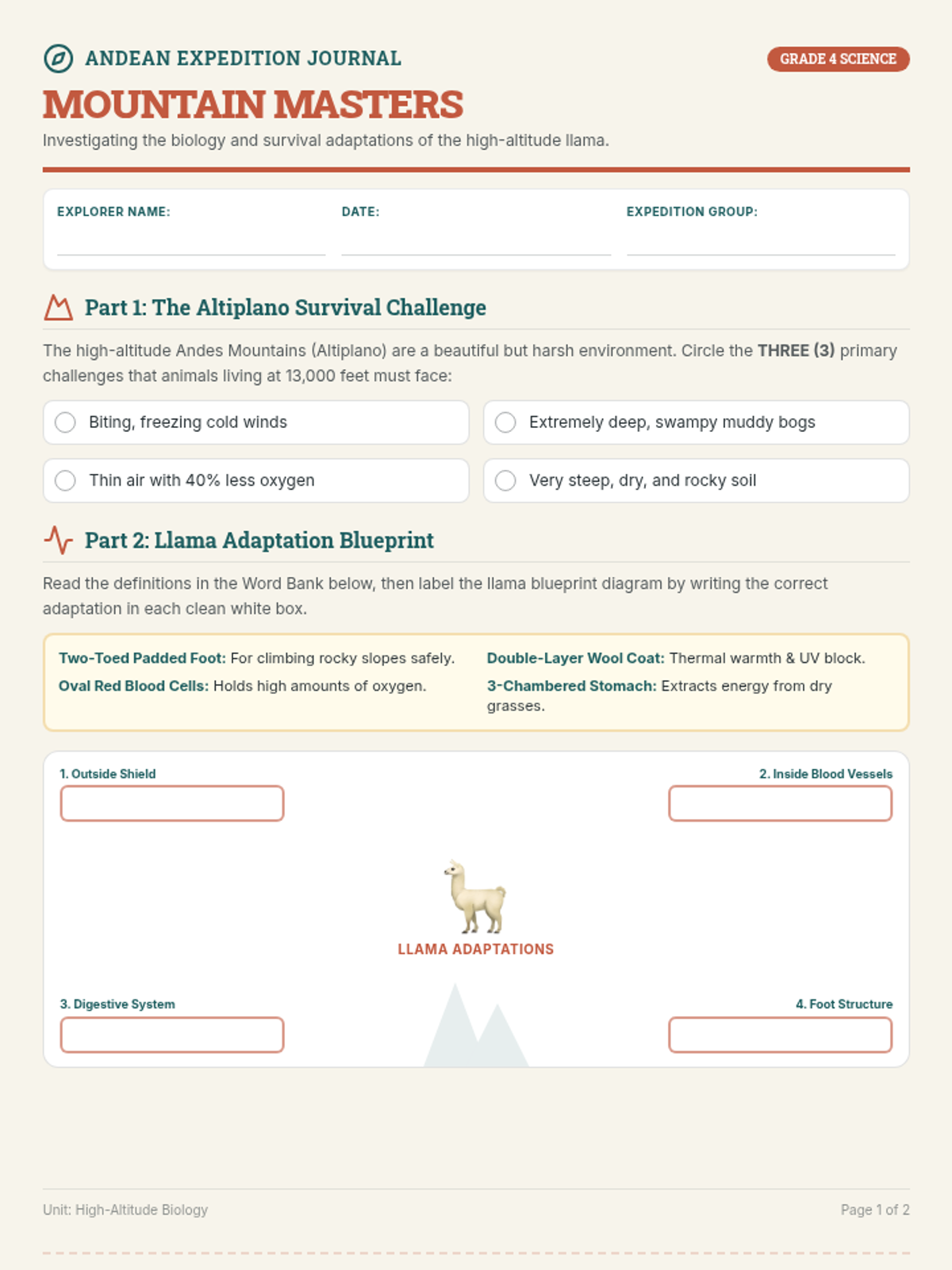
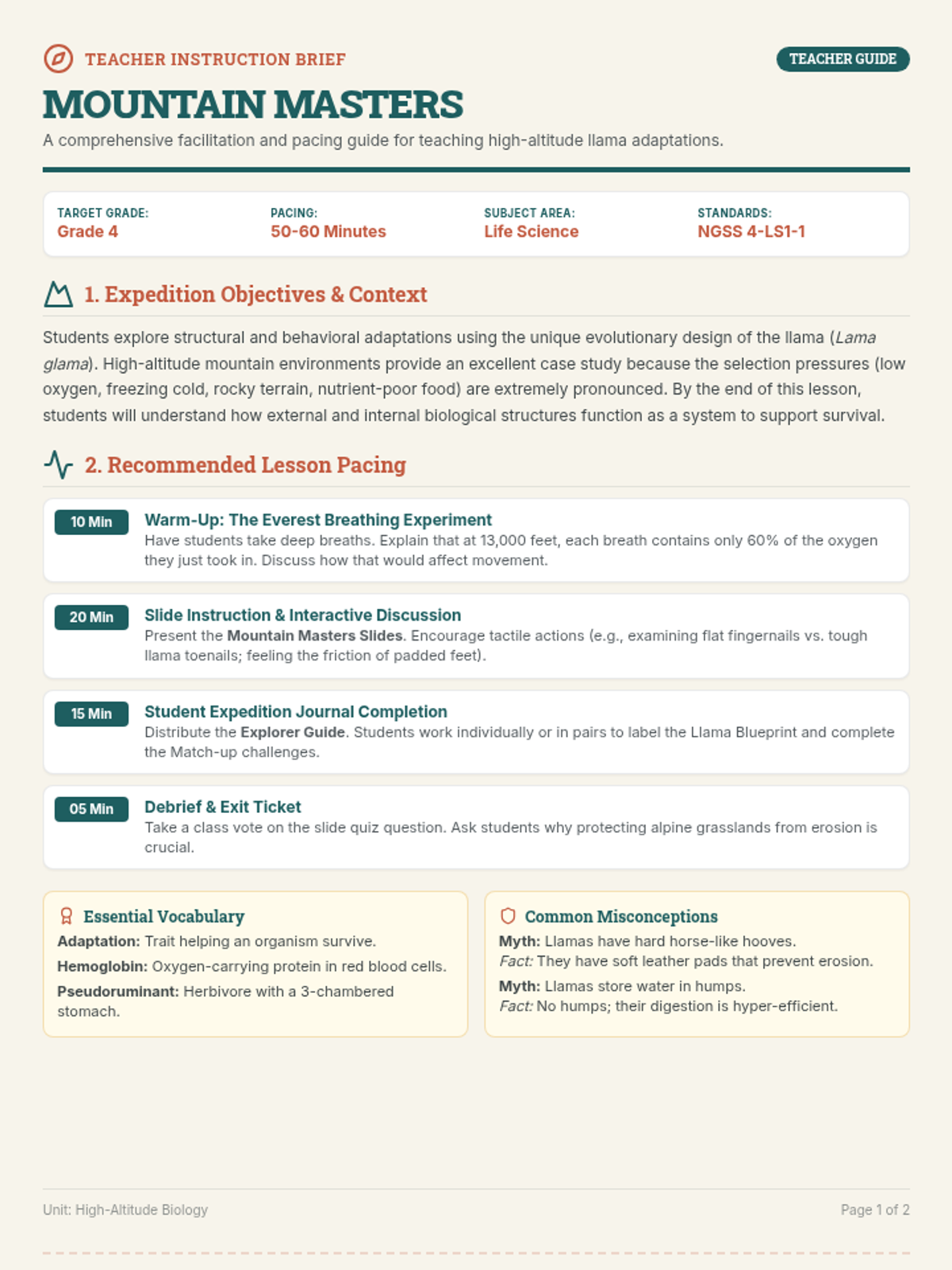
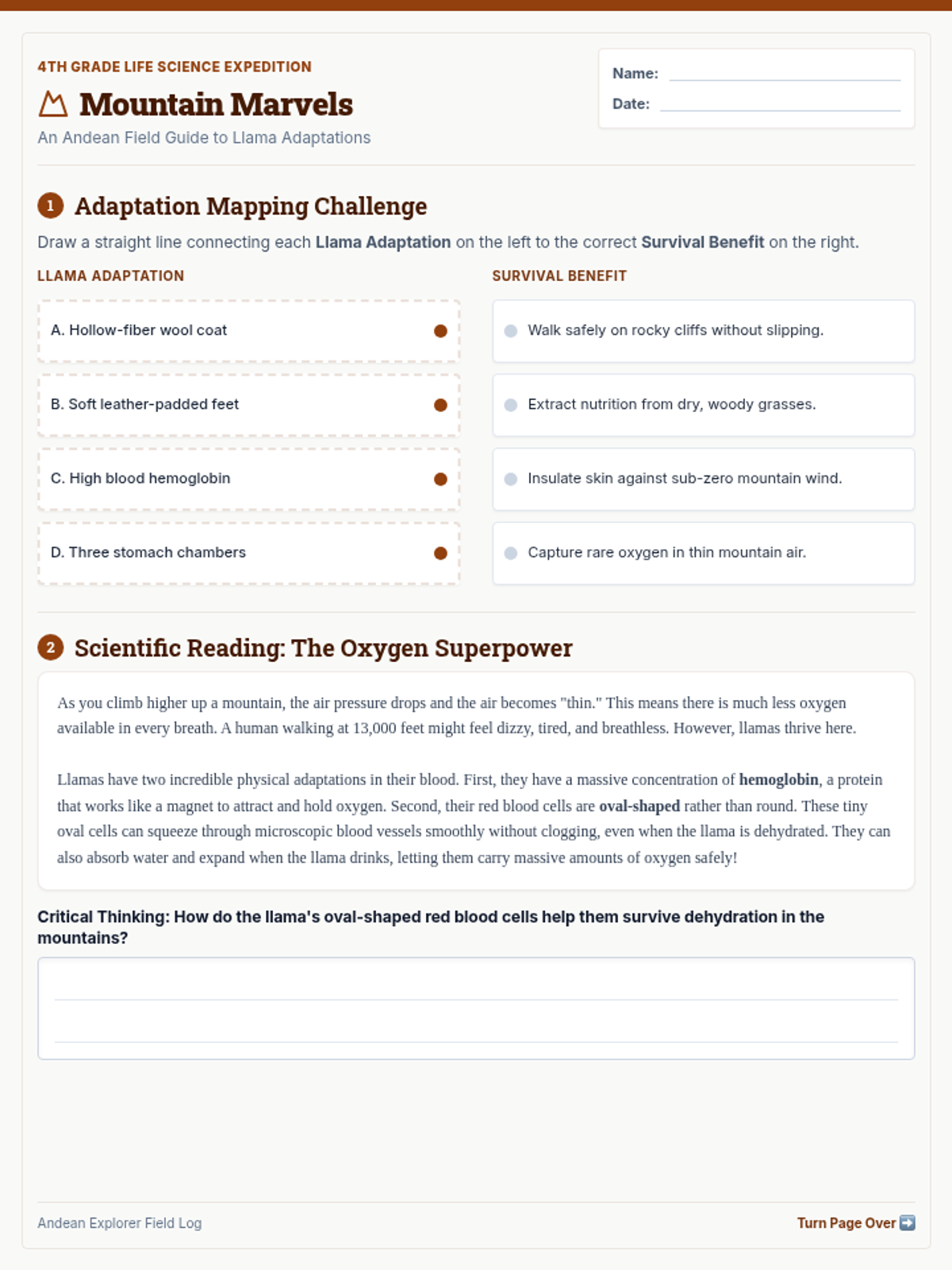
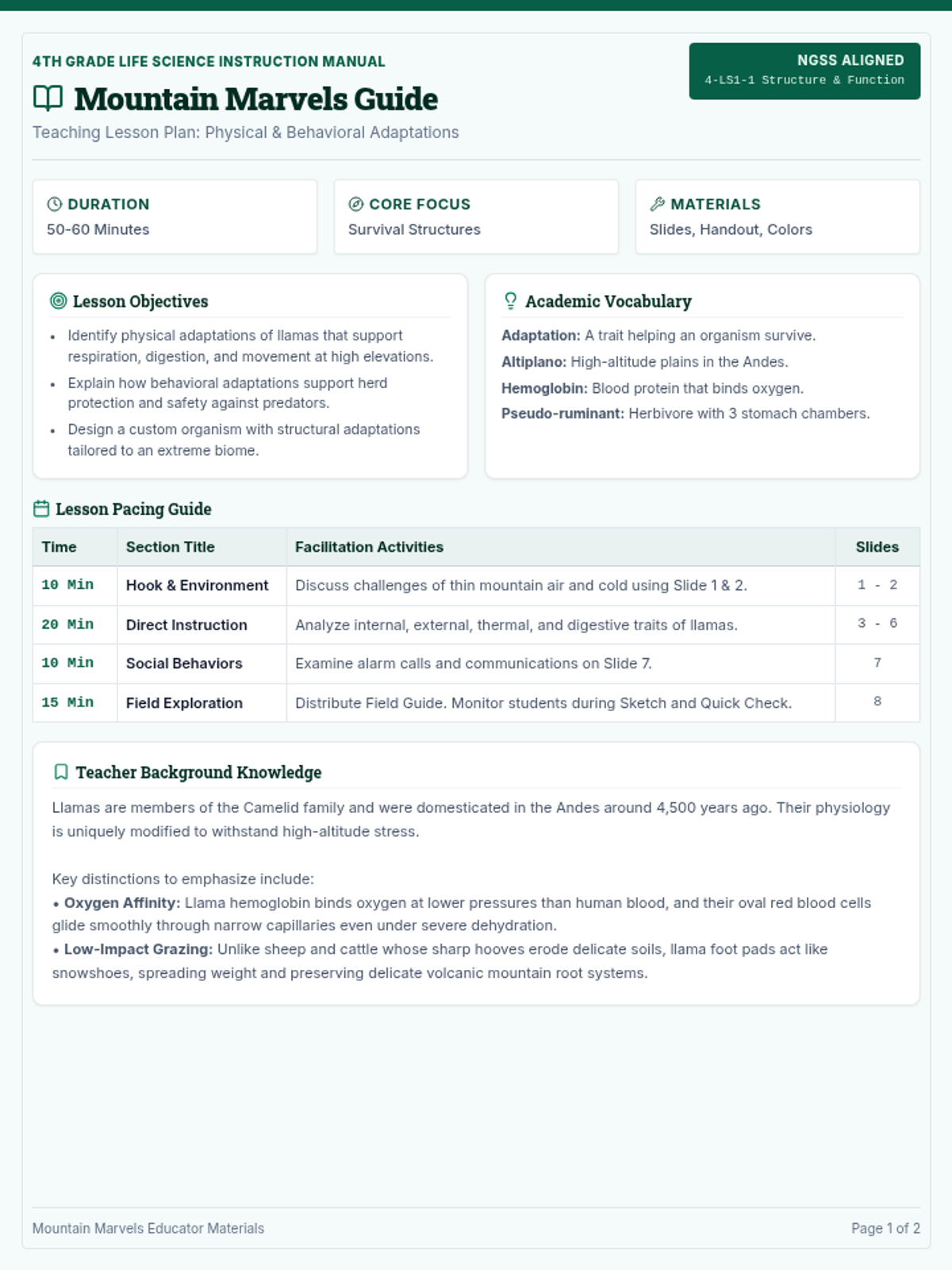
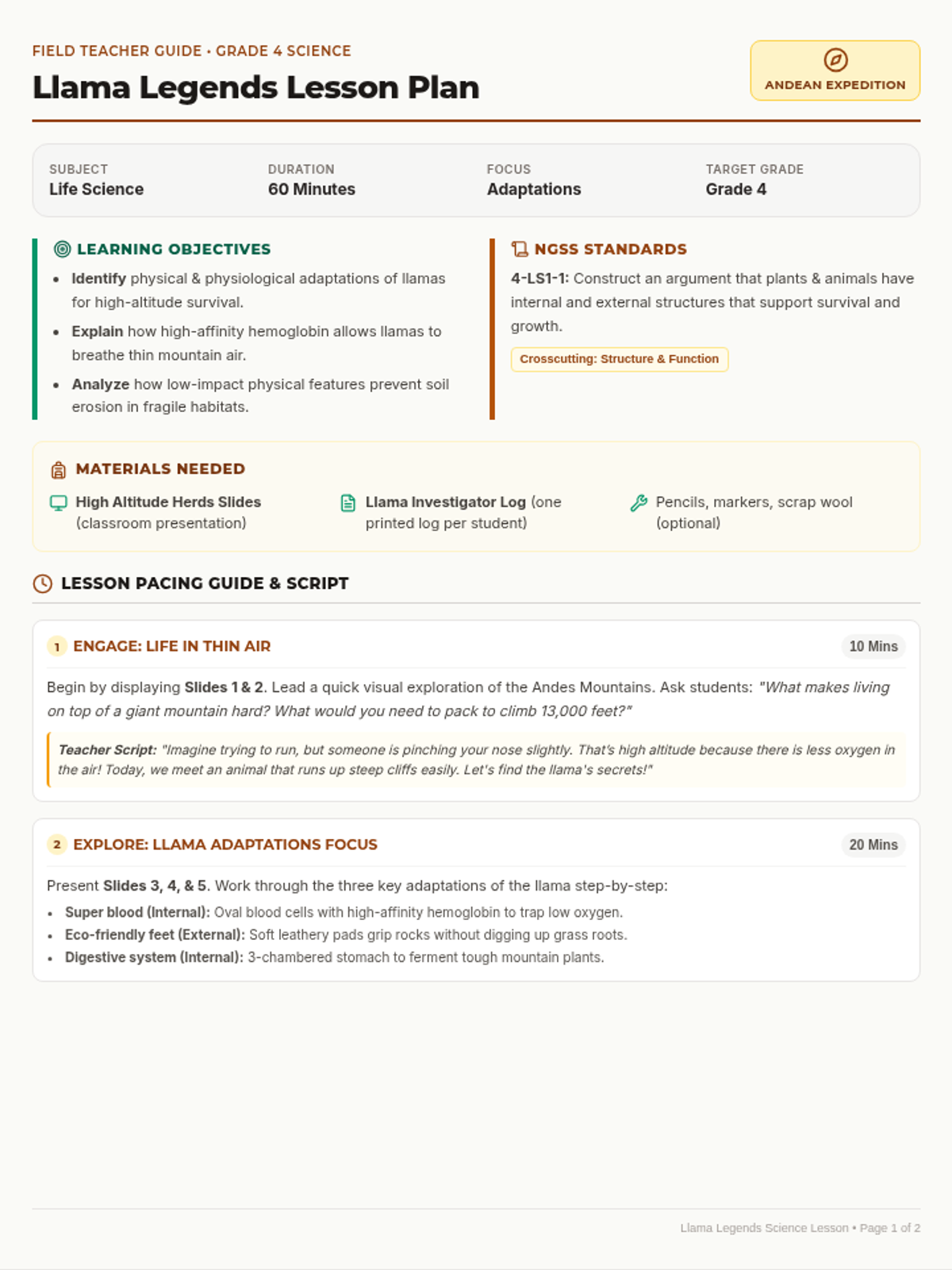
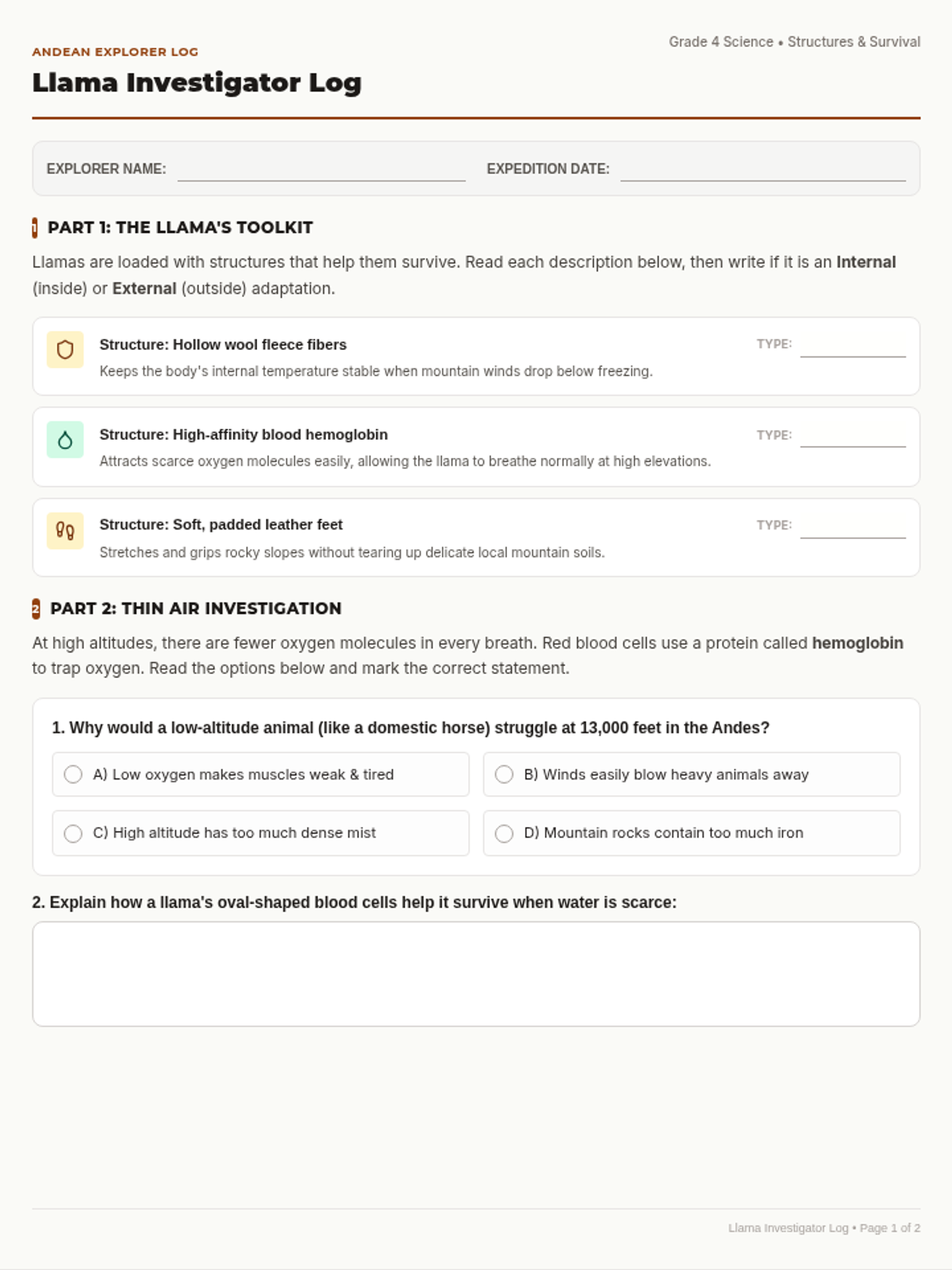
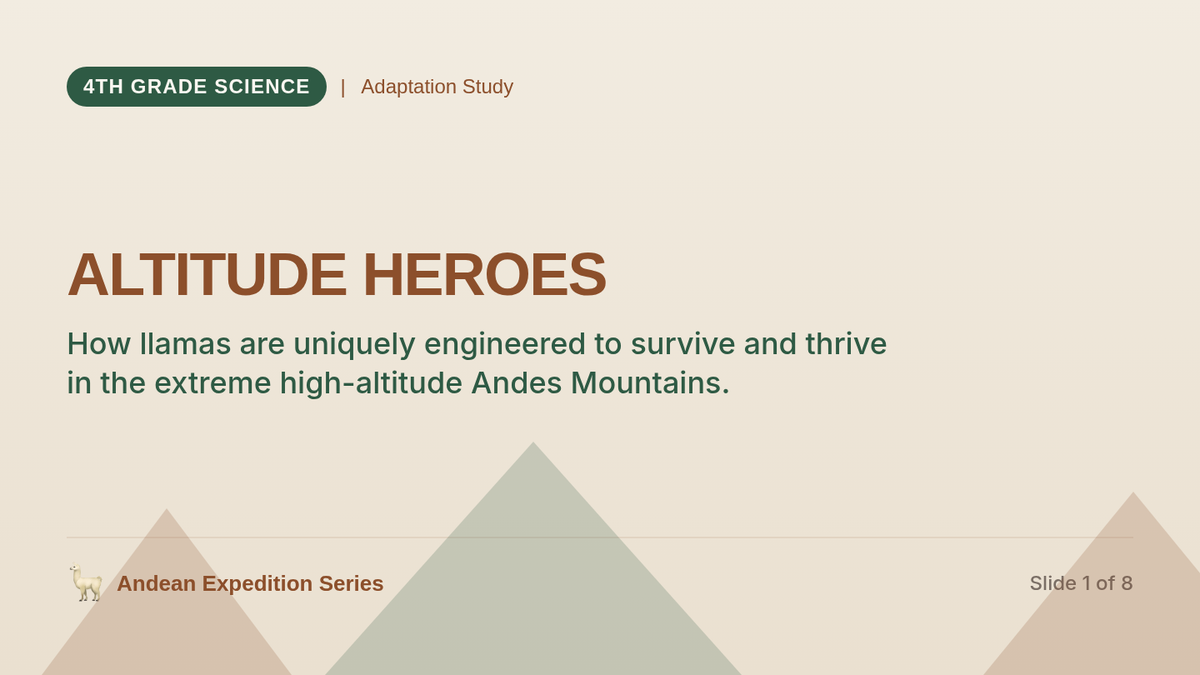
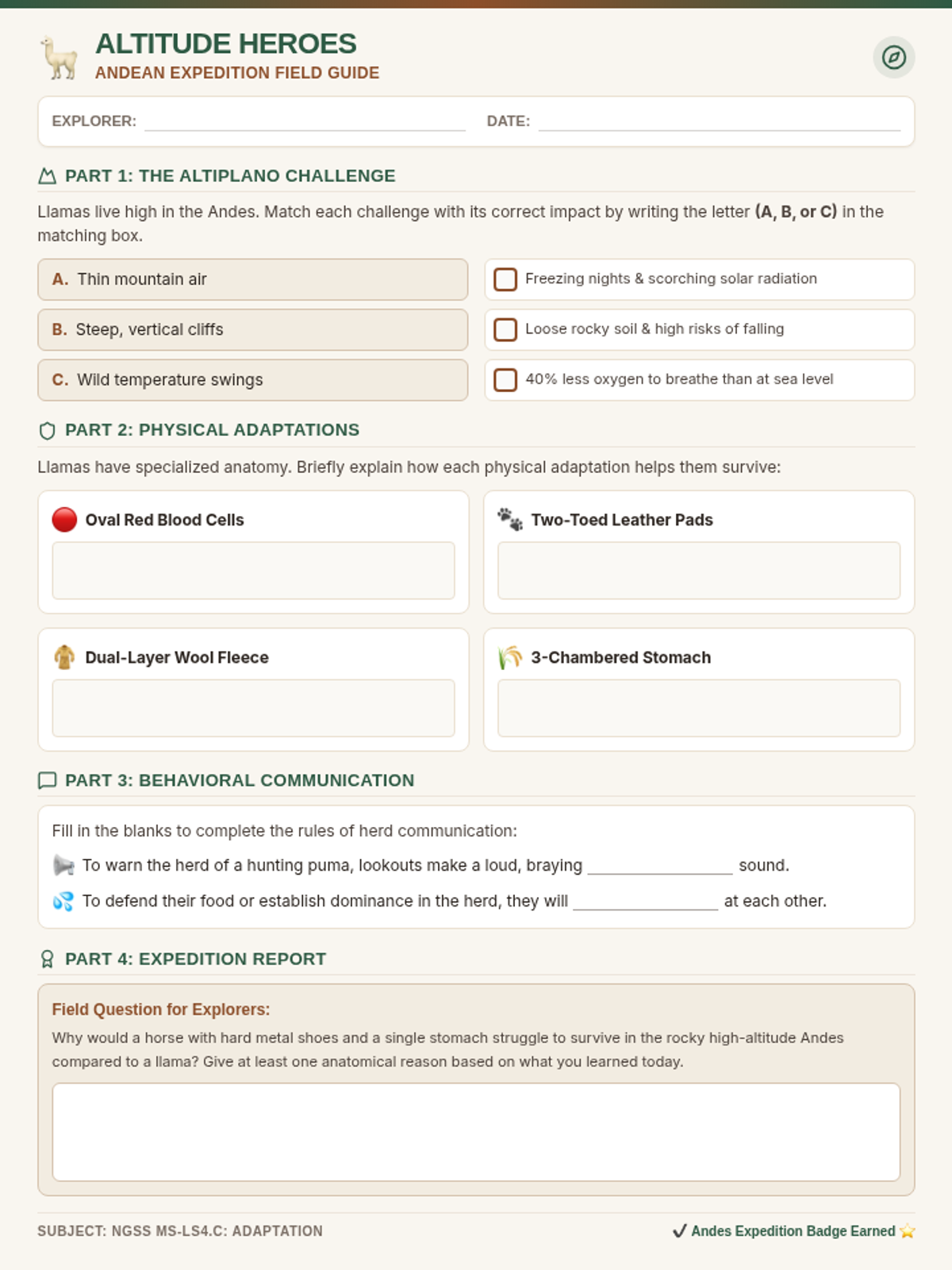
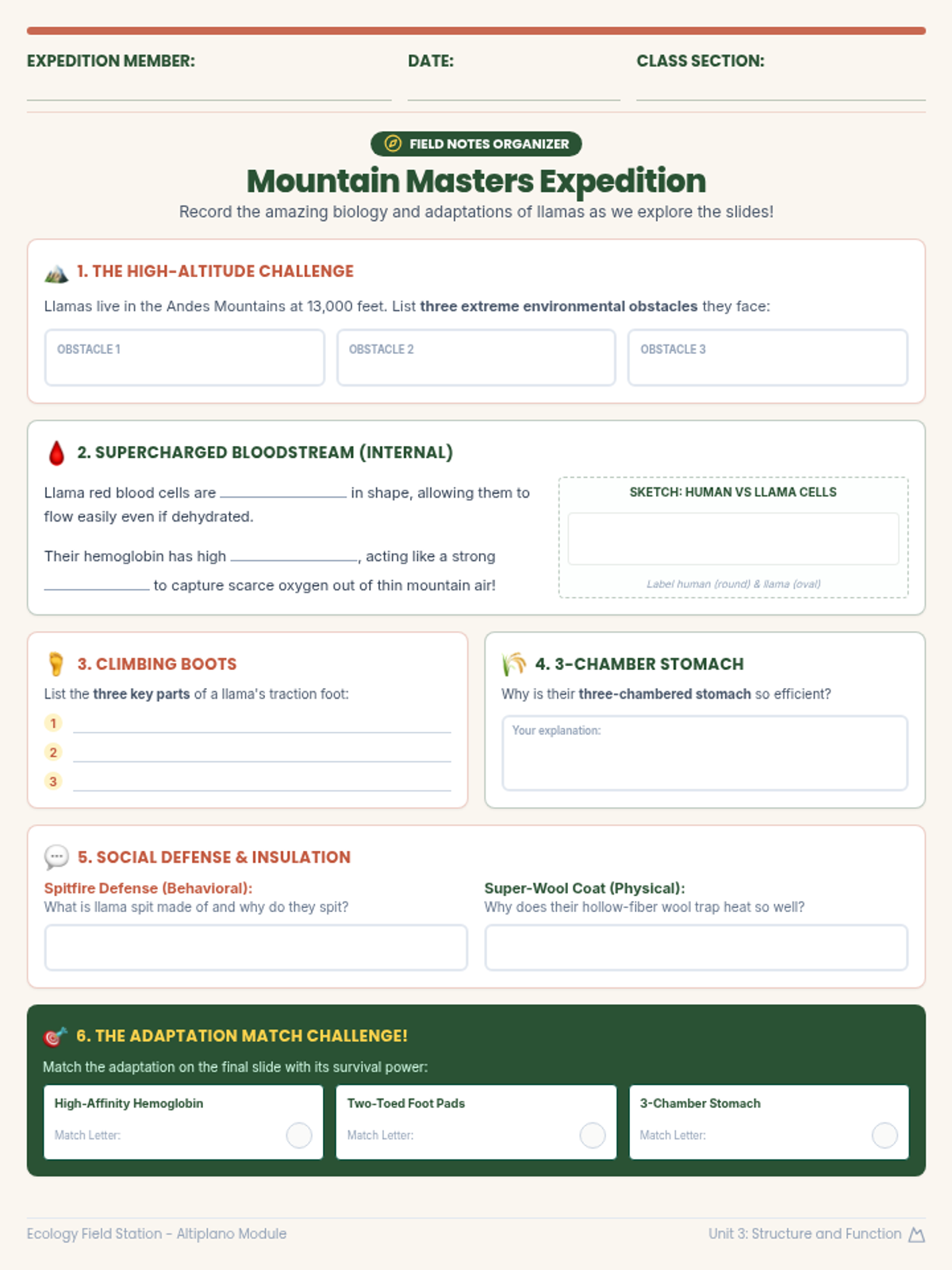
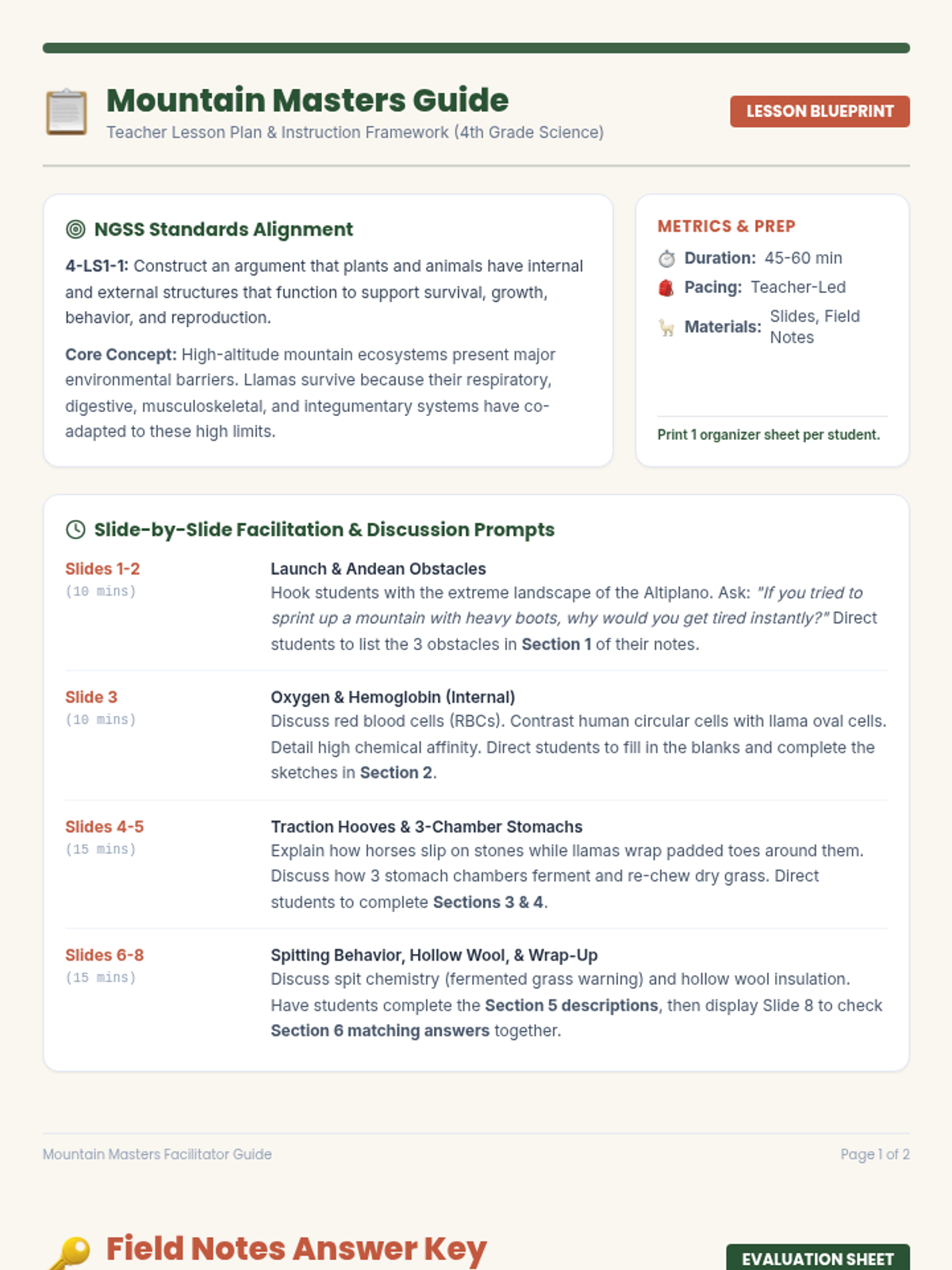
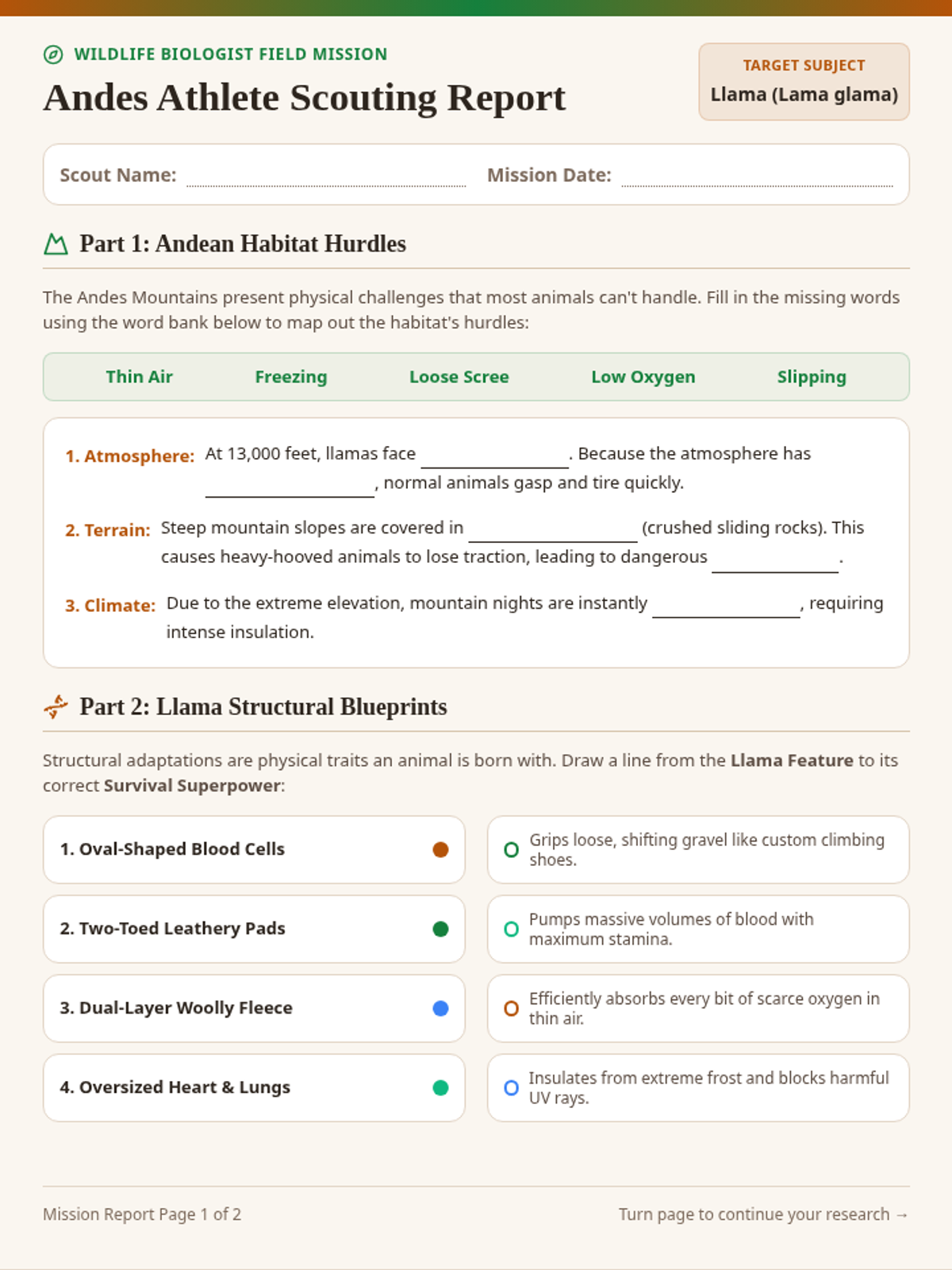
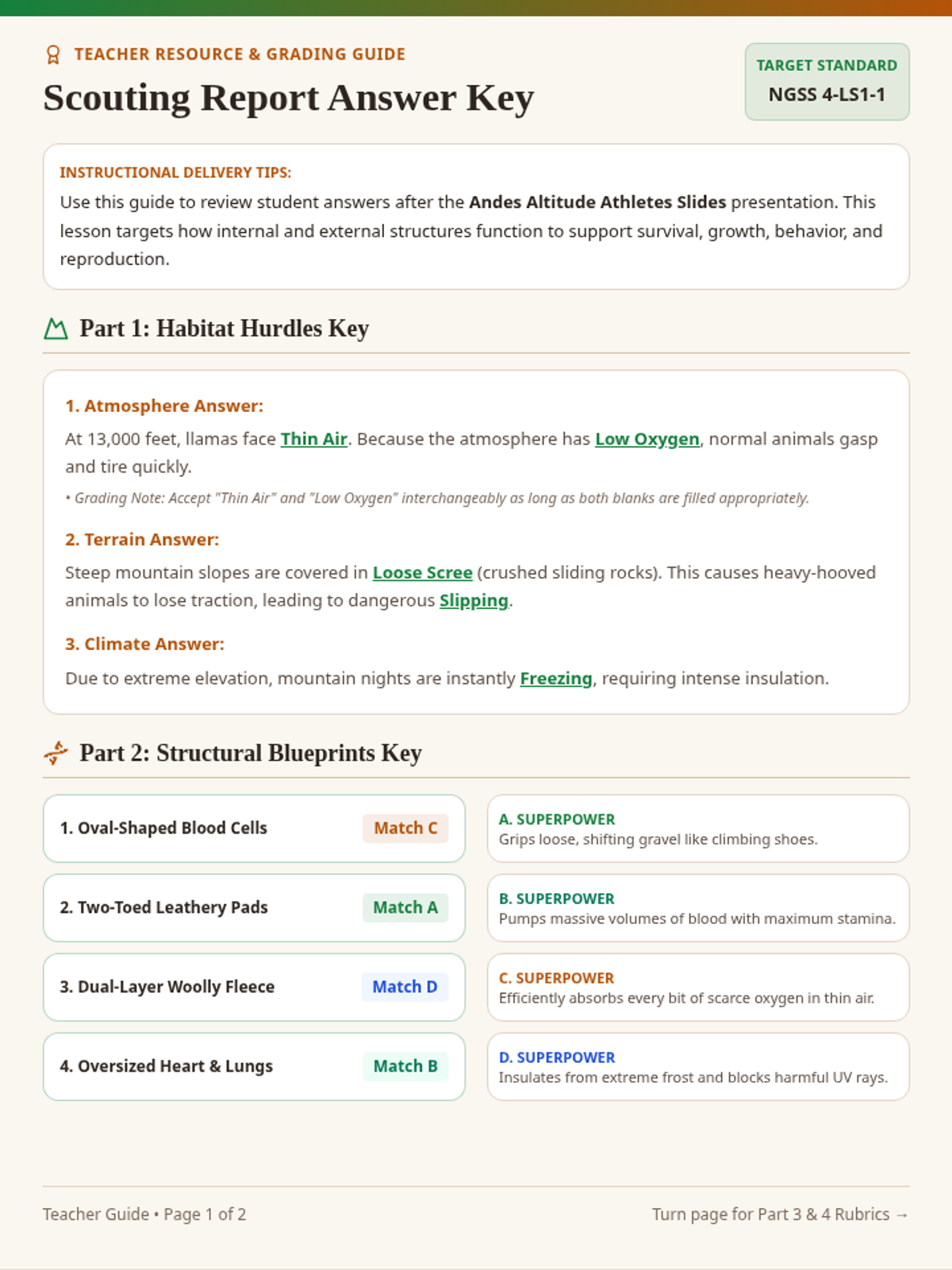
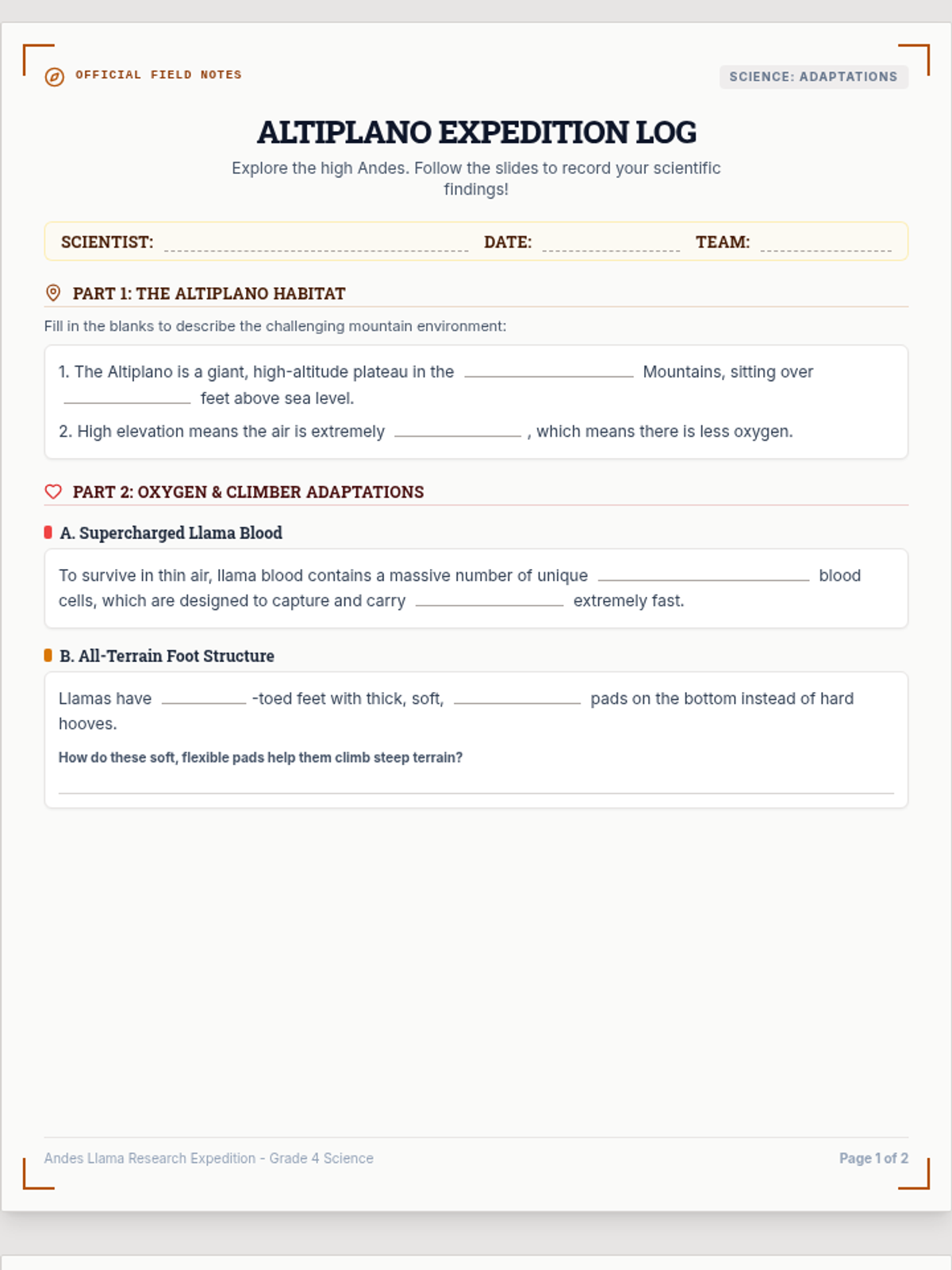
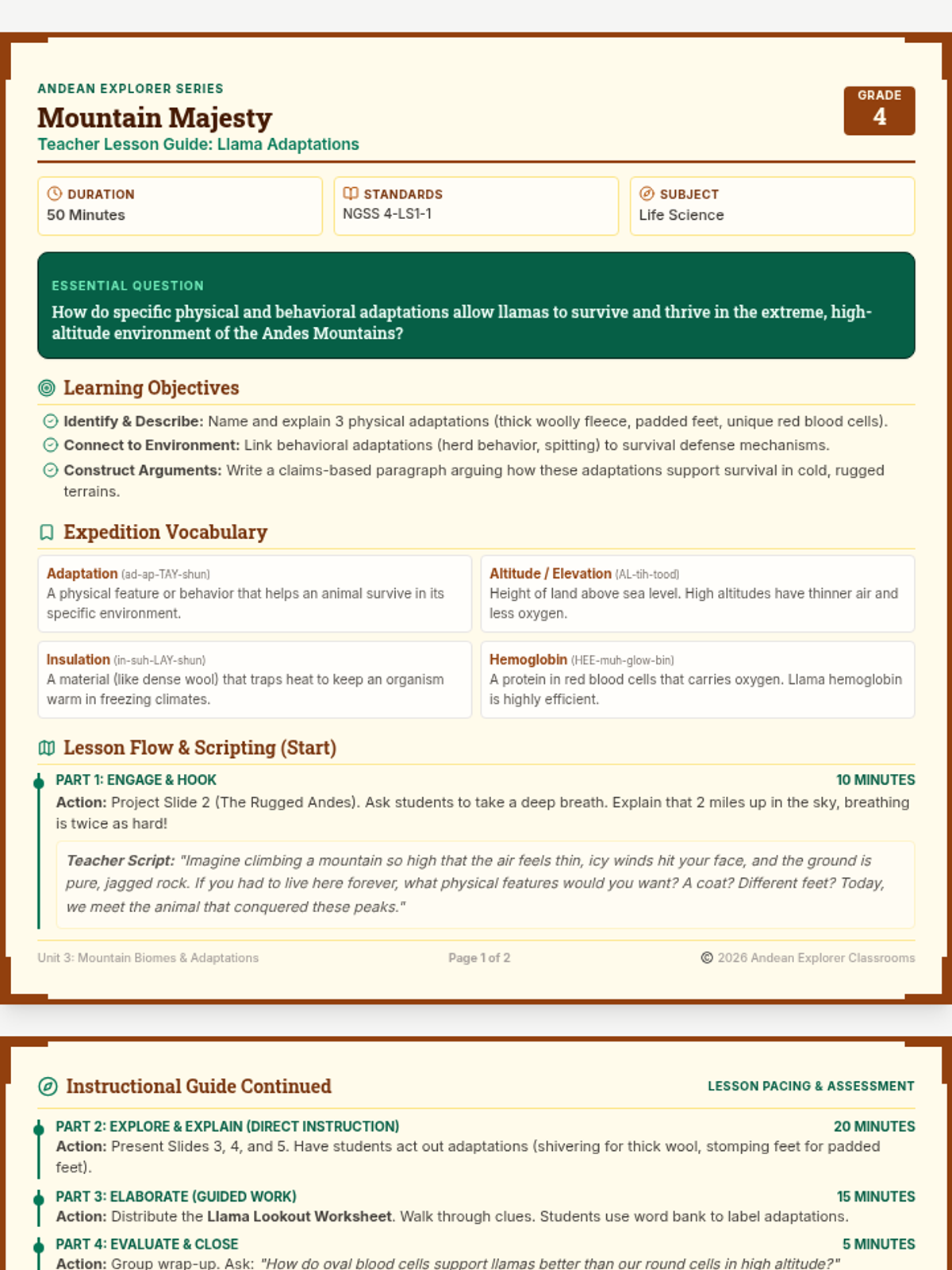
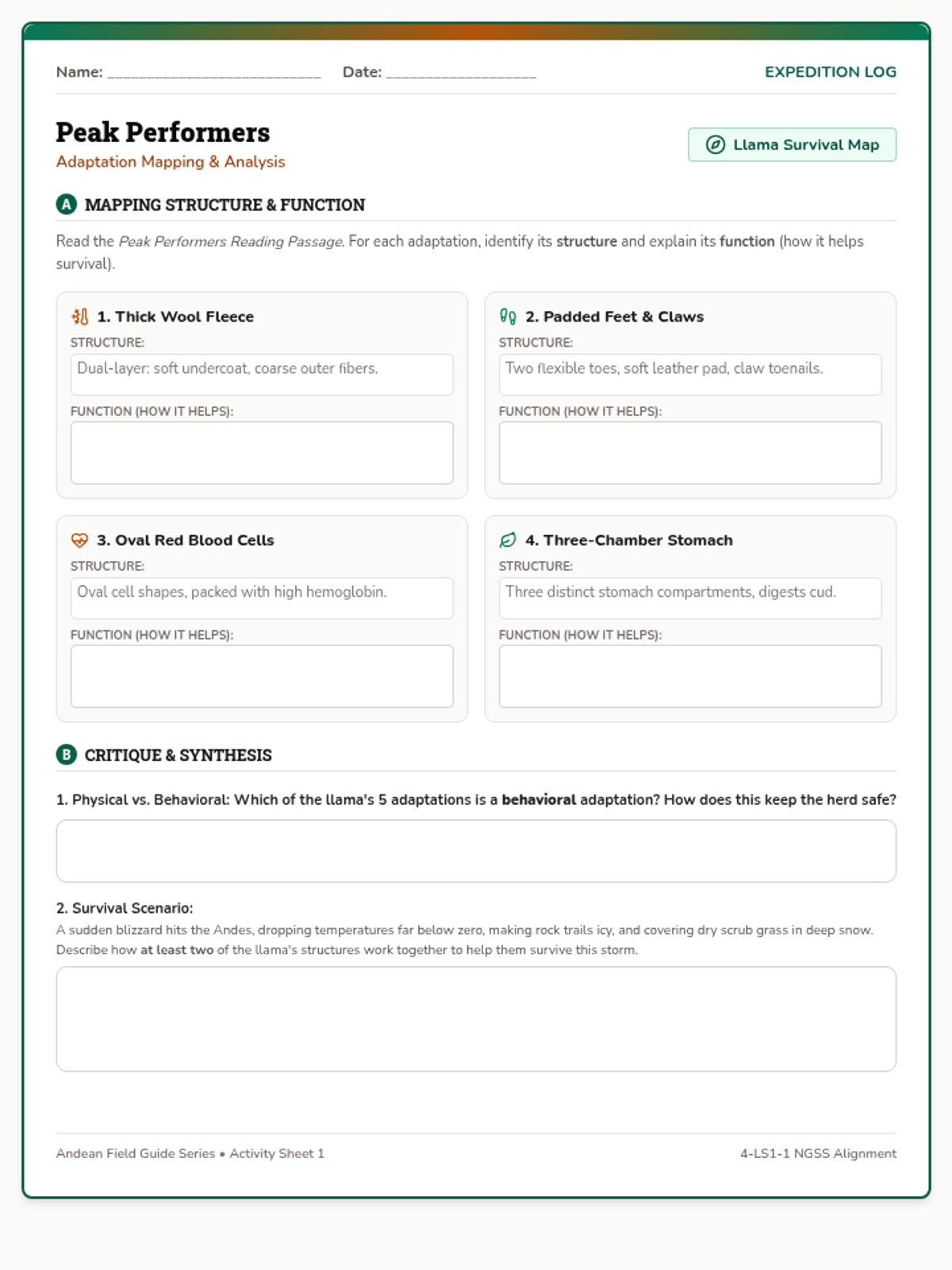
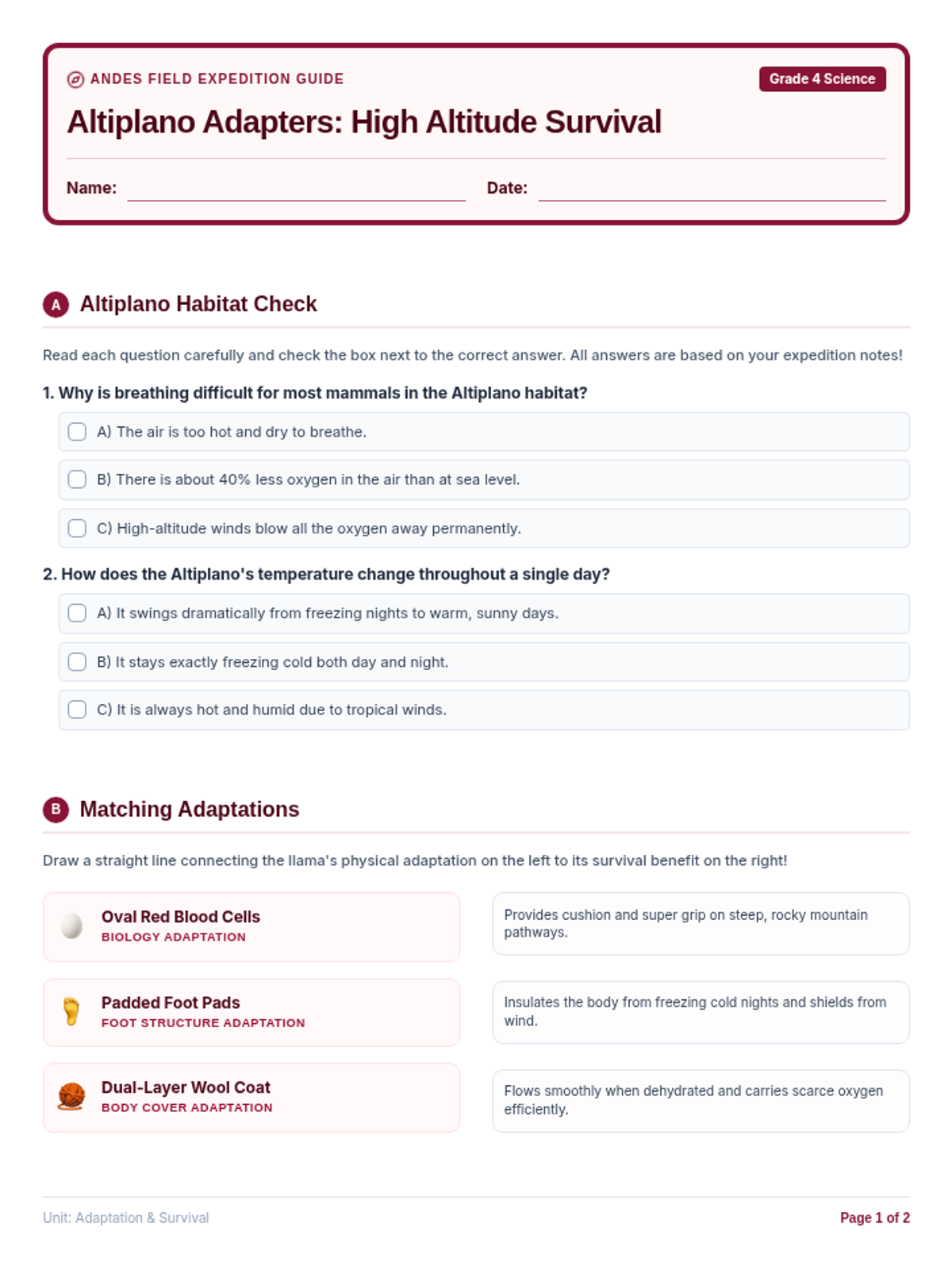
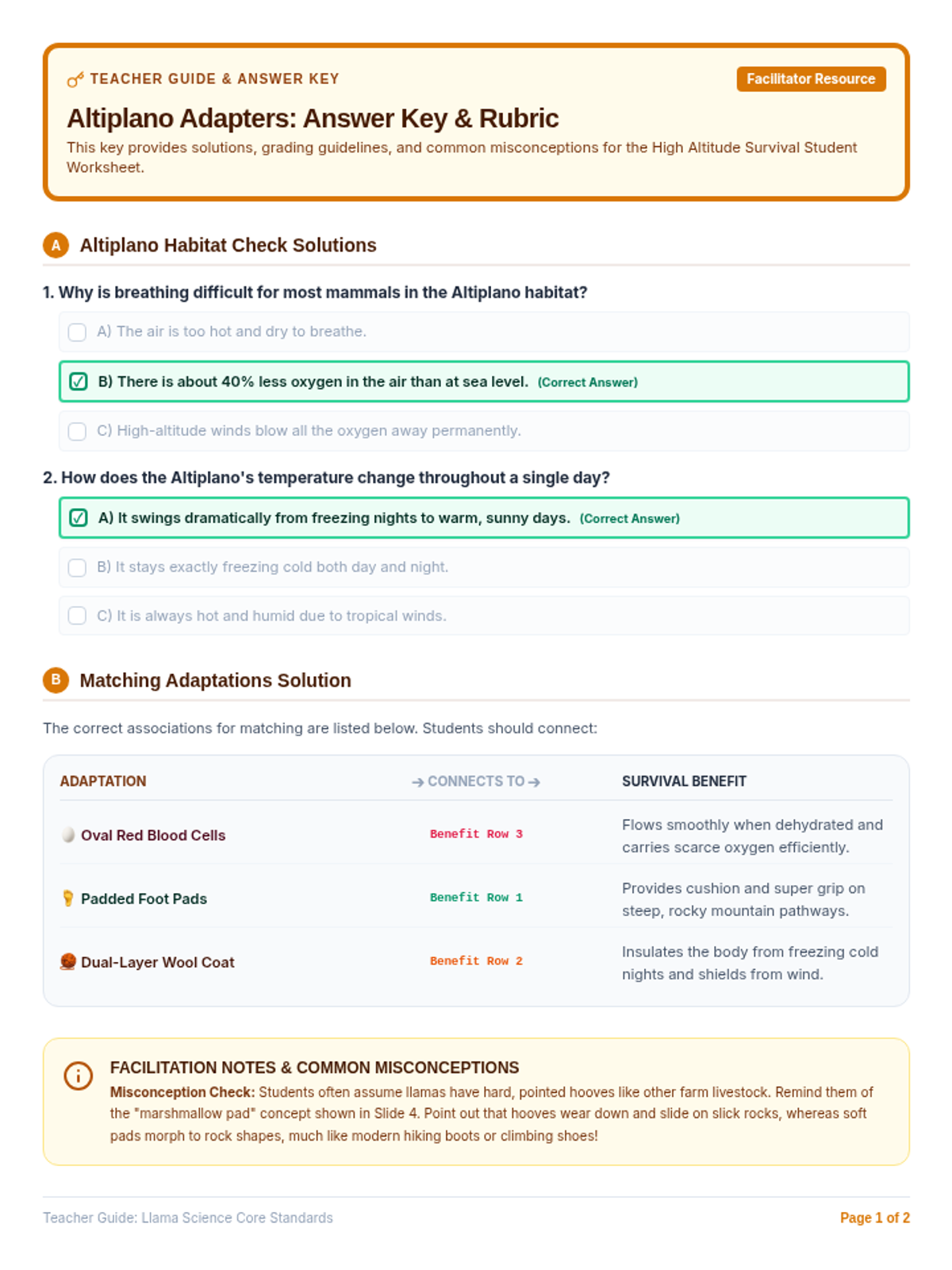
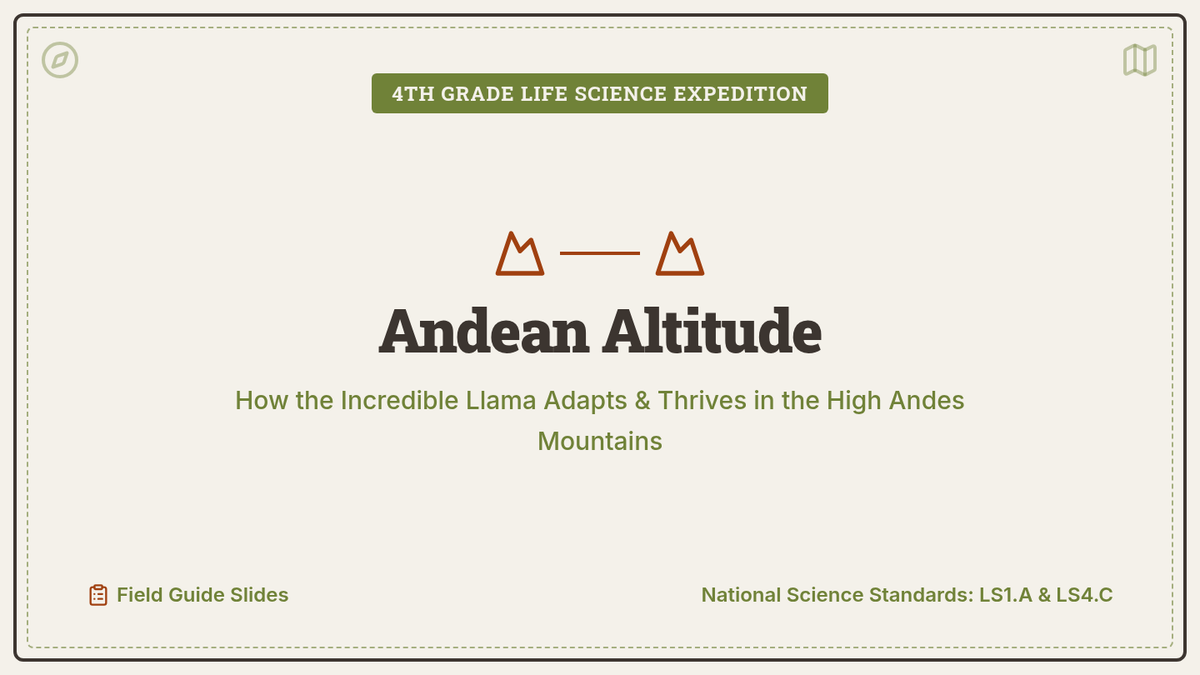
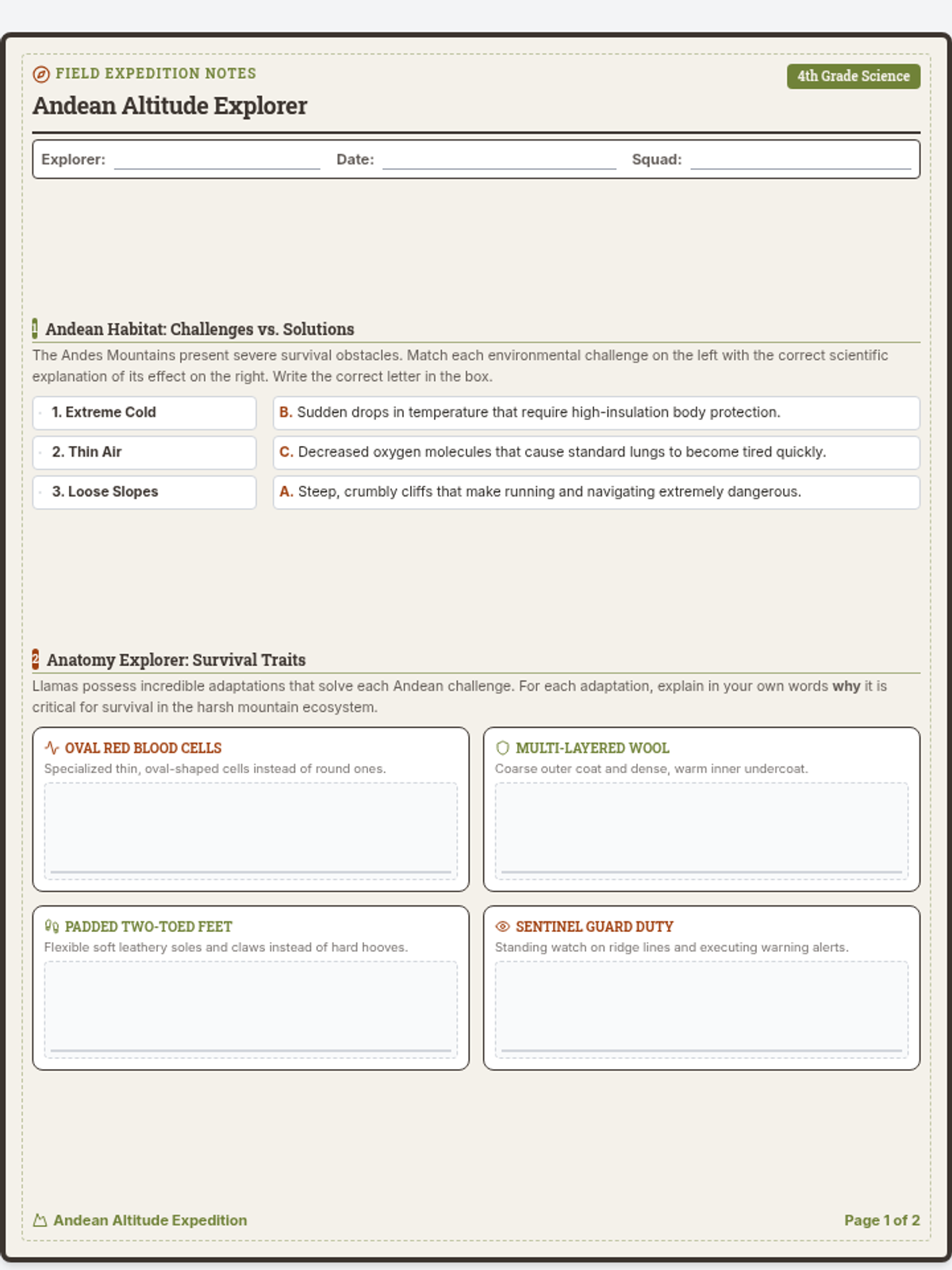
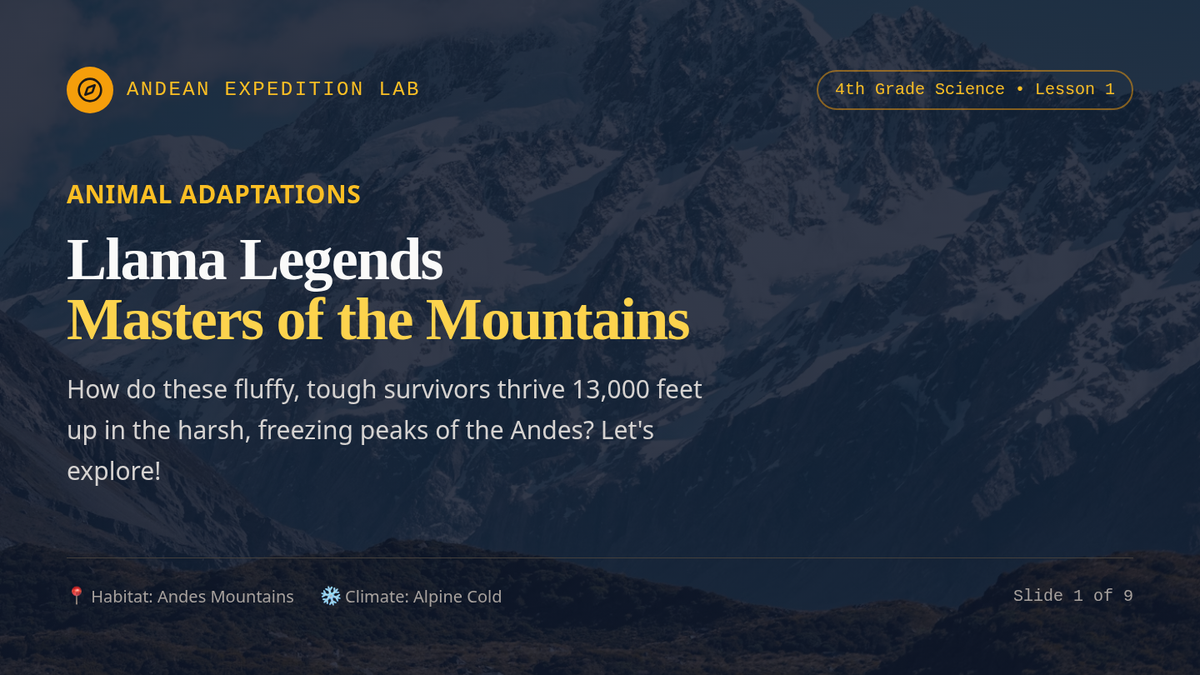
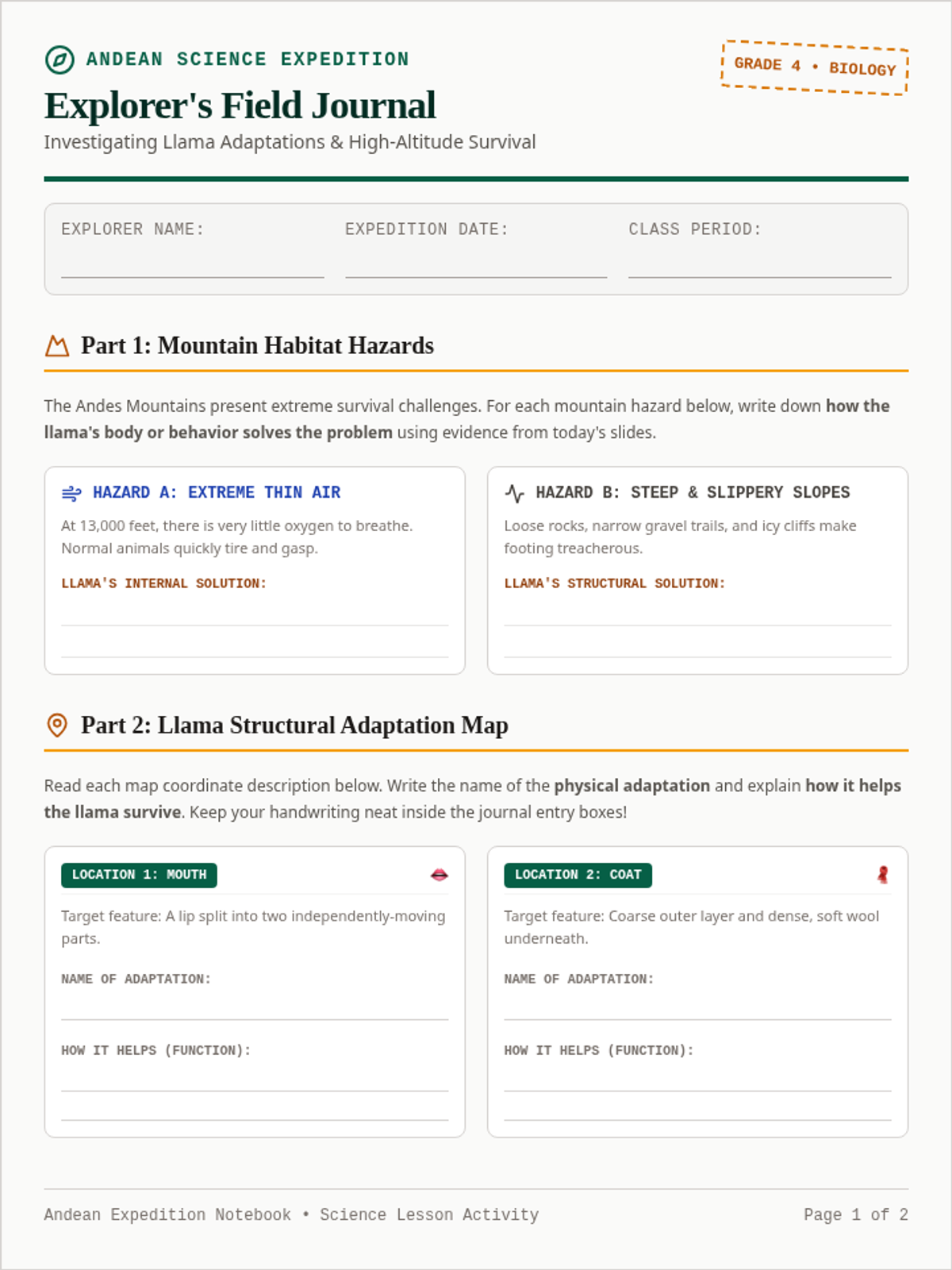
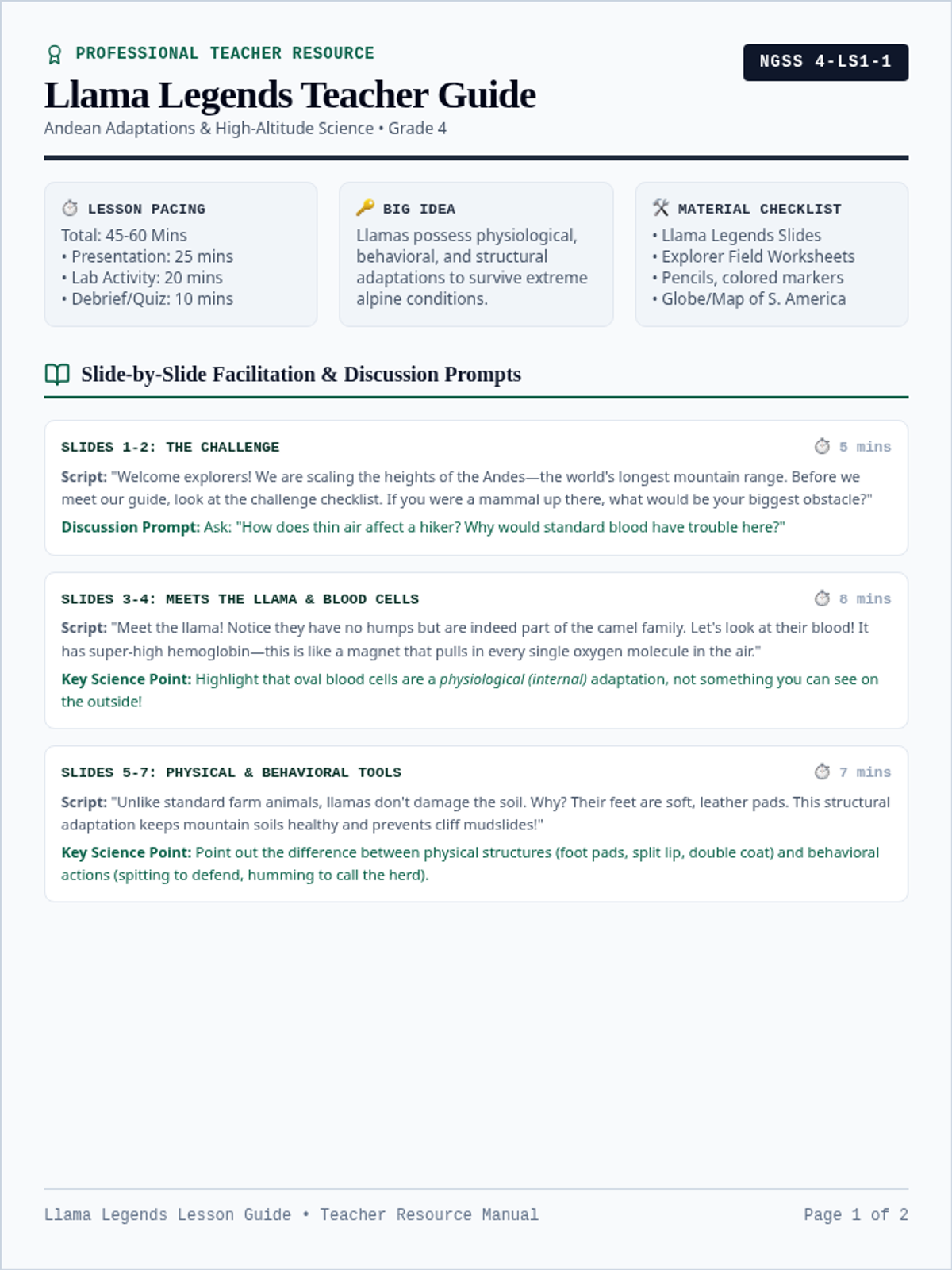
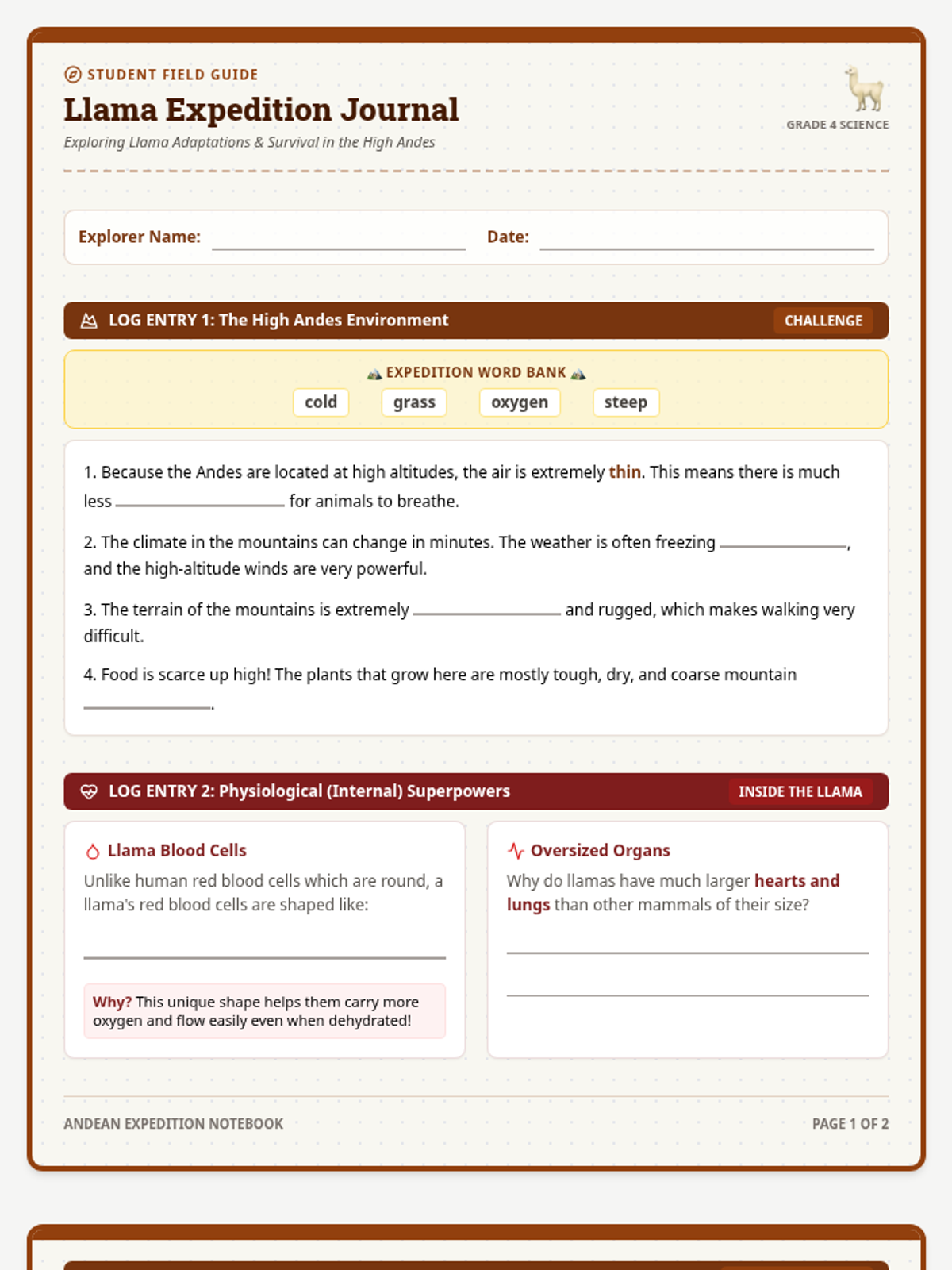
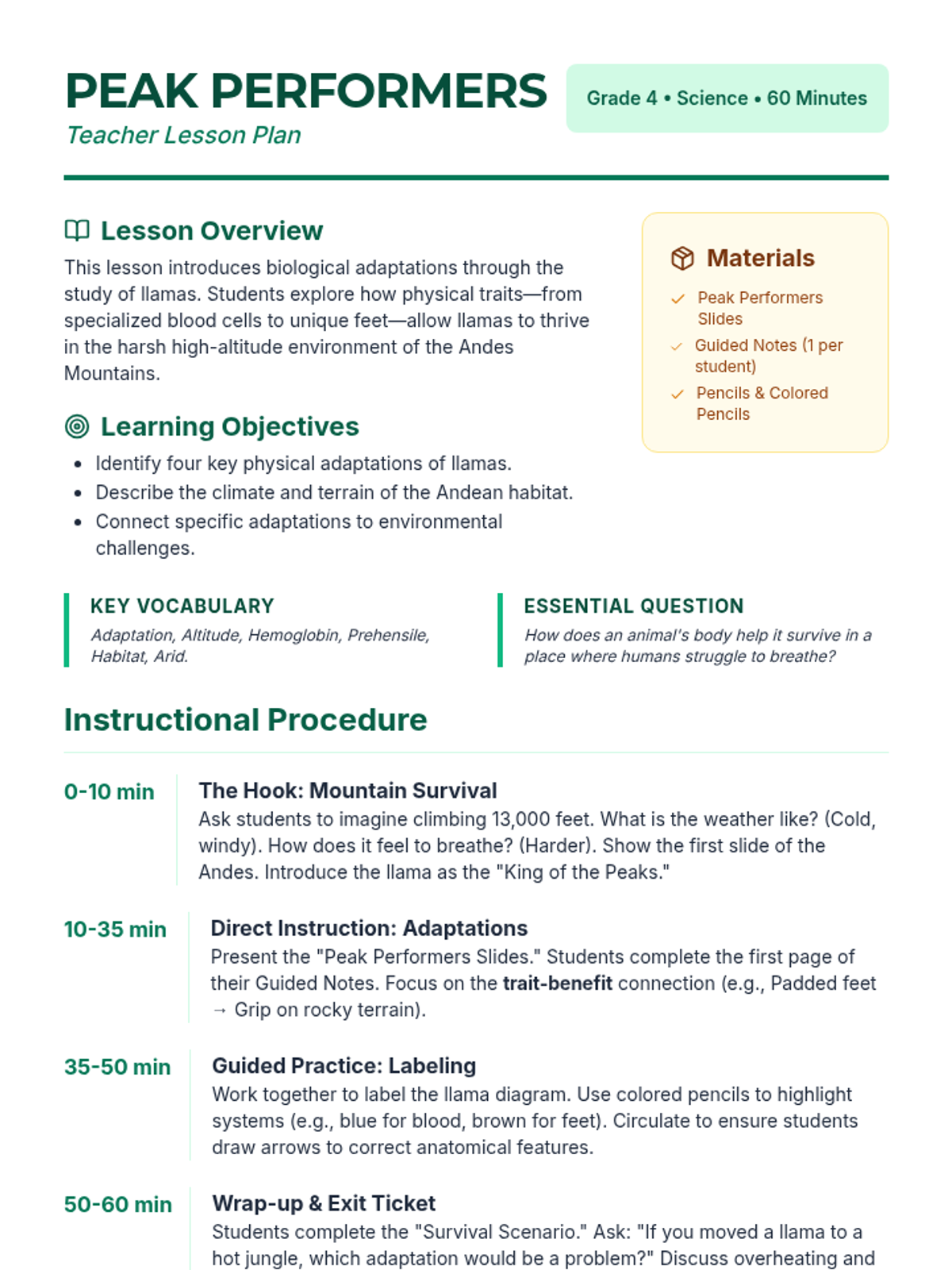
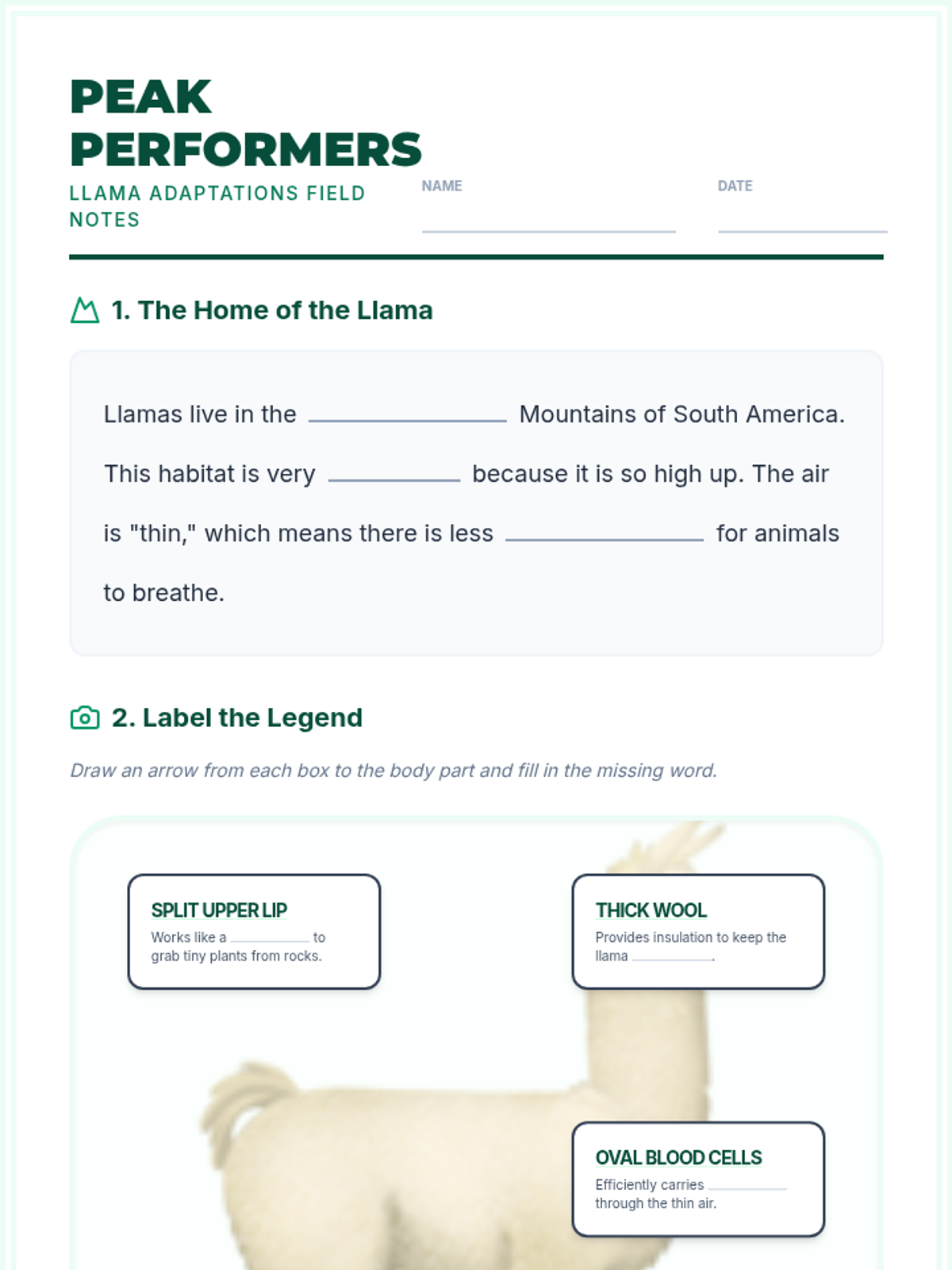
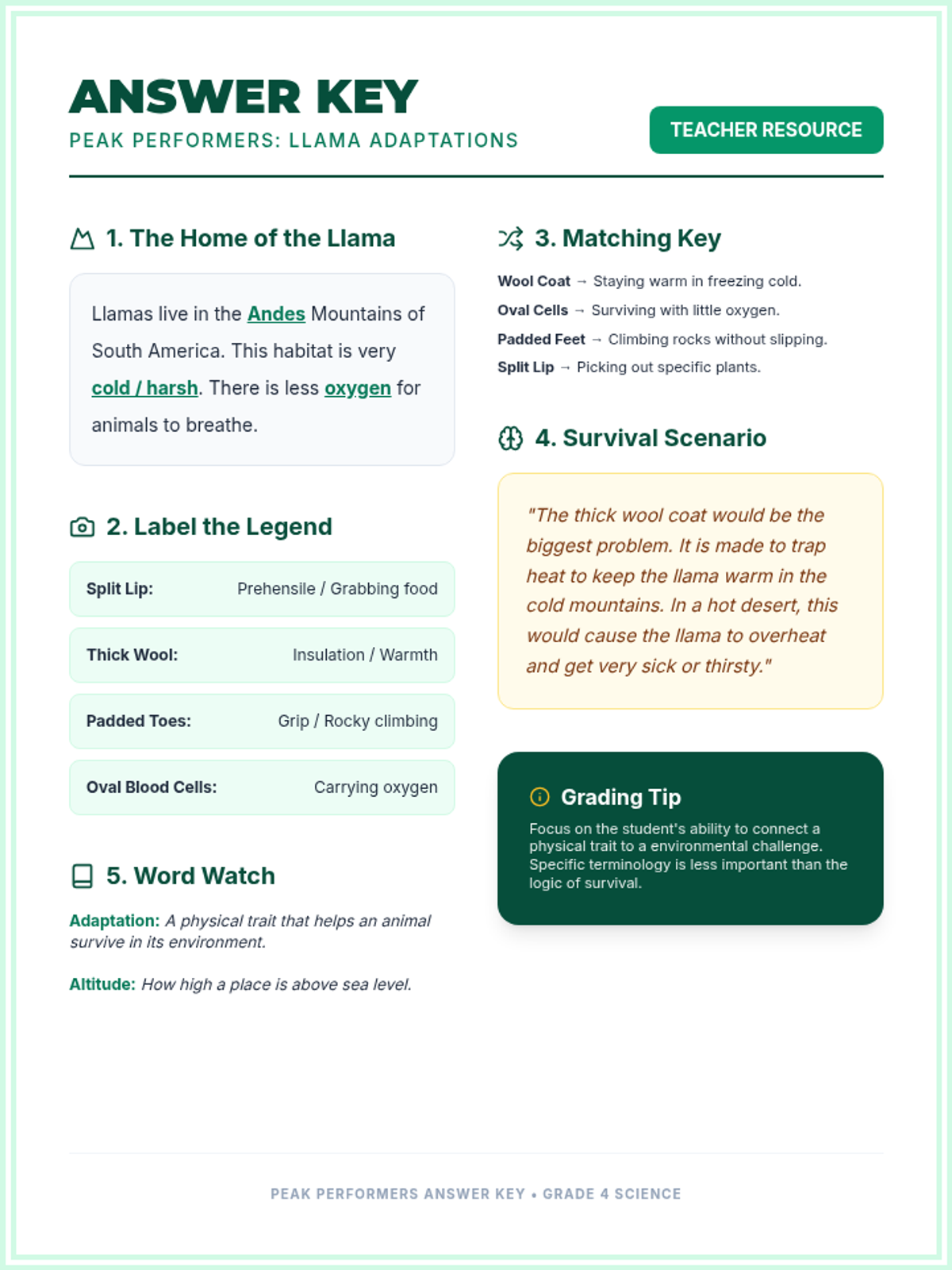
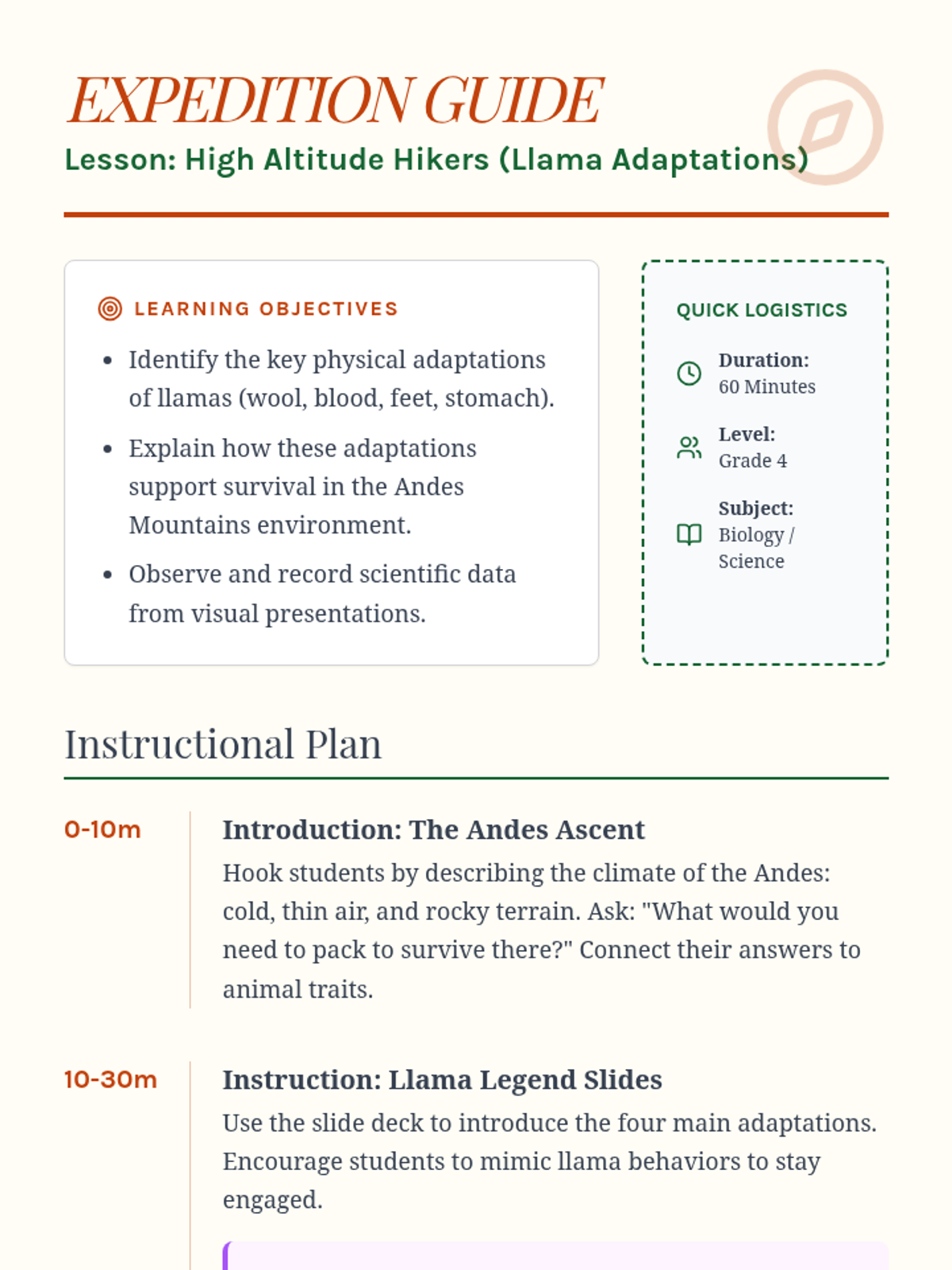
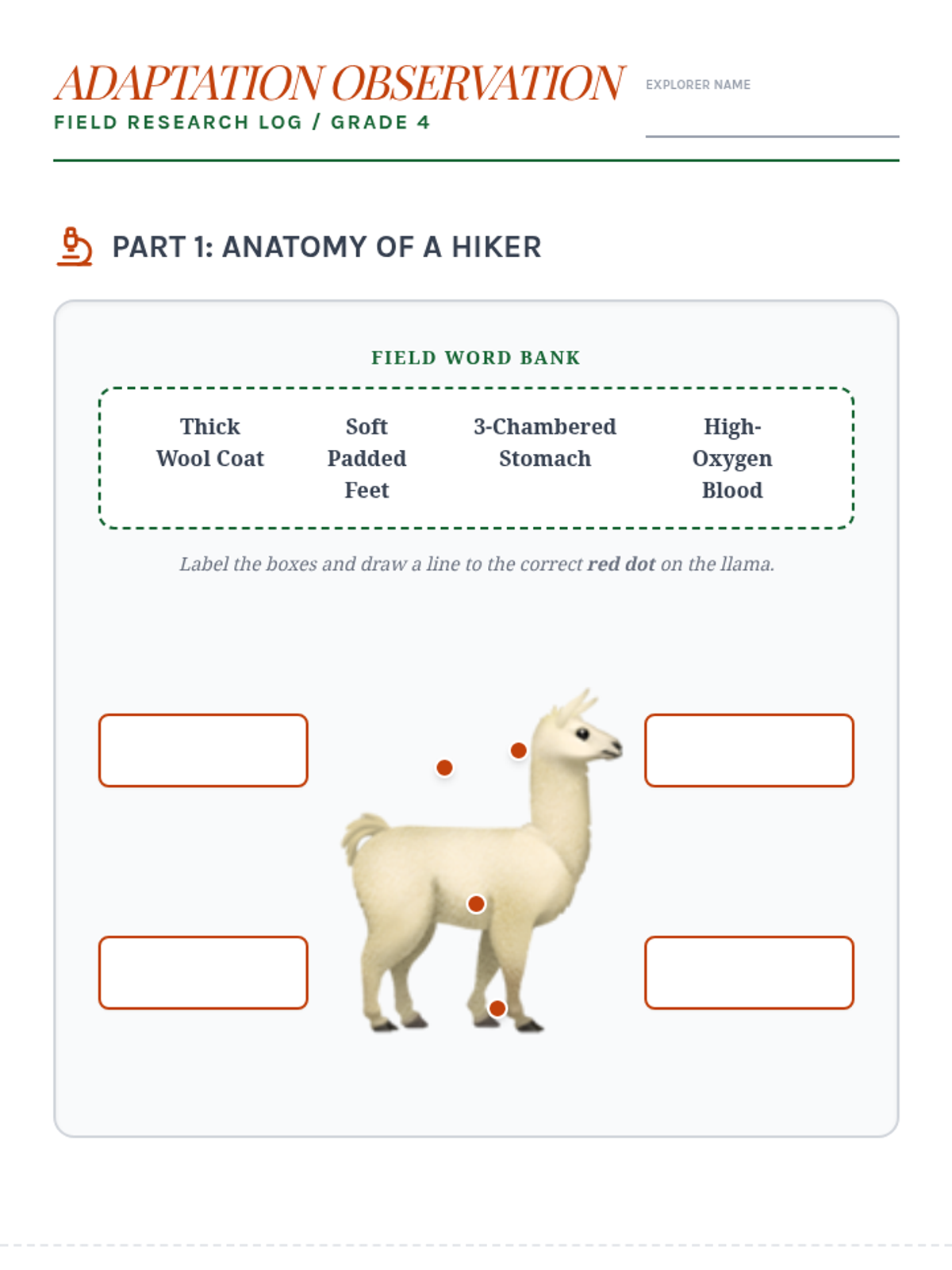
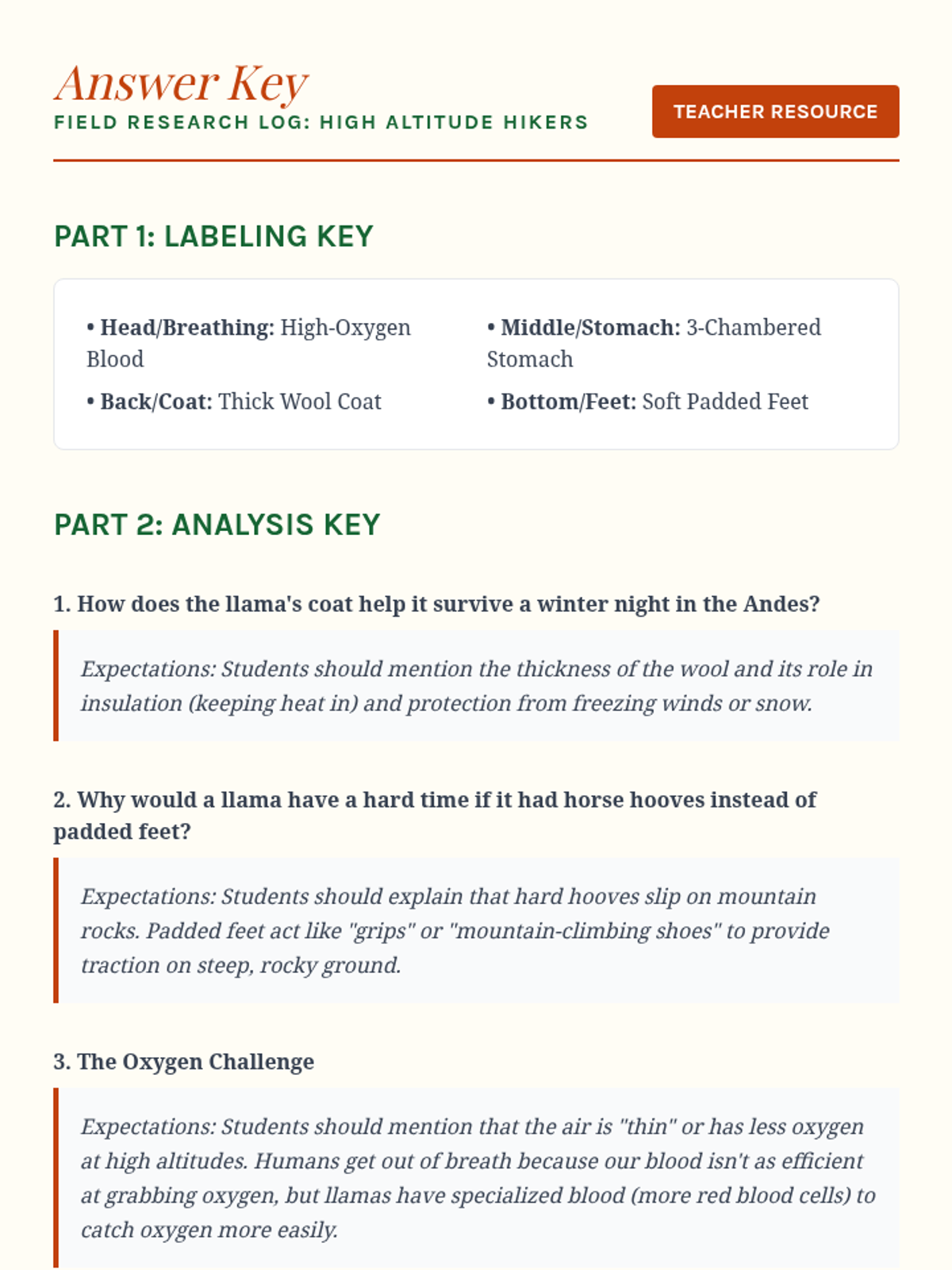
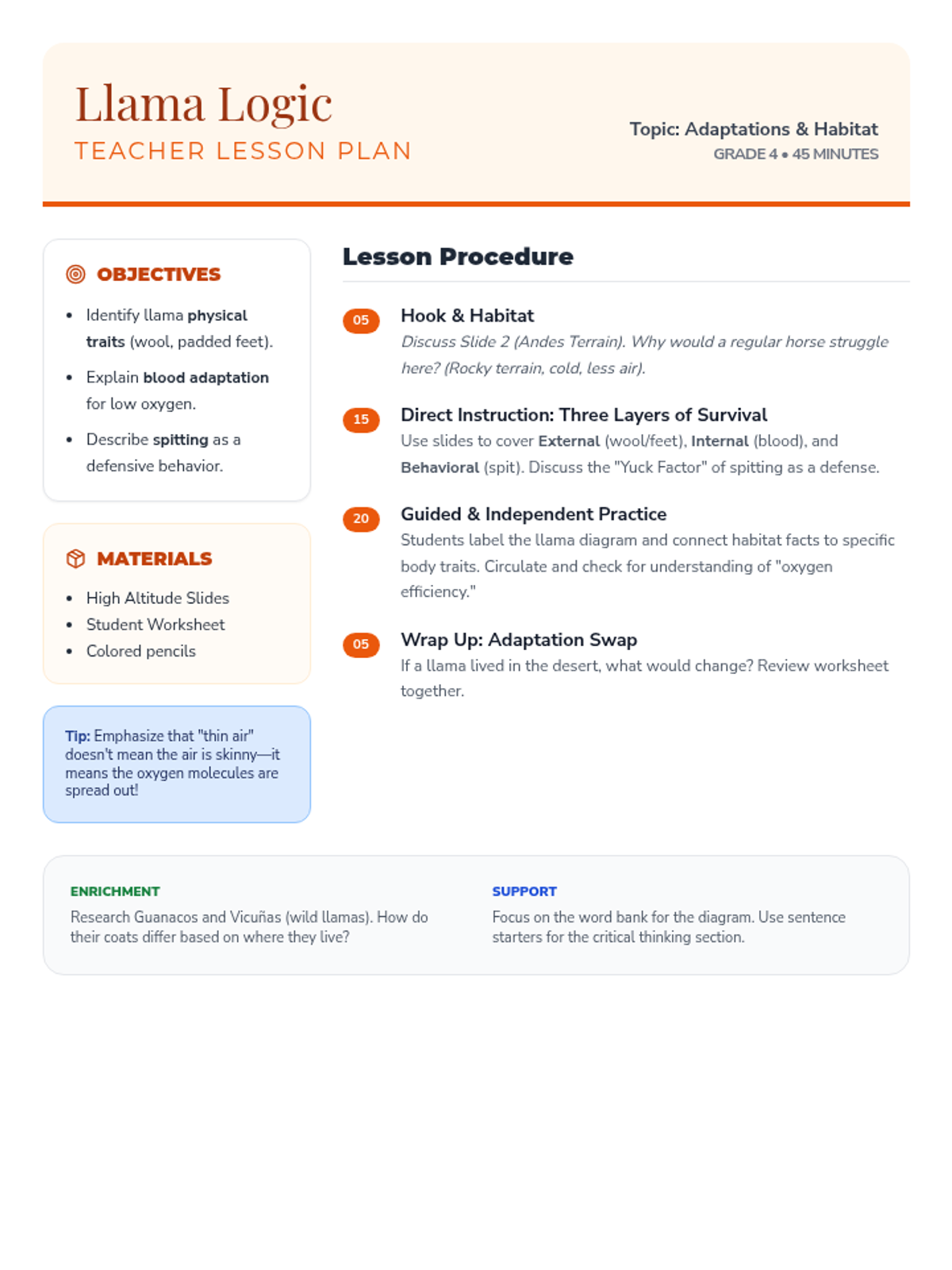
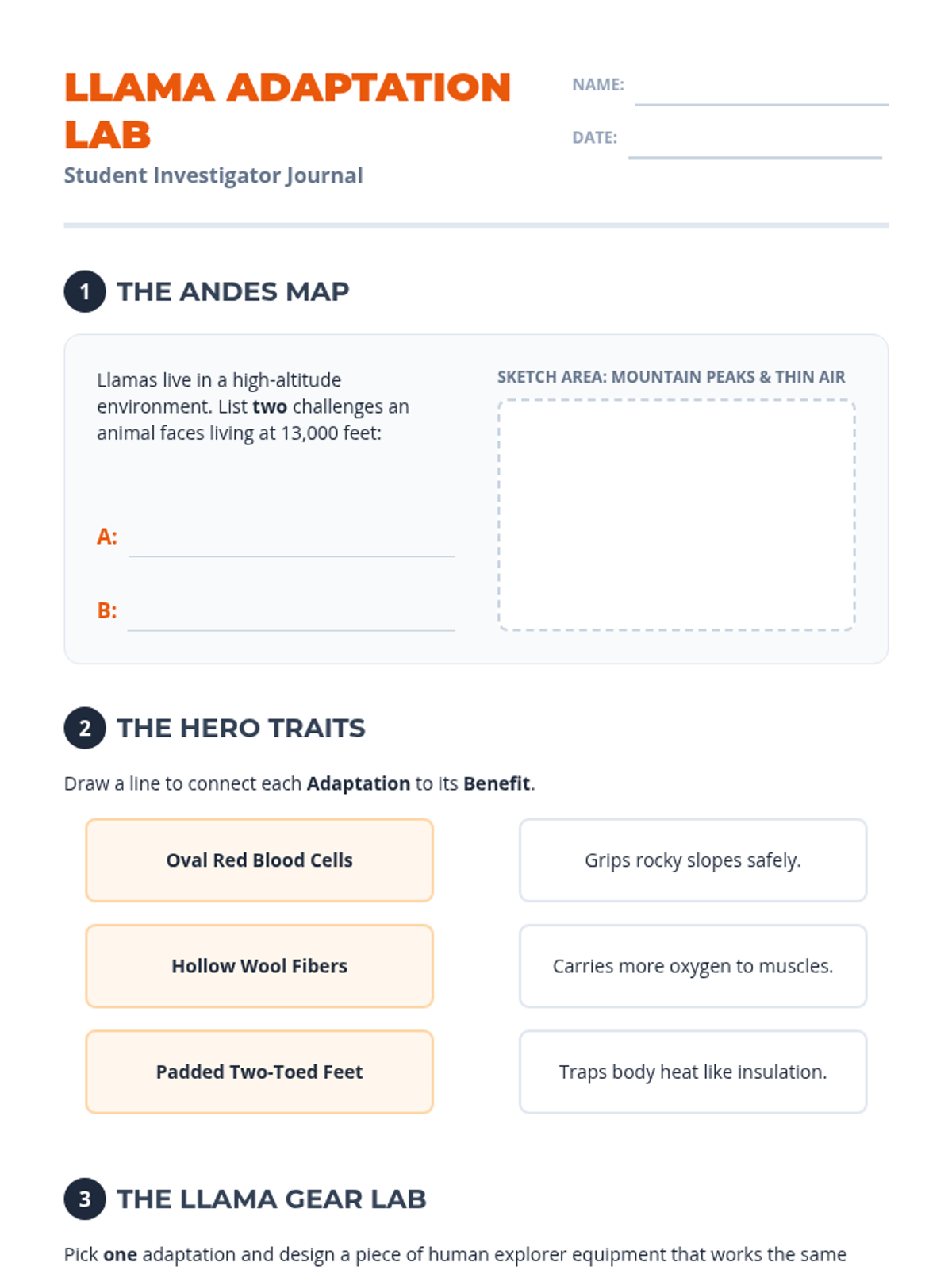
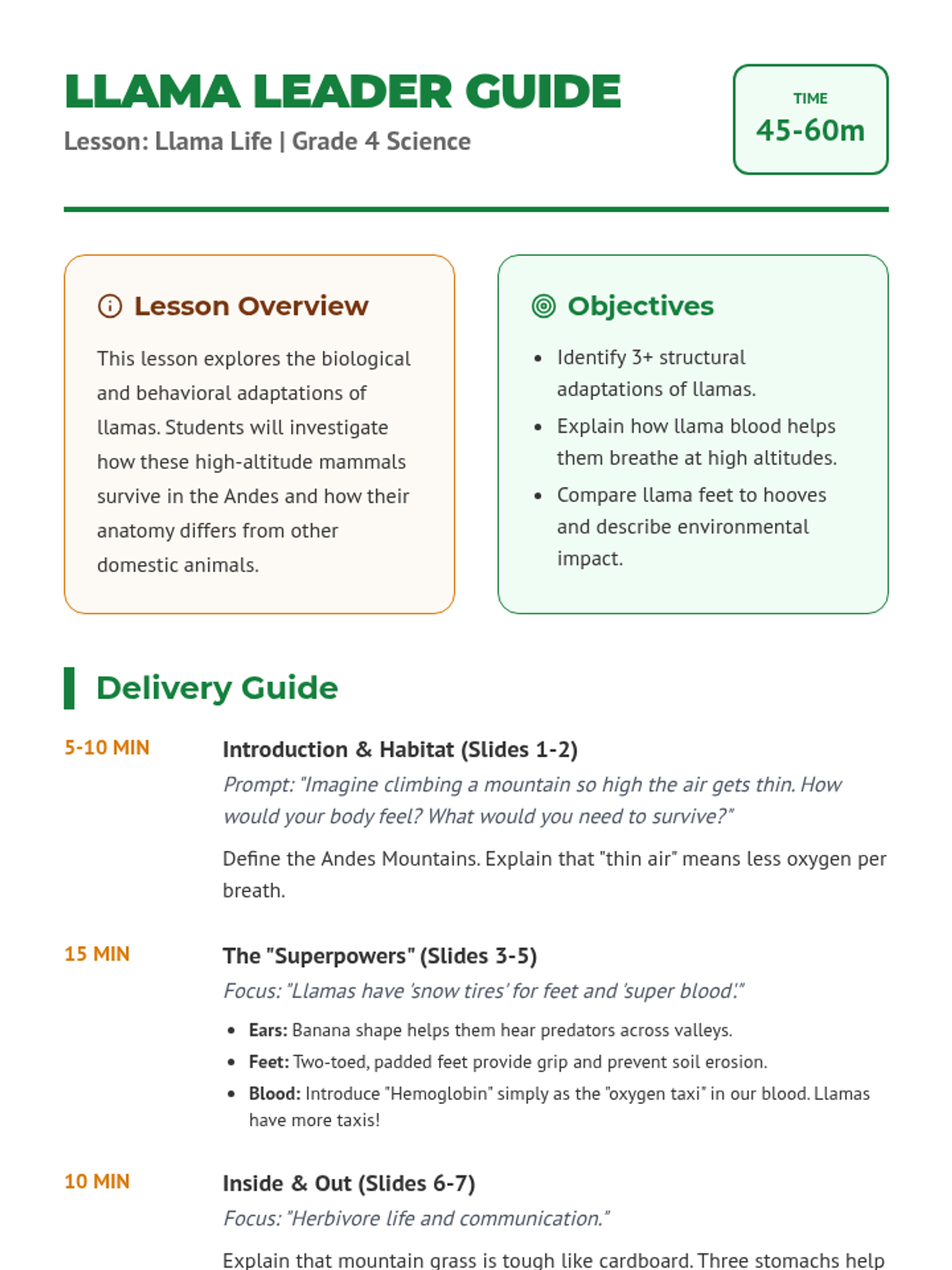
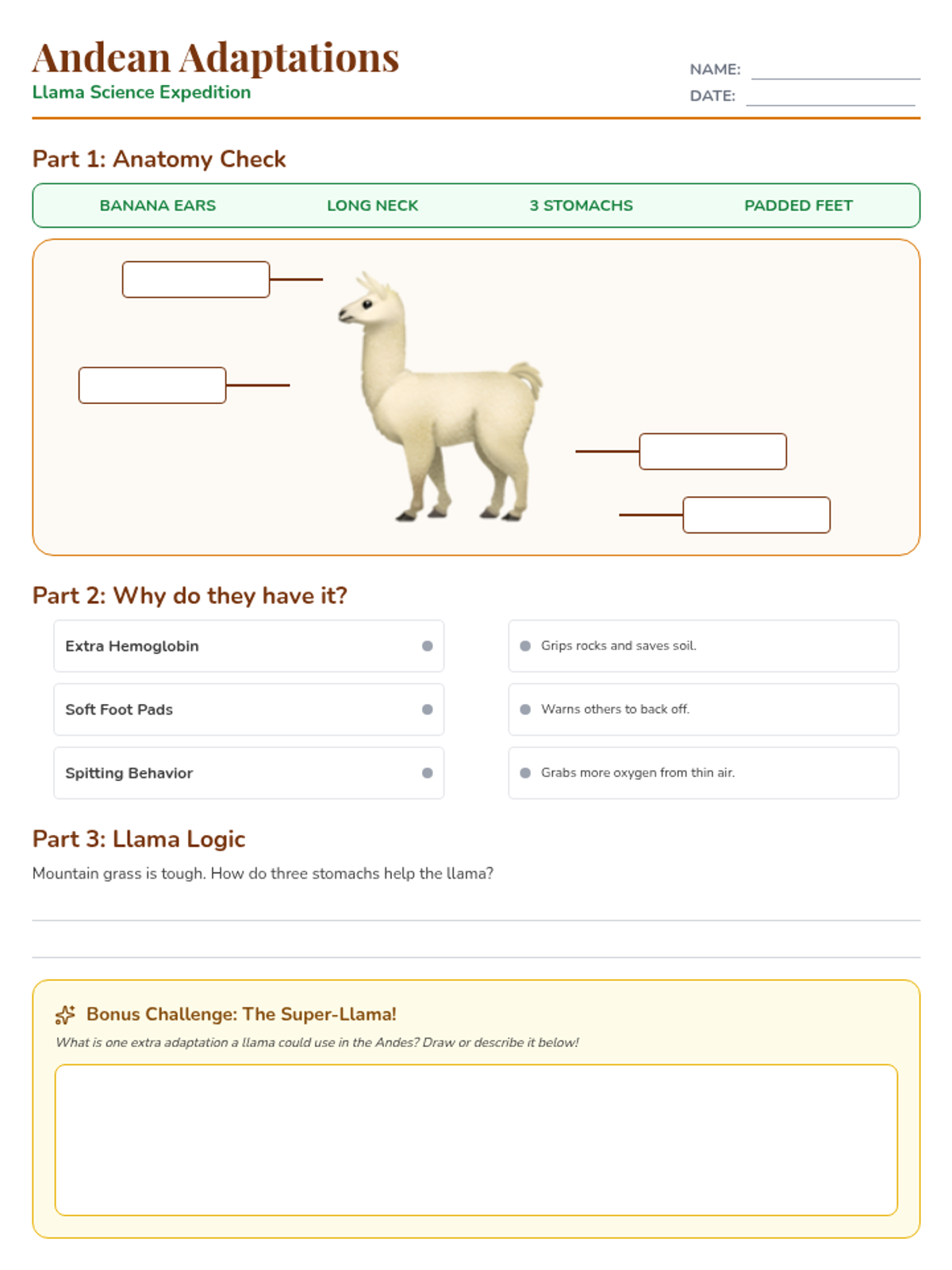
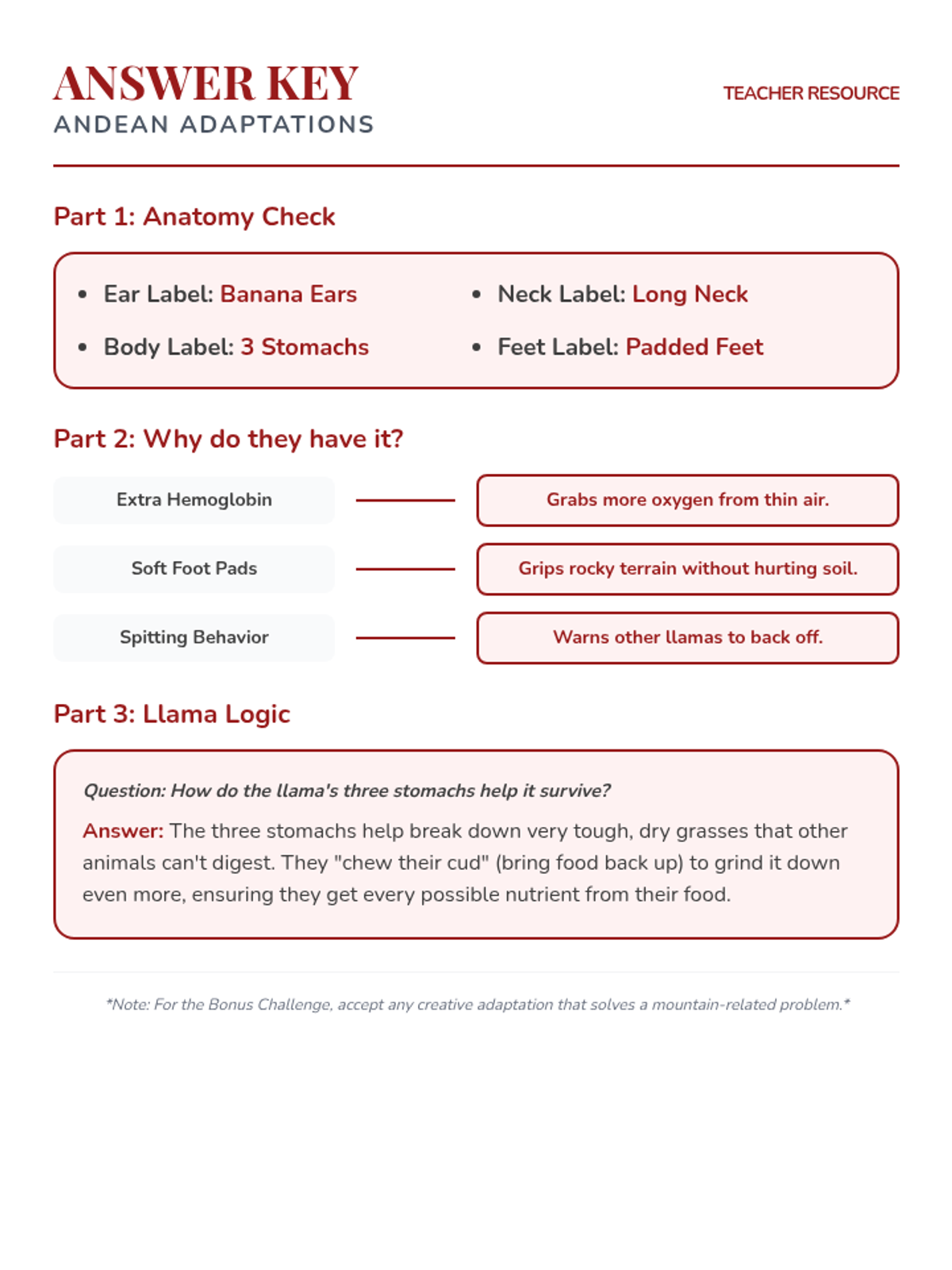
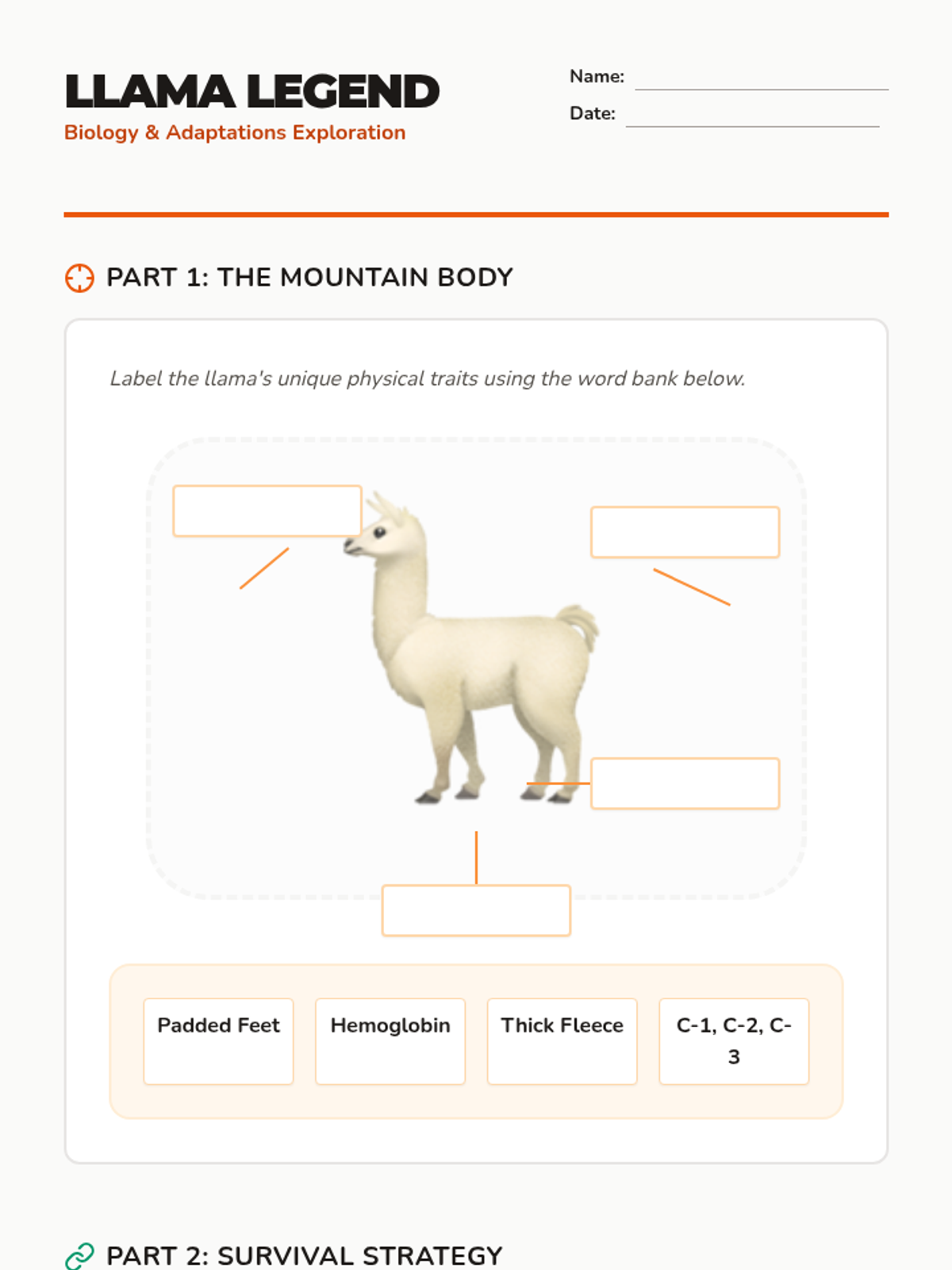
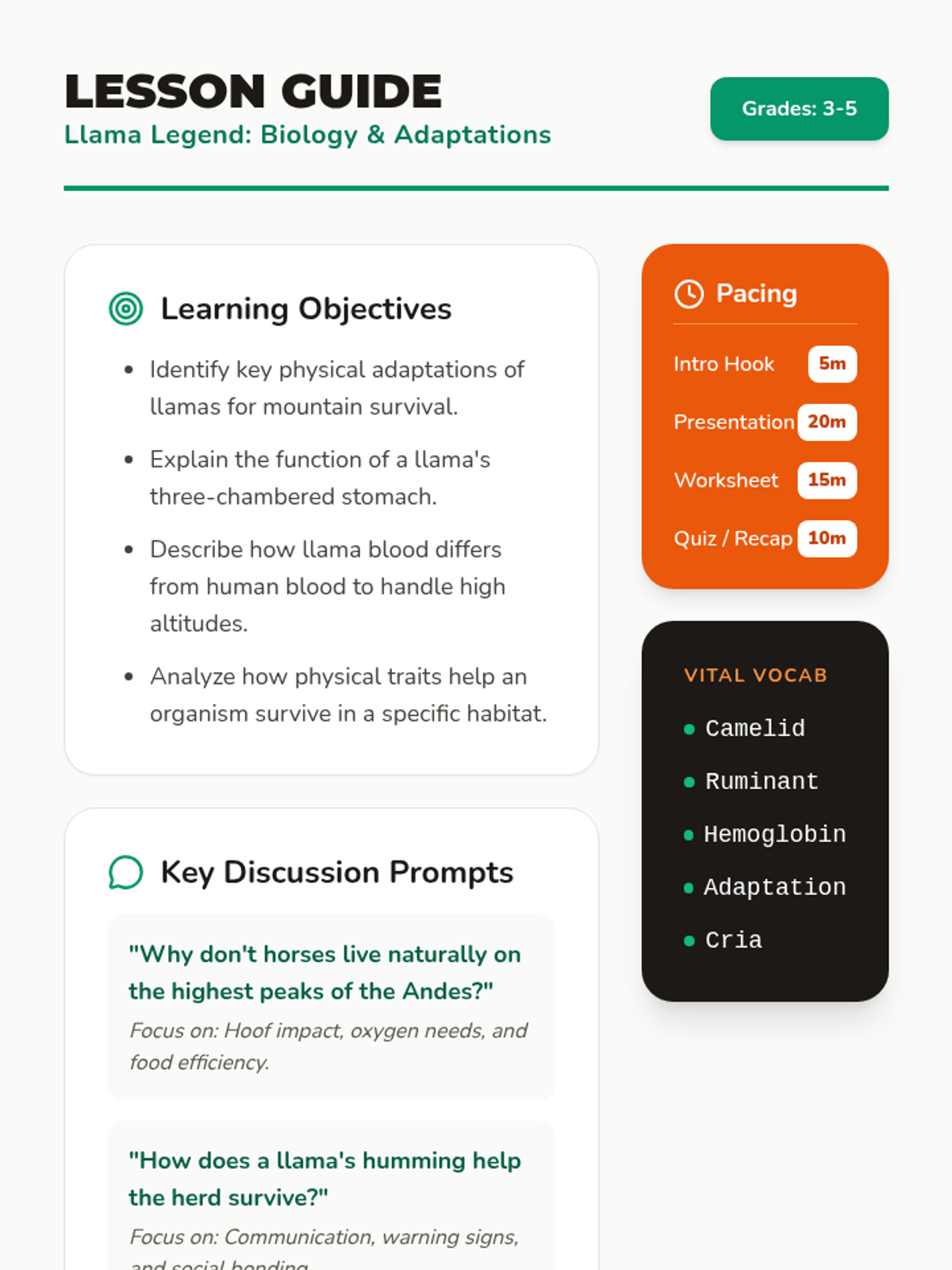
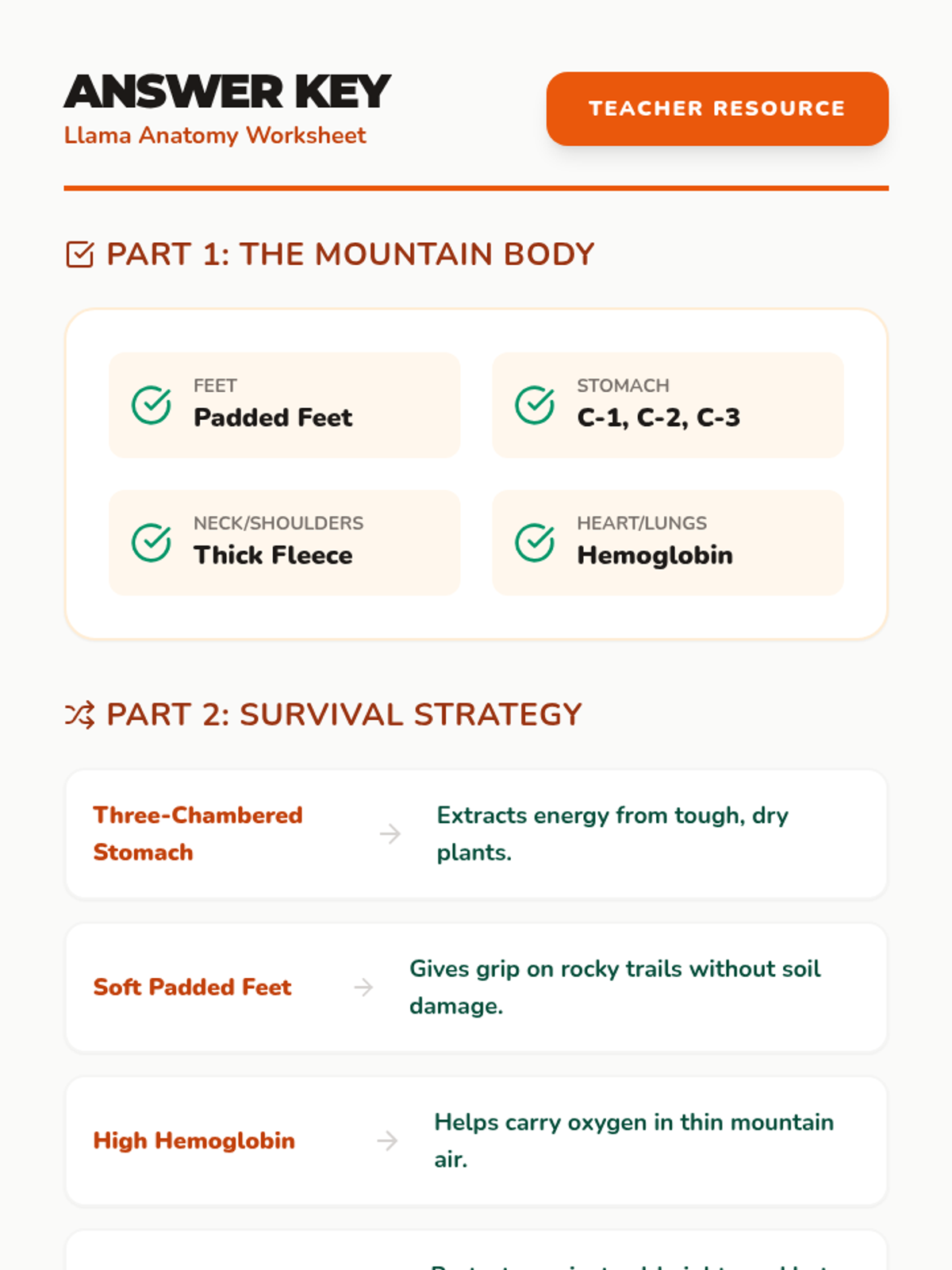
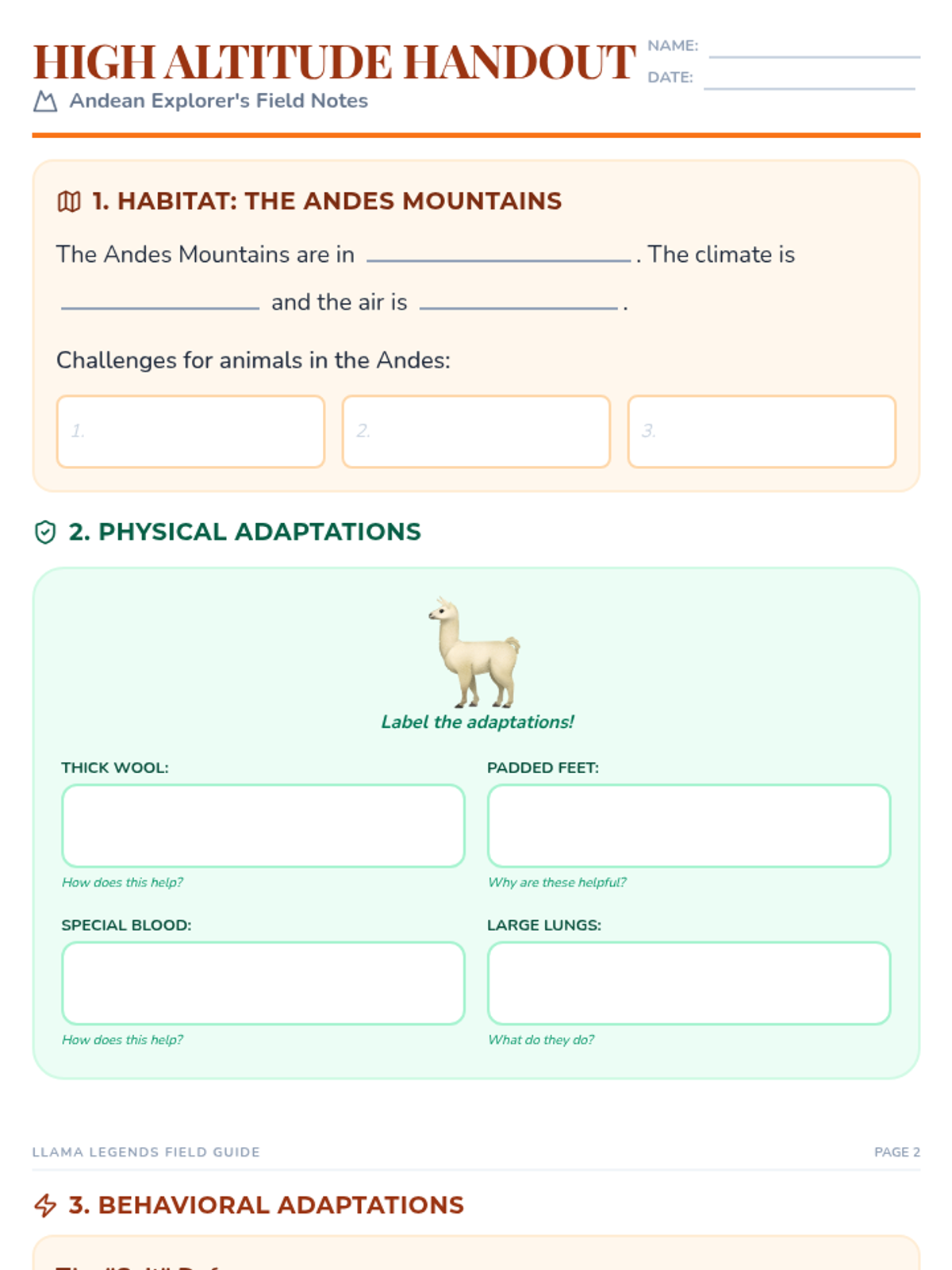
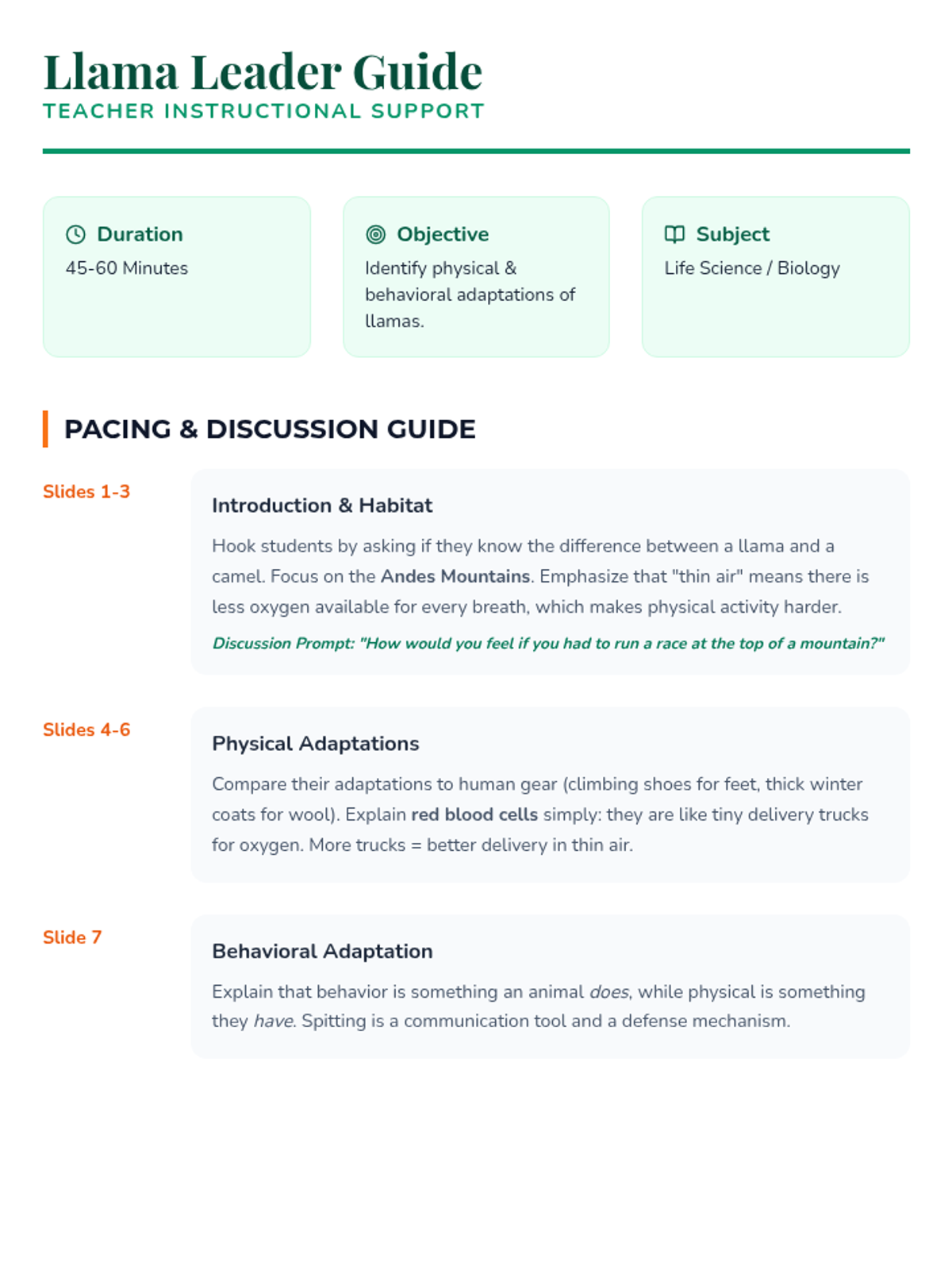
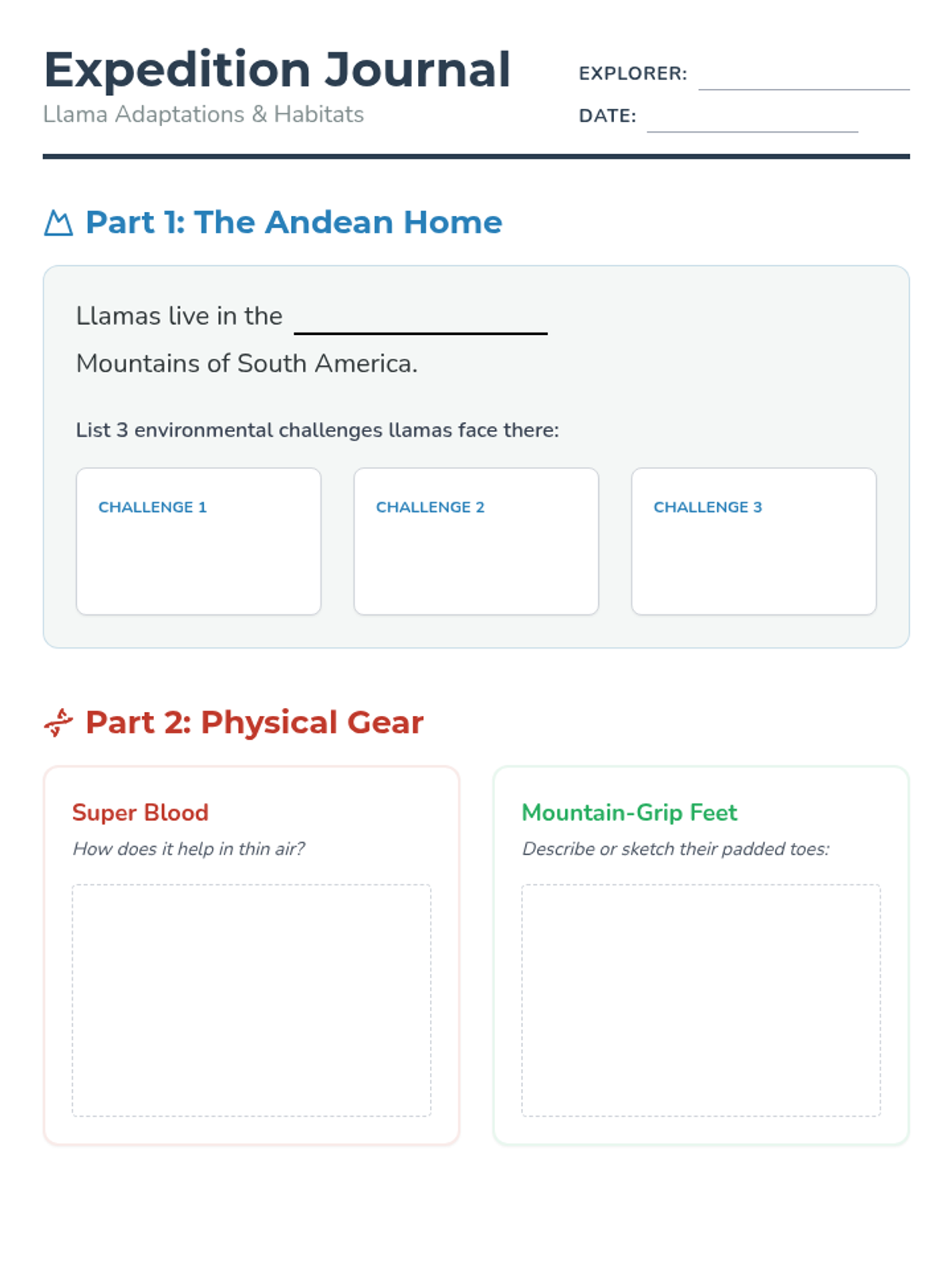
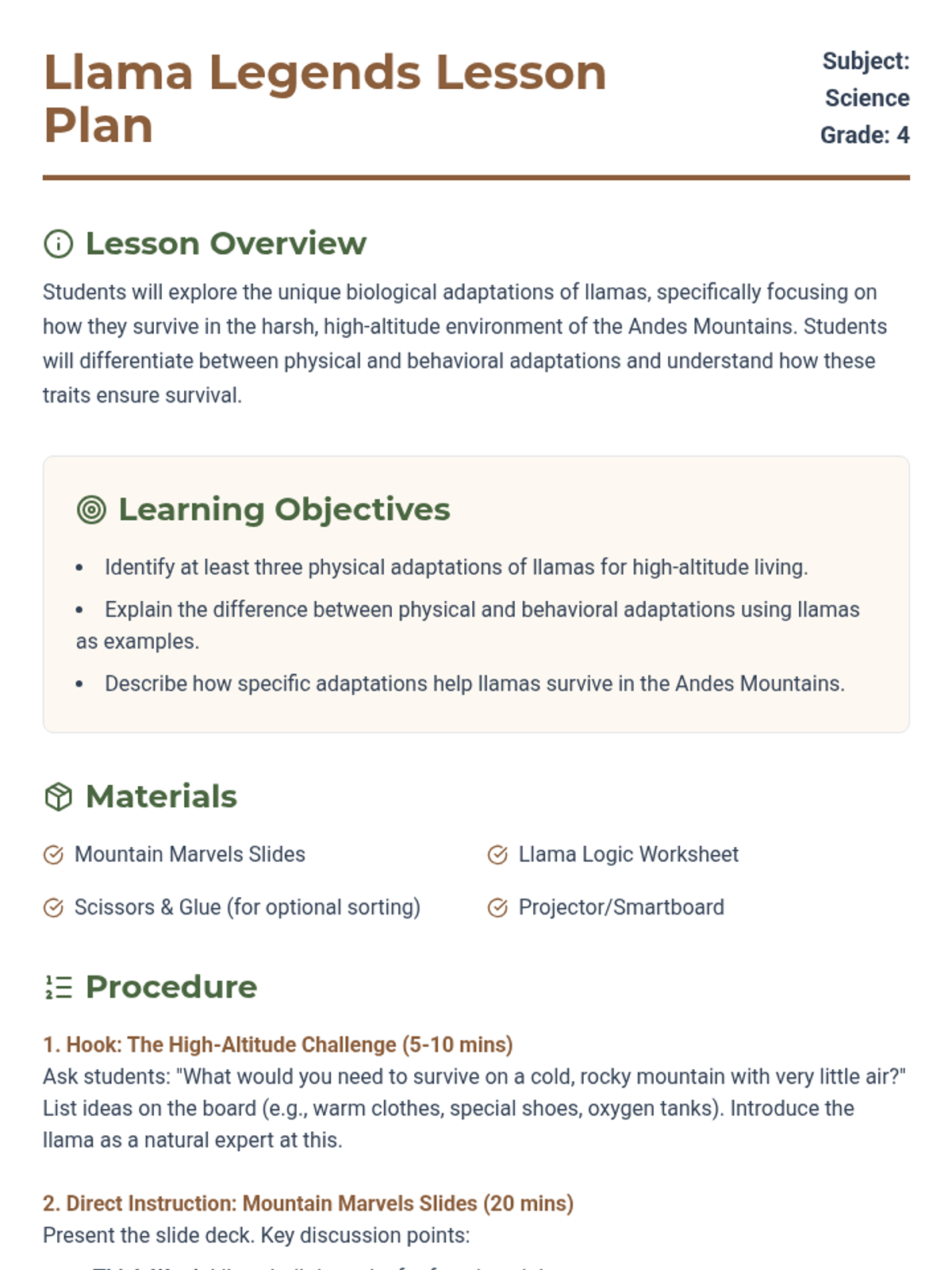
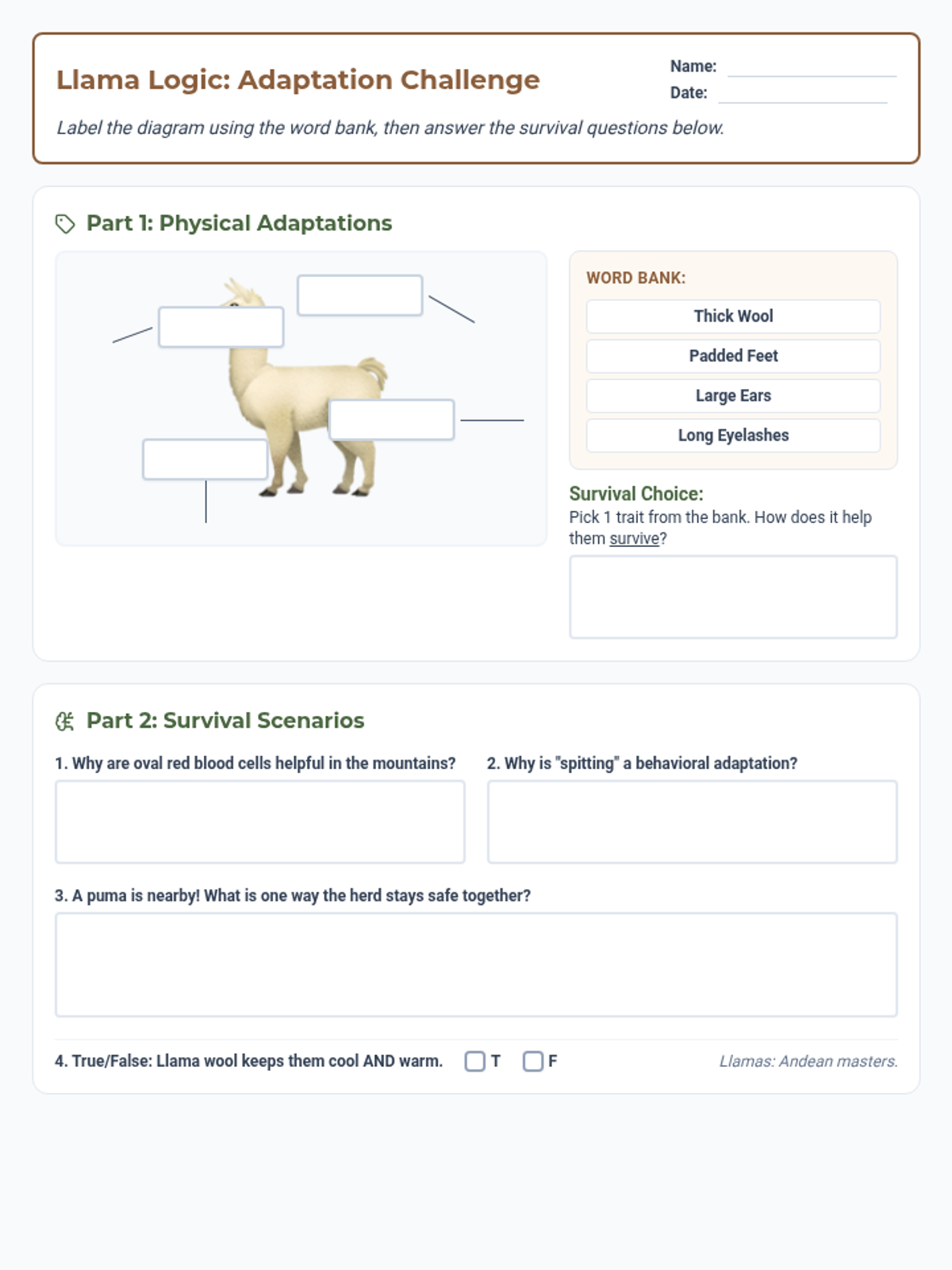
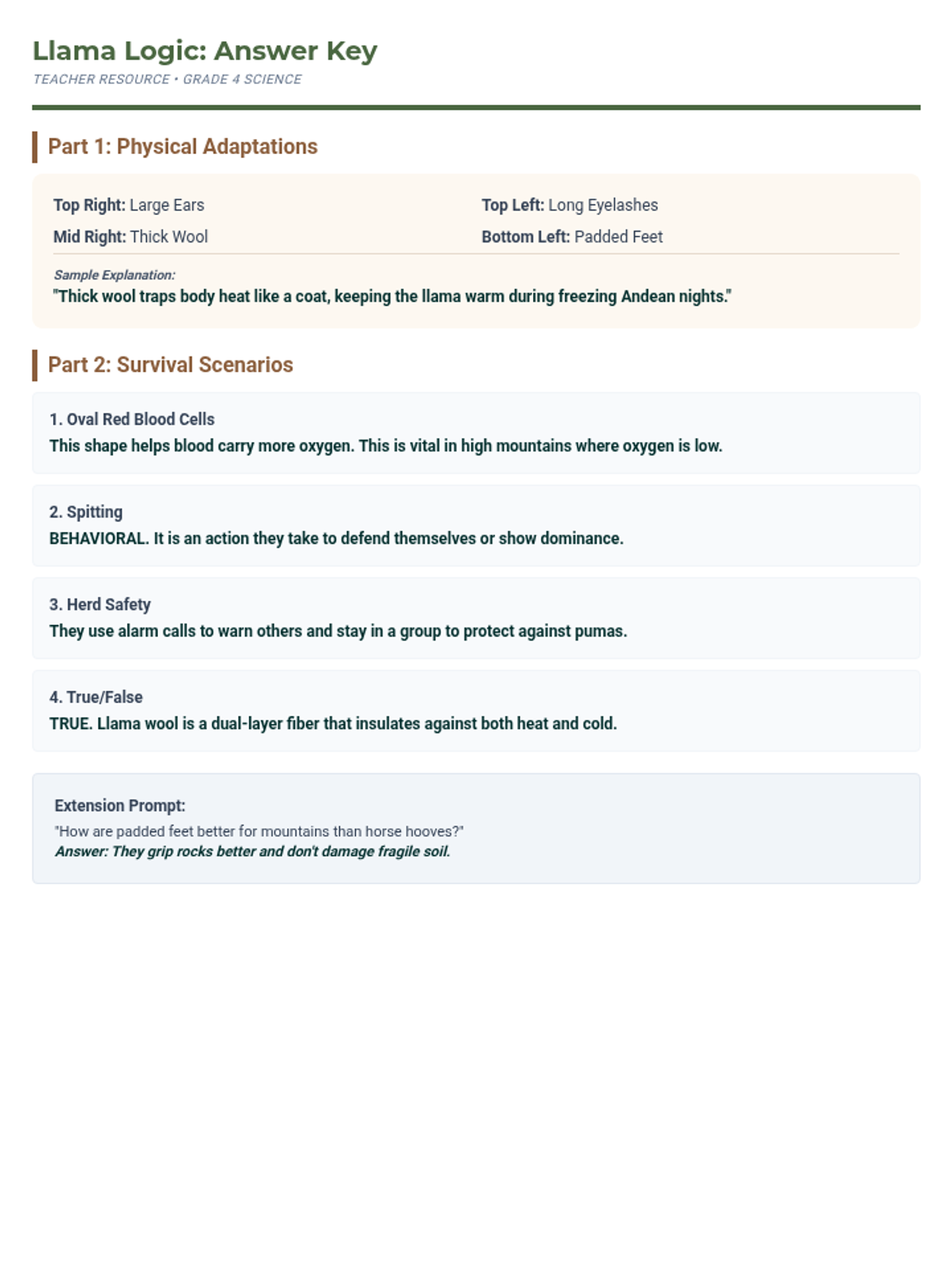
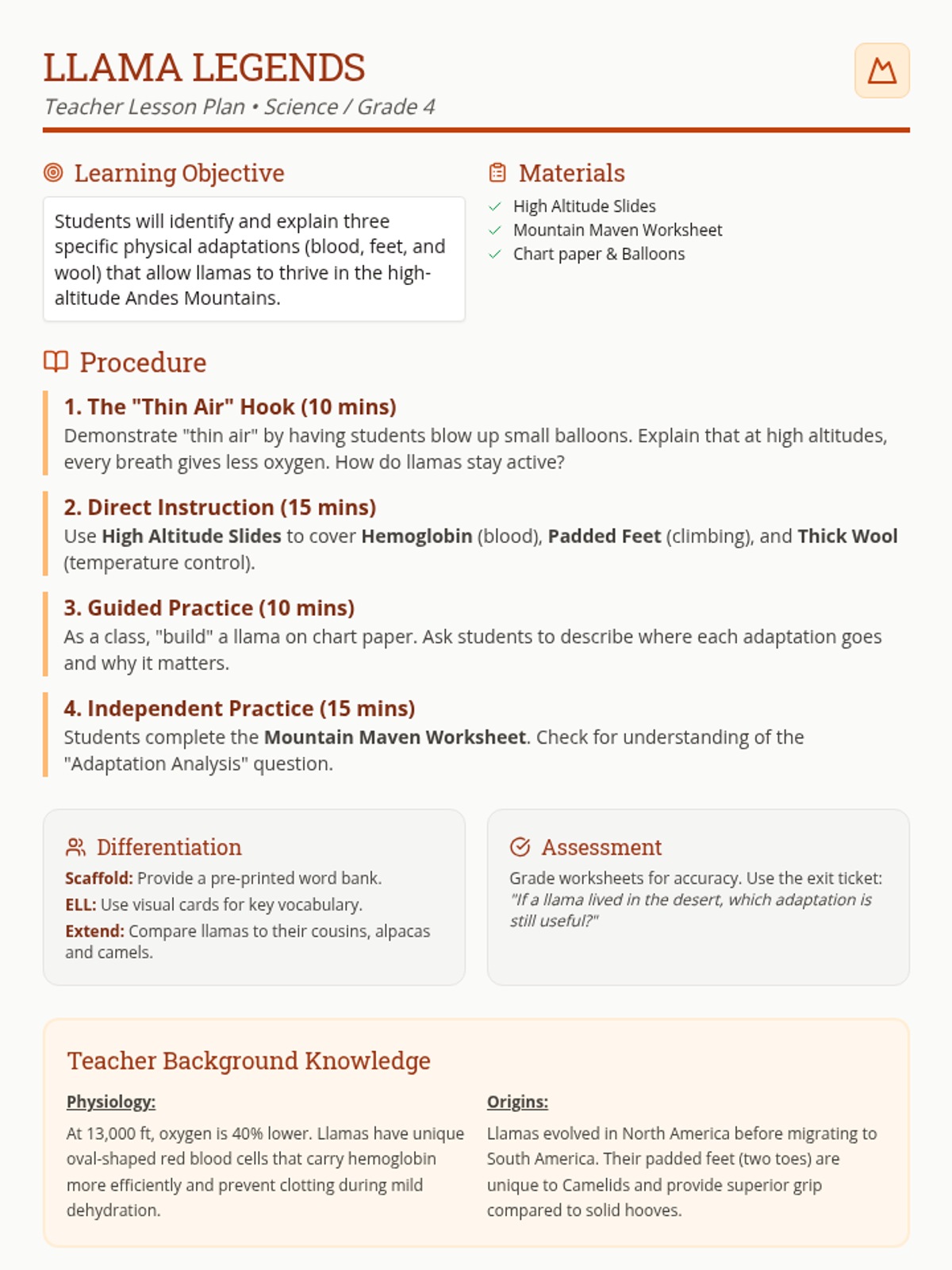
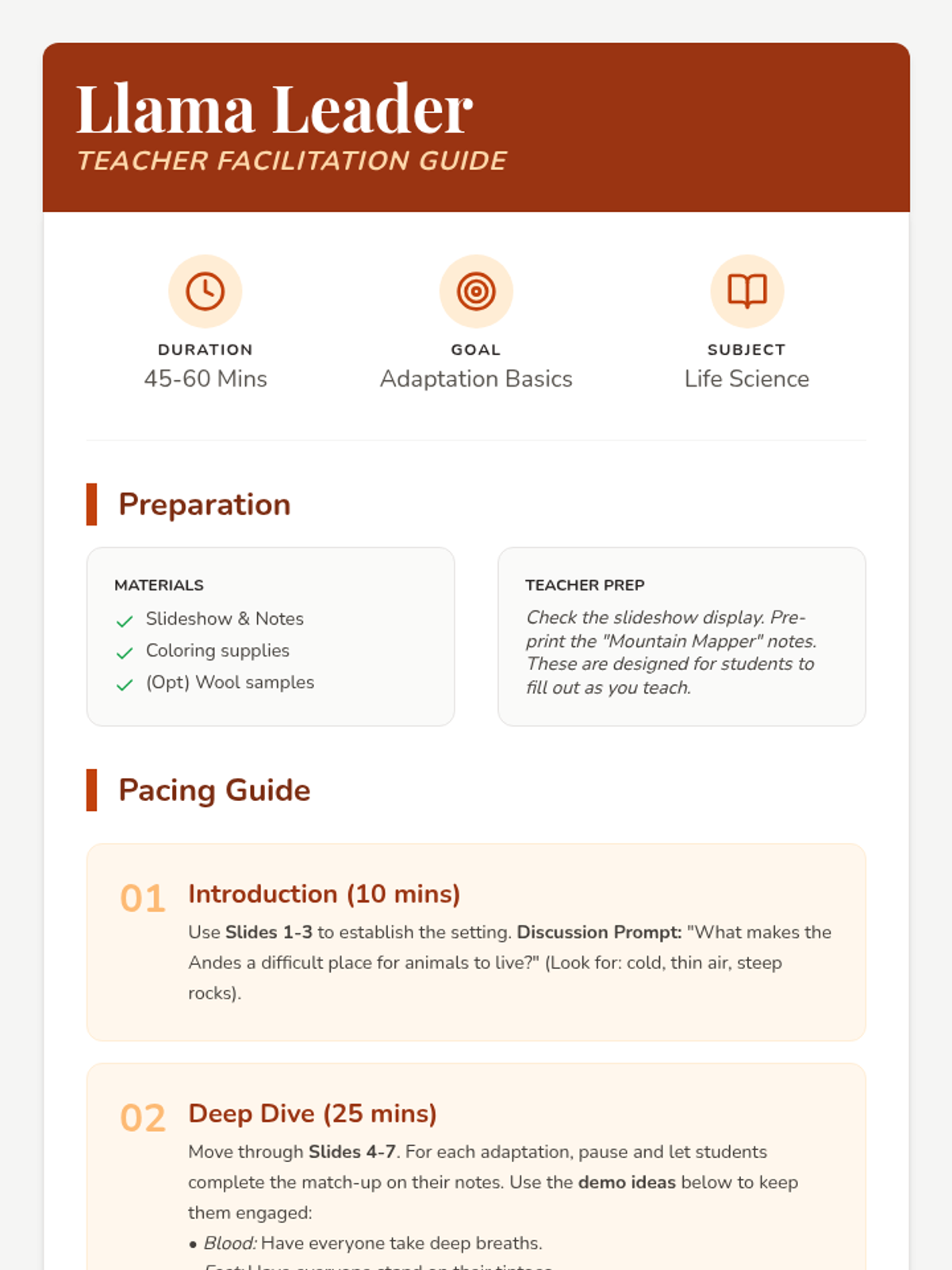
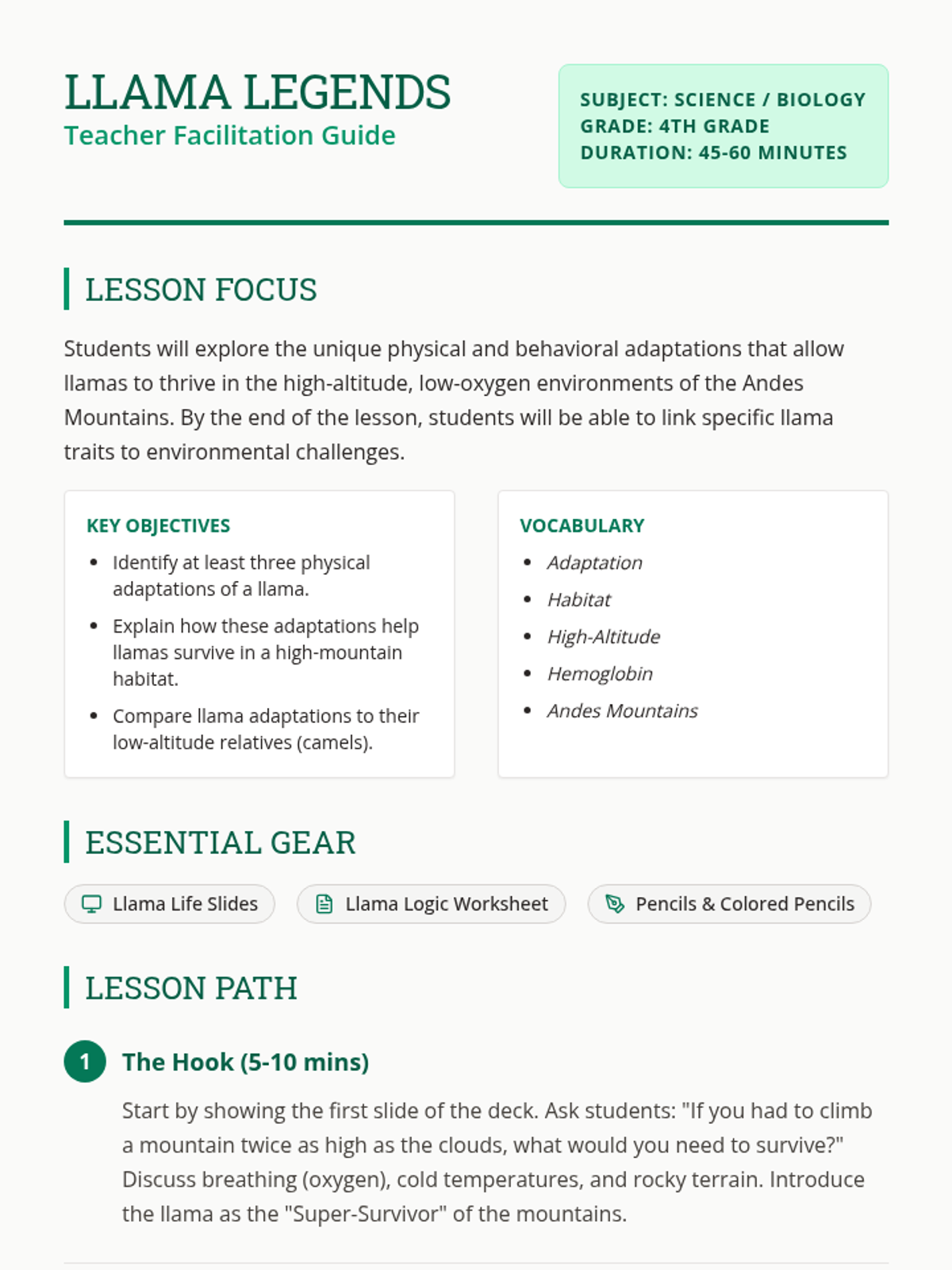
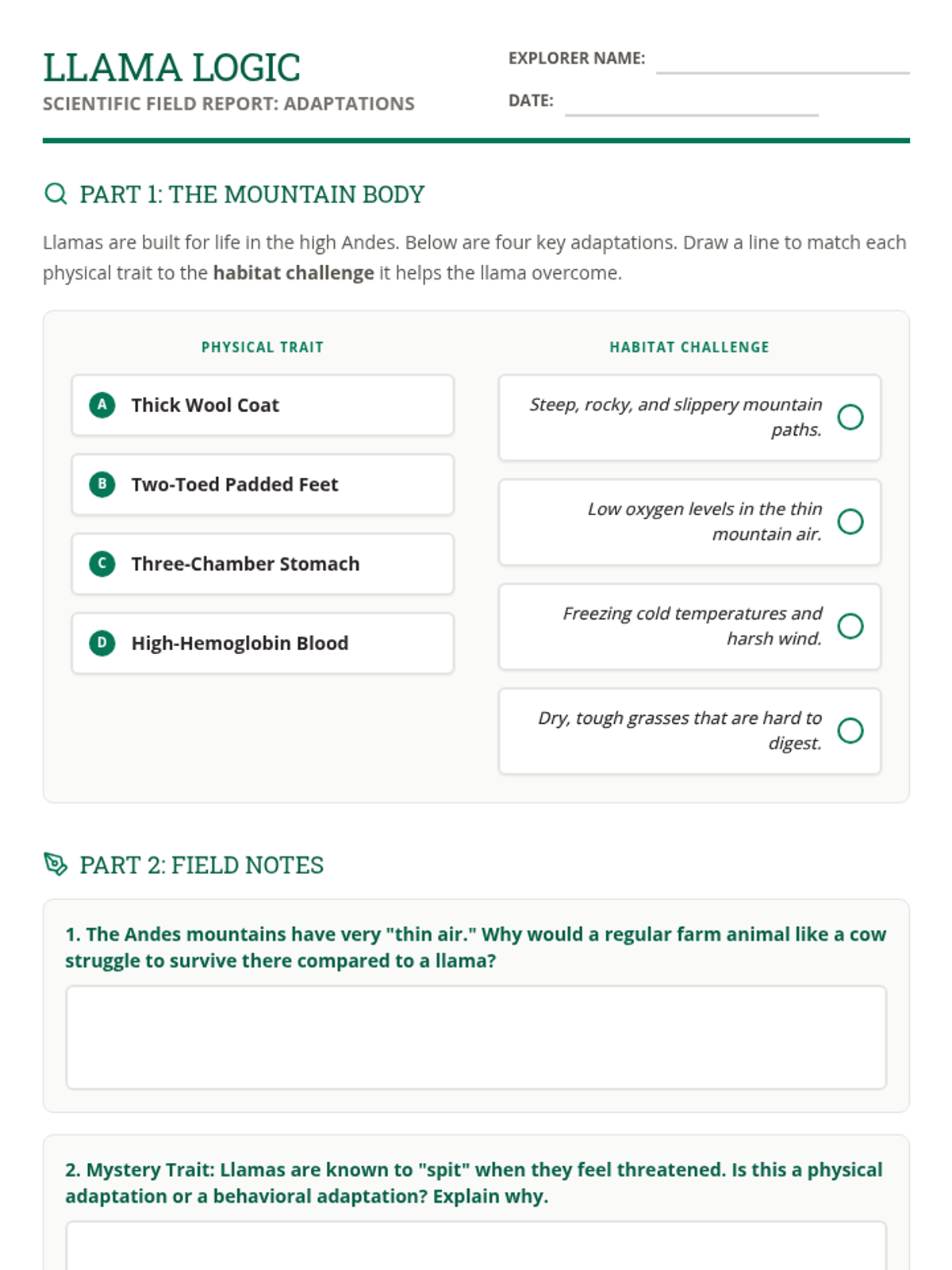
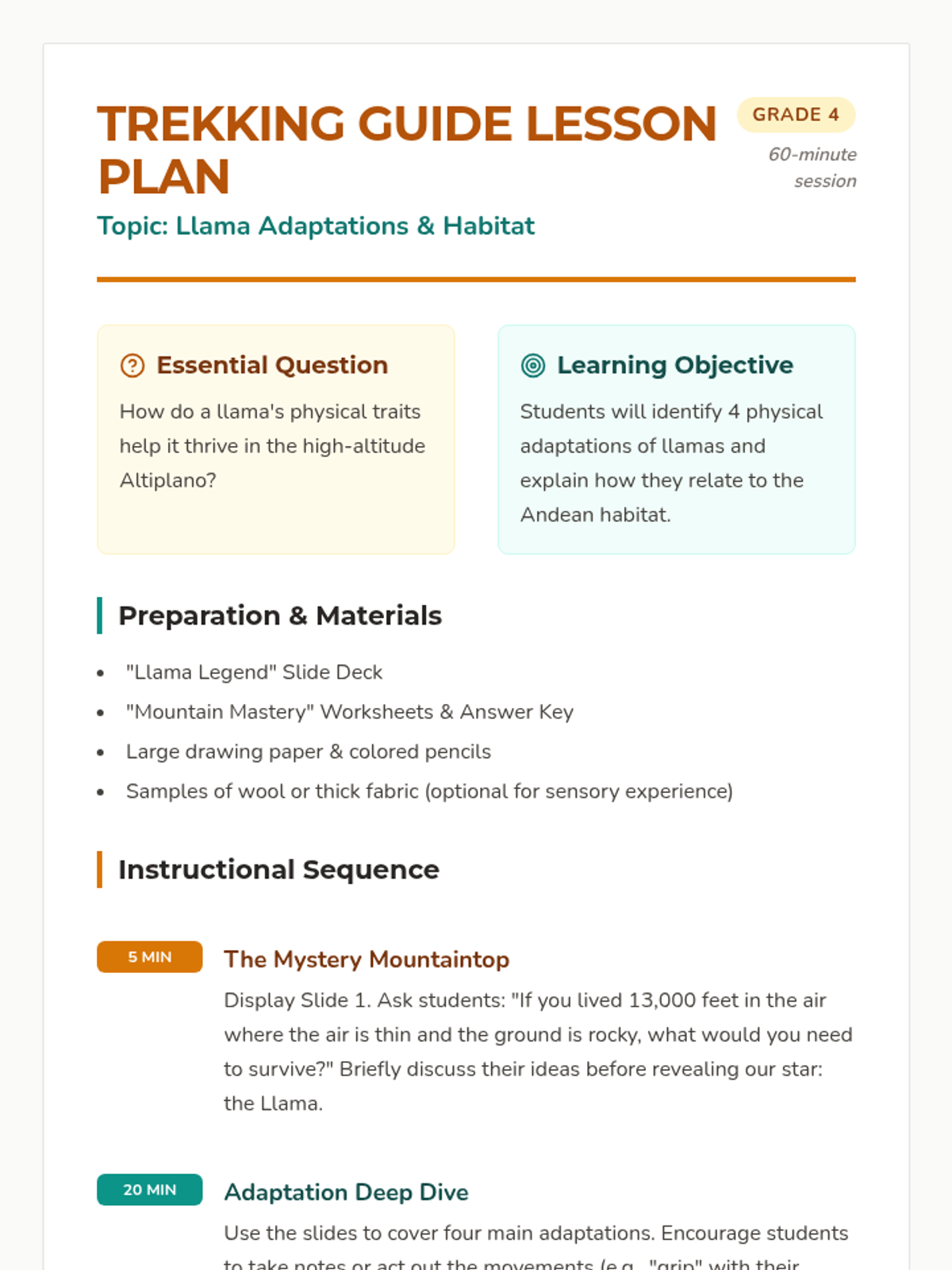
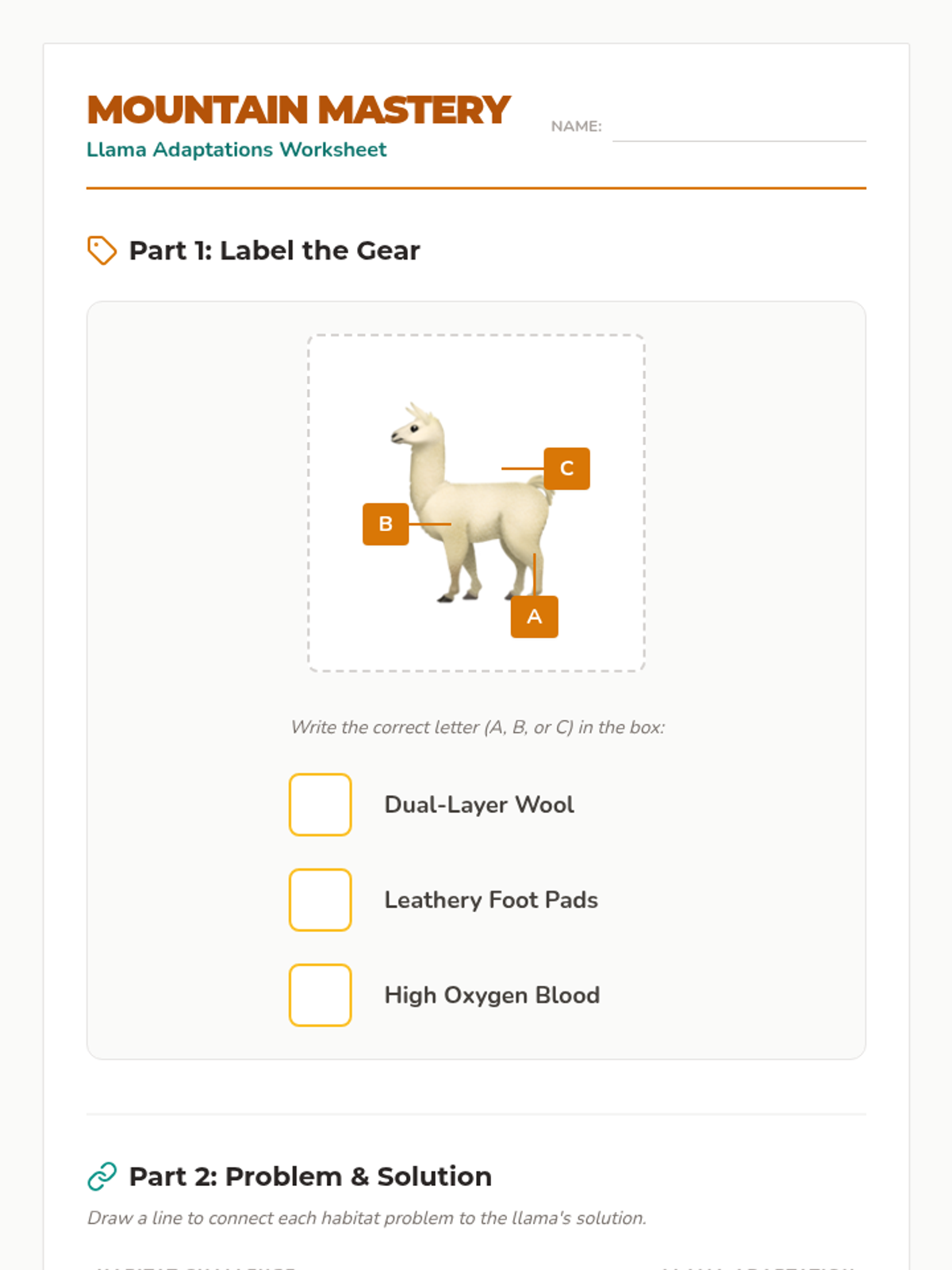
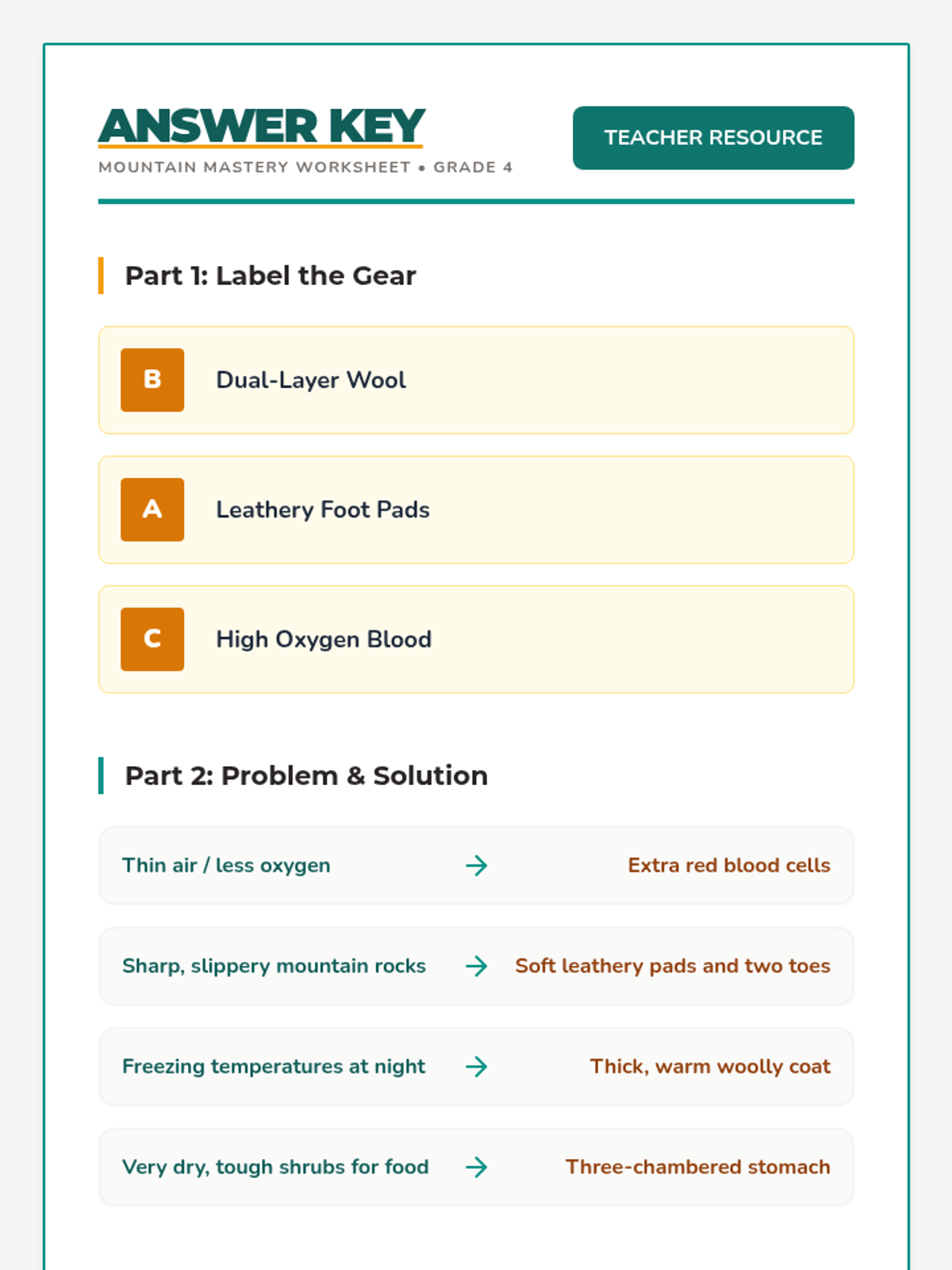
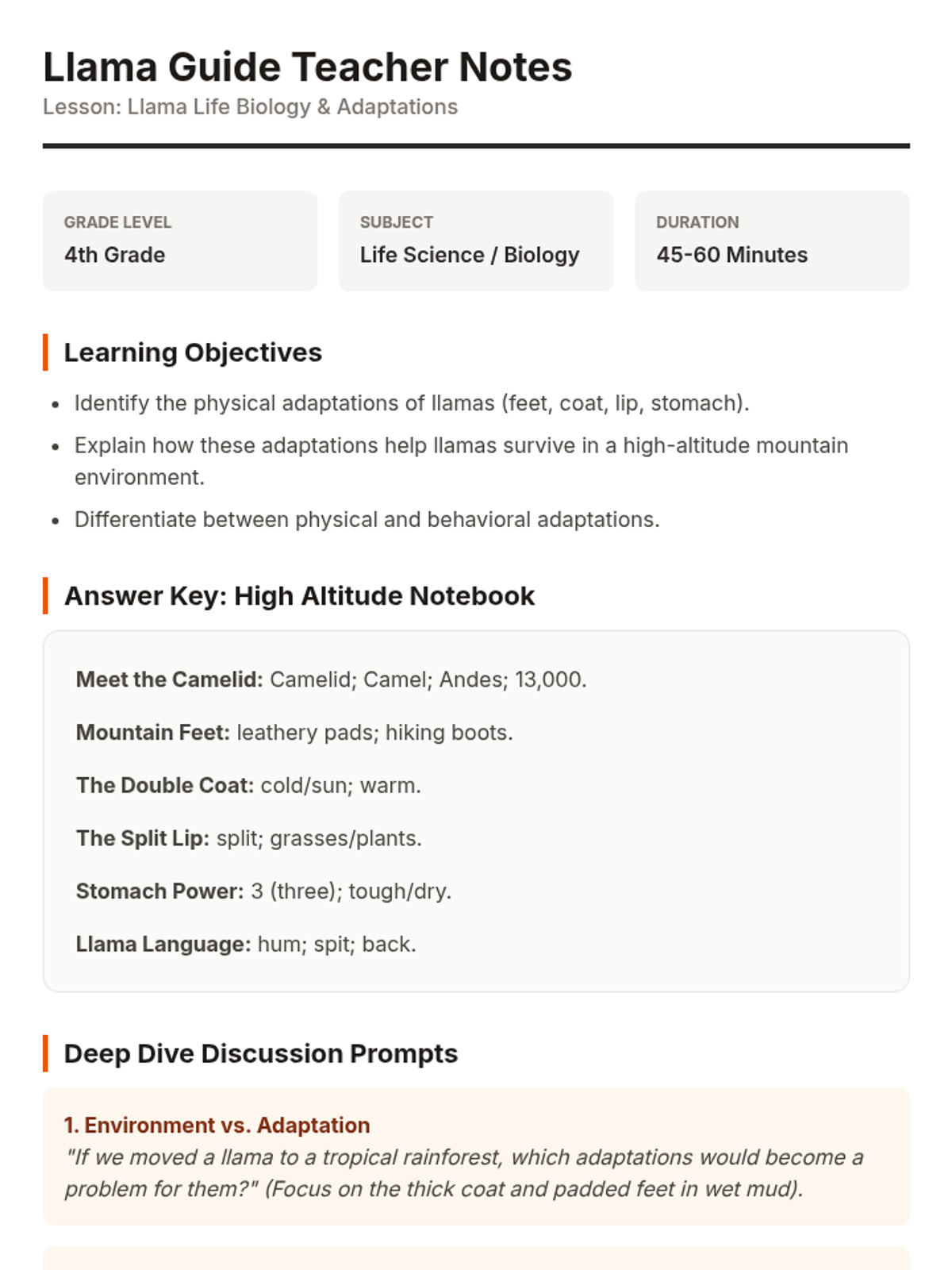
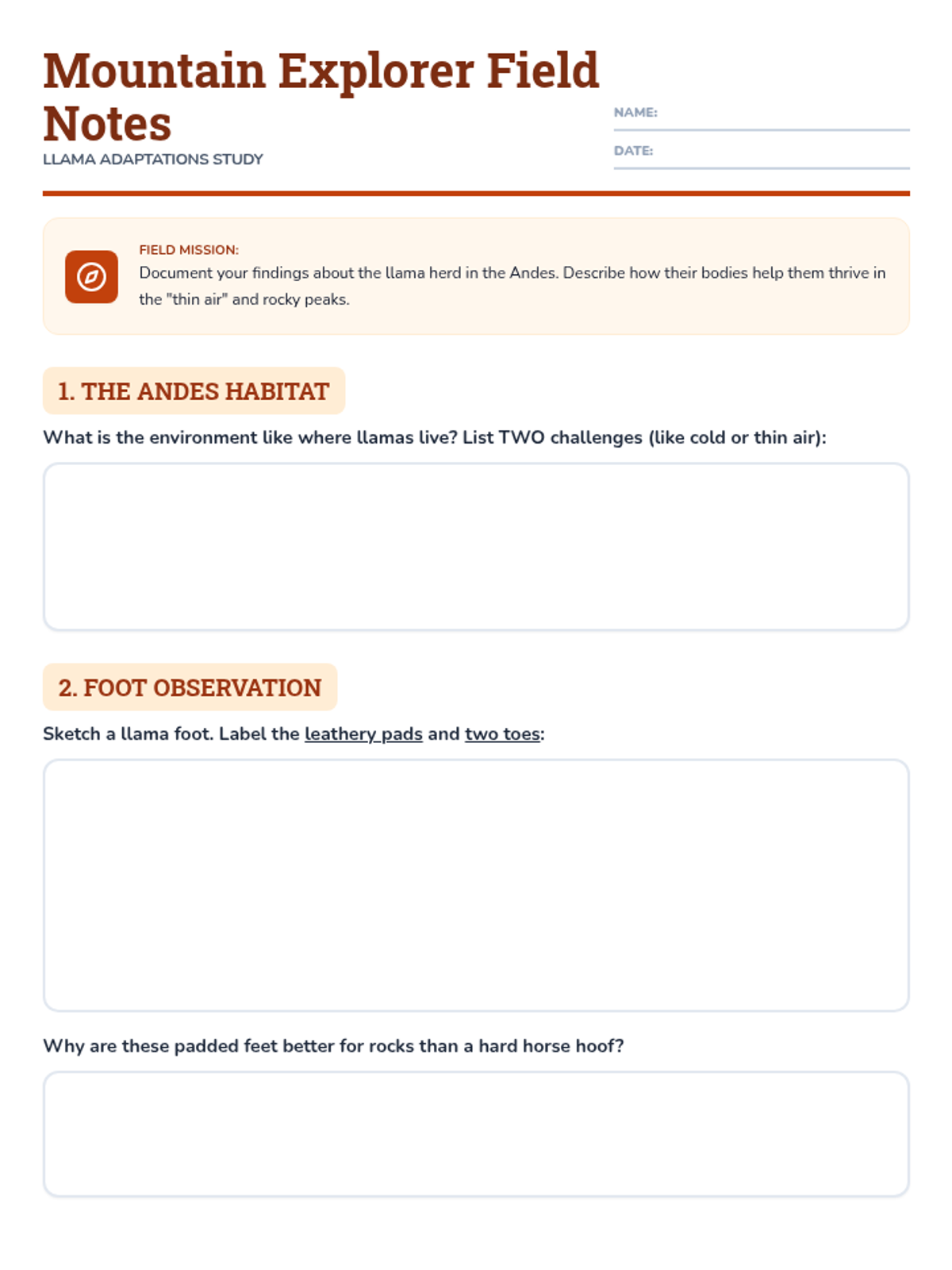
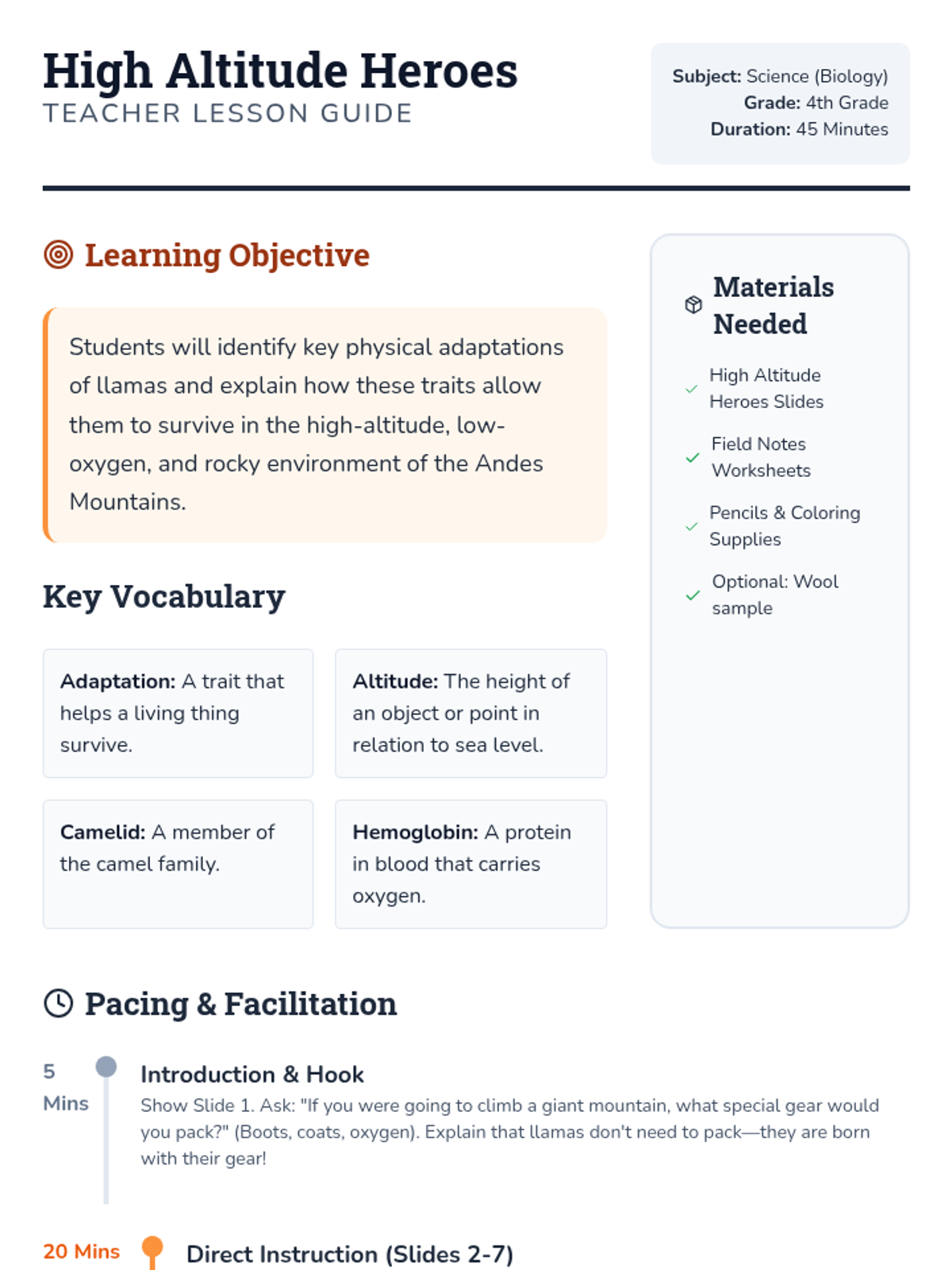
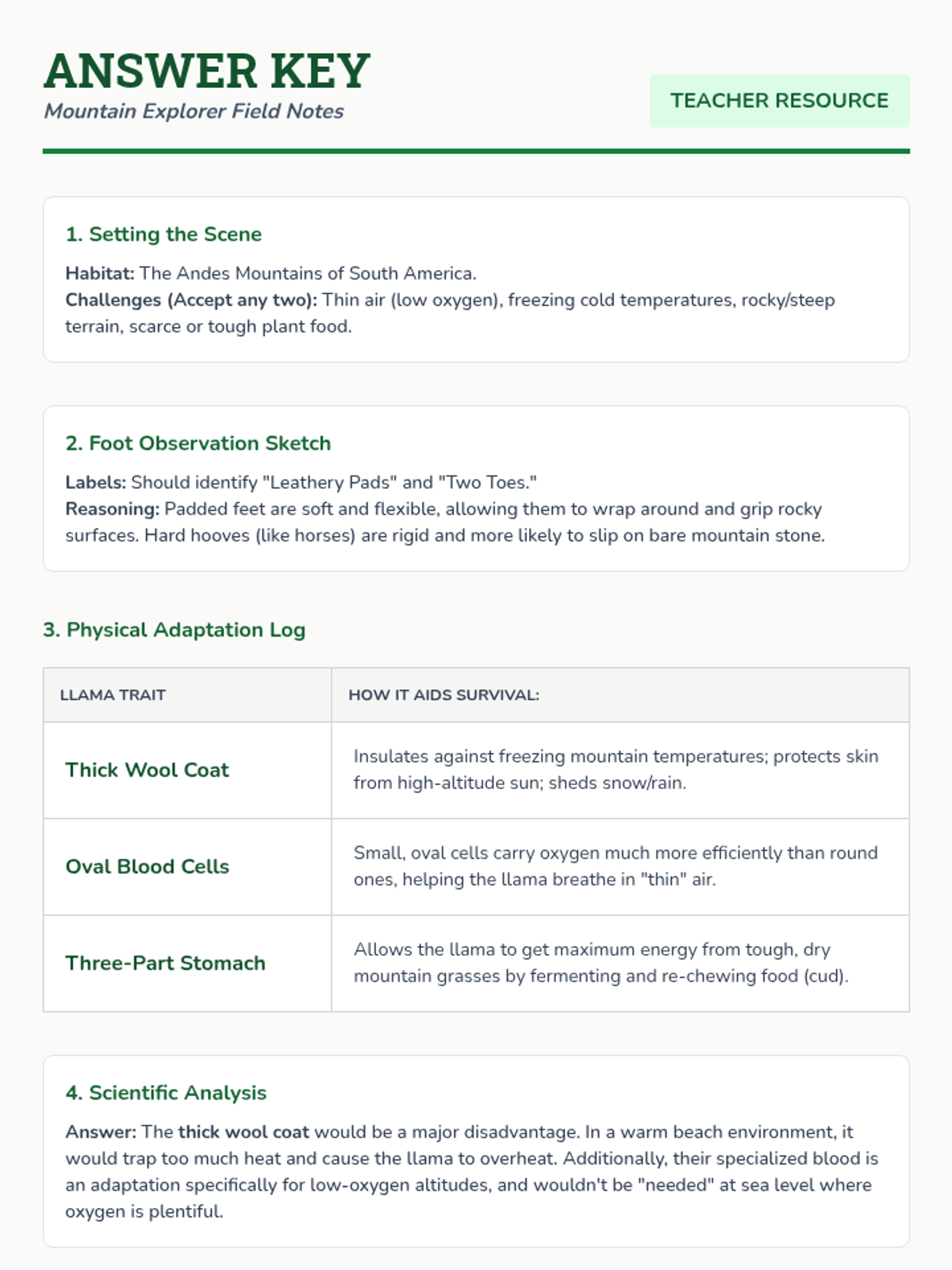
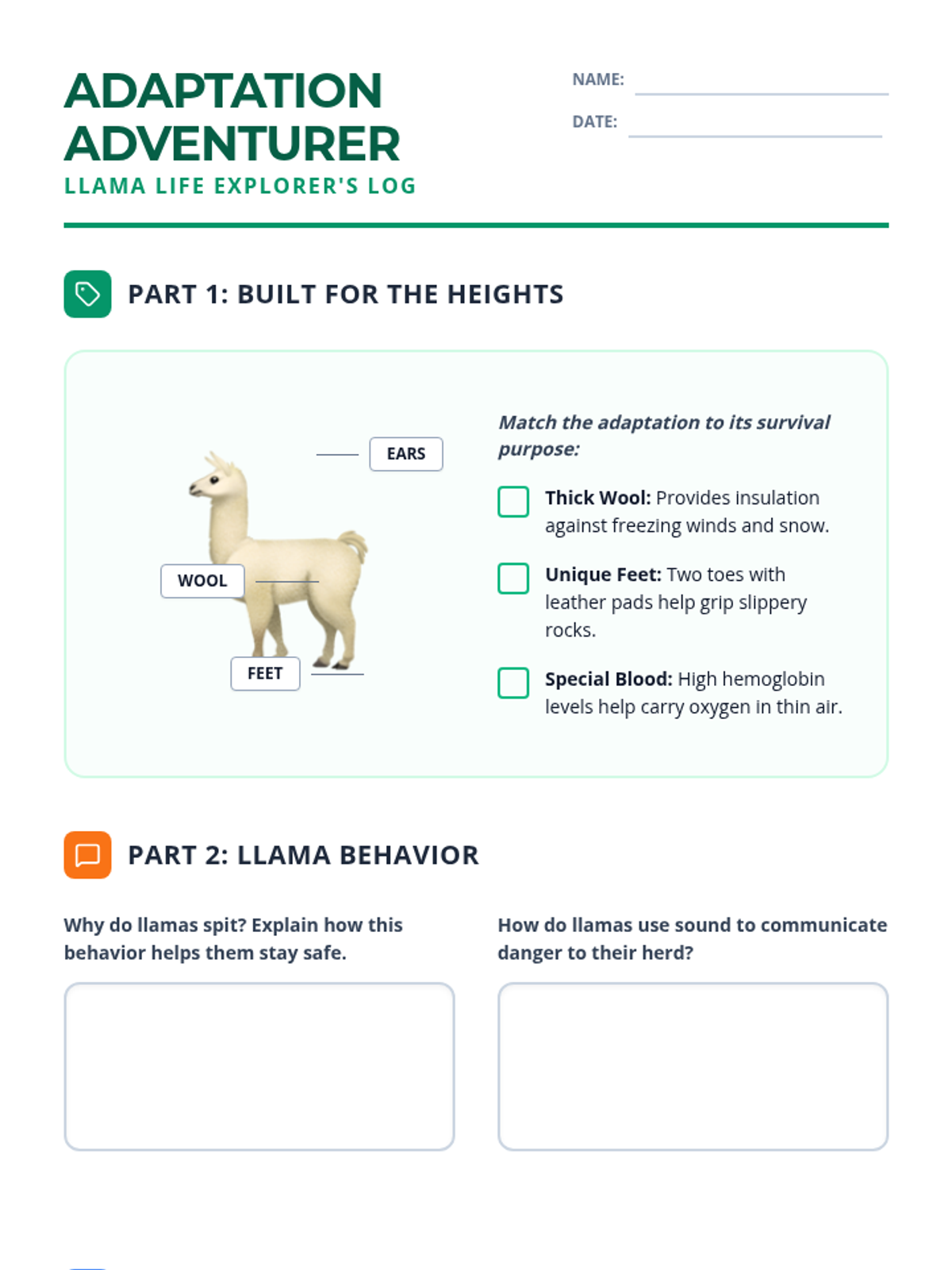
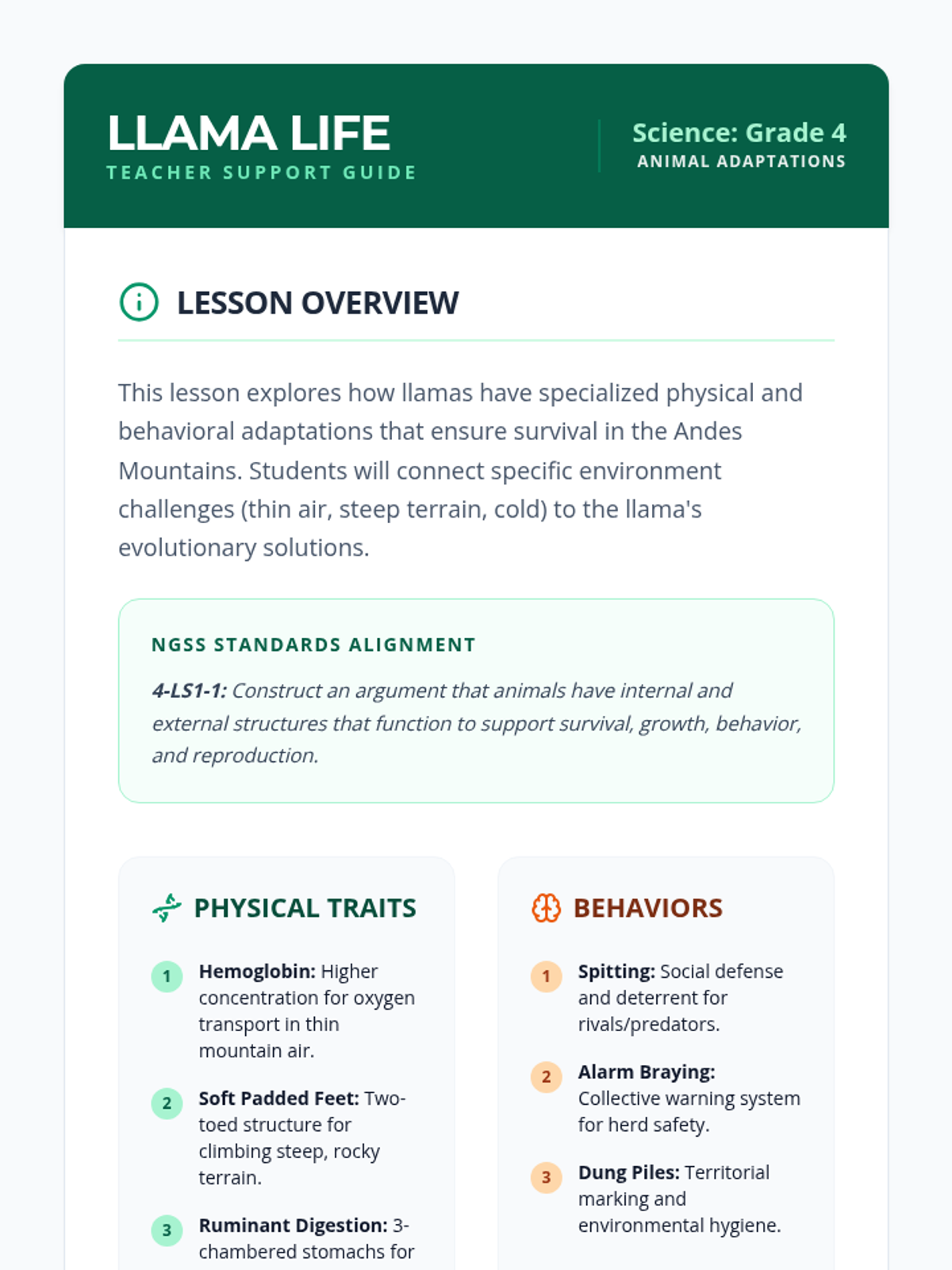
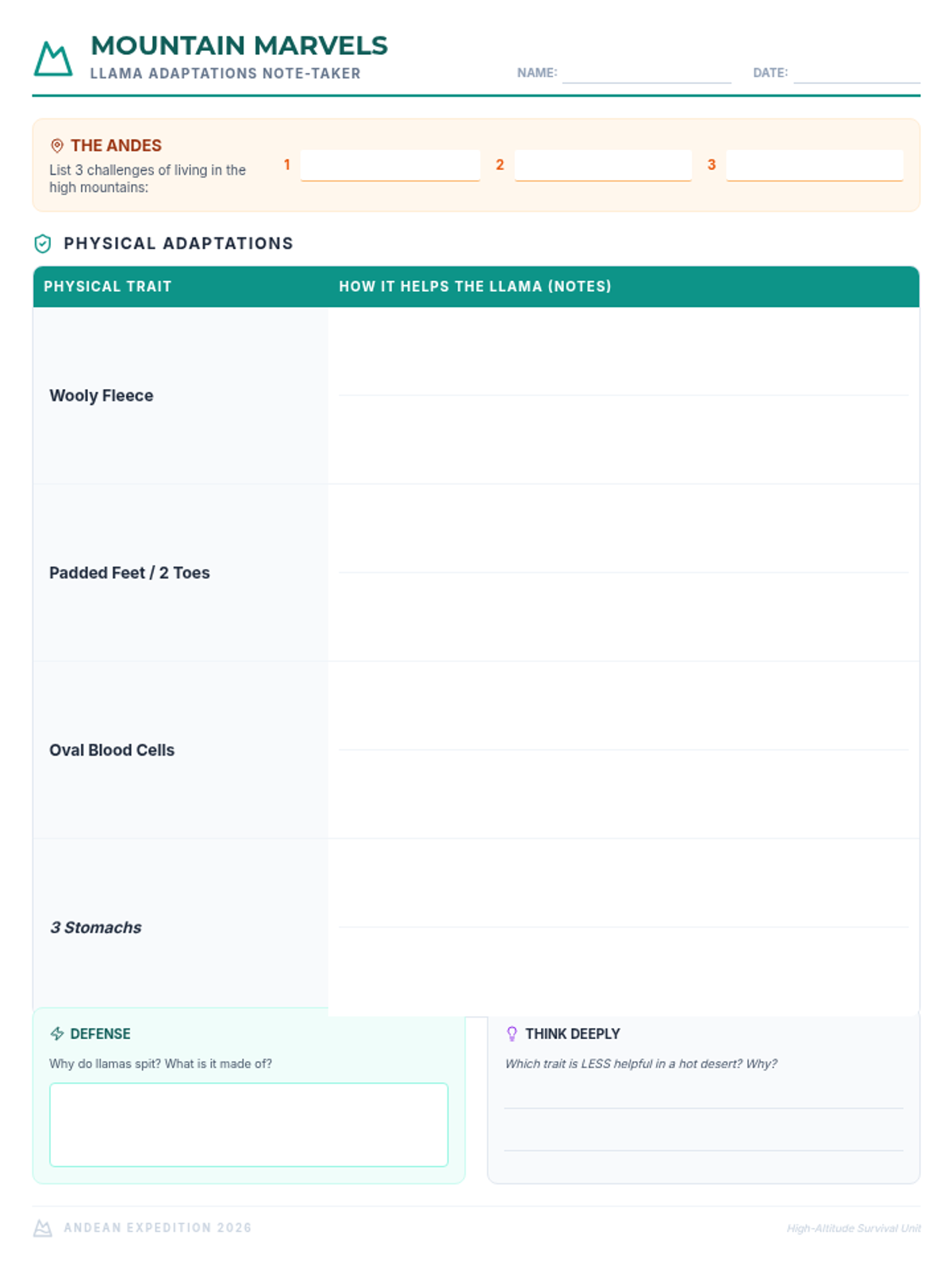
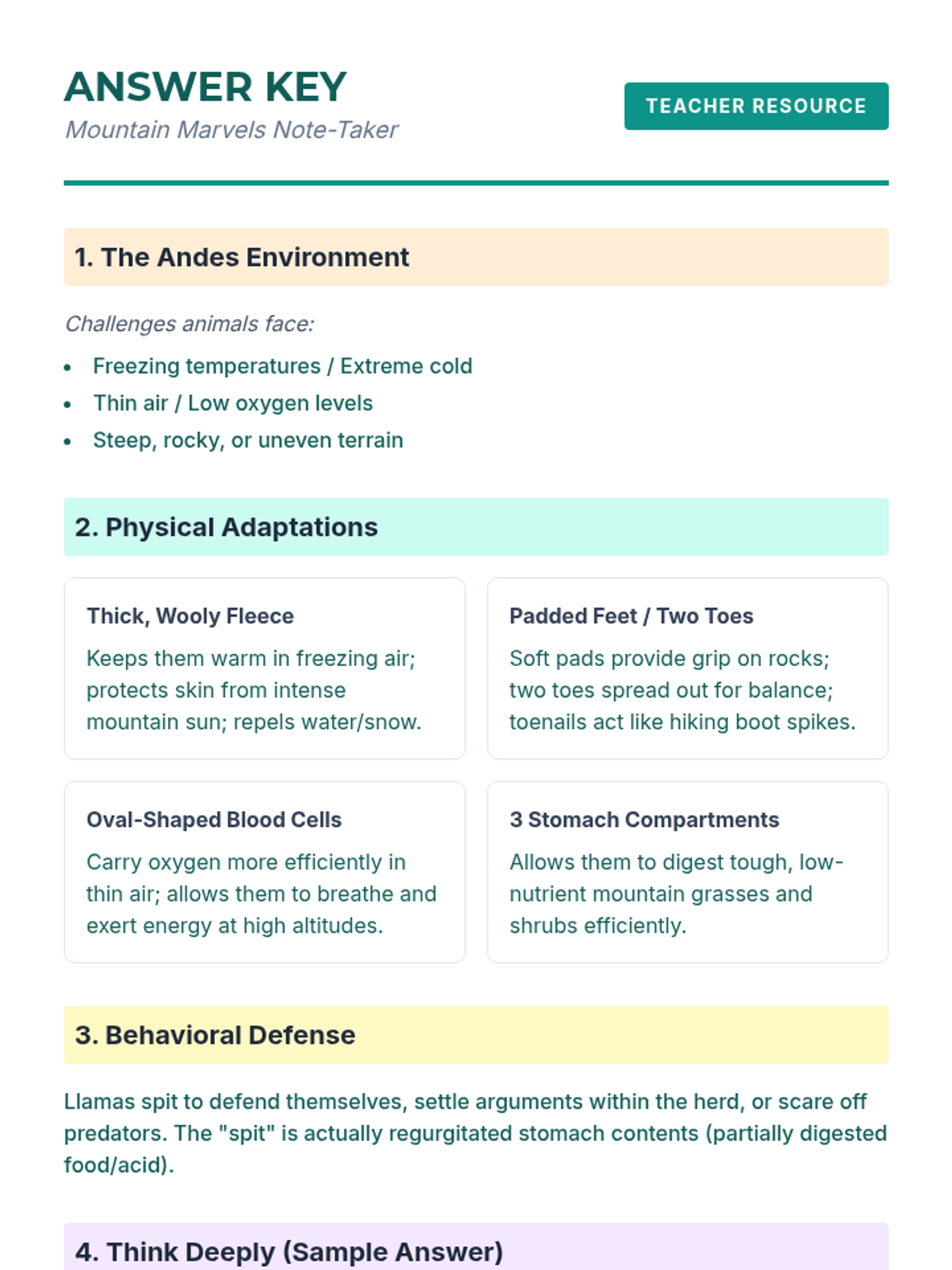
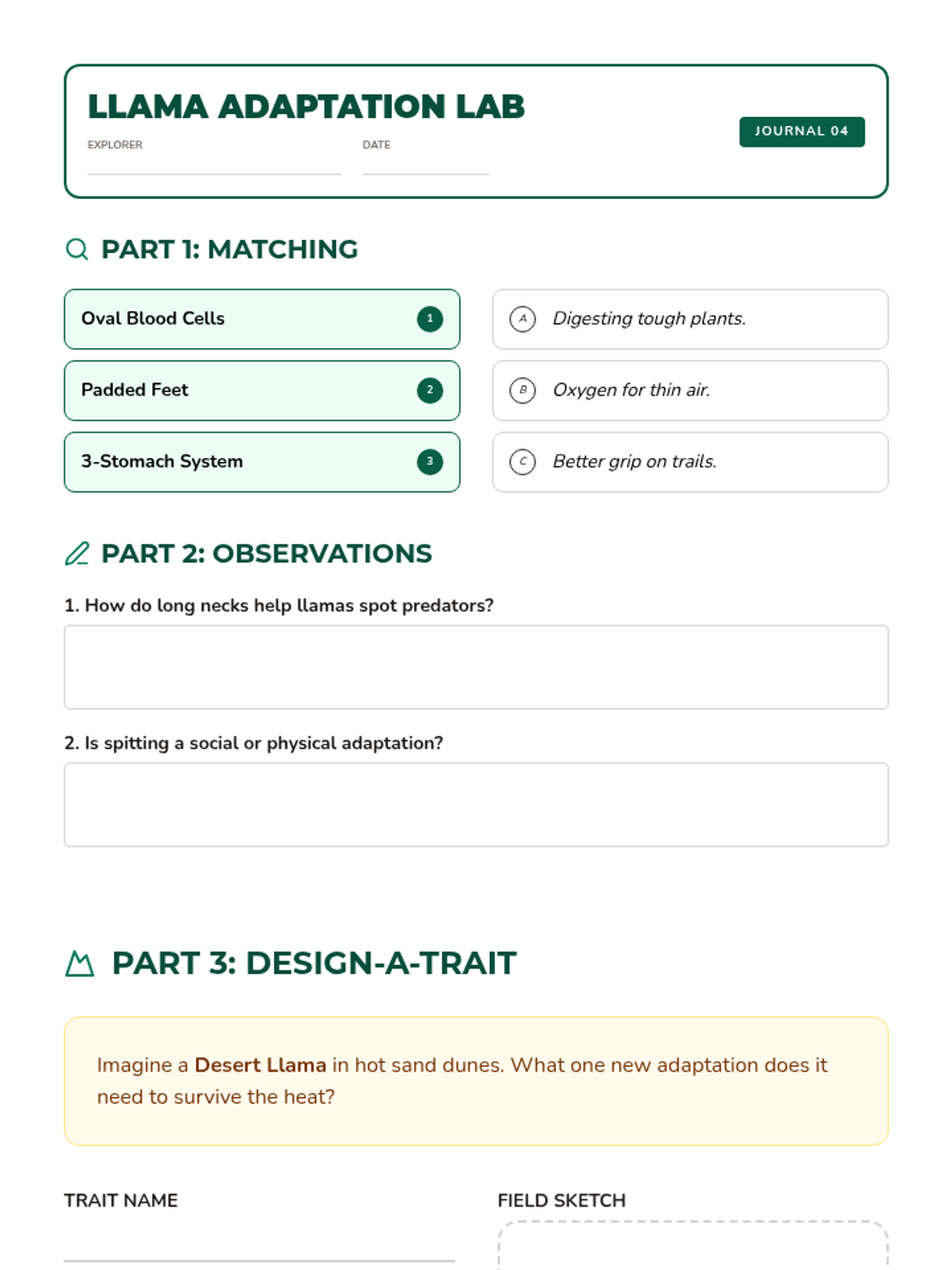
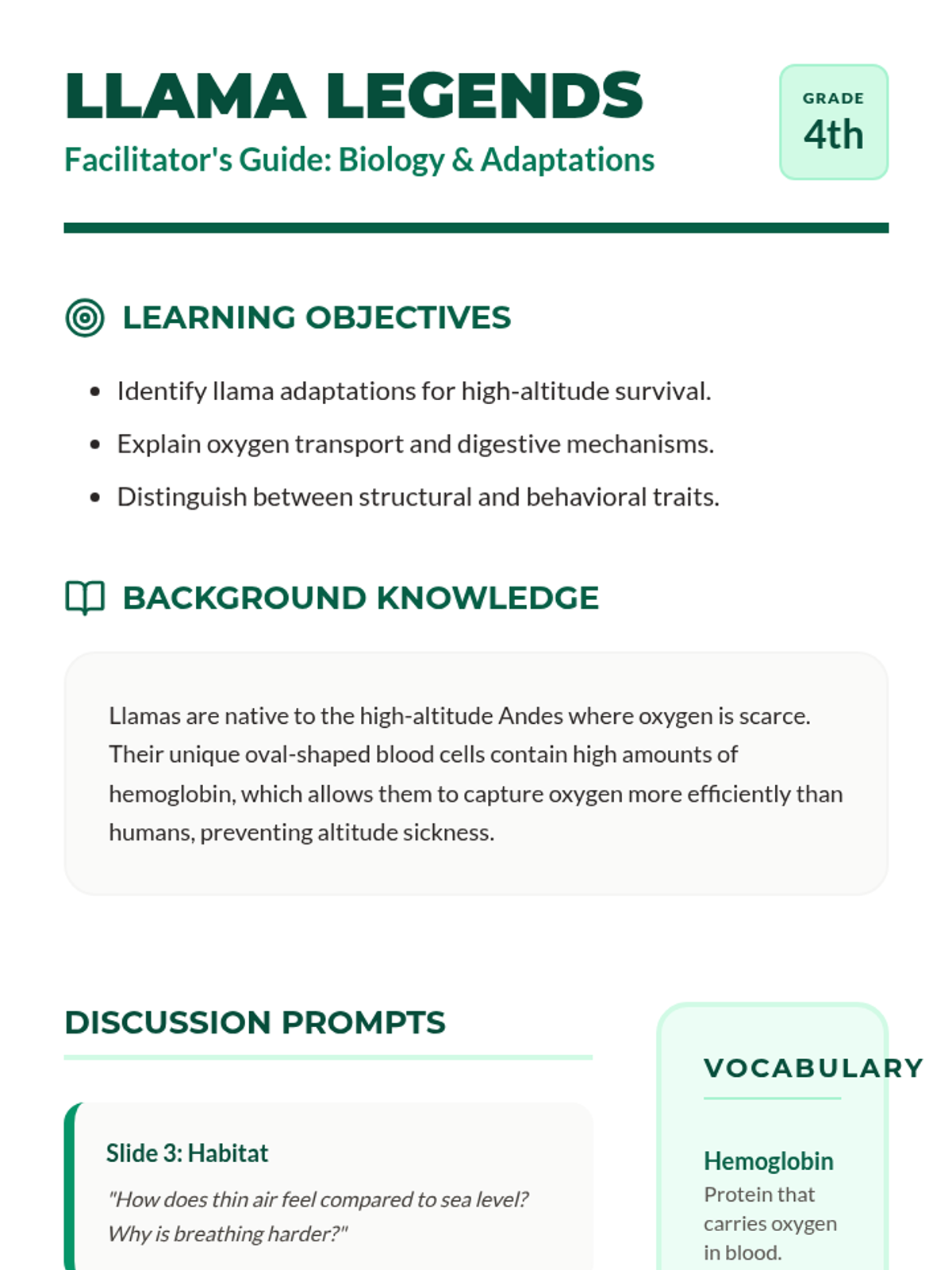
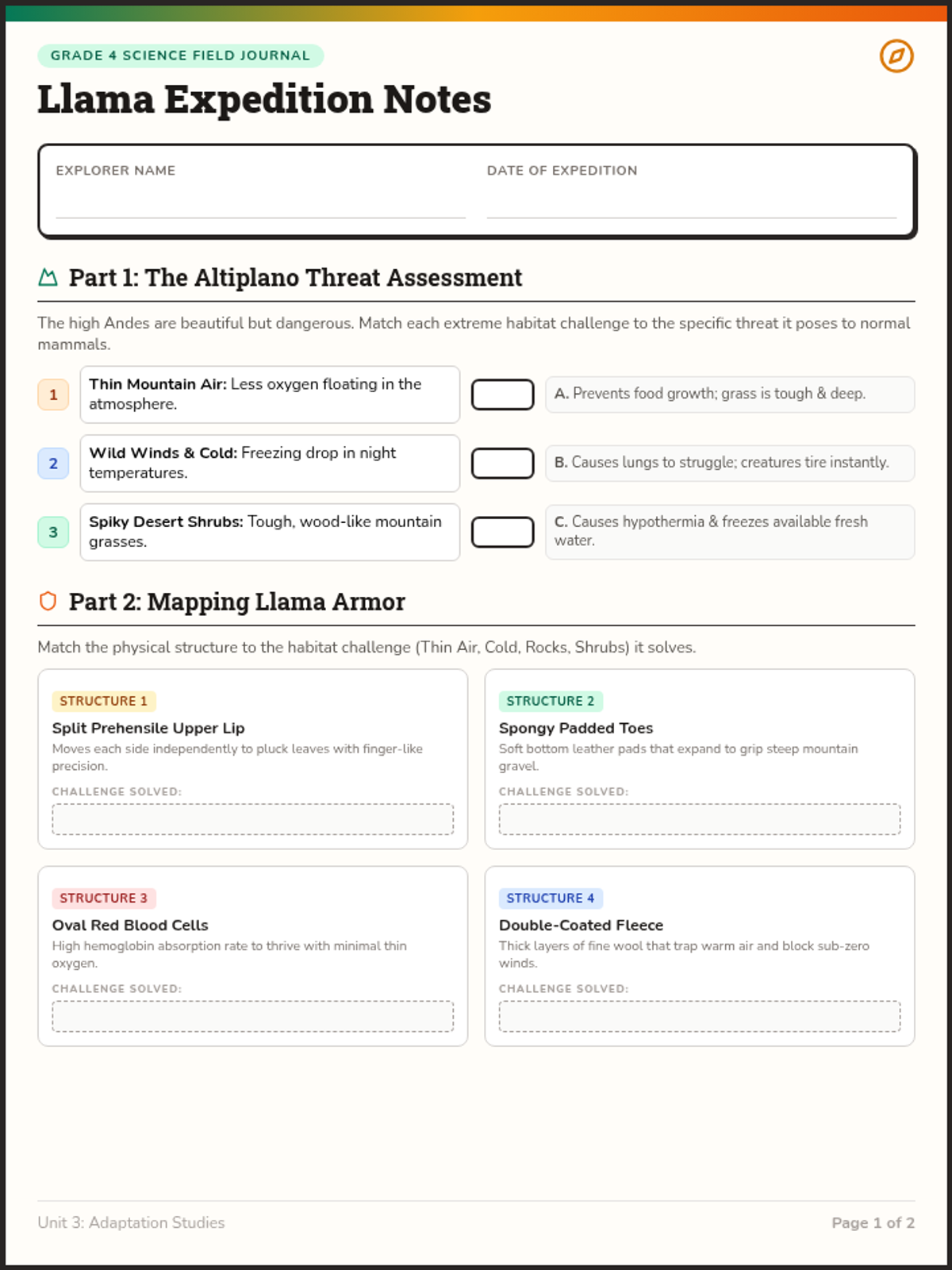
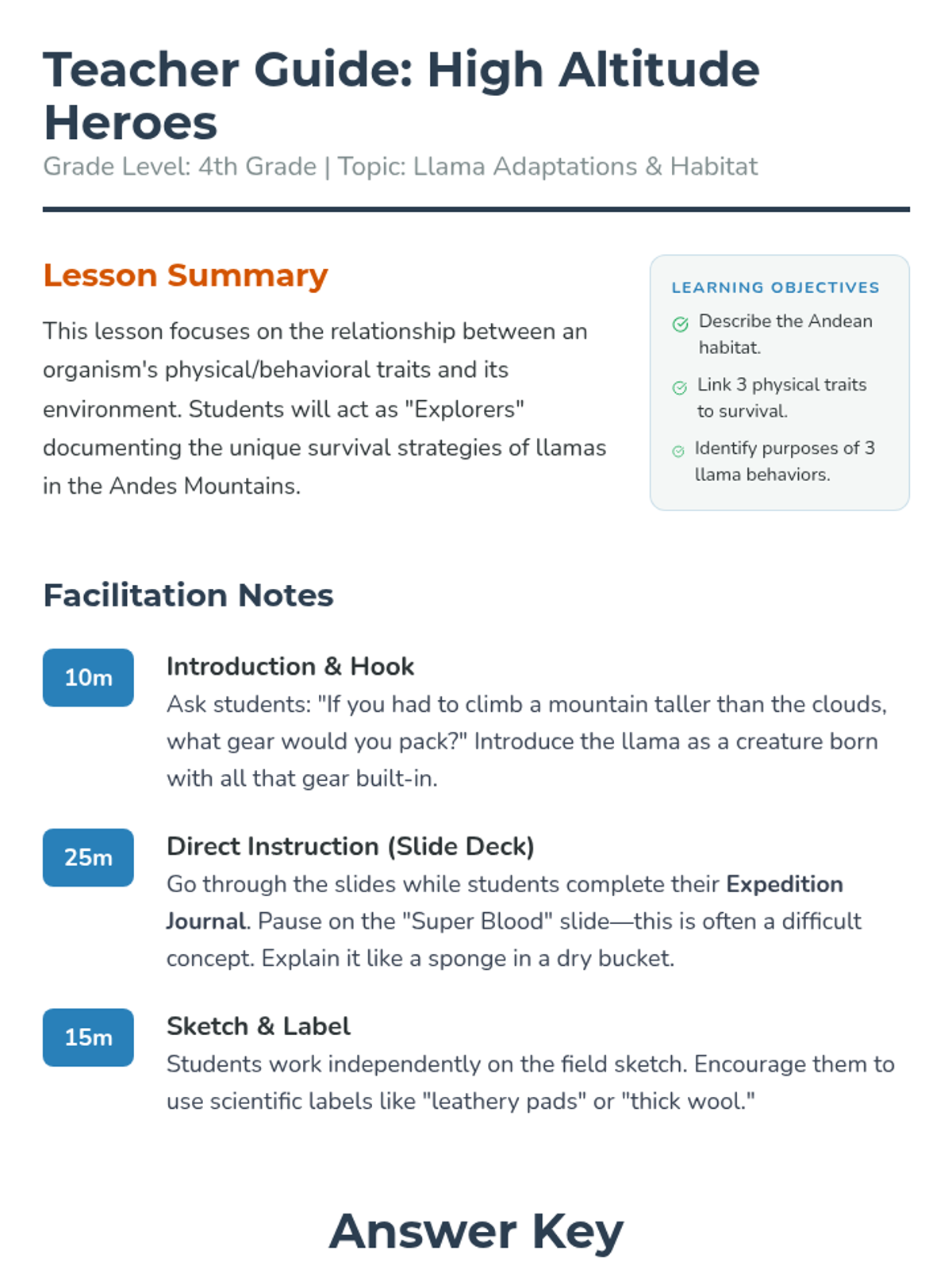
A comprehensive science lesson for 4th graders exploring llama adaptations, habitat in the Andes Mountains, and their role in the ecosystem.
In this lesson, students will be introduced to the Engineering Design Process (EDP) by tackling a real-world design challenge. They will learn to identify problems, brainstorm solutions, and understand the iterative nature of engineering.
A comprehensive lesson for 4th graders on llamas, covering their habitat in the Andes and their unique diet. Includes a reading passage, comprehension worksheet, and an answer key.
In this lesson, students will take on the role of 'Flight Engineers' to explore the Engineering Design Process (EDP) through the lens of space exploration. They will learn to define problems, brainstorm solutions, and iterate on designs to solve challenges faced by astronauts.
A Kindergarten to 2nd-grade lesson where students observe elephants, learn about their trunks, and practice observation skills using the historic 'Me at the zoo' video.
A lesson where students analyze the first YouTube video, 'Me at the zoo', and rewrite its weak script using precise vocabulary and sensory details.
A media literacy and research skills lesson for grades 3-5 where students verify claims from the first YouTube video, "Me at the zoo," using secondary sources.
A cross-curricular lesson for 4th graders that combines reading comprehension about llamas with estimation and rounding math problems based on llama population data.
A 4th-grade math lesson where students collect and analyze data about different llama breeds, using frequency tables and scaled bar graphs.
A short high school warm-up focused on developing media literacy skills by identifying bias, loaded language, and selective data in articles about climate change.
1/12
A descriptive writing workshop where students rewrite the script of the first YouTube video to include sensory details and precise adjectives.
In this lesson, students will explore the fundamental steps of the Engineering Design Process (EDP) by tackling a real-world design challenge. They will learn how engineers think, collaborate, and iterate to solve complex problems through hands-on activities.
In this lesson, students explore the Engineering Design Process (EDP) by tackling a real-world design challenge. They will identify problems, brainstorm solutions, build prototypes, and iterate based on testing.
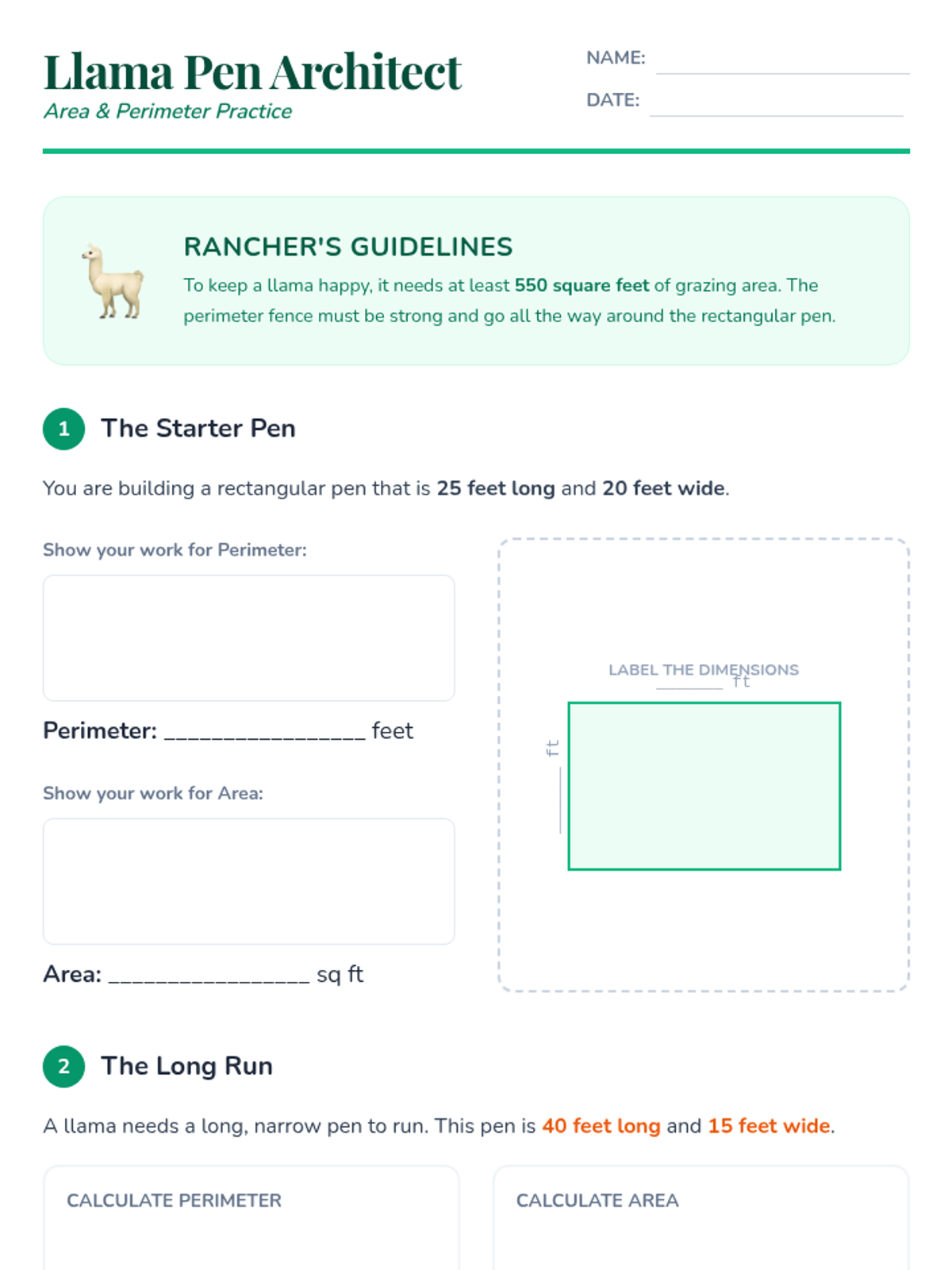
A fun and engaging math lesson where 4th graders use llama-themed data and word problems to practice multi-step operations and interpreting graphs.
A high school Computer Science lesson connecting the history of YouTube's first video to concepts of bandwidth, data compression, and internet infrastructure evolution.