An infographic-style reference sheet for workshop participants, detailing how various internet-connected devices collect data and providing actionable audit steps.
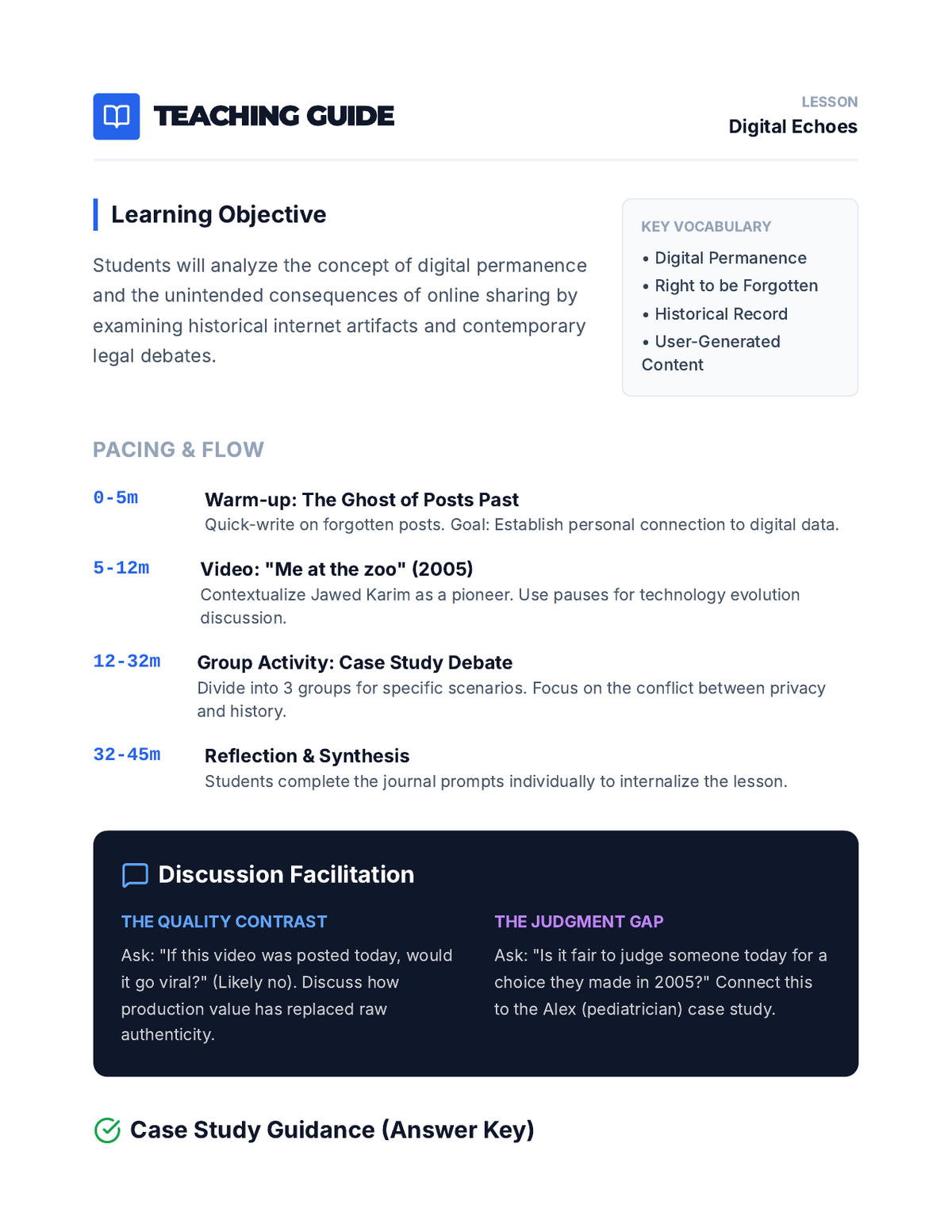
A comprehensive teacher resource providing pacing, discussion anchors, and suggested responses for the 'Digital Echoes' lesson. Includes specific guidance for facilitating the case study debates and differentiation strategies.
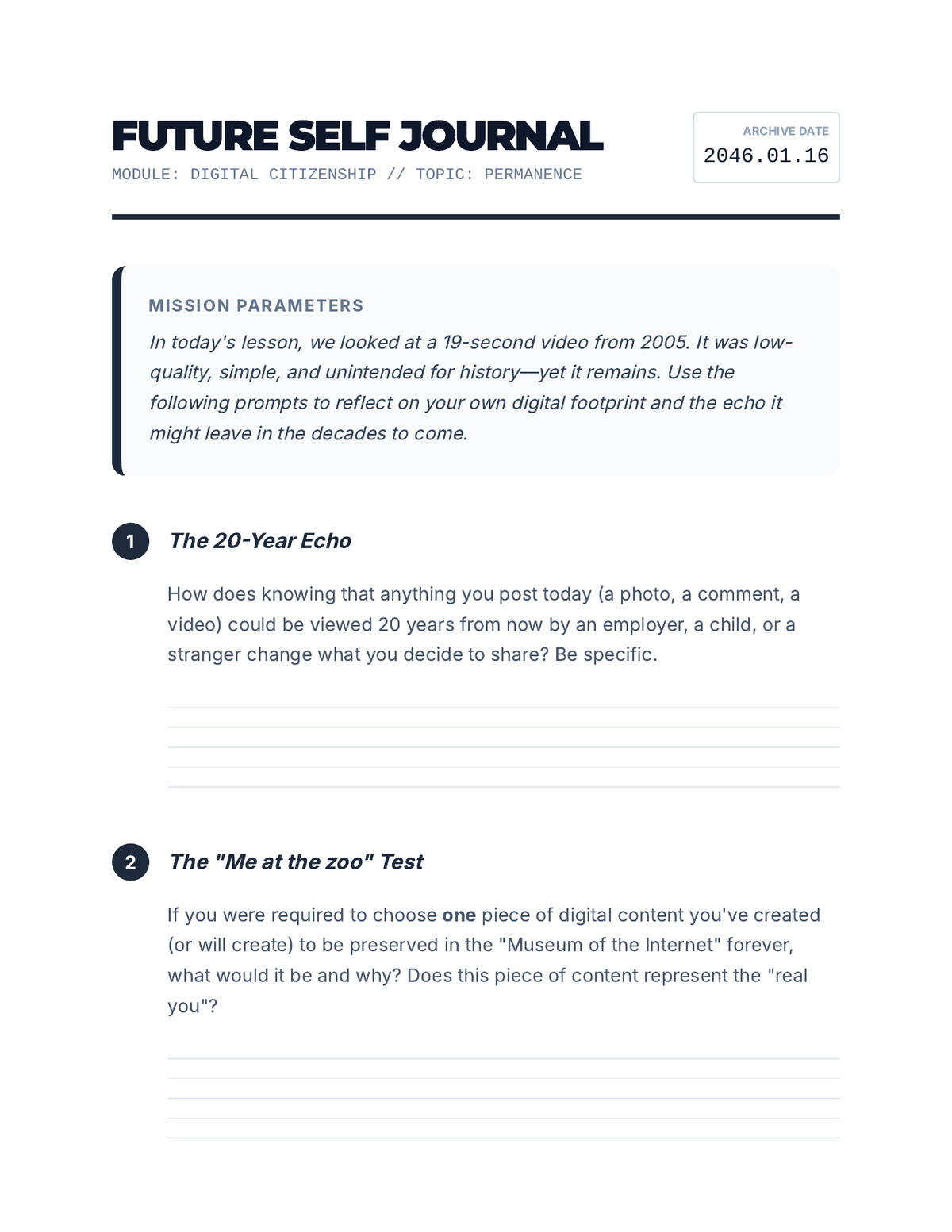
A reflection journal for students to contemplate their personal digital legacy. Features three deep-thinking prompts focused on long-term impact, personal identity, and the ethics of the 'Right to be Forgotten'.
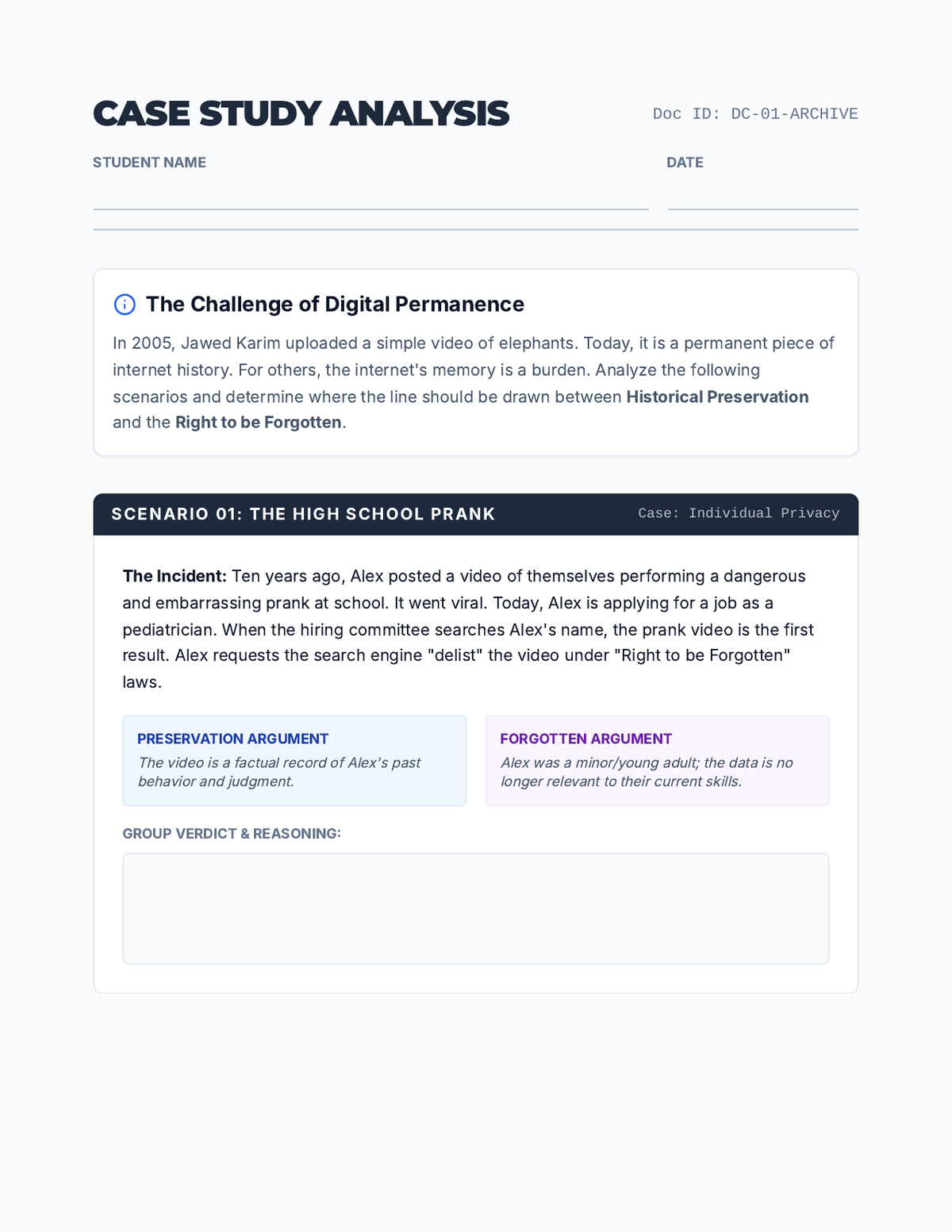
A structured student worksheet featuring three distinct case studies on digital permanence, encouraging debate between individual privacy and historical preservation. Includes space for group verdicts and a summary 'permanence scale' activity.
A sleek, tech-themed slide deck exploring digital permanence using the first YouTube video, 'Me at the zoo', as a primary case study. Features high-contrast visuals, discussion anchors, and a professional 'Digital Archive' aesthetic.
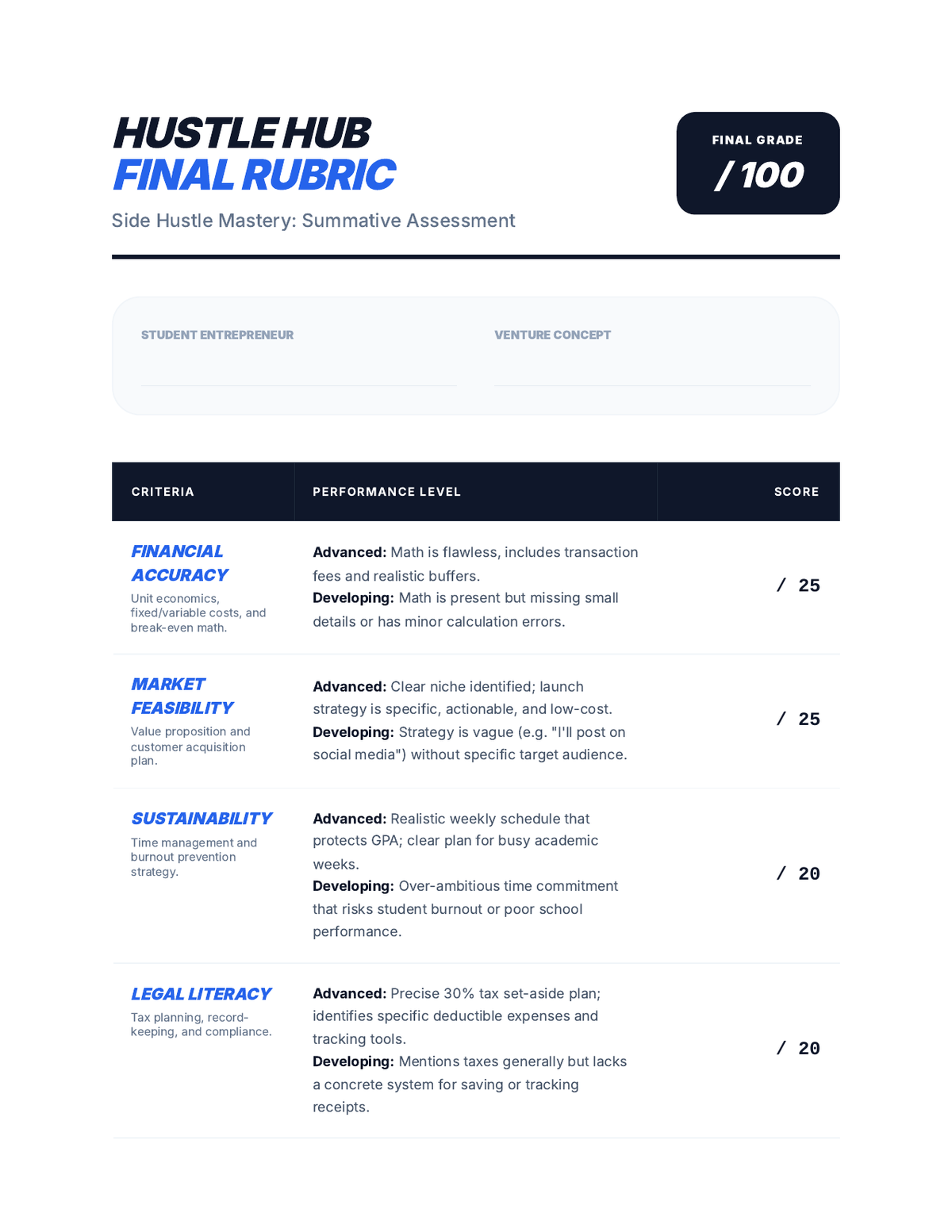
A professional 1-page grading rubric for the final business proposal assessment, covering financial accuracy, feasibility, sustainability, legal literacy, and refinement.
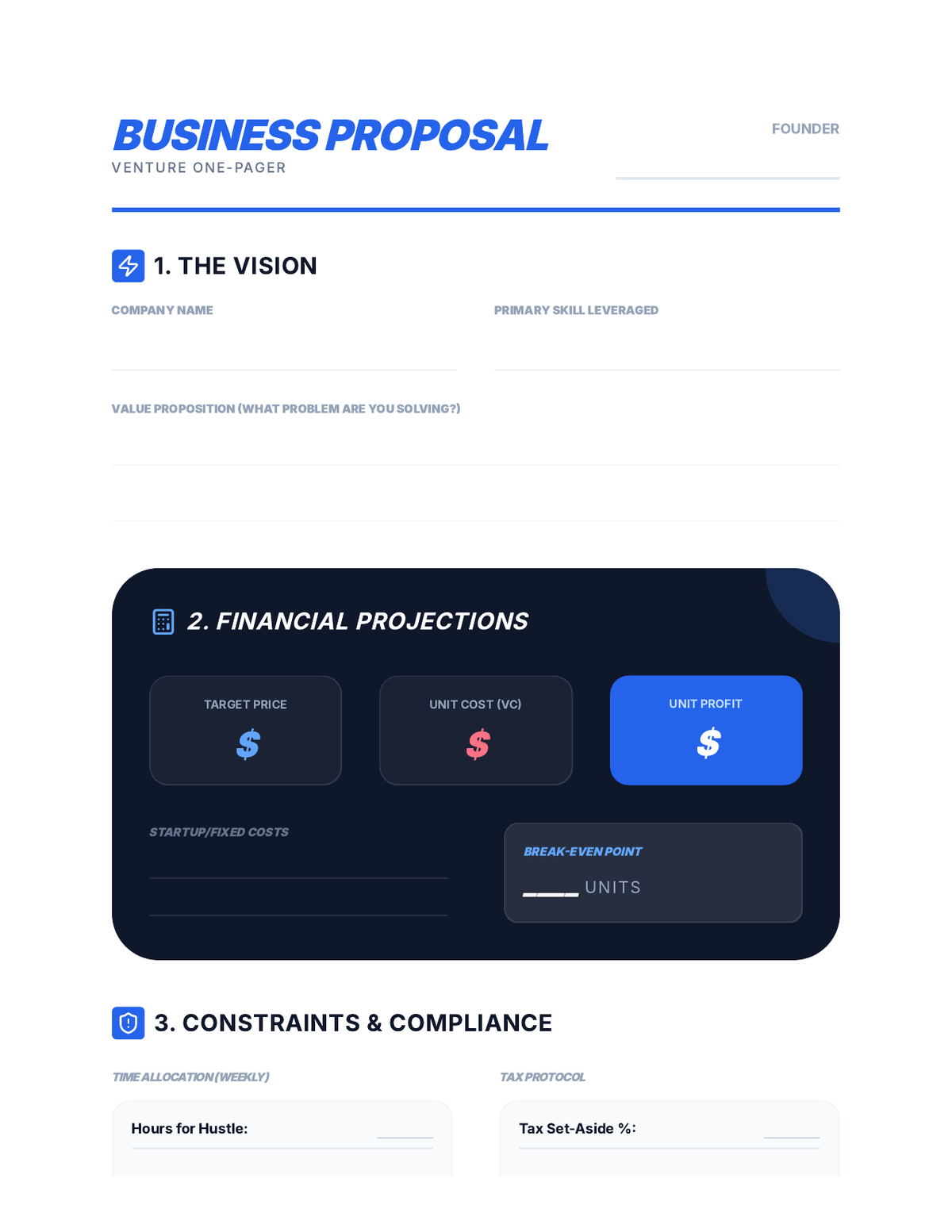
A 2-page student worksheet for the final lesson. Students use this template to develop a professional one-page business proposal and participate in a peer-review session.
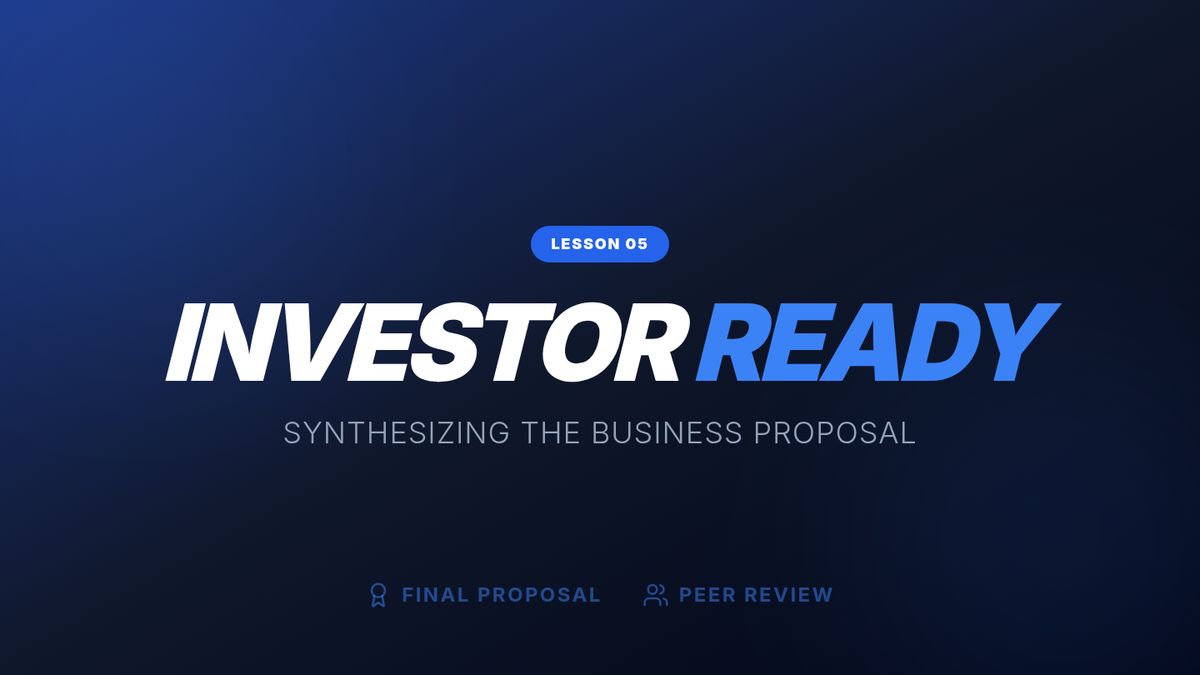
A 5-slide visual presentation for Lesson 5, introducing the one-page business proposal and guiding the final pitch and peer-review session.
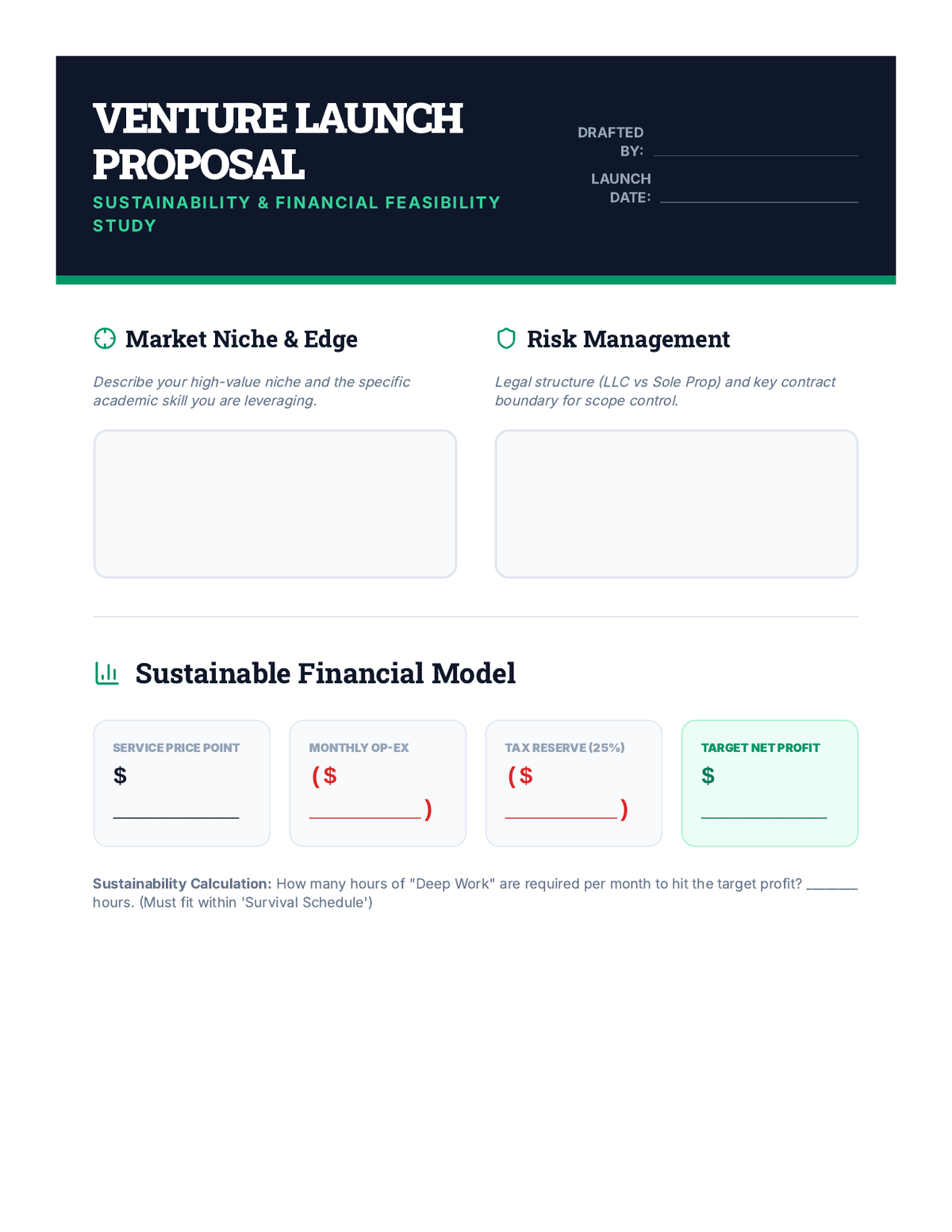
The capstone project template for 'Hustle Logic'. This comprehensive launch proposal requires students to synthesize financial, legal, and operational planning into a 90-day strategy. Includes a peer audit section.
Slide presentation for the final lesson 'Launch Blueprint'. Guides students through synthesizing their learning into a 3-pillar launch strategy (Profit, Risk, Flow) and prepares them for a peer 'Sustainability Audit'.
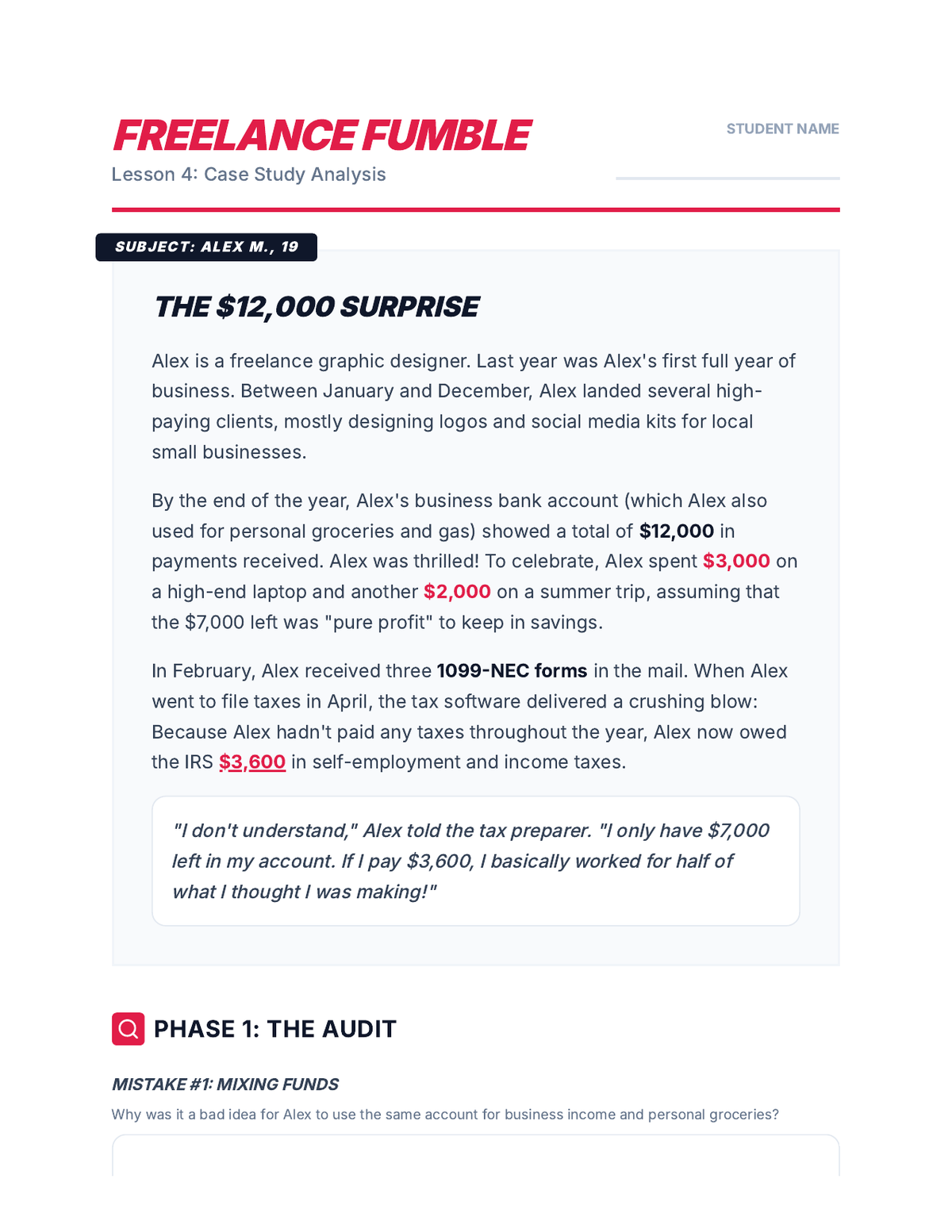
A 2-page case study for Lesson 4 analyzing the financial mistakes of a freelance graphic designer. It includes a narrative, mistake identification, and a student-specific tax planning section.
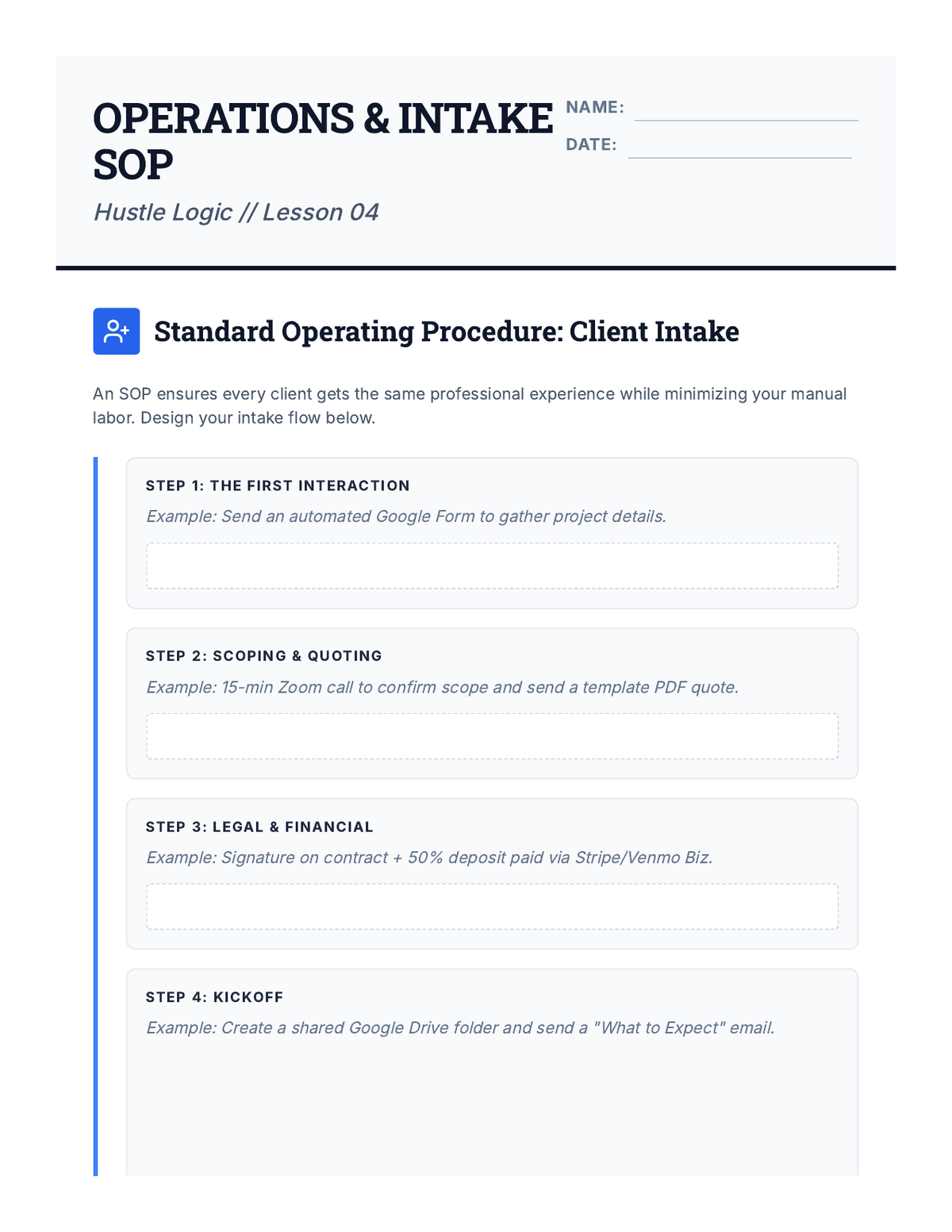
Worksheet for designing a Client Intake SOP and a time-blocked "Survival Schedule" to manage academic and freelance commitments.
A 5-slide visual presentation for Lesson 4, focusing on the tax and legal realities of being self-employed.
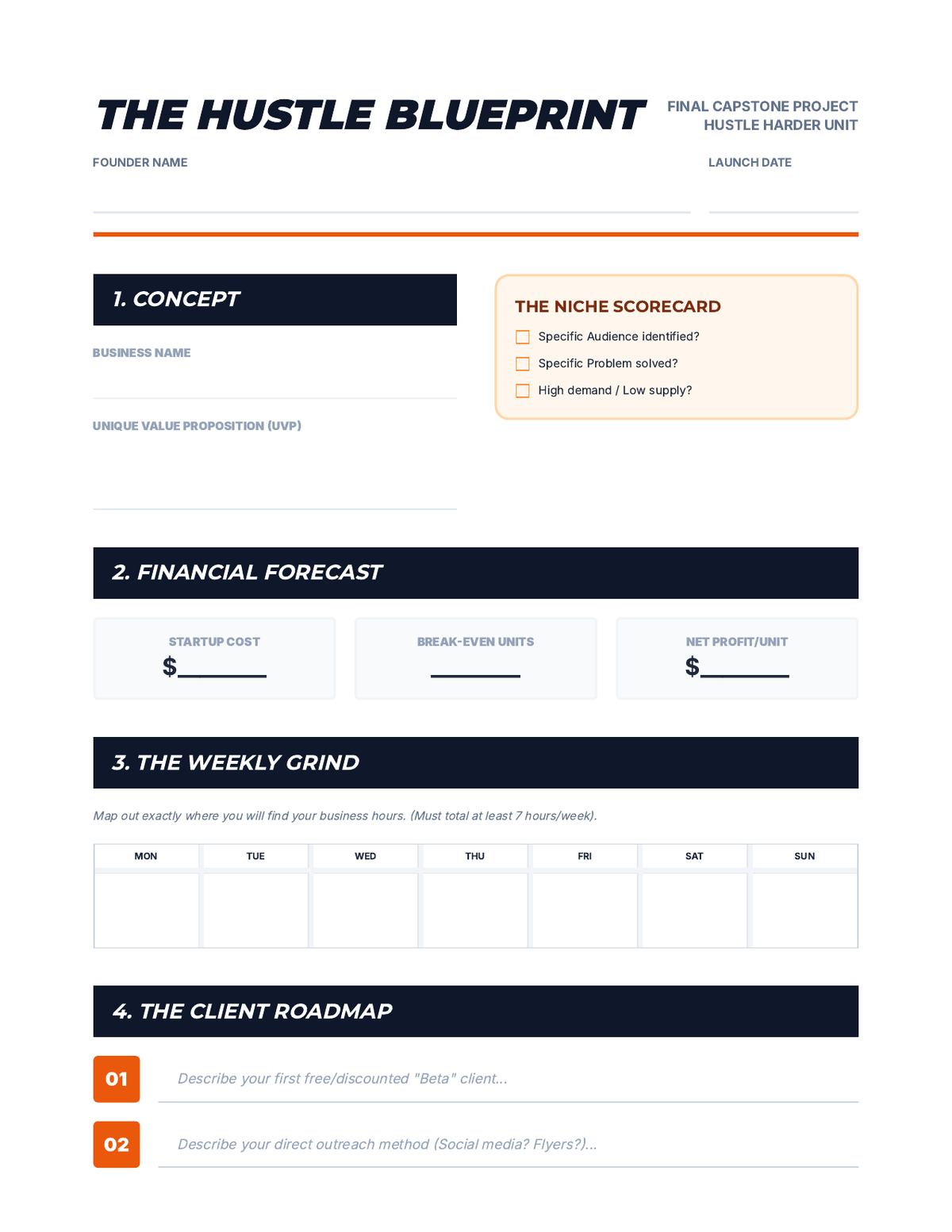
Final project document (Capstone) where students synthesize their business concept, financial forecast, weekly schedule, and client acquisition strategy.
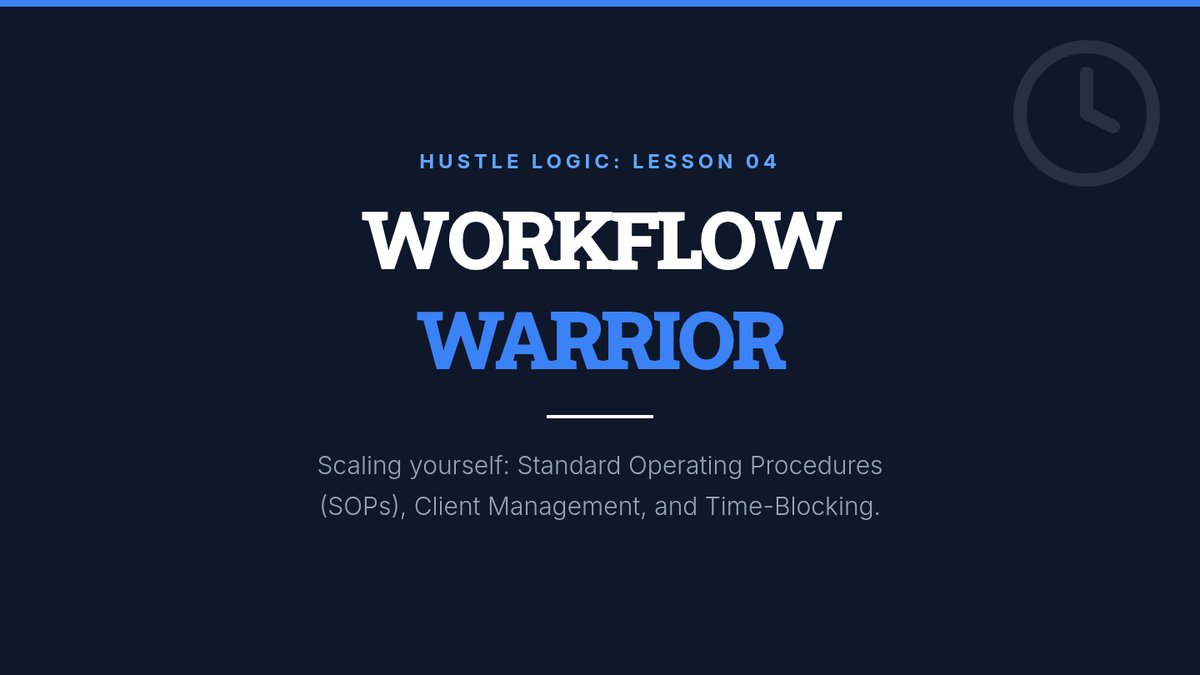
Slide presentation for Lesson 04 focusing on operational efficiency. Covers the importance of SOPs, boundary setting, and time-blocking for student entrepreneurs.
Slide deck on time management (time-blocking), efficiency auditing, and low-cost client acquisition strategies.
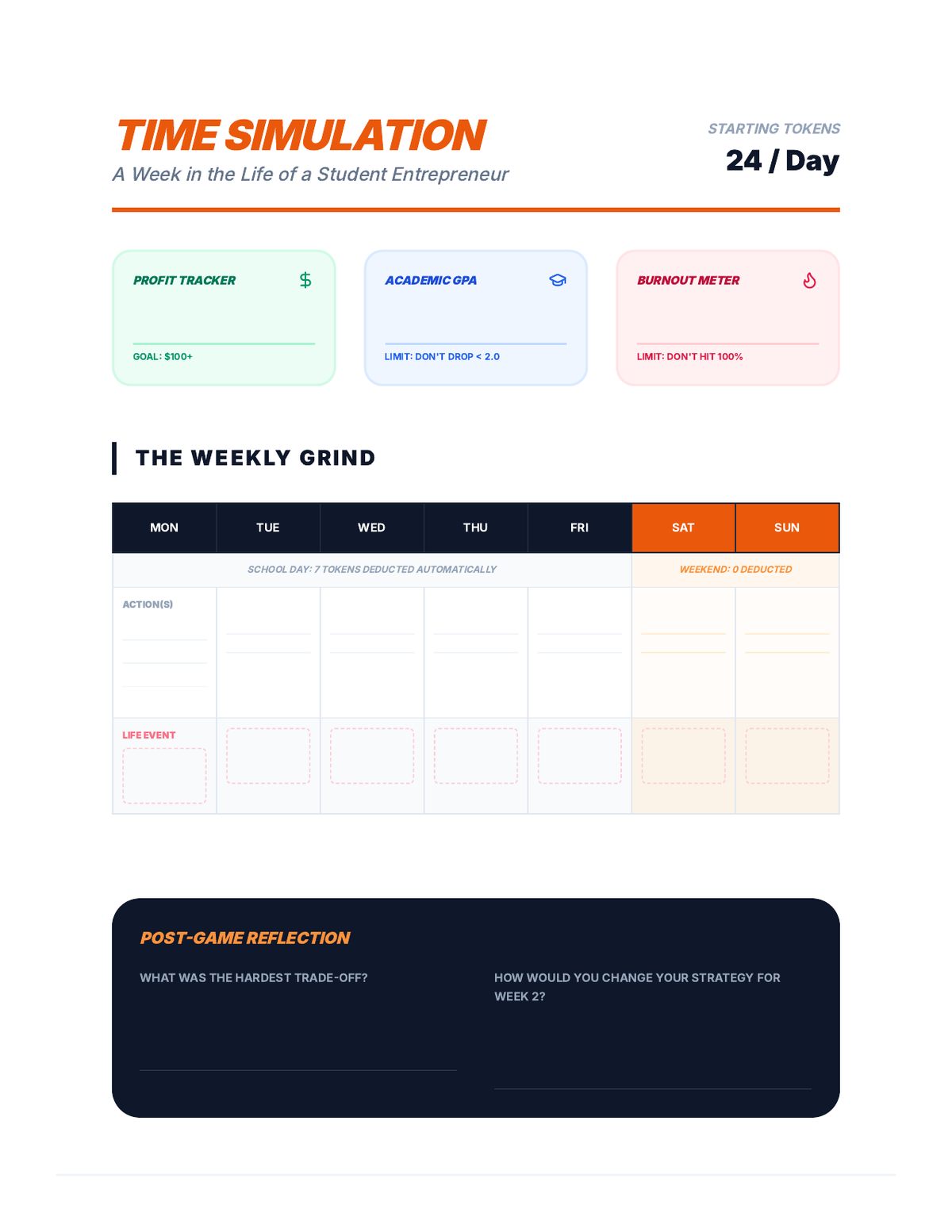
A 2-page simulation kit for Lesson 3. Includes a weekly dashboard to track time, profit, GPA, and burnout, alongside a menu of business actions and random life events.
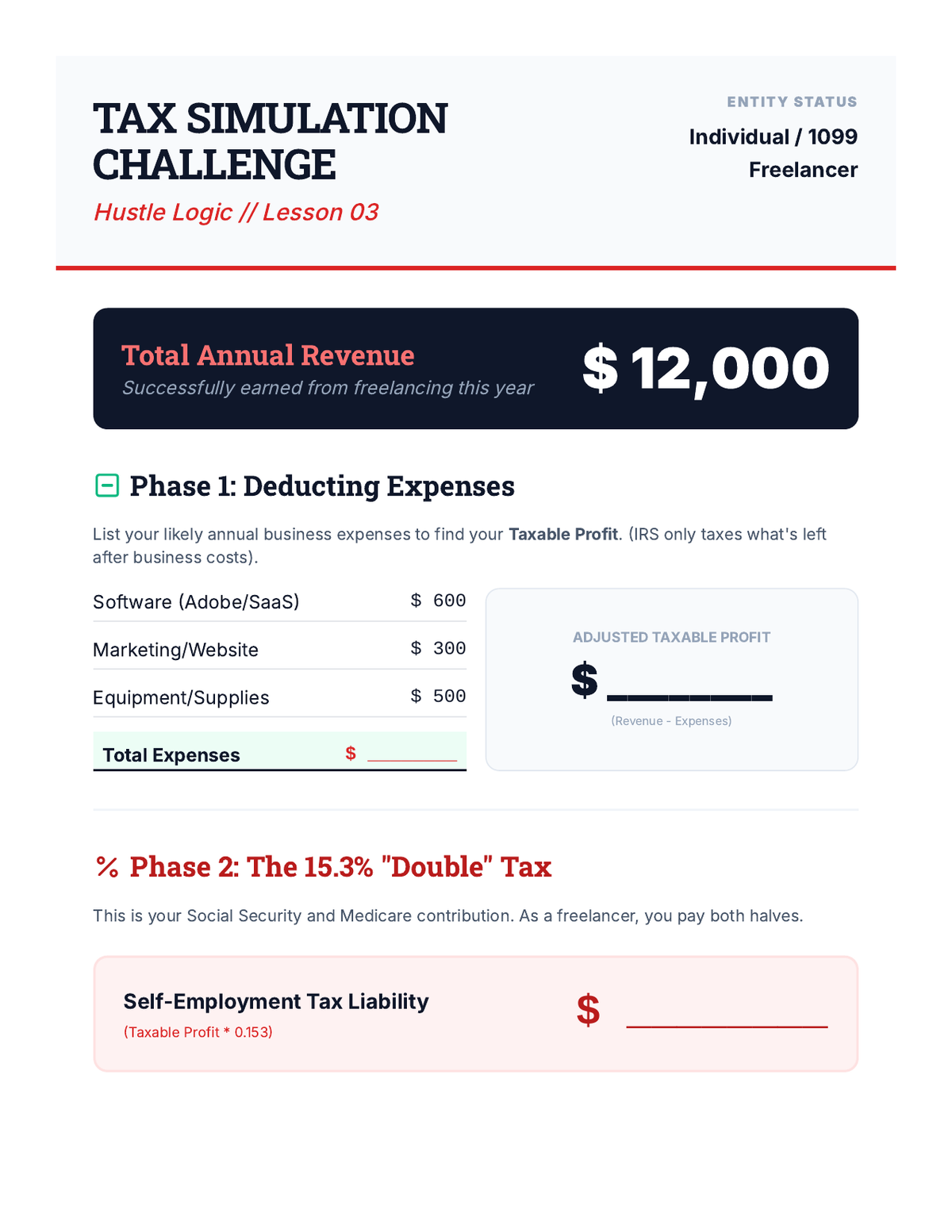
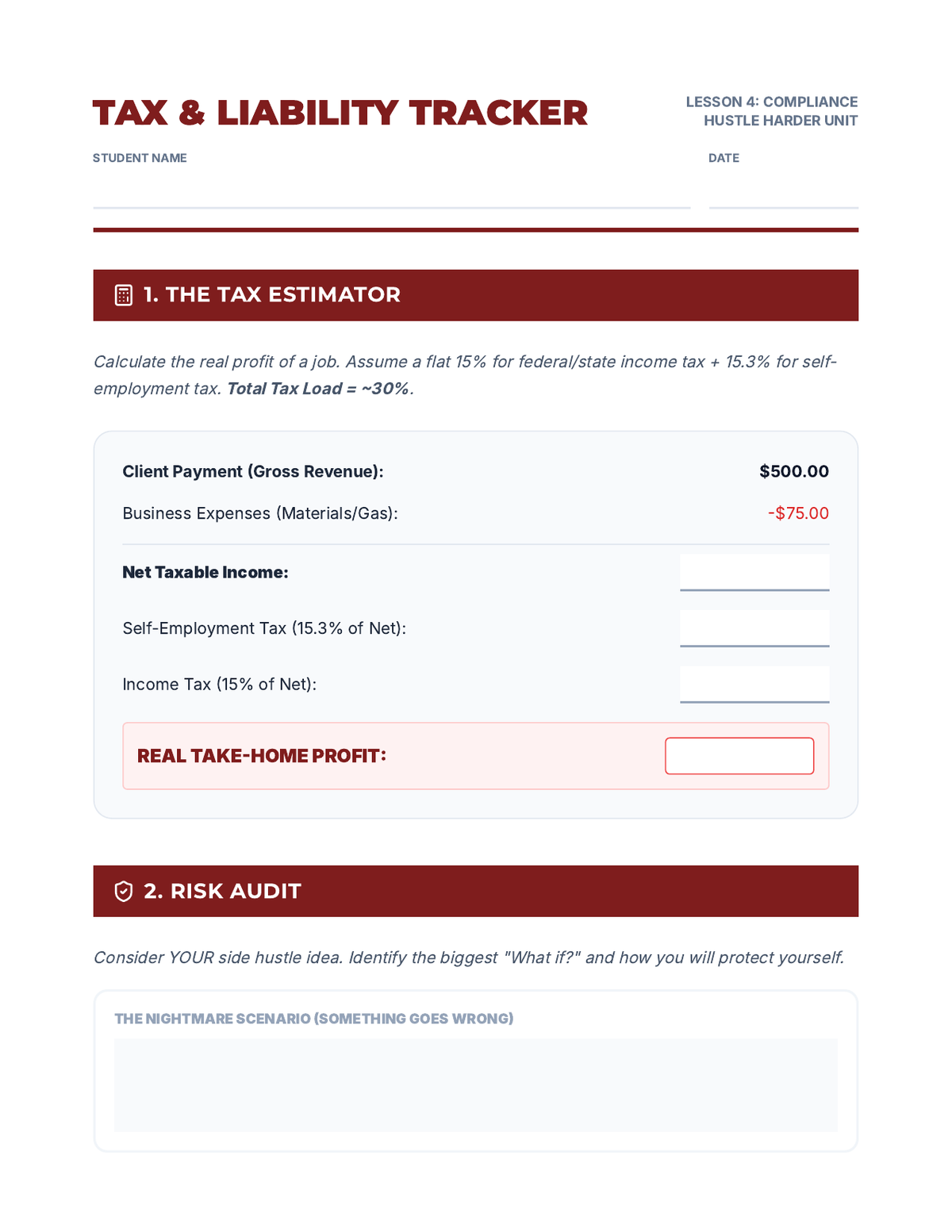
A simulation-based worksheet for calculating the true financial impact of self-employment taxes and business expenses on a $12,000 annual side hustle revenue.
Math-based worksheet for tax estimation (30% total load) and risk audit for side hustles.
Slide deck covering self-employment taxes (15.3% FICA), 1099 vs. W-2 differences, and business liability/contracts.
Slide presentation for Lesson 03 on self-employment taxes and legal structures. Covers the 15.3% SE tax, deductions, quarterly payments, and the differences between Sole Proprietorships and LLCs.
A 5-slide visual presentation for Lesson 3, focusing on time management, opportunity cost, and the "real" hourly wage for student entrepreneurs.
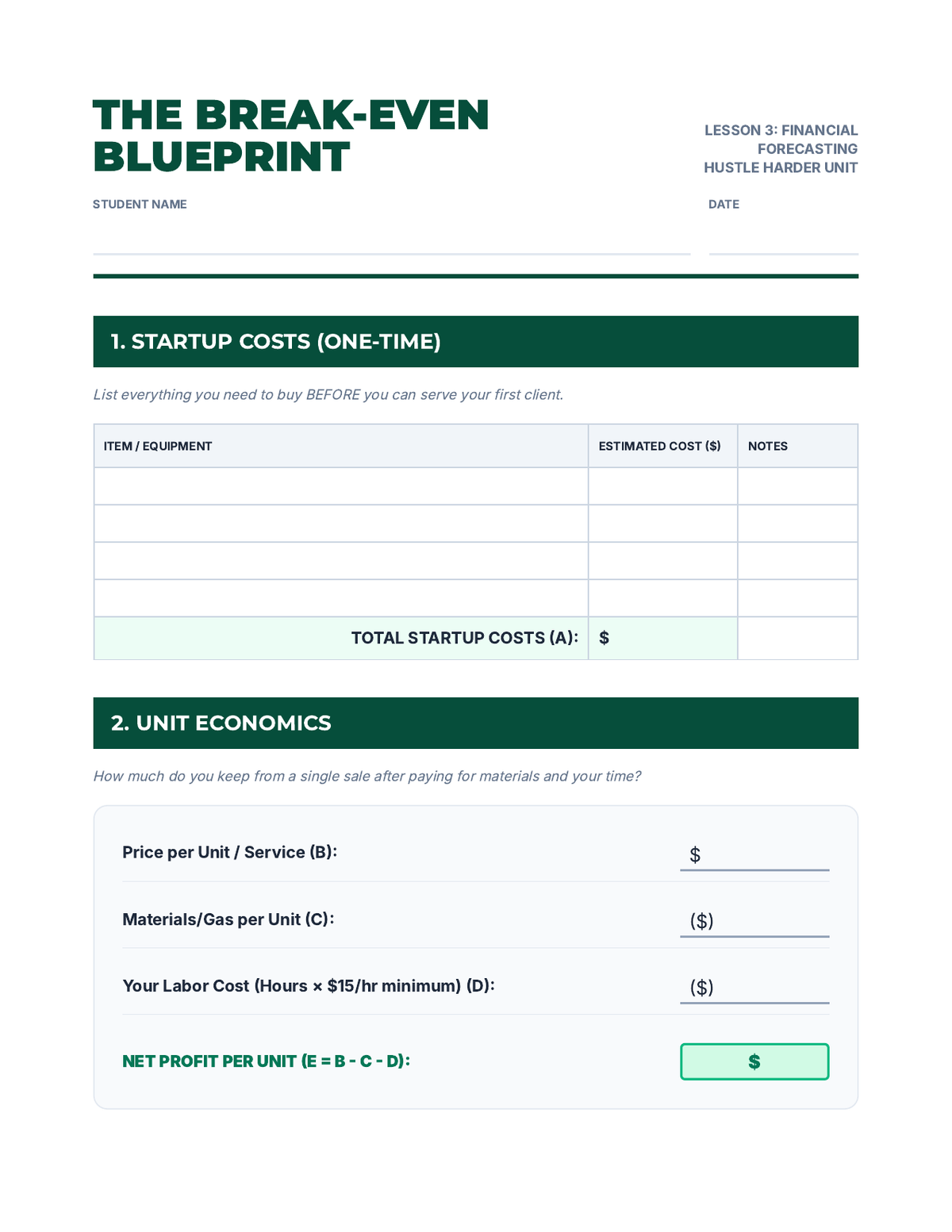
Calculation-based worksheet for startup costs, unit economics, and break-even analysis.
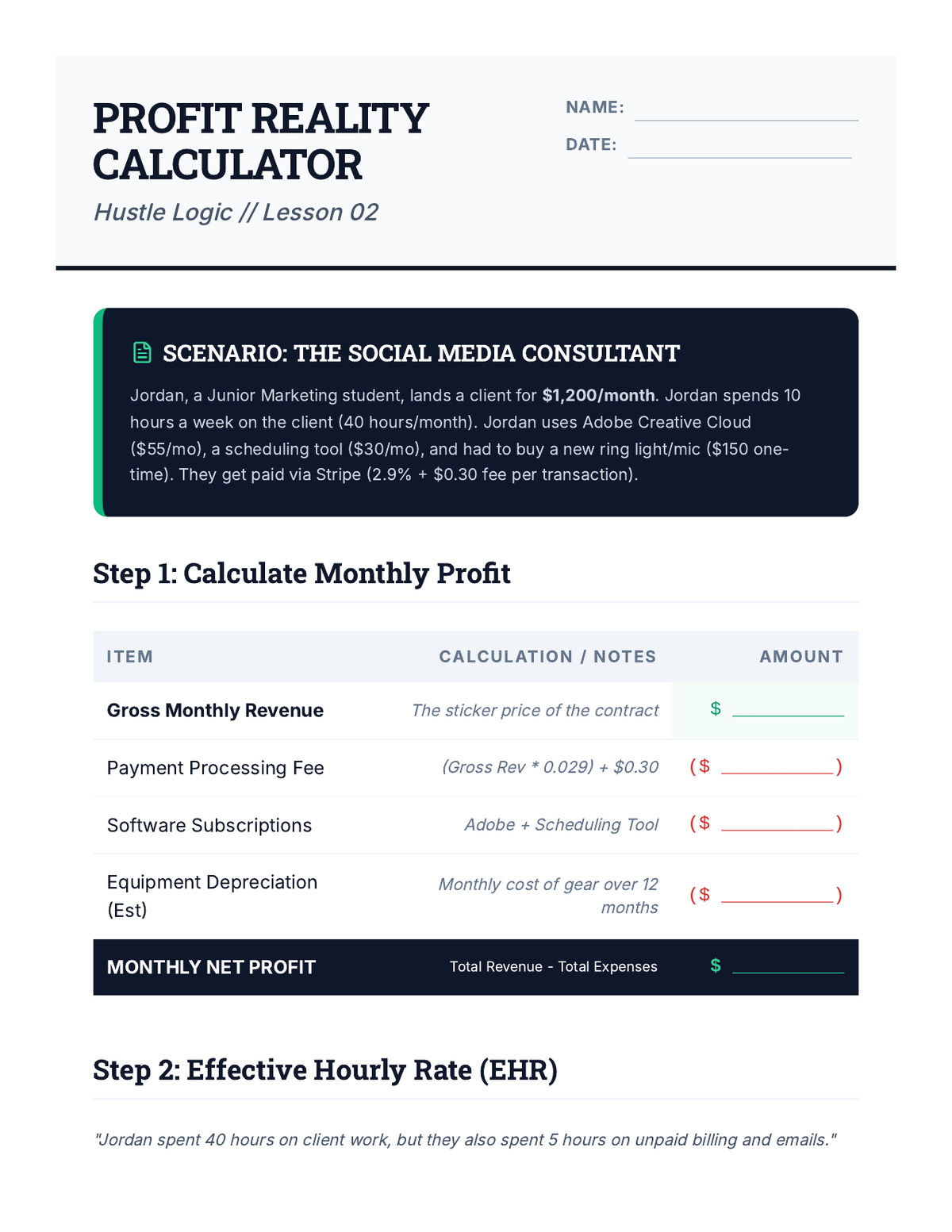
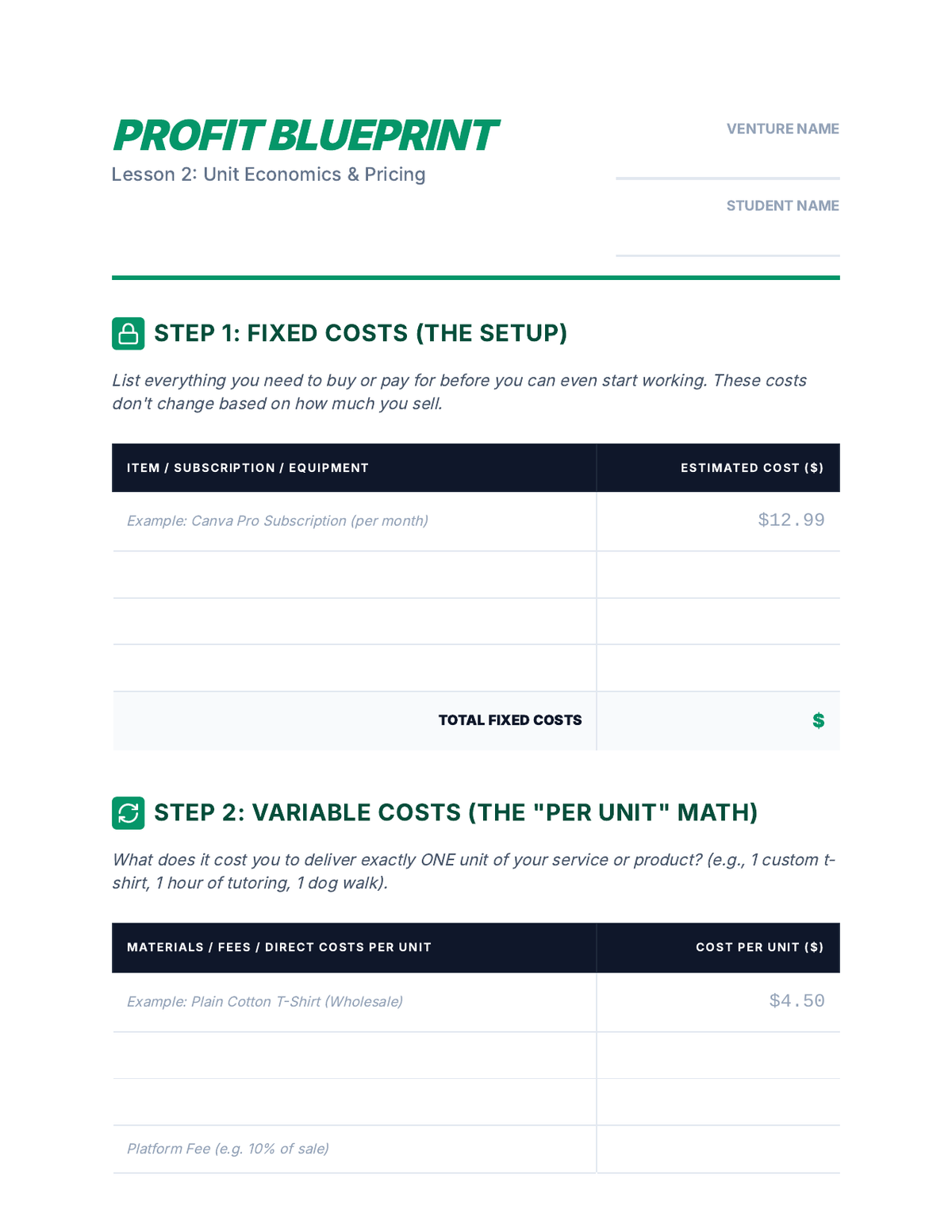
Workshop worksheet for Lesson 02. Includes a guided calculation scenario for a social media consultant and a blank template for students to model their own venture's costs and profitability.
Slide deck explaining startup costs, fixed vs. variable expenses, and the break-even formula.
A 2-page student worksheet for Lesson 2 that guides students through calculating fixed costs, variable costs, pricing, unit profit, and break-even points.
Slide presentation for Lesson 02 focused on the financial modeling of side hustles. Teaches students to distinguish between revenue and profit while accounting for hidden costs.
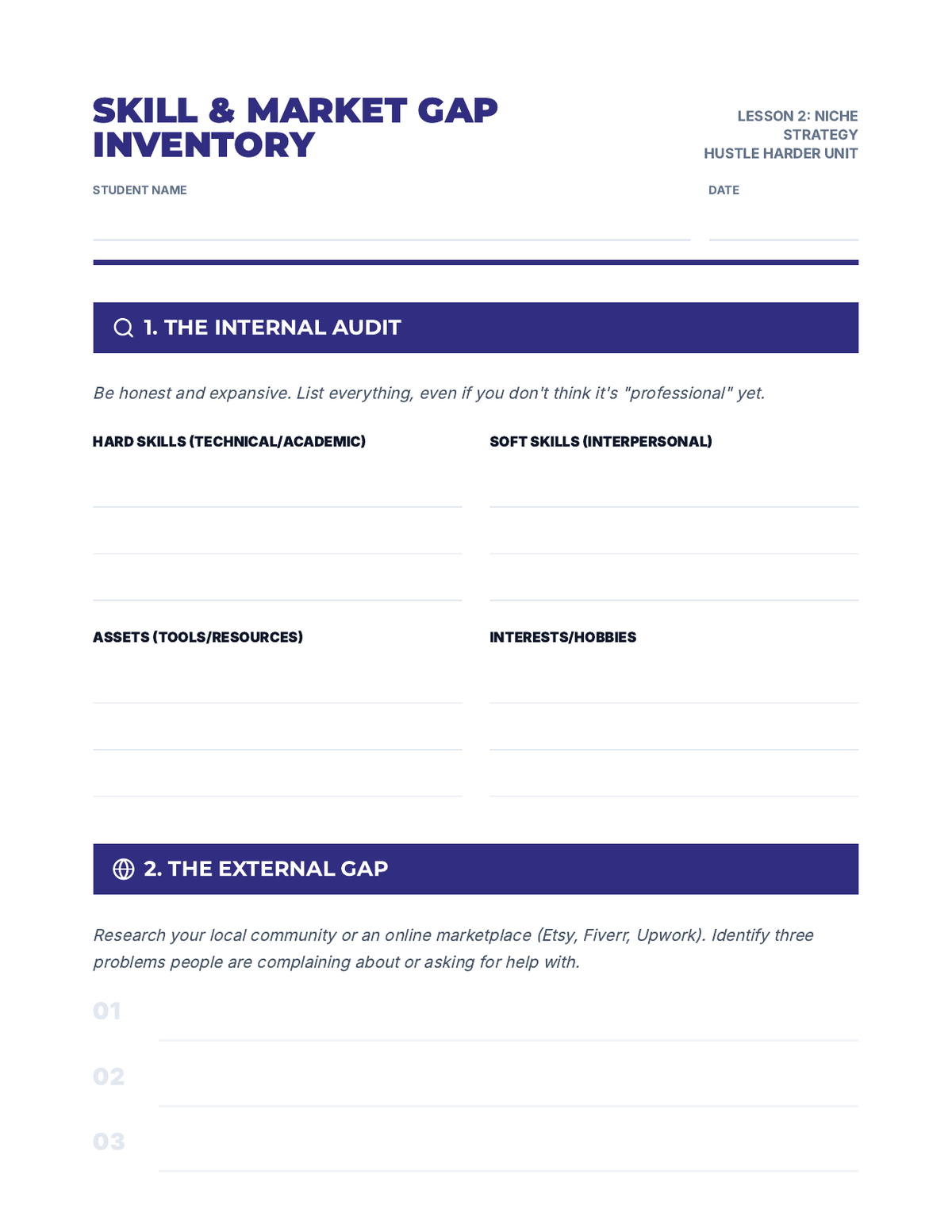
Worksheet for personal skill inventory and market gap analysis, featuring a "Niche Pivot" exercise to refine business ideas.
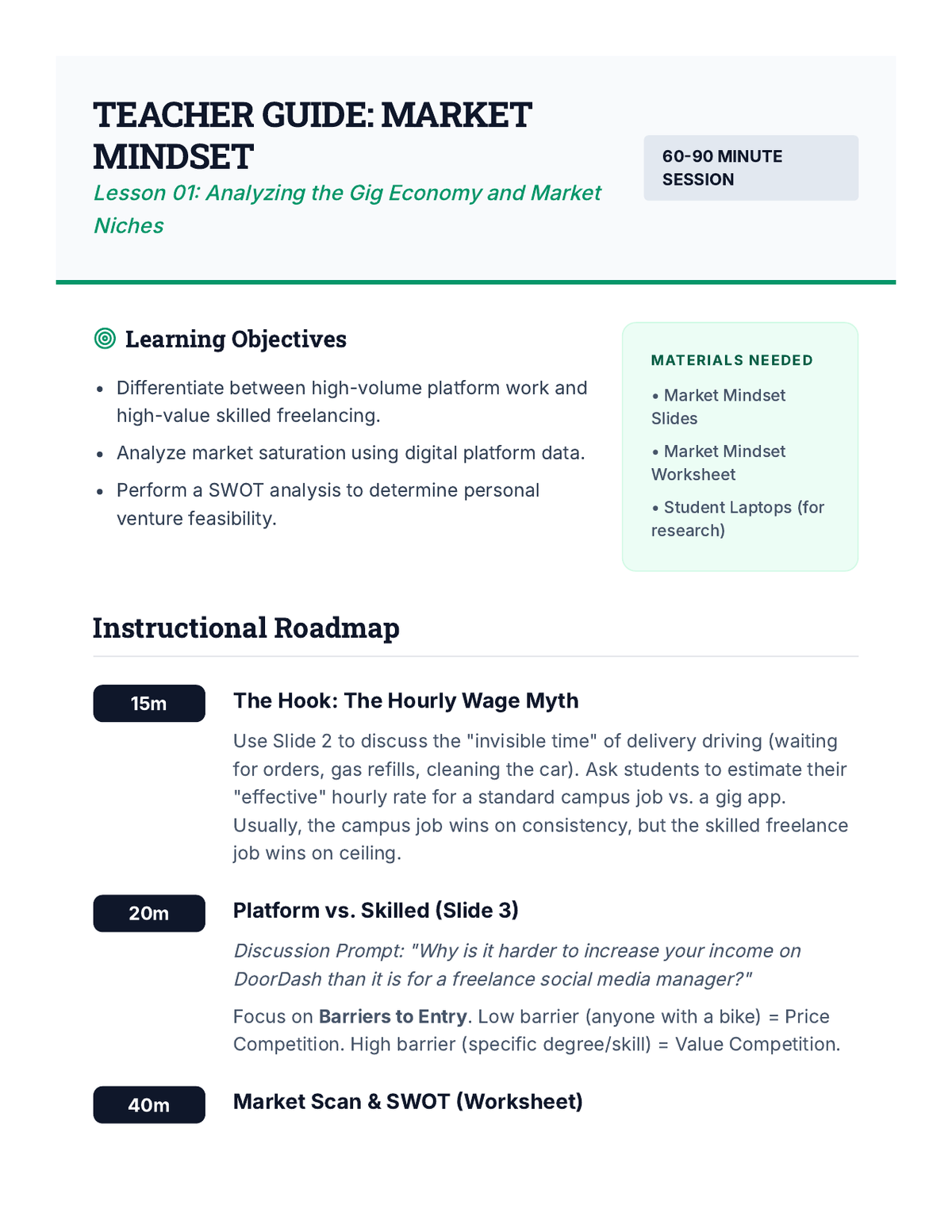
Instructional guide for teachers delivering the 'Market Mindset' lesson, including pacing, discussion prompts, and a case study on niche identification.
A 5-slide visual presentation for Lesson 2, focusing on the math of profitability, including fixed vs. variable costs and unit economics.
Slide deck focused on identifying personal skills, the importance of niching down, and crafting a Unique Value Proposition (UVP).
Engaging slide presentation for the 'Market Mindset' lesson, covering gig economy differences, internal/external assessment using SWOT, and a market scanning activity.
A 5-slide visual presentation for the first lesson, introducing the gig economy, identifying scams, and guiding the skill mapping activity.
A worksheet for comparing platform-based work with skilled freelancing, including market saturation analysis and sustainability reflection.
A professional market analysis and SWOT worksheet for undergraduate students to evaluate potential freelance side hustles. Includes sections for market saturation checks and a comprehensive SWOT grid.
Introductory presentation exploring the gig economy, comparing platform-based work vs. skilled freelance services, and highlighting economic trends and risks.
A 2-page student worksheet for the first lesson in the Side Hustle sequence. It helps students audit the gig economy, conduct a personal skills inventory, and brainstorm viable business ideas.