A peer and teacher feedback rubric for the culminating business pitches, evaluating feasibility, financials, and presentation.
A student activity and reference sheet for Session 5, featuring assertive communication practice and a 'Circles of Trust' mapping activity for boundaries.
1/13
A base schedule board for students to organize their daily routine cards, featuring five numbered slots and check-off circles.
1/16
Teacher-facing facilitation guide for Session 5. Includes guidance on modeling assertive communication and navigating cultural differences in communication styles.
Teacher-facing facilitation guide for Session 4. Provides guidance on explaining the Catch-Check-Change method and helping students distinguish between positive thinking and accurate reframing.
Introductory slides for the second lesson, teaching students the mechanical skill of logging transactions in a ledger and calculating a running balance.
A student worksheet for Lesson 2 to calculate startup costs, choose a pricing strategy, and determine the break-even point for their business.
Teacher script for Lesson 2 simulation, providing specific financial scenarios for Weeks 1 and 2 including income, mandatory expenses, and decision points.
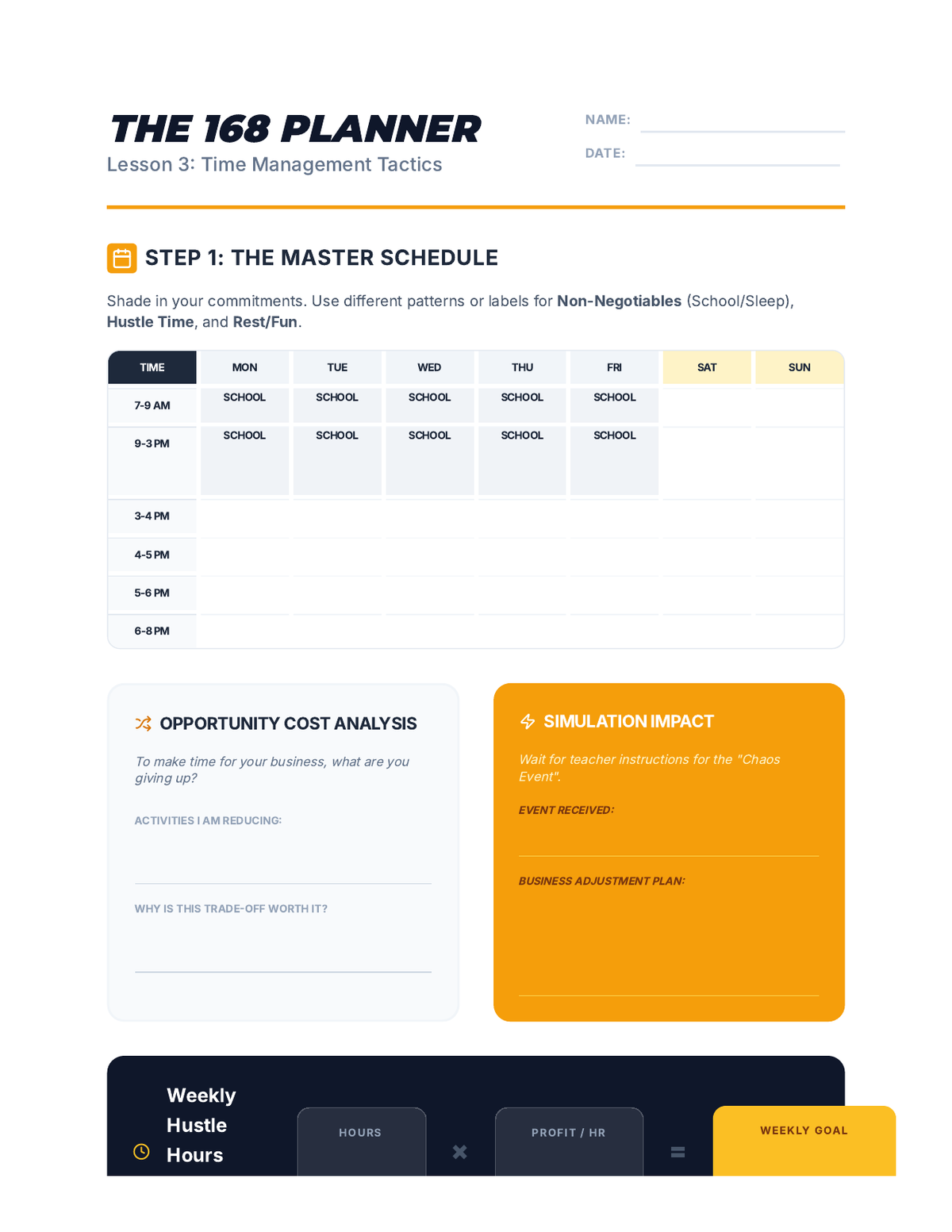
Instructional slides for Lesson 3 covering time management, opportunity cost, and the "Big Rocks" theory of prioritization.
A set of 6 printable circular prompts designed to be attached to a soft ball, facilitating conversation and reflection in the Buddy Builders lesson.
Cumulative multiple-choice assessment for 4th graders covering fraction vocabulary, unit fractions, and model identification.
Engaging slide deck for Kindergarteners about world dances, specifically focusing on the Mexican folk dance "La Raspa".
Visual presentation for Session 3, focusing on distress tolerance techniques for high-intensity situations using the TIPP skills framework.
A visual warm-up activity featuring two 'mystery' patterns with missing elements. Designed to spark discussion about identifying and justifying pattern rules.
A visual worksheet for Kindergarteners to identify musical moods by coloring emoji faces and associating colors with sounds.
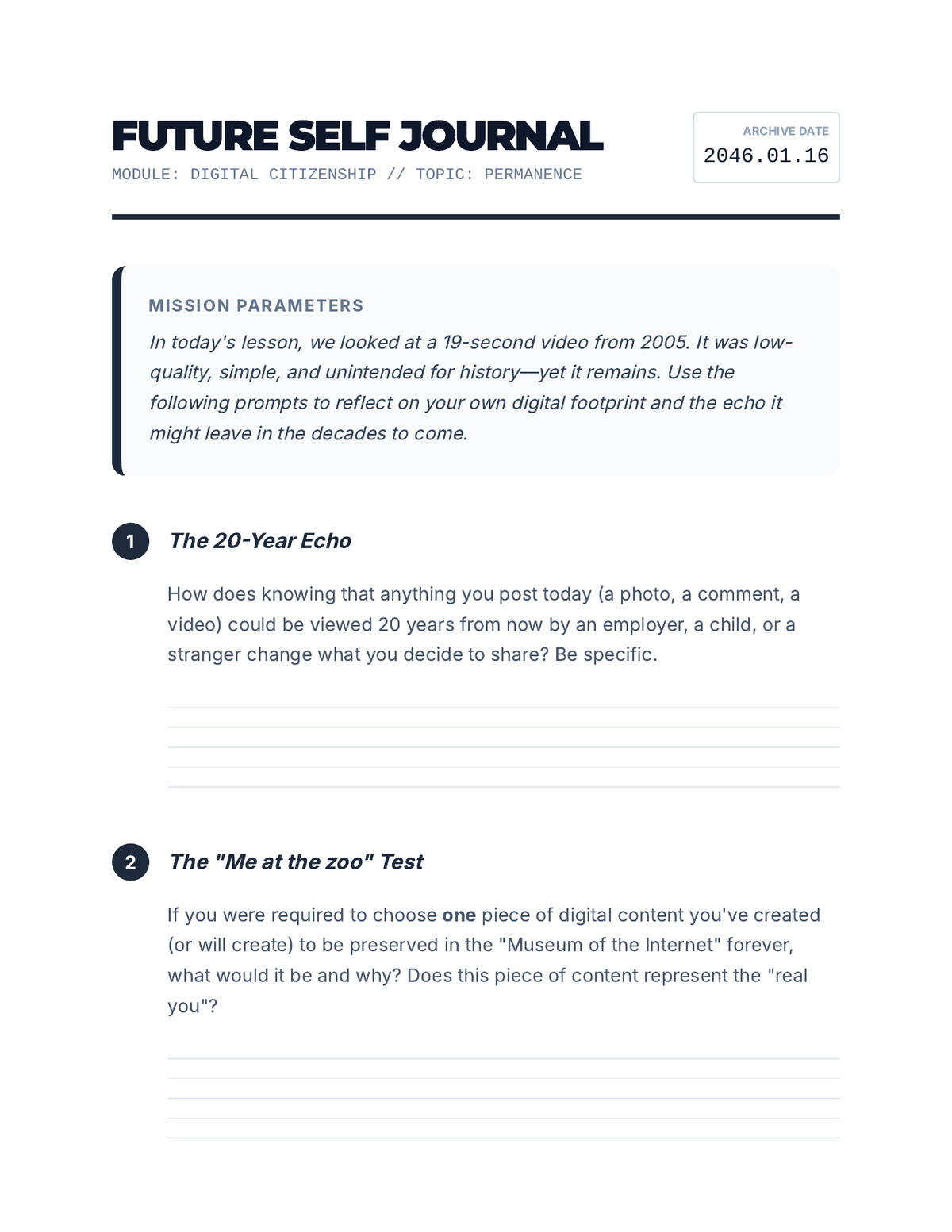
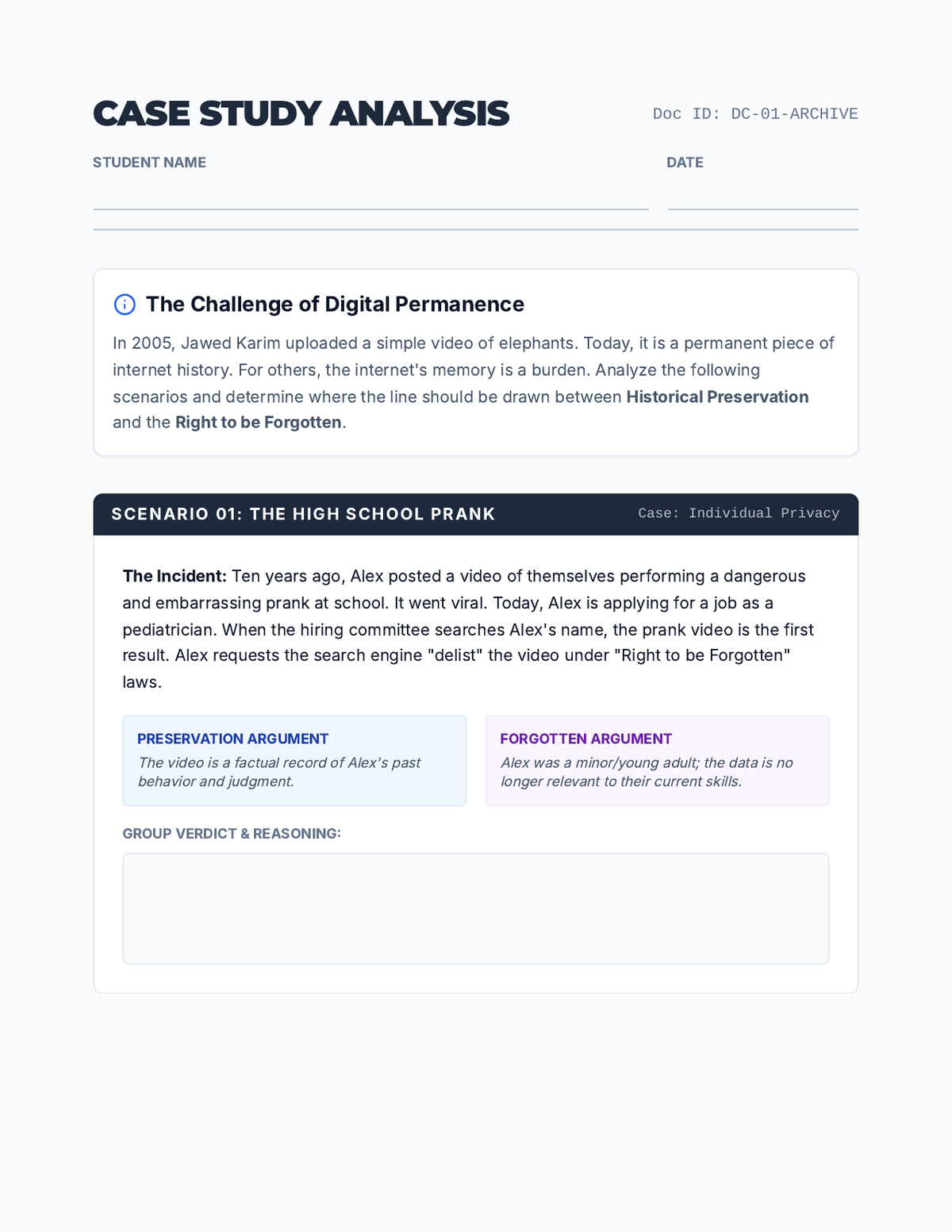
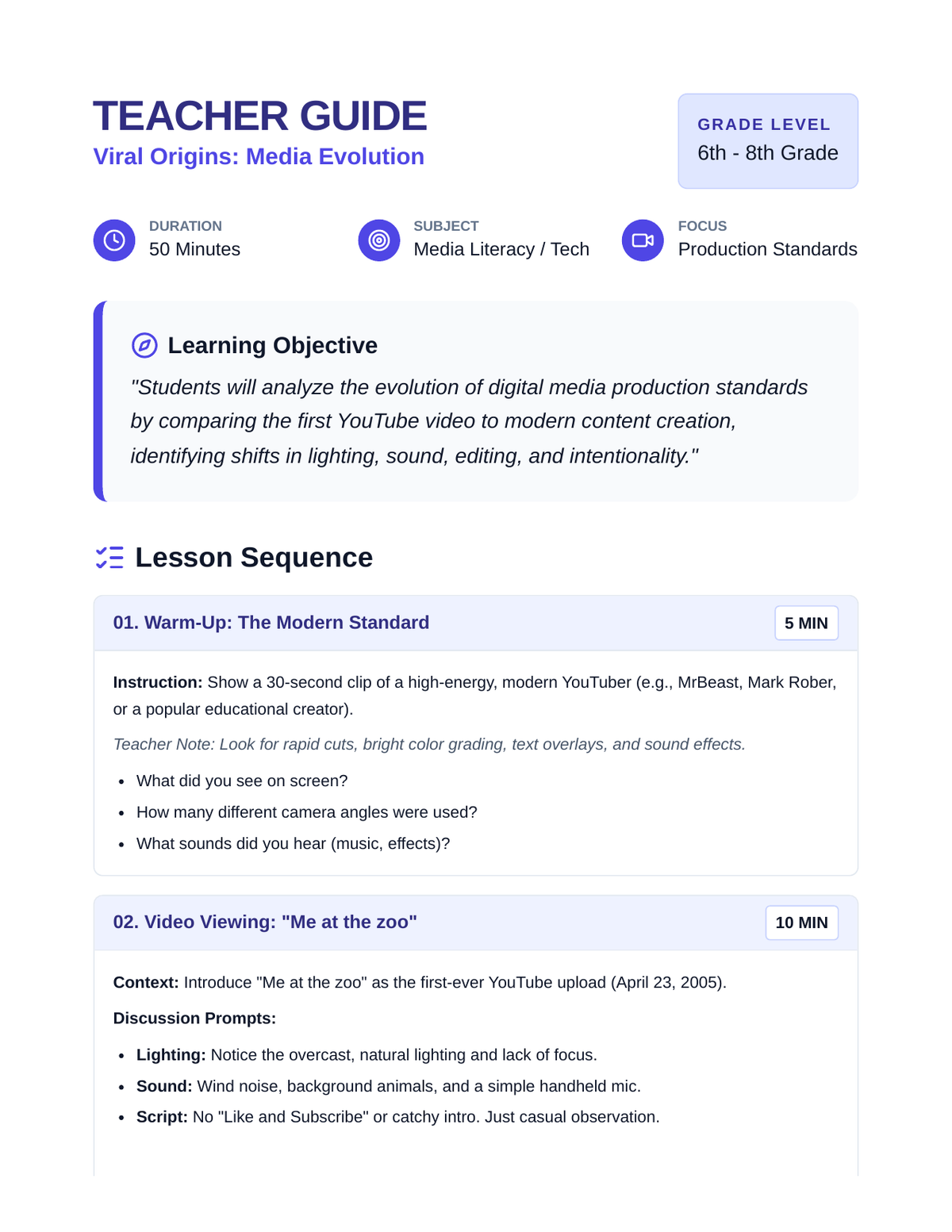
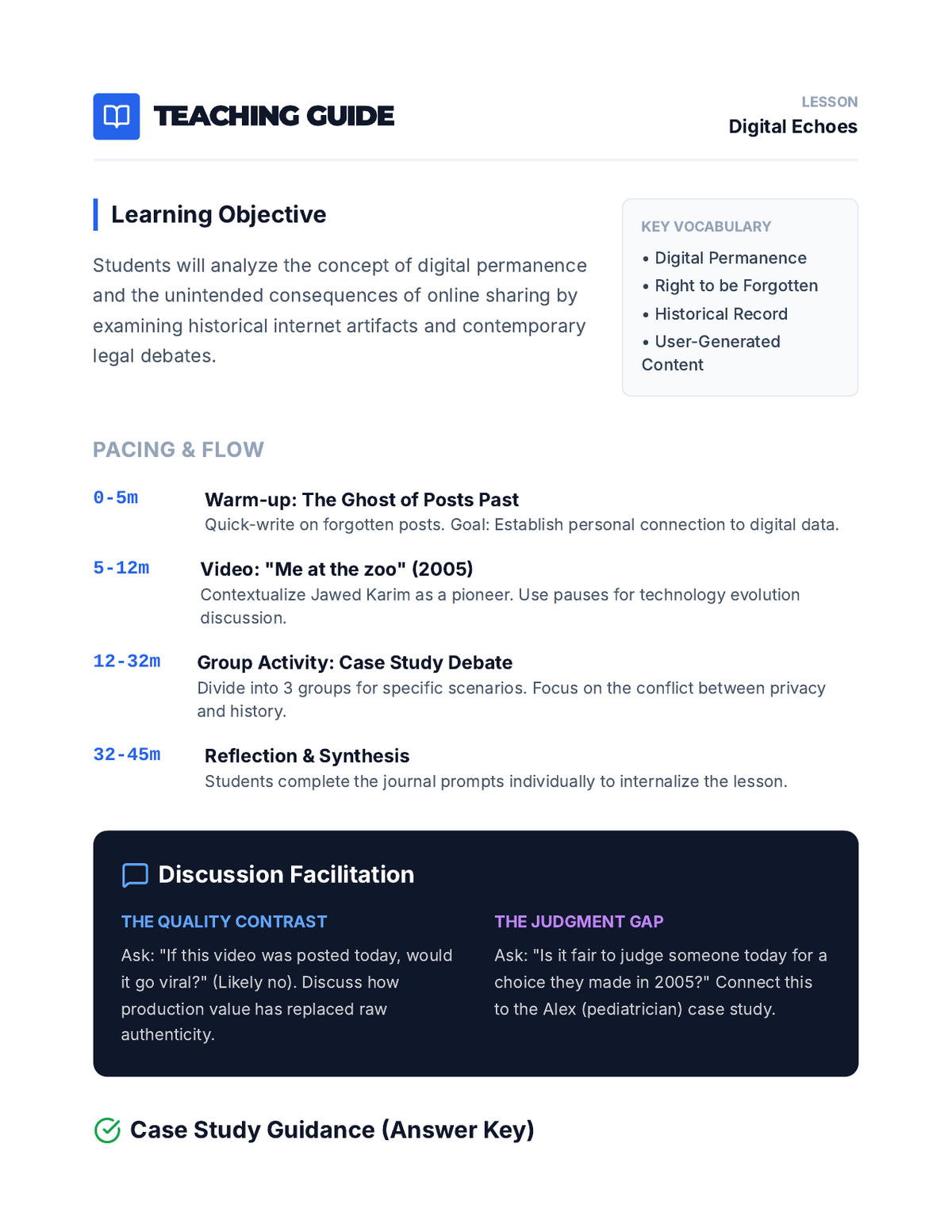
Teacher guide for the Digital Footprint lesson, including lesson plan, discussion prompts, video context, and transcript.
Visual presentation for Session 2, introducing the 'Window of Tolerance' and teaching proactive regulation tools like 5-4-3-2-1 grounding and controlled breathing.
A student worksheet for identifying physiological signals of emotions. It features a body mapping activity where students color or mark areas where they feel physical sensations associated with specific feelings.
A teacher-facing guide for Session 1, including learning objectives, a detailed pacing guide, and facilitation tips specifically for Tier 3 mental health interventions.
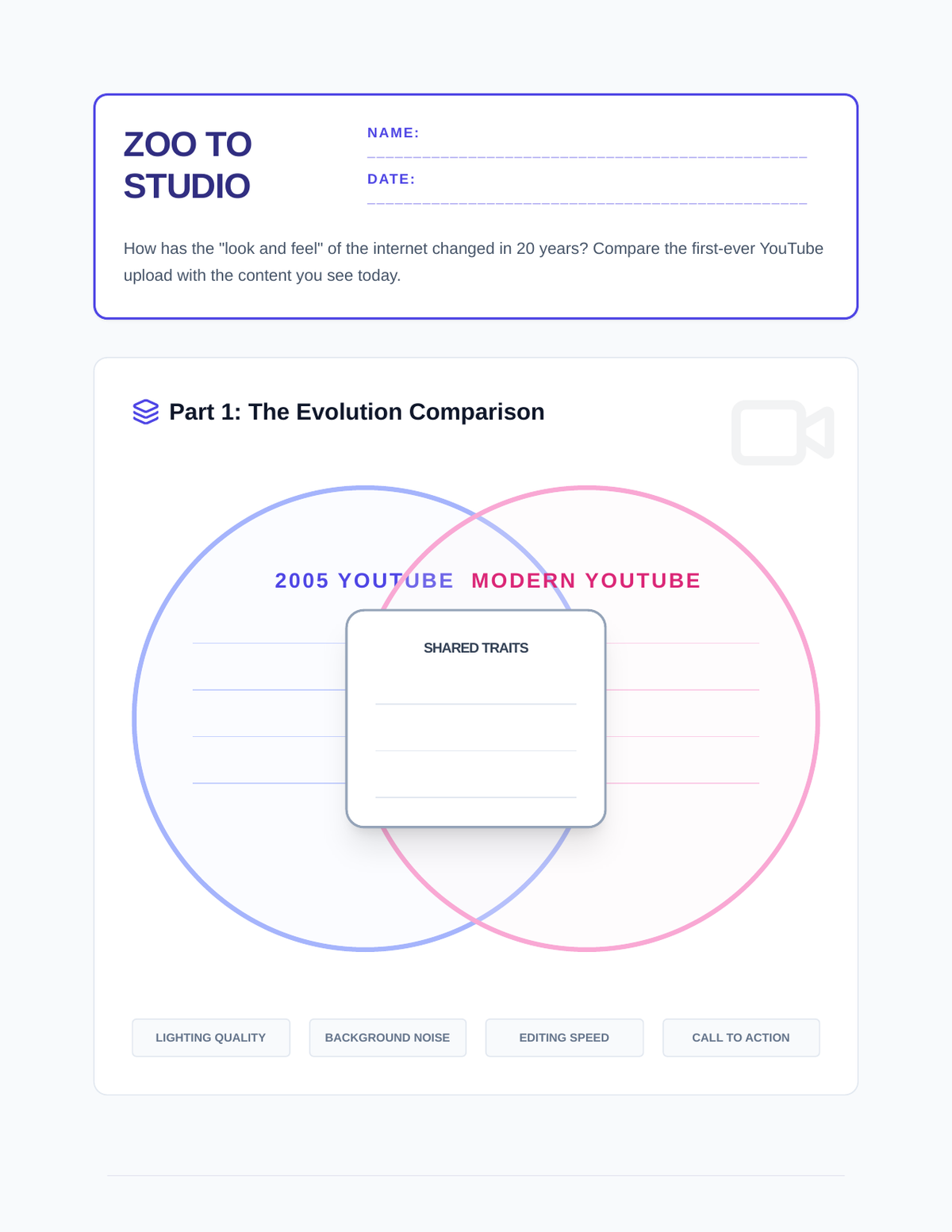
A student worksheet featuring a Venn Diagram comparison of early and modern YouTube production standards, along with a structured writing area for reflecting on the concept of digital virality.
Slide deck for Lesson 5, focusing on identifying spending habits, understanding 'spending leaks', and establishing future 'Rules of Thumb' for financial success.