A comprehensive unit on the water cycle, covering evaporation, condensation, precipitation, and collection through hands-on activities, visual presentations, and assessments.
No materials in this sequence yet.

A comprehensive sequence focused on understanding and applying the Engineering Design Process (EDP) through hands-on challenges and reflective practices.
A comprehensive unit on the Engineering Design Process (EDP), guiding students from identifying problems to prototyping and iterating solutions through hands-on projects.
A unit exploring Earth's systems and the movement of water through the environment.
A comprehensive unit for primary students to explore the lifecycle of plants, from seed germination to pollination, through hands-on activities and visual learning.
A comprehensive unit on the engineering design process, guiding students from initial problem identification through prototyping and testing.
A comprehensive sequence exploring the fundamental forces of physics, focusing on gravity, friction, and magnetism through hands-on labs and visual analysis.
A sequence of lessons exploring the engineering design process through hands-on challenges, iterative testing, and collaborative problem-solving.
An engaging sequence of lessons that introduces students to engineering through space-themed design challenges.
A comprehensive unit on the Engineering Design Process (EDP), guiding students through identifying problems, brainstorming solutions, prototyping, and testing their inventions.
A high-energy, hands-on physics unit where students explore the fundamental laws of motion through the lens of extreme sports and thrill-seeking, culminating in a roller coaster design challenge.
A comprehensive unit on the Engineering Design Process (EDP), guiding students from identifying problems to prototyping and testing solutions through hands-on activities.
A comprehensive unit on the Engineering Design Process (EDP), guiding students through identifying problems, brainstorming solutions, prototyping, and iterative testing.
A comprehensive unit on the Engineering Design Process (EDP), guiding students through the journey from identifying a problem to presenting a refined solution.
A comprehensive unit on the engineering design process, from problem identification to prototyping and testing.
A comprehensive unit on the engineering design process, from initial brainstorming to final prototyping and testing. Students learn to think like engineers through hands-on challenges and iterative design.
A comprehensive unit on the water cycle, covering evaporation, condensation, precipitation, and collection through hands-on activities, visual aids, and creative assessments.
A comprehensive unit on the Engineering Design Process (EDP), guiding students through identifying problems, brainstorming solutions, prototyping, and iterating on designs through various engineering challenges.
A comprehensive unit on the Engineering Design Process (EDP), guiding students through identifying problems, brainstorming solutions, prototyping, and testing through hands-on challenges.
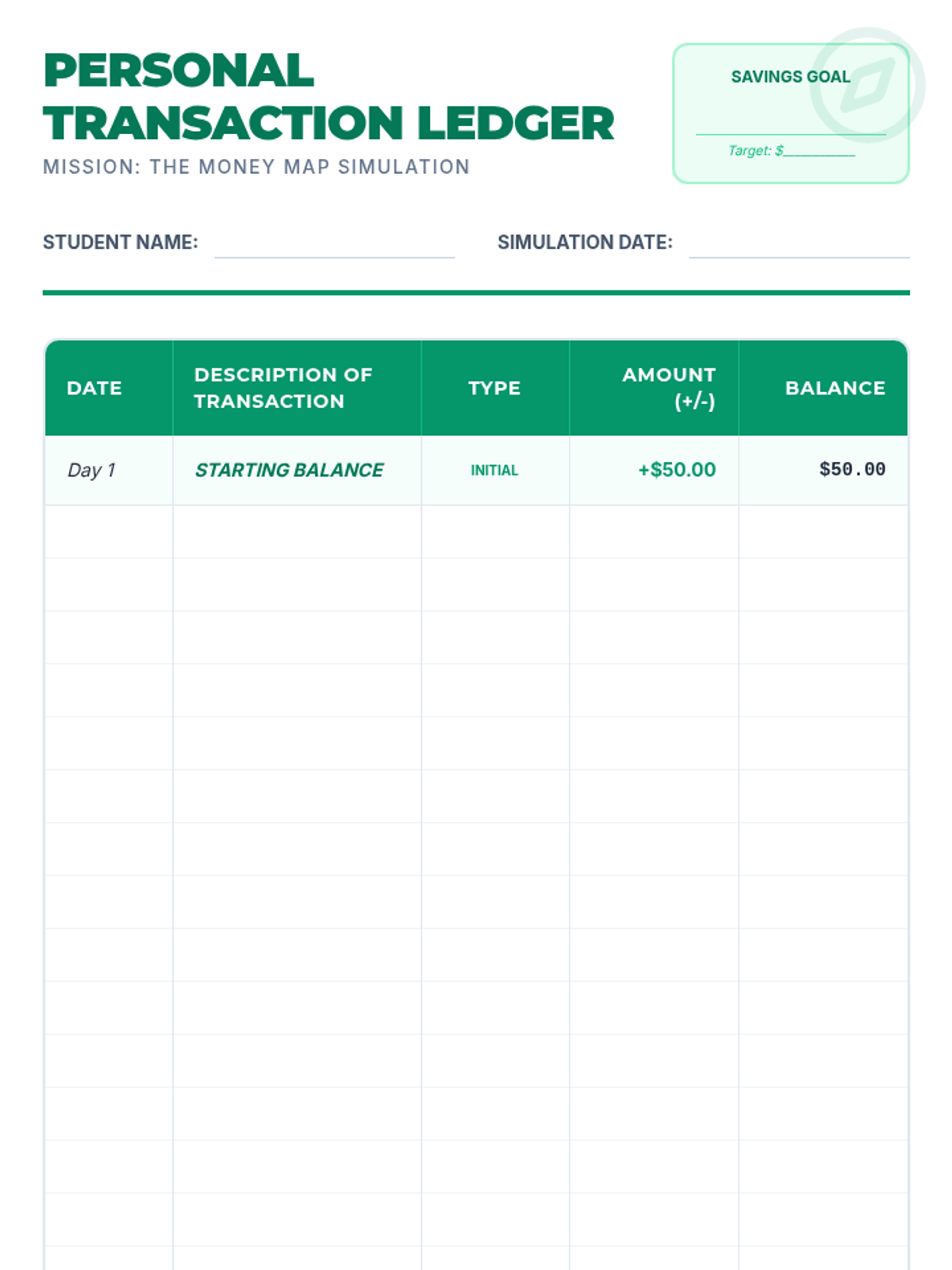
A comprehensive 5-lesson unit where 5th-grade students manage a fictional peer's monthly finances. Students learn to track income and expenses using a ledger, differentiate between needs and wants, navigate unexpected financial 'wildcards', and analyze their spending habits to build better future budgets.
Students develop fundamental financial skills by tracking income and expenses, categorizing needs and wants, maintaining a ledger, and resolving budget deficits to achieve financial goals.
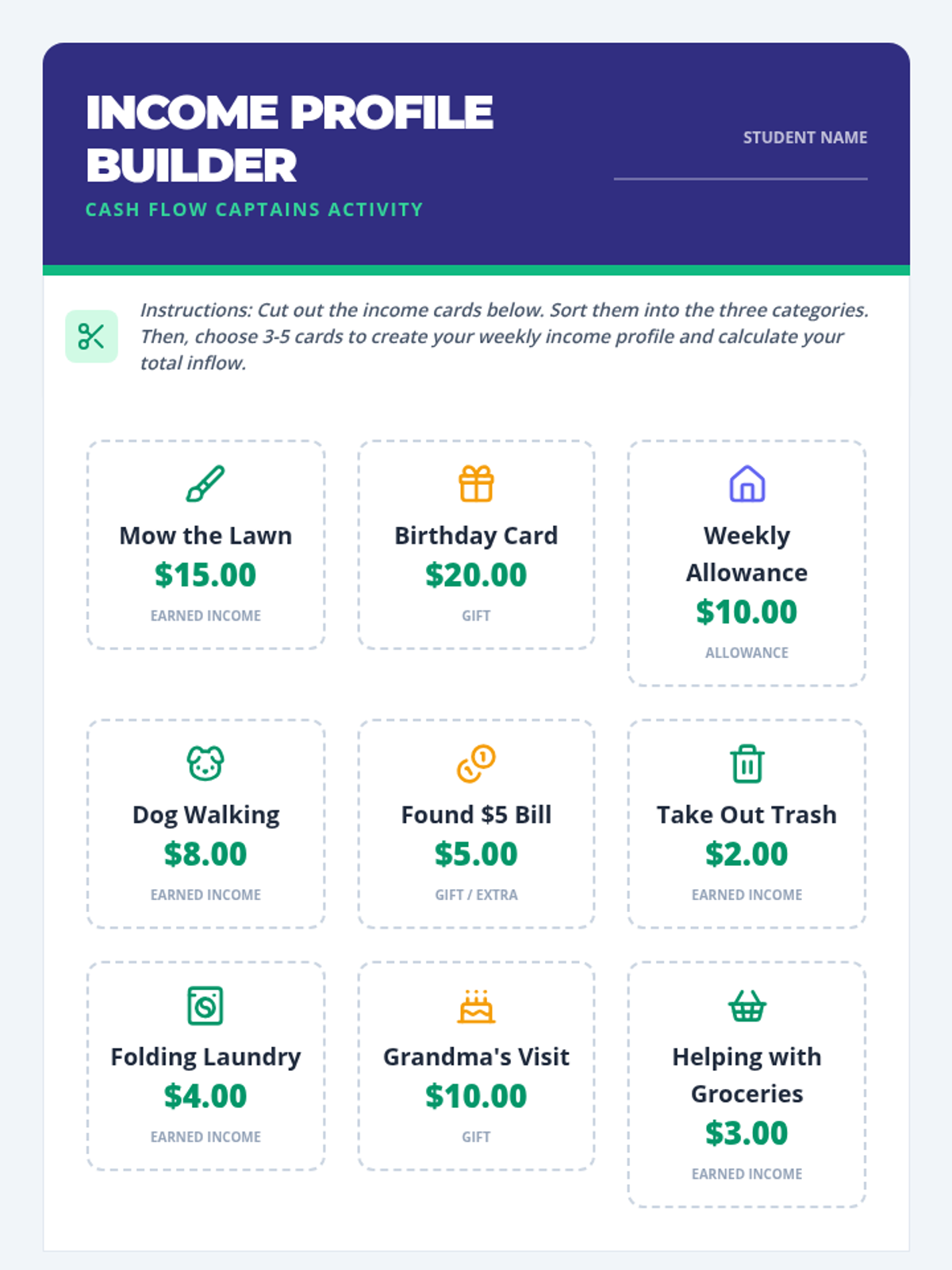
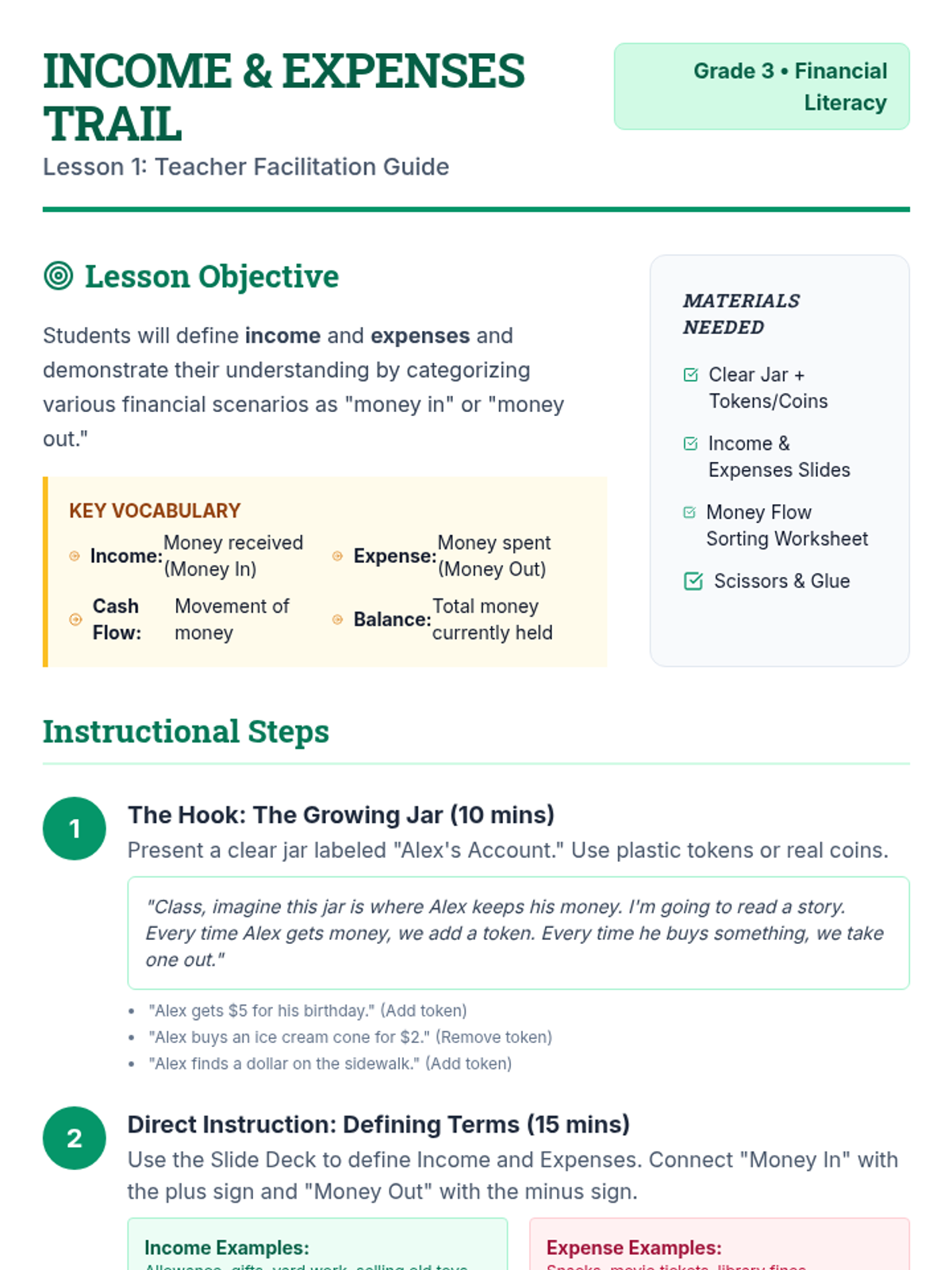
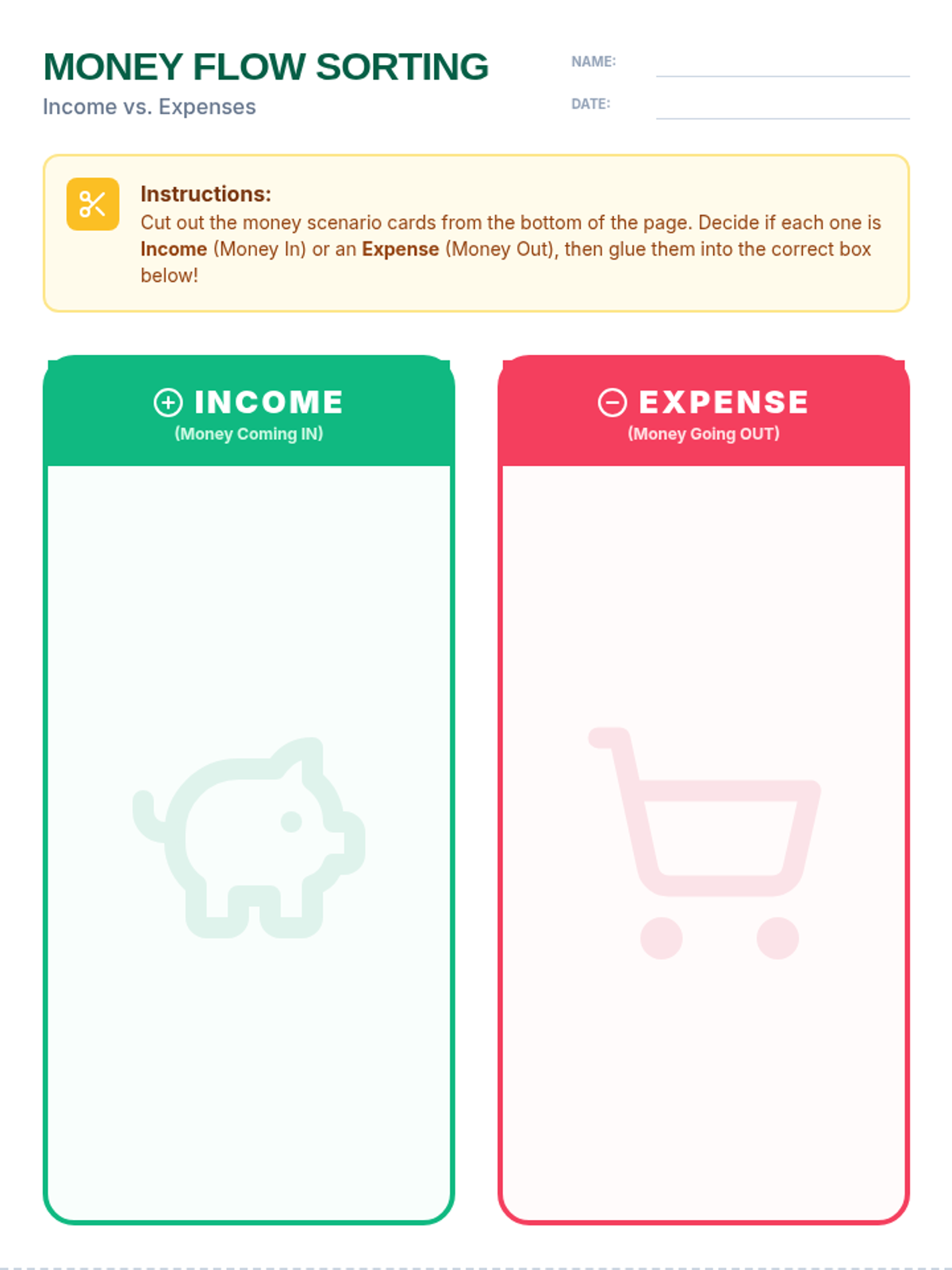
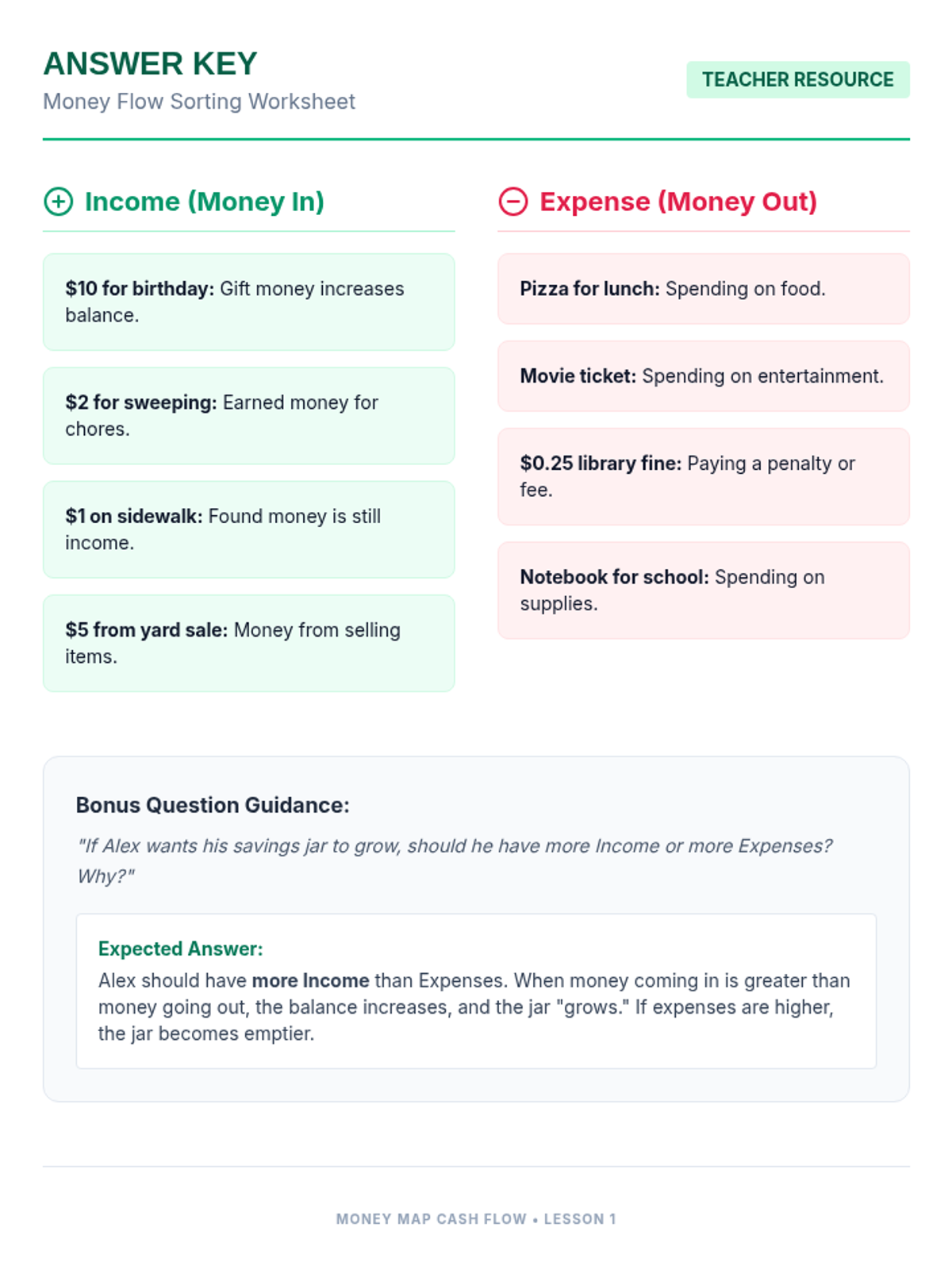
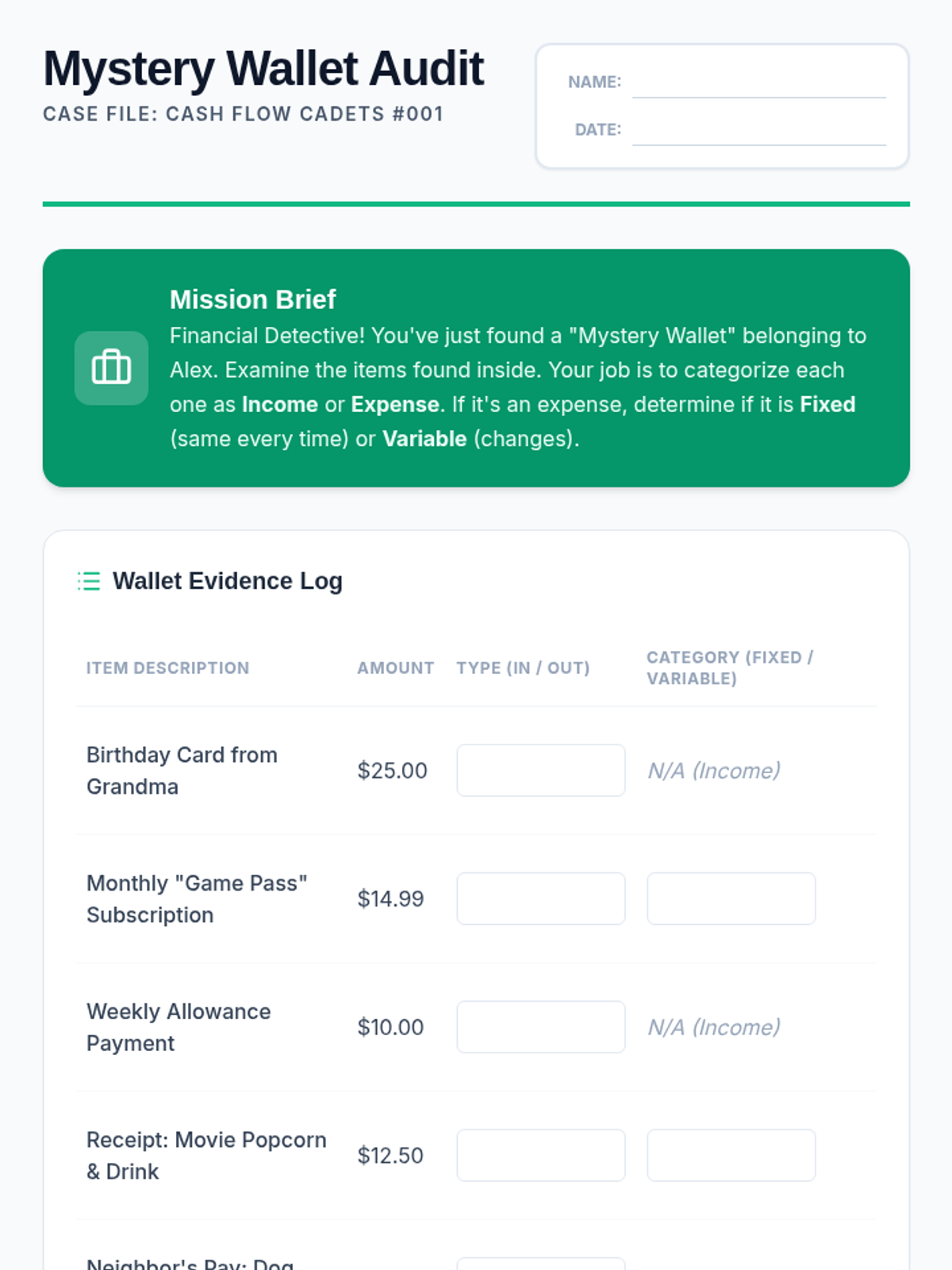
A comprehensive sequence for 3rd graders to master personal cash flow. Students learn to track income and expenses, prioritize needs over wants, and adjust budgets to meet savings goals through the fictional journey of Alex's weekly budget.
A comprehensive 5th-grade unit on personal cash flow management, where students learn to track income and expenses, identify spending leaks, and create balanced financial plans through the eyes of a financial manager.
A four-week simulated learning journey where 4th-grade students manage a personal budget. They track income, categorize expenses as needs or wants, navigate unexpected financial hurdles, and analyze their cash flow to meet a savings goal.
Students learn to manage personal finances by simulating a weekly allowance scenario, tracking cash flow, and prioritizing spending to reach savings goals.