Students learn to maintain a transaction ledger by recording income, expenses, and calculating a running balance.
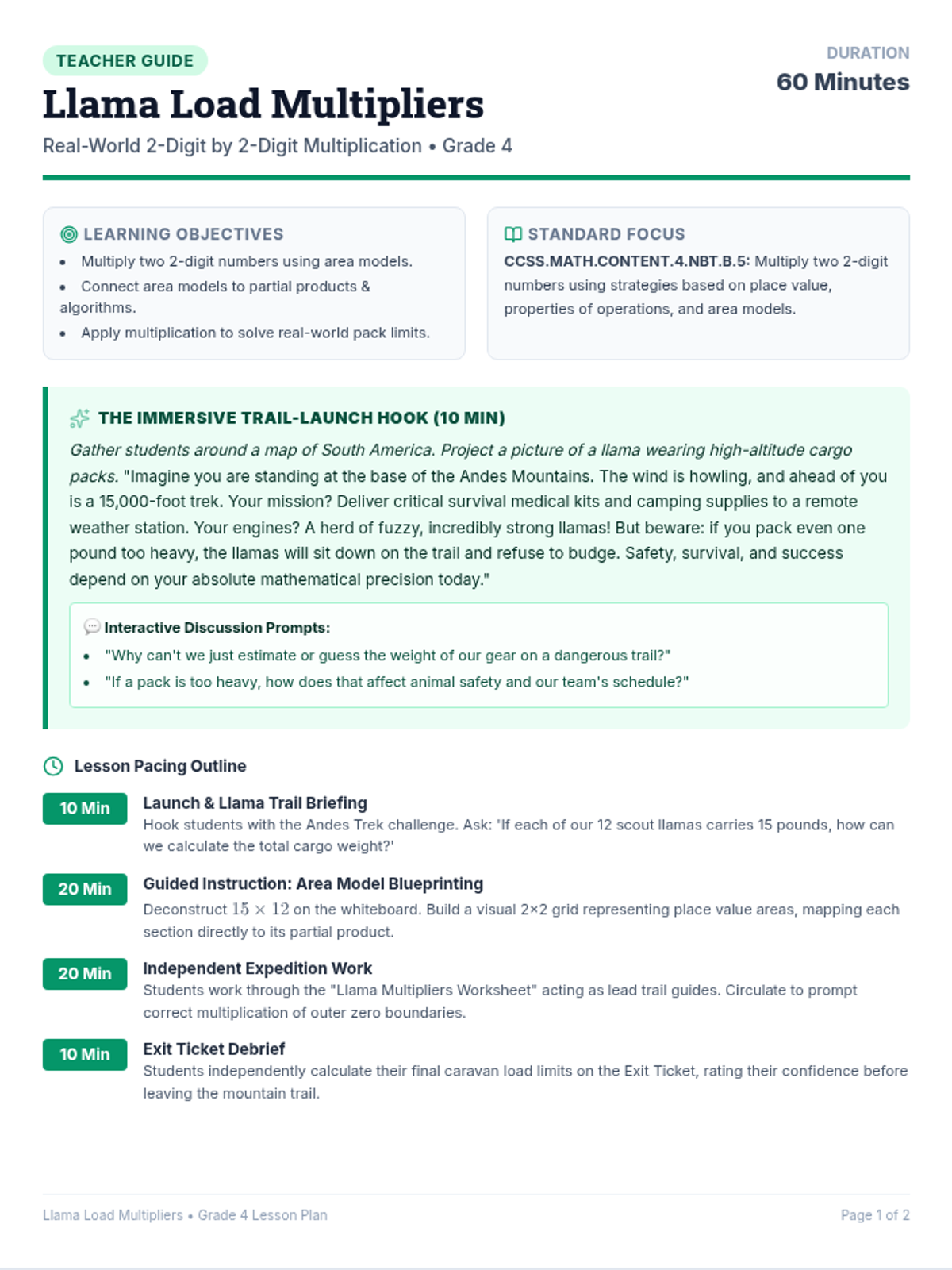
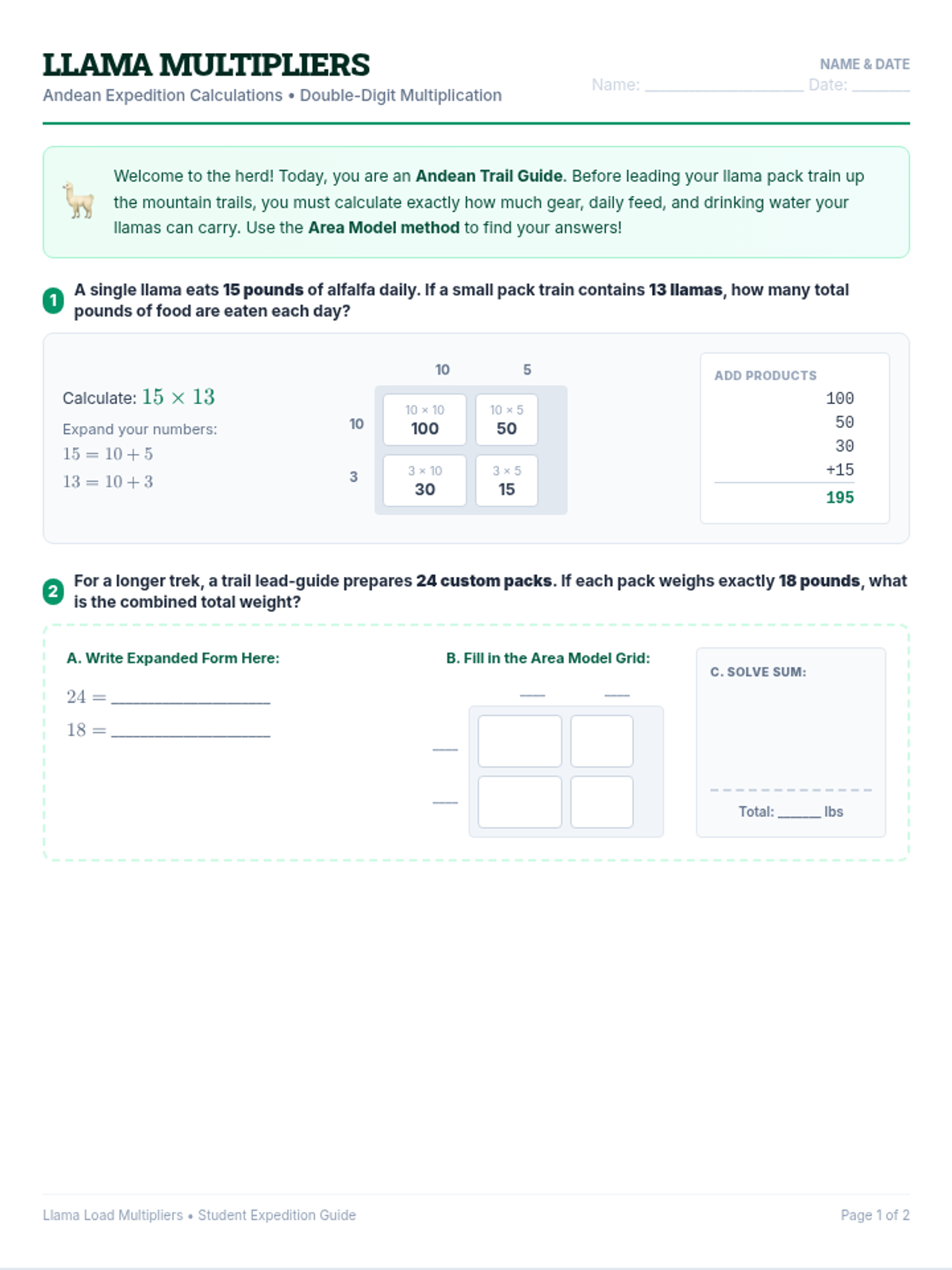
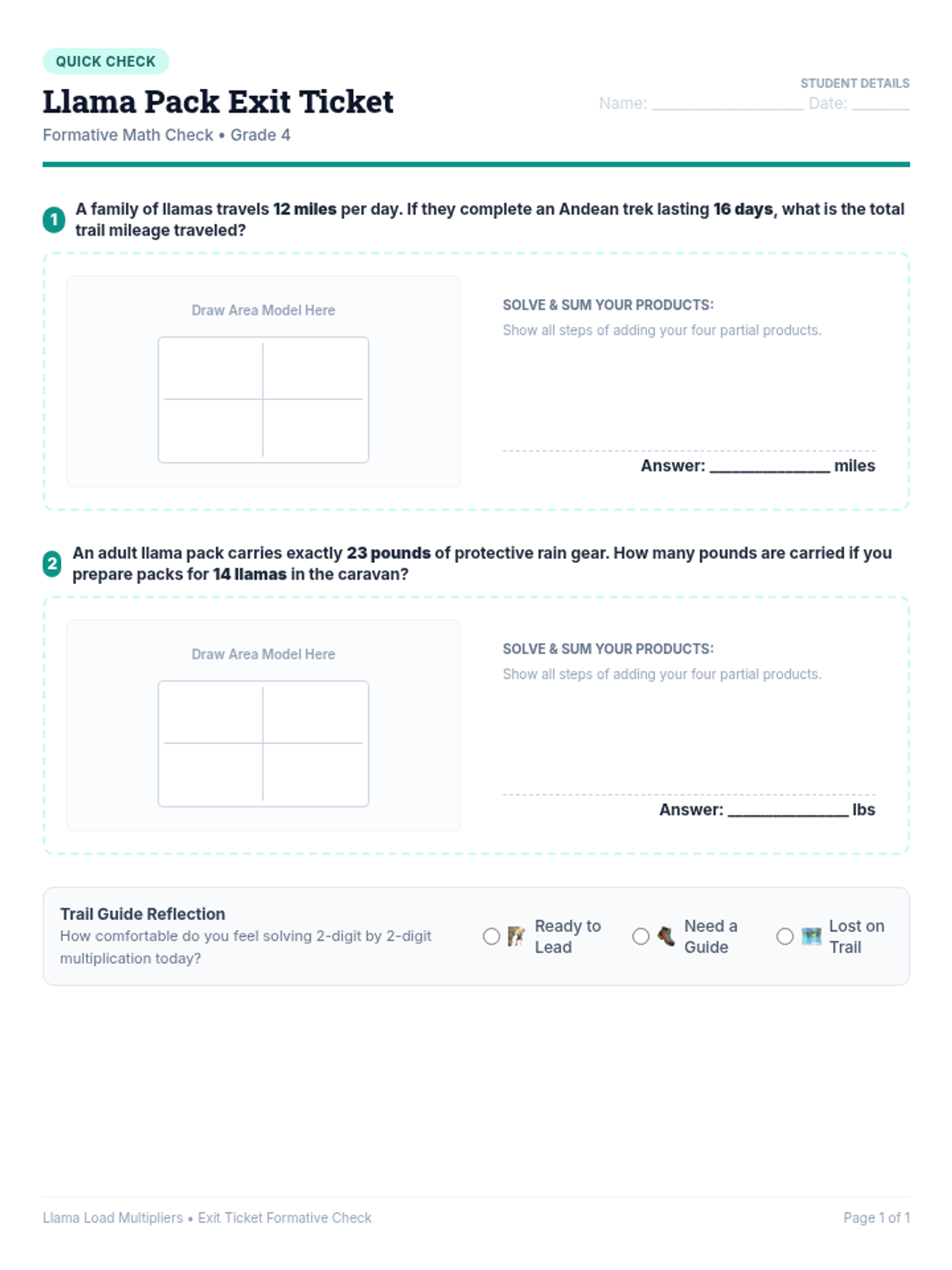
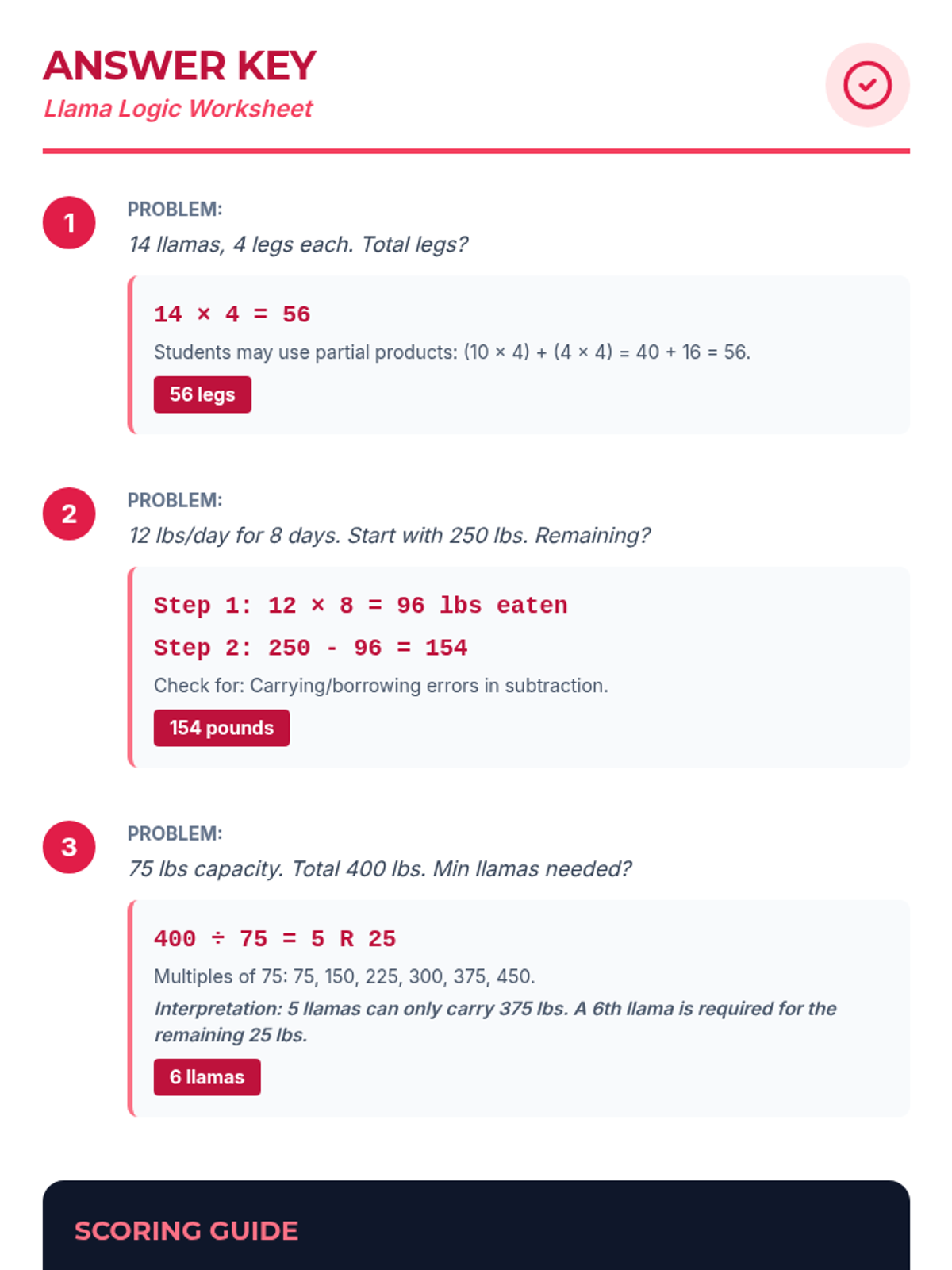
A 4th-grade math lesson that combines multi-digit multiplication (2-digit by 2-digit) with an engaging real-world context of calculating llama pack weights, daily food consumption, and herd supplies.
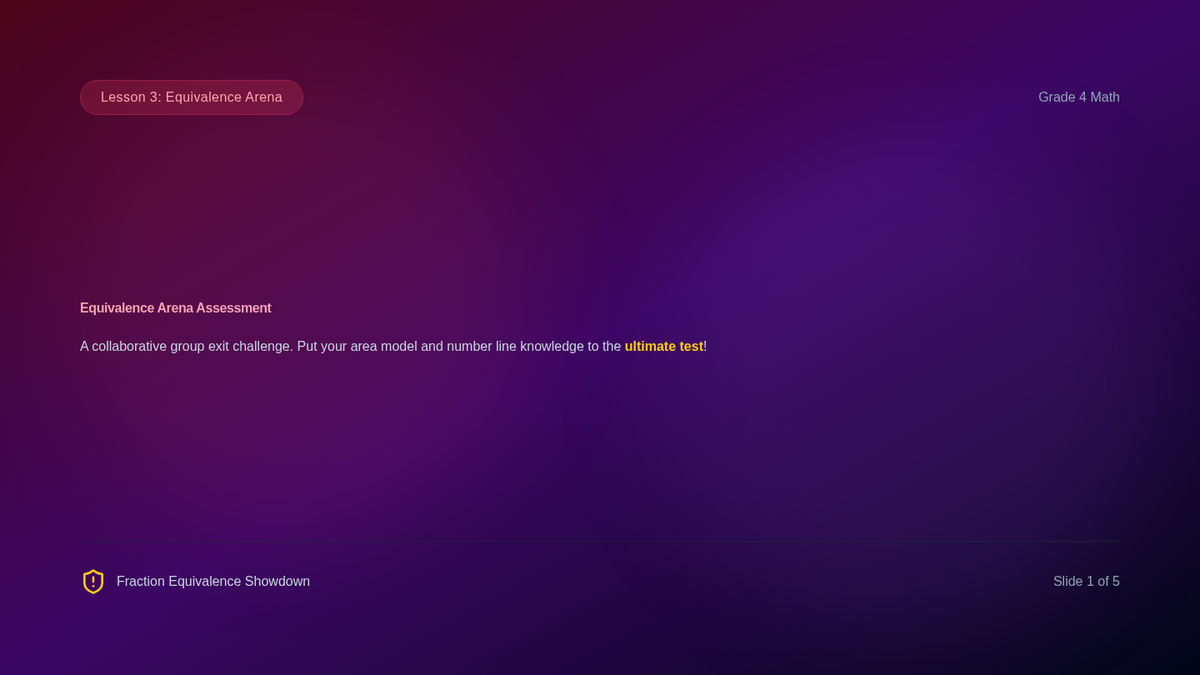
Assess students' ability to identify, construct, and explain equivalent fractions using both area models and number lines through a fun, collaborative exit challenge slide deck.
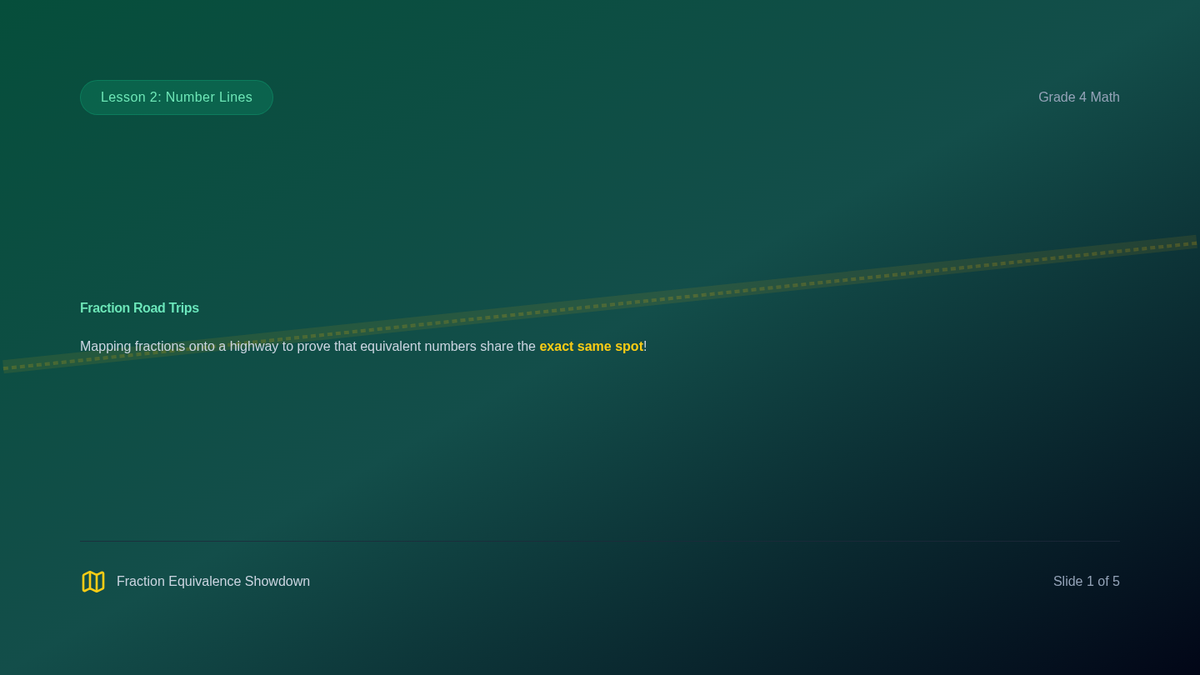
Deepen understanding of equivalent fractions by mapping them on physical and visual number lines, showing that equivalent fractions share the exact same location on a number line.
Introduce equivalent fractions using visual area models (circles and rectangles), showing how dividing parts into smaller pieces changes the numbers but keeps the total amount equal.
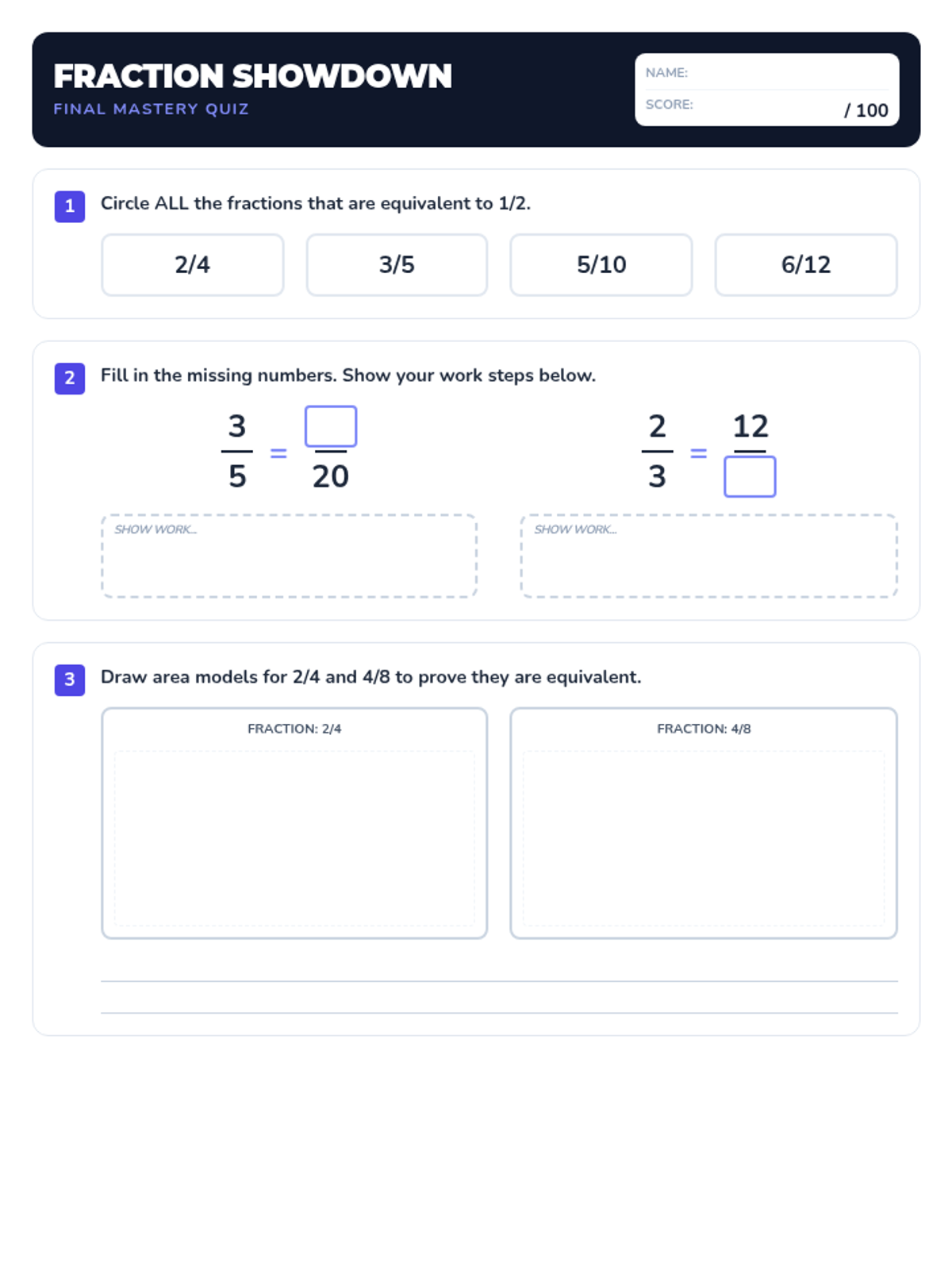
A summative assessment to gauge student understanding of equivalent fraction concepts and procedures.
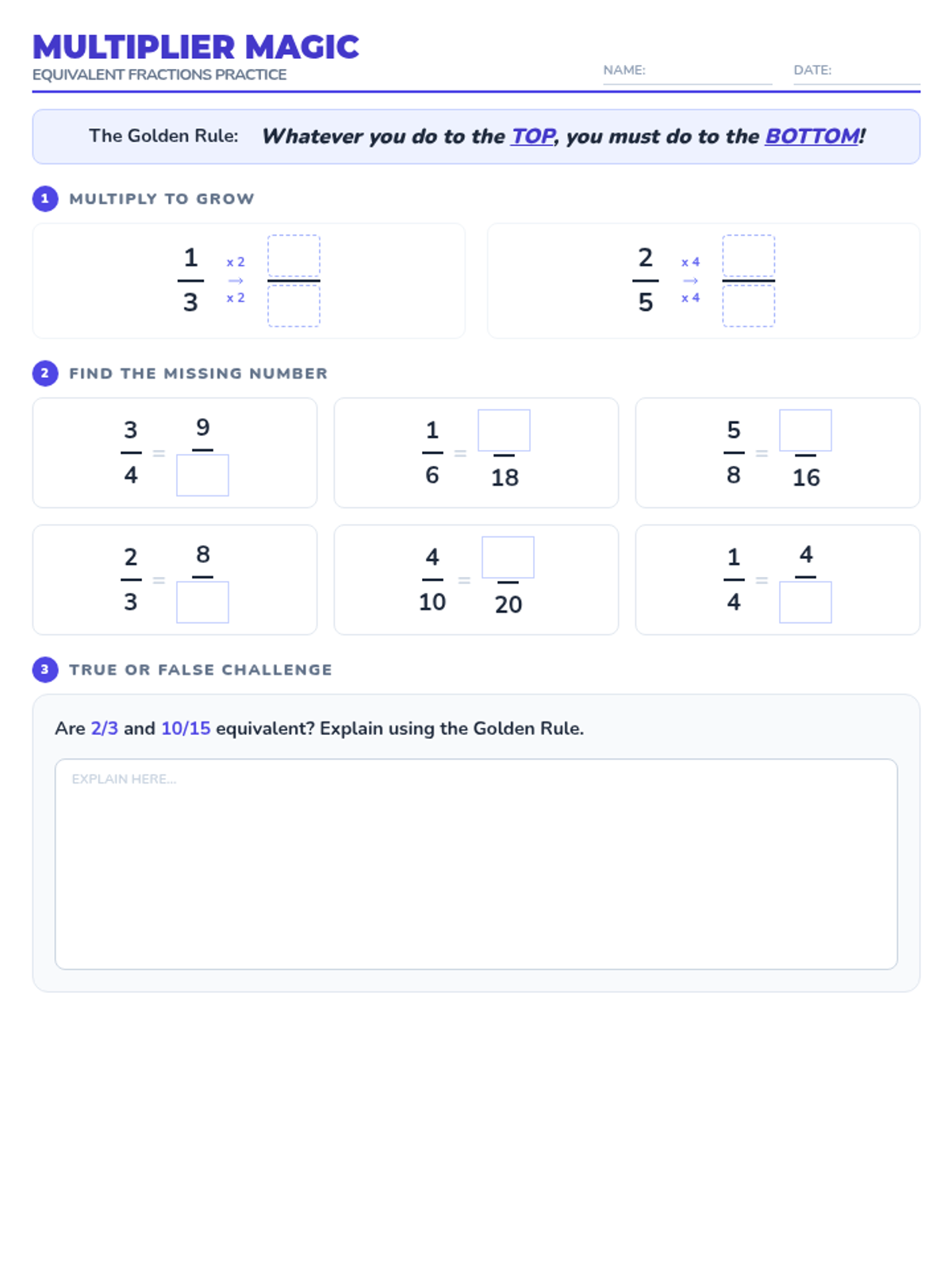
Moving from visual models to the multiplication and division rules for finding equivalent fractions.
An introduction to equivalent fractions using visual area models and number lines to build conceptual understanding.
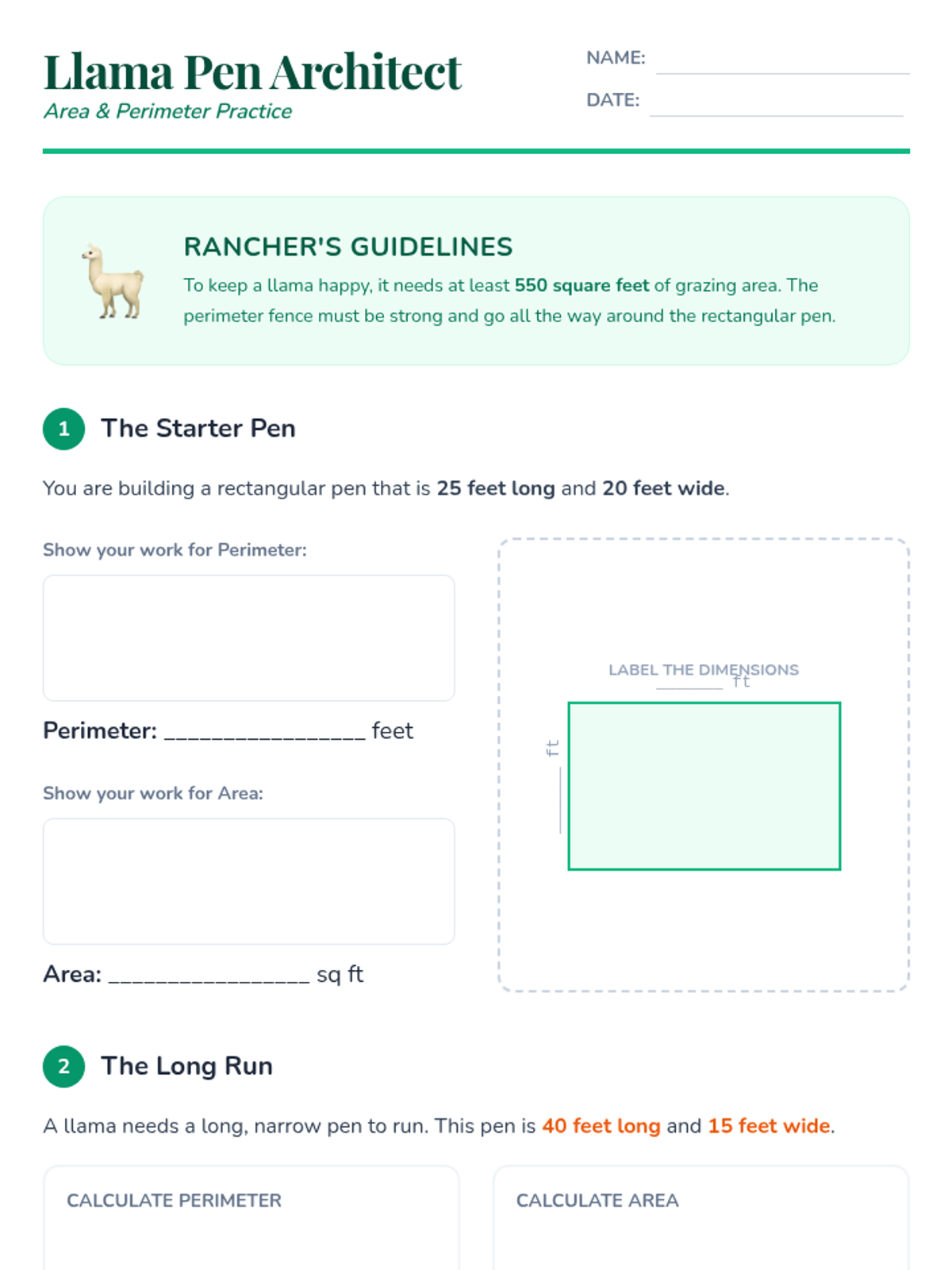
A comprehensive 4th-grade math and science lesson that explores the world of llamas while practicing area and perimeter through the design of llama habitats. Students will learn about llama anatomy and behavior before applying measurement skills to create the perfect pen.
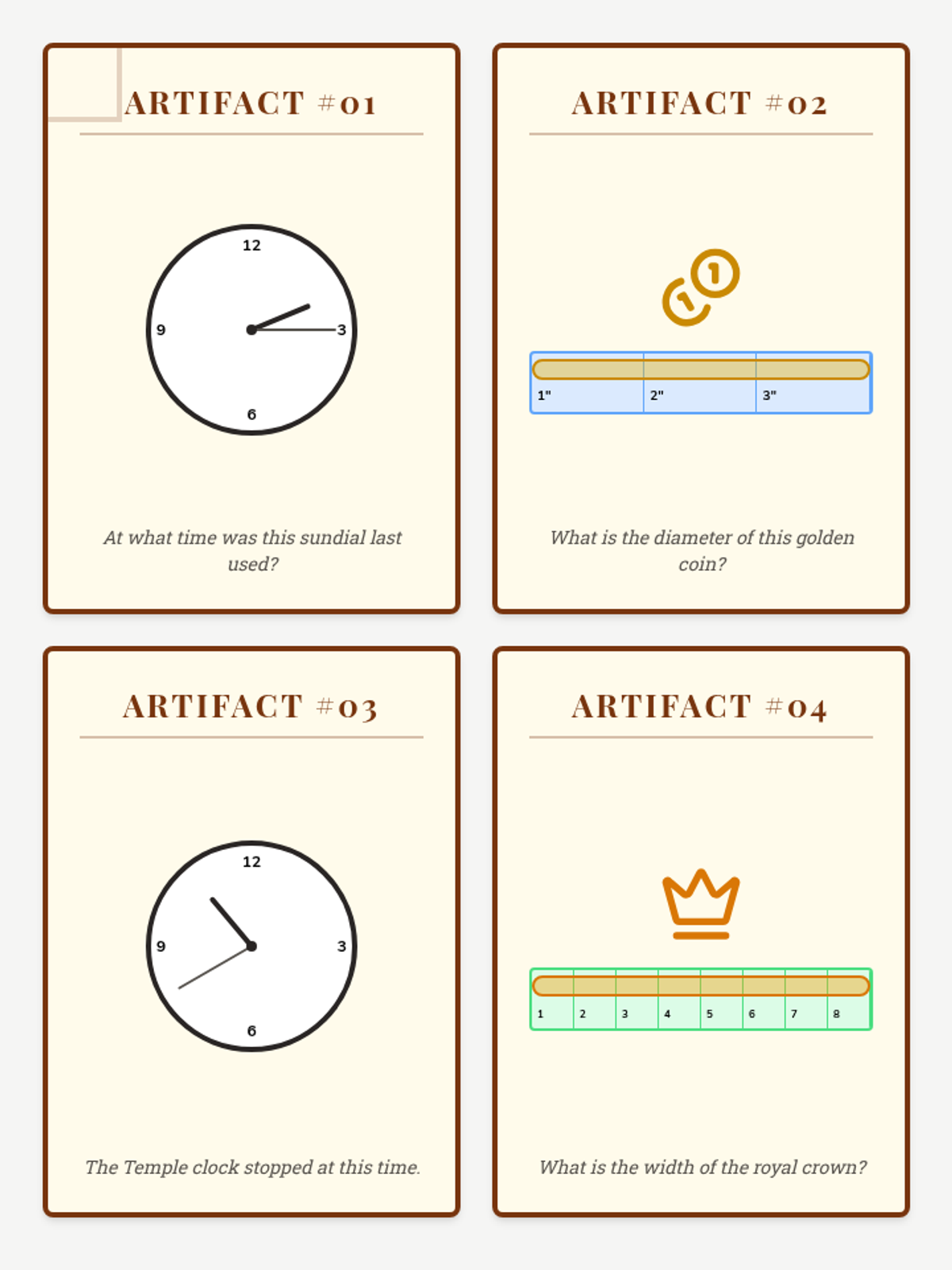
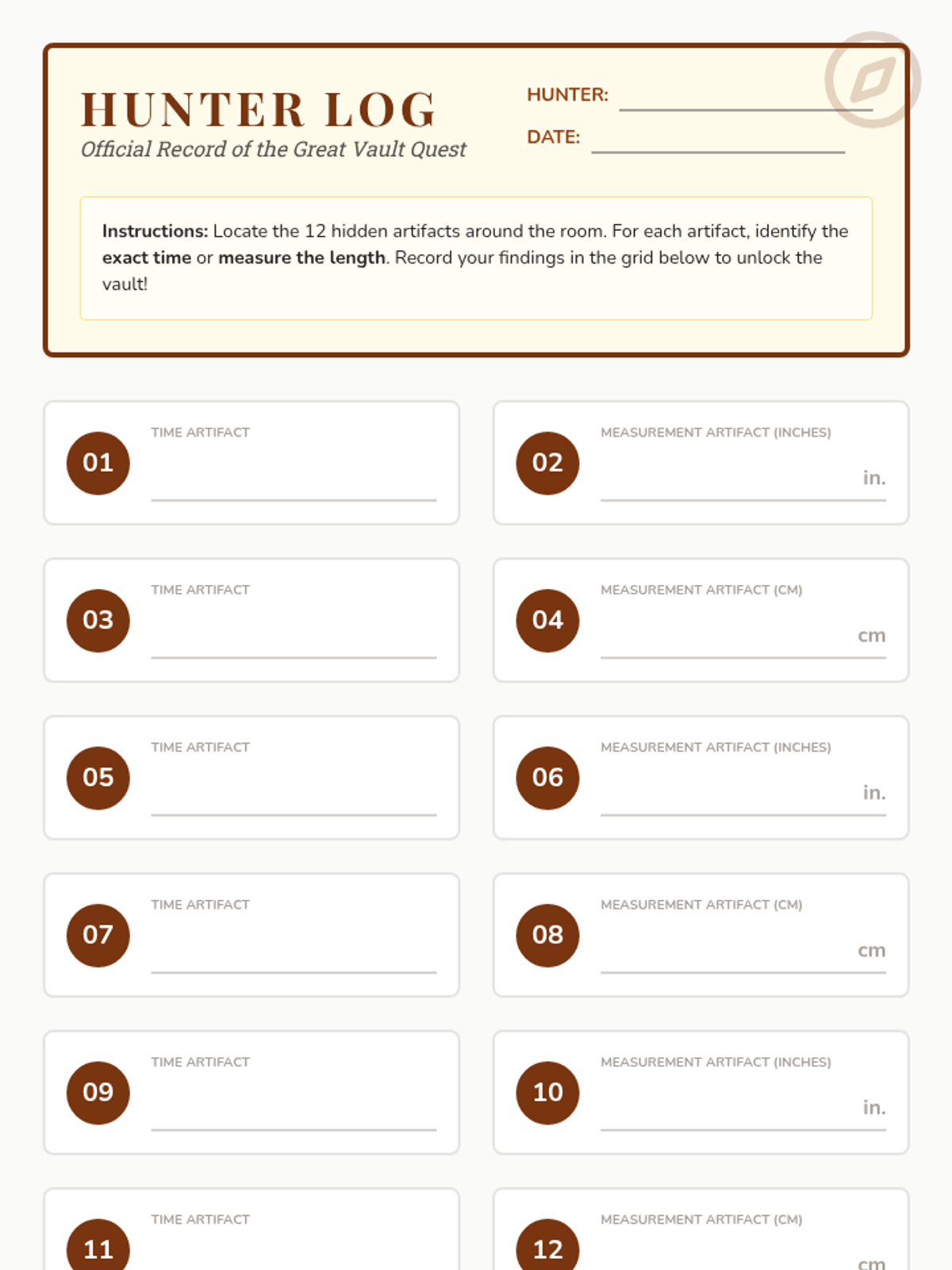
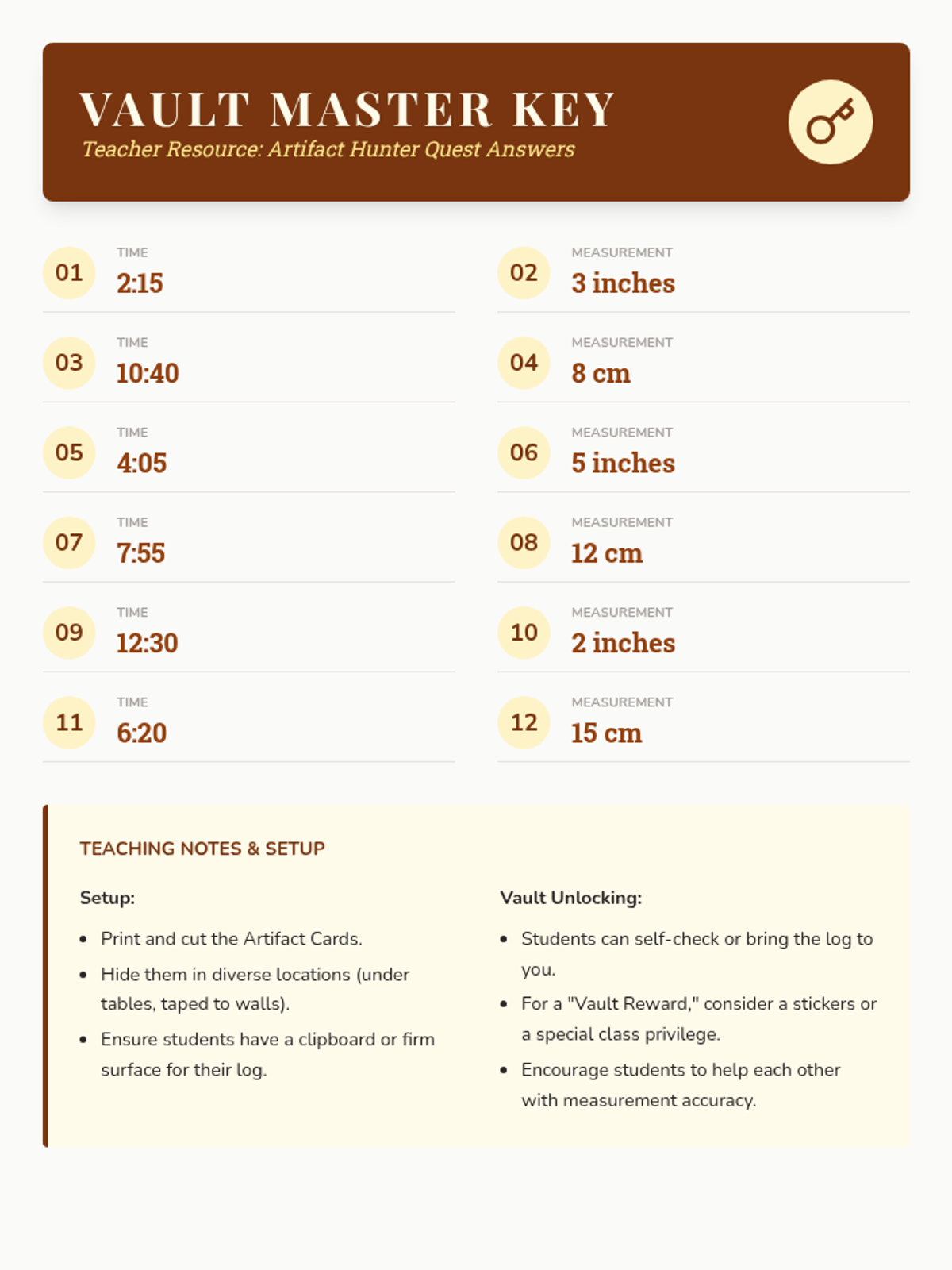
An interactive review game lesson where students become artifact hunters, solving time and measurement challenges to 'unlock' historical treasures. Covers telling time to the nearest 5 minutes and measuring objects in inches and centimeters.
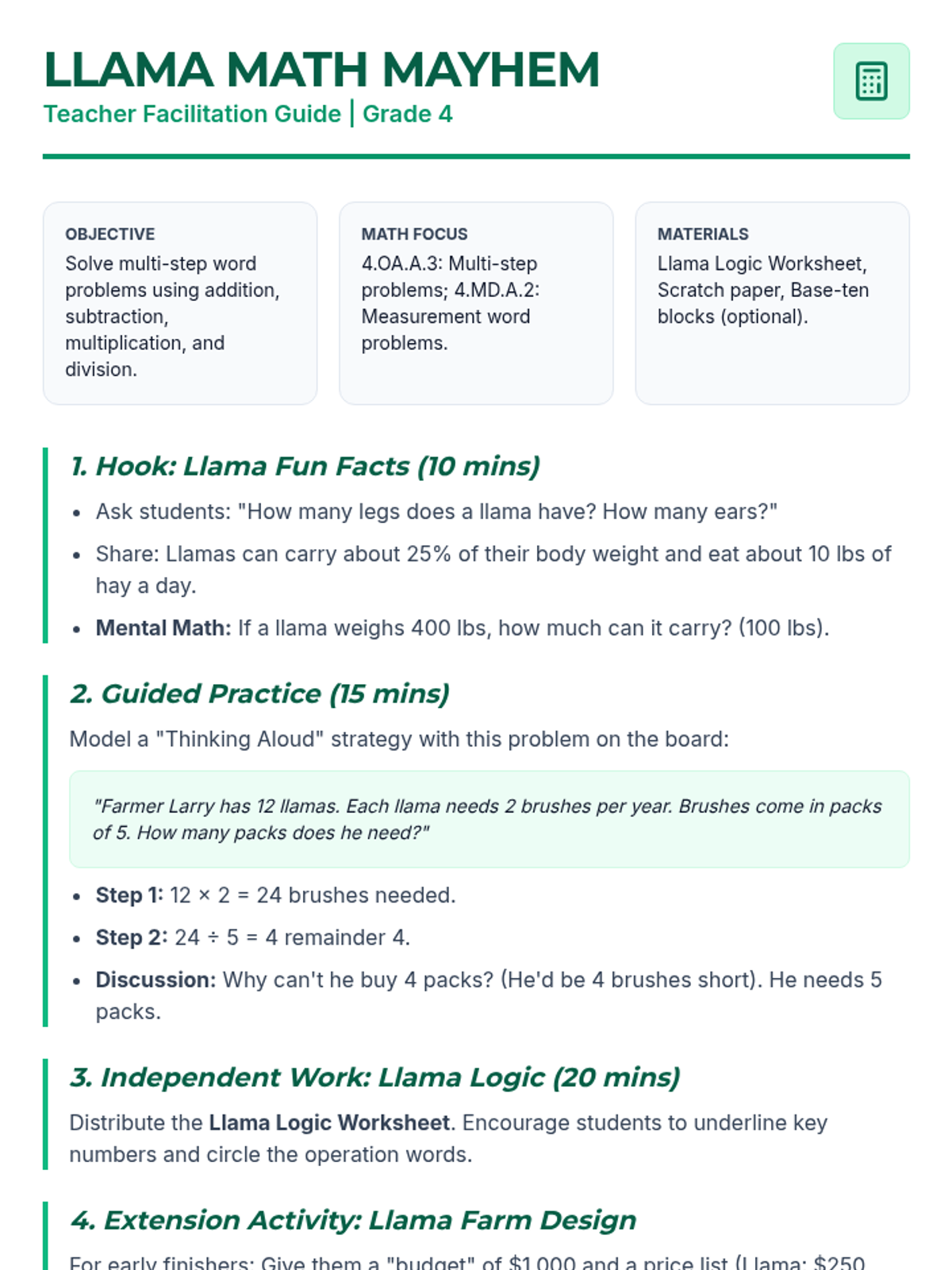
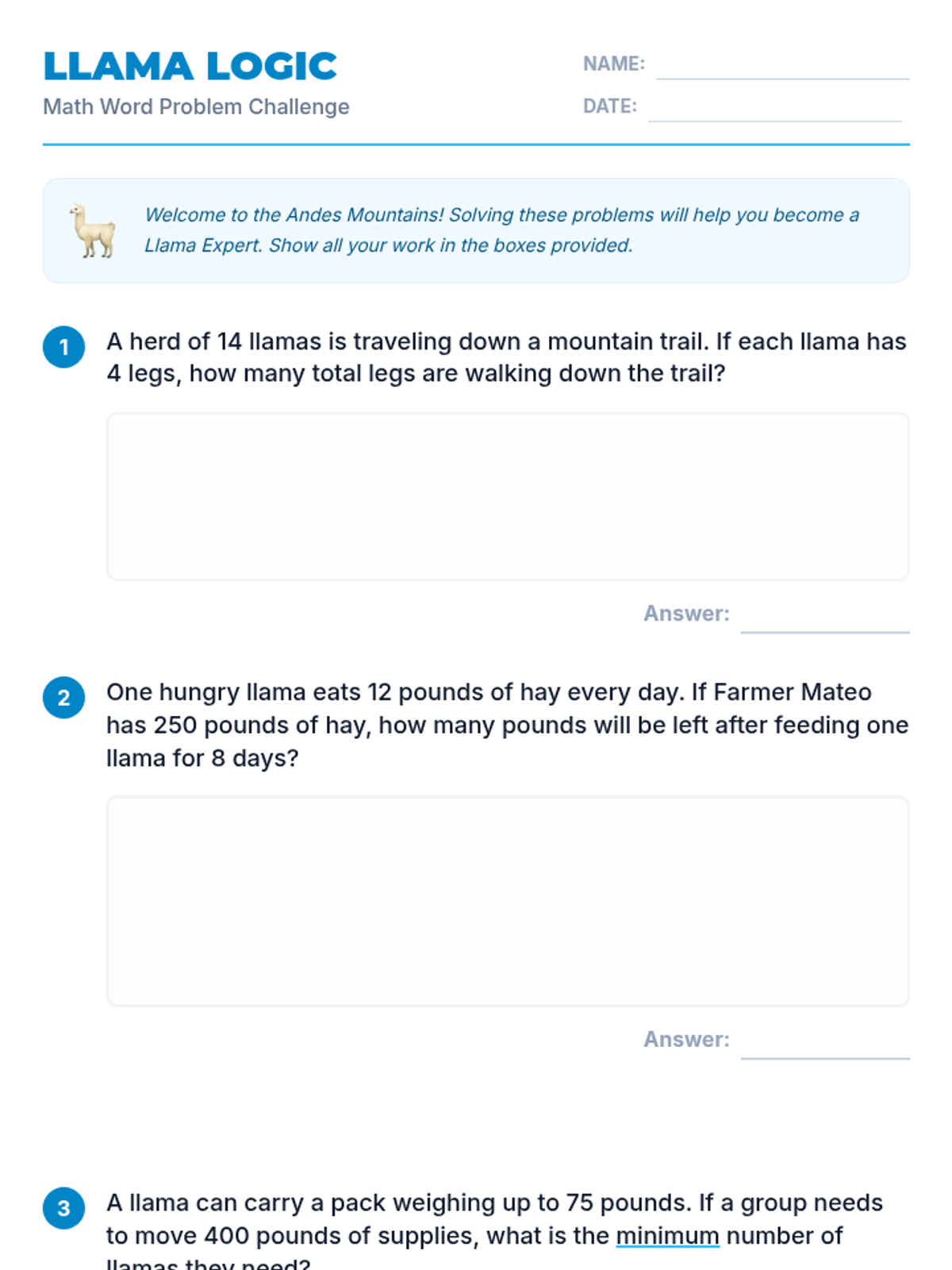
A 4th-grade math lesson that uses llamas as a context for solving multi-step word problems involving the four operations, measurement, and data interpretation.
Introducing the concept of unit fractions and how to build proper fractions using visual models and number lines.
A fun and engaging math lesson for 4th graders that uses llama-themed word problems to practice multi-step addition, subtraction, multiplication, and division.
A final review and assessment to measure student understanding of 4th-grade fraction standards.
Students will learn to find equivalent fractions and compare fractions with common denominators or numerators.
A fun, interactive math lesson for 4th graders that uses the world of llama shearing and wool processing to teach fraction concepts, including parts of a whole, equivalent fractions, and comparing fractions.
Students will explore fractions as parts of a whole using area models and number lines, identifying numerators and denominators.
A fun and engaging lesson for 4th graders that combines reading comprehension about llamas with multiplication and division word problems based on llama facts.
A cumulative review and assessment to measure student mastery of basic fraction concepts and equivalence.
Students will learn to identify and create equivalent fractions using visual representations and multiplication.
Students will understand the relationship between parts and wholes, identifying numerators and denominators using area models.
Students demonstrate their understanding of fractions through a comprehensive assessment covering identification, comparison, and equivalence.
Students will explore how different fractions can represent the same value using number lines and area models.
Students will identify numerators and denominators and use area models to represent fractions.
A 4th-grade math lesson that uses llama-themed word problems to practice multi-step operations, including addition, subtraction, multiplication, and division.
A culminating lesson to review unit concepts and conduct a final assessment of student understanding.
A hands-on lesson focusing on identifying and creating equivalent fractions using visual models and multiplication.
An introductory lesson focusing on understanding fractions as parts of a whole and representing them on a number line.
An engaging 4th-grade math lesson that uses llama-themed word problems to practice multi-step problem solving, including all four operations. Students will manage a virtual llama farm while practicing addition, subtraction, multiplication, and division.
A final review and formal assessment of the unit's core concepts: identifying, comparing, and finding equivalent fractions.
Students will explore equivalent fractions and compare fractions with like and unlike denominators using visual aids.
Students will learn to identify fractions as parts of a whole and parts of a set, using visual models and standard notation.
Students will demonstrate their mastery of 4th-grade fraction concepts through a formal assessment and a reflective project.
Students will learn to find and create equivalent fractions using multiplication, division, and visual area models.
Students will explore fractions as parts of a whole and parts of a set, using visual models to represent and name fractions.
A cumulative review and assessment where students demonstrate mastery of fraction concepts through various parlor-themed challenges.
Exploring how different fractions can represent the same amount using visual bars and multiplication/division strategies.
Students learn to identify numerators and denominators while representing fractions as parts of a whole using visual pizza models.
A 4th-grade math lesson that uses llamas to teach measurement conversions, data collection, and line plots. Students will analyze llama fleece production, height, and weight while practicing unit conversions and data representation.
A final unit assessment where students demonstrate their mastery of fraction concepts to earn their 'Master Baker' certification.
Students learn how to identify and create equivalent fractions using visual models and 'secret recipes' in the bakery.
Students explore fractions as parts of a whole through the lens of a bakery, focusing on naming fractions and identifying numerators and denominators.
A cumulative assessment to evaluate student understanding of fraction naming, representation, and equivalence.
Students will explore how different fractions can represent the same value using multiplication and visual area models.
Students will learn to identify and name fractions using area and set models, focusing on numerator and denominator vocabulary.
A comprehensive assessment to evaluate students' ability to identify, represent, and solve problems involving basic fractions.
Students will apply their knowledge of fractions to solve real-world word problems using visual representations and number lines.
Students will learn to identify fractions as parts of a whole and represent them using various visual models like circles, rectangles, and sets.
A fun, llama-themed math lesson for 4th graders focusing on multi-digit multiplication and division through real-world llama farm scenarios.
A final review and assessment where students demonstrate mastery of identifying, comparing, and finding equivalent fractions through a pizza-themed test.
Students use pizza visual models to identify and create equivalent fractions, understanding how the same total amount can be represented with different slice sizes.