Final financial reflection. Students balance their ledgers, evaluate their spending choices, and celebrate their savings successes or identify areas for improvement.
Students face a deficit scenario caused by an unexpected expense. They must analyze their spending to identify 'wants' that can be cut to balance the budget and return to a positive balance.
1/16
Focuses on financial decision-making by distinguishing essential needs from discretionary wants to fix a deficit.
Students define income and expenses and practice the foundational skill of recording transactions in a ledger to maintain a running balance.
Students brainstorm and categorize different ways to earn money, establishing the 'Cash In' side of the financial equation.
Students analyze pre-filled ledgers to identify deficits and 'spending leaks', acting as budget doctors to fix financial health.
Challenges students to solve budget emergencies and navigate financial deficits using problem-solving strategies.
A culminating project where students create a budget to reach a specific savings goal while managing weekly expenses.
Mid-month data analysis. Students review their spending trends and forecast their future balance to ensure they stay on track for their big savings goal.
Exploration of fixed vs. variable expenses. Students categorize potential purchases as needs or wants and record their first week of planned spending.
A simulation of the first two weeks of a month where students make spending decisions for a fictional character and record them in real-time.
Students reflect on their financial choices, identify spending leaks, and create a revised budget for future stability.
A 2nd-grade math lesson where students identify U.S. coins and calculate their total value through video instruction and a hands-on coin rubbing activity.
Students differentiate between essential expenses and discretionary spending to prioritize financial health.
An engaging 4th-grade lesson combining biology and economics through the lens of llama farming. Students explore llama anatomy and care while applying mathematical skills to manage a virtual llama farm budget.
Students navigate weeks three and four of the simulation, encountering unexpected costs and learning to prioritize needs over wants.
Students are introduced to the core concepts of money flow by sorting various financial scenarios into 'money in' (income) and 'money out' (expenses). This foundational lesson ensures students can correctly identify the direction of cash flow.
A high school history and technology lesson exploring the origins of the platform economy through the lens of the first YouTube video, 'Me at the zoo'. Students analyze the shift from professional broadcasting to user-generated content and debate the societal impacts of democratized media.
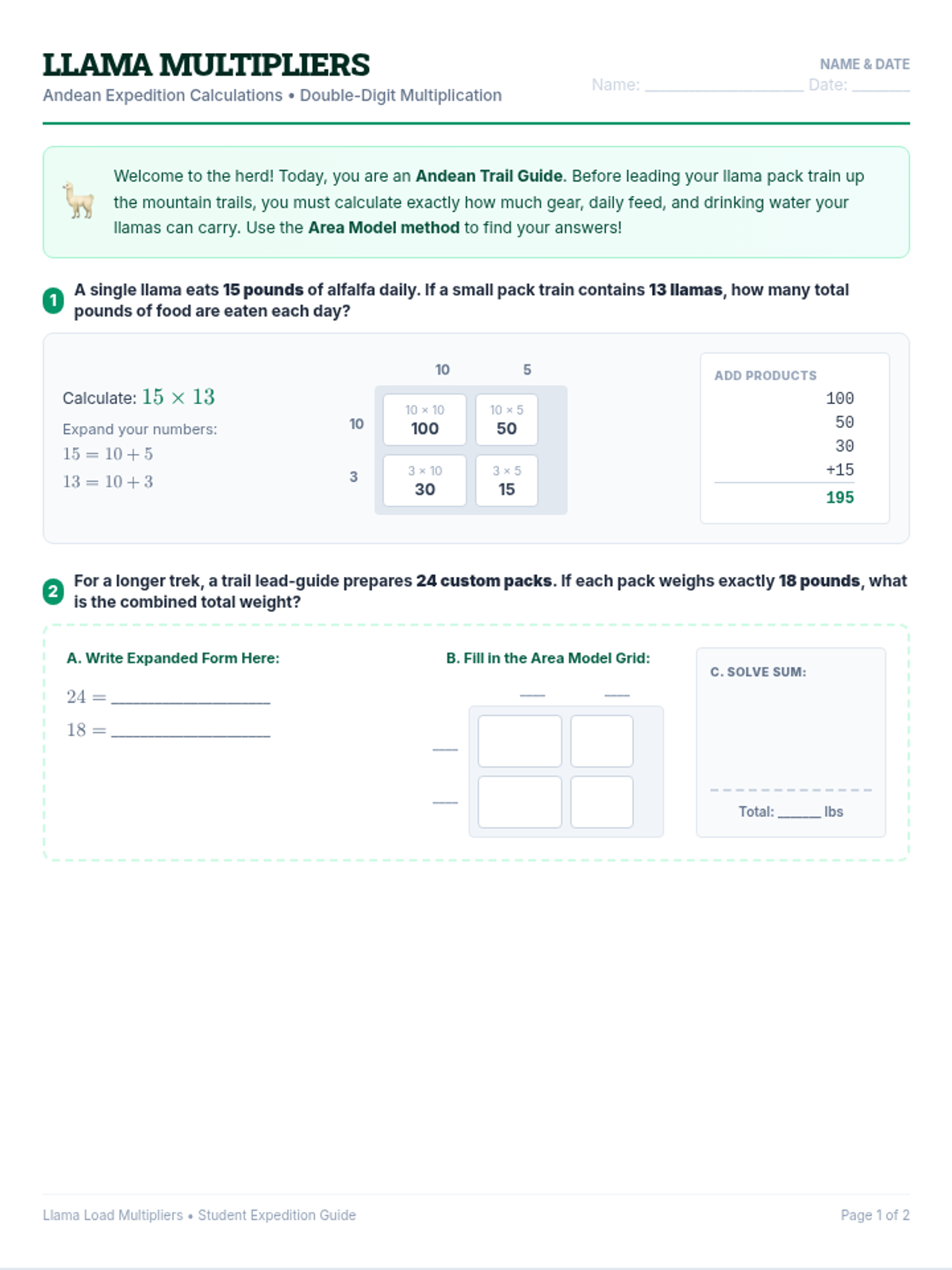
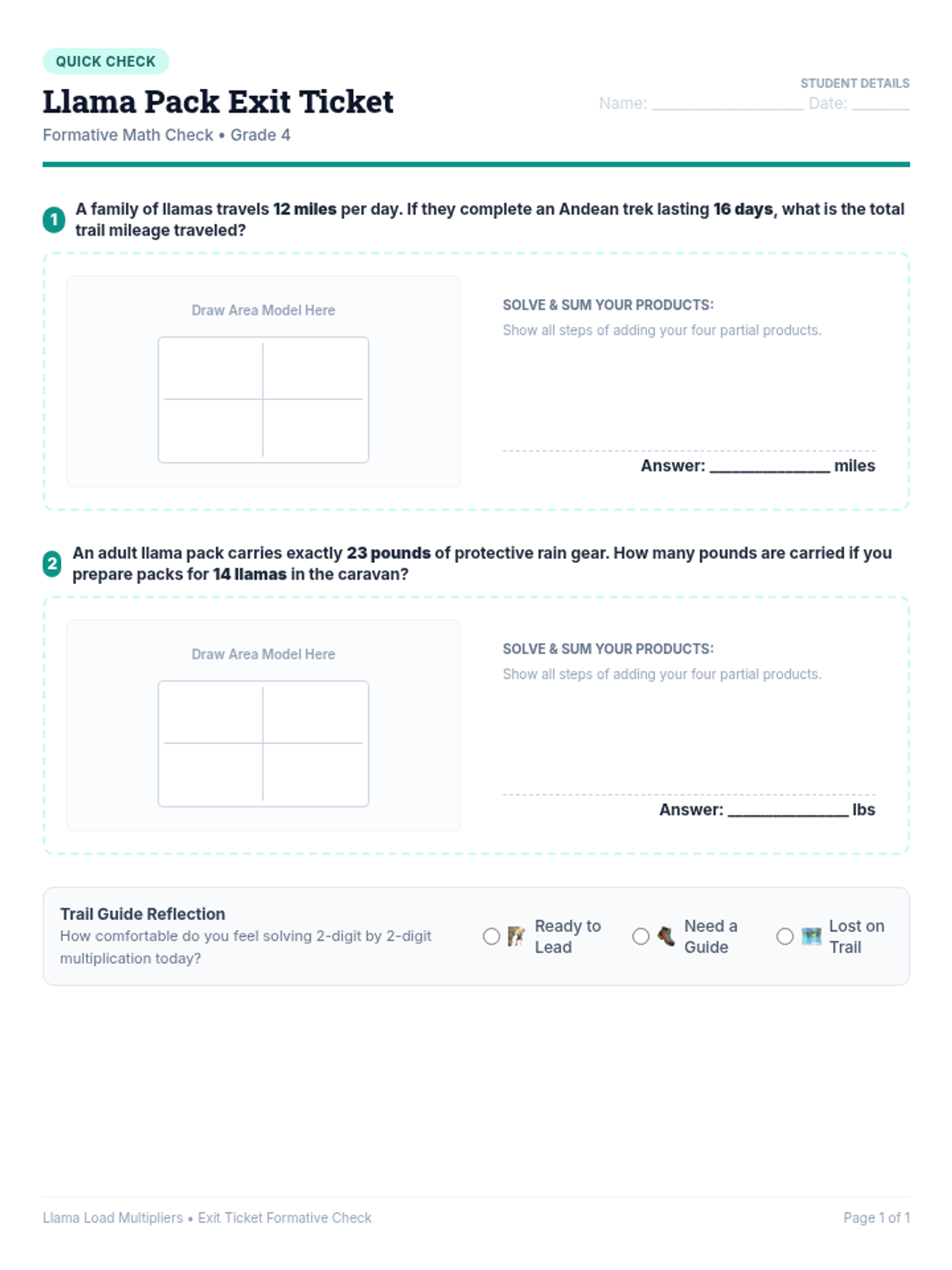
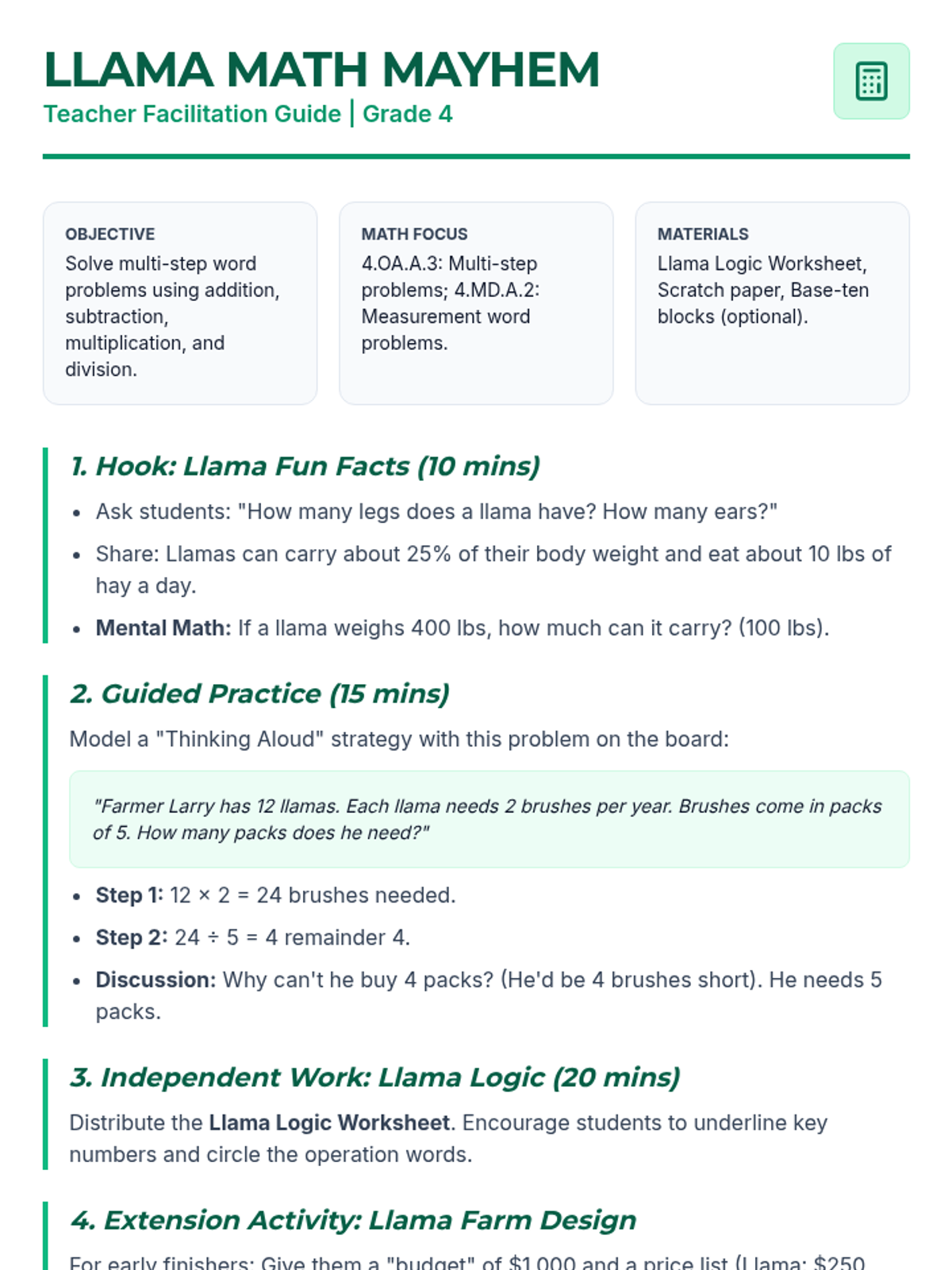
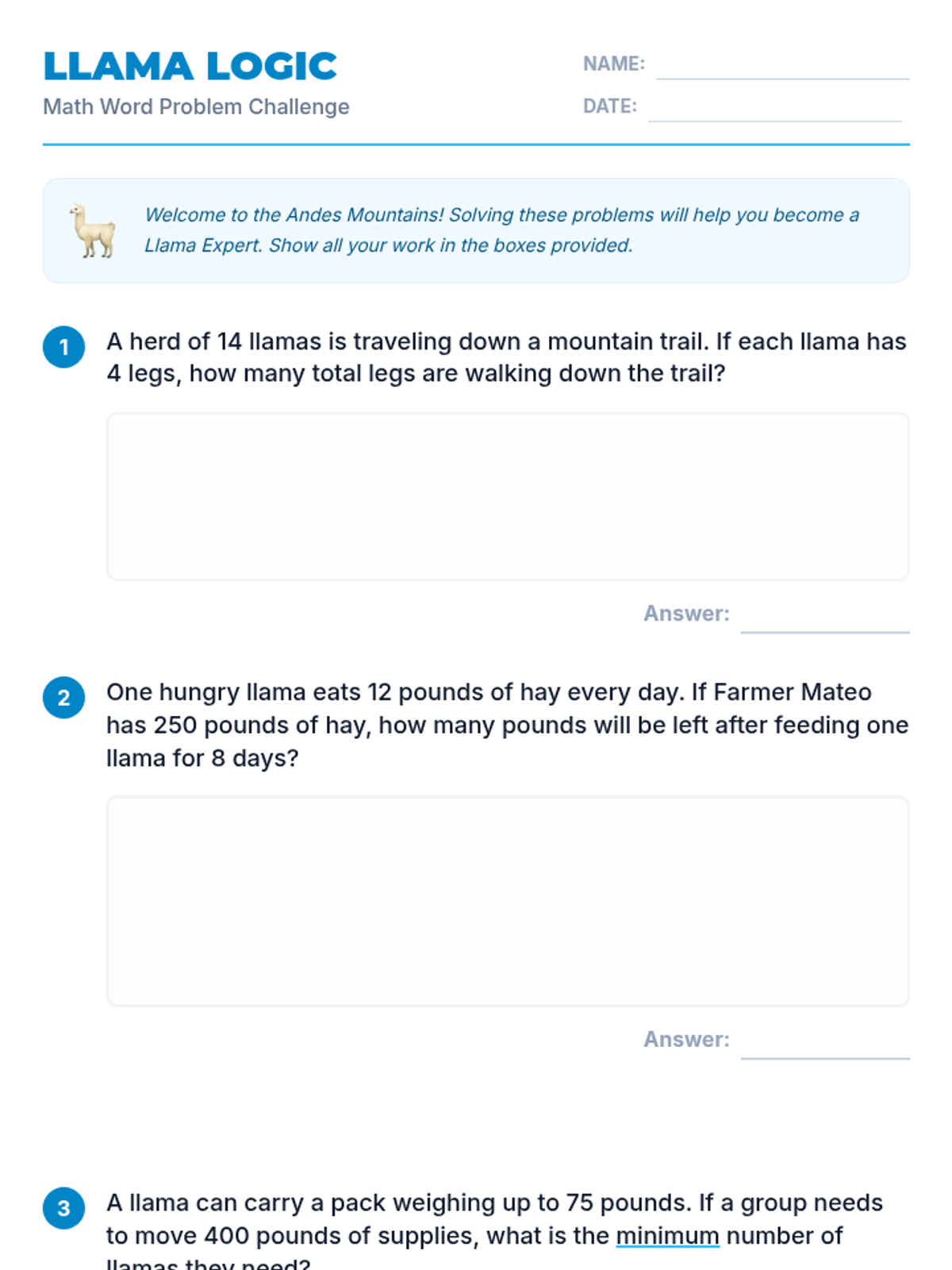
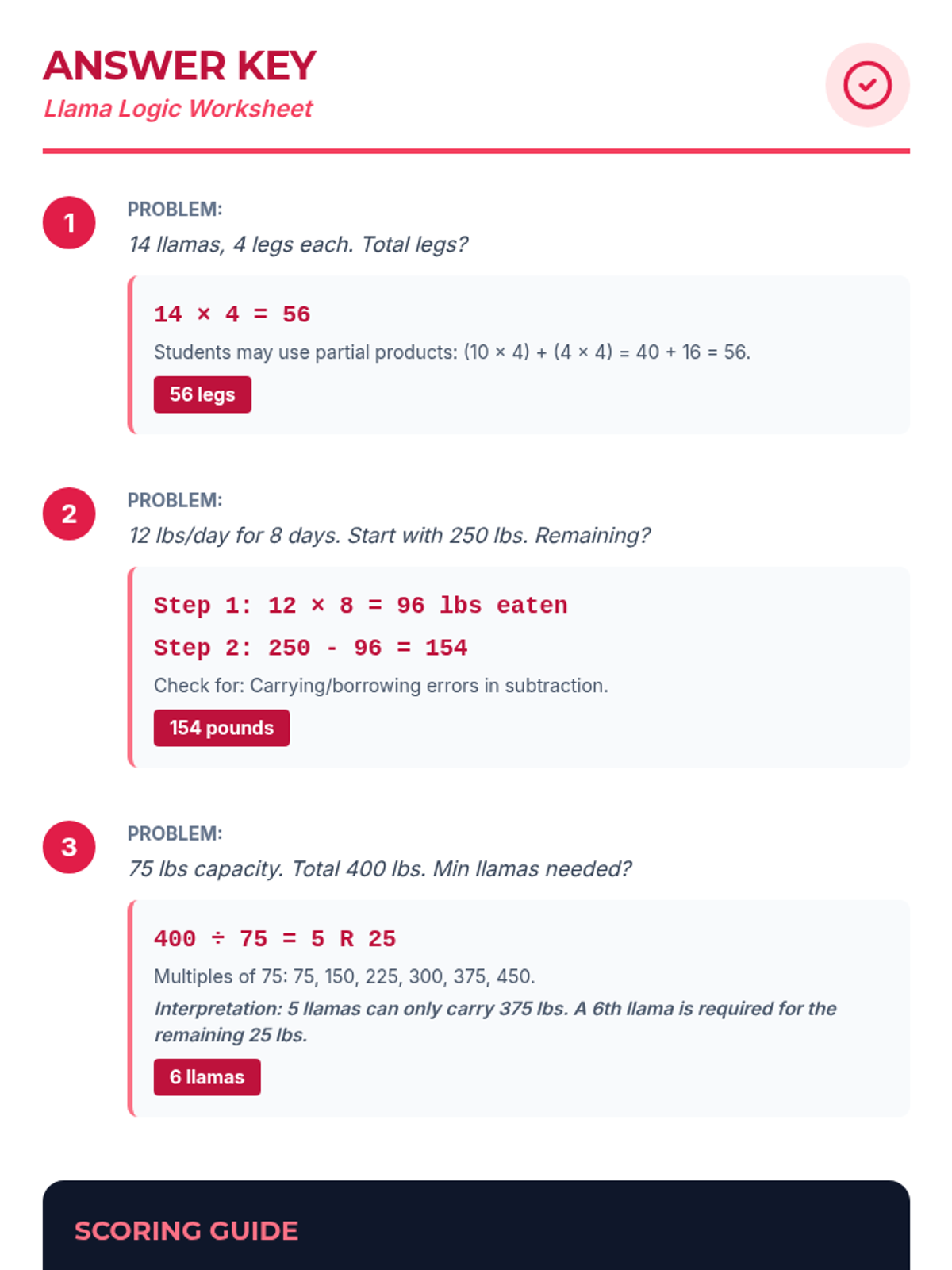
A fun, llama-themed math lesson for 4th graders focusing on solving multi-step word problems involving addition, subtraction, multiplication, and division in the context of a llama ranch.
A media literacy lesson where students analyze the evolution of digital media by comparing the first YouTube video, 'Me at the zoo,' to modern content standards. Students explore concepts of user-generated content, monetization, and the commercialization of attention.
Students master the skill of recording transactions in a financial ledger, ensuring accuracy in calculating a running balance.