Visual aids for Lesson 2, demonstrating body percussion sounds and introducing the concept of echoing rhythm patterns.
A worksheet for students to plan their pattern bracelets, including selecting a pattern type (AB, AAB, ABB), sketching the design, and writing a short justification.
1/16
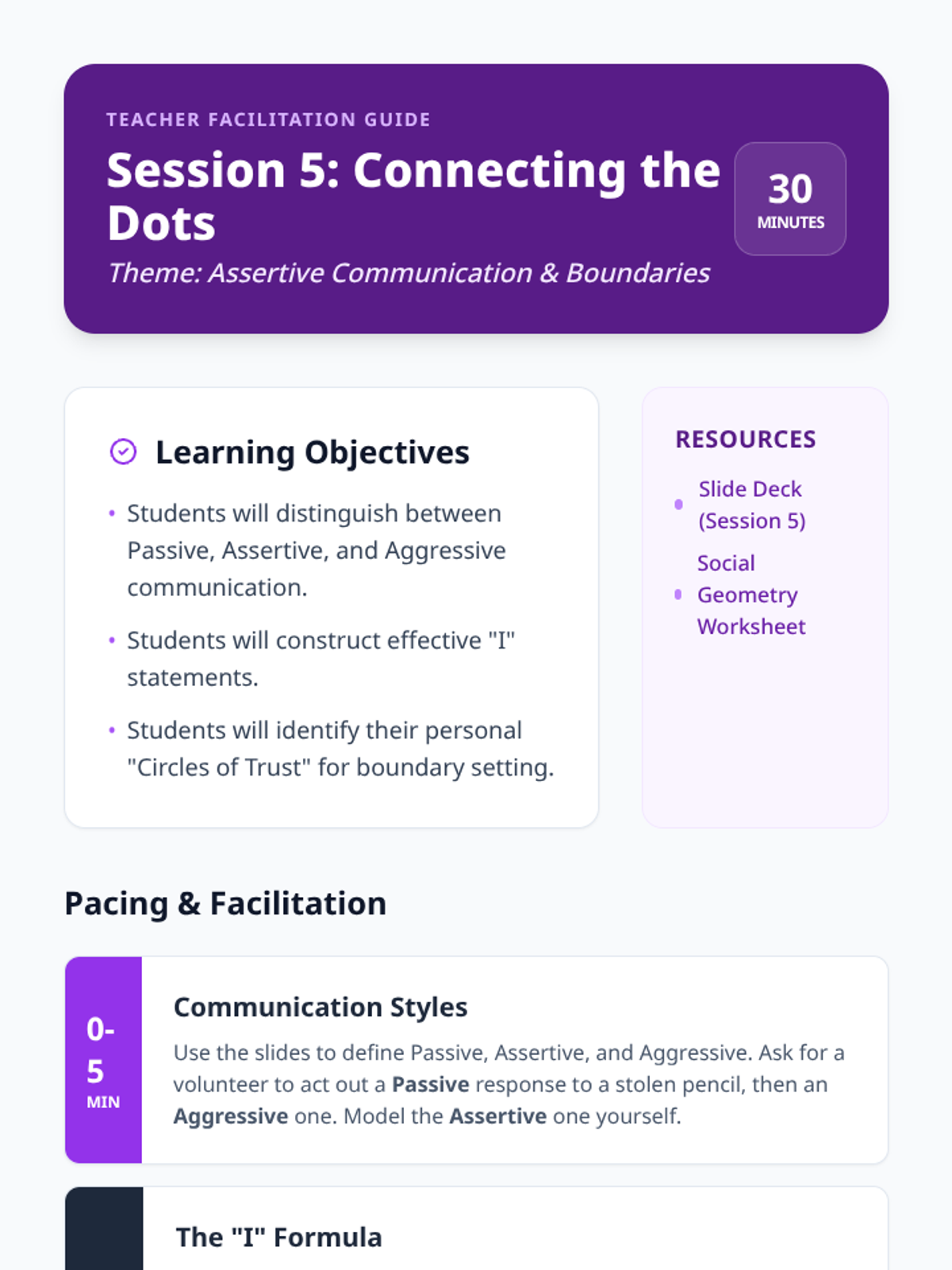
Teacher-facing facilitation guide for Session 5. Includes guidance on modeling assertive communication and navigating cultural differences in communication styles.
1/13
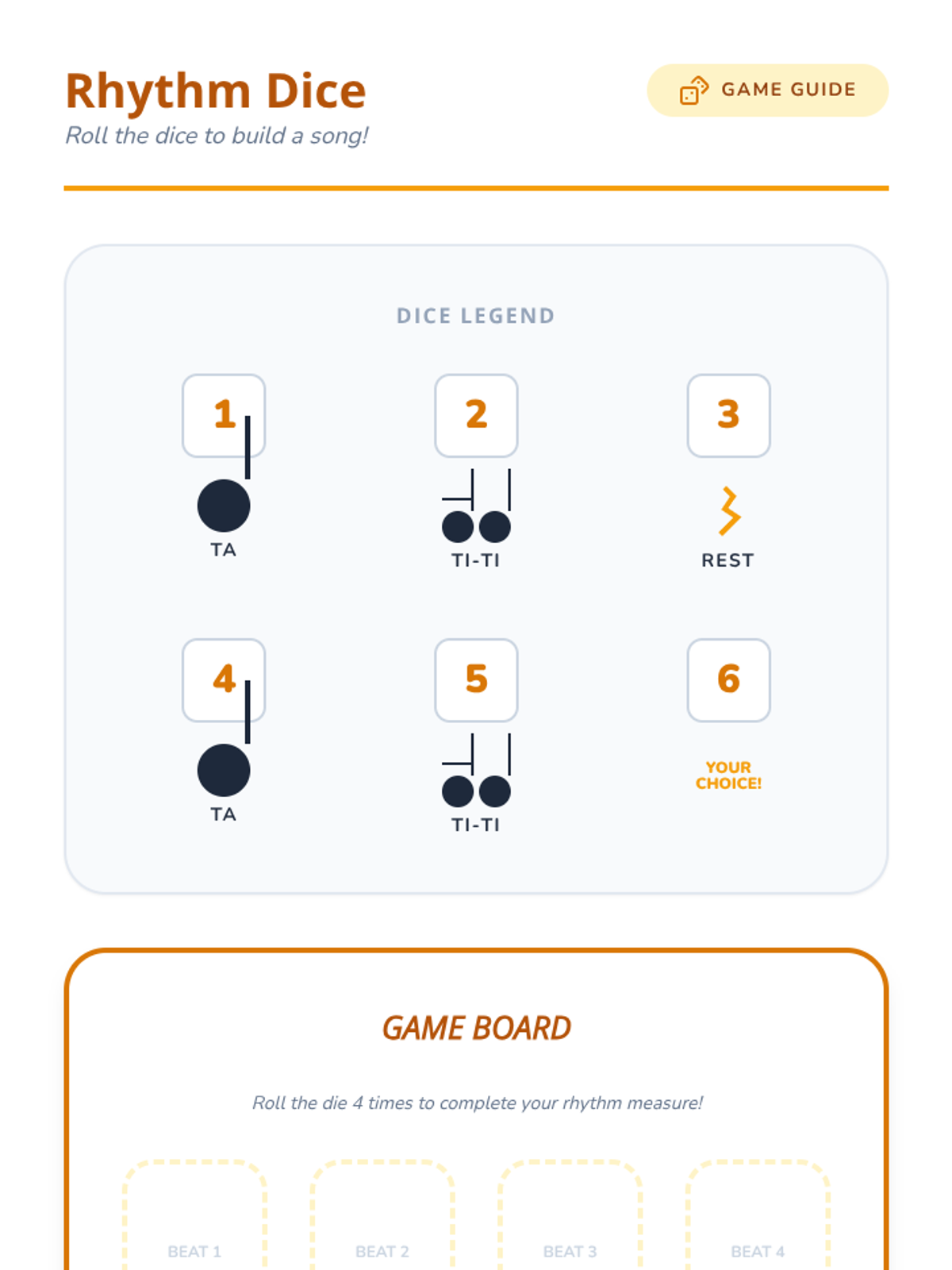
A dice-based rhythm game where 2nd graders roll a die to determine which notes (Ta, Ti-Ti, or Rest) to include in their 4-beat rhythm pattern.
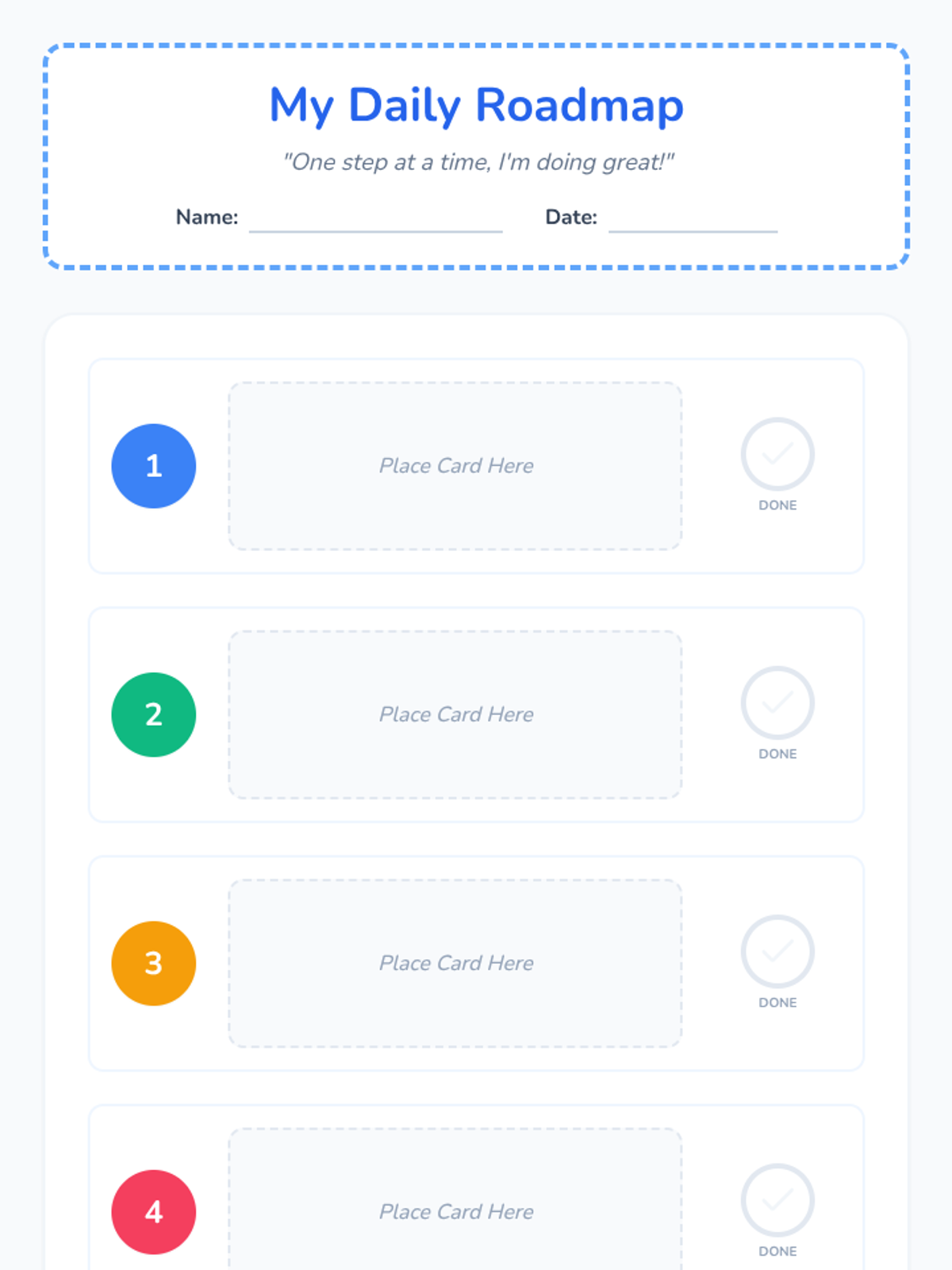
A base schedule board for students to organize their daily routine cards, featuring five numbered slots and check-off circles.
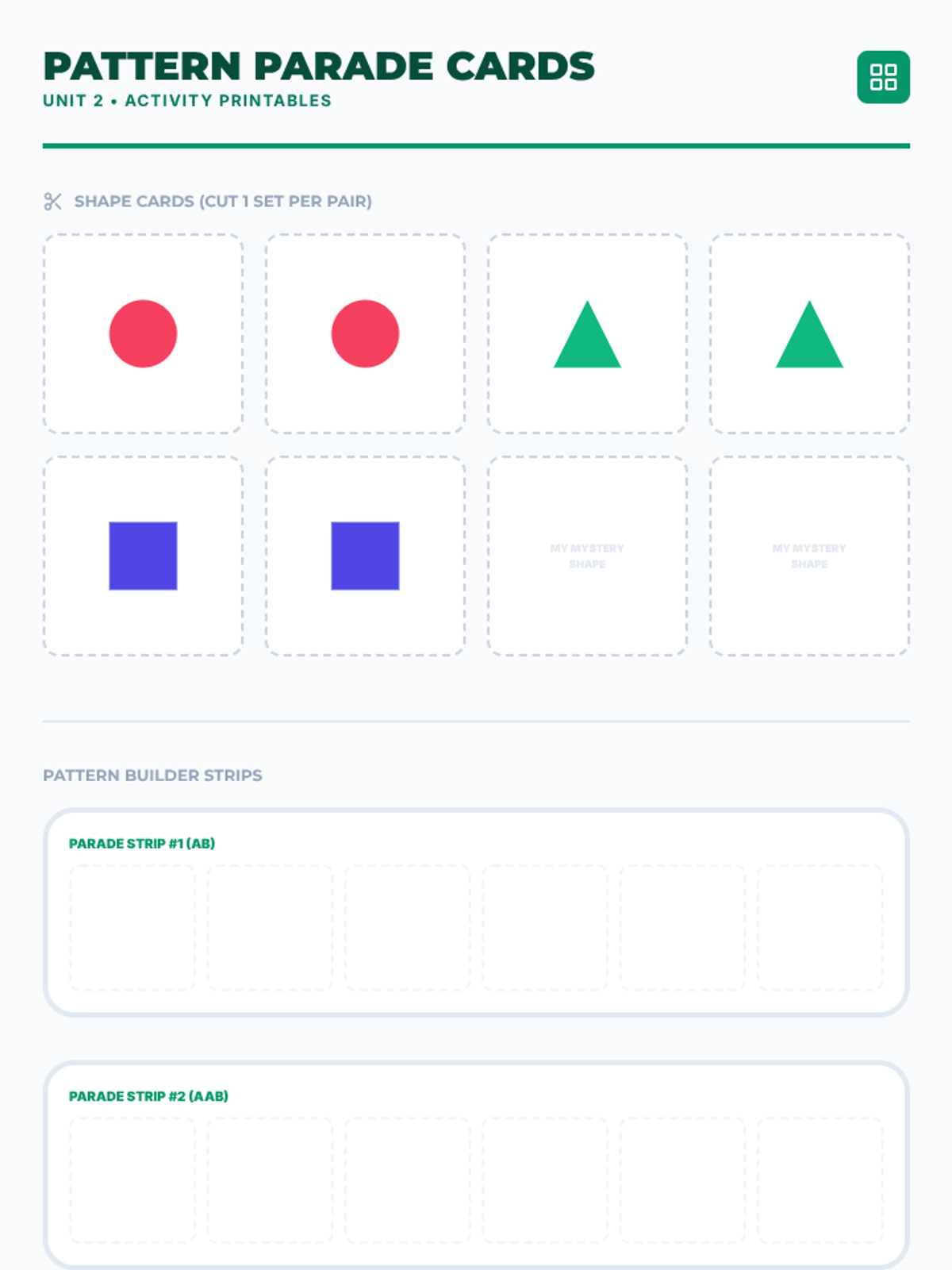
A printable set of shape cards and pattern strips for students to build and extend AB, AAB, and ABB patterns in pairs.
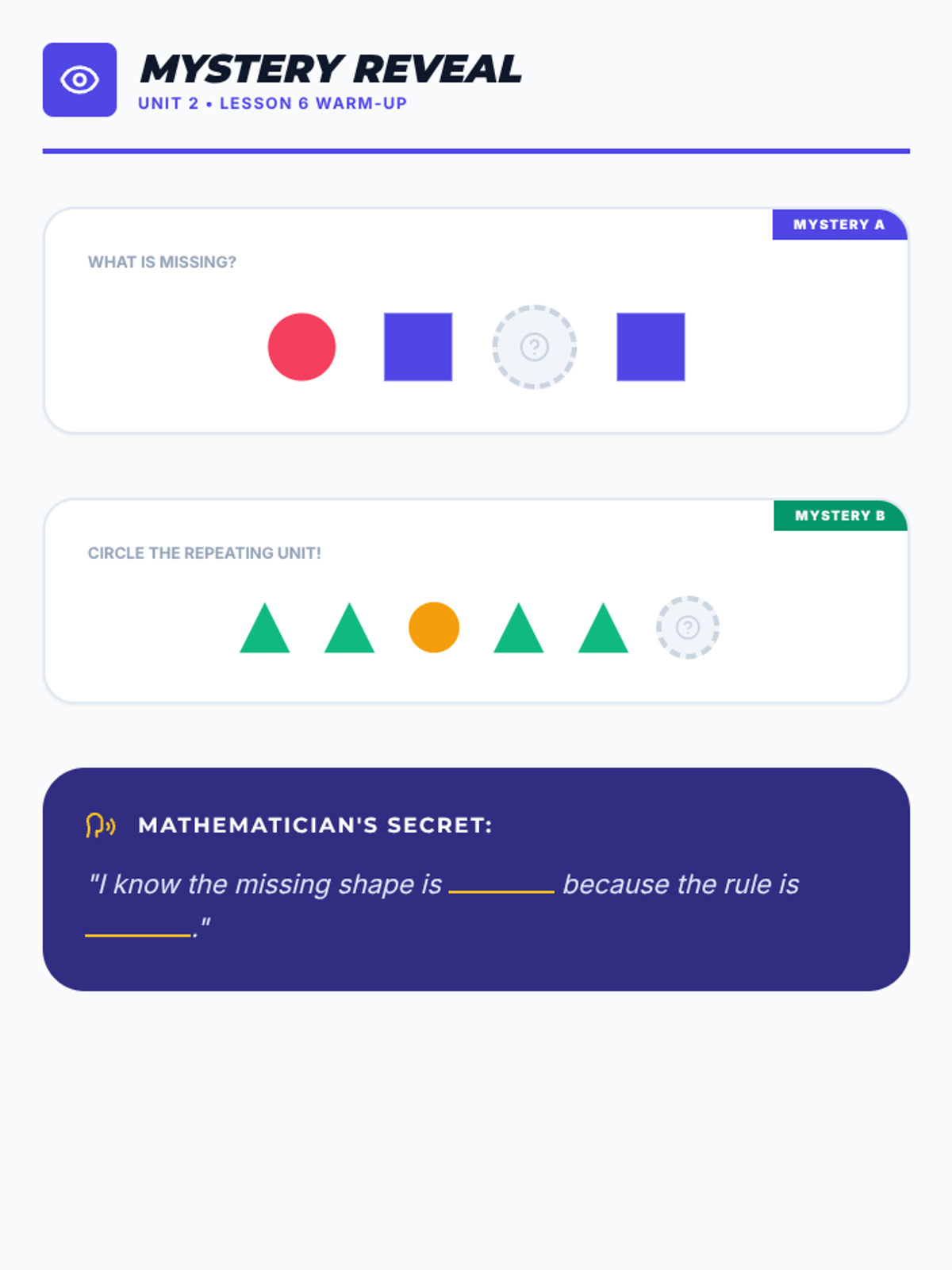
A visual warm-up activity featuring two 'mystery' patterns with missing elements. Designed to spark discussion about identifying and justifying pattern rules.
A fun, visual slide deck for the lesson featuring the 'Me at the zoo' video, discussion prompts, drawing instructions, and a high-quality reference photo of an elephant.
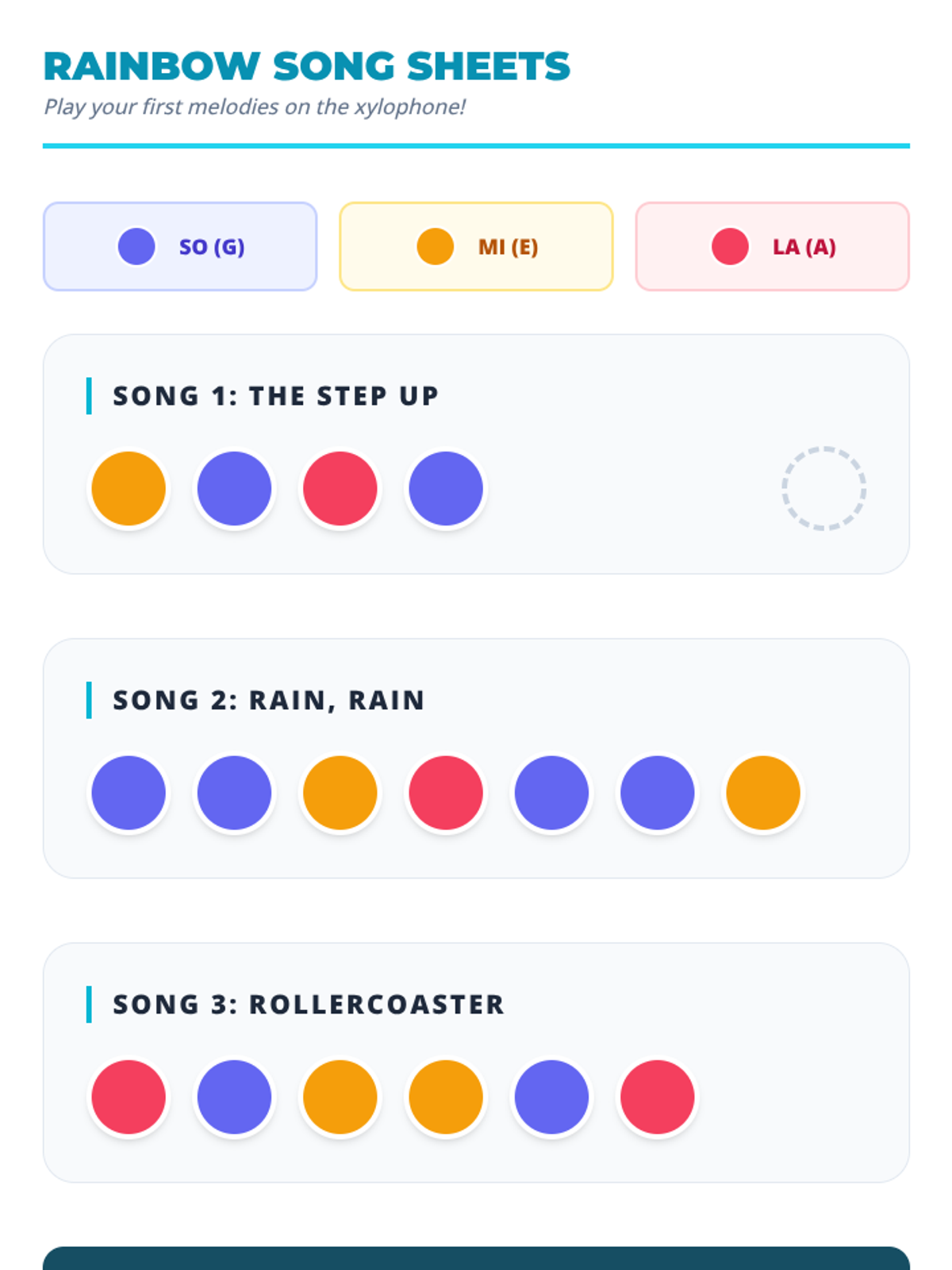
A student reference sheet with simple, color-coded melodies for 'So', 'Mi', and 'La' to be played on a xylophone.
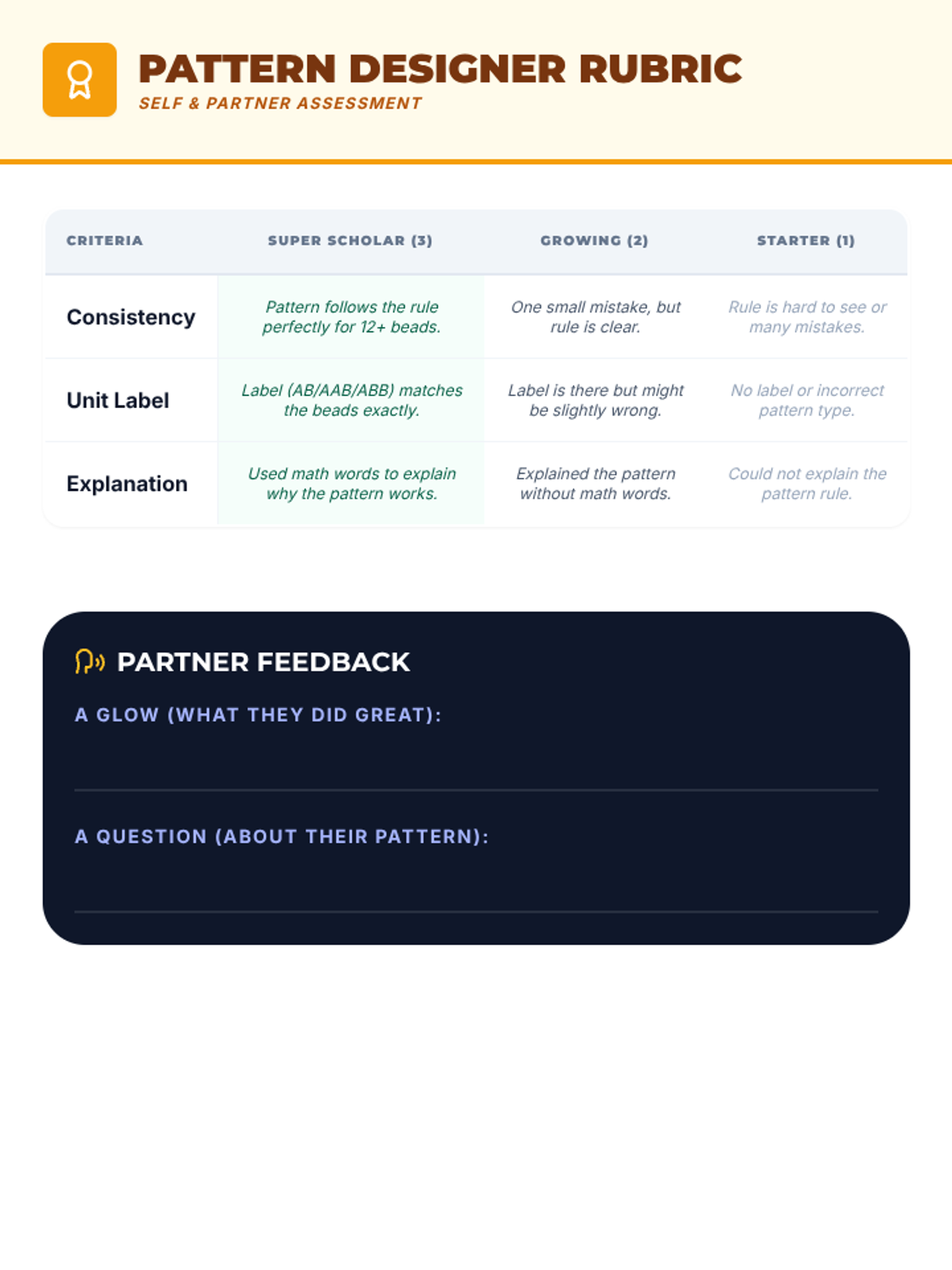
A mini-rubric for evaluating pattern bracelets, covering consistency, labeling, and explanation. Designed for both teacher and peer assessment.
A fun coloring and tactile activity where students track a steady beat using a 'Beat Buddy' character and heart icons.
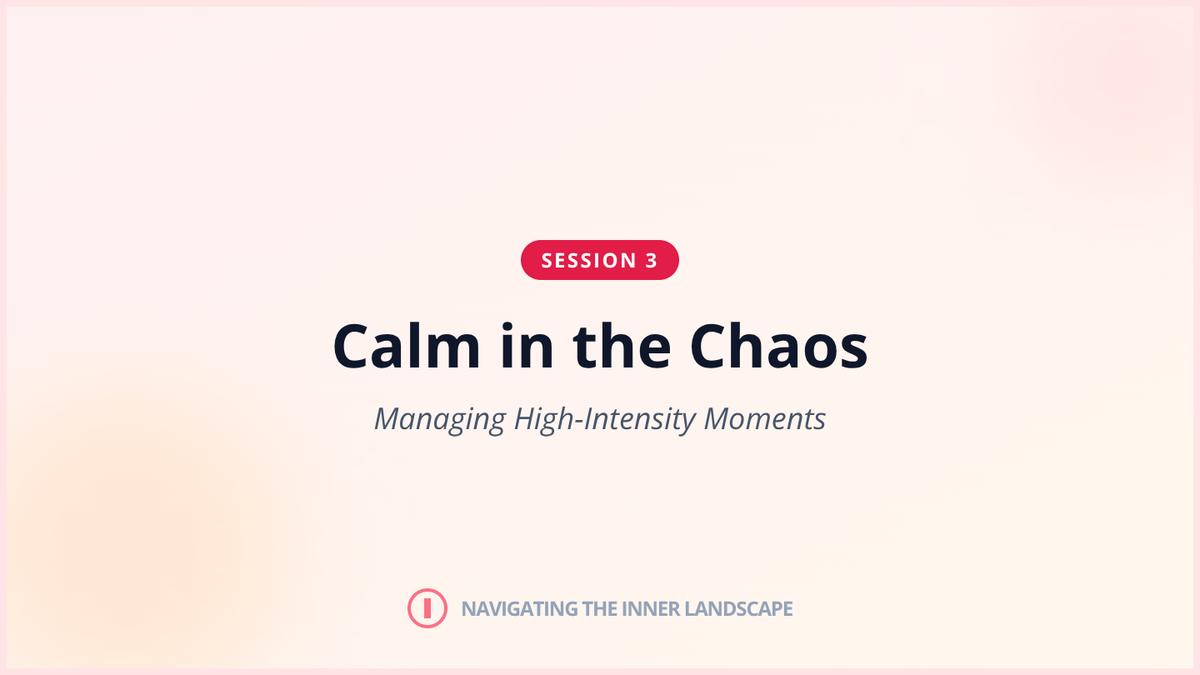
Visual presentation for Session 3, focusing on distress tolerance techniques for high-intensity situations using the TIPP skills framework.
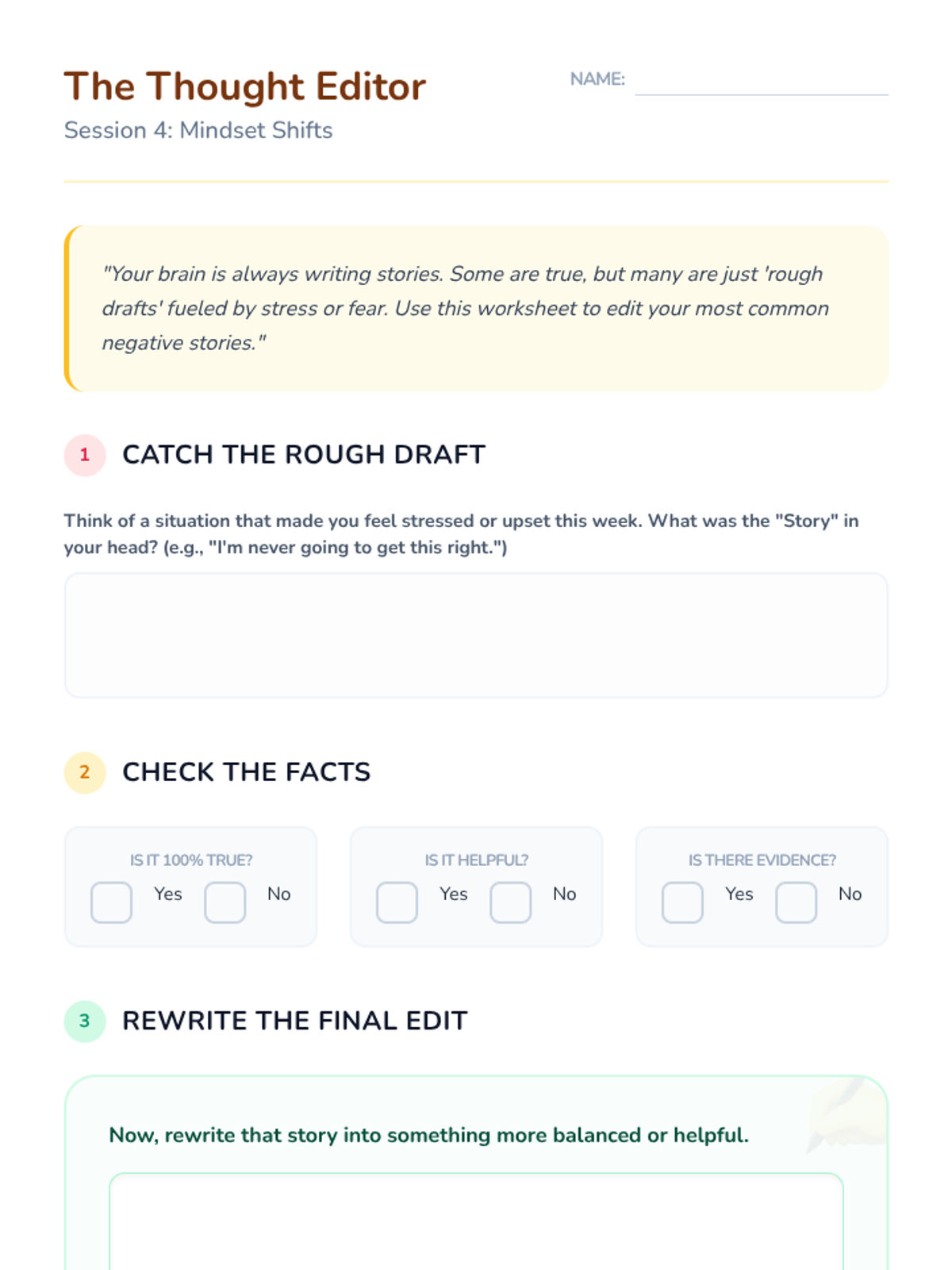
A student worksheet for Session 4, guiding students through the 'Catch-Check-Change' reframing technique to identify and edit negative self-talk.
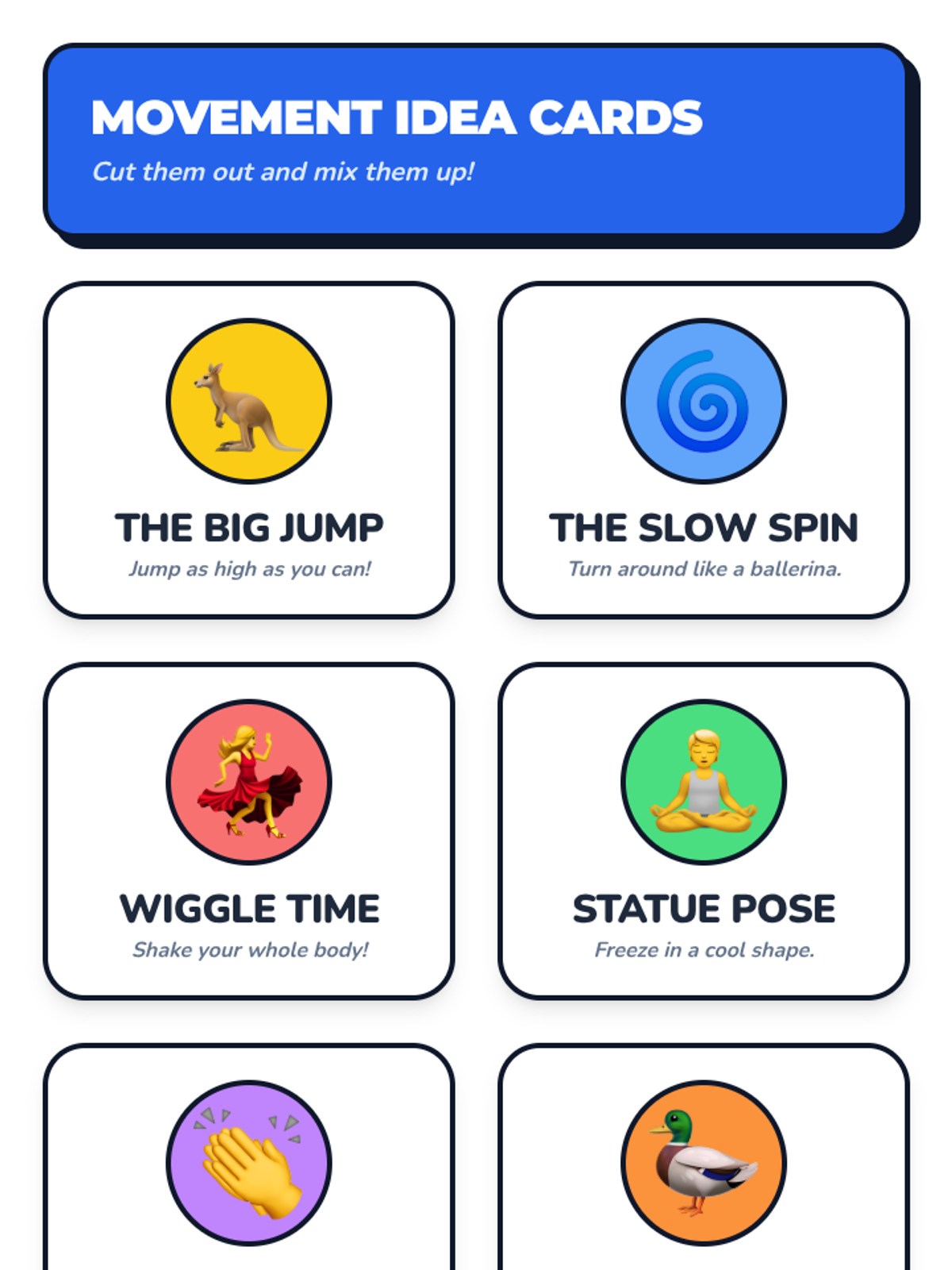
Movement prompt cards for Kindergarteners to use in their choreography, featuring fun emojis and simple descriptions.
Teacher-facing facilitation guide for Session 3. Focuses on teaching TIPP skills for crisis regulation and helping students identify environmental supports (like cold water access) within the school.
Introductory slide deck for Session 1, establishing the 'Inner Compass' theme. It explains the purpose of the intervention and teaches students how to recognize physiological signals of emotions using the 'Emotions as Data' framework.
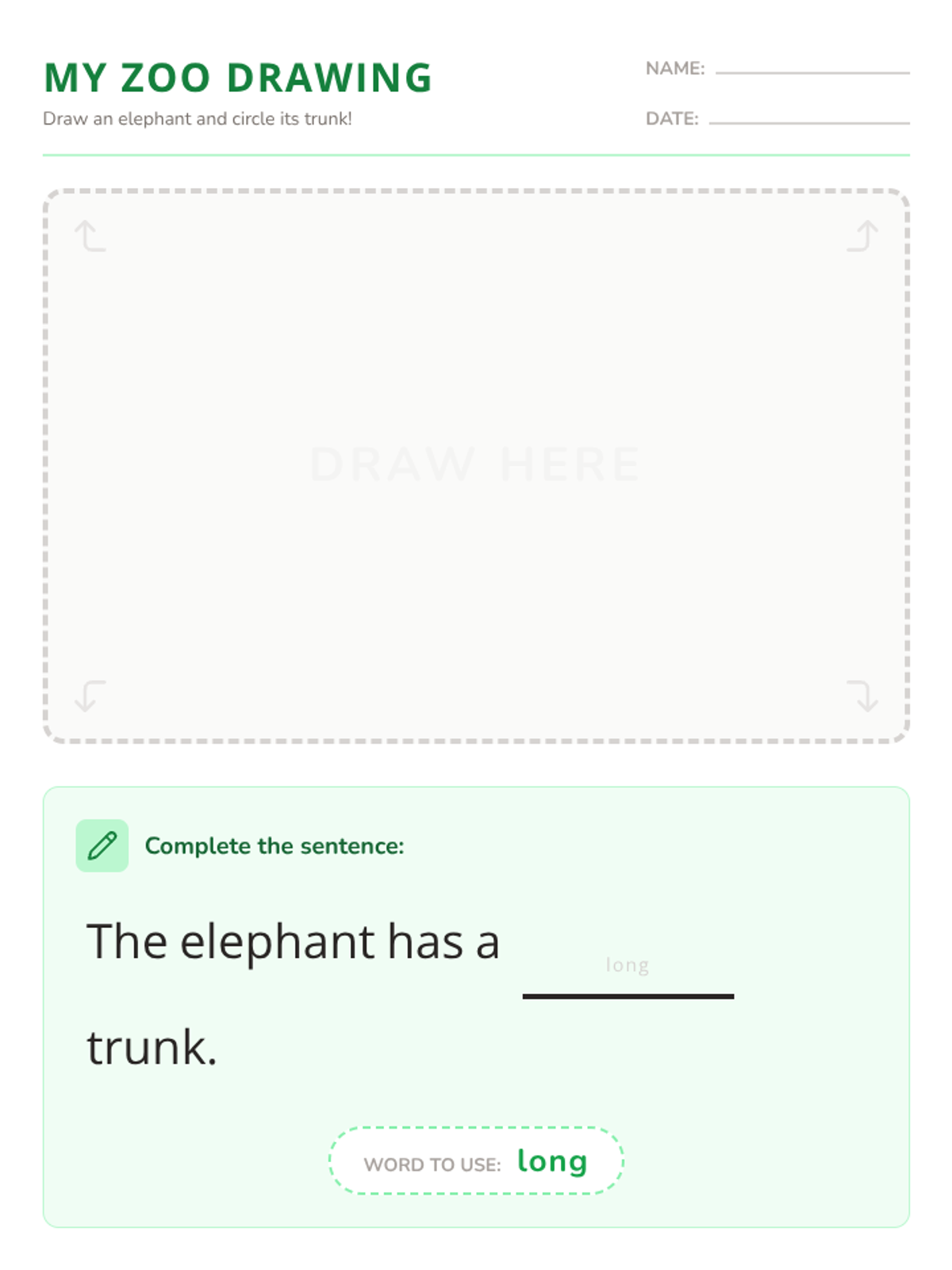
A student worksheet with a large space for drawing an elephant and a sentence completion activity to practice descriptive vocabulary.
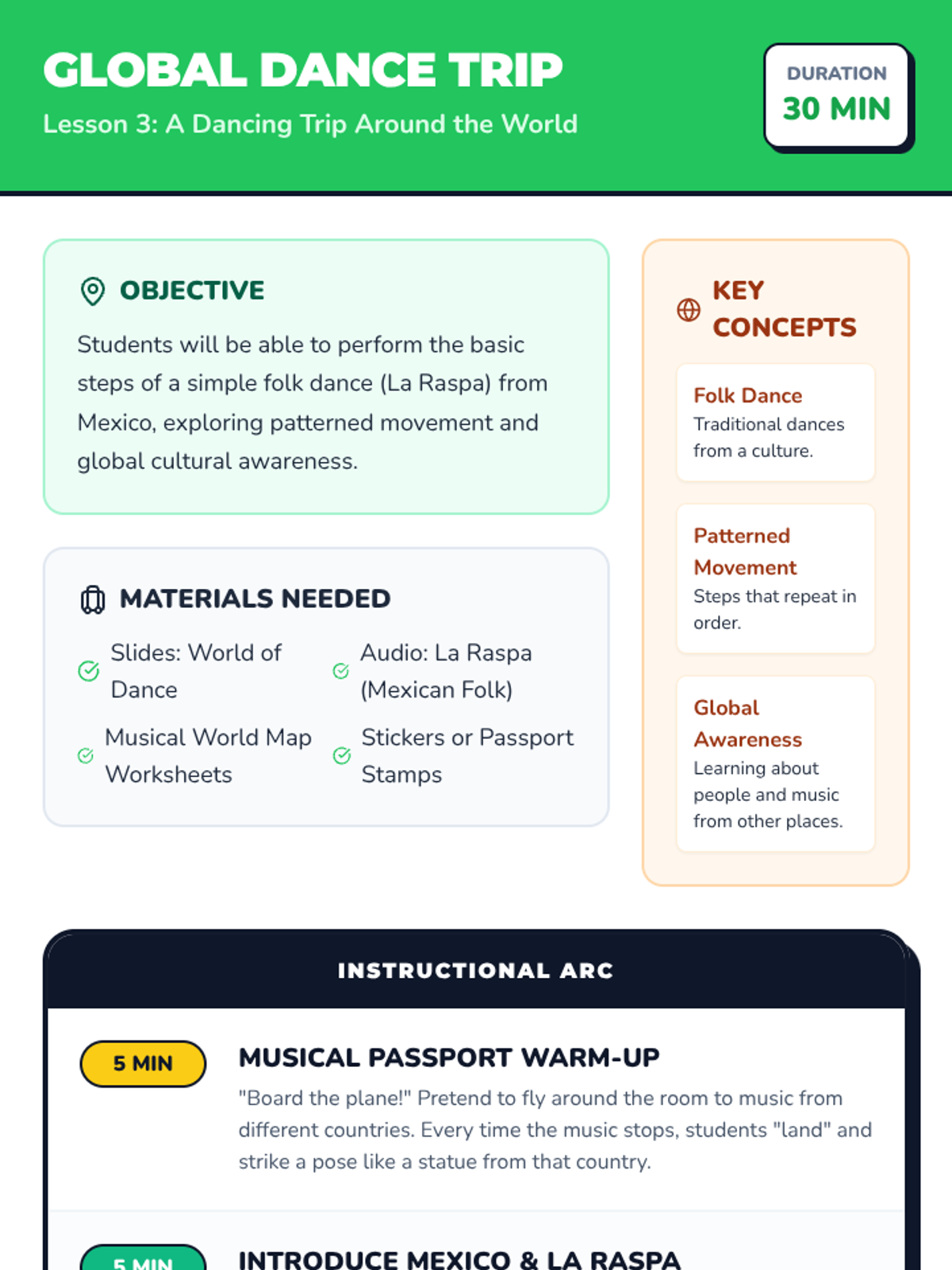
A comprehensive lesson plan for Kindergarten students focusing on global cultures through Mexican folk dance, patterned movement, and geography.
A structured student worksheet featuring three distinct case studies on digital permanence, encouraging debate between individual privacy and historical preservation. Includes space for group verdicts and a summary 'permanence scale' activity.
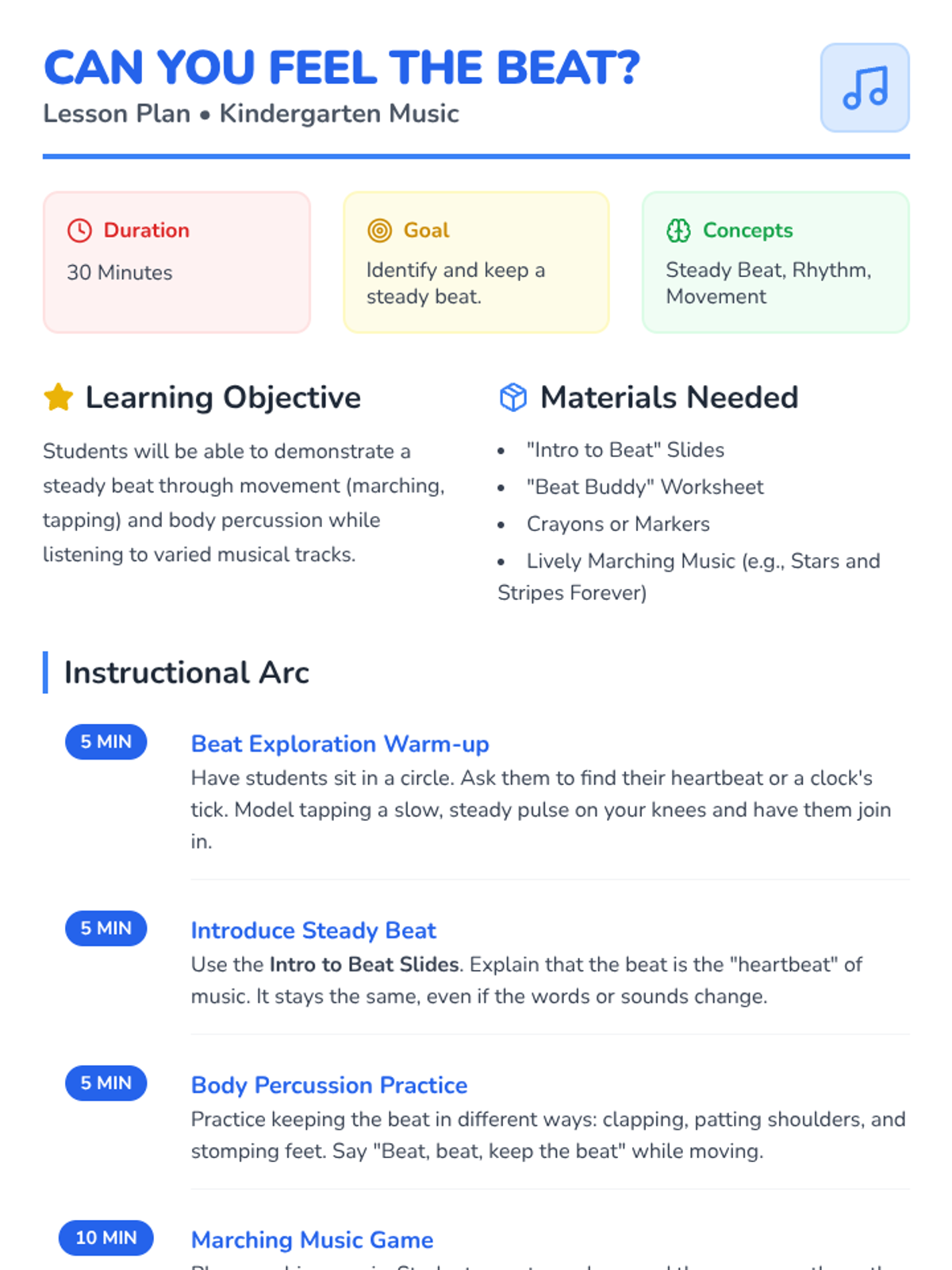
Comprehensive lesson plan for Lesson 1: Can You Feel the Beat? including instructional steps, objectives, and differentiation strategies.
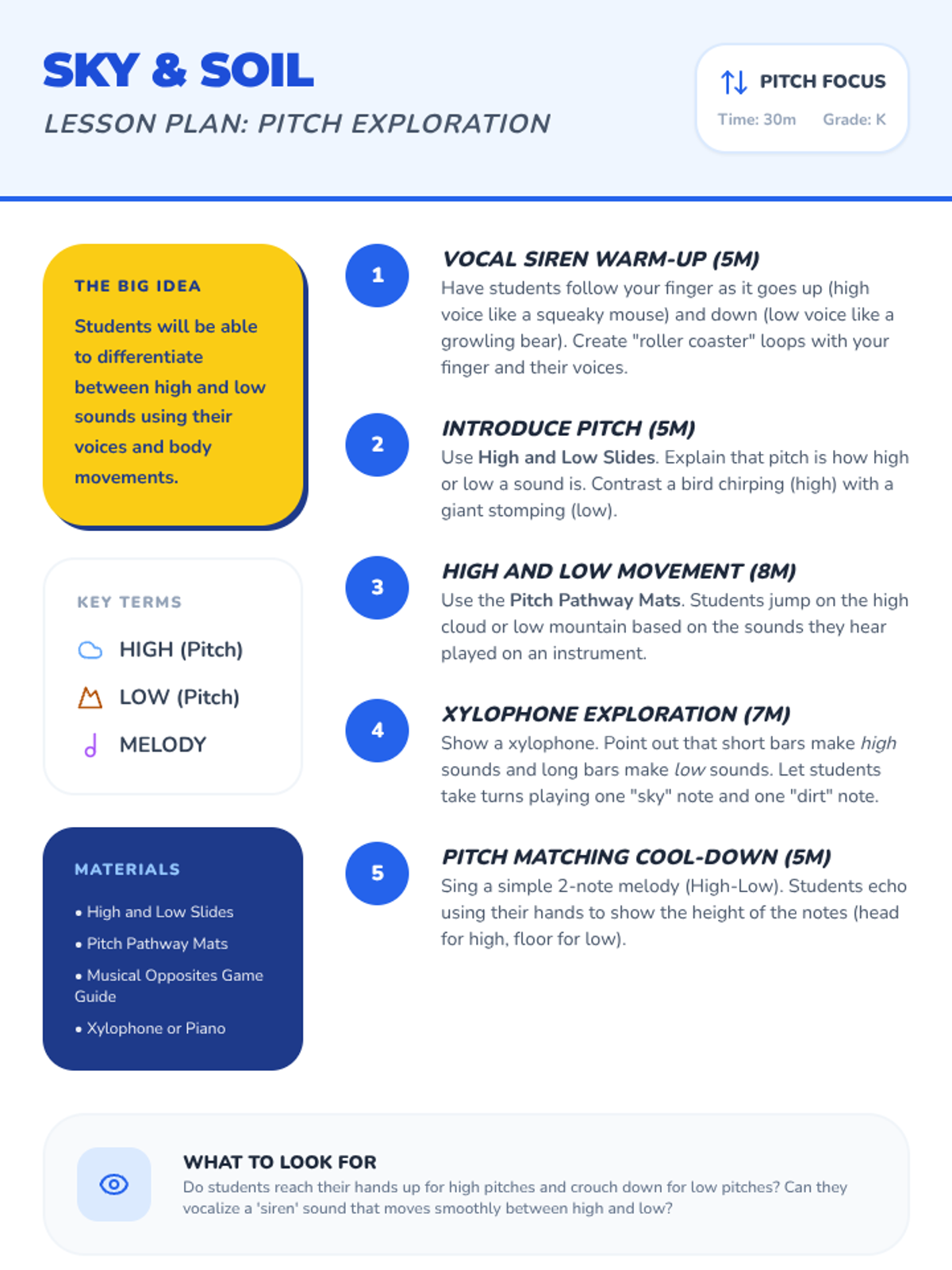
A Kindergarten music lesson plan focused on pitch, using movement and vocalization to explore high and low sounds.