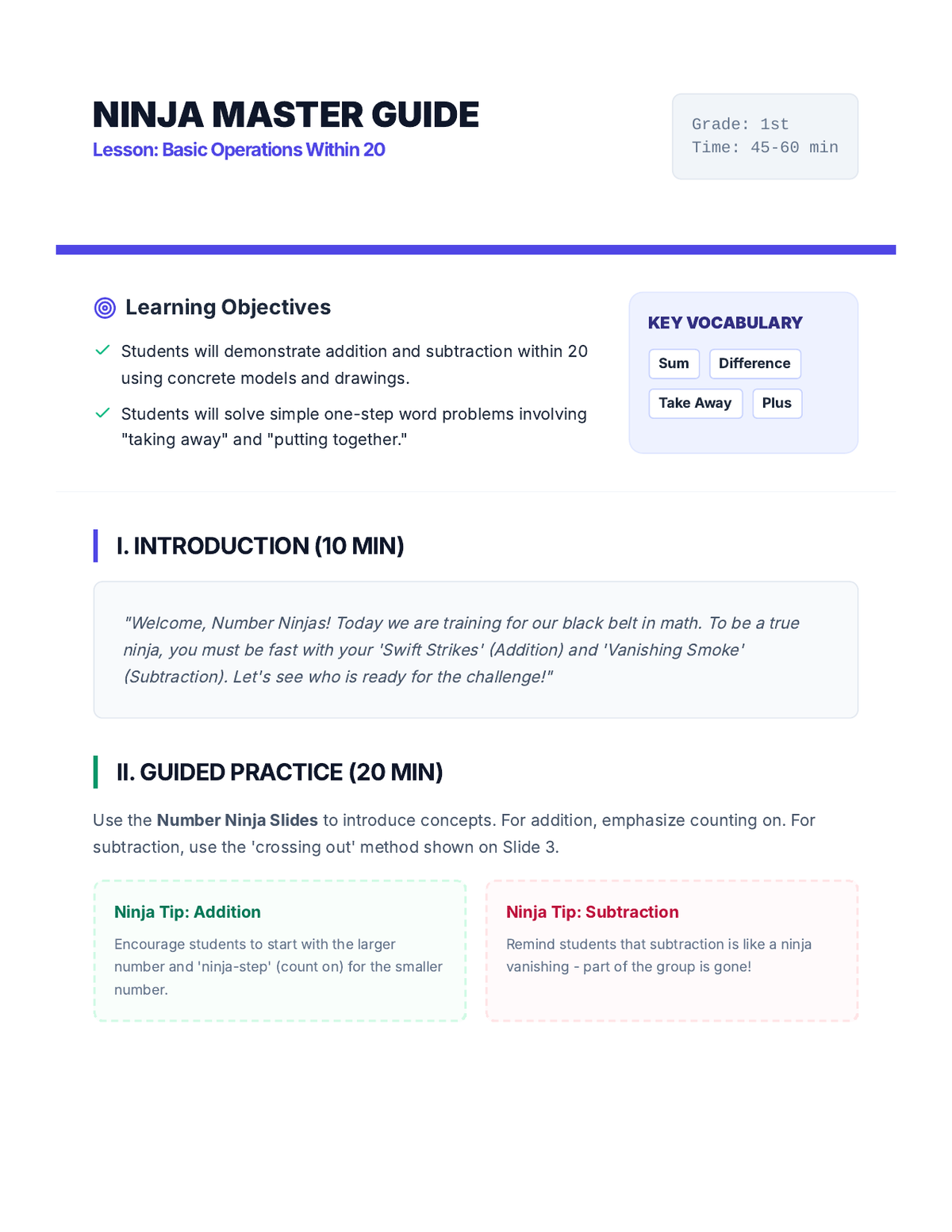
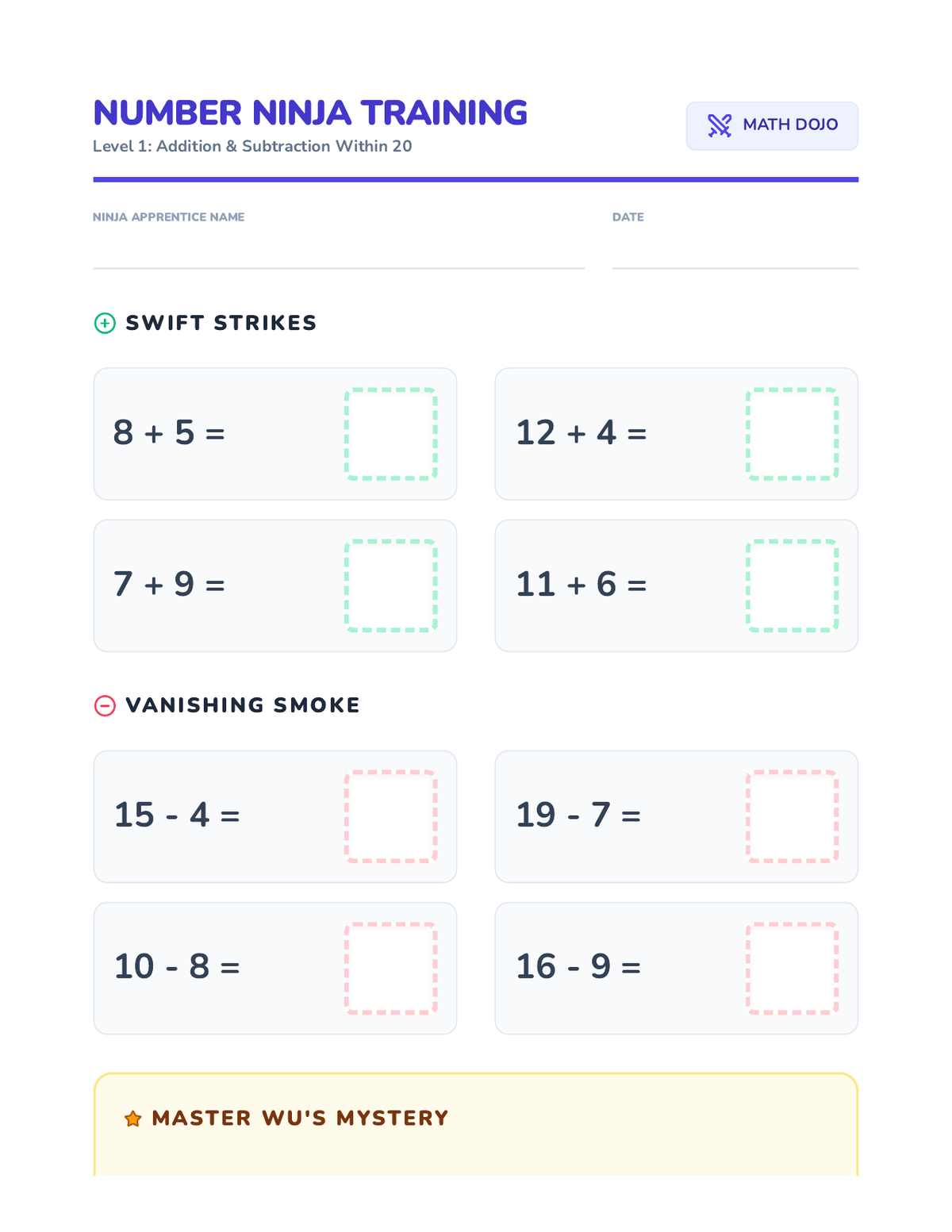
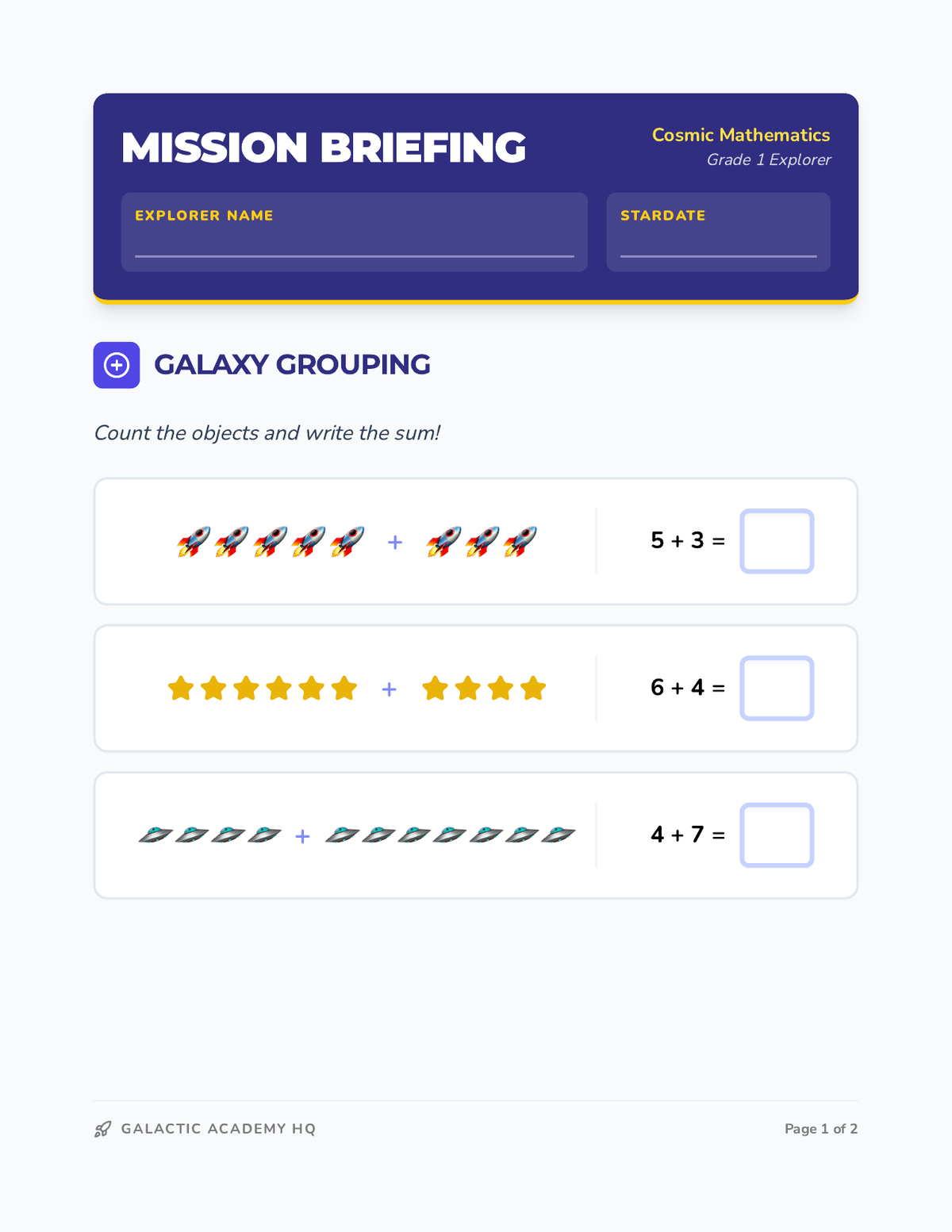
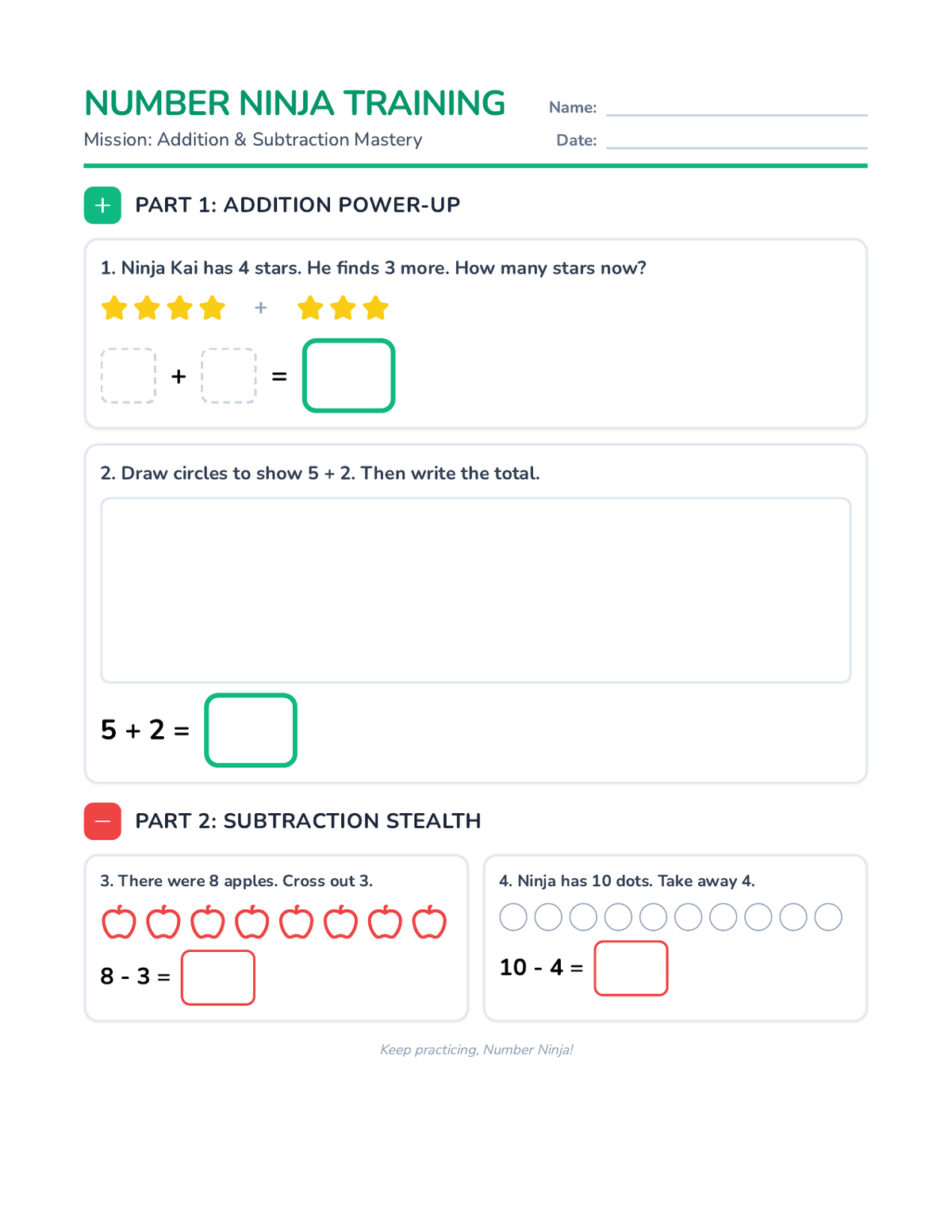
A printable set of shape cards and pattern strips for students to build and extend AB, AAB, and ABB patterns in pairs.
A comprehensive 30-minute lesson plan for Kindergarten teachers to introduce the concept of a steady beat through interactive movement and listening.
1/16
A student worksheet for analyzing the 'Me at the zoo' video and planning their own impromptu classroom report, including a self-reflection tally for filler words.
Educational slides introducing the difference between the steady beat and rhythm, and defining the quarter note (Ta) and eighth notes (Ti-Ti) for 2nd-grade students.
A dice-based rhythm game where 2nd graders roll a die to determine which notes (Ta, Ti-Ti, or Rest) to include in their 4-beat rhythm pattern.
Visual presentation for Session 2, introducing the 'Window of Tolerance' and teaching proactive regulation tools like 5-4-3-2-1 grounding and controlled breathing.
1/13
A student worksheet for identifying physiological signals of emotions. It features a body mapping activity where students color or mark areas where they feel physical sensations associated with specific feelings.
A Kindergarten music lesson plan focused on pitch, using movement and vocalization to explore high and low sounds.
A fun, visual slide deck for the lesson featuring the 'Me at the zoo' video, discussion prompts, drawing instructions, and a high-quality reference photo of an elephant.
A vocal exploration worksheet where students follow graphic notation paths with their voices to practice high and low pitch.
A visual warm-up activity featuring two 'mystery' patterns with missing elements. Designed to spark discussion about identifying and justifying pattern rules.
A mini-rubric for evaluating pattern bracelets, covering consistency, labeling, and explanation. Designed for both teacher and peer assessment.
Final facilitation guide for Session 6. Provides instructions for synthesizing the 6-week program, helping students select their best tools, and planning for long-term maintenance of skills.
Visual presentation for teaching equivalent fractions using area models and the multiplication rule.
A student worksheet for Session 4, guiding students through the 'Catch-Check-Change' reframing technique to identify and edit negative self-talk.
Visual presentation for Session 4, exploring the connection between thoughts, feelings, and actions, and teaching the 'Catch-Check-Change' reframing technique.
Culminating slide deck for Session 6, summarizing the key skills from the intervention and guiding students through the creation of their personalized 'Resilience Toolkit.'
A set of printable routine icons to be used with the Daily Roadmap Board, including requested activities like sensory breaks and morning meetings.
Teacher-facing facilitation guide for Session 4. Provides guidance on explaining the Catch-Check-Change method and helping students distinguish between positive thinking and accurate reframing.
A student reference and practice sheet for Session 2. It provides clear, visual instructions for Square Breathing and 5-4-3-2-1 Grounding, along with a simple 'regulation plan' for students to complete.
Visual presentation for Session 5, focusing on assertive communication (I-statements) and the concept of healthy boundaries in relationships.