Visual presentation for Session 6, summarizing the unit and guiding students through the creation of their personalized regulation game plan.
Visual presentation for Session 3, focusing on distress tolerance techniques for high-intensity situations using the TIPP skills framework.
1/13
Introductory slide deck for Session 1, establishing the 'Inner Compass' theme. It explains the purpose of the intervention and teaches students how to recognize physiological signals of emotions using the 'Emotions as Data' framework.
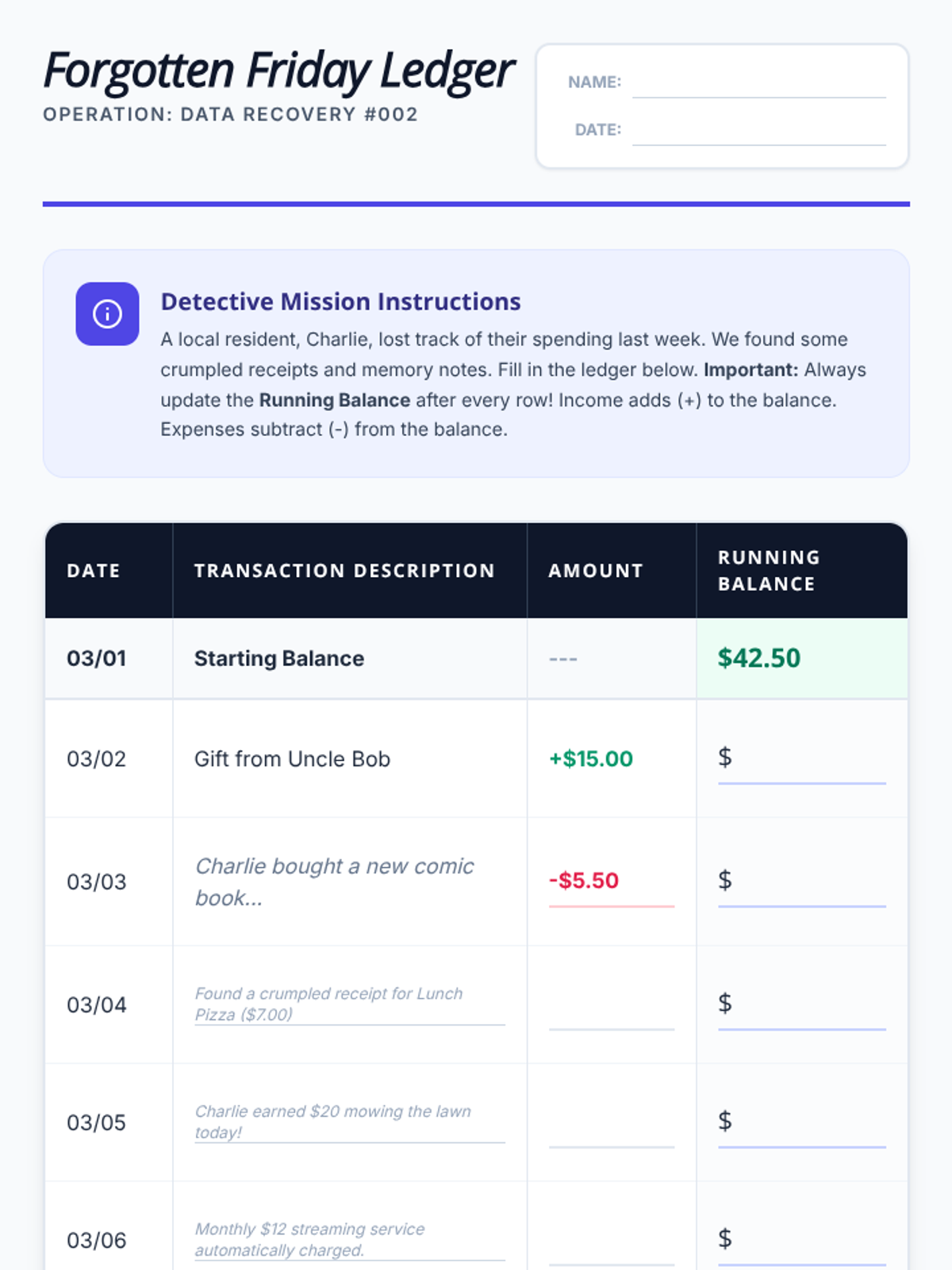
A ledger recording activity where students fill in transaction details and calculate a running balance based on Charlie's weekly activity.
1/16
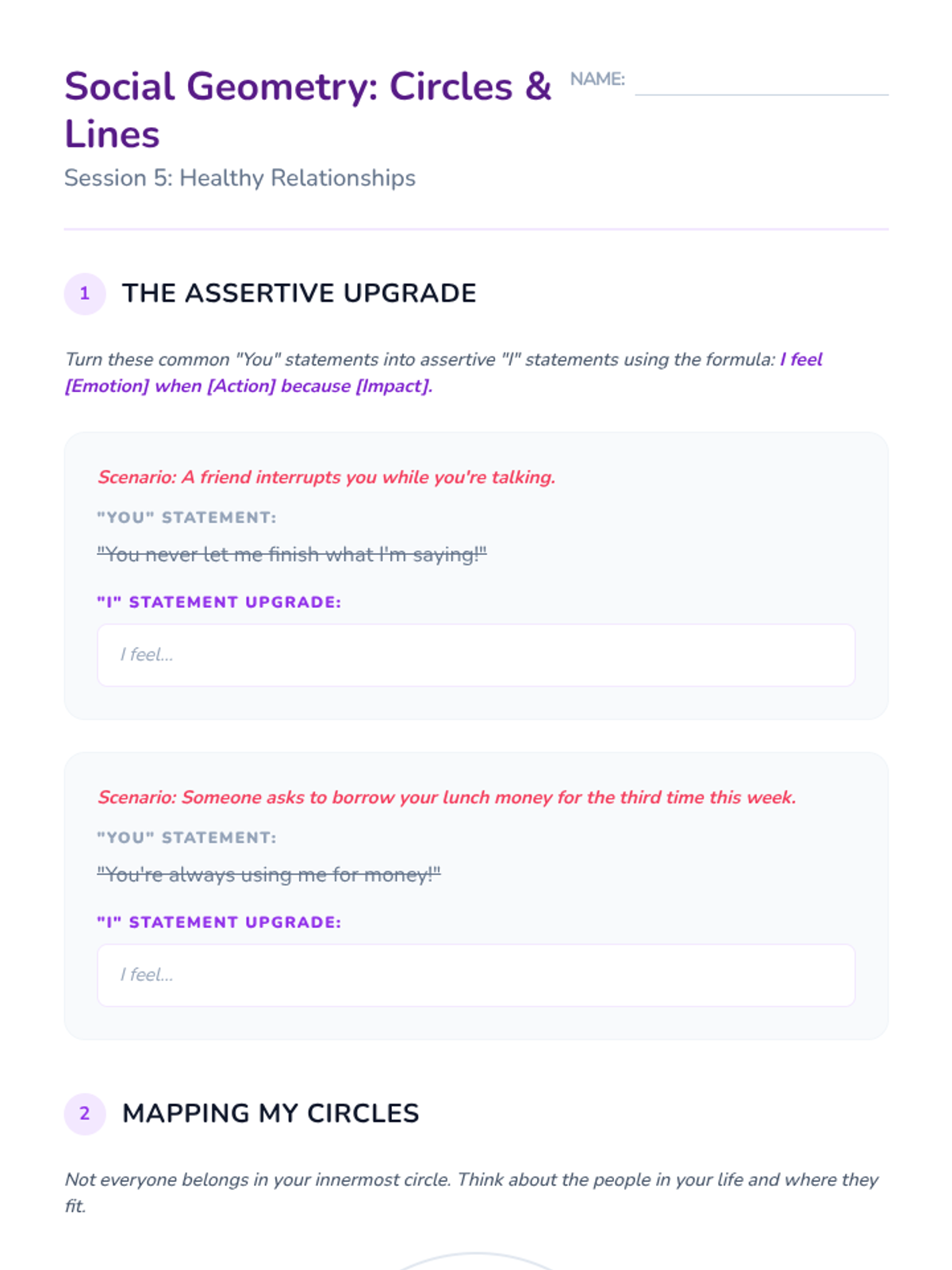
A student activity and reference sheet for Session 5, featuring assertive communication practice and a 'Circles of Trust' mapping activity for boundaries.
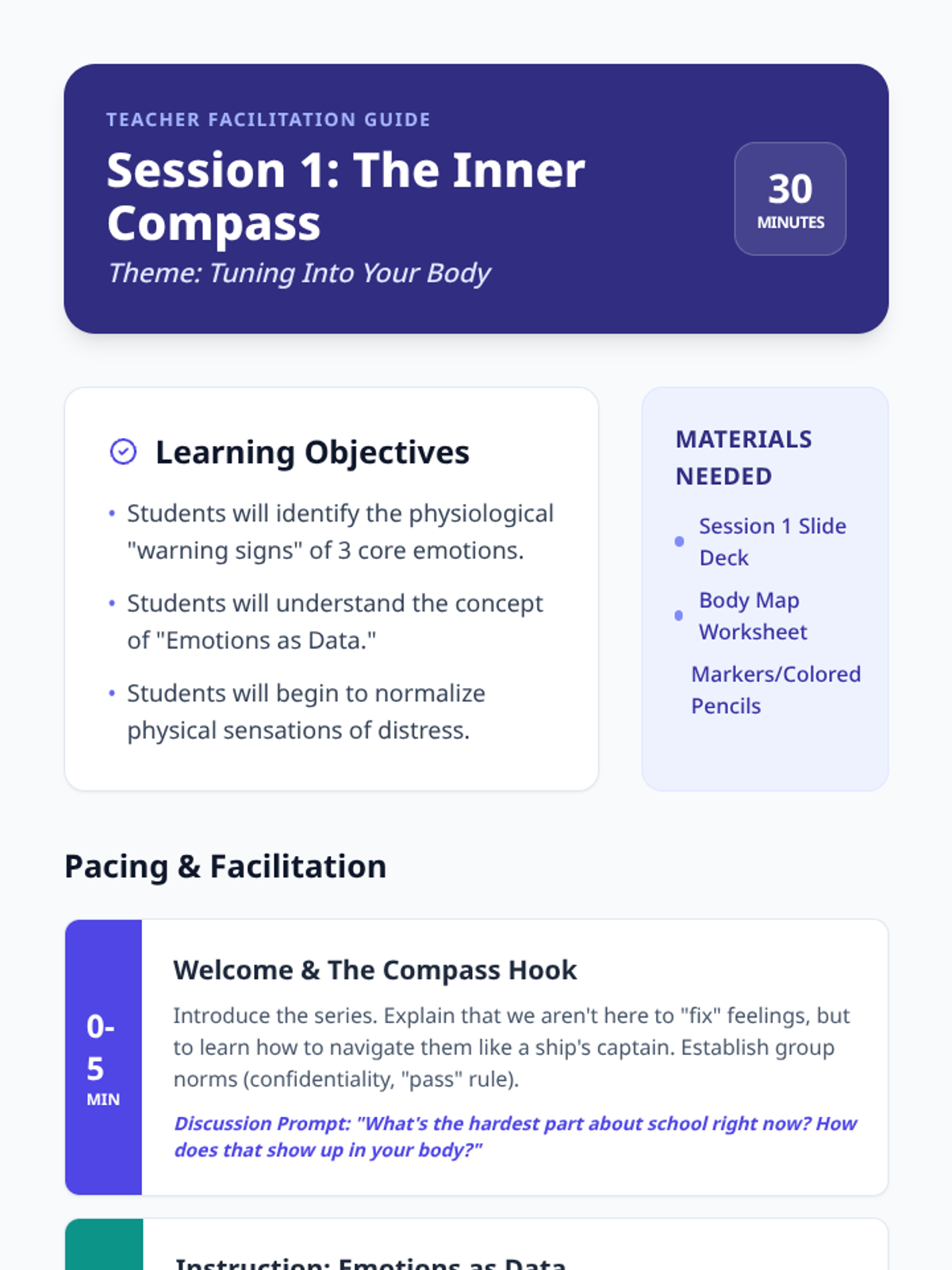
A teacher-facing guide for Session 1, including learning objectives, a detailed pacing guide, and facilitation tips specifically for Tier 3 mental health interventions.
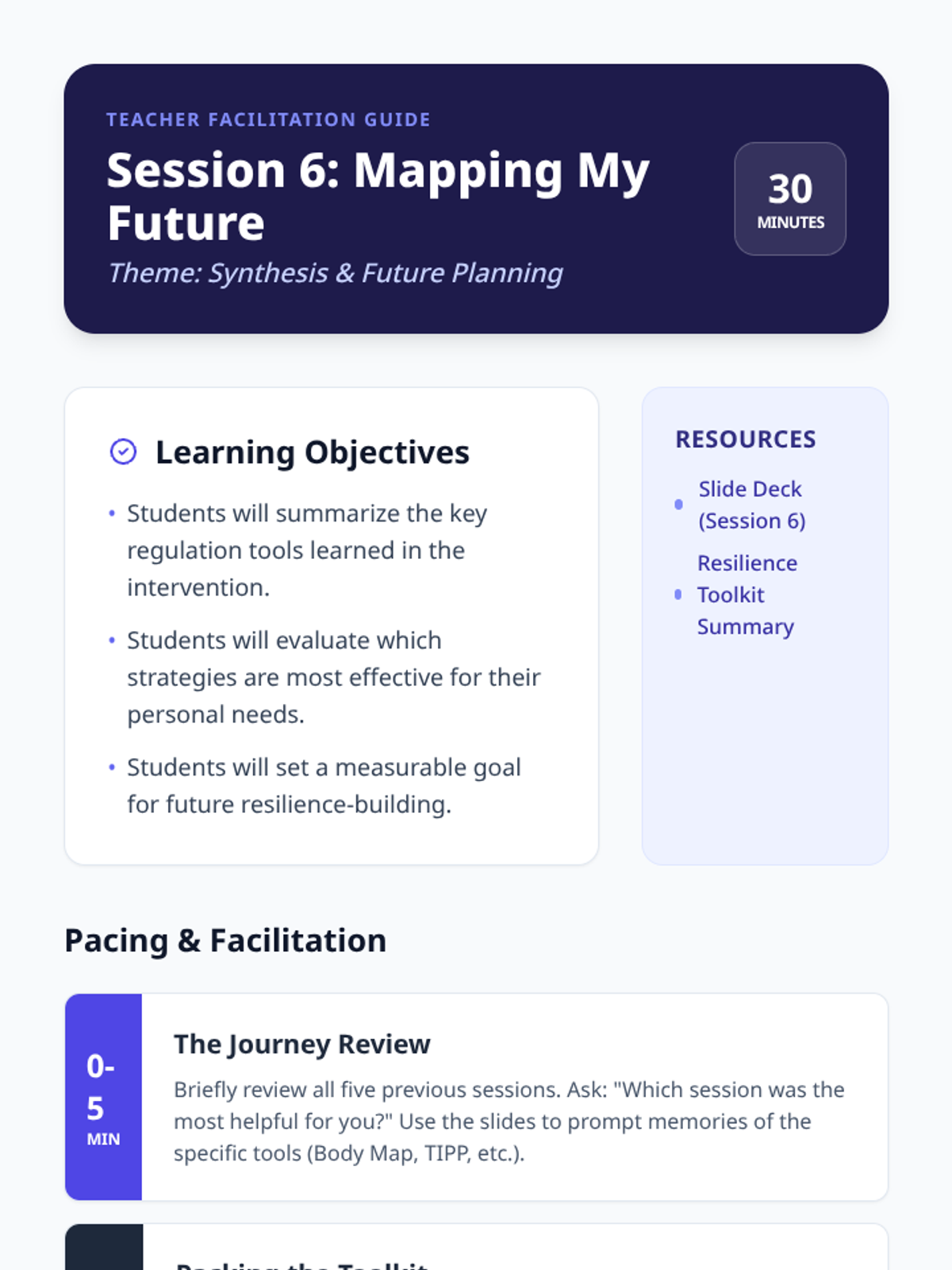
Final facilitation guide for Session 6. Provides instructions for synthesizing the 6-week program, helping students select their best tools, and planning for long-term maintenance of skills.
Fun and visual slide deck for Kindergarten musical games, focusing on "Rhythm Chasers" (Duck Duck Goose variation) and "Hot Potato".
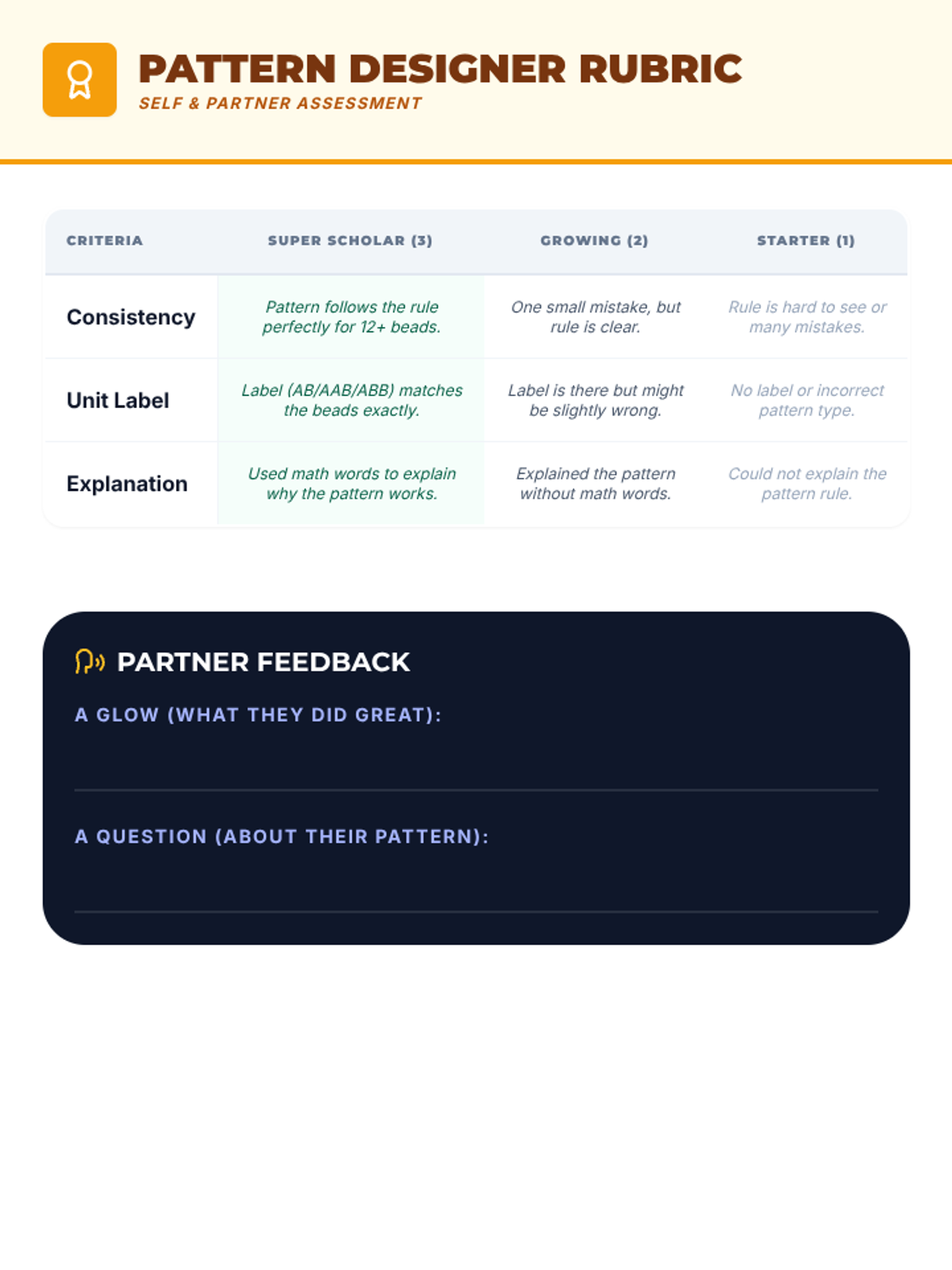
A mini-rubric for evaluating pattern bracelets, covering consistency, labeling, and explanation. Designed for both teacher and peer assessment.
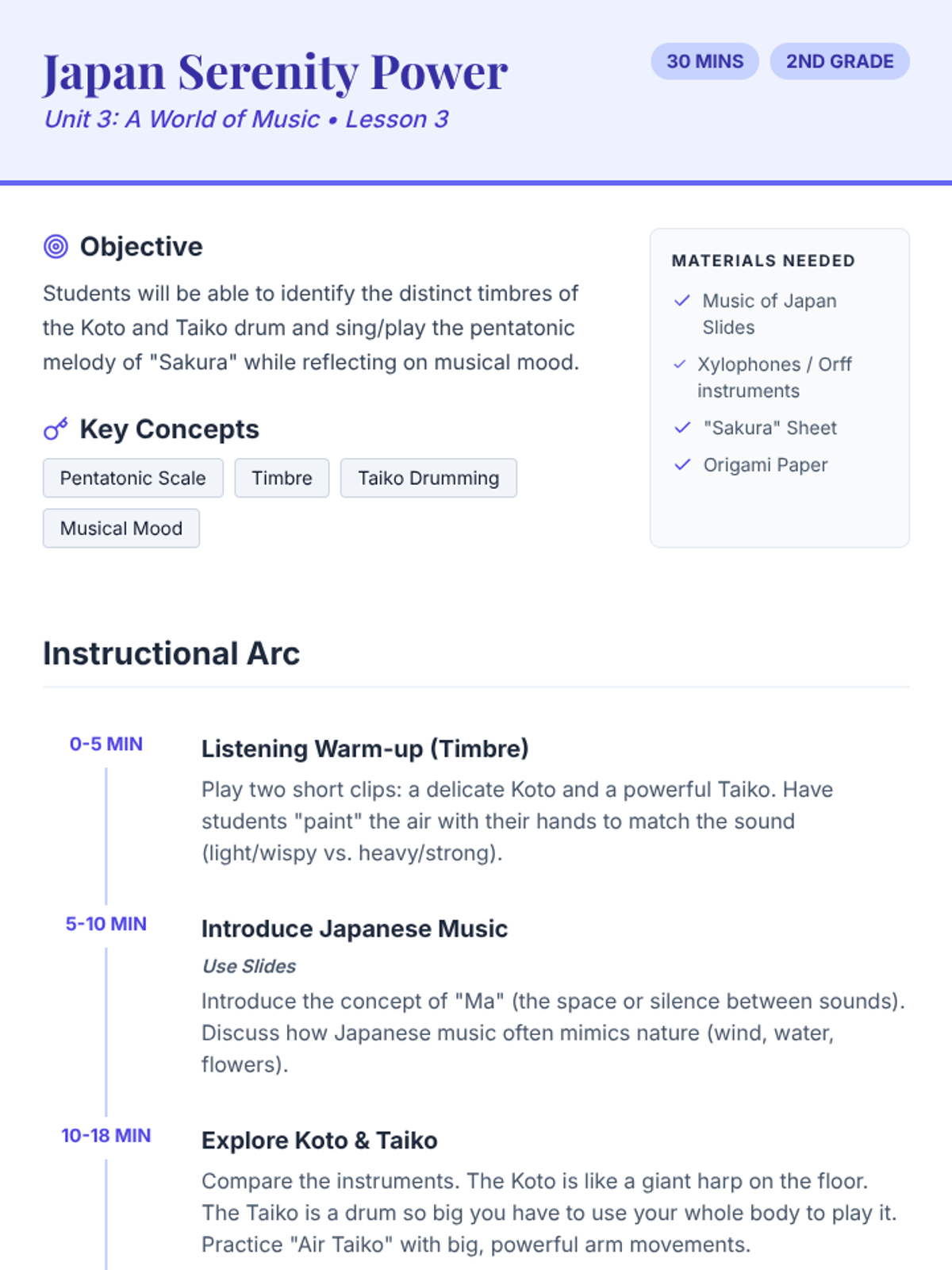
Lesson plan for Lesson 3, focusing on the sounds of the koto and taiko, the pentatonic scale through the song 'Sakura', and the concept of musical mood.
A student planning sheet for Session 3. It introduces the TIPP skills (Temperature, Intense Exercise, Paced Breathing, Paired Muscle Relaxation) and helps students create a personalized 'Emergency Brake' plan for high-intensity emotional moments.
A structured student worksheet featuring three distinct case studies on digital permanence, encouraging debate between individual privacy and historical preservation. Includes space for group verdicts and a summary 'permanence scale' activity.
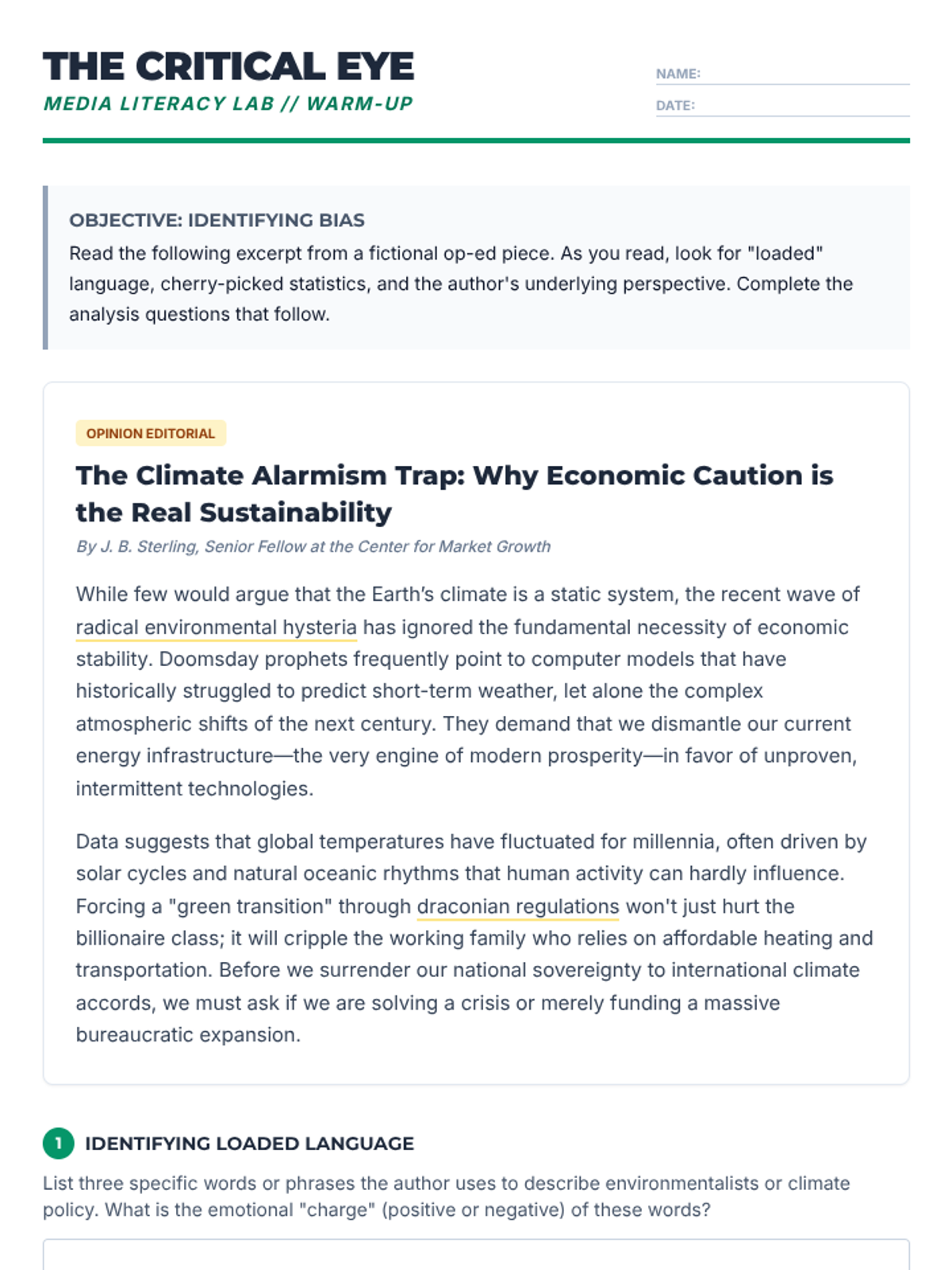
A 10-15 minute warm-up worksheet for high school students focusing on identifying bias, loaded language, and source credibility in a fictional op-ed about climate change.
1/12
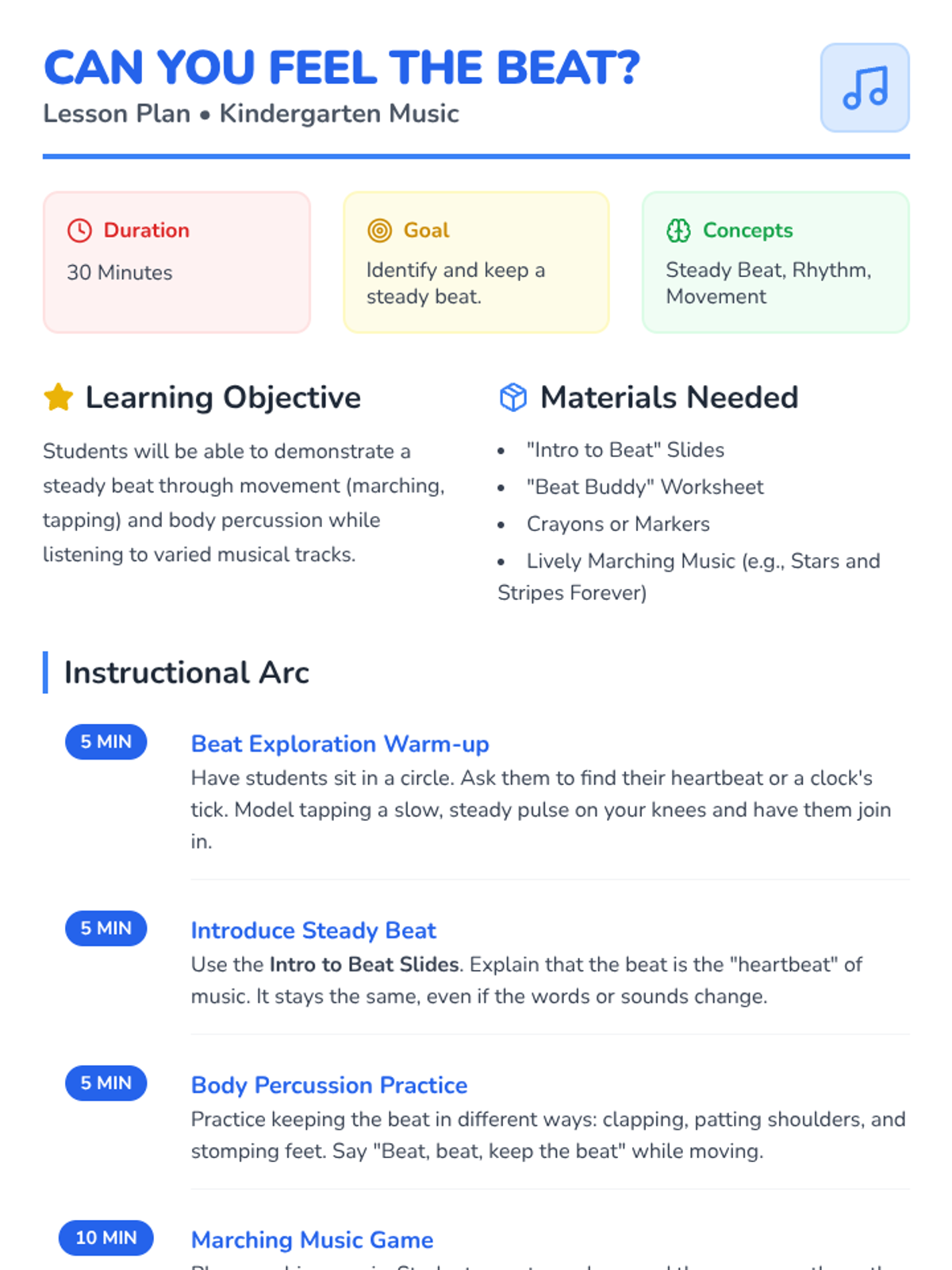
Comprehensive lesson plan for Lesson 1: Can You Feel the Beat? including instructional steps, objectives, and differentiation strategies.
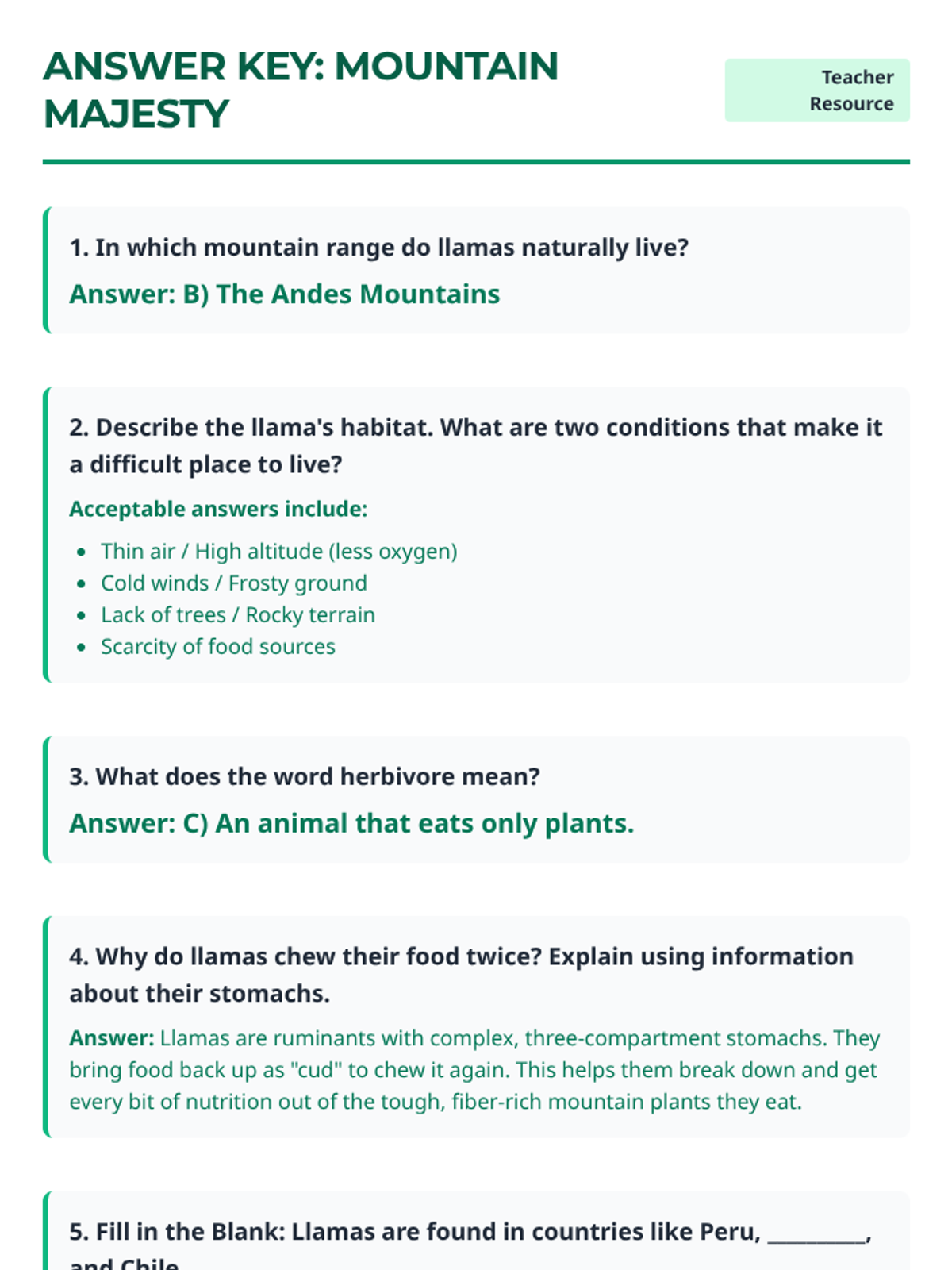
An answer key and scoring guide for the llama reading passage worksheet, including sample answers for short-response questions.
Visual presentation for Session 2, introducing the 'Window of Tolerance' and teaching proactive regulation tools like 5-4-3-2-1 grounding and controlled breathing.
Visual presentation for Session 4, exploring the connection between thoughts, feelings, and actions, and teaching the 'Catch-Check-Change' reframing technique.
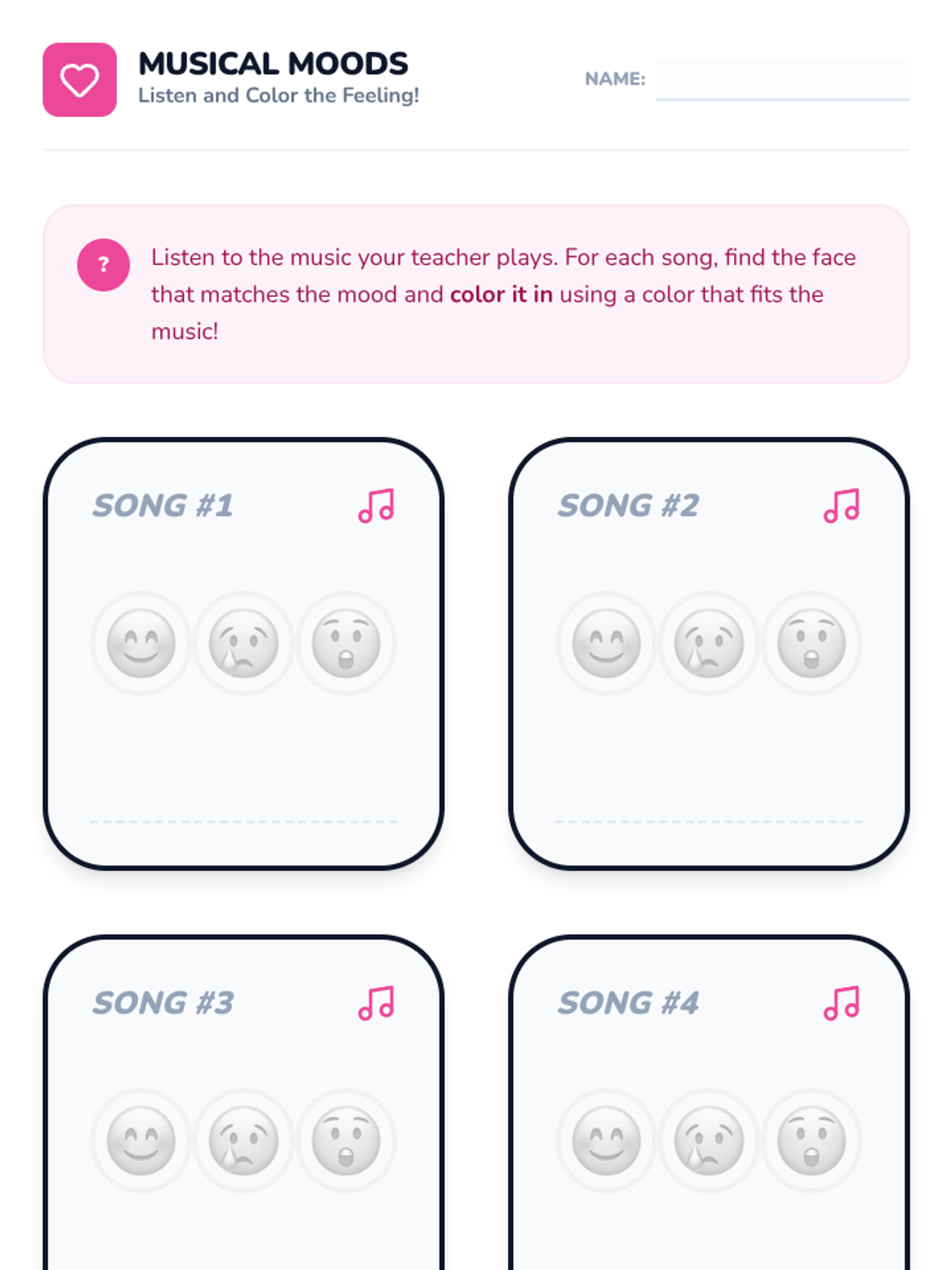
A visual worksheet for Kindergarteners to identify musical moods by coloring emoji faces and associating colors with sounds.
Teacher-facing facilitation guide for Session 3. Focuses on teaching TIPP skills for crisis regulation and helping students identify environmental supports (like cold water access) within the school.
Visual presentation for Session 5, focusing on assertive communication (I-statements) and the concept of healthy boundaries in relationships.
A teacher guide and answer key for the climate bias warm-up, including facilitation strategies, timing breakdowns, and exemplar student responses.