A comprehensive teacher guide for the Ninja Number Quest lesson. Includes lesson objectives, a detailed script for the rhythmic chant with movements, pronunciation tips, and a worksheet answer key.
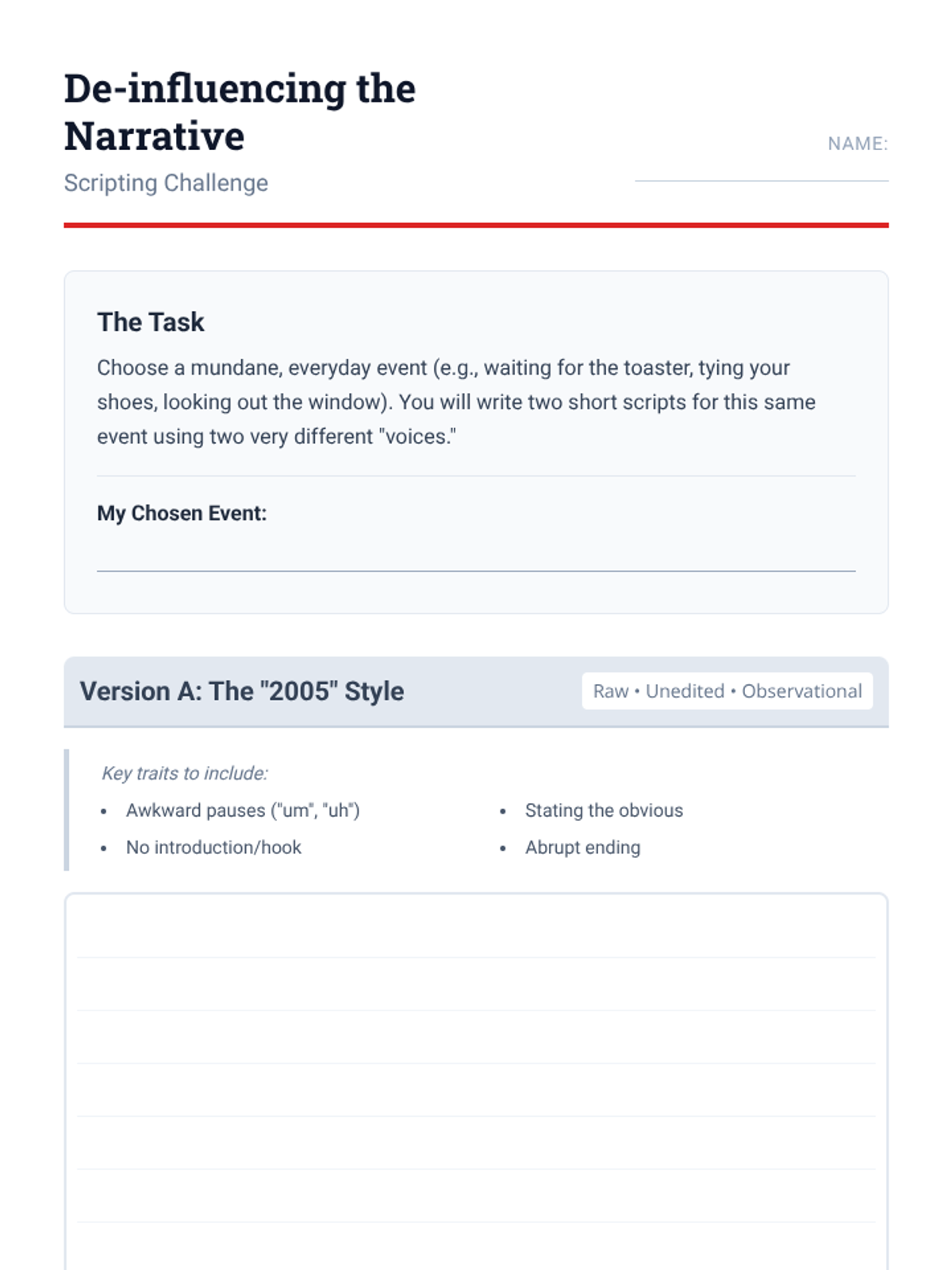
A structured worksheet for students to script their two versions of an event: one in the style of 2005 observational video and one in the style of a modern influencer.
1/16
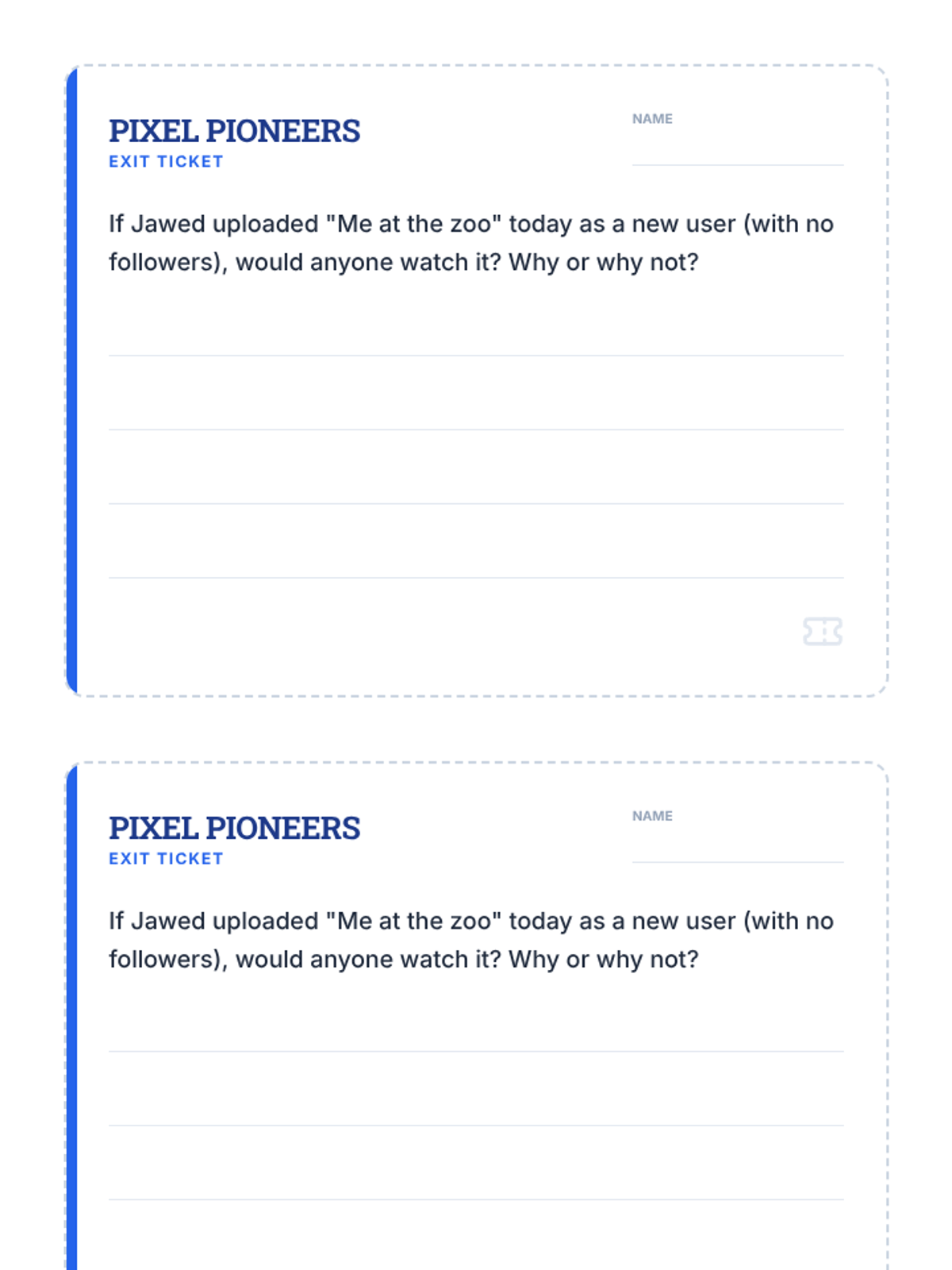
A set of three printable exit tickets per page for the 'Pixel Pioneers' lesson, asking students to reflect on the modern viability of the first YouTube video.
A comprehensive lesson plan for Kindergarten students focusing on a school-wide instrument parade, practicing steady beats, and ensemble performance.
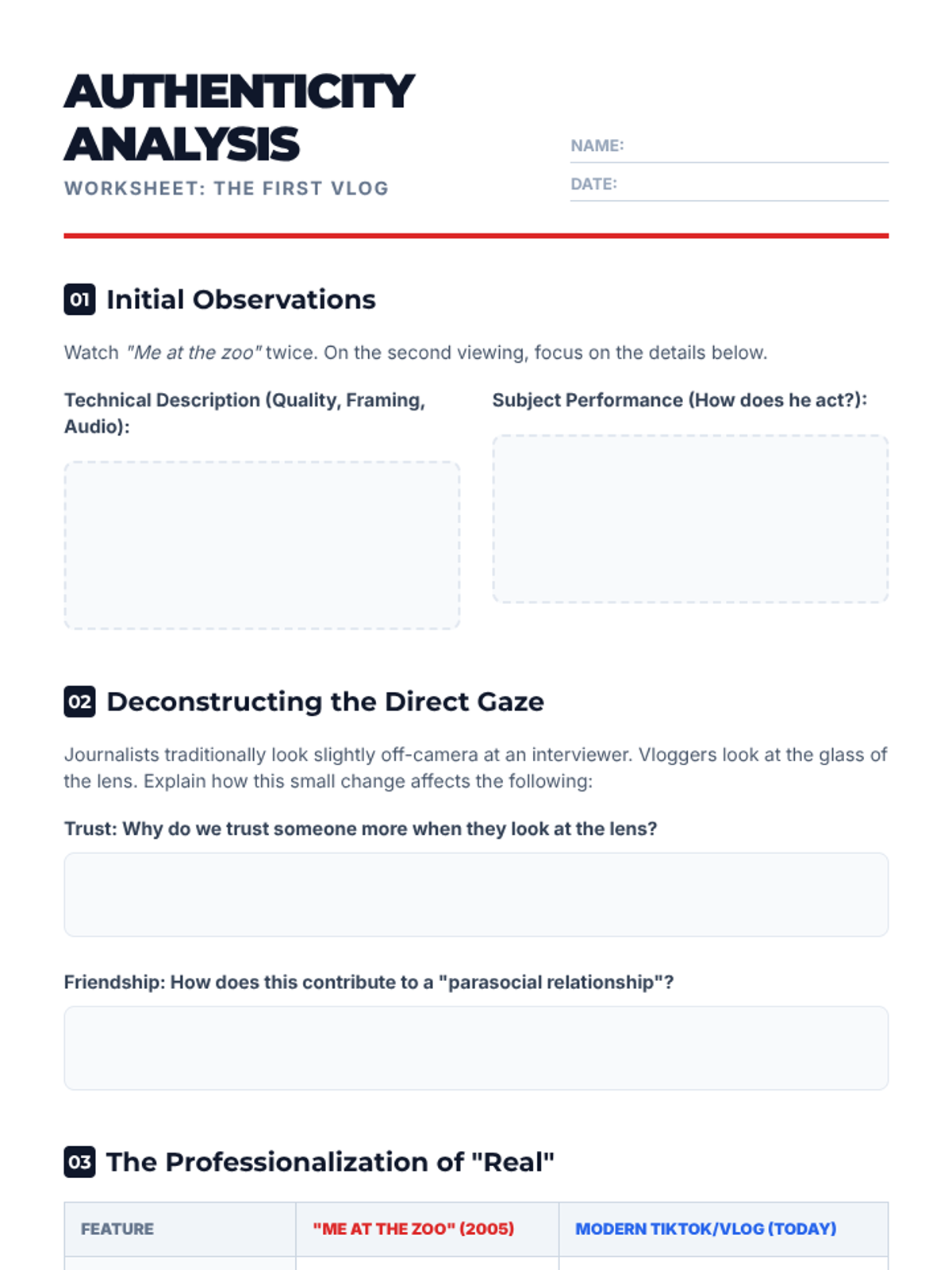
A student worksheet for the 'Art of the Vlog' lesson, featuring observation boxes, a comparison table, and critical thinking prompts about authenticity and parasocial relationships.
Slides introducing high and low pitch using sky and ground imagery, and showing how xylophone bars relate to pitch.
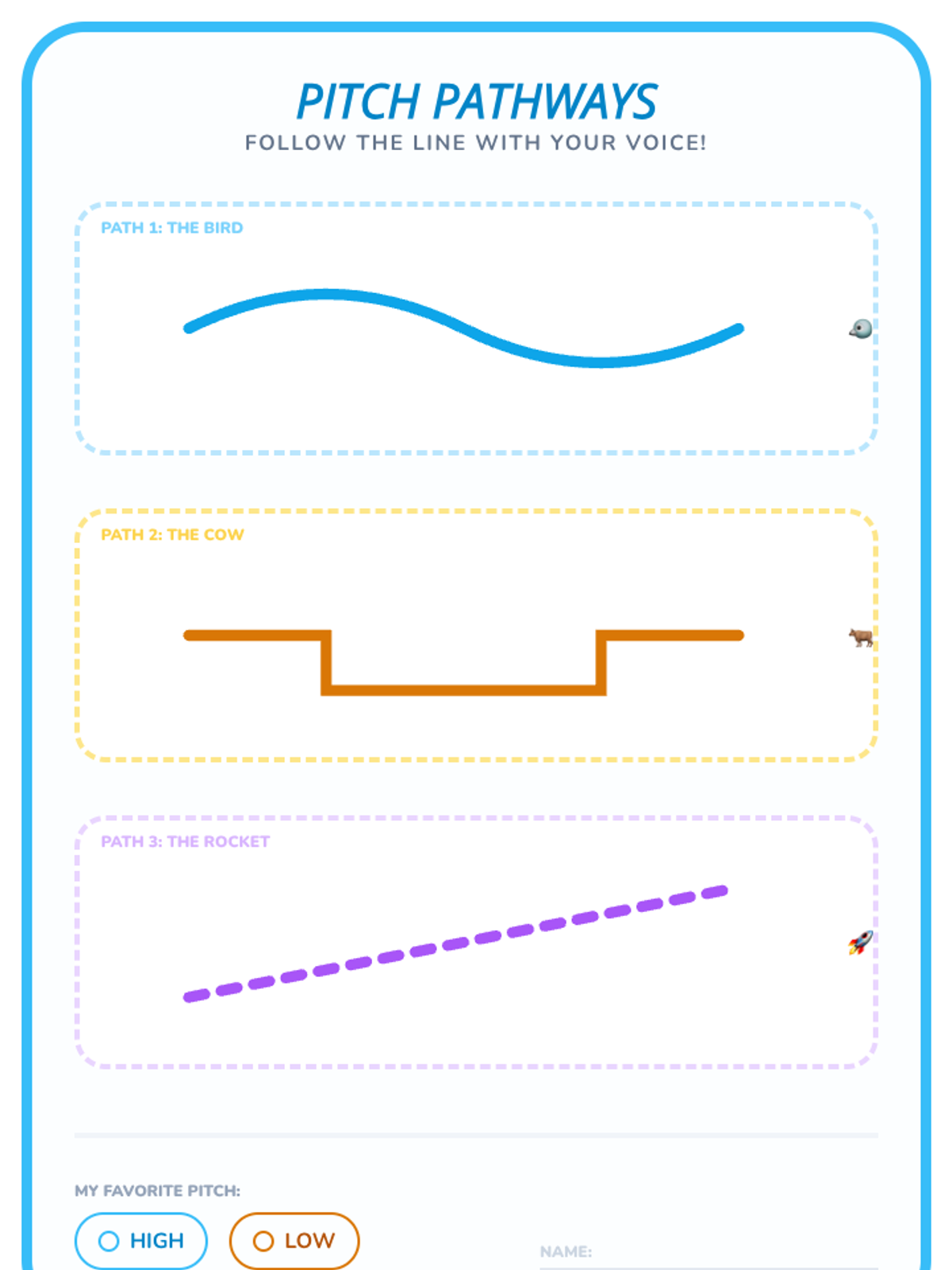
A vocal exploration worksheet where students follow graphic notation paths with their voices to practice high and low pitch.
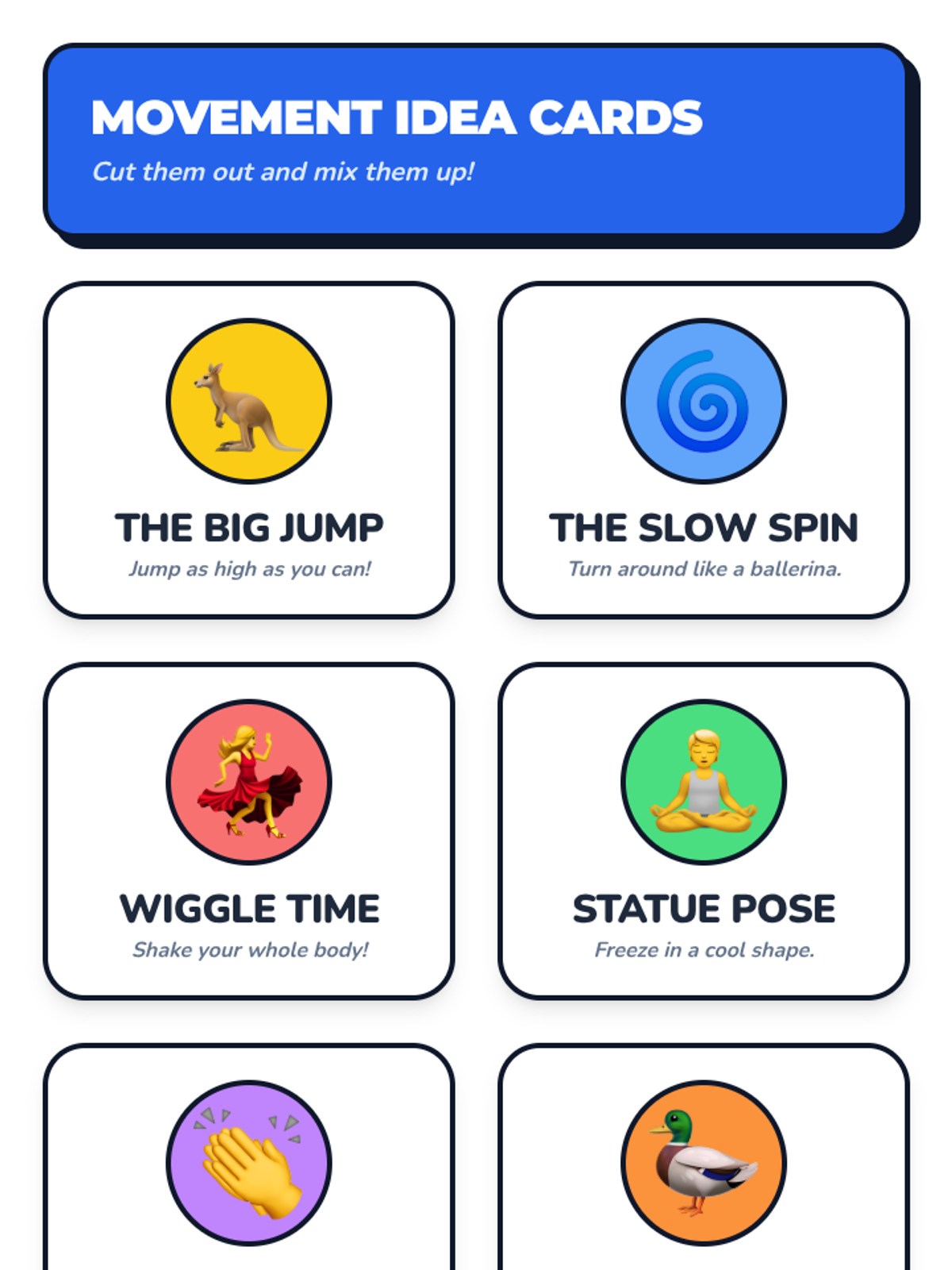
Movement prompt cards for Kindergarteners to use in their choreography, featuring fun emojis and simple descriptions.
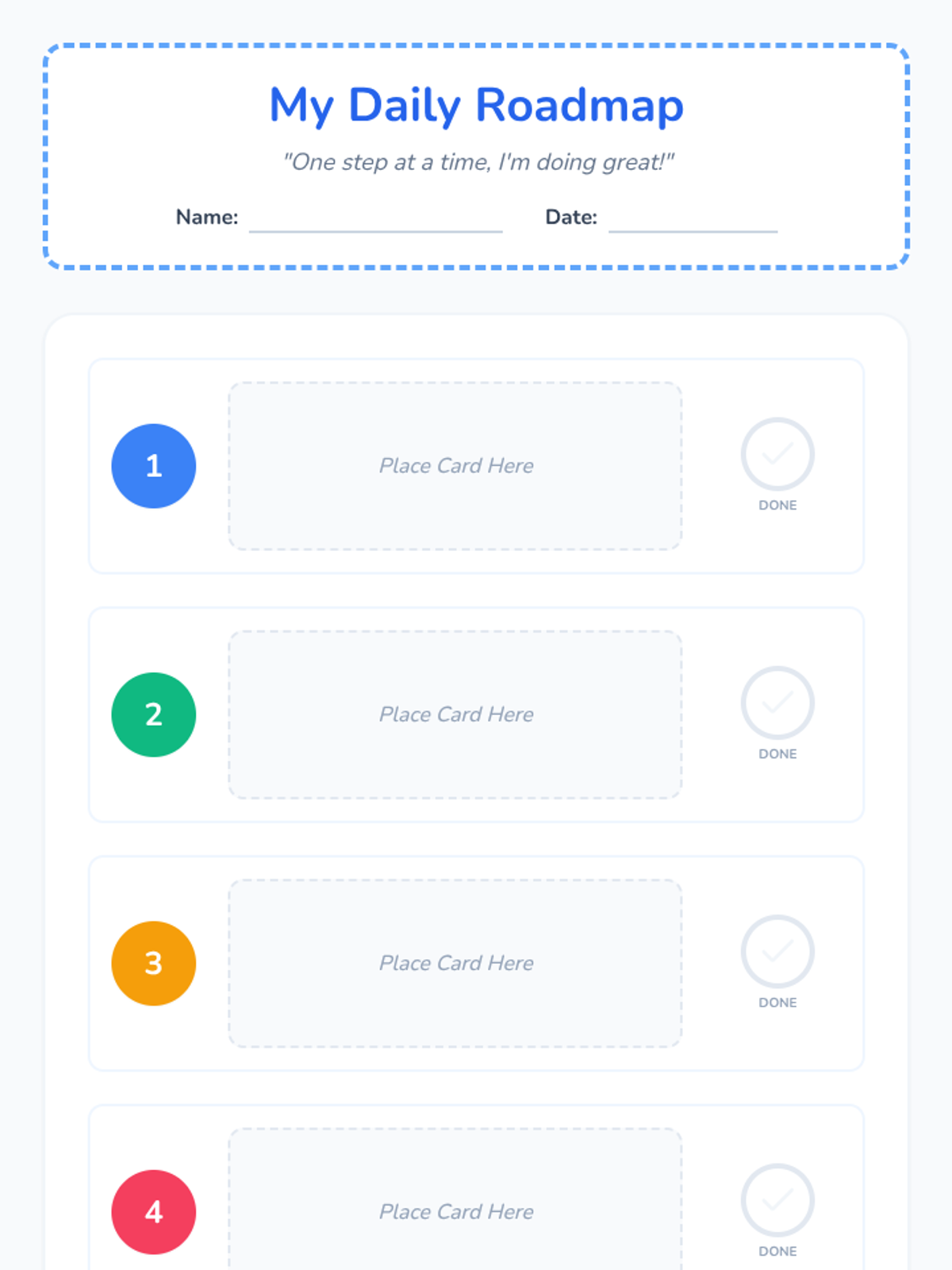
A base schedule board for students to organize their daily routine cards, featuring five numbered slots and check-off circles.
Educational slides introducing the difference between the steady beat and rhythm, and defining the quarter note (Ta) and eighth notes (Ti-Ti) for 2nd-grade students.
A teacher guide and answer key for the climate bias warm-up, including facilitation strategies, timing breakdowns, and exemplar student responses.
1/12
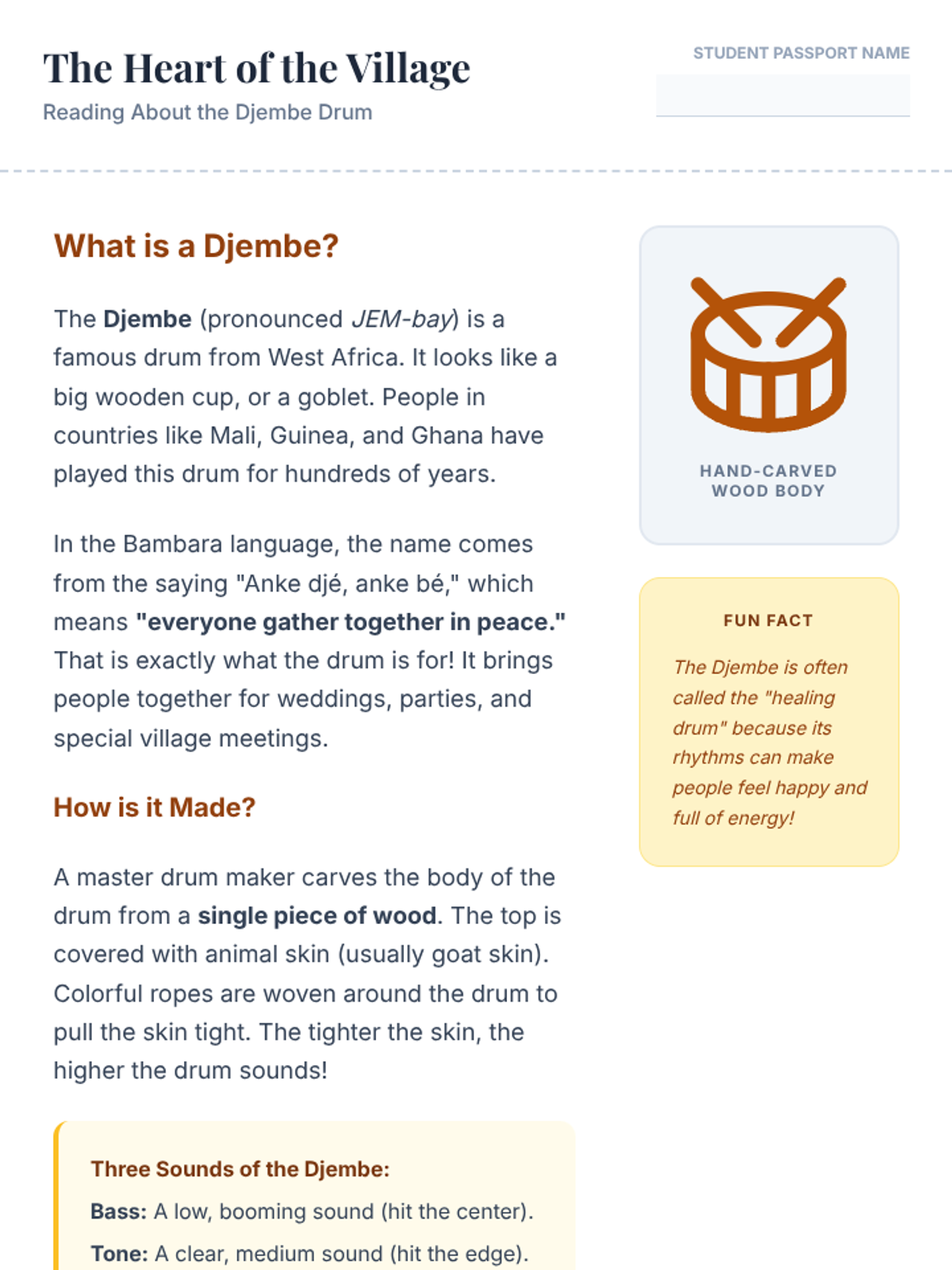
Informative reading passage about the Djembe drum, its cultural origins, construction, and the three primary sounds it produces, followed by comprehension questions.
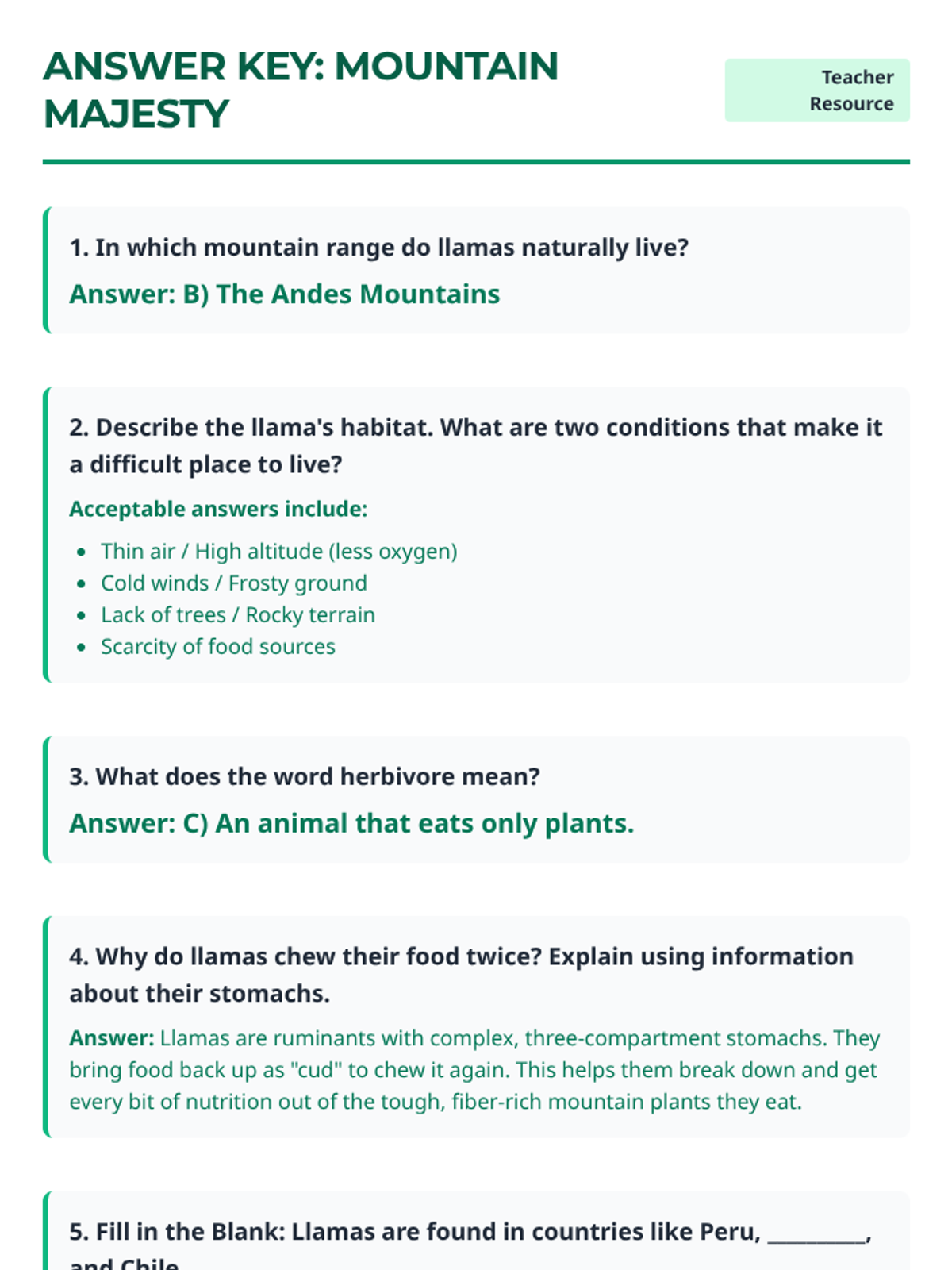
An answer key and scoring guide for the llama reading passage worksheet, including sample answers for short-response questions.
Slides introducing 2nd graders to 4/4 time signature, measures, and bar lines, featuring visual analogies for measures and basic conducting patterns.
A worksheet for students to plan their pattern bracelets, including selecting a pattern type (AB, AAB, ABB), sketching the design, and writing a short justification.
A set of printable routine icons to be used with the Daily Roadmap Board, including requested activities like sensory breaks and morning meetings.
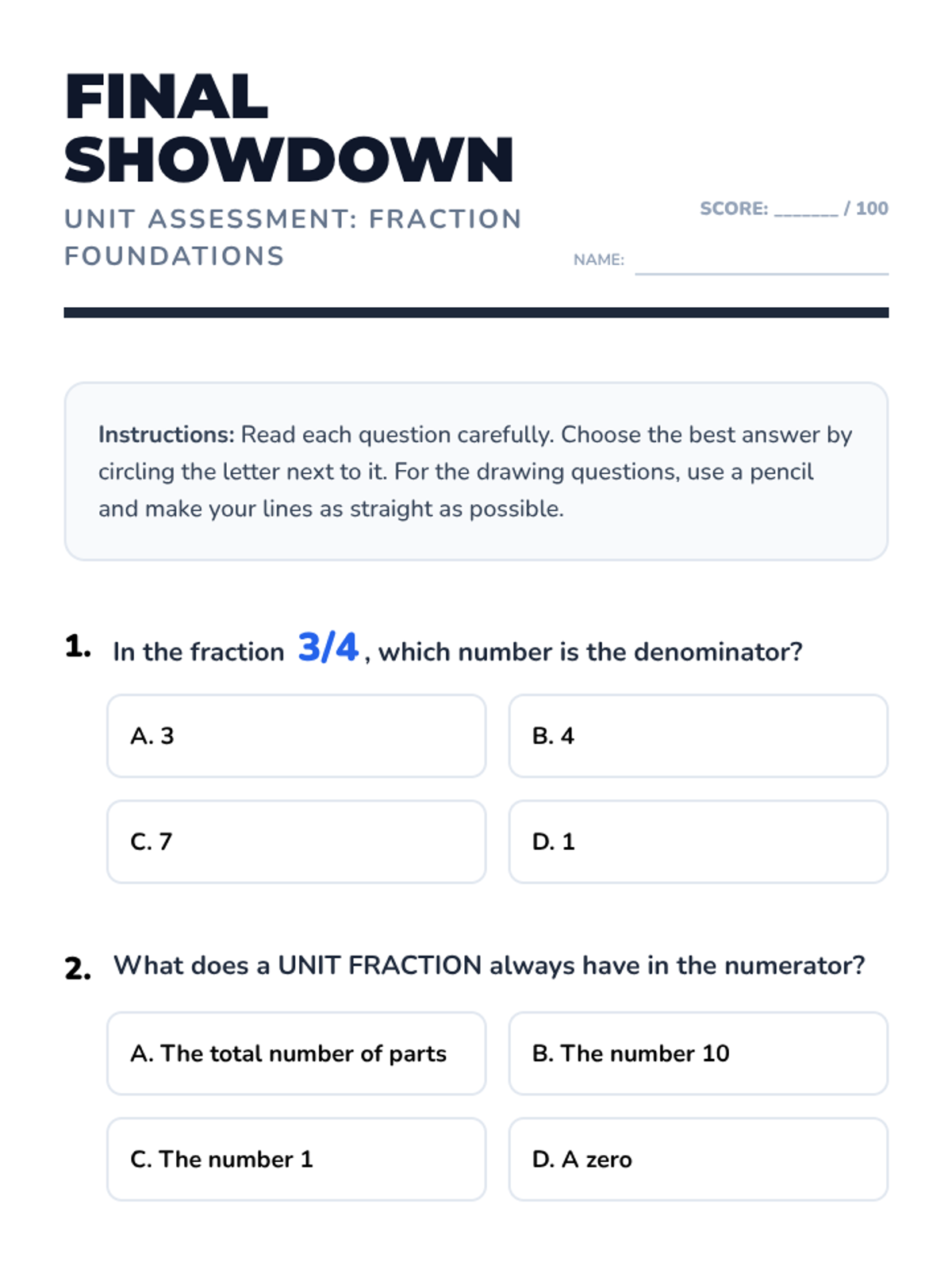
Cumulative multiple-choice assessment for 4th graders covering fraction vocabulary, unit fractions, and model identification.
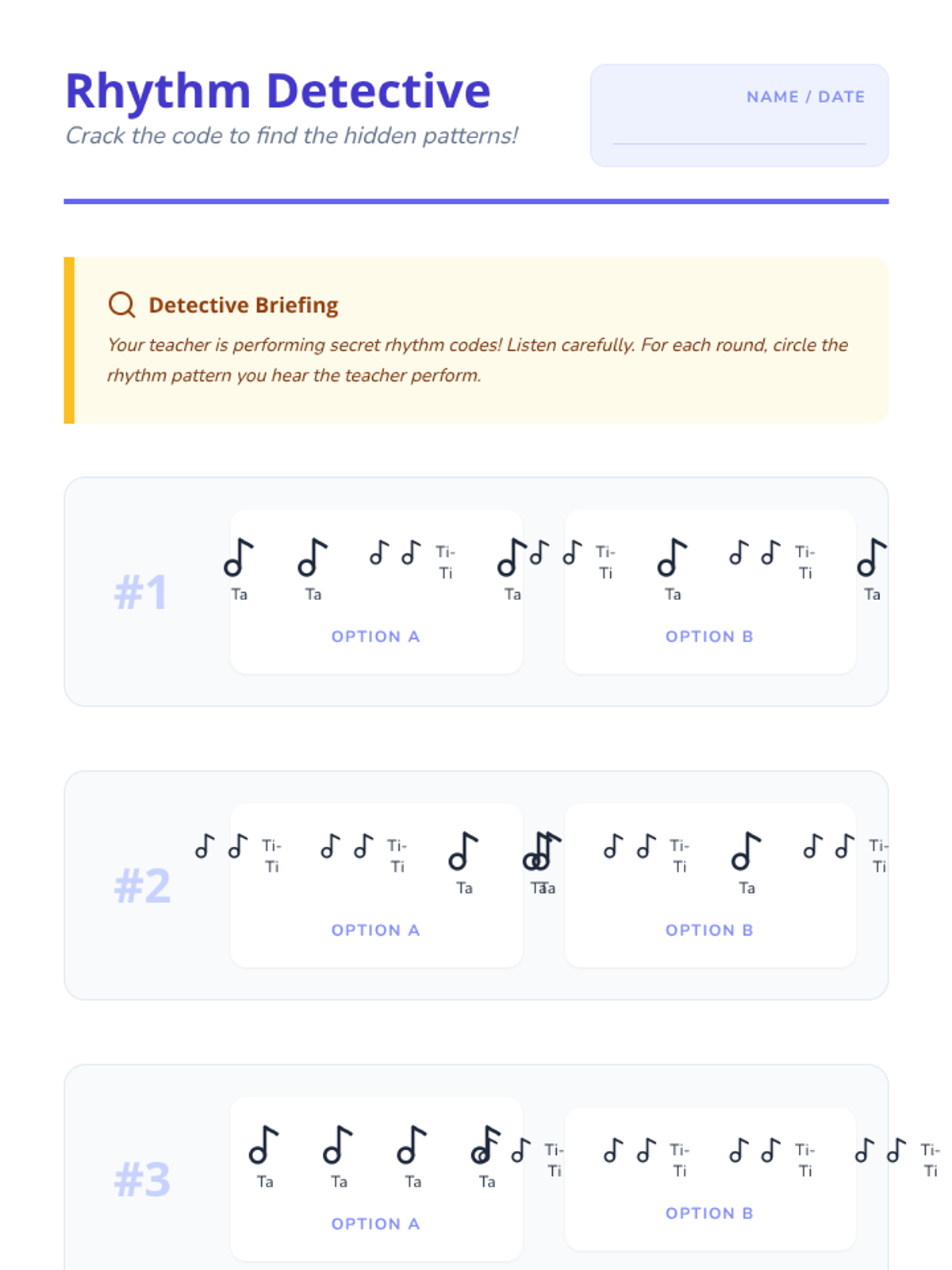
A rhythm identification game for 2nd graders where they listen to a pattern performed by the teacher and identify the correct rhythmic notation.
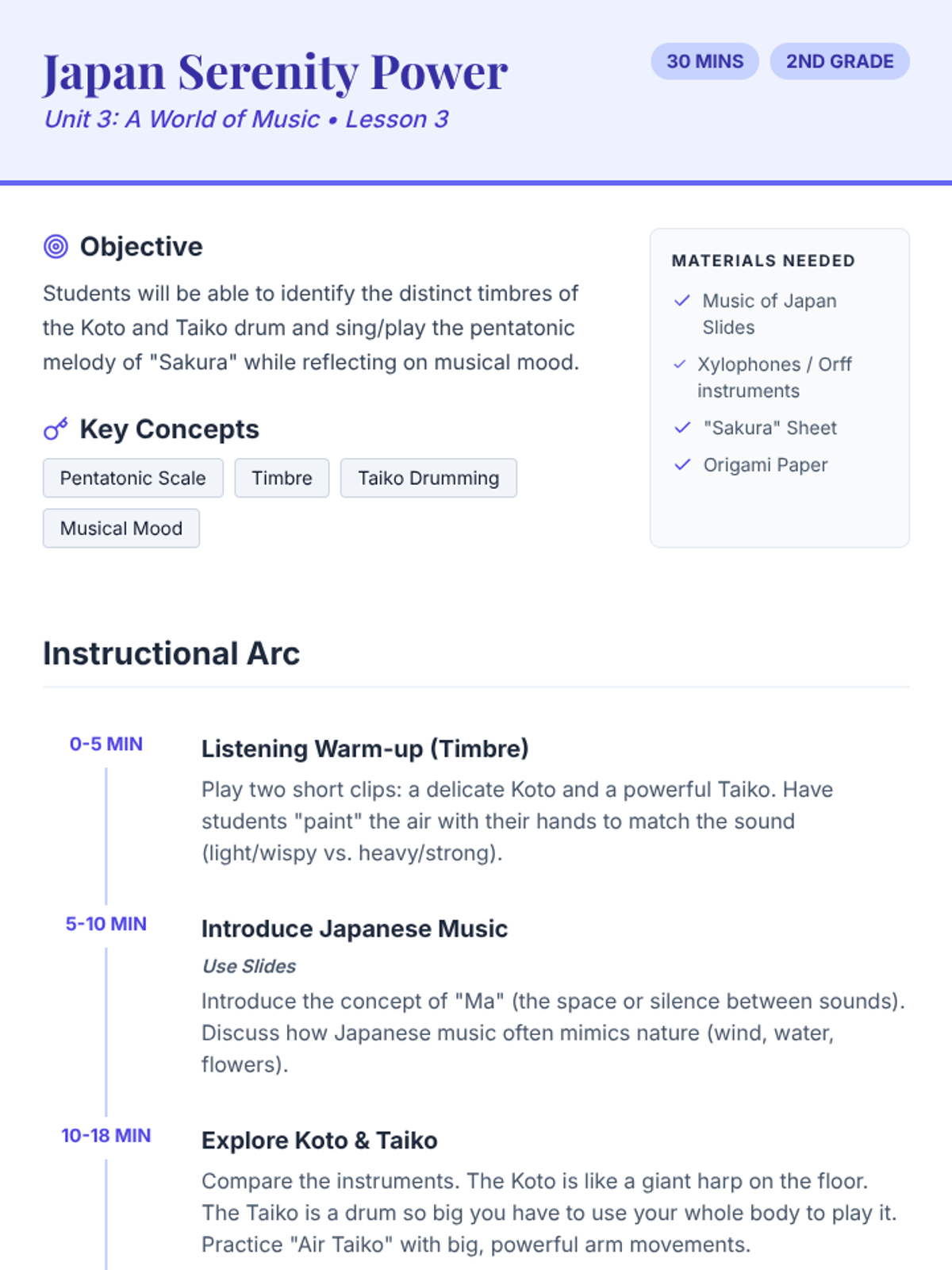
Lesson plan for Lesson 3, focusing on the sounds of the koto and taiko, the pentatonic scale through the song 'Sakura', and the concept of musical mood.
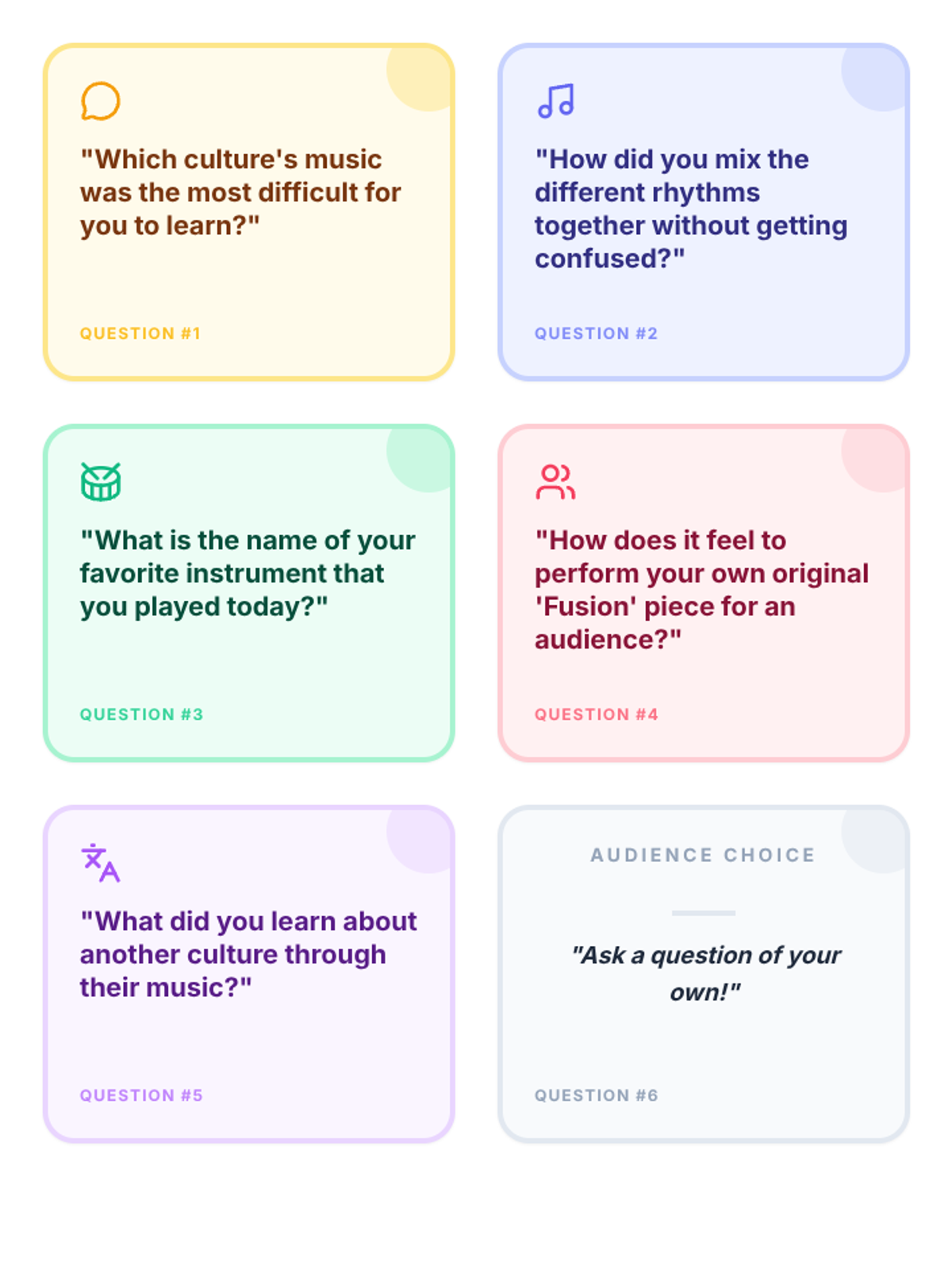
Discussion prompt cards for the post-performance Q&A session, designed to encourage meaningful interaction between the audience and the student performers.
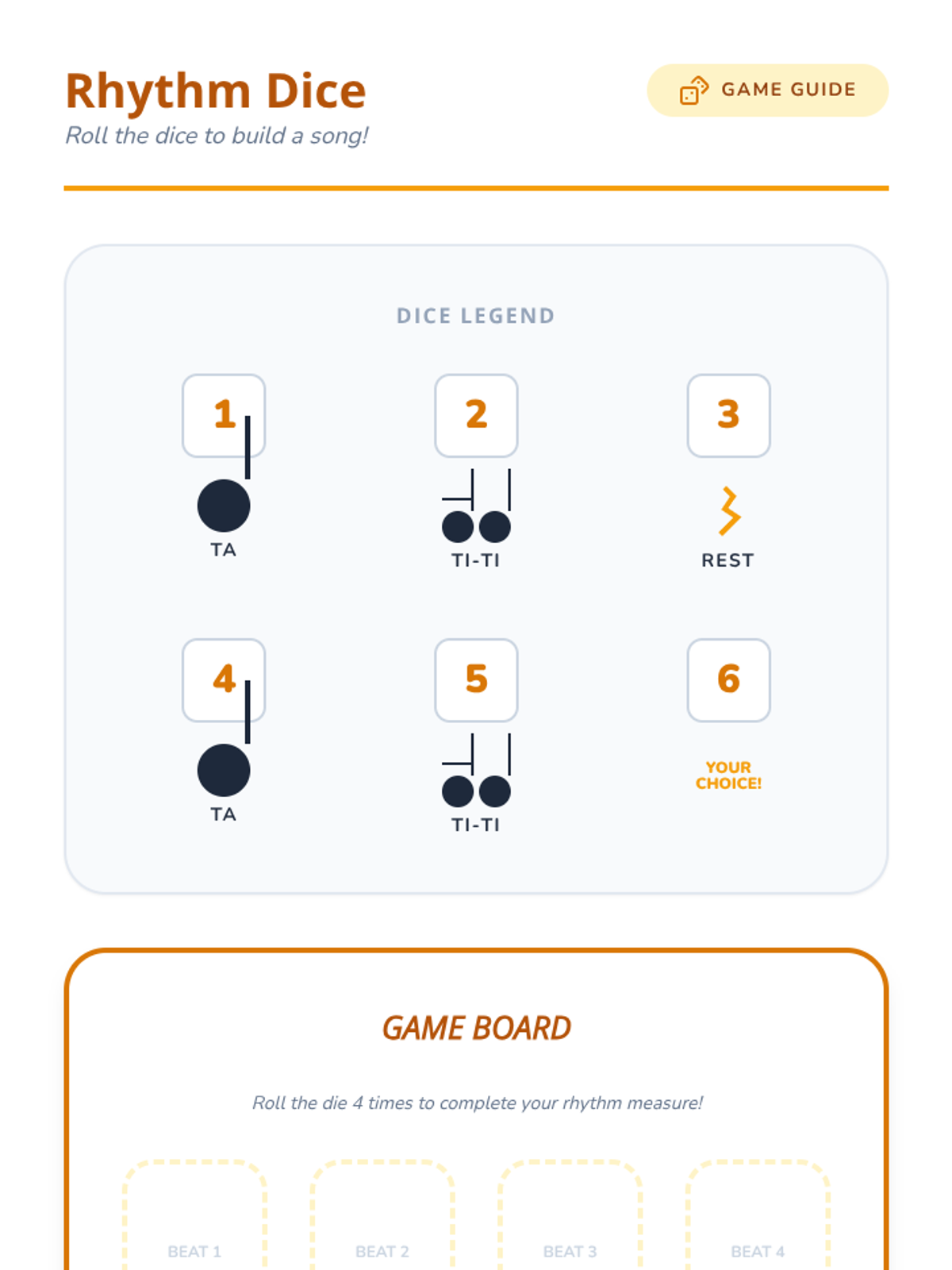
A dice-based rhythm game where 2nd graders roll a die to determine which notes (Ta, Ti-Ti, or Rest) to include in their 4-beat rhythm pattern.