A slide deck introducing the lesson 'The Medium is the Message: Platform Evolution', featuring the video 'Me at the zoo', analysis of early internet constraints, and discussion prompts.
A teacher guide and answer key for the climate bias warm-up, including facilitation strategies, timing breakdowns, and exemplar student responses.
1/12
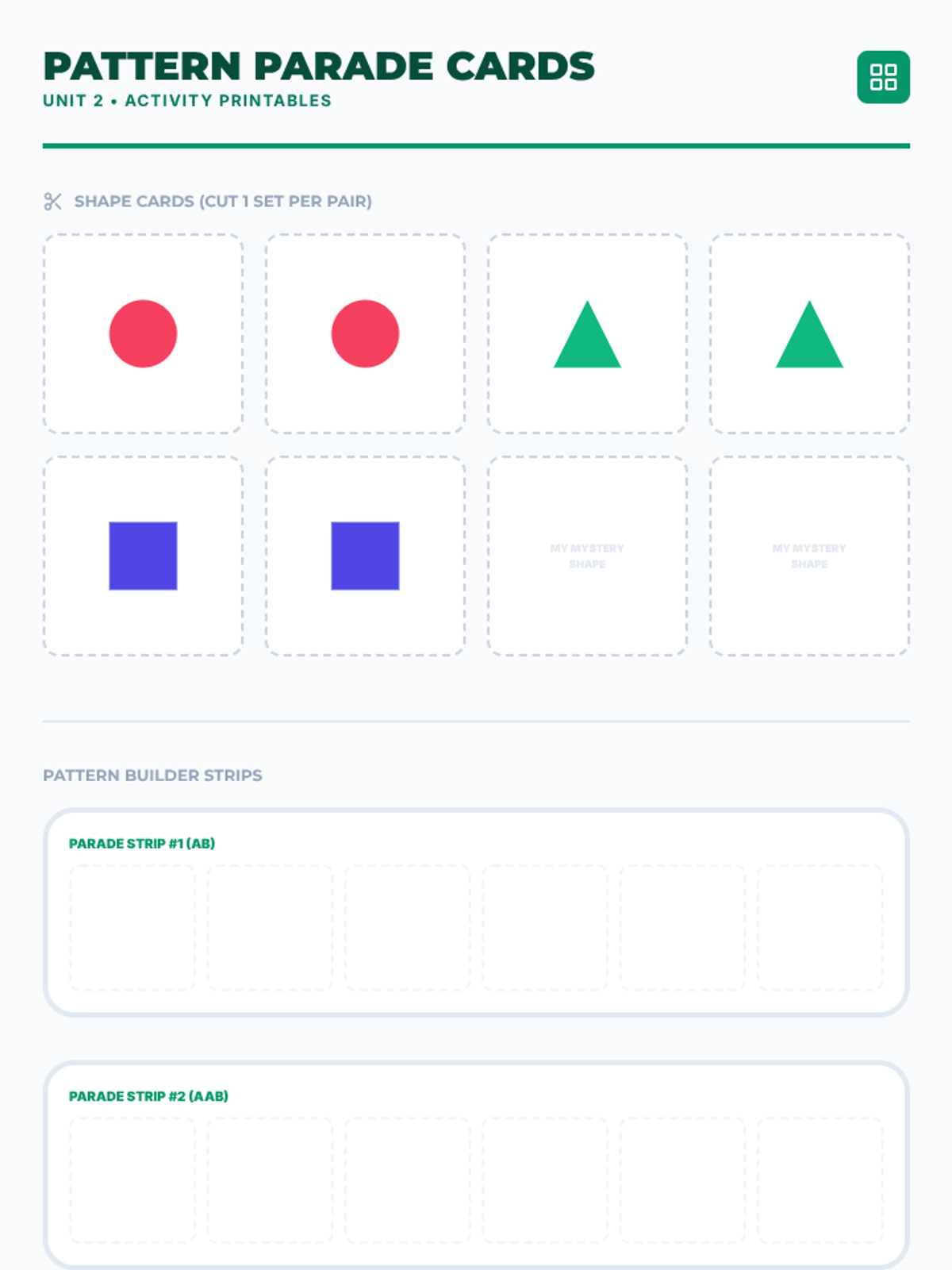
A printable set of shape cards and pattern strips for students to build and extend AB, AAB, and ABB patterns in pairs.
1/16
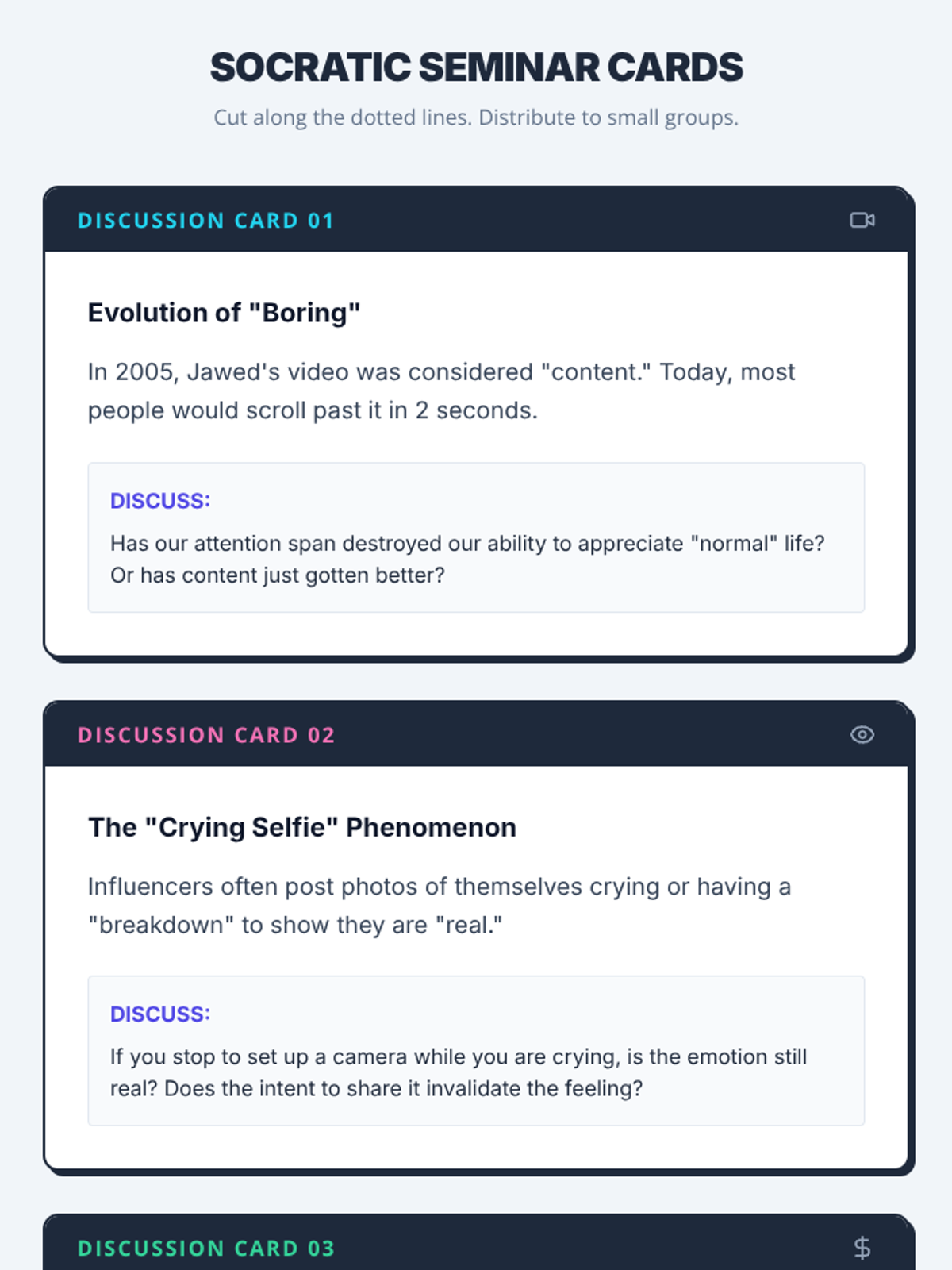
Printable discussion cards with deep-dive questions about authenticity, monetization, and social media performance for small group seminars.
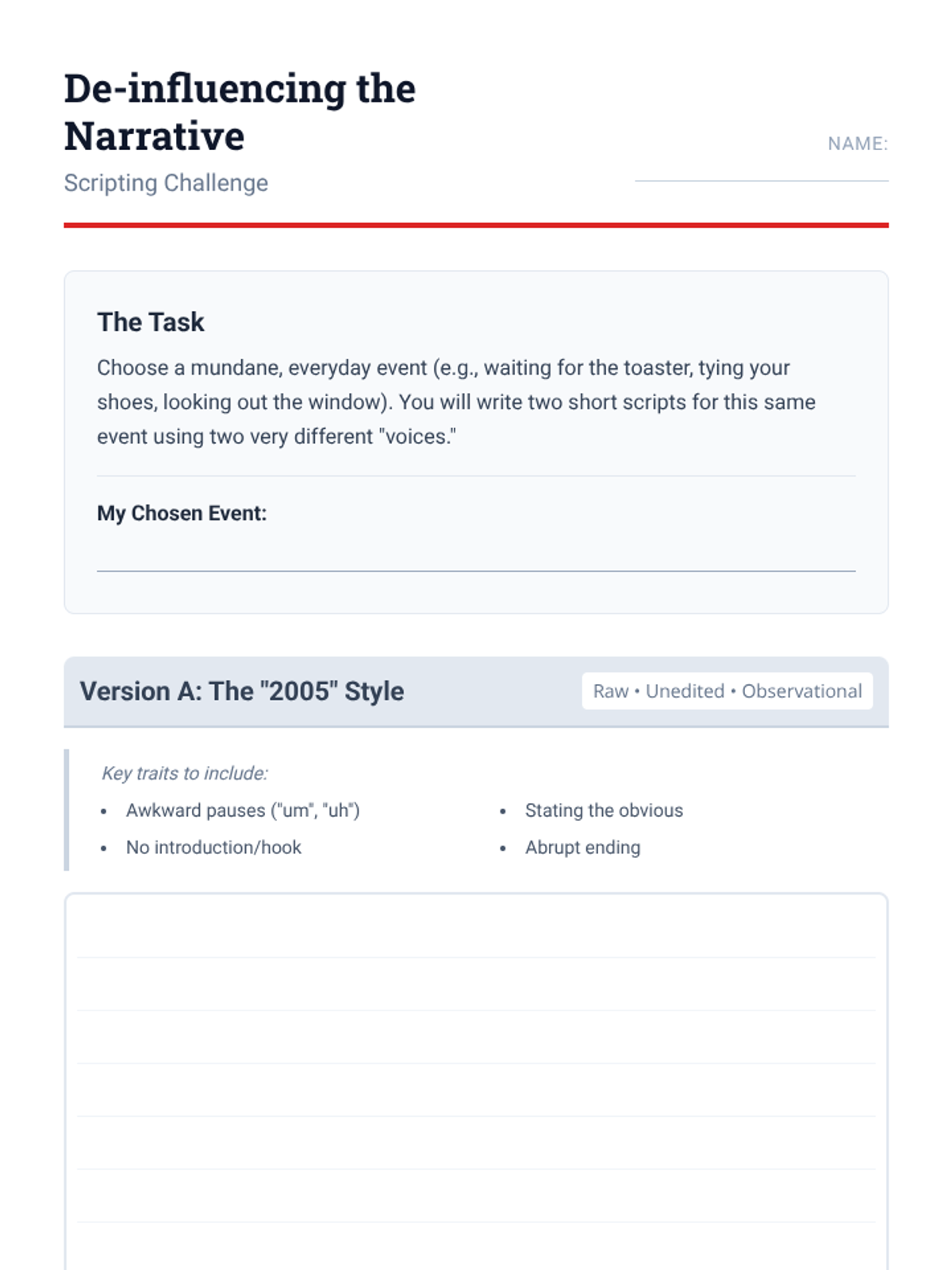
A structured worksheet for students to script their two versions of an event: one in the style of 2005 observational video and one in the style of a modern influencer.
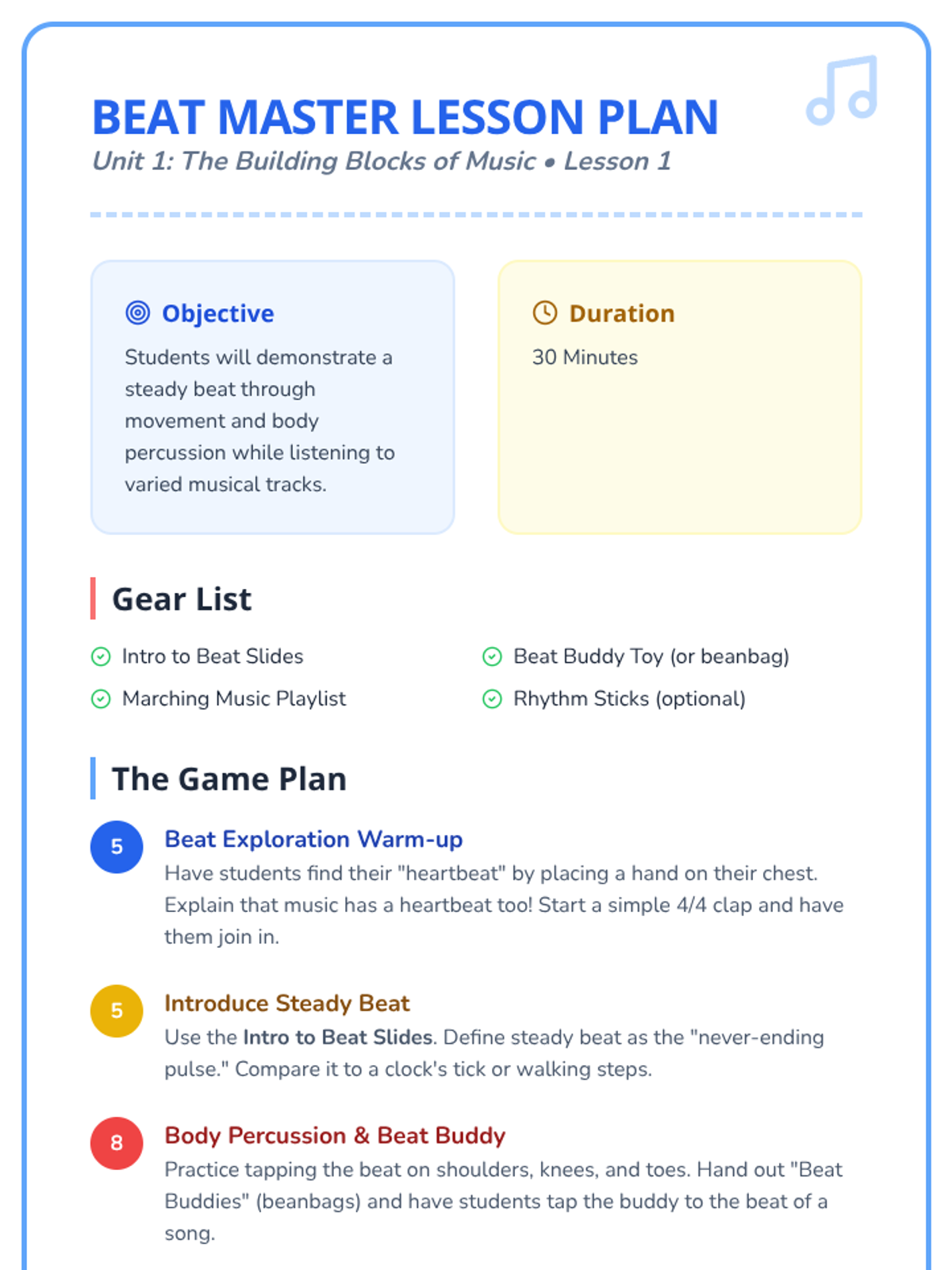
A comprehensive 30-minute lesson plan for Kindergarten teachers to introduce the concept of a steady beat through interactive movement and listening.
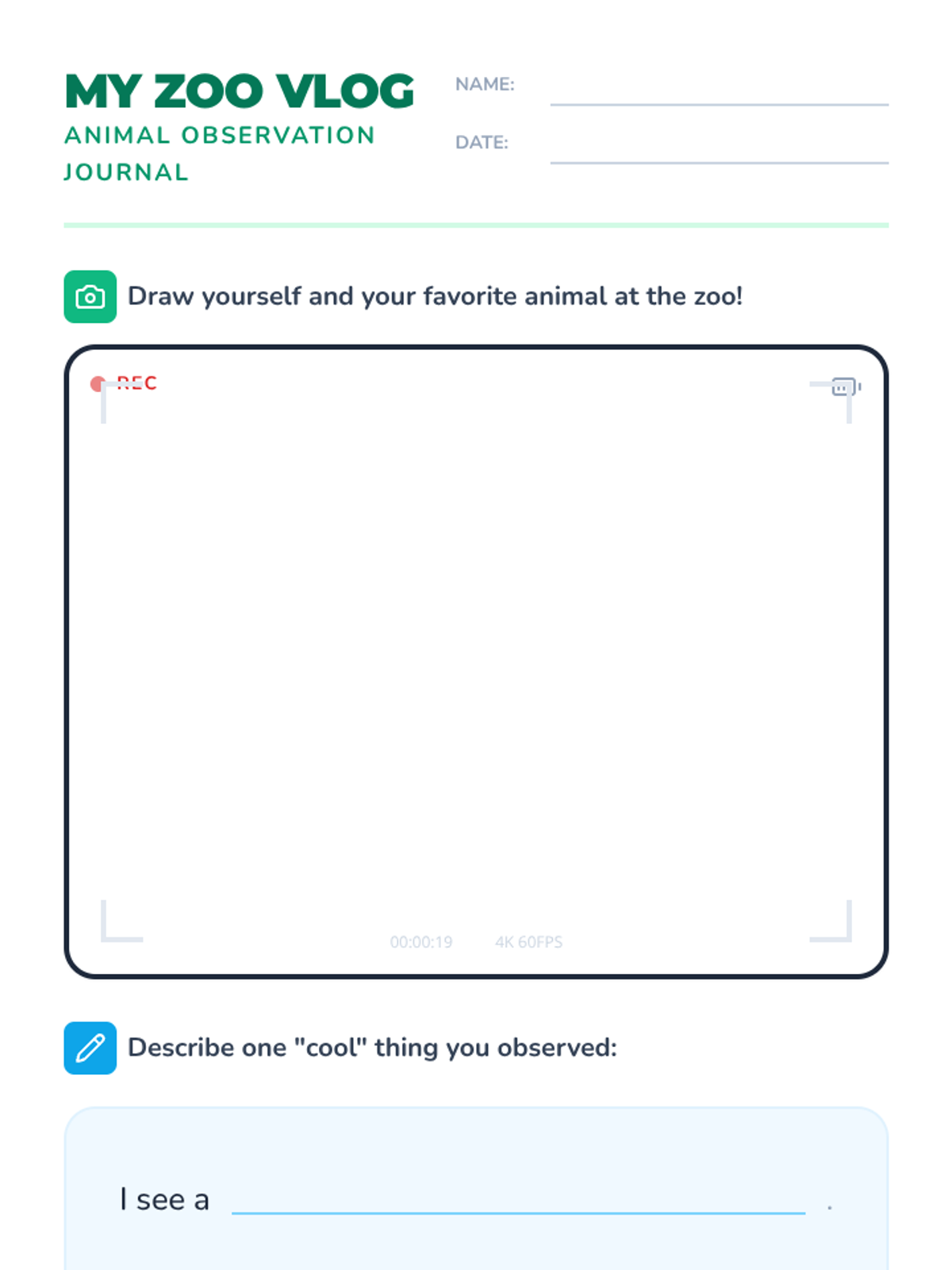
A Kindergarten-2nd Grade worksheet designed to look like a camera viewfinder, where students draw themselves with a favorite animal and complete sentence stems describing their observation.
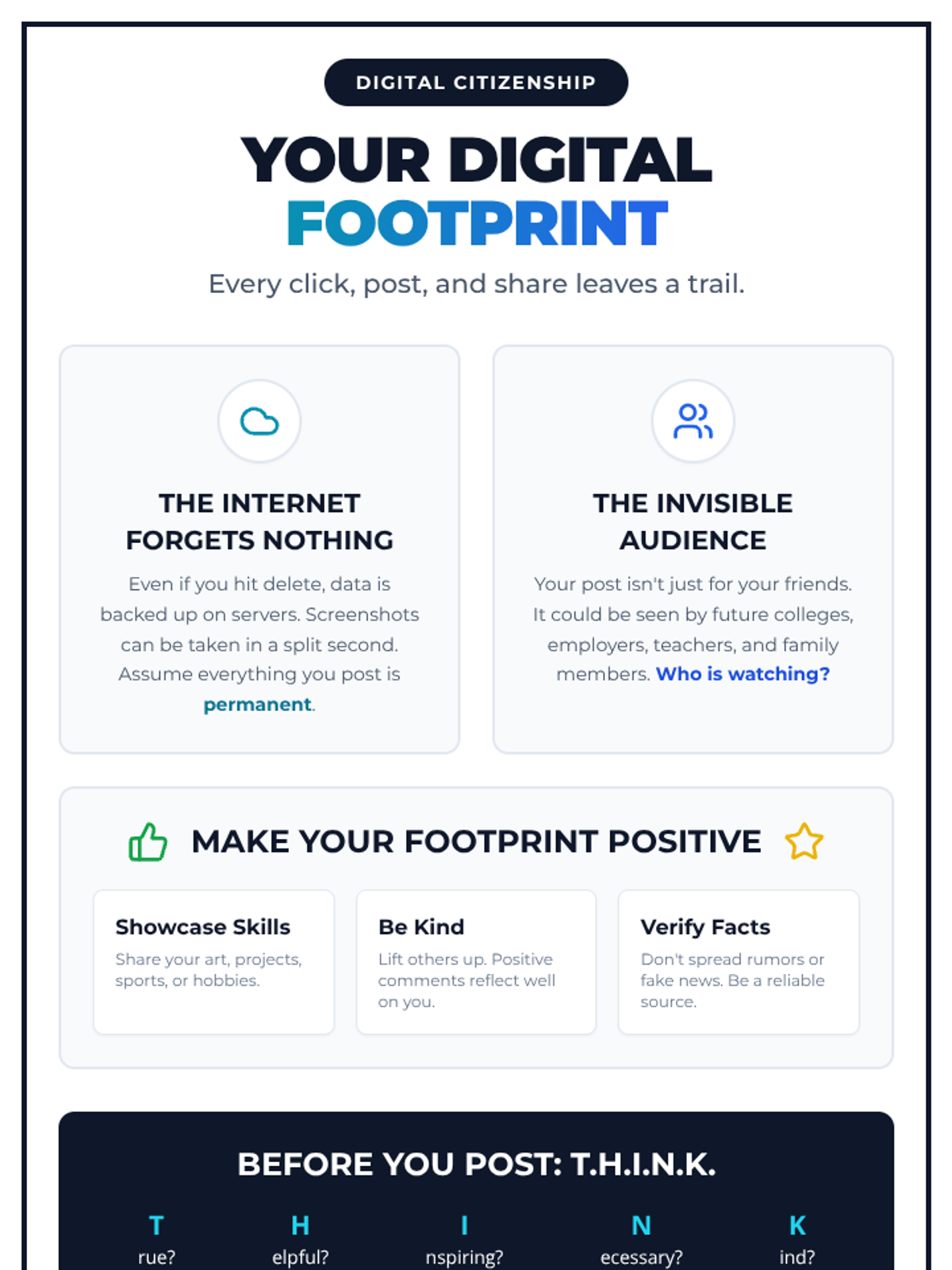
Visual infographic poster summarizing key digital footprint concepts like permanence, audience, and the T.H.I.N.K. acronym.
A worksheet for students to plan their pattern bracelets, including selecting a pattern type (AB, AAB, ABB), sketching the design, and writing a short justification.
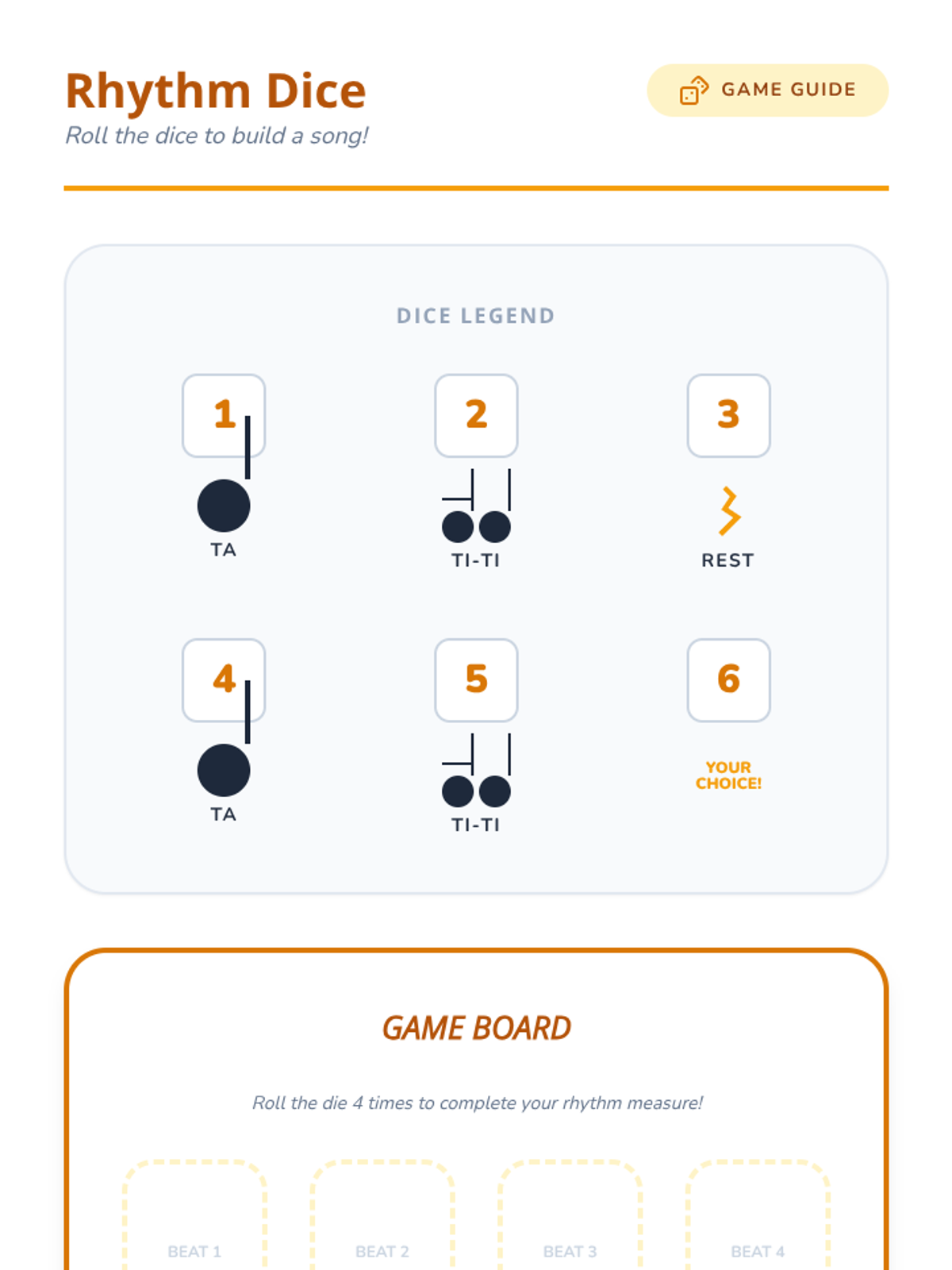
A dice-based rhythm game where 2nd graders roll a die to determine which notes (Ta, Ti-Ti, or Rest) to include in their 4-beat rhythm pattern.
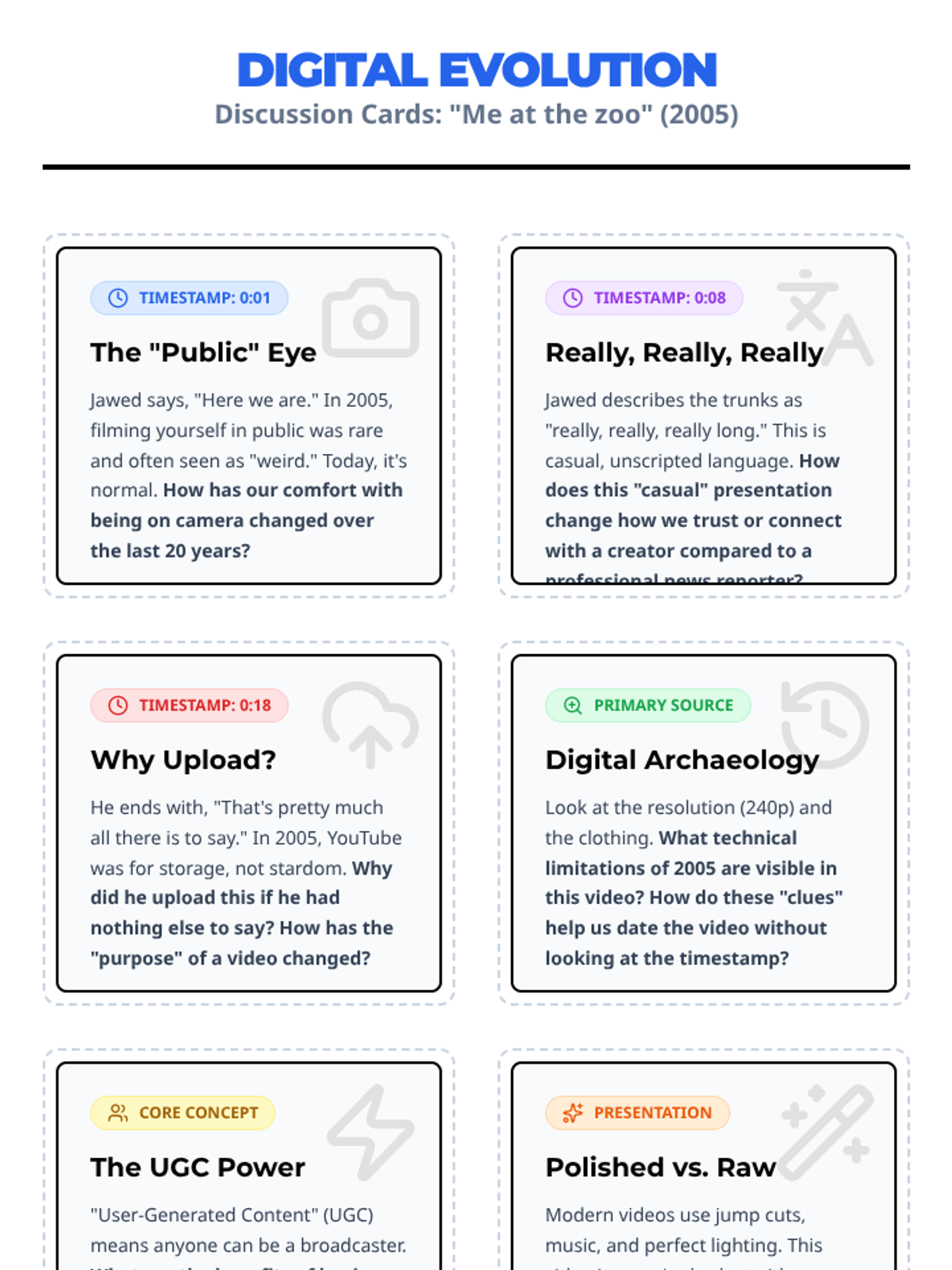
A set of 6 printable discussion cards for middle school students to analyze the "Me at the zoo" video. Each card features a specific timestamp or concept, focusing on social norms, technology evolution, and presentation styles.
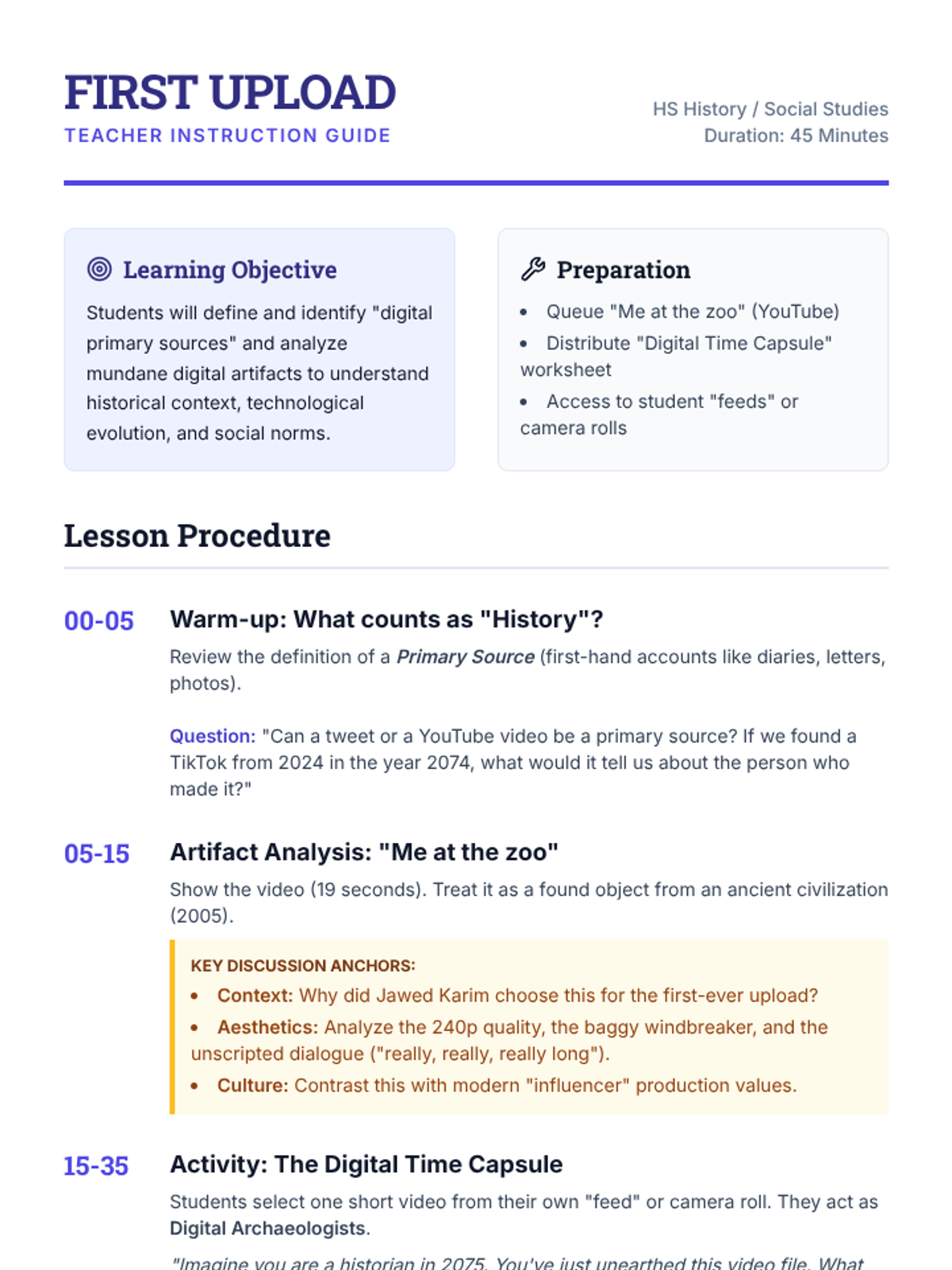
A teacher's lesson plan for high school social studies focused on digital primary sources, featuring a detailed timeline, discussion questions, and key concepts based on the first YouTube video.
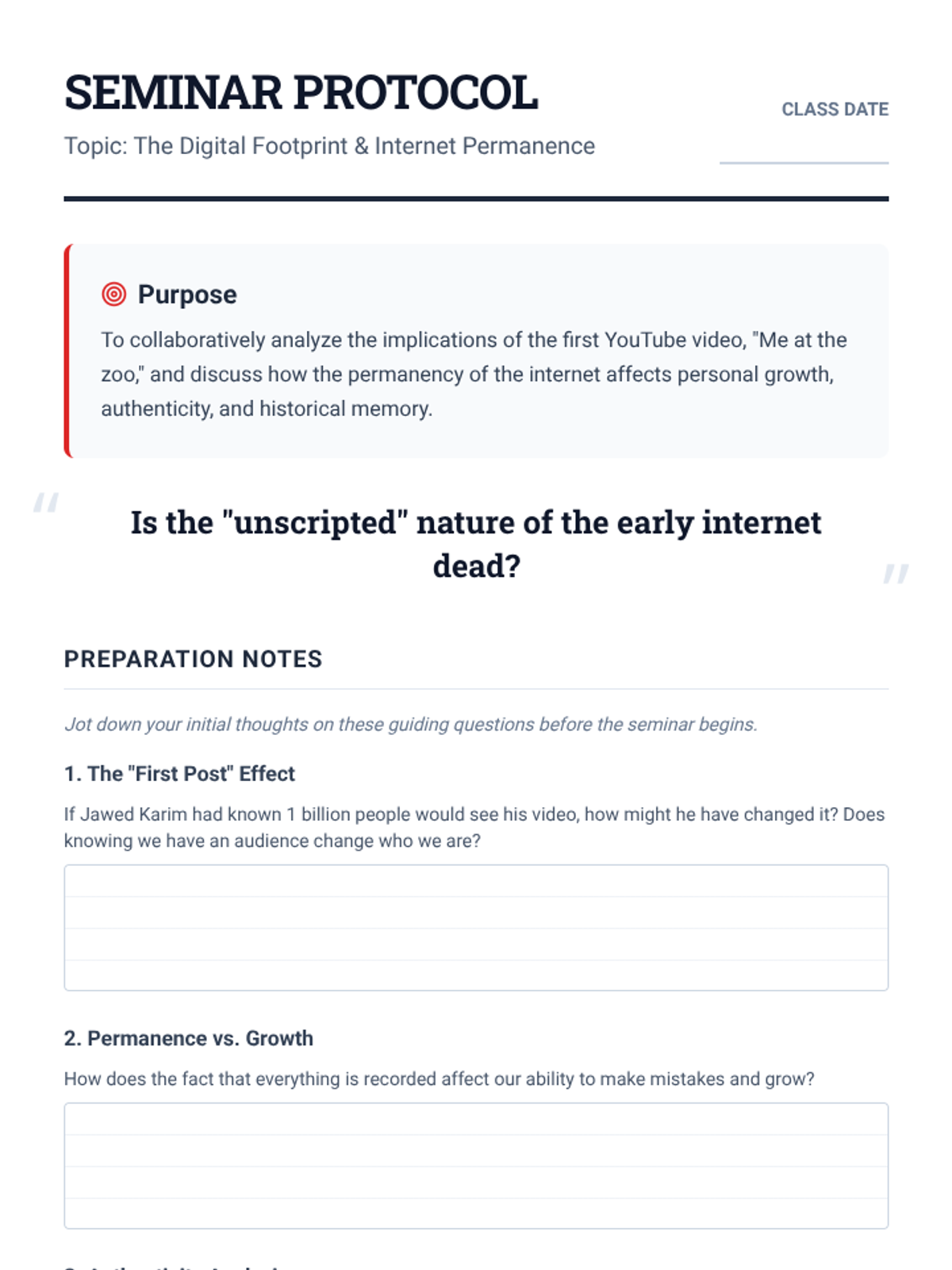
A structured handout for the Socratic Seminar. Includes the central discussion questions, space for student preparation notes, rules for participation, and sentence starters to aid discussion flow.
A student worksheet for analyzing the 'Me at the zoo' video and planning their own impromptu classroom report, including a self-reflection tally for filler words.
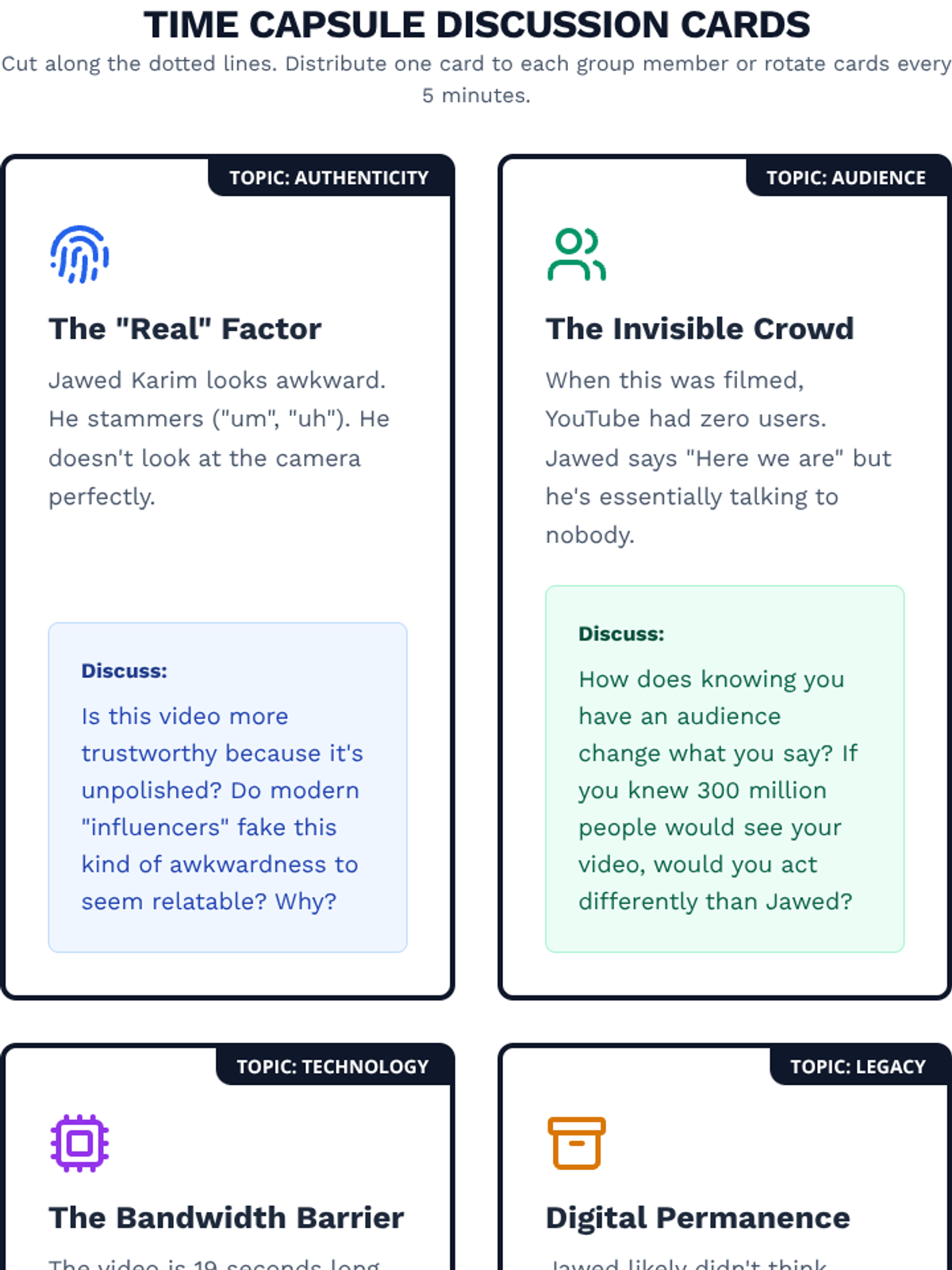
Printable discussion cards with prompts focusing on authenticity, audience, technology constraints, and digital legacy to facilitate small group conversations.
Educational slides introducing the difference between the steady beat and rhythm, and defining the quarter note (Ta) and eighth notes (Ti-Ti) for 2nd-grade students.
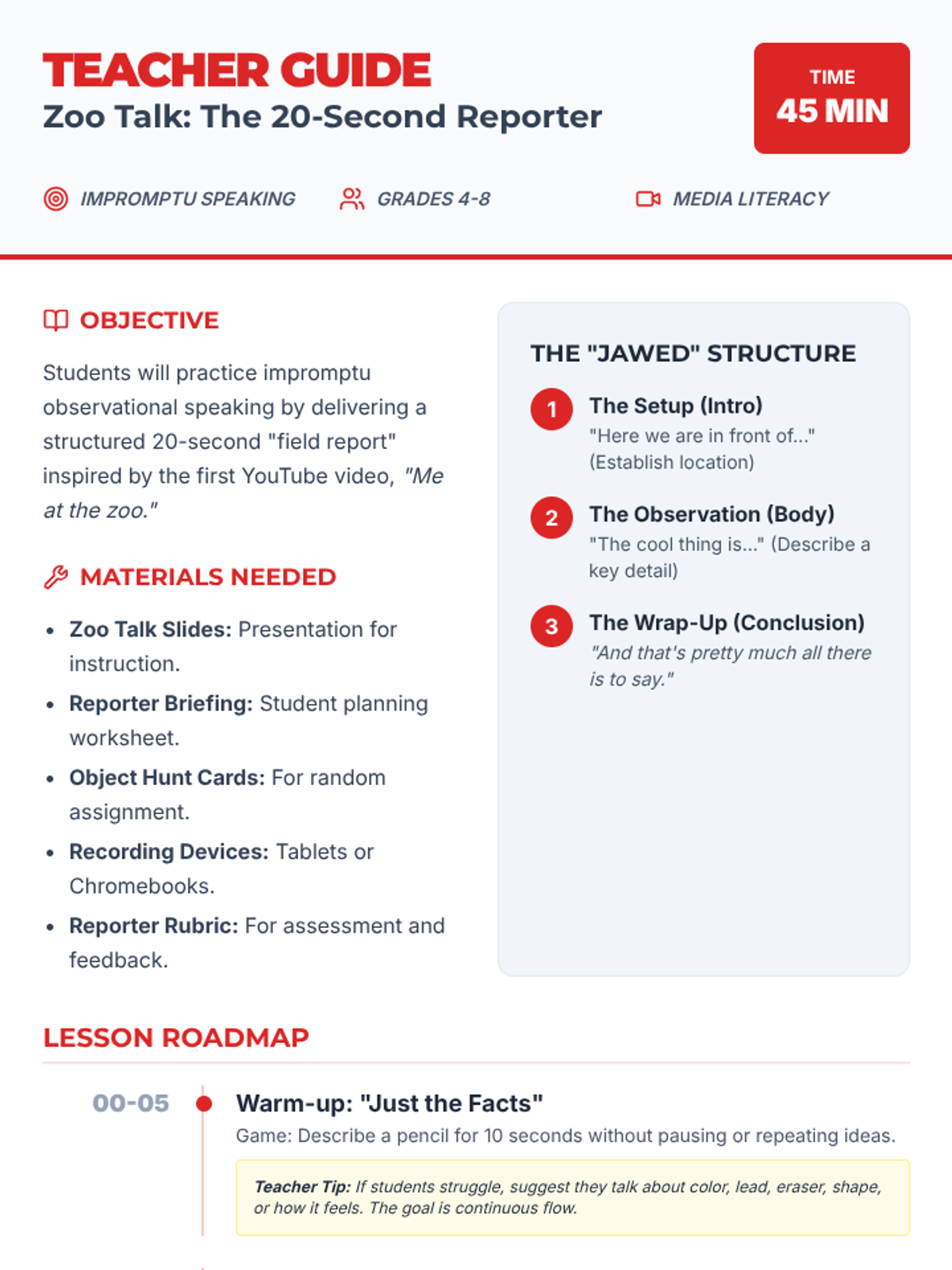
A comprehensive teacher's guide for the Zoo Talk lesson, detailing the objective, materials, time breakdown, and the 'Jawed' three-part speaking structure.
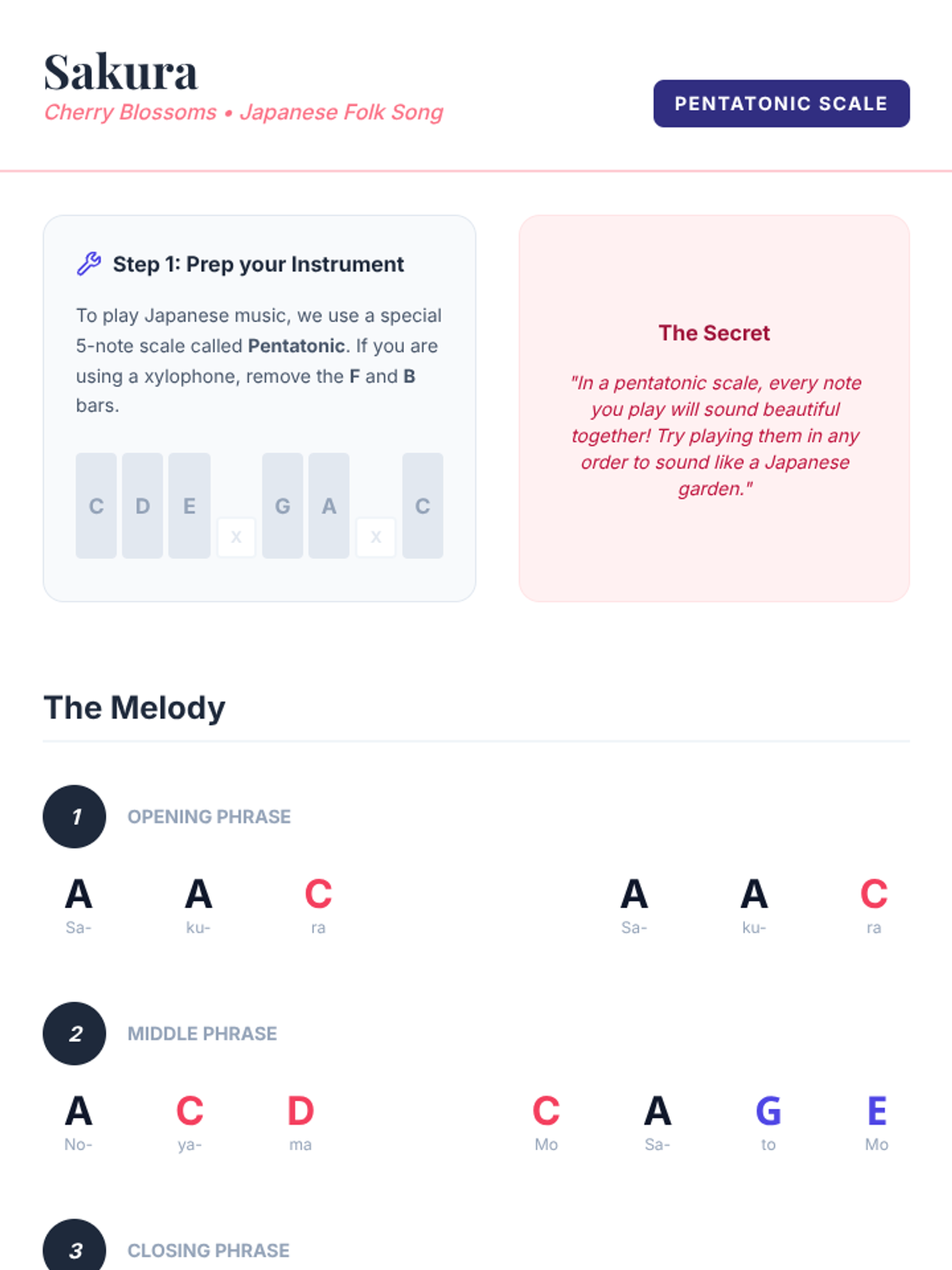
Simple xylophone melody sheet for 'Sakura', using letter names and a pentatonic scale guide for students to perform the traditional Japanese song.
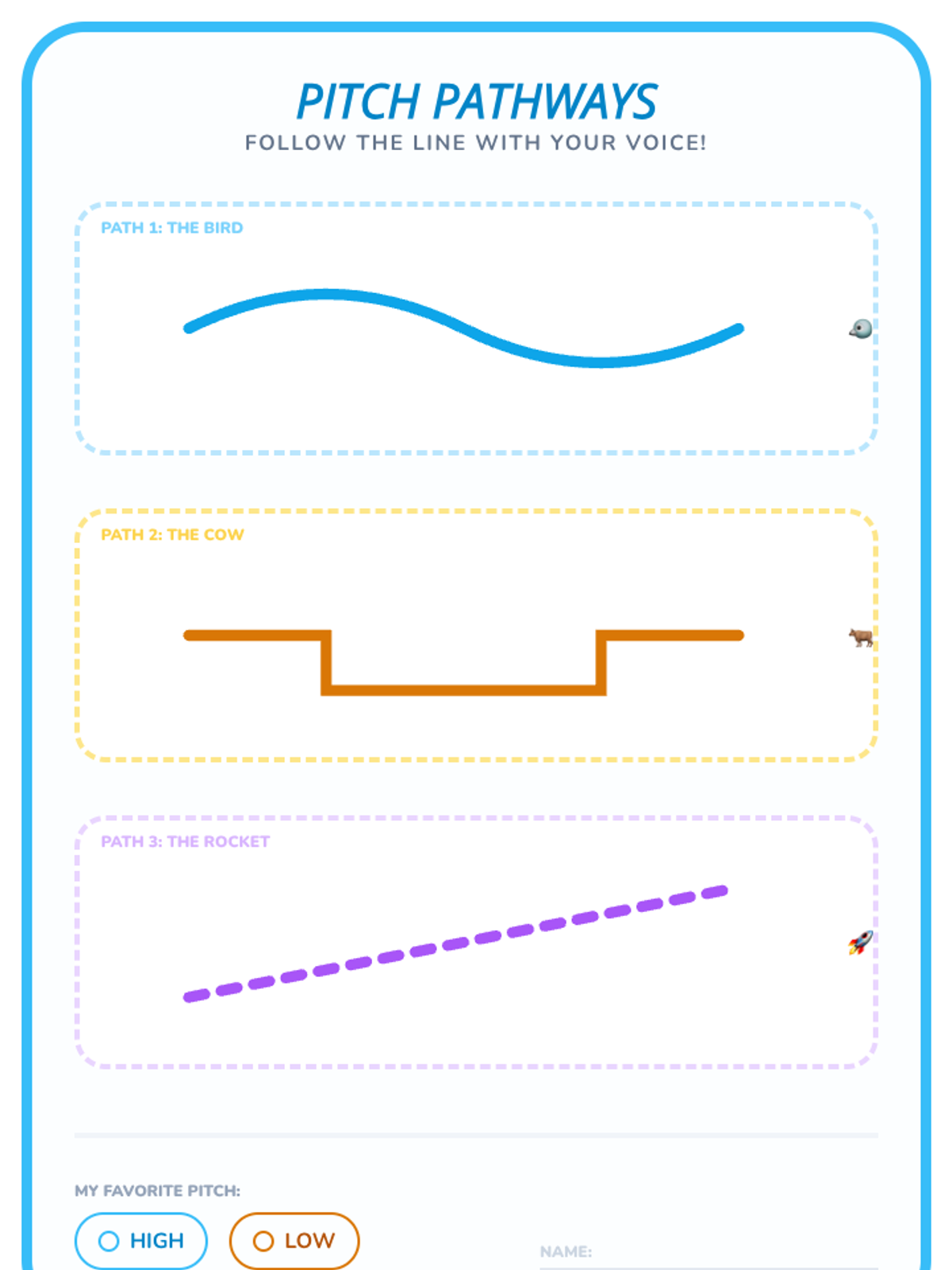
A vocal exploration worksheet where students follow graphic notation paths with their voices to practice high and low pitch.
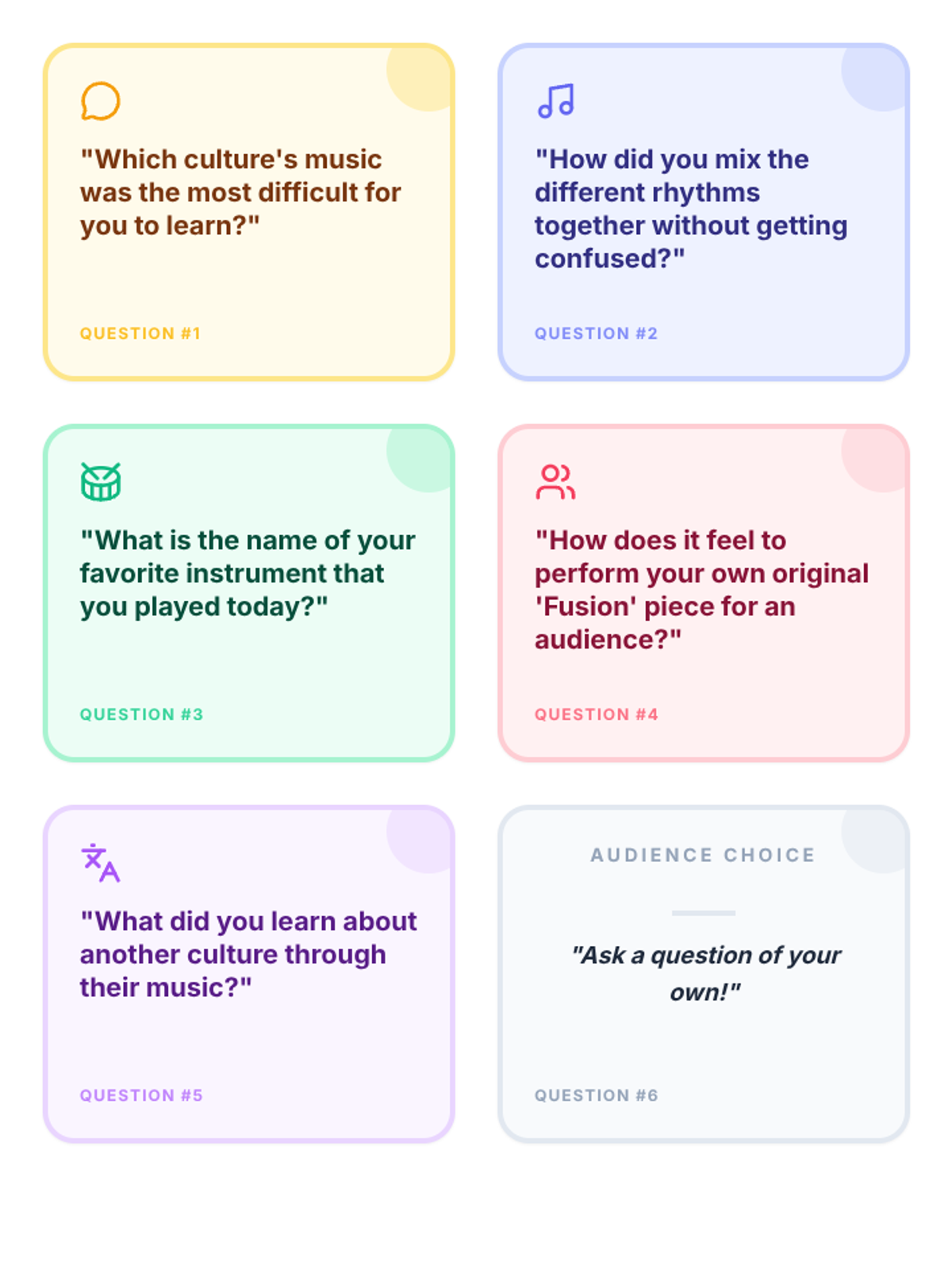
Discussion prompt cards for the post-performance Q&A session, designed to encourage meaningful interaction between the audience and the student performers.
A fun, visual slide deck for the lesson featuring the 'Me at the zoo' video, discussion prompts, drawing instructions, and a high-quality reference photo of an elephant.