A reflective 3-2-1 cool-down activity for students to synthesize their learning about the Engineering Design Process at the end of the lesson.
Visual presentation for Session 2, exploring the interconnected cycle of thoughts, feelings, and actions using relatable middle school scenarios.
1/13
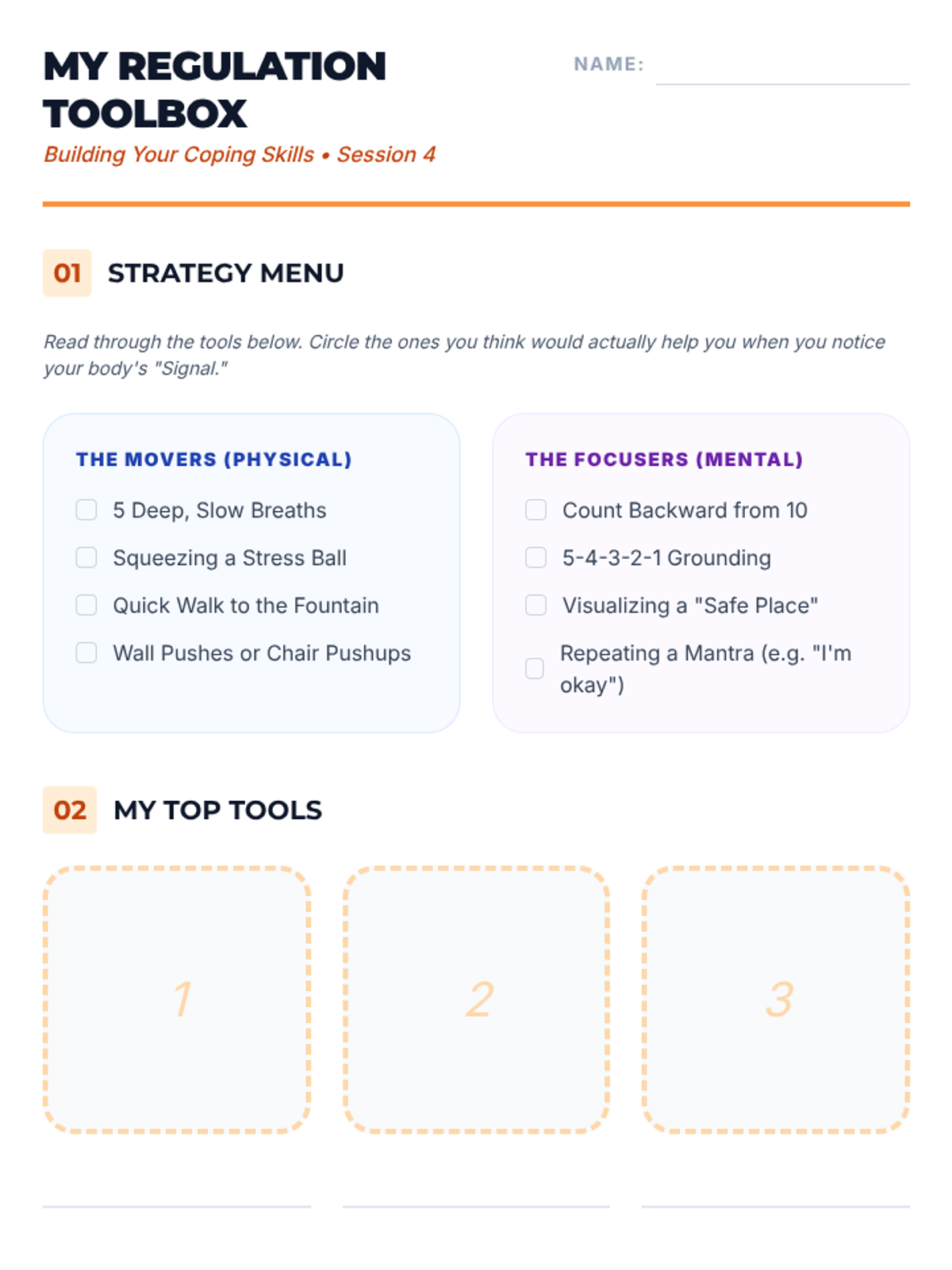
Worksheet for Session 4 that helps students identify personal coping strategies and plan how to use them when they detect physical warning signs.
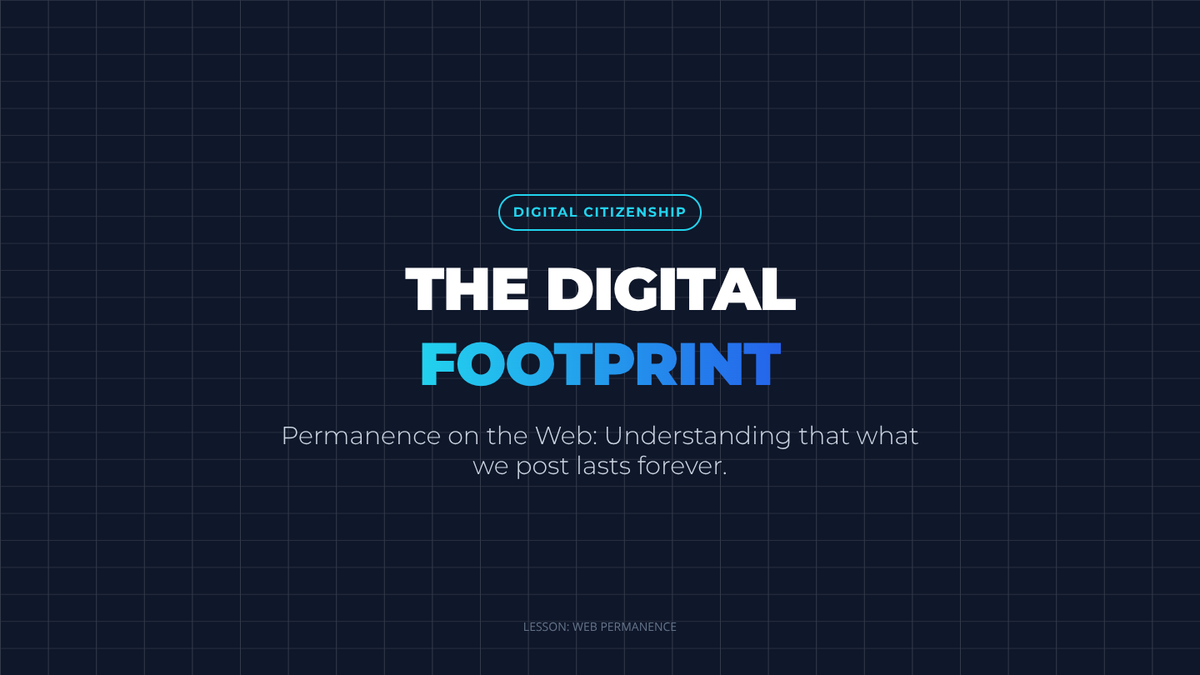
Lesson slides for 'The Digital Footprint' featuring the 'Me at the zoo' video and discussion prompts on web permanence.
1/16
A student worksheet for calculating upload times based on historical and modern internet speeds. Includes data tables, workspace for calculations, and analysis questions.
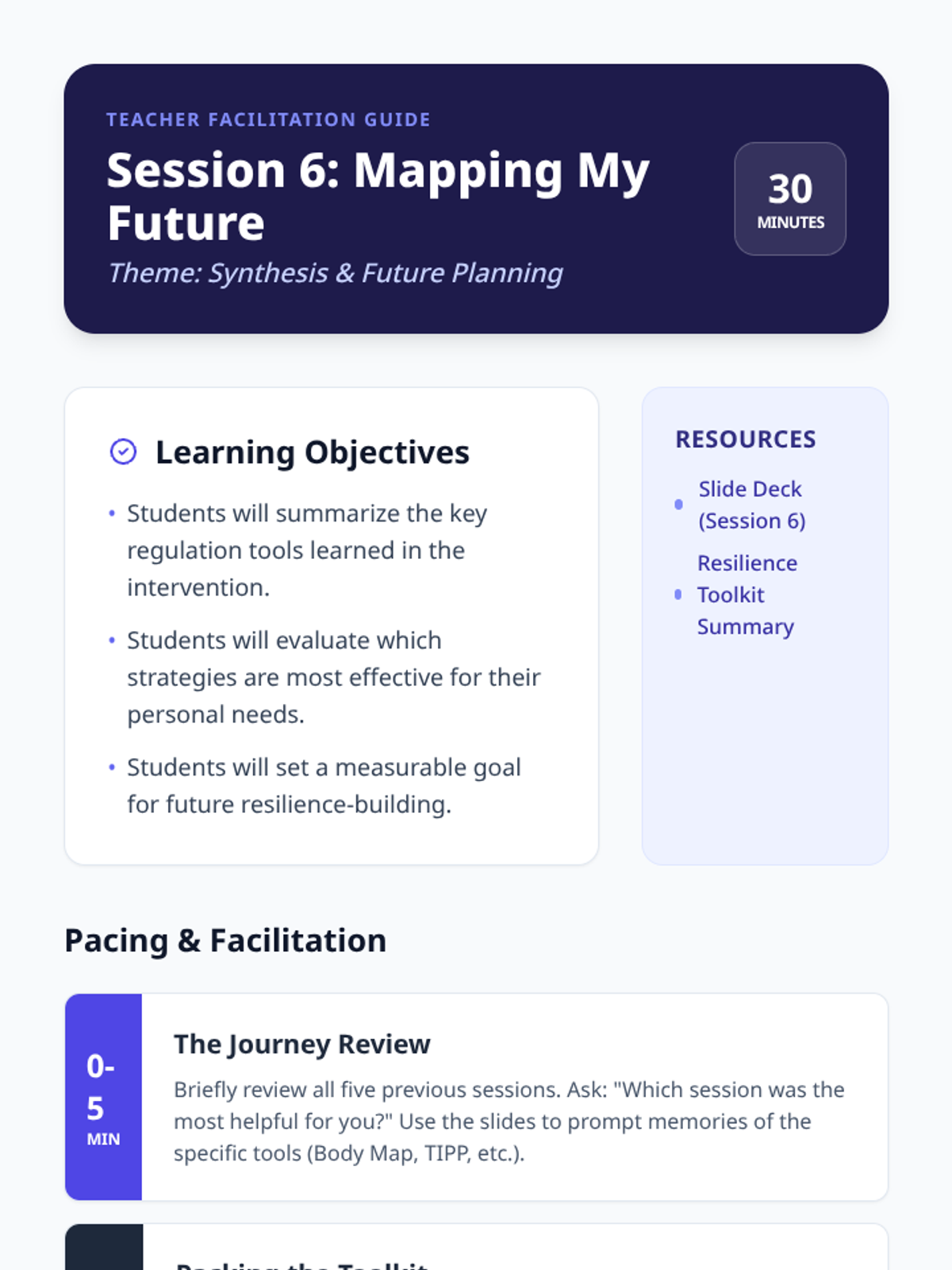
Final facilitation guide for Session 6. Provides instructions for synthesizing the 6-week program, helping students select their best tools, and planning for long-term maintenance of skills.
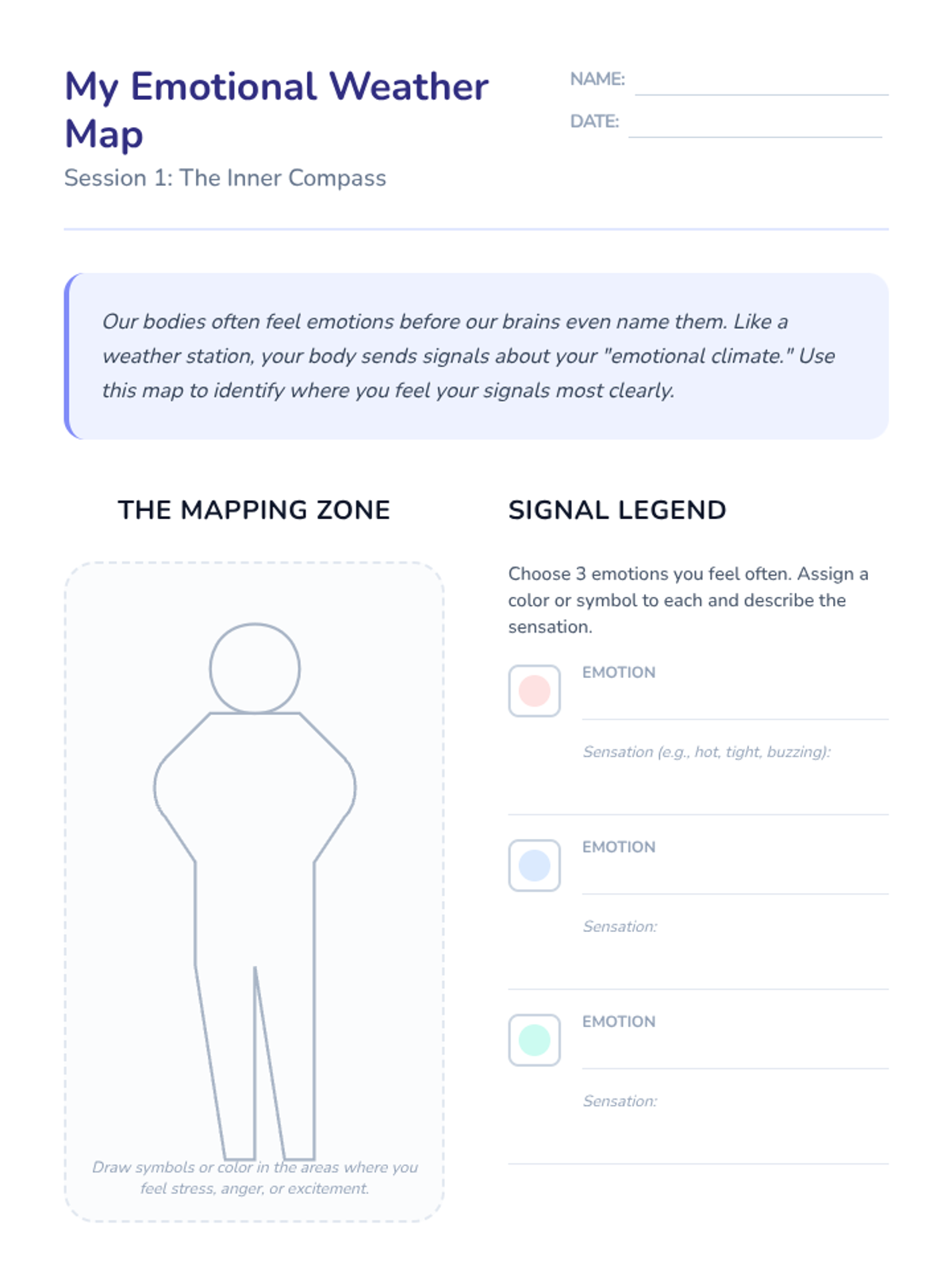
A student worksheet for identifying physiological signals of emotions. It features a body mapping activity where students color or mark areas where they feel physical sensations associated with specific feelings.
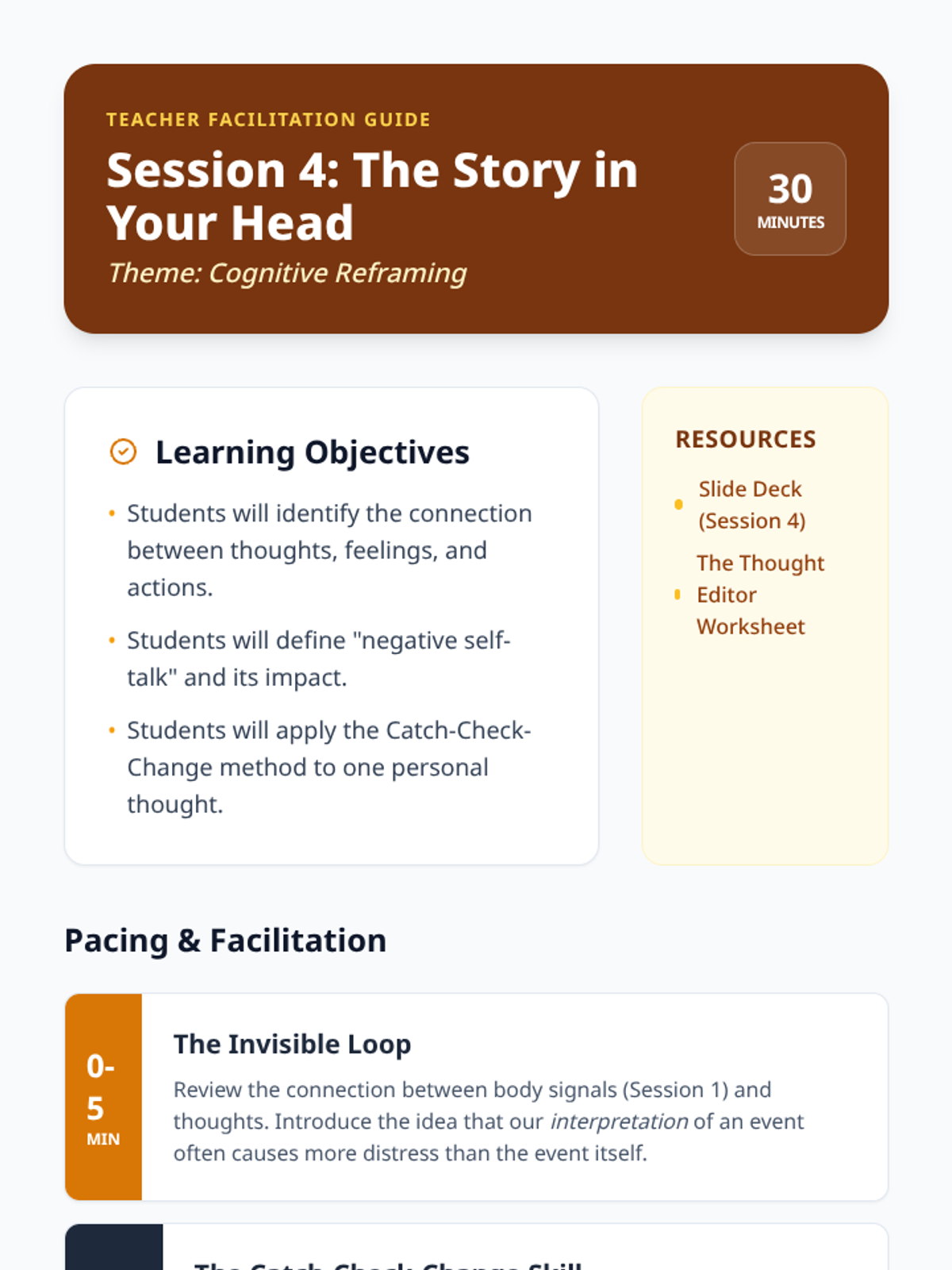
Teacher-facing facilitation guide for Session 4. Provides guidance on explaining the Catch-Check-Change method and helping students distinguish between positive thinking and accurate reframing.
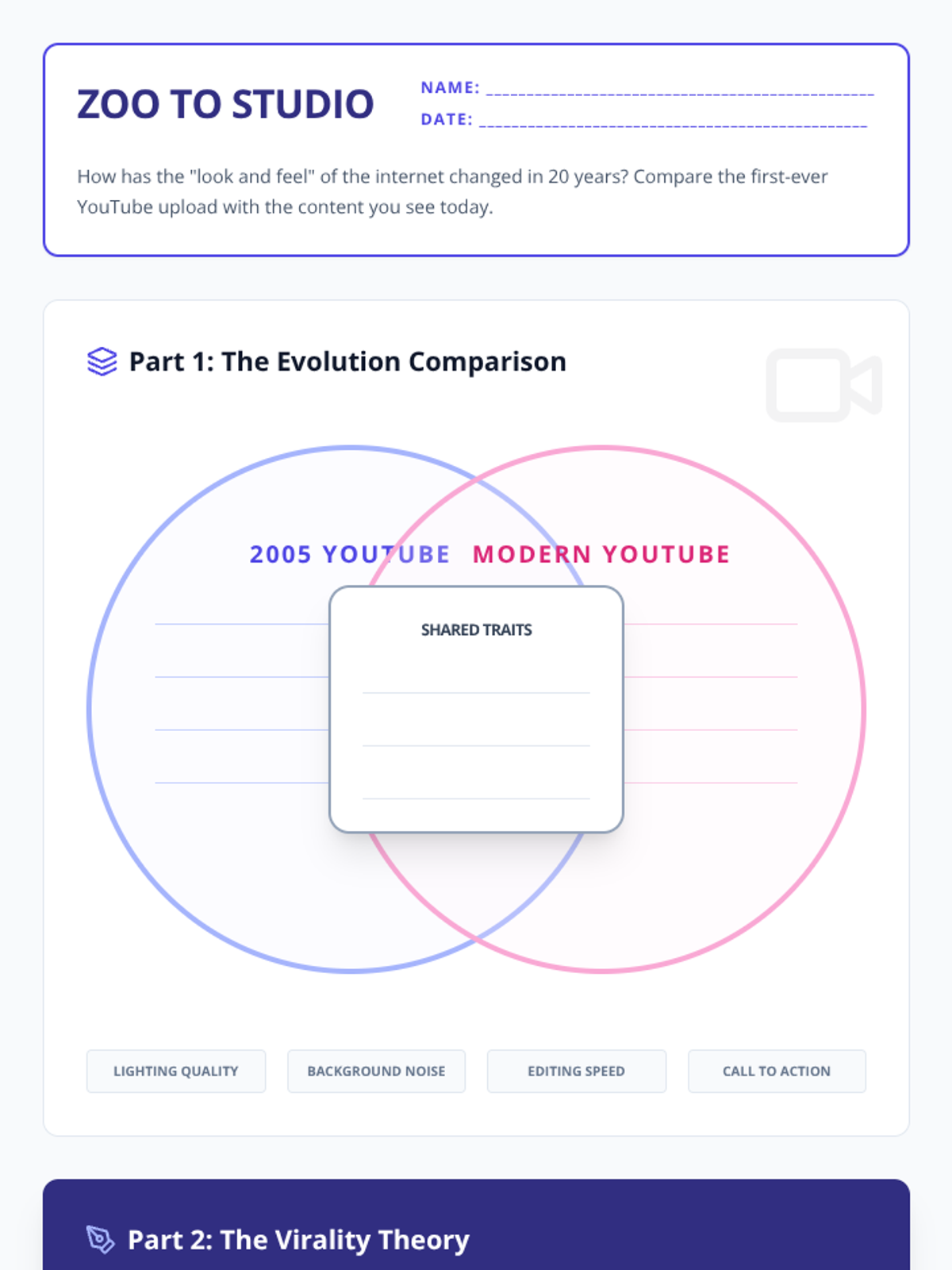
A student worksheet featuring a Venn Diagram comparison of early and modern YouTube production standards, along with a structured writing area for reflecting on the concept of digital virality.
Teacher-facing facilitation guide for Session 3. Focuses on teaching TIPP skills for crisis regulation and helping students identify environmental supports (like cold water access) within the school.
Visual aids for Lesson 3, introducing 'Forte' and 'Piano' through animal metaphors and volume control exercises.
A bright and engaging slide deck for Pre-K to 1st grade students, featuring the 'Me at the zoo' video and interactive discussion prompts about animal features.
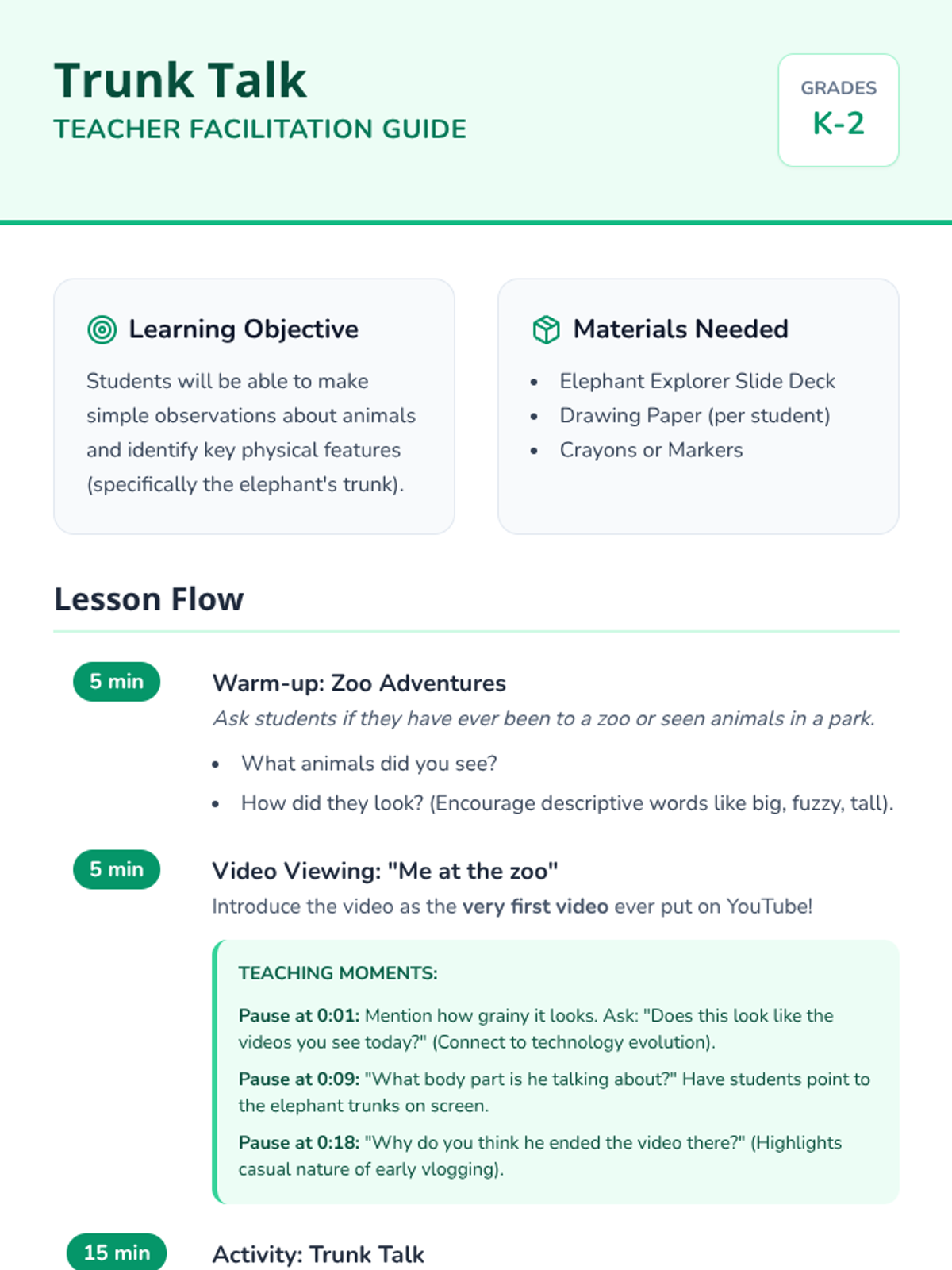
A detailed facilitation guide for teachers leading the Trunk Talk lesson. Includes pacing, discussion prompts, vocabulary, and extensions focused on the 'Me at the zoo' video and elephant anatomy.
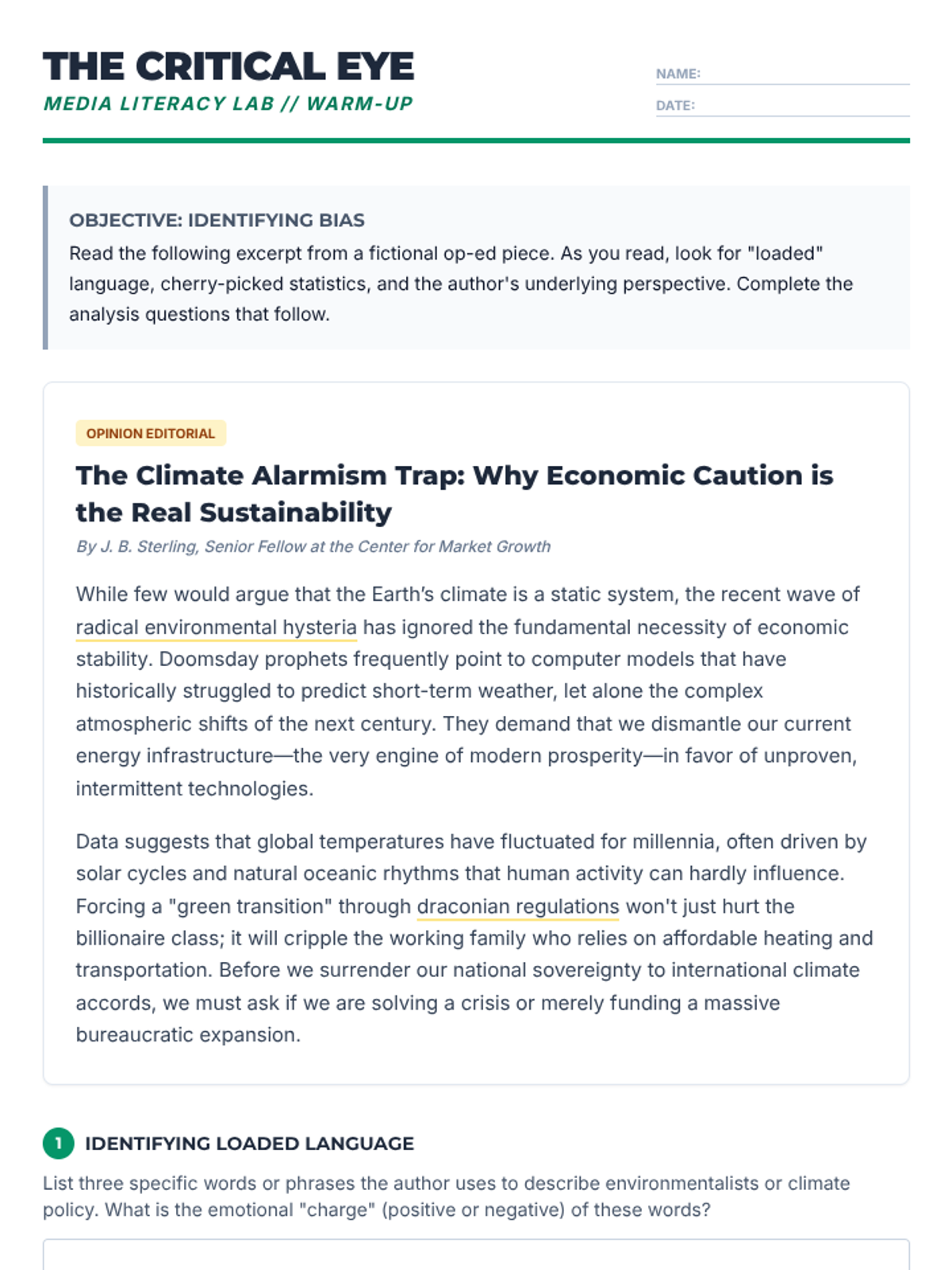
A 10-15 minute warm-up worksheet for high school students focusing on identifying bias, loaded language, and source credibility in a fictional op-ed about climate change.
1/12
Visual presentation for Session 5, focusing on assertive communication (I-statements) and the concept of healthy boundaries in relationships.
Introductory slide deck for Session 1, establishing the 'Inner Compass' theme. It explains the purpose of the intervention and teaches students how to recognize physiological signals of emotions using the 'Emotions as Data' framework.
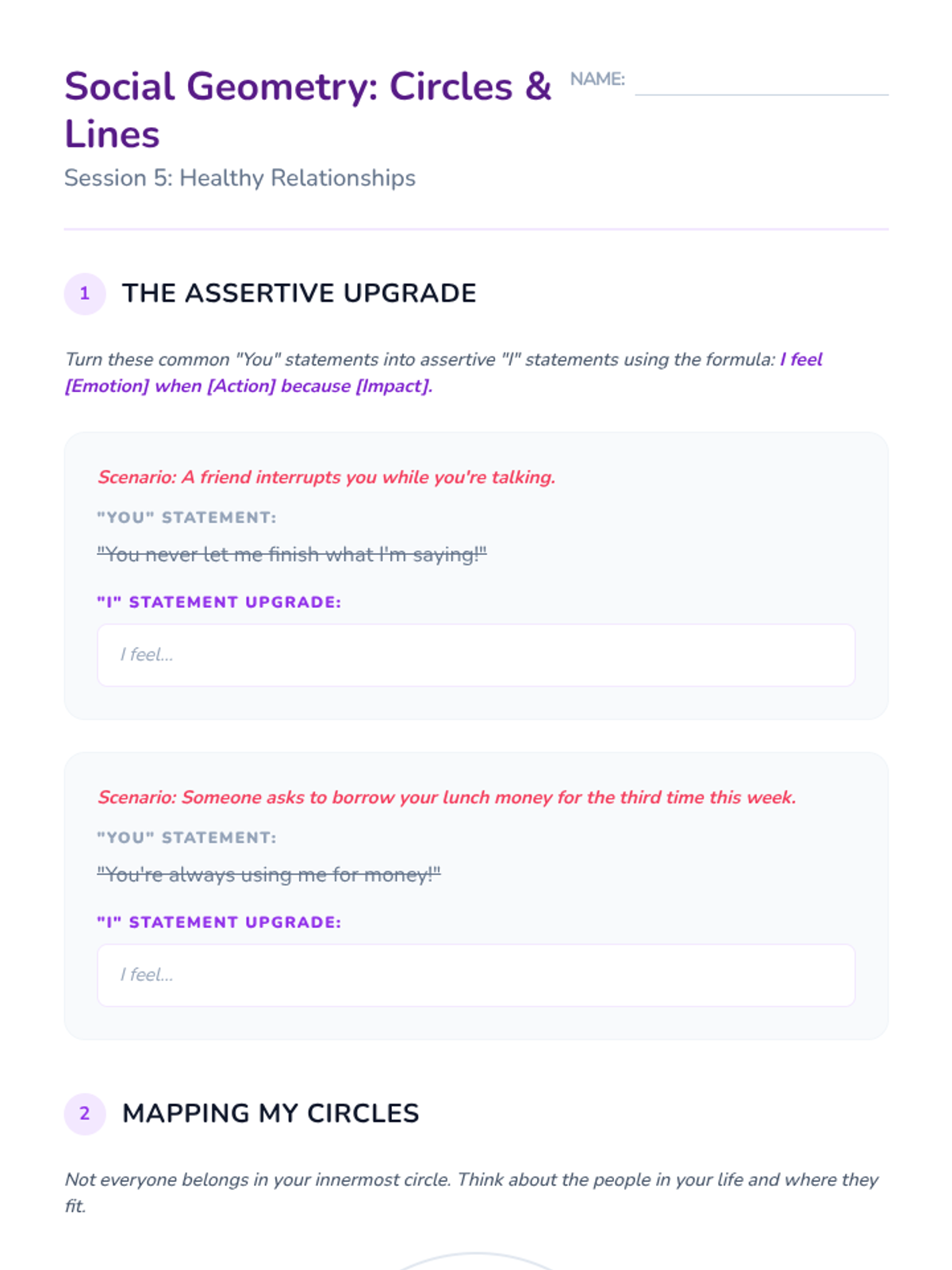
A student activity and reference sheet for Session 5, featuring assertive communication practice and a 'Circles of Trust' mapping activity for boundaries.
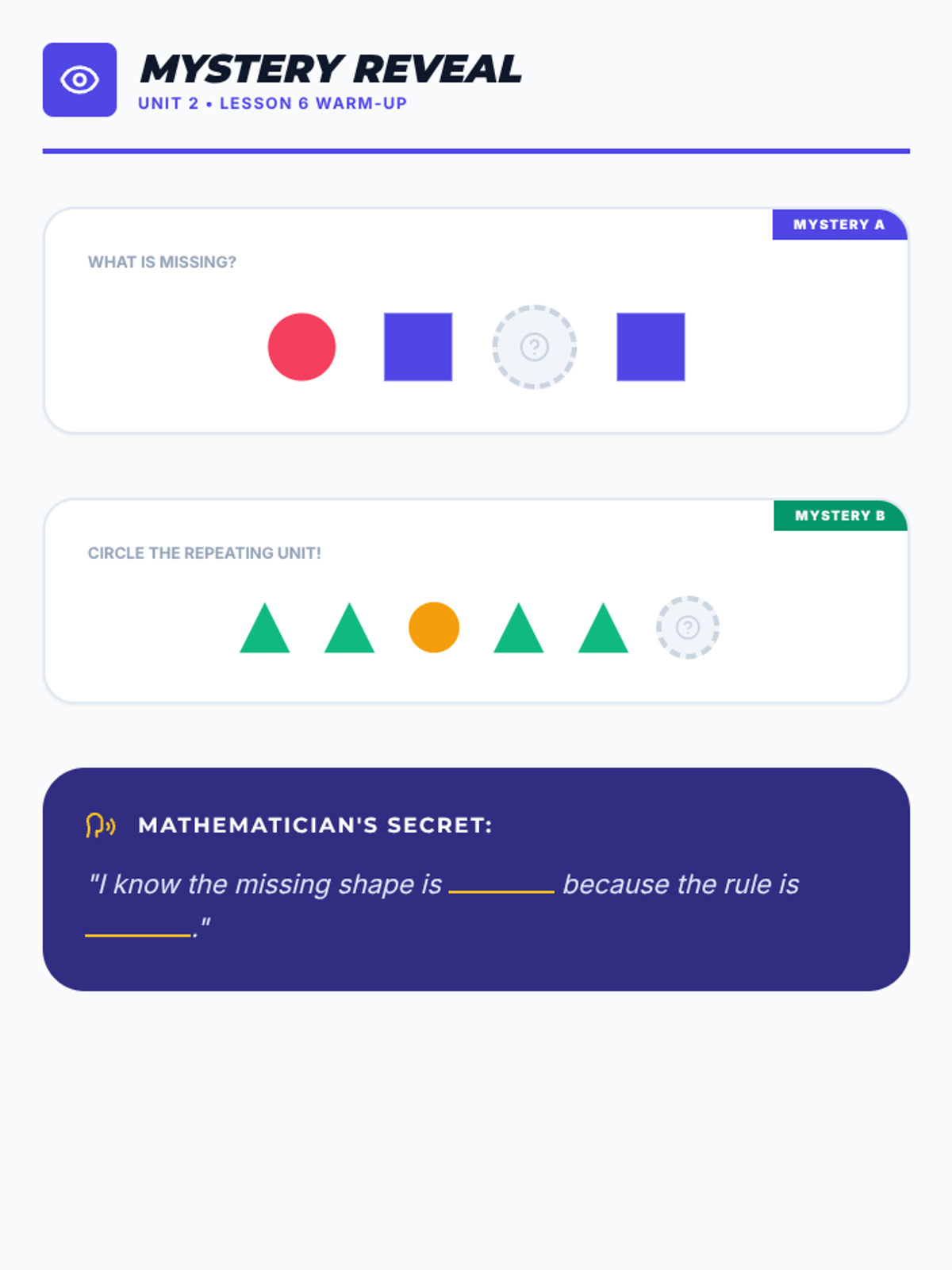
A visual warm-up activity featuring two 'mystery' patterns with missing elements. Designed to spark discussion about identifying and justifying pattern rules.
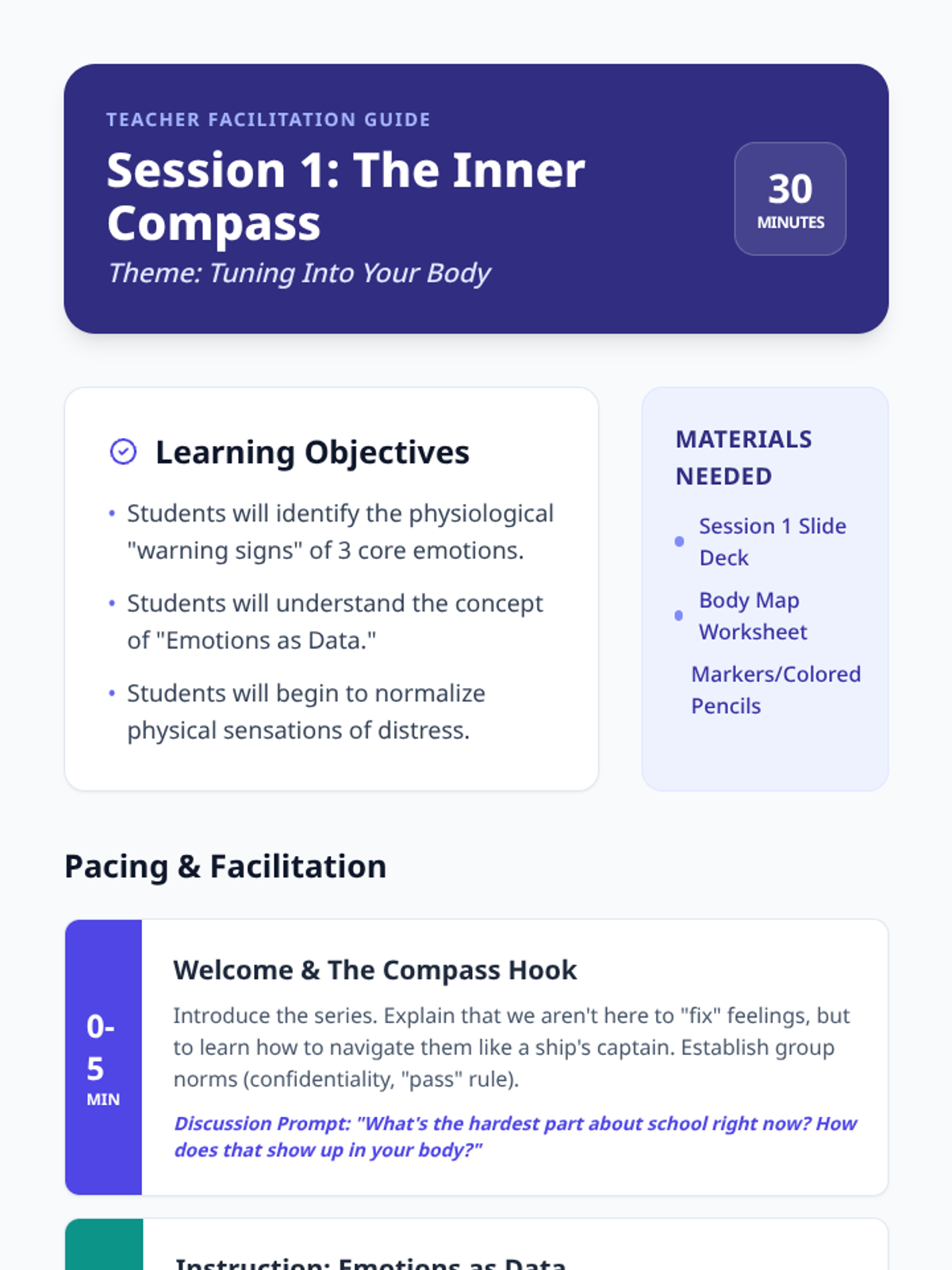
A teacher-facing guide for Session 1, including learning objectives, a detailed pacing guide, and facilitation tips specifically for Tier 3 mental health interventions.
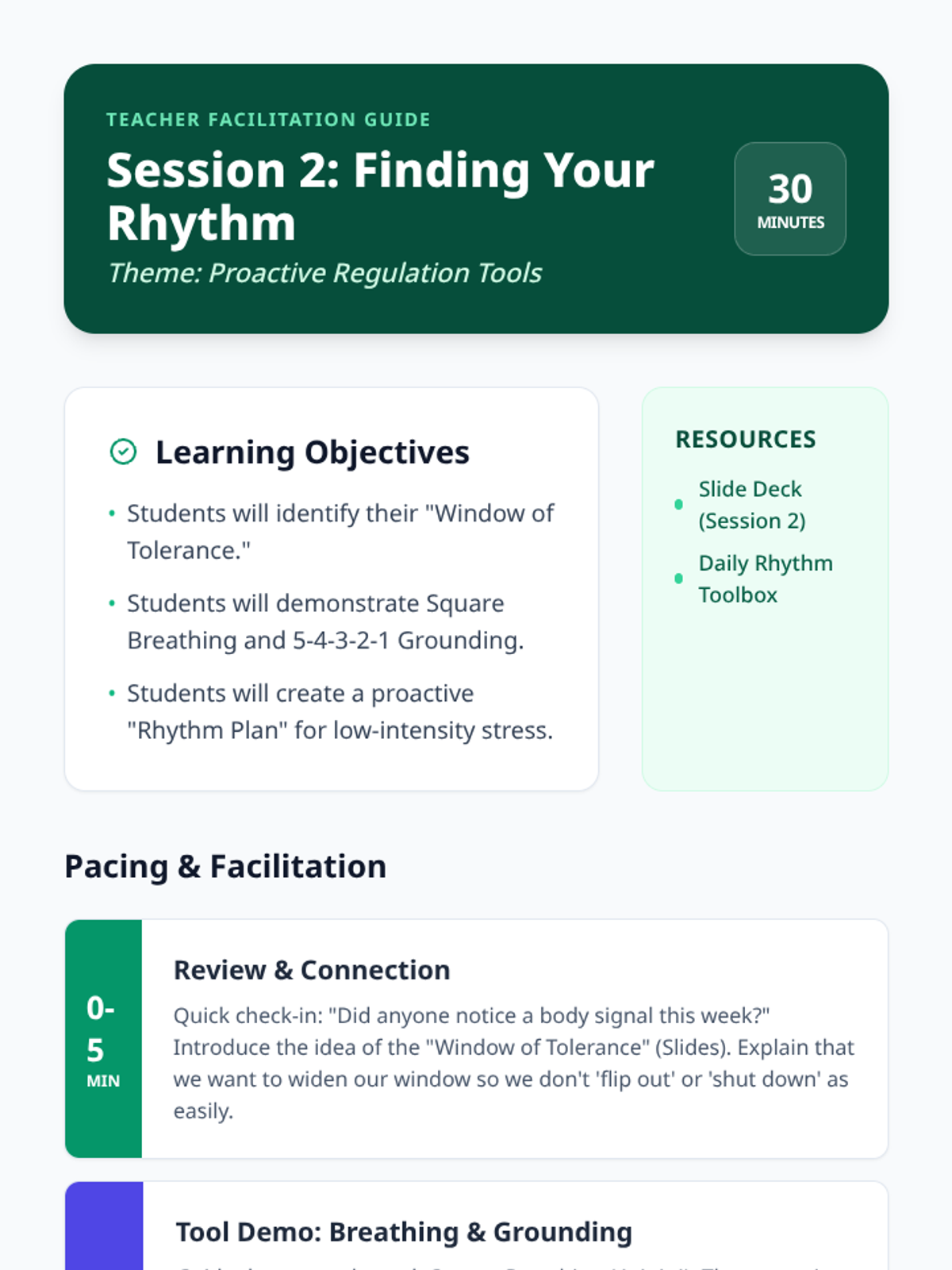
Teacher-facing facilitation guide for Session 2. Includes pacing, demonstration instructions for regulation tools, and a trauma-informed tip regarding breathing exercises.
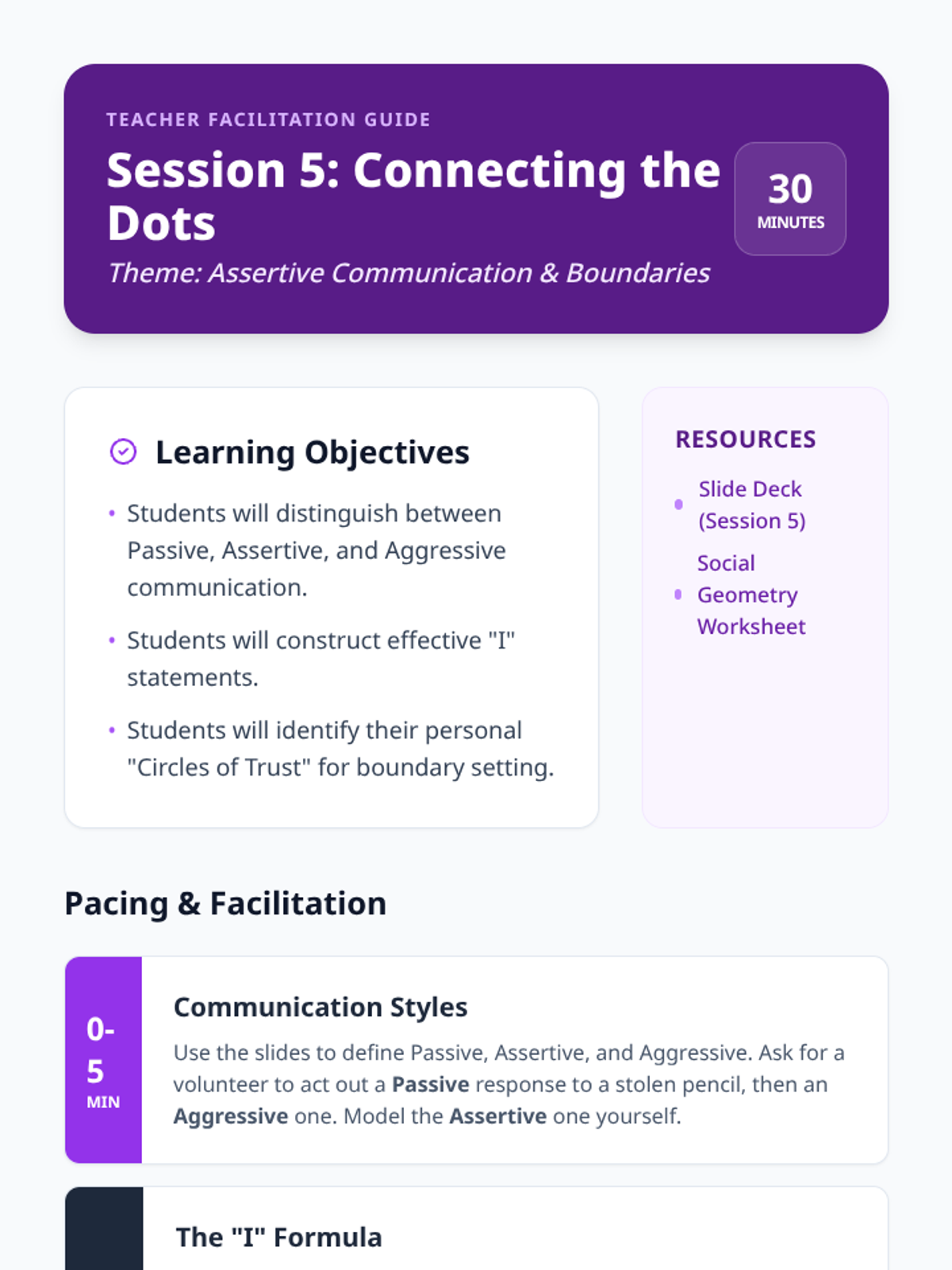
Teacher-facing facilitation guide for Session 5. Includes guidance on modeling assertive communication and navigating cultural differences in communication styles.