A worksheet for students to fill out as they analyze the video, styled as a future historian's archival record.
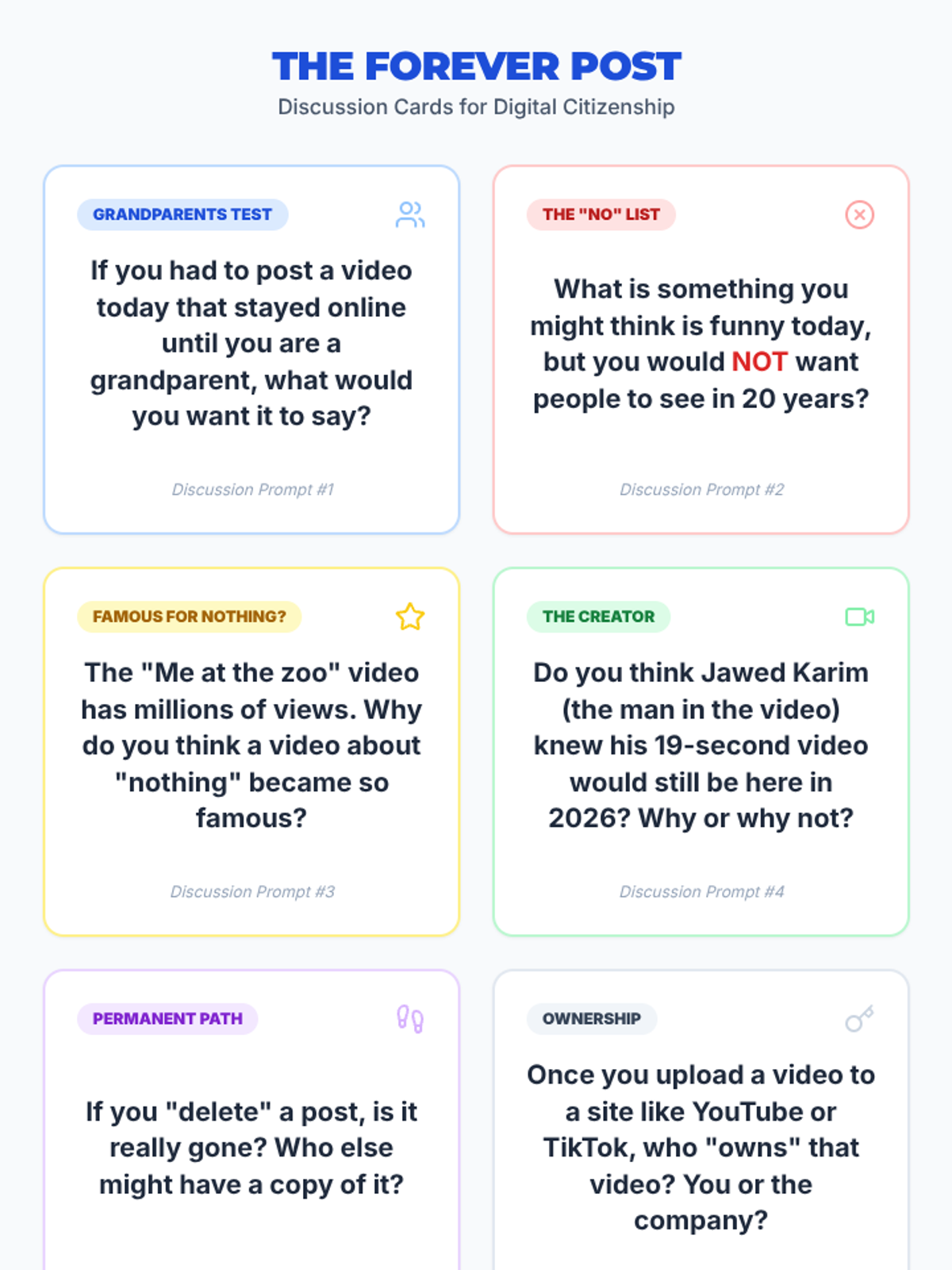
A set of six printable discussion cards featuring prompts about digital footprints, online permanence, and content ownership for use during the 'Forever Post' activity.
1/16
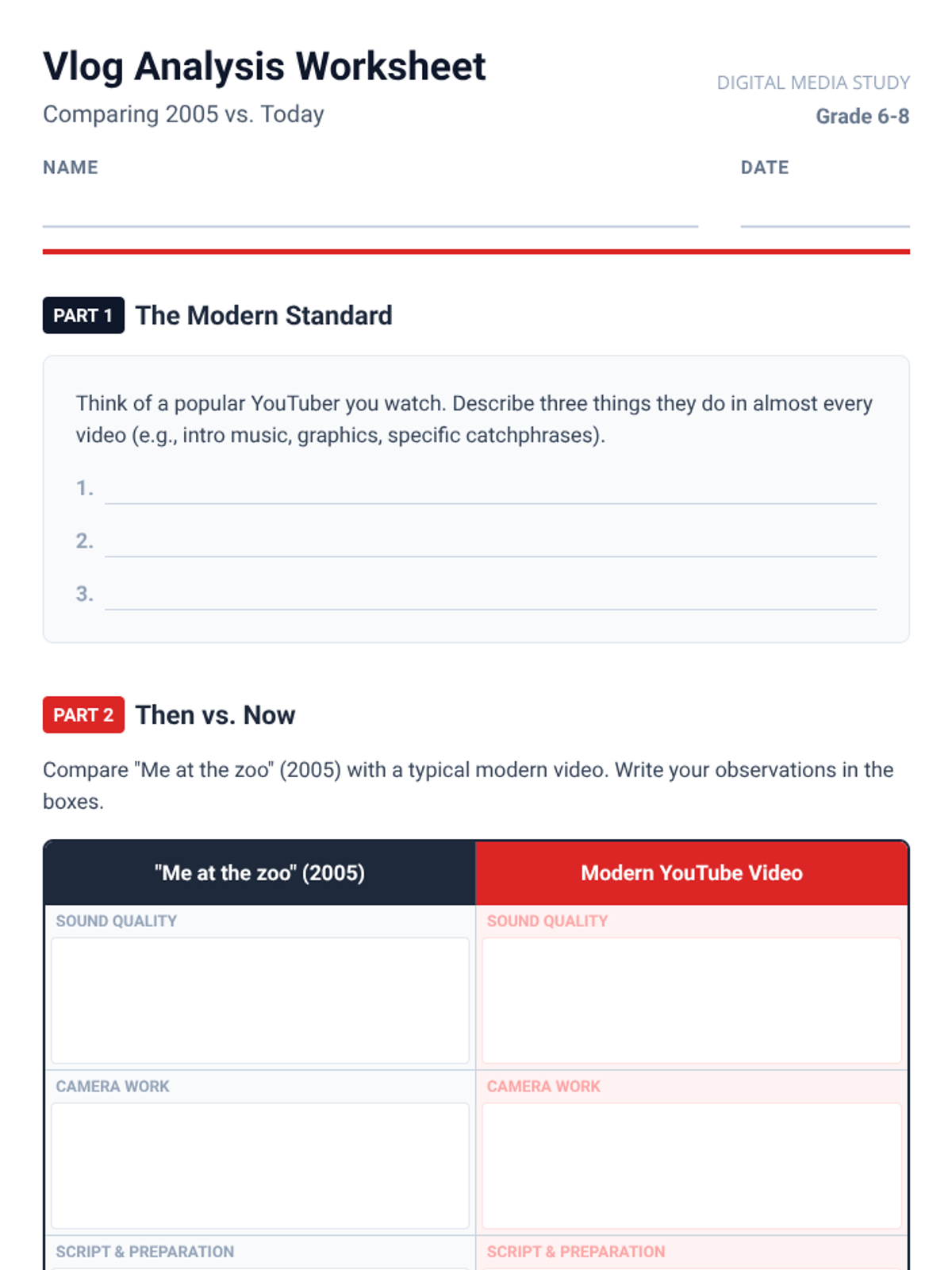
A student worksheet with three parts: a warm-up regarding modern YouTuber habits, a comparative T-Chart for analyzing 'Me at the zoo' vs. modern videos, and a reflection writing section on historical significance.
A worksheet featuring a Venn Diagram to compare 2005 YouTube videos with modern content, followed by a scripting activity where students write a simple, retro-style video intro.
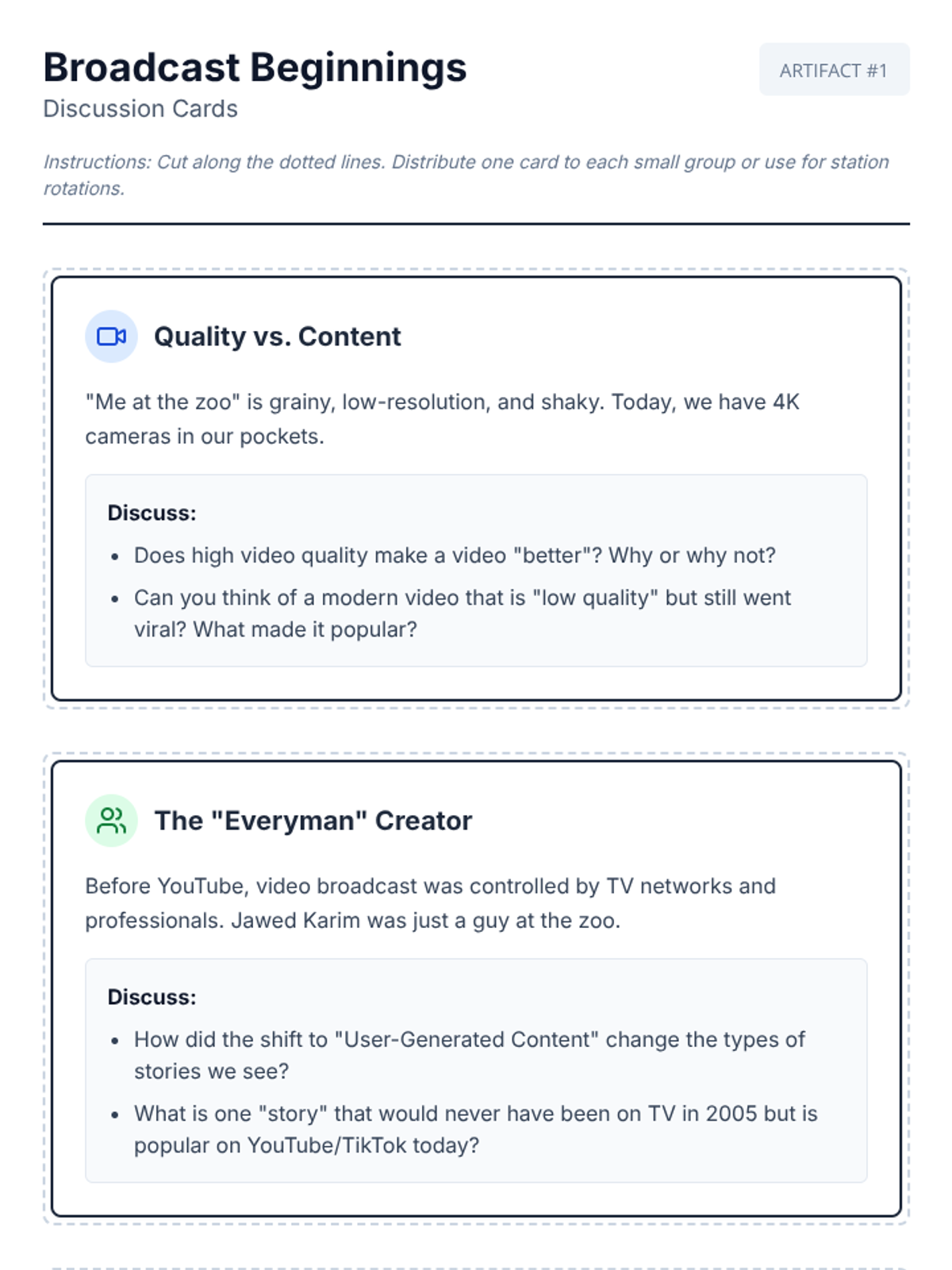
Set of 4 discussion cards focusing on Quality vs Content, User-Generated Content, Digital Permanence, and Future Archives.
A reflection journal sheet for students to plan and write about their hypothetical first upload to an alien archive.
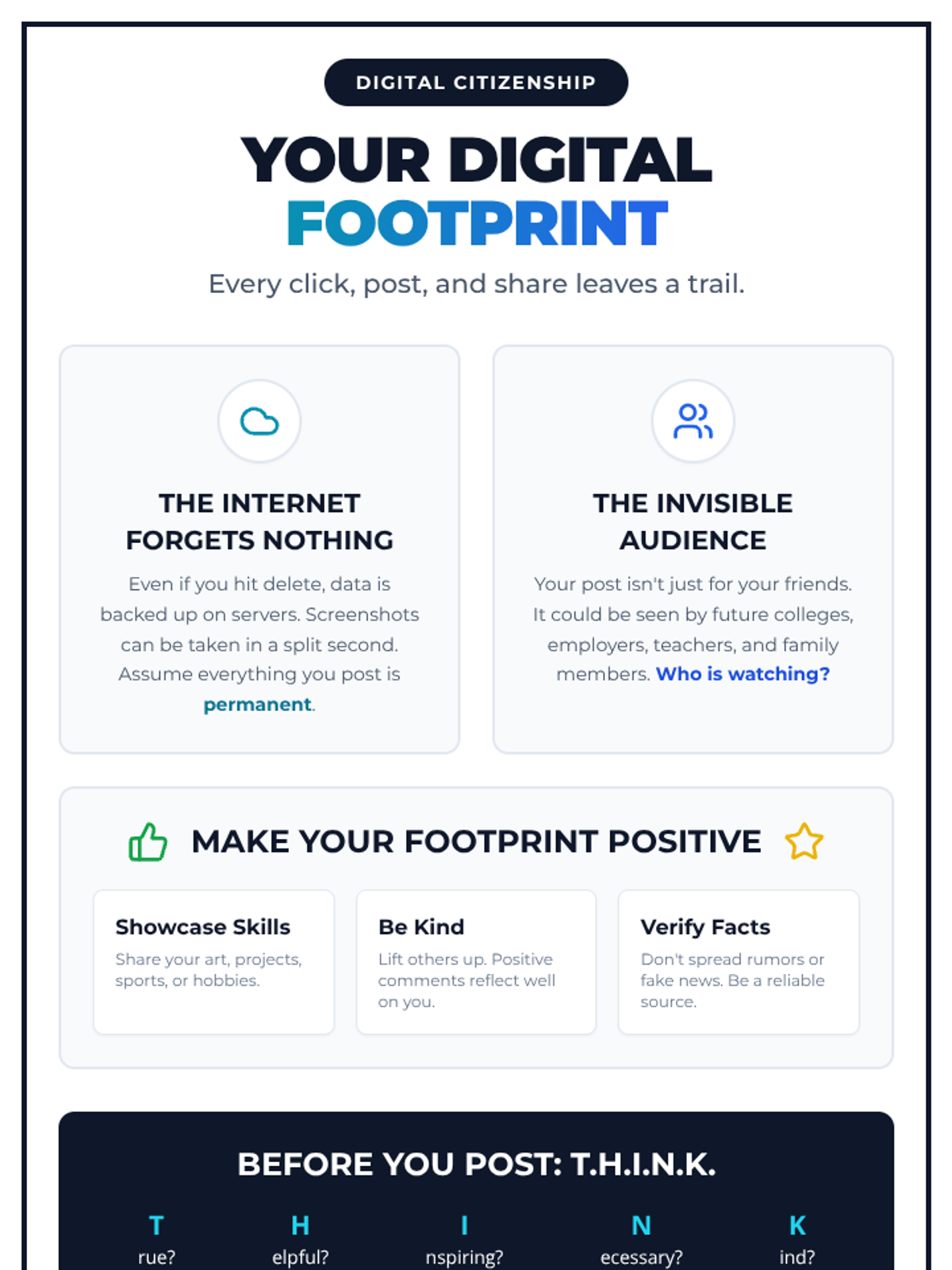
Visual infographic poster summarizing key digital footprint concepts like permanence, audience, and the T.H.I.N.K. acronym.
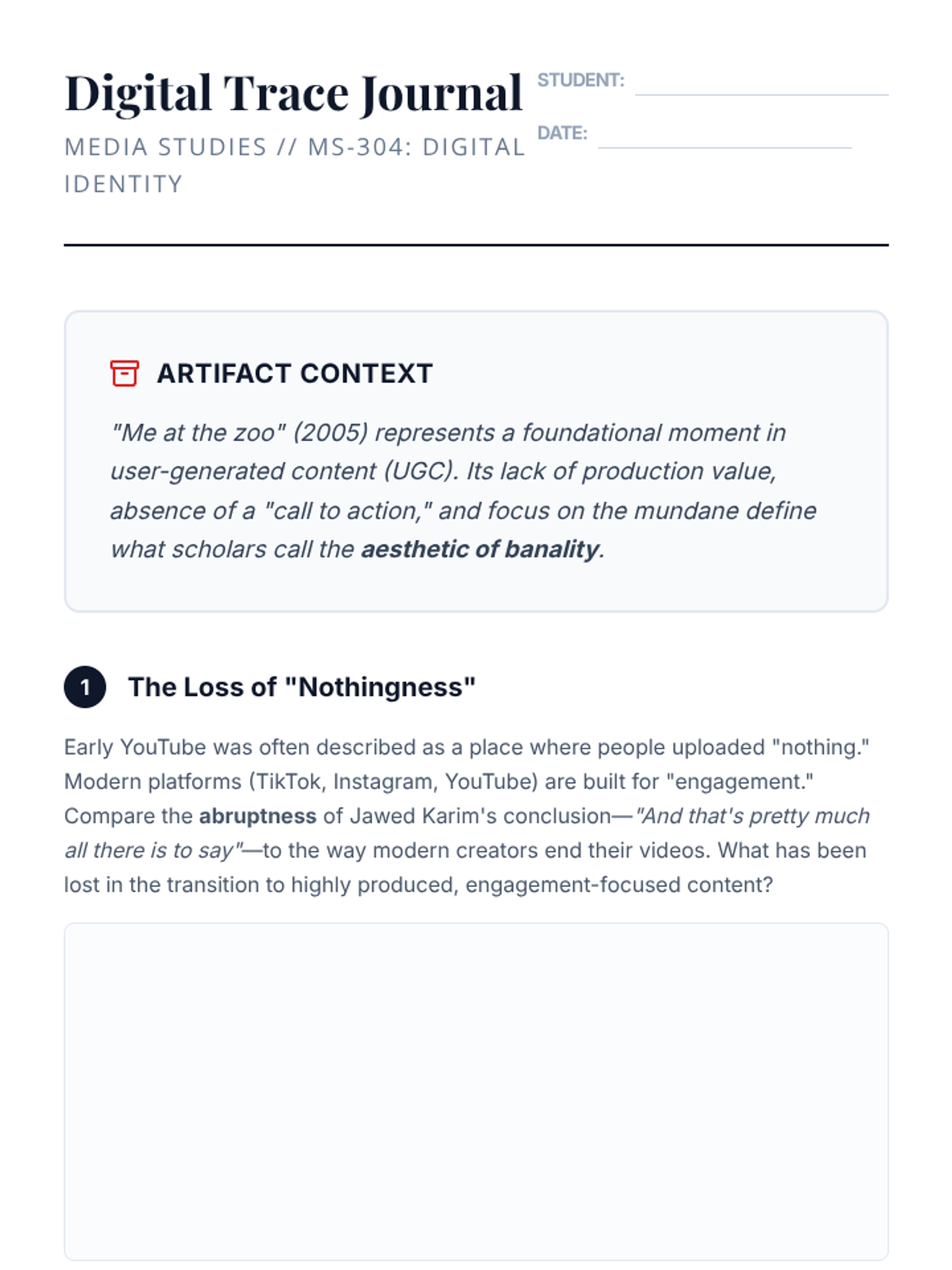
A critical reflection journal for undergraduate students to deconstruct their perception of authenticity, comparing early Web 2.0 aesthetics to the modern creator economy.
A comparative analysis matrix worksheet for students to evaluate three different 2005 media sources based on authorship, audience, barriers to entry, and bias.
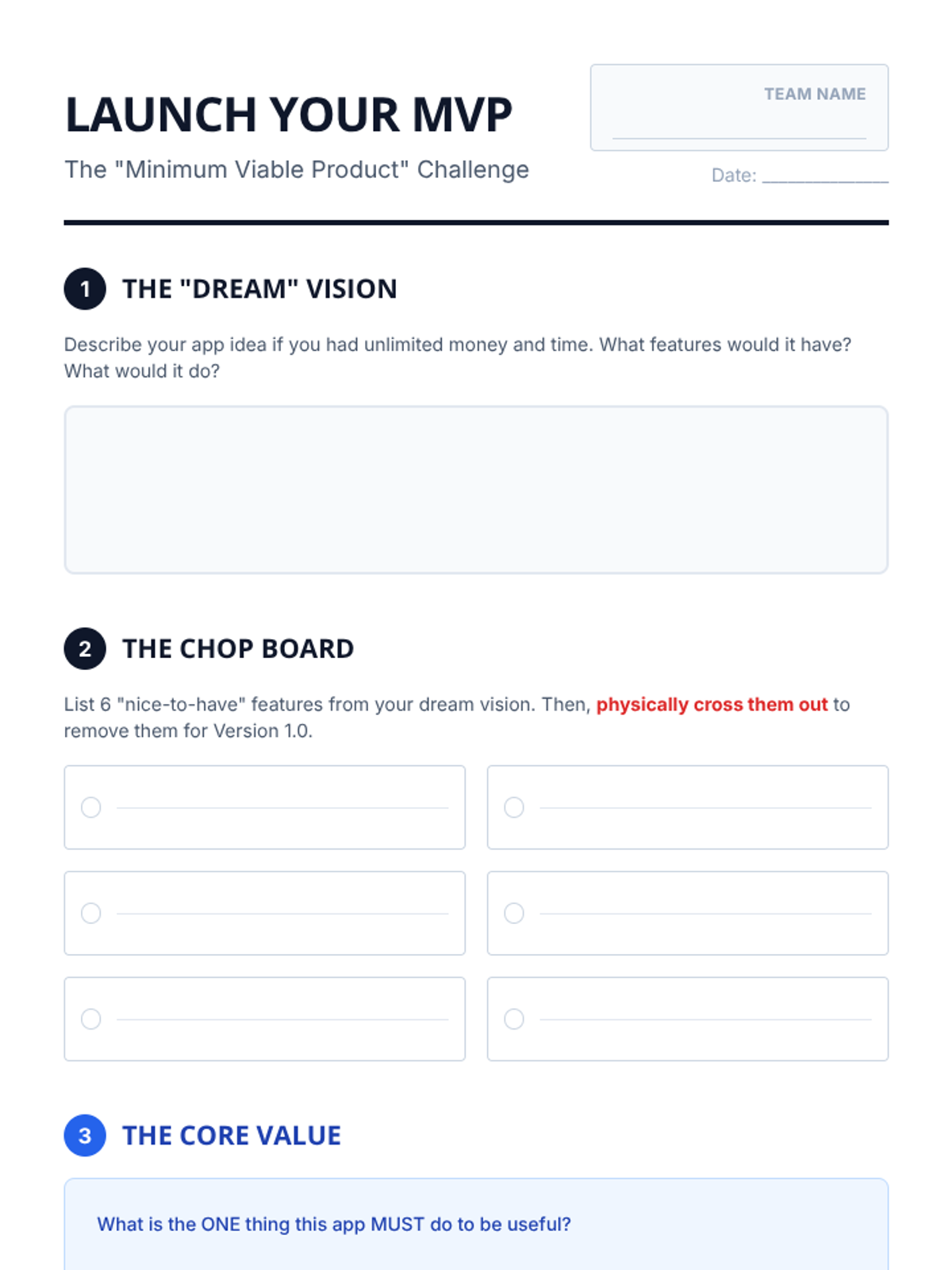
A student worksheet for the 'Launch Your MVP' activity, guiding pairs through brainstorming, feature cutting, and sketching a minimum viable product interface.
A grading rubric for the 'Digital Archaeology' lesson, evaluating students on visual evidence analysis, linguistic context, historical significance, and comparative arguments.
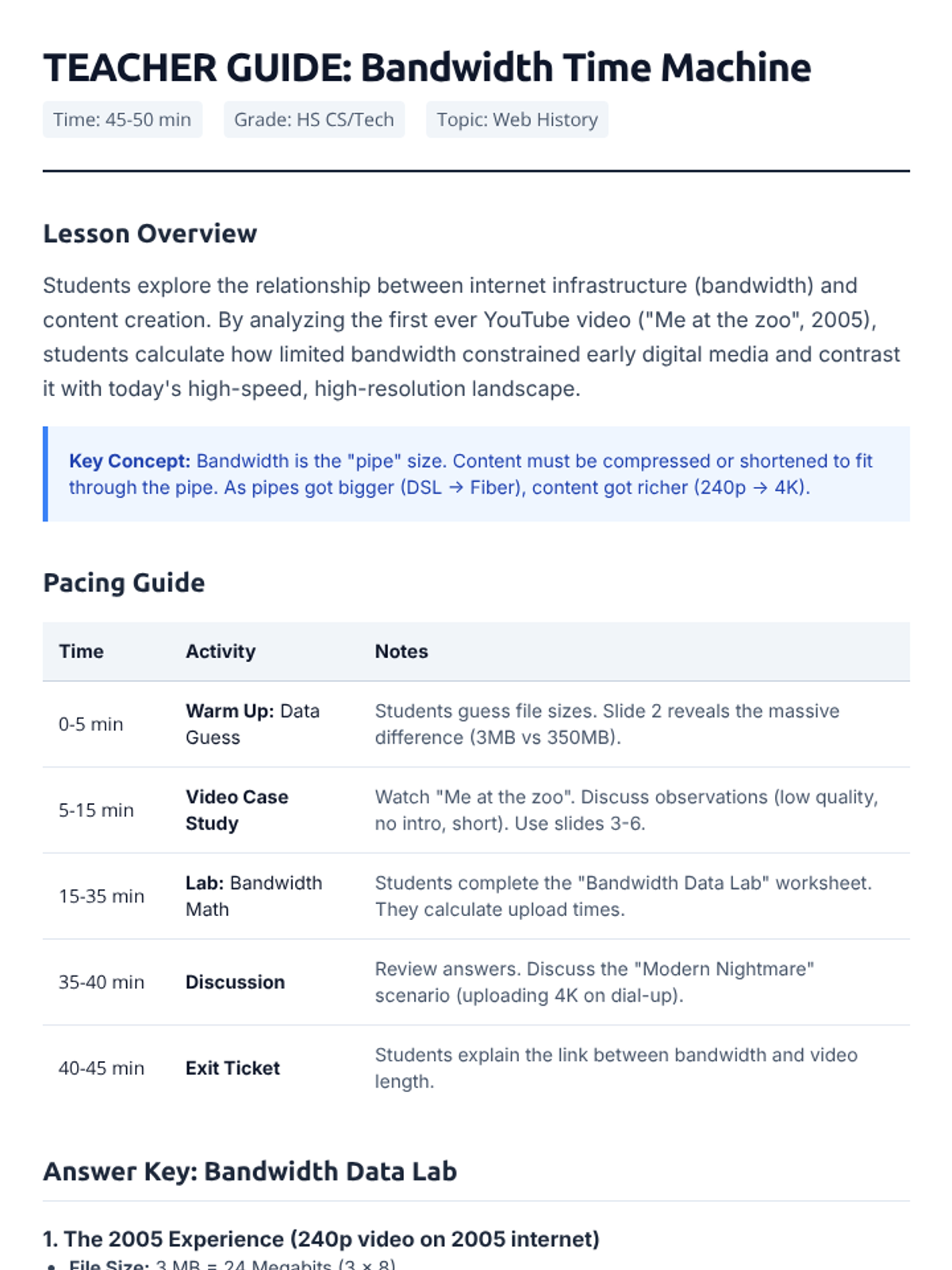
A teacher's guide containing the lesson plan, pacing, answer key for calculations, and discussion prompts.
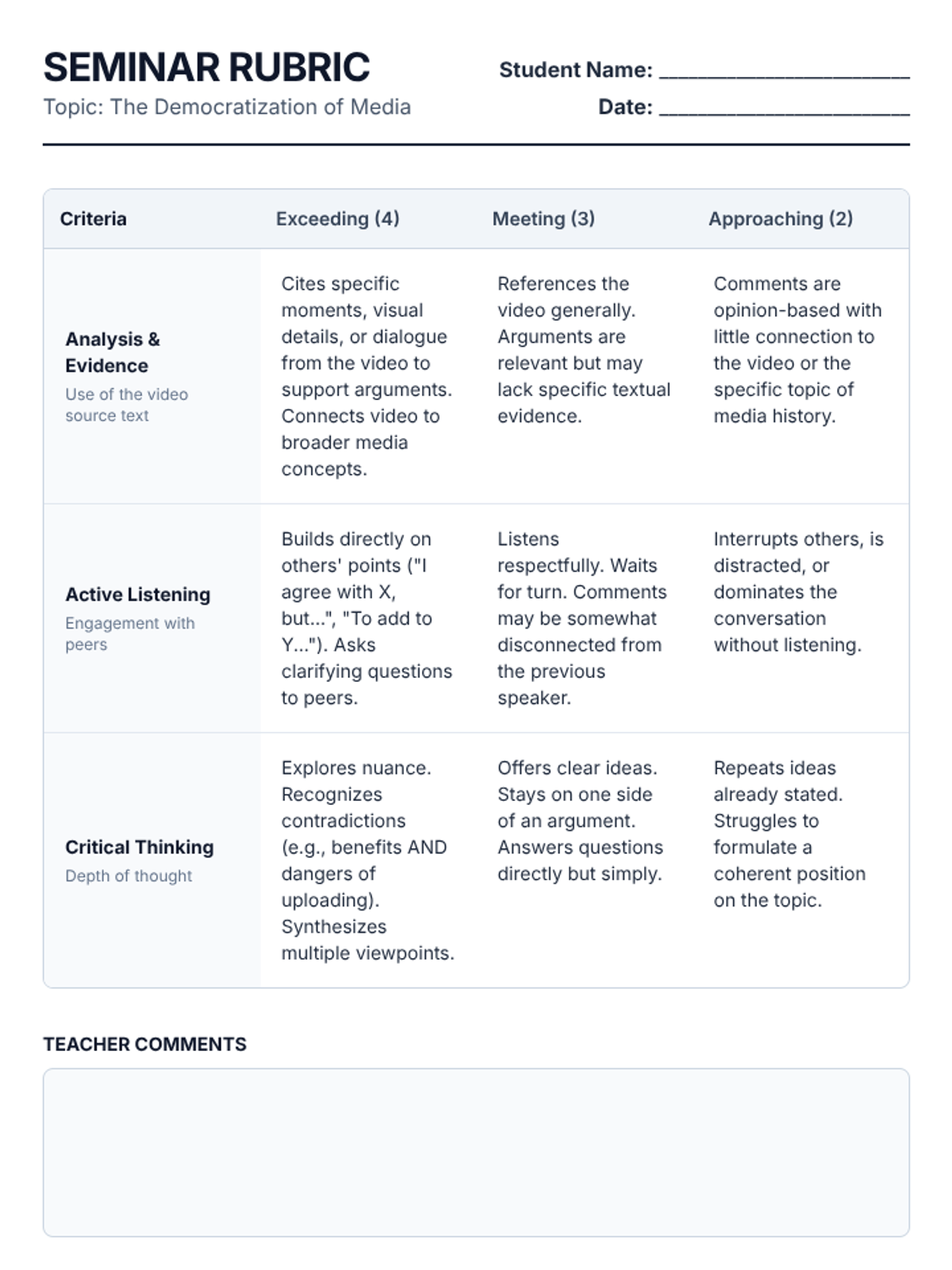
A grading rubric for the Socratic Seminar, assessing students on Analysis & Evidence, Active Listening, and Critical Thinking, with space for teacher comments and student reflection.
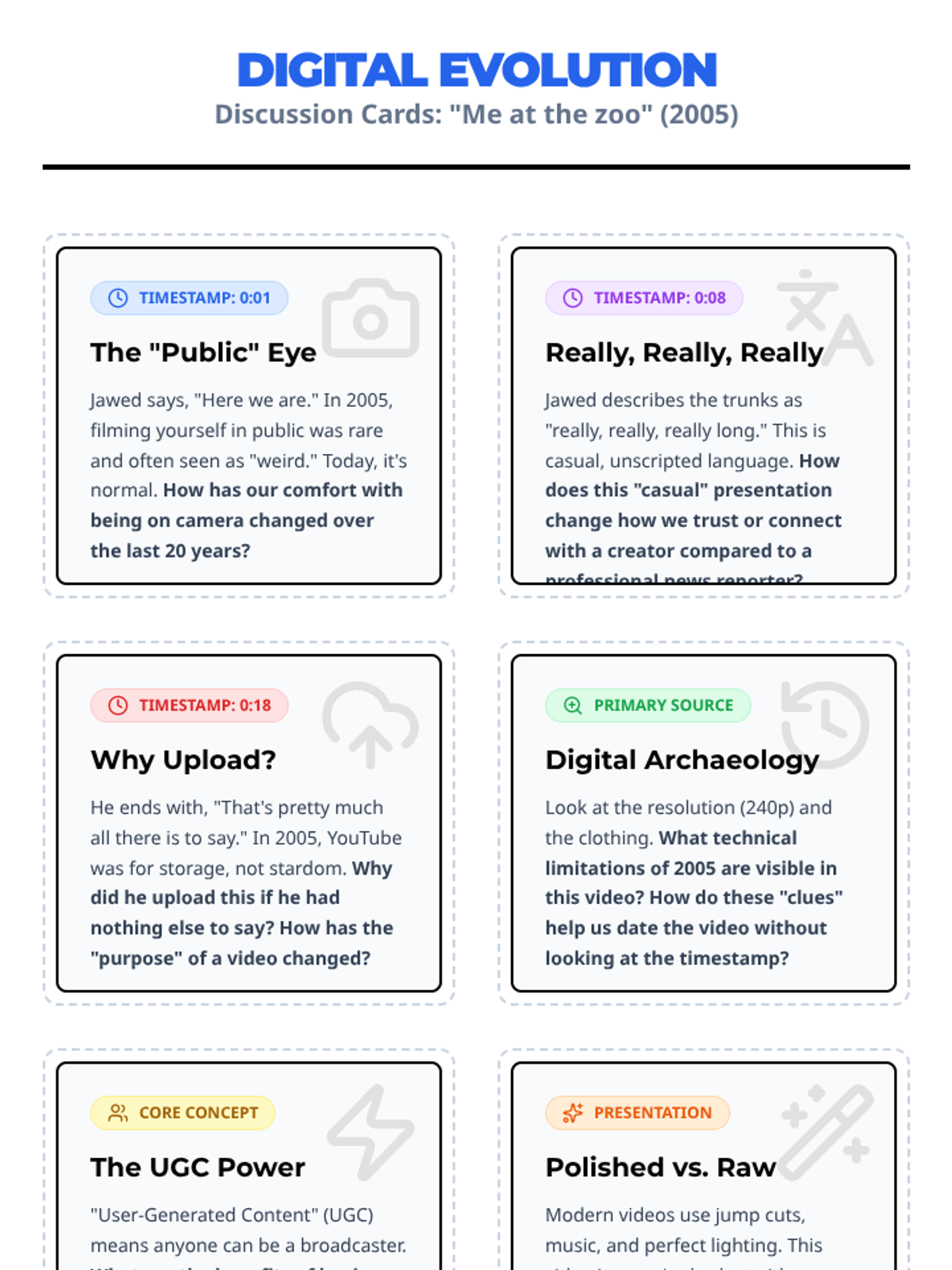
A set of 6 printable discussion cards for middle school students to analyze the "Me at the zoo" video. Each card features a specific timestamp or concept, focusing on social norms, technology evolution, and presentation styles.
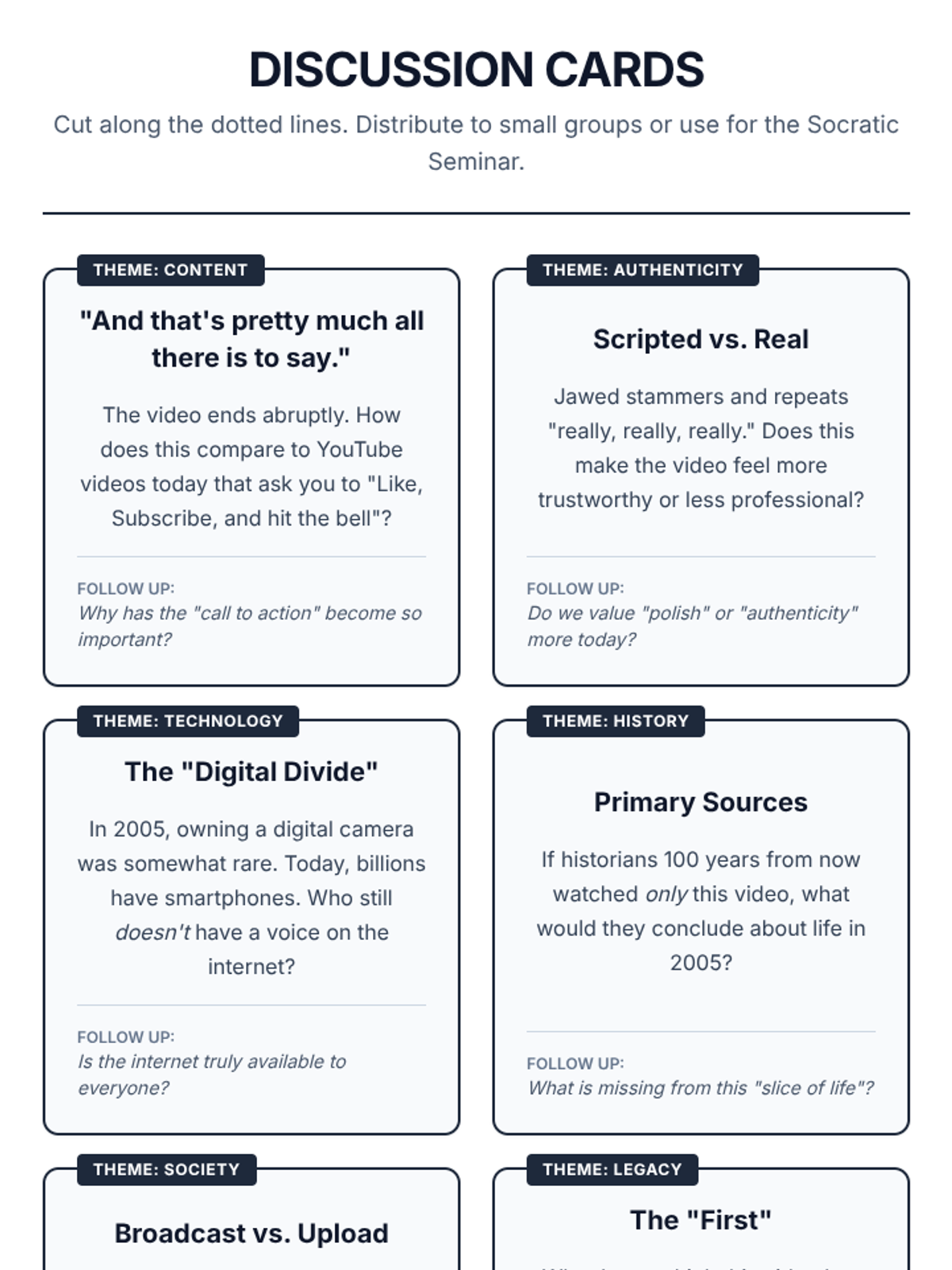
A set of 6 printable discussion cards with questions and follow-up prompts for the Socratic Seminar, covering themes of authenticity, technology, history, and society.
A visual slide deck designed for high school students to explore the origins of YouTube through 'Me at the zoo'. Includes an embedded video slide, primary source analysis prompts, and a structured debate framing for the Socratic Seminar.
A presentation guiding students through the analysis of the first YouTube video, covering metadata, visual analysis, and the concept of User-Generated Content.
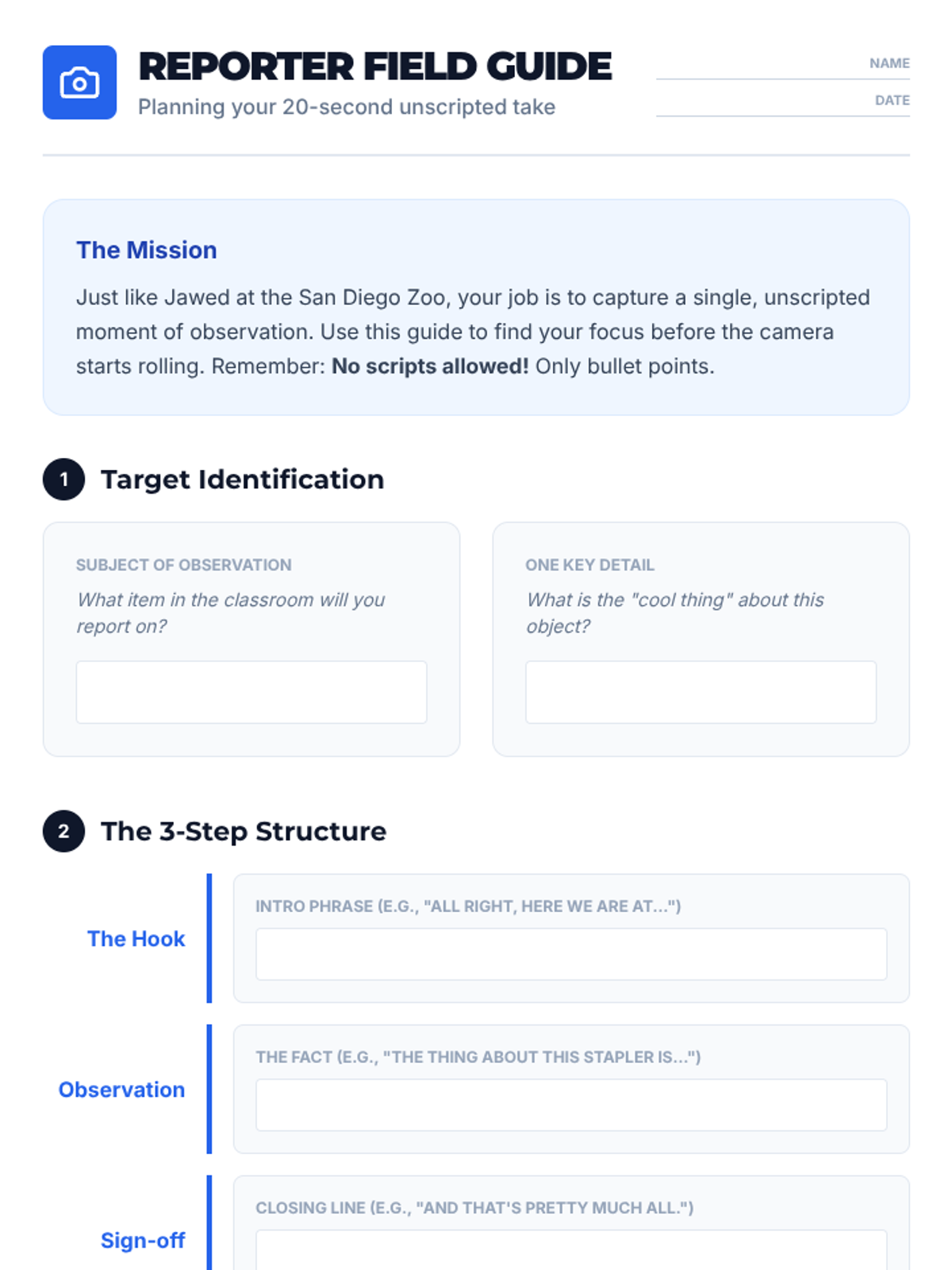
A student field guide for planning their 20-second observational report, including sections for target identification, the 3-step vlog structure, and reflection questions.
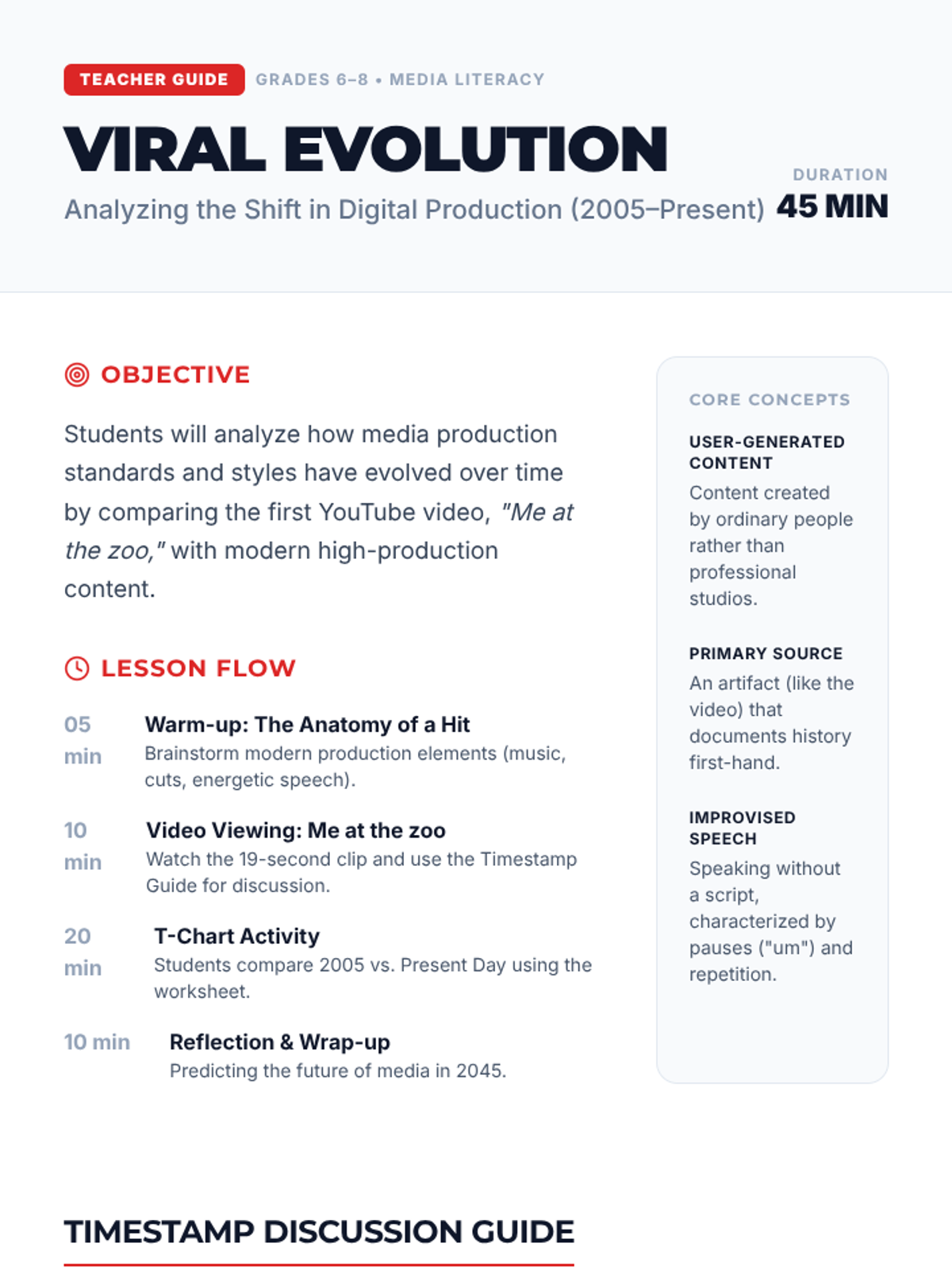
A comprehensive teacher facilitation guide for the 'Viral Evolution' lesson, including pacing, timestamped discussion prompts, core vocabulary, and sample student responses.
A slide deck introducing internet bandwidth concepts using the first YouTube video. Includes embedded video, visual comparisons of data speeds, and activity prompts.
A slide deck exploring the history of YouTube, contrasting the first-ever video with modern production standards. Includes the embedded 'Me at the zoo' video and technical analysis slides.