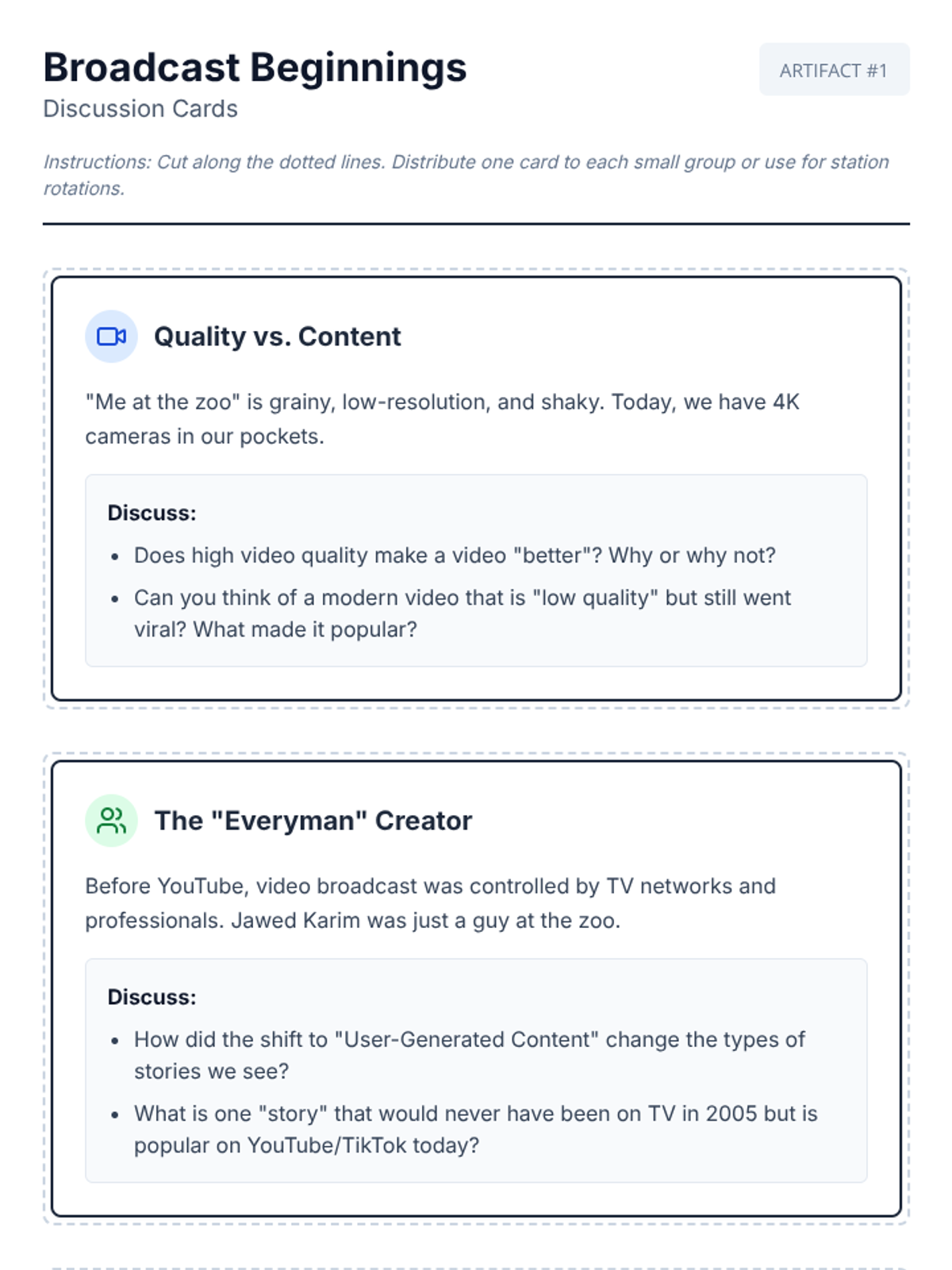
Printable discussion cards with prompts for group debates regarding historical significance and digital permanence.
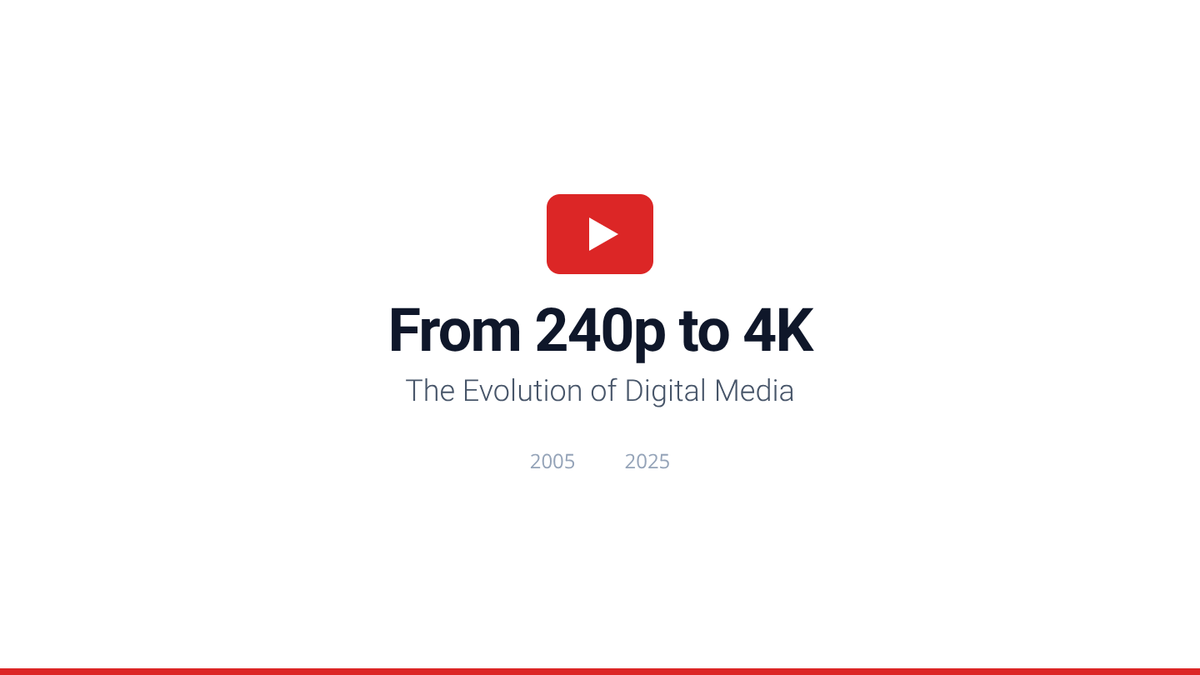
A slide deck comparing early 2005 YouTube content with modern standards. Includes warm-up questions, an embedded video of 'Me at the zoo', guided analysis points, a T-Chart comparison, and a reflection prompt.
1/16
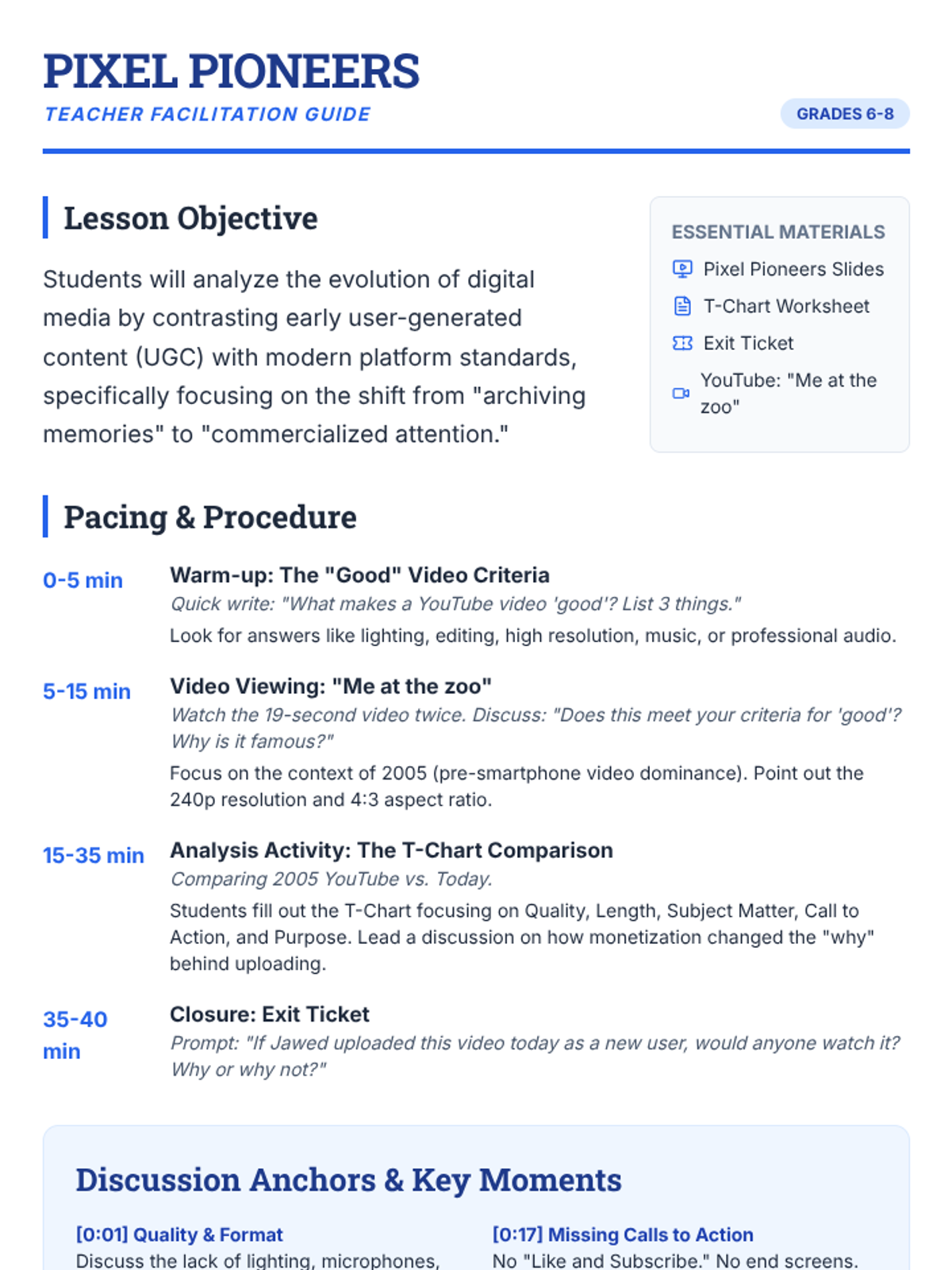
A comprehensive teacher facilitation guide for the 'Pixel Pioneers' lesson, featuring pacing, discussion anchors, and key vocabulary based on the evolution of YouTube.
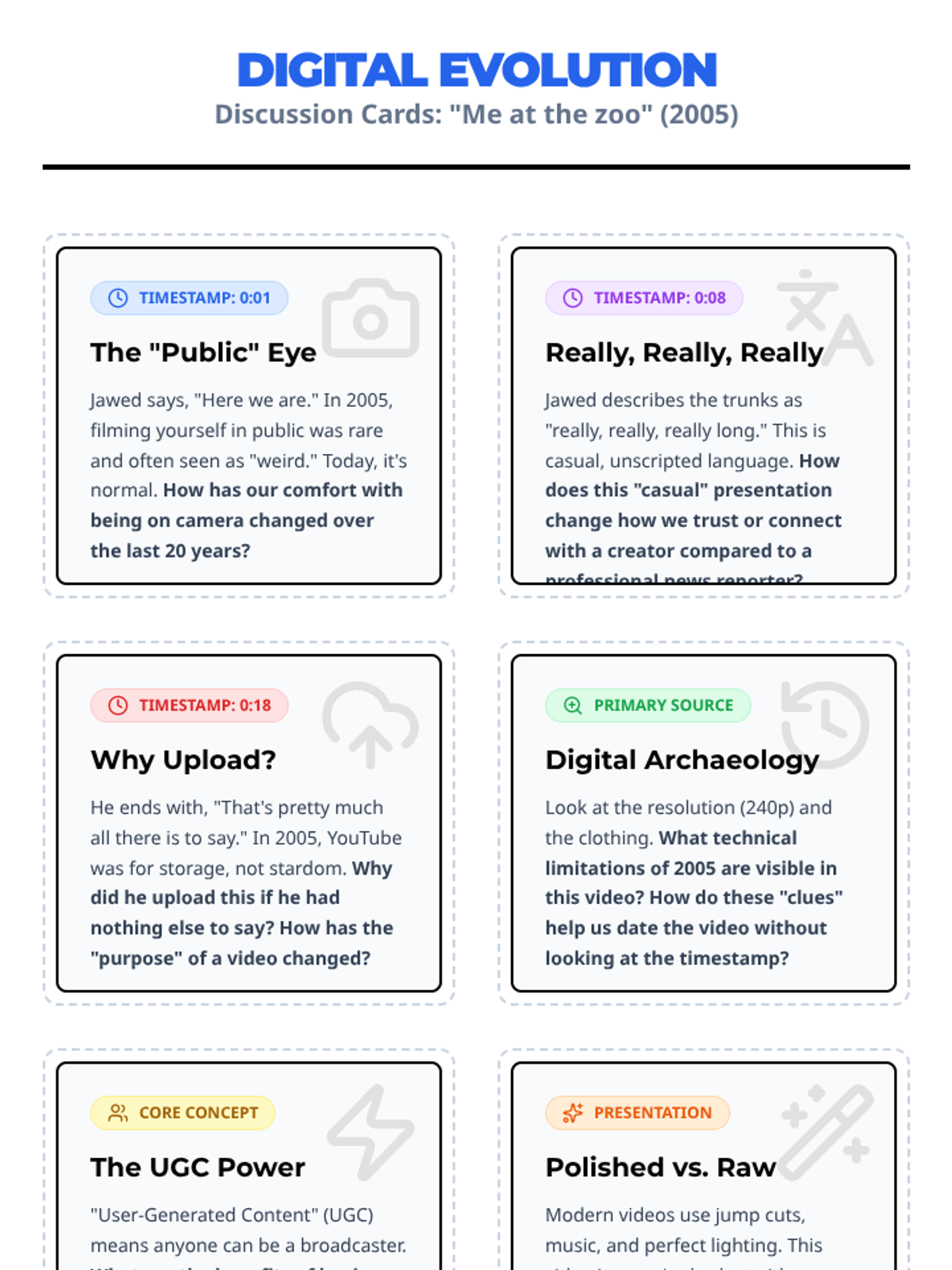
A set of 6 printable discussion cards for middle school students to analyze the "Me at the zoo" video. Each card features a specific timestamp or concept, focusing on social norms, technology evolution, and presentation styles.
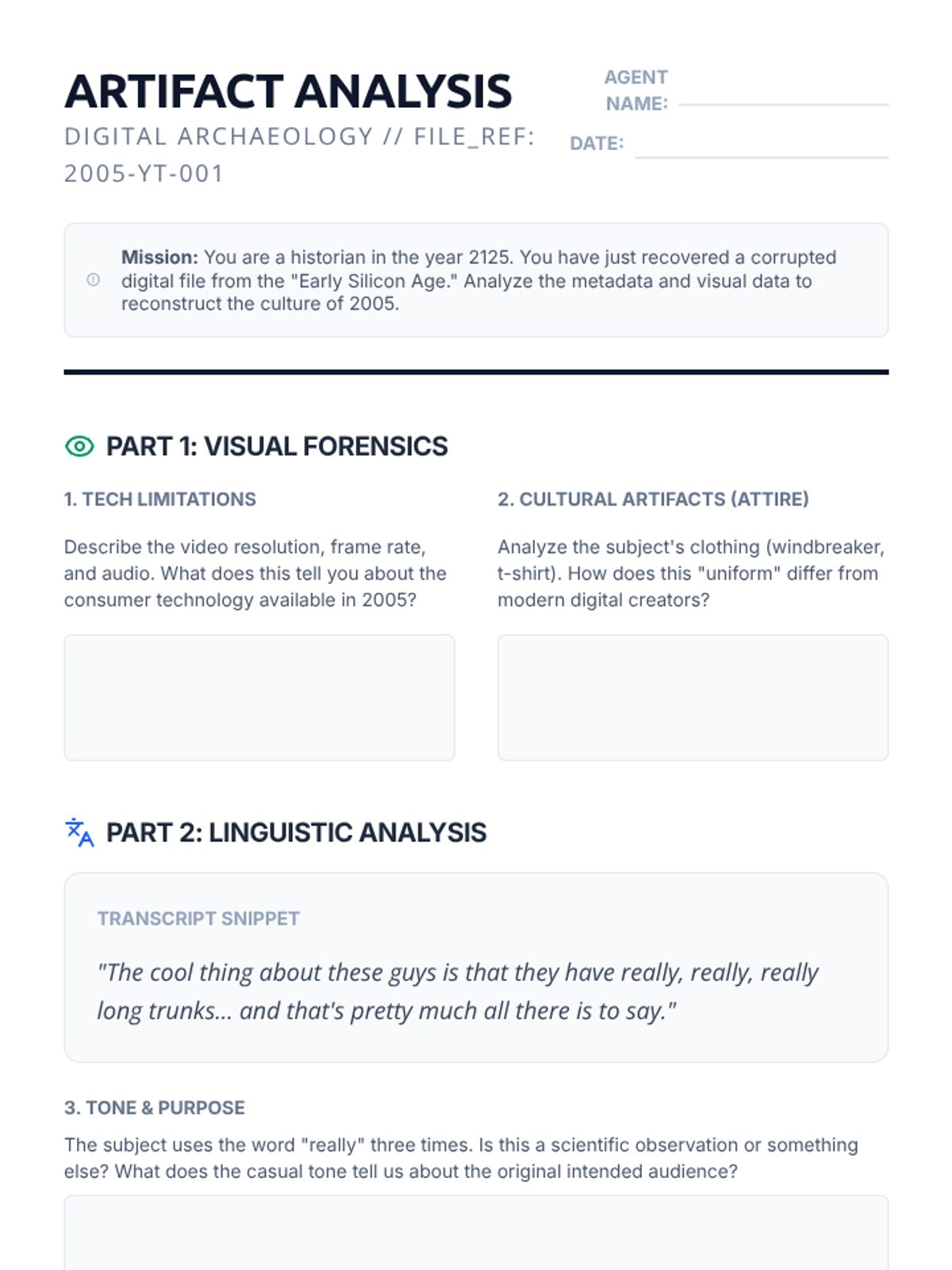
A primary source analysis worksheet for the 'Me at the zoo' video, framed as a 'Digital Archaeology' mission where students analyze visual data, tech limitations, and cultural impact.
Set of 4 discussion cards focusing on Quality vs Content, User-Generated Content, Digital Permanence, and Future Archives.
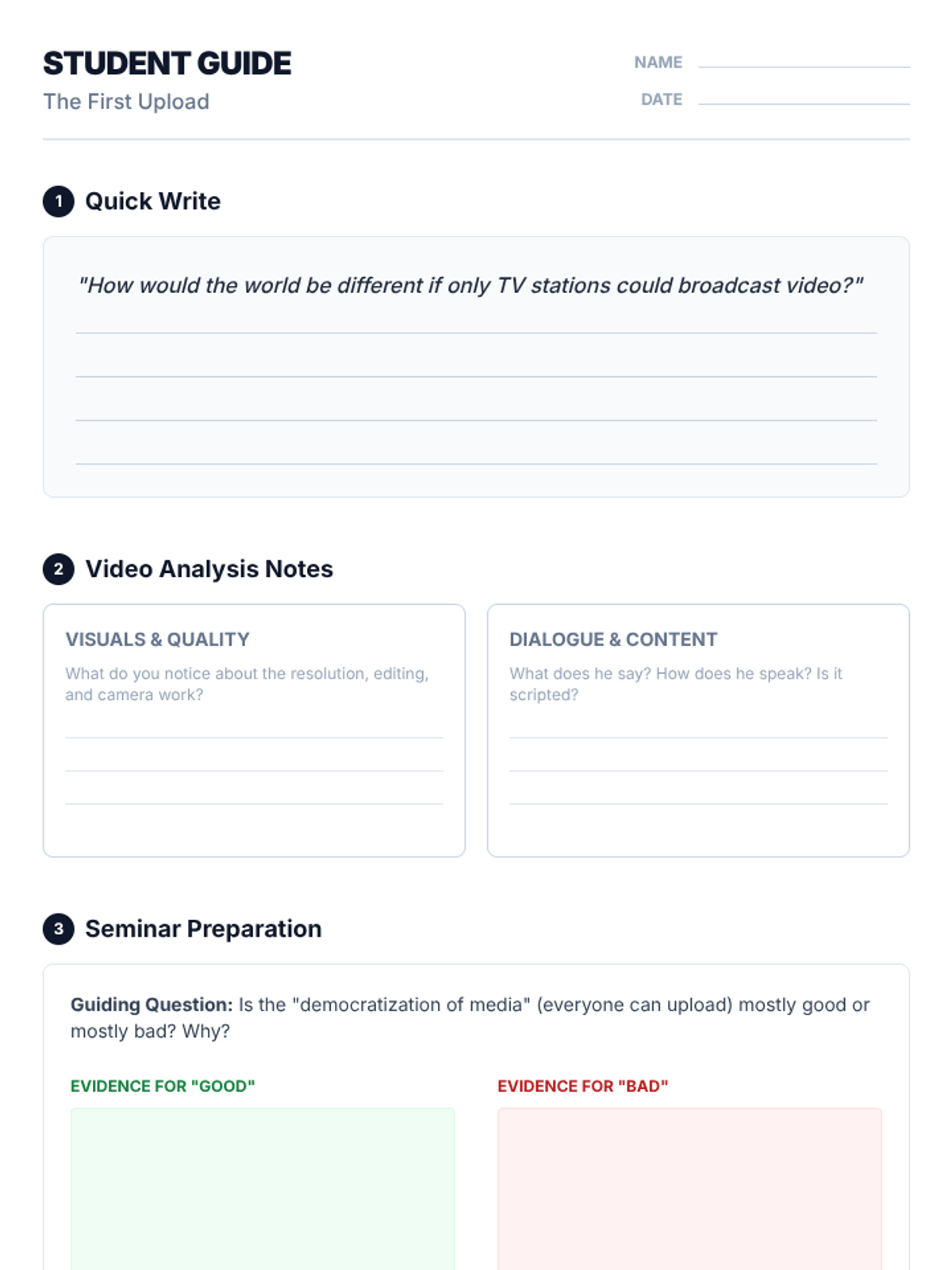
A student worksheet for the lesson, including the warm-up writing prompt, a grid for video analysis notes during viewing, and a T-chart for preparing arguments for the Socratic Seminar.
A visual slide deck designed for high school students to explore the origins of YouTube through 'Me at the zoo'. Includes an embedded video slide, primary source analysis prompts, and a structured debate framing for the Socratic Seminar.
A presentation guiding students through the analysis of the first YouTube video, covering metadata, visual analysis, and the concept of User-Generated Content.
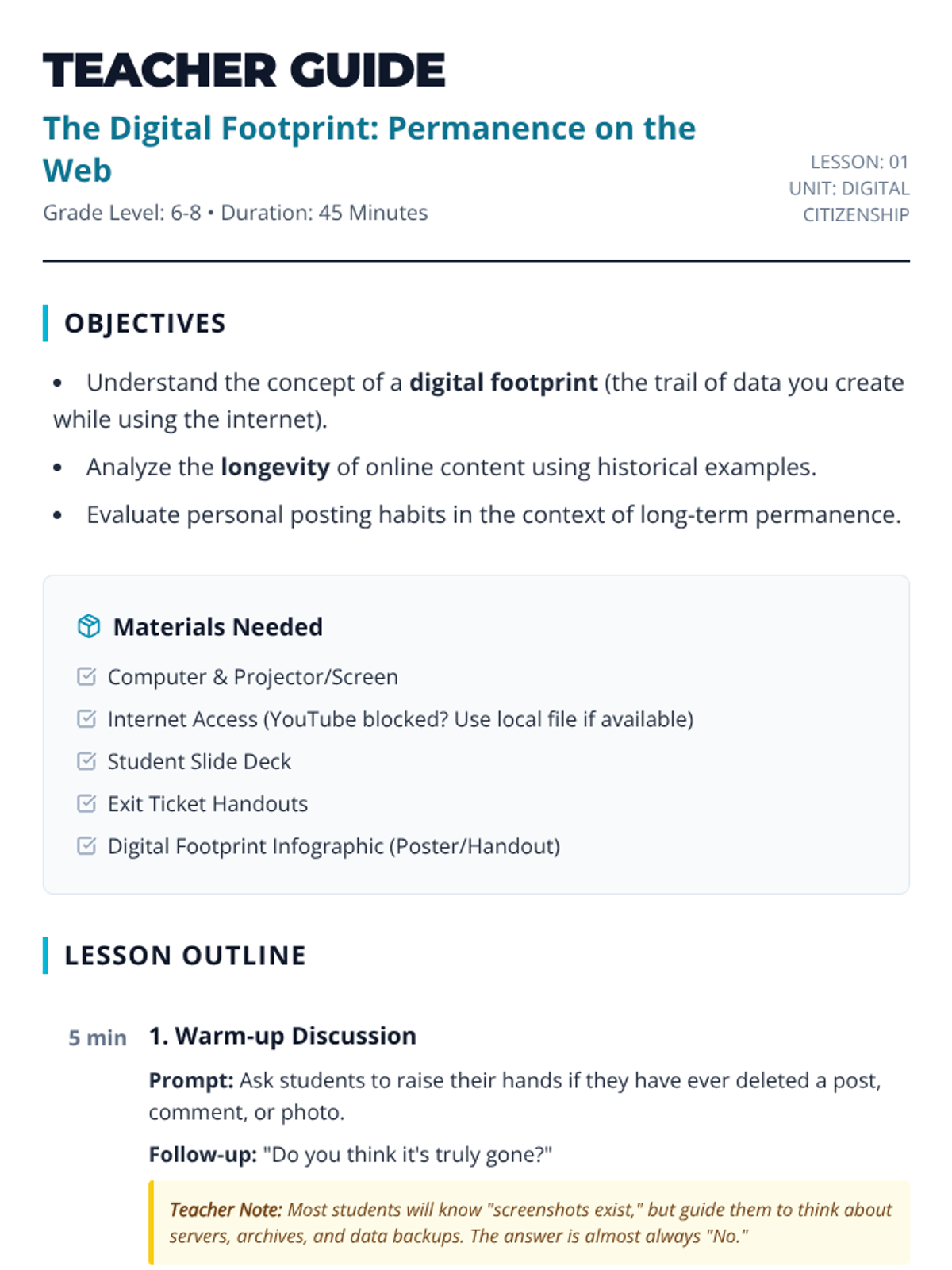
Teacher guide for the Digital Footprint lesson, including lesson plan, discussion prompts, video context, and transcript.
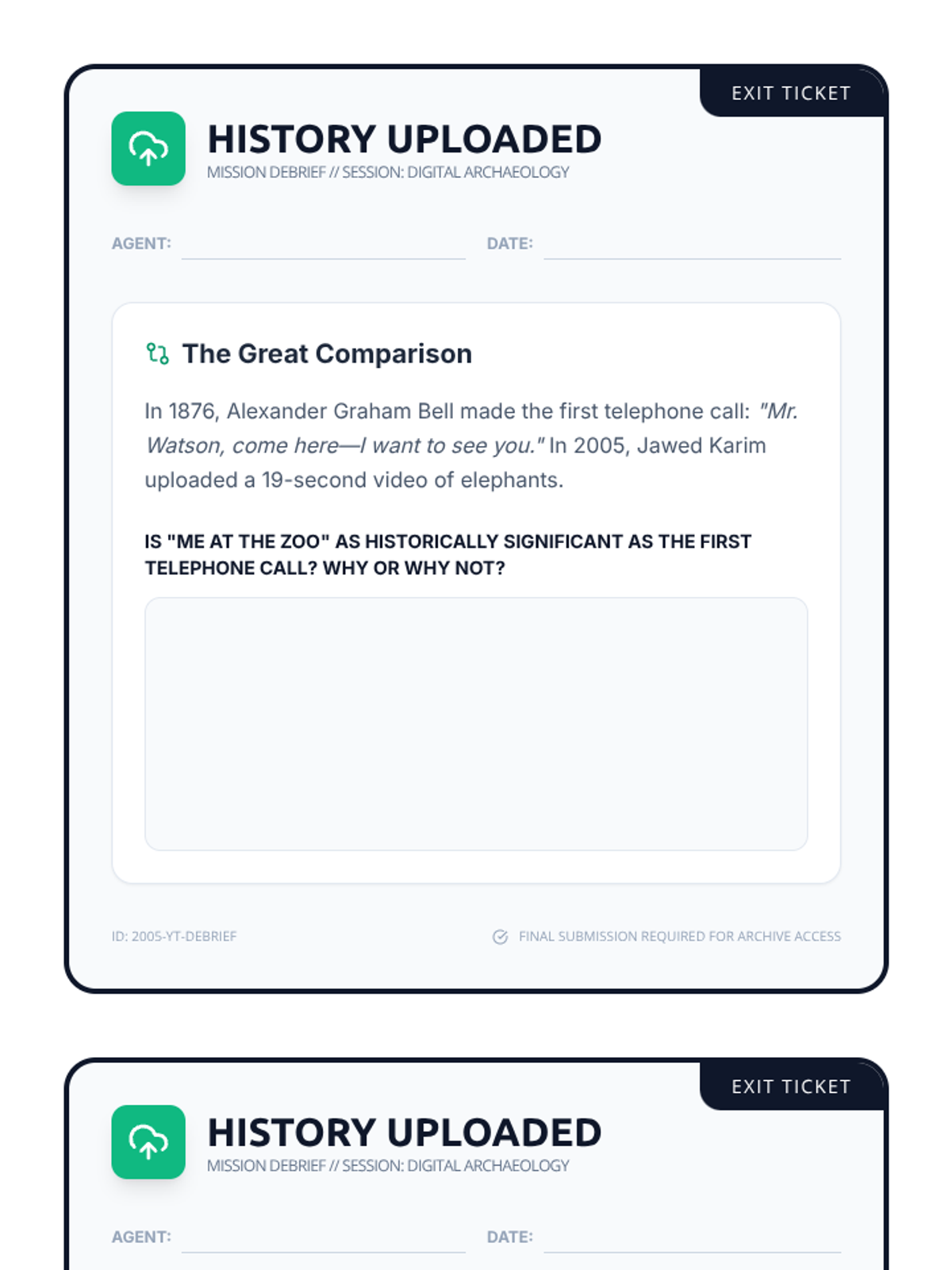
A comparison-based exit ticket for the 'Digital Archaeology' lesson, asking students to evaluate the historical significance of the first YouTube video against the first telephone call.
A slide deck introducing the lesson 'The Medium is the Message: Platform Evolution', featuring the video 'Me at the zoo', analysis of early internet constraints, and discussion prompts.
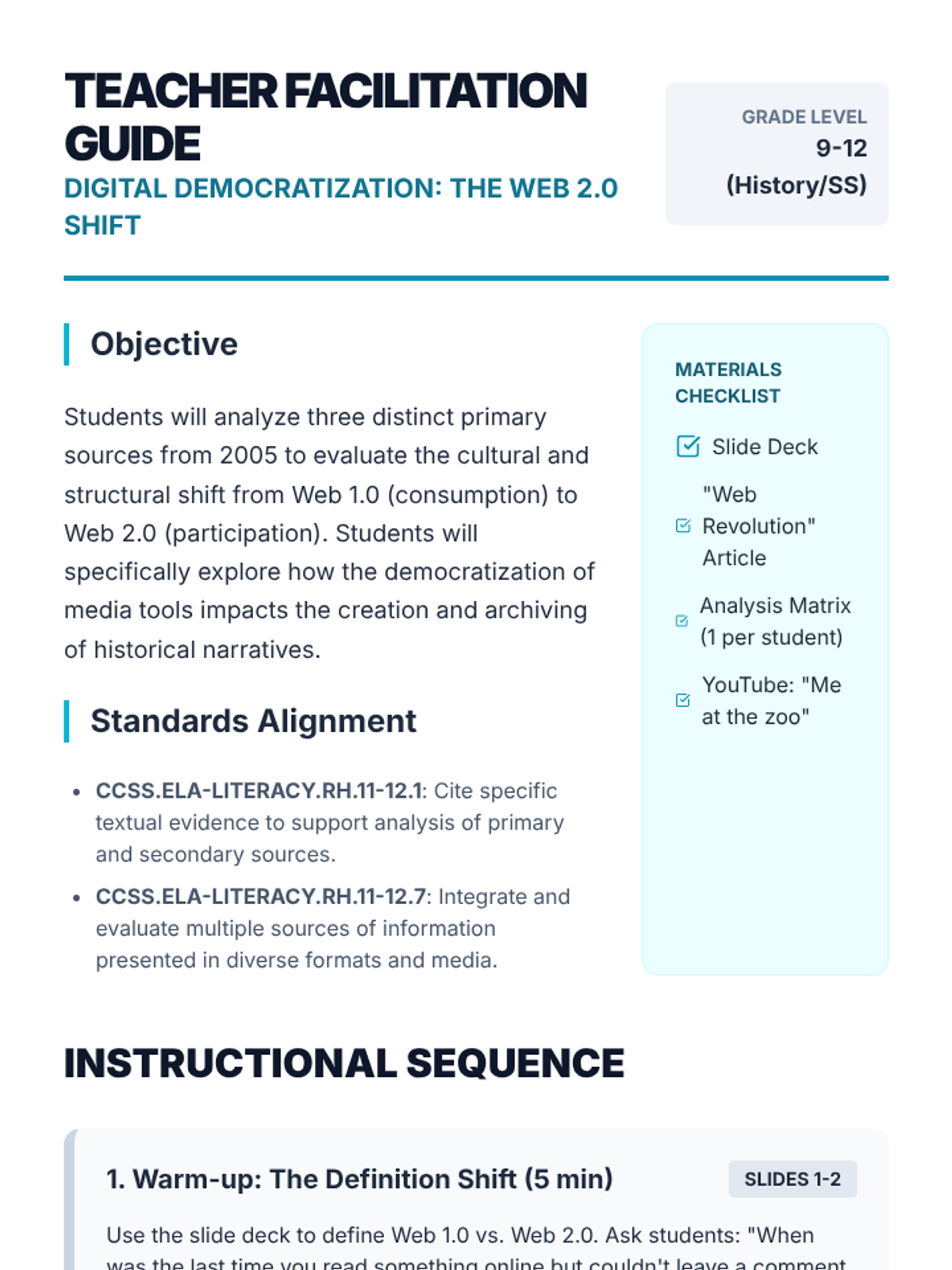
A teacher facilitation guide including lesson objectives, standards, materials checklist, and step-by-step instructional sequence for the Digital Democratization lesson.
A comparative analysis matrix worksheet for students to evaluate three different 2005 media sources based on authorship, audience, barriers to entry, and bias.
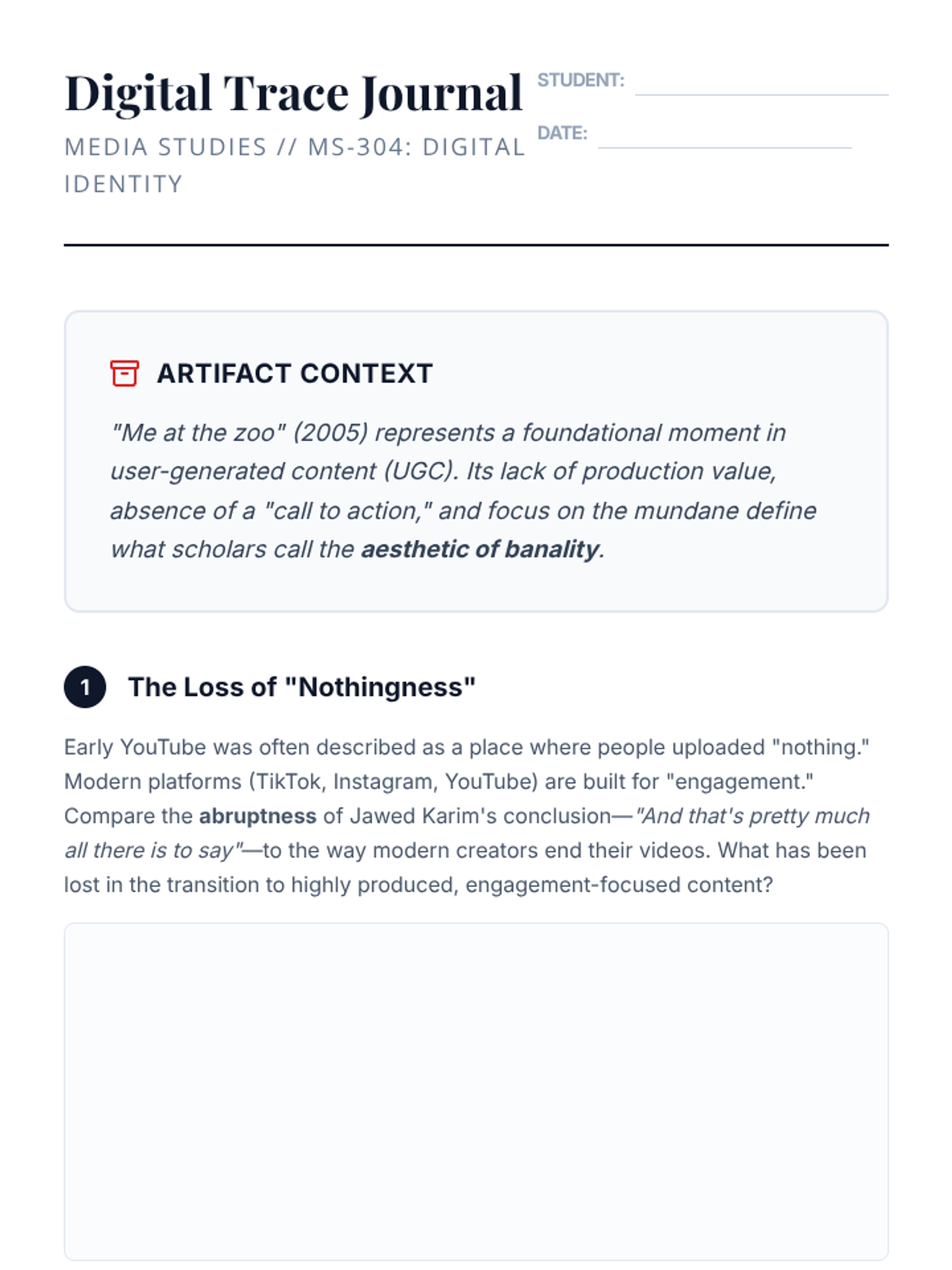
A critical reflection journal for undergraduate students to deconstruct their perception of authenticity, comparing early Web 2.0 aesthetics to the modern creator economy.
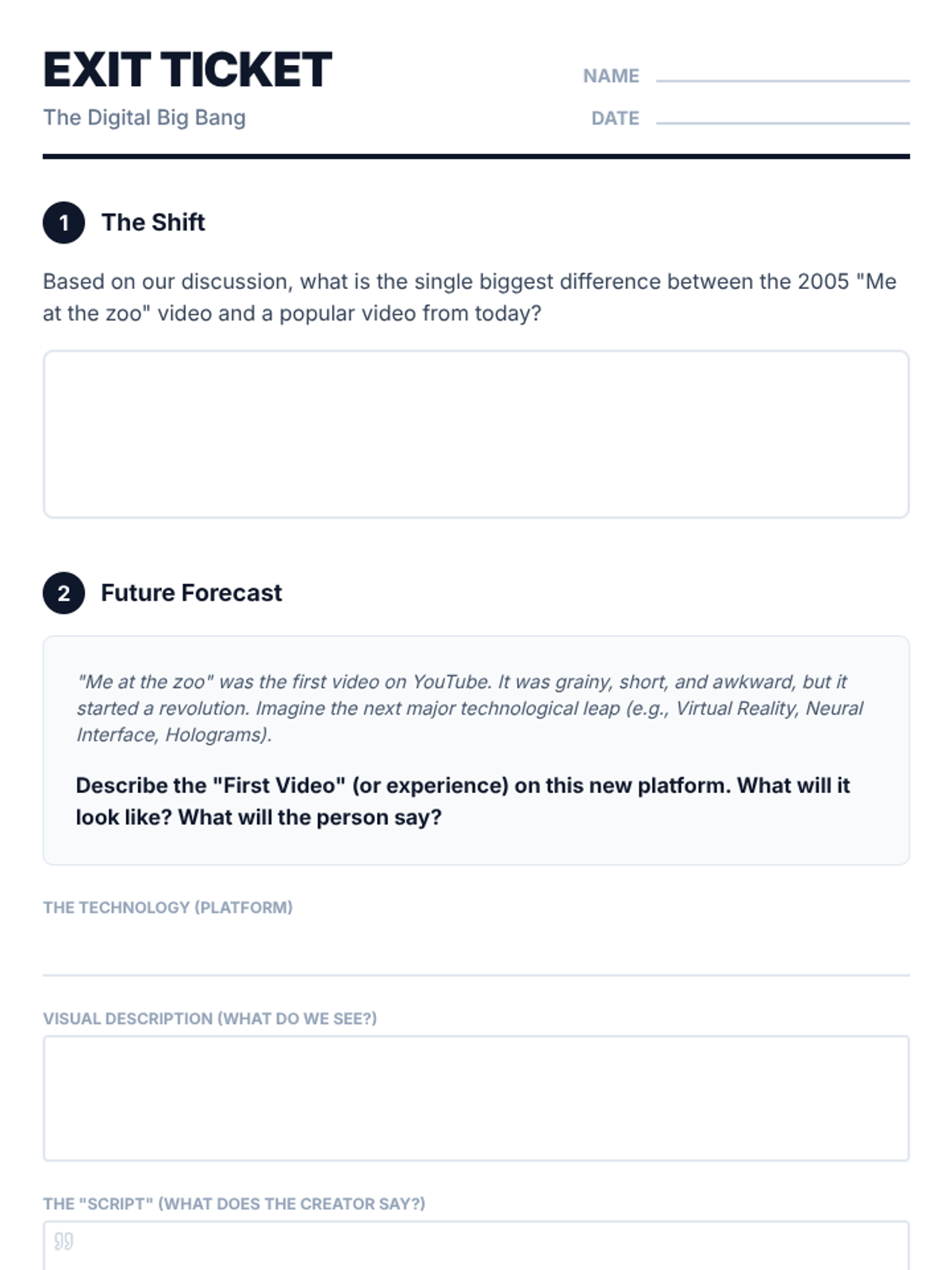
An exit ticket handout for students to demonstrate understanding. Includes a short response question comparing 2005 media to today, and a creative forecasting activity where students predict the nature of the first content on a future tech platform.
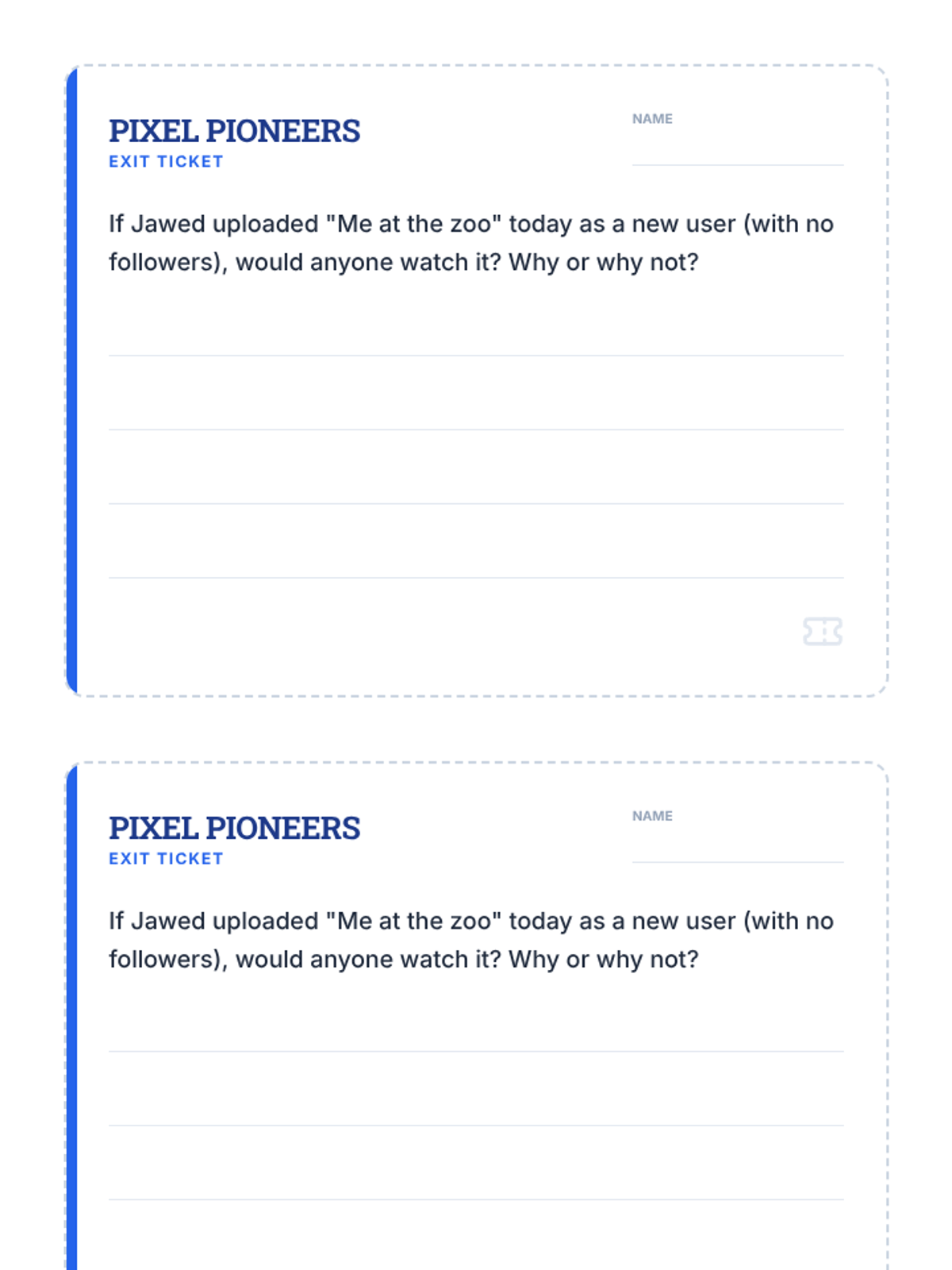
A set of three printable exit tickets per page for the 'Pixel Pioneers' lesson, asking students to reflect on the modern viability of the first YouTube video.
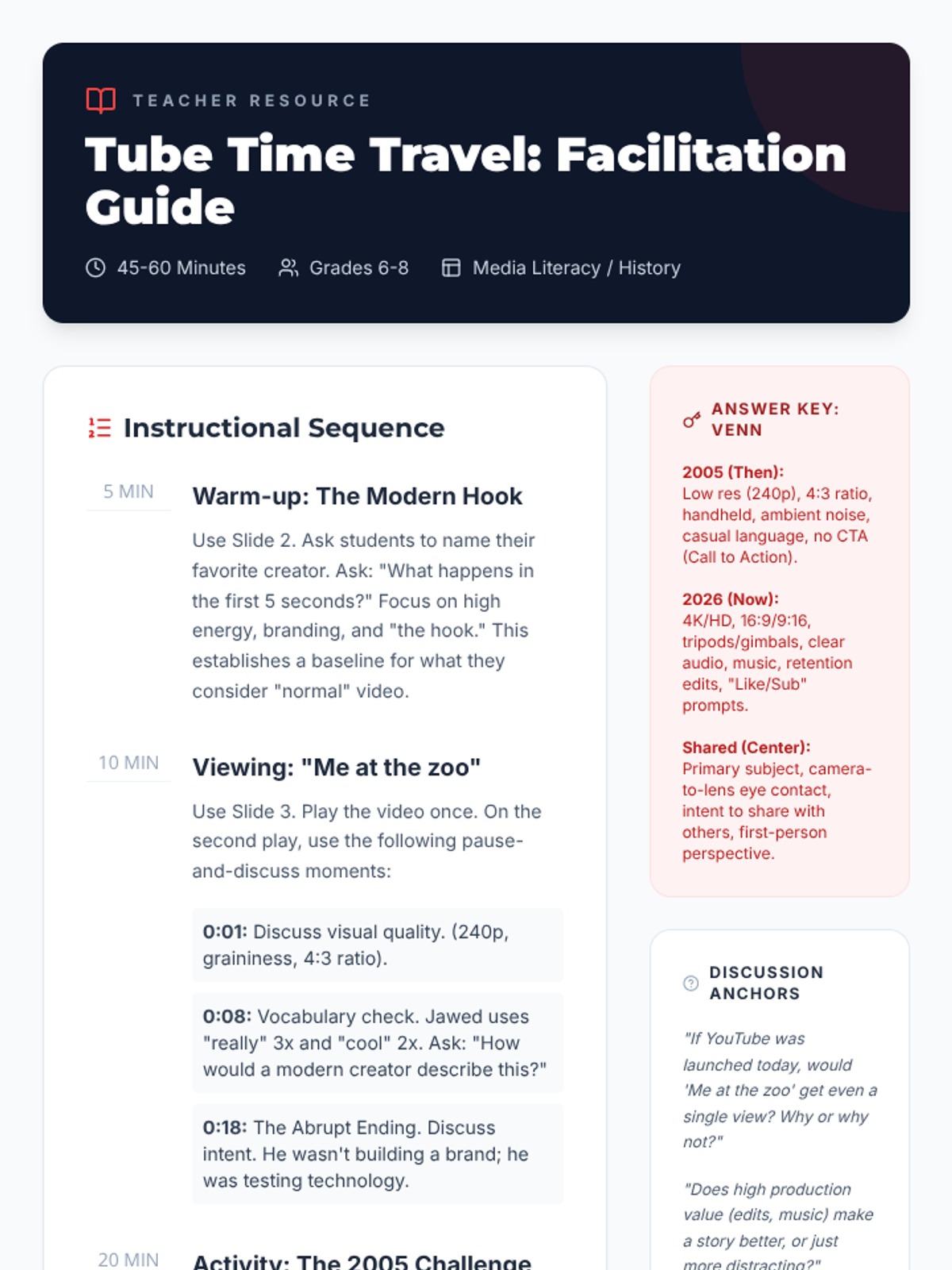
A comprehensive teacher guide for the 'Tube Time Travel' lesson, including pacing, specific timestamps for discussion pauses during the 'Me at the zoo' video, and an answer key for the Venn diagram worksheet.
A grading rubric for the 'Digital Archaeology' lesson, evaluating students on visual evidence analysis, linguistic context, historical significance, and comparative arguments.
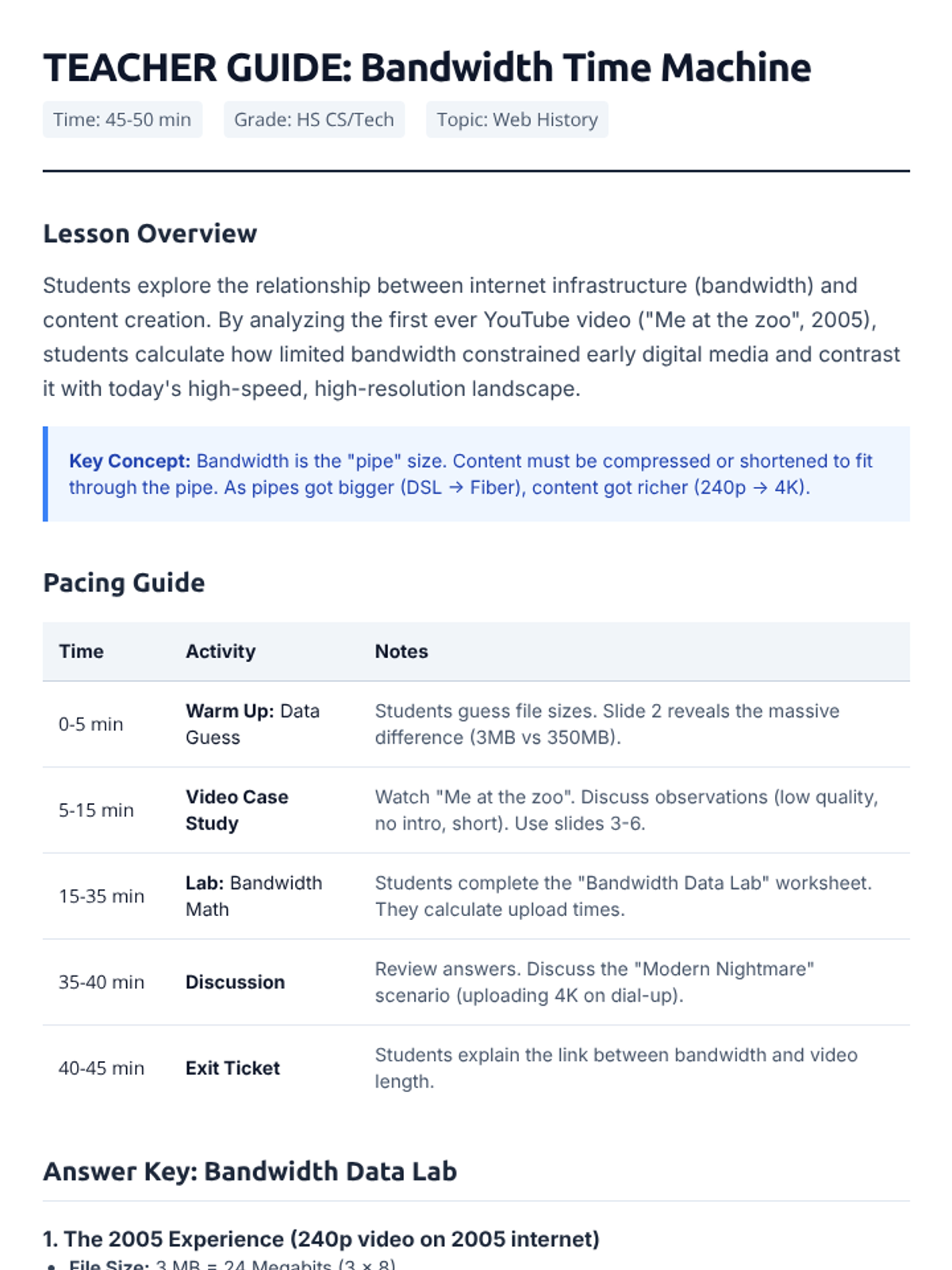
A teacher's guide containing the lesson plan, pacing, answer key for calculations, and discussion prompts.
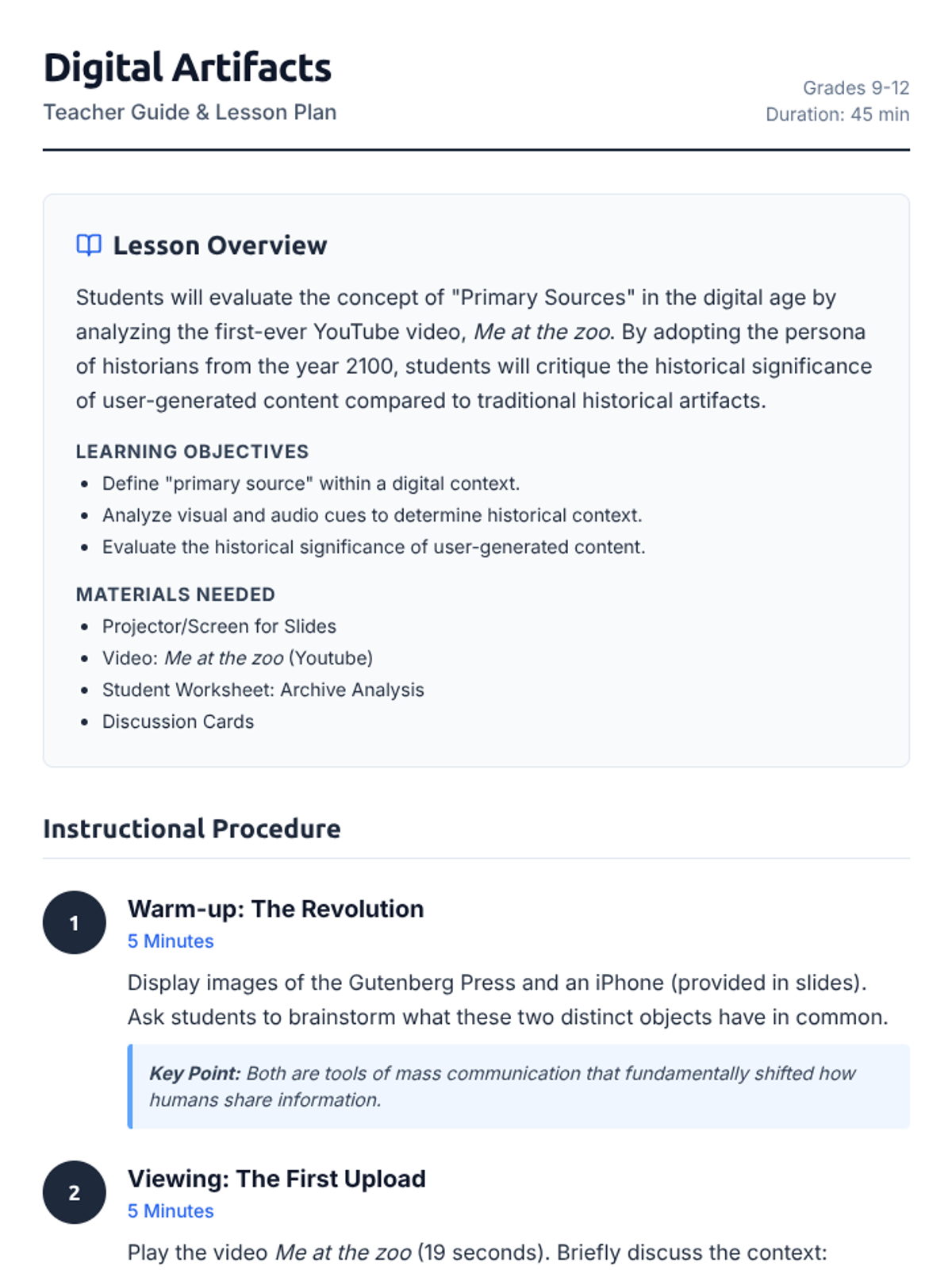
A comprehensive lesson plan for teachers, outlining the steps for the 'Digital Artifacts' lesson, including warm-up, viewing, main activity, and reflection.