A slide deck accompanying the 'First Footprint' lesson. Includes the embedded video 'Me at the zoo', discussion prompts, context about 2005 internet culture, and Socratic seminar questions.
A teacher guide and answer key for the climate bias warm-up, including facilitation strategies, timing breakdowns, and exemplar student responses.
1/12
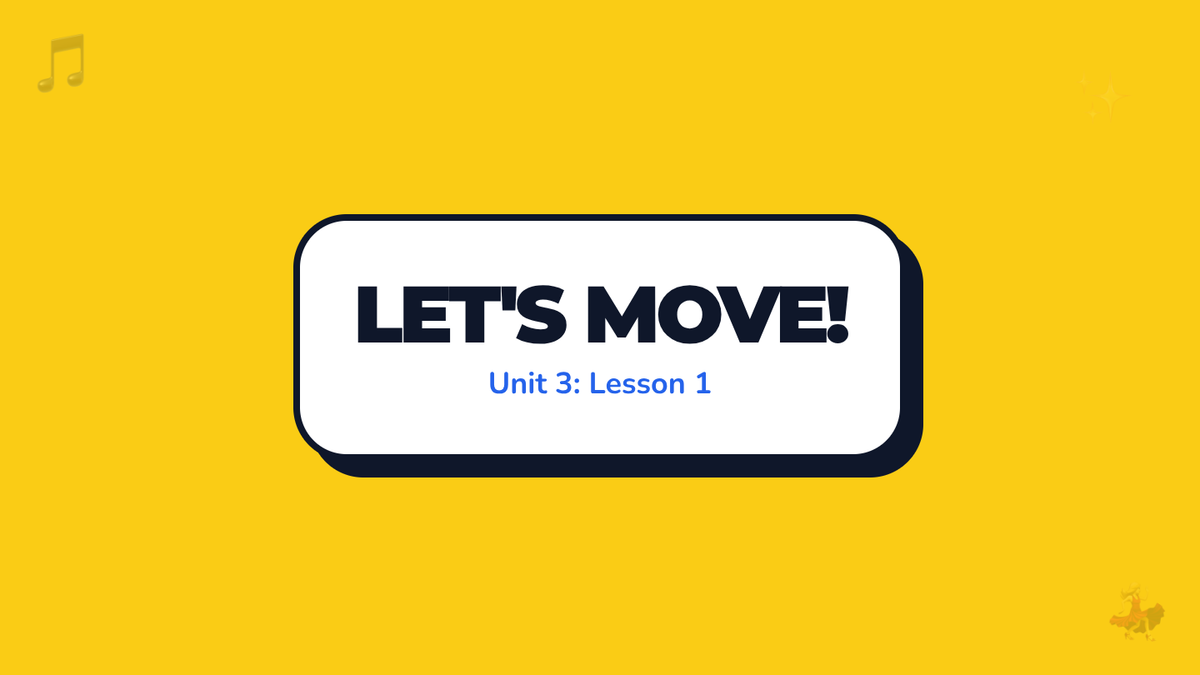
A vibrant and engaging slide deck for Kindergarteners to explore rhythm, tempo, and movement through visual prompts and animal challenges.
1/16
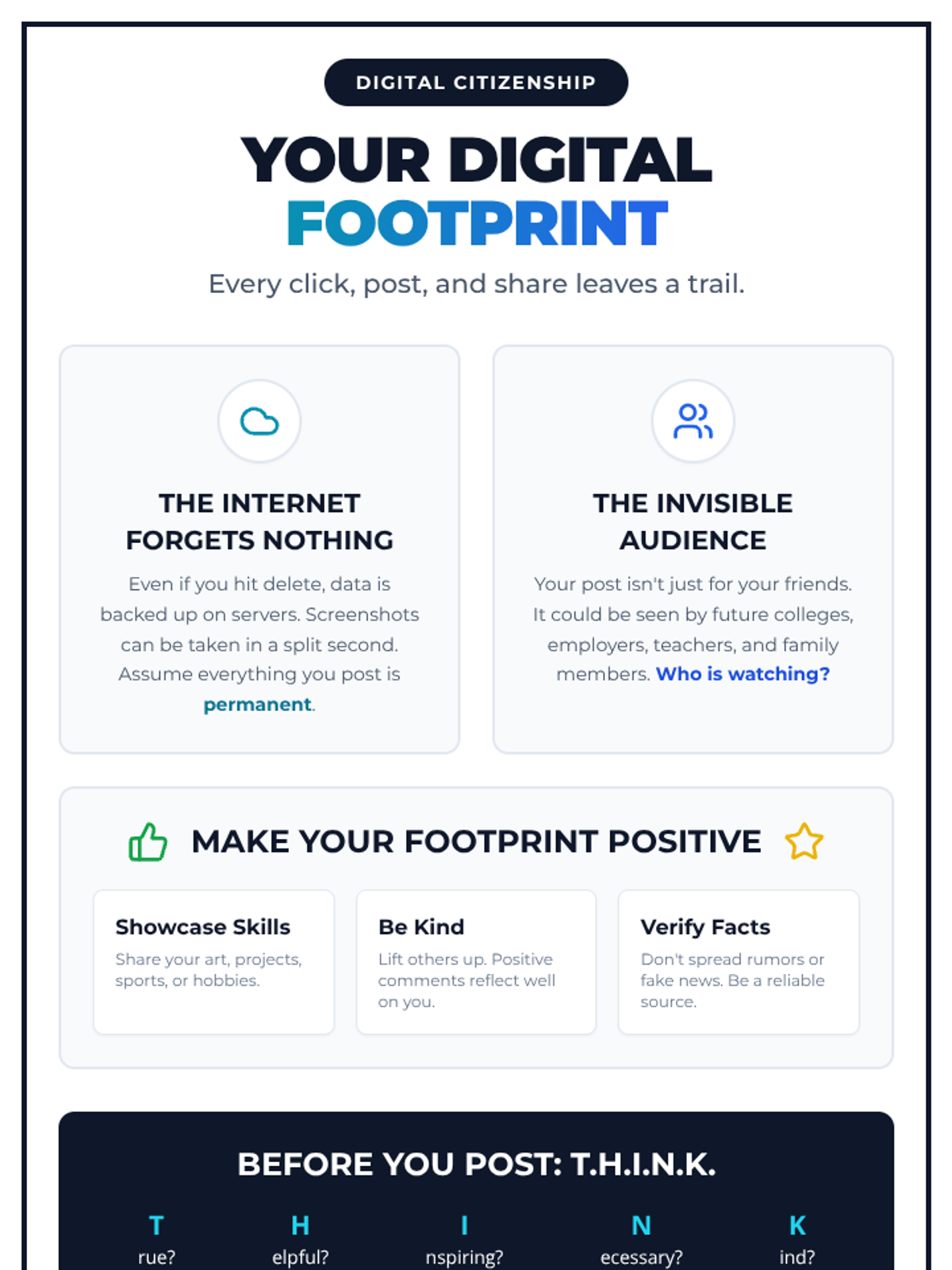
Visual infographic poster summarizing key digital footprint concepts like permanence, audience, and the T.H.I.N.K. acronym.
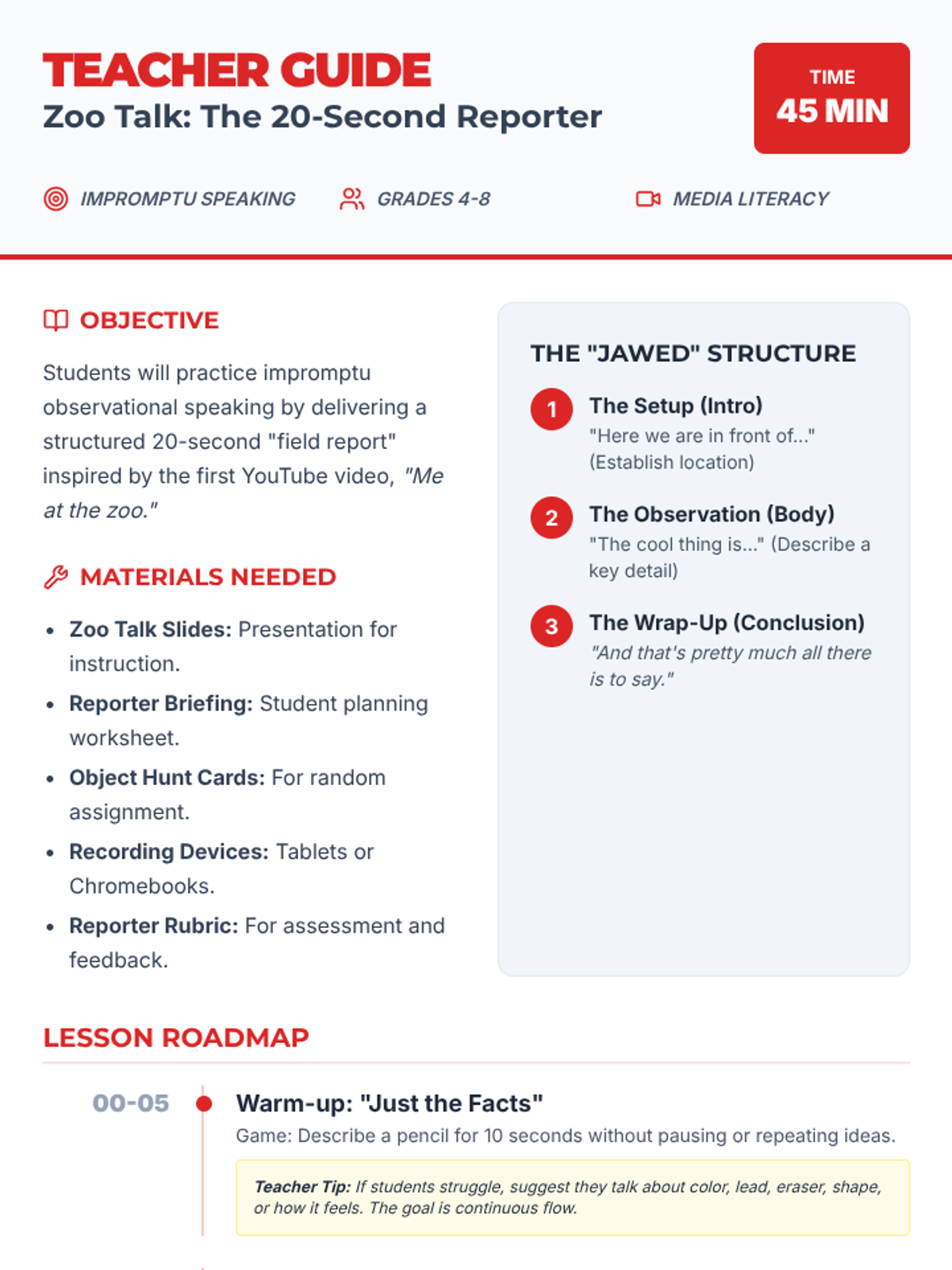
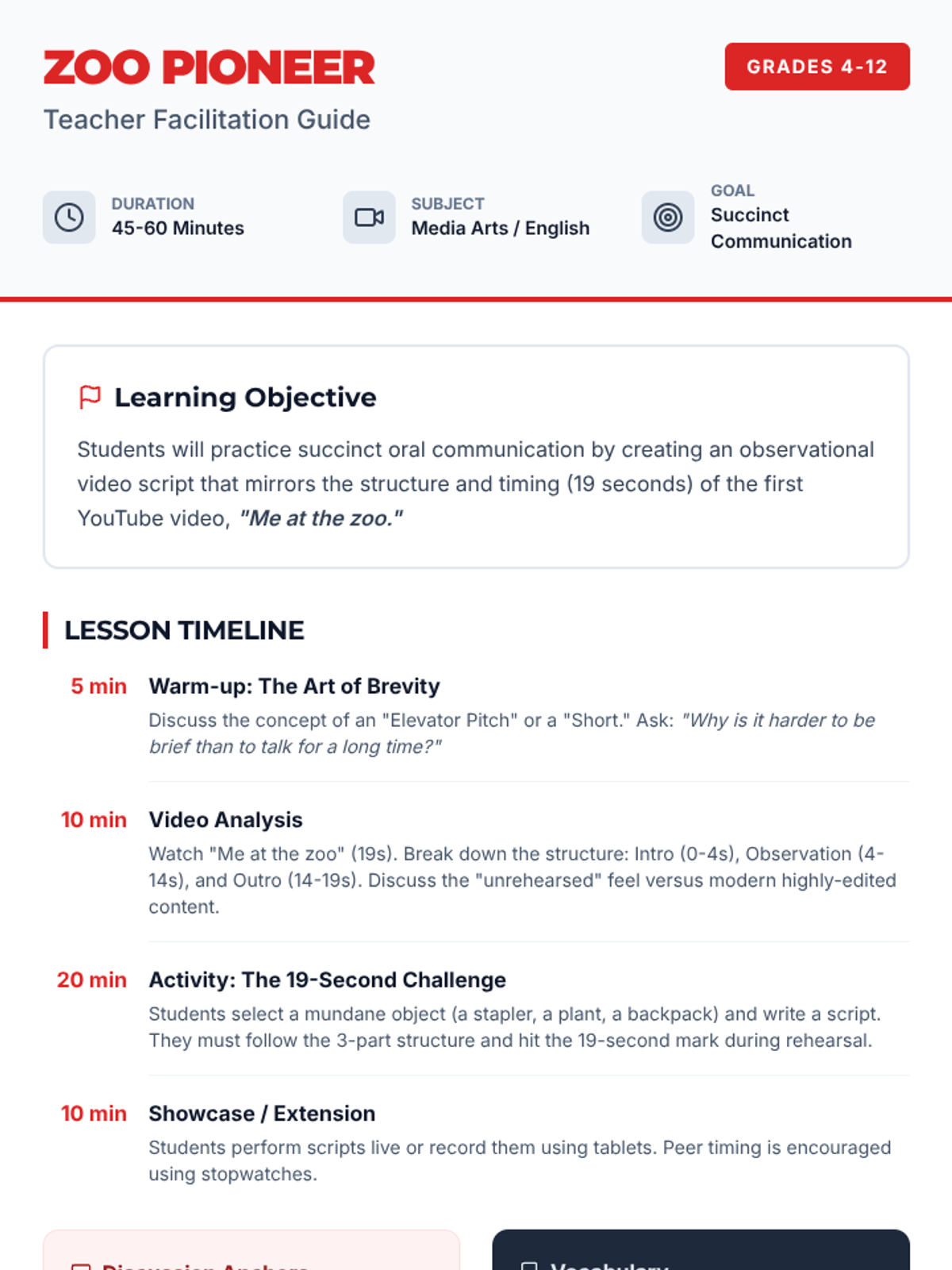
A comprehensive teacher's guide for the Zoo Talk lesson, detailing the objective, materials, time breakdown, and the 'Jawed' three-part speaking structure.
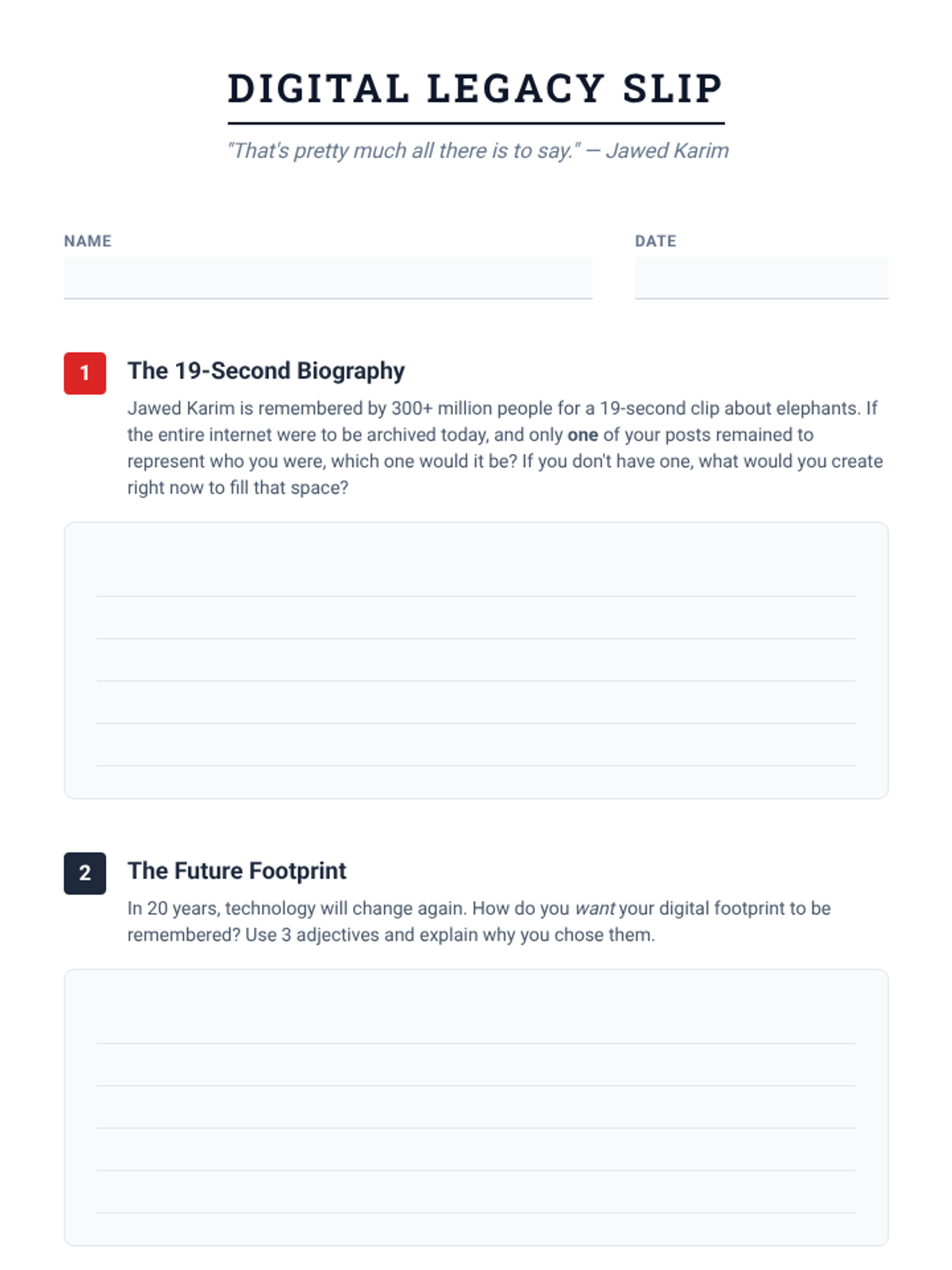
An exit ticket for students to reflect on their own digital footprint. Includes two prompt questions about their digital legacy and a self-reflection scale regarding their current digital awareness.
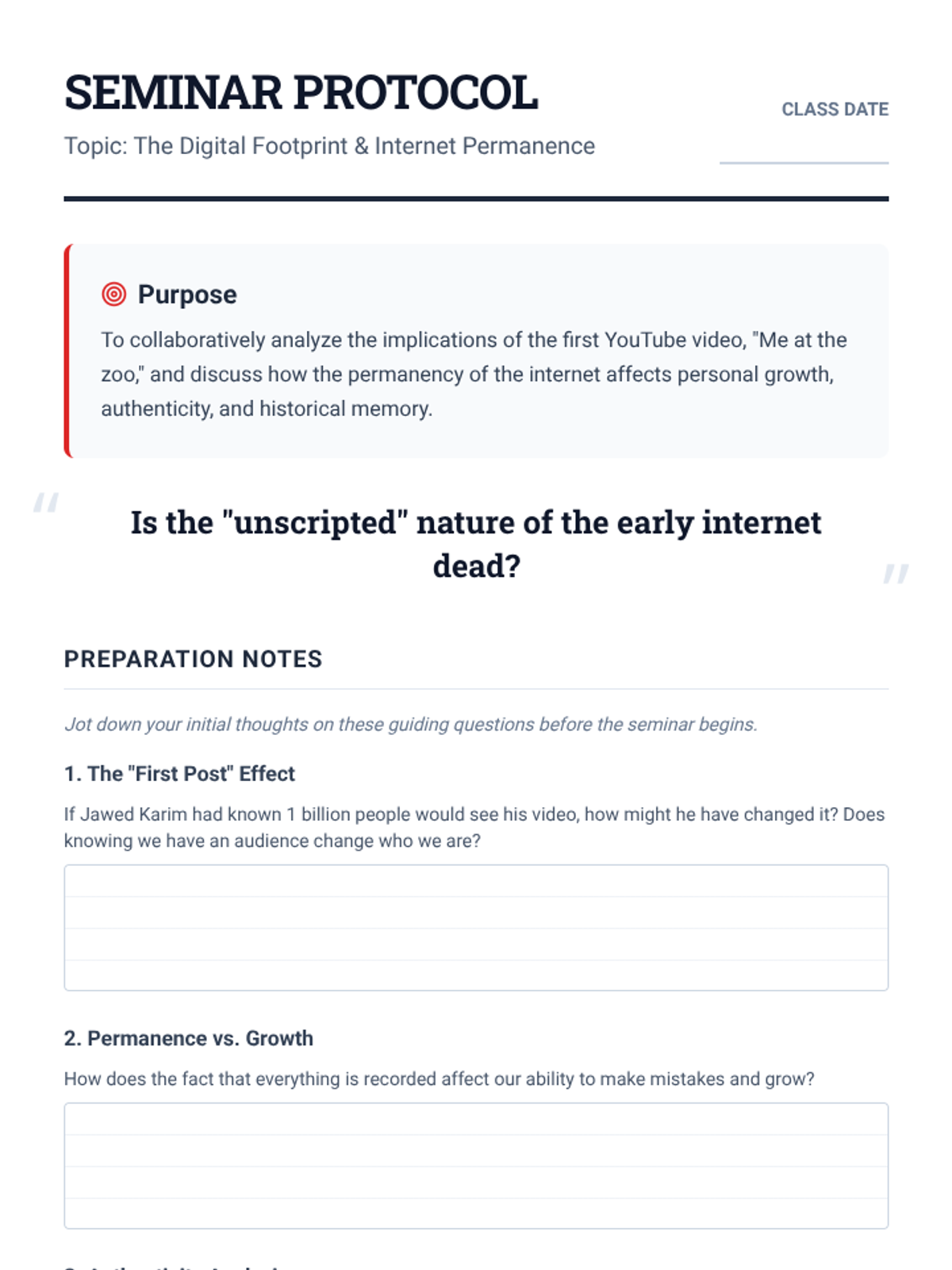
A structured handout for the Socratic Seminar. Includes the central discussion questions, space for student preparation notes, rules for participation, and sentence starters to aid discussion flow.
Engaging slide deck for Kindergarteners explaining the conductor's role, the baton, and simple signals for volume and start/stop.
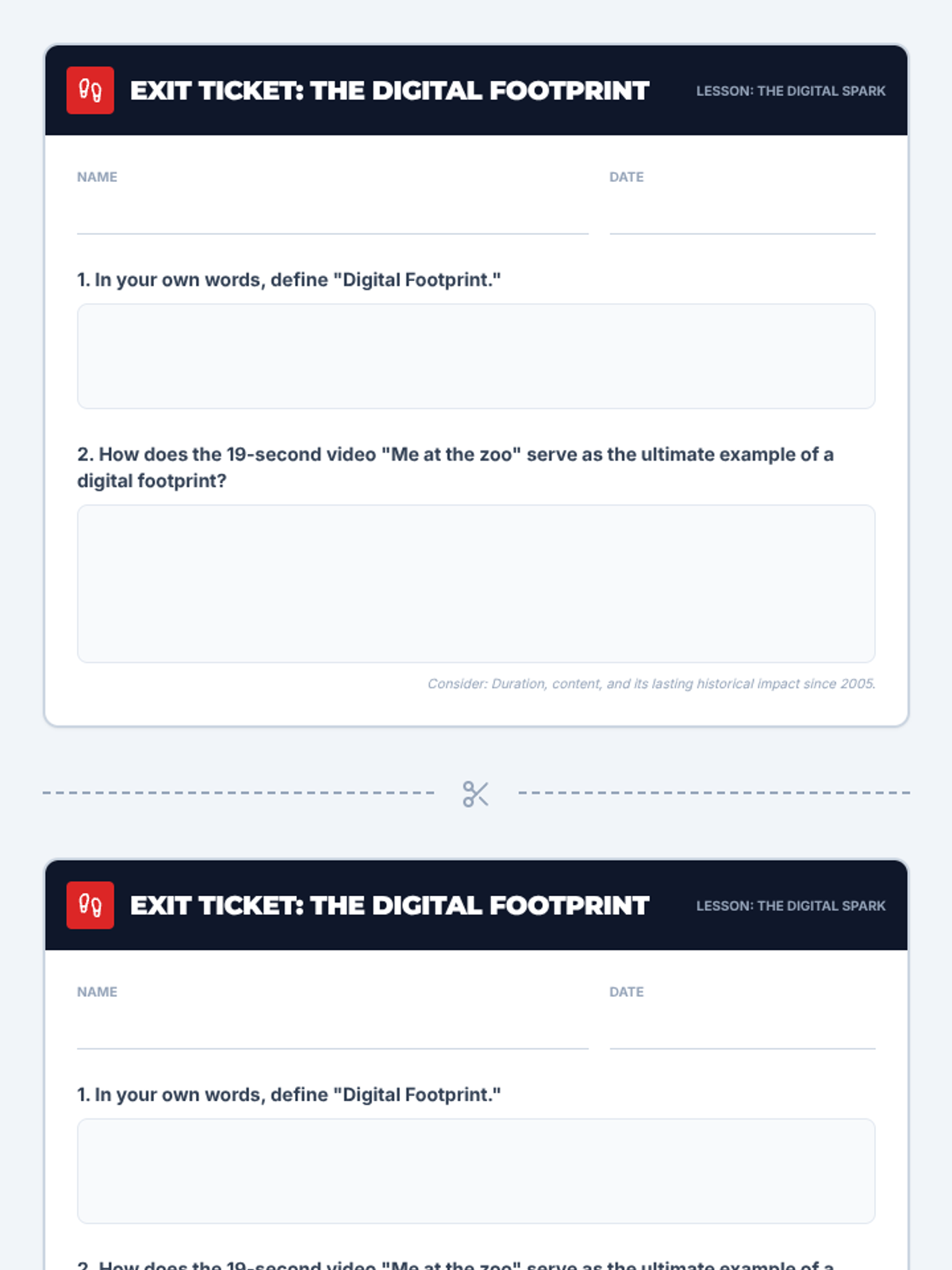
A printable exit ticket designed for students to synthesize their learning by defining "Digital Footprint" using the first YouTube video as a primary case study. Printed two-up to save paper.
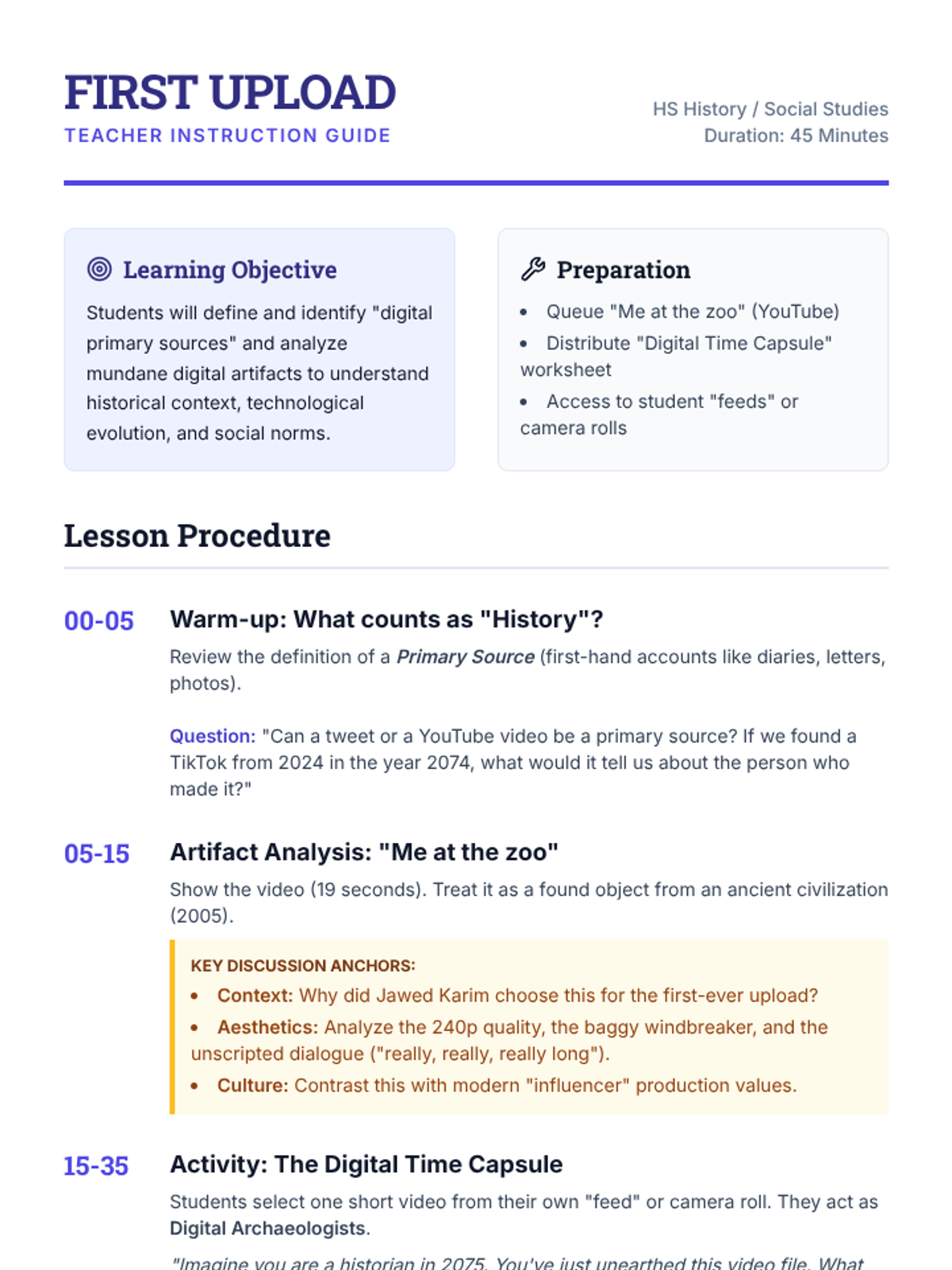
A teacher's lesson plan for high school social studies focused on digital primary sources, featuring a detailed timeline, discussion questions, and key concepts based on the first YouTube video.
A comprehensive teacher guide for the 'Micro Moment' lesson, including a timeline, discussion questions, vocabulary, and facilitation tips for teaching the 19-second video challenge.
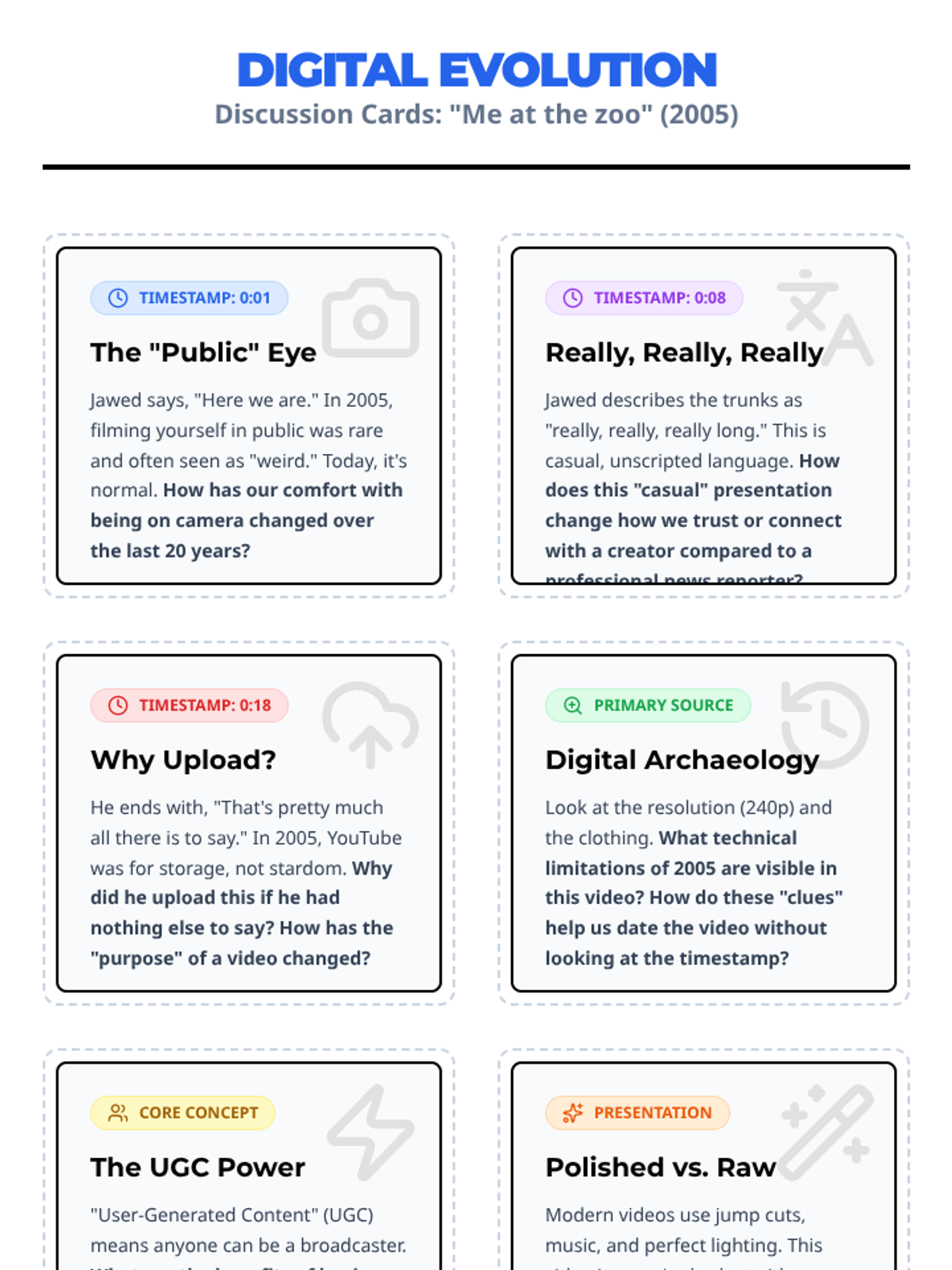
A set of 6 printable discussion cards for middle school students to analyze the "Me at the zoo" video. Each card features a specific timestamp or concept, focusing on social norms, technology evolution, and presentation styles.
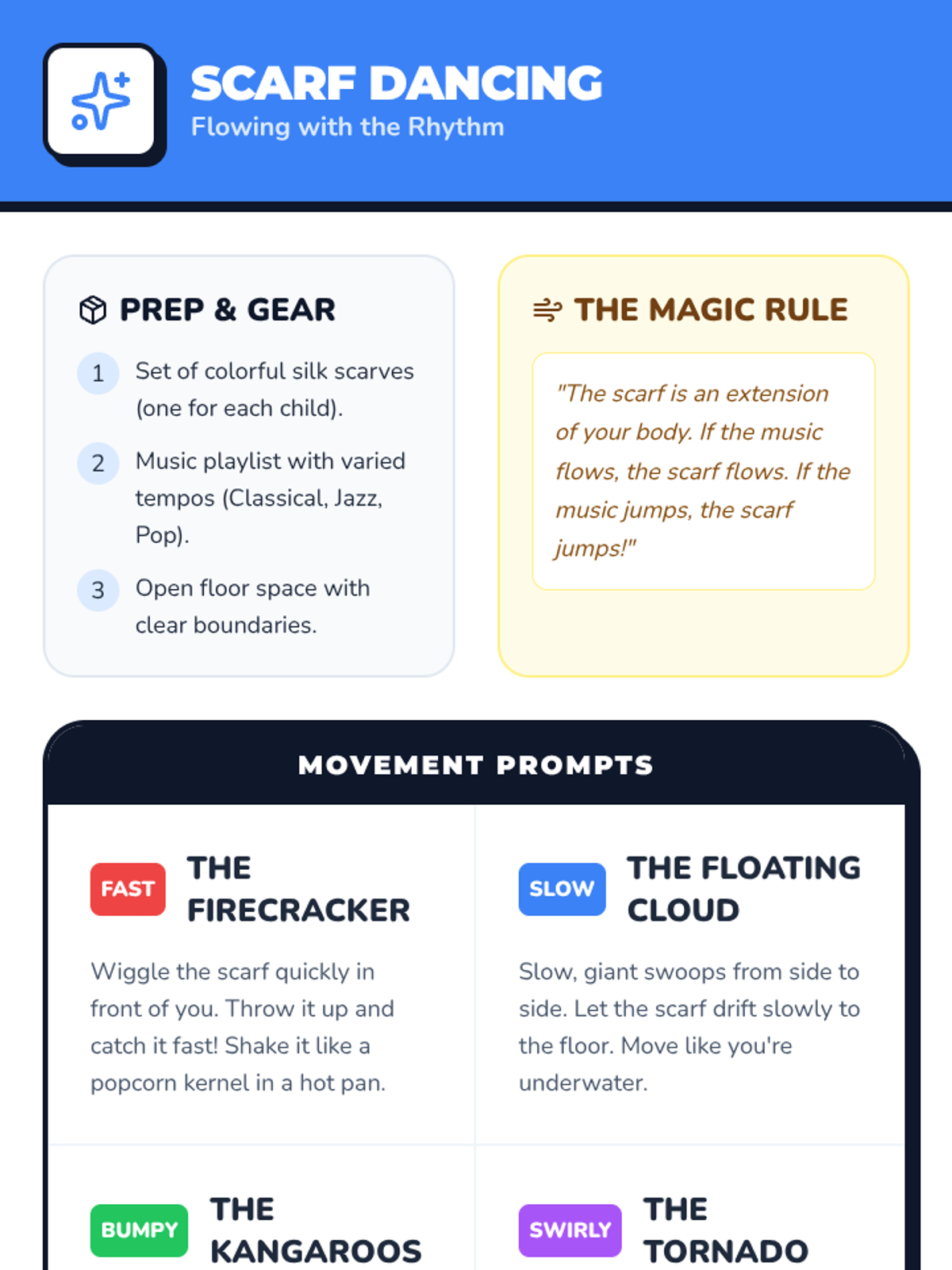
A creative movement activity guide using scarves to help Kindergarteners visualize and express different musical rhythms and tempos.
A comprehensive lesson plan for Kindergarten students focusing on a school-wide instrument parade, practicing steady beats, and ensemble performance.
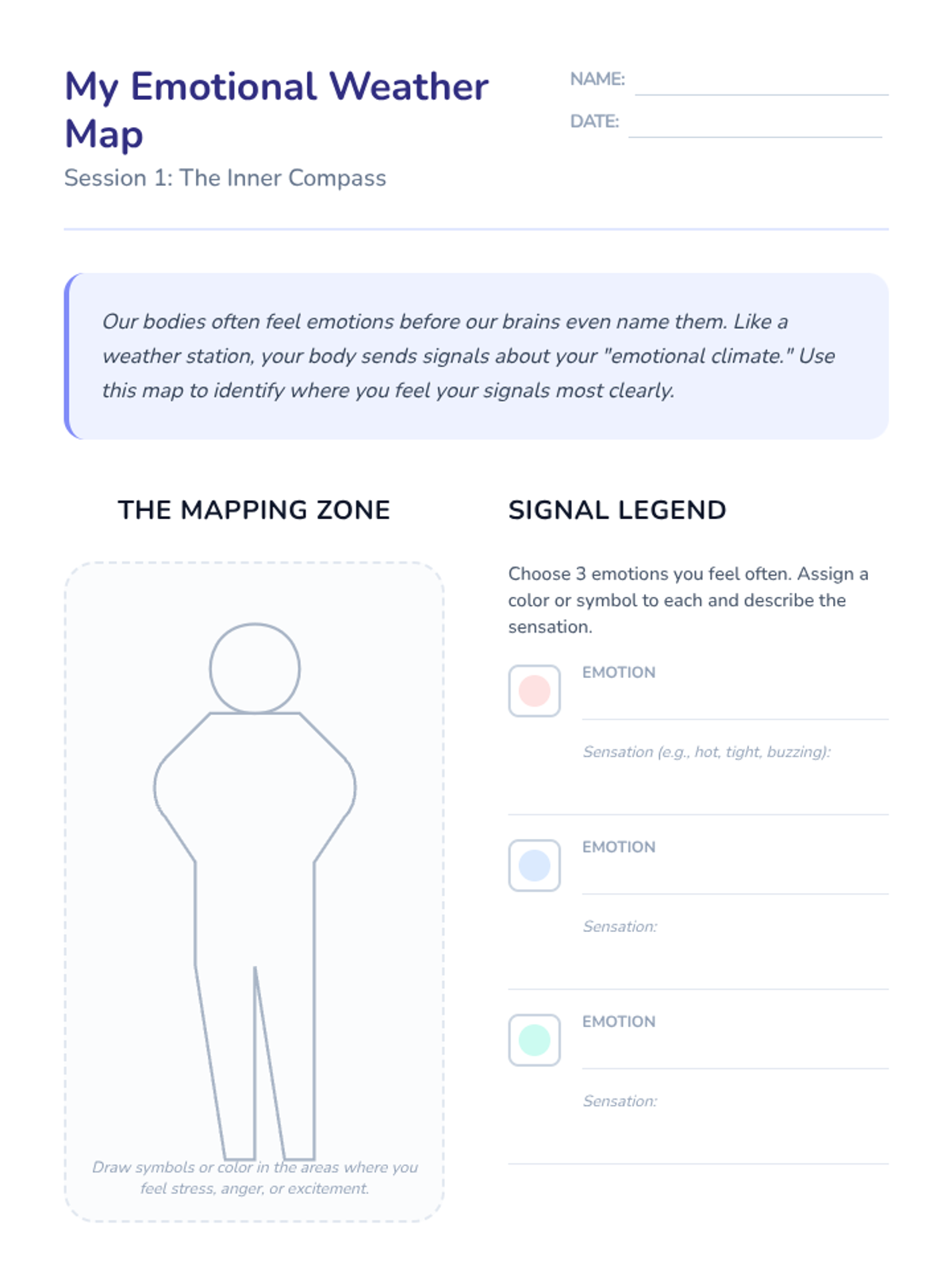
A student worksheet for identifying physiological signals of emotions. It features a body mapping activity where students color or mark areas where they feel physical sensations associated with specific feelings.
1/13
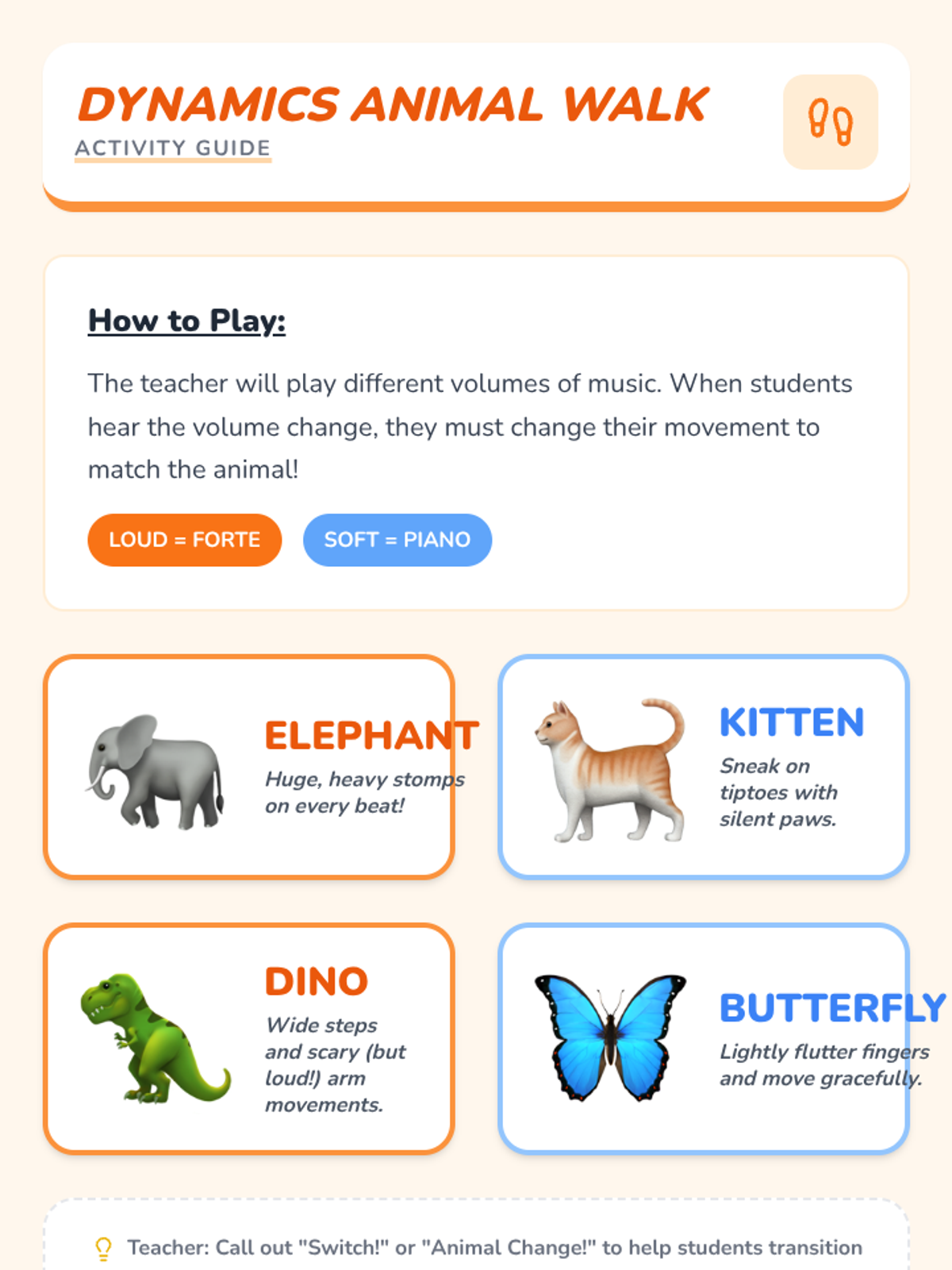
Instructions for a kinesthetic activity where students match their movement intensity to musical dynamics using animal metaphors.
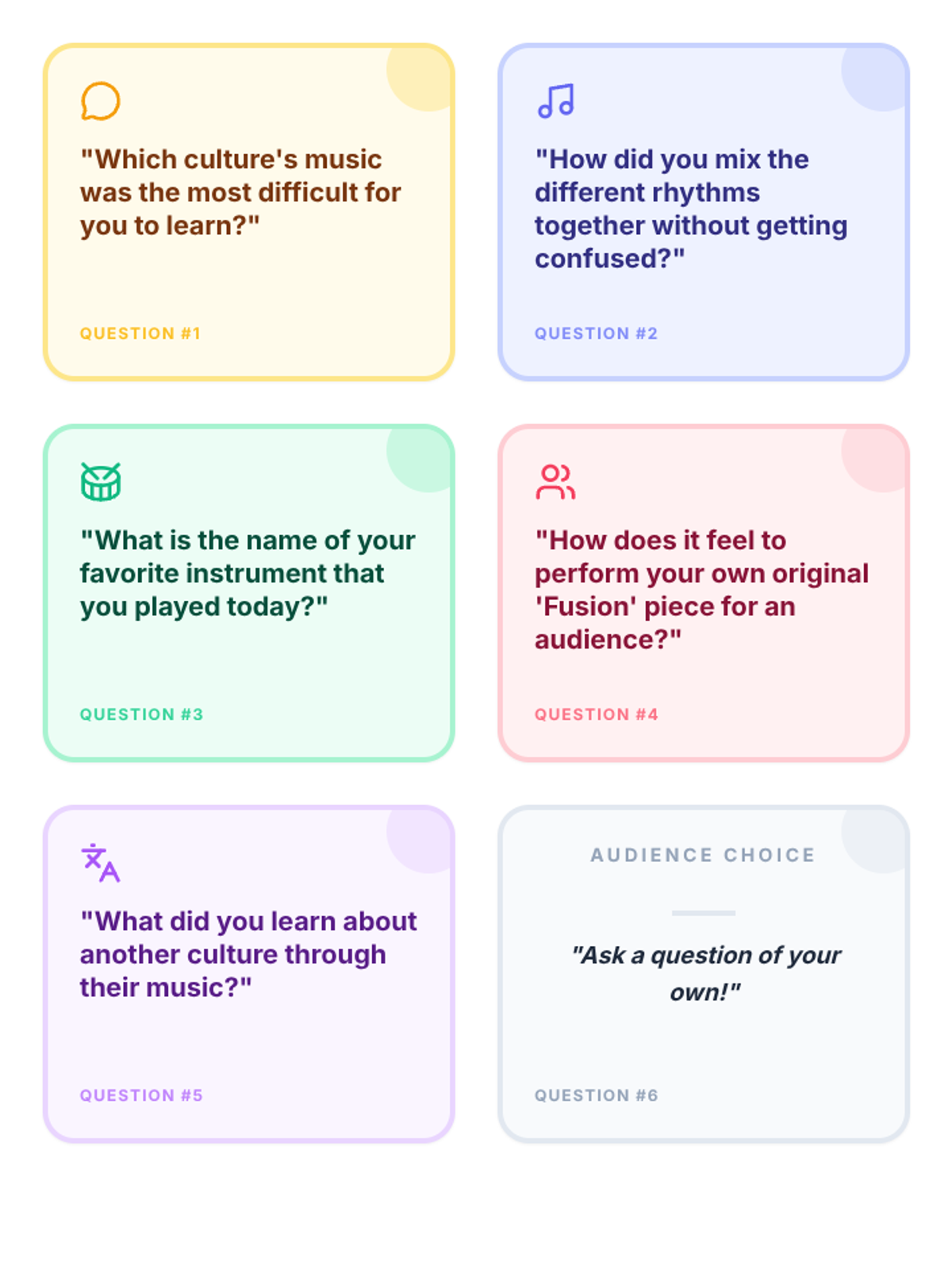
Discussion prompt cards for the post-performance Q&A session, designed to encourage meaningful interaction between the audience and the student performers.
Teacher-facing facilitation guide for Session 3. Focuses on teaching TIPP skills for crisis regulation and helping students identify environmental supports (like cold water access) within the school.
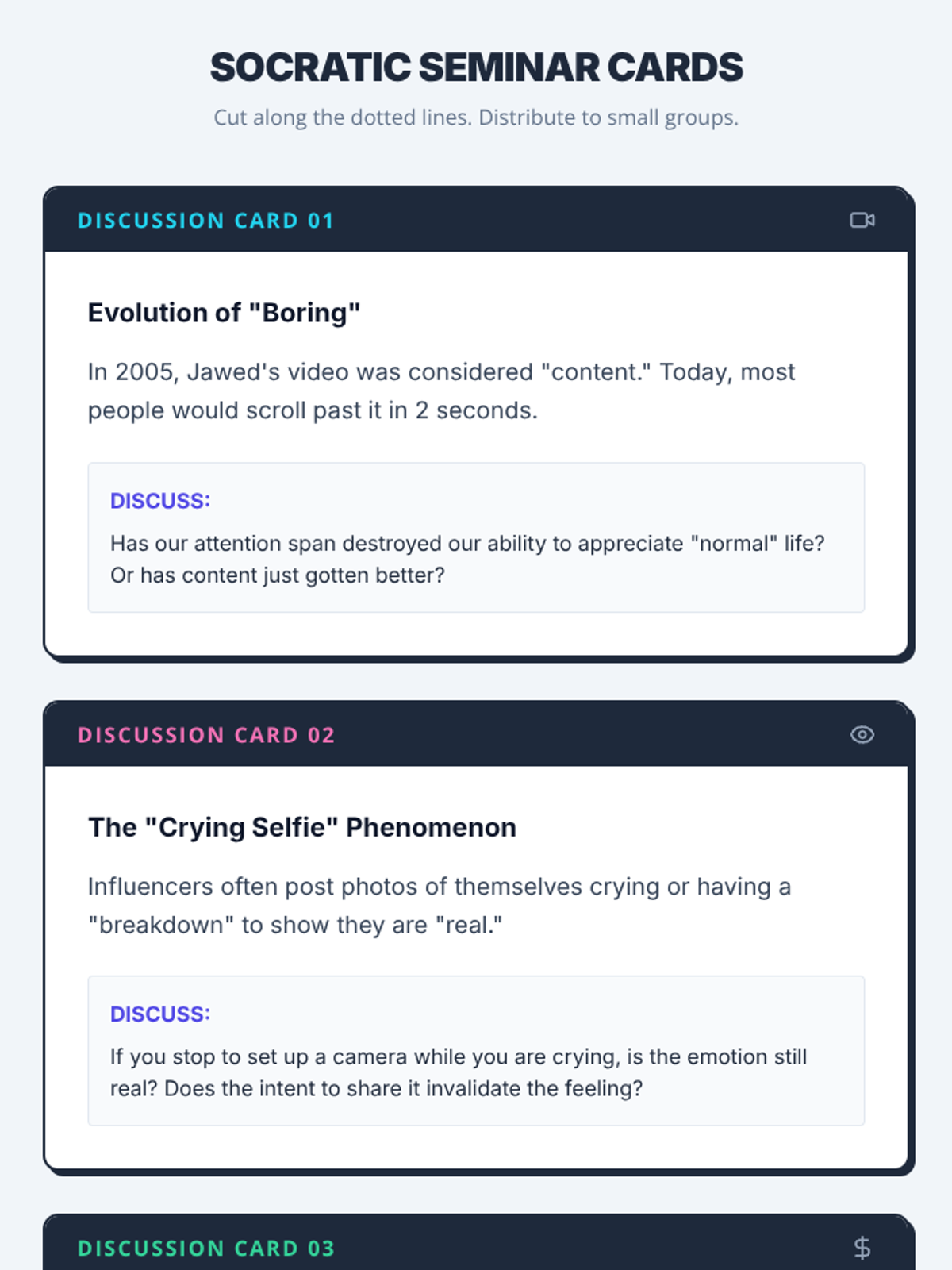
Printable discussion cards with deep-dive questions about authenticity, monetization, and social media performance for small group seminars.
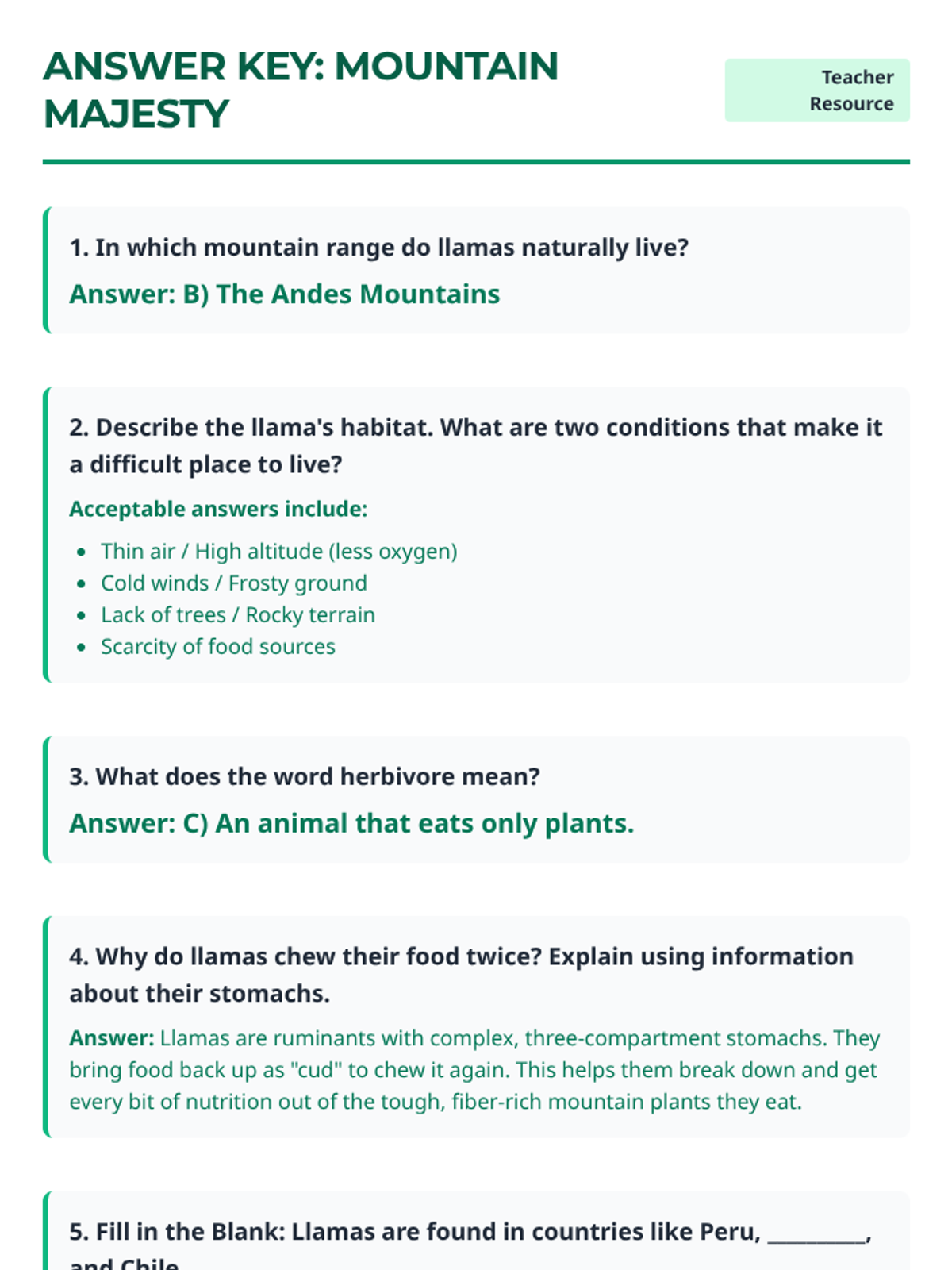
An answer key and scoring guide for the llama reading passage worksheet, including sample answers for short-response questions.
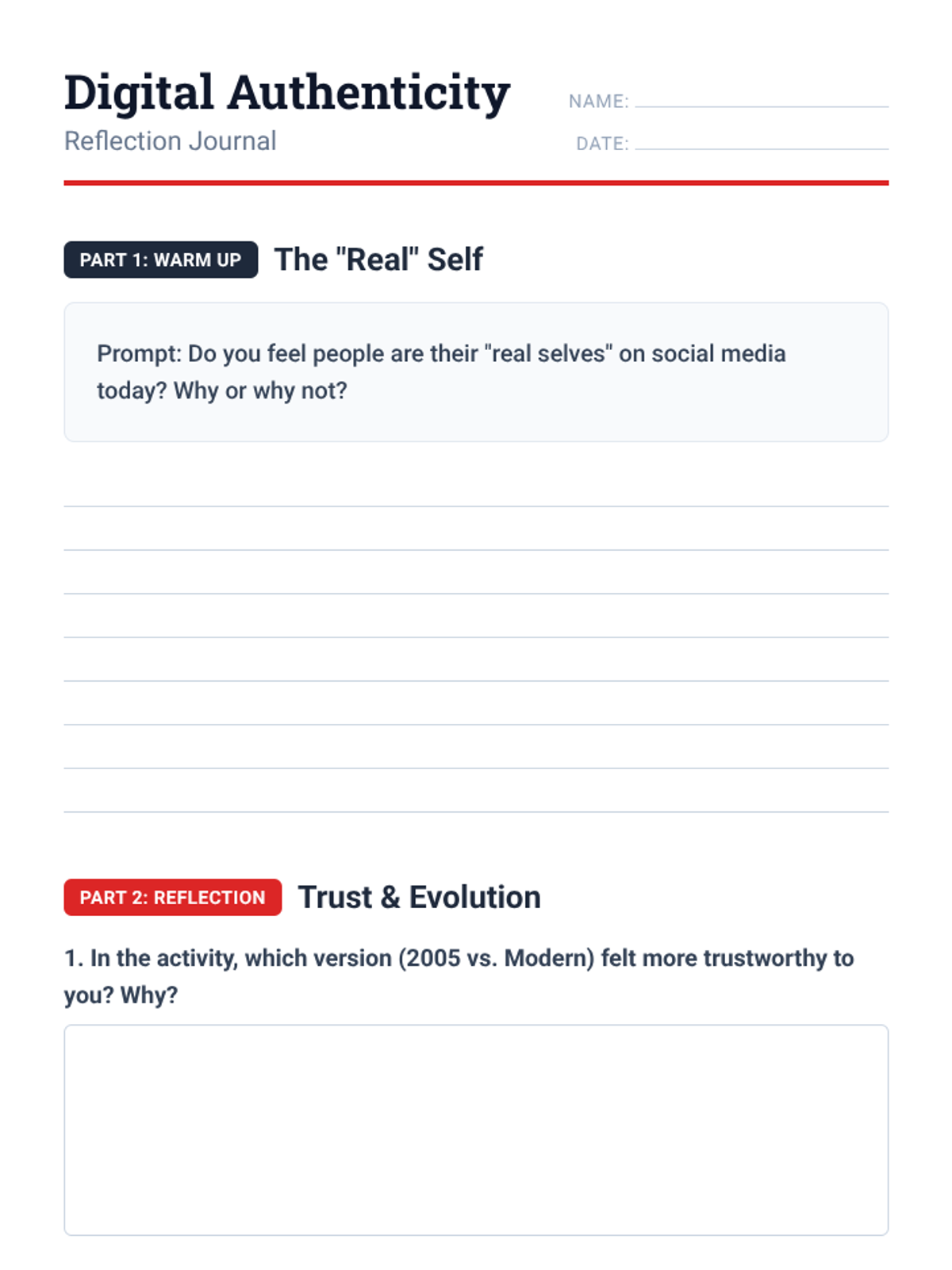
A worksheet containing the warm-up journal prompt and post-activity reflection questions regarding authenticity in social media.