Lesson plan for Lesson 3: The Secret of Loud and Soft Sounds, guiding teachers through activities that teach musical dynamics.
Visual presentation for Session 4, exploring the connection between thoughts, feelings, and actions, and teaching the 'Catch-Check-Change' reframing technique.
1/13
A fun coloring and tactile activity where students track a steady beat using a 'Beat Buddy' character and heart icons.
1/16
A structured student worksheet featuring three distinct case studies on digital permanence, encouraging debate between individual privacy and historical preservation. Includes space for group verdicts and a summary 'permanence scale' activity.
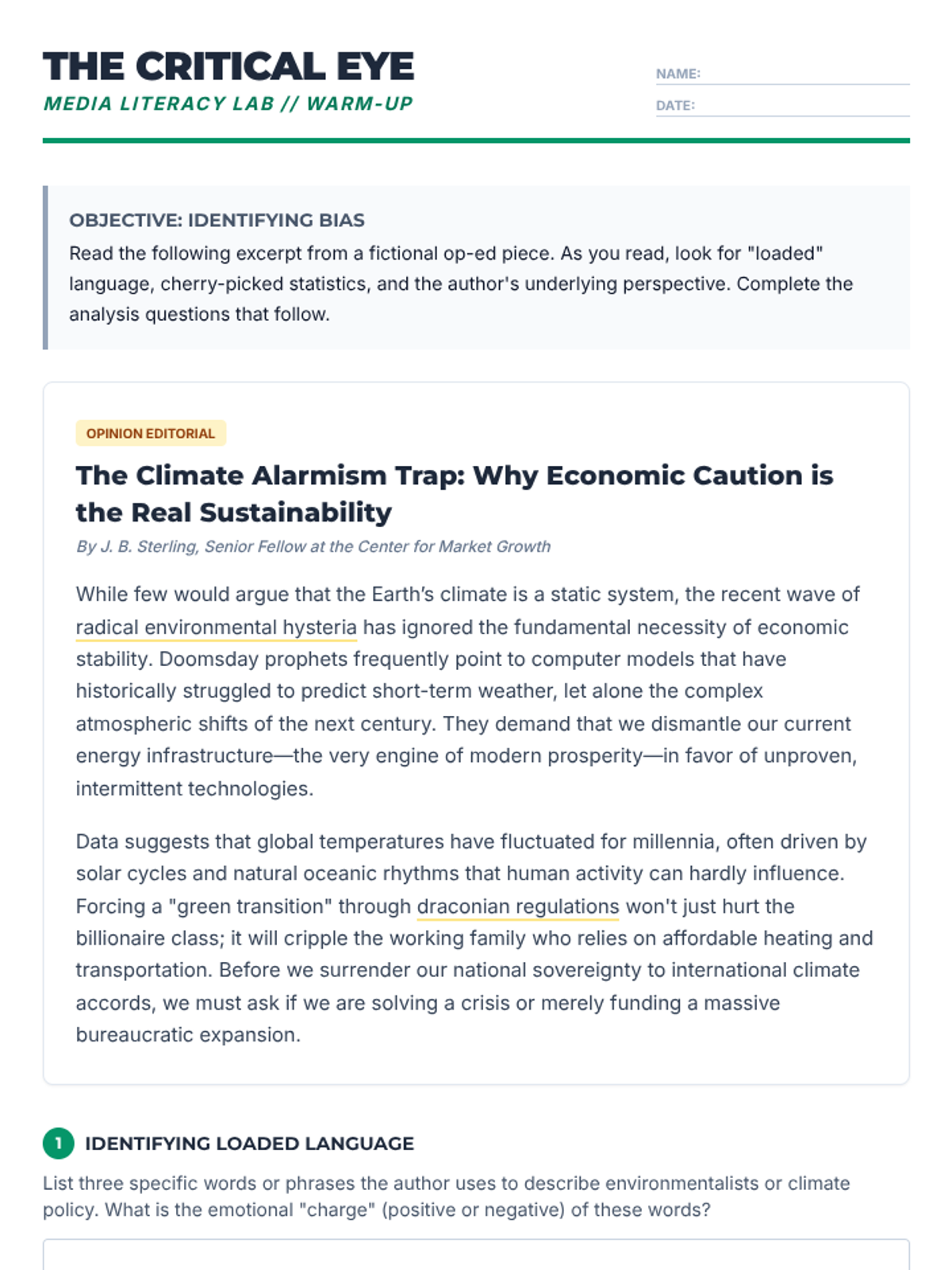
A 10-15 minute warm-up worksheet for high school students focusing on identifying bias, loaded language, and source credibility in a fictional op-ed about climate change.
1/12
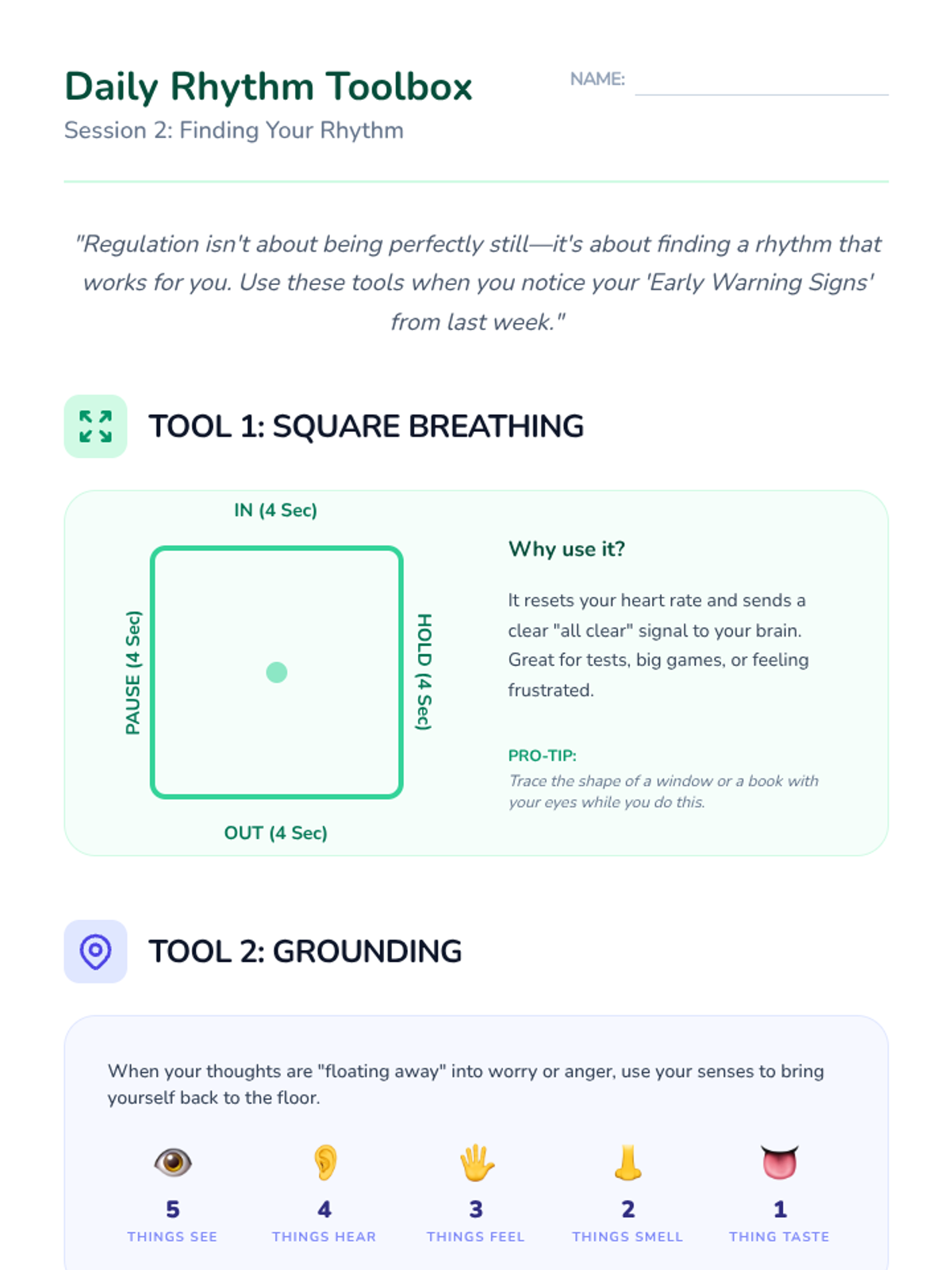
A student reference and practice sheet for Session 2. It provides clear, visual instructions for Square Breathing and 5-4-3-2-1 Grounding, along with a simple 'regulation plan' for students to complete.
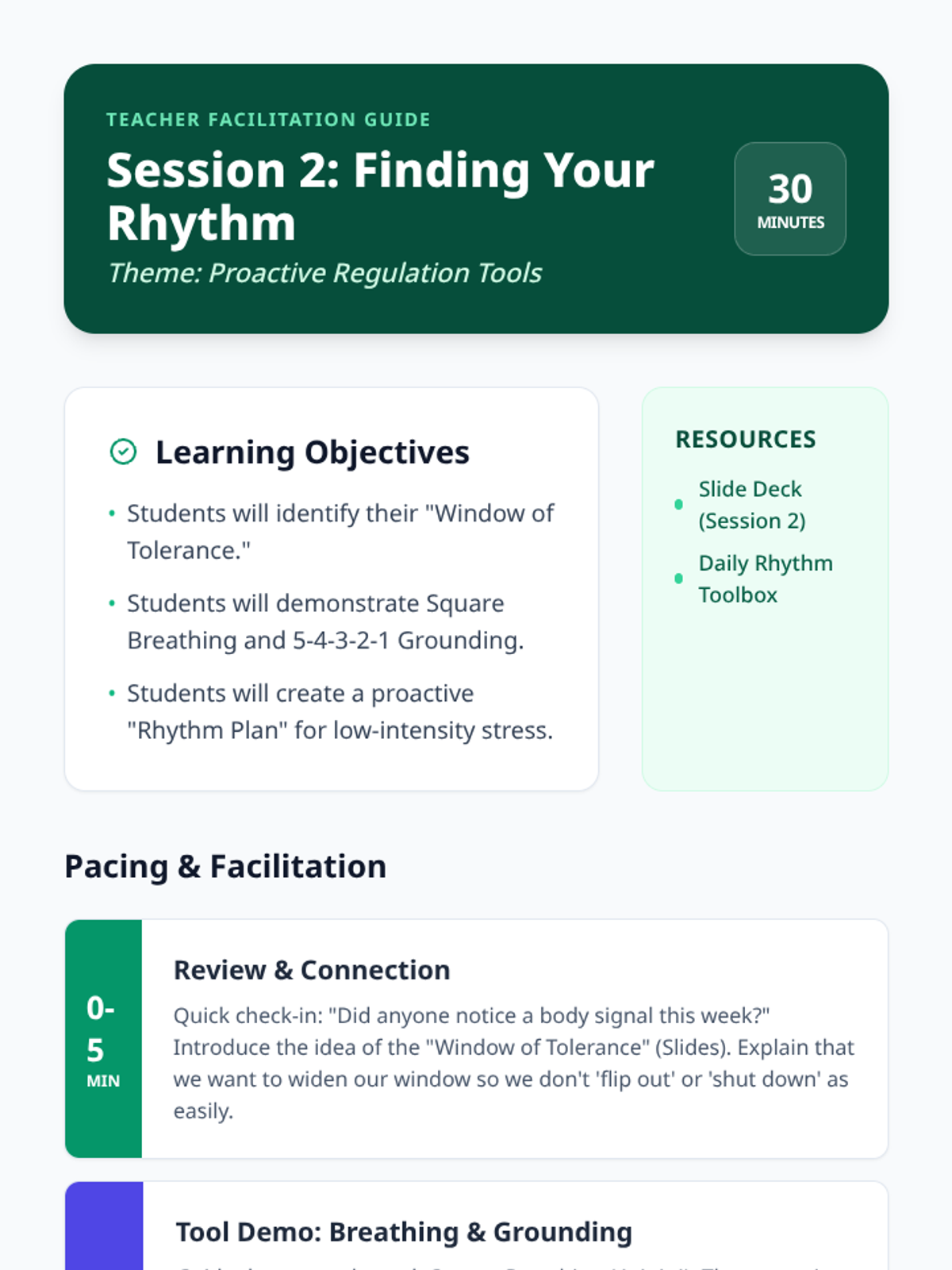
Teacher-facing facilitation guide for Session 2. Includes pacing, demonstration instructions for regulation tools, and a trauma-informed tip regarding breathing exercises.
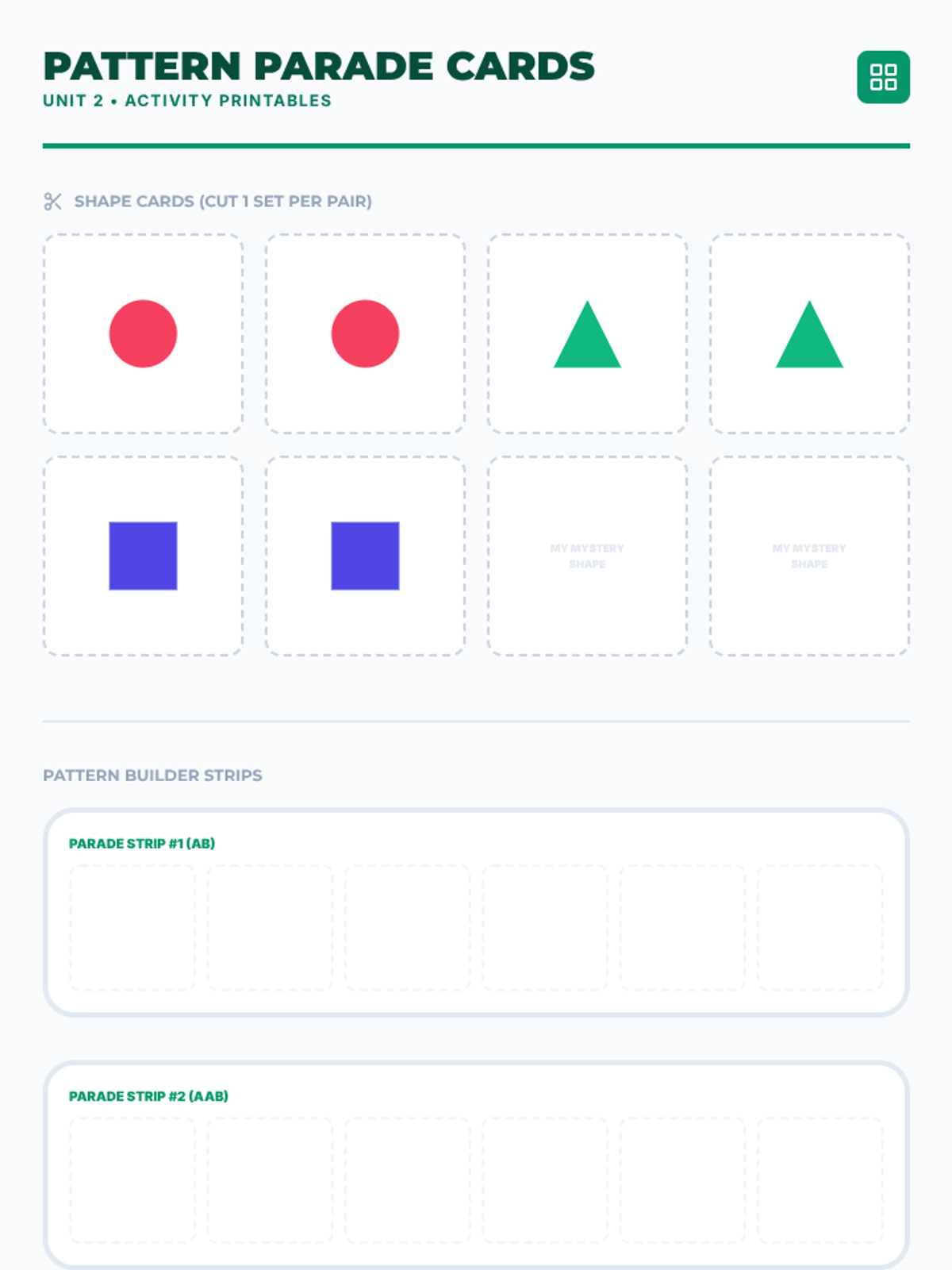
A printable set of shape cards and pattern strips for students to build and extend AB, AAB, and ABB patterns in pairs.
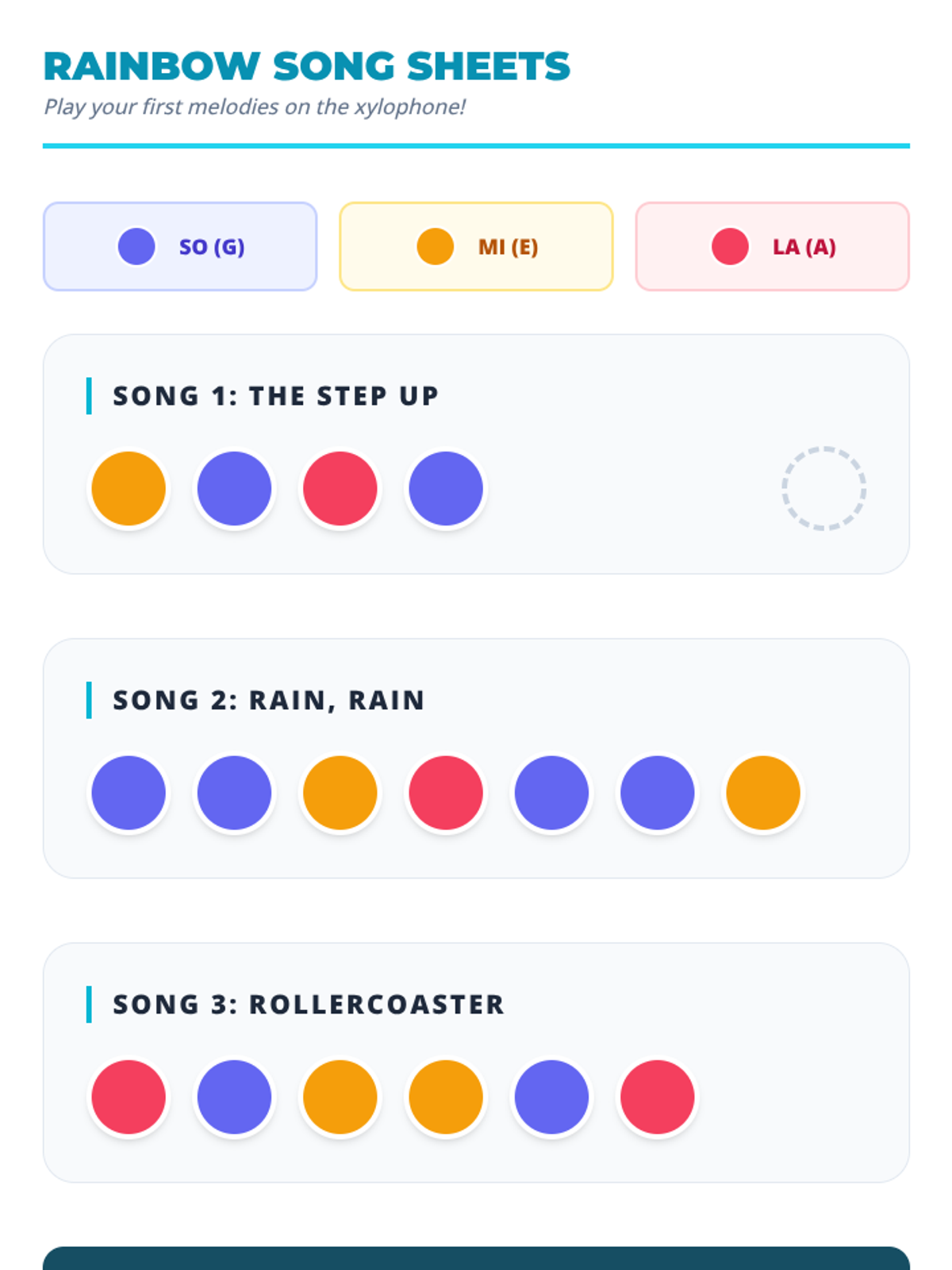
A student reference sheet with simple, color-coded melodies for 'So', 'Mi', and 'La' to be played on a xylophone.
Engaging slide deck for Kindergarteners explaining the conductor's role, the baton, and simple signals for volume and start/stop.
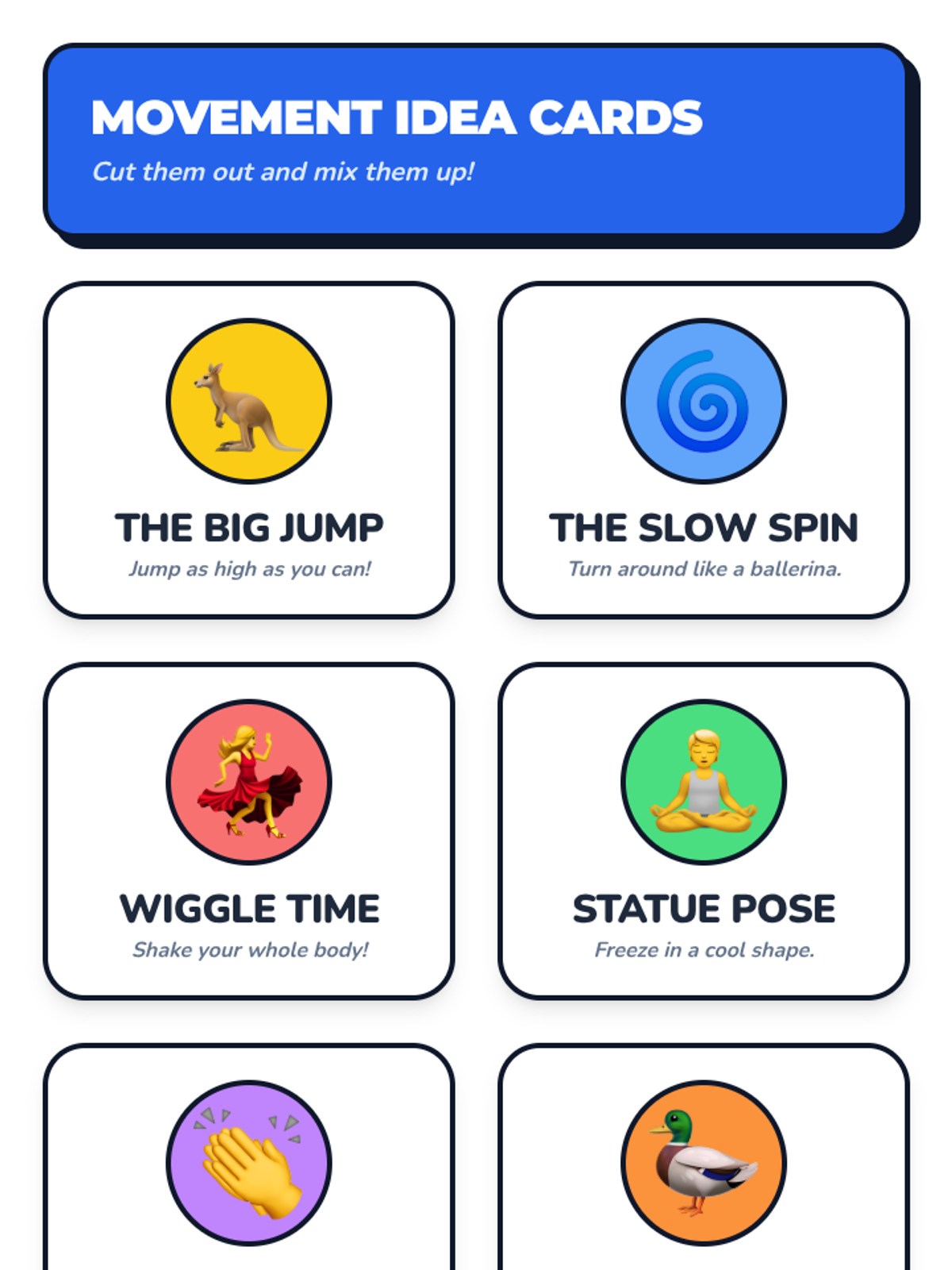
Movement prompt cards for Kindergarteners to use in their choreography, featuring fun emojis and simple descriptions.
Introductory slide deck for Session 1, establishing the 'Inner Compass' theme. It explains the purpose of the intervention and teaches students how to recognize physiological signals of emotions using the 'Emotions as Data' framework.
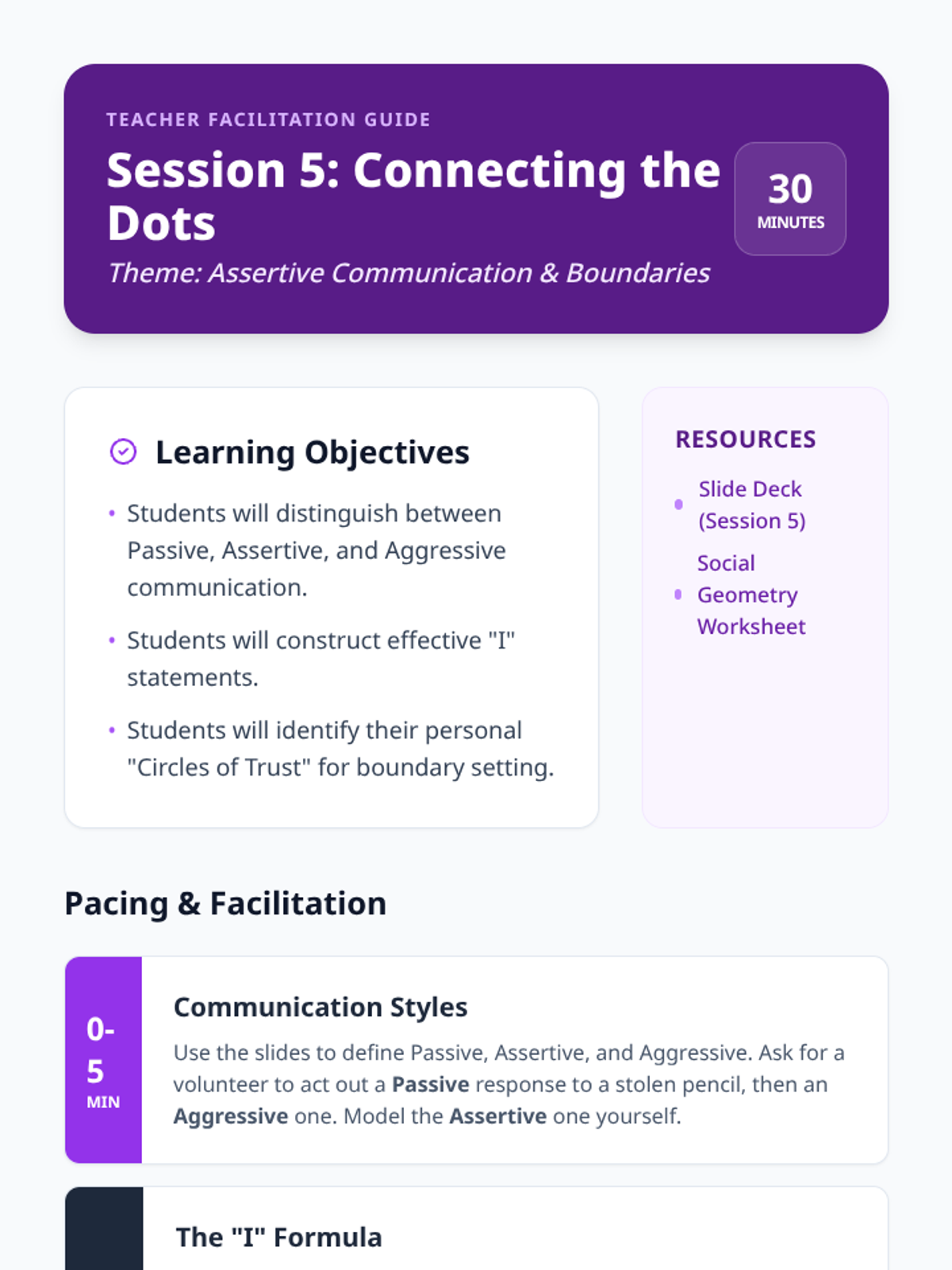
Teacher-facing facilitation guide for Session 5. Includes guidance on modeling assertive communication and navigating cultural differences in communication styles.
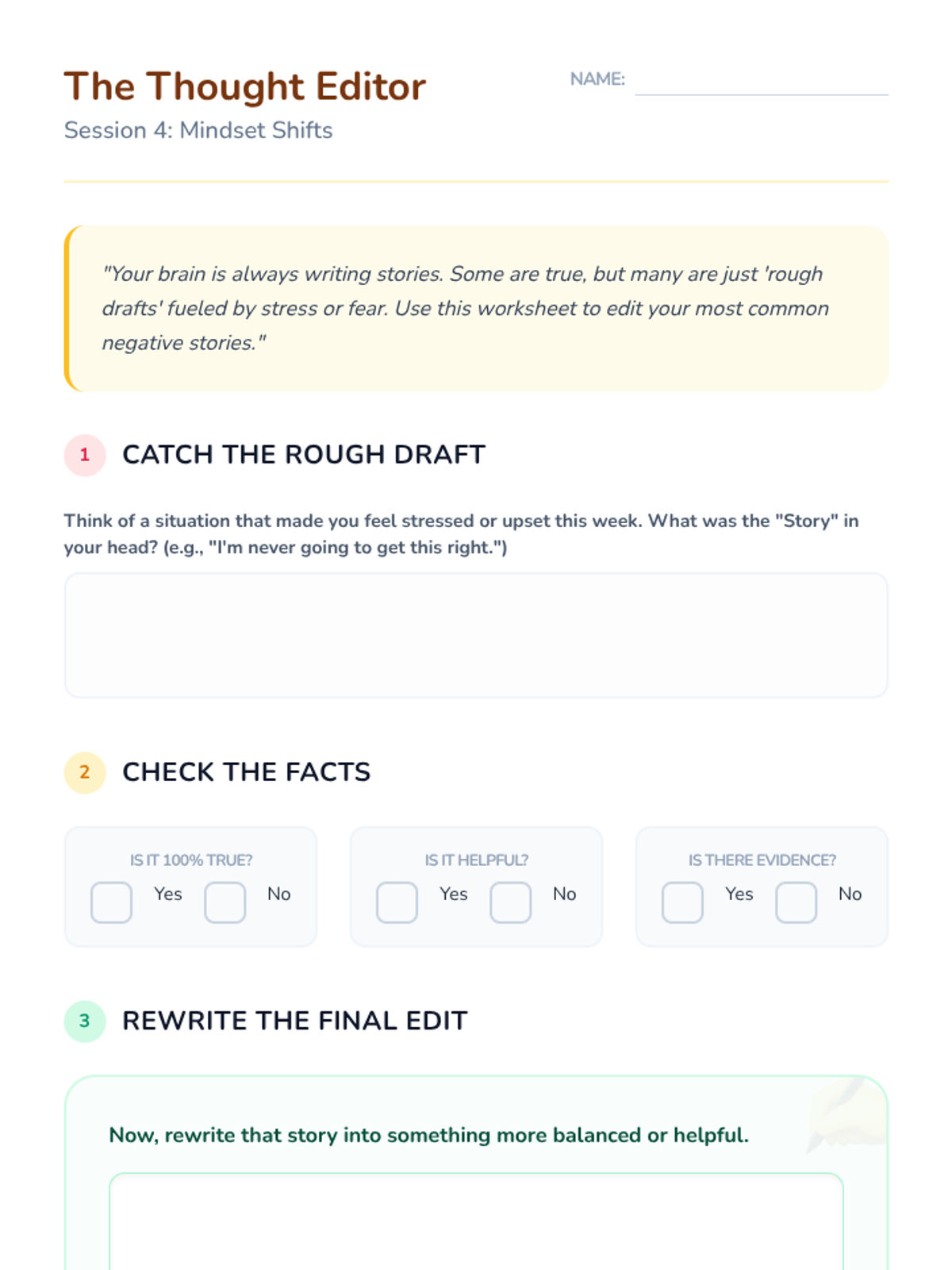
A student worksheet for Session 4, guiding students through the 'Catch-Check-Change' reframing technique to identify and edit negative self-talk.
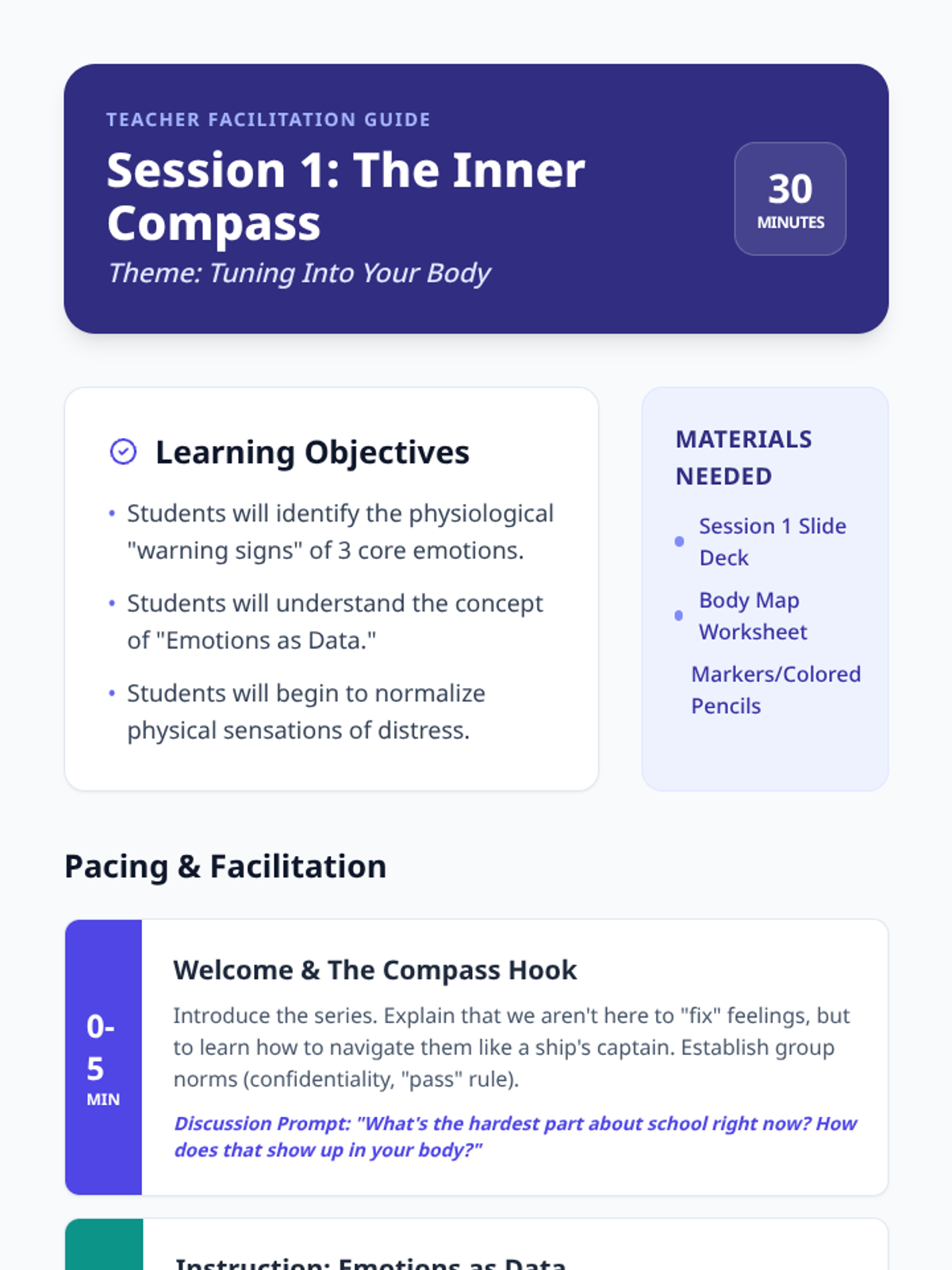
A teacher-facing guide for Session 1, including learning objectives, a detailed pacing guide, and facilitation tips specifically for Tier 3 mental health interventions.
A fun, visual slide deck for the lesson featuring the 'Me at the zoo' video, discussion prompts, drawing instructions, and a high-quality reference photo of an elephant.
A student worksheet for analyzing the 'Me at the zoo' video and planning their own impromptu classroom report, including a self-reflection tally for filler words.
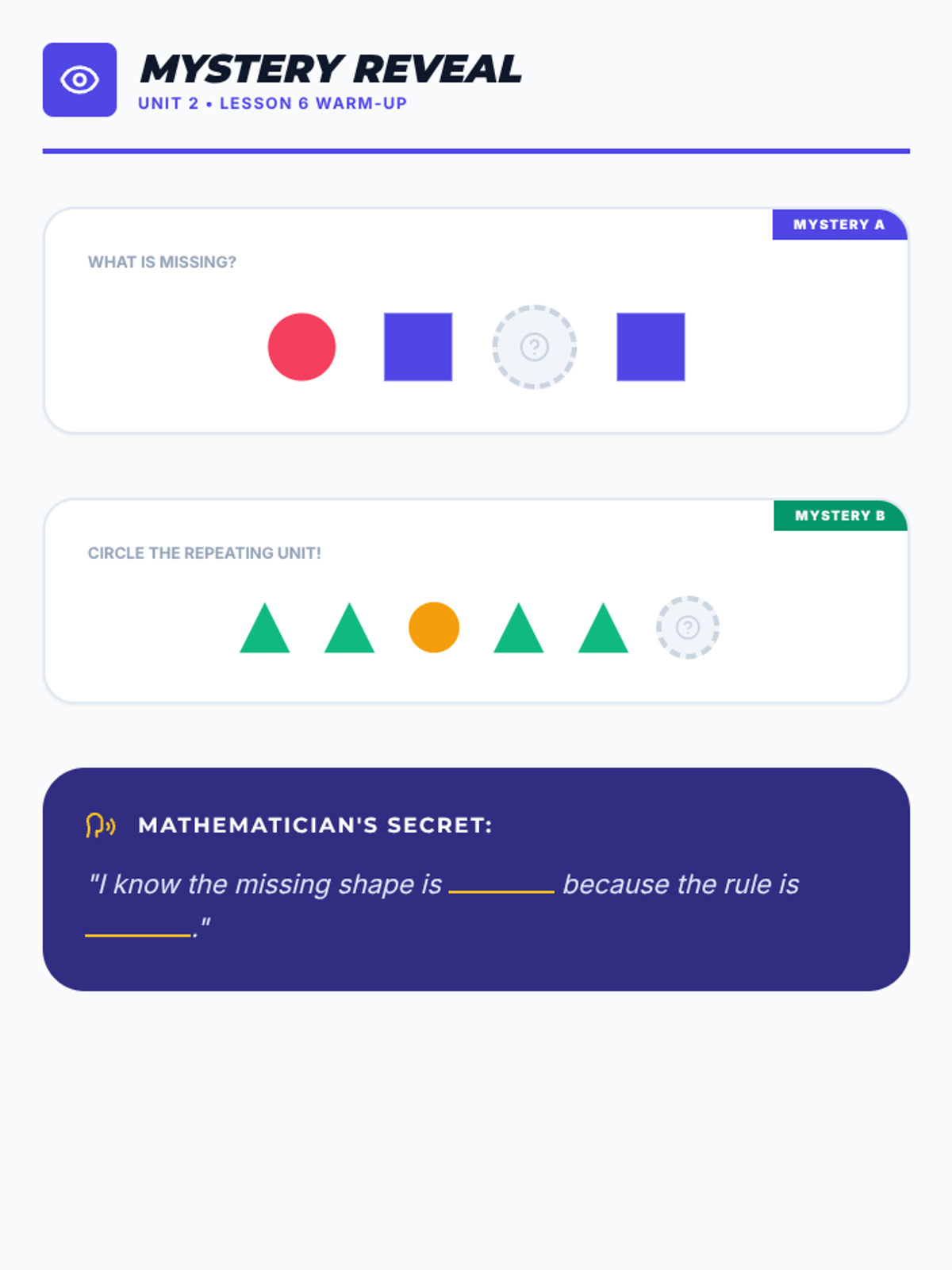
A visual warm-up activity featuring two 'mystery' patterns with missing elements. Designed to spark discussion about identifying and justifying pattern rules.
Visual presentation for Session 3, focusing on distress tolerance techniques for high-intensity situations using the TIPP skills framework.
Visual presentation for Session 5, focusing on assertive communication (I-statements) and the concept of healthy boundaries in relationships.
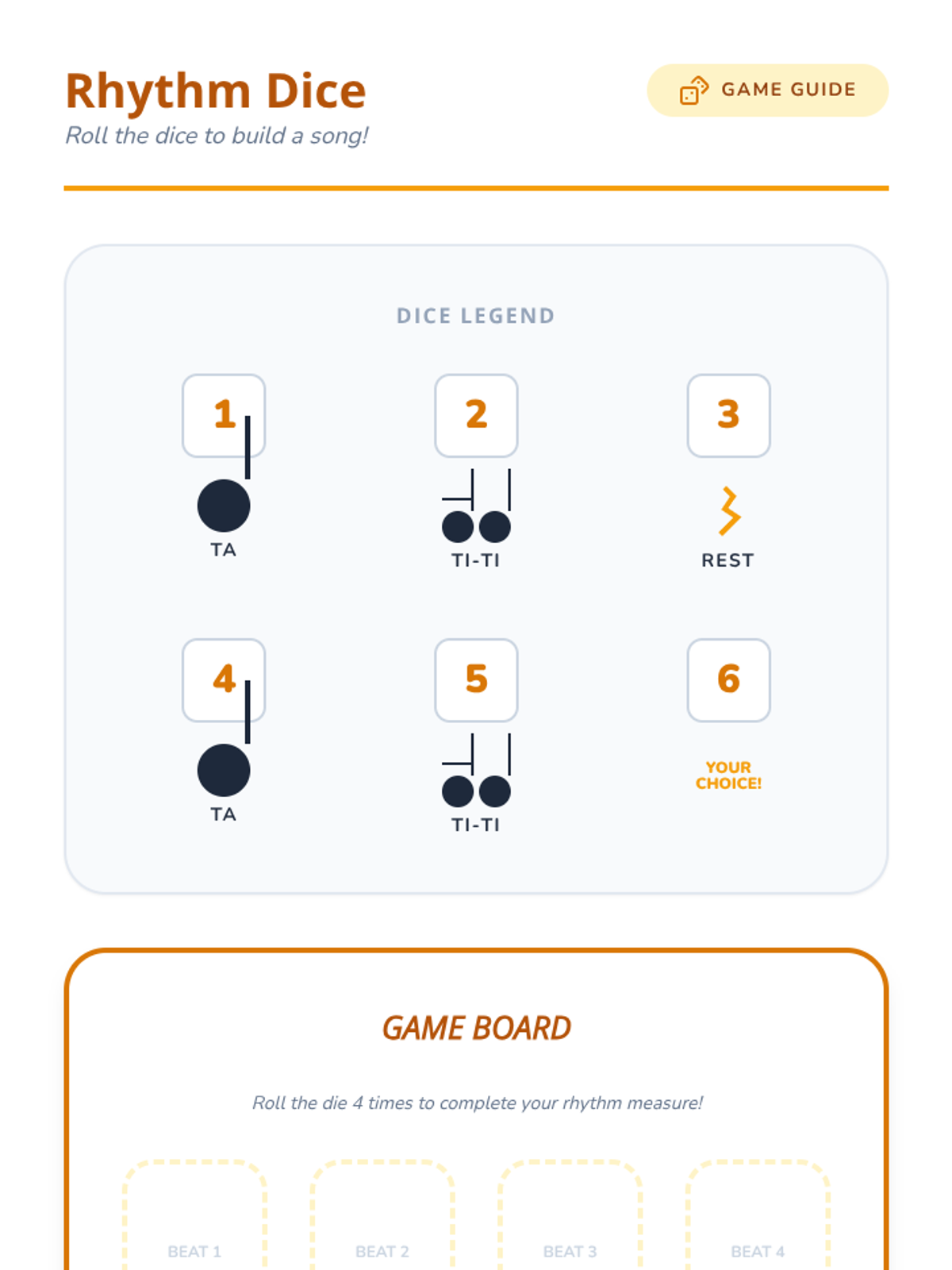
A dice-based rhythm game where 2nd graders roll a die to determine which notes (Ta, Ti-Ti, or Rest) to include in their 4-beat rhythm pattern.