A sorting activity where students categorize instruments based on whether they typically produce loud (forte) or soft (piano) sounds.
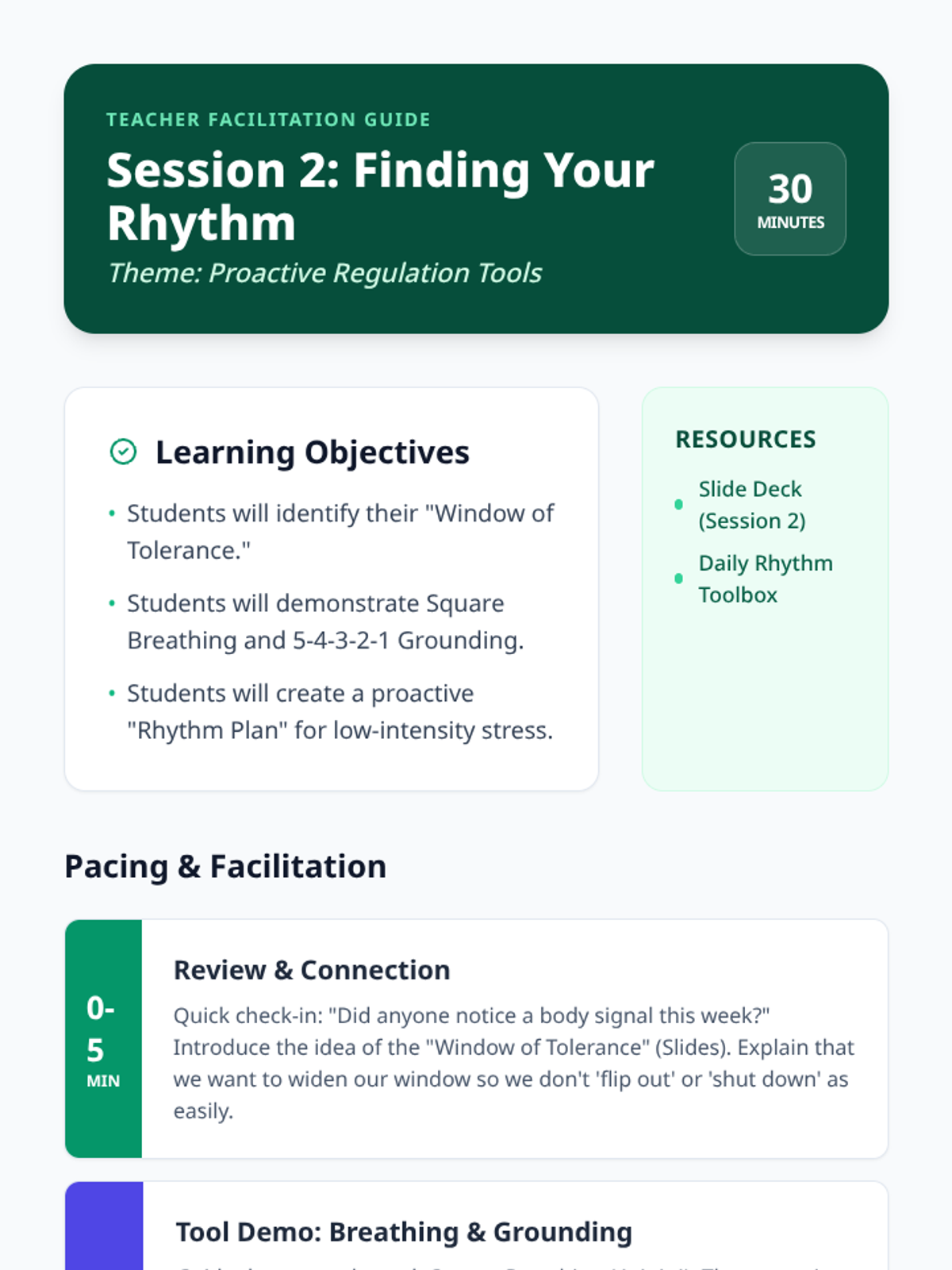
Teacher-facing facilitation guide for Session 2. Includes pacing, demonstration instructions for regulation tools, and a trauma-informed tip regarding breathing exercises.
1/13
A teacher guide and answer key for the climate bias warm-up, including facilitation strategies, timing breakdowns, and exemplar student responses.
1/12
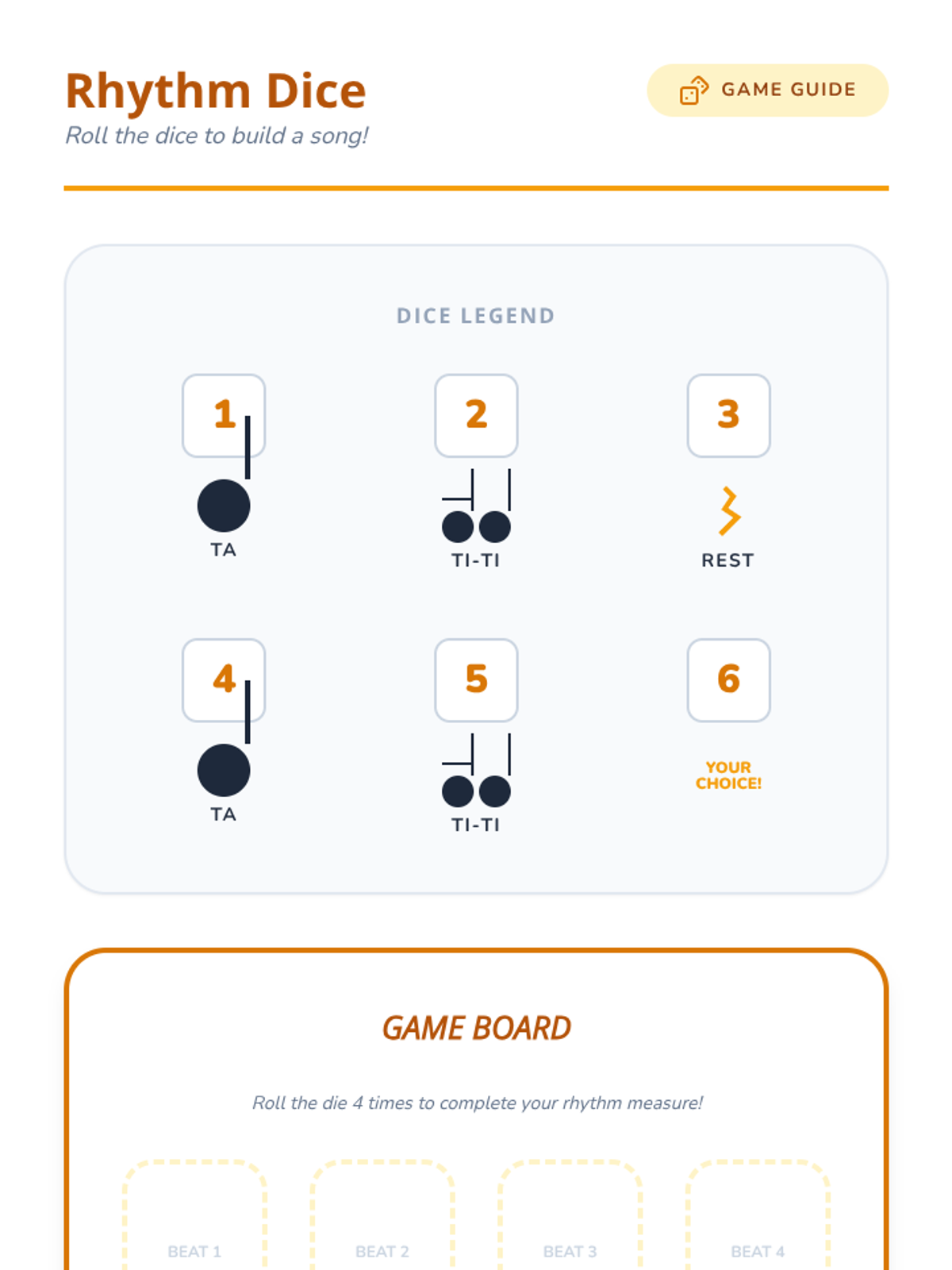
A dice-based rhythm game where 2nd graders roll a die to determine which notes (Ta, Ti-Ti, or Rest) to include in their 4-beat rhythm pattern.
1/16
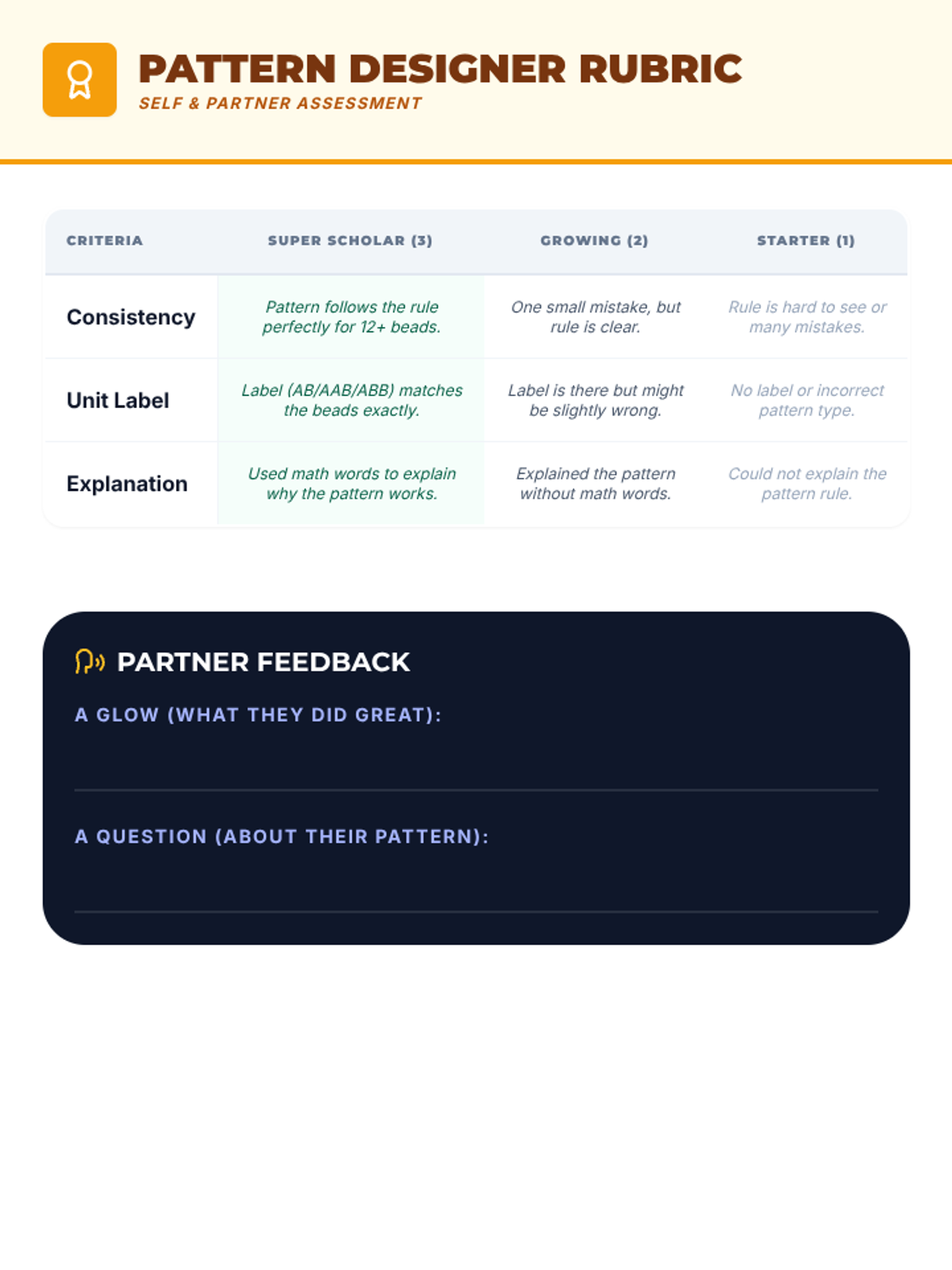
A mini-rubric for evaluating pattern bracelets, covering consistency, labeling, and explanation. Designed for both teacher and peer assessment.
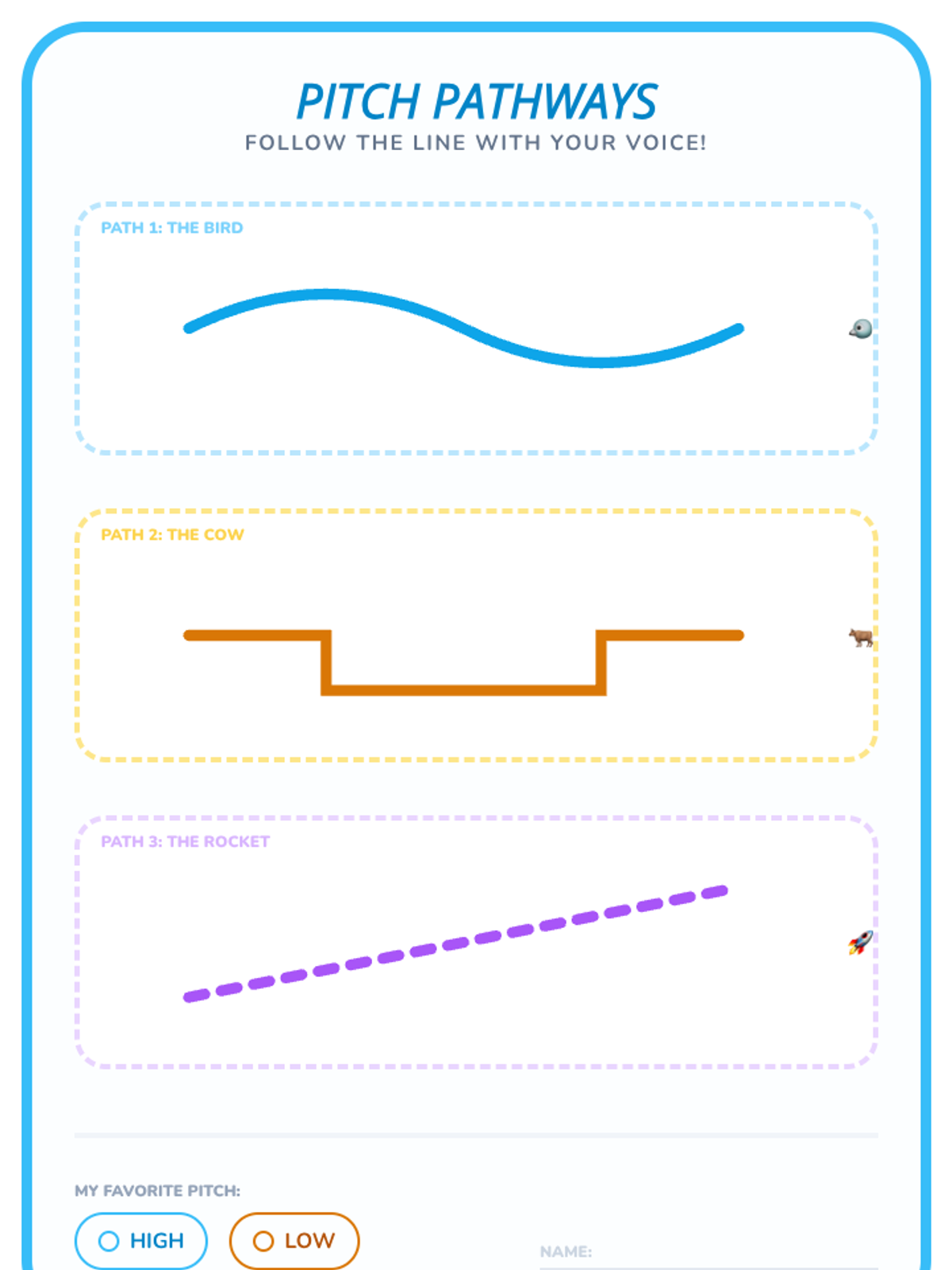
A vocal exploration worksheet where students follow graphic notation paths with their voices to practice high and low pitch.
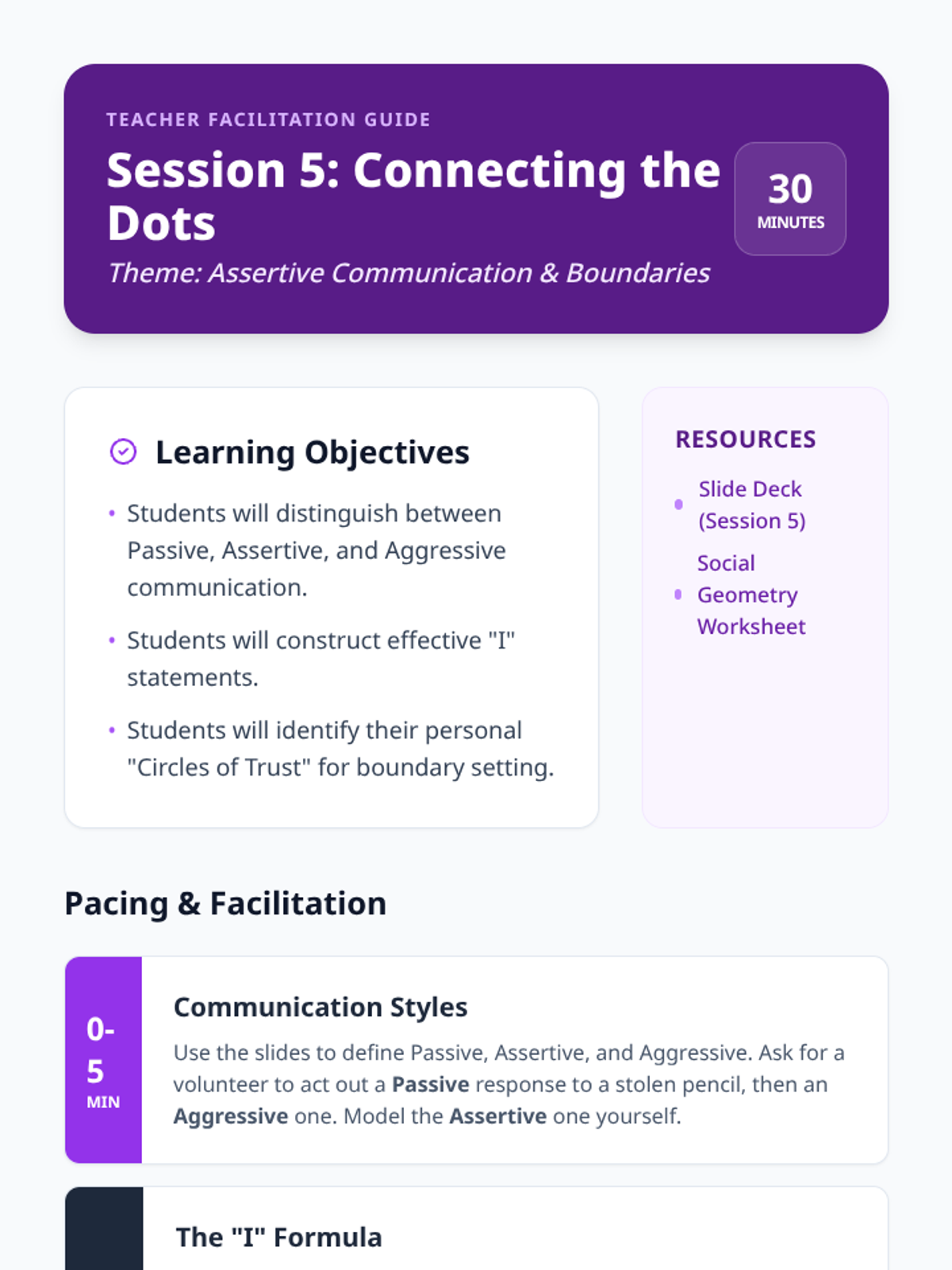
Teacher-facing facilitation guide for Session 5. Includes guidance on modeling assertive communication and navigating cultural differences in communication styles.
A culminating student worksheet that synthesizes all skills learned throughout the 6-week intervention into a single, comprehensive 'Resilience Toolkit' for future reference.
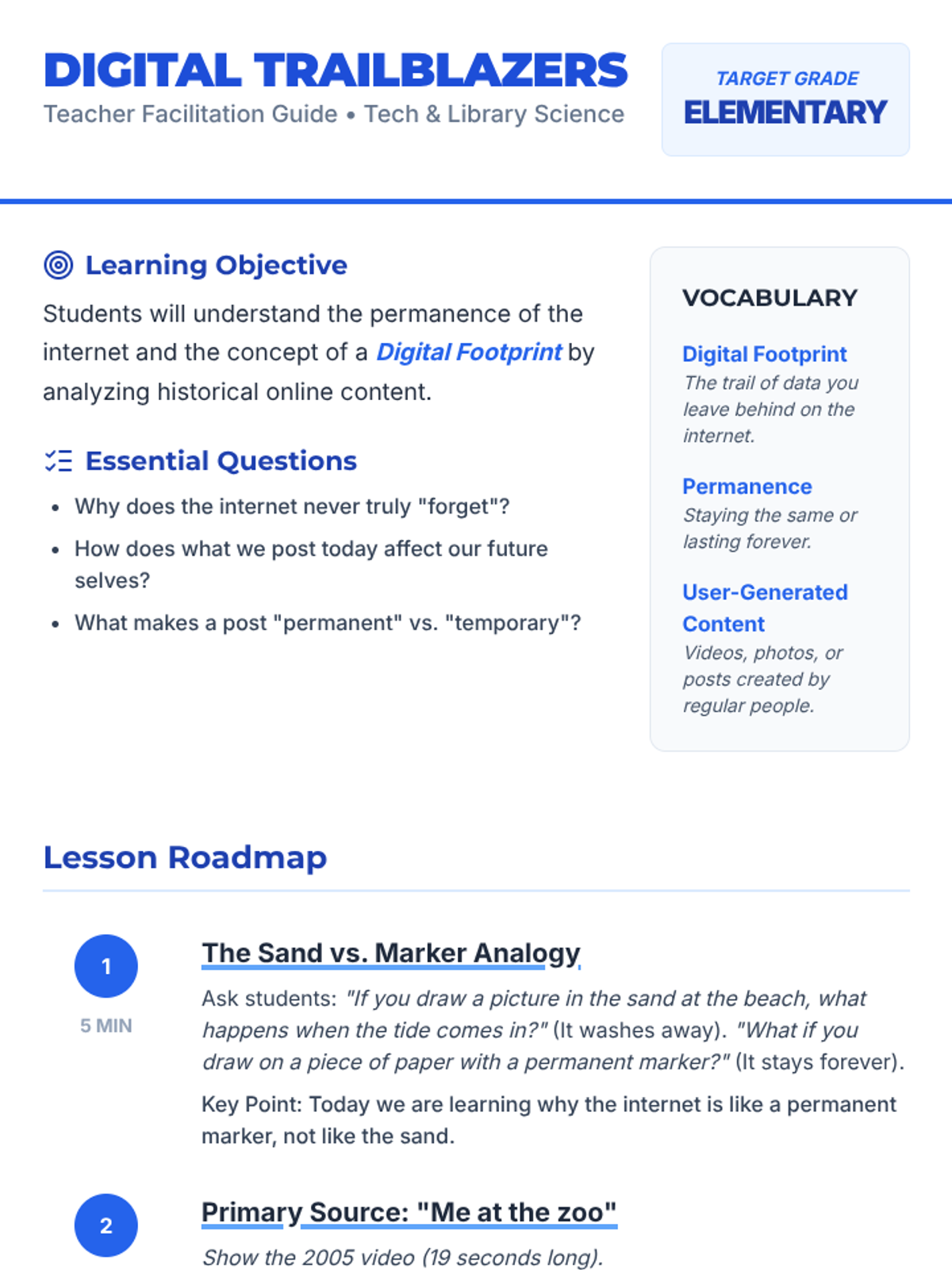
A comprehensive teacher facilitation guide for the Digital Trailblazers lesson, featuring step-by-step instructions, discussion prompts, and vocabulary for elementary students.
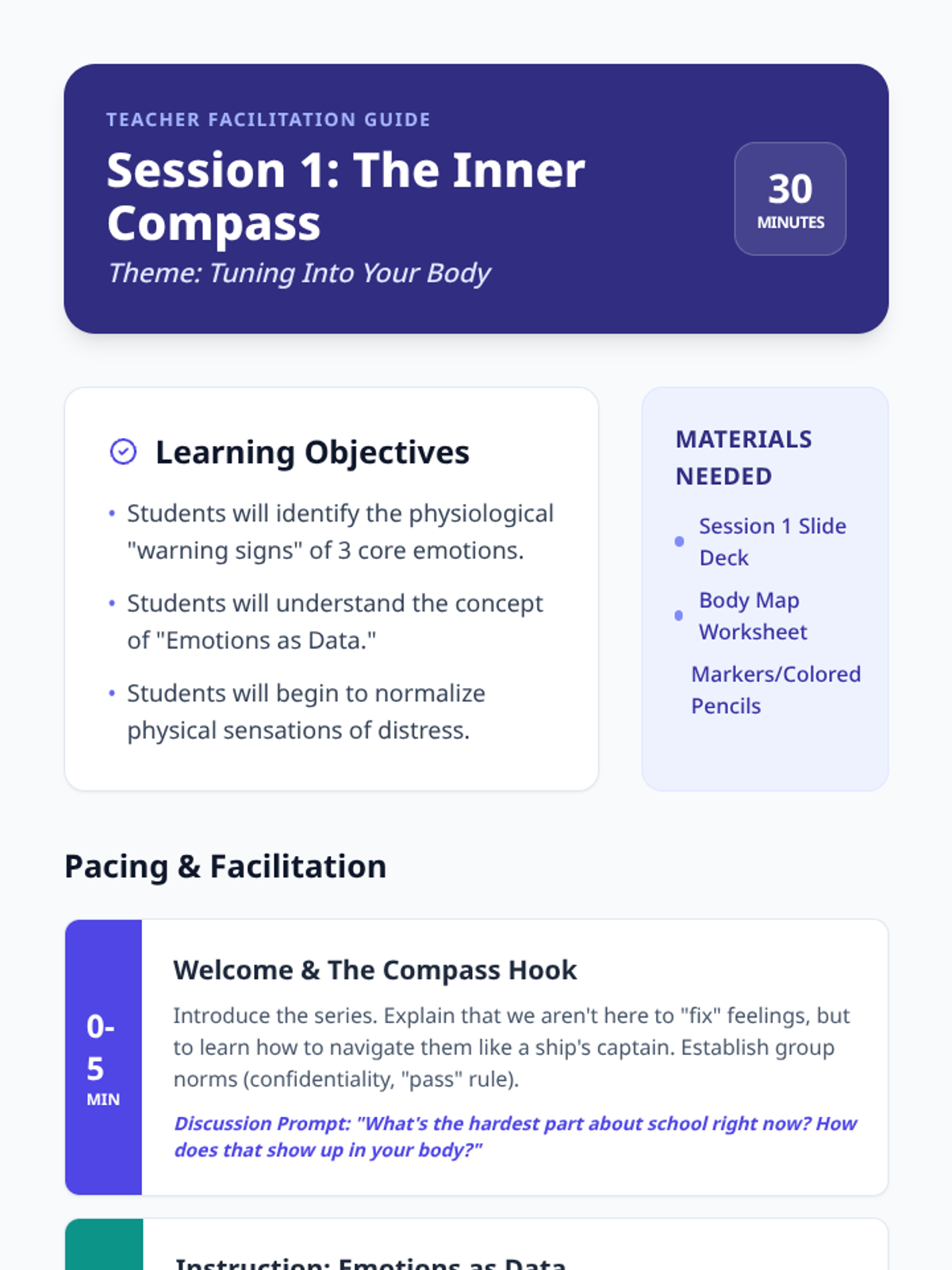
A teacher-facing guide for Session 1, including learning objectives, a detailed pacing guide, and facilitation tips specifically for Tier 3 mental health interventions.
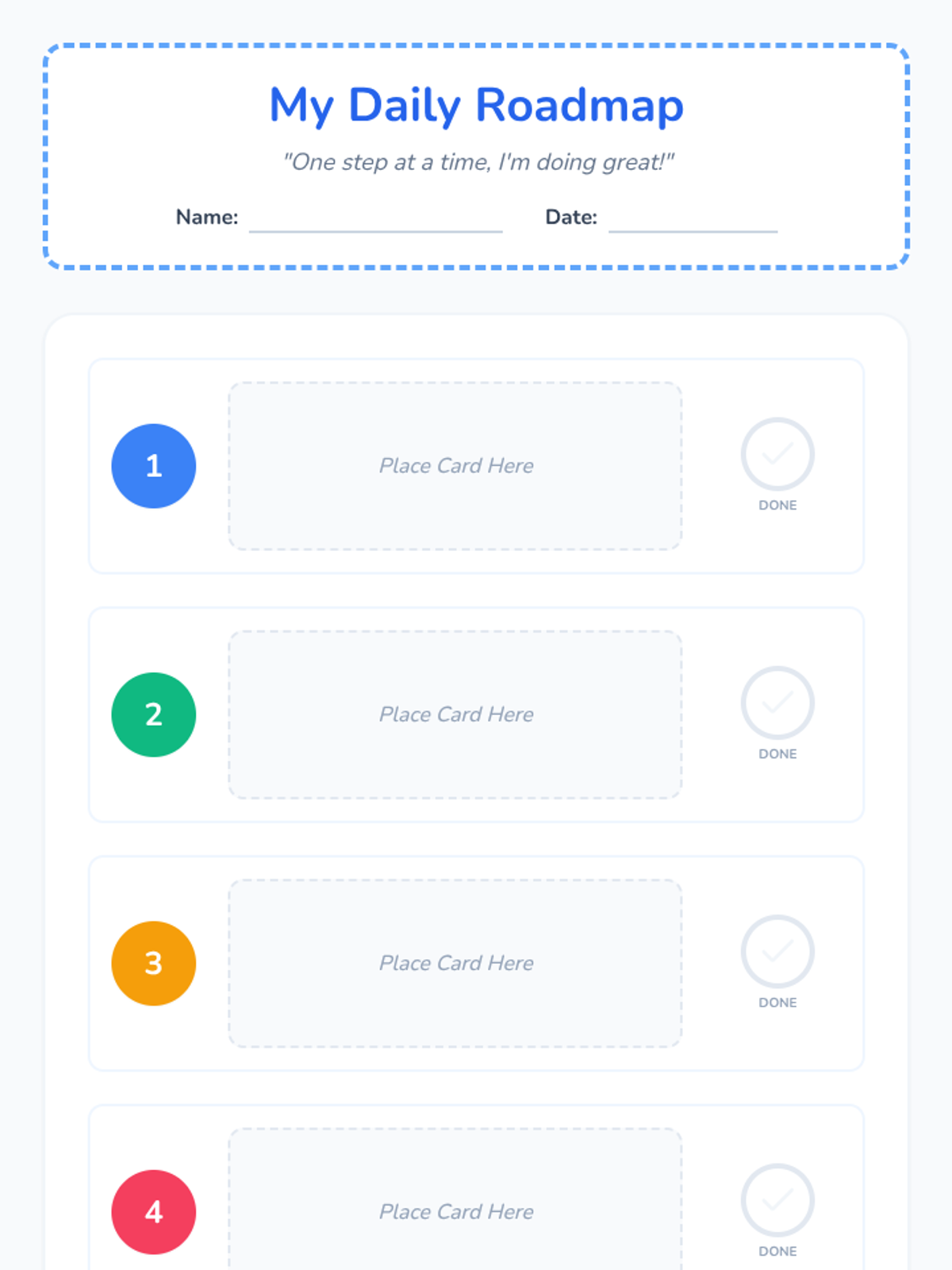
A base schedule board for students to organize their daily routine cards, featuring five numbered slots and check-off circles.
A structured student worksheet featuring three distinct case studies on digital permanence, encouraging debate between individual privacy and historical preservation. Includes space for group verdicts and a summary 'permanence scale' activity.
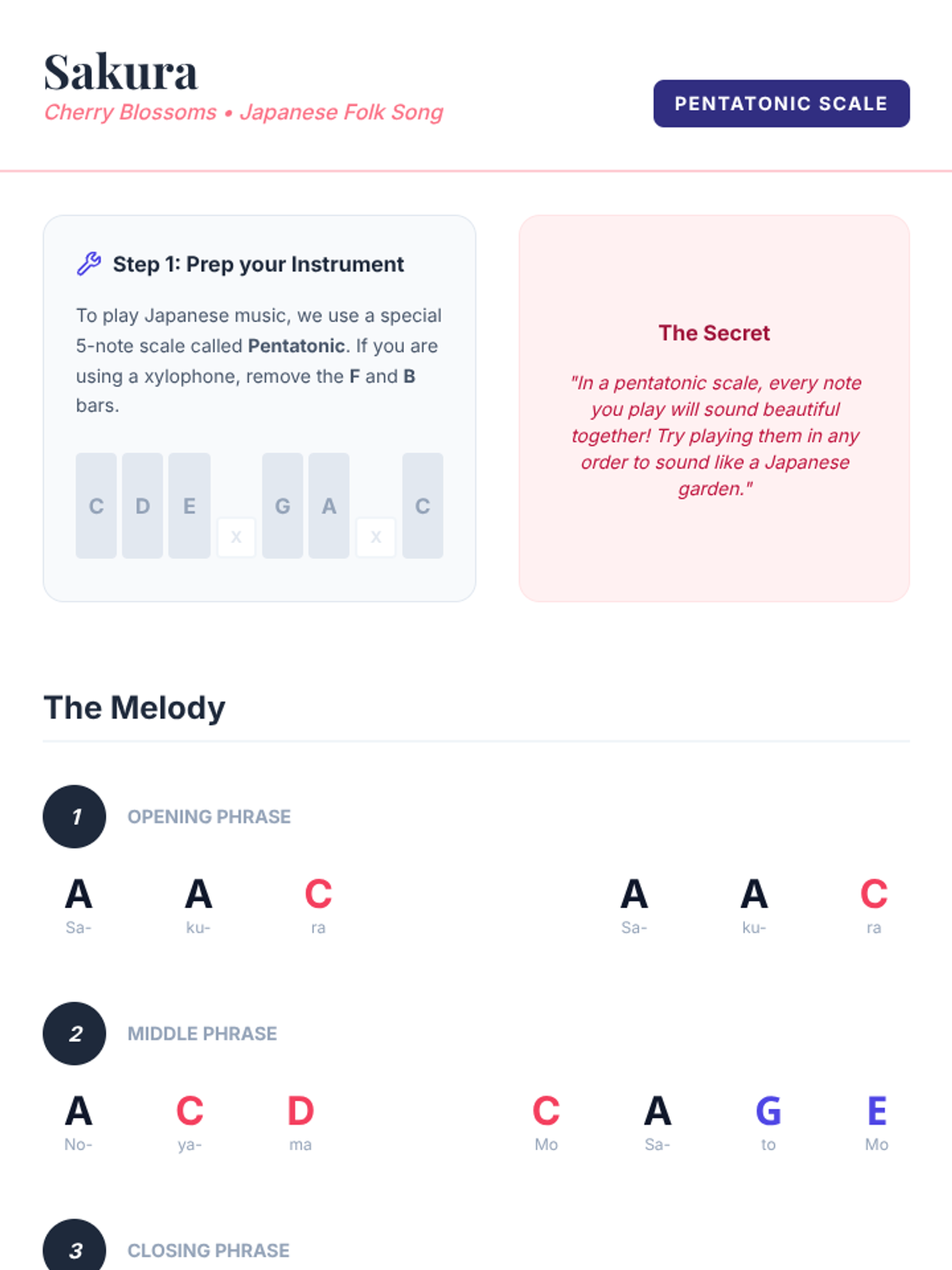
Simple xylophone melody sheet for 'Sakura', using letter names and a pentatonic scale guide for students to perform the traditional Japanese song.
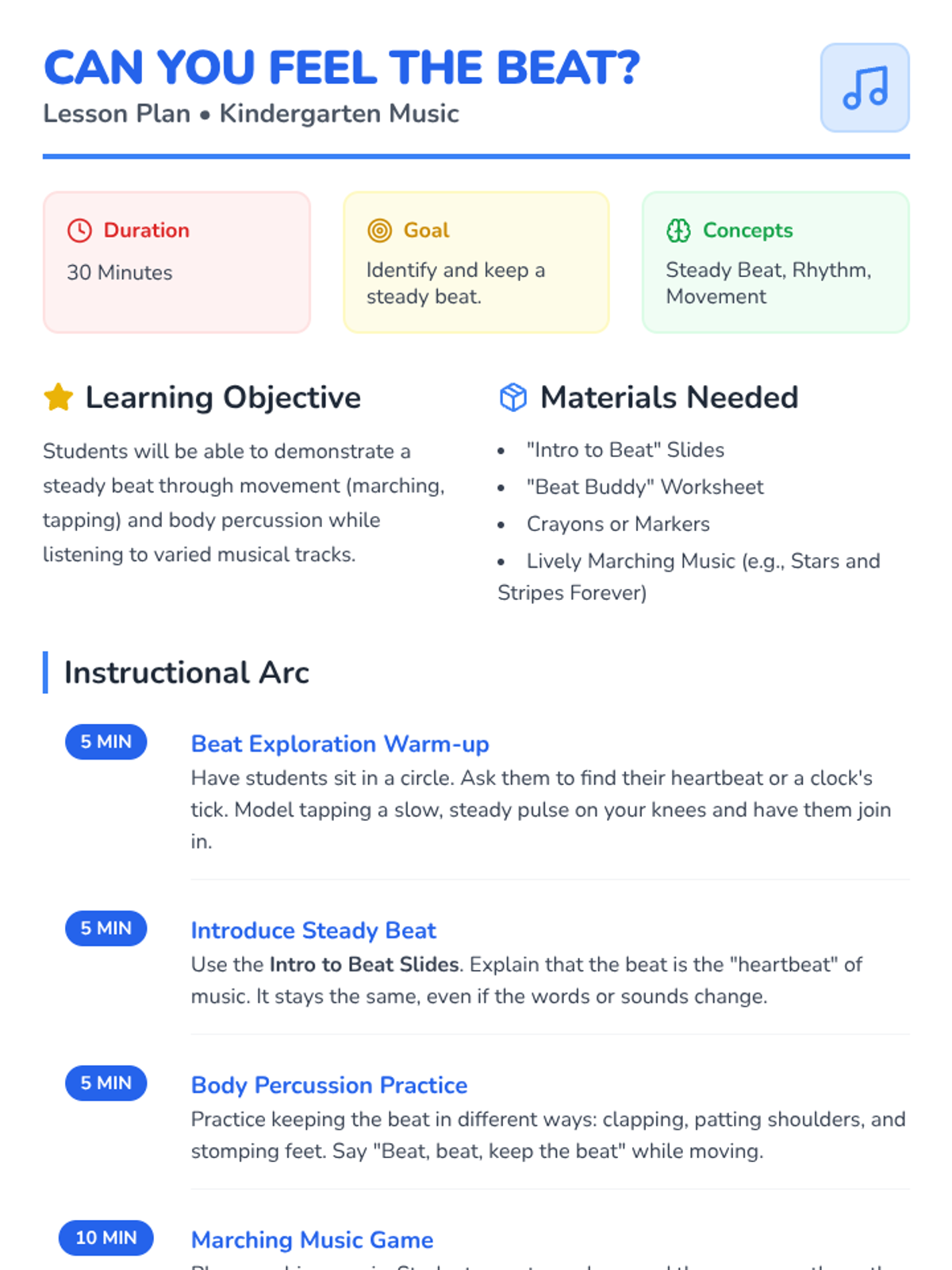
Comprehensive lesson plan for Lesson 1: Can You Feel the Beat? including instructional steps, objectives, and differentiation strategies.
Visual presentation for Session 4, exploring the connection between thoughts, feelings, and actions, and teaching the 'Catch-Check-Change' reframing technique.
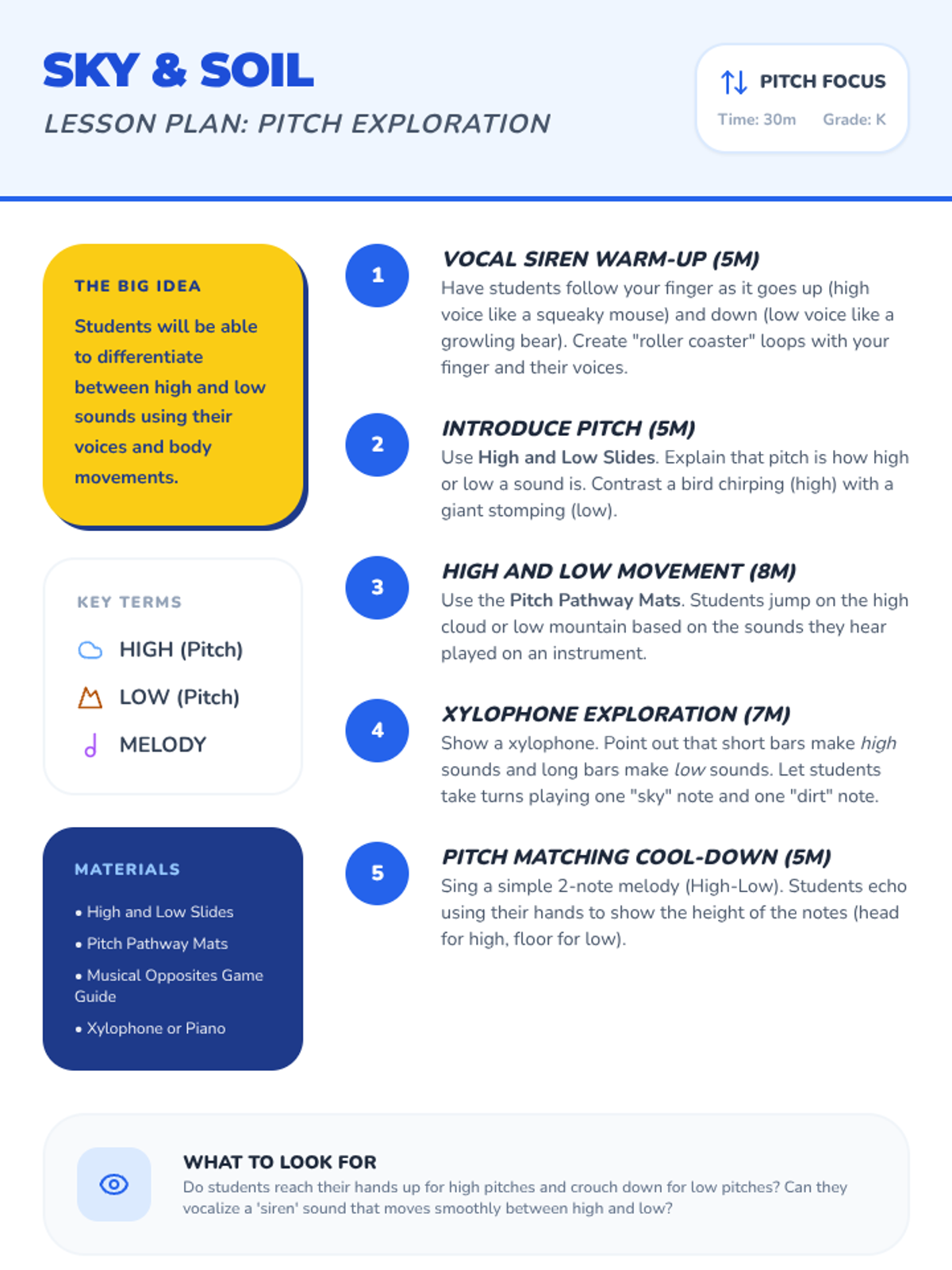
A Kindergarten music lesson plan focused on pitch, using movement and vocalization to explore high and low sounds.
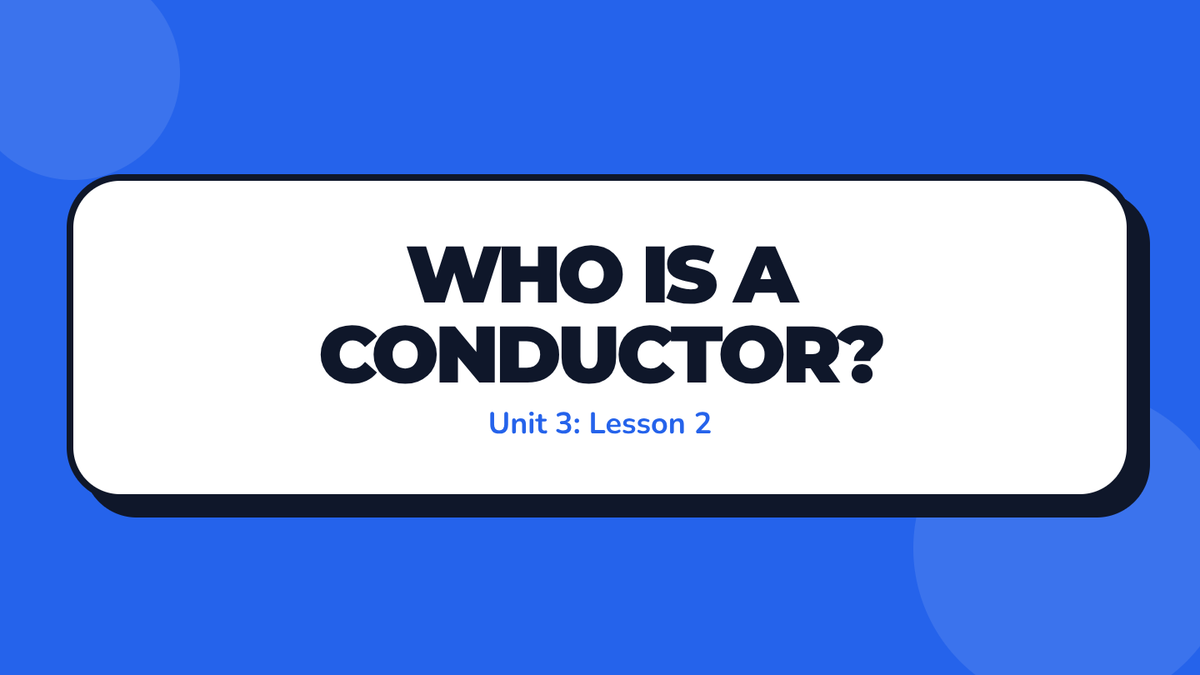
Engaging slide deck for Kindergarteners explaining the conductor's role, the baton, and simple signals for volume and start/stop.
Teacher-facing facilitation guide for Session 3. Focuses on teaching TIPP skills for crisis regulation and helping students identify environmental supports (like cold water access) within the school.
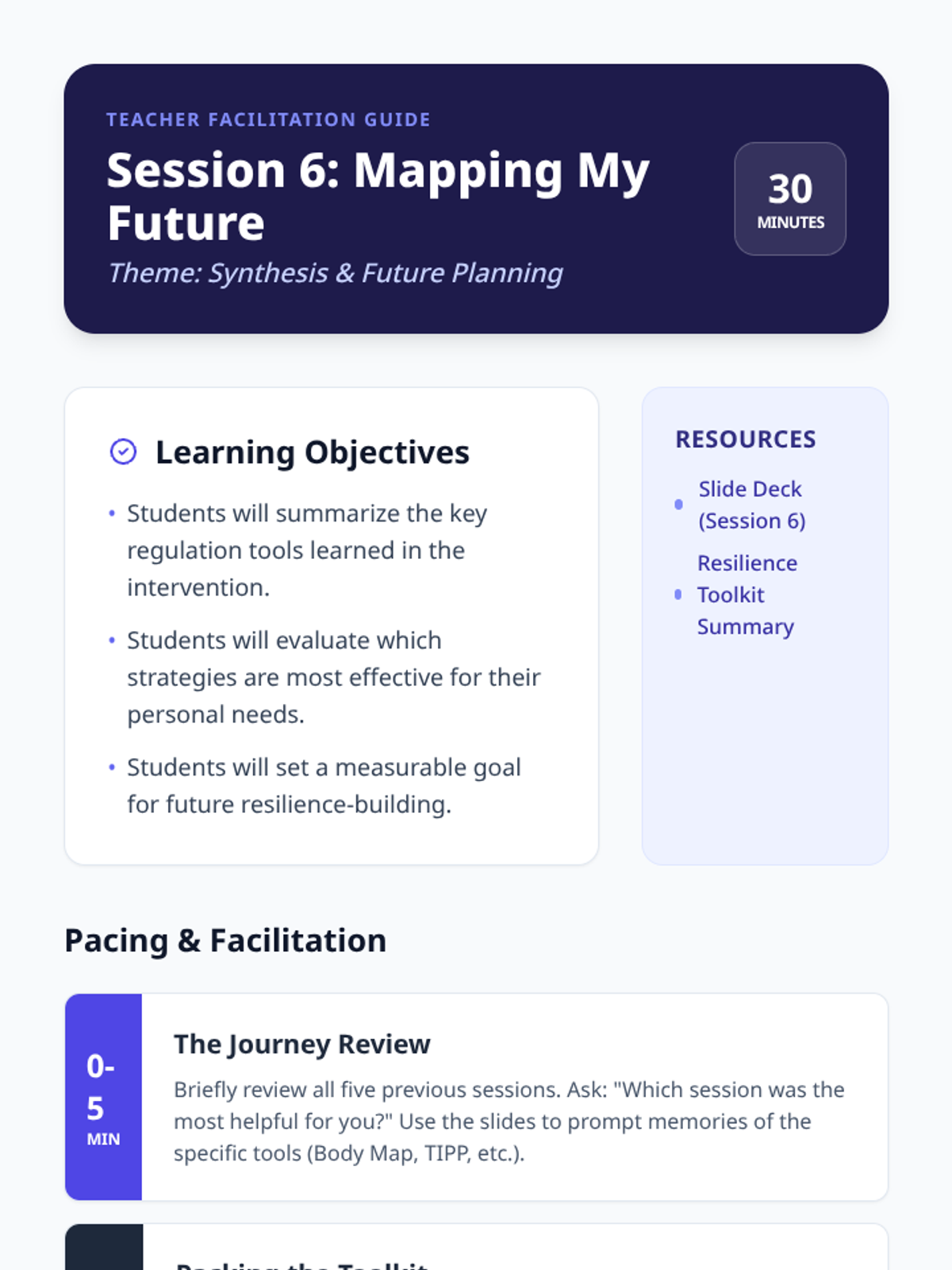
Final facilitation guide for Session 6. Provides instructions for synthesizing the 6-week program, helping students select their best tools, and planning for long-term maintenance of skills.
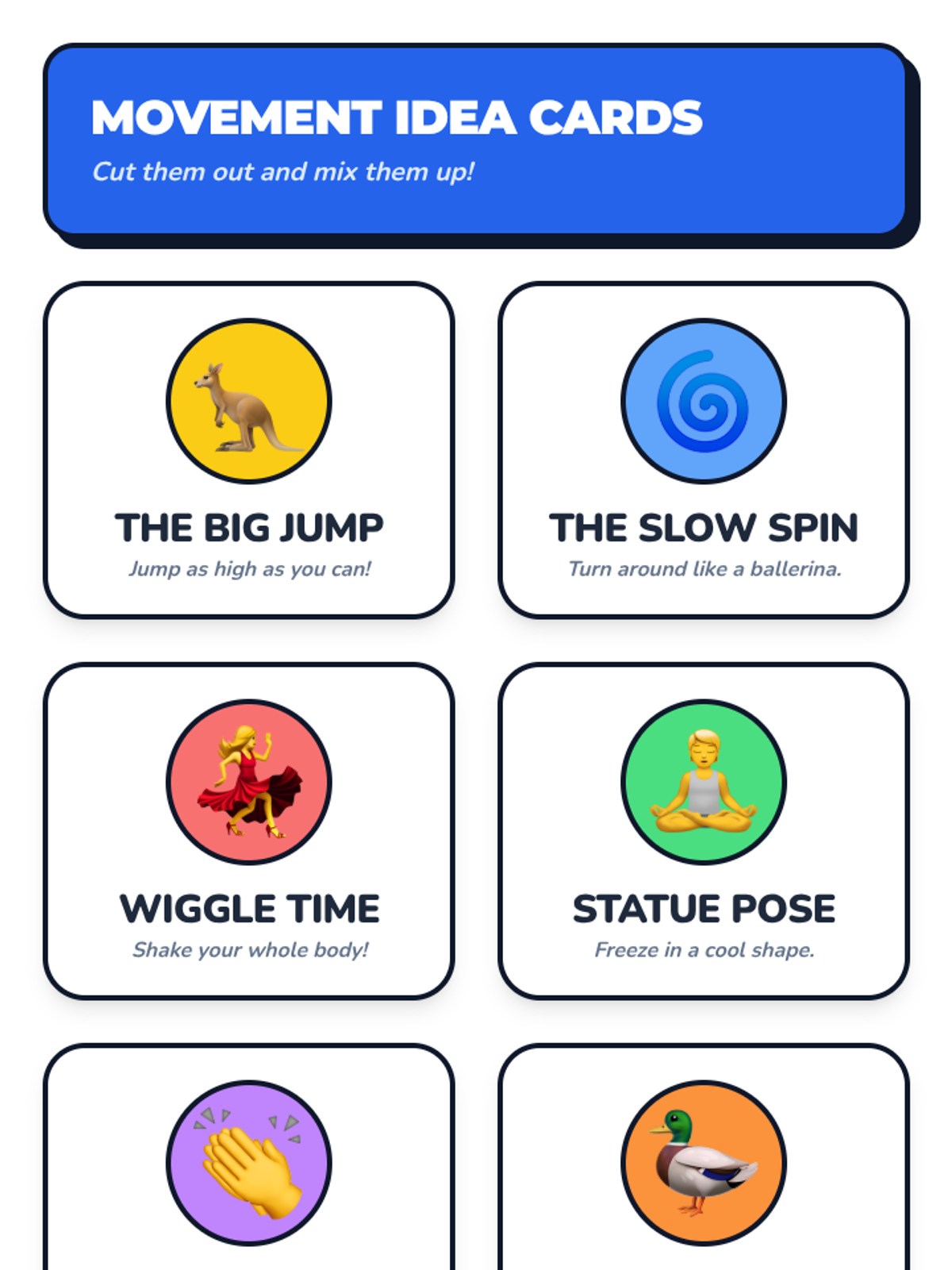
Movement prompt cards for Kindergarteners to use in their choreography, featuring fun emojis and simple descriptions.
Educational slides introducing the difference between the steady beat and rhythm, and defining the quarter note (Ta) and eighth notes (Ti-Ti) for 2nd-grade students.