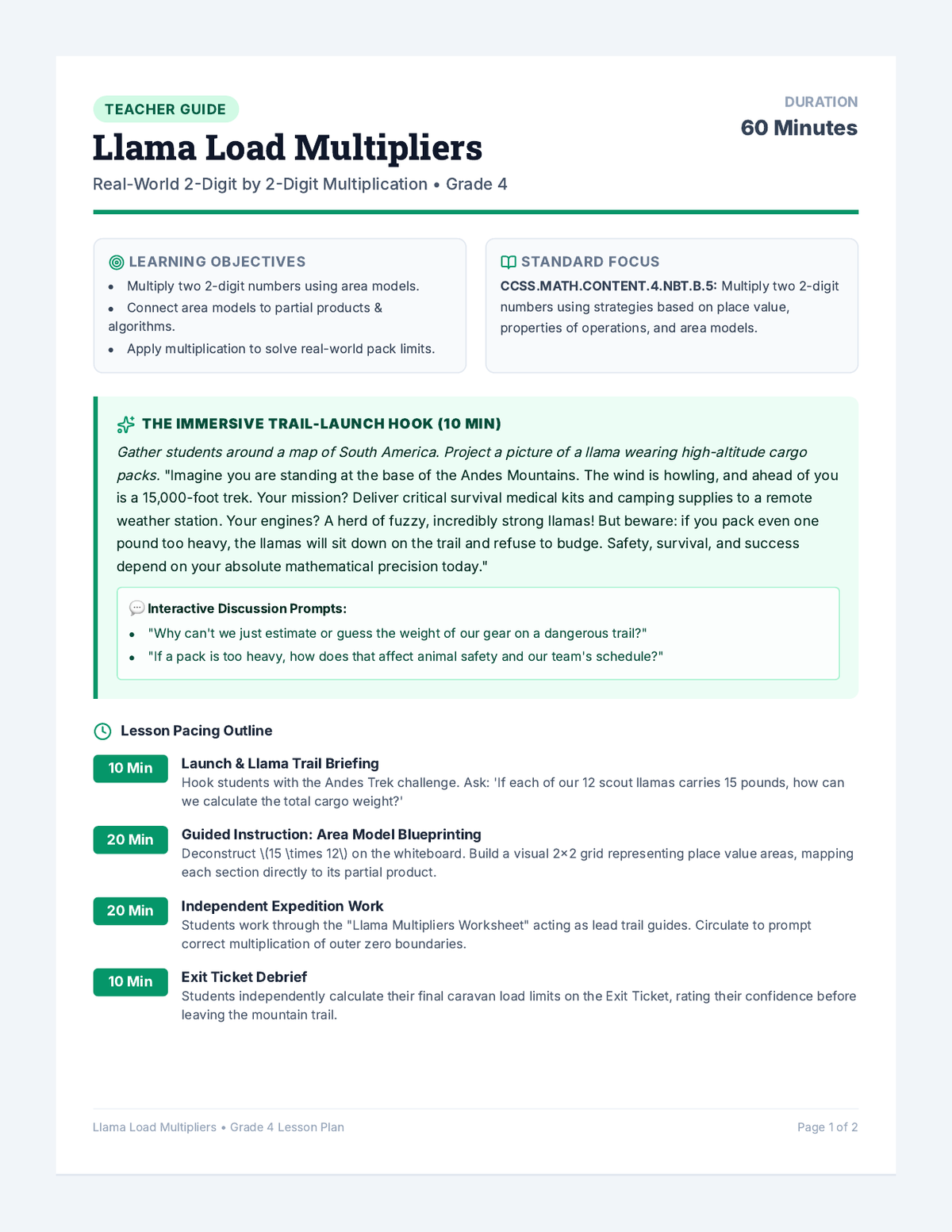
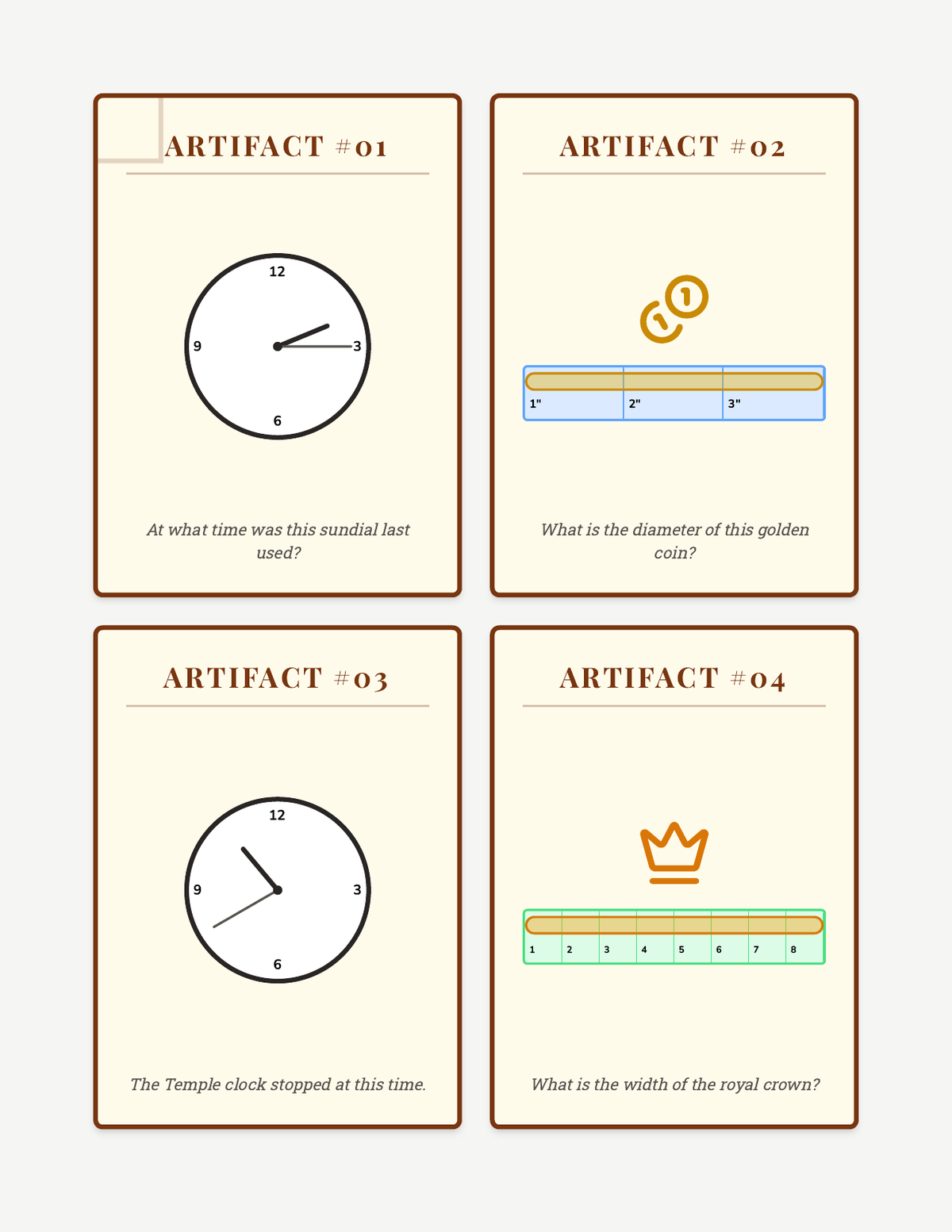
A teacher facilitation guide for a 4th-grade math lesson featuring llama-themed word problems, including hooks, guided practice, and common misconceptions.
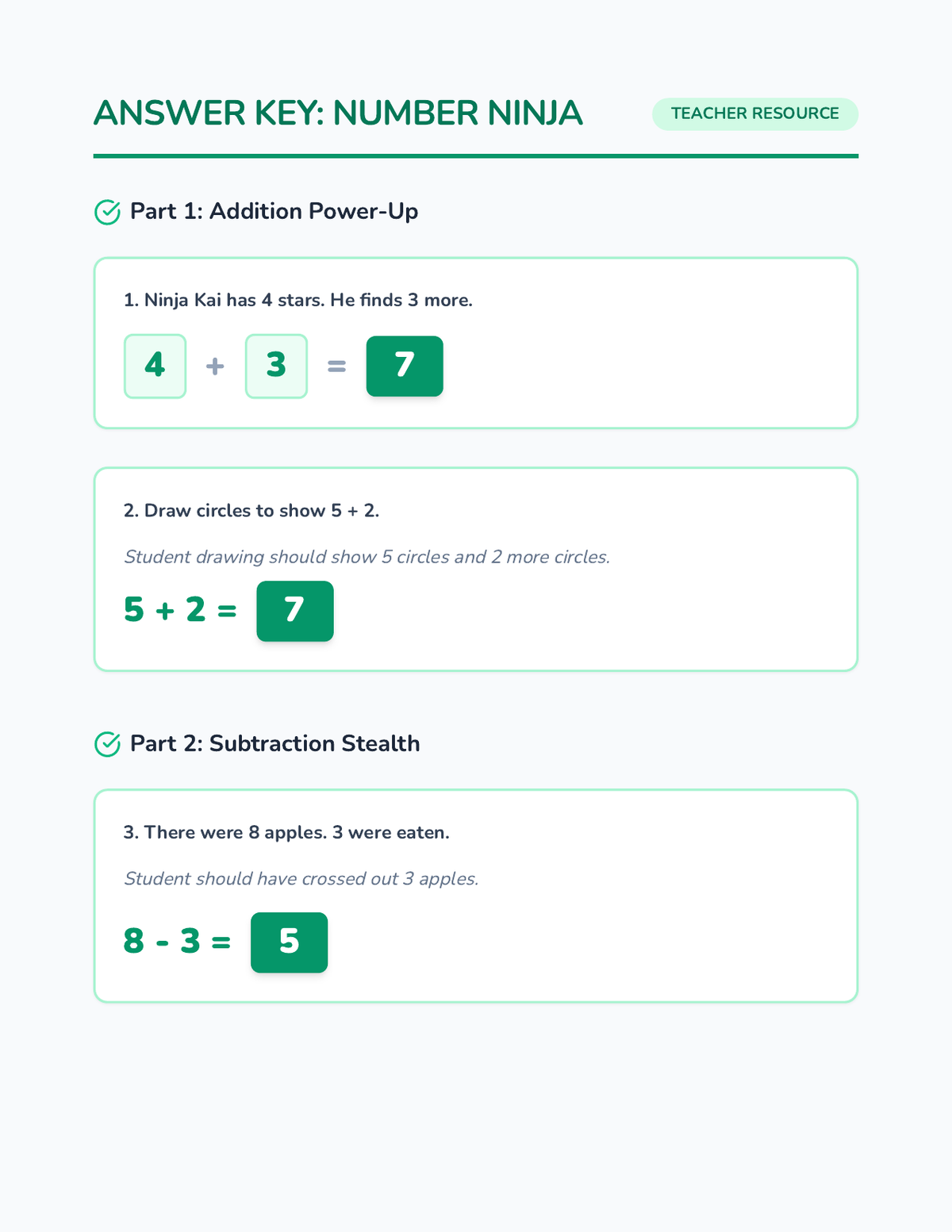
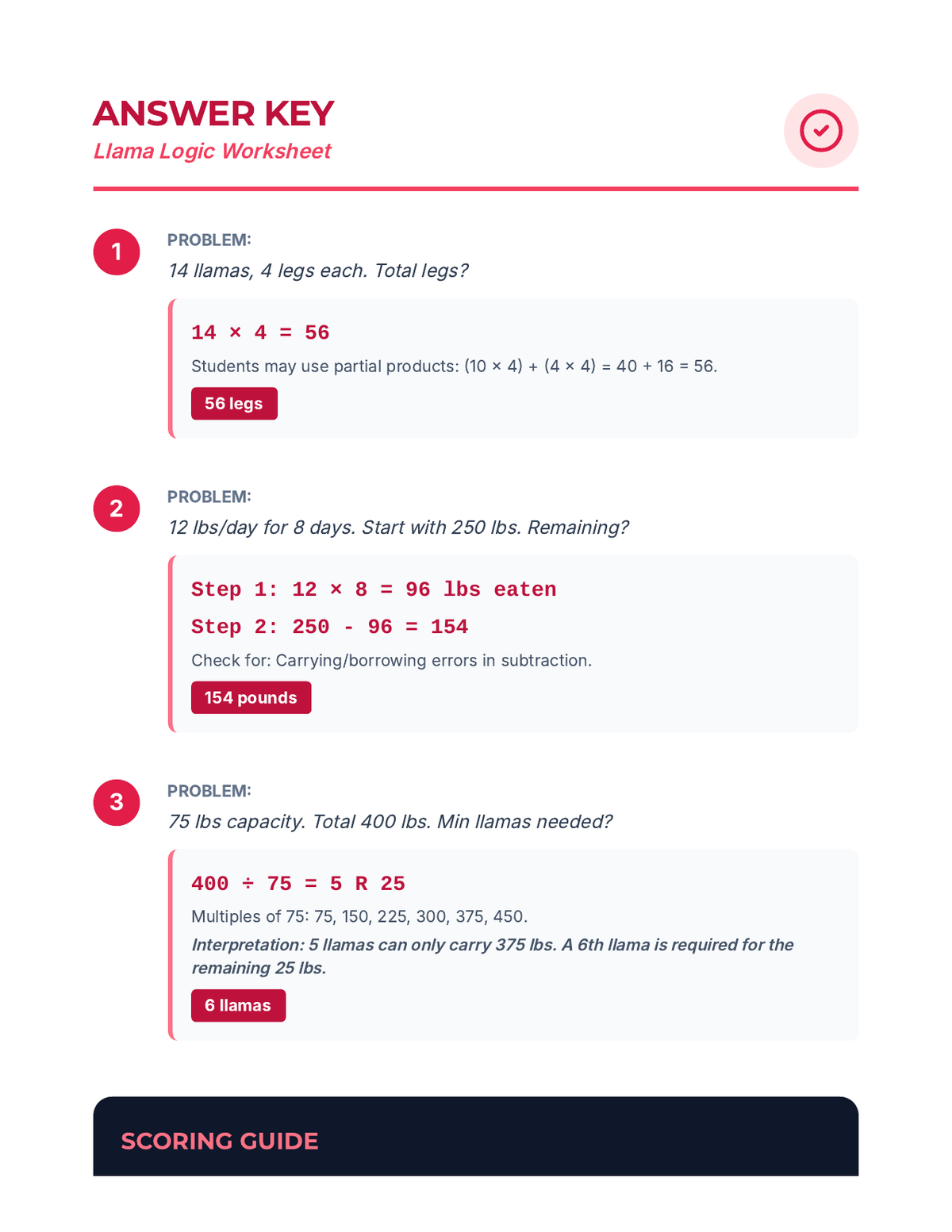
A detailed answer key for the Llama Logic worksheet, providing step-by-step solutions, common error checks, and a scoring guide for teachers.
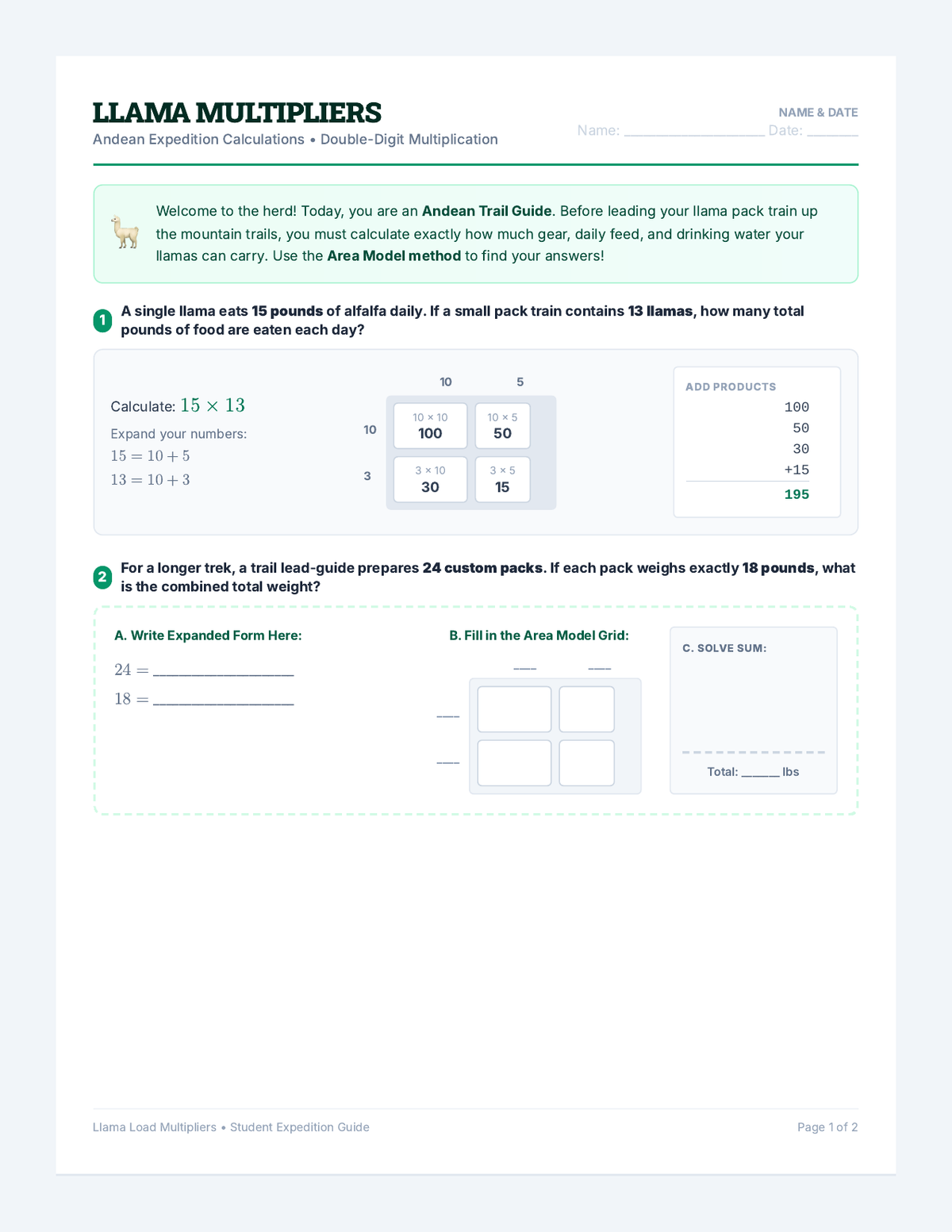
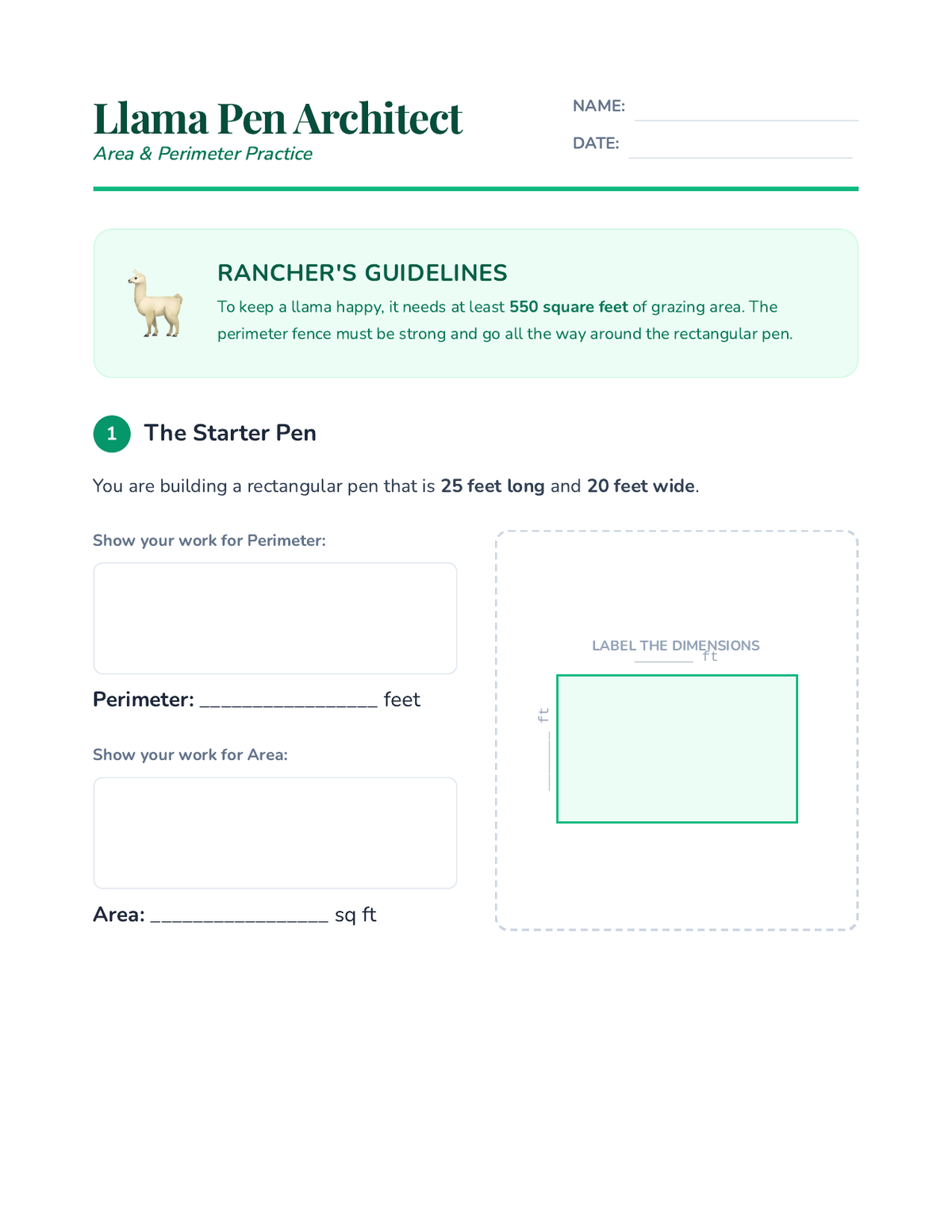
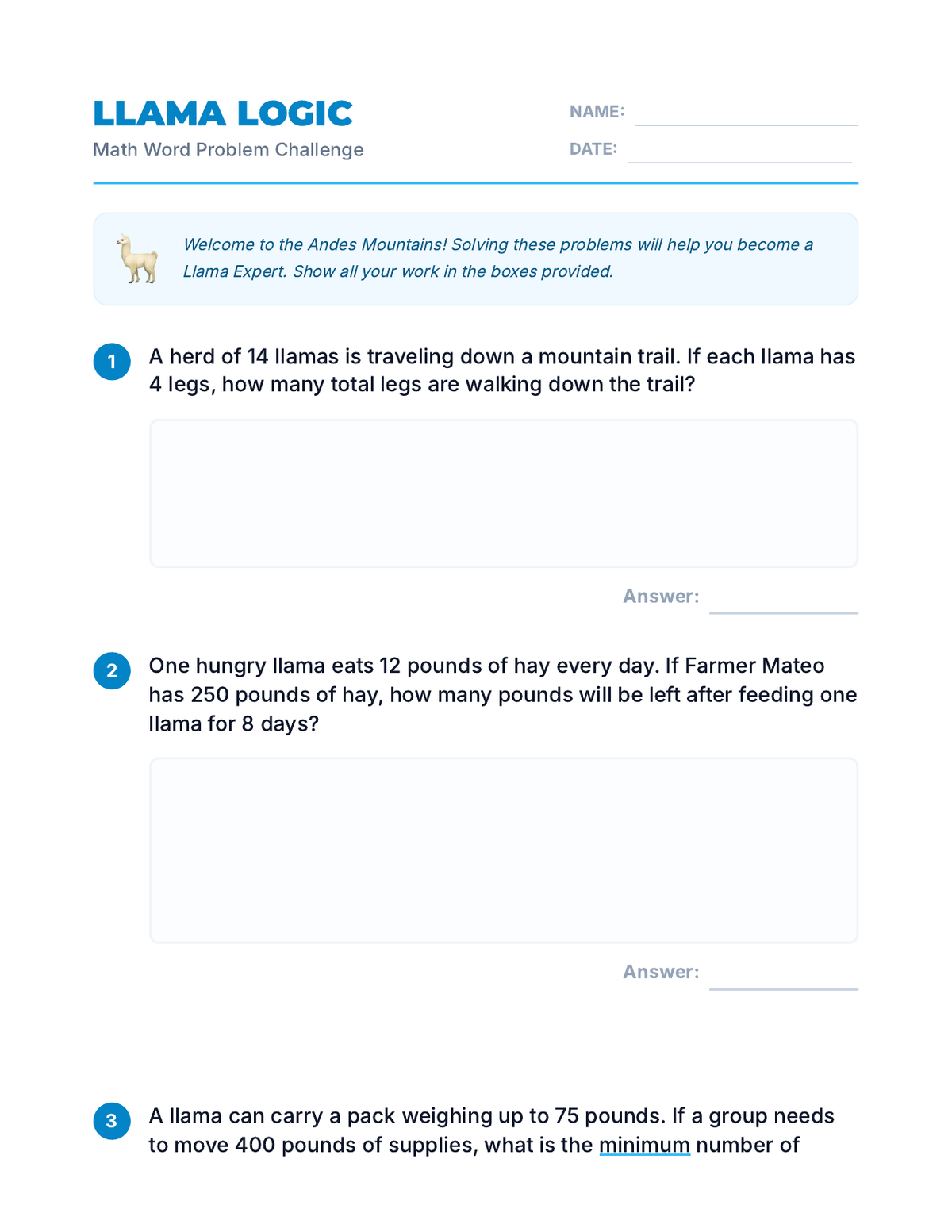
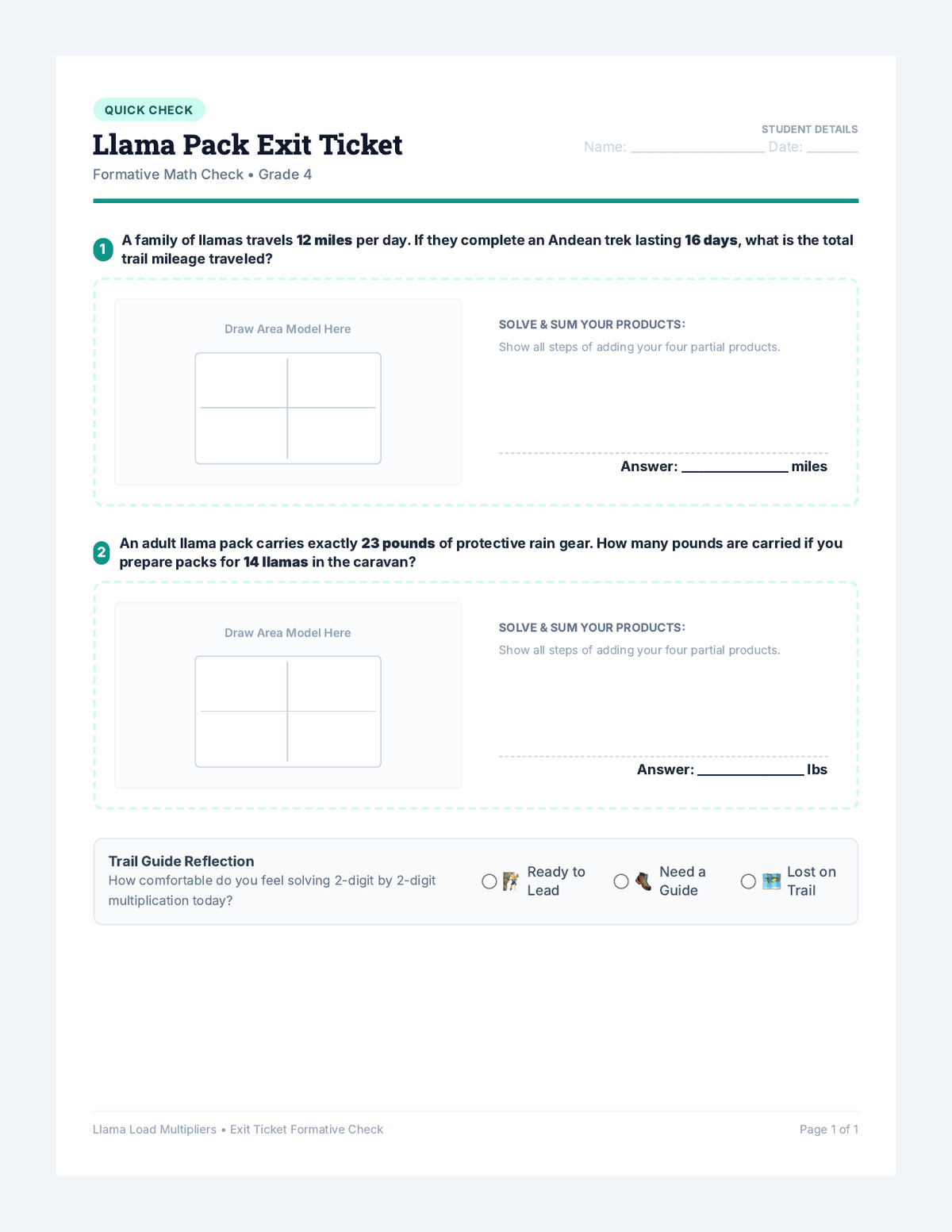
A math worksheet for 4th graders featuring multi-step word problems centered around llamas, including work areas and clear answer lines.
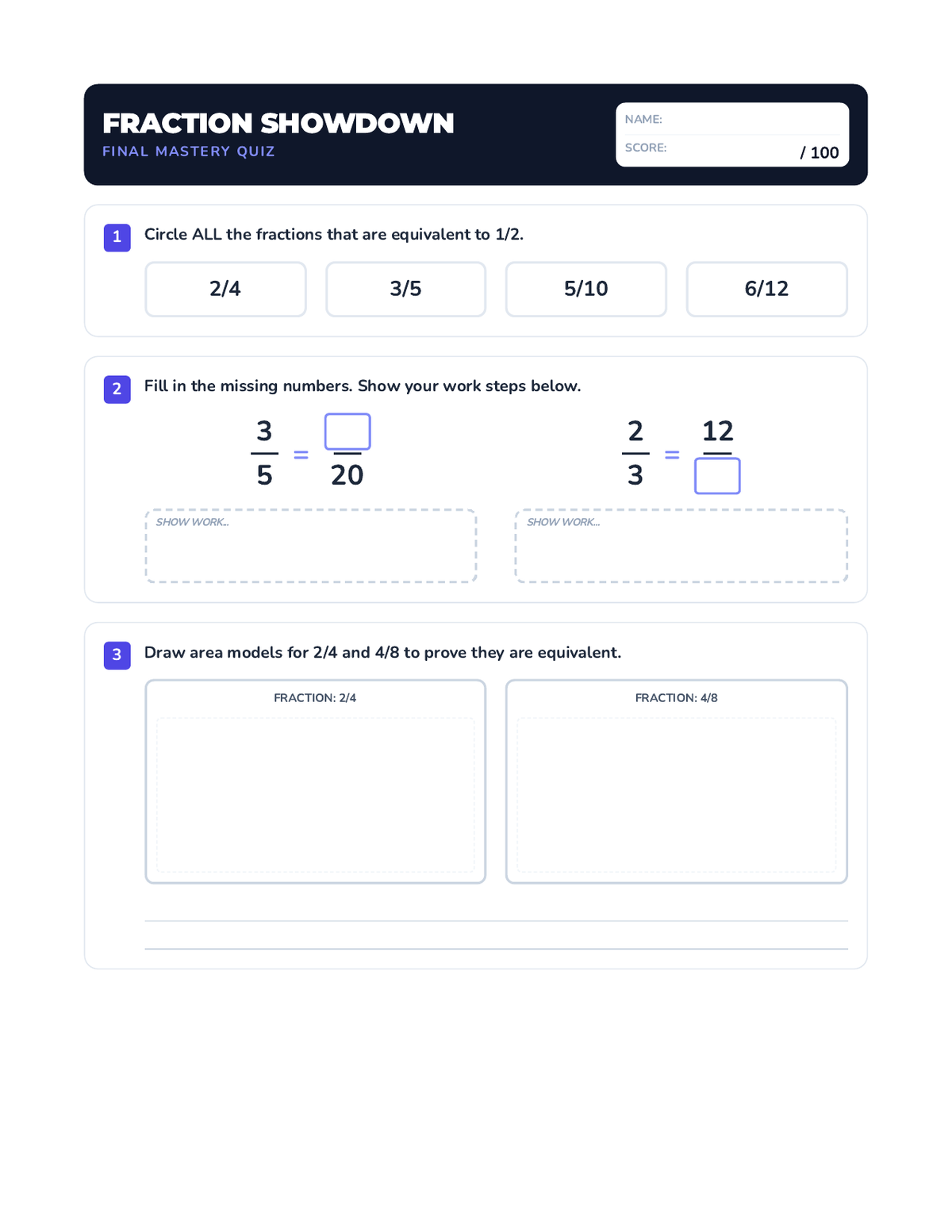
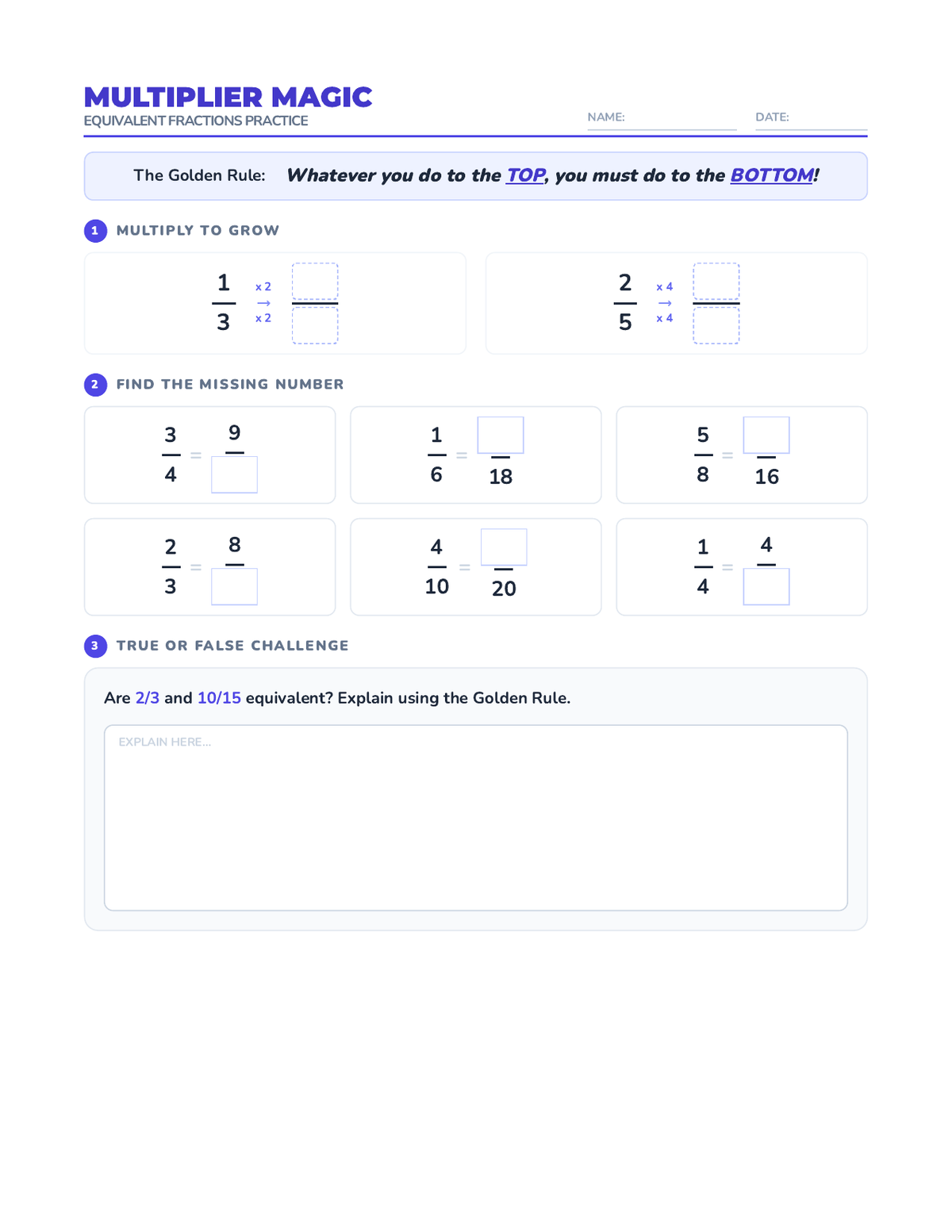
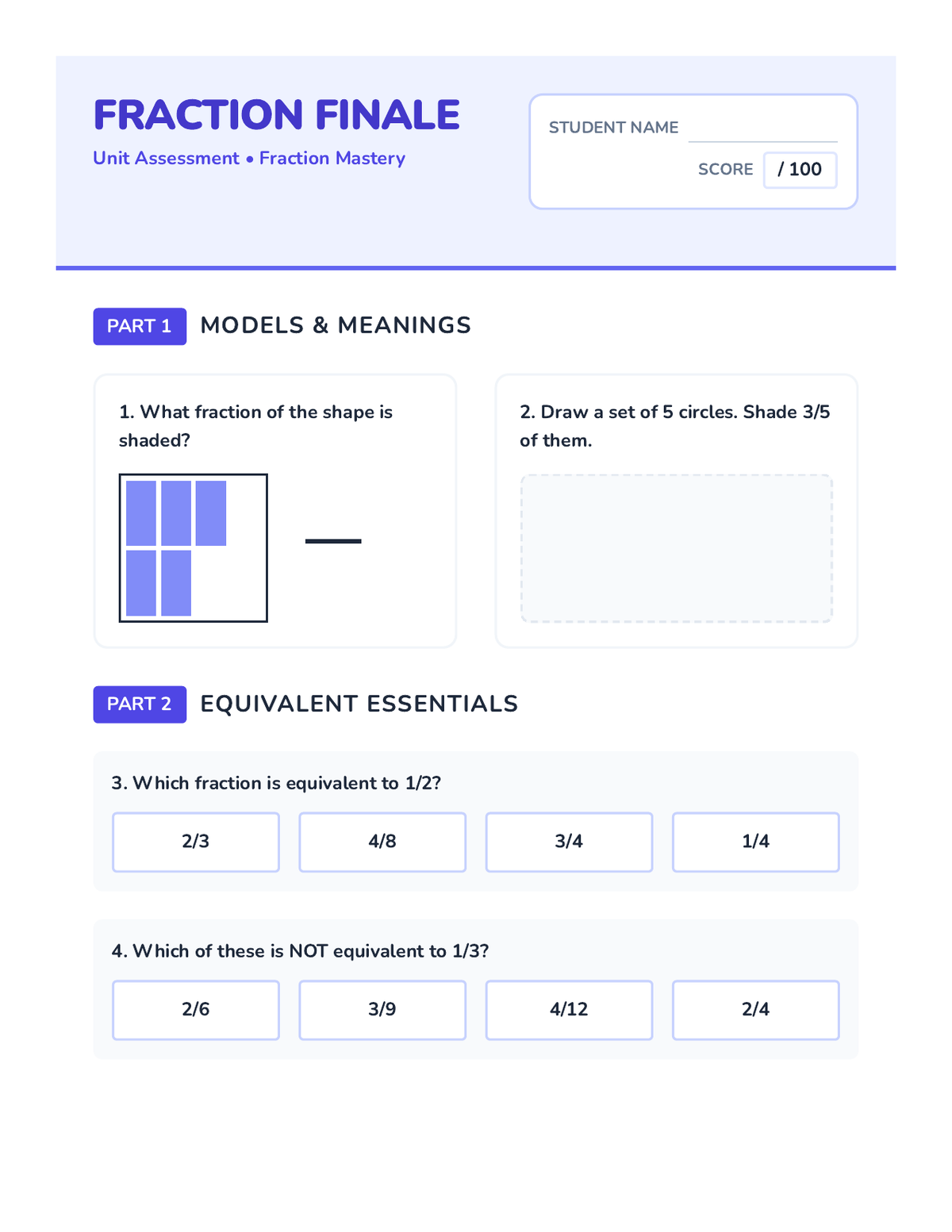
A comprehensive final assessment for 4th graders covering fraction identification, equivalent fractions, and word problems with space for visual models and explanations.

Student budget planning worksheet for Lesson 5 where they must allocate funds to meet a savings goal while managing essential costs.
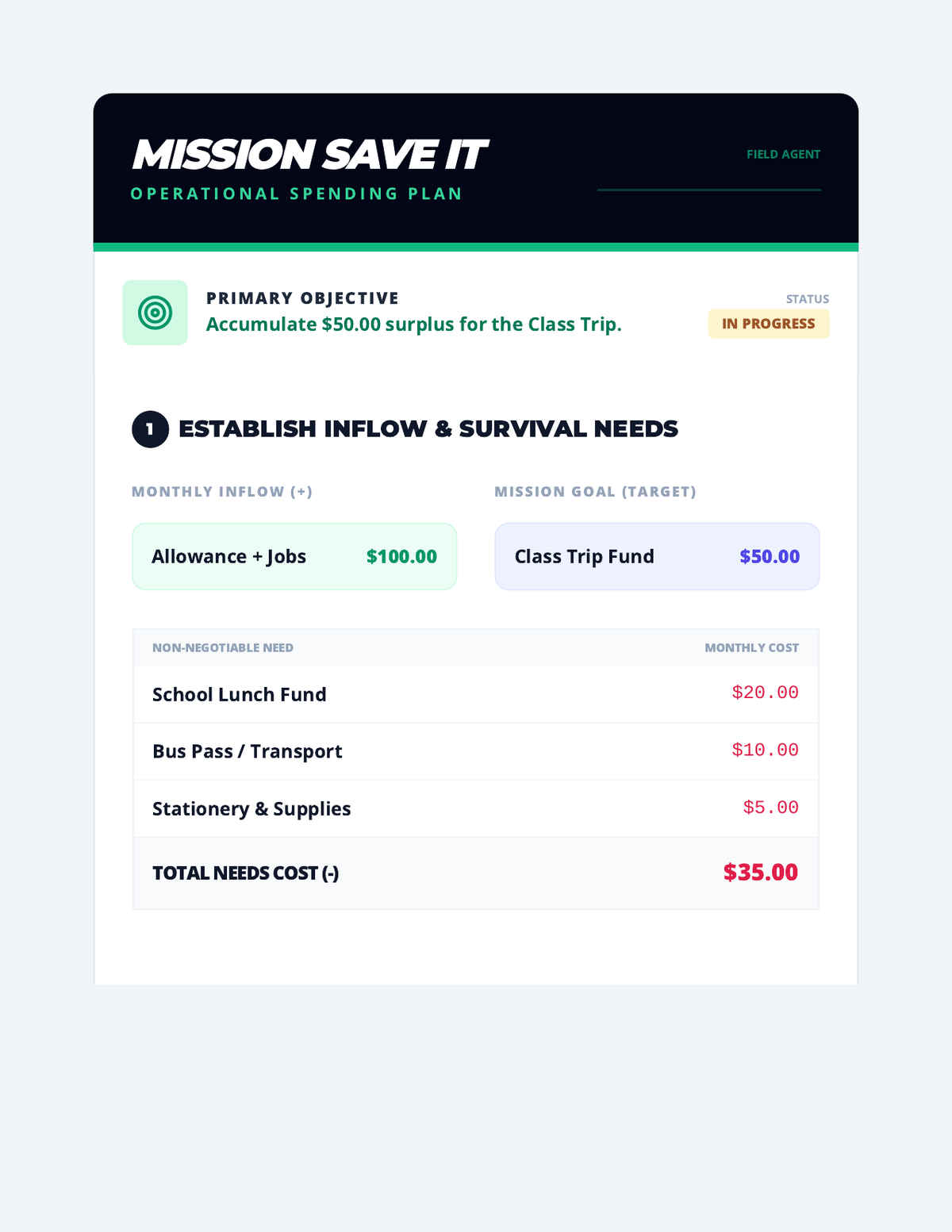
Presentation slides for Lesson 5, illustrating the mission objective, non-negotiable needs, and the math for calculating savings.
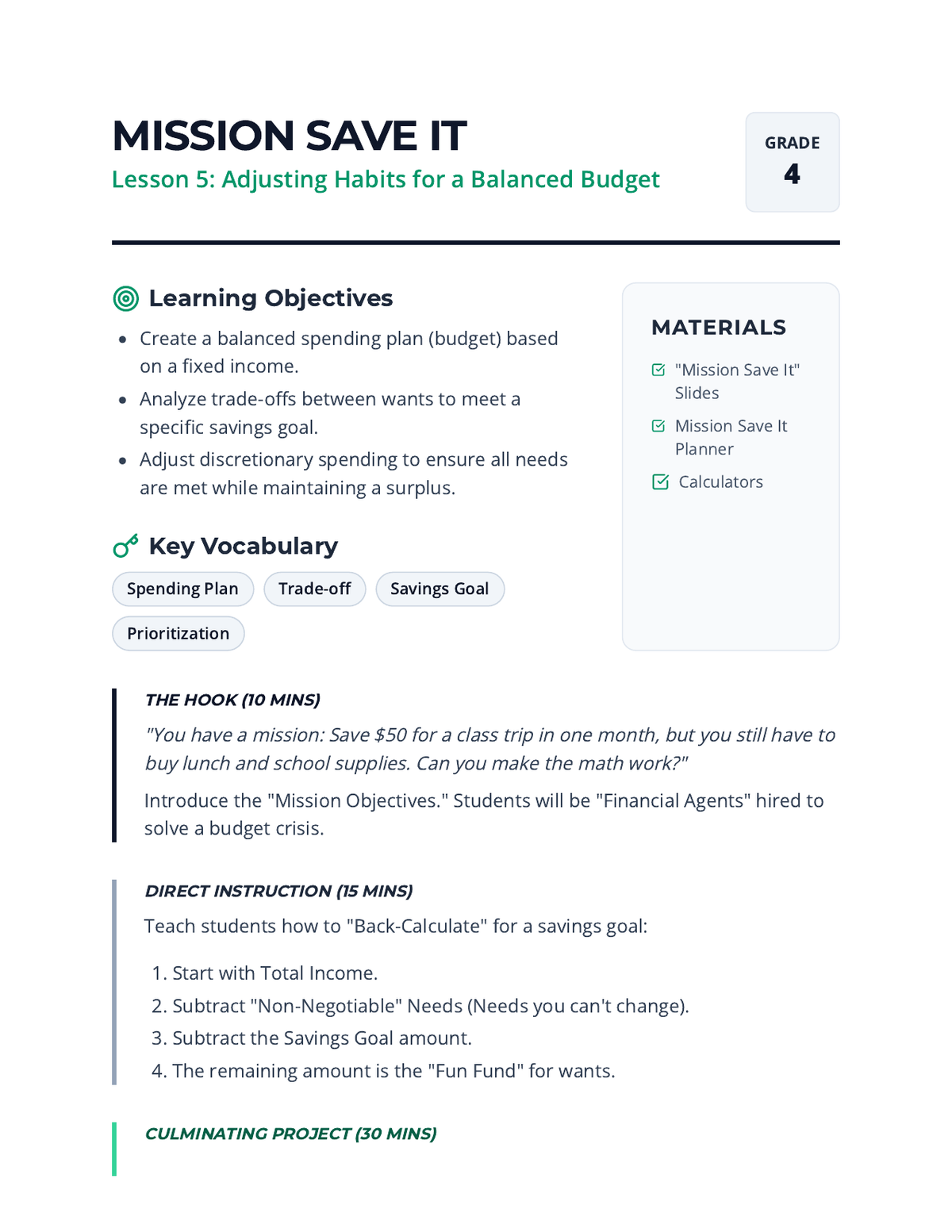
Teacher guide for Lesson 5, detailing instructional steps for teaching budget balancing and trade-offs.
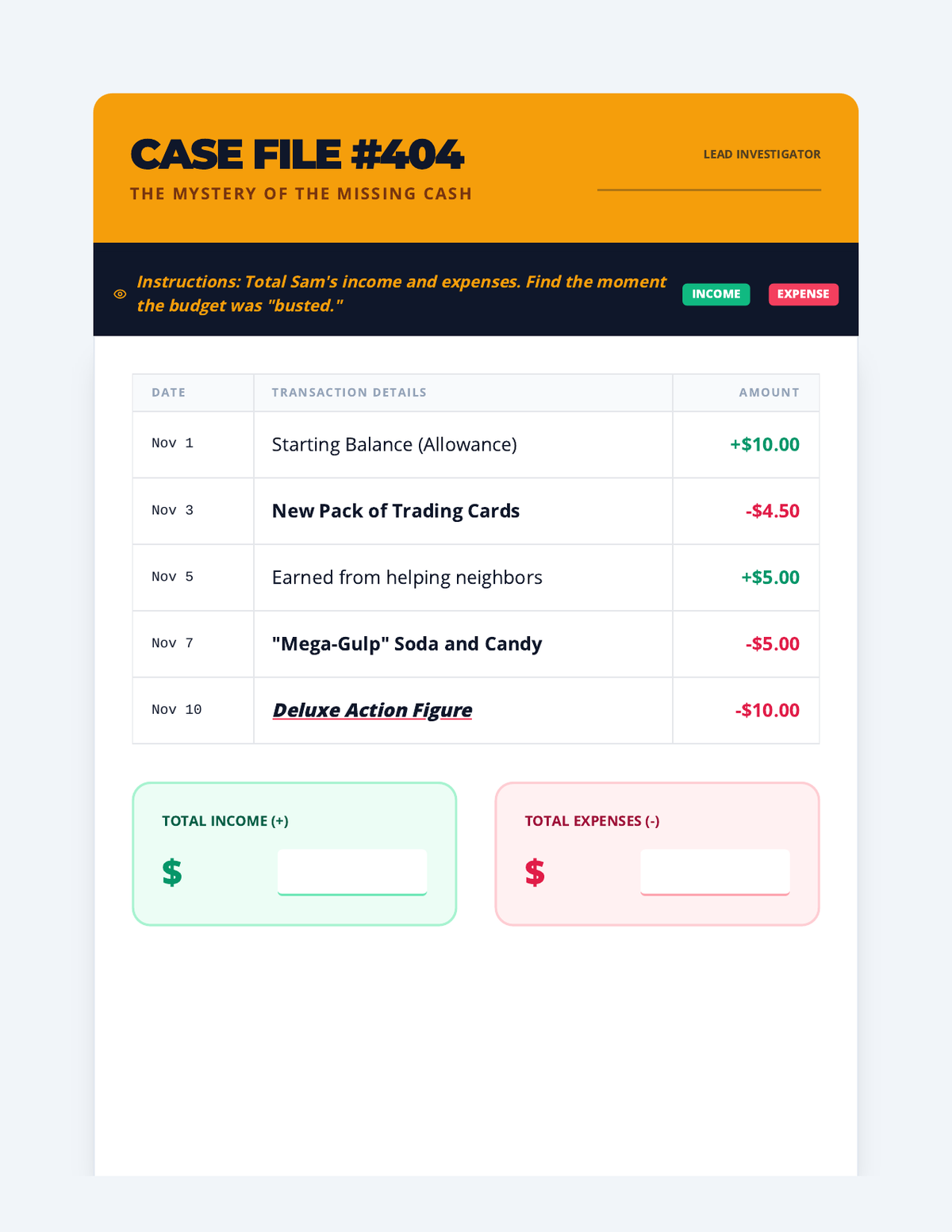
Case study student worksheet for analyzing a budget deficit scenario, calculating totals, and identifying 'budget busters'.
Presentation slides for Lesson 4, illustrating budget deficits, 'budget busters', and the math behind negative cash flow.
Teacher guide for Lesson 4, detailing instructional steps for teaching budget deficits and identifying 'budget busters'.
Student practice worksheet for recording transactions in a ledger format, featuring mock evidence slips and a running balance table.
Presentation slides for Lesson 3, teaching the anatomy of a ledger and the mechanics of recording transactions.
Teacher guide for Lesson 3, detailing instructional steps for teaching ledger maintenance and calculating a running balance.
Student worksheet for Lesson 2 featuring a sorting activity for needs and wants and a reflection section on opportunity cost.
Presentation slides for Lesson 2, illustrating the differences between needs and wants and the concept of opportunity cost.
Teacher guide for Lesson 2, providing instructional steps for the 'Lifeboat Choice' game and guidelines for teaching the difference between needs and wants.
Activity cards for students to cut and sort by income category, with a profile builder section to calculate total weekly inflow.
Introductory slides for Lesson 1 on income sources, defining income and cash inflow with student-friendly examples.
Teacher guide for Lesson 1, detailing learning objectives, vocabulary, instructional steps, and differentiation strategies for teaching income sources.
A final reflection worksheet where students evaluate their savings success, analyze their trade-offs, and set goals for future spending.
Final presentation slides for the Savings Success Summit, featuring reflections on trade-offs, mission results, and key financial takeaways.
A worksheet for the mid-month financial review where students calculate their totals, forecast their future balance, and plan spending adjustments.
Slide deck for Lesson 4, teaching students how to monitor their cash flow, identify trends, and forecast their future balance.
A worksheet for students to plan and track their personal savings goals, calculating weekly savings and time to reach their target.
A set of unexpected financial event cards that students must respond to by updating their ledgers and adjusting their spending.
Teacher's guide for Lesson 5, focusing on setting savings goals and creating a long-term budget plan to reach them.
Slide deck for Lesson 3, teaching students how to handle unexpected expenses by adjusting their spending habits.
A worksheet where students solve budget deficit scenarios by applying earning or cutting strategies.
Teacher's guide for Lesson 4, detailing the "Red Alert" game hook and strategies for teaching students how to solve budget deficits.
A sorting activity where students categorize various simulation expenses into "needs" and "wants" to understand financial prioritization.
Slide deck for Lesson 2, teaching the difference between needs and wants, as well as fixed vs. variable expenses.
A worksheet for students to practice categorizing expenses as needs or wants and deciding which items to cut from a budget to avoid a deficit.
Teacher's guide for Lesson 3, focusing on differentiating needs from wants and strategies for budget prioritization.
The central transaction log for the four-week financial simulation, used by students to track all income and expenses.
A worksheet for students to practice recording transactions and calculating a running balance in a simplified ledger format.
Teacher's guide for Lesson 2, including the Mystery Wallet hook, ledger math instruction, and simulation guidance.
A worksheet for students to categorize income and expenses using a T-chart and brainstorm their own financial scenarios.
Introductory slide deck for the Money Map simulation, defining income, expenses, and the ledger tool.
A teacher's guide for Lesson 1, detailing objectives, the "Money In Money Out" hook, instructional steps, and discussion questions.
The capstone project template for 'Hustle Logic'. This comprehensive launch proposal requires students to synthesize financial, legal, and operational planning into a 90-day strategy. Includes a peer audit section.
Slide presentation for the final lesson 'Launch Blueprint'. Guides students through synthesizing their learning into a 3-pillar launch strategy (Profit, Risk, Flow) and prepares them for a peer 'Sustainability Audit'.
Worksheet for designing a Client Intake SOP and a time-blocked "Survival Schedule" to manage academic and freelance commitments.
Slide presentation for Lesson 04 focusing on operational efficiency. Covers the importance of SOPs, boundary setting, and time-blocking for student entrepreneurs.
A simulation-based worksheet for calculating the true financial impact of self-employment taxes and business expenses on a $12,000 annual side hustle revenue.
Slide presentation for Lesson 03 on self-employment taxes and legal structures. Covers the 15.3% SE tax, deductions, quarterly payments, and the differences between Sole Proprietorships and LLCs.
Workshop worksheet for Lesson 02. Includes a guided calculation scenario for a social media consultant and a blank template for students to model their own venture's costs and profitability.
Slide presentation for Lesson 02 focused on the financial modeling of side hustles. Teaches students to distinguish between revenue and profit while accounting for hidden costs.
Instructional guide for teachers delivering the 'Market Mindset' lesson, including pacing, discussion prompts, and a case study on niche identification.
Engaging slide presentation for the 'Market Mindset' lesson, covering gig economy differences, internal/external assessment using SWOT, and a market scanning activity.
A professional market analysis and SWOT worksheet for undergraduate students to evaluate potential freelance side hustles. Includes sections for market saturation checks and a comprehensive SWOT grid.
A teacher's guide containing the lesson plan, pacing, answer key for calculations, and discussion prompts.