A student worksheet for categorizing expenses as needs or wants, including specific focus on wildcard expenses and their impact on financial planning.
Introductory slide deck for Session 1, establishing the 'Inner Compass' theme. It explains the purpose of the intervention and teaches students how to recognize physiological signals of emotions using the 'Emotions as Data' framework.
1/13
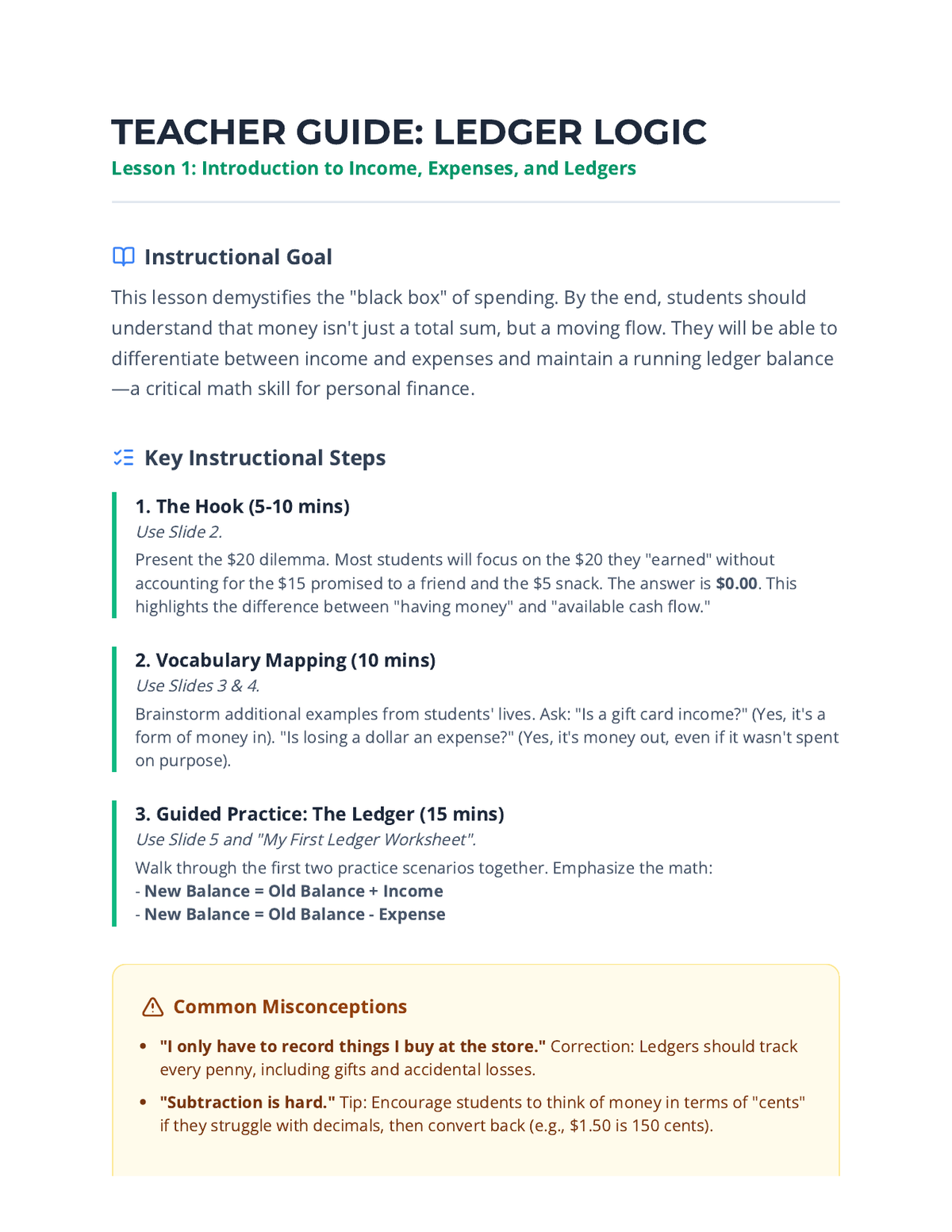
Introductory slides for the second lesson, teaching students the mechanical skill of logging transactions in a ledger and calculating a running balance.
1/16
Culminating slide deck for Session 6, summarizing the key skills from the intervention and guiding students through the creation of their personalized 'Resilience Toolkit.'
A worksheet for students to identify repeating units and extend AB, AAB, and ABB shape patterns. Includes a creative section for students to design their own AAB pattern.
Visual presentation for Session 2, introducing the 'Window of Tolerance' and teaching proactive regulation tools like 5-4-3-2-1 grounding and controlled breathing.
A comprehensive lesson plan for Kindergarten students focusing on global cultures through Mexican folk dance, patterned movement, and geography.
Visual presentation for Session 3, focusing on distress tolerance techniques for high-intensity situations using the TIPP skills framework.
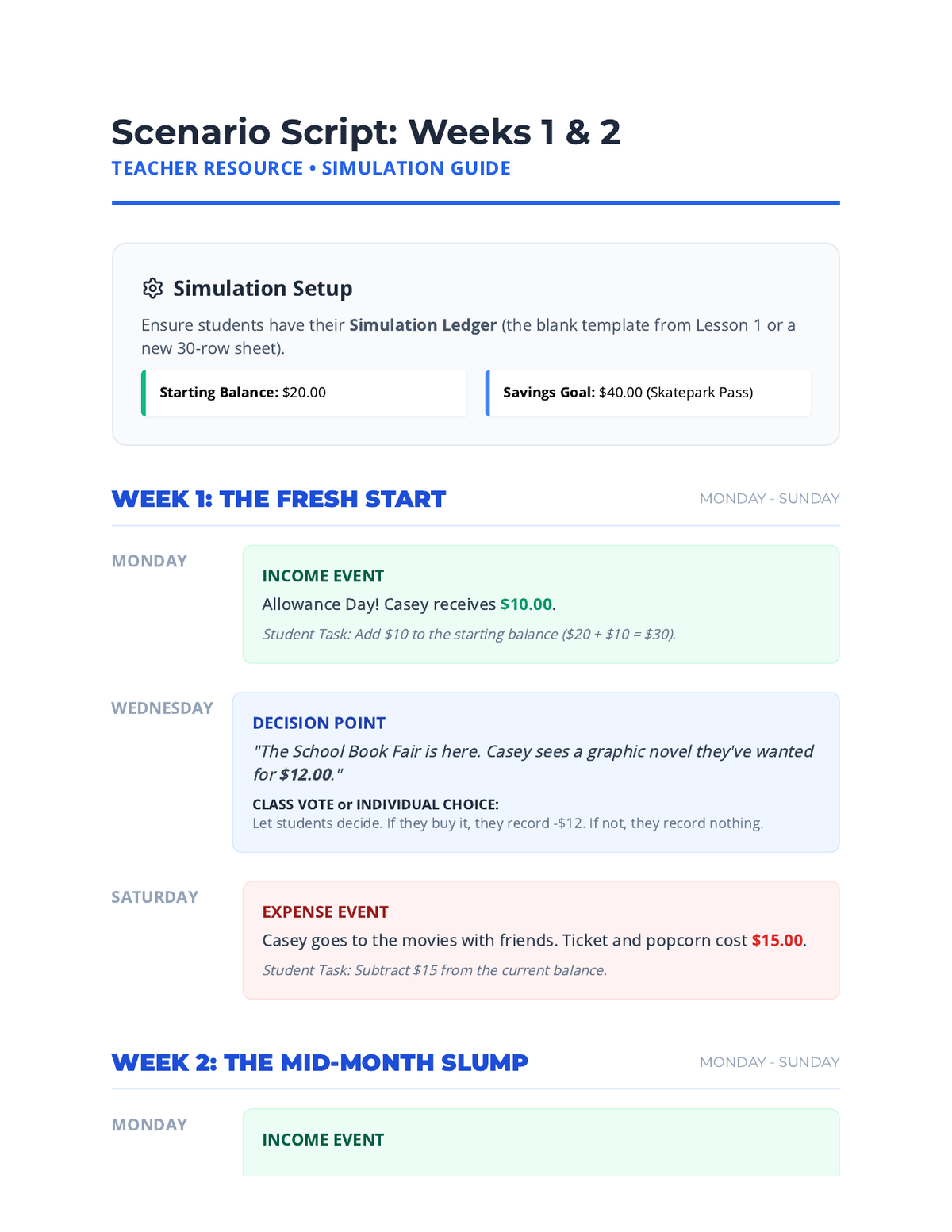
A ledger recording activity where students fill in transaction details and calculate a running balance based on Charlie's weekly activity.
A 2-page student worksheet for the first lesson in the Side Hustle sequence. It helps students audit the gig economy, conduct a personal skills inventory, and brainstorm viable business ideas.
A visual warm-up activity featuring two 'mystery' patterns with missing elements. Designed to spark discussion about identifying and justifying pattern rules.
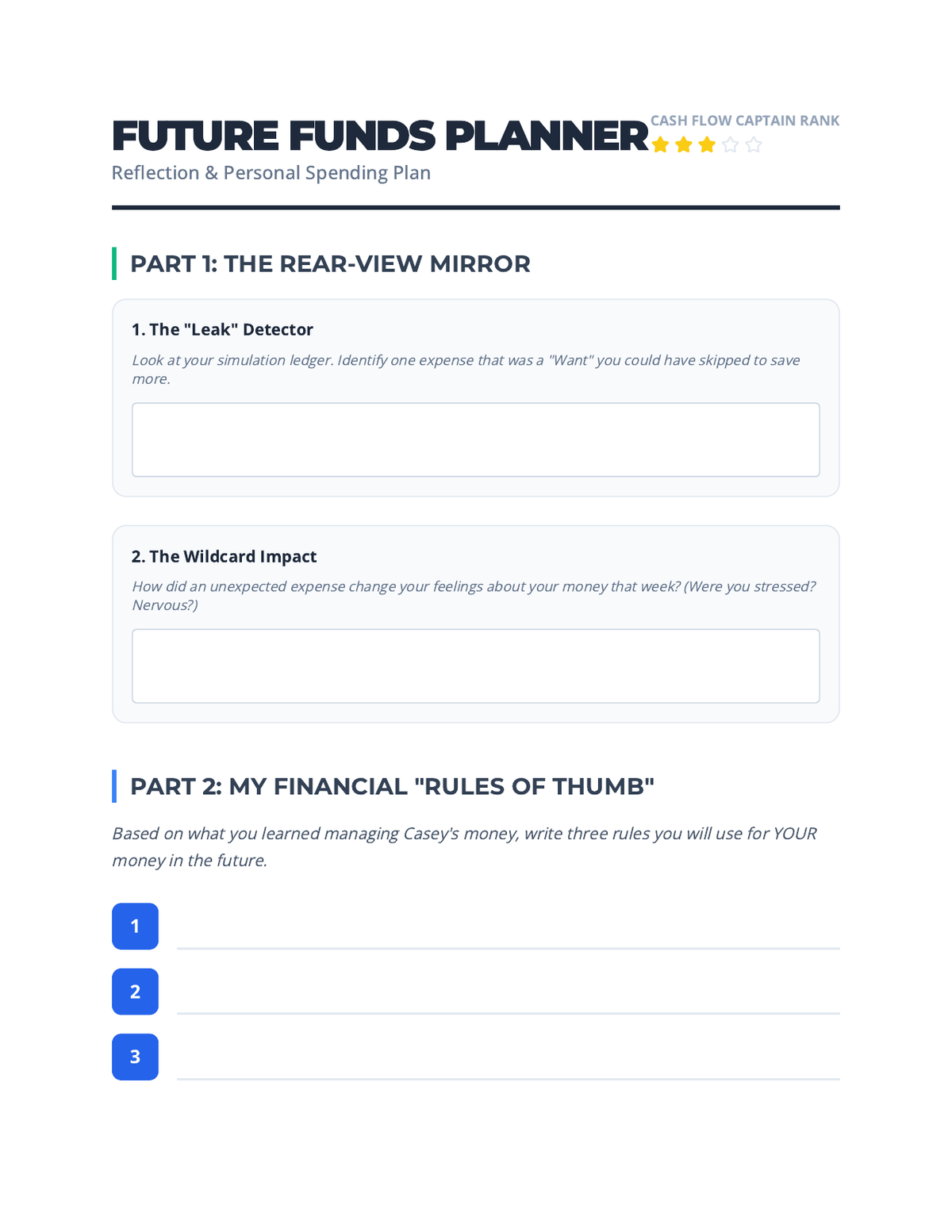
Slide deck for Lesson 5, focusing on identifying spending habits, understanding 'spending leaks', and establishing future 'Rules of Thumb' for financial success.
Teacher-facing facilitation guide for Session 2. Includes pacing, demonstration instructions for regulation tools, and a trauma-informed tip regarding breathing exercises.
An introductory worksheet for 4th graders to identify and name fractions using visual models (circles, rectangles, and grids). Includes shading exercises and a critical thinking prompt.
Engaging slide deck for Kindergarteners exploring music and emotions, covering major/minor tones and energy levels.
Visual presentation for teaching equivalent fractions using area models and the multiplication rule.
A student worksheet for Session 4, guiding students through the 'Catch-Check-Change' reframing technique to identify and edit negative self-talk.
Informative reading passage about the Djembe drum, its cultural origins, construction, and the three primary sounds it produces, followed by comprehension questions.
A comprehensive teacher facilitation guide for the 'Digital Archaeology' lesson, including a 60-minute timeline, discussion prompts, and differentiation strategies.
A visual worksheet for Kindergarteners to identify musical moods by coloring emoji faces and associating colors with sounds.
A structured student worksheet featuring three distinct case studies on digital permanence, encouraging debate between individual privacy and historical preservation. Includes space for group verdicts and a summary 'permanence scale' activity.