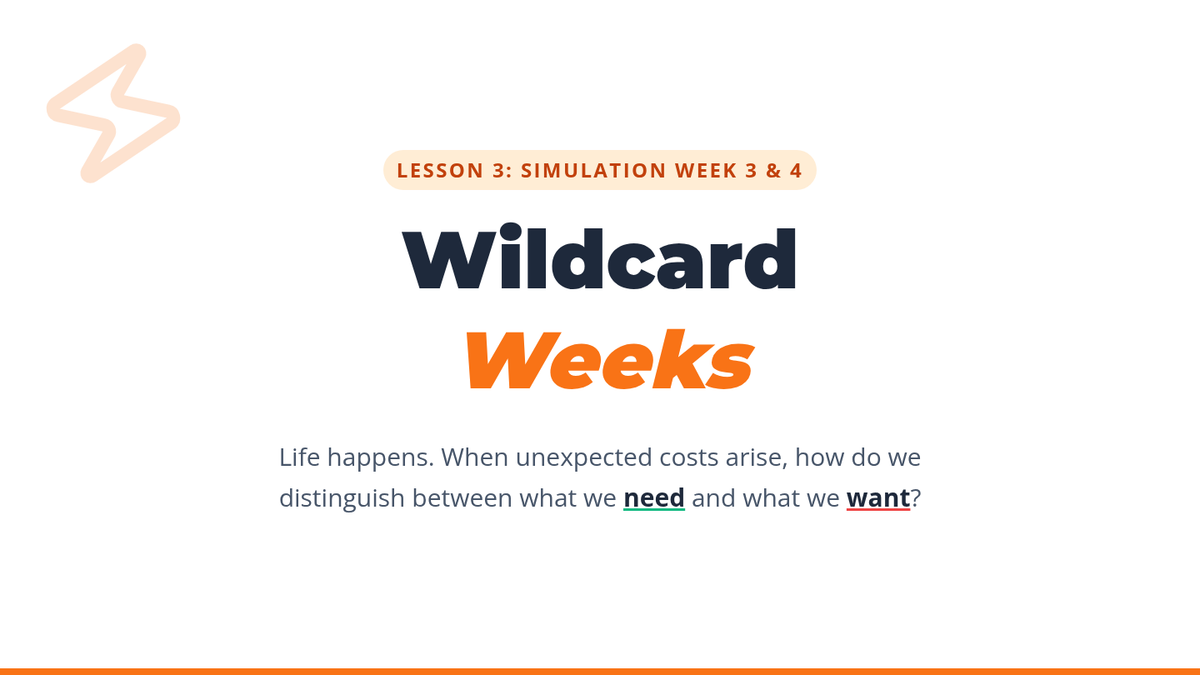
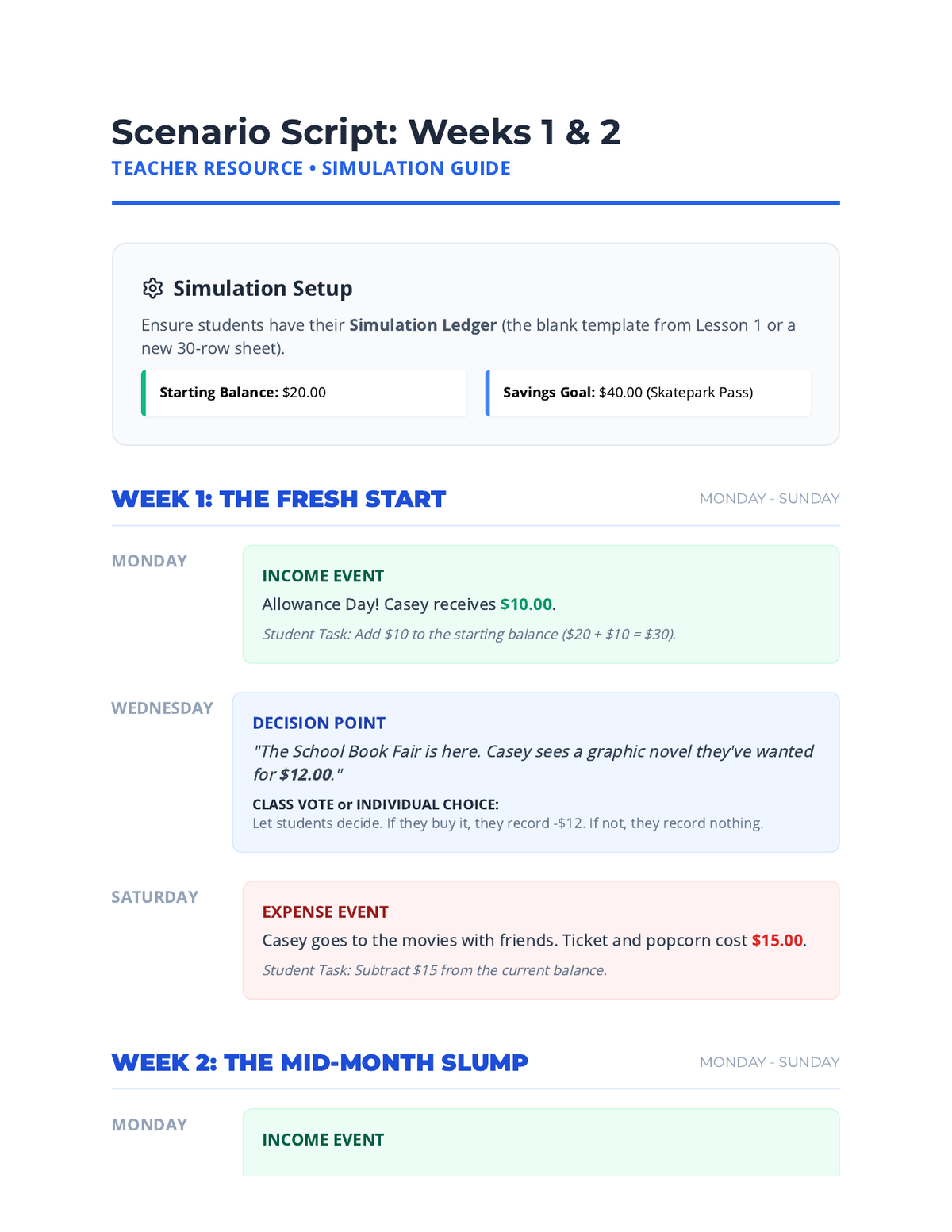
Slide deck for Lesson 2, introducing the character 'Casey' and setting the stage for the month-long financial simulation.
A visual warm-up activity featuring two 'mystery' patterns with missing elements. Designed to spark discussion about identifying and justifying pattern rules.
1/16
A visual worksheet for Kindergarteners to identify musical moods by coloring emoji faces and associating colors with sounds.
A set of 6 printable circular prompts designed to be attached to a soft ball, facilitating conversation and reflection in the Buddy Builders lesson.
Cumulative multiple-choice assessment for 4th graders covering fraction vocabulary, unit fractions, and model identification.
Informative reading passage about the Djembe drum, its cultural origins, construction, and the three primary sounds it produces, followed by comprehension questions.
Instructional slides for Lesson 3 covering time management, opportunity cost, and the "Big Rocks" theory of prioritization.
A teacher-facing guide for Session 1, including learning objectives, a detailed pacing guide, and facilitation tips specifically for Tier 3 mental health interventions.
1/13
Visual presentation for Session 2, exploring the interconnected cycle of thoughts, feelings, and actions using relatable middle school scenarios.
A structured student worksheet featuring three distinct case studies on digital permanence, encouraging debate between individual privacy and historical preservation. Includes space for group verdicts and a summary 'permanence scale' activity.
Visual presentation for teaching equivalent fractions using area models and the multiplication rule.
Worksheet for students to select their favorite musical elements from the unit to contribute to the class fusion project.
Engaging slide deck for Kindergarteners about world dances, specifically focusing on the Mexican folk dance "La Raspa".
Introductory worksheet for fractions including shading area models, identifying points on number lines, and solving a simple word problem.
A 2-page student worksheet for the first lesson in the Side Hustle sequence. It helps students audit the gig economy, conduct a personal skills inventory, and brainstorm viable business ideas.
Introductory slides for the first lesson on personal cash flow, covering income, expenses, and the difference between fixed and variable costs.
Final facilitation guide for Session 6. Provides instructions for synthesizing the 6-week program, helping students select their best tools, and planning for long-term maintenance of skills.
Instructions for a kinesthetic activity where students match their movement intensity to musical dynamics using animal metaphors.
A student worksheet for identifying physiological signals of emotions. It features a body mapping activity where students color or mark areas where they feel physical sensations associated with specific feelings.
A student planning sheet for Session 3. It introduces the TIPP skills (Temperature, Intense Exercise, Paced Breathing, Paired Muscle Relaxation) and helps students create a personalized 'Emergency Brake' plan for high-intensity emotional moments.
Visual presentation for Session 3, focusing on distress tolerance techniques for high-intensity situations using the TIPP skills framework.