A comprehensive lesson plan for Kindergarten students focusing on rhythm, beat synchronization, and creative movement through play-based activities.
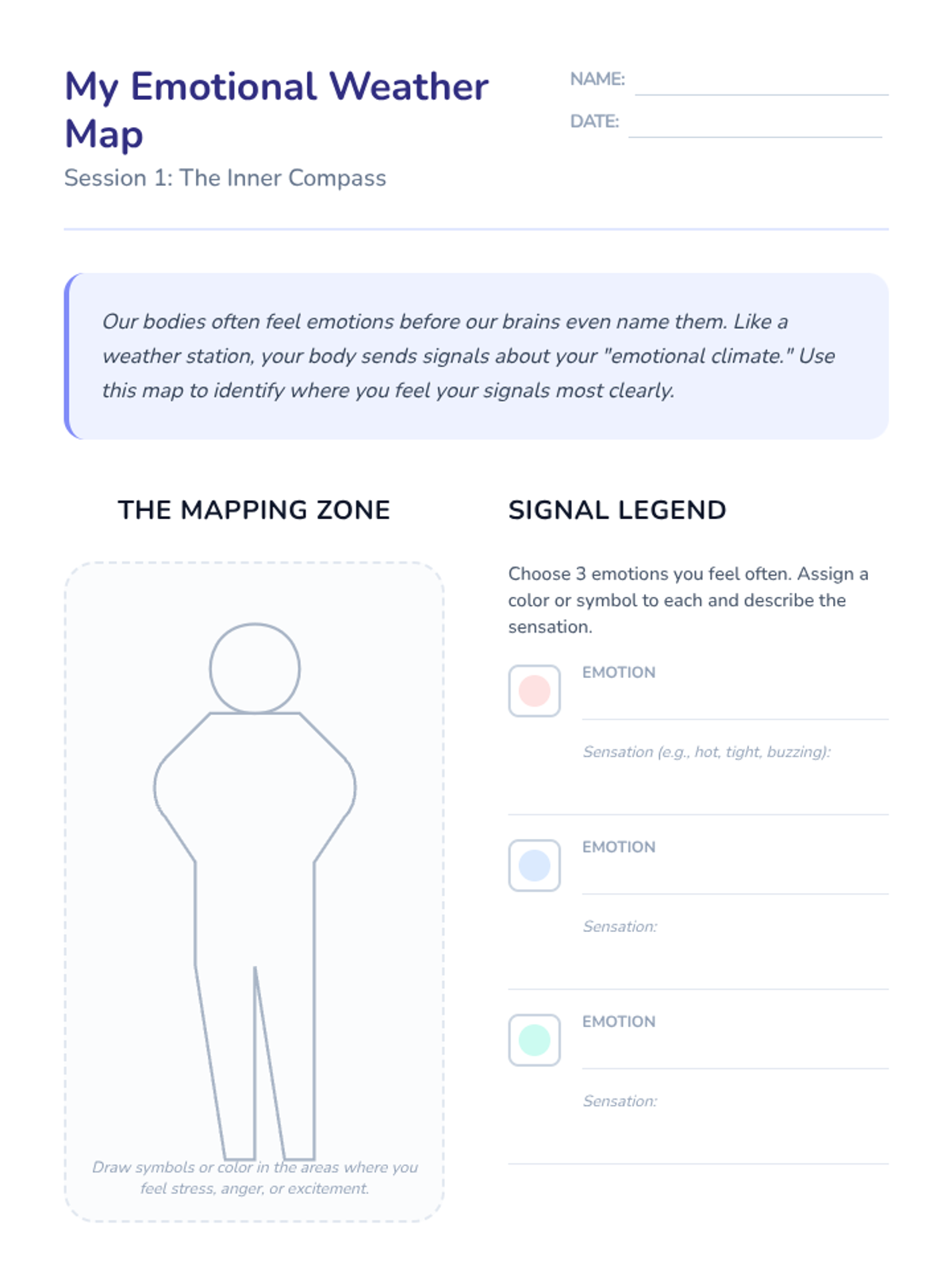
A student worksheet for identifying physiological signals of emotions. It features a body mapping activity where students color or mark areas where they feel physical sensations associated with specific feelings.
1/13
A vibrant and engaging slide deck for Kindergarteners to explore rhythm, tempo, and movement through visual prompts and animal challenges.
1/16
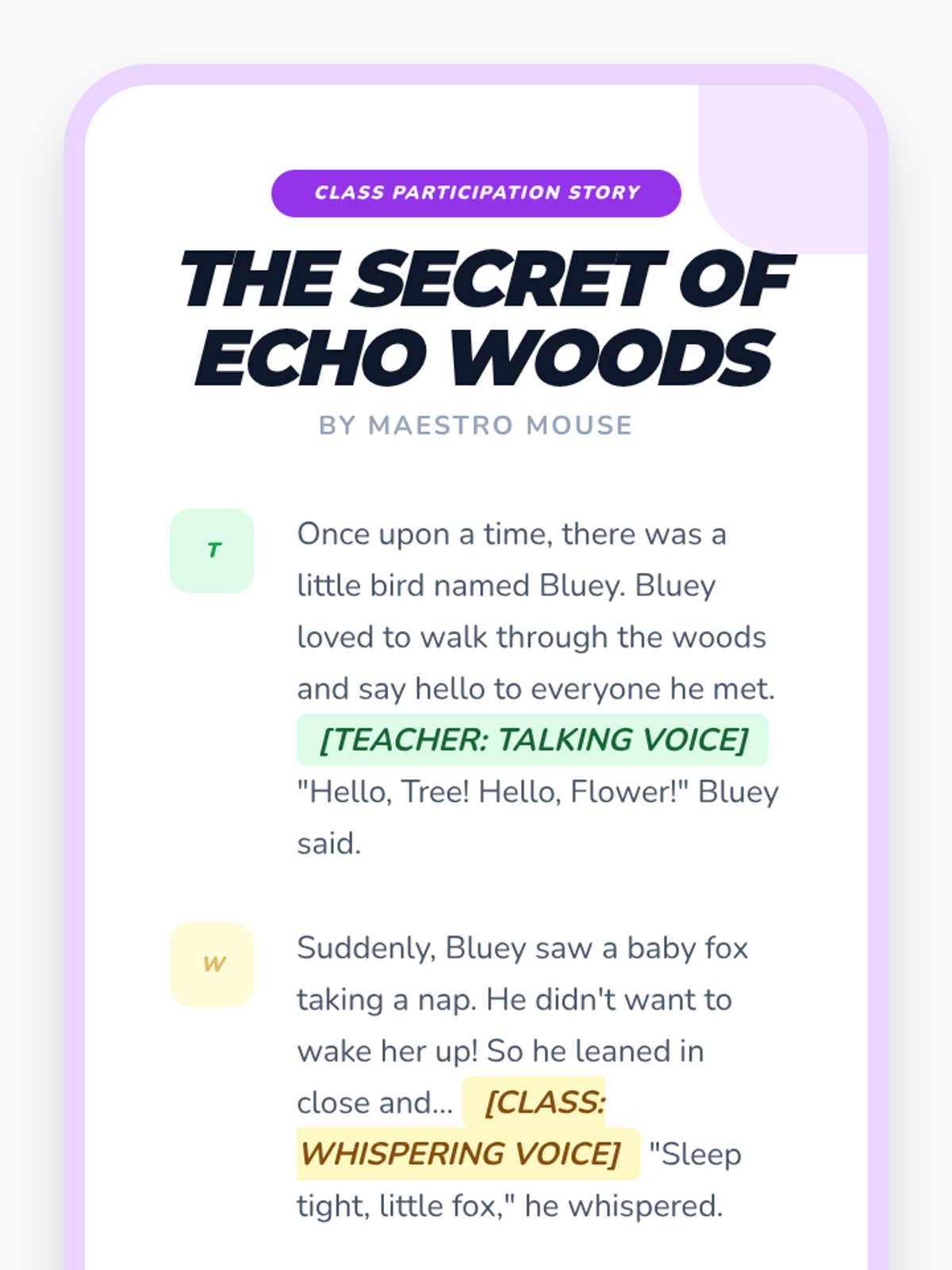
An interactive story for Kindergarten music class where students participate by using different voice types (speaking, singing, whispering, calling) as the narrative progresses.
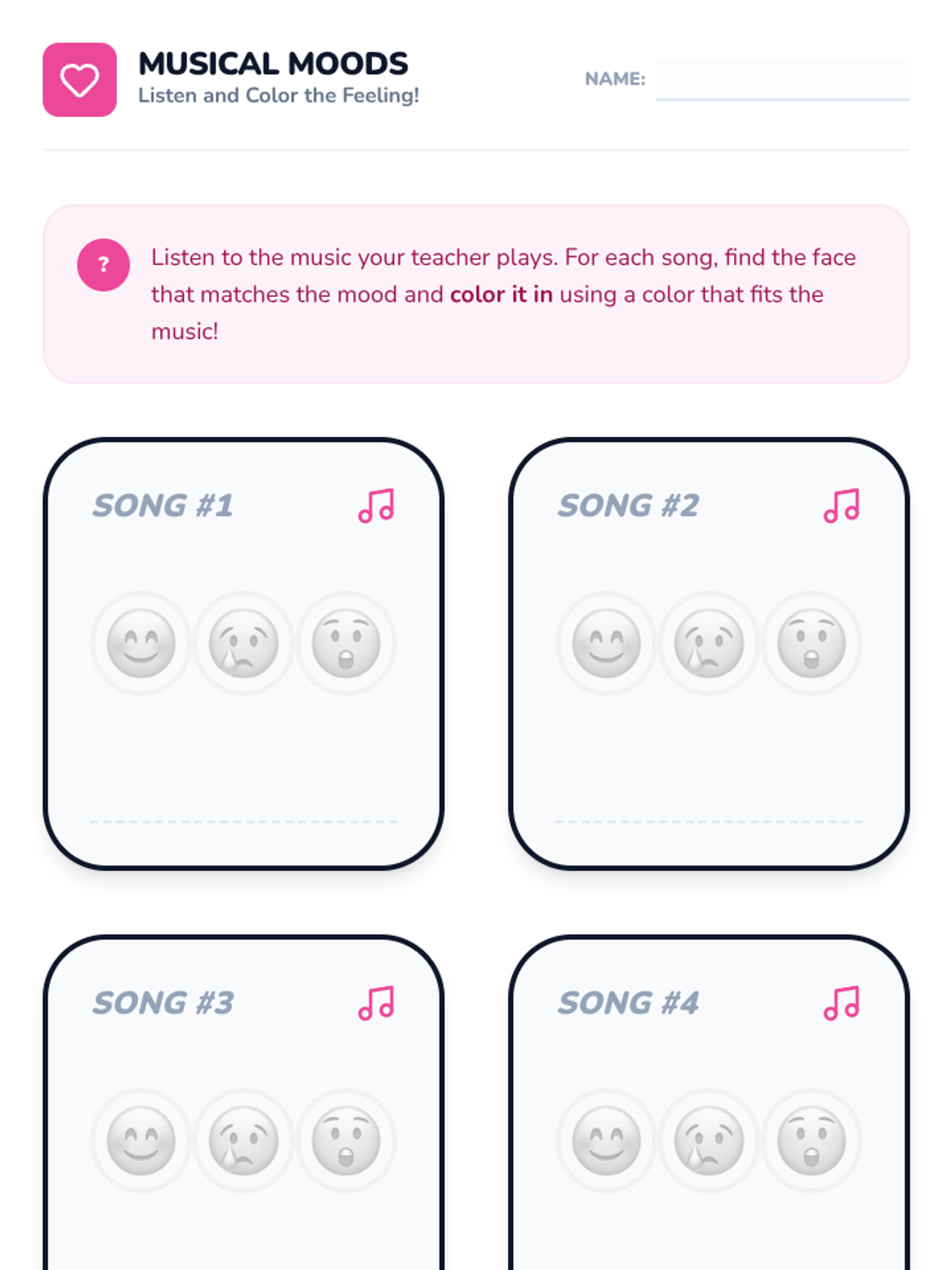
A visual worksheet for Kindergarteners to identify musical moods by coloring emoji faces and associating colors with sounds.
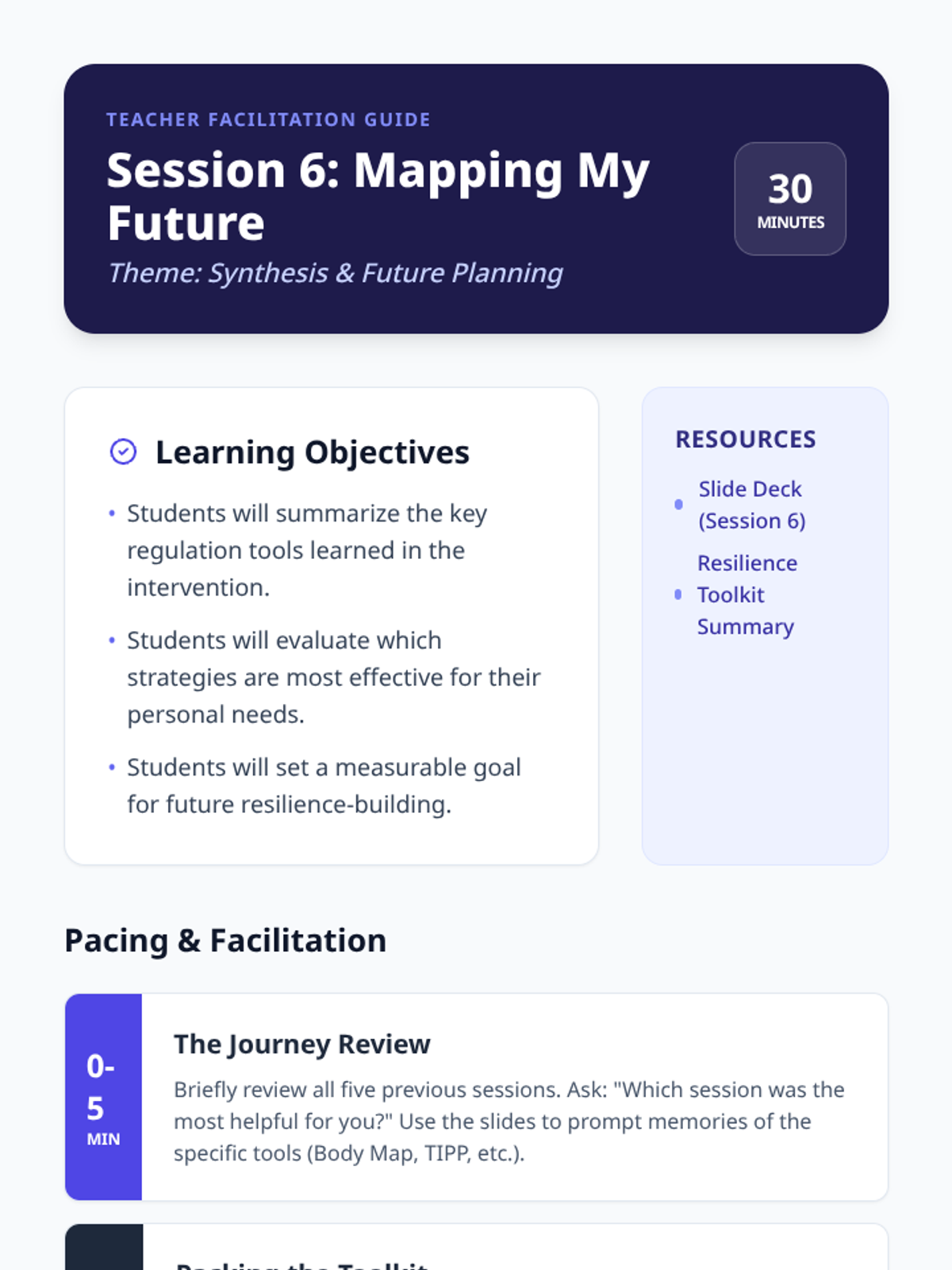
Final facilitation guide for Session 6. Provides instructions for synthesizing the 6-week program, helping students select their best tools, and planning for long-term maintenance of skills.
Engaging slide deck for Kindergarteners explaining the conductor's role, the baton, and simple signals for volume and start/stop.
A student worksheet for analyzing the 'Me at the zoo' video and planning their own impromptu classroom report, including a self-reflection tally for filler words.
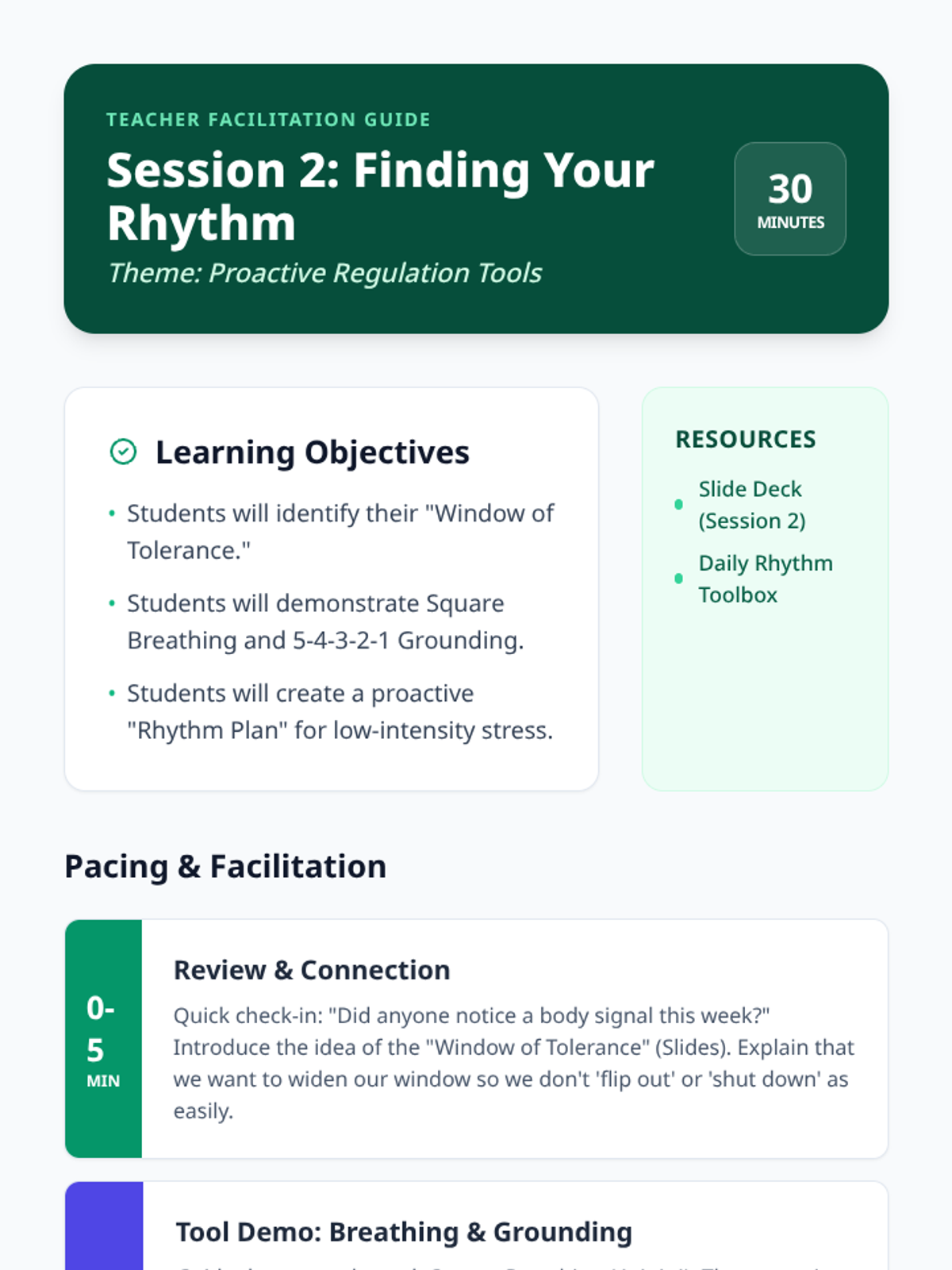
Teacher-facing facilitation guide for Session 2. Includes pacing, demonstration instructions for regulation tools, and a trauma-informed tip regarding breathing exercises.
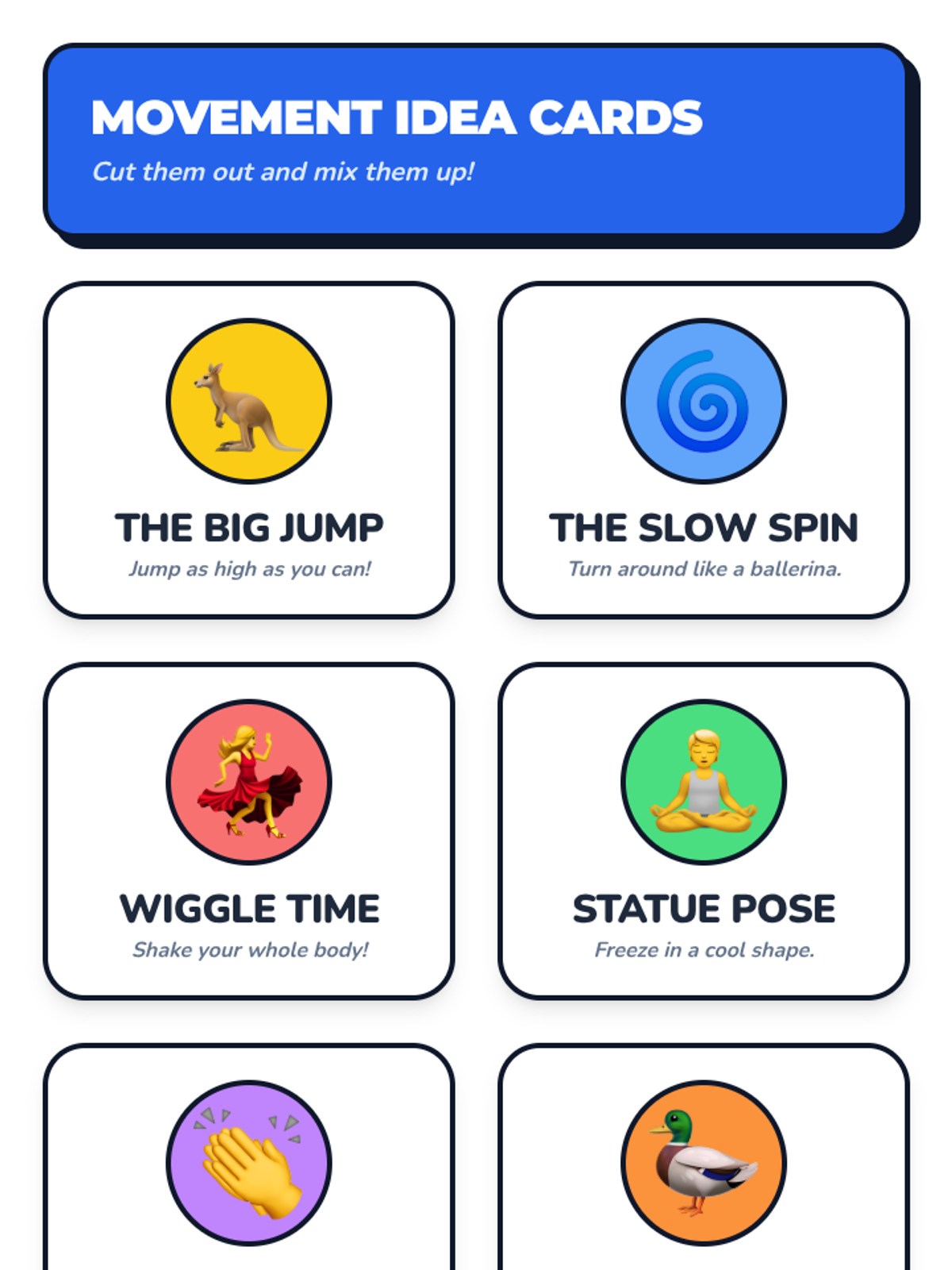
Movement prompt cards for Kindergarteners to use in their choreography, featuring fun emojis and simple descriptions.
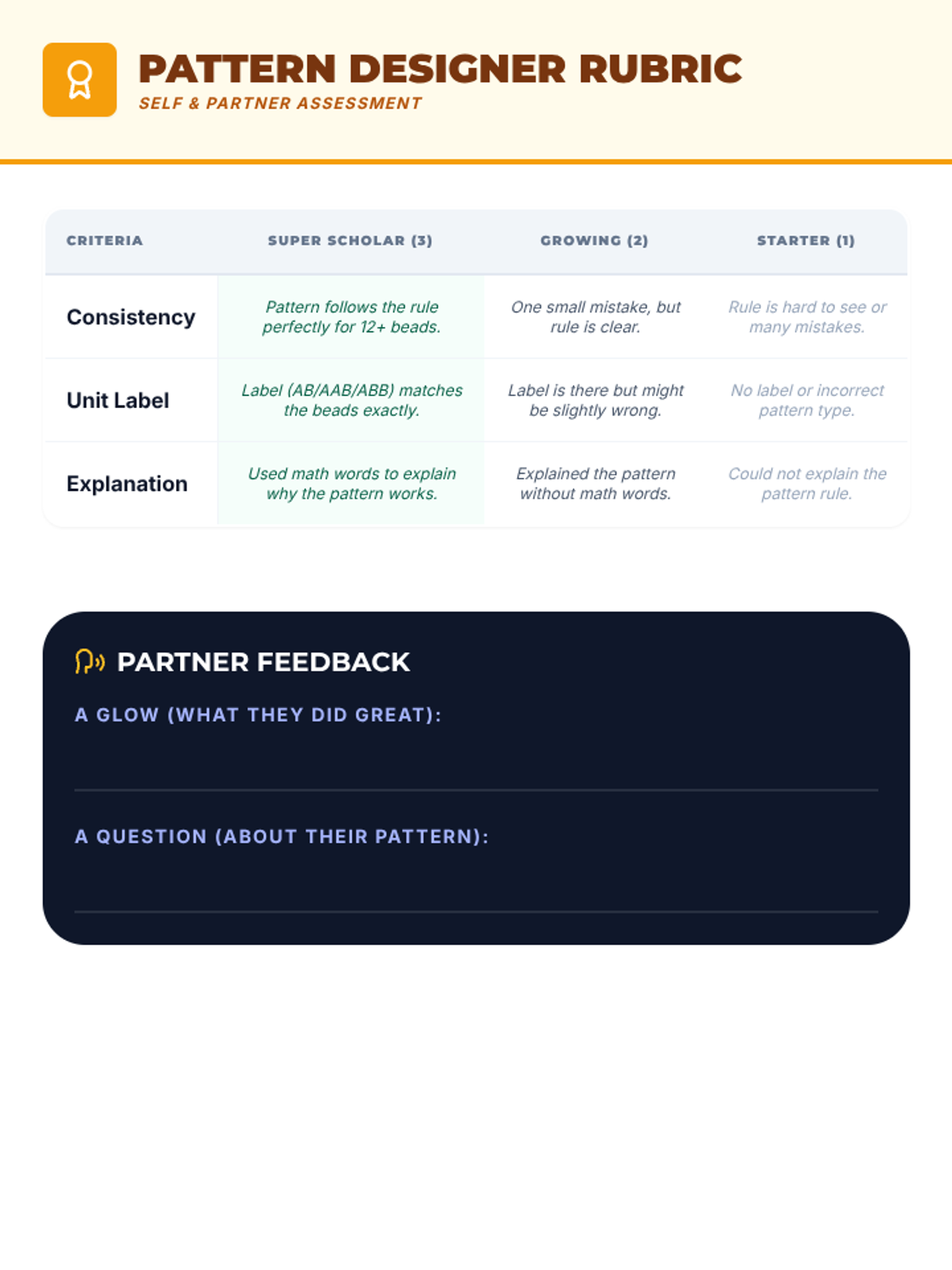
A mini-rubric for evaluating pattern bracelets, covering consistency, labeling, and explanation. Designed for both teacher and peer assessment.
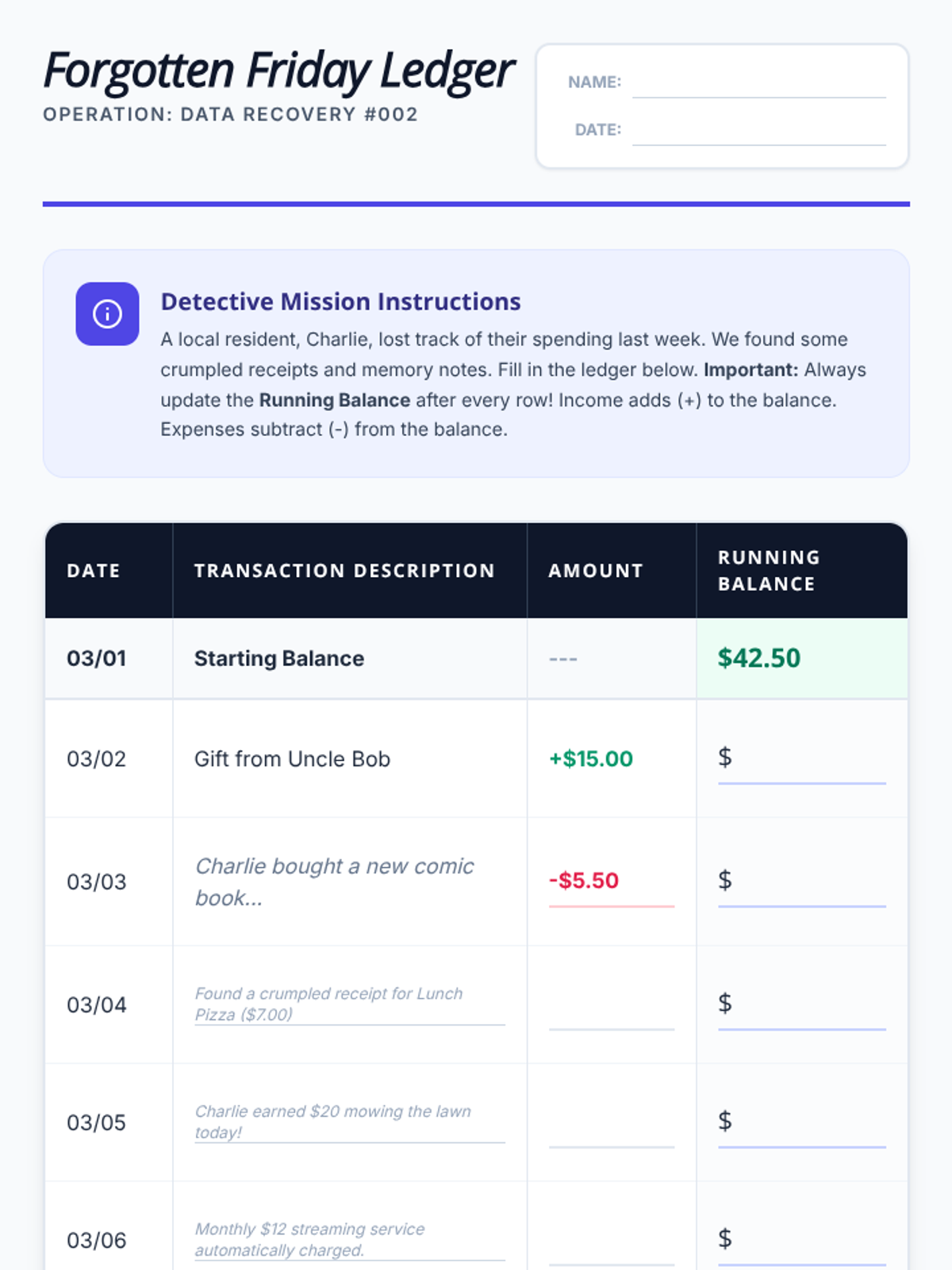
A ledger recording activity where students fill in transaction details and calculate a running balance based on Charlie's weekly activity.
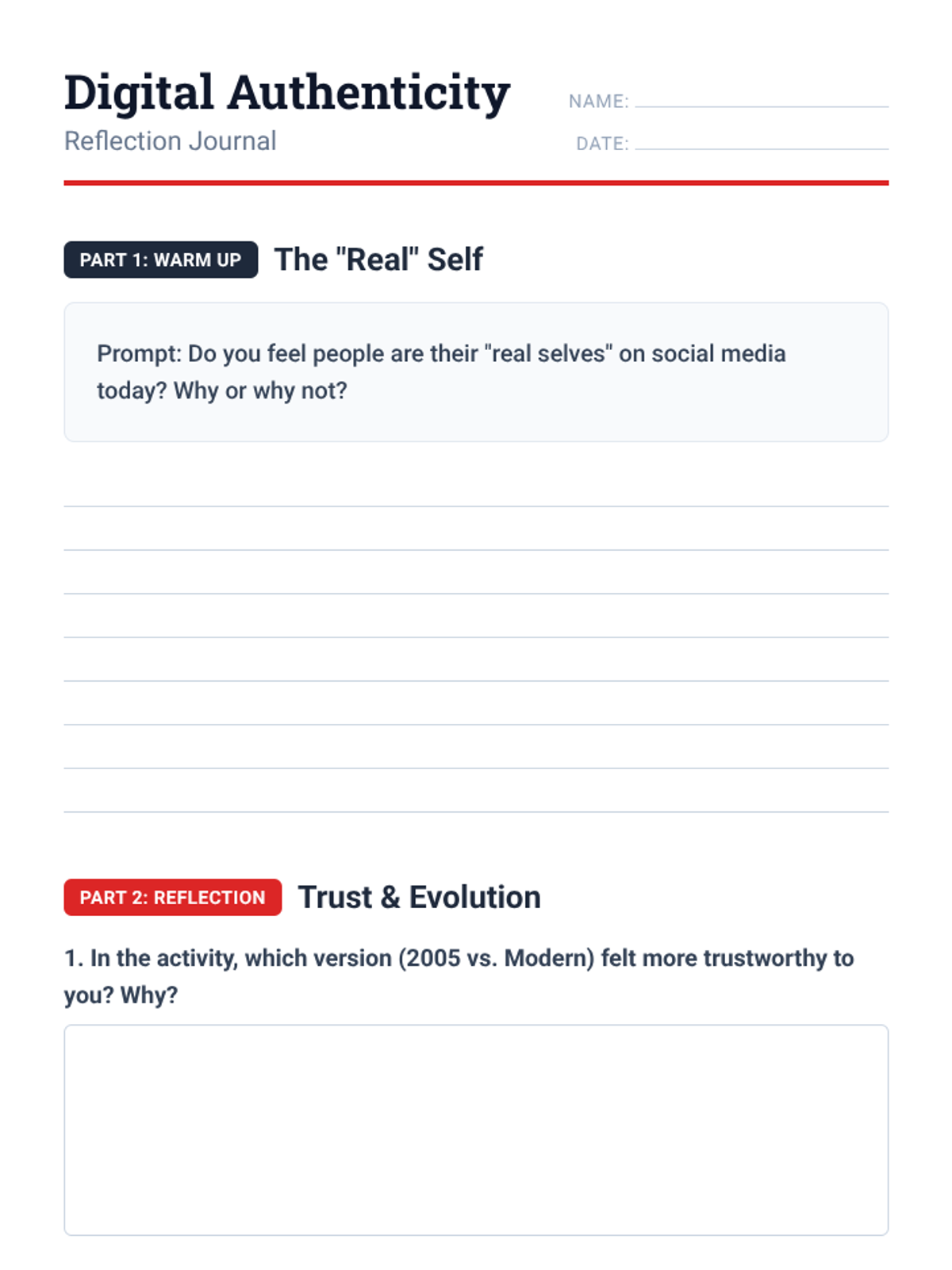
A worksheet containing the warm-up journal prompt and post-activity reflection questions regarding authenticity in social media.
Introductory slide deck for Session 1, establishing the 'Inner Compass' theme. It explains the purpose of the intervention and teaches students how to recognize physiological signals of emotions using the 'Emotions as Data' framework.
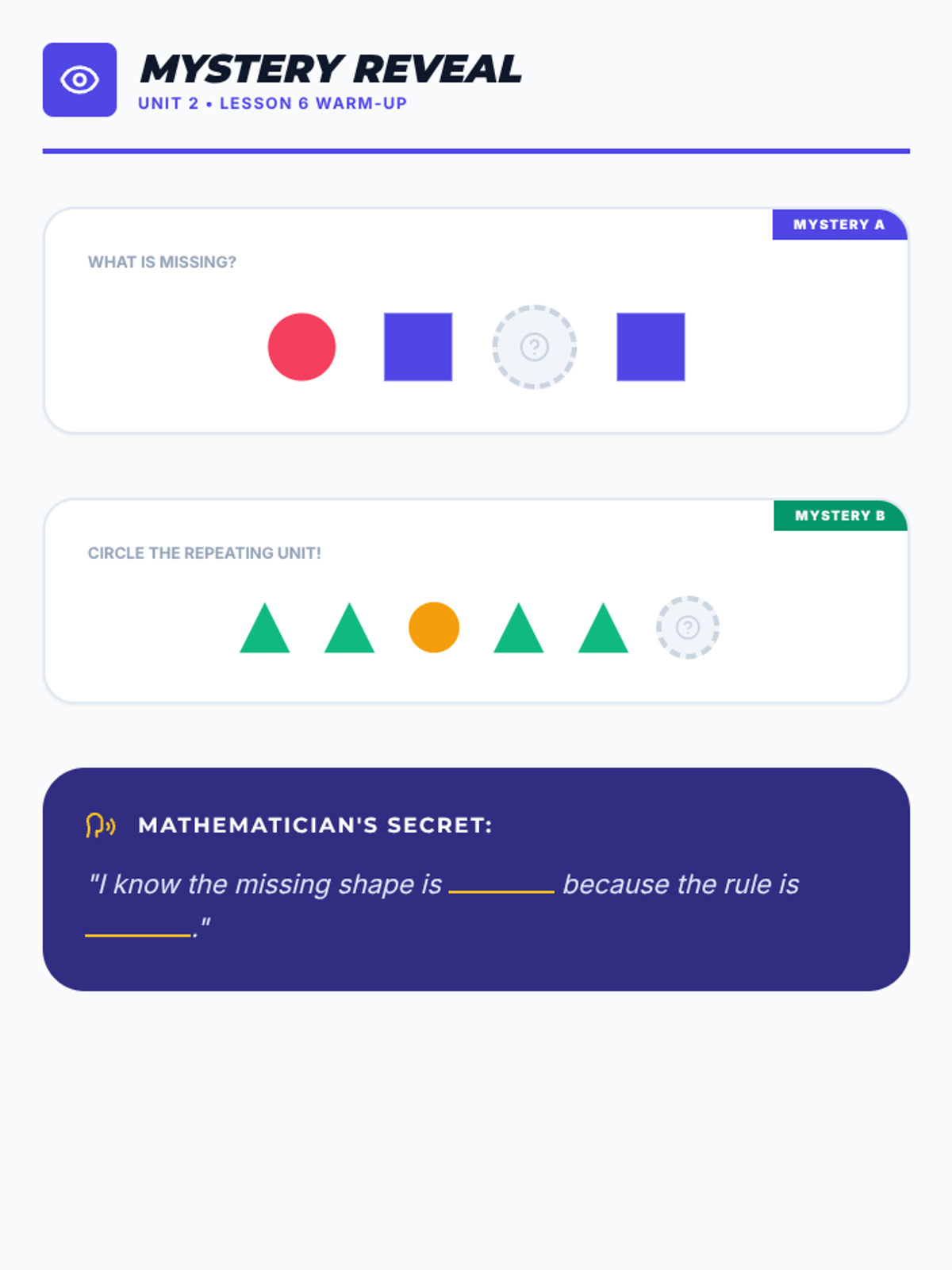
A visual warm-up activity featuring two 'mystery' patterns with missing elements. Designed to spark discussion about identifying and justifying pattern rules.
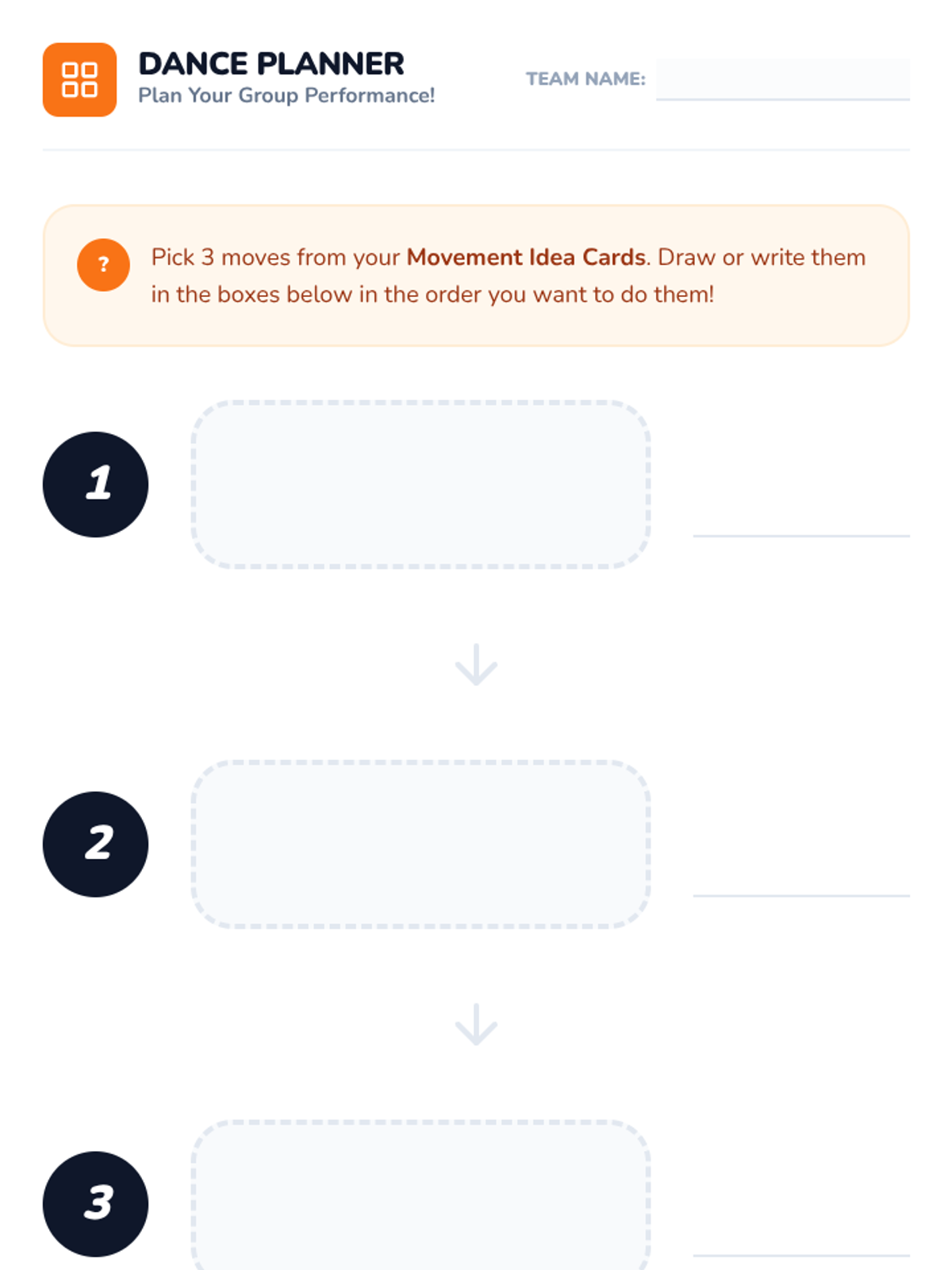
A visual planning worksheet for Kindergarteners to sequence their dance moves for the group performance.
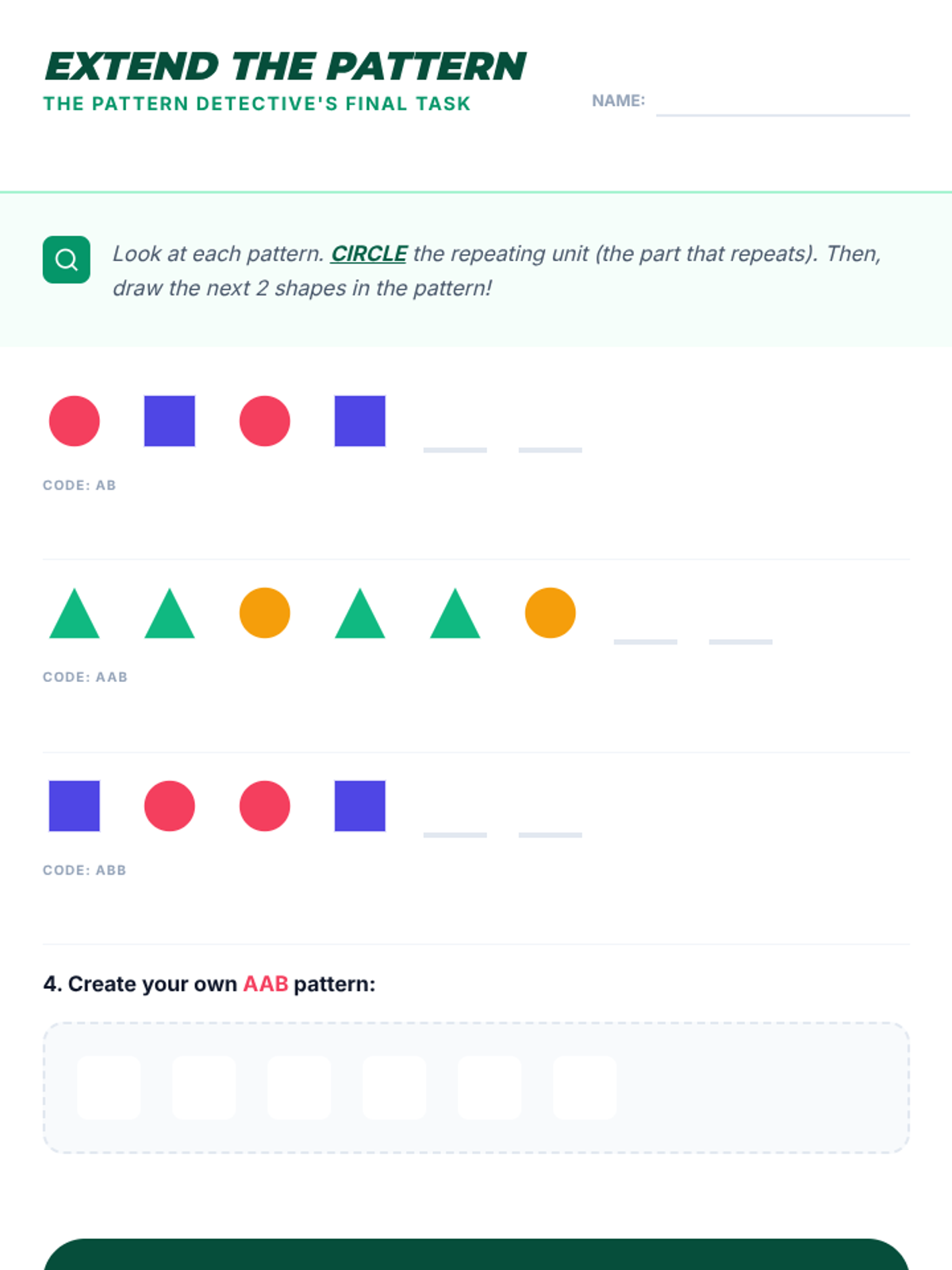
A worksheet for students to identify repeating units and extend AB, AAB, and ABB shape patterns. Includes a creative section for students to design their own AAB pattern.
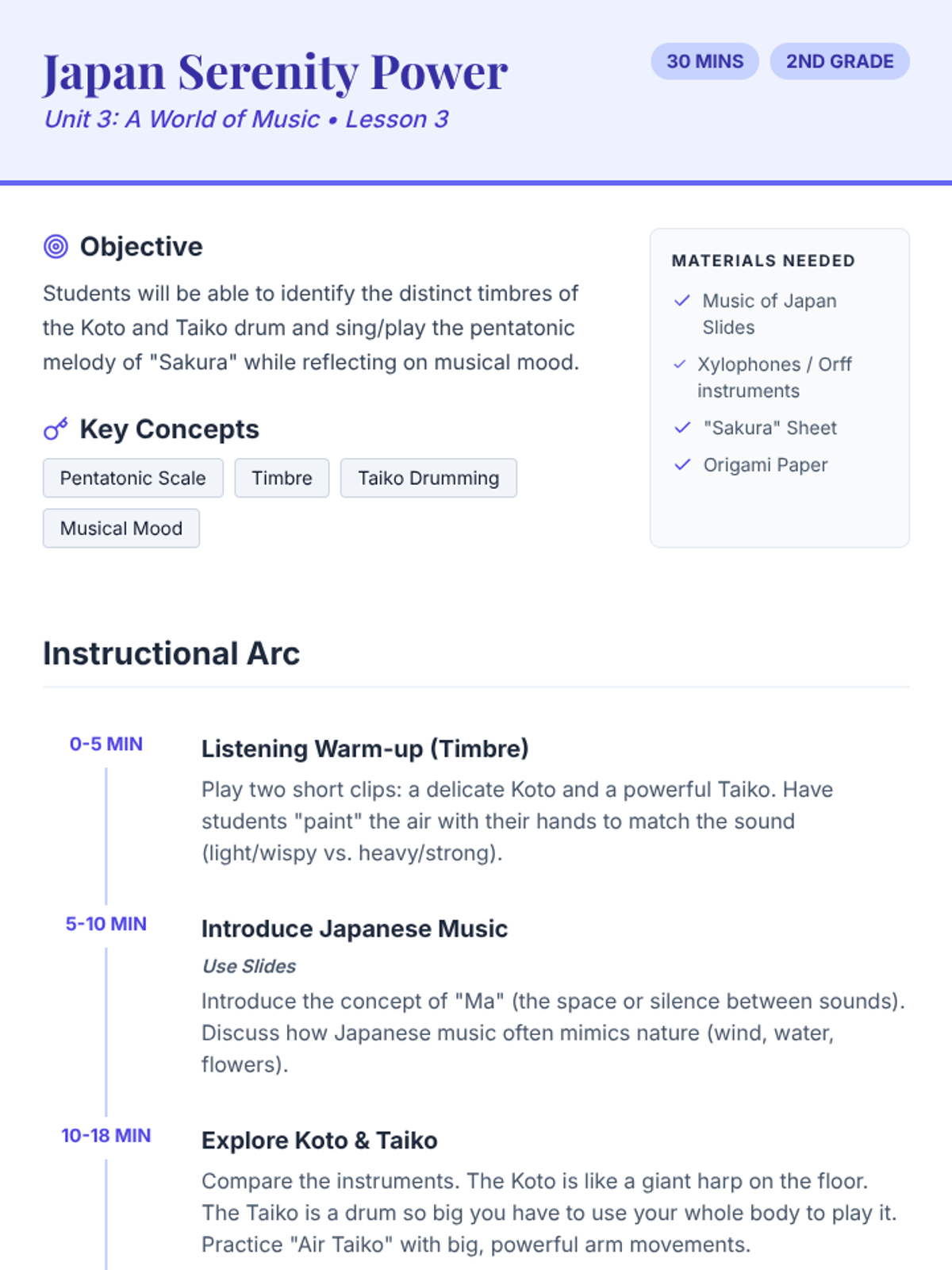
Lesson plan for Lesson 3, focusing on the sounds of the koto and taiko, the pentatonic scale through the song 'Sakura', and the concept of musical mood.
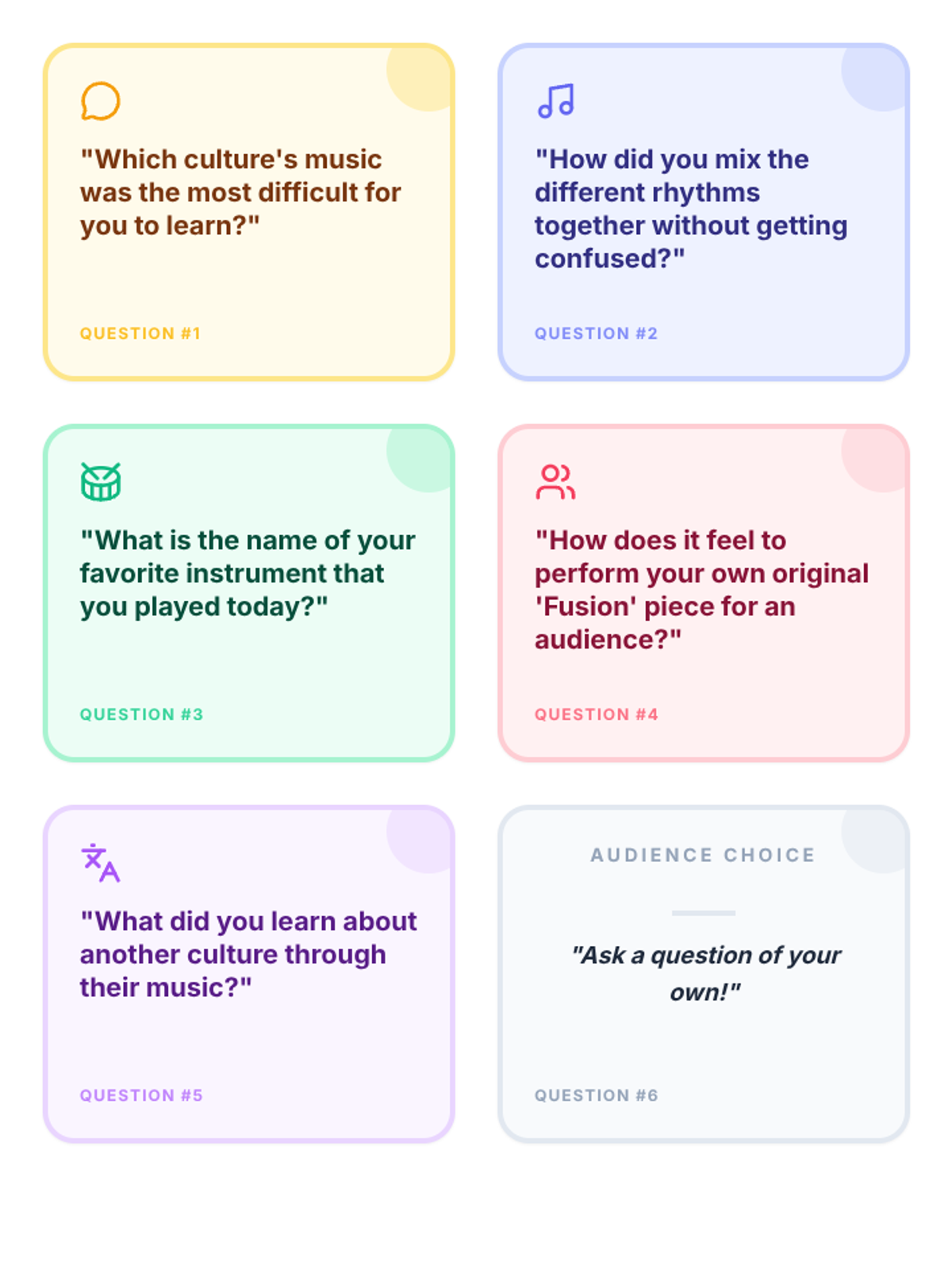
Discussion prompt cards for the post-performance Q&A session, designed to encourage meaningful interaction between the audience and the student performers.
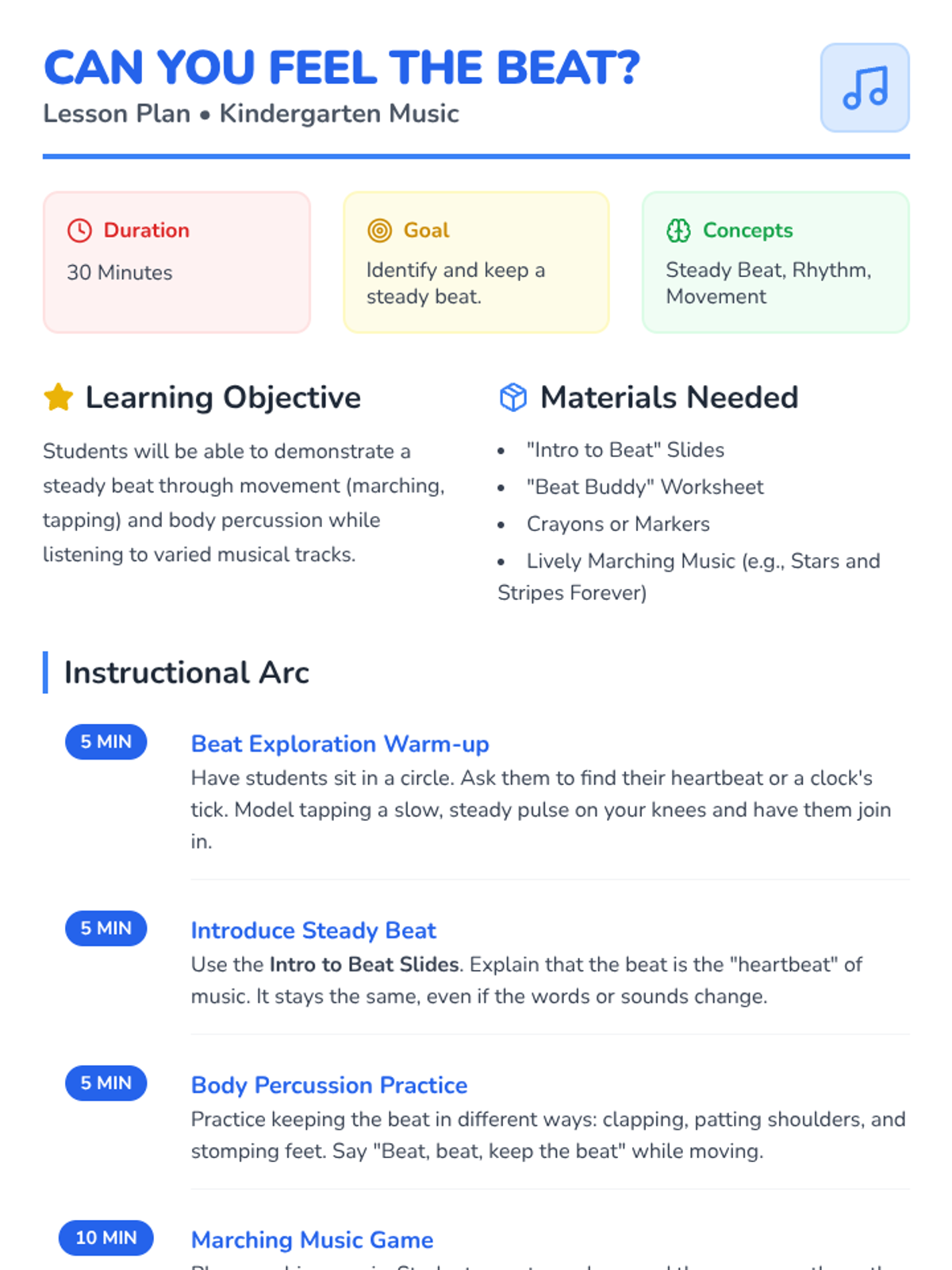
Comprehensive lesson plan for Lesson 1: Can You Feel the Beat? including instructional steps, objectives, and differentiation strategies.
A structured student worksheet featuring three distinct case studies on digital permanence, encouraging debate between individual privacy and historical preservation. Includes space for group verdicts and a summary 'permanence scale' activity.