A short high school warm-up focused on developing media literacy skills by identifying bias, loaded language, and selective data in articles about climate change.
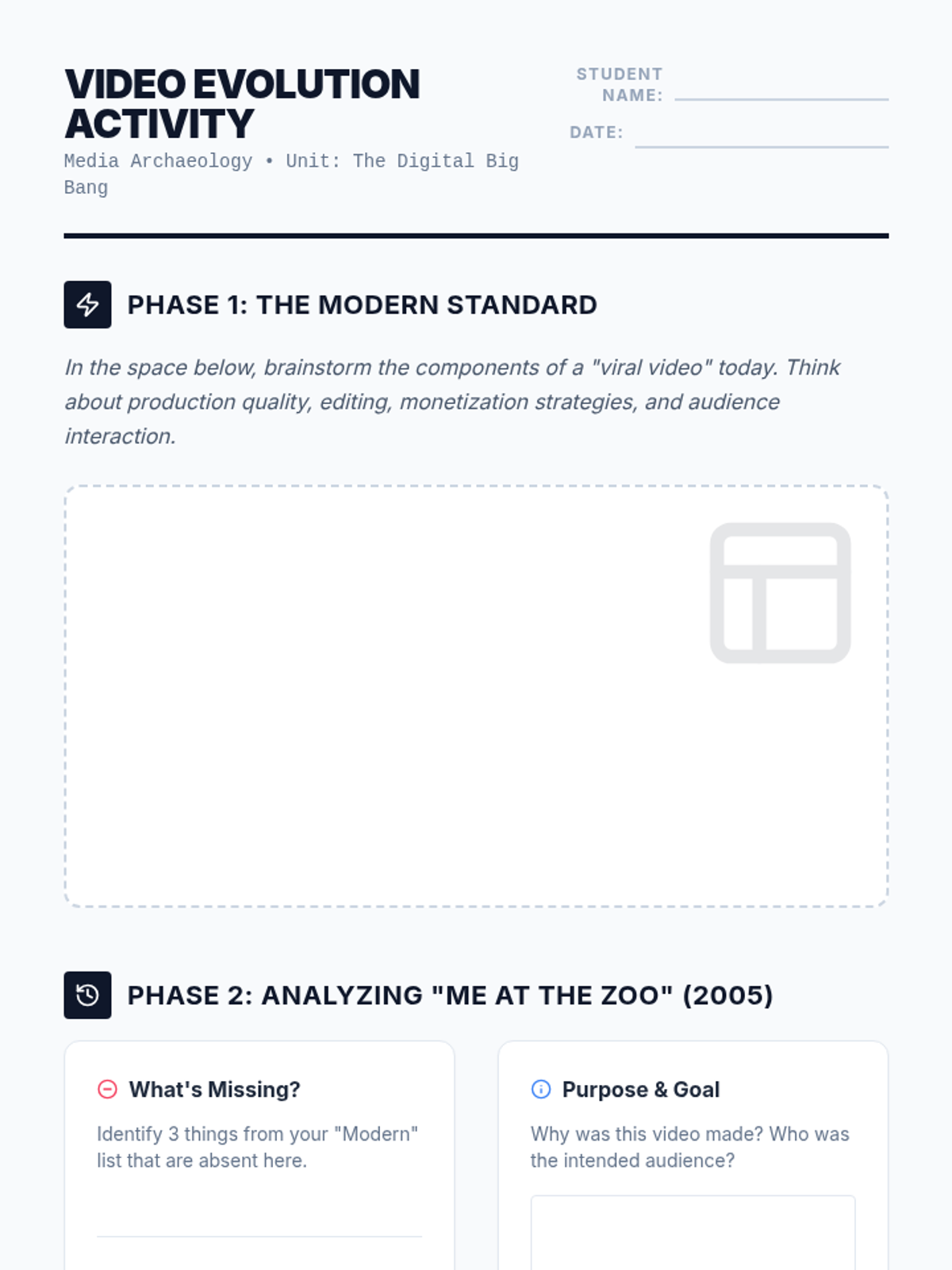
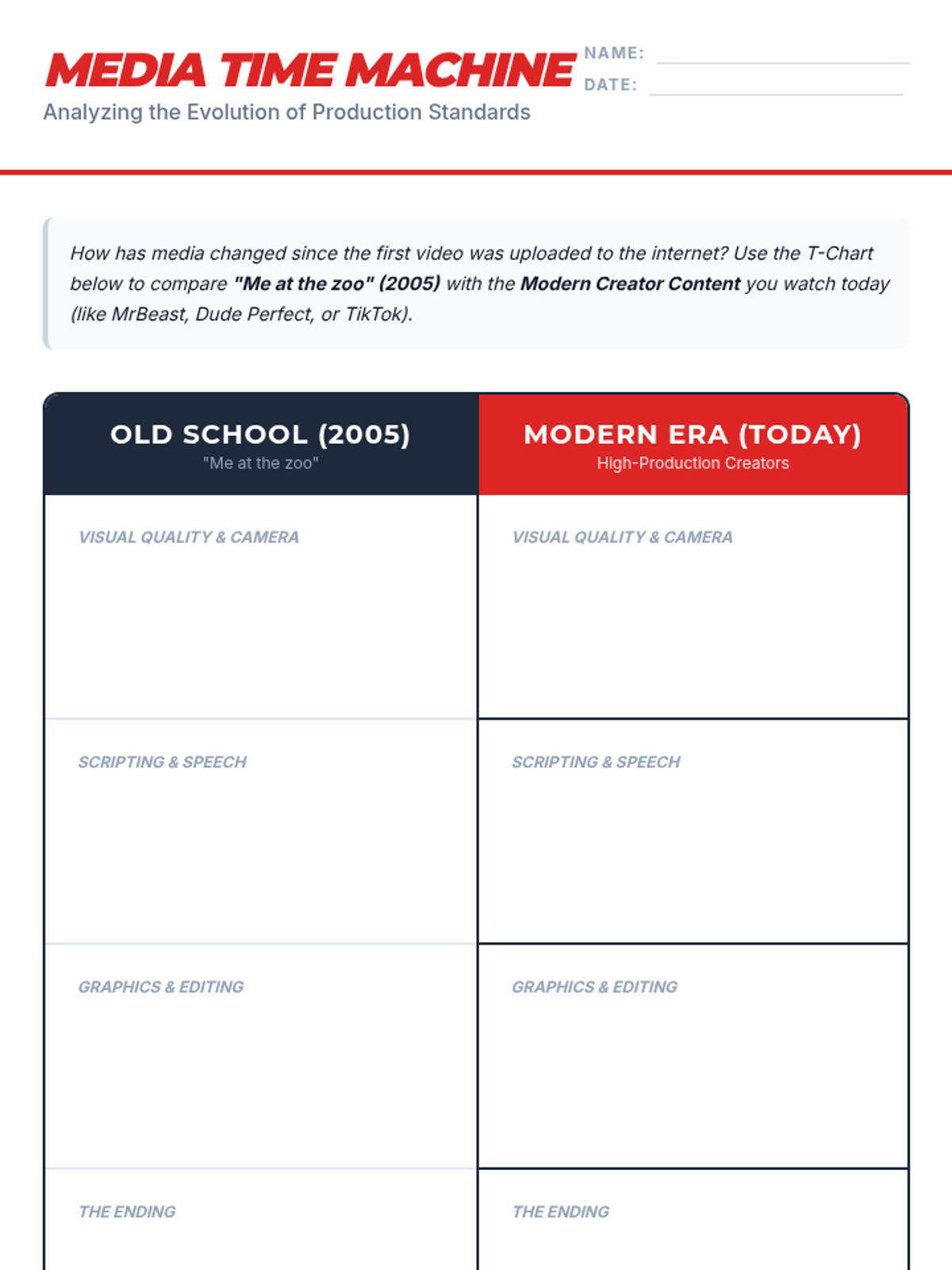
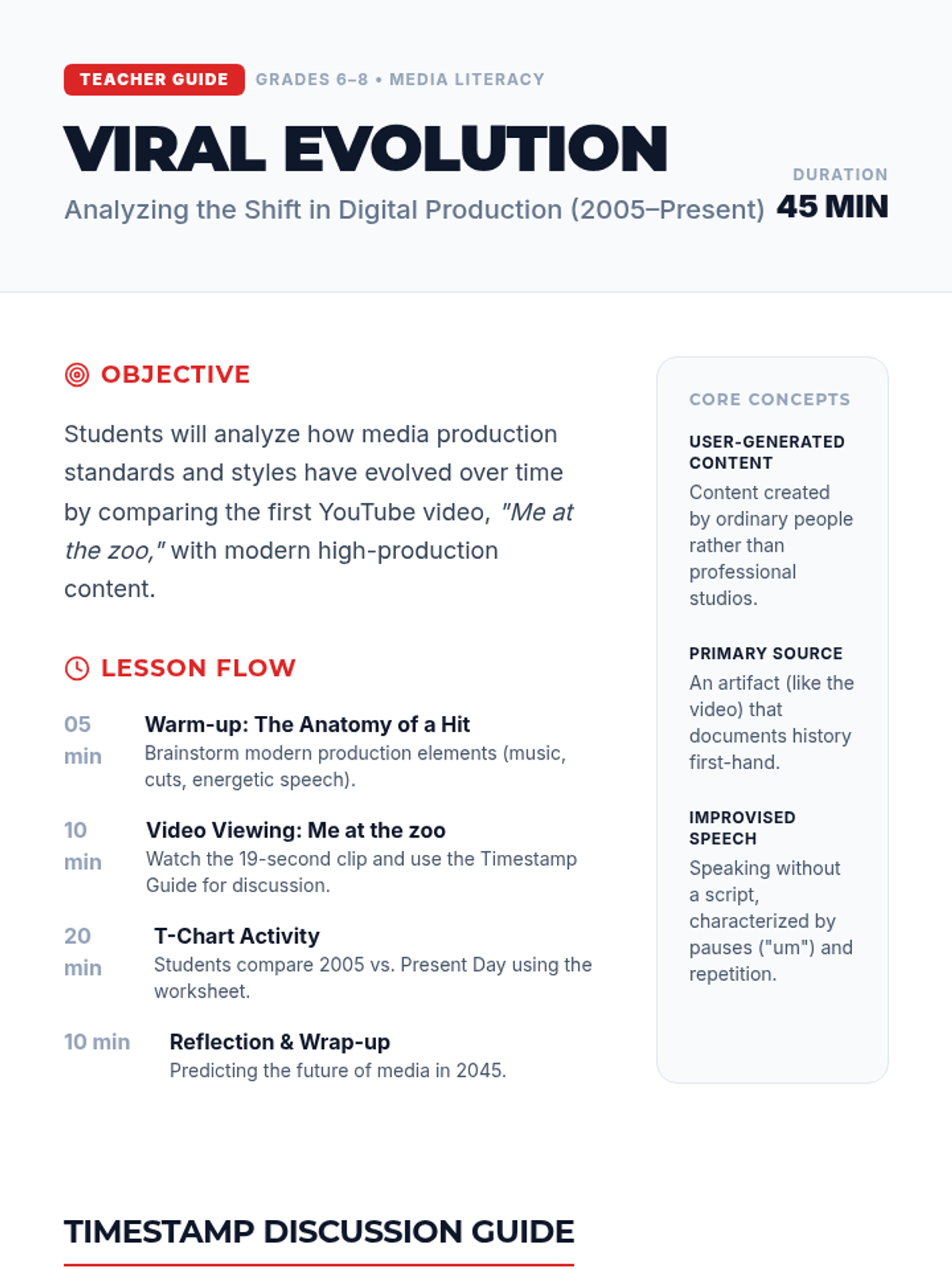
A lesson where students compare the first YouTube video 'Me at the zoo' with modern content to understand the evolution of social media.
1/16
Students explore the concept of digital primary sources by analyzing the first YouTube video and creating their own digital time capsule storyboard.
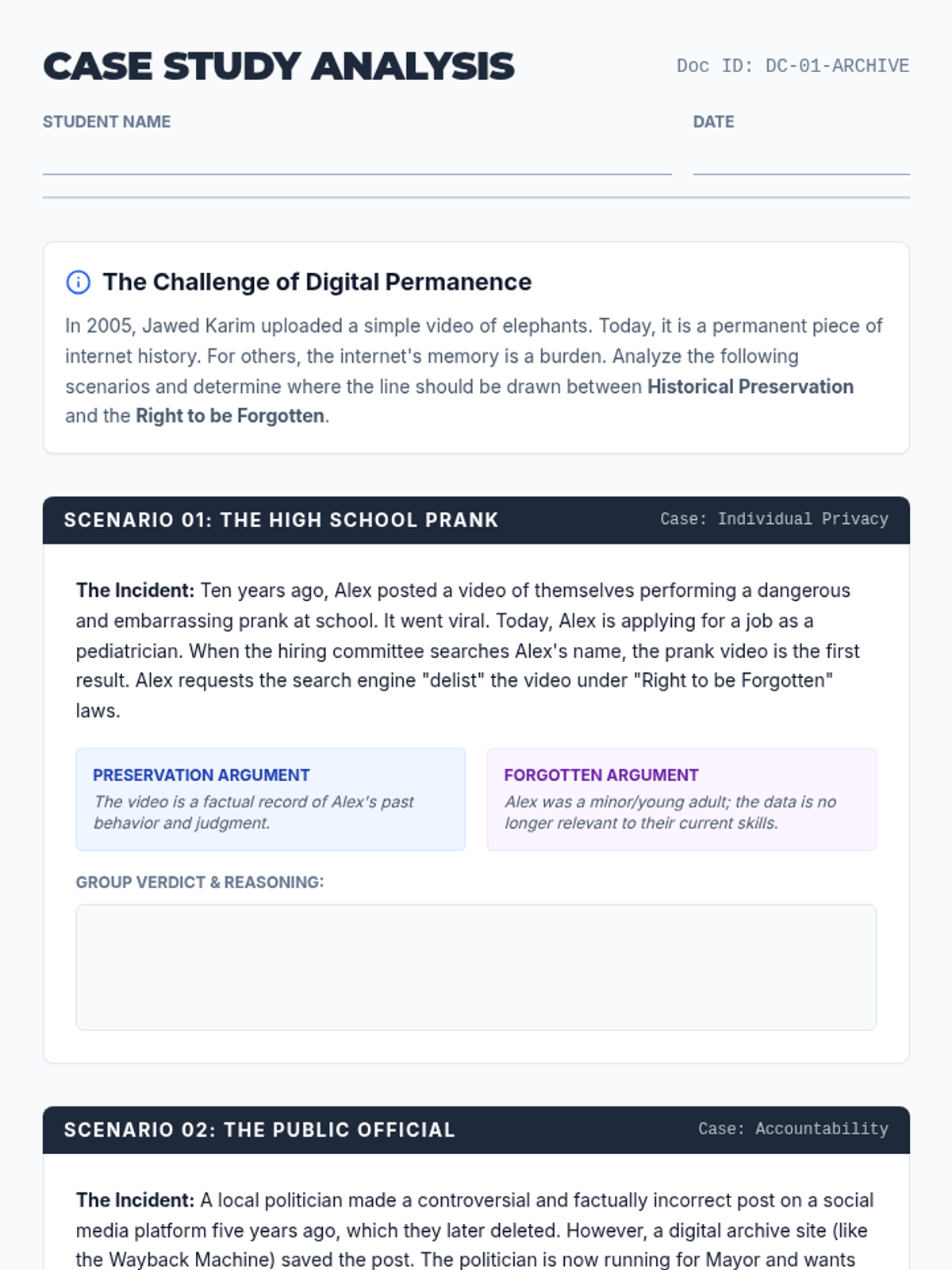
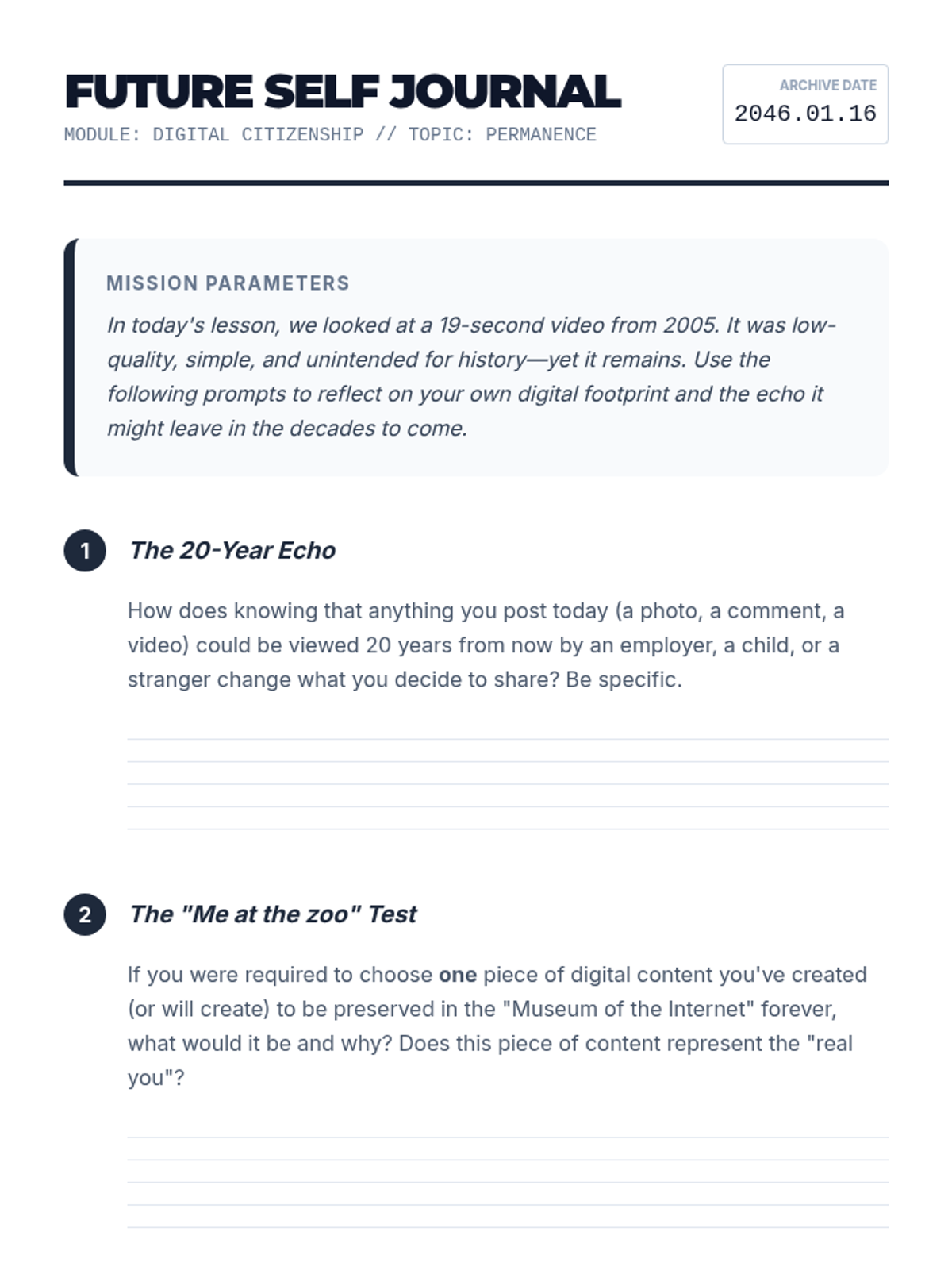
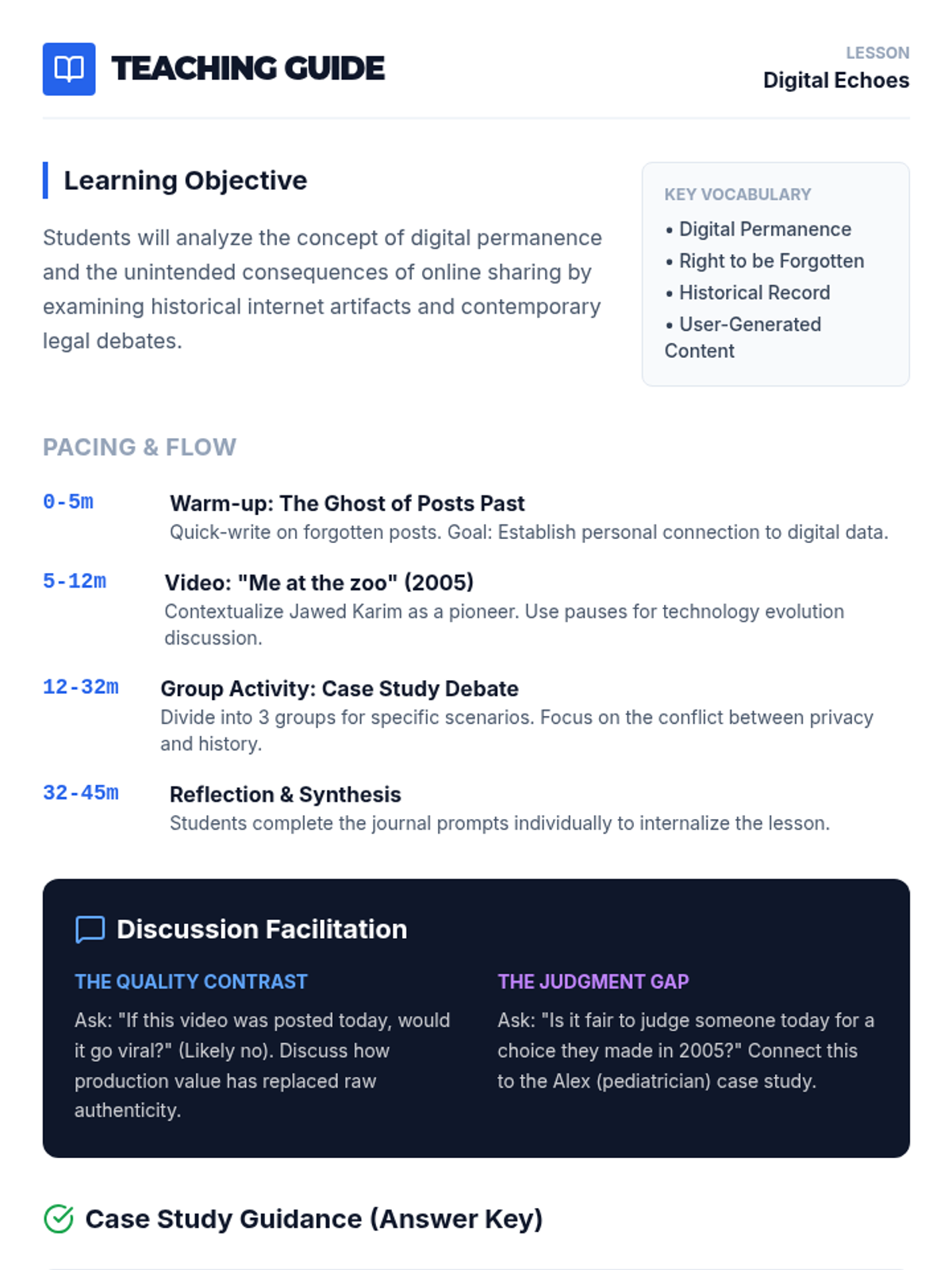
A lesson where high school students analyze the first YouTube video, "Me at the zoo," as a historical primary source to understand the evolution of digital media, authenticity, and the attention economy.
A lesson regarding the evaluation of primary sources in the digital age, focusing on the first YouTube video.
Students act as digital archaeologists to analyze 'Me at the zoo,' the first YouTube video, as a primary historical source, exploring how digital artifacts reflect their era and influence the global economy.
A lesson exploring the psychological shift in social media from documenting the world to documenting the self, anchoring on the first YouTube video from 2005.
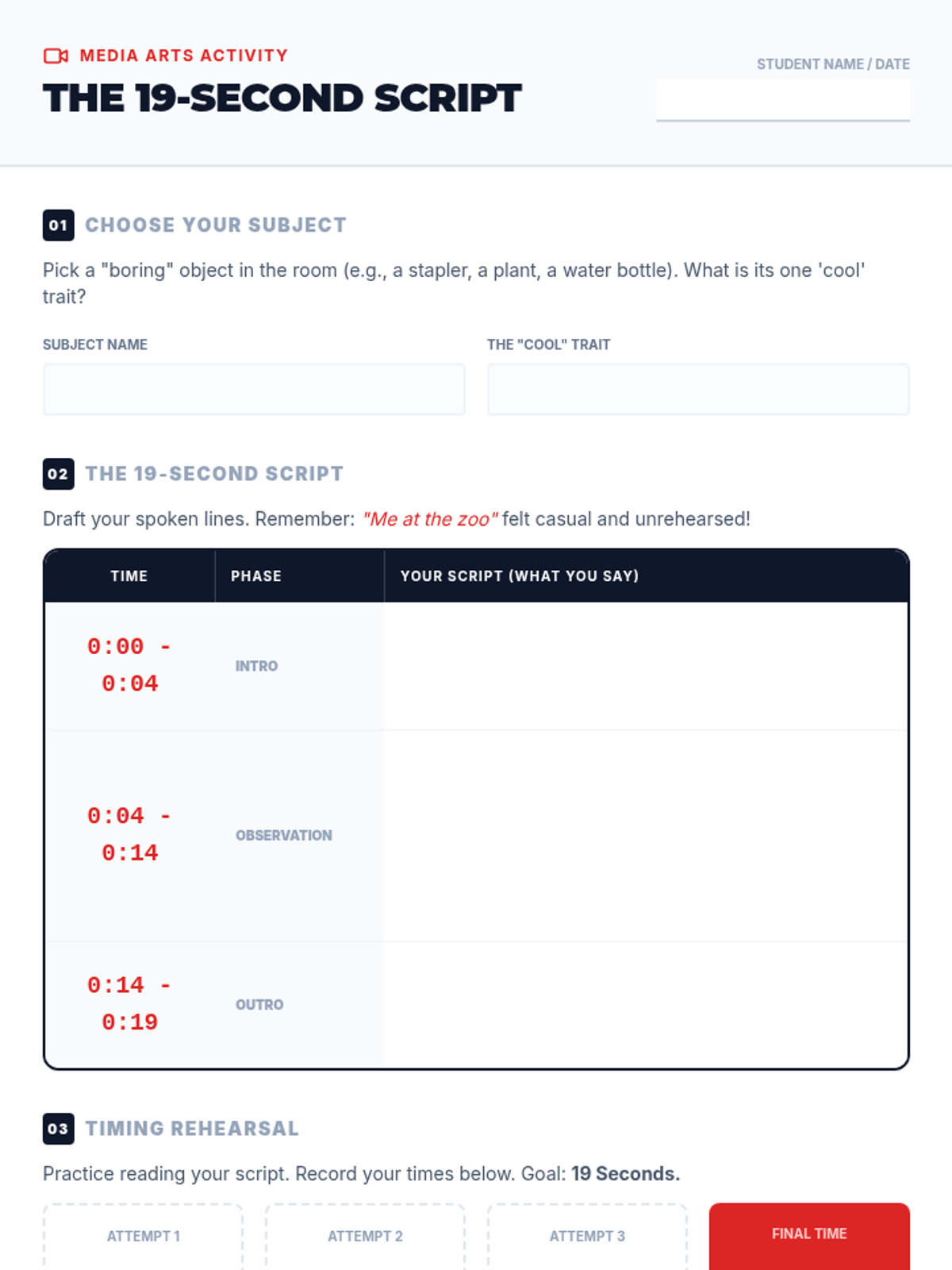
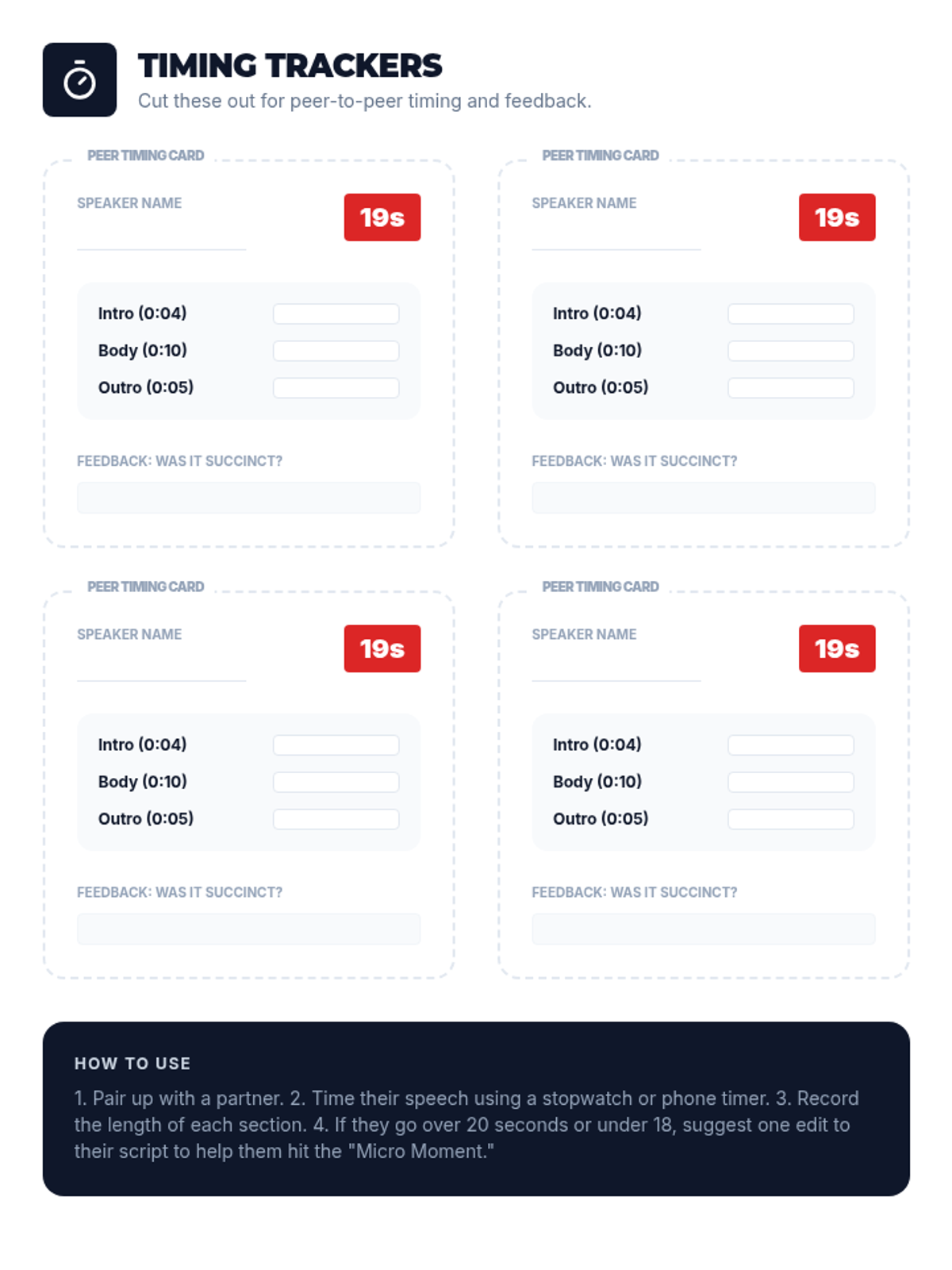
A 45-minute High School English/Public Speaking lesson focused on impromptu speaking techniques, brevity, and script revision, using the first YouTube video "Me at the zoo" as a case study.
A middle school lesson plan exploring how digital media has evolved from the authentic, unscripted early days of the internet to the highly produced content of today, centered around analyzing the first YouTube video 'Me at the zoo'.
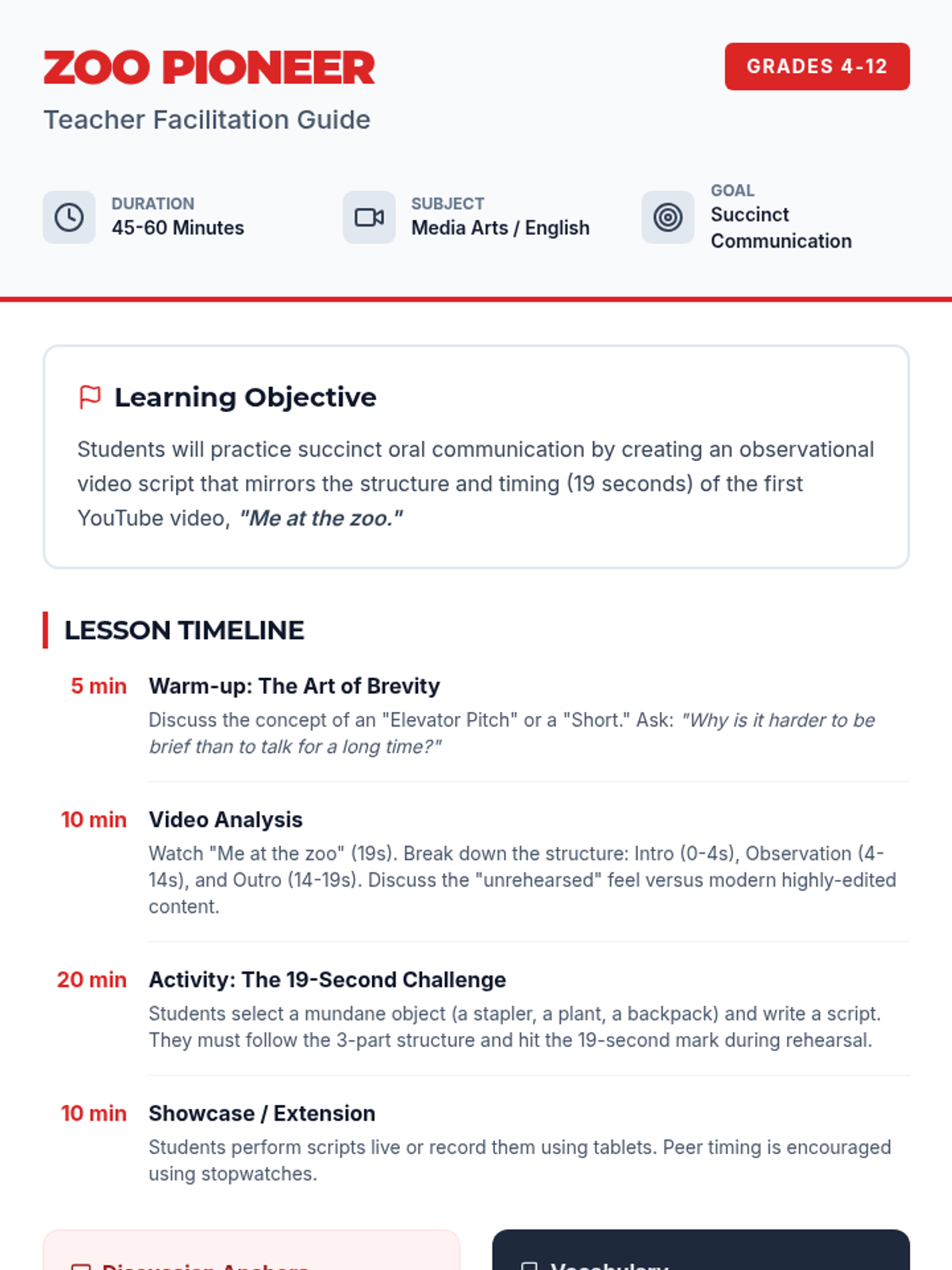
A high school journalism lesson focused on concise storytelling and on-camera presence using a 19-second video constraint inspired by the first YouTube video.
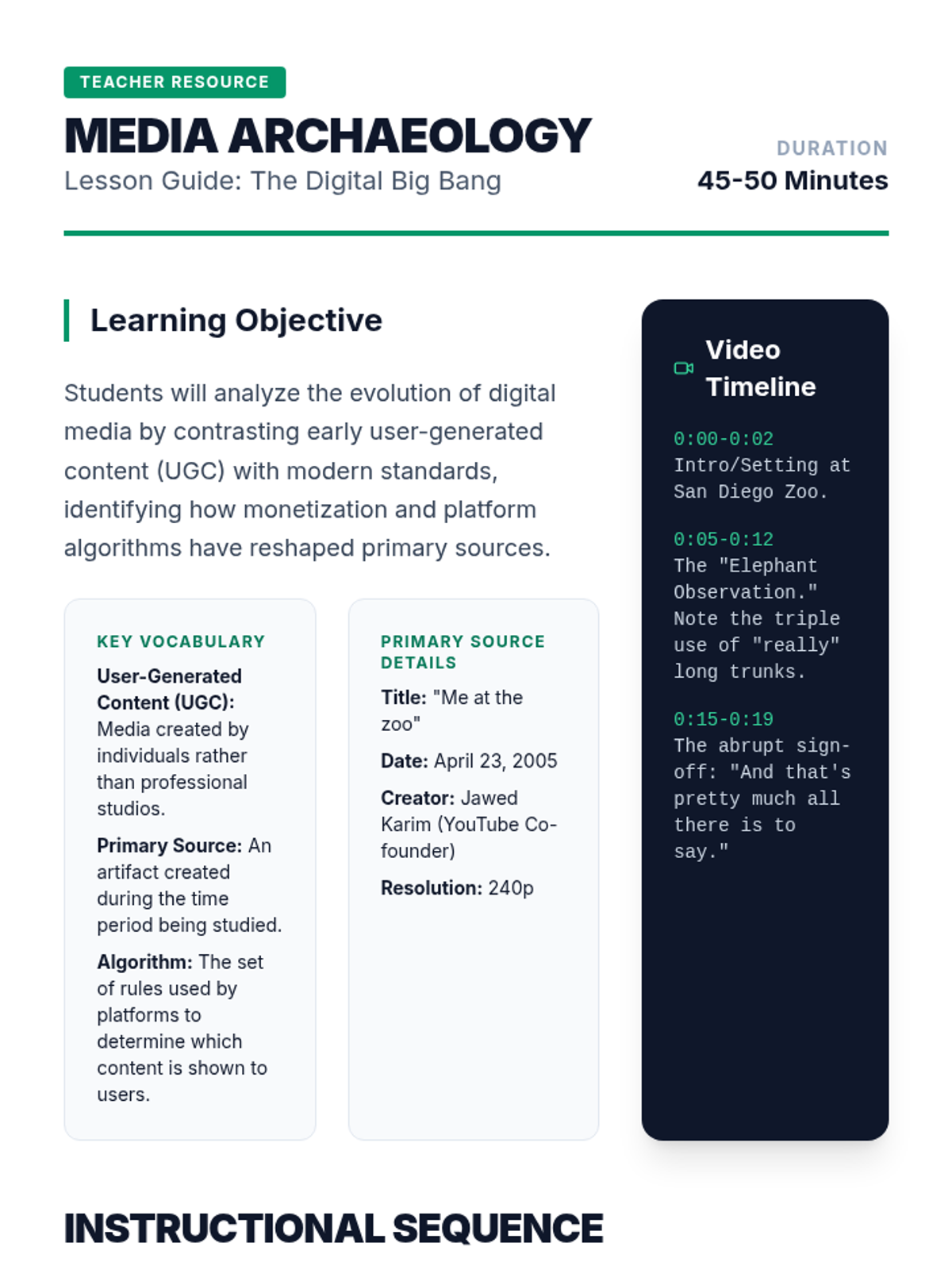
Students analyze the first YouTube video, 'Me at the zoo', as a primary source to understand the shift to User-Generated Content (UGC) and 2005 culture through a digital archaeology simulation.
A media studies lesson exploring how early platform limitations shaped internet culture, anchored by the first YouTube video 'Me at the zoo'.
A lesson for elementary students exploring the permanence of the internet through the first-ever YouTube video, 'Me at the zoo', teaching the concept of a digital footprint.
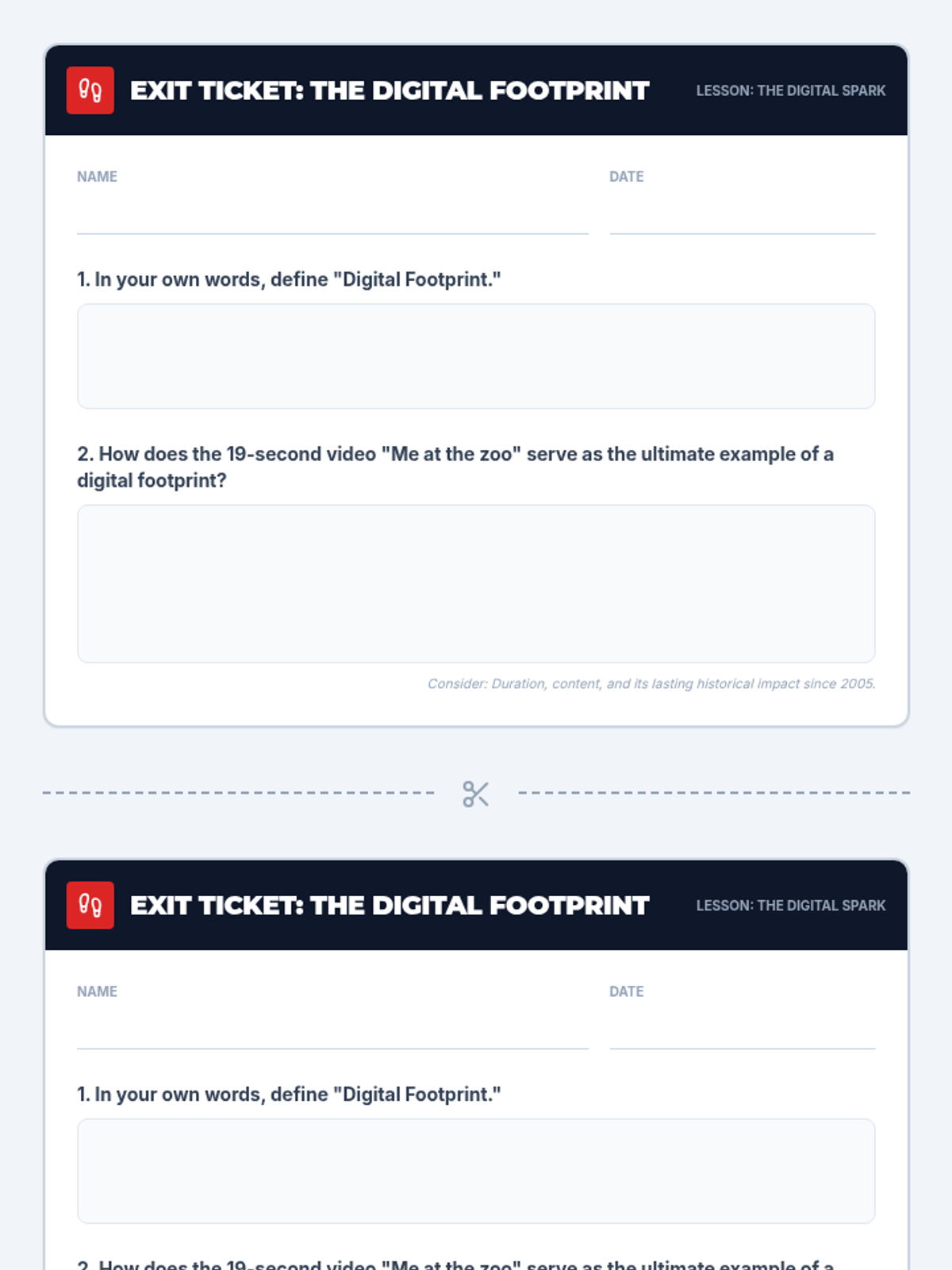
A Kindergarten to 2nd-grade lesson where students observe elephants, learn about their trunks, and practice observation skills using the historic 'Me at the zoo' video.
A lesson where students compare early digital media with modern content to understand how communication standards change, centering on the first YouTube video 'Me at the zoo'.
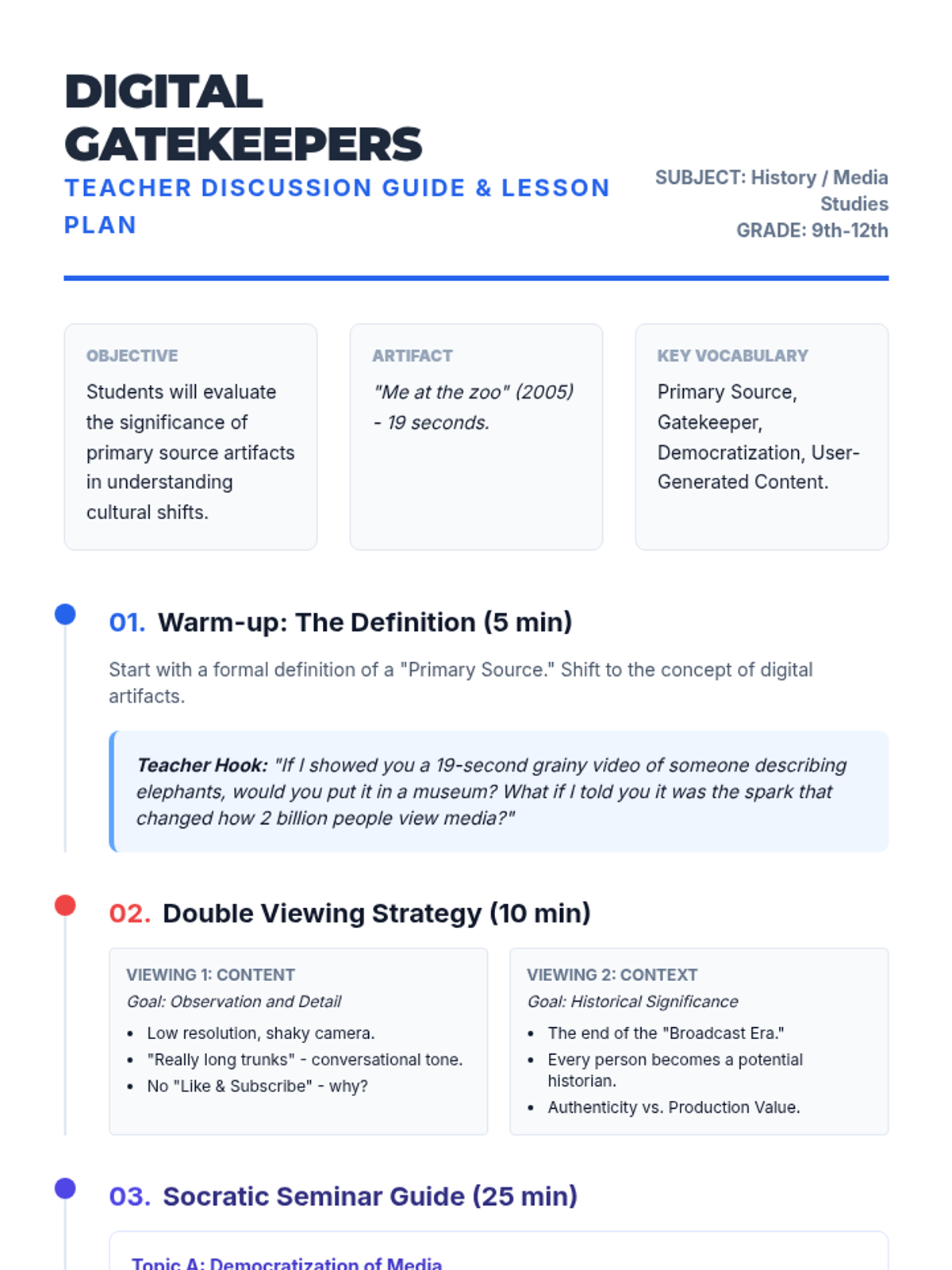
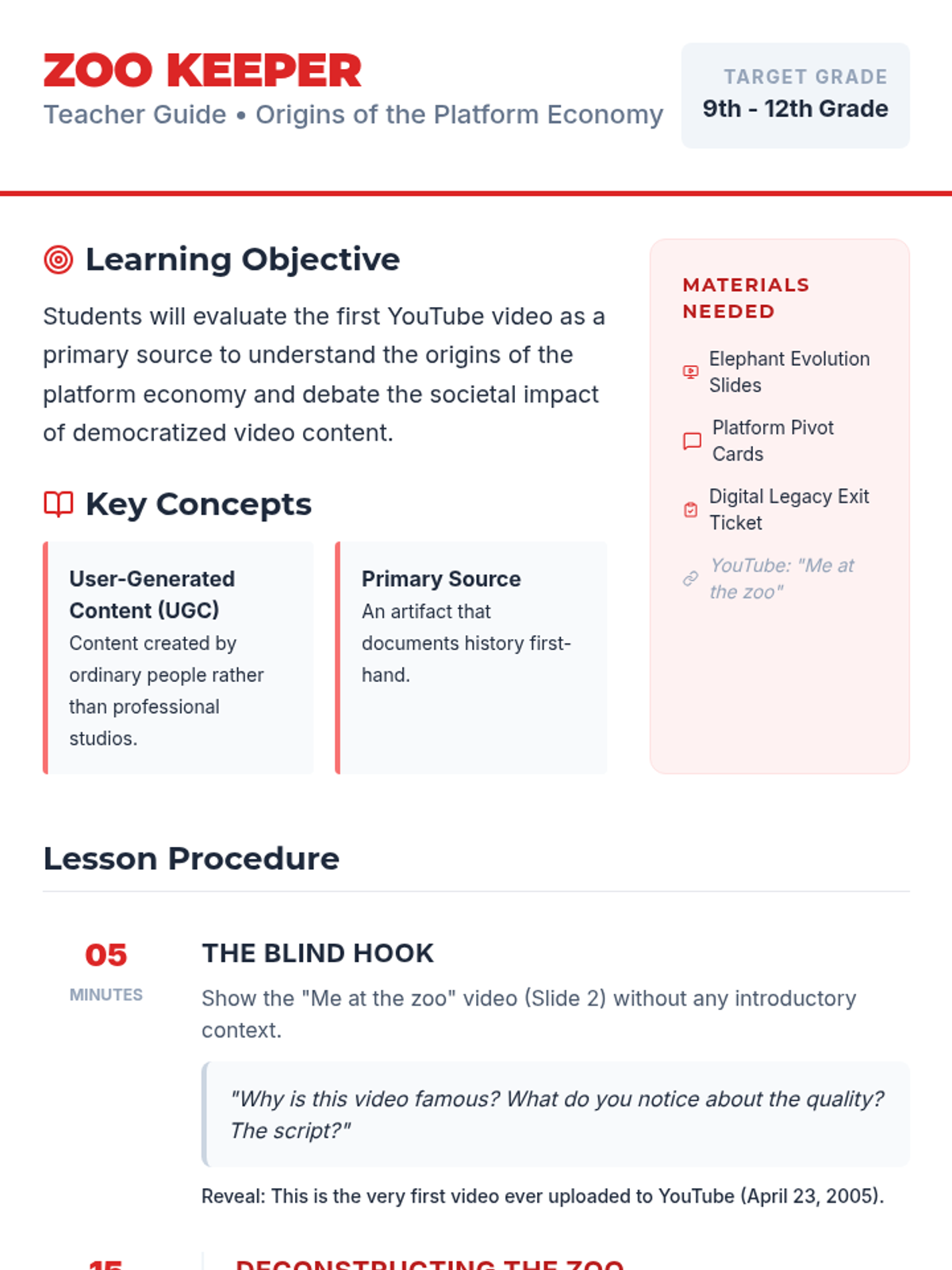
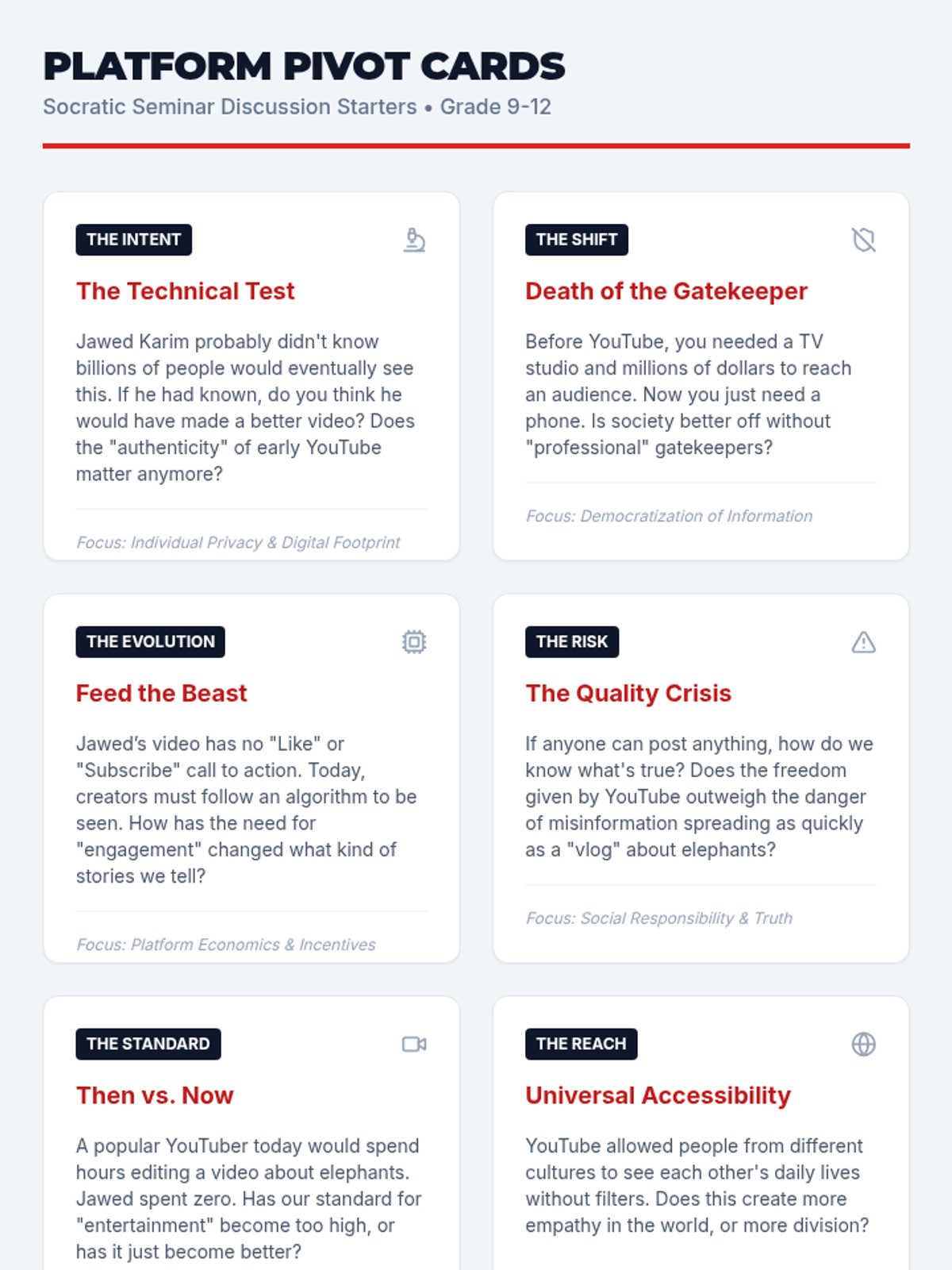
This lesson explores the historical significance of the first YouTube video, 'Me at the zoo,' as a primary source document that signaled the shift from gatekeeper-controlled media to user-generated content and the democratization of information. Students engage in a Socratic Seminar to analyze how this low-fidelity 19-second clip fundamentally changed global media consumption and production.
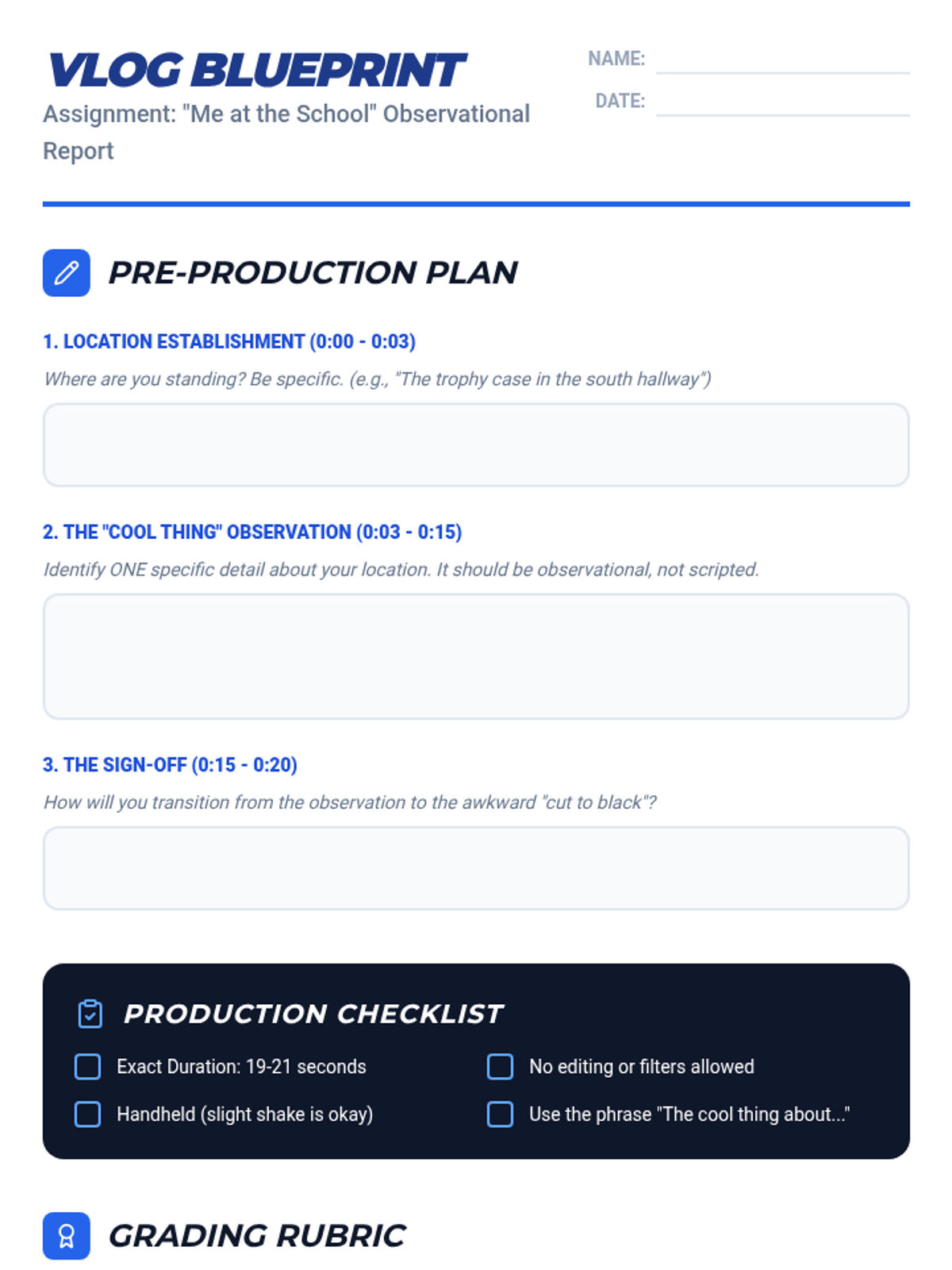
A high school journalism lesson exploring the history of vlogging using the first YouTube video, challenging students to create a concise, unedited 20-second observational video.
A lesson exploring the transformation of media through the history of YouTube, contrasting the simplicity of the first 'User-Generated Content' with modern, high-production digital storytelling. Students will analyze technical shifts and practice scripting for a simpler era.
A media literacy lesson contrasting early user-generated content with modern standards, anchored by the first ever YouTube video.
A lesson exploring the transition from early user-generated content to modern professionalized influencer culture, centered around the first-ever YouTube video.
Students explore the concept of digital primary sources by analyzing the first-ever YouTube video as a historical artifact and creating their own museum-style documentation for contemporary digital media.