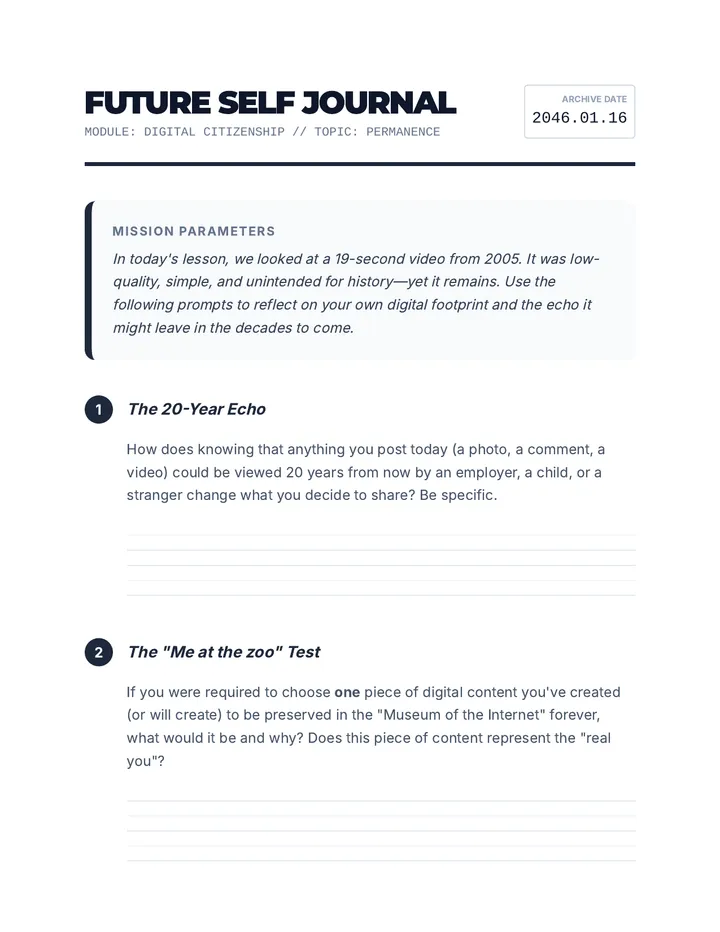
Students explore the concept of digital permanence through the lens of YouTube's first video, 'Me at the zoo', and analyze the tension between historical preservation and the 'Right to be Forgotten'.
Lesson for studio export and print testing
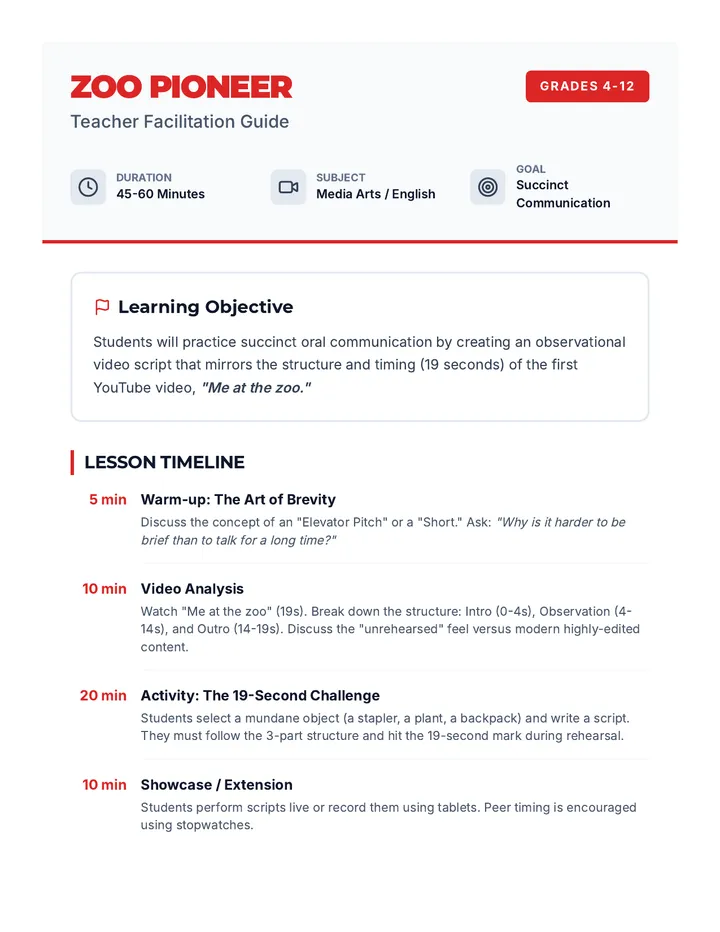
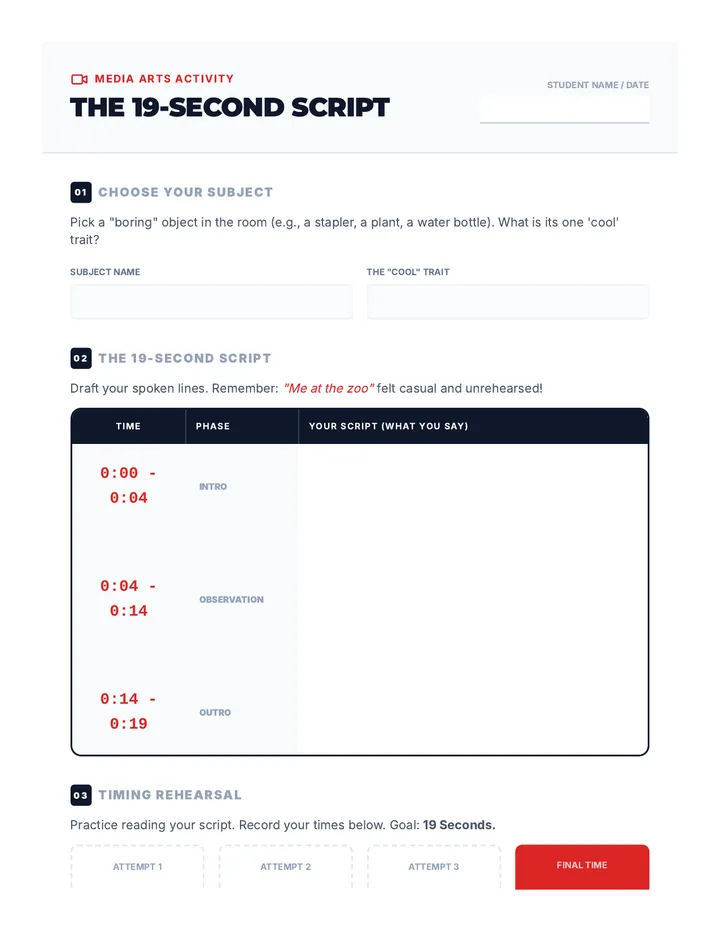
A media arts and oral communication lesson where students analyze the first YouTube video and create their own 19-second observational scripts.
A high school history and social studies lesson exploring the birth of user-generated content and the democratization of media through the lens of the first YouTube video. Students analyze the 19-second artifact to understand how digital media shifted from professional gatekeepers to public participation.
A middle school lesson exploring the dramatic evolution of digital media through the lens of YouTube's history, starting with the very first video ever uploaded.
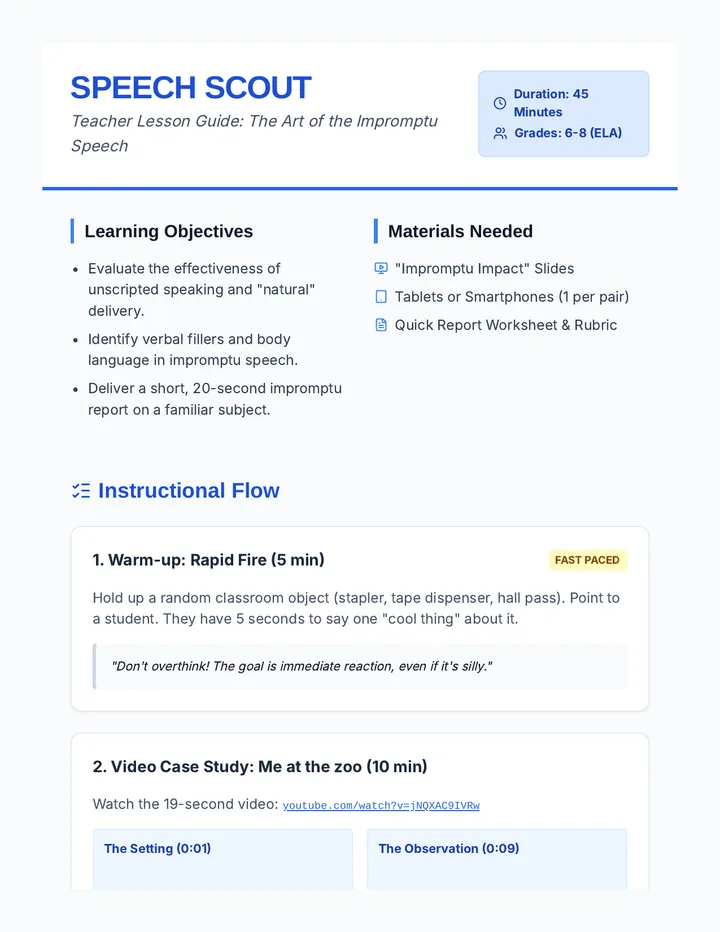
Students explore the history and technique of unscripted speaking through the first-ever YouTube video, then practice their own 20-second impromptu reports.
A high school history and media studies lesson exploring the evolution of digital primary sources, centered on the first-ever YouTube video. Students analyze how user-generated content has shifted from casual archiving to highly produced monetization.
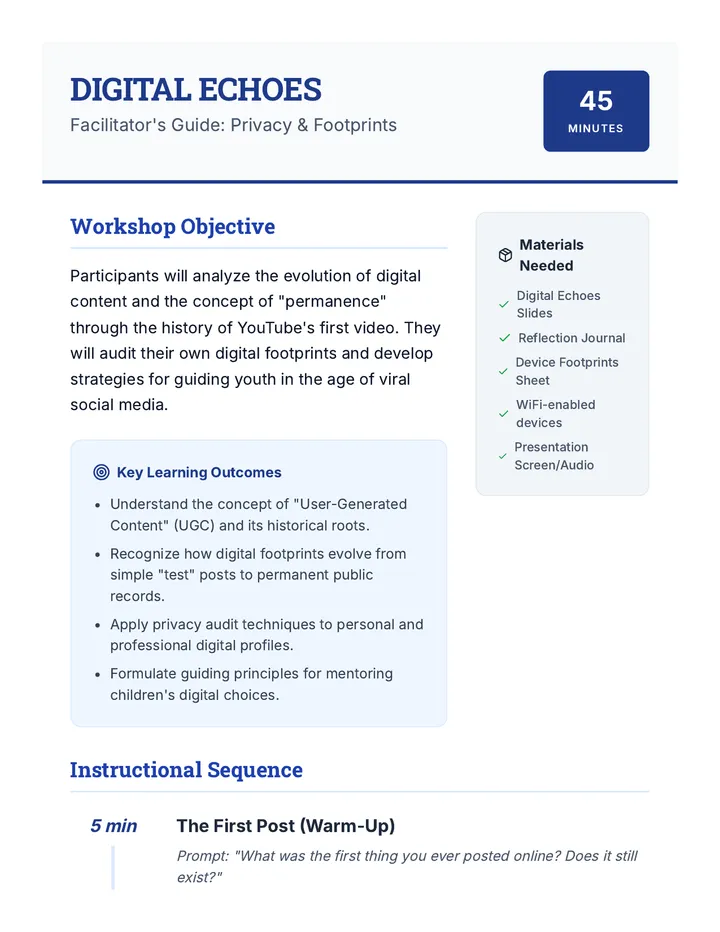
A reflective workshop for adults exploring the permanence of the internet through the lens of YouTube's first video, 'Me at the zoo,' focusing on digital footprints and guiding children's online presence.
Students will explore the origins of vlogging through the first YouTube video, analyzing its structure and authentic style to create their own 20-second 'unscripted' school report.
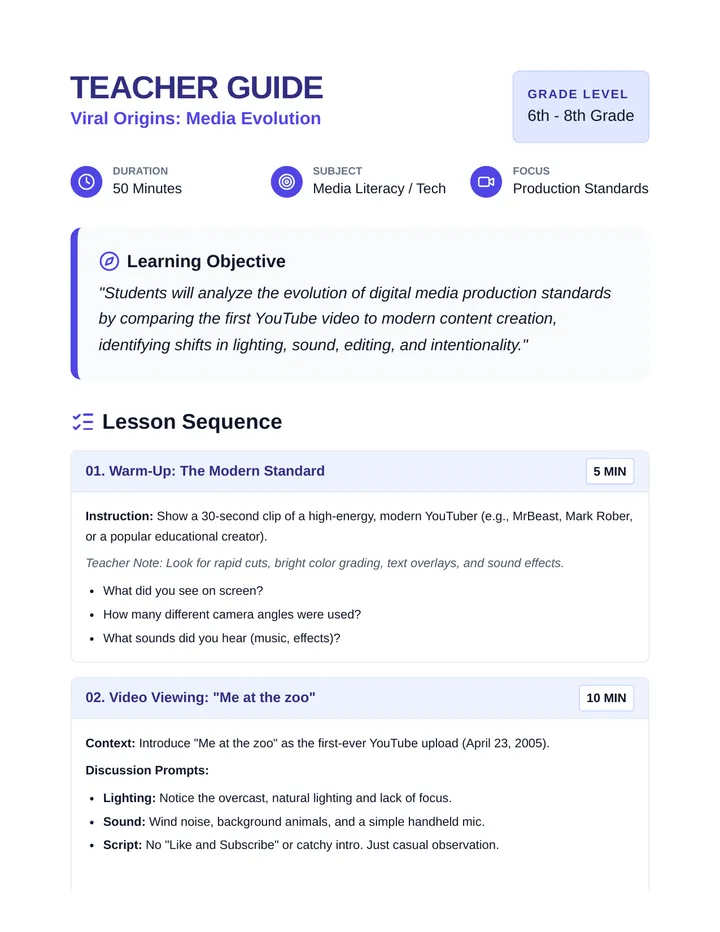
A lesson exploring the transformation of digital media production through the lens of YouTube's first video, 'Me at the zoo', contrasting early raw footage with modern high-production content.
A high school history and technology lesson exploring the origins of the platform economy through the lens of the first YouTube video, 'Me at the zoo'. Students analyze the shift from professional broadcasting to user-generated content and debate the societal impacts of democratized media.
Students learn the foundations of impromptu speaking and user-generated content by analyzing the first-ever YouTube video and performing their own '20-Second Reporter' segment using a simple three-part structure.
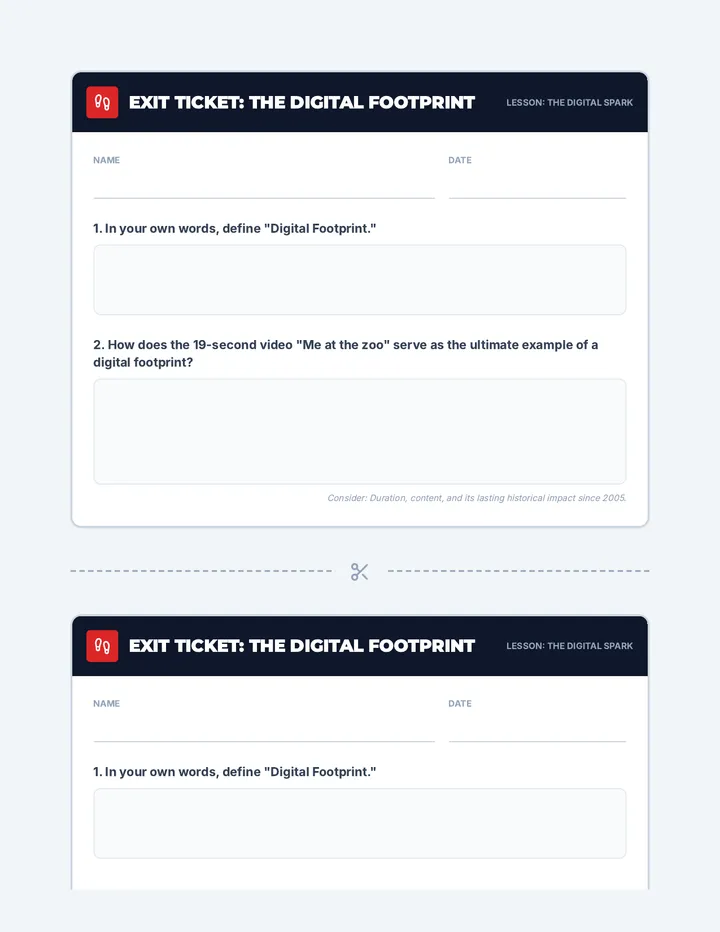
A lesson for high school students exploring the concept of digital footprints through the lens of the first-ever YouTube video, 'Me at the zoo'. Students evaluate how online content persists and shapes public identity over decades.
A High School History lesson exploring the shift from Web 1.0 to Web 2.0 through the lens of primary source analysis, featuring 'Me at the zoo' as a historical artifact of digital democratization.
A media literacy lesson where students analyze the evolution of digital media by comparing the first YouTube video, 'Me at the zoo,' to modern content standards. Students explore concepts of user-generated content, monetization, and the commercialization of attention.
A lesson exploring the transformation of media through the history of YouTube, contrasting the simplicity of the first 'User-Generated Content' with modern, high-production digital storytelling. Students will analyze technical shifts and practice scripting for a simpler era.
A lesson exploring the origins of vlogging through YouTube's first video, focusing on the concepts of authenticity, user-generated content, and parasocial relationships.
A high school history and media literacy lesson where students evaluate 'Me at the zoo' as a primary source, acting as digital archaeologists from the year 2124 to analyze early 21st-century culture and technology.
Students will analyze the first-ever YouTube video to identify verbal fillers and practice transforming casual, impromptu speech into professional narrations. This lesson focuses on self-awareness in speaking and the distinction between conversational and presentational styles.
This lesson introduces business students to the concept of a Minimum Viable Product (MVP) through the historical lens of YouTube's first-ever upload, challenging them to prioritize core functionality over perfection.
This lesson explores the historical significance of the first YouTube video, 'Me at the zoo,' as a primary source document that signaled the shift from gatekeeper-controlled media to user-generated content and the democratization of information. Students engage in a Socratic Seminar to analyze how this low-fidelity 19-second clip fundamentally changed global media consumption and production.
Students analyze the evolution of digital media by comparing the first-ever YouTube video, 'Me at the zoo,' with modern production standards, focusing on production quality, scripting, and the concept of user-generated content.
A lesson exploring the transition from early user-generated content to modern professionalized influencer culture, centered around the first-ever YouTube video.
A lesson where students analyze the first-ever YouTube video to learn about unscripted oral communication and then perform their own 20-second observational vlogs.
A lesson analyzing the transformation of YouTube from a casual video-sharing platform to a professionalized influencer economy, using the first-ever YouTube video as a primary source.
Students explore the concept of digital primary sources by analyzing the first-ever YouTube video as a historical artifact and creating their own museum-style documentation for contemporary digital media.
In this lesson, students will be introduced to the Engineering Design Process (EDP) by tackling a real-world design challenge. They will learn to identify problems, brainstorm solutions, and understand the iterative nature of engineering.
A quick 10-minute interactive lesson for kindergarteners to practice positive social interactions, empathy, and cooperation through guided pairing and sharing activities.
An undergraduate media studies lesson exploring the evolution of authenticity on social media, using the first-ever YouTube video as a case study for the 'aesthetic of banality' and the shift toward the creator economy.
Students act as digital archaeologists to analyze 'Me at the zoo,' the first YouTube video, as a primary historical source, exploring how digital artifacts reflect their era and influence the global economy.
Students explore the history of media technology and presentation styles by comparing the first YouTube video to modern content, focusing on the concept of User-Generated Content (UGC).