A quick 10-minute interactive lesson for kindergarteners to practice positive social interactions, empathy, and cooperation through guided pairing and sharing activities.
In this 10-minute kindergarten lesson, students will learn to build positive relationships with peers through a fun, interactive activity. This lesson is crucial for developing early social skills, empathy, and cooperation in young learners.
1/16
A quick and supportive 5-minute mental health check-in routine designed for 5th-grade students to express their feelings, report concerns like bullying, and seek support.
1/15
A set of visual tools to help students navigate daily classroom transitions and routines with independence.
A lesson on the social-emotional skill of delivering a sincere and effective apology, focusing on the four pillars of a real apology.
A sociology and technology lesson analyzing the concept of 'Digital Footprint' and internet permanence through the lens of the first-ever YouTube video, 'Me at the zoo'. Students explore the shift from unscripted early internet content to modern curation and reflect on their own digital legacies.
A lesson for grades 3-5 focused on public speaking and descriptive language, using the first YouTube video 'Me at the zoo' as a prompt for students to rewrite and improve a script.
A science and observation lesson for elementary students focused on distinguishing between objective facts (observations) and subjective opinions (interpretations) using the first-ever YouTube video as a case study.
A Kindergarten - 1st Grade lesson focused on observational speaking skills using the 'Me at the zoo' video. Students practice identifying animal characteristics and using sentence frames to report on what they see.
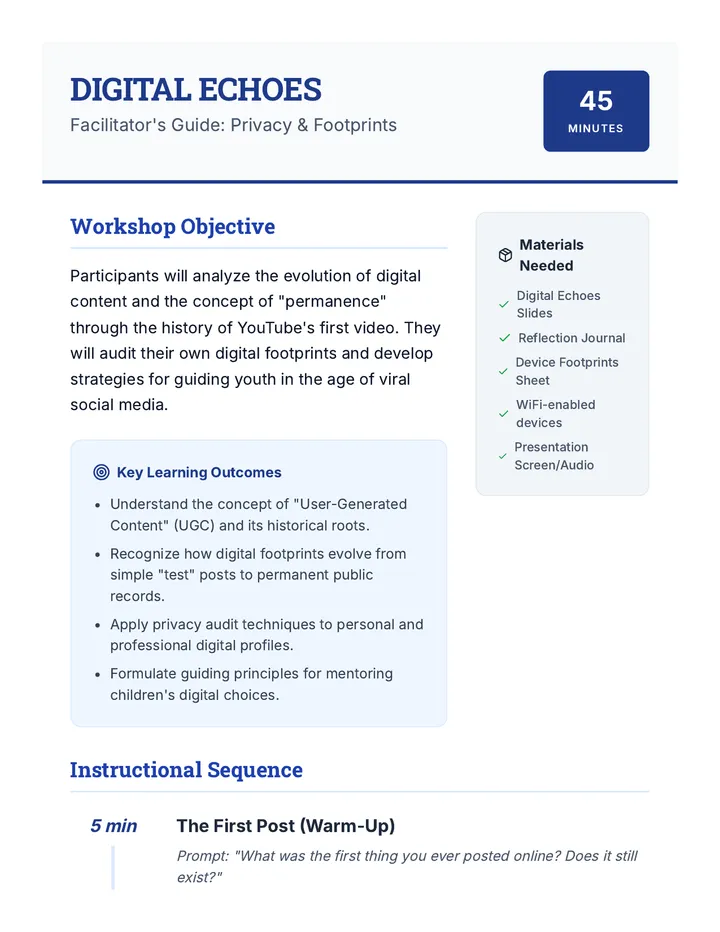
A reflective workshop for adults exploring the permanence of the internet through the lens of YouTube's first video, 'Me at the zoo,' focusing on digital footprints and guiding children's online presence.
A listening comprehension and preposition focus lesson for ESL/ELL students using the 'Me at the zoo' video.
A lesson for Middle School students on digital footprints and online permanence, analyzing the first YouTube video ever uploaded.
A lesson for High School Media/Journalism students exploring the shift from raw, unedited vlogs to highly curated performative content on social media.
A K-2 lesson on making simple animal observations using descriptive words, featuring the 'Me at the zoo' video. Students act as zoo reporters to practice using sentence frames.
A lesson for high school students exploring the concept of digital footprints through the lens of the first-ever YouTube video, 'Me at the zoo'. Students evaluate how online content persists and shapes public identity over decades.
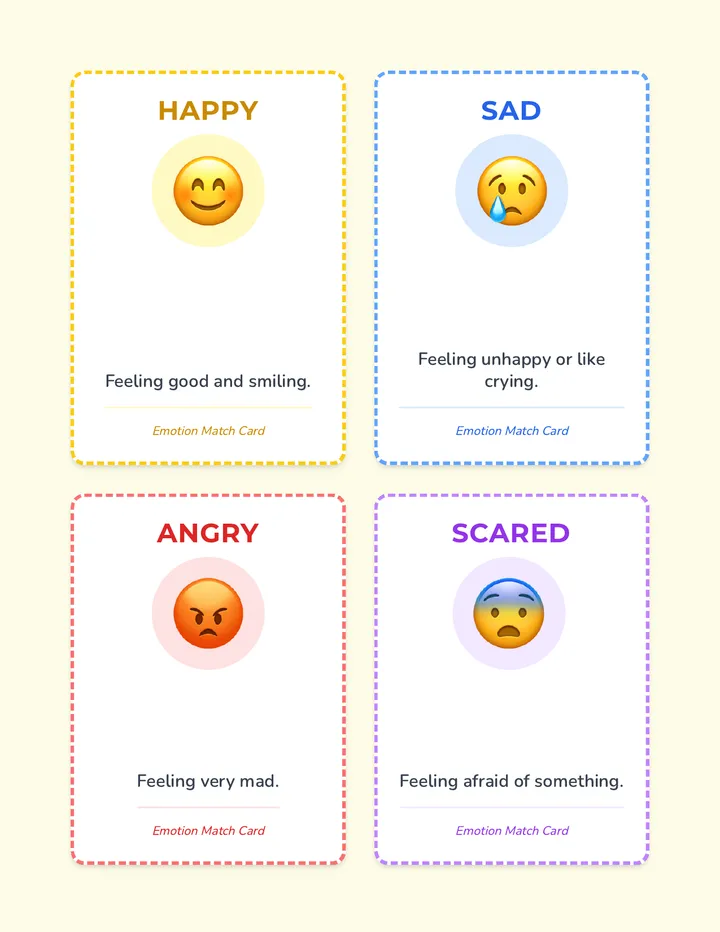
A play-based lesson designed to help young students identify and understand a wide range of emotions through interactive games and visual aids.
An undergraduate media studies lesson exploring the evolution of authenticity on social media, using the first-ever YouTube video as a case study for the 'aesthetic of banality' and the shift toward the creator economy.
Students will analyze the first-ever YouTube video to identify verbal fillers and practice transforming casual, impromptu speech into professional narrations. This lesson focuses on self-awareness in speaking and the distinction between conversational and presentational styles.
Students explore the history and technique of unscripted speaking through the first-ever YouTube video, then practice their own 20-second impromptu reports.
A Speech & Debate/ELA lesson where students analyze 'Me at the zoo' to understand the differences between impromptu and prepared speaking, ending with a script-polishing activity.
A quick 10-minute kindergarten lesson focused on developing social skills, empathy, and cooperation through guided peer interaction and positive reinforcement.