This lesson introduces business students to the concept of a Minimum Viable Product (MVP) through the historical lens of YouTube's first-ever upload, challenging them to prioritize core functionality over perfection.
A 50-minute lesson for undergraduate marketing students exploring the concept of Minimum Viable Product (MVP) through the lens of YouTube's history and its first uploaded video.
1/16
A lesson for high school Media Studies/History students analyzing the shift from broadcast to social media through the lens of the first YouTube video, 'Me at the zoo'. Students evaluate the impact of User-Generated Content (UGC) and compare early digital media to modern trends.
A reflective workshop for adults exploring the permanence of the internet through the lens of YouTube's first video, 'Me at the zoo,' focusing on digital footprints and guiding children's online presence.
Challenges students to solve budget emergencies and navigate financial deficits using problem-solving strategies.
A high school Computer Science lesson connecting the history of YouTube's first video to concepts of bandwidth, data compression, and internet infrastructure evolution.
A sociology and technology lesson analyzing the concept of 'Digital Footprint' and internet permanence through the lens of the first-ever YouTube video, 'Me at the zoo'. Students explore the shift from unscripted early internet content to modern curation and reflect on their own digital legacies.
A media literacy lesson comparing early internet culture (specifically the first YouTube video) to the modern Creator Economy.
Students explore the concept of digital primary sources by analyzing the first-ever YouTube video as a historical artifact and creating their own museum-style documentation for contemporary digital media.
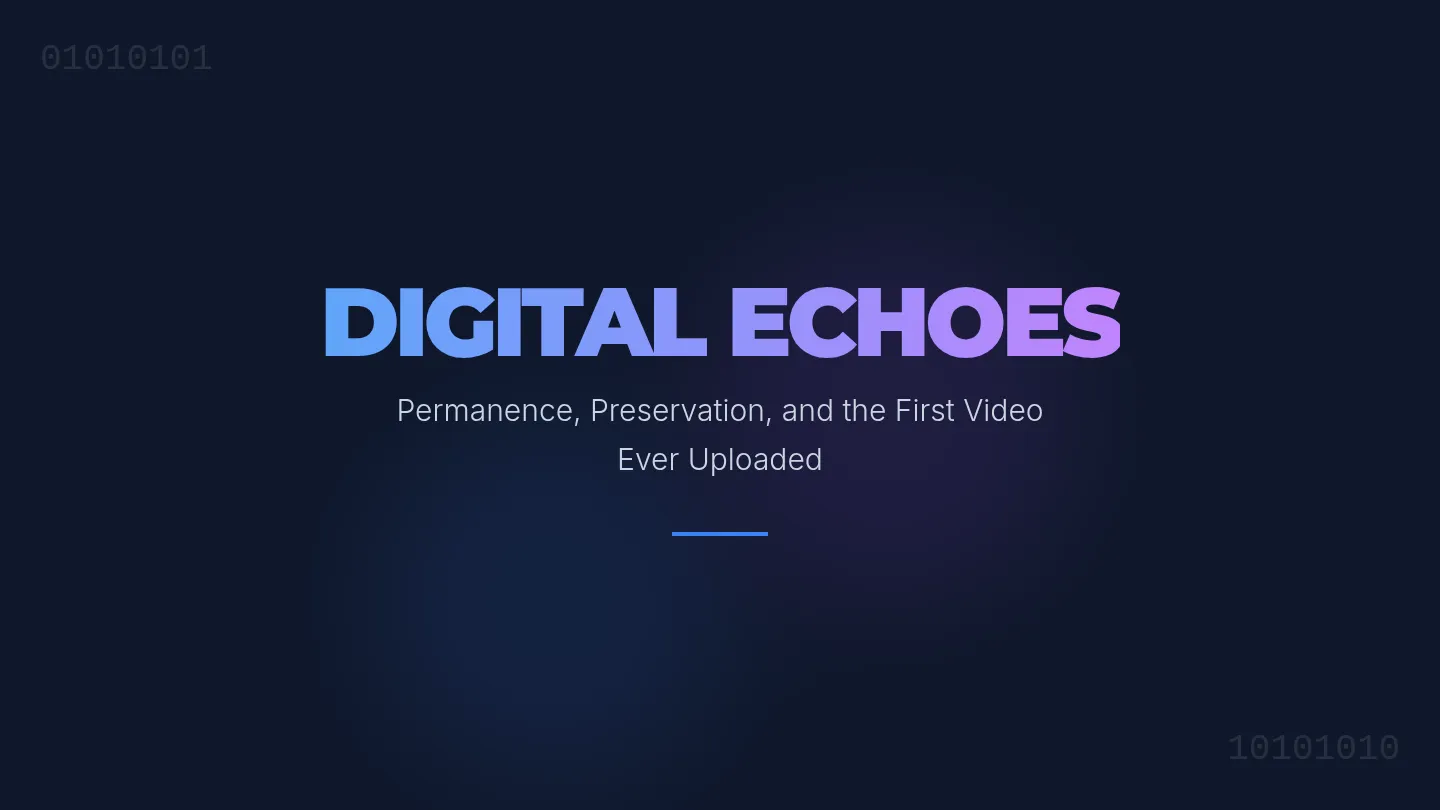
A lesson for elementary students exploring the permanence of the internet through the first-ever YouTube video, 'Me at the zoo', teaching the concept of a digital footprint.
A lesson analyzing 'Me at the zoo', the first YouTube video, to understand the evolution of digital communication, authenticity vs. production, and user-generated content.
A middle school lesson plan exploring how digital media has evolved from the authentic, unscripted early days of the internet to the highly produced content of today, centered around analyzing the first YouTube video 'Me at the zoo'.
A culminating project where students create a budget to reach a specific savings goal while managing weekly expenses.
A fun, llama-themed math lesson for 4th graders focusing on solving multi-step word problems involving addition, subtraction, multiplication, and division in the context of a llama ranch.
Final financial reflection. Students balance their ledgers, evaluate their spending choices, and celebrate their savings successes or identify areas for improvement.
A lesson analyzing the transformation of YouTube from a casual video-sharing platform to a professionalized influencer economy, using the first-ever YouTube video as a primary source.
Mid-month data analysis. Students review their spending trends and forecast their future balance to ensure they stay on track for their big savings goal.
Students analyze the evolution of digital media by comparing the first-ever YouTube video, 'Me at the zoo,' with modern production standards, focusing on production quality, scripting, and the concept of user-generated content.
A lesson plan focusing on the evolution of user-generated content, starting with the first YouTube video 'Me at the zoo'. Students analyze early internet culture versus modern viral trends.
Introduces income and expenses through categorization and brainstorming, ending with a personal T-chart.
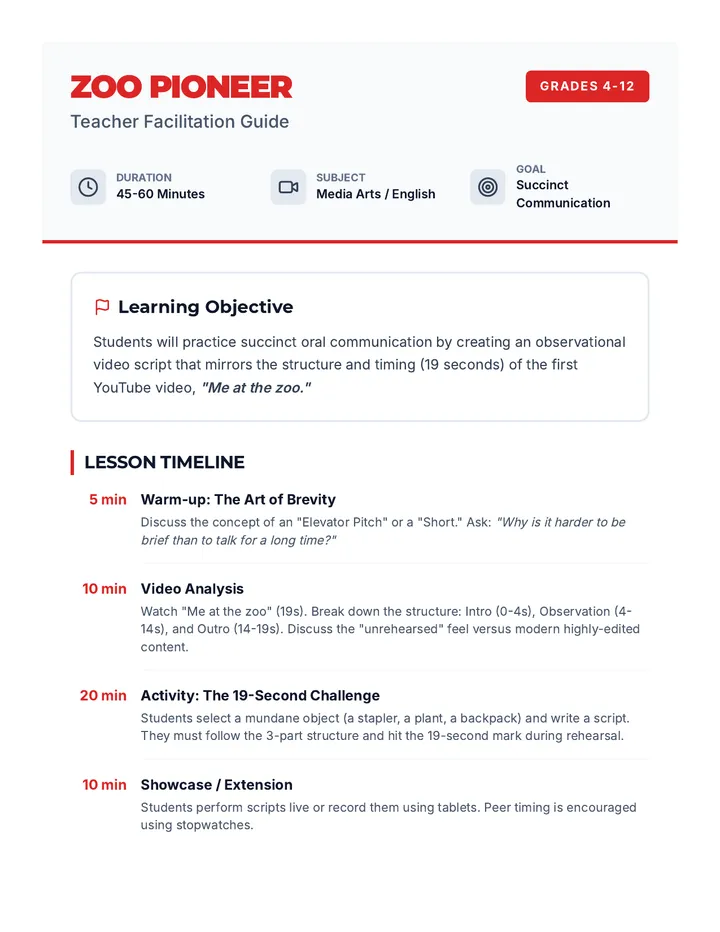
A lesson where students analyze the first-ever YouTube video to learn about unscripted oral communication and then perform their own 20-second observational vlogs.