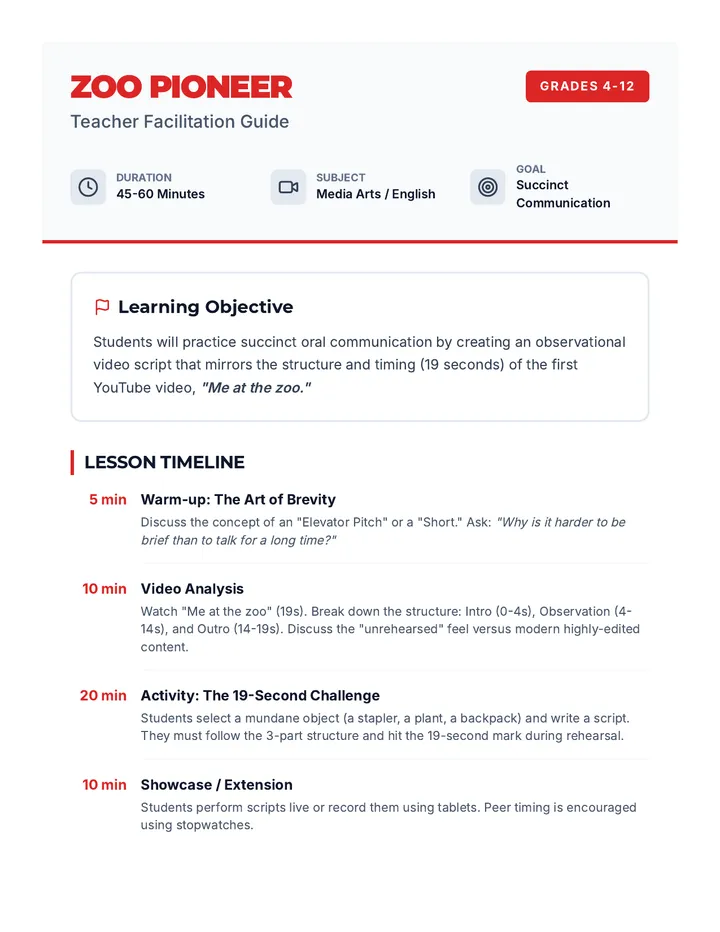
Students will explore the origins of vlogging through the first YouTube video, analyzing its structure and authentic style to create their own 20-second 'unscripted' school report.
A lesson exploring the psychological shift in social media from documenting the world to documenting the self, anchoring on the first YouTube video from 2005.
1/16
A middle school ELA/Speech lesson focused on the difference between impromptu and scripted speaking, using the first YouTube video 'Me at the zoo' as a case study. Students analyze filler words and practice rewriting content for better delivery.
A media literacy lesson comparing early internet culture (specifically the first YouTube video) to the modern Creator Economy.
A lesson for High School Media/Journalism students exploring the shift from raw, unedited vlogs to highly curated performative content on social media.
A 50-minute lesson for undergraduate marketing students exploring the concept of Minimum Viable Product (MVP) through the lens of YouTube's history and its first uploaded video.
A lesson plan focusing on the evolution of user-generated content, starting with the first YouTube video 'Me at the zoo'. Students analyze early internet culture versus modern viral trends.
A lesson for 3rd-5th graders on descriptive writing using the first YouTube video 'Me at the zoo' as a prompt. Students upgrade simple observations into exciting descriptions.
A middle school ELA lesson on improving descriptive language using the 'Me at the zoo' video as a case study for weak vocabulary.
A 45-minute High School English/Public Speaking lesson focused on impromptu speaking techniques, brevity, and script revision, using the first YouTube video "Me at the zoo" as a case study.
A 45-minute lesson for business and technology students exploring the concept of Minimum Viable Product (MVP) through the analysis of YouTube's first video and a hands-on app design activity.
A lesson where students analyze the first-ever YouTube video to learn about unscripted oral communication and then perform their own 20-second observational vlogs.
A media studies lesson exploring how early platform limitations shaped internet culture, anchored by the first YouTube video 'Me at the zoo'.
A lesson regarding the evaluation of primary sources in the digital age, focusing on the first YouTube video.
A lesson where students compare early digital media with modern content to understand how communication standards change, centering on the first YouTube video 'Me at the zoo'.
This lesson explores the historical significance of the first YouTube video, 'Me at the zoo,' as a primary source document that signaled the shift from gatekeeper-controlled media to user-generated content and the democratization of information. Students engage in a Socratic Seminar to analyze how this low-fidelity 19-second clip fundamentally changed global media consumption and production.
A lesson for high school students exploring the concept of 'Authentic Voice' in media, comparing early social media content to modern influencer narratives using the first YouTube video as a case study.
A short high school warm-up focused on developing media literacy skills by identifying bias, loaded language, and selective data in articles about climate change.
1/12
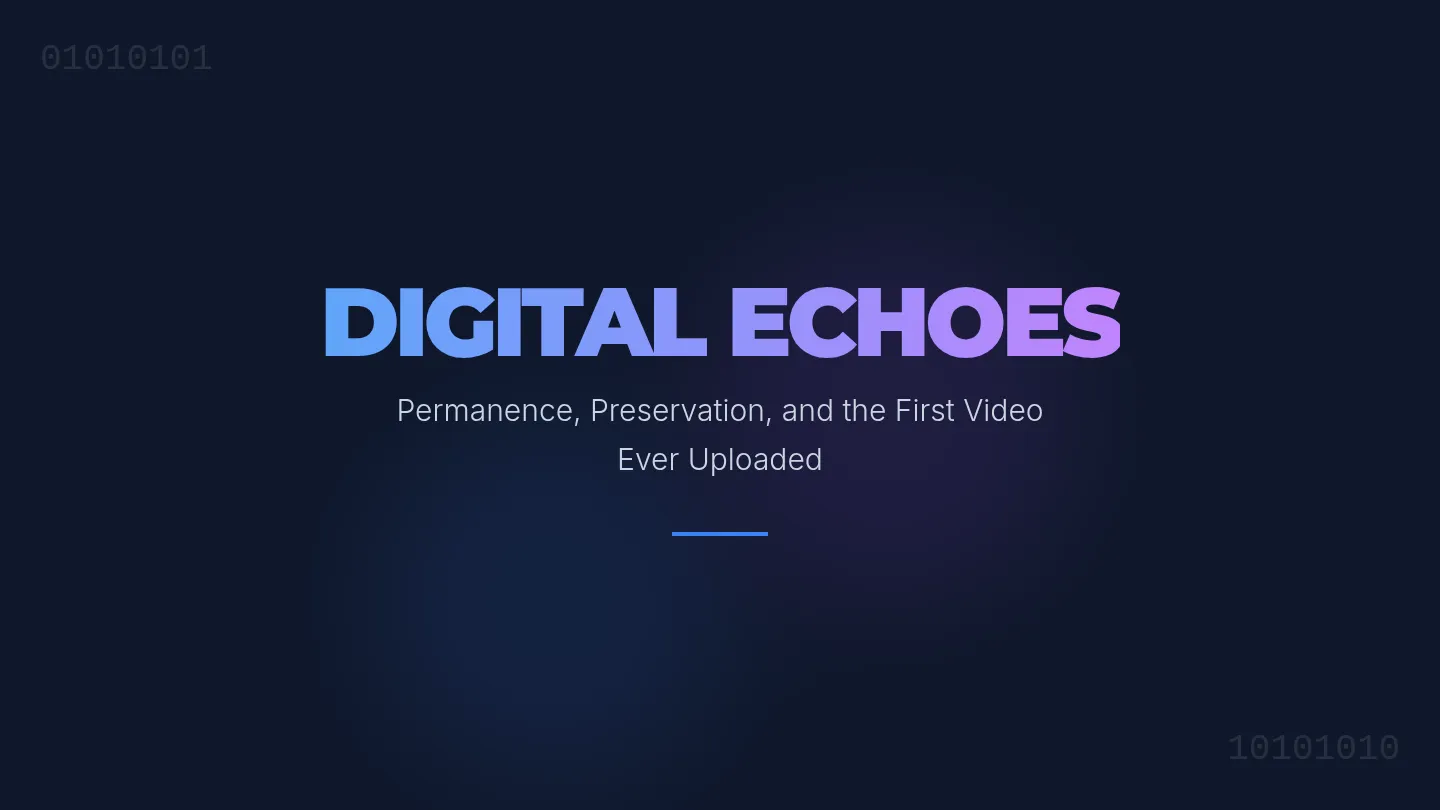
A middle school lesson on digital footprints, focusing on the permanence of online content using the first YouTube video 'Me at the zoo' as a case study.
A lesson where students compare the first YouTube video 'Me at the zoo' with modern content to understand the evolution of social media.
A lesson for elementary students exploring the permanence of the internet through the first-ever YouTube video, 'Me at the zoo', teaching the concept of a digital footprint.