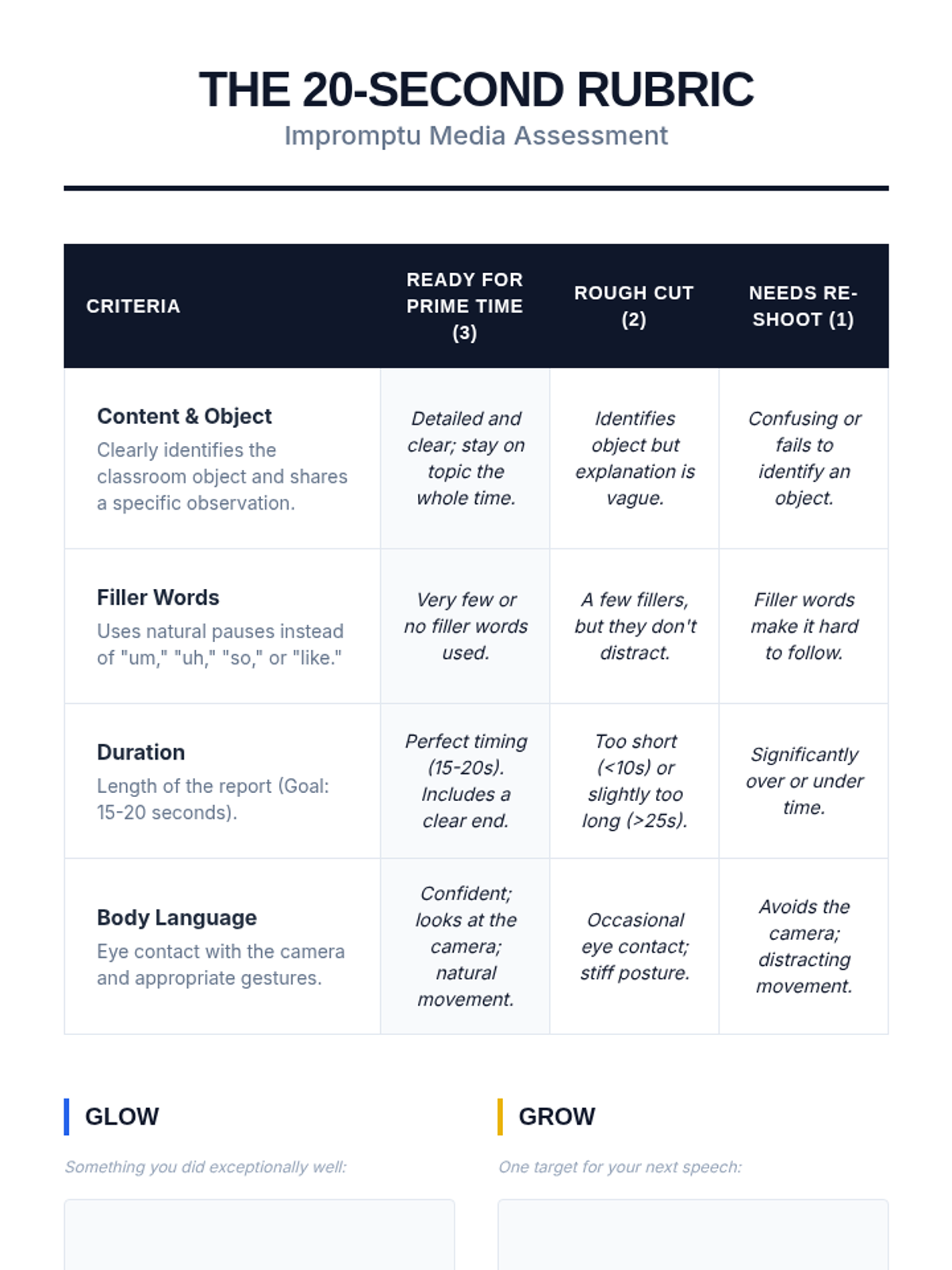
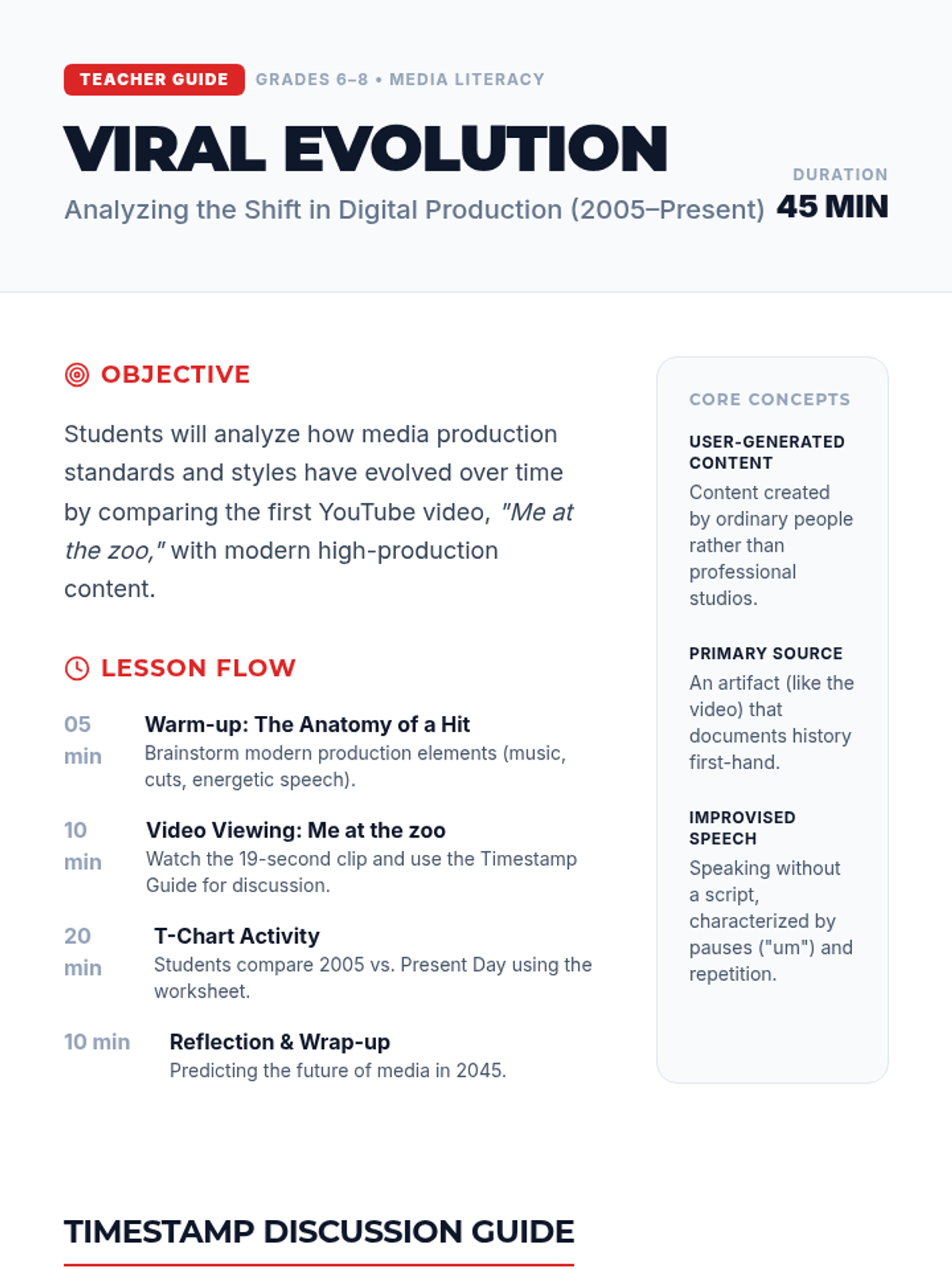
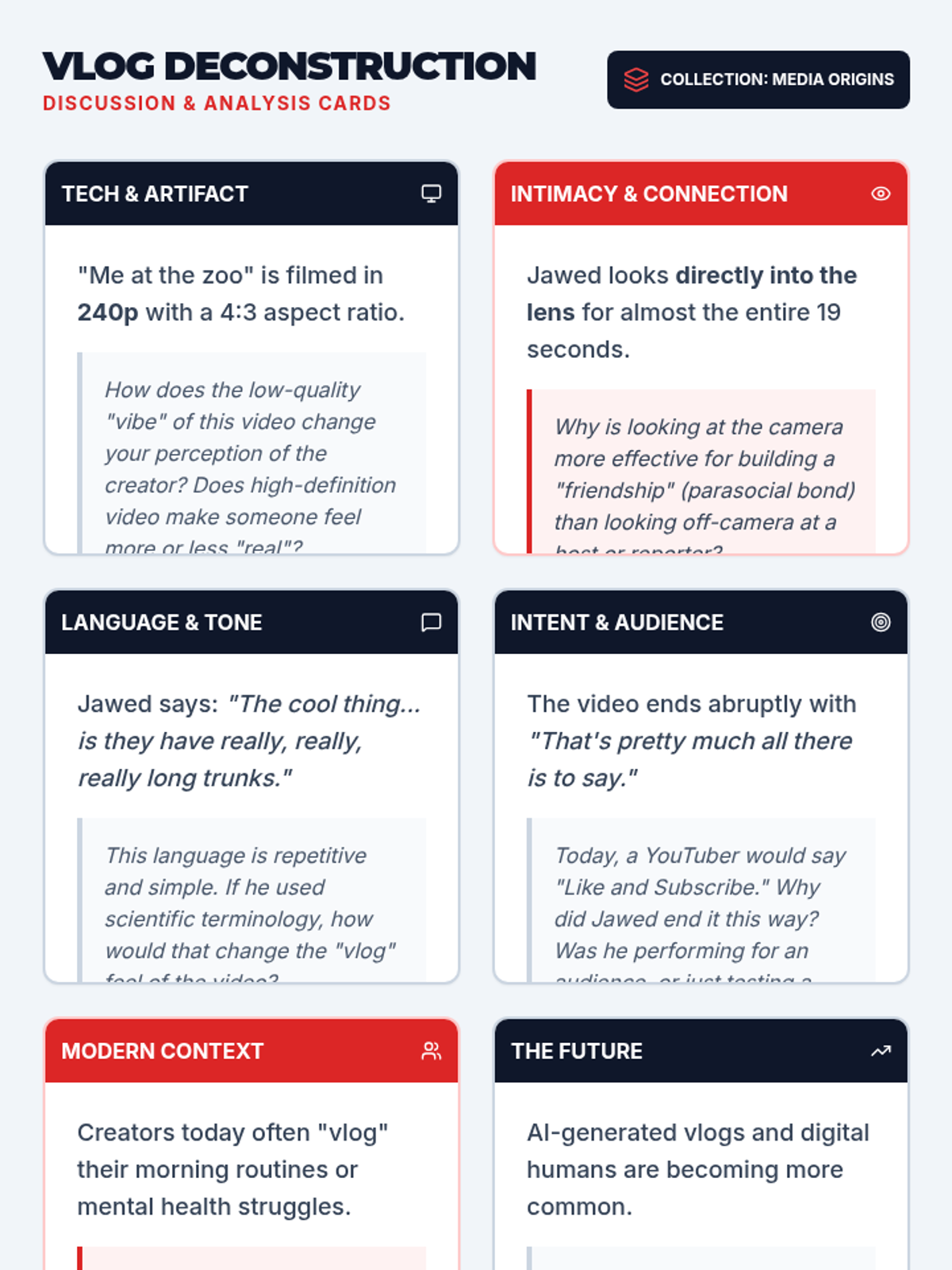
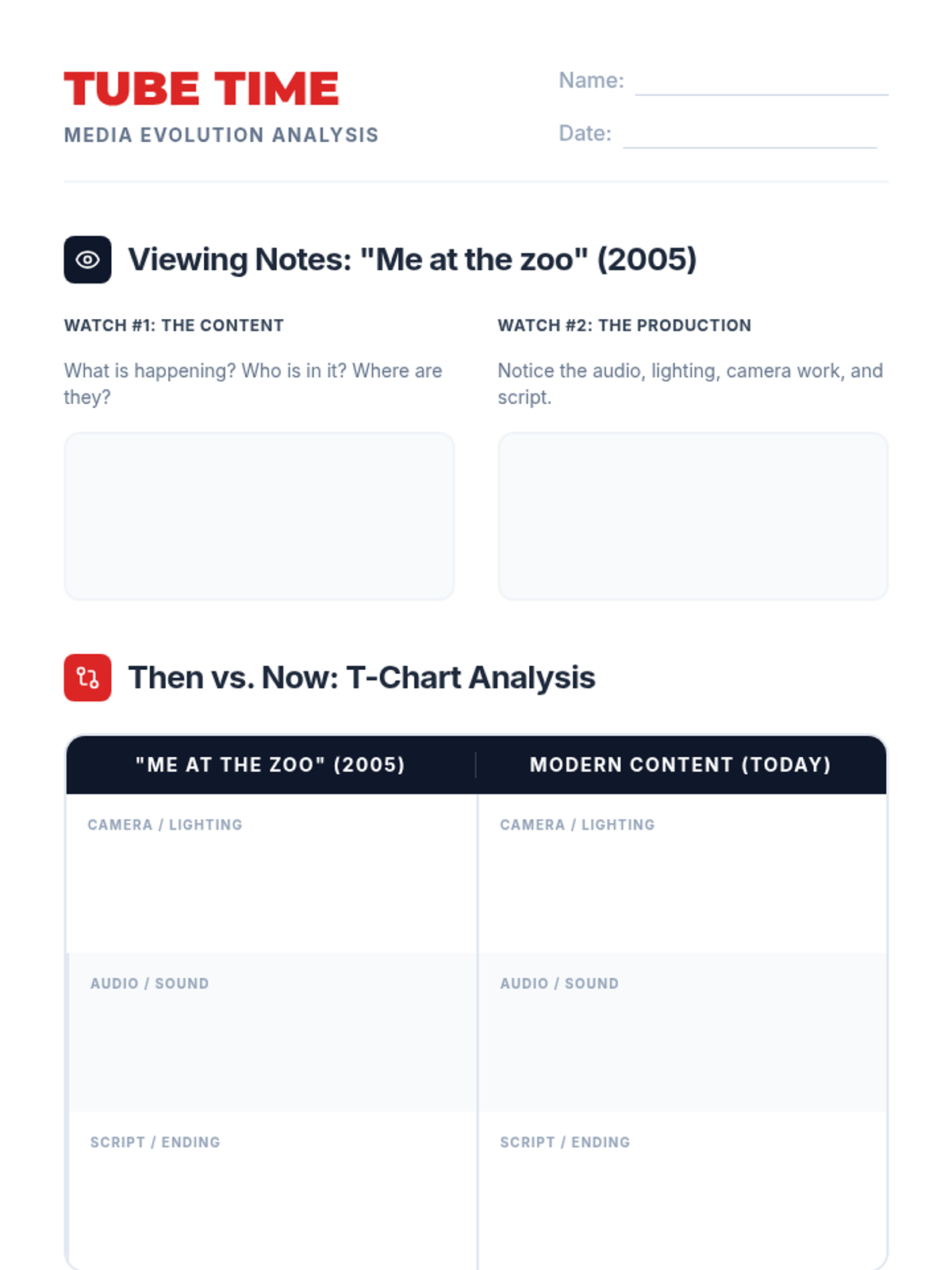
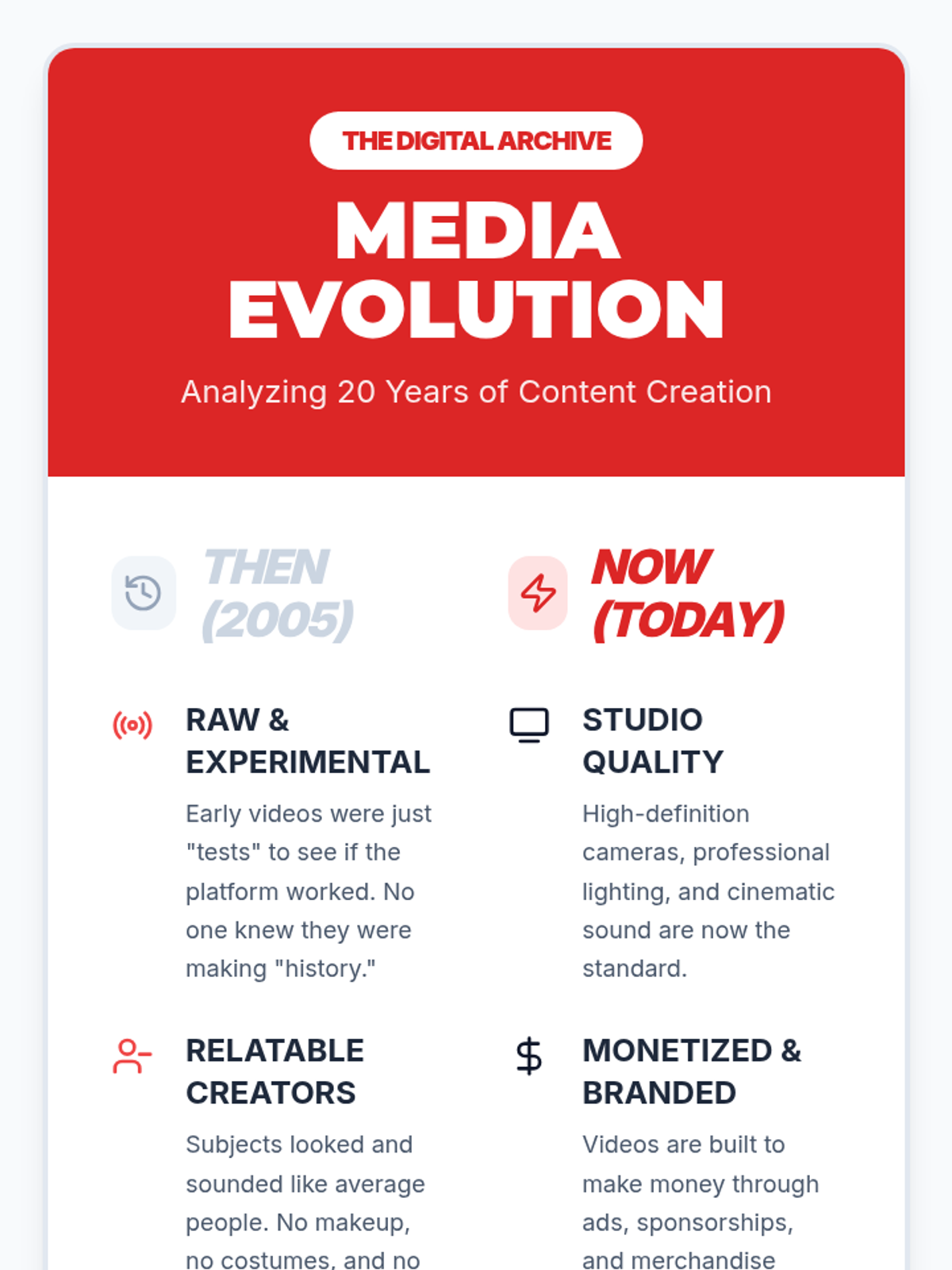
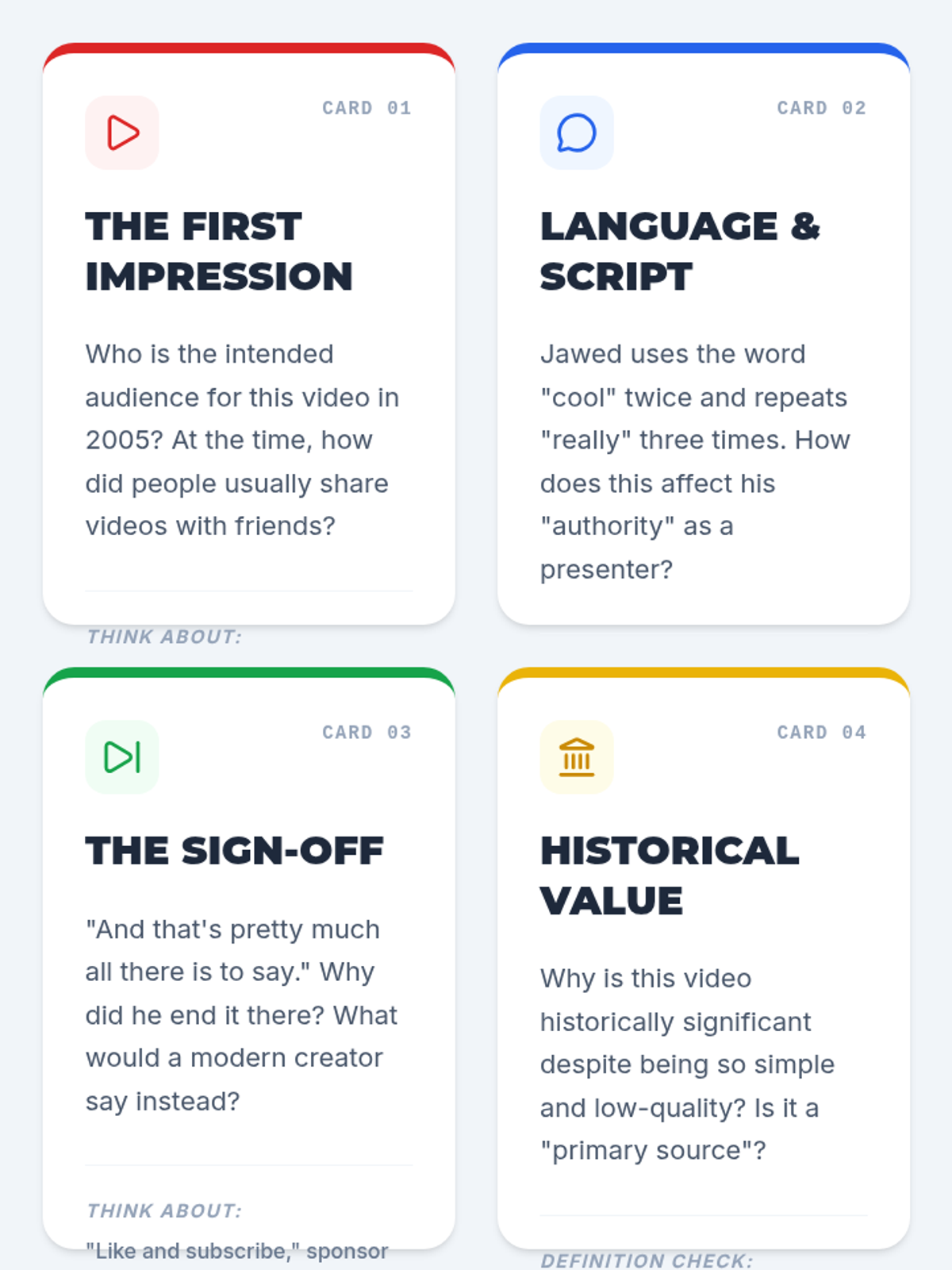
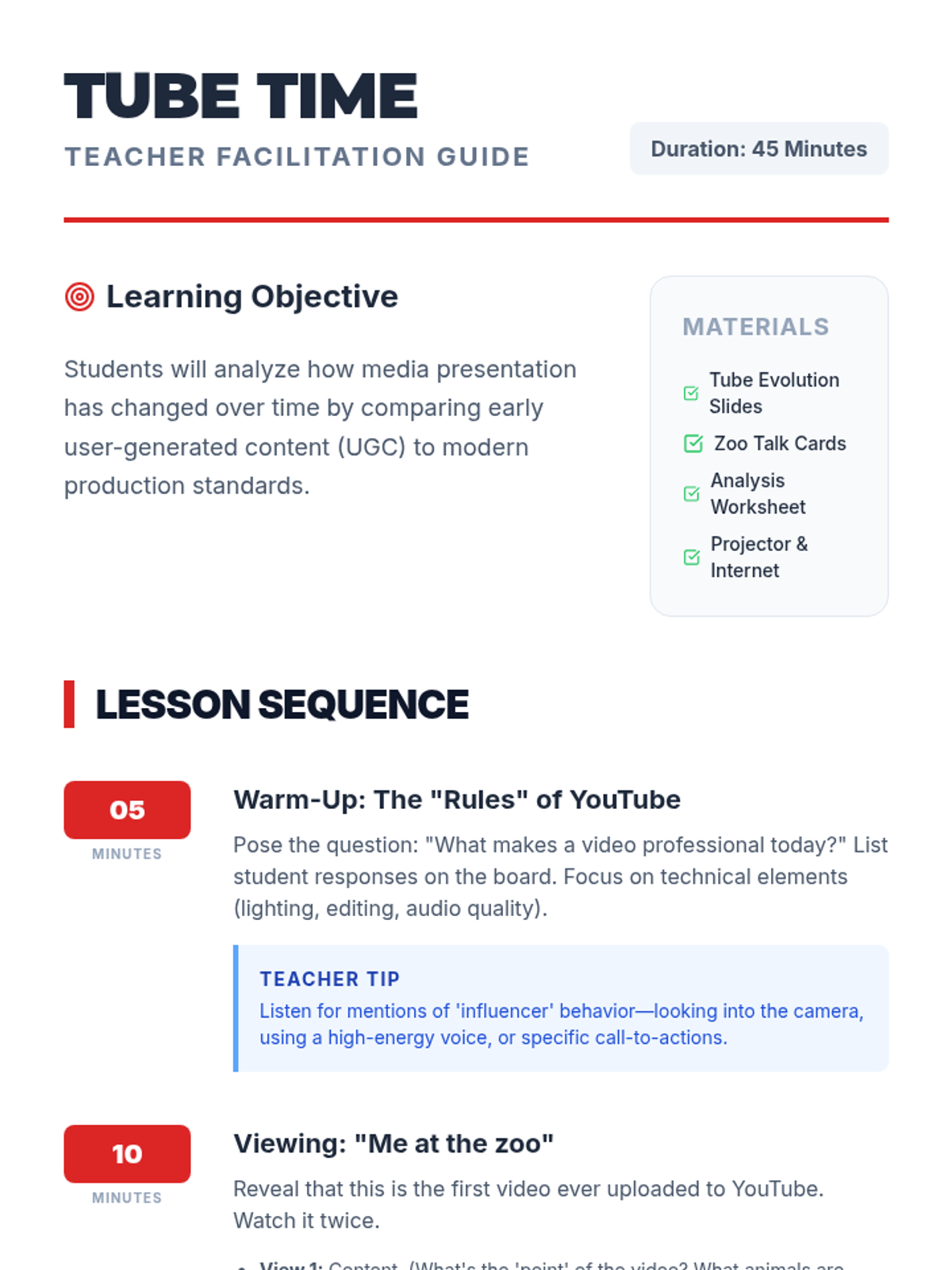
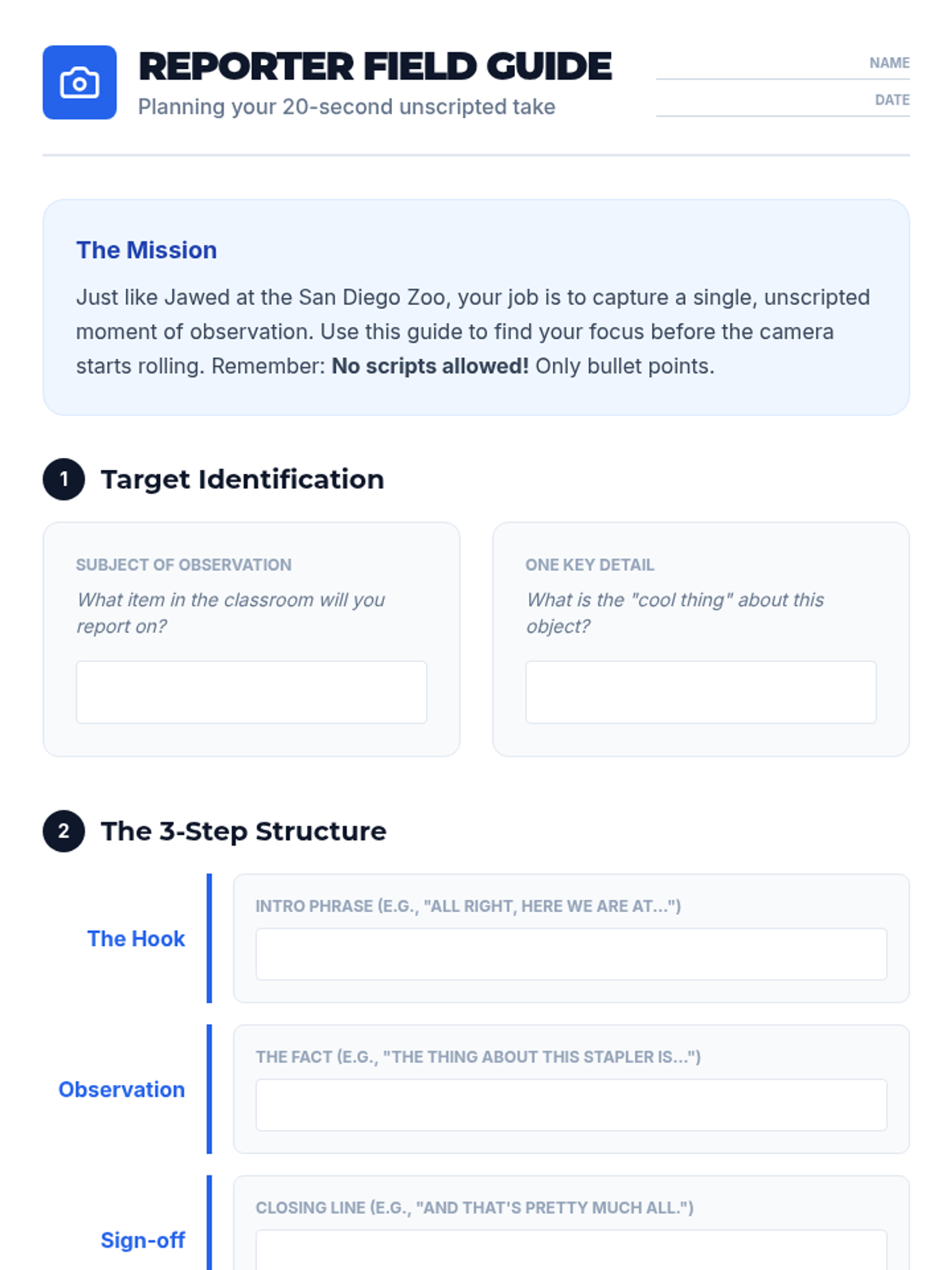
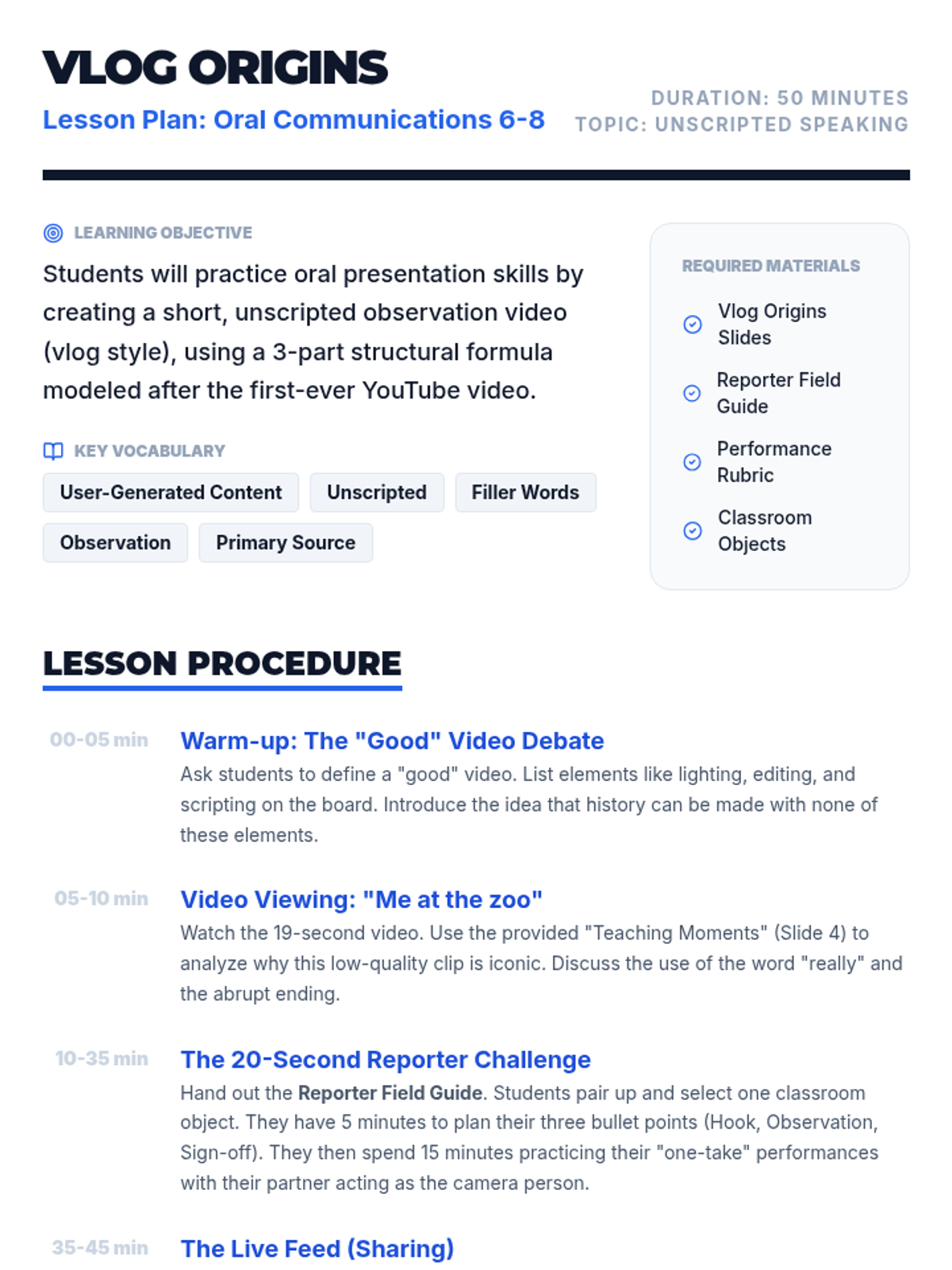
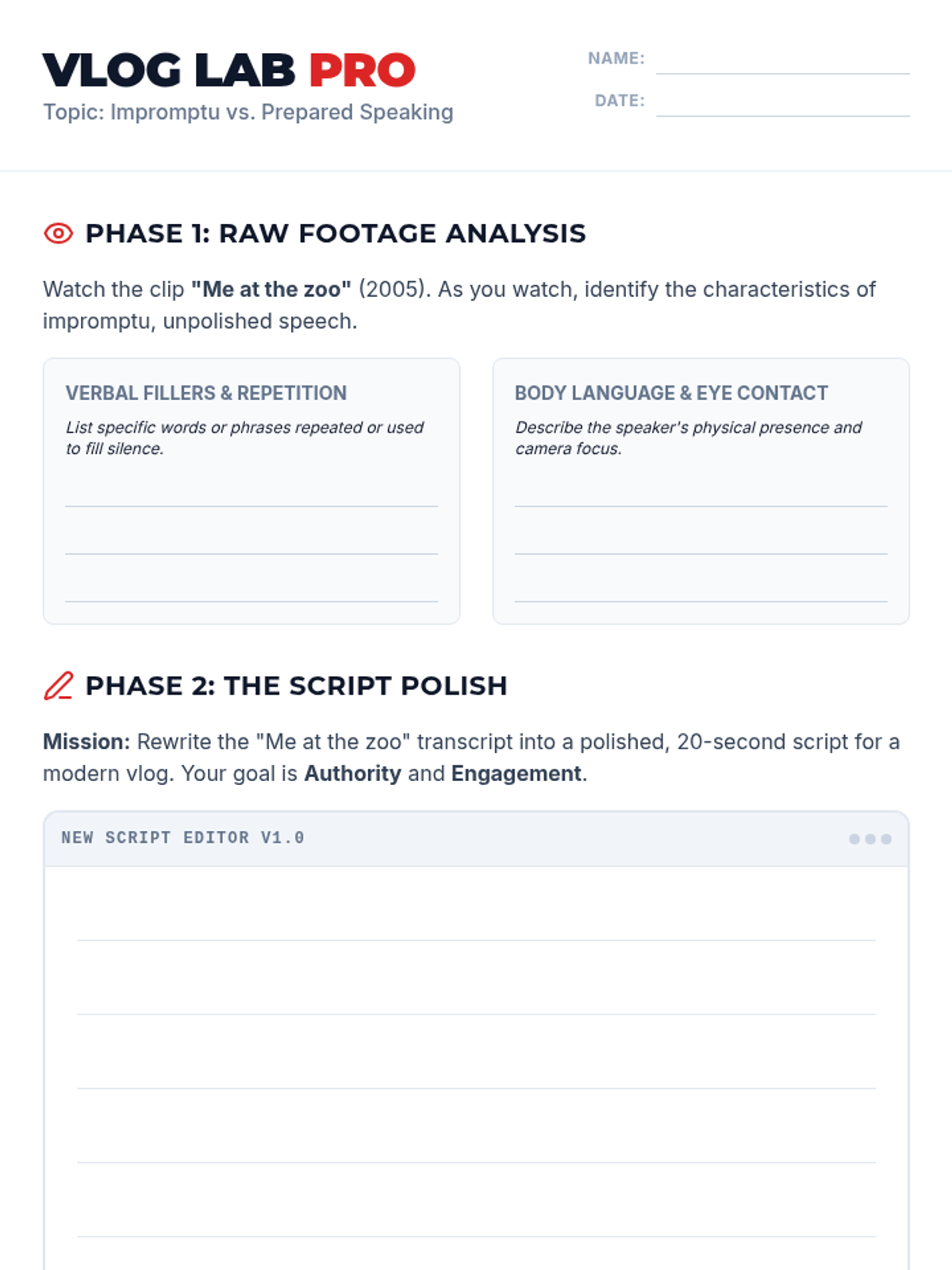
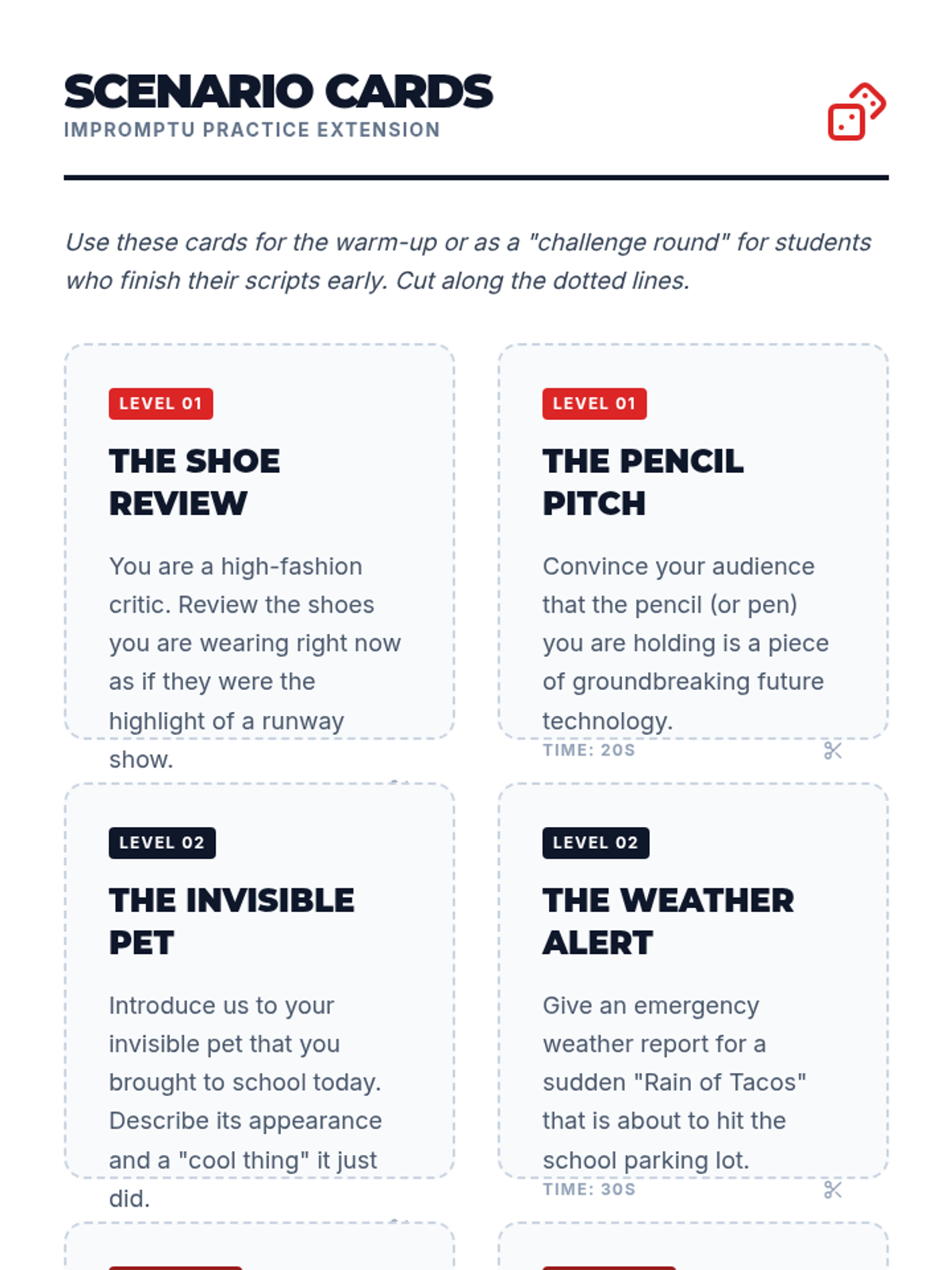
Students explore the history of media technology and presentation styles by comparing the first YouTube video to modern content, focusing on the concept of User-Generated Content (UGC).

A high school history and media literacy lesson where students evaluate 'Me at the zoo' as a primary source, acting as digital archaeologists from the year 2124 to analyze early 21st-century culture and technology.
1/16
A lesson on the historical significance of digital primary sources, focusing on the democratization of media through the lens of the first YouTube video.
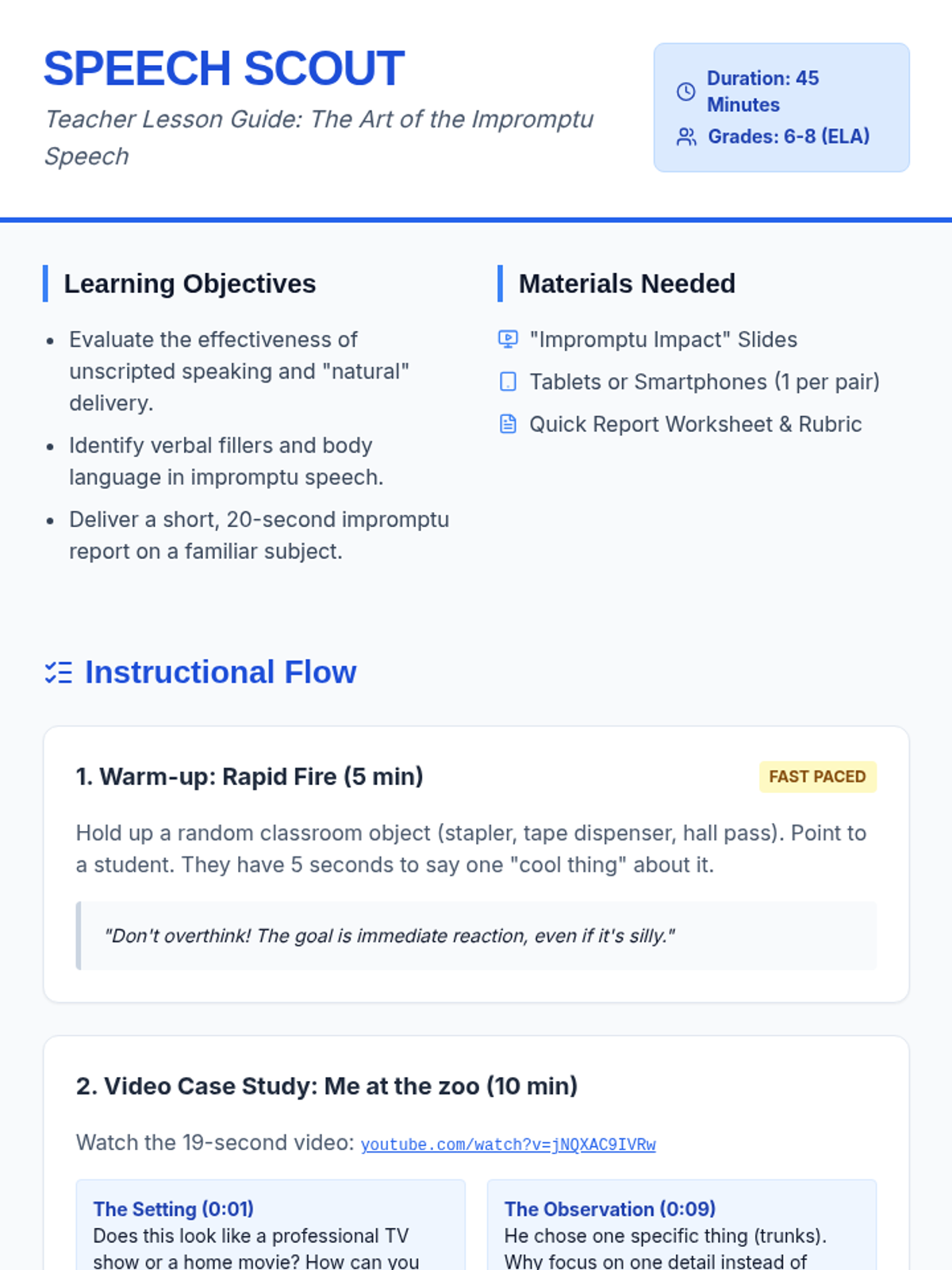
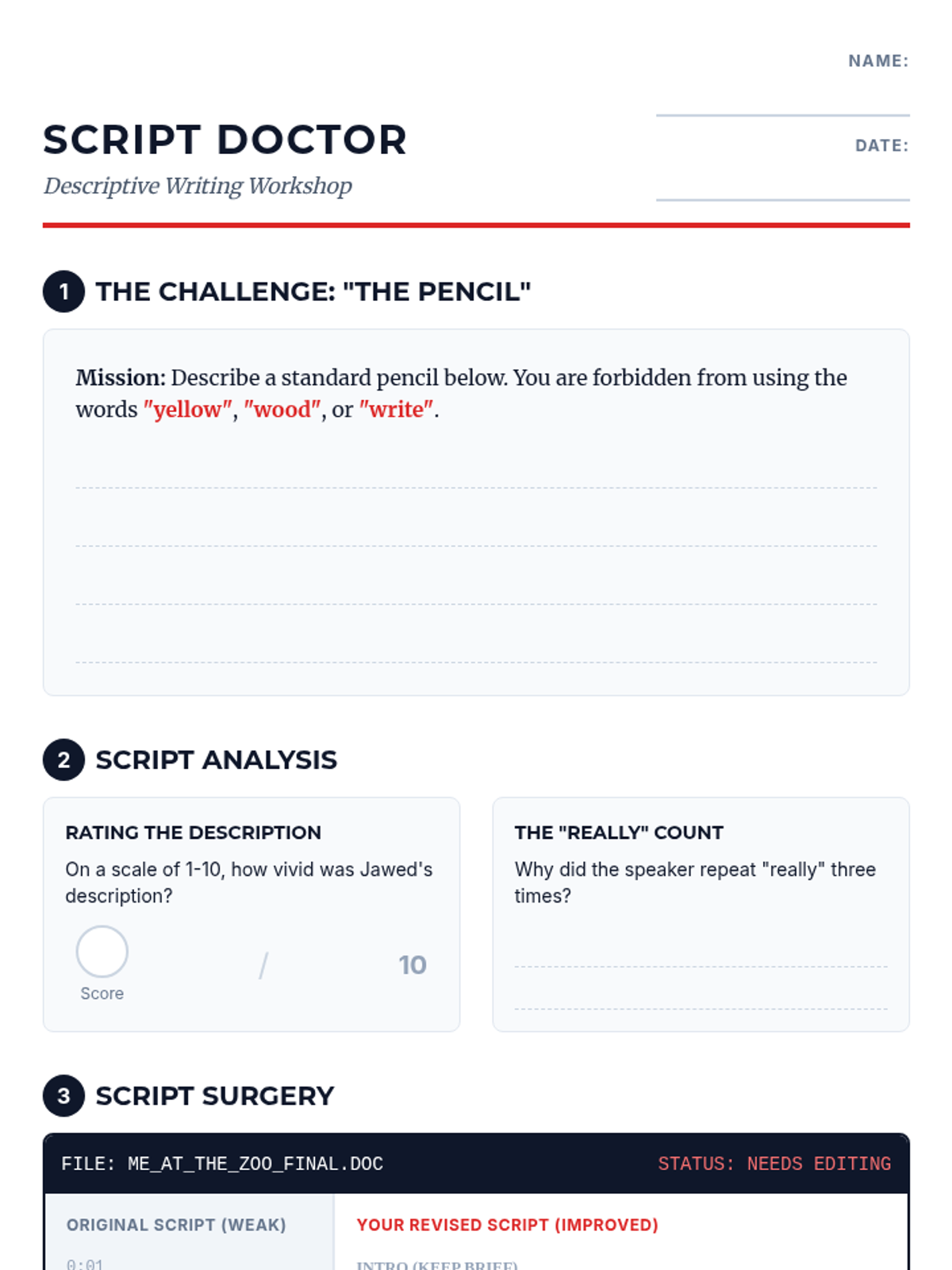
A middle school ELA lesson on improving descriptive language using the 'Me at the zoo' video as a case study for weak vocabulary.
This lesson introduces business students to the concept of a Minimum Viable Product (MVP) through the historical lens of YouTube's first-ever upload, challenging them to prioritize core functionality over perfection.
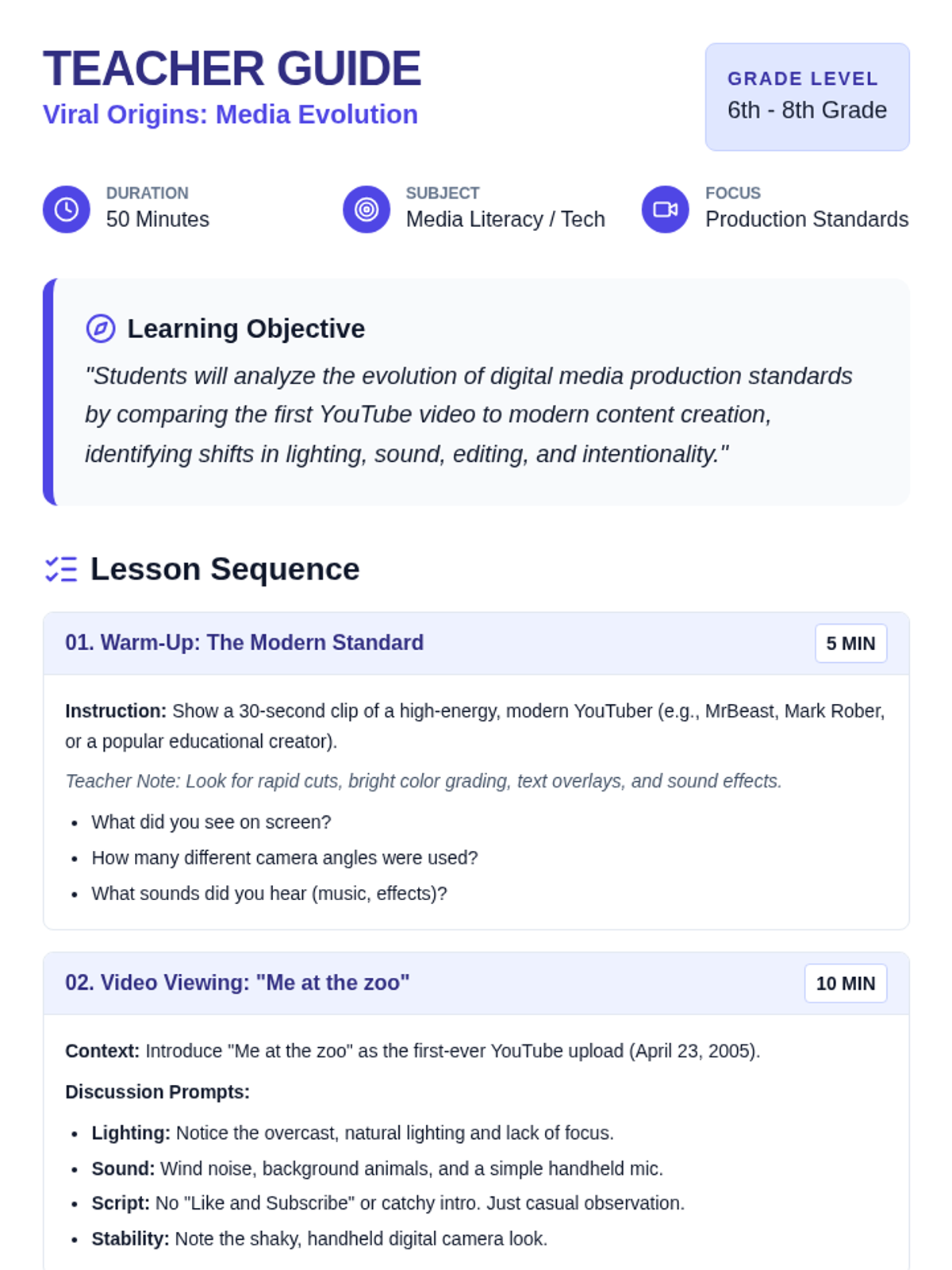
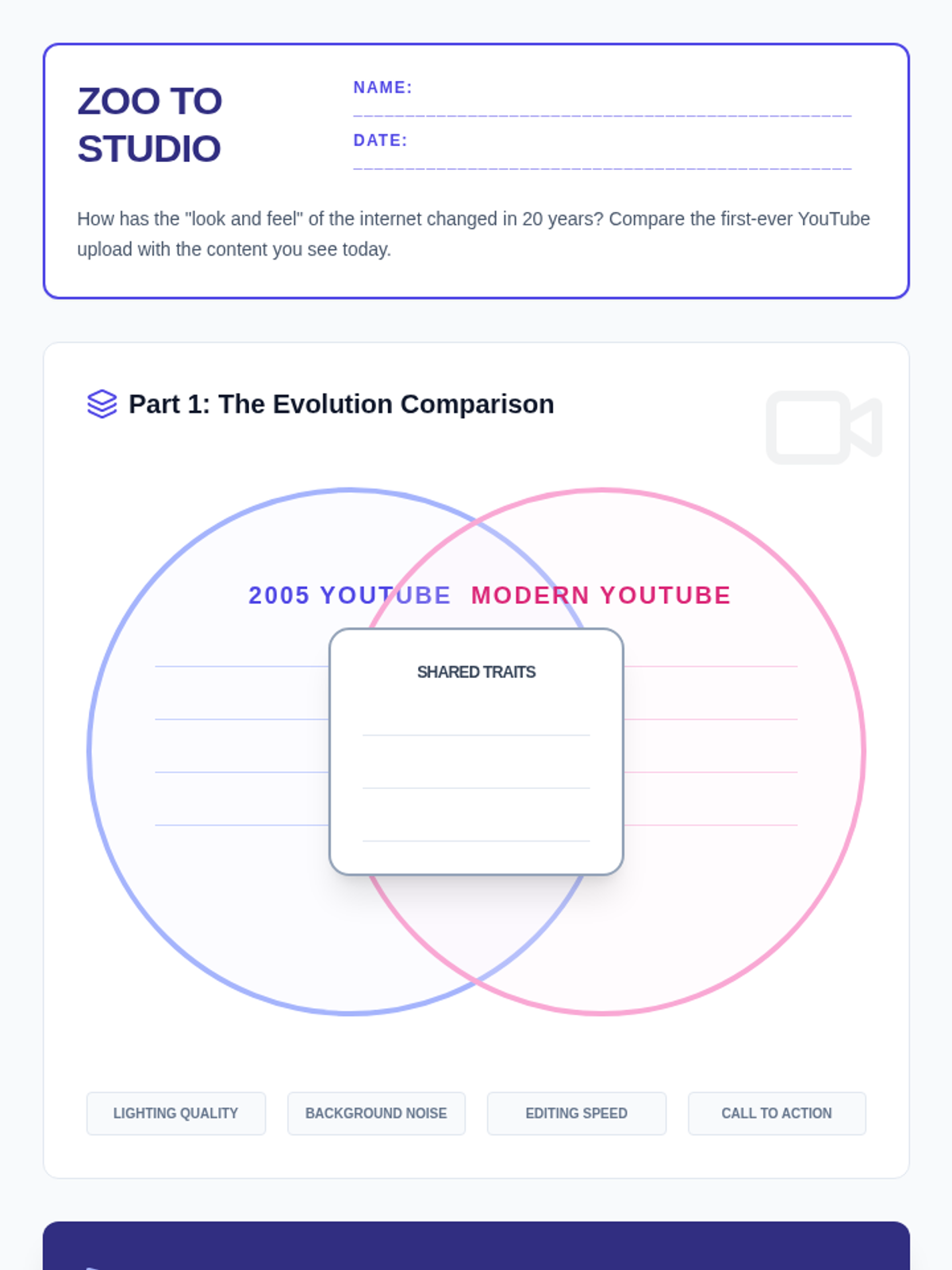
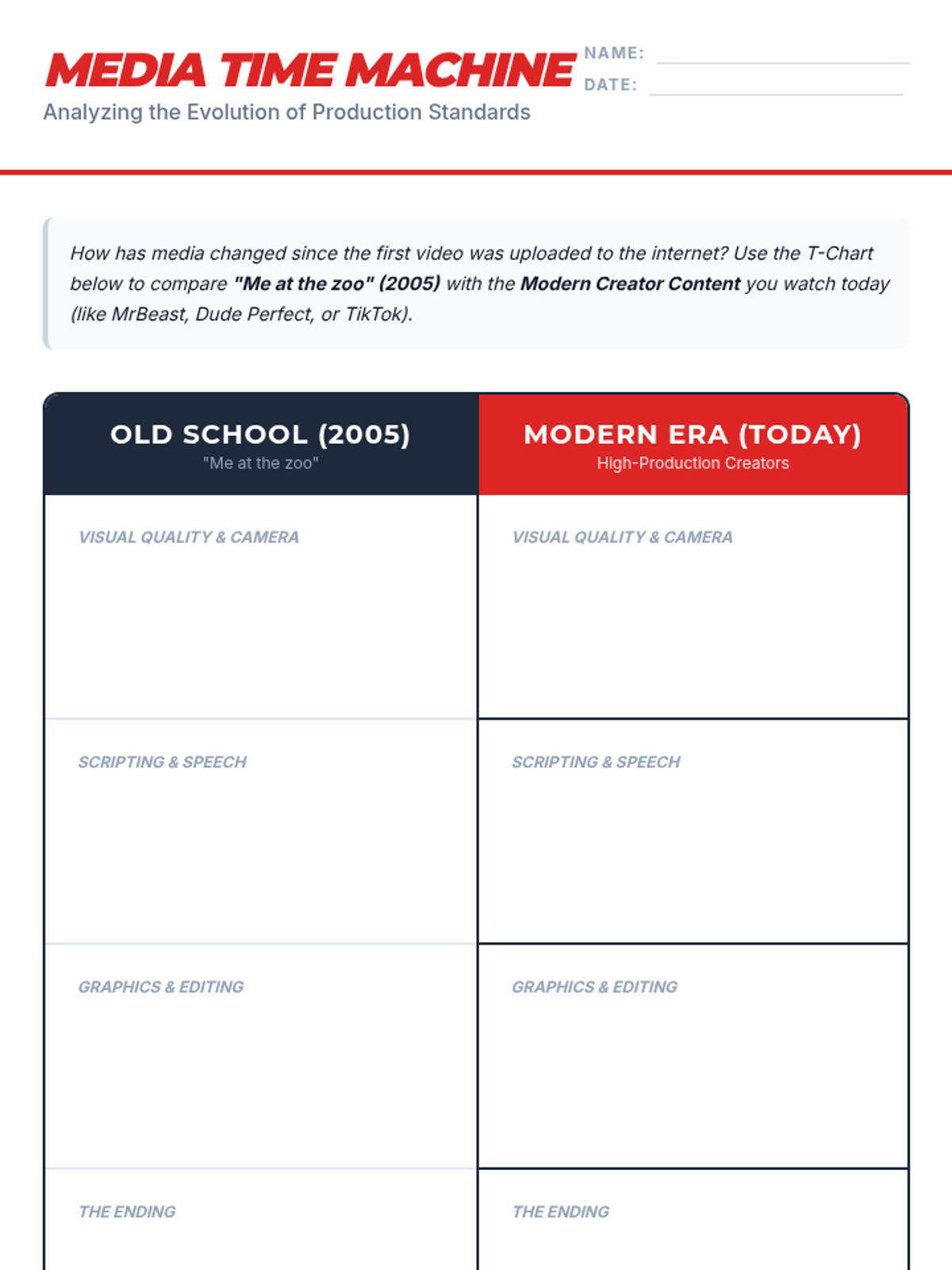
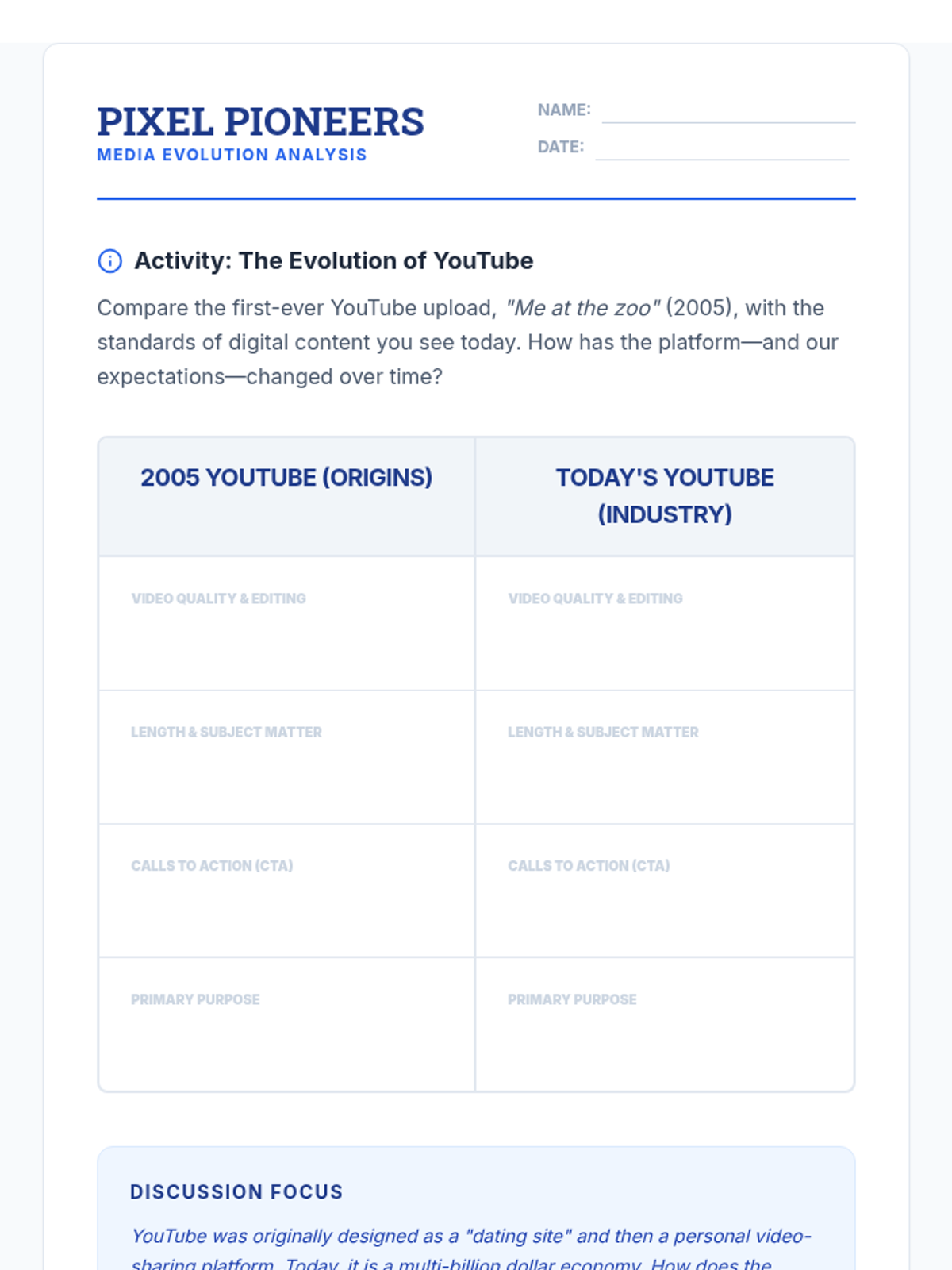
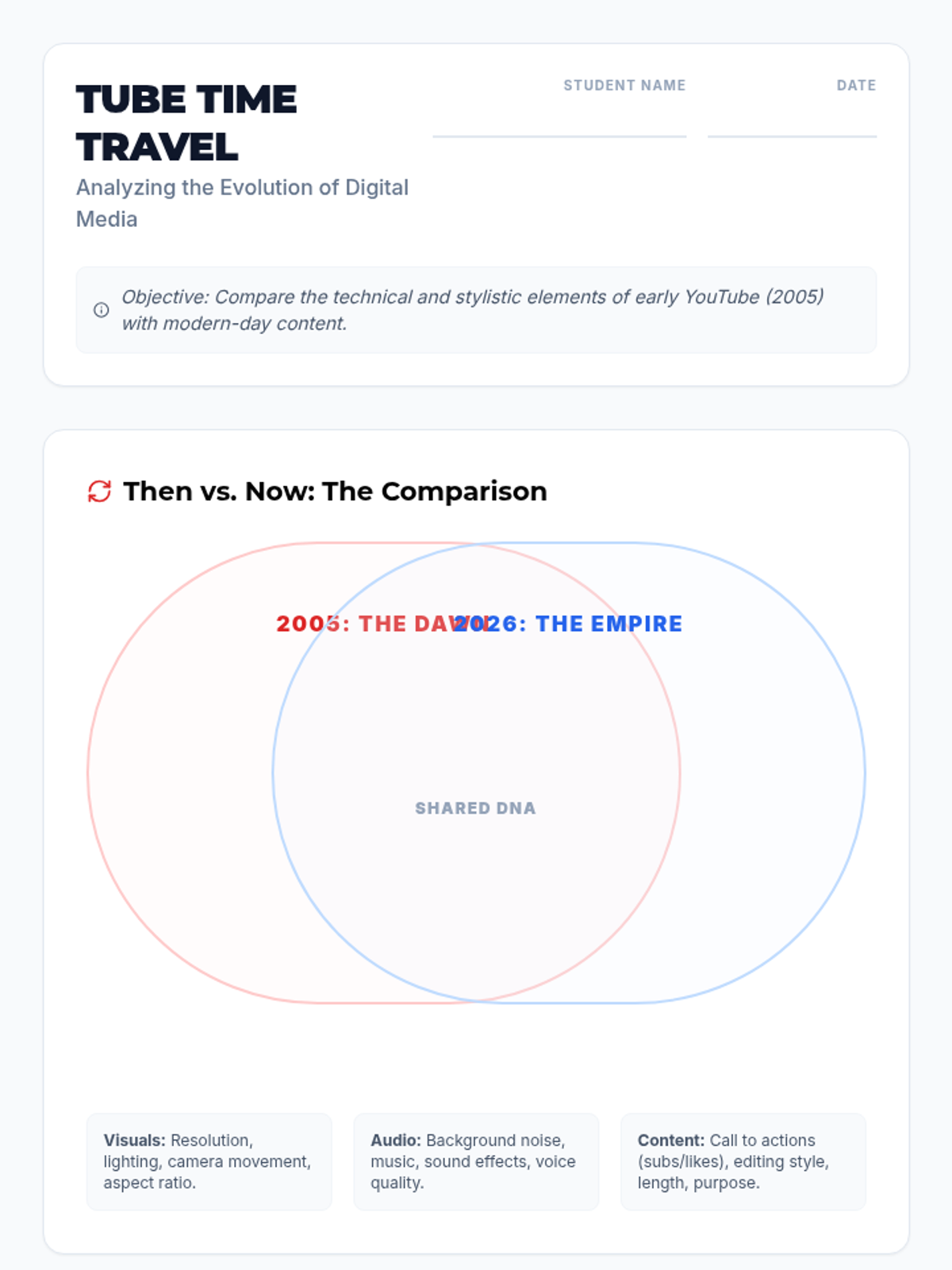
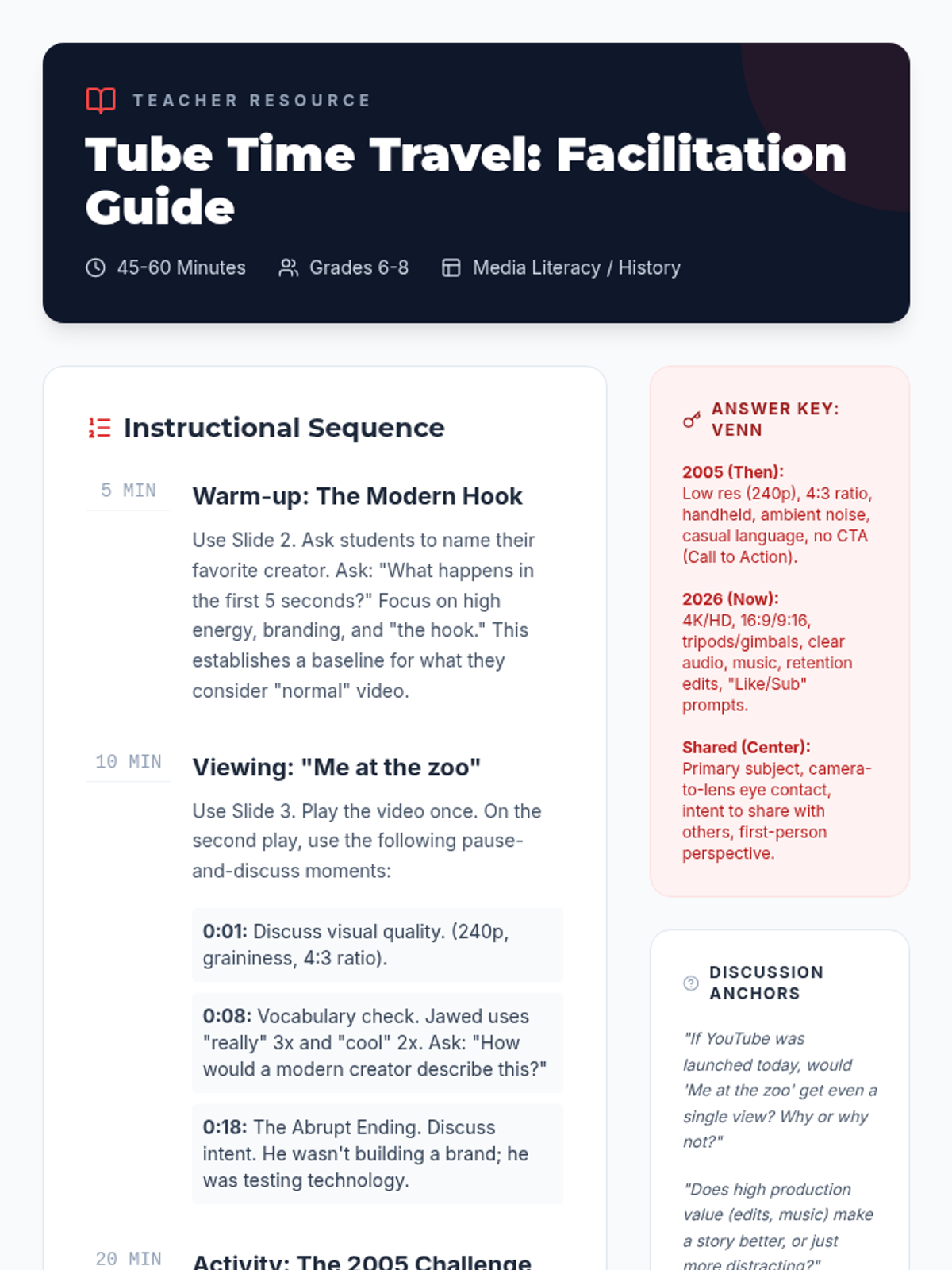
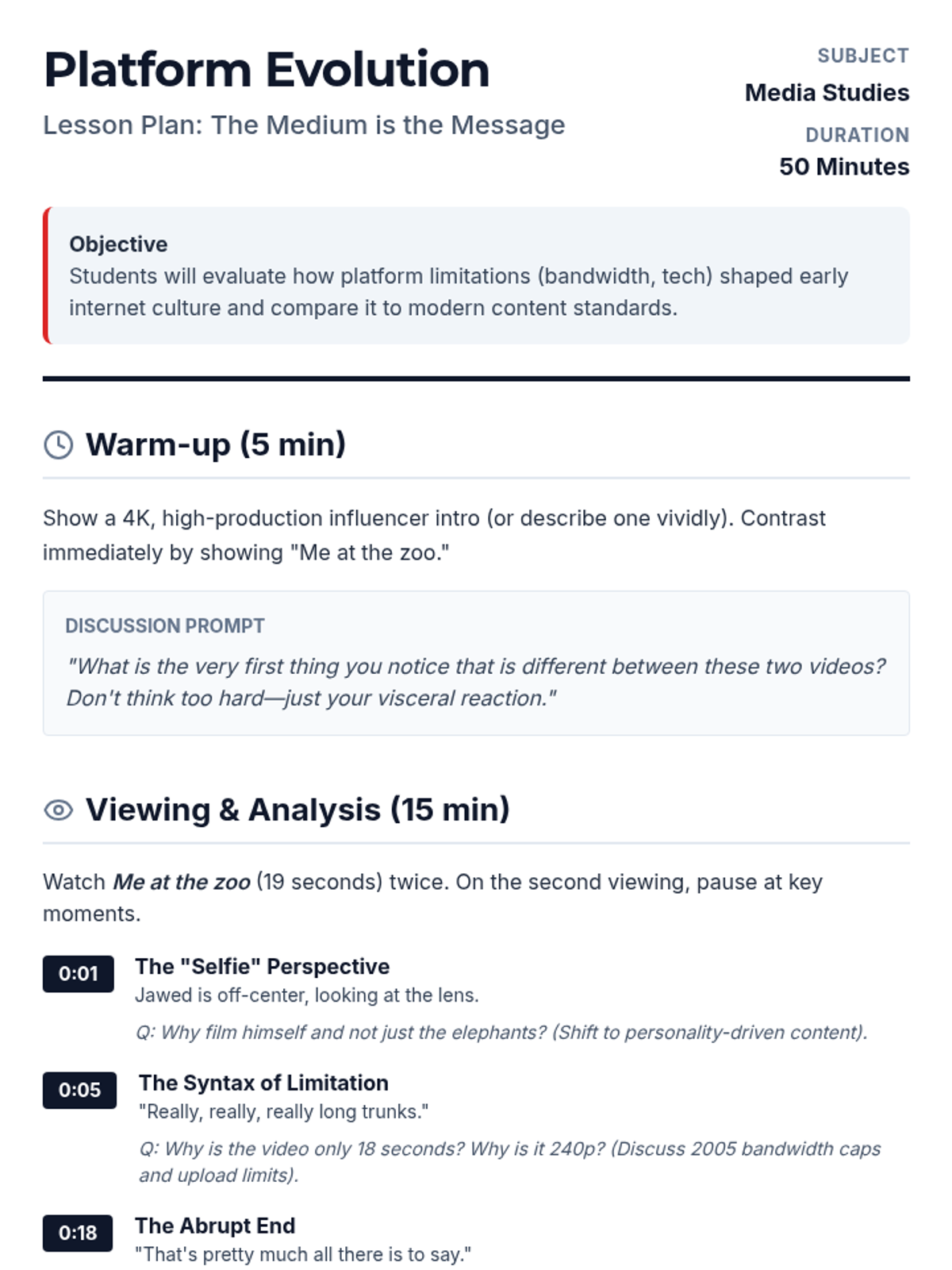
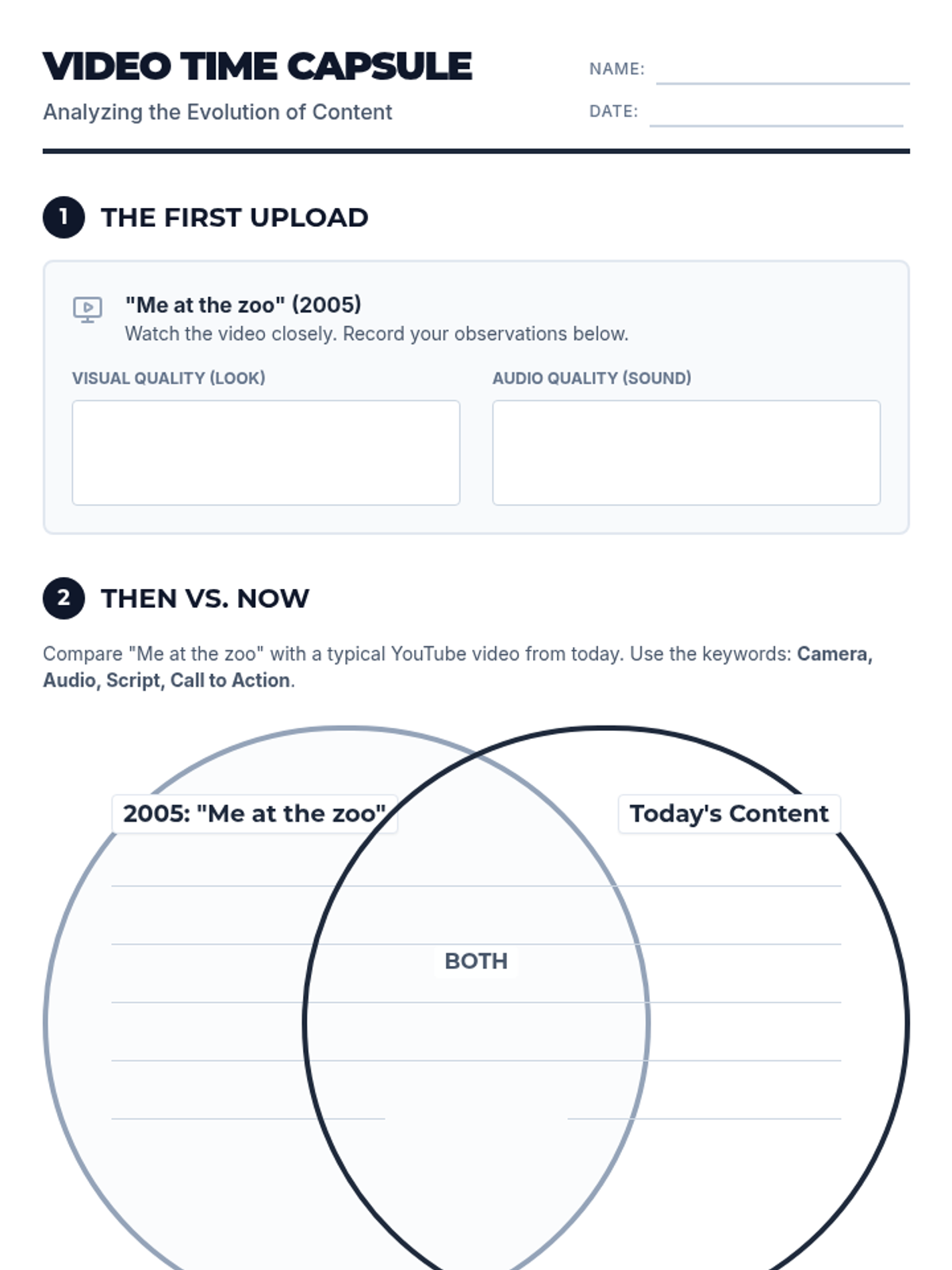
A lesson exploring the transformation of media through the history of YouTube, contrasting the simplicity of the first 'User-Generated Content' with modern, high-production digital storytelling. Students will analyze technical shifts and practice scripting for a simpler era.
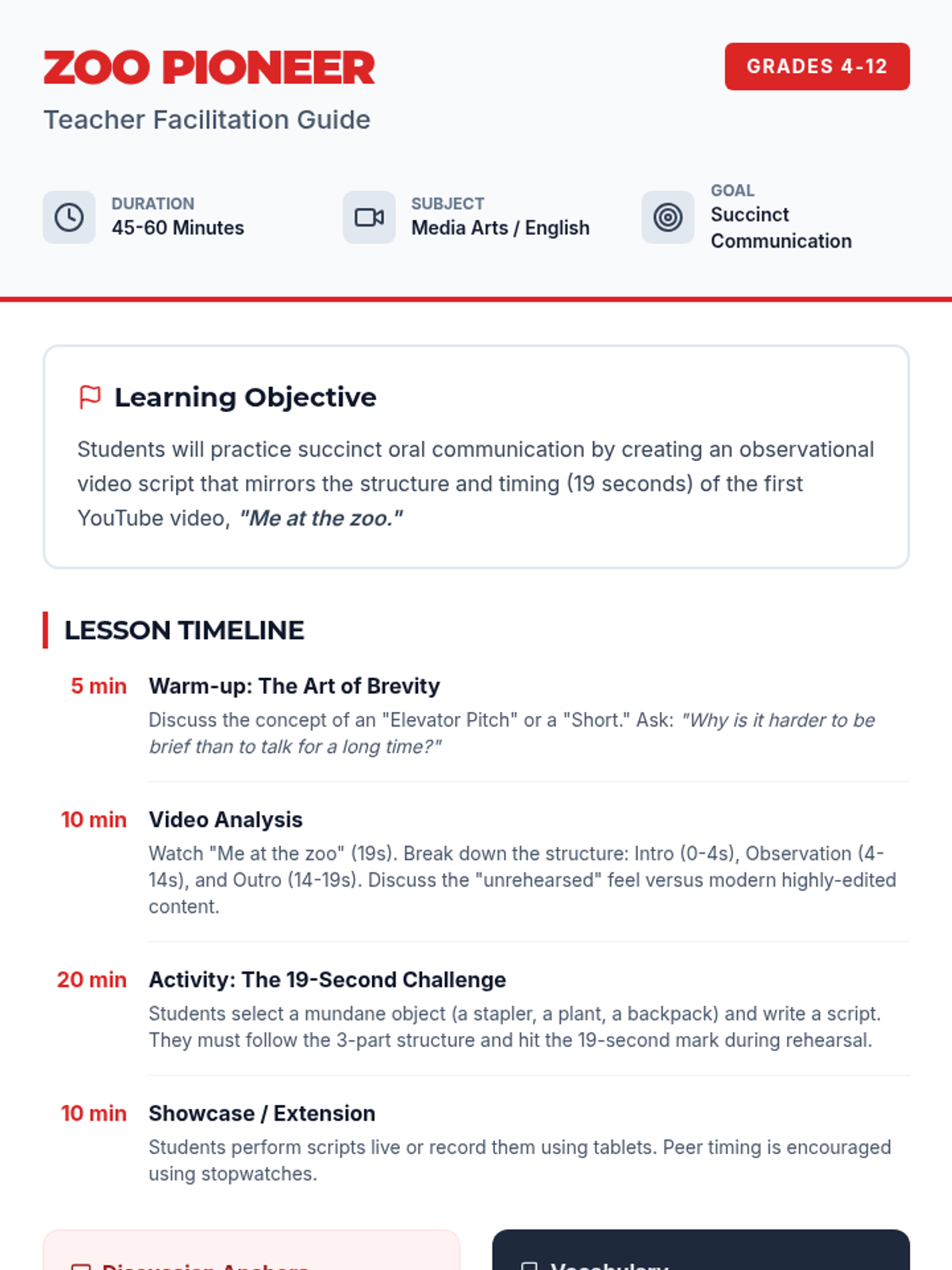
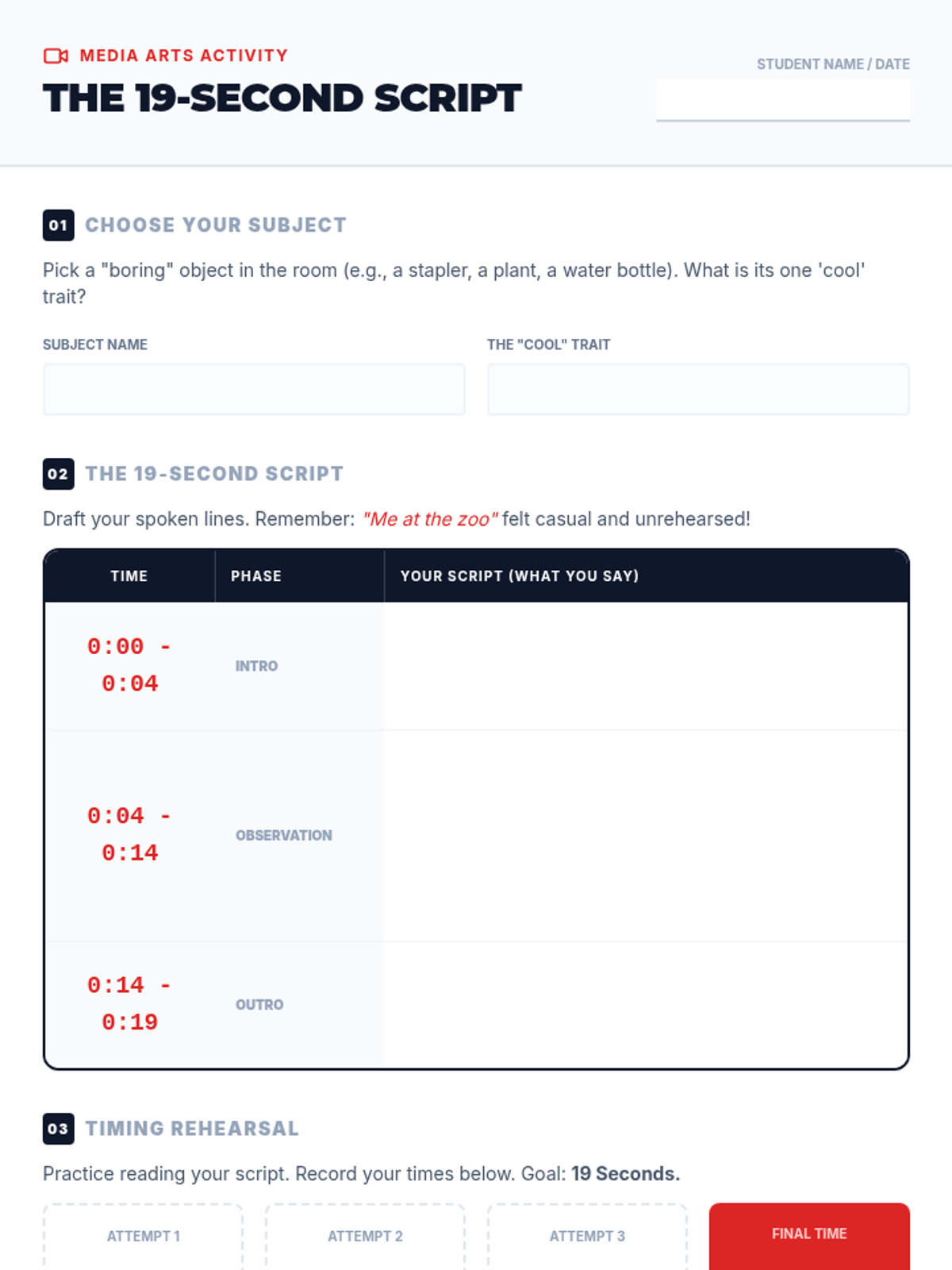
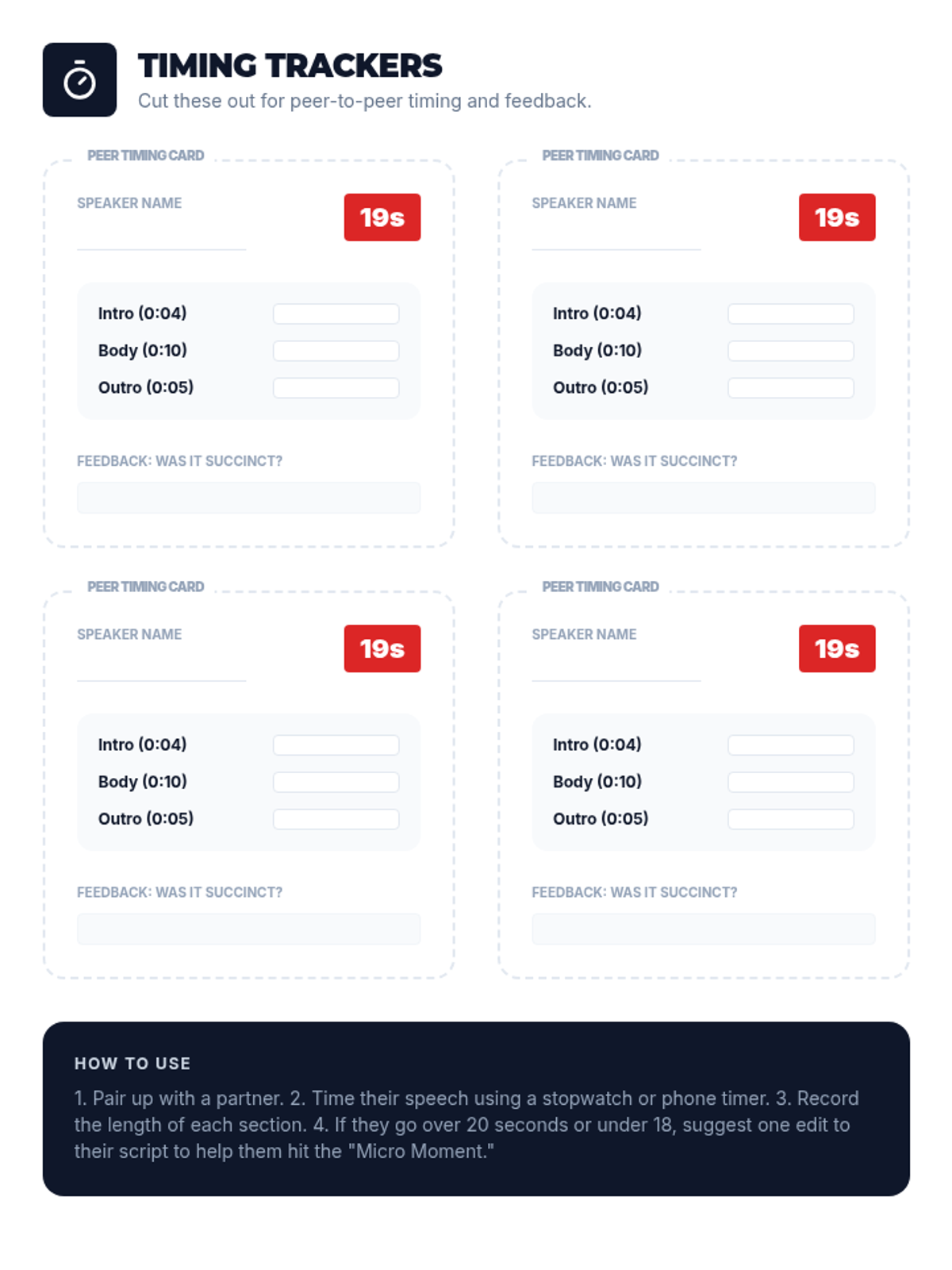
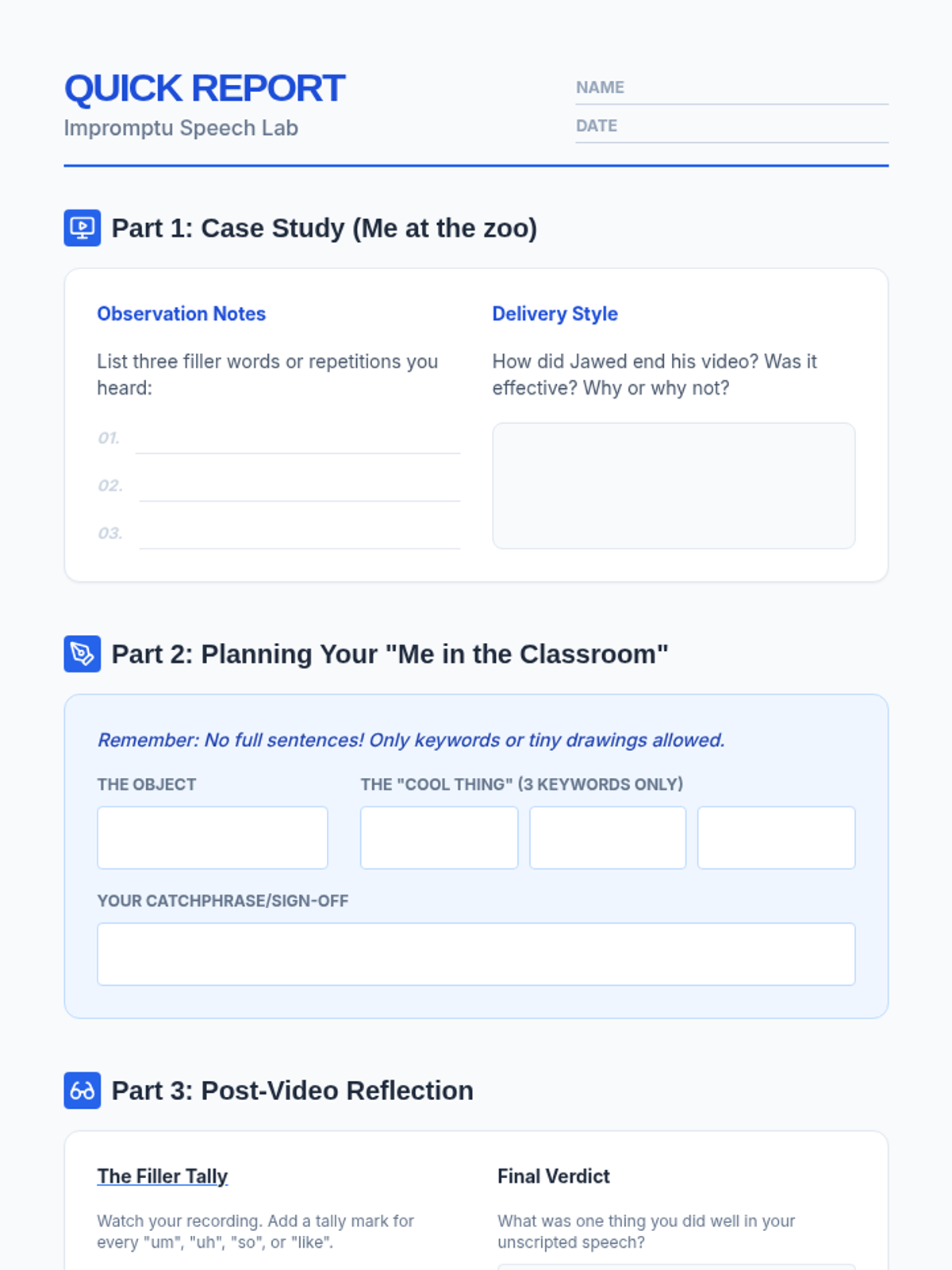
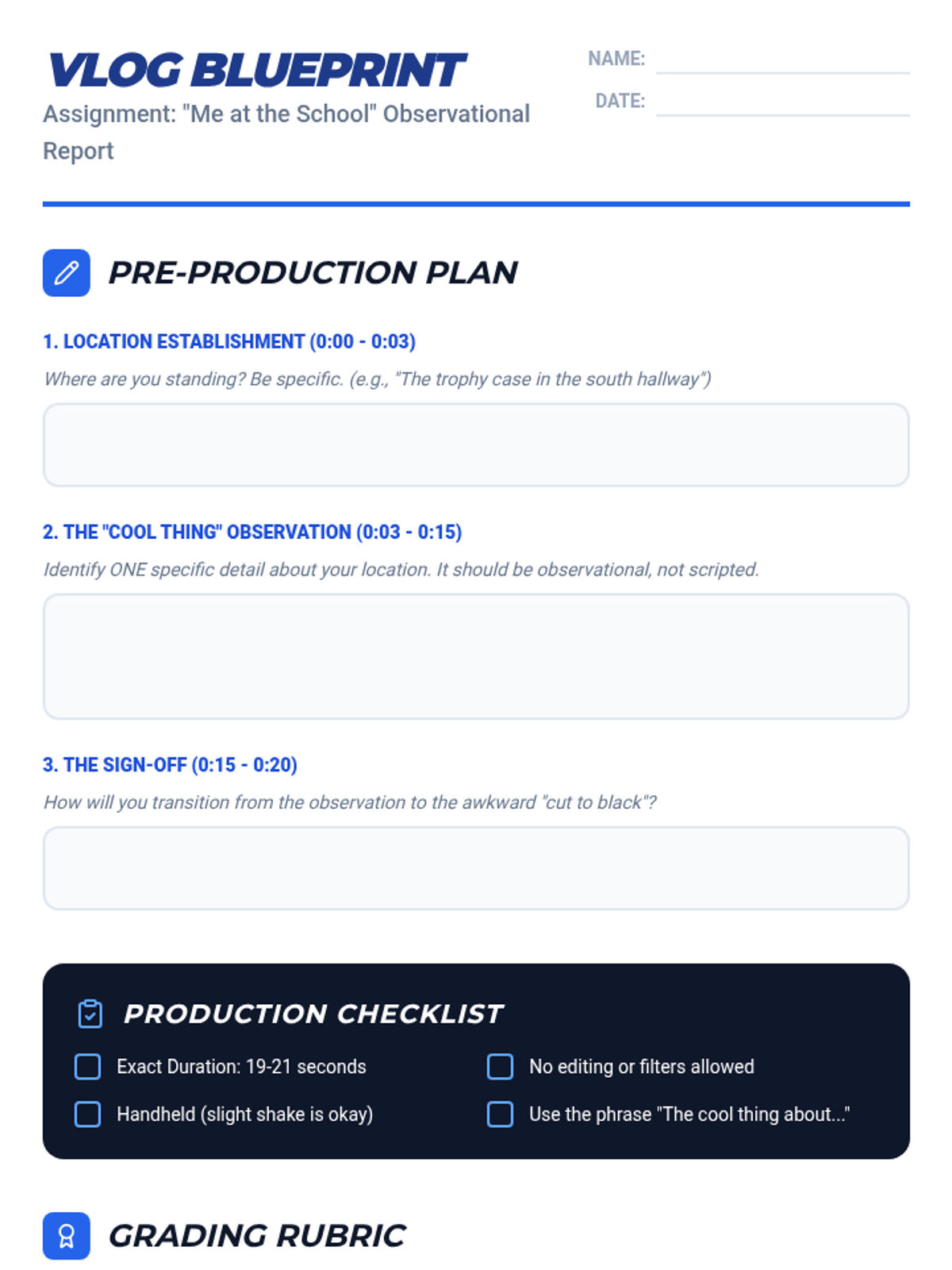
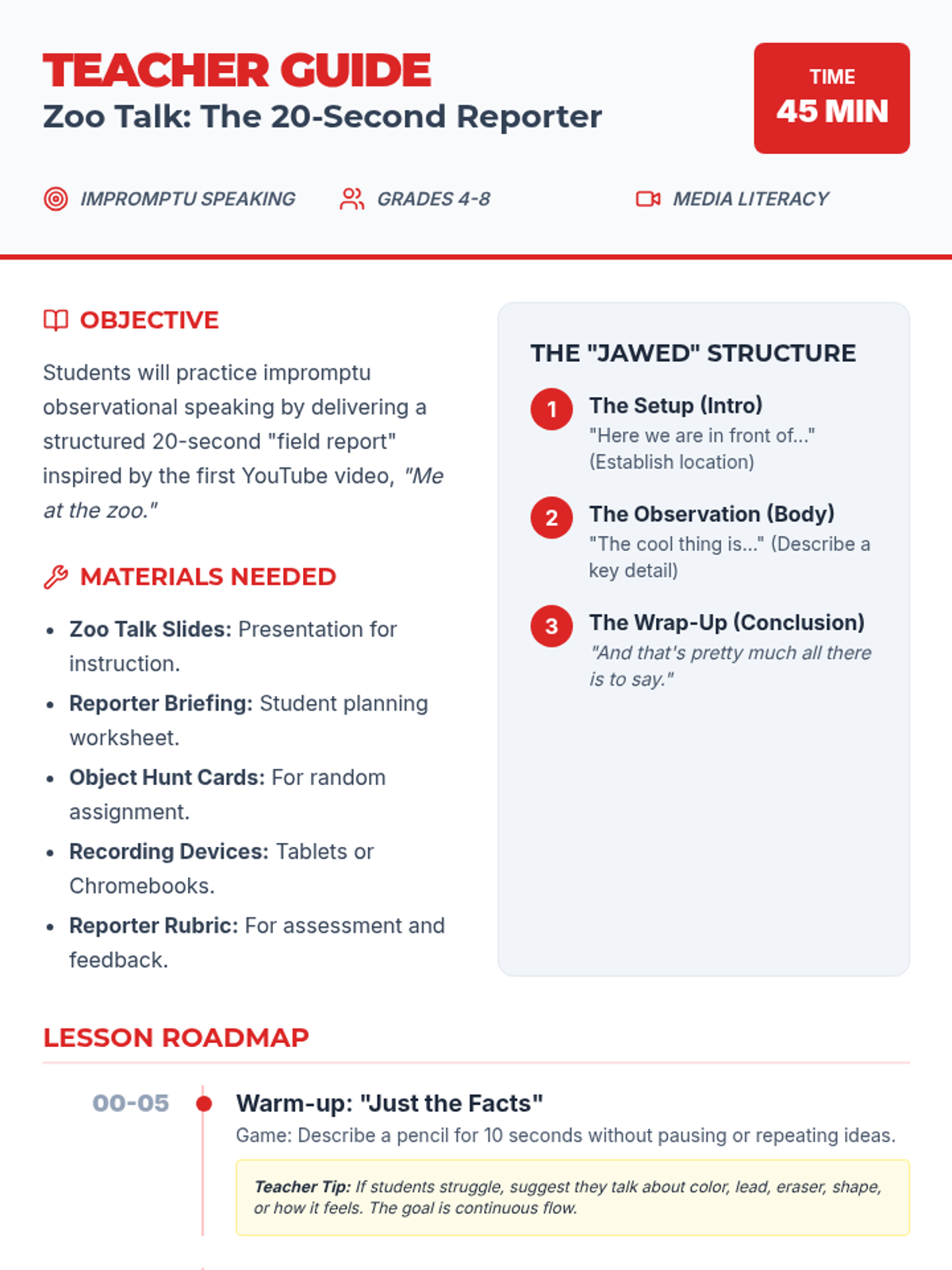
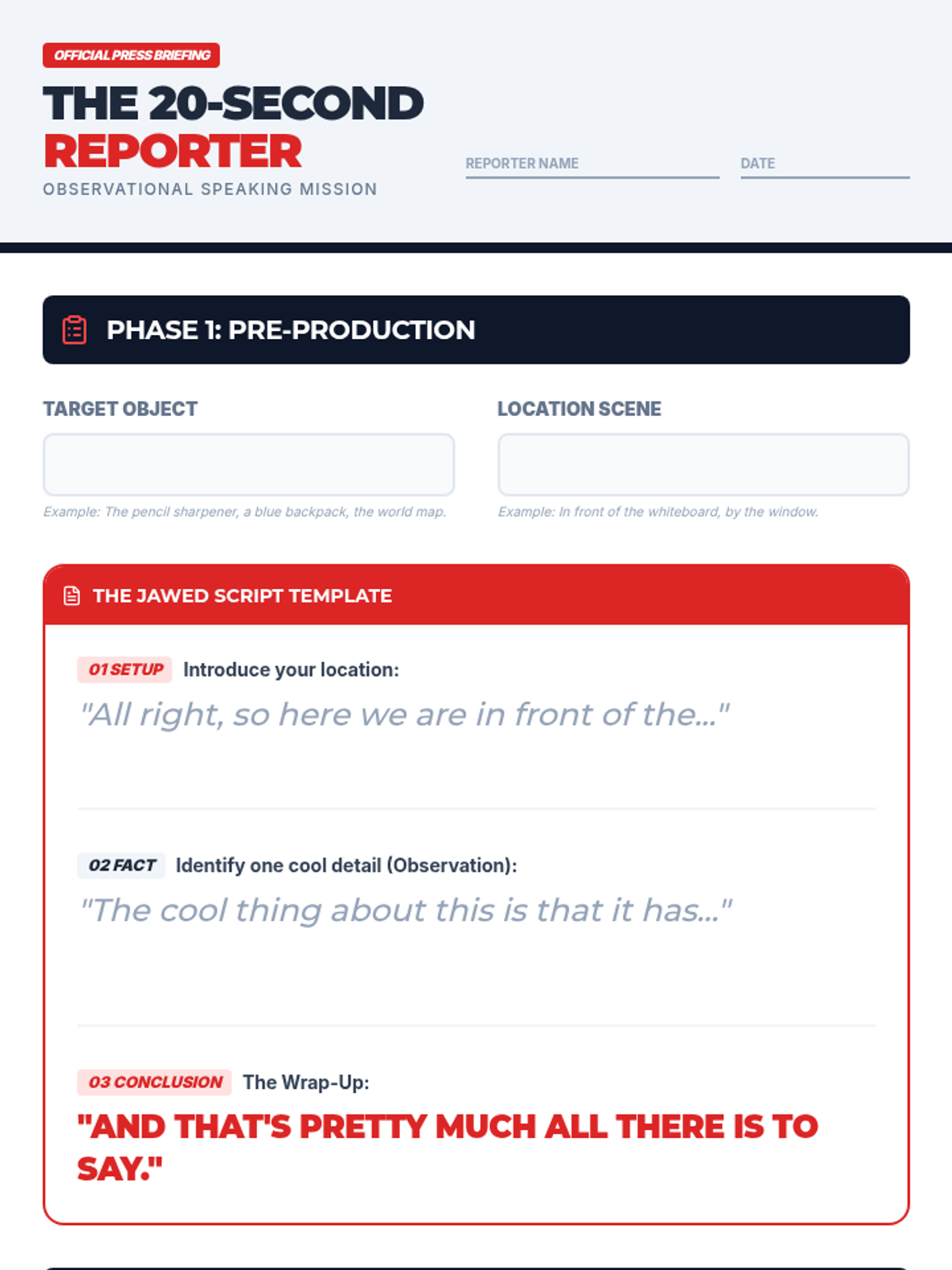
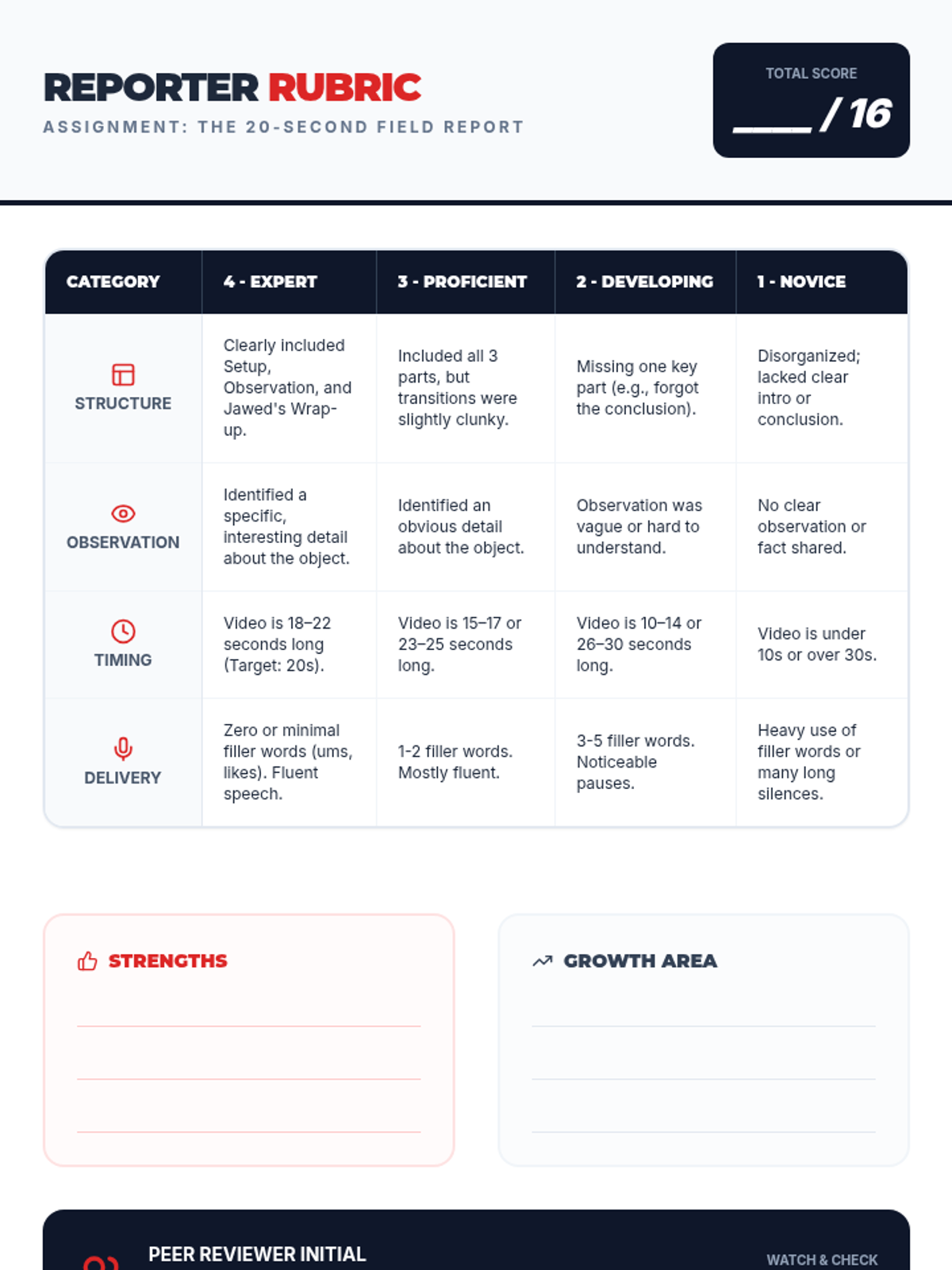
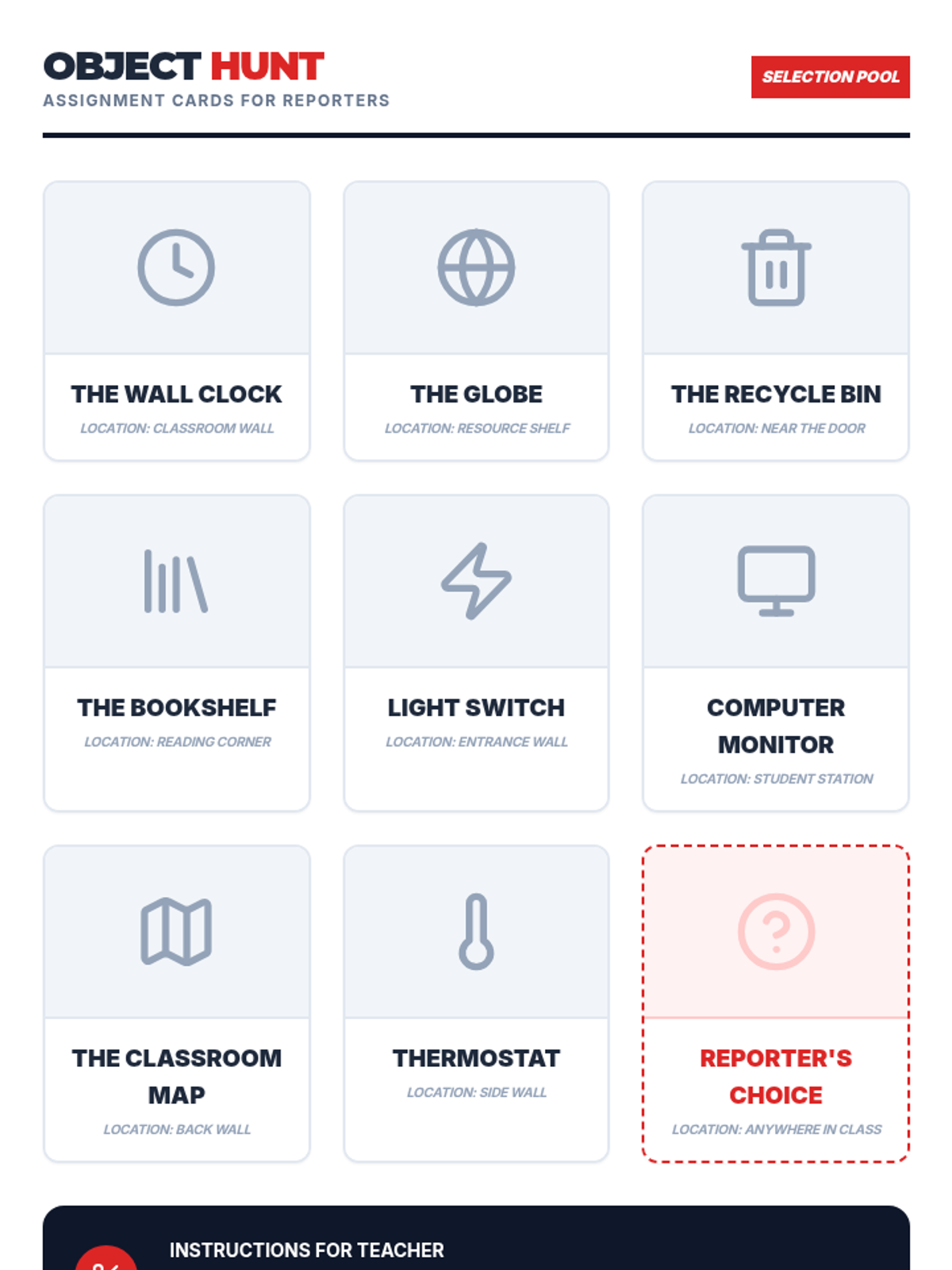
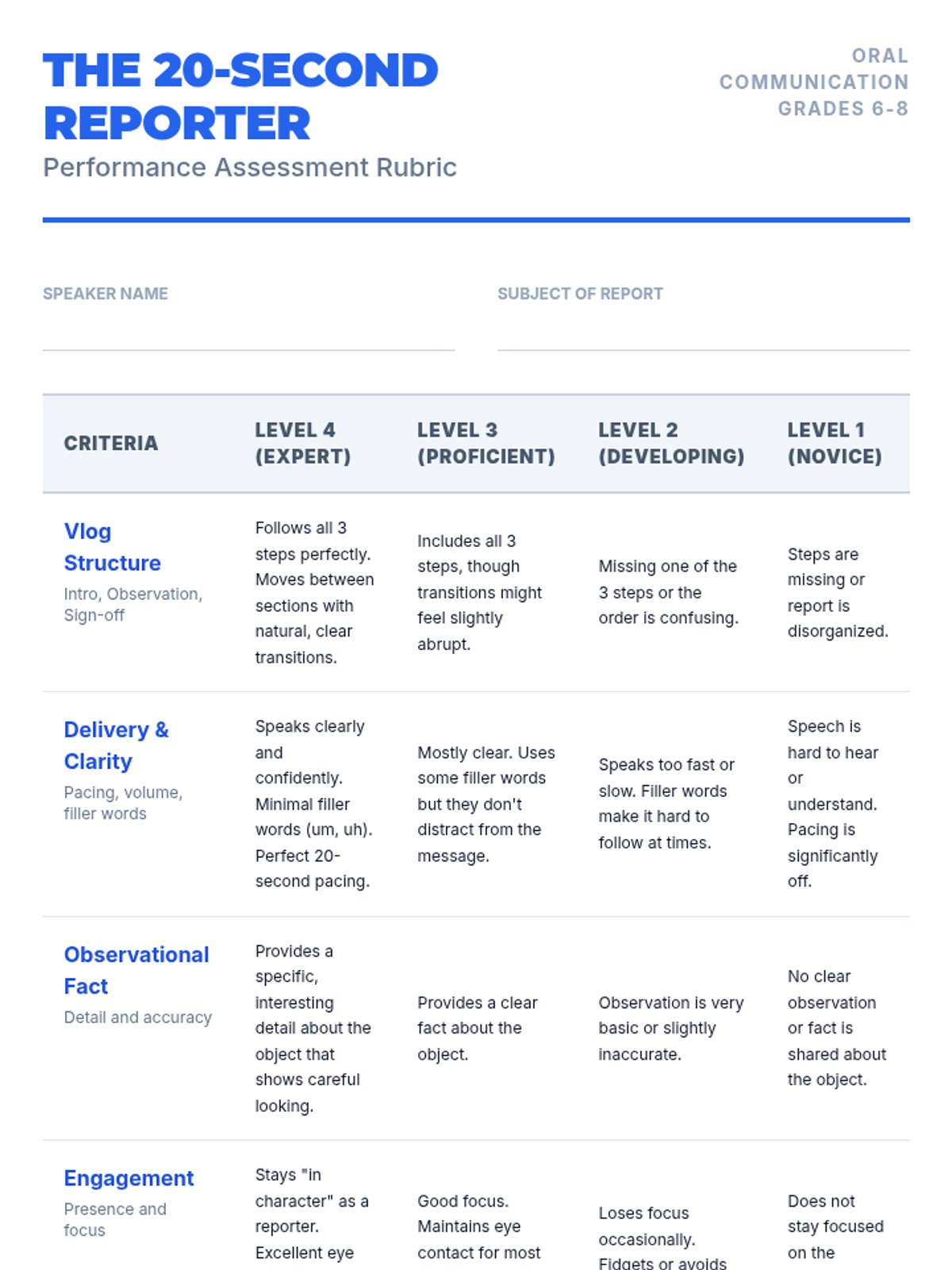
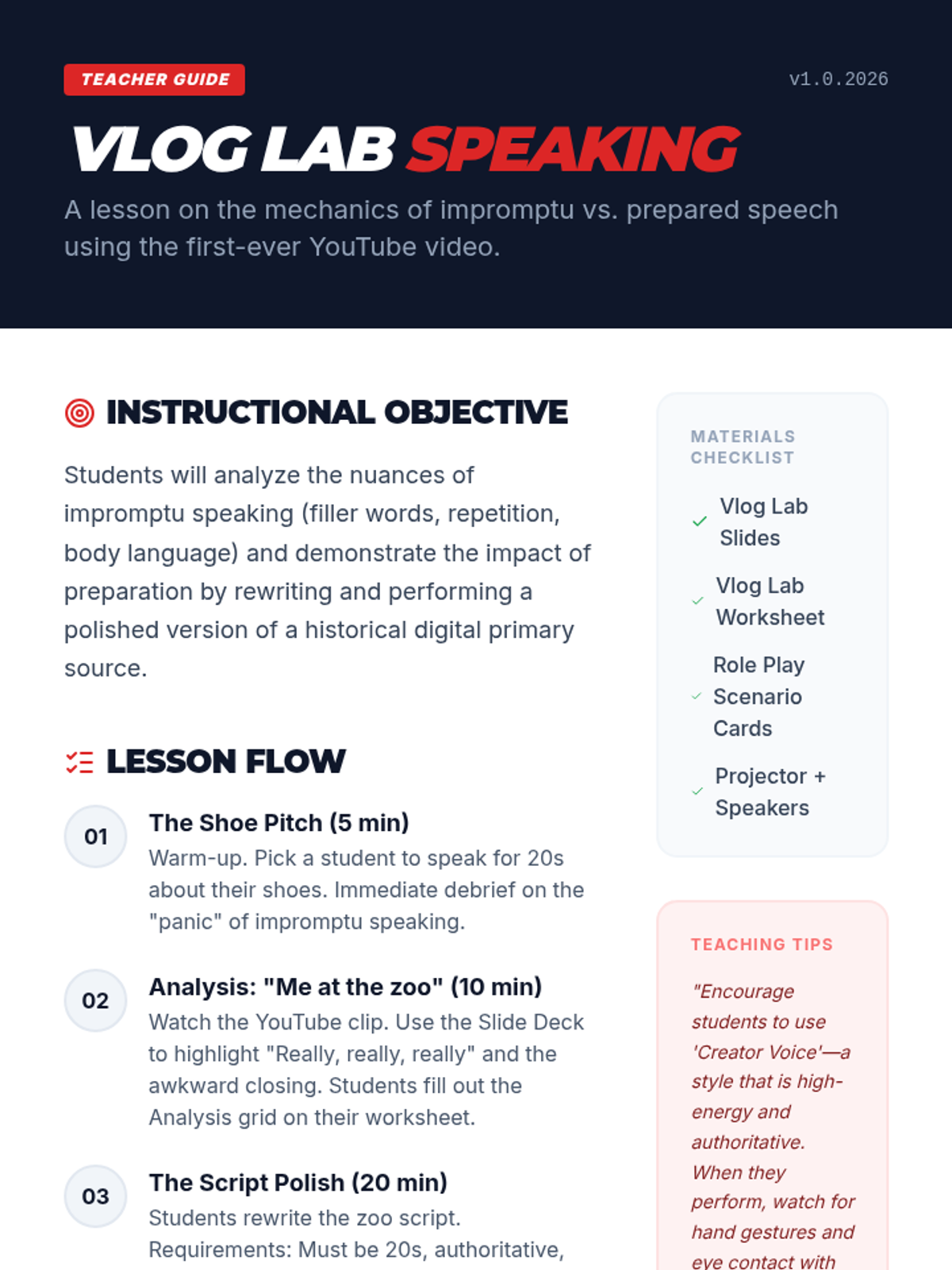
A writing and speaking lesson for 4th-6th graders focused on concise communication, using the 'Me at the zoo' video as a model for creating 19-second vlogs.
A 50-minute lesson for undergraduate marketing students exploring the concept of Minimum Viable Product (MVP) through the lens of YouTube's history and its first uploaded video.
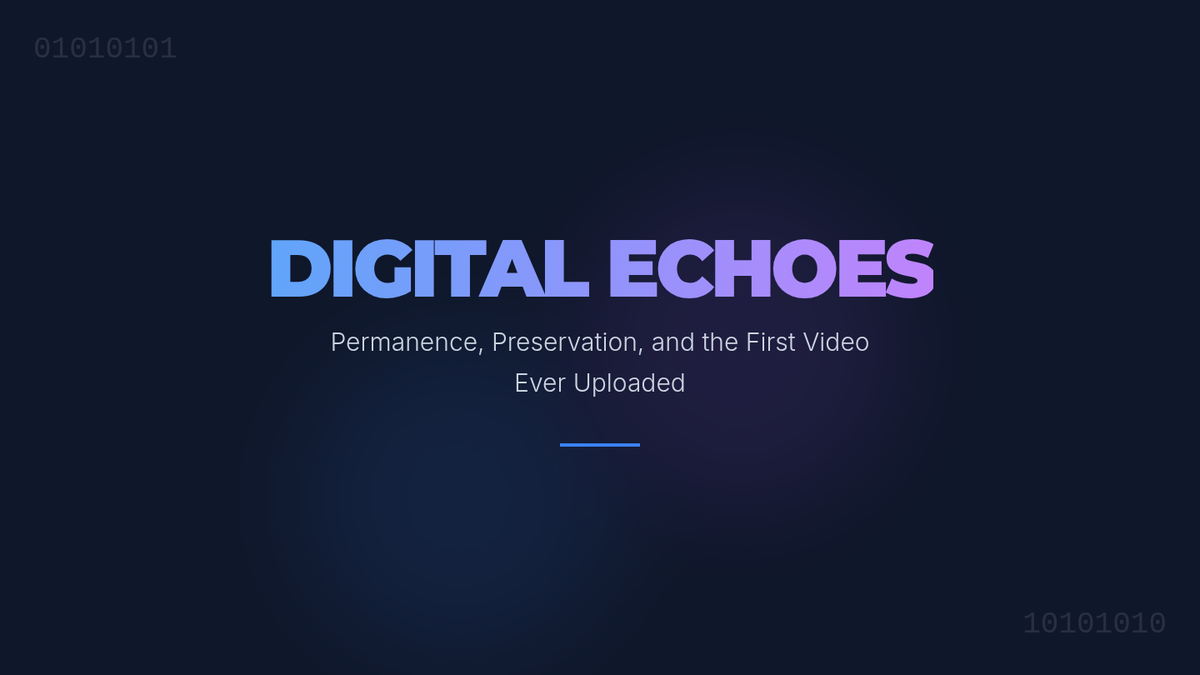
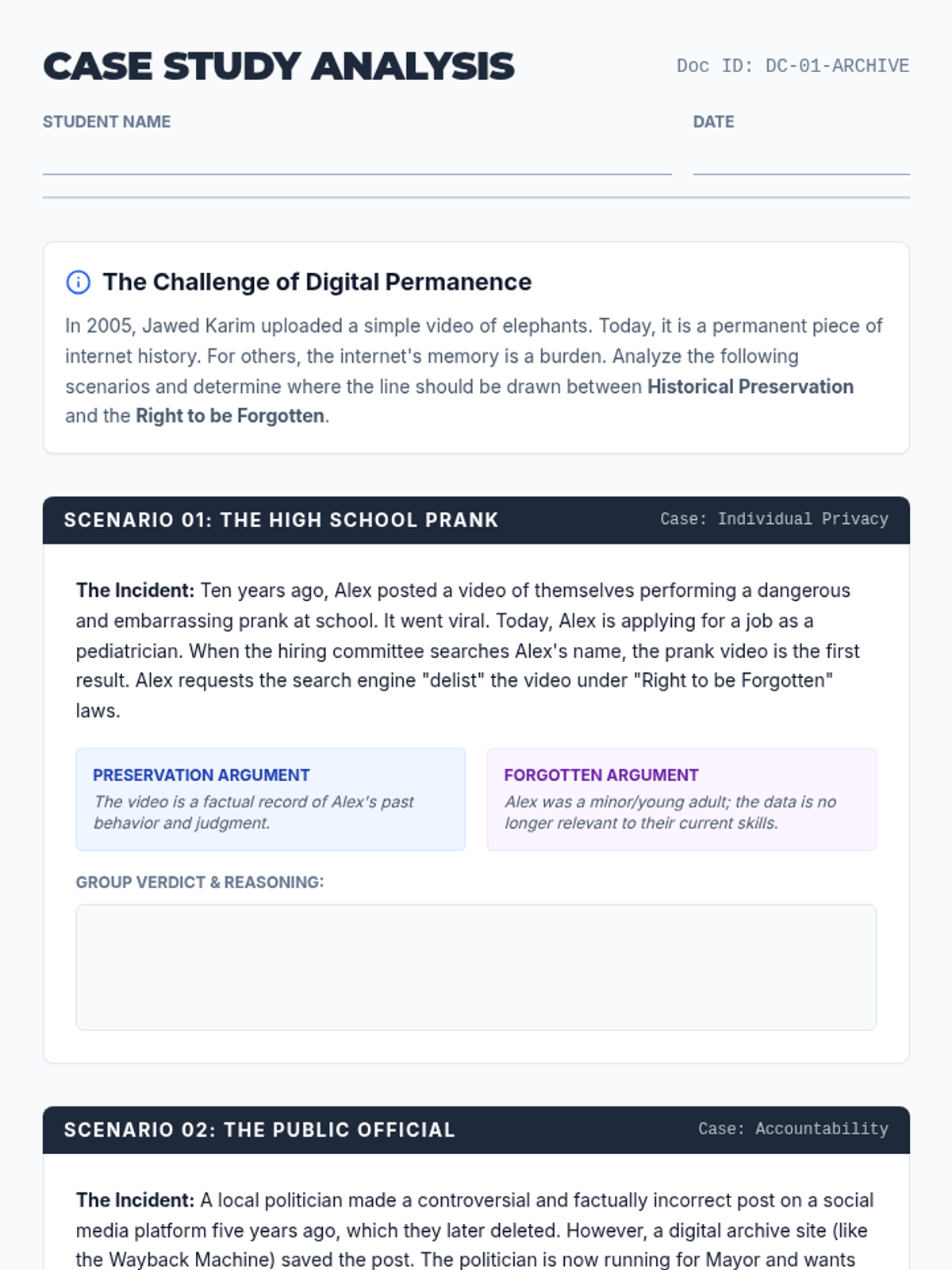
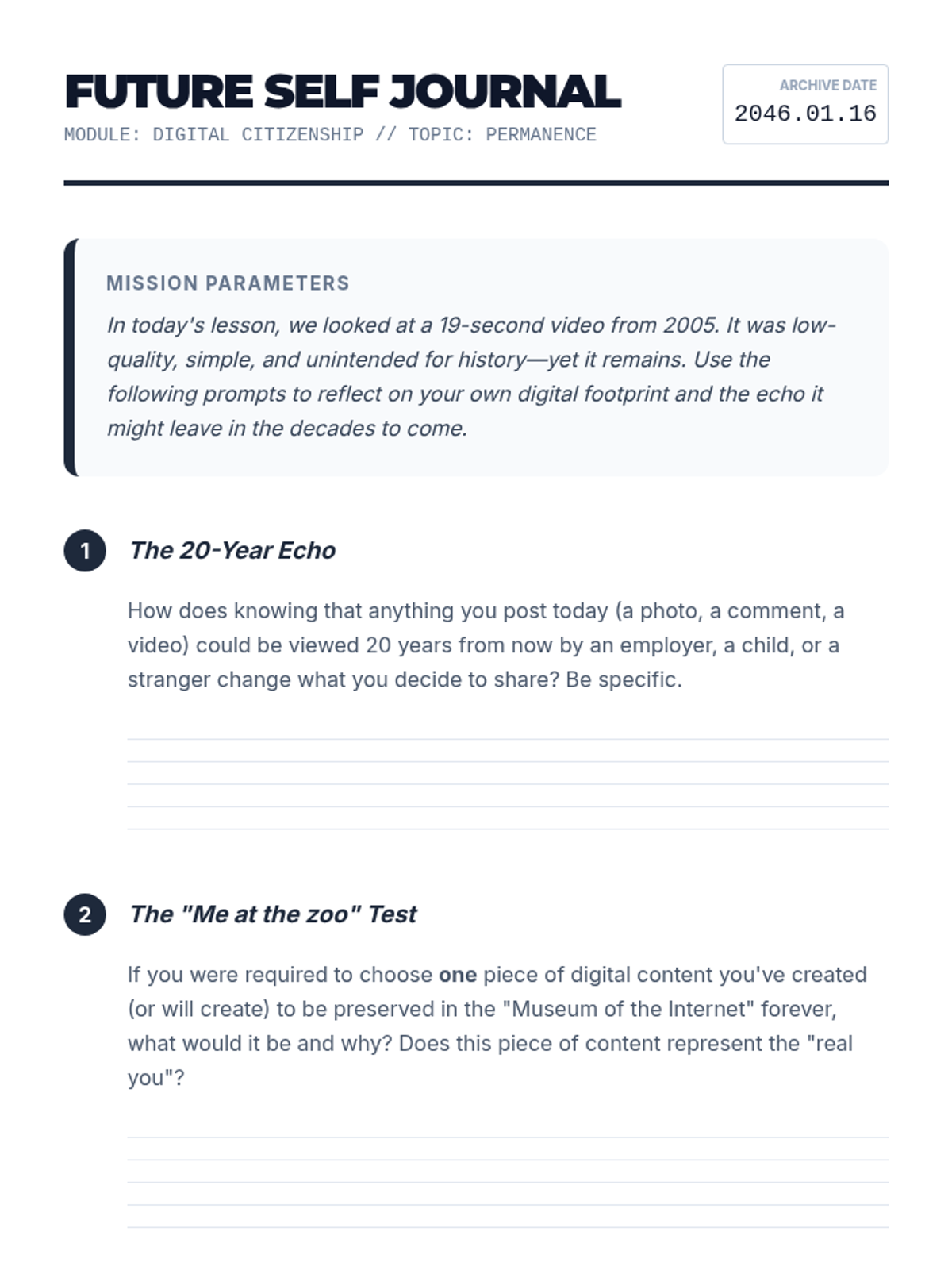
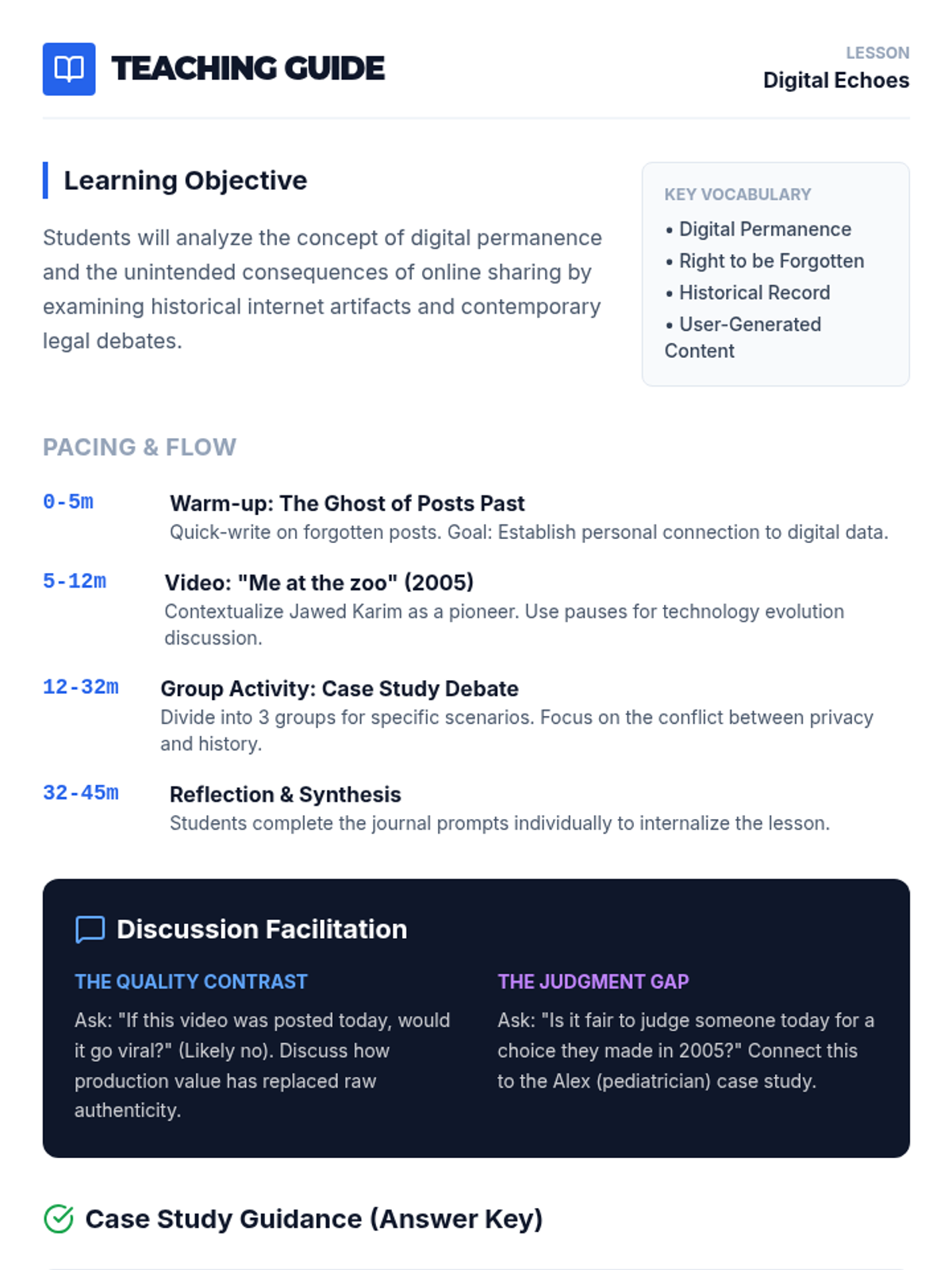
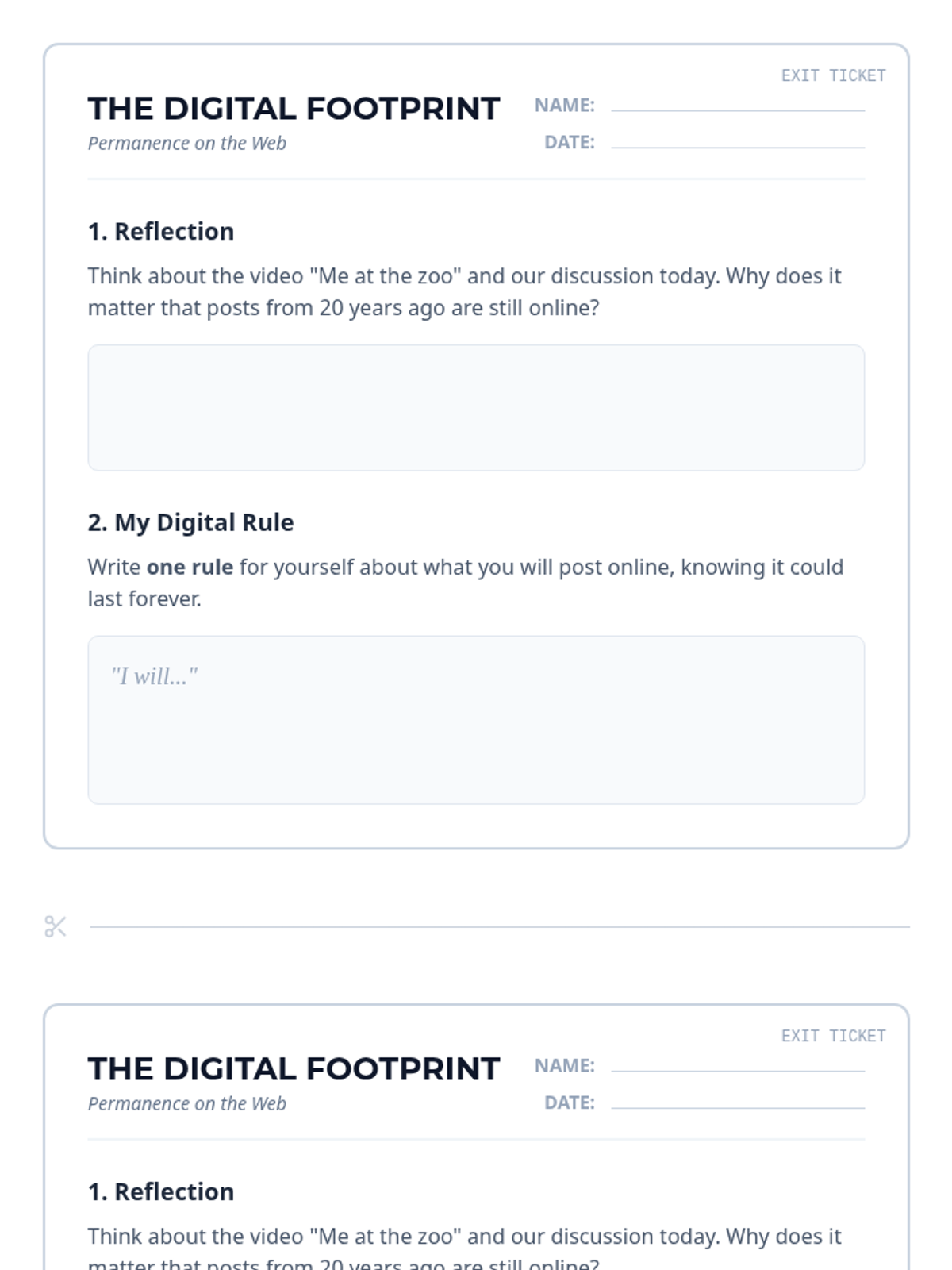
A reflective workshop for adults exploring the permanence of the internet through the lens of YouTube's first video, 'Me at the zoo,' focusing on digital footprints and guiding children's online presence.
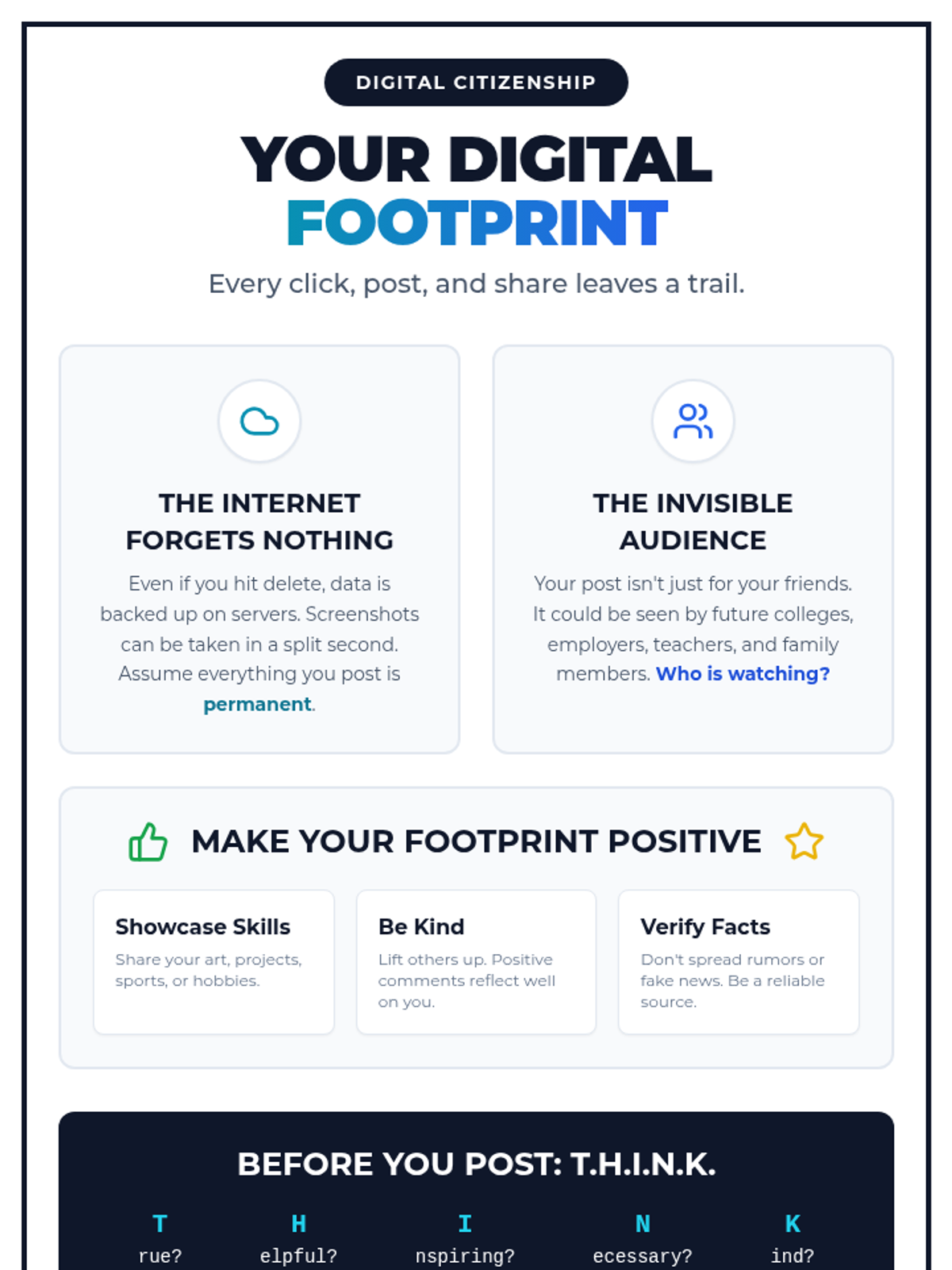
A lesson for elementary students exploring the permanence of the internet through the first-ever YouTube video, 'Me at the zoo', teaching the concept of a digital footprint.
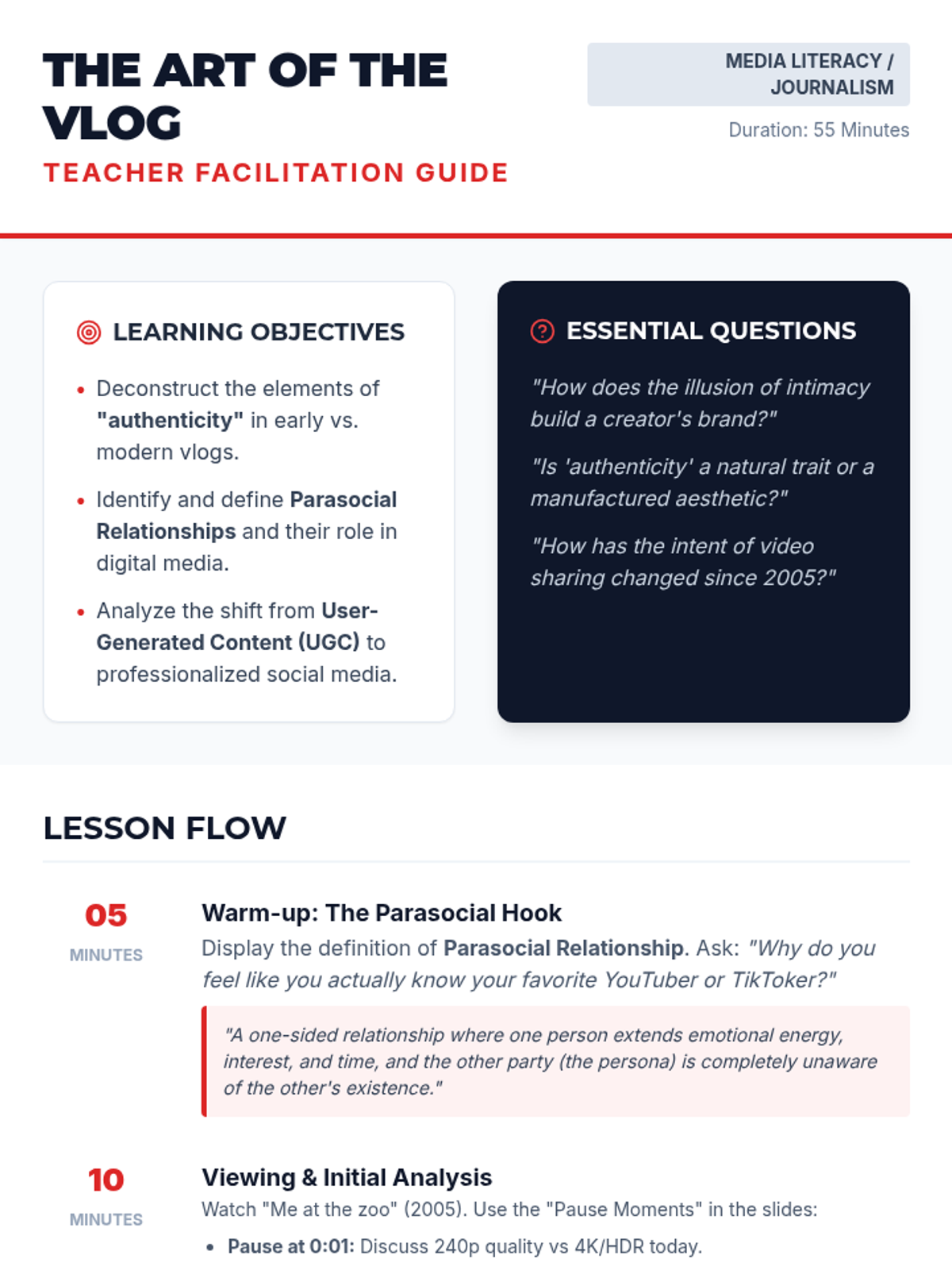
A media literacy lesson comparing early internet culture (specifically the first YouTube video) to the modern Creator Economy.
A high school history and technology lesson exploring the origins of the platform economy through the lens of the first YouTube video, 'Me at the zoo'. Students analyze the shift from professional broadcasting to user-generated content and debate the societal impacts of democratized media.
A lesson analyzing the transformation of YouTube from a casual video-sharing platform to a professionalized influencer economy, using the first-ever YouTube video as a primary source.
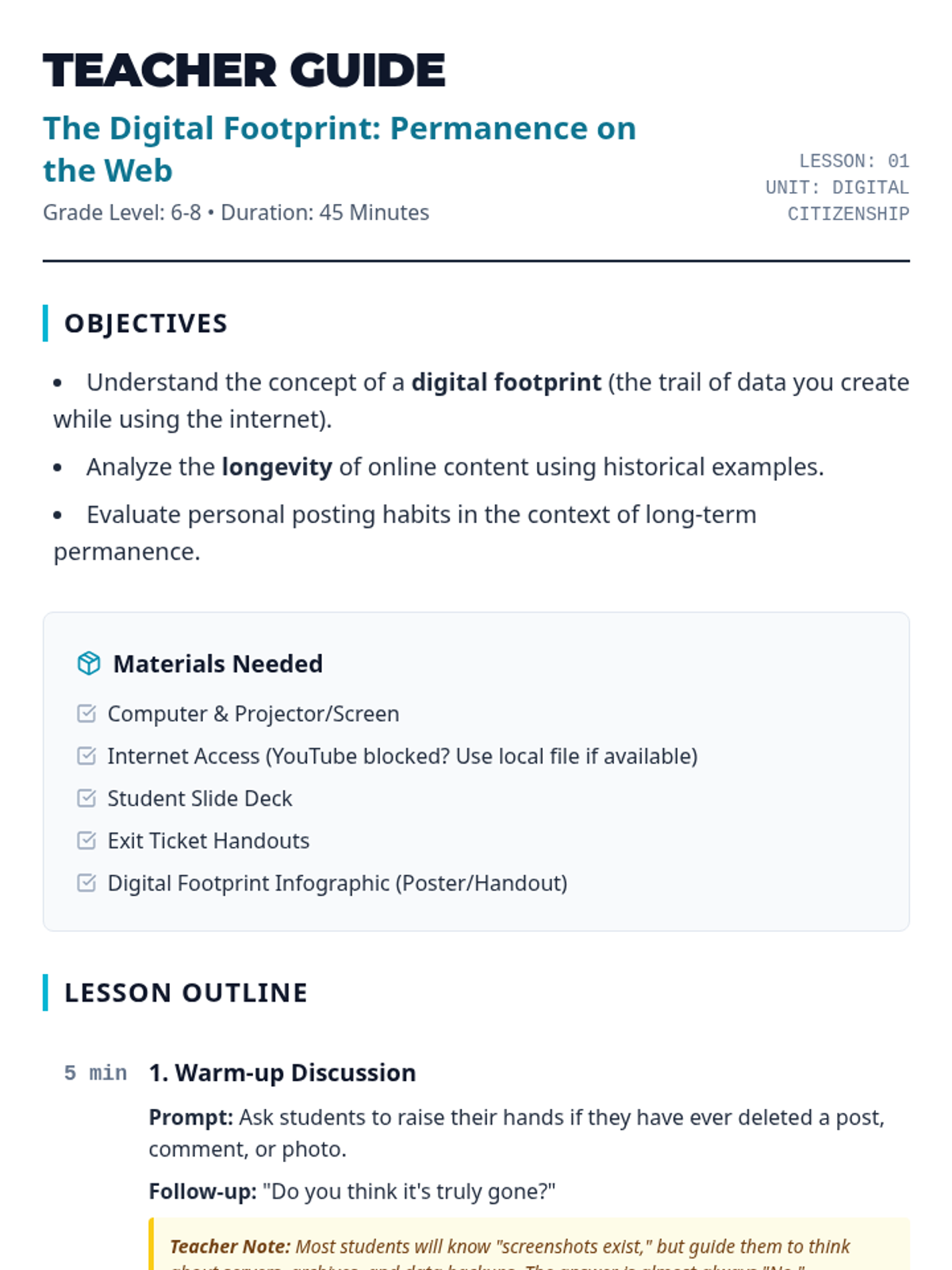
A middle school lesson on digital footprints, focusing on the permanence of online content using the first YouTube video 'Me at the zoo' as a case study.
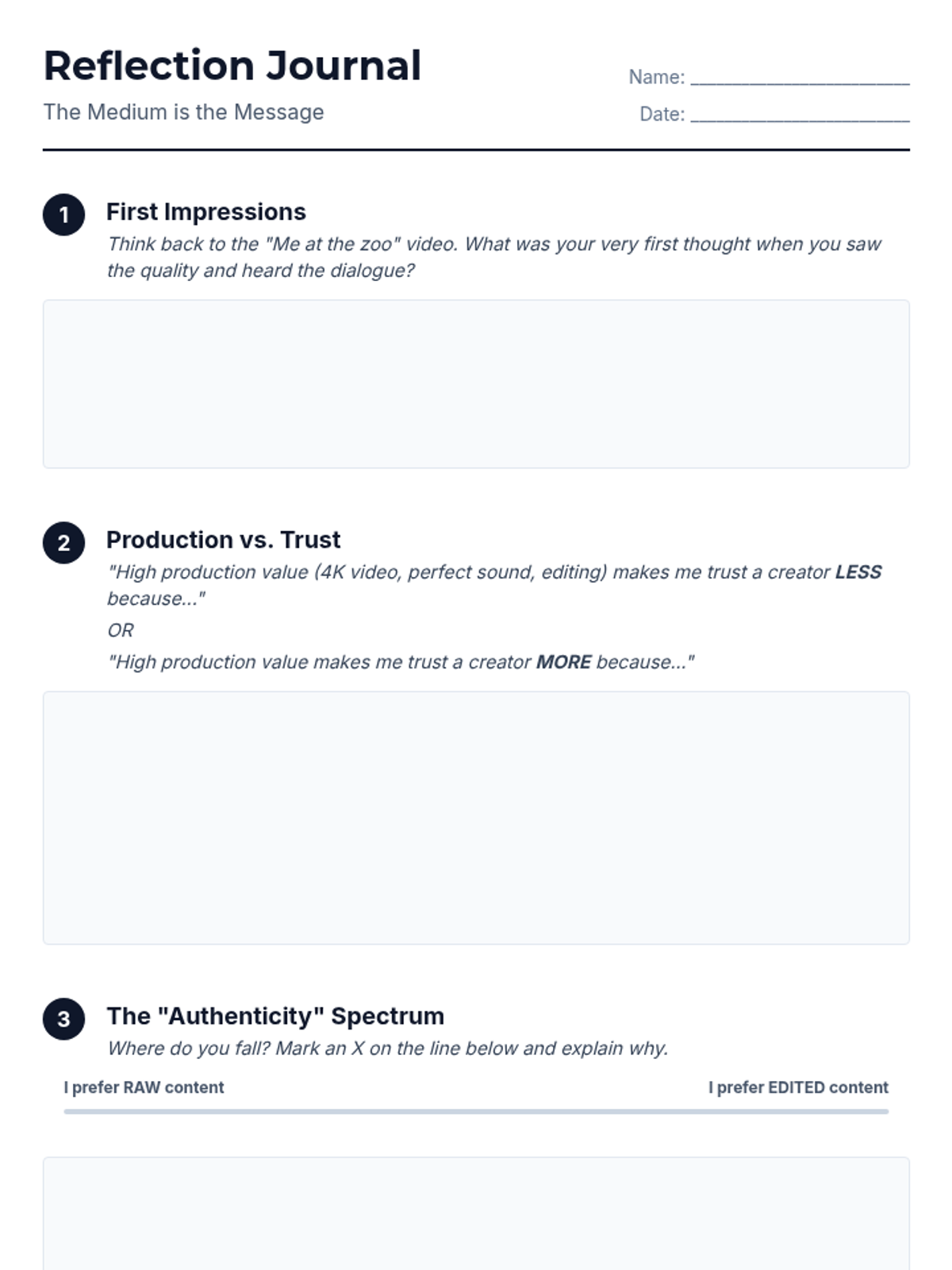
A lesson exploring the transformation of digital media production through the lens of YouTube's first video, 'Me at the zoo', contrasting early raw footage with modern high-production content.
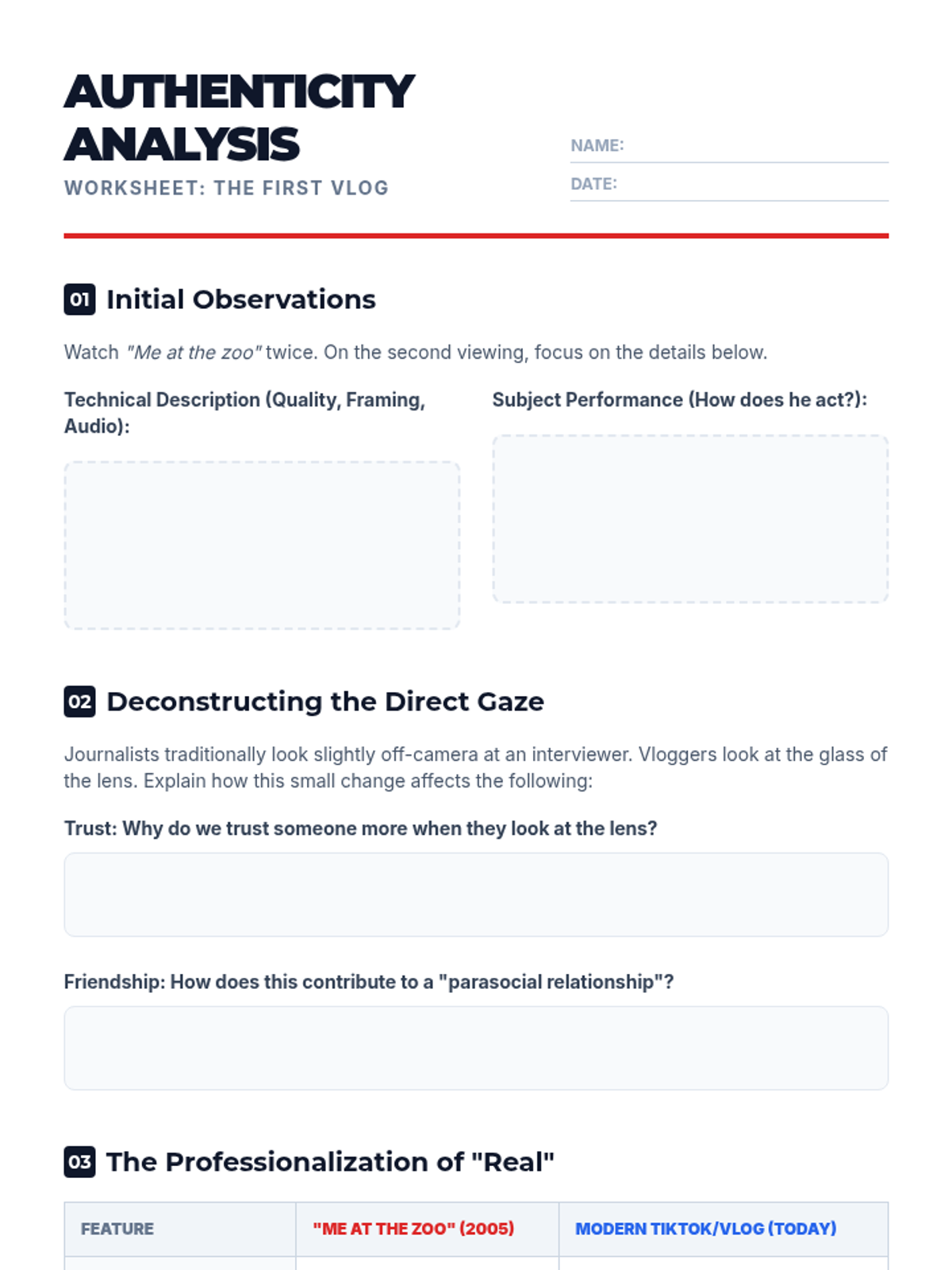
A media literacy lesson contrasting early user-generated content with modern standards, anchored by the first ever YouTube video.
A High School History lesson exploring the shift from Web 1.0 to Web 2.0 through the lens of primary source analysis, featuring 'Me at the zoo' as a historical artifact of digital democratization.
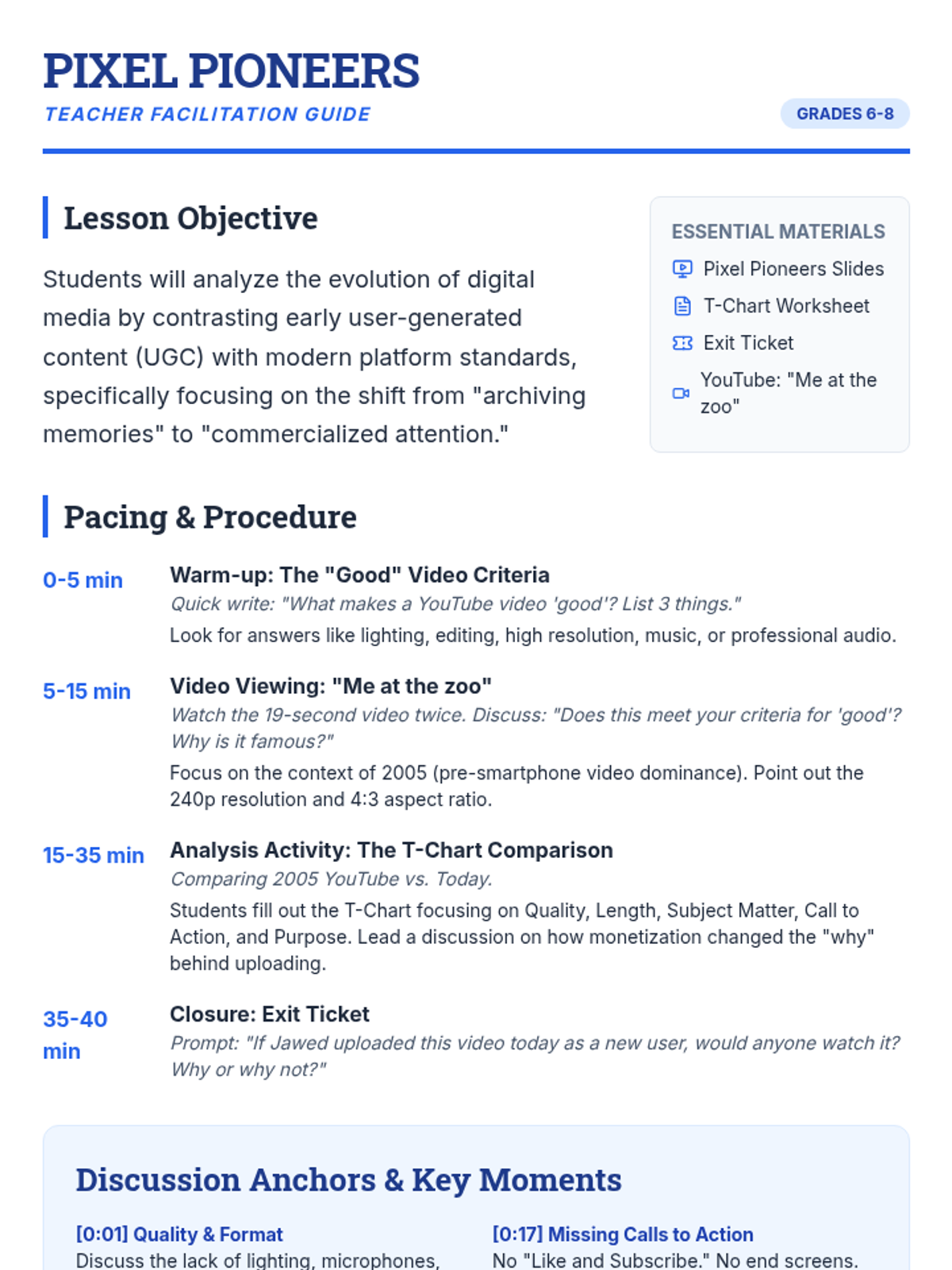
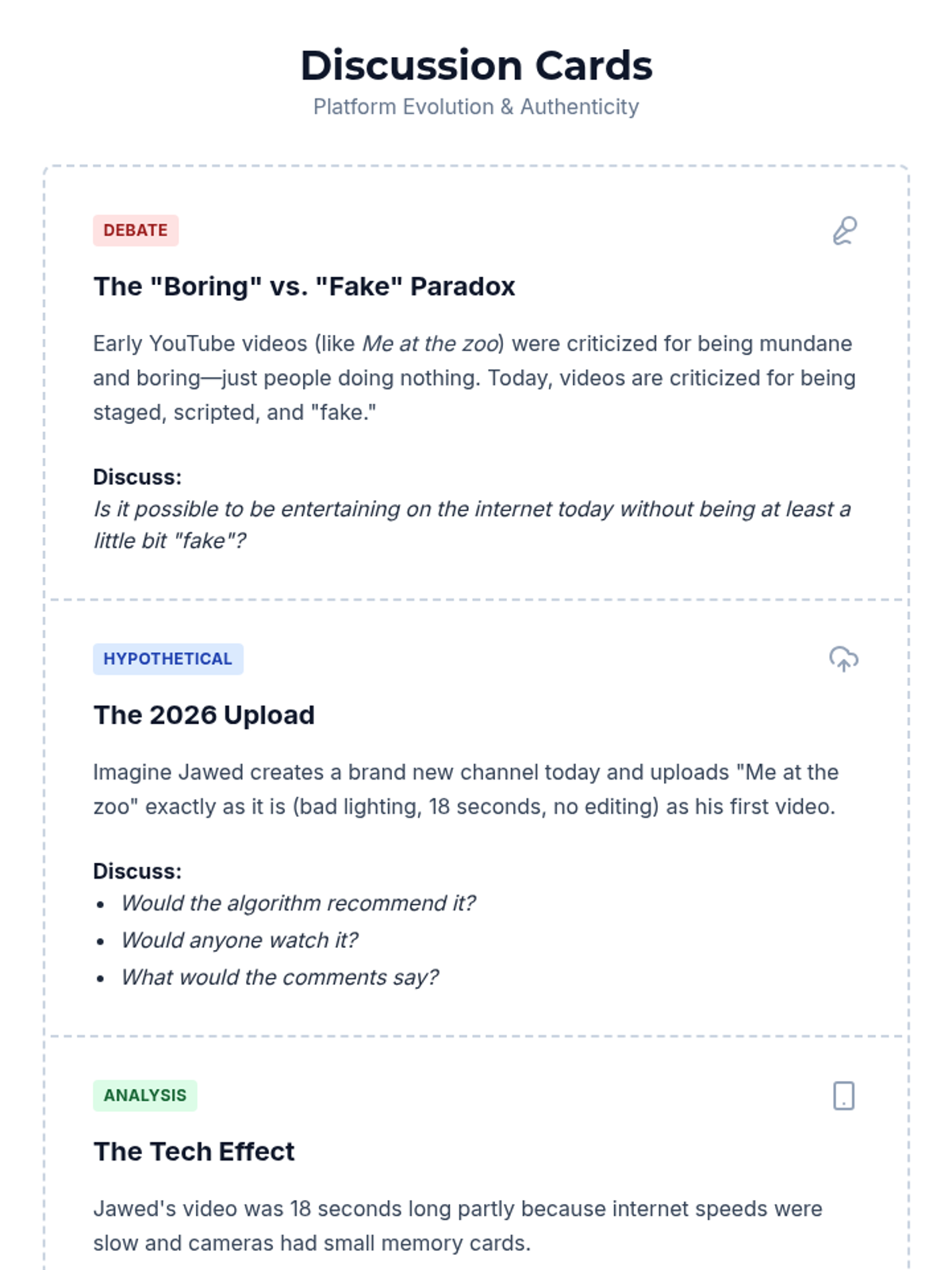
A media literacy lesson where students analyze the evolution of digital media by comparing the first YouTube video, 'Me at the zoo,' to modern content standards. Students explore concepts of user-generated content, monetization, and the commercialization of attention.
Students analyze the first YouTube video, 'Me at the zoo', as a primary source to understand the shift to User-Generated Content (UGC) and 2005 culture through a digital archaeology simulation.
A 45-minute lesson for business and technology students exploring the concept of Minimum Viable Product (MVP) through the analysis of YouTube's first video and a hands-on app design activity.
A lesson plan focusing on the evolution of user-generated content, starting with the first YouTube video 'Me at the zoo'. Students analyze early internet culture versus modern viral trends.