Students define income and expenses and practice the foundational skill of recording transactions in a ledger to maintain a running balance.
Students learn how to track income and expenses to maintain a balanced budget.
A fun, math-integrated lesson where students read about llamas and solve word problems based on factual llama data. Students will practice reading comprehension and multi-step word problems involving addition, subtraction, and multiplication.
A final assessment where students demonstrate their mastery of fractions through a series of bakery-themed challenges.
Students learn to identify and create equivalent fractions by 'decorating' cakes and comparing different slicings.
Students explore the basics of fractions (numerator, denominator) and represent them using 'bakery items' like pies and pizzas.
An introductory lesson exploring the continuous movement of water on Earth, focusing on the key stages of the water cycle.
Students learn how engineers help solve community problems by designing a sustainable solution for a local environmental or social issue.
Students 'Create' and 'Test' their bridge designs using simple materials, followed by 'Improving' their structures based on performance data.
Students delve into the 'Define' and 'Imagine' phases of the Engineering Design Process by researching bridge types and brainstorming innovative solutions to span a gap.
A hands-on introduction to the Engineering Design Process where students act as aerospace engineers to design, build, and test paper rockets.
The final stage of the EDP where students test their designs, gather data, and iterate for improvement.
Students learn about materials, constraints, and building techniques as they move into the 'Plan' and 'Create' stages.
Focuses on the 'Define' and 'Imagine' stages of the EDP through a real-world problem-solving scenario.
Students are introduced to the five stages of the Engineering Design Process and apply them to a simple 'Paper Tower' challenge.
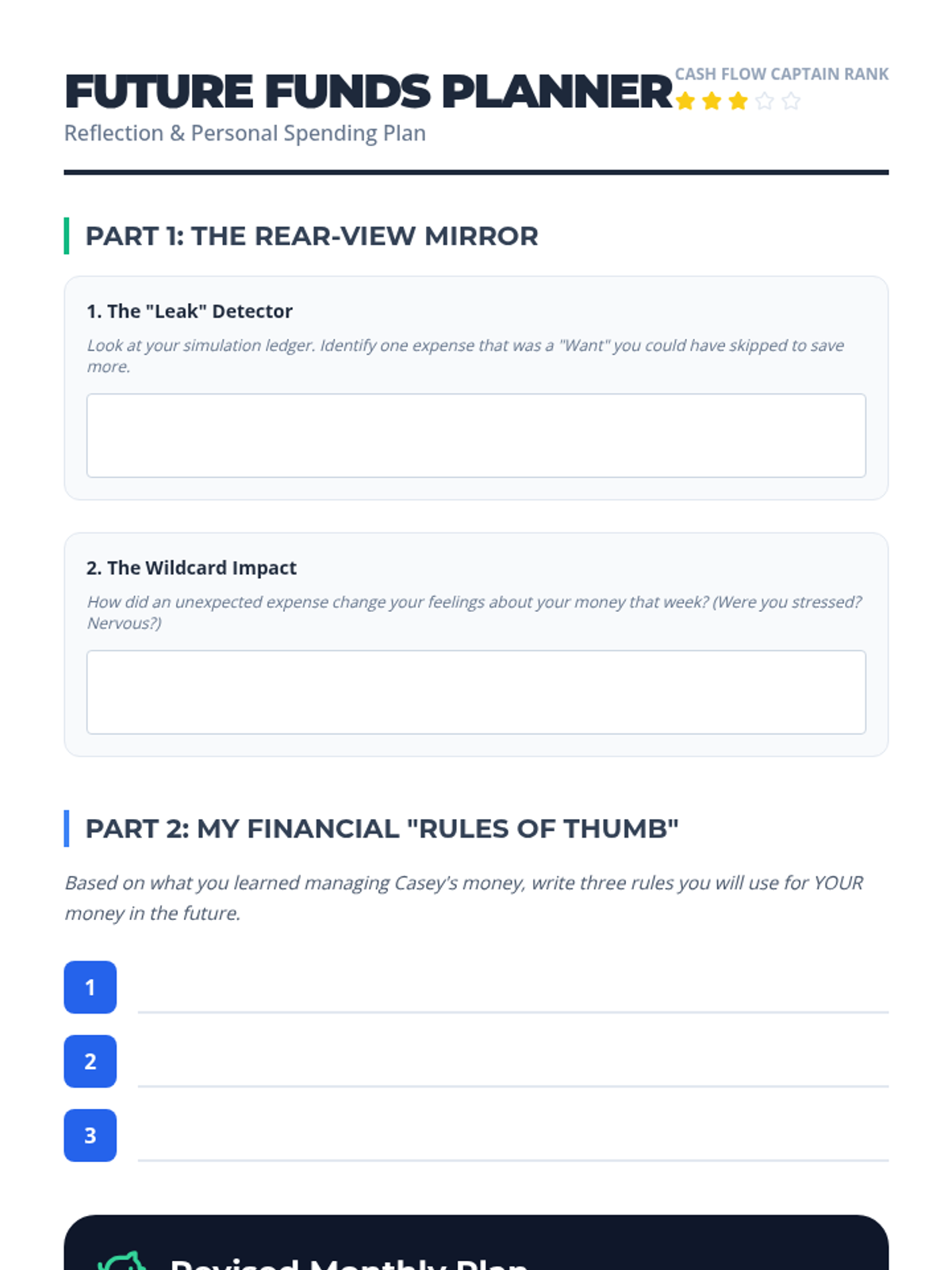
Students reflect on their financial choices, identify spending leaks, and create a revised budget for future stability.
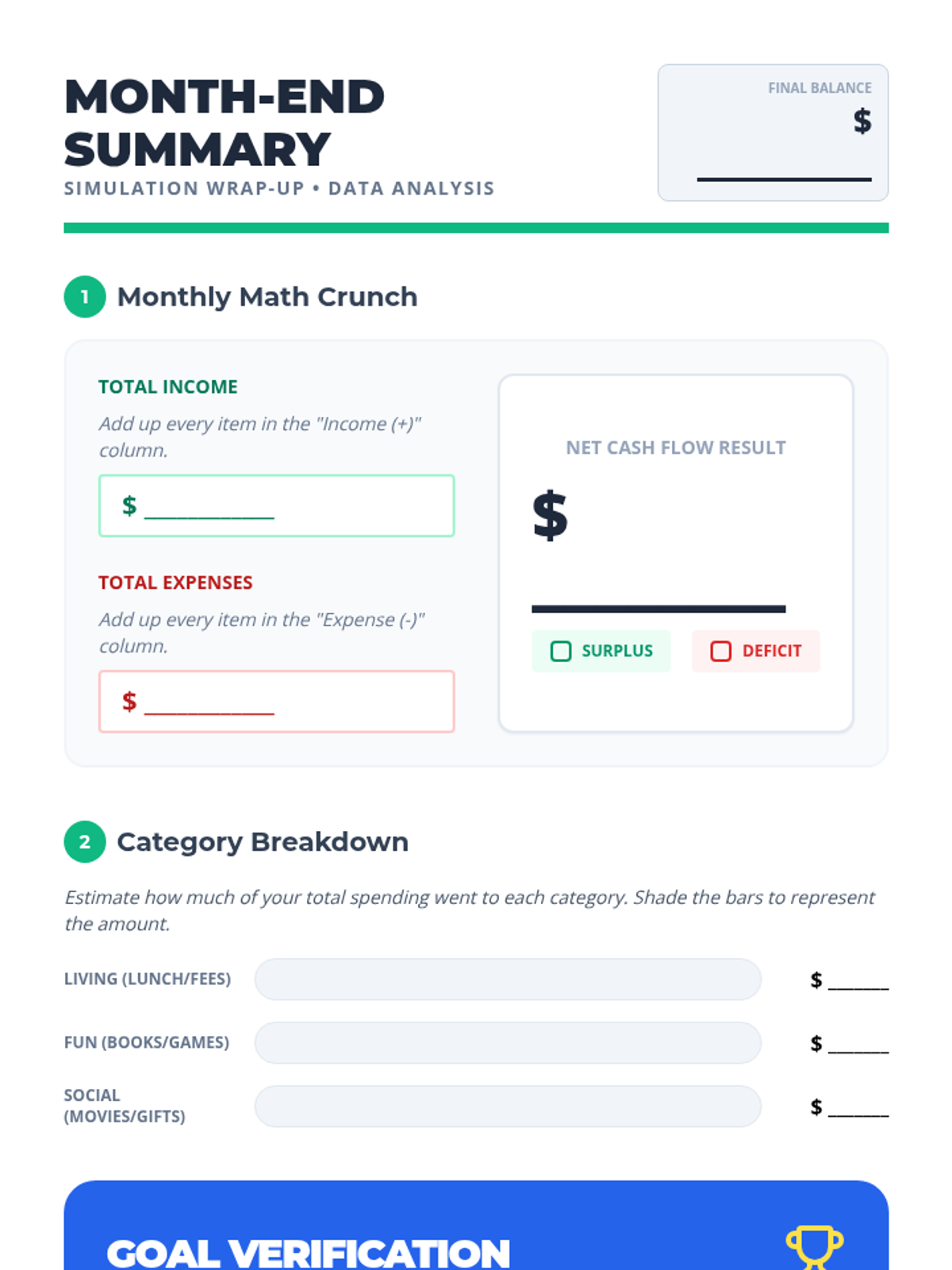
Students calculate their final monthly totals, identifying surpluses or deficits and visualizing their spending patterns.
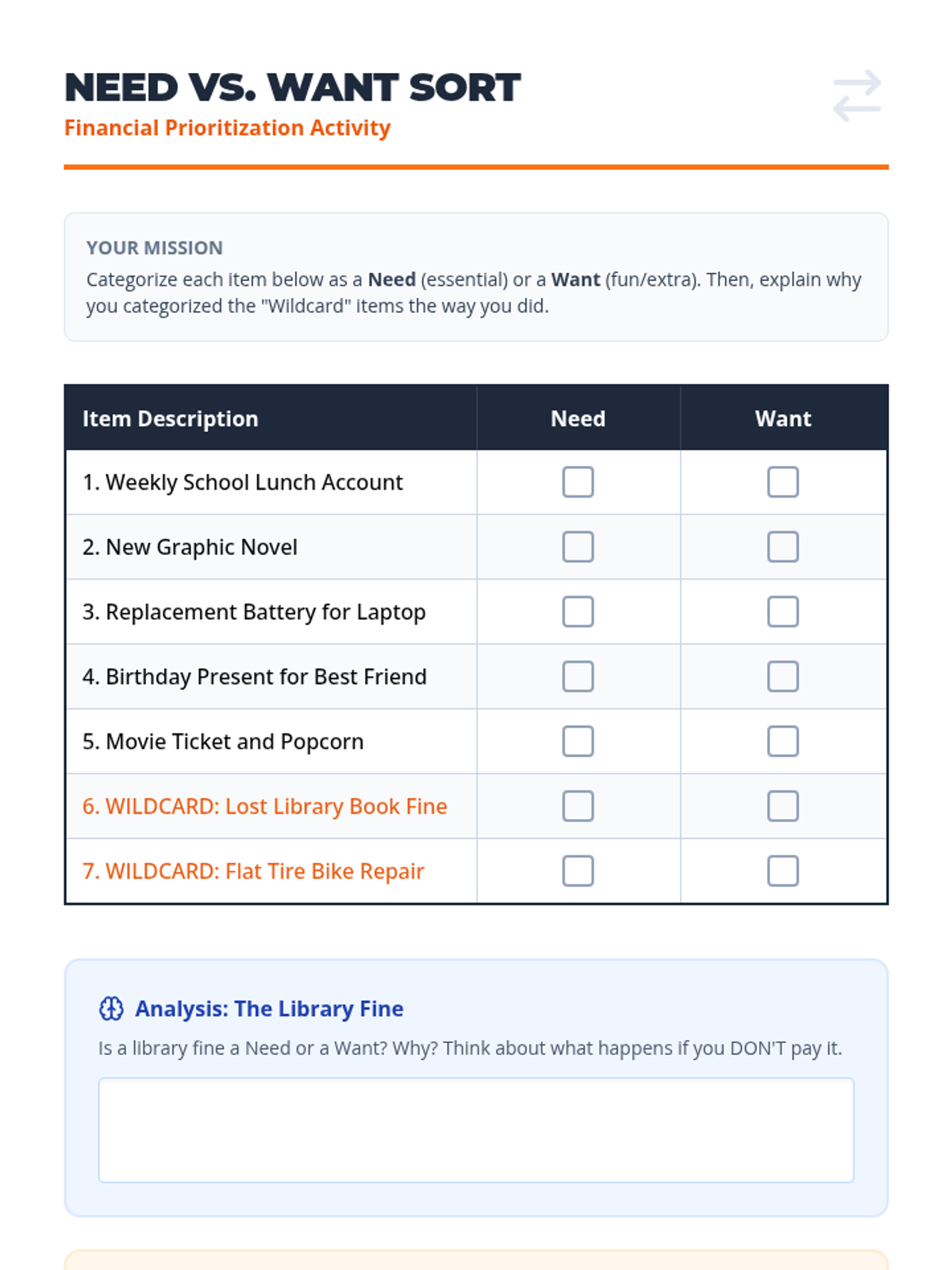
Students navigate weeks three and four of the simulation, encountering unexpected costs and learning to prioritize needs over wants.
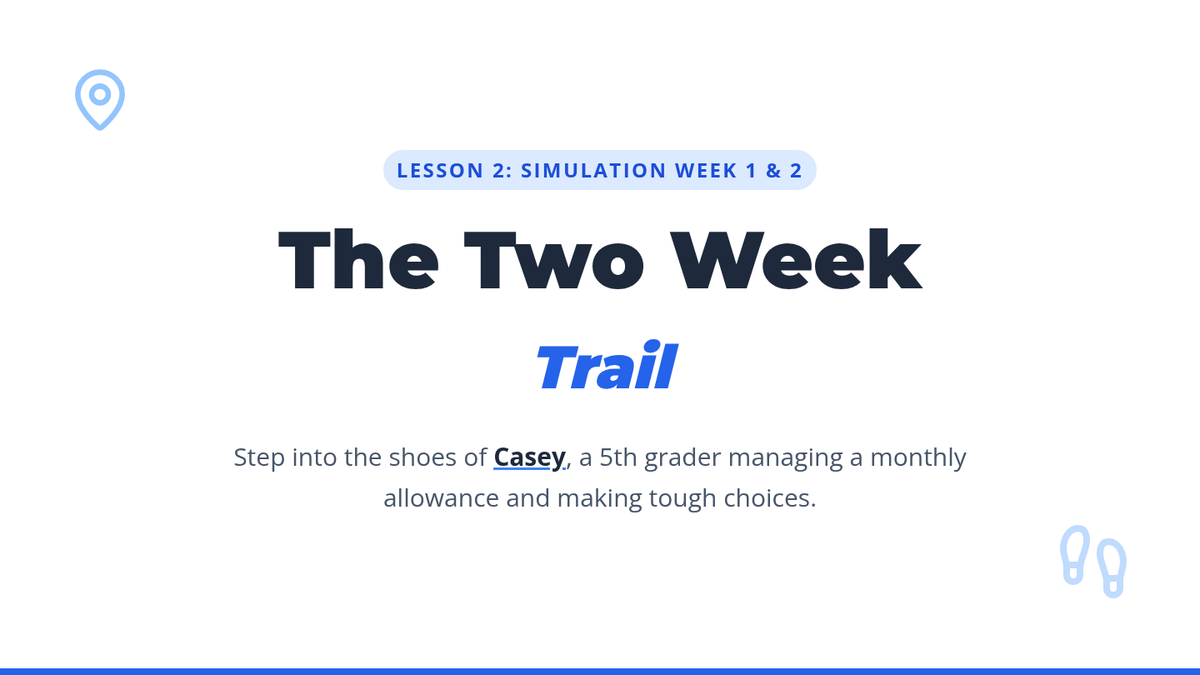
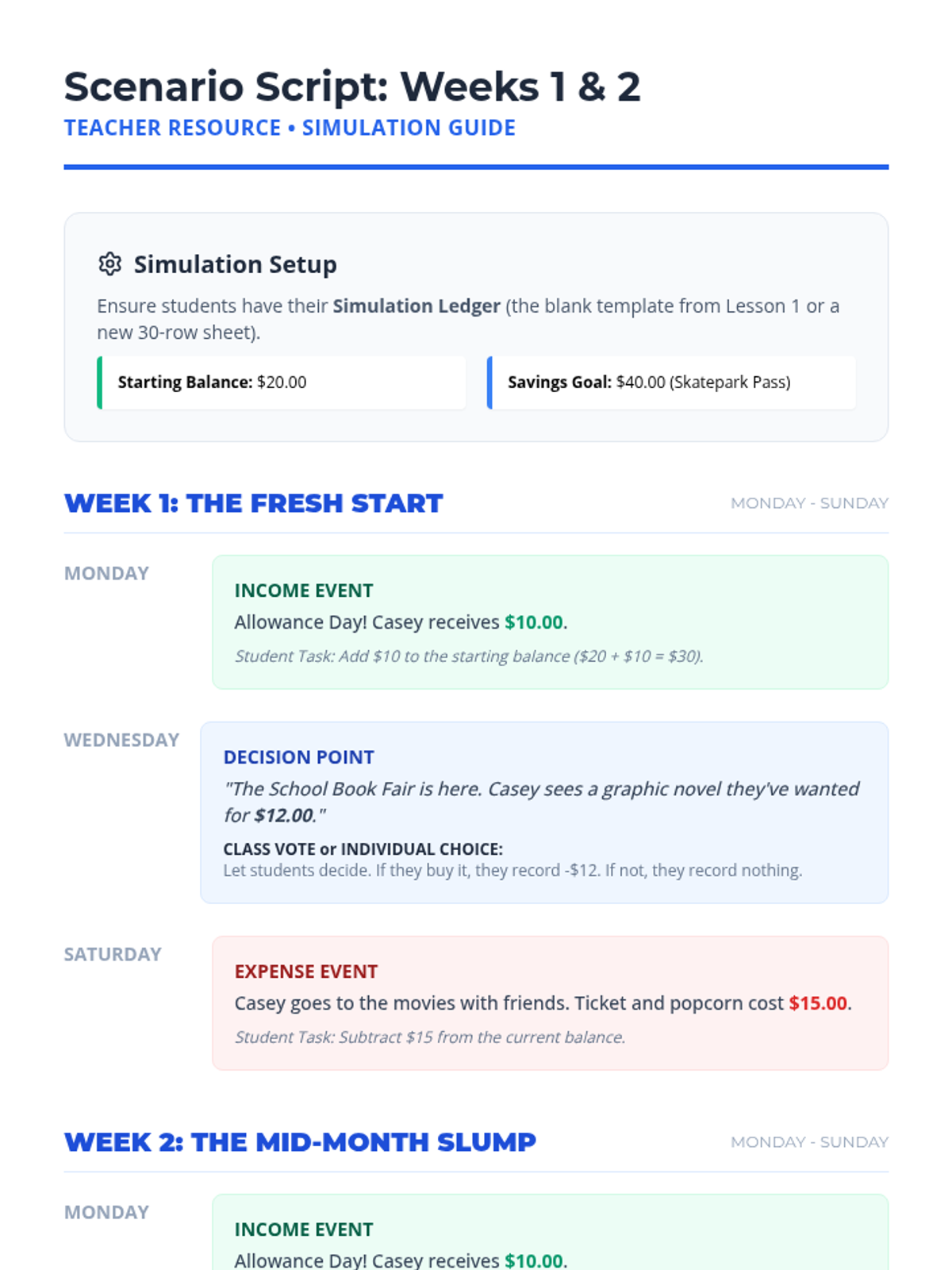
A simulation of the first two weeks of a month where students make spending decisions for a fictional character and record them in real-time.