Students learn how to track income and expenses to maintain a balanced budget.
No materials in this lesson yet.
An engaging 4th-grade lesson combining biology and economics through the lens of llama farming. Students explore llama anatomy and care while applying mathematical skills to manage a virtual llama farm budget.
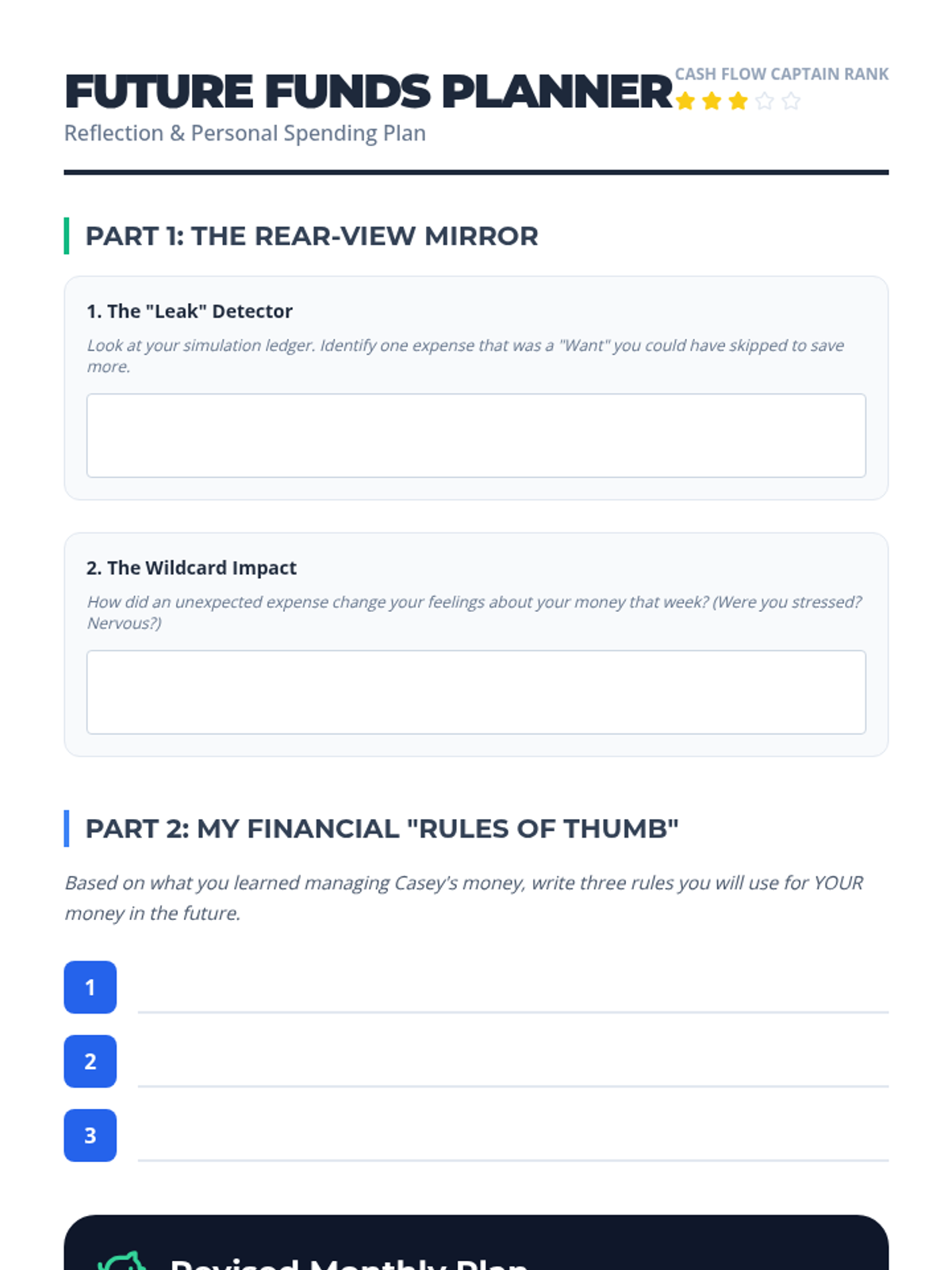
Students reflect on their financial choices, identify spending leaks, and create a revised budget for future stability.
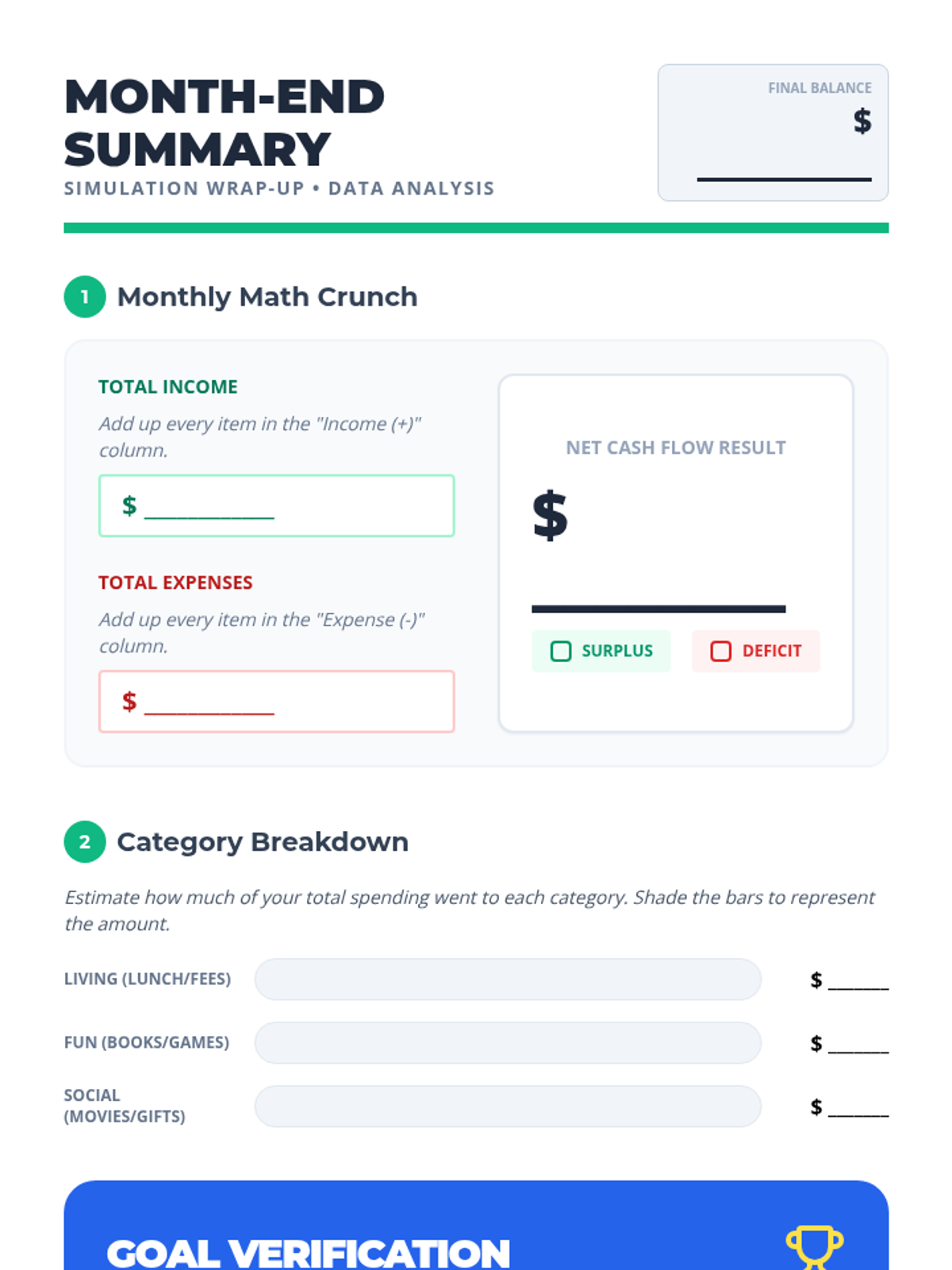
Students calculate their final monthly totals, identifying surpluses or deficits and visualizing their spending patterns.
Students navigate weeks three and four of the simulation, encountering unexpected costs and learning to prioritize needs over wants.
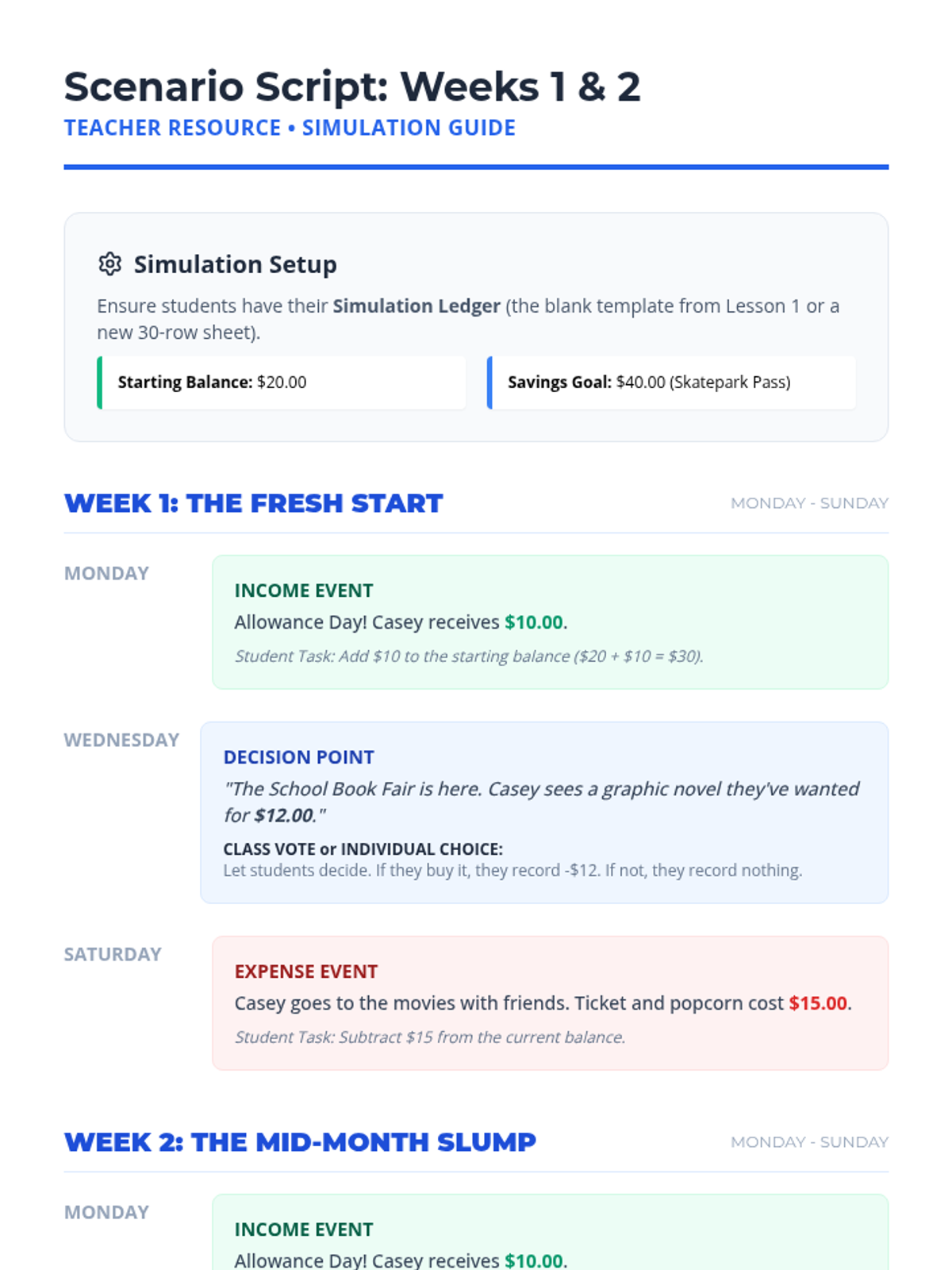
A simulation of the first two weeks of a month where students make spending decisions for a fictional character and record them in real-time.
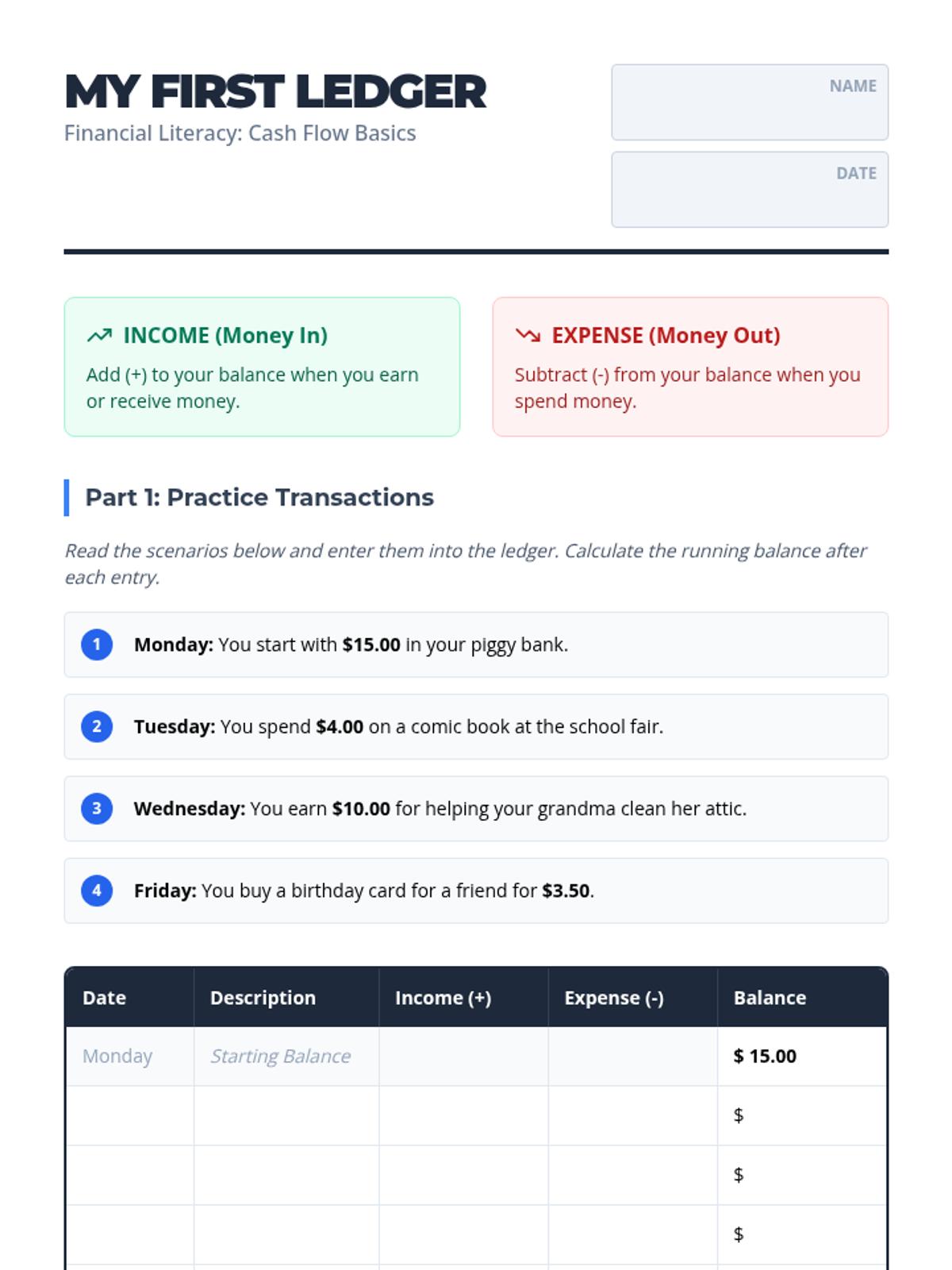
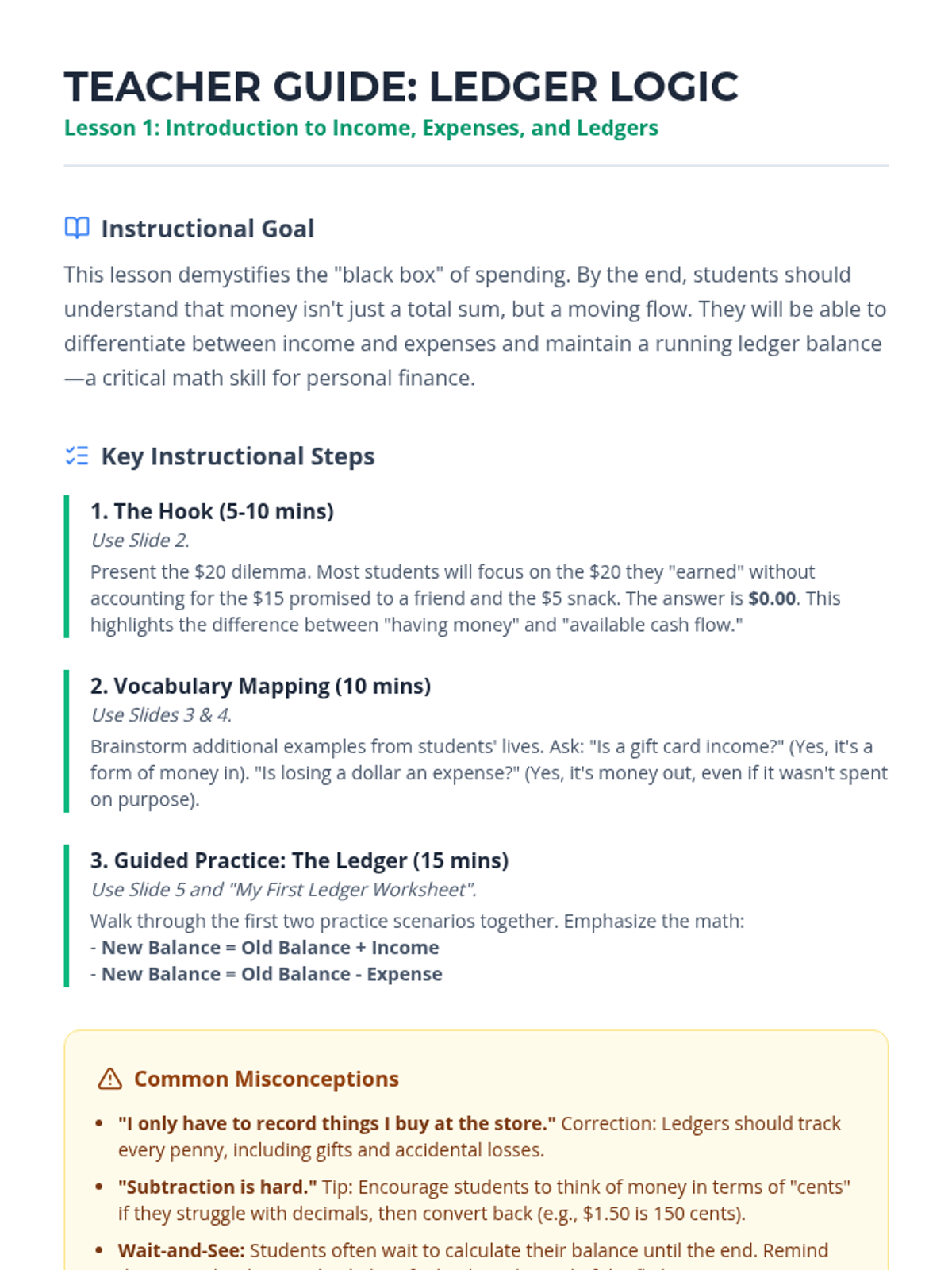
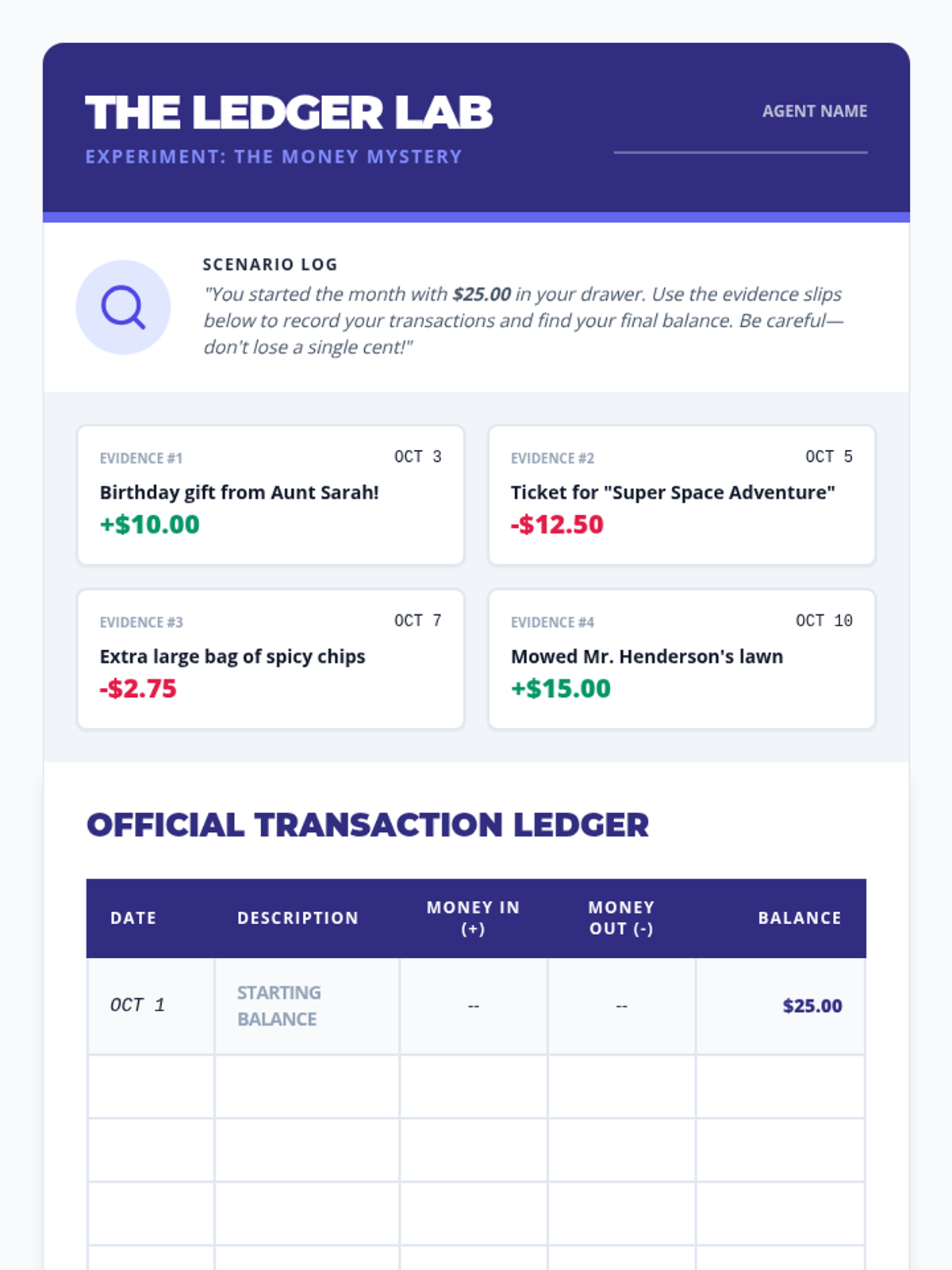
Students define income and expenses and practice the foundational skill of recording transactions in a ledger to maintain a running balance.
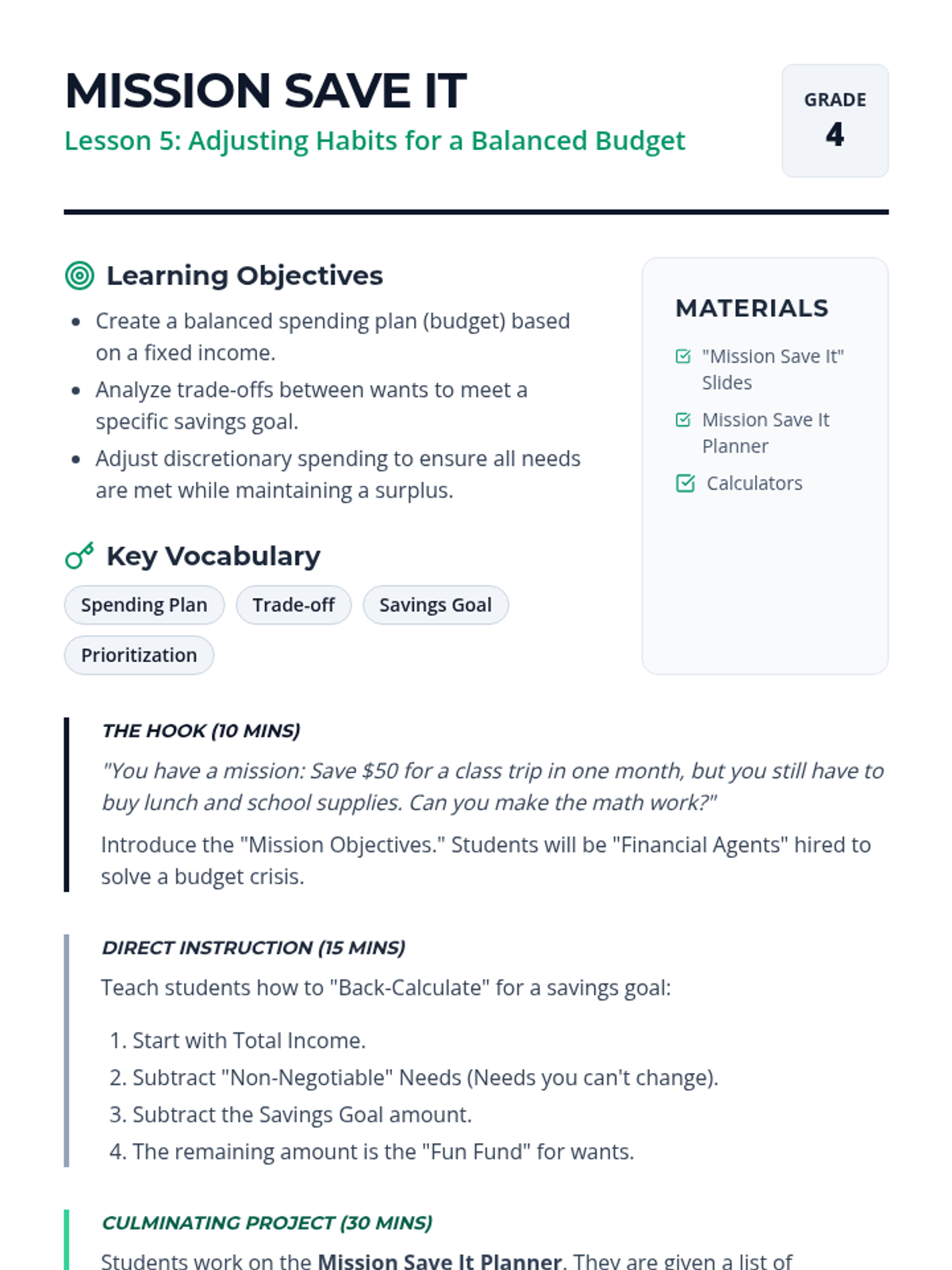
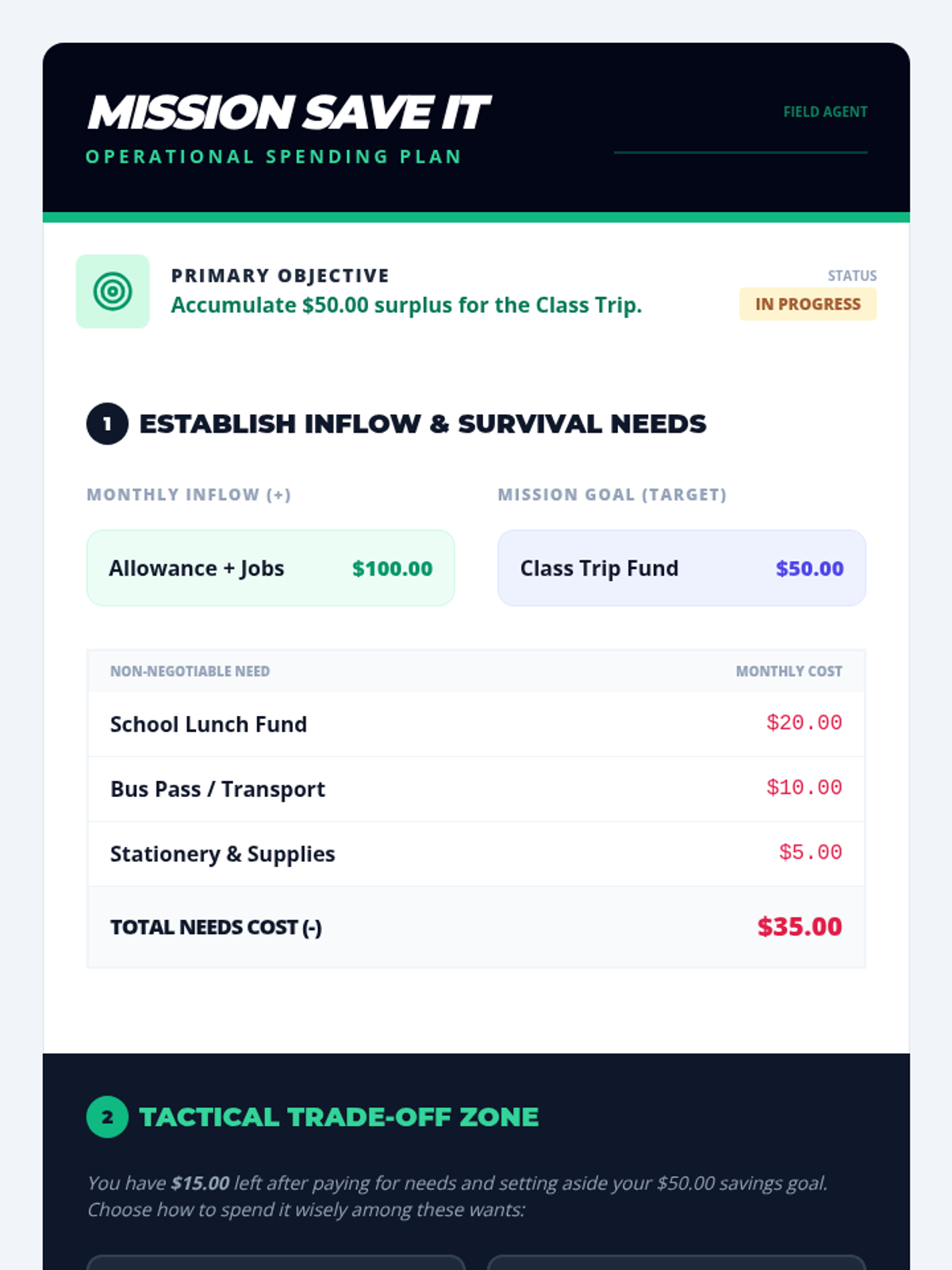
Students create a balanced spending plan to reach a specific savings goal while managing essential costs.
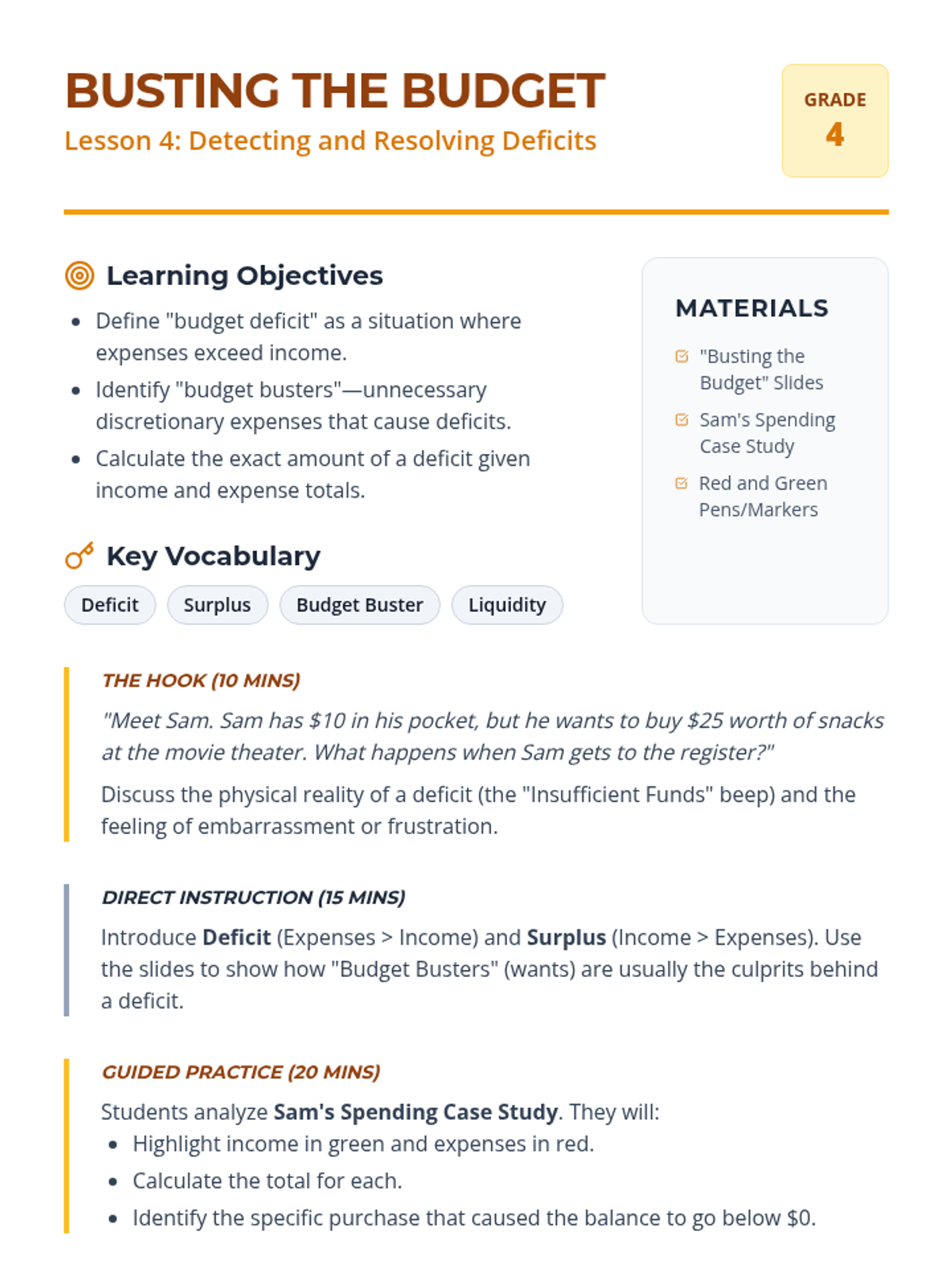
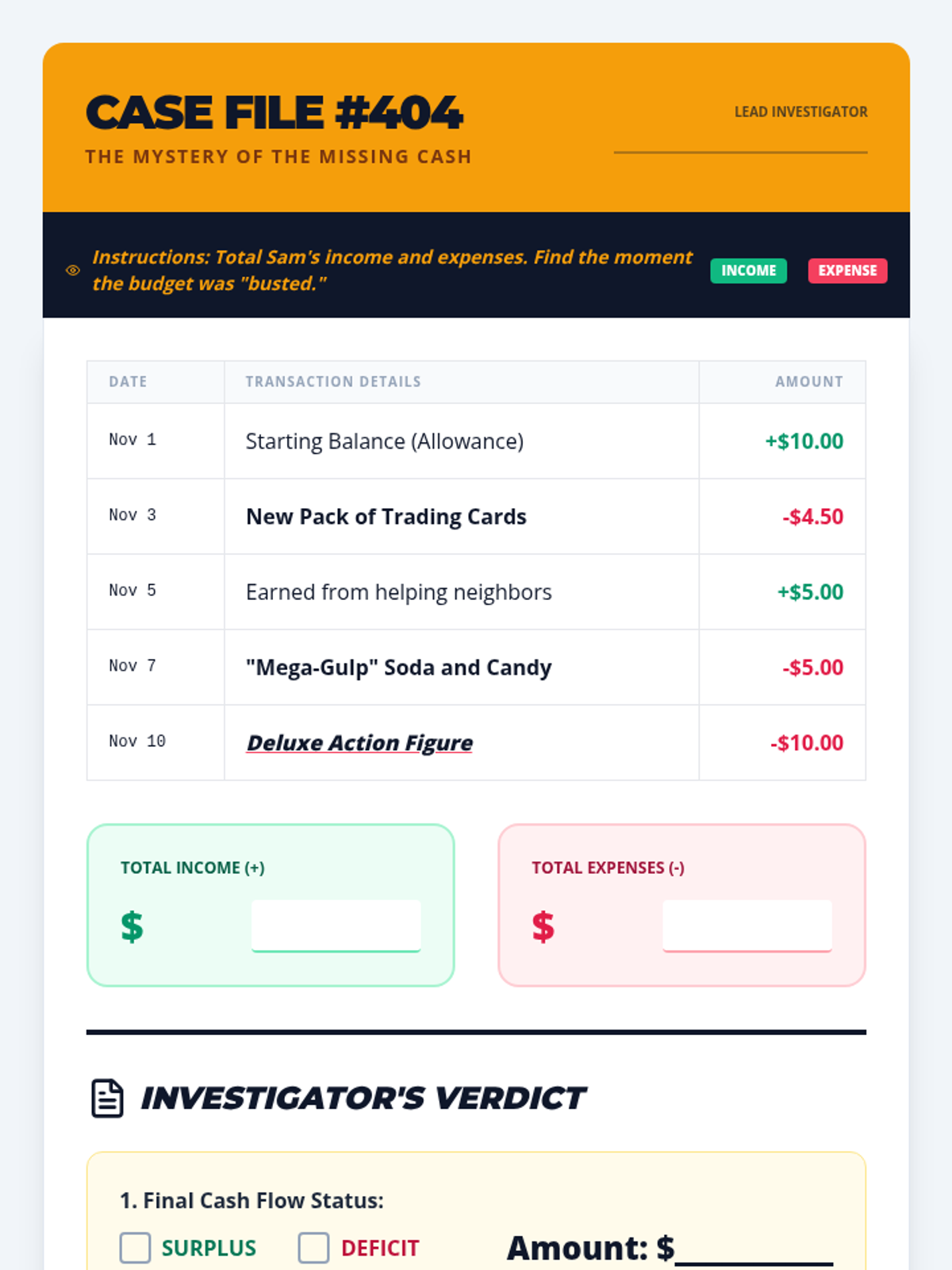
Students analyze financial scenarios to identify budget deficits and 'budget busters' that cause overspending.
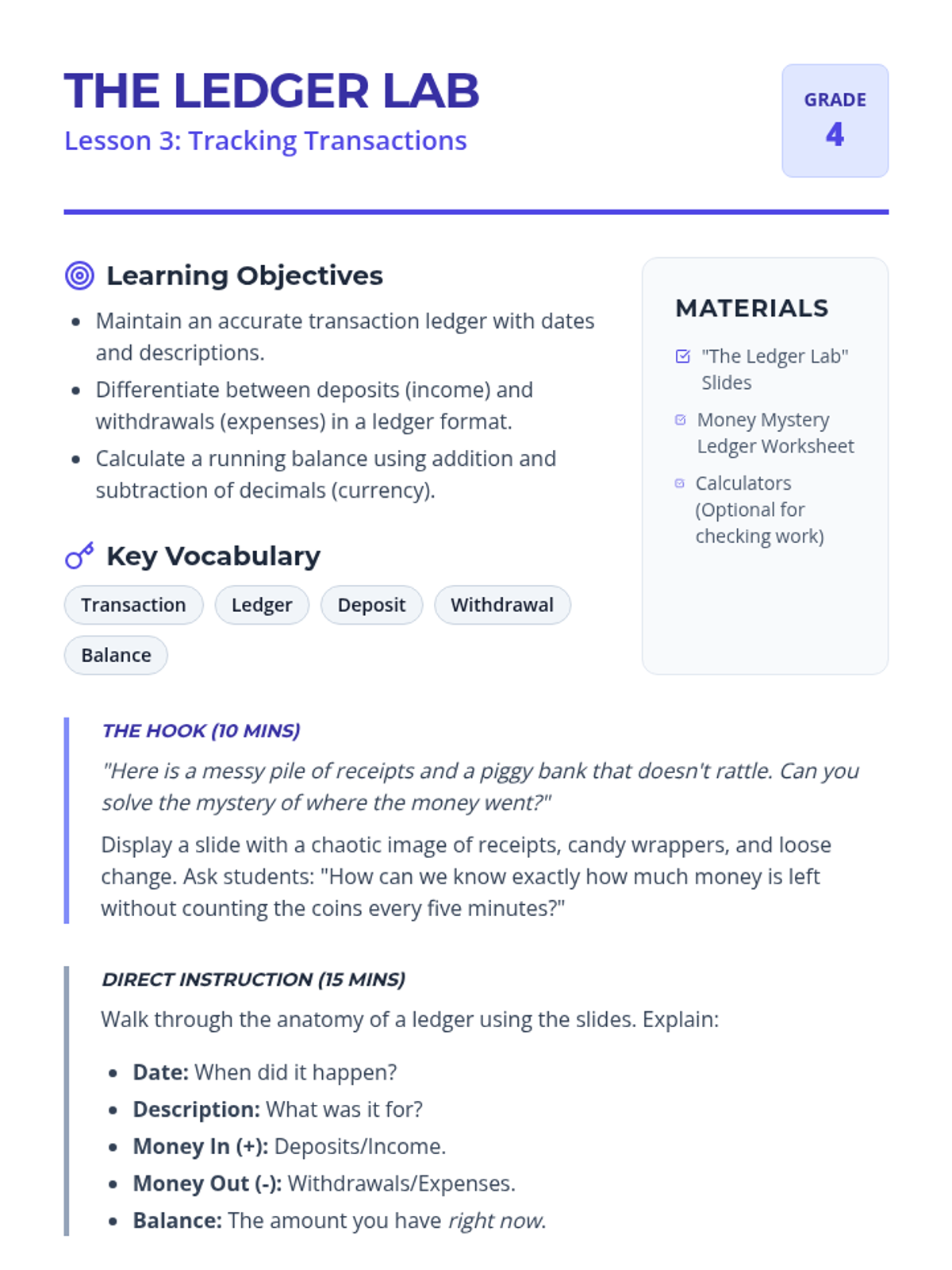
Students learn to maintain a transaction ledger by recording income, expenses, and calculating a running balance.
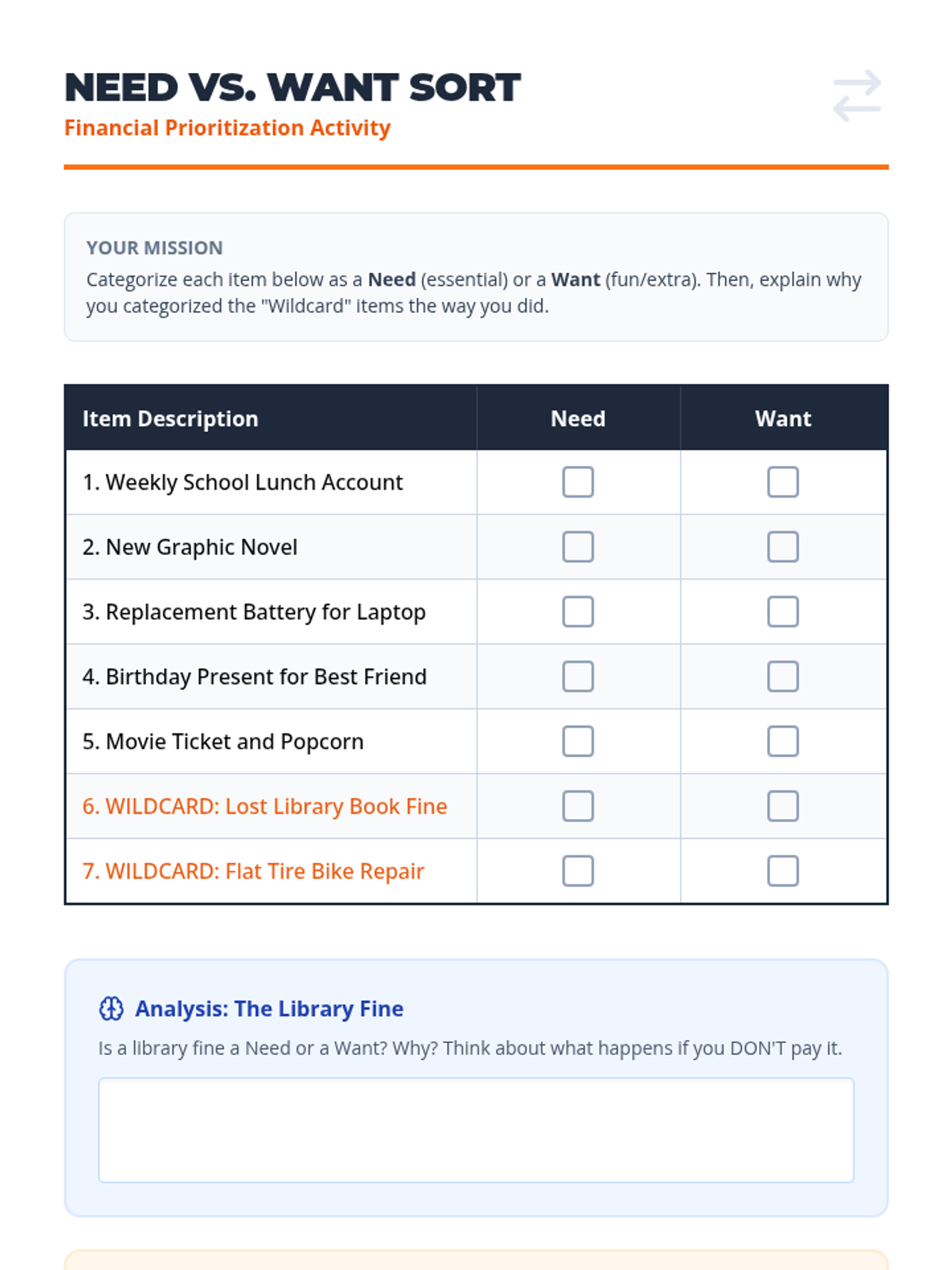
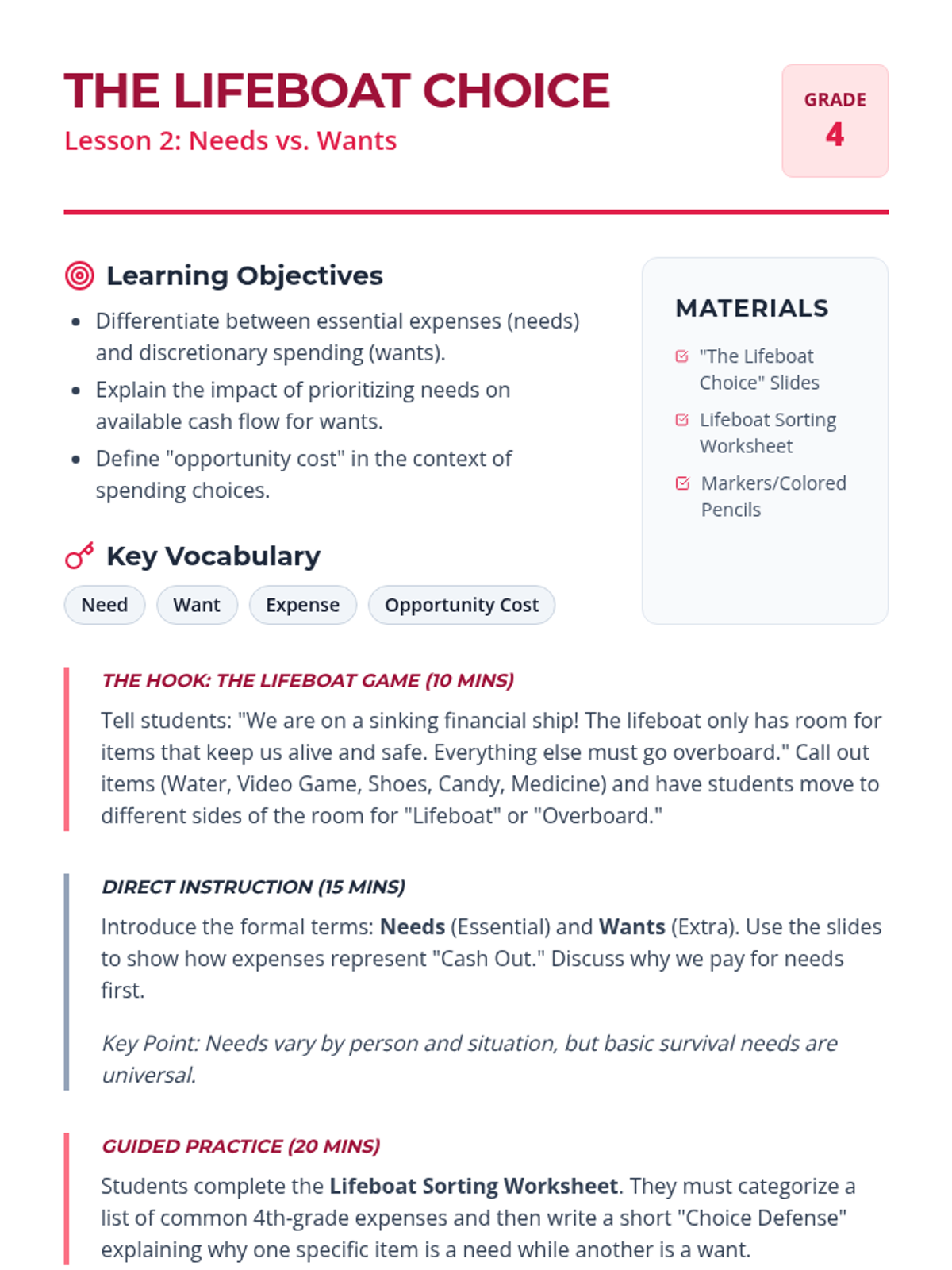
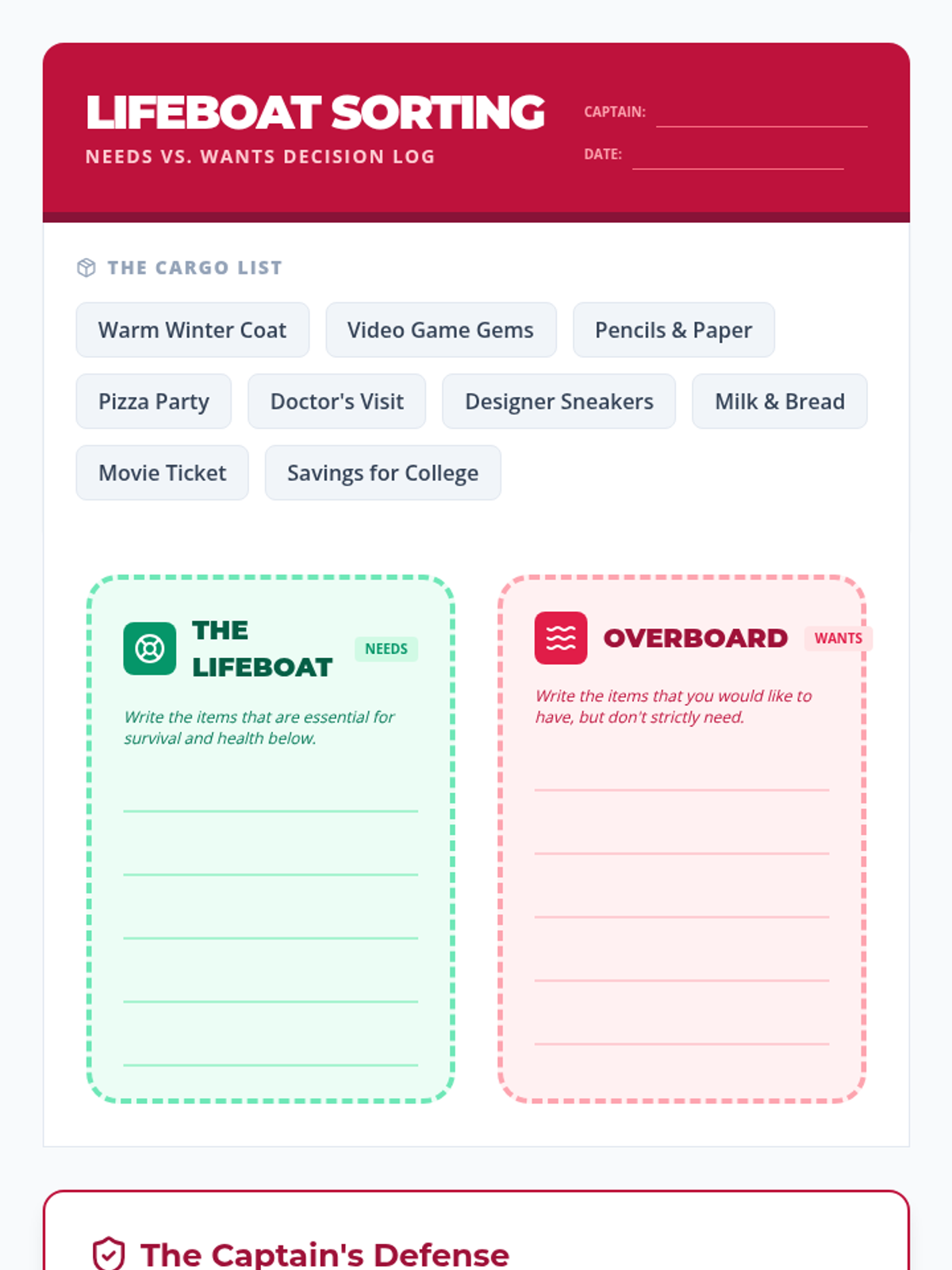
Students differentiate between essential expenses and discretionary spending to prioritize financial health.