A slide deck facilitating a lesson on the evolution of digital media, featuring an embedded video of the first-ever YouTube upload and guided discussion prompts contrasting 2005 vs. modern content creation.
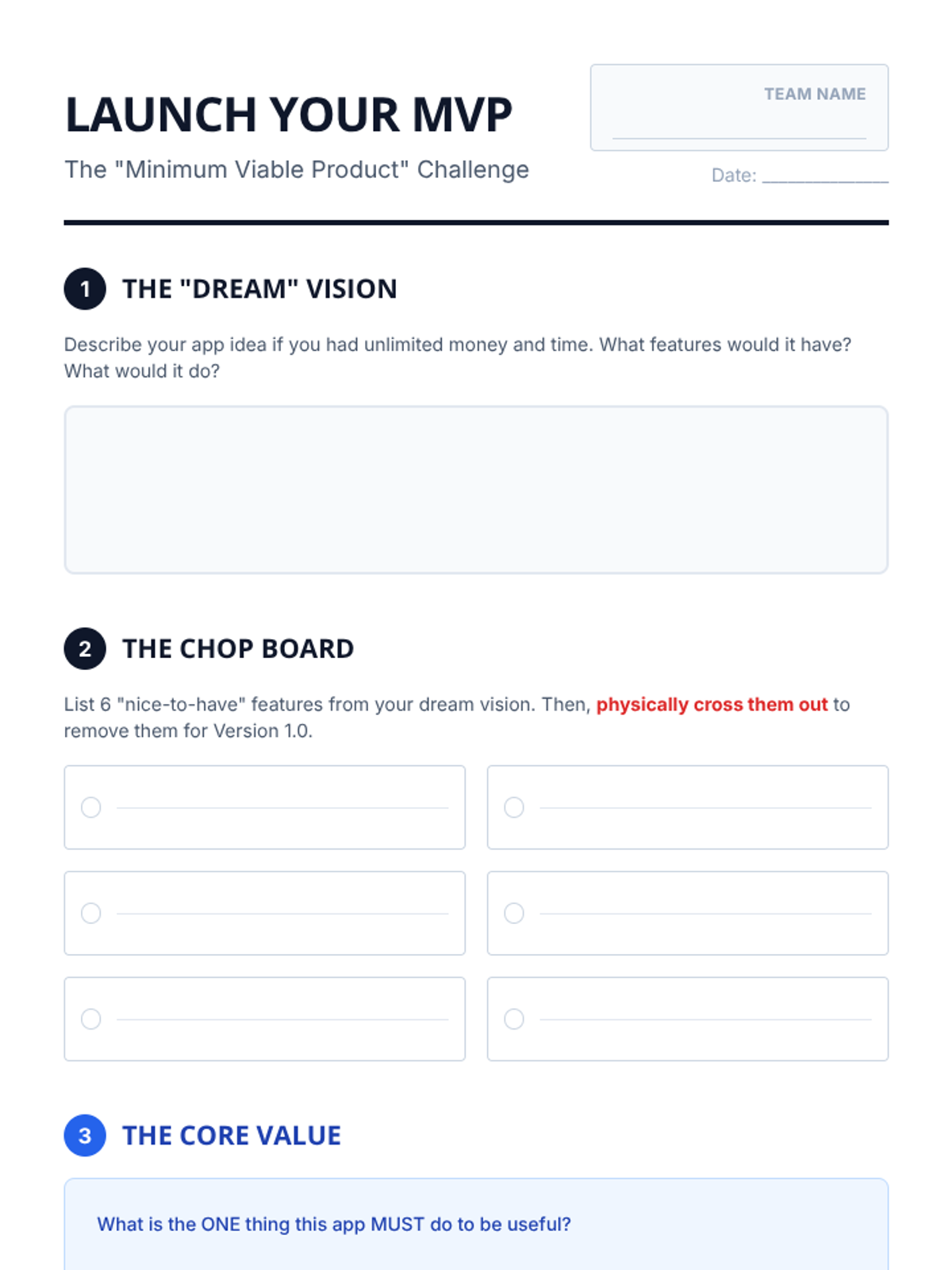
A student worksheet for the 'Launch Your MVP' activity, guiding pairs through brainstorming, feature cutting, and sketching a minimum viable product interface.
1/16
A professional undergraduate-level slide deck for a media studies lesson on digital authenticity, featuring the 'Me at the zoo' case study, the aesthetic of banality, and the shift toward the creator economy.
A slide deck exploring the history of YouTube, contrasting the first-ever video with modern production standards. Includes the embedded 'Me at the zoo' video and technical analysis slides.
A slide deck guiding students through the analysis of the first YouTube video, including the warm-up poll, video viewing, discussion points, and activity instructions.
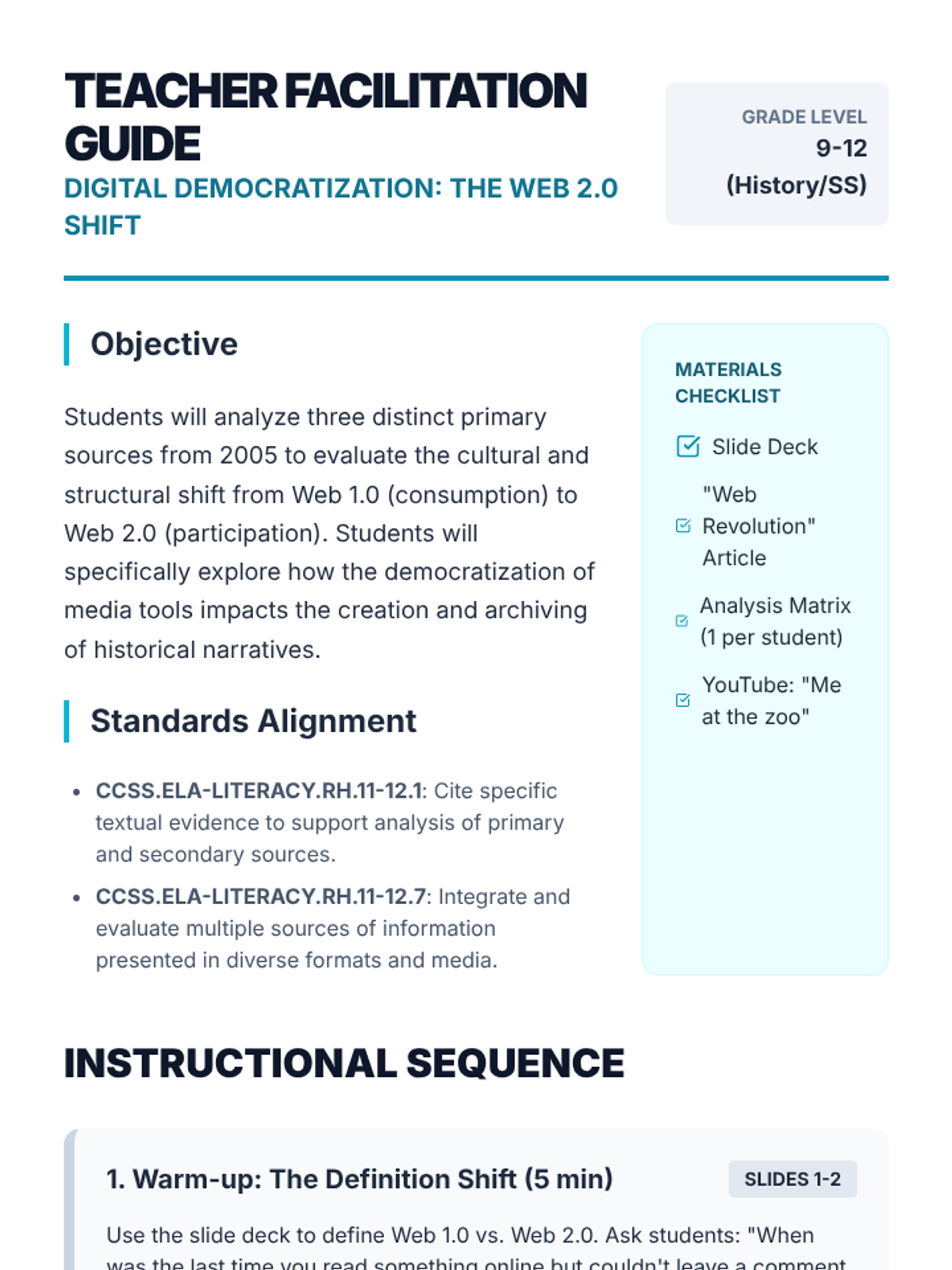
A teacher facilitation guide including lesson objectives, standards, materials checklist, and step-by-step instructional sequence for the Digital Democratization lesson.
A slide deck comparing early 2005 YouTube content with modern standards. Includes warm-up questions, an embedded video of 'Me at the zoo', guided analysis points, a T-Chart comparison, and a reflection prompt.
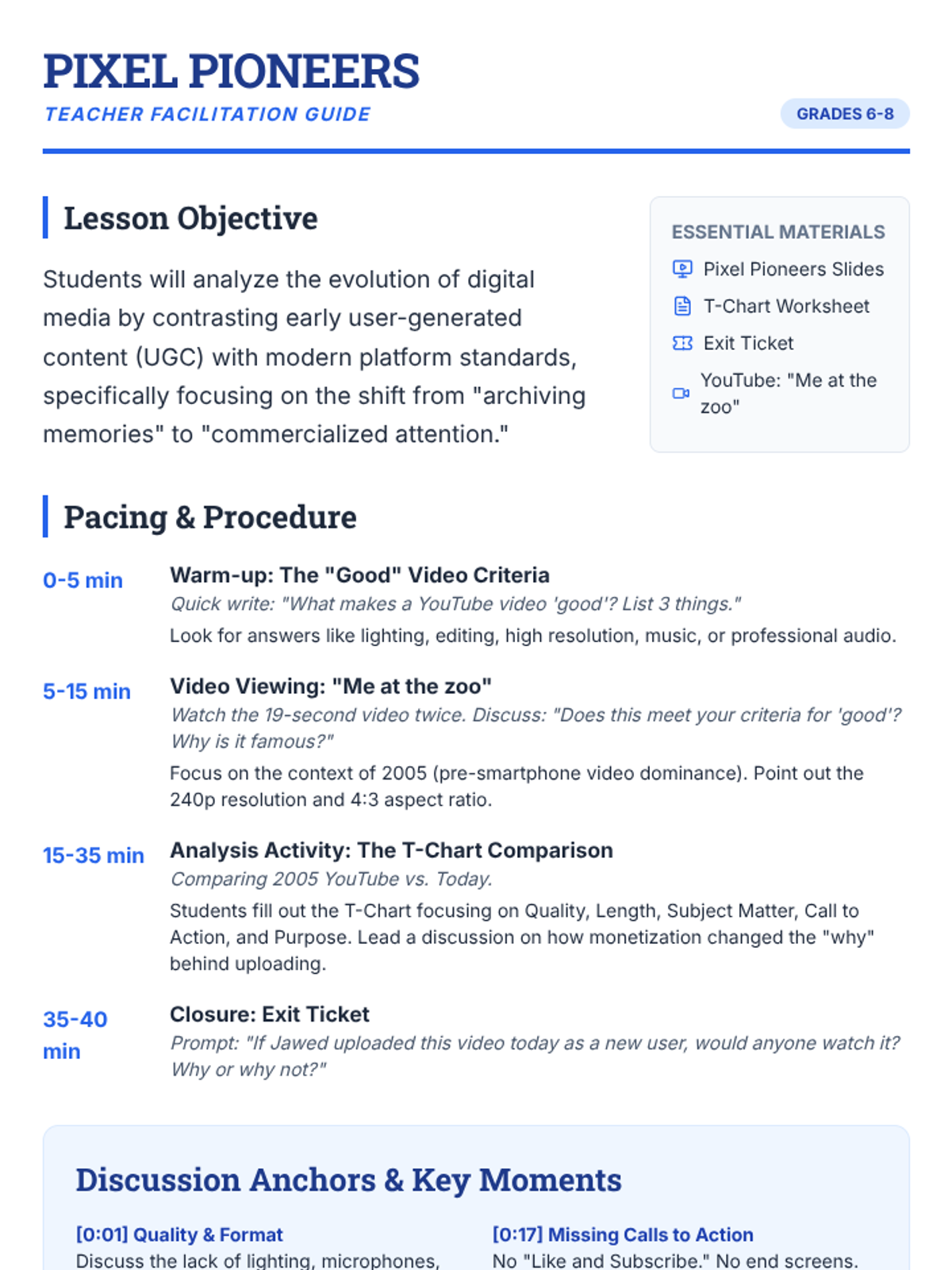
A comprehensive teacher facilitation guide for the 'Pixel Pioneers' lesson, featuring pacing, discussion anchors, and key vocabulary based on the evolution of YouTube.
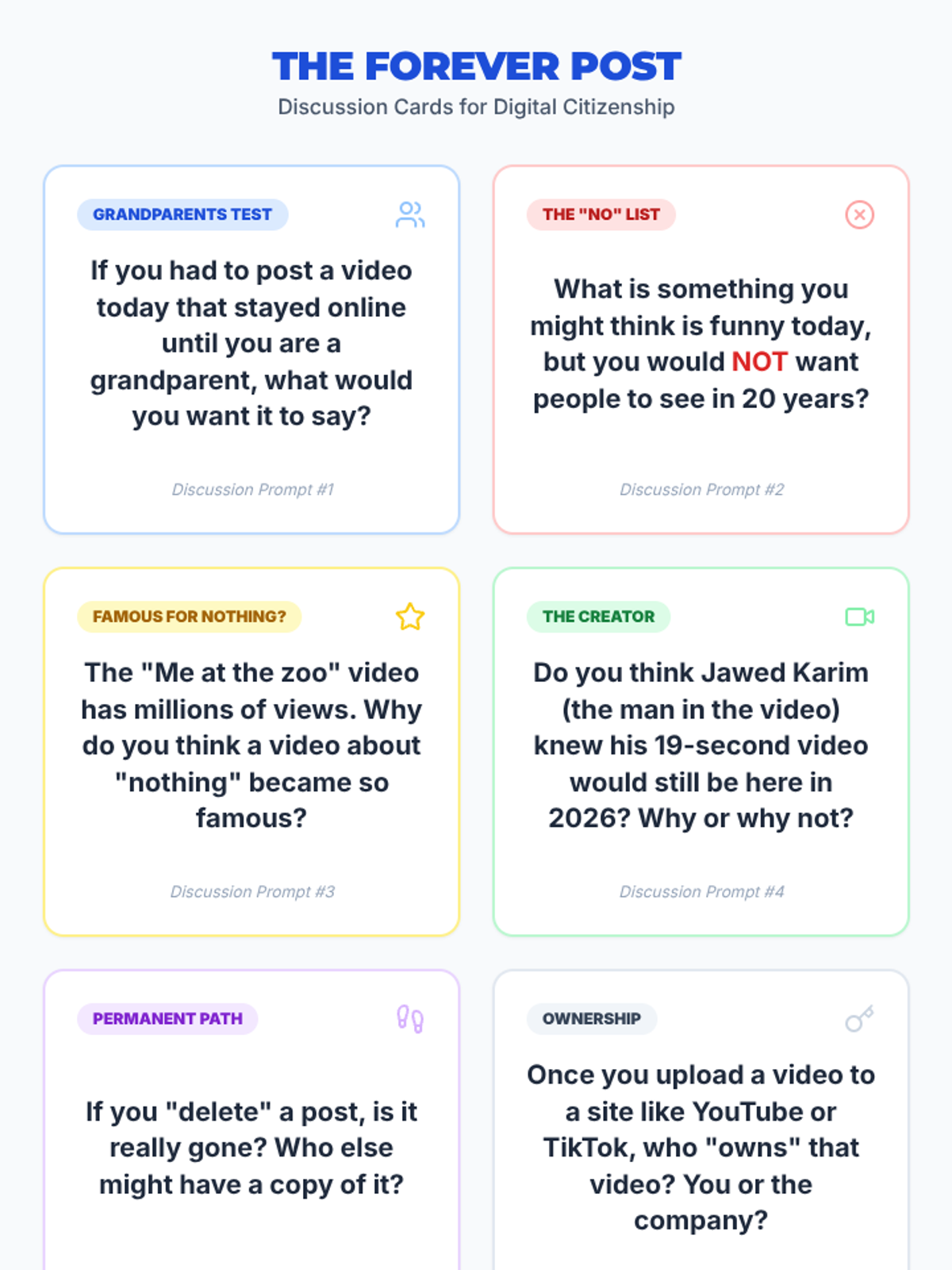
A set of six printable discussion cards featuring prompts about digital footprints, online permanence, and content ownership for use during the 'Forever Post' activity.
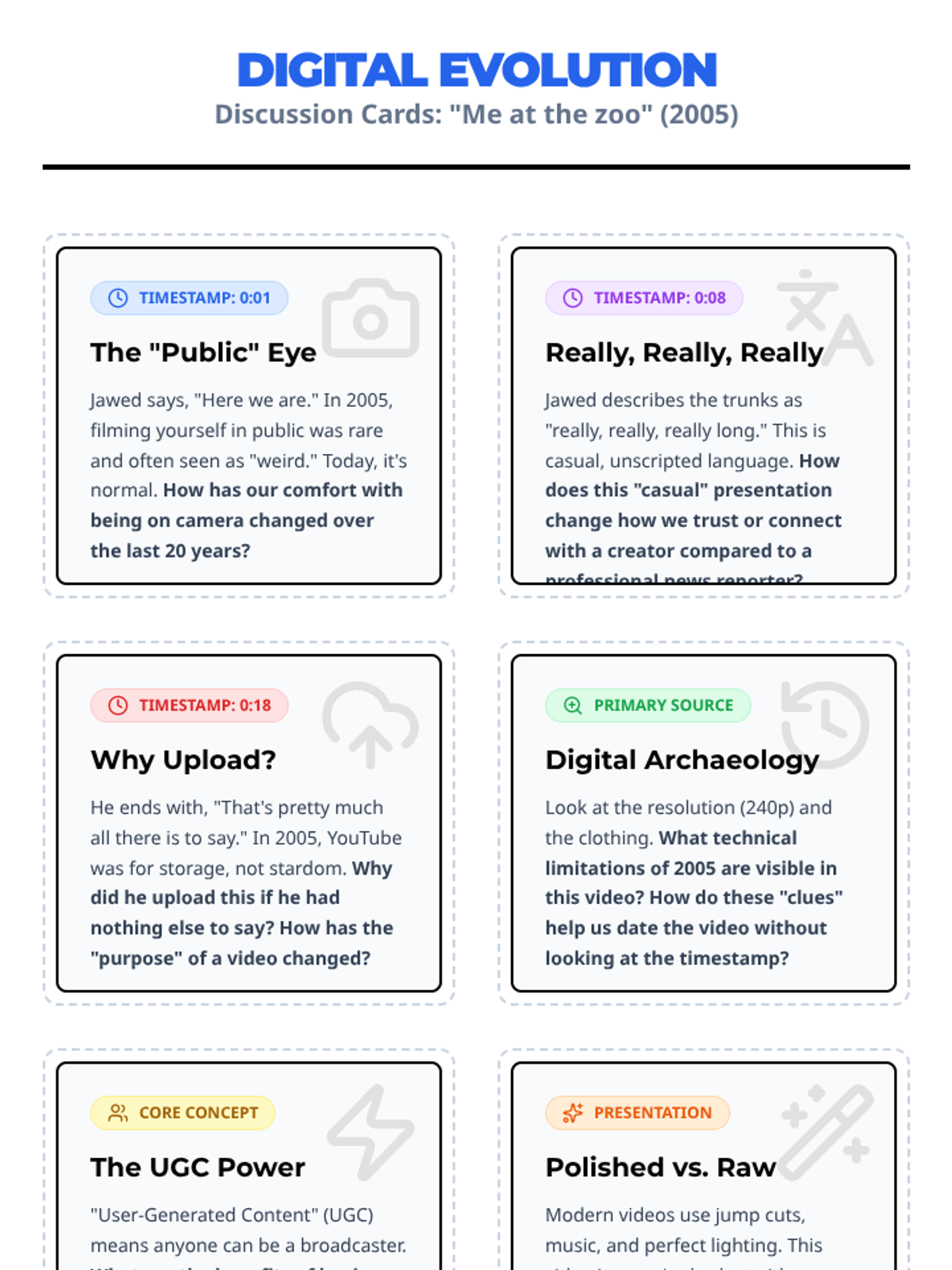
A set of 6 printable discussion cards for middle school students to analyze the "Me at the zoo" video. Each card features a specific timestamp or concept, focusing on social norms, technology evolution, and presentation styles.
A visual presentation for the 'Pixel Pioneers' lesson, including the 'Me at the zoo' video embed, warm-up prompts, and comparative analysis of 2005 vs. modern digital media.
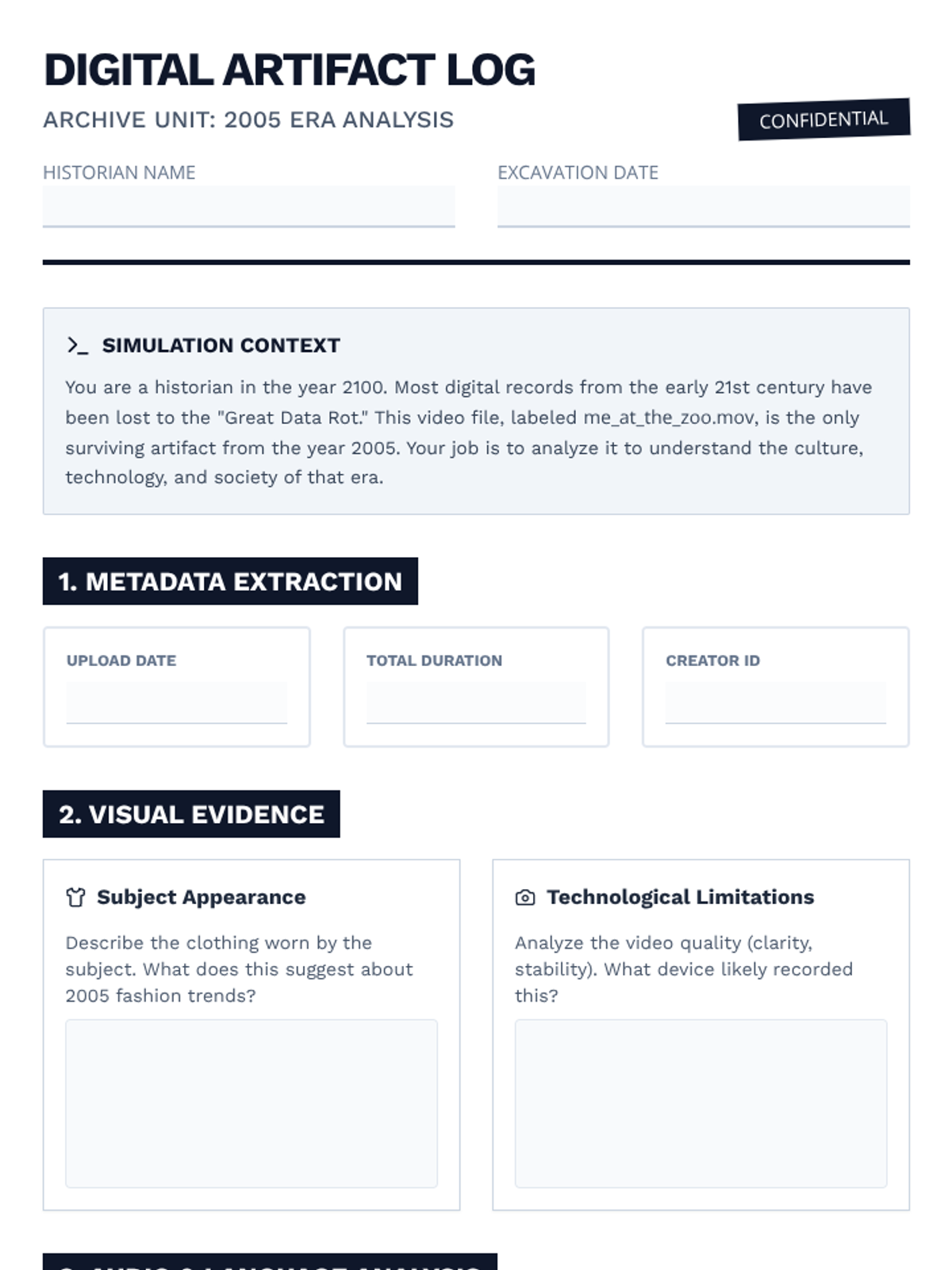
A structured worksheet for students to record their observations of the 'Me at the zoo' video, treating it as an archaeological find from 2005.
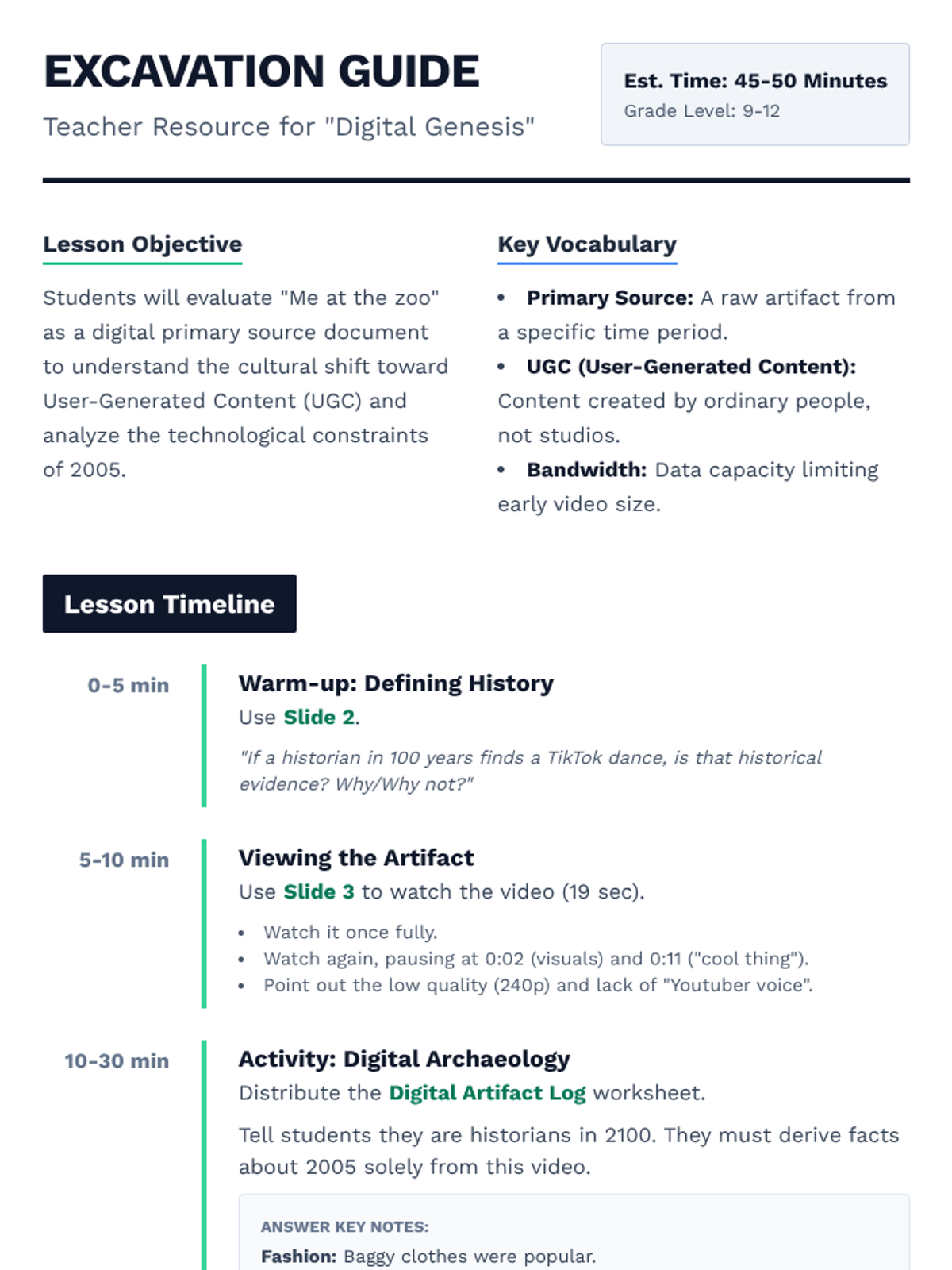
A guide for the teacher including the lesson plan, timing, answer keys, and background context on the video and its historical significance.
A presentation guiding students through the analysis of the first YouTube video, covering metadata, visual analysis, and the concept of User-Generated Content.
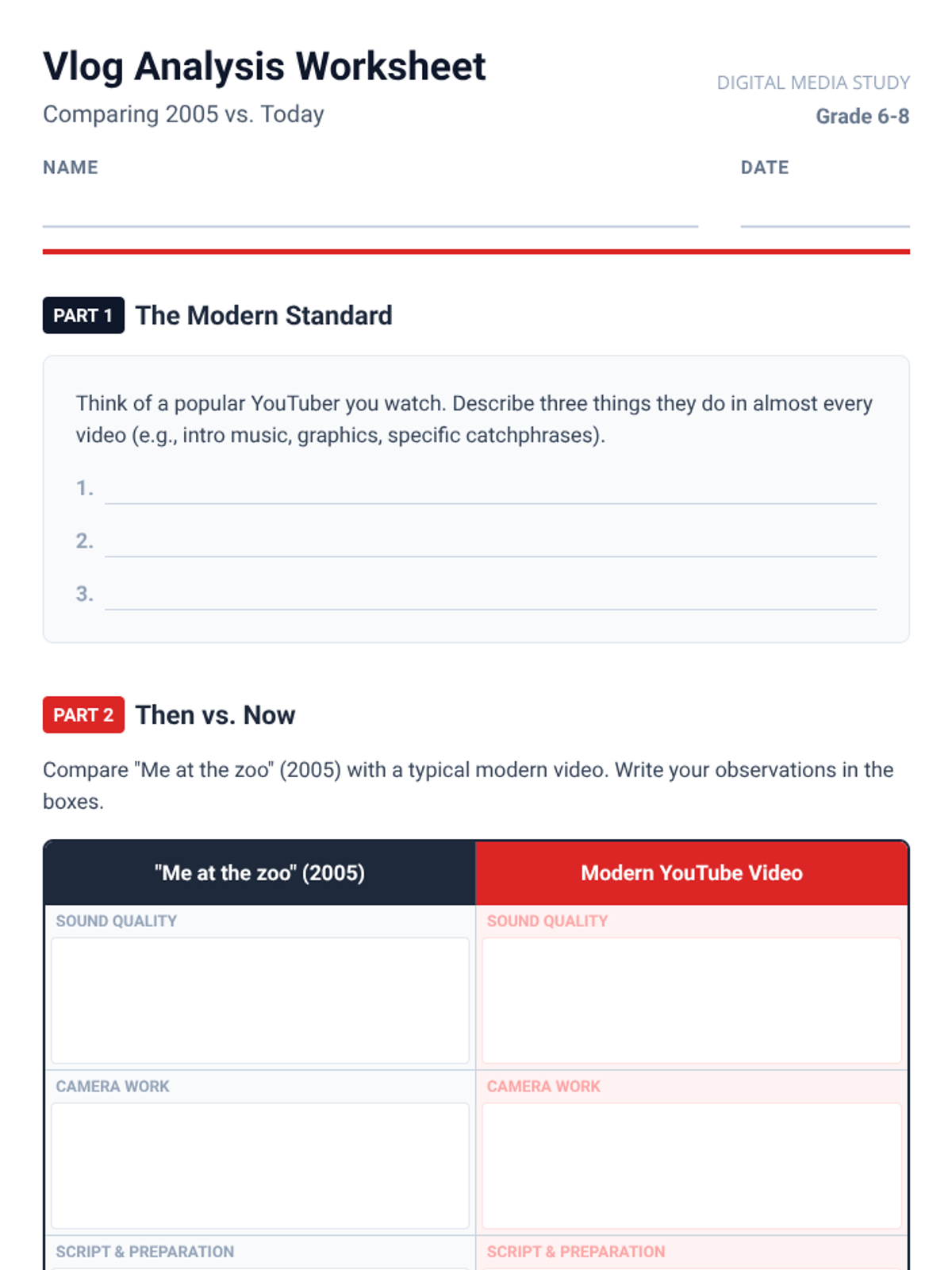
A student worksheet with three parts: a warm-up regarding modern YouTuber habits, a comparative T-Chart for analyzing 'Me at the zoo' vs. modern videos, and a reflection writing section on historical significance.
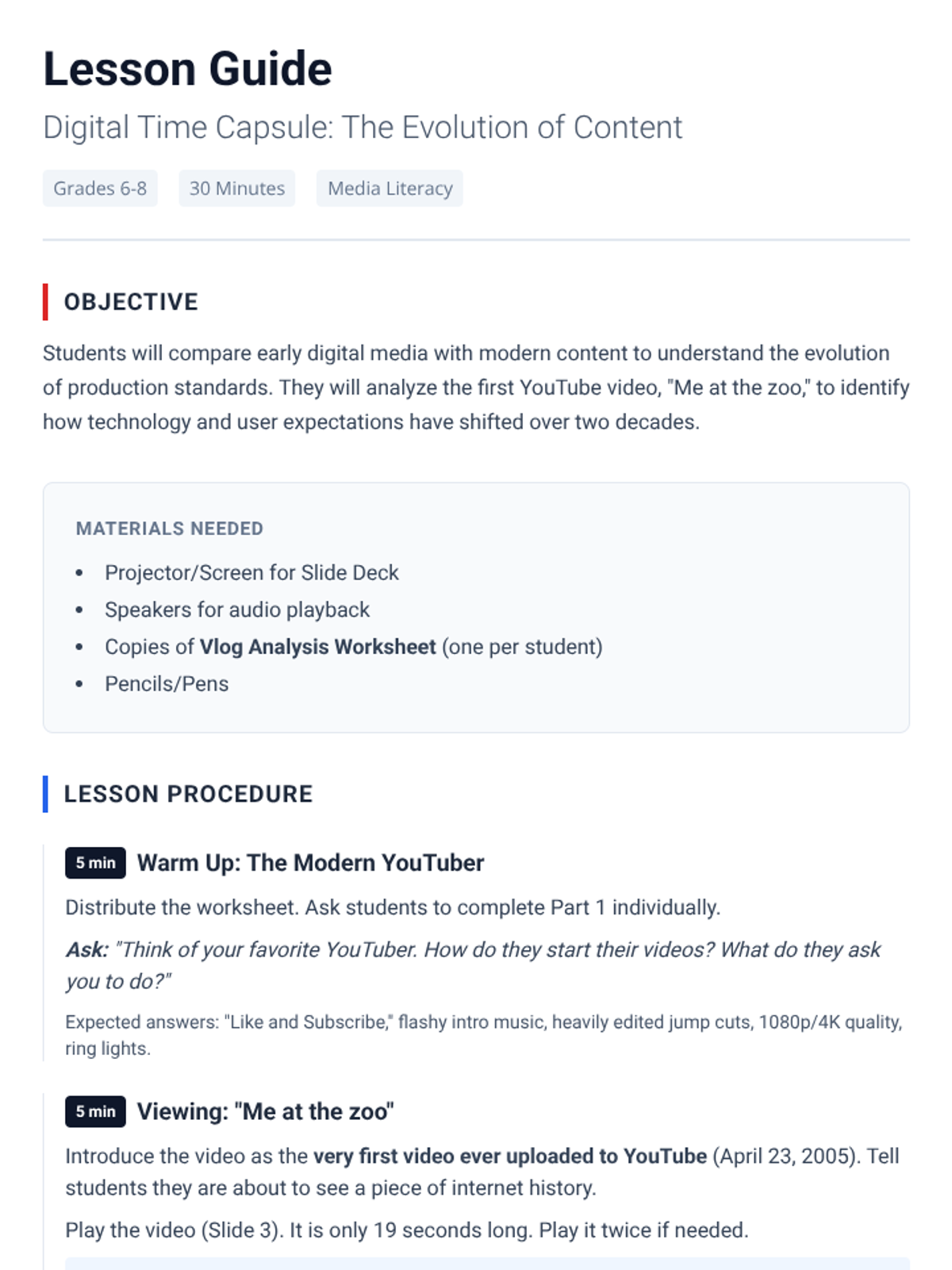
A comprehensive teacher's guide for the Digital Time Capsule lesson, including objectives, step-by-step procedure, discussion prompts, context notes about Jawed Karim, and answer keys.
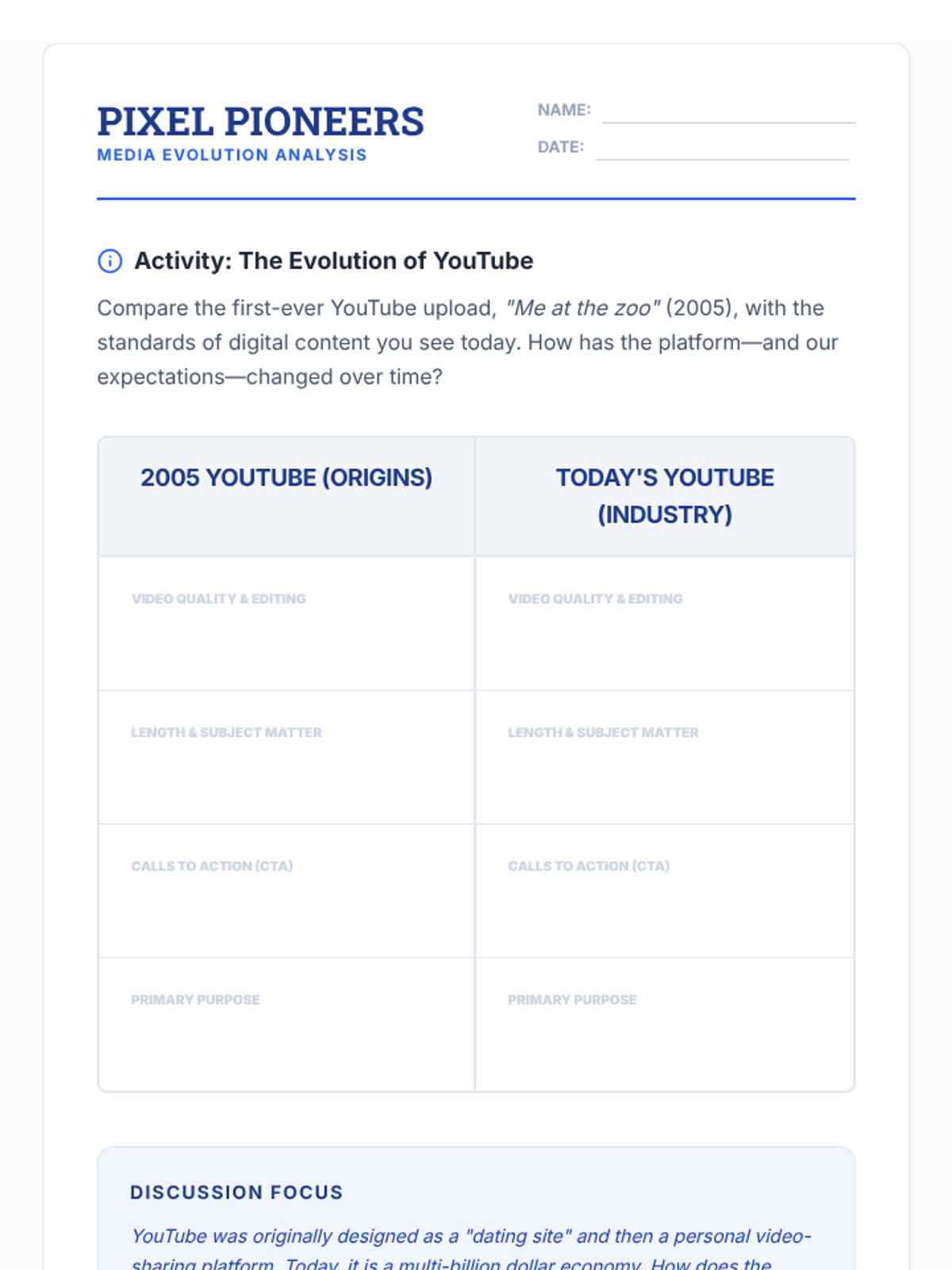
A printable T-Chart worksheet for students to compare the first YouTube video to modern digital media standards across five key categories.
A grading rubric for the 'Digital Archaeology' lesson, evaluating students on visual evidence analysis, linguistic context, historical significance, and comparative arguments.
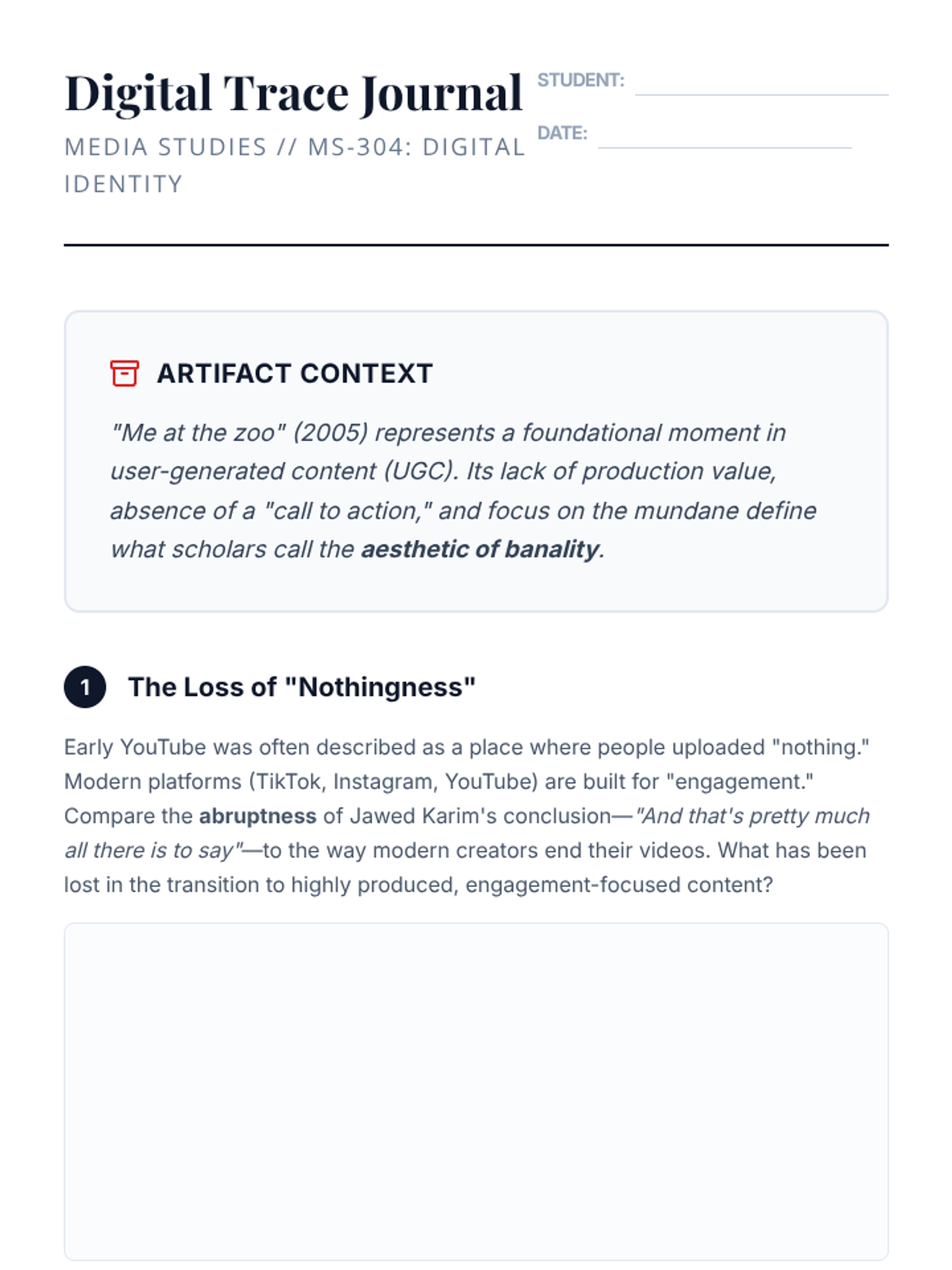
A critical reflection journal for undergraduate students to deconstruct their perception of authenticity, comparing early Web 2.0 aesthetics to the modern creator economy.
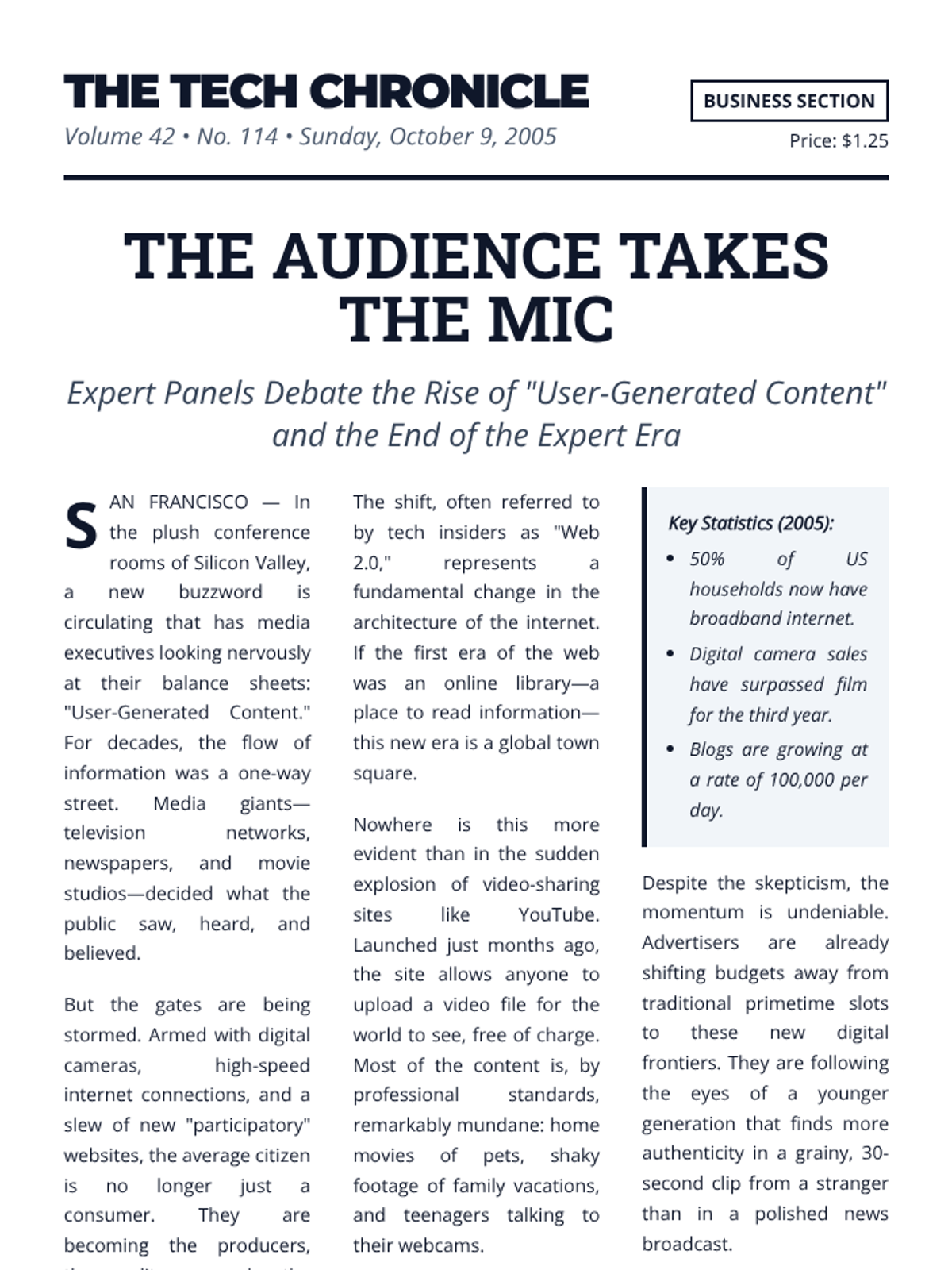
A mock 2005-era newspaper article discussing the rise of User-Generated Content and the transition to Web 2.0, serving as a primary source for student analysis.
A worksheet featuring a Venn Diagram to compare 2005 YouTube videos with modern content, followed by a scripting activity where students write a simple, retro-style video intro.