A comprehensive teacher guide for the 'The First Upload' lesson, including pacing, discussion prompts, video analysis timestamps, and socratic seminar themes.
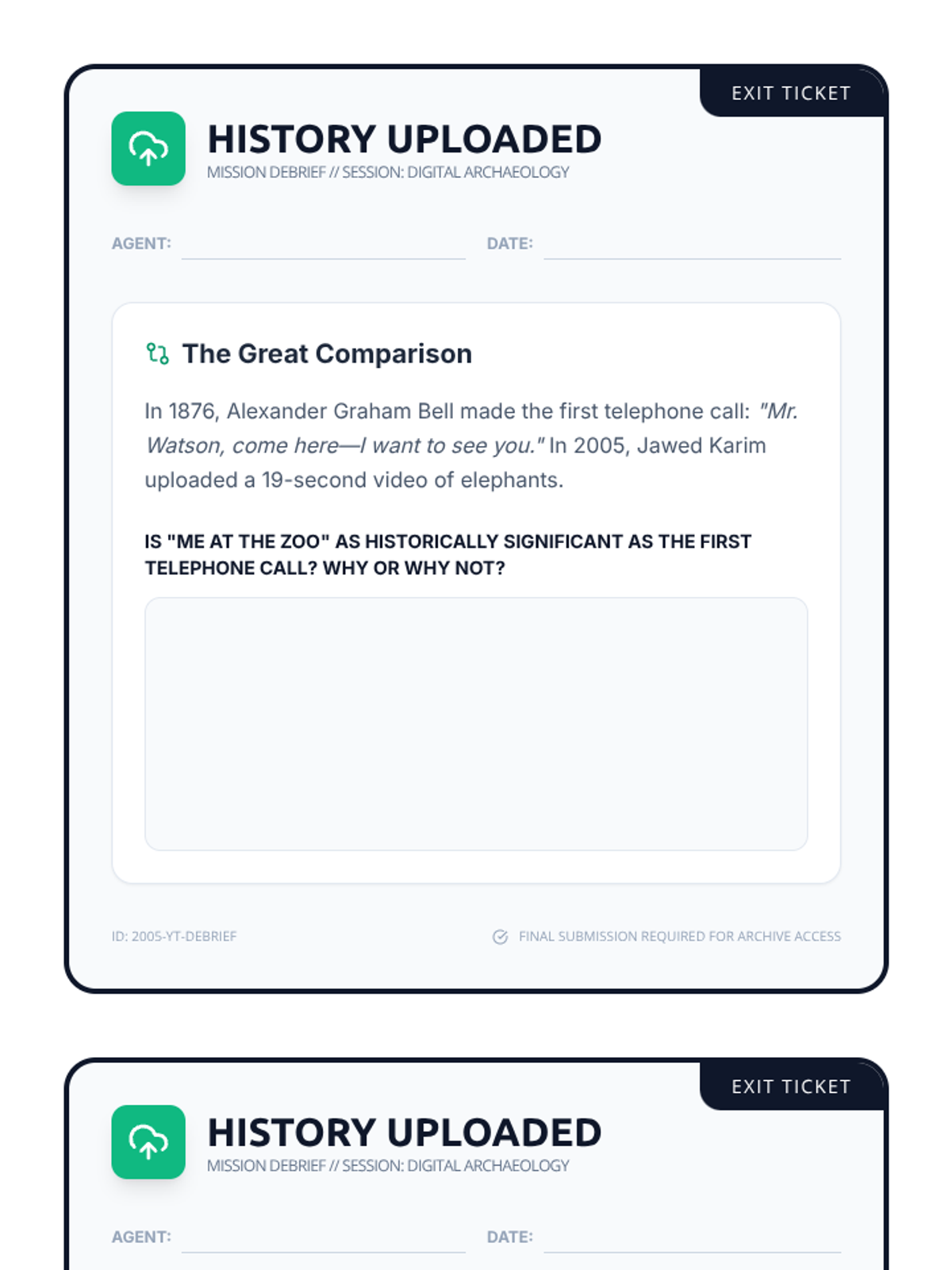
A comparison-based exit ticket for the 'Digital Archaeology' lesson, asking students to evaluate the historical significance of the first YouTube video against the first telephone call.
1/16
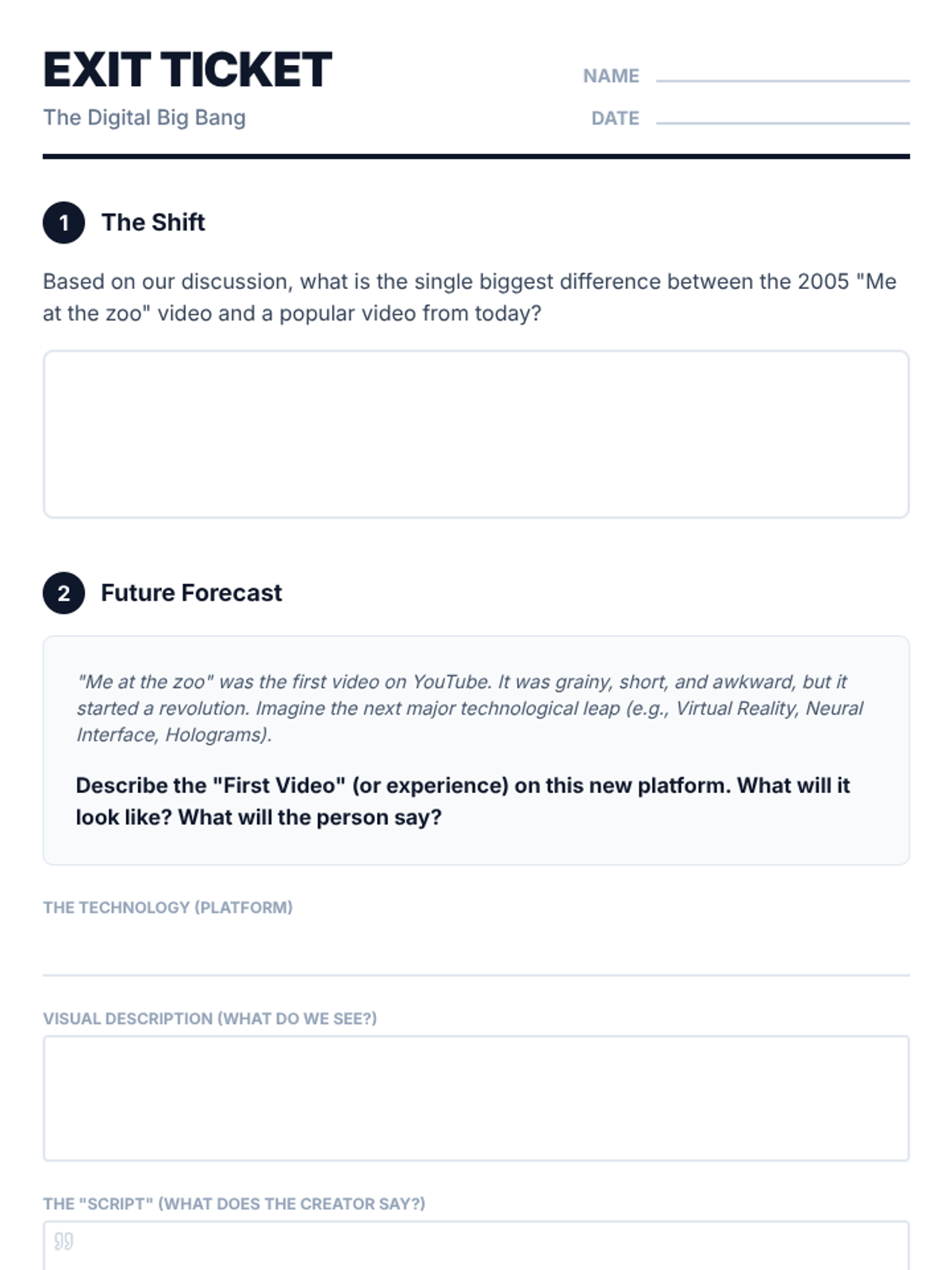
An exit ticket handout for students to demonstrate understanding. Includes a short response question comparing 2005 media to today, and a creative forecasting activity where students predict the nature of the first content on a future tech platform.
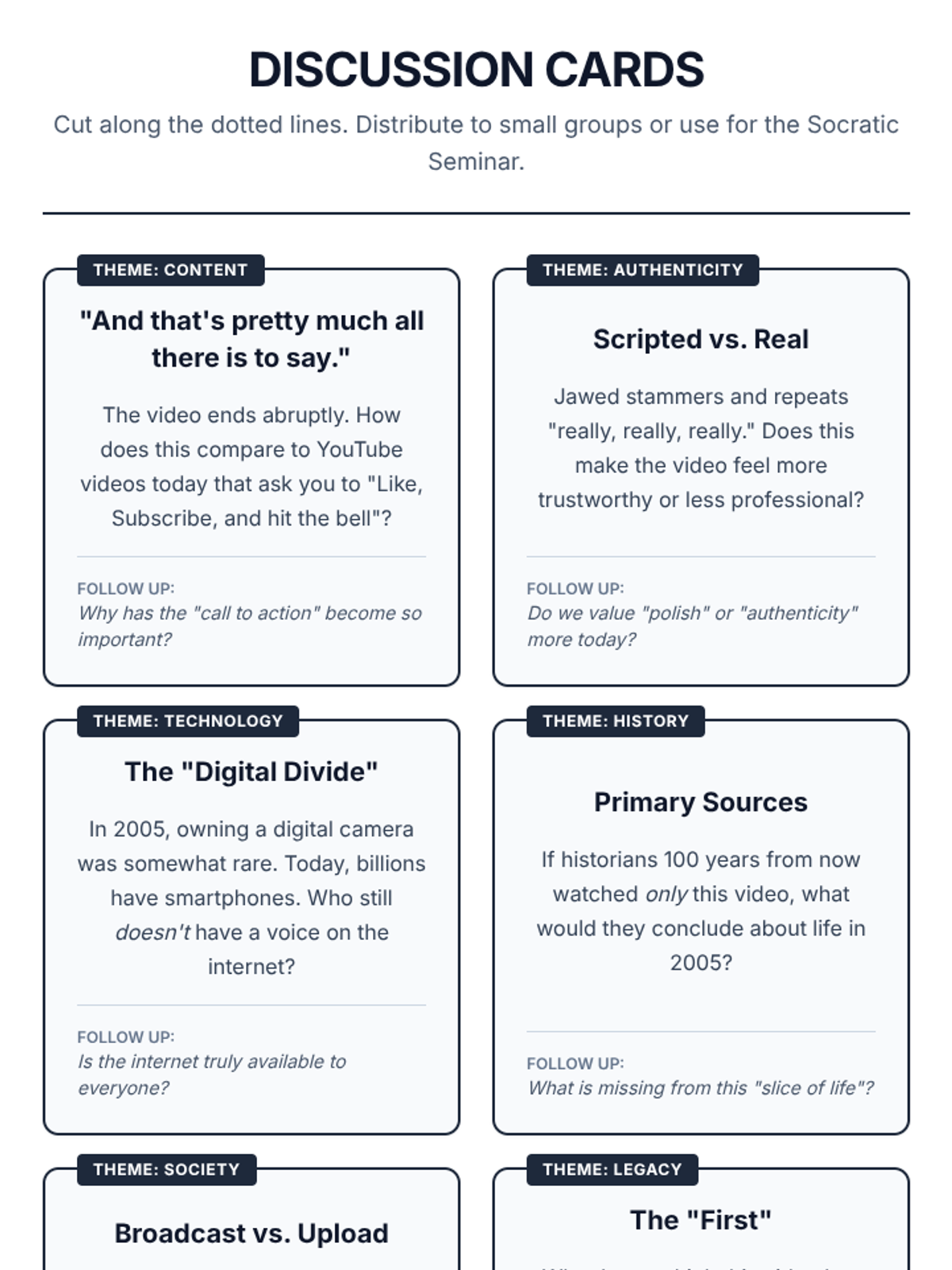
A set of 6 printable discussion cards with questions and follow-up prompts for the Socratic Seminar, covering themes of authenticity, technology, history, and society.
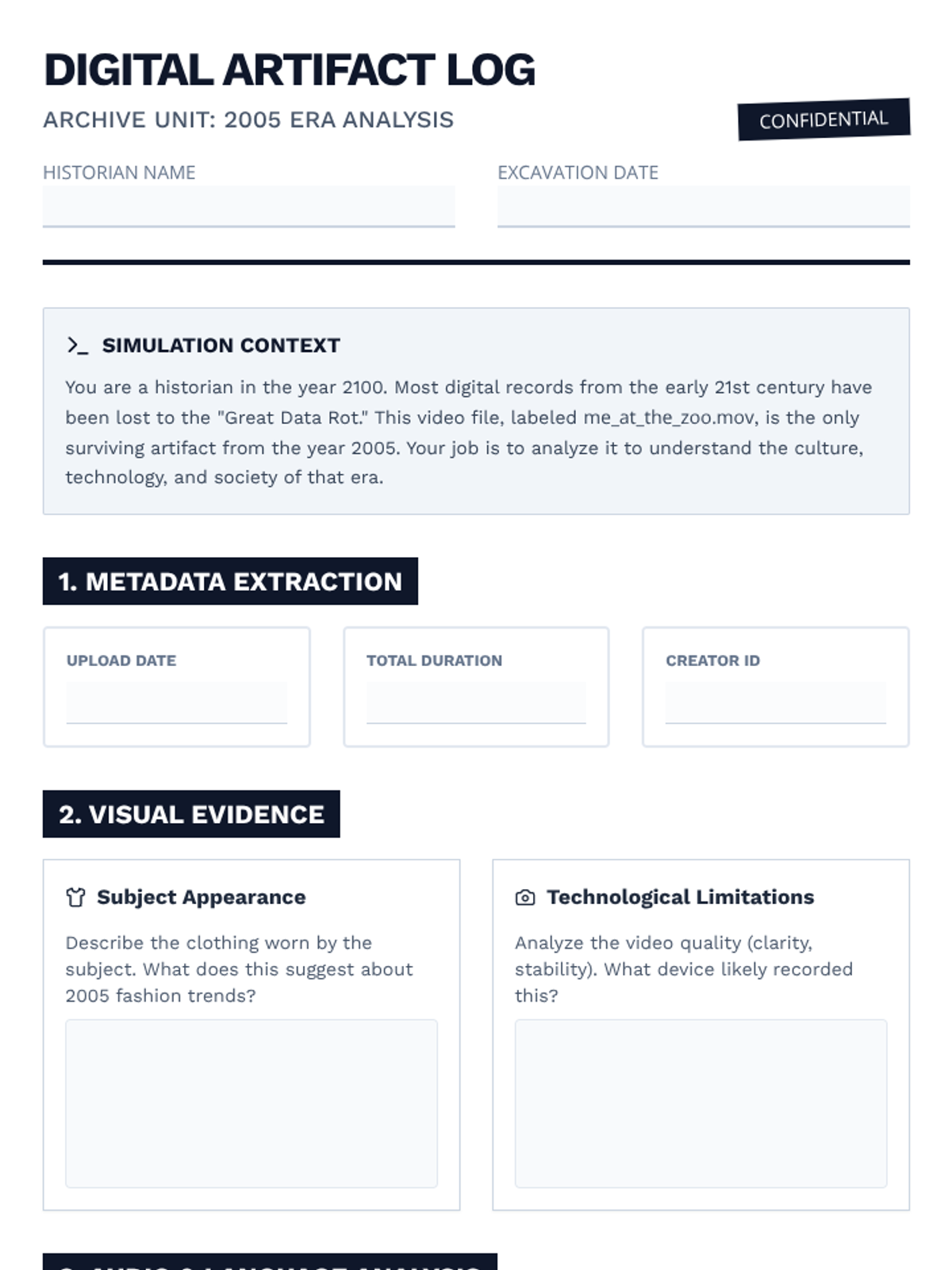
A structured worksheet for students to record their observations of the 'Me at the zoo' video, treating it as an archaeological find from 2005.
A grading rubric for the 'Digital Archaeology' lesson, evaluating students on visual evidence analysis, linguistic context, historical significance, and comparative arguments.
A worksheet featuring a Venn Diagram to compare 2005 YouTube videos with modern content, followed by a scripting activity where students write a simple, retro-style video intro.
A visual presentation deck with the 'Me at the zoo' video embed, activity instructions, and discussion prompts.
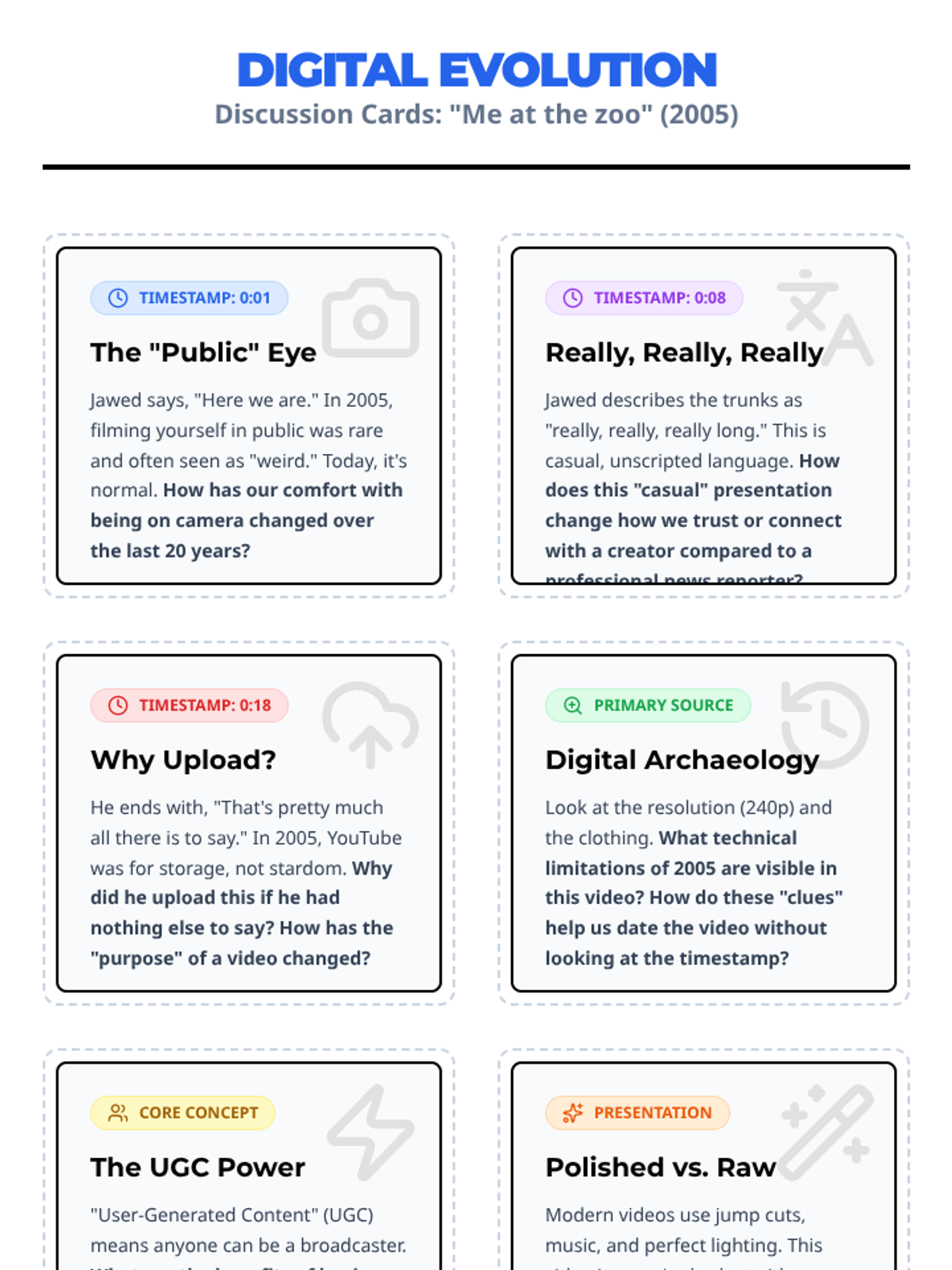
A set of 6 printable discussion cards for middle school students to analyze the "Me at the zoo" video. Each card features a specific timestamp or concept, focusing on social norms, technology evolution, and presentation styles.
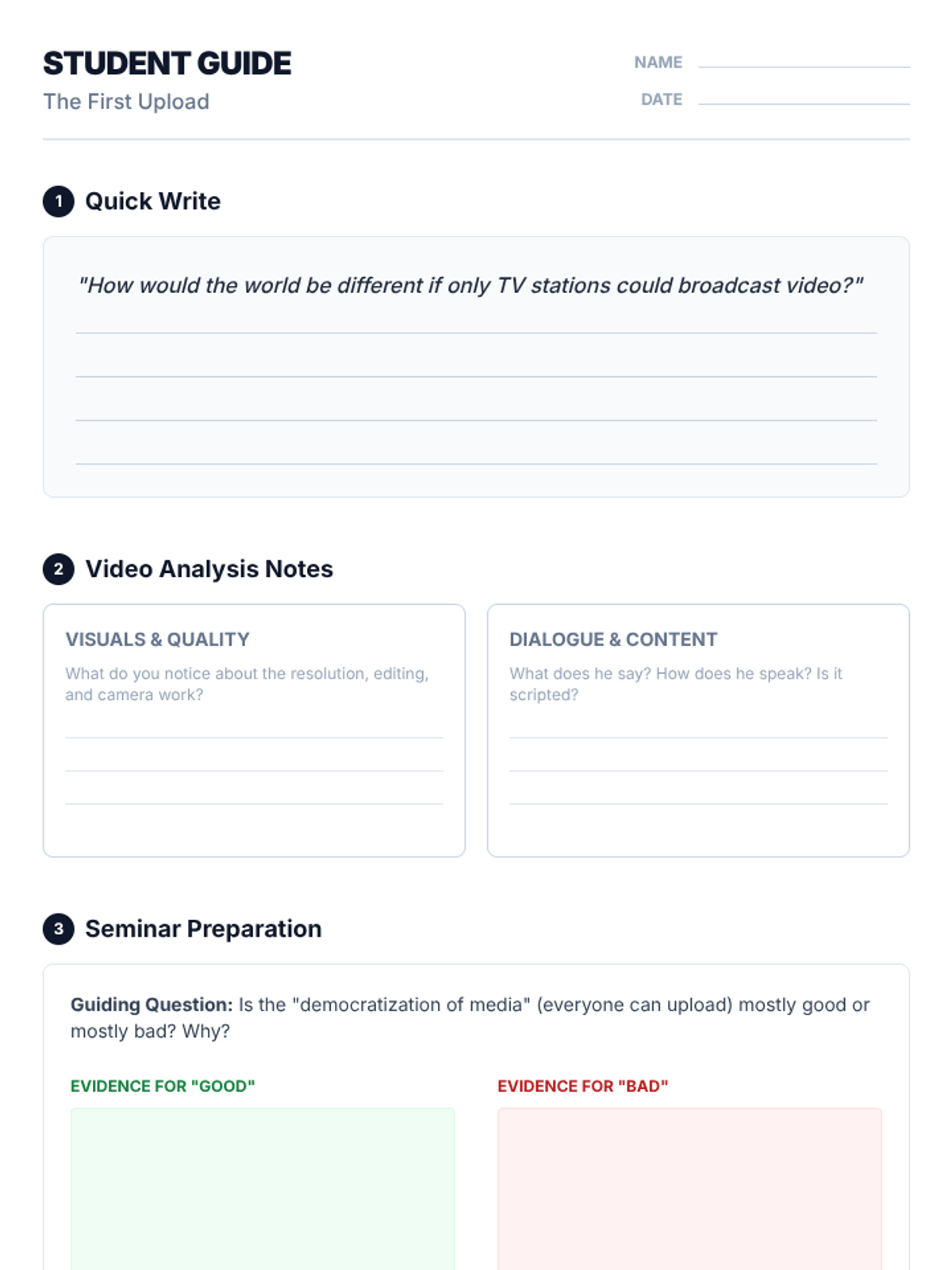
A student worksheet for the lesson, including the warm-up writing prompt, a grid for video analysis notes during viewing, and a T-chart for preparing arguments for the Socratic Seminar.
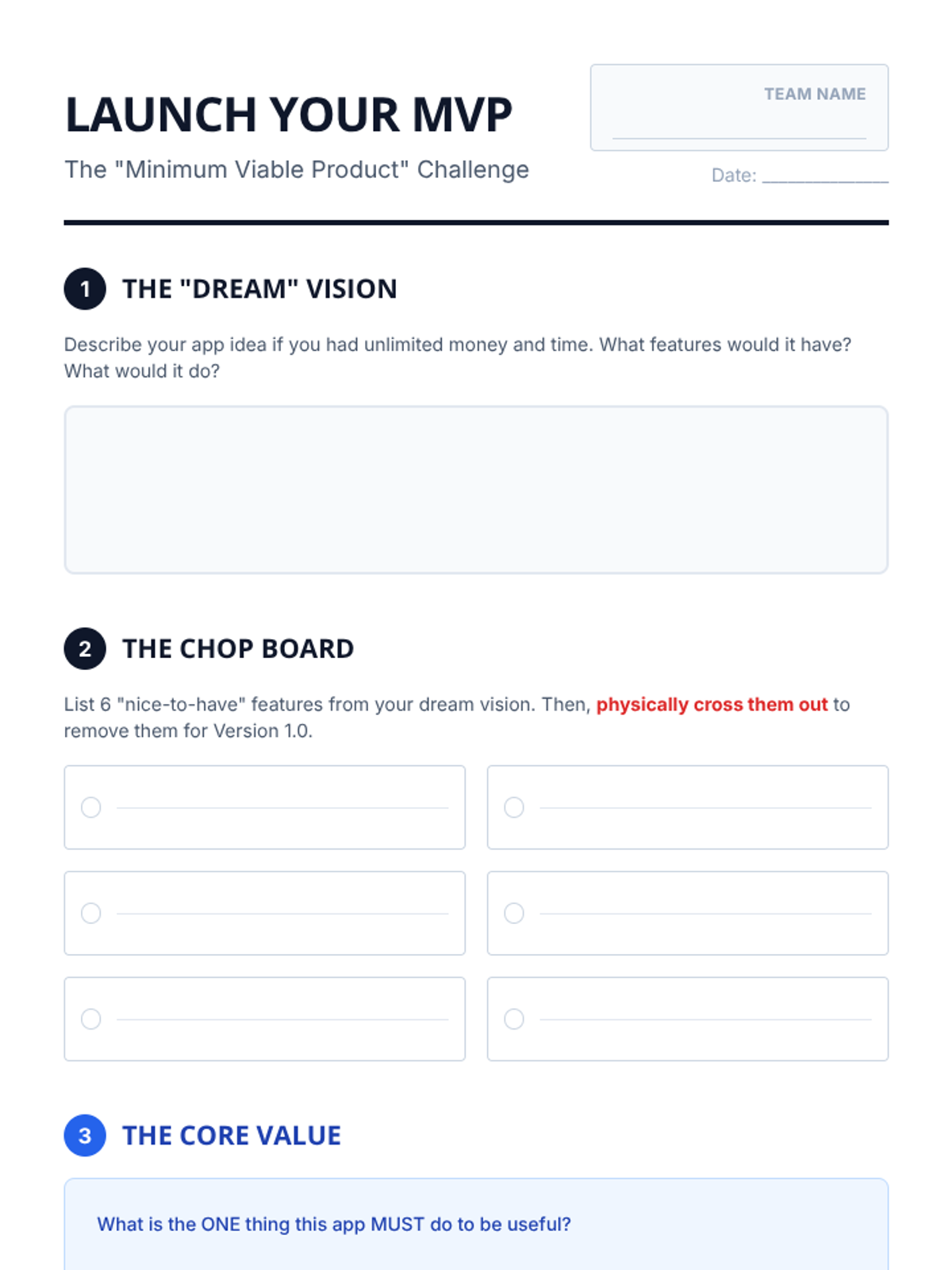
A student worksheet for the 'Launch Your MVP' activity, guiding pairs through brainstorming, feature cutting, and sketching a minimum viable product interface.
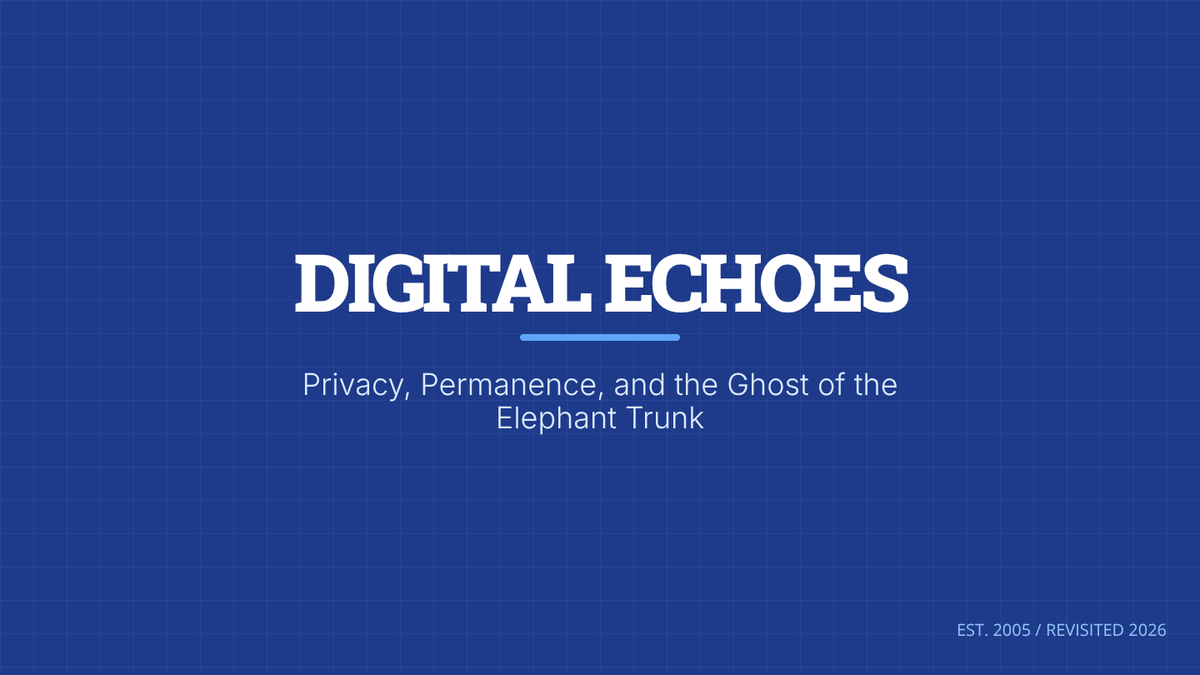
Visual presentation slides for the 'Digital Echoes' workshop, featuring the 'Me at the zoo' video embed, discussion prompts, and audit guidelines.
A futuristic slide deck for instruction, featuring the first YouTube video, analysis prompts, and the 'Digital Archaeologist' mission for students.
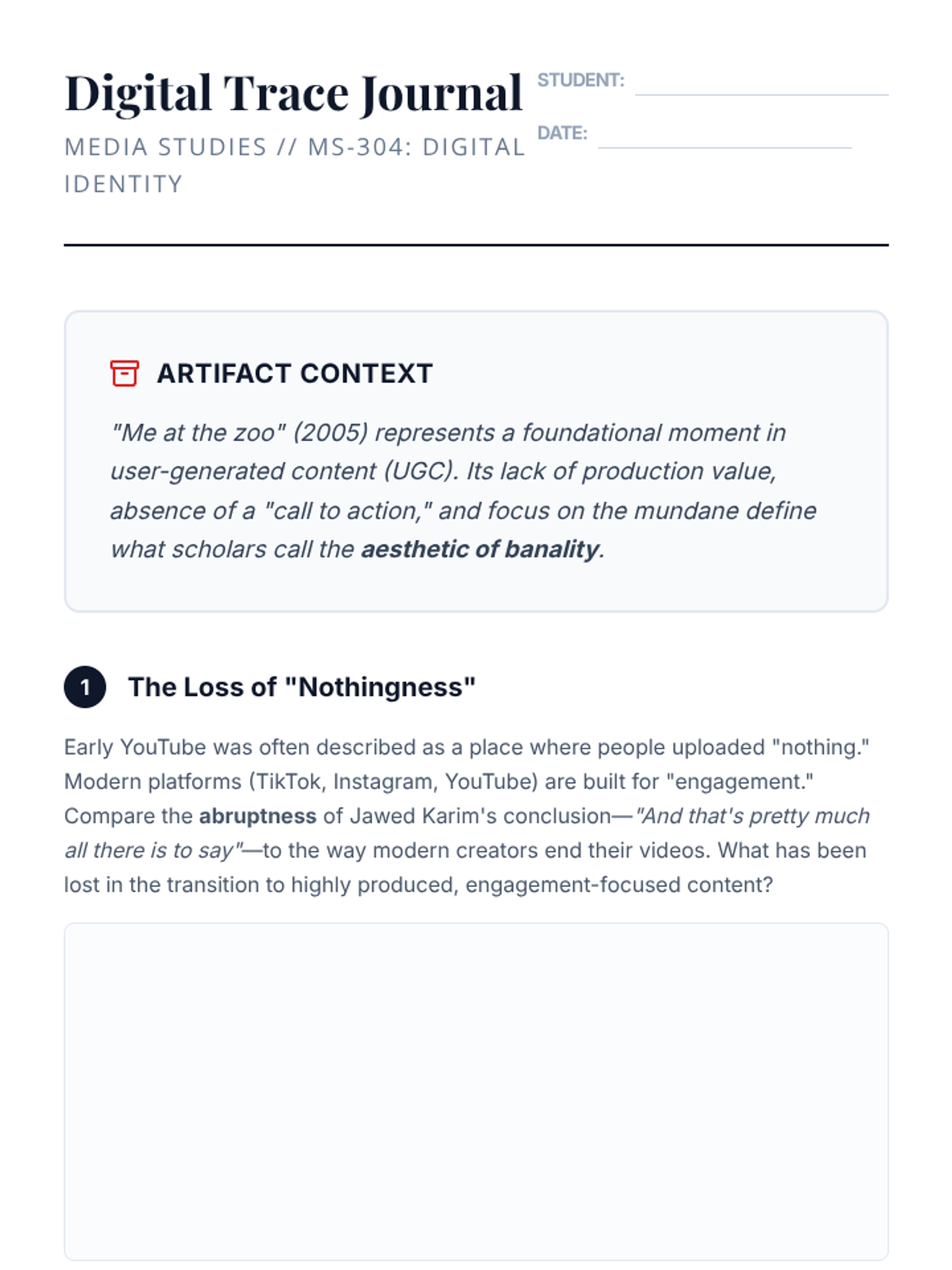
A critical reflection journal for undergraduate students to deconstruct their perception of authenticity, comparing early Web 2.0 aesthetics to the modern creator economy.
A slide deck for students exploring the first YouTube video and the concept of a digital footprint, including embedded video, interactive prompts, and the THINK acronym for digital citizenship.
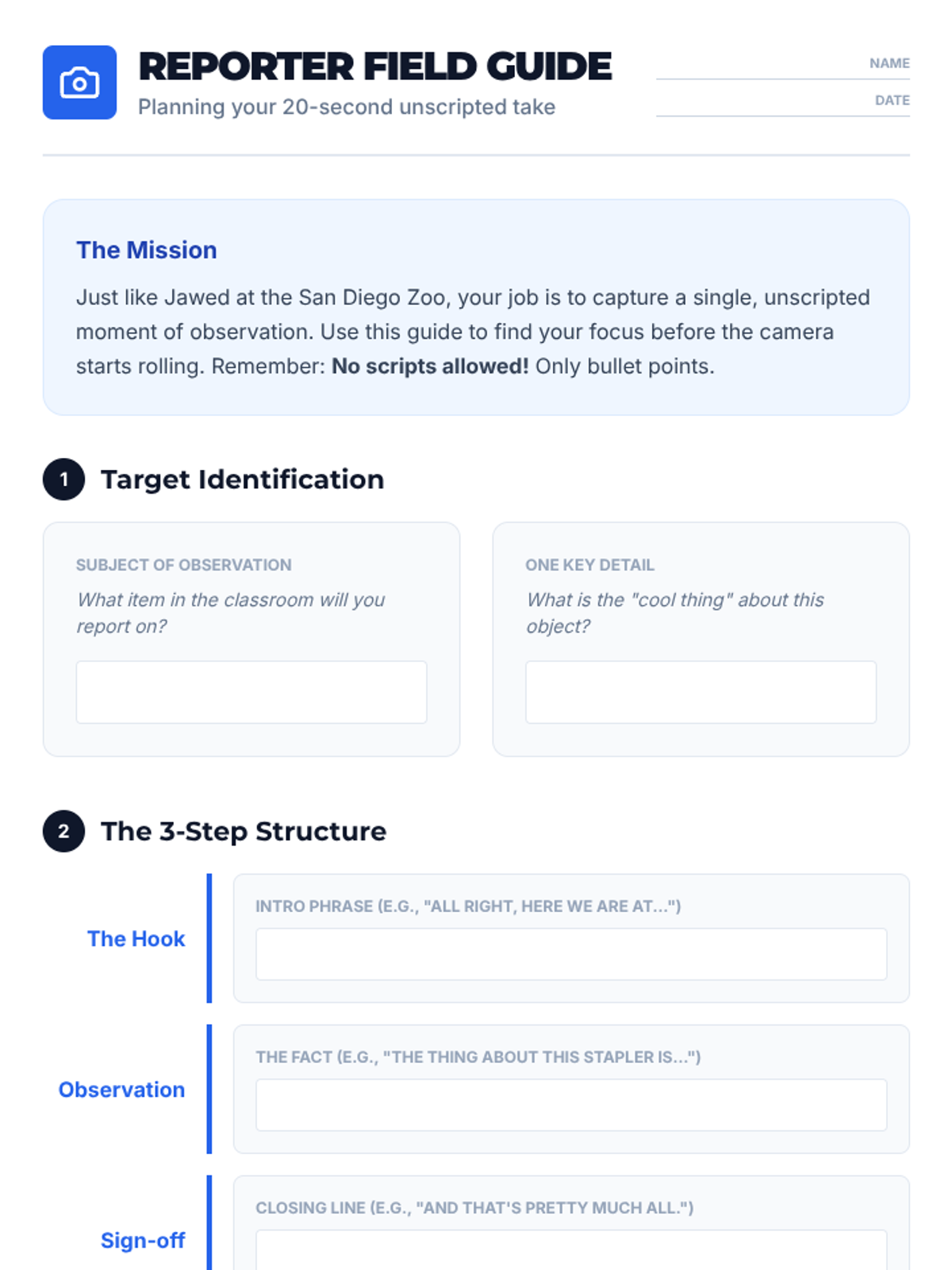
A student field guide for planning their 20-second observational report, including sections for target identification, the 3-step vlog structure, and reflection questions.
A comparative analysis matrix worksheet for students to evaluate three different 2005 media sources based on authorship, audience, barriers to entry, and bias.
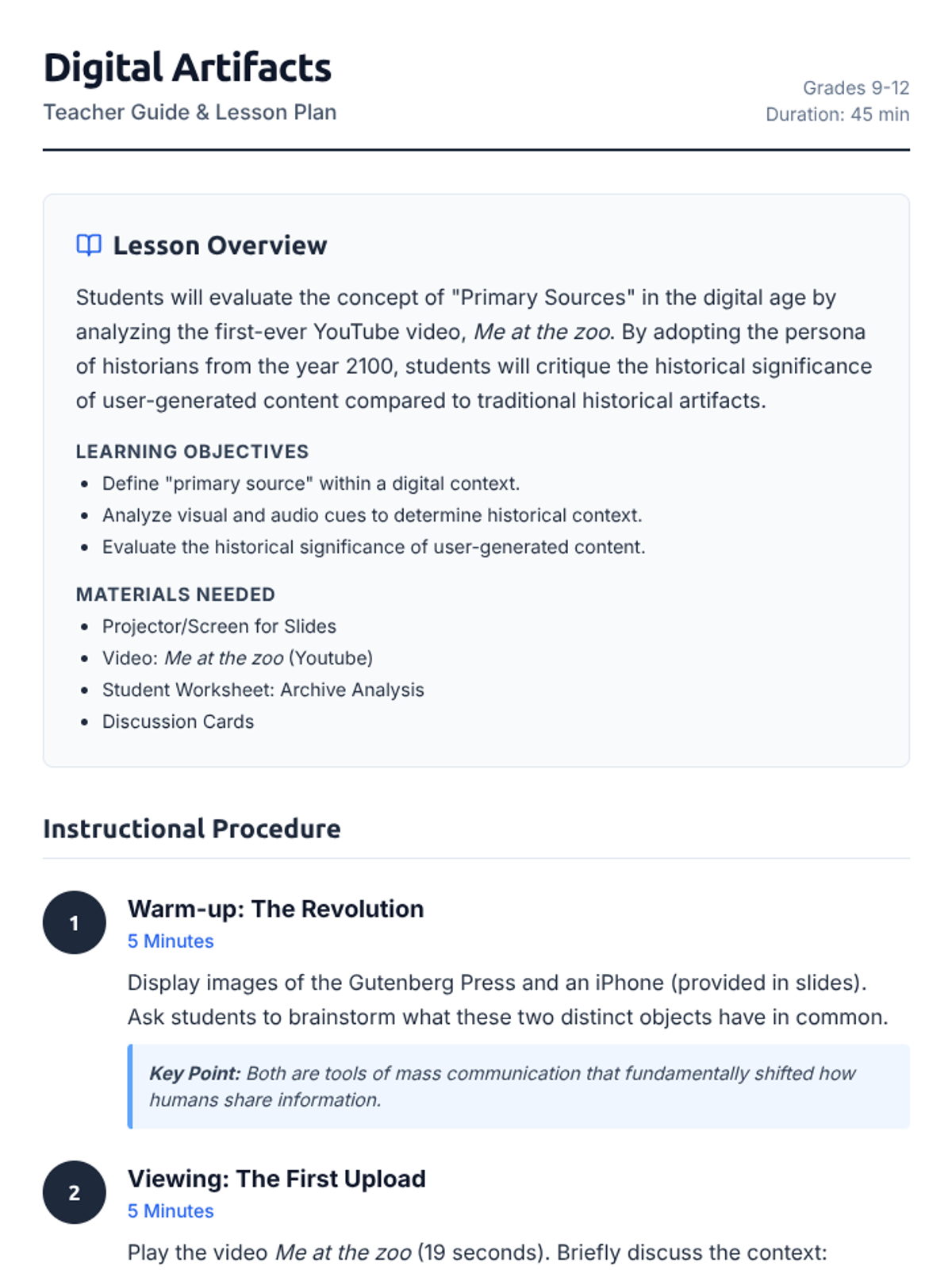
A comprehensive lesson plan for teachers, outlining the steps for the 'Digital Artifacts' lesson, including warm-up, viewing, main activity, and reflection.
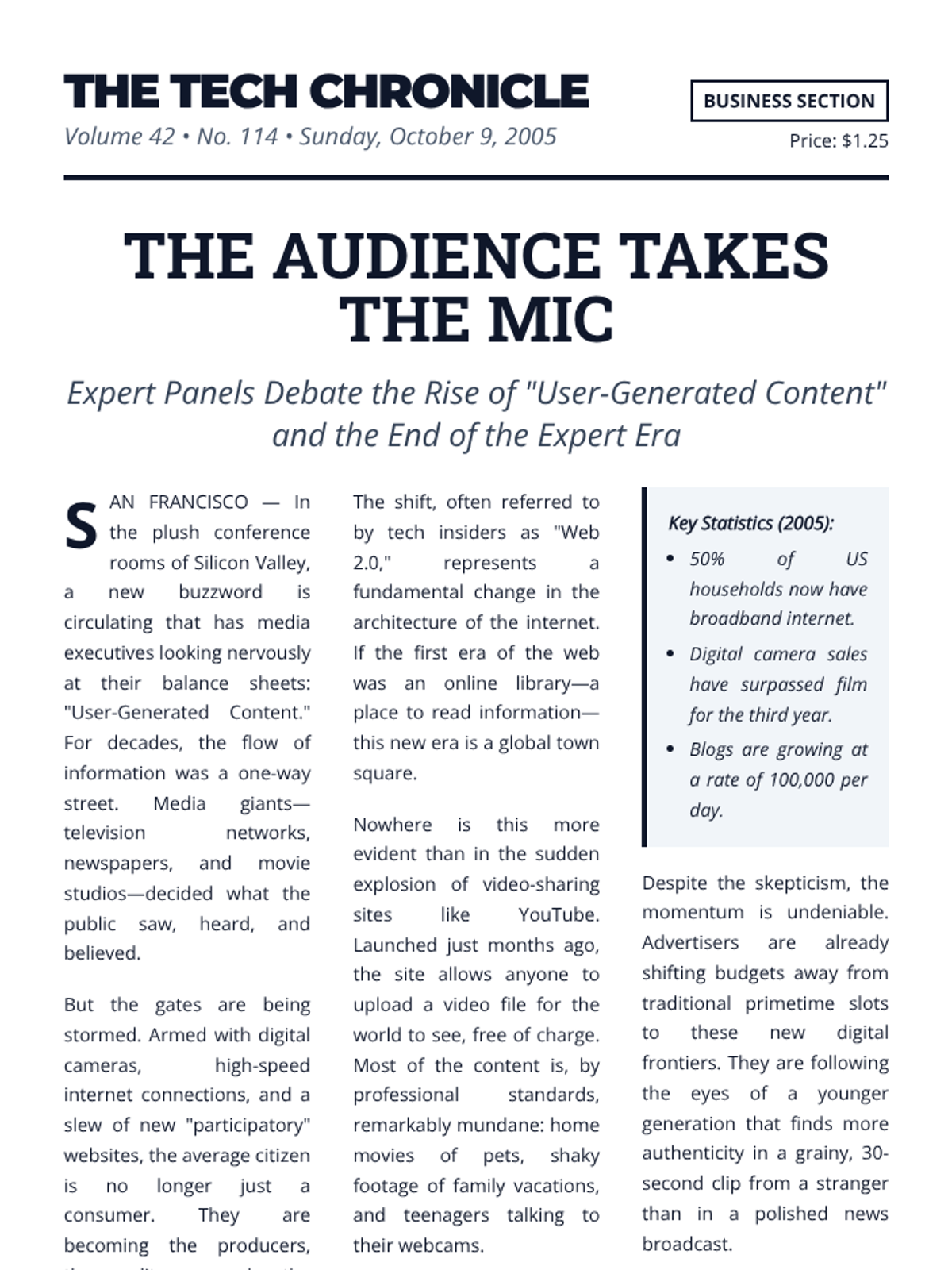
A mock 2005-era newspaper article discussing the rise of User-Generated Content and the transition to Web 2.0, serving as a primary source for student analysis.
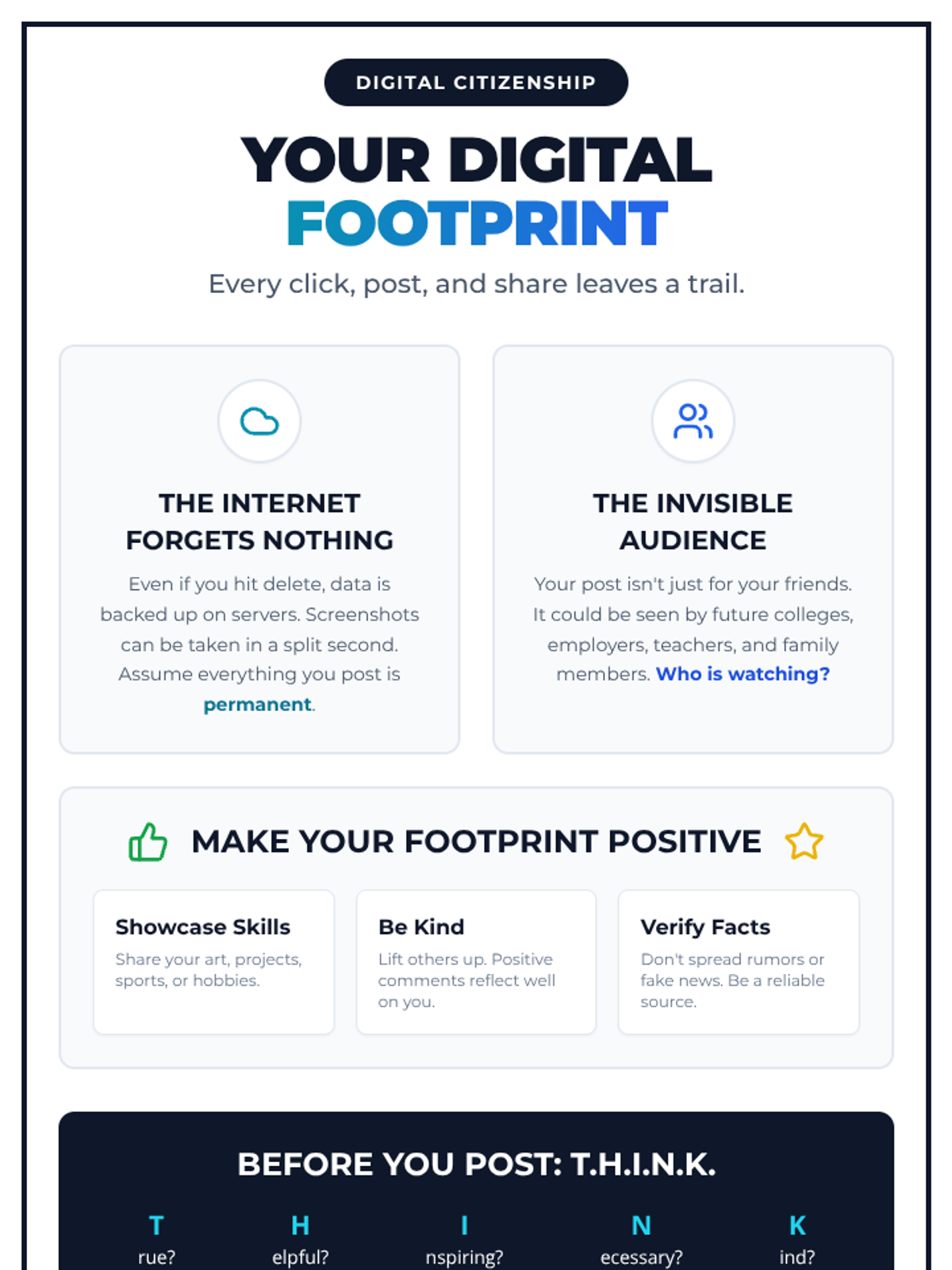
Visual infographic poster summarizing key digital footprint concepts like permanence, audience, and the T.H.I.N.K. acronym.
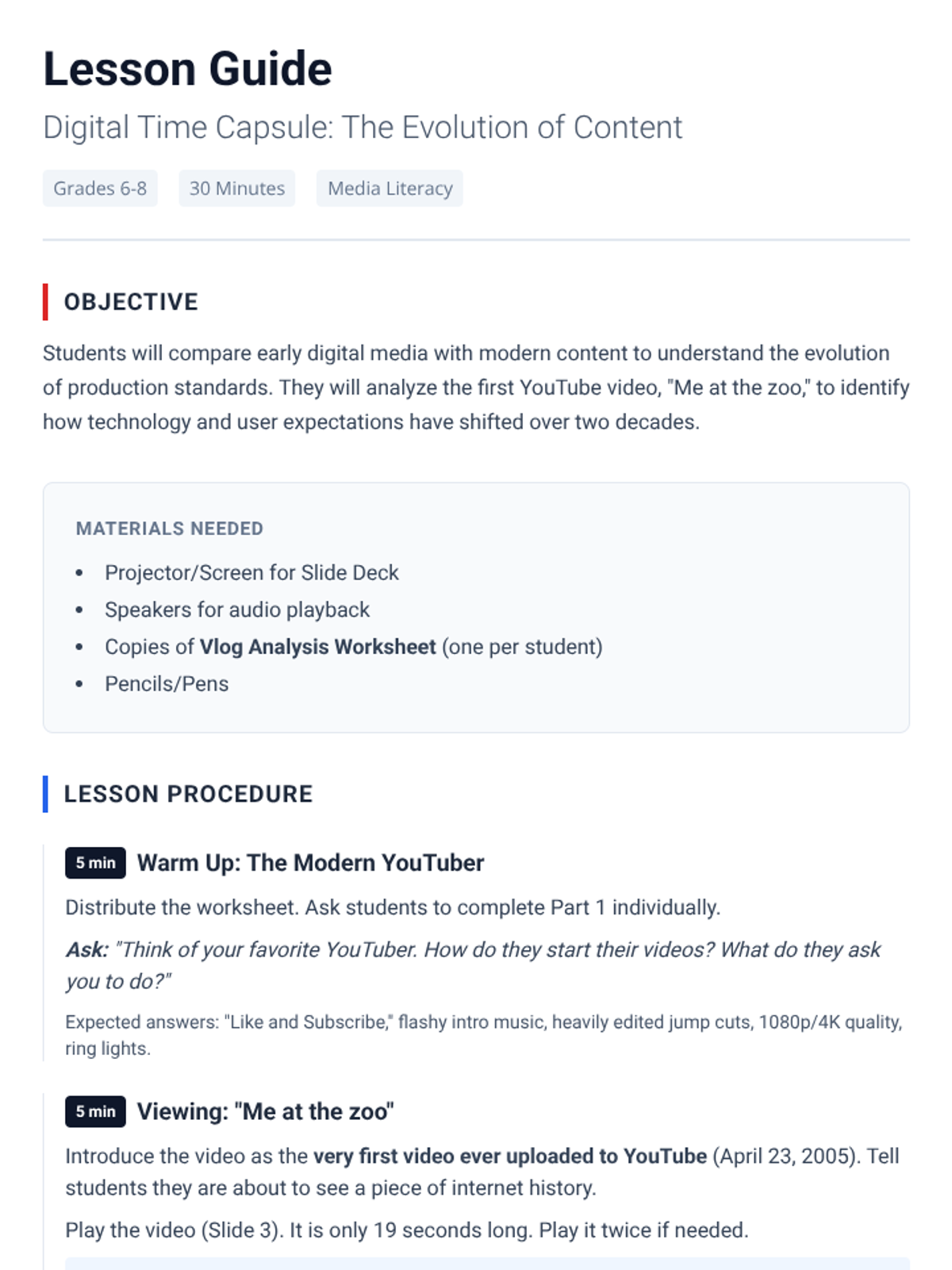
A comprehensive teacher's guide for the Digital Time Capsule lesson, including objectives, step-by-step procedure, discussion prompts, context notes about Jawed Karim, and answer keys.