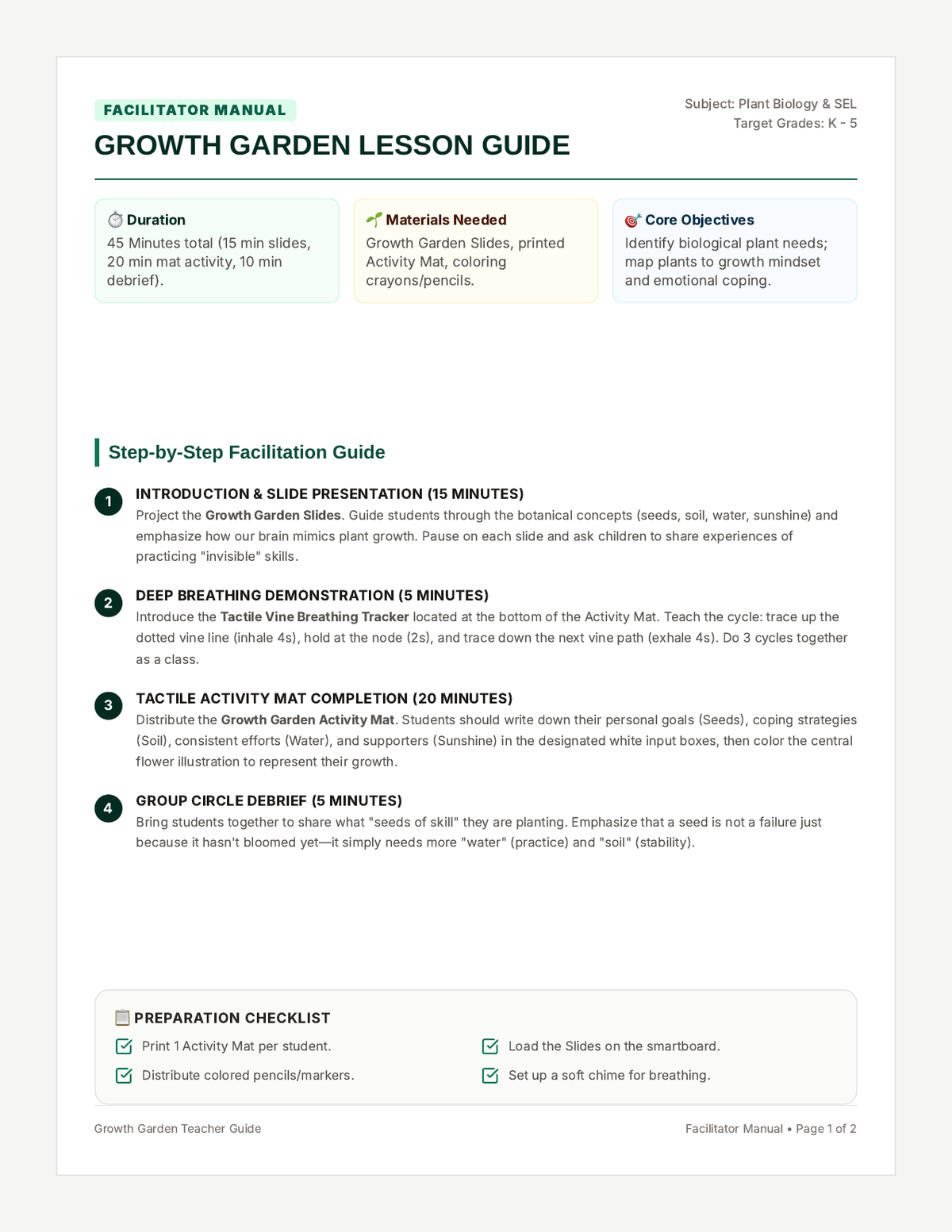
A comprehensive teacher facilitation guide for a 20-minute morning meeting on classroom volume, including timing, discussion prompts, and pro-tips.
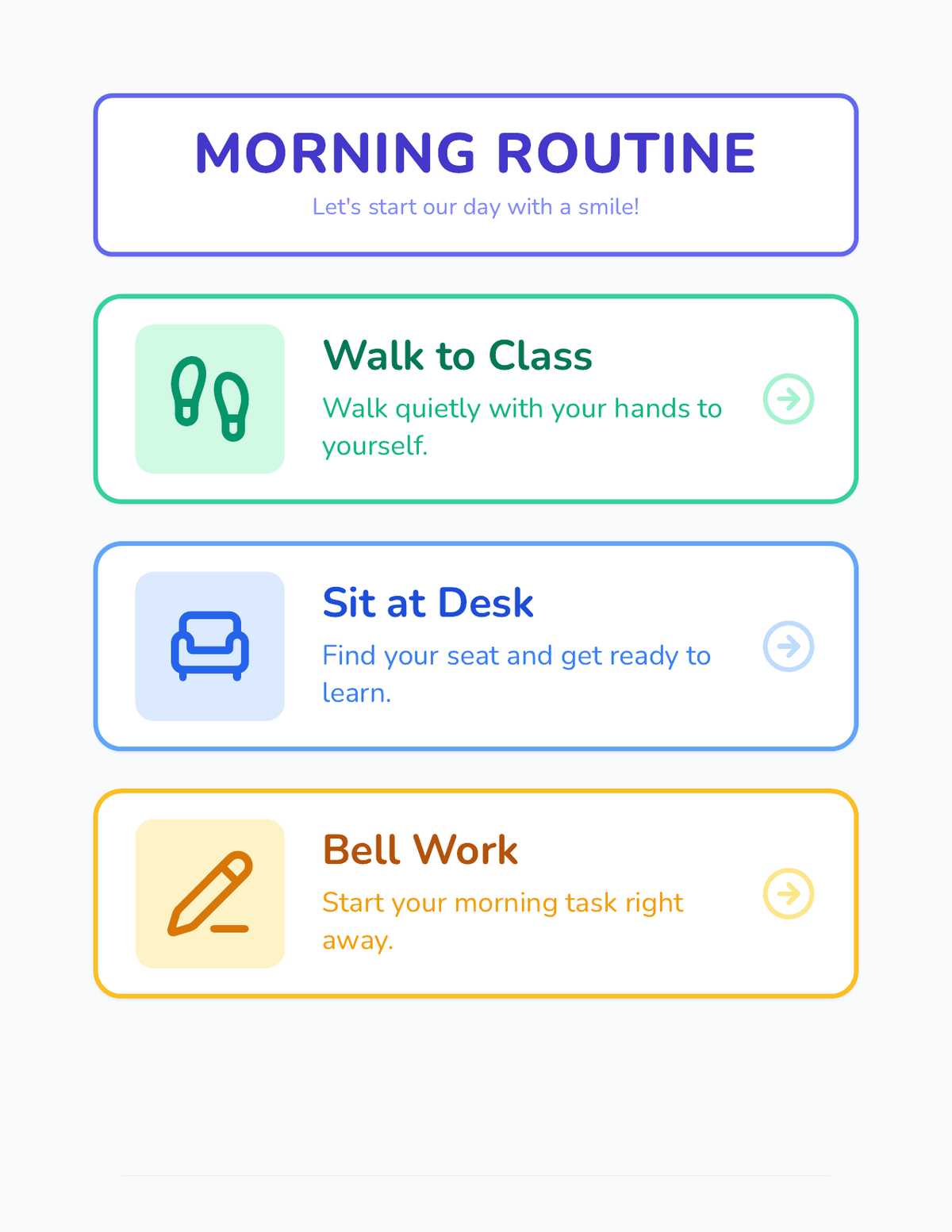
A visual presentation to introduce and explain the expectations for each step of the morning routine.
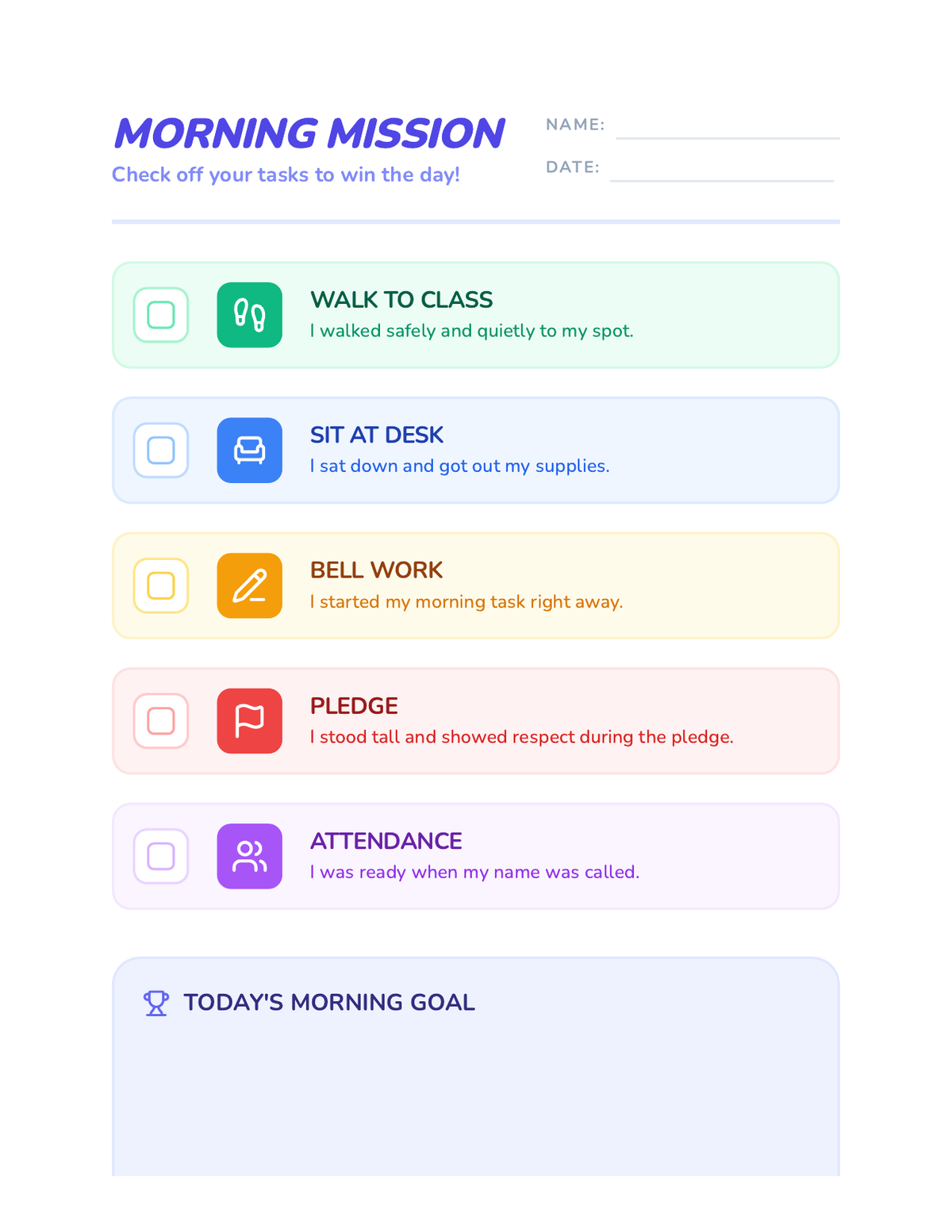
An individual student checklist to help children track their morning routine steps independently.
Large, colorful visual cards for a classroom wall chart showing the morning routine steps: Walk to Class, Sit at Desk, Bell Work, Pledge, and Attendance.
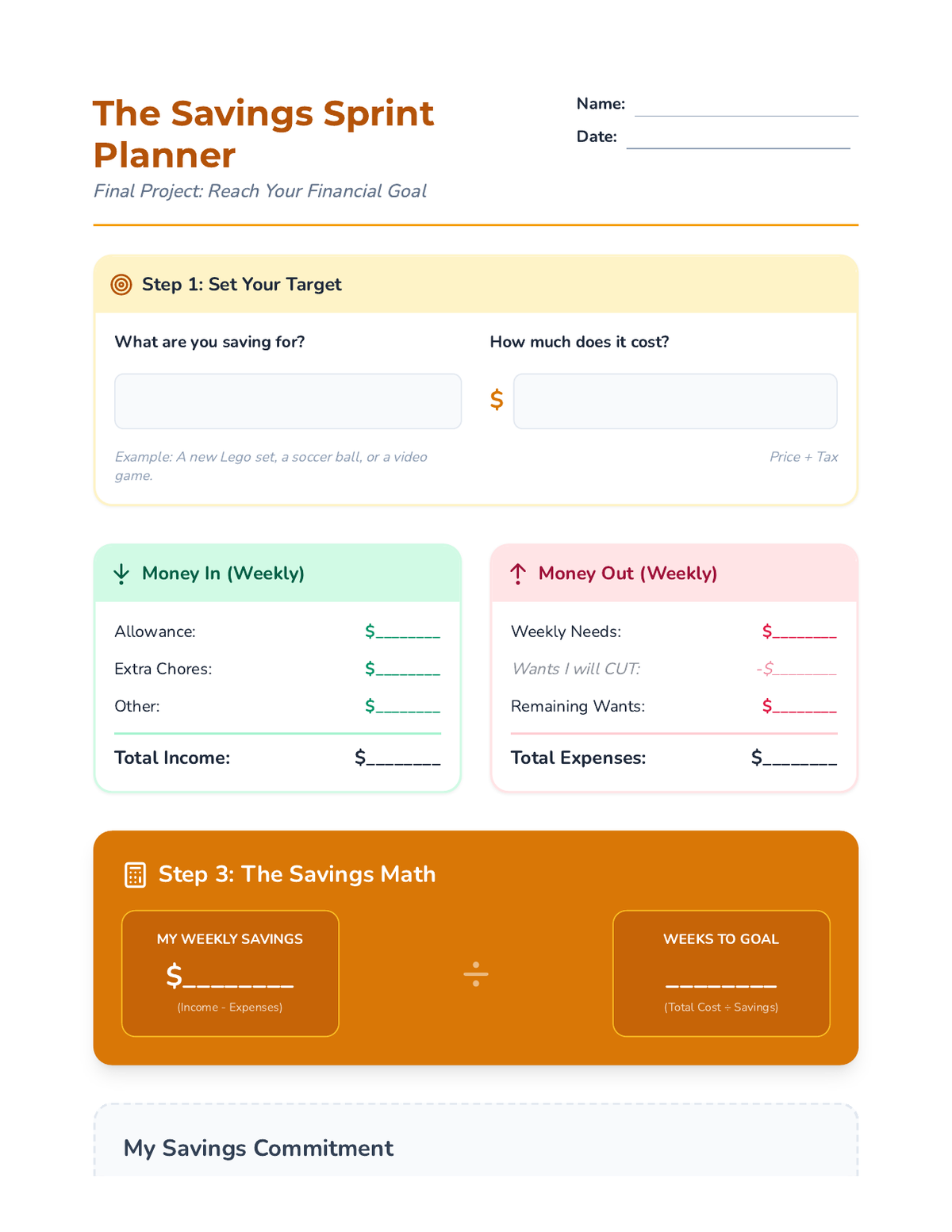
A worksheet for students to plan and track their personal savings goals, calculating weekly savings and time to reach their target.
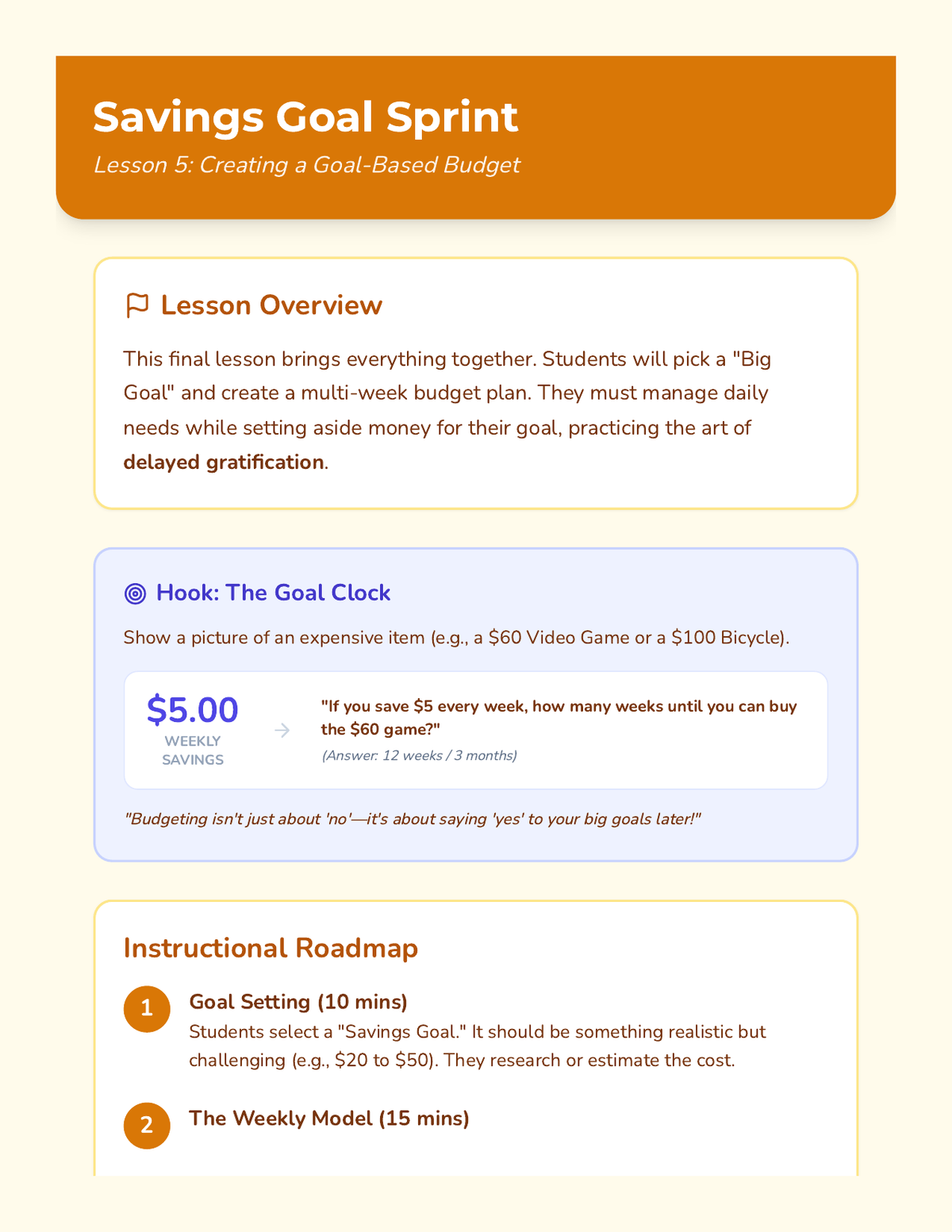
Teacher's guide for Lesson 5, focusing on setting savings goals and creating a long-term budget plan to reach them.
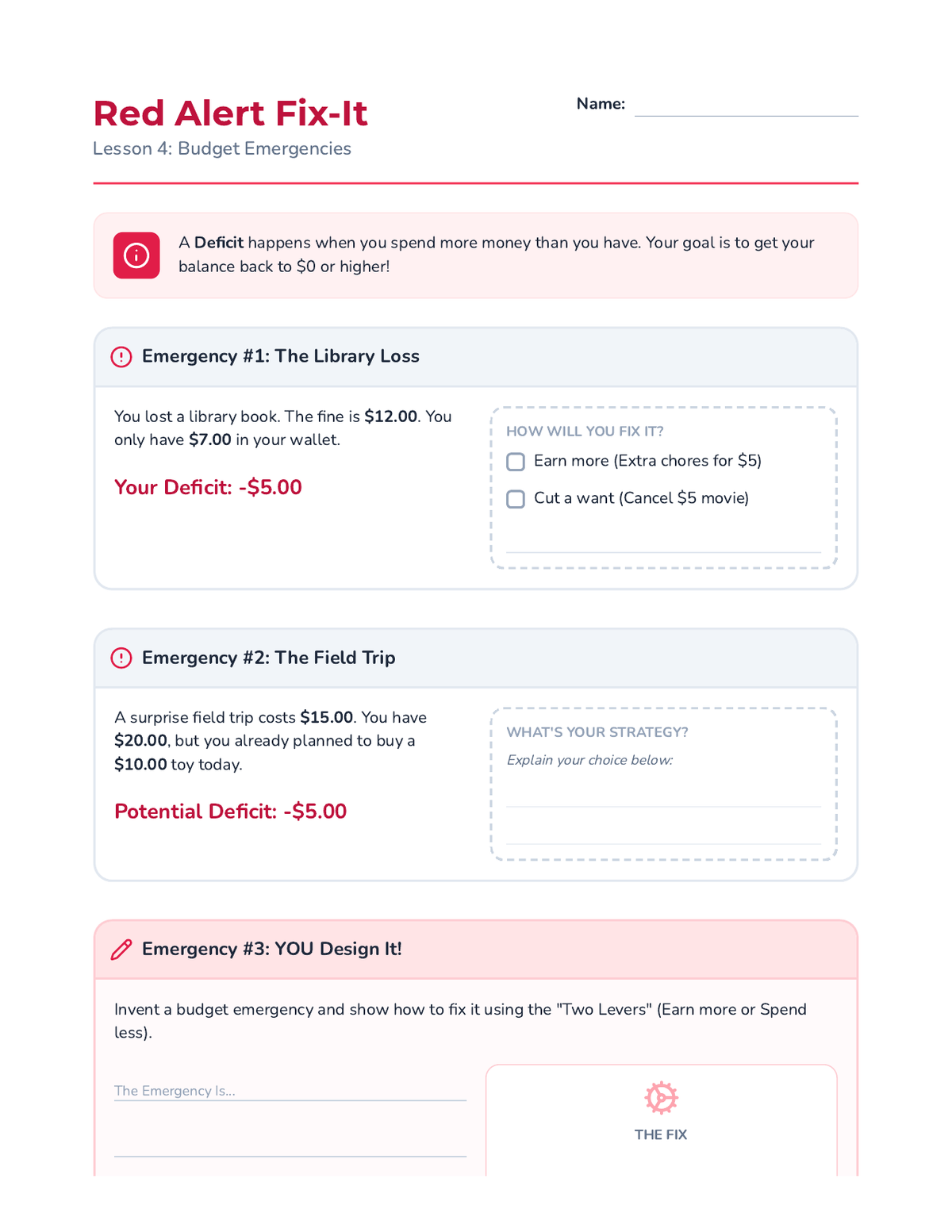
A worksheet where students solve budget deficit scenarios by applying earning or cutting strategies.
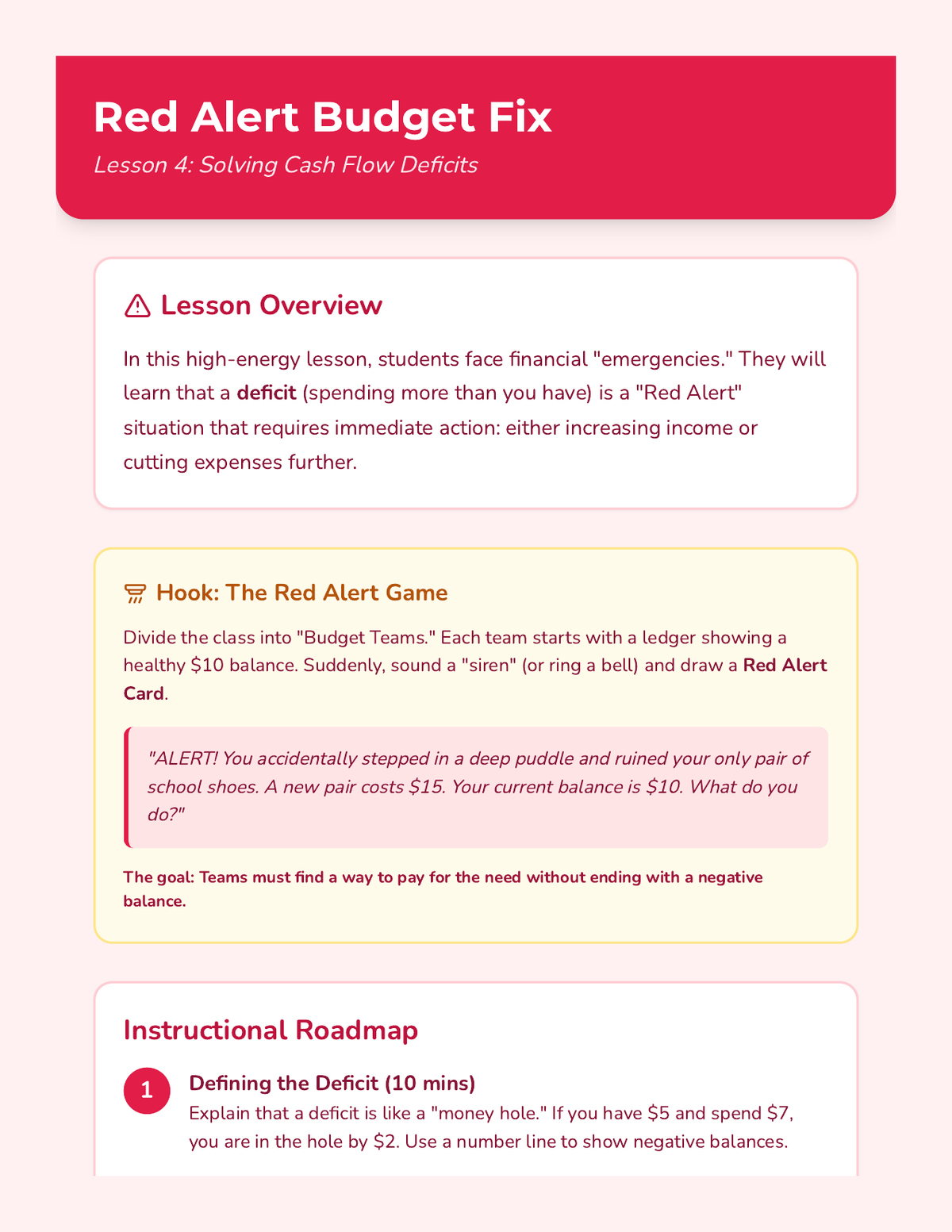
Teacher's guide for Lesson 4, detailing the "Red Alert" game hook and strategies for teaching students how to solve budget deficits.
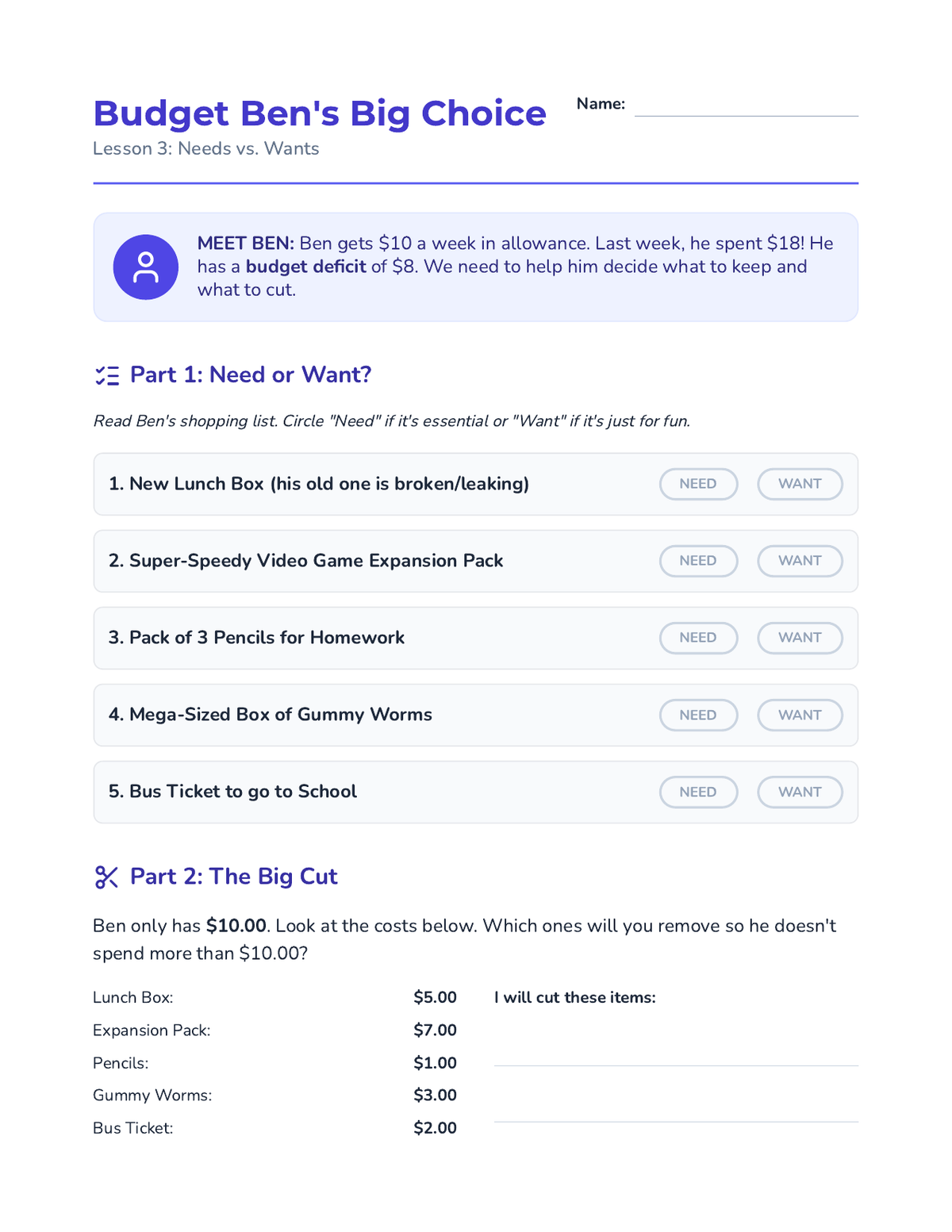
A worksheet for students to practice categorizing expenses as needs or wants and deciding which items to cut from a budget to avoid a deficit.
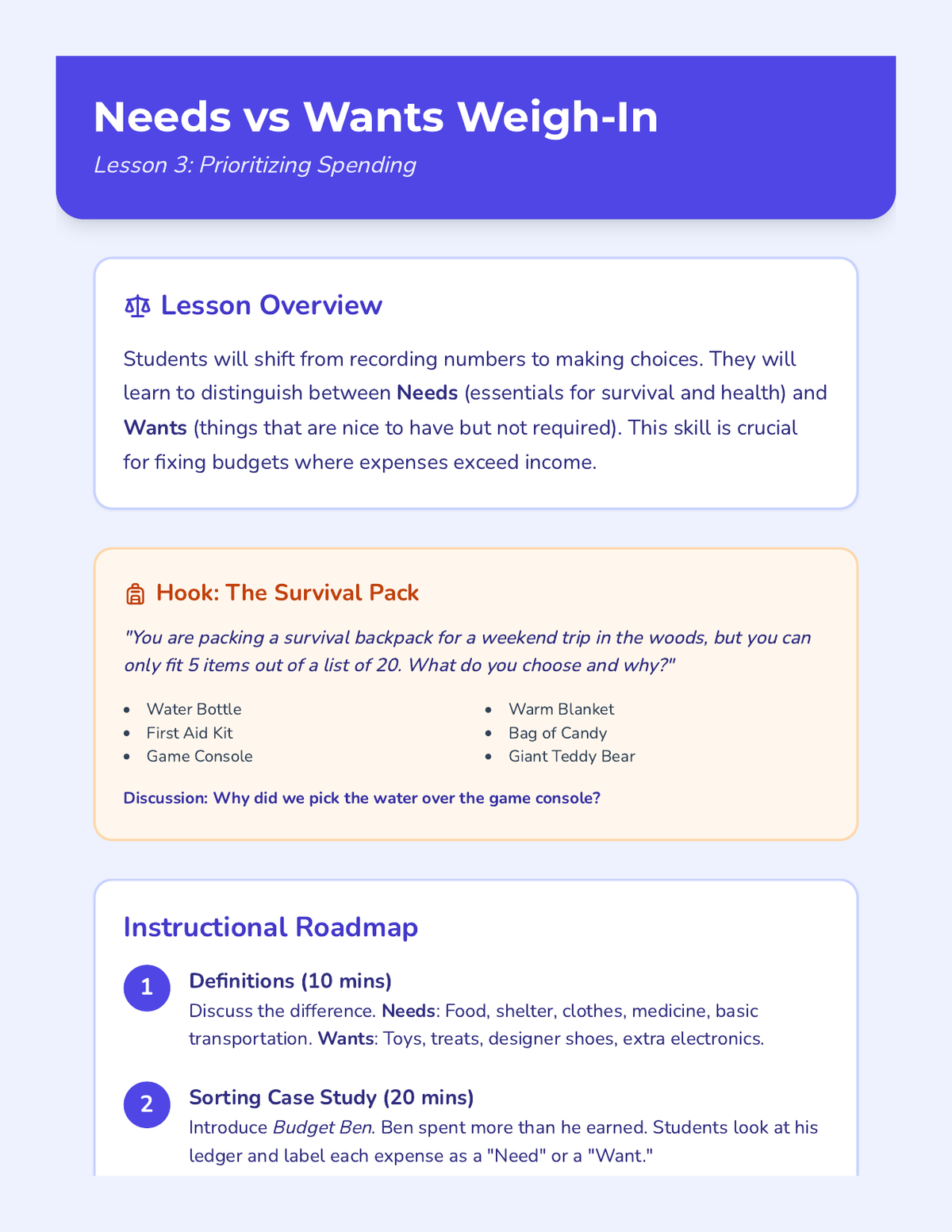
Teacher's guide for Lesson 3, focusing on differentiating needs from wants and strategies for budget prioritization.
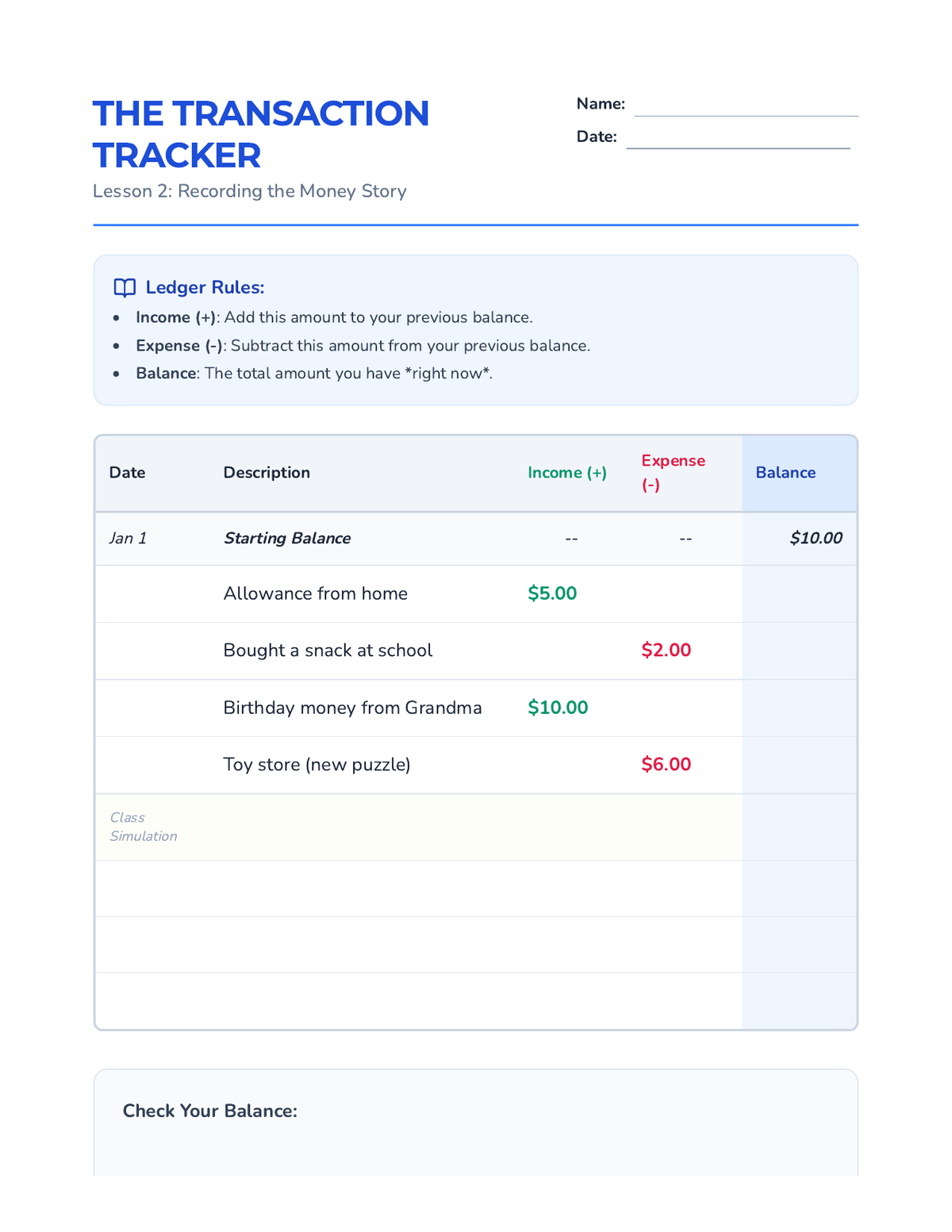
A worksheet for students to practice recording transactions and calculating a running balance in a simplified ledger format.
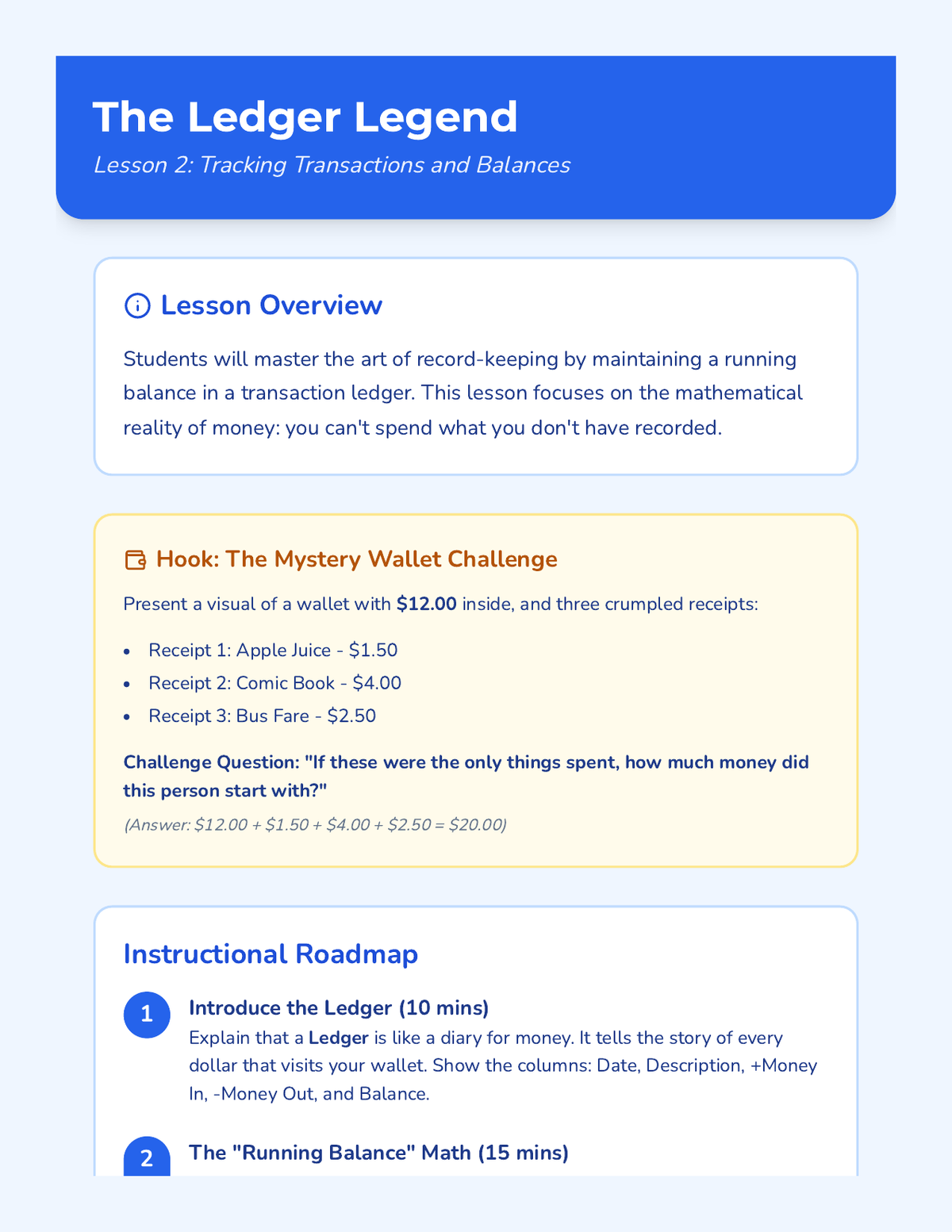
Teacher's guide for Lesson 2, including the Mystery Wallet hook, ledger math instruction, and simulation guidance.
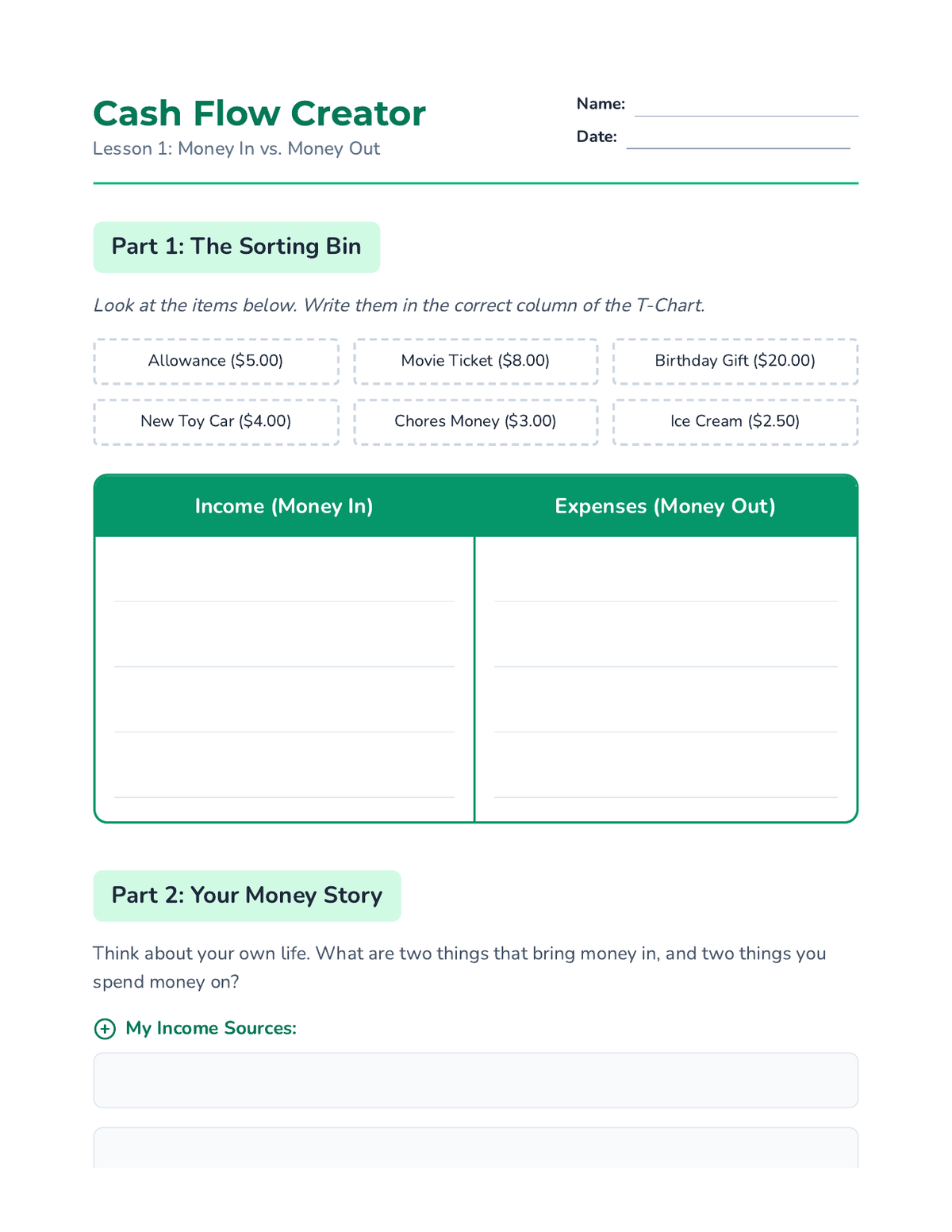
A worksheet for students to categorize income and expenses using a T-chart and brainstorm their own financial scenarios.
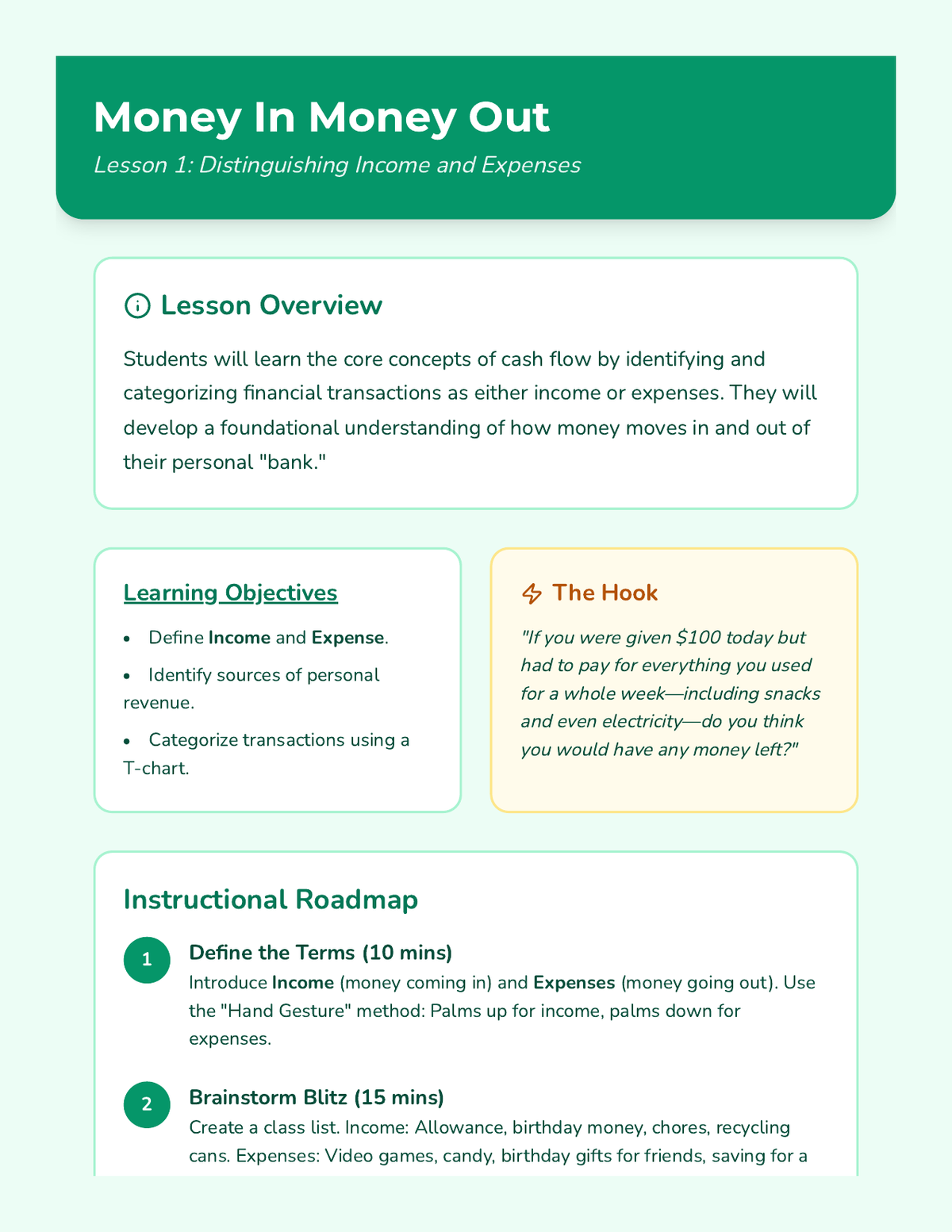
A teacher's guide for Lesson 1, detailing objectives, the "Money In Money Out" hook, instructional steps, and discussion questions.
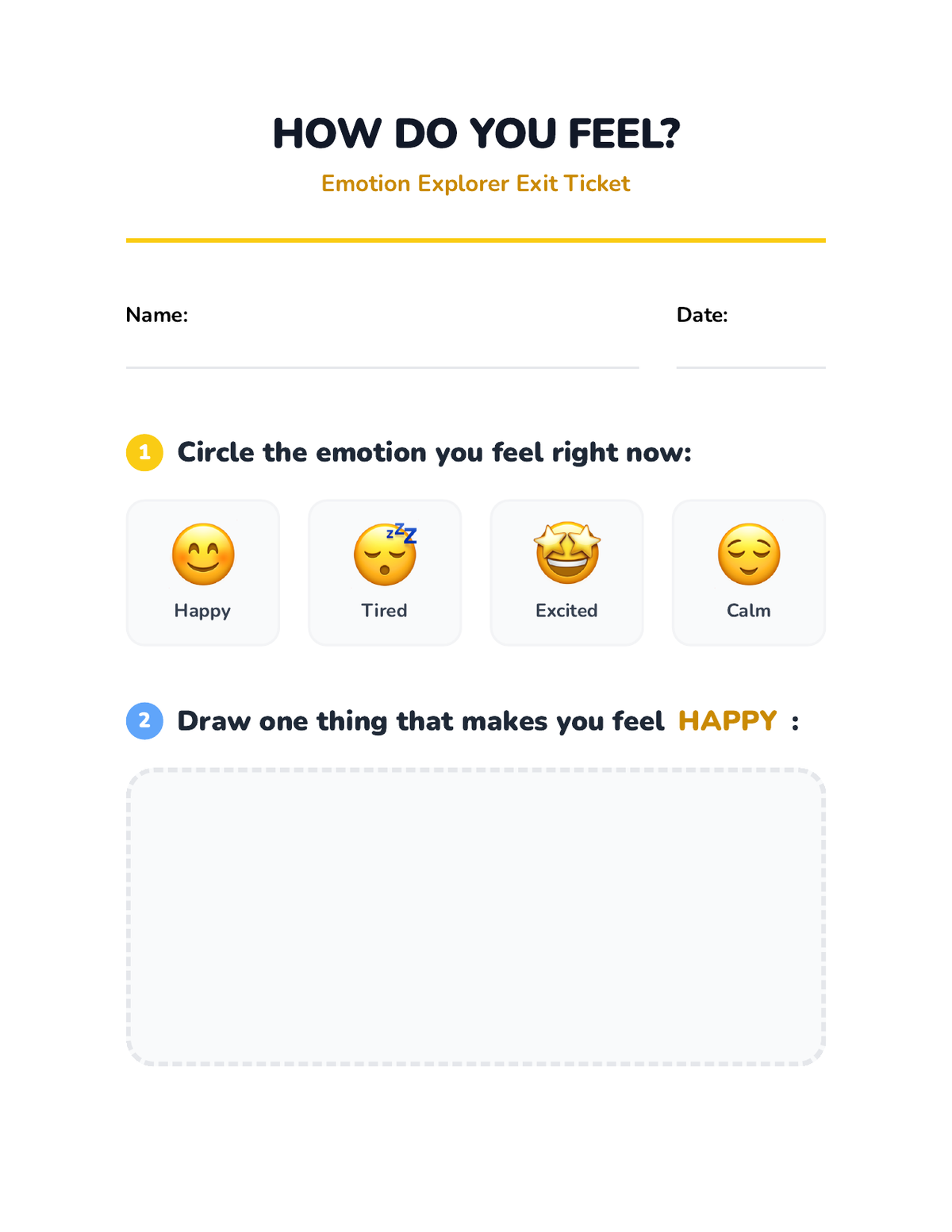
A quick assessment tool for students to reflect on their current emotions and identify things that make them happy.
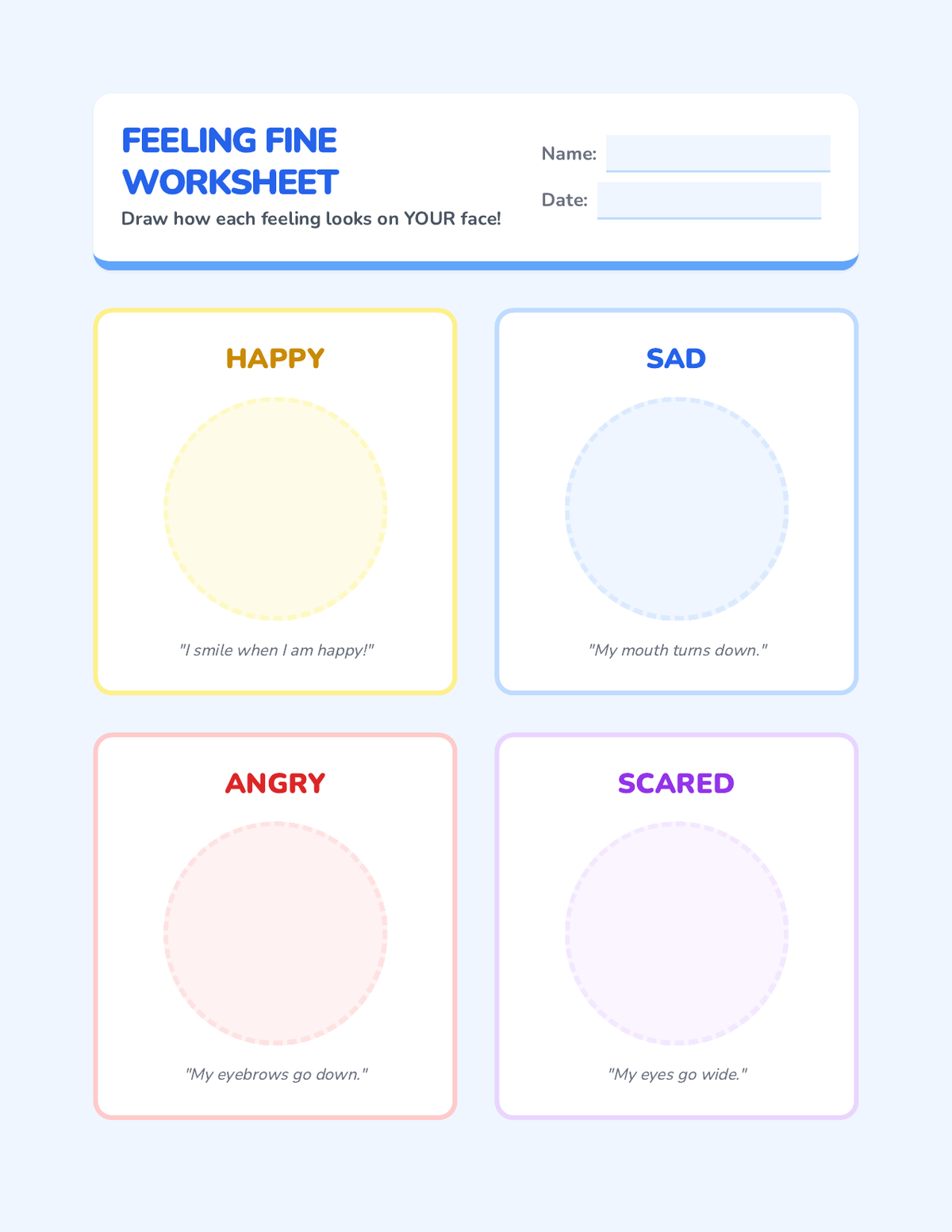
A creative drawing worksheet where students illustrate various emotions on blank face templates and reflect on their favorite feelings.
An engaging slide deck to introduce 12 core emotions, featuring interactive "Emotion Detective" scenarios and clear definitions.
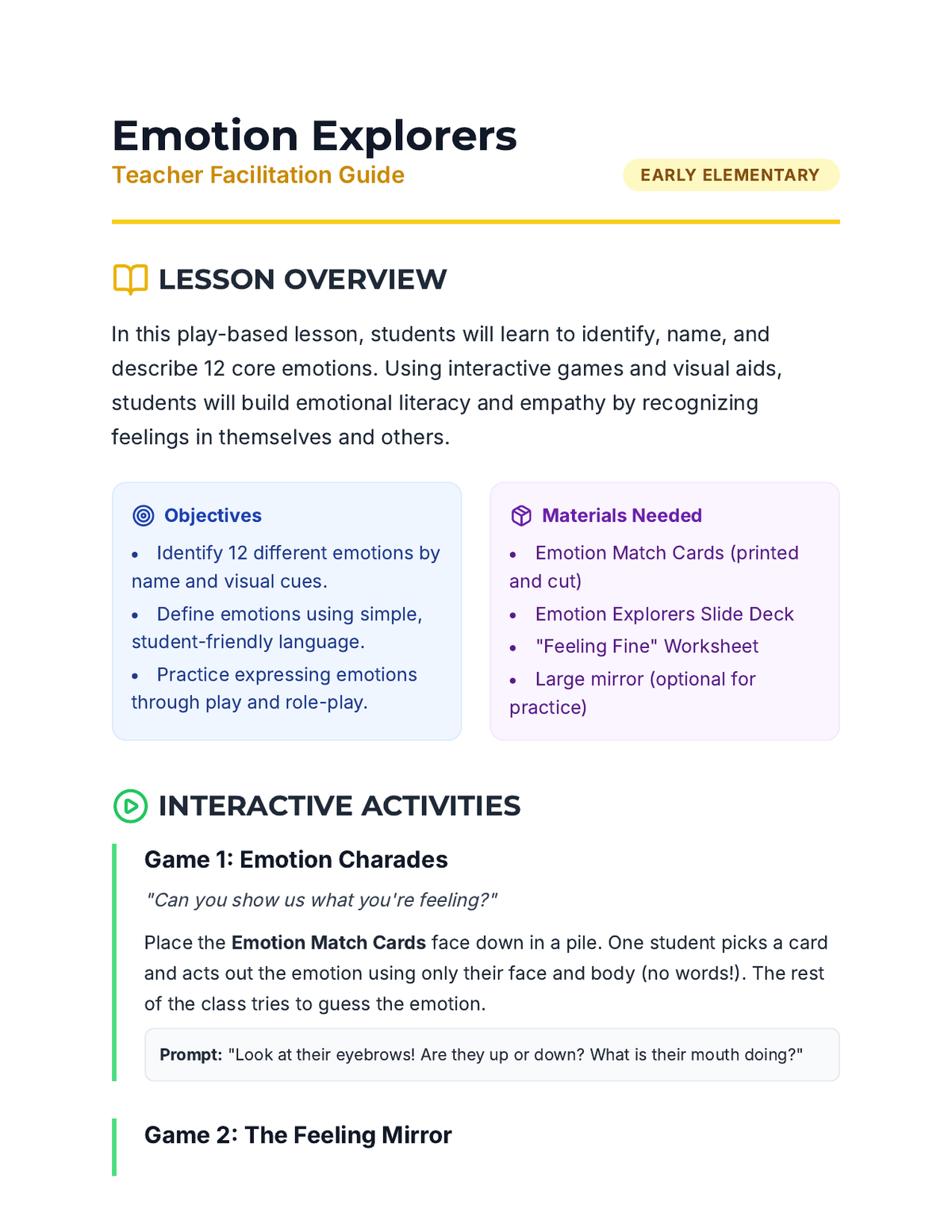
A comprehensive facilitator guide for teachers, including lesson objectives, interactive game instructions, discussion prompts, and a pacing guide.
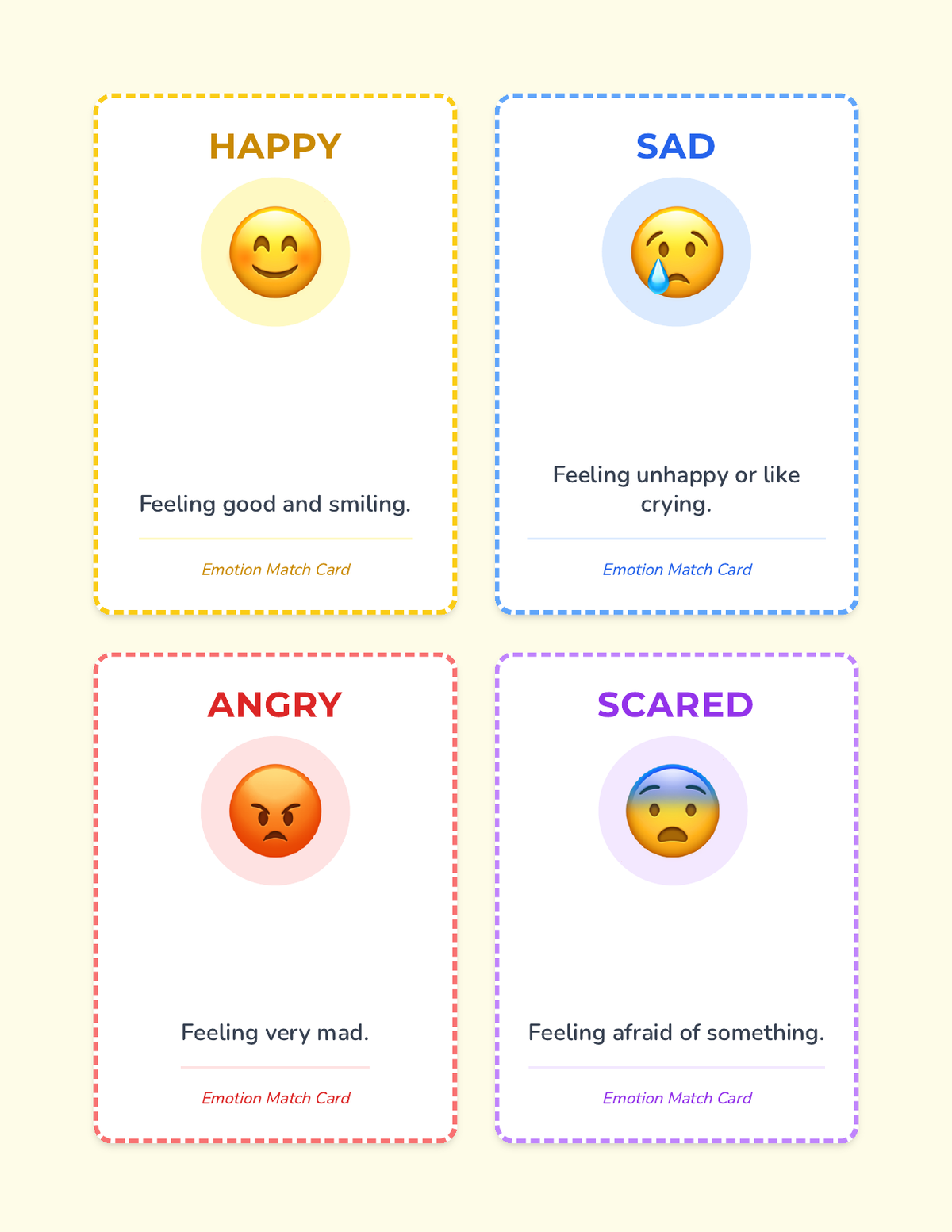
A set of 12 printable emotion cards featuring emojis, labels, and simple definitions to help students identify and understand their feelings.
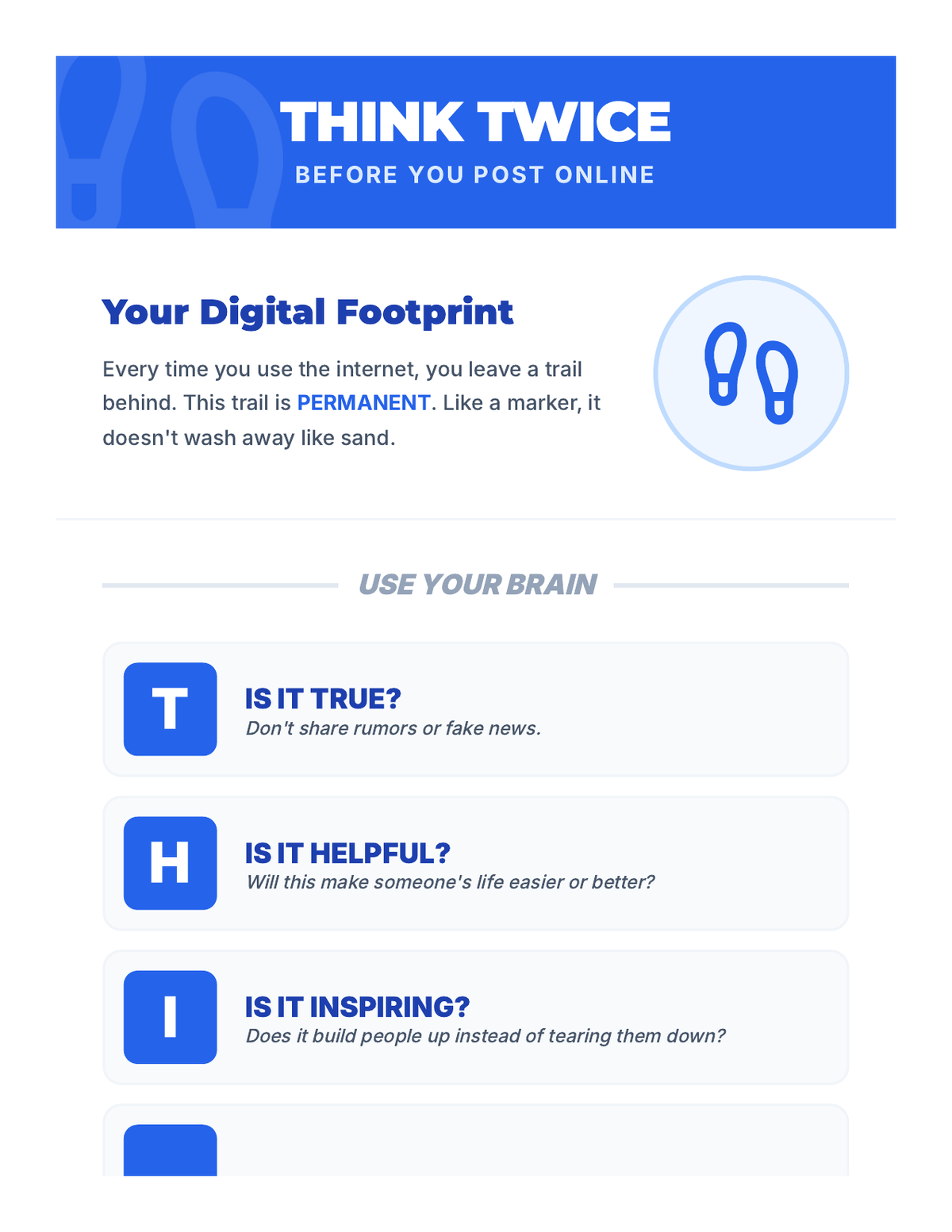
A visually engaging anchor chart for the classroom that explains the 'Digital Footprint' and provides the T.H.I.N.K. acronym for responsible digital citizenship.
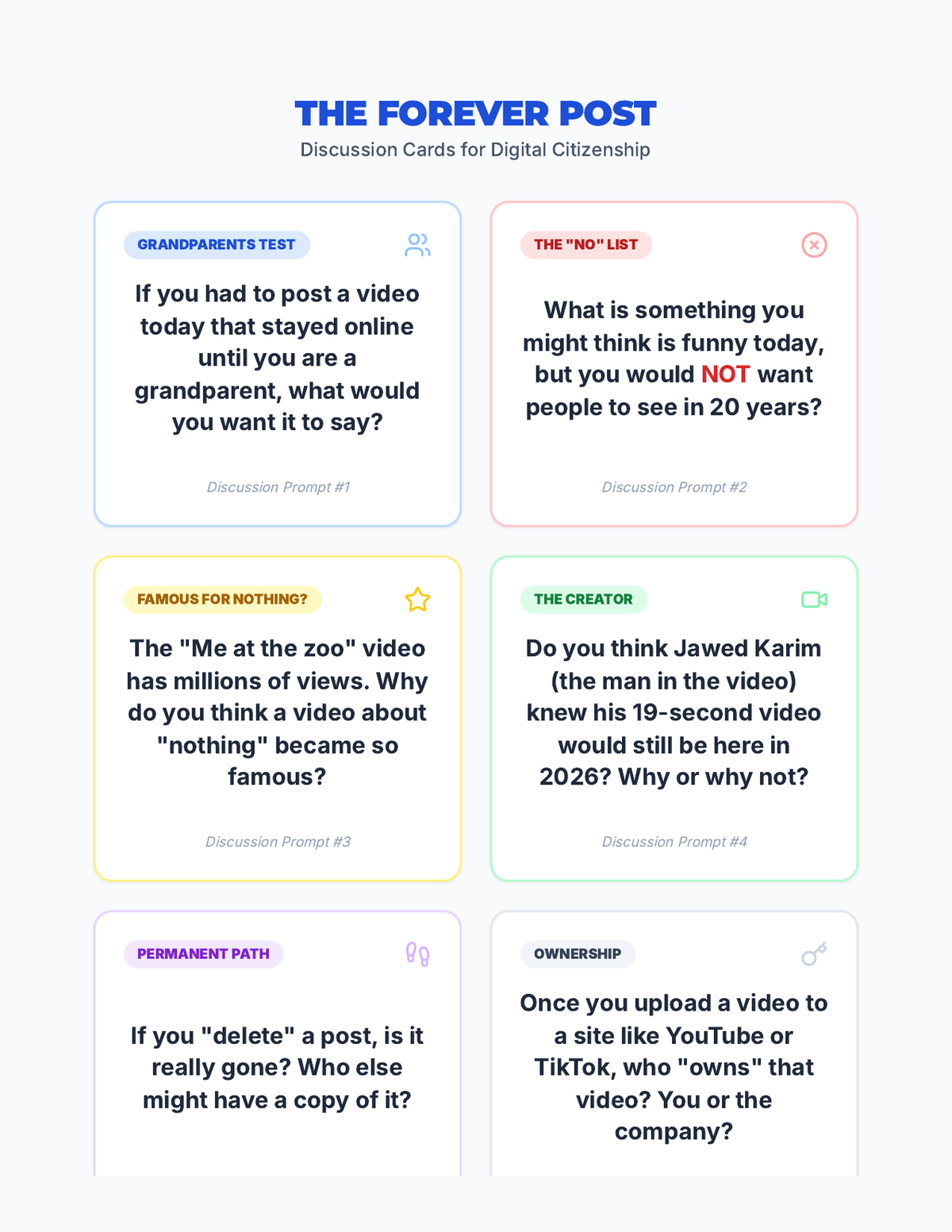
A set of six printable discussion cards featuring prompts about digital footprints, online permanence, and content ownership for use during the 'Forever Post' activity.
A slide deck for students exploring the first YouTube video and the concept of a digital footprint, including embedded video, interactive prompts, and the THINK acronym for digital citizenship.
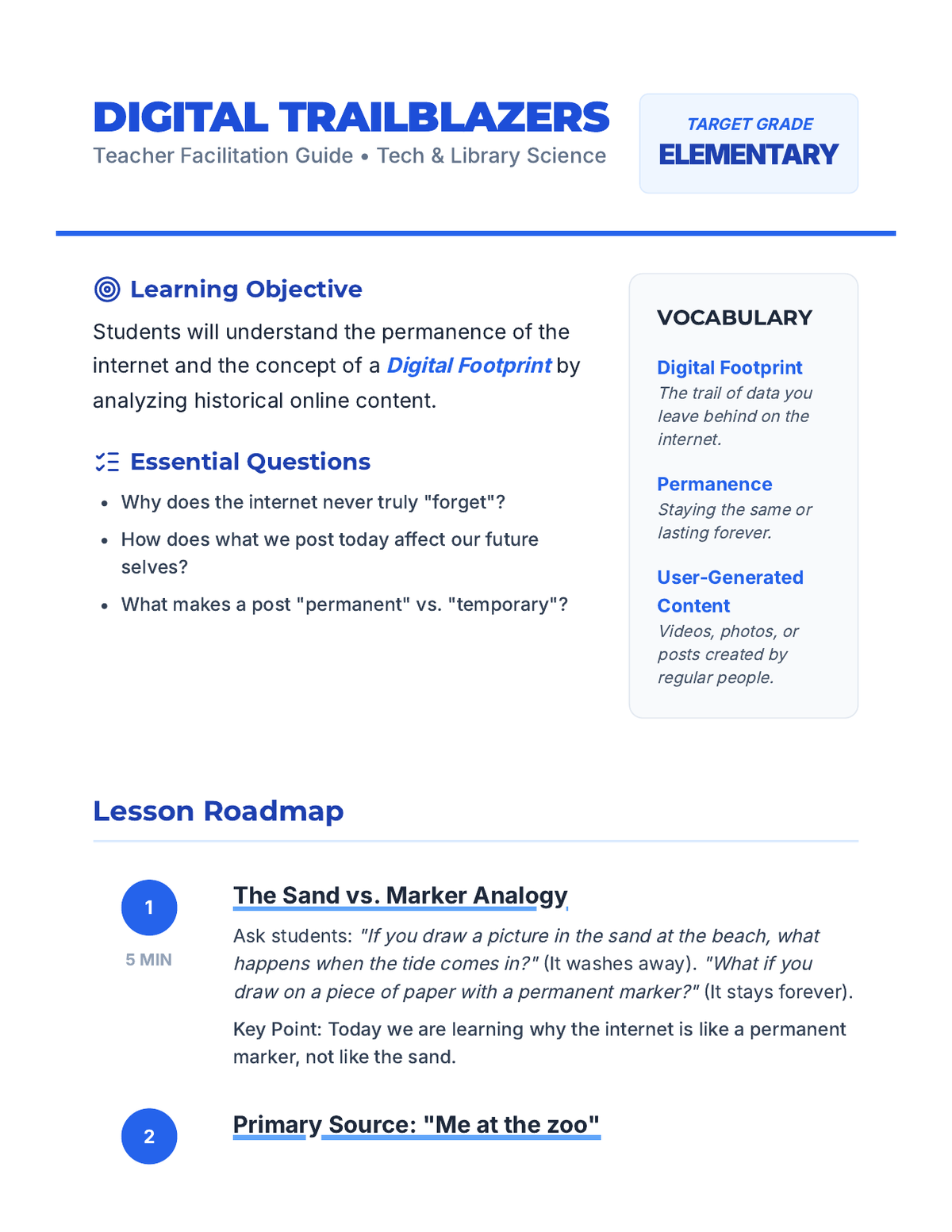
A comprehensive teacher facilitation guide for the Digital Trailblazers lesson, featuring step-by-step instructions, discussion prompts, and vocabulary for elementary students.
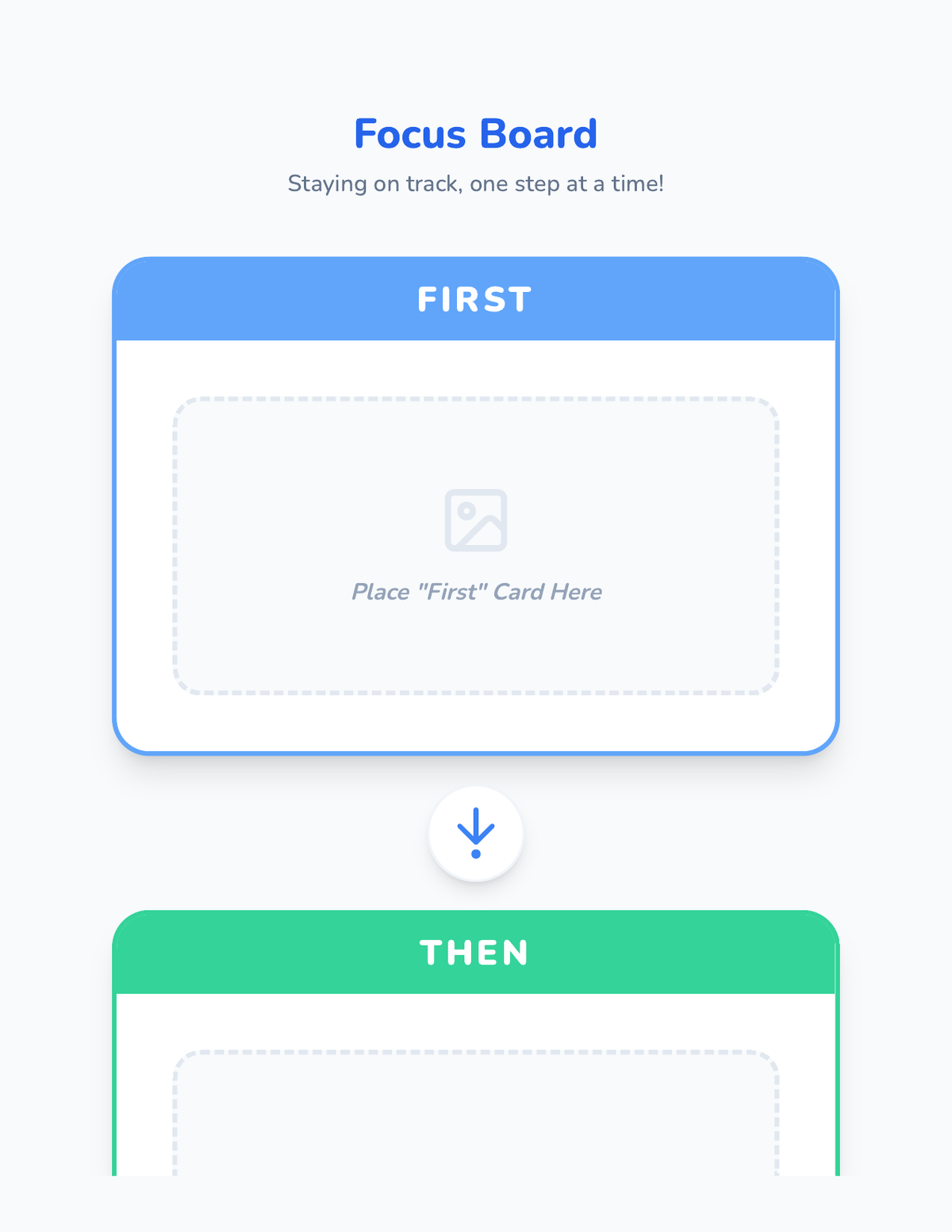
A simplified 'First/Then' board for students who benefit from focusing on two steps at a time.
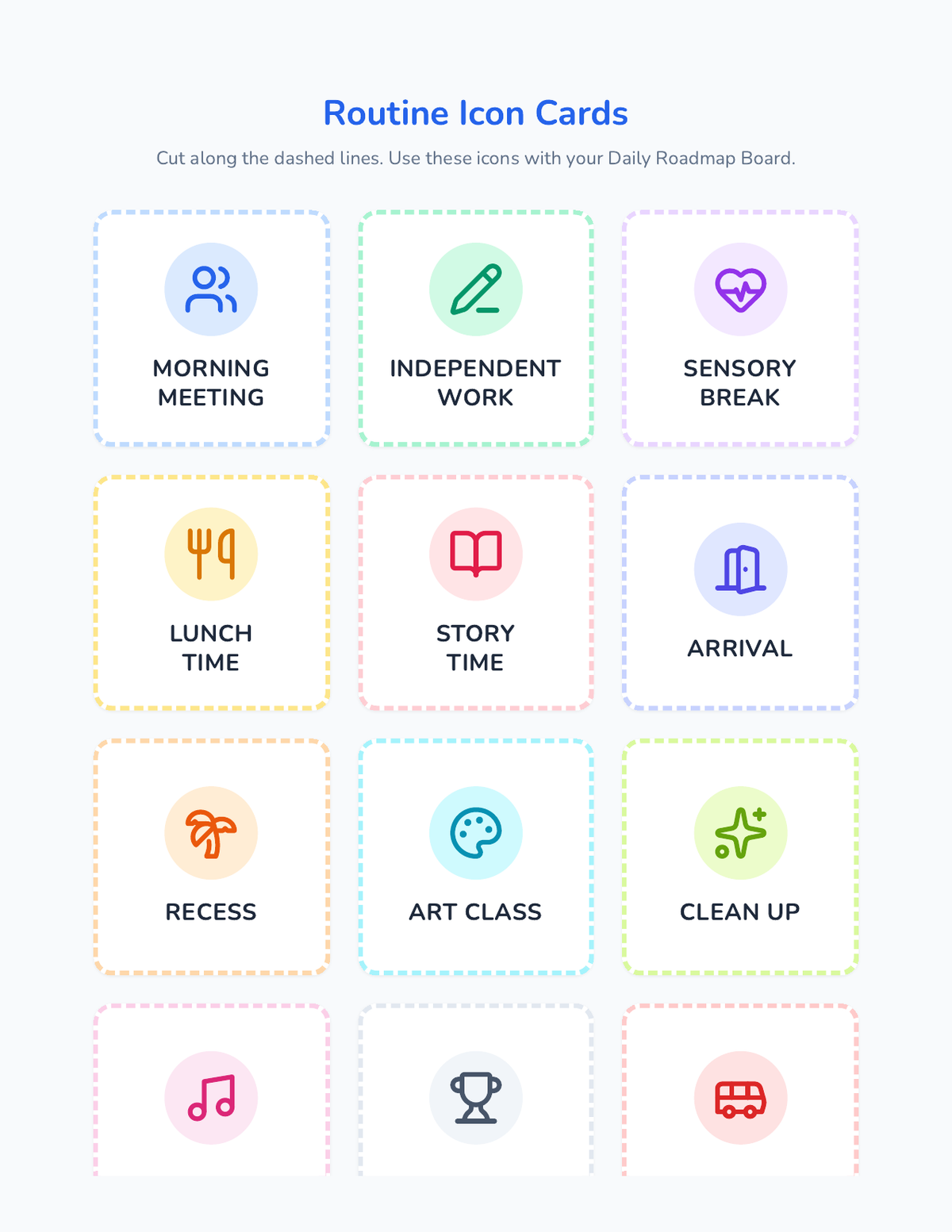
A set of printable routine icons to be used with the Daily Roadmap Board, including requested activities like sensory breaks and morning meetings.
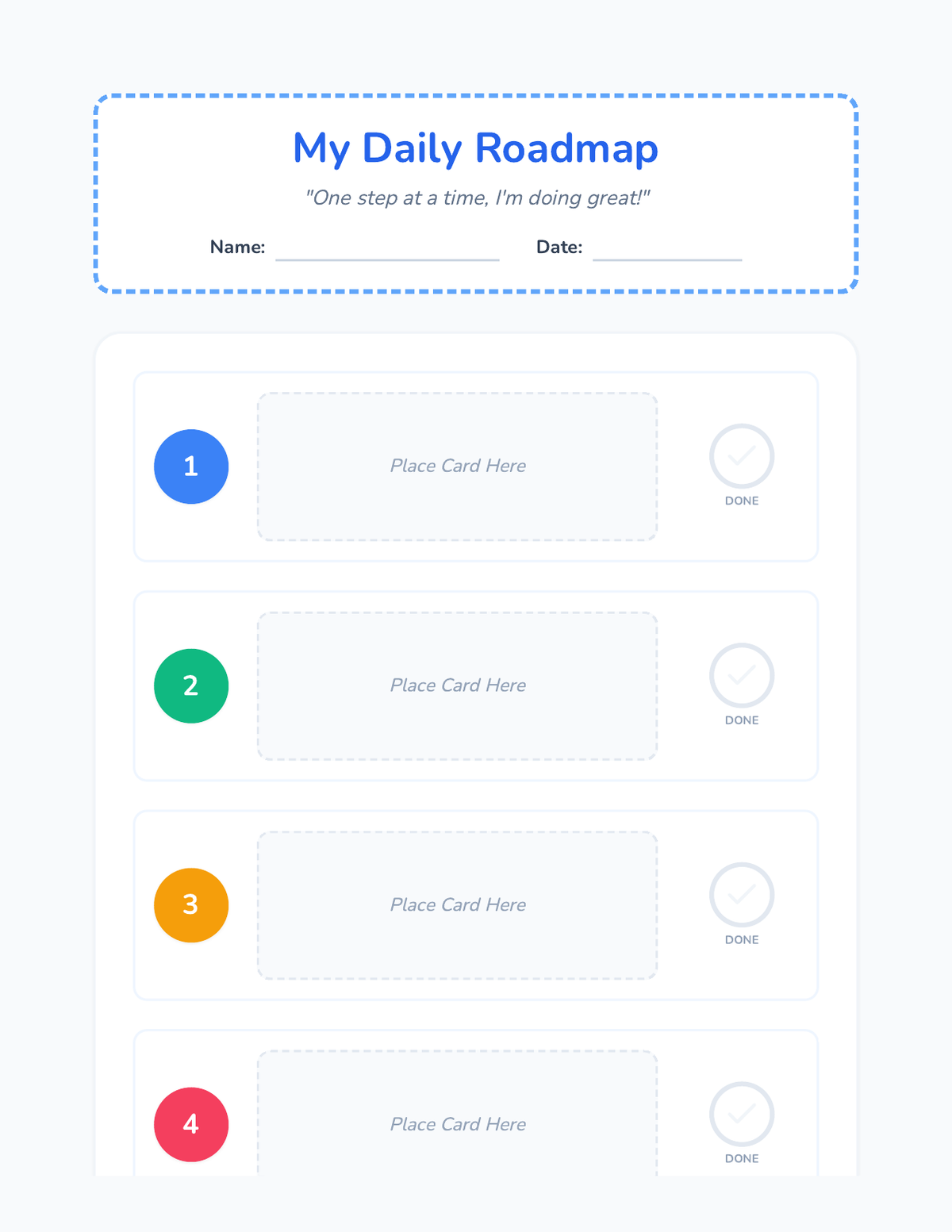
A base schedule board for students to organize their daily routine cards, featuring five numbered slots and check-off circles.
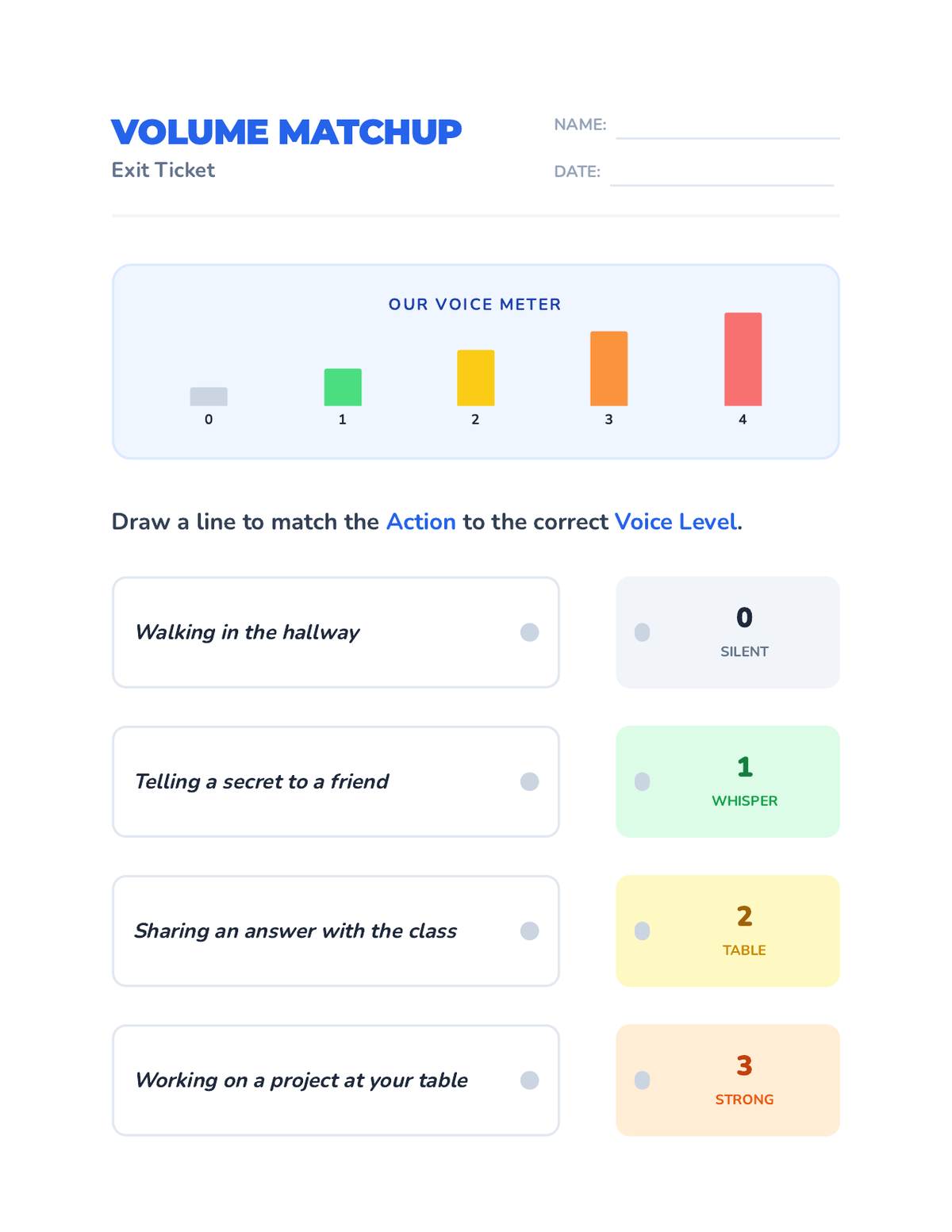
A simple and visual matching exit ticket for 2nd graders to demonstrate their understanding of voice levels 0-3.
A vibrant 10-slide presentation for a morning meeting to teach 2nd graders about five distinct voice levels (0-4) with clear visuals, examples, and discussion prompts.