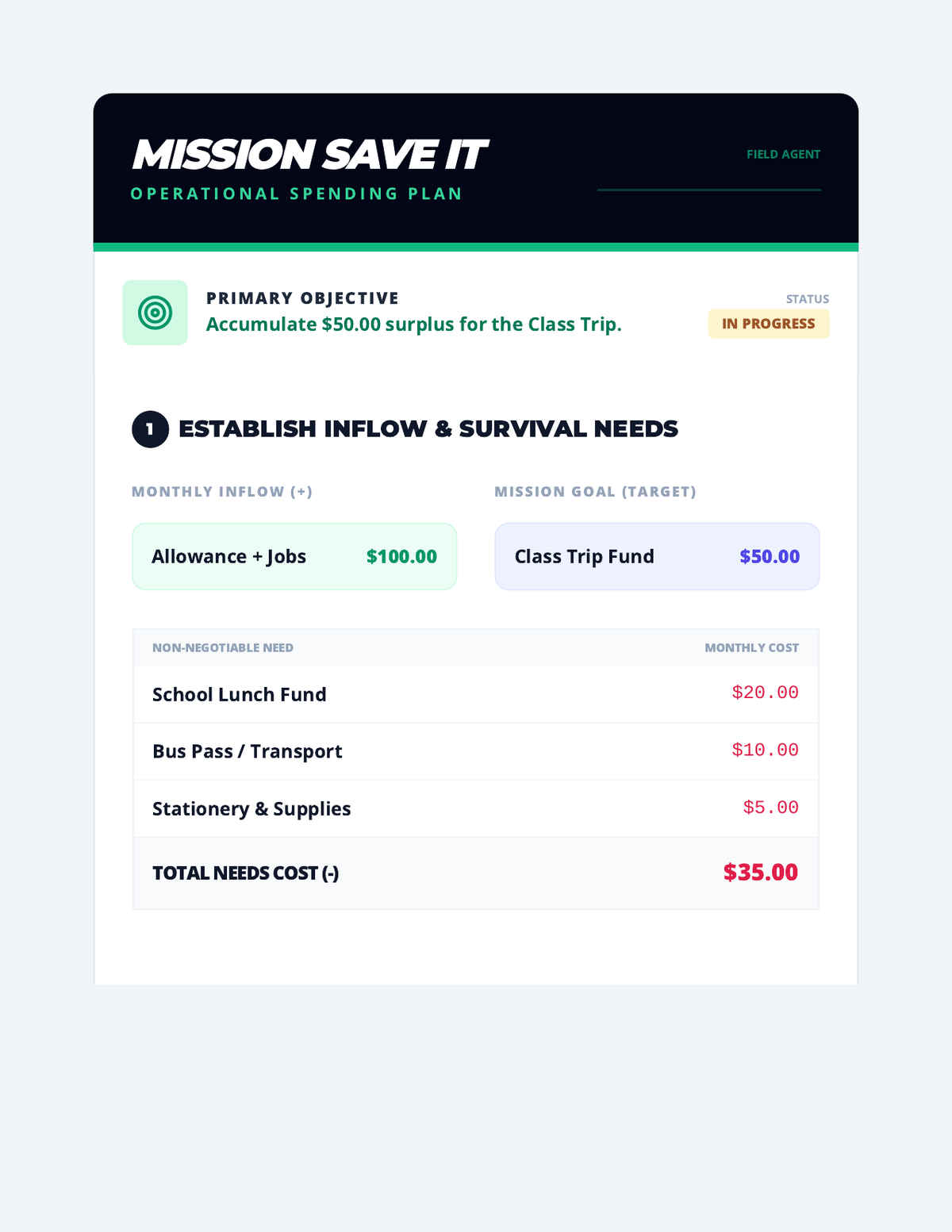
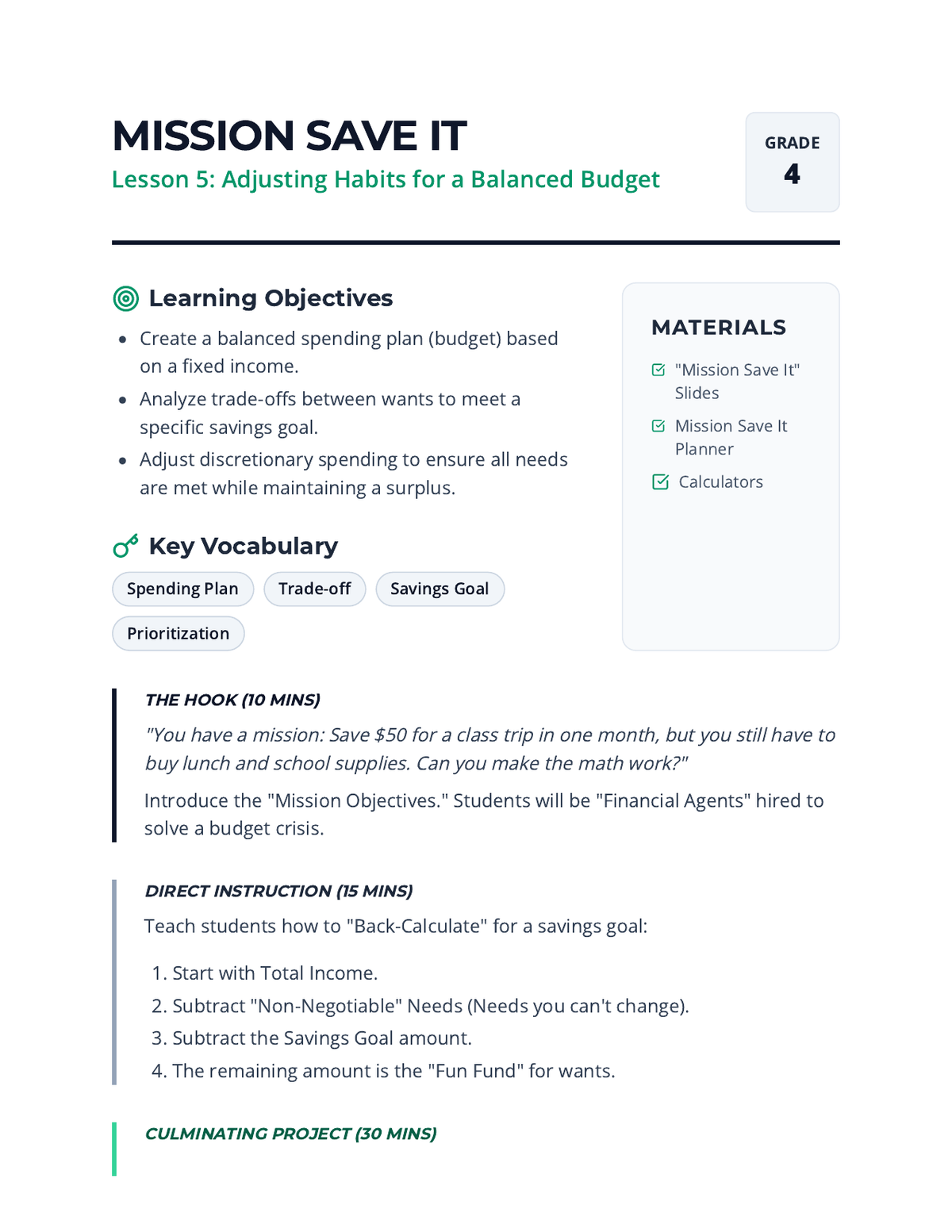
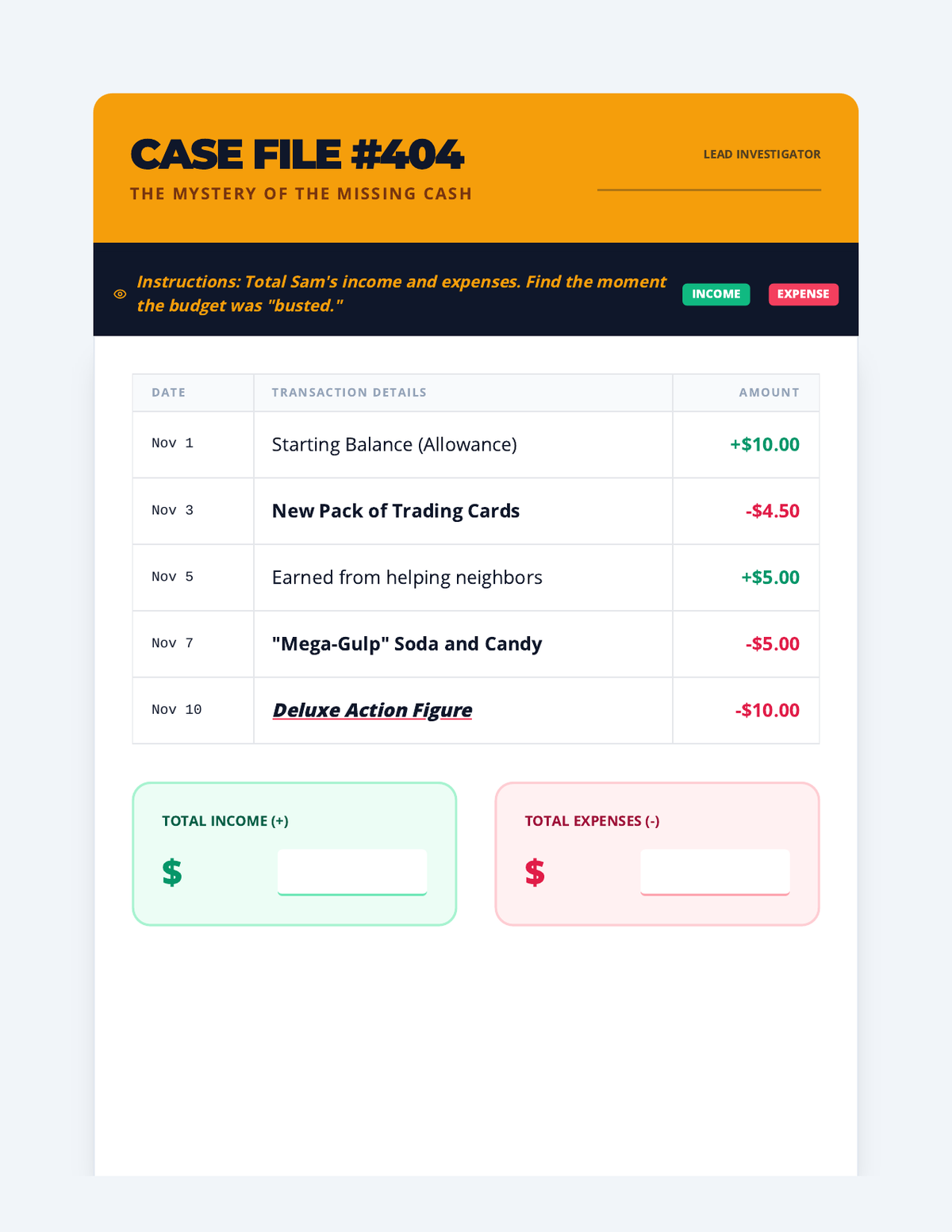
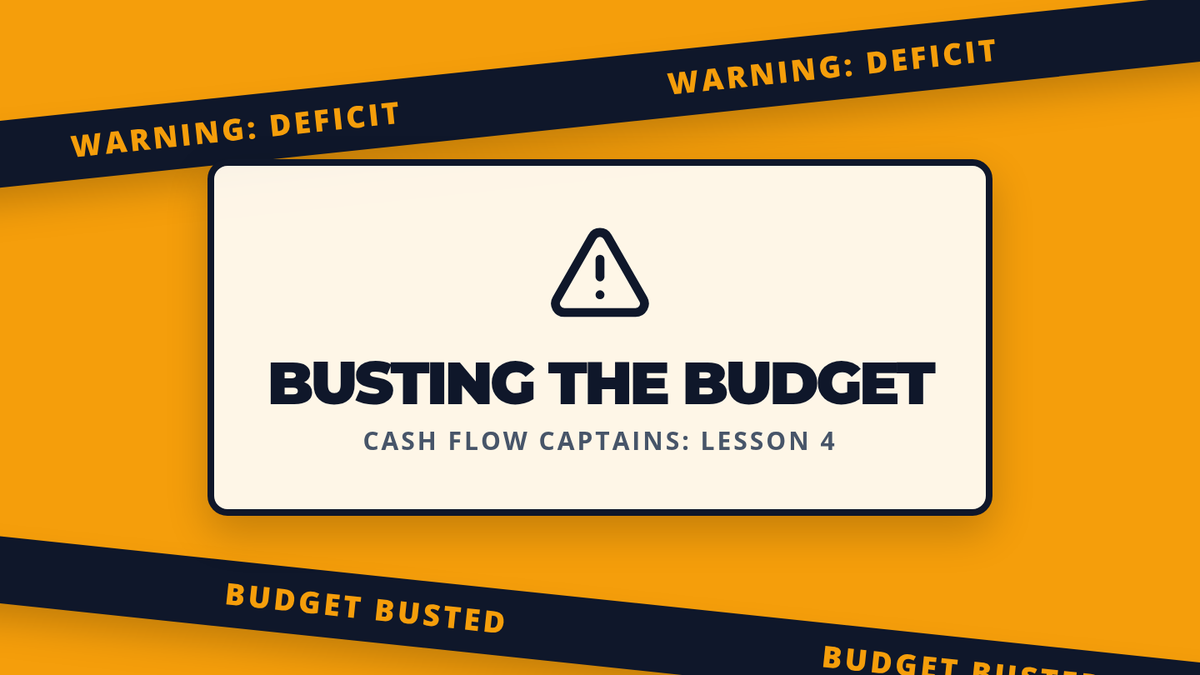
Teacher guide for Lesson 4, detailing instructional steps for teaching budget deficits and identifying 'budget busters'.
Final facilitation guide for Session 6. Provides instructions for synthesizing the 6-week program, helping students select their best tools, and planning for long-term maintenance of skills.
1/13
A visual worksheet for Kindergarteners to identify musical moods by coloring emoji faces and associating colors with sounds.
1/16
Teacher-facing facilitation guide for Session 2. Includes pacing, demonstration instructions for regulation tools, and a trauma-informed tip regarding breathing exercises.
A culminating student worksheet that synthesizes all skills learned throughout the 6-week intervention into a single, comprehensive 'Resilience Toolkit' for future reference.
Slide deck for Lesson 2, introducing the character 'Casey' and setting the stage for the month-long financial simulation.
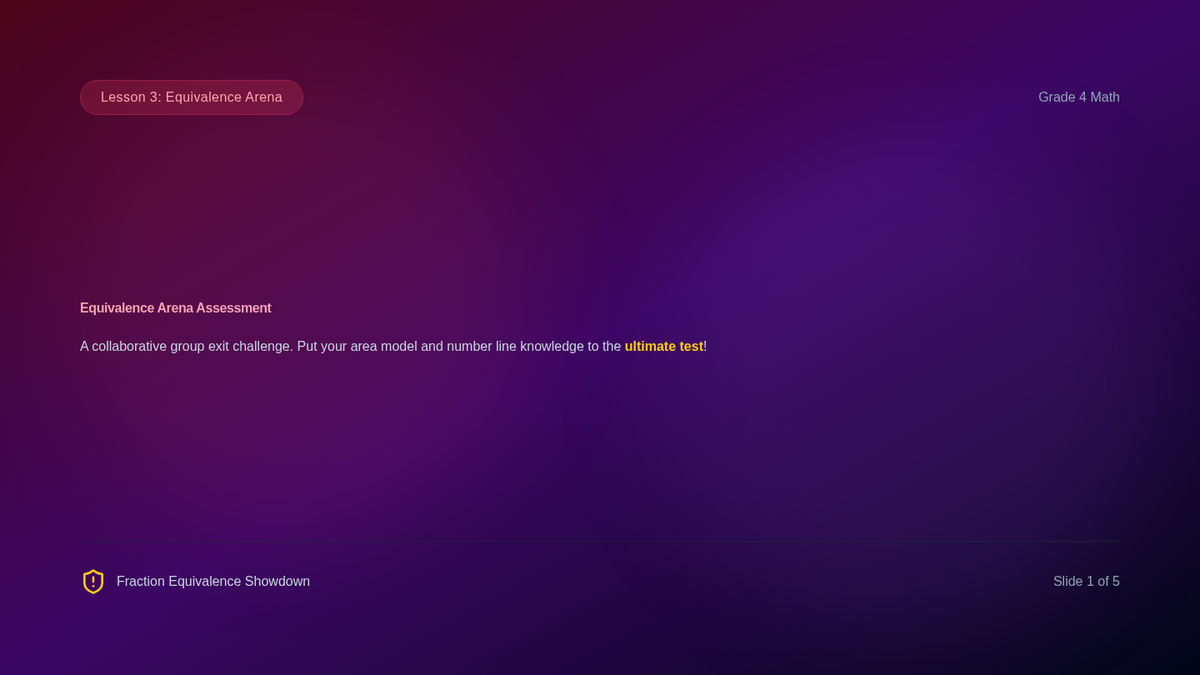
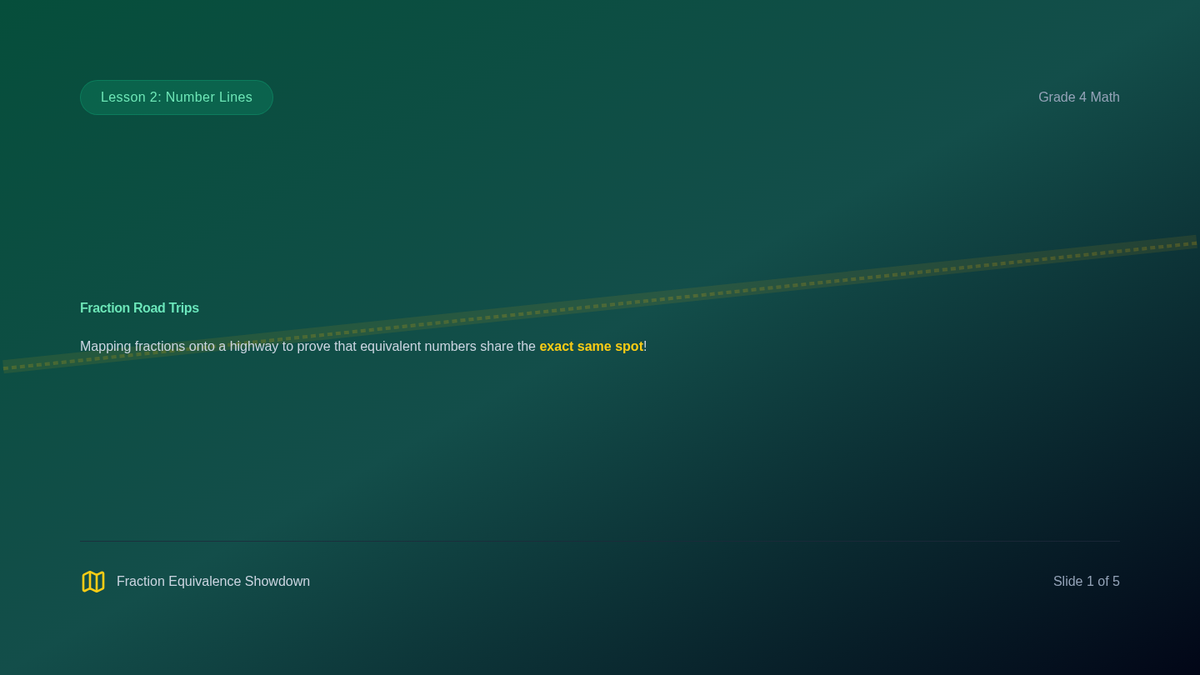
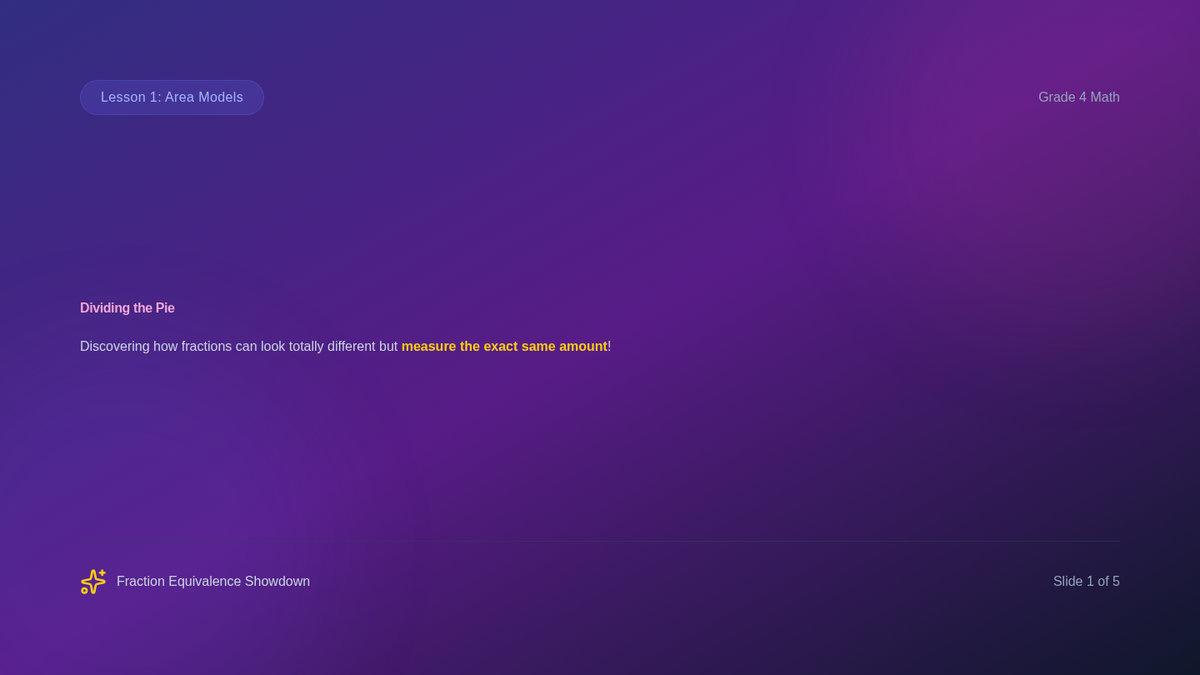
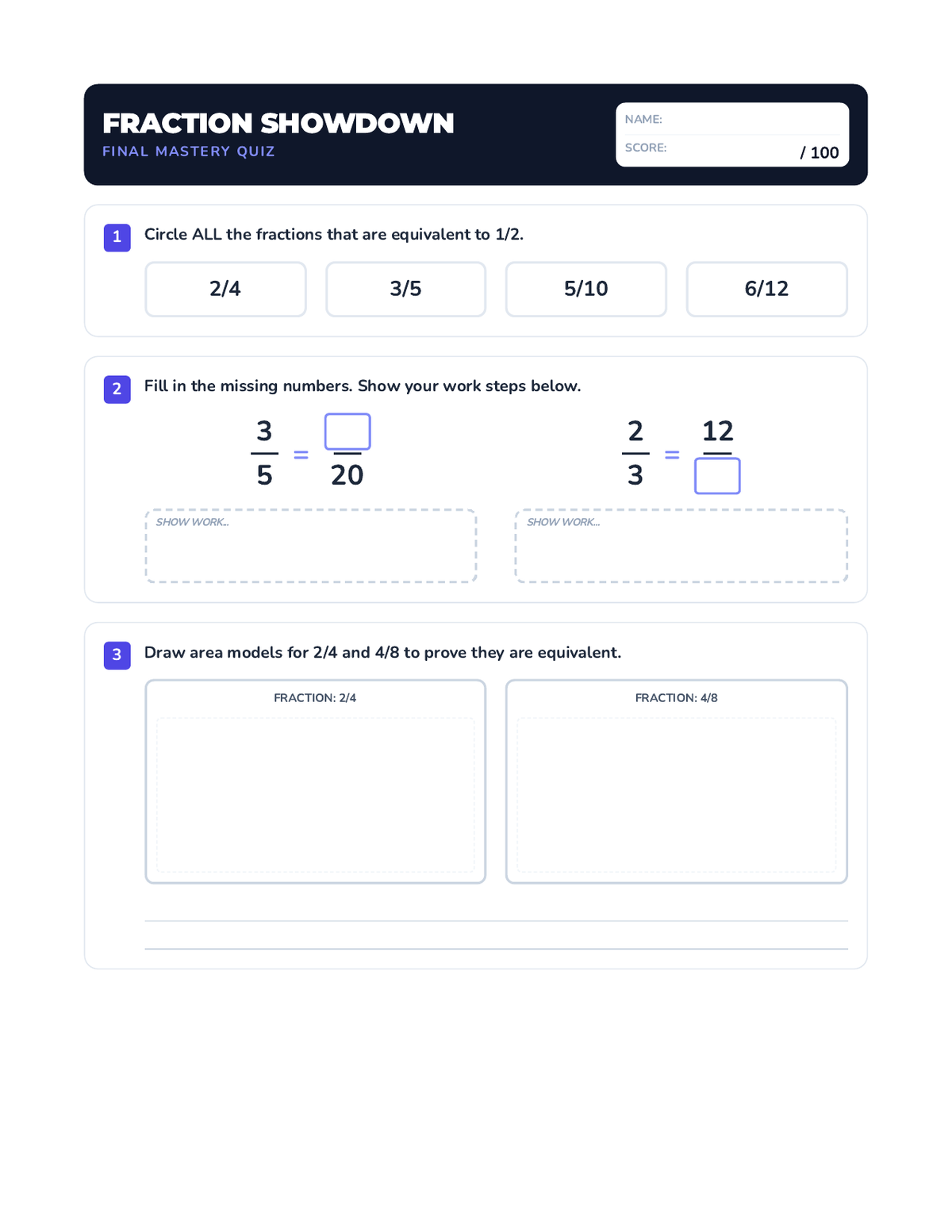
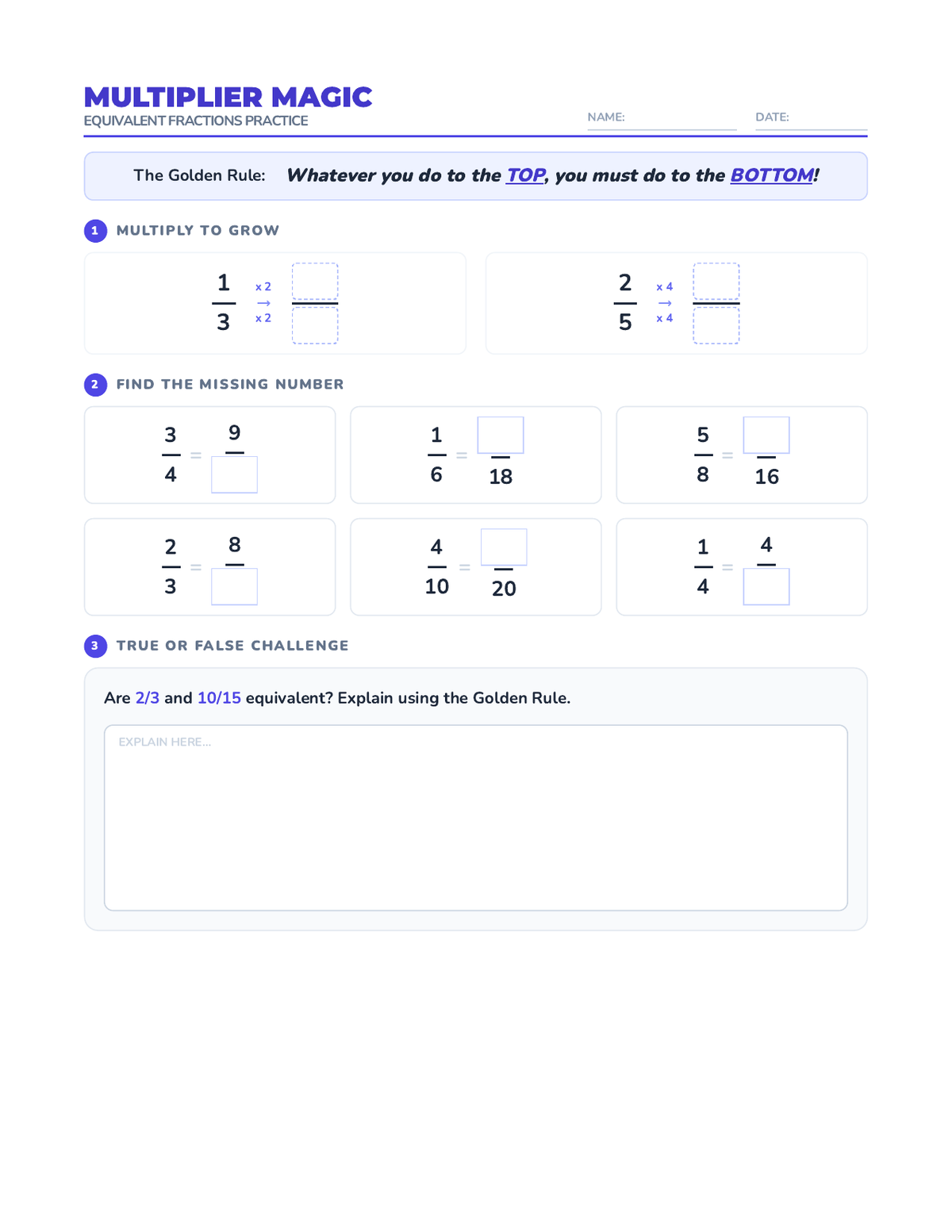
Visual presentation for teaching equivalent fractions using area models and the multiplication rule.
Teacher-facing facilitation guide for Session 3. Focuses on teaching TIPP skills for crisis regulation and helping students identify environmental supports (like cold water access) within the school.
Visual presentation for Session 3, focusing on distress tolerance techniques for high-intensity situations using the TIPP skills framework.
Visual presentation for Session 4, exploring the connection between thoughts, feelings, and actions, and teaching the 'Catch-Check-Change' reframing technique.
Instructional slides for Lesson 3 covering time management, opportunity cost, and the "Big Rocks" theory of prioritization.
A base schedule board for students to organize their daily routine cards, featuring five numbered slots and check-off circles.
Slide deck for Lesson 5, focusing on identifying spending habits, understanding 'spending leaks', and establishing future 'Rules of Thumb' for financial success.
A student reference and practice sheet for Session 2. It provides clear, visual instructions for Square Breathing and 5-4-3-2-1 Grounding, along with a simple 'regulation plan' for students to complete.
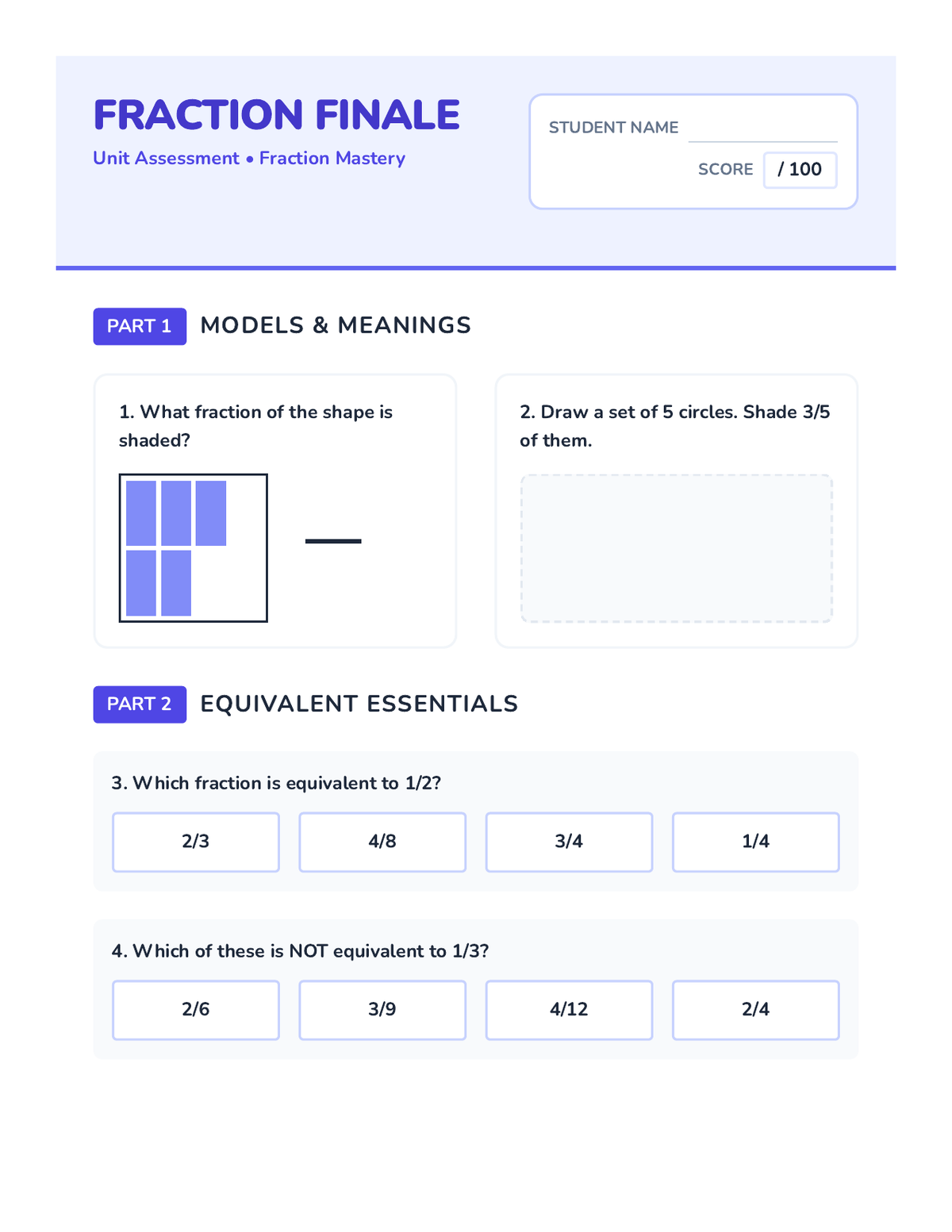
Introductory worksheet for fractions including shading area models, identifying points on number lines, and solving a simple word problem.
A student planning sheet for Session 3. It introduces the TIPP skills (Temperature, Intense Exercise, Paced Breathing, Paired Muscle Relaxation) and helps students create a personalized 'Emergency Brake' plan for high-intensity emotional moments.
Teacher script for Lesson 2 simulation, providing specific financial scenarios for Weeks 1 and 2 including income, mandatory expenses, and decision points.
Introductory slides for the second lesson, teaching students the mechanical skill of logging transactions in a ledger and calculating a running balance.
A teacher-facing guide for Session 1, including learning objectives, a detailed pacing guide, and facilitation tips specifically for Tier 3 mental health interventions.
Introductory slide deck for Session 1, establishing the 'Inner Compass' theme. It explains the purpose of the intervention and teaches students how to recognize physiological signals of emotions using the 'Emotions as Data' framework.
Cumulative multiple-choice assessment for 4th graders covering fraction vocabulary, unit fractions, and model identification.