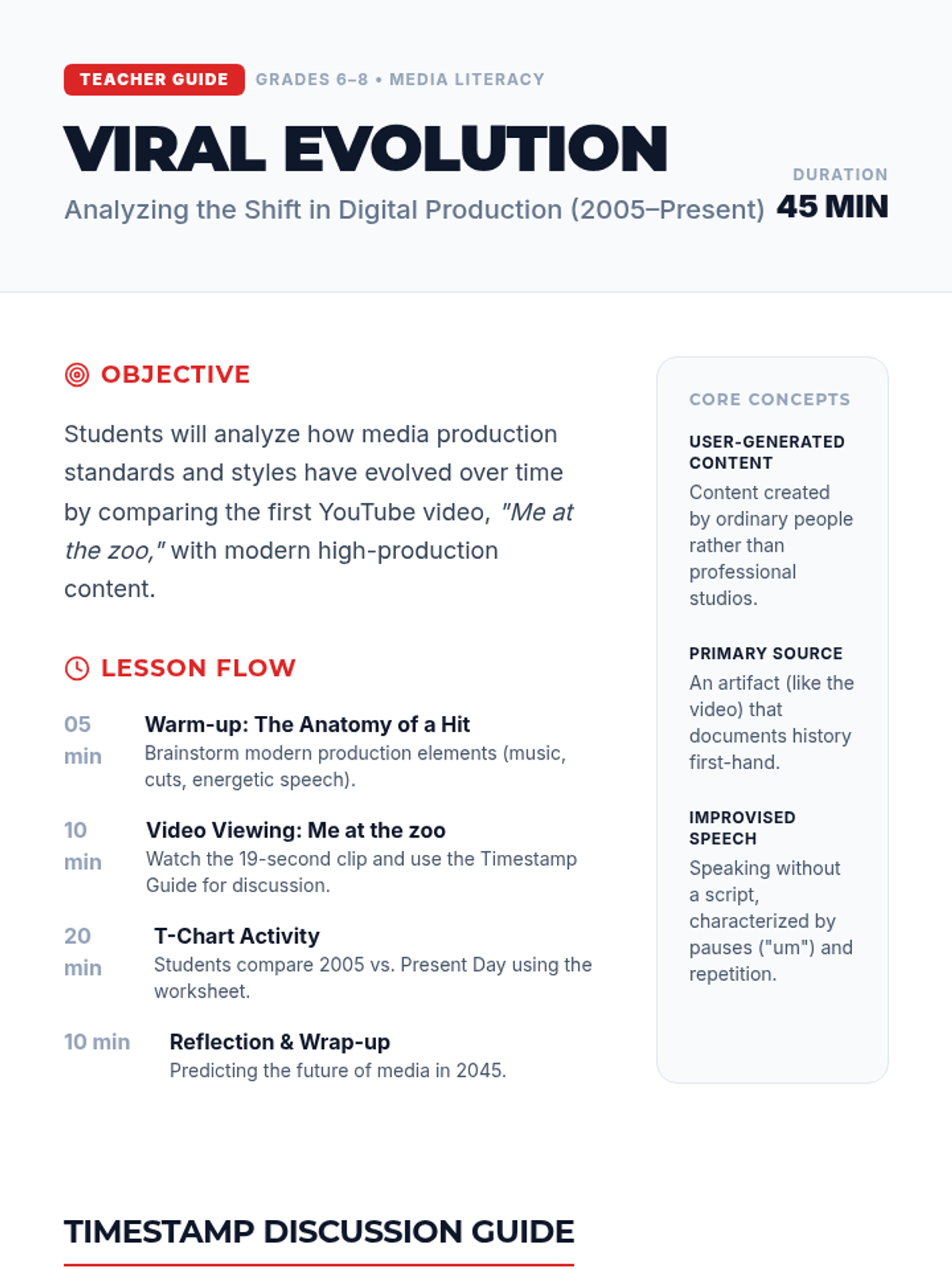
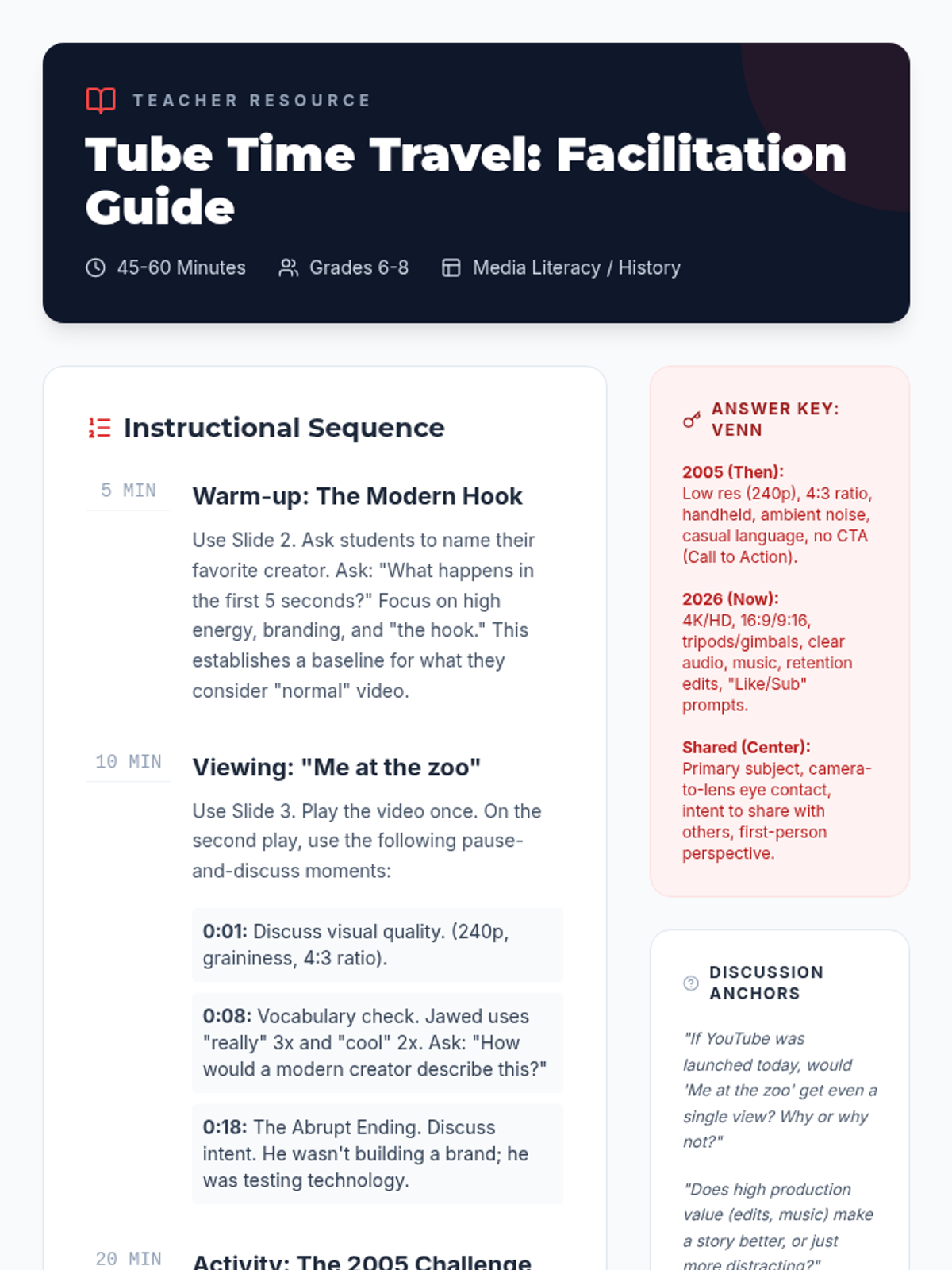
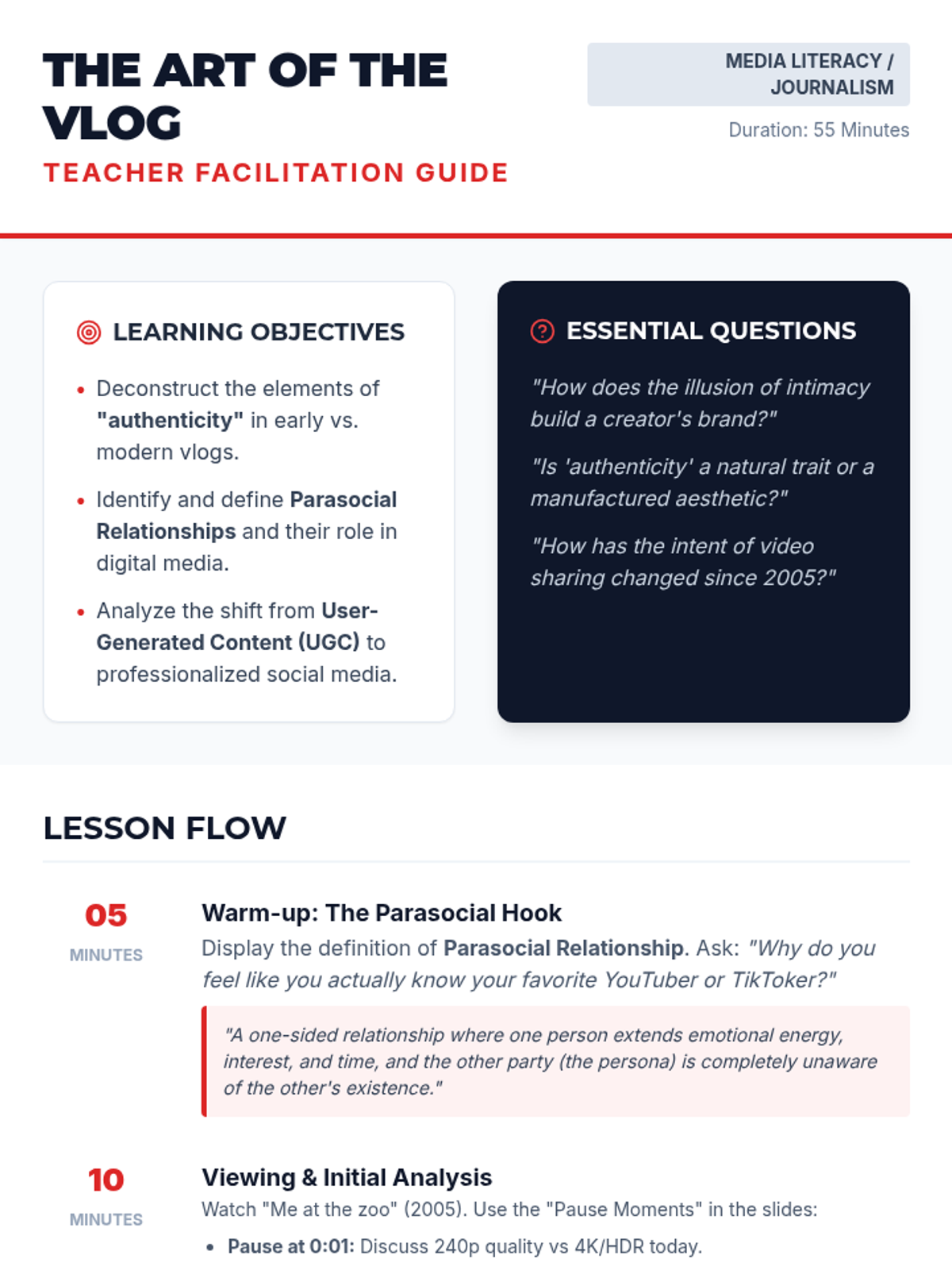
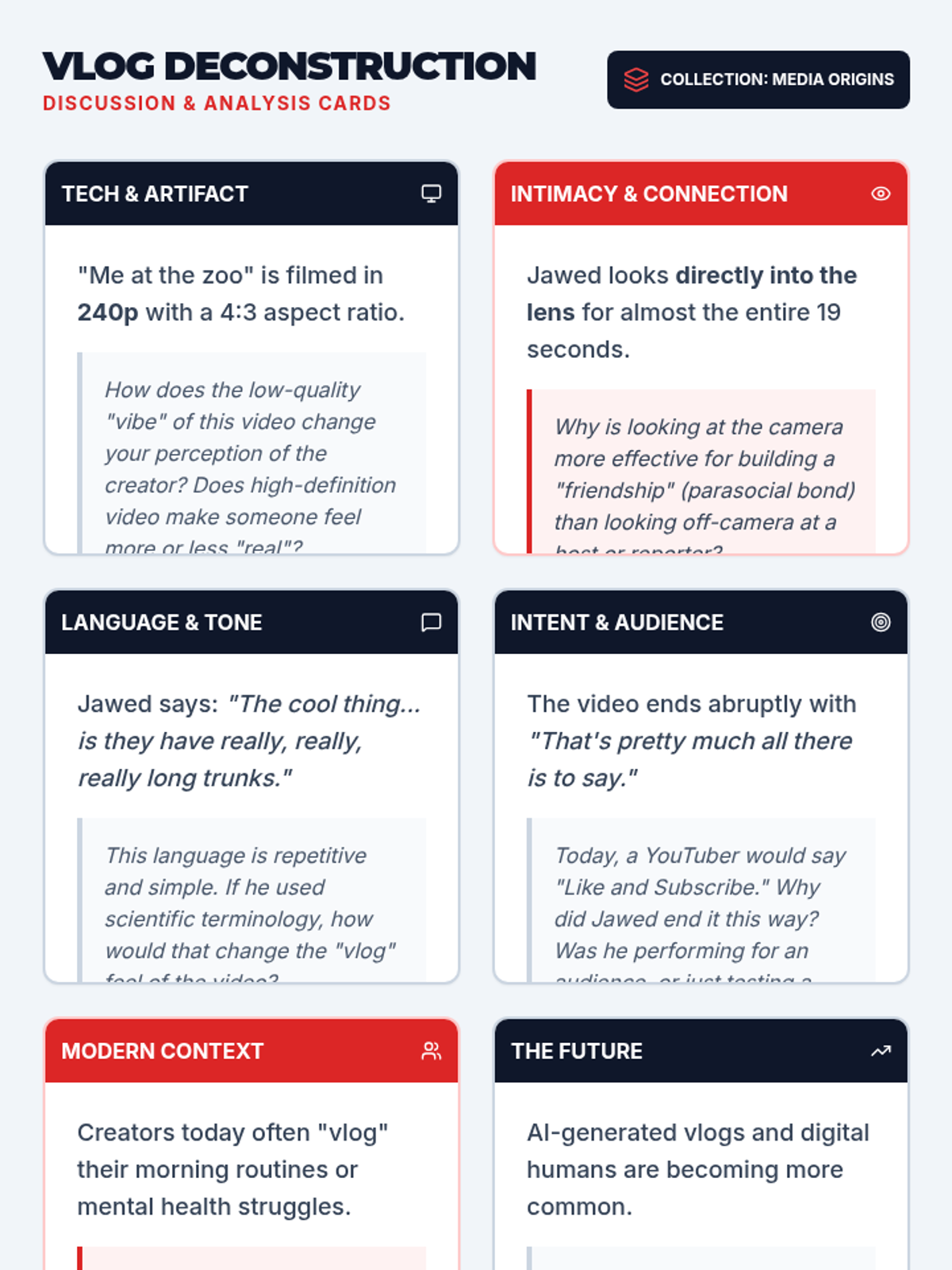
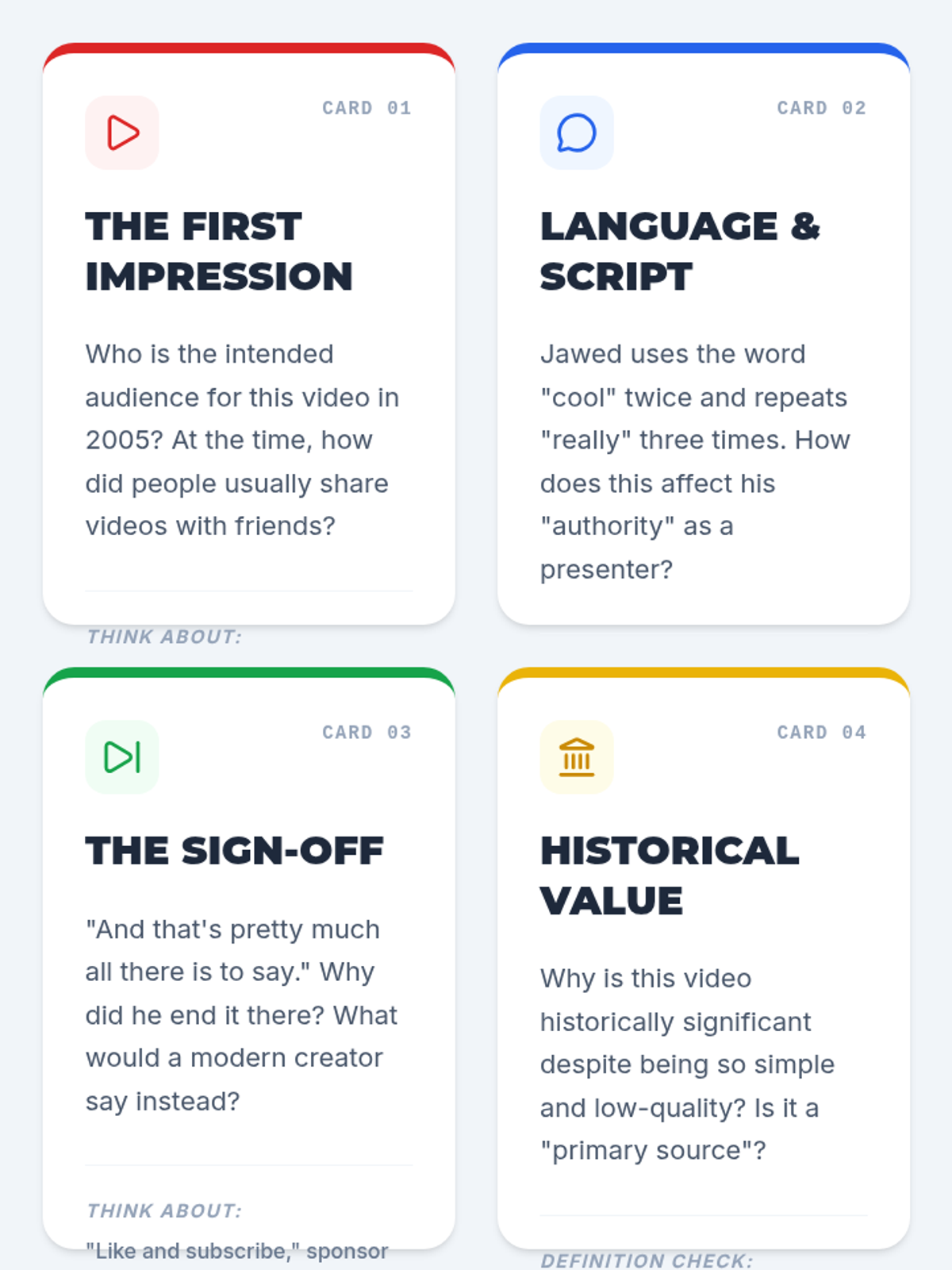
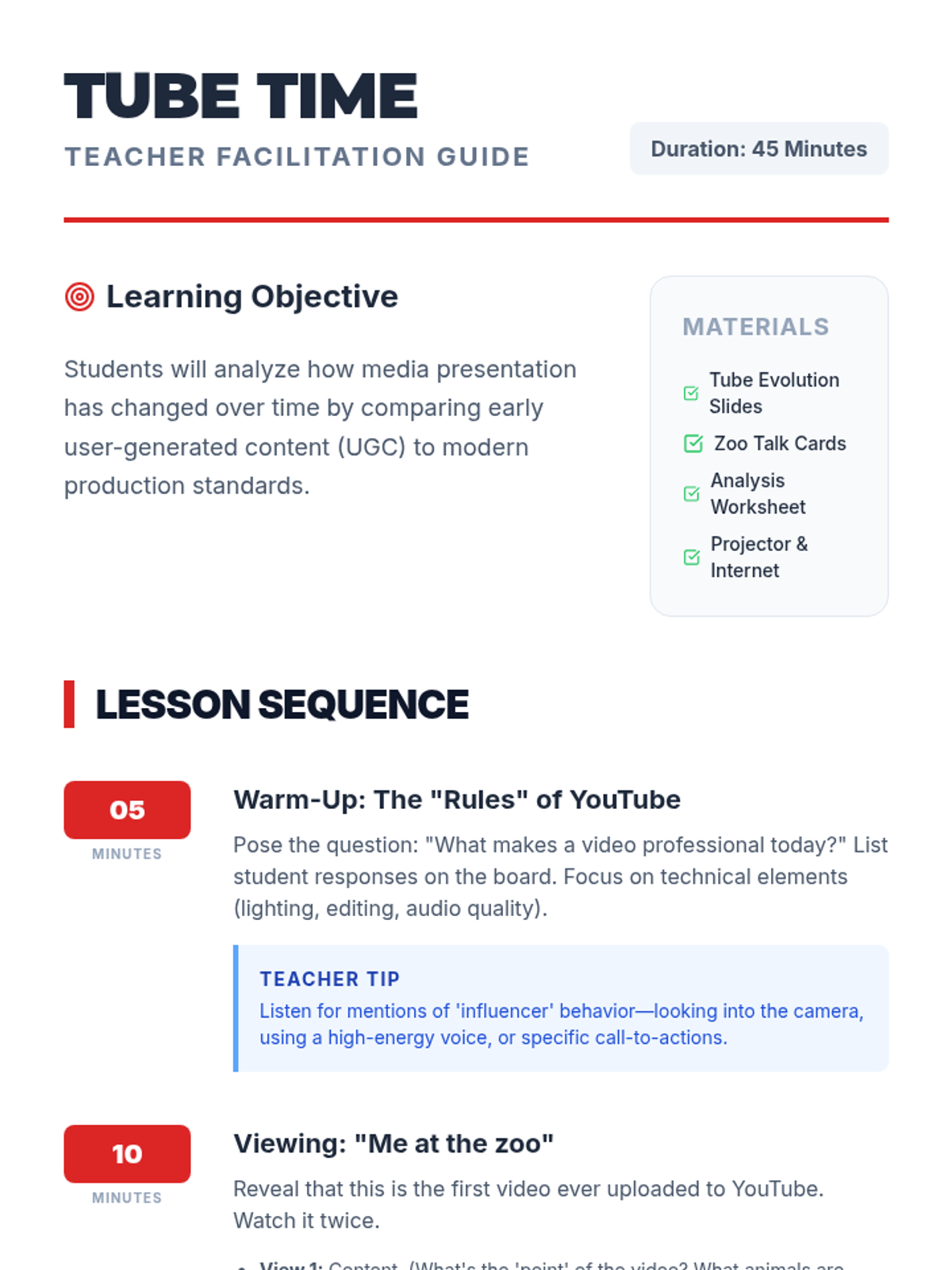
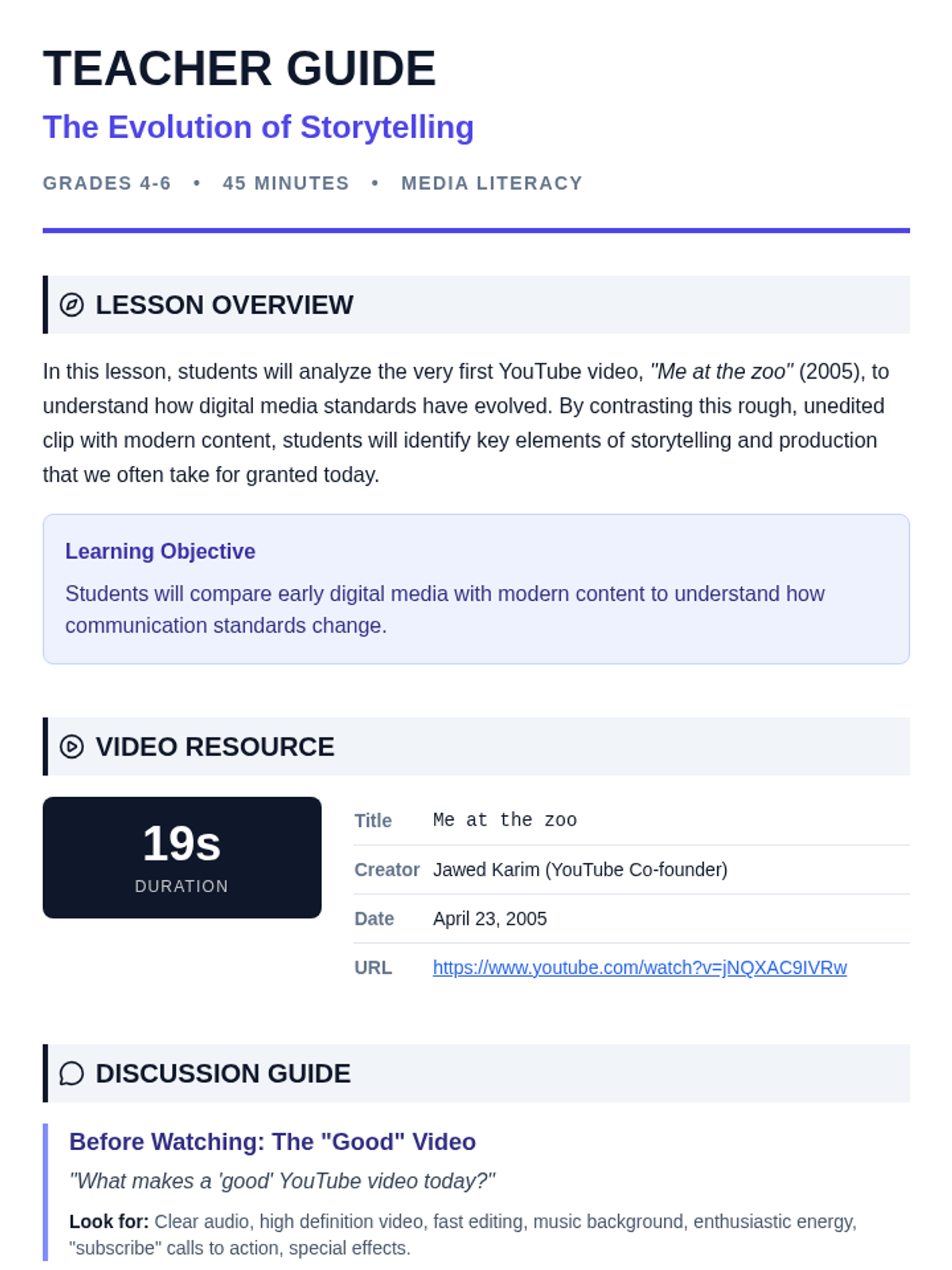
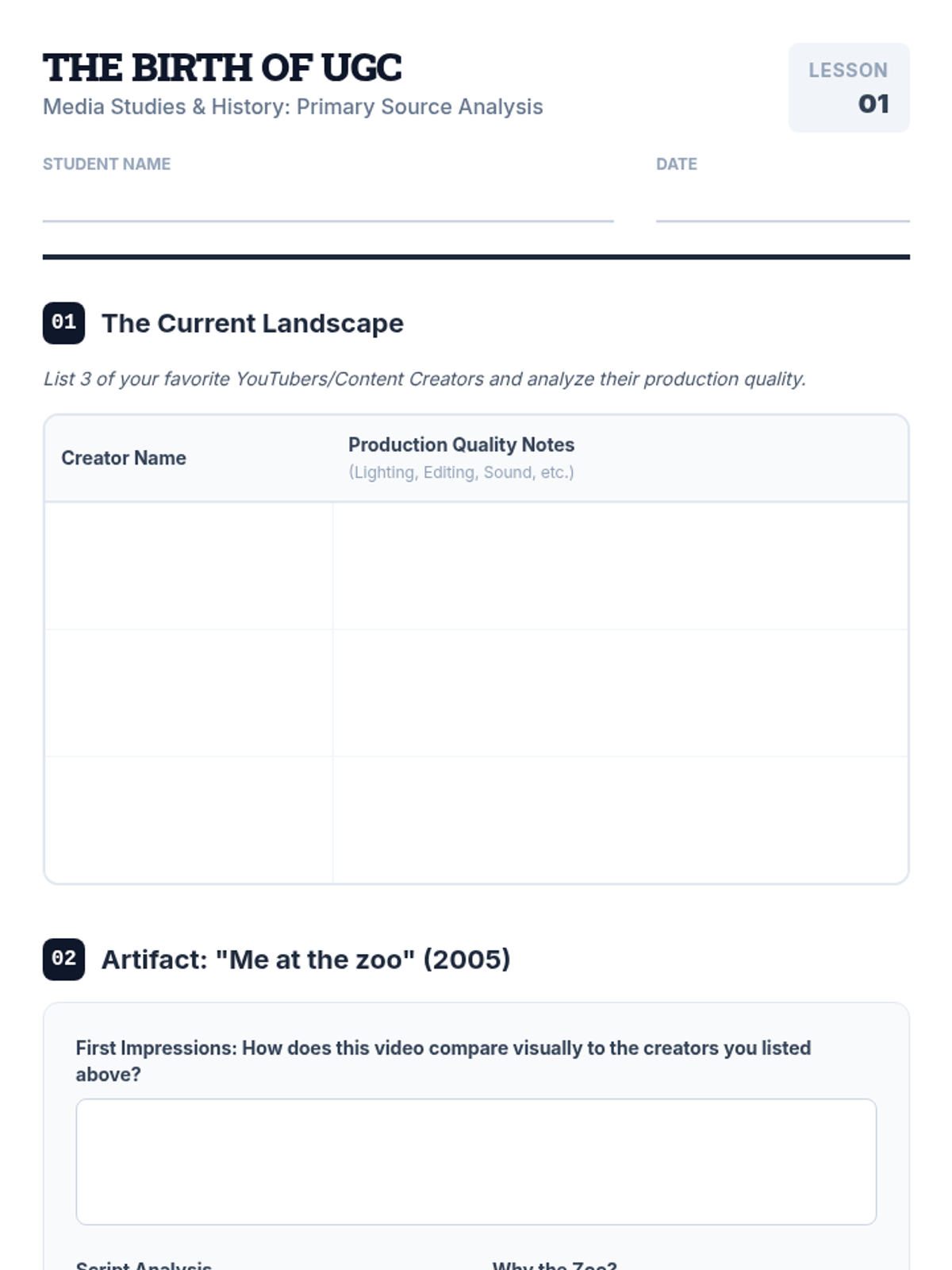
A lesson analyzing 'Me at the zoo', the first YouTube video, to understand the evolution of digital communication, authenticity vs. production, and user-generated content.

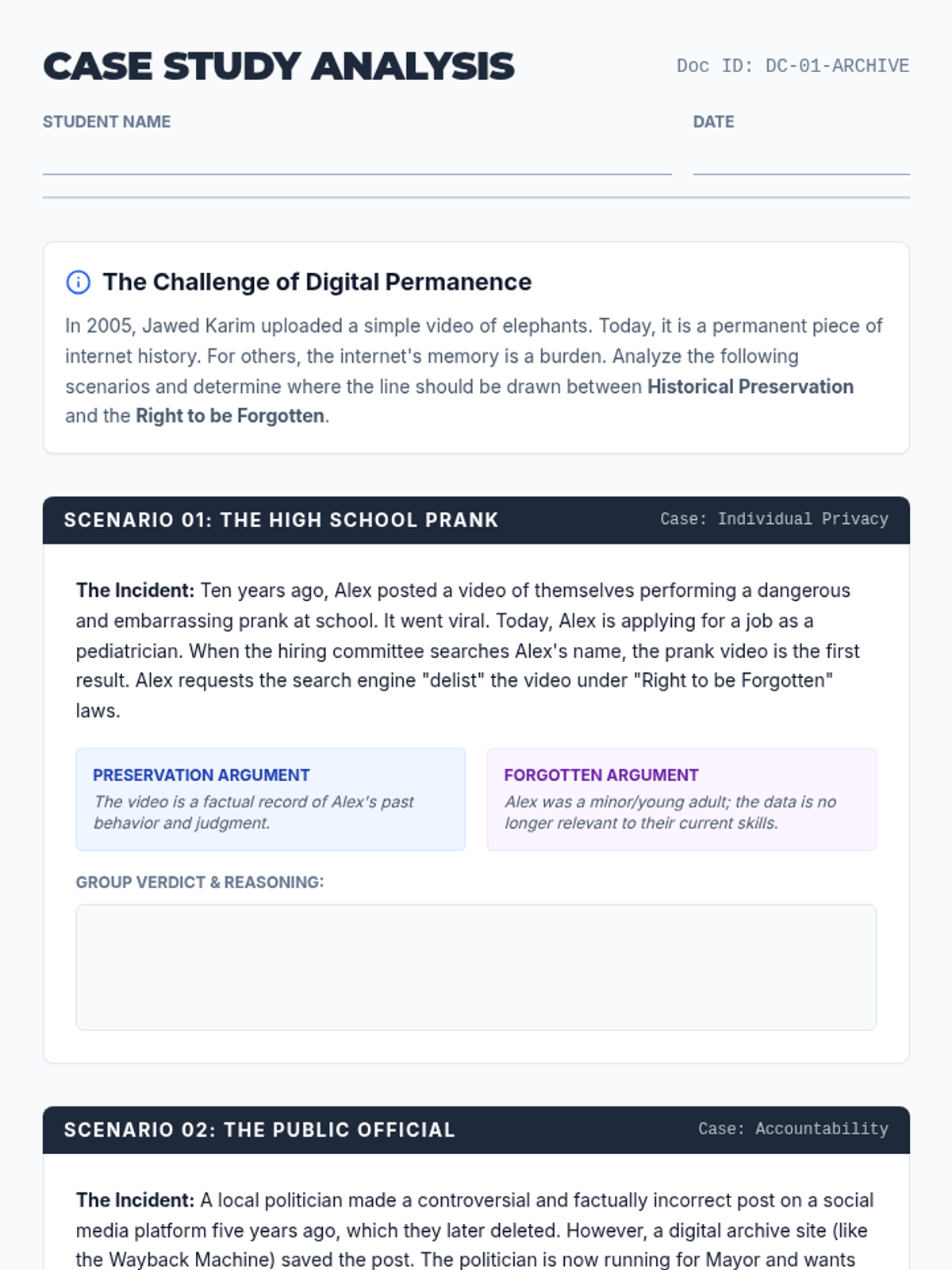
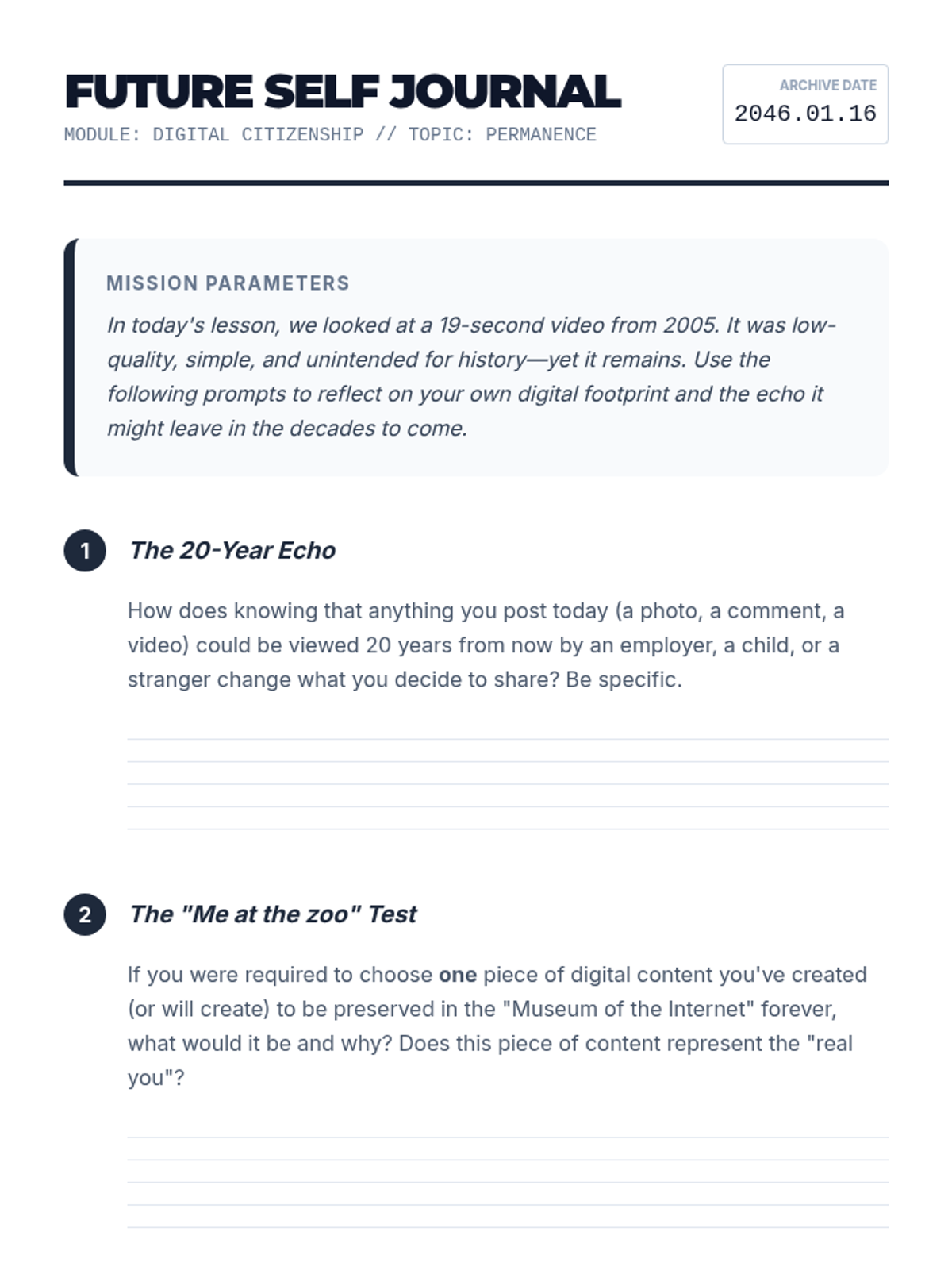
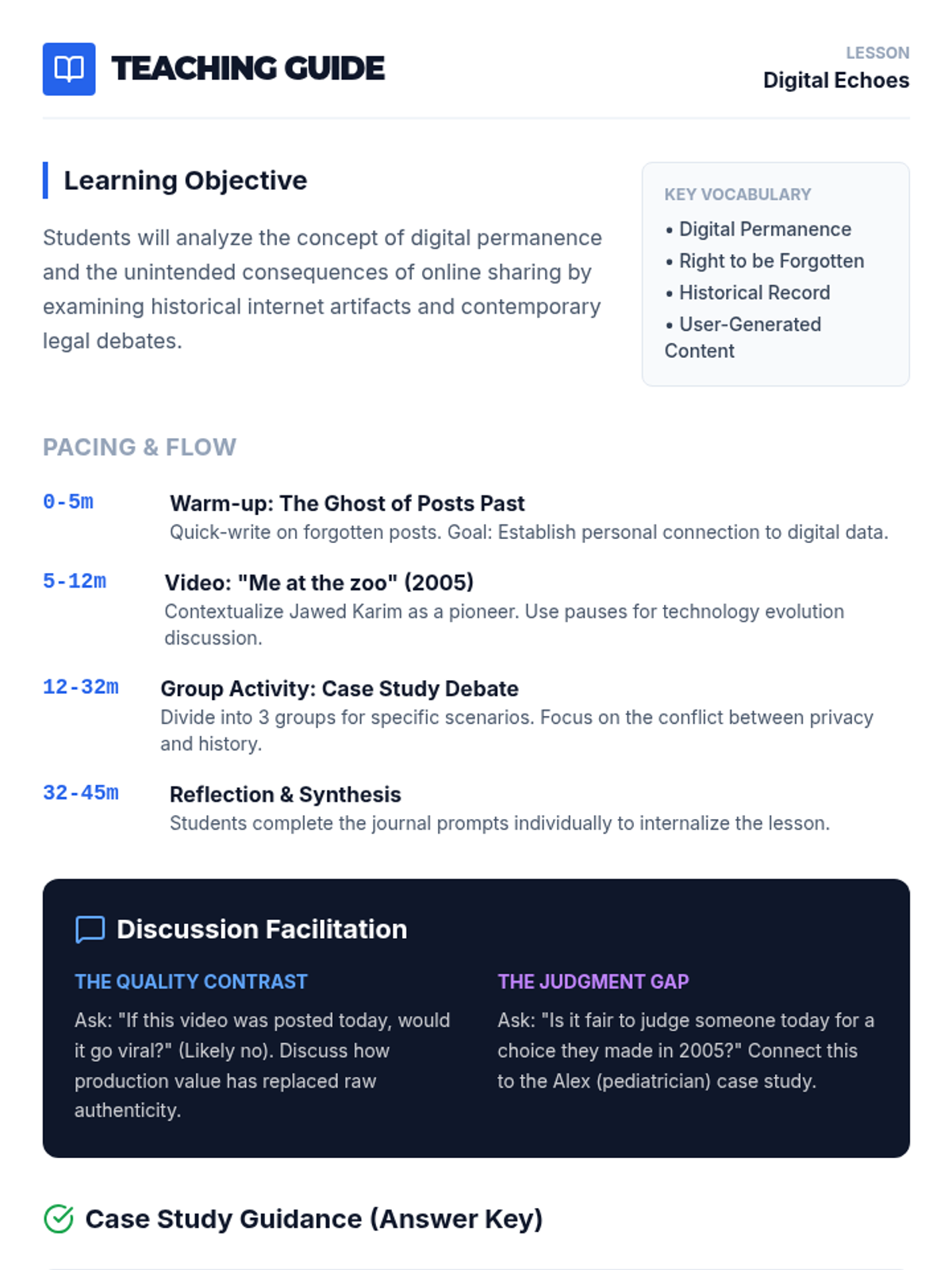
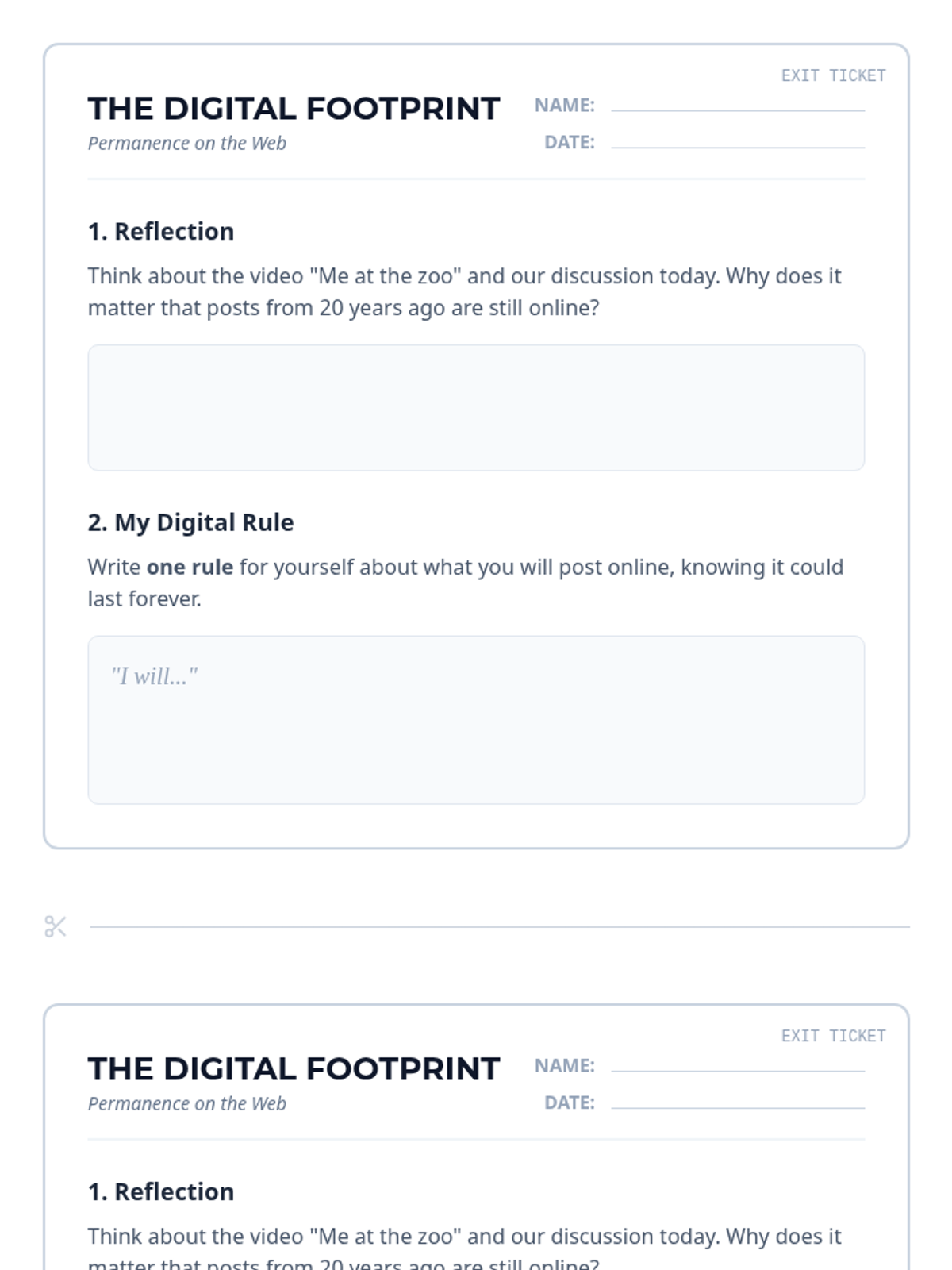
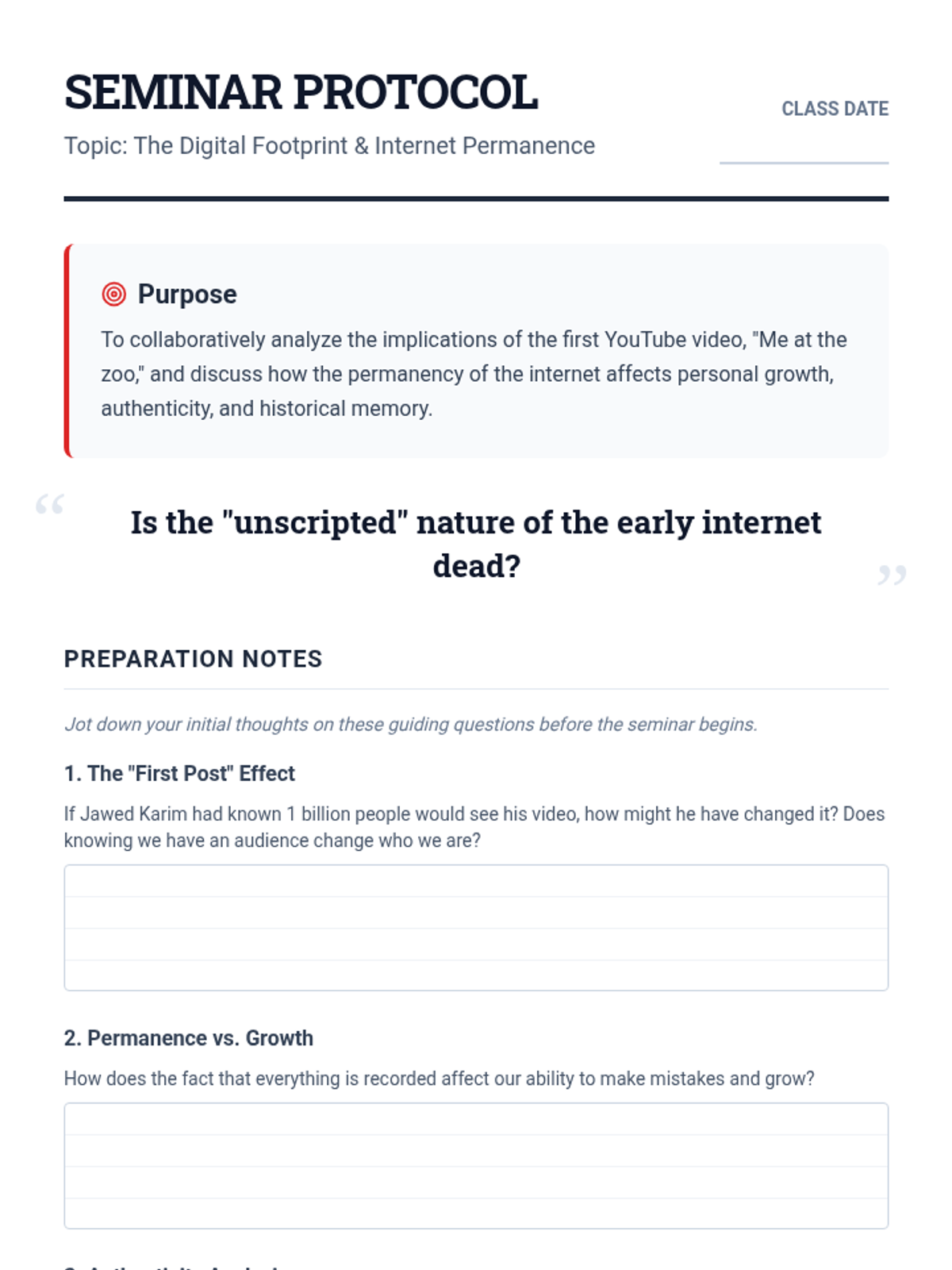
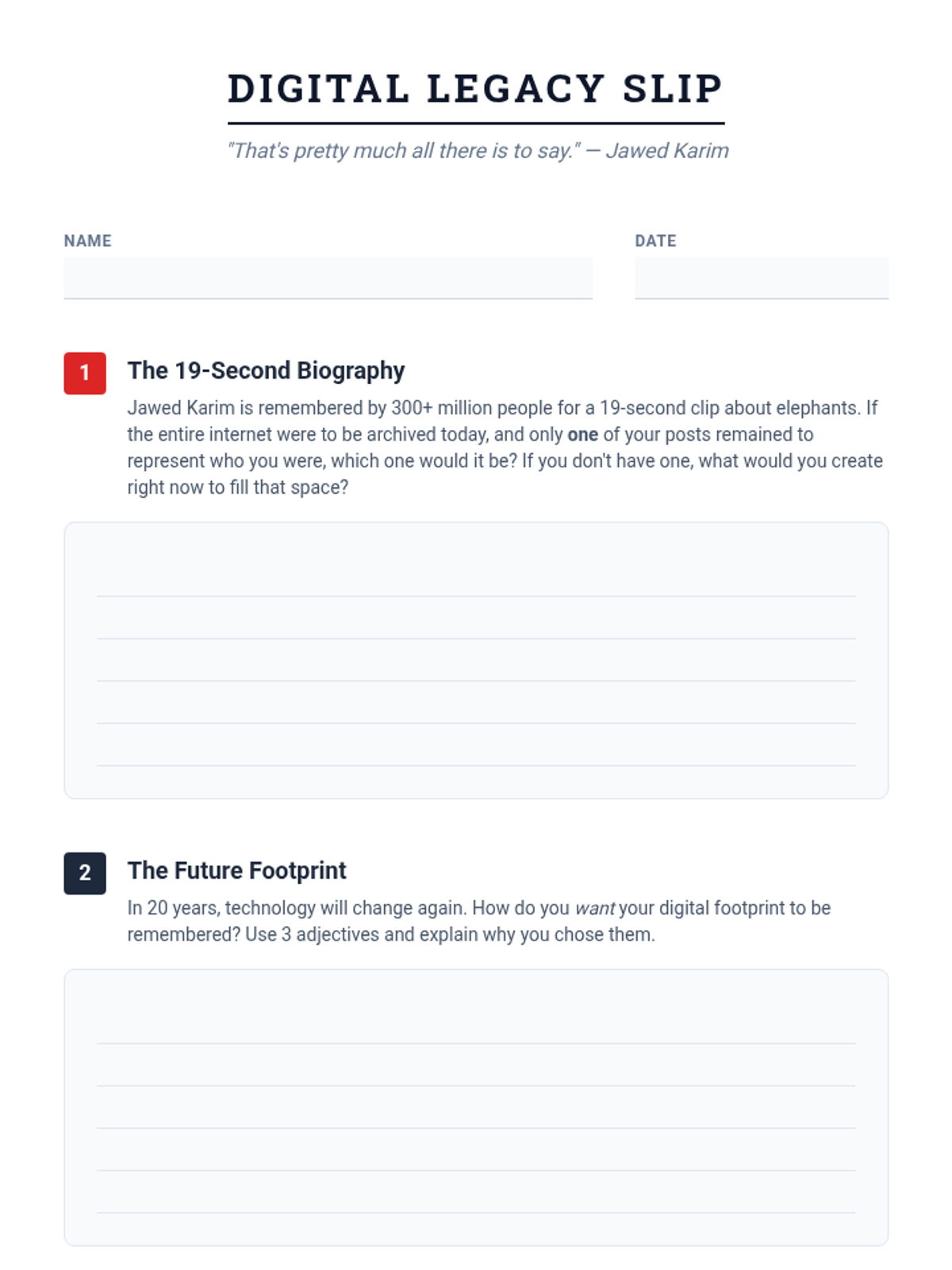
A reflective workshop for adults exploring the permanence of the internet through the lens of YouTube's first video, 'Me at the zoo,' focusing on digital footprints and guiding children's online presence.
1/16
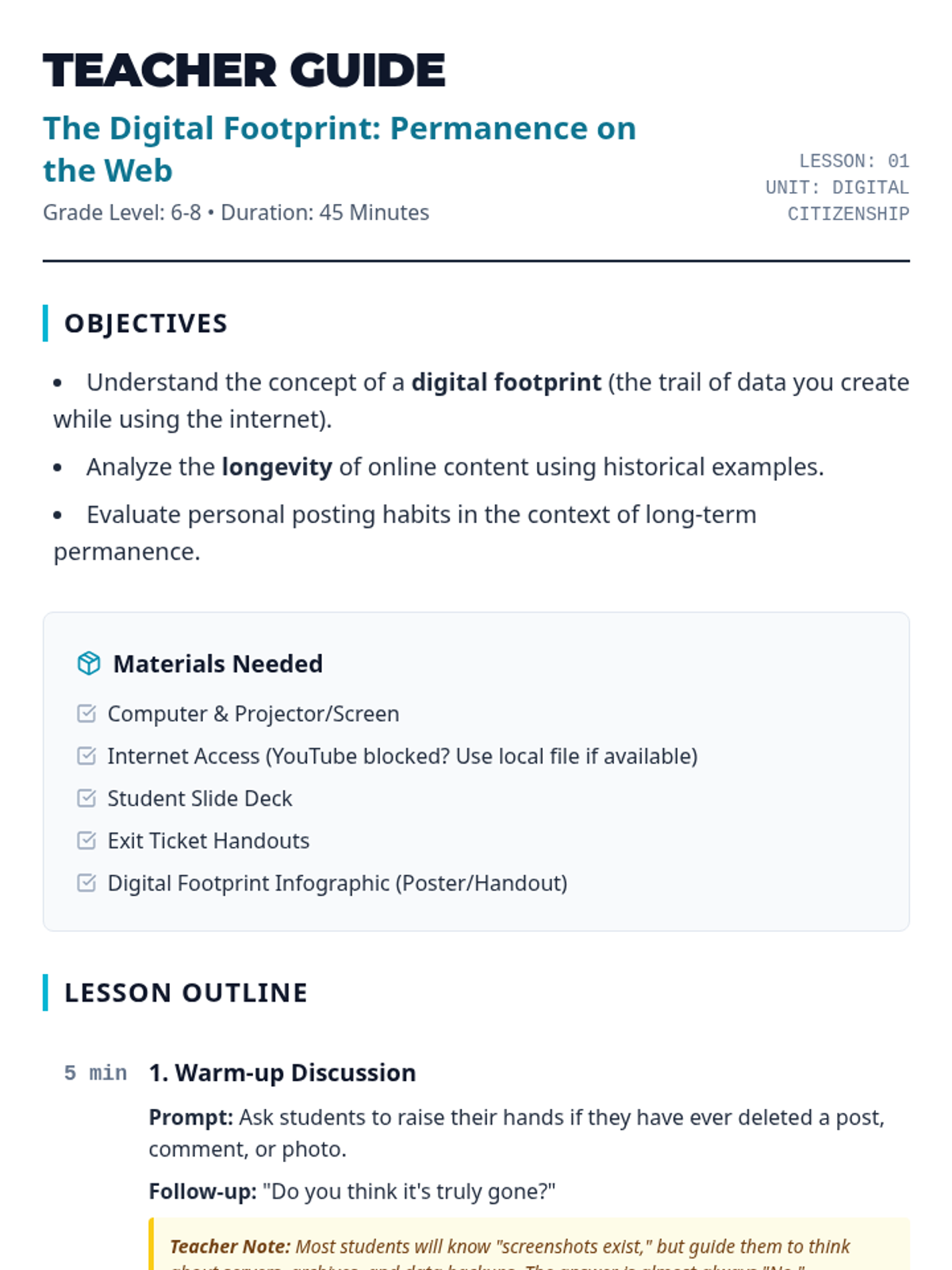
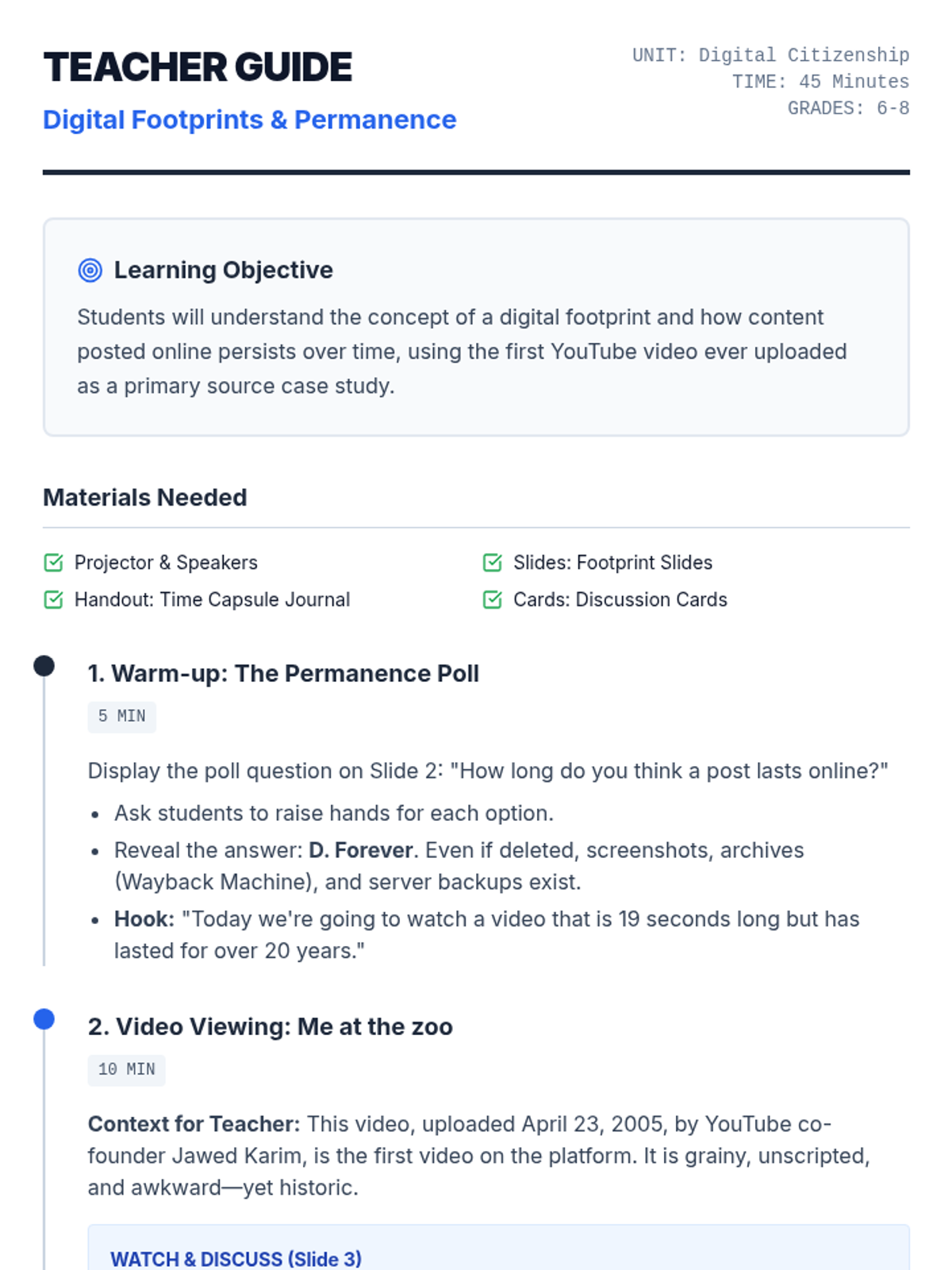
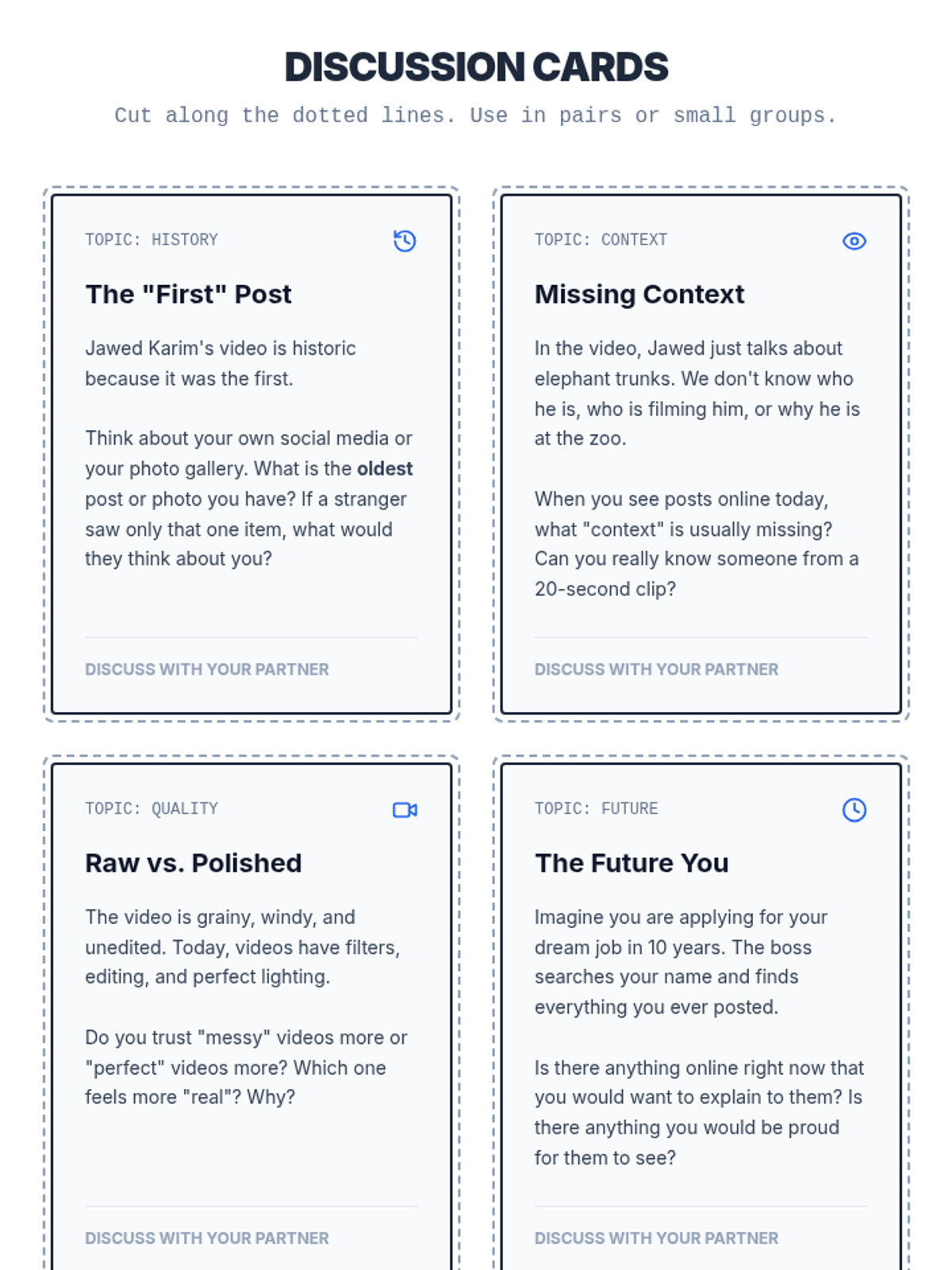
A middle school lesson on digital footprints, focusing on the permanence of online content using the first YouTube video 'Me at the zoo' as a case study.
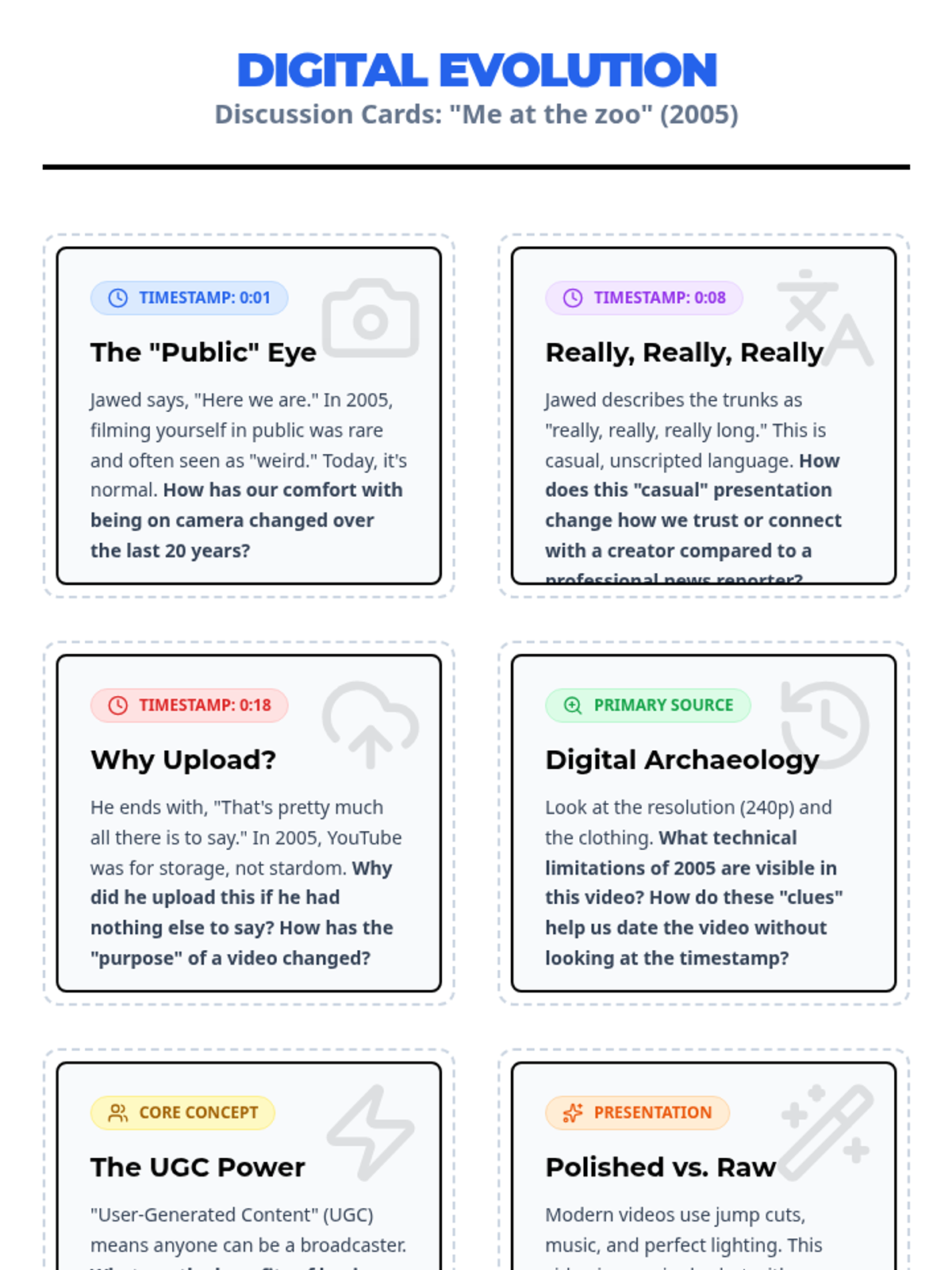
A lesson for high school Media Studies/History students analyzing the shift from broadcast to social media through the lens of the first YouTube video, 'Me at the zoo'. Students evaluate the impact of User-Generated Content (UGC) and compare early digital media to modern trends.
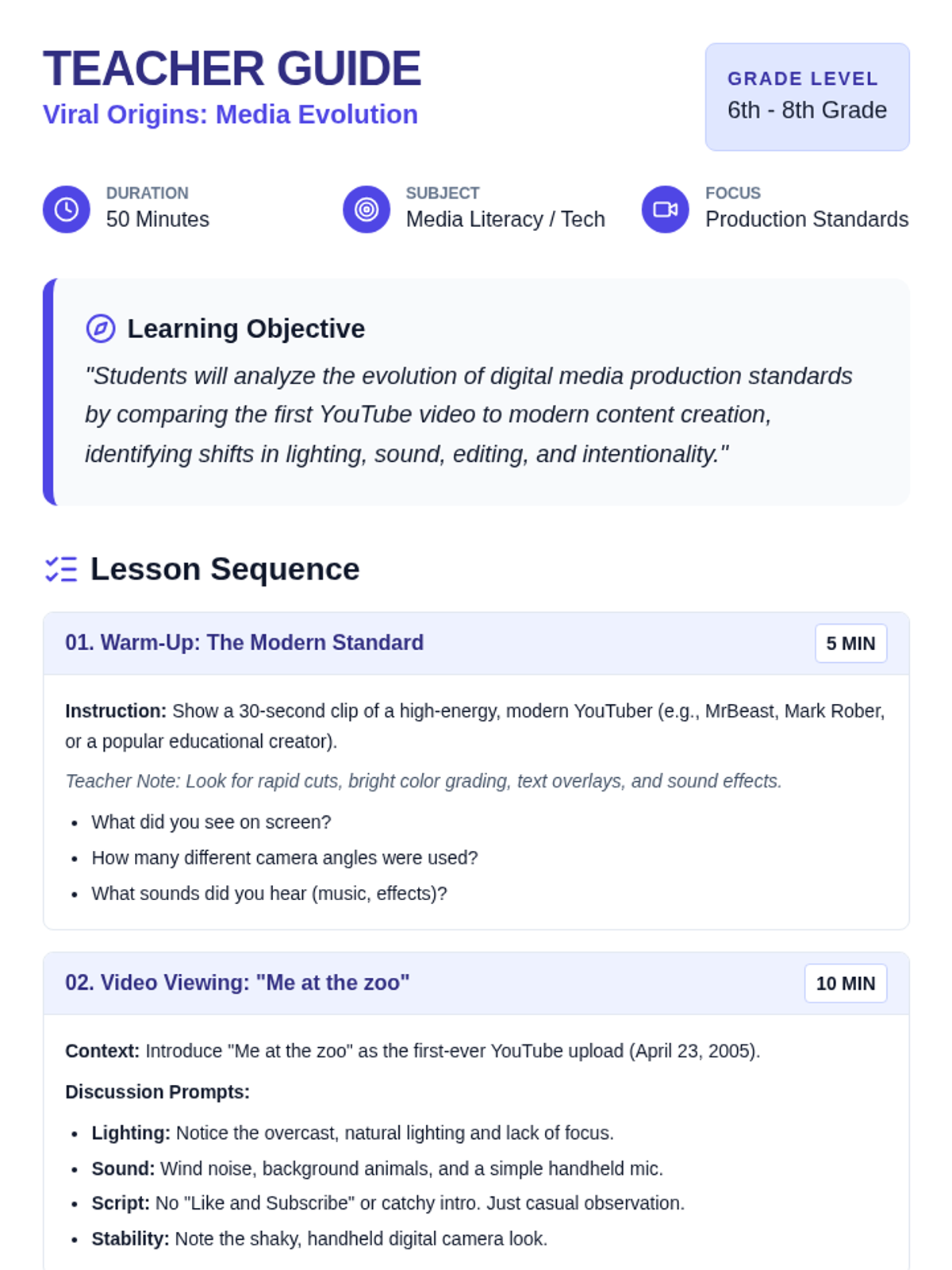
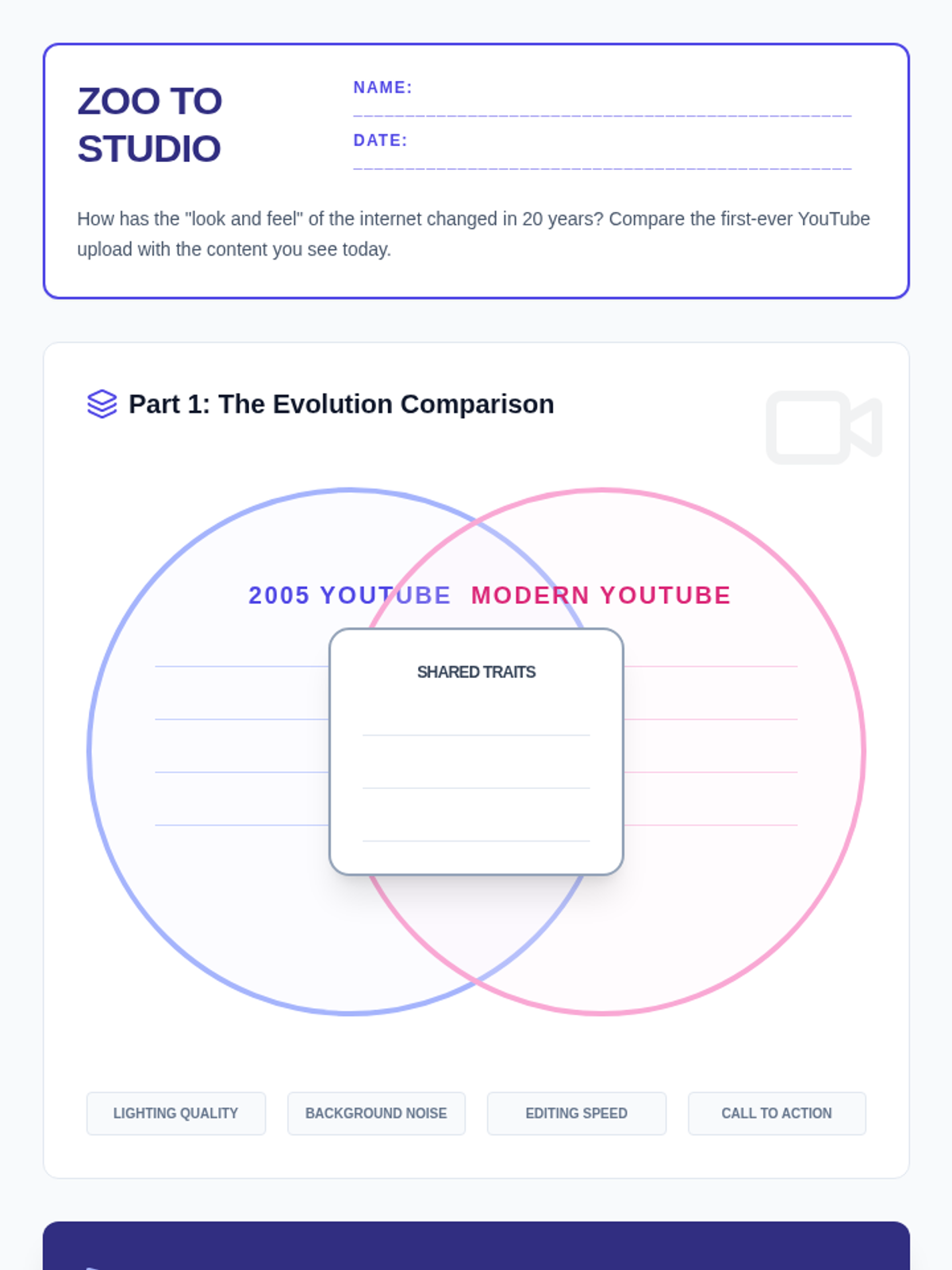
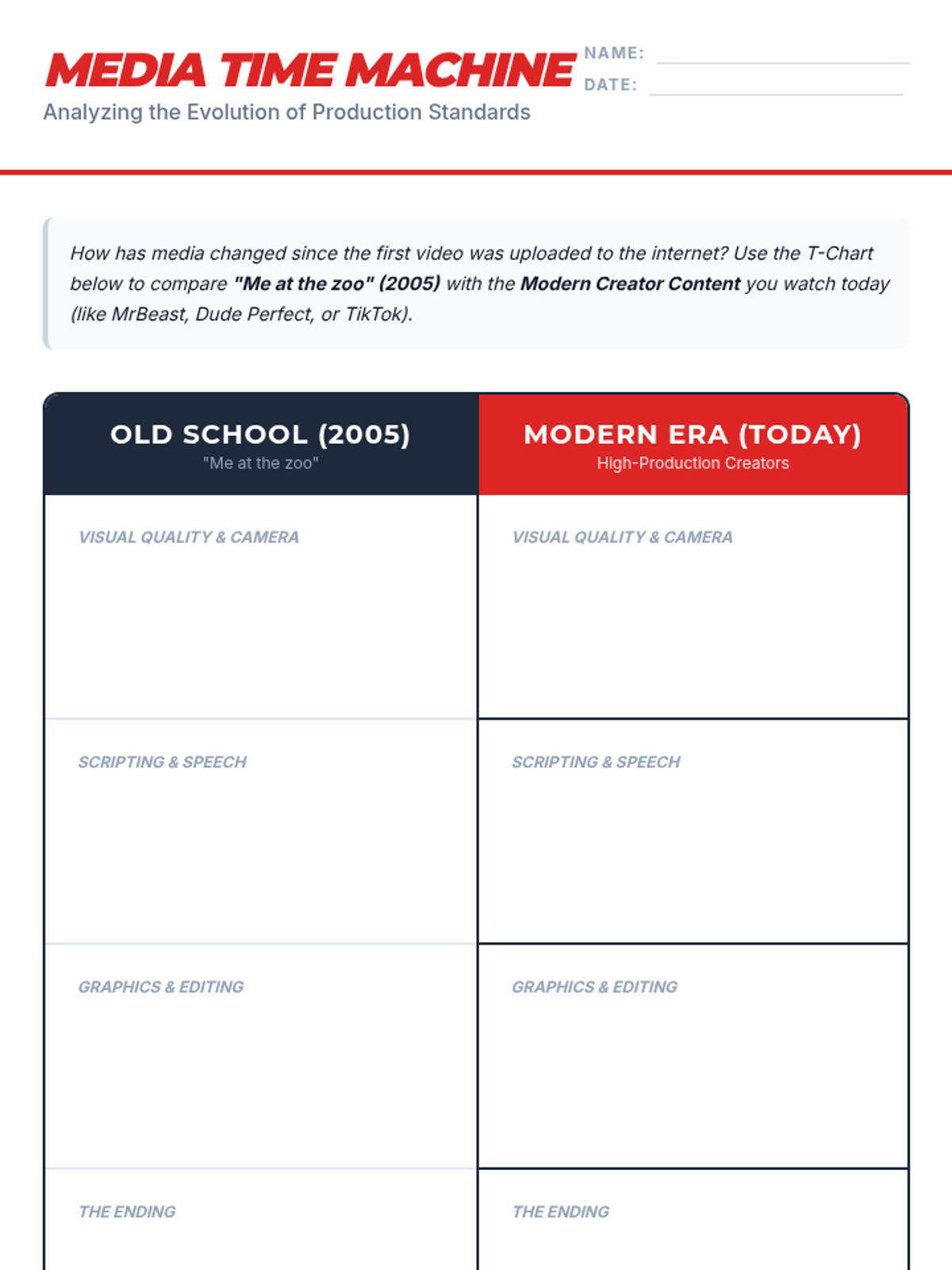
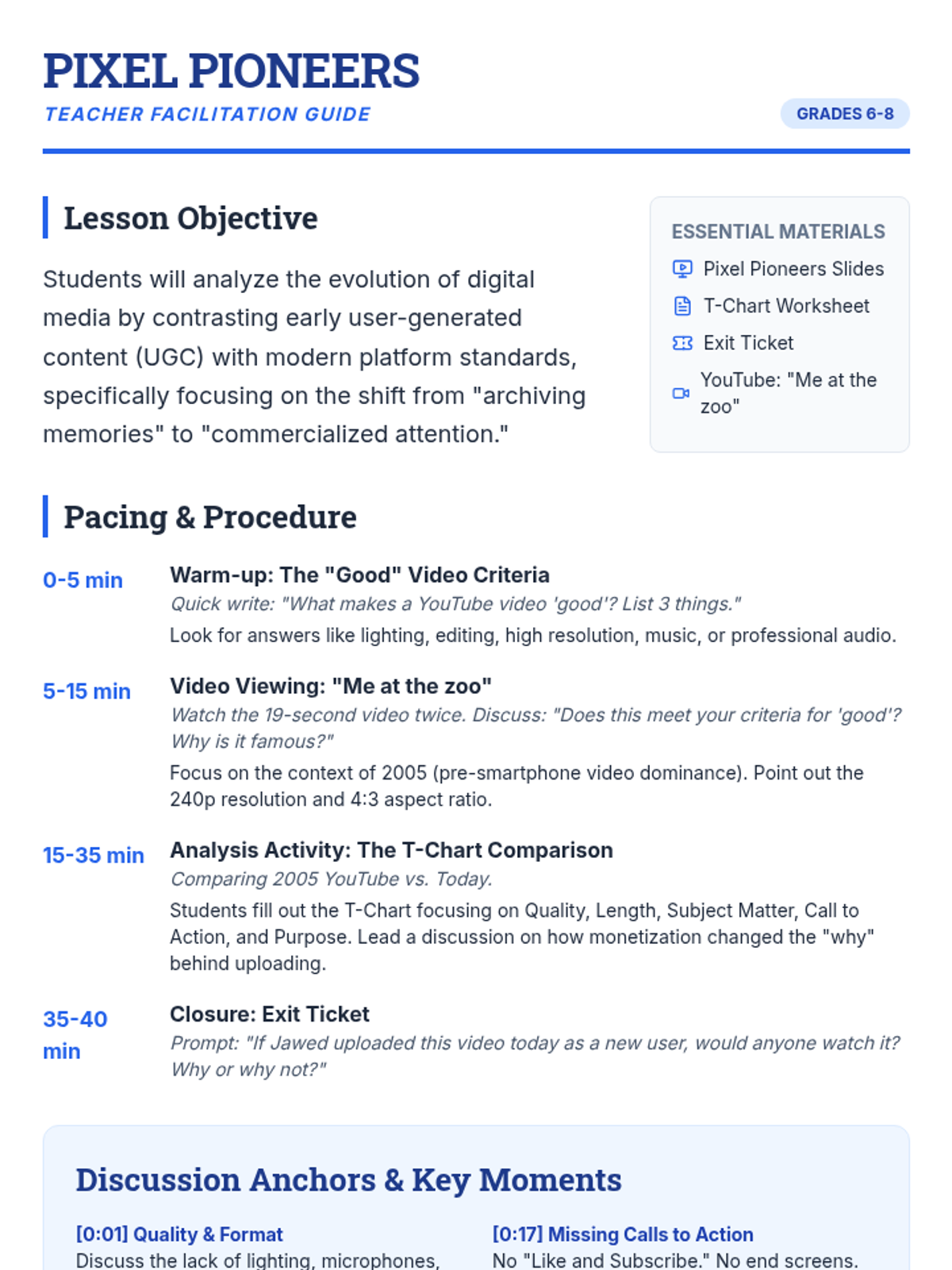
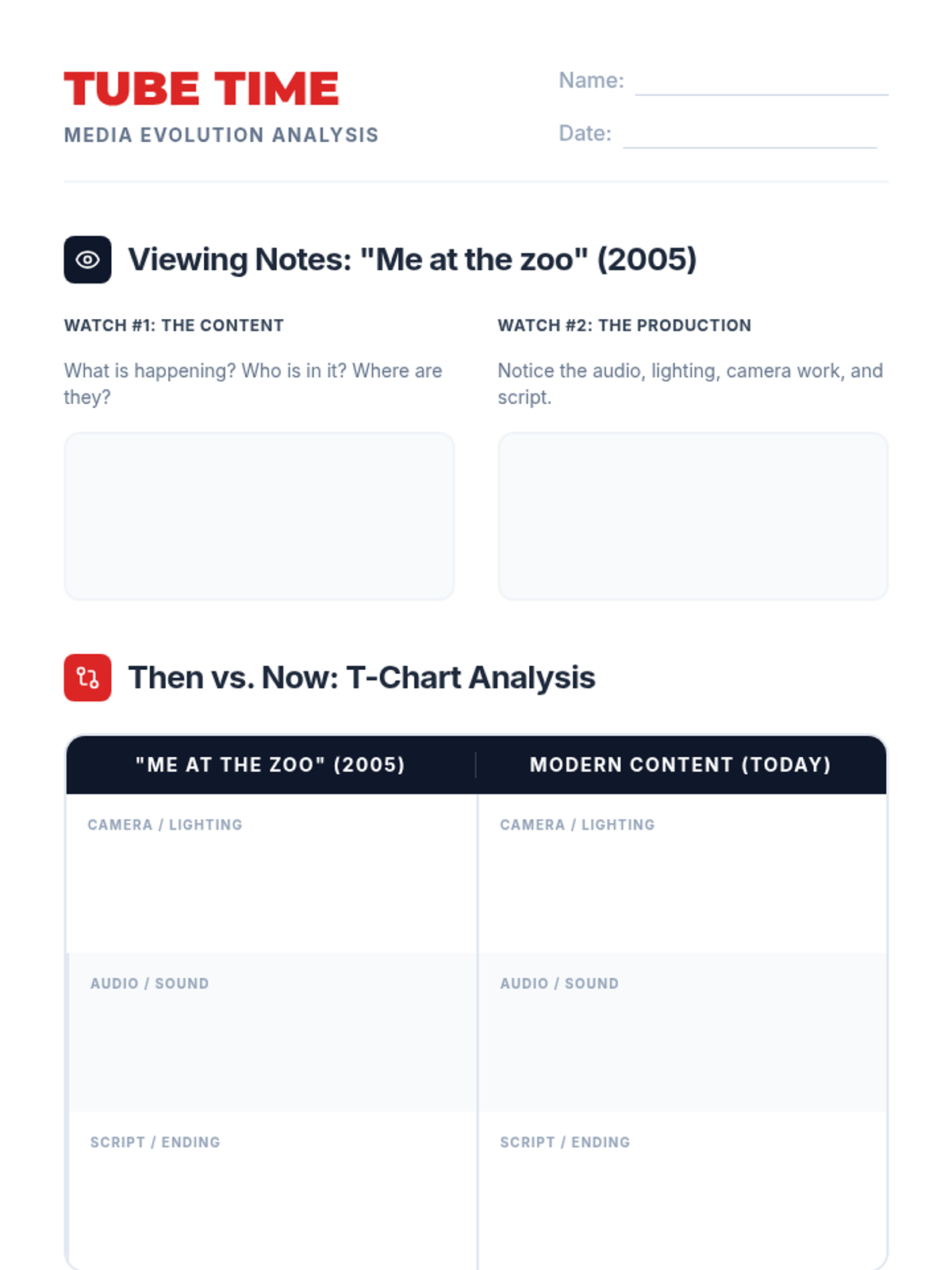
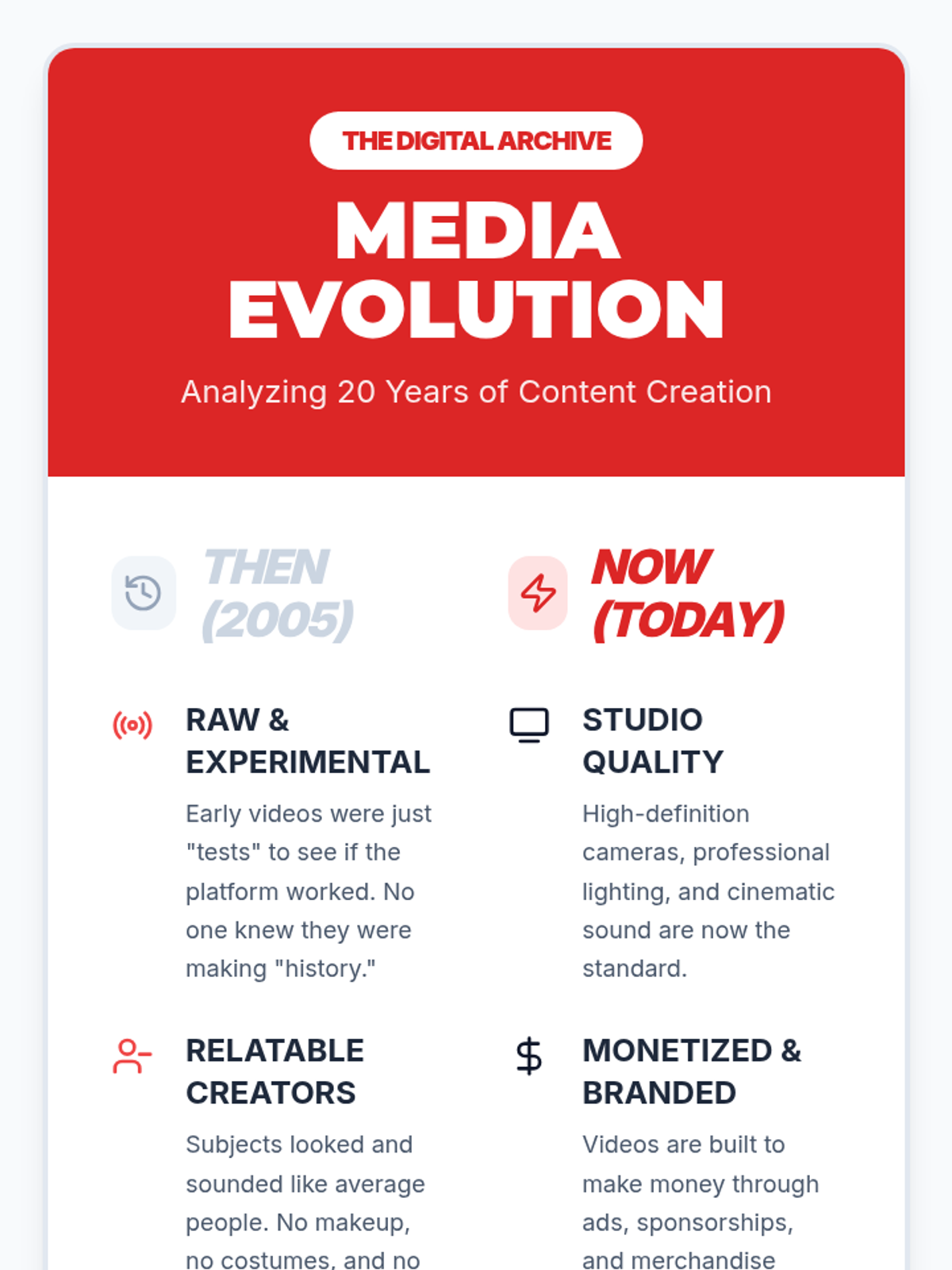
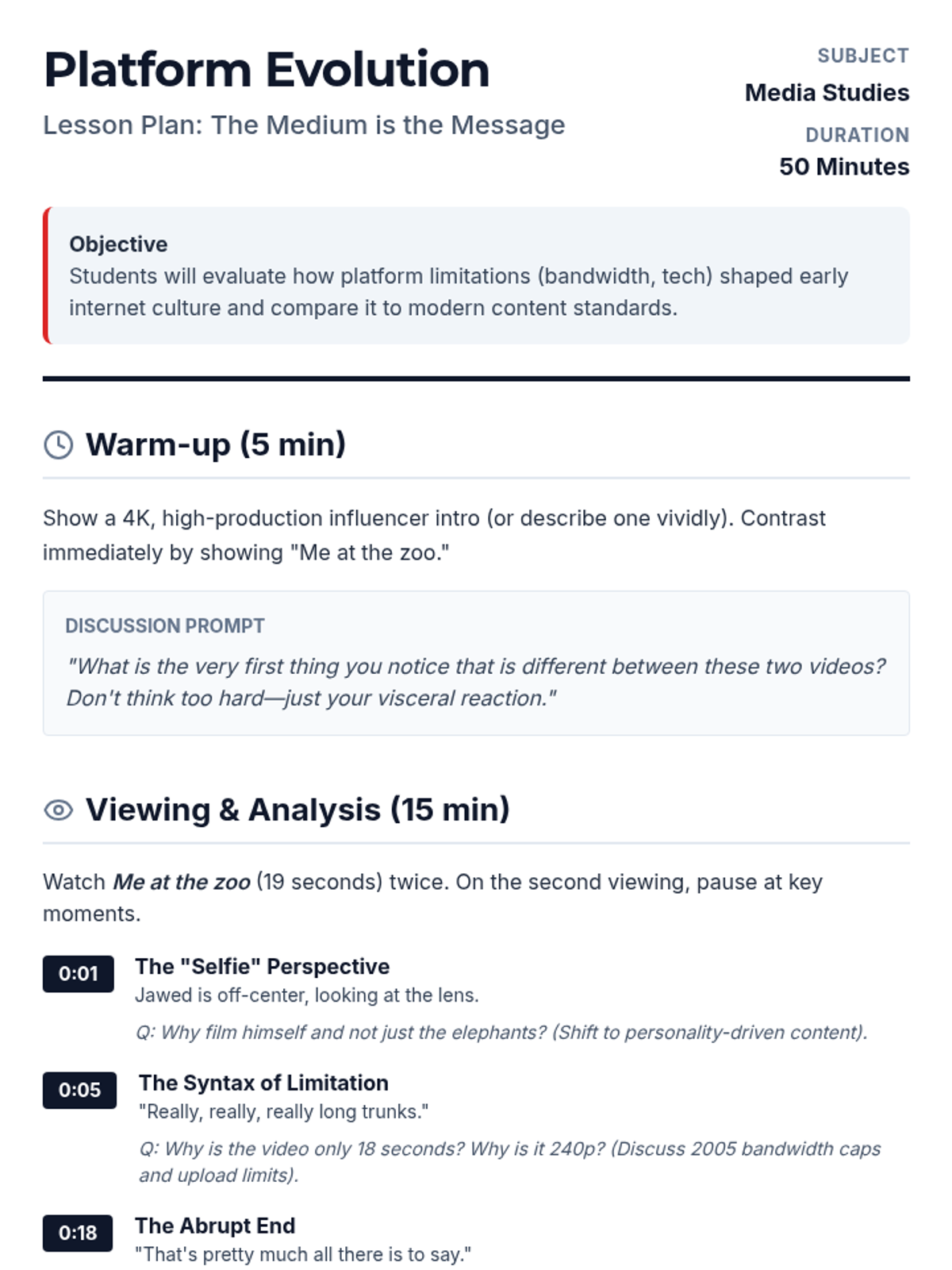
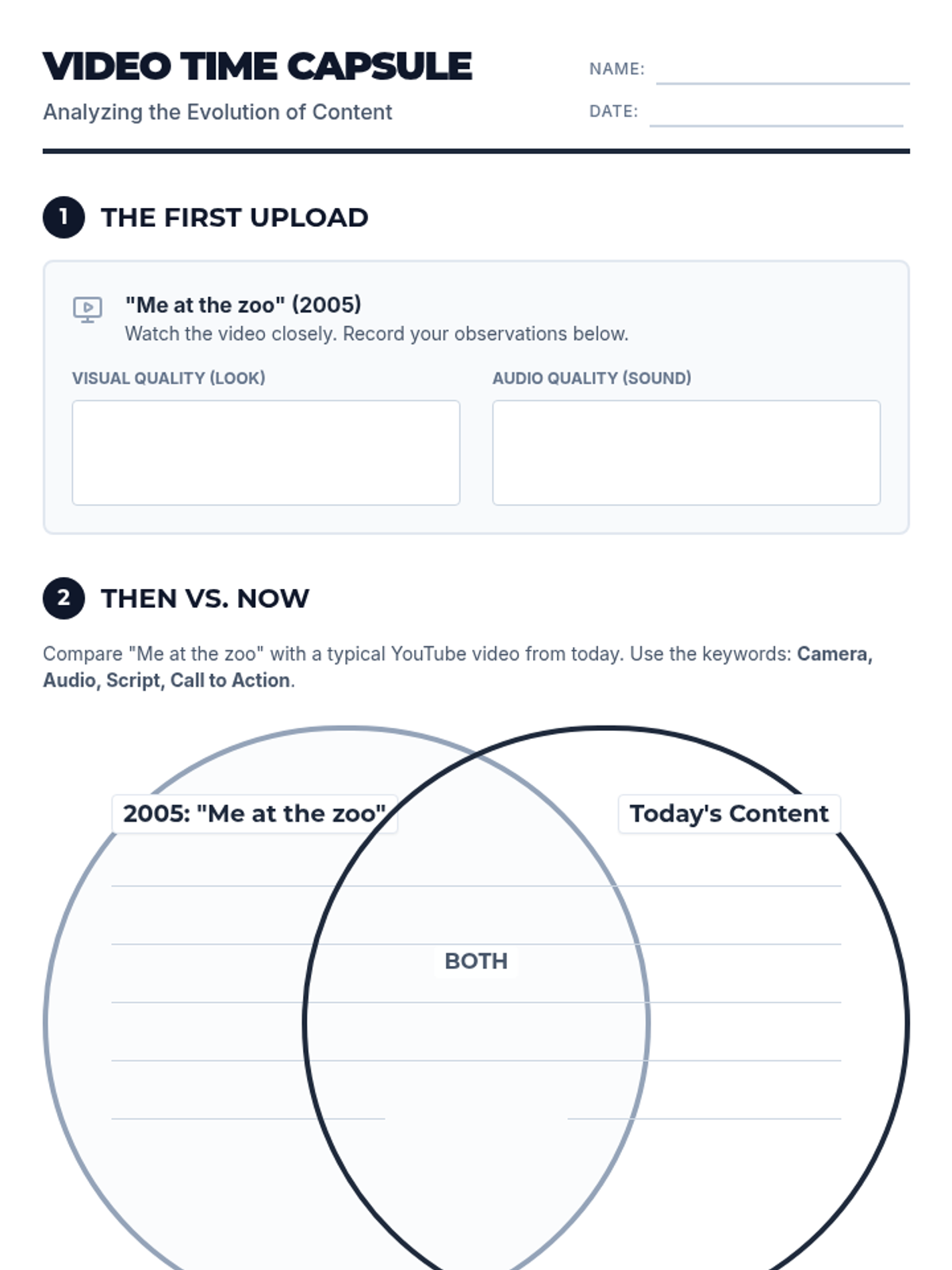
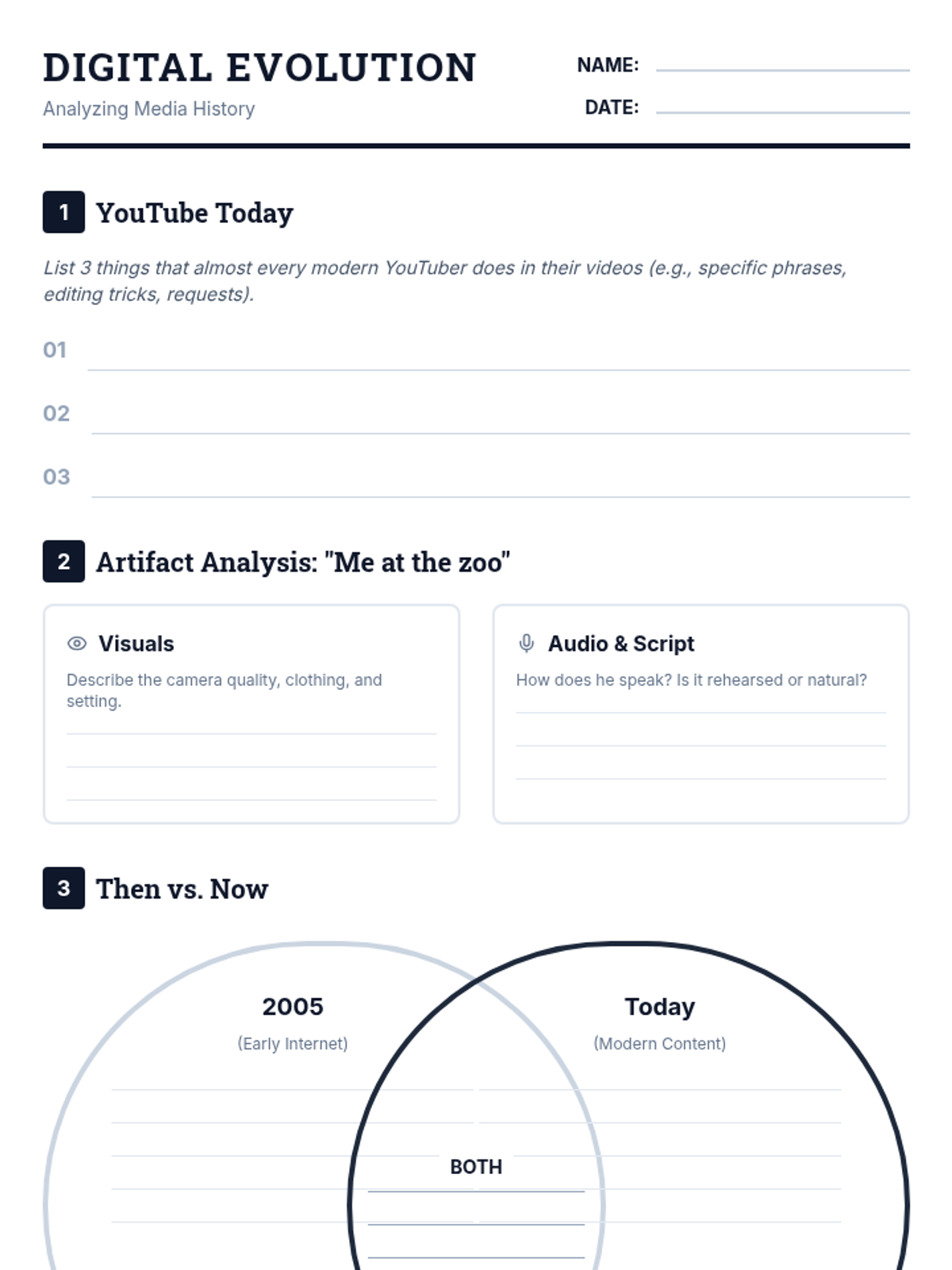
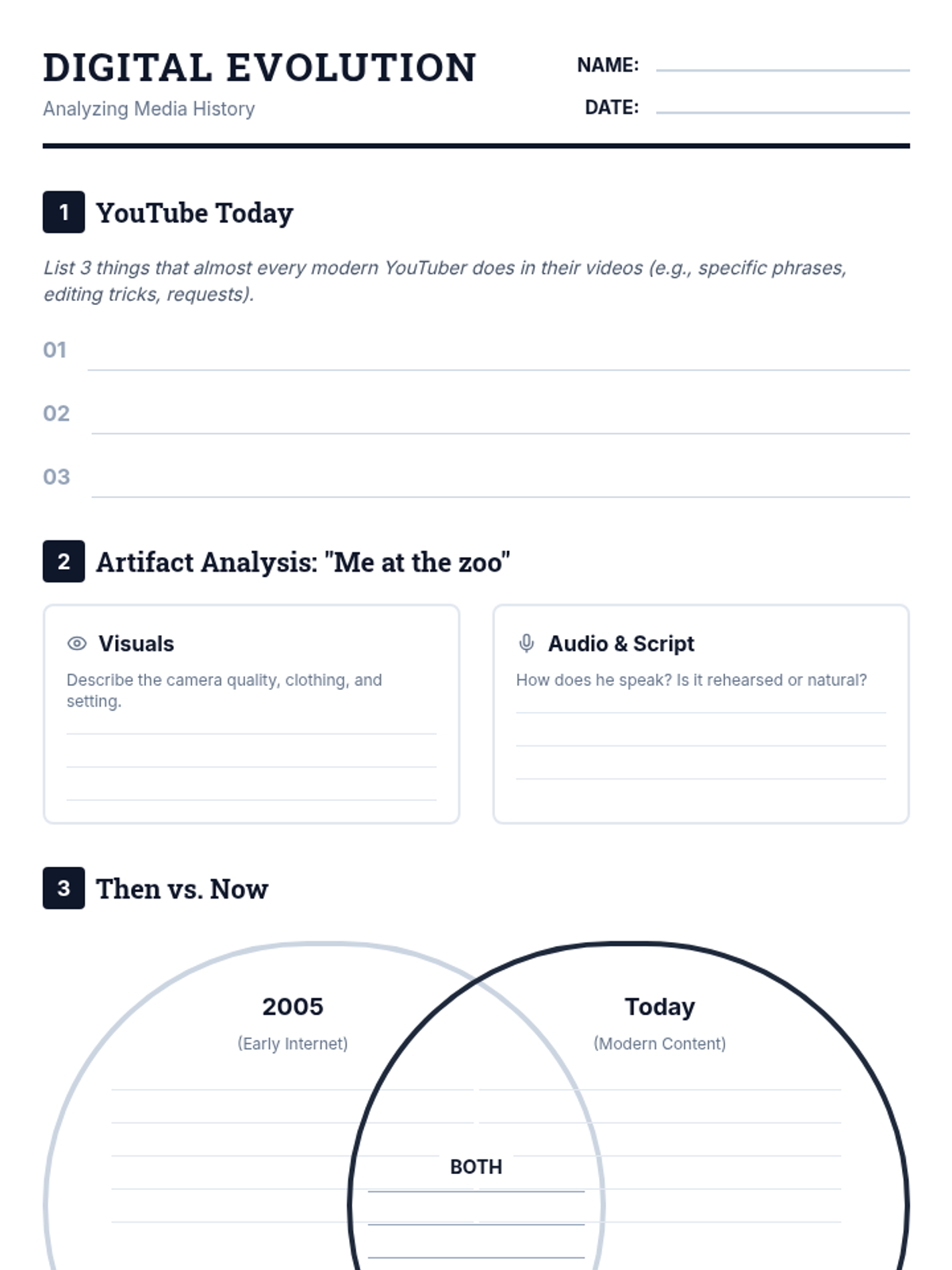
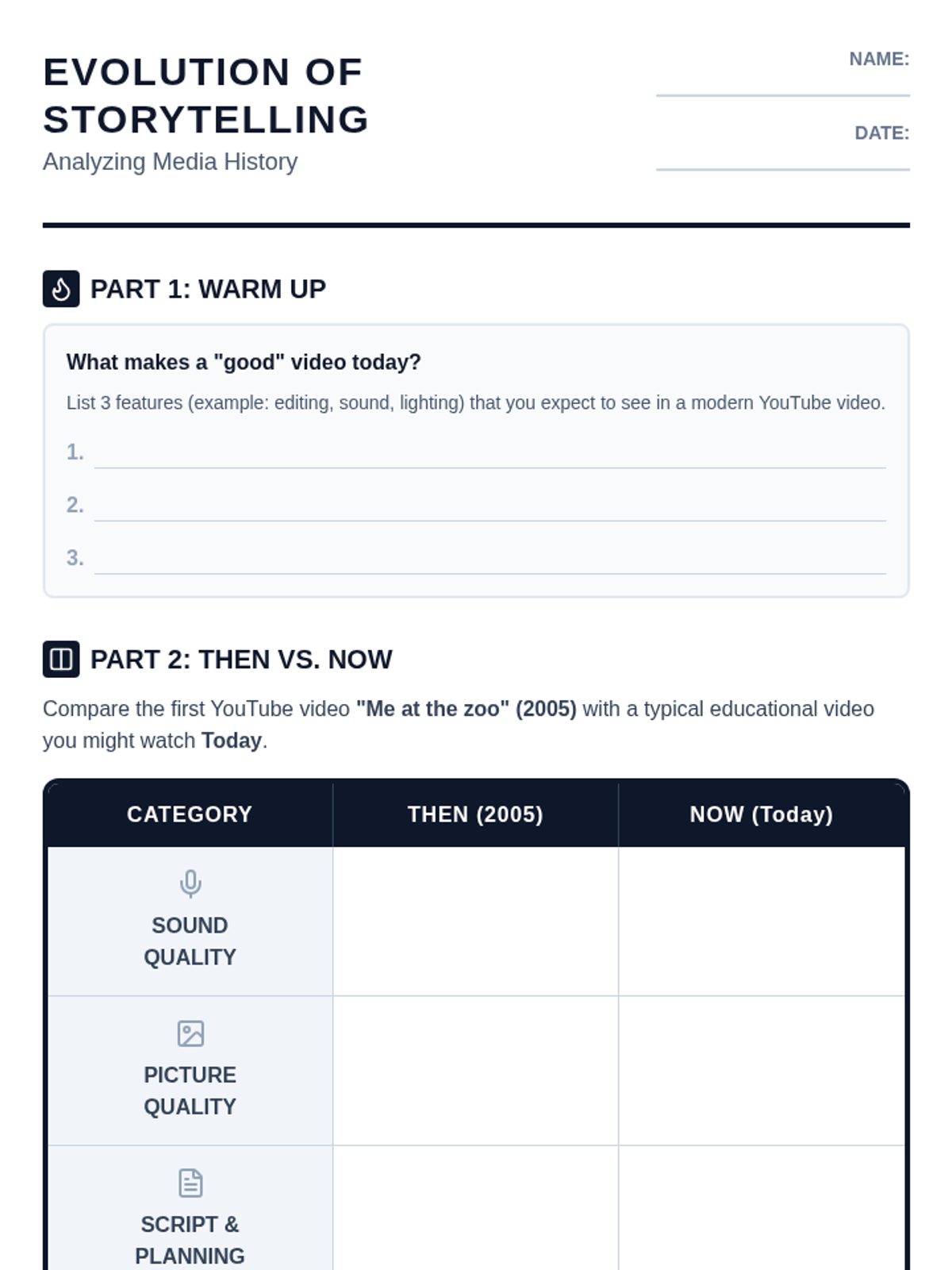
A media literacy lesson where students analyze the evolution of digital media by comparing the first YouTube video, 'Me at the zoo,' to modern content standards. Students explore concepts of user-generated content, monetization, and the commercialization of attention.
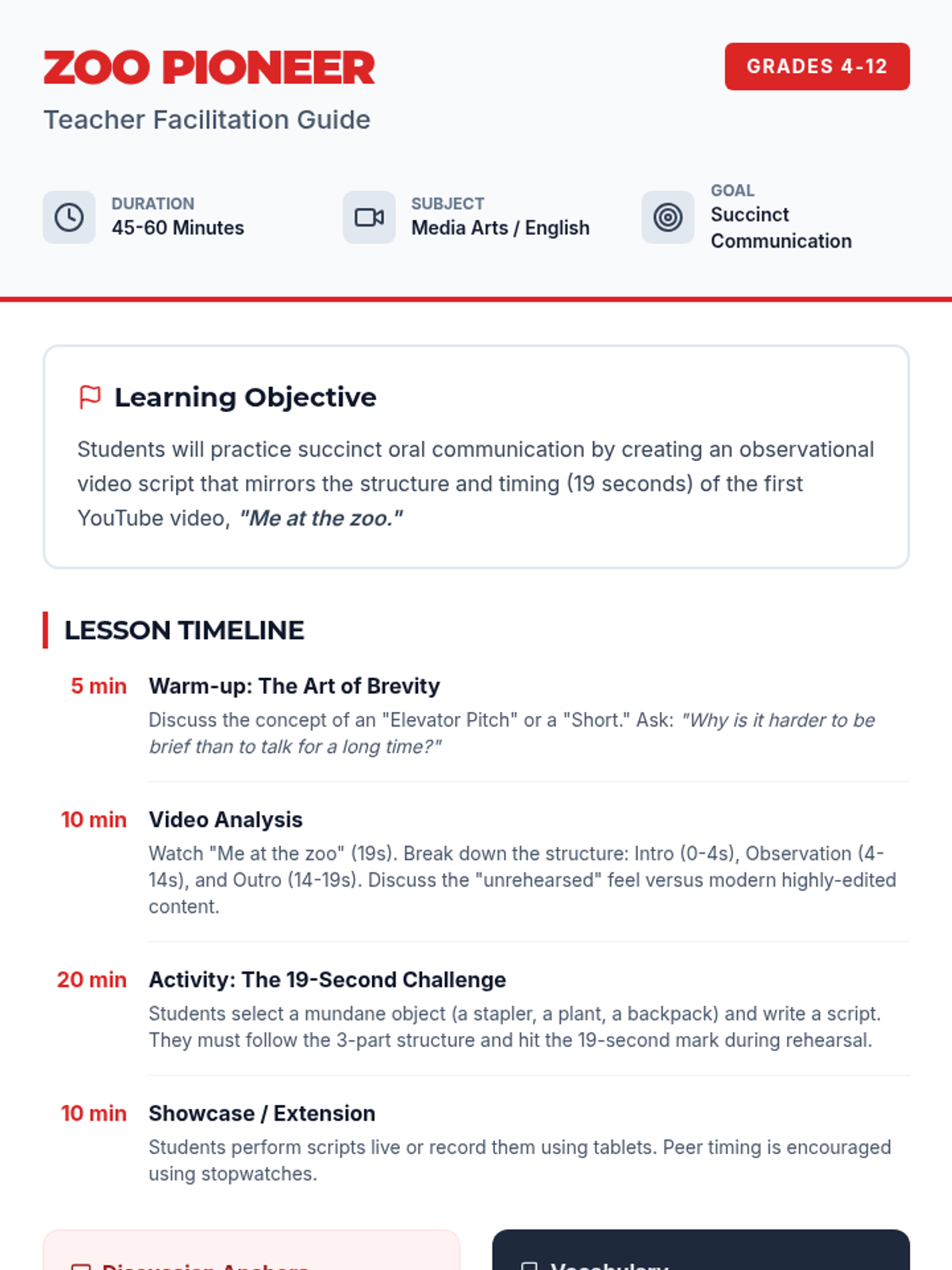
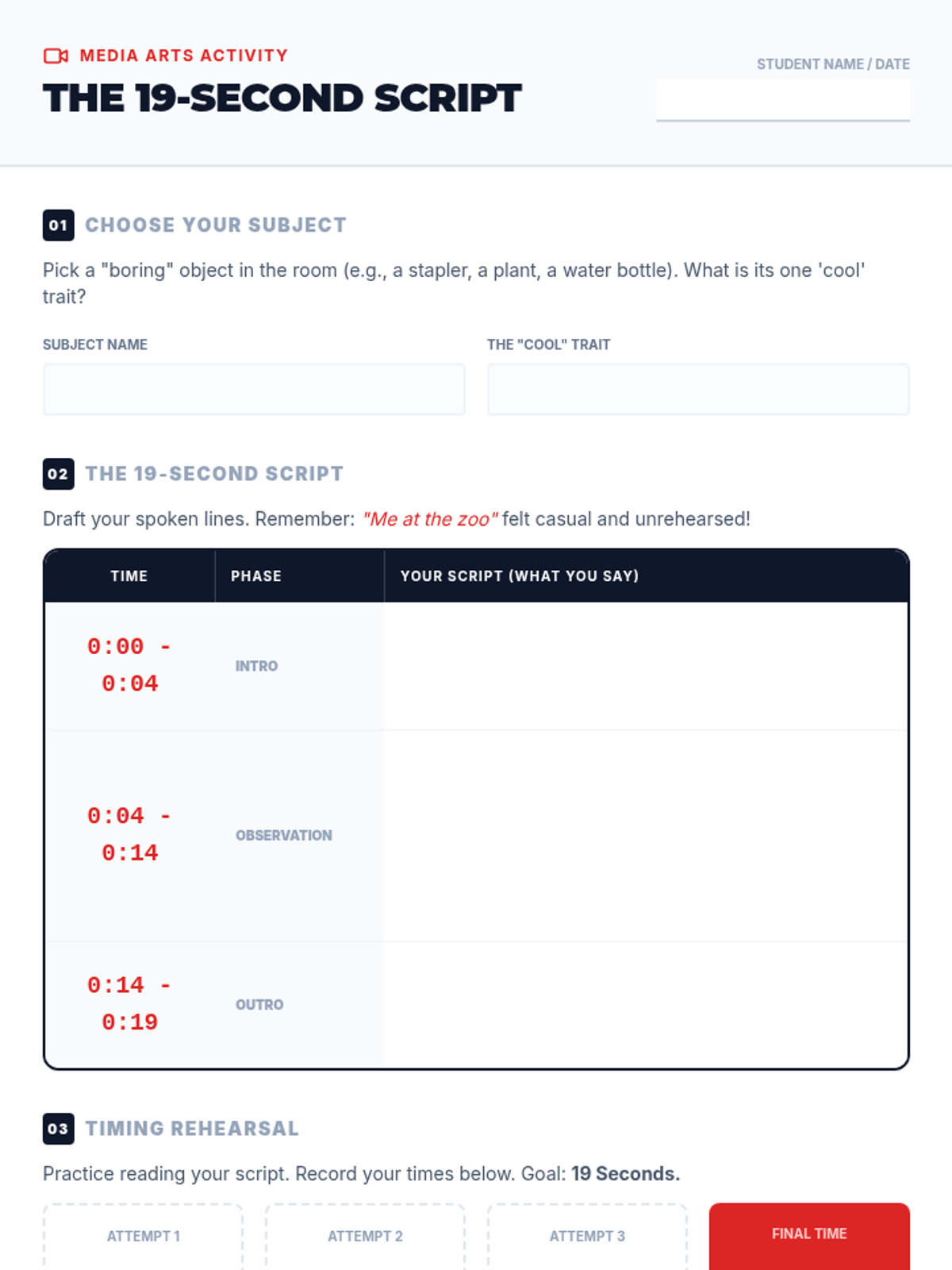
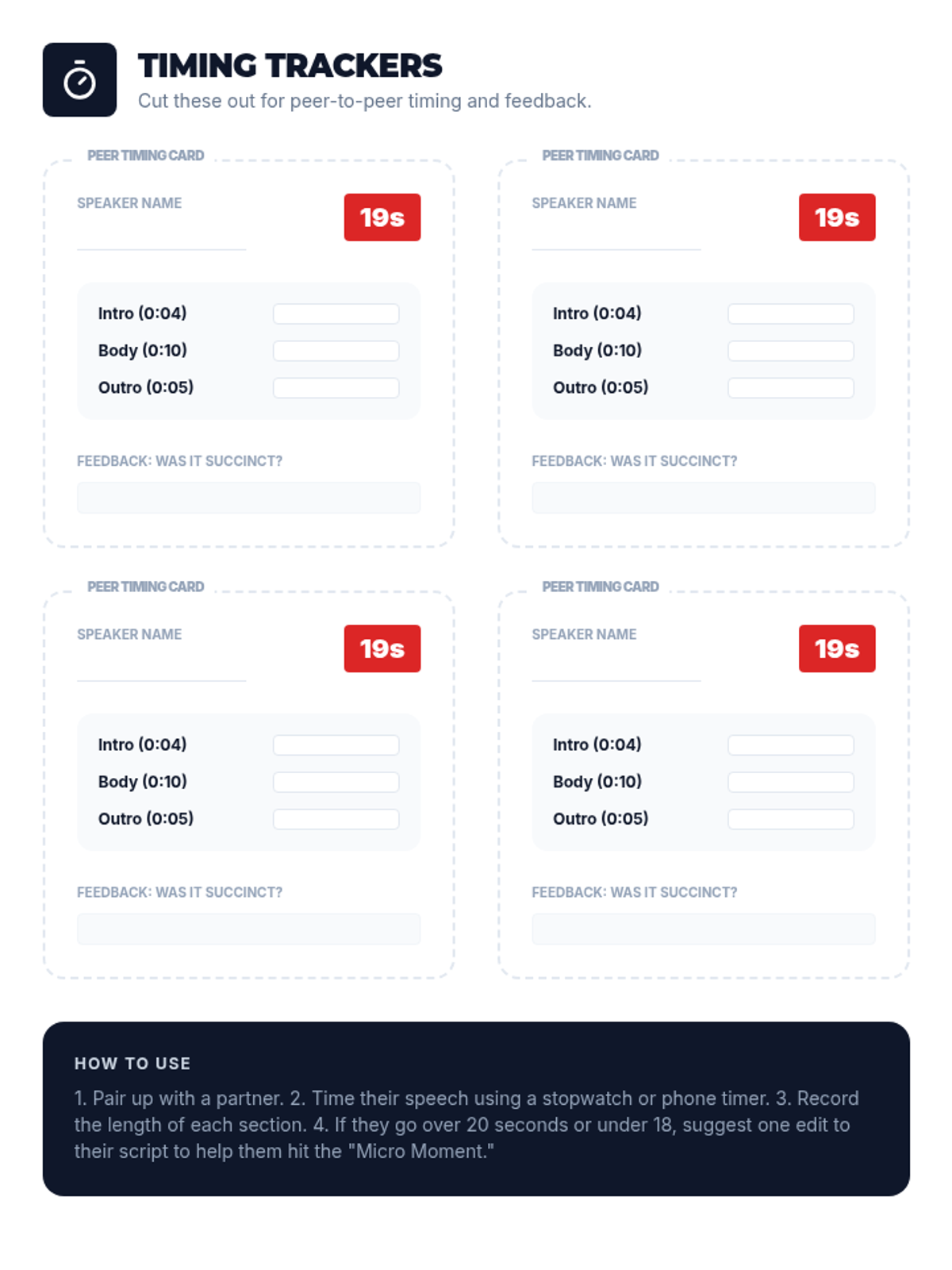
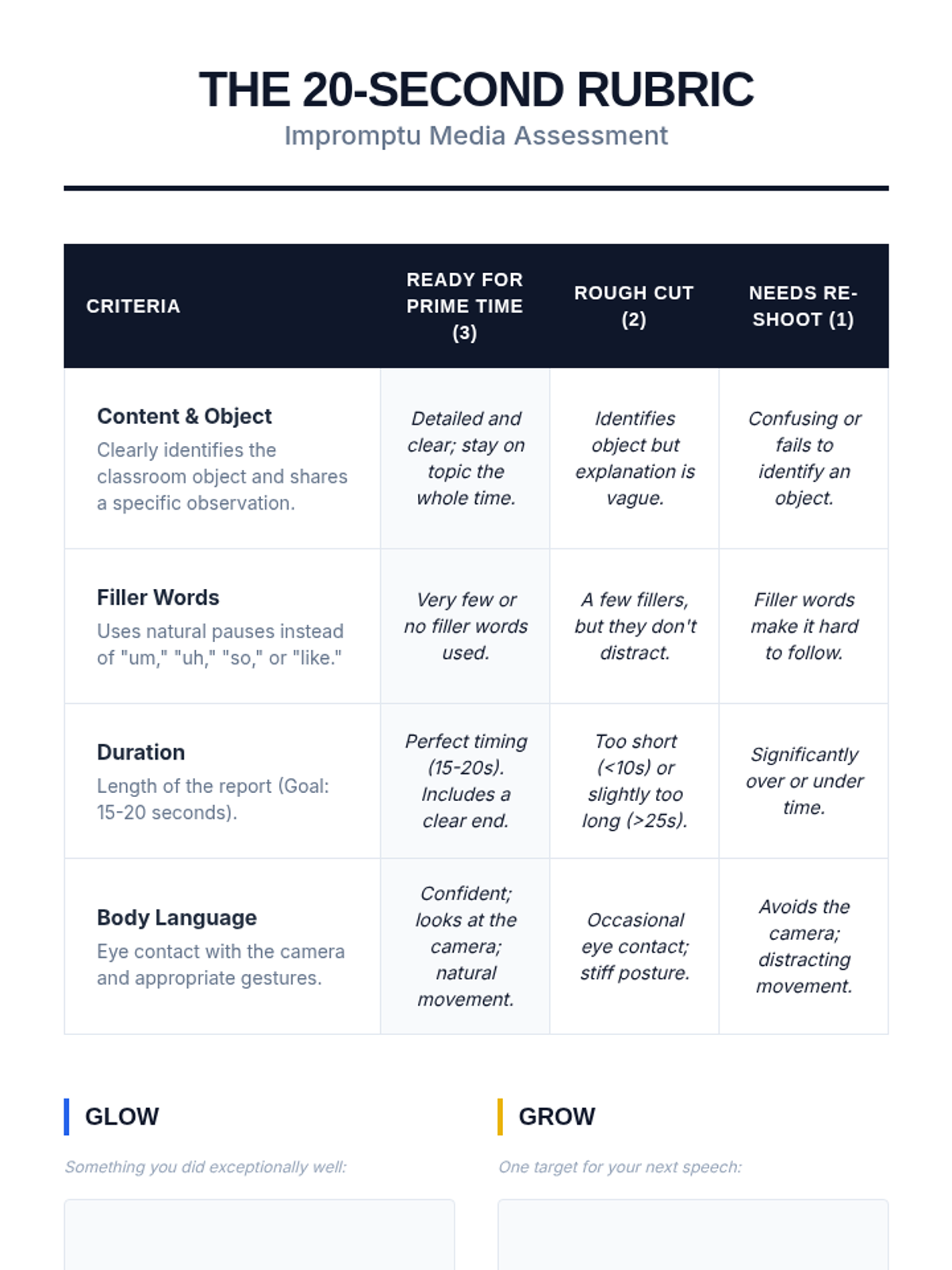
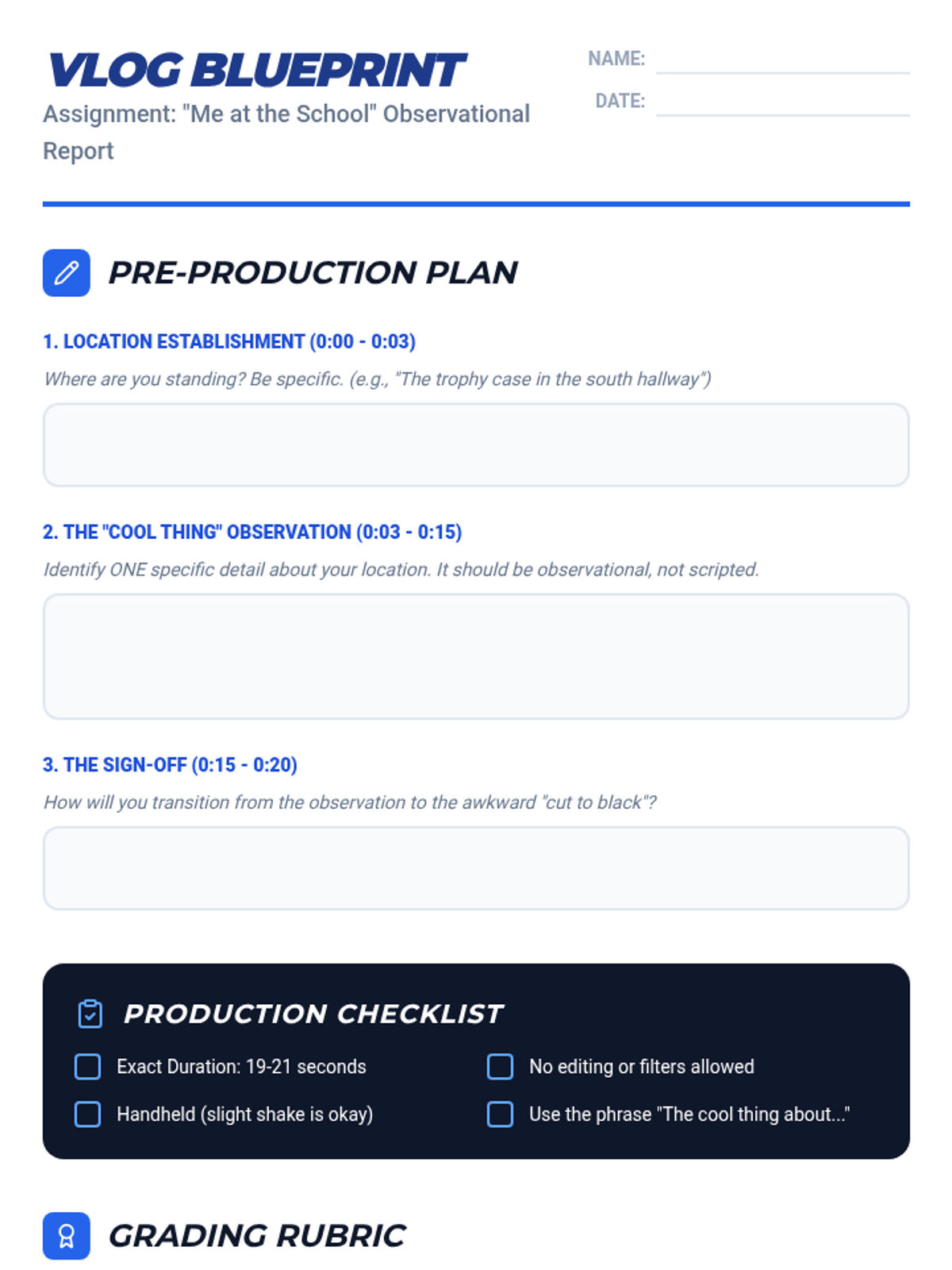
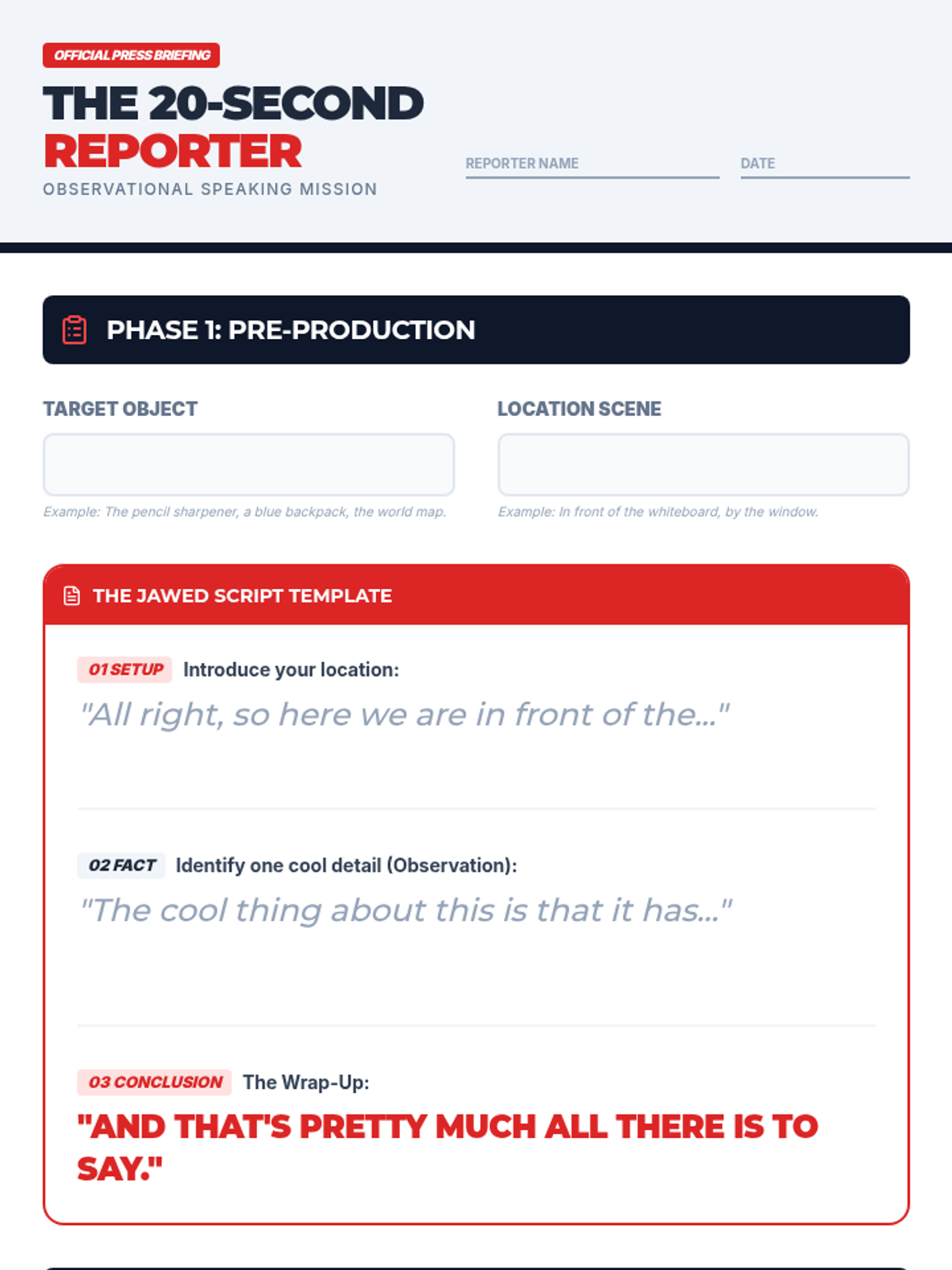
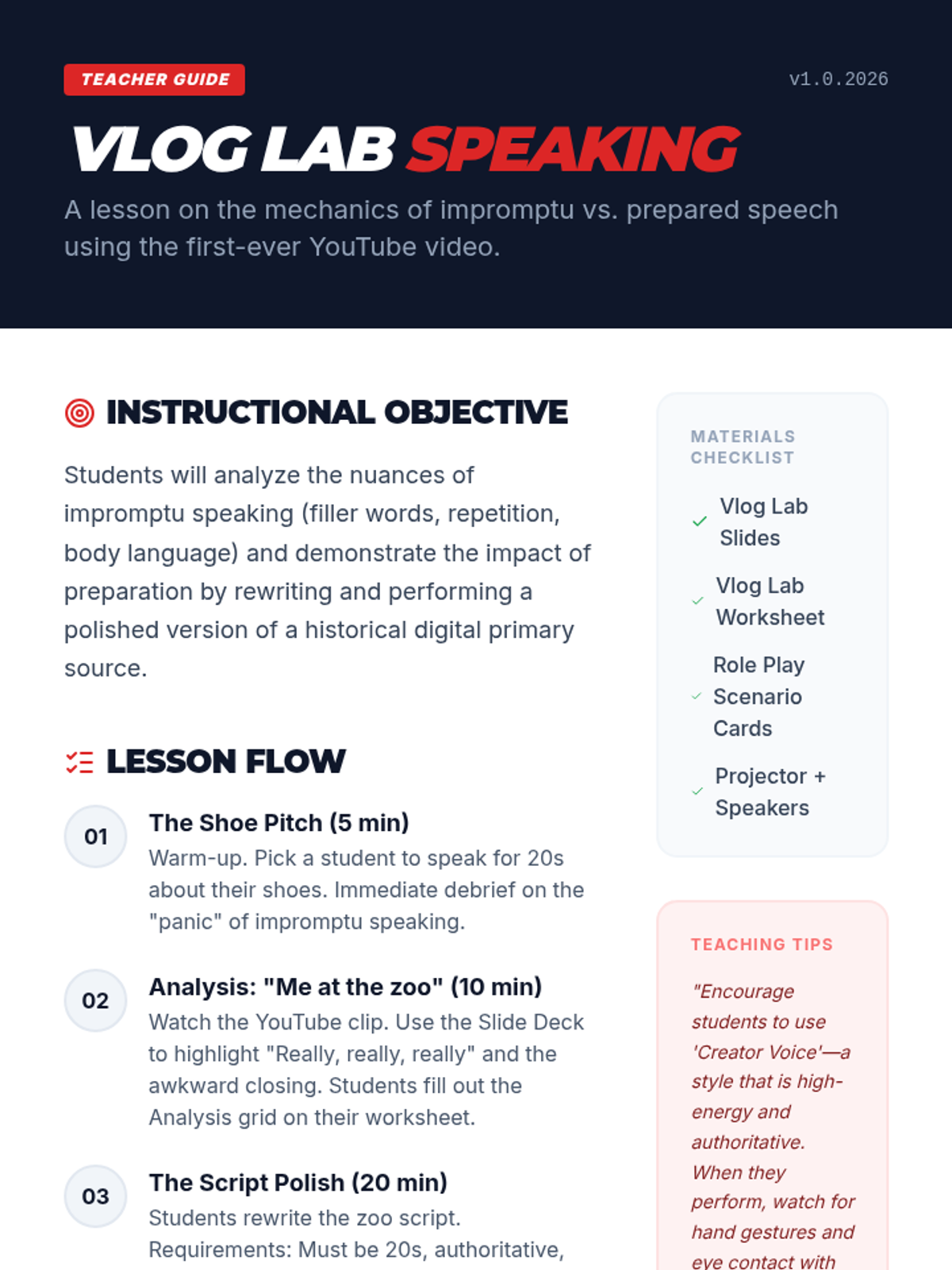
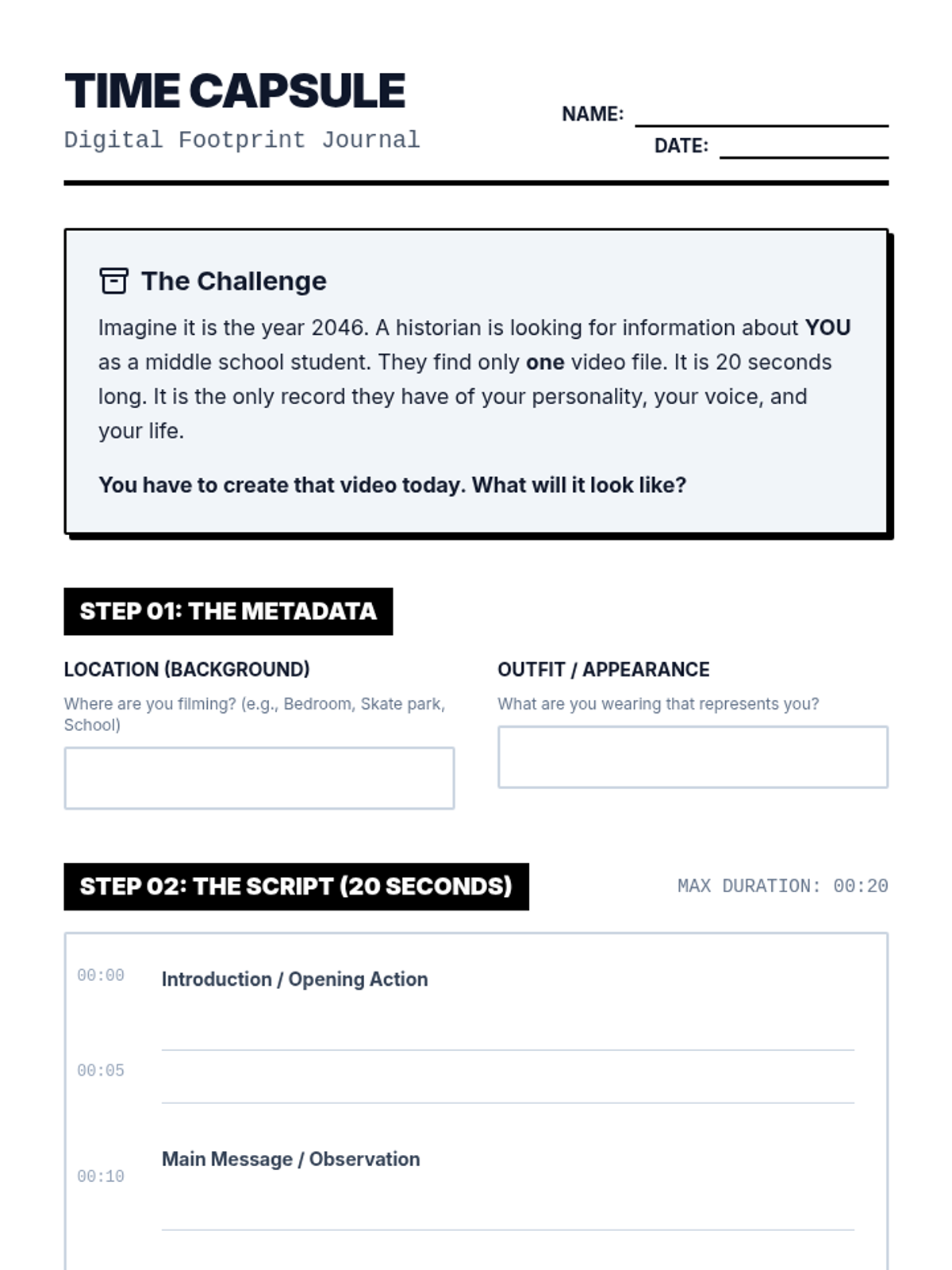
A writing and speaking lesson for 4th-6th graders focused on concise communication, using the 'Me at the zoo' video as a model for creating 19-second vlogs.
Students analyze the first YouTube video, 'Me at the zoo', as a primary source to understand the shift to User-Generated Content (UGC) and 2005 culture through a digital archaeology simulation.
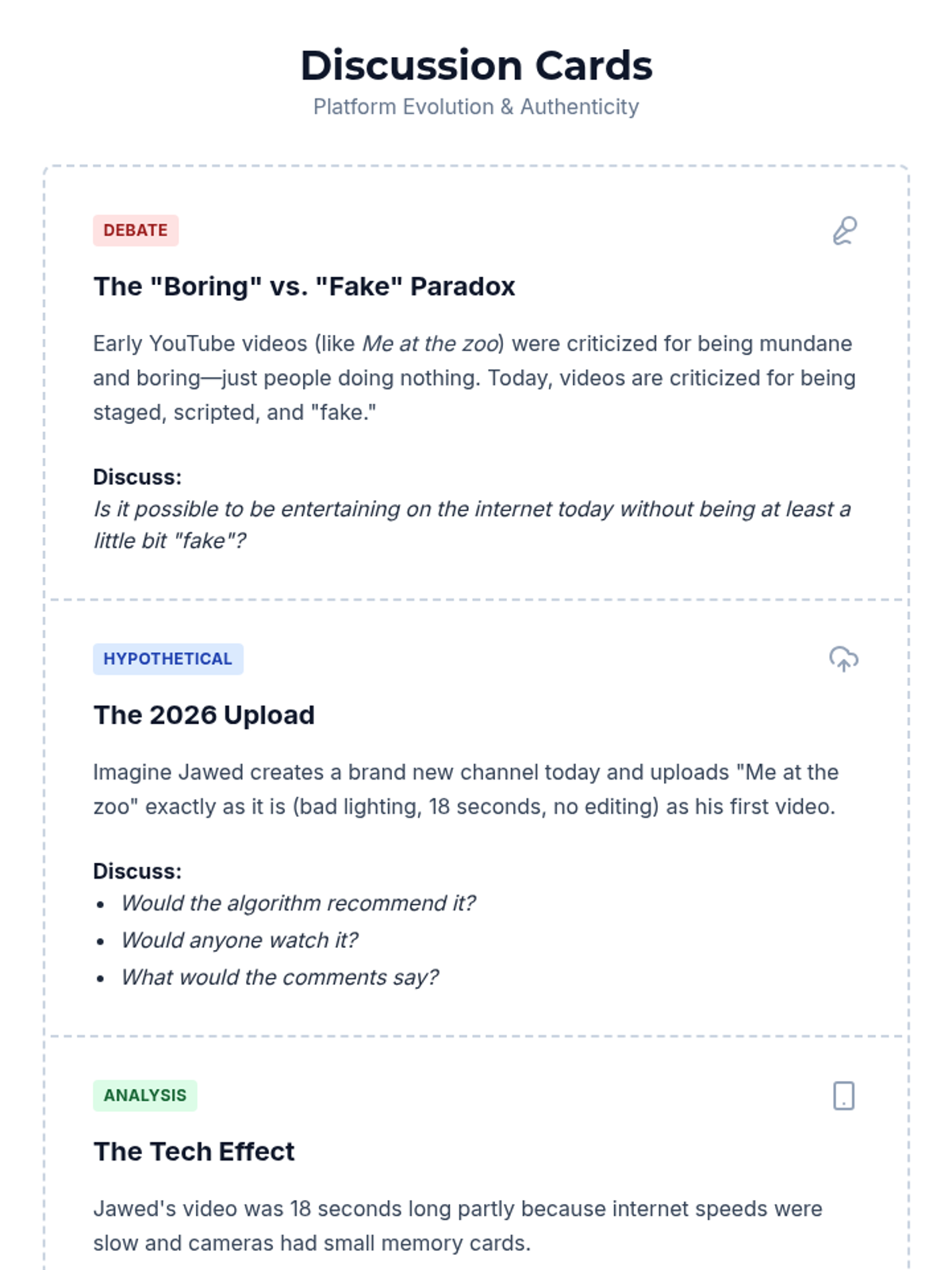
An undergraduate media studies lesson exploring the evolution of authenticity on social media, using the first-ever YouTube video as a case study for the 'aesthetic of banality' and the shift toward the creator economy.
A lesson regarding the evaluation of primary sources in the digital age, focusing on the first YouTube video.
A lesson exploring the psychological shift in social media from documenting the world to documenting the self, anchoring on the first YouTube video from 2005.
A media literacy lesson comparing early internet culture (specifically the first YouTube video) to the modern Creator Economy.
A media studies lesson analyzing the first YouTube video as a historical artifact, exploring the shift to user-generated content and early internet culture.
This lesson introduces business students to the concept of a Minimum Viable Product (MVP) through the historical lens of YouTube's first-ever upload, challenging them to prioritize core functionality over perfection.
A 50-minute lesson for undergraduate marketing students exploring the concept of Minimum Viable Product (MVP) through the lens of YouTube's history and its first uploaded video.
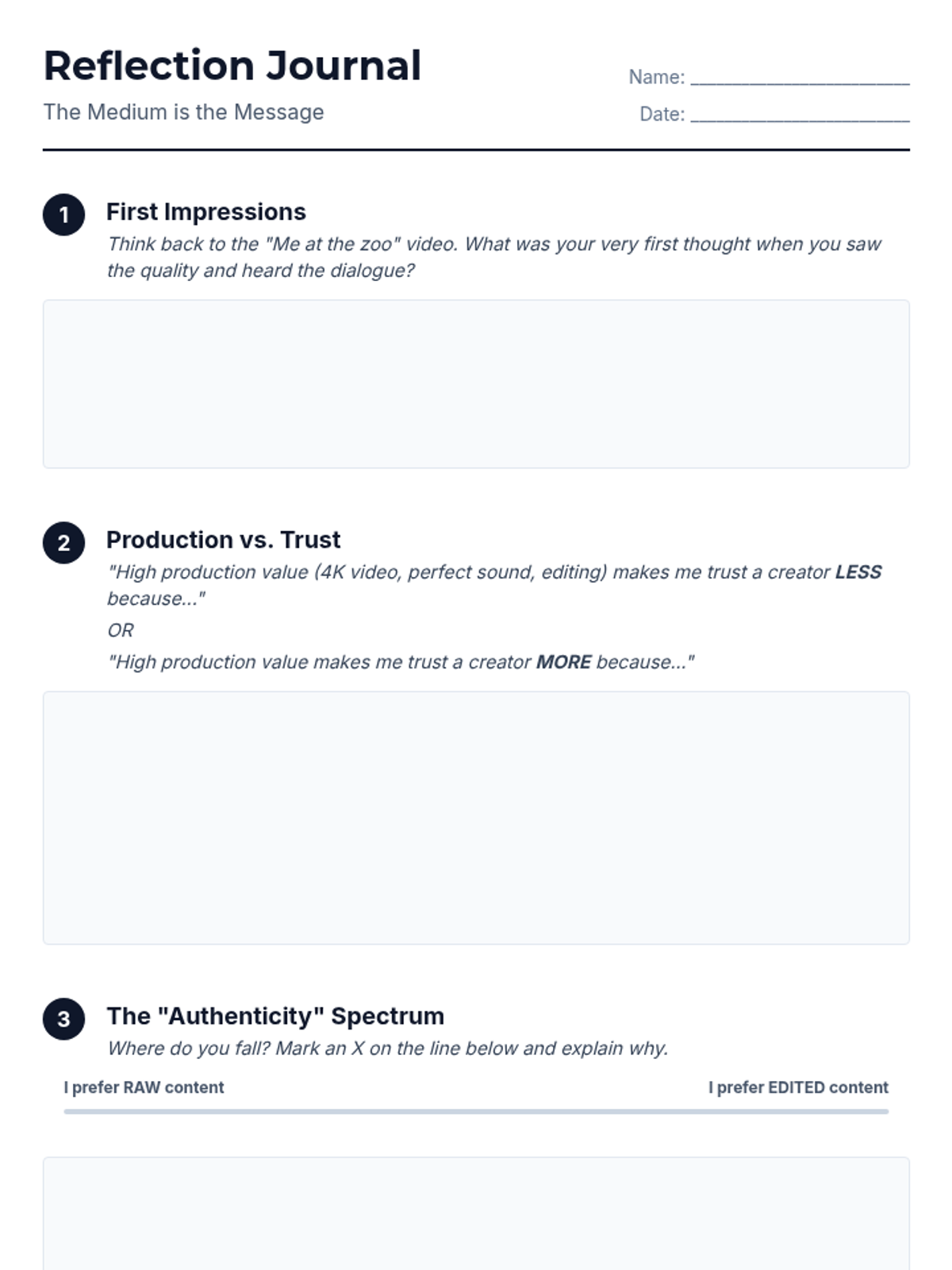
A lesson exploring the transformation of digital media production through the lens of YouTube's first video, 'Me at the zoo', contrasting early raw footage with modern high-production content.
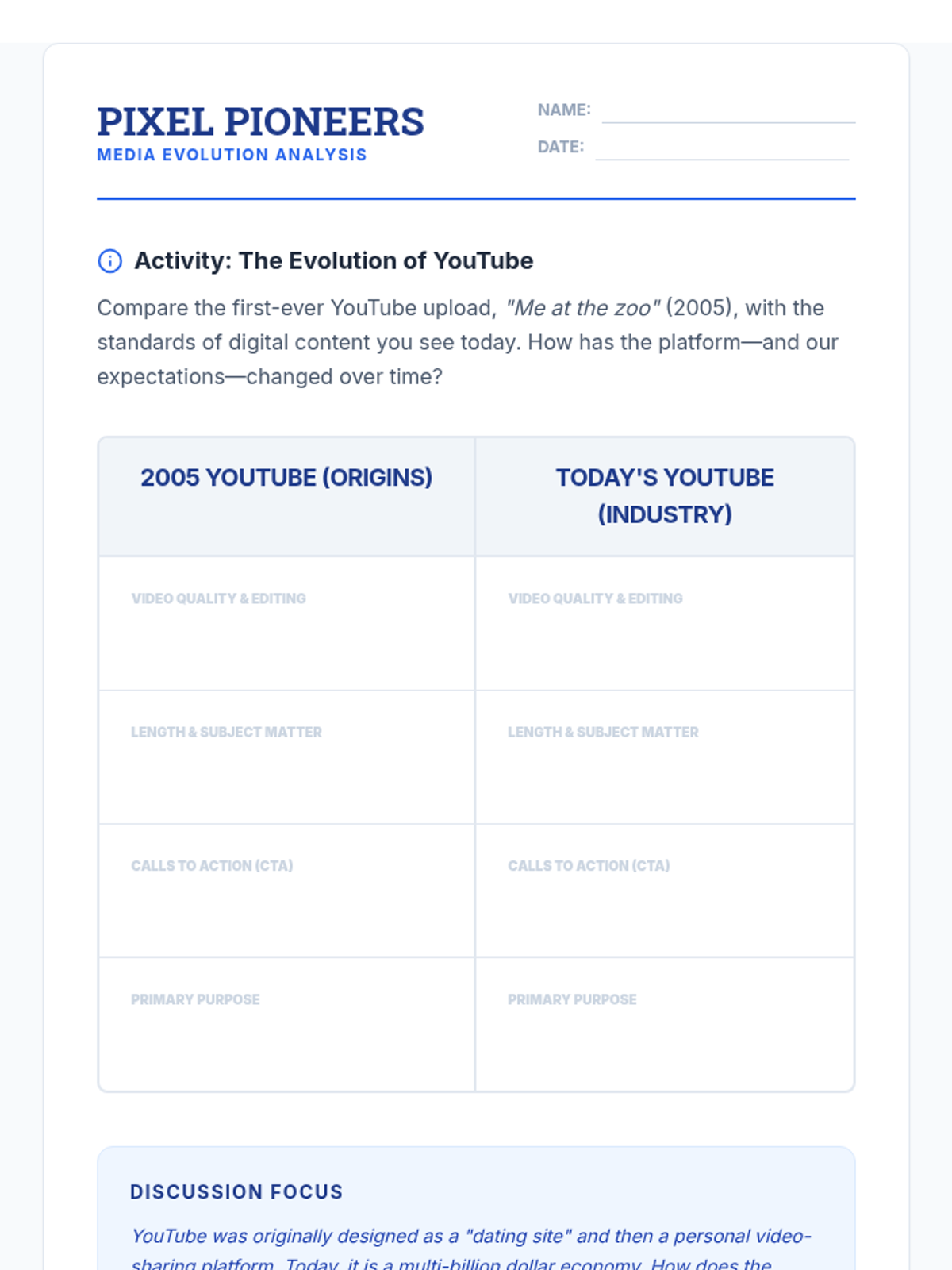
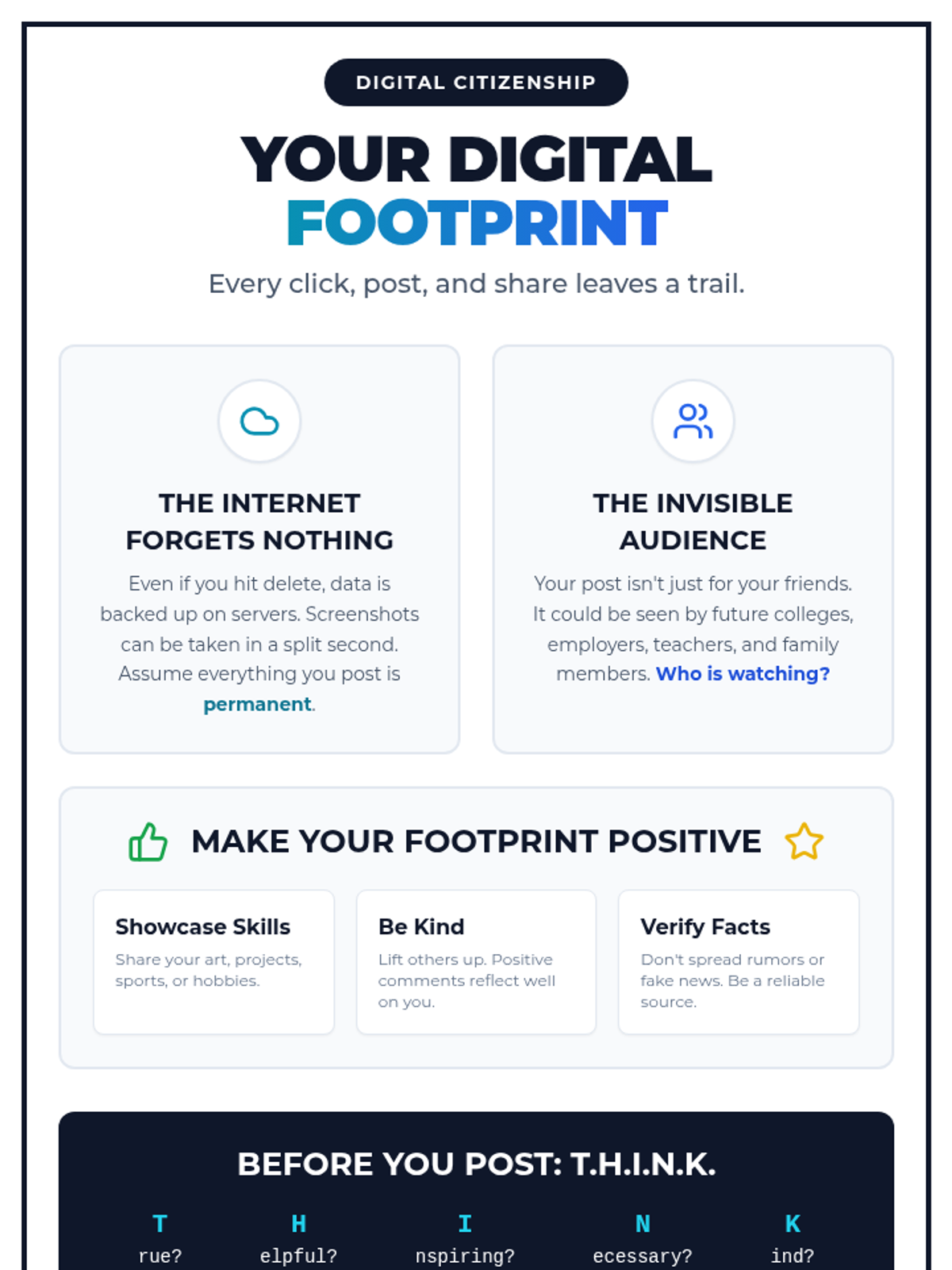
A lesson for elementary students exploring the permanence of the internet through the first-ever YouTube video, 'Me at the zoo', teaching the concept of a digital footprint.
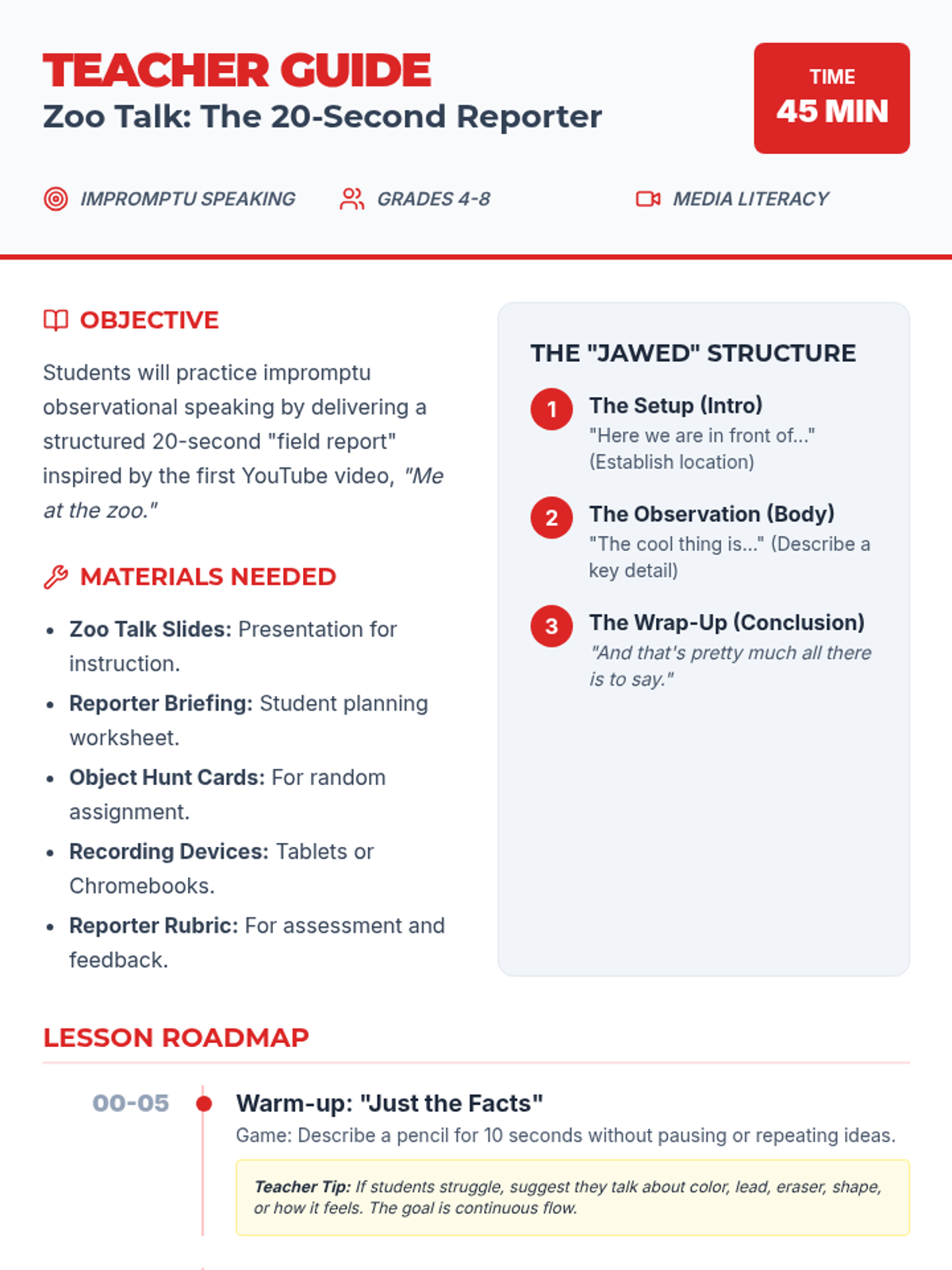
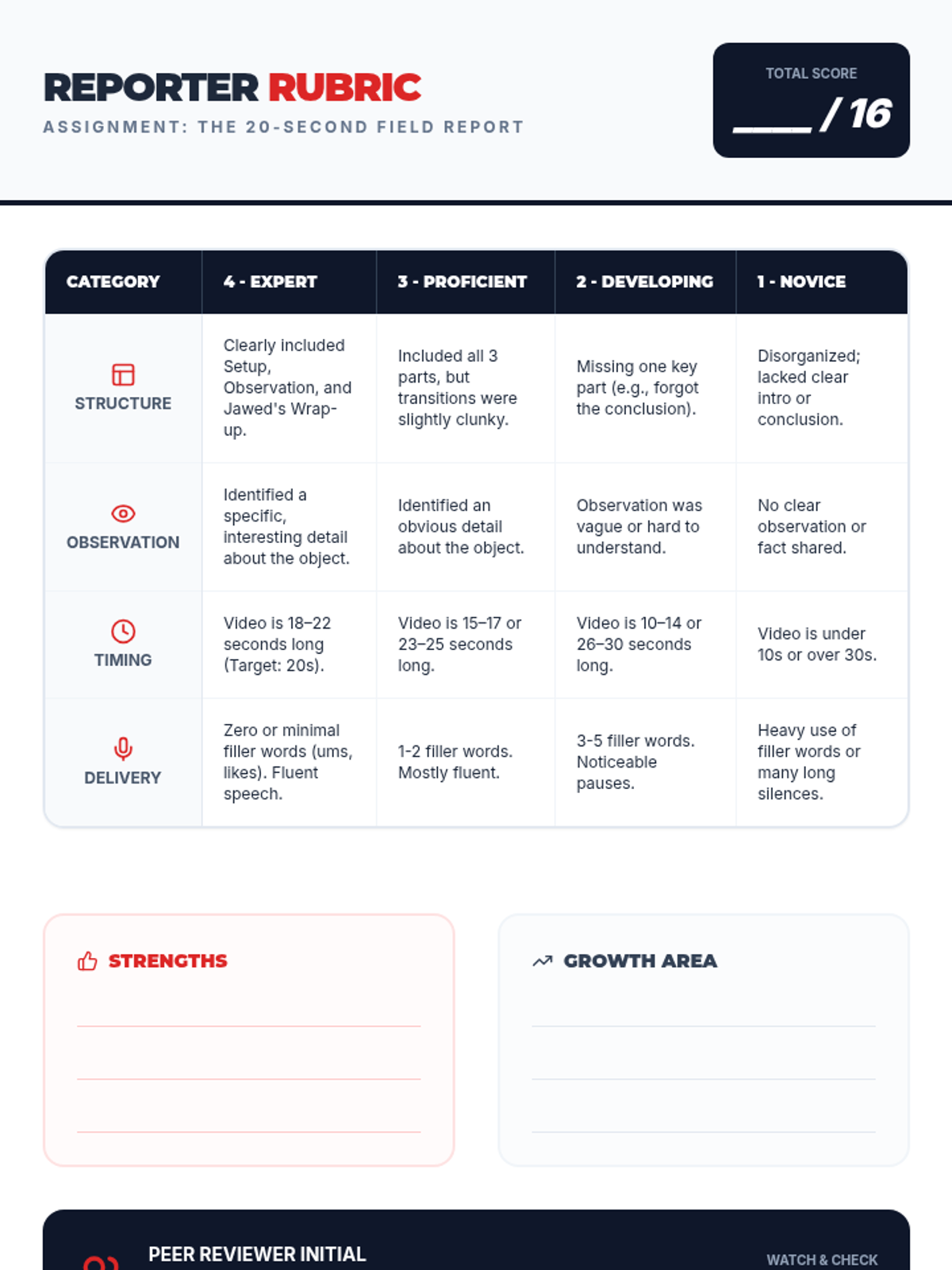
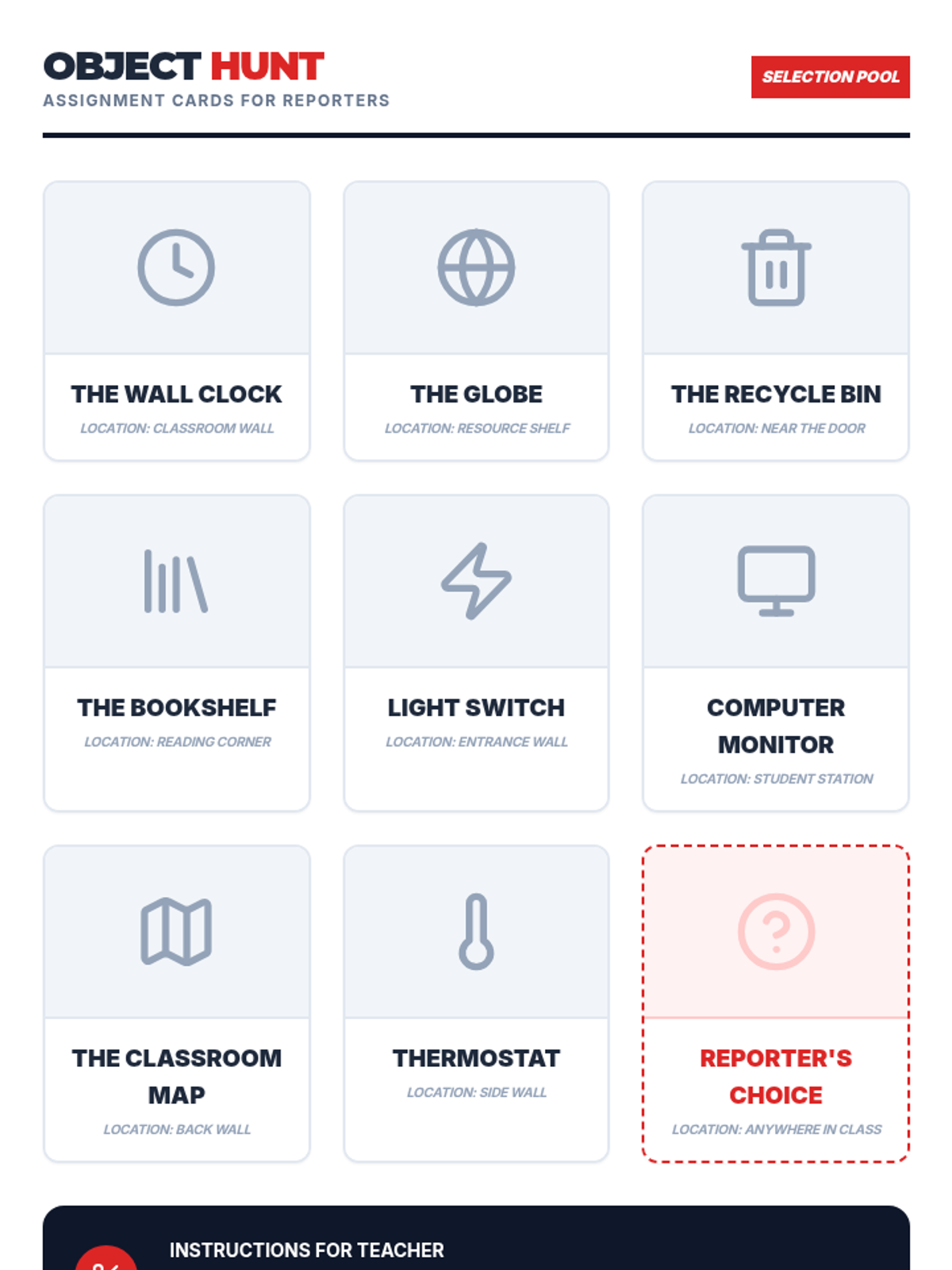
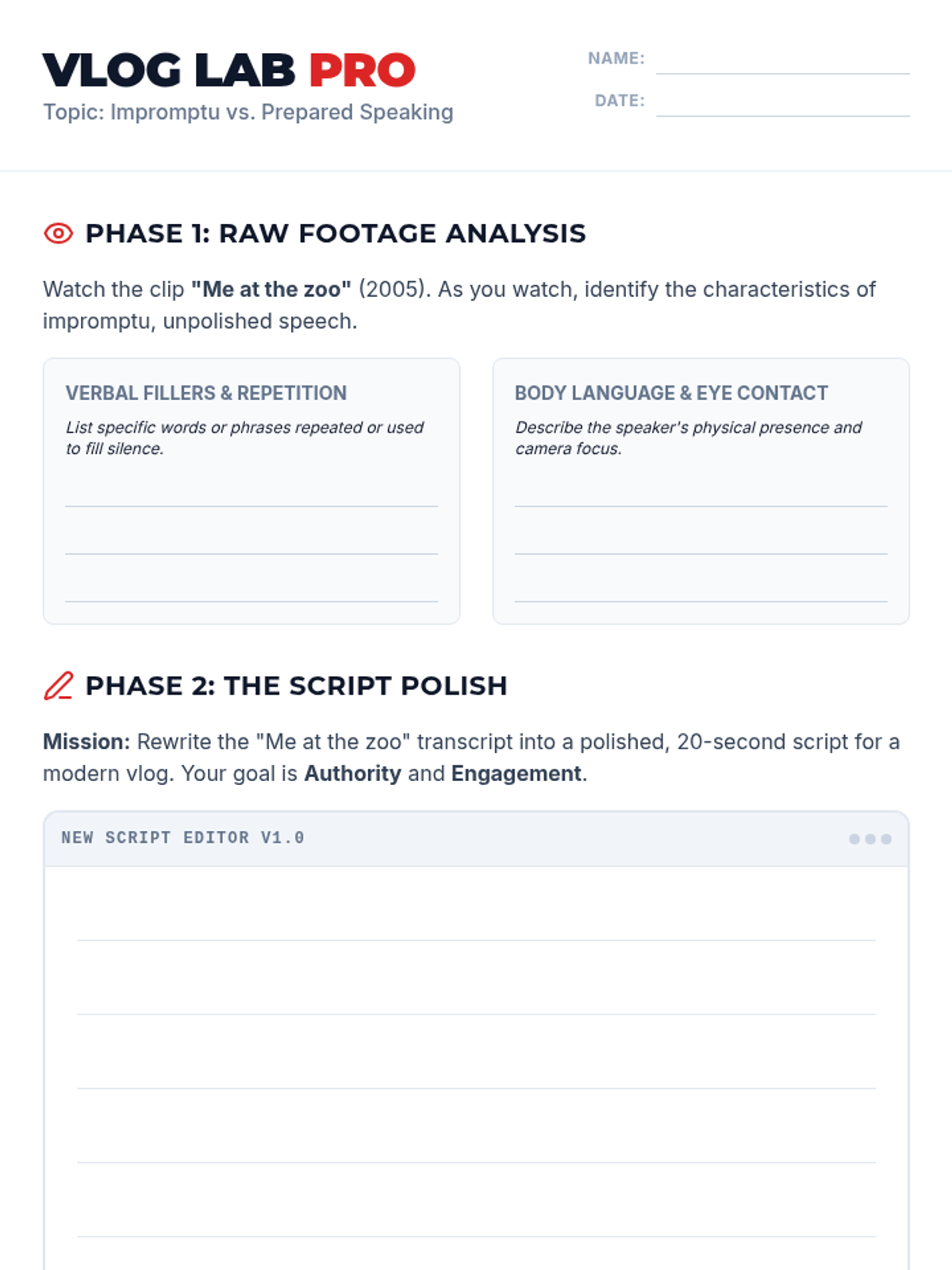
A high school journalism lesson exploring the history of vlogging using the first YouTube video, challenging students to create a concise, unedited 20-second observational video.
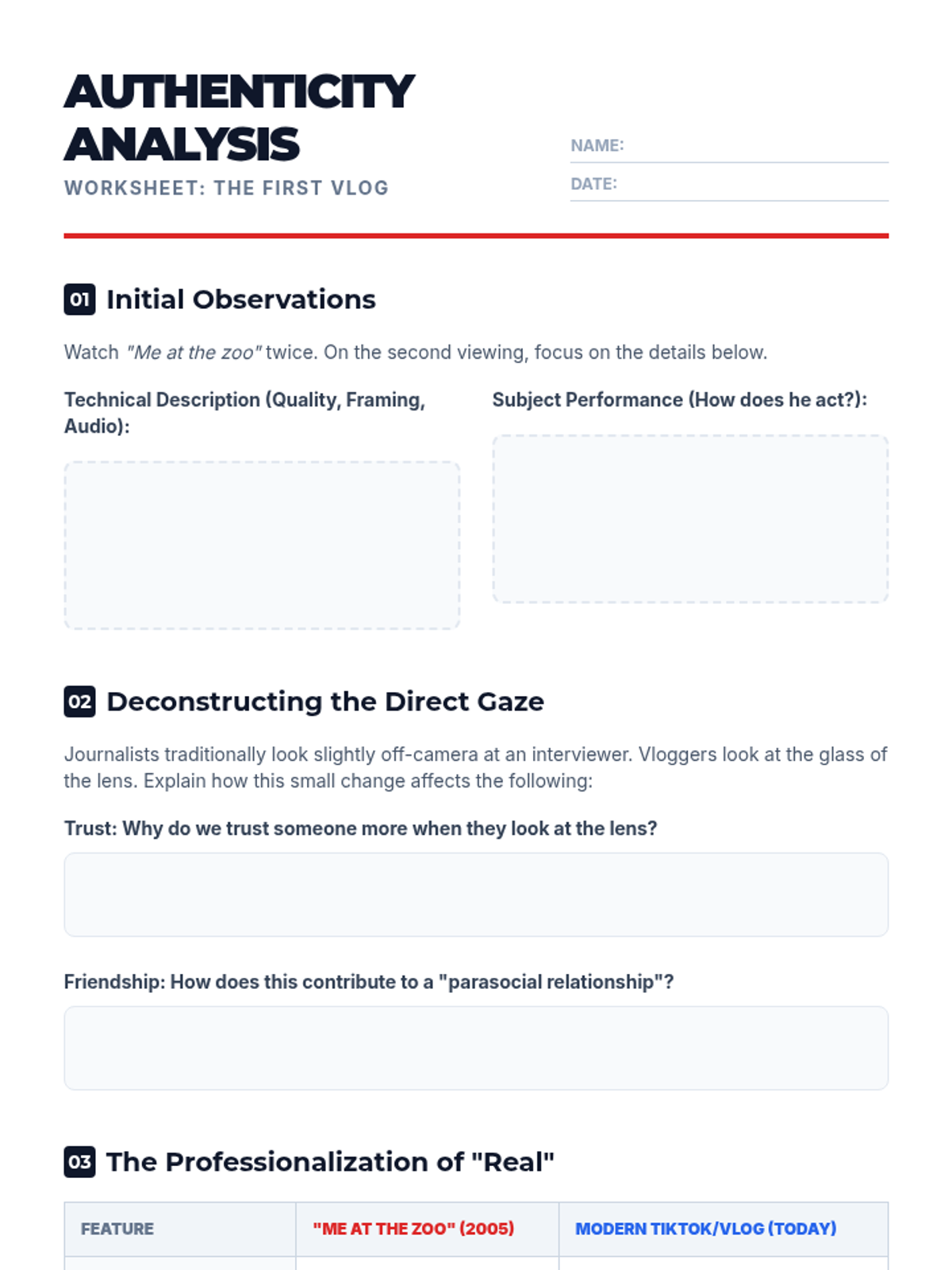
Students investigate the history of user-generated content by contrasting the first YouTube video with modern production standards.
A lesson exploring the transformation of media through the history of YouTube, contrasting the simplicity of the first 'User-Generated Content' with modern, high-production digital storytelling. Students will analyze technical shifts and practice scripting for a simpler era.
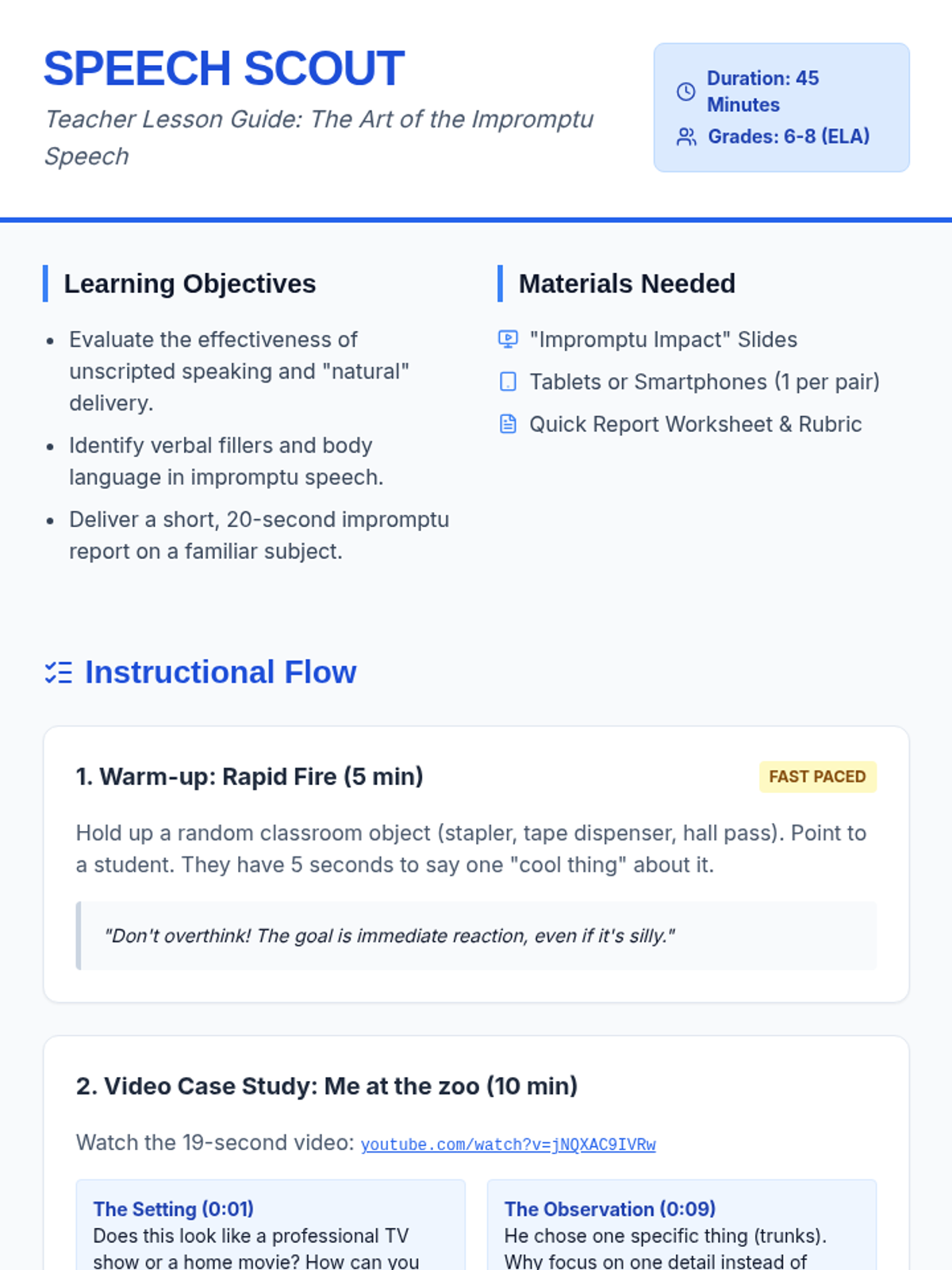
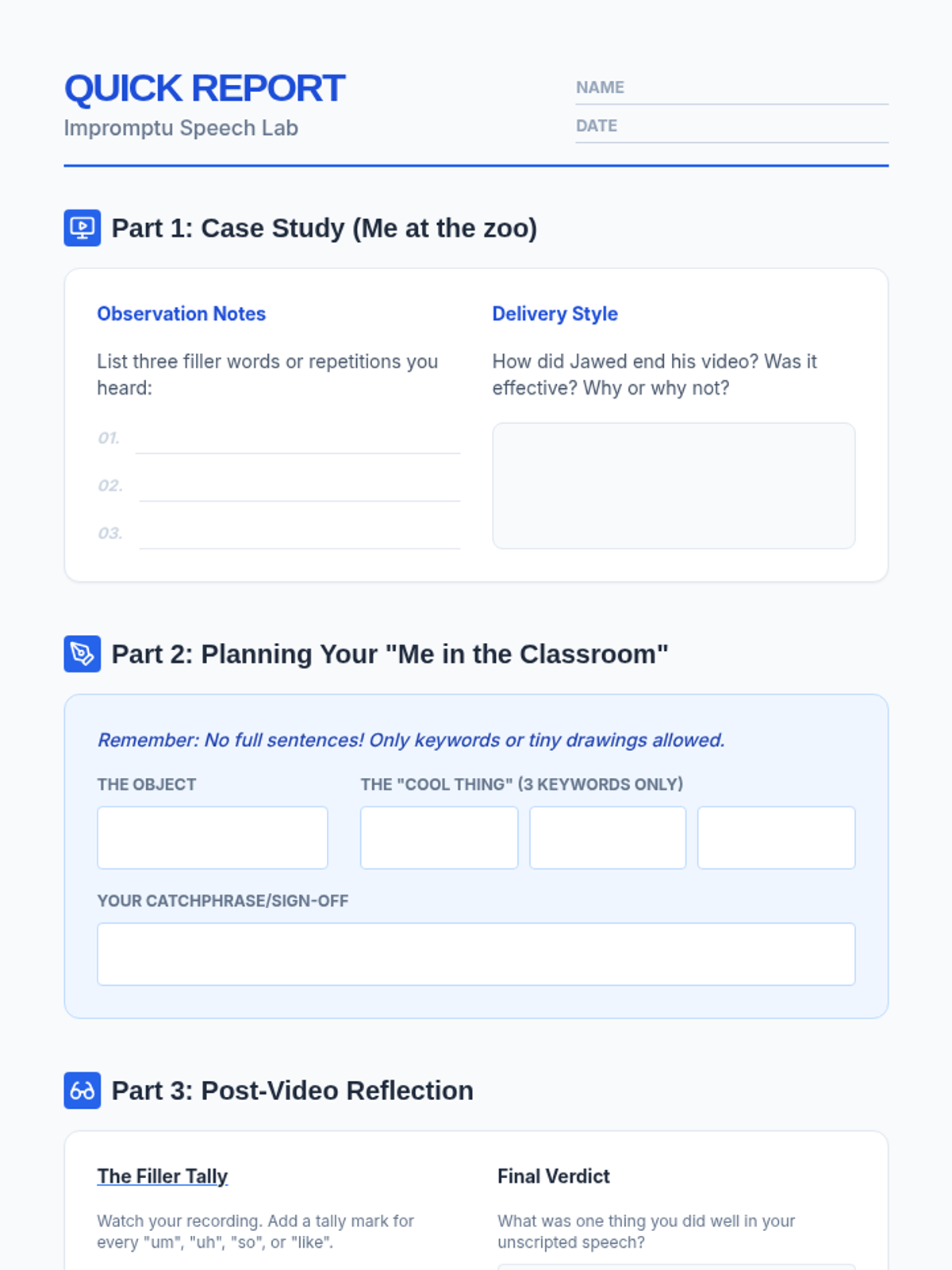
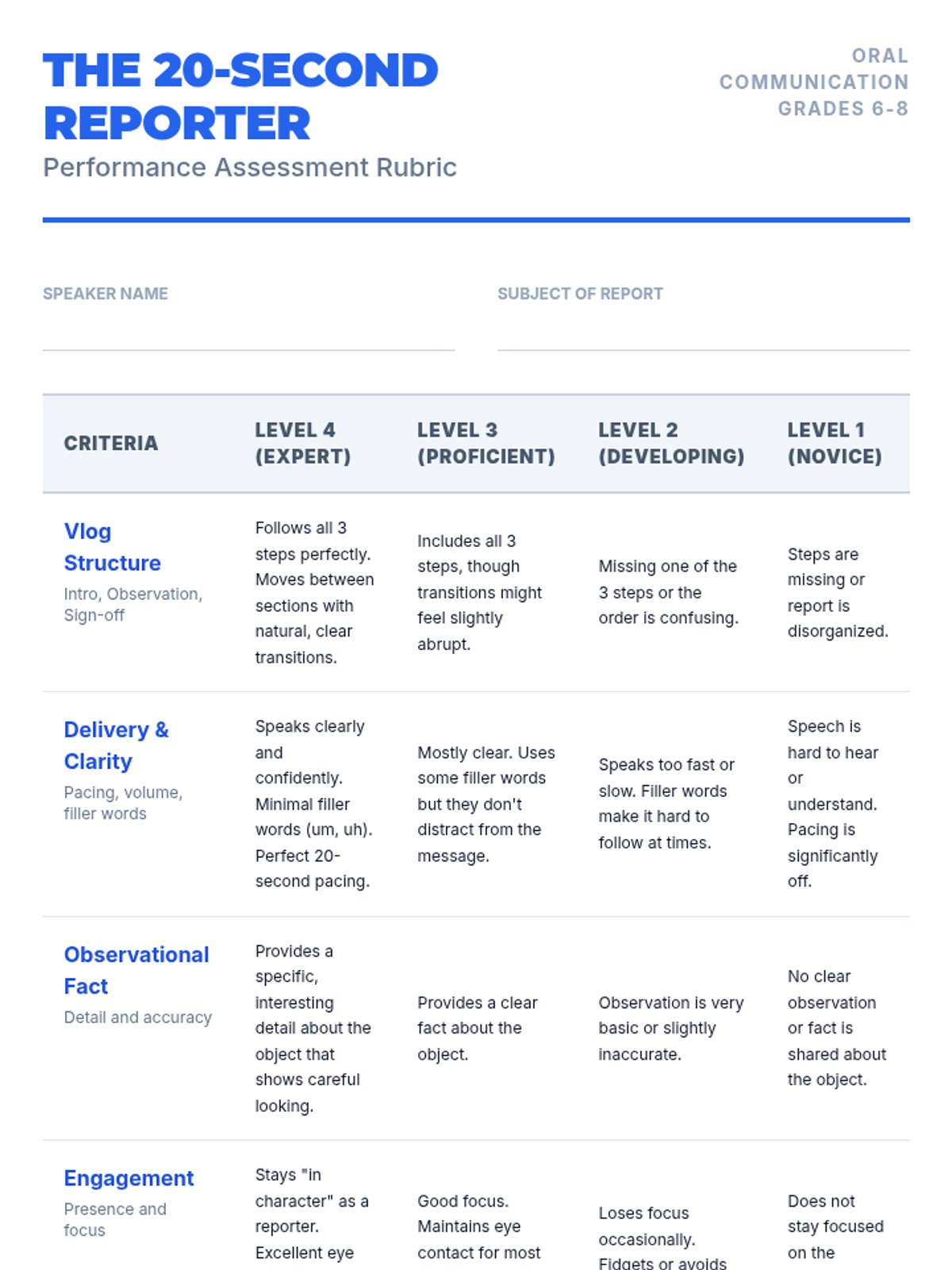
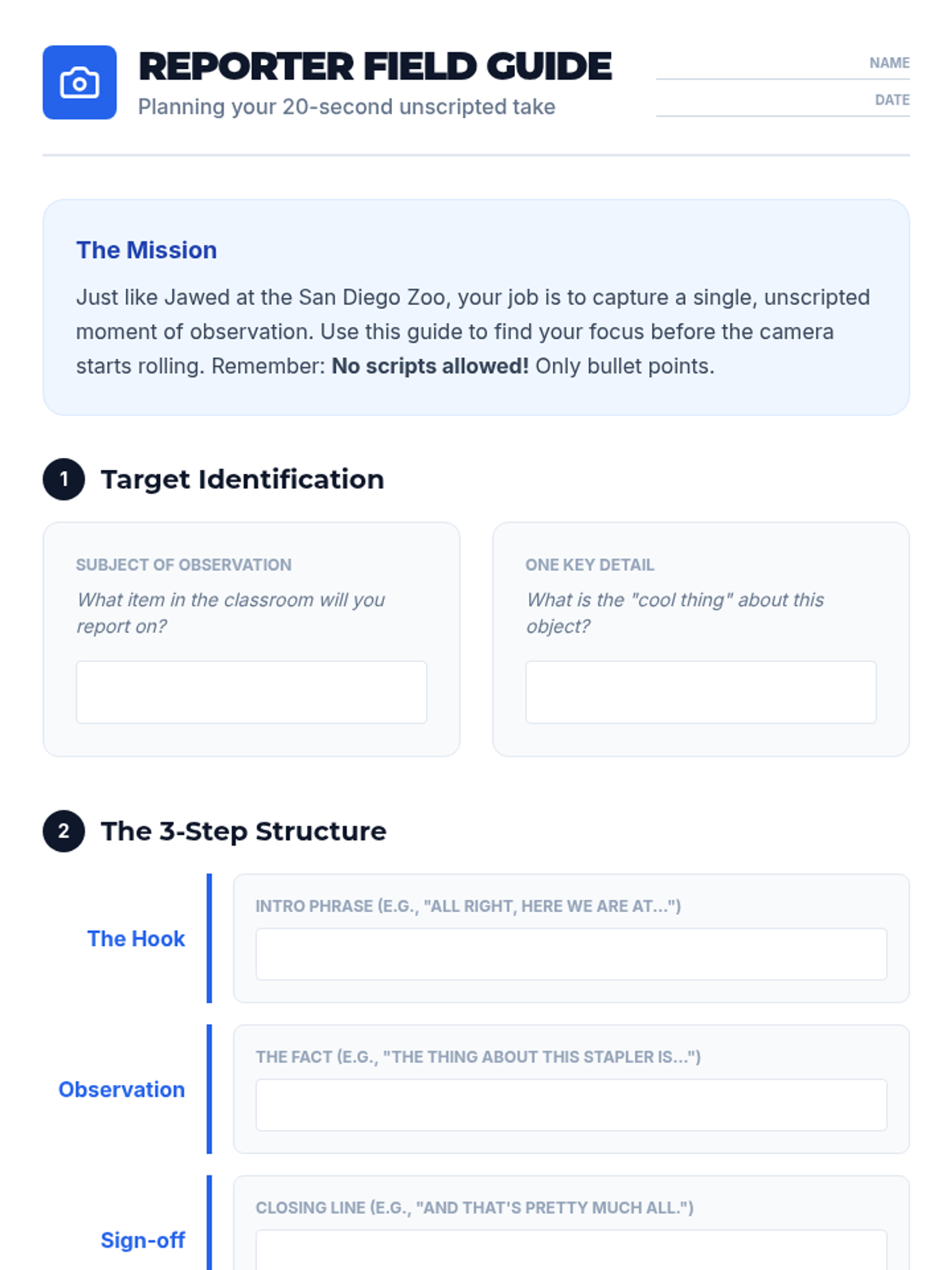
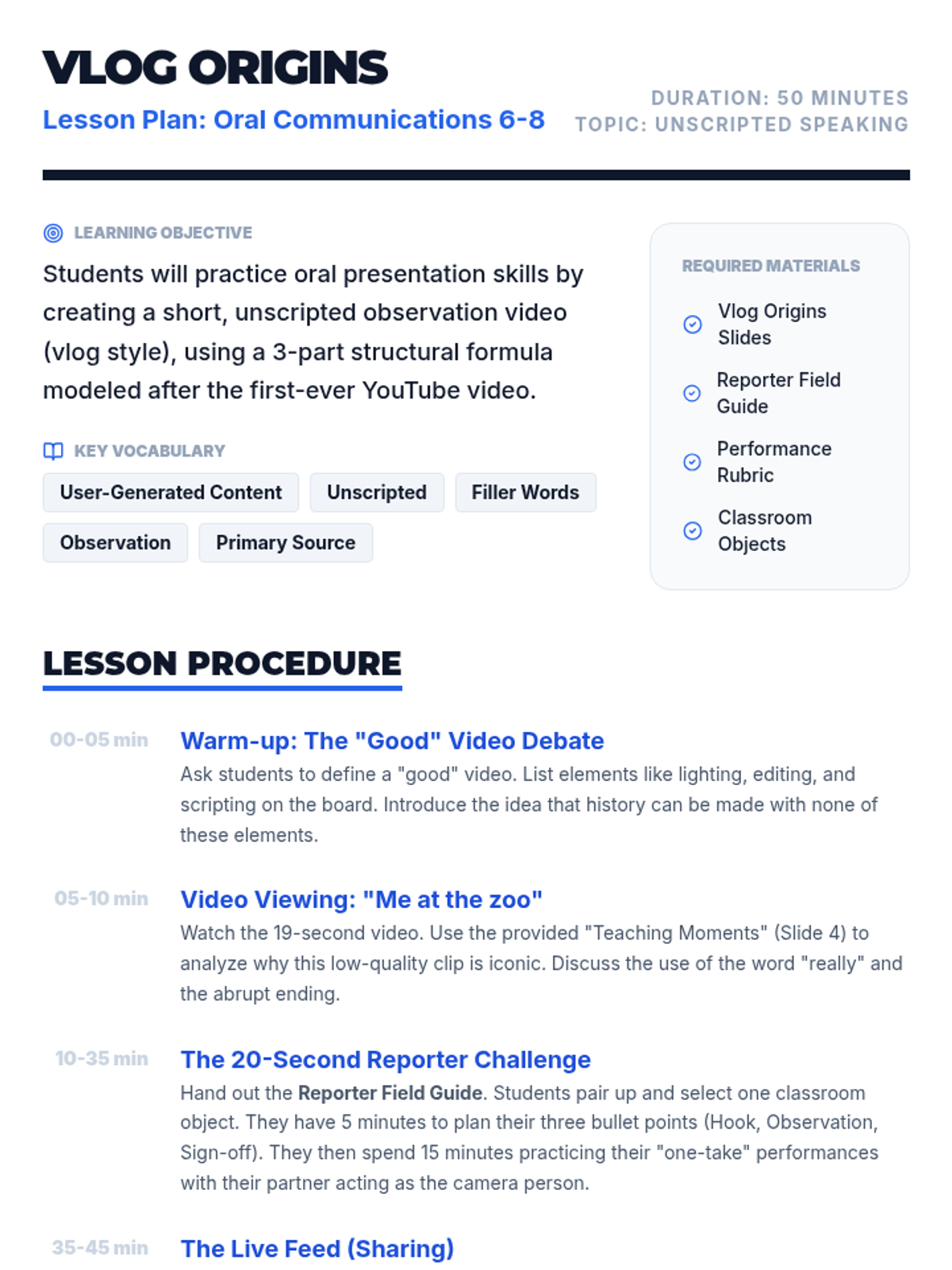
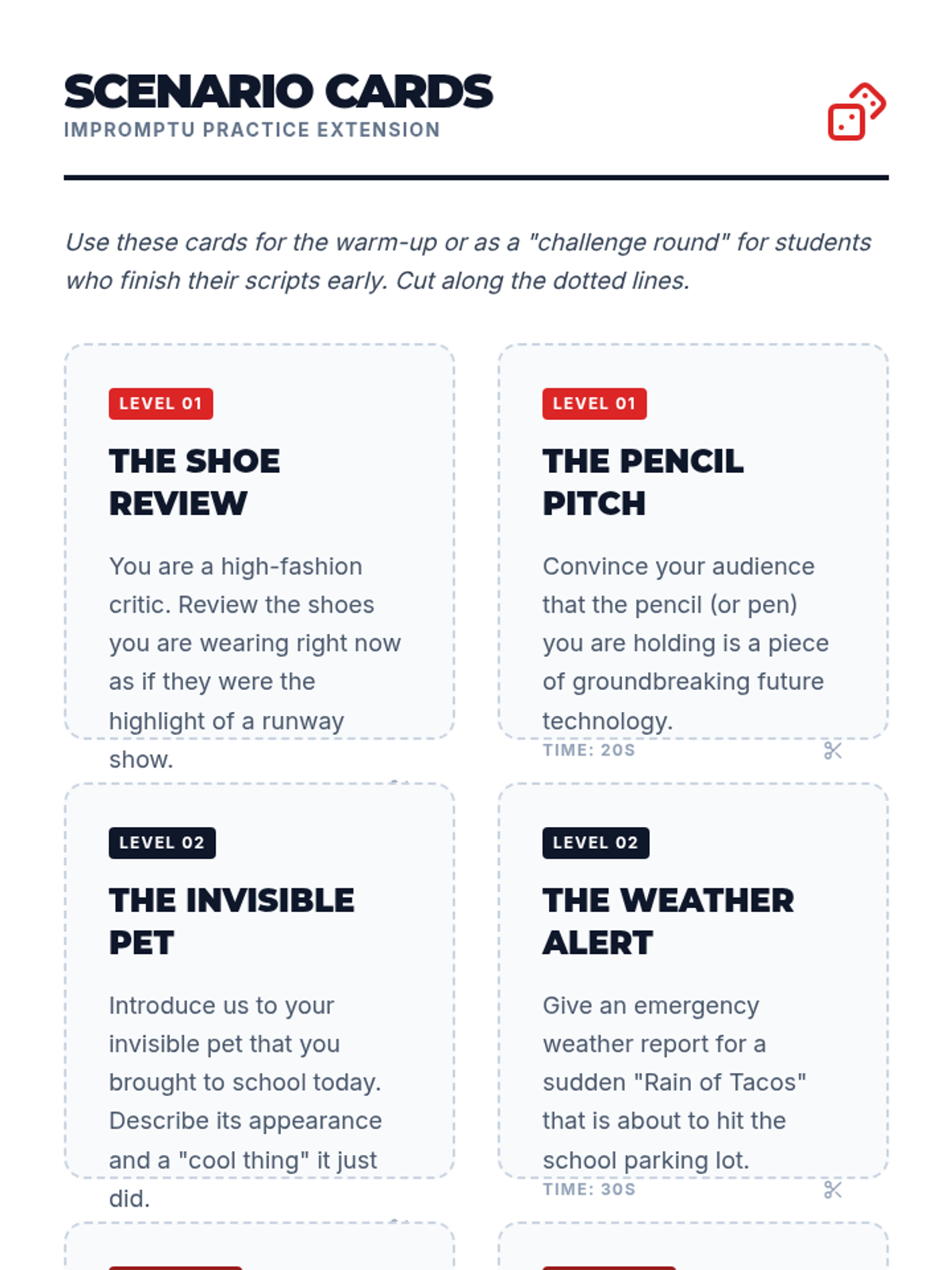
A lesson where students analyze the first-ever YouTube video to learn about unscripted oral communication and then perform their own 20-second observational vlogs.
A high school Computer Science lesson connecting the history of YouTube's first video to concepts of bandwidth, data compression, and internet infrastructure evolution.