Introductory slides for Lesson 1 on income sources, defining income and cash inflow with student-friendly examples.
A visual warm-up activity featuring two 'mystery' patterns with missing elements. Designed to spark discussion about identifying and justifying pattern rules.
1/16
Introductory slide deck for Session 1, establishing the 'Inner Compass' theme. It explains the purpose of the intervention and teaches students how to recognize physiological signals of emotions using the 'Emotions as Data' framework.
1/13
Teacher-facing facilitation guide for Session 2. Includes pacing, demonstration instructions for regulation tools, and a trauma-informed tip regarding breathing exercises.
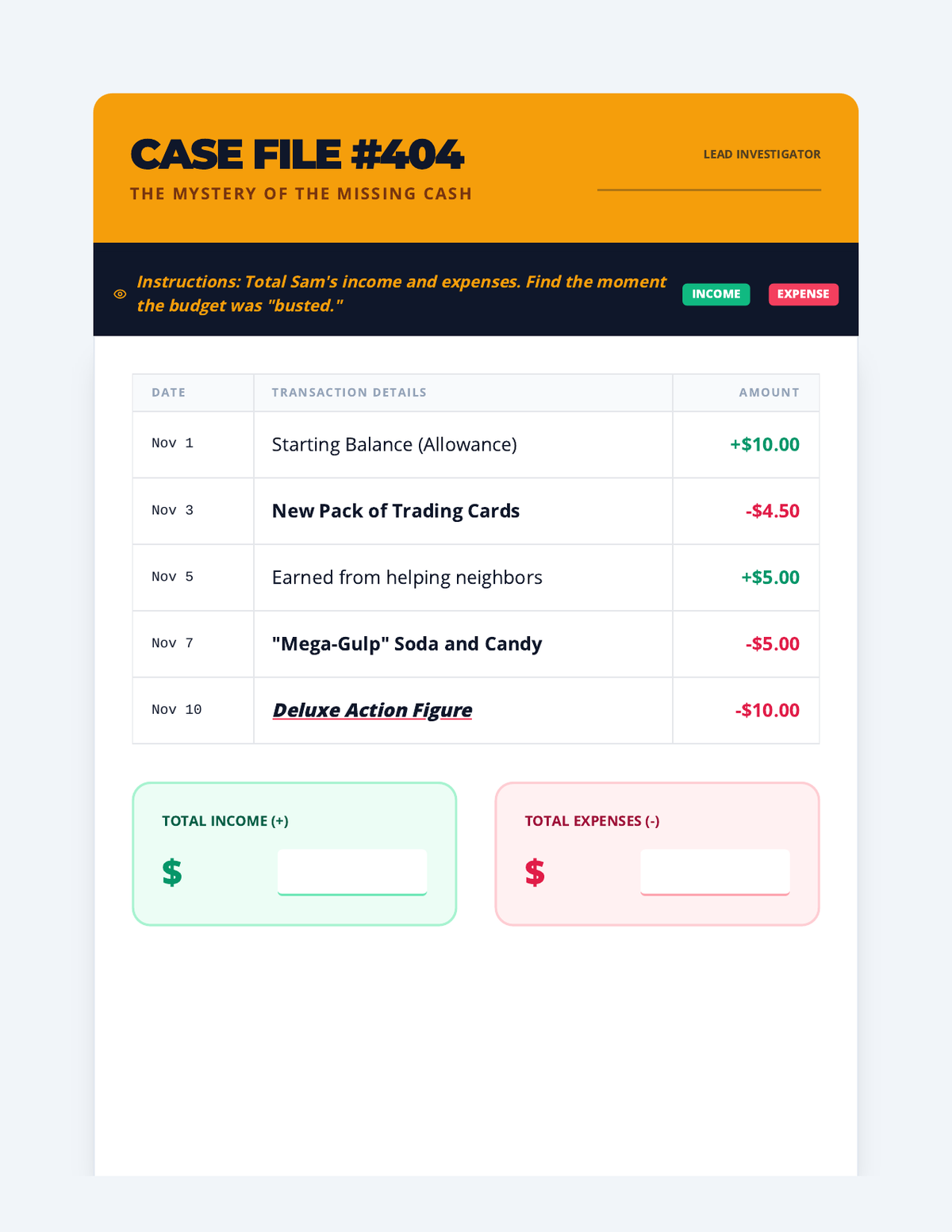
Introductory slides for the first lesson on personal cash flow, covering income, expenses, and the difference between fixed and variable costs.
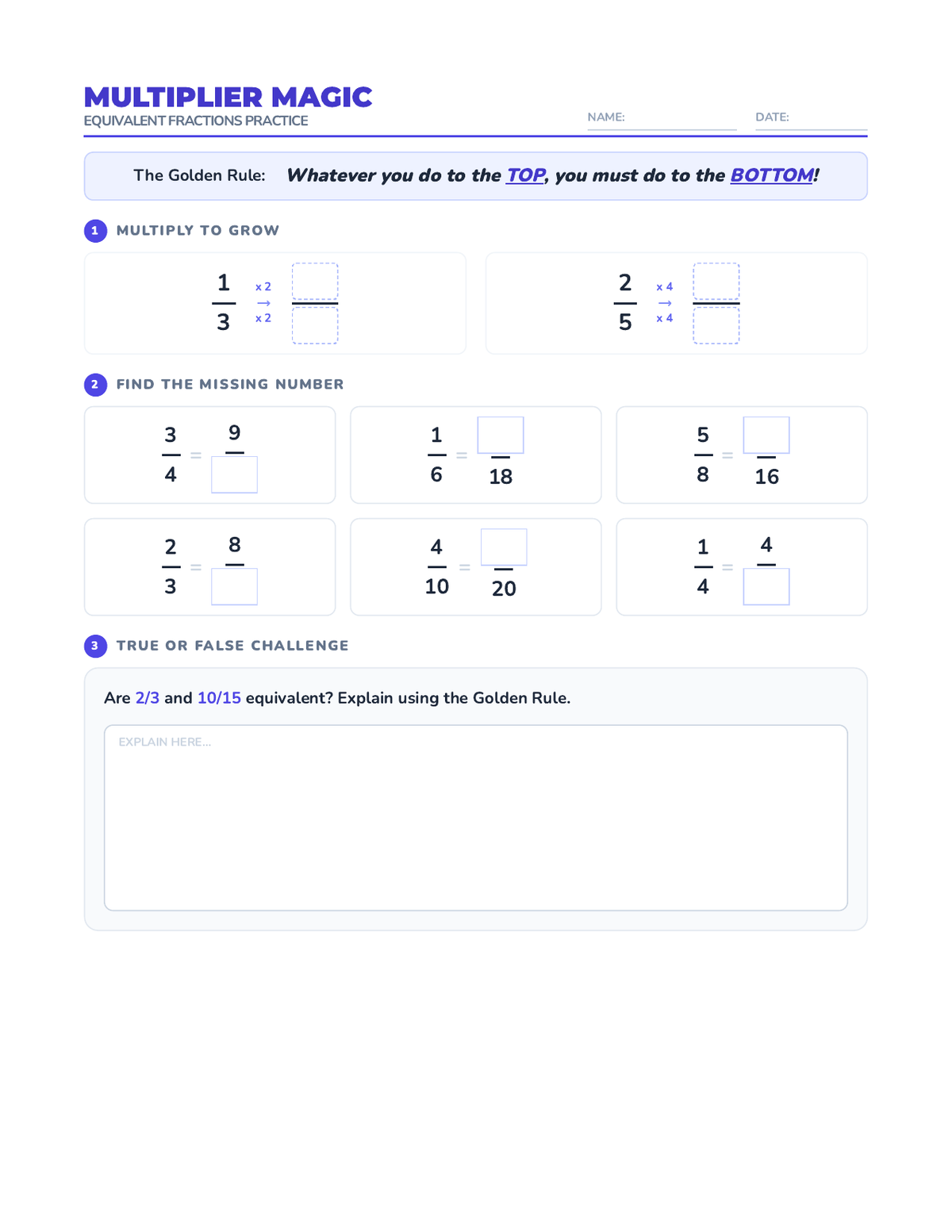
Visual presentation for teaching equivalent fractions using area models and the multiplication rule.
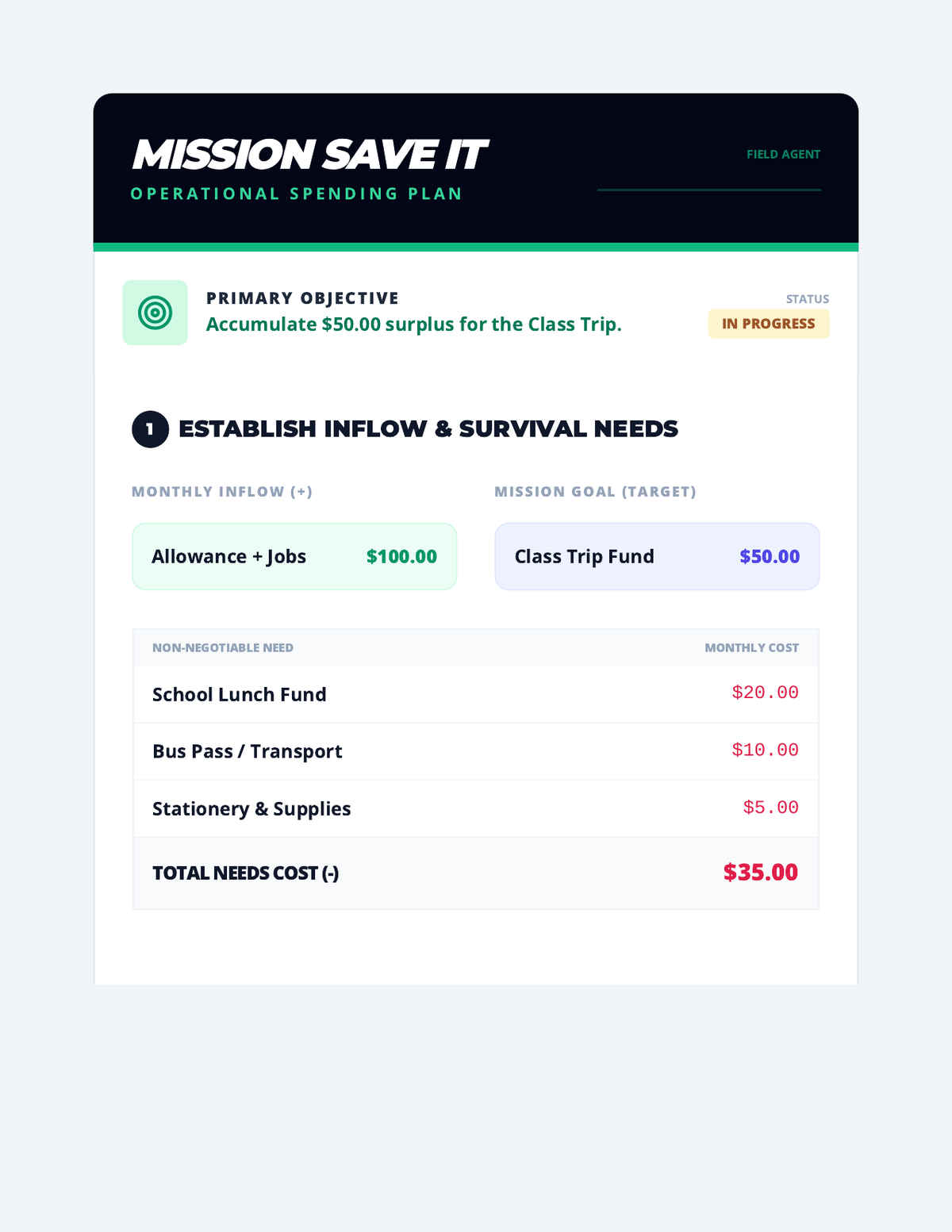
Student reflection and planning worksheet for Lesson 5, allowing students to identify 'spending leaks', set personal financial rules, and draft a balanced monthly budget.
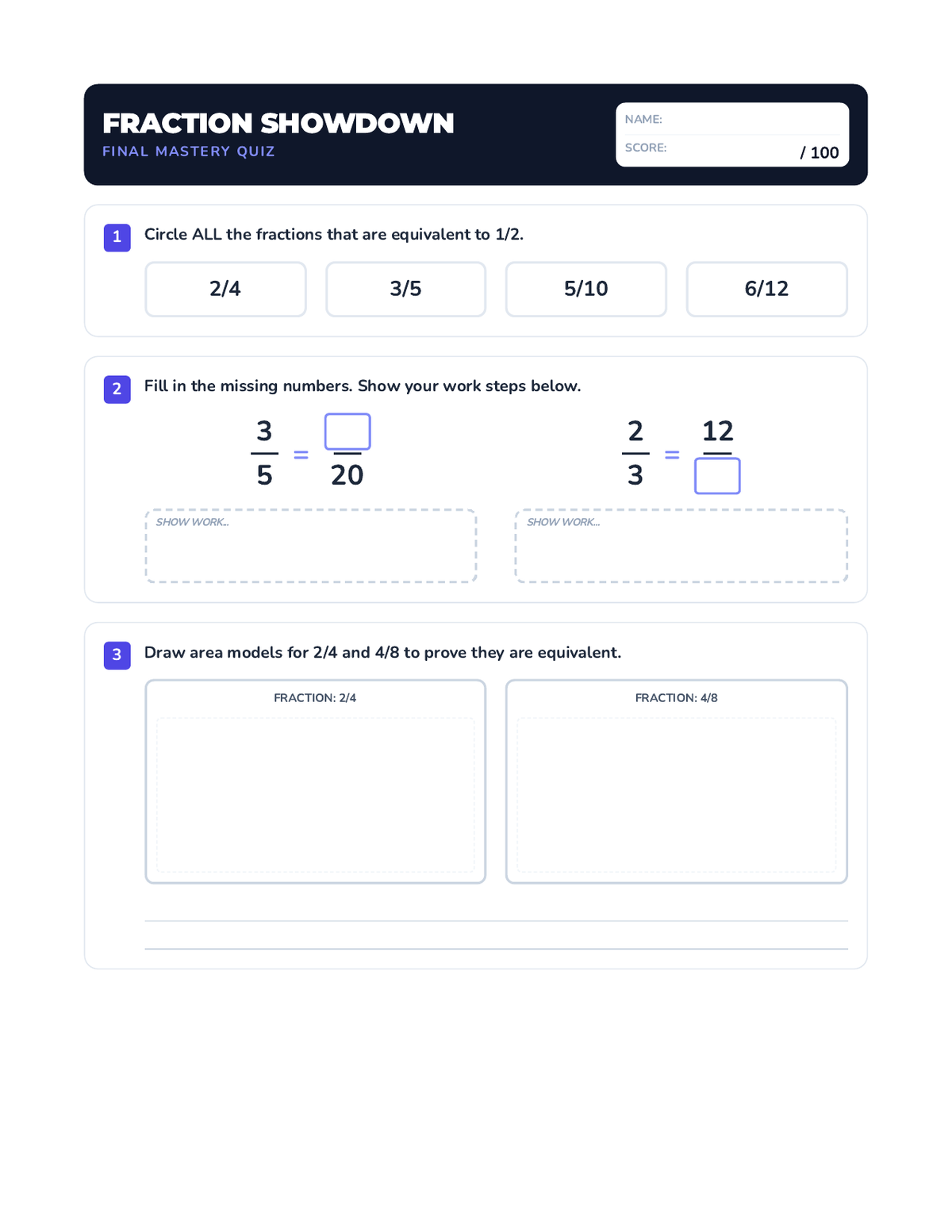
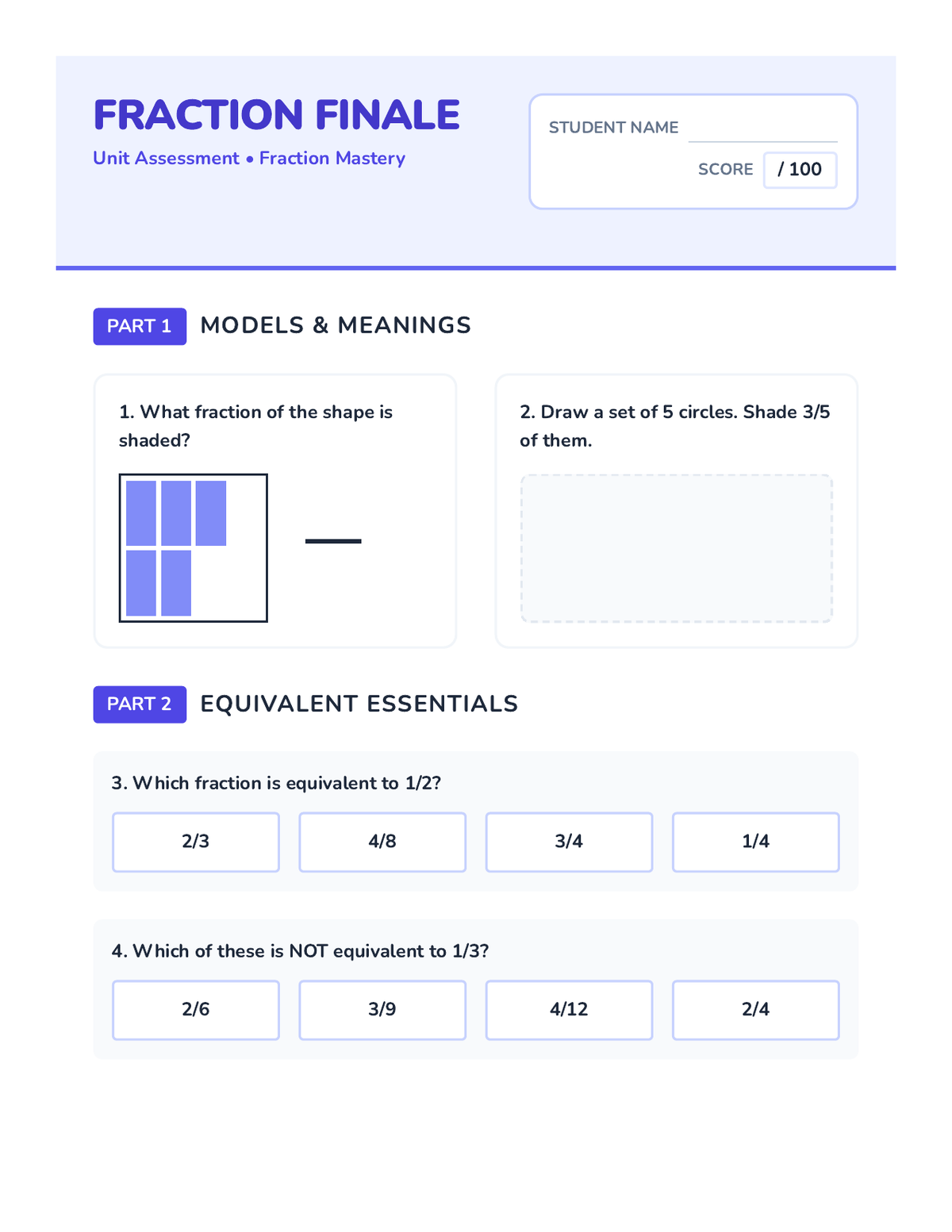
Cumulative multiple-choice assessment for 4th graders covering fraction vocabulary, unit fractions, and model identification.
Teacher-facing facilitation guide for Session 5. Includes guidance on modeling assertive communication and navigating cultural differences in communication styles.
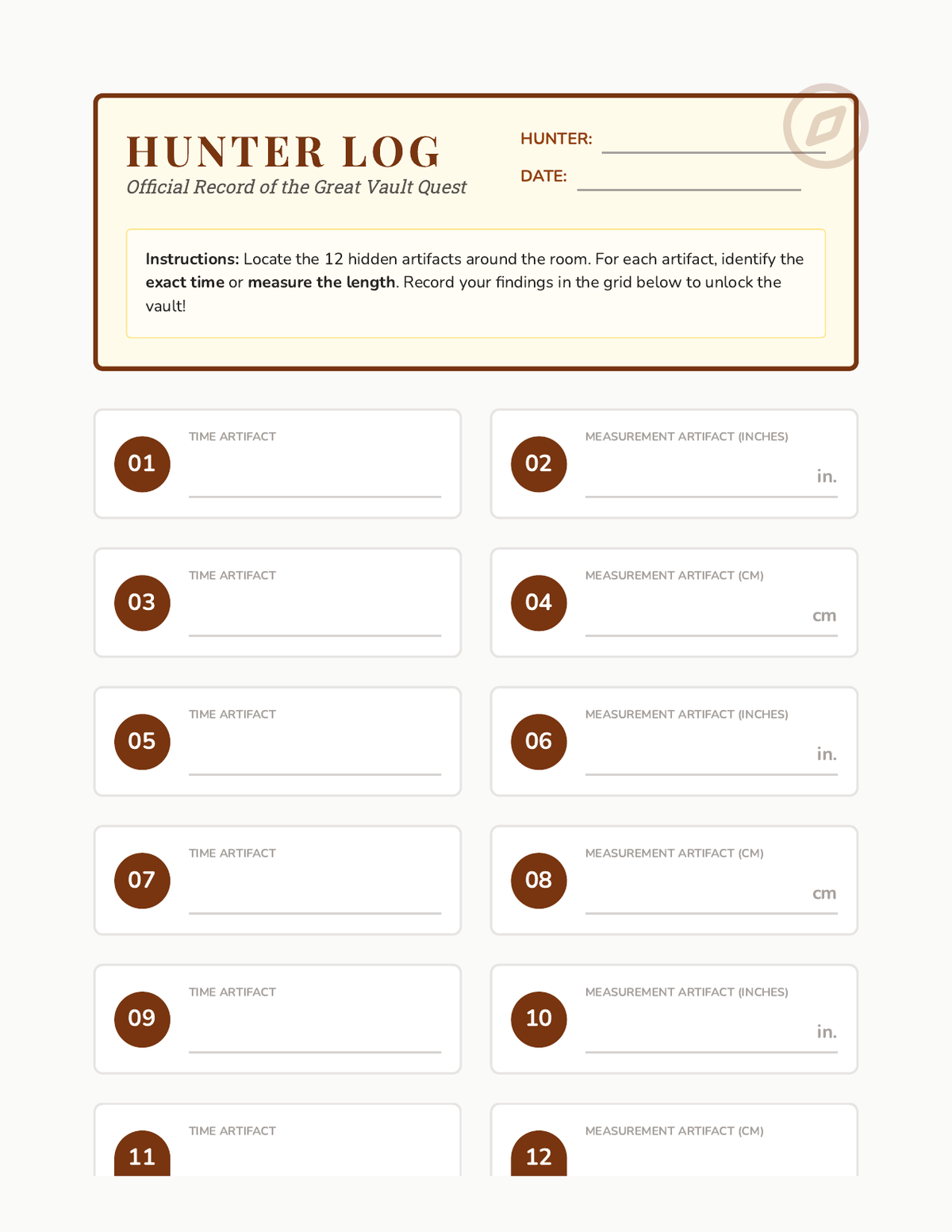
A base schedule board for students to organize their daily routine cards, featuring five numbered slots and check-off circles.
A student worksheet for identifying physiological signals of emotions. It features a body mapping activity where students color or mark areas where they feel physical sensations associated with specific feelings.
Instructions for a kinesthetic activity where students match their movement intensity to musical dynamics using animal metaphors.
A student worksheet for Session 4, guiding students through the 'Catch-Check-Change' reframing technique to identify and edit negative self-talk.
A student planning sheet for Session 3. It introduces the TIPP skills (Temperature, Intense Exercise, Paced Breathing, Paired Muscle Relaxation) and helps students create a personalized 'Emergency Brake' plan for high-intensity emotional moments.
A structured student worksheet featuring three distinct case studies on digital permanence, encouraging debate between individual privacy and historical preservation. Includes space for group verdicts and a summary 'permanence scale' activity.
Engaging slide deck for Kindergarteners exploring music and emotions, covering major/minor tones and energy levels.
Visual presentation for Session 5, focusing on assertive communication (I-statements) and the concept of healthy boundaries in relationships.
A set of printable routine icons to be used with the Daily Roadmap Board, including requested activities like sensory breaks and morning meetings.
Visual presentation for Session 3, focusing on distress tolerance techniques for high-intensity situations using the TIPP skills framework.
An introductory worksheet for 4th graders to identify and name fractions using visual models (circles, rectangles, and grids). Includes shading exercises and a critical thinking prompt.
A ledger recording activity where students fill in transaction details and calculate a running balance based on Charlie's weekly activity.