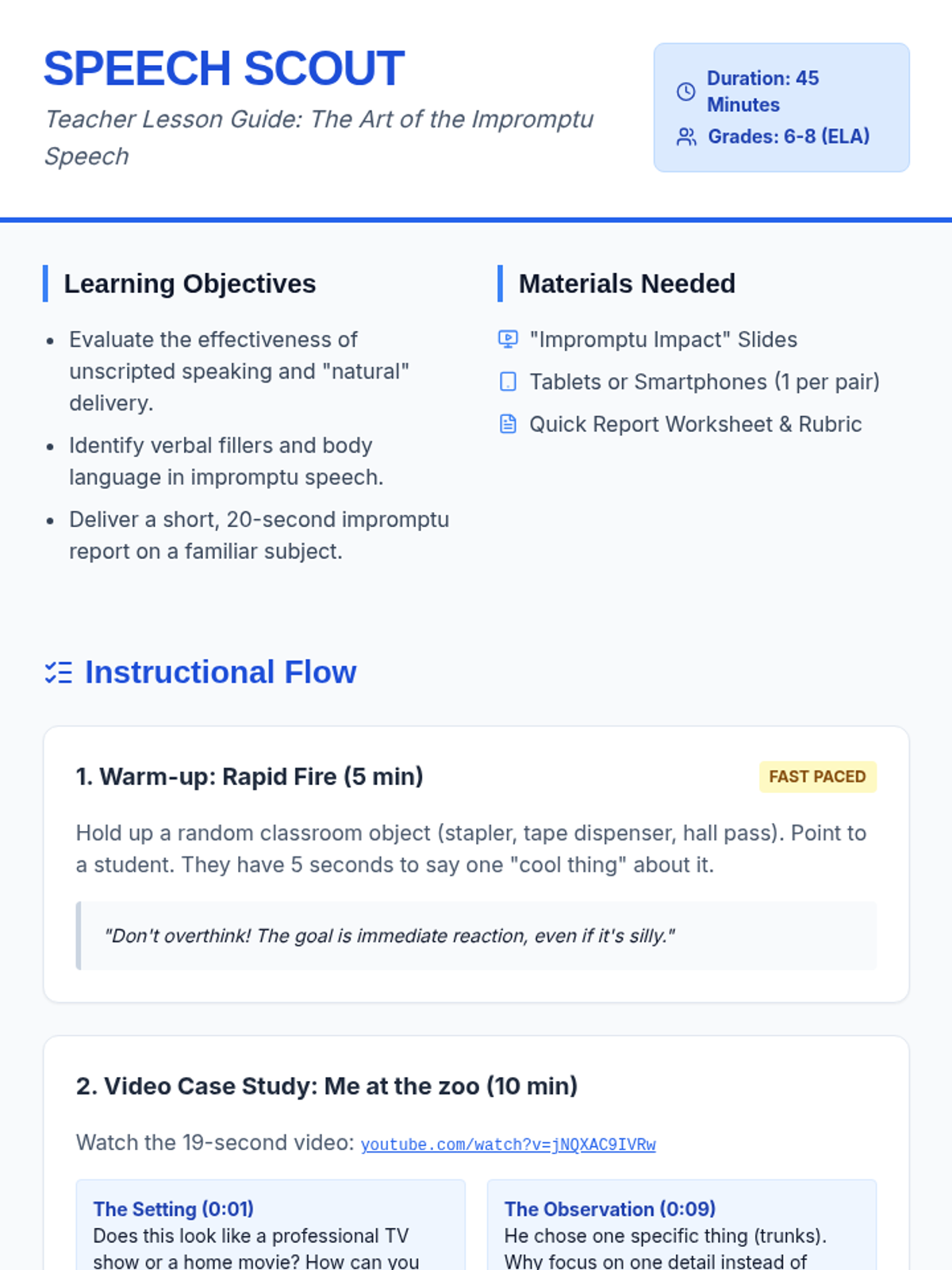
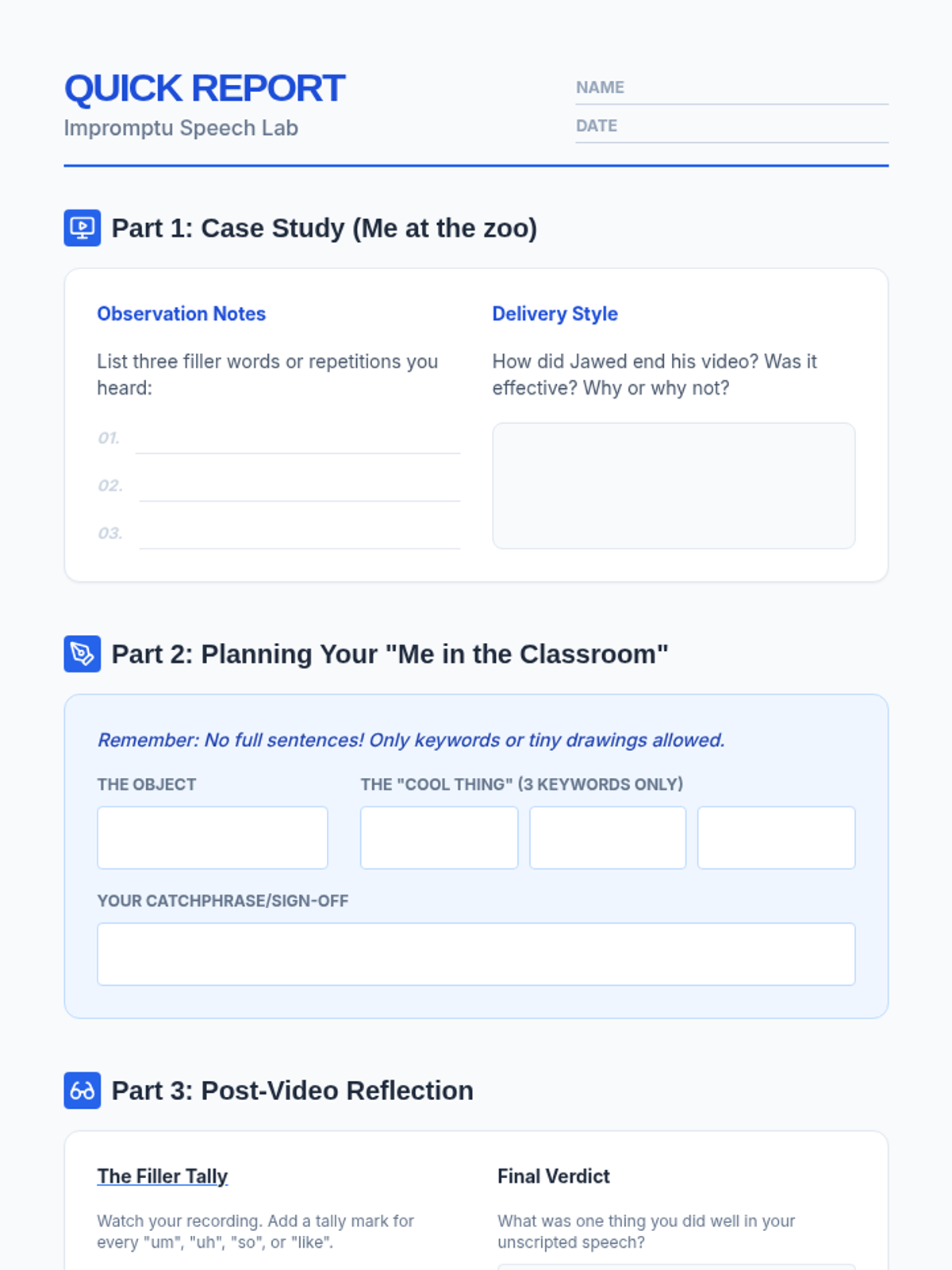
A middle school ELA/Speech lesson focused on the difference between impromptu and scripted speaking, using the first YouTube video 'Me at the zoo' as a case study. Students analyze filler words and practice rewriting content for better delivery.
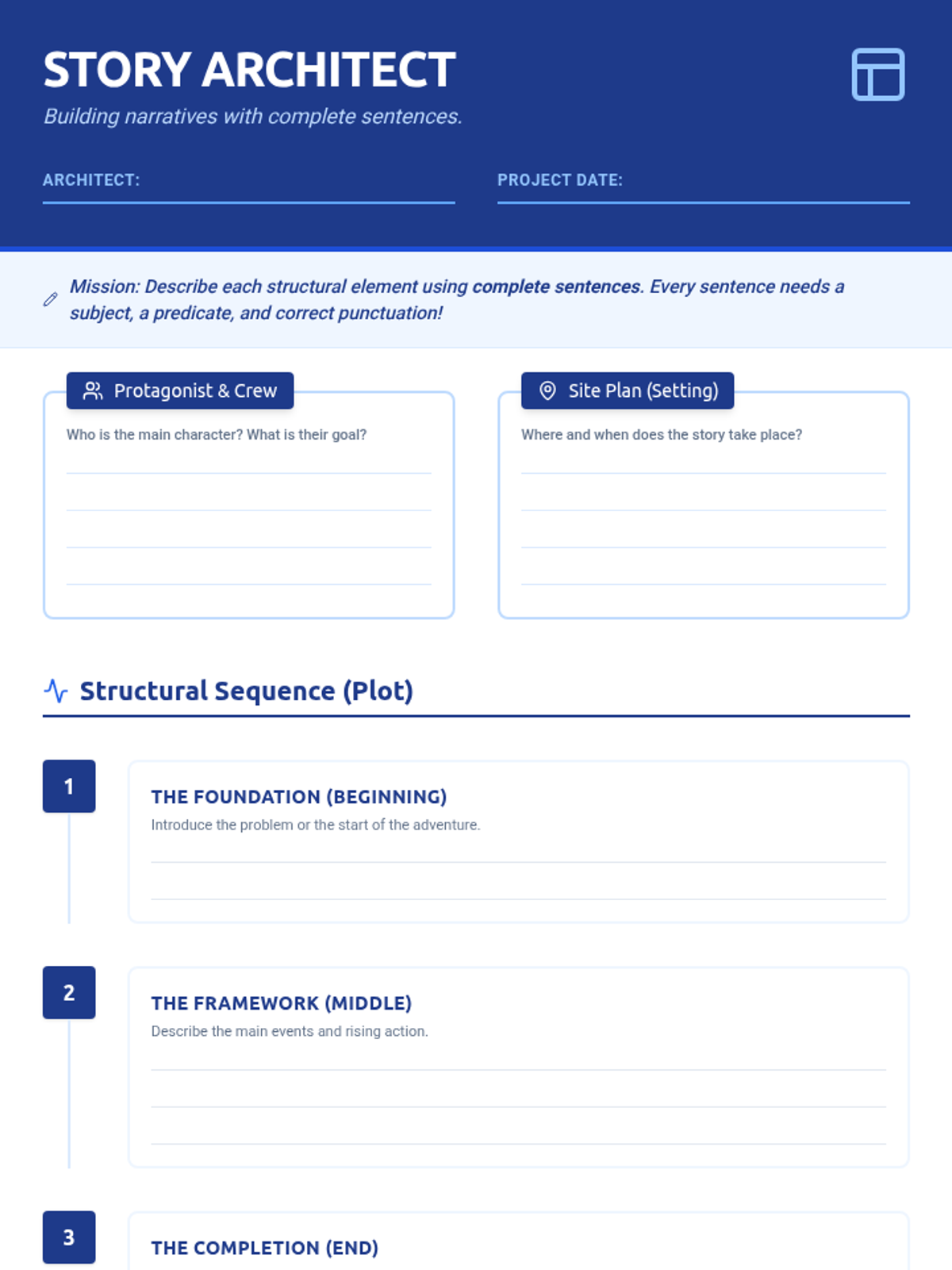
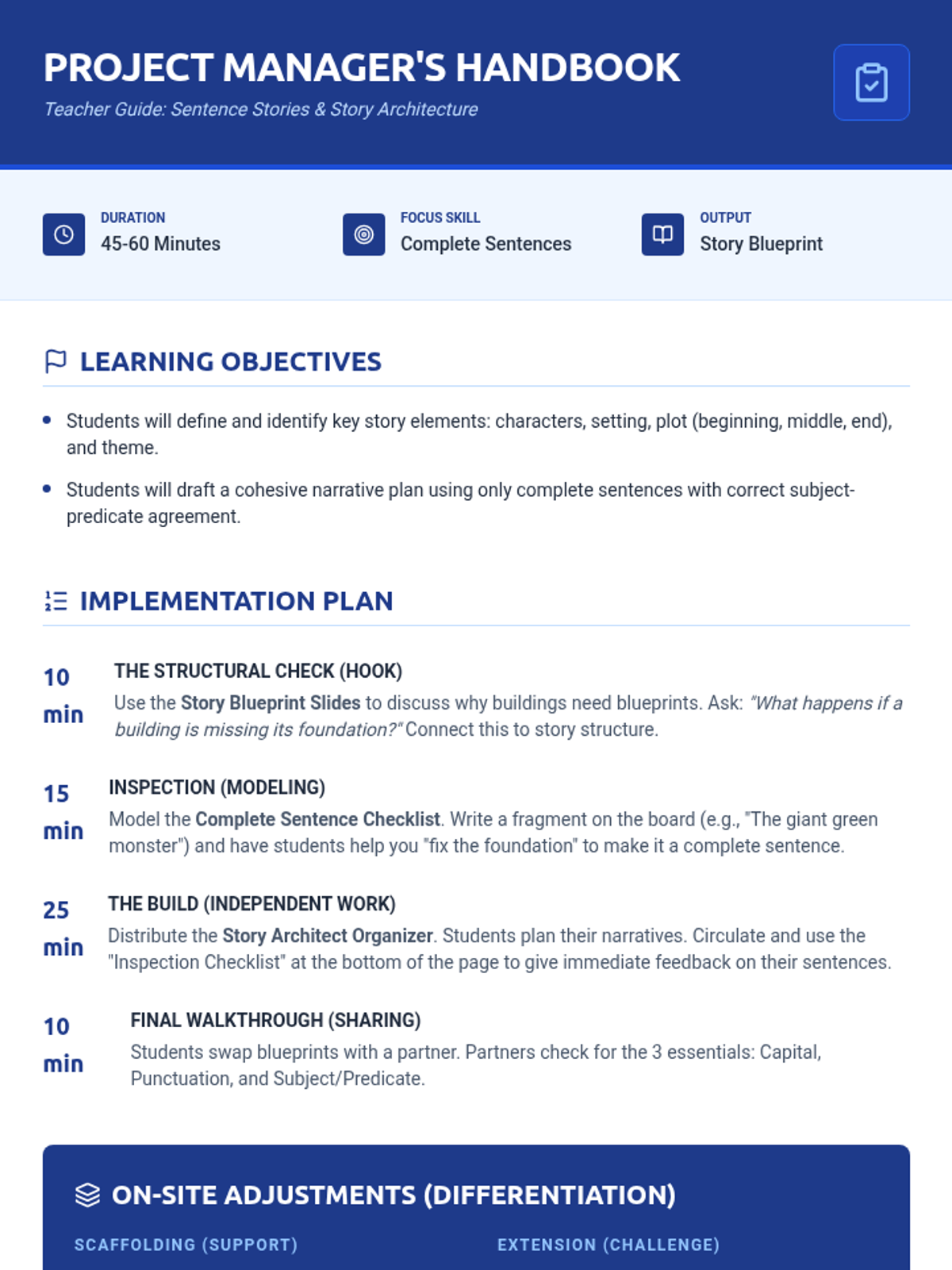
Students practice writing complete sentences while identifying and describing key story elements in their own narrative planning.
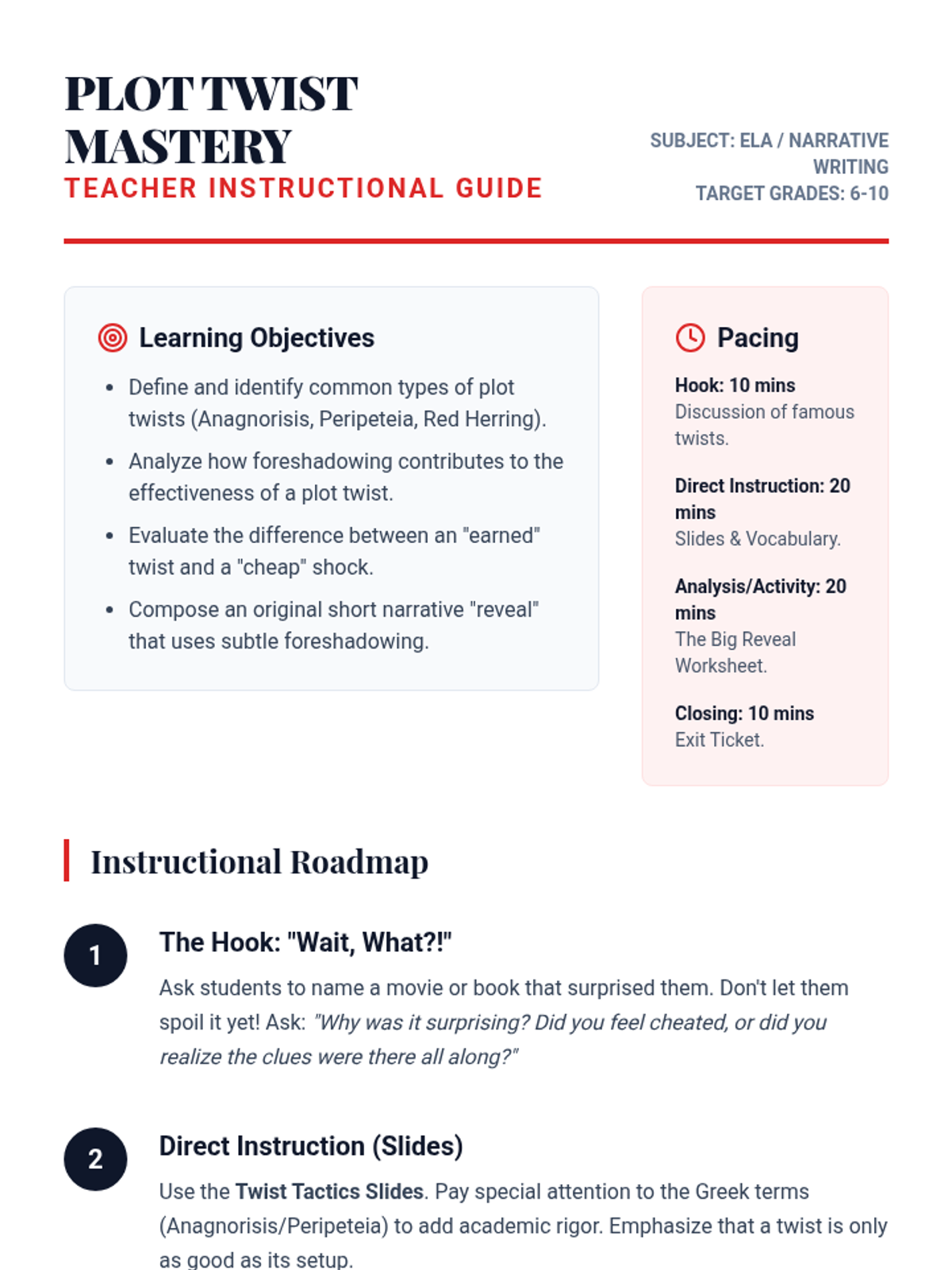
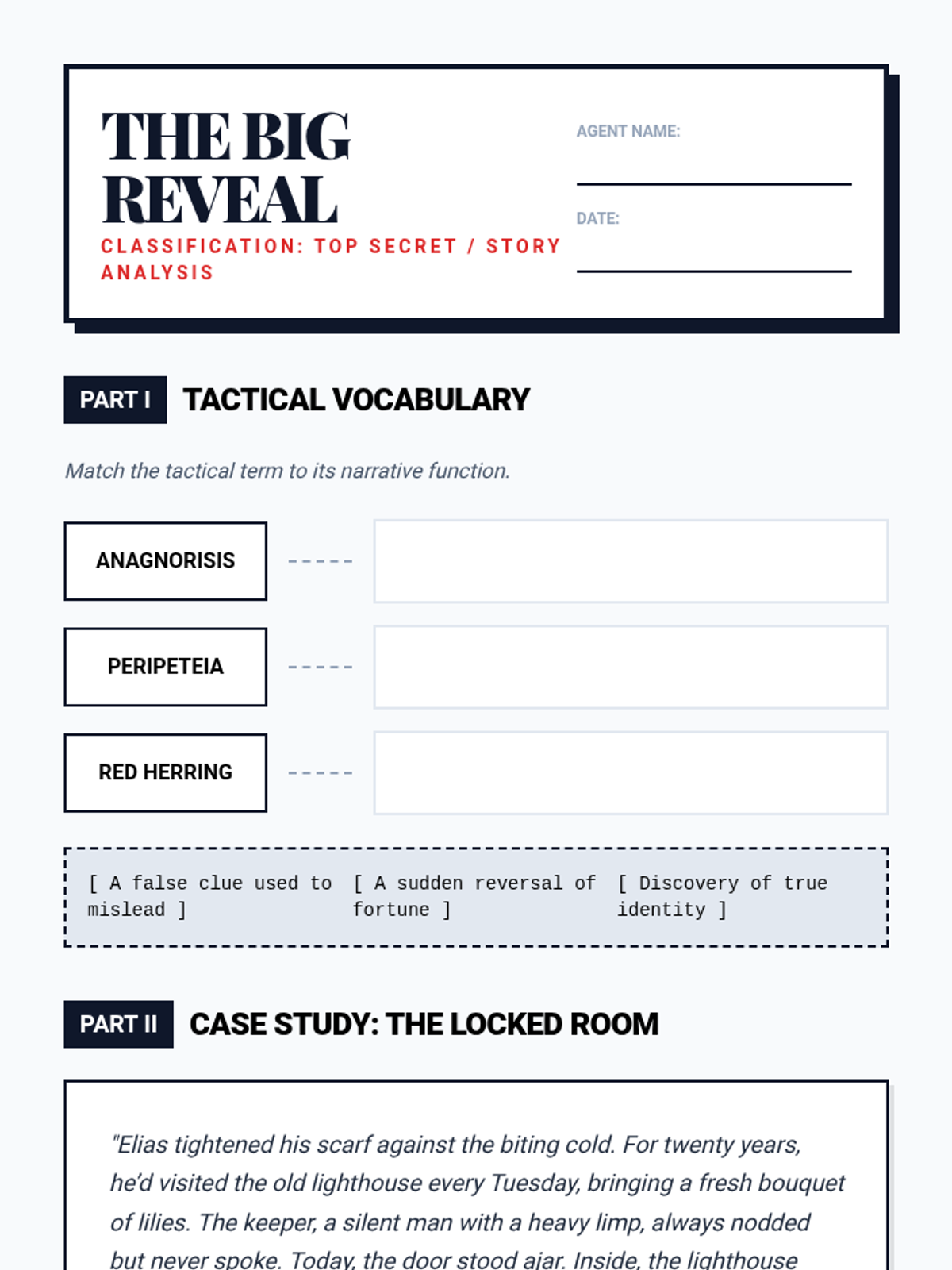
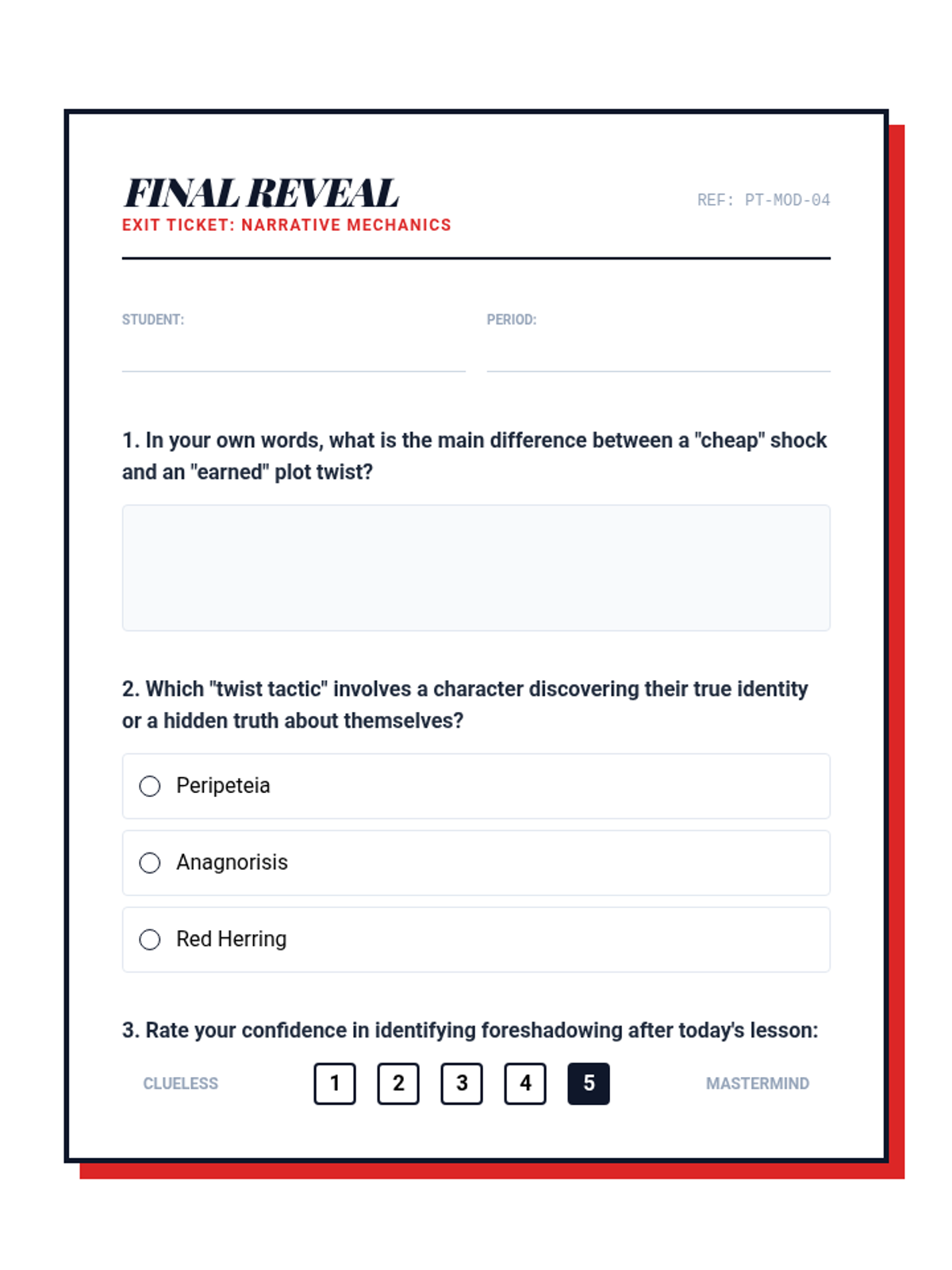
A lesson focused on identifying, analyzing, and writing effective plot twists in narrative ELA, helping students understand how authors subvert expectations.
A hands-on introduction to the Engineering Design Process (EDP) where students take on the role of 'Mission Engineers' to solve a design challenge.
The final stage of the EDP where students test their designs, gather data, and iterate for improvement.
Students learn about materials, constraints, and building techniques as they move into the 'Plan' and 'Create' stages.
Focuses on the 'Define' and 'Imagine' stages of the EDP through a real-world problem-solving scenario.
Students are introduced to the five stages of the Engineering Design Process and apply them to a simple 'Paper Tower' challenge.
Lesson for studio export and print testing
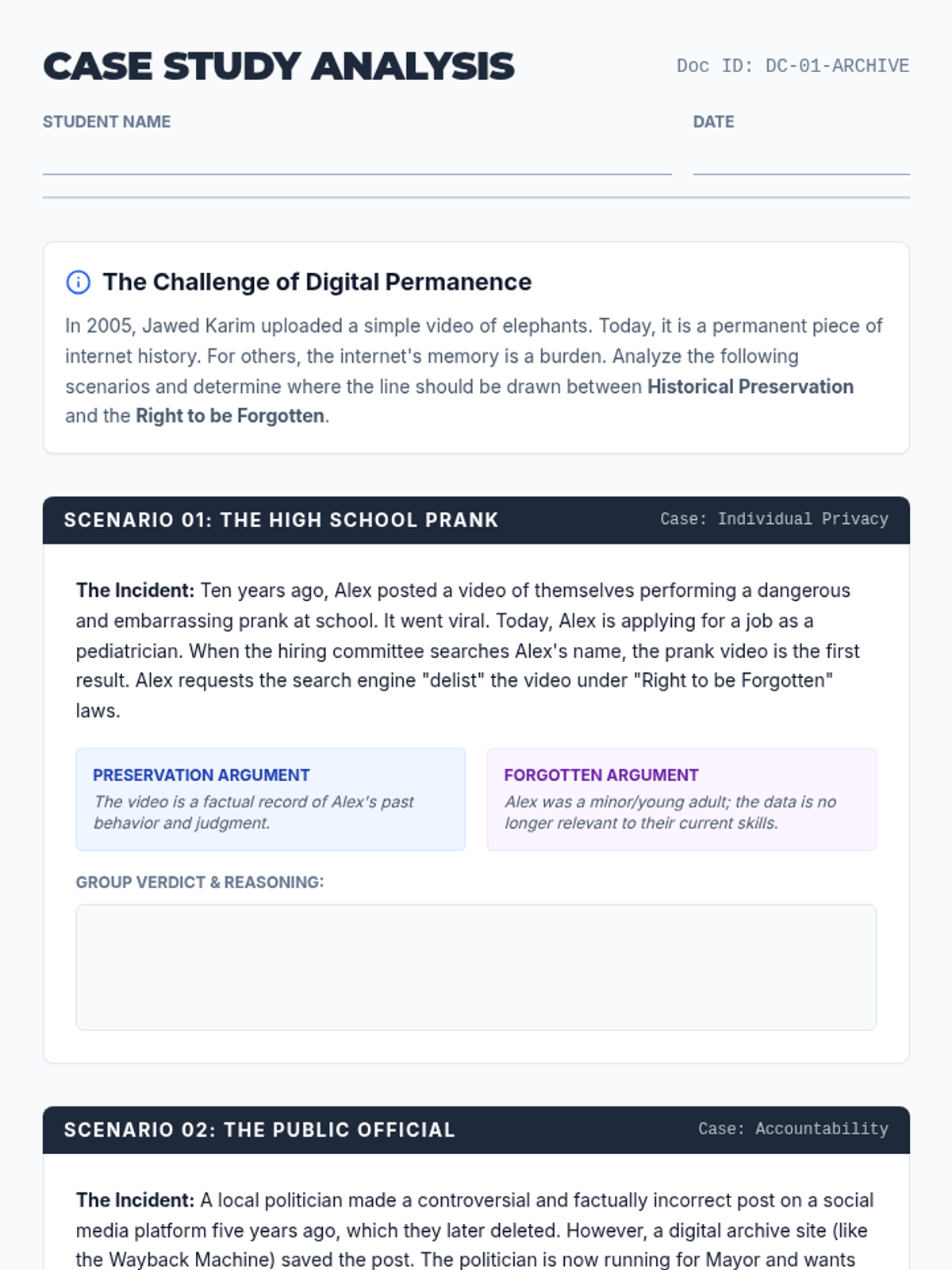
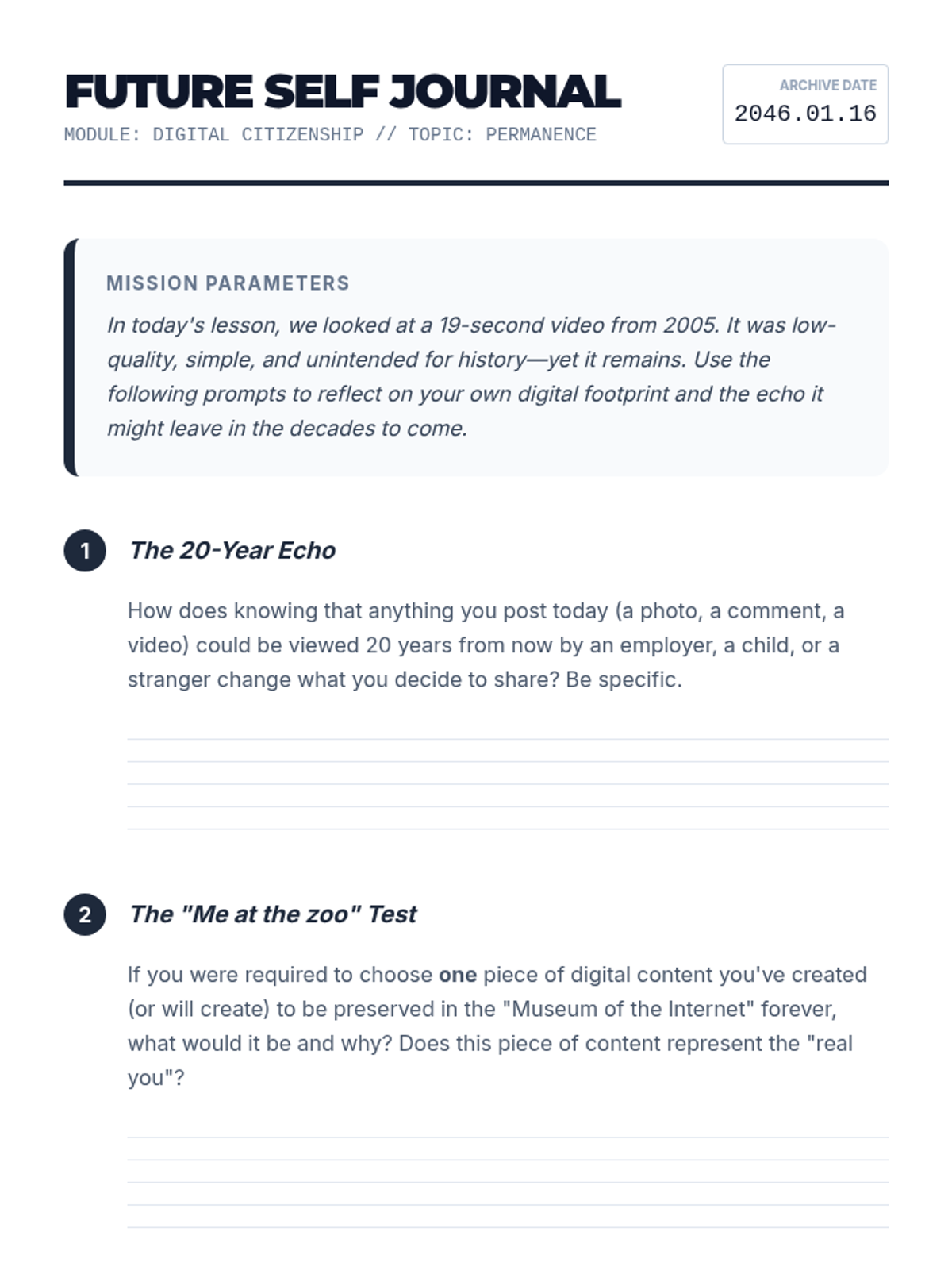
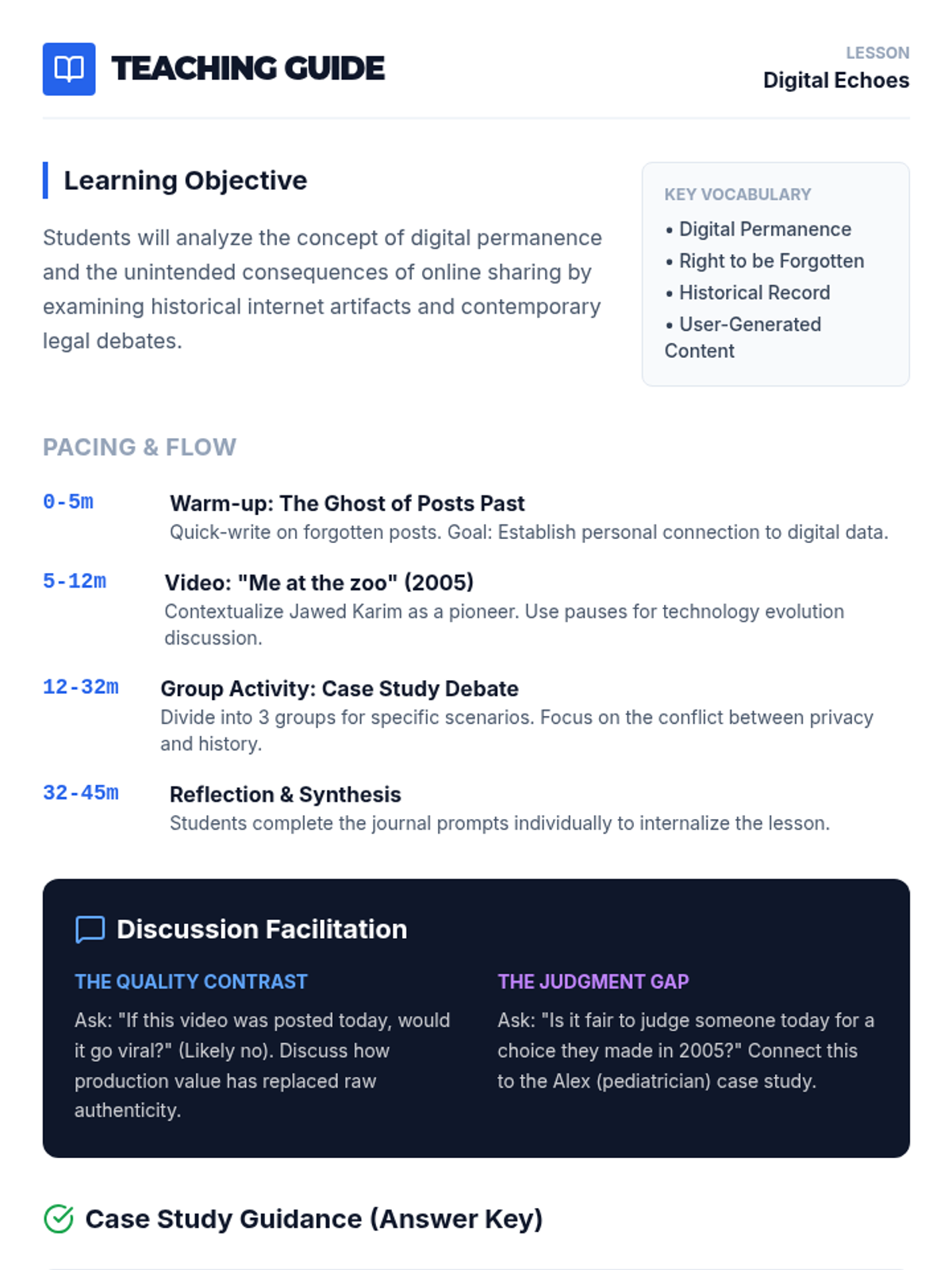
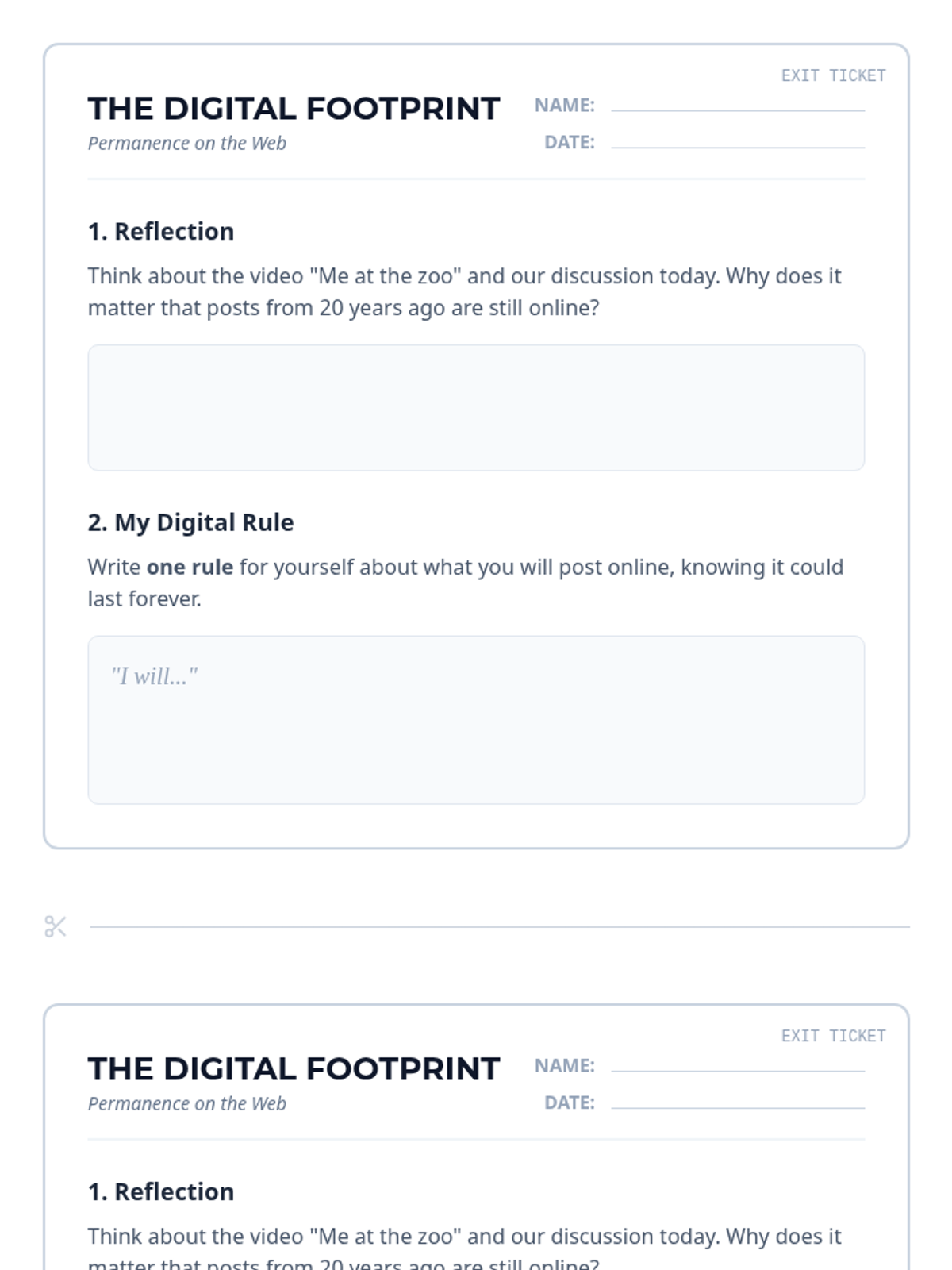
Students explore the concept of digital permanence through the lens of YouTube's first video, 'Me at the zoo', and analyze the tension between historical preservation and the 'Right to be Forgotten'.
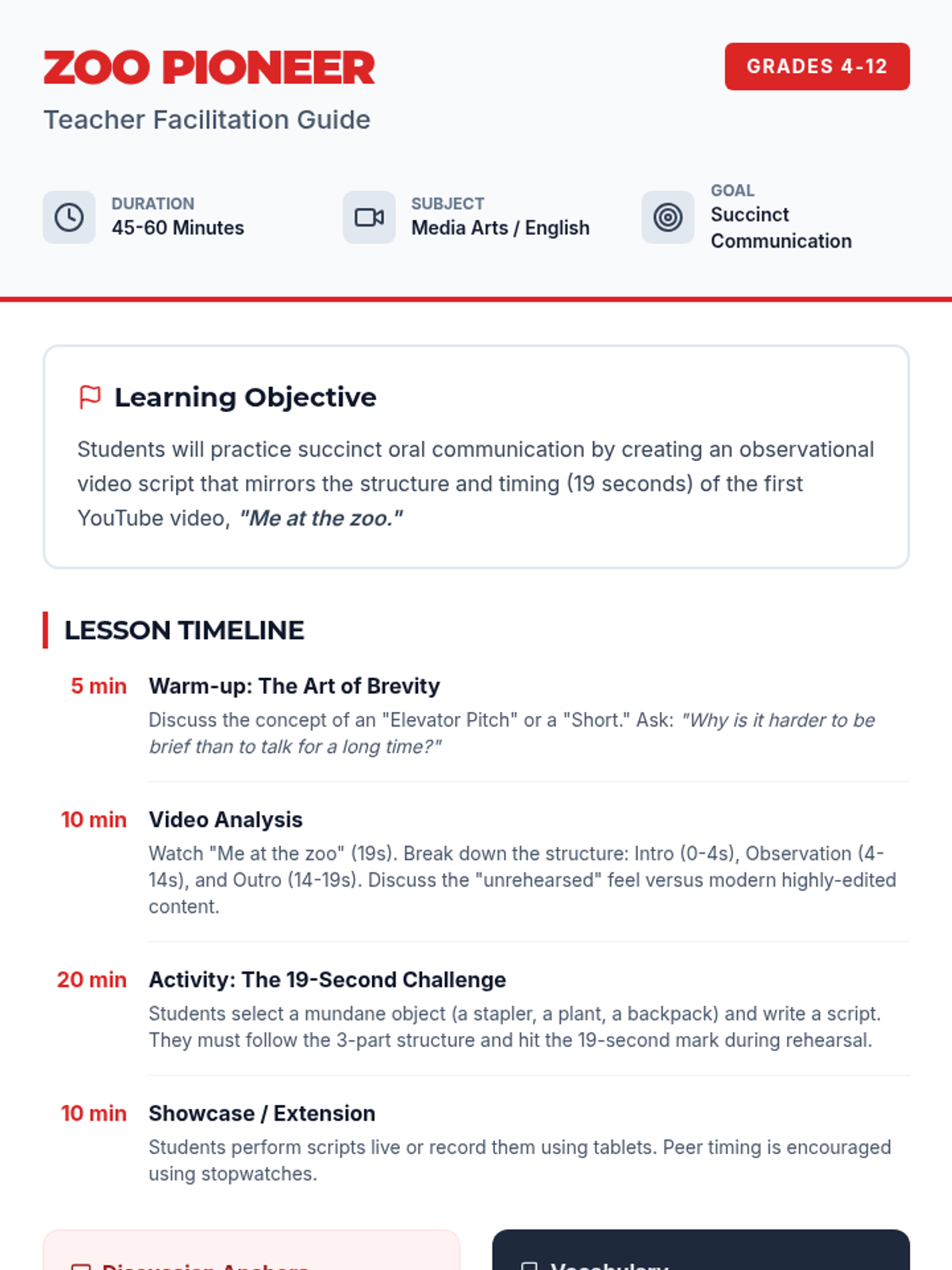
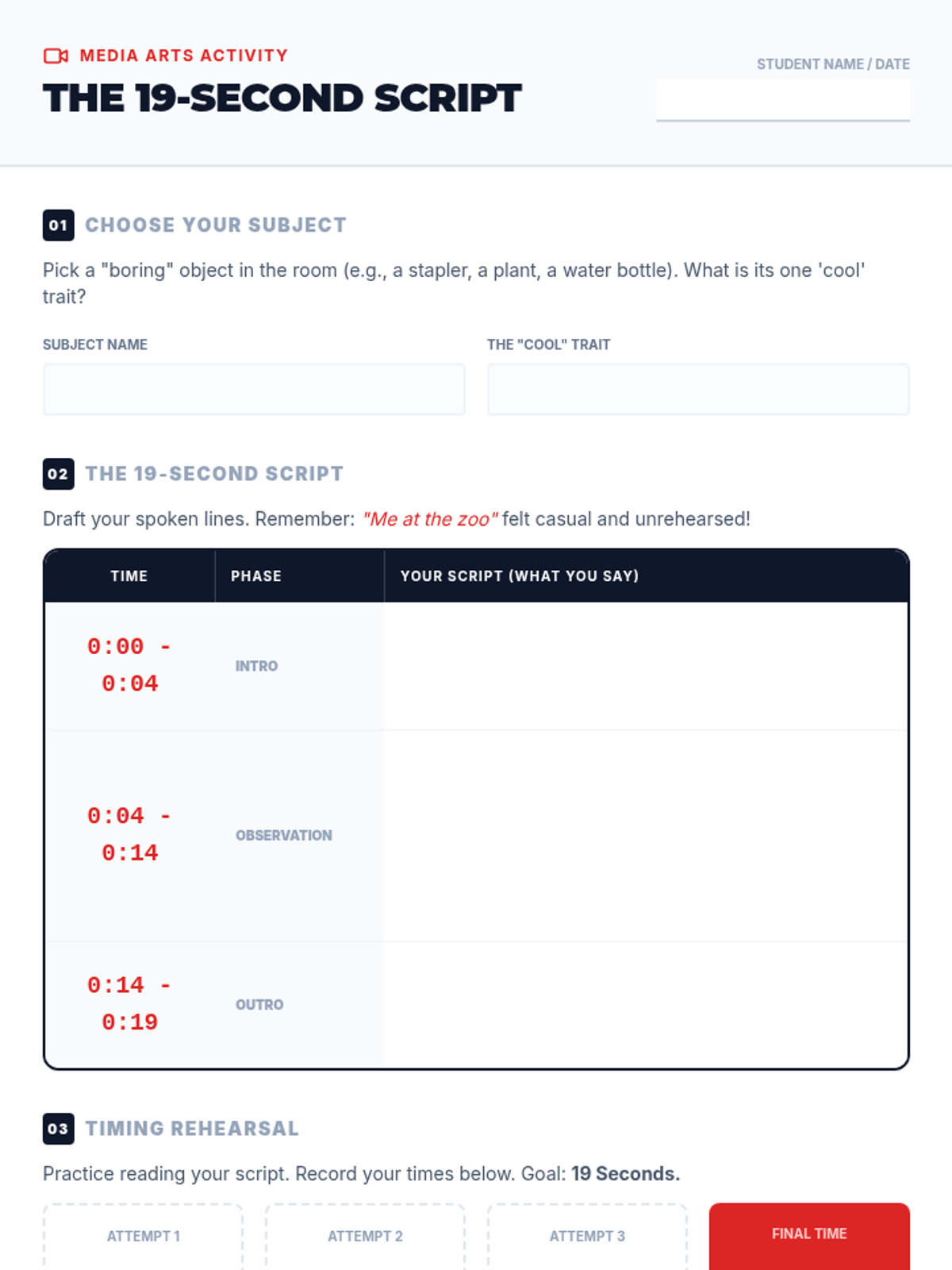
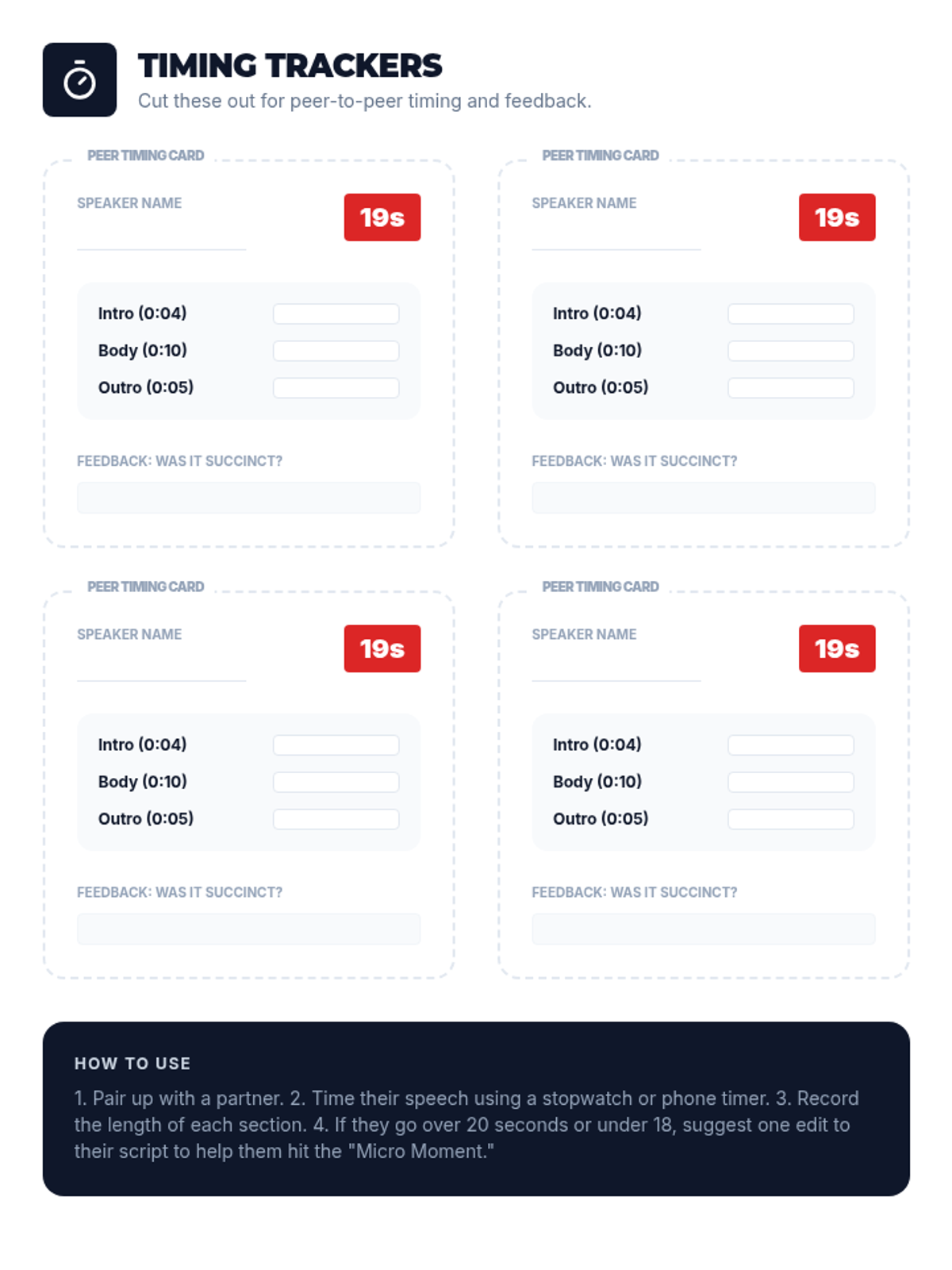
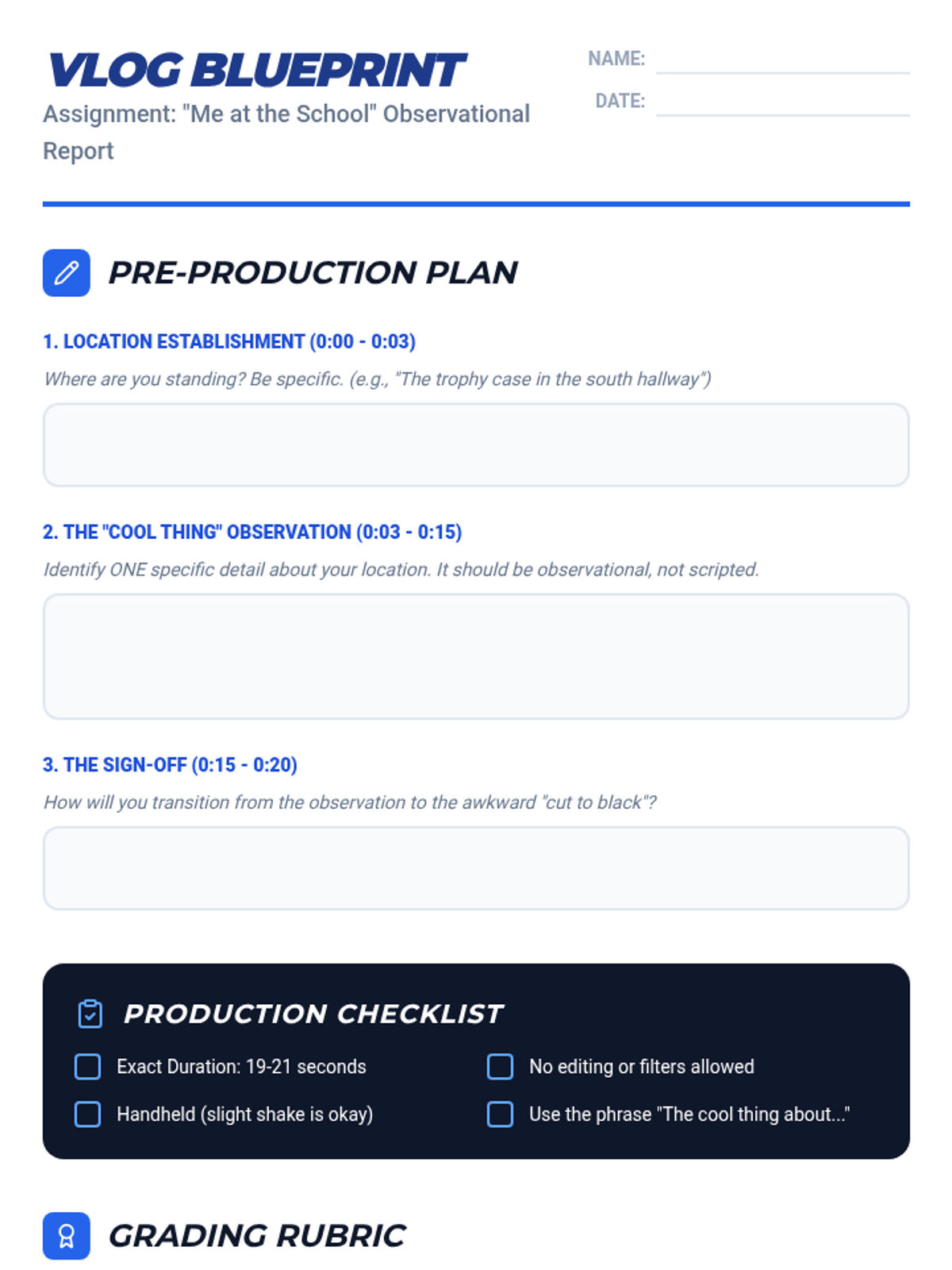
A media arts and oral communication lesson where students analyze the first YouTube video and create their own 19-second observational scripts.
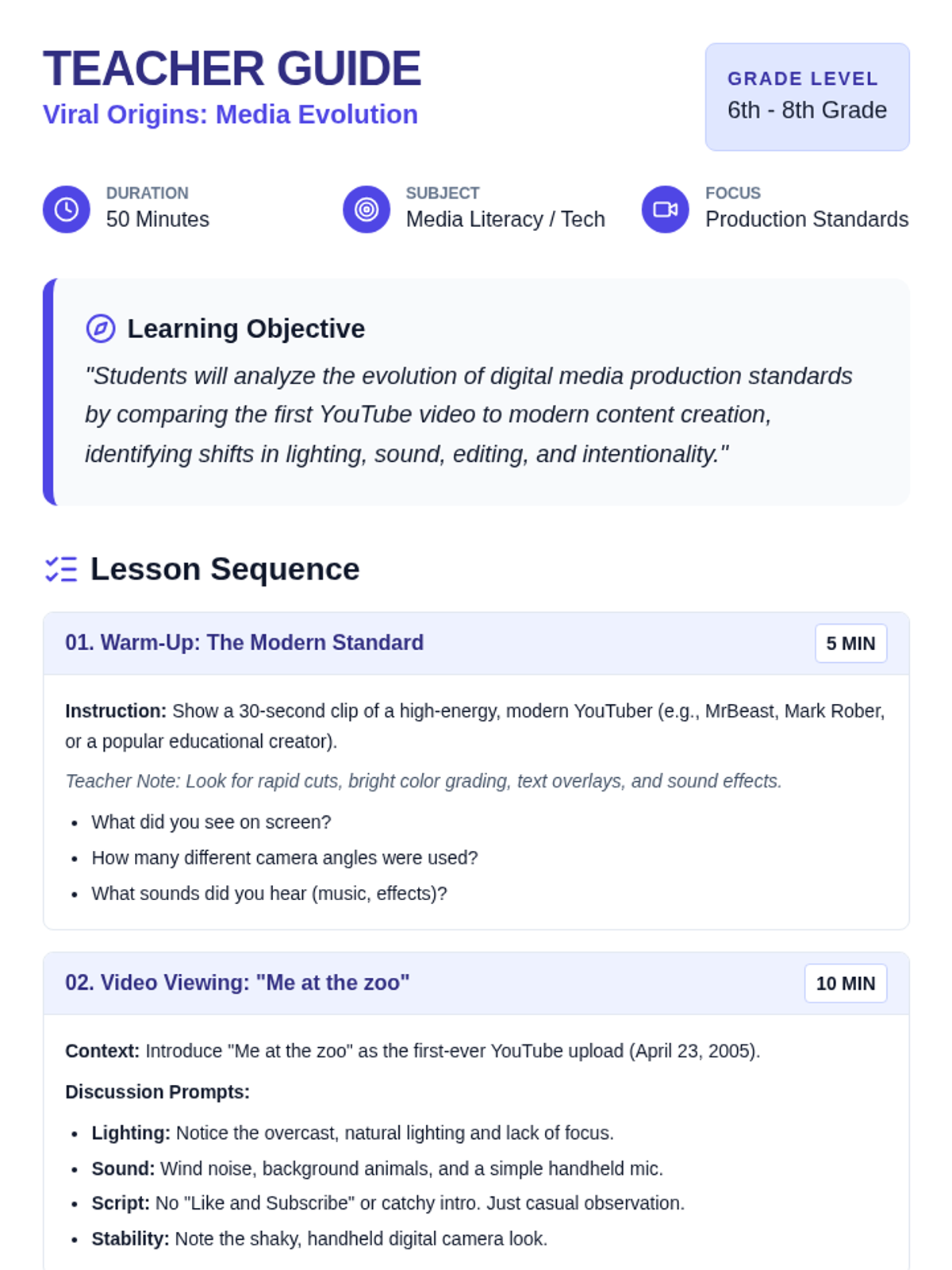
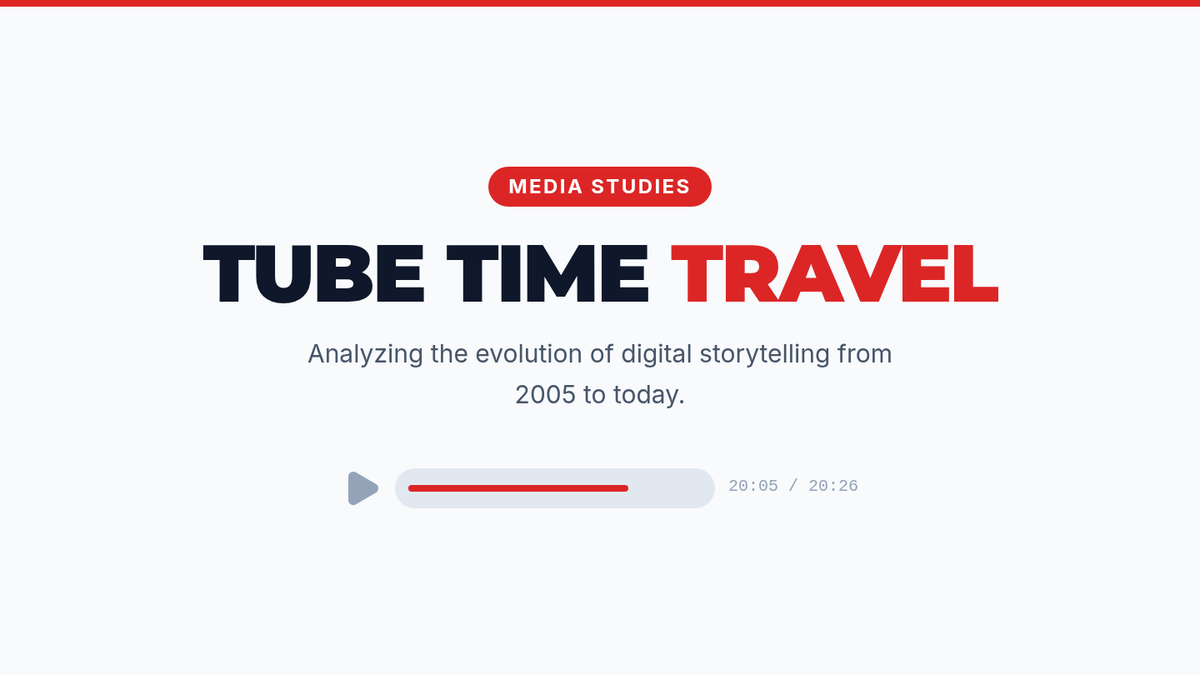
A middle school lesson exploring the dramatic evolution of digital media through the lens of YouTube's history, starting with the very first video ever uploaded.
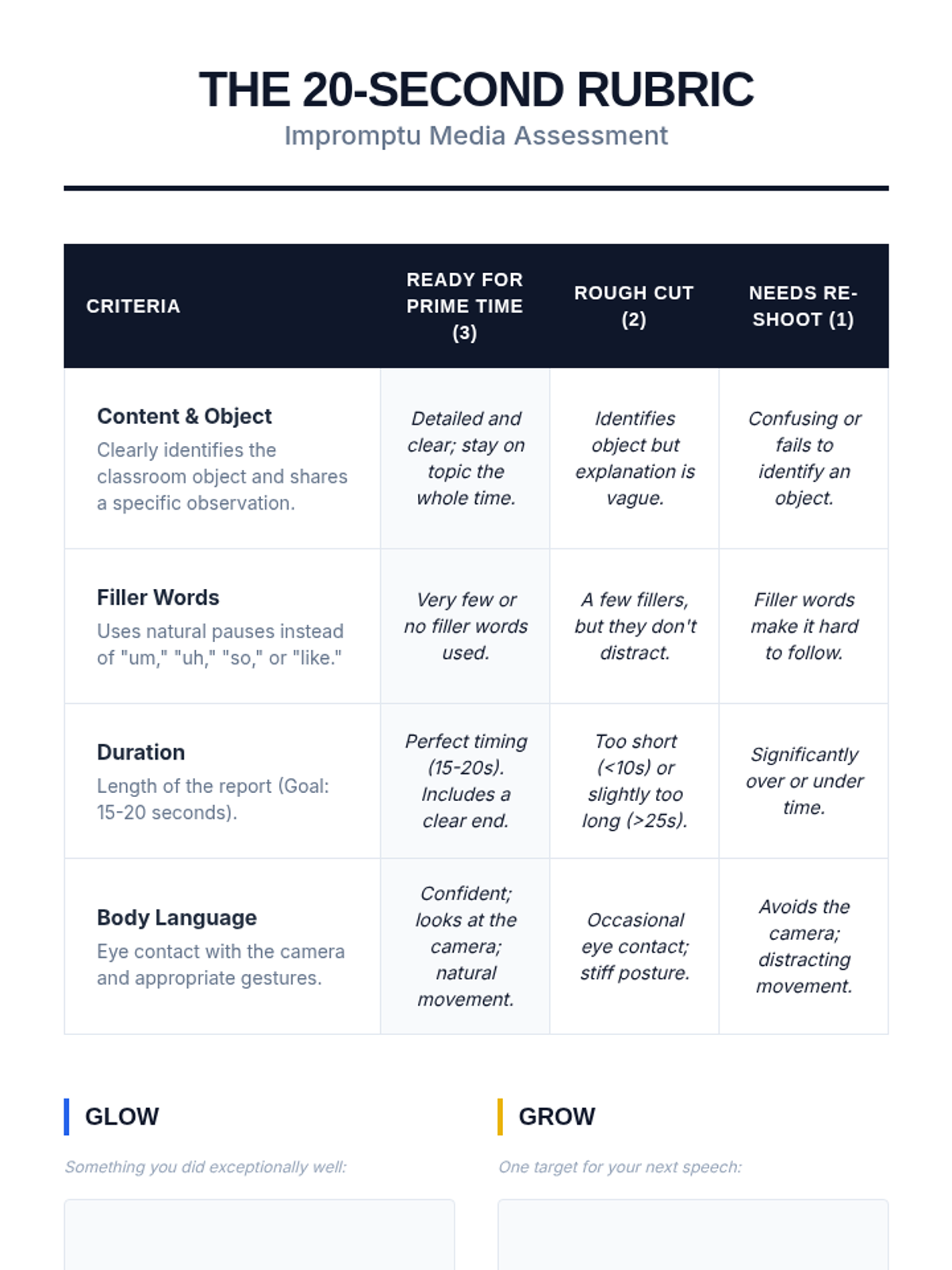
Students explore the history and technique of unscripted speaking through the first-ever YouTube video, then practice their own 20-second impromptu reports.
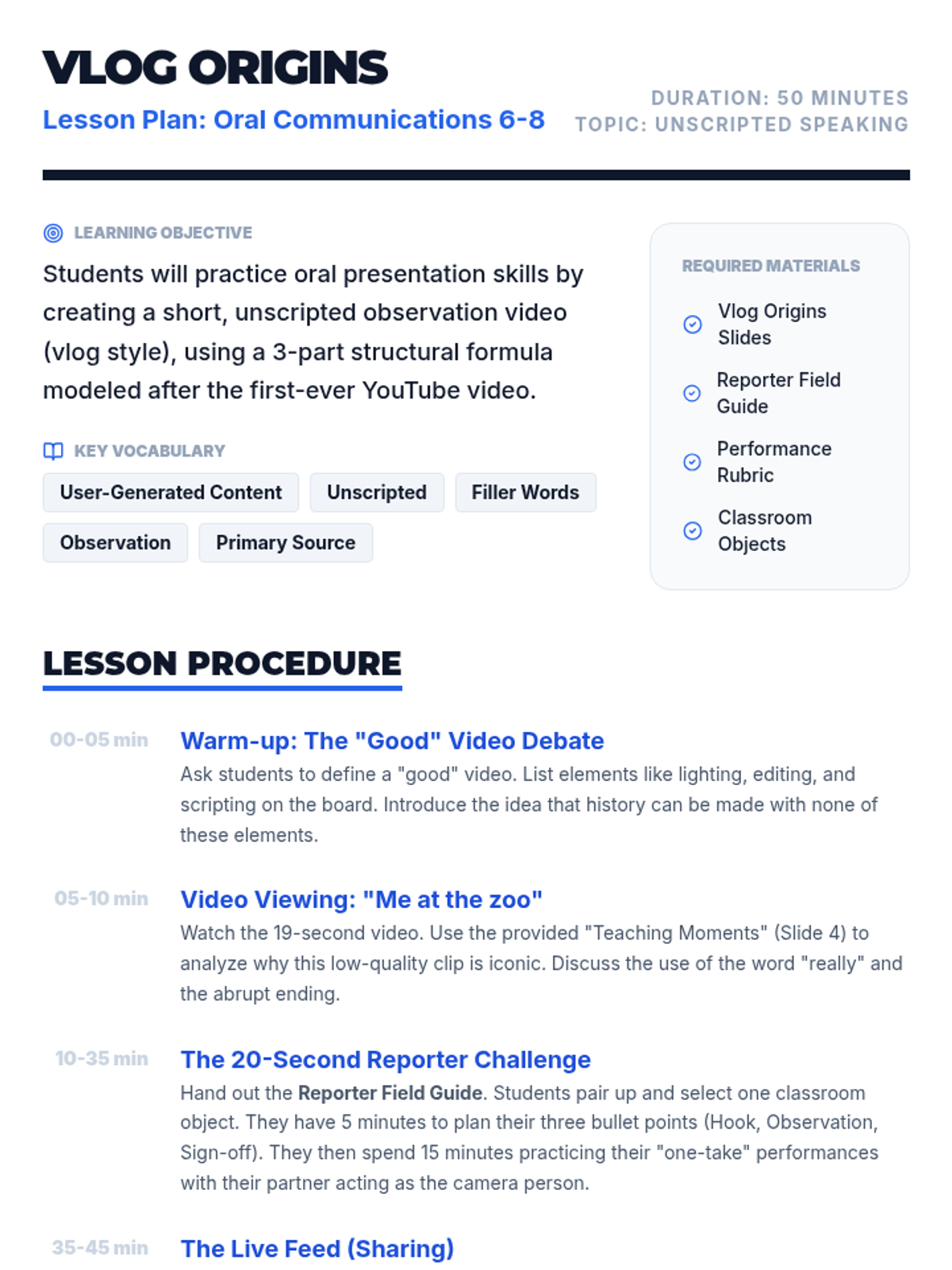
Students will explore the origins of vlogging through the first YouTube video, analyzing its structure and authentic style to create their own 20-second 'unscripted' school report.
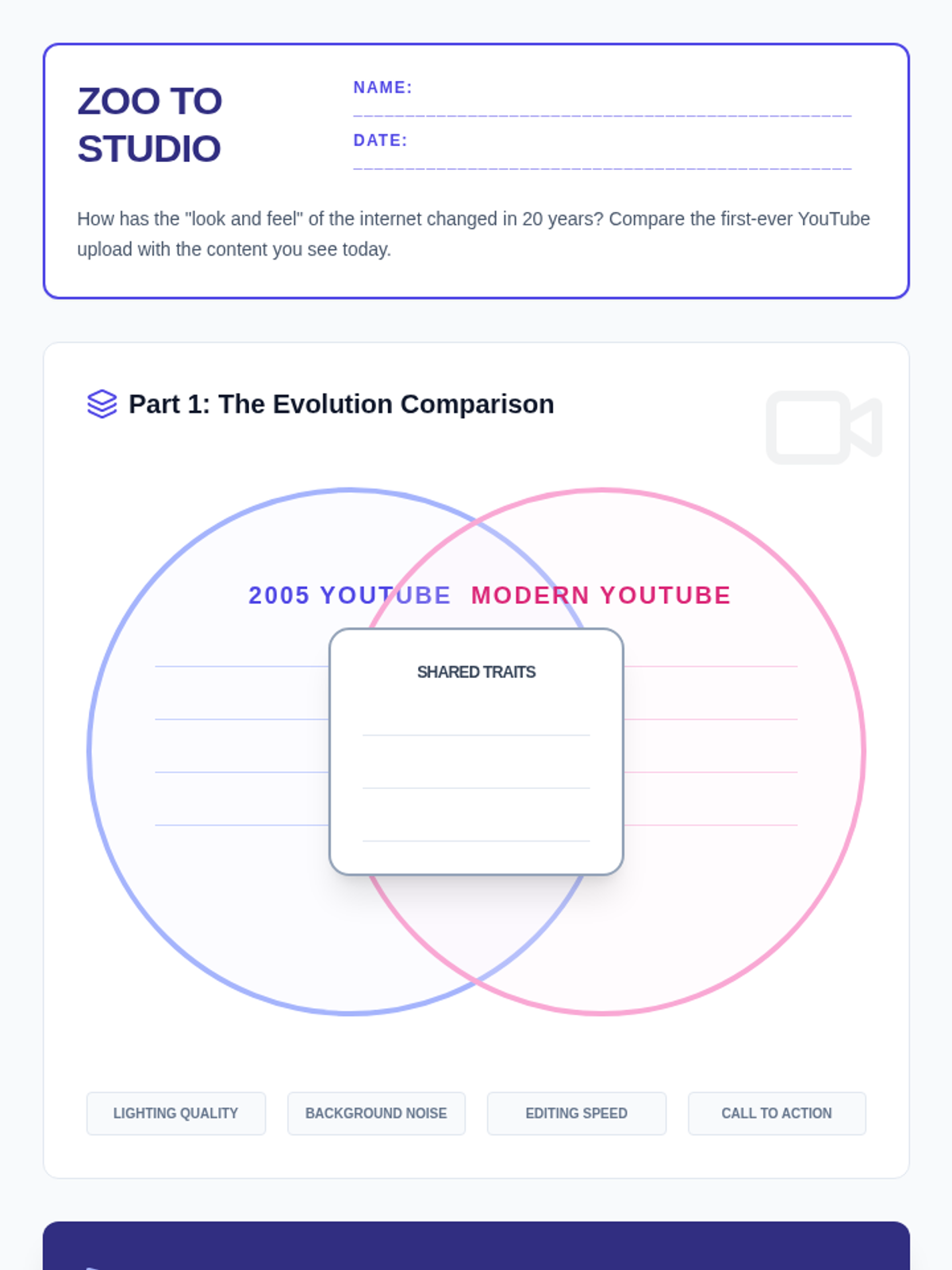
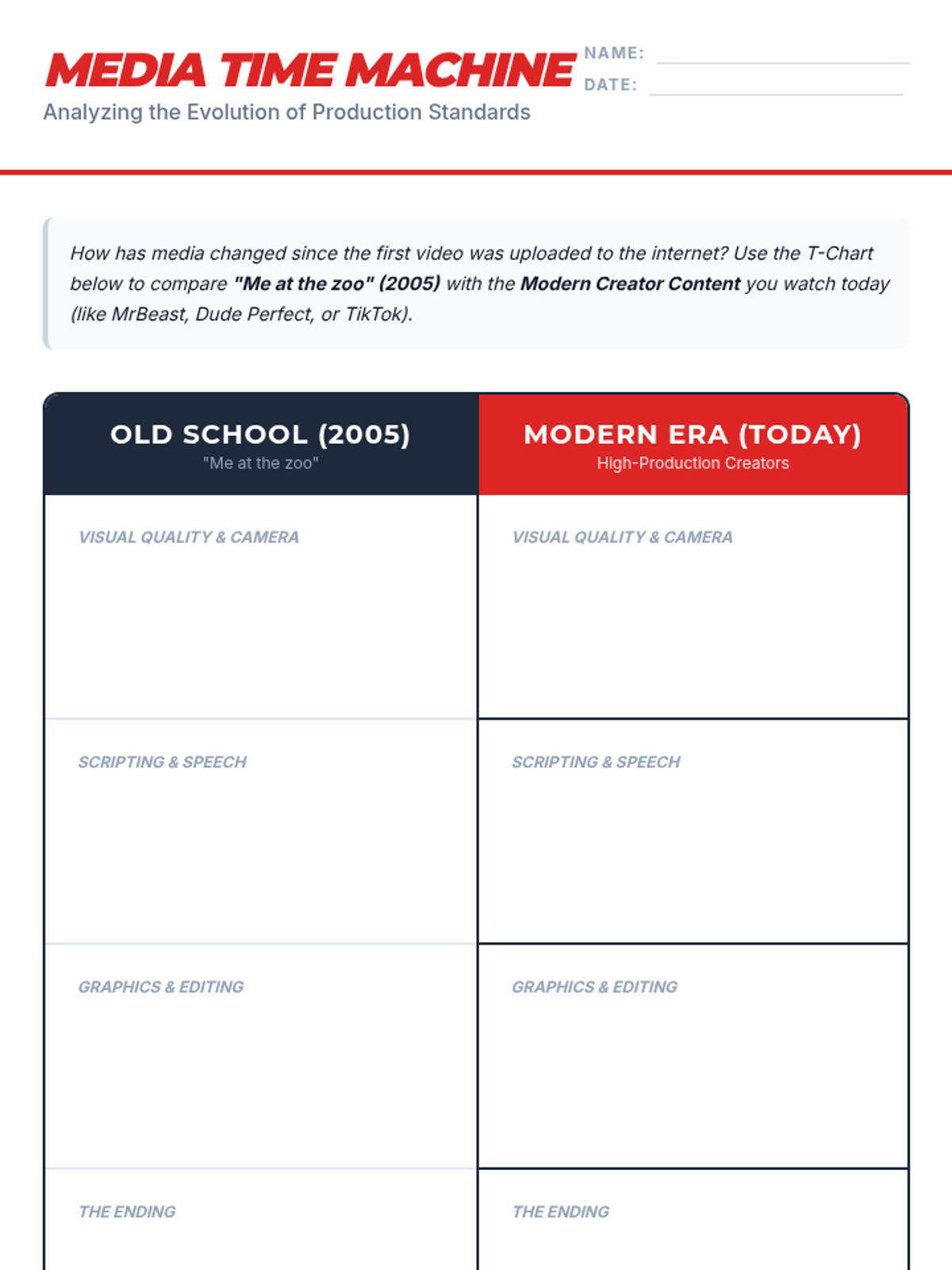
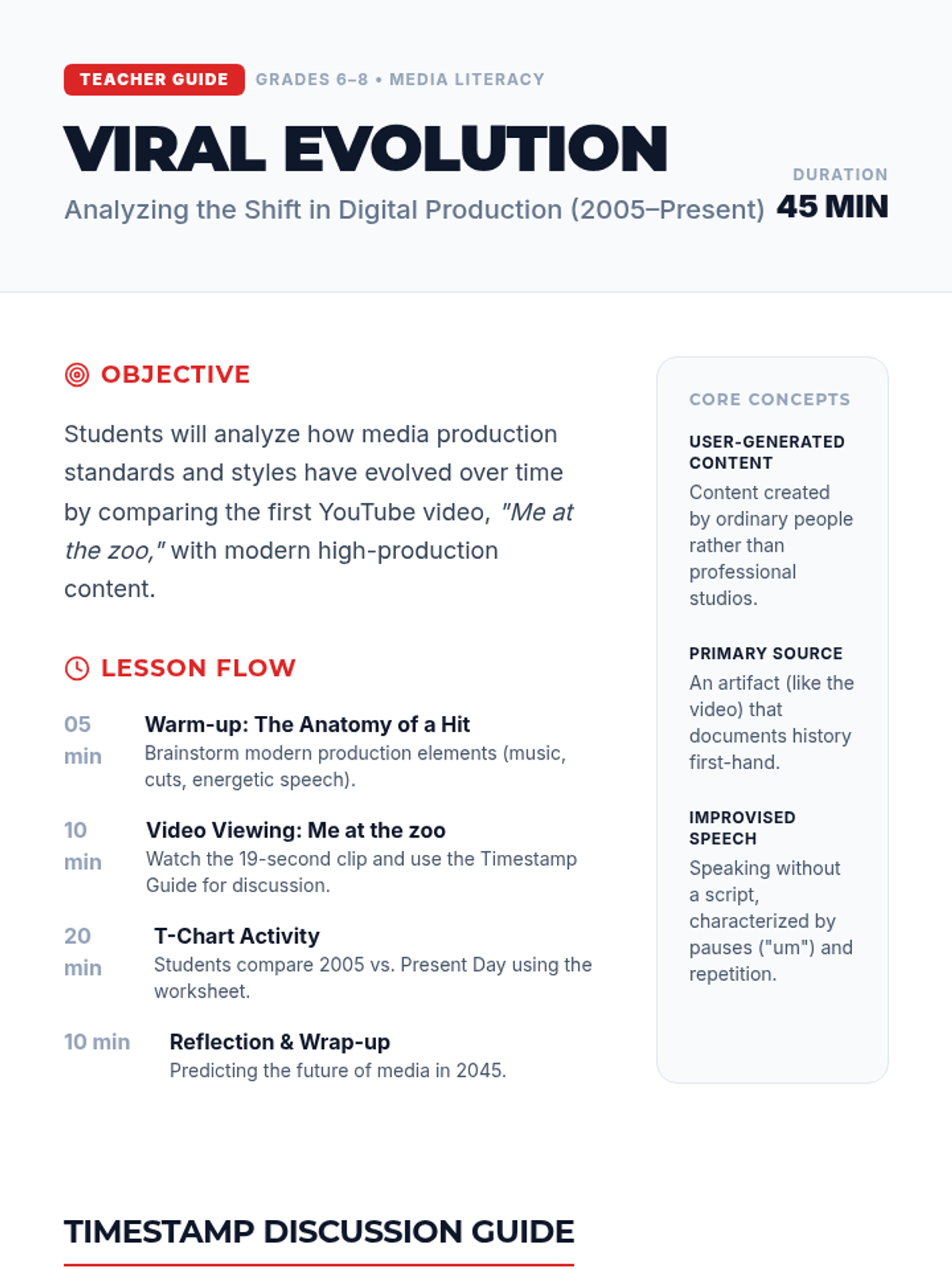
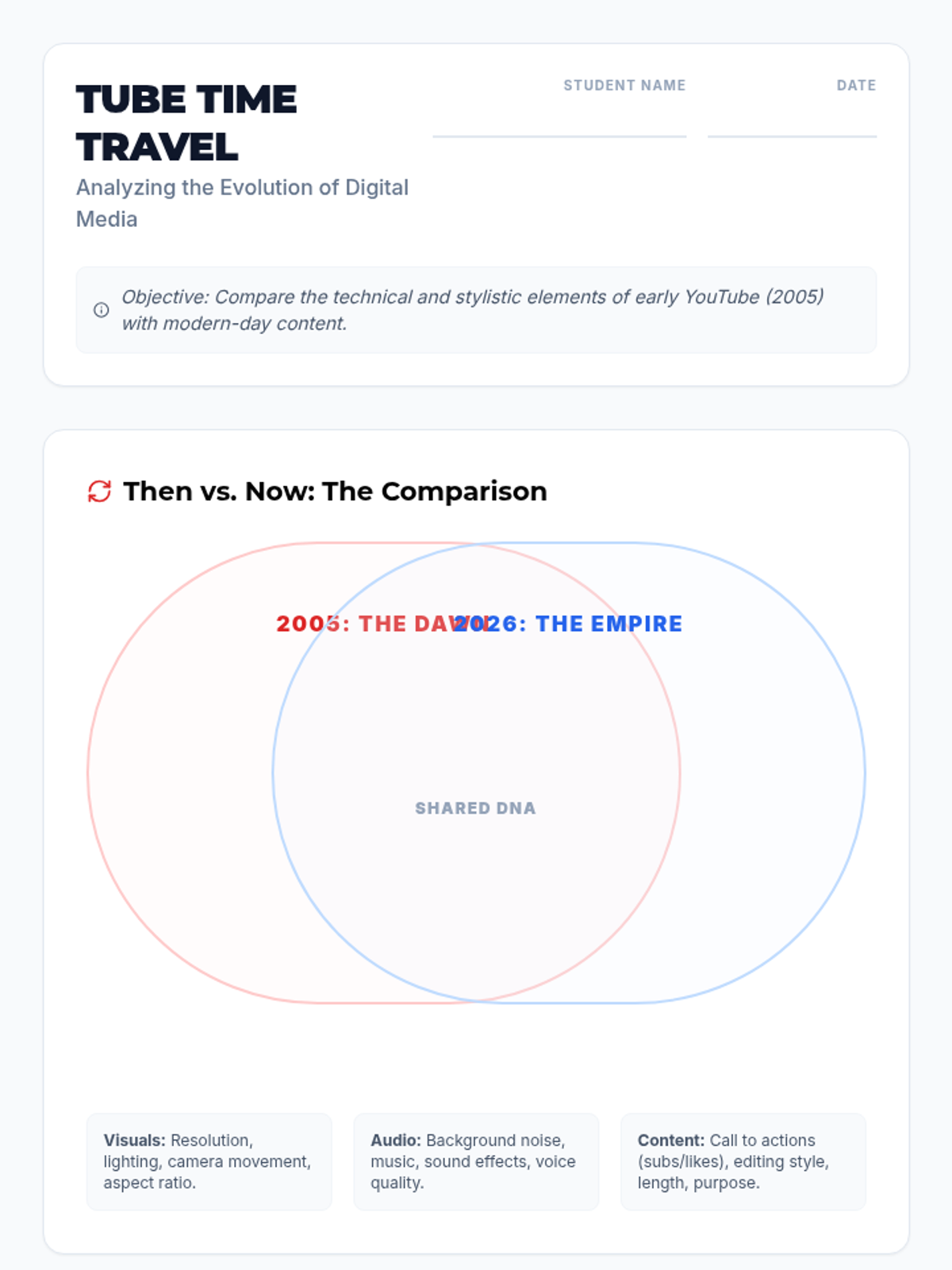
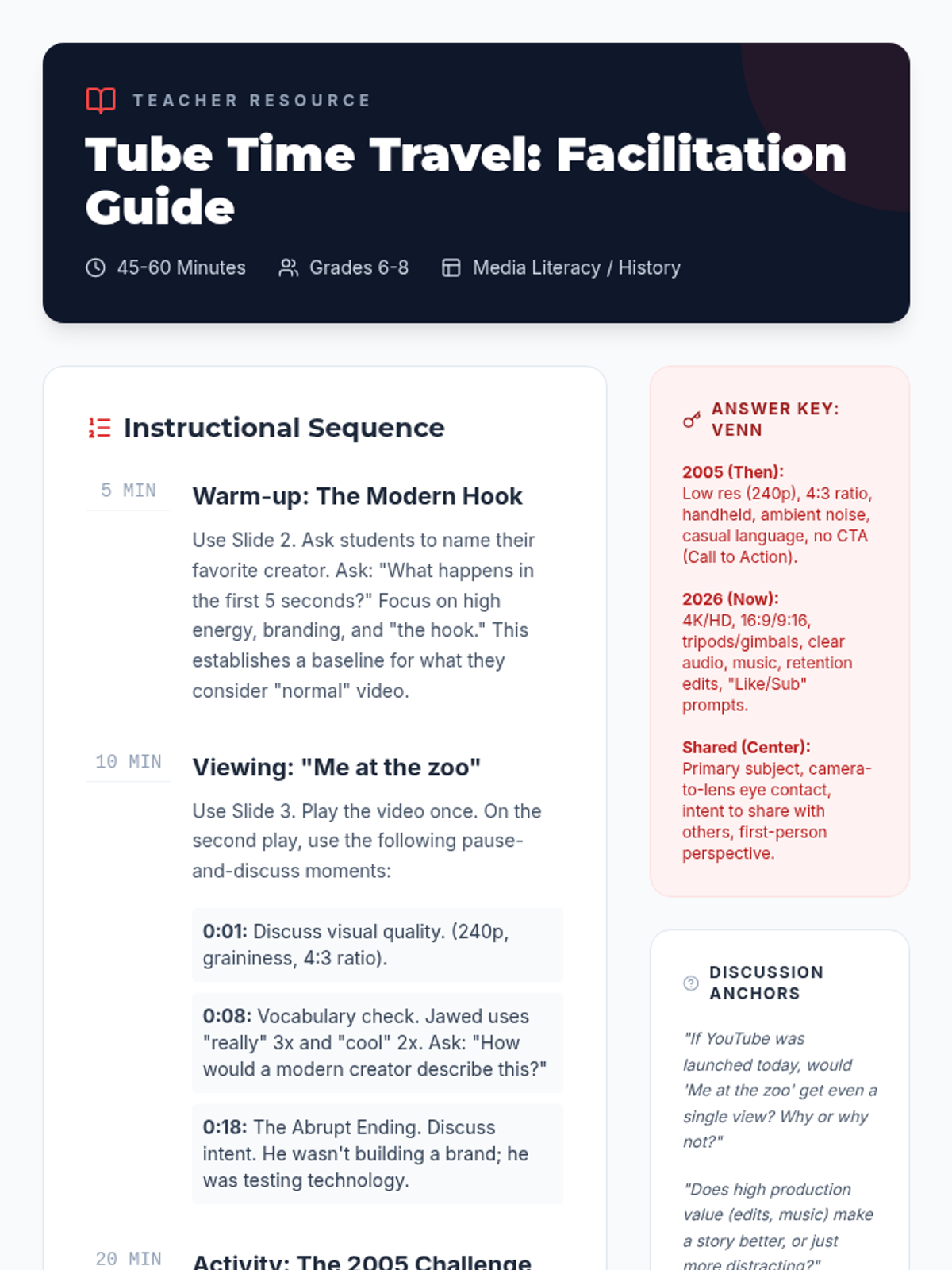
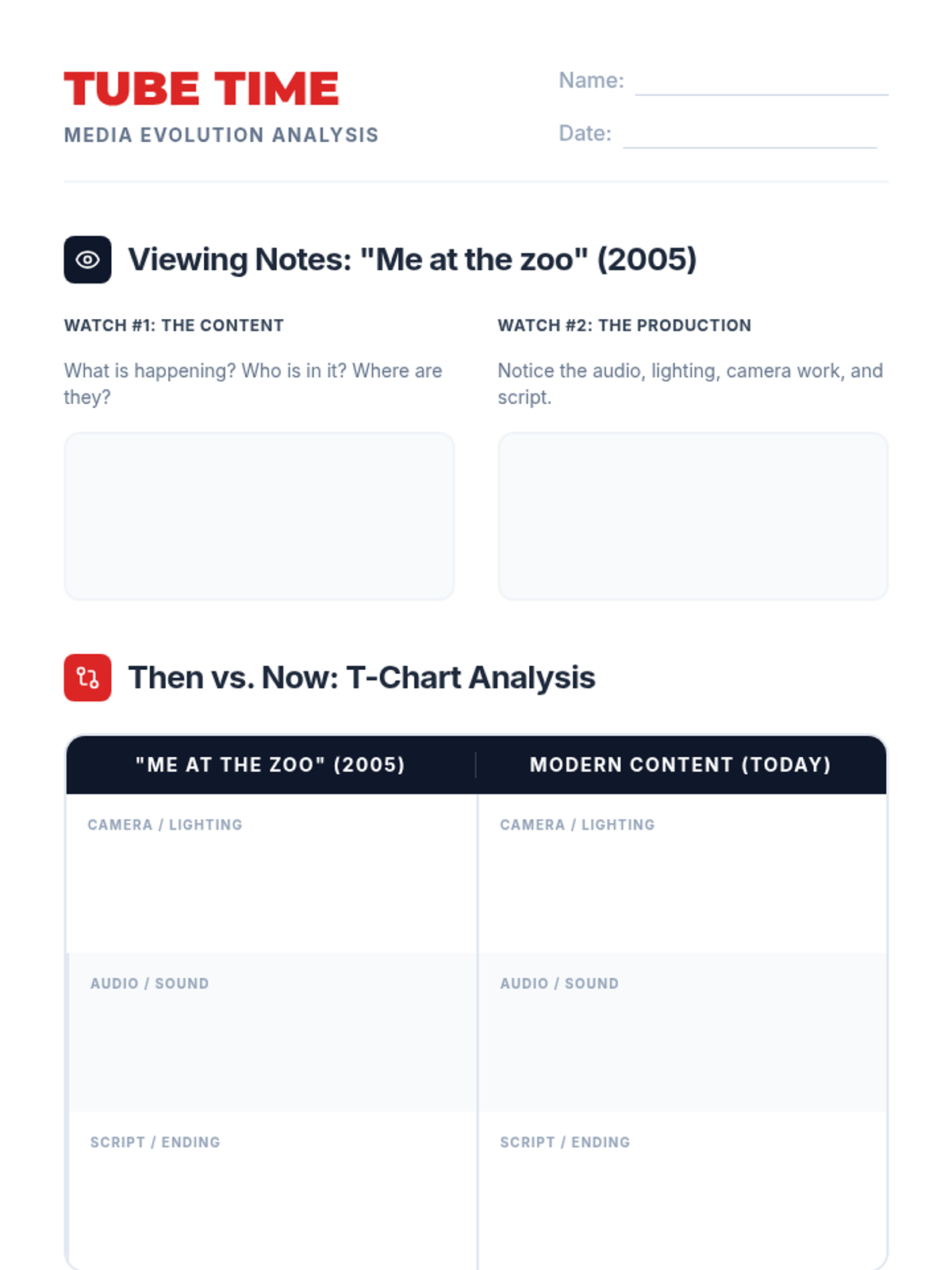
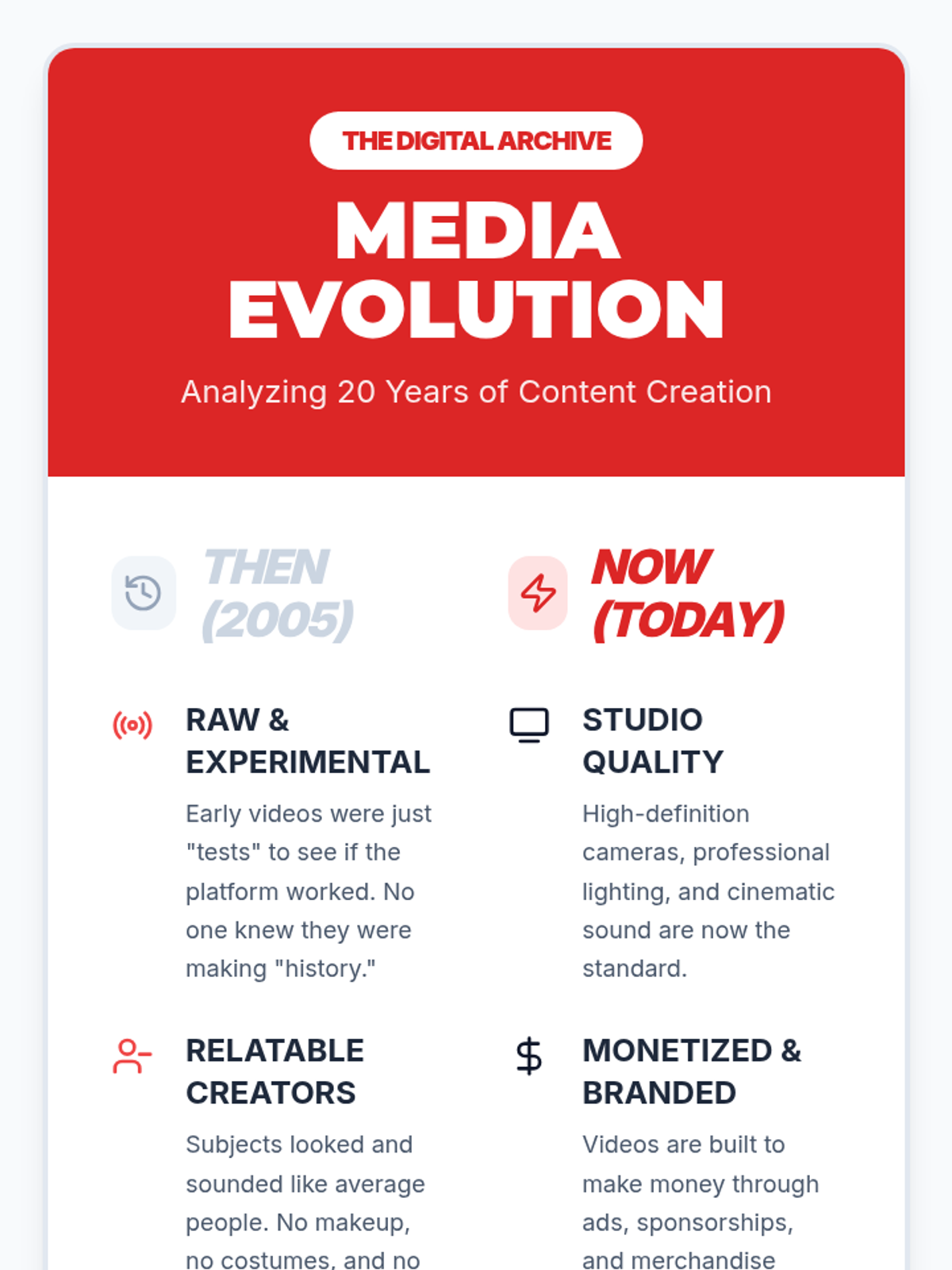
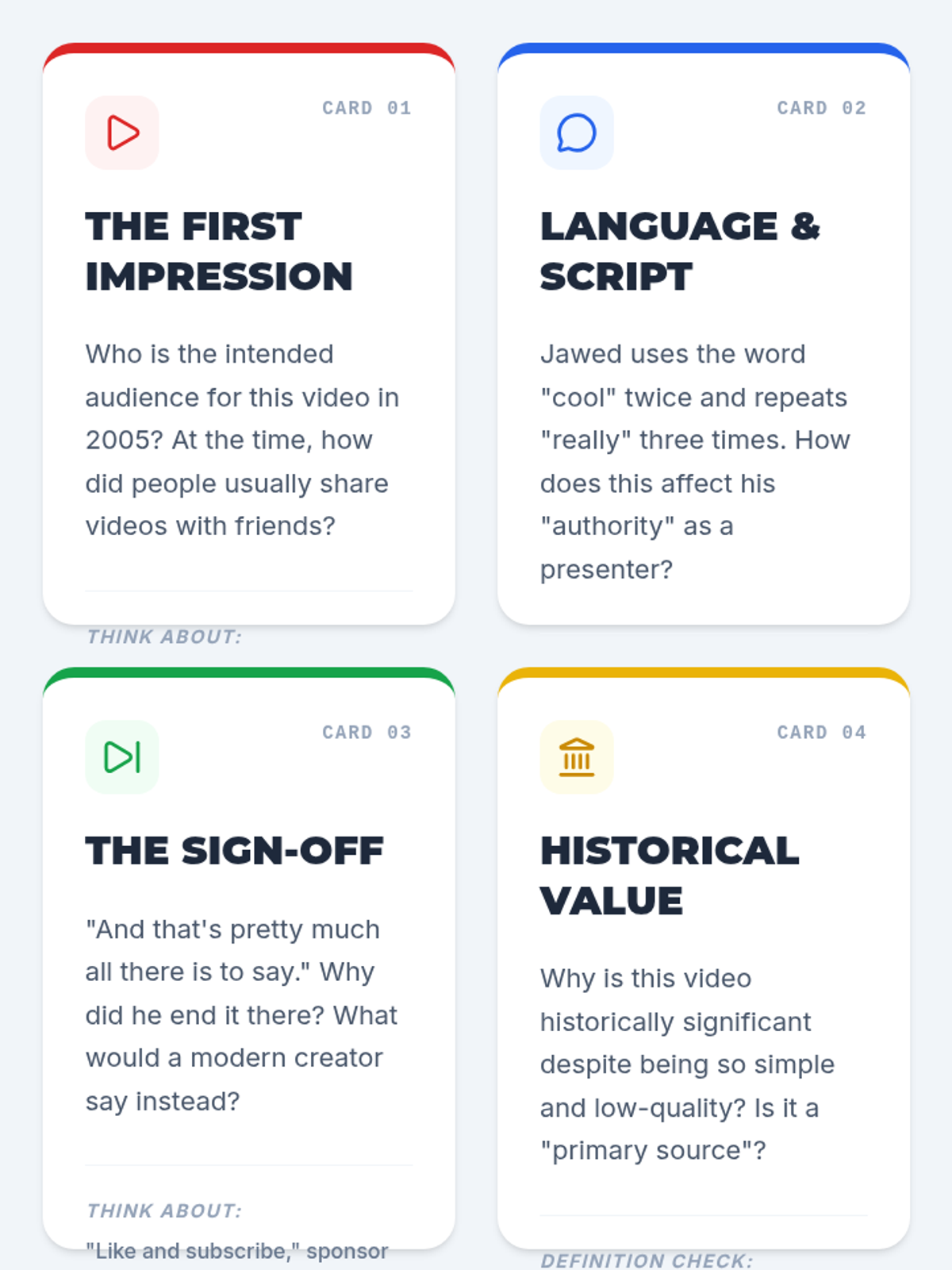
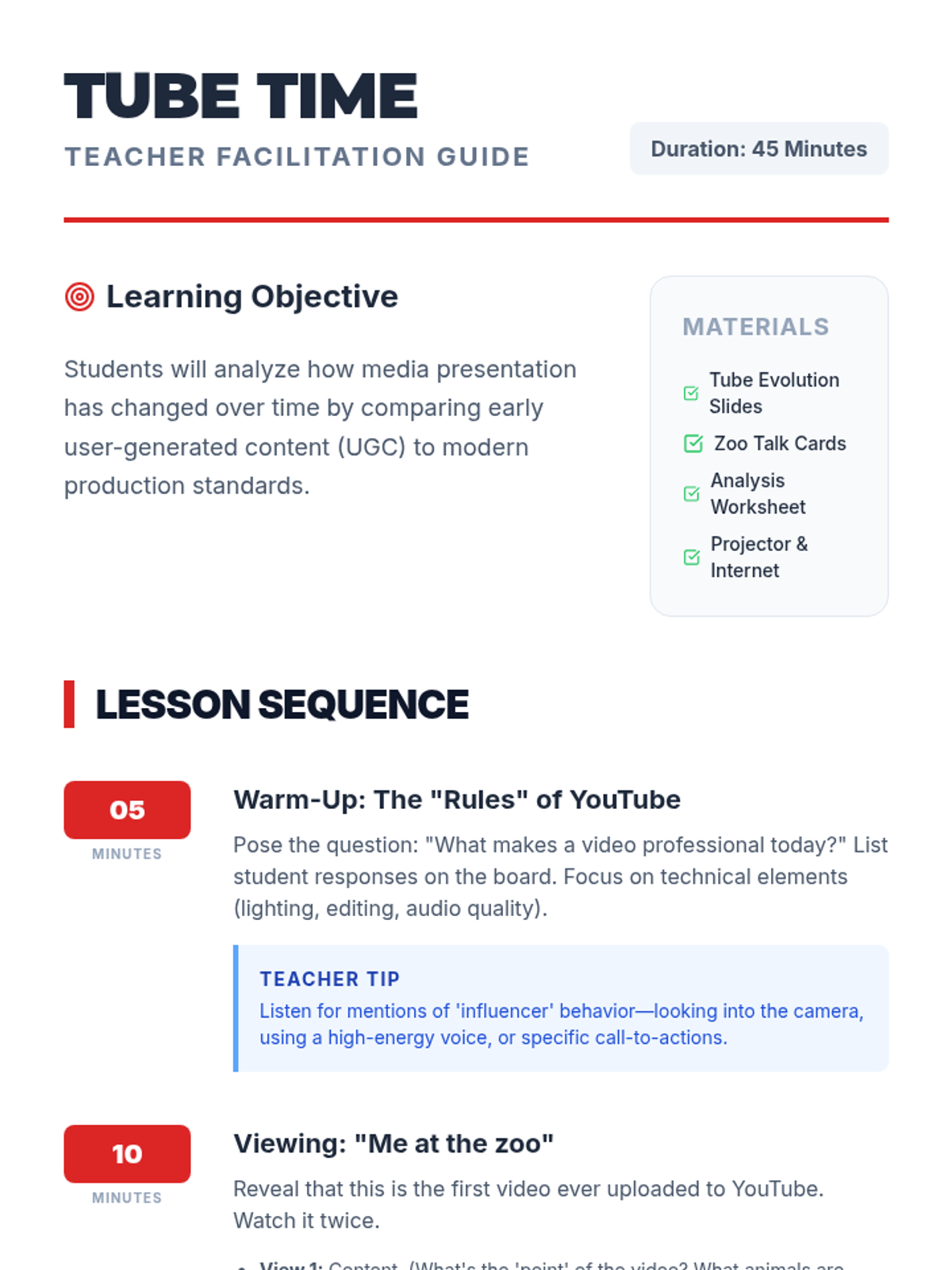
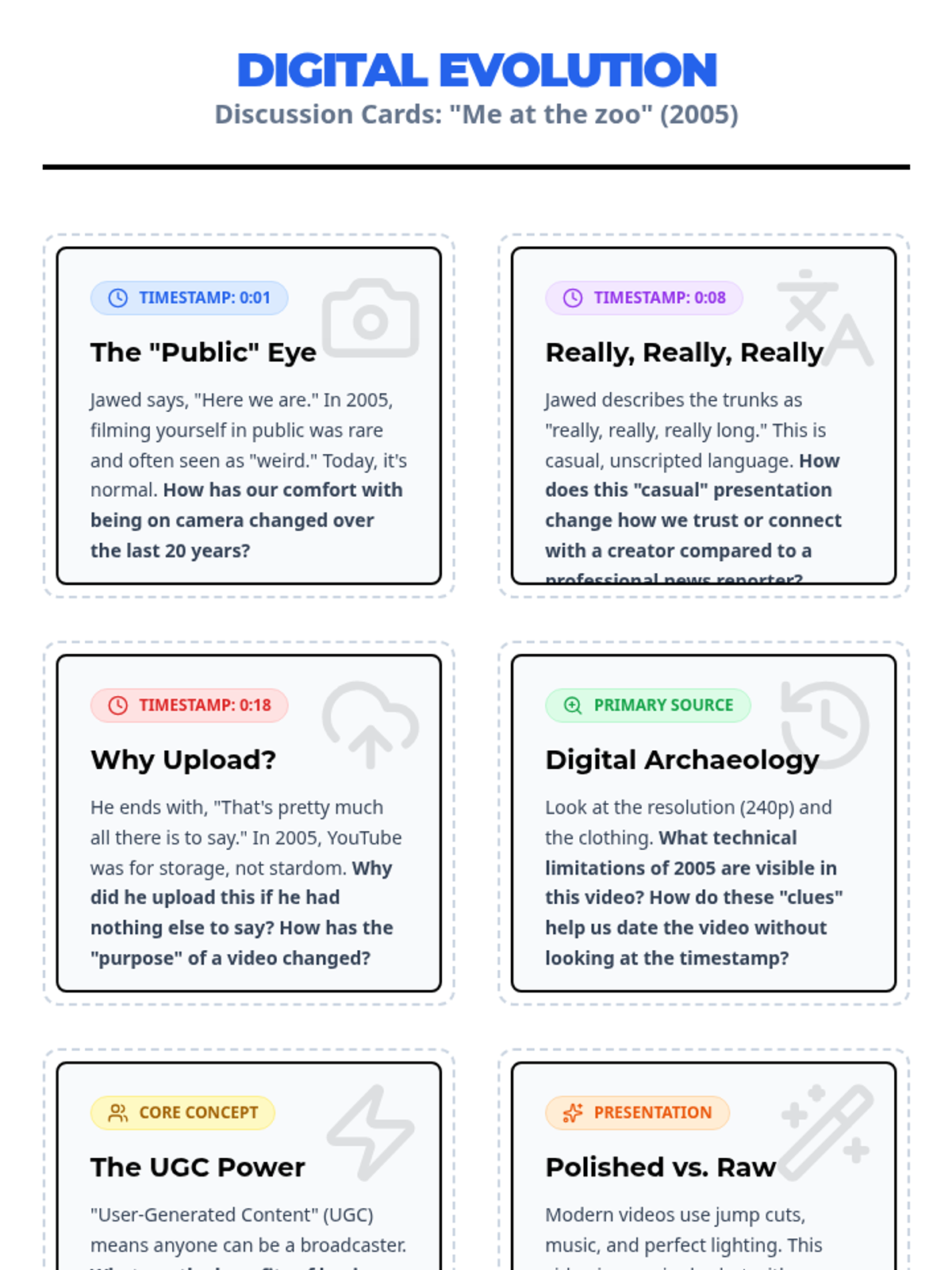
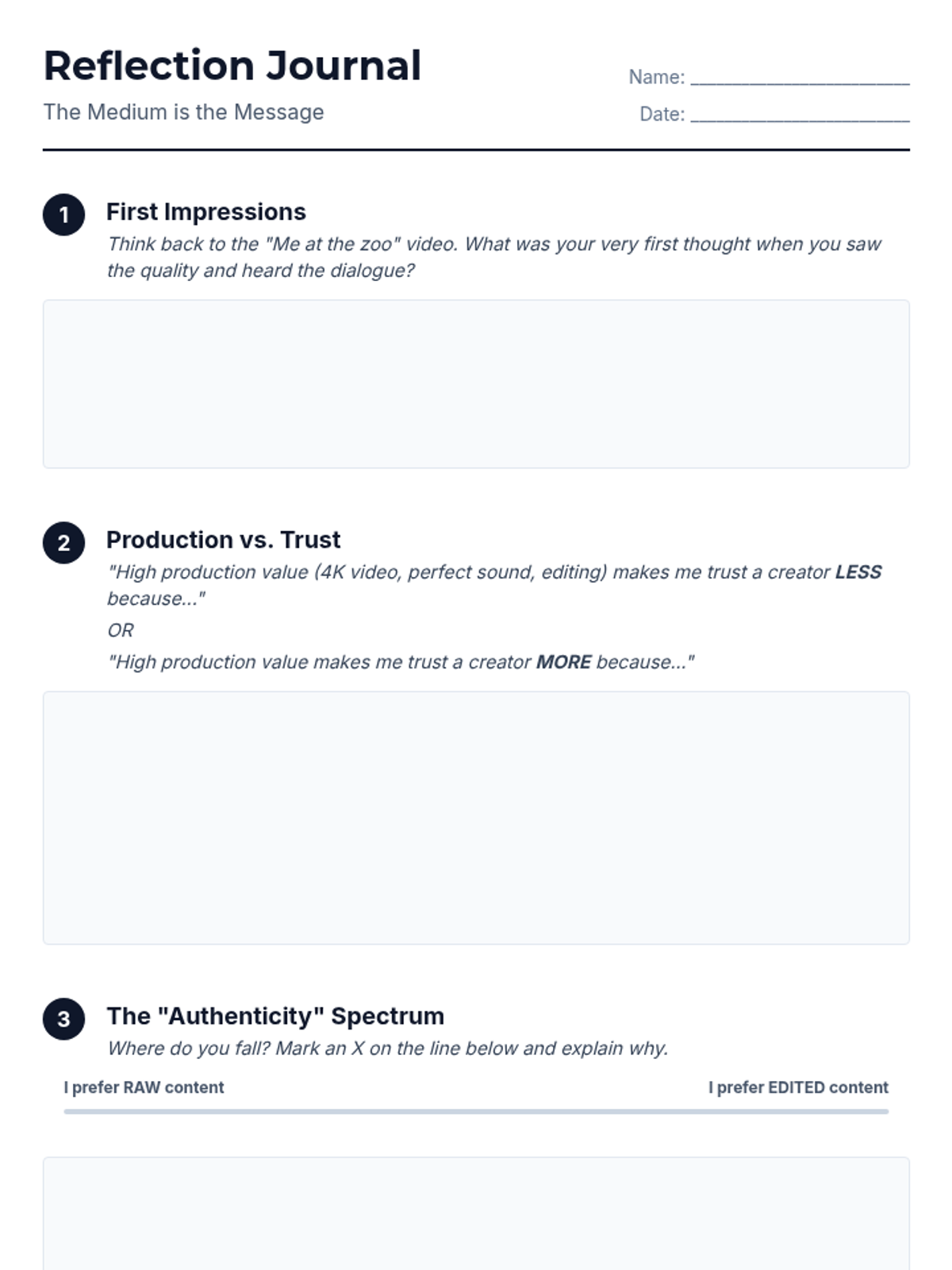
A lesson exploring the transformation of digital media production through the lens of YouTube's first video, 'Me at the zoo', contrasting early raw footage with modern high-production content.
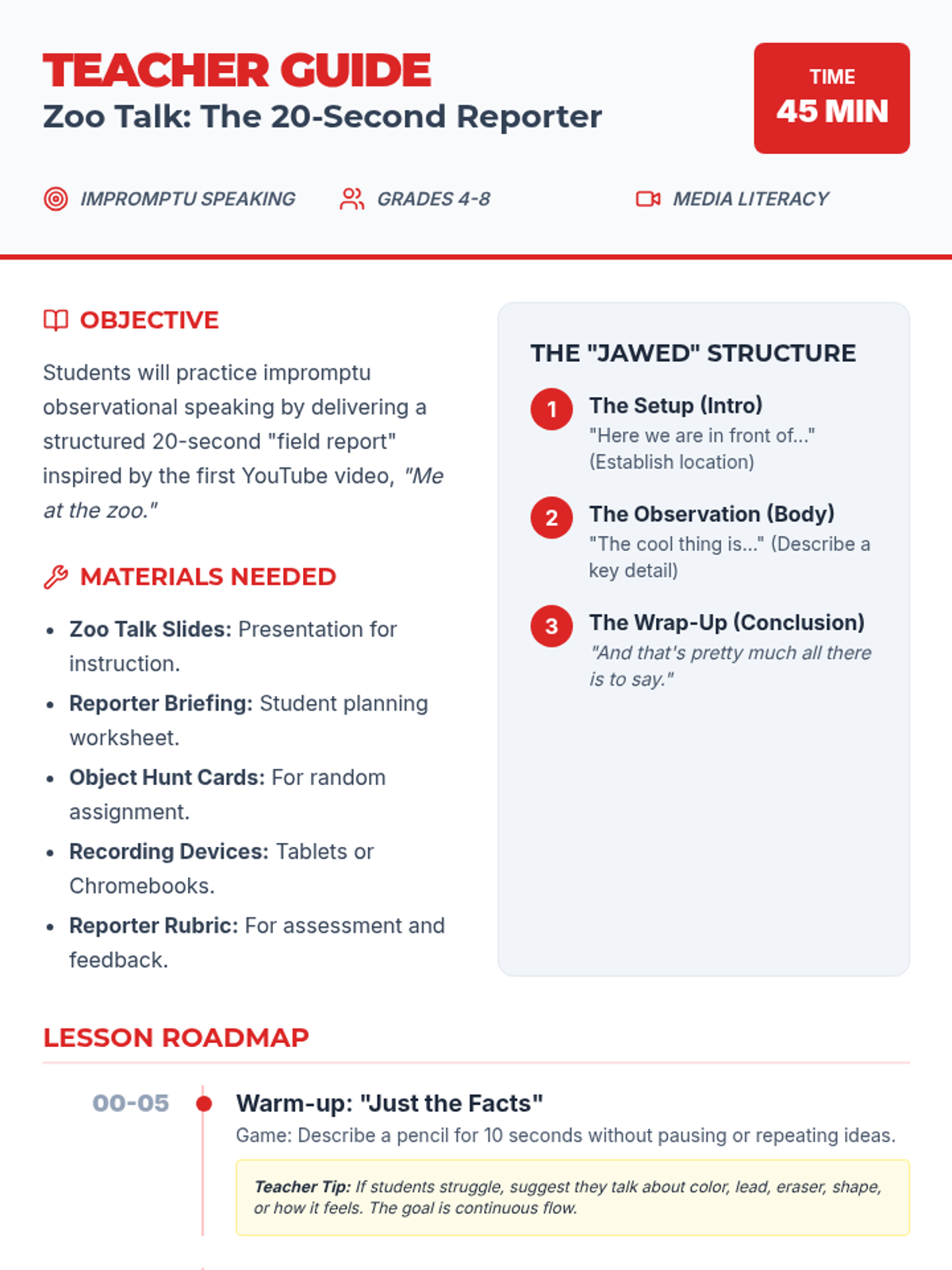
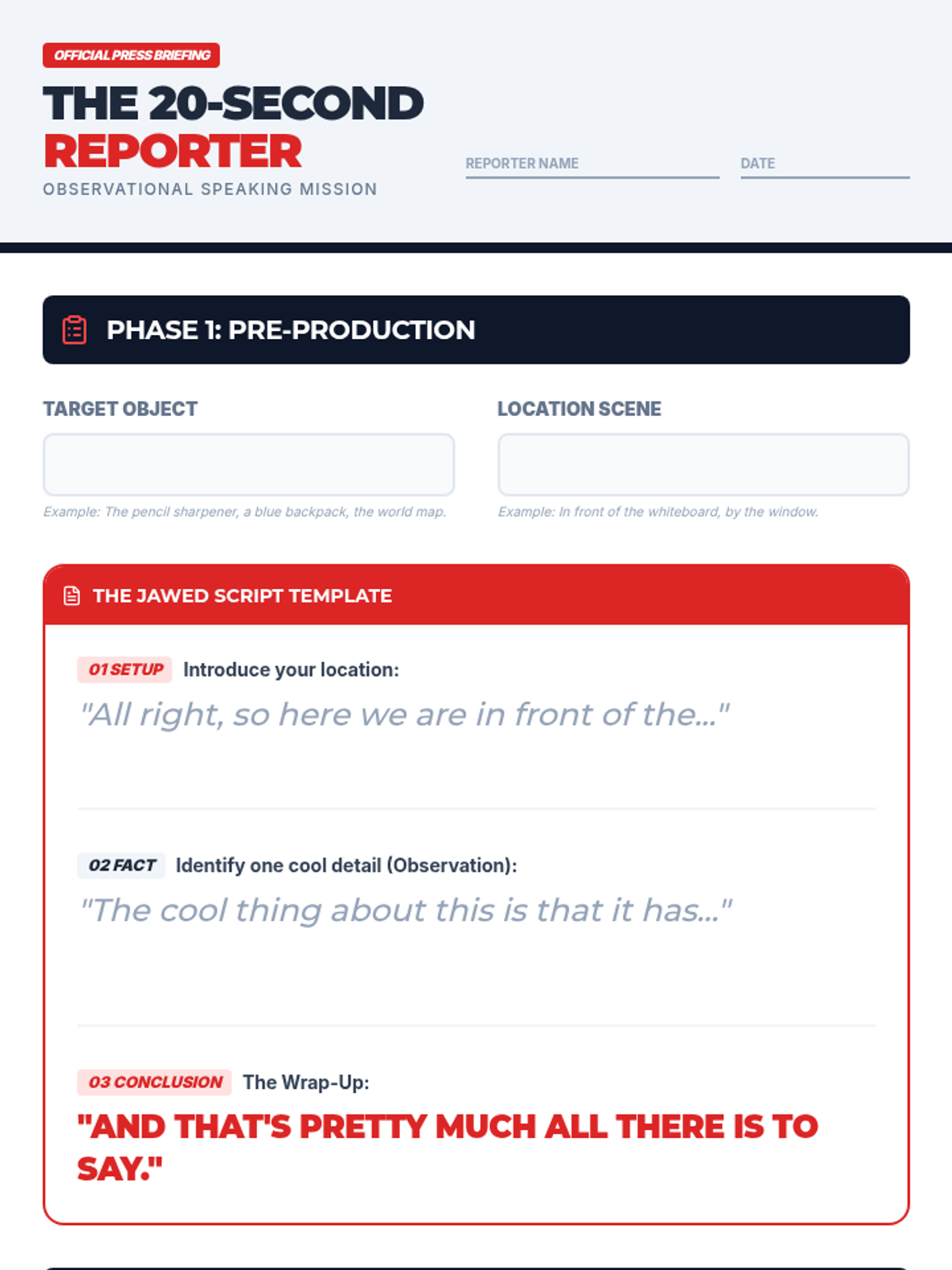
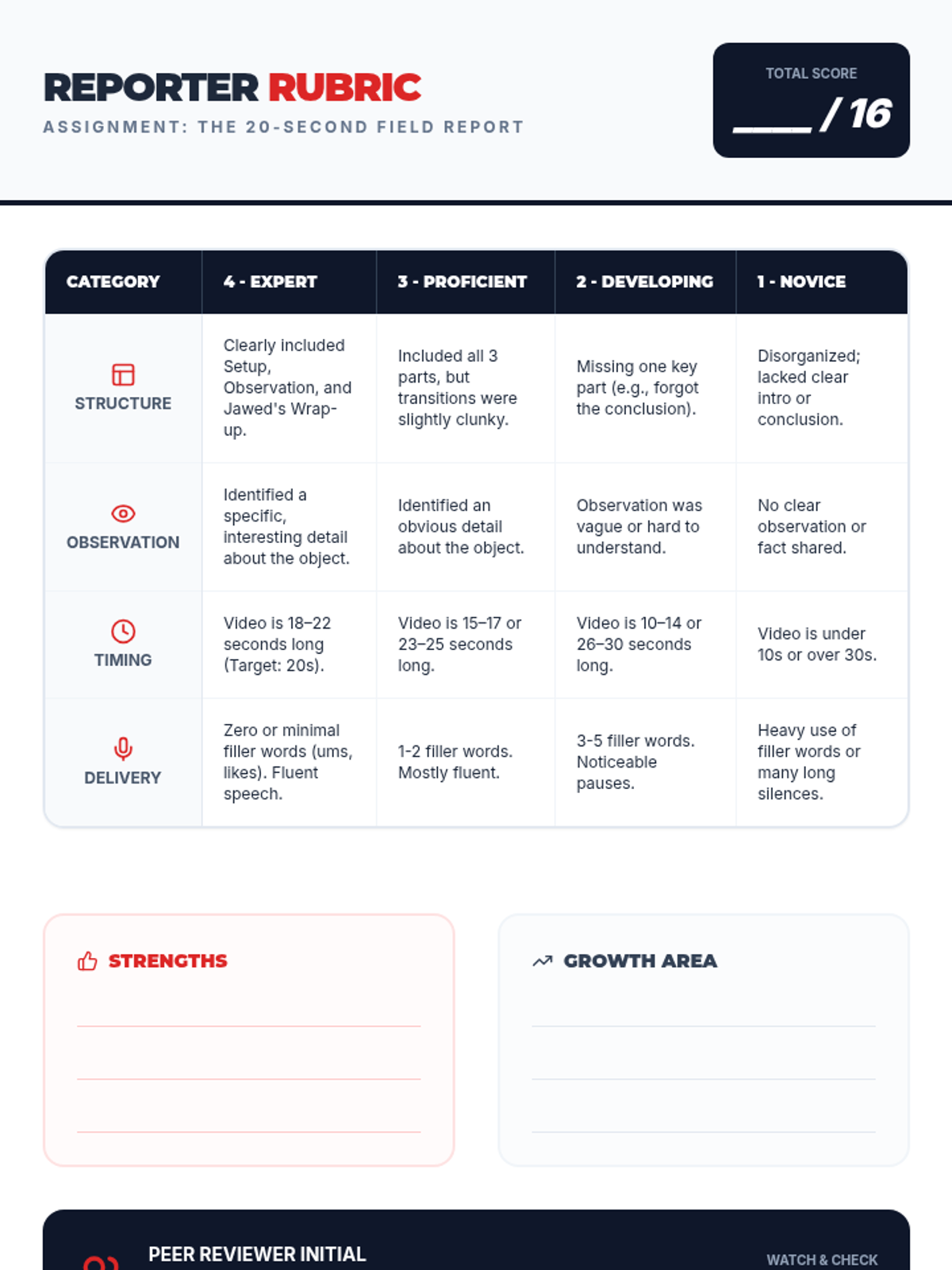
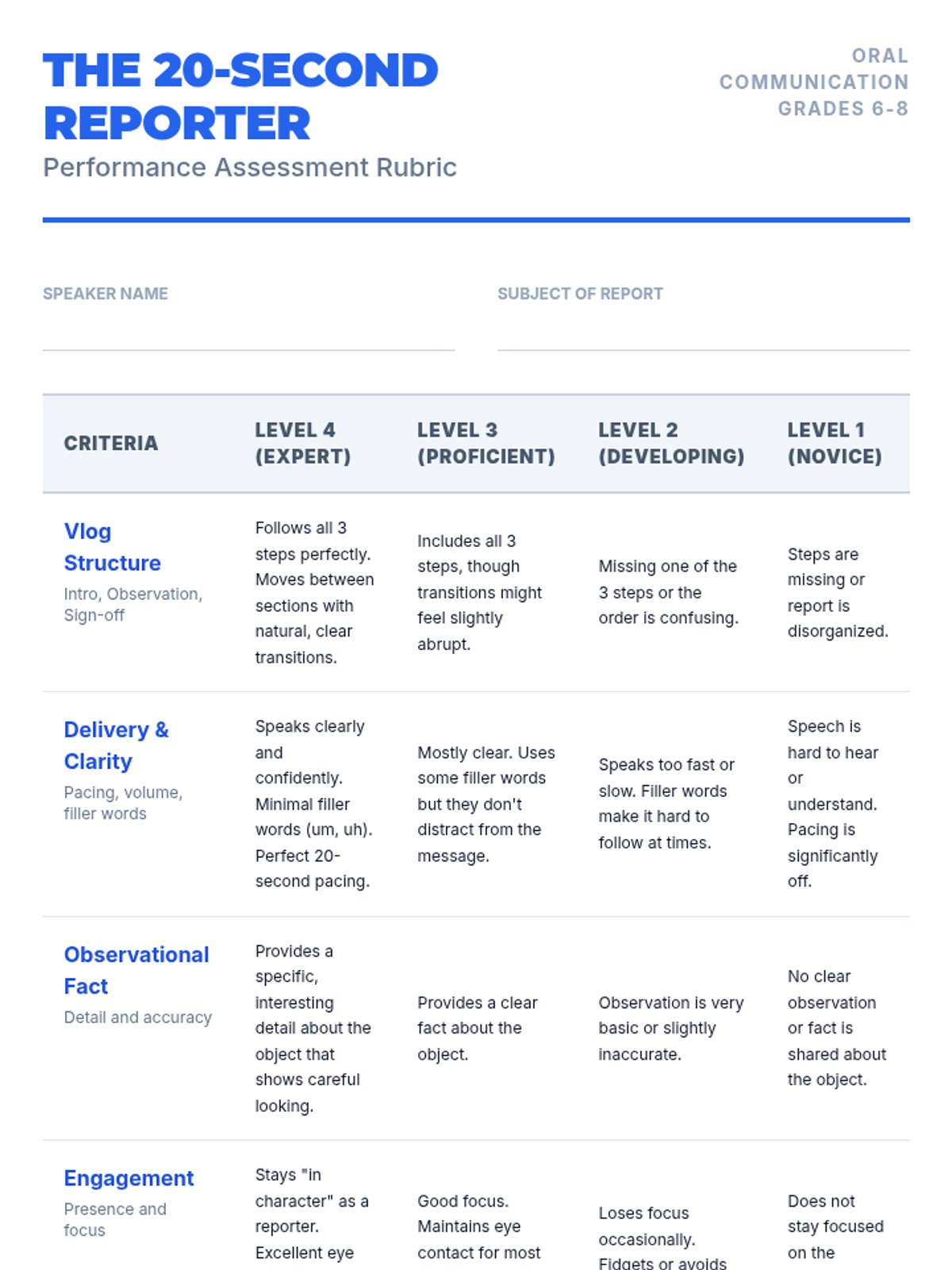
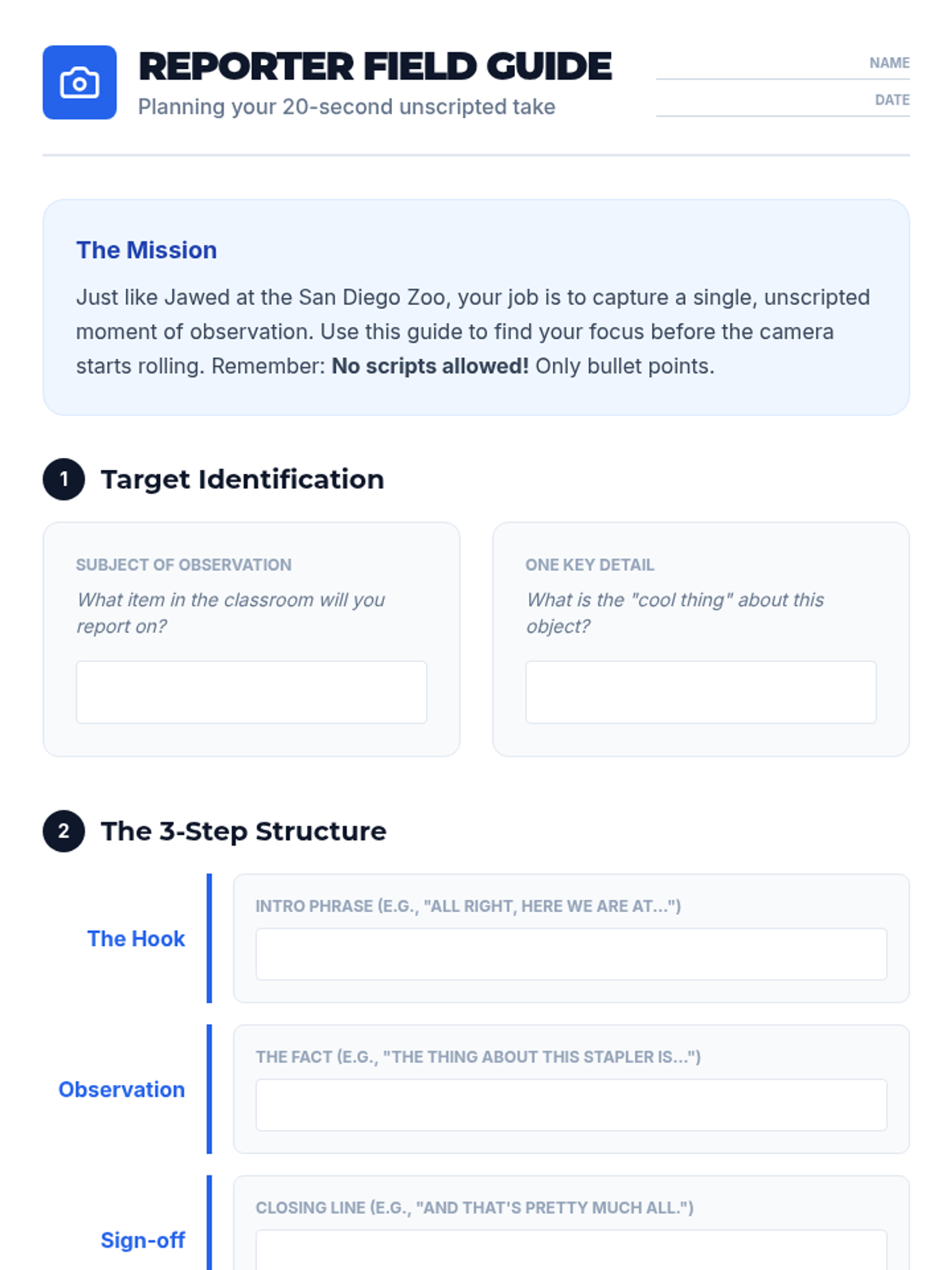
Students learn the foundations of impromptu speaking and user-generated content by analyzing the first-ever YouTube video and performing their own '20-Second Reporter' segment using a simple three-part structure.
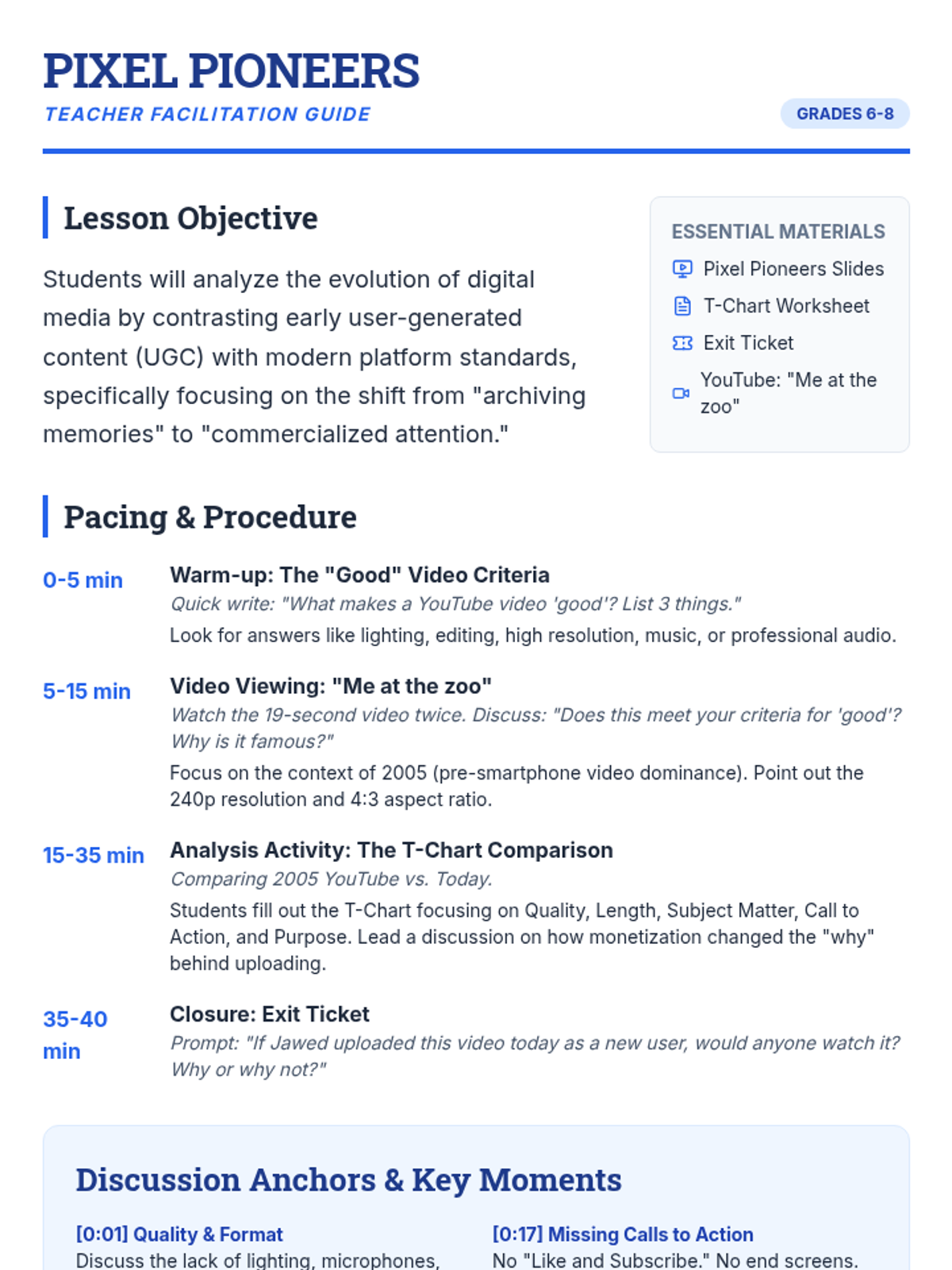
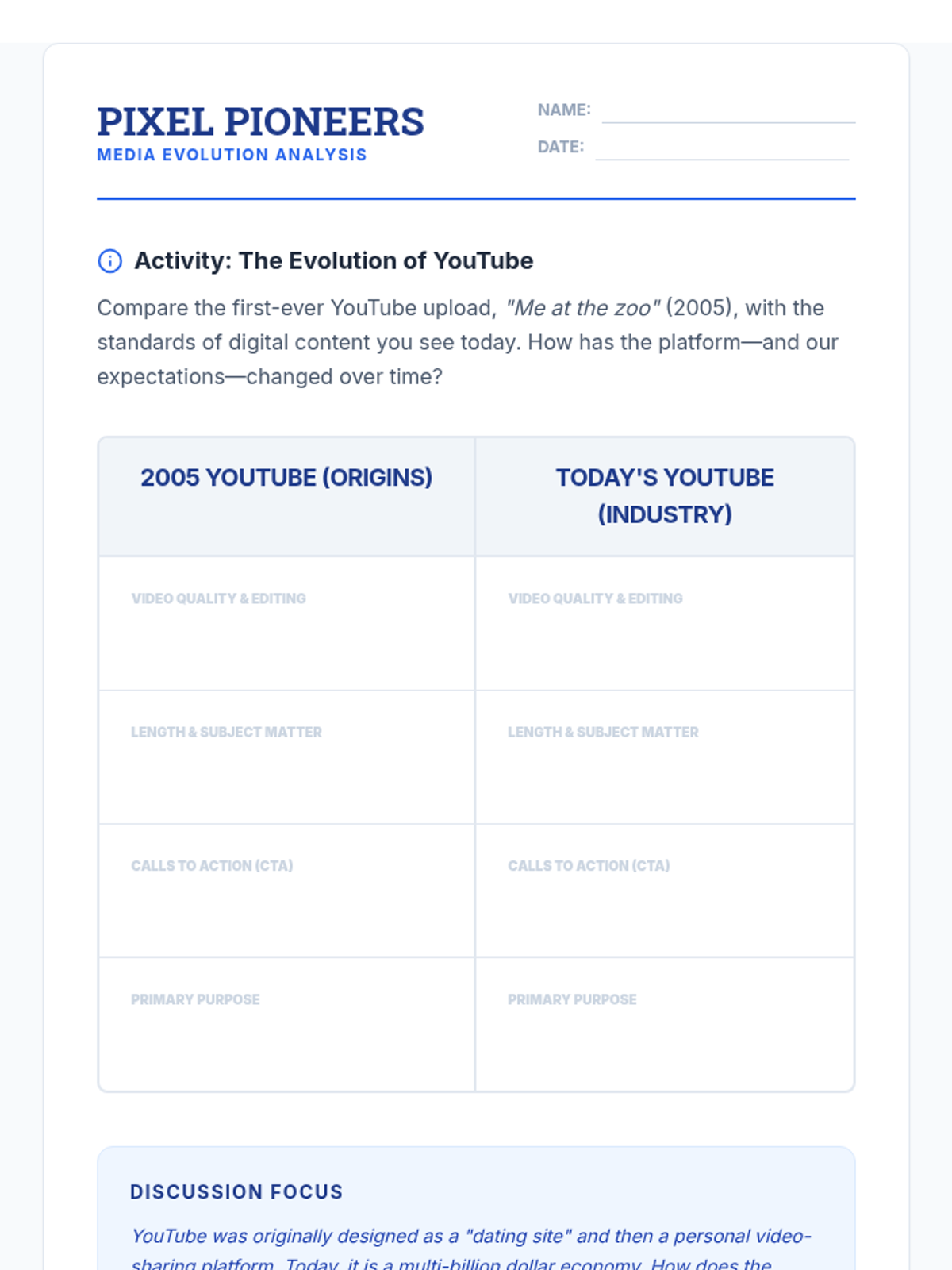
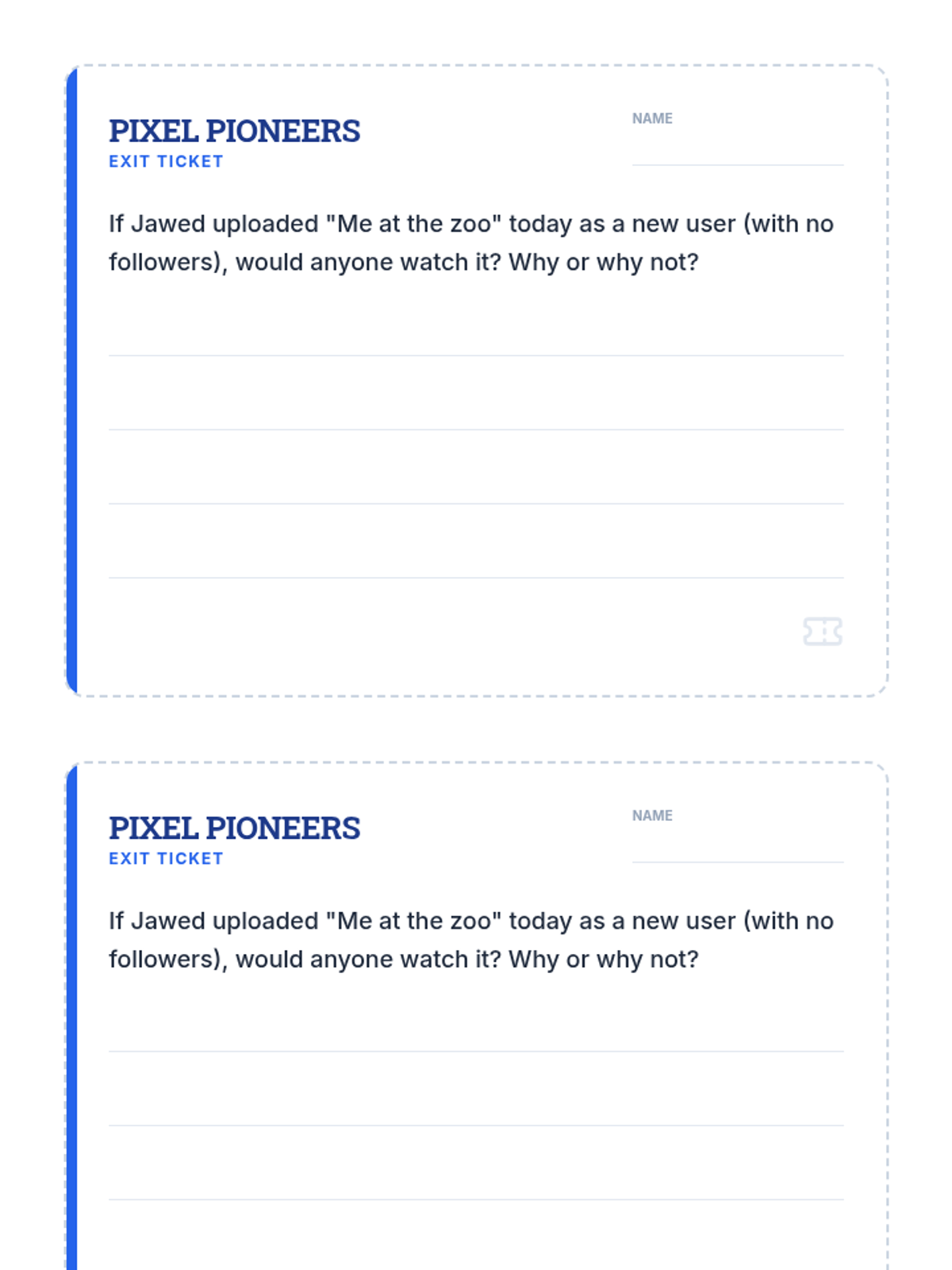
A media literacy lesson where students analyze the evolution of digital media by comparing the first YouTube video, 'Me at the zoo,' to modern content standards. Students explore concepts of user-generated content, monetization, and the commercialization of attention.
A lesson exploring the transformation of media through the history of YouTube, contrasting the simplicity of the first 'User-Generated Content' with modern, high-production digital storytelling. Students will analyze technical shifts and practice scripting for a simpler era.
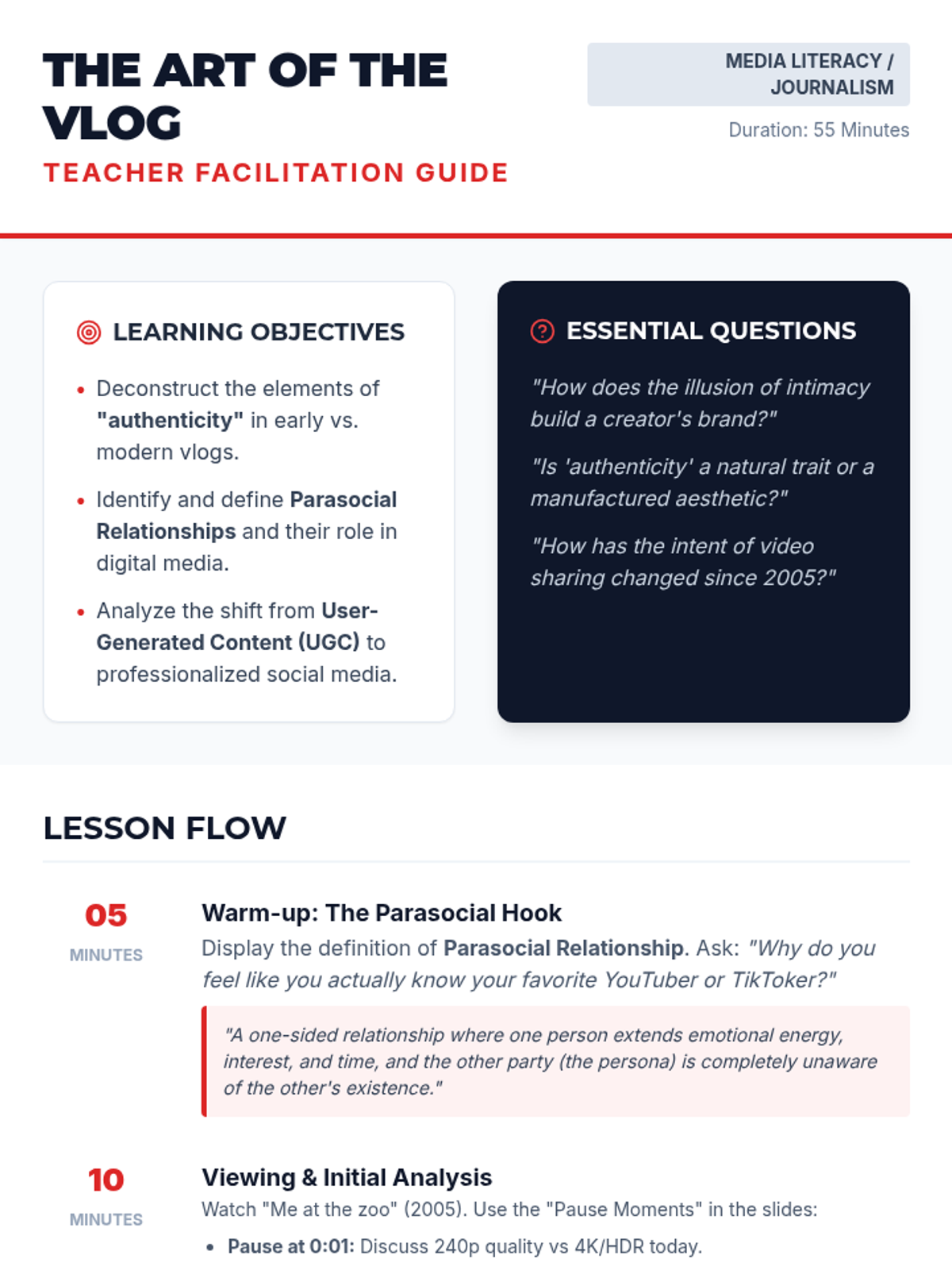
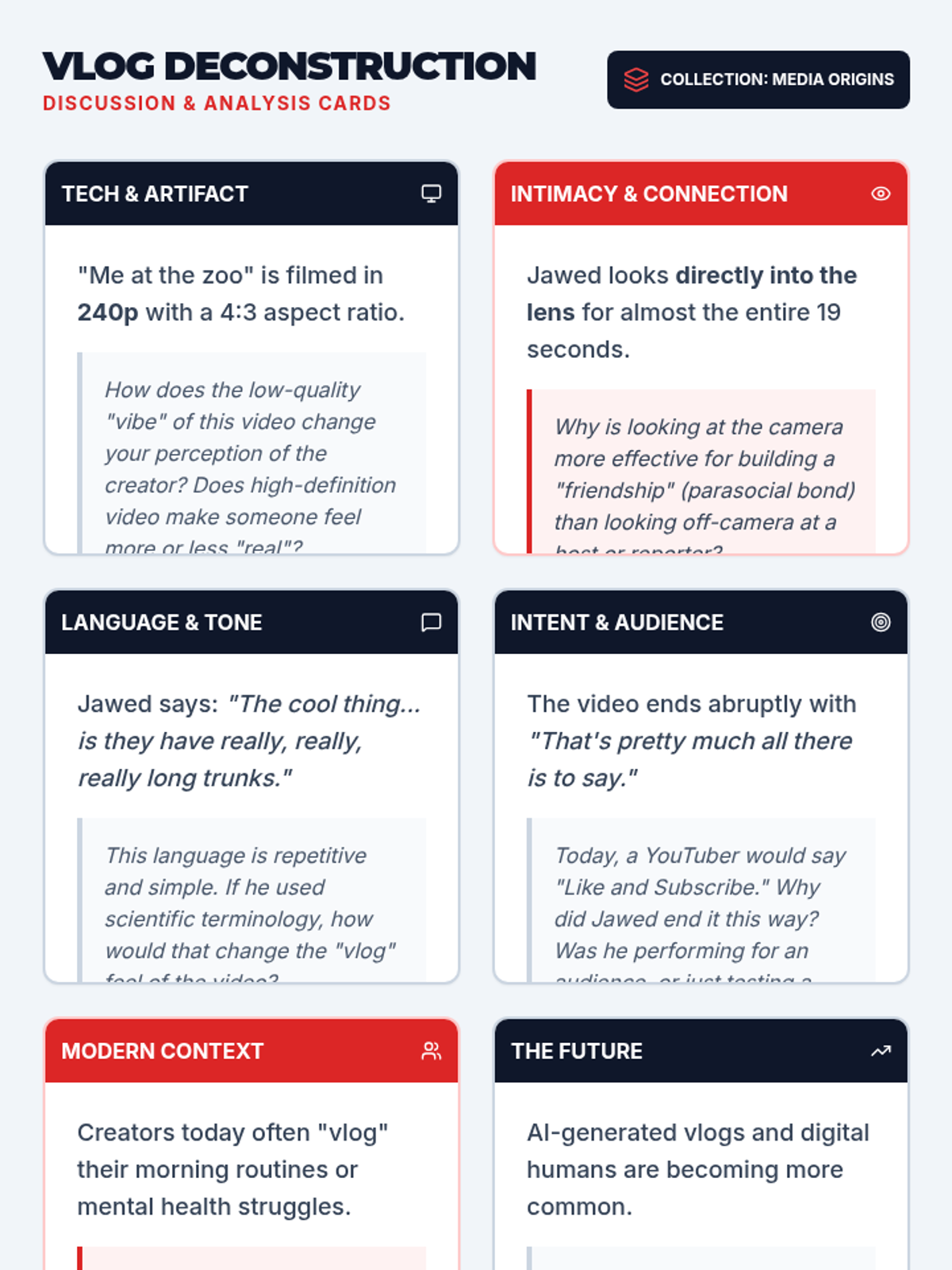
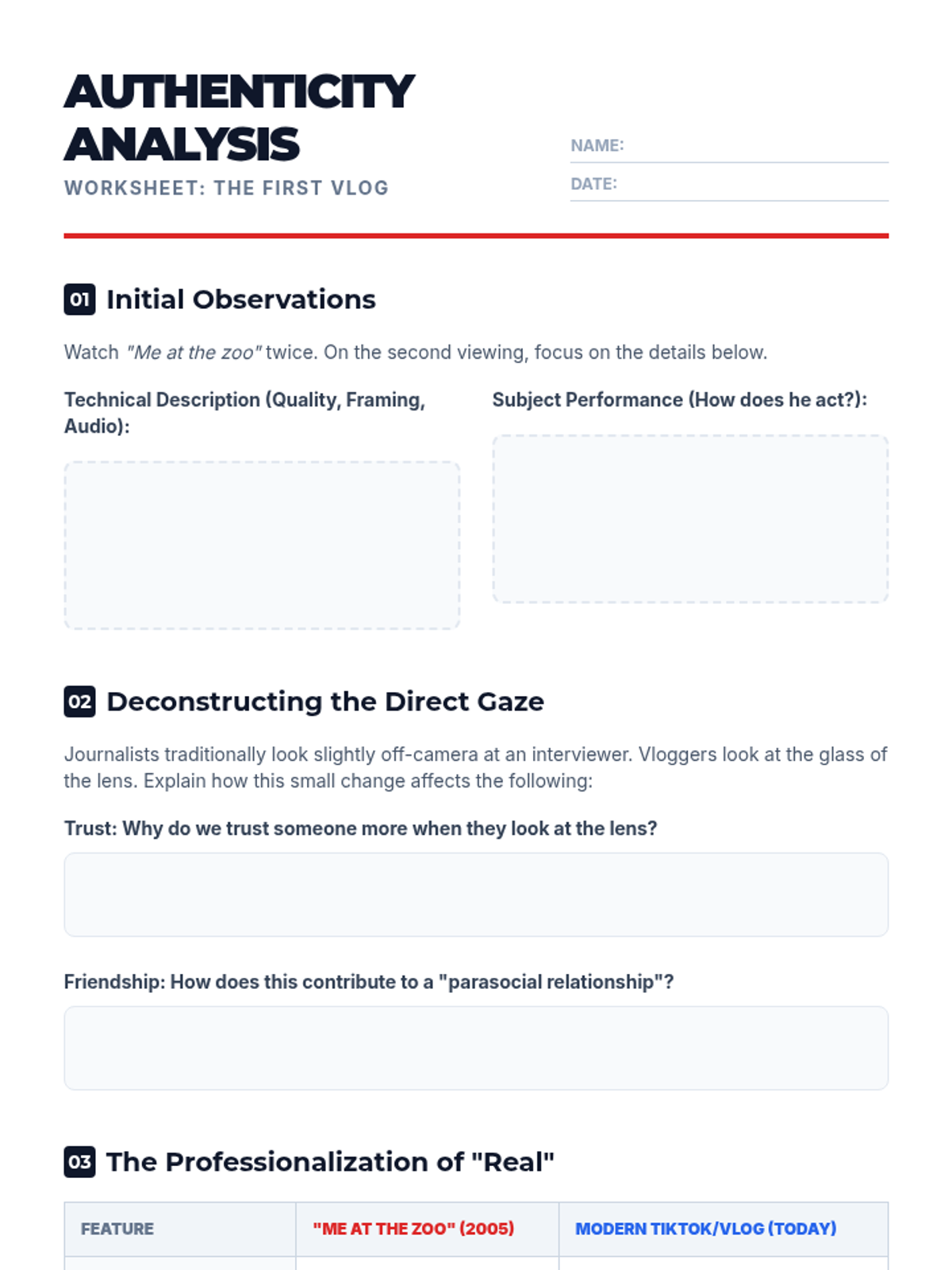
A lesson exploring the origins of vlogging through YouTube's first video, focusing on the concepts of authenticity, user-generated content, and parasocial relationships.
Students analyze the evolution of digital media by comparing the first-ever YouTube video, 'Me at the zoo,' with modern production standards, focusing on production quality, scripting, and the concept of user-generated content.
A lesson where students analyze the first-ever YouTube video to learn about unscripted oral communication and then perform their own 20-second observational vlogs.
In this lesson, students will be introduced to the Engineering Design Process (EDP) by tackling a real-world design challenge. They will learn to identify problems, brainstorm solutions, and understand the iterative nature of engineering.
Students explore the history of media technology and presentation styles by comparing the first YouTube video to modern content, focusing on the concept of User-Generated Content (UGC).
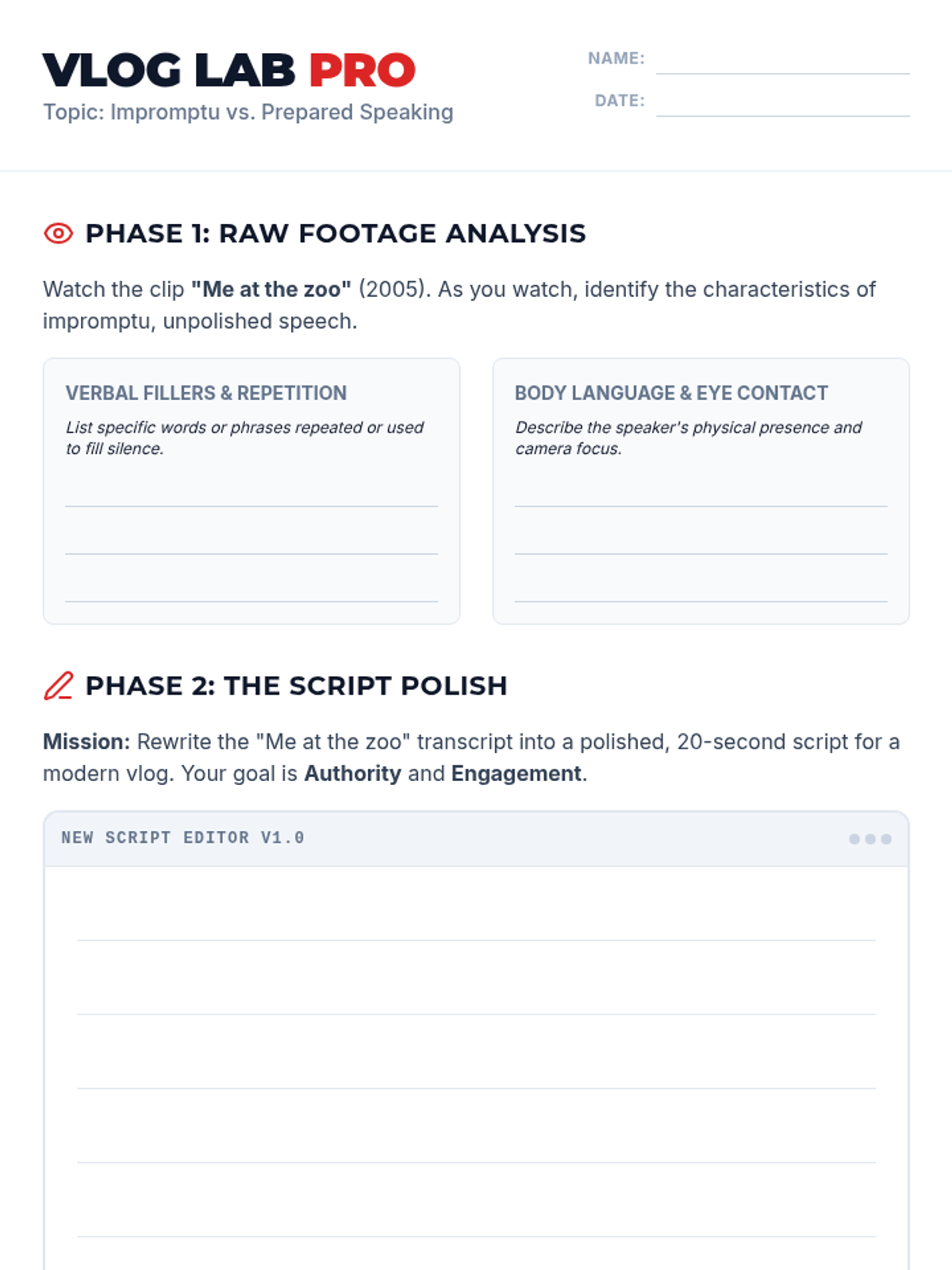
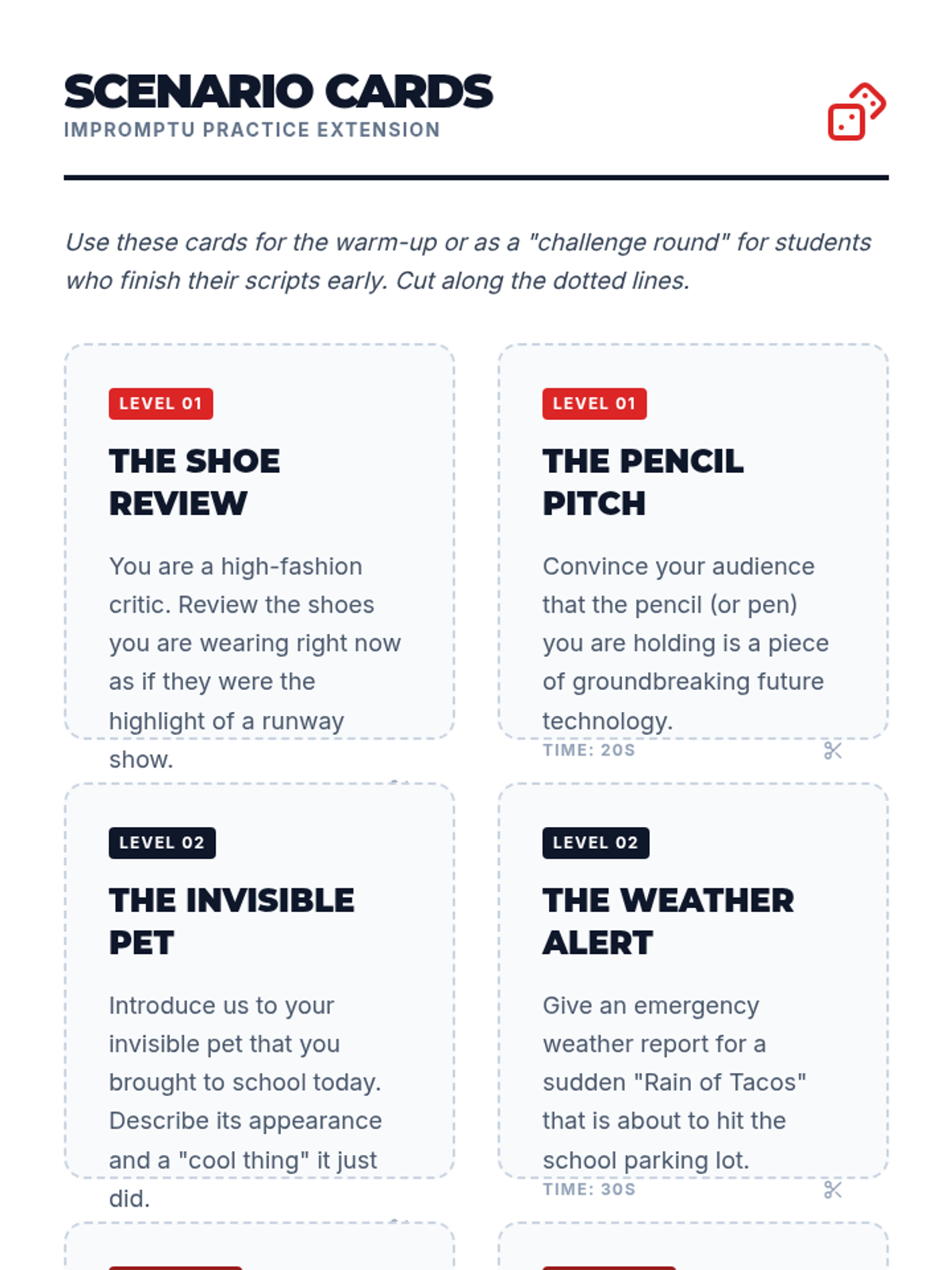
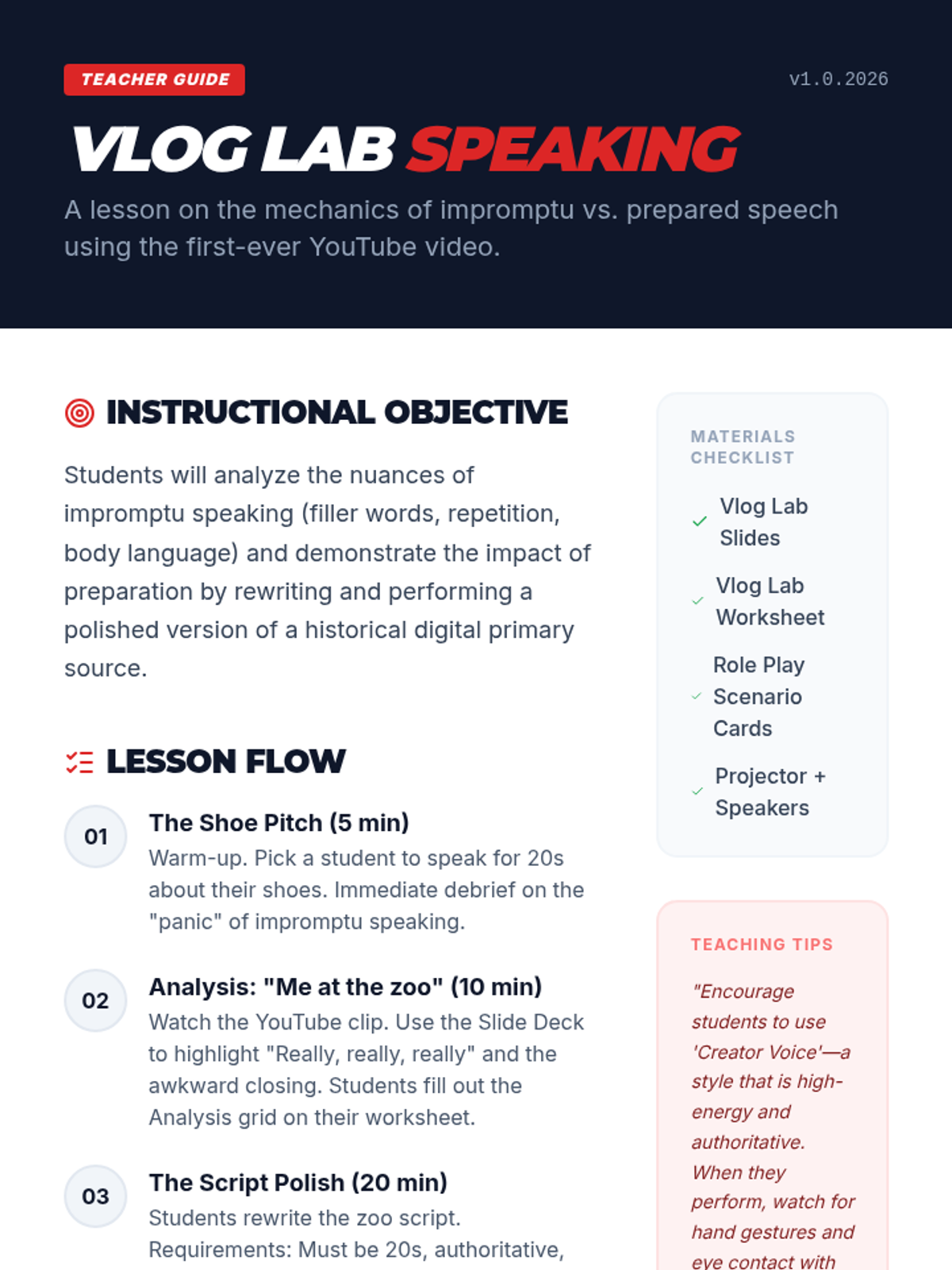
A Speech & Debate/ELA lesson where students analyze 'Me at the zoo' to understand the differences between impromptu and prepared speaking, ending with a script-polishing activity.
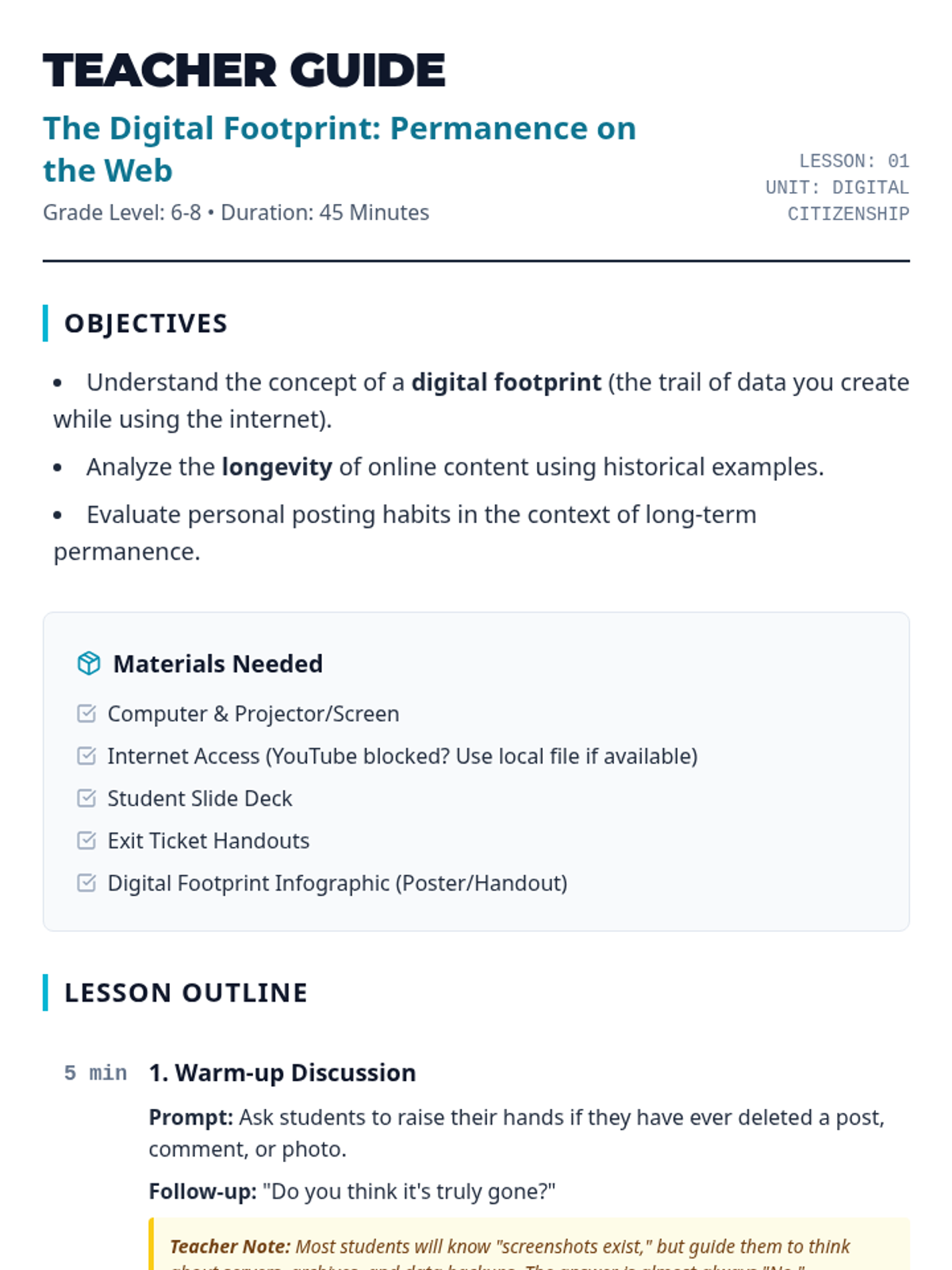
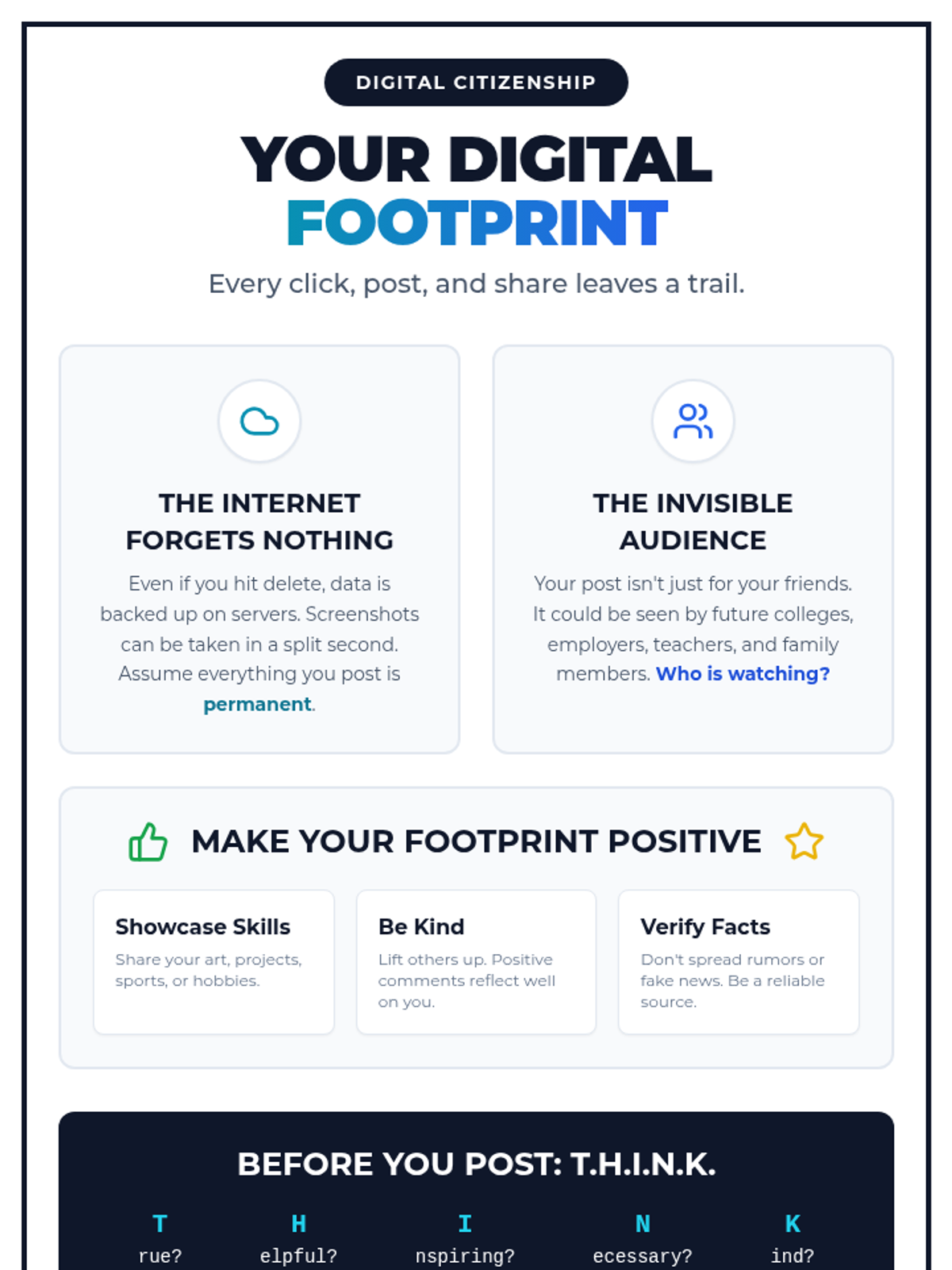
A lesson for Middle School students on digital footprints and online permanence, analyzing the first YouTube video ever uploaded.
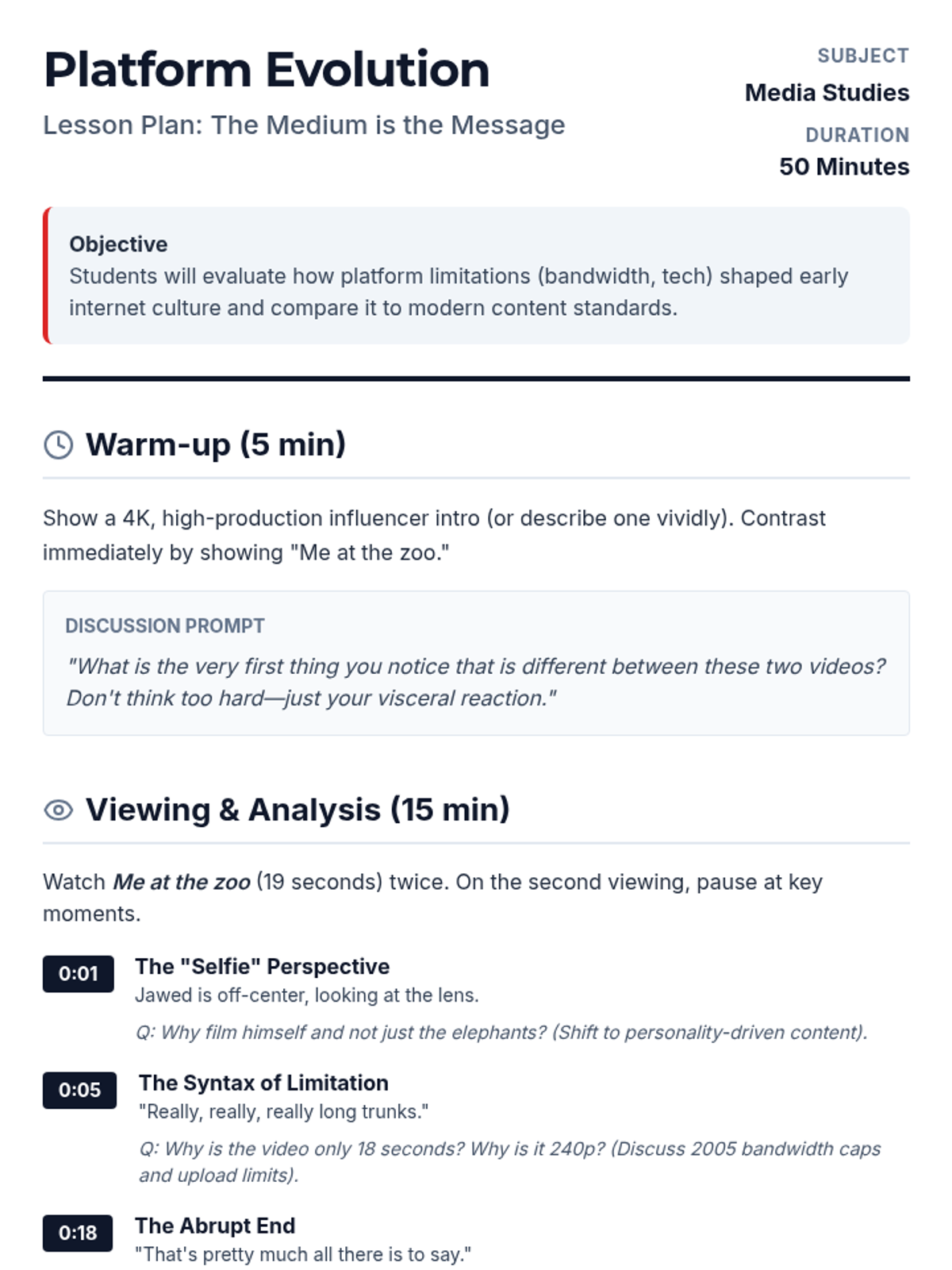
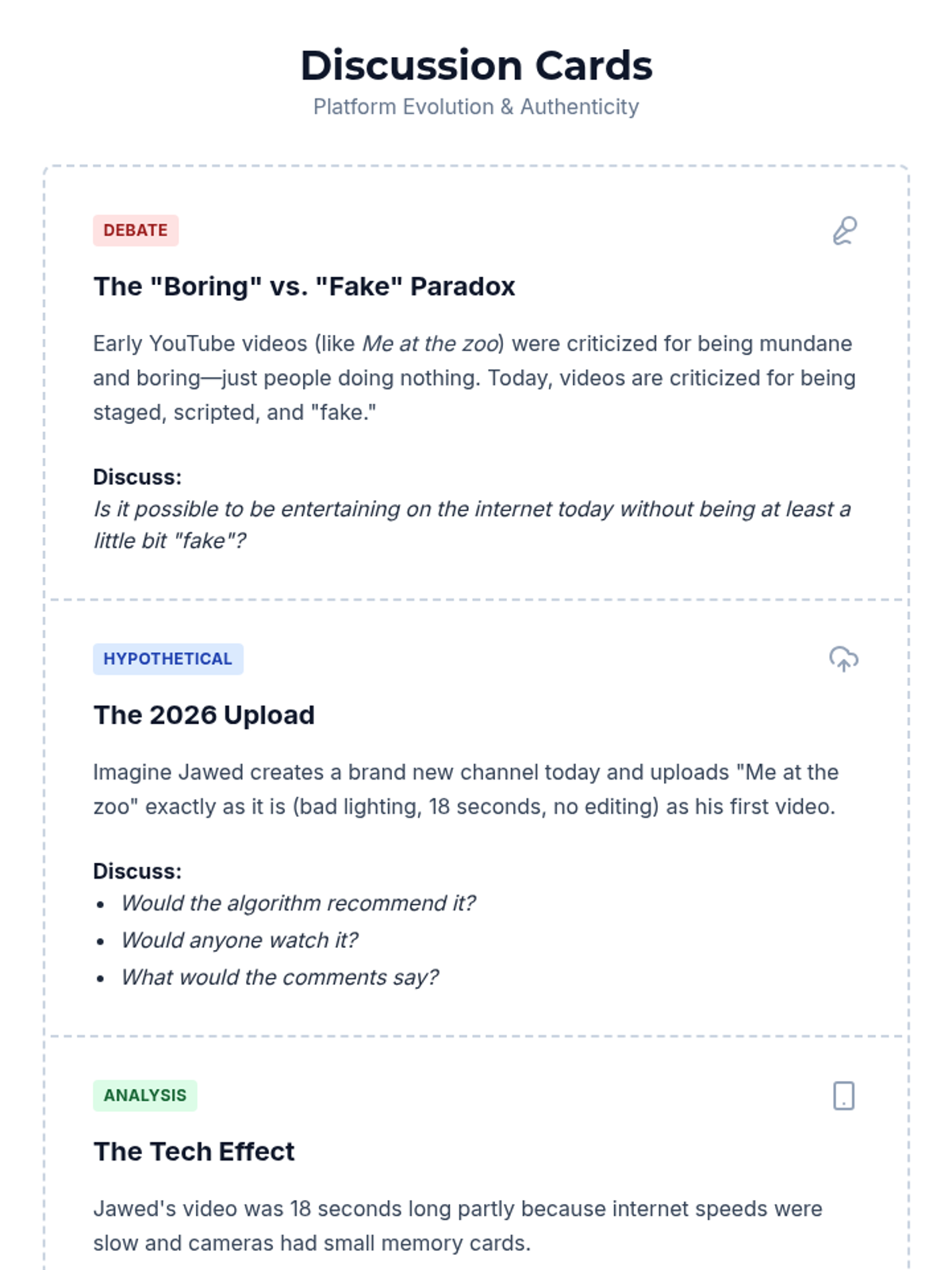
A media studies lesson exploring how early platform limitations shaped internet culture, anchored by the first YouTube video 'Me at the zoo'.
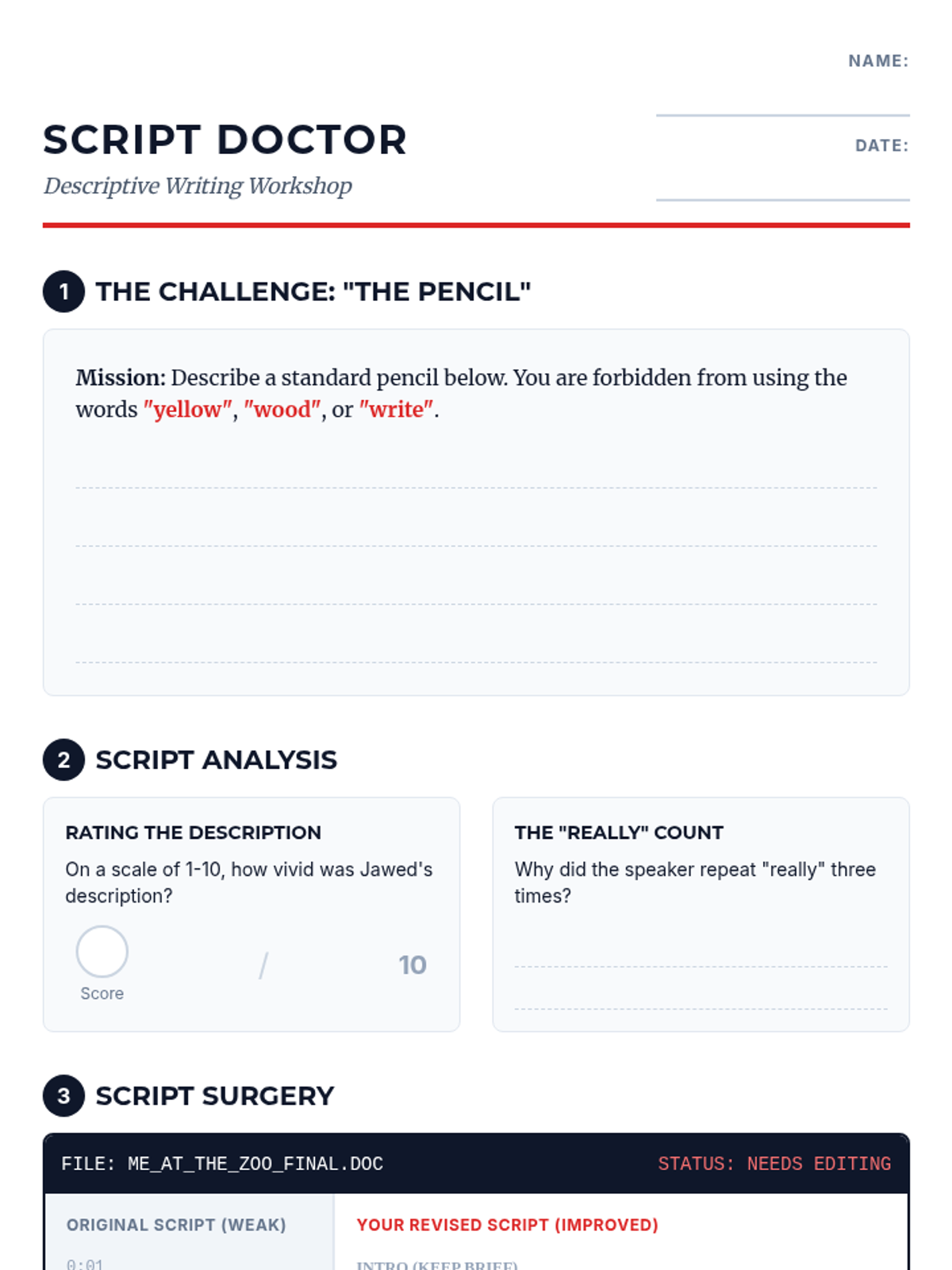
A lesson where students analyze the first YouTube video, 'Me at the zoo', and rewrite its weak script using precise vocabulary and sensory details.