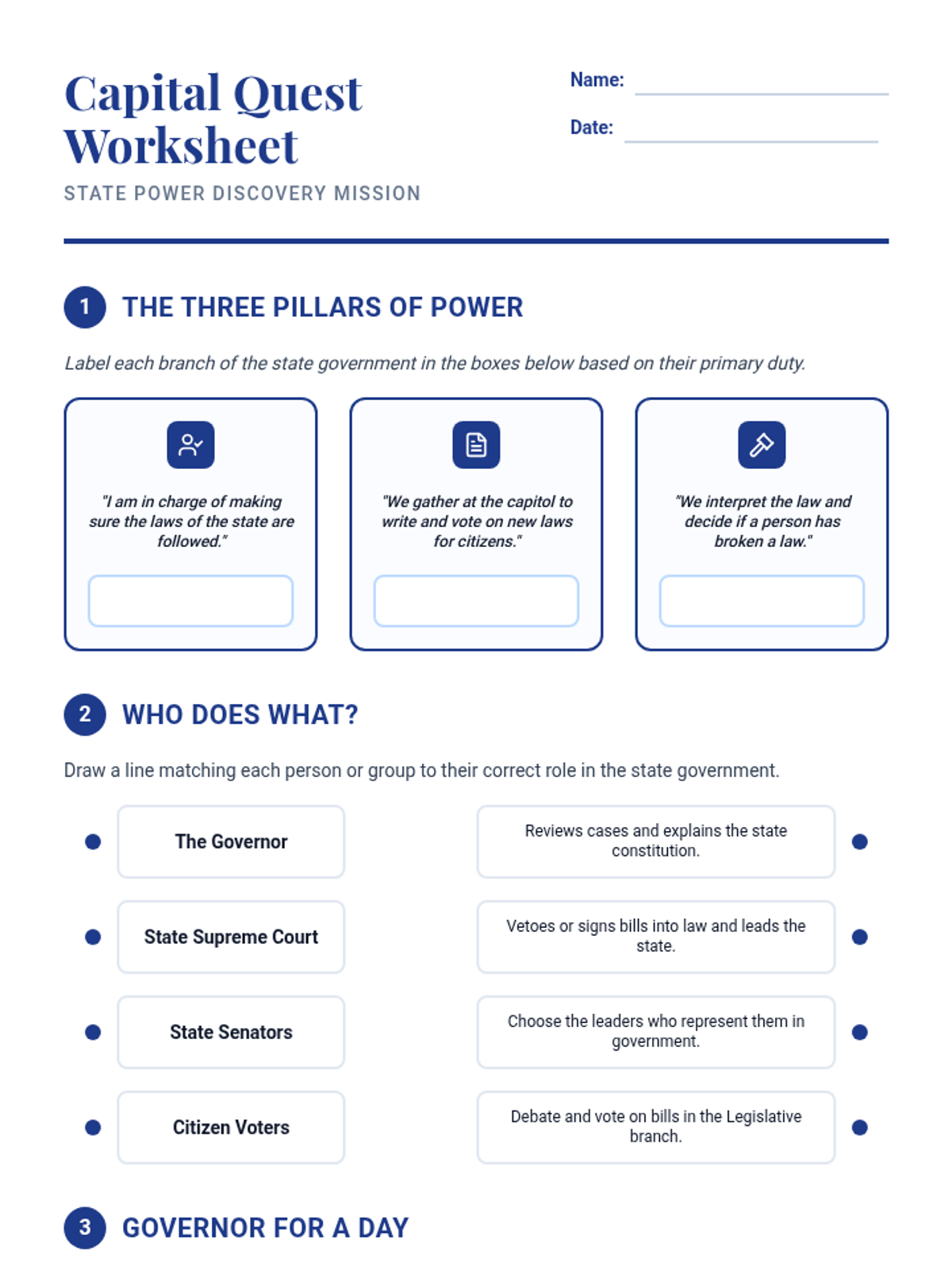
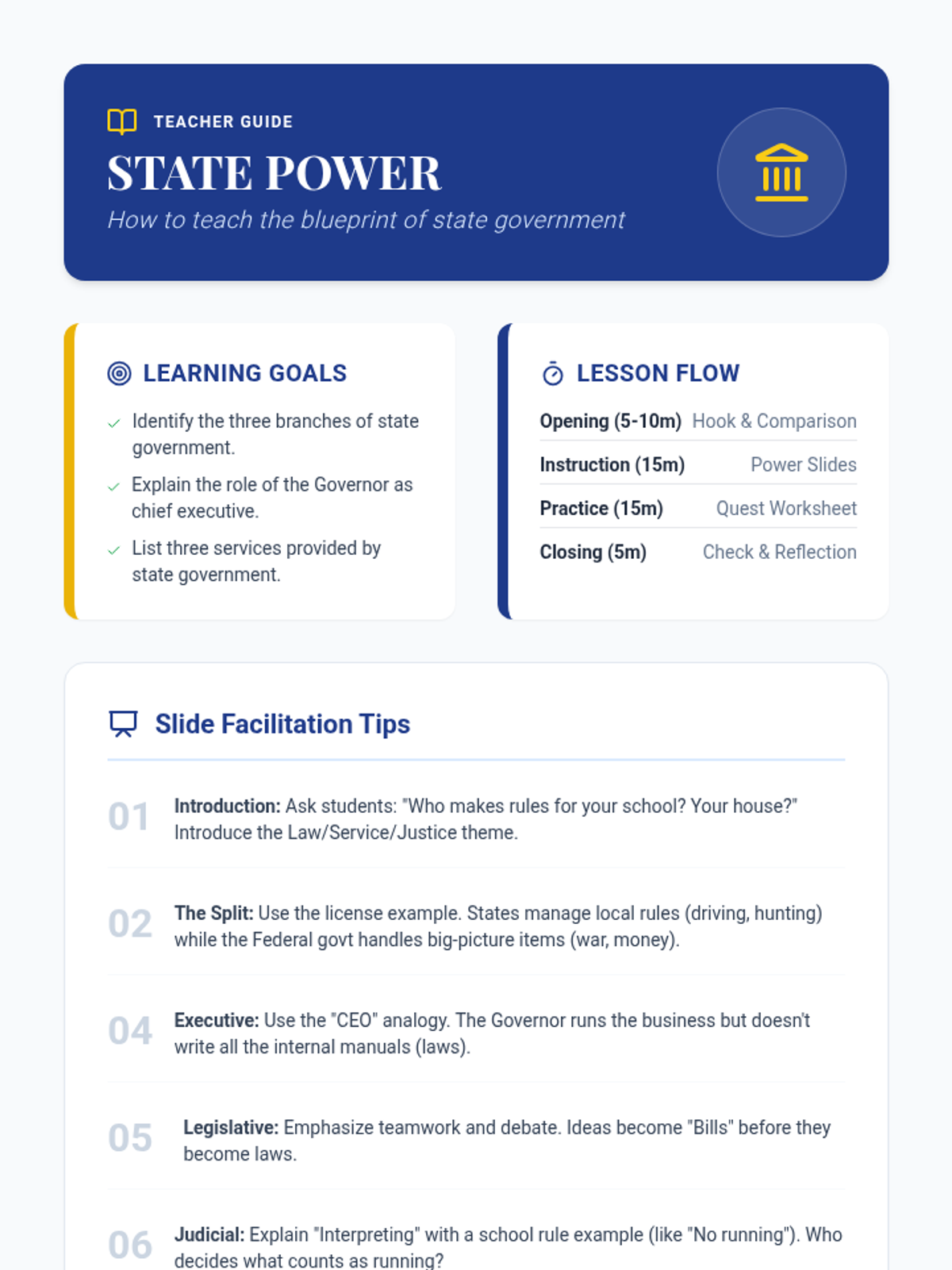
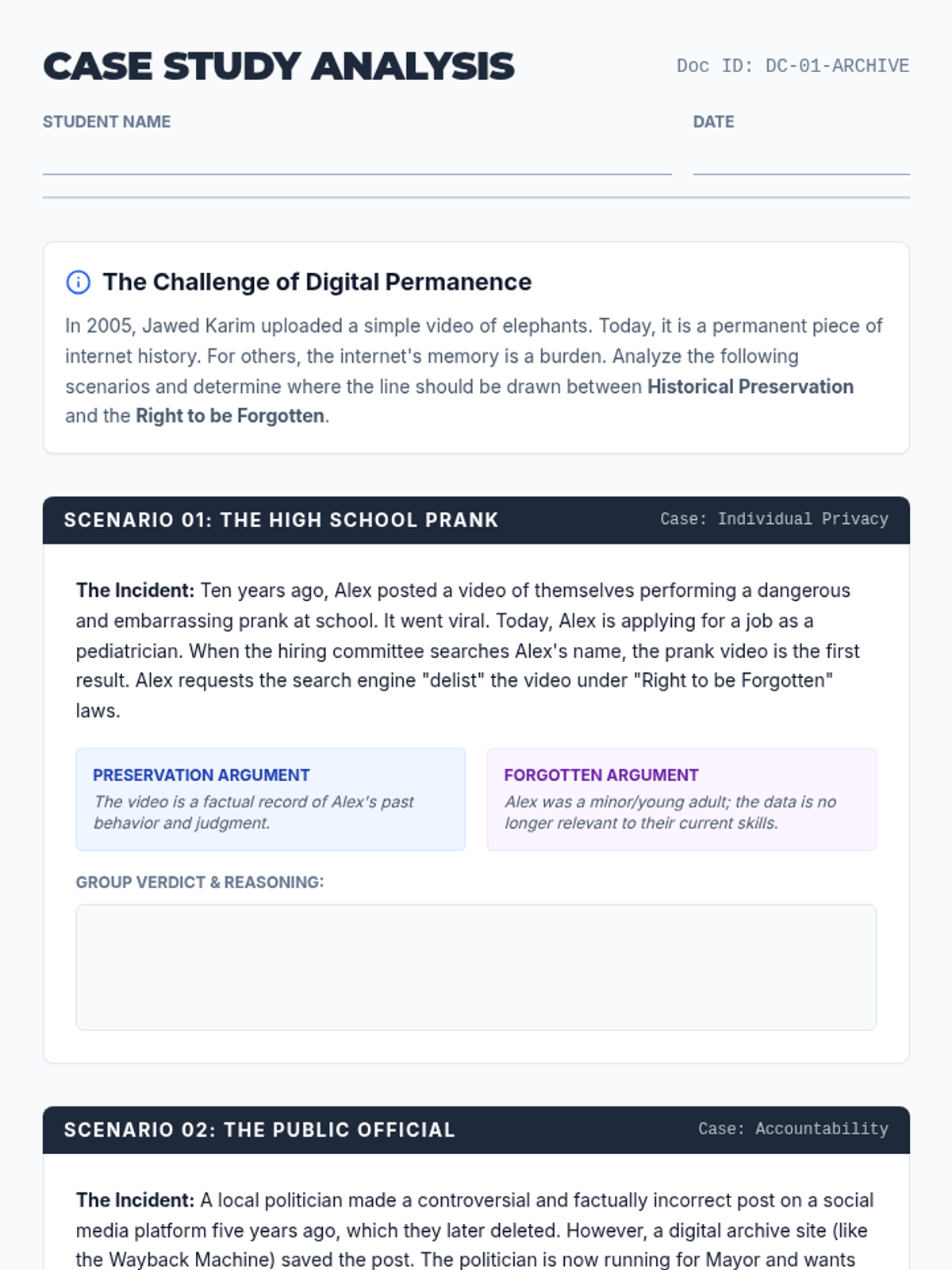
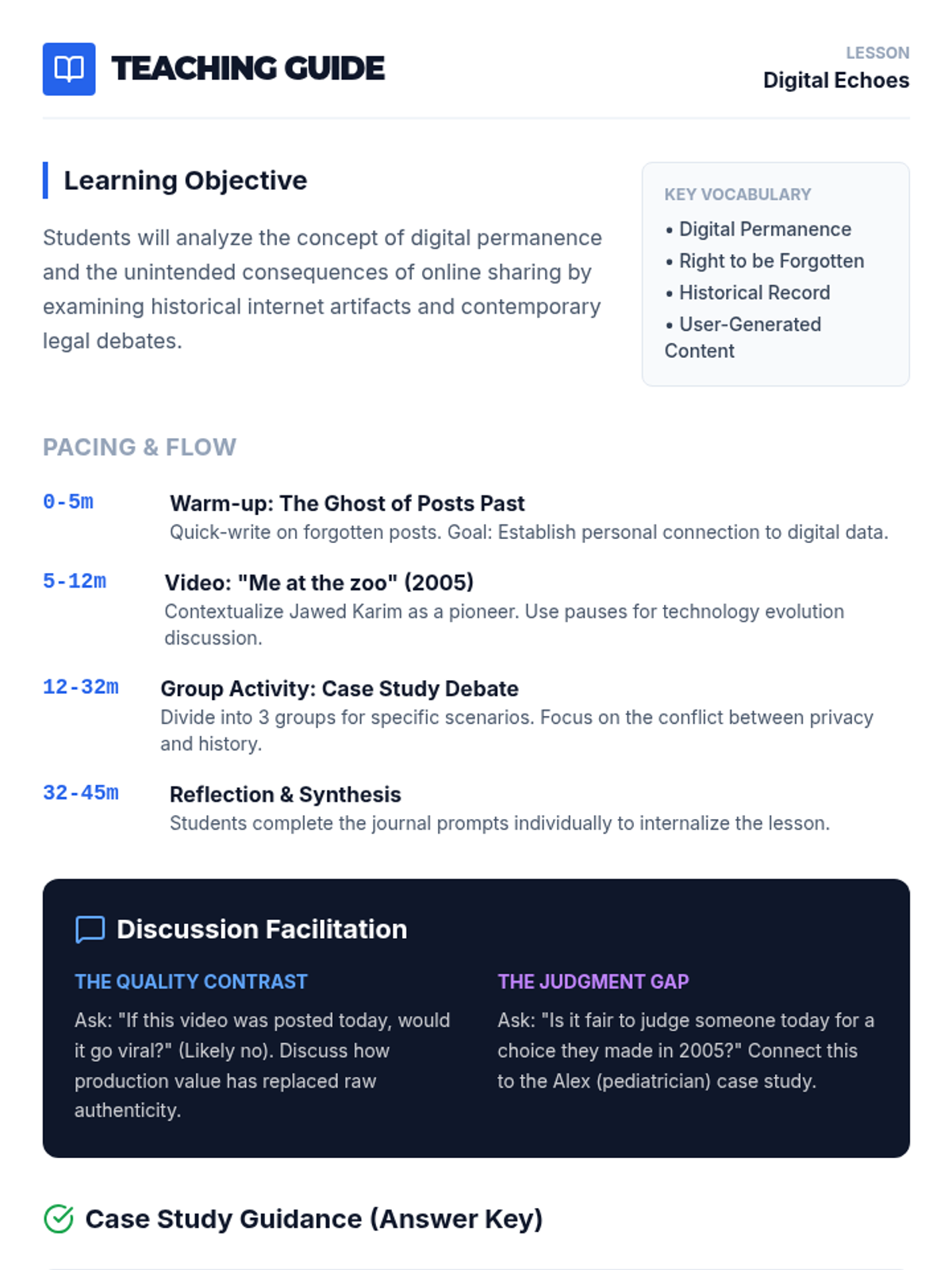
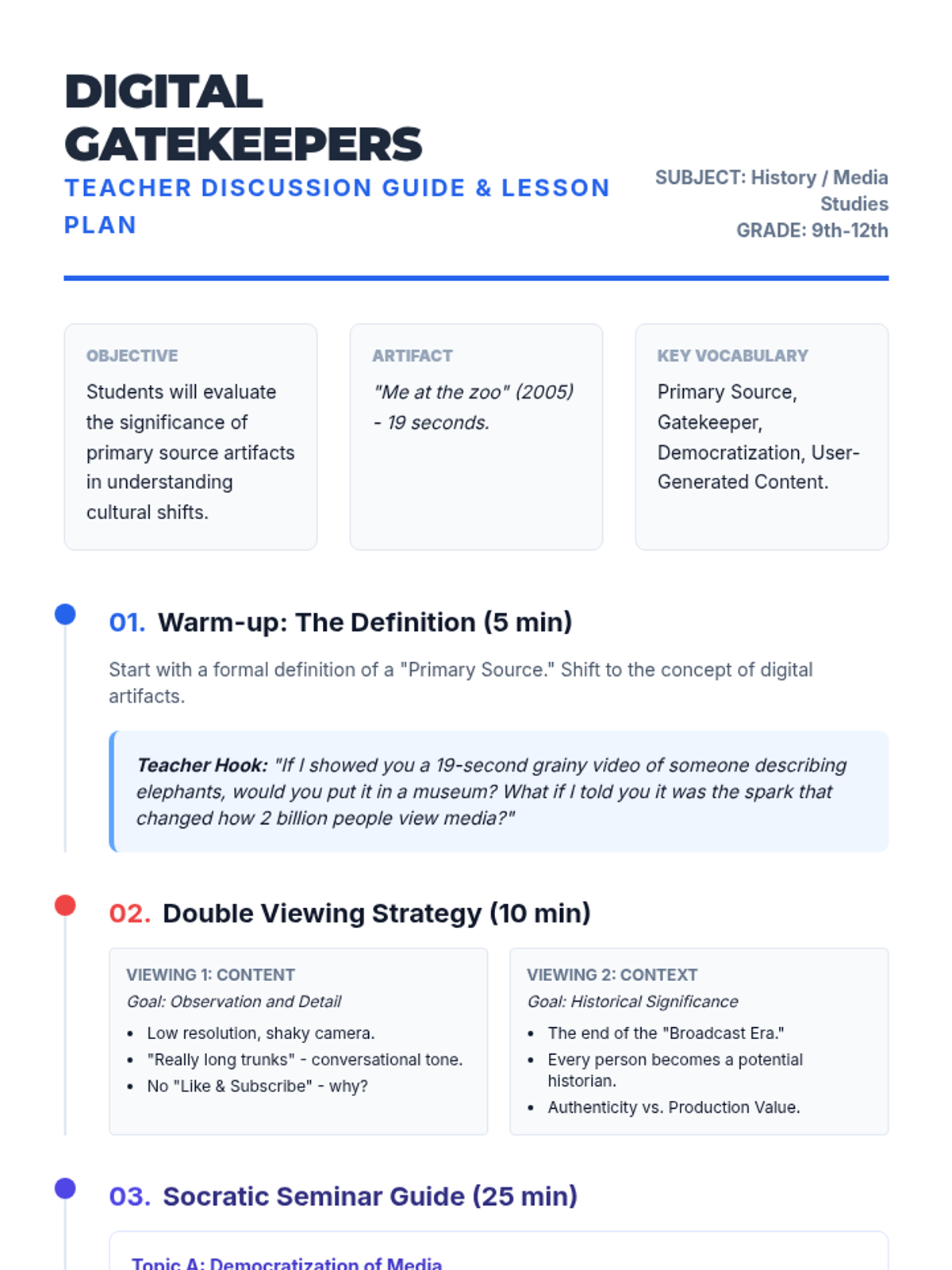
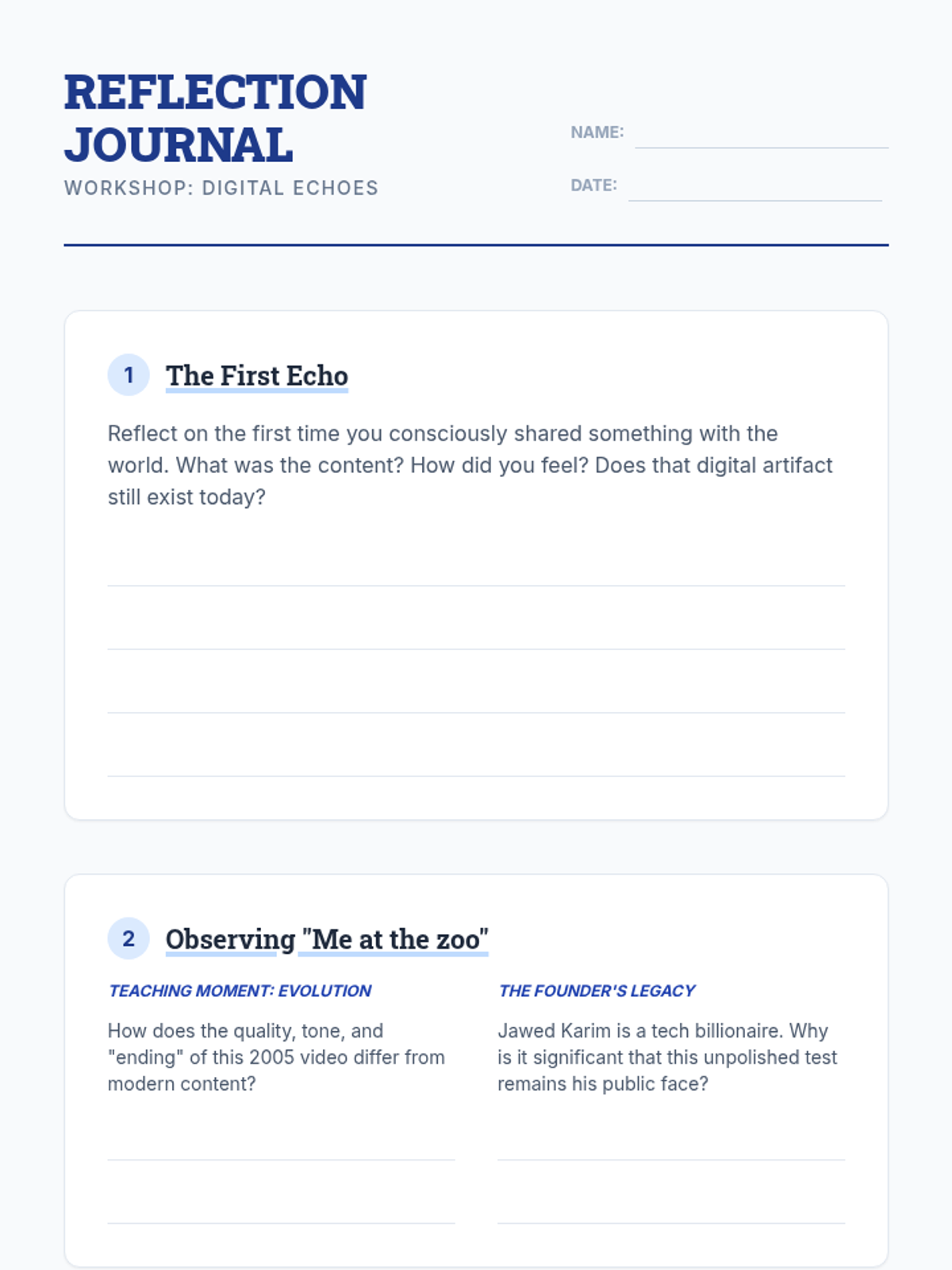
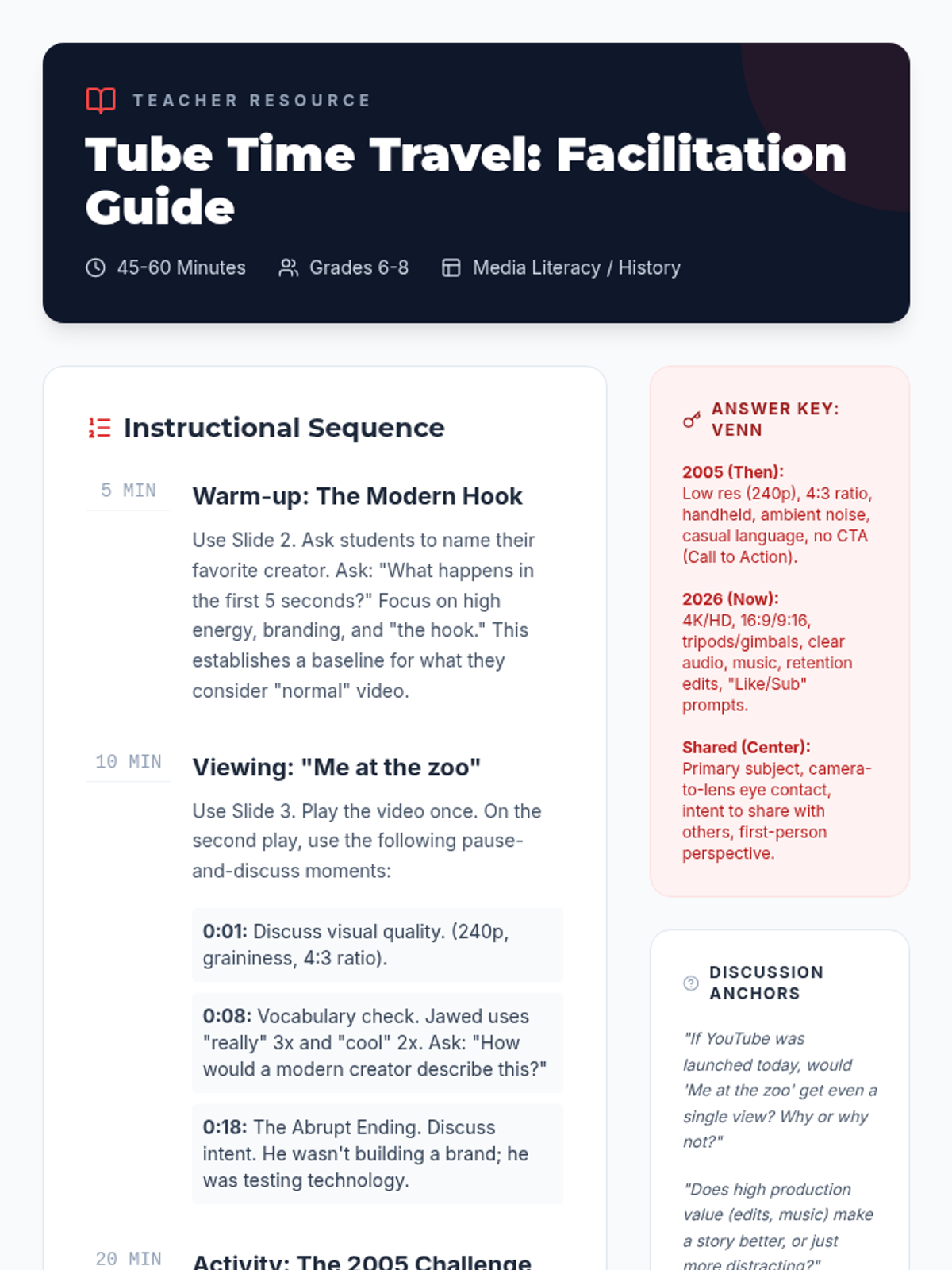
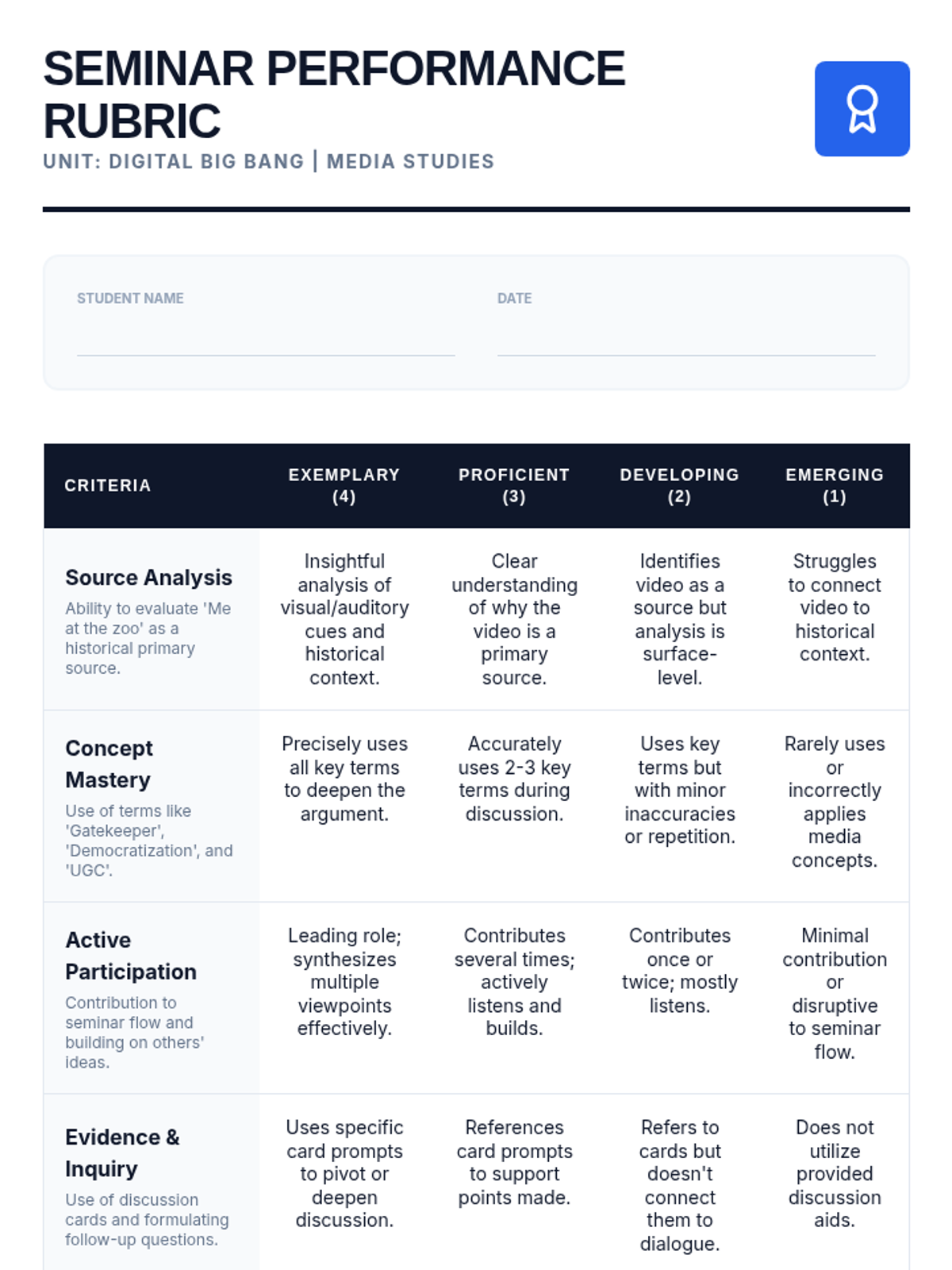
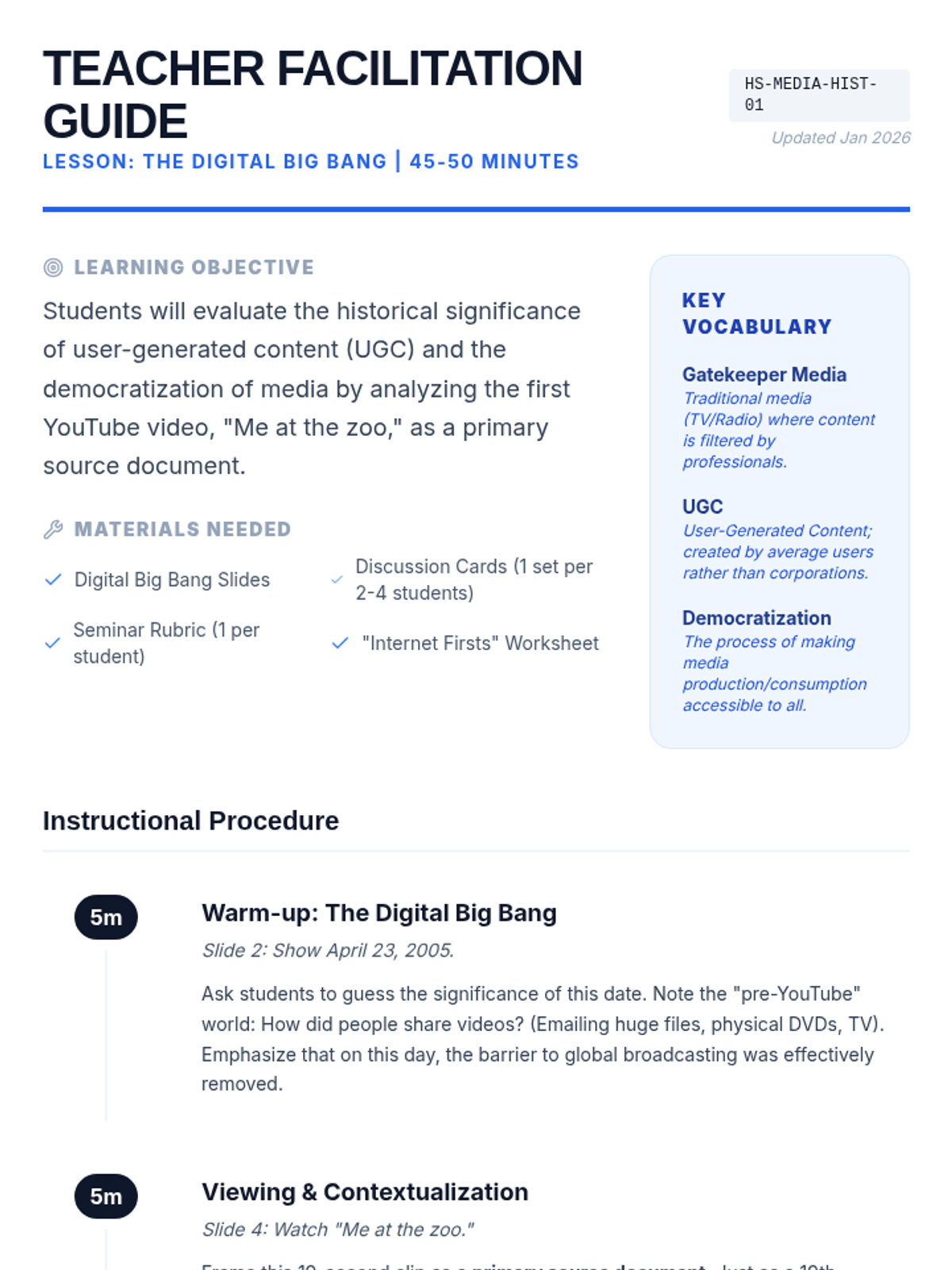
A lesson on the historical significance of digital primary sources, focusing on the democratization of media through the lens of the first YouTube video.
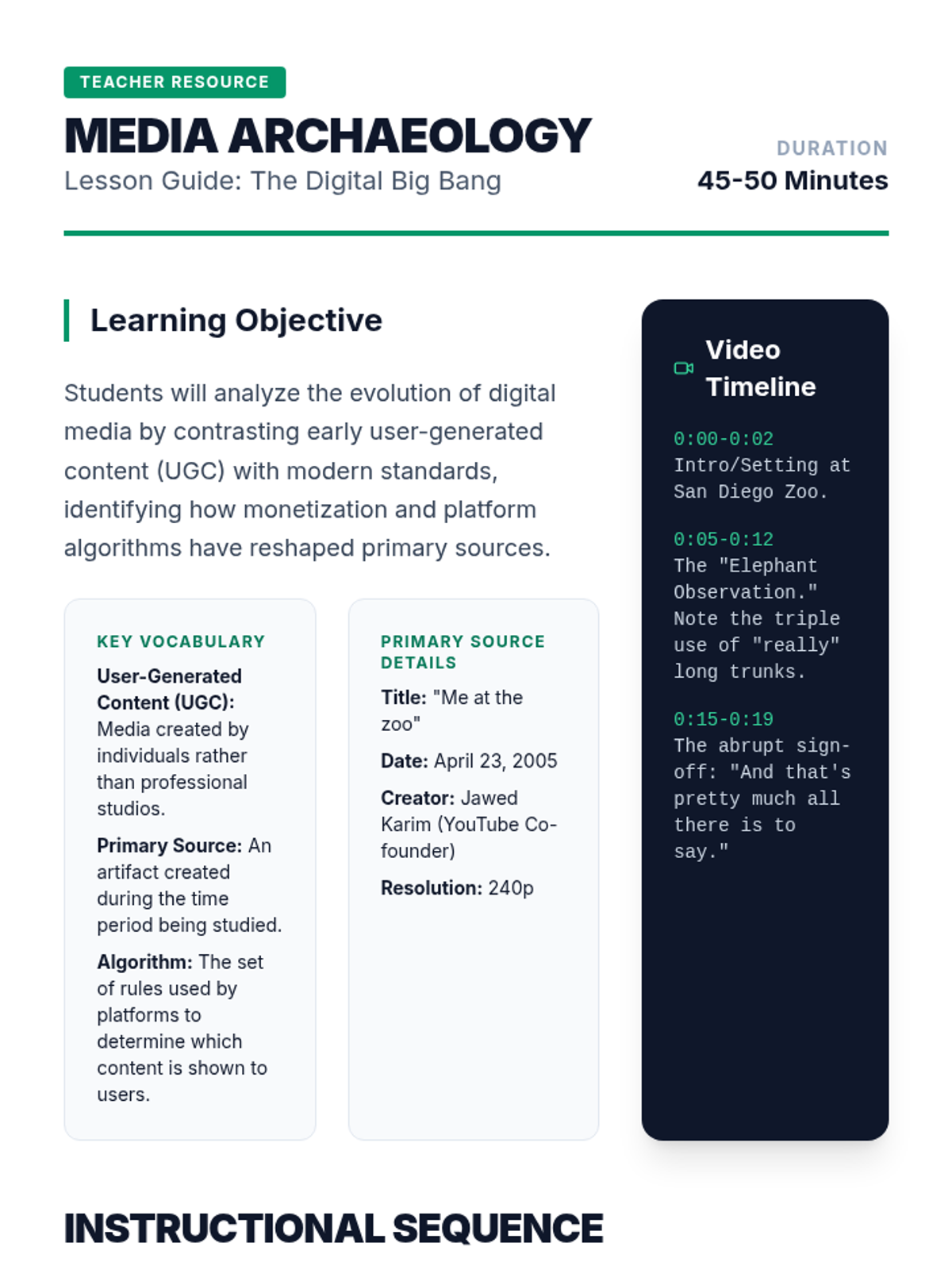
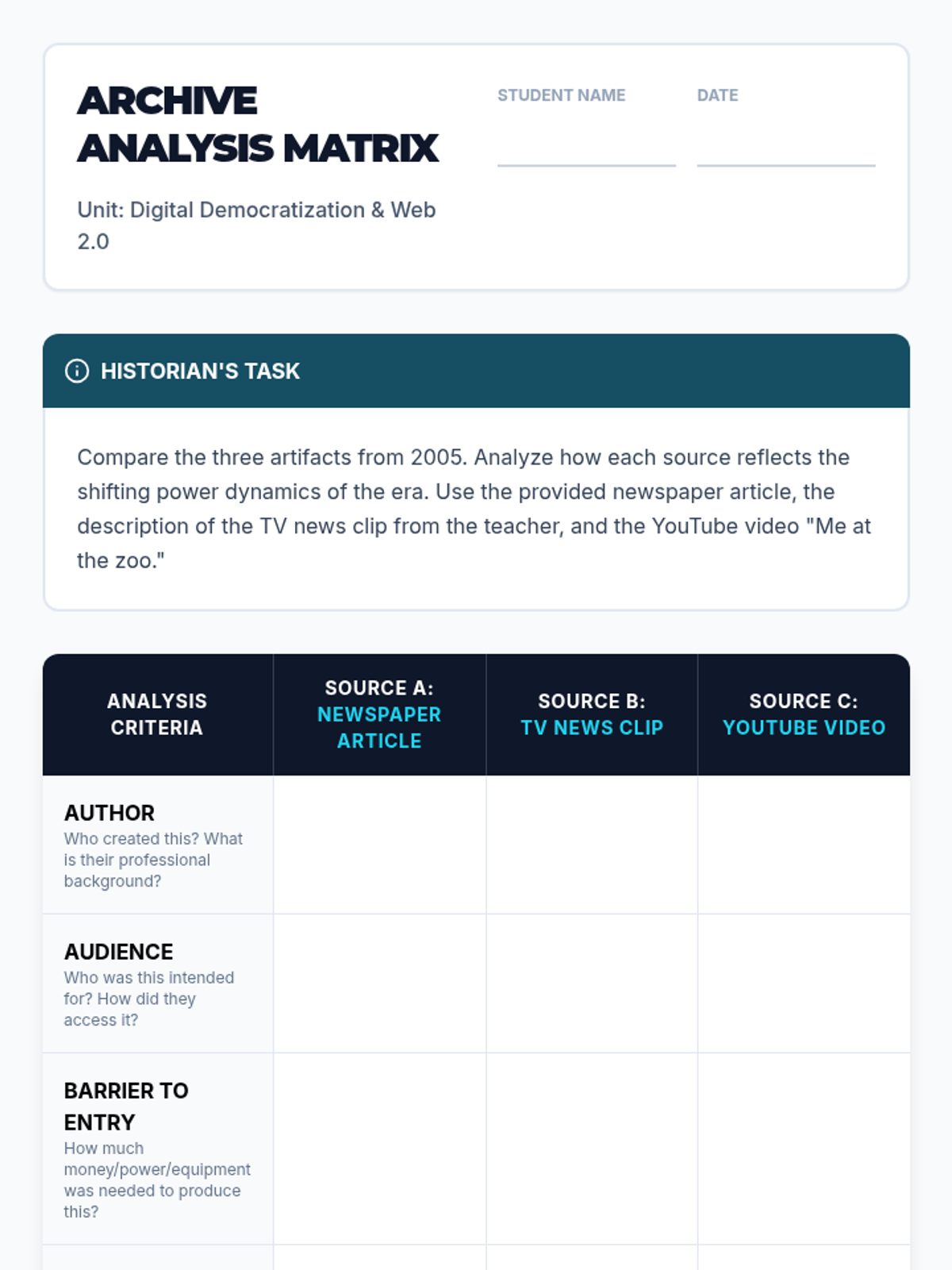
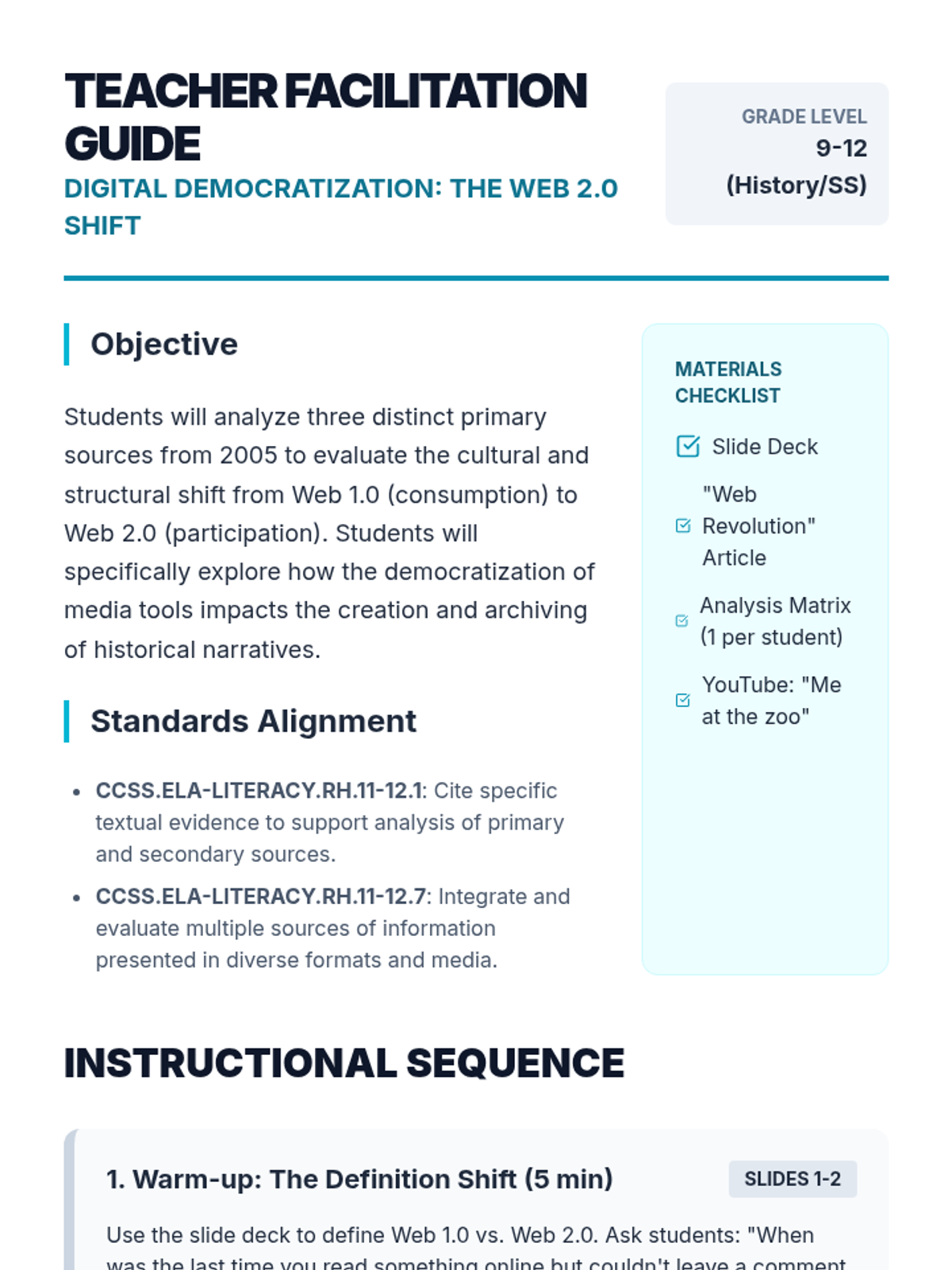
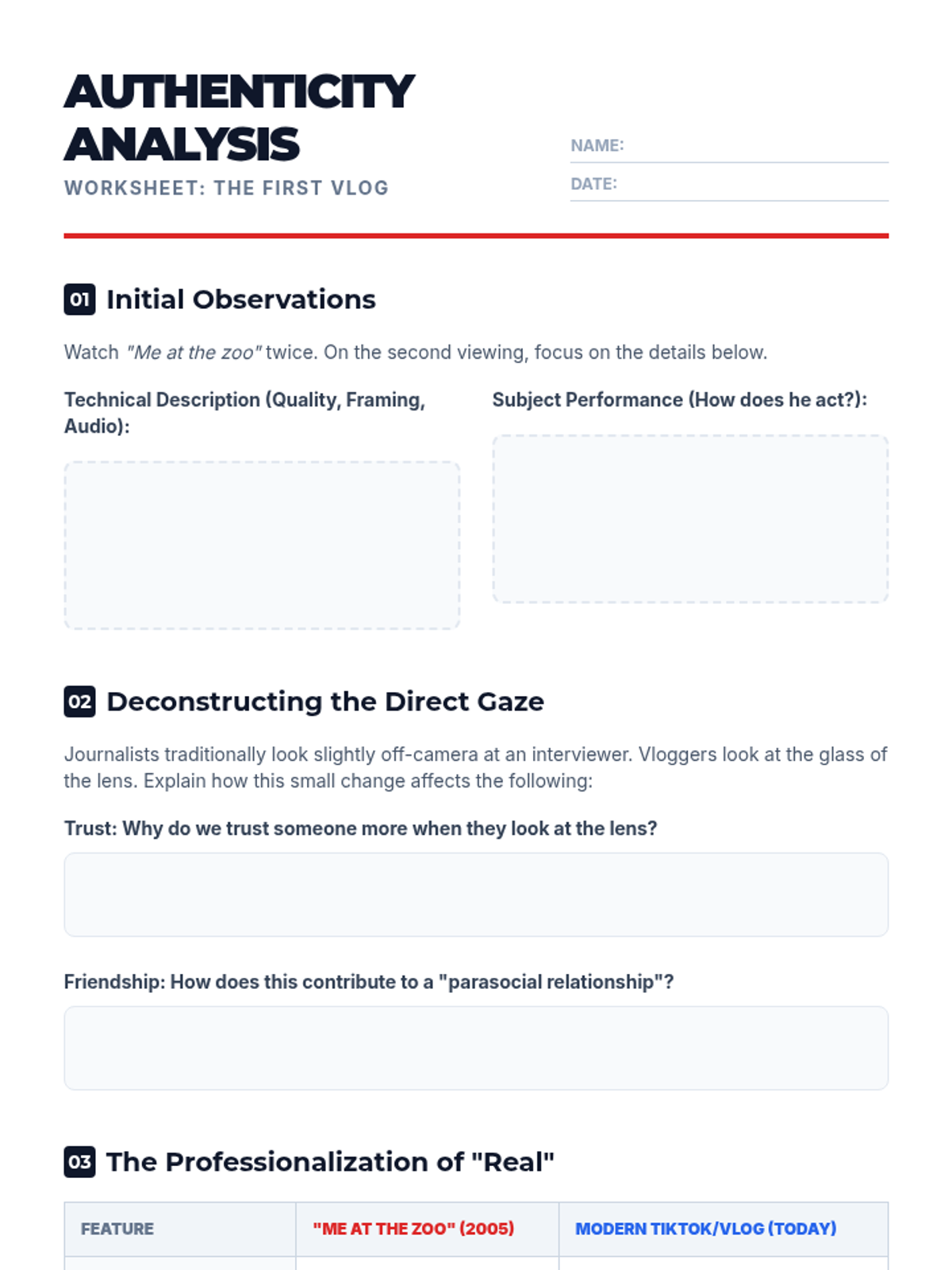
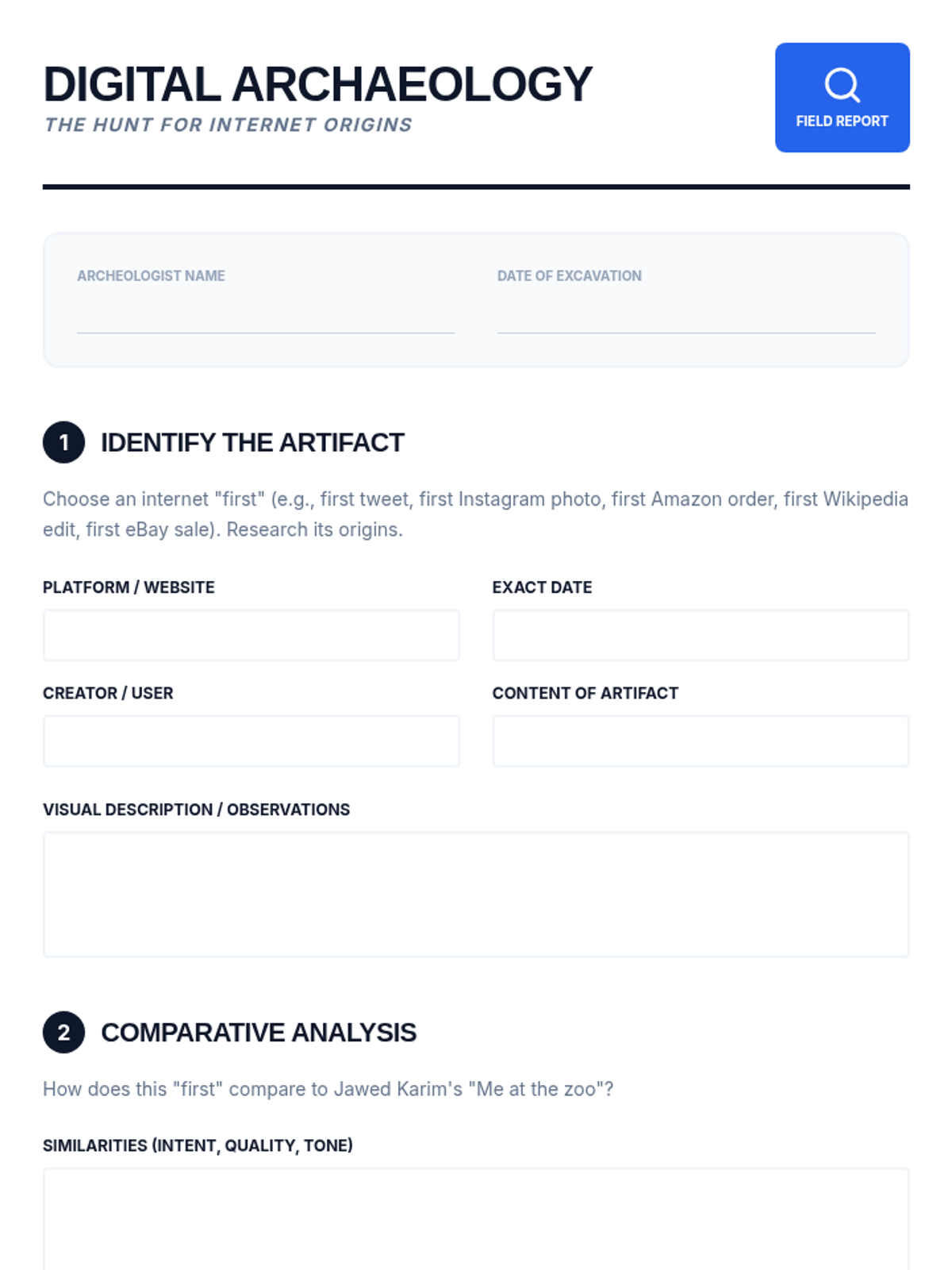
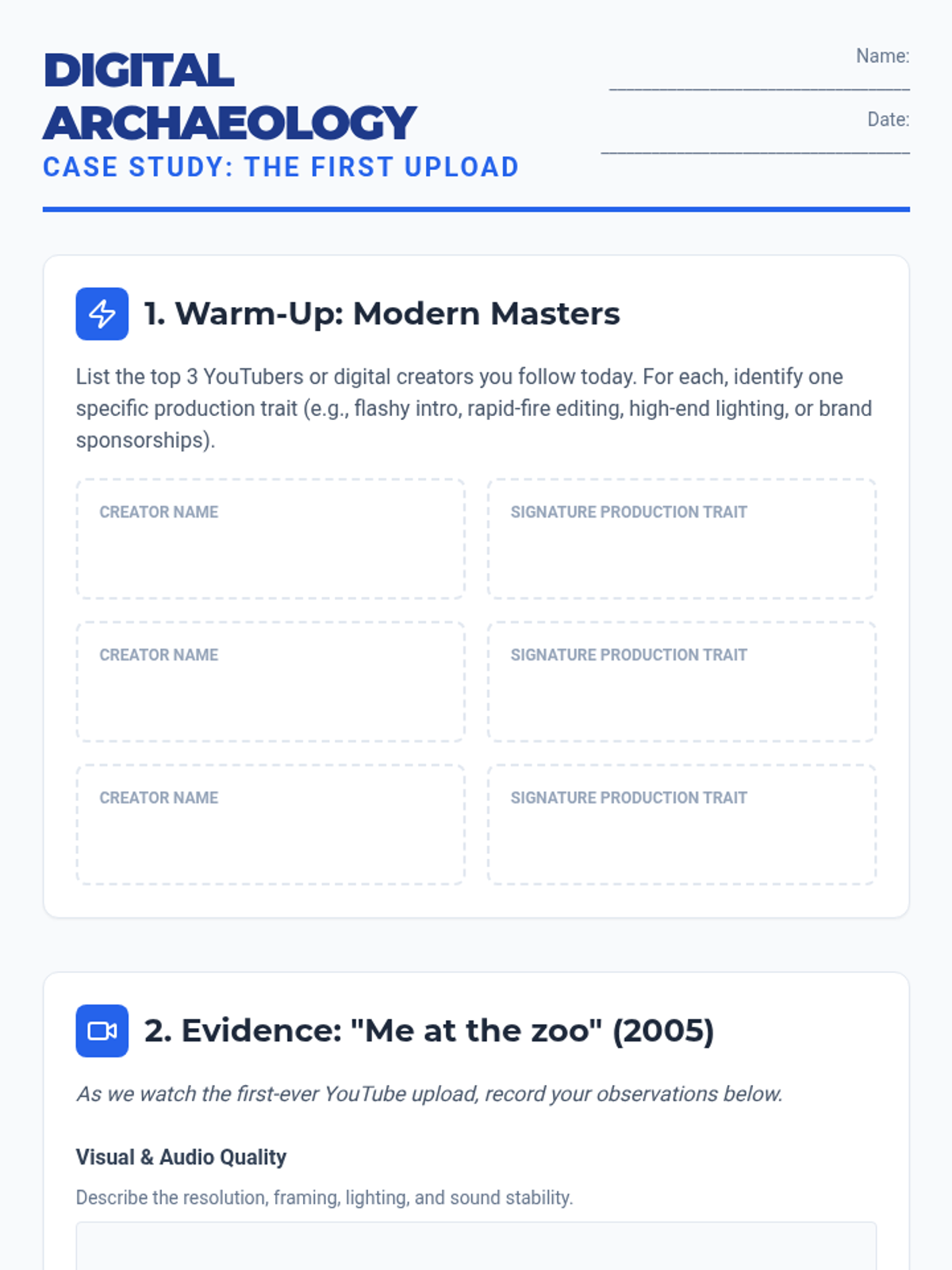
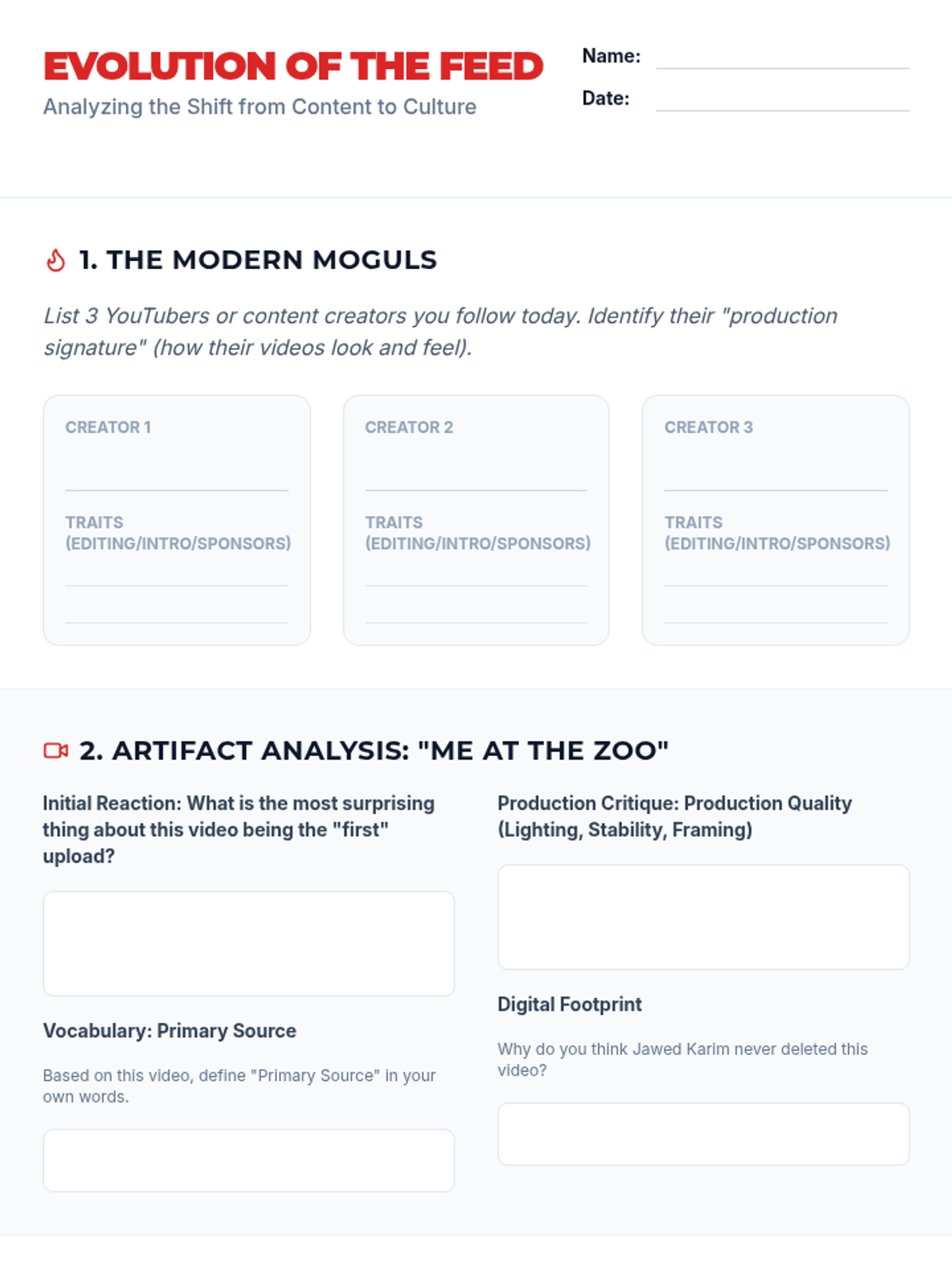
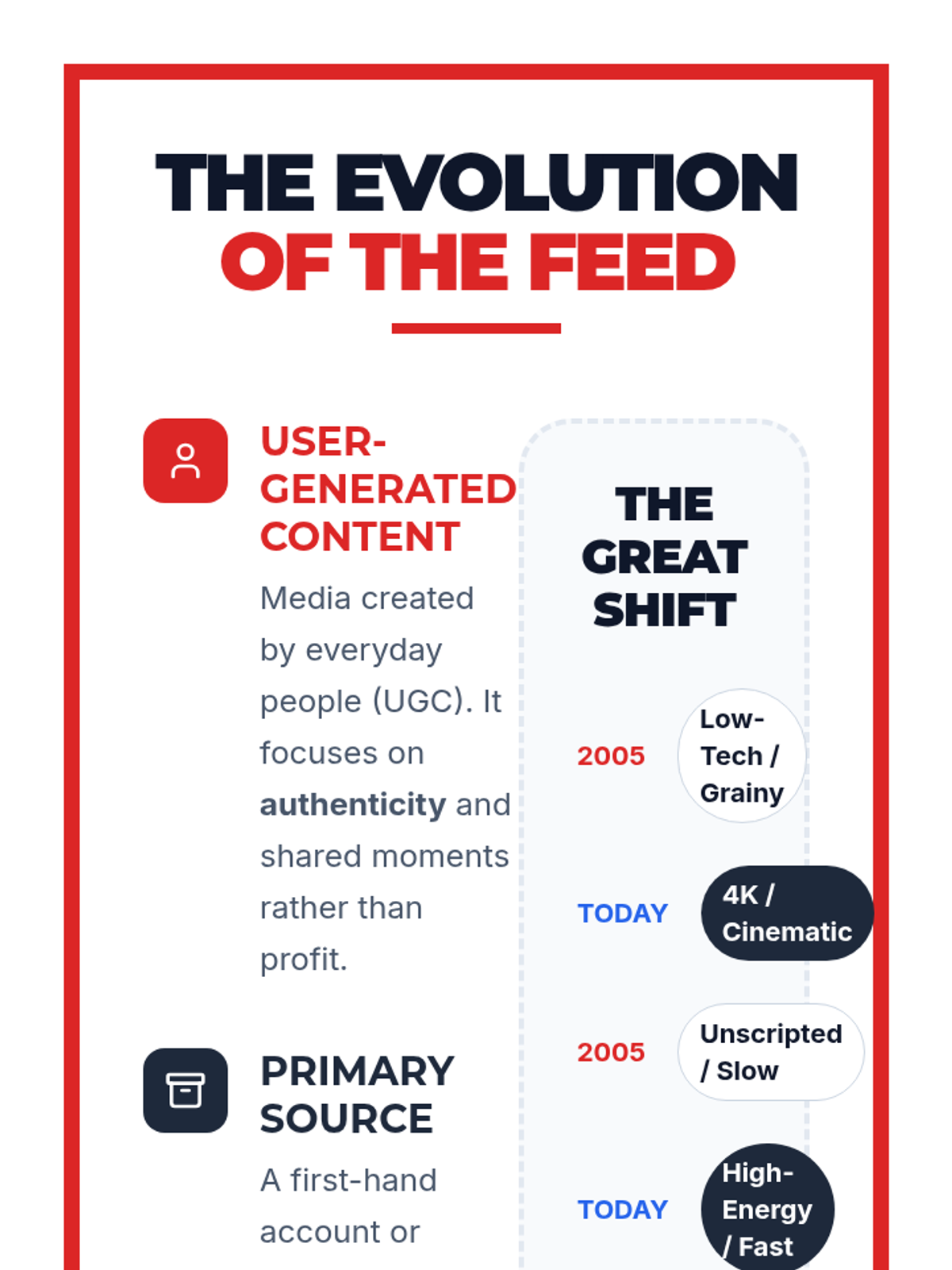
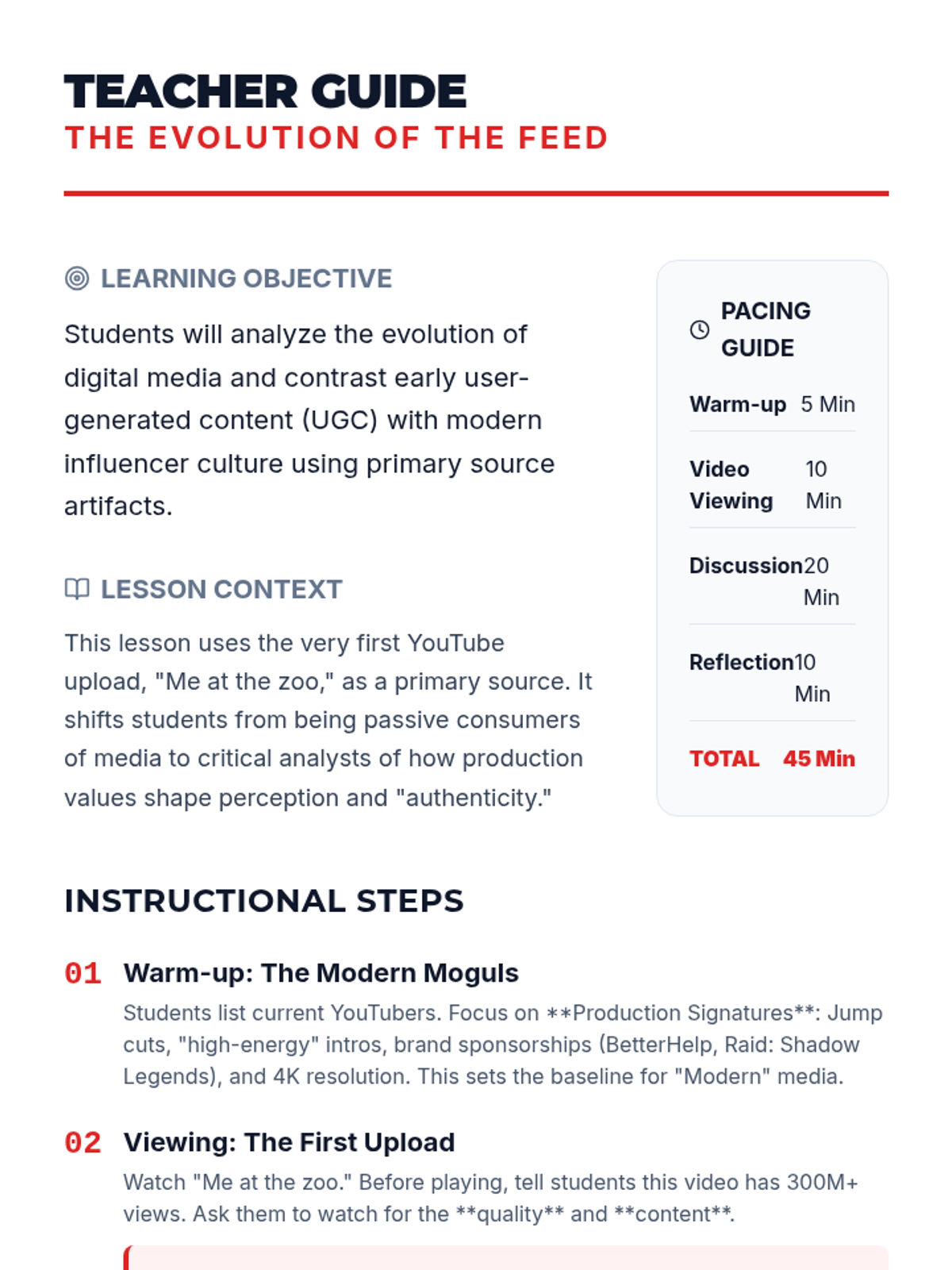
Students analyze the first YouTube video, 'Me at the zoo', as a primary source to understand the shift to User-Generated Content (UGC) and 2005 culture through a digital archaeology simulation.
1/16
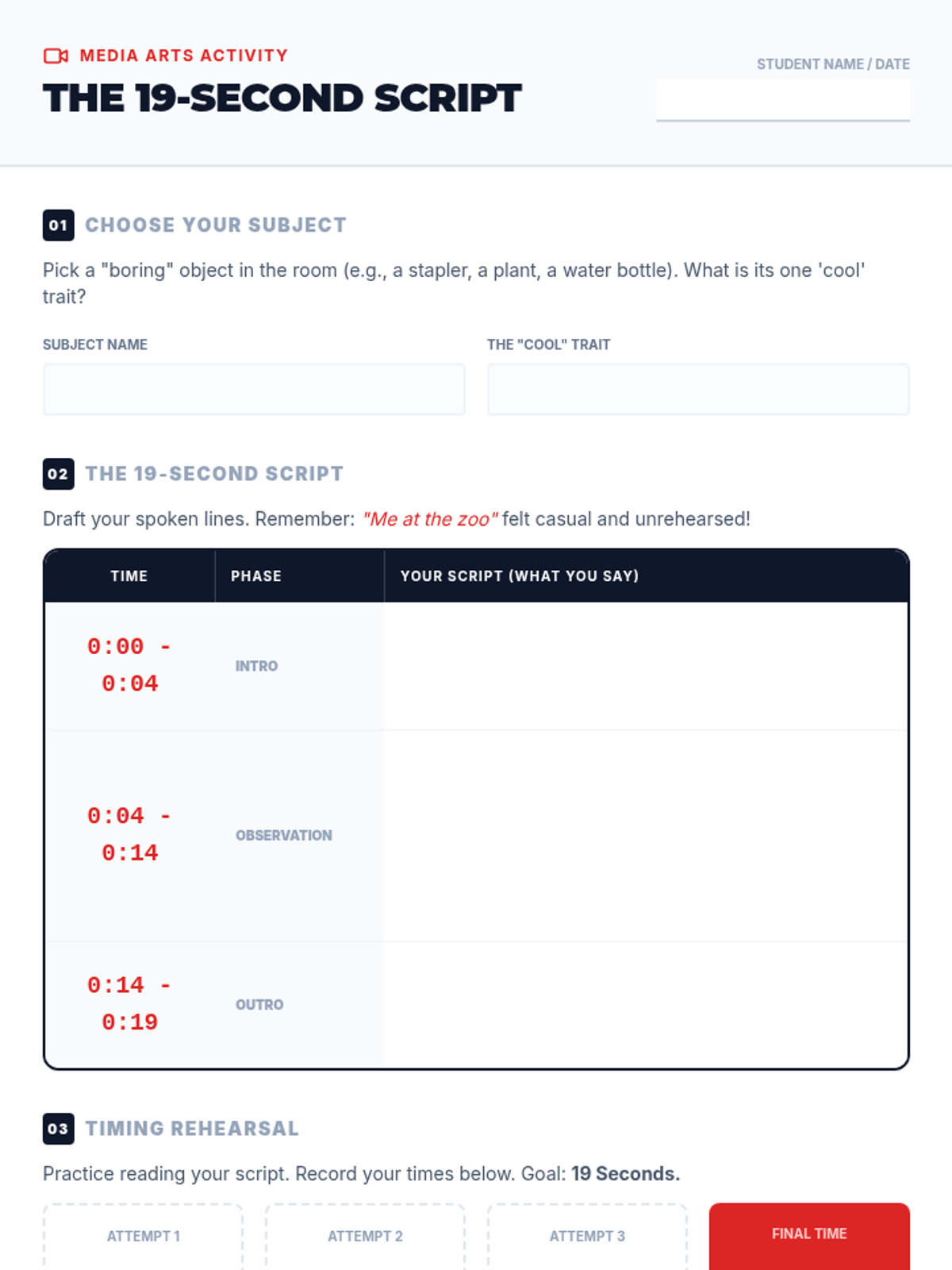
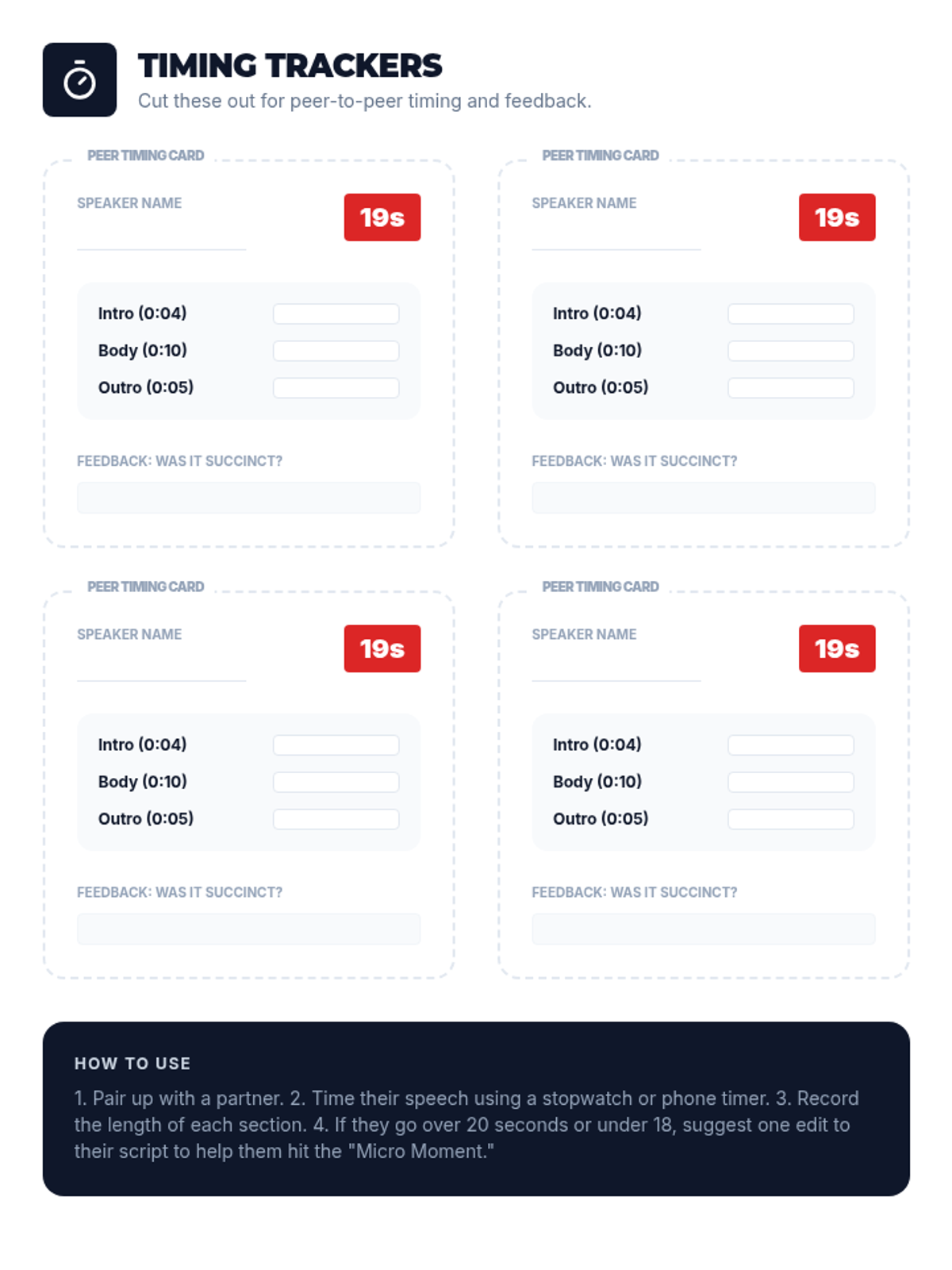
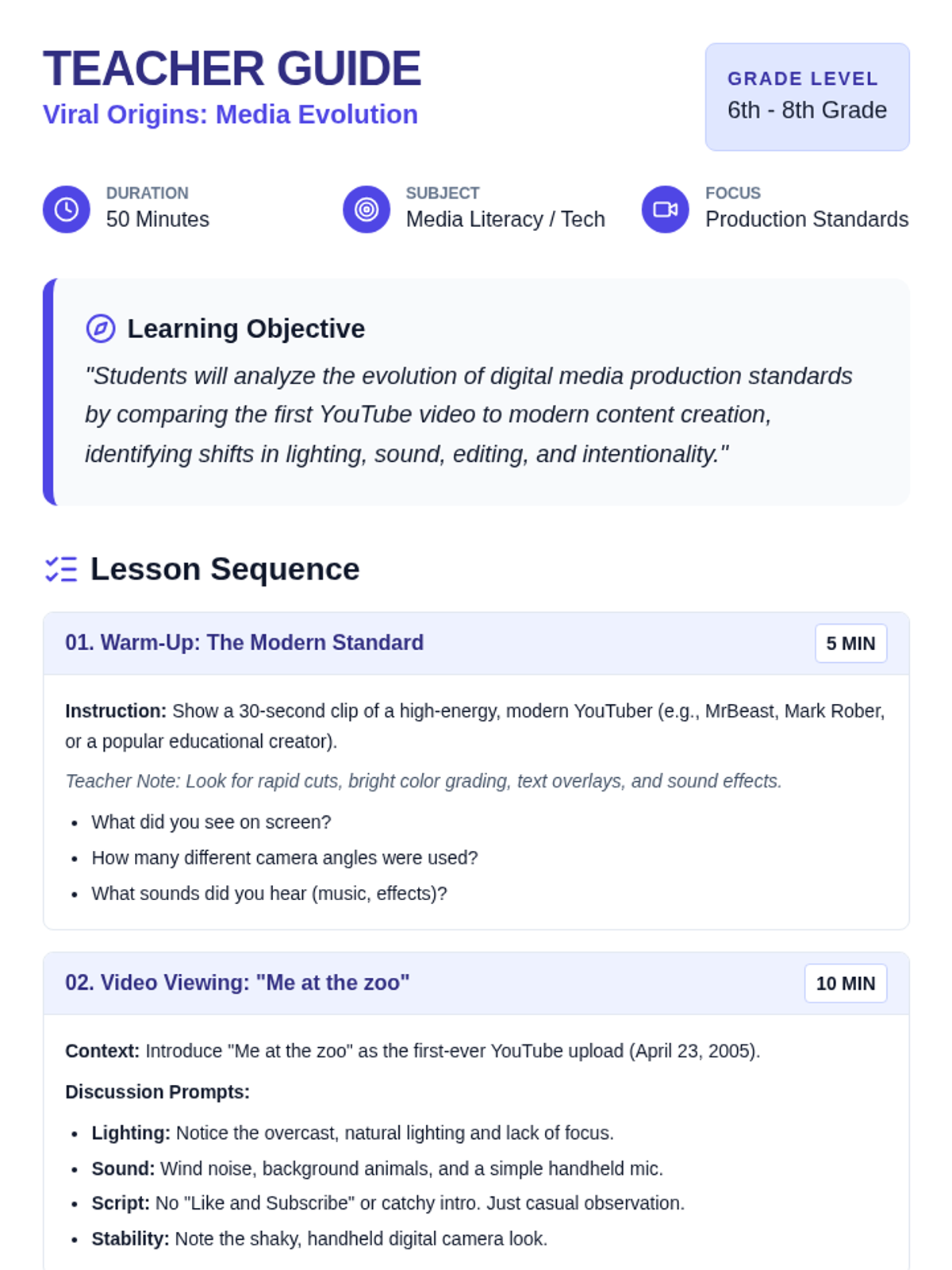
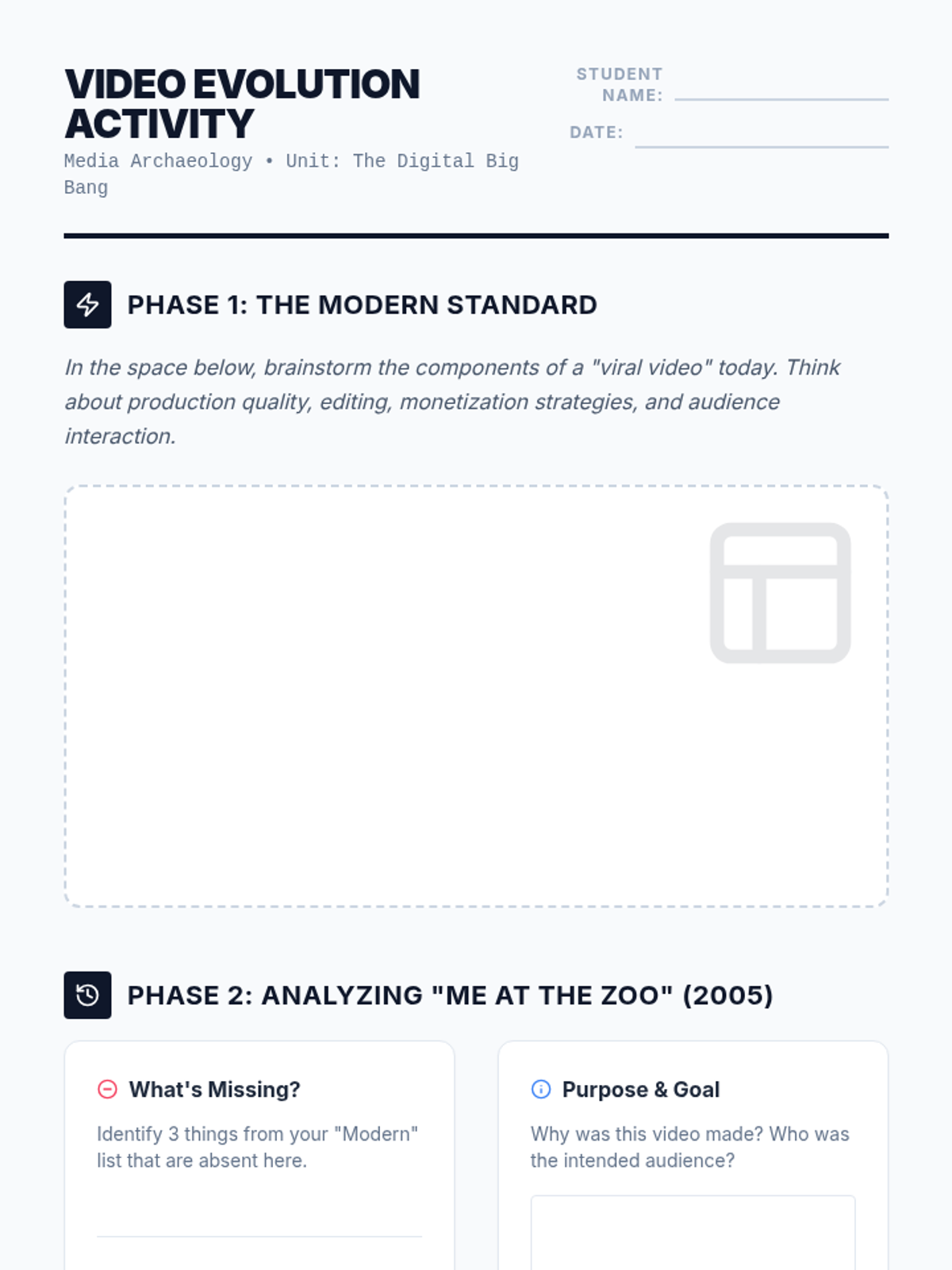
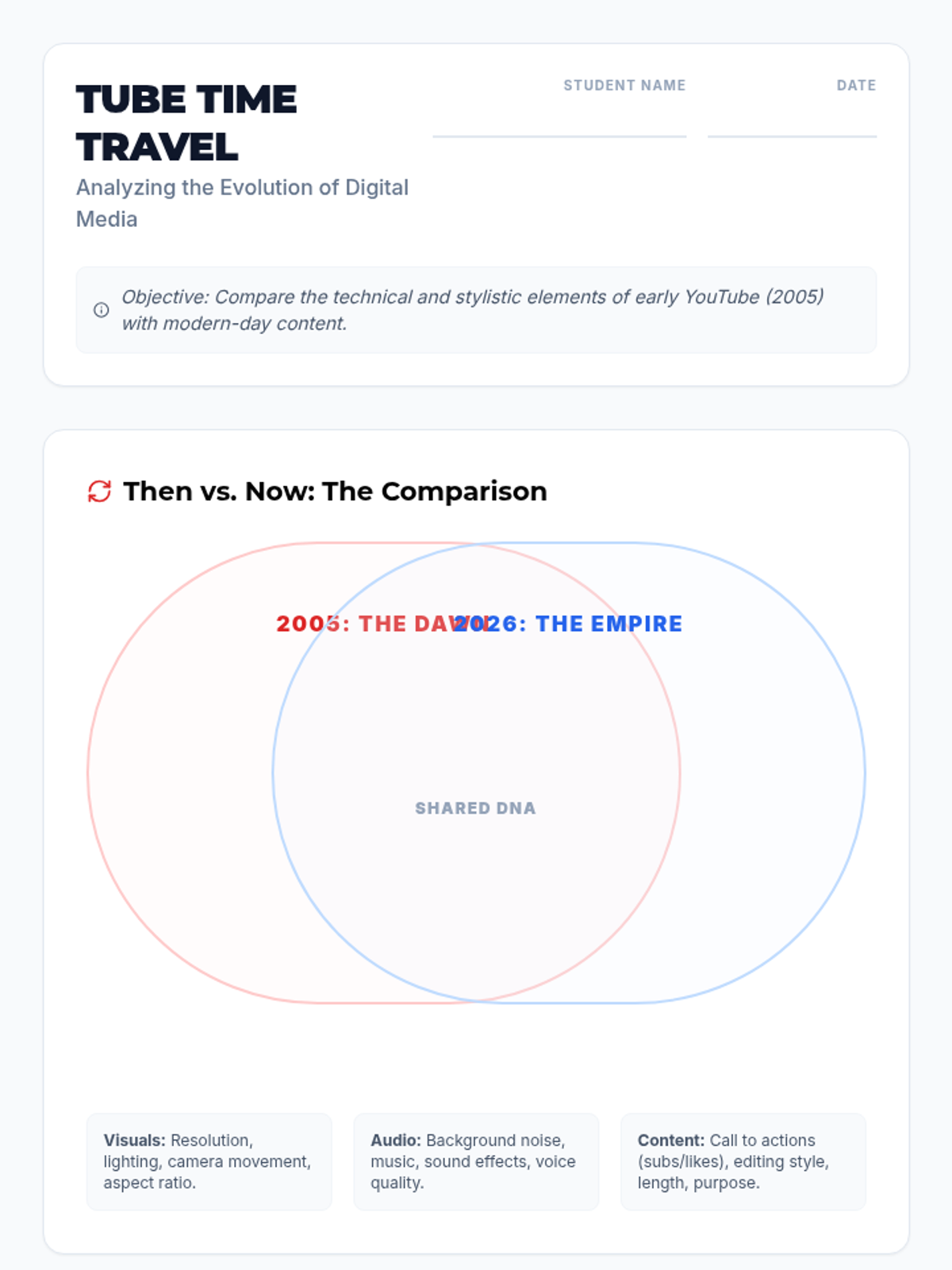
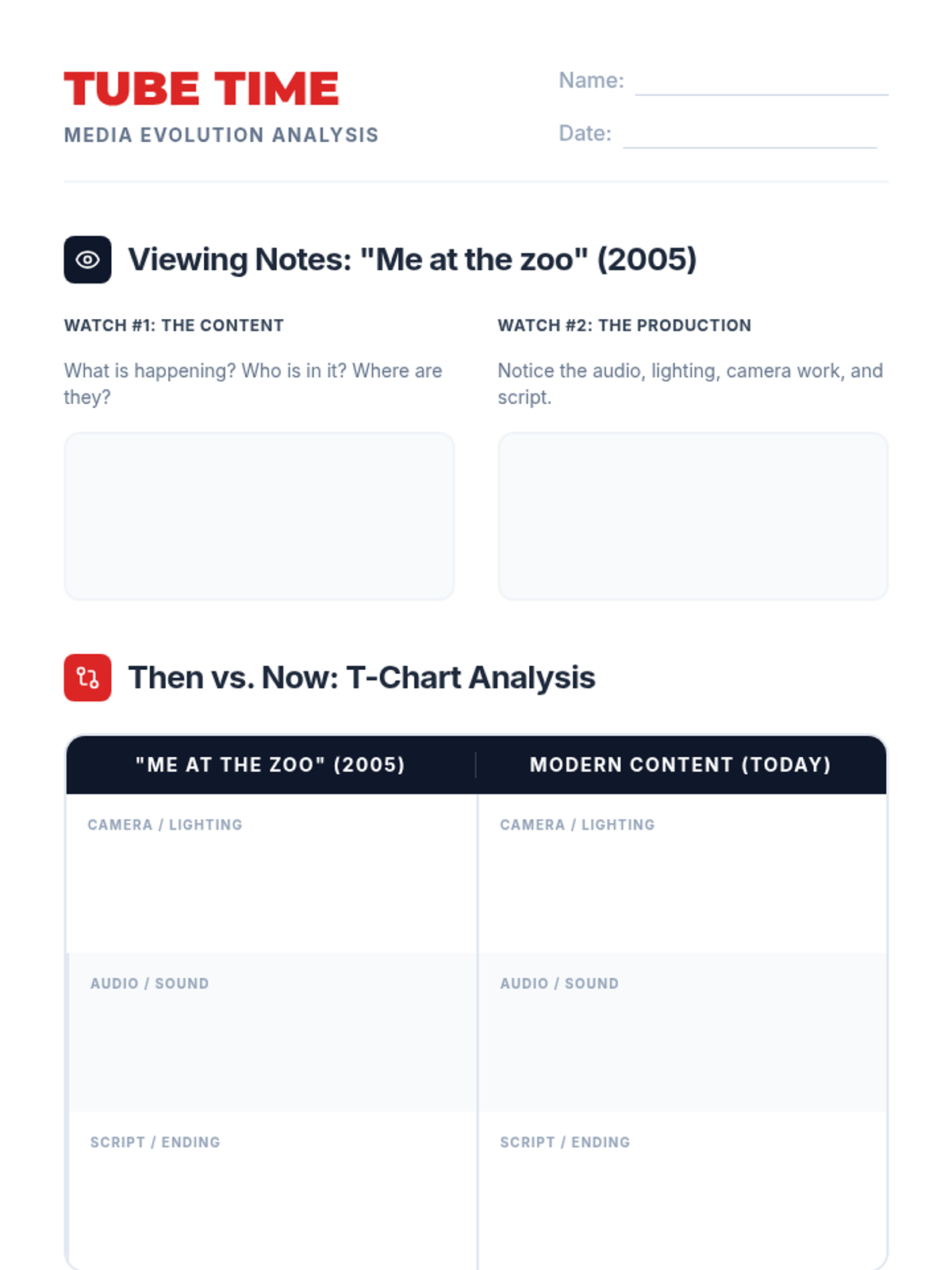
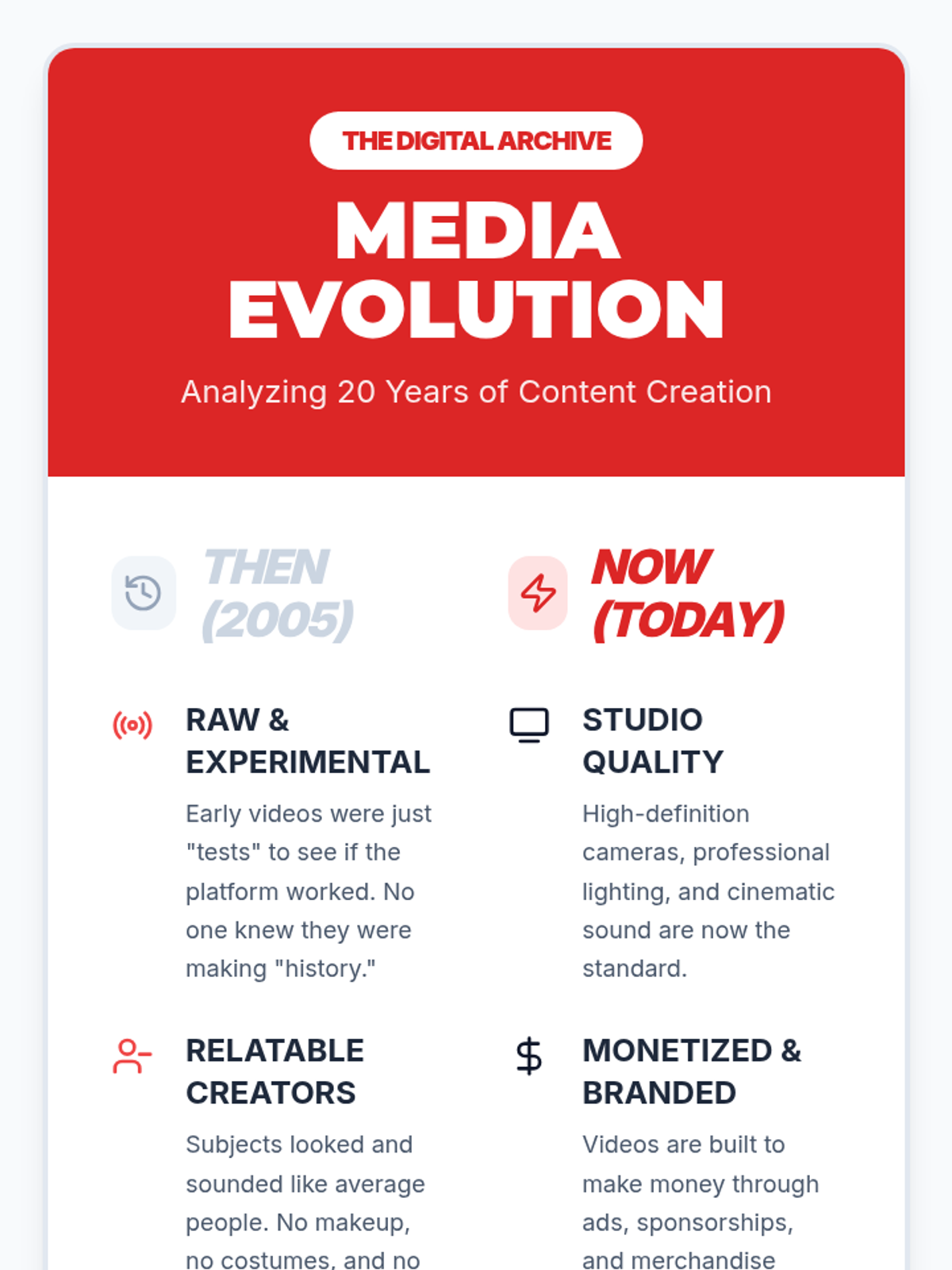
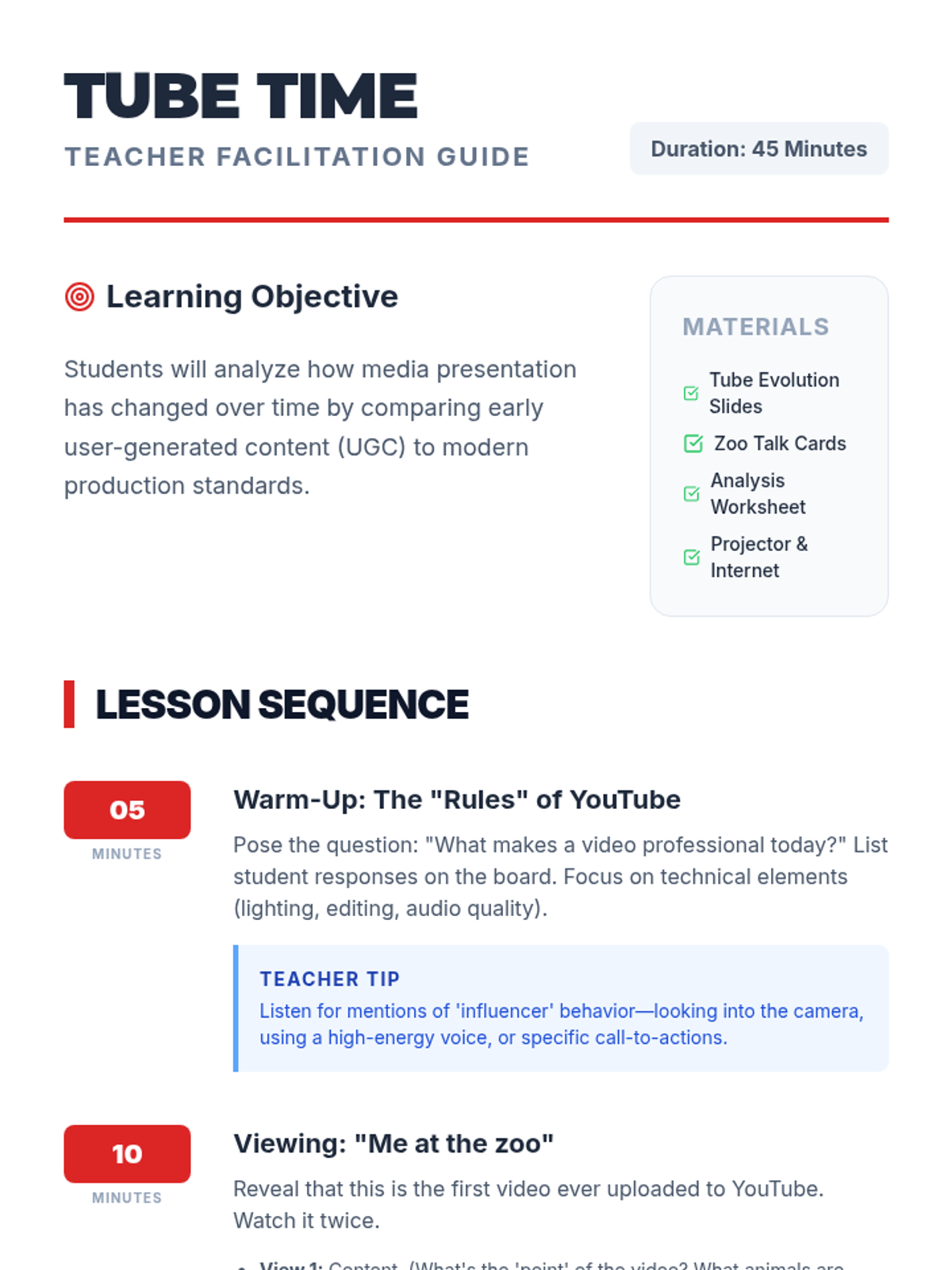
A lesson exploring the transformation of media through the history of YouTube, contrasting the simplicity of the first 'User-Generated Content' with modern, high-production digital storytelling. Students will analyze technical shifts and practice scripting for a simpler era.
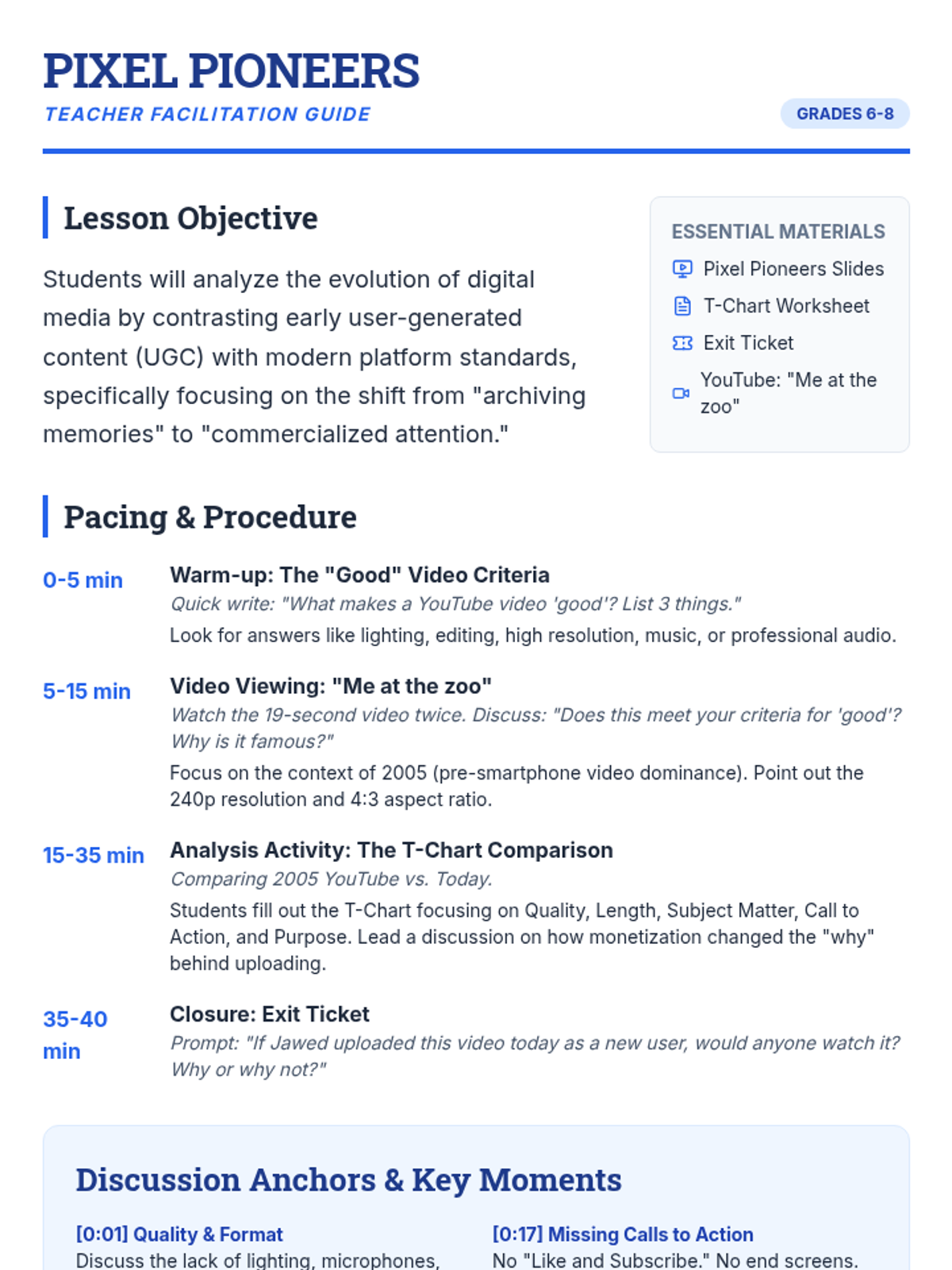
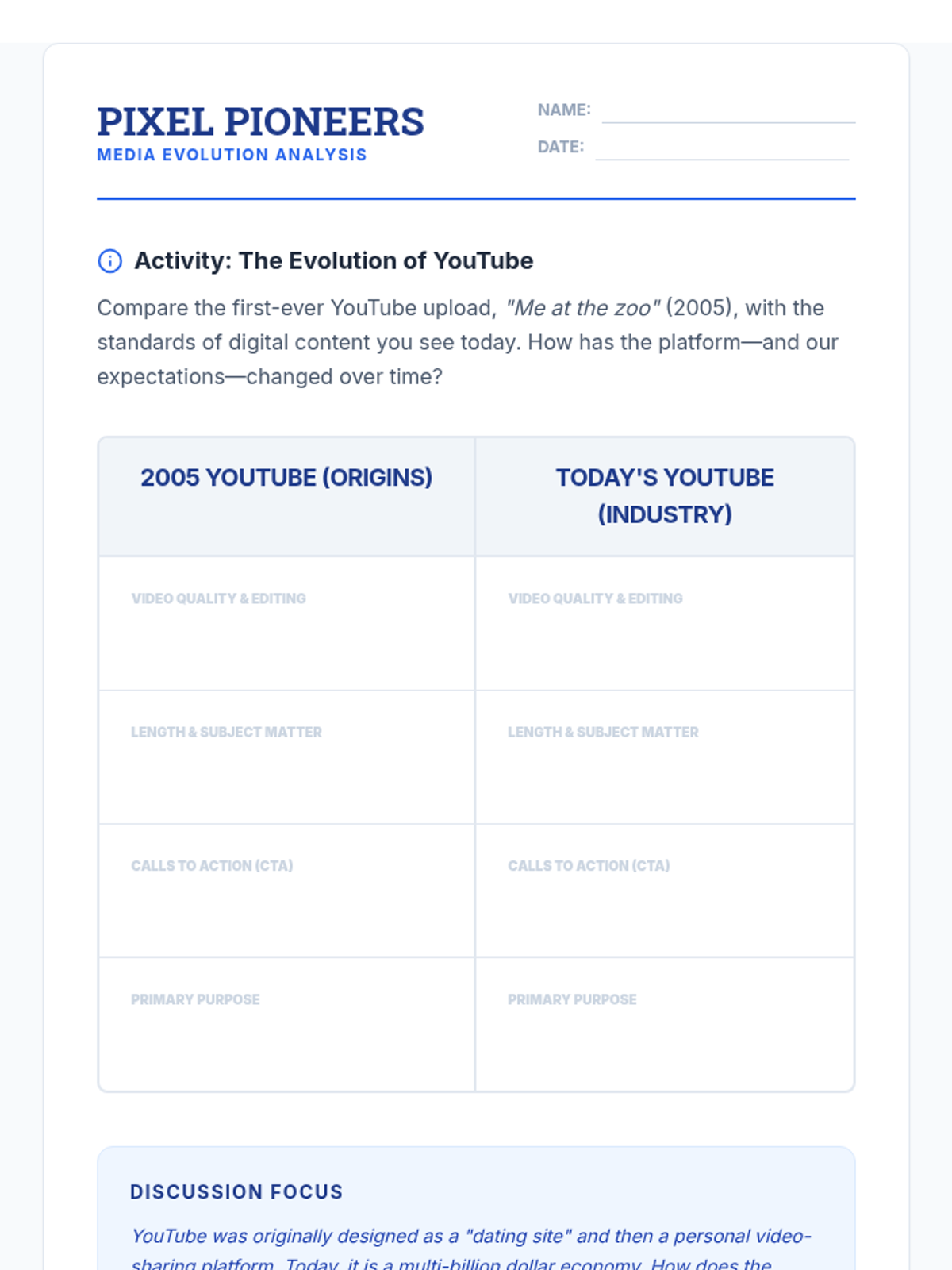
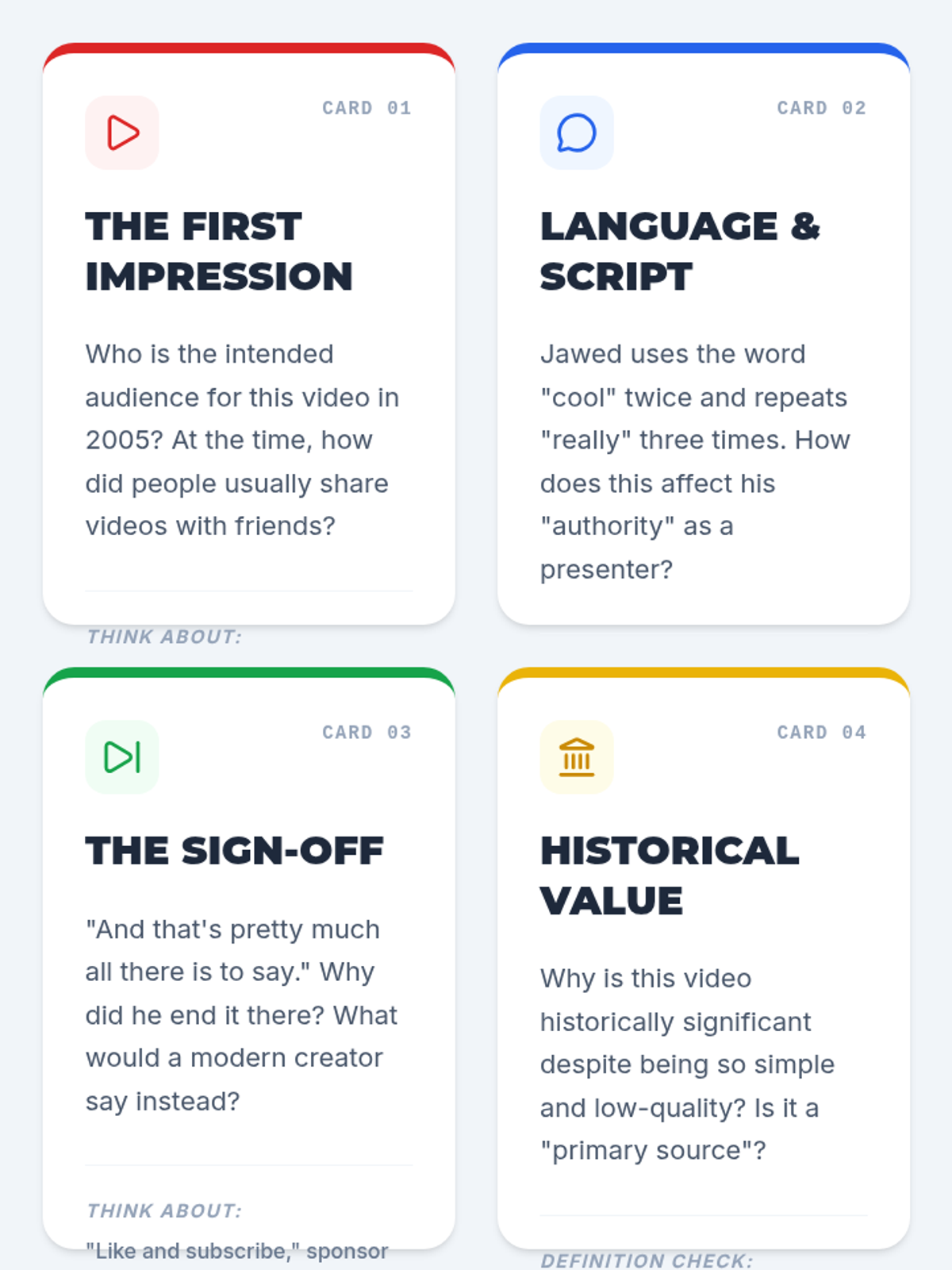
Students investigate the history of user-generated content by contrasting the first YouTube video with modern production standards.
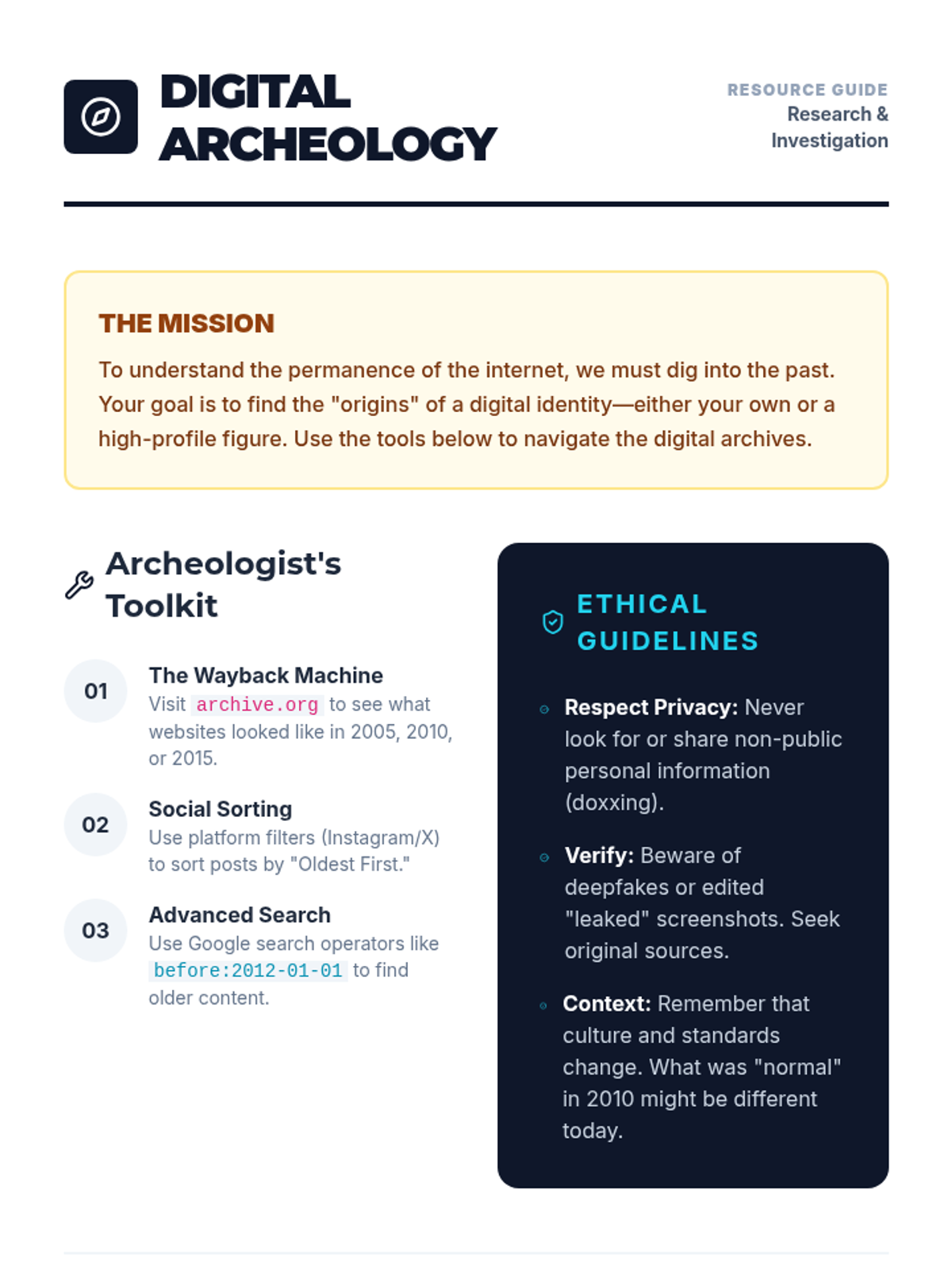
Students act as digital archaeologists to analyze 'Me at the zoo,' the first YouTube video, as a primary historical source, exploring how digital artifacts reflect their era and influence the global economy.
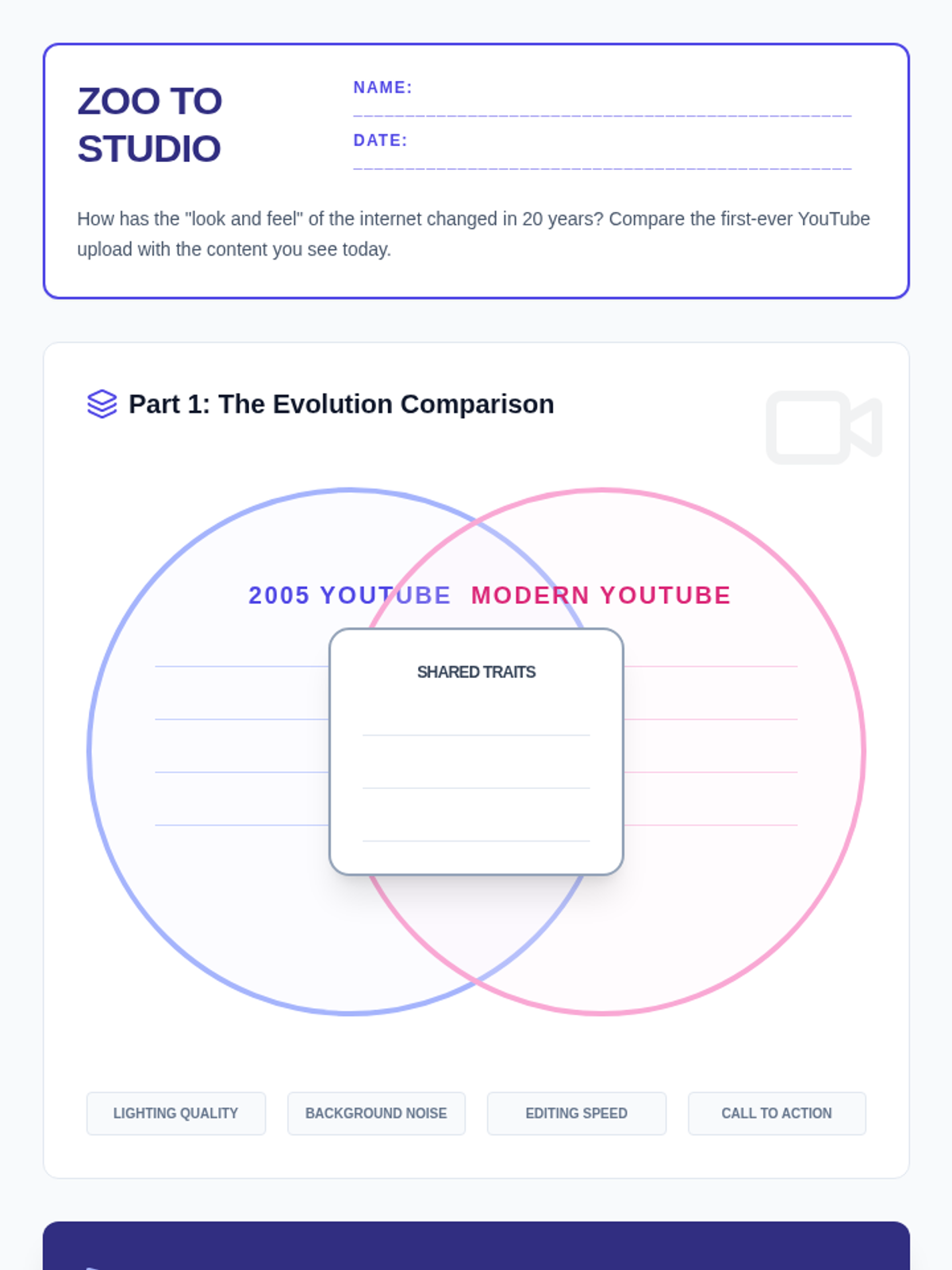
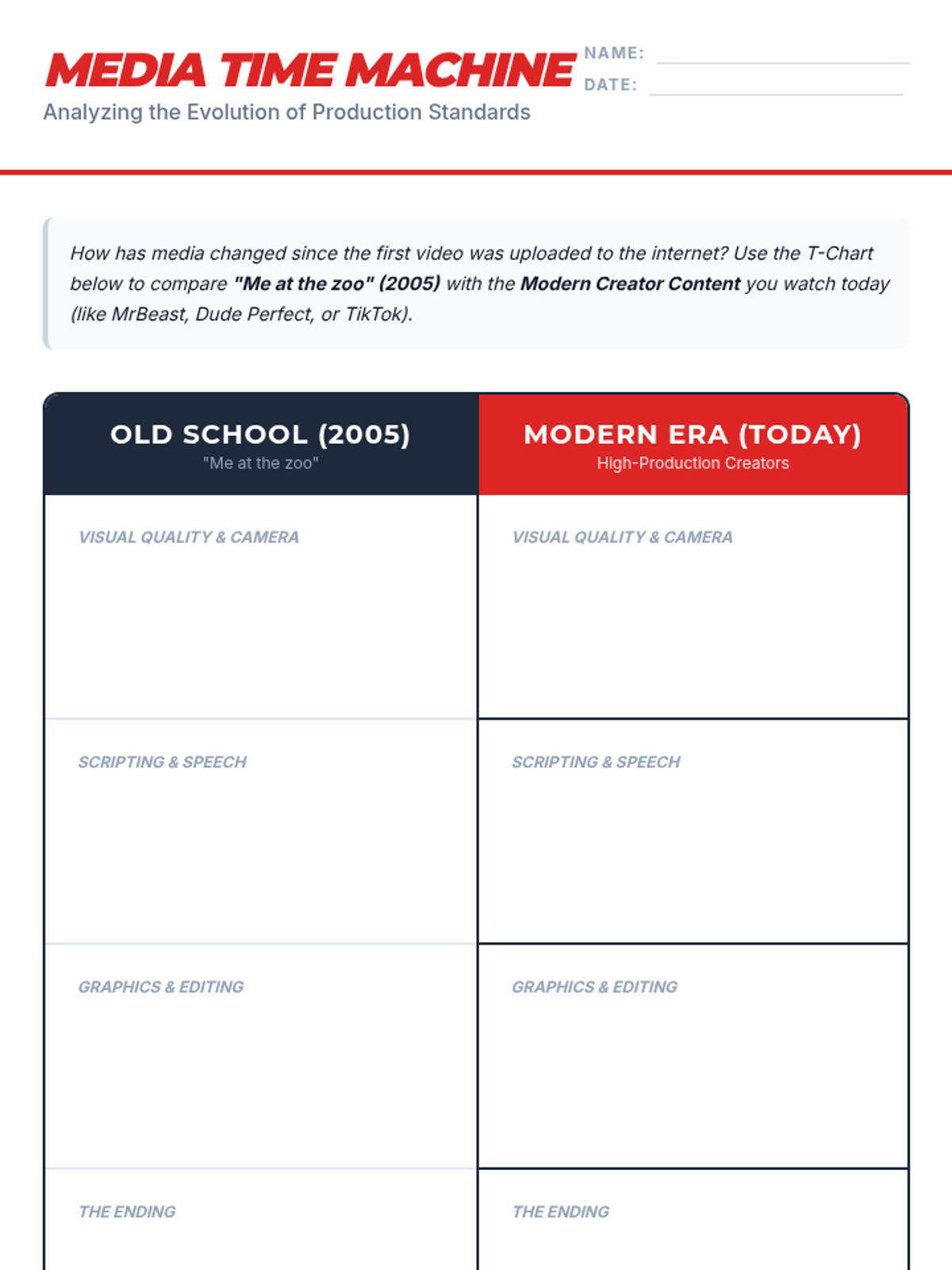
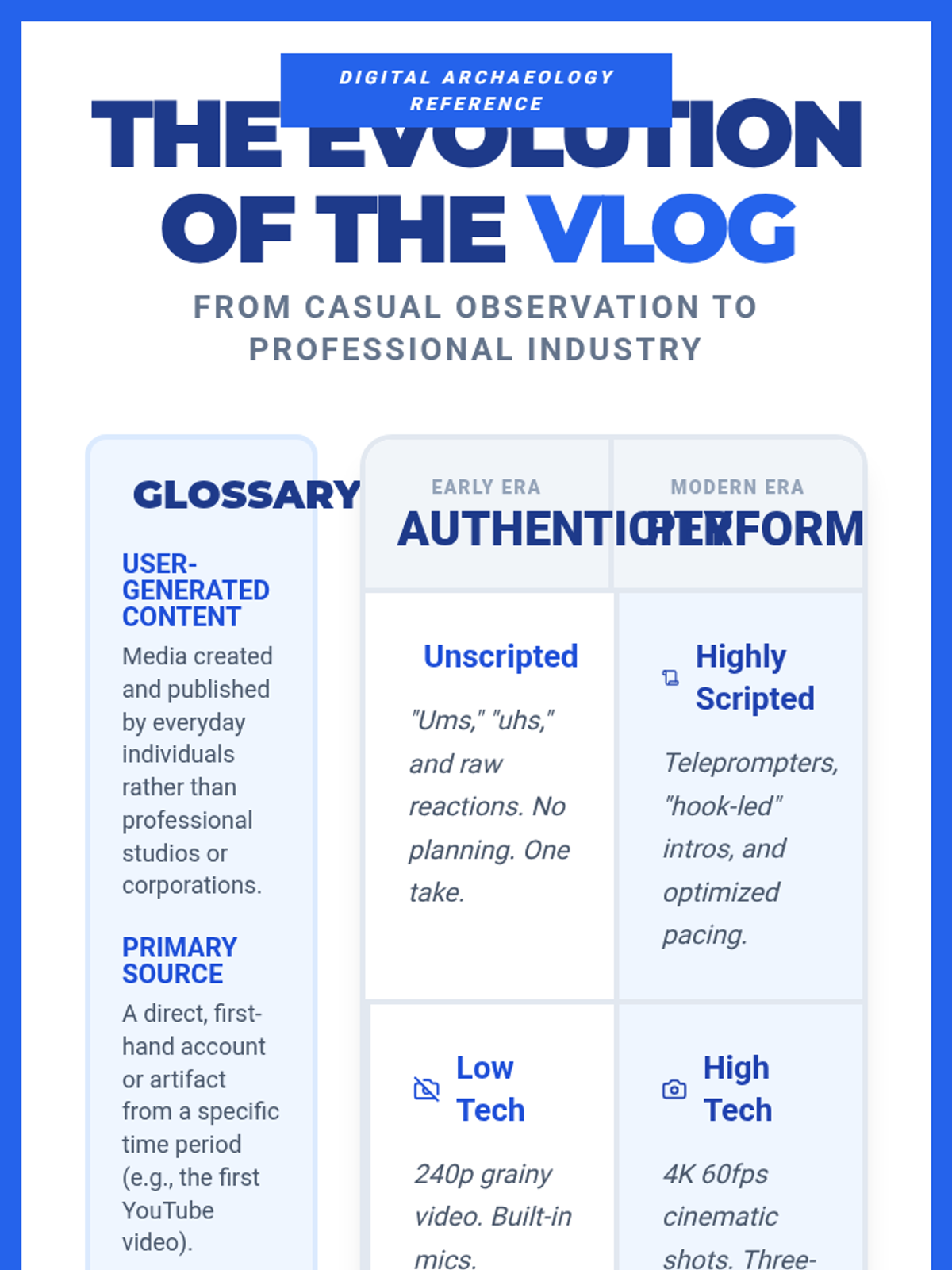
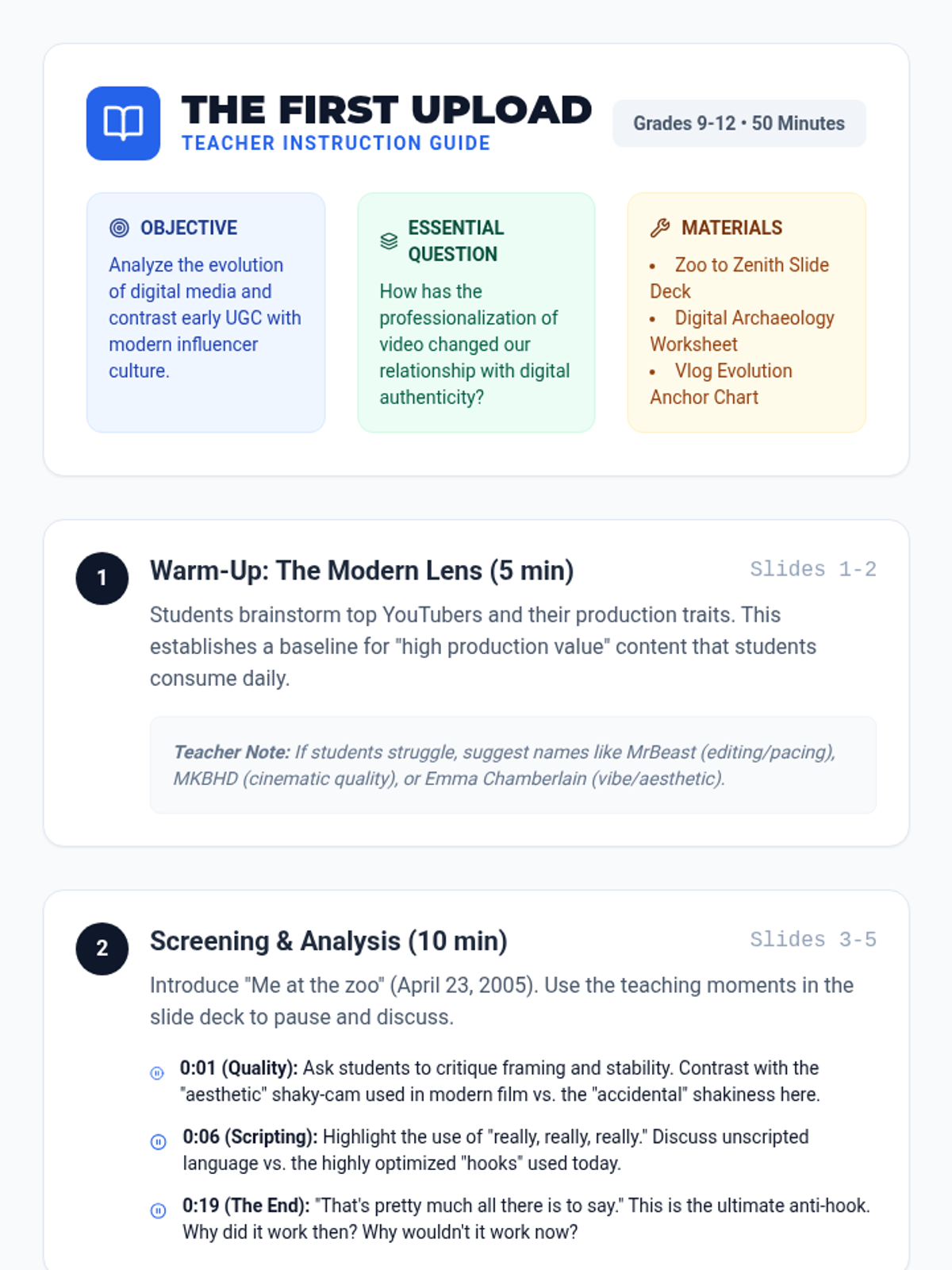
Students analyze the evolution of digital media by comparing the first-ever YouTube video, 'Me at the zoo,' with modern production standards, focusing on production quality, scripting, and the concept of user-generated content.
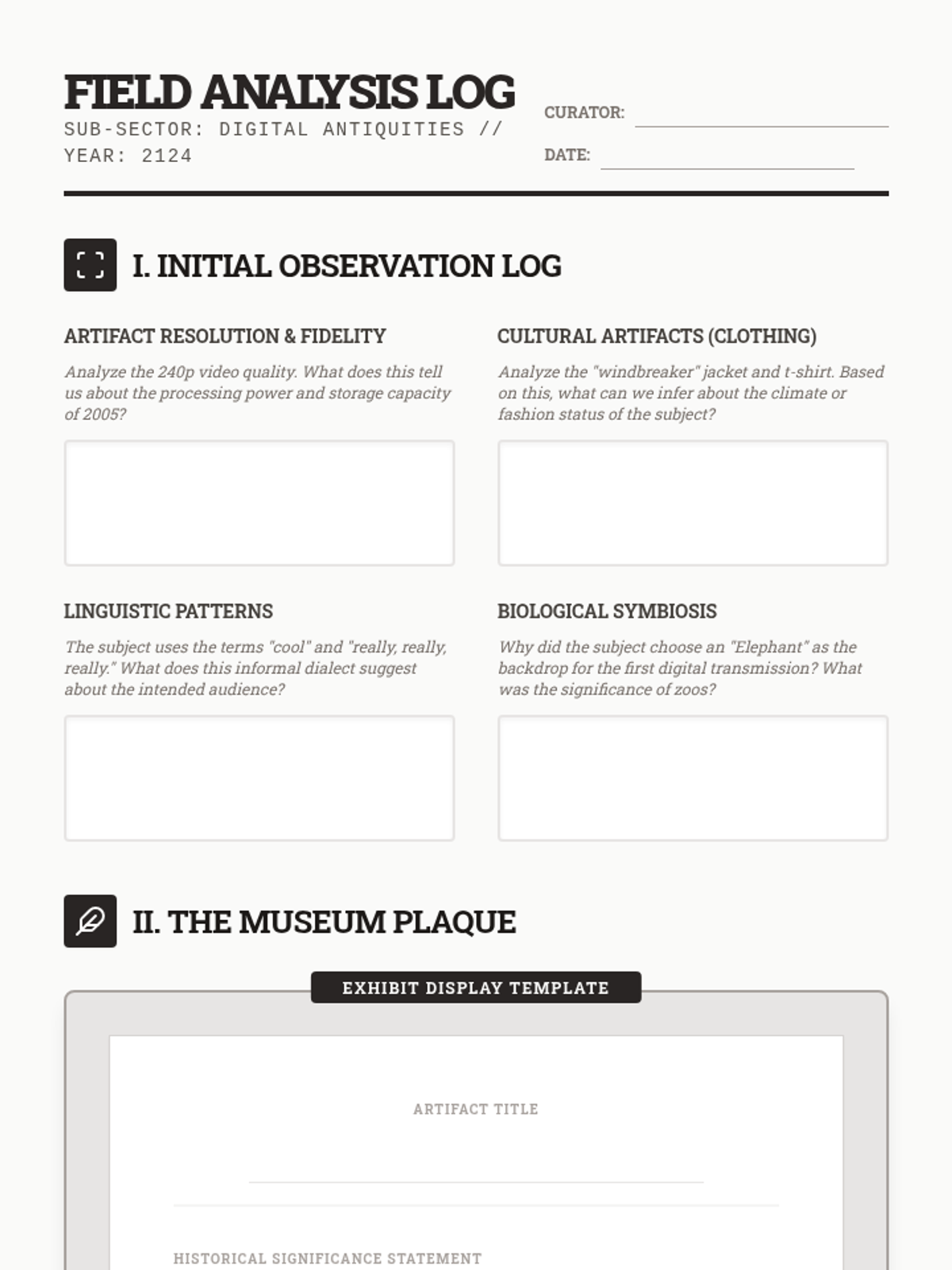
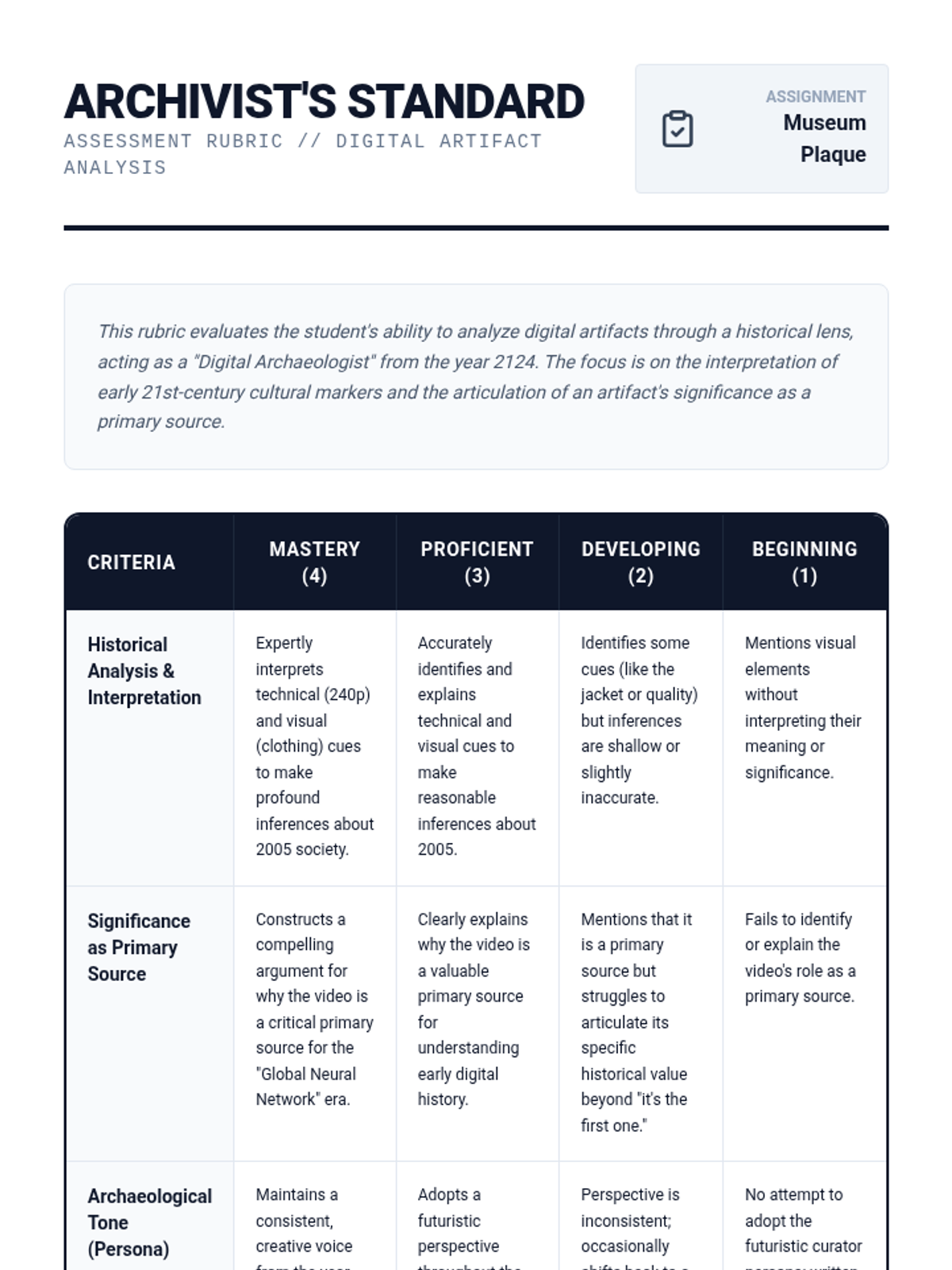
A high school history and media literacy lesson where students evaluate 'Me at the zoo' as a primary source, acting as digital archaeologists from the year 2124 to analyze early 21st-century culture and technology.
A short high school warm-up focused on developing media literacy skills by identifying bias, loaded language, and selective data in articles about climate change.
1/12
A lesson where students compare the first YouTube video 'Me at the zoo' with modern content to understand the evolution of social media.
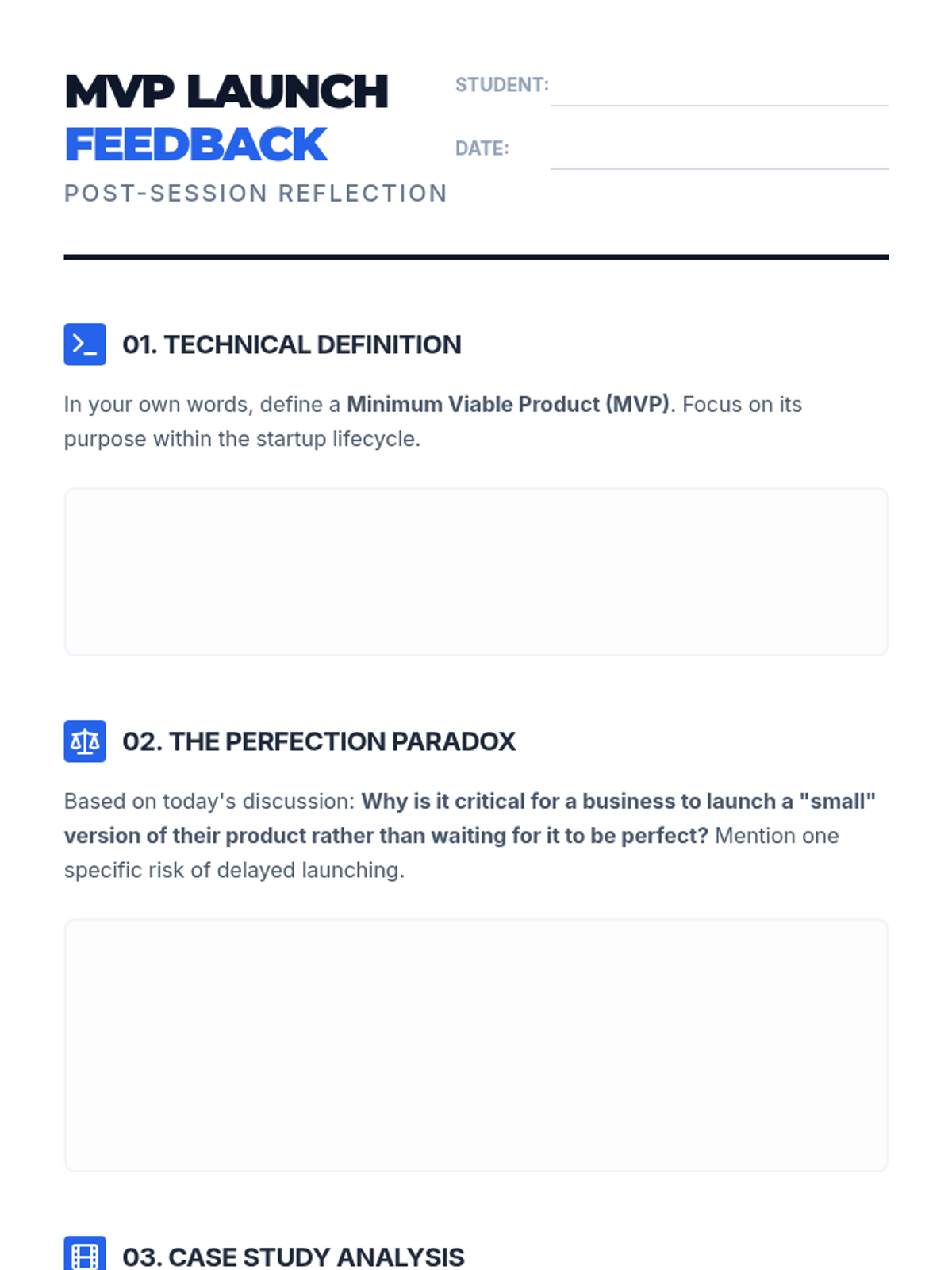
A 50-minute lesson for undergraduate marketing students exploring the concept of Minimum Viable Product (MVP) through the lens of YouTube's history and its first uploaded video.
A lesson analyzing the transformation of YouTube from a casual video-sharing platform to a professionalized influencer economy, using the first-ever YouTube video as a primary source.
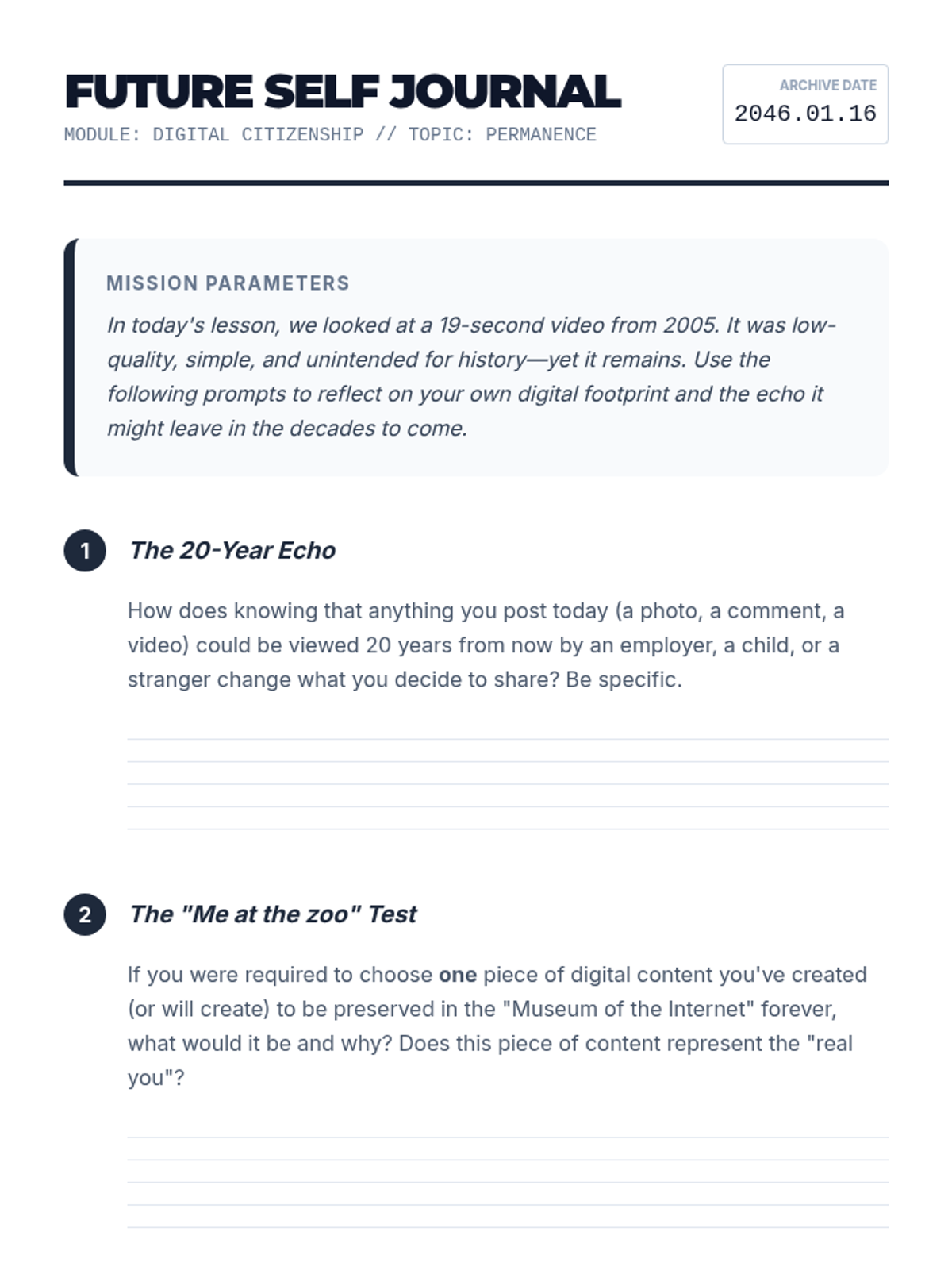
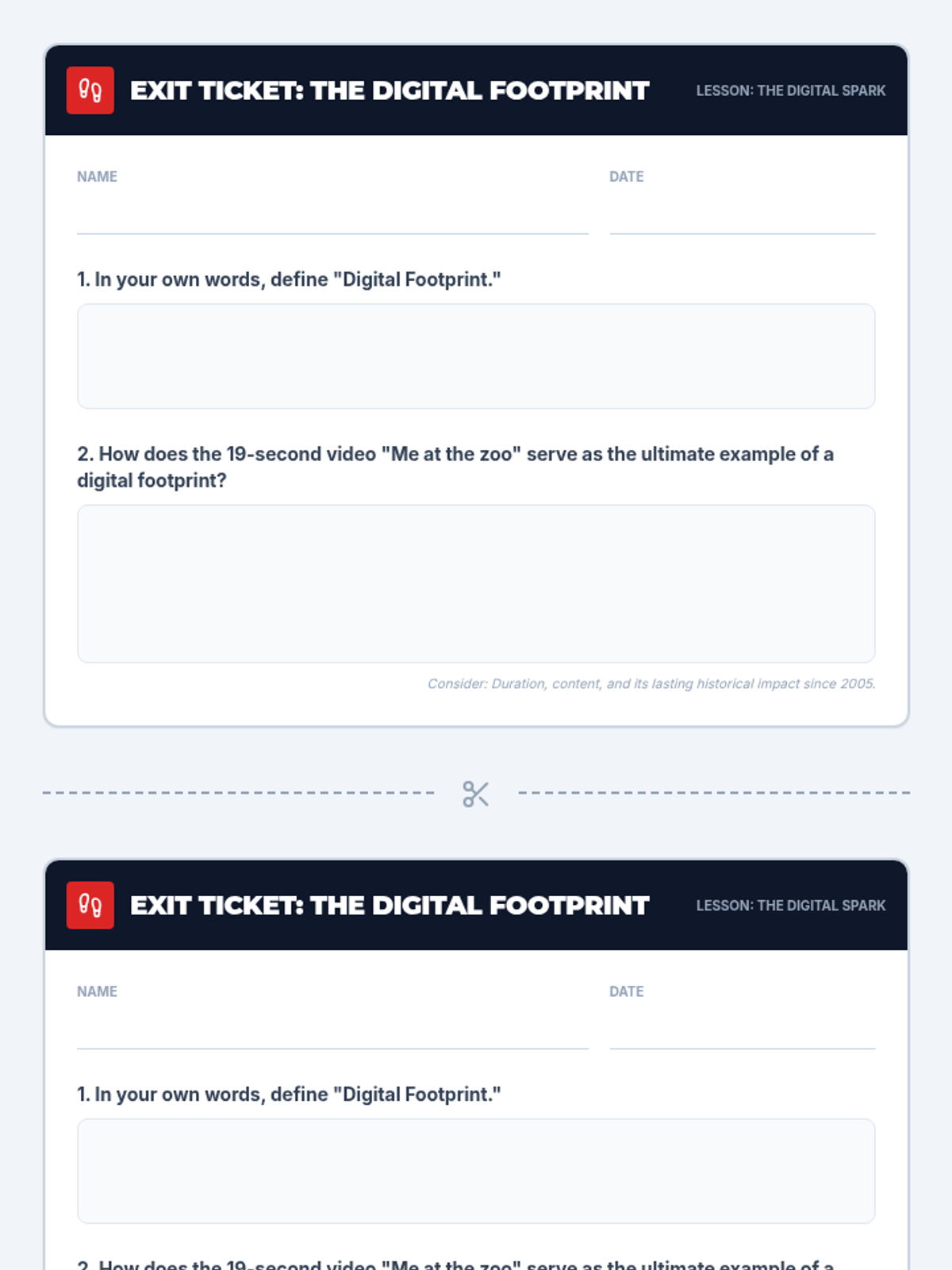
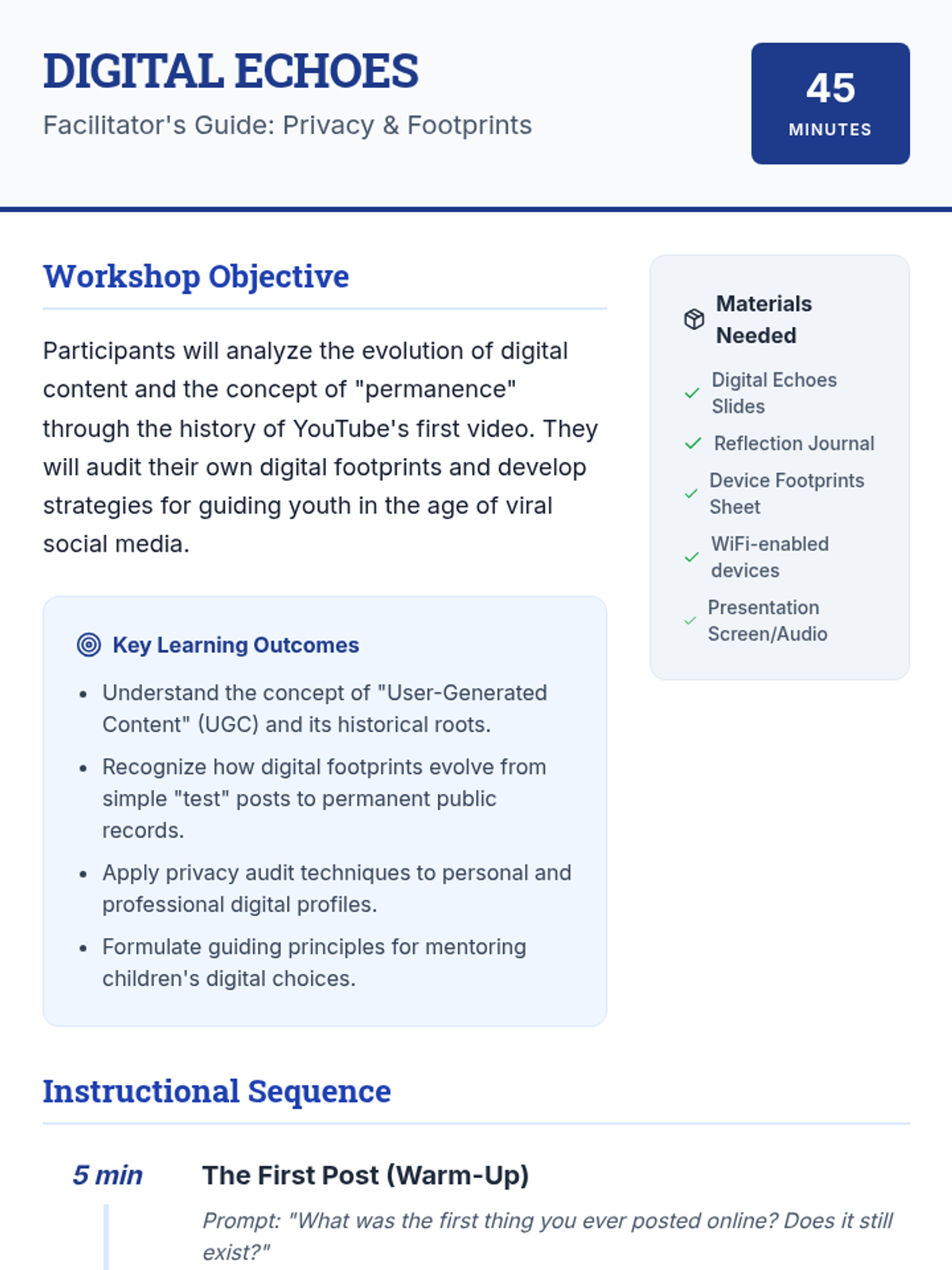
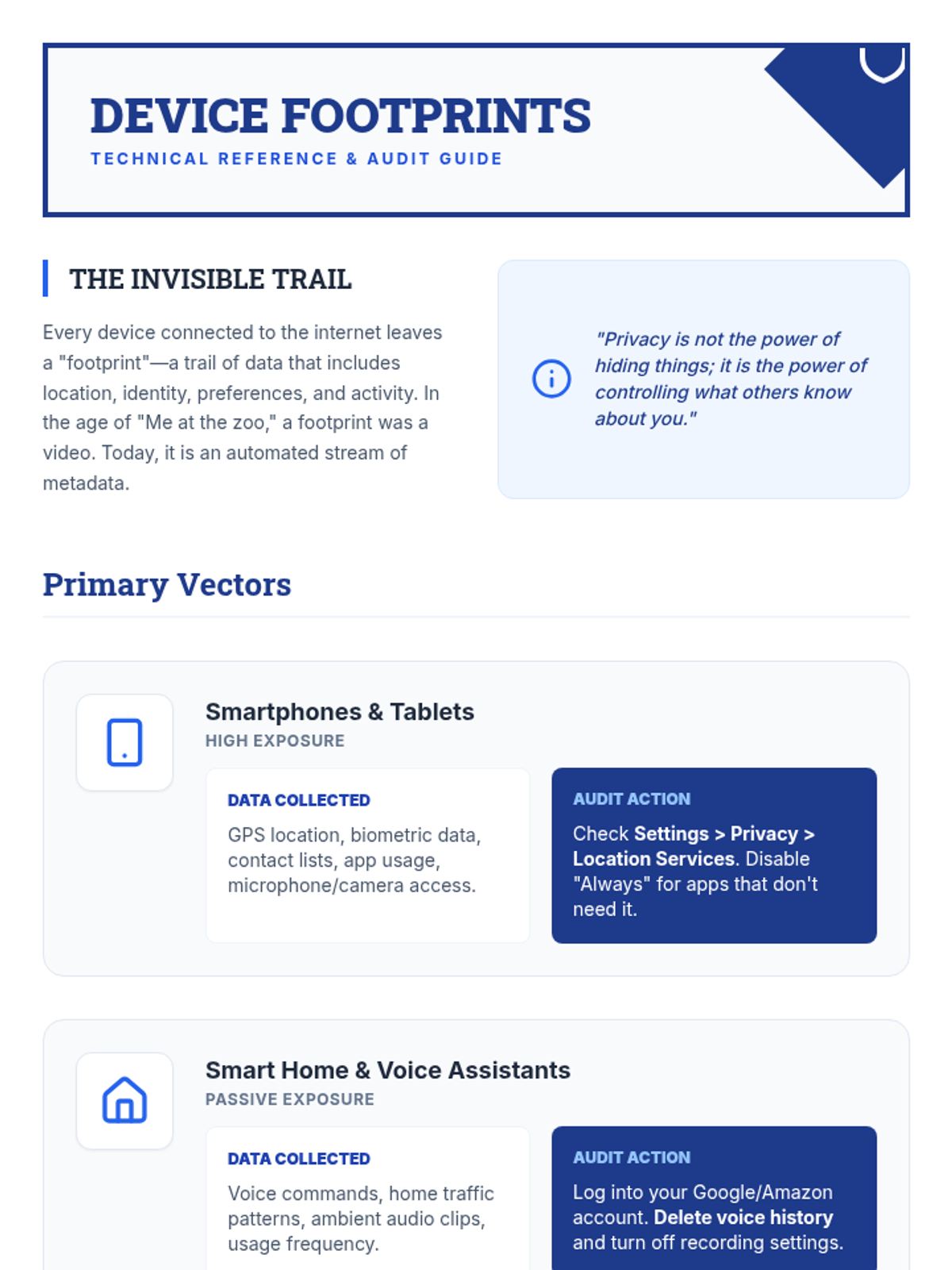
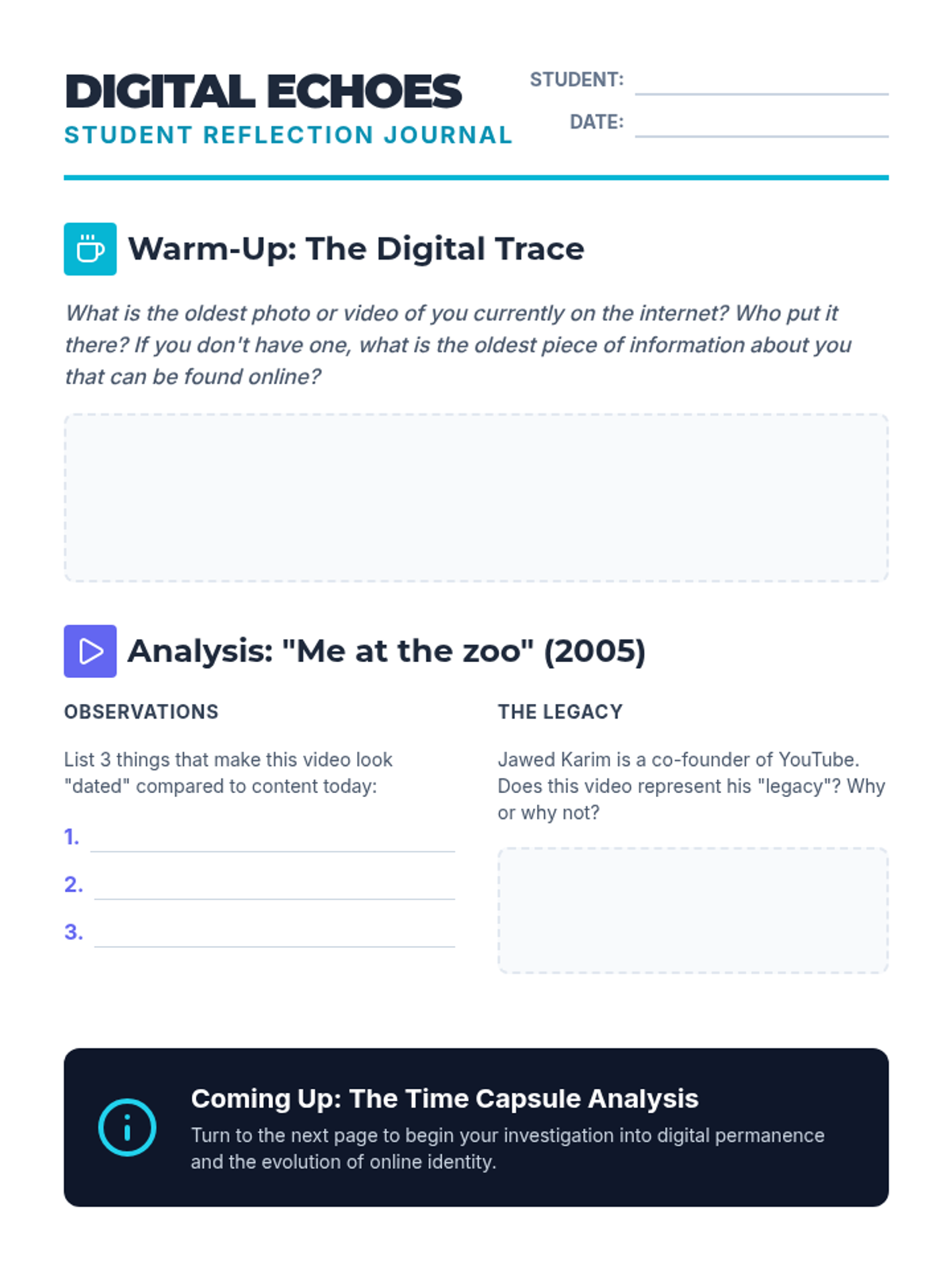
A lesson for elementary students exploring the permanence of the internet through the first-ever YouTube video, 'Me at the zoo', teaching the concept of a digital footprint.
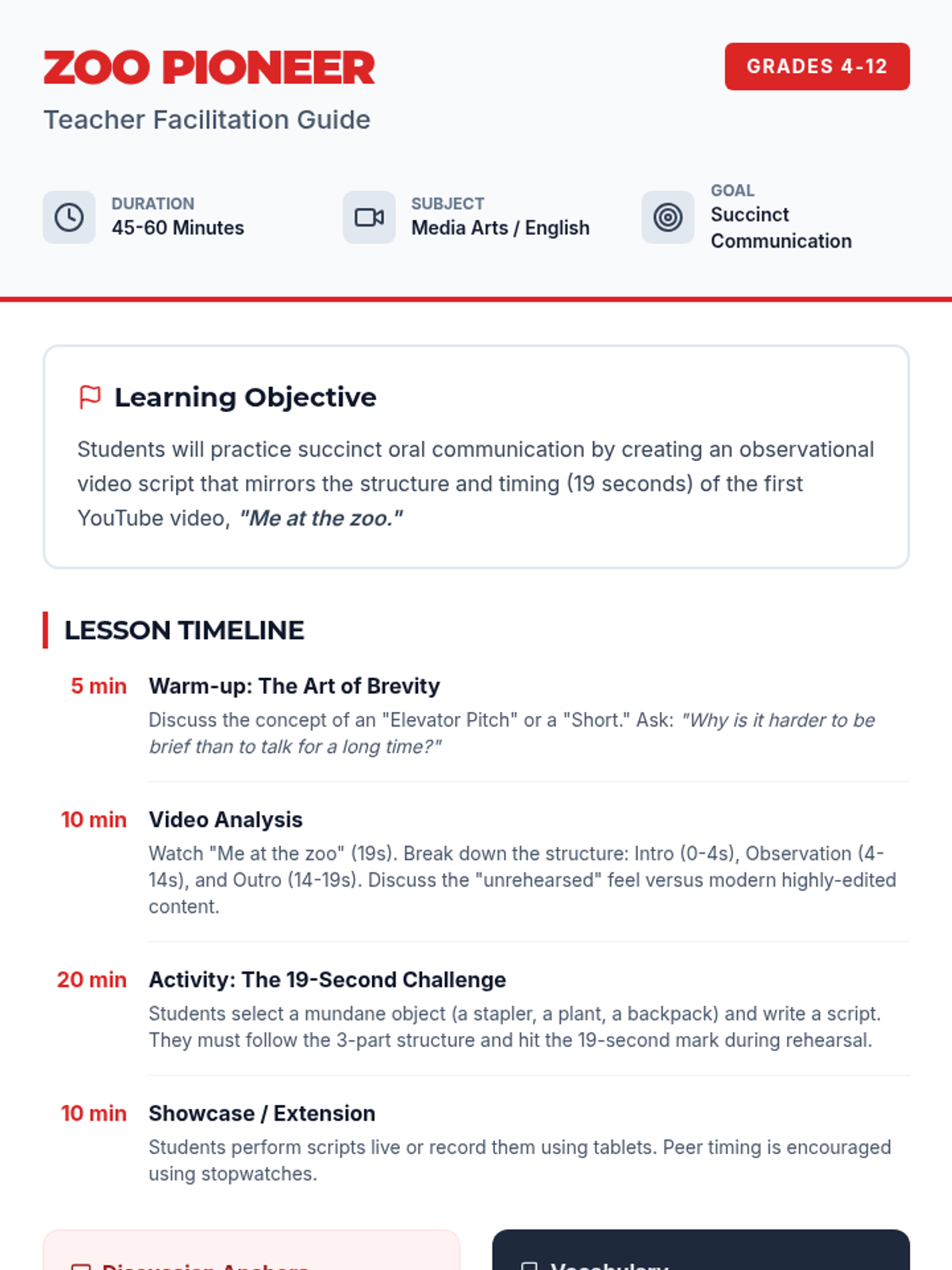
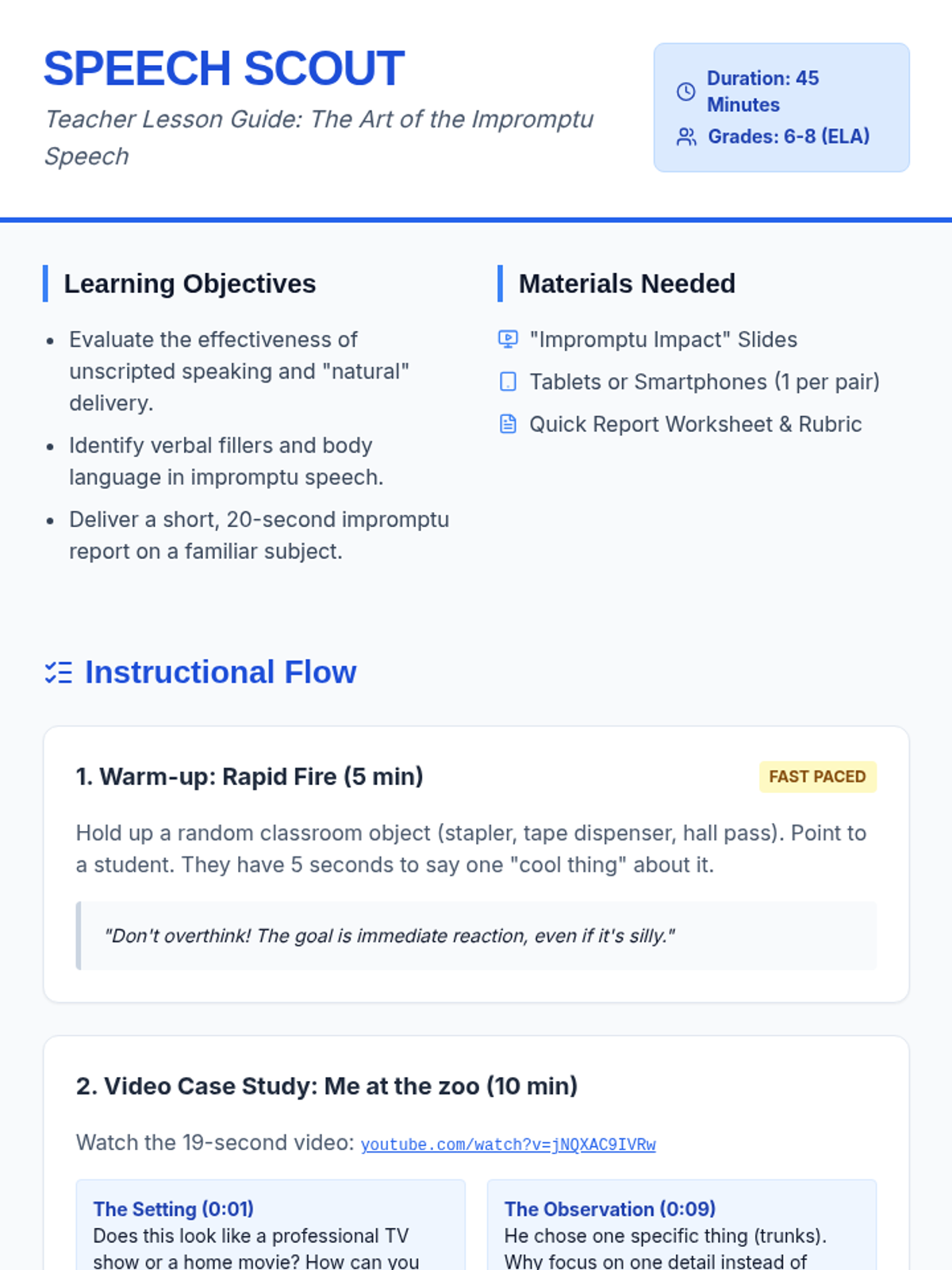
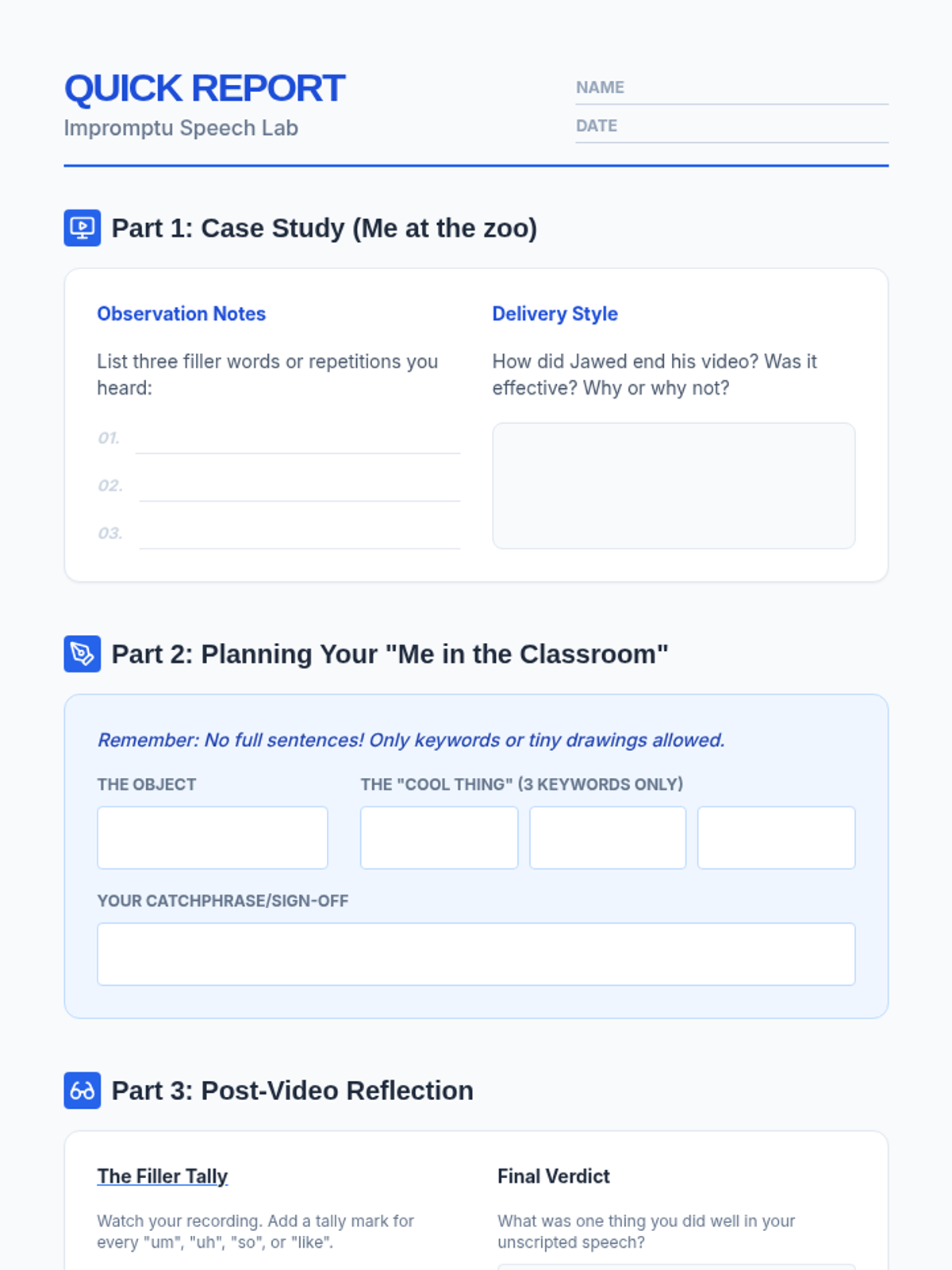
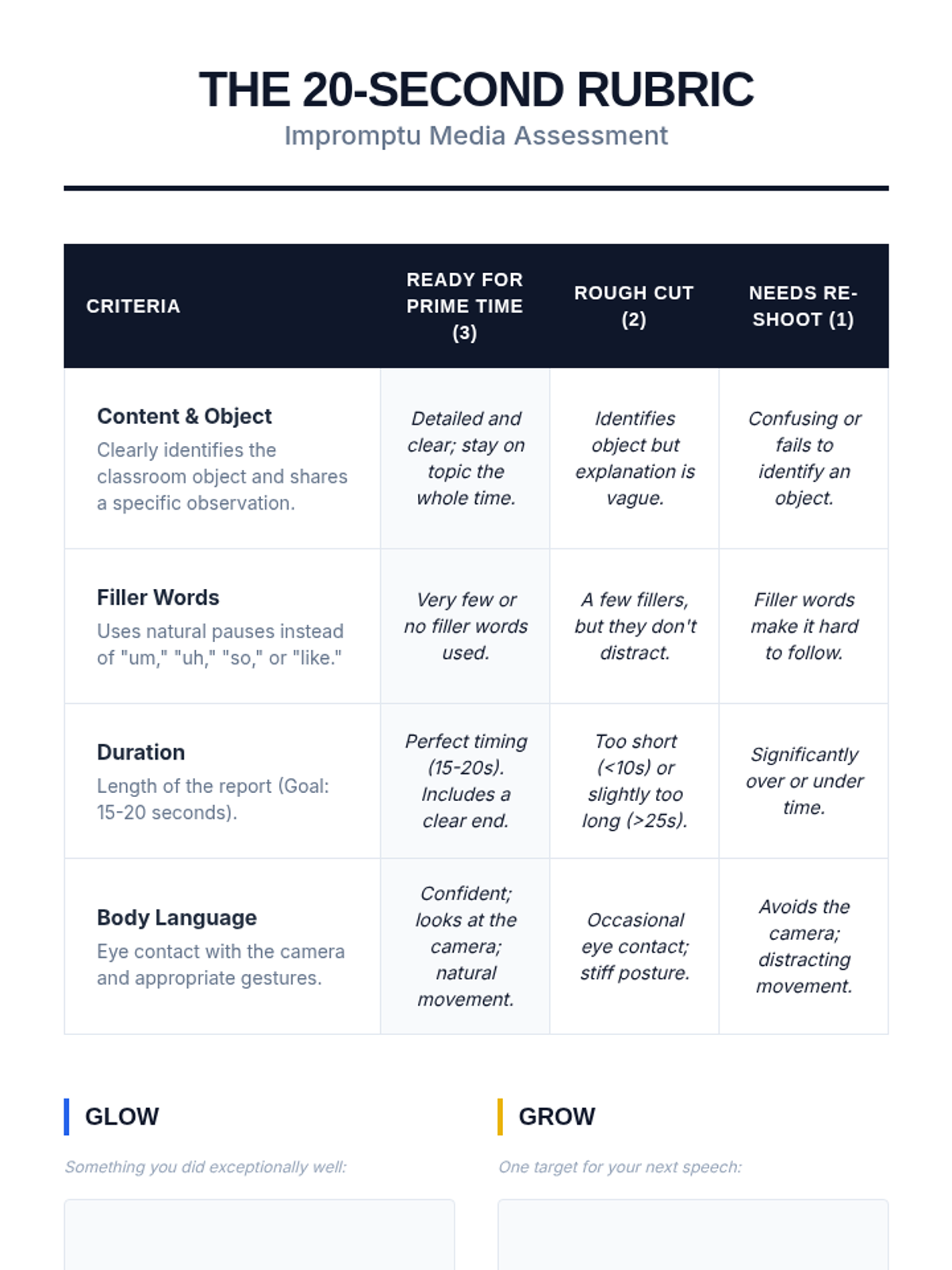
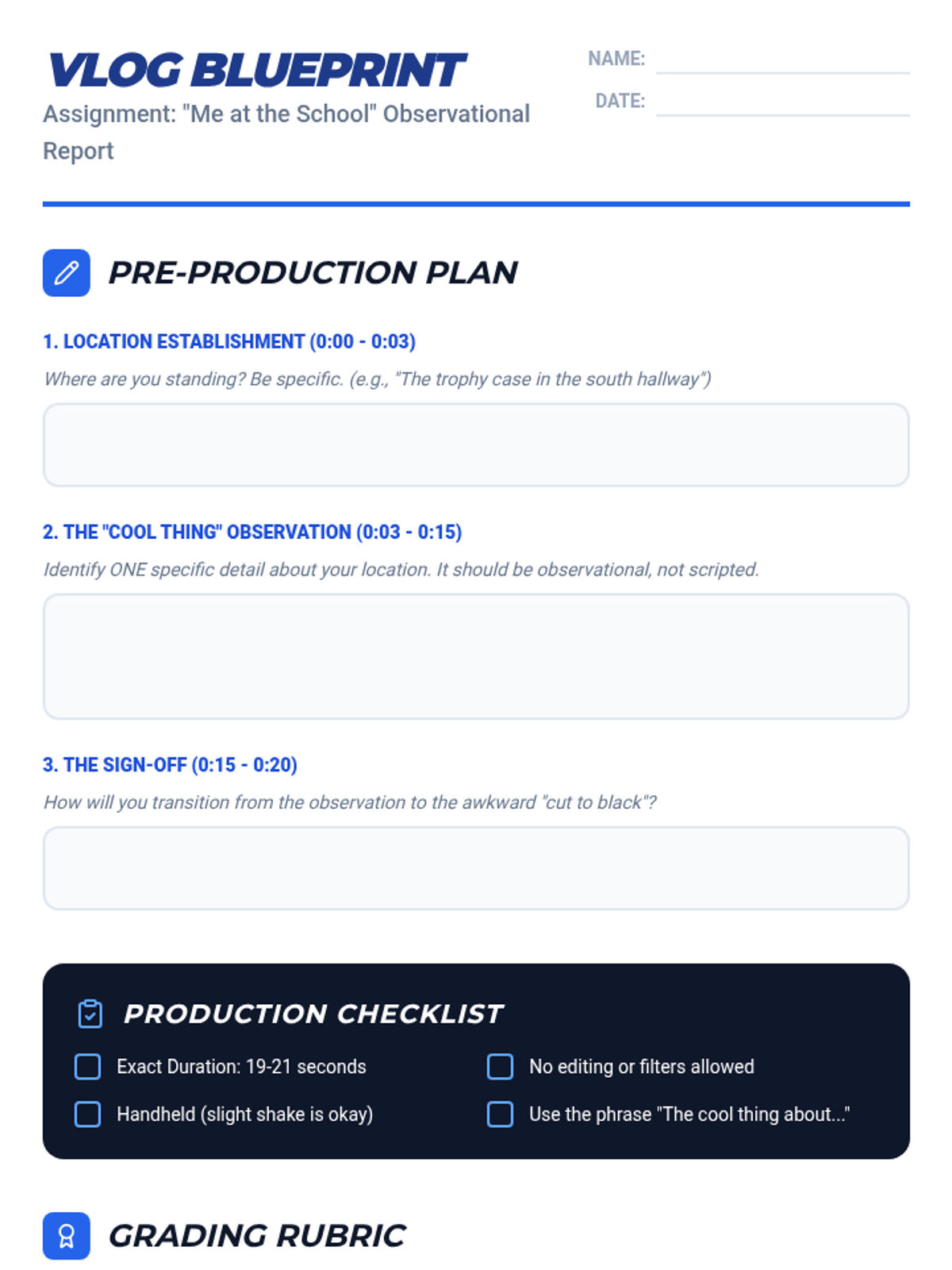
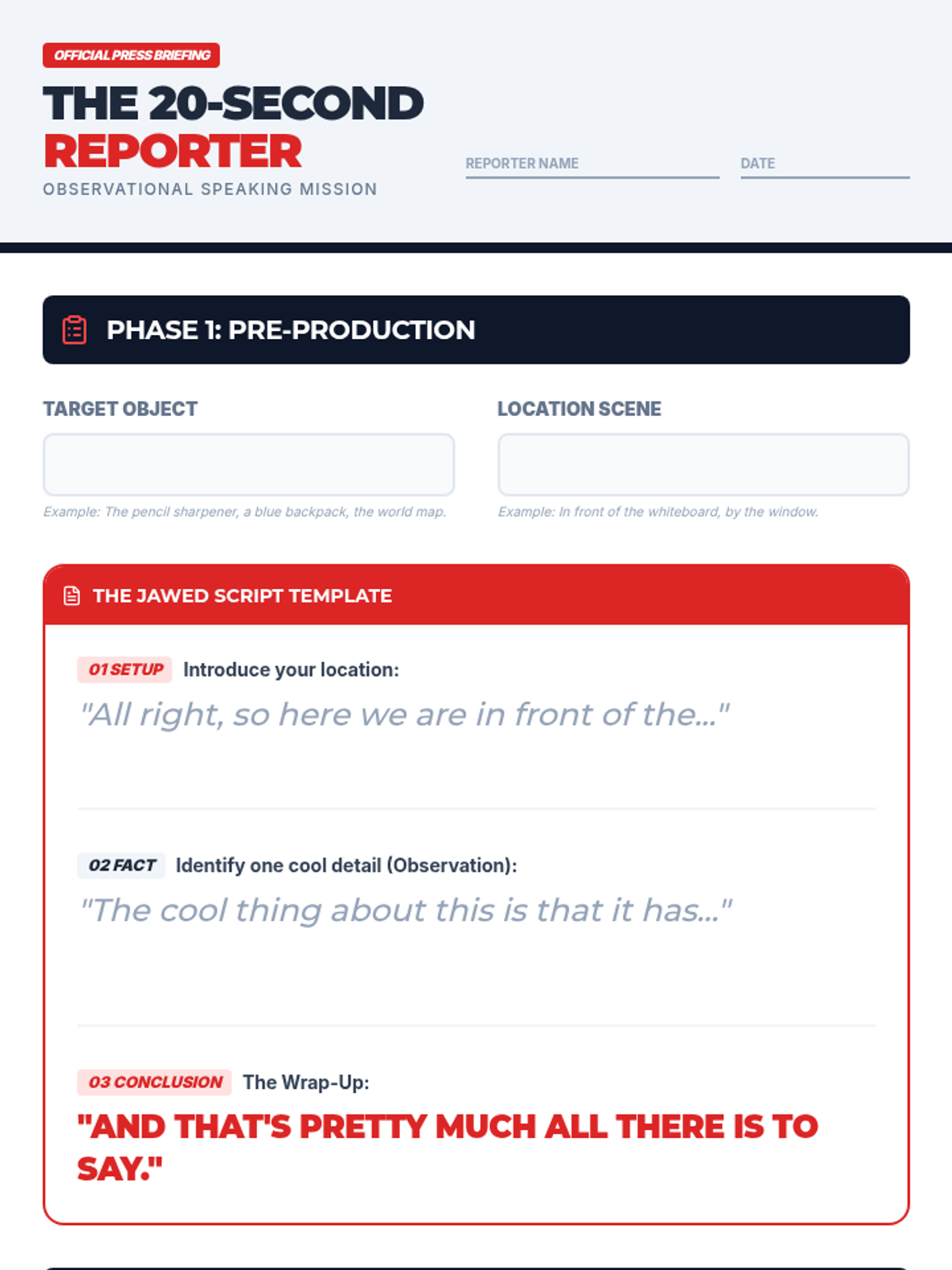
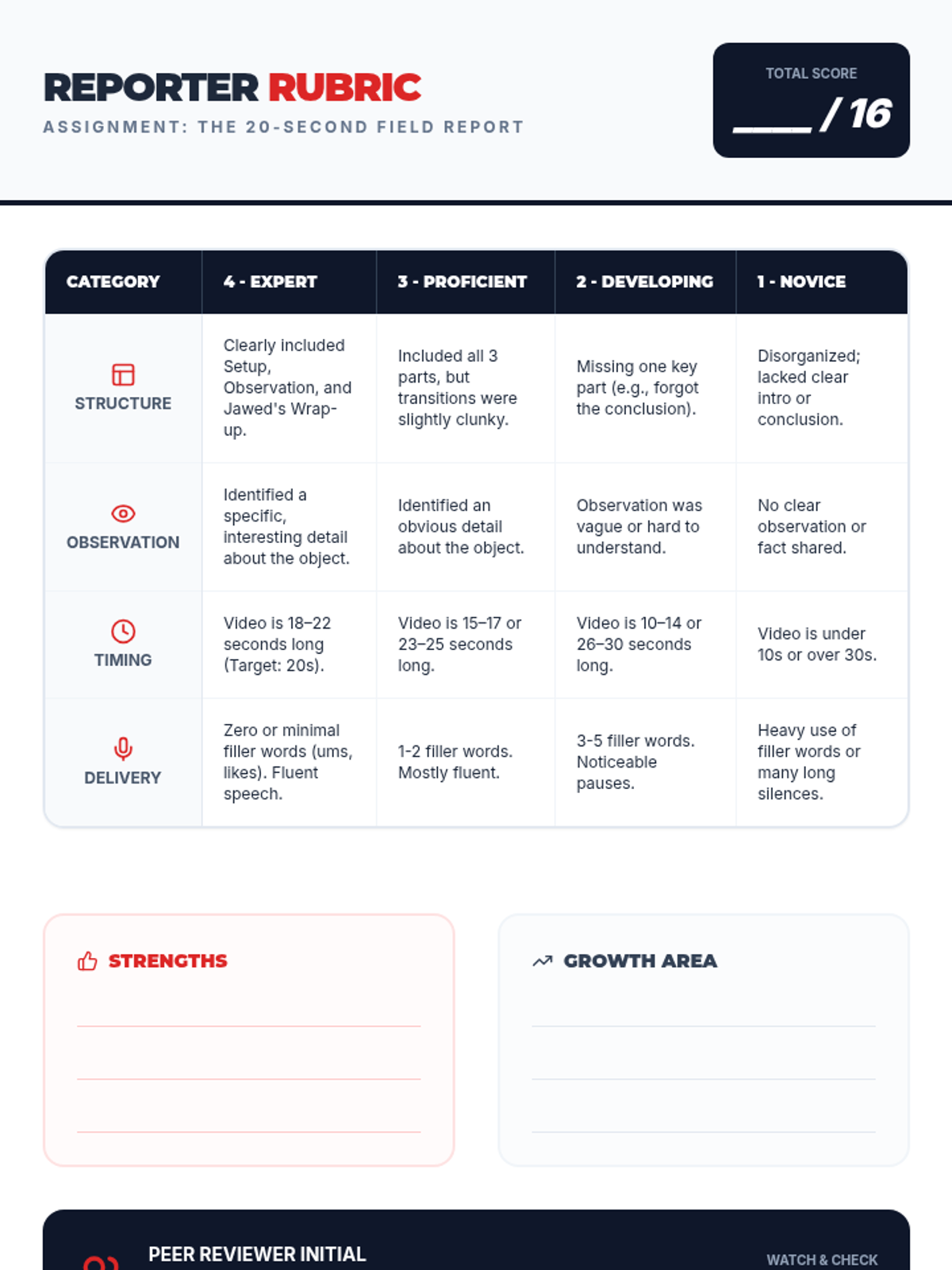
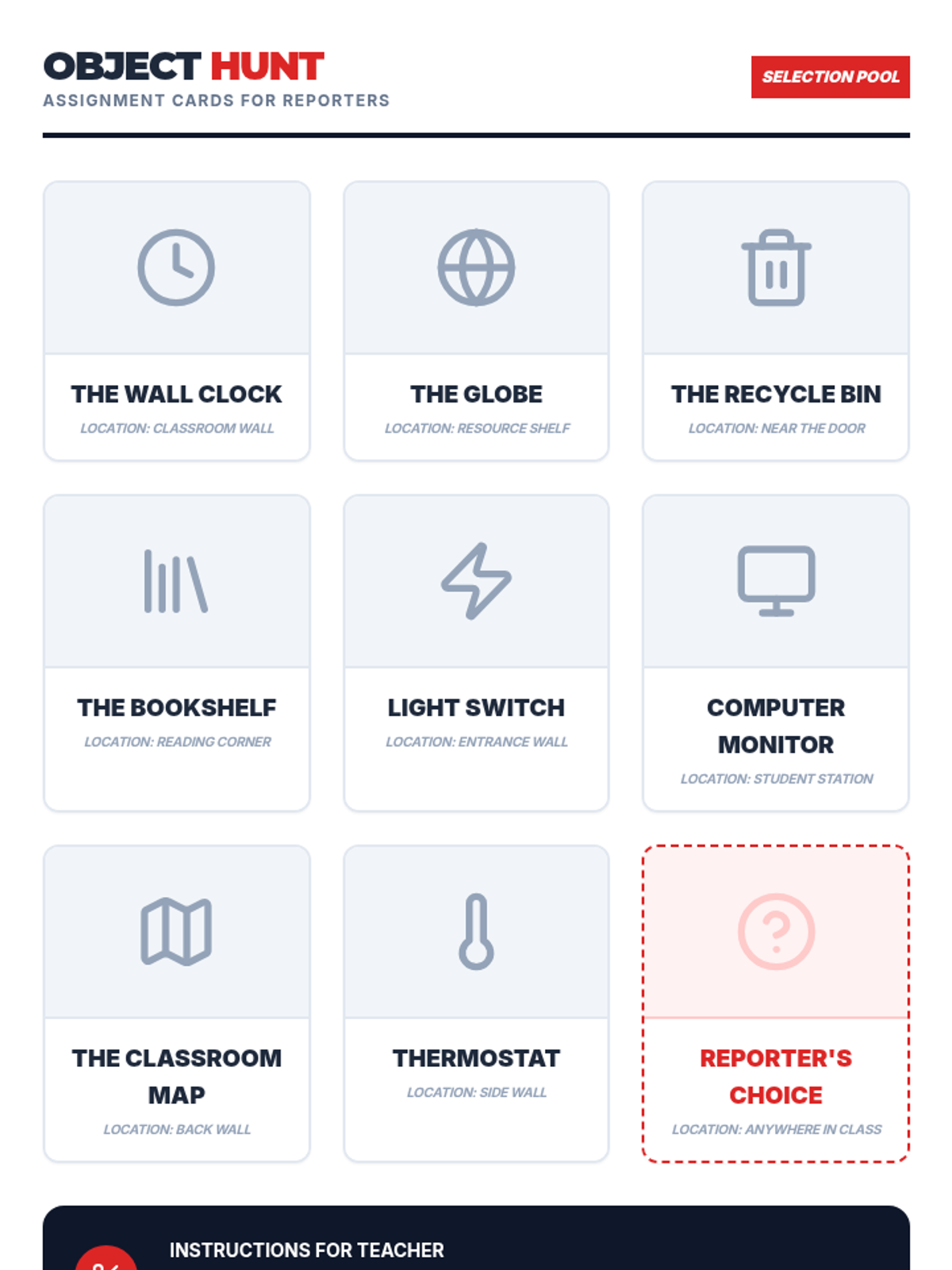
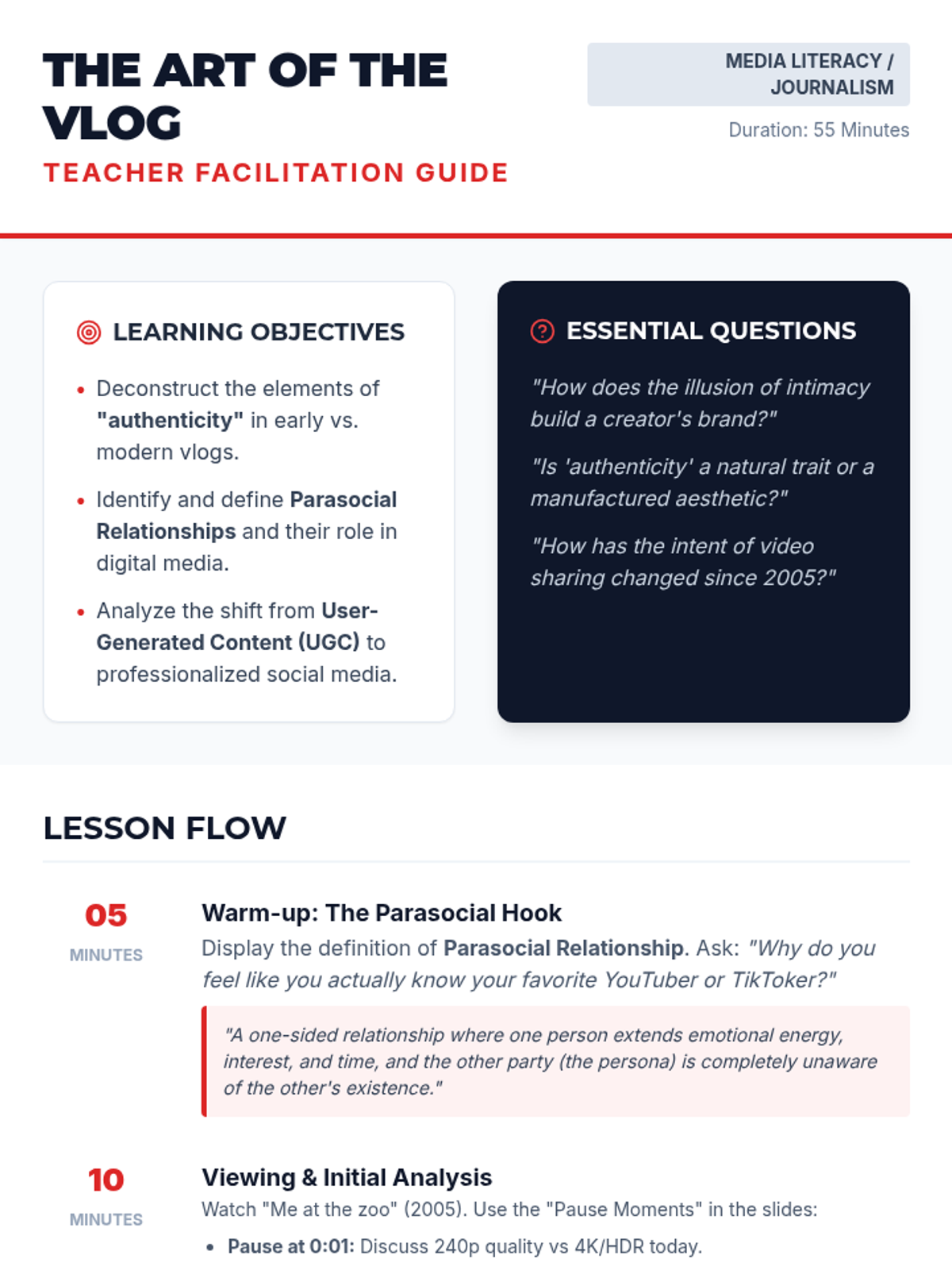
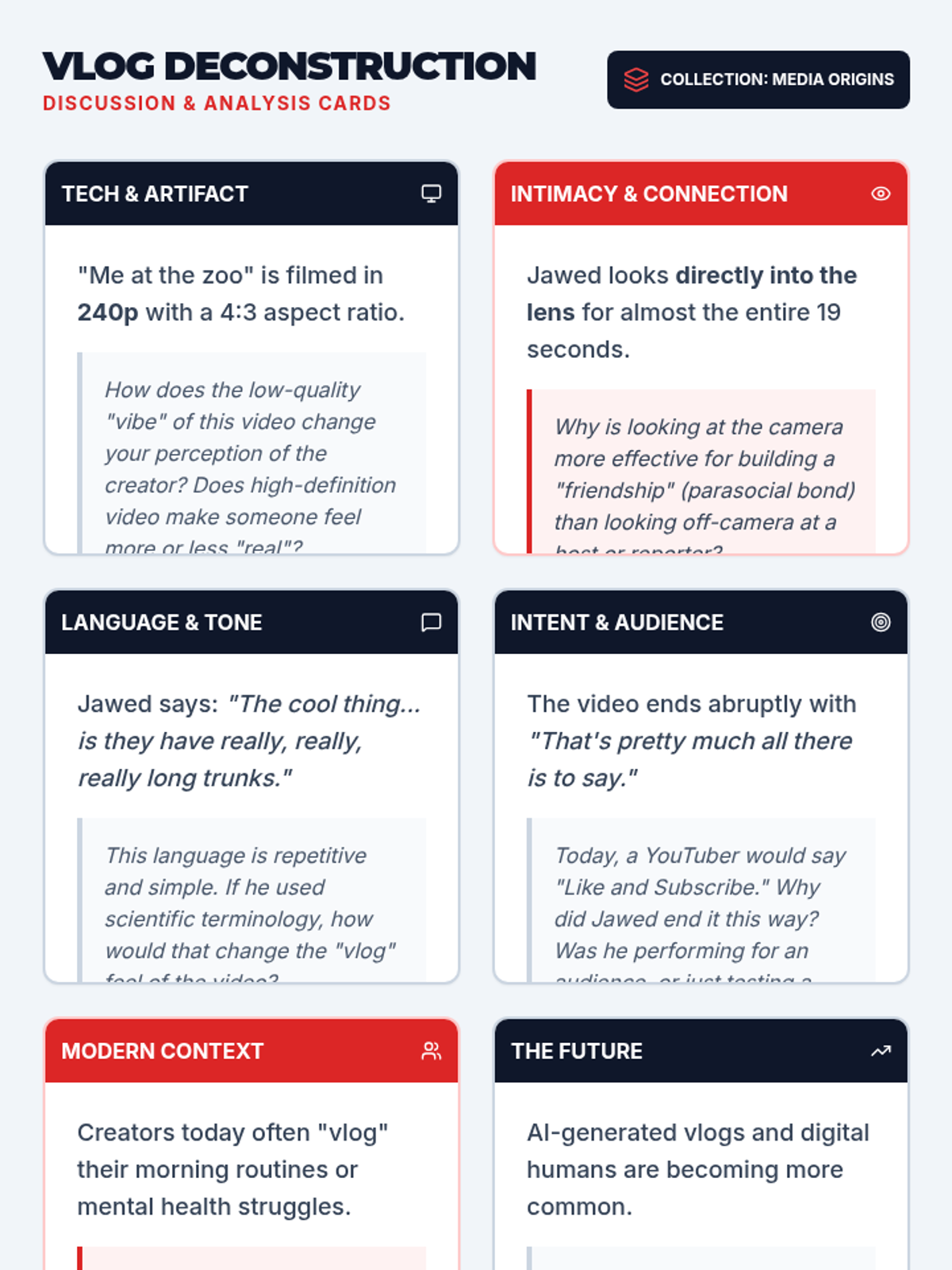
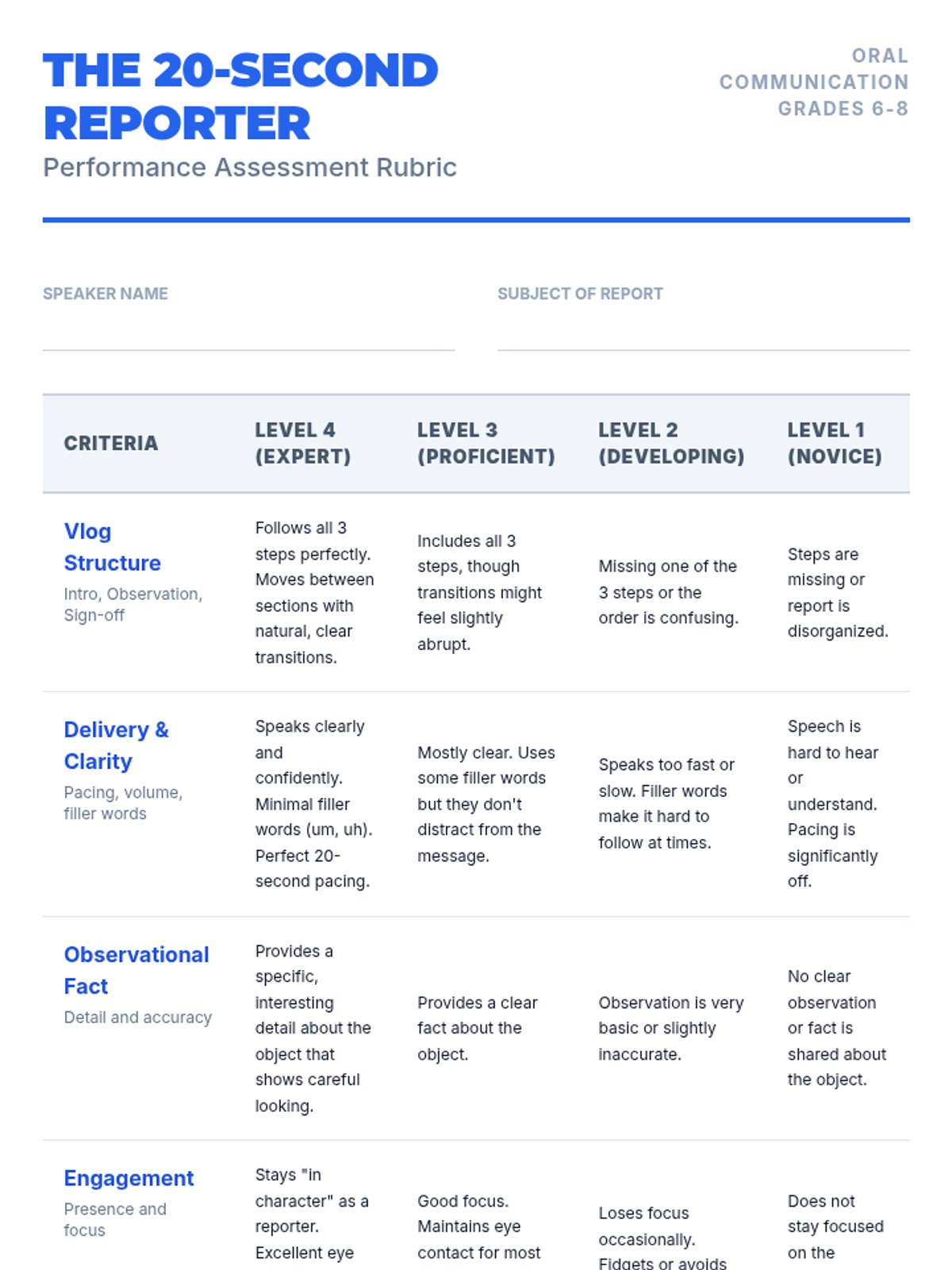
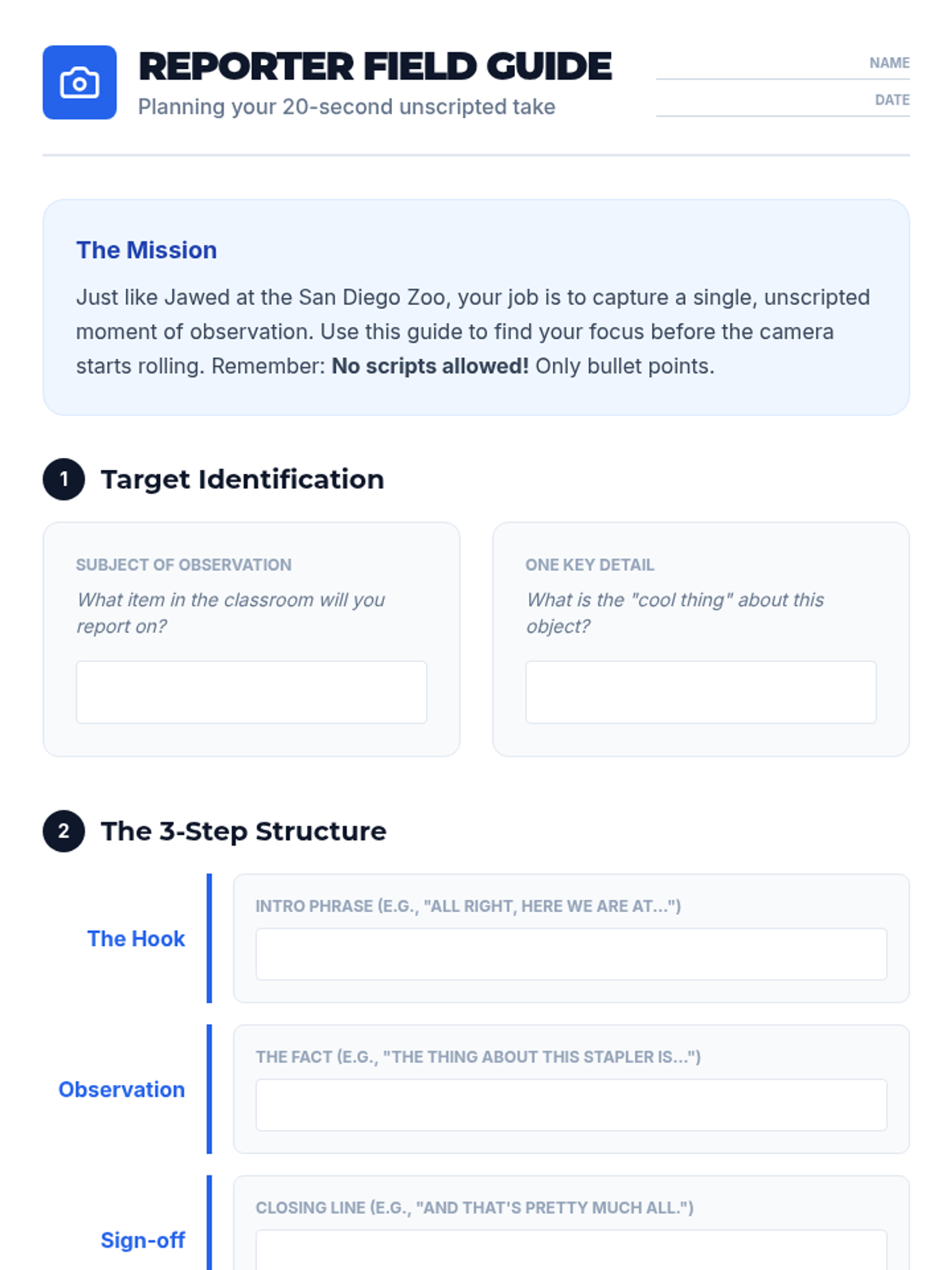
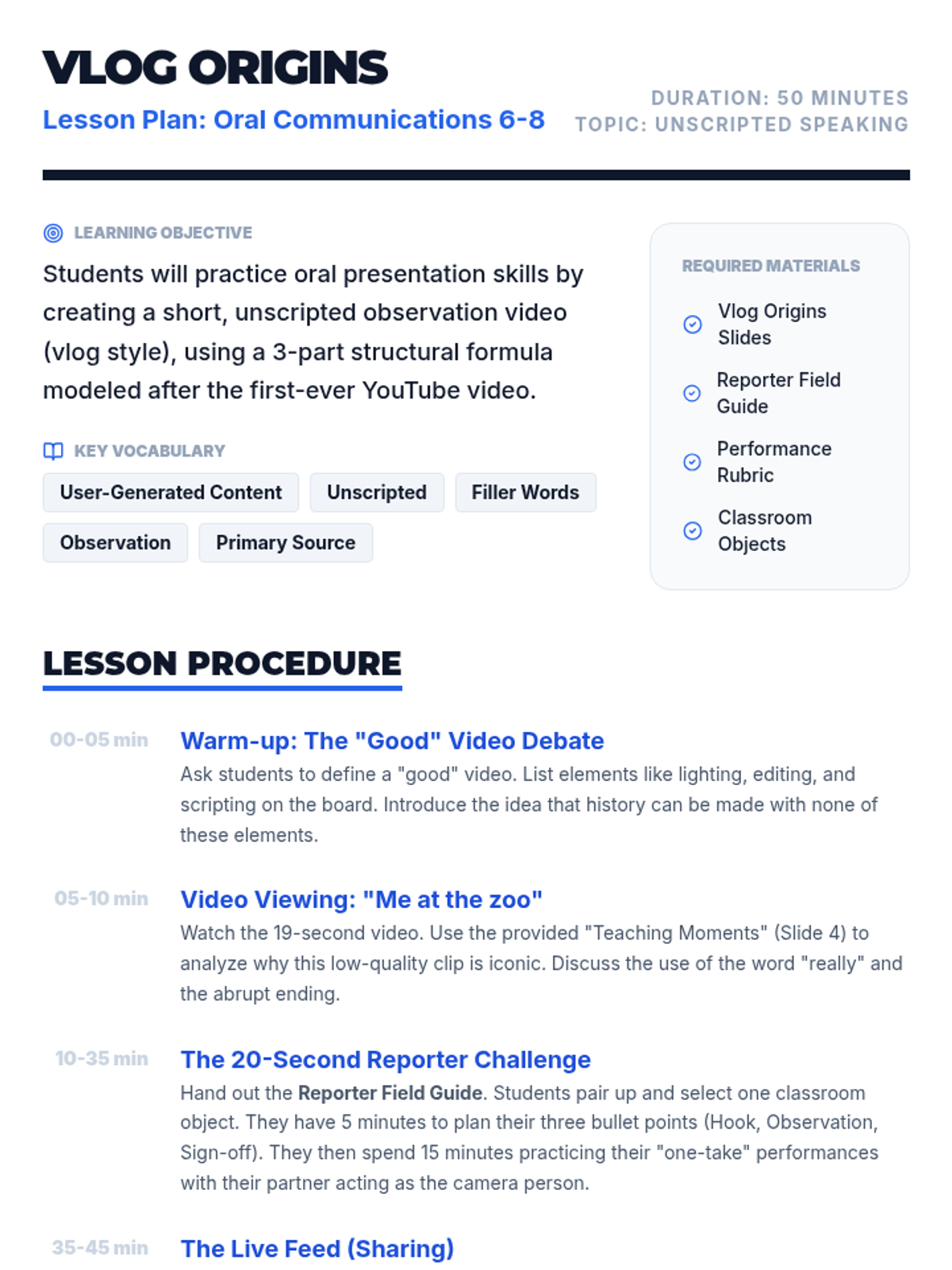
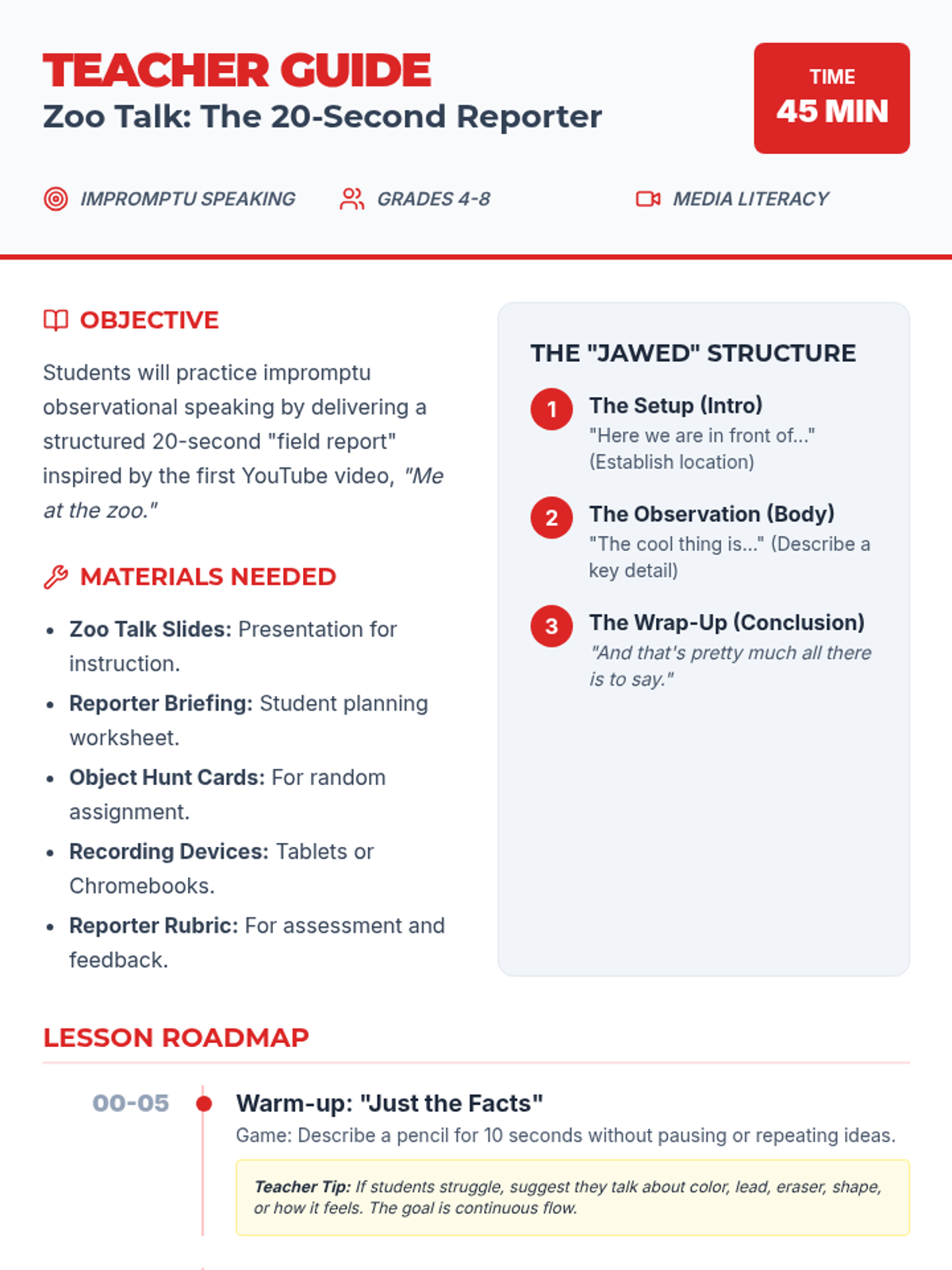
A high school journalism lesson exploring the history of vlogging using the first YouTube video, challenging students to create a concise, unedited 20-second observational video.
A high school Computer Science lesson connecting the history of YouTube's first video to concepts of bandwidth, data compression, and internet infrastructure evolution.
A 45-minute lesson for business and technology students exploring the concept of Minimum Viable Product (MVP) through the analysis of YouTube's first video and a hands-on app design activity.
Students explore the concept of digital primary sources by analyzing the first-ever YouTube video as a historical artifact and creating their own museum-style documentation for contemporary digital media.
A lesson regarding the evaluation of primary sources in the digital age, focusing on the first YouTube video.
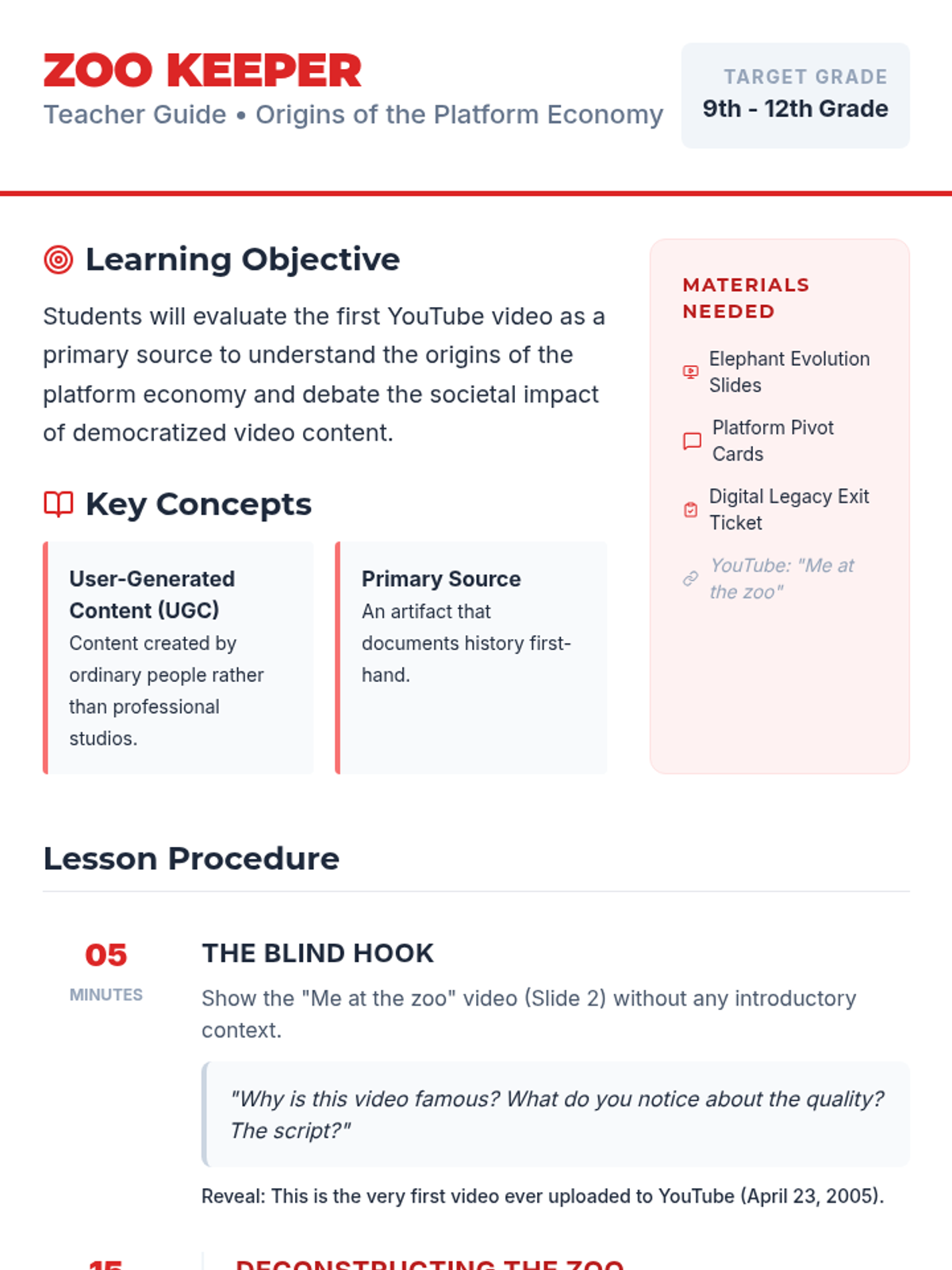
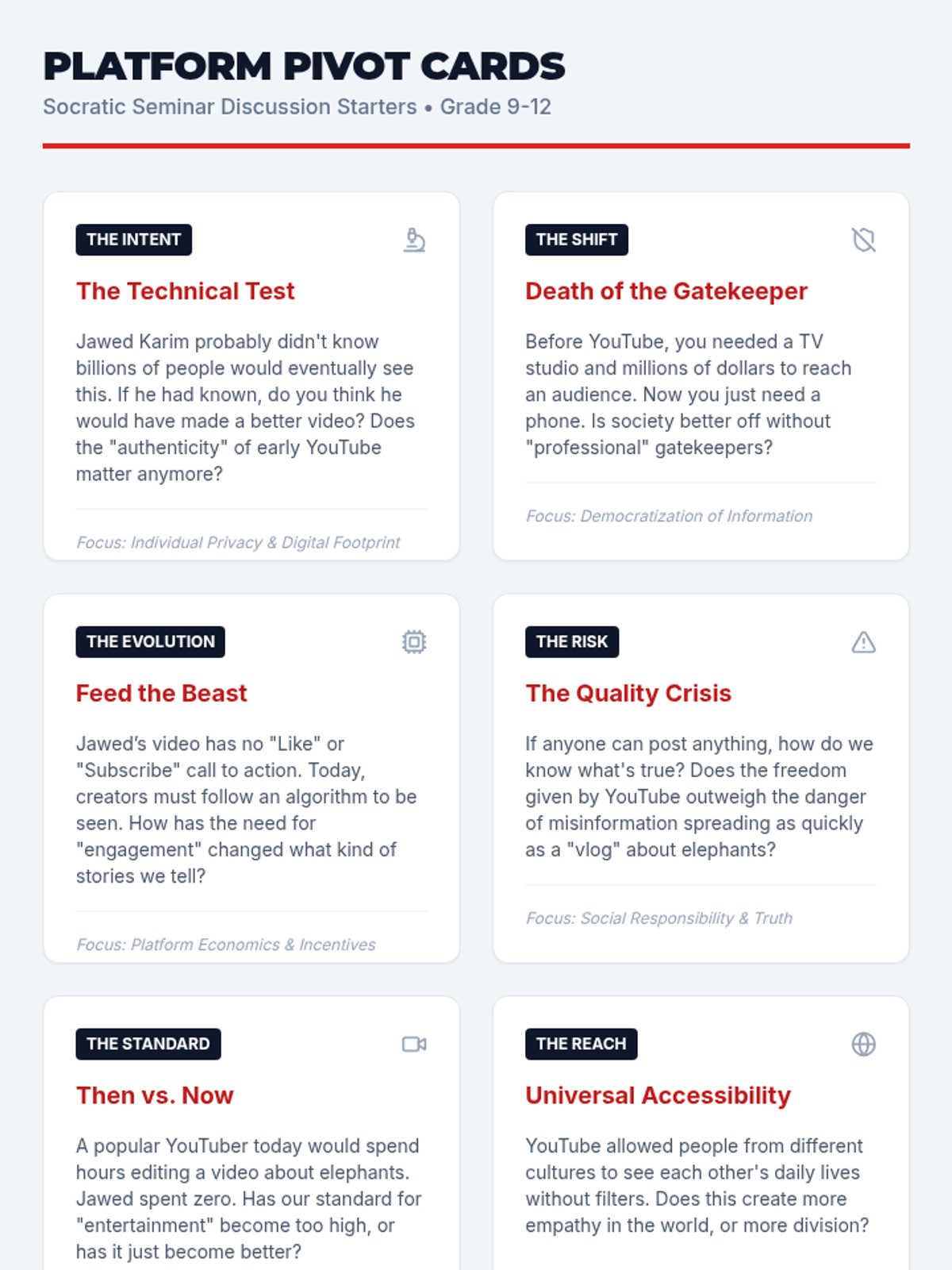
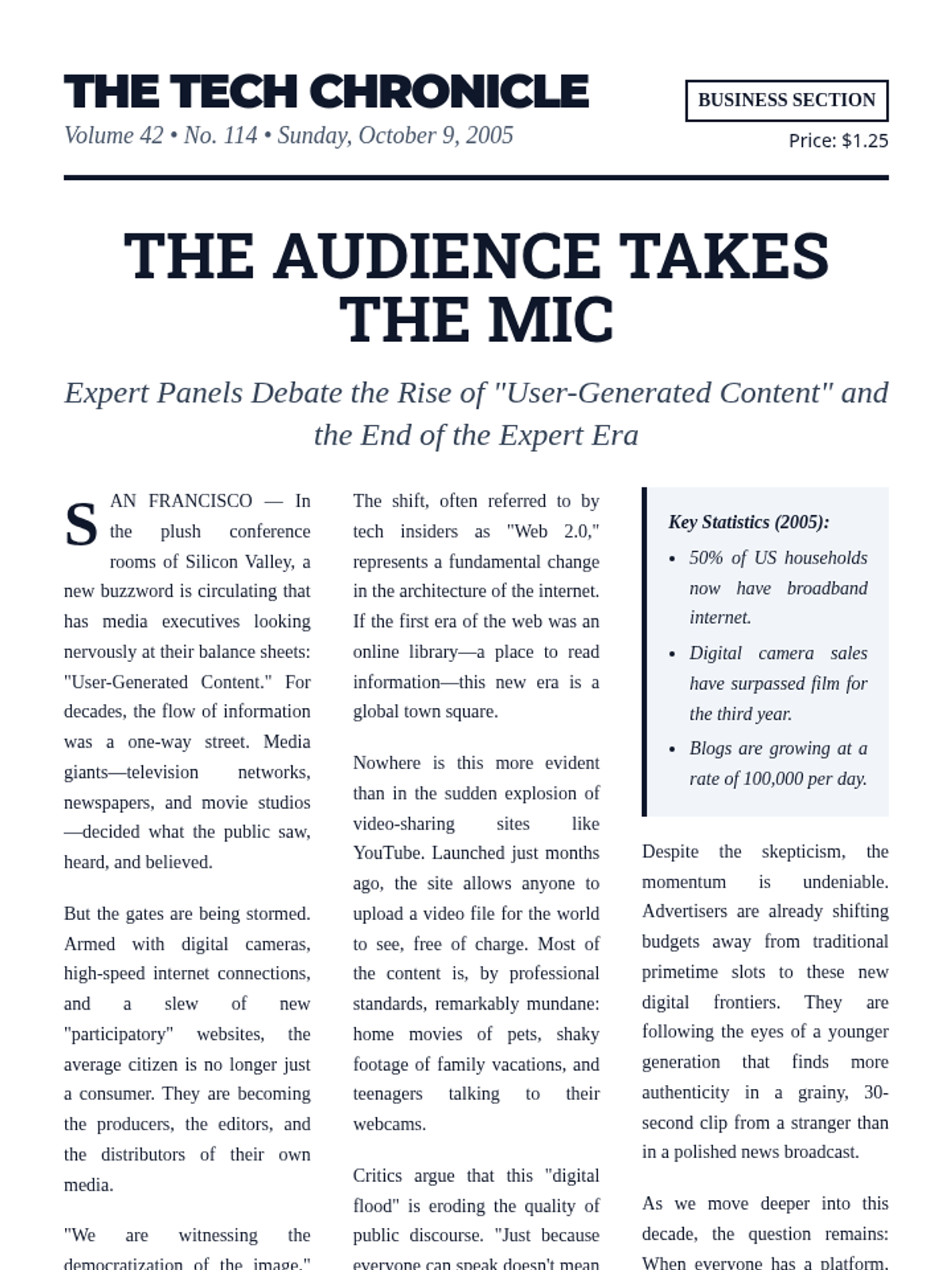
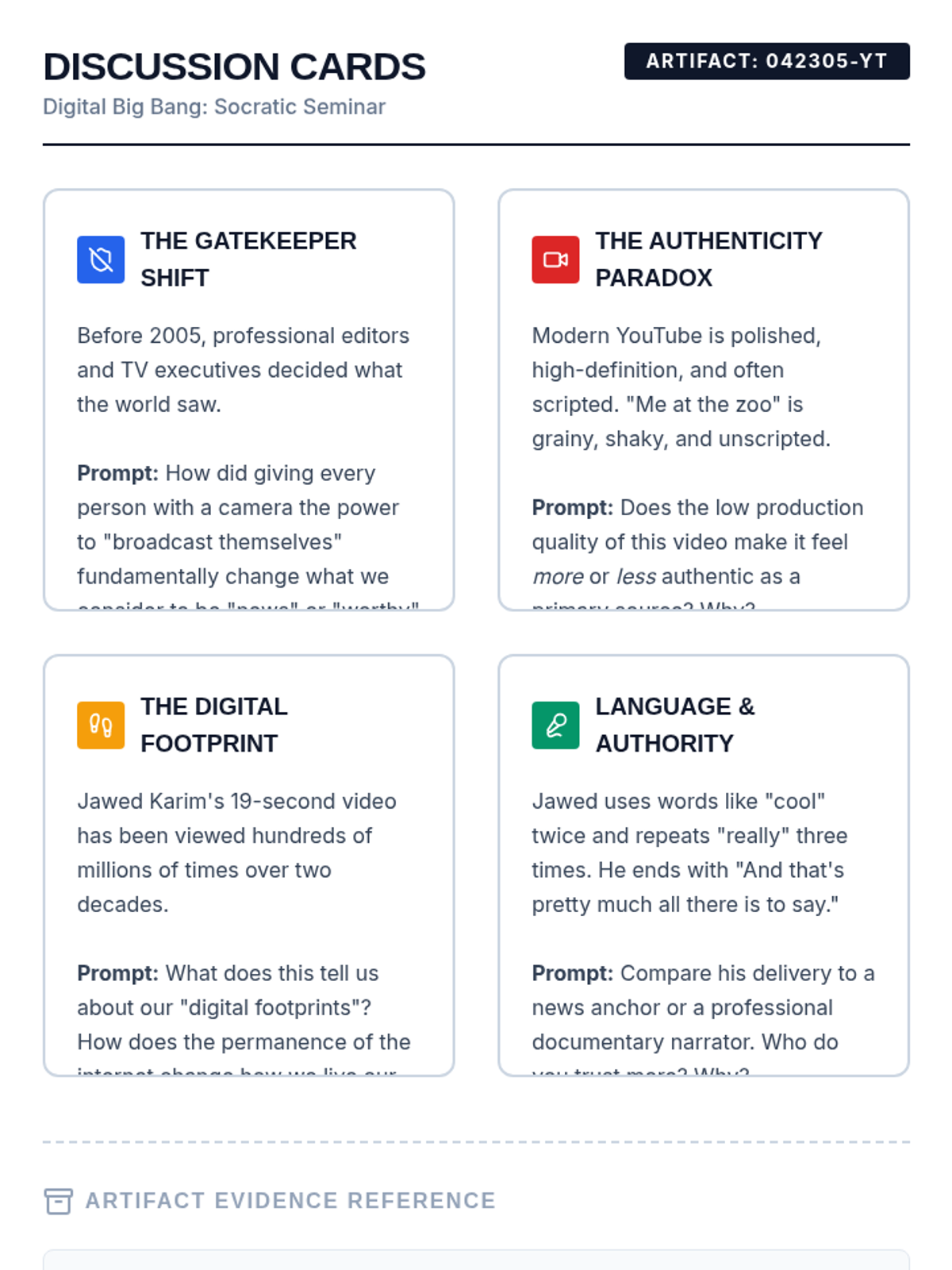
A high school history and technology lesson exploring the origins of the platform economy through the lens of the first YouTube video, 'Me at the zoo'. Students analyze the shift from professional broadcasting to user-generated content and debate the societal impacts of democratized media.
Students explore the history of media technology and presentation styles by comparing the first YouTube video to modern content, focusing on the concept of User-Generated Content (UGC).
A media studies and history lesson exploring the shift from traditional media to user-generated content through the lens of the first YouTube video, 'Me at the zoo'.
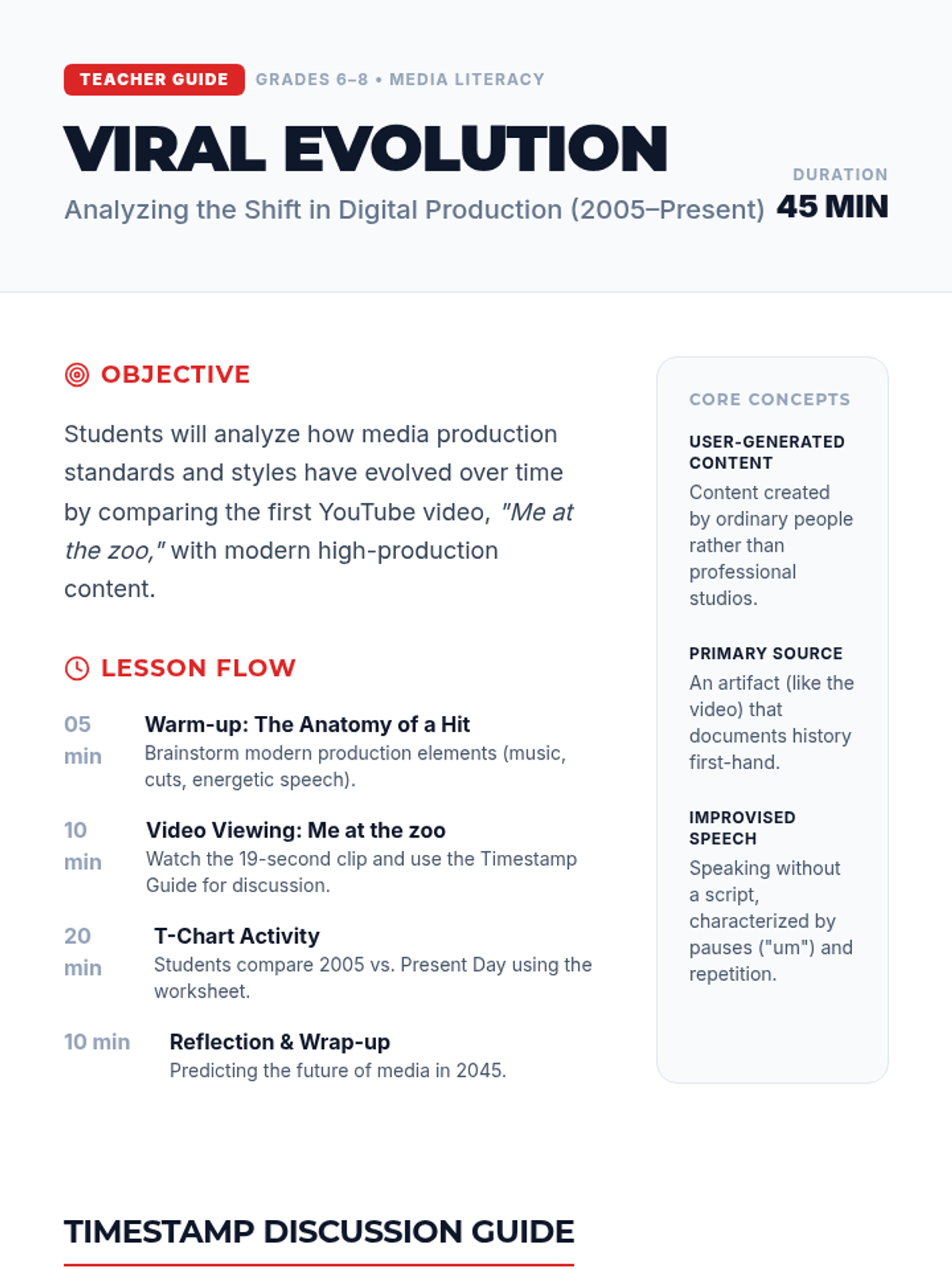
A lesson exploring the transformation of digital media production through the lens of YouTube's first video, 'Me at the zoo', contrasting early raw footage with modern high-production content.