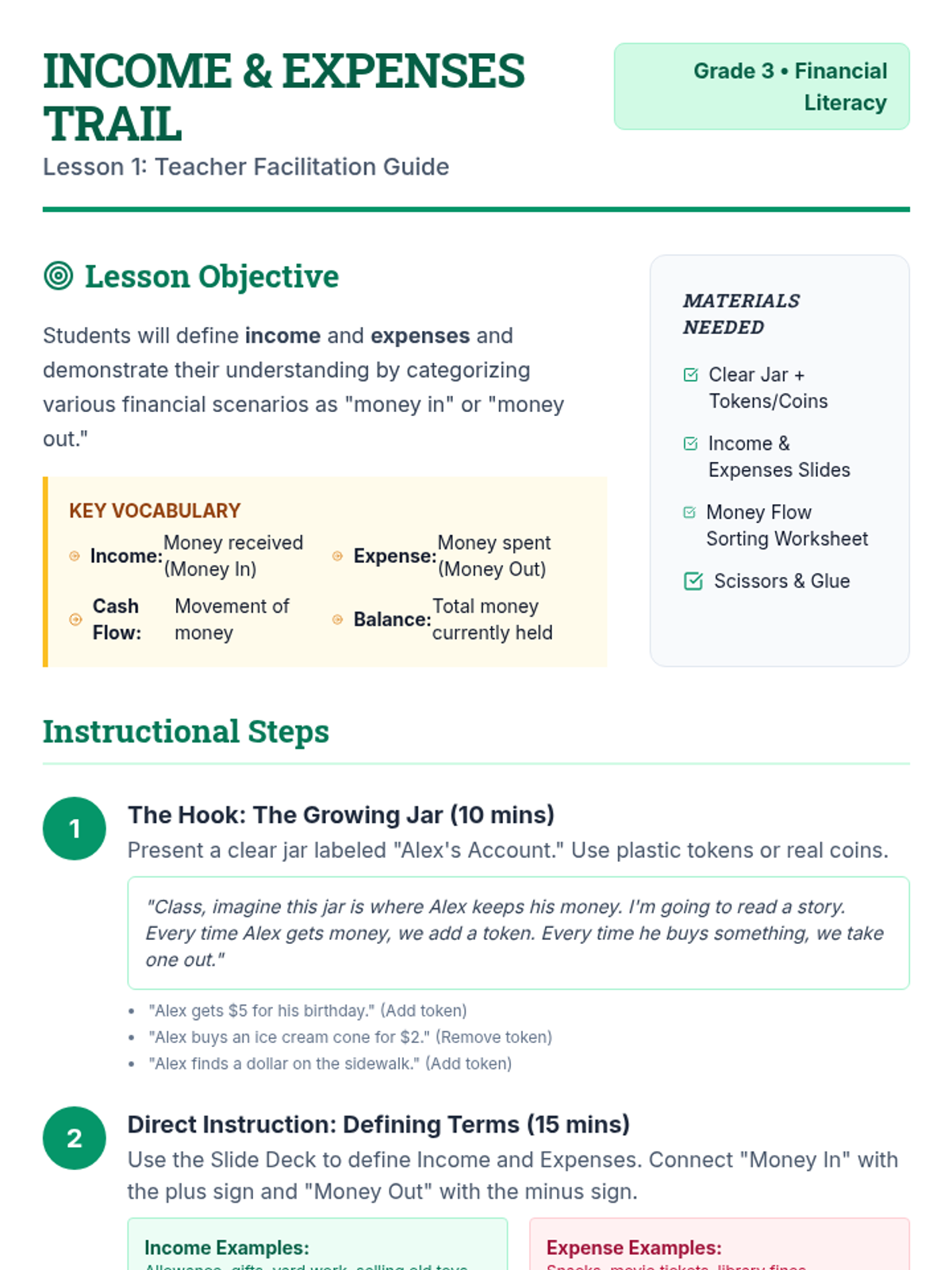
Students apply their skills to create a forward-looking plan with a specific savings goal. They learn the 'pay yourself first' principle by intentionally allocating money for savings before spending on non-essentials.

Students calculate their final monthly totals, identifying surpluses or deficits and visualizing their spending patterns.
1/16
Students analyze pre-filled ledgers to identify deficits and 'spending leaks', acting as budget doctors to fix financial health.
Students synthesize their learning to create a forward-looking cash flow plan that balances expenses while hitting a specific savings goal.
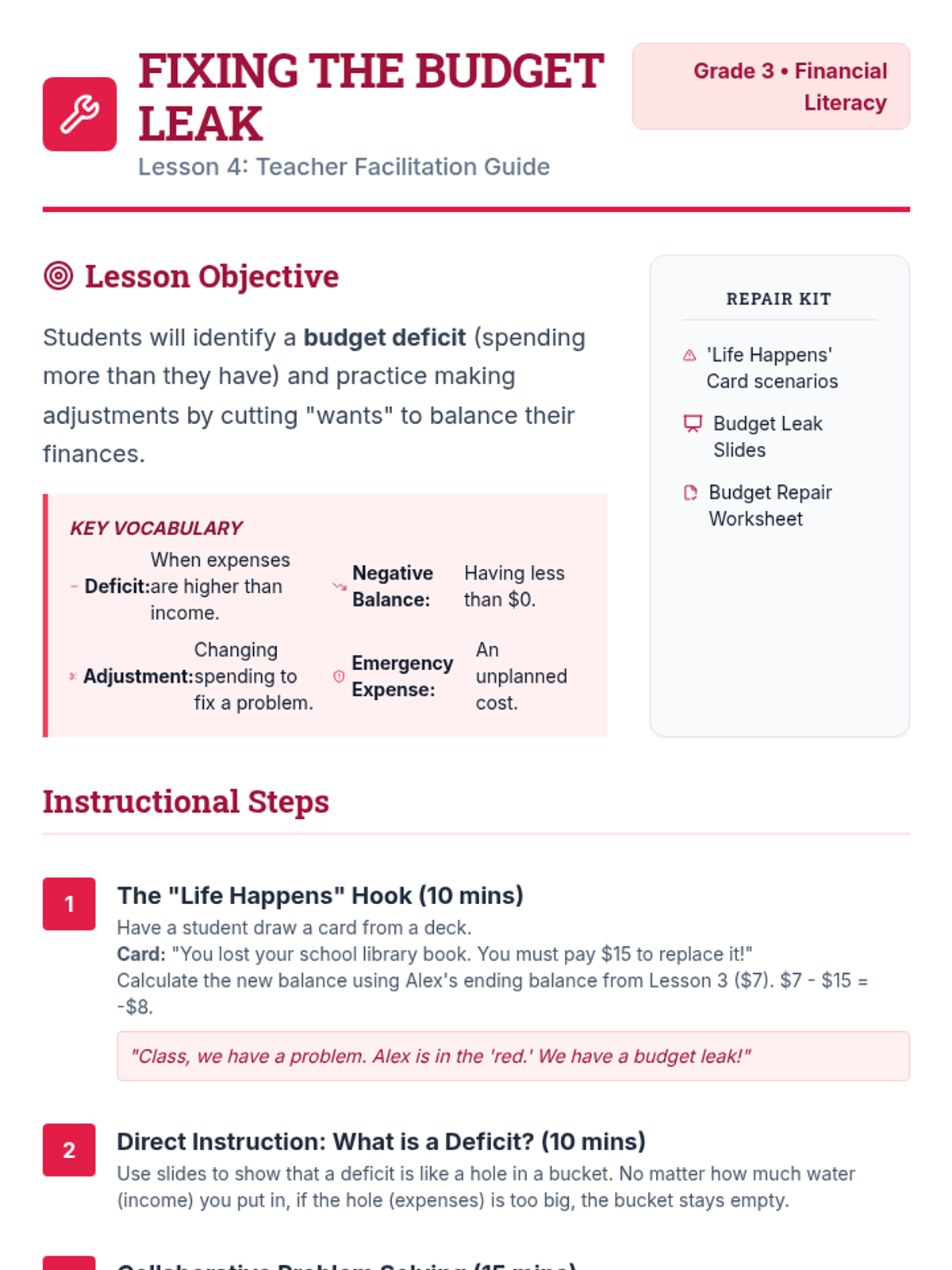
Students analyze financial scenarios to identify budget deficits and 'budget busters' that cause overspending.
Students differentiate between essential expenses and discretionary spending to prioritize financial health.
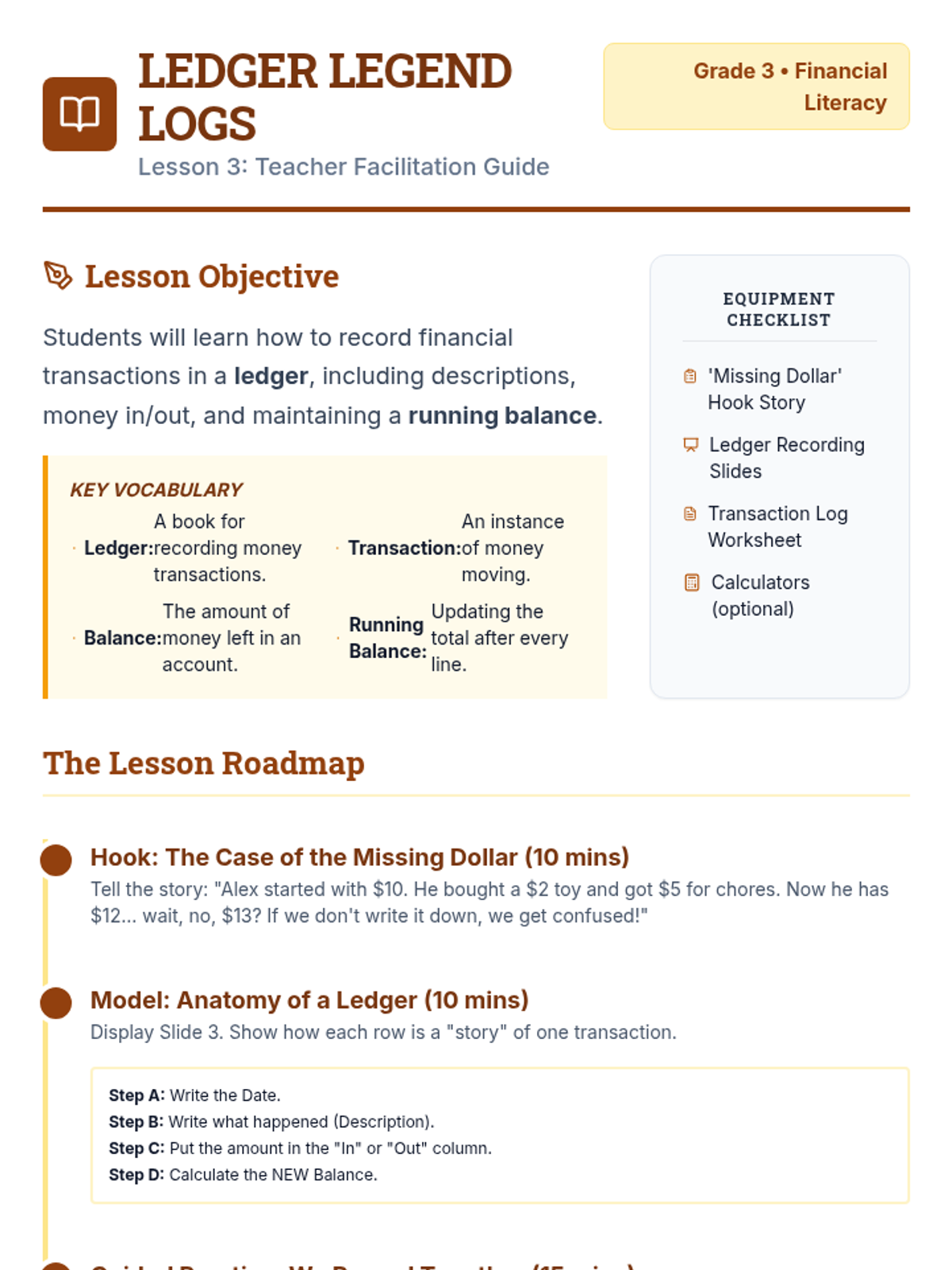
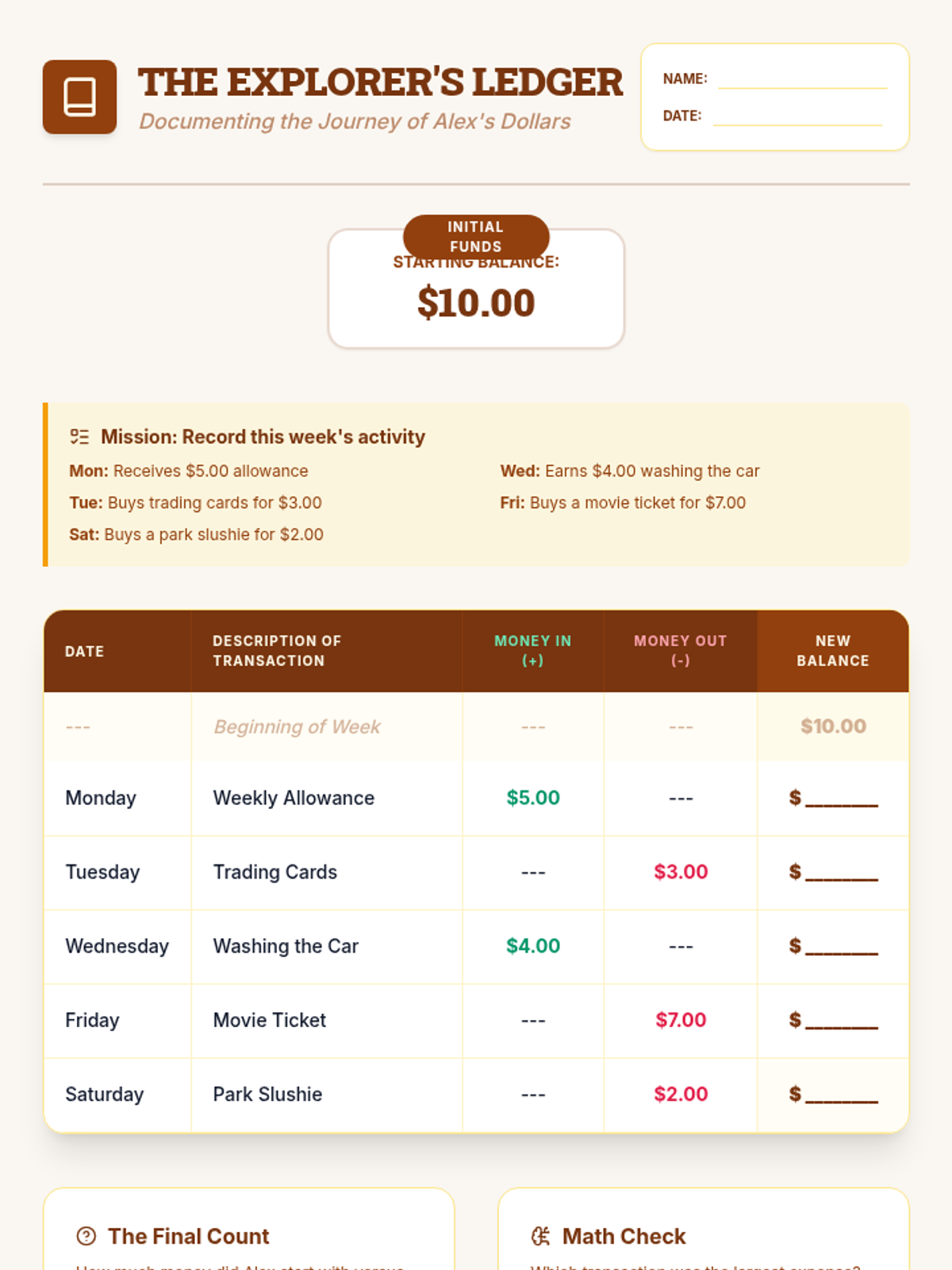
Students master the skill of recording transactions in a financial ledger, ensuring accuracy in calculating a running balance.
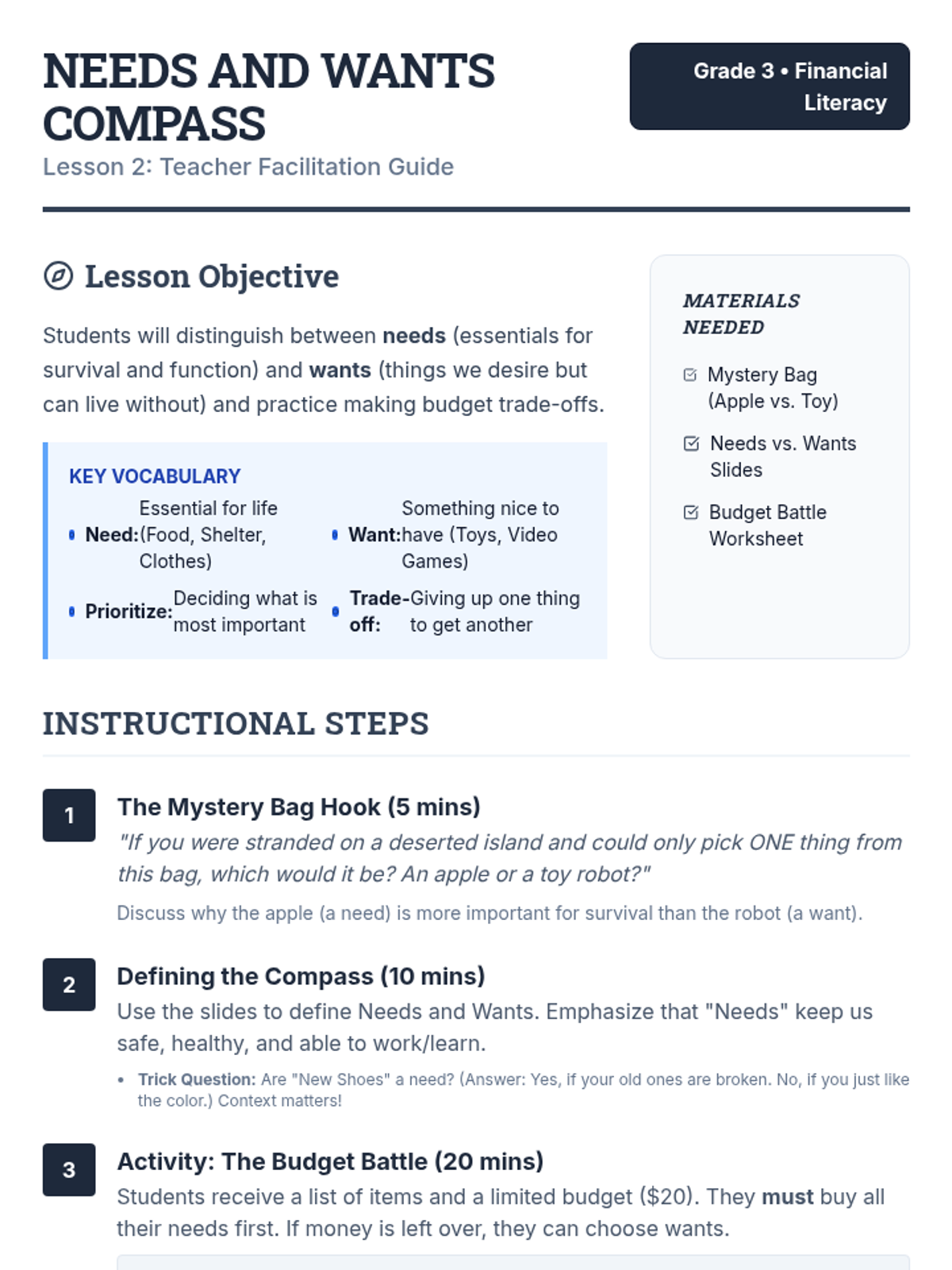
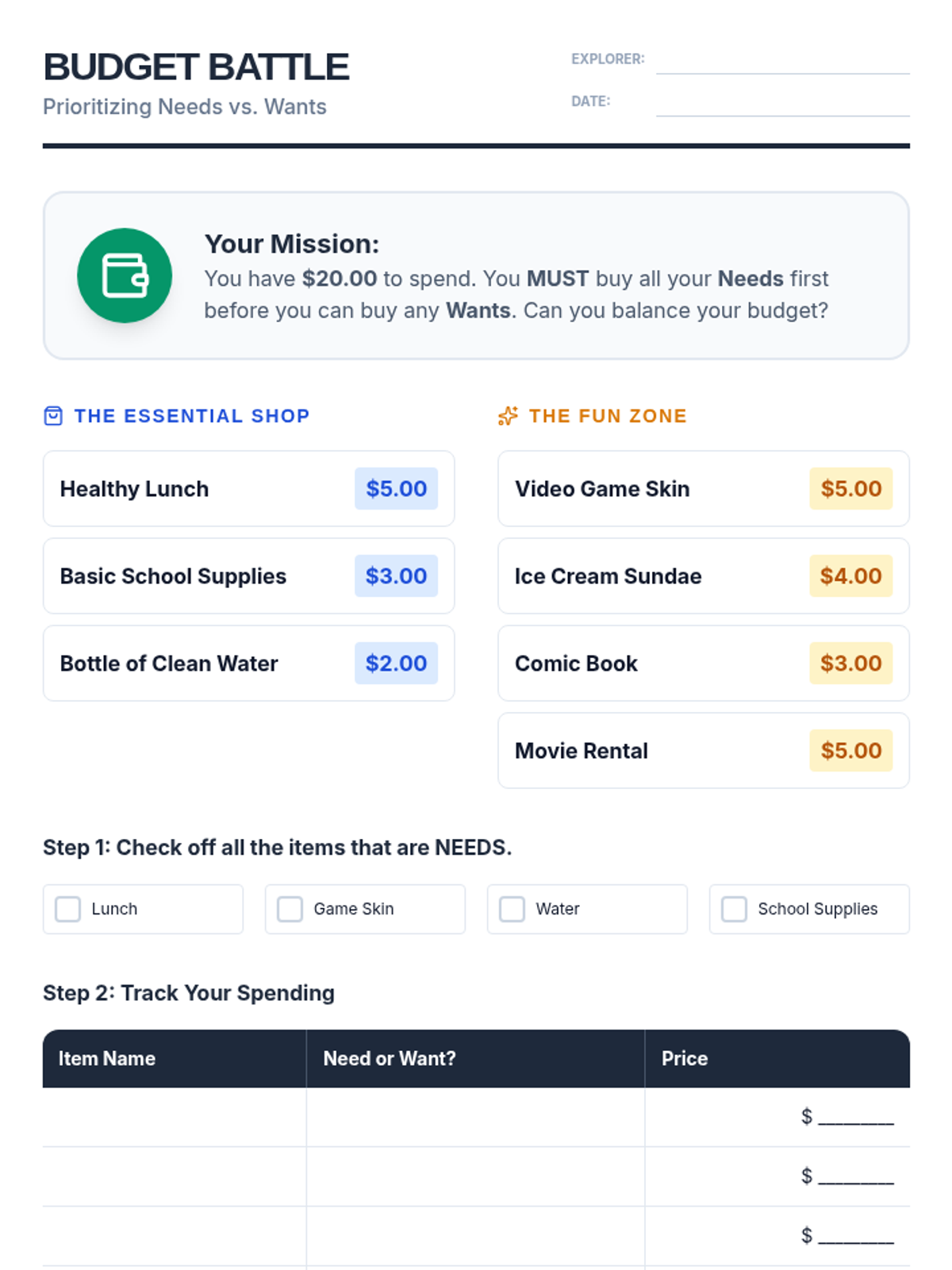
Students analyze potential purchases to determine which items are essential (needs) and which are optional (wants). Through a limited-budget simulation, they practice making difficult spending decisions.
A high school history and technology lesson exploring the origins of the platform economy through the lens of the first YouTube video, 'Me at the zoo'. Students analyze the shift from professional broadcasting to user-generated content and debate the societal impacts of democratized media.
A 2nd-grade math lesson where students identify U.S. coins and calculate their total value through video instruction and a hands-on coin rubbing activity.
A 50-minute lesson for undergraduate marketing students exploring the concept of Minimum Viable Product (MVP) through the lens of YouTube's history and its first uploaded video.
A simulation of the first two weeks of a month where students make spending decisions for a fictional character and record them in real-time.
A culminating project where students create a budget to reach a specific savings goal while managing weekly expenses.
Students reflect on their financial choices, identify spending leaks, and create a revised budget for future stability.
Students navigate weeks three and four of the simulation, encountering unexpected costs and learning to prioritize needs over wants.
Mid-month data analysis. Students review their spending trends and forecast their future balance to ensure they stay on track for their big savings goal.
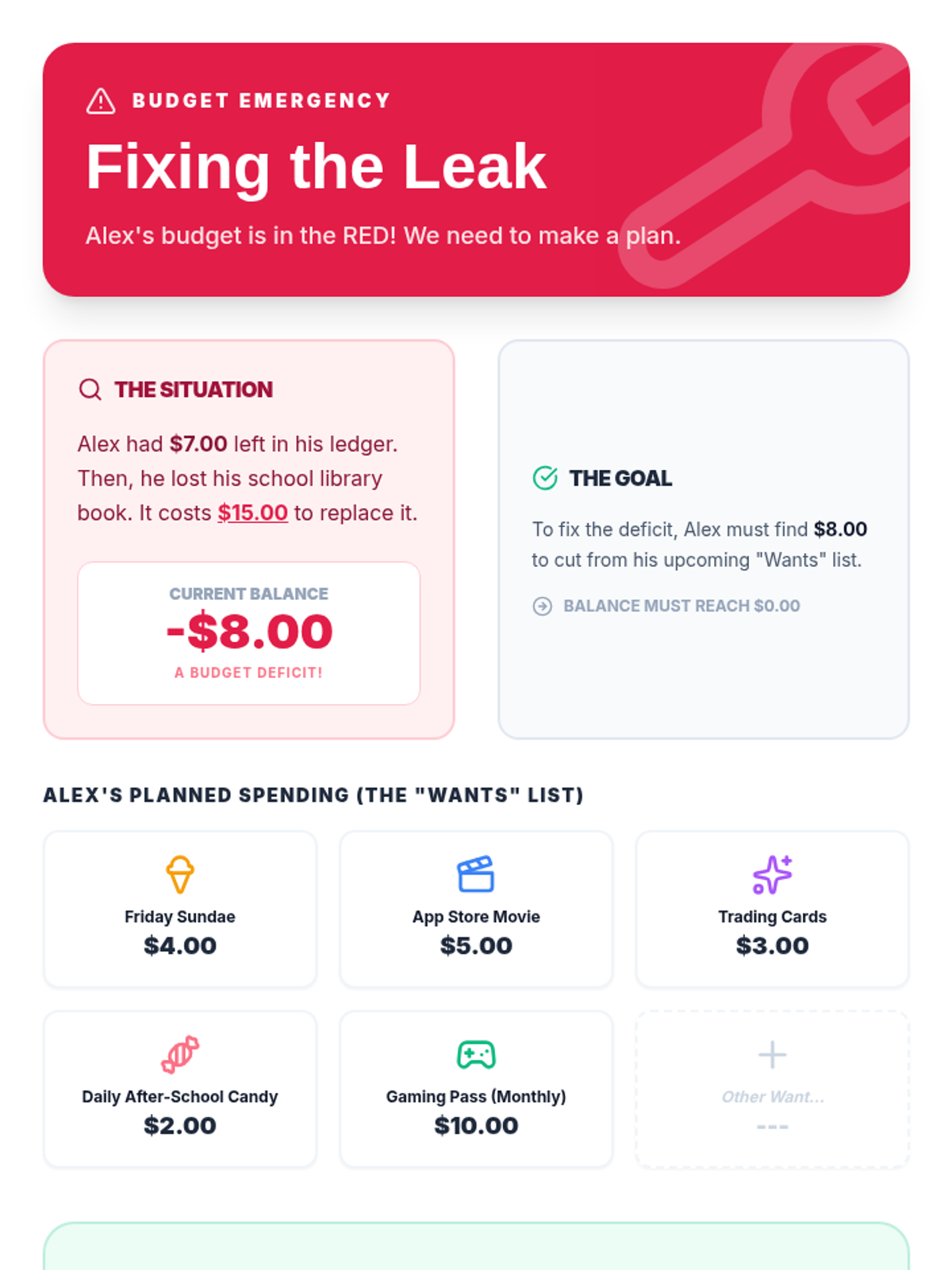
Students face a deficit scenario caused by an unexpected expense. They must analyze their spending to identify 'wants' that can be cut to balance the budget and return to a positive balance.
Navigating financial curveballs. Students adjust their budgets to account for unexpected costs like library fines or gifts while maintaining their savings goals.
This lesson introduces business students to the concept of a Minimum Viable Product (MVP) through the historical lens of YouTube's first-ever upload, challenging them to prioritize core functionality over perfection.
Challenges students to solve budget emergencies and navigate financial deficits using problem-solving strategies.
Students brainstorm and categorize different ways to earn money, establishing the 'Cash In' side of the financial equation.