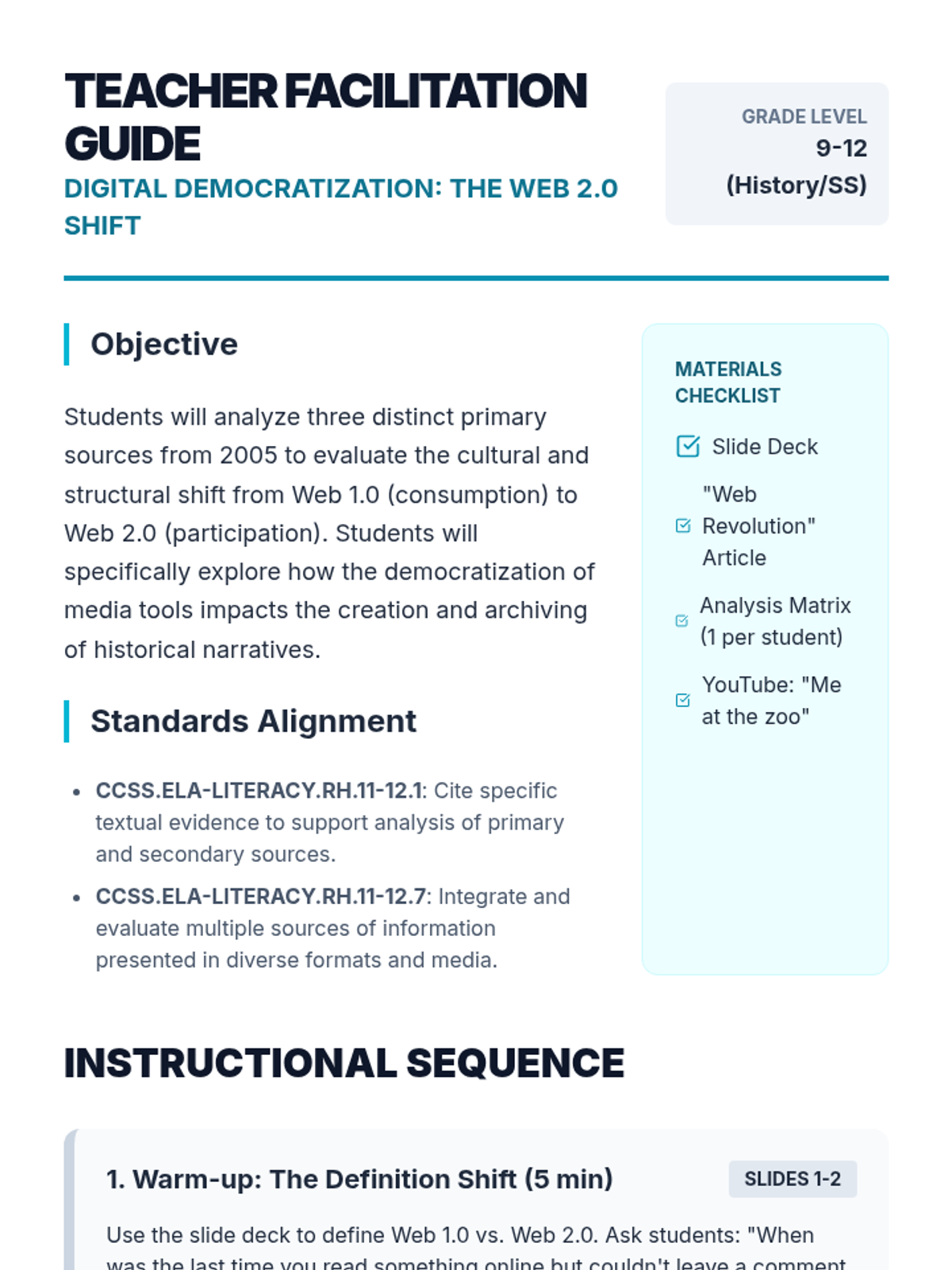
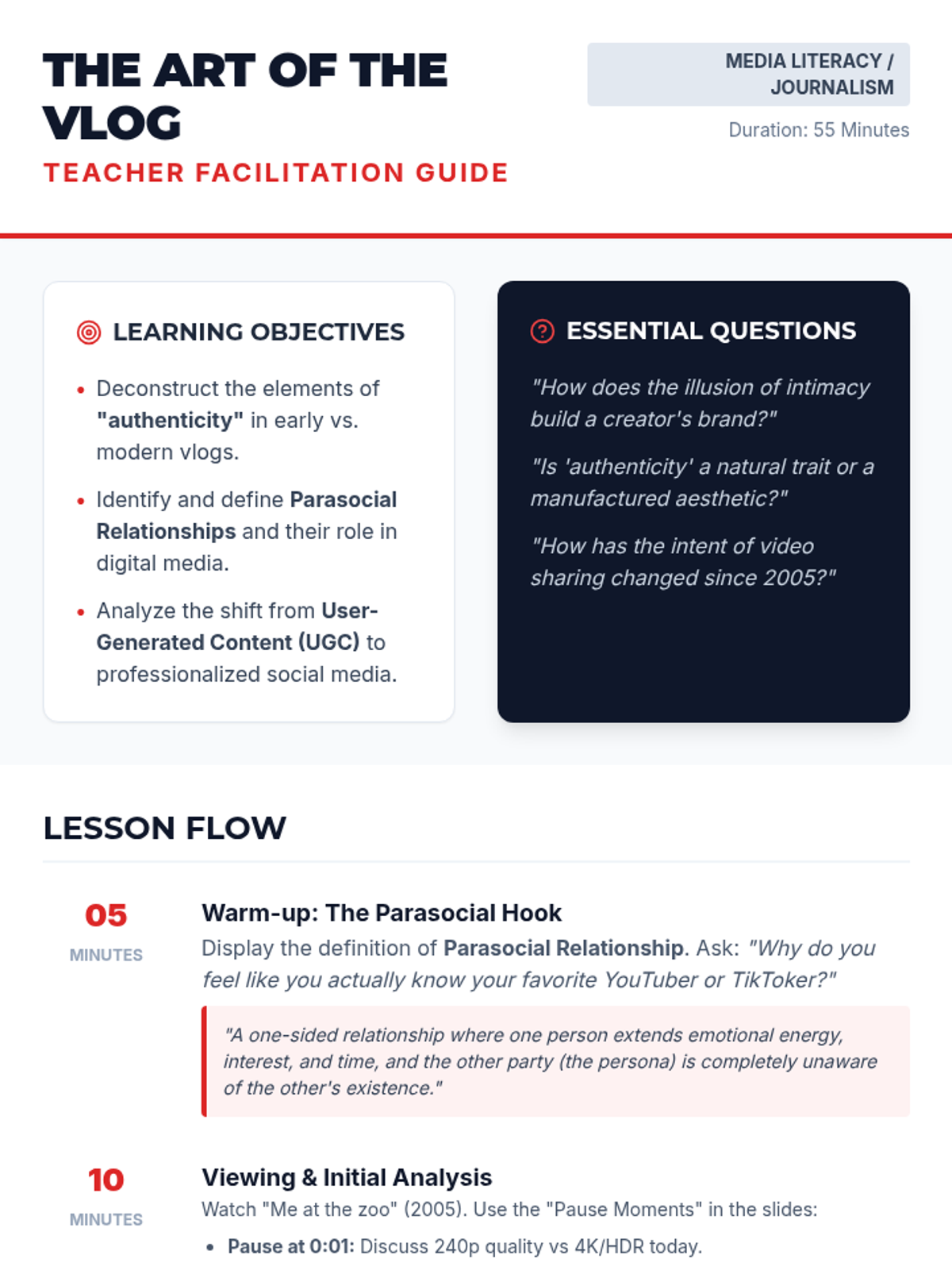
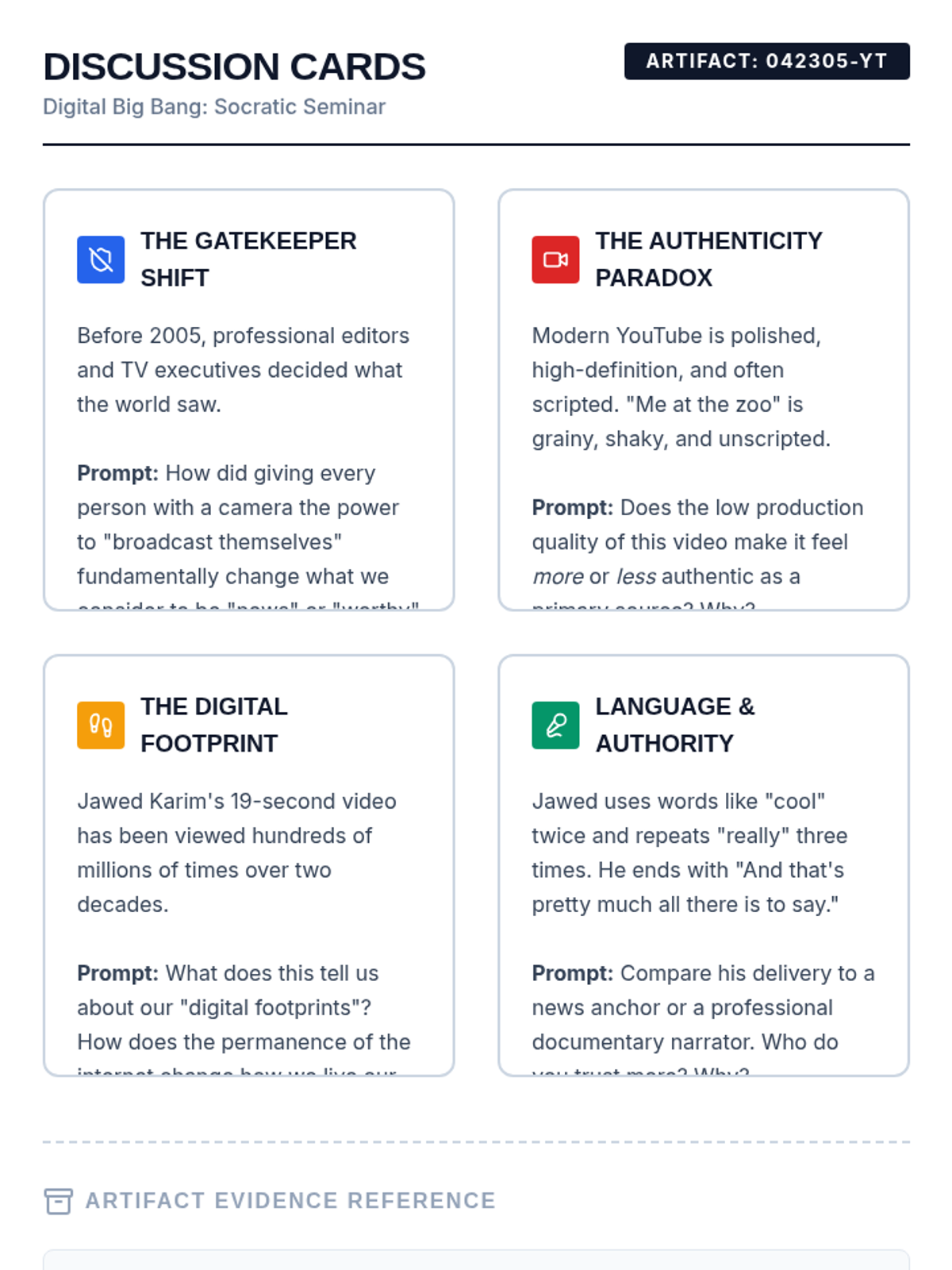
A lesson exploring the psychological shift in social media from documenting the world to documenting the self, anchoring on the first YouTube video from 2005.
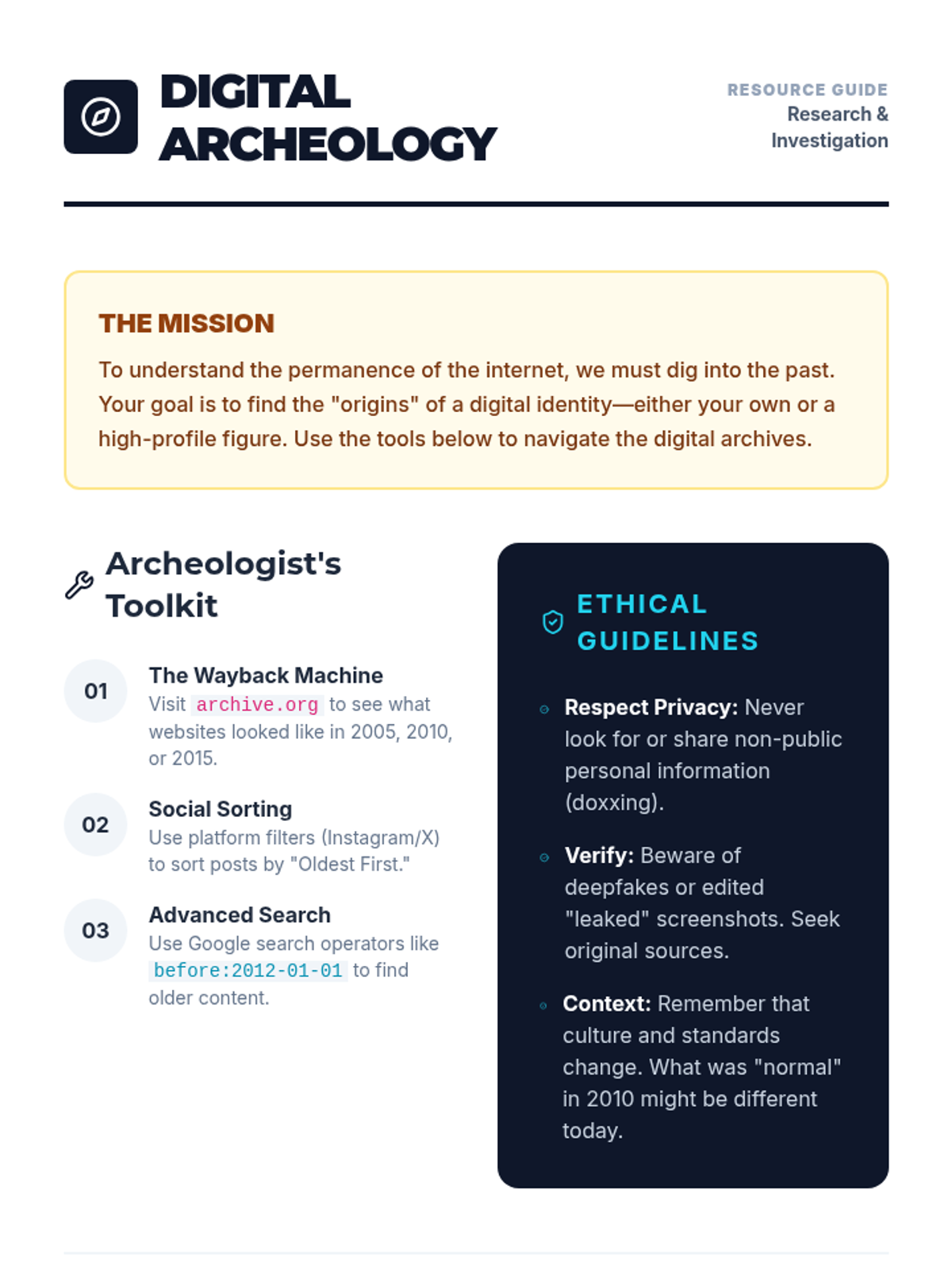
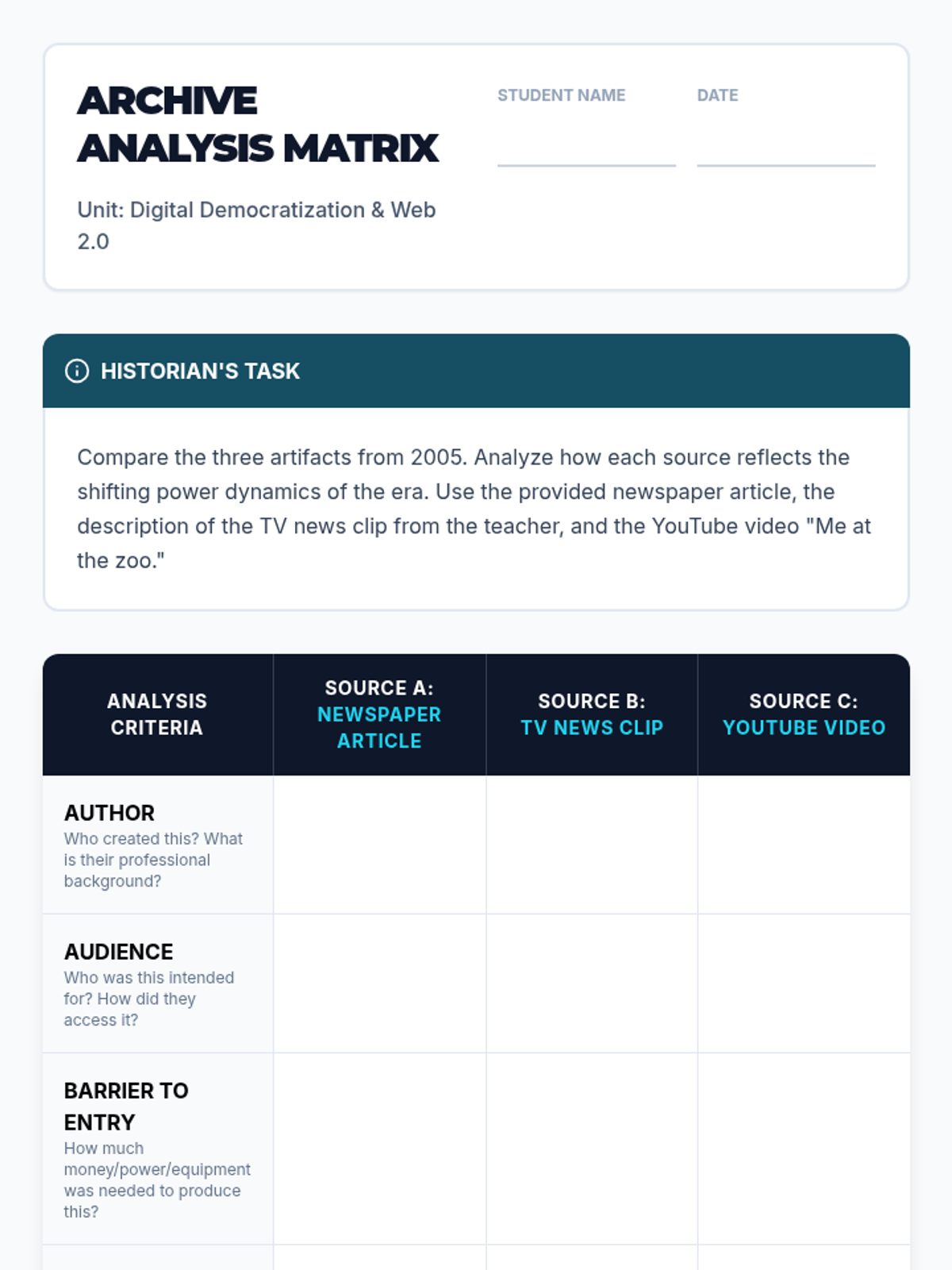
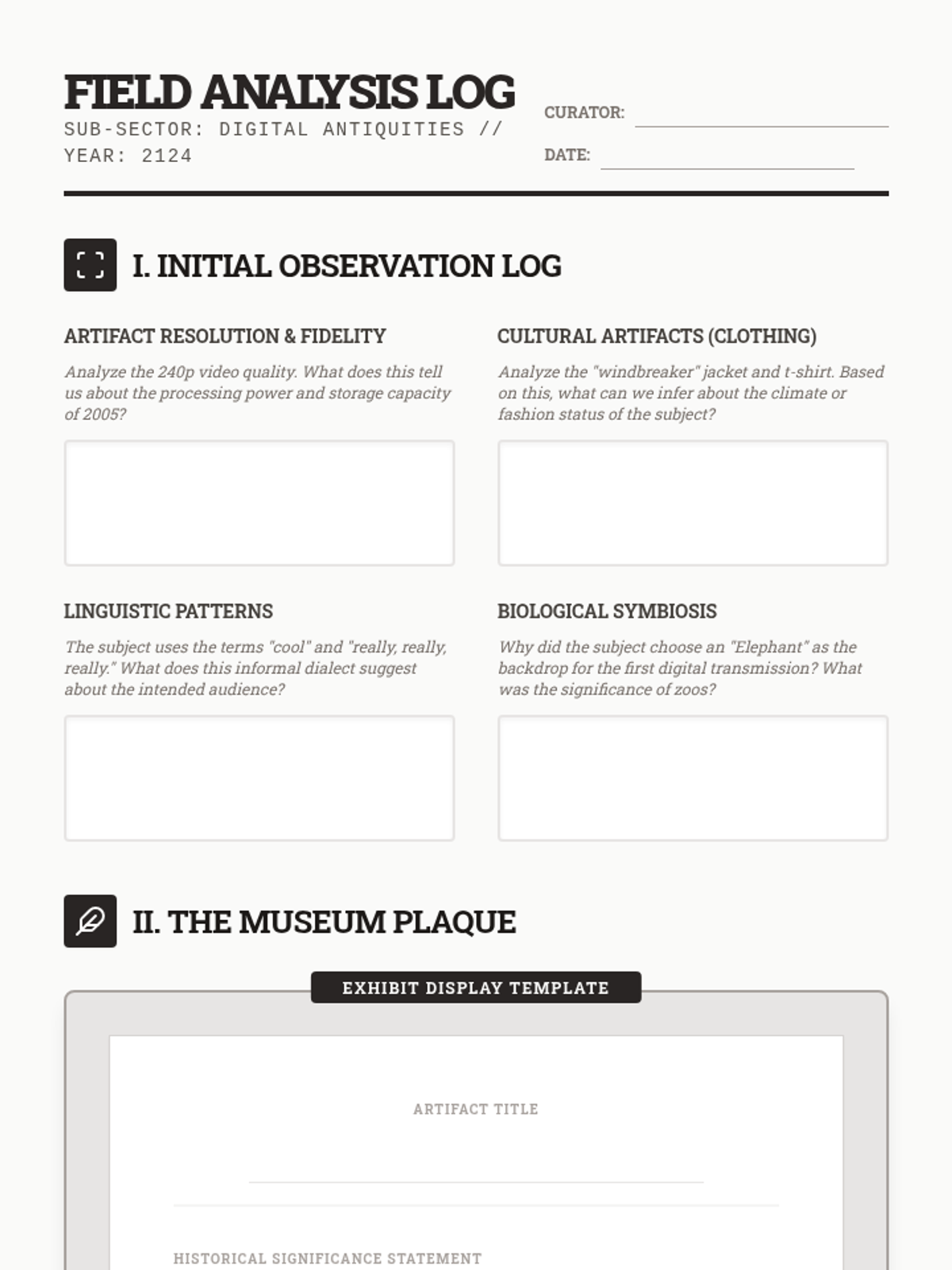
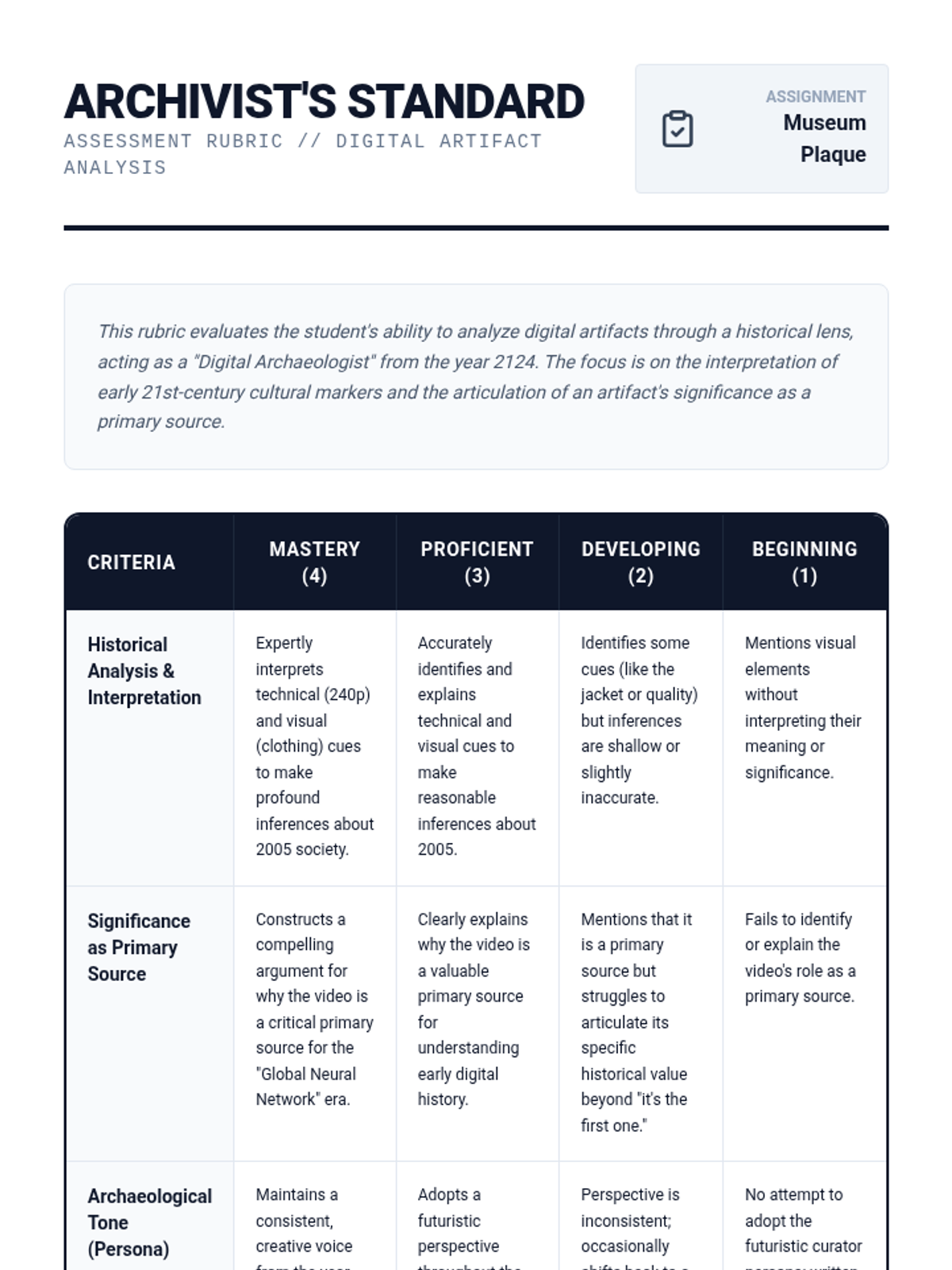
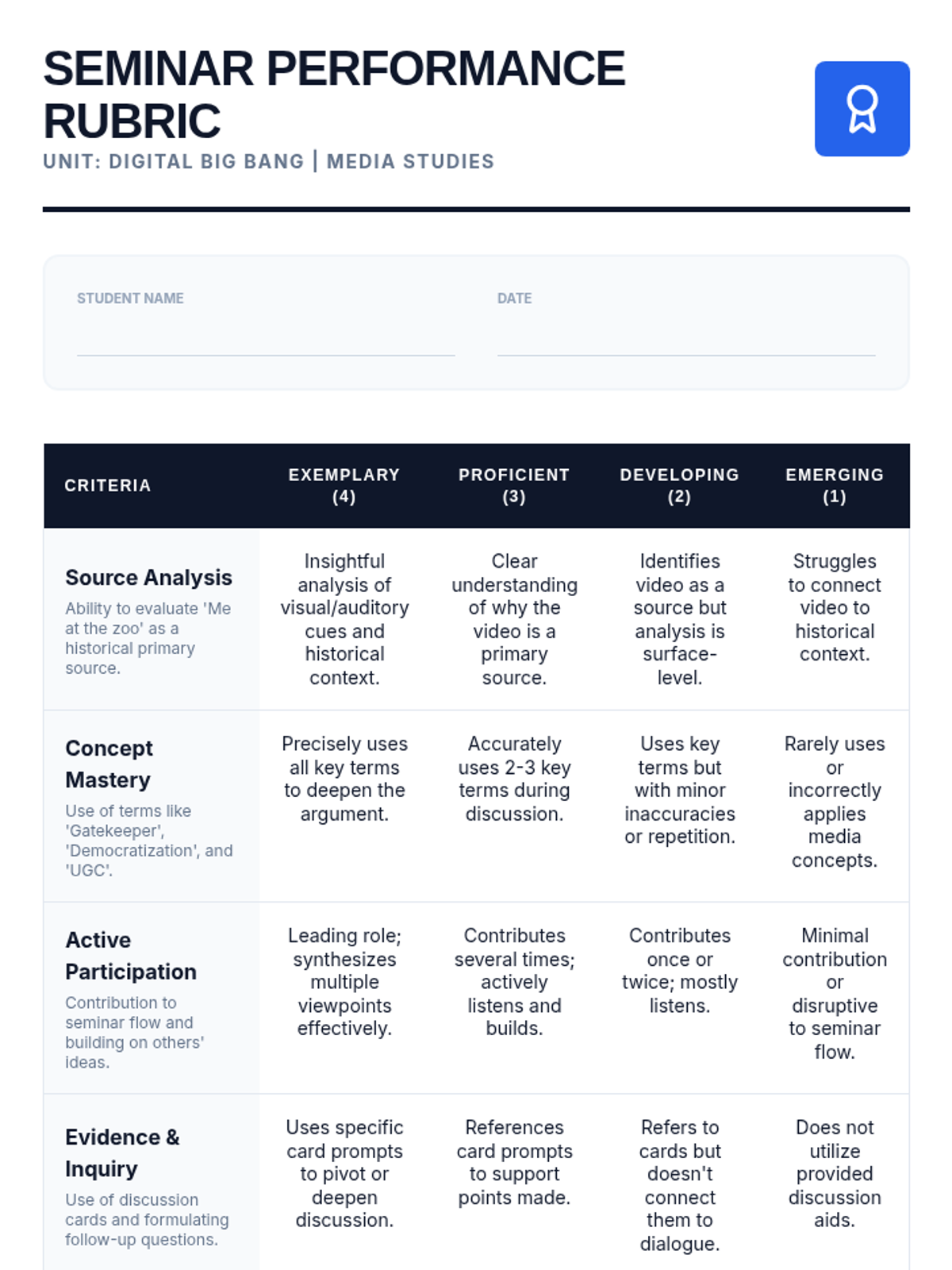
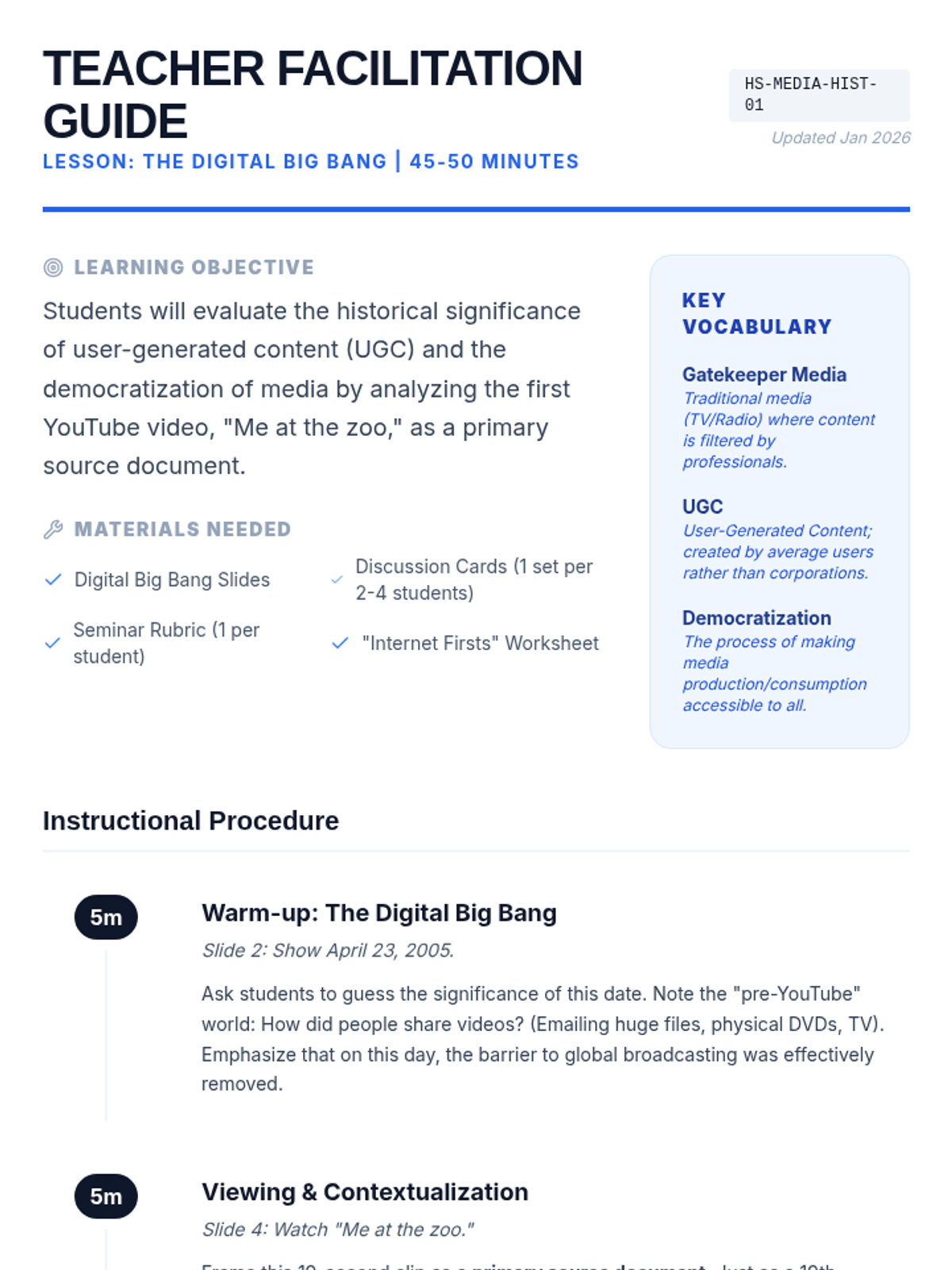
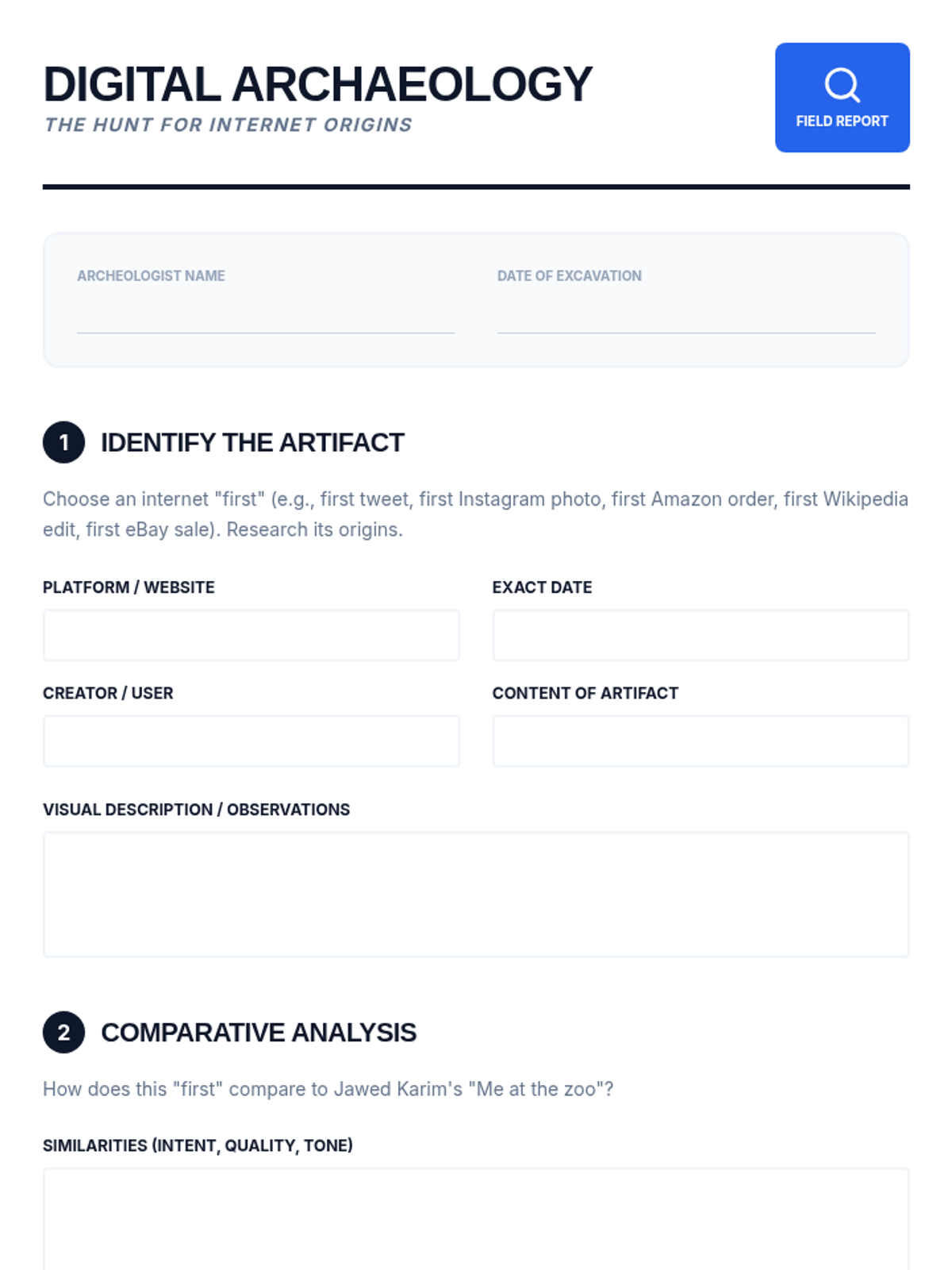
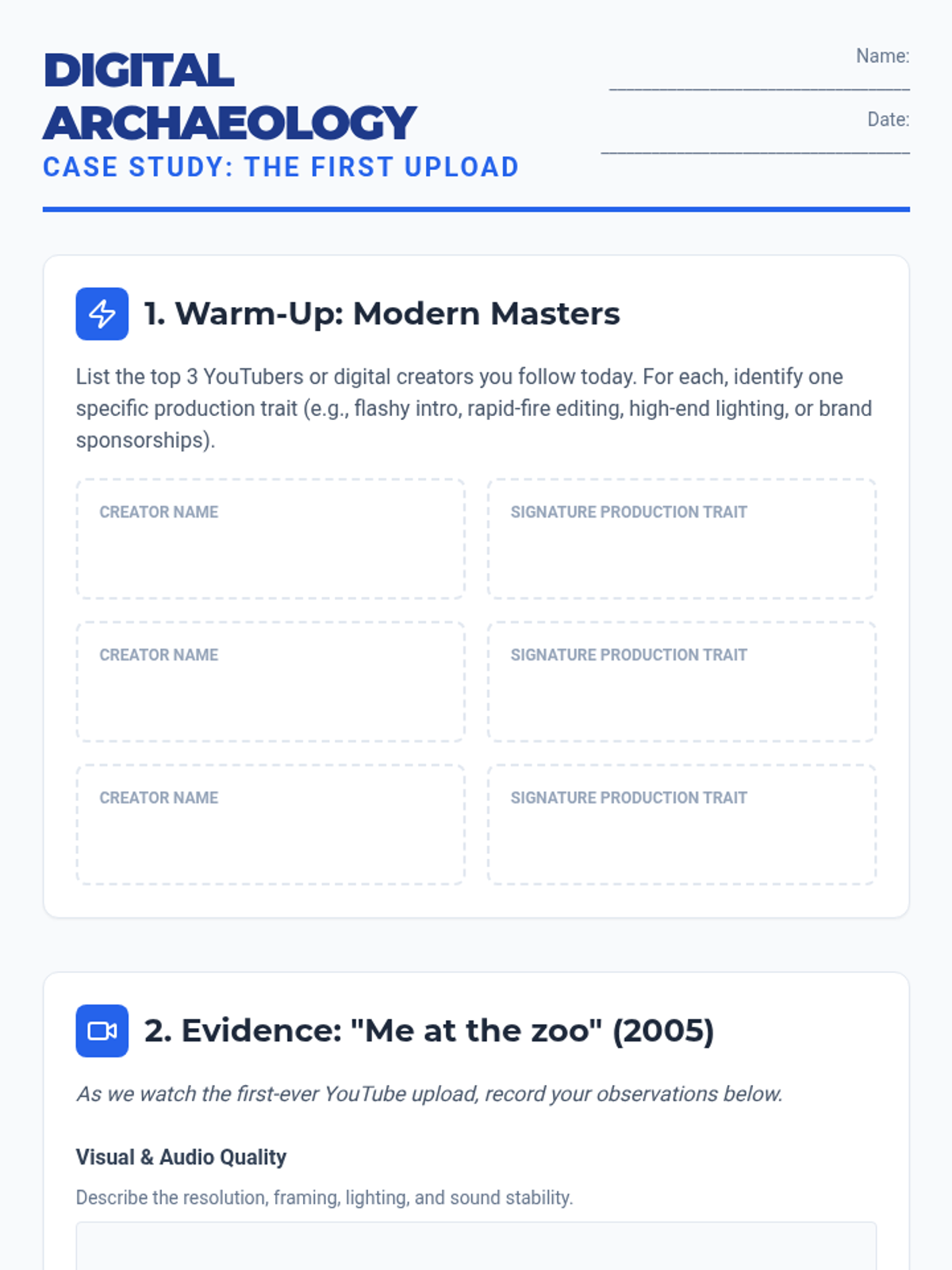
A high school history and media literacy lesson where students evaluate 'Me at the zoo' as a primary source, acting as digital archaeologists from the year 2124 to analyze early 21st-century culture and technology.
1/16
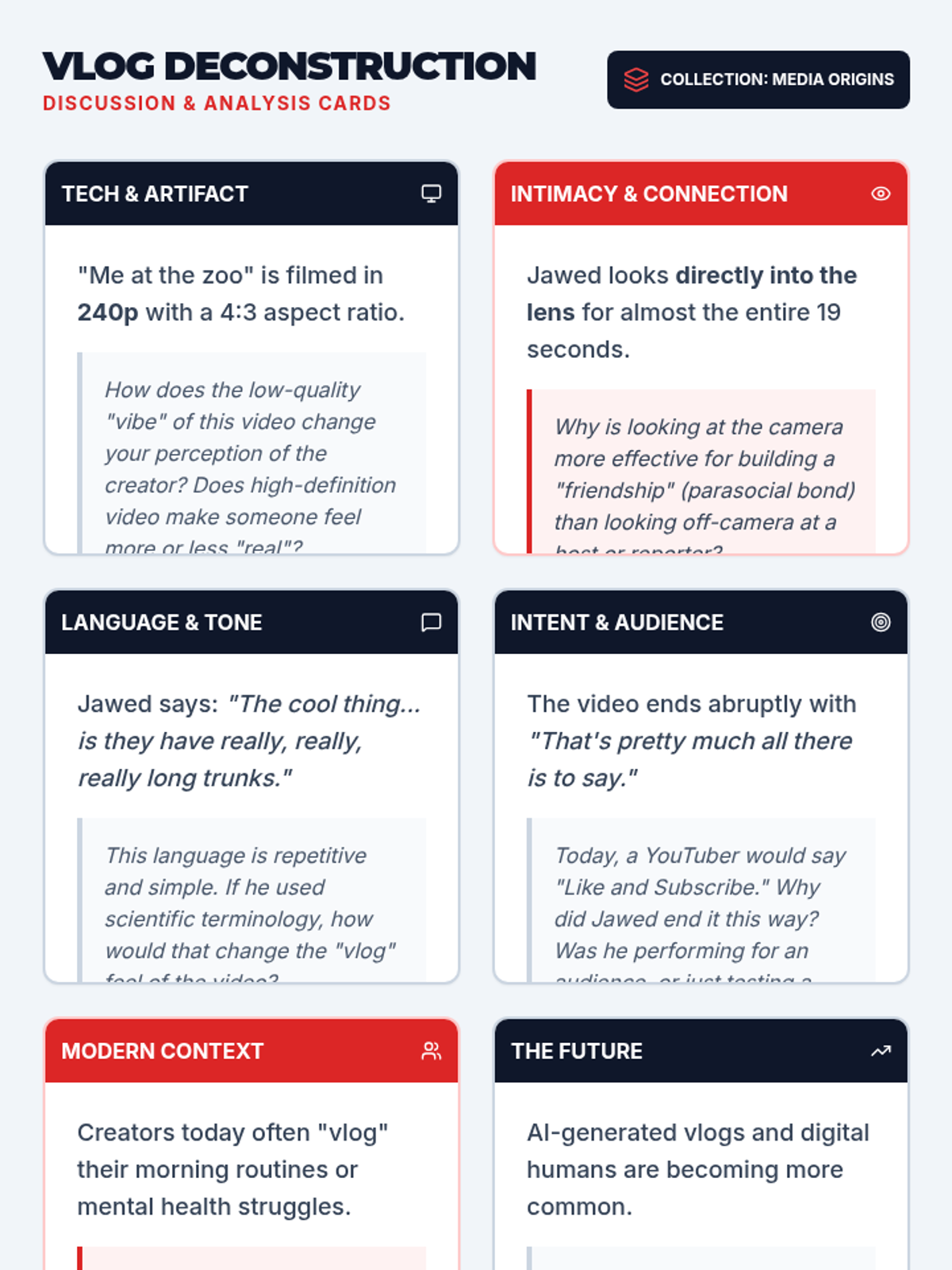
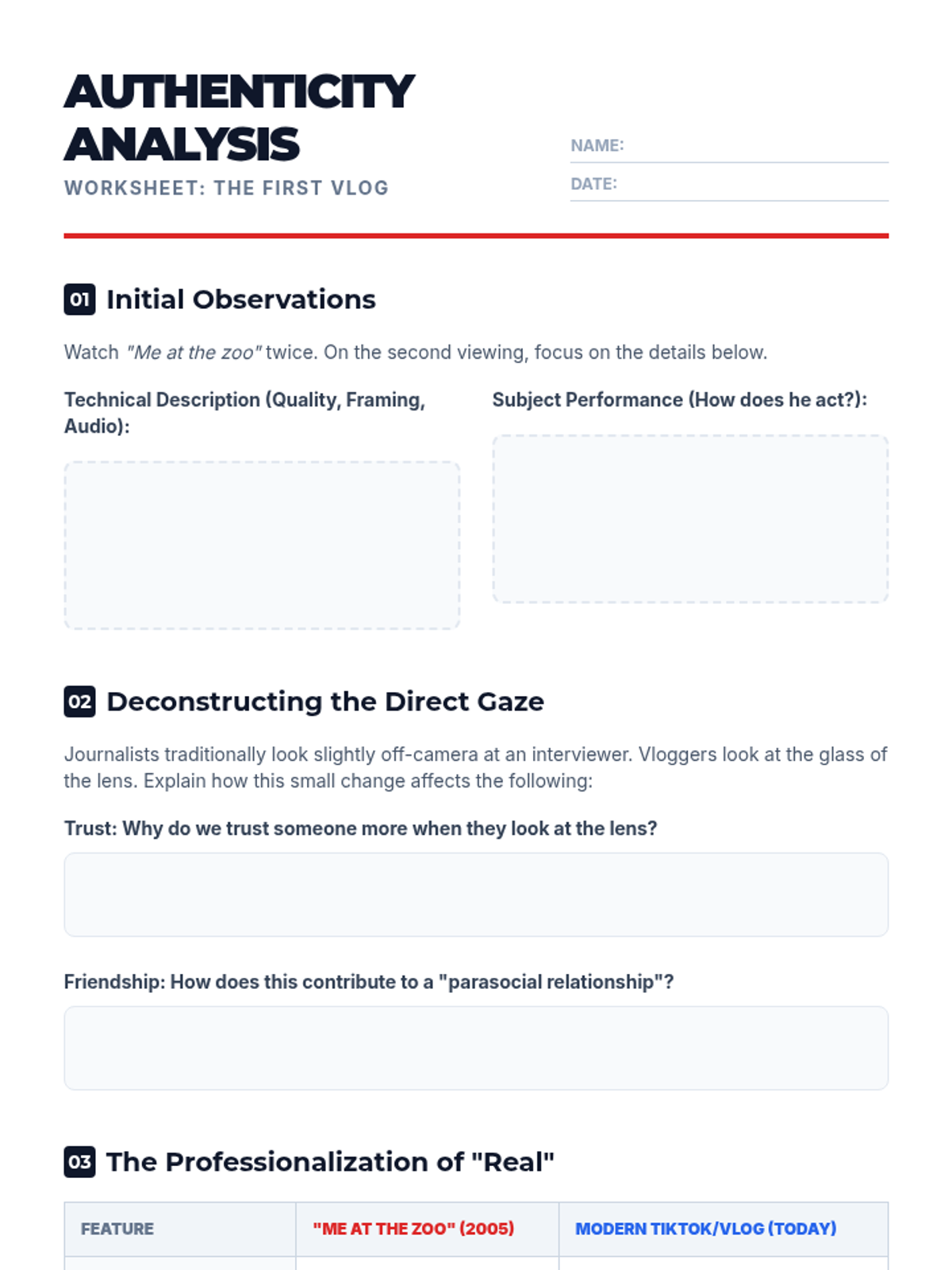
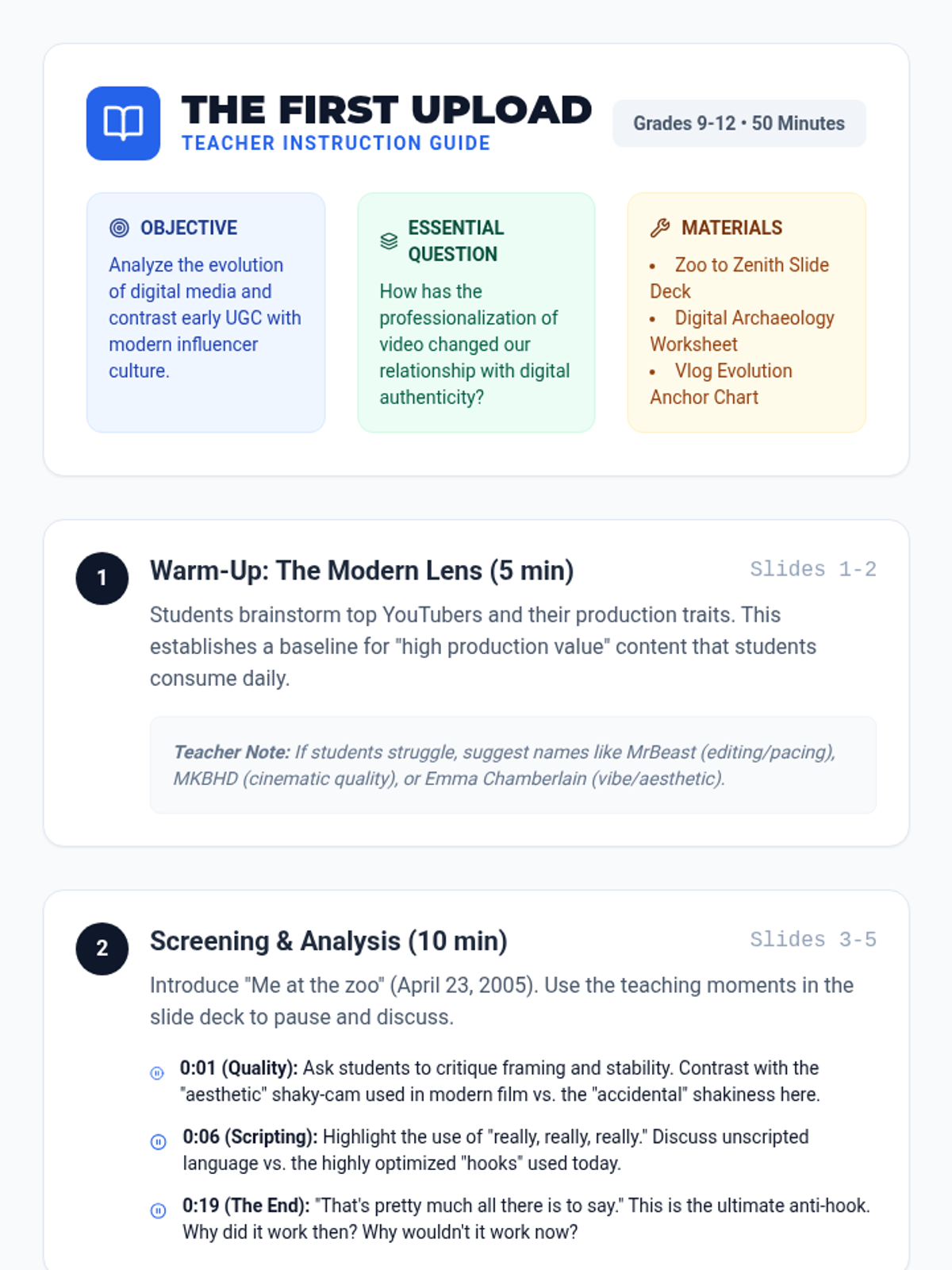
A lesson exploring the origins of vlogging through YouTube's first video, focusing on the concepts of authenticity, user-generated content, and parasocial relationships.
A 20-minute morning meeting designed to help 2nd graders identify and practice appropriate classroom voice levels through interactive discussion and visual aids.
A play-based lesson designed to help young students identify and understand a wide range of emotions through interactive games and visual aids.
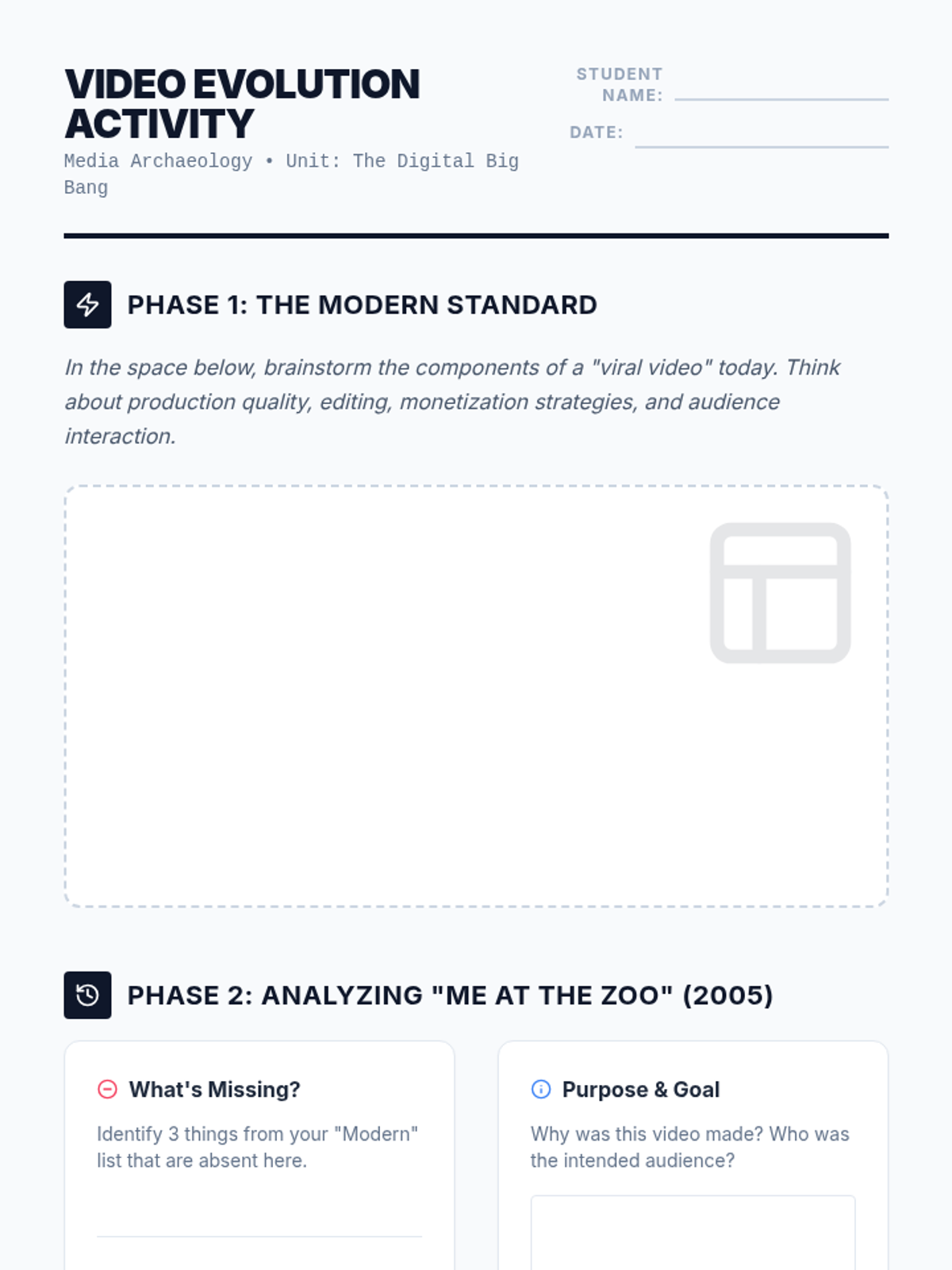
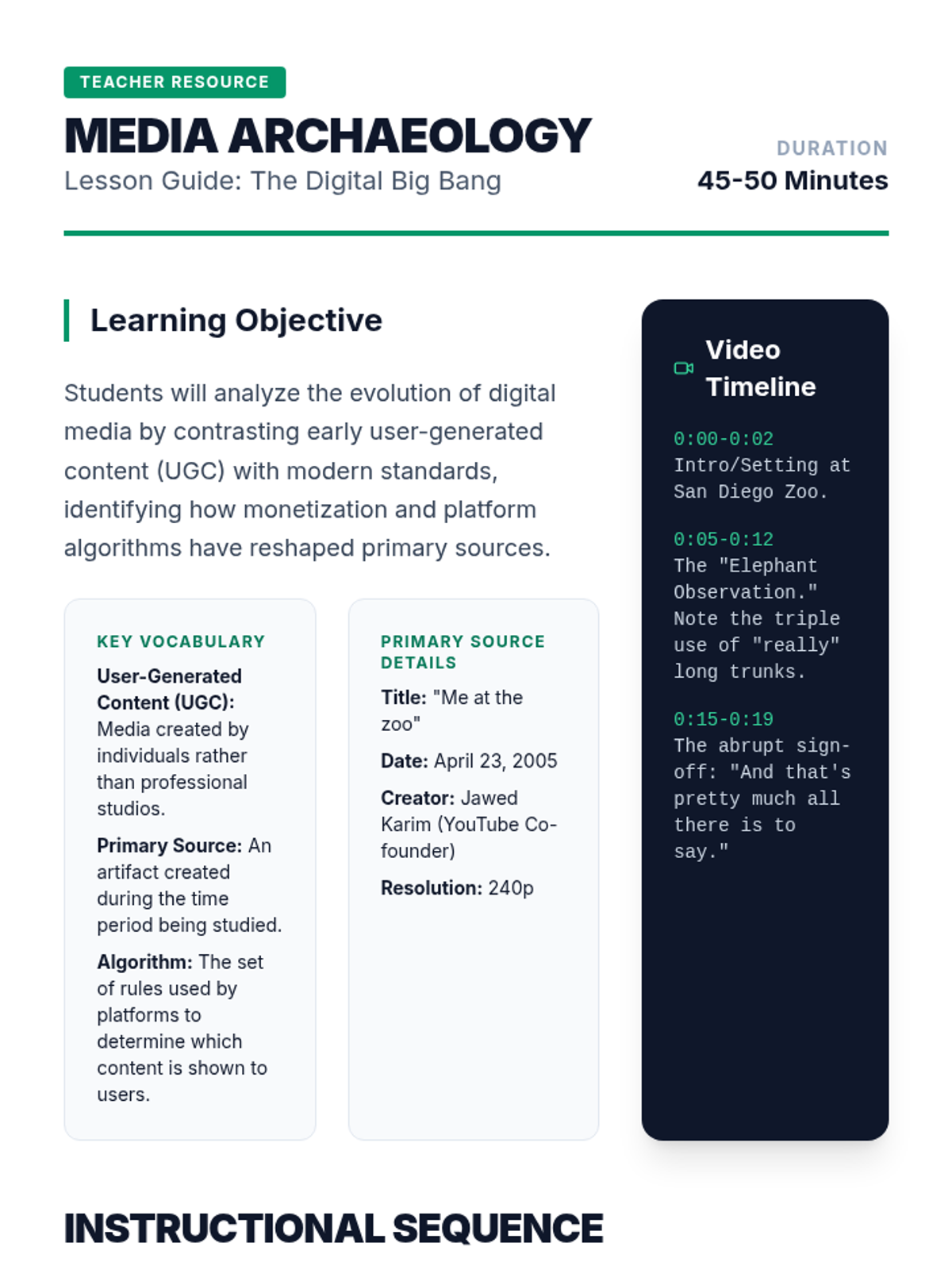
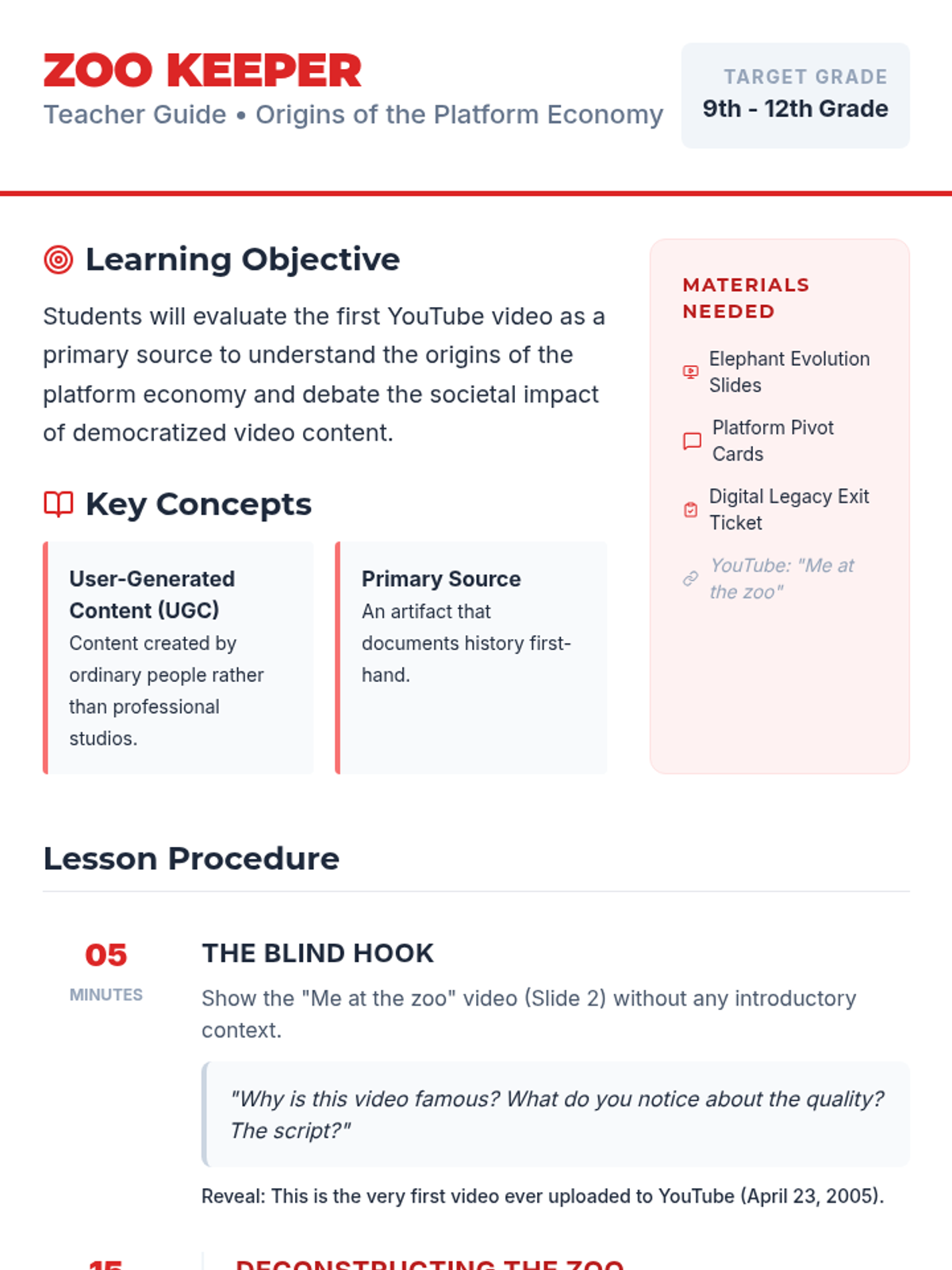
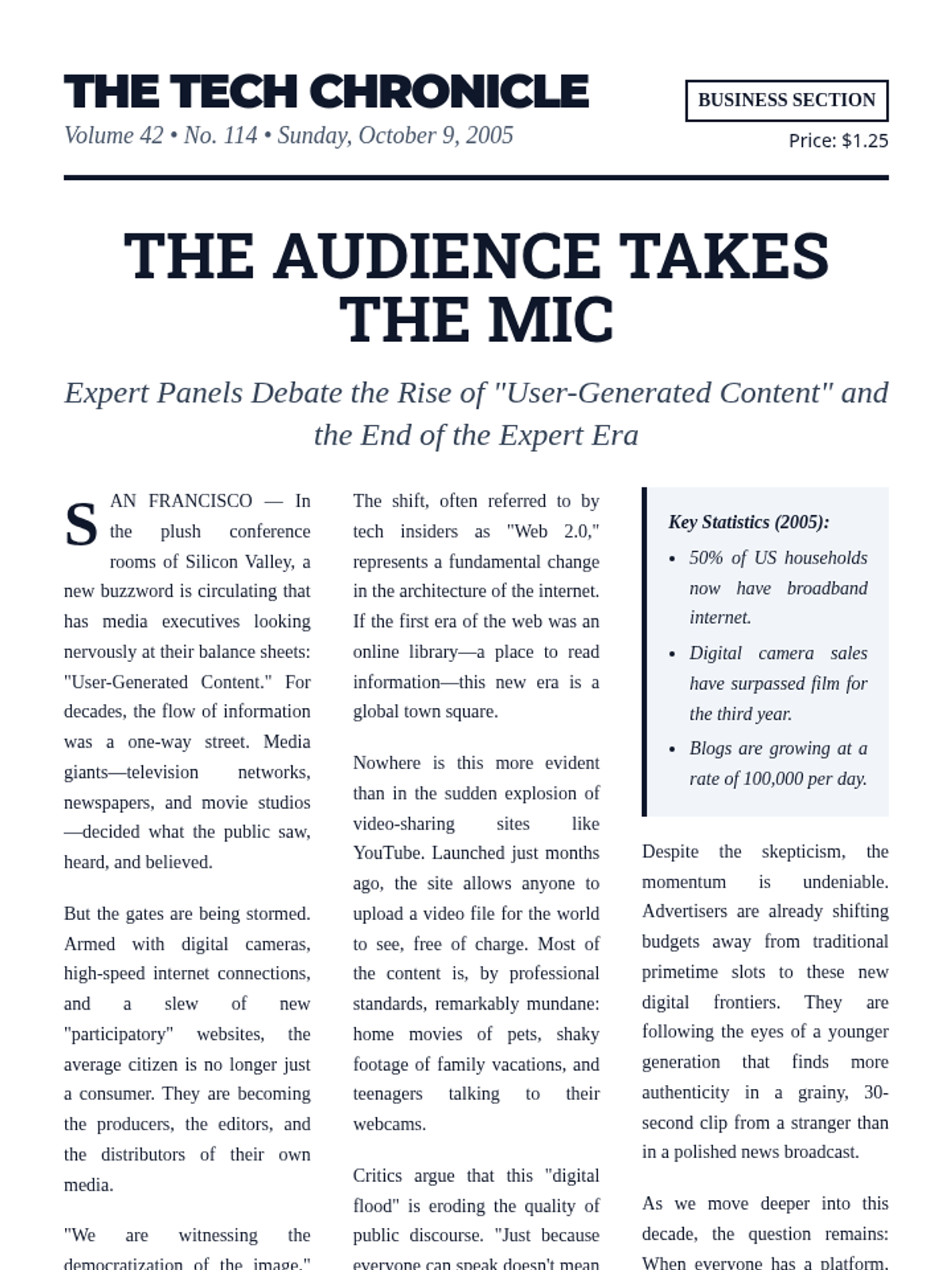
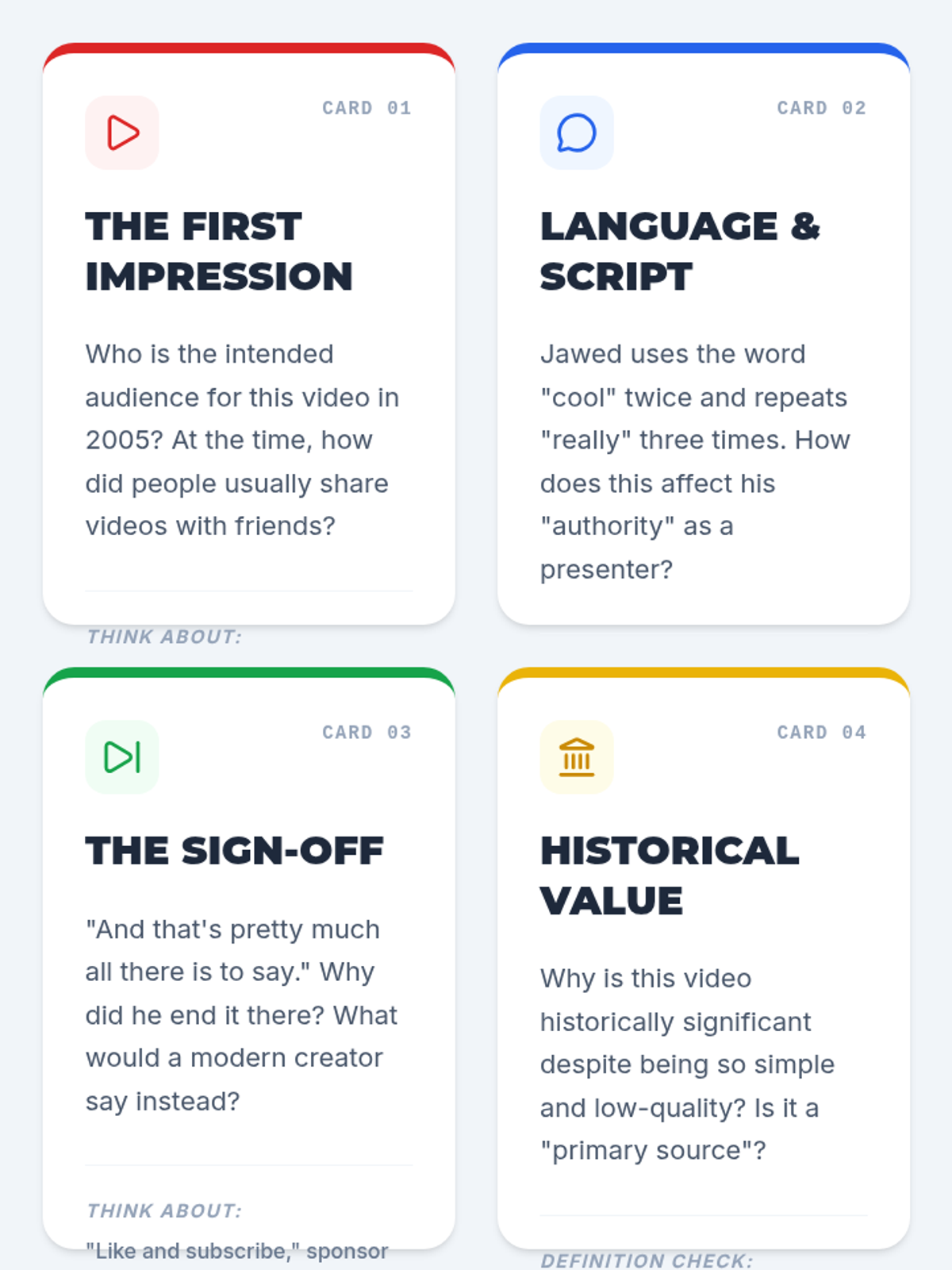
Students analyze the first YouTube video, 'Me at the zoo', as a primary source to understand the shift to User-Generated Content (UGC) and 2005 culture through a digital archaeology simulation.
In this 10-minute kindergarten lesson, students will learn to build positive relationships with peers through a fun, interactive activity. This lesson is crucial for developing early social skills, empathy, and cooperation in young learners.
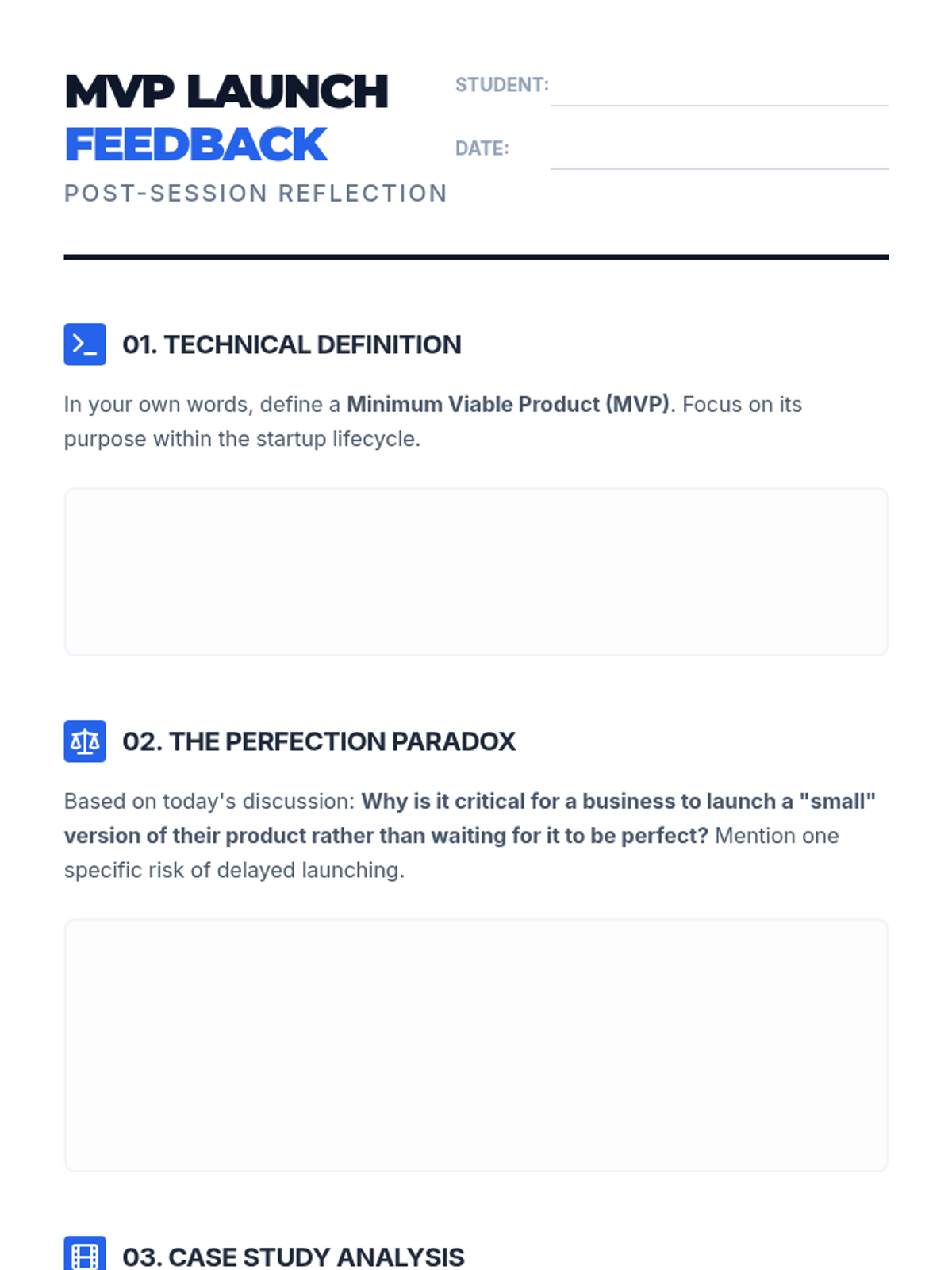
A 45-minute lesson for business and technology students exploring the concept of Minimum Viable Product (MVP) through the analysis of YouTube's first video and a hands-on app design activity.
An undergraduate media studies lesson exploring the evolution of authenticity on social media, using the first-ever YouTube video as a case study for the 'aesthetic of banality' and the shift toward the creator economy.
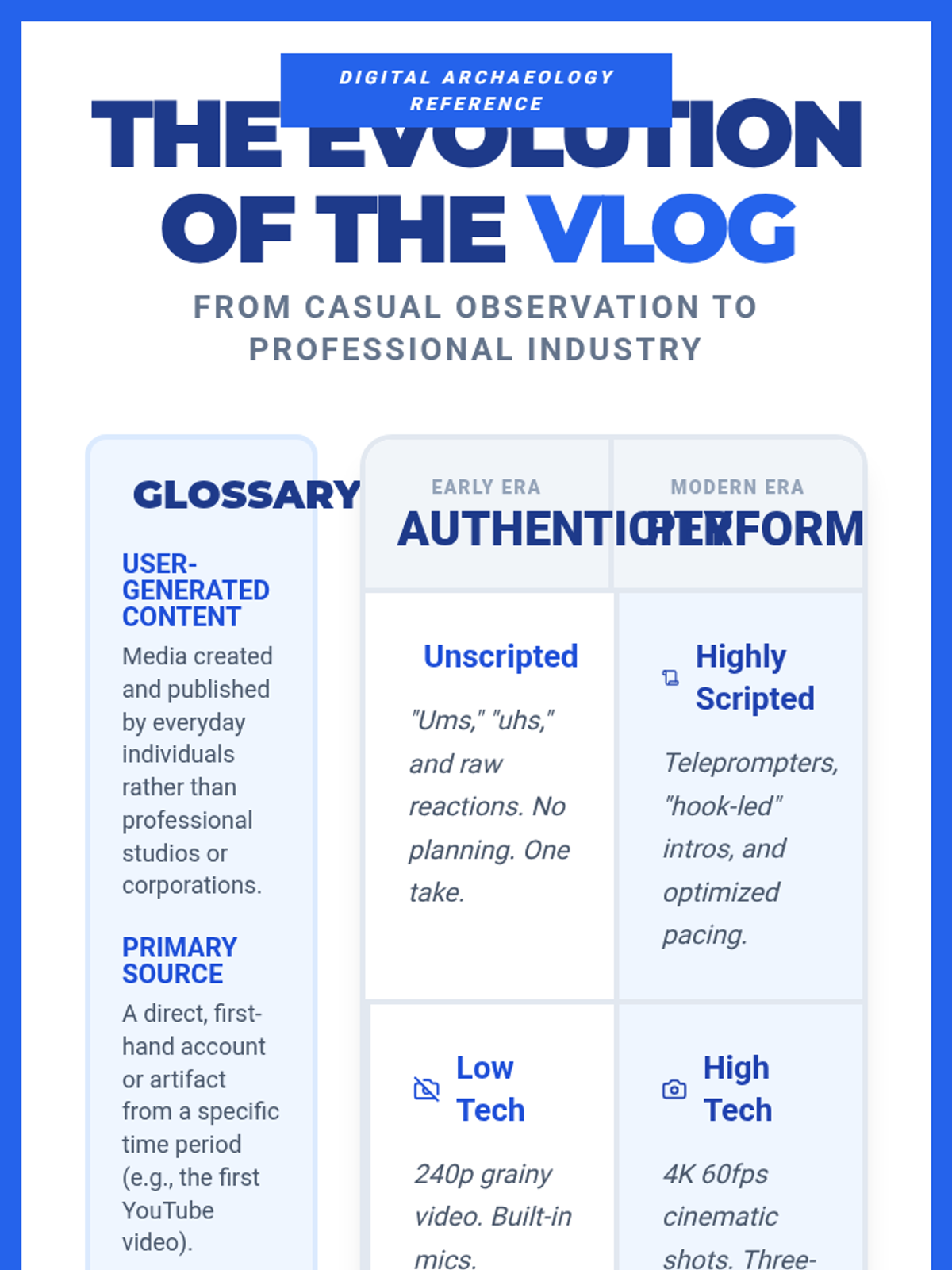
A lesson analyzing 'Me at the zoo', the first YouTube video, to understand the evolution of digital communication, authenticity vs. production, and user-generated content.
A science and observation lesson for elementary students focused on distinguishing between objective facts (observations) and subjective opinions (interpretations) using the first-ever YouTube video as a case study.
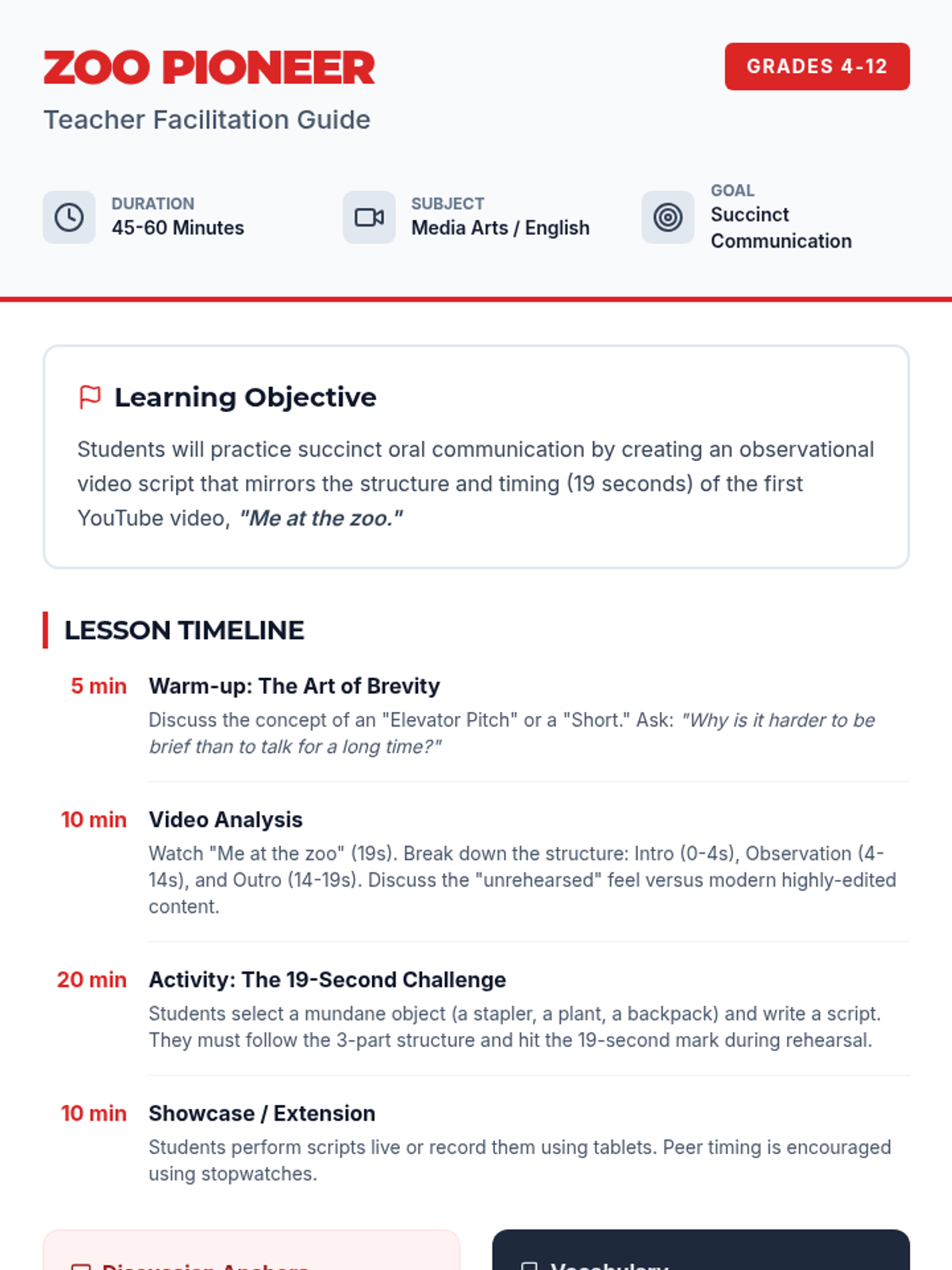
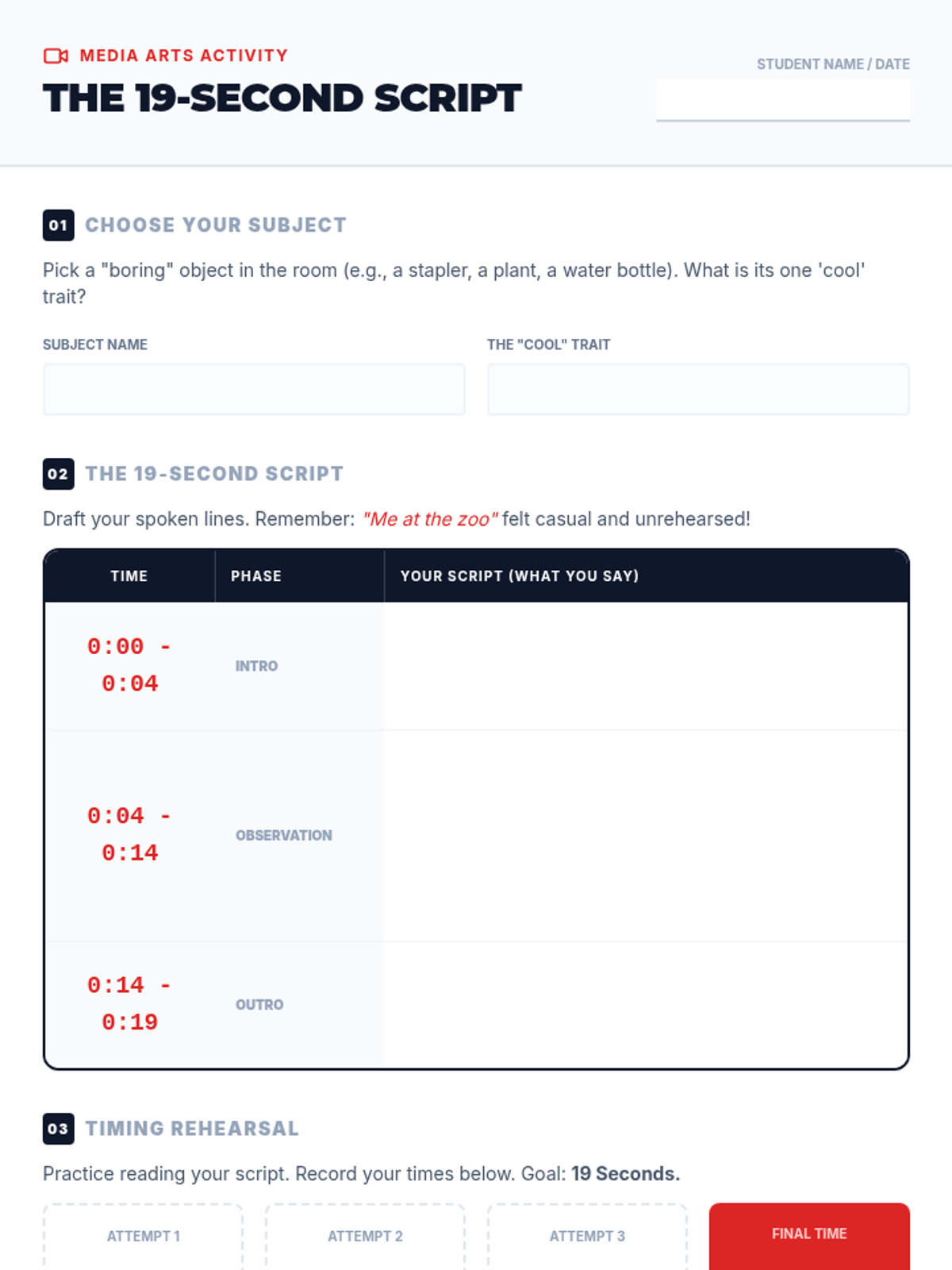
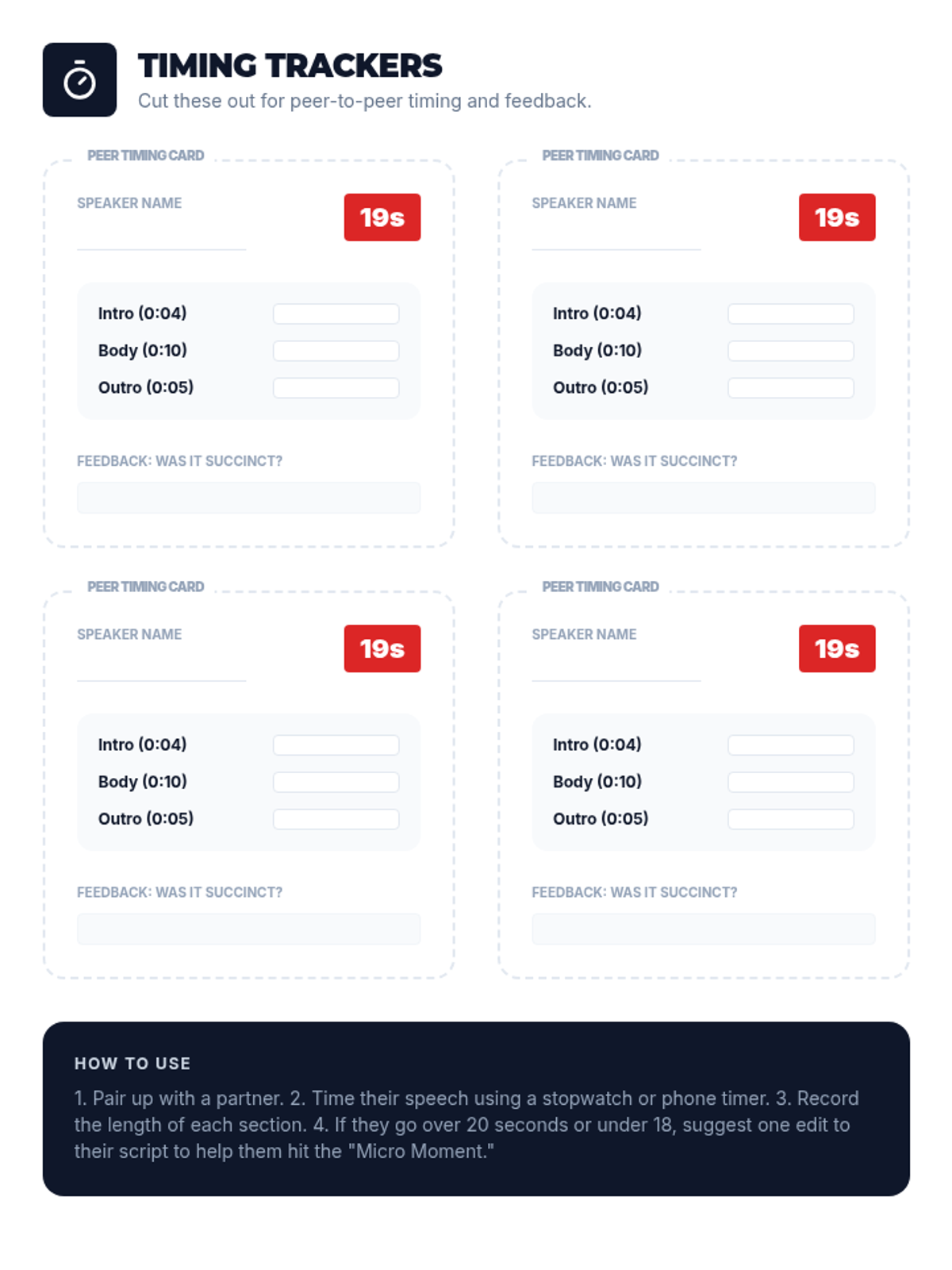
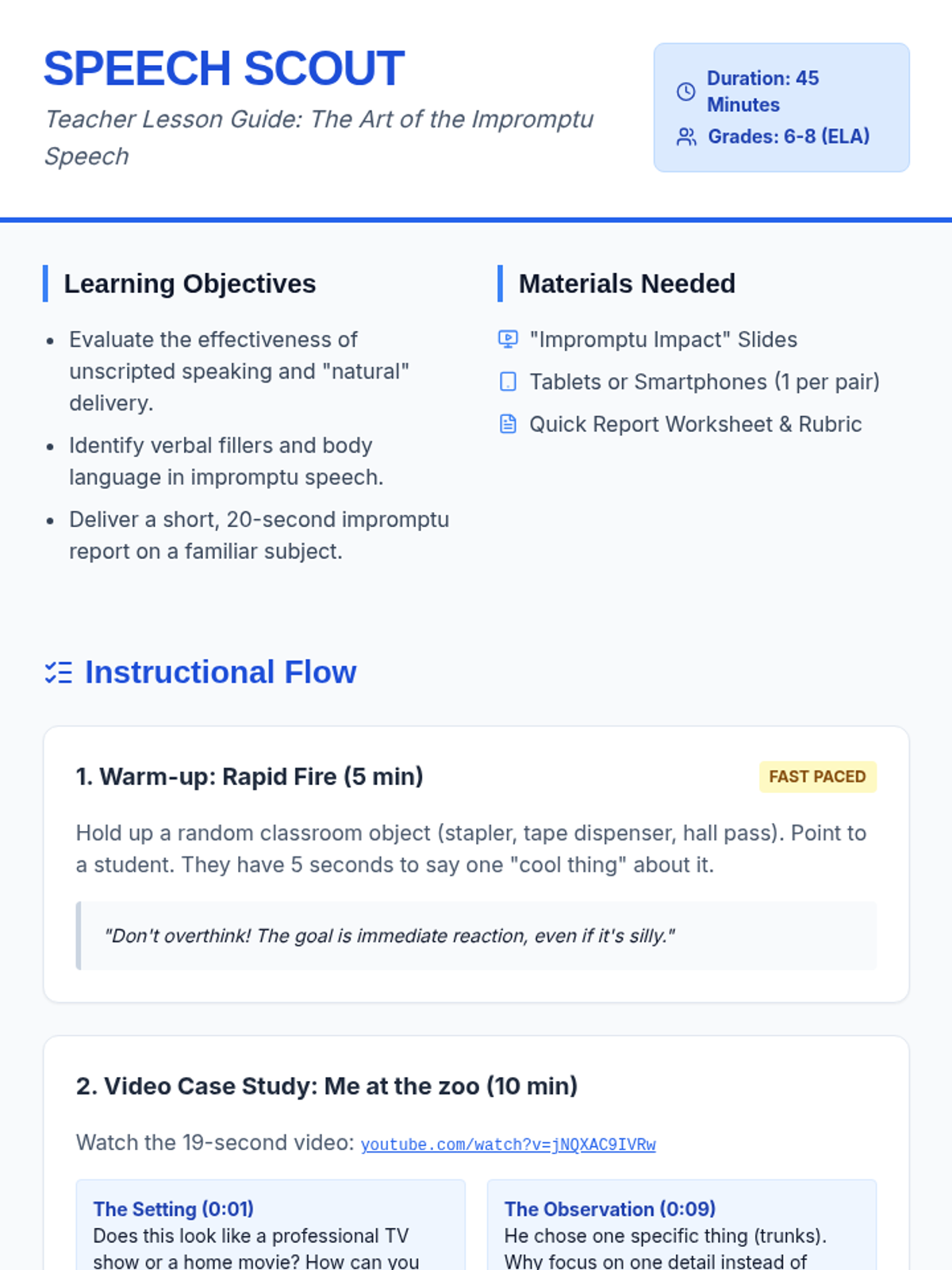
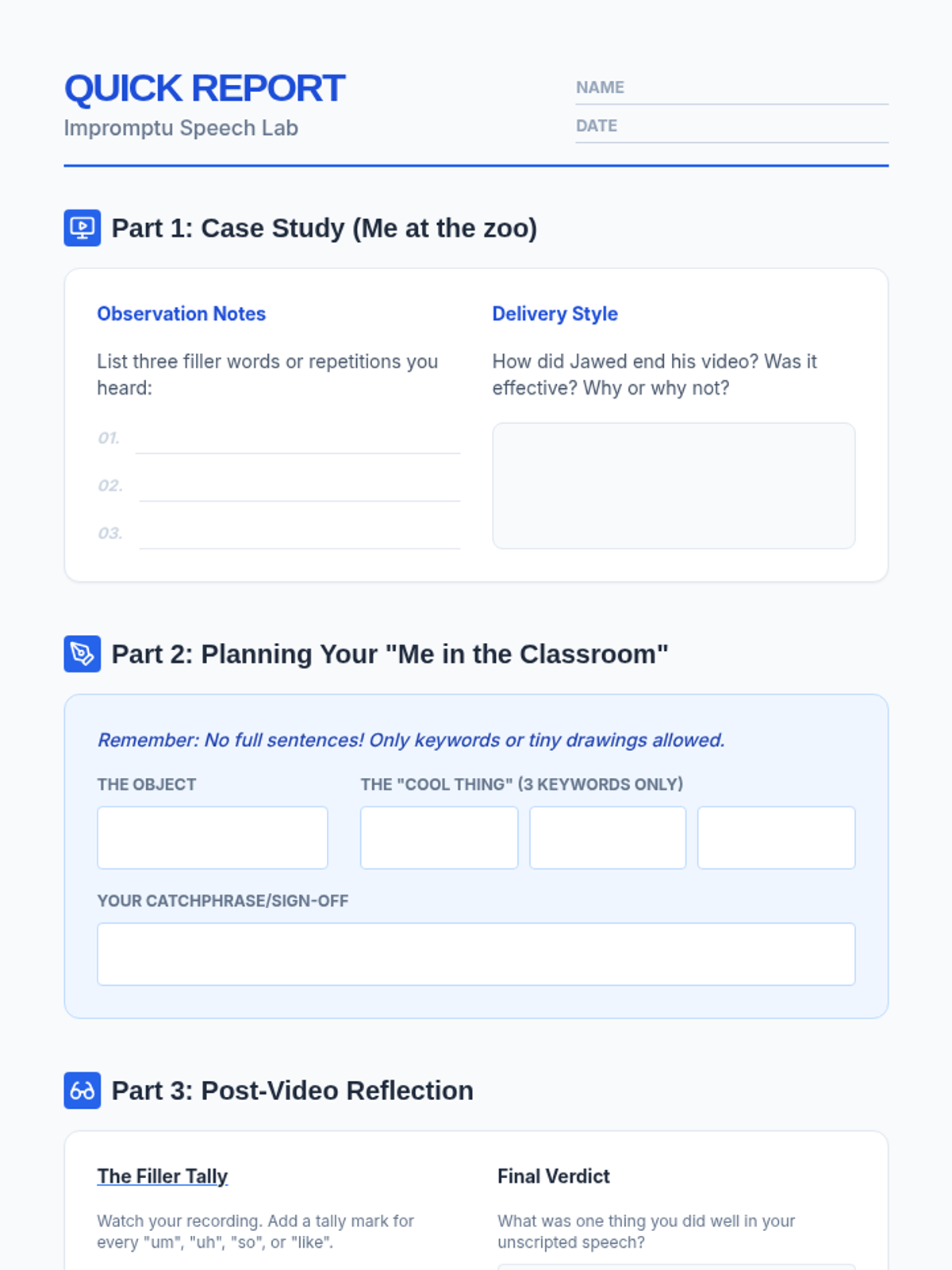
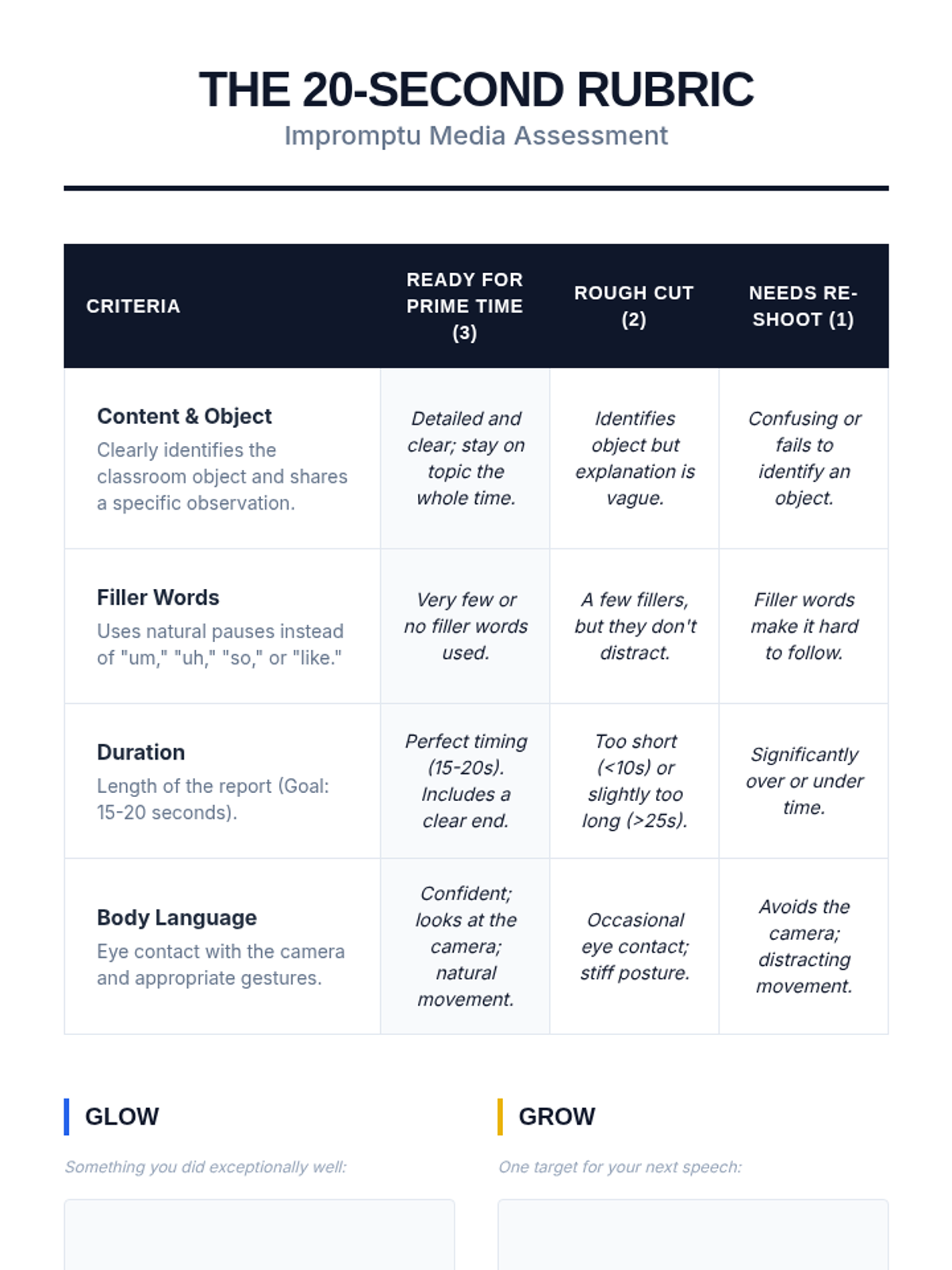
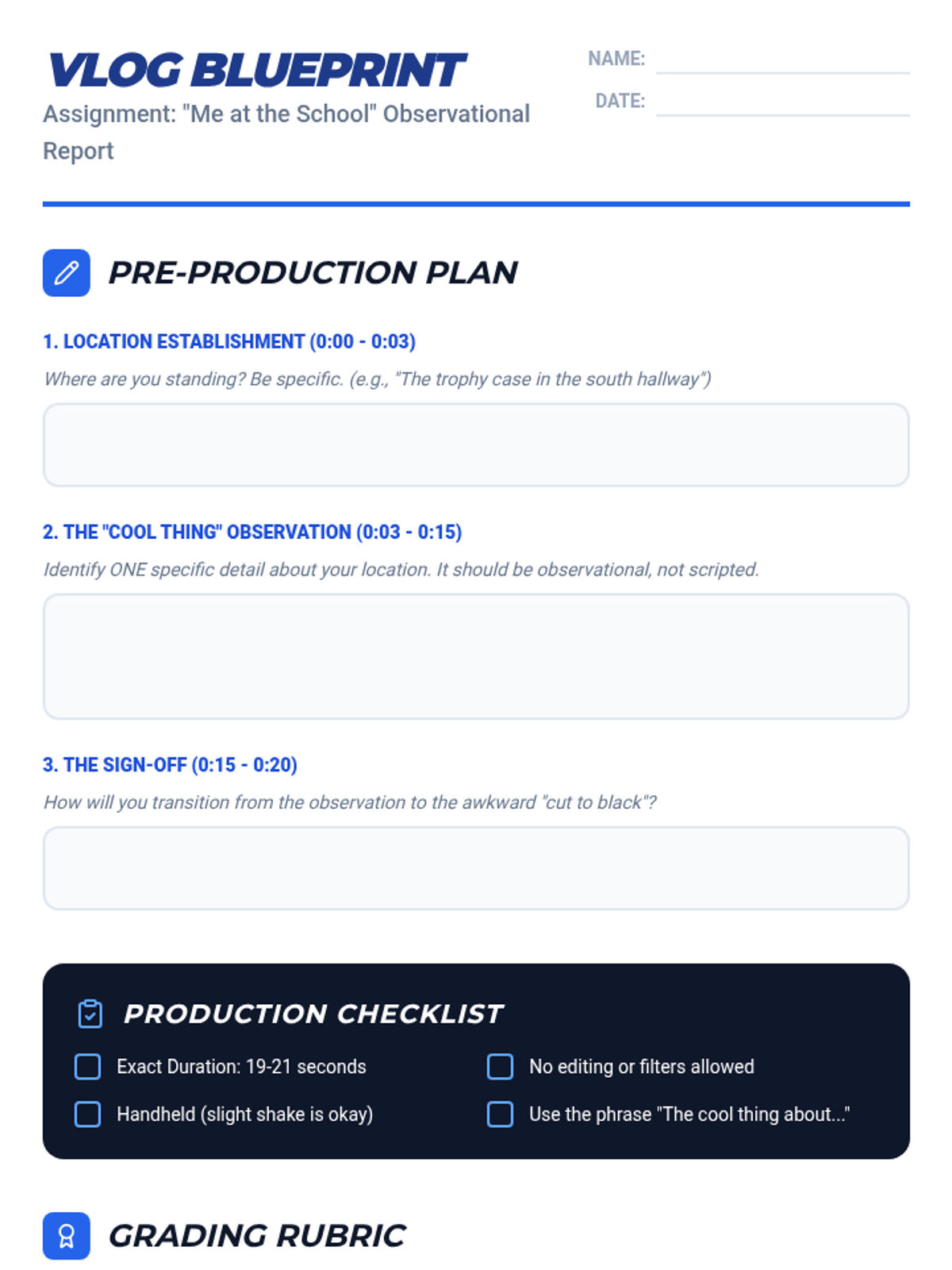
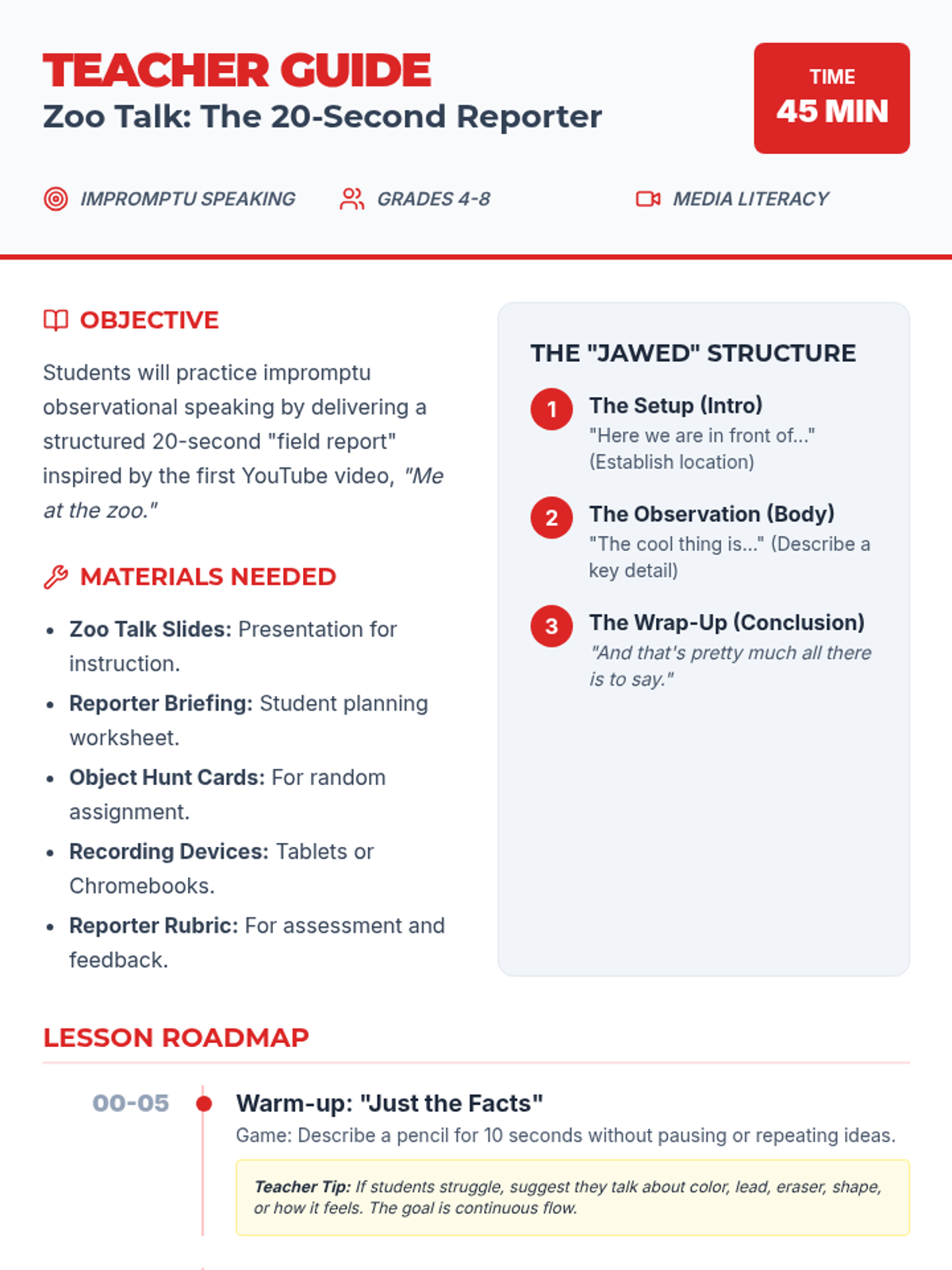
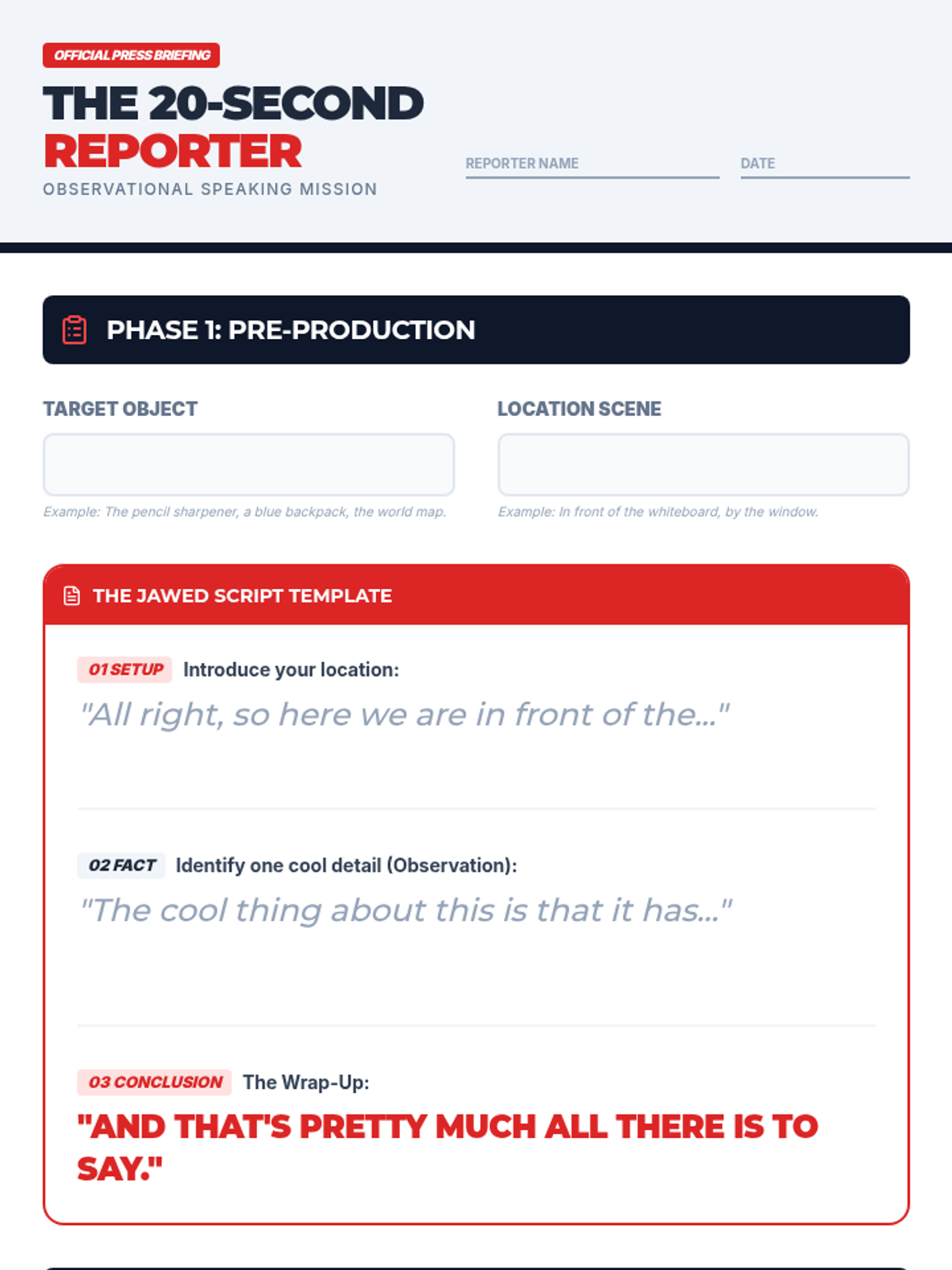
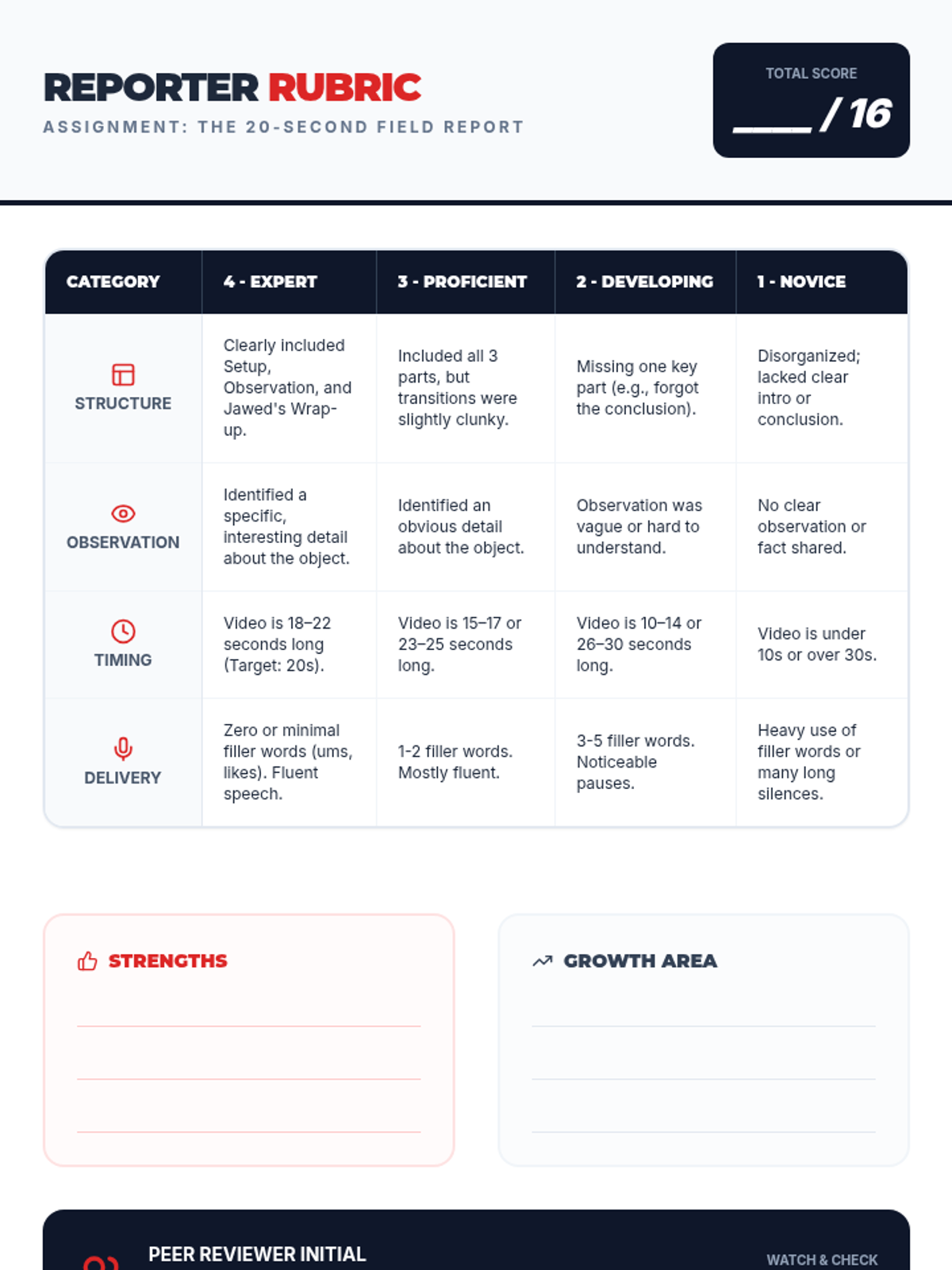
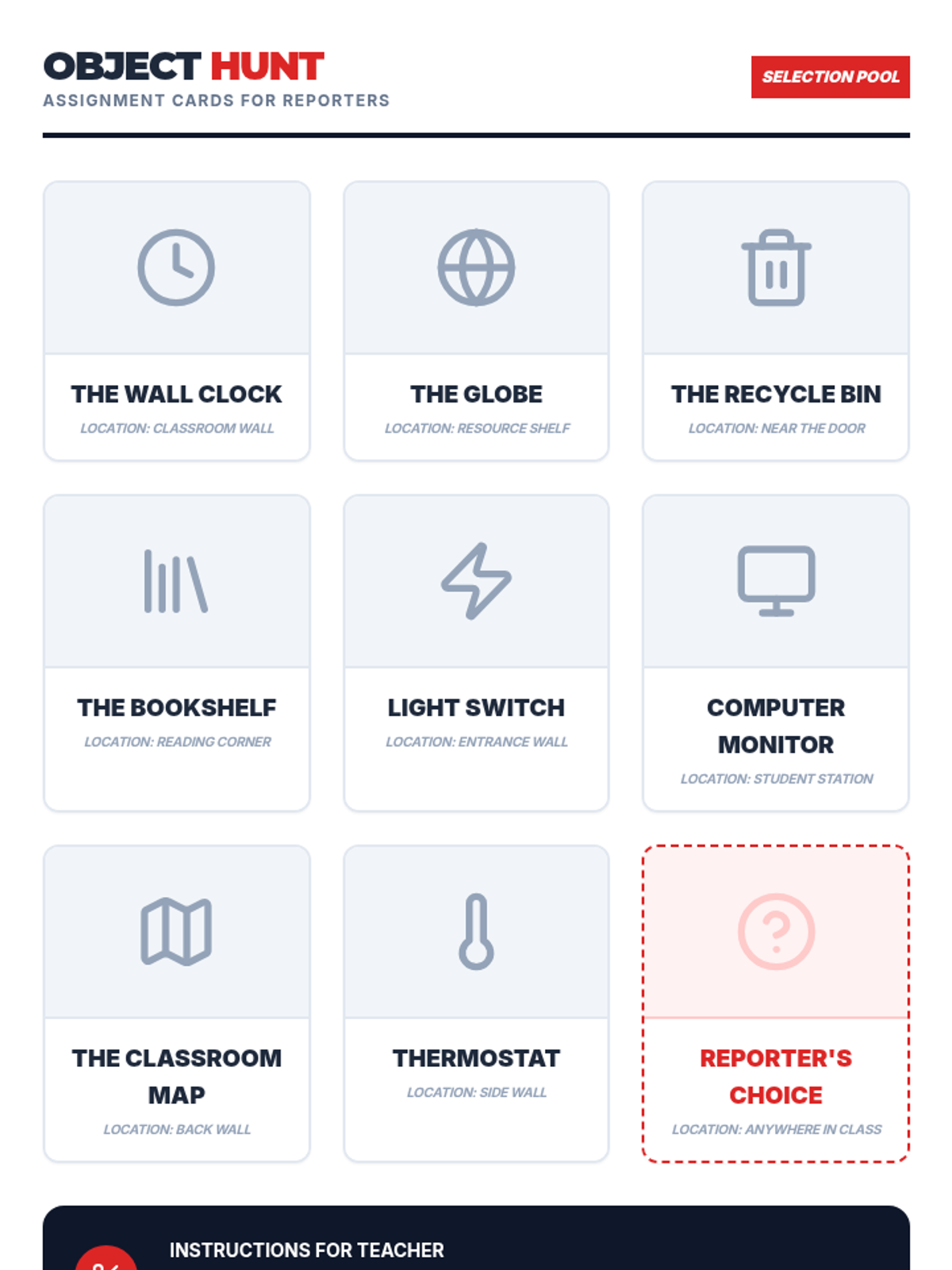
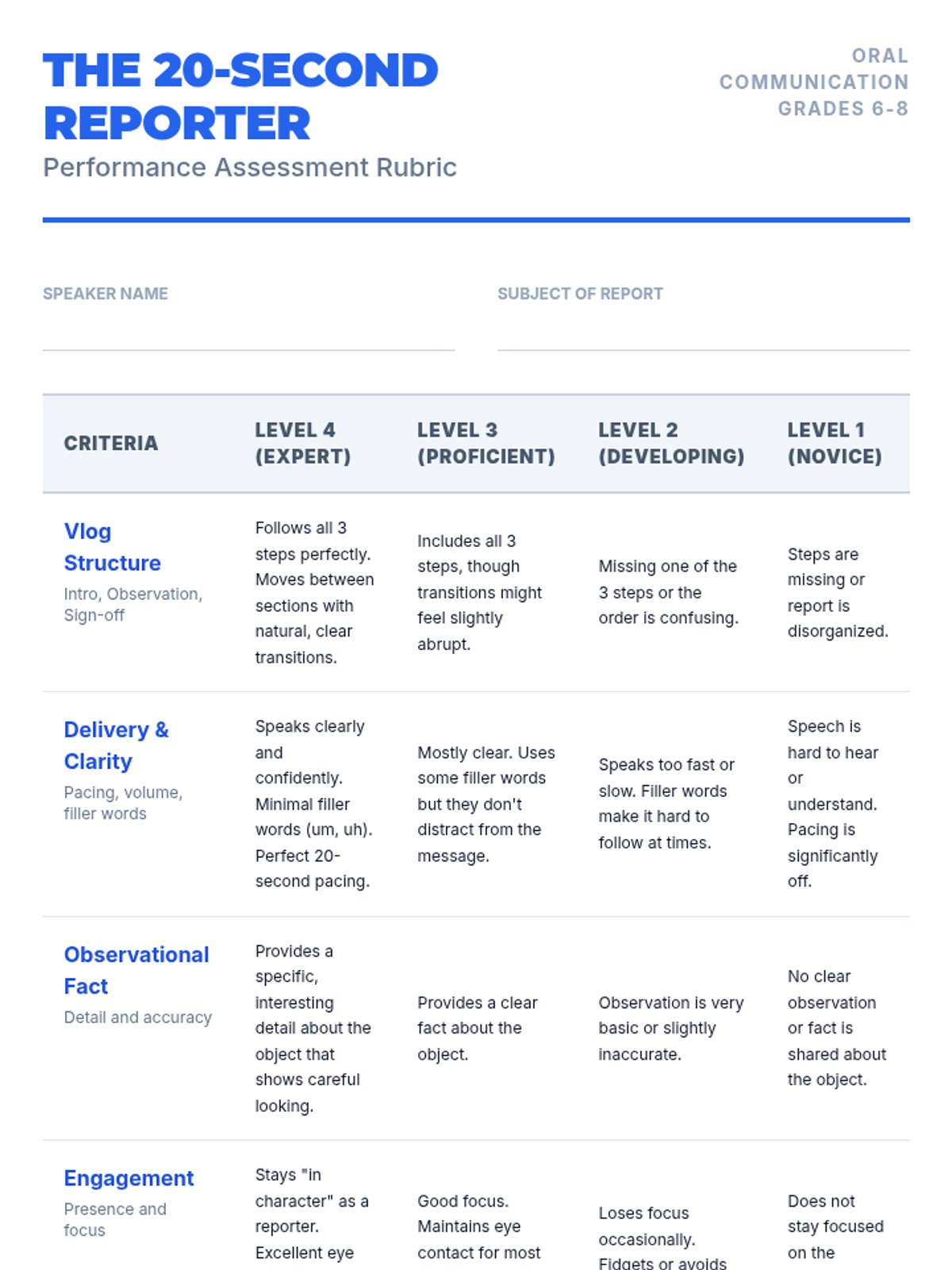
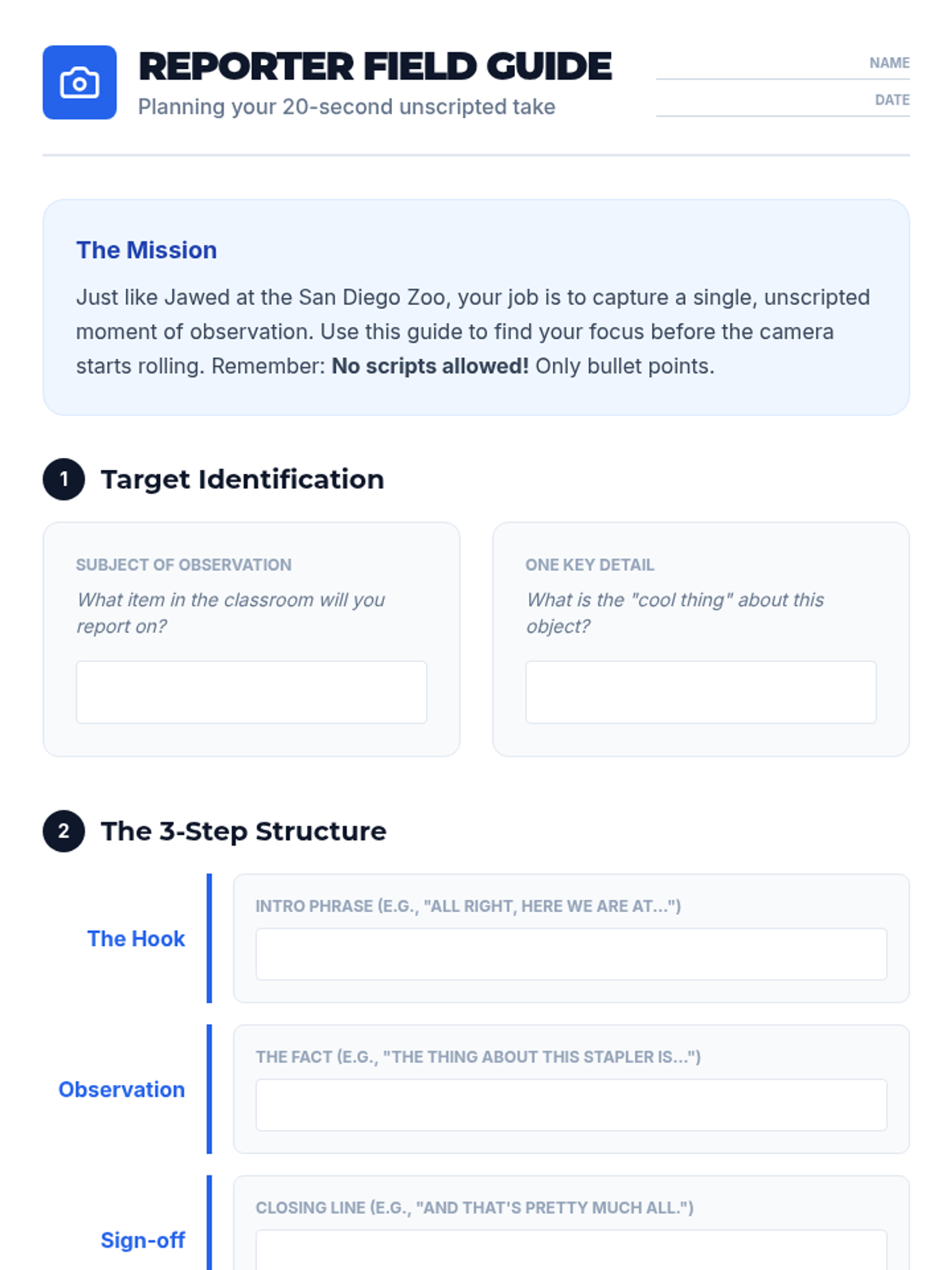
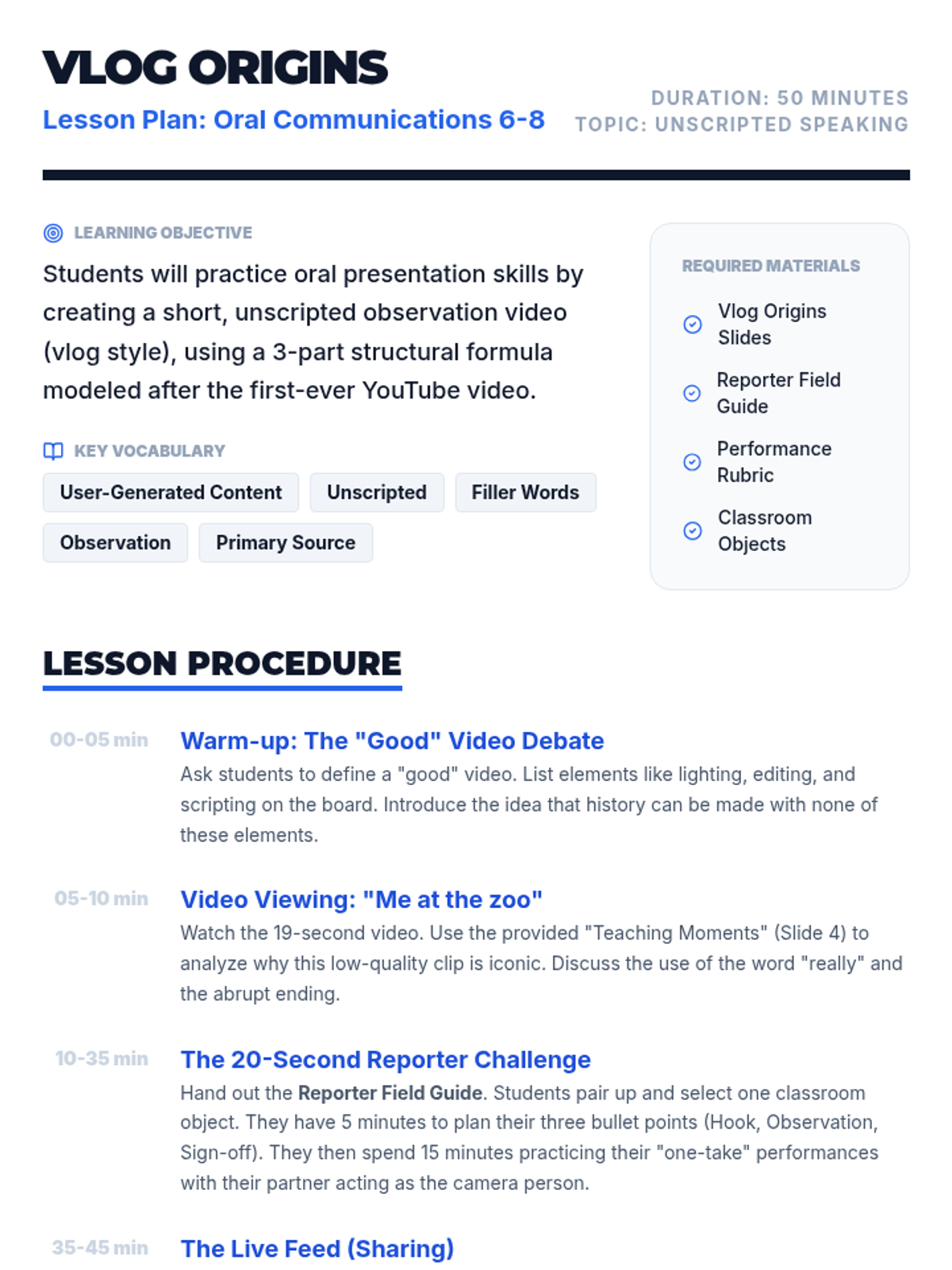
A lesson where students analyze the first-ever YouTube video to learn about unscripted oral communication and then perform their own 20-second observational vlogs.
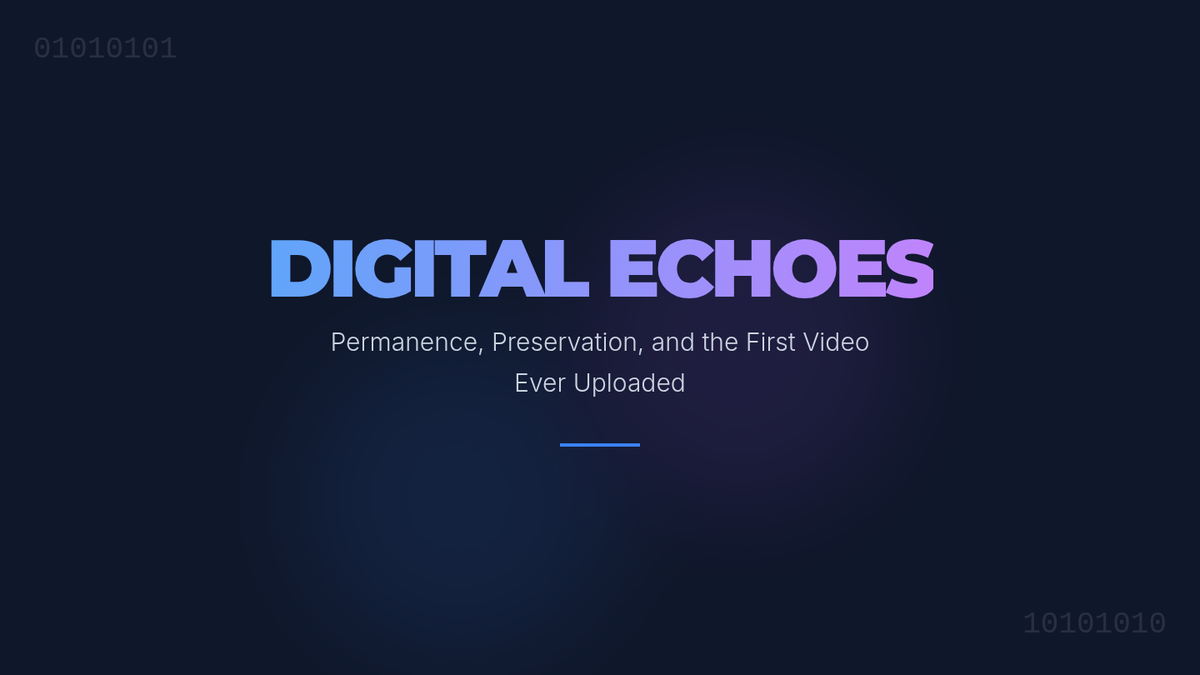
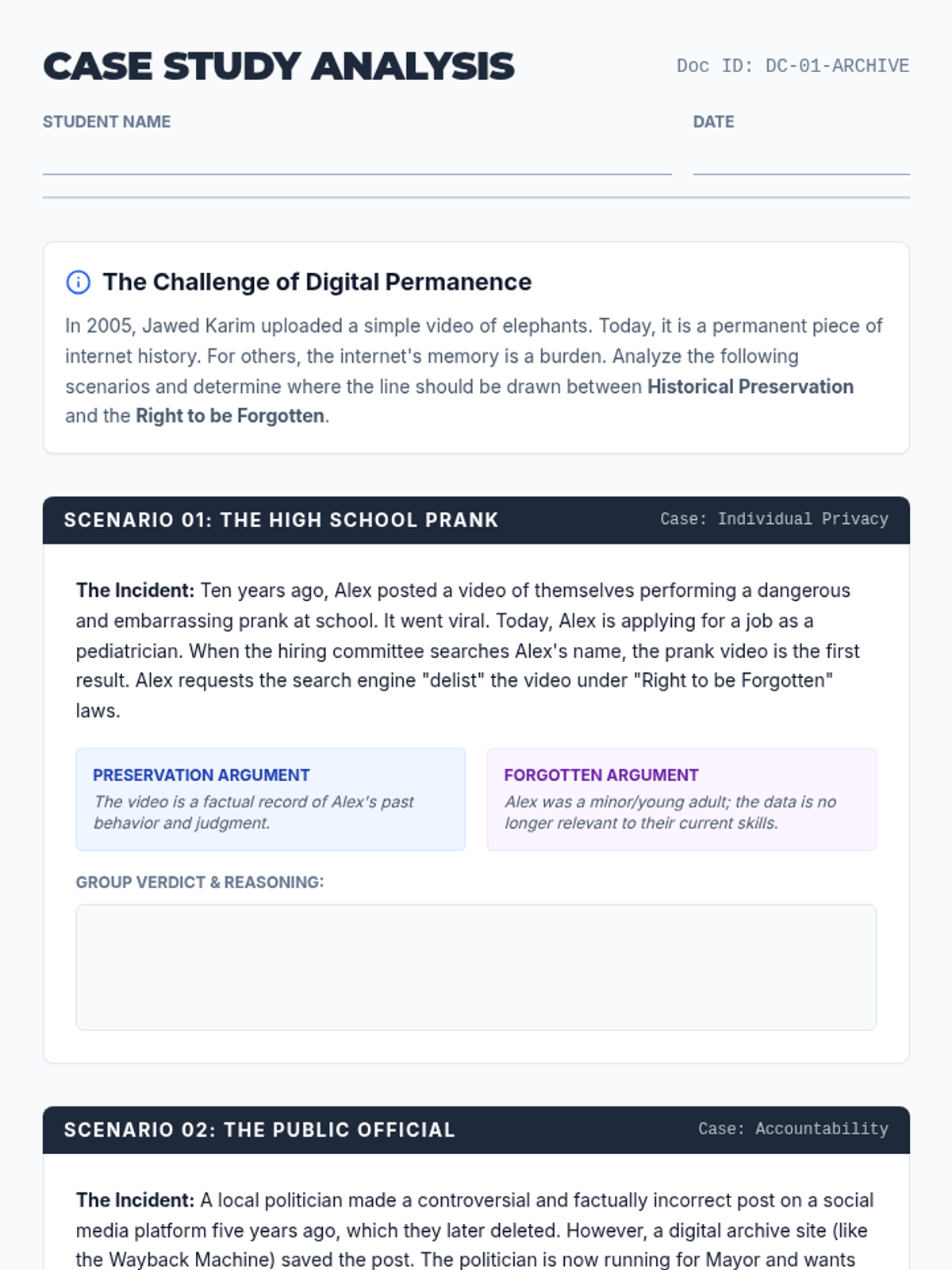
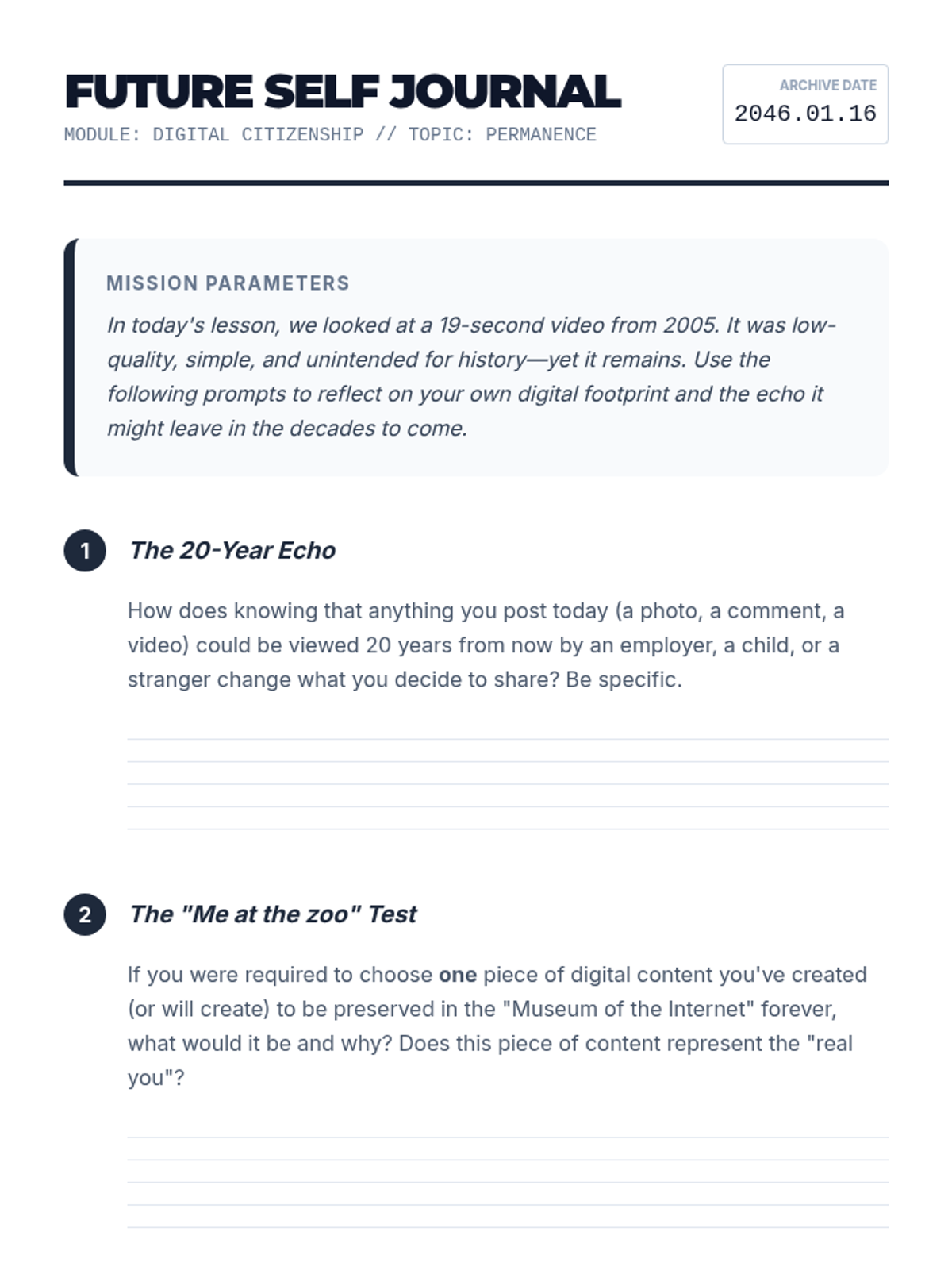
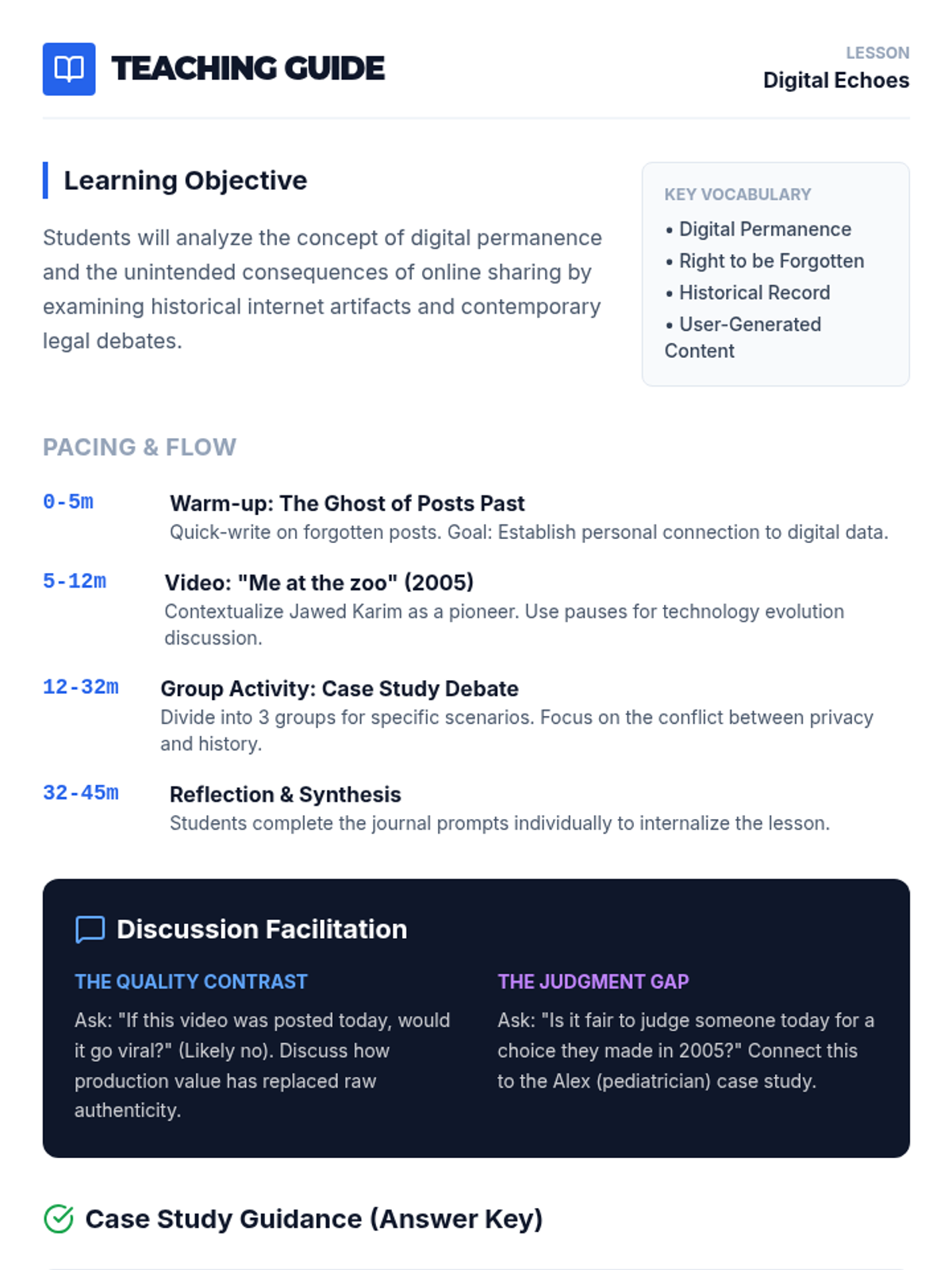
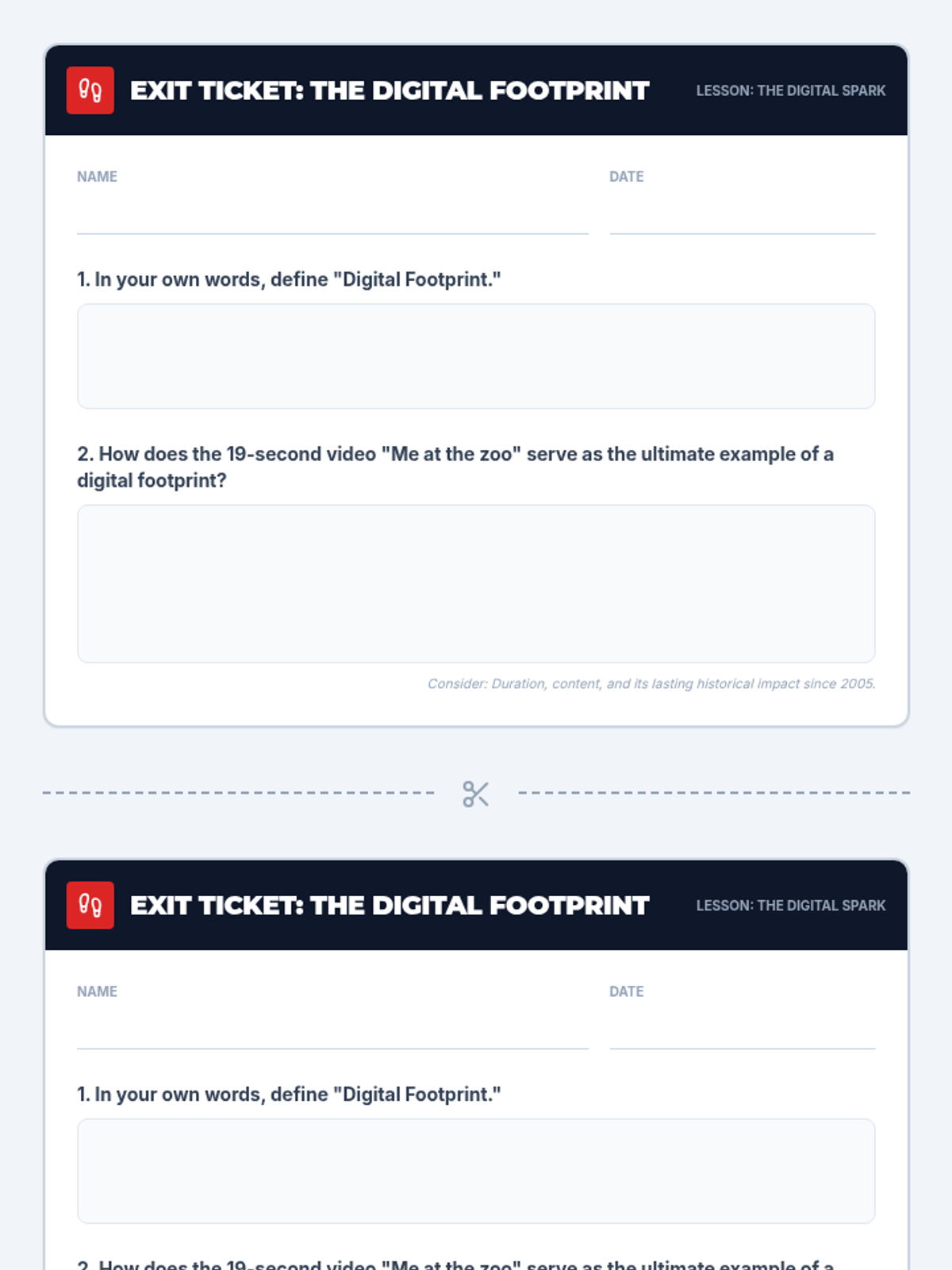
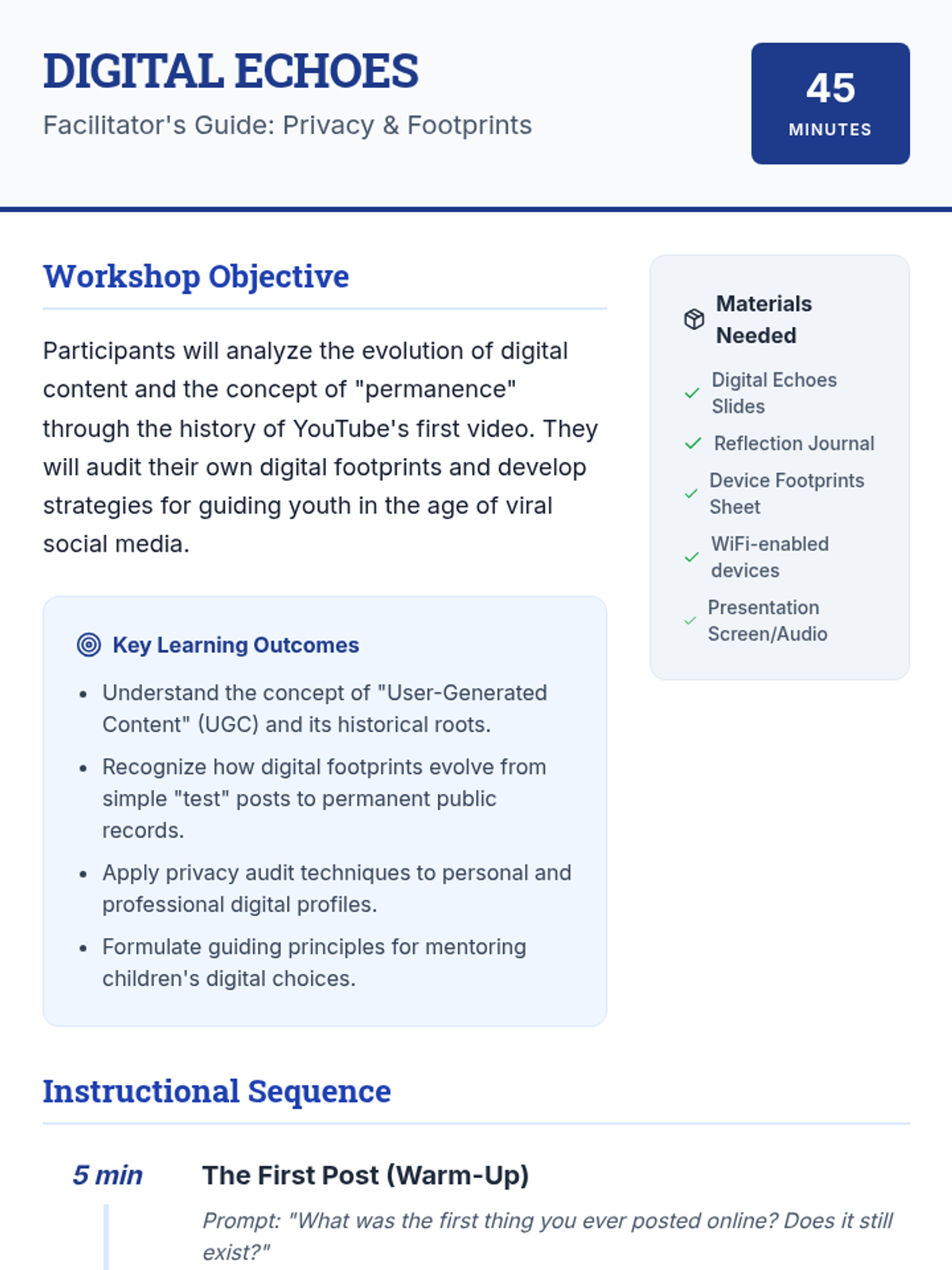
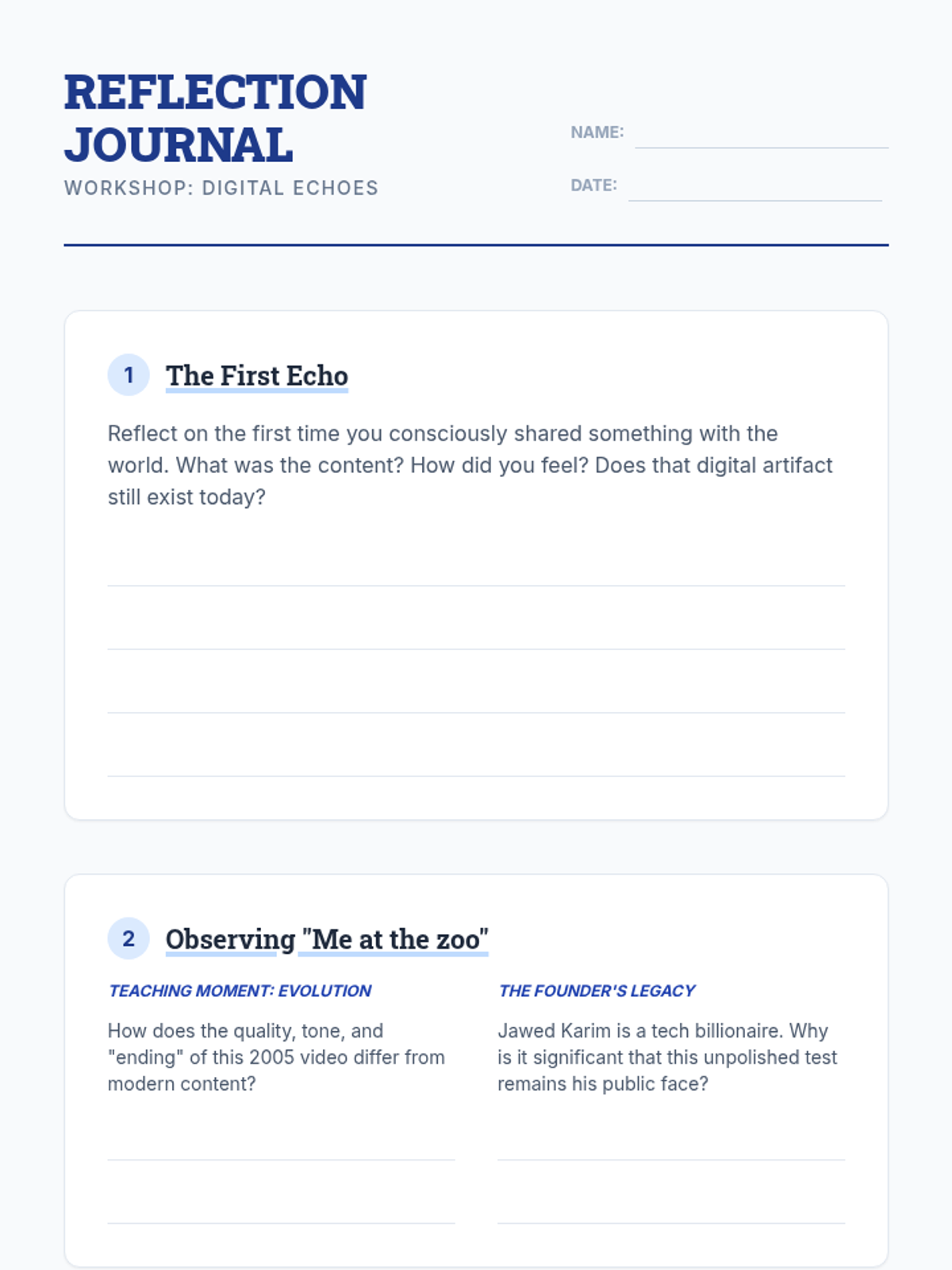
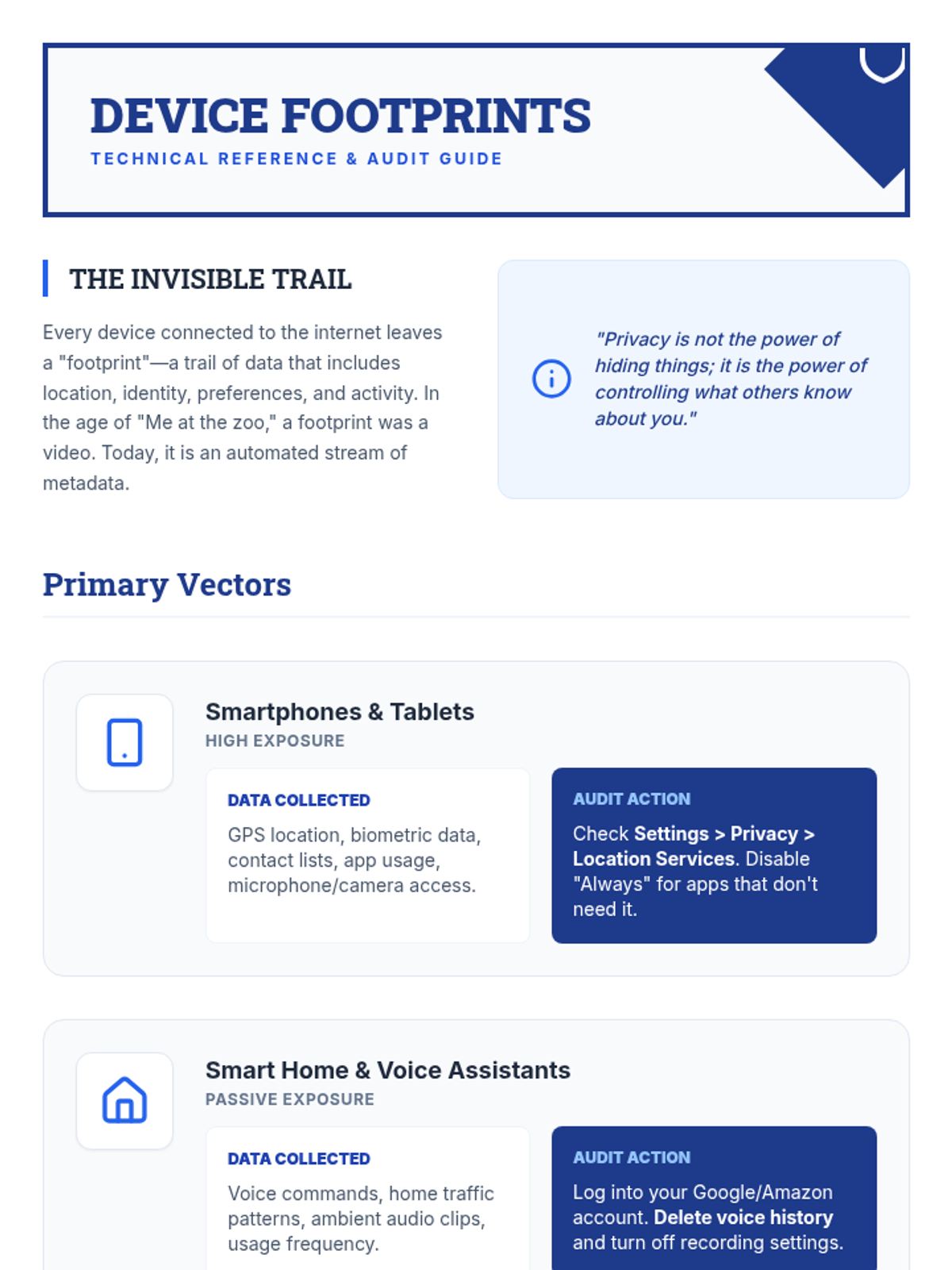
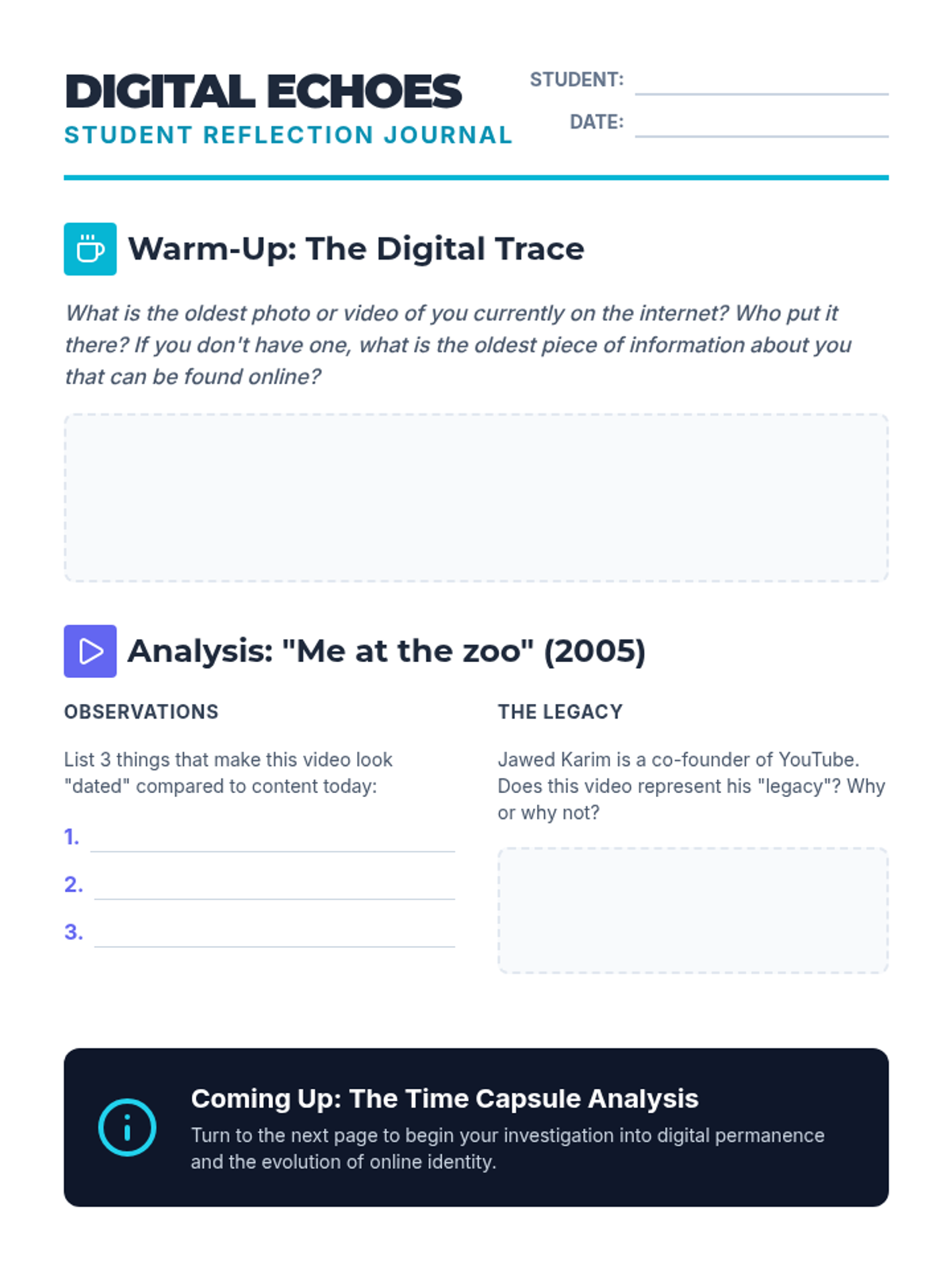
A middle school lesson on digital footprints, focusing on the permanence of online content using the first YouTube video 'Me at the zoo' as a case study.
This lesson introduces business students to the concept of a Minimum Viable Product (MVP) through the historical lens of YouTube's first-ever upload, challenging them to prioritize core functionality over perfection.
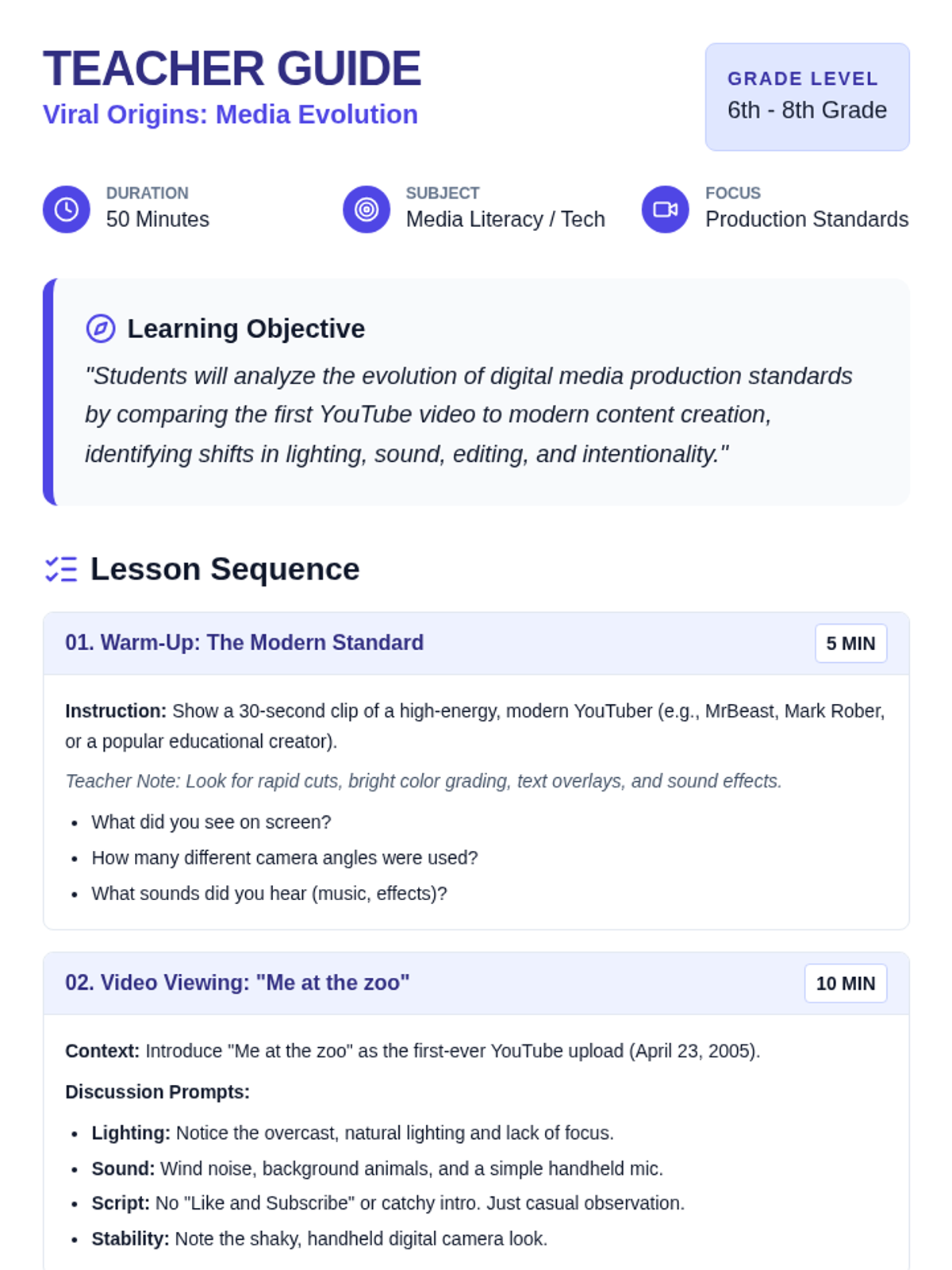
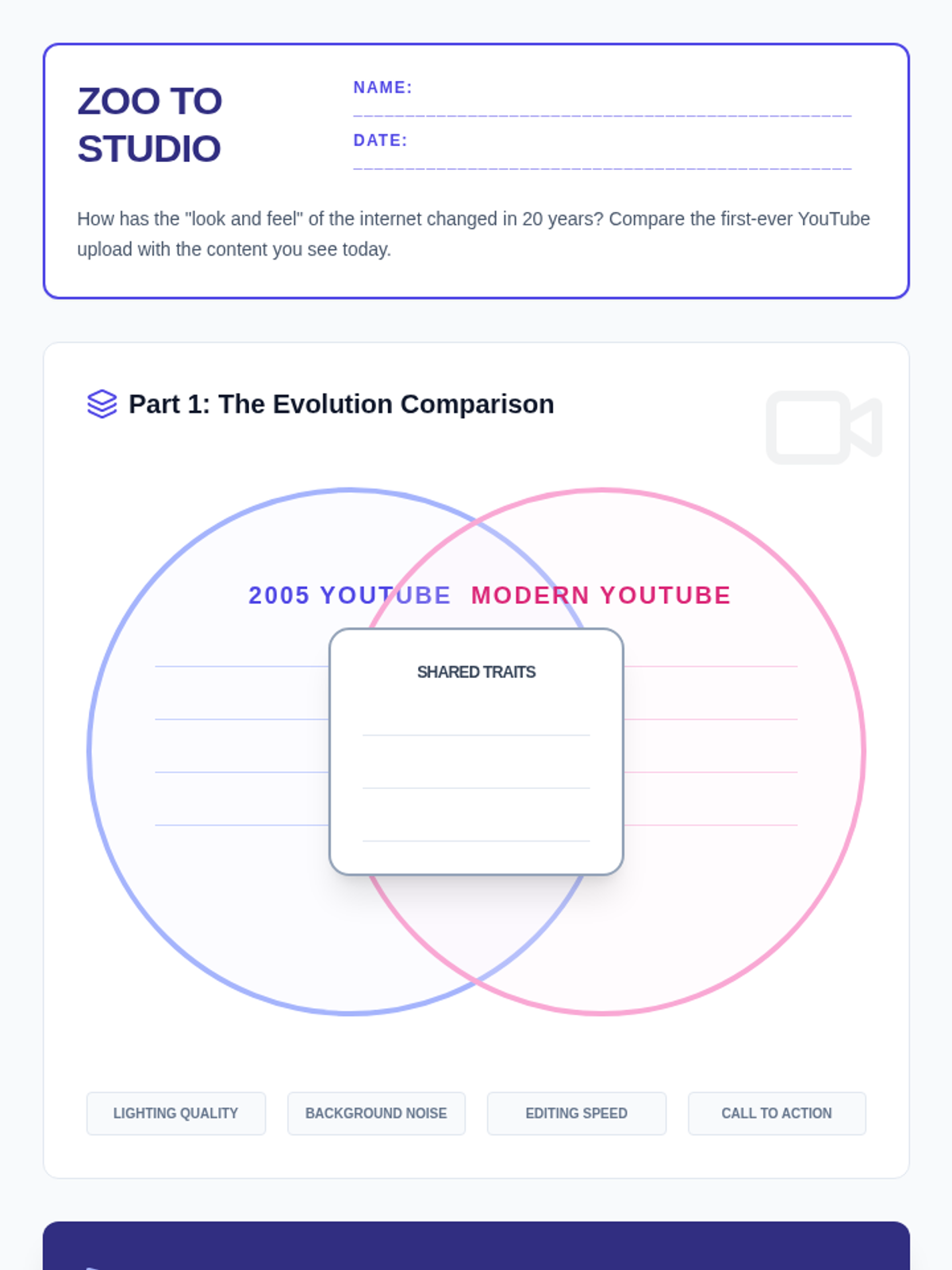
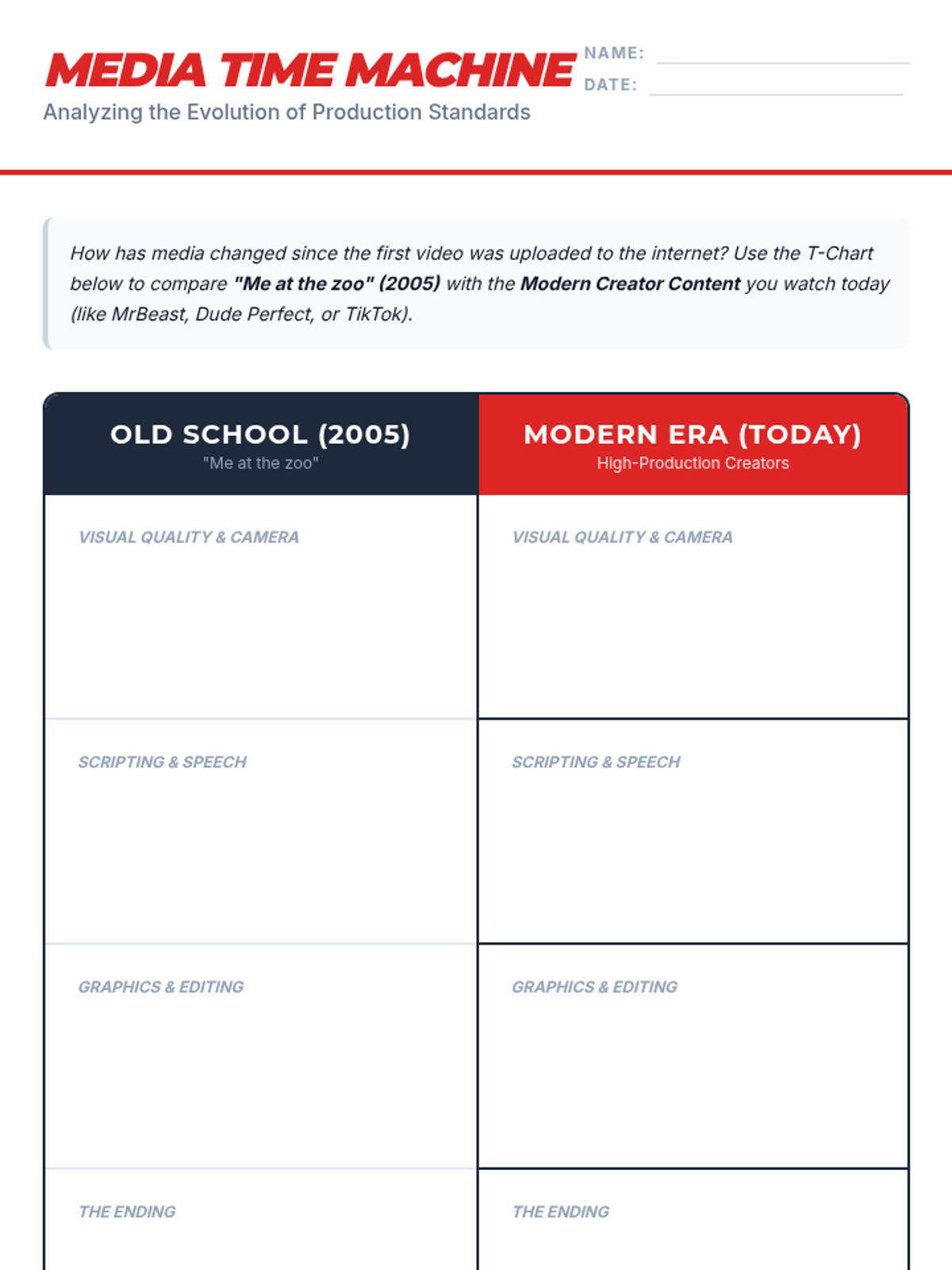
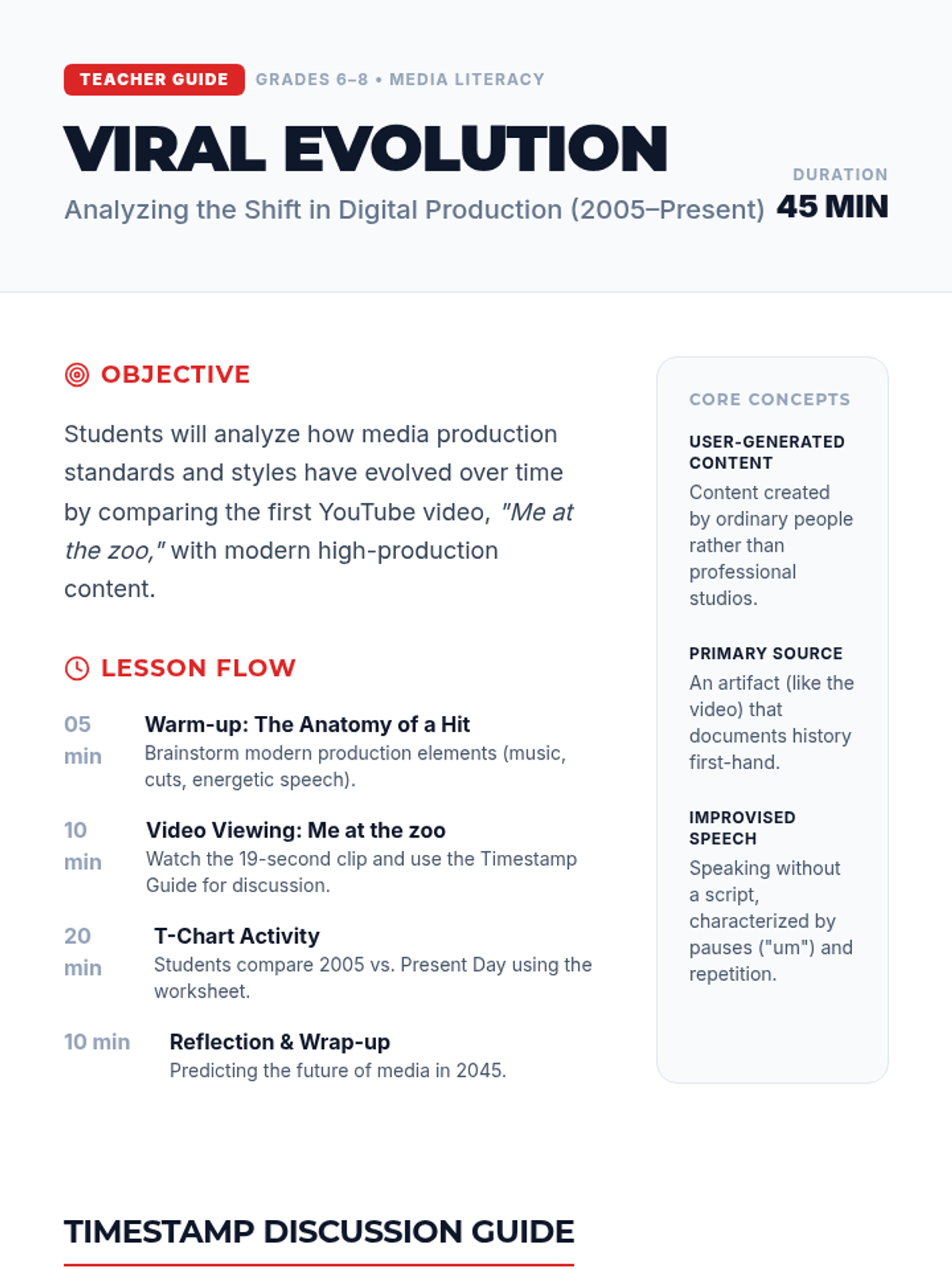
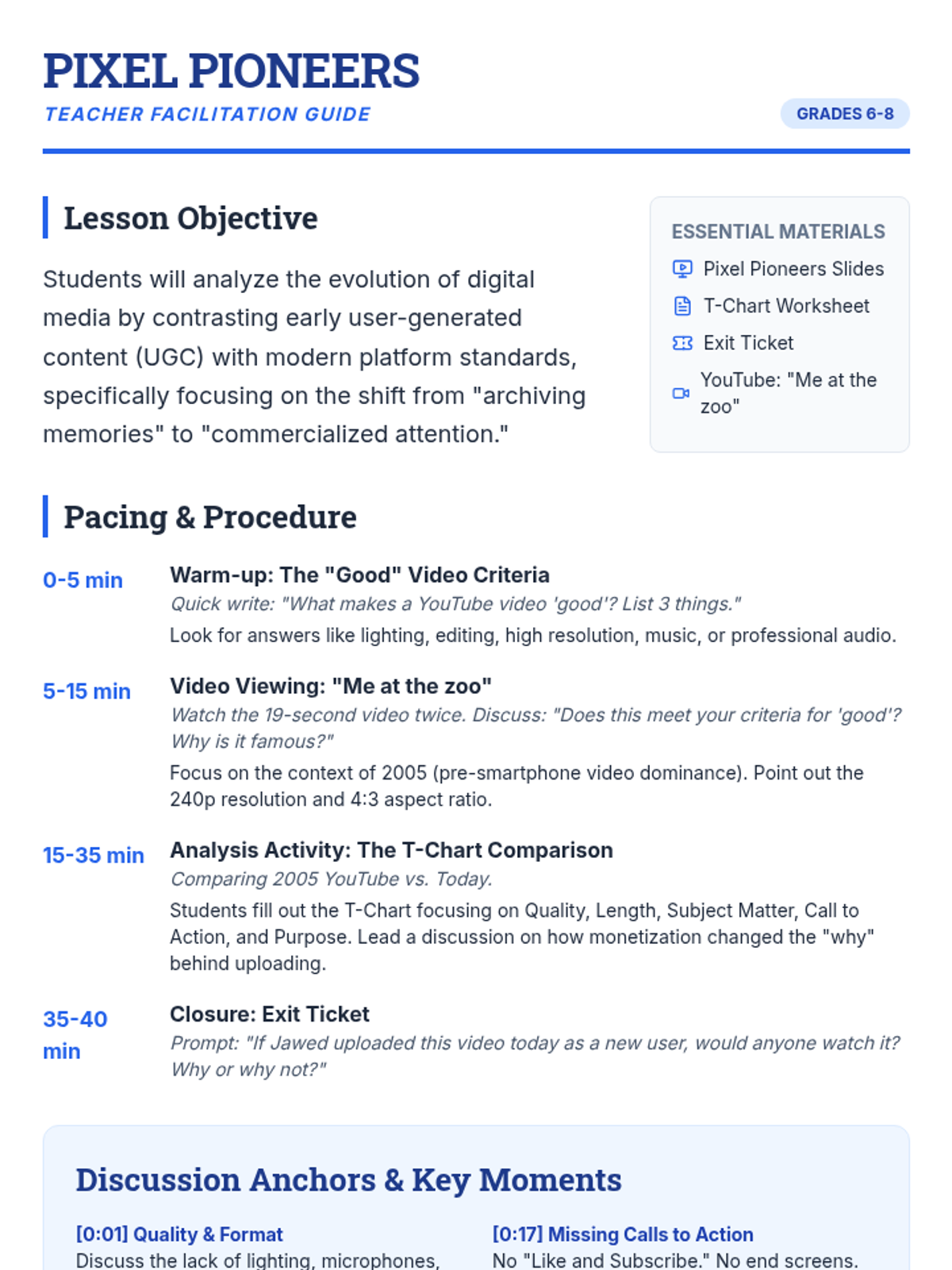
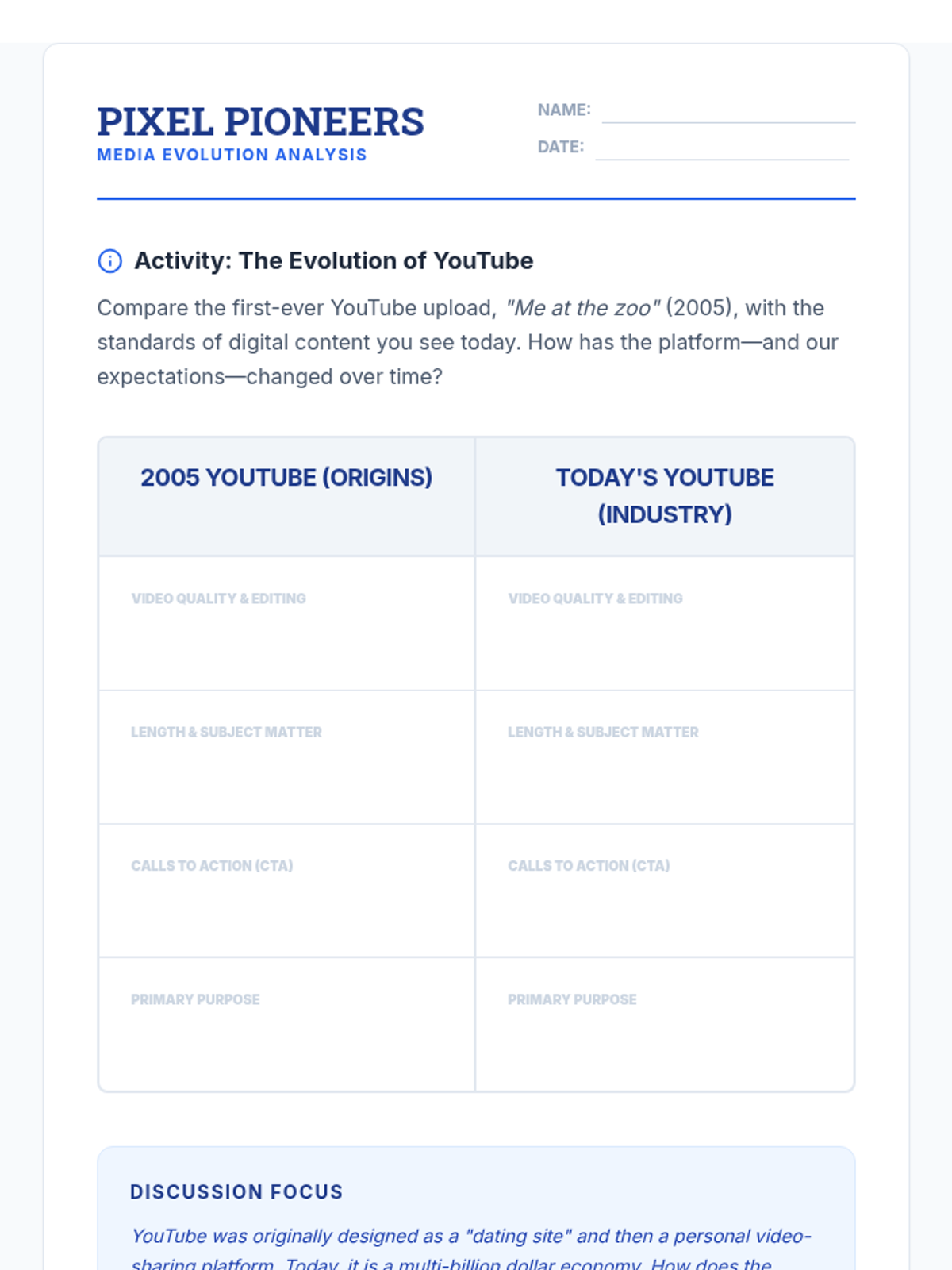
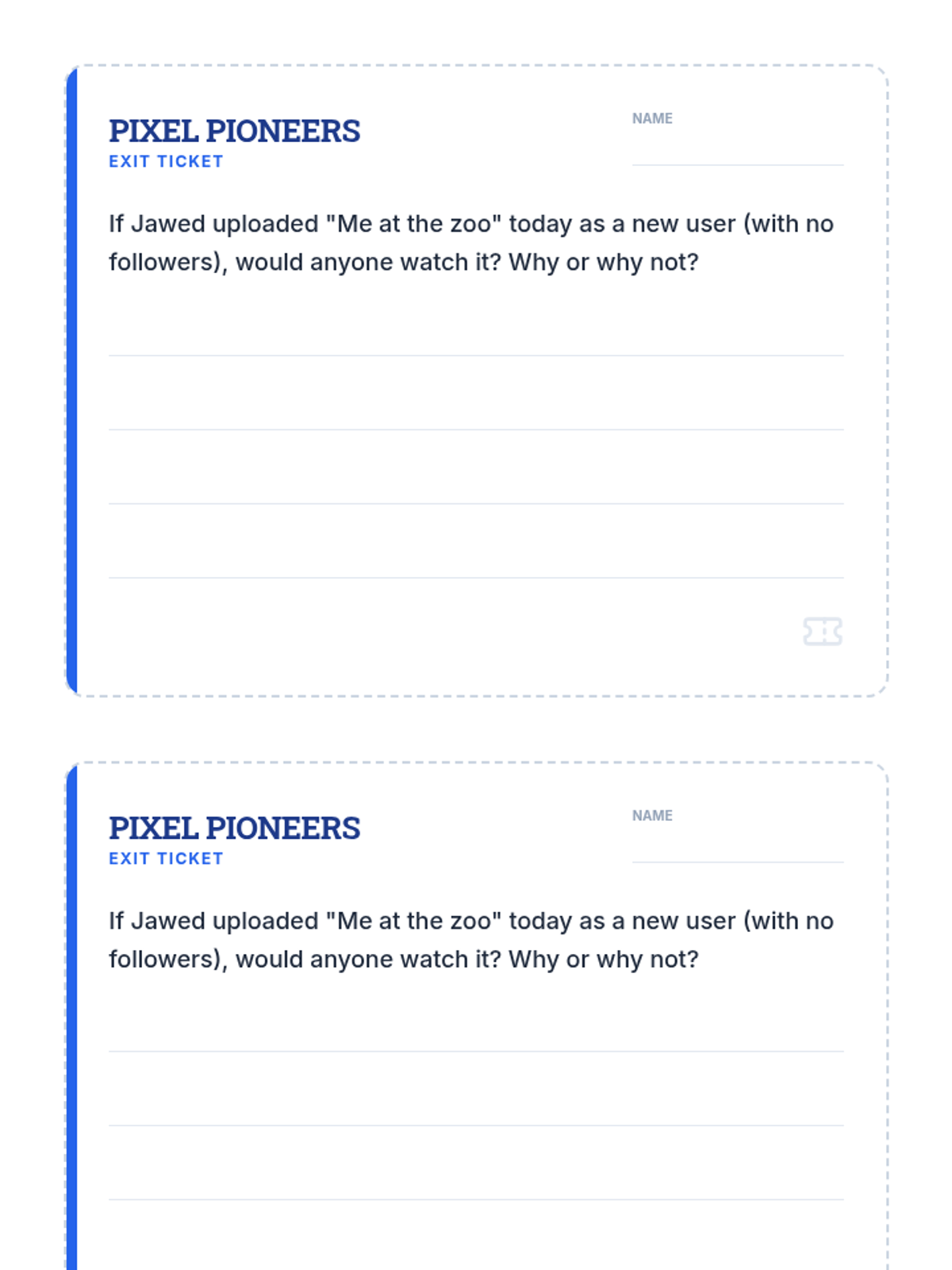
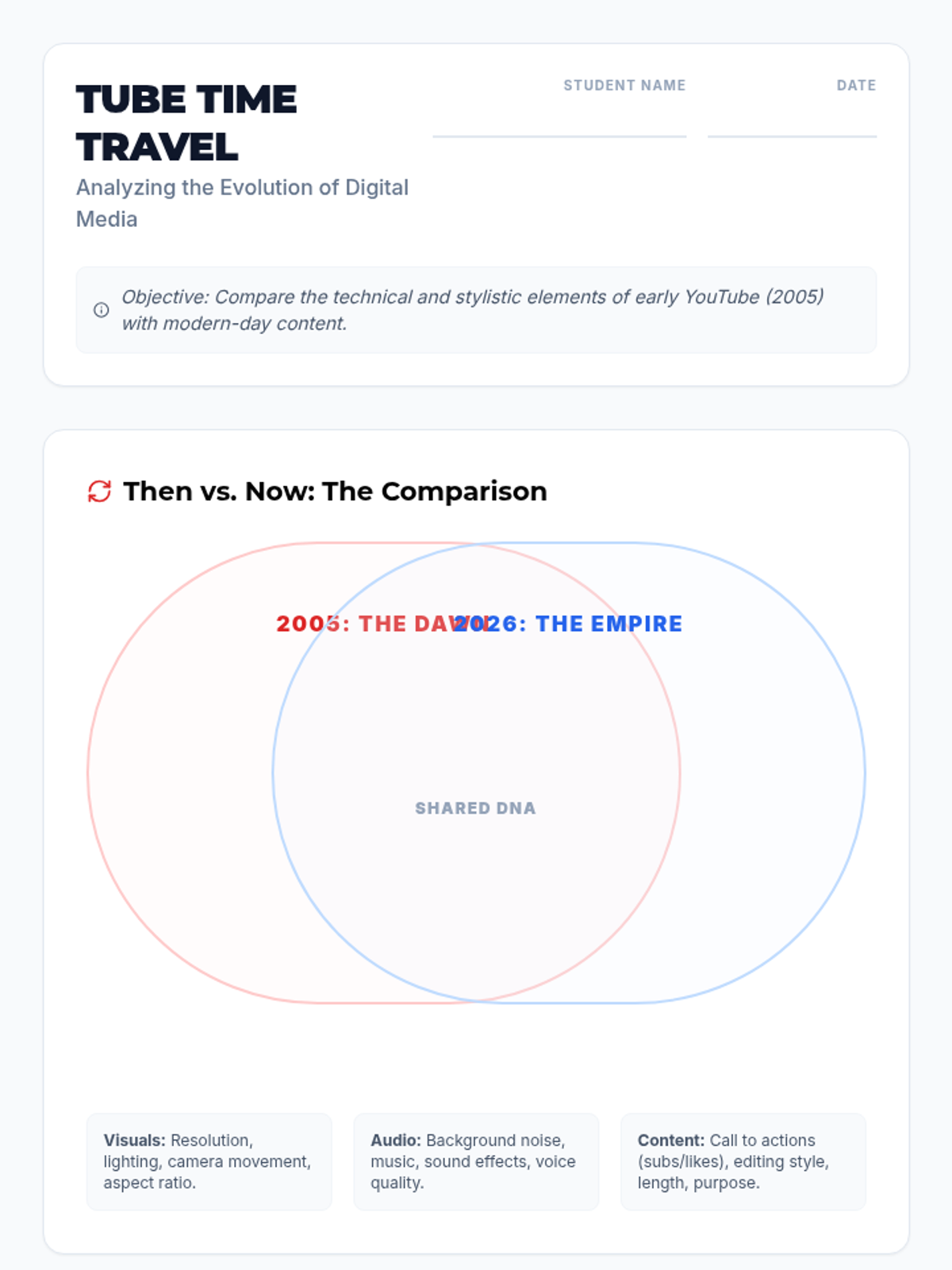
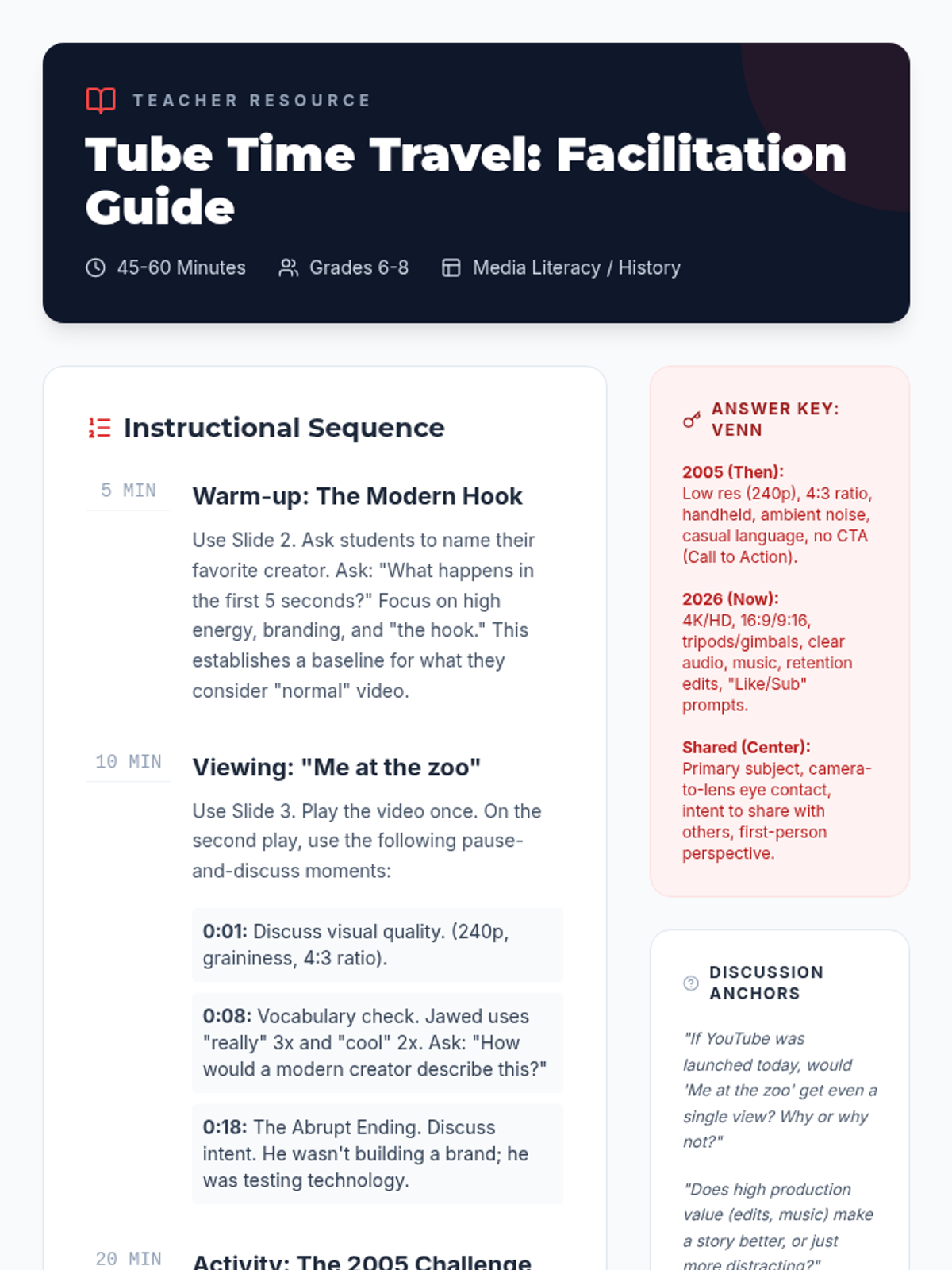
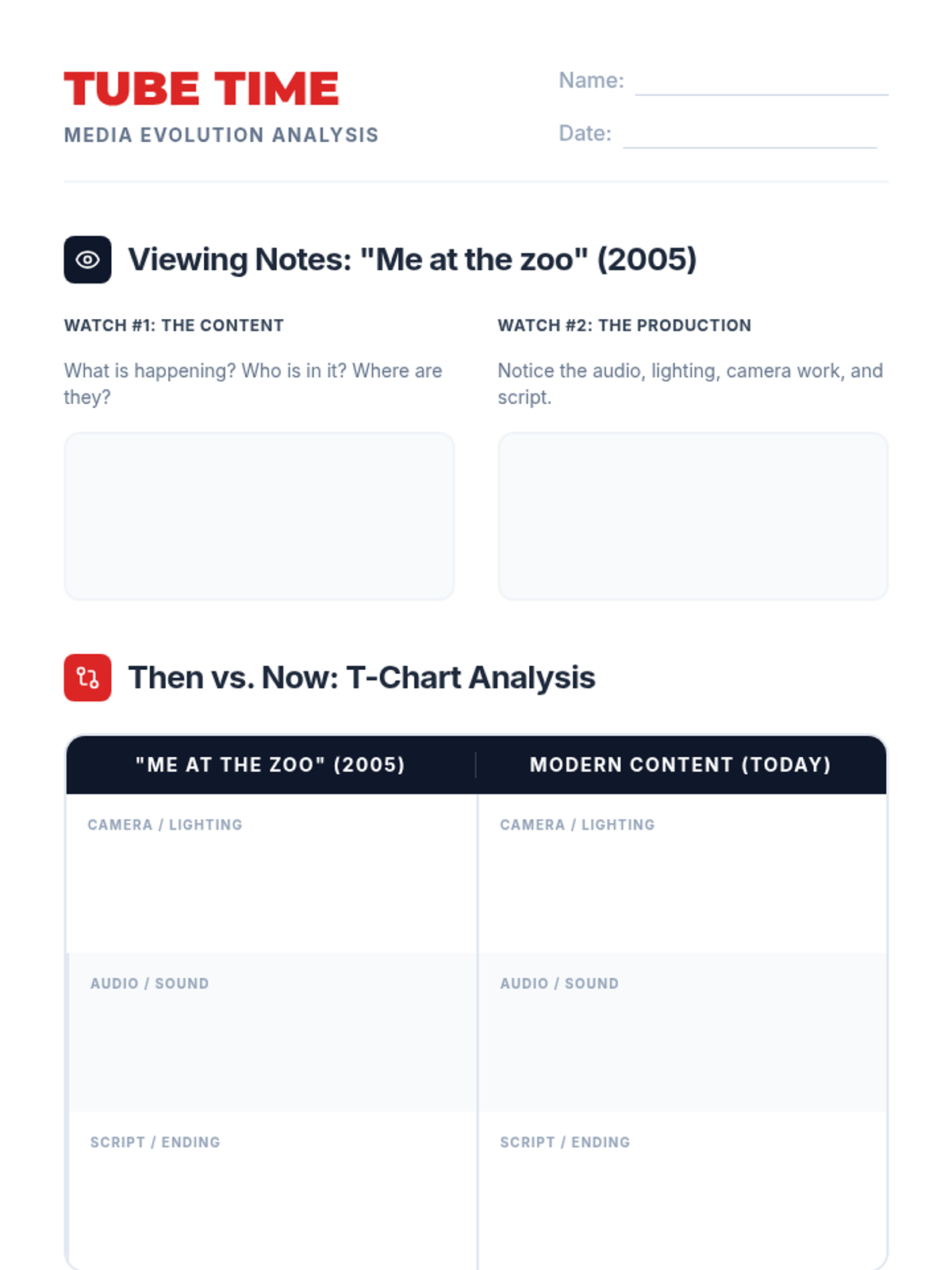
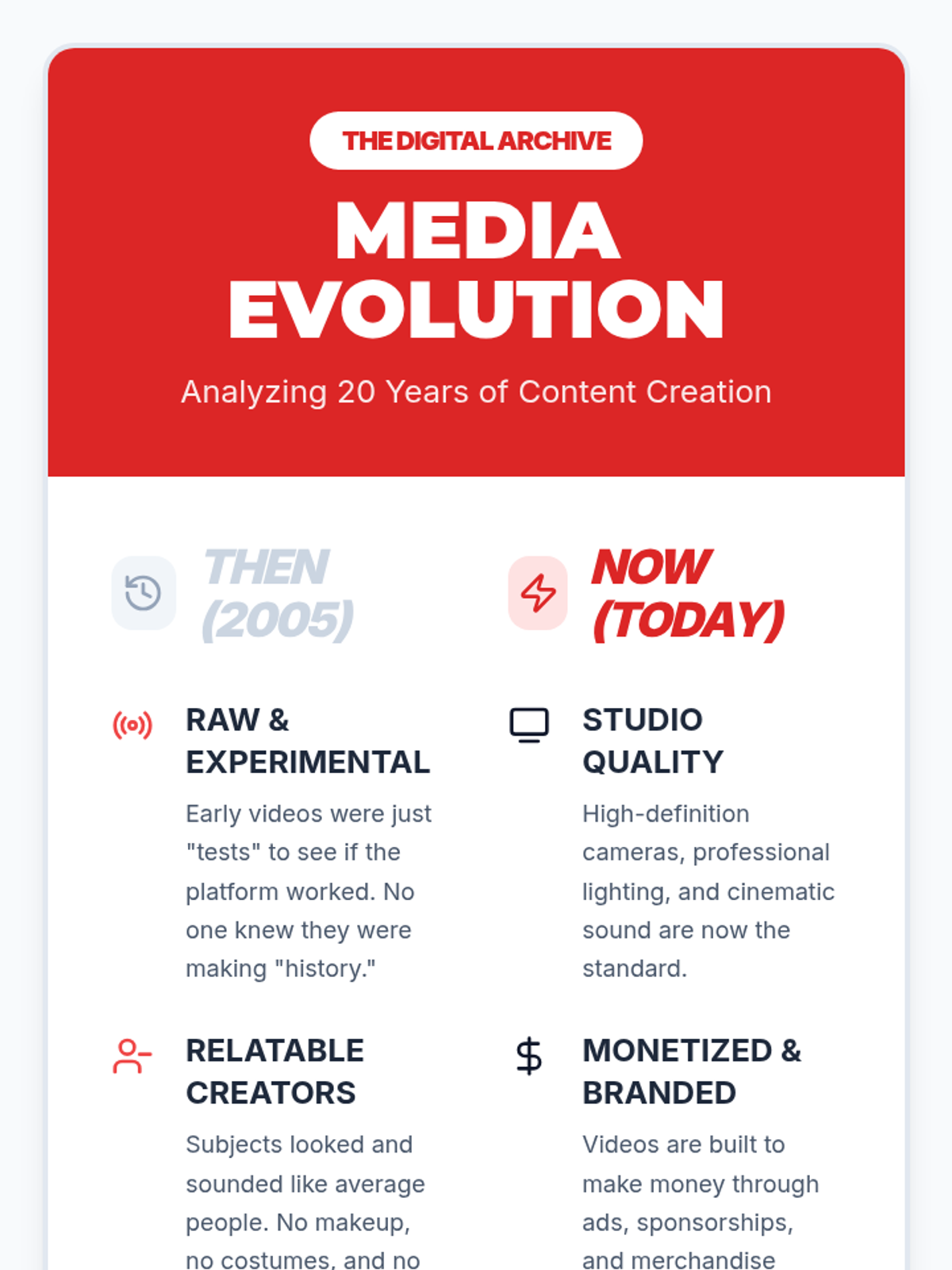
A lesson where students compare the first YouTube video 'Me at the zoo' with modern content to understand the evolution of social media.
A quick 10-minute interactive lesson for kindergarteners to practice positive social interactions, empathy, and cooperation through guided pairing and sharing activities.
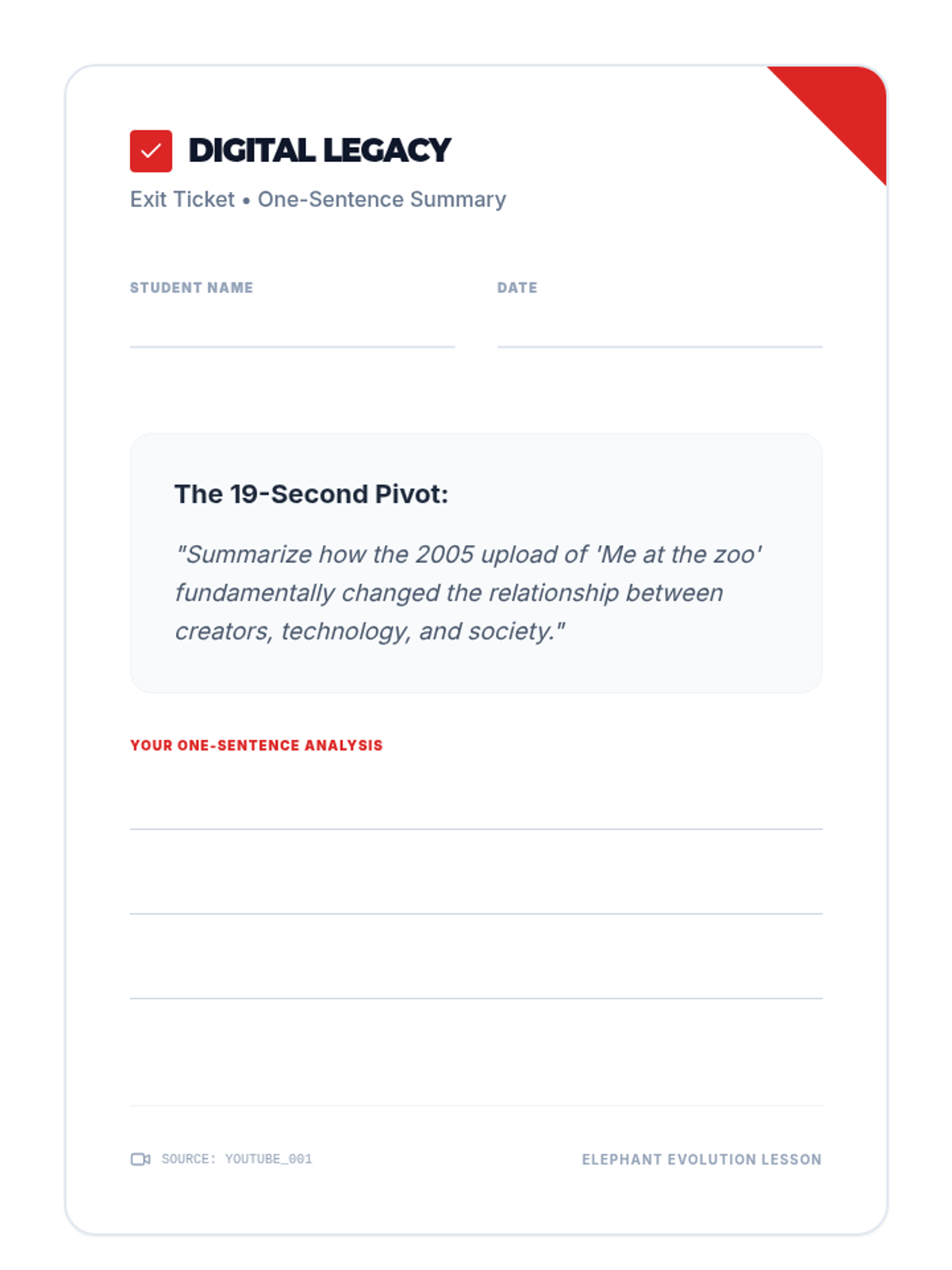
A lesson regarding the evaluation of primary sources in the digital age, focusing on the first YouTube video.
A lesson for Middle School students on digital footprints and online permanence, analyzing the first YouTube video ever uploaded.
A set of visual tools to help students navigate daily classroom transitions and routines with independence.
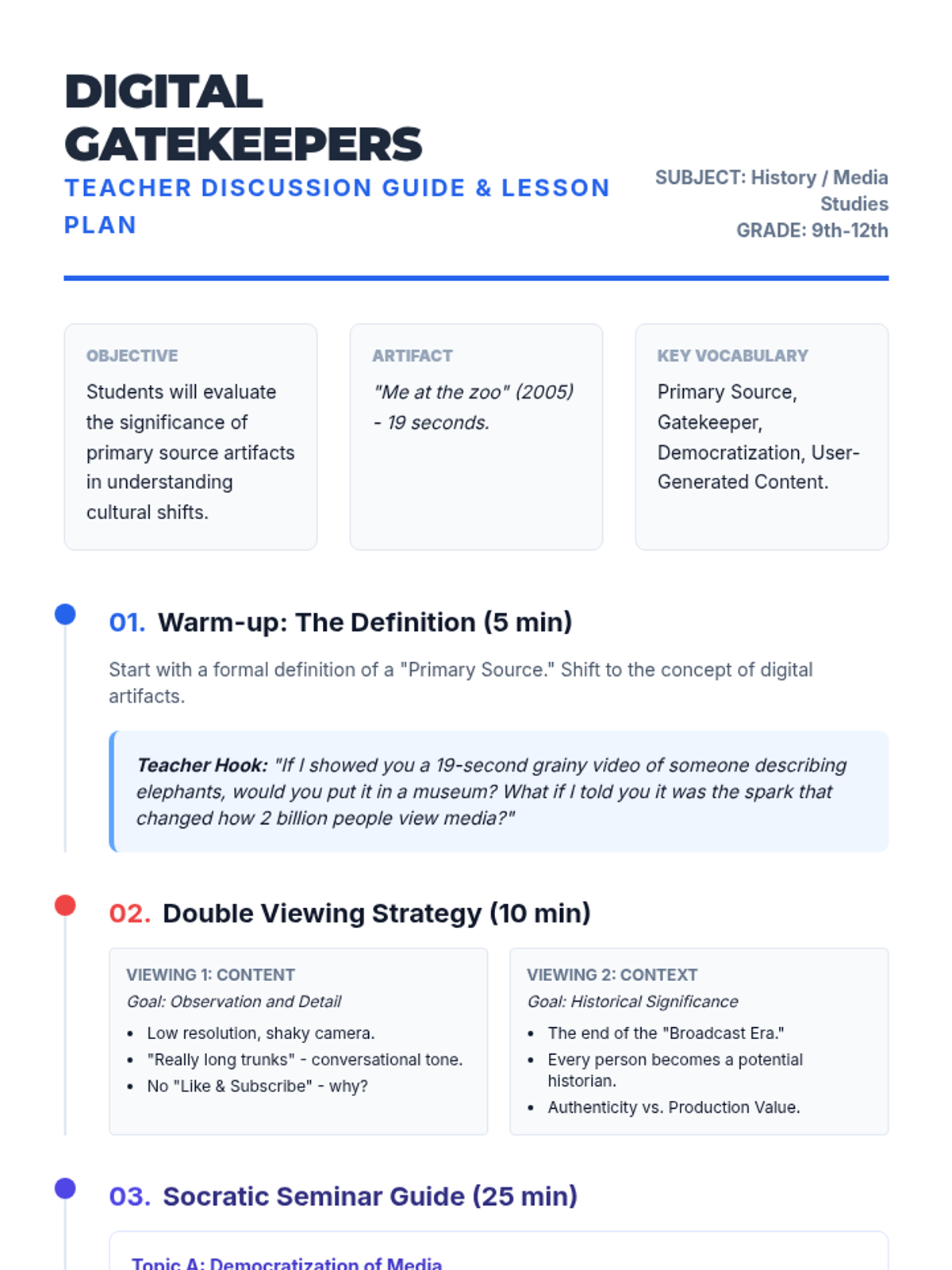
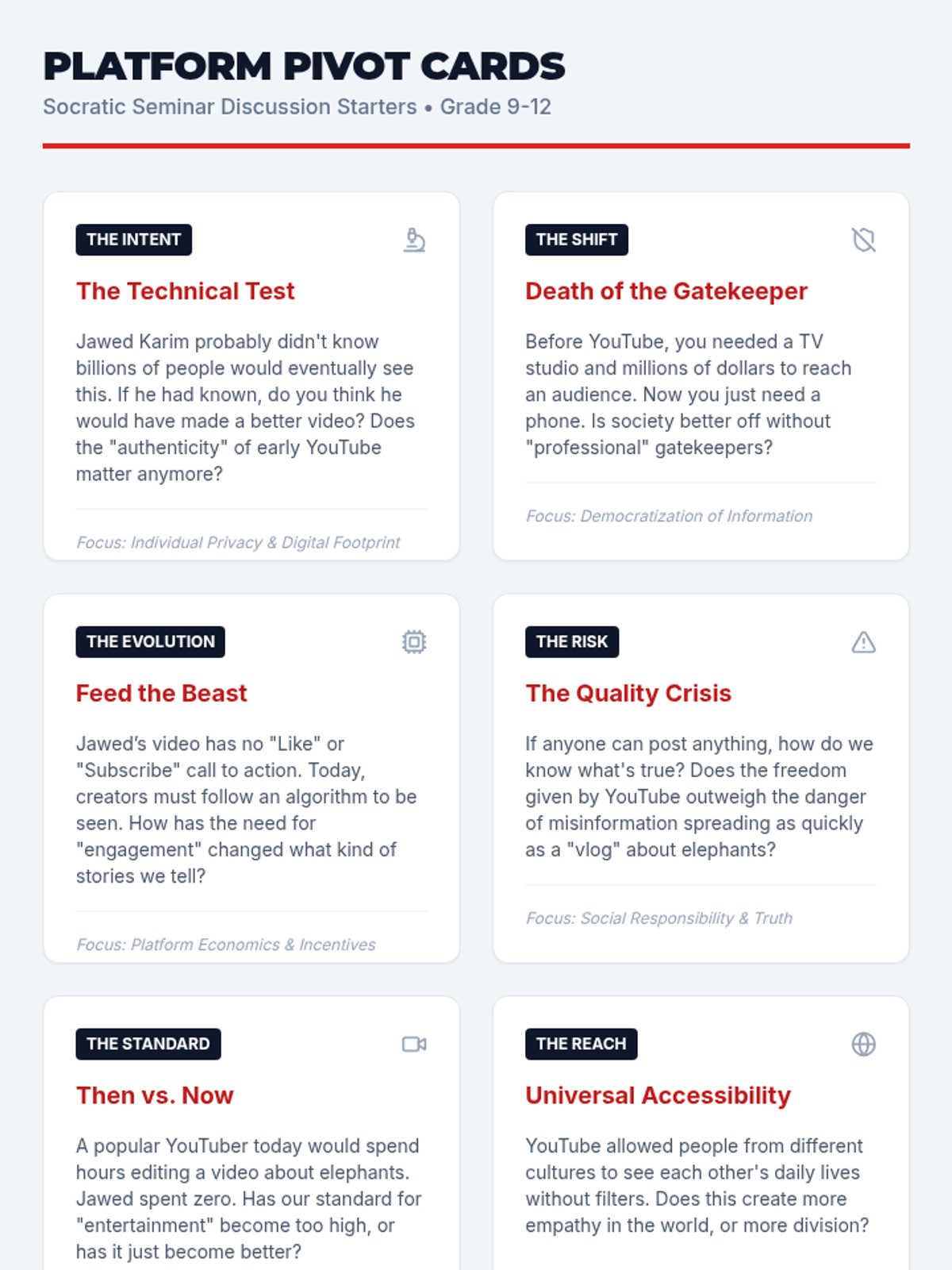
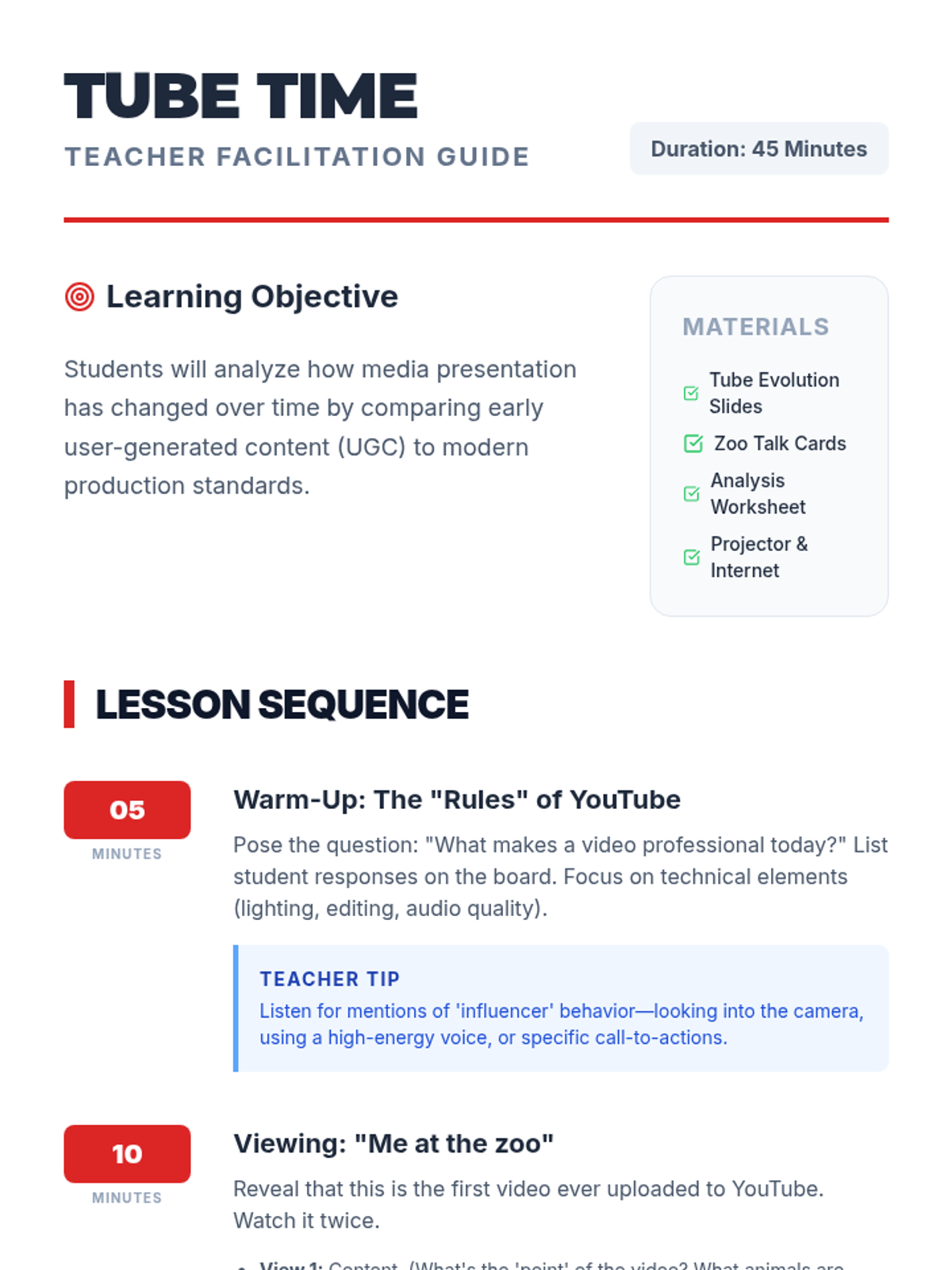
A media studies lesson analyzing the first YouTube video as a historical artifact, exploring the shift to user-generated content and early internet culture.
Students investigate the history of user-generated content by contrasting the first YouTube video with modern production standards.