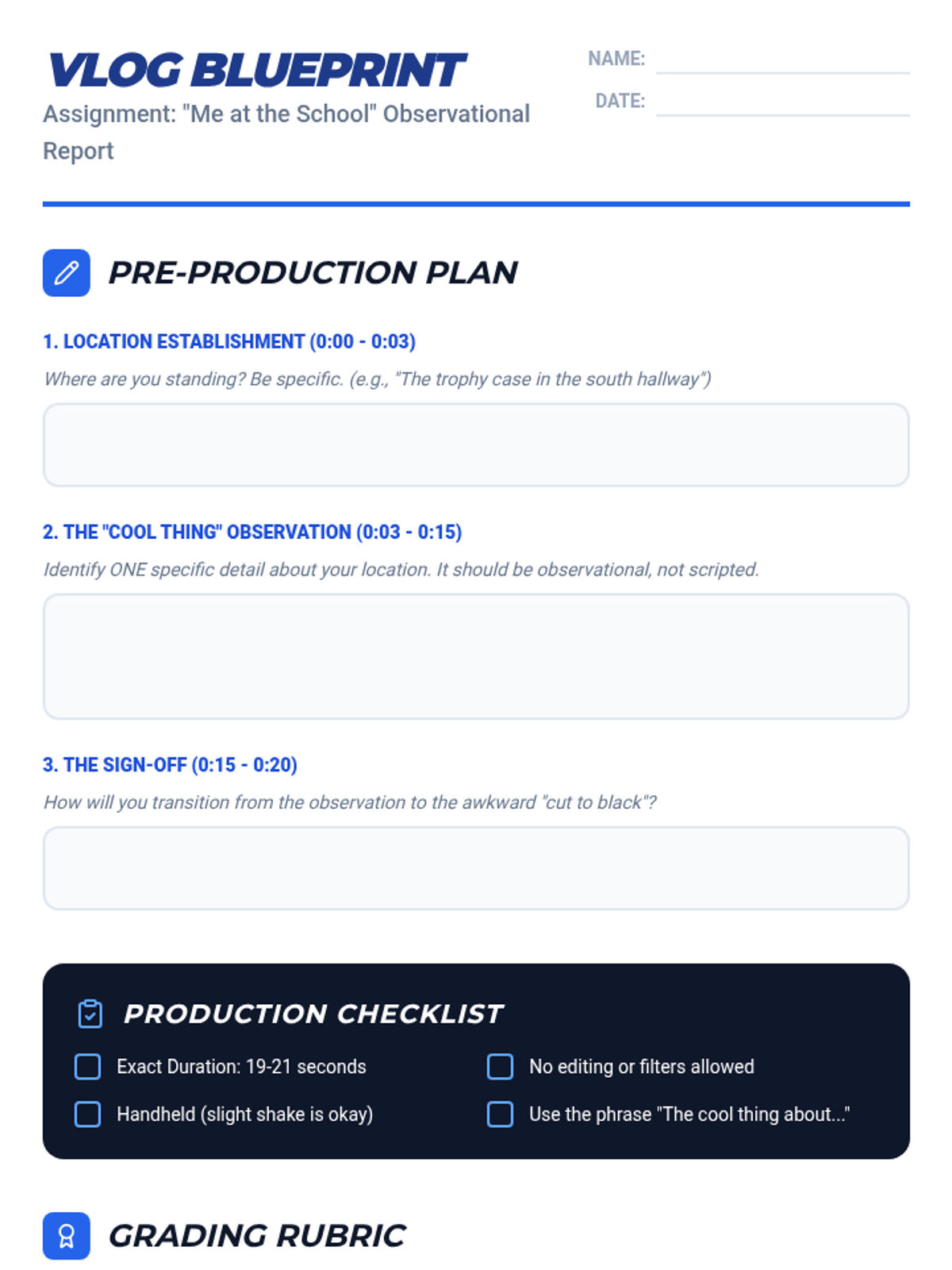
A writing and speaking lesson for 4th-6th graders focused on concise communication, using the 'Me at the zoo' video as a model for creating 19-second vlogs.
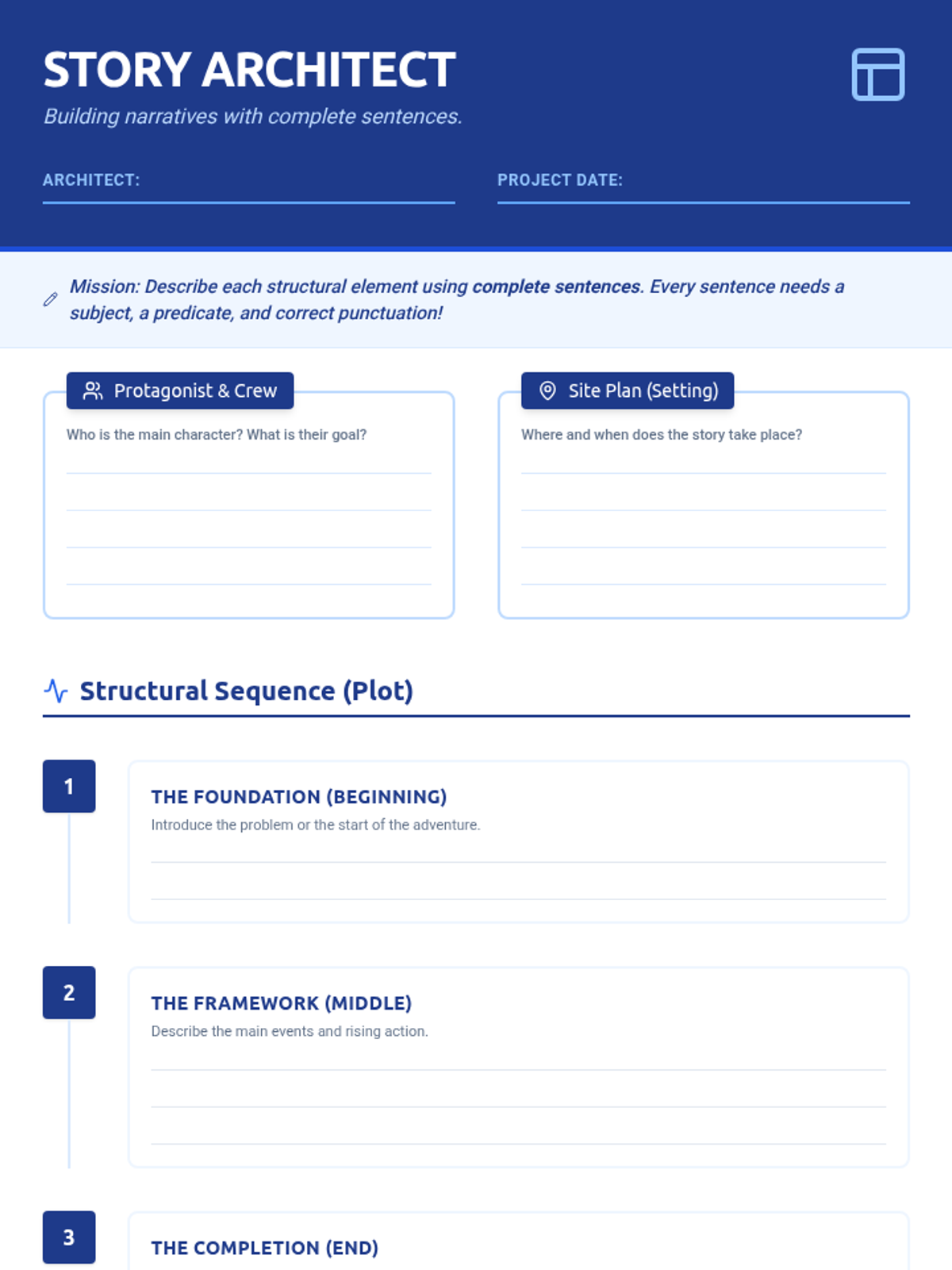
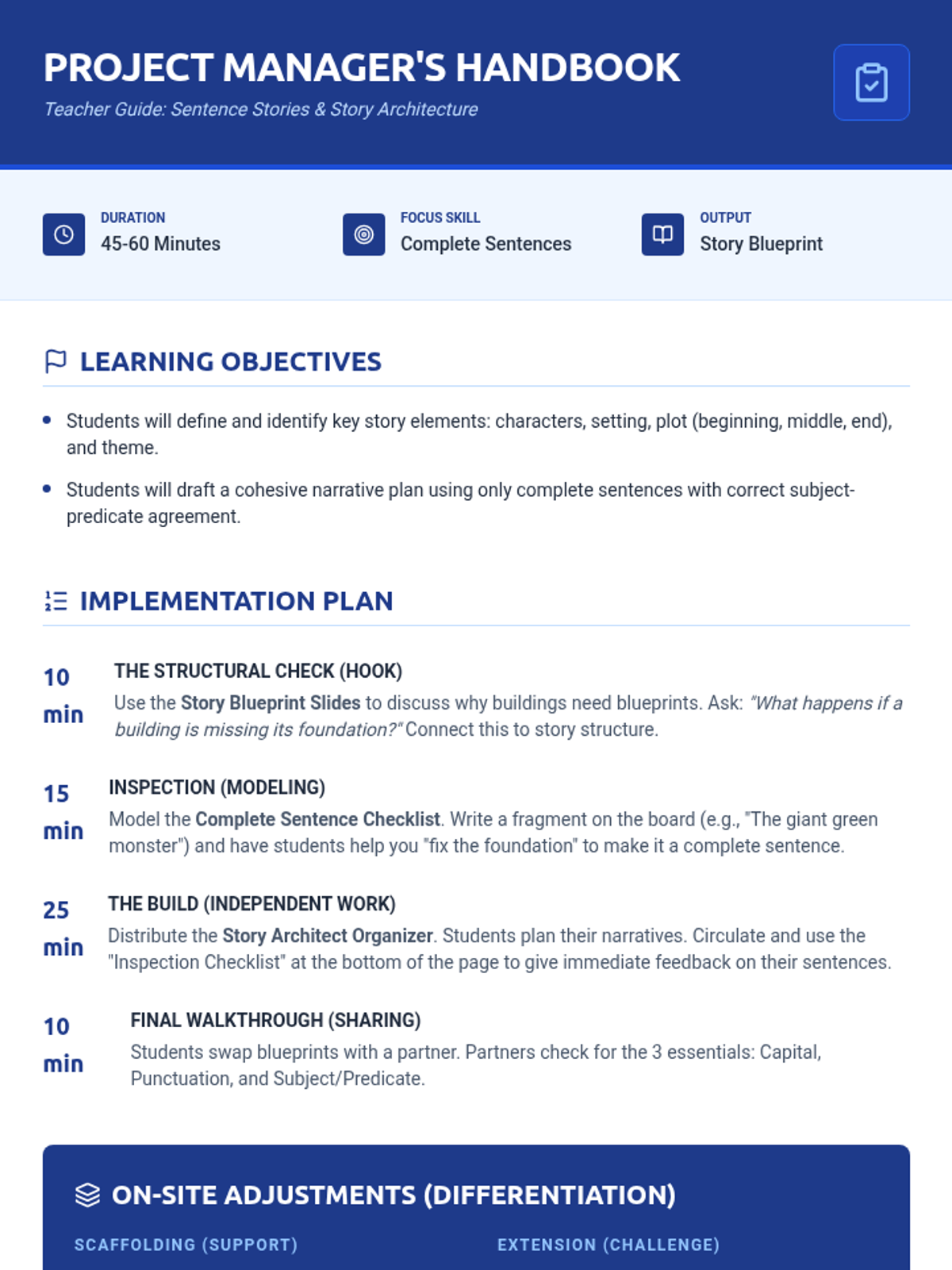
Students practice writing complete sentences while identifying and describing key story elements in their own narrative planning.
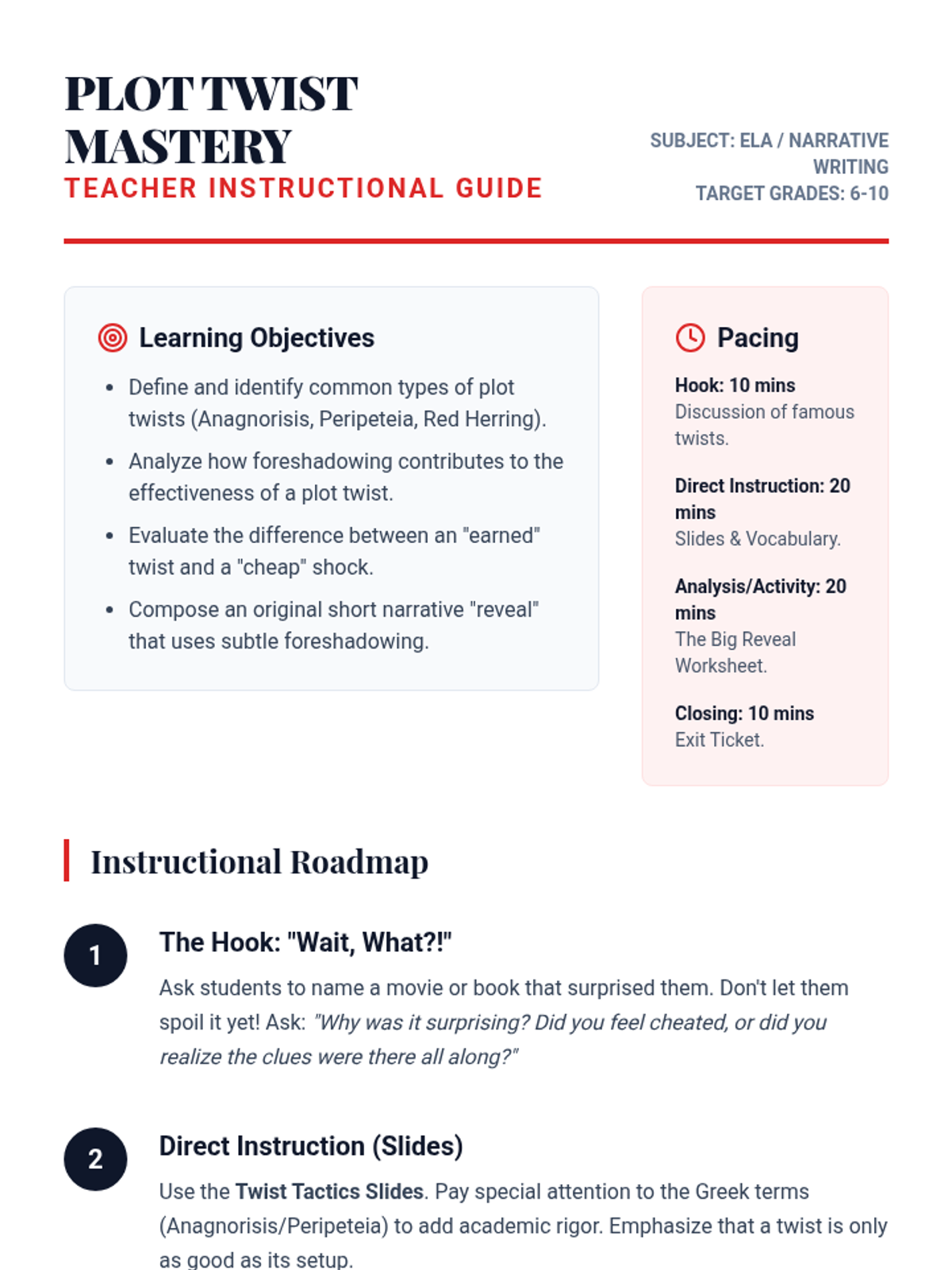
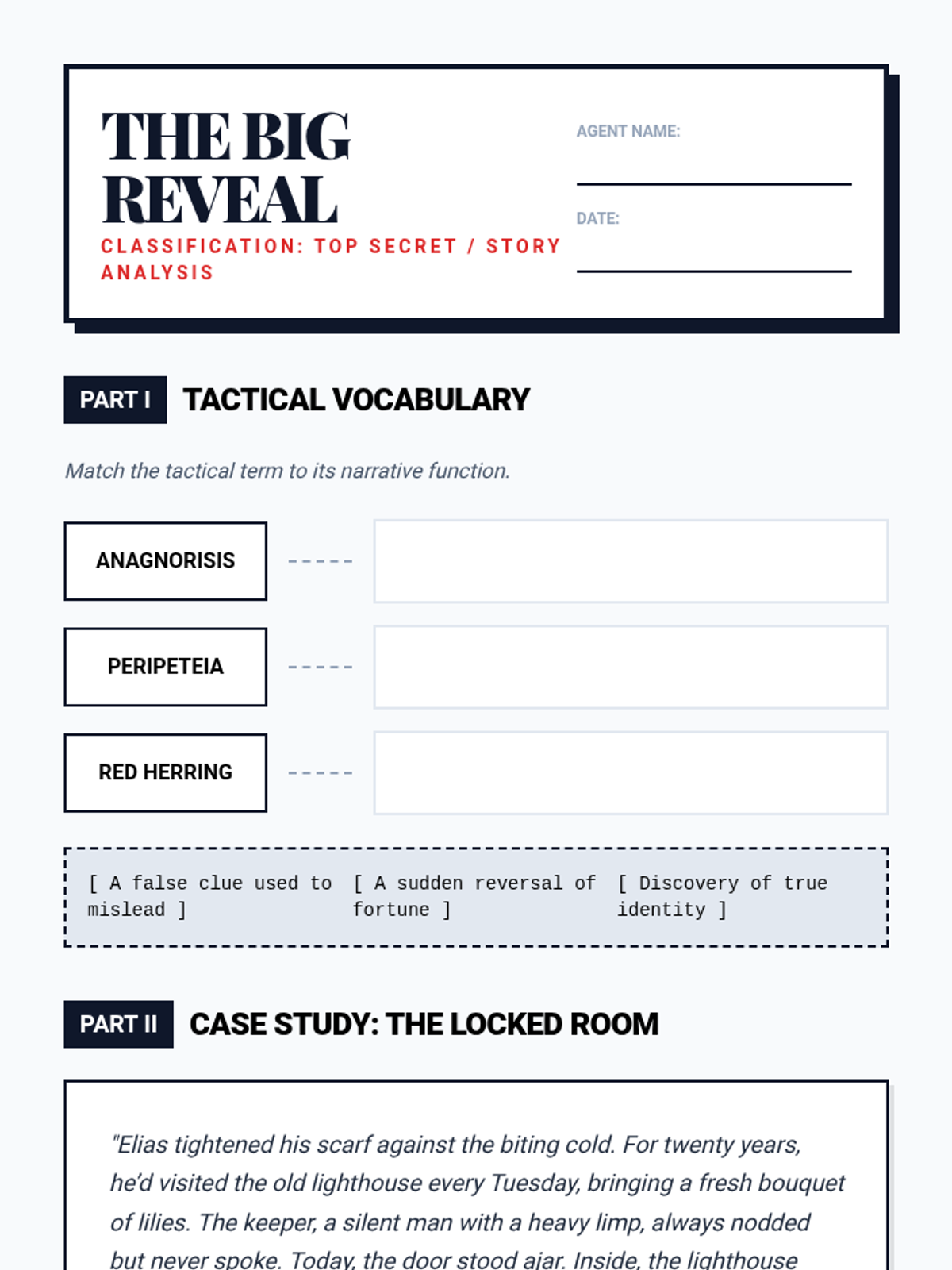
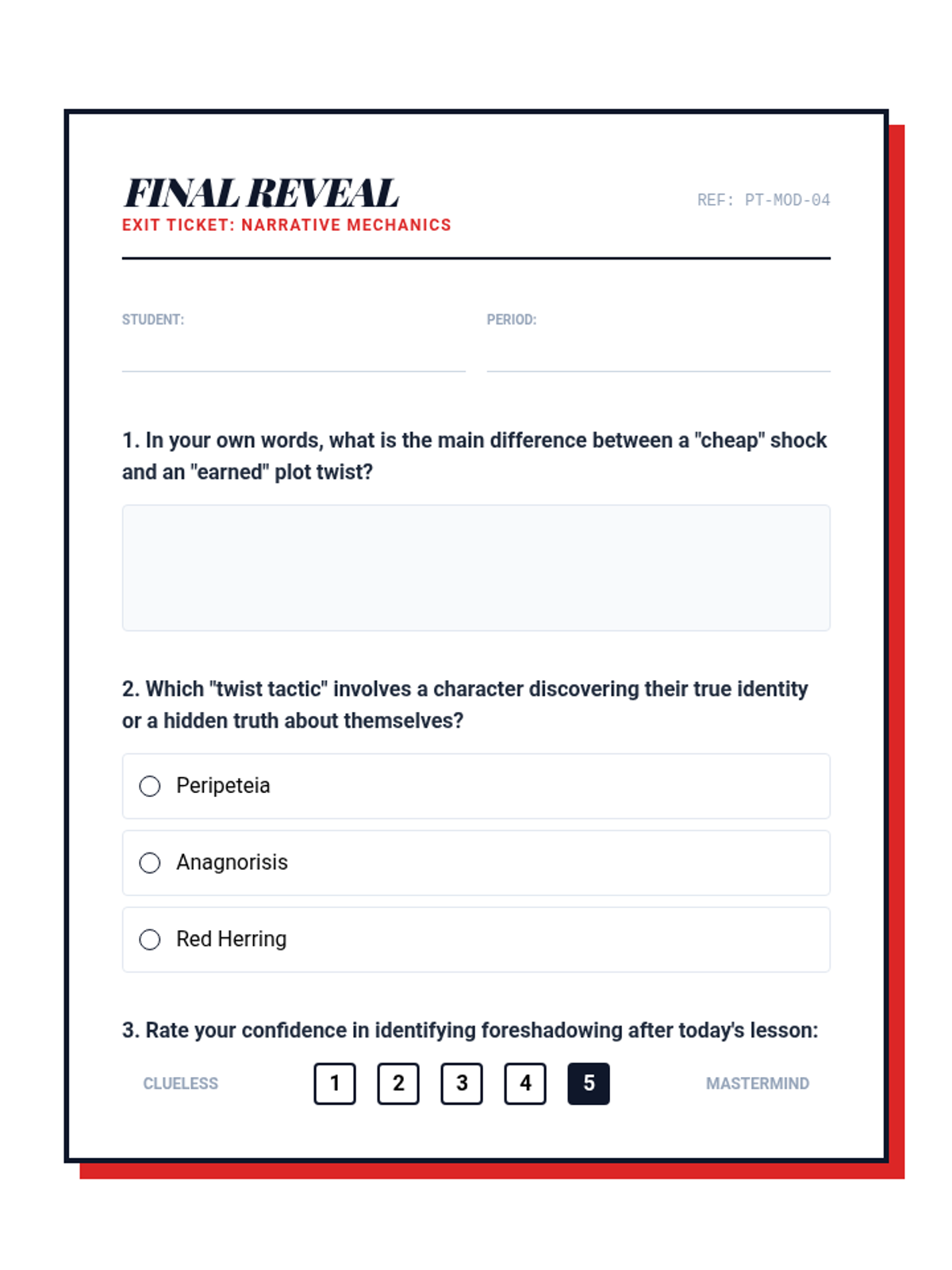
A lesson focused on identifying, analyzing, and writing effective plot twists in narrative ELA, helping students understand how authors subvert expectations.
A reading comprehension lesson where students explore the physical traits, behaviors, and high-altitude habitats of llamas while practicing key literacy skills.
Students will practice key research skills—extracting information, summarizing, and citing evidence—using a detailed passage about llamas.
A hands-on introduction to the Engineering Design Process (EDP) where students take on the role of 'Mission Engineers' to solve a design challenge.
Students will learn about llamas' unique physical and behavioral traits and compare them with their relatives, camels and alpacas, through a reading passage and structured activities.
A fun, llama-themed math lesson for 4th graders focusing on measurement, word problems, and data interpretation based on factual llama information.
An engaging exploration of llama habitats, diets, and physical adaptations, featuring informational text and vocabulary-building activities.
A fun and engaging lesson exploring the unique characteristics of llamas, their history in the Andes, and how they compare to their camelid cousins. Students will build vocabulary and practice comparison skills.
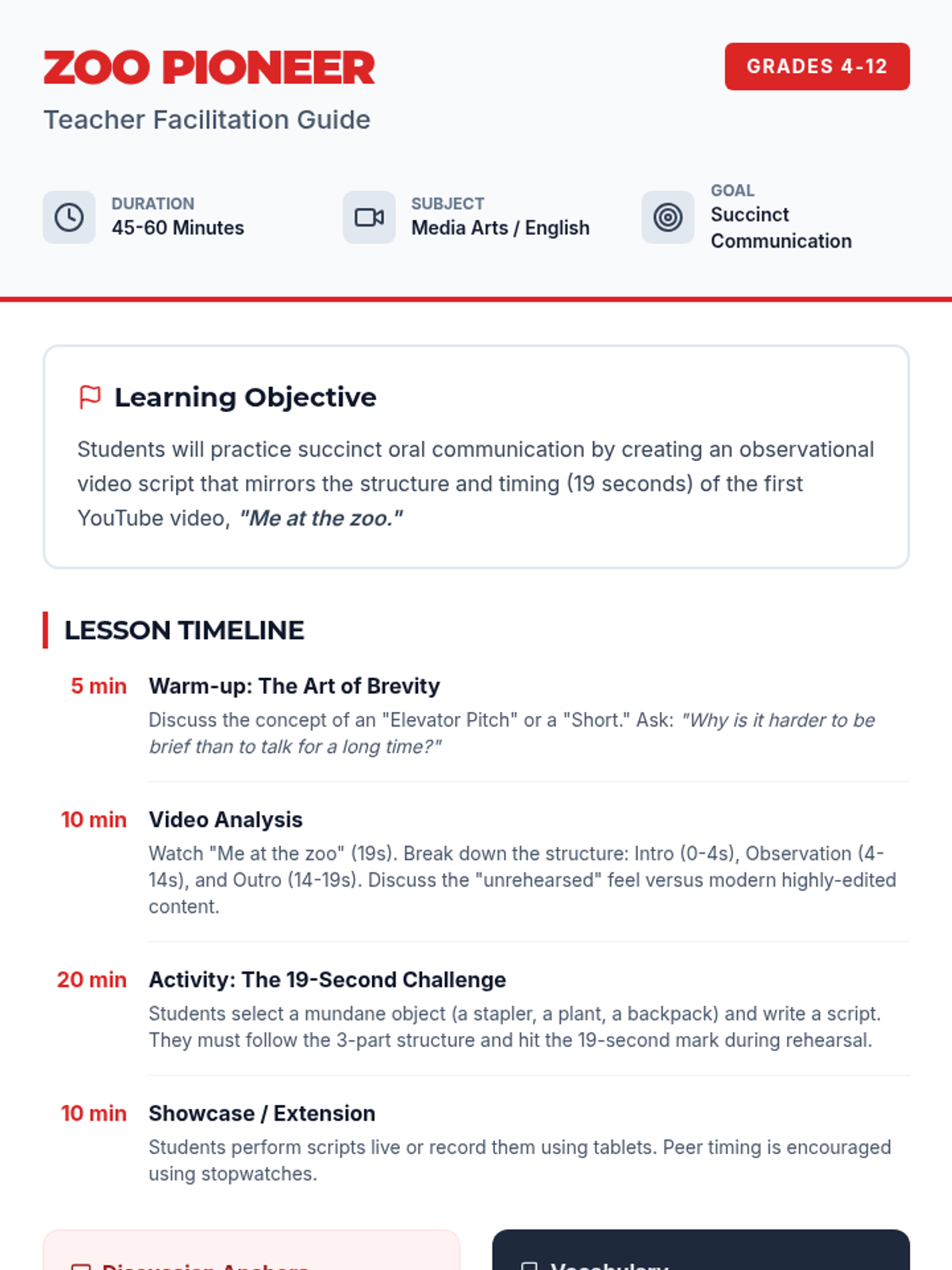
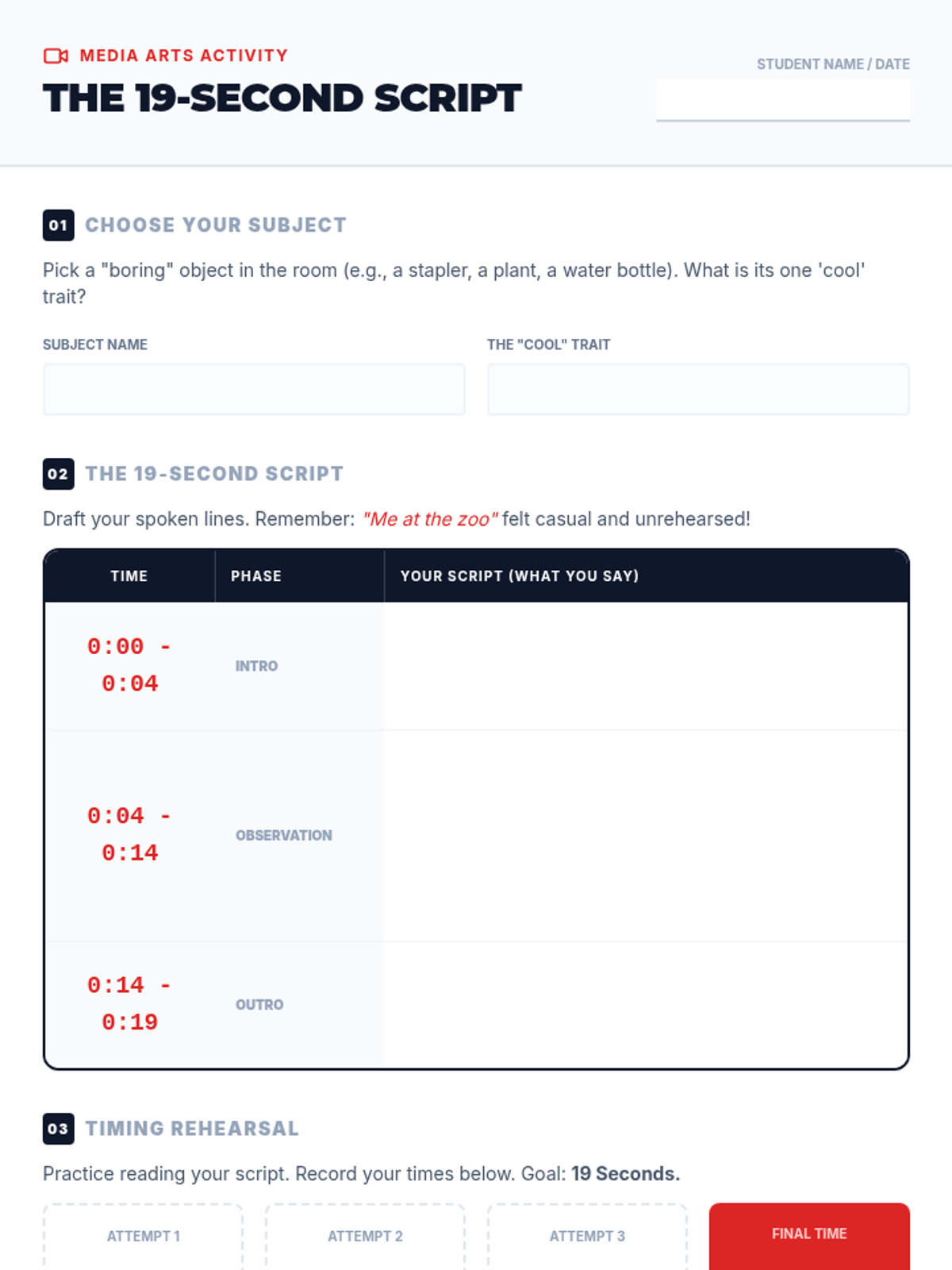
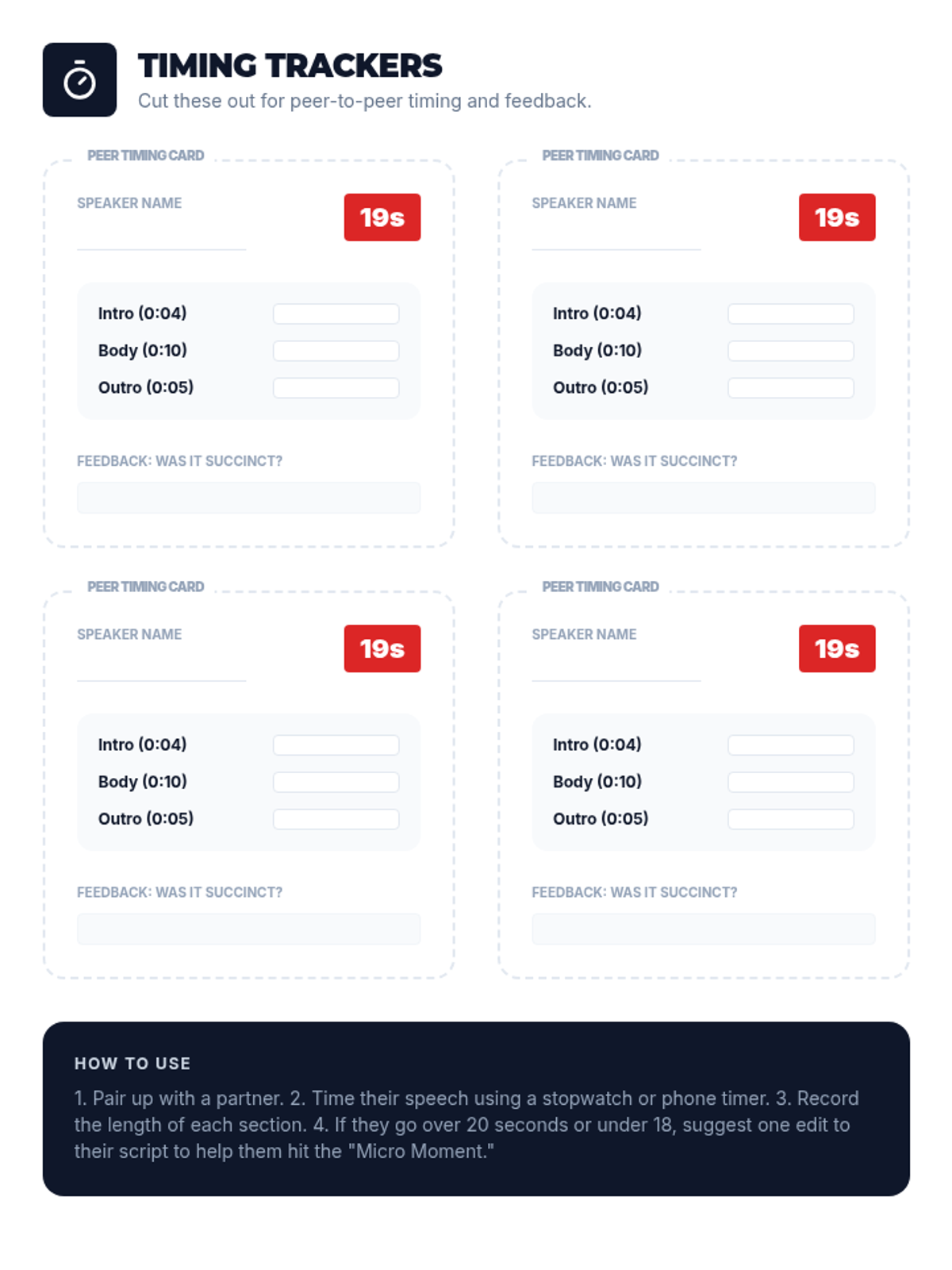
A media arts and oral communication lesson where students analyze the first YouTube video and create their own 19-second observational scripts.
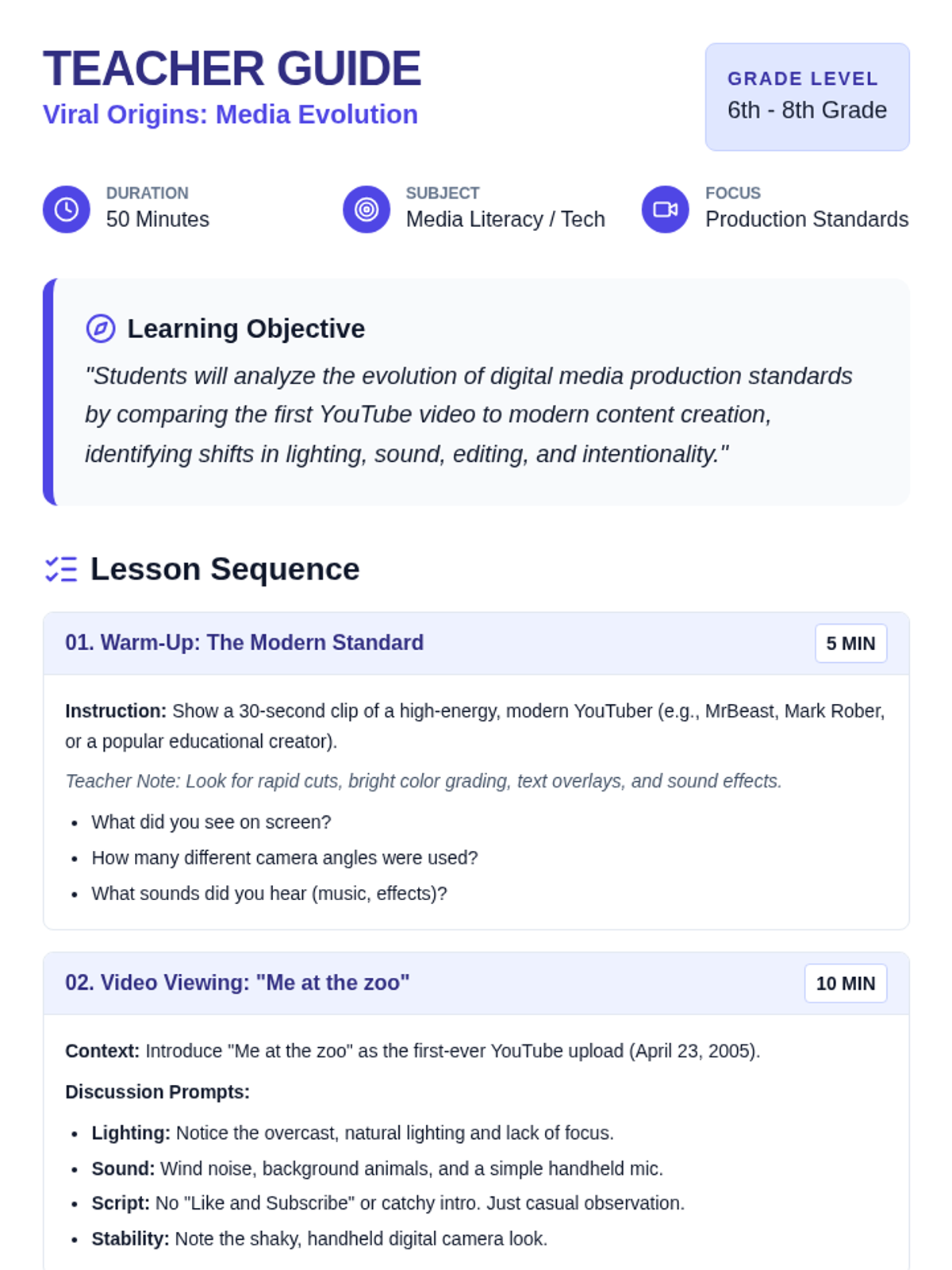
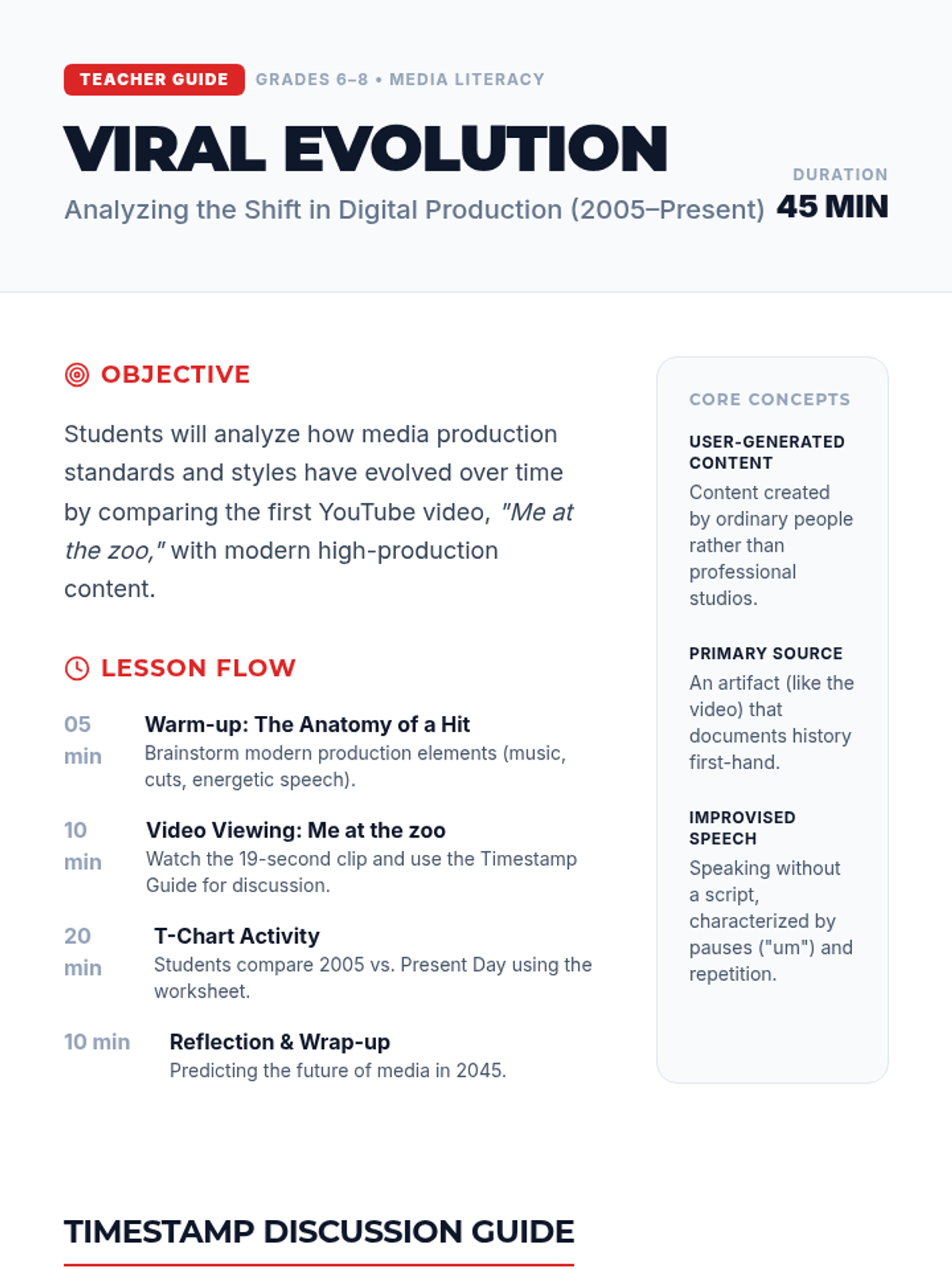
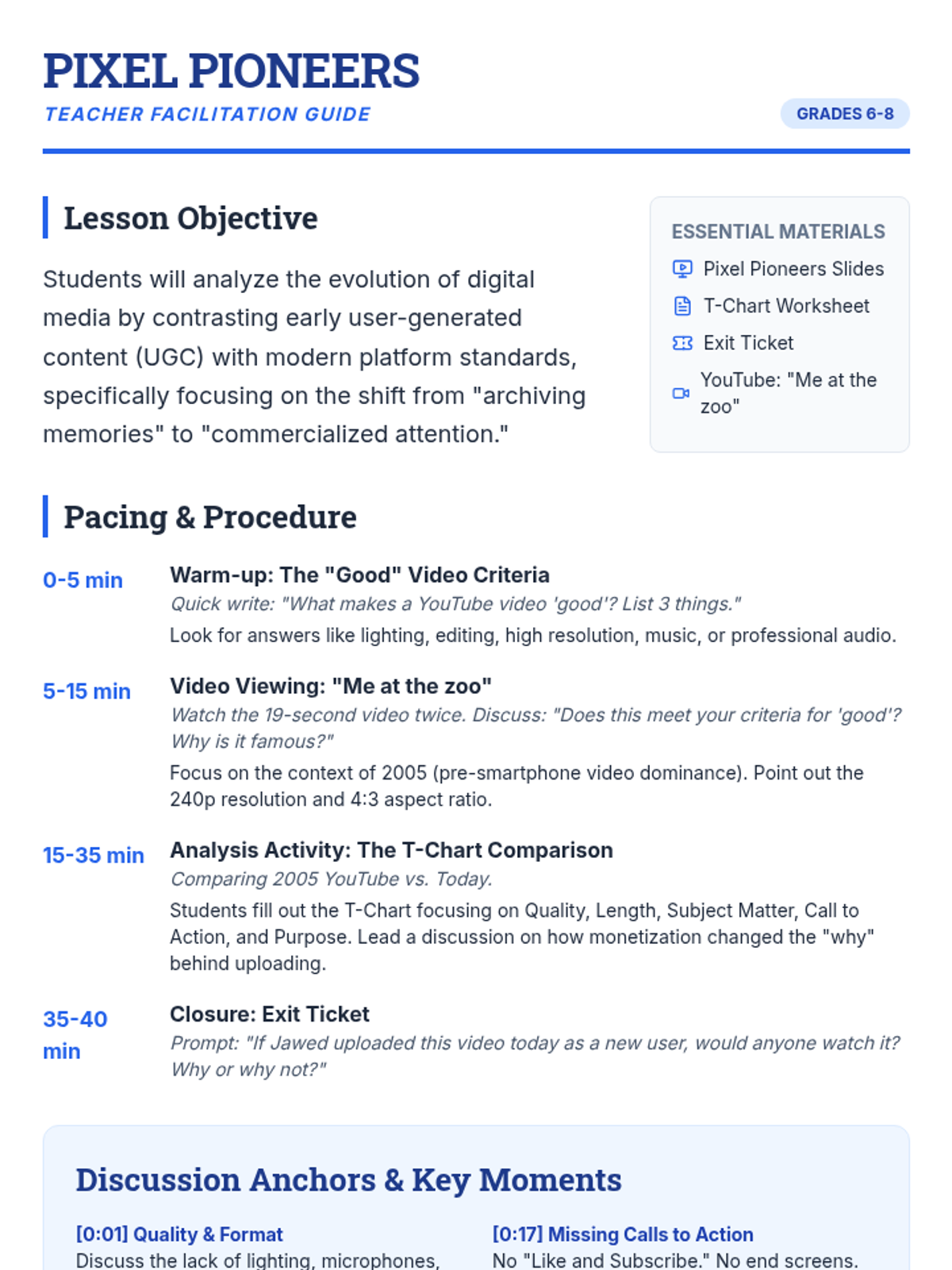
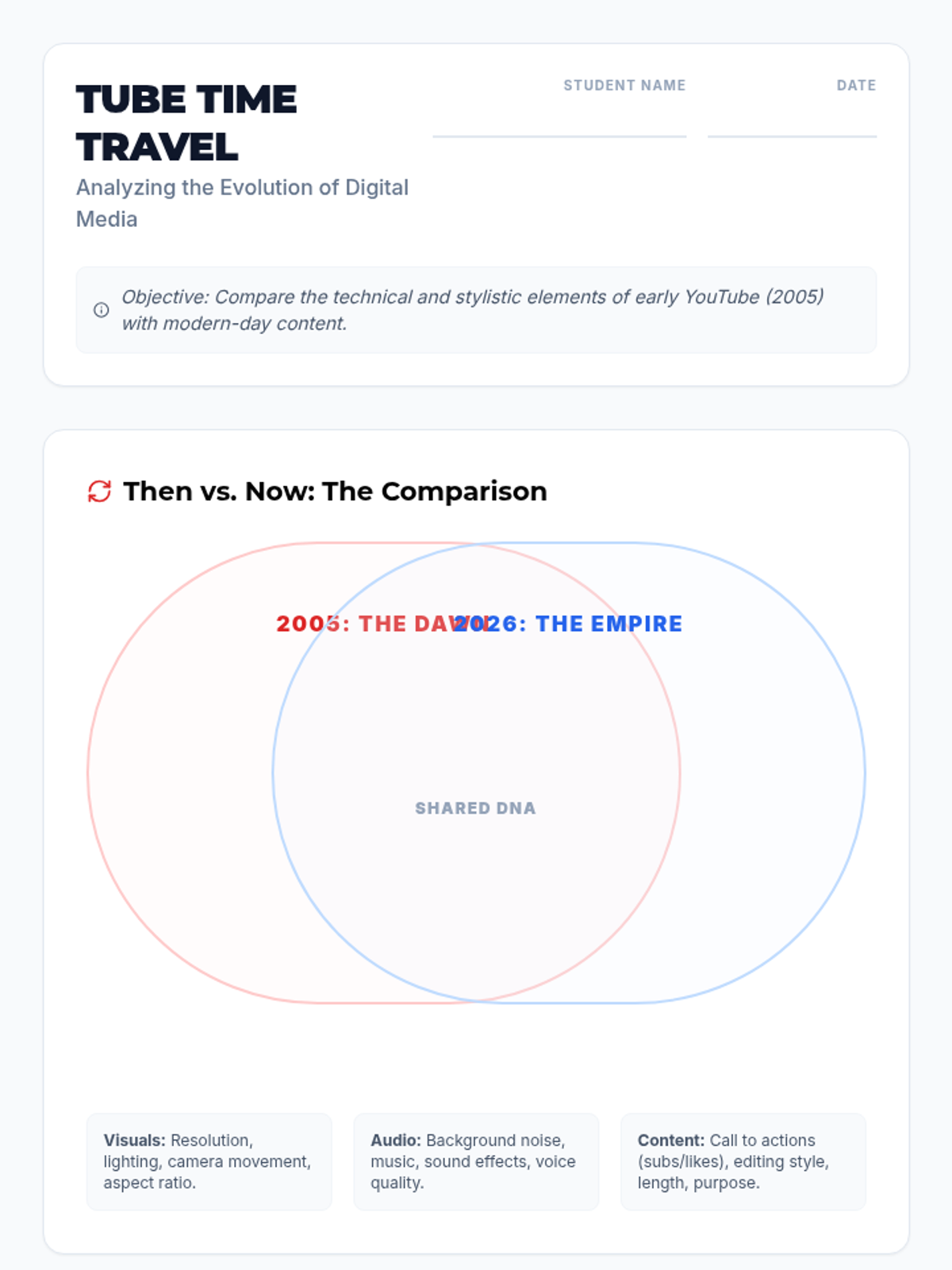
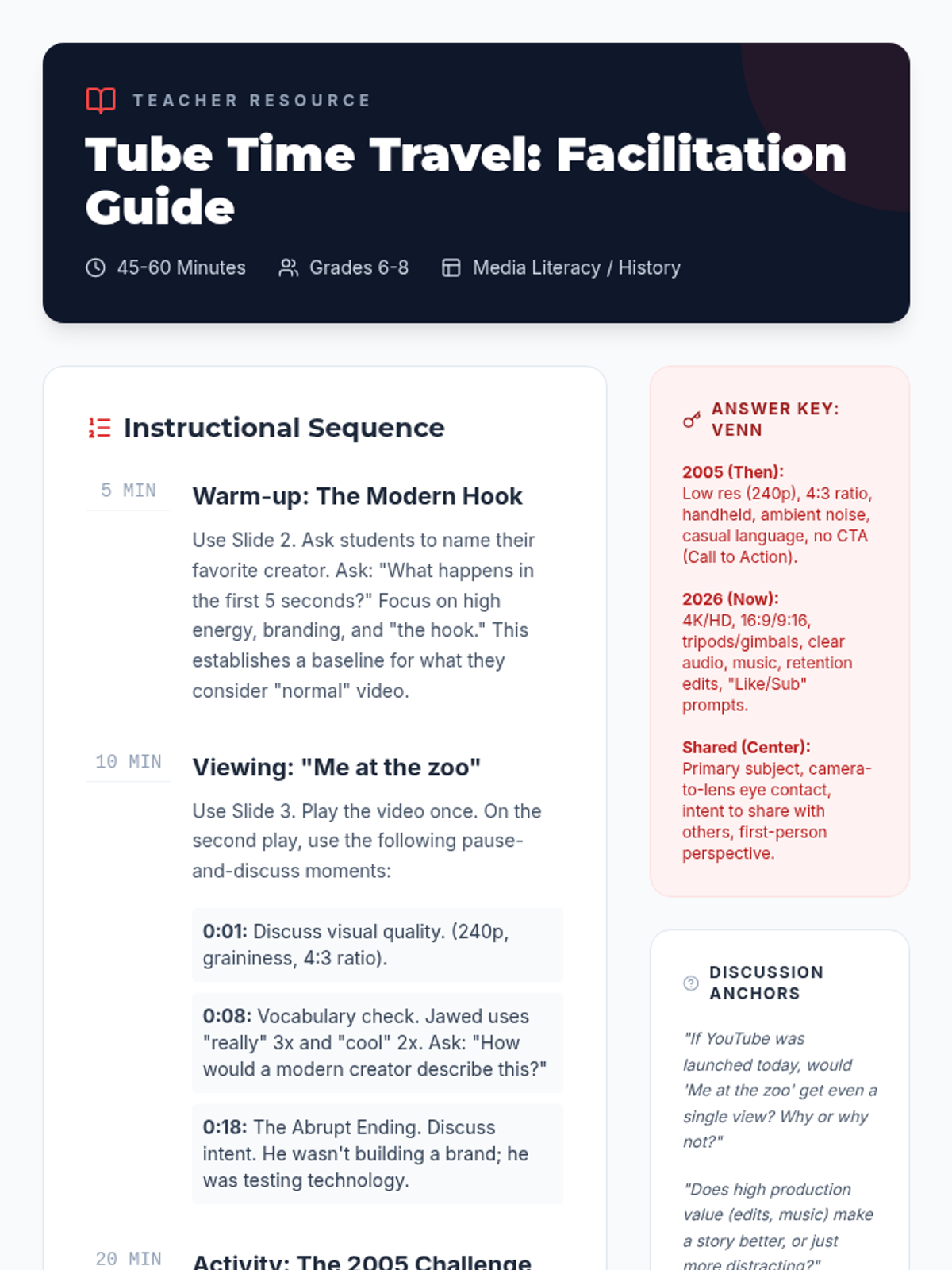
A middle school lesson exploring the dramatic evolution of digital media through the lens of YouTube's history, starting with the very first video ever uploaded.
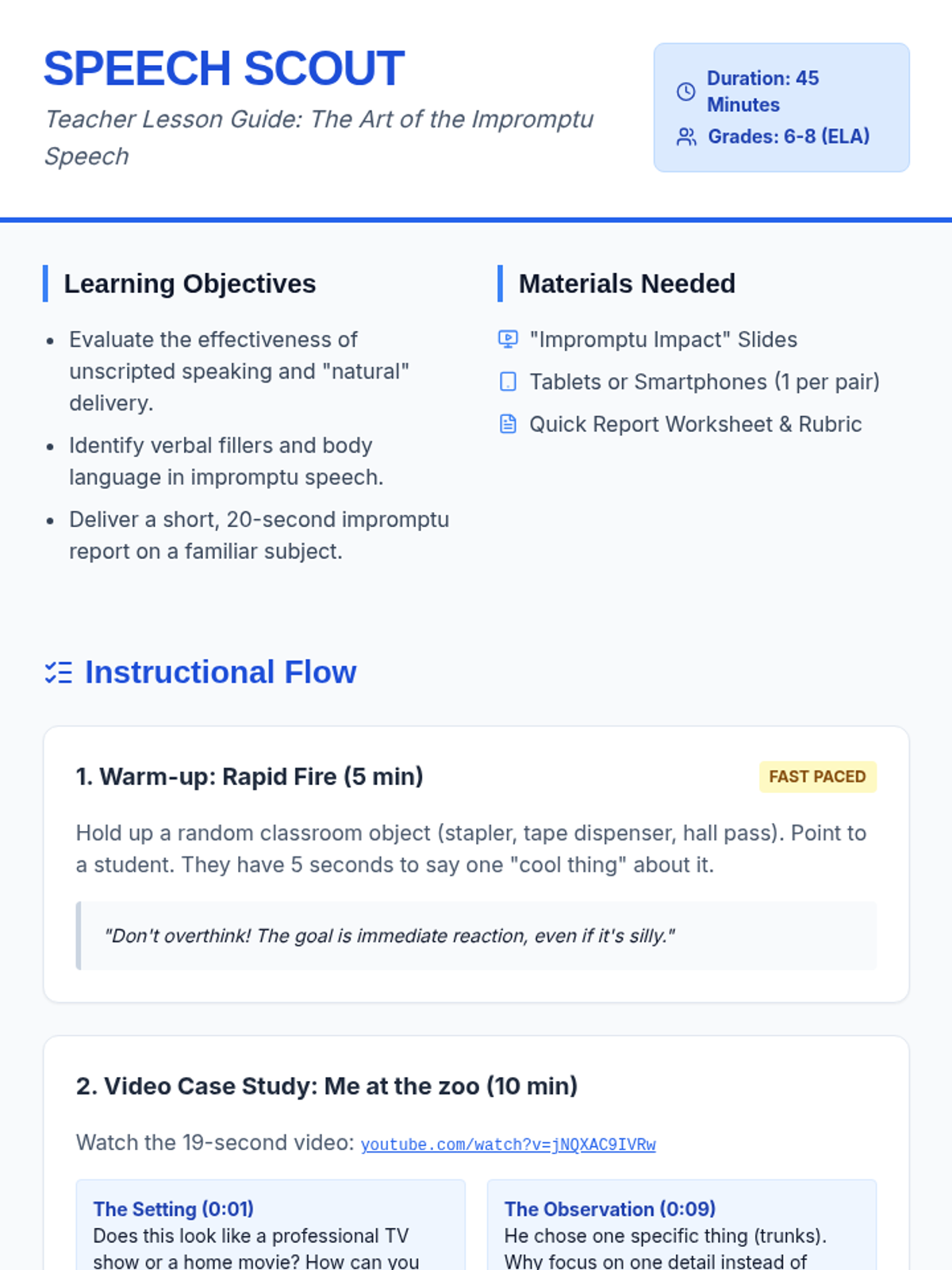
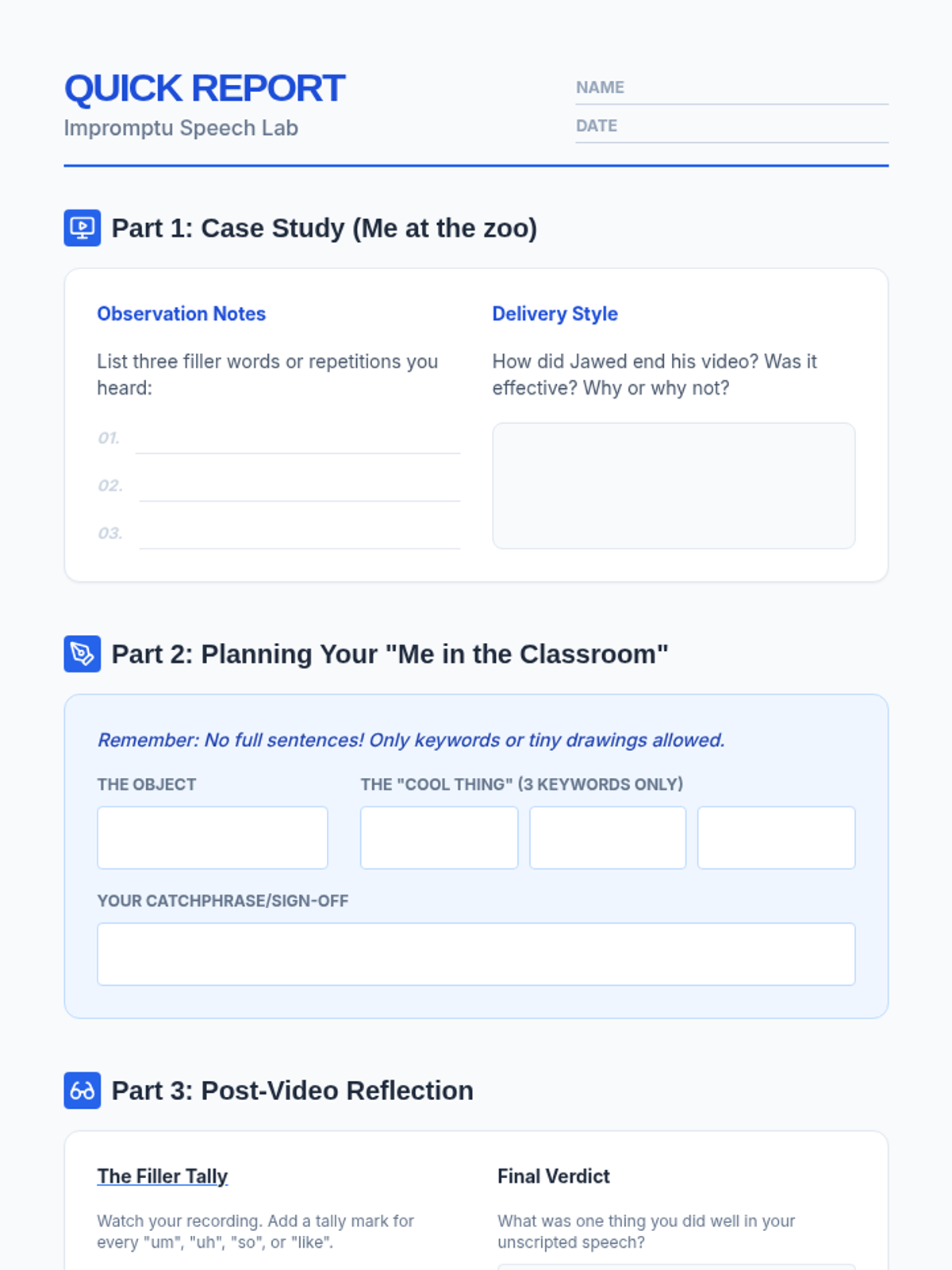
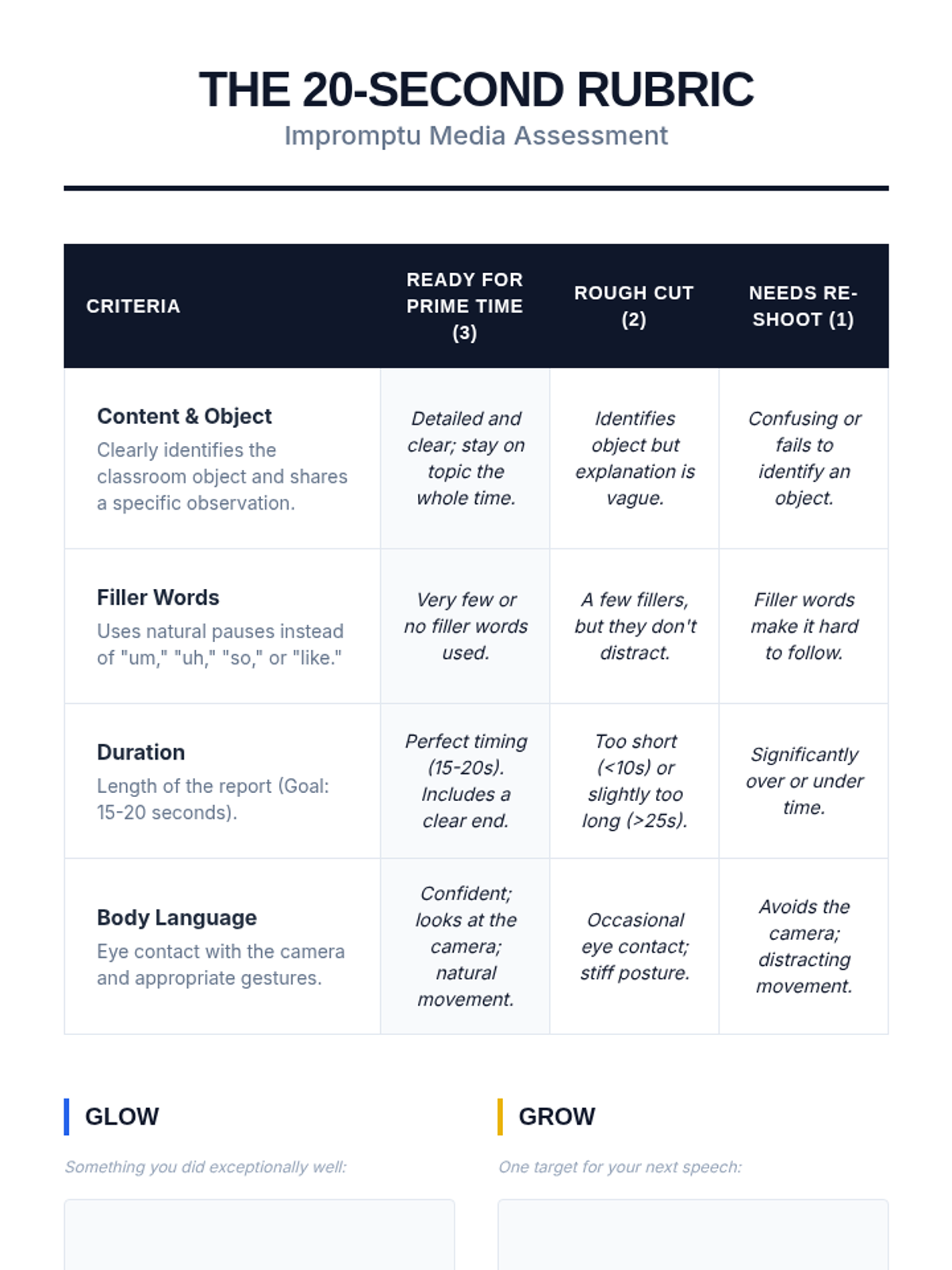
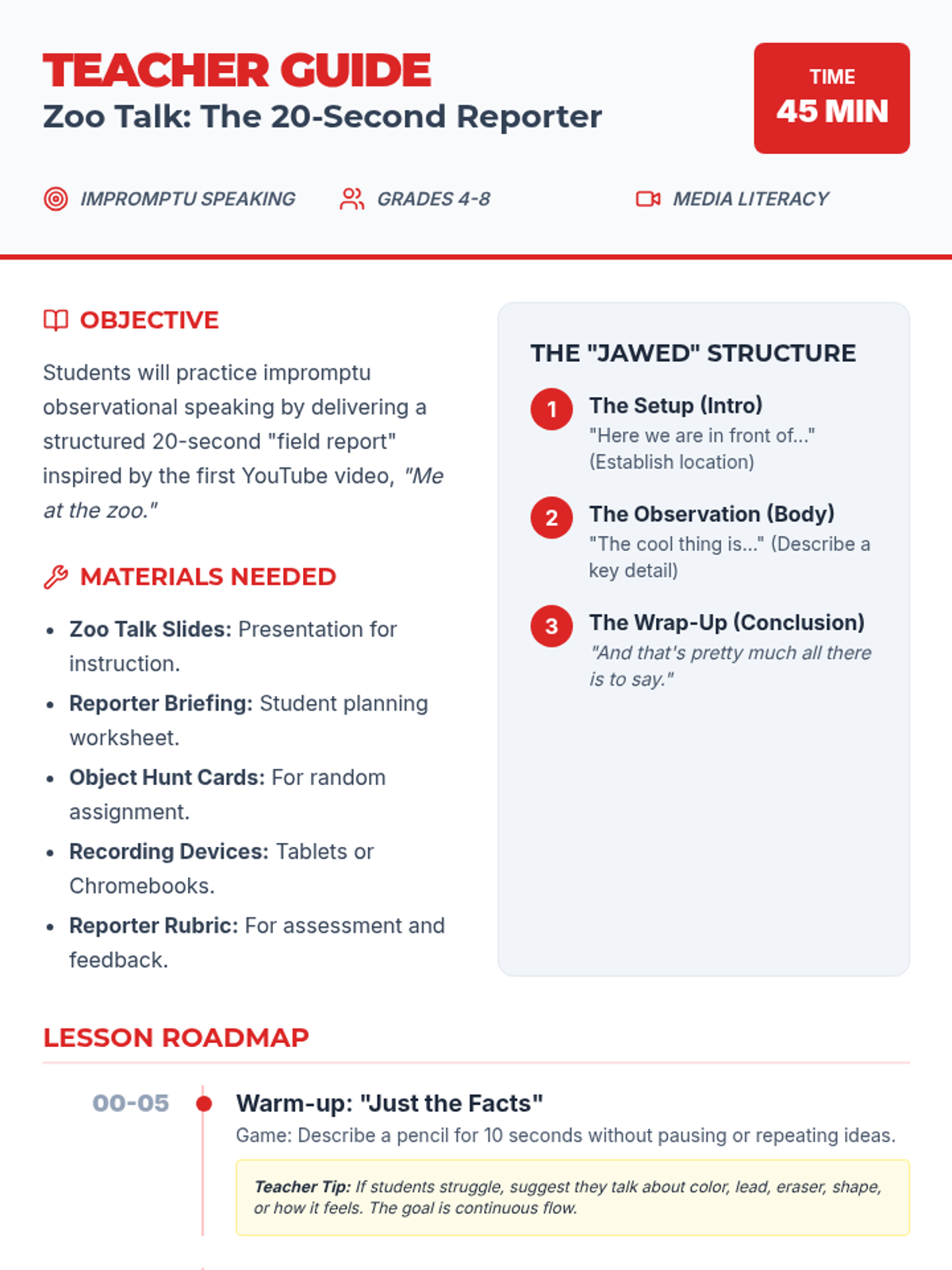
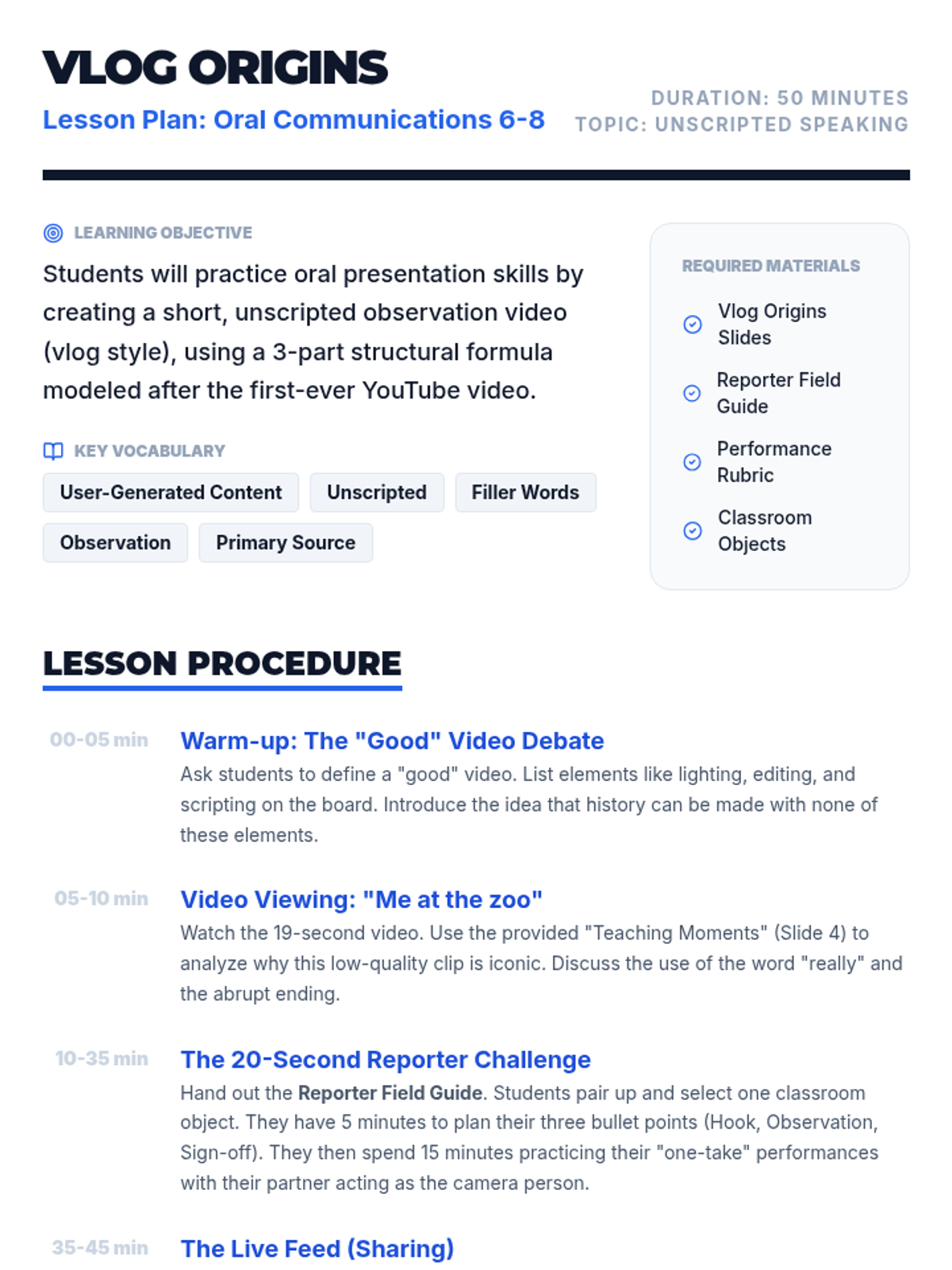
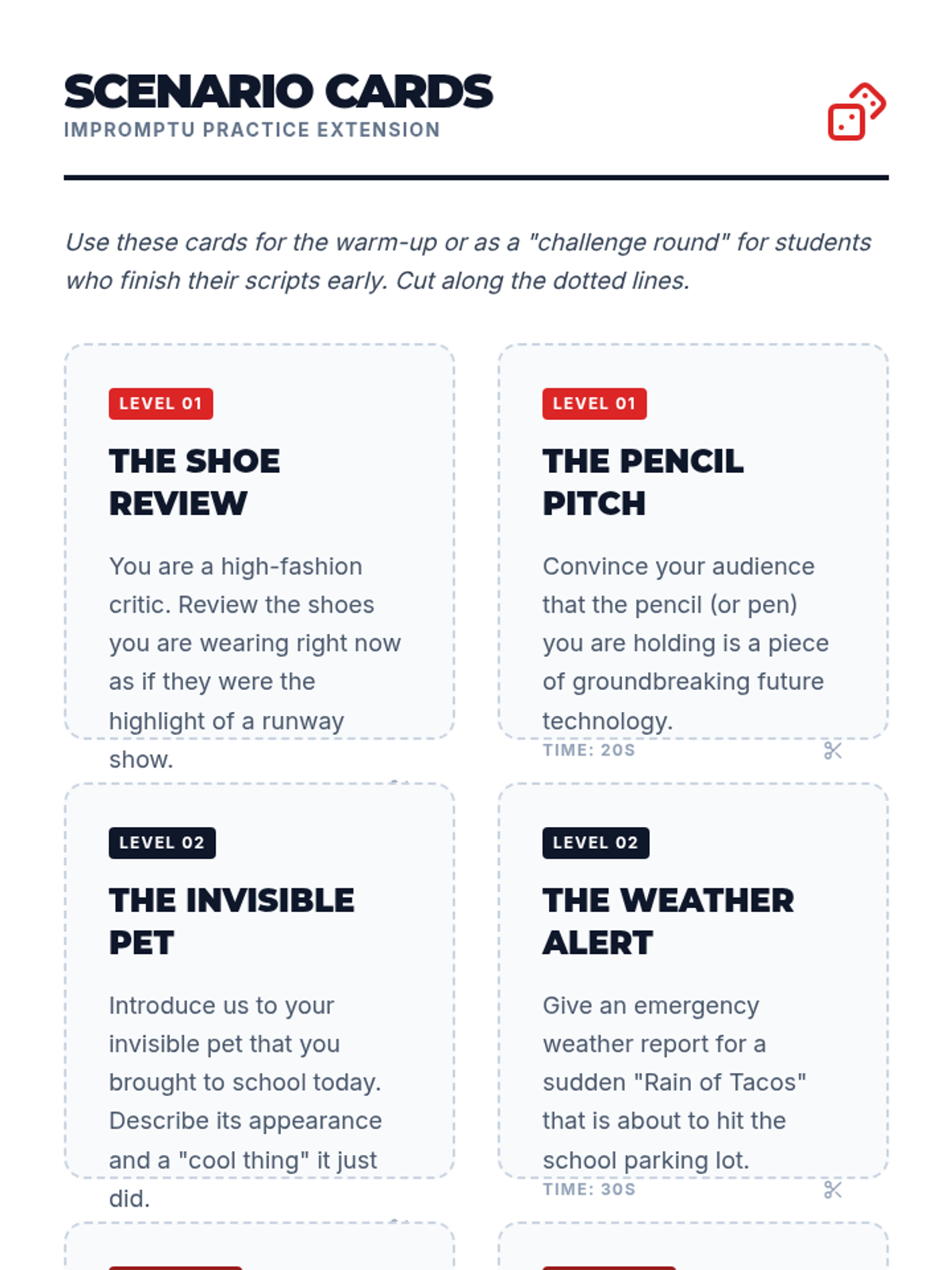
Students explore the history and technique of unscripted speaking through the first-ever YouTube video, then practice their own 20-second impromptu reports.
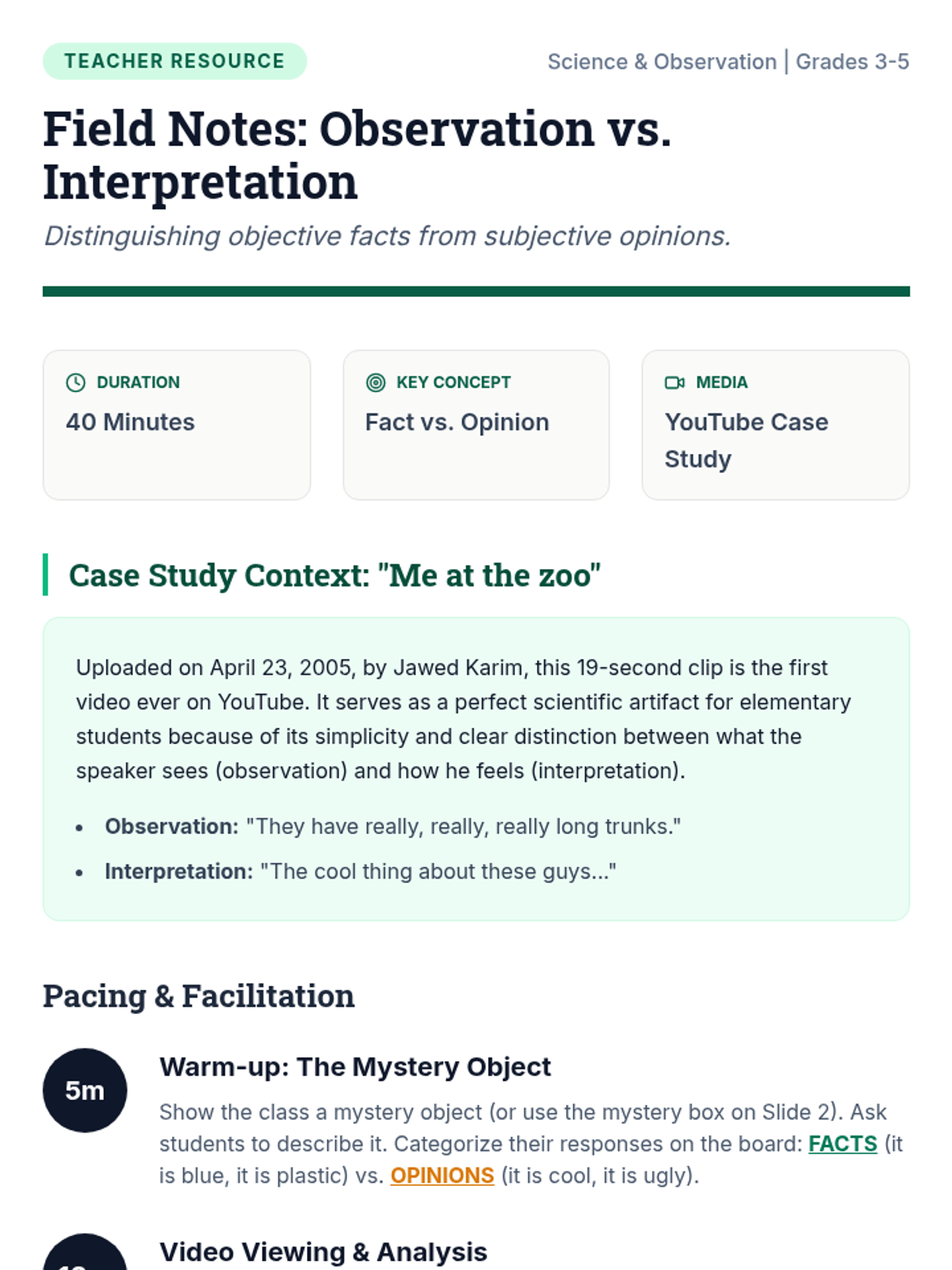
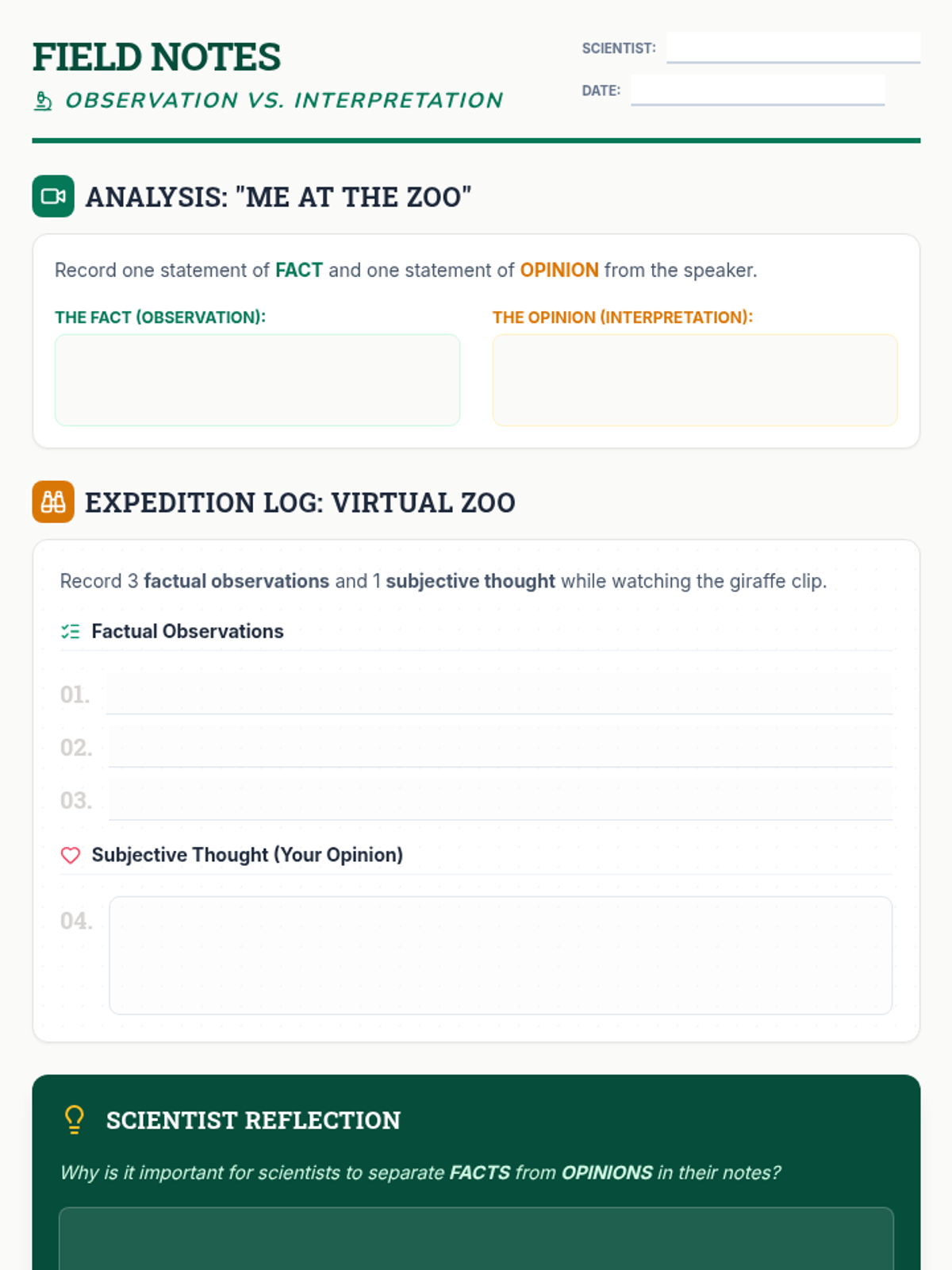
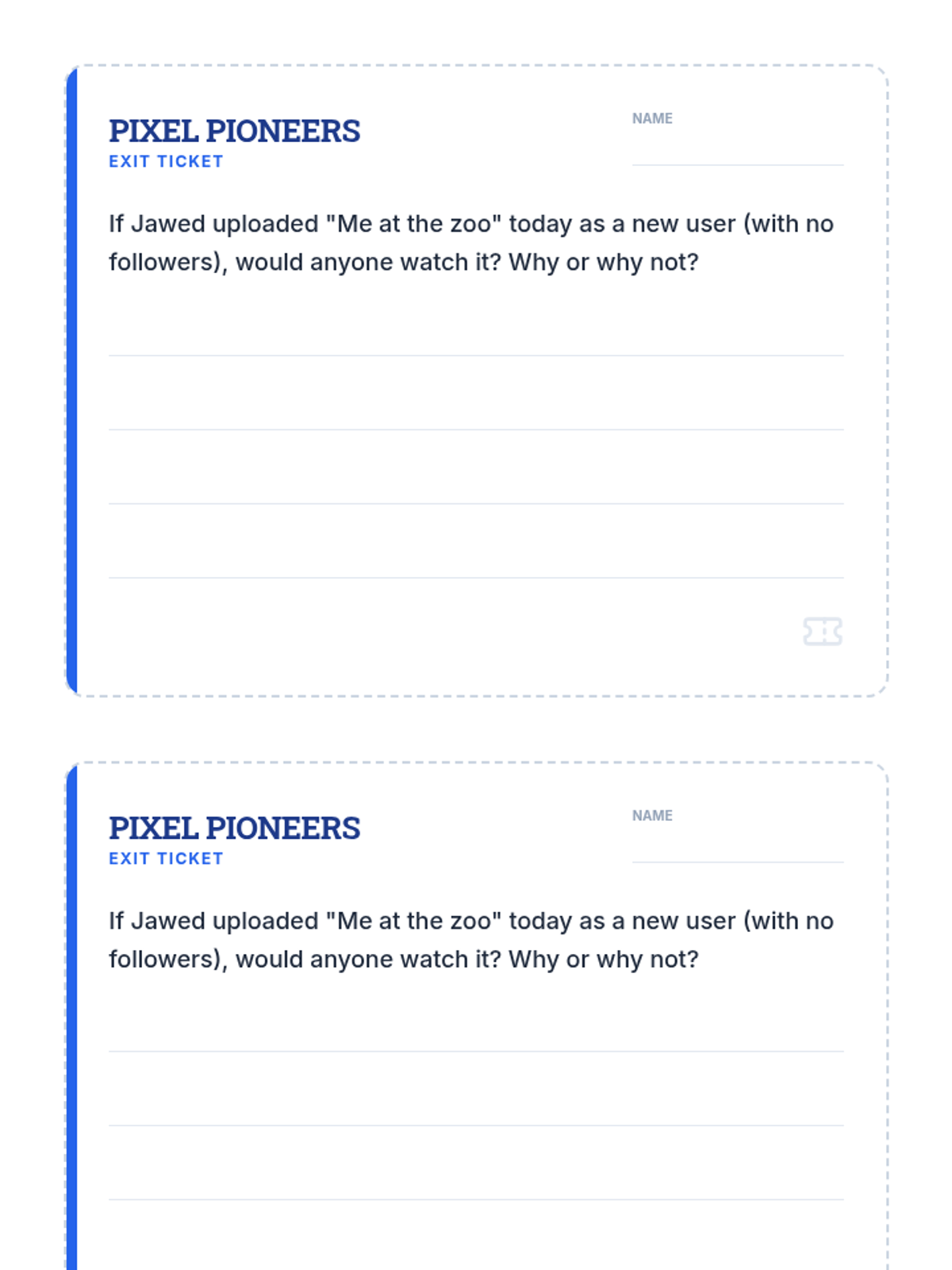
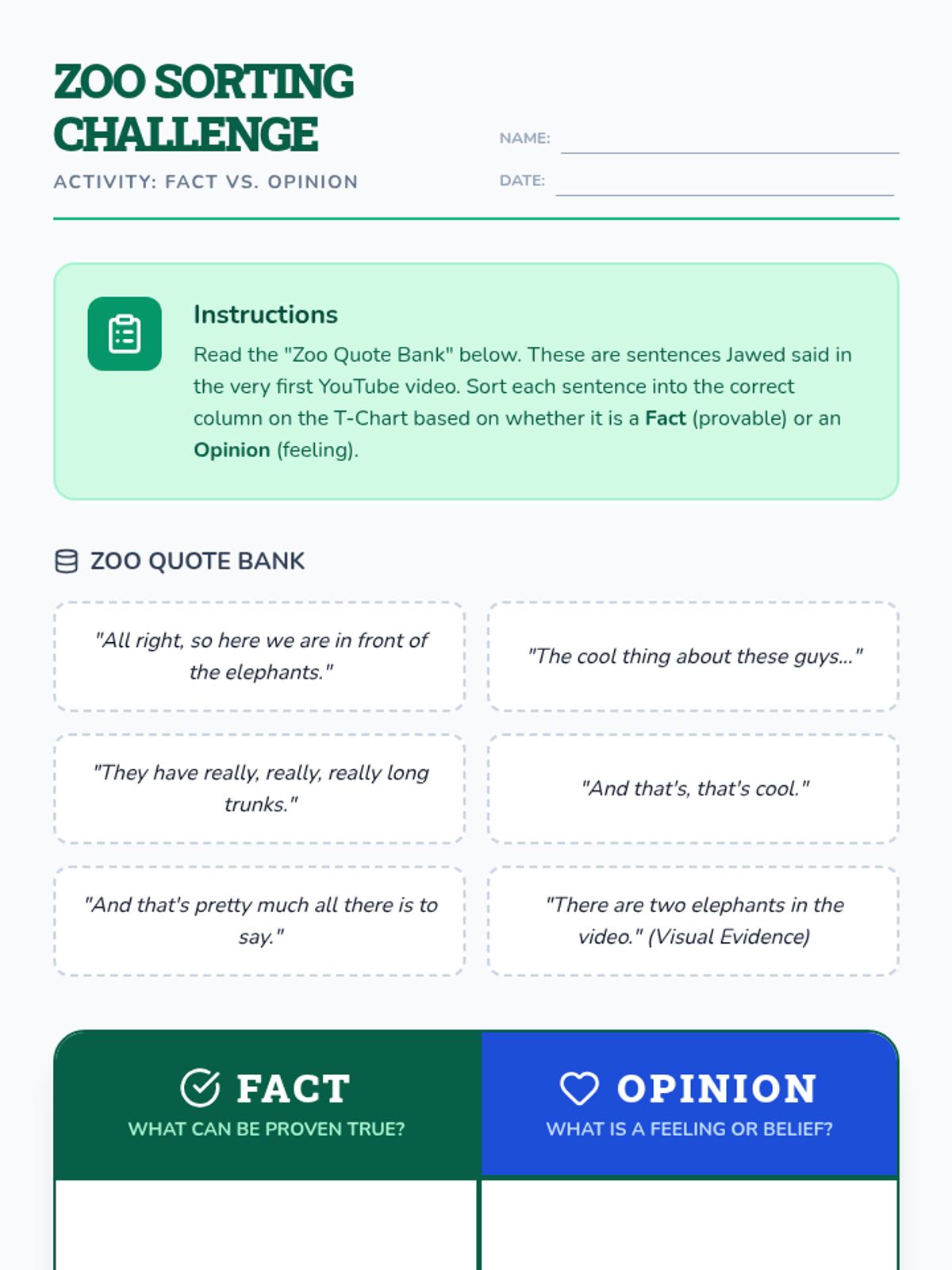
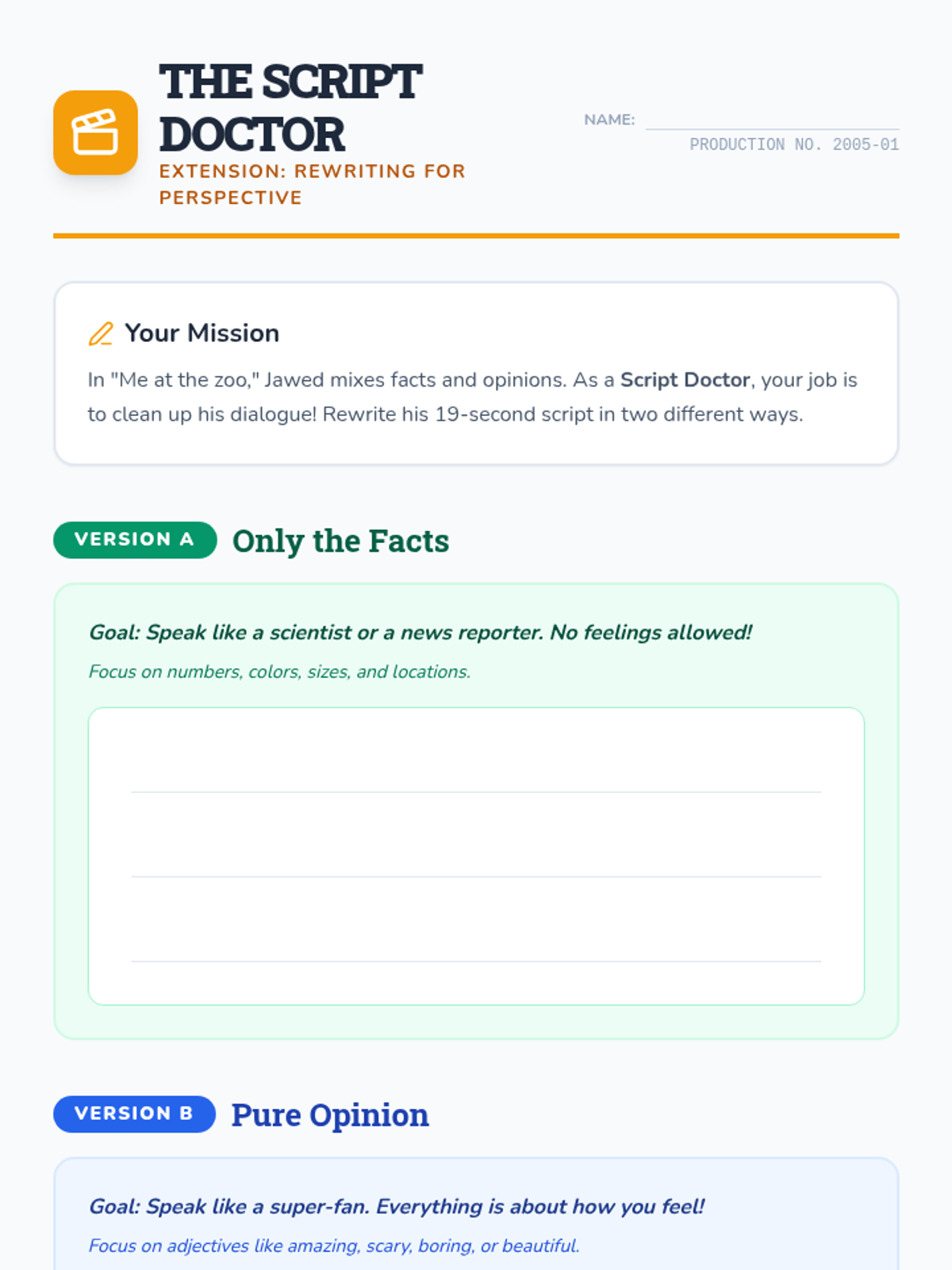
A science and observation lesson for elementary students focused on distinguishing between objective facts (observations) and subjective opinions (interpretations) using the first-ever YouTube video as a case study.
A reading comprehension lesson for 4th graders exploring the unique adaptations, habitat, and history of llamas in the Andes Mountains.
An engaging exploration of llama biology, behavior, and their importance in Andean culture, featuring interactive activities and a research-based creative project.
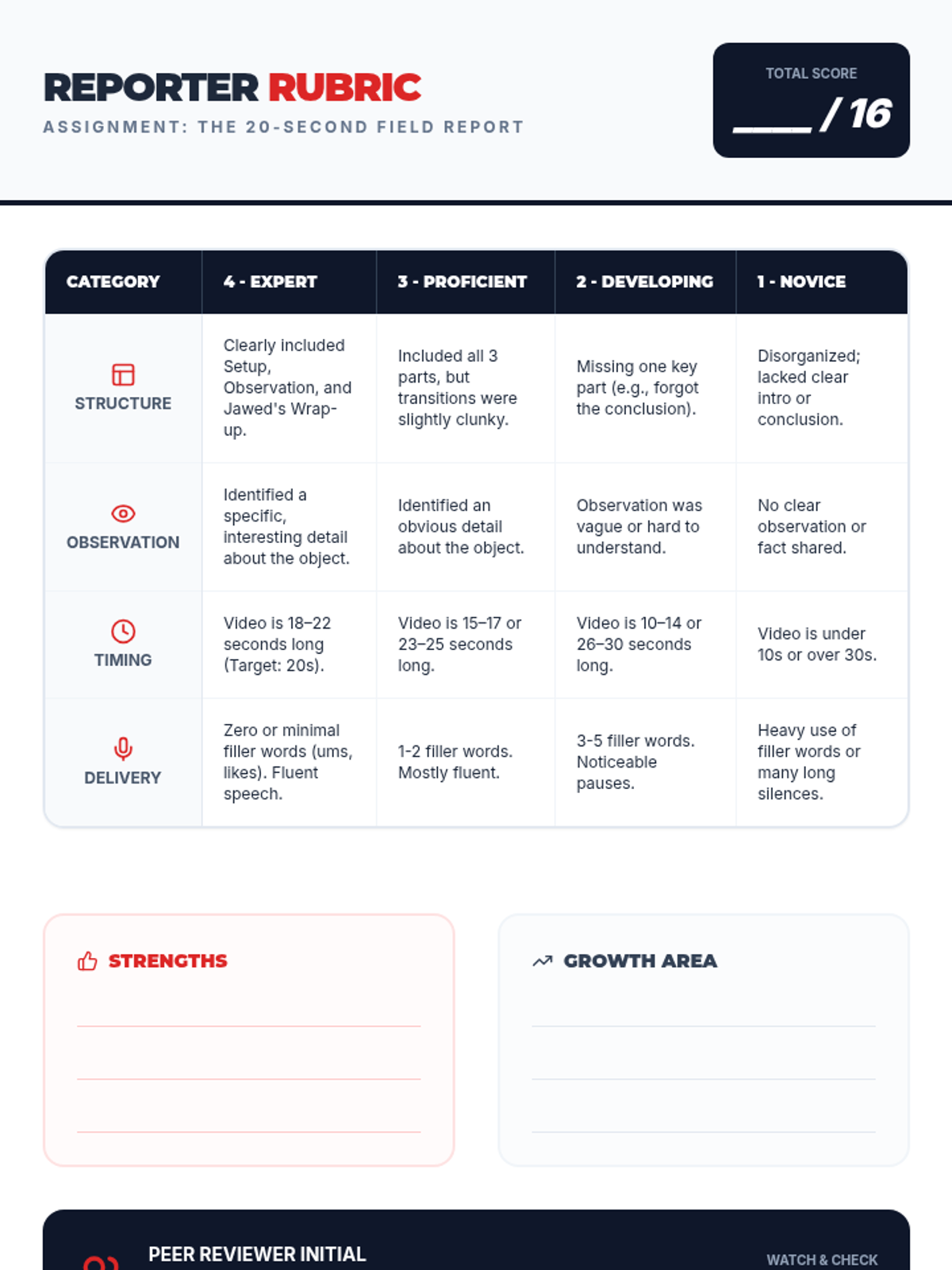
Students will explore the origins of vlogging through the first YouTube video, analyzing its structure and authentic style to create their own 20-second 'unscripted' school report.
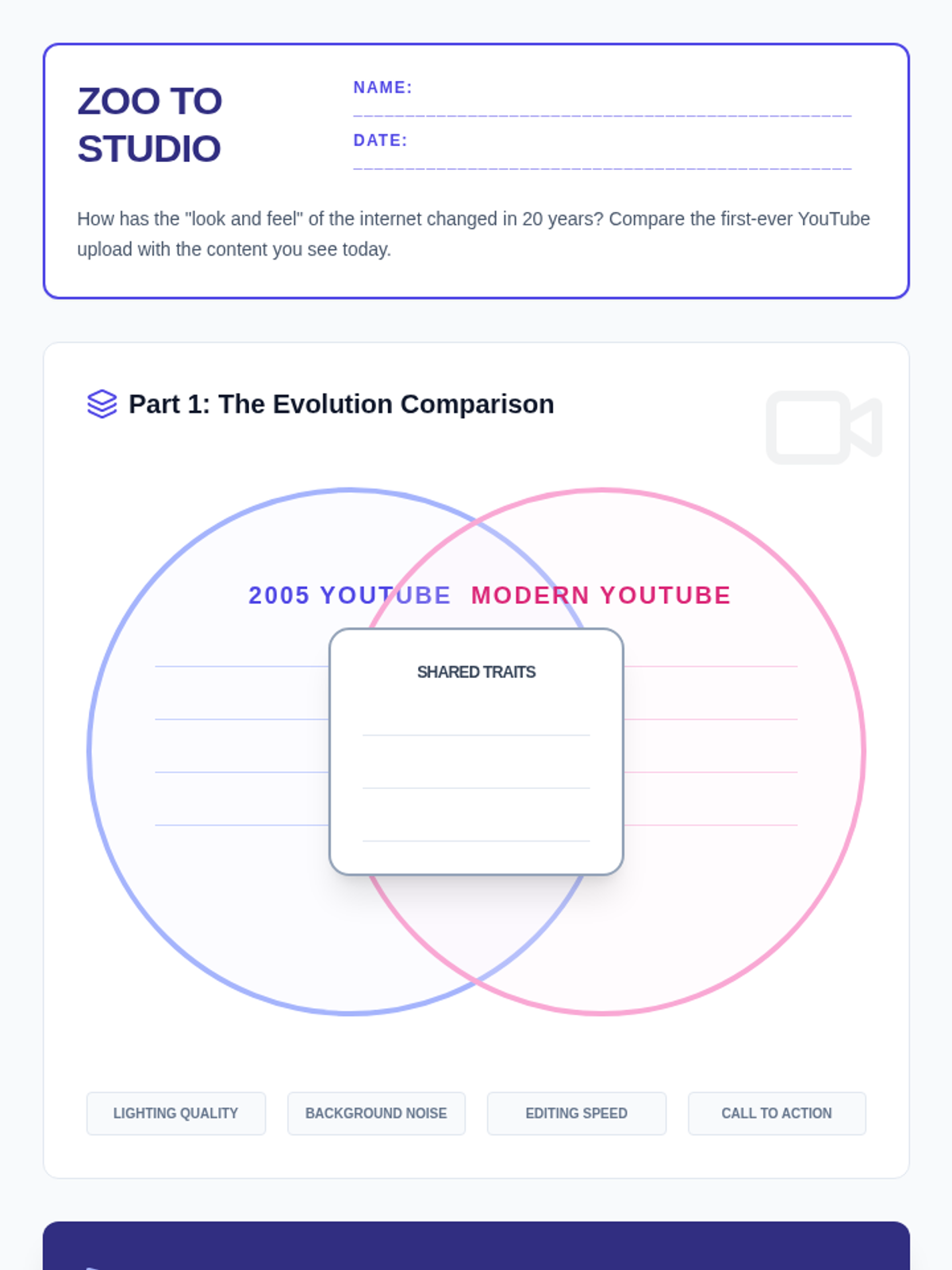
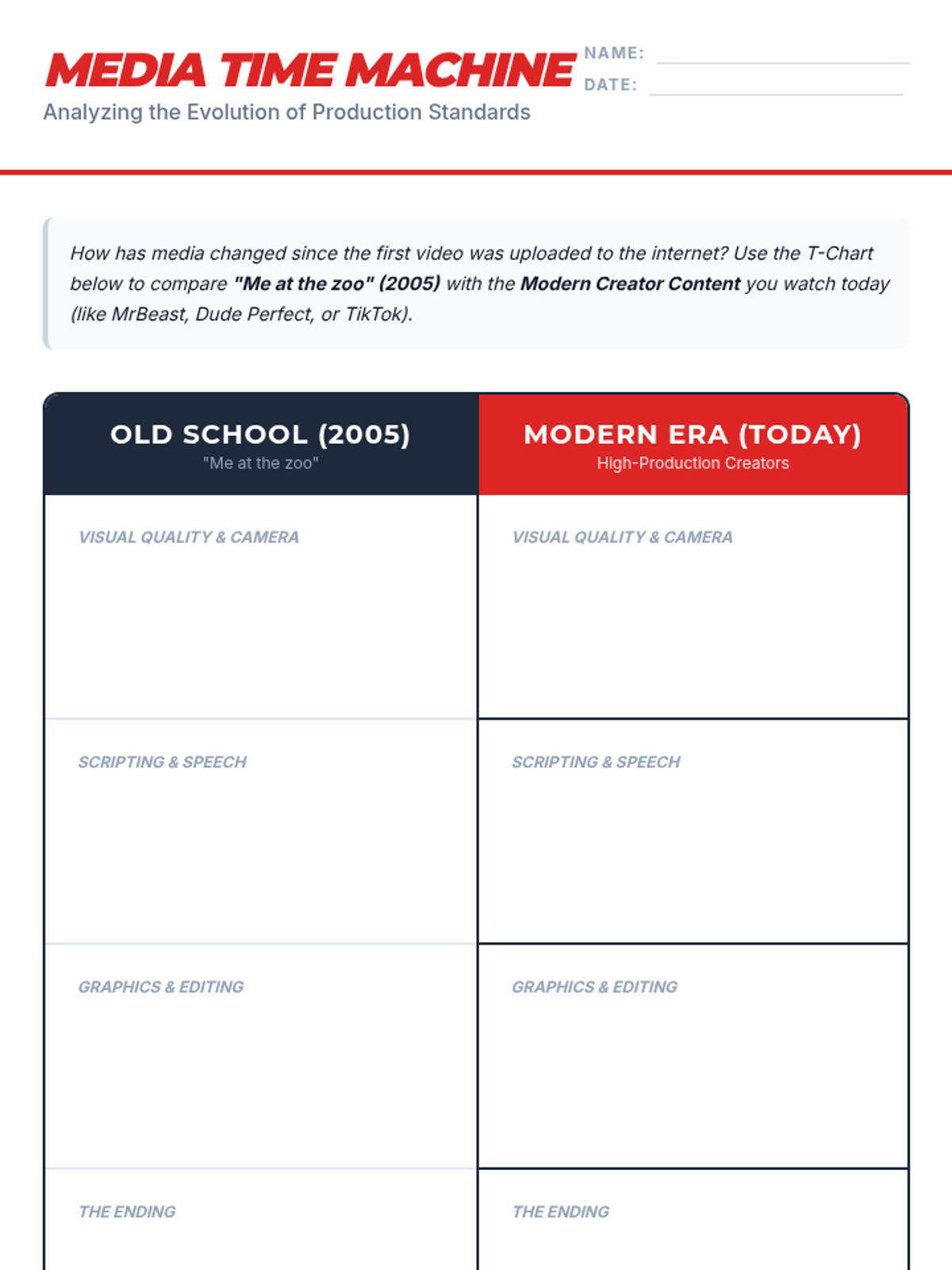
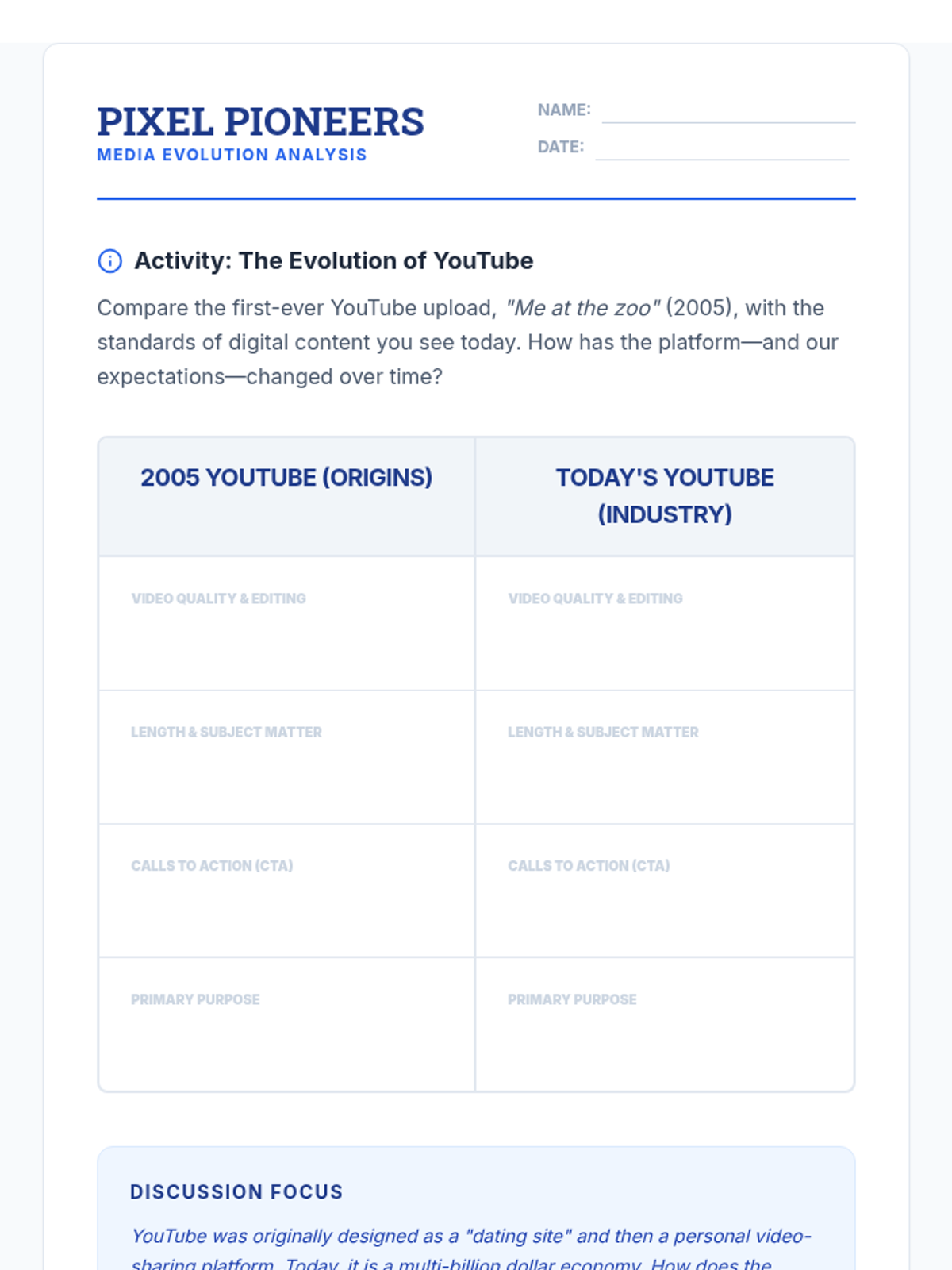
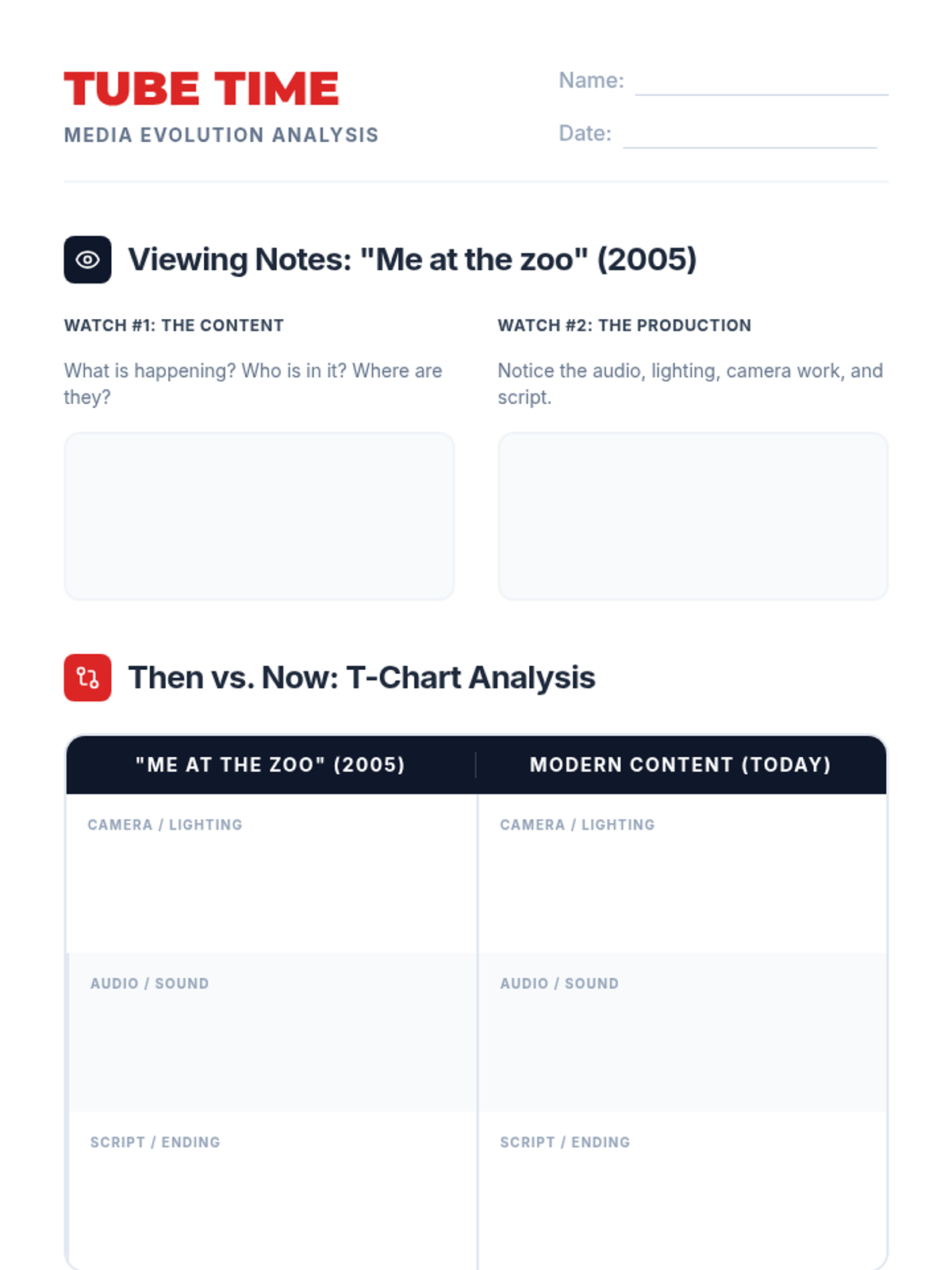
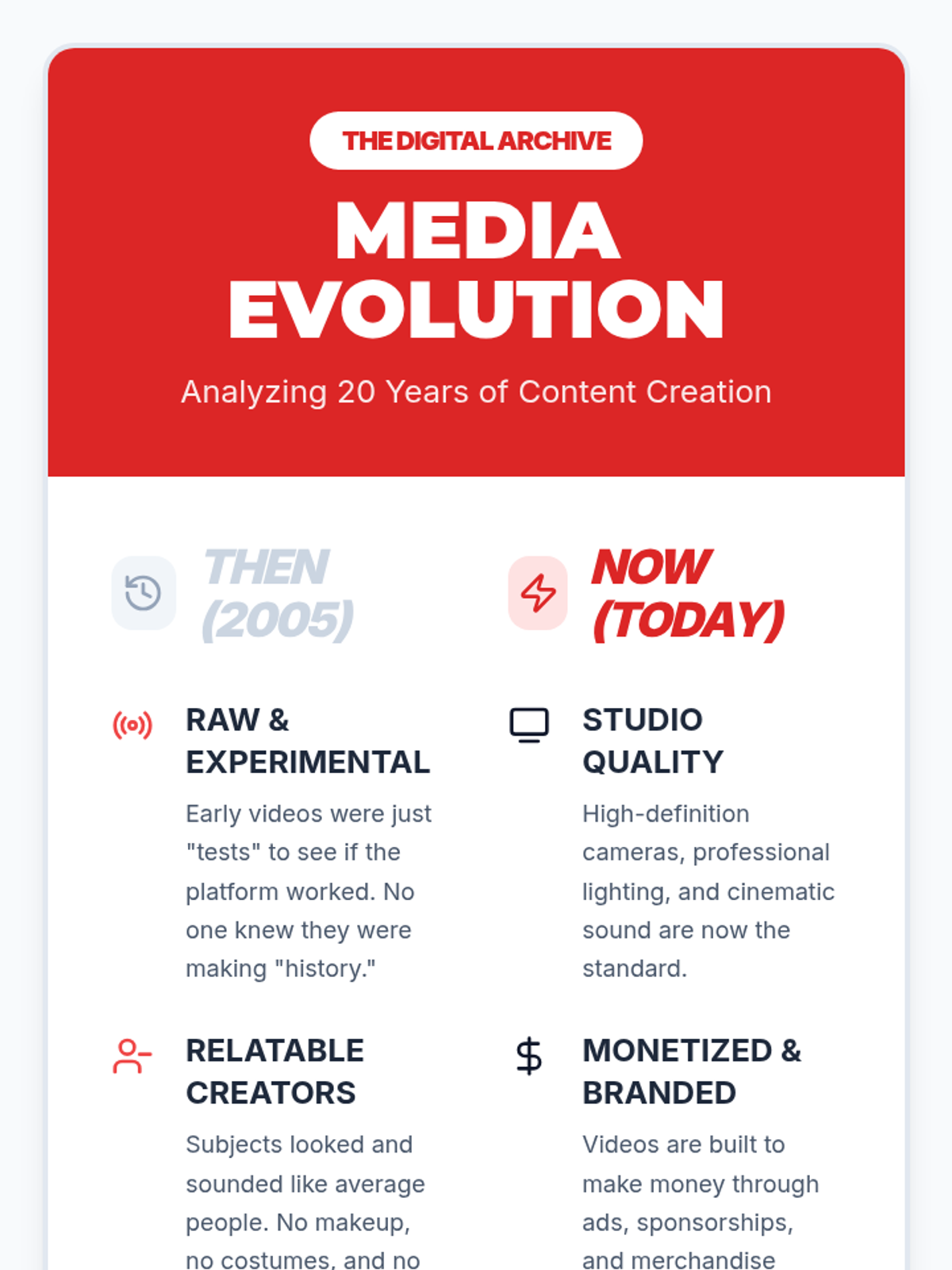
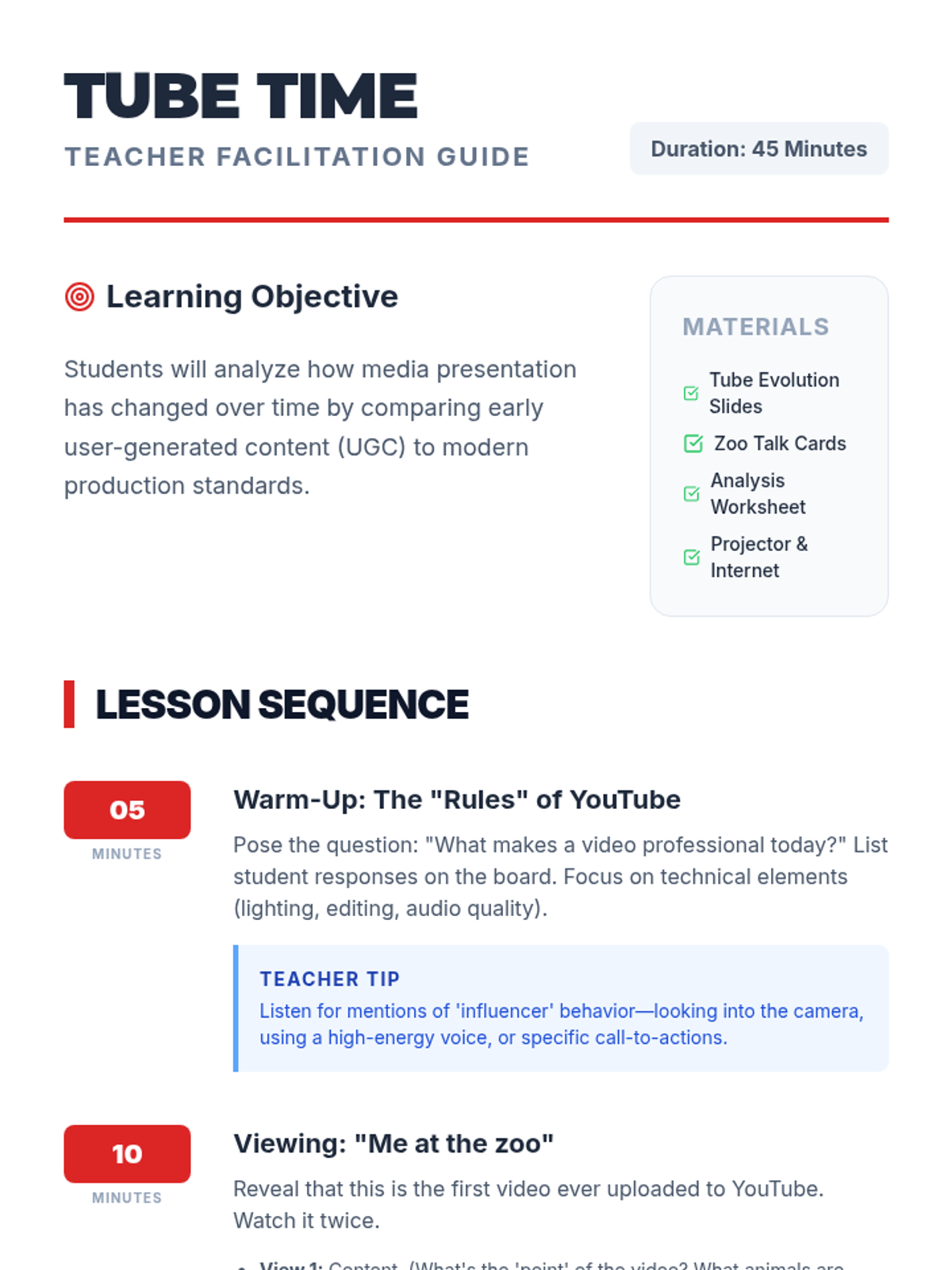
A lesson exploring the transformation of digital media production through the lens of YouTube's first video, 'Me at the zoo', contrasting early raw footage with modern high-production content.
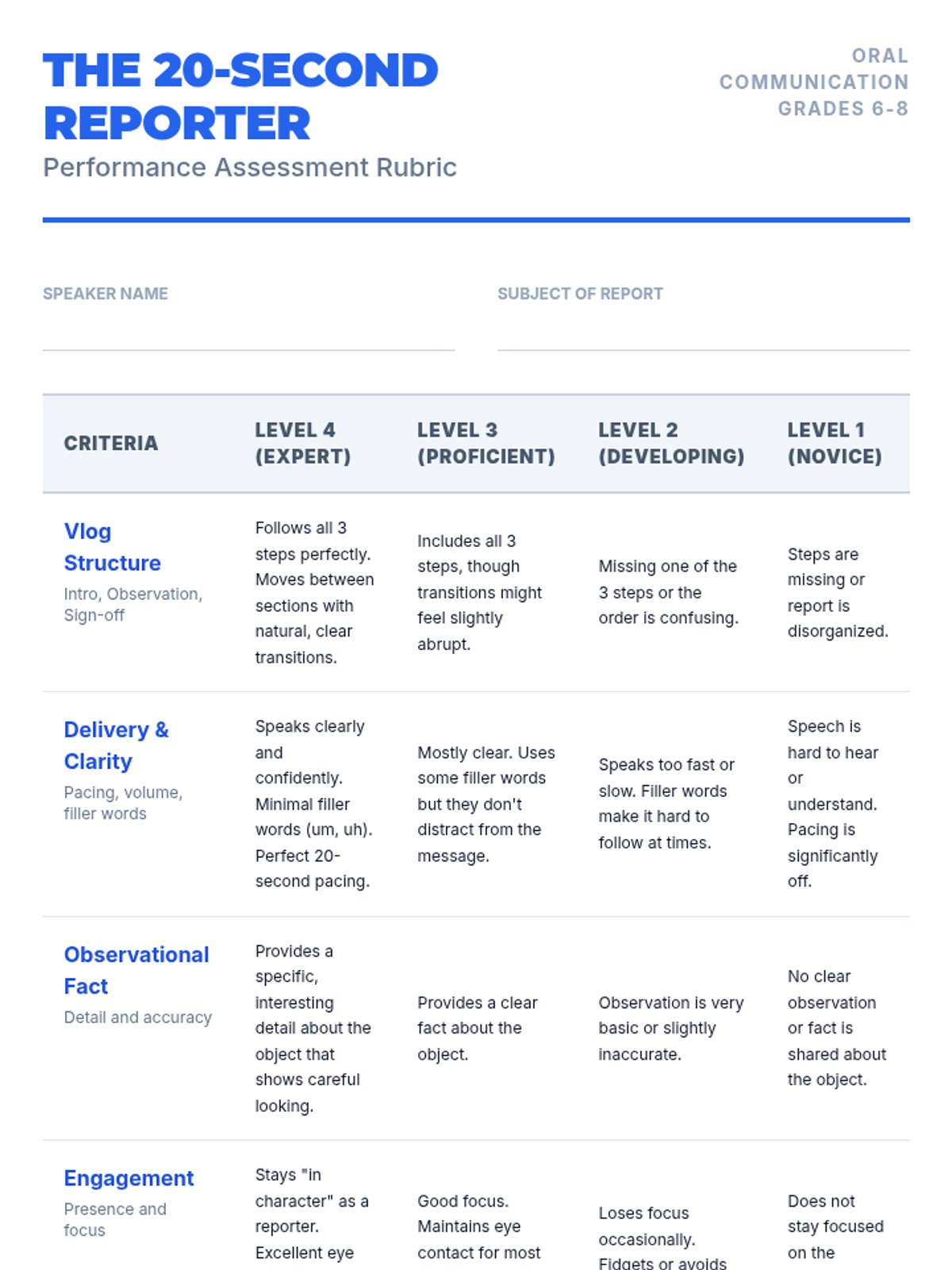
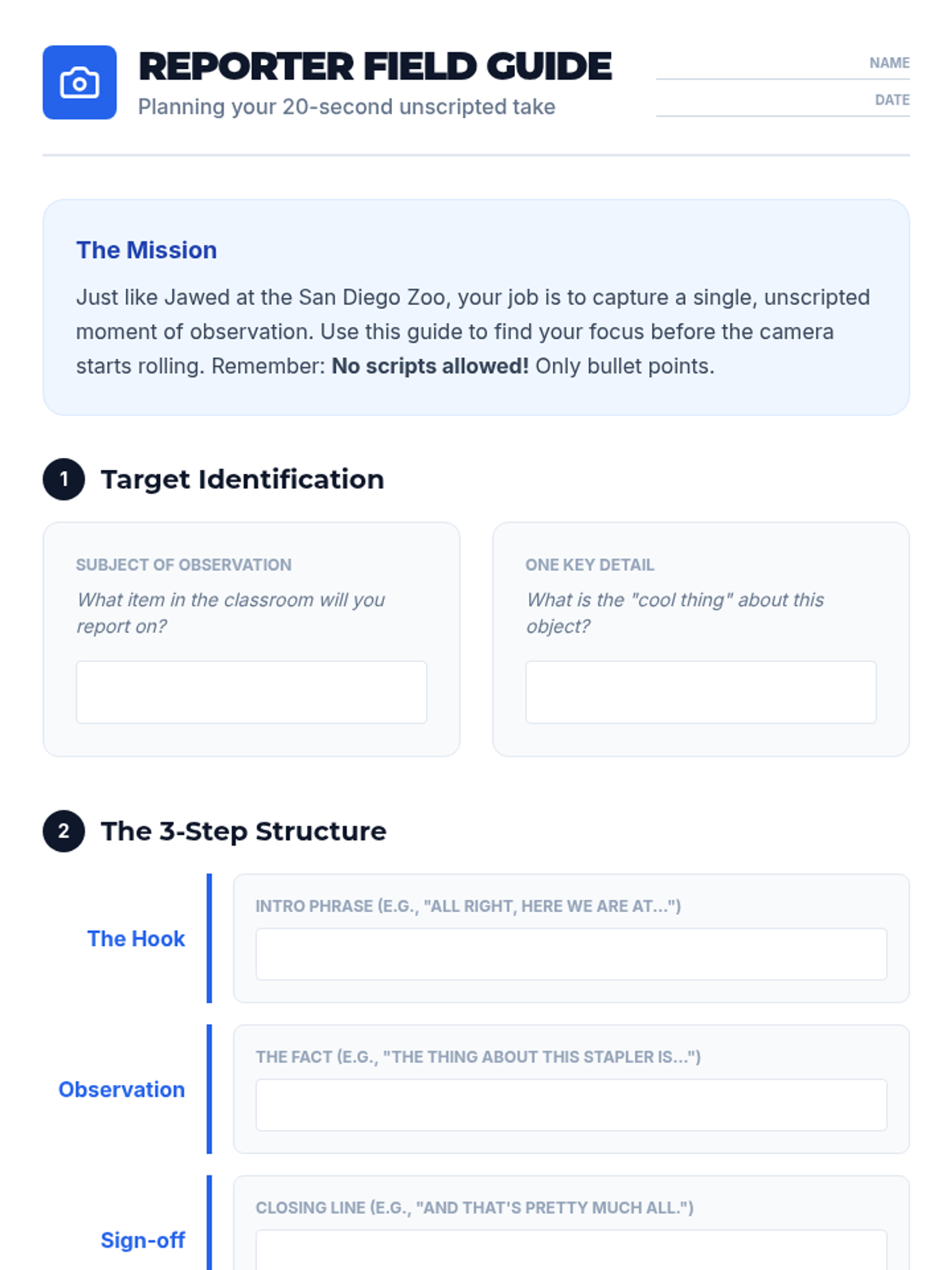
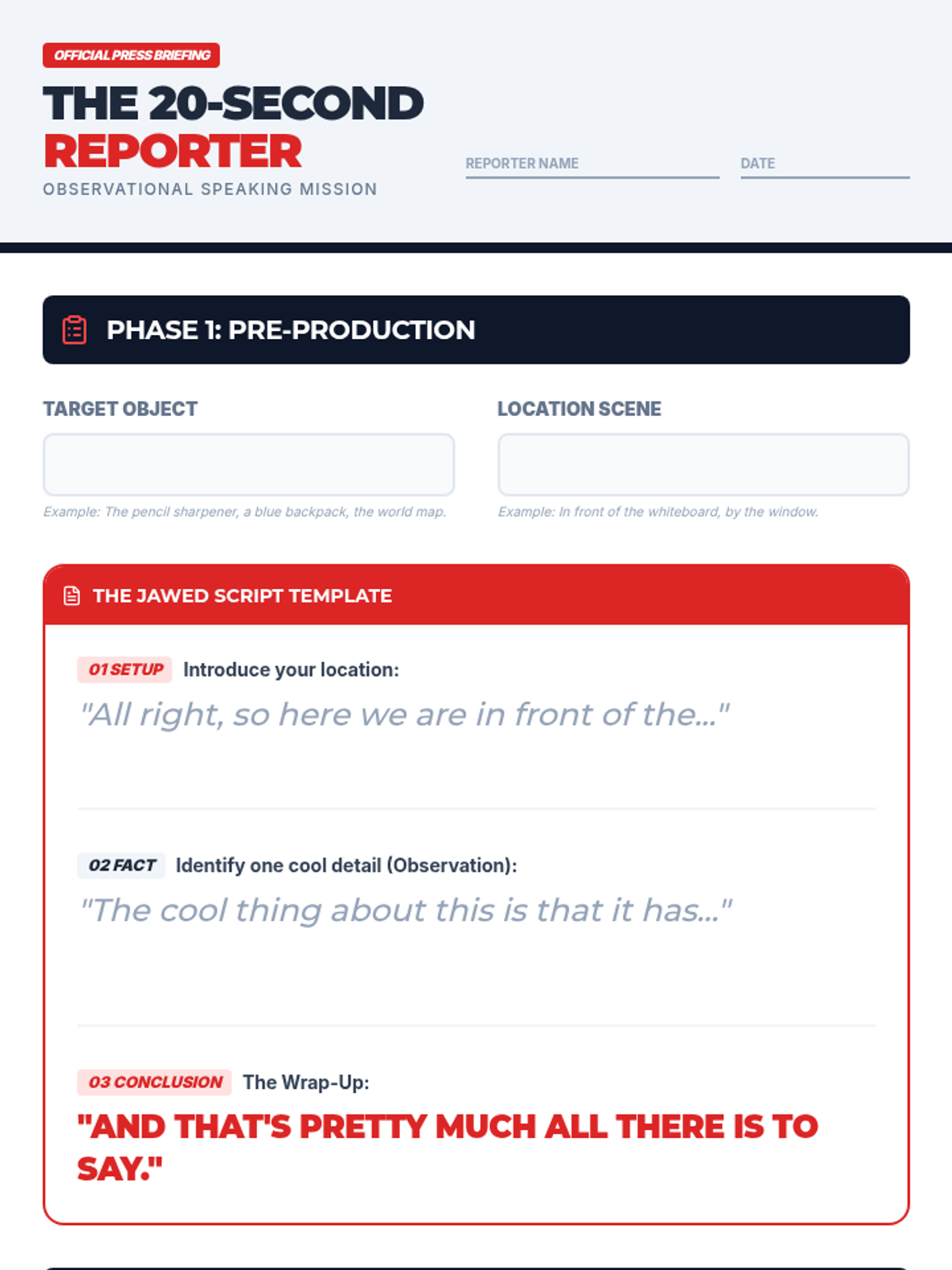
Students learn the foundations of impromptu speaking and user-generated content by analyzing the first-ever YouTube video and performing their own '20-Second Reporter' segment using a simple three-part structure.
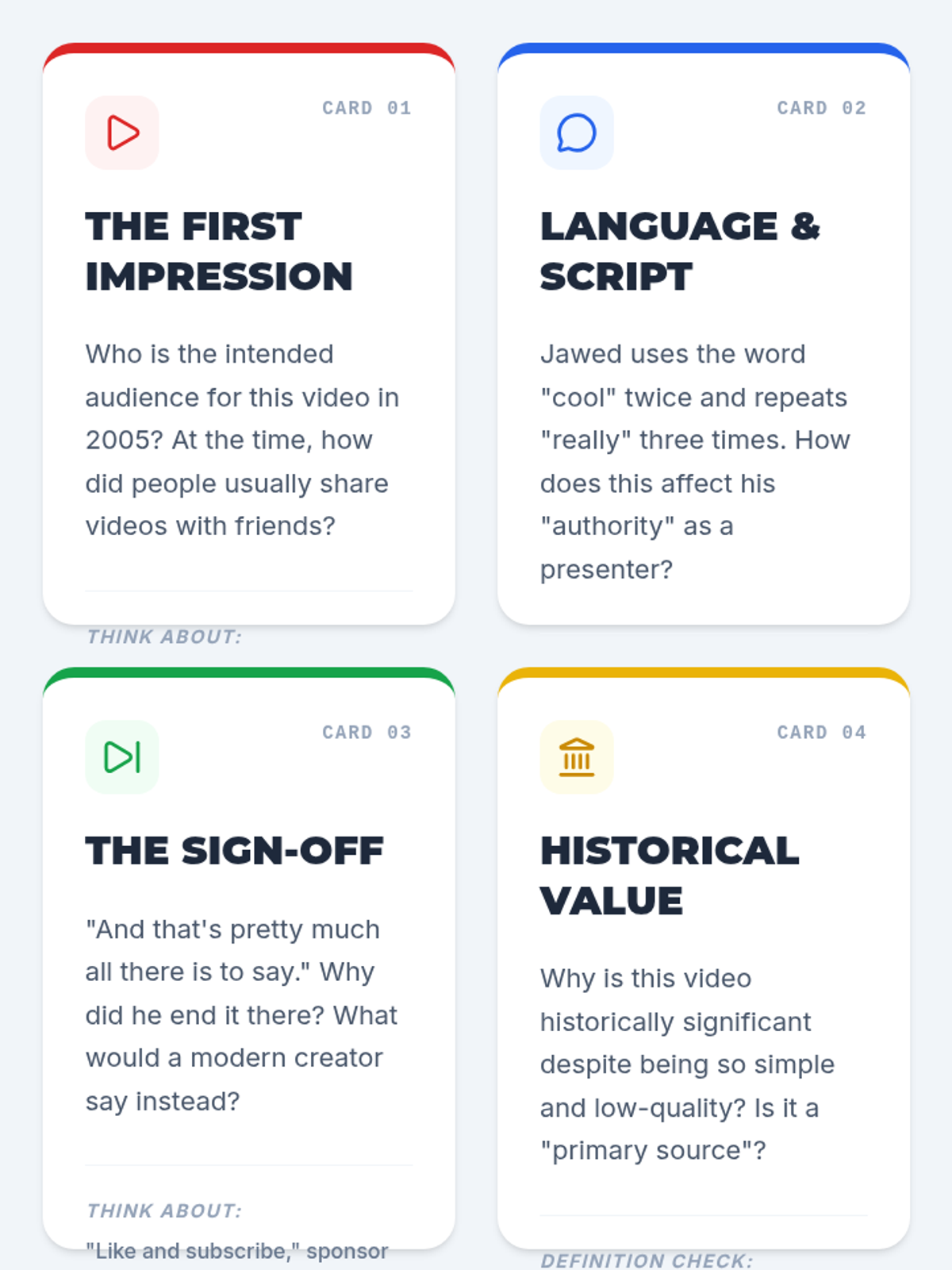
A media literacy lesson where students analyze the evolution of digital media by comparing the first YouTube video, 'Me at the zoo,' to modern content standards. Students explore concepts of user-generated content, monetization, and the commercialization of attention.
A lesson exploring the transformation of media through the history of YouTube, contrasting the simplicity of the first 'User-Generated Content' with modern, high-production digital storytelling. Students will analyze technical shifts and practice scripting for a simpler era.
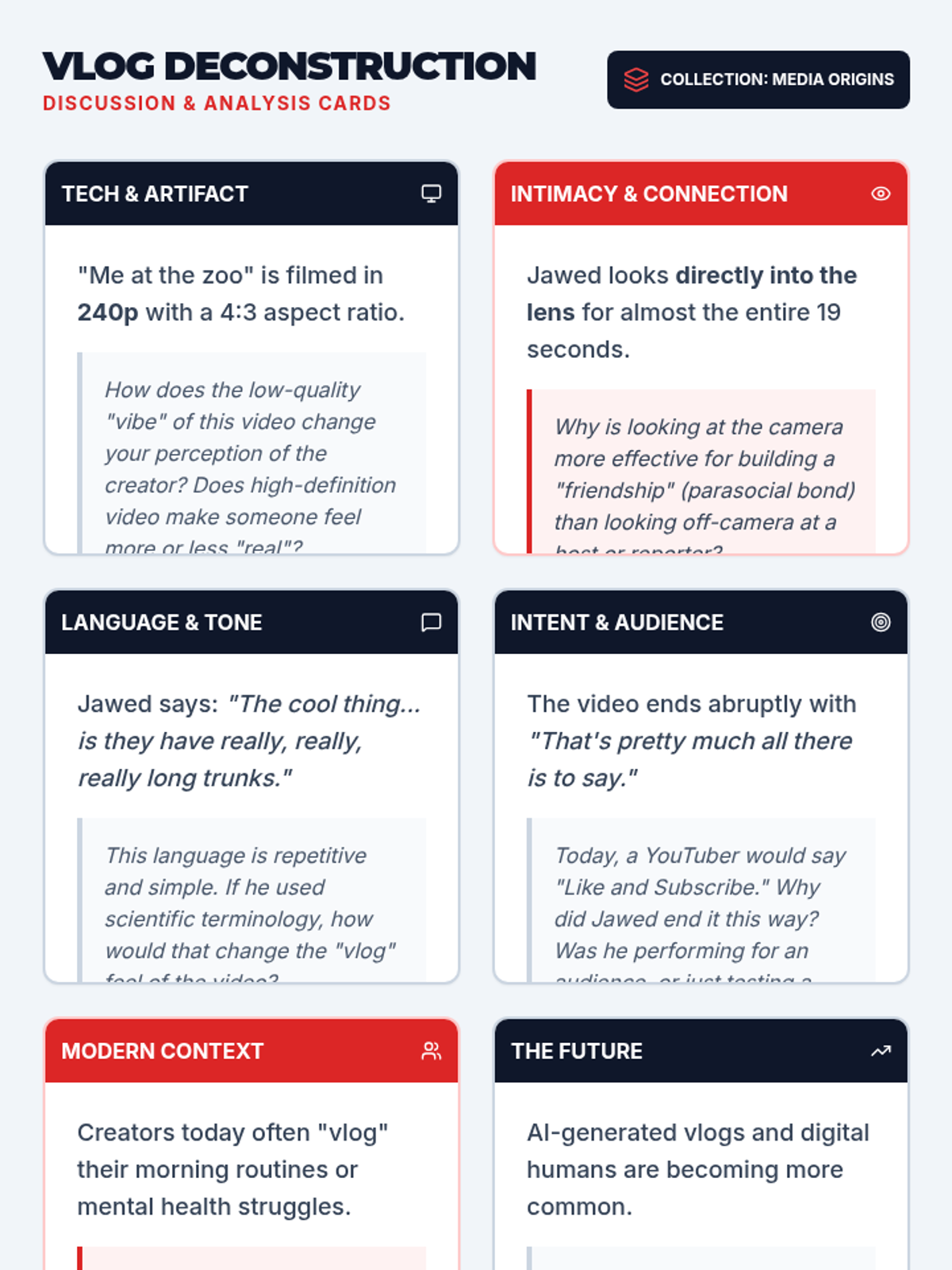
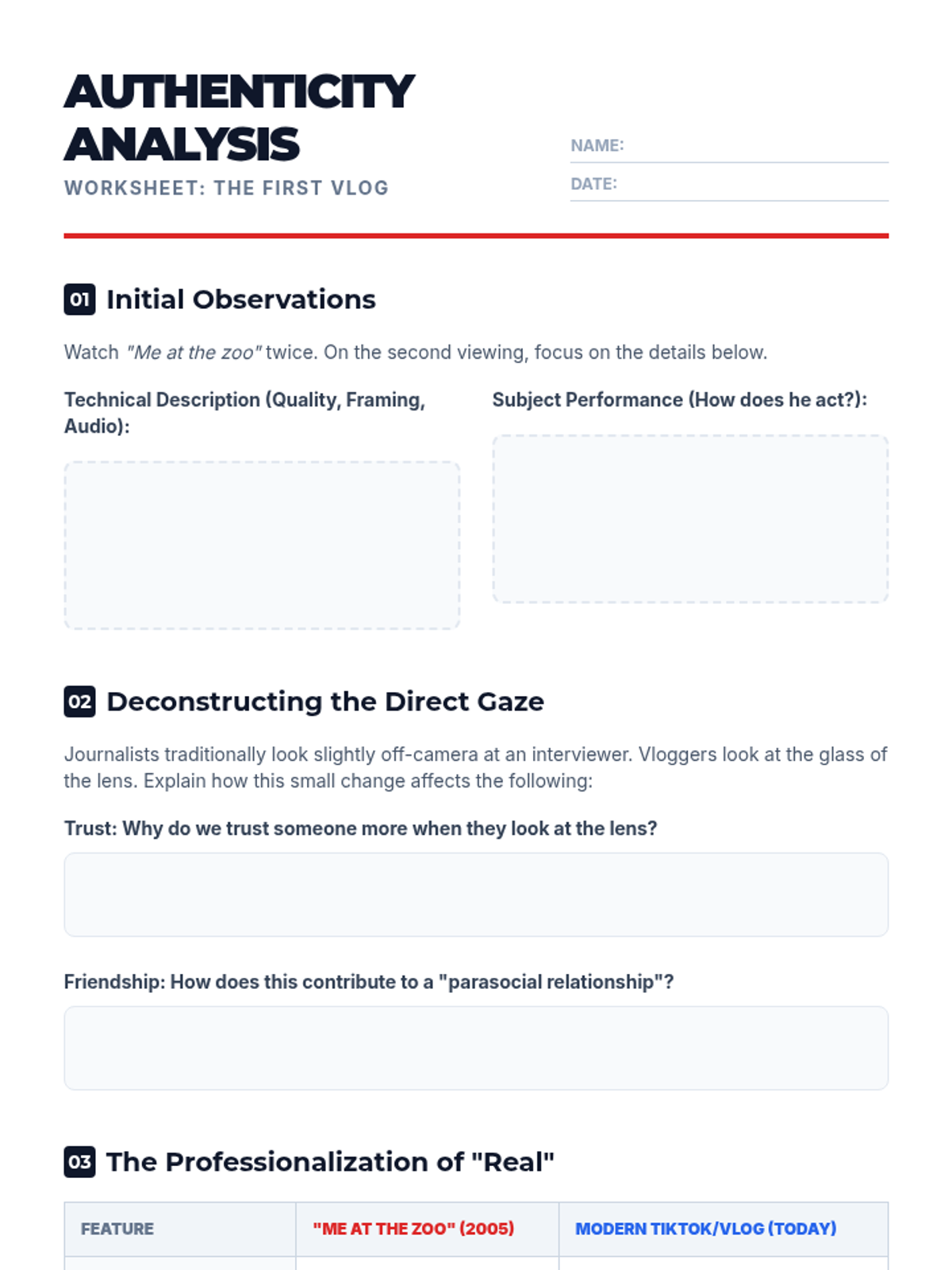
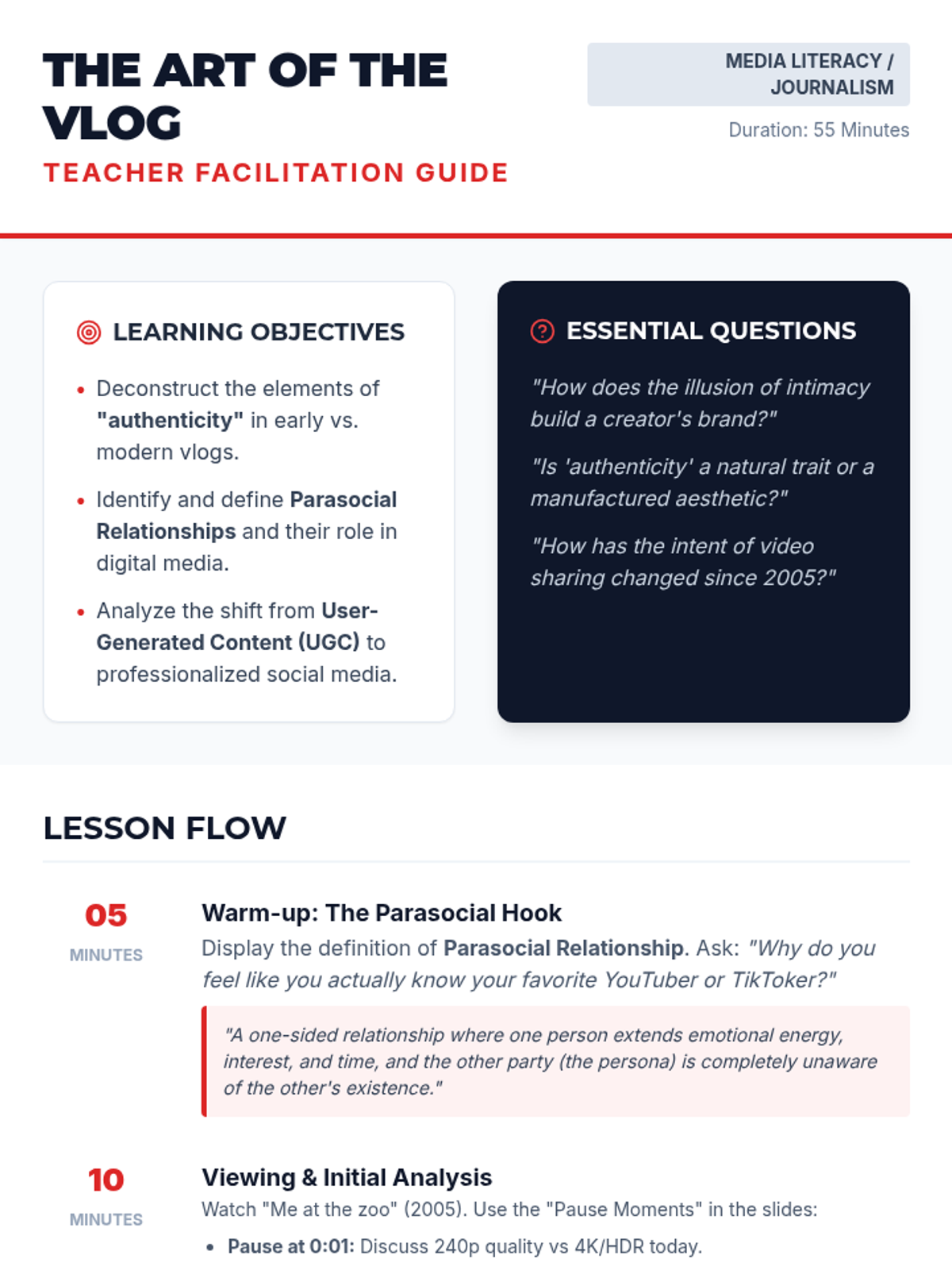
A lesson exploring the origins of vlogging through YouTube's first video, focusing on the concepts of authenticity, user-generated content, and parasocial relationships.
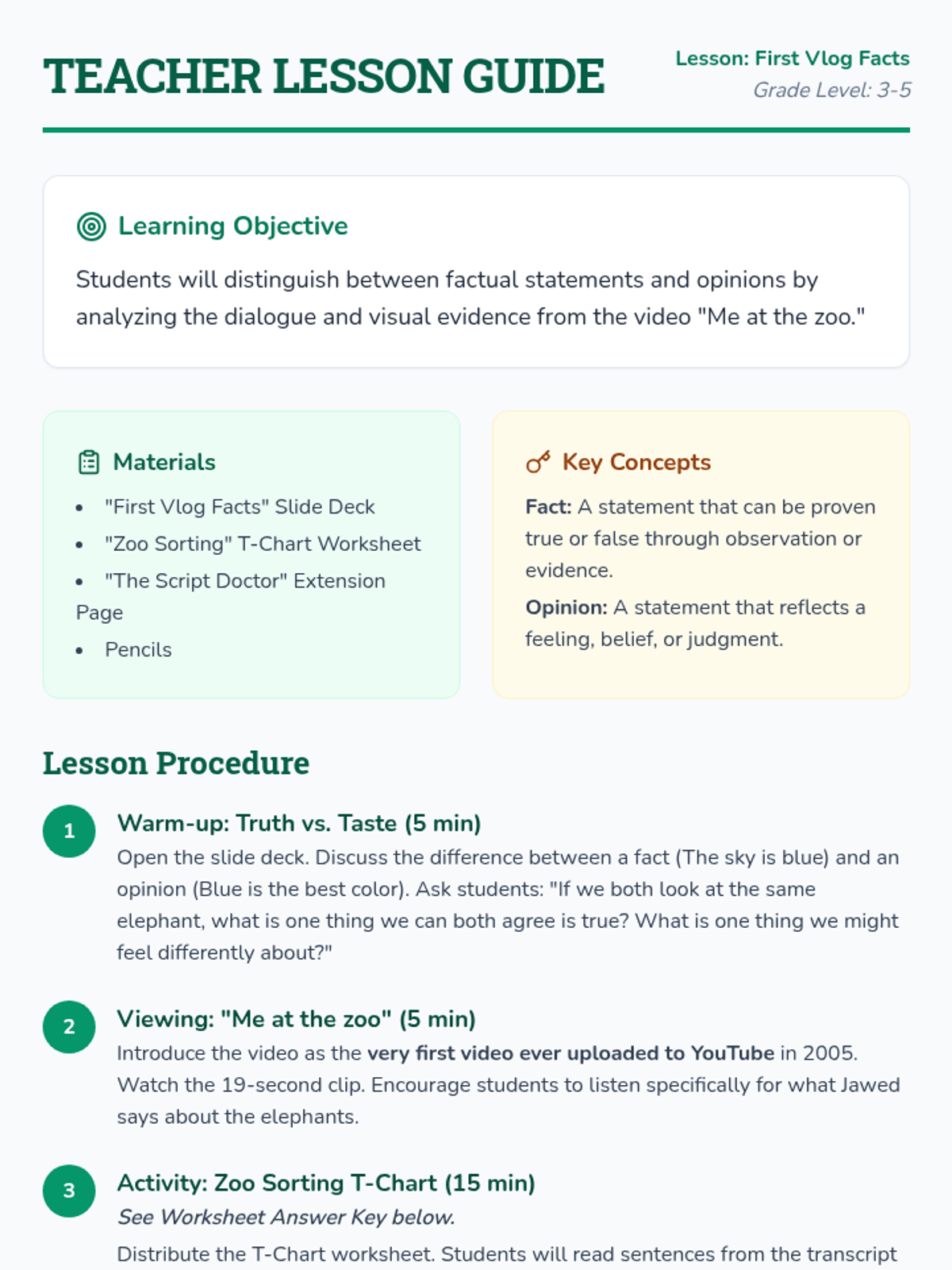
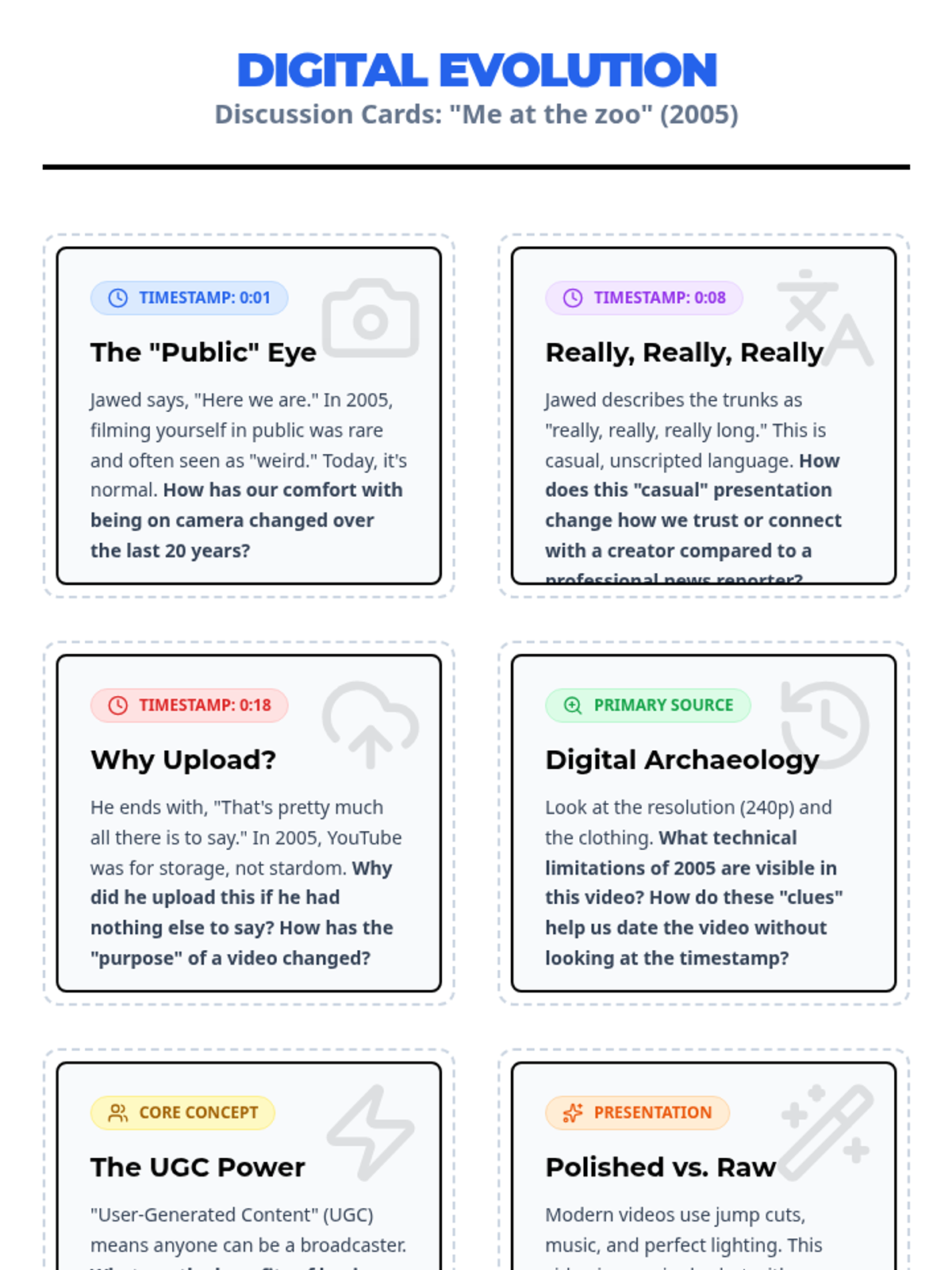
A lesson focusing on distinguishing between factual observations and opinions using the first YouTube video, 'Me at the zoo'. Students analyze dialogue and imagery to understand how word choice influences information.
An engaging exploration of llama biology, behavior, and social structures, integrating 4th-grade reading comprehension and fractional math concepts.
A comprehensive reading comprehension lesson for 4th graders exploring the unique adaptations, habitat, and history of llamas. Students will practice identifying main ideas and supporting details while engaging with informational text.
Students analyze the evolution of digital media by comparing the first-ever YouTube video, 'Me at the zoo,' with modern production standards, focusing on production quality, scripting, and the concept of user-generated content.
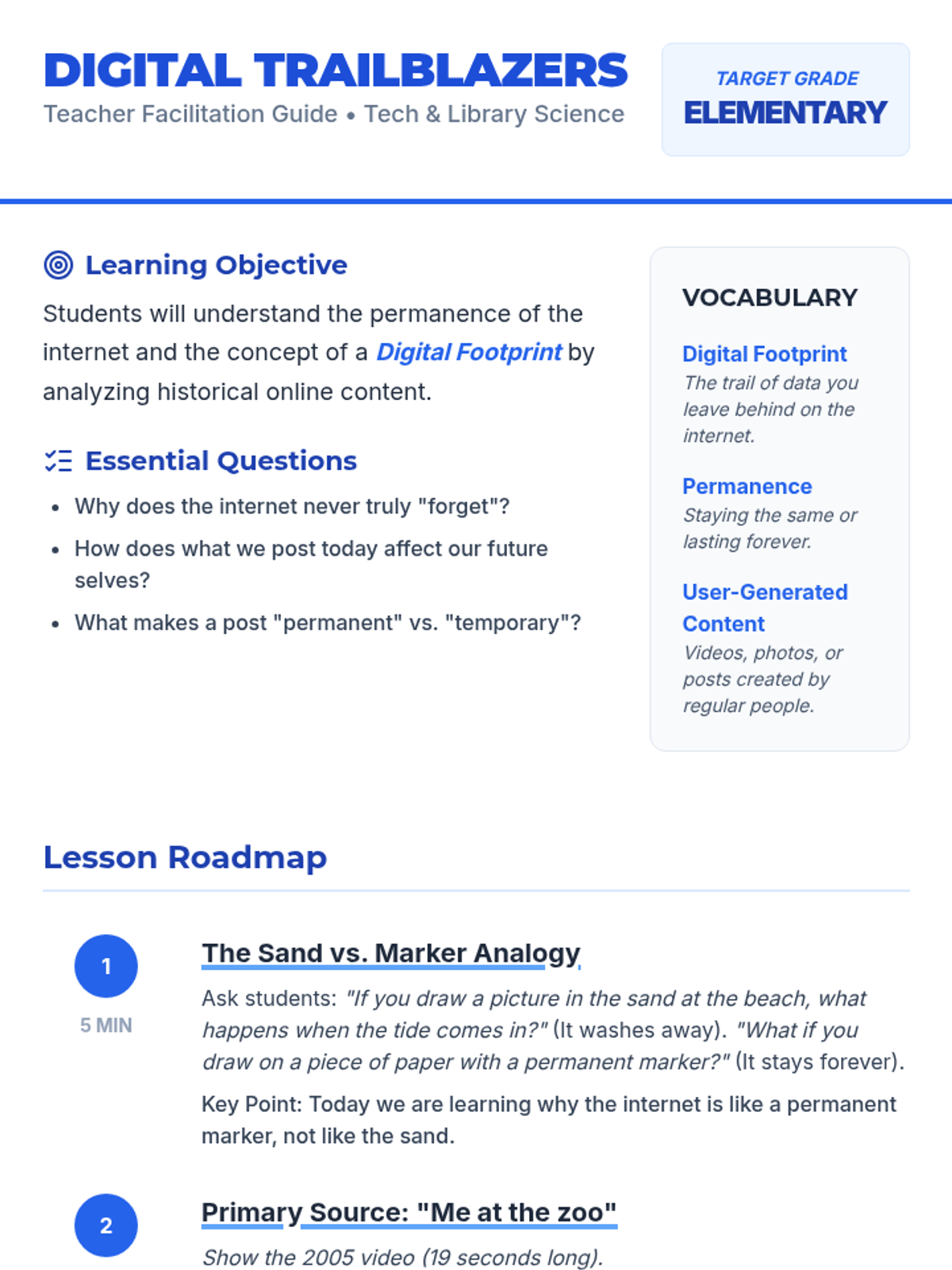
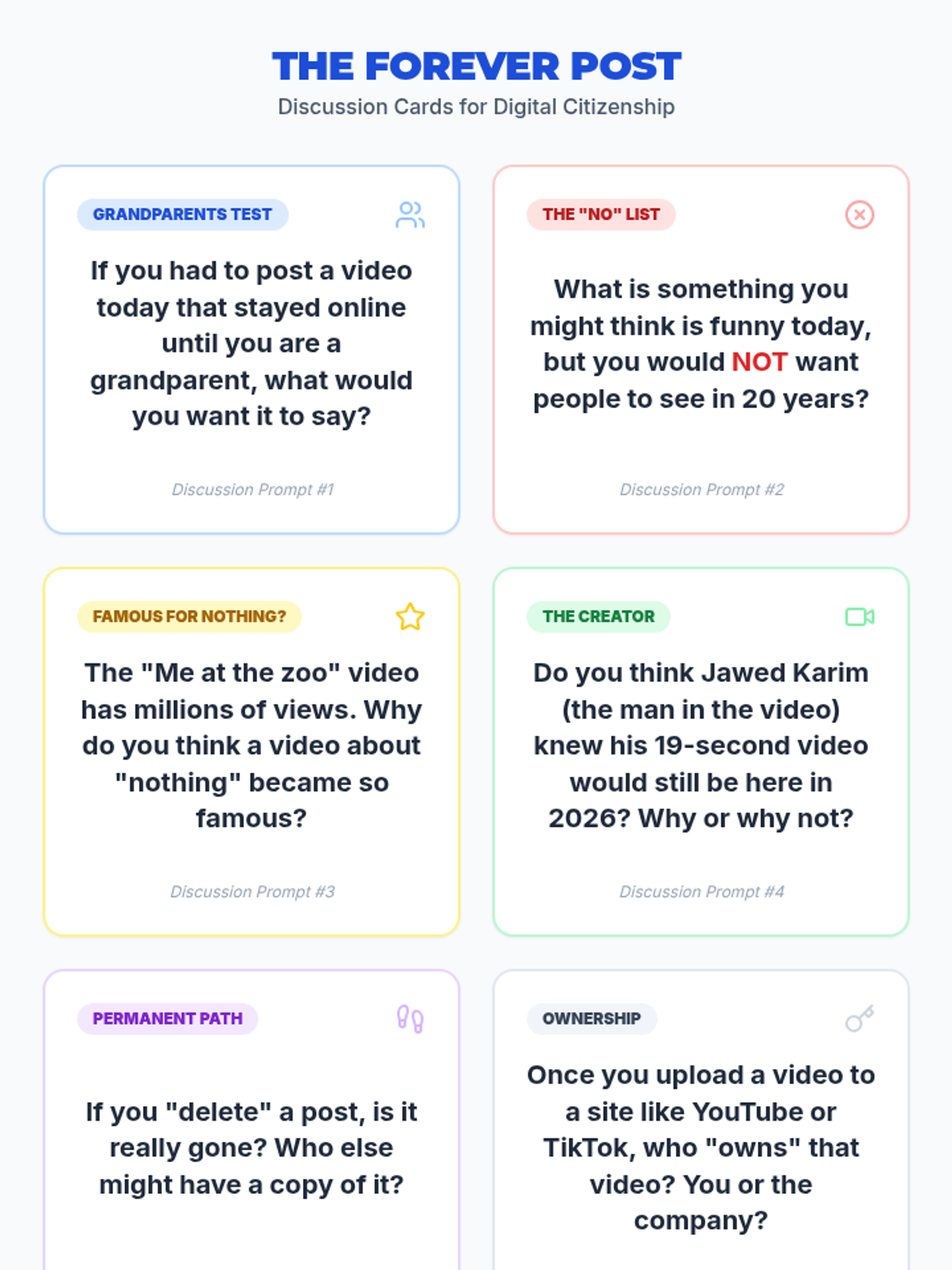
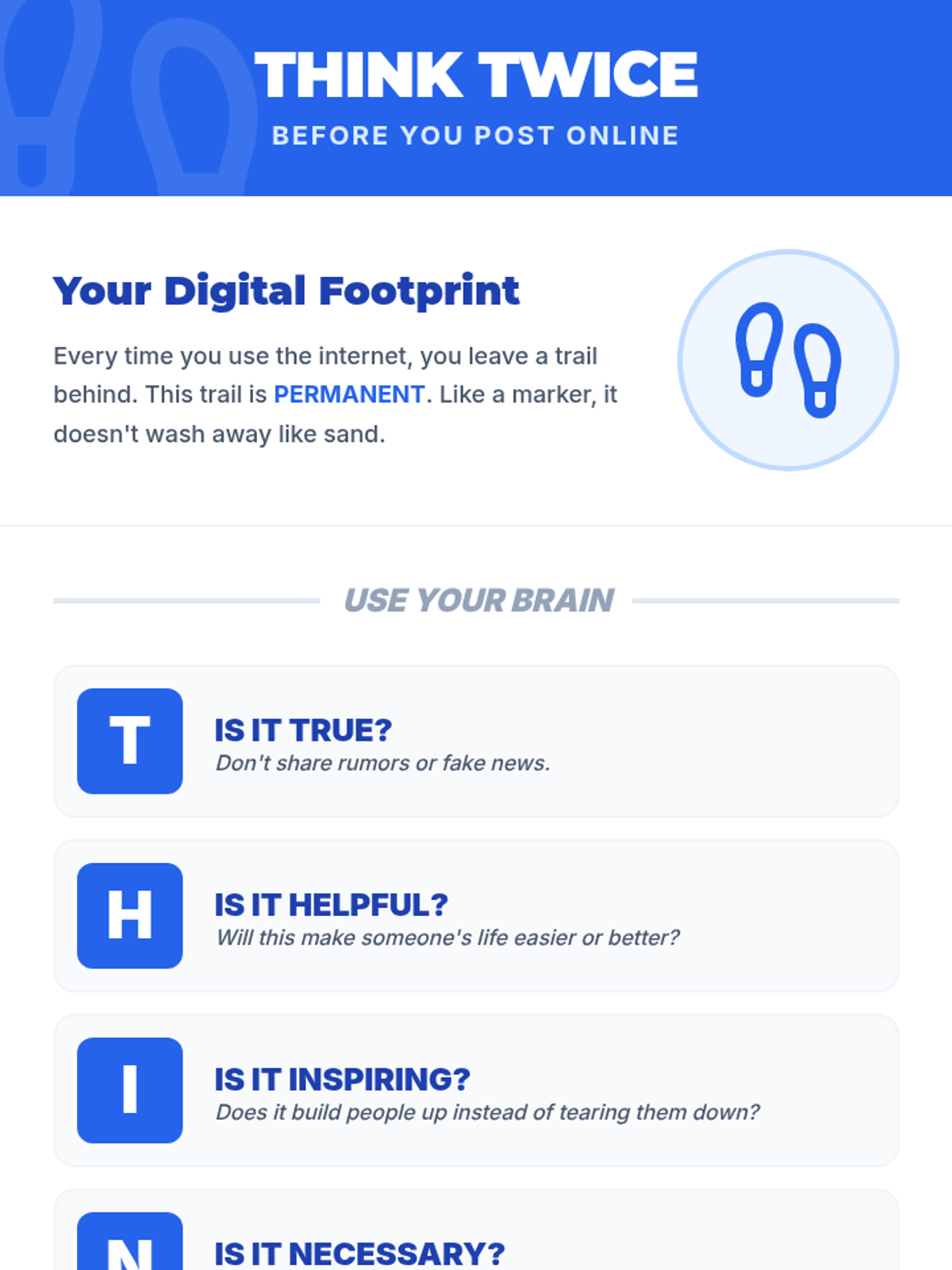
A lesson for elementary students exploring the permanence of the internet through the first-ever YouTube video, 'Me at the zoo', teaching the concept of a digital footprint.
A lesson where students analyze the first-ever YouTube video to learn about unscripted oral communication and then perform their own 20-second observational vlogs.
A comprehensive science lesson for 4th graders exploring llama adaptations, habitat in the Andes Mountains, and their role in the ecosystem.
In this lesson, students will be introduced to the Engineering Design Process (EDP) by tackling a real-world design challenge. They will learn to identify problems, brainstorm solutions, and understand the iterative nature of engineering.
Students explore the history of media technology and presentation styles by comparing the first YouTube video to modern content, focusing on the concept of User-Generated Content (UGC).
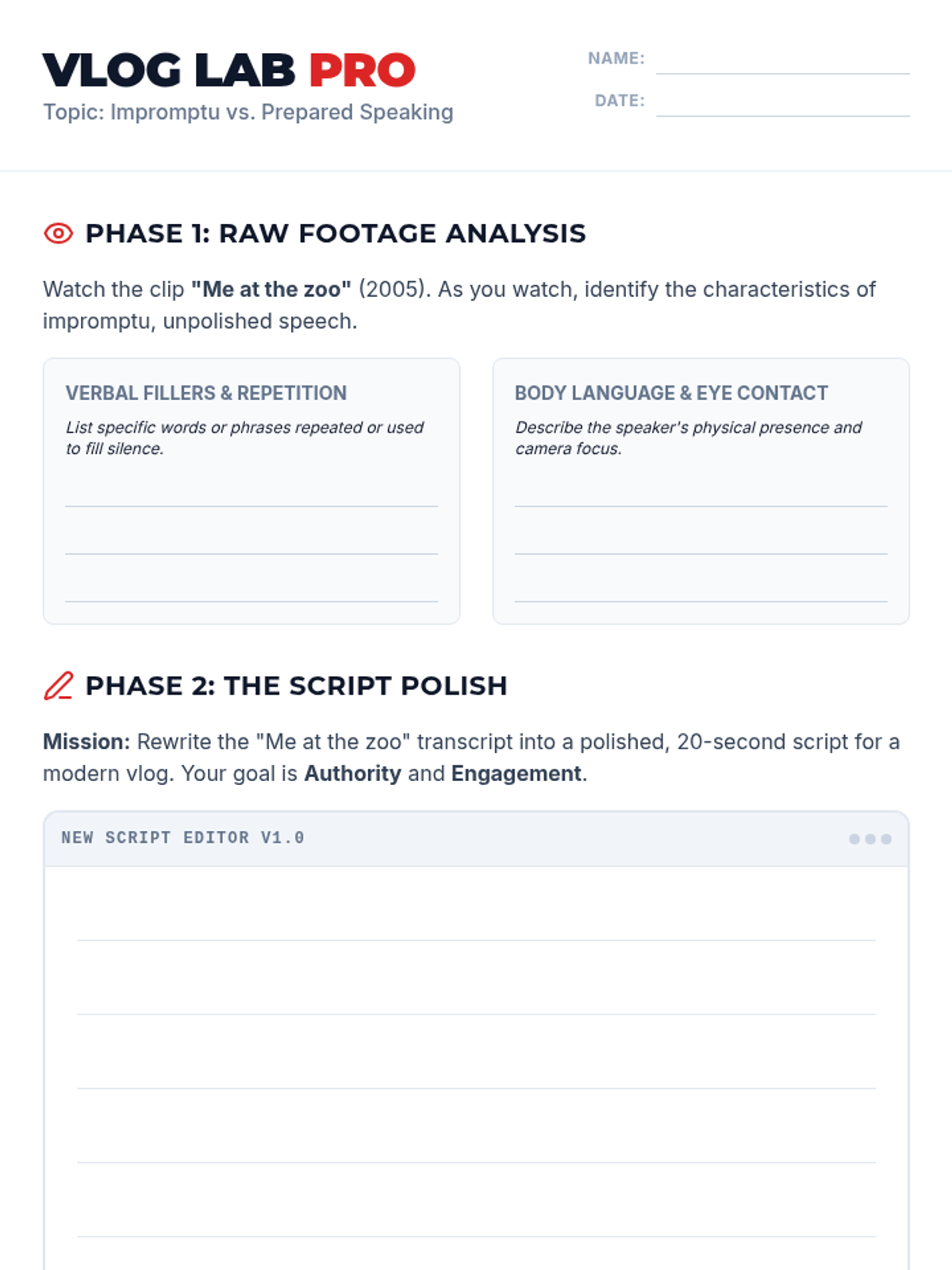
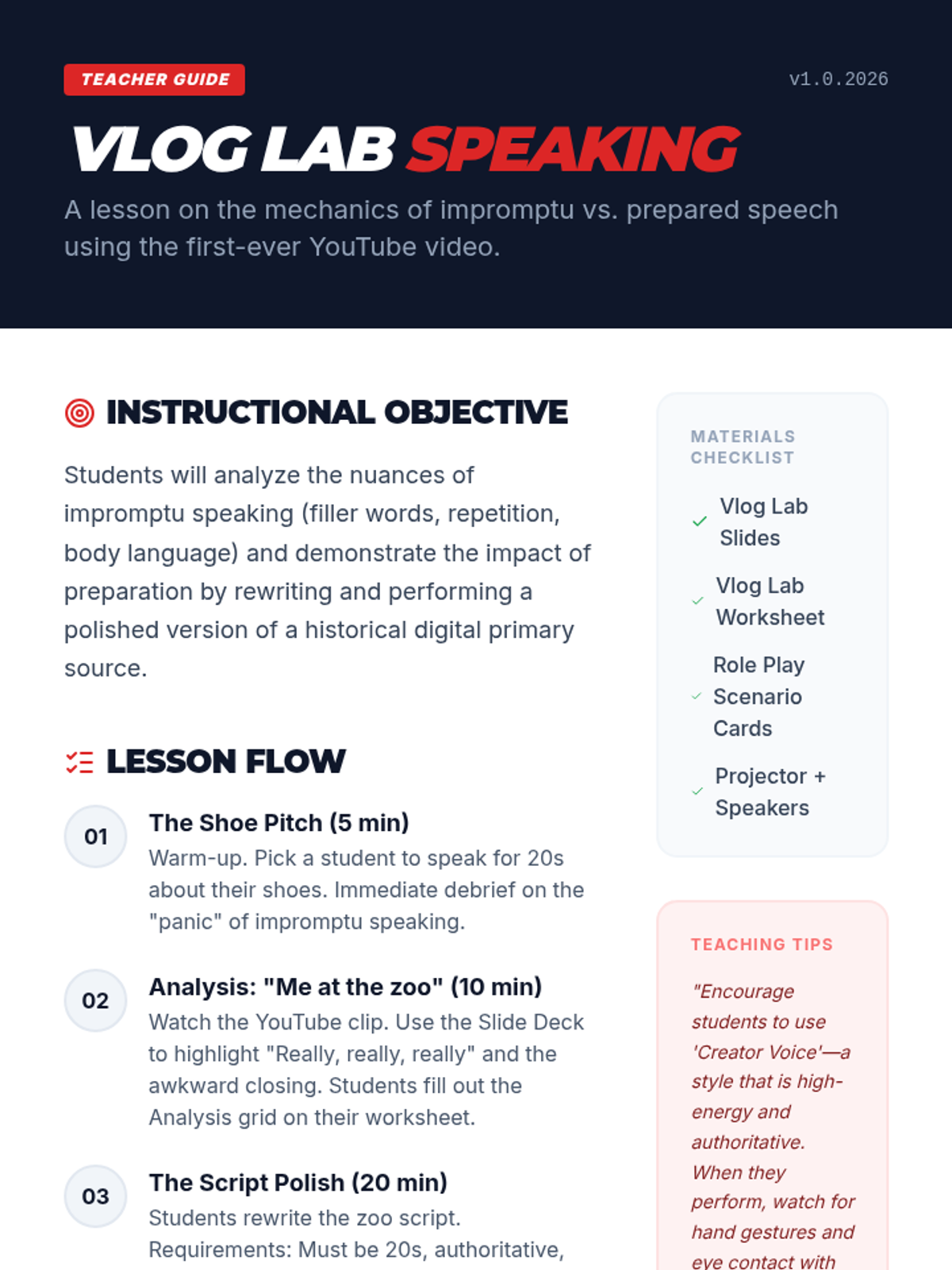
A Speech & Debate/ELA lesson where students analyze 'Me at the zoo' to understand the differences between impromptu and prepared speaking, ending with a script-polishing activity.