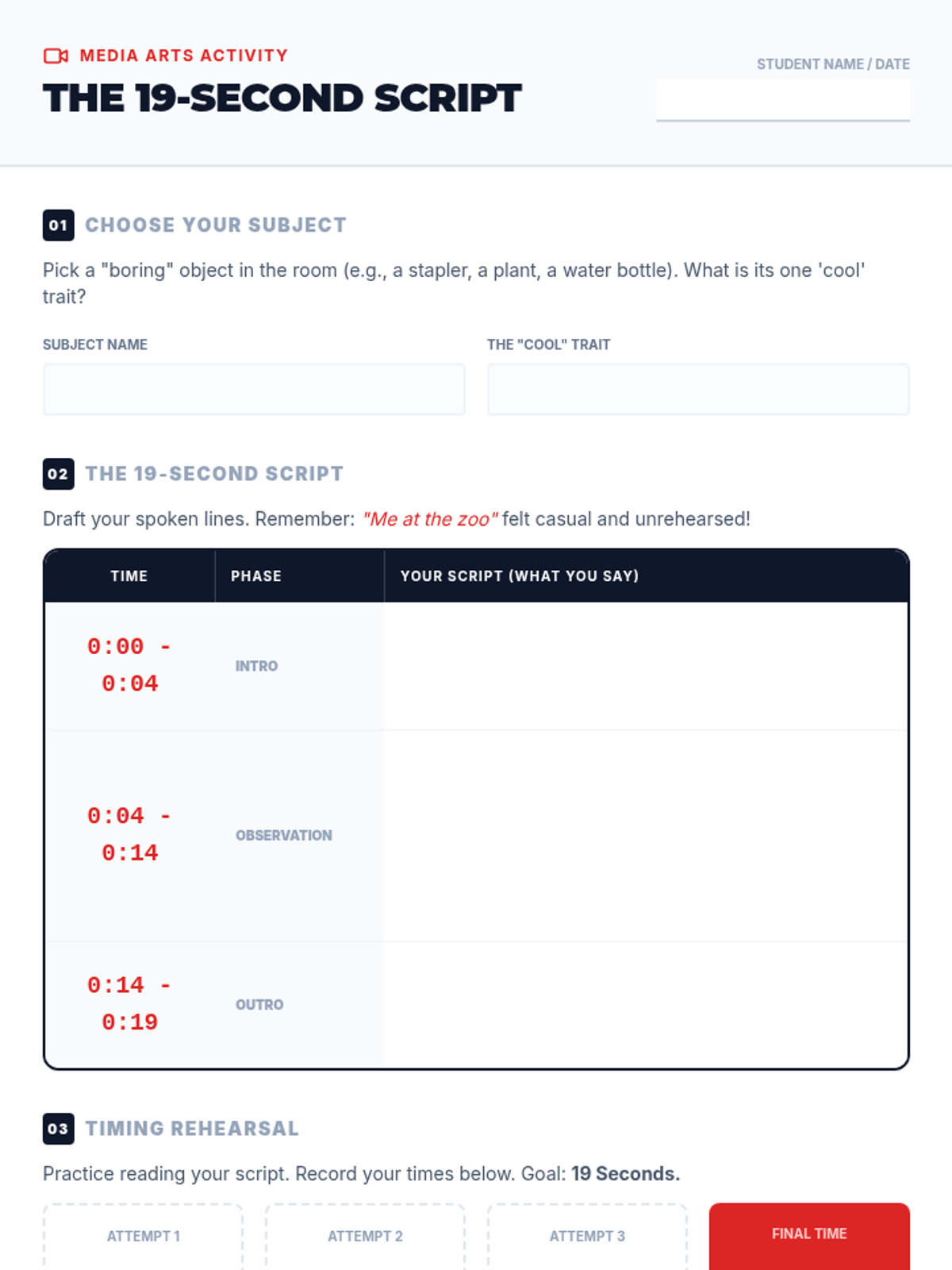
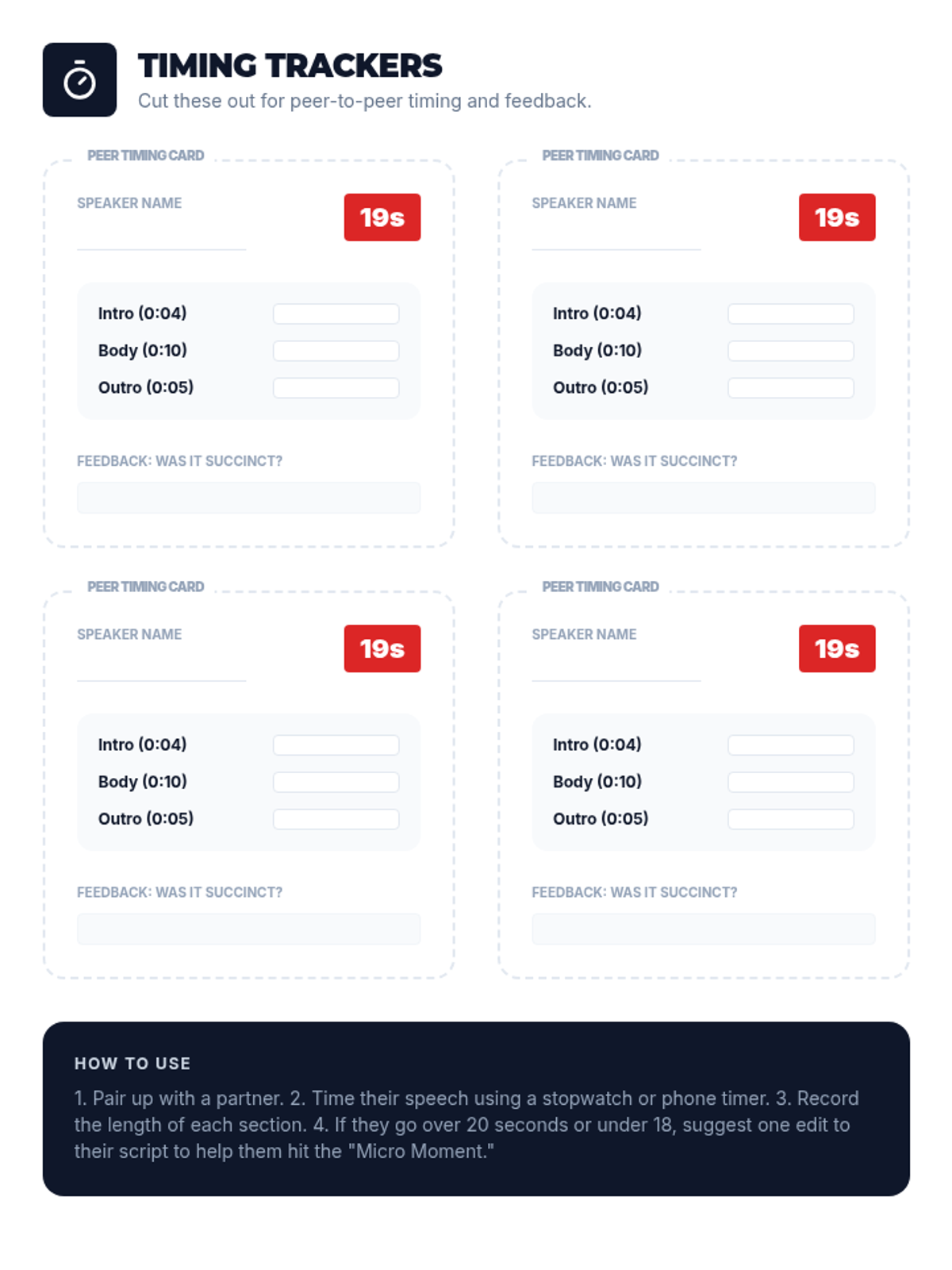
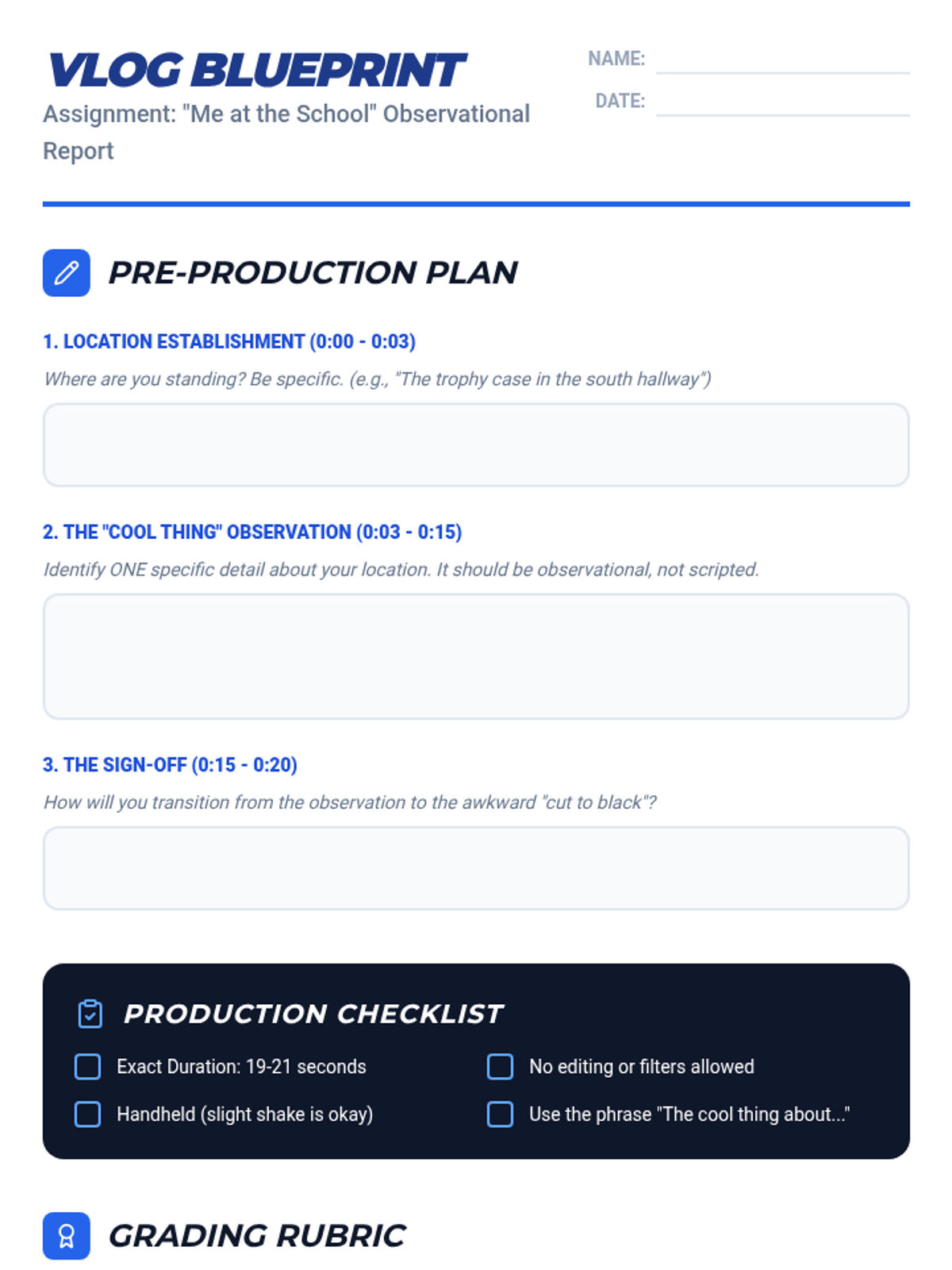
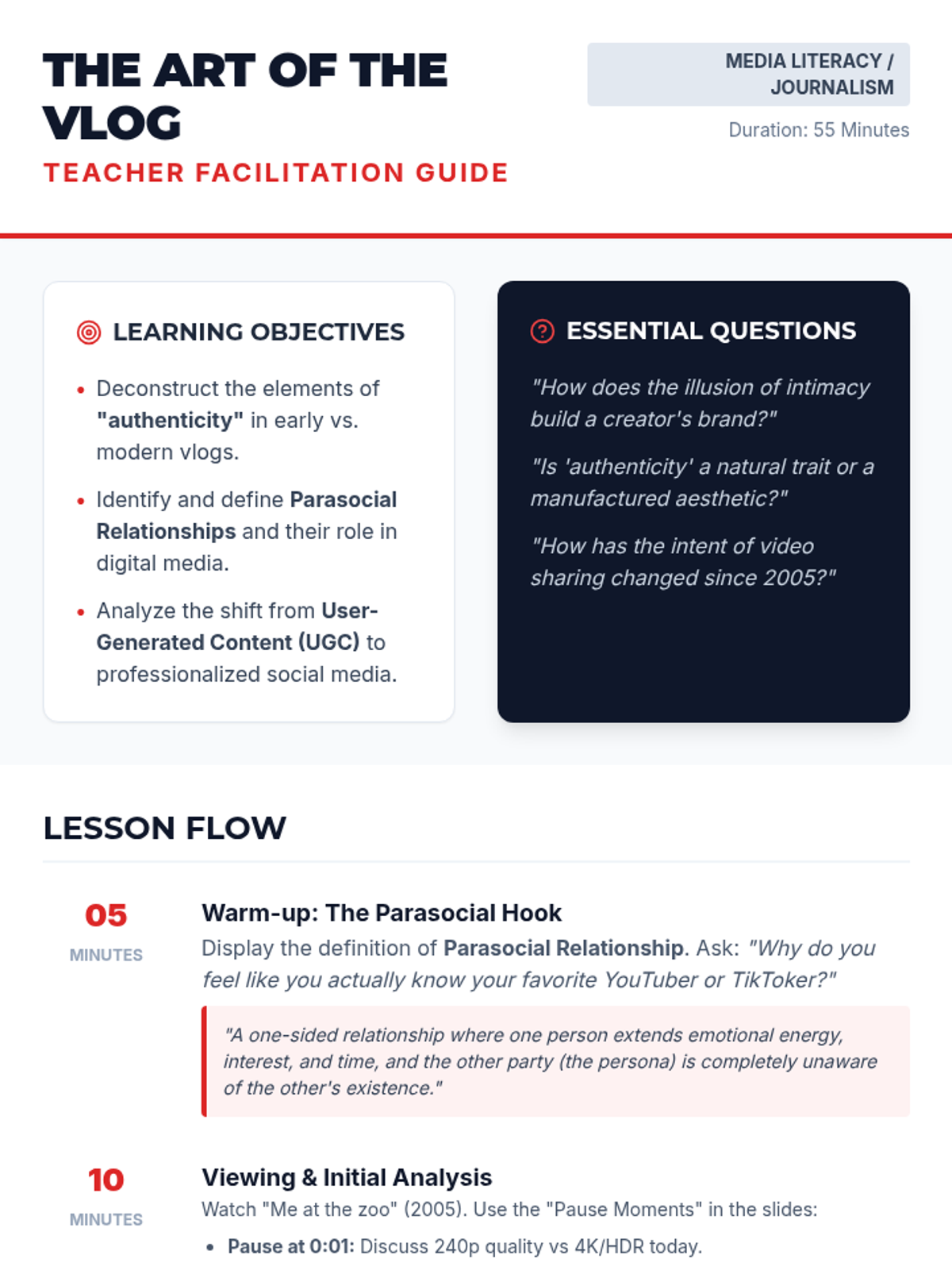
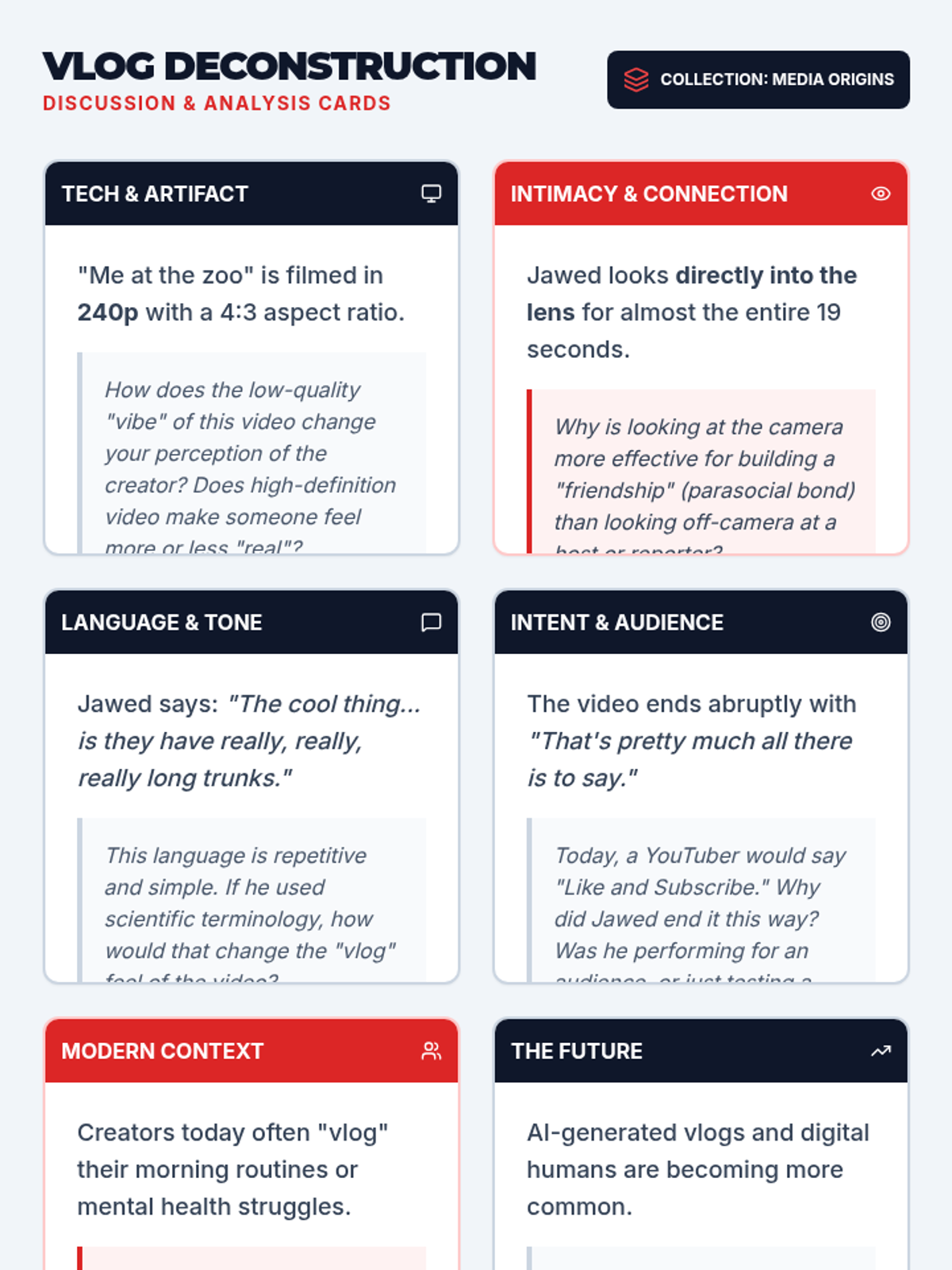
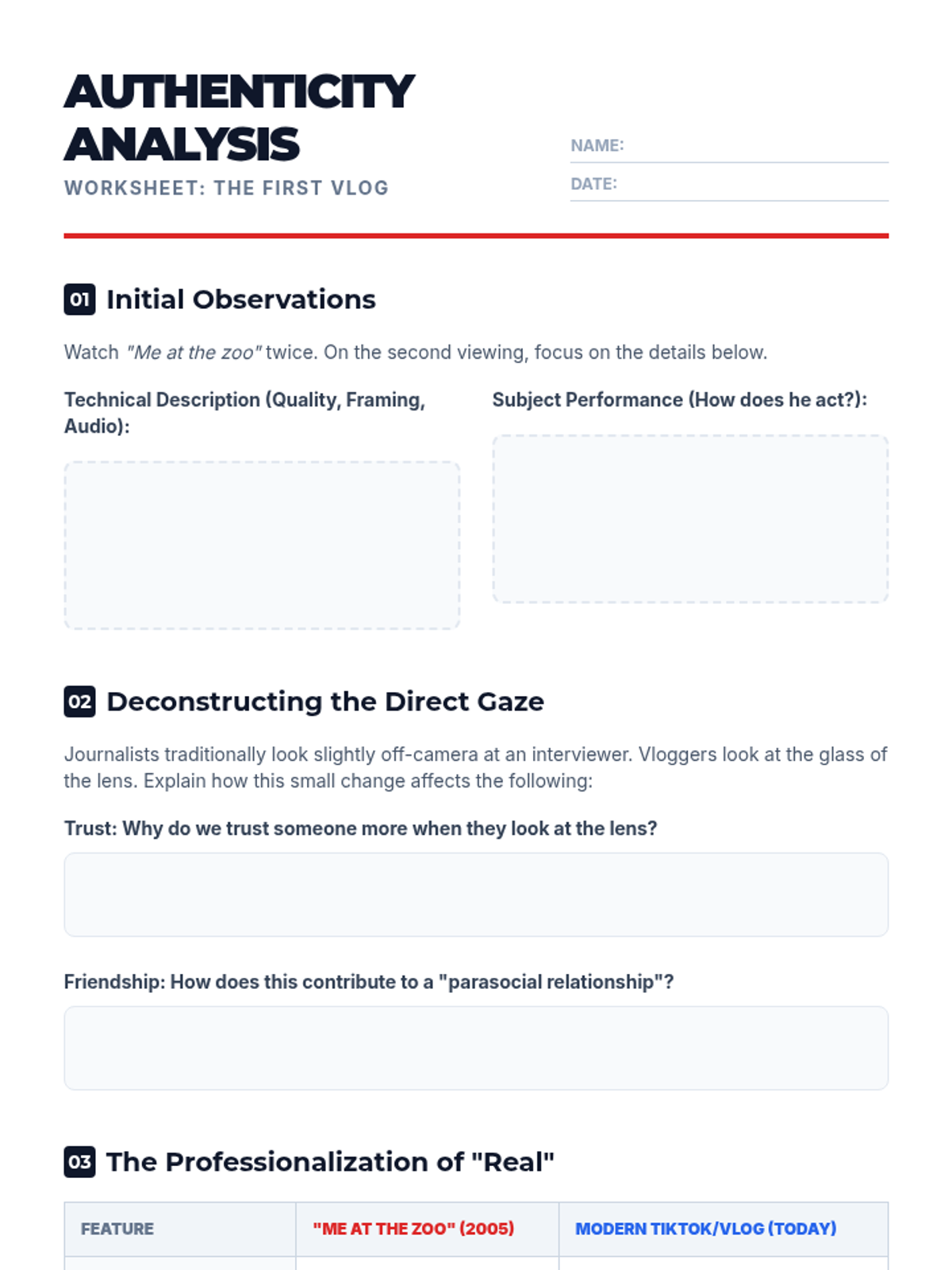
A high school journalism lesson exploring the history of vlogging using the first YouTube video, challenging students to create a concise, unedited 20-second observational video.
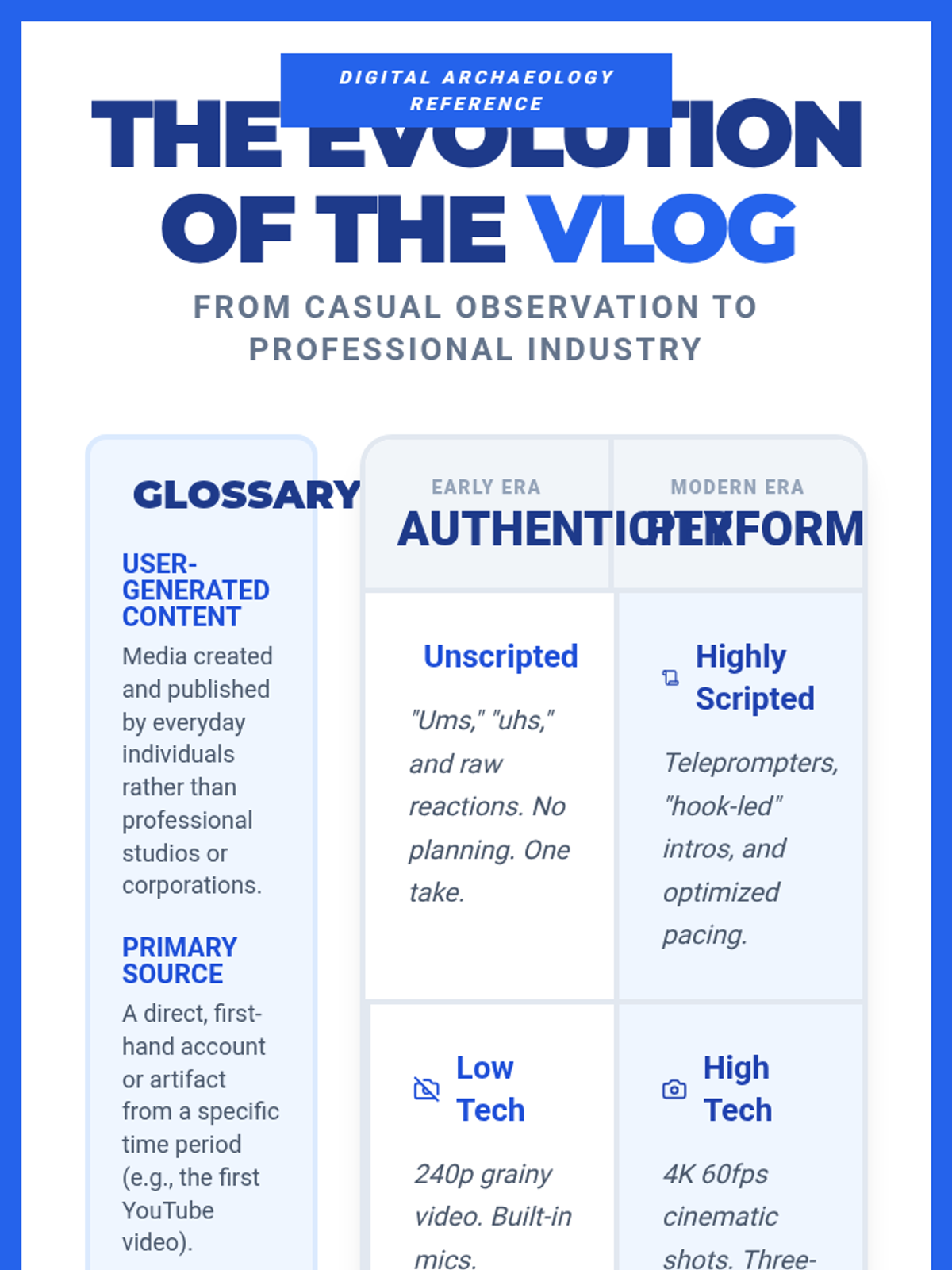
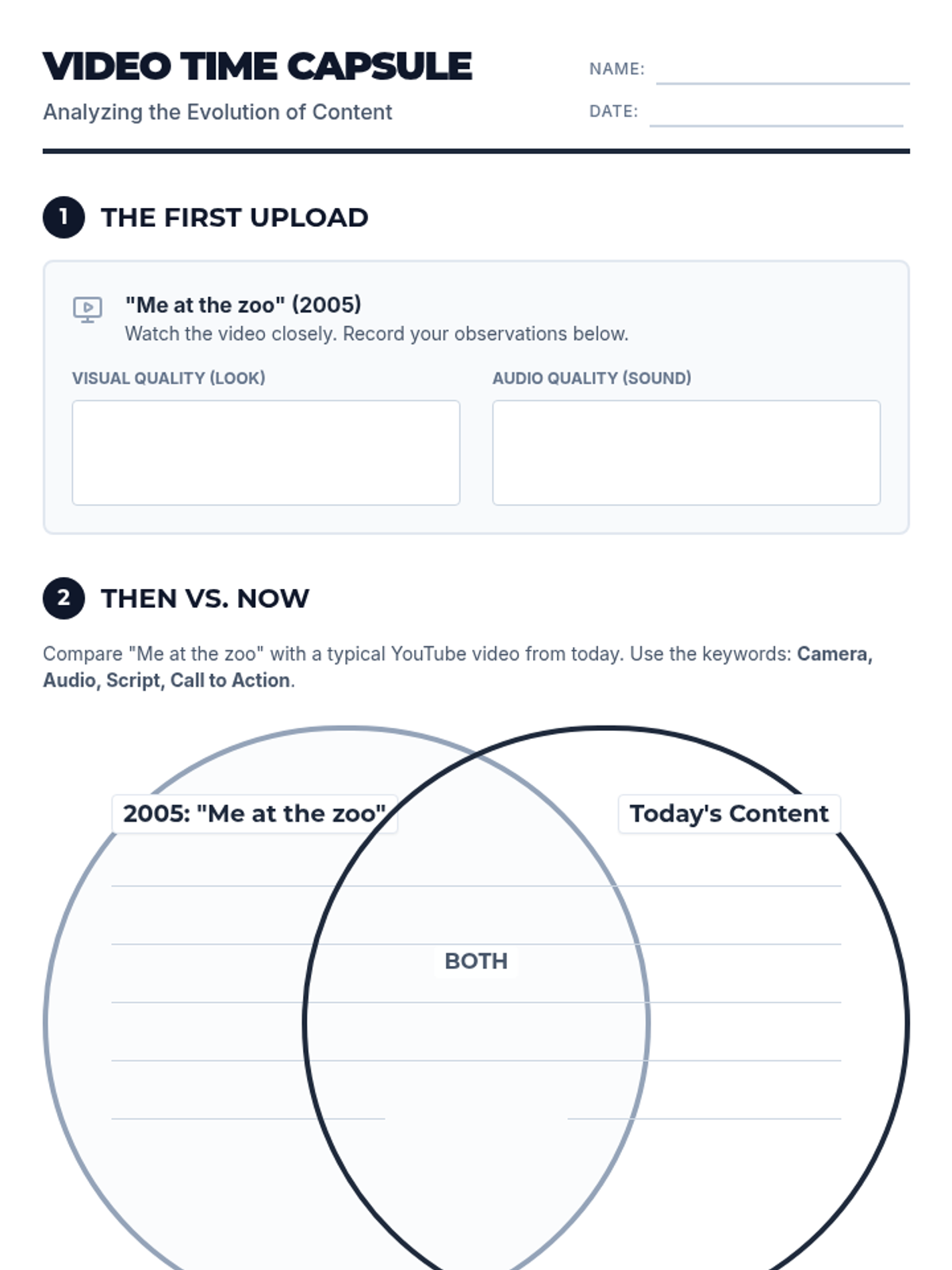
Students explore the history of media technology and presentation styles by comparing the first YouTube video to modern content, focusing on the concept of User-Generated Content (UGC).
1/16
A Kindergarten to 2nd Grade lesson where students practice observation and descriptive language by watching the first-ever YouTube video and drawing an elephant.
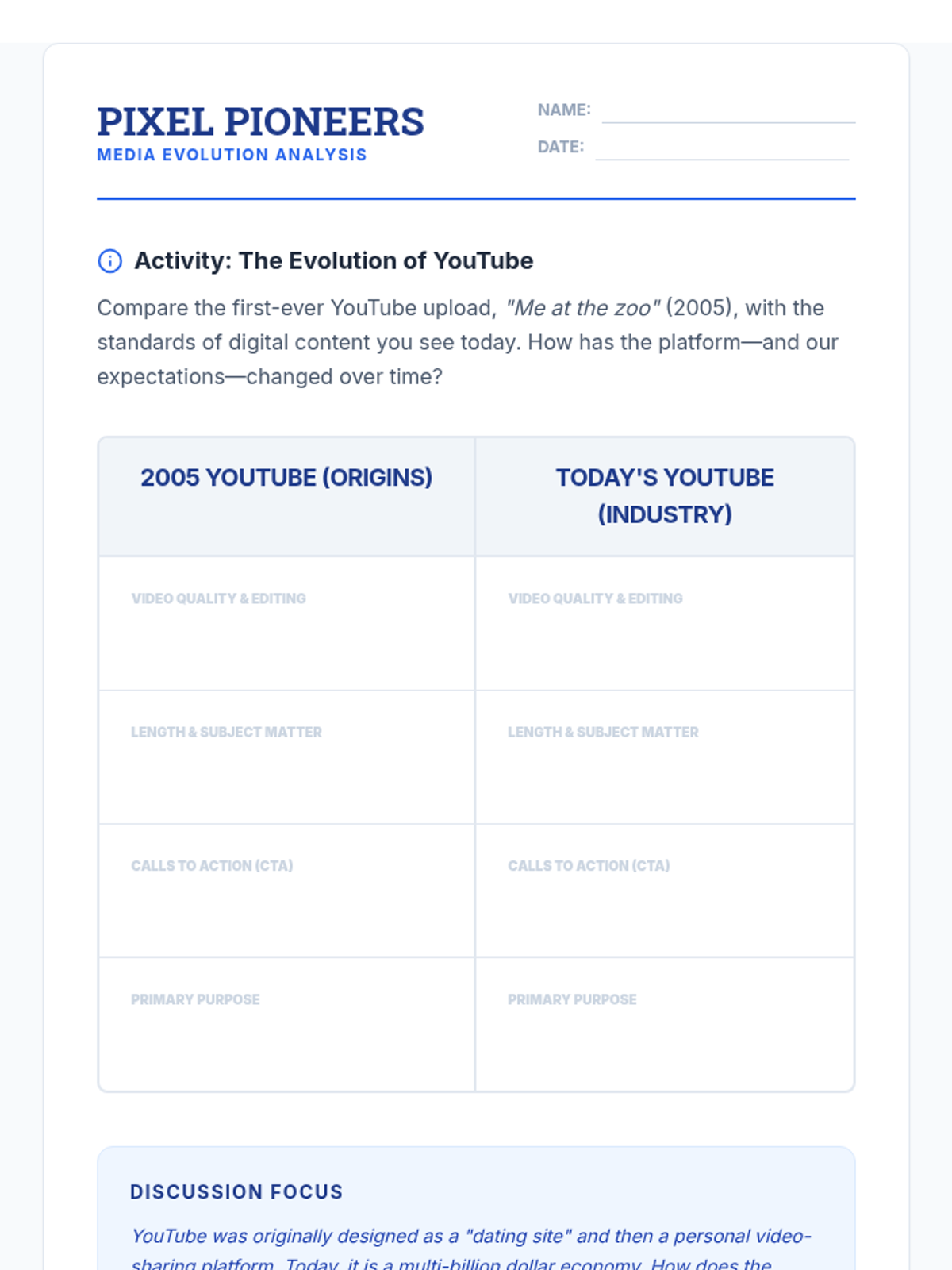
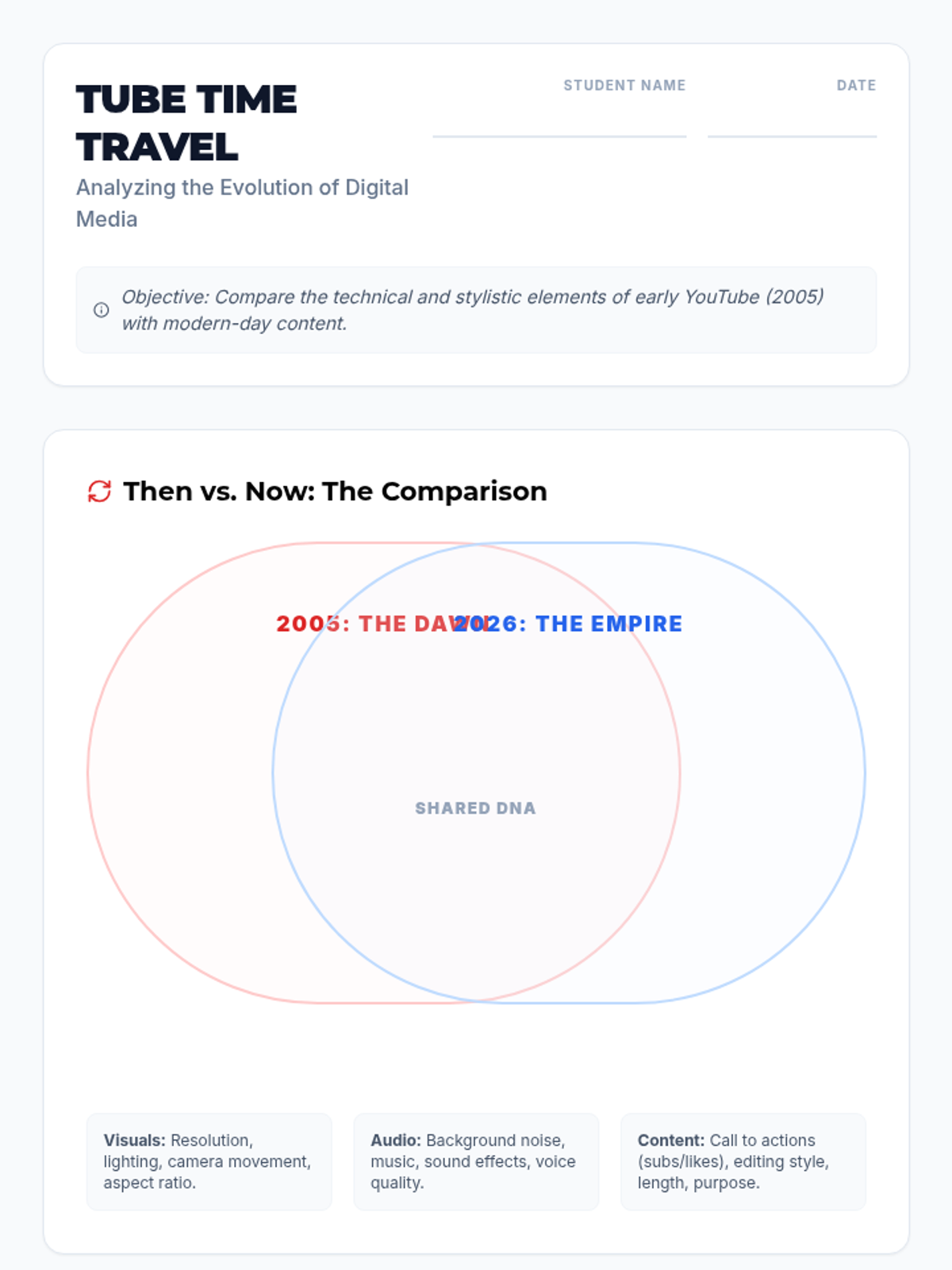
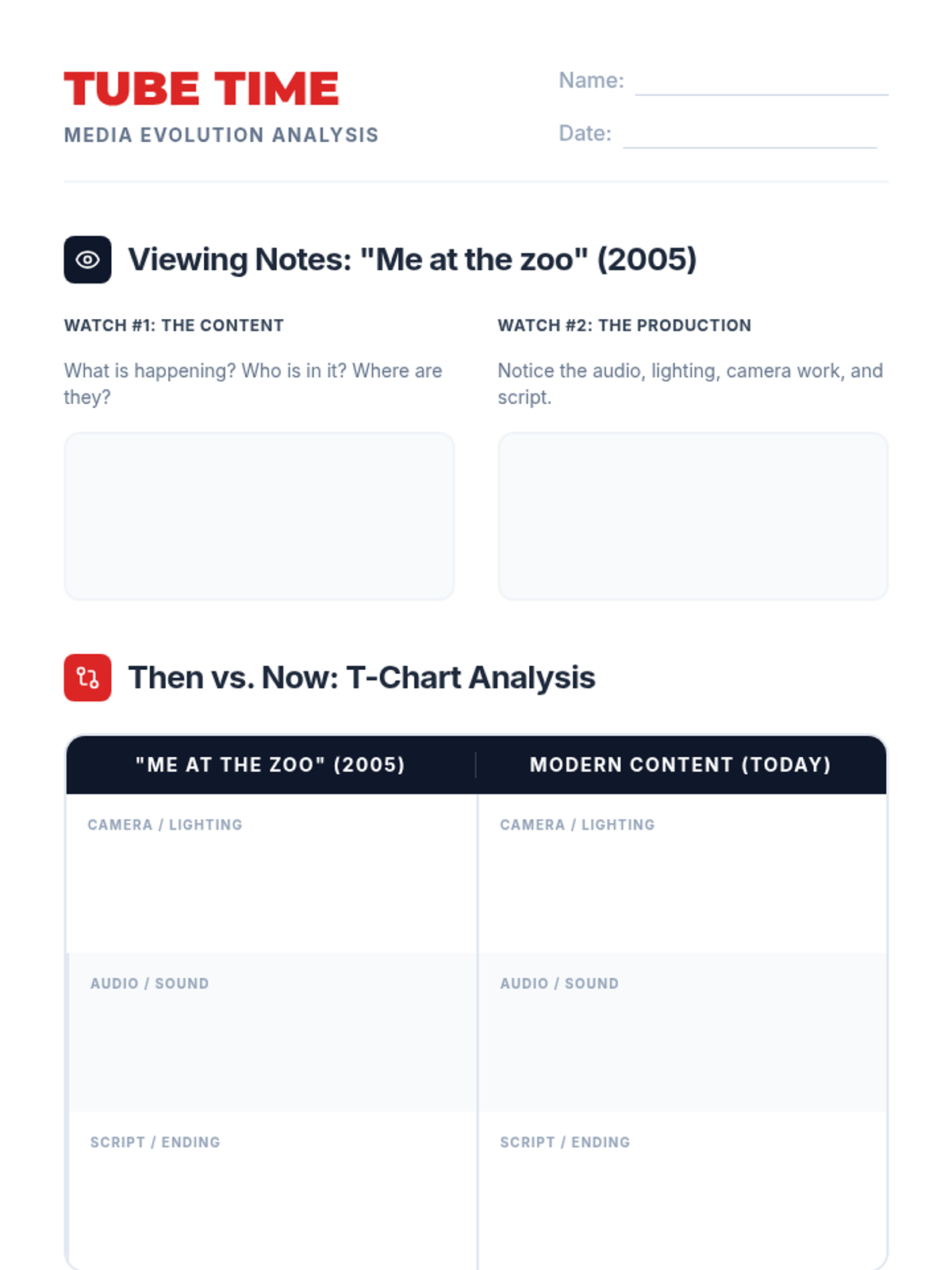
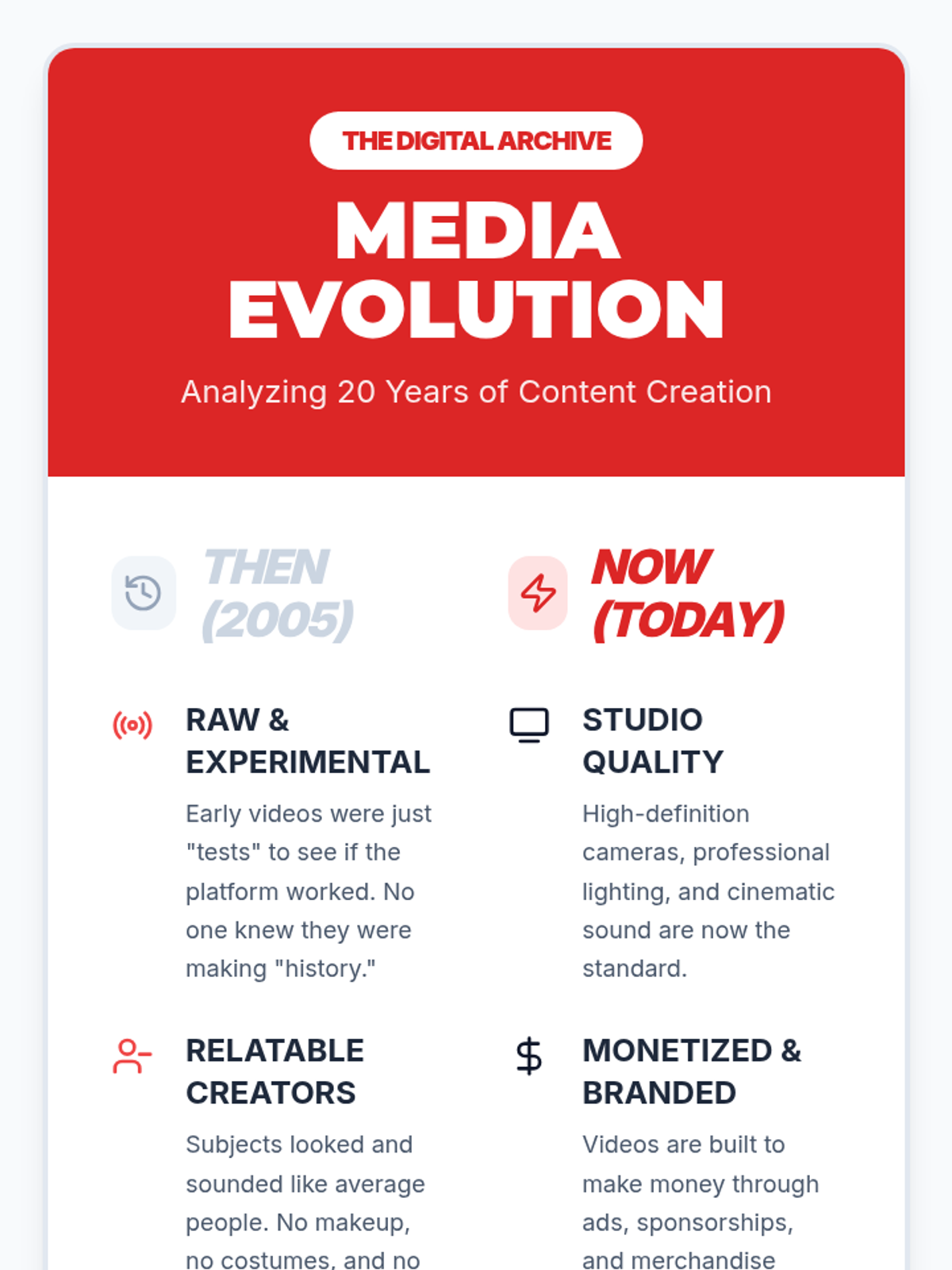
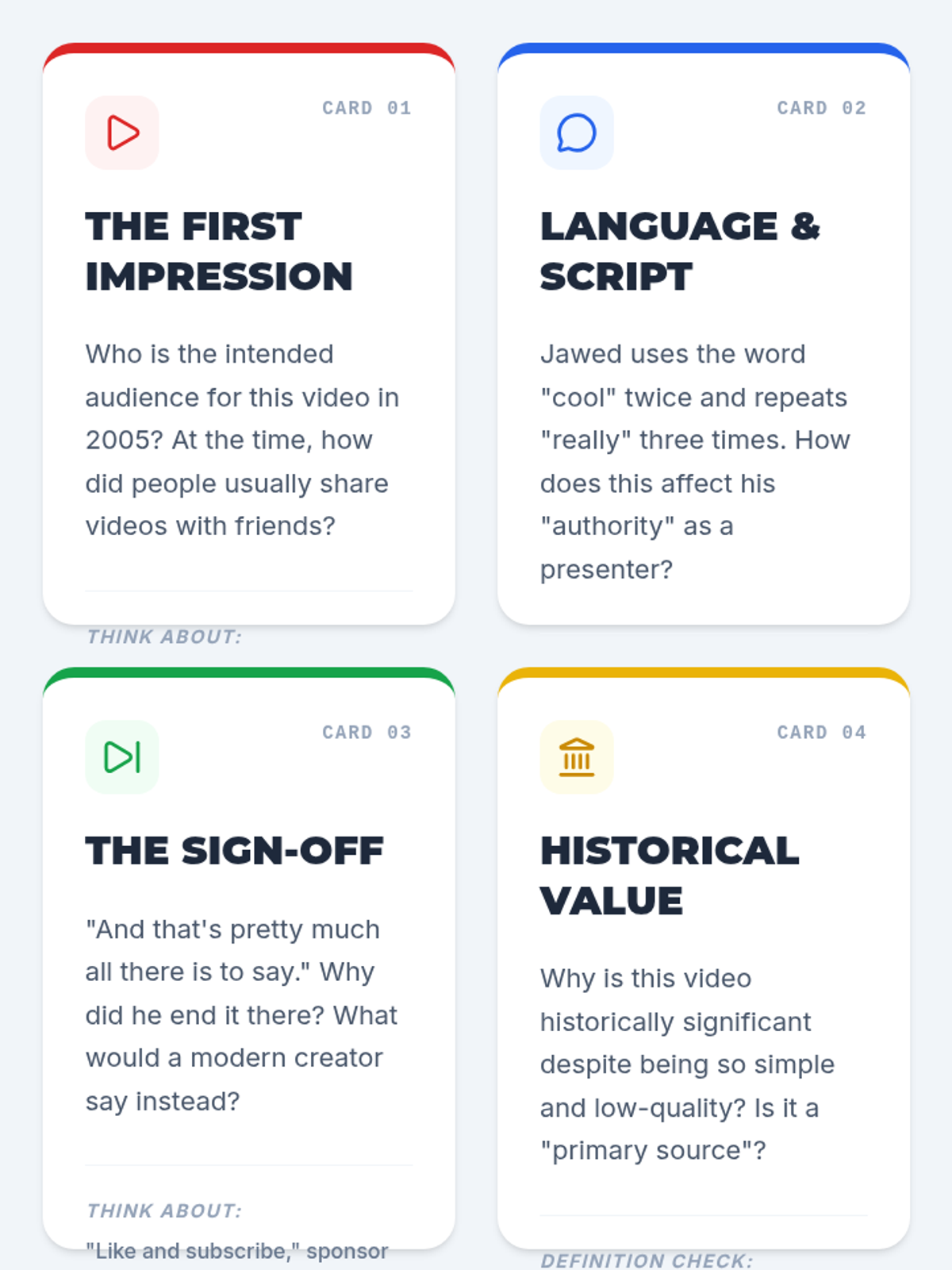
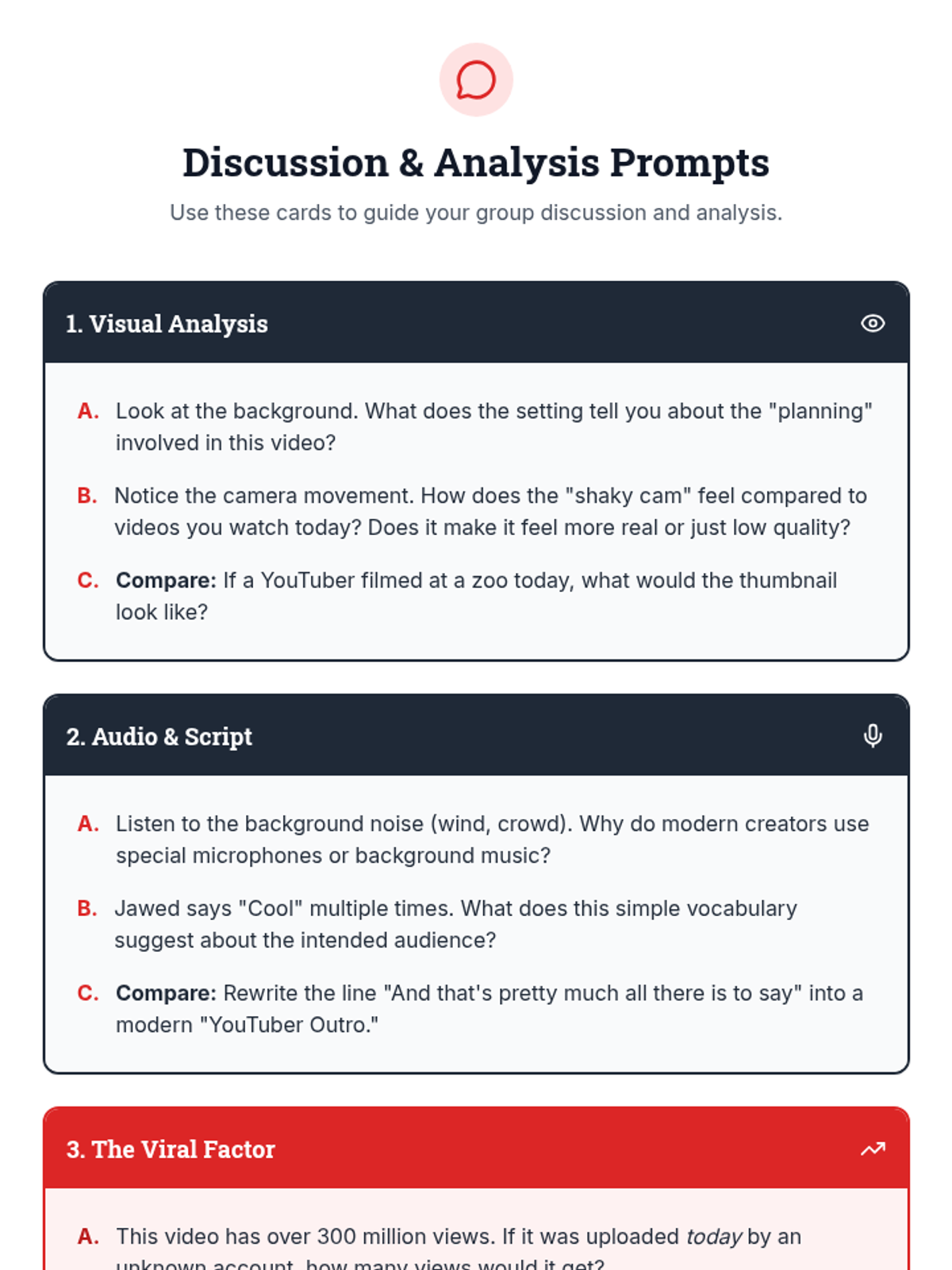
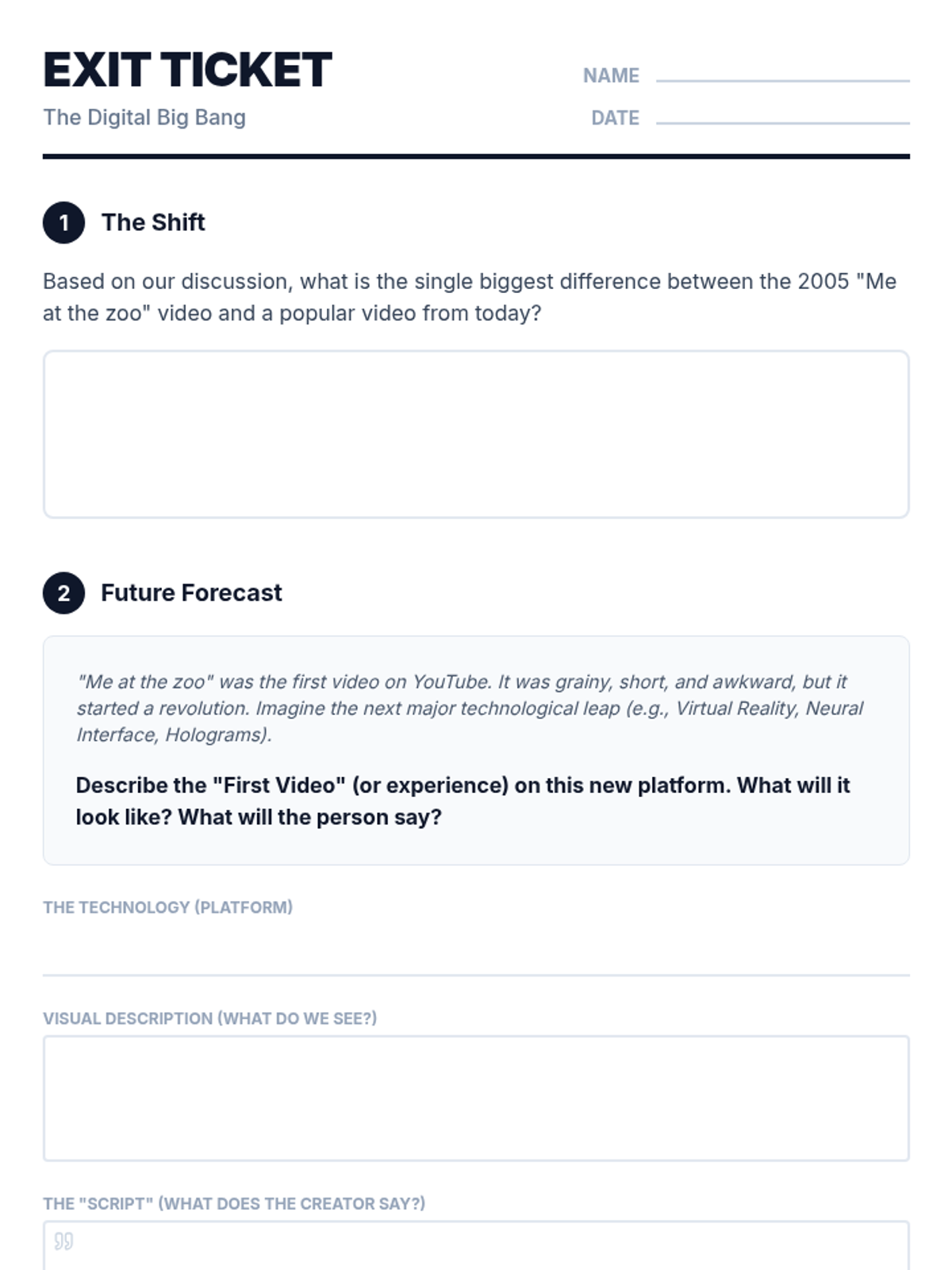
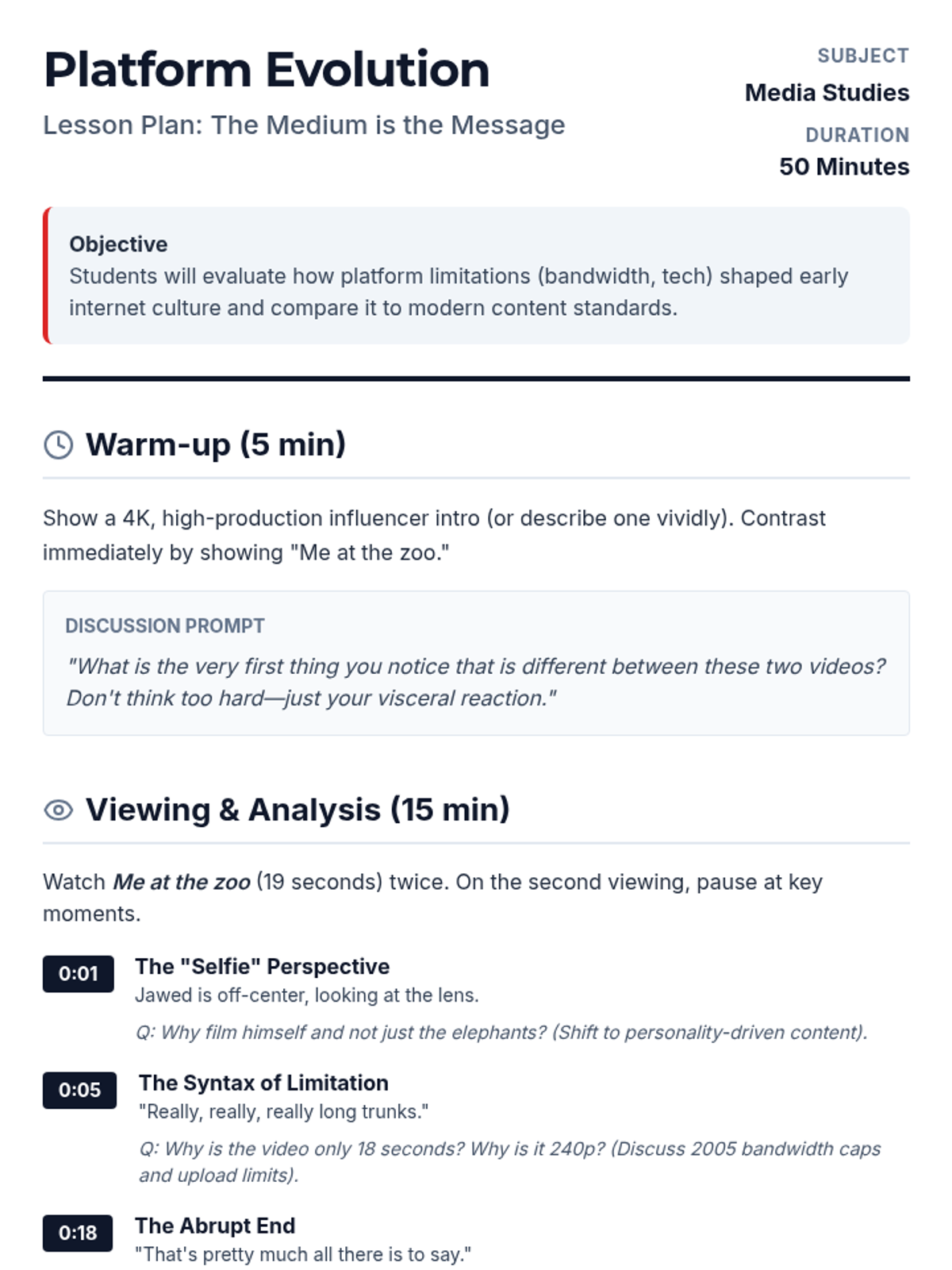
A lesson exploring the transformation of media through the history of YouTube, contrasting the simplicity of the first 'User-Generated Content' with modern, high-production digital storytelling. Students will analyze technical shifts and practice scripting for a simpler era.
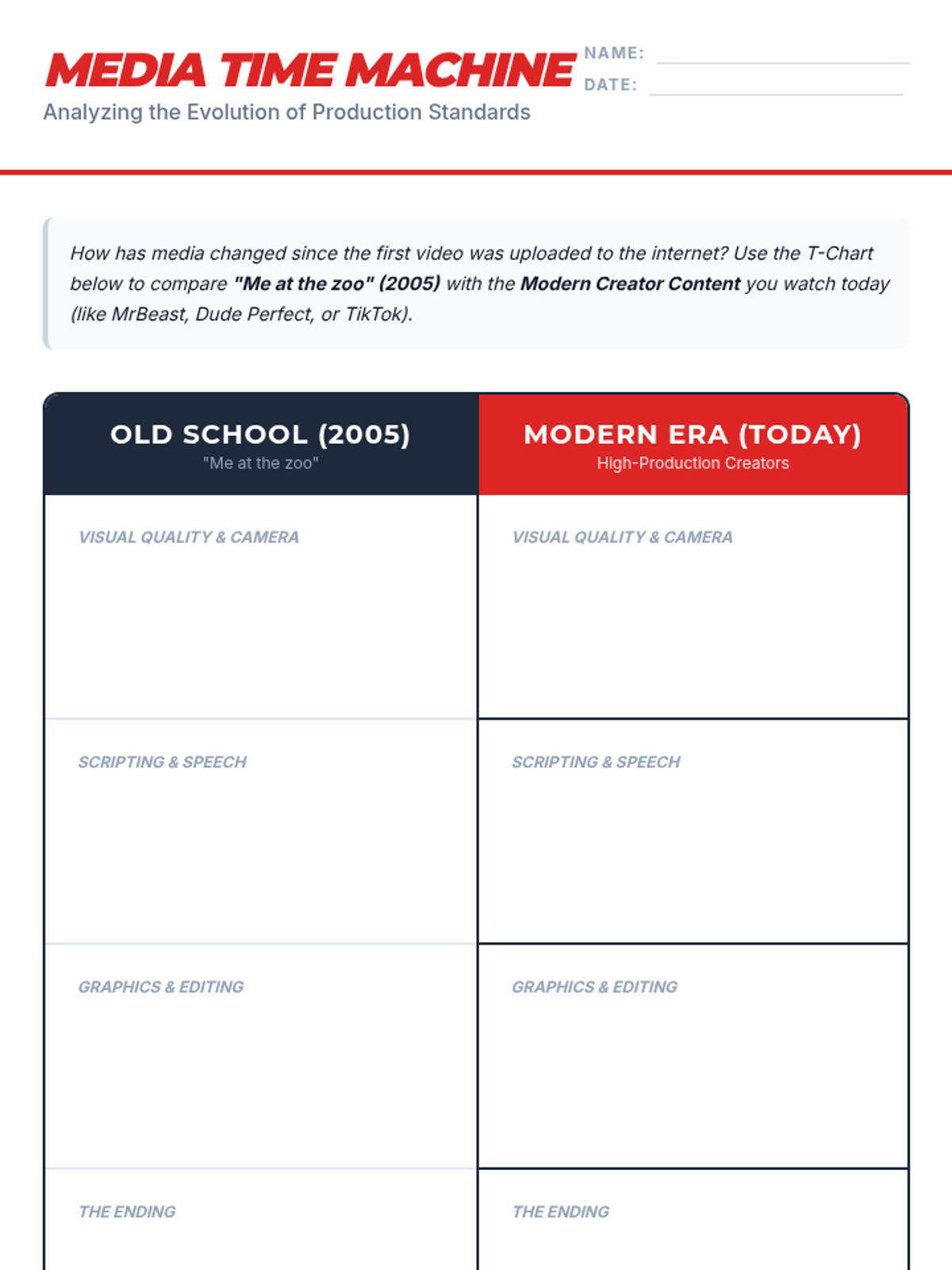
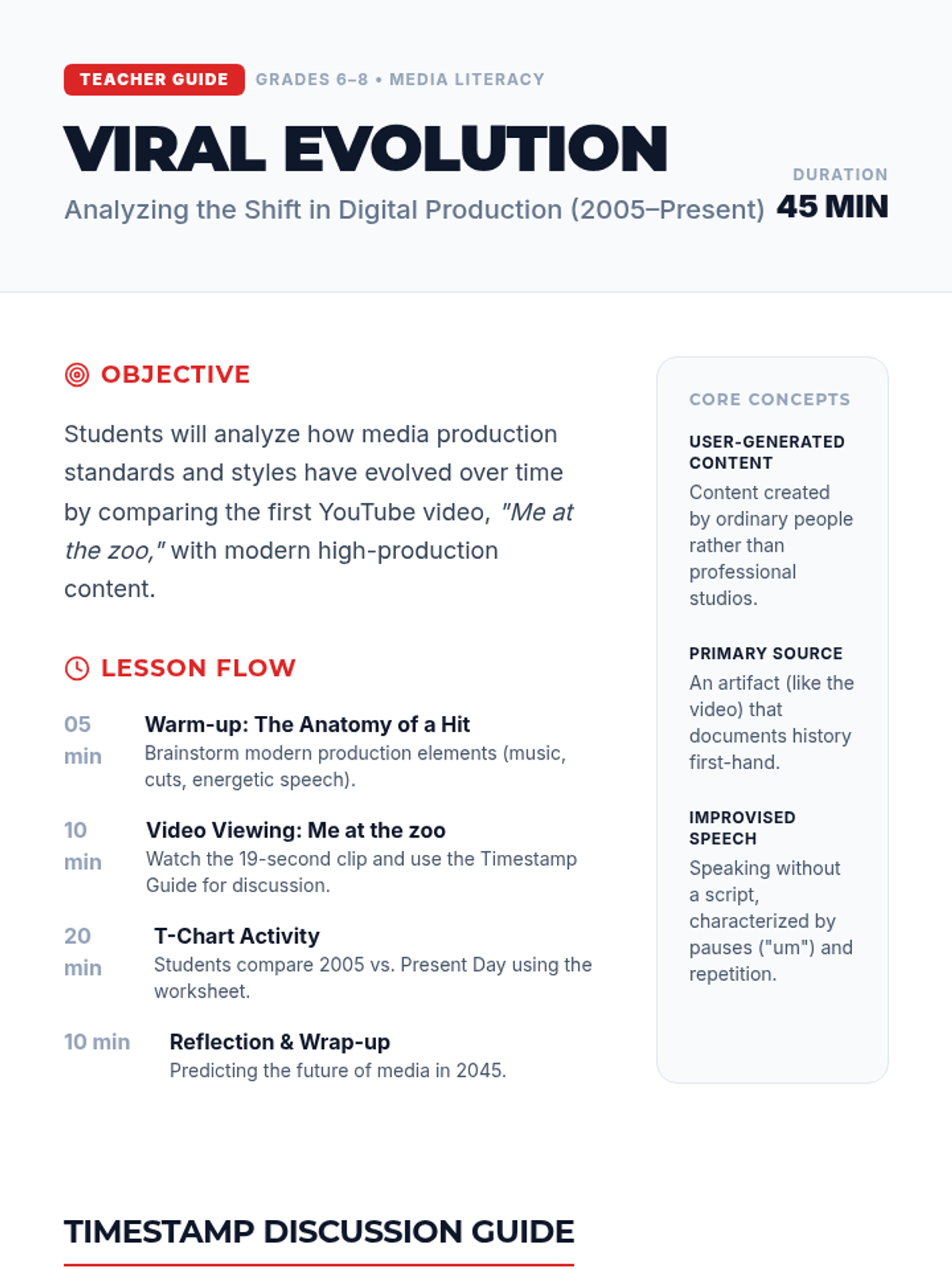
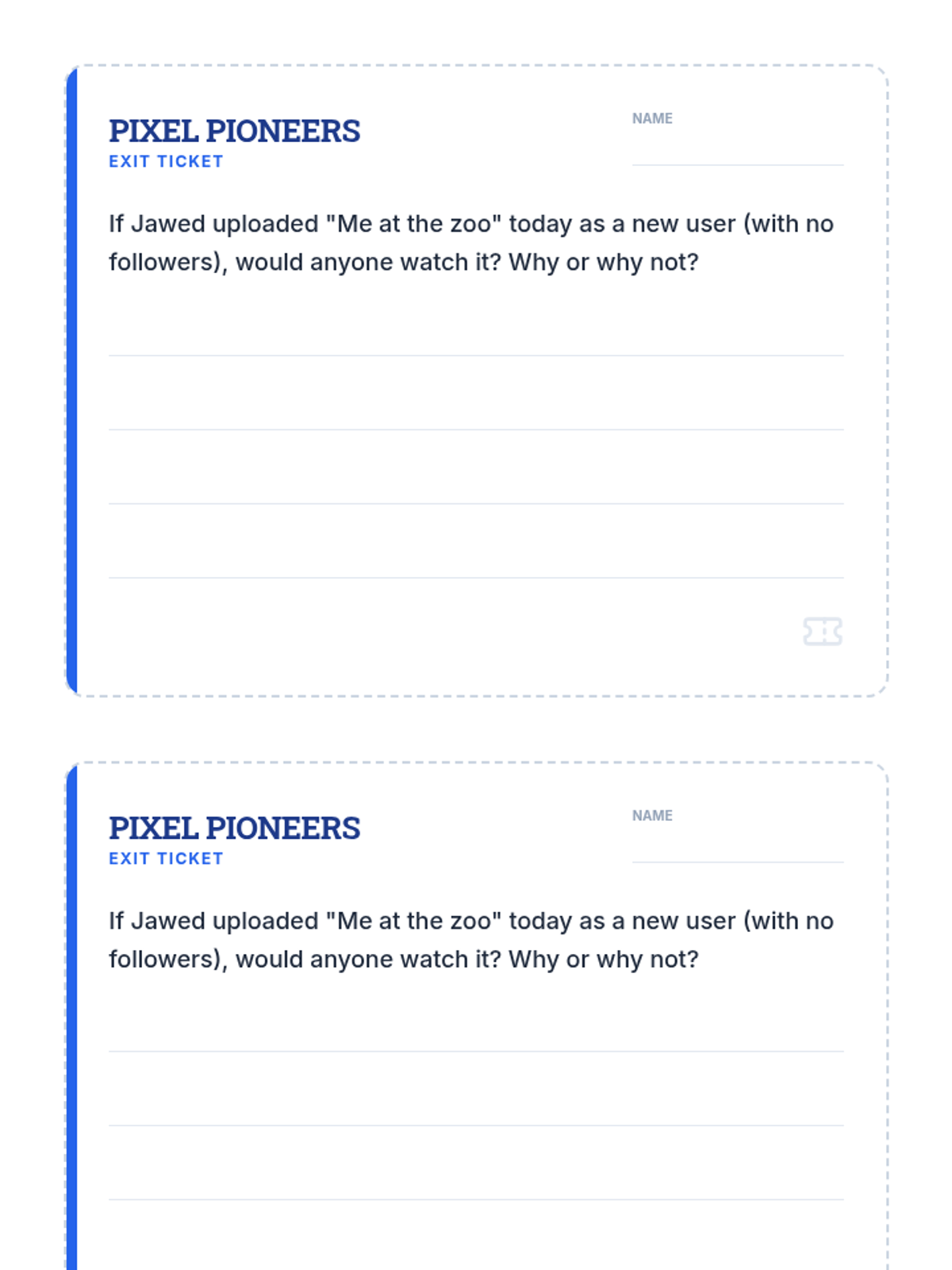
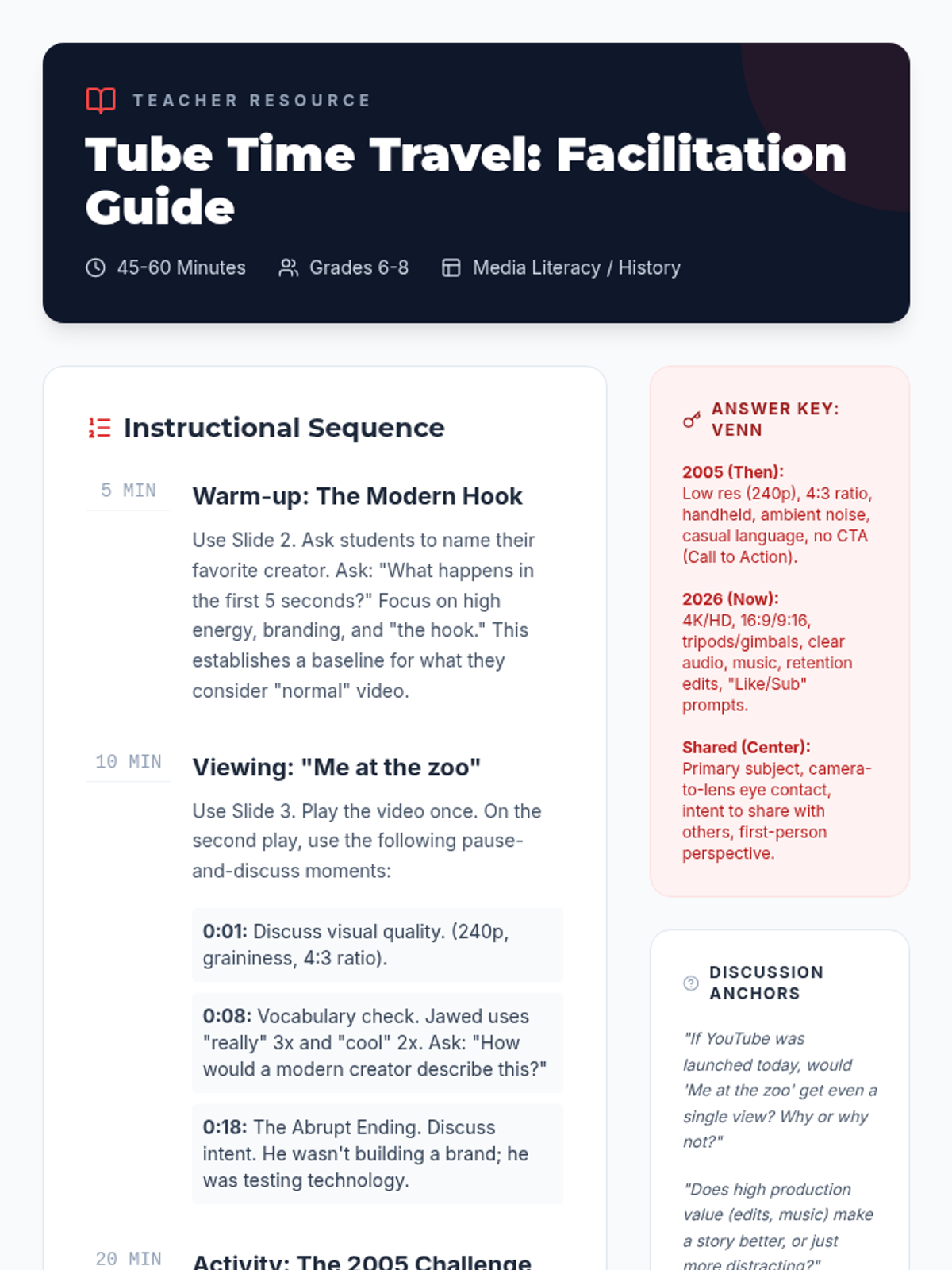
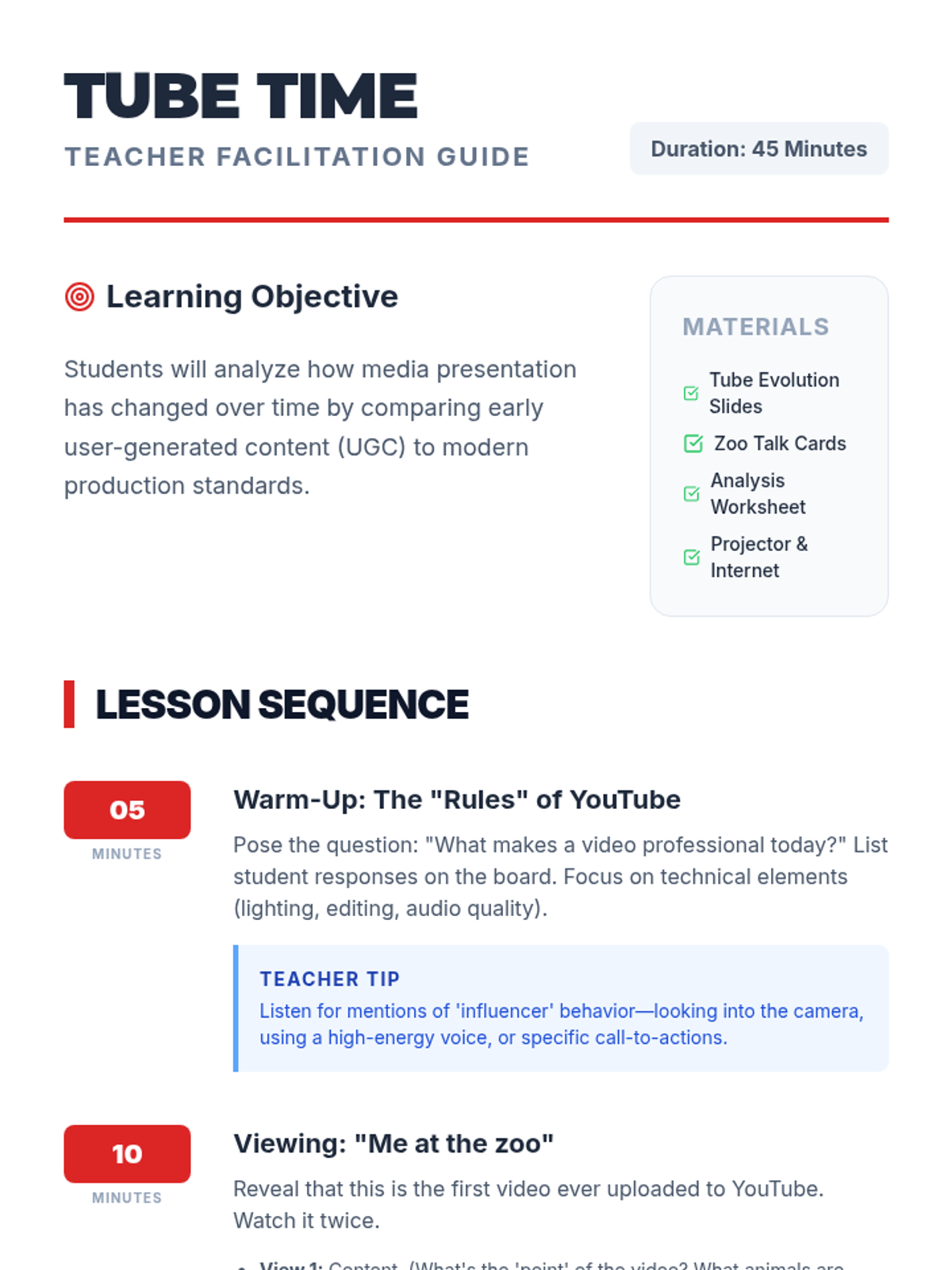
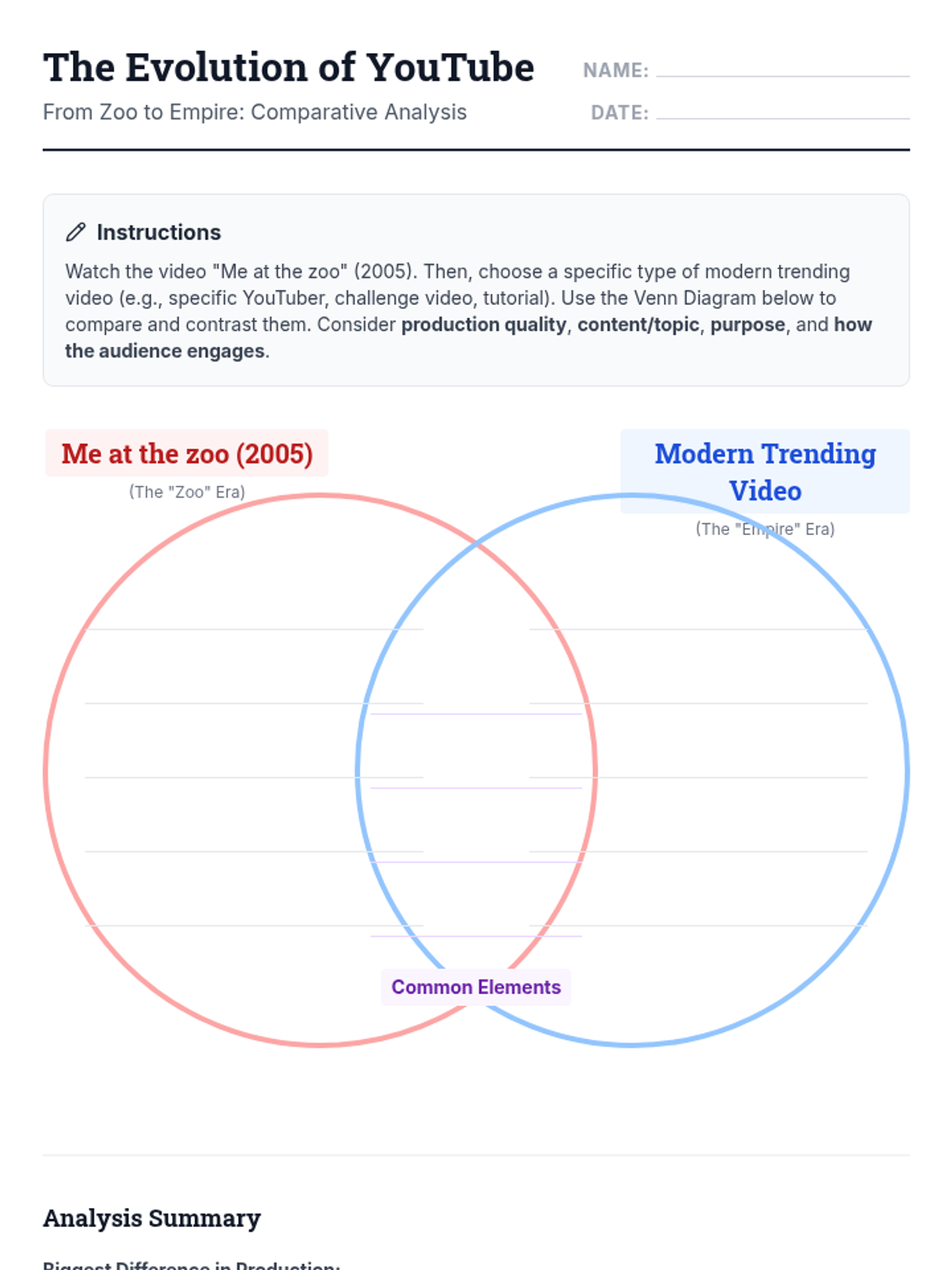
A lesson where students compare early digital media with modern content to understand how communication standards change, centering on the first YouTube video 'Me at the zoo'.
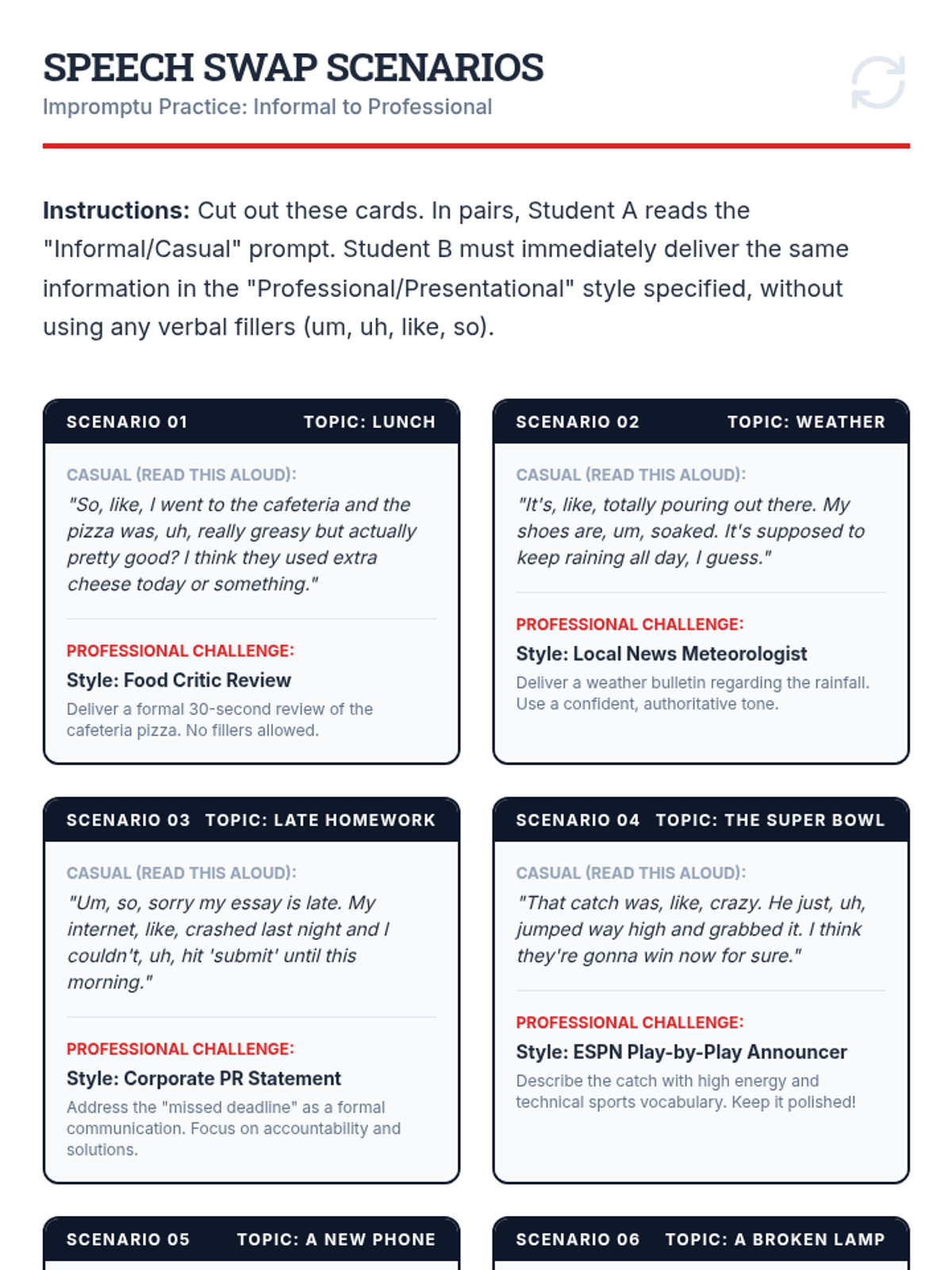
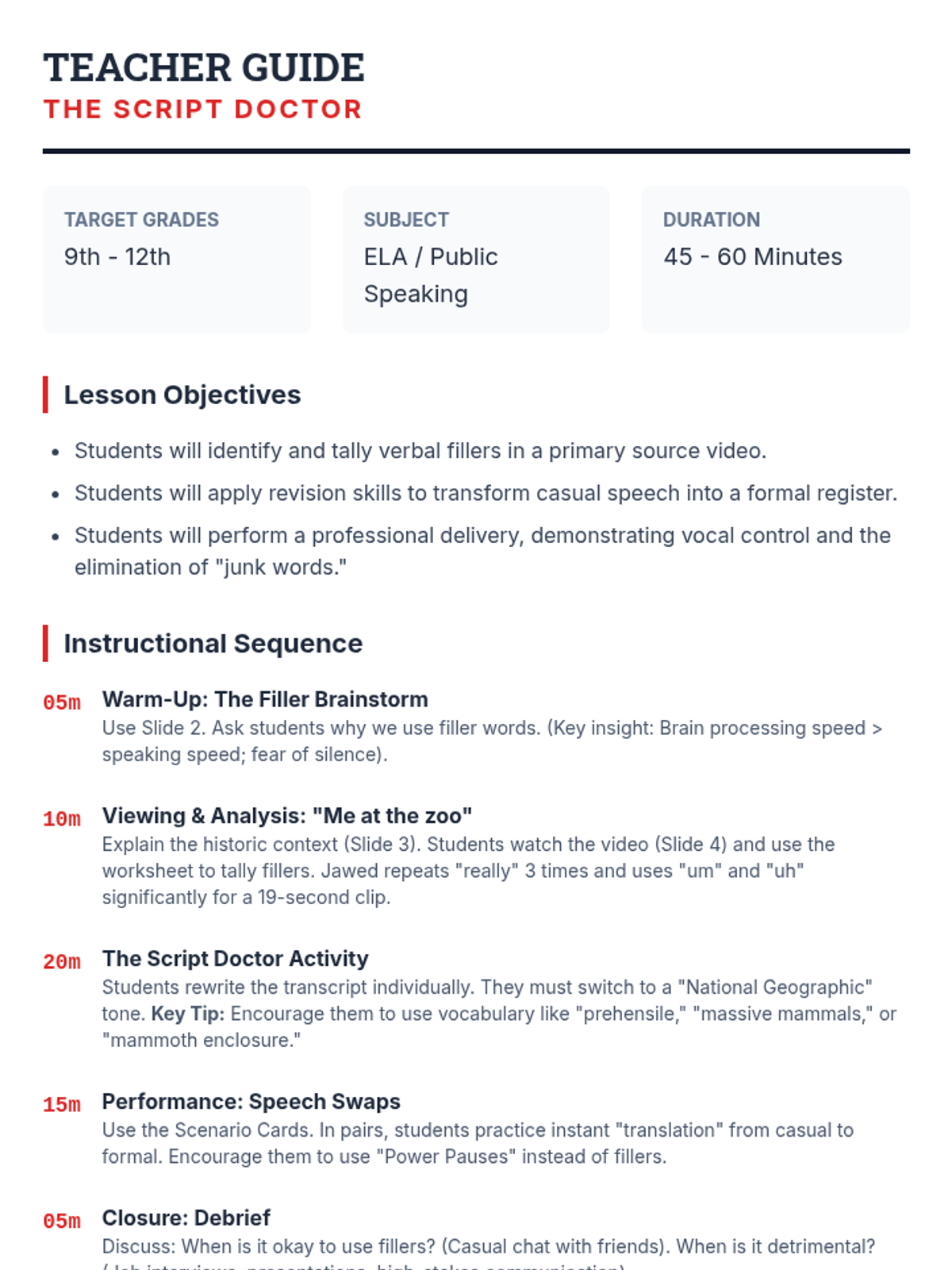
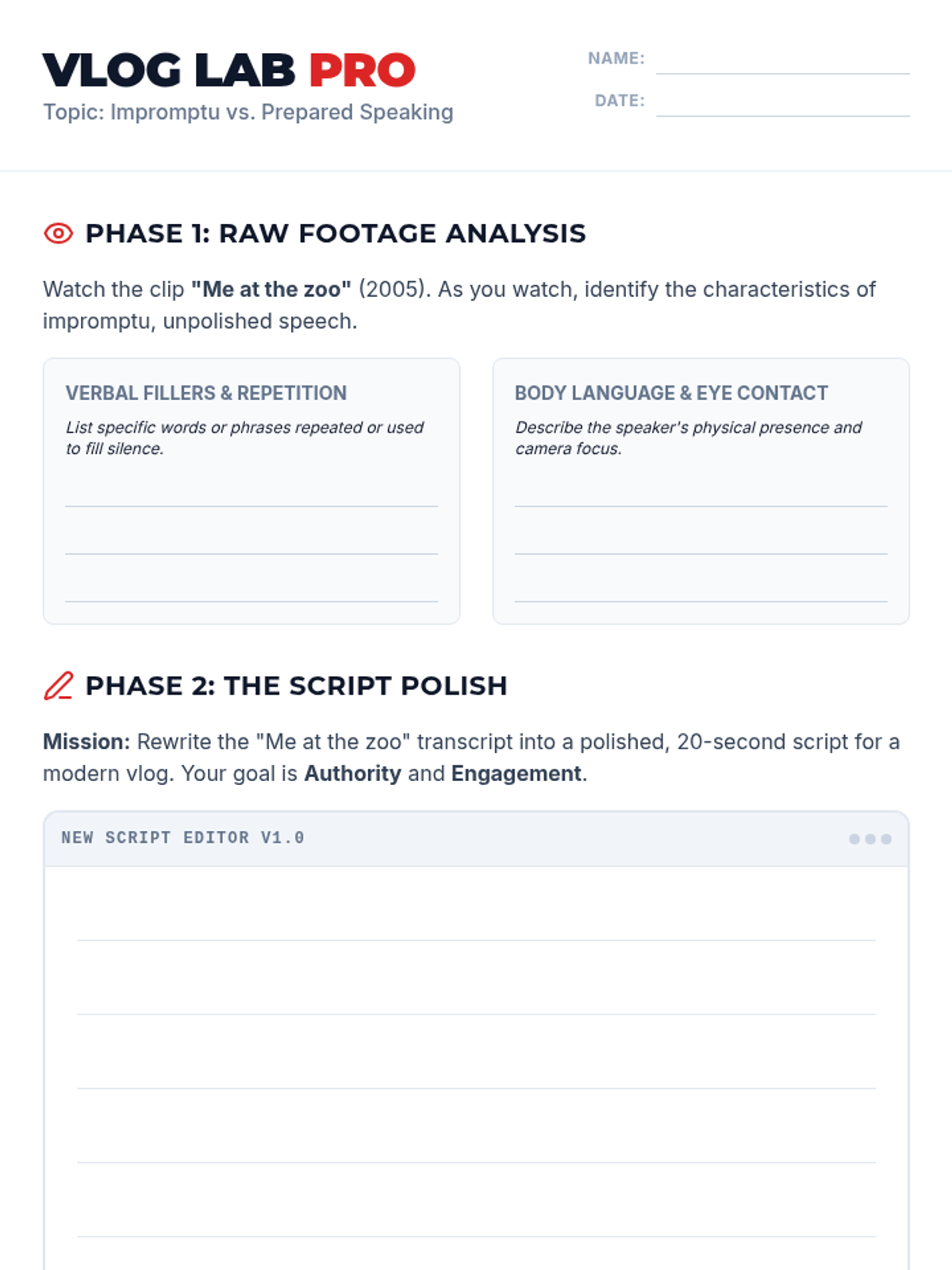
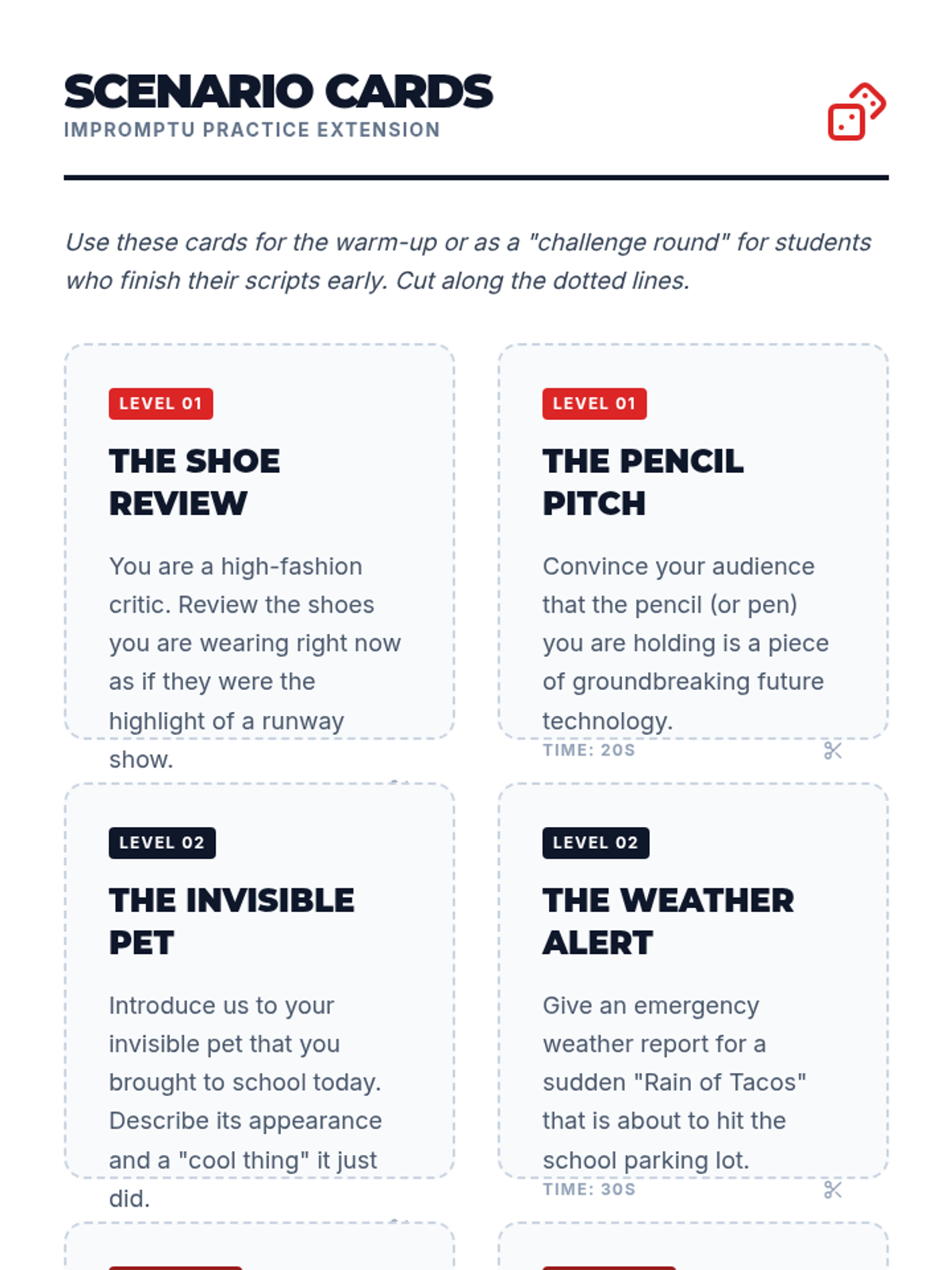
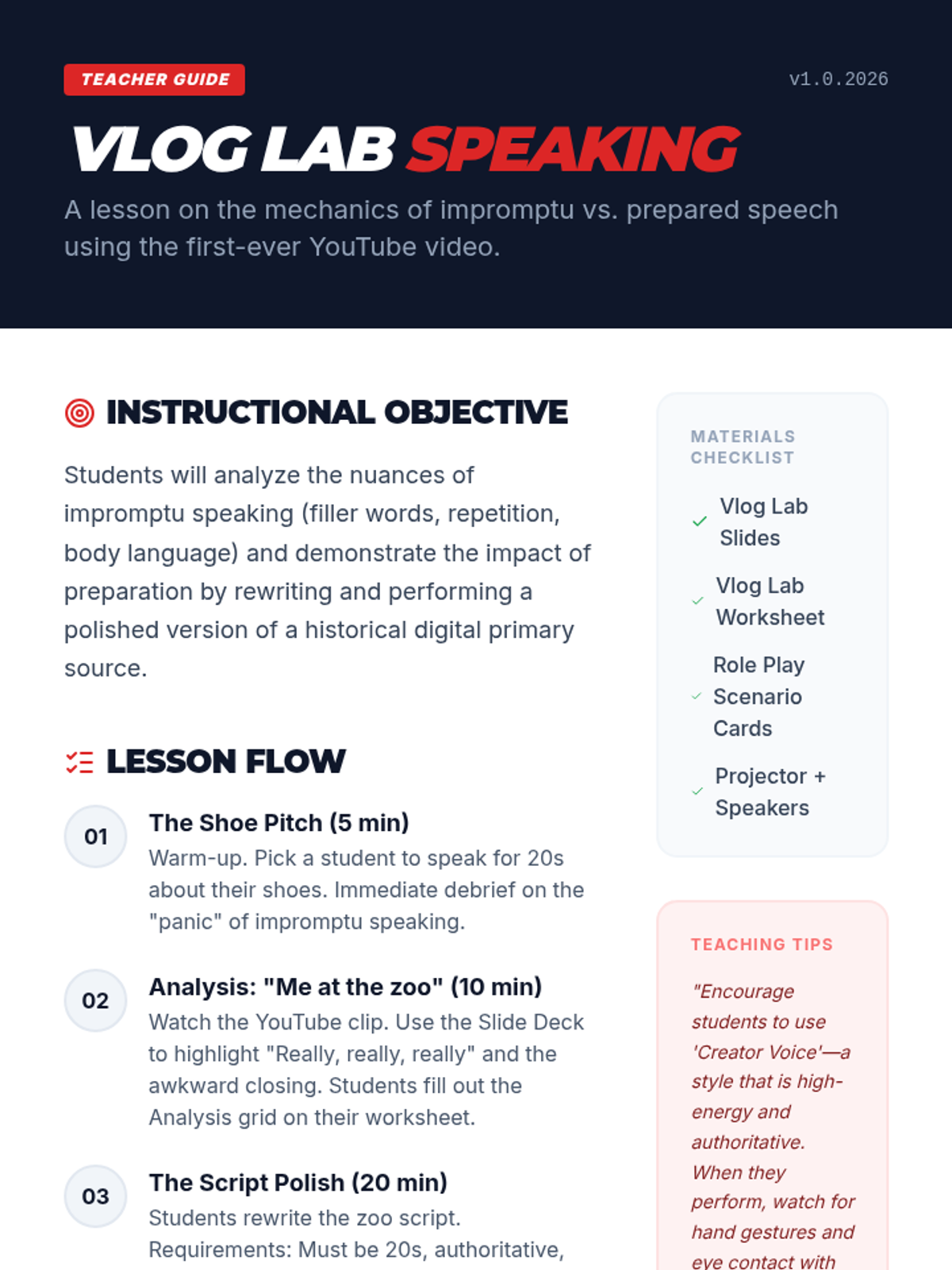
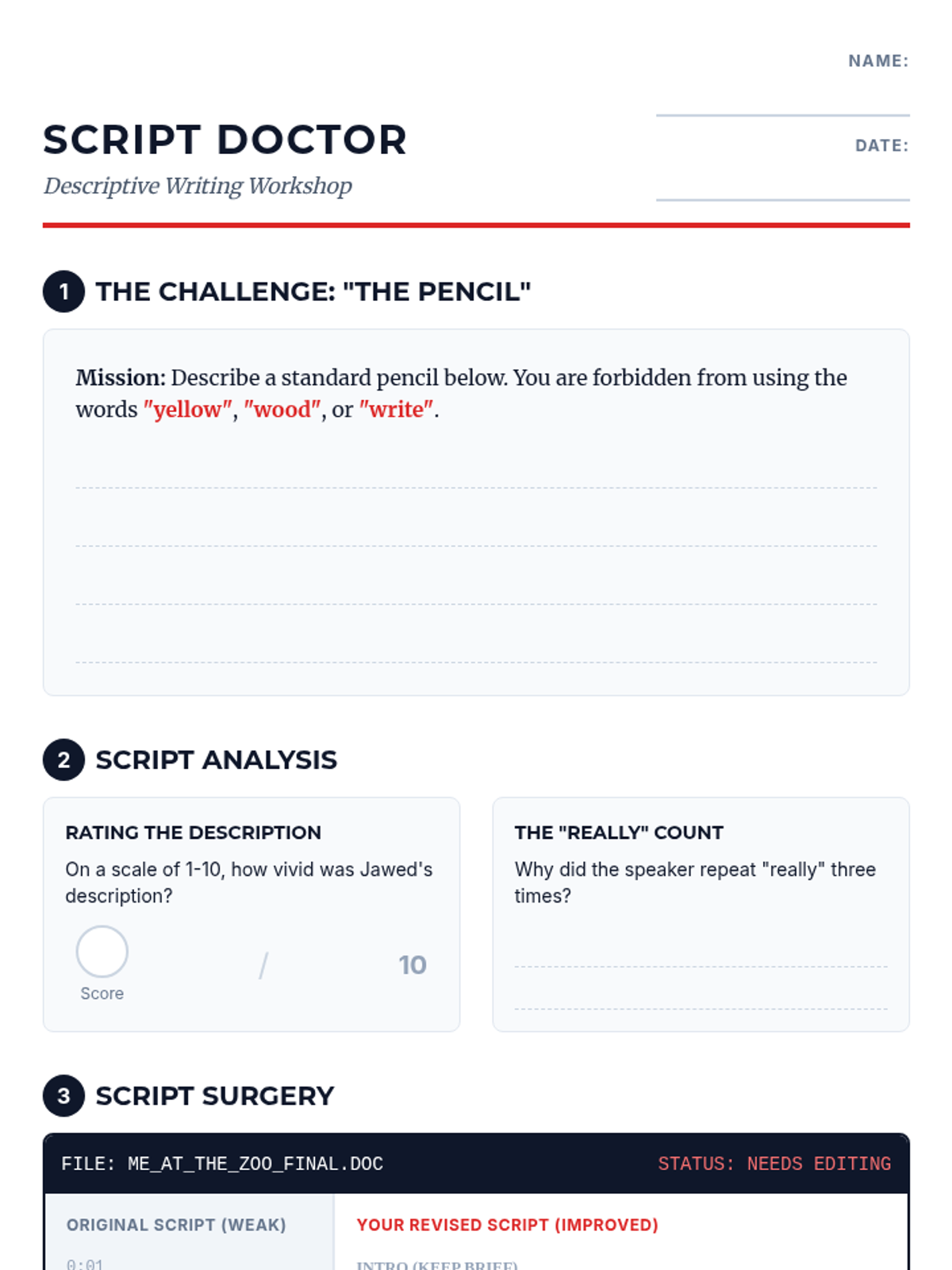
A Speech & Debate/ELA lesson where students analyze 'Me at the zoo' to understand the differences between impromptu and prepared speaking, ending with a script-polishing activity.
A Pre-K to 1st Grade lesson on listening and observing, featuring the 'Me at the zoo' video to teach about elephants and descriptive language.
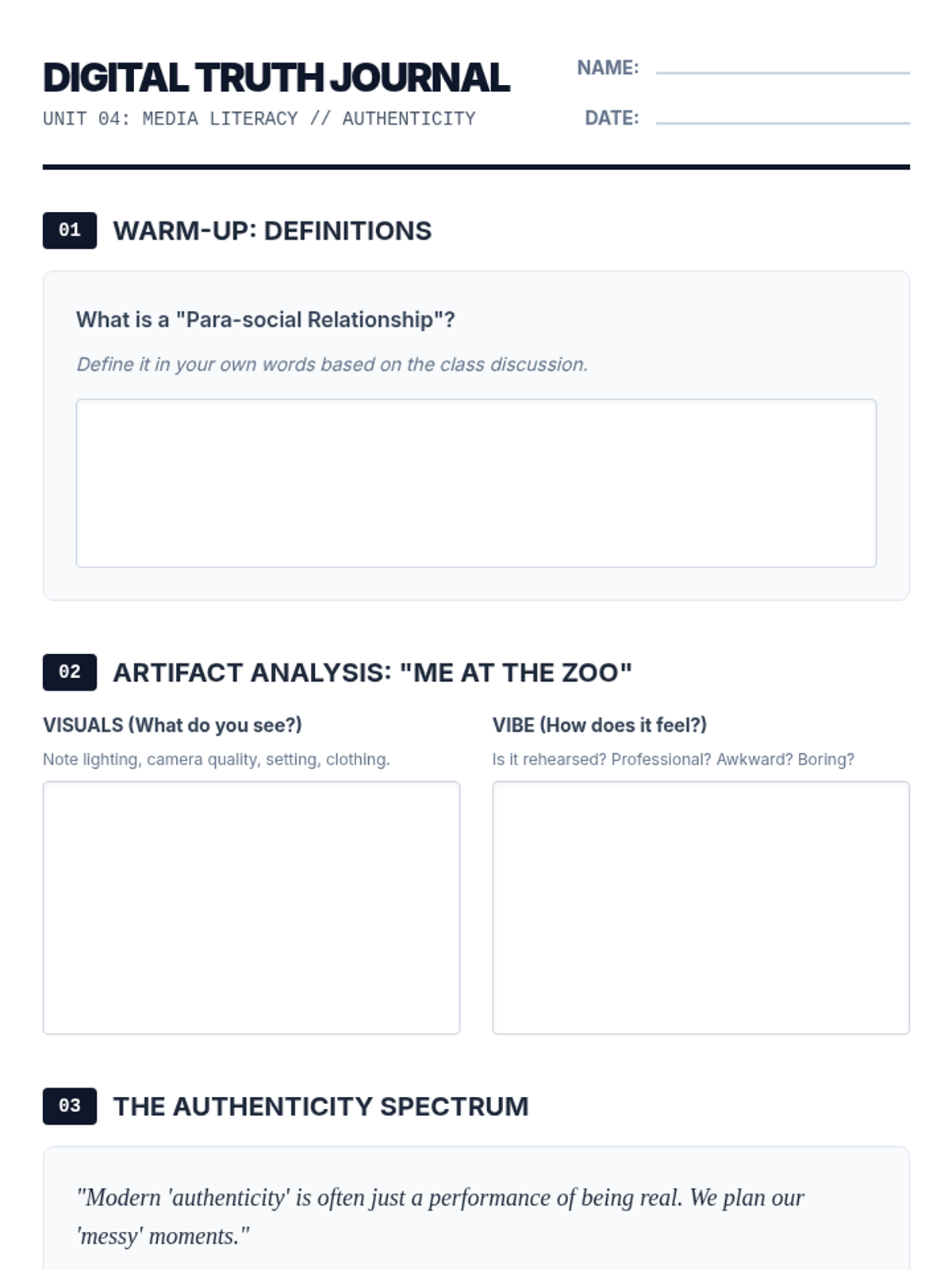
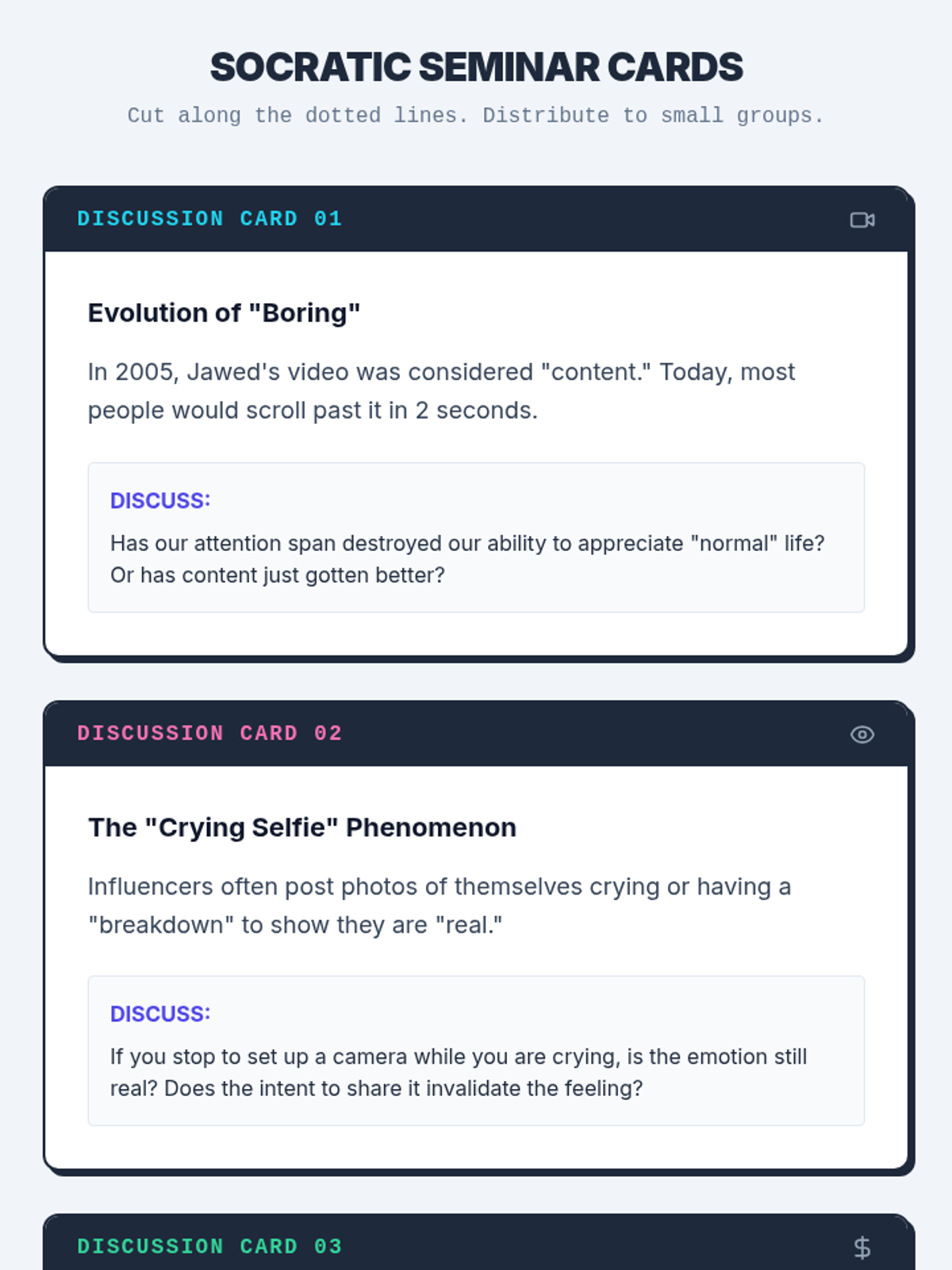
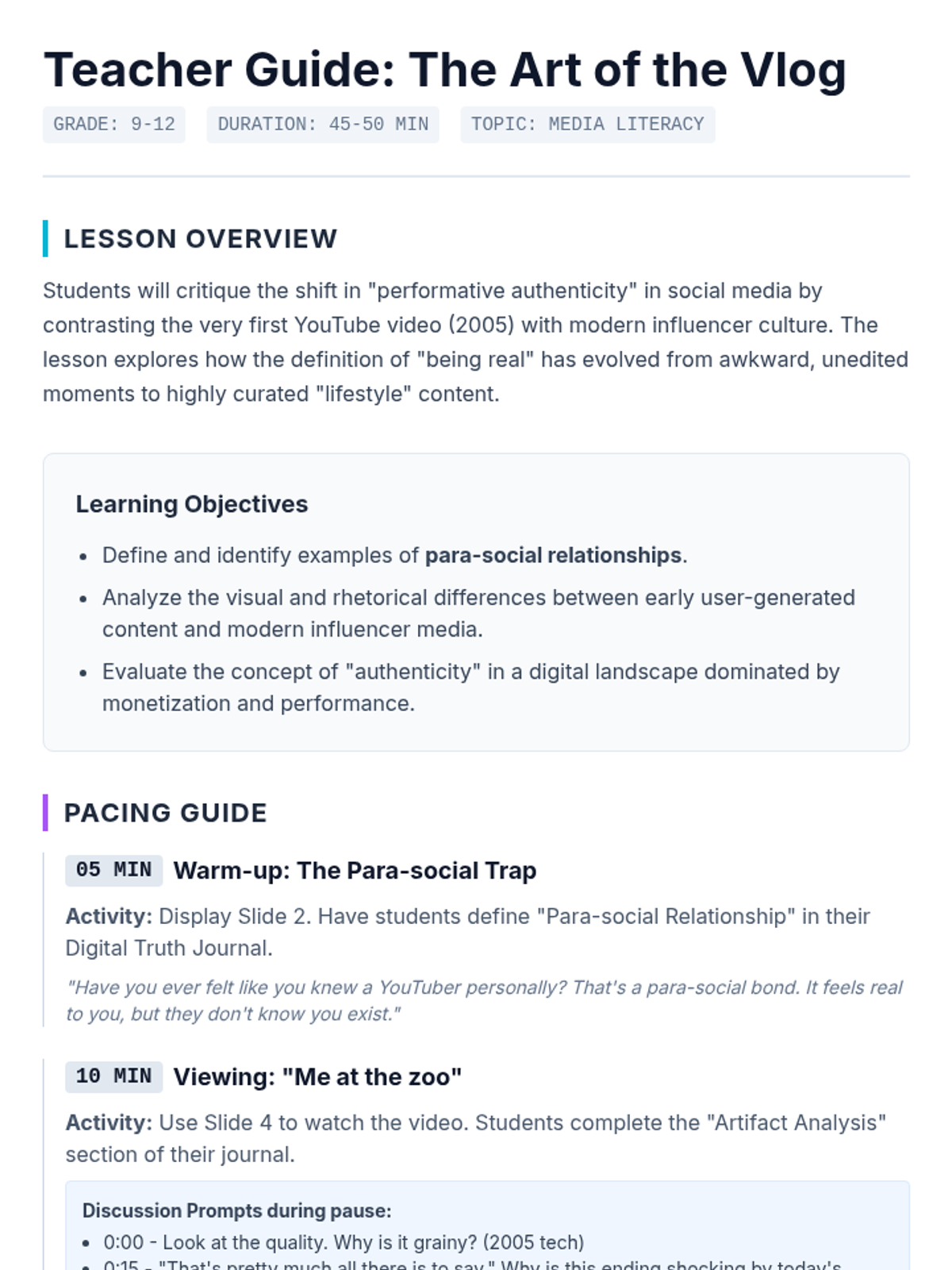
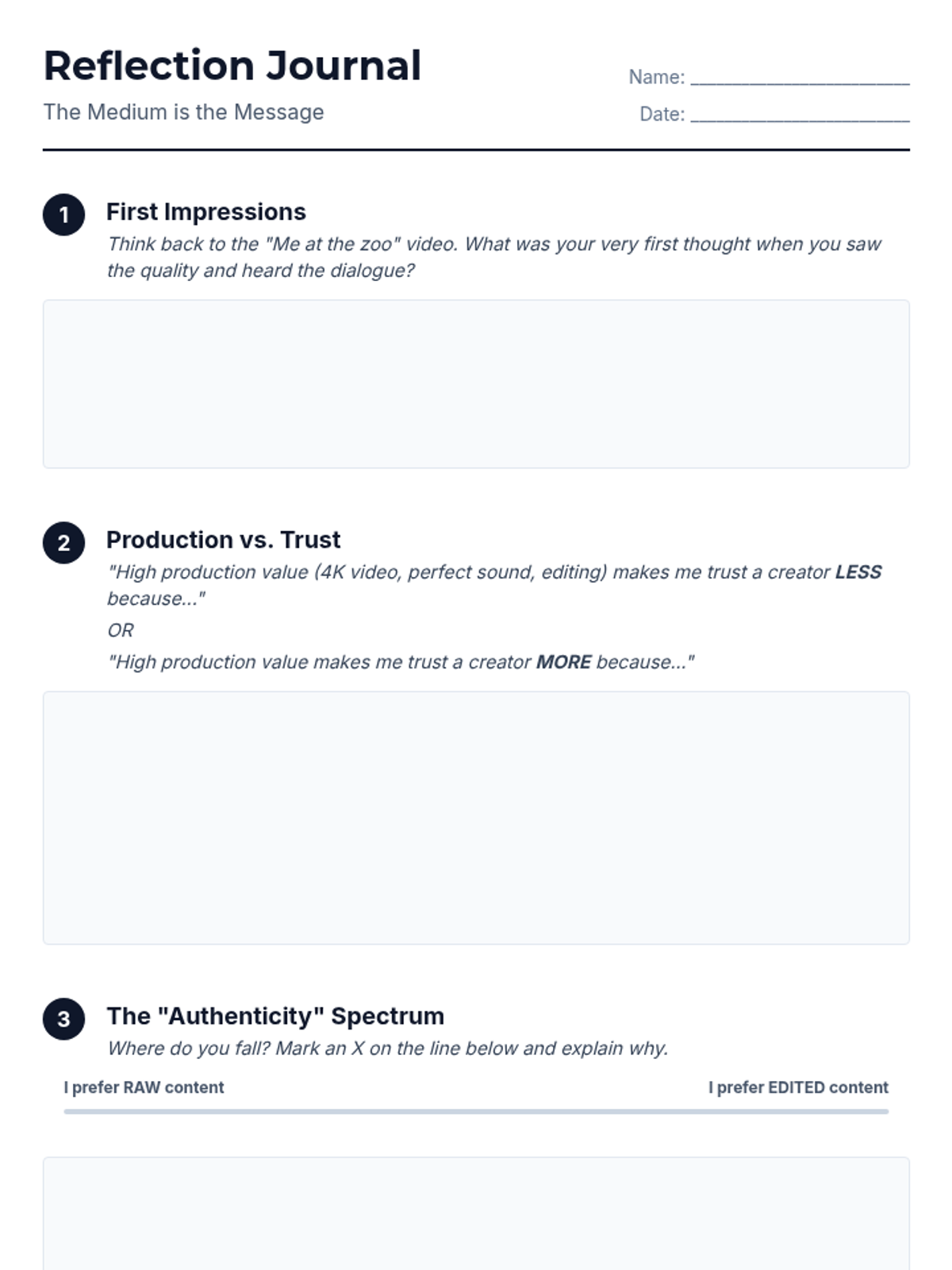
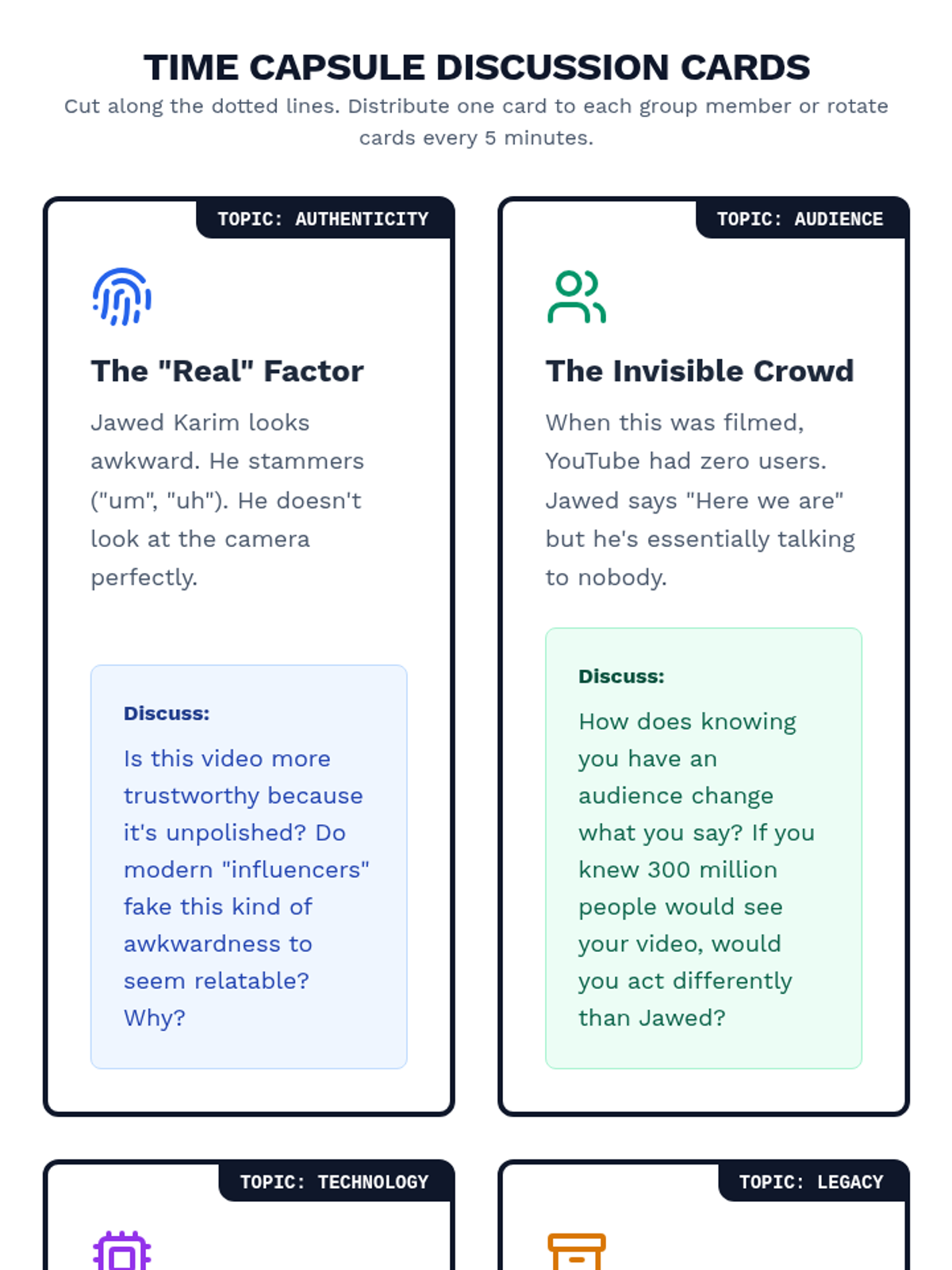
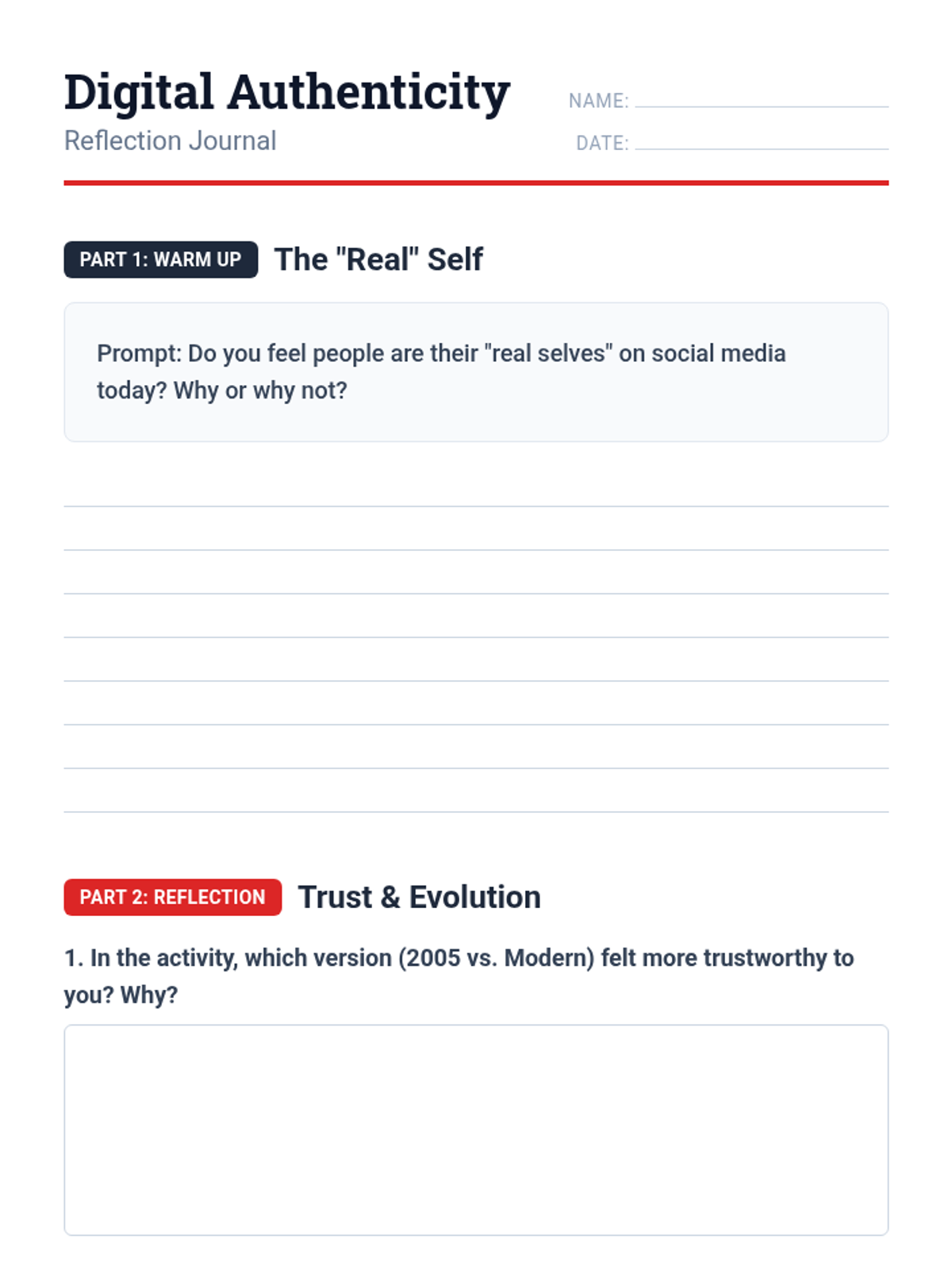
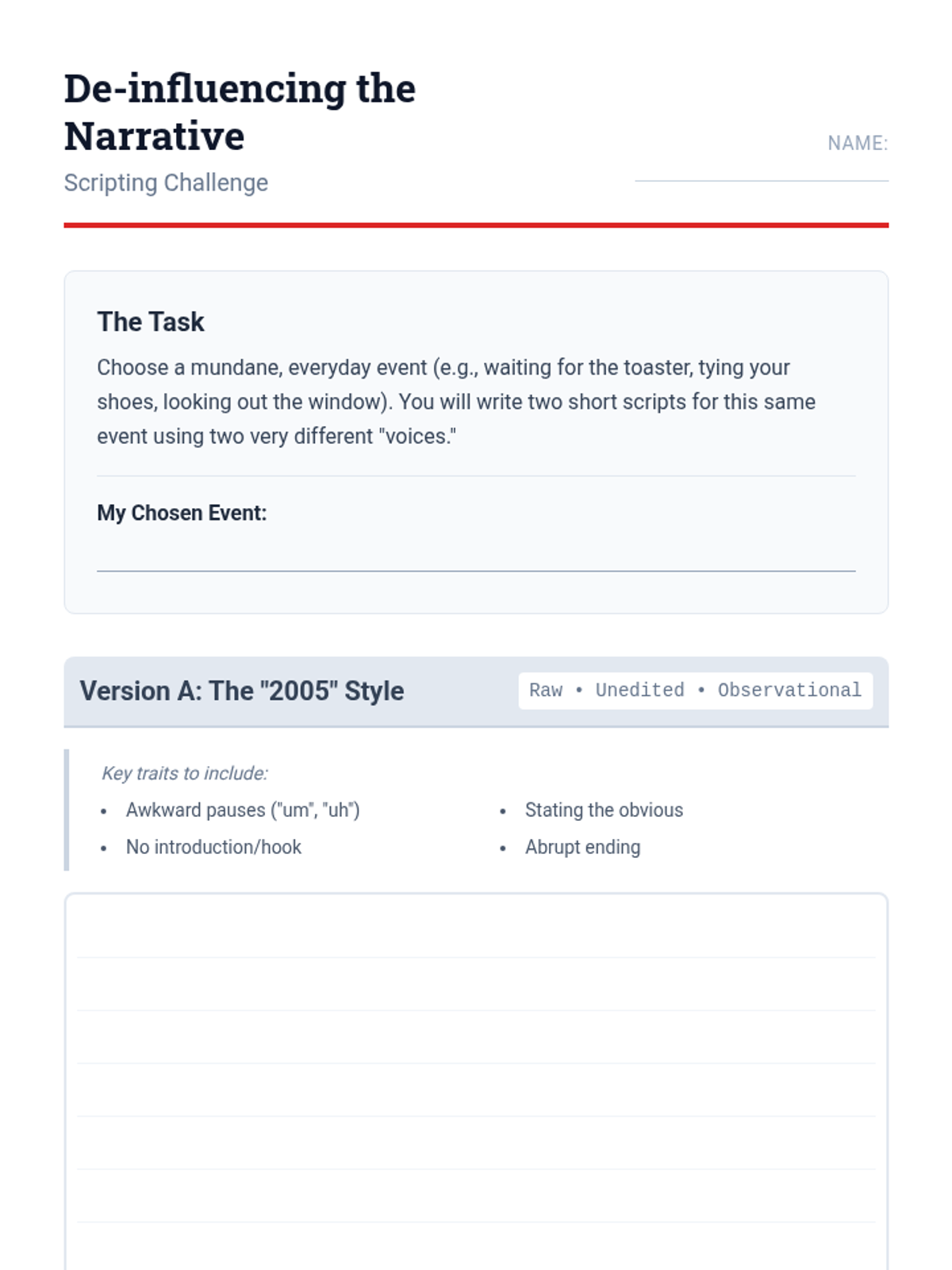
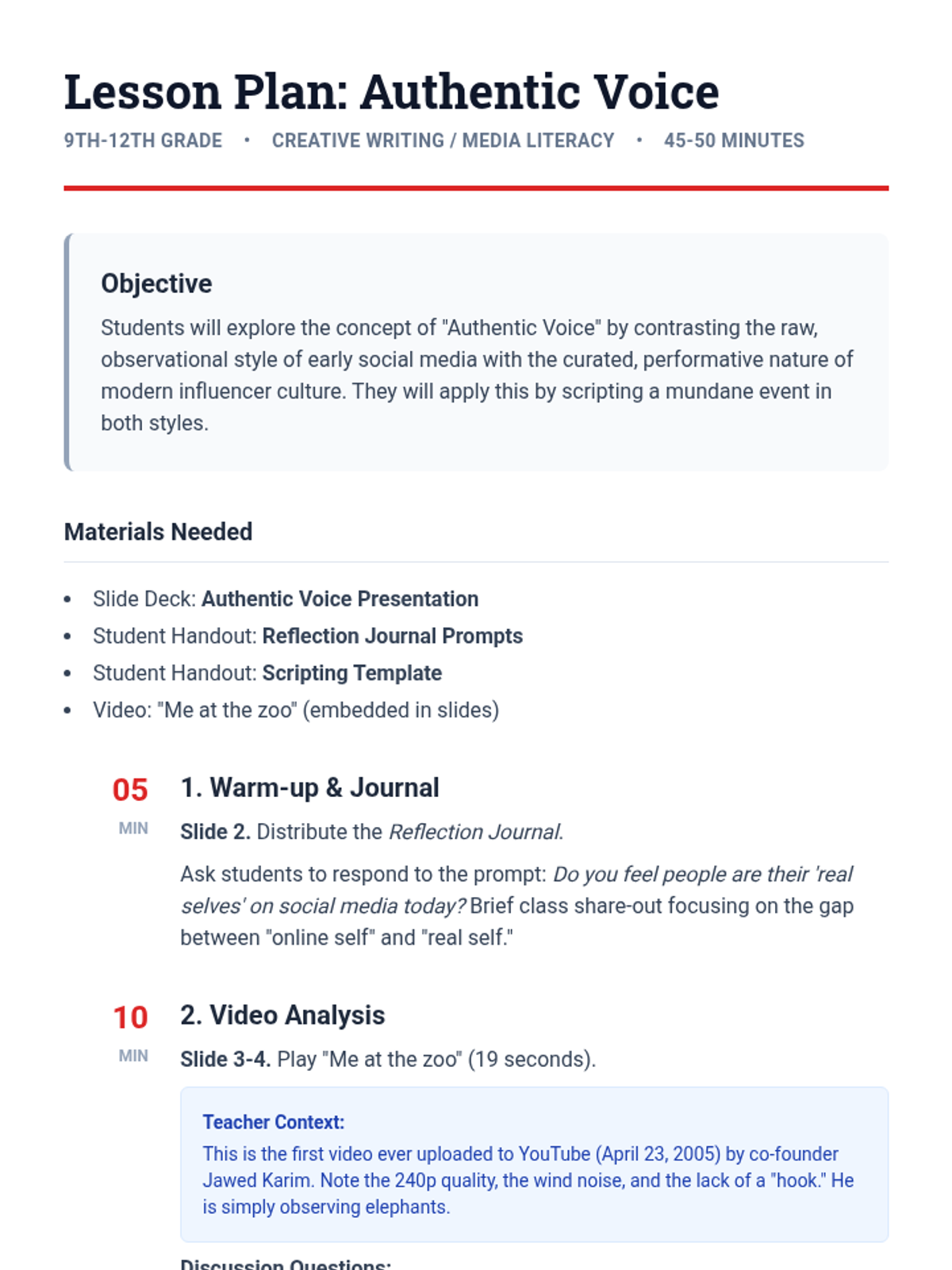
A lesson for high school students exploring the concept of 'Authentic Voice' in media, comparing early social media content to modern influencer narratives using the first YouTube video as a case study.
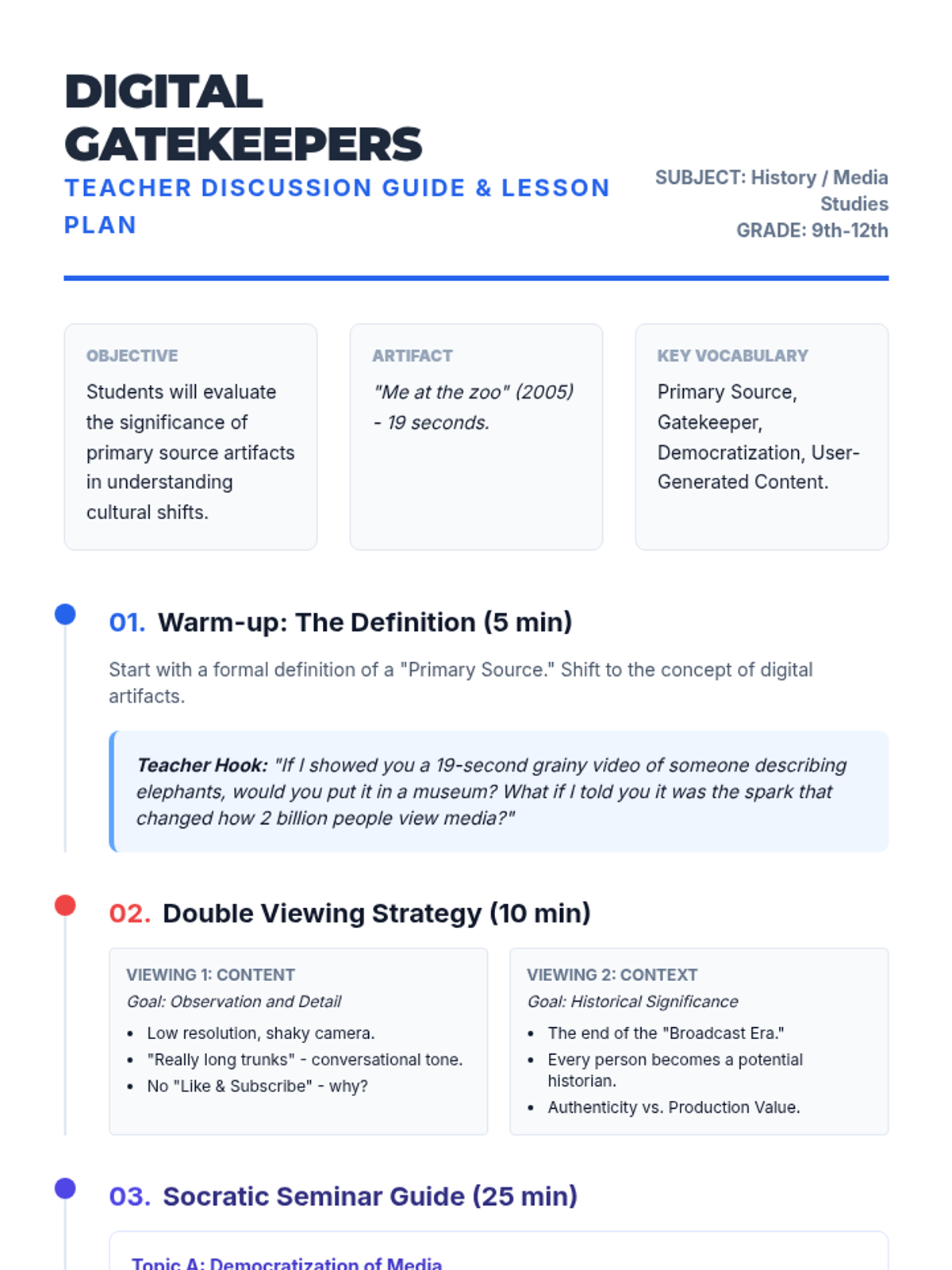
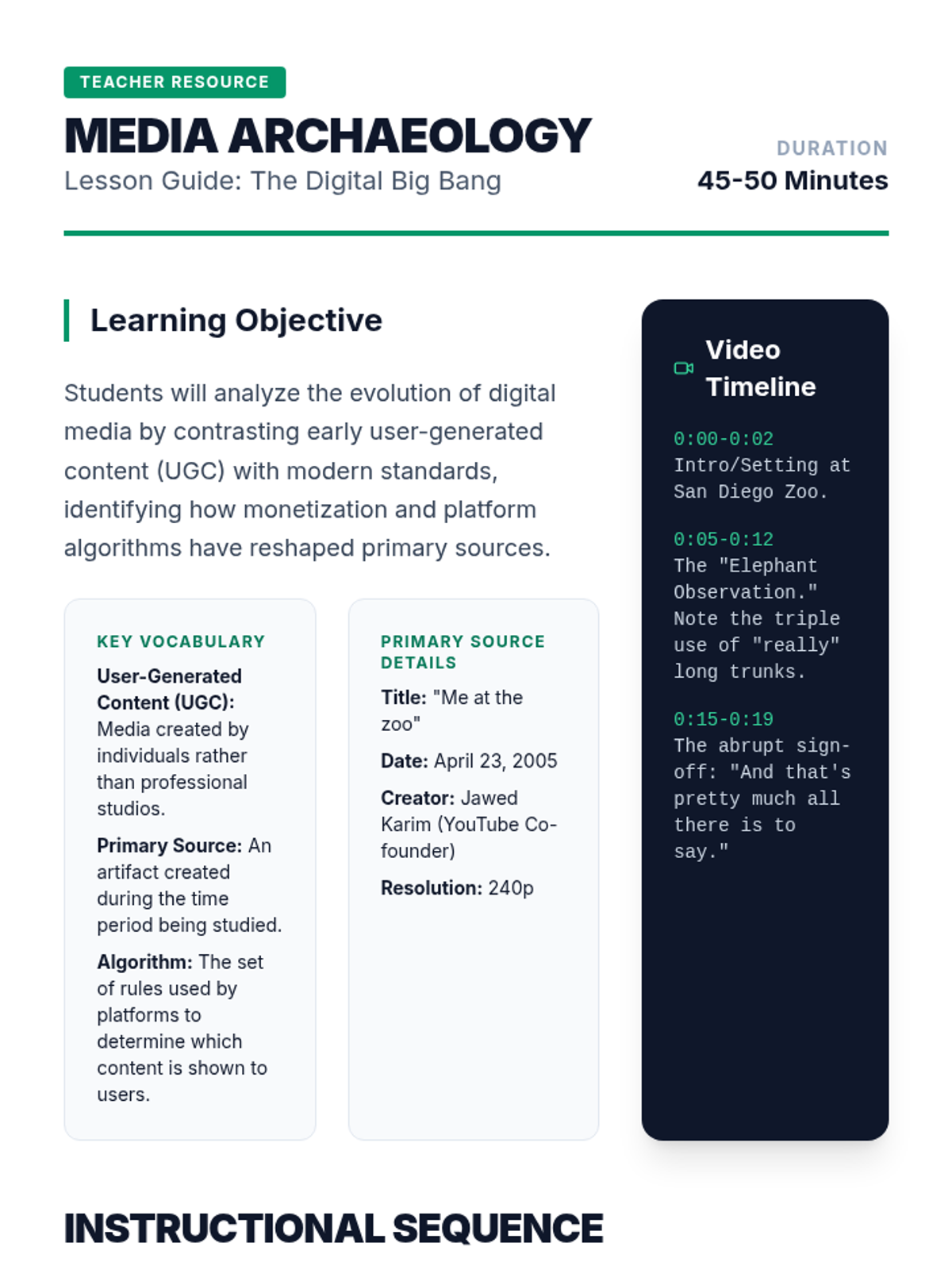
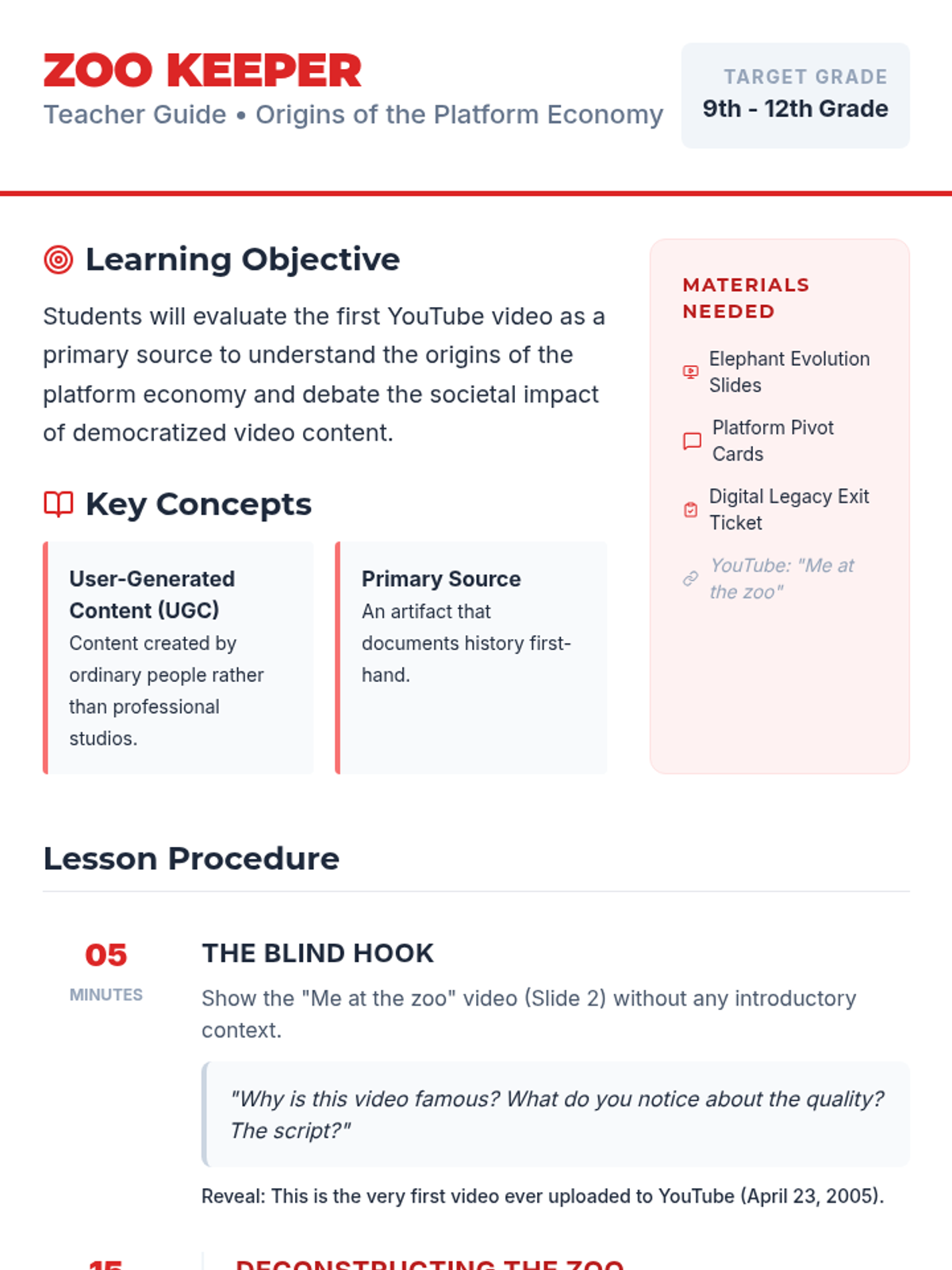
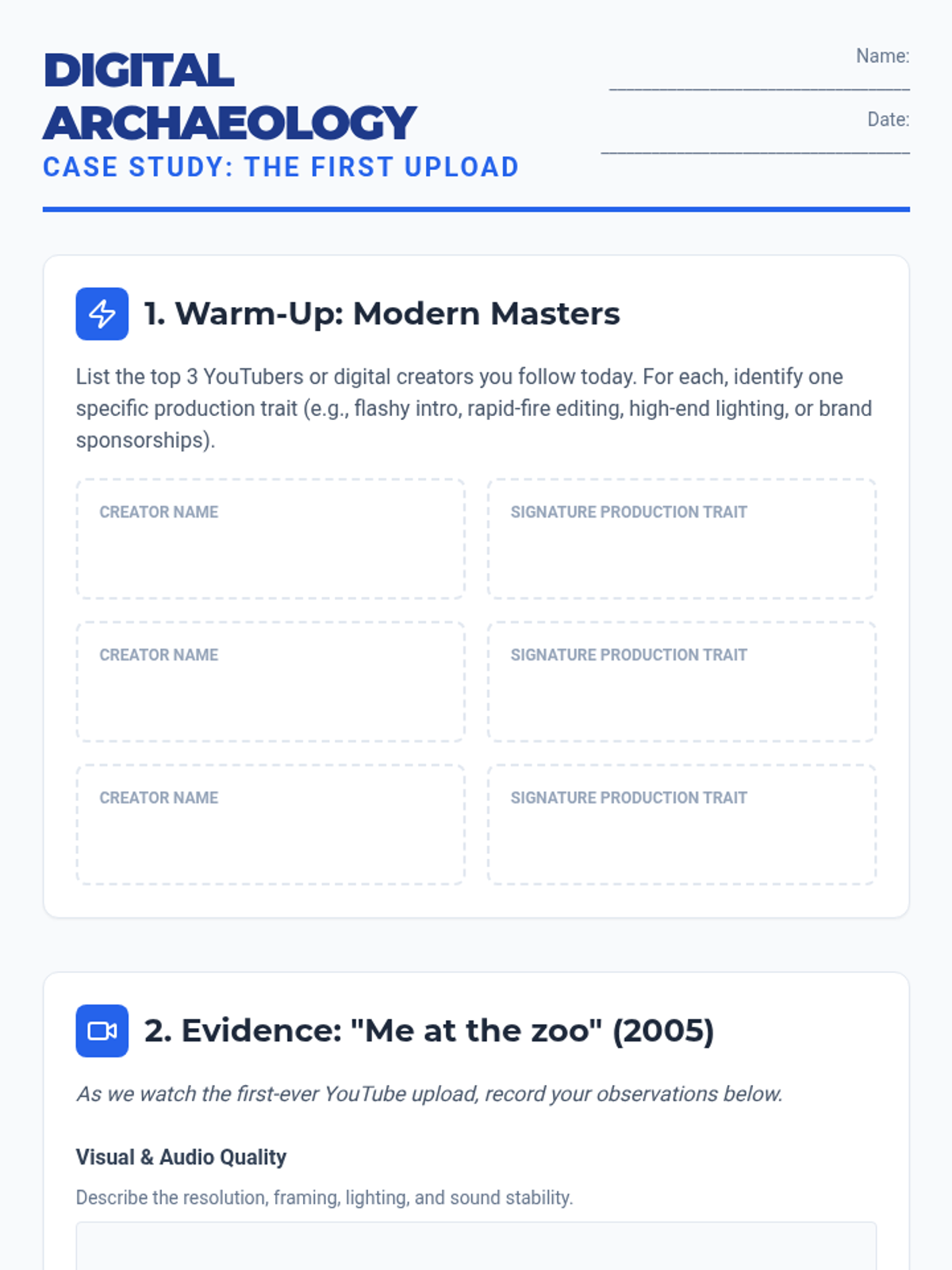
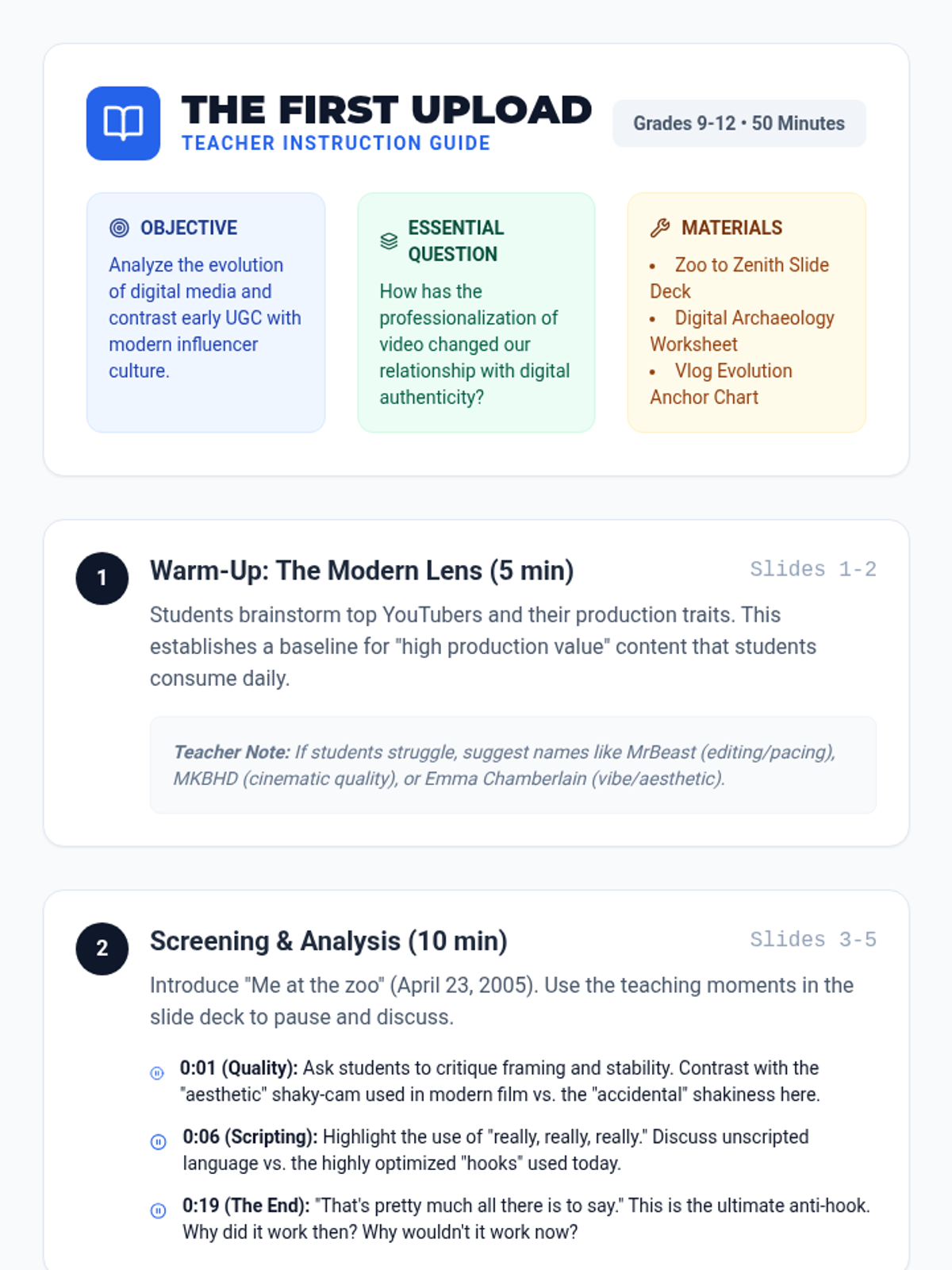
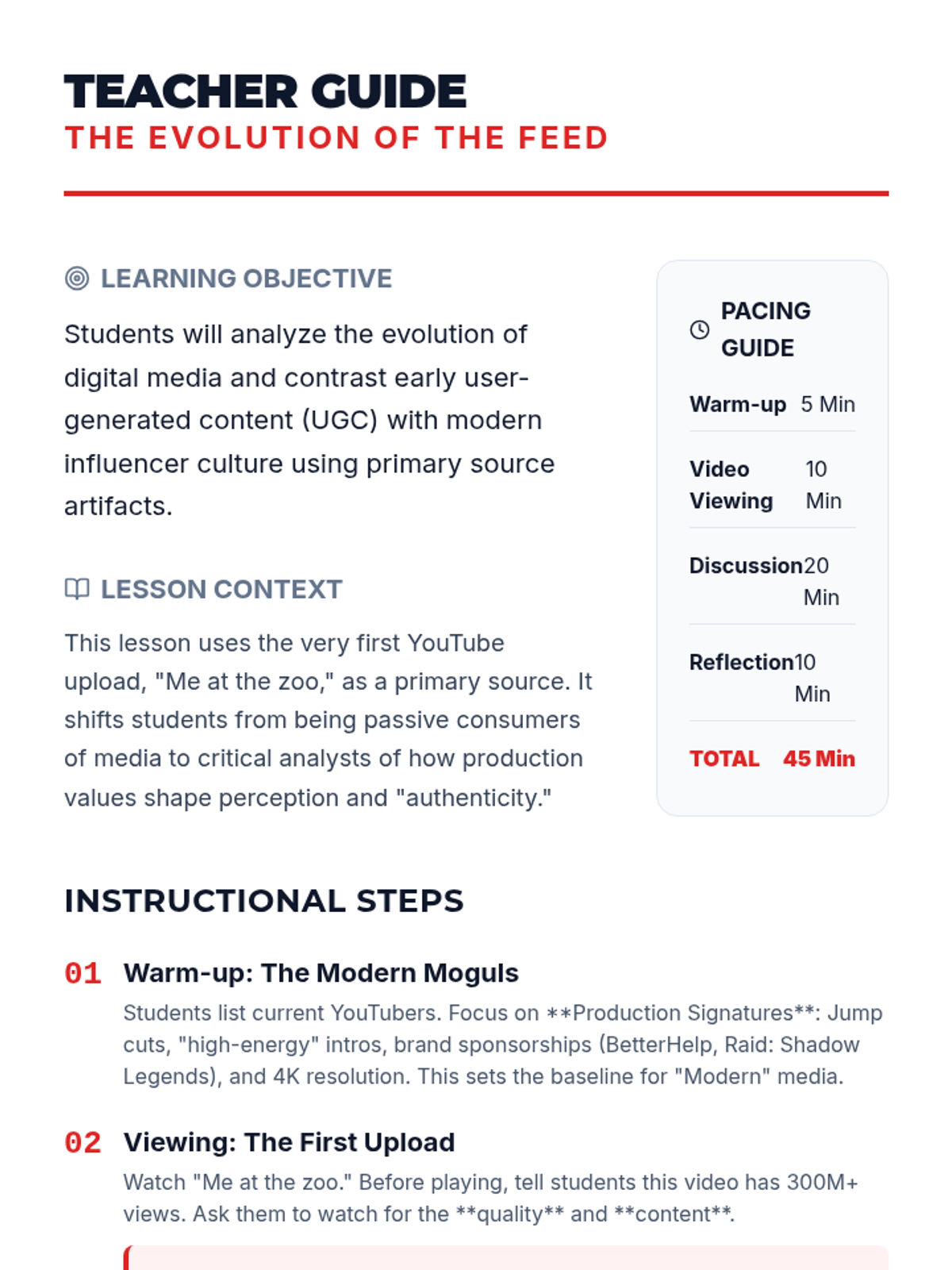
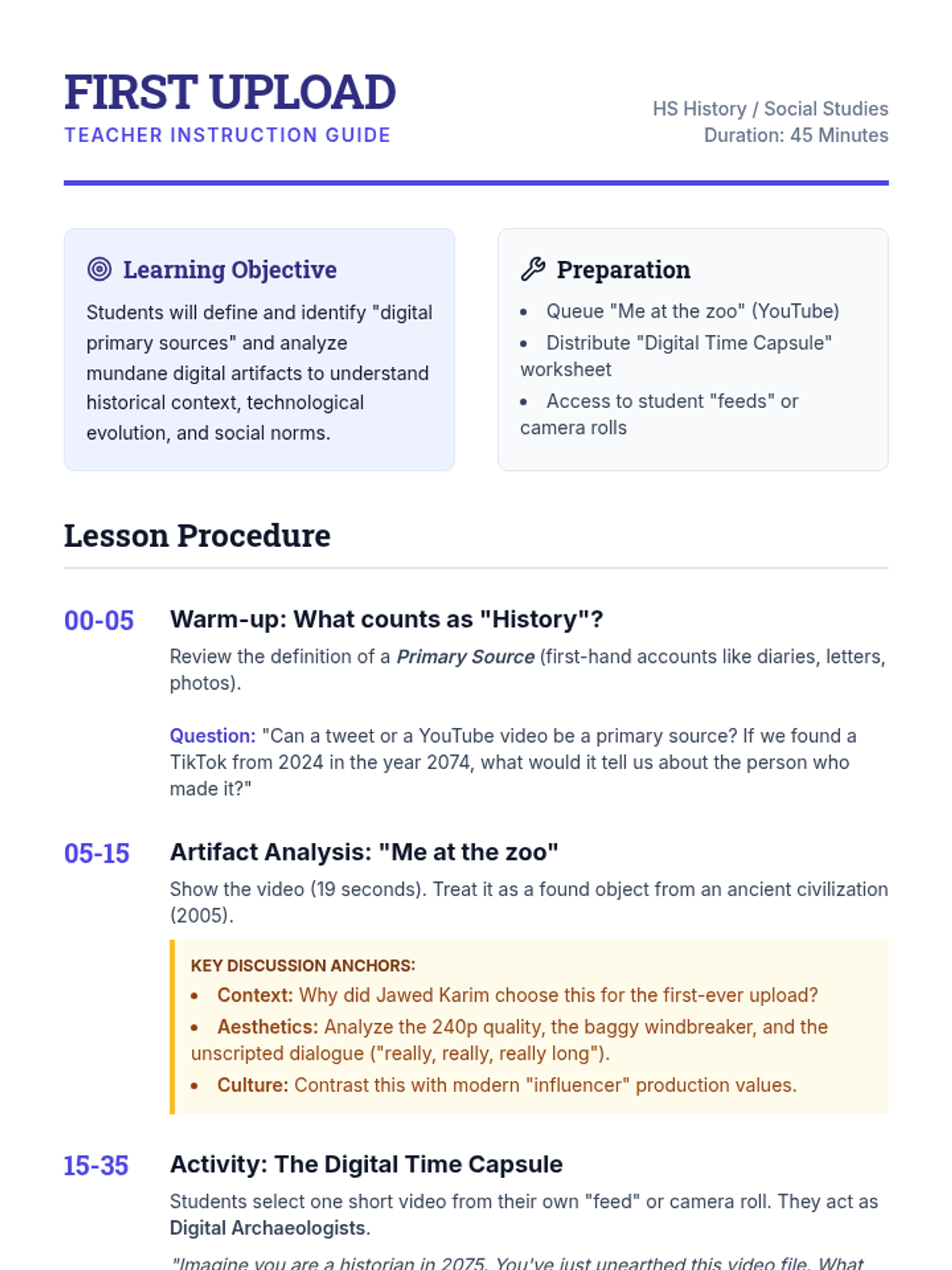
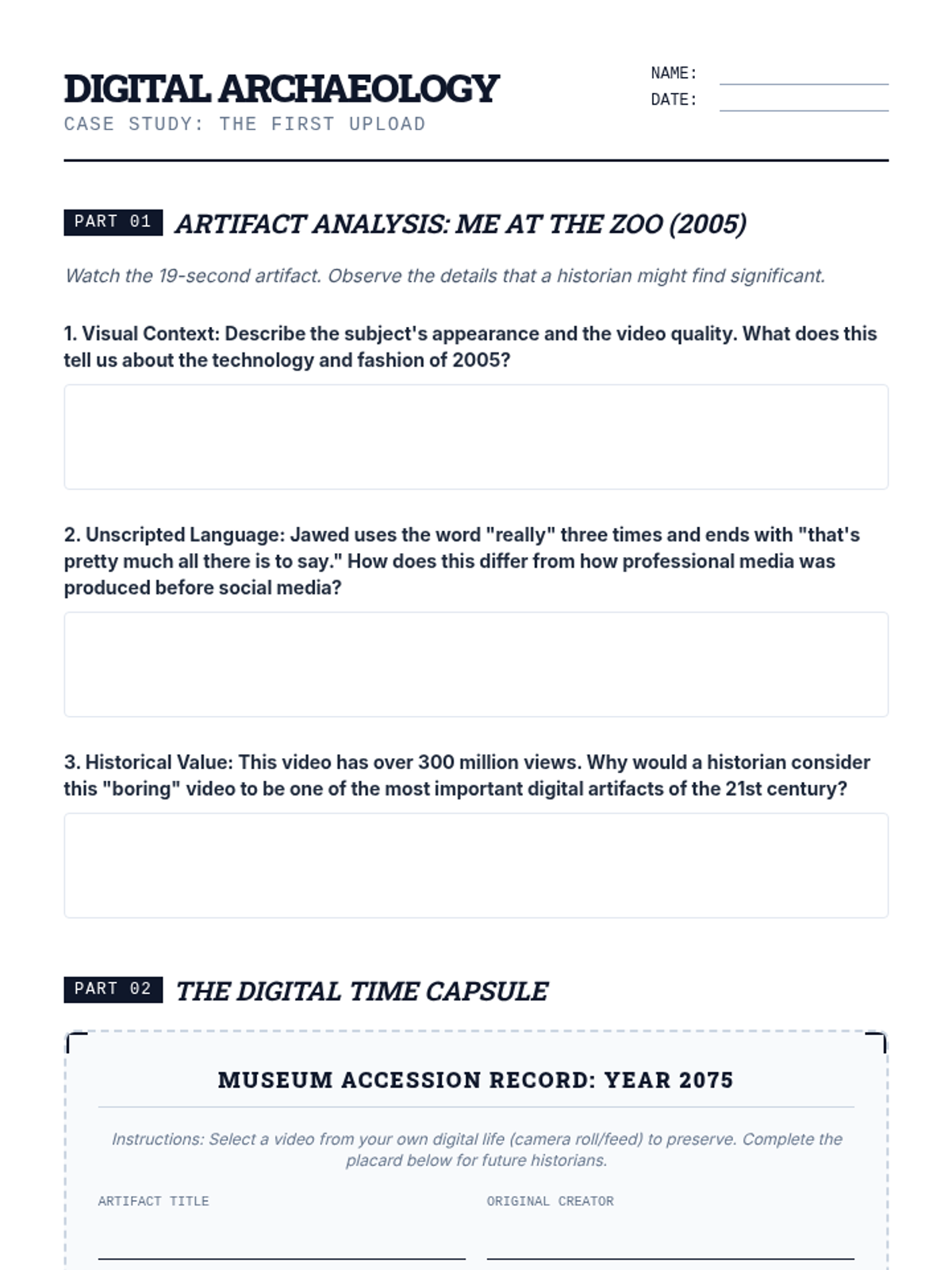
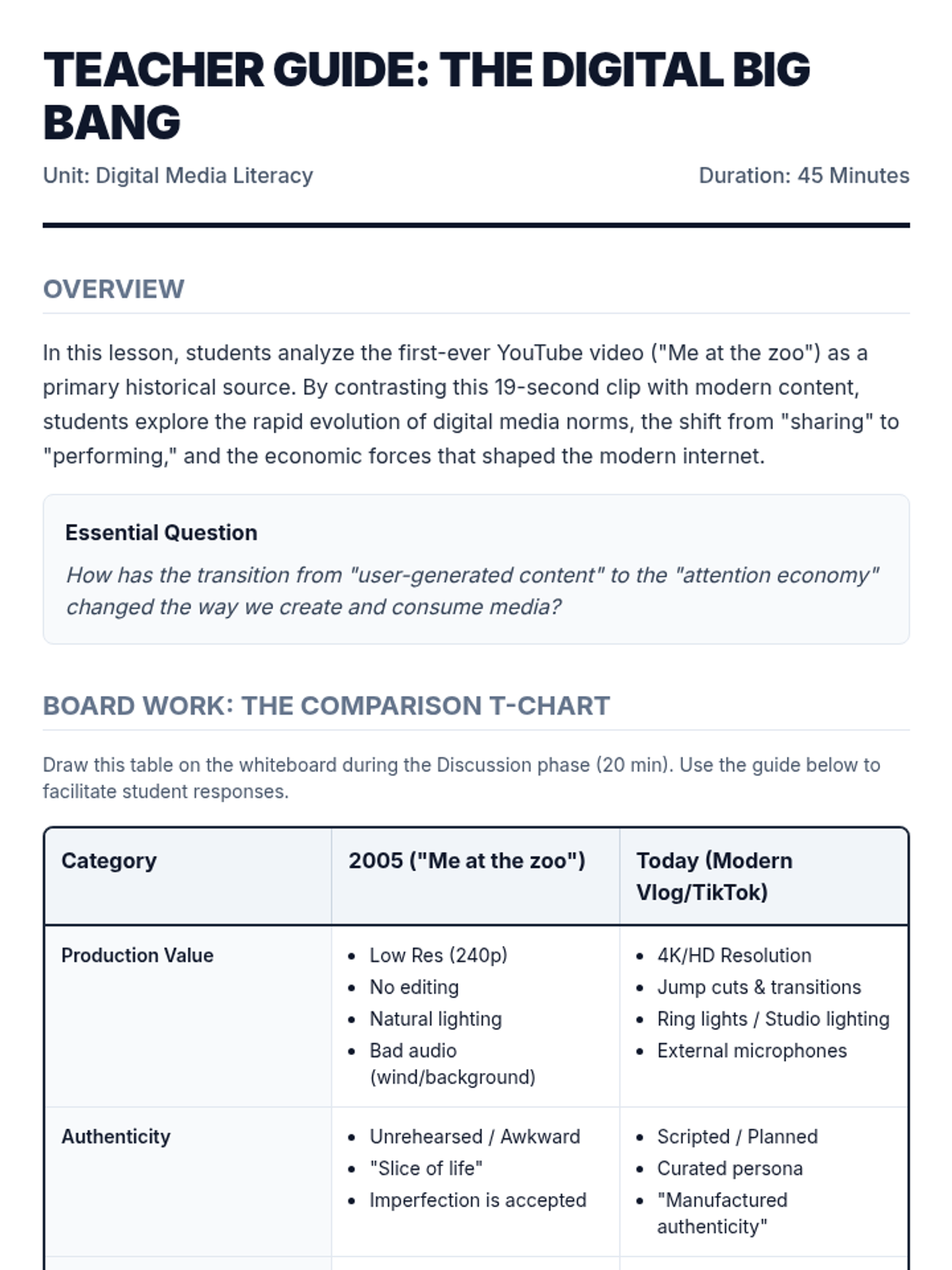
A lesson where high school students analyze the first YouTube video, "Me at the zoo," as a historical primary source to understand the evolution of digital media, authenticity, and the attention economy.
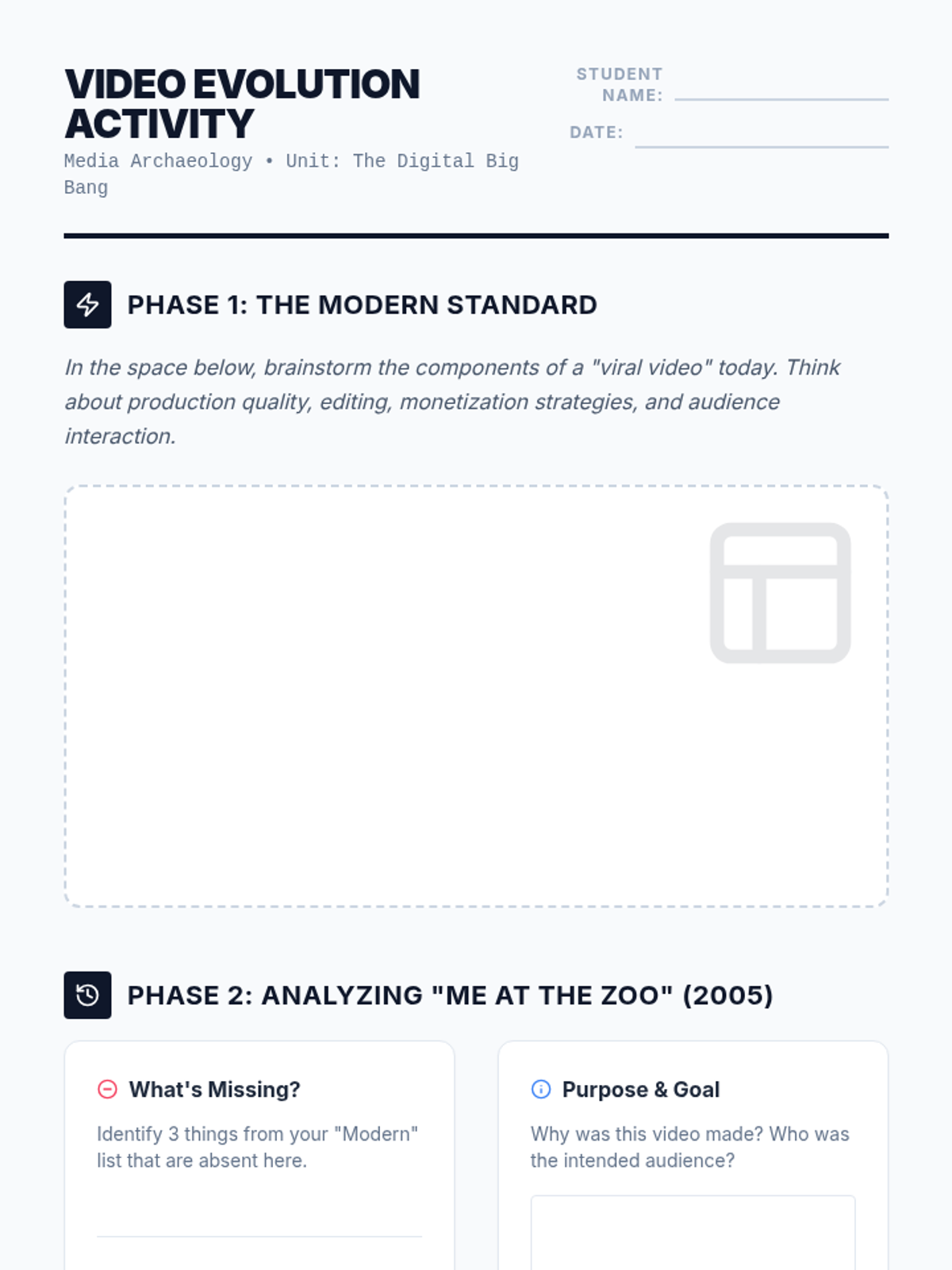
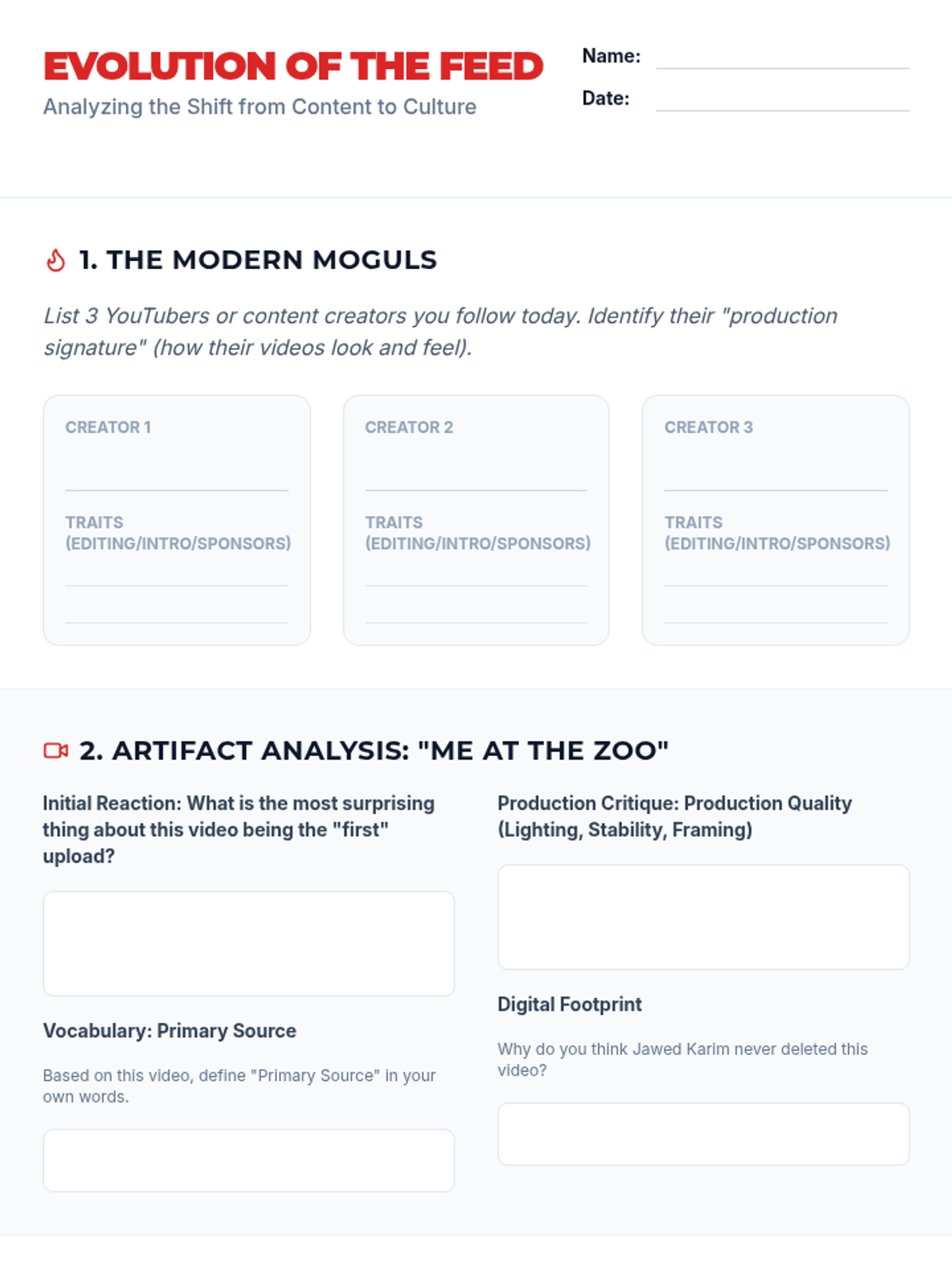
Students analyze the evolution of digital media by comparing the first-ever YouTube video, 'Me at the zoo,' with modern production standards, focusing on production quality, scripting, and the concept of user-generated content.
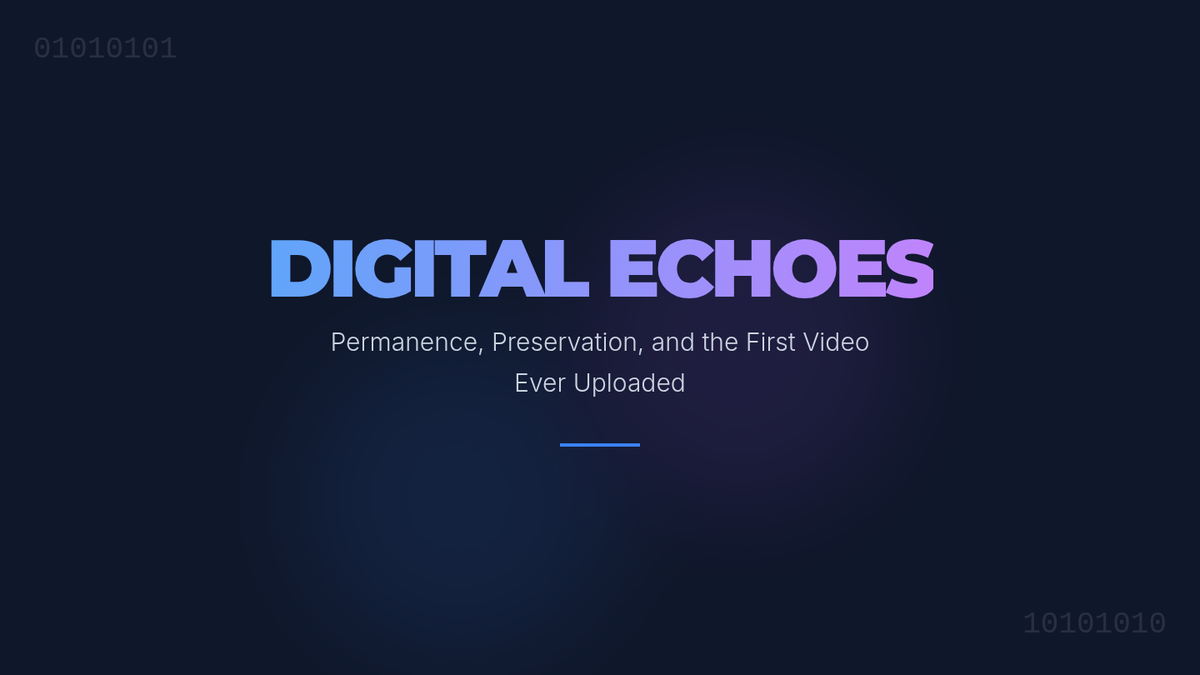
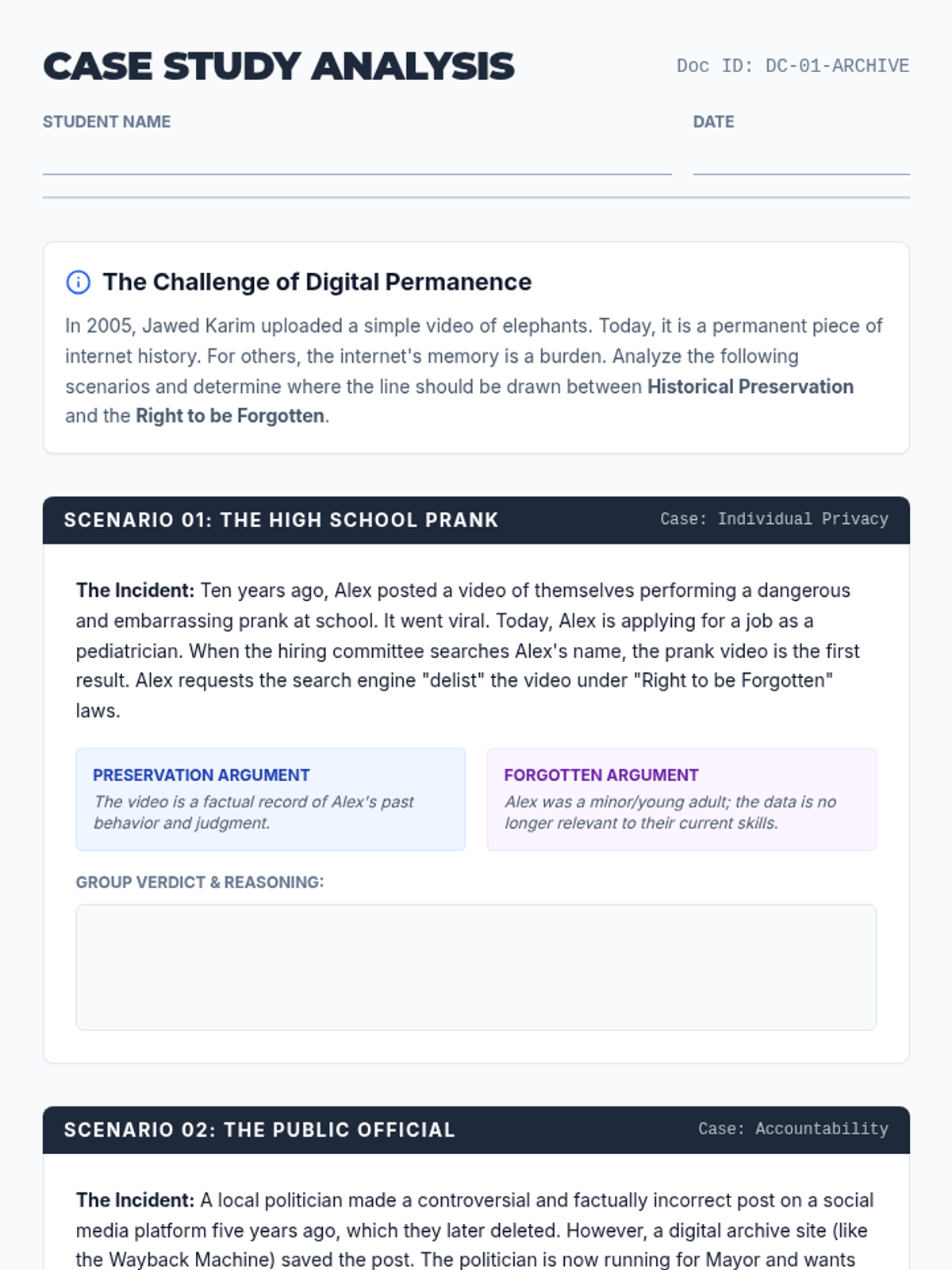
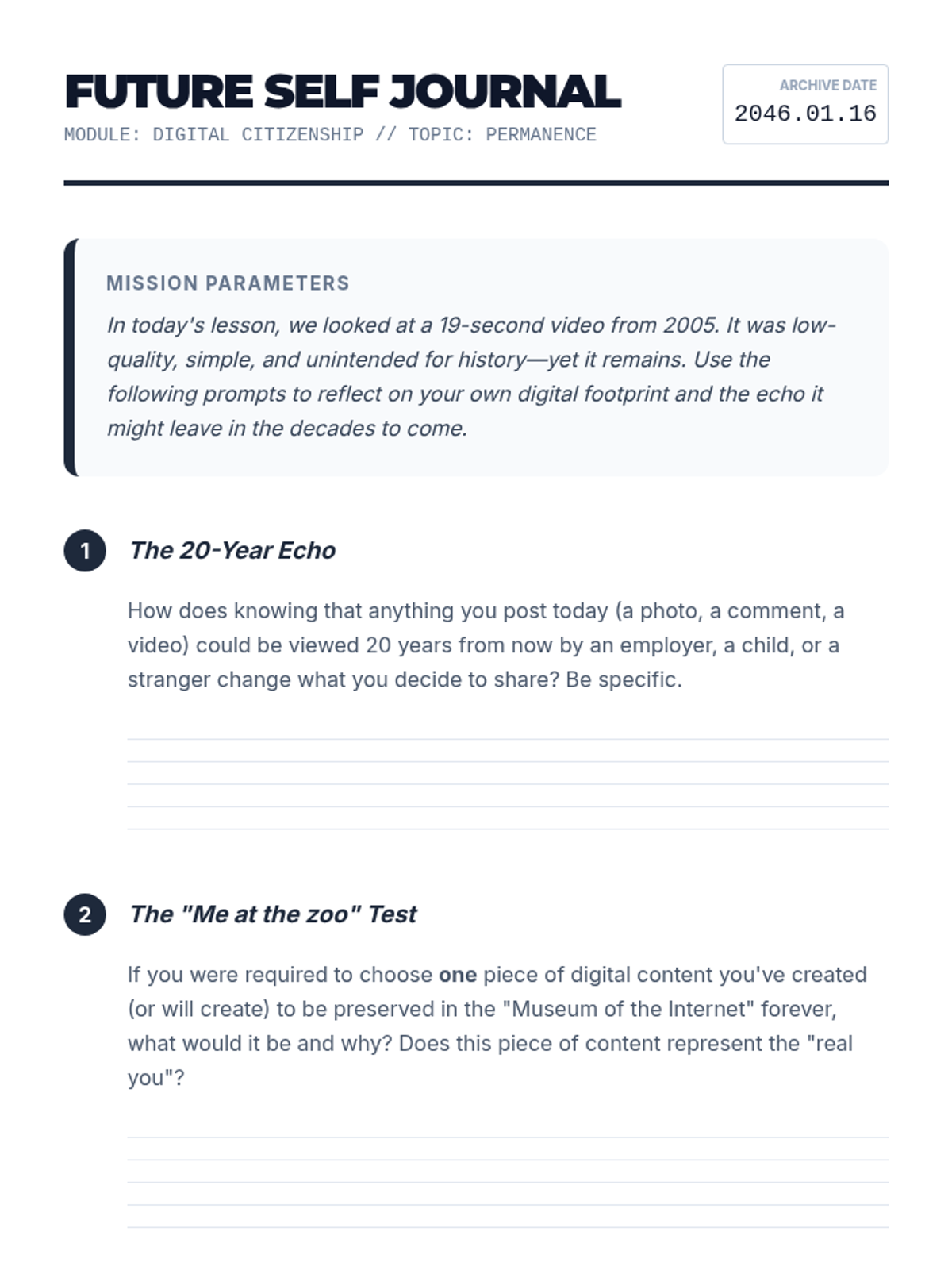
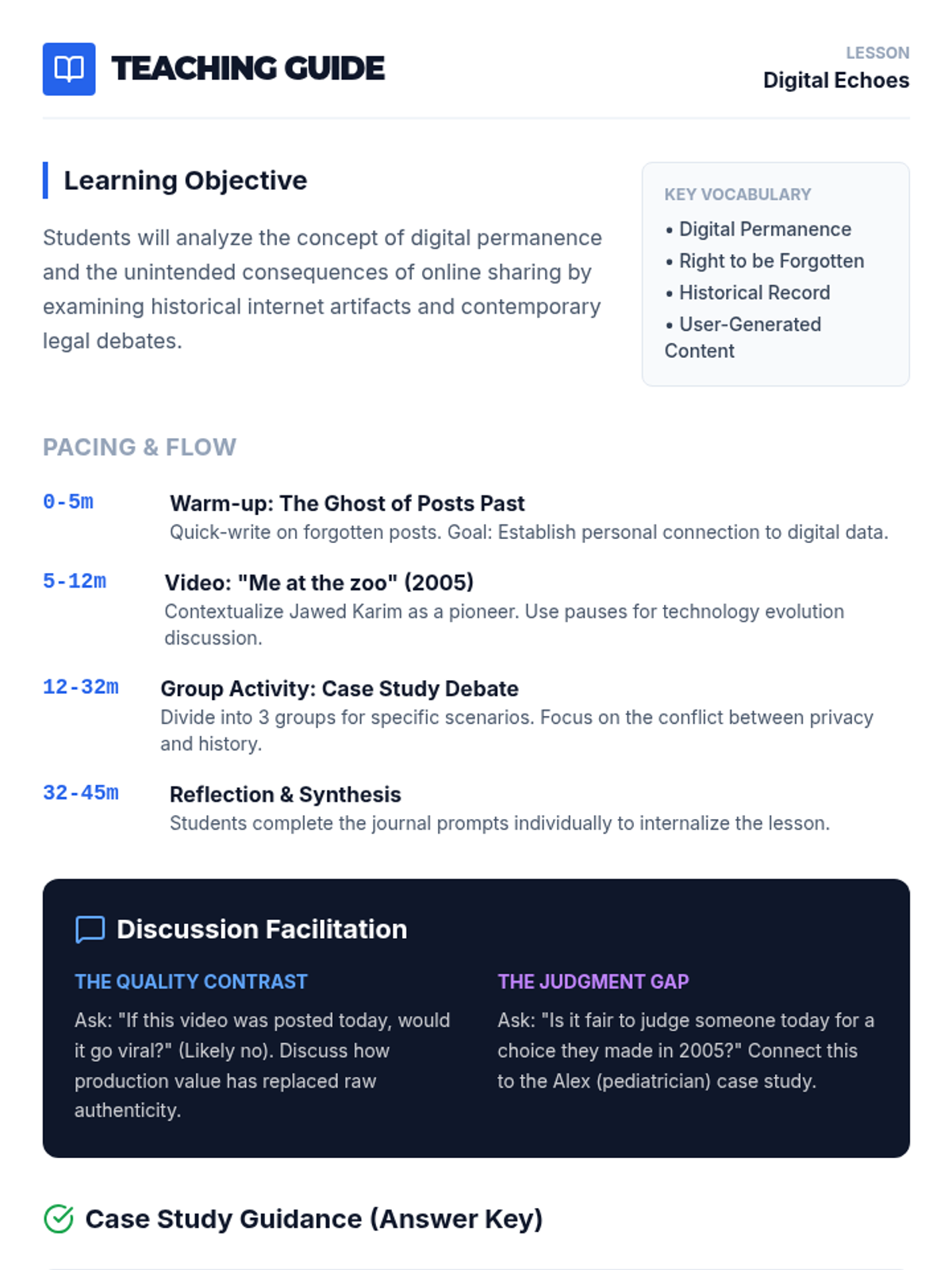
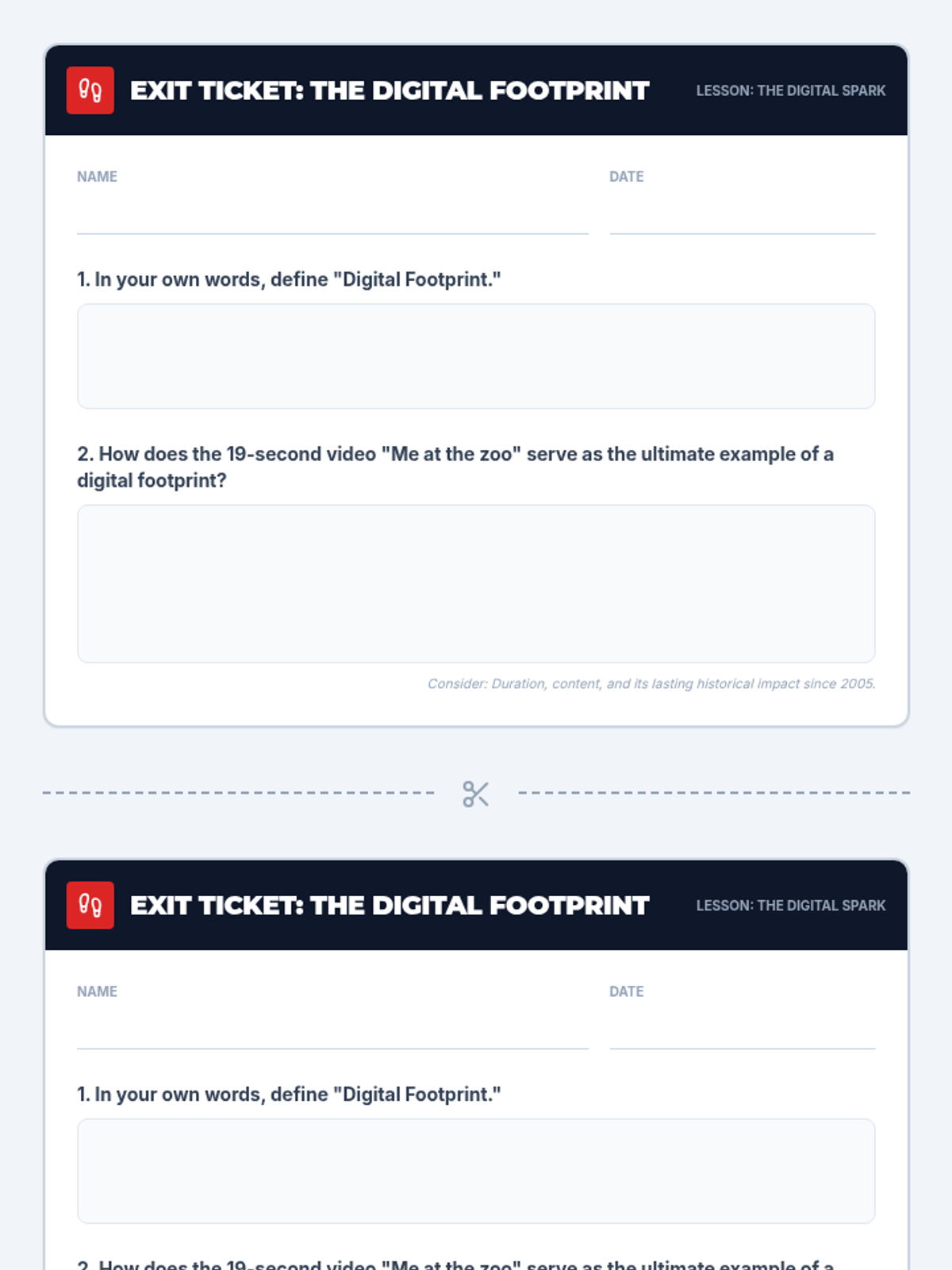
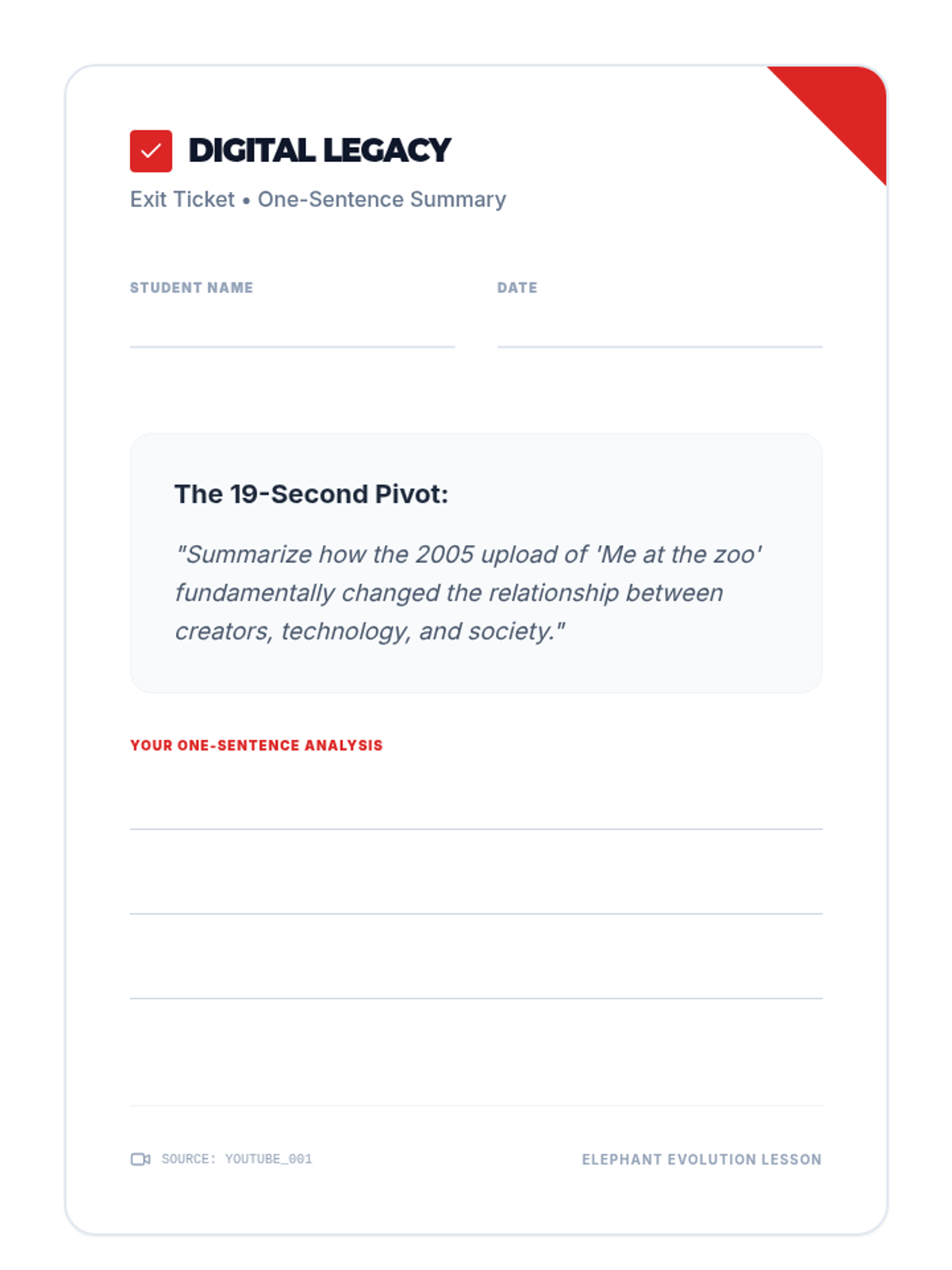
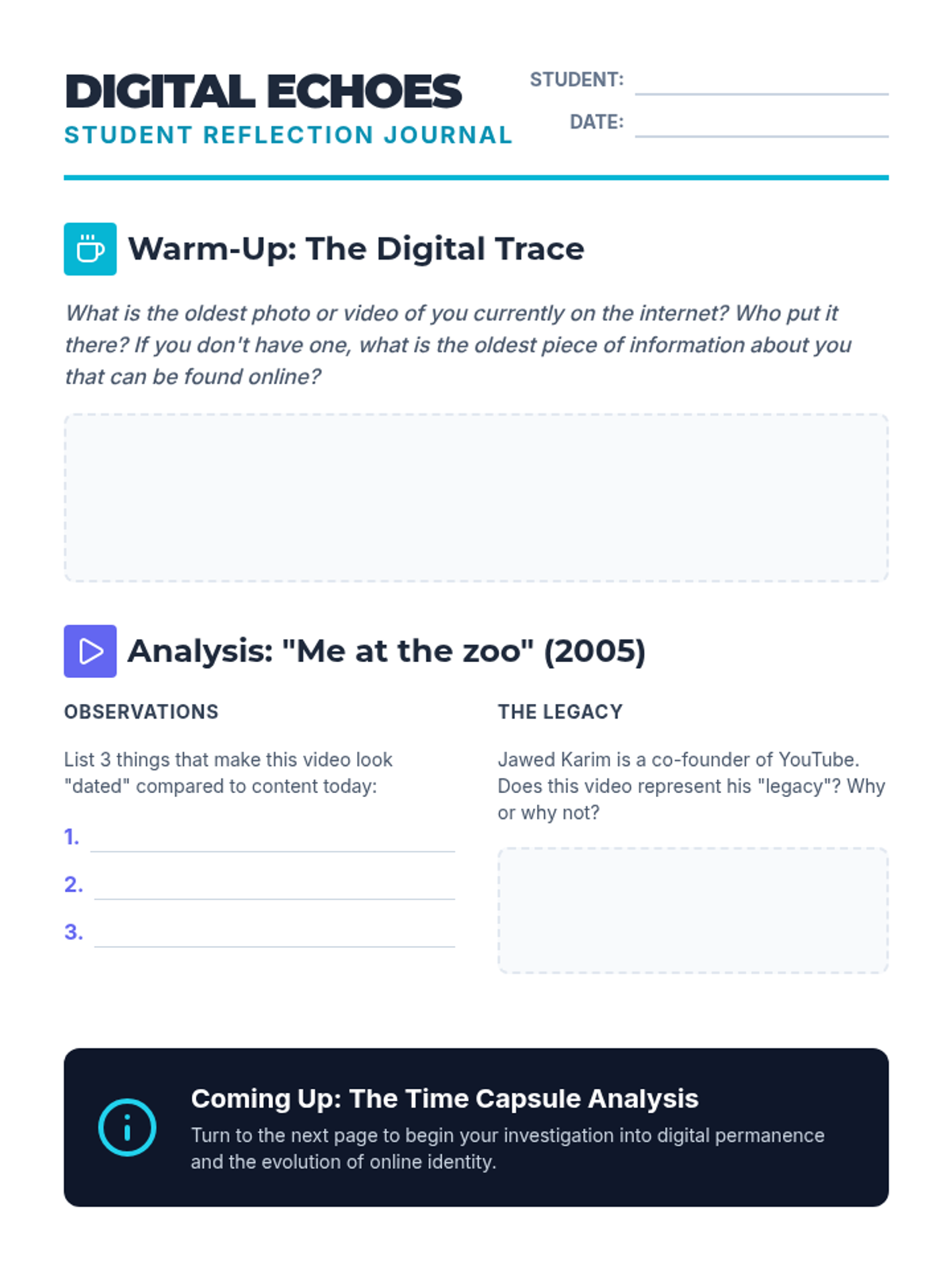
A sociology and technology lesson analyzing the concept of 'Digital Footprint' and internet permanence through the lens of the first-ever YouTube video, 'Me at the zoo'. Students explore the shift from unscripted early internet content to modern curation and reflect on their own digital legacies.
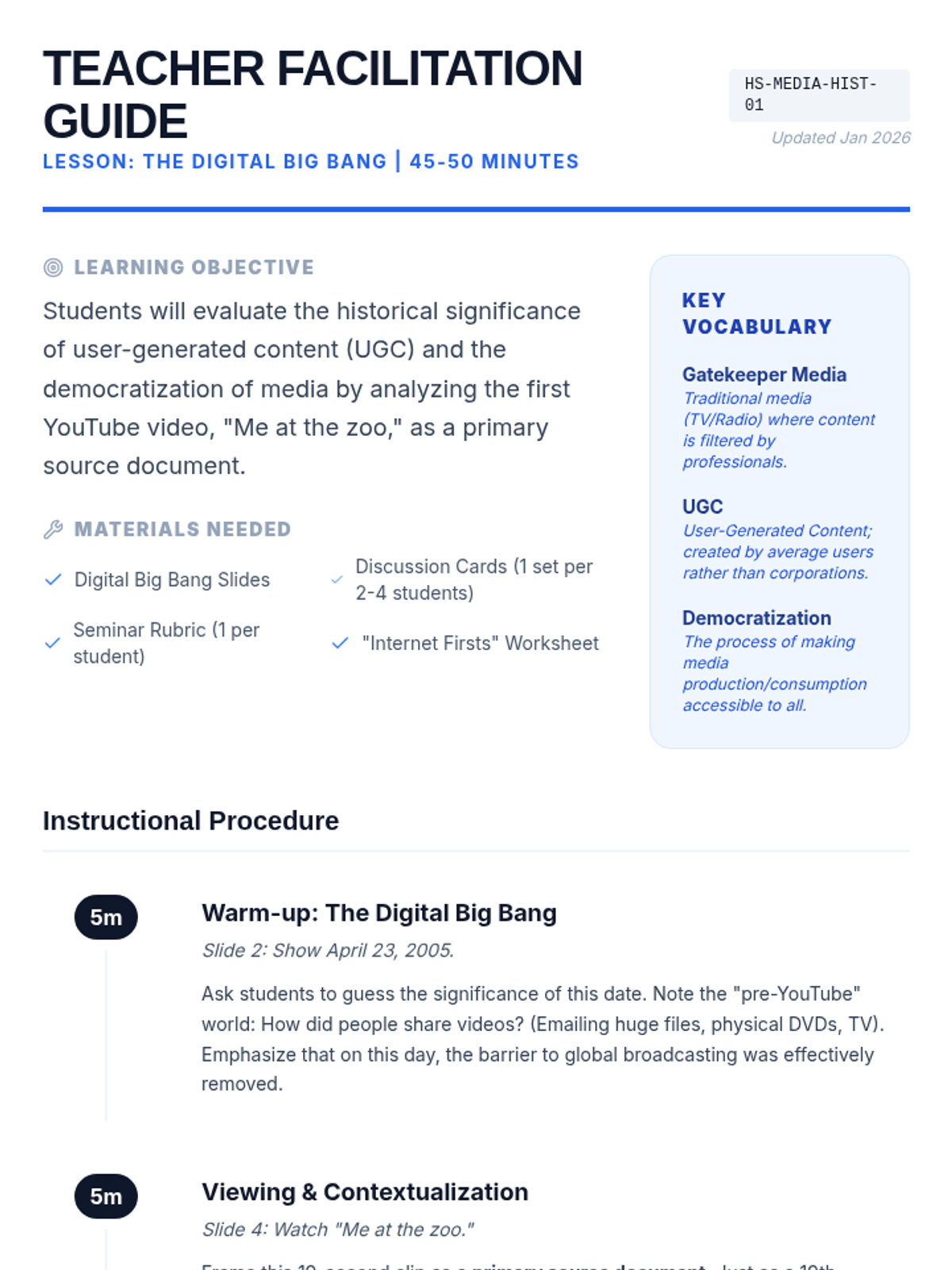
A lesson on the historical significance of digital primary sources, focusing on the democratization of media through the lens of the first YouTube video.
A Kindergarten to 2nd-grade lesson where students observe elephants, learn about their trunks, and practice observation skills using the historic 'Me at the zoo' video.
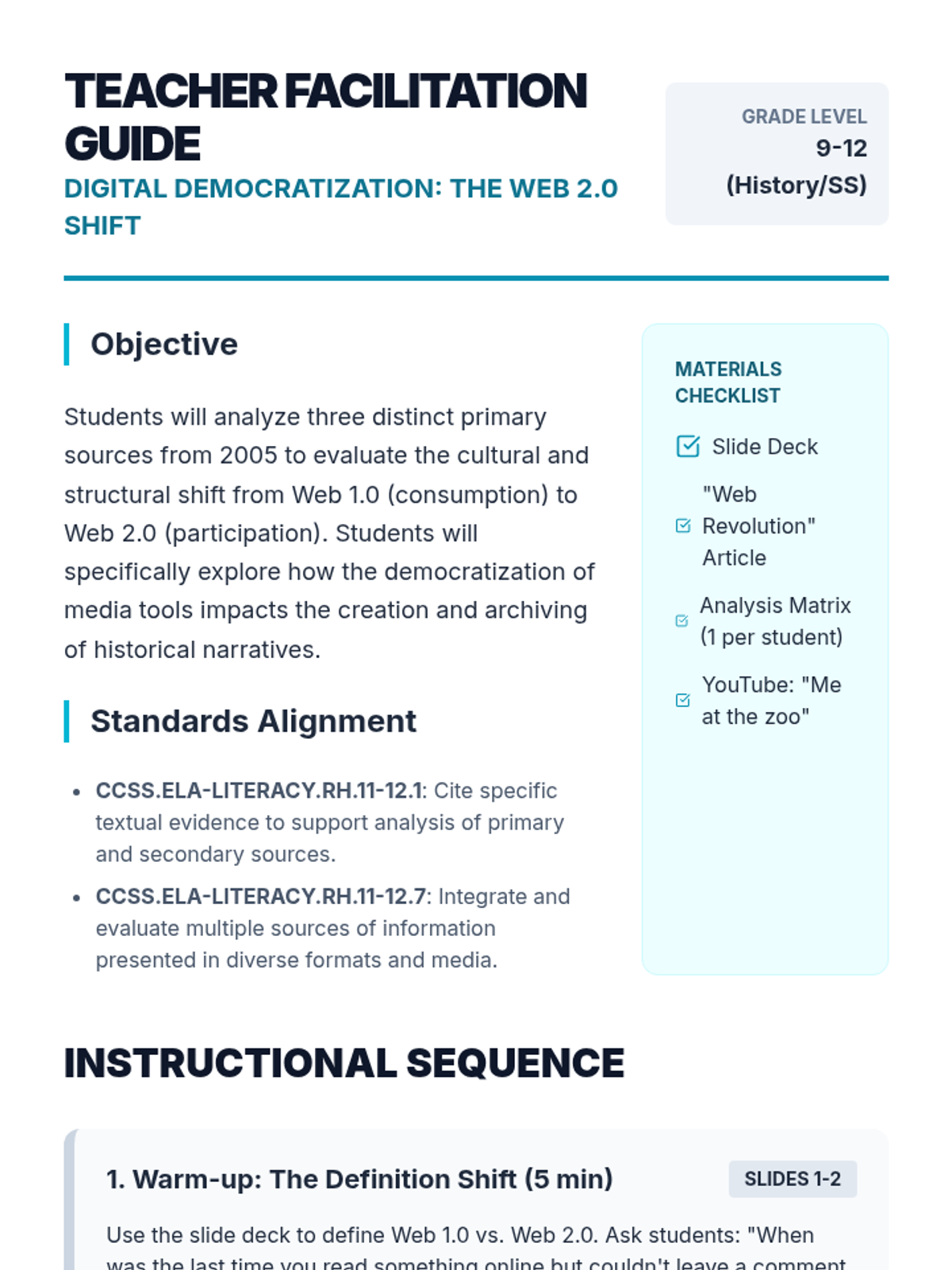
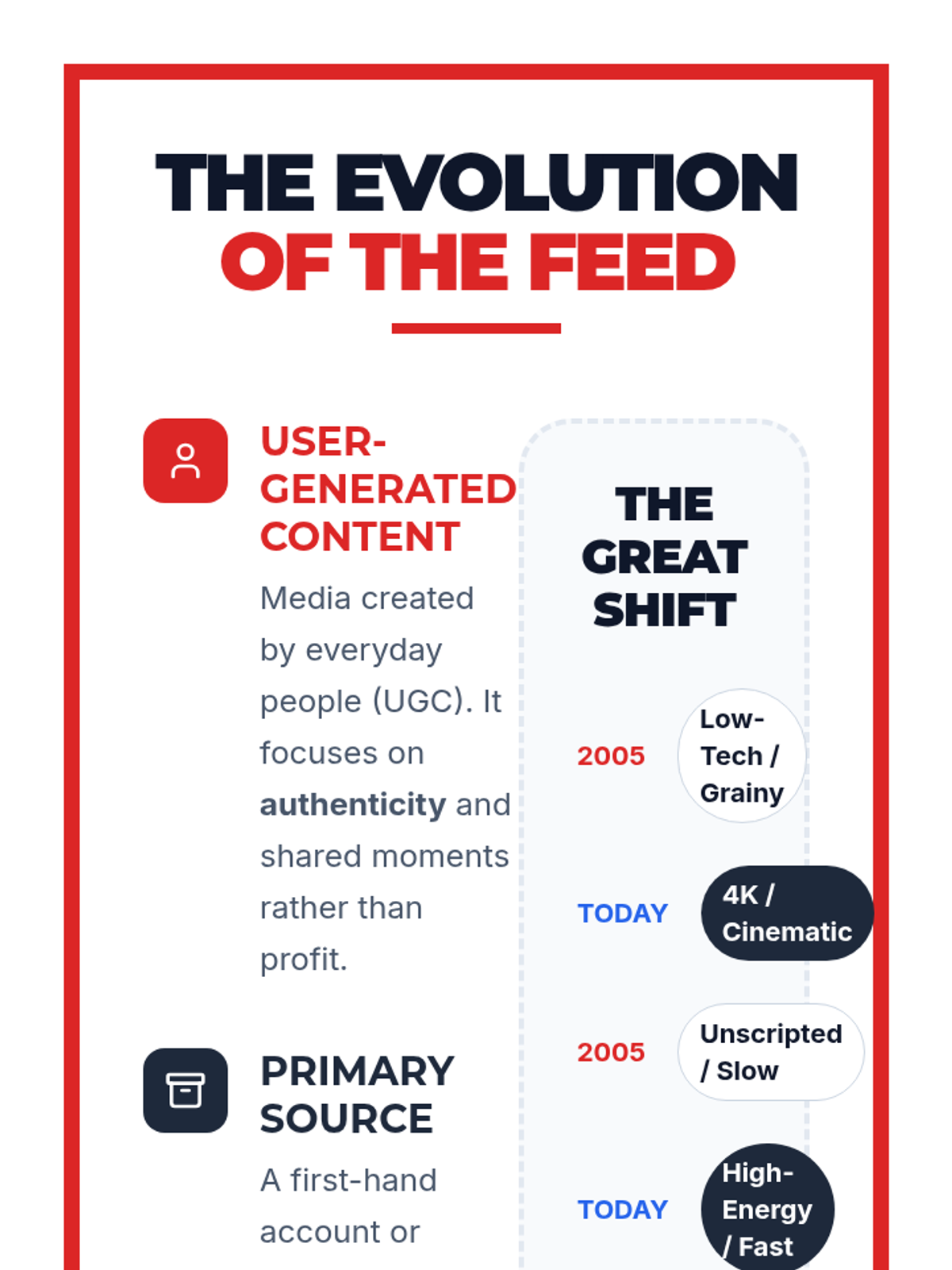
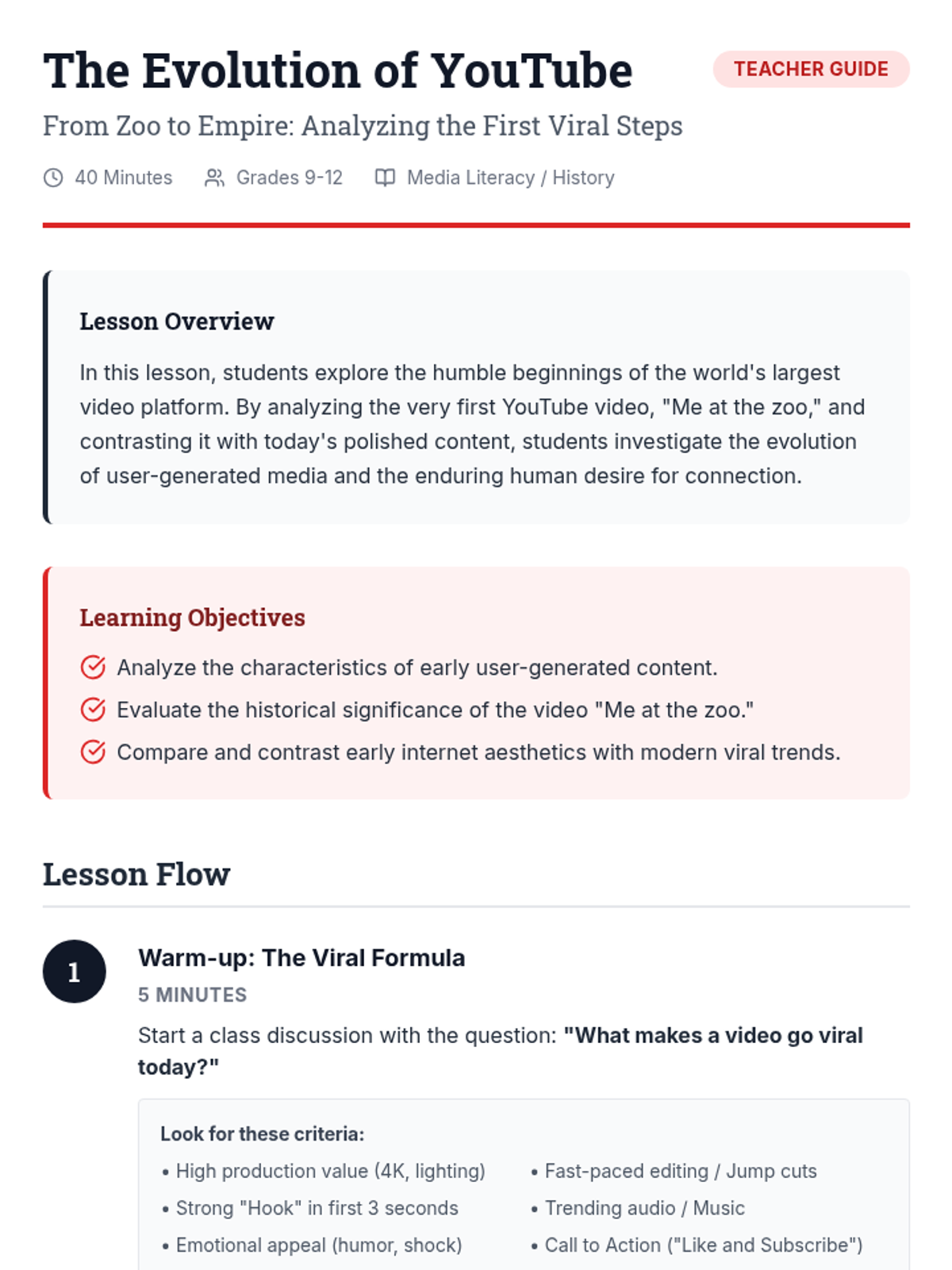
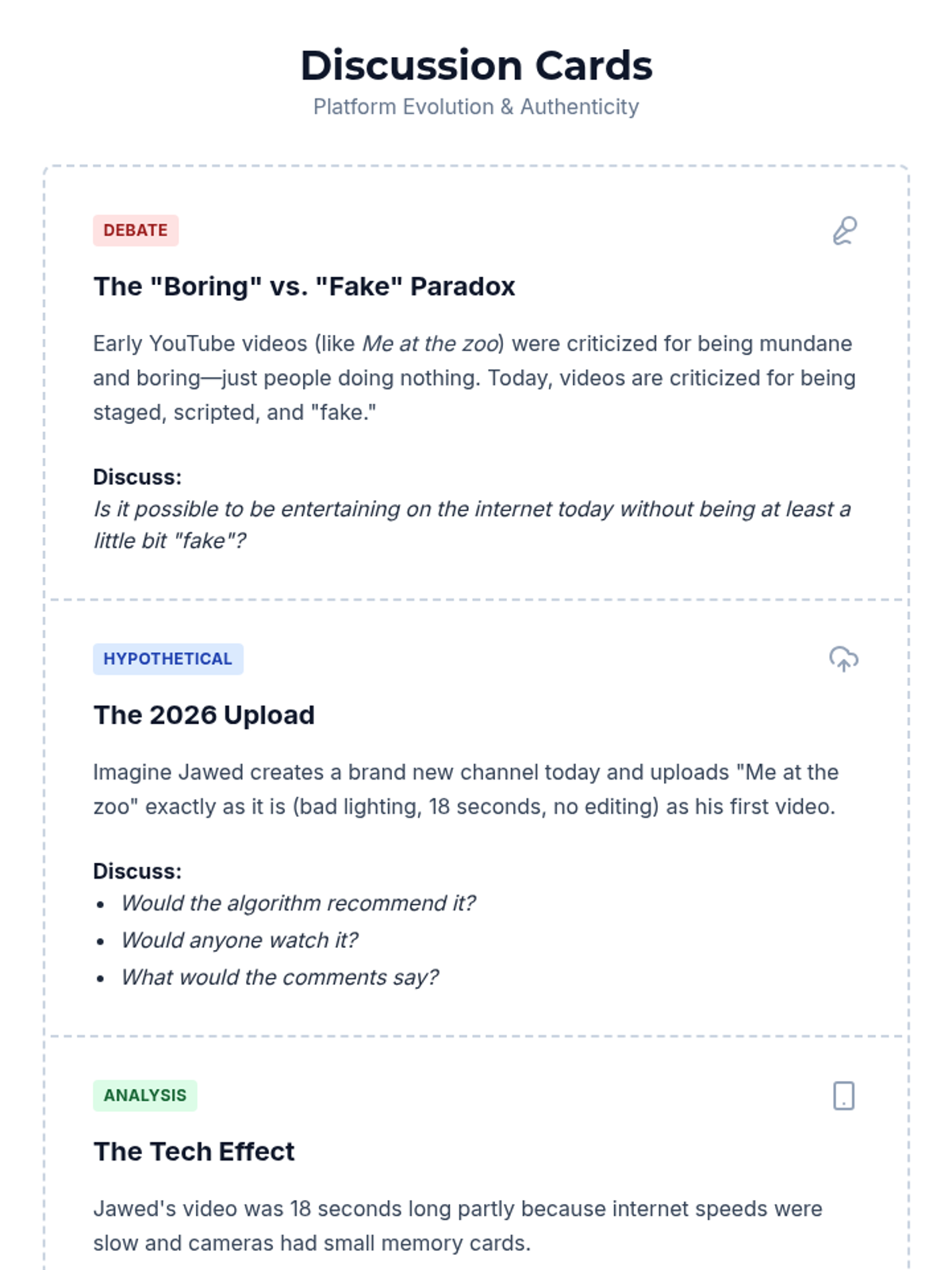
A lesson plan focusing on the evolution of user-generated content, starting with the first YouTube video 'Me at the zoo'. Students analyze early internet culture versus modern viral trends.
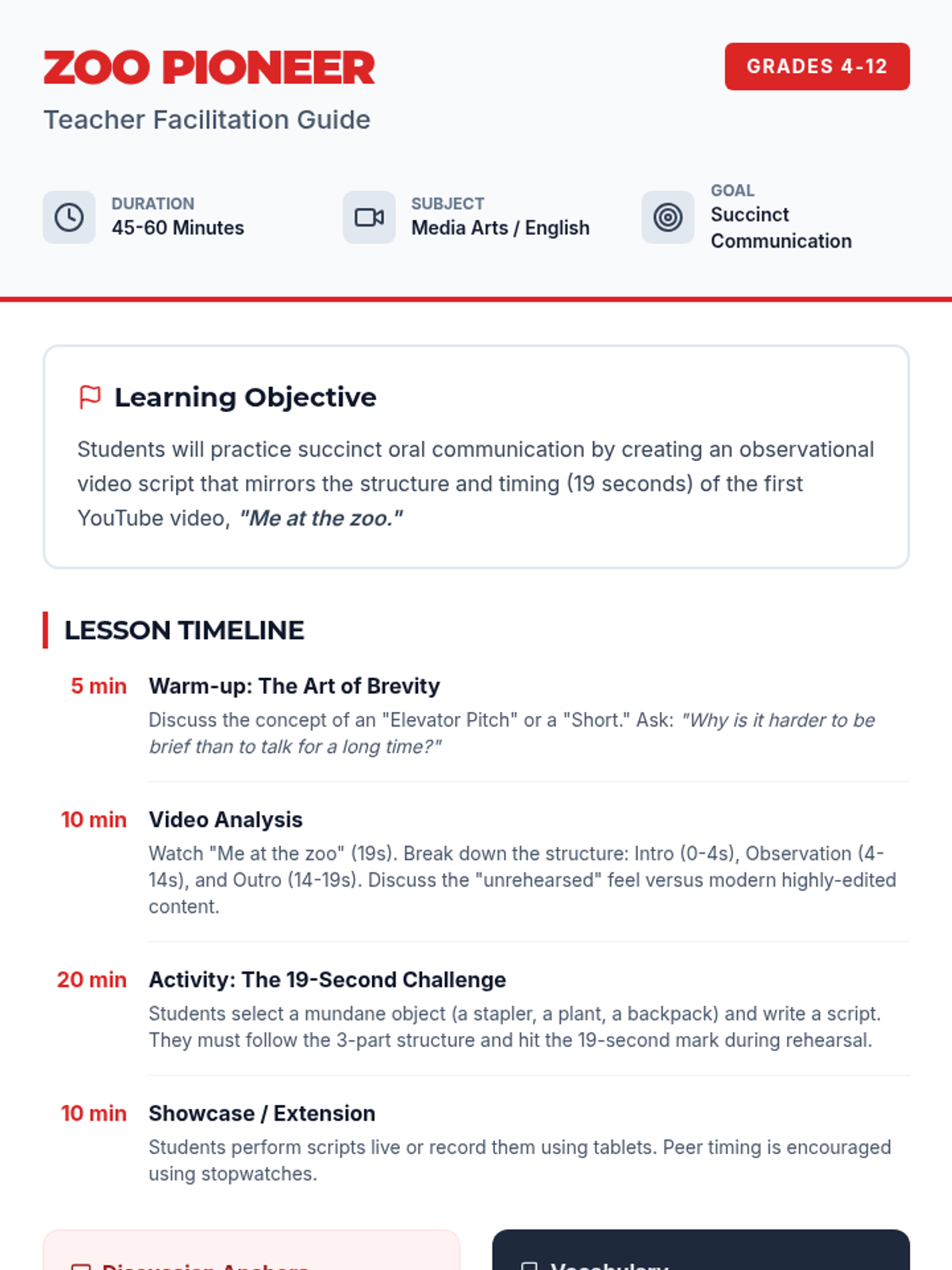
A lesson where students analyze the first-ever YouTube video to learn about unscripted oral communication and then perform their own 20-second observational vlogs.
A lesson analyzing the transformation of YouTube from a casual video-sharing platform to a professionalized influencer economy, using the first-ever YouTube video as a primary source.
A media literacy lesson contrasting early user-generated content with modern standards, anchored by the first ever YouTube video.
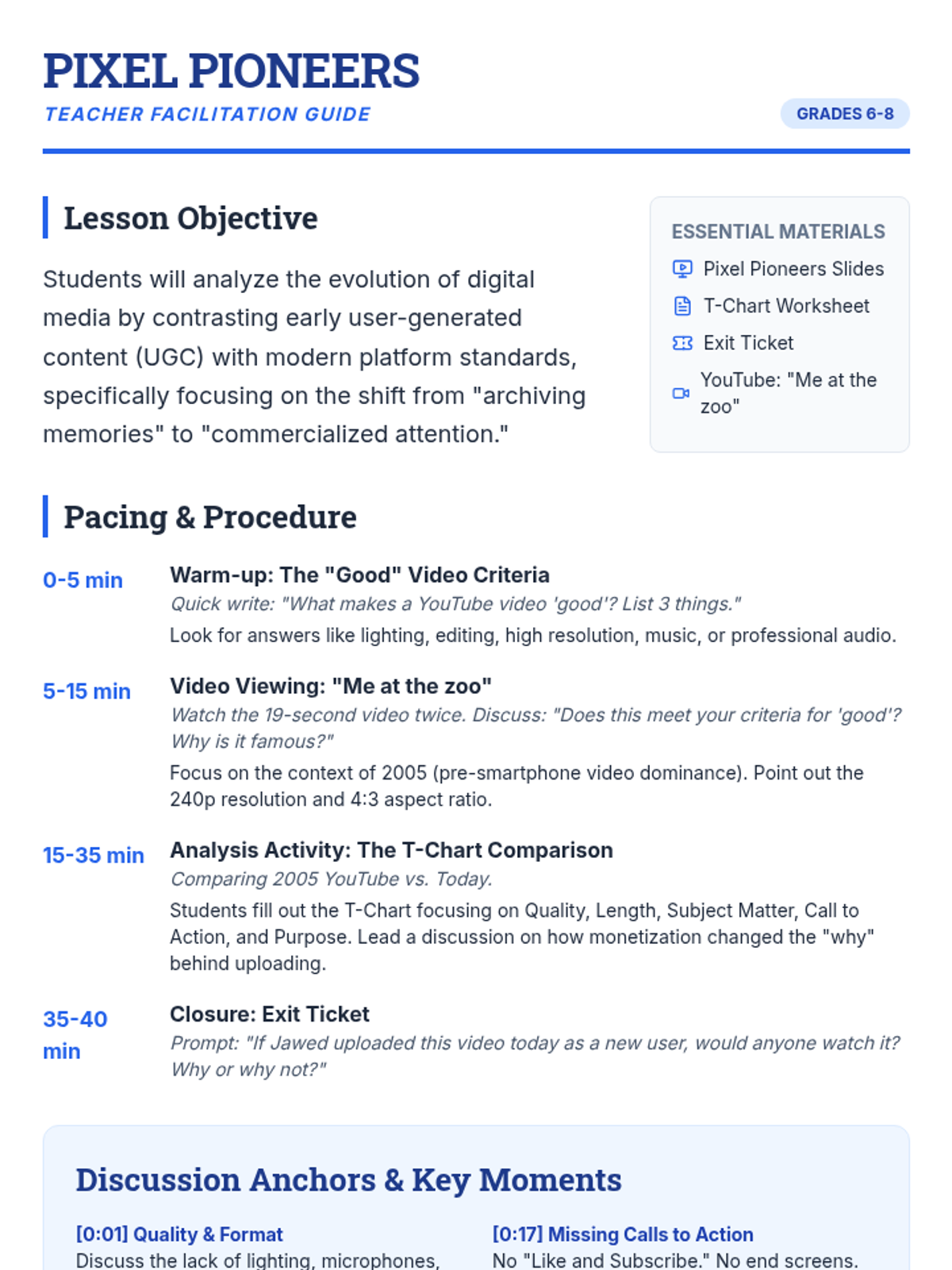
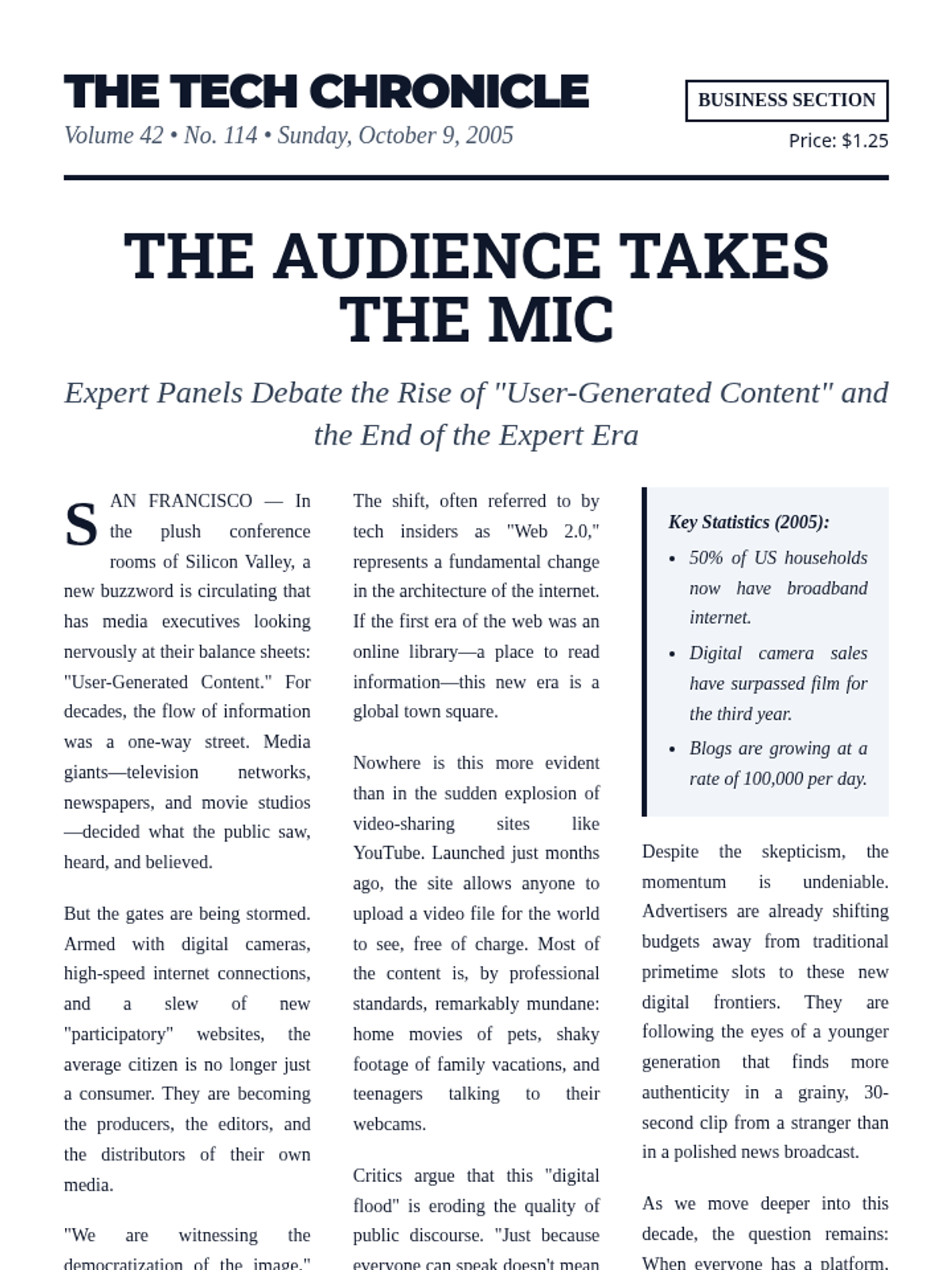
A lesson for high school Media Studies/History students analyzing the shift from broadcast to social media through the lens of the first YouTube video, 'Me at the zoo'. Students evaluate the impact of User-Generated Content (UGC) and compare early digital media to modern trends.
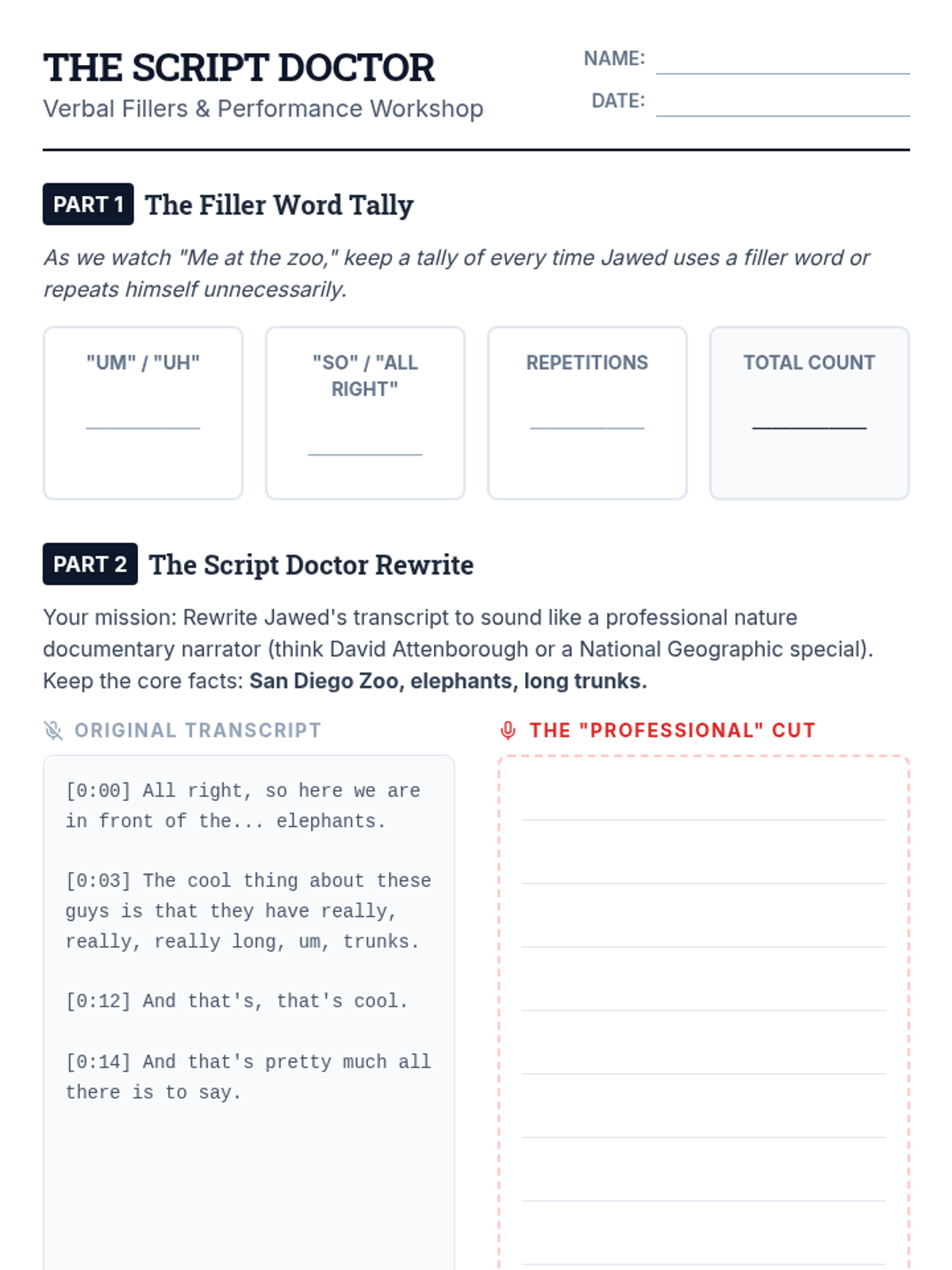
A middle school ELA/Speech lesson focused on the difference between impromptu and scripted speaking, using the first YouTube video 'Me at the zoo' as a case study. Students analyze filler words and practice rewriting content for better delivery.
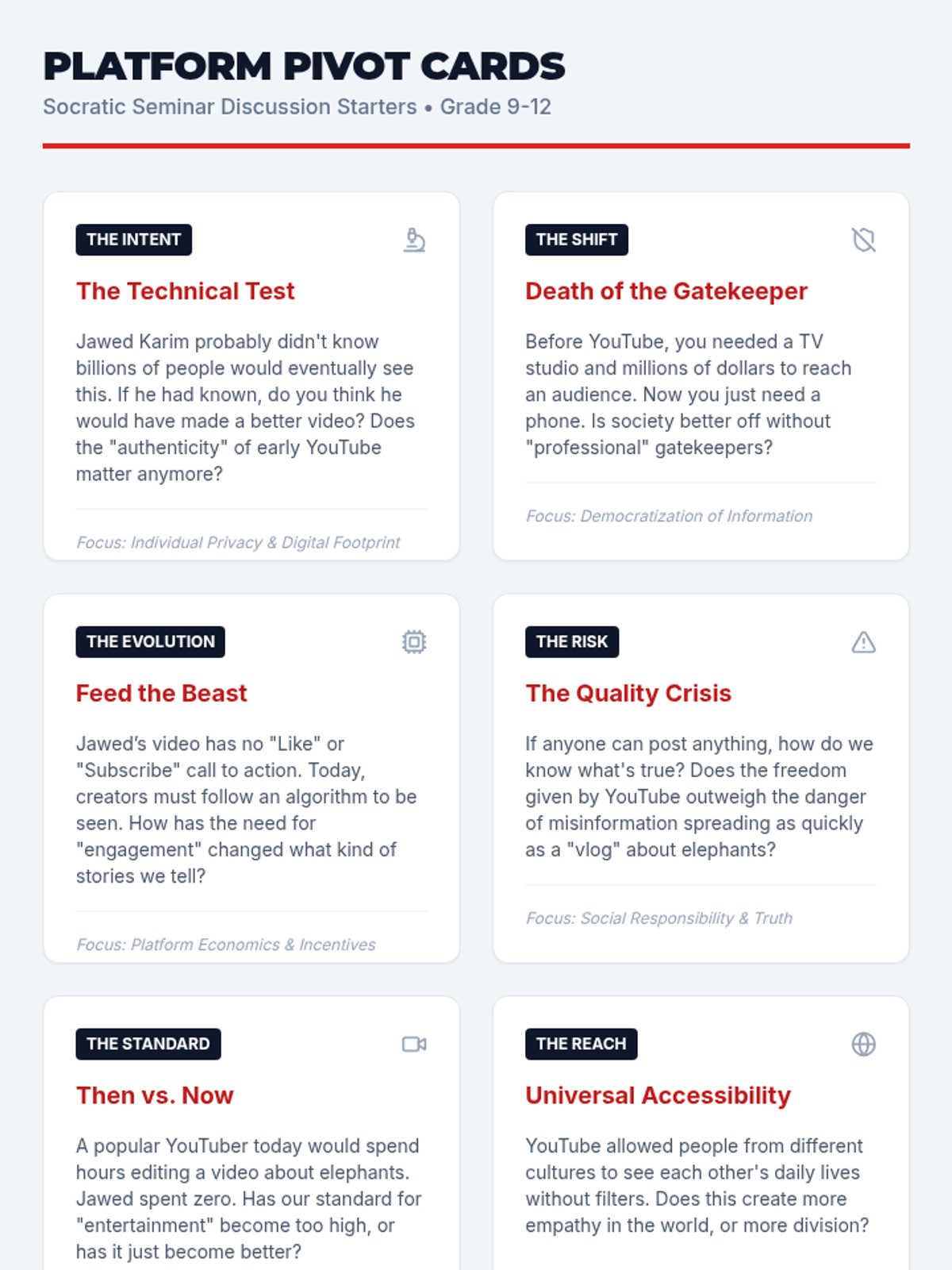
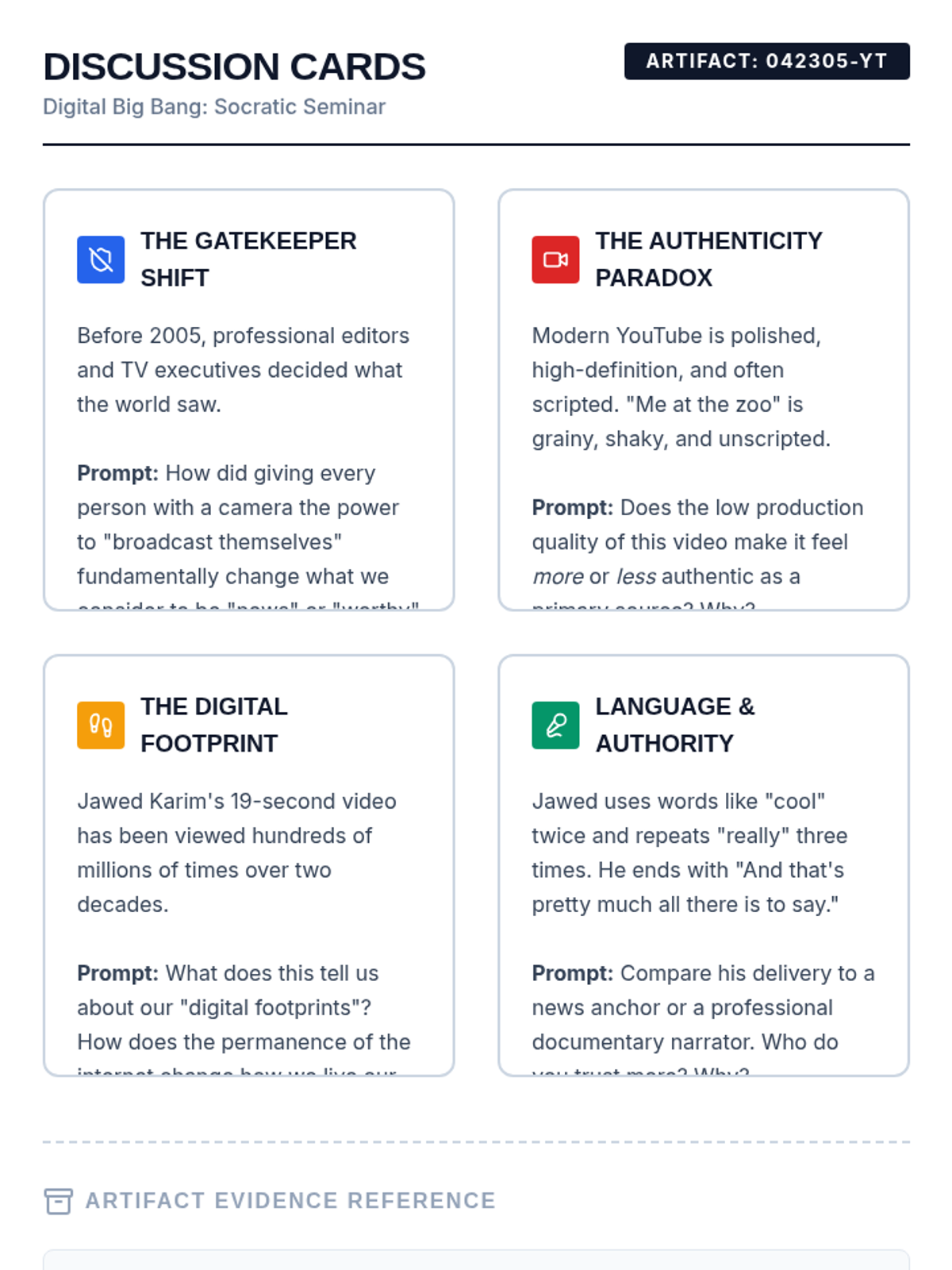
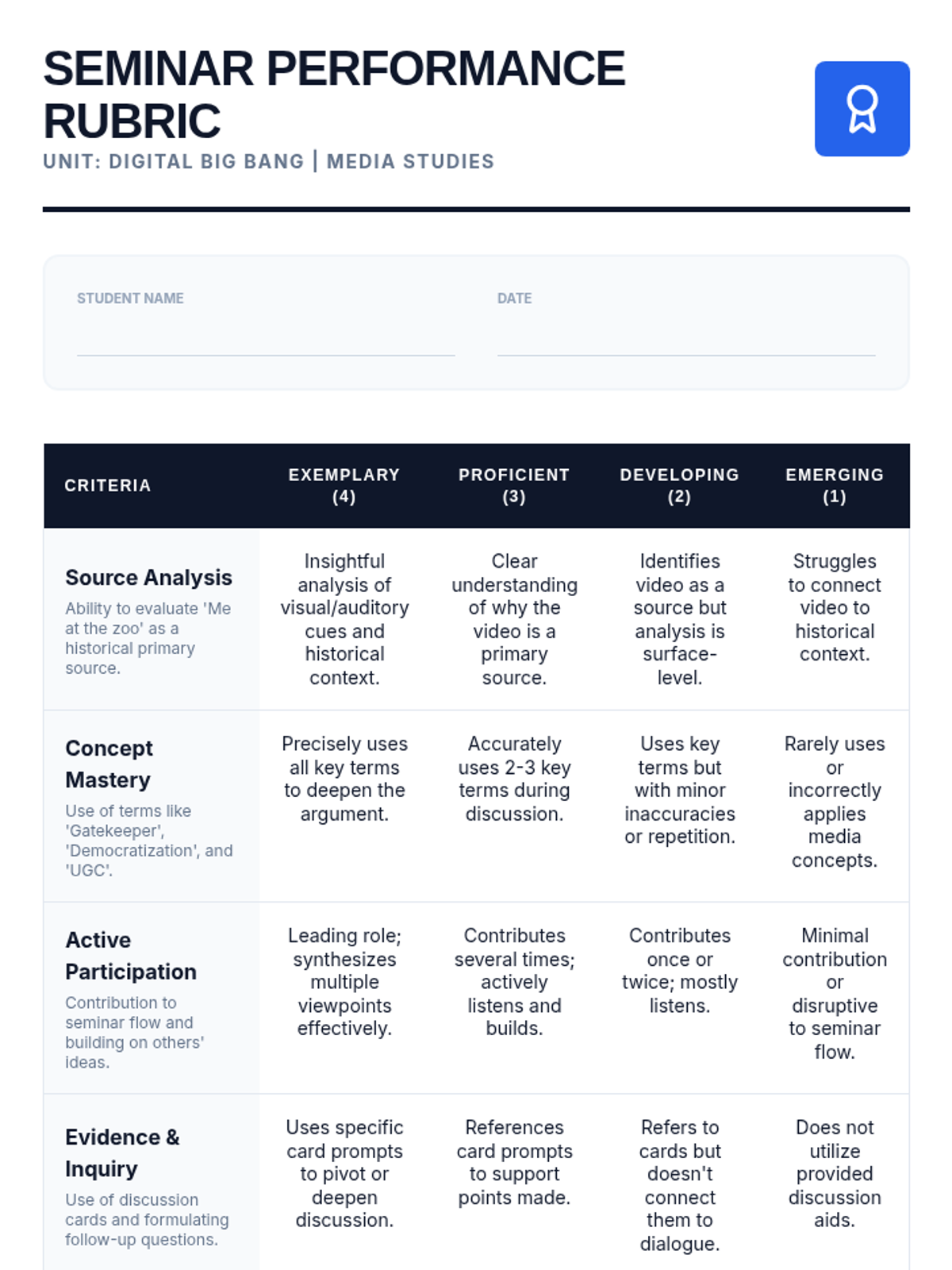
This lesson explores the historical significance of the first YouTube video, 'Me at the zoo,' as a primary source document that signaled the shift from gatekeeper-controlled media to user-generated content and the democratization of information. Students engage in a Socratic Seminar to analyze how this low-fidelity 19-second clip fundamentally changed global media consumption and production.
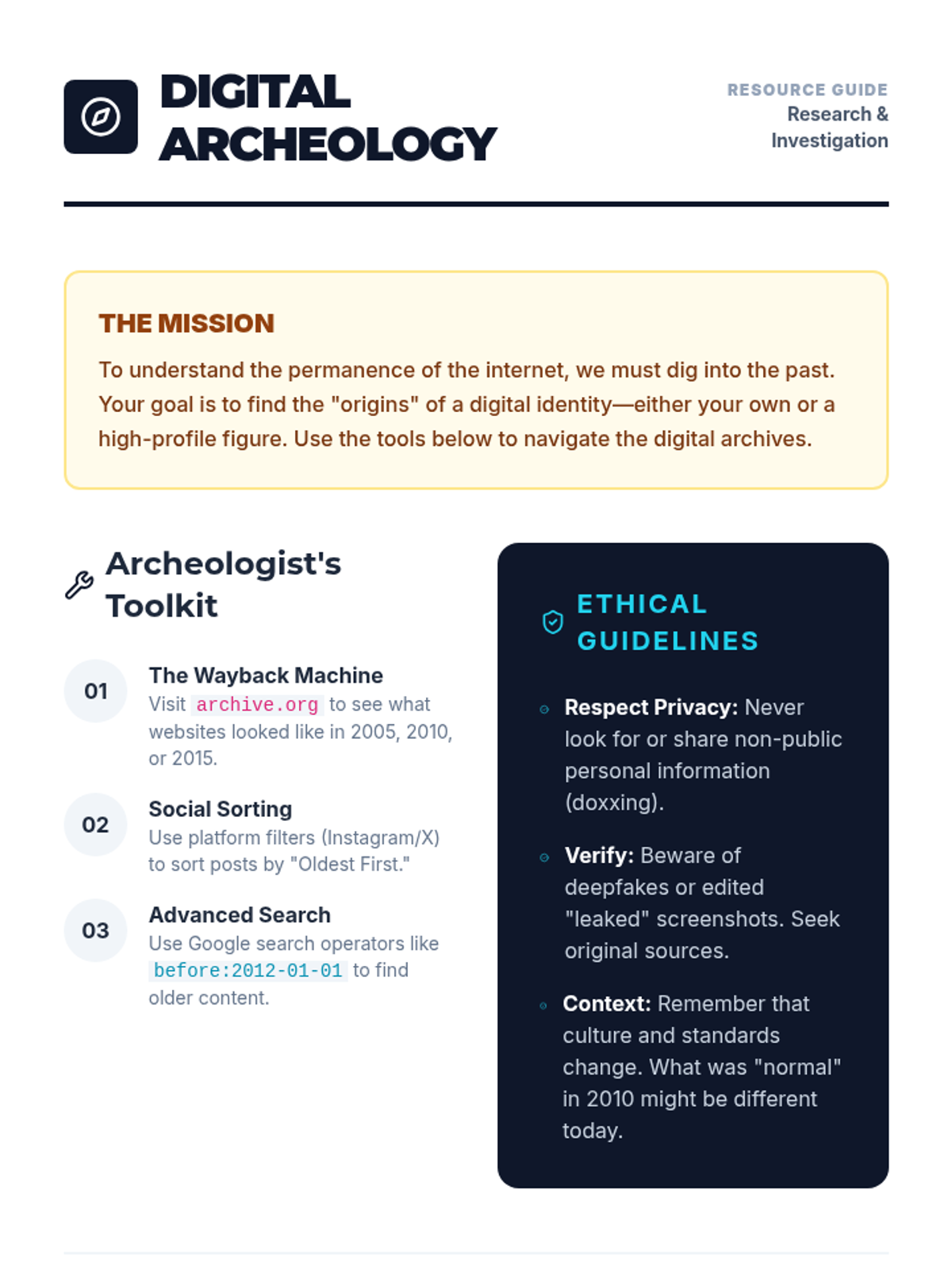
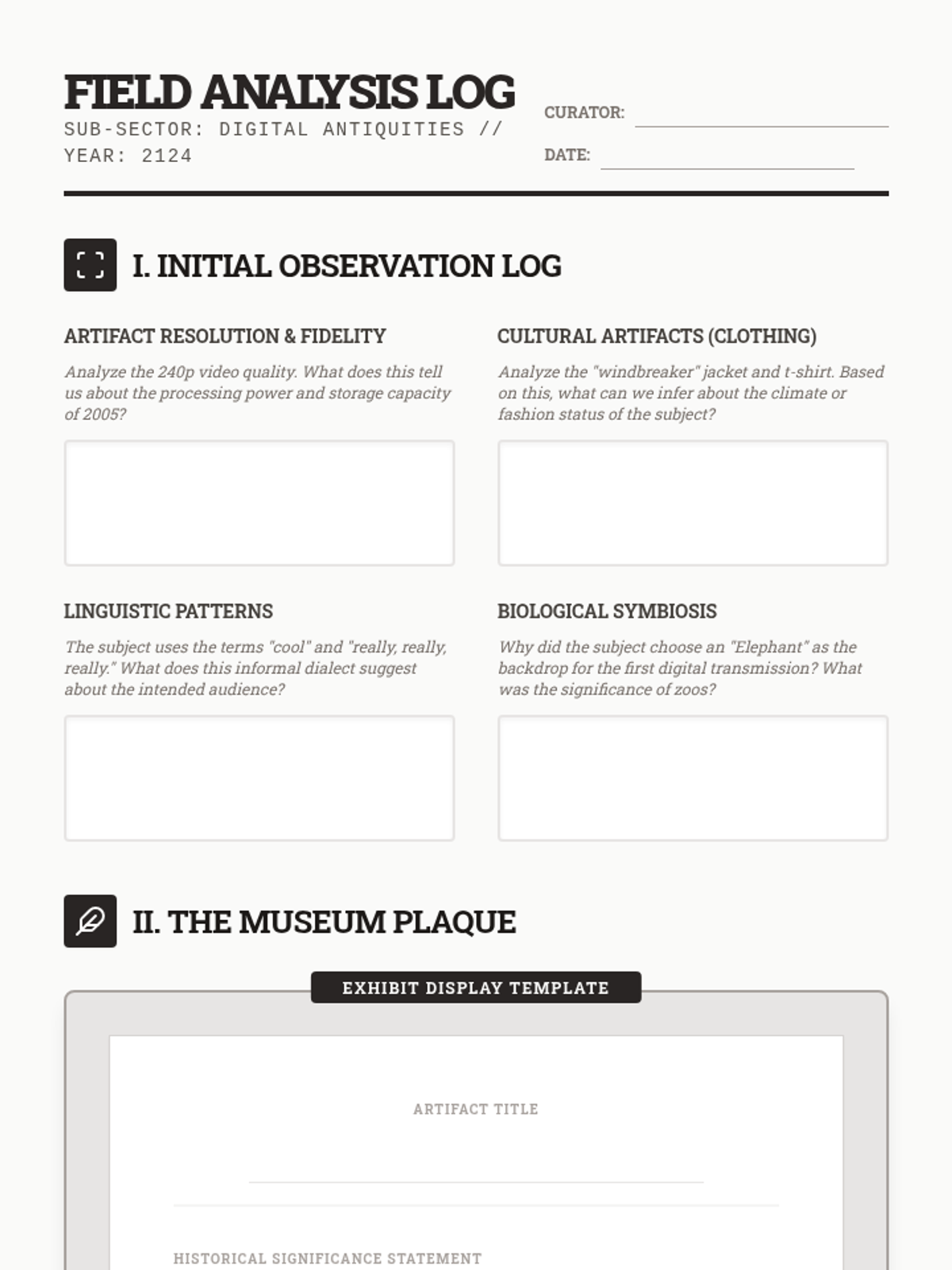
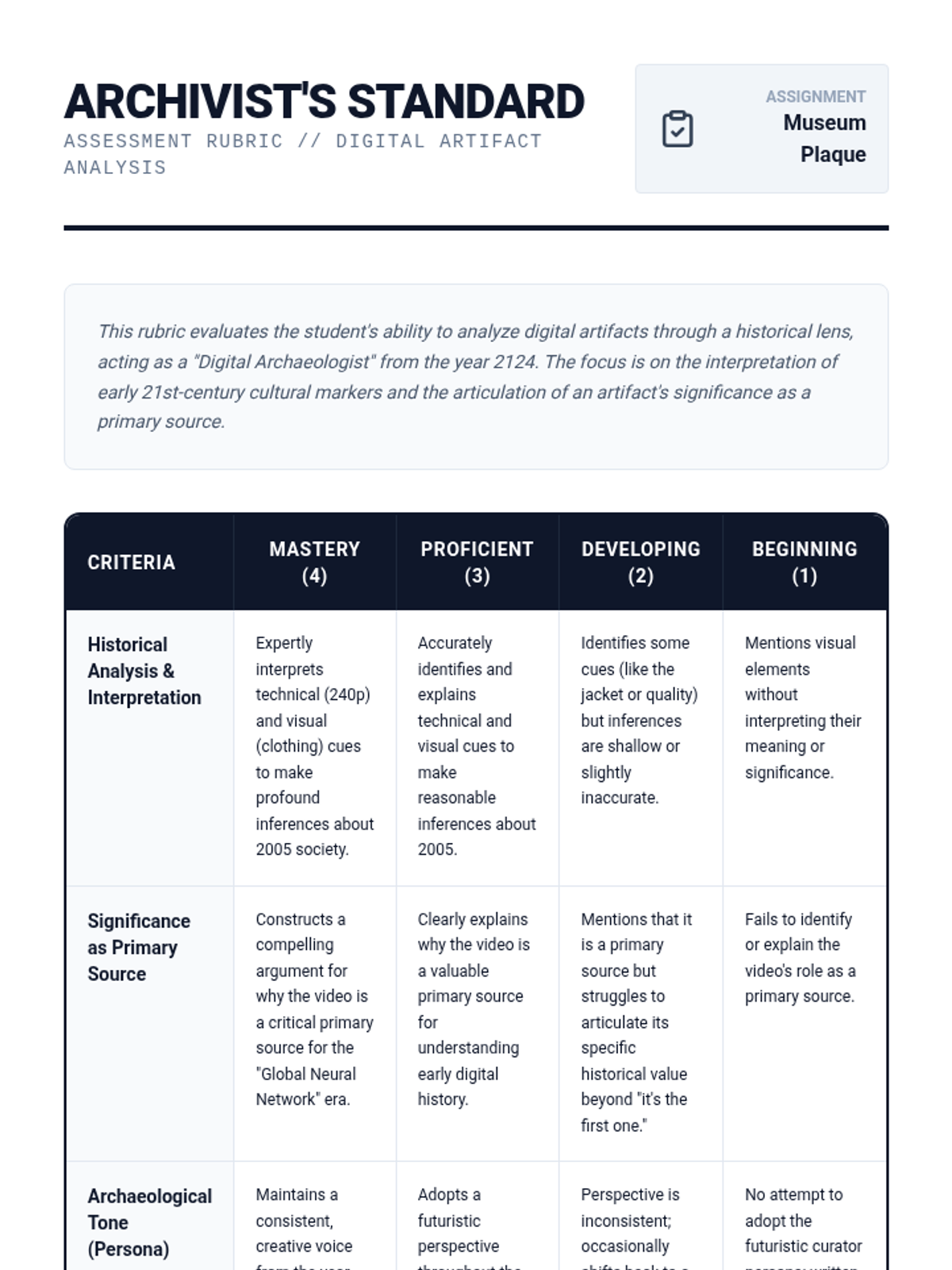
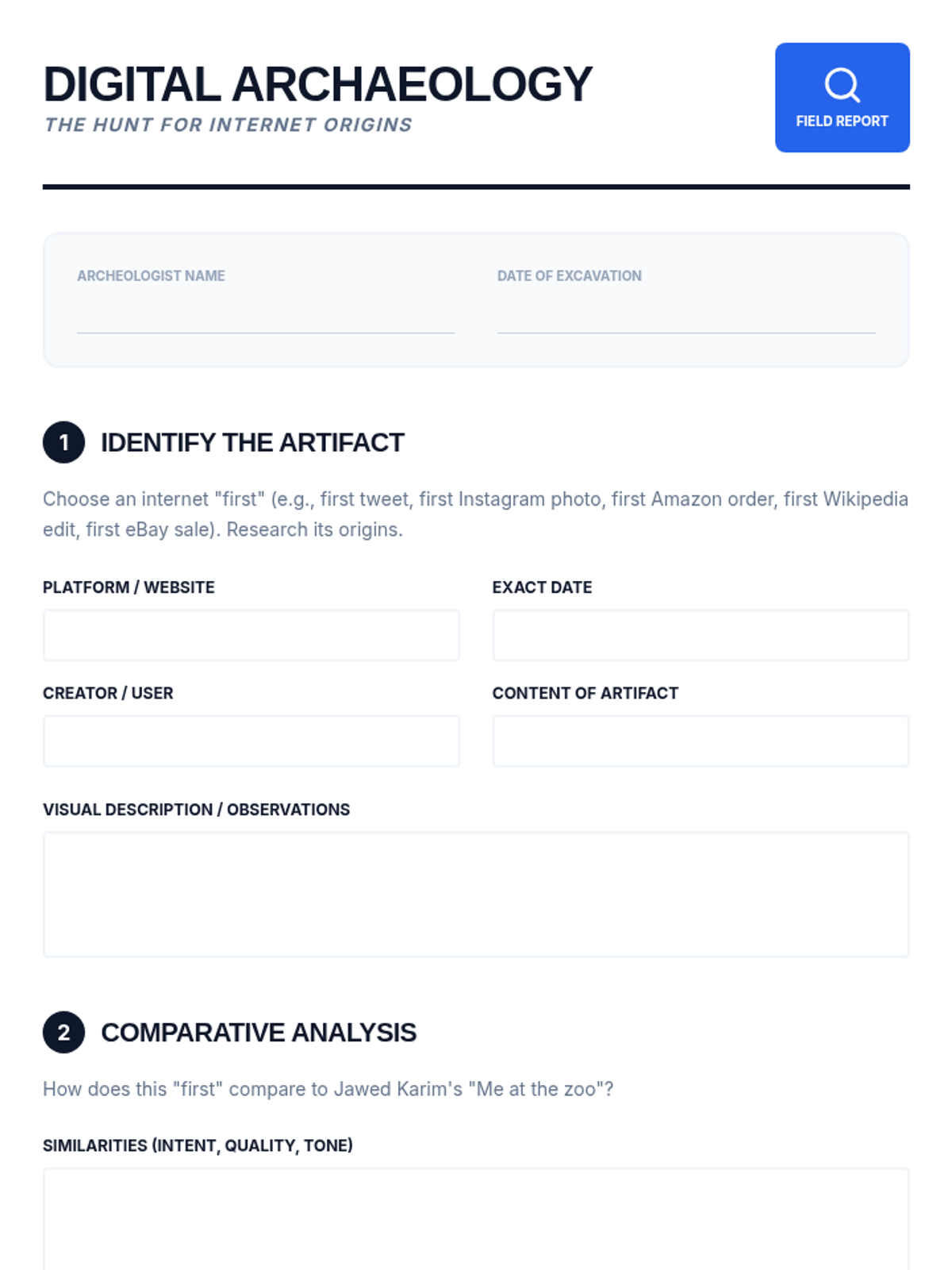
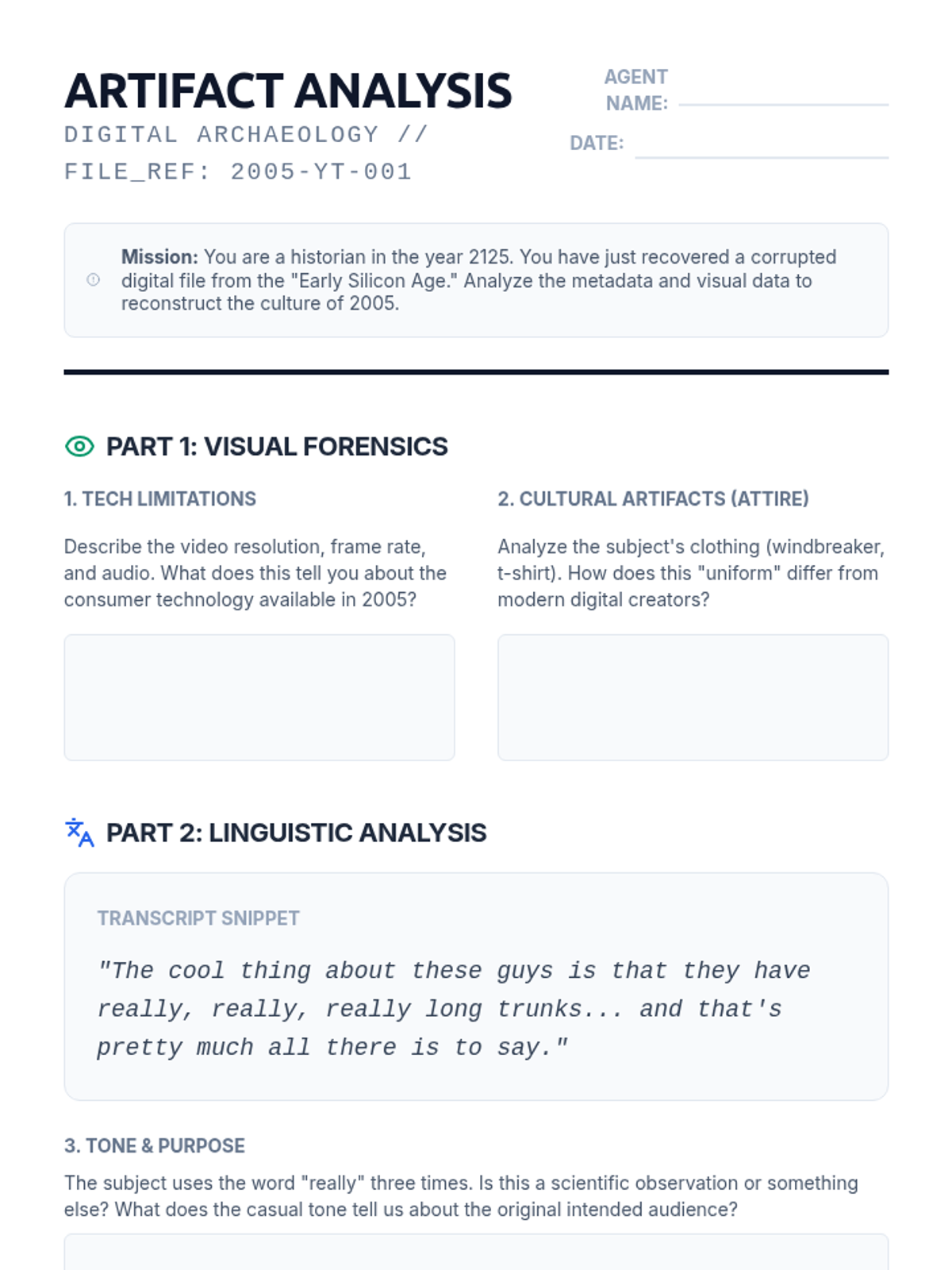
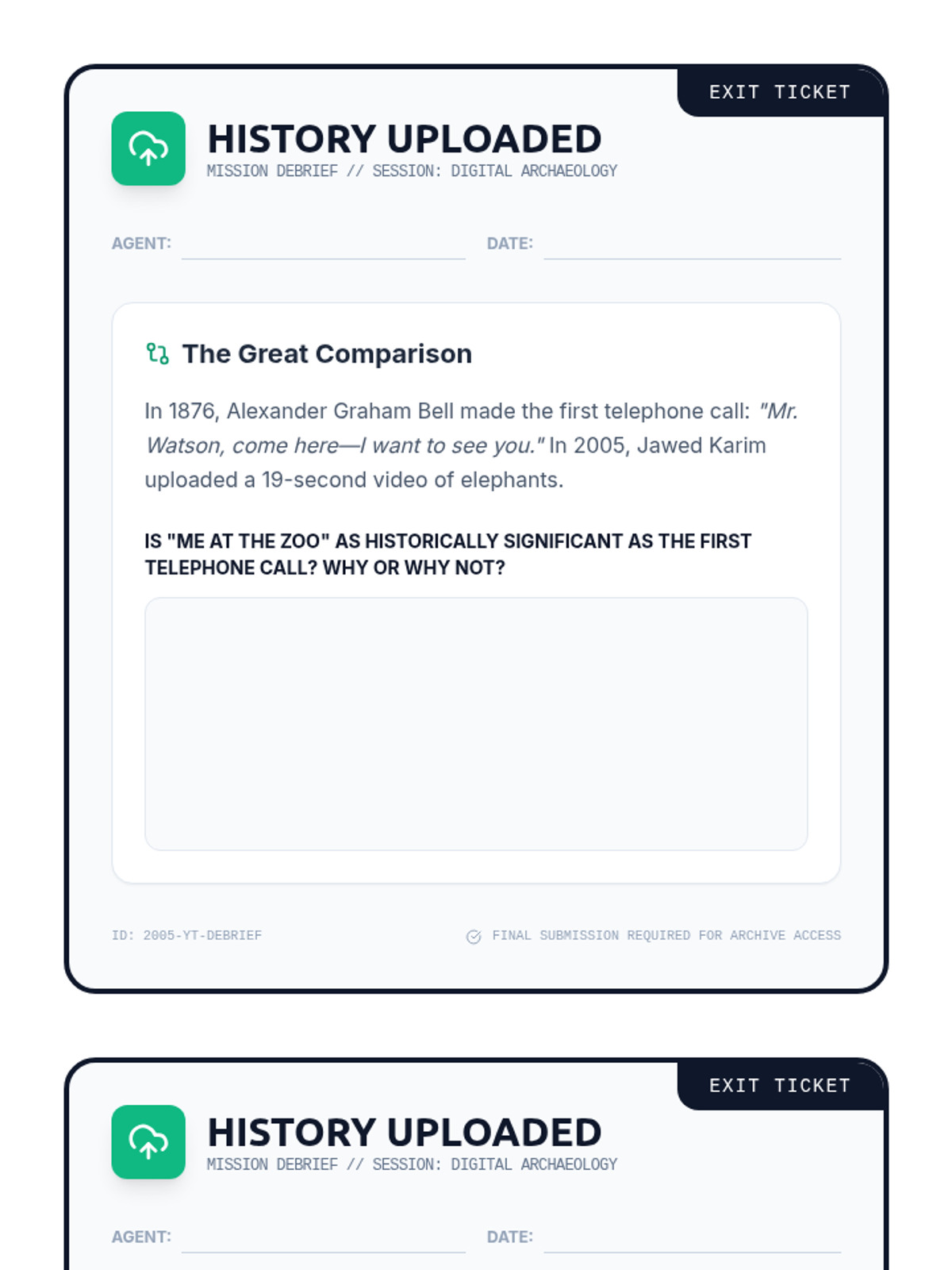
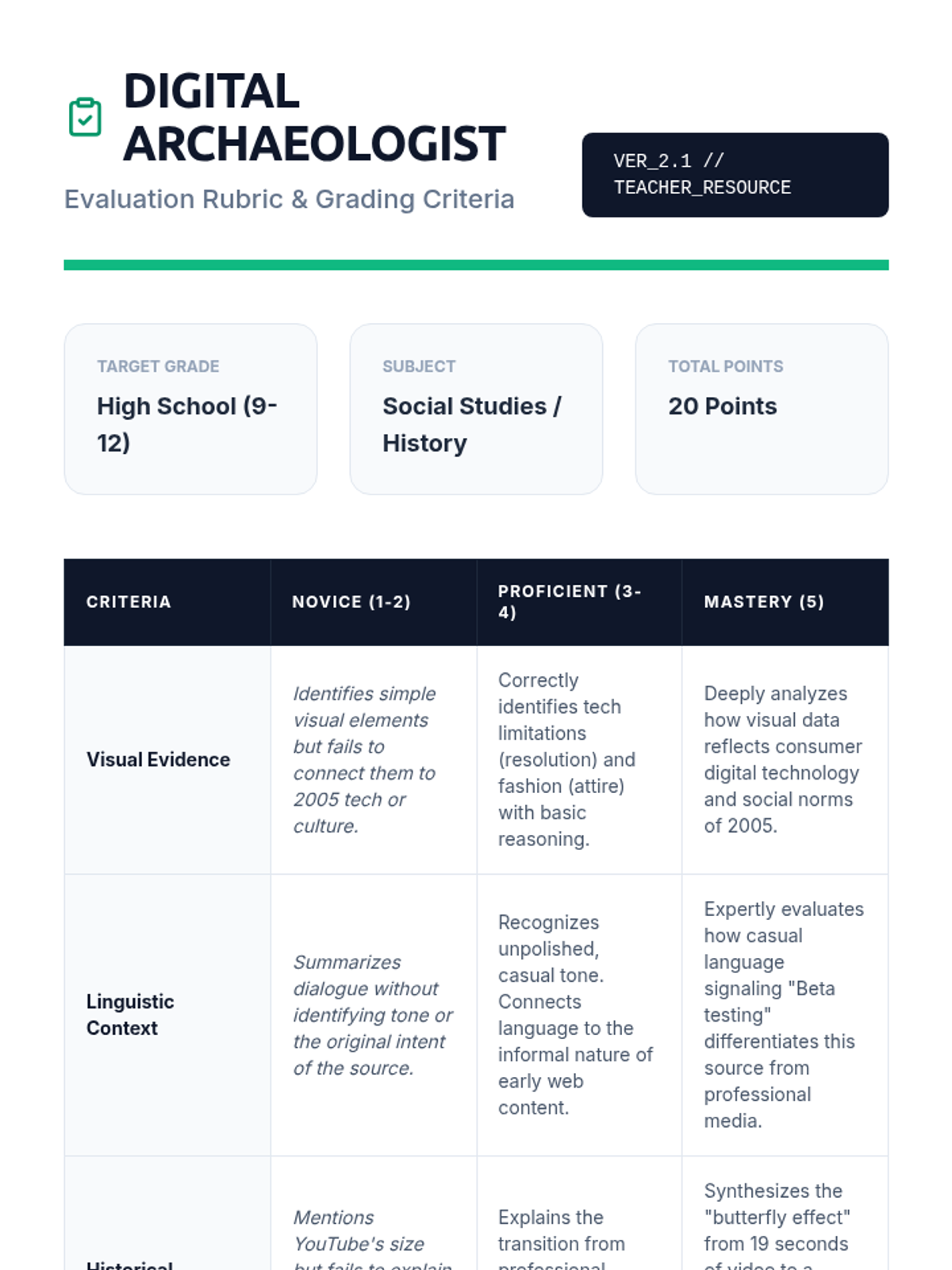
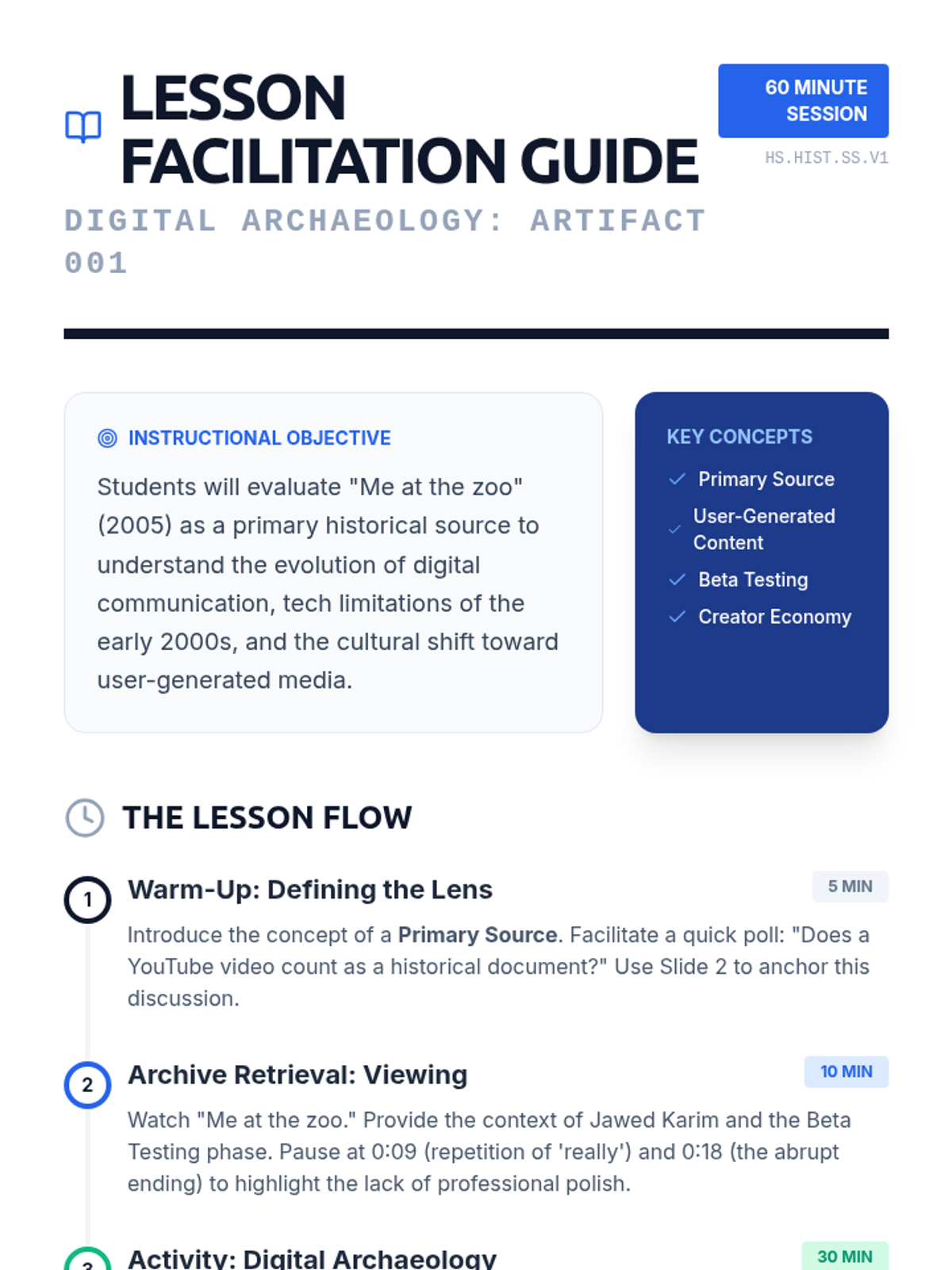
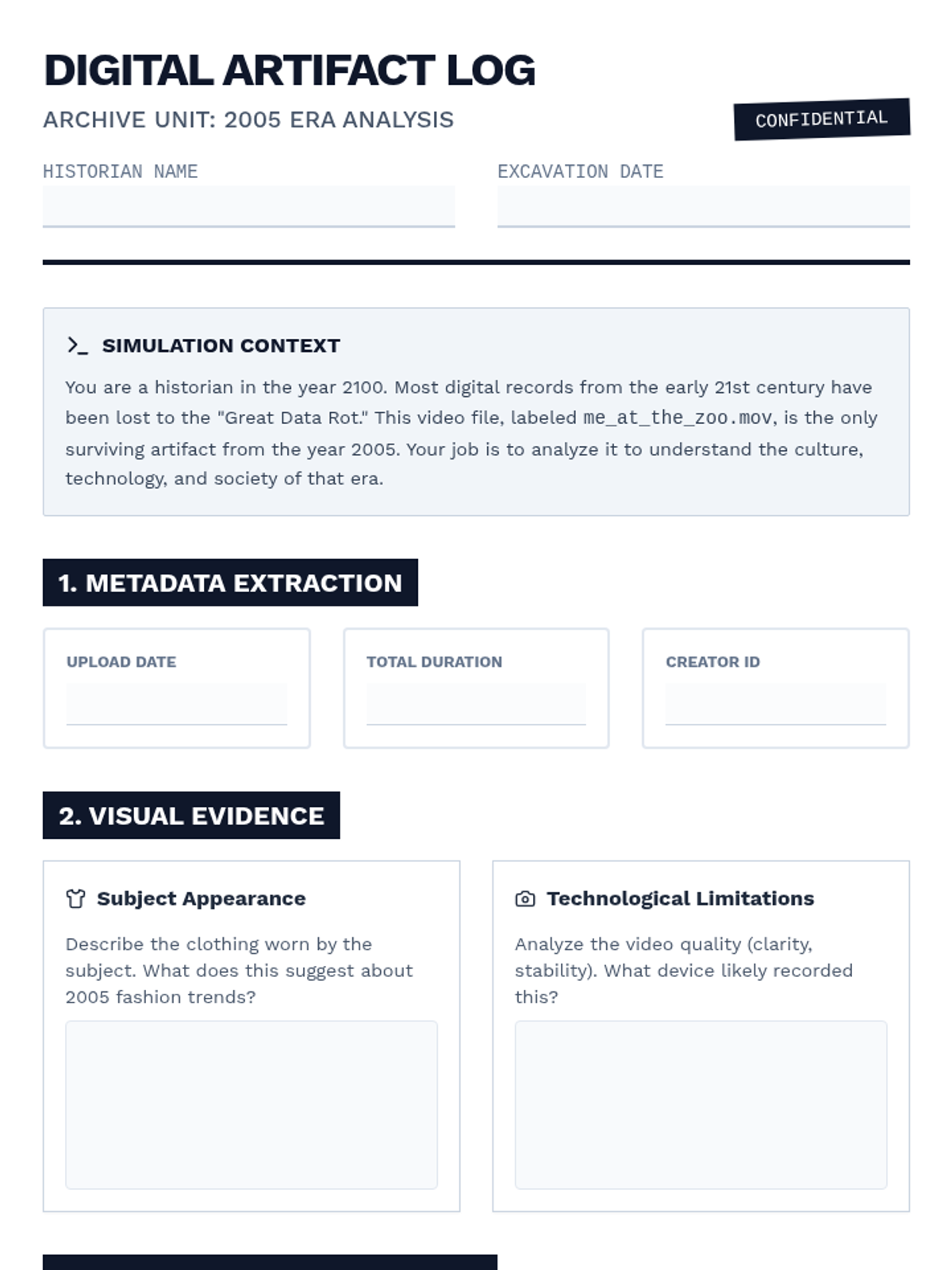
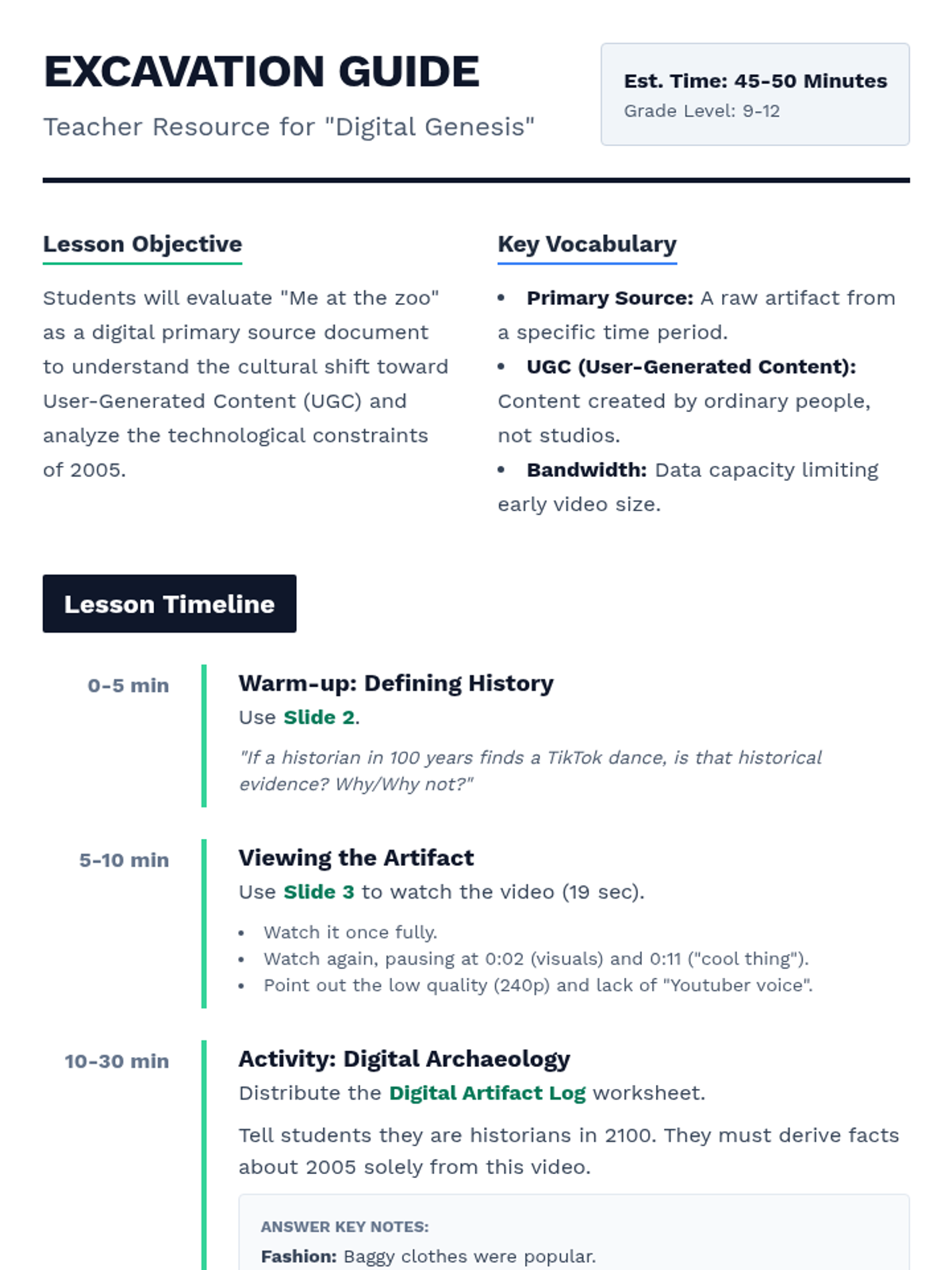
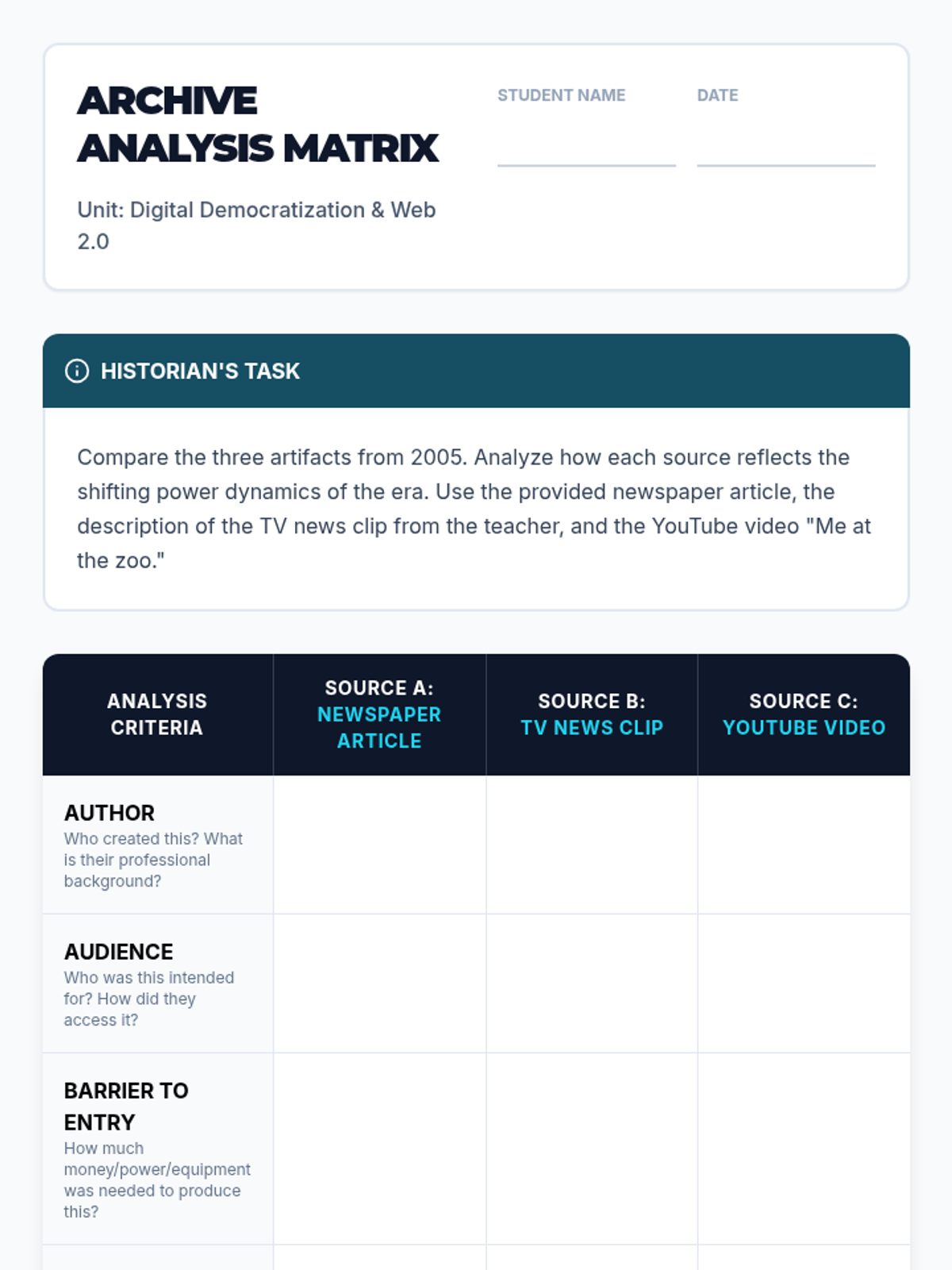
Students analyze the first YouTube video, 'Me at the zoo', as a primary source to understand the shift to User-Generated Content (UGC) and 2005 culture through a digital archaeology simulation.