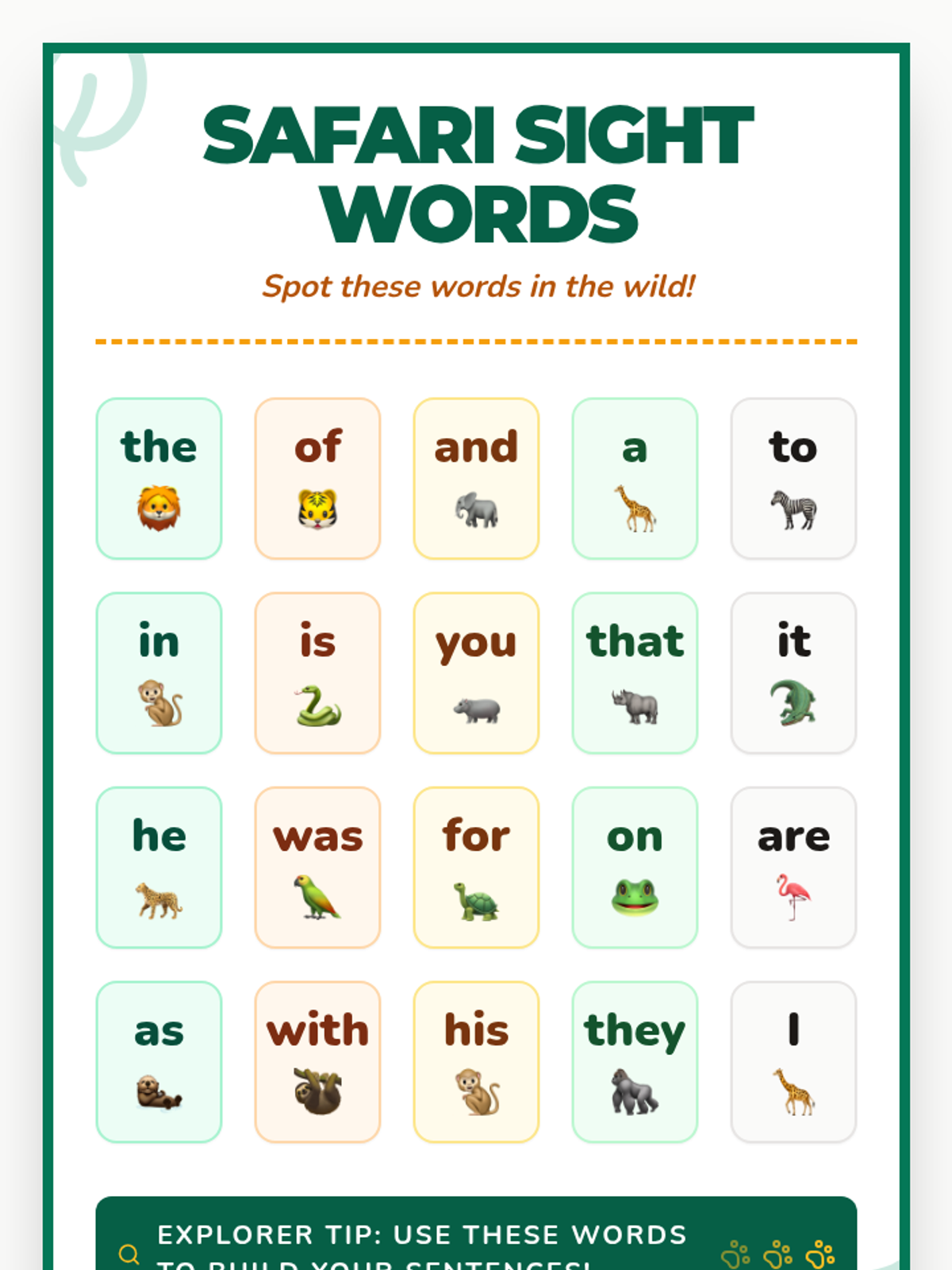
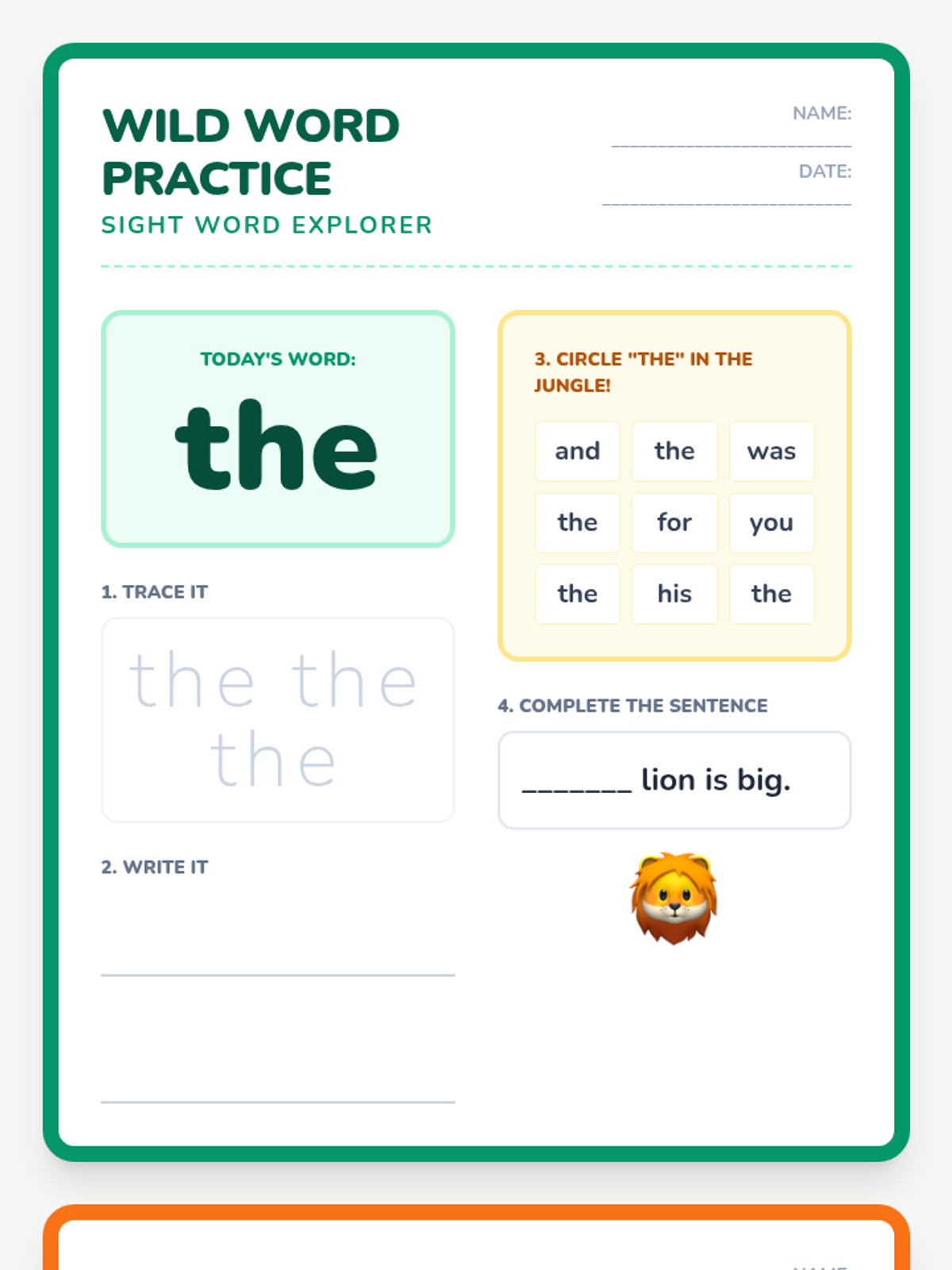
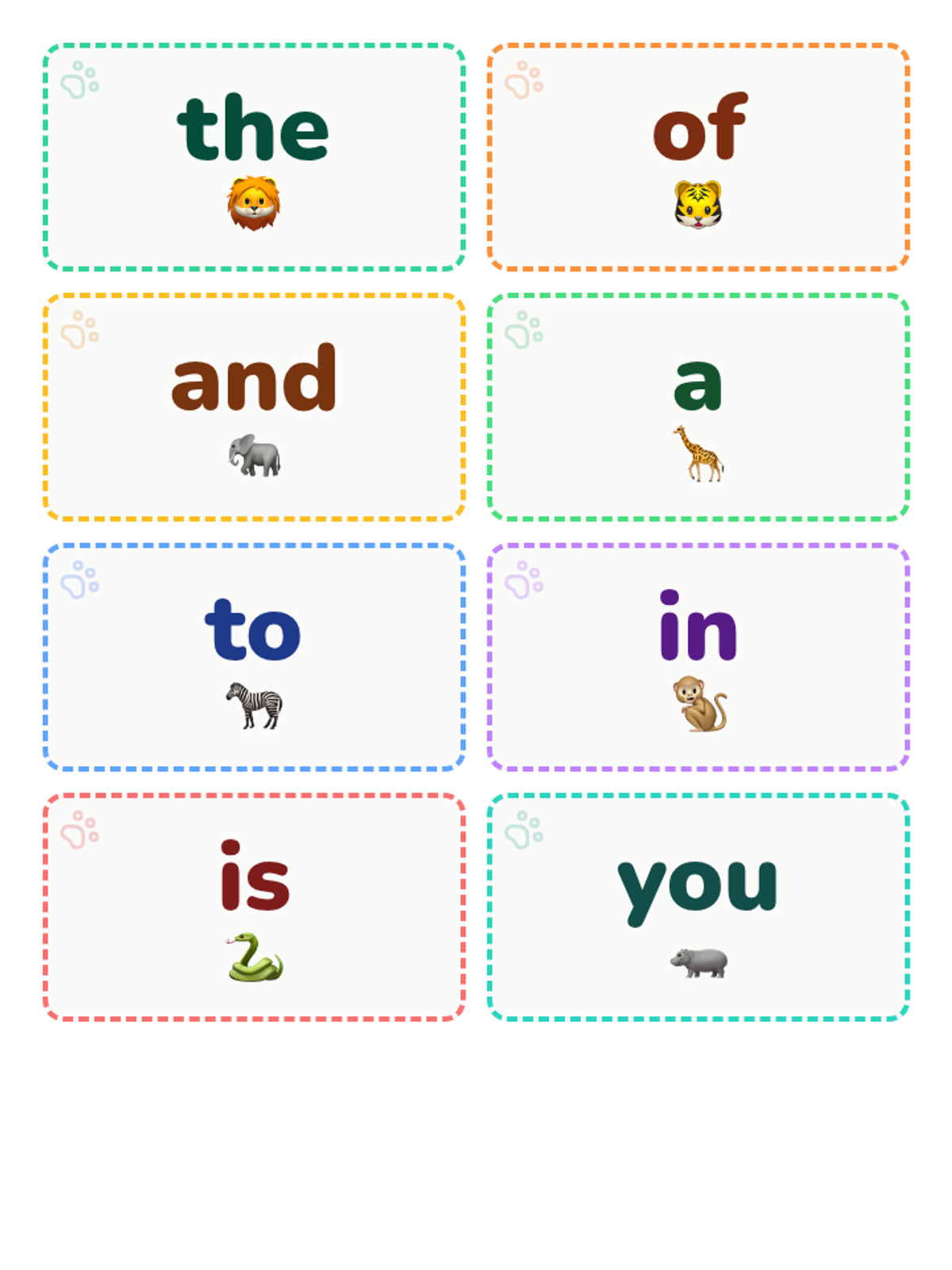
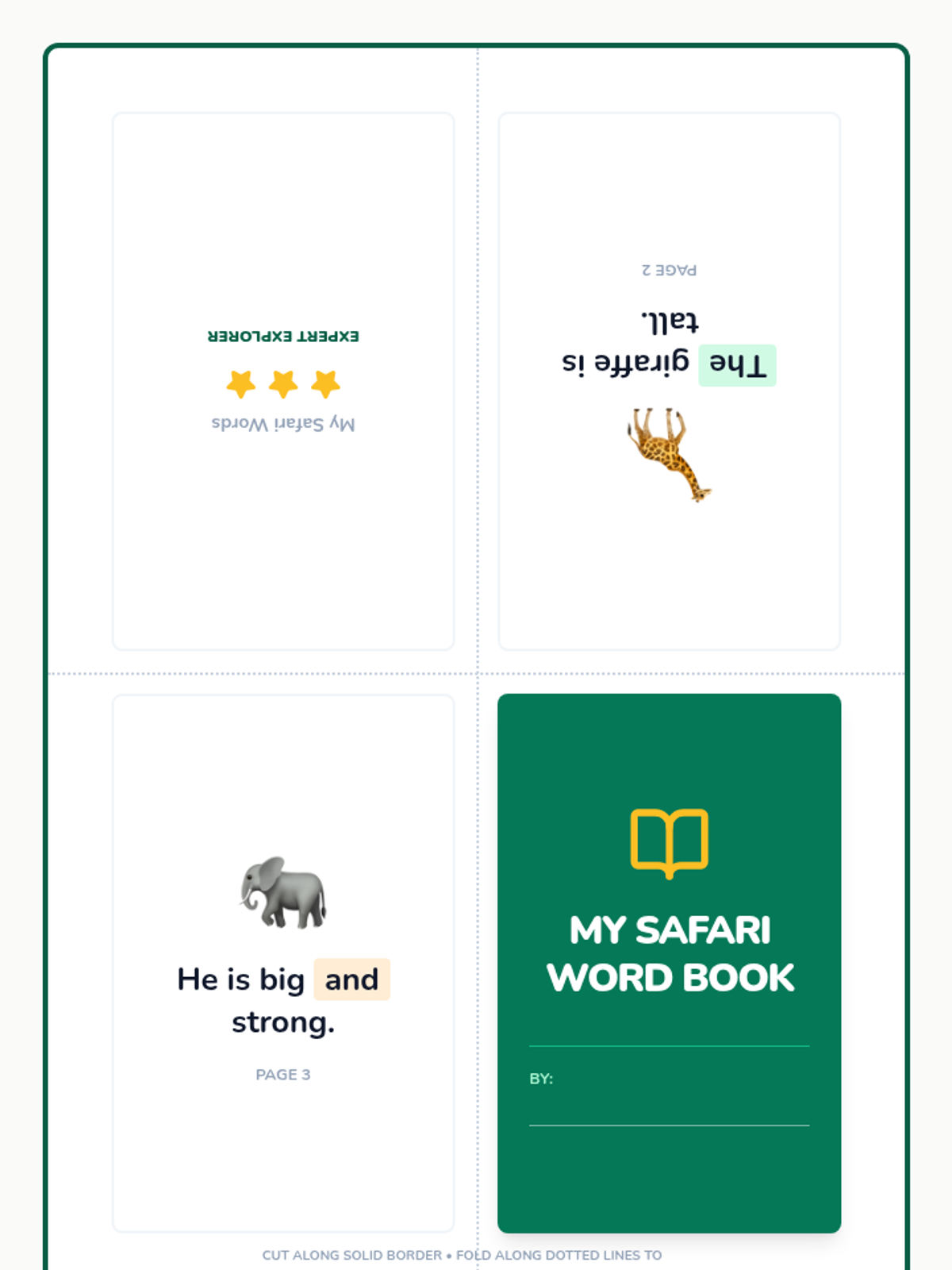
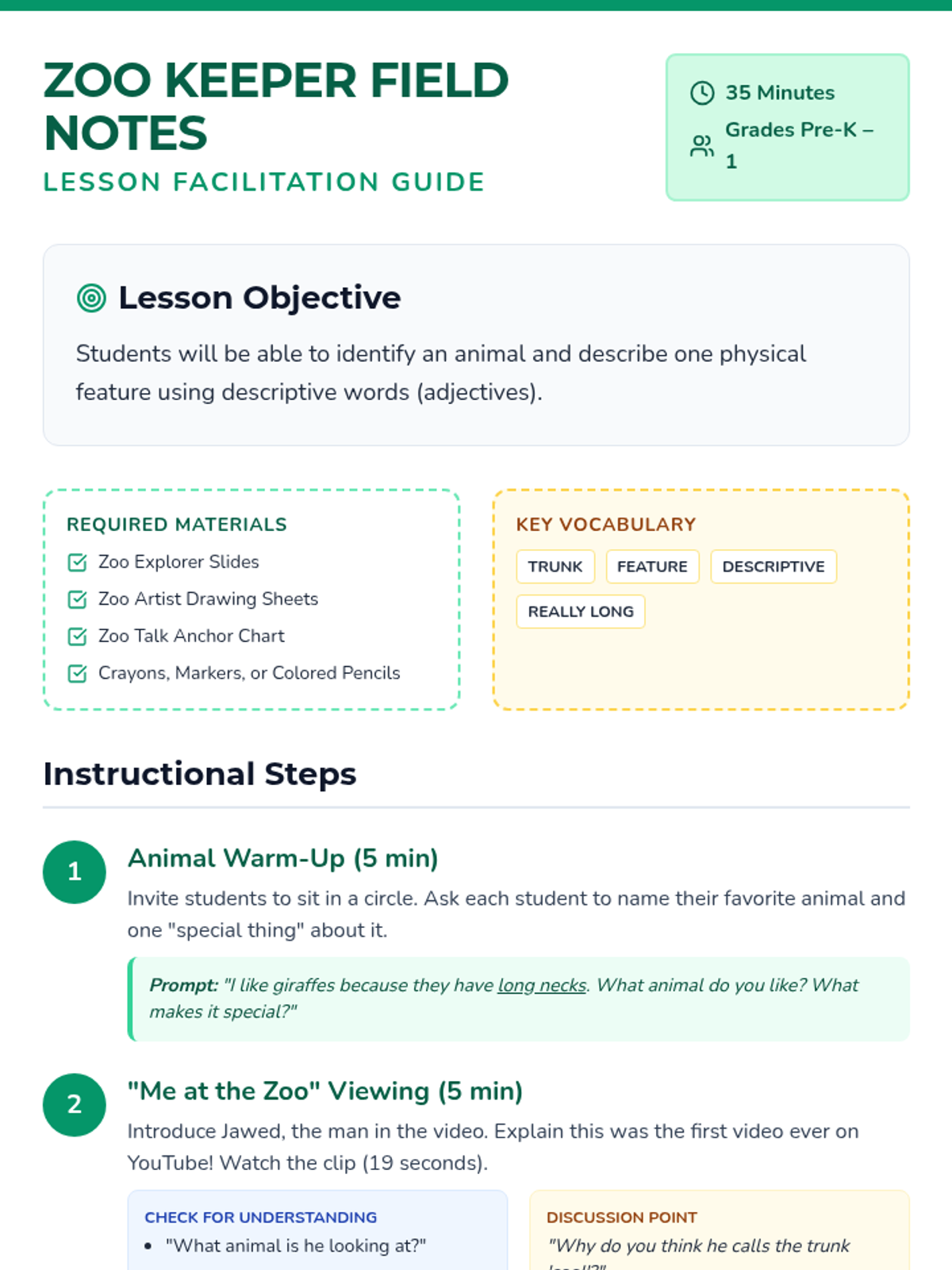
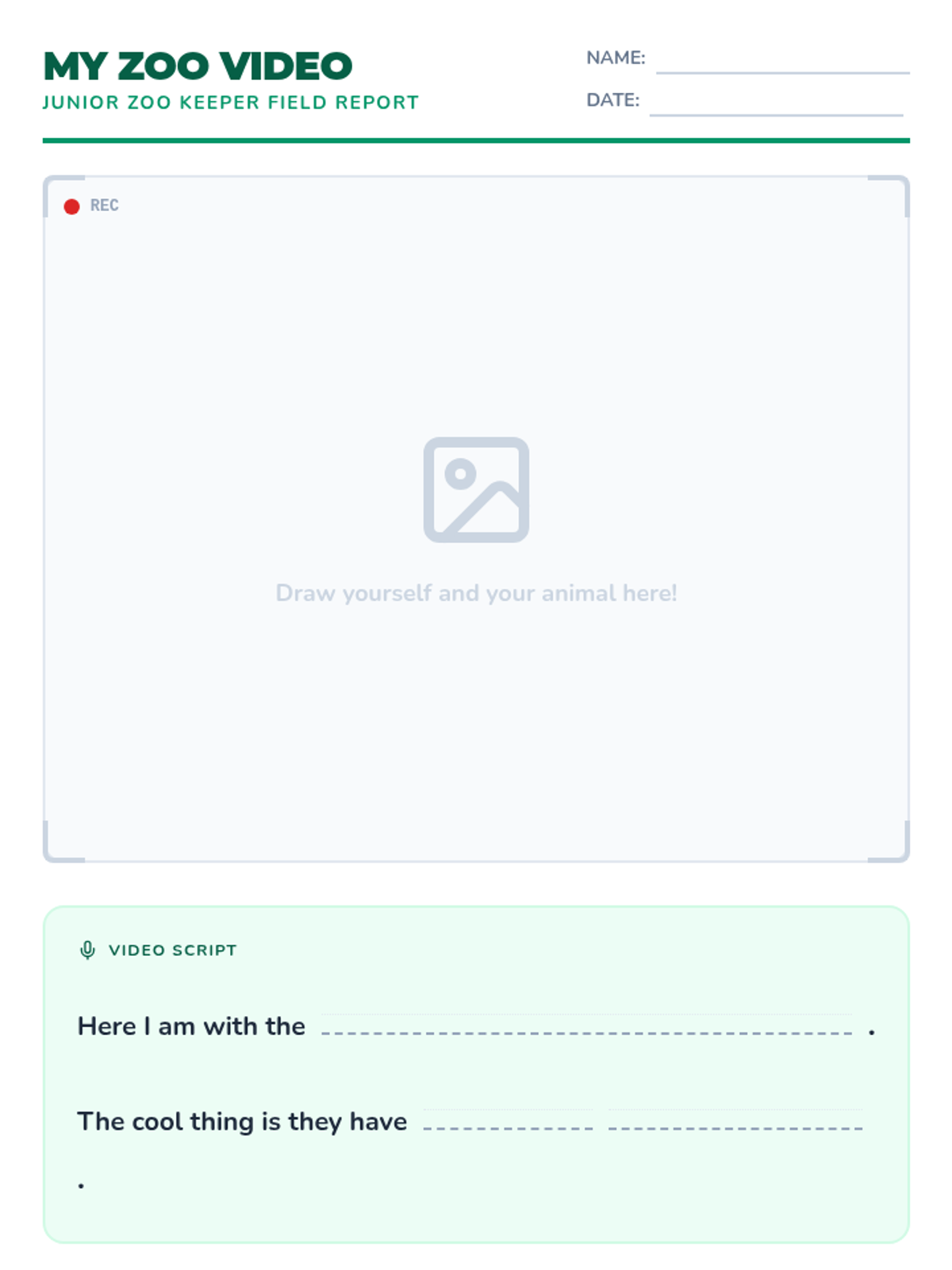
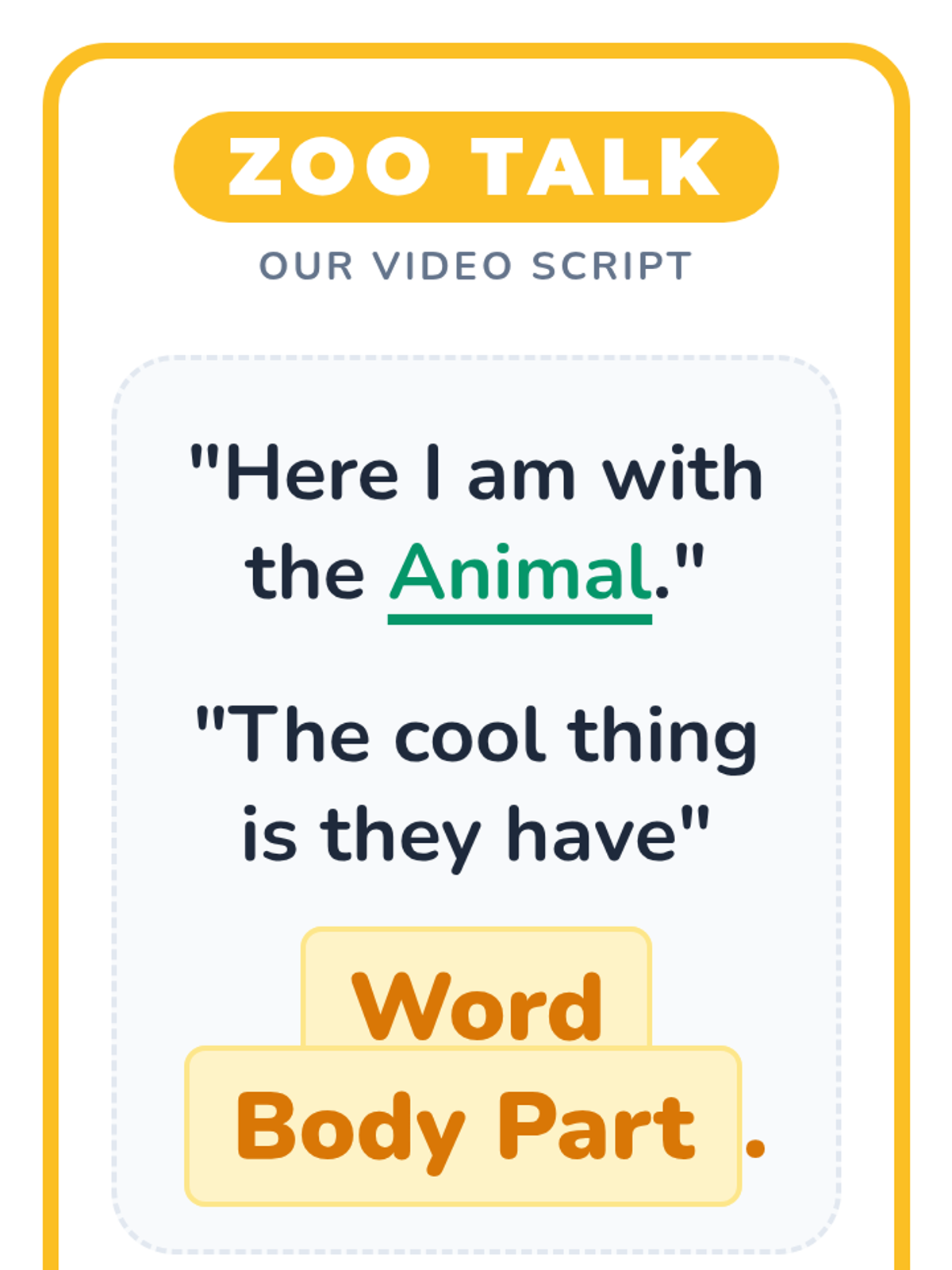
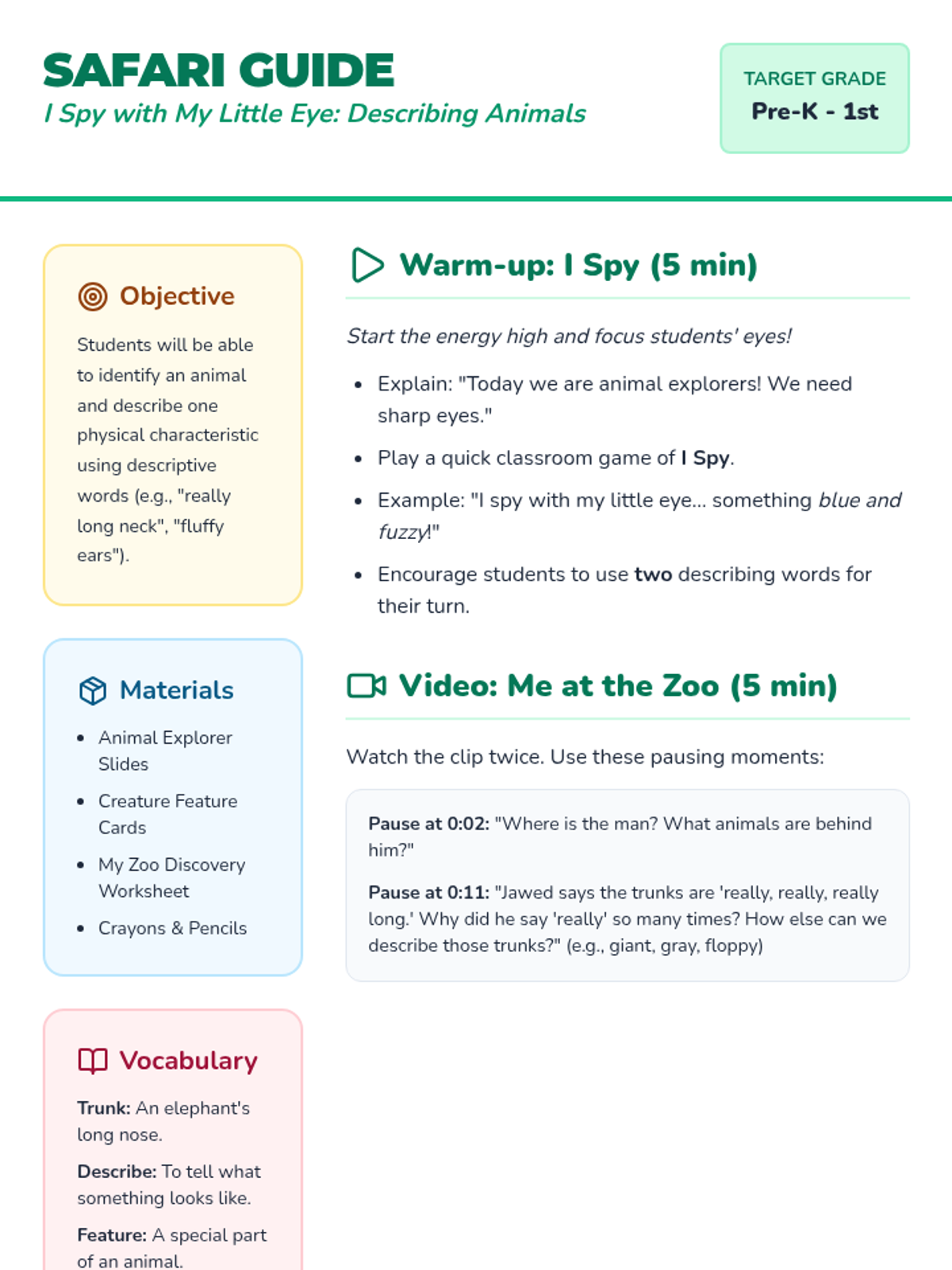
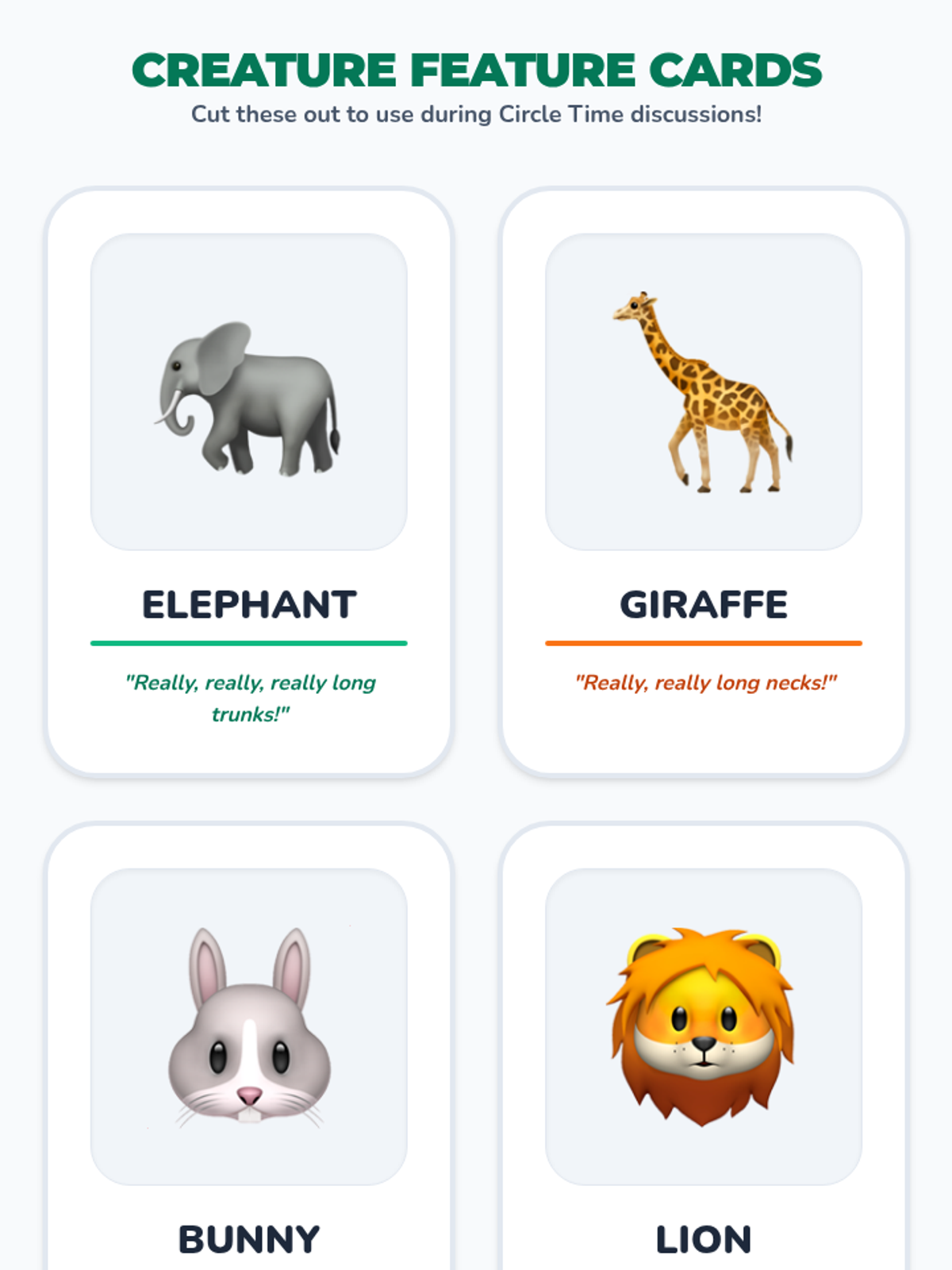
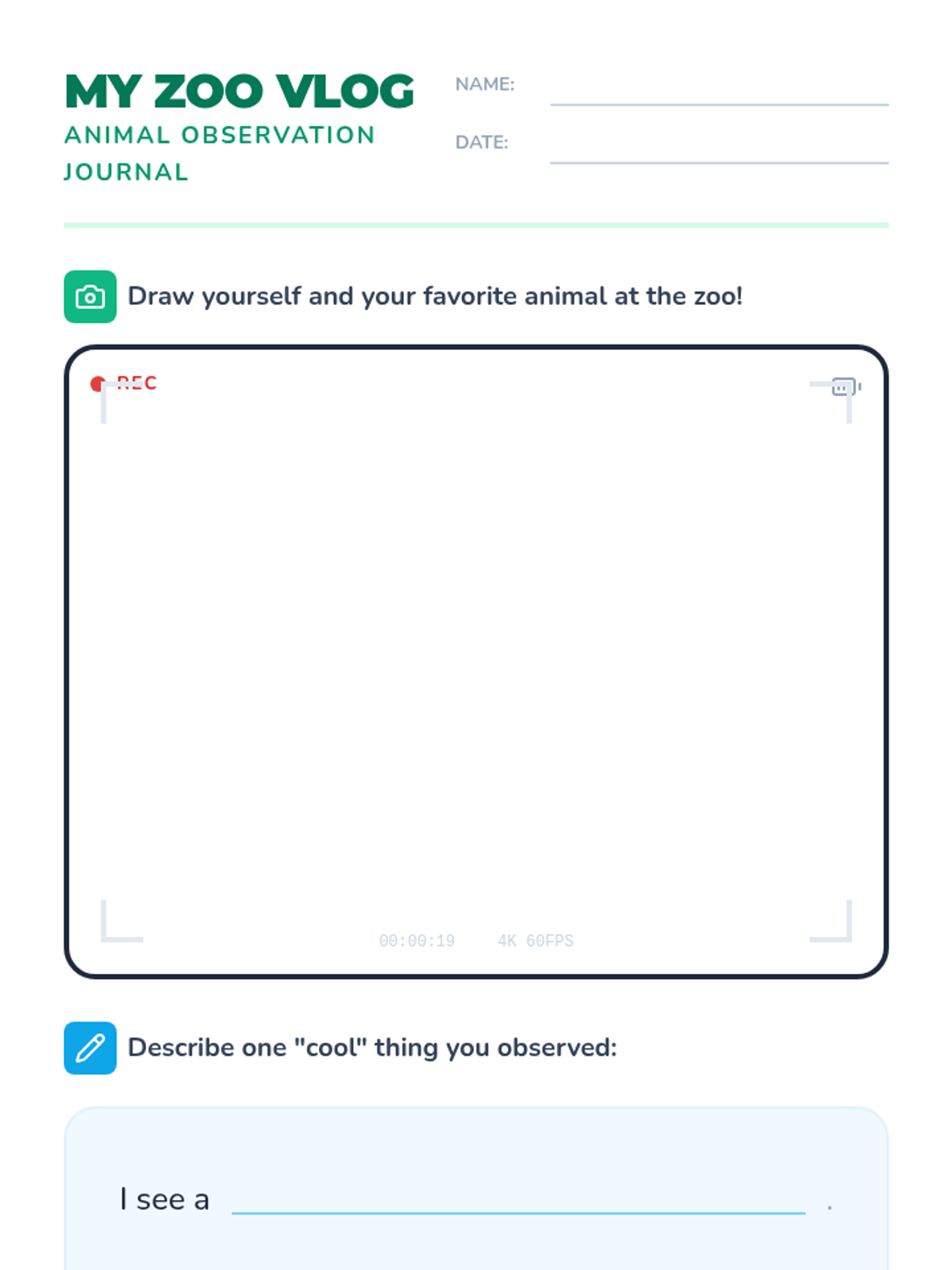
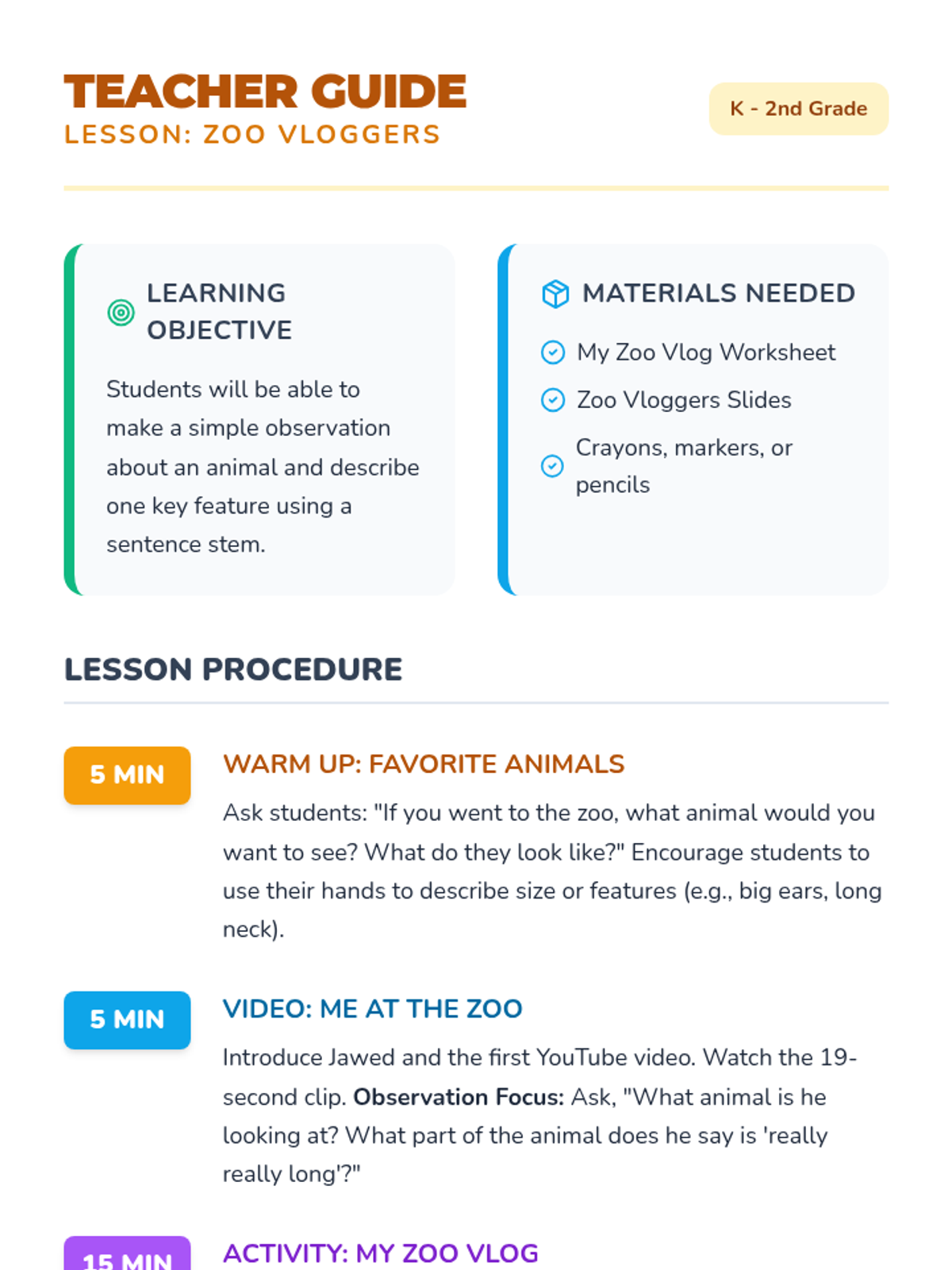
A fun, interactive lesson for Pre-K to 1st grade focusing on identifying animal features and using descriptive language, inspired by the first-ever YouTube video.
A lesson for 1st-3rd graders focusing on observation skills and descriptive adjectives, using the 'Me at the zoo' video as a primary source for analysis and imitation.
1/16
Students analyze the first YouTube video, 'Me at the zoo', as a primary source to understand the shift to User-Generated Content (UGC) and 2005 culture through a digital archaeology simulation.
Students explore the history of media technology and presentation styles by comparing the first YouTube video to modern content, focusing on the concept of User-Generated Content (UGC).
Students will explore the origins of vlogging through the first YouTube video, analyzing its structure and authentic style to create their own 20-second 'unscripted' school report.
A lesson exploring the transformation of digital media production through the lens of YouTube's first video, 'Me at the zoo', contrasting early raw footage with modern high-production content.
An engaging exploration of llama biology, behavior, and their importance in Andean culture, featuring interactive activities and a research-based creative project.
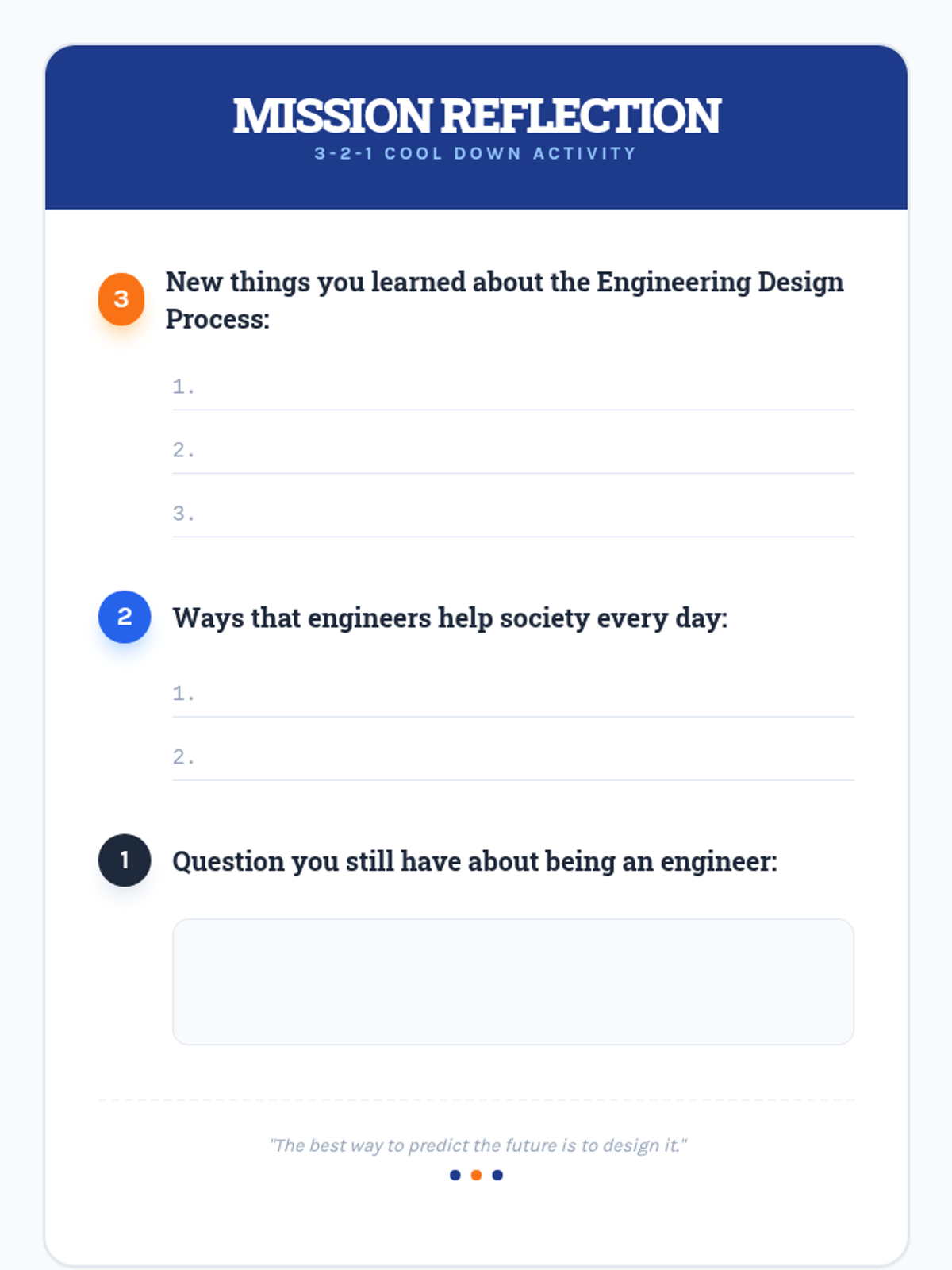
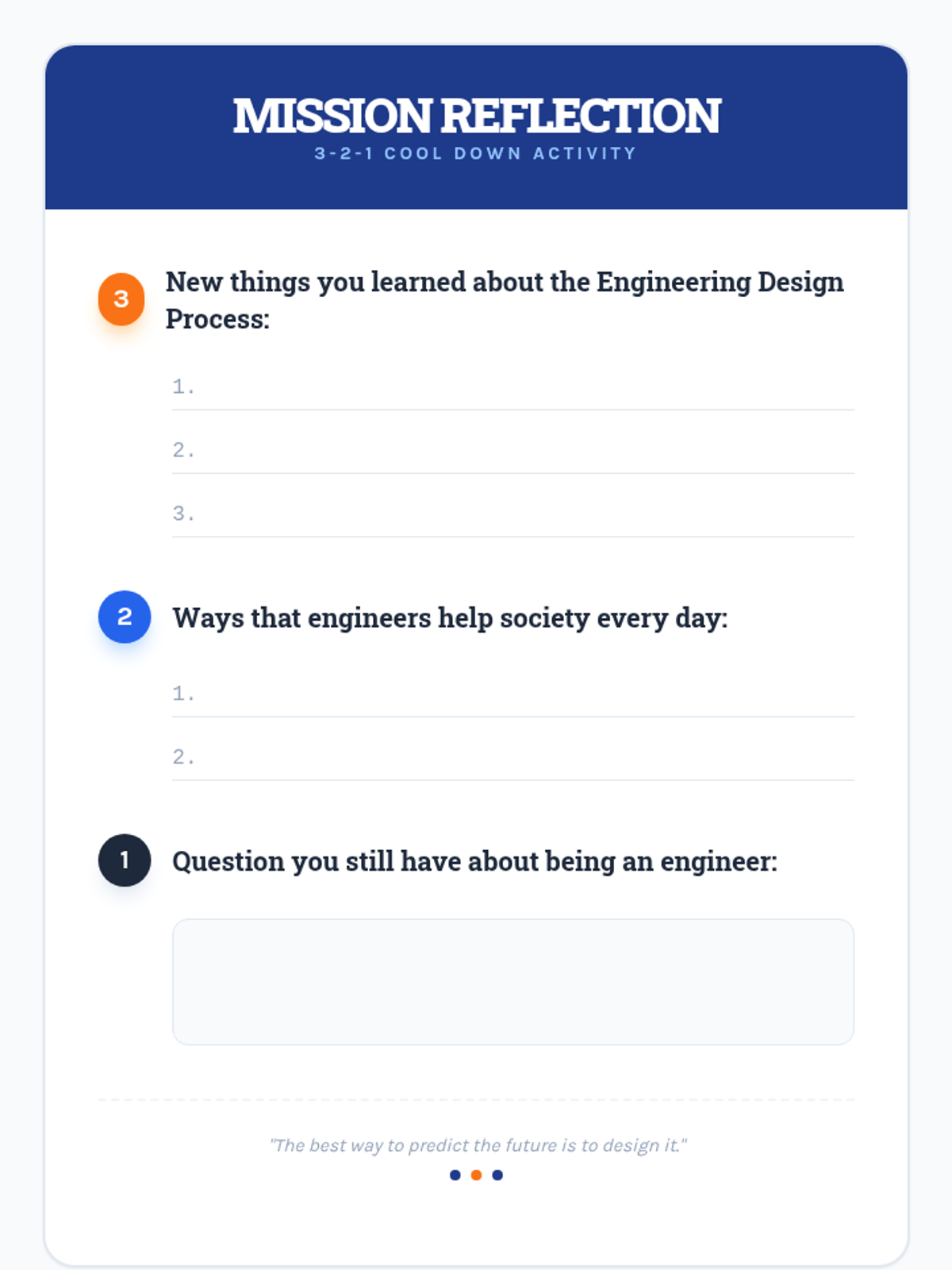
In this lesson, students will be introduced to the Engineering Design Process (EDP) by tackling a real-world design challenge. They will learn to identify problems, brainstorm solutions, and understand the iterative nature of engineering.
A descriptive writing workshop where students rewrite the script of the first YouTube video to include sensory details and precise adjectives.
Students investigate the history of user-generated content by contrasting the first YouTube video with modern production standards.
A lesson where students analyze the first-ever YouTube video to learn about unscripted oral communication and then perform their own 20-second observational vlogs.
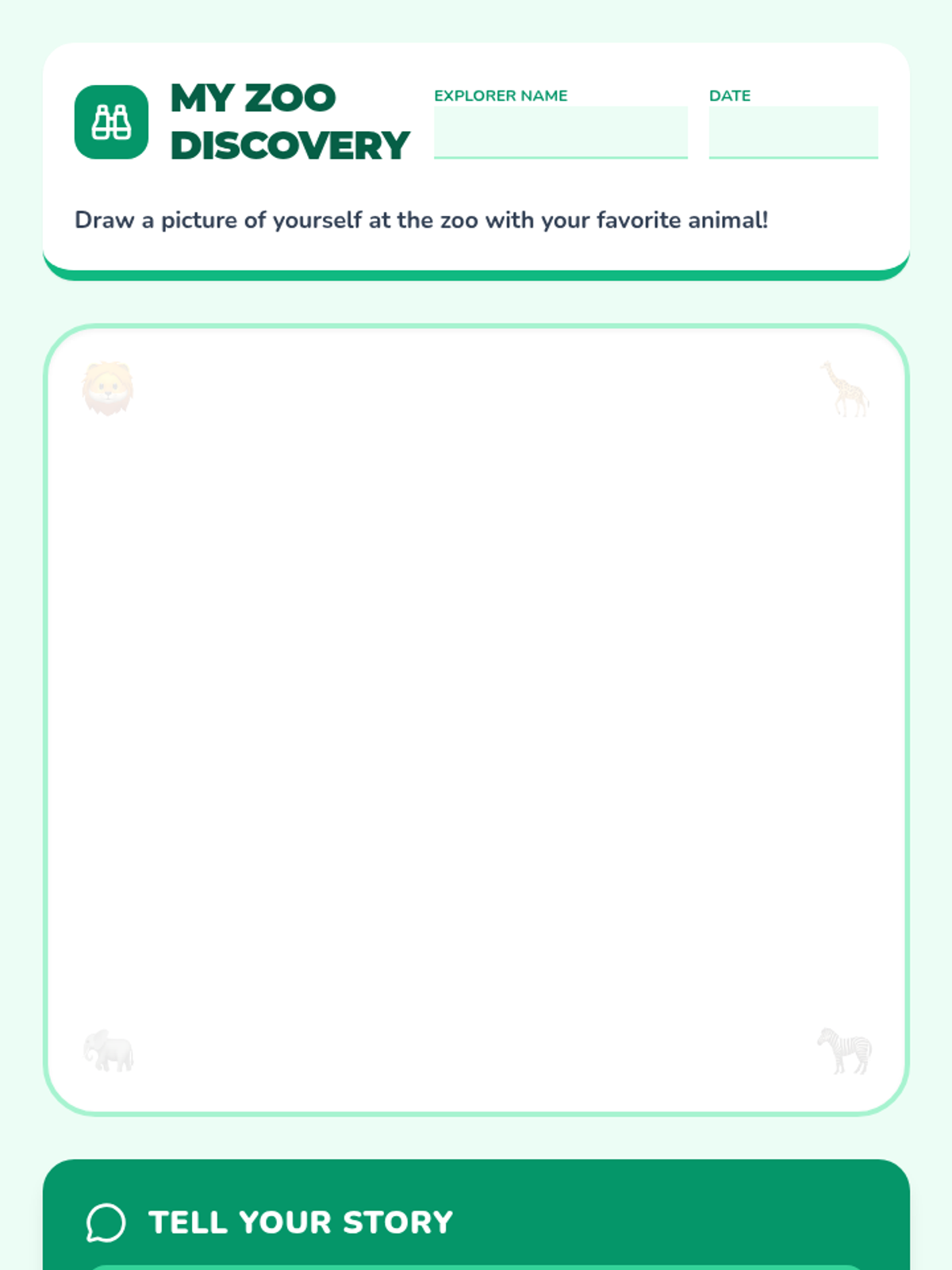
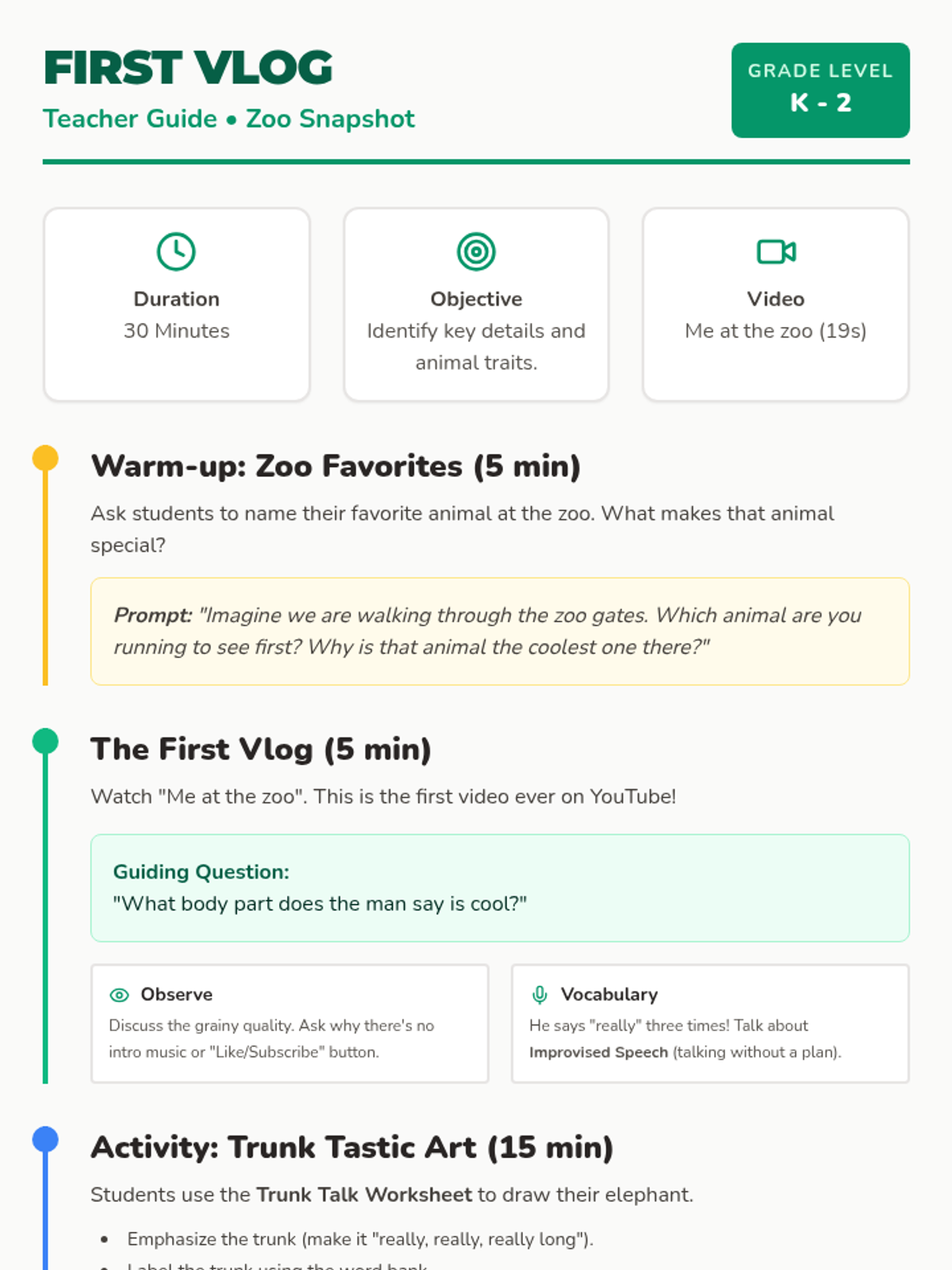
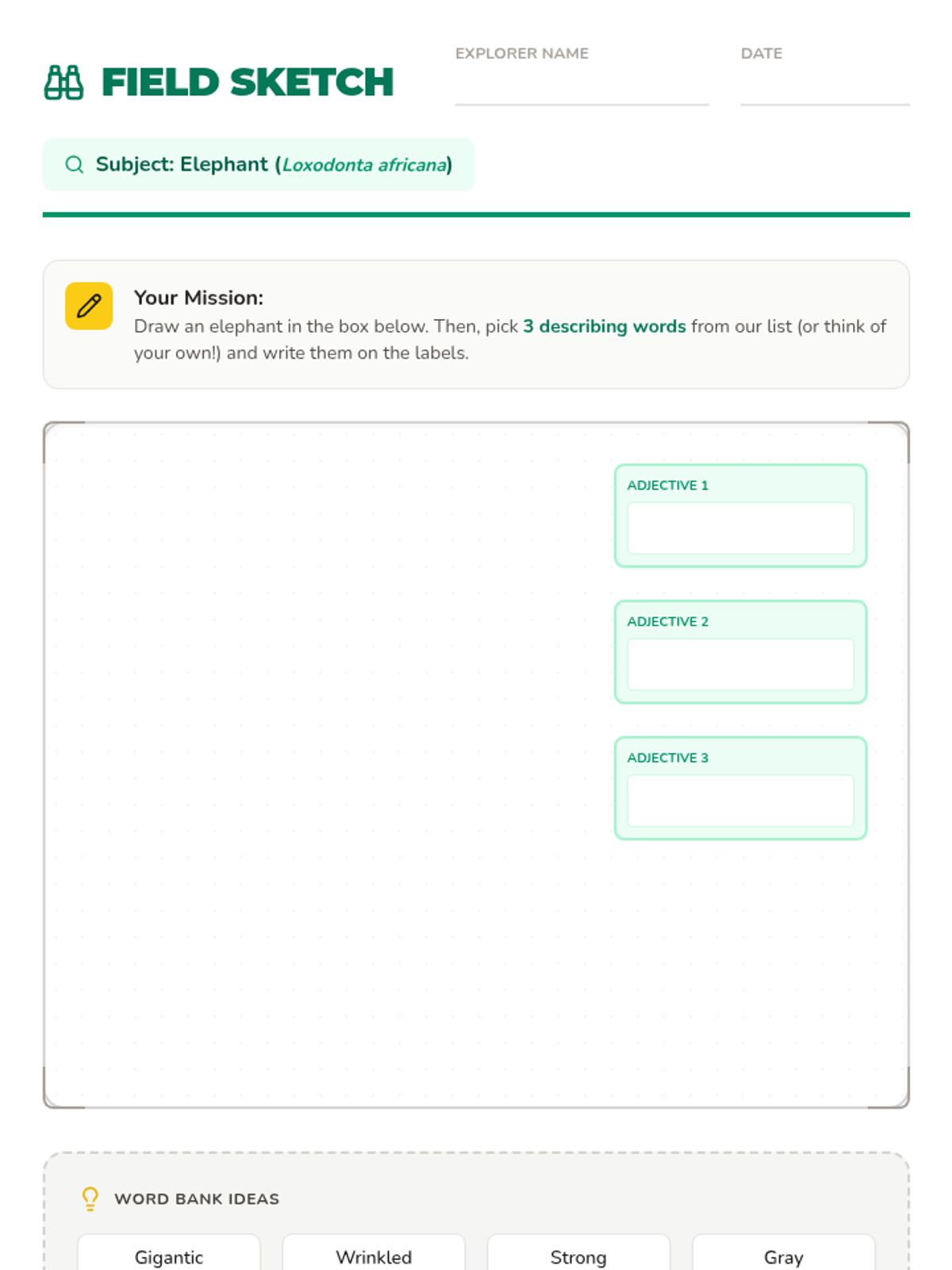
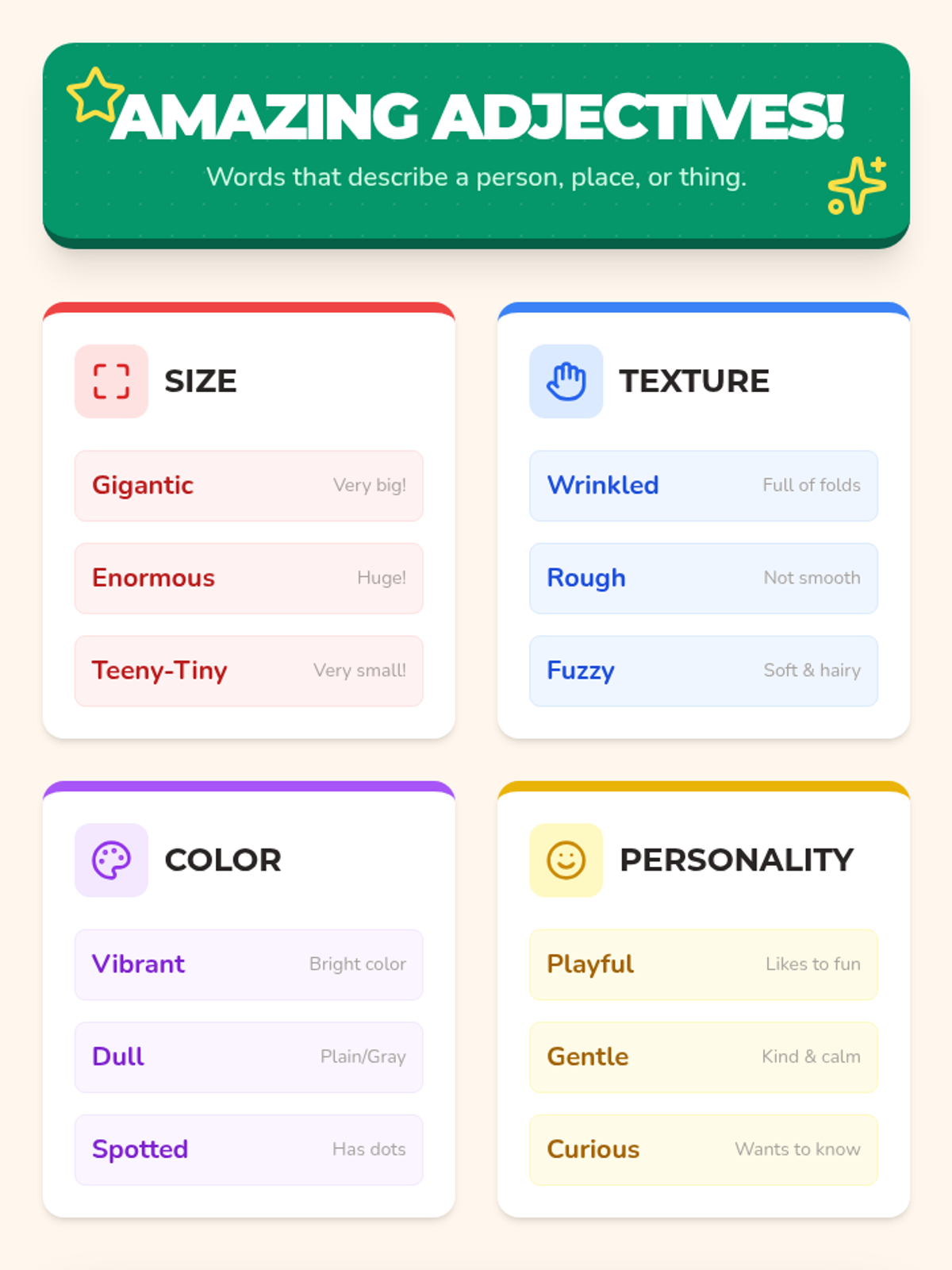
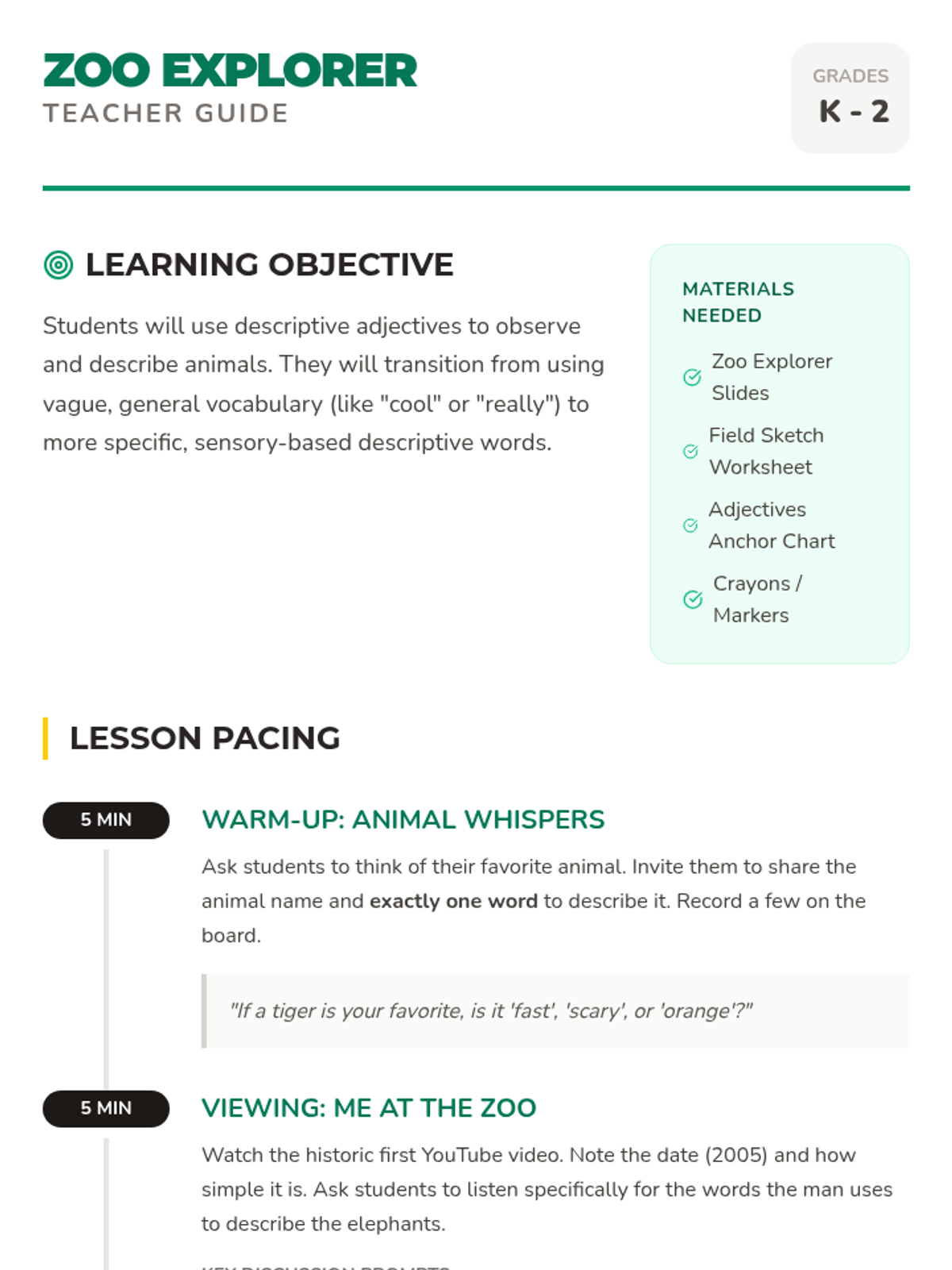
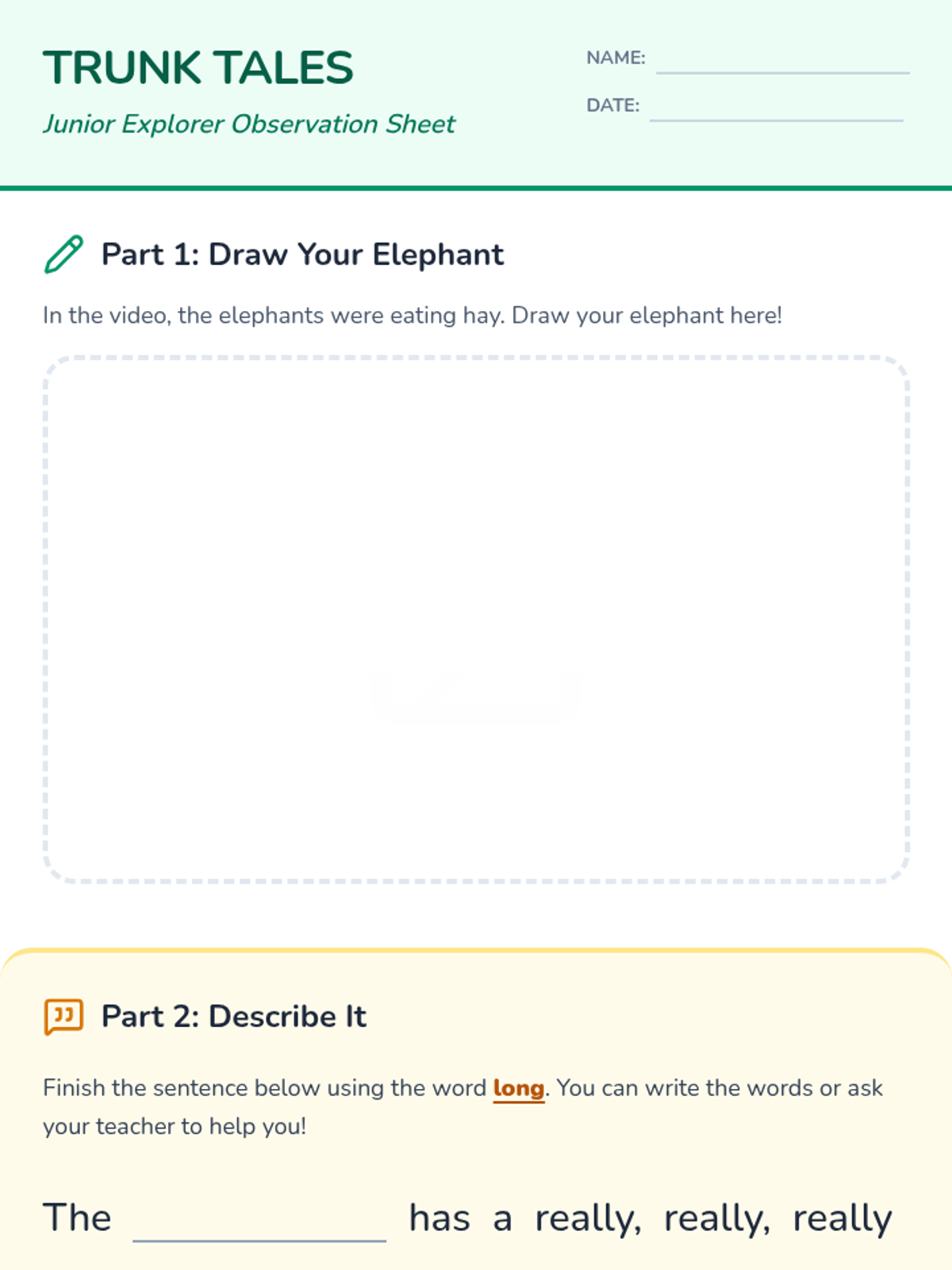
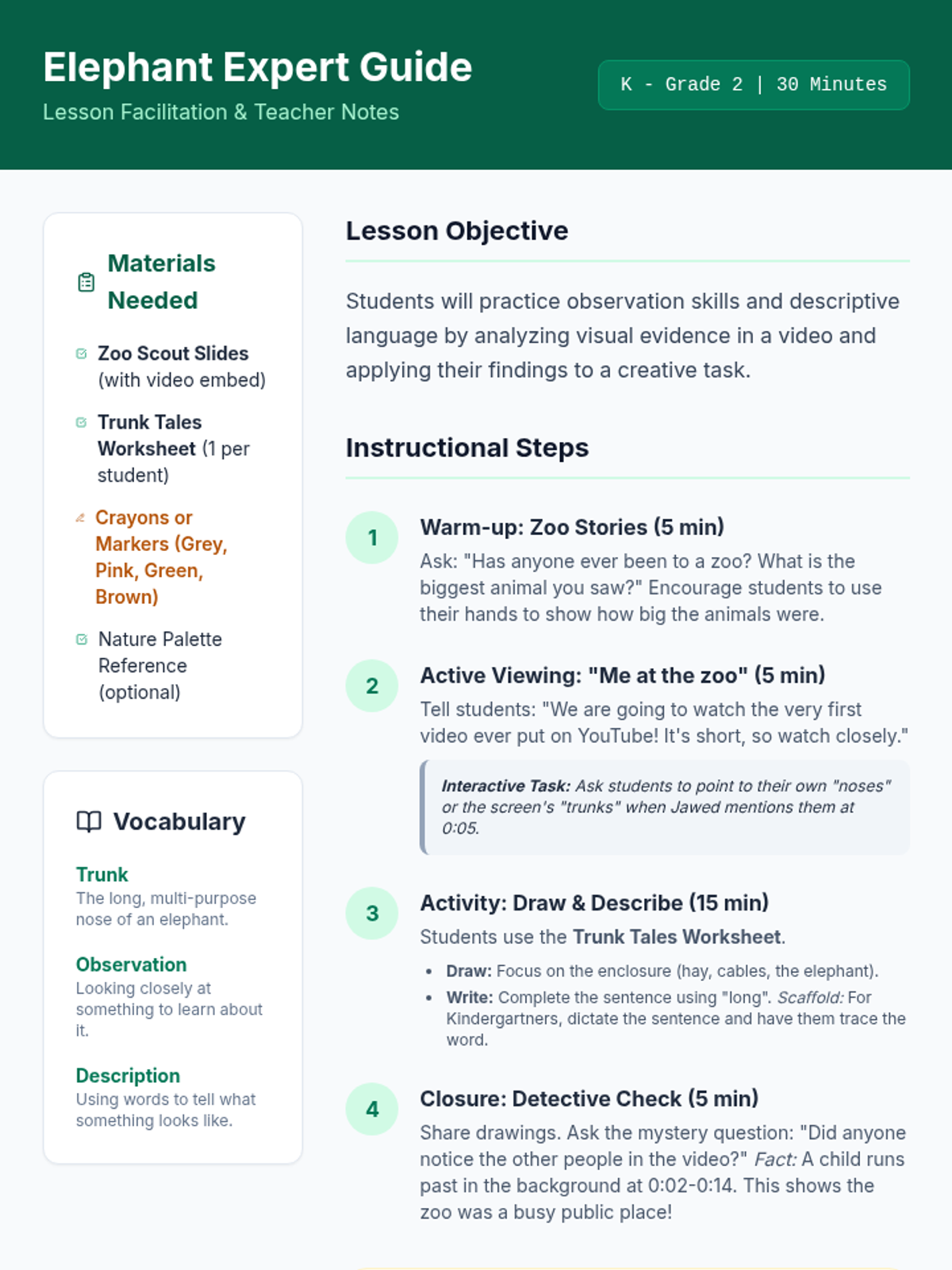
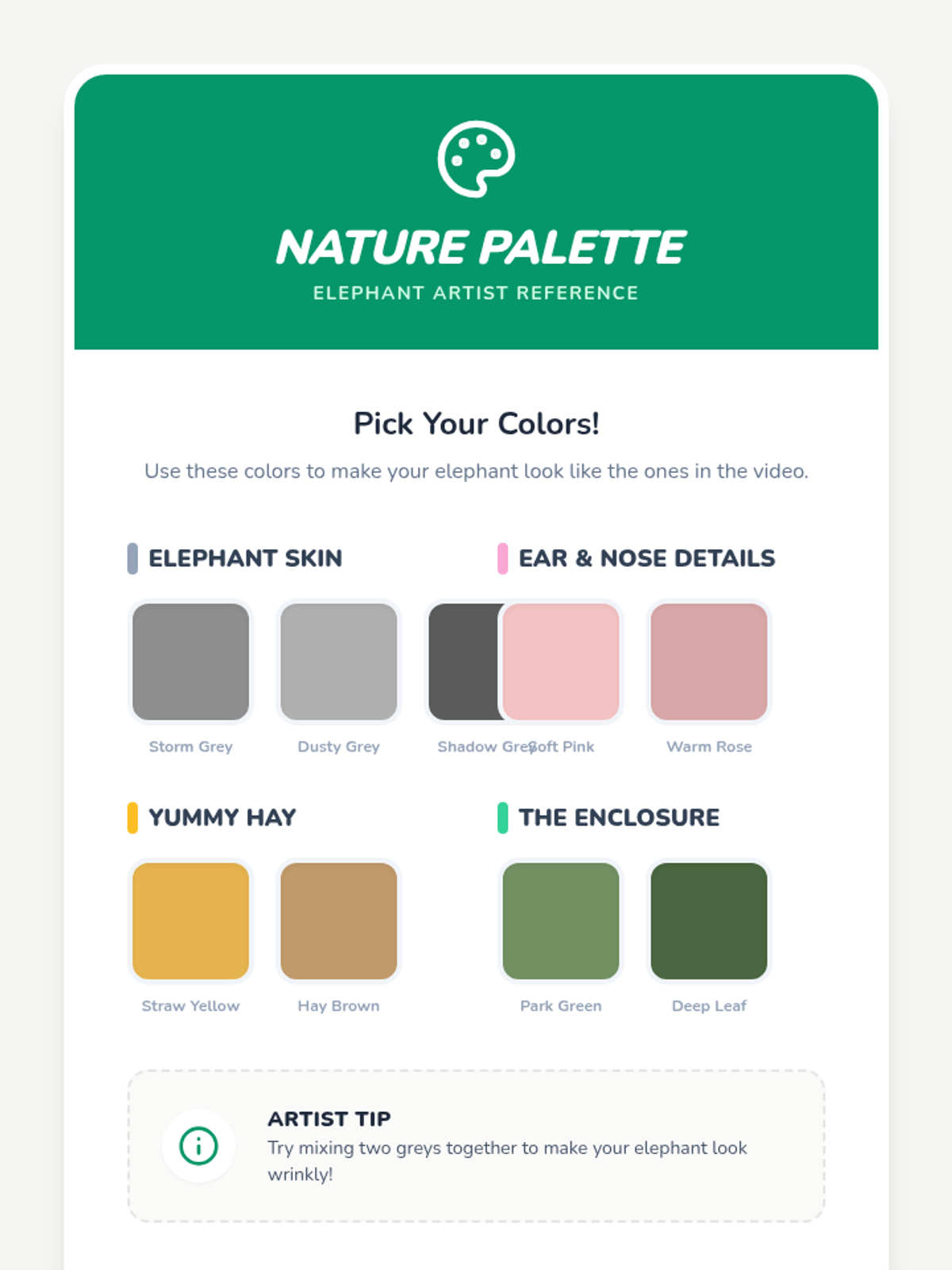
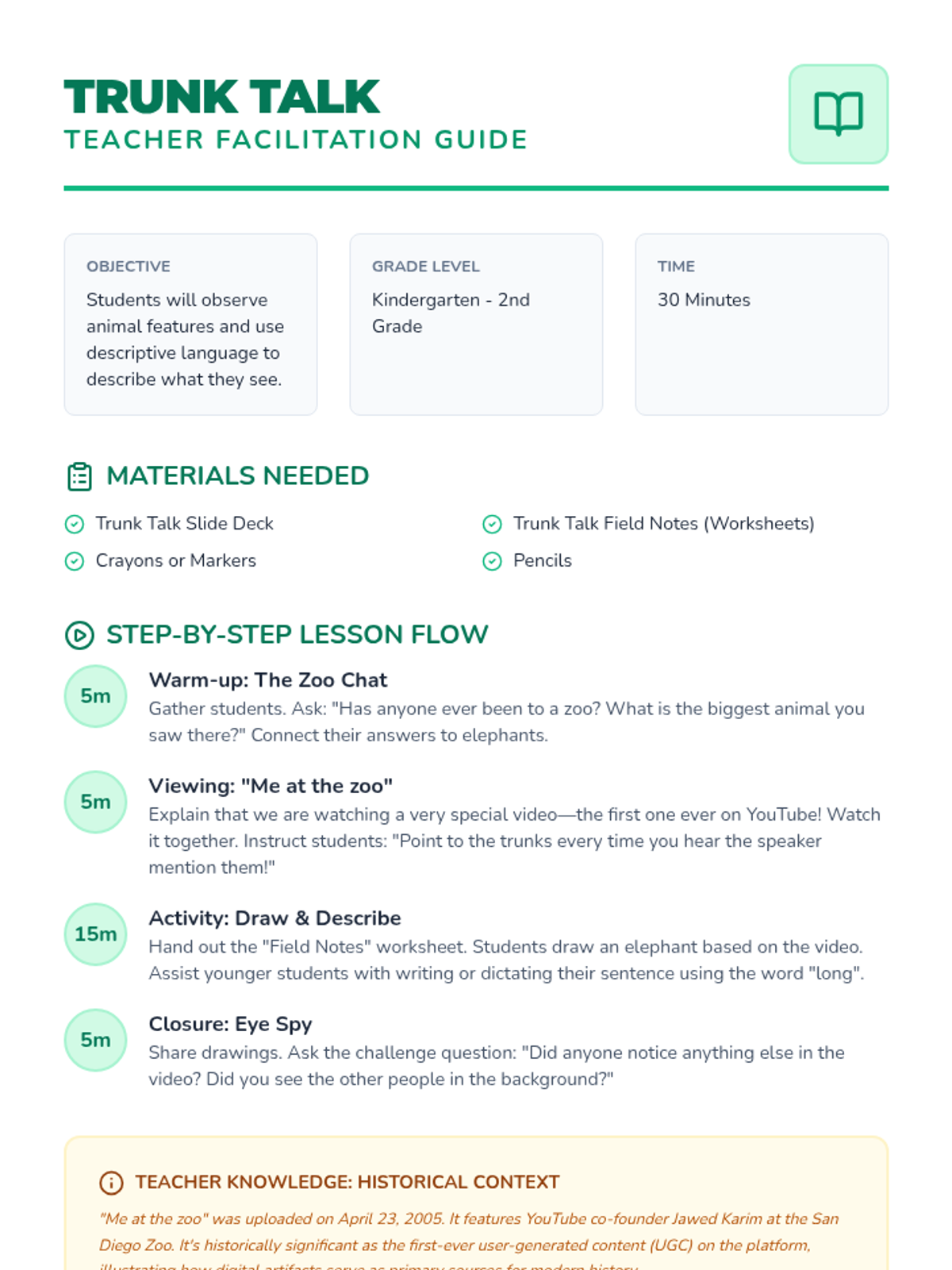
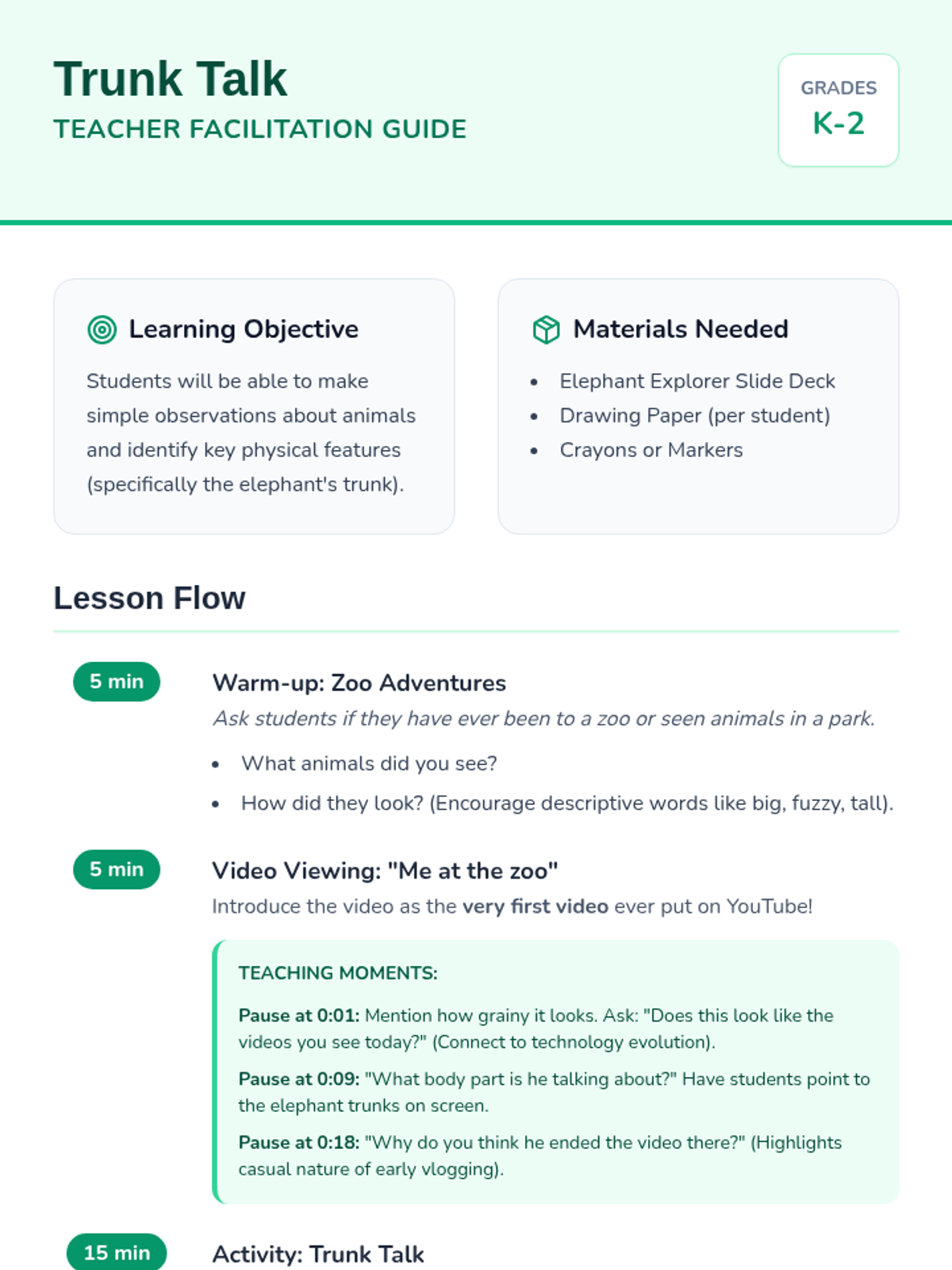
A Kindergarten to 2nd Grade lesson where students practice observation and descriptive language by watching the first-ever YouTube video and drawing an elephant.
A fun, active introduction to counting from 1 to 10 in Japanese through a rhythmic ninja-themed chant and visual aids. Students learn kanji, hiragana, and romaji while practicing pronunciation and counting skills.
1/14
A lesson for high school students exploring the concept of 'Authentic Voice' in media, comparing early social media content to modern influencer narratives using the first YouTube video as a case study.
A set of visual tools to help students navigate daily classroom transitions and routines with independence.
A lesson where students analyze the first YouTube video, 'Me at the zoo', and rewrite its weak script using precise vocabulary and sensory details.
In this lesson, students explore the Engineering Design Process (EDP) by tackling a real-world design challenge. They will identify problems, brainstorm solutions, build prototypes, and iterate based on testing.
A media studies and history lesson exploring the shift from traditional media to user-generated content through the lens of the first YouTube video, 'Me at the zoo'.
A K-2 lesson focused on observing animals and using descriptive vocabulary, featuring the video 'Me at the zoo'.
A hands-on 1st-grade math lesson where students explore lines of symmetry in nature, letters, and art through video analysis and a fold-painting activity.
A writing and speaking lesson for 4th-6th graders focused on concise communication, using the 'Me at the zoo' video as a model for creating 19-second vlogs.