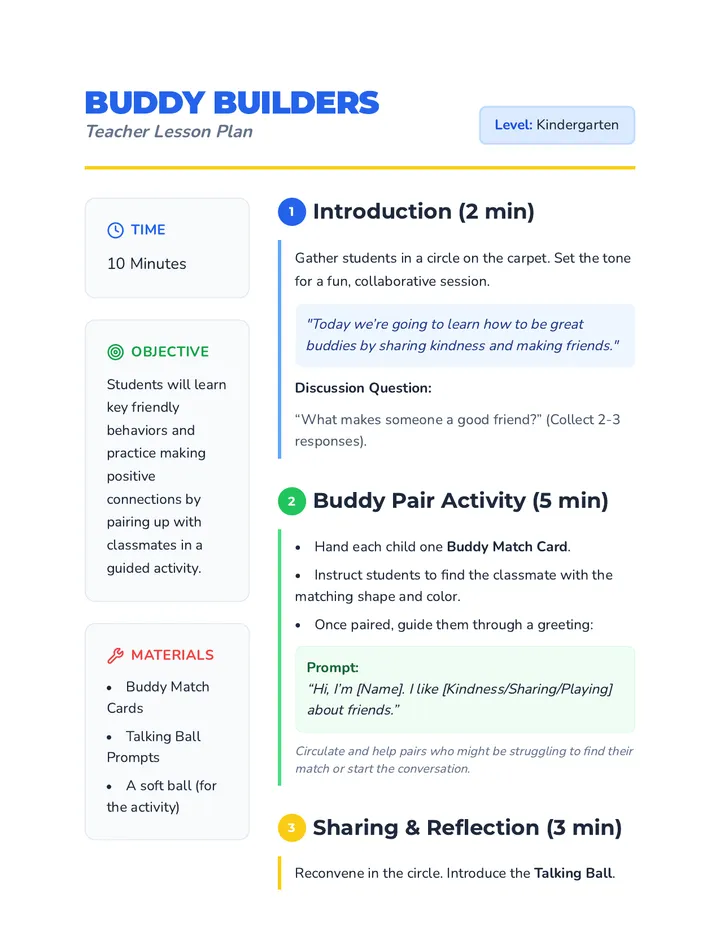
A quick 10-minute kindergarten lesson focused on developing social skills, empathy, and cooperation through guided peer interaction and positive reinforcement.
Students explore the concept of digital permanence through the lens of YouTube's first video, 'Me at the zoo', and analyze the tension between historical preservation and the 'Right to be Forgotten'.
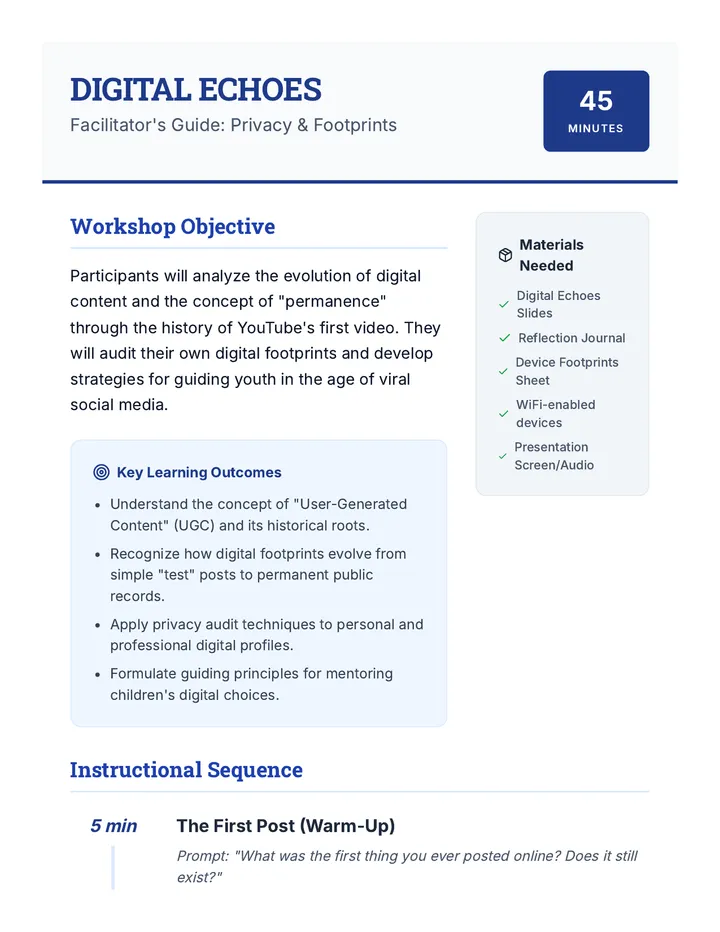
A reflective workshop for adults exploring the permanence of the internet through the lens of YouTube's first video, 'Me at the zoo,' focusing on digital footprints and guiding children's online presence.
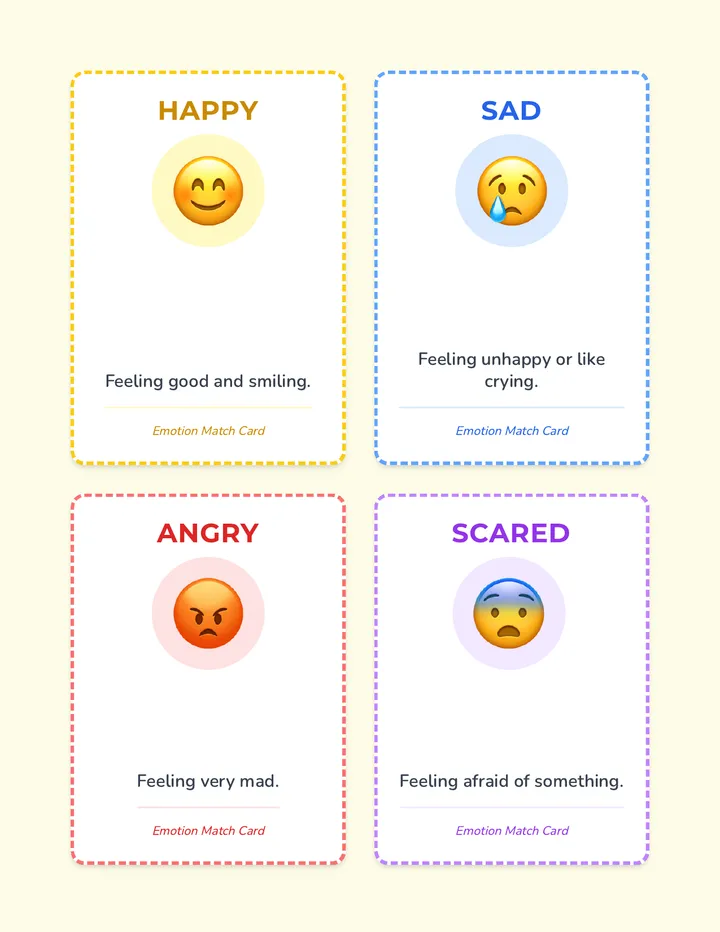
A play-based lesson designed to help young students identify and understand a wide range of emotions through interactive games and visual aids.
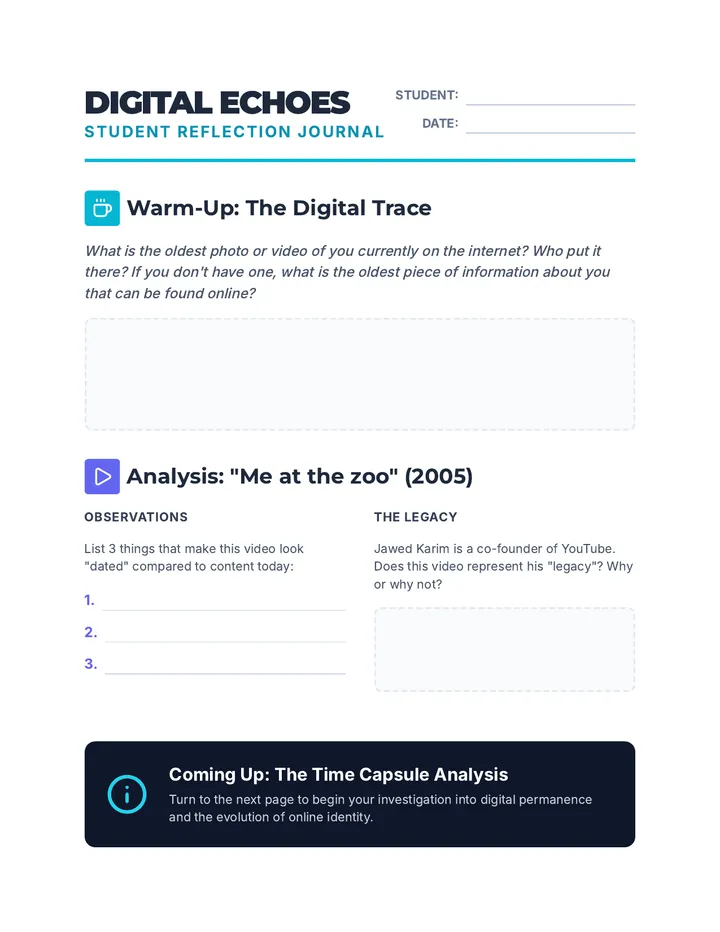
A lesson for high school students exploring the concept of digital footprints through the lens of the first-ever YouTube video, 'Me at the zoo'. Students evaluate how online content persists and shapes public identity over decades.
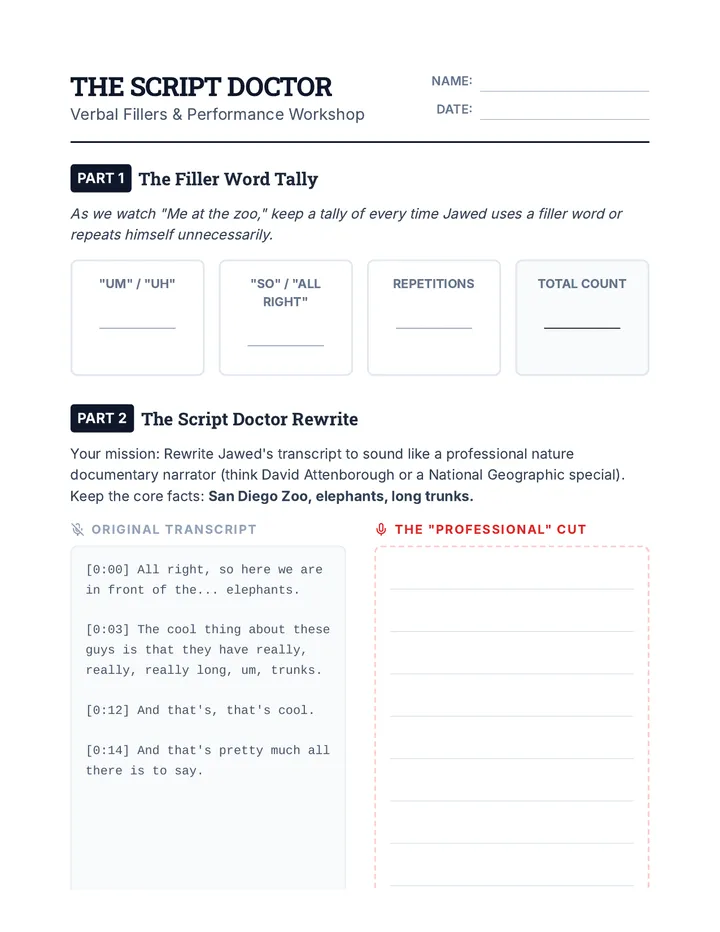
Students will analyze the first-ever YouTube video to identify verbal fillers and practice transforming casual, impromptu speech into professional narrations. This lesson focuses on self-awareness in speaking and the distinction between conversational and presentational styles.
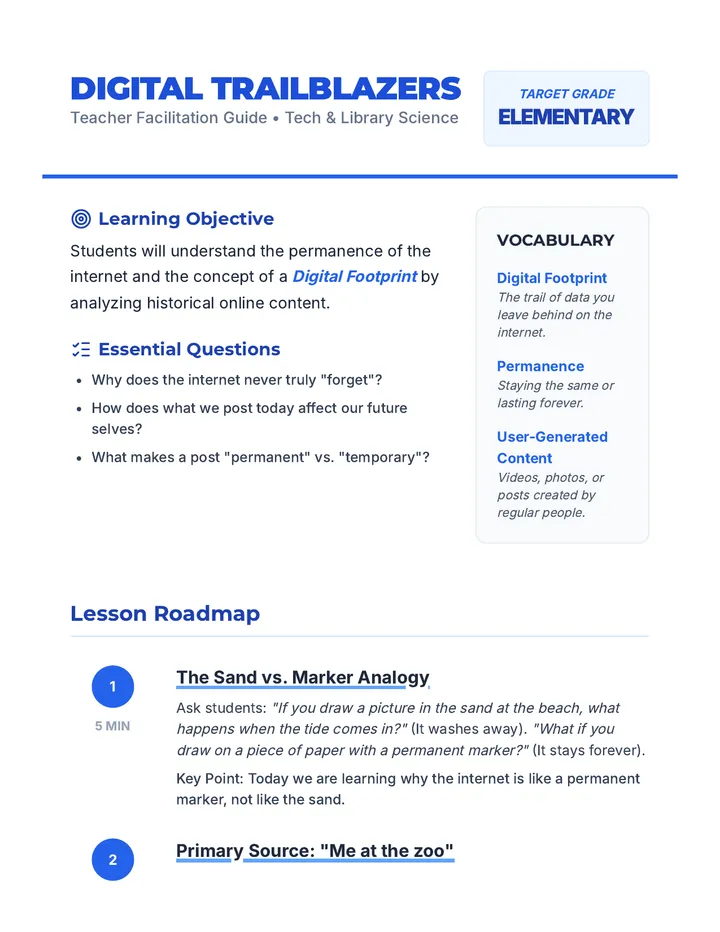
A lesson for elementary students exploring the permanence of the internet through the first-ever YouTube video, 'Me at the zoo', teaching the concept of a digital footprint.
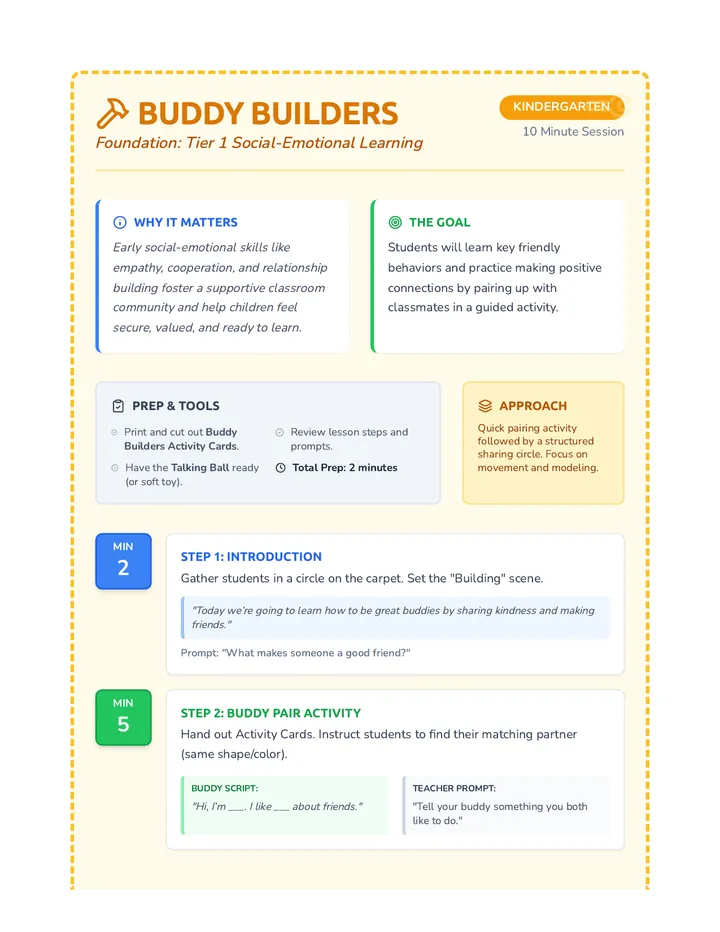
A quick 10-minute interactive lesson for kindergarteners to practice positive social interactions, empathy, and cooperation through guided pairing and sharing activities.
A Speech & Debate/ELA lesson where students analyze 'Me at the zoo' to understand the differences between impromptu and prepared speaking, ending with a script-polishing activity.
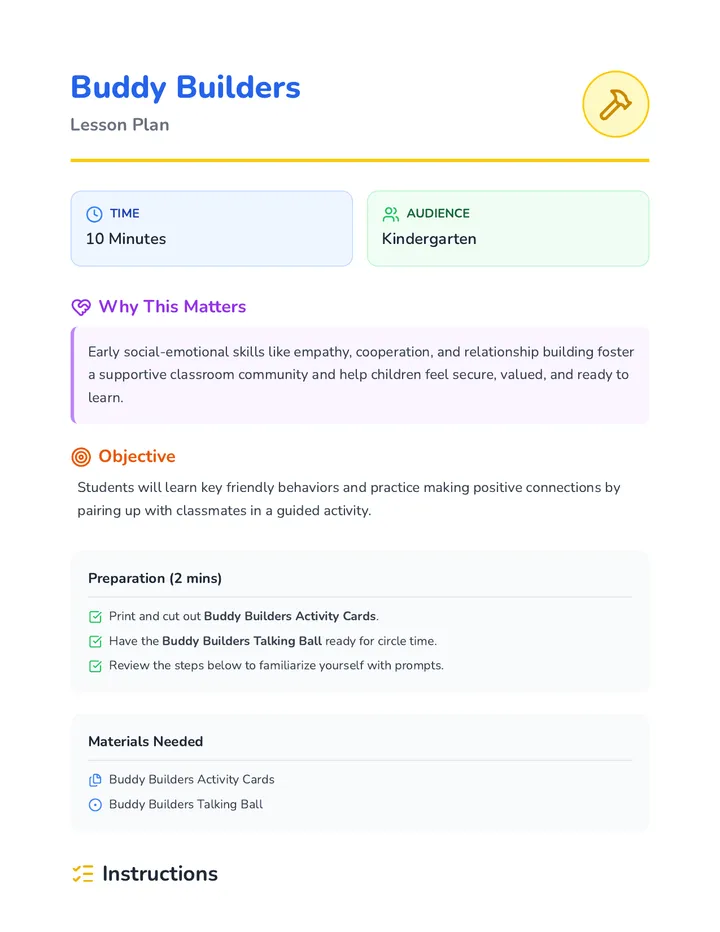
In this 10-minute kindergarten lesson, students will learn to build positive relationships with peers through a fun, interactive activity. This lesson is crucial for developing early social skills, empathy, and cooperation in young learners.
A Kindergarten - 1st Grade lesson focused on observational speaking skills using the 'Me at the zoo' video. Students practice identifying animal characteristics and using sentence frames to report on what they see.
A lesson for Middle School students on digital footprints and online permanence, analyzing the first YouTube video ever uploaded.
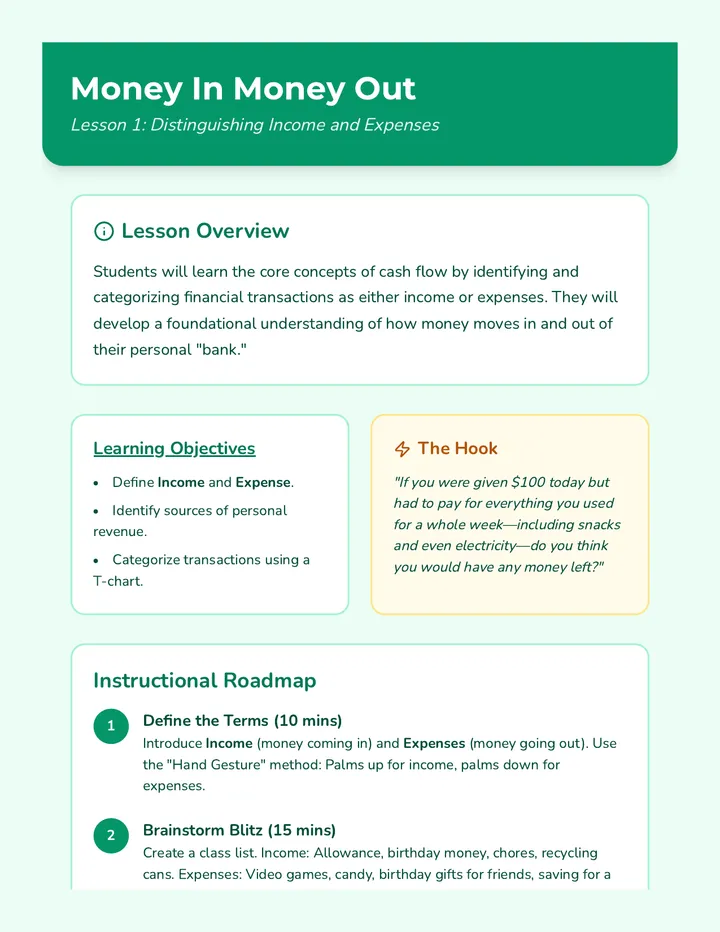
Students develop fundamental financial skills by tracking income and expenses, categorizing needs and wants, maintaining a ledger, and resolving budget deficits to achieve financial goals.
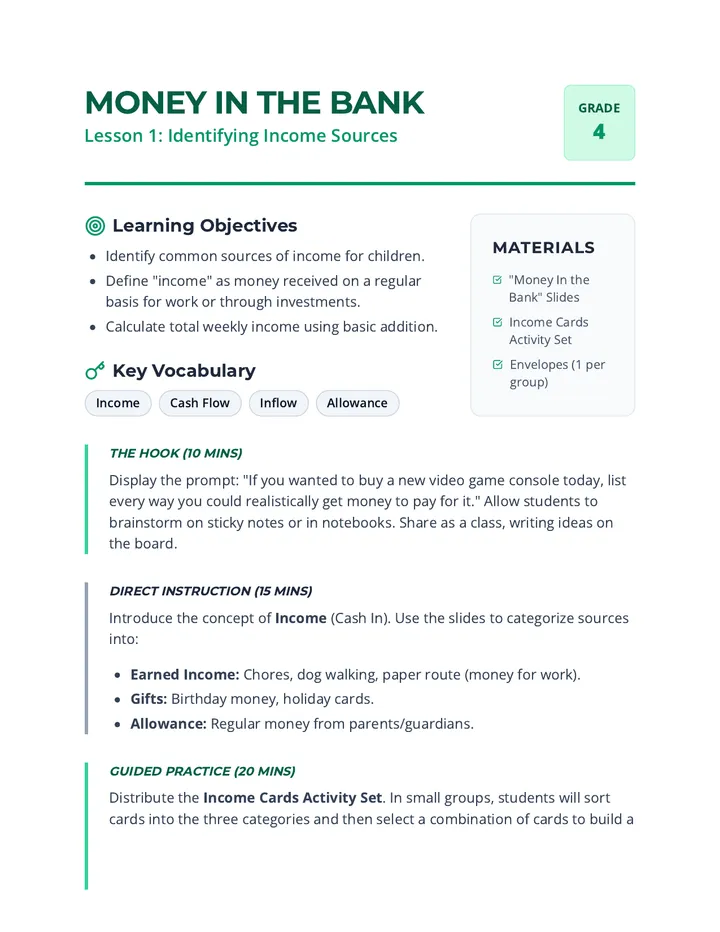
A four-week simulated learning journey where 4th-grade students manage a personal budget. They track income, categorize expenses as needs or wants, navigate unexpected financial hurdles, and analyze their cash flow to meet a savings goal.
A comprehensive 5-lesson unit where 5th-grade students manage a fictional peer's monthly finances. Students learn to track income and expenses using a ledger, differentiate between needs and wants, navigate unexpected financial 'wildcards', and analyze their spending habits to build better future budgets.
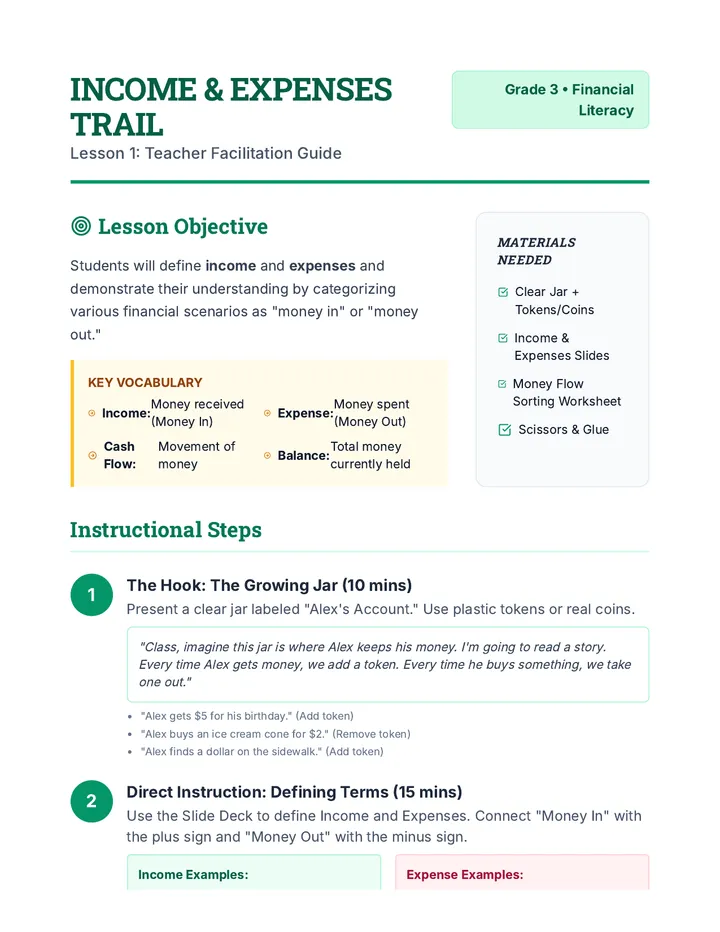
A comprehensive sequence for 3rd graders to master personal cash flow. Students learn to track income and expenses, prioritize needs over wants, and adjust budgets to meet savings goals through the fictional journey of Alex's weekly budget.
A comprehensive 5th-grade unit on personal cash flow management, where students learn to track income and expenses, identify spending leaks, and create balanced financial plans through the eyes of a financial manager.
Students learn to manage personal finances by simulating a weekly allowance scenario, tracking cash flow, and prioritizing spending to reach savings goals.