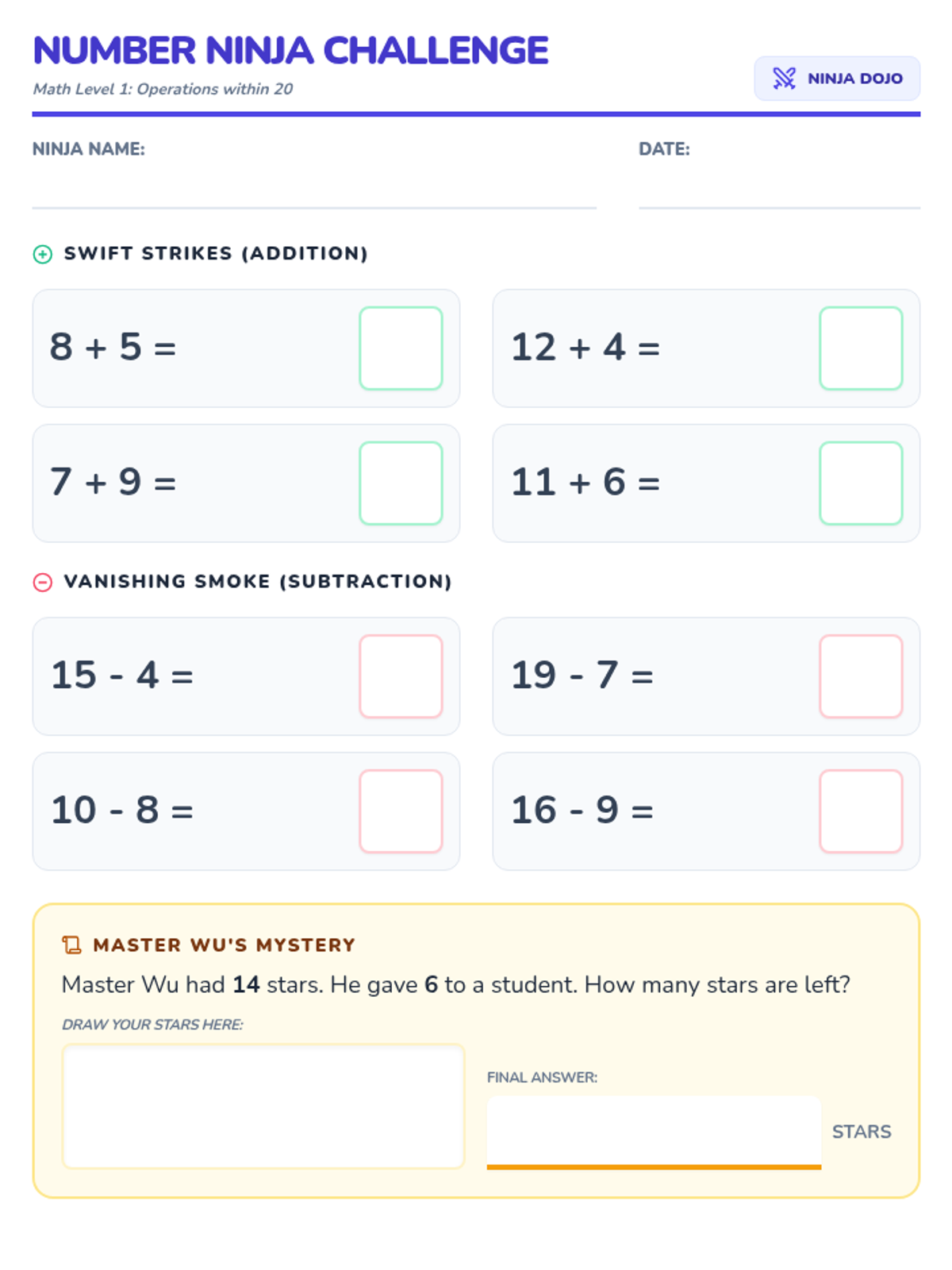
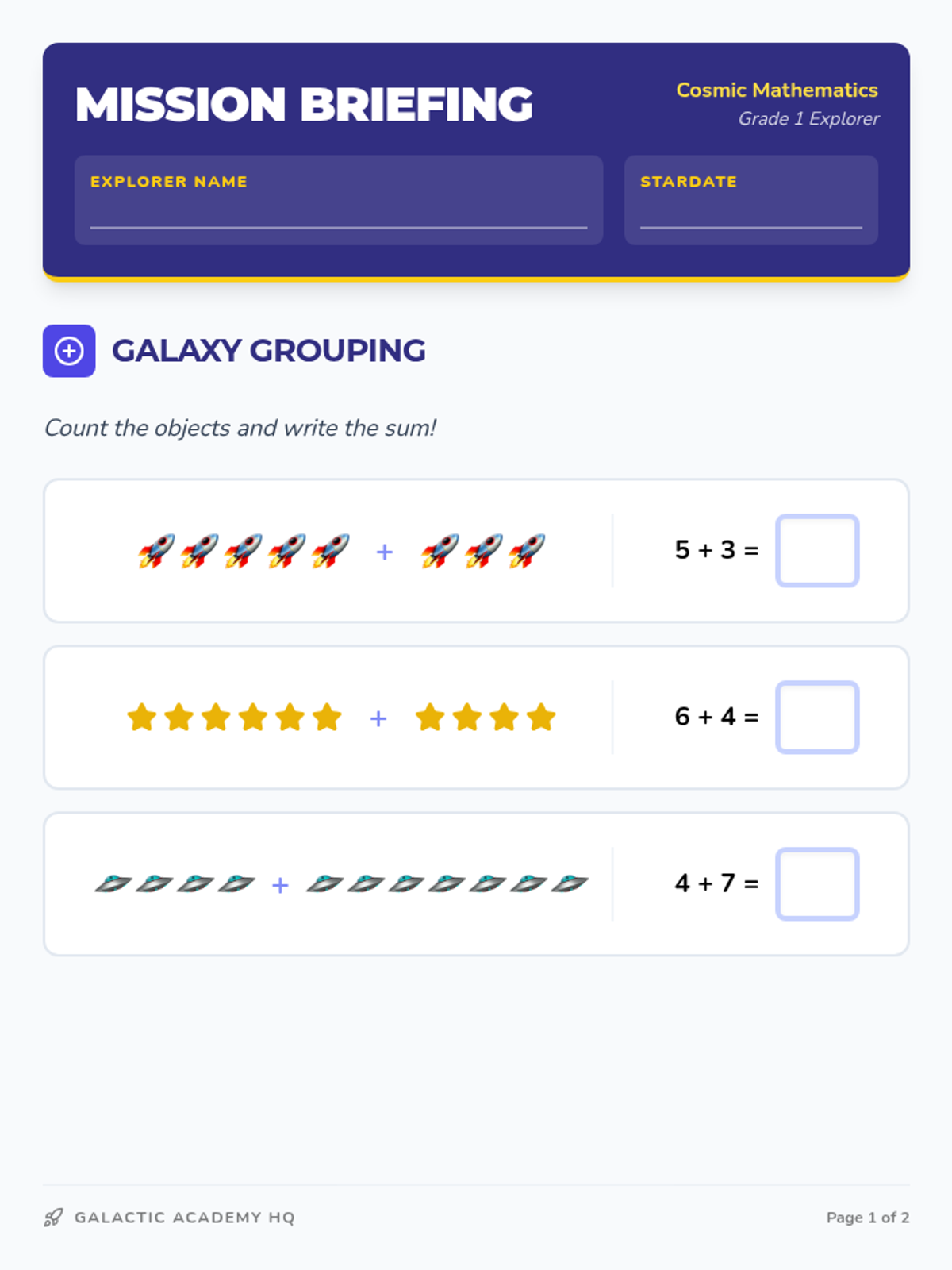
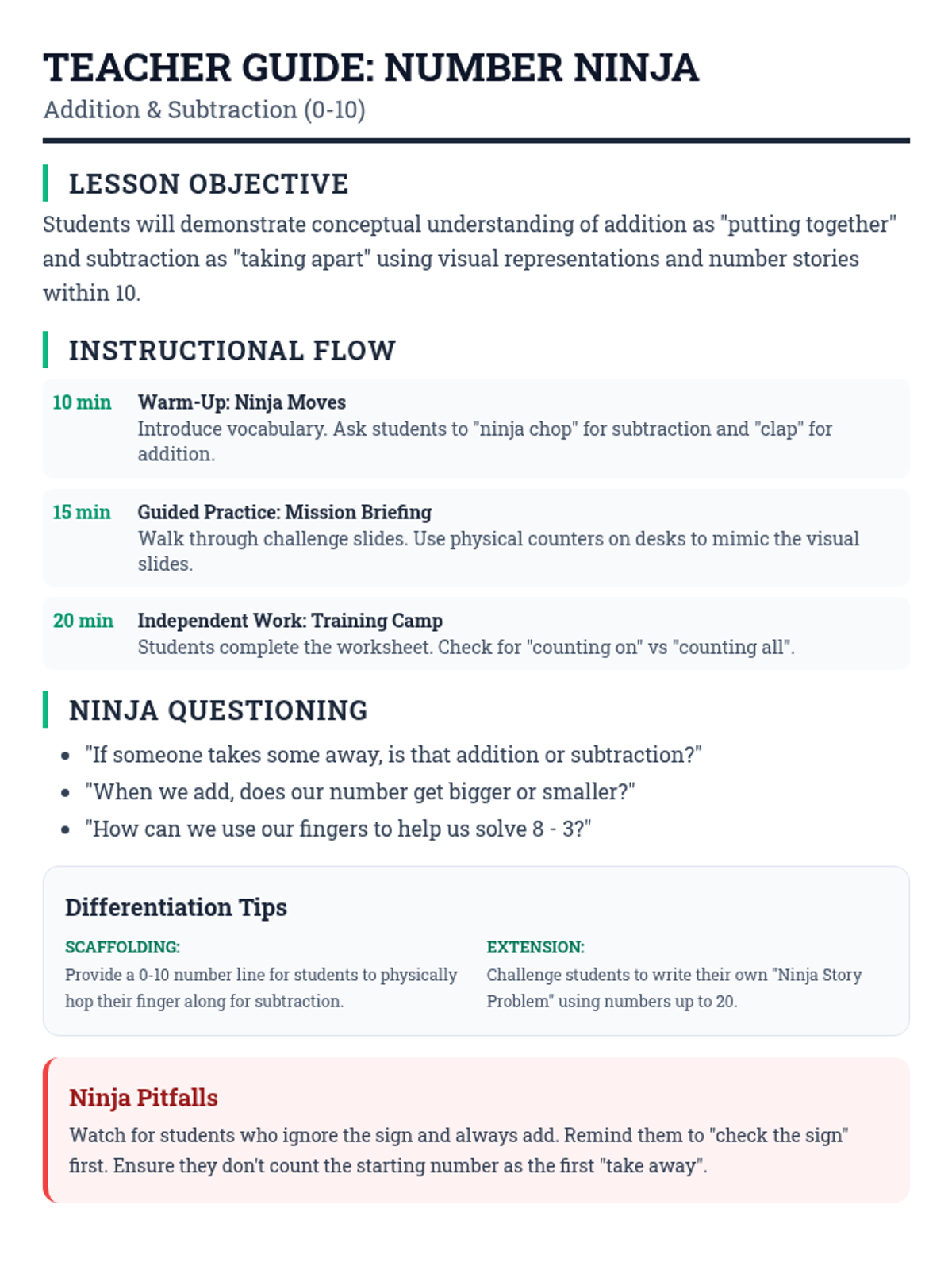
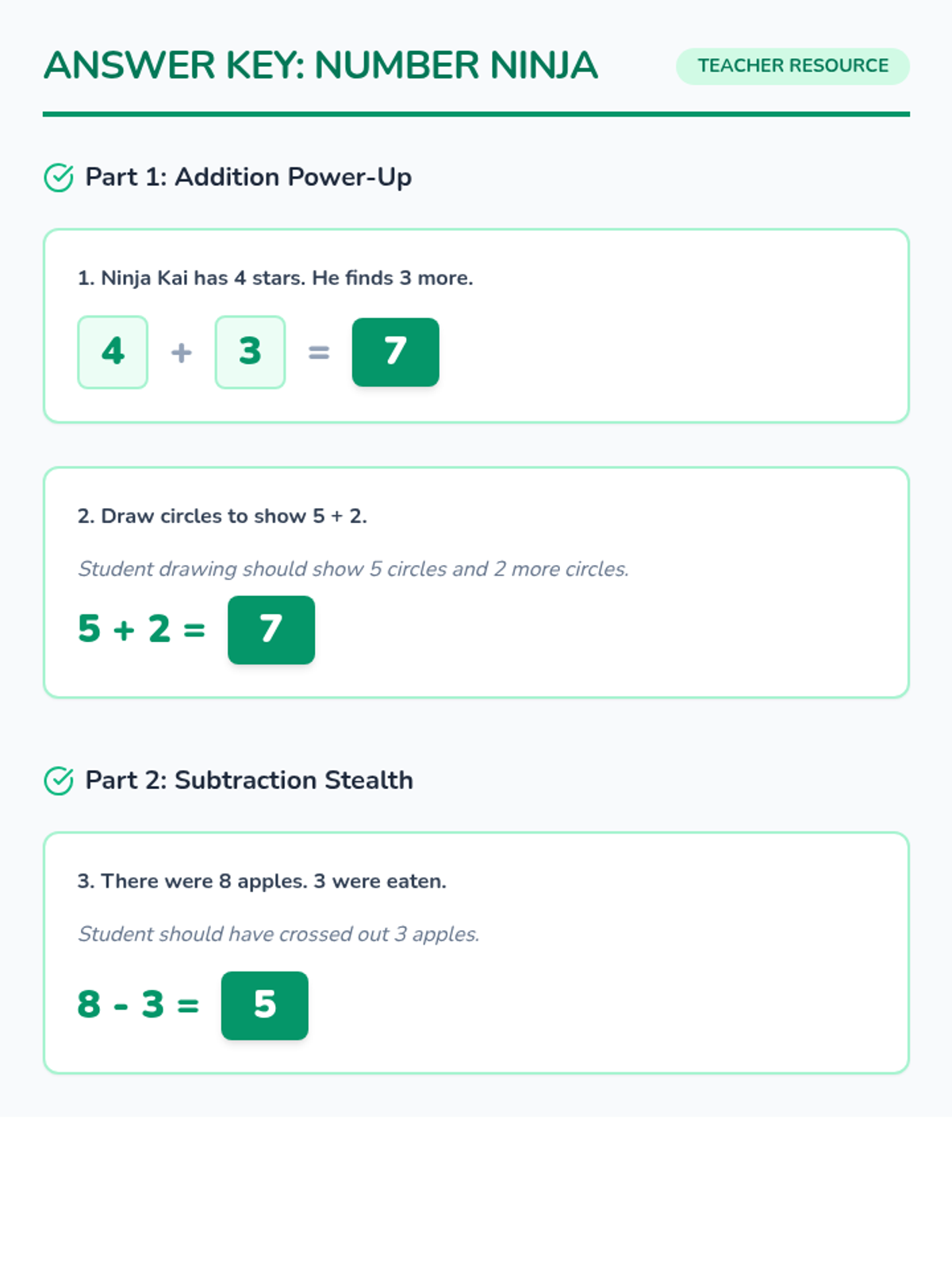
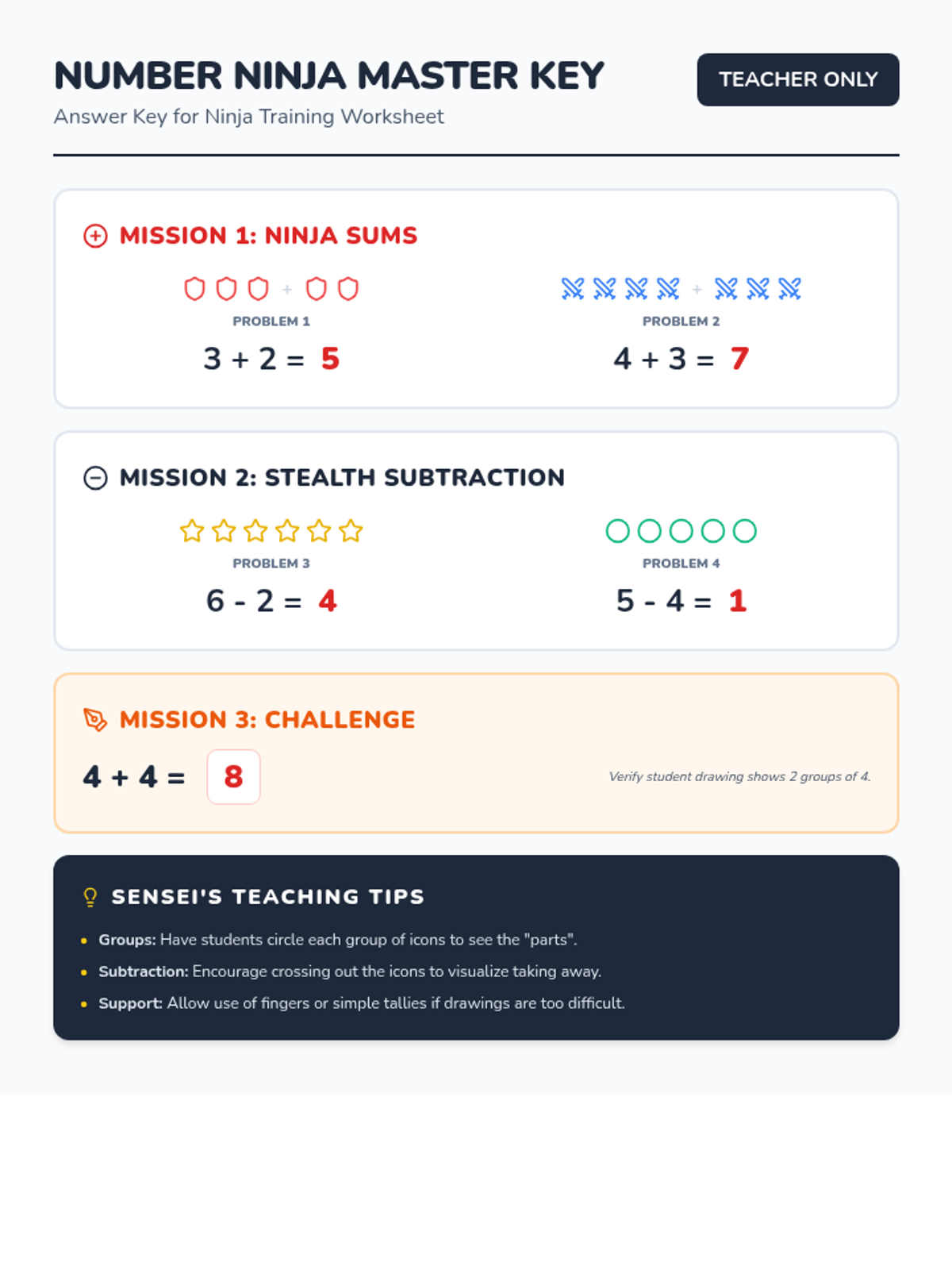
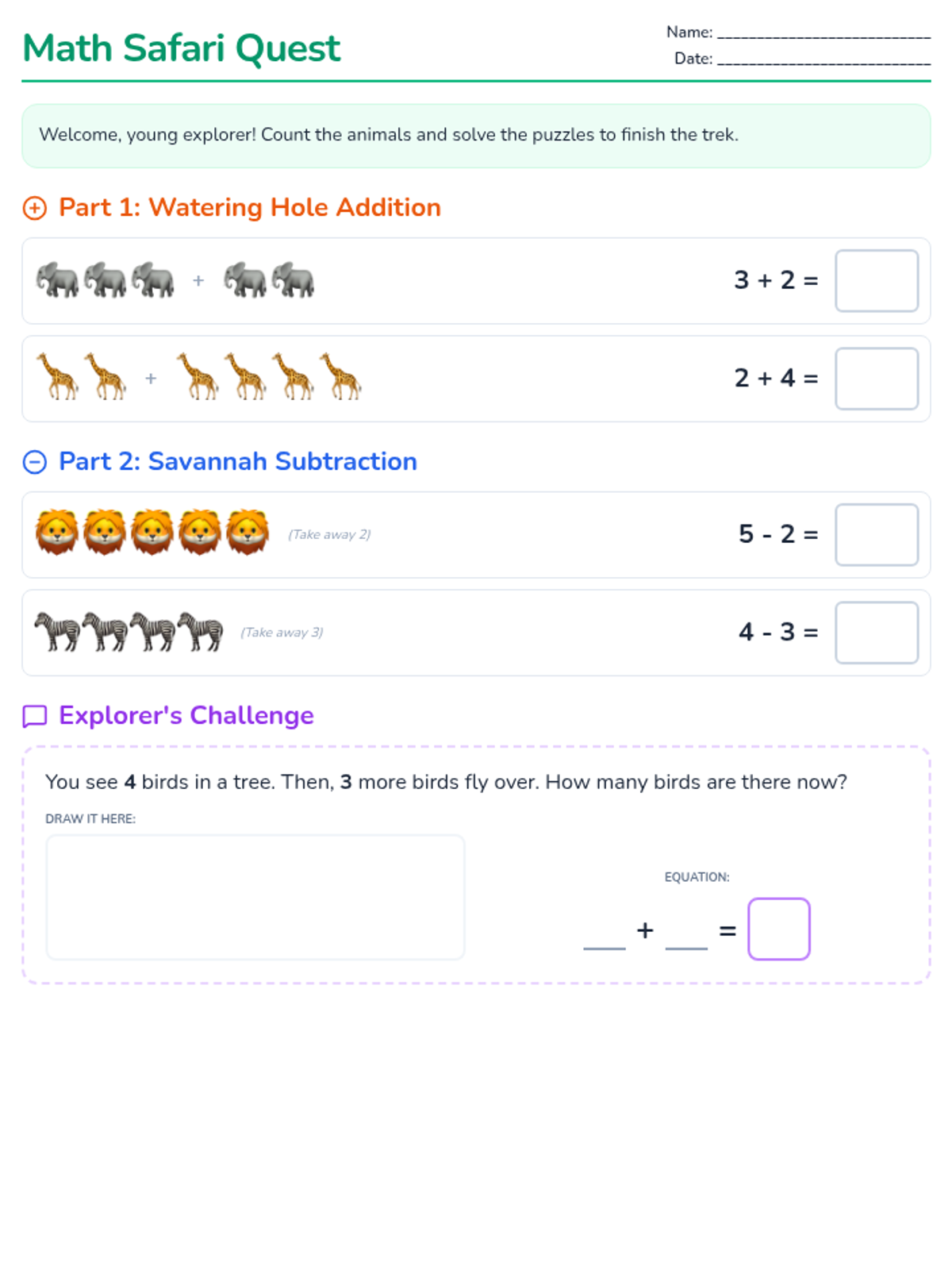
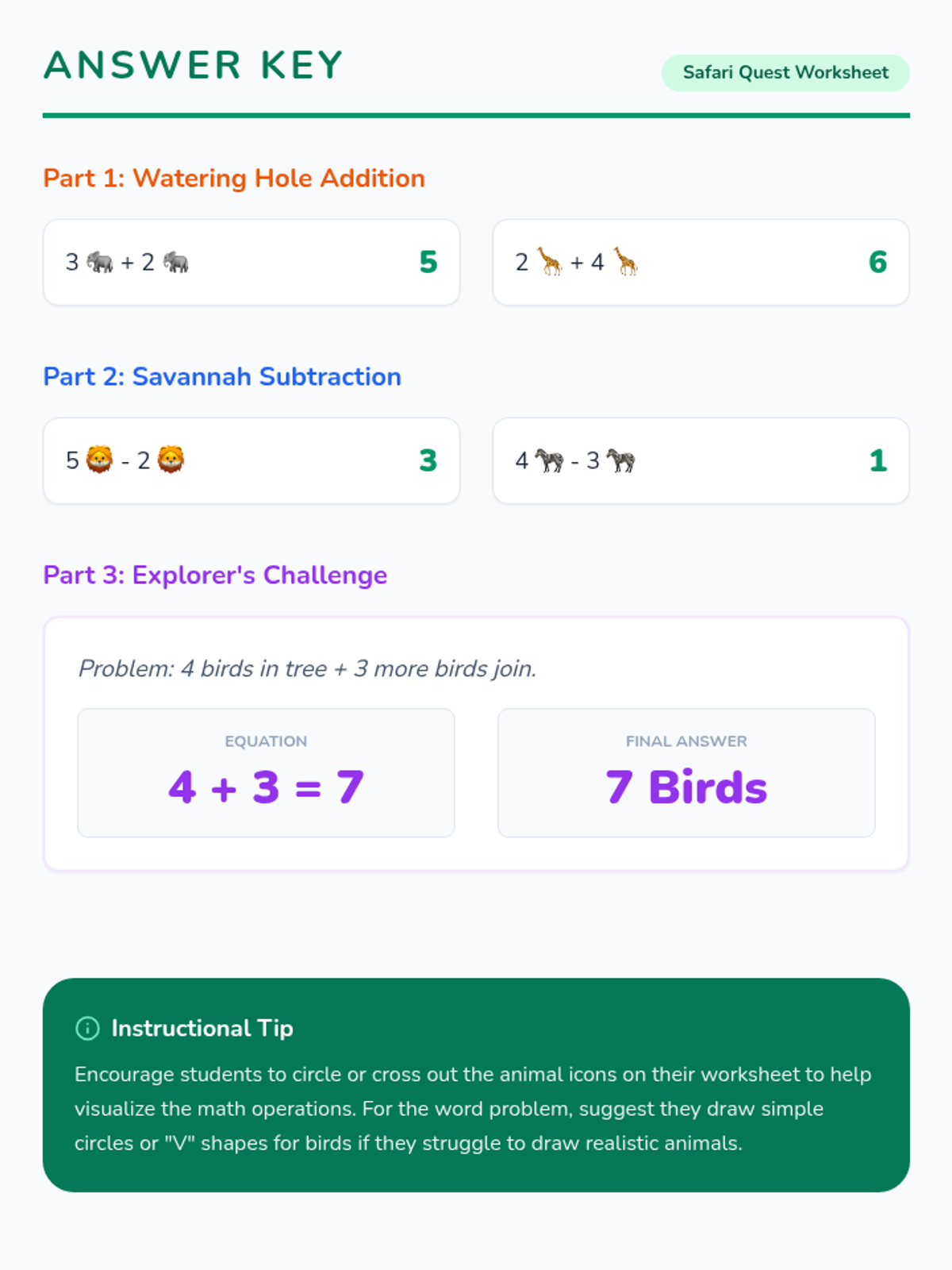
A hands-on 1st-grade math lesson where students explore lines of symmetry in nature, letters, and art through video analysis and a fold-painting activity.
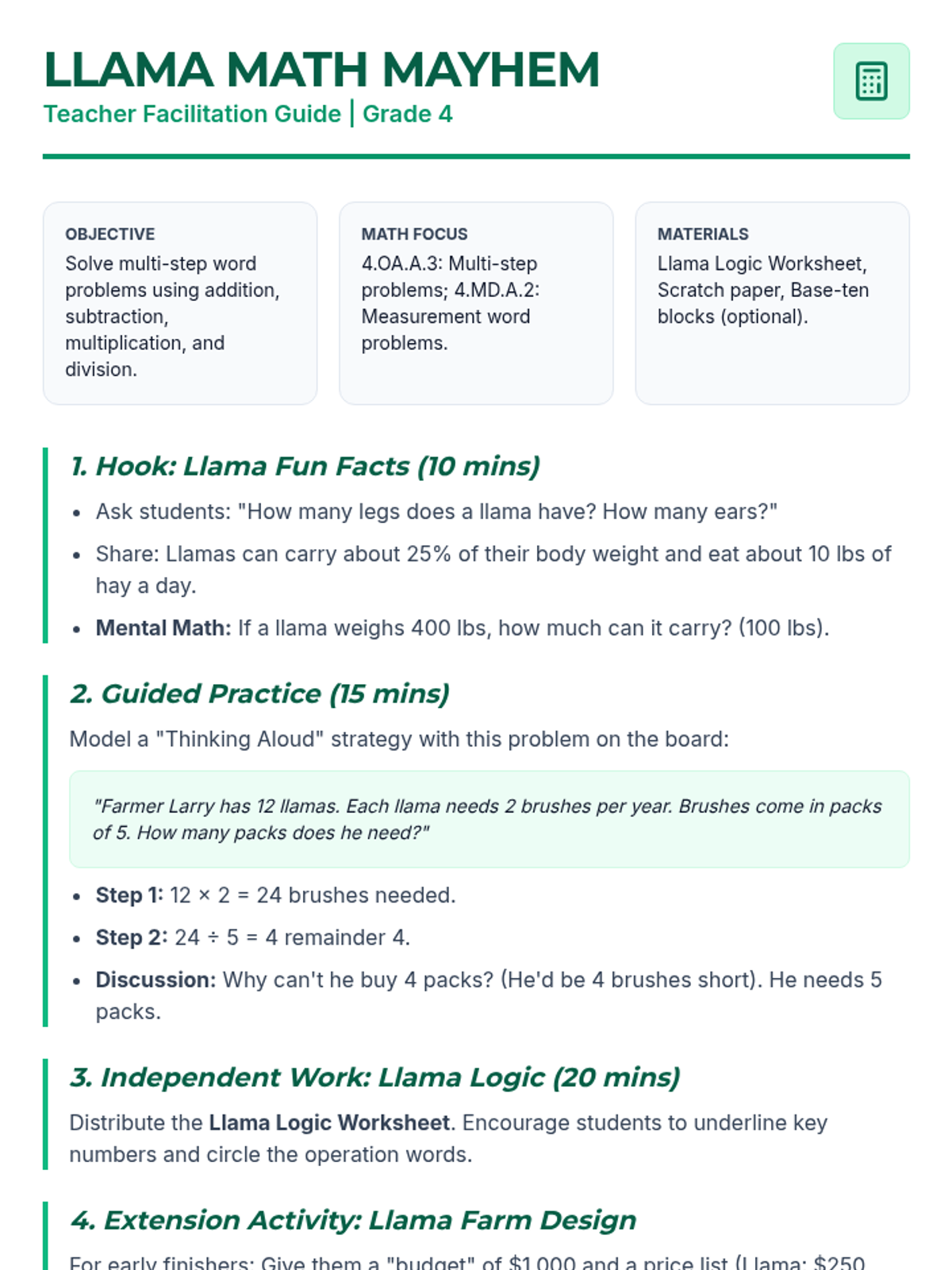
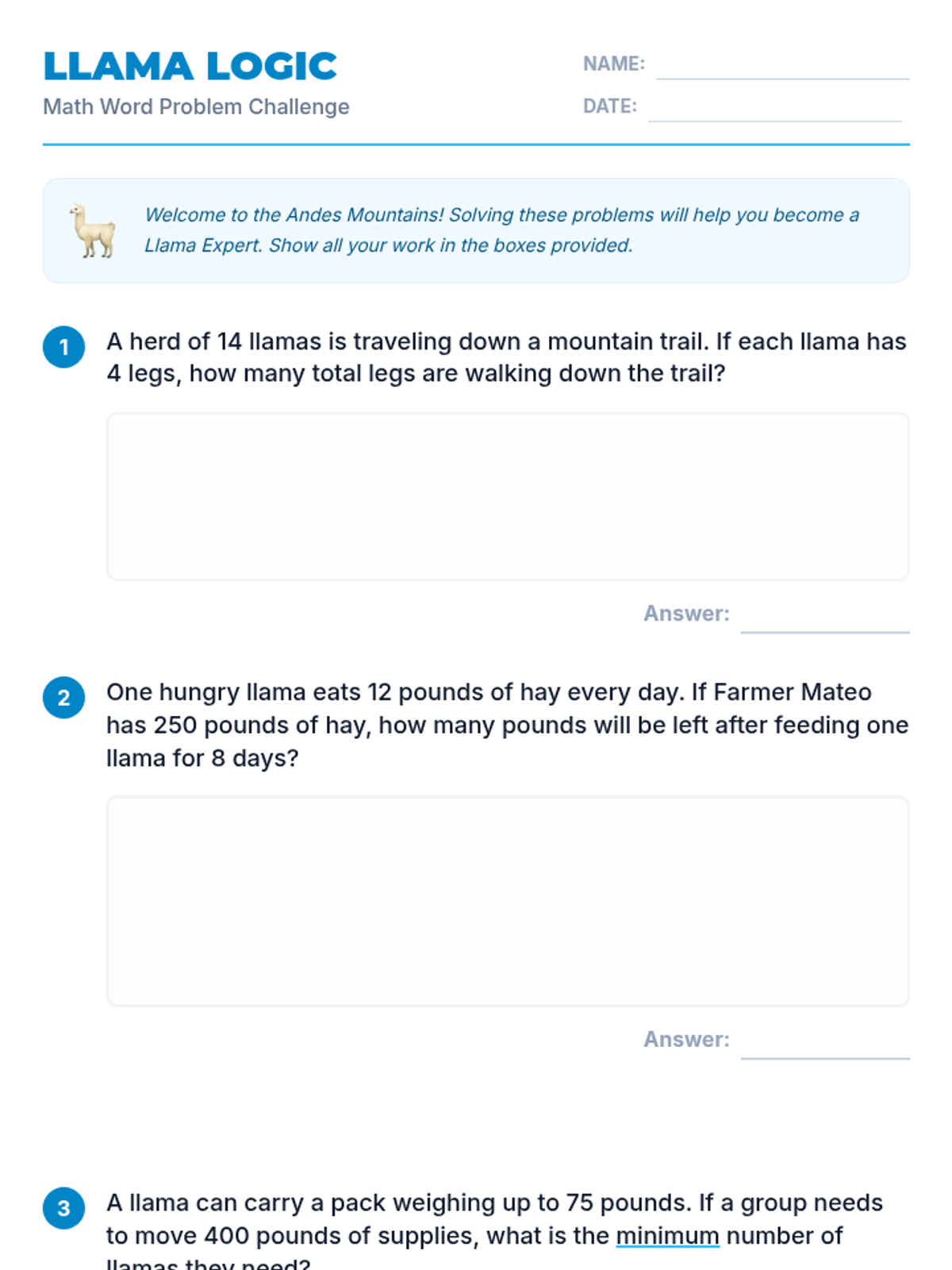
A 4th-grade math lesson that uses llamas as a context for solving multi-step word problems involving the four operations, measurement, and data interpretation.
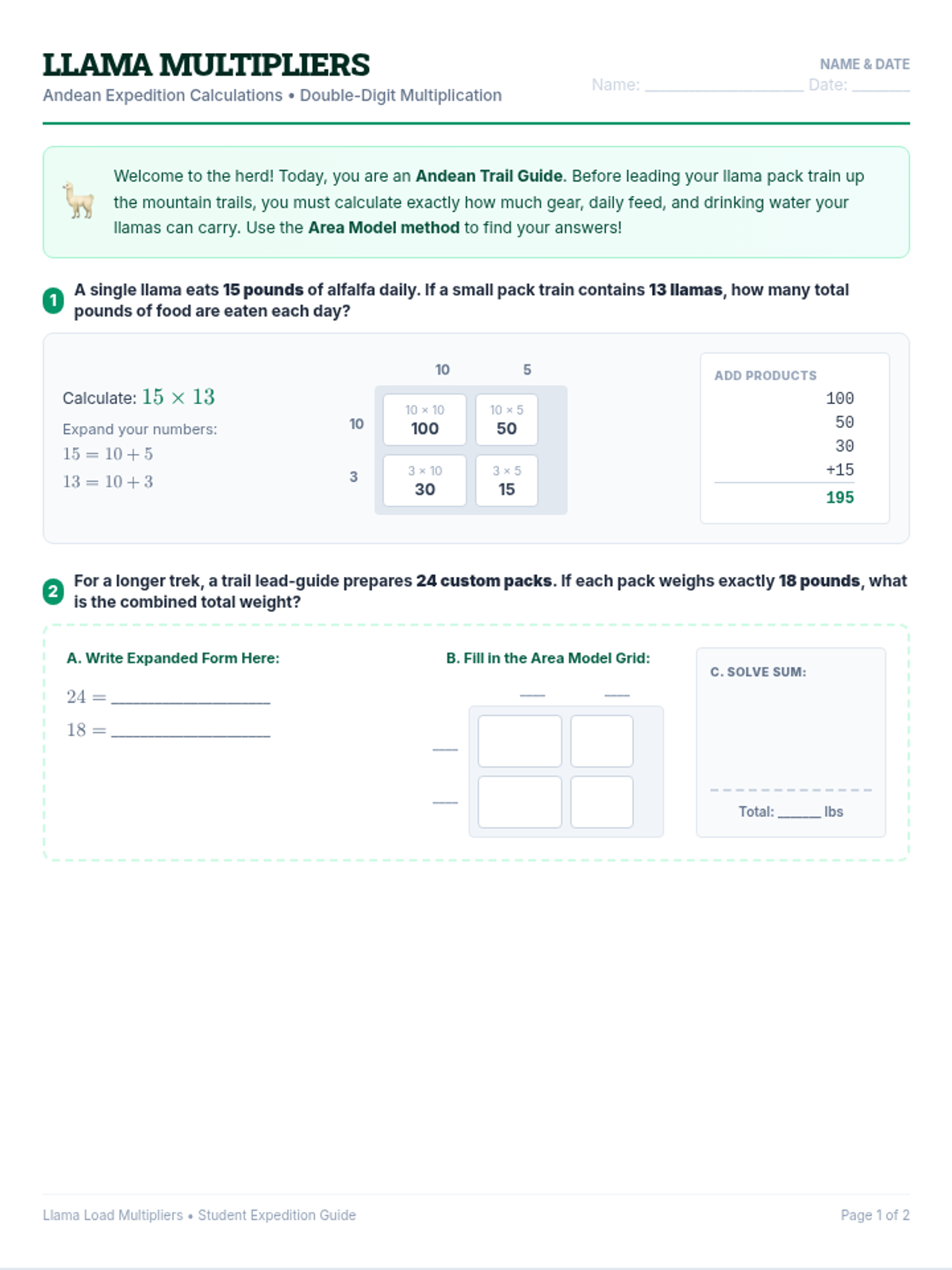
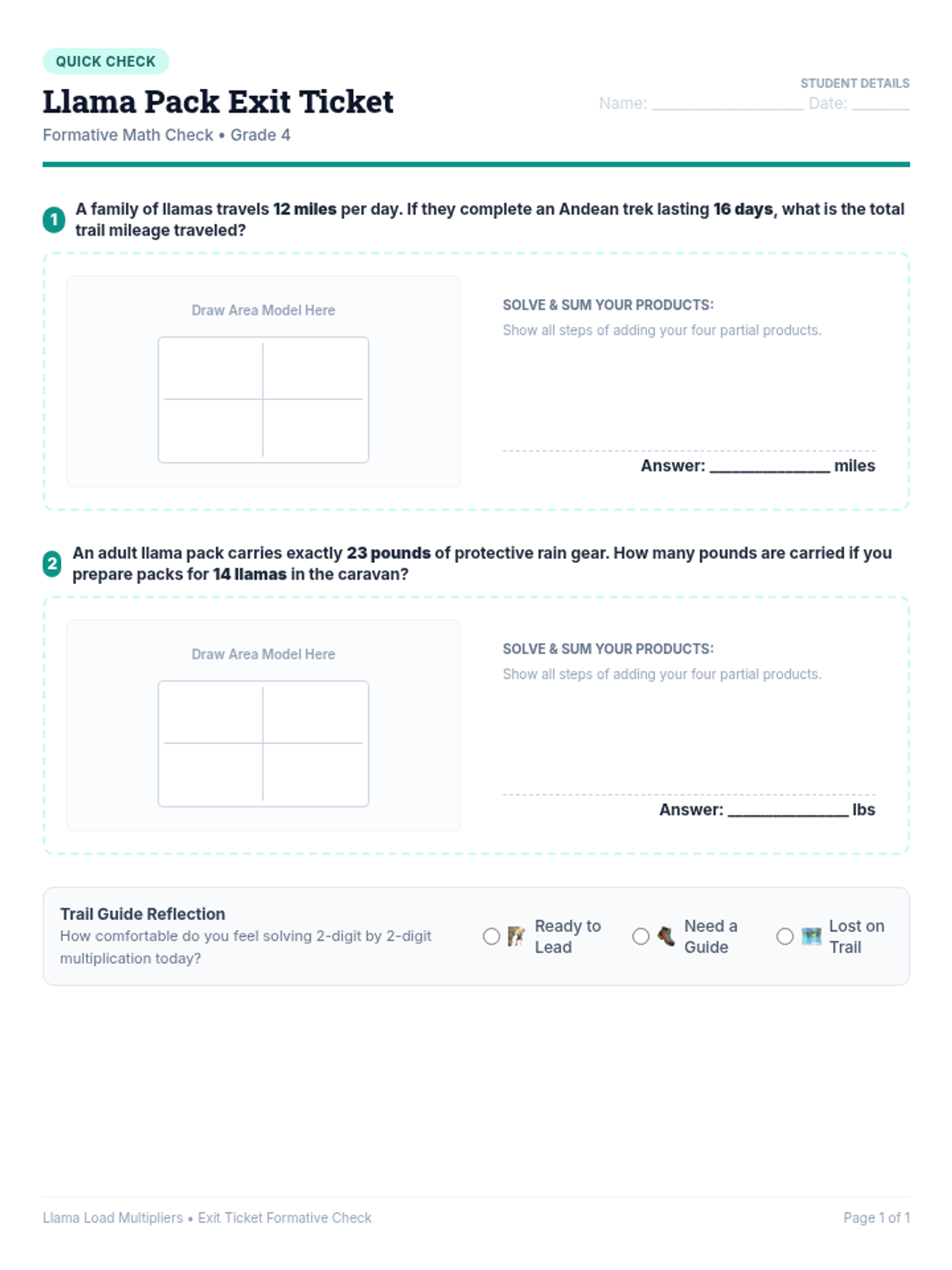
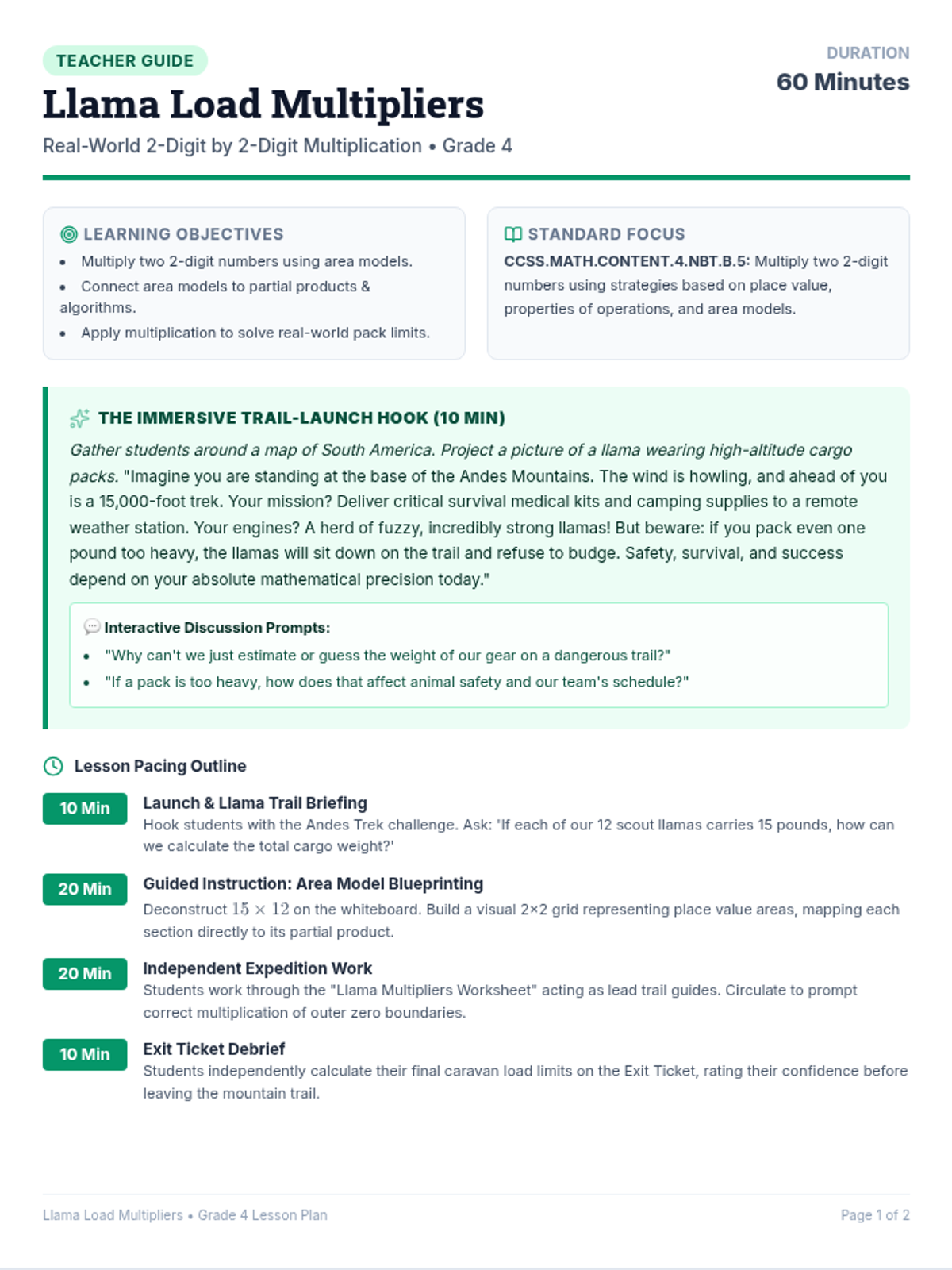
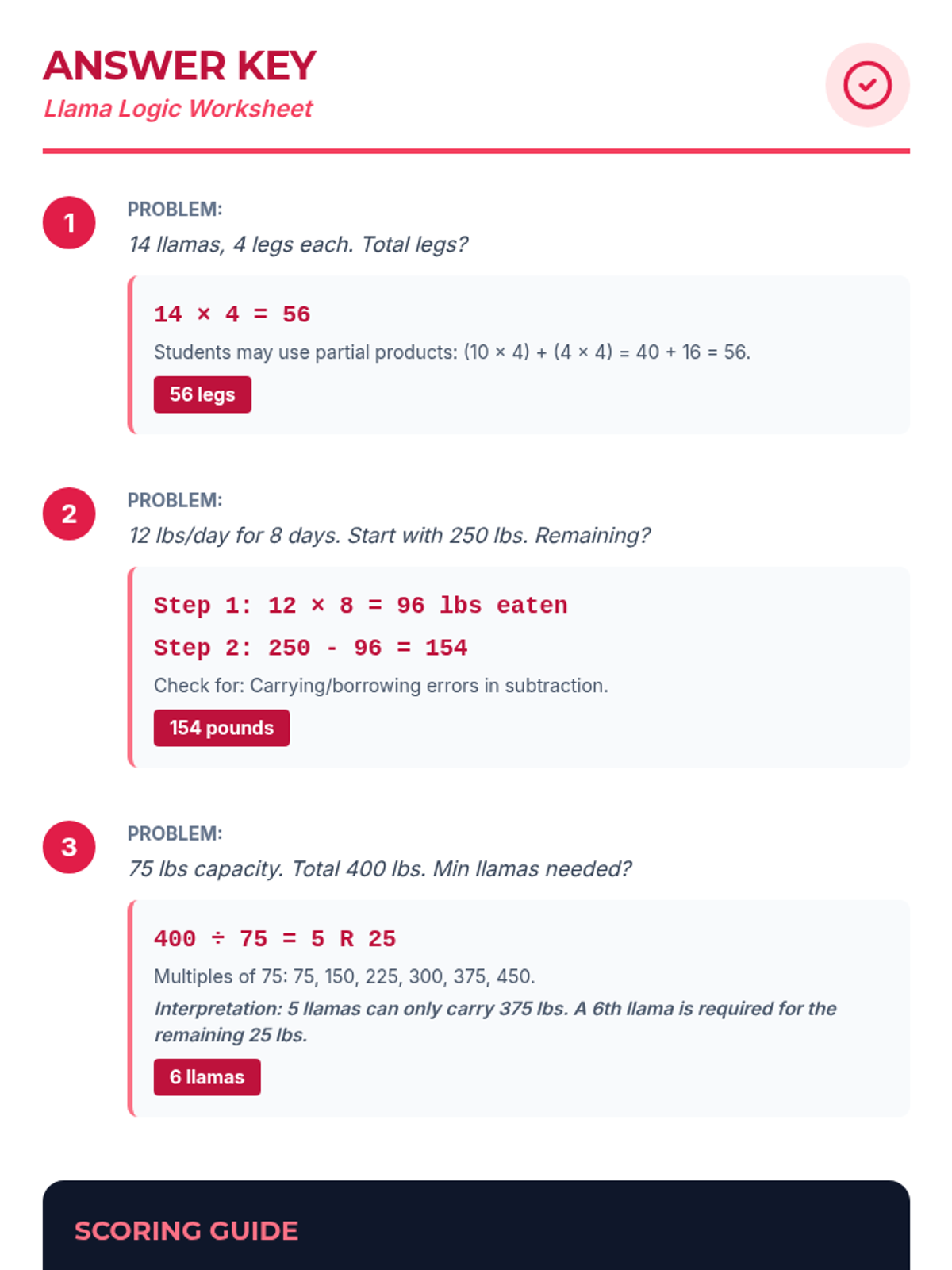
A fun, llama-themed math lesson for 4th graders focusing on multi-digit multiplication and division through real-world llama farm scenarios.
Students become "Measurement Detectives" to explore length and width using standard and non-standard tools.
A fun, hands-on math lesson for 4th graders exploring llama measurements including weight, height, and wool length through word problems and a data-tracking activity.
A final assessment where students demonstrate their mastery of fractions through a series of bakery-themed challenges.
Students learn to identify and create equivalent fractions by 'decorating' cakes and comparing different slicings.
Students explore the basics of fractions (numerator, denominator) and represent them using 'bakery items' like pies and pizzas.
A fun, llama-themed lesson for 4th graders that bridges the gap between fractions and decimals through real-world llama care scenarios. Students will explore tenths and hundredths while learning about llama anatomy and behavior.
A fun, introductory lesson for early learners to practice descriptive language through the lens of animals, inspired by the first-ever YouTube video. Students identify animal features and use a simple sentence frame to share their observations.
A fun, interactive lesson for Pre-K to 1st Grade focusing on identifying animals and using descriptive language to describe their unique physical features. Students will watch the first-ever YouTube video and practice their observation skills through 'I Spy' and drawing activities.
A 30-minute introductory music lesson for Kindergarteners to explore and demonstrate a steady beat using body percussion and movement.
A Kindergarten to 2nd Grade lesson exploring the first YouTube video ever made, focusing on observation skills, animal characteristics, and the evolution of digital content. Students will identify key details about elephants and create their own drawings based on the video's descriptions.
A play-based lesson designed to help young students identify and understand a wide range of emotions through interactive games and visual aids.
A Kindergarten-2nd Grade lesson where students learn to make simple animal observations by watching the first-ever YouTube video and creating their own 'Zoo Vlog' drawing and description.
A Kindergarten-2nd grade lesson focused on using descriptive adjectives to observe animals, using the historic first YouTube video as a starting point for vocabulary expansion.
A Kindergarten to 2nd-grade lesson on observation and descriptive language using the historic 'Me at the zoo' video. Students will practice using the word 'long' to describe elephant trunks through drawing and writing activities.
A Kindergarten to 2nd Grade lesson where students practice observation and descriptive language by watching the first-ever YouTube video and drawing an elephant.
A Kindergarten to 2nd-grade lesson where students observe elephants, learn about their trunks, and practice observation skills using the historic 'Me at the zoo' video.
A fun, interactive lesson for Pre-K to 1st grade focusing on identifying animal features and using descriptive language, inspired by the first-ever YouTube video.
A math-focused lesson for 4th graders that uses llama-themed scenarios to explore equivalent fractions and decimal notation. Students will calculate llama feed weights, track trek distances, and compare llama fleece quality using fractions and decimals.
A K-2 lesson focused on observing animals and using descriptive vocabulary, featuring the video 'Me at the zoo'.
A high school Computer Science lesson connecting the history of YouTube's first video to concepts of bandwidth, data compression, and internet infrastructure evolution.
A Pre-K to 2nd-grade lesson on elephant characteristics using the first YouTube video "Me at the zoo". Students observe, draw, and describe elephants.
A K-2 lesson focused on developing observation skills by watching a short video about elephants, drawing key features, and practicing descriptive vocabulary.
A set of visual tools to help students navigate daily classroom transitions and routines with independence.
A Pre-K to 1st Grade lesson on listening and observing, featuring the 'Me at the zoo' video to teach about elephants and descriptive language.
A Pre-K to 1st grade lesson focused on observing elephants and their distinctive trunks, utilizing the 'Me at the zoo' video as a stimulus for listening and art.
A fun and engaging math lesson where 4th graders use llama-themed data and word problems to practice multi-step operations and interpreting graphs.
A descriptive writing workshop where students rewrite the script of the first YouTube video to include sensory details and precise adjectives.
A K-1 lesson on making observations and using descriptive size words, featuring the first-ever YouTube video 'Me at the zoo'.
A simple science observation lesson for Pre-K to 1st grade students focusing on describing animal features, observing a video, and drawing.
A lesson for 1st-3rd graders focusing on observation skills and descriptive adjectives, using the 'Me at the zoo' video as a primary source for analysis and imitation.
A fun, llama-themed math lesson for 4th graders focusing on measurement conversions, data analysis, and word problems.
A comprehensive math-focused lesson exploring the world of llamas through data comparison, ordering, and real-world application for 4th-grade students.
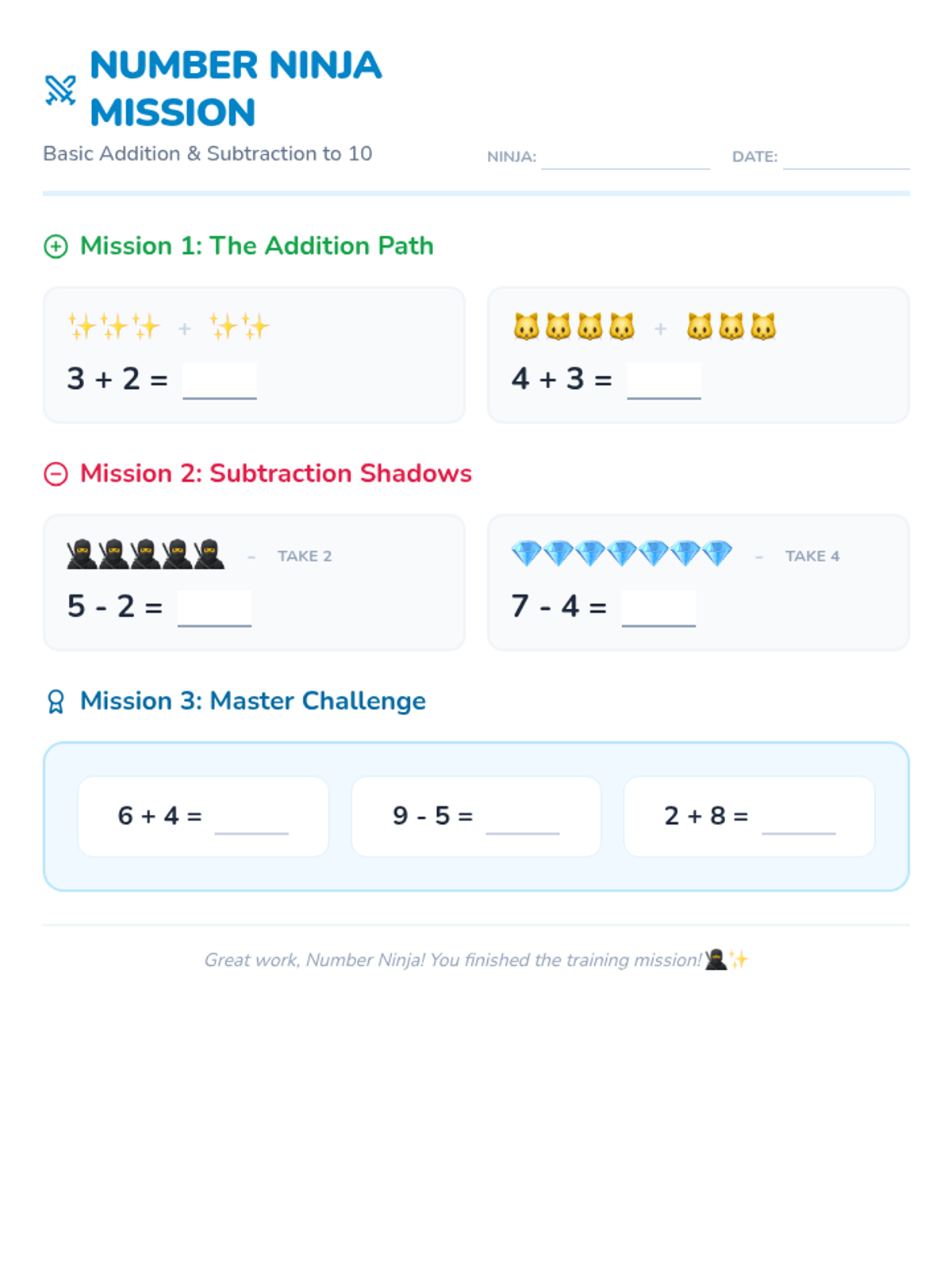
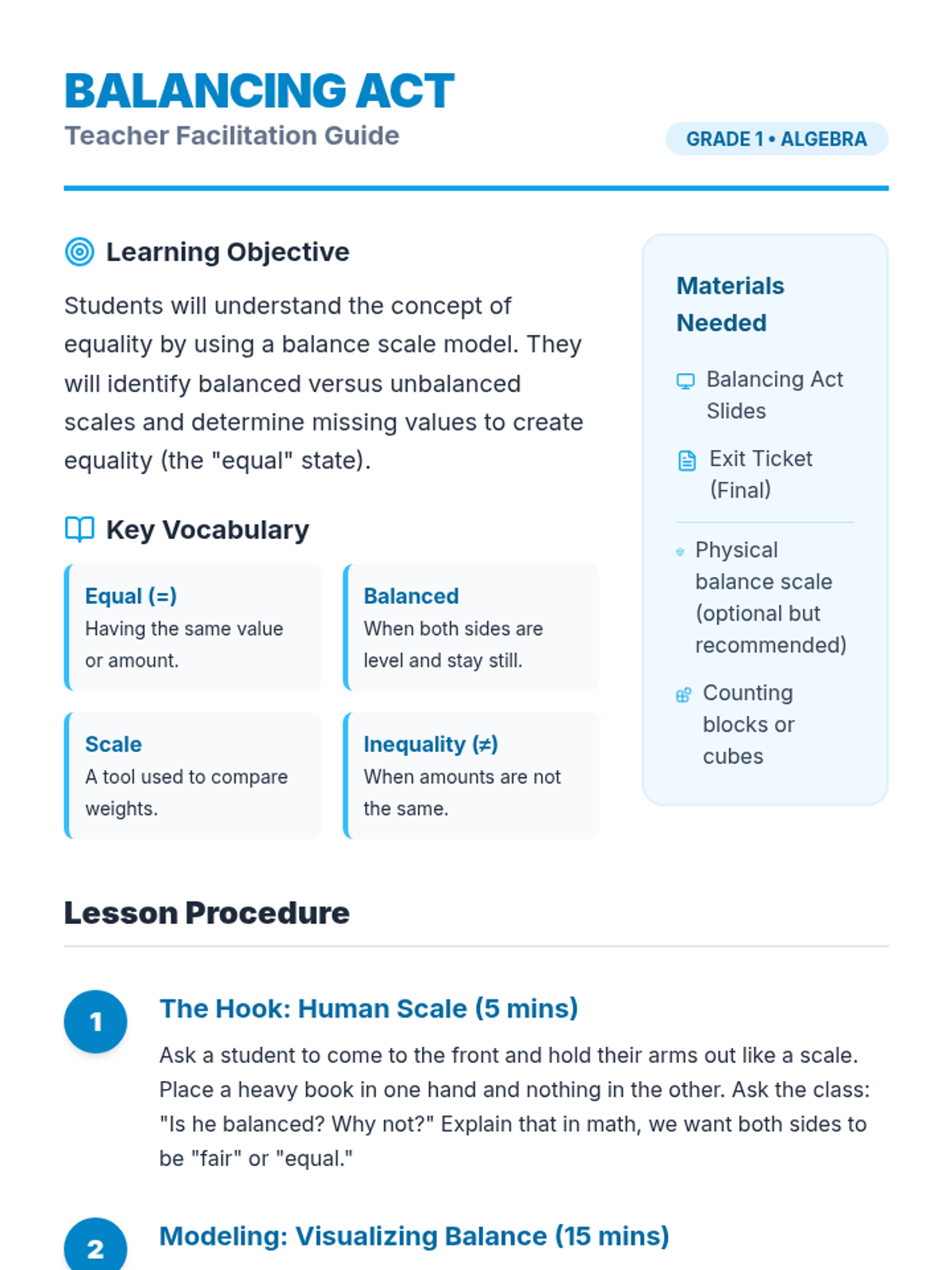
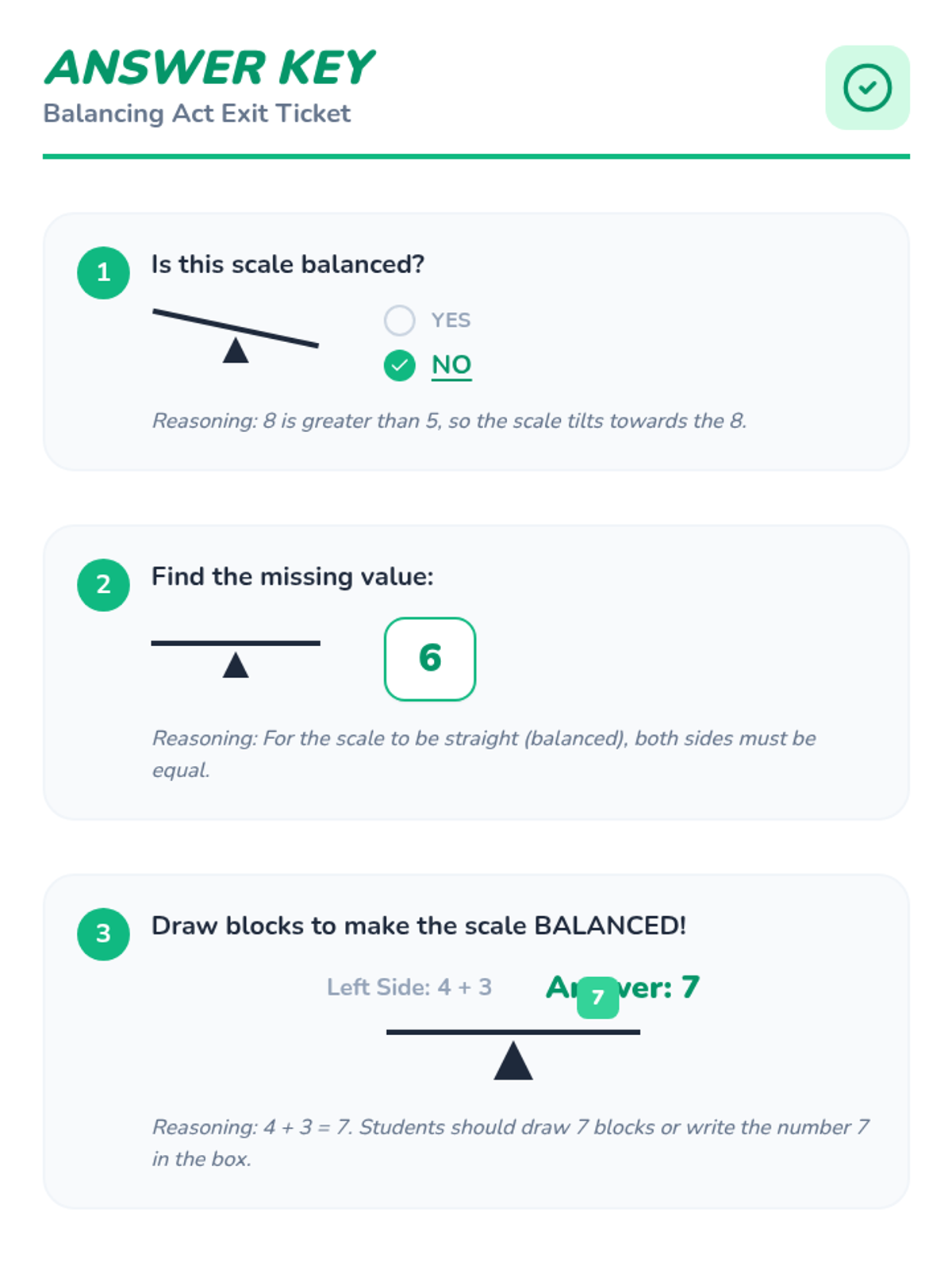
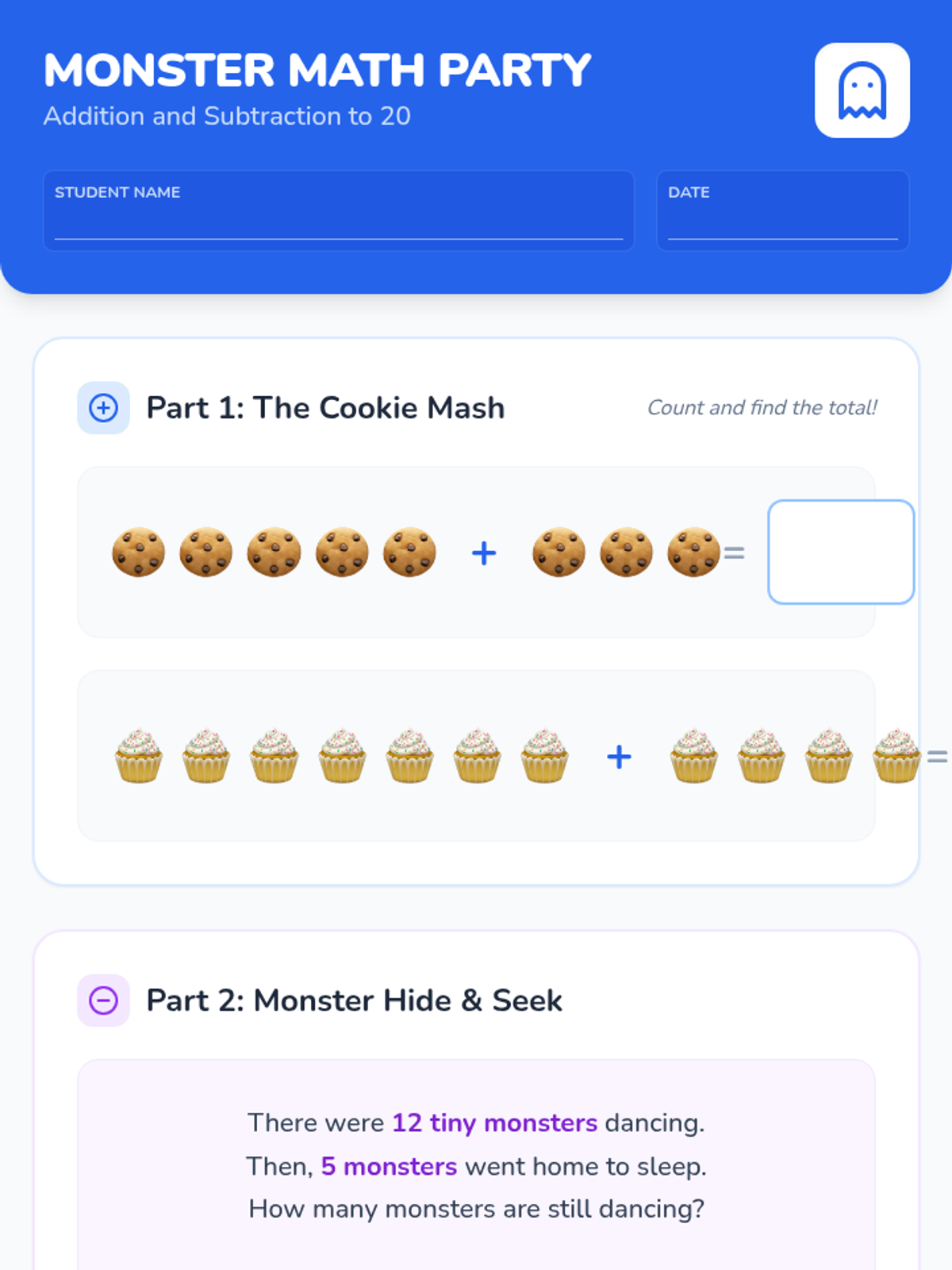
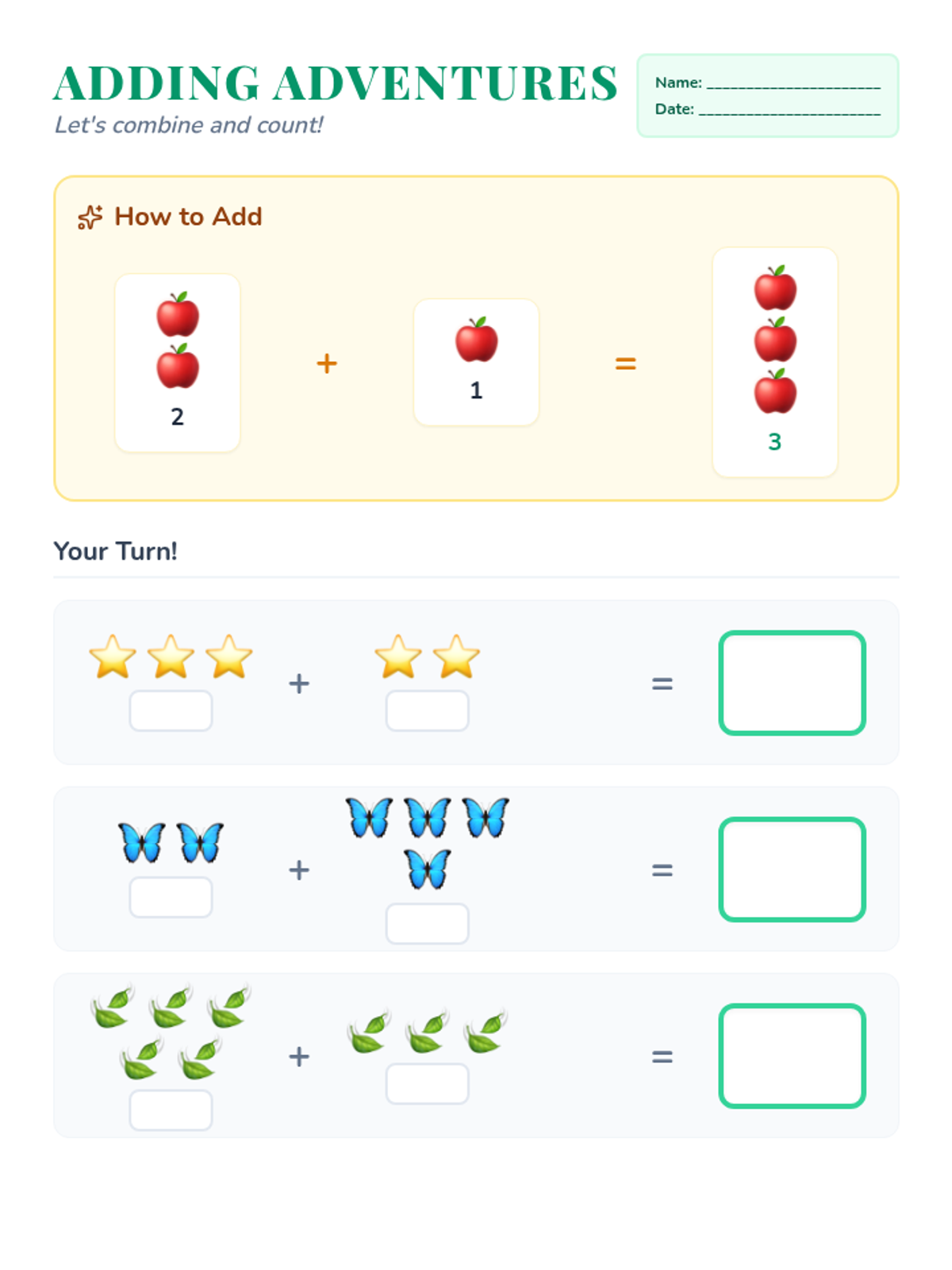
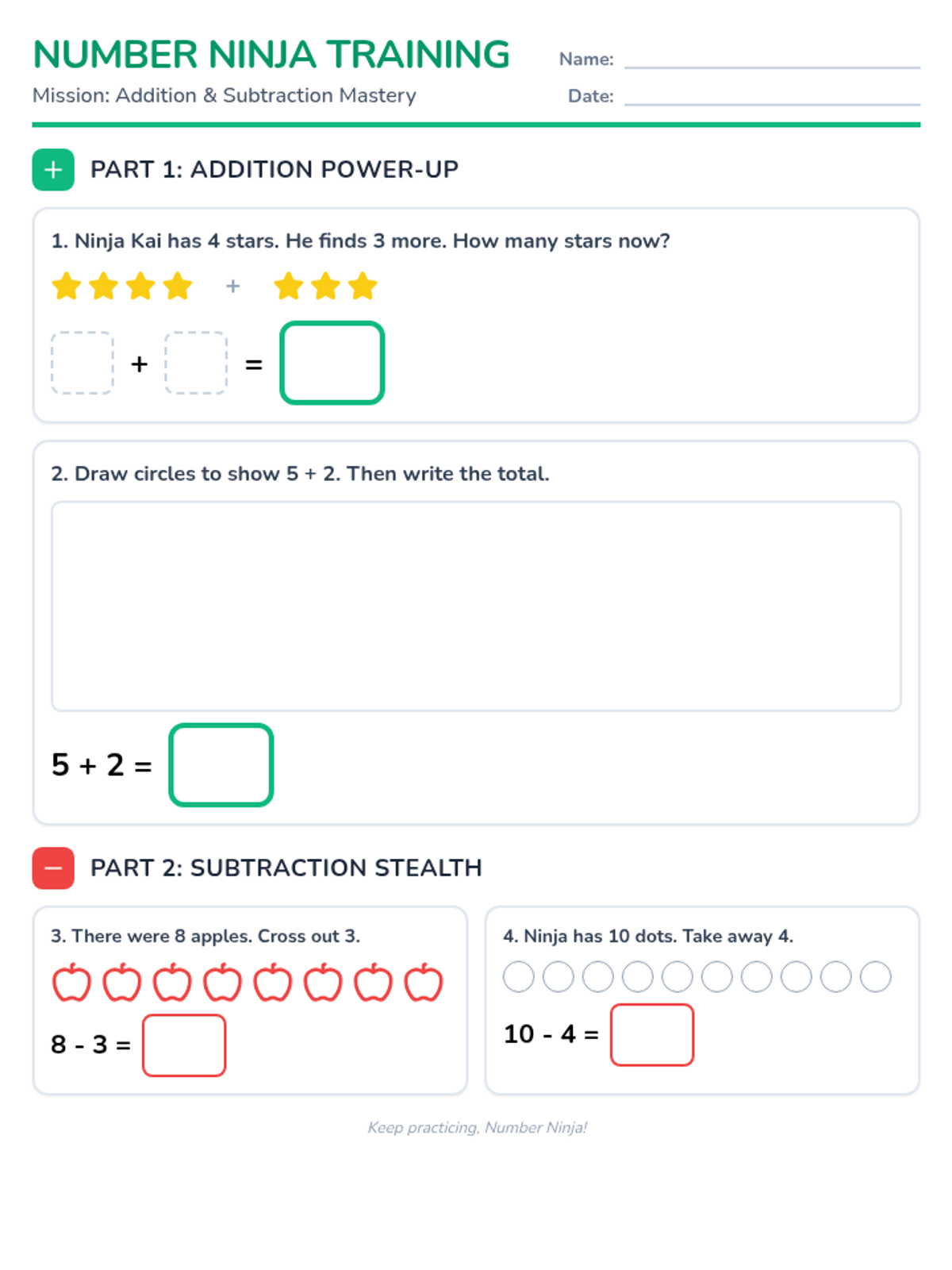
A 1st Grade math lesson focused on understanding regrouping in addition using base-10 blocks and role-play.
A 1st Grade math lesson on telling time to the minute using the 'count by 5s' strategy, featuring a video, a hands-on paper plate clock activity, and an exit ticket.
A vibrant lesson for Kindergarten students to explore and identify seasonal colors through interactive slides, matching games, and creative practice.
A fun, hands-on lesson where students identify and sort circles, squares, and triangles through a 'Shape Safari' adventure. Students will practice recognizing shapes in different sizes, colors, and orientations.
A 45-minute lesson on ratios and unit rates using a real-world pizza pricing hook. Includes bilingual materials in English and Spanish, tiered guided practice, and visual models to support 6th-grade students of all readiness levels.
A fun, active introduction to counting from 1 to 10 in Japanese through a rhythmic ninja-themed chant and visual aids. Students learn kanji, hiragana, and romaji while practicing pronunciation and counting skills.
A 45-minute lesson exploring ratios and unit rates through a pizza delivery lens, featuring bilingual English/Spanish support and tiered activities for diverse learners.
A rhythmic introduction to Spanish zoo animal names (lion, monkey, giraffe) through a repetitive action song and visual aids.
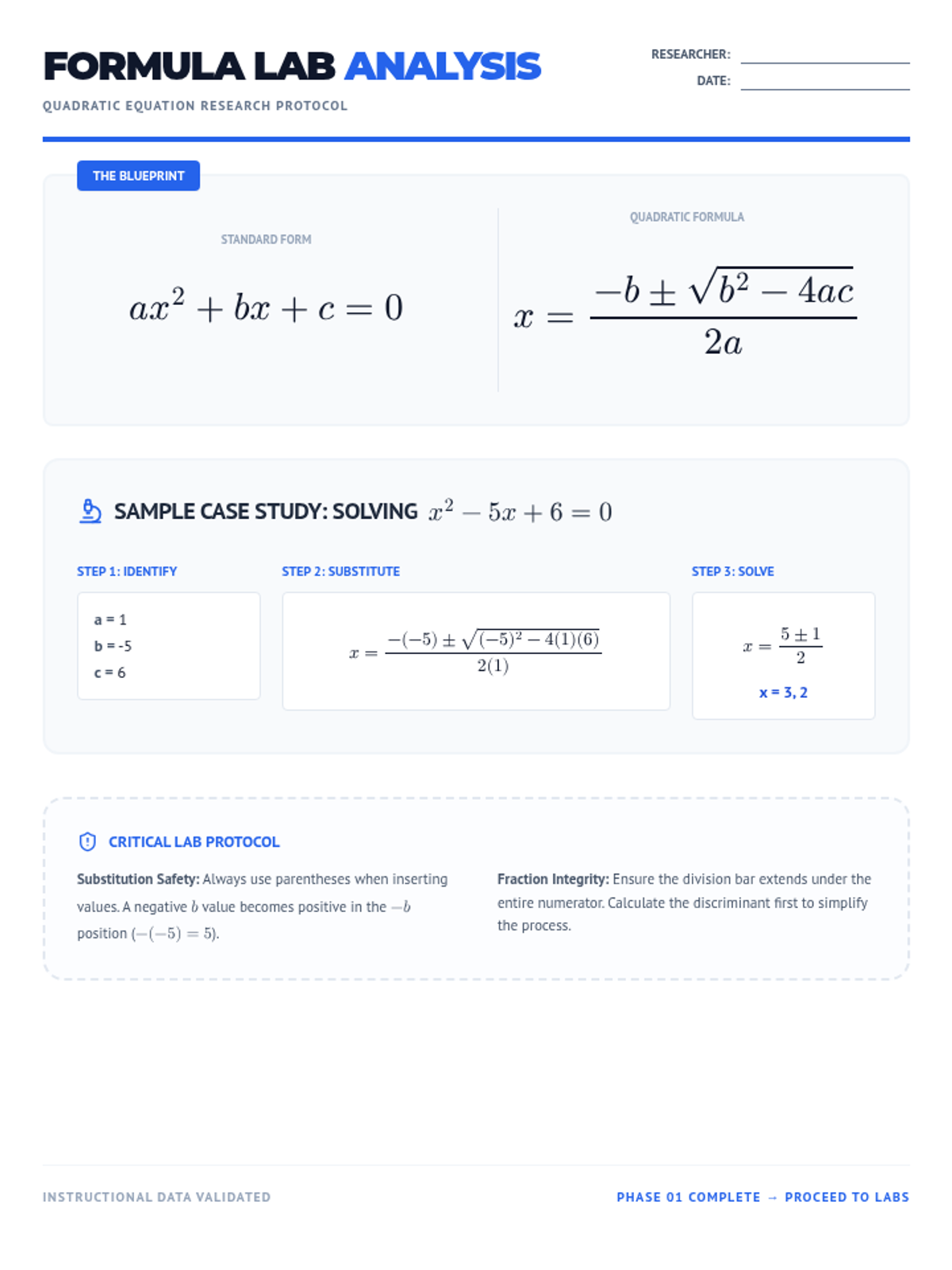
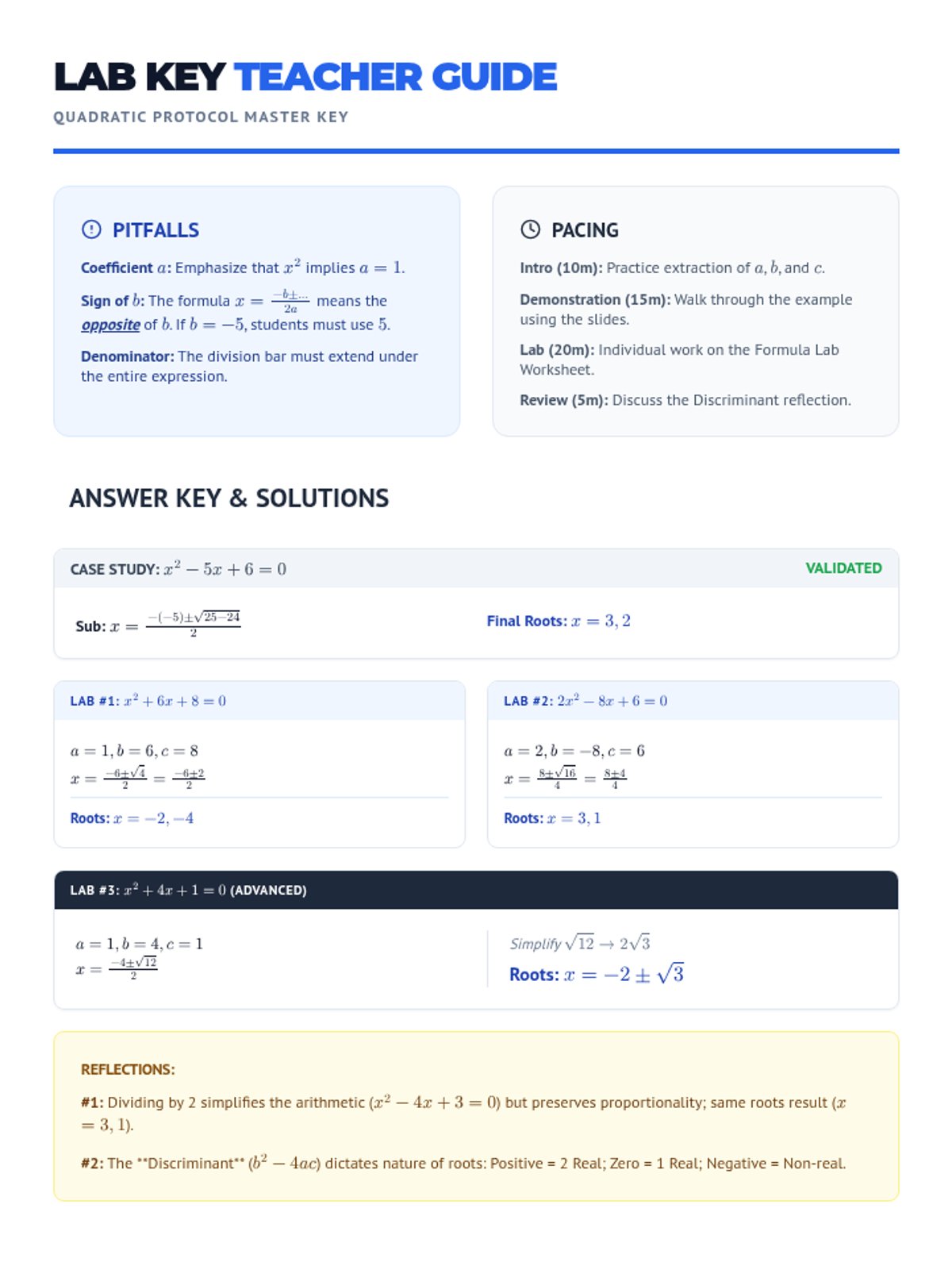
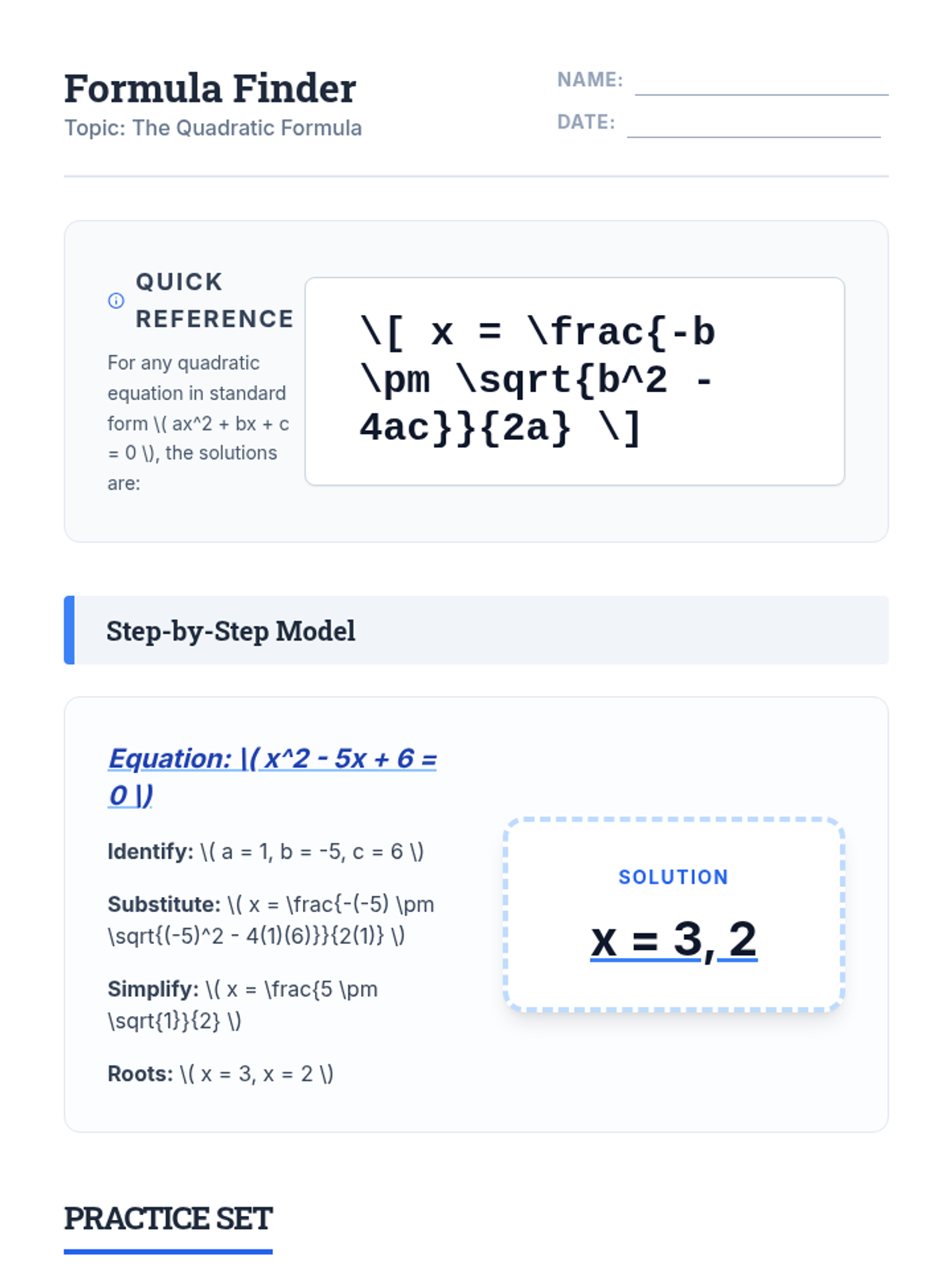
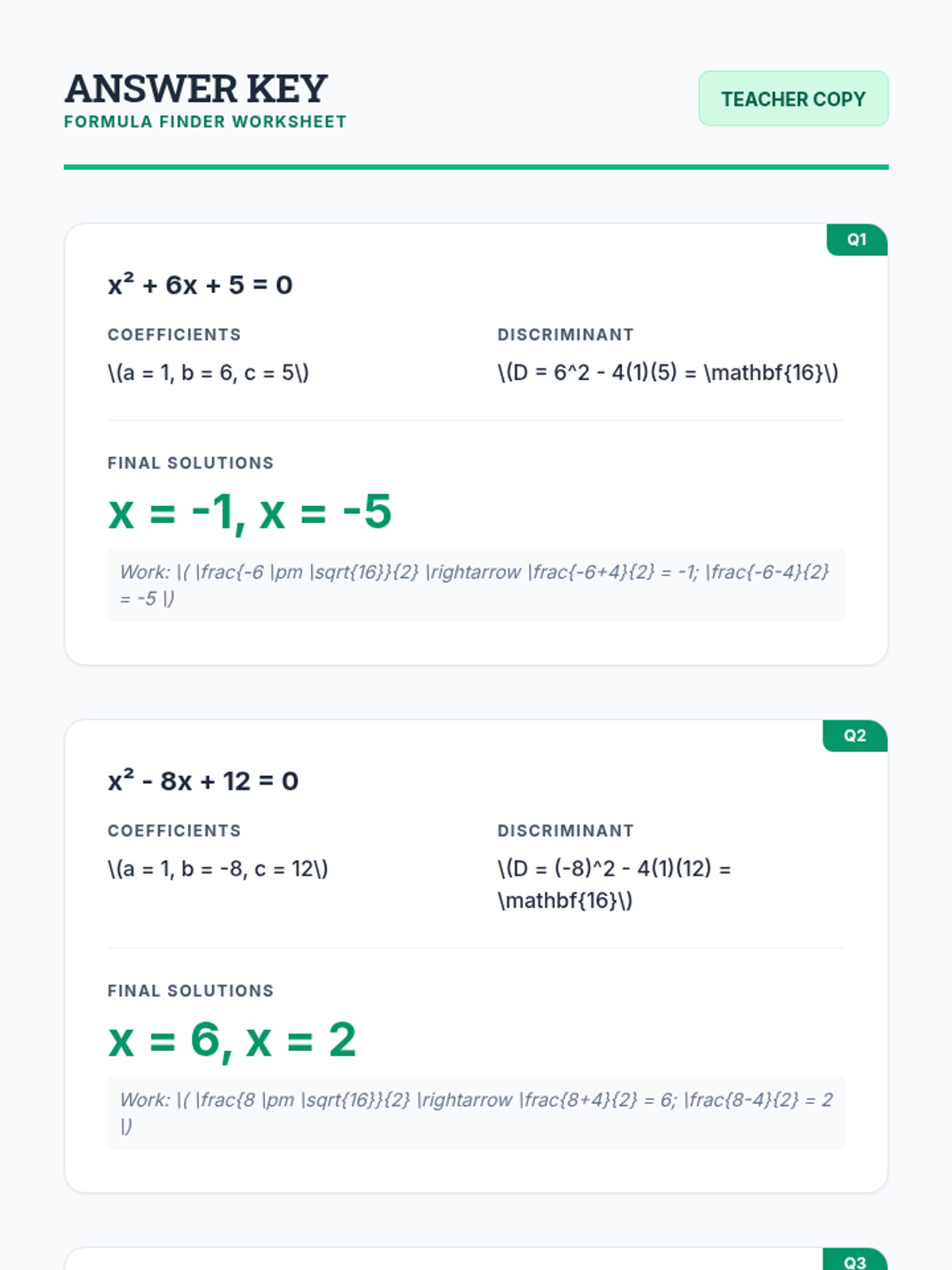
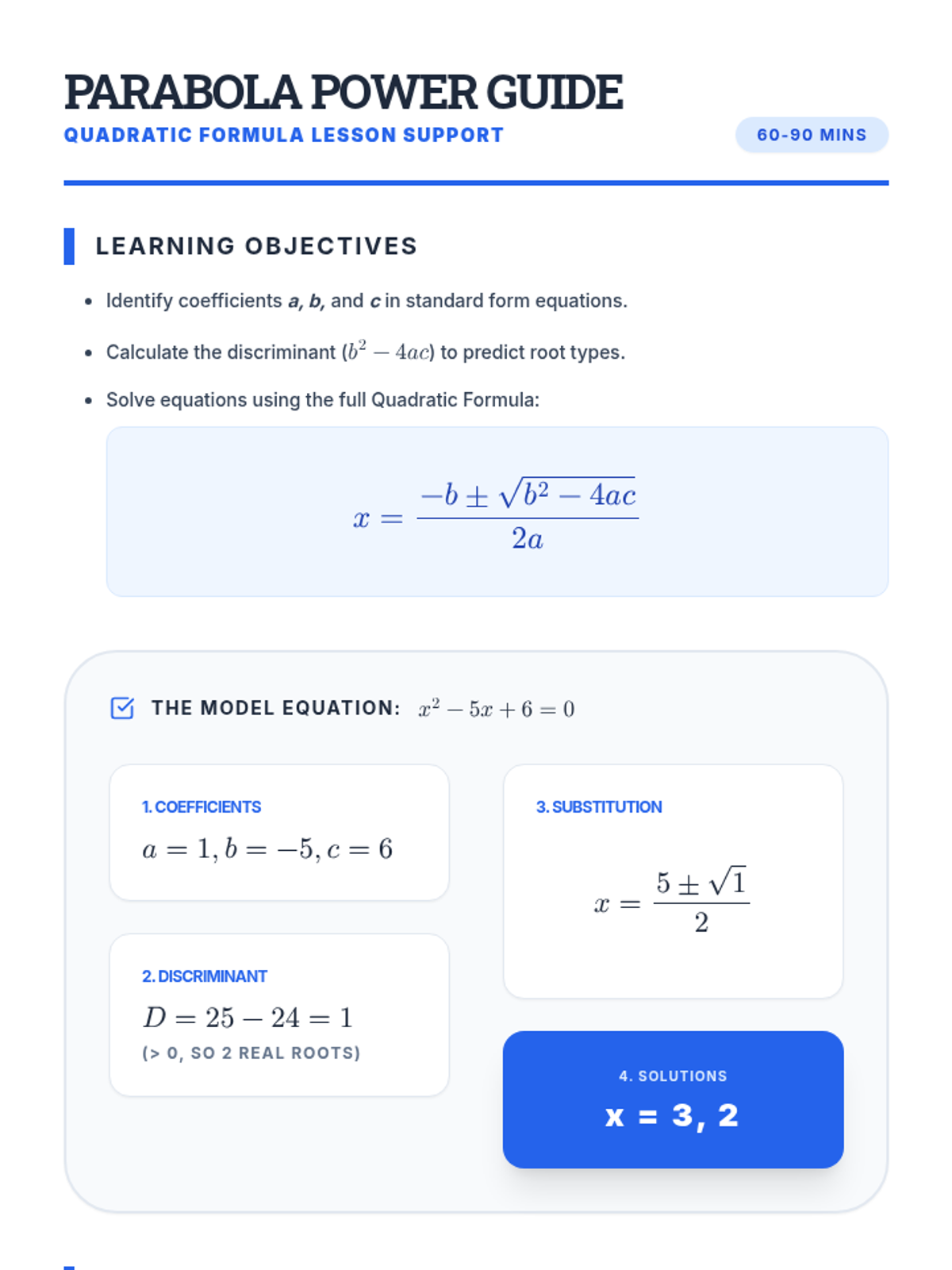
This lesson introduces 9th-grade students to quadratic equations, focusing on identifying their standard form and solving simple equations using the square root property and the zero product property.